EP3473805B1 - Zustandsüberwachungssystem und -verfahren des antriebssystems eines gasturbinentriebwerks - Google Patents
Zustandsüberwachungssystem und -verfahren des antriebssystems eines gasturbinentriebwerks Download PDFInfo
- Publication number
- EP3473805B1 EP3473805B1 EP18201612.1A EP18201612A EP3473805B1 EP 3473805 B1 EP3473805 B1 EP 3473805B1 EP 18201612 A EP18201612 A EP 18201612A EP 3473805 B1 EP3473805 B1 EP 3473805B1
- Authority
- EP
- European Patent Office
- Prior art keywords
- drive shaft
- phonic wheel
- gas turbine
- drive
- turbine engine
- Prior art date
- Legal status (The legal status is an assumption and is not a legal conclusion. Google has not performed a legal analysis and makes no representation as to the accuracy of the status listed.)
- Active
Links
Images




Classifications
-
- F—MECHANICAL ENGINEERING; LIGHTING; HEATING; WEAPONS; BLASTING
- F01—MACHINES OR ENGINES IN GENERAL; ENGINE PLANTS IN GENERAL; STEAM ENGINES
- F01D—NON-POSITIVE DISPLACEMENT MACHINES OR ENGINES, e.g. STEAM TURBINES
- F01D21/00—Shutting-down of machines or engines, e.g. in emergency; Regulating, controlling, or safety means not otherwise provided for
- F01D21/003—Arrangements for testing or measuring
-
- F—MECHANICAL ENGINEERING; LIGHTING; HEATING; WEAPONS; BLASTING
- F01—MACHINES OR ENGINES IN GENERAL; ENGINE PLANTS IN GENERAL; STEAM ENGINES
- F01D—NON-POSITIVE DISPLACEMENT MACHINES OR ENGINES, e.g. STEAM TURBINES
- F01D5/00—Blades; Blade-carrying members; Heating, heat-insulating, cooling or antivibration means on the blades or the members
- F01D5/02—Blade-carrying members, e.g. rotors
- F01D5/06—Rotors for more than one axial stage, e.g. of drum or multiple disc type; Details thereof, e.g. shafts, shaft connections
-
- F—MECHANICAL ENGINEERING; LIGHTING; HEATING; WEAPONS; BLASTING
- F02—COMBUSTION ENGINES; HOT-GAS OR COMBUSTION-PRODUCT ENGINE PLANTS
- F02C—GAS-TURBINE PLANTS; AIR INTAKES FOR JET-PROPULSION PLANTS; CONTROLLING FUEL SUPPLY IN AIR-BREATHING JET-PROPULSION PLANTS
- F02C7/00—Features, components parts, details or accessories, not provided for in, or of interest apart form groups F02C1/00 - F02C6/00; Air intakes for jet-propulsion plants
-
- F—MECHANICAL ENGINEERING; LIGHTING; HEATING; WEAPONS; BLASTING
- F02—COMBUSTION ENGINES; HOT-GAS OR COMBUSTION-PRODUCT ENGINE PLANTS
- F02C—GAS-TURBINE PLANTS; AIR INTAKES FOR JET-PROPULSION PLANTS; CONTROLLING FUEL SUPPLY IN AIR-BREATHING JET-PROPULSION PLANTS
- F02C7/00—Features, components parts, details or accessories, not provided for in, or of interest apart form groups F02C1/00 - F02C6/00; Air intakes for jet-propulsion plants
- F02C7/36—Power transmission arrangements between the different shafts of the gas turbine plant, or between the gas-turbine plant and the power user
-
- F—MECHANICAL ENGINEERING; LIGHTING; HEATING; WEAPONS; BLASTING
- F02—COMBUSTION ENGINES; HOT-GAS OR COMBUSTION-PRODUCT ENGINE PLANTS
- F02K—JET-PROPULSION PLANTS
- F02K3/00—Plants including a gas turbine driving a compressor or a ducted fan
- F02K3/02—Plants including a gas turbine driving a compressor or a ducted fan in which part of the working fluid by-passes the turbine and combustion chamber
- F02K3/04—Plants including a gas turbine driving a compressor or a ducted fan in which part of the working fluid by-passes the turbine and combustion chamber the plant including ducted fans, i.e. fans with high volume, low pressure outputs, for augmenting the jet thrust, e.g. of double-flow type
- F02K3/06—Plants including a gas turbine driving a compressor or a ducted fan in which part of the working fluid by-passes the turbine and combustion chamber the plant including ducted fans, i.e. fans with high volume, low pressure outputs, for augmenting the jet thrust, e.g. of double-flow type with front fan
-
- G—PHYSICS
- G01—MEASURING; TESTING
- G01H—MEASUREMENT OF MECHANICAL VIBRATIONS OR ULTRASONIC, SONIC OR INFRASONIC WAVES
- G01H1/00—Measuring characteristics of vibrations in solids by using direct conduction to the detector
- G01H1/003—Measuring characteristics of vibrations in solids by using direct conduction to the detector of rotating machines
-
- G—PHYSICS
- G01—MEASURING; TESTING
- G01H—MEASUREMENT OF MECHANICAL VIBRATIONS OR ULTRASONIC, SONIC OR INFRASONIC WAVES
- G01H1/00—Measuring characteristics of vibrations in solids by using direct conduction to the detector
- G01H1/10—Measuring characteristics of vibrations in solids by using direct conduction to the detector of torsional vibrations
-
- G—PHYSICS
- G01—MEASURING; TESTING
- G01M—TESTING STATIC OR DYNAMIC BALANCE OF MACHINES OR STRUCTURES; TESTING OF STRUCTURES OR APPARATUS, NOT OTHERWISE PROVIDED FOR
- G01M15/00—Testing of engines
- G01M15/14—Testing gas-turbine engines or jet-propulsion engines
-
- F—MECHANICAL ENGINEERING; LIGHTING; HEATING; WEAPONS; BLASTING
- F02—COMBUSTION ENGINES; HOT-GAS OR COMBUSTION-PRODUCT ENGINE PLANTS
- F02C—GAS-TURBINE PLANTS; AIR INTAKES FOR JET-PROPULSION PLANTS; CONTROLLING FUEL SUPPLY IN AIR-BREATHING JET-PROPULSION PLANTS
- F02C3/00—Gas-turbine plants characterised by the use of combustion products as the working fluid
- F02C3/04—Gas-turbine plants characterised by the use of combustion products as the working fluid having a turbine driving a compressor
-
- F—MECHANICAL ENGINEERING; LIGHTING; HEATING; WEAPONS; BLASTING
- F05—INDEXING SCHEMES RELATING TO ENGINES OR PUMPS IN VARIOUS SUBCLASSES OF CLASSES F01-F04
- F05D—INDEXING SCHEME FOR ASPECTS RELATING TO NON-POSITIVE-DISPLACEMENT MACHINES OR ENGINES, GAS-TURBINES OR JET-PROPULSION PLANTS
- F05D2220/00—Application
- F05D2220/30—Application in turbines
- F05D2220/32—Application in turbines in gas turbines
-
- F—MECHANICAL ENGINEERING; LIGHTING; HEATING; WEAPONS; BLASTING
- F05—INDEXING SCHEMES RELATING TO ENGINES OR PUMPS IN VARIOUS SUBCLASSES OF CLASSES F01-F04
- F05D—INDEXING SCHEME FOR ASPECTS RELATING TO NON-POSITIVE-DISPLACEMENT MACHINES OR ENGINES, GAS-TURBINES OR JET-PROPULSION PLANTS
- F05D2240/00—Components
- F05D2240/60—Shafts
-
- F—MECHANICAL ENGINEERING; LIGHTING; HEATING; WEAPONS; BLASTING
- F05—INDEXING SCHEMES RELATING TO ENGINES OR PUMPS IN VARIOUS SUBCLASSES OF CLASSES F01-F04
- F05D—INDEXING SCHEME FOR ASPECTS RELATING TO NON-POSITIVE-DISPLACEMENT MACHINES OR ENGINES, GAS-TURBINES OR JET-PROPULSION PLANTS
- F05D2260/00—Function
- F05D2260/40—Transmission of power
- F05D2260/403—Transmission of power through the shape of the drive components
- F05D2260/4031—Transmission of power through the shape of the drive components as in toothed gearing
-
- F—MECHANICAL ENGINEERING; LIGHTING; HEATING; WEAPONS; BLASTING
- F05—INDEXING SCHEMES RELATING TO ENGINES OR PUMPS IN VARIOUS SUBCLASSES OF CLASSES F01-F04
- F05D—INDEXING SCHEME FOR ASPECTS RELATING TO NON-POSITIVE-DISPLACEMENT MACHINES OR ENGINES, GAS-TURBINES OR JET-PROPULSION PLANTS
- F05D2260/00—Function
- F05D2260/80—Diagnostics
-
- F—MECHANICAL ENGINEERING; LIGHTING; HEATING; WEAPONS; BLASTING
- F05—INDEXING SCHEMES RELATING TO ENGINES OR PUMPS IN VARIOUS SUBCLASSES OF CLASSES F01-F04
- F05D—INDEXING SCHEME FOR ASPECTS RELATING TO NON-POSITIVE-DISPLACEMENT MACHINES OR ENGINES, GAS-TURBINES OR JET-PROPULSION PLANTS
- F05D2270/00—Control
- F05D2270/30—Control parameters, e.g. input parameters
- F05D2270/304—Spool rotational speed
Definitions
- the subject matter disclosed herein generally relates to measurement systems and, more particularly, to a method and an apparatus for drive system health monitoring of a gas turbine engine.
- Gas turbine engines typically include a compressor, a combustor, and a turbine, with an annular flow path extending axially through each. Initially, air flows through the compressor where it is compressed or pressurized. The combustor then mixes and ignites the compressed air with fuel, generating hot combustion gases. These hot combustion gases are then directed from the combustor to the turbine where power is extracted from the hot gases by causing blades of the turbine to rotate. The rotation also drives rotation of a fan that provides thrust under various operating conditions.
- Multiple drive shafts may be used to link rotation of various stages of the turbine, compressor, and fan.
- Monitoring systems can be used to measure conditions within a gas turbine engine for monitoring degradation that may lead to a future servicing event, as well as identify maintenance conditions.
- Engine vibrations are typically monitored using accelerometers that can detect vibrations in one or more axis.
- accelerometers may not readily detect all desired conditions of rotating components that can be monitored for potential maintenance events.
- US 2016/010494 A1 discloses a method to determine shaft stiffness of a rotating shaft of a gas turbine engine, the shaft coupling a turbine to drive the rotation and a load to be driven by the rotation. For a given operational temperature and rotational speed of the shaft, the method including steps to determine polar moments of inertia of the load and the turbine. Determine natural torsional vibration frequency of the shaft including measuring its rotational speed. Determine the shaft stiffness by calculation using the inertias and vibration frequency.
- US 5365787 A discloses a system for detecting and analysing signals generated by rotating components.
- the present invention provides a drive system of a gas turbine engine according to claim 1.
- a drive system of a gas turbine engine includes at least one drive shaft operable to rotate within the gas turbine engine, a phonic wheel coupled to the at least one drive shaft, a speed sensor operable to detect rotation of the phonic wheel indicative of rotation of the at least one drive shaft, and a processing system coupled to the speed sensor.
- the processing system is operable to detect a phonic wheel pulse train indicative of rotation of the at least one drive shaft via the speed sensor, determine a torsional mode of the at least one drive shaft based on the phonic wheel pulse train, and record one or more trends of the torsional mode indicative of a health status of the drive system.
- the drive system includes a second shaft of the gas turbine engine having a second phonic wheel and a second speed sensor is coupled to the processing system.
- the processing system is operable to track a timing variation between a first position indicator of the phonic wheel and a second position indicator of the second phonic wheel.
- the processing system is operable to determine a torsional deflection between a first drive shaft of the at least one drive shaft with respect to the second drive shaft based on the timing variation between the first position indicator of the phonic wheel and the second position indicator of the second phonic wheel.
- a drive gear system is coupled between the first drive shaft and the second drive shaft, and the health status identifies whether a fault condition of the drive gear system is detected based on the torsional deflection.
- processing system is operable to perform a frequency domain analysis of the phonic wheel pulse train and identify a dominant mode as a shaft frequency and a lower amplitude frequency domain component as the torsional mode.
- further embodiments may include where the shaft frequency is used to identify an operating mode of the gas turbine engine, and trending of the torsional mode is determined based on the operating mode of the gas turbine engine.
- a gas turbine engine is provided as defined in claim 4.
- processing system is operable to perform a frequency domain analysis of the one or more phonic wheel pulse trains and identify a dominant mode as a shaft frequency and a lower amplitude frequency domain component as the torsional mode.
- further embodiments may include where the shaft frequency is used to identify an operating mode of the gas turbine engine, and trending of the torsional mode is determined based on the operating mode of the gas turbine engine.
- the present invention provides a method of monitoring a drive system in a gas turbine engine according to claim 6.
- a method of monitoring a drive system in a gas turbine engine includes detecting a phonic wheel pulse train indicative of rotation of at least one drive shaft via a speed sensor operably coupled to a processing system and determining, by the processing system, a torsional mode of the at least one drive shaft based on the phonic wheel pulse train.
- the method also includes recording one or more trends of the torsional mode indicative of a health status of the drive system.
- the method includes tracking a timing variation between a first position indicator of a first phonic wheel on a first drive shaft of the at least one drive shaft and a second position indicator of a second phonic wheel on a second drive shaft of the at least one drive shaft.
- the method includes determining a torsional deflection between the first drive shaft with respect to the second drive shaft based on the timing variation between the first position indicator of the first phonic wheel and the second position indicator of the second phonic wheel.
- a drive gear system is coupled between the first drive shaft and the second drive shaft, and the health status identifies whether a fault condition of the drive gear system is detected based on the torsional deflection.
- further embodiments may include performing, by the processing system, a frequency domain analysis of the one or more phonic wheel pulse trains.
- further embodiments may include identifying a dominant mode as a shaft frequency and a lower amplitude frequency domain component as the torsional mode, where the shaft frequency is used to identify an operating mode of the gas turbine engine, and trending of the torsional mode is determined based on the operating mode of the gas turbine engine.
- a technical effect of the apparatus, systems and methods is achieved by using one or more speed sensors to determine torsional modes of a drive system in a gas turbine engine as described herein.
- FIG. 1 schematically illustrates a gas turbine engine 20.
- the gas turbine engine 20 is disclosed herein as a two-spool turbofan that generally incorporates a fan section 22, a compressor section 24, a combustor section 26 and a turbine section 28.
- Alternative engines might include an augmentor section (not shown) among other systems or features.
- the fan section 22 drives air along a bypass flow path B in a bypass duct, while the compressor section 24 drives air along a core flow path C for compression and communication into the combustor section 26 then expansion through the turbine section 28.
- the exemplary engine 20 generally includes a low speed spool 30 and a high speed spool 32 mounted for rotation about an engine central longitudinal axis A relative to an engine static structure 36 via several bearing systems 38. It should be understood that various bearing systems 38 at various locations may alternatively or additionally be provided, and the location of bearing systems 38 may be varied as appropriate to the application.
- the low speed spool 30 generally includes an inner shaft 40 that interconnects a fan 42, a low pressure compressor 44 and a low pressure turbine 46.
- the inner shaft 40 is connected to the fan 42 through a speed change mechanism, which in exemplary gas turbine engine 20 is illustrated as a geared architecture 48 to drive the fan 42 at a lower speed than the low speed spool 30.
- the high speed spool 32 includes an outer shaft 50 that interconnects a high pressure compressor 52 and high pressure turbine 54.
- a combustor 56 is arranged in exemplary gas turbine 20 between the high pressure compressor 52 and the high pressure turbine 54.
- An engine static structure 36 is arranged generally between the high pressure turbine 54 and the low pressure turbine 46.
- the engine static structure 36 further supports bearing systems 38 in the turbine section 28.
- the inner shaft 40 and the outer shaft 50 are concentric and rotate via bearing systems 38 about the engine central longitudinal axis A which is collinear with their longitudinal axes.
- each of the positions of the fan section 22, compressor section 24, combustor section 26, turbine section 28, and fan drive gear system 48 may be varied.
- gear system 48 may be located aft of combustor section 26 or even aft of turbine section 28, and fan section 22 may be positioned forward or aft of the location of gear system 48.
- the engine 20 in one example is a high-bypass geared aircraft engine.
- the engine 20 bypass ratio is greater than about six (6), with an example embodiment being greater than about ten (10)
- the geared architecture 48 is an epicyclic gear train, such as a planetary gear system or other gear system, with a gear reduction ratio of greater than about 2.3
- the low pressure turbine 46 has a pressure ratio that is greater than about five.
- the engine 20 bypass ratio is greater than about ten (10:1)
- the fan diameter is significantly larger than that of the low pressure compressor 44
- the low pressure turbine 46 has a pressure ratio that is greater than about five 5:1.
- Low pressure turbine 46 pressure ratio is pressure measured prior to inlet of low pressure turbine 46 as related to the pressure at the outlet of the low pressure turbine 46 prior to an exhaust nozzle.
- the geared architecture 48 may be an epicycle gear train, such as a planetary gear system or other gear system, with a gear reduction ratio of greater than about 2.3:1. It should be understood, however, that the above parameters are only exemplary of one embodiment of a geared architecture engine and that the present disclosure is applicable to other gas turbine engines including direct drive turbofans.
- the fan section 22 of the engine 20 is designed for a particular flight condition--typically cruise at about 0.8Mach and about 35,000 feet (10,688 meters).
- 'TSFC' Thrust Specific Fuel Consumption
- Low fan pressure ratio is the pressure ratio across the fan blade alone, without a Fan Exit Guide Vane (“FEGV”) system.
- the low fan pressure ratio as disclosed herein according to one non-limiting embodiment is less than about 1.45.
- Low corrected fan tip speed is the actual fan tip speed in ft/sec divided by an industry standard temperature correction of [(Tram °R)/(518.7 °R)] 0.5 .
- the "Low corrected fan tip speed” as disclosed herein according to one non-limiting embodiment is less than about 1150 ft/second (350.5 m/sec).
- the drive system 100 includes a first drive shaft 102a coupled between the fan 42 and the fan drive gear system 48 (also referred to as a drive gear system 48).
- the drive system 100 also includes a second drive shaft 102b coupled between the low pressure turbine 46 and the fan drive gear system 48 such that at least one drive shaft 102a, 102b is operable to rotate within the gas turbine engine 20.
- a first phonic wheel 106a is coupled to the first drive shaft 102a, and a second phonic wheel 106b is coupled to the second drive shaft 102b.
- a first speed sensor 108a is operable to detect rotation of the first phonic wheel 106a indicative of rotation of the first drive shaft 102a.
- a second speed sensor 108b is operable to detect rotation of the second phonic wheel 106b indicative of rotation of the second drive shaft 102b.
- the first phonic wheel 106a may also be referred to as a fan phonic wheel, including a number of teeth 110a.
- the second phonic wheel 106b may also be referred to as a low pressure turbine phonic wheel, including a number of teeth 110b.
- the number of teeth 110a of the first phonic wheel 106a is the same as the number of teeth 110b of the second phonic wheel 106b.
- the number of teeth 110a of the first phonic wheel 106a is different than the number of teeth 110b of the second phonic wheel 106b.
- the teeth 110a of the first phonic wheel 106a may induce a detectable signal at the first speed sensor 108a as each tooth passes in close physical proximity to the first speed sensor 108a (e.g., through electro-magnetic communication).
- teeth 110b of the second phonic wheel 106b may induce a detectable signal at the second speed sensor 108b as each tooth passes in close physical proximity to the second speed sensor 108b.
- the teeth 110a of the first phonic wheel 106a and the teeth 110b of the second phonic wheel 106b can be substantially regularly spaced.
- one of the teeth 110a of the first phonic wheel 106a and one of the teeth 110b of the second phonic wheel 106b can be physically offset or be physically extended to create a detectable position indicator for each of the first and second phonic wheel 106a, 106b, e.g., a once-per-revolution indicator.
- first drive shaft 102a and the second drive shaft 102b are mechanically coupled through the fan drive gear system 48.
- Rotation of low pressure turbine 46 drives rotation of the second drive shaft 102b and drives rotation of the first drive shaft 102a through the fan drive gear system 48 to rotate the fan 42.
- a gear ratio of the fan drive gear system 48 can result in the first drive shaft 102a rotating at a slower speed than the second drive shaft 102b.
- a phonic wheel pulse train induced by rotation of the first phonic wheel 106a and detected by the first speed sensor 108a can transition slower than a phonic wheel pulse train induced by rotation of the second phonic wheel 106b and detected by the second speed sensor 108b as both the first and second drive shafts 102a, 102b rotate.
- a processing system 112 is coupled to at least one of the first and second speed sensors 108a, 108b. In FIG. 2 , the processing system 112 is coupled to both the first and second speed sensors 108a, 108b.
- the processing system 112 is operable to detect one or more phonic wheel pulse trains, determine a torsional mode based on the one or more phonic wheel pulse trains, and record one or more trends of the torsional mode indicative of a health status of the drive system 100.
- the processing system 112 may use one or more signal processing techniques to determine torsional modes based on speed sensor signals from the first speed sensor 108a and/or the second speed sensor 108b.
- the processing system 112 can perform individual shaft torsional analysis on a per shaft basis by separately analyzing data from each of the first speed sensor 108a and the second speed sensor 108b.
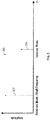
- the processing system 112 can perform a frequency domain analysis of a phonic wheel pulse train from the first speed sensor 108a or the second speed sensor 108b and identify a dominant mode 302 as a shaft frequency and a lower amplitude frequency domain component 304 as a torsional mode as depicted in the frequency response plot 300 of FIG. 3 .
- the dominant mode 302 tracks with respect to rotational speed of the respective drive shaft (e.g., the first drive shaft 102a or the second drive shaft 102b) being monitored.
- the torsional mode has a lower amplitude than the dominant mode 302 and does not directly correlate to drive shaft rotational speed.
- the torsional mode represents a resonance due to oscillations in shaft loading.
- Frequency content in speed sensor signals such as that depicted in frequency response plot 300, can be produced using a Fourier transform, a wavelet-based transform, or other known techniques. The same or similar frequency analysis can be performed with respect to the first drive shaft 102a and the second drive shaft 102b.
- the shaft frequency can be used to identify an operating mode of the gas turbine engine 20, and trending of the torsional mode can be performed based on the operating mode of the gas turbine engine 20. For example, a speed range and transition sequence between speed ranges (as well as one or more other parameters) can be used to identify whether the gas turbine engine 20 is operating at ground idle, flight idle, max cruise, take-off, max power, or another known operating mode.
- the processing system 112 can collect a buffer of speed sensor values over a collection period for each of the first and second speed sensors 108a, 108b. The buffered speed sensor data can be analyzed to determine whether the collection period was substantially steady state and did not include an operating mode transition, for instance, the speed did not vary by more than a predetermined steady state threshold.
- the torsional mode can be determined, for instance, using a frequency domain transform as previously described.
- the torsional mode can be tracked with respect to the identified operating mode of the gas turbine engine 20. Trending of changes in the torsional mode can be performed on an operating mode basis to determine whether changes are indicative of increased shaft fatigue. For example, a rate of change of the torsional mode above a change threshold may be used to trigger an indicator, such as a health status.
- the health status can be set to initiate one or more actions, such as an inspection event, a maintenance event, additional monitoring events, and/or other events internal or external to the gas turbine engine 20.
- the torsional mode is not located at the shaft frequency where the dominant mode 302 is located and can be independent of the precise value of the shaft frequency.
- frequency response plot 300 is depicted with only two frequency components, it will be understood that additional frequency components (not depicted) may also be captured in the frequency response plot 300. For example, there may be spectral spreading and/or harmonics depending upon filtering and alignment between spectral bins of the frequency domain transform and the actual frequencies observed.
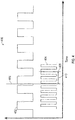
- the processing system 112 is configured to observe a first phonic wheel pulse train 402 and a second phonic wheel pulse train 404 and track a timing variation between a first position indicator 406 of the first phonic wheel 106a and a second position indicator 408 of the second phonic wheel 106b as depicted in the timing diagram 400 of FIG. 4 .
- the first position indicator 406 is a rising edge of an offset tooth of the first phonic wheel 106a
- the second position indicator 408 is a rising edge of an offset tooth of the second phonic wheel 106b.
- a time difference 410 between the first and second position indicator 406, 408 can be tracked for variations indicative of torsional resonance through the fan drive gear system 48 of FIG. 2 .
- the processing system 112 is configured to determine a torsional deflection between the first drive shaft 102a with respect to the second drive shaft 102b based on the timing variation between the first position indicator 406 of the first phonic wheel 106a and the second position indicator 408 of the second phonic wheel 106b.
- the gear ratio of the fan drive gear system 48 results in different rotational speeds of the first and second phonic wheel 106a, 106b
- multiple revolutions of the first and second phonic wheel 106a, 106b can be tracked in groups to account for relative positional variations.
- the gear ratio of the fan drive gear system 48 results in a 2.3:1 speed reduction
- 10 revolutions of the first drive shaft 102a corresponds with 23 revolutions of the second drive shaft 102b
- the expected alignment positions need not be used, as the pattern of changes in the time difference 410 at a particular speed can be tracked to monitor torsional deflection.
- the torsional deflection can be tracked with respect to the operating mode of the gas turbine engine 20, and the health status is set to identify whether a fault condition of the drive gear system 48 is detected based on the torsional deflection.
- the processing system 112 includes a memory 502 which can store executable instructions and/or data associated with control and/or diagnostic/prognostic systems of the gas turbine engine 20 of FIG. 1 .
- the executable instructions can be stored or organized in any manner and at any level of abstraction, such as in connection with one or more applications, processes, routines, procedures, methods, etc. As an example, at least a portion of the instructions are shown in FIG. 5 as being associated with a control program 504.
- the memory 502 may store data 506.
- the data 506 may include, but is not limited to, values to support detecting the operating mode of the gas turbine engine 20, commands for various actuators, lookup tables, sensor data, communication data, or any other type(s) of data as will be appreciated by those of skill in the art.
- One or more speed sensor buffer 516 and/or torsional mode trends 518 can be stored in the memory 502 and may be part of or separate from the data 506.
- the instructions stored in the memory 502 may be executed by one or more processors, such as a processor 508.
- the processor 508 may be operative on the data 506, speed sensor buffer 516, and/or torsional mode trends 518.
- the processor 508 can be any type or combination of computer processors, such as a microprocessor, microcontroller, digital signal processor, application specific integrated circuit, programmable logic device, and/or field programmable gate array.
- the memory 502 is an example of a non-transitory computer readable storage medium tangibly embodied in or operably connected to the processing system 112 including executable instructions stored therein, for instance, as firmware.
- the processor 508 is coupled to one or more input/output (I/O) devices through an I/O interface 510.
- the I/O interface 510 can be operable to receive speed sensor signals 512a, 512b from the first and second speed sensors 108a, 108b of FIG. 2 .
- the processor 508 can also communicate with one or more other systems (not depicted) using a communication interface 514 to send and receive messages on one or more communication buses 515, which may include transmitting a health status 517 based on torsional values captured in the torsional mode trends 518.
- the processing system 112 may further include other features or components as known in the art.
- the processing system 112 may include one or more transceivers and/or devices configured to transmit and/or receive information or data from sources external to the processing system 112.
- the processing system 112 may be configured to receive information over a network (wired or wireless) or through a cable or wireless connection with one or more devices remote from the processing system 112 via the communication interface 514.
- the information received can be stored in the memory 502 (e.g., as data 506) and/or may be processed and/or employed by one or more programs or applications (e.g., program 504) and/or the processor 508.
- the processing system 112 can also include one or more counters 520 and/or timers 522.
- the counters 520 can be used, for example, to track the teeth 110a, 110b of the first and second phonic wheel 106a, 106b and assist in determining the location of the first and second position indicator 406, 408, for instance, based on tooth-to-tooth timing variations observed via timers 522.
- the timers 522 can also support observations of the time difference 410 between the first and second position indicator 406, 408.
- processing system 112 is depicted as a single system, it will be understood the portions of the processing system 112 can be distributed between multiple processing circuits, including multiple instances of the processor 508, memory 502, and the like.
- FIG. 6 is a flow chart illustrating a method 600 for health monitoring of the drive system 100 in a gas turbine engine 20, in accordance with an embodiment.
- a phonic wheel pulse train indicative of rotation of at least one drive shaft is detected via a speed sensor operably coupled to processing system 112, such as the first phonic wheel pulse train 402 of the first drive shaft 102a detected by the first speed sensor 108a or the second phonic wheel pulse train 404 of the second drive shaft 102b detected by the second speed sensor 108b.
- the processing system 112 determines a torsional mode of the at least one drive shaft based on the phonic wheel pulse train.
- the processing system 112 may perform a frequency domain analysis of the one or more phonic wheel pulse trains as previously described in reference to FIG. 3 .
- the frequency domain analysis can include identifying a dominant mode 302 as a shaft frequency and a lower amplitude frequency domain component 304 as the torsional mode.
- the shaft frequency can be used to identify an operating mode of the gas turbine engine 20.
- the operating mode can be identified as one of: ground idle, flight idle, max cruise, take-off, max power, and any other flight condition known to one of skill in the art.
- the processing system 112 can track a timing variation between a first position indicator 406 of the first phonic wheel 106a on the first drive shaft 102a and a second position indicator 408 of the second phonic wheel 106b on the second drive shaft 102b.
- a torsional deflection between the first drive shaft 102a with respect to the second drive shaft 102b can be determined based on the timing variation (e.g., changes in time difference 410) between the first position indicator 406 of the first phonic wheel 106a and the second position indicator 408 of the second phonic wheel 106b.
- one or more trends of the torsional mode indicative of a health status 517 of the drive system 100 are recorded, for instance, in torsional mode trends 518.
- trending of the torsional mode can be determined based on the operating mode of the gas turbine engine 20.
- the health status 517 identifies whether a fault condition of the drive gear system 48 can be detected based on the torsional deflection.
Landscapes
- Engineering & Computer Science (AREA)
- Chemical & Material Sciences (AREA)
- Combustion & Propulsion (AREA)
- Mechanical Engineering (AREA)
- General Engineering & Computer Science (AREA)
- Physics & Mathematics (AREA)
- General Physics & Mathematics (AREA)
- Testing Of Devices, Machine Parts, Or Other Structures Thereof (AREA)
- Testing Of Engines (AREA)
Claims (8)
- Antriebssystem (100) eines Gasturbinentriebwerks, wobei das Antriebssystem Folgendes umfasst:mindestens eine Antriebswelle (102a), die so betrieben werden kann, dass sie innerhalb des Gasturbinentriebwerks rotiert, wobei die mindestens eine Antriebswelle (102a) eine erste Antriebswelle (102a) und eine zweite Antriebswelle (102b) umfasst;ein phonisches Rad (106a), das an die erste Antriebswelle (102a) gekoppelt ist;einen Geschwindigkeitssensor (108a), der so betrieben werden kann, dass er eine Rotation des phonischen Rads (106a) erkennt, die eine Rotation der ersten Antriebswelle (102a) angibt;ein zweites phonisches Rad (106b), das an die zweite Antriebswelle (102b) gekoppelt ist;ein Antriebsgetriebesystem (48), das wirksam zwischen der ersten Antriebswelle (102a) und der zweiten Antriebswelle (102b) gekoppelt ist;einen zweiten Geschwindigkeitssensor (108b), der so betrieben werden kann, dass er eine Rotation des zweiten phonischen Rads (106b) erkennt; undein Verarbeitungssystem (112), das an den Geschwindigkeitssensor (108a) und den zweiten Geschwindigkeitssensor (108b) gekoppelt ist, wobei das Verarbeitungssystem (112) so betrieben werden kann, dass es eine Impulsfolge (402) des phonischen Rads erkennt, die eine Rotation der ersten Antriebswelle (102a) über den Geschwindigkeitssensor (108a) angibt, eine Taktabweichung zwischen einem ersten Positionsanzeiger (406) des phonischen Rads (106a) und einem zweiten Positionsanzeiger (408) des zweiten phonischen Rads (106b) verfolgt, eine Torsionsverformung zwischen der ersten Antriebswelle (102a) in Bezug auf die zweite Antriebswelle (102b) basierend auf der Taktabweichung zwischen dem ersten Positionsanzeiger (406) des phonischen Rads (106a) und dem zweiten Positionsanzeiger (408) des zweiten phonischen Rads (106b) ermittelt, einen Torsionsmodus der ersten Antriebswelle (102a) basierend auf der Impulsfolge (402) des phonischen Rads ermittelt und einen oder mehrere Trends des Torsionsmodus, die einen Zustand des Antriebssystems (100) angeben, aufzeichnen, wobei der Zustand so ausgelegt ist, dass er feststellt, ob basierend auf der Torsionsverformung ein Fehlerzustand des Antriebsgetriebesystems erkannt wird.
- Antriebssystem (100) nach Anspruch 1, wobei das Verarbeitungssystem (112) so betrieben werden kann, dass es eine Frequenzbereichsanalyse der Impulsfolge (402) des phonischen Rads durchführt und einen Hauptmodus (302) als eine Wellenfrequenz und eine Frequenzbereichskomponente (304) mit kleinerer Amplitude als den Torsionsmodus identifiziert.
- Antriebssystem (100) nach Anspruch 2, wobei die Wellenfrequenz verwendet wird, um einen Betriebsmodus des Gasturbinentriebwerks zu identifizieren, und wobei die Trendverfolgung des Torsionsmodus basierend auf dem Betriebsmodus des Gasturbinentriebwerks ermittelt wird.
- Gasturbinentriebwerk (20), das Antriebssystem nach Anspruch 1 umfassend, wobei:die erste Antriebswelle (102a) so betrieben werden kann, dass sie einen Fan (42) des Gasturbinentriebwerks antreibt;die zweite Antriebswelle (102b) so betrieben werden kann, dass sie von einer Turbine (46) des Gasturbinentriebwerks angetrieben werden kann;das Antriebsgetriebesystem (48), das an die erste Antriebswelle (102a) und die zweite Antriebswelle (102b) gekoppelt ist, ein Fan-Antriebsgetriebesystem ist.
- Gasturbinentriebwerk nach Anspruch 4, wobei das Verarbeitungssystem (112) so betrieben werden kann, dass es eine Frequenzbereichsanalyse der Impulsfolgen (402, 404) des einen oder der mehreren phonischen Räder durchführt und einen Hauptmodus (302) als eine Wellenfrequenz und eine Frequenzbereichskomponente (304) mit kleinerer Amplitude als den Torsionsmodus identifiziert; und optional wobei die Wellenfrequenz verwendet wird, um einen Betriebsmodus des Gasturbinentriebwerks zu identifizieren, und die Trendverfolgung des Torsionsmodus basierend auf dem Betriebsmodus des Gasturbinentriebwerks ermittelt wird.
- Verfahren zum Überwachen eines Antriebssystems (100) in einem Gasturbinentriebwerk (20), wobei das Verfahren Folgendes umfasst:Erkennen einer Impulsfolge (402, 404) eines phonischen Rads, die eine Rotation mindestens einer Antriebswelle (102a, 102b) angibt, über einen Geschwindigkeitssensor (108a, 108b), der wirksam an ein Verarbeitungssystem (112) gekoppelt ist;Ermitteln, durch das Verarbeitungssystem (112), eines Torsionsmodus der mindestens einen Antriebswelle (102a, 102b) basierend auf der Impulsfolge (402, 404) des phonischen Rads;Verfolgen einer Taktabweichung zwischen einem ersten Positionsanzeiger (406) eines ersten phonischen Rads (106a) an einer ersten Antriebswelle (102a) der mindestens einen Antriebswelle und einem zweiten Positionsanzeiger (408) eines zweiten phonischen Rads (106b) an einer zweiten Antriebswelle (102b) der mindestens einen Antriebswelle, wobei ein Antriebsgetriebesystem (48) zwischen der ersten Antriebswelle (102a) und der zweiten Antriebswelle (102b) des Gasturbinentriebwerks (20) gekoppelt ist;Ermitteln einer Torsionsverformung zwischen der ersten Antriebswelle (102a) in Bezug auf die zweite Antriebswelle (102b) basierend auf der Taktabweichung zwischen dem ersten Positionsanzeiger (406) des ersten phonischen Rads (102a) und dem zweiten Positionsanzeiger (408) des zweiten phonischen Rads (102b); undAufzeichnen eines oder mehrerer Trends des Torsionsmodus, die einen Zustand des Antriebssystems (100) angeben, wobei der Zustand feststellt, ob ein Fehlerzustand des Antriebsgetriebesystems (48) basierend auf der Torsionsverformung erkannt wird.
- Verfahren nach Anspruch 6, ferner Folgendes umfassend: Durchführen, durch das Verarbeitungssystem (112), einer Frequenzbereichsanalyse der Impulsfolgen (402, 404) des einen oder der mehreren phonischen Räder.
- Verfahren nach Anspruch 7, ferner Folgendes umfassend: Identifizieren eines Hauptmodus (302) als eine Wellenfrequenz und einer Frequenzbereichskomponente (304) mit kleinerer Amplitude als den Torsionsmodus, wobei die Wellenfrequenz verwendet wird, um einen Betriebsmodus des Gasturbinentriebwerks zu identifizieren, und die Trendverfolgung des Torsionsmodus basierend auf dem Betriebsmodus des Gasturbinentriebwerks ermittelt wird.
Applications Claiming Priority (1)
| Application Number | Priority Date | Filing Date | Title |
|---|---|---|---|
| US15/788,020 US10590796B2 (en) | 2017-10-19 | 2017-10-19 | Gas turbine engine drive system torsional health monitoring |
Publications (2)
| Publication Number | Publication Date |
|---|---|
| EP3473805A1 EP3473805A1 (de) | 2019-04-24 |
| EP3473805B1 true EP3473805B1 (de) | 2021-08-11 |
Family
ID=63965178
Family Applications (1)
| Application Number | Title | Priority Date | Filing Date |
|---|---|---|---|
| EP18201612.1A Active EP3473805B1 (de) | 2017-10-19 | 2018-10-19 | Zustandsüberwachungssystem und -verfahren des antriebssystems eines gasturbinentriebwerks |
Country Status (2)
| Country | Link |
|---|---|
| US (3) | US10590796B2 (de) |
| EP (1) | EP3473805B1 (de) |
Families Citing this family (9)
| Publication number | Priority date | Publication date | Assignee | Title |
|---|---|---|---|---|
| US10590796B2 (en) | 2017-10-19 | 2020-03-17 | United Technologies Corporation | Gas turbine engine drive system torsional health monitoring |
| US20190292936A1 (en) * | 2018-03-26 | 2019-09-26 | Pratt & Whitney Canada Corp. | Method and system for detecting shear of a rotating shaft |
| EP3786429B1 (de) | 2019-08-30 | 2024-10-09 | Rolls-Royce Deutschland Ltd & Co KG | Verfahren und system zur detektion eines funktionsfehlers in einem kraftgetriebe und einem gasturbomotor |
| US11697424B2 (en) | 2020-02-14 | 2023-07-11 | Hamilton Sundstrand Corporation | Health diagnosis of hybrid powerplant |
| FR3110695B1 (fr) | 2020-05-20 | 2022-05-13 | Airbus Helicopters | Système et procédé de surveillance de l’usure d’une roue libre et appareil associé |
| CN112523863B (zh) * | 2020-11-18 | 2022-04-05 | 中国航空工业集团公司西安航空计算技术研究所 | 一种基于长短表相结合的电控发动机循环监测方法 |
| CN112697438B (zh) * | 2020-12-23 | 2023-04-14 | 南京航空航天大学 | 基于音轮的涡桨发动机桨距-相角-转速测量装置及方法 |
| US20230139667A1 (en) * | 2021-10-29 | 2023-05-04 | Caterpillar Inc. | Inferred Engine Cylinder Pressure System and Method |
| EP4261406A1 (de) * | 2022-04-11 | 2023-10-18 | Ørsted Wind Power A/S | Verfahren zur früherkennung von materialermüdung in windturbineninstallationen |
Citations (1)
| Publication number | Priority date | Publication date | Assignee | Title |
|---|---|---|---|---|
| US20170267364A1 (en) * | 2016-03-15 | 2017-09-21 | Airbus Helicopters | Method of monitoring at least one freewheel of a rotary wing aircraft, and an aircraft |
Family Cites Families (19)
| Publication number | Priority date | Publication date | Assignee | Title |
|---|---|---|---|---|
| DE3112188A1 (de) | 1980-03-31 | 1982-01-14 | Hitachi, Ltd., Tokyo | Verfahren und vorrichtung zur ueberwachung der schwingung einer sich drehenden welle |
| US4712372A (en) * | 1985-09-18 | 1987-12-15 | Avco Corporation | Overspeed system redundancy monitor |
| US5031459A (en) * | 1989-05-08 | 1991-07-16 | Westinghouse Electric Corp. | Turbine generator shaft torsion monitor |
| US5033305A (en) * | 1990-01-08 | 1991-07-23 | Westinghouse Electric Corp. | Digital torsionmeter |
| US5067355A (en) * | 1990-07-13 | 1991-11-26 | General Electric Company | Shaft torque measurement |
| US5501105A (en) | 1991-10-02 | 1996-03-26 | Monitoring Technology Corp. | Digital signal processing of encoder signals to detect resonances in rotating machines |
| US5365787A (en) | 1991-10-02 | 1994-11-22 | Monitoring Technology Corp. | Noninvasive method and apparatus for determining resonance information for rotating machinery components and for anticipating component failure from changes therein |
| US5511422A (en) | 1993-04-09 | 1996-04-30 | Monitoring Technology Corporation | Method and apparatus for analyzing and detecting faults in bearings and other rotating components that slip |
| DE50308937D1 (de) | 2002-09-10 | 2008-02-14 | Alstom Technology Ltd | Verfahren zur erfassung von schwingungen des wellenstranges an einer elektrischen maschine |
| US7171292B2 (en) * | 2004-03-23 | 2007-01-30 | Cummins, Inc. | Vehicle powertrain torsional processing system |
| US7840370B2 (en) * | 2007-12-21 | 2010-11-23 | Weston Aerospace Limited | Method and apparatus for monitoring the rotational speed of shaft |
| GB2455797B (en) * | 2007-12-21 | 2010-04-28 | Weston Aerospace Ltd | Method and apparatus for monitoring the rotational speed of a shaft |
| GB201412473D0 (en) * | 2014-07-14 | 2014-08-27 | Rolls Royce Plc | Shaft stiffness |
| EP2980545A1 (de) | 2014-07-31 | 2016-02-03 | Alstom Technology Ltd | Verfahren und System zur Überwachung sub-synchroner Torsionsschwingungen einer Wellenlinie einer Dampfturbine |
| US20170191374A1 (en) * | 2015-12-30 | 2017-07-06 | General Electric Company | Method and system for verifying the configuration of an overspeed system for a shaft |
| US10151668B2 (en) * | 2016-04-14 | 2018-12-11 | United Technologies Corporation | Systems and methods for detecting engine vibration |
| GB201611524D0 (en) * | 2016-07-01 | 2016-08-17 | Rolls Royce Plc | Rotor blade damage |
| US10316689B2 (en) | 2016-08-22 | 2019-06-11 | Rolls-Royce Corporation | Gas turbine engine health monitoring system with shaft-twist sensors |
| US10590796B2 (en) | 2017-10-19 | 2020-03-17 | United Technologies Corporation | Gas turbine engine drive system torsional health monitoring |
-
2017
- 2017-10-19 US US15/788,020 patent/US10590796B2/en active Active
-
2018
- 2018-10-19 EP EP18201612.1A patent/EP3473805B1/de active Active
-
2020
- 2020-03-09 US US16/812,644 patent/US11293301B2/en active Active
-
2022
- 2022-03-23 US US17/702,099 patent/US11939875B2/en active Active
Patent Citations (1)
| Publication number | Priority date | Publication date | Assignee | Title |
|---|---|---|---|---|
| US20170267364A1 (en) * | 2016-03-15 | 2017-09-21 | Airbus Helicopters | Method of monitoring at least one freewheel of a rotary wing aircraft, and an aircraft |
Also Published As
| Publication number | Publication date |
|---|---|
| US10590796B2 (en) | 2020-03-17 |
| US20220213804A1 (en) | 2022-07-07 |
| US20200208535A1 (en) | 2020-07-02 |
| US11939875B2 (en) | 2024-03-26 |
| US20190120078A1 (en) | 2019-04-25 |
| US11293301B2 (en) | 2022-04-05 |
| EP3473805A1 (de) | 2019-04-24 |
Similar Documents
| Publication | Publication Date | Title |
|---|---|---|
| US11939875B2 (en) | Gas turbine engine drive system health monitor | |
| JP5562979B2 (ja) | 航空機ガスタービンエンジンの動作時に生じる振動現象を監視するための方法およびシステム | |
| EP3034812B1 (de) | Drehmomentsensorüberwachung für einen gasturbinenmotor | |
| EP1613932B1 (de) | Verfahren und system zur analyse von drehzahl- und vibrationsdaten einer vorrichtung mit einem oder mehreren rotierenden bauteilen | |
| US10775269B2 (en) | Blade health inspection using an excitation actuator and vibration sensor | |
| EP2870346B1 (de) | Erkennung eines erweiterten spitzentaktmessungsmodus einer schaufel | |
| EP2547893B1 (de) | Ermittlung von lüfterparametern durch drucküberwachung | |
| US7698942B2 (en) | Turbine engine stall warning system | |
| US9840935B2 (en) | Rotating machinery monitoring system | |
| US12095791B2 (en) | Cyber monitor segmented processing for control systems | |
| CN107976318B (zh) | 对飞机燃烧室动力学的间接监测 | |
| US10598041B2 (en) | Inlet performance measurement system for gas turbine engine | |
| EP3372794B1 (de) | Verschleissanzeiger für gasturbinenmotor | |
| US10711634B2 (en) | Autonomous engine health management system | |
| US12117364B2 (en) | Method for monitoring an epicyclic gear train by progressive mechanical wave measurement | |
| EP4219911B1 (de) | System zur aktiven datenerfassungsverwaltung in einem gasturbinenmotor | |
| Przysowa et al. | Health monitoring of turbomachinery based on blade tip-timing and tip-clearance |
Legal Events
| Date | Code | Title | Description |
|---|---|---|---|
| PUAI | Public reference made under article 153(3) epc to a published international application that has entered the european phase |
Free format text: ORIGINAL CODE: 0009012 |
|
| STAA | Information on the status of an ep patent application or granted ep patent |
Free format text: STATUS: THE APPLICATION HAS BEEN PUBLISHED |
|
| AK | Designated contracting states |
Kind code of ref document: A1 Designated state(s): AL AT BE BG CH CY CZ DE DK EE ES FI FR GB GR HR HU IE IS IT LI LT LU LV MC MK MT NL NO PL PT RO RS SE SI SK SM TR |
|
| AX | Request for extension of the european patent |
Extension state: BA ME |
|
| STAA | Information on the status of an ep patent application or granted ep patent |
Free format text: STATUS: REQUEST FOR EXAMINATION WAS MADE |
|
| 17P | Request for examination filed |
Effective date: 20191024 |
|
| RBV | Designated contracting states (corrected) |
Designated state(s): AL AT BE BG CH CY CZ DE DK EE ES FI FR GB GR HR HU IE IS IT LI LT LU LV MC MK MT NL NO PL PT RO RS SE SI SK SM TR |
|
| RIC1 | Information provided on ipc code assigned before grant |
Ipc: G01H 1/00 20060101ALI20201222BHEP Ipc: F02C 7/36 20060101ALI20201222BHEP Ipc: G01M 15/14 20060101ALI20201222BHEP Ipc: F01D 21/00 20060101ALI20201222BHEP Ipc: G01H 1/10 20060101ALI20201222BHEP Ipc: F01D 5/06 20060101AFI20201222BHEP Ipc: F02K 3/06 20060101ALI20201222BHEP |
|
| GRAP | Despatch of communication of intention to grant a patent |
Free format text: ORIGINAL CODE: EPIDOSNIGR1 |
|
| STAA | Information on the status of an ep patent application or granted ep patent |
Free format text: STATUS: GRANT OF PATENT IS INTENDED |
|
| INTG | Intention to grant announced |
Effective date: 20210224 |
|
| RAP1 | Party data changed (applicant data changed or rights of an application transferred) |
Owner name: RAYTHEON TECHNOLOGIES CORPORATION |
|
| GRAS | Grant fee paid |
Free format text: ORIGINAL CODE: EPIDOSNIGR3 |
|
| GRAA | (expected) grant |
Free format text: ORIGINAL CODE: 0009210 |
|
| STAA | Information on the status of an ep patent application or granted ep patent |
Free format text: STATUS: THE PATENT HAS BEEN GRANTED |
|
| AK | Designated contracting states |
Kind code of ref document: B1 Designated state(s): AL AT BE BG CH CY CZ DE DK EE ES FI FR GB GR HR HU IE IS IT LI LT LU LV MC MK MT NL NO PL PT RO RS SE SI SK SM TR |
|
| REG | Reference to a national code |
Ref country code: CH Ref legal event code: EP |
|
| REG | Reference to a national code |
Ref country code: DE Ref legal event code: R096 Ref document number: 602018021537 Country of ref document: DE |
|
| REG | Reference to a national code |
Ref country code: IE Ref legal event code: FG4D Ref country code: AT Ref legal event code: REF Ref document number: 1419580 Country of ref document: AT Kind code of ref document: T Effective date: 20210915 |
|
| REG | Reference to a national code |
Ref country code: LT Ref legal event code: MG9D |
|
| REG | Reference to a national code |
Ref country code: NL Ref legal event code: MP Effective date: 20210811 |
|
| REG | Reference to a national code |
Ref country code: AT Ref legal event code: MK05 Ref document number: 1419580 Country of ref document: AT Kind code of ref document: T Effective date: 20210811 |
|
| PG25 | Lapsed in a contracting state [announced via postgrant information from national office to epo] |
Ref country code: RS Free format text: LAPSE BECAUSE OF FAILURE TO SUBMIT A TRANSLATION OF THE DESCRIPTION OR TO PAY THE FEE WITHIN THE PRESCRIBED TIME-LIMIT Effective date: 20210811 Ref country code: SE Free format text: LAPSE BECAUSE OF FAILURE TO SUBMIT A TRANSLATION OF THE DESCRIPTION OR TO PAY THE FEE WITHIN THE PRESCRIBED TIME-LIMIT Effective date: 20210811 Ref country code: HR Free format text: LAPSE BECAUSE OF FAILURE TO SUBMIT A TRANSLATION OF THE DESCRIPTION OR TO PAY THE FEE WITHIN THE PRESCRIBED TIME-LIMIT Effective date: 20210811 Ref country code: ES Free format text: LAPSE BECAUSE OF FAILURE TO SUBMIT A TRANSLATION OF THE DESCRIPTION OR TO PAY THE FEE WITHIN THE PRESCRIBED TIME-LIMIT Effective date: 20210811 Ref country code: FI Free format text: LAPSE BECAUSE OF FAILURE TO SUBMIT A TRANSLATION OF THE DESCRIPTION OR TO PAY THE FEE WITHIN THE PRESCRIBED TIME-LIMIT Effective date: 20210811 Ref country code: PT Free format text: LAPSE BECAUSE OF FAILURE TO SUBMIT A TRANSLATION OF THE DESCRIPTION OR TO PAY THE FEE WITHIN THE PRESCRIBED TIME-LIMIT Effective date: 20211213 Ref country code: NO Free format text: LAPSE BECAUSE OF FAILURE TO SUBMIT A TRANSLATION OF THE DESCRIPTION OR TO PAY THE FEE WITHIN THE PRESCRIBED TIME-LIMIT Effective date: 20211111 Ref country code: AT Free format text: LAPSE BECAUSE OF FAILURE TO SUBMIT A TRANSLATION OF THE DESCRIPTION OR TO PAY THE FEE WITHIN THE PRESCRIBED TIME-LIMIT Effective date: 20210811 Ref country code: BG Free format text: LAPSE BECAUSE OF FAILURE TO SUBMIT A TRANSLATION OF THE DESCRIPTION OR TO PAY THE FEE WITHIN THE PRESCRIBED TIME-LIMIT Effective date: 20211111 Ref country code: LT Free format text: LAPSE BECAUSE OF FAILURE TO SUBMIT A TRANSLATION OF THE DESCRIPTION OR TO PAY THE FEE WITHIN THE PRESCRIBED TIME-LIMIT Effective date: 20210811 |
|
| PG25 | Lapsed in a contracting state [announced via postgrant information from national office to epo] |
Ref country code: PL Free format text: LAPSE BECAUSE OF FAILURE TO SUBMIT A TRANSLATION OF THE DESCRIPTION OR TO PAY THE FEE WITHIN THE PRESCRIBED TIME-LIMIT Effective date: 20210811 Ref country code: LV Free format text: LAPSE BECAUSE OF FAILURE TO SUBMIT A TRANSLATION OF THE DESCRIPTION OR TO PAY THE FEE WITHIN THE PRESCRIBED TIME-LIMIT Effective date: 20210811 Ref country code: GR Free format text: LAPSE BECAUSE OF FAILURE TO SUBMIT A TRANSLATION OF THE DESCRIPTION OR TO PAY THE FEE WITHIN THE PRESCRIBED TIME-LIMIT Effective date: 20211112 |
|
| PG25 | Lapsed in a contracting state [announced via postgrant information from national office to epo] |
Ref country code: NL Free format text: LAPSE BECAUSE OF FAILURE TO SUBMIT A TRANSLATION OF THE DESCRIPTION OR TO PAY THE FEE WITHIN THE PRESCRIBED TIME-LIMIT Effective date: 20210811 |
|
| PG25 | Lapsed in a contracting state [announced via postgrant information from national office to epo] |
Ref country code: DK Free format text: LAPSE BECAUSE OF FAILURE TO SUBMIT A TRANSLATION OF THE DESCRIPTION OR TO PAY THE FEE WITHIN THE PRESCRIBED TIME-LIMIT Effective date: 20210811 |
|
| REG | Reference to a national code |
Ref country code: DE Ref legal event code: R097 Ref document number: 602018021537 Country of ref document: DE |
|
| REG | Reference to a national code |
Ref country code: CH Ref legal event code: PL |
|
| PG25 | Lapsed in a contracting state [announced via postgrant information from national office to epo] |
Ref country code: SM Free format text: LAPSE BECAUSE OF FAILURE TO SUBMIT A TRANSLATION OF THE DESCRIPTION OR TO PAY THE FEE WITHIN THE PRESCRIBED TIME-LIMIT Effective date: 20210811 Ref country code: SK Free format text: LAPSE BECAUSE OF FAILURE TO SUBMIT A TRANSLATION OF THE DESCRIPTION OR TO PAY THE FEE WITHIN THE PRESCRIBED TIME-LIMIT Effective date: 20210811 Ref country code: RO Free format text: LAPSE BECAUSE OF FAILURE TO SUBMIT A TRANSLATION OF THE DESCRIPTION OR TO PAY THE FEE WITHIN THE PRESCRIBED TIME-LIMIT Effective date: 20210811 Ref country code: EE Free format text: LAPSE BECAUSE OF FAILURE TO SUBMIT A TRANSLATION OF THE DESCRIPTION OR TO PAY THE FEE WITHIN THE PRESCRIBED TIME-LIMIT Effective date: 20210811 Ref country code: CZ Free format text: LAPSE BECAUSE OF FAILURE TO SUBMIT A TRANSLATION OF THE DESCRIPTION OR TO PAY THE FEE WITHIN THE PRESCRIBED TIME-LIMIT Effective date: 20210811 Ref country code: AL Free format text: LAPSE BECAUSE OF FAILURE TO SUBMIT A TRANSLATION OF THE DESCRIPTION OR TO PAY THE FEE WITHIN THE PRESCRIBED TIME-LIMIT Effective date: 20210811 |
|
| PLBE | No opposition filed within time limit |
Free format text: ORIGINAL CODE: 0009261 |
|
| STAA | Information on the status of an ep patent application or granted ep patent |
Free format text: STATUS: NO OPPOSITION FILED WITHIN TIME LIMIT |
|
| REG | Reference to a national code |
Ref country code: BE Ref legal event code: MM Effective date: 20211031 |
|
| PG25 | Lapsed in a contracting state [announced via postgrant information from national office to epo] |
Ref country code: MC Free format text: LAPSE BECAUSE OF FAILURE TO SUBMIT A TRANSLATION OF THE DESCRIPTION OR TO PAY THE FEE WITHIN THE PRESCRIBED TIME-LIMIT Effective date: 20210811 |
|
| 26N | No opposition filed |
Effective date: 20220512 |
|
| PG25 | Lapsed in a contracting state [announced via postgrant information from national office to epo] |
Ref country code: LU Free format text: LAPSE BECAUSE OF NON-PAYMENT OF DUE FEES Effective date: 20211019 Ref country code: IT Free format text: LAPSE BECAUSE OF FAILURE TO SUBMIT A TRANSLATION OF THE DESCRIPTION OR TO PAY THE FEE WITHIN THE PRESCRIBED TIME-LIMIT Effective date: 20210811 Ref country code: BE Free format text: LAPSE BECAUSE OF NON-PAYMENT OF DUE FEES Effective date: 20211031 |
|
| PG25 | Lapsed in a contracting state [announced via postgrant information from national office to epo] |
Ref country code: SI Free format text: LAPSE BECAUSE OF FAILURE TO SUBMIT A TRANSLATION OF THE DESCRIPTION OR TO PAY THE FEE WITHIN THE PRESCRIBED TIME-LIMIT Effective date: 20210811 Ref country code: LI Free format text: LAPSE BECAUSE OF NON-PAYMENT OF DUE FEES Effective date: 20211031 Ref country code: CH Free format text: LAPSE BECAUSE OF NON-PAYMENT OF DUE FEES Effective date: 20211031 |
|
| PG25 | Lapsed in a contracting state [announced via postgrant information from national office to epo] |
Ref country code: IE Free format text: LAPSE BECAUSE OF NON-PAYMENT OF DUE FEES Effective date: 20211019 |
|
| P01 | Opt-out of the competence of the unified patent court (upc) registered |
Effective date: 20230521 |
|
| PG25 | Lapsed in a contracting state [announced via postgrant information from national office to epo] |
Ref country code: CY Free format text: LAPSE BECAUSE OF FAILURE TO SUBMIT A TRANSLATION OF THE DESCRIPTION OR TO PAY THE FEE WITHIN THE PRESCRIBED TIME-LIMIT Effective date: 20210811 |
|
| PG25 | Lapsed in a contracting state [announced via postgrant information from national office to epo] |
Ref country code: HU Free format text: LAPSE BECAUSE OF FAILURE TO SUBMIT A TRANSLATION OF THE DESCRIPTION OR TO PAY THE FEE WITHIN THE PRESCRIBED TIME-LIMIT; INVALID AB INITIO Effective date: 20181019 |
|
| PG25 | Lapsed in a contracting state [announced via postgrant information from national office to epo] |
Ref country code: MK Free format text: LAPSE BECAUSE OF FAILURE TO SUBMIT A TRANSLATION OF THE DESCRIPTION OR TO PAY THE FEE WITHIN THE PRESCRIBED TIME-LIMIT Effective date: 20210811 |
|
| PG25 | Lapsed in a contracting state [announced via postgrant information from national office to epo] |
Ref country code: MT Free format text: LAPSE BECAUSE OF FAILURE TO SUBMIT A TRANSLATION OF THE DESCRIPTION OR TO PAY THE FEE WITHIN THE PRESCRIBED TIME-LIMIT Effective date: 20210811 |
|
| REG | Reference to a national code |
Ref country code: DE Ref legal event code: R081 Ref document number: 602018021537 Country of ref document: DE Owner name: RTX CORPORATION (N.D.GES.D. STAATES DELAWARE),, US Free format text: FORMER OWNER: RAYTHEON TECHNOLOGIES CORPORATION, FARMINGTON, CT, US |
|
| PGFP | Annual fee paid to national office [announced via postgrant information from national office to epo] |
Ref country code: GB Payment date: 20250923 Year of fee payment: 8 |
|
| PGFP | Annual fee paid to national office [announced via postgrant information from national office to epo] |
Ref country code: FR Payment date: 20250924 Year of fee payment: 8 |
|
| PG25 | Lapsed in a contracting state [announced via postgrant information from national office to epo] |
Ref country code: TR Free format text: LAPSE BECAUSE OF FAILURE TO SUBMIT A TRANSLATION OF THE DESCRIPTION OR TO PAY THE FEE WITHIN THE PRESCRIBED TIME-LIMIT Effective date: 20210811 |
|
| PGFP | Annual fee paid to national office [announced via postgrant information from national office to epo] |
Ref country code: DE Payment date: 20250923 Year of fee payment: 8 |