EP3480309A1 - Primer-set, kit und verfahren zur detektion zweier oder mehrerer zielnukleinsäuren - Google Patents
Primer-set, kit und verfahren zur detektion zweier oder mehrerer zielnukleinsäuren Download PDFInfo
- Publication number
- EP3480309A1 EP3480309A1 EP17819910.5A EP17819910A EP3480309A1 EP 3480309 A1 EP3480309 A1 EP 3480309A1 EP 17819910 A EP17819910 A EP 17819910A EP 3480309 A1 EP3480309 A1 EP 3480309A1
- Authority
- EP
- European Patent Office
- Prior art keywords
- nucleic acid
- nucleotide sequence
- primer
- terminal
- polynucleotide
- Prior art date
- Legal status (The legal status is an assumption and is not a legal conclusion. Google has not performed a legal analysis and makes no representation as to the accuracy of the status listed.)
- Withdrawn
Links
- 150000007523 nucleic acids Chemical class 0.000 title claims abstract description 645
- 102000039446 nucleic acids Human genes 0.000 title claims abstract description 641
- 108020004707 nucleic acids Proteins 0.000 title claims abstract description 641
- 238000000034 method Methods 0.000 title claims description 42
- 125000003729 nucleotide group Chemical group 0.000 claims abstract description 510
- 239000002773 nucleotide Substances 0.000 claims abstract description 505
- 102000040430 polynucleotide Human genes 0.000 claims abstract description 413
- 108091033319 polynucleotide Proteins 0.000 claims abstract description 413
- 239000002157 polynucleotide Substances 0.000 claims abstract description 413
- 230000000295 complement effect Effects 0.000 claims abstract description 98
- 238000002372 labelling Methods 0.000 claims description 237
- 238000003199 nucleic acid amplification method Methods 0.000 claims description 193
- 230000003321 amplification Effects 0.000 claims description 192
- 238000006243 chemical reaction Methods 0.000 claims description 186
- 238000001514 detection method Methods 0.000 claims description 179
- 239000007790 solid phase Substances 0.000 claims description 126
- 239000003795 chemical substances by application Substances 0.000 claims description 94
- 238000002360 preparation method Methods 0.000 claims description 17
- 230000014759 maintenance of location Effects 0.000 claims description 3
- 108091028043 Nucleic acid sequence Proteins 0.000 abstract description 9
- 238000013459 approach Methods 0.000 abstract description 8
- 239000000047 product Substances 0.000 description 95
- 239000012634 fragment Substances 0.000 description 90
- 239000000523 sample Substances 0.000 description 72
- 108020004414 DNA Proteins 0.000 description 43
- 239000000243 solution Substances 0.000 description 37
- 125000006850 spacer group Chemical group 0.000 description 33
- 230000001404 mediated effect Effects 0.000 description 32
- 238000003752 polymerase chain reaction Methods 0.000 description 28
- 102000016928 DNA-directed DNA polymerase Human genes 0.000 description 24
- 108010014303 DNA-directed DNA polymerase Proteins 0.000 description 24
- 238000000137 annealing Methods 0.000 description 23
- 238000004925 denaturation Methods 0.000 description 22
- 230000036425 denaturation Effects 0.000 description 22
- 238000012360 testing method Methods 0.000 description 22
- 125000001424 substituent group Chemical group 0.000 description 20
- 238000004587 chromatography analysis Methods 0.000 description 18
- 238000009396 hybridization Methods 0.000 description 17
- NBIIXXVUZAFLBC-UHFFFAOYSA-N Phosphoric acid Chemical group OP(O)(O)=O NBIIXXVUZAFLBC-UHFFFAOYSA-N 0.000 description 15
- 238000001502 gel electrophoresis Methods 0.000 description 15
- 102000053602 DNA Human genes 0.000 description 14
- 108090000765 processed proteins & peptides Proteins 0.000 description 14
- 239000012528 membrane Substances 0.000 description 13
- 238000011144 upstream manufacturing Methods 0.000 description 13
- 241000293869 Salmonella enterica subsp. enterica serovar Typhimurium Species 0.000 description 12
- 238000010586 diagram Methods 0.000 description 11
- 229920001184 polypeptide Polymers 0.000 description 10
- 102000004196 processed proteins & peptides Human genes 0.000 description 10
- 108090000623 proteins and genes Proteins 0.000 description 10
- 108091034117 Oligonucleotide Proteins 0.000 description 9
- 239000007853 buffer solution Substances 0.000 description 9
- 125000004430 oxygen atom Chemical group O* 0.000 description 9
- 150000001875 compounds Chemical class 0.000 description 8
- 238000004040 coloring Methods 0.000 description 7
- PCHJSUWPFVWCPO-UHFFFAOYSA-N gold Chemical compound [Au] PCHJSUWPFVWCPO-UHFFFAOYSA-N 0.000 description 7
- 239000010931 gold Substances 0.000 description 7
- 239000002245 particle Substances 0.000 description 7
- 102000004169 proteins and genes Human genes 0.000 description 7
- YBJHBAHKTGYVGT-ZKWXMUAHSA-N (+)-Biotin Chemical compound N1C(=O)N[C@@H]2[C@H](CCCCC(=O)O)SC[C@@H]21 YBJHBAHKTGYVGT-ZKWXMUAHSA-N 0.000 description 6
- 238000010521 absorption reaction Methods 0.000 description 6
- 235000014113 dietary fatty acids Nutrition 0.000 description 6
- 229930195729 fatty acid Natural products 0.000 description 6
- 239000000194 fatty acid Substances 0.000 description 6
- 239000000203 mixture Substances 0.000 description 6
- 239000000758 substrate Substances 0.000 description 6
- 238000004458 analytical method Methods 0.000 description 5
- 239000000499 gel Substances 0.000 description 5
- 235000000346 sugar Nutrition 0.000 description 5
- FAPWRFPIFSIZLT-UHFFFAOYSA-M Sodium chloride Chemical compound [Na+].[Cl-] FAPWRFPIFSIZLT-UHFFFAOYSA-M 0.000 description 4
- ISAKRJDGNUQOIC-UHFFFAOYSA-N Uracil Chemical compound O=C1C=CNC(=O)N1 ISAKRJDGNUQOIC-UHFFFAOYSA-N 0.000 description 4
- 125000003545 alkoxy group Chemical group 0.000 description 4
- 125000000217 alkyl group Chemical group 0.000 description 4
- 239000000427 antigen Substances 0.000 description 4
- 108091007433 antigens Proteins 0.000 description 4
- 102000036639 antigens Human genes 0.000 description 4
- 230000015572 biosynthetic process Effects 0.000 description 4
- 239000000872 buffer Substances 0.000 description 4
- 238000011161 development Methods 0.000 description 4
- MHMNJMPURVTYEJ-UHFFFAOYSA-N fluorescein-5-isothiocyanate Chemical compound O1C(=O)C2=CC(N=C=S)=CC=C2C21C1=CC=C(O)C=C1OC1=CC(O)=CC=C21 MHMNJMPURVTYEJ-UHFFFAOYSA-N 0.000 description 4
- 230000003100 immobilizing effect Effects 0.000 description 4
- 229910052751 metal Inorganic materials 0.000 description 4
- 239000002184 metal Substances 0.000 description 4
- 150000003839 salts Chemical class 0.000 description 4
- RWQNBRDOKXIBIV-UHFFFAOYSA-N thymine Chemical compound CC1=CNC(=O)NC1=O RWQNBRDOKXIBIV-UHFFFAOYSA-N 0.000 description 4
- 238000005406 washing Methods 0.000 description 4
- FWMNVWWHGCHHJJ-SKKKGAJSSA-N 4-amino-1-[(2r)-6-amino-2-[[(2r)-2-[[(2r)-2-[[(2r)-2-amino-3-phenylpropanoyl]amino]-3-phenylpropanoyl]amino]-4-methylpentanoyl]amino]hexanoyl]piperidine-4-carboxylic acid Chemical compound C([C@H](C(=O)N[C@H](CC(C)C)C(=O)N[C@H](CCCCN)C(=O)N1CCC(N)(CC1)C(O)=O)NC(=O)[C@H](N)CC=1C=CC=CC=1)C1=CC=CC=C1 FWMNVWWHGCHHJJ-SKKKGAJSSA-N 0.000 description 3
- SHIBSTMRCDJXLN-UHFFFAOYSA-N Digoxigenin Natural products C1CC(C2C(C3(C)CCC(O)CC3CC2)CC2O)(O)C2(C)C1C1=CC(=O)OC1 SHIBSTMRCDJXLN-UHFFFAOYSA-N 0.000 description 3
- 108020005187 Oligonucleotide Probes Proteins 0.000 description 3
- PYMYPHUHKUWMLA-LMVFSUKVSA-N Ribose Natural products OC[C@@H](O)[C@@H](O)[C@@H](O)C=O PYMYPHUHKUWMLA-LMVFSUKVSA-N 0.000 description 3
- 241000607142 Salmonella Species 0.000 description 3
- VYPSYNLAJGMNEJ-UHFFFAOYSA-N Silicium dioxide Chemical compound O=[Si]=O VYPSYNLAJGMNEJ-UHFFFAOYSA-N 0.000 description 3
- 229960002685 biotin Drugs 0.000 description 3
- 235000020958 biotin Nutrition 0.000 description 3
- 239000011616 biotin Substances 0.000 description 3
- OPTASPLRGRRNAP-UHFFFAOYSA-N cytosine Chemical compound NC=1C=CNC(=O)N=1 OPTASPLRGRRNAP-UHFFFAOYSA-N 0.000 description 3
- QONQRTHLHBTMGP-UHFFFAOYSA-N digitoxigenin Natural products CC12CCC(C3(CCC(O)CC3CC3)C)C3C11OC1CC2C1=CC(=O)OC1 QONQRTHLHBTMGP-UHFFFAOYSA-N 0.000 description 3
- SHIBSTMRCDJXLN-KCZCNTNESA-N digoxigenin Chemical compound C1([C@@H]2[C@@]3([C@@](CC2)(O)[C@H]2[C@@H]([C@@]4(C)CC[C@H](O)C[C@H]4CC2)C[C@H]3O)C)=CC(=O)OC1 SHIBSTMRCDJXLN-KCZCNTNESA-N 0.000 description 3
- 239000000975 dye Substances 0.000 description 3
- 238000007849 hot-start PCR Methods 0.000 description 3
- 125000002887 hydroxy group Chemical group [H]O* 0.000 description 3
- 239000002751 oligonucleotide probe Substances 0.000 description 3
- 150000008163 sugars Chemical group 0.000 description 3
- 125000003396 thiol group Chemical group [H]S* 0.000 description 3
- 241000894006 Bacteria Species 0.000 description 2
- 108020004635 Complementary DNA Proteins 0.000 description 2
- 239000000020 Nitrocellulose Substances 0.000 description 2
- 108091093037 Peptide nucleic acid Proteins 0.000 description 2
- 108091081021 Sense strand Proteins 0.000 description 2
- 101000579490 Solanum lycopersicum Suberization-associated anionic peroxidase 1 Proteins 0.000 description 2
- 101001073211 Solanum lycopersicum Suberization-associated anionic peroxidase 2 Proteins 0.000 description 2
- 238000002105 Southern blotting Methods 0.000 description 2
- 239000011543 agarose gel Substances 0.000 description 2
- 125000004432 carbon atom Chemical group C* 0.000 description 2
- 239000003153 chemical reaction reagent Substances 0.000 description 2
- 230000000052 comparative effect Effects 0.000 description 2
- 239000002299 complementary DNA Substances 0.000 description 2
- 238000011109 contamination Methods 0.000 description 2
- 238000007598 dipping method Methods 0.000 description 2
- 239000012153 distilled water Substances 0.000 description 2
- ZMMJGEGLRURXTF-UHFFFAOYSA-N ethidium bromide Chemical compound [Br-].C12=CC(N)=CC=C2C2=CC=C(N)C=C2[N+](CC)=C1C1=CC=CC=C1 ZMMJGEGLRURXTF-UHFFFAOYSA-N 0.000 description 2
- 229960005542 ethidium bromide Drugs 0.000 description 2
- 238000011156 evaluation Methods 0.000 description 2
- GNBHRKFJIUUOQI-UHFFFAOYSA-N fluorescein Chemical compound O1C(=O)C2=CC=CC=C2C21C1=CC=C(O)C=C1OC1=CC(O)=CC=C21 GNBHRKFJIUUOQI-UHFFFAOYSA-N 0.000 description 2
- 239000007850 fluorescent dye Substances 0.000 description 2
- 235000013305 food Nutrition 0.000 description 2
- 125000000524 functional group Chemical group 0.000 description 2
- 239000003365 glass fiber Substances 0.000 description 2
- UYTPUPDQBNUYGX-UHFFFAOYSA-N guanine Chemical compound O=C1NC(N)=NC2=C1N=CN2 UYTPUPDQBNUYGX-UHFFFAOYSA-N 0.000 description 2
- 238000011534 incubation Methods 0.000 description 2
- 229910052500 inorganic mineral Inorganic materials 0.000 description 2
- 238000007403 mPCR Methods 0.000 description 2
- 239000000463 material Substances 0.000 description 2
- 239000011707 mineral Substances 0.000 description 2
- 229920001220 nitrocellulos Polymers 0.000 description 2
- 239000008363 phosphate buffer Substances 0.000 description 2
- BASFCYQUMIYNBI-UHFFFAOYSA-N platinum Chemical compound [Pt] BASFCYQUMIYNBI-UHFFFAOYSA-N 0.000 description 2
- 239000011347 resin Substances 0.000 description 2
- 229920005989 resin Polymers 0.000 description 2
- 230000035945 sensitivity Effects 0.000 description 2
- 239000011780 sodium chloride Substances 0.000 description 2
- 239000007787 solid Substances 0.000 description 2
- 241000894007 species Species 0.000 description 2
- 239000000126 substance Substances 0.000 description 2
- 239000006228 supernatant Substances 0.000 description 2
- 238000003786 synthesis reaction Methods 0.000 description 2
- 229940113082 thymine Drugs 0.000 description 2
- 229940035893 uracil Drugs 0.000 description 2
- 230000000007 visual effect Effects 0.000 description 2
- XLYOFNOQVPJJNP-UHFFFAOYSA-N water Chemical compound O XLYOFNOQVPJJNP-UHFFFAOYSA-N 0.000 description 2
- ASJSAQIRZKANQN-CRCLSJGQSA-N 2-deoxy-D-ribose Chemical compound OC[C@@H](O)[C@@H](O)CC=O ASJSAQIRZKANQN-CRCLSJGQSA-N 0.000 description 1
- 229930024421 Adenine Natural products 0.000 description 1
- GFFGJBXGBJISGV-UHFFFAOYSA-N Adenine Chemical compound NC1=NC=NC2=C1N=CN2 GFFGJBXGBJISGV-UHFFFAOYSA-N 0.000 description 1
- 102000002260 Alkaline Phosphatase Human genes 0.000 description 1
- 108020004774 Alkaline Phosphatase Proteins 0.000 description 1
- 108091023037 Aptamer Proteins 0.000 description 1
- 108090001008 Avidin Proteins 0.000 description 1
- RYGMFSIKBFXOCR-UHFFFAOYSA-N Copper Chemical compound [Cu] RYGMFSIKBFXOCR-UHFFFAOYSA-N 0.000 description 1
- HMFHBZSHGGEWLO-SOOFDHNKSA-N D-ribofuranose Chemical compound OC[C@H]1OC(O)[C@H](O)[C@@H]1O HMFHBZSHGGEWLO-SOOFDHNKSA-N 0.000 description 1
- 102000004190 Enzymes Human genes 0.000 description 1
- 108090000790 Enzymes Proteins 0.000 description 1
- 108010010803 Gelatin Proteins 0.000 description 1
- 239000006173 Good's buffer Substances 0.000 description 1
- DGAQECJNVWCQMB-PUAWFVPOSA-M Ilexoside XXIX Chemical compound C[C@@H]1CC[C@@]2(CC[C@@]3(C(=CC[C@H]4[C@]3(CC[C@@H]5[C@@]4(CC[C@@H](C5(C)C)OS(=O)(=O)[O-])C)C)[C@@H]2[C@]1(C)O)C)C(=O)O[C@H]6[C@@H]([C@H]([C@@H]([C@H](O6)CO)O)O)O.[Na+] DGAQECJNVWCQMB-PUAWFVPOSA-M 0.000 description 1
- 108060001084 Luciferase Proteins 0.000 description 1
- 239000005089 Luciferase Substances 0.000 description 1
- 241001465754 Metazoa Species 0.000 description 1
- 239000004677 Nylon Substances 0.000 description 1
- 238000009004 PCR Kit Methods 0.000 description 1
- 102000003992 Peroxidases Human genes 0.000 description 1
- 239000004695 Polyether sulfone Substances 0.000 description 1
- 239000004743 Polypropylene Substances 0.000 description 1
- 241001354013 Salmonella enterica subsp. enterica serovar Enteritidis Species 0.000 description 1
- 241000607128 Salmonella enterica subsp. enterica serovar Infantis Species 0.000 description 1
- 229920005654 Sephadex Polymers 0.000 description 1
- BQCADISMDOOEFD-UHFFFAOYSA-N Silver Chemical compound [Ag] BQCADISMDOOEFD-UHFFFAOYSA-N 0.000 description 1
- 239000007983 Tris buffer Substances 0.000 description 1
- 241000700605 Viruses Species 0.000 description 1
- 239000002253 acid Substances 0.000 description 1
- 150000007513 acids Chemical class 0.000 description 1
- 238000007792 addition Methods 0.000 description 1
- 229960000643 adenine Drugs 0.000 description 1
- 125000001931 aliphatic group Chemical group 0.000 description 1
- 125000002947 alkylene group Chemical group 0.000 description 1
- HMFHBZSHGGEWLO-UHFFFAOYSA-N alpha-D-Furanose-Ribose Natural products OCC1OC(O)C(O)C1O HMFHBZSHGGEWLO-UHFFFAOYSA-N 0.000 description 1
- 229910000147 aluminium phosphate Inorganic materials 0.000 description 1
- 230000000692 anti-sense effect Effects 0.000 description 1
- PYMYPHUHKUWMLA-UHFFFAOYSA-N arabinose Natural products OCC(O)C(O)C(O)C=O PYMYPHUHKUWMLA-UHFFFAOYSA-N 0.000 description 1
- DMLAVOWQYNRWNQ-UHFFFAOYSA-N azobenzene Chemical group C1=CC=CC=C1N=NC1=CC=CC=C1 DMLAVOWQYNRWNQ-UHFFFAOYSA-N 0.000 description 1
- SRBFZHDQGSBBOR-UHFFFAOYSA-N beta-D-Pyranose-Lyxose Natural products OC1COC(O)C(O)C1O SRBFZHDQGSBBOR-UHFFFAOYSA-N 0.000 description 1
- 239000012472 biological sample Substances 0.000 description 1
- 210000000601 blood cell Anatomy 0.000 description 1
- 210000001124 body fluid Anatomy 0.000 description 1
- 239000010839 body fluid Substances 0.000 description 1
- 210000004027 cell Anatomy 0.000 description 1
- 229920002678 cellulose Polymers 0.000 description 1
- 239000001913 cellulose Substances 0.000 description 1
- 238000005119 centrifugation Methods 0.000 description 1
- 238000012790 confirmation Methods 0.000 description 1
- 238000007796 conventional method Methods 0.000 description 1
- 229910052802 copper Inorganic materials 0.000 description 1
- 239000010949 copper Substances 0.000 description 1
- 229940104302 cytosine Drugs 0.000 description 1
- 238000012217 deletion Methods 0.000 description 1
- 230000037430 deletion Effects 0.000 description 1
- 238000013461 design Methods 0.000 description 1
- 239000000539 dimer Substances 0.000 description 1
- 230000000694 effects Effects 0.000 description 1
- 230000002708 enhancing effect Effects 0.000 description 1
- 230000007613 environmental effect Effects 0.000 description 1
- 230000005284 excitation Effects 0.000 description 1
- 210000003608 fece Anatomy 0.000 description 1
- 210000003495 flagella Anatomy 0.000 description 1
- 239000008273 gelatin Substances 0.000 description 1
- 229920000159 gelatin Polymers 0.000 description 1
- 235000019322 gelatine Nutrition 0.000 description 1
- 235000011852 gelatine desserts Nutrition 0.000 description 1
- 230000002068 genetic effect Effects 0.000 description 1
- 239000011521 glass Substances 0.000 description 1
- 150000004676 glycans Chemical class 0.000 description 1
- 229910052737 gold Inorganic materials 0.000 description 1
- 231100001261 hazardous Toxicity 0.000 description 1
- 229910052739 hydrogen Inorganic materials 0.000 description 1
- 239000001257 hydrogen Substances 0.000 description 1
- 208000015181 infectious disease Diseases 0.000 description 1
- 238000003780 insertion Methods 0.000 description 1
- 230000037431 insertion Effects 0.000 description 1
- 239000004816 latex Substances 0.000 description 1
- 229920000126 latex Polymers 0.000 description 1
- 239000007788 liquid Substances 0.000 description 1
- 244000144972 livestock Species 0.000 description 1
- 239000011259 mixed solution Substances 0.000 description 1
- 238000010369 molecular cloning Methods 0.000 description 1
- 239000002105 nanoparticle Substances 0.000 description 1
- 230000007935 neutral effect Effects 0.000 description 1
- 239000004745 nonwoven fabric Substances 0.000 description 1
- 229920001778 nylon Polymers 0.000 description 1
- 210000000056 organ Anatomy 0.000 description 1
- 230000001717 pathogenic effect Effects 0.000 description 1
- 108040007629 peroxidase activity proteins Proteins 0.000 description 1
- 239000008055 phosphate buffer solution Substances 0.000 description 1
- 239000004033 plastic Substances 0.000 description 1
- 229920003023 plastic Polymers 0.000 description 1
- 229910052697 platinum Inorganic materials 0.000 description 1
- 229920006267 polyester film Polymers 0.000 description 1
- 229920006393 polyether sulfone Polymers 0.000 description 1
- 229920000642 polymer Polymers 0.000 description 1
- -1 polypropylene Polymers 0.000 description 1
- 229920001155 polypropylene Polymers 0.000 description 1
- 229920001282 polysaccharide Polymers 0.000 description 1
- 239000005017 polysaccharide Substances 0.000 description 1
- 239000011148 porous material Substances 0.000 description 1
- 238000011160 research Methods 0.000 description 1
- 238000010839 reverse transcription Methods 0.000 description 1
- 239000000741 silica gel Substances 0.000 description 1
- 229910002027 silica gel Inorganic materials 0.000 description 1
- 239000010703 silicon Substances 0.000 description 1
- 229910052710 silicon Inorganic materials 0.000 description 1
- 239000000377 silicon dioxide Substances 0.000 description 1
- 229910052709 silver Inorganic materials 0.000 description 1
- 239000004332 silver Substances 0.000 description 1
- 229910052708 sodium Inorganic materials 0.000 description 1
- 239000011734 sodium Substances 0.000 description 1
- 230000000392 somatic effect Effects 0.000 description 1
- 238000011895 specific detection Methods 0.000 description 1
- 238000010186 staining Methods 0.000 description 1
- 238000006467 substitution reaction Methods 0.000 description 1
- 239000004094 surface-active agent Substances 0.000 description 1
- ANRHNWWPFJCPAZ-UHFFFAOYSA-M thionine Chemical compound [Cl-].C1=CC(N)=CC2=[S+]C3=CC(N)=CC=C3N=C21 ANRHNWWPFJCPAZ-UHFFFAOYSA-M 0.000 description 1
- 210000001519 tissue Anatomy 0.000 description 1
- LENZDBCJOHFCAS-UHFFFAOYSA-N tris Chemical compound OCC(N)(CO)CO LENZDBCJOHFCAS-UHFFFAOYSA-N 0.000 description 1
Images




Classifications
-
- C—CHEMISTRY; METALLURGY
- C12—BIOCHEMISTRY; BEER; SPIRITS; WINE; VINEGAR; MICROBIOLOGY; ENZYMOLOGY; MUTATION OR GENETIC ENGINEERING
- C12Q—MEASURING OR TESTING PROCESSES INVOLVING ENZYMES, NUCLEIC ACIDS OR MICROORGANISMS; COMPOSITIONS OR TEST PAPERS THEREFOR; PROCESSES OF PREPARING SUCH COMPOSITIONS; CONDITION-RESPONSIVE CONTROL IN MICROBIOLOGICAL OR ENZYMOLOGICAL PROCESSES
- C12Q1/00—Measuring or testing processes involving enzymes, nucleic acids or microorganisms; Compositions therefor; Processes of preparing such compositions
- C12Q1/68—Measuring or testing processes involving enzymes, nucleic acids or microorganisms; Compositions therefor; Processes of preparing such compositions involving nucleic acids
- C12Q1/6844—Nucleic acid amplification reactions
- C12Q1/686—Polymerase chain reaction [PCR]
-
- C—CHEMISTRY; METALLURGY
- C12—BIOCHEMISTRY; BEER; SPIRITS; WINE; VINEGAR; MICROBIOLOGY; ENZYMOLOGY; MUTATION OR GENETIC ENGINEERING
- C12N—MICROORGANISMS OR ENZYMES; COMPOSITIONS THEREOF; PROPAGATING, PRESERVING, OR MAINTAINING MICROORGANISMS; MUTATION OR GENETIC ENGINEERING; CULTURE MEDIA
- C12N15/00—Mutation or genetic engineering; DNA or RNA concerning genetic engineering, vectors, e.g. plasmids, or their isolation, preparation or purification; Use of hosts therefor
- C12N15/09—Recombinant DNA-technology
-
- C—CHEMISTRY; METALLURGY
- C12—BIOCHEMISTRY; BEER; SPIRITS; WINE; VINEGAR; MICROBIOLOGY; ENZYMOLOGY; MUTATION OR GENETIC ENGINEERING
- C12Q—MEASURING OR TESTING PROCESSES INVOLVING ENZYMES, NUCLEIC ACIDS OR MICROORGANISMS; COMPOSITIONS OR TEST PAPERS THEREFOR; PROCESSES OF PREPARING SUCH COMPOSITIONS; CONDITION-RESPONSIVE CONTROL IN MICROBIOLOGICAL OR ENZYMOLOGICAL PROCESSES
- C12Q1/00—Measuring or testing processes involving enzymes, nucleic acids or microorganisms; Compositions therefor; Processes of preparing such compositions
- C12Q1/68—Measuring or testing processes involving enzymes, nucleic acids or microorganisms; Compositions therefor; Processes of preparing such compositions involving nucleic acids
-
- C—CHEMISTRY; METALLURGY
- C12—BIOCHEMISTRY; BEER; SPIRITS; WINE; VINEGAR; MICROBIOLOGY; ENZYMOLOGY; MUTATION OR GENETIC ENGINEERING
- C12Q—MEASURING OR TESTING PROCESSES INVOLVING ENZYMES, NUCLEIC ACIDS OR MICROORGANISMS; COMPOSITIONS OR TEST PAPERS THEREFOR; PROCESSES OF PREPARING SUCH COMPOSITIONS; CONDITION-RESPONSIVE CONTROL IN MICROBIOLOGICAL OR ENZYMOLOGICAL PROCESSES
- C12Q1/00—Measuring or testing processes involving enzymes, nucleic acids or microorganisms; Compositions therefor; Processes of preparing such compositions
- C12Q1/68—Measuring or testing processes involving enzymes, nucleic acids or microorganisms; Compositions therefor; Processes of preparing such compositions involving nucleic acids
- C12Q1/6806—Preparing nucleic acids for analysis, e.g. for polymerase chain reaction [PCR] assay
-
- C—CHEMISTRY; METALLURGY
- C12—BIOCHEMISTRY; BEER; SPIRITS; WINE; VINEGAR; MICROBIOLOGY; ENZYMOLOGY; MUTATION OR GENETIC ENGINEERING
- C12Q—MEASURING OR TESTING PROCESSES INVOLVING ENZYMES, NUCLEIC ACIDS OR MICROORGANISMS; COMPOSITIONS OR TEST PAPERS THEREFOR; PROCESSES OF PREPARING SUCH COMPOSITIONS; CONDITION-RESPONSIVE CONTROL IN MICROBIOLOGICAL OR ENZYMOLOGICAL PROCESSES
- C12Q1/00—Measuring or testing processes involving enzymes, nucleic acids or microorganisms; Compositions therefor; Processes of preparing such compositions
- C12Q1/68—Measuring or testing processes involving enzymes, nucleic acids or microorganisms; Compositions therefor; Processes of preparing such compositions involving nucleic acids
- C12Q1/6813—Hybridisation assays
- C12Q1/6834—Enzymatic or biochemical coupling of nucleic acids to a solid phase
-
- C—CHEMISTRY; METALLURGY
- C12—BIOCHEMISTRY; BEER; SPIRITS; WINE; VINEGAR; MICROBIOLOGY; ENZYMOLOGY; MUTATION OR GENETIC ENGINEERING
- C12Q—MEASURING OR TESTING PROCESSES INVOLVING ENZYMES, NUCLEIC ACIDS OR MICROORGANISMS; COMPOSITIONS OR TEST PAPERS THEREFOR; PROCESSES OF PREPARING SUCH COMPOSITIONS; CONDITION-RESPONSIVE CONTROL IN MICROBIOLOGICAL OR ENZYMOLOGICAL PROCESSES
- C12Q1/00—Measuring or testing processes involving enzymes, nucleic acids or microorganisms; Compositions therefor; Processes of preparing such compositions
- C12Q1/68—Measuring or testing processes involving enzymes, nucleic acids or microorganisms; Compositions therefor; Processes of preparing such compositions involving nucleic acids
- C12Q1/6844—Nucleic acid amplification reactions
- C12Q1/6853—Nucleic acid amplification reactions using modified primers or templates
-
- C—CHEMISTRY; METALLURGY
- C12—BIOCHEMISTRY; BEER; SPIRITS; WINE; VINEGAR; MICROBIOLOGY; ENZYMOLOGY; MUTATION OR GENETIC ENGINEERING
- C12Q—MEASURING OR TESTING PROCESSES INVOLVING ENZYMES, NUCLEIC ACIDS OR MICROORGANISMS; COMPOSITIONS OR TEST PAPERS THEREFOR; PROCESSES OF PREPARING SUCH COMPOSITIONS; CONDITION-RESPONSIVE CONTROL IN MICROBIOLOGICAL OR ENZYMOLOGICAL PROCESSES
- C12Q1/00—Measuring or testing processes involving enzymes, nucleic acids or microorganisms; Compositions therefor; Processes of preparing such compositions
- C12Q1/68—Measuring or testing processes involving enzymes, nucleic acids or microorganisms; Compositions therefor; Processes of preparing such compositions involving nucleic acids
- C12Q1/6876—Nucleic acid products used in the analysis of nucleic acids, e.g. primers or probes
-
- C—CHEMISTRY; METALLURGY
- C12—BIOCHEMISTRY; BEER; SPIRITS; WINE; VINEGAR; MICROBIOLOGY; ENZYMOLOGY; MUTATION OR GENETIC ENGINEERING
- C12Q—MEASURING OR TESTING PROCESSES INVOLVING ENZYMES, NUCLEIC ACIDS OR MICROORGANISMS; COMPOSITIONS OR TEST PAPERS THEREFOR; PROCESSES OF PREPARING SUCH COMPOSITIONS; CONDITION-RESPONSIVE CONTROL IN MICROBIOLOGICAL OR ENZYMOLOGICAL PROCESSES
- C12Q2600/00—Oligonucleotides characterized by their use
- C12Q2600/16—Primer sets for multiplex assays
Definitions
- the present invention relates to a primer set for amplifying two or more target nucleic acids as one linked amplification product.
- the present invention also relates to a method for detecting two or more target nucleic acids.
- the present invention also relates to a kit for detecting two or more target nucleic acids.
- One of the methods for specifically detecting an amplification product obtained by the nucleic acid amplification method is a method which involves immobilizing an amplification product containing a target nucleic acid onto a solid phase, followed by detection. This method is capable of enhancing detection specificity by specifically capturing the target nucleic acid onto the solid phase and thereby easily removing nonspecific nucleic acid sequences by washing or the like.
- the method for capturing the target nucleic acid onto the solid phase includes a method which involves introducing a single-stranded tag region to one end of an amplification product containing the target nucleic acid, immobilizing a probe consisting of a polynucleotide having a sequence complementary to the tag region onto the solid phase, and indirectly immobilizing the target nucleic acid onto the solid phase via the hybridization between the tag region and the probe.
- Patent Literature 1 discloses a technique of further binding a labeling agent to the target nucleic acid, followed by visual detection.
- Patent Literature 1 JP Patent Publication (Kokai) No. 2016-73312 A (2016 )
- Figure 2 shows one example of the case of immobilizing amplification products of a plurality of target nucleic acids onto a solid phase and analyzing the amplification products with a labeling agent as an index.
- amplification products of so-called multiplex PCR using a nucleic acid sample containing all of target nucleic acids A, B, and C as a template are developed onto a solid-phase support and labeled.
- 3 moieties on the solid-phase support are labeled as shown in Figure 2A .
- nucleic acid sample contains no target nucleic acid B ( Figure 2B1 )
- the case where the nucleic acid sample contains neither target nucleic acid B nor C ( Figure 2B3 ) each produce distinct labeling results.
- an analysis method using the position or number of a labeled moiety as an index may have low identification performance, for example, when a large number of target nucleic acids are to be analyzed or when individual amplification products of a plurality of target nucleic acids are difficult to separate on a solid-phase support.
- the identification performance may be low when a plurality of target nucleic acids are detected on the basis of the number or mobility of bands on gel electrophoresis obtained by developing amplification products of the plurality of target nucleic acids.
- the present invention provides an improved approach for detecting two or more target nucleic acids.
- the present invention discloses the following aspects as a solution to the problem described above.
- an amplification product containing two or more target nucleic acids linked in series can be obtained.
- the detection of such an amplification product is easier than the individual detection of two or more target nucleic acids.
- nucleic acid and polynucleotide refer to DNA or RNA and are typically DNA.
- the terms “nucleic acid” and “polynucleotide” are not particularly limited by the number of bases and also include an oligonucleotide.
- an oligonucleotide that extends by that hybridizes to a target nucleic acid or a complementary strand of the target nucleic acid serving as a template in nucleic acid amplification reaction refers to an oligonucleotide capable of being double-stranded in nucleic acid amplification reaction and is typically a polymer of natural nucleotides, unless particularly limited.
- the natural nucleotide is a nucleotide constituted by a natural base adenine, thymine, guanine, cytosine, or uracil, a sugar moiety deoxyribose or ribose, and a phosphoric acid group, and is a nucleotide in which each moiety is not artificially modified.
- the natural nucleotide is usually a D-nucleotide.
- the D-nucleotide refers to a nucleotide with its sugar moiety consisting of D-deoxyribose or D-ribose.
- the "target nucleic acid” includes not only a nucleic acid itself having a nucleotide sequence to be detected and/or amplified, but a nucleic acid having a nucleotide sequence complementary thereto. Therefore, in the present invention, the phrase "detecting a target nucleic acid” or “amplifying a target nucleic acid” includes not only detection or amplification intended for the target nucleic acid itself, but the detection or amplification of a complementary strand of the target nucleic acid or a double-stranded nucleic acid of the target nucleic acid through the detection or amplification of the target nucleic acid.
- nucleotide sequence of a target nucleic acid includes not only a nucleotide sequence to be detected and/or amplified, but a nucleotide sequence complementary thereto.
- nucleotide sequence of a target nucleic acid refers to a nucleotide sequence contained in any one of the strands.
- target nucleic acid may refer to one of the strands of a double-stranded target nucleic acid.
- the full length of the target nucleic acid according to the present invention is not particularly limited and is usually a length of 20 bases or more, 40 bases or more, or 100 bases or more.
- the upper limit of the full length of the target nucleic acid is not particularly limited and is usually a length of 1000 bases or less, 500 bases or less or 400 bases or less.
- the nucleic acid serving as a template in nucleic acid amplification reaction may be DNA or may be RNA.
- the nucleic acid may be a double-stranded nucleic acid or may be a single-stranded nucleic acid.
- the double-stranded nucleic acid can be single-stranded by denaturation treatment.
- the nucleic acid serving as a template may be natural or may be artificially synthesized.
- the nucleic acid may be, for example, a natural nucleic acid extracted from a biological sample, may be a nucleic acid amplified by PCR or the like, or may be cDNA synthesized by reverse-transcription reaction.
- nucleotide sequence X hybridizes to nucleotide sequence Y
- a polynucleotide (particularly, DNA) comprising the nucleotide sequence X hybridizes to a polynucleotide (particularly, DNA) comprising the nucleotide sequence Y under stringent conditions without hybridizing to a polynucleotide comprising no nucleotide sequence Y.
- hybridizing refers to specifically hybridizing.
- the "stringent conditions” mean conditions under which a so-called specific hybrid is formed whereas any nonspecific hybrid is not formed, and can be appropriately determined with reference to, for example, Green and Sambrook, Molecular Cloning, 4th Ed (2012), Cold Spring Harbor Laboratory Press .
- the stringent conditions can be set according to a temperature or a salt concentration of a solution for Southern hybridization, and a temperature or a salt concentration of a solution for a washing step of the Southern hybridization. More specifically, the stringent conditions involve a sodium concentration of 25 to 500 mM, preferably 25 to 300 mM, and a temperature of 40 to 68°C, preferably 40 to 65°C, for example, in a hybridization step.
- the hybridization can be performed at a temperature of 40°C to 60°C using 1 to 7 ⁇ SSC and 0.02 to 3% SDS.
- a washing step may be performed after the hybridization.
- the washing step can be performed, for example, at a temperature of 50 to 65°C using 0.1 to 2 ⁇ SSC and 0.1 to 0.3% SDS.
- the hybridization between a tag for labeling and a polynucleotide-attached labeling agent mentioned later, and the hybridization between a tag for immobilization and a polynucleotide-attached solid-phase support mentioned later do not have to be performed under the stringent conditions listed here and can be performed under conditions mentioned later.
- nucleotide sequence X hybridizes to nucleotide sequence Y
- nucleotide sequence Y can be combined such that a polynucleotide (particularly, DNA) comprising the nucleotide sequence X and a polynucleotide (particularly, DNA) comprising the nucleotide sequence Y can hybridize to each other under annealing conditions in nucleic acid amplification reaction to form a hydrogen bond sufficient for forming a stable duplex.
- a polynucleotide (particularly, DNA) comprising the nucleotide sequence X and a polynucleotide (particularly, DNA) comprising the nucleotide sequence Y can hybridize to each other under annealing conditions in nucleic acid amplification reaction to form a hydrogen bond sufficient for forming a stable duplex.
- nucleotide sequences do not have to be completely complementary to each other.
- a polynucleotide comprising the nucleotide sequence X and a polynucleotide comprising the nucleotide sequence Y may contain some mismatches such as 1 mismatch per 10 nucleotides, 1 mismatch per 20 nucleotides, or 1 mismatch per 30 nucleotides.
- nucleotide sequence X hybridizes to nucleotide sequence Y, one or more of the following relationships (A) to (C) are usually satisfied.
- the term "one or several” refers to preferably 1 to 5, more preferably 1 to 4, still more preferably 1 to 3, particularly preferably 1 or 2 and is most preferably 1.
- the value of identity refers to a value calculated at default settings using operation software (e.g., FASTA, DANASYS, and BLAST) for the identity between a plurality of nucleotide sequences.
- the value of identity between nucleotide sequences is calculated by calculating the number of matched bases between a pair of nucleotide sequences aligned so as to give the maximum degree of matches, and determining the ratio of this number of matched bases to the total number of bases in the compared nucleotide sequences.
- the total number of bases described above is the number of bases including one gap counted as one base.
- the identity is more preferably 80% or higher, still more preferably 90% or higher, yet still more preferably 95% or higher, further preferably 96% or higher, still further preferably 97% or higher, yet still further preferably 98% or higher, yet still further preferably 99% or higher identity.
- methods for producing polynucleotides constituting a primer set, and primers comprising the polynucleotides and a linking polynucleotide are not particularly limited. These polynucleotides or primers may be produced through the use of a polynucleotide synthesis apparatus or may be produced through the use of custom synthesis service.
- the "3'-terminal part" of a certain nucleotide sequence or polynucleotide refers to a partial nucleotide sequence consisting of a plurality of consecutive bases including the 3'-terminal base of the nucleotide sequence or the polynucleotide, or a region of a polynucleotide comprising the partial nucleotide sequence.
- the primer set of the present invention is a primer set that can produce, when a sample to be analyzed contains predetermined two or more target nucleic acids, a nucleic acid for detection comprising the predetermined two or more target nucleic acids, a labeling part which is a labeling agent or is a tag capable of binding to a labeling agent, and a binding part which is a tag capable of binding to a solid-phase support, in a linked form by nucleic acid amplification reaction using a nucleic acid obtained from the sample to be analyzed as a template.
- the present specification discloses four embodiments of the primer set for achieving such a function.
- N is an integer of 2 or larger.
- the upper limit of N is not particularly limited and can be a number of 3, 4, 5, 6, 7, 8, 9, 10 or larger.
- the nucleotide sequence of a polynucleotide contained in each component constituting each primer set can be designed so as not to inhibit the nucleic acid amplification reaction of interest with polynucleotides contained in the other components.
- Embodiment 1 of the primer set of the present invention relates to a primer set comprising:
- the "nucleotide sequence that hybridizes to a 3'-terminal part of a complementary sequence of the nucleotide sequence of a first target nucleic acid” is not particularly limited by its length.
- the length can be, for example, 8 bases or more, 12 bases or more, or 15 bases or more and can be 40 bases or less, 30 bases or less, or 25 bases or less.
- the polynucleotide contained in the terminal primer A can comprise, in its 3'-terminal part, a nucleotide sequence that hybridizes to a 3'-terminal part of a complementary sequence of the nucleotide sequence of a first target nucleic acid, and an additional nucleotide sequence may be further added at the 5'-terminal side thereof.
- the full length of the polynucleotide contained in the terminal primer A is not particularly limited. The full length can be, for example, 8 bases or more, 12 bases or more, or 15 bases or more and can be 40 bases or less, 30 bases or less, or 25 bases or less.
- the "two polynucleotides linked at their 5' terminal sides" mean that the respective 3' ends of the two polynucleotides are in a liberated form, and the two polynucleotides are linked to each other at their 5' terminal sides.
- a structure that links the 5' ends is not particularly limited and can be constituted by an appropriate divalent group. Examples of the simplest structure include, but are not limited to, a 5'-5' bond in which the 5' positions of sugars on the respective 5'-terminal nucleotides of the two polynucleotides are bonded to each other via a phosphoric acid group.
- the divalent group may have a long-chain structure.
- fatty acid spacers examples of the structure that links the respective 5' ends of the two polynucleotides in the kth double-headed primer.
- fatty acid spacer examples include a spacer represented by the following formula (II): 5'-O-C m H 2m -O-5' Formula (II) wherein 5' represents an oxygen atom of the 5'-terminal phosphodiester bond of each polynucleotide, m represents an integer of 1 or larger and 40 or smaller, and H may be replaced with a substituent.
- m is preferably 2 or larger and 36 or smaller, more preferably 3 or larger and 16 or smaller.
- H in the formula (II) may be replaced with a substituent.
- the substituent typically include an alkyl group, an alkoxy group, and a hydroxy group.
- the number of carbon atoms in the alkyl group or the alkoxy group as the substituent is preferably 1 to 8, more preferably 1 to 4. In the case of having two or more substituents, the substituents may be the same or different. It is also preferred to have no substituent.
- (n + 1) ⁇ L is preferably 2 or larger and 36 or smaller, more preferably 3 or larger and 16 or less.
- the same form as that of the substituent in the formula (II) is applied to the substituent for H in the formula (III).
- fatty acid spacer examples include the following divalent groups:
- the phosphoric acid group at one end of each divalent group refers to the phosphoric acid group of the 5'-terminal nucleotide of one of the polynucleotide molecules, and the oxygen atom at the other end forms a phosphoester bond with the phosphoric acid group of the 5'-terminal nucleotide of the other polynucleotide molecule.
- the full lengths of the two polynucleotides contained in the kth double-headed primer are not particularly limited.
- Each of the full lengths can be, for example, 8 bases or more, 12 bases or more, or 15 bases or more and can be 40 bases or less, 30 bases or less, or 25 bases or less.
- One of the two polynucleotides contained in the kth double-headed primer comprises, in its 3'-terminal part, a nucleotide sequence that hybridizes to a 3'-terminal part of the nucleotide sequence of a kth target nucleic acid.
- the "nucleotide sequence that hybridizes to a 3'-terminal part of the nucleotide sequence of a kth target nucleic acid” is not particularly limited by its length. The length can be, for example, 8 bases or more, 12 bases or more, or 15 bases or more and can be 40 bases or less, 30 bases or less, or 25 bases or less.
- the polynucleotide comprising, in its 3'-terminal part, the "nucleotide sequence that hybridizes to a 3'-terminal part of the nucleotide sequence of a kth target nucleic acid" can comprise this nucleotide sequence in its 3'-terminal part, and an additional nucleotide sequence may be further added at the 5'-terminal side thereof.
- the other of the two polynucleotides contained in the kth double-headed primer comprises, in its 3'-terminal part, a nucleotide sequence that hybridizes to a 3'-terminal part of a complementary sequence of the nucleotide sequence of a (k + 1)th target nucleic acid.
- the "nucleotide sequence that hybridizes to a 3'-terminal part of a complementary sequence of the nucleotide sequence of a (k + 1)th target nucleic acid” is not particularly limited by its length.
- the length can be, for example, 8 bases or more, 12 bases or more, or 15 bases or more and can be 40 bases or less, 30 bases or less, or 25 bases or less.
- the polynucleotide comprising, in its 3'-terminal part, the "nucleotide sequence that hybridizes to a 3'-terminal part of a complementary sequence of the nucleotide sequence of a (k + 1)th target nucleic acid" can comprise this nucleotide sequence in its 3'-terminal part, and an additional nucleotide sequence may be further added at the 5'-terminal side thereof.
- the "nucleotide sequence that hybridizes to a 3'-terminal part of the nucleotide sequence of a Nth target nucleic acid” is not particularly limited by its length.
- the length can be, for example, 8 bases or more, 12 bases or more, or 15 bases or more and can be 40 bases or less, 30 bases or less, or 25 bases or less.
- the polynucleotide contained in the terminal primer B can comprise, in its 3'-terminal part, a nucleotide sequence that hybridizes to a 3'-terminal part of the nucleotide sequence of a Nth target nucleic acid, and an additional nucleotide sequence may be further added at the 5'-terminal side thereof.
- the full length of the polynucleotide contained in the terminal primer B is not particularly limited. The full length can be, for example, 8 bases or more, 12 bases or more, or 15 bases or more and can be 40 bases or less, 30 bases or less, or 25 bases or less.
- One of the terminal primer A and the terminal primer B further comprises the labeling part, and the other terminal primer further comprises the binding part, in addition to the polynucleotides described above.
- Each of the terminal primer A and the terminal primer B has one of the labeling part and the binding part.
- the labeling part and the binding part are chemically linked to the polynucleotide, if necessary, via an appropriate spacer mentioned later.
- the position at which one of the labeling part and the binding part is linked to the polynucleotide is not particularly limited as long as the position does not inhibit the annealing between the polynucleotide and a target nucleic acid or a nucleic acid complementary to the target nucleic acid, and extension through polymerase reaction.
- the position is preferably the 5' end of the polynucleotide.
- the labeling part is either a tag capable of binding to a labeling agent or a labeling agent and is preferably a tag capable of binding to a labeling agent.
- the tag capable of binding to a labeling agent is also referred to as a tag for labeling.
- the labeling part is a tag for labeling
- the tag contained at one end of an amplification product of nucleic acid amplification reaction can be labeled by contacting the amplification product with a labeling agent.
- an amplification product containing the labeling agent at one end can be obtained as an amplification product of nucleic acid amplification reaction.
- the labeling agent is not particularly limited as long as the labeling agent permits detection of an amplification product.
- the labeling agent preferably permits visual detection of an amplification product.
- Examples of such a labeling agent include coloring particles, dyes, and enzymes (peroxidase, alkaline phosphatase, luciferase, etc.).
- the labeling agent is preferably a coloring particle.
- Examples of the "coloring particle” include, but are not limited to, metal (e.g., gold, silver, copper, and platinum) particles, metal rods, colored latex particles, and silica nanoparticles containing a dye.
- the labeling agent can have any size that does not interfere with capture of an amplification product onto a solid-phase support mentioned later.
- the labeling agent preferably produces great color for detection and can be appropriately selected so as to have a size smaller than the pore sizes of porous members in a solid-phase support or a nucleic acid detection device mentioned later.
- the size of the labeling agent can be a particle size of, for example, approximately 500 nm or smaller, preferably approximately 0.1 nm to 250 nm, more preferably approximately 1 nm to 100 nm.
- a fluorescent dye fluorescein, cyanine, etc.
- the tag for labeling that may be used as the labeling part can be any tag that is capable of binding to a labeling agent and is not double-stranded by extension in nucleic acid amplification reaction.
- the tag for labeling can be appropriately selected according to the structure of the labeling agent and is not particularly limited.
- a tag consisting of a polynucleotide (DNA, RNA, etc.), a protein, a peptide, or any of other compounds (e.g., low-molecular compounds such as biotin, fluorescein isothiocyanate (FITC), and digoxigenin (DIG)), or a combination thereof can be used.
- FITC fluorescein isothiocyanate
- DIG digoxigenin
- the tag for labeling comprises a polynucleotide or consists of a polynucleotide.
- the polynucleotide that may be contained in the tag for labeling is not particularly limited as long as the polynucleotide does not substantially hinder nucleic acid amplification reaction with the primer set of the present invention.
- the polynucleotide is, for example, a polynucleotide having 5 to 50, preferably 10 to 35 bases. Preferred examples thereof can include a polynucleotide comprising a nucleotide sequence described in Anal. Biochem. 364 (2007), 78-85 .
- Another preferred form of the tag for labeling consists of a low-molecular compound such as biotin, FITC, or DIG.
- the binding between the labeling agent and the tag for labeling may be direct binding or may be indirect binding.
- a suitable binding approach can be appropriately selected according to the combination of the labeling agent and the tag for labeling used.
- the tag for labeling comprises a polynucleotide
- the labeling agent is bound to a polynucleotide capable of hybridizing to the polynucleotide of the tag (e.g., a polynucleotide comprising a sequence complementary to the nucleotide sequence of the polynucleotide of the tag), and these polynucleotides can be hybridized to each other to indirectly bind the labeling agent to the tag for labeling.
- the binding between the labeling agent and the polynucleotide may be performed via a peptide, a protein, a nucleic acid, or the like or may be performed via an appropriate functional group.
- the hybridization conditions can be conditions resulting in hybridization and are not particularly limited.
- the hybridization can be performed through reaction, for example, at 20°C to 40°C in a buffer solution containing 10 mM to 50 mM phosphoric acid (pH 6 to 7).
- the buffer solution can further contain a salt such as sodium chloride in order to enhance hybridization efficiency.
- the tag for labeling is a low-molecular compound
- the tag can be labeled with a labeling agent linked to a binding material, such as a protein (e.g., avidin binding to biotin, or a protein binding to FITC), an antibody (e.g., an anti-DIG antibody), or an aptamer, specifically binding to the low-molecular compound.
- a labeling agent linked to a binding material, such as a protein (e.g., avidin binding to biotin, or a protein binding to FITC), an antibody (e.g., an anti-DIG antibody), or an aptamer, specifically binding to the low-molecular compound.
- the tag for labeling and the binding material can be bound to each other using any of various buffer solutions of near neutral pH.
- the labeling part (tag for labeling or labeling agent) and the polynucleotide contained in the terminal primer A or B can be bound to each other directly or indirectly by an arbitrary approach.
- the moiety has a structure that is not double-stranded by extension in nucleic acid amplification reaction.
- a polynucleotide potentially capable of serving as a template in reaction mediated by DNA polymerase may be used as the polynucleotide that is contained in the labeling part and is not double-stranded by nucleic acid amplification reaction.
- the polynucleotide contained in the labeling part and the polynucleotide functioning as a primer in the terminal primer A or B are bound to each other via a spacer that inhibits polymerase reaction.
- Such a “spacer” can be any spacer that can suppress or stop the progression of polymerase (DNA polymerase, etc.) reaction in nucleic acid amplification reaction and prevents the labeling part from being double-stranded.
- Examples thereof include, but are not limited to, nucleic acid sequences having a robust hairpin structure or pseudoknot structure, nucleic acids in a L form, peptide nucleic acid (PNA), bridged nucleic acid (BNA) or locked nucleic acid (LNA), fluorescein, Cy3, Cy5, divalent groups having an azobenzene structure represented by the following formula I, aliphatic chains (alkylene chains and polyoxyalkylene chains), and divalent groups having an inverted sequence structure such as a 5'-5' bond or a 3'-3' bond.
- PNA peptide nucleic acid
- BNA bridged nucleic acid
- LNA locked nucleic acid
- fluorescein Cy3, Cy5, divalent groups having an azobenzene structure represented
- the polynucleotide contained in the labeling part and the polynucleotide functioning as a primer in the terminal primer A or B, when linked via the spacer described above, can be linked in the same direction.
- the 3' end of the polynucleotide contained in the labeling part and the 5' end of the polynucleotide functioning as a primer in the terminal primer A or B can be linked to each other via the spacer described above.
- the phosphoric acid group at one end (3' end) of the divalent group refers to the phosphoric acid group of the 5'-terminal nucleotide of one of the polynucleotide molecules, and the oxygen atom at the other end (5' end) forms a phosphoester bond with the phosphoric acid group of the 3'-terminal nucleotide of the other polynucleotide molecule.
- fatty acid spacer examples include a spacer represented by the following formula (IV): 5'-O-C m H 2m -O-3' Formula (IV) wherein 5' represents an oxygen atom of a 5'-phosphodiester bond, 3' represents an oxygen atom of a 3'-phosphodiester bond, m represents an integer of 1 or larger and 40 or smaller, and H may be replaced with a substituent.
- formula (IV) 5'-O-C m H 2m -O-3' Formula (IV) wherein 5' represents an oxygen atom of a 5'-phosphodiester bond, 3' represents an oxygen atom of a 3'-phosphodiester bond, m represents an integer of 1 or larger and 40 or smaller, and H may be replaced with a substituent.
- m is preferably 2 or larger and 36 or smaller, more preferably 3 or larger and 16 or smaller.
- H in the formula (IV) may be replaced with a substituent.
- the substituent typically include an alkyl group, an alkoxy group, and a hydroxy group.
- the number of carbon atoms in the alkyl group or the alkoxy group as the substituent is preferably 1 to 8, more preferably 1 to 4. In the case of having two or more substituents, the substituents may be the same or different. It is also preferred to have no substituent.
- (n + 1) ⁇ L is preferably 2 or larger and 36 or smaller, more preferably 3 or larger and 16 or smaller.
- the same form as that of the substituent in the formula (IV) is applied to the substituent for H in the formula (V).
- the fatty acid spacer represented by the formula (II) or the formula (III) described above can be used.
- fatty acid spacer examples include the following divalent groups:
- the phosphoric acid group at one end of each divalent group refers to the phosphoric acid group of the 3'-terminal or 5'-terminal nucleotide of one of the polynucleotide molecules, and the oxygen atom at the other end forms a phosphoester bond with the phosphoric acid group of the 5'-terminal or 3'-terminal nucleotide of the other polynucleotide molecule.
- a polynucleotide that neither serves as a template in reaction mediated by DNA polymerase nor is double-stranded by extension in nucleic acid amplification reaction such as, for example, a polynucleotide containing a modified nucleic acid such as LNA (locked nucleic acid), a nucleic acid in a L form, or a 2'-O-methylated nucleotide
- LNA locked nucleic acid
- nucleic acid in a L form a 2'-O-methylated nucleotide
- the binding part is a tag capable of binding to a solid-phase support mentioned later.
- the tag capable of binding to a solid-phase support is also referred to as a tag for immobilization.
- the tag for immobilization that may be used as the binding part can be any tag that is capable of binding to a solid-phase support.
- the tag for immobilization can be appropriately selected according to the structure of the solid-phase support and is not particularly limited.
- a tag consisting of a polynucleotide (DNA, RNA, etc.), a protein, a peptide, or any of other compounds (e.g., low-molecular compounds as described above), or a combination thereof can be used.
- the tag for immobilization preferably comprises a polynucleotide or consists of a polynucleotide.
- the polynucleotide that may be contained in the tag for immobilization is not particularly limited as long as the polynucleotide does not substantially hinder nucleic acid amplification reaction with the primer set of the present invention.
- the polynucleotide is, for example, a polynucleotide having 5 to 50, preferably 10 to 35 bases. Preferred examples thereof can include a polynucleotide comprising a nucleotide sequence described in Anal. Biochem. 364 (2007), 78-85 .
- a polynucleotide as the tag for immobilization, its combination with a polynucleotide that is disposed on the solid-phase support side and comprises a nucleotide sequence that hybridizes to the polynucleotide can be easily changed by engineering the nucleotide sequence. This is preferred because binding specificity is easily controlled. For example, when a plurality of nucleic acid amplification products are bound onto one solid-phase support and each discriminated, a distinct combination of the tag for immobilization and the solid-phase support-side polynucleotide is necessary for each nucleic acid amplification product.
- nucleotide sequence of a polynucleotide is easily changed, and the hybridization between polynucleotides has high binding specificity.
- use of a polynucleotide as the tag for immobilization facilitates providing a distinct combination of the tag for immobilization and the solid-phase support-side polynucleotide for each nucleic acid amplification product.
- the solid-phase support is not particularly limited.
- the solid-phase support used can be made of a resin, a metal, a polysaccharide, a mineral, or the like and can be in a form such as a membrane, a film, a nonwoven fabric, a plate, or a gel.
- the solid-phase support has a porous structure such that an amplification product or the labeling agent can be developed in a solution.
- Examples of the solid-phase support that may be used in the present invention include filter papers, nitrocellulose membranes, polyethersulfone membranes, nylon membranes, various dried gels (silica gel, agarose gel, dextran gel, and gelatin gel), silicon, glass, and plastics.
- the size and form of the solid-phase support can be appropriately selected as appropriate ones for various operations or detection.
- At least a partial moiety of the solid-phase support can be configured to be capable of binding to the tag for immobilization. More preferably, only the partial moiety is configured to be capable of binding to the tag for immobilization. Only the particular moiety of the solid-phase support is configured to be capable of binding to the tag for immobilization, whereby an amplification product captured by the solid-phase support is detected in a manner localized only to the moiety. Hence, positivity or negativity can be easily identified.
- the binding between the solid-phase support and the tag for immobilization may be direct binding or may be indirect binding.
- a suitable binding approach can be appropriately selected according to the combination of the solid-phase support and the tag for immobilization used.
- the tag for immobilization comprises a polynucleotide
- a polynucleotide capable of hybridizing to the polynucleotide of the tag e.g., a polynucleotide comprising a sequence complementary to the nucleotide sequence of the polynucleotide of the tag
- these polynucleotides can be hybridized to each other to indirectly bind the solid-phase support and the tag for immobilization.
- the immobilization of the polynucleotide onto the solid-phase support may be performed via a peptide, a protein, a nucleic acid, or the like or may be performed via an appropriate functional group.
- the hybridization conditions can be the conditions described above about the binding between the tag for labeling and the labeling agent.
- the binding part (tag for immobilization) and the polynucleotide functioning as a primer contained in the terminal primer A or B can be bound to each other directly or indirectly by an arbitrary approach.
- at least a moiety to be connected with the polynucleotide, in the tag for immobilization may consist of a polynucleotide capable of serving as a template in reaction mediated by DNA polymerase.
- the polynucleotide and the tag for immobilization are bound to each other via a "spacer" that inhibits polymerase reaction so as not to double-strand the moiety, together with the polynucleotide functioning as a primer, by extension in nucleic acid amplification reaction.
- the spacer to be provided between the binding part comprising the polynucleotide capable of serving as a template in reaction mediated by DNA polymerase and the polynucleotide contained in the terminal primer A or B are the same as those mentioned above about the spacer to be provided between the labeling part comprising a polynucleotide and the polynucleotide.
- a polynucleotide that neither serves as a template in reaction mediated by DNA polymerase nor is double-stranded by extension in nucleic acid amplification reaction such as, for example, a polynucleotide containing a modified nucleic acid such as LNA (locked nucleic acid), a nucleic acid in a L form, or a 2'-O-methylated nucleotide
- a polynucleotide containing a modified nucleic acid such as LNA (locked nucleic acid), a nucleic acid in a L form, or a 2'-O-methylated nucleotide
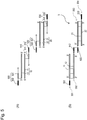
- the first target nucleic acid 11 forms first target nucleic acid 10 in a double-stranded form (double-stranded first target nucleic acid) together with first target nucleic acid-complementary strand 12 which is a complementary strand thereof.
- first target nucleic acid 11 and the first target nucleic acid-complementary strand 12 may be an object to be amplified and detected.
- the second target nucleic acid 21 forms double-stranded second target nucleic acid 20 together with second target nucleic acid-complementary strand 22 which is a complementary strand thereof.
- the third target nucleic acid 31 forms double-stranded third target nucleic acid 30 together with third target nucleic acid-complementary strand 32 which is a complementary strand thereof.
- Terminal primer A 100 comprises polynucleotide 101 comprising, in its 3'-terminal part, a nucleotide sequence that hybridizes to a 3'-terminal part of complementary sequence 12 (which refers to the nucleotide sequence of the first target nucleic acid-complementary strand 12) of first target sequence 11 (which refers to the nucleotide sequence of the first target nucleic acid 11).
- the terminal primer A 100 further has terminal primer A added moiety 102, in addition to the polynucleotide 101.
- the terminal primer A added moiety 102 is any one of the labeling part and the binding part.
- the first double-headed primer 110 comprises first polynucleotide 111 of the first double-headed primer and second polynucleotide 112 of the first double-headed primer which are two polynucleotides linked to each other at their 5' terminal sides.
- the first polynucleotide 111 of the first double-headed primer comprises, in its 3'-terminal part, a nucleotide sequence that hybridizes to a 3'-terminal part of the nucleotide sequence of the first target nucleic acid 11.
- the second polynucleotide 112 of the first double-headed primer comprises, in its 3'-terminal part, a nucleotide sequence that hybridizes to a 3'-terminal part of the nucleotide sequence of the complementary strand 22 of the second target nucleic acid 21.
- the second double-headed primer 120 comprises first polynucleotide 121 of the second double-headed primer and second polynucleotide 122 of the second double-headed primer which are two polynucleotides linked to each other at their 5' terminal sides.
- the first polynucleotide 121 of the second double-headed primer comprises, in its 3'-terminal part, a nucleotide sequence that hybridizes to a 3'-terminal part of the nucleotide sequence of the second target nucleic acid 21.
- the second polynucleotide 122 of the second double-headed primer comprises, in its 3'-terminal part, a nucleotide sequence that hybridizes to a 3'-terminal part of the nucleotide sequence of the complementary strand 32 of the third target nucleic acid 31.
- Terminal primer B 130 comprises polynucleotide 131 comprising, in its 3'-terminal part, a nucleotide sequence that hybridizes to a 3'-terminal part of the nucleotide sequence of the third target nucleic acid 31.
- the terminal primer B 130 further has terminal primer B added moiety 132 in addition to the polynucleotide 131.
- the terminal primer B added moiety 132 is any one of the labeling part and the binding part.
- nucleic acid amplification reaction is performed using the nucleic acids as a template in the presence of the primer set of the embodiment 1 comprising the terminal primer A 100, the first double-headed primer 110, the second double-headed primer 120 and the terminal primer B 130.
- the polynucleotide 101 of the terminal primer A 100 hybridizes to the 3'-terminal part of the first target nucleic acid-complementary strand 12 through denaturation and annealing.
- Extension reaction mediated by polymerase synthesizes amplified fragment 301 of the first target nucleic acid 11 linked at its 5' end to the terminal primer A added moiety 102.
- the first polynucleotide 111 of the first double-headed primer hybridizes to the 3'-terminal part of the first target nucleic acid 11 through denaturation and annealing.
- Extension reaction mediated by polymerase synthesizes an amplified fragment of the first target nucleic acid-complementary strand 12.
- This amplified fragment of the first target nucleic acid-complementary strand 12 is linked at its 5' end to the 5' end of an amplified fragment of the second target nucleic acid 21 synthesized by the extension of the second polynucleotide 112 of the first double-headed primer as mentioned later and integrally constitutes one amplified fragment 302.
- the second polynucleotide 112 of the first double-headed primer hybridizes to the 3'-terminal part of the second target nucleic acid-complementary strand 22 through denaturation and annealing.
- Extension reaction mediated by polymerase synthesizes an amplified fragment of the second target nucleic acid 21.
- This amplified fragment constitutes a portion of the amplified fragment 302 described above.
- the first polynucleotide 121 of the second double-headed primer hybridizes to the 3'-terminal part of the second target nucleic acid 21 through denaturation and annealing.
- Extension reaction mediated by polymerase synthesizes an amplified fragment of the second target nucleic acid-complementary strand 22.
- This amplified fragment of the second target nucleic acid-complementary strand 22 is linked at its 5' end to the 5' end of an amplified fragment of the third target nucleic acid 31 synthesized by the extension of the second polynucleotide 122 of the second double-headed primer as mentioned later and integrally constitutes one amplified fragment 303.
- the second polynucleotide 122 of the second double-headed primer hybridizes to the 3'-terminal part of the third target nucleic acid-complementary strand 32 through denaturation and annealing.
- Extension reaction mediated by polymerase synthesizes an amplified fragment of the third target nucleic acid 31. This amplified fragment constitutes a portion of the amplified fragment 303 described above.
- the polynucleotide 131 of the terminal primer B 130 hybridizes to the 3'-terminal part of the third target nucleic acid 31 through denaturation and annealing.
- Extension reaction mediated by polymerase synthesizes amplified fragment 304 of the third target nucleic acid-complementary strand 32 linked at its 5' end to the terminal primer B added moiety 132.
- nucleic acid amplification product 1 in which, as shown in Figure 3(C) , the double-stranded first target nucleic acid 10 containing the first target nucleic acid 11, the double-stranded second target nucleic acid 20 containing the second target nucleic acid 21, and the double-stranded third target nucleic acid 30 containing the third target nucleic acid 31 are linked in series, the terminal primer A added moiety 102 is linked at the 5'-terminal side of the first target nucleic acid 11, and the terminal primer B added moiety 132 is linked at the 5'-terminal side of the third target nucleic acid-complementary strand 32.
- the nucleic acid amplification product 1 can be immobilized onto a solid-phase support via the binding part contained in one of the terminal primer A added moiety 102 and the terminal primer B added moiety 132, and is detectable with the labeling part contained in the other added moiety as an index.
- the nucleic acid amplification product 1 is obtained only when all three of the first target nucleic acid 11 (or the first target nucleic acid-complementary strand 12), the second target nucleic acid 21 (or the second target nucleic acid-complementary strand 22), and the third target nucleic acid 31 (or the third target nucleic acid-complementary strand 32) are present in a template. If one or two of these target nucleic acids or complementary strands thereof are absent in a template, only the target nucleic acid or the complementary strand thereof present therein is amplified whereas a nucleic acid amplification product having both the binding part and the labeling part is not produced. Thus, negativity is obtained in detection using the labeling part as an index. Hence, the risk of determining false positivity is very low.
- N 3 and holds true for all the cases where N is 2 or more.
- nucleic acid amplification reaction using the primer set according to embodiment 1 of the present invention produces a nucleic acid amplification product comprising:
- N is an integer of 2 or larger
- k is an integer from 1 to N - 1.
- the structure of the linkage between the double-stranded nucleic acid containing the kth target nucleic acid and the double-stranded nucleic acid containing the (k + 1)th target nucleic acid is the same as the structure of the linkage between the two polynucleotides in the kth double-headed primer.
- Embodiment 2 of the primer set of the present invention relates to a primer set comprising:
- the terminal primer A and the terminal primer B, the labeling part and the binding part, and structures that link them are the same as in embodiment 1, so that the description will be omitted.
- the nucleotide sequence A k and the nucleotide sequence B k are not particularly limited by their lengths.
- Each of the lengths can be, for example, 8 bases or more, 12 bases or more, or 15 bases or more and can be 40 bases or less, 30 bases or less, or 25 bases or less.
- the polynucleotide comprising the nucleotide sequence A k and the nucleotide sequence B k can comprise the nucleotide sequence A k in its 3'-terminal part and comprise the nucleotide sequence B k upstream from the 5'-terminal base of the nucleotide sequence A k , and an additional nucleotide sequence may be further added to each of between the nucleotide sequence A k and the nucleotide sequence B k , and upstream from the nucleotide sequence B k .
- the full length of the polynucleotide contained in the kth reverse primer is not particularly limited and can be, for example 80 bases or less, 60 bases or less, or 50 bases or less.
- the polynucleotide constituting the kth reverse primer comprises the nucleotide sequence A k and the nucleotide sequence B k (and the additional nucleotide sequence described above, if present) in the same direction.
- the whole polynucleotide from the 5' end to the 3' end is capable of hybridizing to a polynucleotide comprising a complementary nucleotide sequence and has no configuration that inhibits polymerase reaction. Therefore, the polynucleotide constituting the kth reverse primer can be double-stranded as a whole by extension in nucleic acid amplification reaction.
- the nucleotide sequence C k + 1 and the nucleotide sequence D k + 1 are not particularly limited by their lengths.
- Each of the lengths can be, for example, 8 bases or more, 12 bases or more, or 15 bases or more and can be 40 bases or less, 30 bases or less, or 25 bases or less.
- the polynucleotide comprising the nucleotide sequence C k + 1 and the nucleotide sequence D k + 1 can comprise the nucleotide sequence C k + 1 in its 3'-terminal part and comprise the nucleotide sequence D k + 1 upstream from the 5'-terminal base of the nucleotide sequence C k + 1 , and an additional nucleotide sequence may be further added to each of between the nucleotide sequence C k + 1 and the nucleotide sequence D k + 1 , and upstream from the nucleotide sequence C k + 1 .
- the full length of the polynucleotide contained in the (k + 1)th forward primer is not particularly limited and can be, for example 80 bases or less, 60 bases or less, or 50 bases or less.
- the polynucleotide constituting the (k + 1)th forward primer comprises the nucleotide sequence C k + 1 and the nucleotide sequence D k + 1 (and the additional nucleotide sequence described above, if present) in the same direction.
- the whole polynucleotide from the 5' end to the 3' end is capable of hybridizing to a polynucleotide comprising a complementary nucleotide sequence and has no configuration that inhibits polymerase reaction. Therefore, the polynucleotide constituting the (k + 1)th forward primer can be double-stranded as a whole by extension in nucleic acid amplification reaction.
- nucleotide sequence B k of the kth reverse primer and the nucleotide sequence D k + 1 of the (k + 1)th forward primer are designed such that these nucleotide sequences are capable of hybridizing to each other.
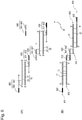
- Terminal primer A 200 comprises polynucleotide 201 comprising, in its 3'-terminal part, a nucleotide sequence that hybridizes to a 3'-terminal part of the nucleotide sequence of complementary strand 12 of the first target nucleic acid 11.
- the terminal primer A 200 further has terminal primer A added moiety 202 in addition to the polynucleotide 201.
- the terminal primer A added moiety 202 is any one of the labeling part and the binding part.
- the first reverse primer 210 comprises a polynucleotide which comprises, in its 3'-terminal part, nucleotide sequence A 1 211 (which refers to partial polynucleotide 211 comprising nucleotide sequence A 1 in the polynucleotide contained in the first reverse primer 210) that hybridizes to a 3'-terminal part of the nucleotide sequence of the first target nucleic acid 11 and further comprises nucleotide sequence B 1 212 (which refers to partial polynucleotide 212 comprising nucleotide sequence B 1 in the polynucleotide contained in the first reverse primer 210) at the 5'-terminal side of the nucleotide sequence A 1 211.
- nucleotide sequence A 1 211 which refers to partial polynucleotide 211 comprising nucleotide sequence A 1 in the polynucleotide contained in the first reverse primer 210 that hybridizes to a 3'-terminal part of the
- the second forward primer 220 comprises a polynucleotide which comprises, in its 3'-terminal part, nucleotide sequence C 2 221 (which refers to partial polynucleotide 221 comprising nucleotide sequence C 2 in the polynucleotide contained in the second forward primer 220) that hybridizes to a 3'-terminal part of the nucleotide sequence of complementary strand 22 of the second target nucleic acid 21 and further comprises nucleotide sequence D 2 222 (which refers to partial polynucleotide 222 comprising nucleotide sequence D 2 in the polynucleotide contained in the second forward primer 220) that hybridizes to the nucleotide sequence B 1 211 at the 5'-terminal side of the nucleotide sequence C 2 221.
- nucleotide sequence C 2 221 which refers to partial polynucleotide 221 comprising nucleotide sequence C 2 in the polynucleotide contained
- Terminal primer B 230 comprises polynucleotide 231 comprising, in its 3'-terminal part, a nucleotide sequence that hybridizes to a 3'-terminal part of the nucleotide sequence of the second target nucleic acid 21.
- the terminal primer B 230 further has terminal primer B added moiety 232 in addition to the polynucleotide 231.
- the terminal primer B added moiety 232 is any one of the labeling part and the binding part.
- nucleic acid amplification reaction is performed using the nucleic acids as a template in the presence of the primer set of the embodiment 2 comprising the terminal primer A 200, the first reverse primer 210, the second forward primer 220 and the terminal primer B 230.
- the polynucleotide 201 of the terminal primer A 200 hybridizes to the 3'-terminal part of the first target nucleic acid-complementary strand 12 through denaturation and annealing.
- Extension reaction mediated by polymerase synthesizes amplified fragment 401 of the first target nucleic acid 11 linked at its 5' end to the terminal primer A added moiety 202.
- the first reverse primer 210 hybridizes to the 3'-terminal part of the first target nucleic acid 11 through denaturation and annealing.
- Extension reaction mediated by polymerase synthesizes amplified fragment 402 containing the nucleotide sequence B 1 212 positioned in the 5'-terminal part and the first target nucleic acid-complementary strand 12 positioned at the 3'-terminal side thereof.
- the second forward primer 220 hybridizes to the 3'-terminal part of the second target nucleic acid-complementary strand 22 through denaturation and annealing.
- Extension reaction mediated by polymerase synthesizes amplified fragment 403 containing the nucleotide sequence D 2 222 positioned in the 5'-terminal part and the second target nucleic acid 21 positioned at the 3'-terminal side thereof.
- the polynucleotide 231 of the terminal primer B 230 hybridizes to the 3'-terminal part of the second target nucleic acid 21 through denaturation and annealing.
- Extension reaction mediated by polymerase synthesizes amplified fragment 404 of the second target nucleic acid-complementary strand 22 linked at its 5' end to the terminal primer B added moiety 232.
- the moiety of the first target nucleic acid 11 of the amplified fragment 401 hybridizes to the moiety of the first target nucleic acid-complementary strand 12 of the amplified fragment 402 through further denaturation and annealing.
- Extension reaction mediated by polymerase synthesizes amplified fragment 405 containing the nucleotide sequence D 2 222 positioned in the 3'-terminal part, the first target nucleic acid 11 positioned at the 5'-terminal side thereof, and the terminal primer A added moiety 202 linked to the 5' end.
- the moiety of the second target nucleic acid-complementary strand 22 of the amplified fragment 404 hybridizes to the moiety of the second target nucleic acid 21 of the amplified fragment 403.
- Extension reaction mediated by polymerase synthesizes amplified fragment 406 containing the nucleotide sequence B 1 212 positioned in the 3'-terminal part, the second target nucleic acid-complementary strand 22 positioned at the 5'-terminal side thereof, and the terminal primer B added moiety 232 linked to the 5' end.
- nucleotide sequence D 2 222 in the 3'-terminal part of the amplified fragment 405 and the nucleotide sequence B 1 212 in the 3'-terminal part of the amplified fragment 406 hybridize to each other through further denaturation and annealing.
- Subsequent extension reaction mediated by polymerase synthesizes the second target nucleic acid 21 originated from the 3' end of the amplified fragment 405 and synthesizes the first target nucleic acid-complementary strand 12 originated from the 3' end of the amplified fragment 406.
- amplified fragment 407 in which the nucleotide sequence of the first target nucleic acid 11, the nucleotide sequence D 2 222, and the nucleotide sequence of the second target nucleic acid 21 are disposed in this order from the 5' end to the 3' end
- amplified fragment 408 in which the nucleotide sequence of the complementary strand 22 of the second target nucleic acid 21, the nucleotide sequence B 1 212, and the nucleotide sequence of the complementary strand 12 of the first target nucleic acid 11 are disposed in this order from the 5' end to the 3' end hybridize to each other to form, as an amplification product, amplification product 2 containing the amplified fragment 407 linked at its 5' end to the terminal primer A added moiety 202 and the amplified fragment 408 linked at its 5' end to the terminal primer B added moiety 232.
- the nucleic acid amplification product 2 is obtained only when both two of the first target nucleic acid 11 (or the first target nucleic acid-complementary strand 12) and the second target nucleic acid 21 (or the second target nucleic acid-complementary strand 22) are present in a template. If one of these target nucleic acids or complementary strands thereof is absent in a template, only the target nucleic acid or the complementary strand thereof present therein is amplified whereas a nucleic acid amplification product having both the binding part and the labeling part is not produced. Thus, negativity is obtained in detection using the labeling part as an index. Hence, the risk of determining false positivity is very low.
- the hybridization between the amplified fragment 405 and the amplified fragment 406 shown in Figure 4(C) is less likely to proceed in the presence of an excess amount of the first reverse primer 210 or the second forward primer 220 in the reaction system. Therefore, it is preferred for the primer set of this embodiment to perform nucleic acid amplification reaction under conditions involving an increased molar ratio of the terminal primer A 200 and the terminal primer B 230 to the first reverse primer 210 and the second forward primer 220.
- N 2 and holds true for all the cases where N is 2 or more.
- nucleic acid amplification reaction using the primer set according to embodiment 2 of the present invention produces a nucleic acid amplification product comprising:
- N is an integer of 2 or larger.
- the first amplified fragment comprises nucleotide sequence D k + 1 of a (k + 1)th forward primer between the nucleotide sequence of a kth target nucleic acid and the nucleotide sequence of a (k + 1)th target nucleic acid.
- the second amplified fragment comprises nucleotide sequence B k of a kth reverse primer between the nucleotide sequence of a complementary strand of the kth target nucleic acid and the nucleotide sequence of a complementary strand of the (k + 1)th target nucleic acid.
- k is an integer from 1 to N - 1.
- Embodiment 3 of the primer set of the present invention relates to a primer set comprising:
- the terminal primer A and the terminal primer B, the labeling part and the binding part, and structures that link them are the same as in embodiment 1, so that the description will be omitted.
- the nucleotide sequence E k is not particularly limited by its length.
- the length can be, for example, 8 bases or more, 12 bases or more, or 15 bases or more and can be 40 bases or less, 30 bases or less, or 25 bases or less.
- the polynucleotide comprising the nucleotide sequence E k can comprise the nucleotide sequence E k in its 3'-terminal part and may further comprise an additional nucleotide sequence upstream from the nucleotide sequence E k .
- the full length of the polynucleotide comprising the nucleotide sequence E k is not particularly limited and can be, for example, 40 bases or less, 30 bases or less or 25 bases or less.
- the nucleotide sequence F k is not particularly limited by its length.
- the length can be, for example, 8 bases or more, 12 bases or more, or 15 bases or more and can be 40 bases or less, 30 bases or less, or 25 bases or less.
- the polynucleotide comprising the nucleotide sequence F k may further comprise an additional nucleotide sequence downstream and/or upstream from the nucleotide sequence F k .
- the full length of the polynucleotide comprising the nucleotide sequence F k is not particularly limited and can be, for example, 40 bases or less, 30 bases or less or 25 bases or less.
- the polynucleotide comprising the nucleotide sequence E k and the polynucleotide comprising the nucleotide sequence F k are configured so as not to double-strand the latter, together with the former, by extension in nucleic acid amplification reaction.
- a polynucleotide potentially capable of serving as a template in reaction mediated by DNA polymerase (usually, a polynucleotide consisting of natural nucleotides) may be used as the polynucleotide comprising the nucleotide sequence F k .
- the polynucleotide comprising the nucleotide sequence E k and the polynucleotide comprising the nucleotide sequence F k are linked to each other via a spacer that inhibits polymerase reaction.
- the structure already mentioned about the spacer that inhibits polymerase reaction between the polynucleotide and the labeling part or the binding part contained in the terminal primer A or B in embodiment 1 of the primer set can be adopted as such a "spacer".
- the polynucleotide comprising the nucleotide sequence E k and the polynucleotide comprising the nucleotide sequence F k can be linked in one direction.
- a polynucleotide that neither serves as a template in reaction mediated by DNA polymerase nor is double-stranded by extension in nucleic acid amplification reaction (such as, for example, a polynucleotide containing a modified nucleic acid such as LNA (locked nucleic acid), a nucleic acid in a L form, or a 2'-O-methylated nucleotide) may be used as the polynucleotide comprising the nucleotide sequence F k .
- the spacer described above that inhibits polymerase reaction may be omitted.
- the nucleotide sequence G k + 1 is not particularly limited by its length.
- the length can be, for example, 8 bases or more, 12 bases or more, or 15 bases or more and can be 40 bases or less, 30 bases or less, or 25 bases or less.
- the polynucleotide comprising the nucleotide sequence G k + 1 can comprise the nucleotide sequence G k + 1 in its 3'-terminal part and may further comprise an additional nucleotide sequence upstream from the nucleotide sequence G k + 1 .
- the full length of the polynucleotide comprising the nucleotide sequence G k + 1 is not particularly limited and can be, for example, 40 bases or less, 30 bases or less or 25 bases or less.
- the nucleotide sequence H k + 1 is not particularly limited by its length.
- the length can be, for example, 8 bases or more, 12 bases or more, or 15 bases or more and can be 40 bases or less, 30 bases or less, or 25 bases or less.
- the polynucleotide comprising the nucleotide sequence H k + 1 may further comprise an additional nucleotide sequence downstream and/or upstream from the nucleotide sequence H k + 1 .
- the full length of the polynucleotide comprising the nucleotide sequence H k + 1 is not particularly limited and can be, for example, 40 bases or less, 30 bases or less or 25 bases or less.
- the polynucleotide comprising the nucleotide sequence G k + 1 and the polynucleotide comprising the nucleotide sequence H k + 1 are configured so as not to double-strand the latter, together with the former, by extension in nucleic acid amplification reaction.
- a polynucleotide potentially capable of serving as a template in reaction mediated by DNA polymerase (usually, a polynucleotide consisting of natural nucleotides) may be used as the polynucleotide comprising the nucleotide sequence H k + 1 .
- the polynucleotide comprising the nucleotide sequence G k + 1 and the polynucleotide comprising the nucleotide sequence H k + 1 are linked to each other via a spacer that inhibits polymerase reaction.
- the structure already mentioned about the spacer that inhibits polymerase reaction between the polynucleotide and the labeling part or the binding part contained in the terminal primer A or B in embodiment 1 of the primer set can be adopted as such a "spacer".
- the polynucleotide comprising the nucleotide sequence G k + 1 and the polynucleotide comprising the nucleotide sequence H k + 1 can be linked in one direction.
- a polynucleotide that neither serves as a template in reaction mediated by DNA polymerase nor is double-stranded by extension in nucleic acid amplification reaction may be used as the polynucleotide comprising the nucleotide sequence H k + 1 .
- the spacer described above that inhibits polymerase reaction may be omitted.
- the nucleotide sequence F k of the kth reverse primer and the nucleotide sequence H k + 1 of the (k + 1)th forward primer can be appropriately designed so as to hybridize mutually and not to inhibit nucleic acid amplification with each primer contained in the primer set.
- Terminal primer A 500 comprises polynucleotide 501 comprising, in its 3'-terminal part, a nucleotide sequence that hybridizes to a 3'-terminal part of the nucleotide sequence of complementary strand 12 of the first target nucleic acid 11.
- the terminal primer A 500 further has terminal primer A added moiety 502 in addition to the polynucleotide 501.
- the terminal primer A added moiety 502 is any one of the labeling part and the binding part.
- the first reverse primer 510 comprises polynucleotide 511 comprising, in its 3'-terminal part, nucleotide sequence E 1 that hybridizes to a 3'-terminal part of the nucleotide sequence of the first target nucleic acid, and polynucleotide 512 which is linked at the 5'-terminal side of the polynucleotide 511 comprising the nucleotide sequence E 1 and comprises nucleotide sequence F 1 .
- the second forward primer 520 comprises polynucleotide 521 comprising, in its 3'-terminal part, nucleotide sequence G 2 that hybridizes to a 3'-terminal part of complementary sequence 22 of the nucleotide sequence of the second target nucleic acid 21, and polynucleotide 522 which is linked at the 5'-terminal side of the polynucleotide 521 comprising the nucleotide sequence G 2 and comprises nucleotide sequence H 2 that hybridizes to the nucleotide sequence F 1 .
- Terminal primer B 530 comprises polynucleotide 531 comprising, in its 3'-terminal part, a nucleotide sequence that hybridizes to a 3'-terminal part of the nucleotide sequence of the second target nucleic acid 21.
- the terminal primer B 530 further has terminal primer B added moiety 532 in addition to the polynucleotide 531.
- the terminal primer B added moiety 532 is any one of the labeling part and the binding part.
- nucleic acid amplification reaction is performed using the nucleic acids as a template in the presence of the primer set of the embodiment 3 comprising the terminal primer A 500, the first reverse primer 510, the second forward primer 520 and the terminal primer B 530.
- the polynucleotide 501 of the terminal primer A 500 hybridizes to the 3'-terminal part of the first target nucleic acid-complementary strand 12 through denaturation and annealing.
- Extension reaction mediated by polymerase synthesizes amplified fragment 551 of the first target nucleic acid 11 linked at its 5' end to the terminal primer A added moiety 502.
- the polynucleotide 511 comprising the nucleotide sequence E 1 in the first reverse primer 510 hybridizes to the 3'-terminal part of the first target nucleic acid 11 through denaturation and annealing.
- Extension reaction mediated by polymerase synthesizes amplified fragment 552 of the first target nucleic acid-complementary strand 12 linked at its 5'-terminal side to the polynucleotide 512 comprising the nucleotide sequence F 1 .
- the polynucleotide 521 comprising the nucleotide sequence G 2 in the second forward primer 520 hybridizes to the 3'-terminal part of the second target nucleic acid-complementary strand 22 through denaturation and annealing.
- Extension reaction mediated by polymerase synthesizes amplified fragment 553 of the second target nucleic acid 21 linked at its 5'-terminal side to the polynucleotide 522 comprising the nucleotide sequence H 2 .
- the polynucleotide 531 of the terminal primer B 530 hybridizes to the 3'-terminal part of the second target nucleic acid 21 through denaturation and annealing.
- Extension reaction mediated by polymerase synthesizes amplified fragment 554 of the second target nucleic acid-complementary strand 22 linked at its 5' end to the terminal primer B added moiety 532.
- nucleic acid amplification product 3 in which the moiety of the first target nucleic acid 11 of the amplified fragment 551 and the moiety of the first target nucleic acid-complementary strand 12 of the amplified fragment 552 are hybridized to each other, the moiety of the polynucleotide 512 comprising the nucleotide sequence F 1 in the amplified fragment 552 and the moiety of the polynucleotide 522 comprising the nucleotide sequence H 2 in the amplified fragment 553 are hybridized to each other, and the moiety of the second target nucleic acid 21 of the amplified fragment 553 and the moiety of the second target nucleic acid-complementary strand 22 of the amplified fragment 554 are hybridized to each other.
- the nucleic acid amplification product 3 is obtained only when both two of the first target nucleic acid 11 (or the first target nucleic acid-complementary strand 12) and the second target nucleic acid 21 (or the second target nucleic acid-complementary strand 22) are present in a template. If one of these target nucleic acids or complementary strands thereof is absent in a template, only the target nucleic acid or the complementary strand thereof present therein is amplified whereas a nucleic acid amplification product having both the binding part and the labeling part is not produced. Thus, negativity is obtained in detection using the labeling part as an index. Hence, the risk of determining false positivity is very low.
- the hybridization among the amplified fragments 551 to 554 shown in Figure 5(B) is less likely to proceed in the presence of an excess amount of the first reverse primer 510 or the second forward primer 520 in the reaction system. Therefore, it is preferred for the primer set of this embodiment to perform nucleic acid amplification reaction under conditions involving an increased molar ratio of the terminal primer A 500 and the terminal primer B 530 to the first reverse primer 510 and the second forward primer 520.
- N 2 and holds true for all the cases where N is 2 or more.
- the nucleic acid amplification reaction using the primer set according to embodiment 3 of the present invention produces a nucleic acid amplification product comprising double-stranded amplified fragments of target nucleic acids from a first target nucleic acid to a Nth target nucleic acid hybridized to their respective complementary strands, wherein a single-stranded polypeptide is linked at the 5'-terminal side of each of the target nucleic acids from the second target nucleic acid to the Nth target nucleic acid, a single-stranded polypeptide is linked at the 5'-terminal side of each of complementary strands of the target nucleic acids from the first target nucleic acid to the (N - 1)th target nucleic acid, the single-stranded polypeptide linked at the 5'-terminal side of a complementary strand of a kth target nucleic acid in the double-stranded amplified fragment of the kth target nucleic acid and the single-stranded polypeptide linked
- Embodiment 4 of the primer set of the present invention relates to a primer set comprising:
- the terminal primer A and the terminal primer B, the labeling part and the binding part, and structures that link them are the same as in embodiment 1, so that the description will be omitted.
- the nucleotide sequence I k is not particularly limited by its length.
- the length can be, for example, 8 bases or more, 12 bases or more, or 15 bases or more and can be 40 bases or less, 30 bases or less, or 25 bases or less.
- the polynucleotide comprising the nucleotide sequence I k can comprise the nucleotide sequence I k in its 3'-terminal part and may further comprise an additional nucleotide sequence upstream from the nucleotide sequence I k .
- the full length of the polynucleotide comprising the nucleotide sequence I k is not particularly limited and can be, for example, 40 bases or less, 30 bases or less or 25 bases or less.
- the nucleotide sequence J k is not particularly limited by its length.
- the length can be, for example, 8 bases or more, 12 bases or more, or 15 bases or more and can be 40 bases or less, 30 bases or less, or 25 bases or less.
- the polynucleotide comprising the nucleotide sequence J k may further comprise an additional nucleotide sequence downstream and/or upstream from the nucleotide sequence J k .
- the full length of the polynucleotide comprising the nucleotide sequence J k is not particularly limited and can be, for example, 40 bases or less, 30 bases or less or 25 bases or less.
- the polynucleotide comprising the nucleotide sequence I k and the polynucleotide comprising the nucleotide sequence J k are configured so as not to double-strand the latter, together with the former, by extension in nucleic acid amplification reaction.
- a polynucleotide potentially capable of serving as a template in reaction mediated by DNA polymerase (usually, a polynucleotide consisting of natural nucleotides) may be used as the polynucleotide comprising the nucleotide sequence J k .
- the polynucleotide comprising the nucleotide sequence I k and the polynucleotide comprising the nucleotide sequence J k are linked to each other via a spacer that inhibits polymerase reaction.
- the structure already mentioned about the spacer that inhibits polymerase reaction between the polynucleotide and the labeling part or the binding part contained in the terminal primer A or B in embodiment 1 of the primer set can be adopted as such a "spacer".
- the polynucleotide comprising the nucleotide sequence I k and the polynucleotide comprising the nucleotide sequence J k can be linked in one direction.
- a polynucleotide that neither serves as a template in reaction mediated by DNA polymerase nor is double-stranded by extension in nucleic acid amplification reaction (such as, for example, a polynucleotide containing a modified nucleic acid such as LNA (locked nucleic acid), a nucleic acid in a L form, or a 2'-O-methylated nucleotide) may be used as the polynucleotide comprising the nucleotide sequence J k .
- the spacer described above that inhibits polymerase reaction may be omitted.
- the nucleotide sequence L k + 1 is not particularly limited by its length.
- the length can be, for example, 8 bases or more, 12 bases or more, or 15 bases or more and can be 40 bases or less, 30 bases or less, or 25 bases or less.
- the polynucleotide comprising the nucleotide sequence L k + 1 can comprise the nucleotide sequence L k + 1 in its 3'-terminal part and may further comprise an additional nucleotide sequence upstream from the nucleotide sequence L k + 1 .
- the full length of the polynucleotide comprising the nucleotide sequence L k + 1 is not particularly limited and can be, for example, 40 bases or less, 30 bases or less or 25 bases or less.
- the nucleotide sequence M k + 1 is not particularly limited by its length.
- the length can be, for example, 8 bases or more, 12 bases or more, or 15 bases or more and can be 40 bases or less, 30 bases or less, or 25 bases or less.
- the polynucleotide comprising the nucleotide sequence M k + 1 may further comprise an additional nucleotide sequence downstream and/or upstream from the nucleotide sequence M k + 1 .
- the full length of the polynucleotide comprising the nucleotide sequence M k + 1 is not particularly limited and can be, for example, 40 bases or less, 30 bases or less or 25 bases or less.
- the polynucleotide comprising the nucleotide sequence L k + 1 and the polynucleotide comprising the nucleotide sequence M k + 1 are configured so as not to double-strand the latter, together with the former, by extension in nucleic acid amplification reaction.
- a polynucleotide potentially capable of serving as a template in reaction mediated by DNA polymerase (usually, a polynucleotide consisting of natural nucleotides) may be used as the polynucleotide comprising the nucleotide sequence M k + 1 .
- the polynucleotide comprising the nucleotide sequence L k + 1 and the polynucleotide comprising the nucleotide sequence M k + 1 are linked to each other via a spacer that inhibits polymerase reaction.
- the structure already mentioned about the spacer that inhibits polymerase reaction between the polynucleotide and the labeling part or the binding part contained in the terminal primer A or B in embodiment 1 of the primer set can be adopted as such a "spacer".
- the polynucleotide comprising the nucleotide sequence L k + 1 and the polynucleotide comprising the nucleotide sequence M k + 1 can be linked in one direction.
- a polynucleotide that neither serves as a template in reaction mediated by DNA polymerase nor is double-stranded by extension in nucleic acid amplification reaction may be used as the polynucleotide comprising the nucleotide sequence M k + 1 .
- the spacer described above that inhibits polymerase reaction may be omitted.
- the polynucleotide comprising a nucleotide sequence that hybridizes to the nucleotide sequence J k may further comprise an additional nucleotide sequence at the 5'-terminal and/or 3'-terminal side of the nucleotide sequence that hybridizes to the nucleotide sequence J k .
- the polynucleotide comprising a nucleotide sequence that hybridizes to the nucleotide sequence M k + 1 may further comprise an additional nucleotide sequence at the 5'-terminal and/or 3'-terminal side of the nucleotide sequence that hybridizes to the nucleotide sequence M k + 1 .
- the polynucleotide comprising a nucleotide sequence that hybridizes to the nucleotide sequence J k and the polynucleotide comprising a nucleotide sequence that hybridizes to the nucleotide sequence M k + 1 , contained in the kth linking polynucleotide may be one polynucleotide molecule without mediation or may be linked via an appropriate chemical structure that intervenes therebetween.
- the structure already mentioned about the structure between the polynucleotide and the labeling part or the binding part contained in the terminal primer A or B in embodiment 1 of the primer set can be adopted as such a chemical structure.
- the kth linking polynucleotide has a structure that does not serve as a template in reaction mediated by DNA polymerase.
- the polynucleotide comprising a nucleotide sequence that hybridizes to the nucleotide sequence J k and the polynucleotide comprising a nucleotide sequence that hybridizes to the nucleotide sequence M k + 1 may be linked to each other at their 3'-terminal sides.
- one or both of the polynucleotide comprising a nucleotide sequence that hybridizes to the nucleotide sequence J k and the polynucleotide comprising a nucleotide sequence that hybridizes to the nucleotide sequence M k + 1 may be constituted by a polynucleotide that neither serves as a template in reaction mediated by DNA polymerase nor is double-stranded by extension in nucleic acid amplification reaction (such as, for example, a polynucleotide containing a modified nucleic acid such as LNA (locked nucleic acid), a nucleic acid in a L form, or a 2'-O-methylated nucleotide).
- a polynucleotide that neither serves as a template in reaction mediated by DNA polymerase nor is double-stranded by extension in nucleic acid amplification reaction such as, for example, a polynucleotide containing a modified nucleic acid
- the nucleotide sequence J k of the kth reverse primer, the nucleotide sequence M k + 1 of the (k + 1)th forward primer, and the nucleotide sequences that hybridize to these nucleotide sequences, contained in the kth linking polynucleotide can be appropriately designed so as not to inhibit nucleic acid amplification with each primer contained in the primer set.
- Terminal primer A 600 has polynucleotide 601 comprising, in its 3'-terminal part, a nucleotide sequence that hybridizes to a 3'-terminal part of the nucleotide sequence of complementary strand 12 of the first target nucleic acid 11, and terminal primer A added moiety 602.
- the first reverse primer 610 comprises polynucleotide 611 comprising nucleotide sequence I 1 in its 3'-terminal part and polynucleotide 612 which is linked at the 5'-terminal side of the polynucleotide 611 and comprises nucleotide sequence J 1 .
- the second forward primer 620 comprises polynucleotide 621 comprising nucleotide sequence L 2 in its 3'-terminal part and polynucleotide 622 which is linked at the 5'-terminal side of the polynucleotide 621 and comprises nucleotide sequence M 2 .
- Terminal primer B 630 has polynucleotide 631 comprising, in its 3'-terminal part, a nucleotide sequence that hybridizes to a 3'-terminal part of the nucleotide sequence of the second target nucleic acid 21, and terminal primer B added moiety 632.
- the first linking polynucleotide 640 comprises polynucleotide 641 comprising a nucleotide sequence that hybridizes to the polynucleotide 612 comprising the nucleotide sequence J 1 , and polynucleotide 642 comprising a nucleotide sequence that hybridizes to the polynucleotide 622 comprising the nucleotide sequence M 2 .
- nucleic acid amplification reaction is performed using the nucleic acids as a template in the presence of the primer set of the embodiment 4 comprising the terminal primer A 600, the first reverse primer 610, the second forward primer 620 and the terminal primer B 630.
- amplified fragment 651 of the first target nucleic acid 11 linked at its 5' end to the terminal primer A added moiety 602 is synthesized from the terminal primer A 600.
- Amplified fragment 652 of the first target nucleic acid-complementary strand 12 linked at its 5'-terminal side to the polynucleotide 612 comprising the nucleotide sequence J 1 is synthesized from the first reverse primer 610.
- Amplified fragment 653 of the second target nucleic acid 21 linked at its 5'-terminal side to the polynucleotide 622 comprising the nucleotide sequence M 2 is synthesized from the second forward primer 620.
- Amplified fragment 654 of the second target nucleic acid-complementary strand 22 linked at its 5' end to the terminal primer B added moiety 632 is synthesized from the terminal primer B 630.
- the first linking polynucleotide 640 is not directly involved in the nucleic acid amplification reaction.
- nucleic acid amplification product 4 in which the moiety of the first target nucleic acid 11 of the amplified fragment 651 and the moiety of the first target nucleic acid-complementary strand 12 of the amplified fragment 652 are hybridized to each other, the moiety of the polynucleotide 612 of the amplified fragment 652 and the moiety of the polypeptide 641 of the first linking polynucleotide 640 are hybridized to each other, the moiety of the polypeptide 642 of the first linking polynucleotide 640 and the moiety of the polynucleotide 622 of the amplified fragment 653 are hybridized to each other, and the moiety of the second target nucleic acid 21 of the amplified fragment 653 and the moiety of the second target nucleic acid-complementary strand 22 of the amplified fragment 654
- the nucleic acid amplification product 4 is obtained only when both two of the first target nucleic acid 11 (or the first target nucleic acid-complementary strand 12) and the second target nucleic acid 21 (or the second target nucleic acid-complementary strand 22) are present in a template. If one of these target nucleic acids or complementary strands thereof is absent in a template, only the target nucleic acid or the complementary strand thereof present therein is amplified whereas a nucleic acid amplification product having both the binding part and the labeling part is not produced. Thus, negativity is obtained in detection using the labeling part as an index. Hence, the risk of determining false positivity is very low.
- the hybridization among the amplified fragments 651 to 654 and the first linking polynucleotide 640 shown in Figure 6(B) is less likely to proceed in the presence of an excess amount of the first reverse primer 610 or the second forward primer 620 in the reaction system. Therefore, it is preferred for the primer set of this embodiment to perform nucleic acid amplification reaction under conditions involving an increased molar ratio of the terminal primer A 600 and the terminal primer B 630 to the first reverse primer 610 and the second forward primer 620.
- the kth linking polynucleotide is not directly involved in the nucleic acid amplification reaction and may therefore be added into the reaction system after the nucleic acid amplification reaction, followed by the denaturation and annealing of the reaction system.
- N 2 and holds true for all the cases where N is 2 or more.
- nucleic acid amplification reaction using the primer set according to embodiment 4 of the present invention produces a nucleic acid amplification product comprising:
- N is an integer of 2 or larger
- k is an integer of 1 to N - 1.
- the present invention also relates to a method for detecting two or more target nucleic acids, the method comprising a detection step of contacting a sample for detection possibly comprising a nucleic acid for detection comprising the two or more target nucleic acids, a labeling part which is a labeling agent or is a tag capable of binding to a labeling agent, and a binding part which is a tag capable of binding to a solid-phase support, linked to each other, with a solid-phase support at least partially comprising a moiety capable of binding to the binding part, and detecting the nucleic acid for detection at the moiety of the solid-phase support with the labeling part as an index.
- a nucleic acid comprising the two or more target nucleic acids, the labeling part, and the binding part linked to each other is used as a nucleic acid for detection.
- a sample for detection possibly comprising the nucleic acid for detection is contacted with a solid-phase support at least partially comprising a moiety capable of binding to the binding part.
- the nucleic acid for detection at the moiety of the solid-phase support is detected with the labeling part as an index.
- the nucleic acid for detection at the moiety of the solid-phase support can be detected on the basis of the presence or absence of the labeling part at the moiety.
- the identification performance is much higher than that of the method which involves contacting a mixture of two or more target nucleic acids each bound with a binding part and a labeling part with one solid-phase support containing a plurality of binding sites according to each binding part.
- two or more target nucleic acids are included in one nucleic acid for detection.
- one site binding to the binding part can be disposed on a solid-phase support.
- another advantage is that the configuration of the solid-phase support can be simplified.
- the nucleic acid for detection preferably comprises two or more target nucleic acids linked in series, the labeling part linked at one of both ends of the line of the two or more target nucleic acids, and the binding part linked at the other end.
- the labeling part and the binding part can coexist in one nucleic acid only when all the predetermined two or more target sequences are contained therein.
- Figures 1 /B1 to 1/B3 if the two or more target nucleic acids are absent, the label ascribable to the labeling part is not detected on the solid-phase support. Hence, the risk of false positivity can be reduced.
- the detection method of the present invention is more preferably the method for detecting two or more target nucleic acids, further comprising a sample-for-detection preparation step of preparing the sample for detection possibly comprising the nucleic acid for detection by nucleic acid amplification reaction using a nucleic acid obtained from a sample to be analyzed as a template, wherein in the detection step, a product of the nucleic acid amplification reaction obtained in the sample-for-detection preparation step is used as the sample for detection.
- the nucleic acid for detection is a nucleic acid amplification product of the nucleic acid amplification reaction.
- the sample-for-detection preparation step comprises performing nucleic acid amplification reaction using a nucleic acid obtained from a sample to be analyzed as a template and a primer set according to each embodiment of the present invention.
- the nucleic acid for detection comprising target nucleic acids from a first target nucleic acid to a Nth target nucleic acid linked in series, the labeling part linked at one of both ends of the line of the two or more target nucleic acids, and the binding part linked at the other end can be obtained as a nucleic acid amplification product when all of the first target nucleic acid to the Nth target nucleic acid are contained in the nucleic acid serving as a template.
- the product of the nucleic acid amplification reaction neither comprises the nucleic acid for detection nor comprises a nucleic acid species comprising both the labeling part and the binding part.
- the product of the nucleic acid amplification reaction neither comprises the nucleic acid for detection nor comprises a nucleic acid species comprising both the labeling part and the binding part.
- Figures 1 /B1 to 1/B3 if one or two of target nucleic acid A, target nucleic acid B, and target nucleic acid C are absent, the label ascribable to the labeling part is not detected on the solid-phase support. Hence, the risk of false positivity can be reduced.
- examples of the sample to be analyzed typically include, but are not particularly limited to, samples containing food or drink, a portion (organs, tissues, cells, blood, body fluids, etc.) of organisms such as animals and plants, feces, microbes, viruses or the like.
- a nucleic acid obtained from the sample to be analyzed can be used as a template in nucleic acid amplification reaction.
- the nucleic acid may be in a form extracted from the sample to be analyzed and purified, or may be in a form extracted from the sample to be analyzed and partially purified.
- a sample containing the nucleic acid at a relatively high concentration, such as a portion of a cell or a tissue may be directly involved as the sample to be analyzed itself in nucleic acid amplification reaction.
- cDNA prepared from the sample to be analyzed is available as a template.
- the nucleic acid for use as a template is preferably DNA.
- sample-for-detection preparation step of performing nucleic acid amplification reaction using a nucleic acid obtained from a sample to be analyzed as a template and the primer set of the present invention mentioned above will be described below.
- the nucleic acid amplification reaction can be performed in accordance with polymerase chain reaction (PCR). Specifically, PCR using the primer set of the present invention for a template nucleic acid containing target nucleic acids can be performed under PCR conditions that yield the desired nucleic acid amplification product. Alternatively, nucleic acid amplification reaction other than PCR may be used, if appropriate.
- PCR polymerase chain reaction
- the DNA polymerase for use in PCR can be any thermostable DNA polymerase and is not particularly limited.
- commercially available DNA polymerase can be used.
- TaKaRa Ex Taq(R) can be suitably used.
- Temperature, time, the composition of a buffer solution, etc. can be appropriately selected according to the DNA polymerase used, the concentration of each primer, etc.
- Hot start PCR is useful because this method can be expected to be effective for suppressing primer dimer formation.
- the hot start PCR can be performed using a commercially available reagent for hot start PCR, such as TaKaRa Ex Taq(R) Hot Start Version (Takara Bio Inc.).
- TaKaRa Taq HS PCR Kit, UNG plus(R) may be used. Use of this kit can be expected to be also effective for suppressing carry-over contamination of a nucleic acid amplification product.
- Each condition such as time, temperature, buffer solution composition, dNTP concentration, or the number of cycles, for each step of denaturation, annealing, and extension in PCR can be appropriately set in consideration of factors such as the selected DNA polymerase, the primer sequences, the numbers of bases in the target nucleic acids, and template concentration.
- the number of cycles in PCR is not particularly limited and is within the range of, for example, 25 to 60 cycles.
- Each primer concentration in the reaction system at the start of PCR is not particularly limited and can be appropriately adjusted according to the amount of the nucleic acid serving as a template, etc.
- Preferred examples of the primer concentration in the reaction system at the start of reaction include concentrations of 0.05 ⁇ M or higher and 1.0 ⁇ M or lower of each primer.
- a primer concentration of lower than 0.05 ⁇ M might reduce detection sensitivity, causing reduction in reference detection sensitivity.
- the upper limit of the primer concentration is not particularly limited and is preferably 1.0 ⁇ M.
- nucleic acid amplification products 1 to 4 described above are formed as amplification products in the reaction systems when the target nucleic acids are present in the template nucleic acids.
- nucleic acid amplification reaction can be performed under the conditions described above using two or more primer sets of the present invention and a nucleic acid obtained from a sample to be analyzed as a template, wherein the two or more primer sets are designed so as to be able to produce two or more nucleic acids for detection each comprising a different combination of the two or more target nucleic acids and each having the binding part capable of binding to a distinct position of the solid-phase support.
- the detection step described below involves contacting the sample for detection obtained in the nucleic acid amplification reaction with the solid-phase support, and detecting each of the two or more nucleic acids for detection in the solid-phase support with the labeling part as an index.
- the detection step is the step of contacting a sample for detection such as a product of nucleic acid amplification reaction in the sample-for-detection preparation step with a solid-phase support at least partially comprising a moiety capable of binding to the binding part, and detecting the nucleic acid for detection at the moiety of the solid-phase support with the labeling part as an index.
- the product of nucleic acid amplification reaction refers to, for example, a reaction solution for nucleic acid amplification reaction possibly containing the nucleic acid for detection as an amplification product, or a sample prepared from the reaction solution so as to have a increased concentration of the amplification product.
- the labeling part is the tag for labeling mentioned above
- a labeling step of binding a labeling agent to the tag for labeling can be further performed.
- the labeling step is unnecessary.
- the phrase "with the labeling part as an index" means that, when the labeling part is the tag for labeling, the nucleic acid for detection is detected by using the labeling agent bound through the labeling step as an index, and means that, when the labeling part is the labeling agent, the nucleic acid for detection is detected by using the labeling agent as an index.
- the solid-phase support is as already mentioned in detail.
- the contact of the sample for detection with the moiety capable of binding to the binding part, in the solid-phase support can be performed according to the combination of the solid-phase support and the binding part under conditions appropriately adjusted (e.g., the hybridization conditions mentioned in detail about the binding part, or buffer solution conditions on the order of pH 5 to 9) such that the binding part of the nucleic acid for detection binds to the moiety when the nucleic acid for detection is contained in the sample for detection.
- conditions appropriately adjusted e.g., the hybridization conditions mentioned in detail about the binding part, or buffer solution conditions on the order of pH 5 to 9
- the detection of the nucleic acid for detection can be performed by detecting, preferably visually detecting the labeling agent bound with the nucleic acid for detection captured on the solid-phase support.
- the labeling agent of the nucleic acid for detection captured and bound on the solid-phase support is detected in the presence of the nucleic acid for detection.
- the presence or absence of the nucleic acid for detection in the sample for detection can be identified with the presence or absence of the detection as an index.
- the sample for detection is a product of nucleic acid amplification reaction in the sample-for-detection preparation step
- the presence or absence of the two or more target nucleic acids in the sample to be analyzed can be identified with the presence or absence of the detection as an index.
- the labeling step is a step that is performed when the labeling part contained in the nucleic acid for detection is the tag for labeling mentioned above. This step is performed by contacting the sample for detection with a labeling agent to bind the labeling agent to the tag for labeling.
- the labeling step may be performed before the contact of the sample for detection with the solid-phase support, may be performed after the contact, or may be performed at the same time with the contact.
- the contact of the sample for detection with the labeling agent can be performed according to the combination of the labeling agent and the tag for labeling under conditions appropriately adjusted (e.g., the hybridization conditions described about the binding part, or buffer solution conditions on the order of pH 5 to 9) such that the labeling agent binds to the tag for labeling in the sample for detection when the target nucleic acids are contained in the sample for detection.
- conditions appropriately adjusted e.g., the hybridization conditions described about the binding part, or buffer solution conditions on the order of pH 5 to 9
- the present invention also provides a kit for detecting two or more target nucleic acids in a sample to be analyzed, the kit comprising: the primer set of the present invention; and a solid-phase support at least partially comprising a moiety capable of binding to the binding part.
- the kit can be used in the detection method of the present invention.
- the kit of the present invention can further comprise a labeling agent.
- the solid-phase support and the labeling agent can be in the form of a nucleic acid detection device mentioned later.
- the kit of the present invention can further comprise a buffer solution for PCR, dNTPs, DNA polymerase, a nucleic acid chromatography developing solution, and the like.
- the detection step and the labeling step mentioned above can be performed using a nucleic acid detection device through the use of nucleic acid chromatography.
- the nucleic acid detection device By use of the nucleic acid detection device, the presence or absence of the nucleic acid for detection in the sample for detection can be detected and identified without the need of a special apparatus, and results can be obtained conveniently and rapidly.
- the nucleic acid detection device can employ a known nucleic acid detection device ( WO2012/070618 ) that is used for detecting the labeled nucleic acid for detection by nucleic acid chromatography.
- Figure 7 shows a schematic diagram of one embodiment of the nucleic acid detection device available in the present invention.
- the nucleic acid detection device is not limited by this embodiment.
- a reference numeral on each member corresponds to the reference numeral in Figure 7 .
- Nucleic acid detection device 700 of Figure 7 is formed by disposing, on substrate75, sample pad 73 which is a reaction system reception part for receiving the sample for detection, conjugate pad 72 which retains a labeling agent, porous solid-phase support 71 partially comprising moiety 76 capable of binding to the binding part contained in the nucleic acid for detection, and absorption pad 74, in contact with each other in this order.
- the moiety 76 of the solid-phase support 71 is a moiety in which a unit for capturing the nucleic acid for detection (capture unit) (e.g., the oligonucleotide described above) is disposed and immobilized in a localized manner.
- the sample pad 73, the conjugate pad 72, the solid-phase support 71 and the absorption pad 74 can each be constituted by a member having a porous structure available as the solid-phase support described above. These components may be constituted by the same member or may be constituted by different members.
- the substrate 75 can be any substrate that can support various members disposed thereon and facilitates the operation of the nucleic acid detection device. For example, a substrate made of a resin, a metal, a mineral, or the like can be used.
- the conjugate pad 72 can be omitted.
- the nucleic acid detection device 700 may be partially covered with a polyester film or the like in order to prevent contamination or prevent liquid volatilization from solid-phase support surface during tests.
- the sample for detection such as a reaction system of nucleic acid amplification reaction obtained by the nucleic acid amplification step is added to the sample pad 73.
- the reaction system may be added directly as the sample for detection or may be added together with an appropriate developing solution (e.g., a phosphate buffer solution, a Tris buffer solution, a Good's buffer solution, or a SSC buffer solution).
- the developing solution can further contain, if necessary, a surfactant, a salt, a protein, a nucleic acid, or the like.
- the sample for detection added to the sample pad 73 develops by a capillary phenomenon from upstream toward downstream in the direction indicated by the arrow in Figure 7 .
- the development can also be performed by a method of dipping the sample pad 73 of the nucleic acid detection device in the sample for detection and/or the developing solution in a container (e.g., a PCR tube, an Eppendorf tube, or a 96-well plate) retaining the sample for detection and/or the developing solution.
- a container e.g., a PCR tube, an Eppendorf tube, or a 96-well plate
- the width of the sample pad 73 is preferably 2.0 to 10.0 mm, more preferably 2.0 to 5.0 mm, such that the sample pad 73 can be placed in the container retaining the sample for detection and/or the developing solution.
- the sample pad 73 can be omitted from the nucleic acid detection device 700 illustrated in Figure 7 .
- the conjugate pad 72 can also be omitted, if unnecessary, for example, when the labeling agent is used as the labeling part.
- This nucleic acid detection device can assume a form in which the end part, on the side where the absorption pad 74 is not disposed, of the solid-phase support 71 on the substrate 75 is dipped directly in the sample for detection and/or the developing solution.
- the nucleic acid for detection comes into contact with a labeling agent upon passing through the conjugate pad 72 retaining the labeling agent so that the nucleic acid for detection is labeled with the labeling agent via the tag for labeling.
- the nucleic acid for detection in the sample for detection comes into contact with the capture unit immobilized on the moiety 76 upon passing through the solid-phase support 71 so that the nucleic acid for detection is captured and bound on the solid-phase support 71 via the tag for immobilization.
- the labeling agent bound with the nucleic acid for detection captured and bound on the moiety 76 of the solid-phase support 71 comprising the capture unit is detected at the moiety 76 when the nucleic acid for detection is present in the sample for detection.
- the moiety 76 develops color due to the labeling agent.
- the presence or absence of the nucleic acid for detection can be identified with the presence or absence of the detection (color development) of the labeling agent as an index. Based on this, the presence or absence of the target nucleic acids in the sample to be analyzed can be identified.
- a further embodiment of the primer set of embodiment 1 described above according to the present invention does not necessarily have to comprise the labeling part binding to one of the terminal primer A and the terminal primer B and the binding part binding to the other terminal primer.
- primer set of the present invention relates to a primer set comprising:
- nucleic acid amplification product comprising:
- This nucleic acid amplification product can be detected by analyzing a product of the nucleic acid amplification reaction.
- the detection method may be not only a detection method which involves immobilization on a solid-phase support, but any of other detection methods.
- a possible method involves detecting the product of the nucleic acid amplification reaction based on a molecular weight or other indices measured by a method such as gel electrophoresis.
- Salmonella is classified into one genus, two species, and six subspecies from biochemical properties, DNA homology, etc. Aside from this classification, serotyping has been established on the basis of the combinations of somatic antigens (O antigens) and flagella antigens (H antigens), and 2,500 or more serotypes have been reported so far. 1,500 or more serotypes that cause infection in humans or livestock are classified into subspecies I and are very highly genetically similar to each other. This makes it difficult to determine a serotype through the use of difference in the nucleotide sequence of a single gene.
- O antigens somatic antigens
- H antigens flagella antigens
- JP Patent Publication (Kokai) No. 2011-234739 A 2011
- the combination of three genes specific for a particular serotype enables identification of the serotypes of Salmonella typhimurium, Salmonella enteritidis, Salmonella infantis, and the like.
- these three serotype-specific genes are amplified by multiplex PCR and then analyzed by gel electrophoresis, and positivity is determined when all of the three amplification products can be confirmed.
- primer sets (SEQ ID NOs: 1 to 6) are disclosed for detecting Salmonella typhimurium.
- Serotype Target region Primer name Nucleotide sequence (5' ⁇ 3') SEQ ID NO Typhimurium TMP1 TMP1F ATGCGGGTATGACAAACCCT 1 TMP1R TTAGCCCCATTTGGACCTTT 2 TMP2 TMP2F CAGACCAGGTAAGTTTCTGG 3 TMP2R CGCATATTTGGTGCAGAAAT 4 TMP3 TMP3F TTTACCTCAATGGCGGAACC 5 TMP3R CCCAAAAGCTGGGTTAGCAA 6
- TMP1F-Mem of this primer set corresponds to the terminal primer A 100 of Figure 3 .
- the DNA strand (SEQ ID NO: 1) of TMP1F corresponds to the polynucleotide 101
- the tag sequence (SEQ ID NO: 9) underlined in Table 2 corresponds to the terminal primer A added moiety 102.
- This tag sequence (SEQ ID NO: 9) is a complementary sequence of a solid phase-side tag sequence (SEQ ID NO: 11) immobilized on a membrane serving as a solid-phase support and corresponds to the binding part (tag for immobilization) in the primer set of embodiment 1.
- TMPIF-Mem the tag sequence (SEQ ID NO: 9) and TMP1F (SEQ ID NO: 1) are disposed in the same direction from the 5' end to the 3' end.
- X shown in Table 2 denotes an azobenzene-modified nucleic acid that stops extension through polymerase reaction and is specifically a divalent group represented by formula I described above.
- TMP1R-2F of this primer set corresponds to the first double-headed primer 110 of Figure 3 .
- the DNA strand (SEQ ID NO: 2) of TMP1R corresponds to the first polynucleotide 111 of the first double-headed primer
- the DNA strand (SEQ ID NO: 3) of TMP2F corresponds to the second polynucleotide 112 of the first double-headed primer.
- the DNA strand (SEQ ID NO: 2) of TMP1R and the DNA strand (SEQ ID NO: 3) of TMP2F are disposed in directions opposite to each other and linked through a 5'-5' bond in which the 5' positions of sugars on their respective 5'-terminal nucleotides are bonded to each other via a phosphoric acid group.
- the DNA strand (SEQ ID NO: 2) of TMP1R and the DNA strand (SEQ ID NO: 3) of TMP2F are bound to each other at their 5'-terminal sides, and their 3' ends are liberated.
- These primers are capable of extending from their respective 3' ends through DNA polymerase reaction in the presence of a template.
- TMP2R-3R of this primer set corresponds to the second double-headed primer 120 of Figure 3 .
- the DNA strand (SEQ ID NO: 4) of TMP2R corresponds to the first polynucleotide 121 of the second double-headed primer
- the DNA strand (SEQ ID NO: 6) of TMP3R corresponds to the second polynucleotide 122 of the second double-headed primer.
- the DNA strand (SEQ ID NO: 4) of TMP2R and the DNA strand (SEQ ID NO: 6) of TMP3R are disposed in directions opposite to each other and linked through a 5'-5' bond in which the 5' positions of sugars on their respective 5'-terminal nucleotides are bonded to each other via a phosphoric acid group.
- the DNA strand (SEQ ID NO: 4) of TMP2R and the DNA strand (SEQ ID NO: 6) of TMP3R are bound to each other at their 5'-terminal sides, and their 3' ends are liberated. These primers are capable of extending from their respective 3' ends through DNA polymerase reaction in the presence of a template.
- TMP3F-Au of this primer set corresponds to the terminal primer B 130 of Figure 3 .
- the DNA strand (SEQ ID NO: 5) of TMP3F corresponds to the polynucleotide 131
- the tag sequence (SEQ ID NO: 10) underlined in Table 2 corresponds to the terminal primer B added moiety 132.
- This tag sequence (SEQ ID NO: 10) is a complementary sequence of a labeling agent-side tag sequence (SEQ ID NO: 12) immobilized on gold colloid serving as a labeling agent and corresponds to the labeling part (tag for labeling) in the primer set of embodiment 1.
- TMP3F-Au the tag sequence (SEQ ID NO: 10) and TMP3F (SEQ ID NO: 5) are disposed in the same direction from the 5' end to the 3' end.
- X shown in Table 2 denotes an azobenzene-modified nucleic acid that stops extension through polymerase reaction and is specifically a divalent group represented by formula I described above.
- Serotype Primer name Primer type Nucleotide sequence SEQ ID NO Typhimurium TMP1F-Mem Terminal primer A (binding part added) 7 TMP1R-2F First double-headed primer 2+3 TMP2R-3R Second double-headed primer 4+6 TMP3F-Au Terminal primer B (labeling part added) 8
- the oligonucleotide-bound gold colloid used as a labeling agent was prepared by the following procedures.
- Gold Colloid (40 nm, 9.0 ⁇ 10 10 (the number of particles/ml), manufactured by British Biocell International Ltd.) was mixed with a thiol group-containing oligonucleotide represented by SEQ ID NO: 12 given below, and the mixture was incubated at 50°C for 16 hours. After centrifugation at 6000 rpm for 15 minutes, the supernatant was removed. 0.05 M sodium chloride and a 5 mM phosphate buffer (pH 7) were added to the resultant and mixed therewith, followed by incubation again at 50°C for 40 hours.
- SEQ ID NO: 12 thiol group-containing oligonucleotide represented by SEQ ID NO: 12 given below
- the prepared gold colloid solution was uniformly added over a glass fiber pad, which was then dried in a vacuum dryer to prepare a conjugate pad.
- the 3'-phosphoric acid group of the 3'-terminal cytosine nucleotide and the hydroxy group of a compound represented by HO-(CH 2 ) m -SH (m is 6) were bonded to each other through a phosphoester bond.
- a solid-phase support (membrane) on which a tag capture unit binding to the tag sequence for immobilization (SEQ ID NO: 9) was immobilized was prepared by the following procedures.
- a solution containing an oligonucleotide probe represented by SEQ ID NO: 11 given below as the tag capture unit was applied in a line pattern of 1 mm in width orthogonal to the direction of development onto a nitrocellulose membrane manufactured by Merck Millipore (Hi-Flow 180) using a dispenser. Then, the membrane was dried at 40°C for 30 minutes to prepare a membrane having the tag capture unit.
- a lateral flow-type nucleic acid detection device was prepared by the following procedures.
- the prepared lateral flow-type nucleic acid detection device was prepared in accordance with the detection device shown in the schematic diagram of Figure 7 .
- a polypropylene backing sheet as the substrate 75
- the conjugate pad retaining the oligonucleotide-bound gold colloid prepared as described above as the conjugate pad 72
- the membrane having the oligonucleotide probe as the tag capture unit prepared as described above as the membrane (solid-phase support) 71 having the moiety 76
- a glass fiber sample pad as the sample pad 73
- a cellulose absorption pad as the absorption pad 74
- PCR reaction solutions of test plots 1 to 6 were prepared in accordance with Table 3 given below using the primers shown in Table 2 as a primer set and genomic DNA of Salmonella typhimurium as a template.
- Component 1 2 3 4 5 6 10 ⁇ M TMP 1F-Mem solution 0.5 0 0 0.5 0 0.5 10 ⁇ M TMP 1R-2F solution 0.5 0.5 0 0.5 0.5 0.5 10 ⁇ M TMP 2R-3R solution 0 0.5 0.5 0.5 0.5 0.5 10 ⁇ M TMP 3F-Au solution 0 0 0.5 0 0.5 0.5 Mixed solution of 2.5 mM each of dNTPs 1.6 1.6 1.6 1.6 1.6 10 x Taq buffer (supplemented with 20 mM Mg 2+ ) 2 2 2 2 2 2 5 U/ ⁇ l Takara TaqHS 0.2 0.2 0.2 0.2 0.2 0.2 0.2 0.2 0.2 0.2 S.
- Typhimurium genomic DNA (1ng/ ⁇ l) 0.5 0.5 0.5
- PCR reaction solution of each test plot described above was loaded in a thermal cycler (Bioer Technology Co., Ltd., LifeEco) and reacted at 95°C for 2 minutes, followed by 30 cycles each involving 98°C for 10 seconds, 60°C for 30 seconds, and 72°C for 30 seconds.
- the PCR product was confirmed by gel electrophoresis and nucleic acid chromatography.
- the analysis by gel electrophoresis was conducted by separating 5 ⁇ l of the reaction solution on a 2% agarose gel, then staining the gel with ethidium bromide, and detecting a band.
- the analysis by nucleic acid chromatography was conducted by adding 5 ⁇ l of the reaction solution to the sample pad 73 of the lateral flow-type nucleic acid detection device 700 having the structure shown in Figure 7 , prepared by the procedures described above, then adding 60 ⁇ l of a developing buffer to the sample pad 73 for development, and 5 minutes later, confirming line coloring at the moiety 76 of the membrane 71.
- FIG. 8 The results of gel electrophoresis are shown in Figure 8 .
- An amplification product of target nucleic acids 1 to 3 linked to each other was confirmed under the conditions using the whole primer set of embodiment 1 (test plot 6).
- test plot 6 an amplification product of one of the target nucleic acids 1 to 3 and an amplification product of two of these target nucleic acids linked to each other were also confirmed in addition to the amplification product of target nucleic acids 1 to 3 linked to each other.
- the formation of amplification products according to the combinations of the primers was confirmed in the test plots 1 to 5.
- nucleic acid amplification product 1 shown in Figure 3(C) was produced in the PCR reaction solution obtained in the test plot 6 using the genomic DNA of Salmonella typhimurium having all the target nucleic acids 1 to 3 as a template and the primer set of embodiment 1.
- detection evaluation was conducted using a plurality of bacteria of the genus Salmonella.
- the evaluation was conducted under the conditions of the test plot 6 described above except that genomic DNAs extracted from a plurality of bacteria of the genus Salmonella were used as a template.
- the nucleic acid chromatography has the advantages that: the operation is convenient because detection is achieved by merely adding a PCR reaction solution and a developing buffer onto a chip; gel preparation and treatment with a hazardous reagent such as ethidium bromide are unnecessary; etc. Furthermore, the detection time is approximately 5 minutes compared with approximately 60 minutes for gel electrophoresis and thus enables reduction in testing time.
- PCR was performed using the primer set according to embodiment 2 and a nucleic acid sample containing two target DNAs as a template.
- An amplification product contained in the PCR reaction solution was confirmed by nucleic acid chromatography and gel electrophoresis.
- a region having 208 bases and a region having 131 bases, contained in DNA of a pathogenic microbe were used as a first target region and a second target region, respectively.
- One of the DNA strands of each target region was used as a target nucleic acid.
- the terminal primer A 200 used was DNA consisting of nucleotide sequence 201 identical to a 5'-terminal region of 24 bases of the first target nucleic acid, and a tag sequence for labeling (SEQ ID NO: 10) bound at its 3' end to the 5'-terminal side of the nucleotide sequence 201 via a divalent group represented by formula I described above.
- the tag sequence for labeling (SEQ ID NO: 10) is a complementary sequence of a labeling agent-side tag sequence (SEQ ID NO: 12) immobilized on gold colloid serving as a labeling agent.
- the first reverse primer 210 used was DNA comprising nucleotide sequence 211 identical to a 5'-terminal region of 25 bases of a complementary strand of the first target nucleic acid, and nucleotide sequence B 1 212 of 20 bases bound at its 3' end to the 5'-terminal side of the nucleotide sequence 211.
- the second forward primer 220 used was DNA comprising nucleotide sequence 221 identical to a 5'-terminal region of 20 bases of the second target nucleic acid, and nucleotide sequence D 2 222 of 20 bases bound at its 3' end to the 5'-terminal side of the nucleotide sequence 221.
- the nucleotide sequence B 1 212 and the nucleotide sequence D 2 222 are sequences complementary to each other.
- the terminal primer B 230 used consisted of nucleotide sequence 231 identical to a 5'-terminal region of 20 bases of a complementary strand of the second target nucleic acid, and a tag sequence for immobilization (SEQ ID NO: 9) bound at its 3' end to the 5'-terminal side of the nucleotide sequence 231 via a divalent group represented by formula I described above.
- the tag sequence for immobilization (SEQ ID NO: 9) is a complementary sequence of a solid phase-side tag sequence (SEQ ID NO: 11) immobilized on a membrane serving as a solid-phase support.
- a test plot using a template DNA containing the first target region but no second target region (template 1), a test plot using a template DNA containing the second target region but no first target region (template 2), a test plot using a template DNA containing the first target region and the second target region (template 1 + 2), and a test plot containing no template DNA (N) were provided.
- the same PCR reaction solution as in Table 2 was prepared except that: in the PCR reaction solution shown in Table 2 described above, the terminal primer A 200, the first reverse primer 210, the second forward primer 220, and the terminal primer B 230 described above were used as primer components; template DNA according to each test plot described above was used as template DNA; and the final volume was adjusted to 20.0 ⁇ L with sterile distilled water.
- a PCR reaction solution having a terminal primer A 200:first reverse primer 210:second forward primer 220:terminal primer B 230 molar ratio of 1:1:1:1 and a PCR reaction solution having a terminal primer A 200:first reverse primer 210:second forward primer 220:terminal primer B 230 molar ratio of 1:0.1:0.1:1 were prepared for each test plot.
- the primer set, the method and the kit of the present invention are useful in the detection of nucleic acids.
Landscapes
- Chemical & Material Sciences (AREA)
- Life Sciences & Earth Sciences (AREA)
- Organic Chemistry (AREA)
- Health & Medical Sciences (AREA)
- Engineering & Computer Science (AREA)
- Zoology (AREA)
- Wood Science & Technology (AREA)
- Proteomics, Peptides & Aminoacids (AREA)
- Genetics & Genomics (AREA)
- General Engineering & Computer Science (AREA)
- Biotechnology (AREA)
- Bioinformatics & Cheminformatics (AREA)
- Analytical Chemistry (AREA)
- Biochemistry (AREA)
- Biophysics (AREA)
- Molecular Biology (AREA)
- Microbiology (AREA)
- Physics & Mathematics (AREA)
- General Health & Medical Sciences (AREA)
- Immunology (AREA)
- Chemical Kinetics & Catalysis (AREA)
- Biomedical Technology (AREA)
- Plant Pathology (AREA)
- Measuring Or Testing Involving Enzymes Or Micro-Organisms (AREA)
- Apparatus Associated With Microorganisms And Enzymes (AREA)
Applications Claiming Priority (2)
| Application Number | Priority Date | Filing Date | Title |
|---|---|---|---|
| JP2016132066 | 2016-07-01 | ||
| PCT/JP2017/022314 WO2018003550A1 (ja) | 2016-07-01 | 2017-06-16 | 2以上の標的核酸を検出するためのプライマーセット、キット及び方法 |
Publications (2)
| Publication Number | Publication Date |
|---|---|
| EP3480309A1 true EP3480309A1 (de) | 2019-05-08 |
| EP3480309A4 EP3480309A4 (de) | 2020-07-29 |
Family
ID=60786011
Family Applications (1)
| Application Number | Title | Priority Date | Filing Date |
|---|---|---|---|
| EP17819910.5A Withdrawn EP3480309A4 (de) | 2016-07-01 | 2017-06-16 | Primer-set, kit und verfahren zur detektion zweier oder mehrerer zielnukleinsäuren |
Country Status (6)
| Country | Link |
|---|---|
| US (1) | US11274339B2 (de) |
| EP (1) | EP3480309A4 (de) |
| JP (1) | JP7030051B2 (de) |
| CN (1) | CN109415721B (de) |
| SG (1) | SG11201811799VA (de) |
| WO (1) | WO2018003550A1 (de) |
Families Citing this family (4)
| Publication number | Priority date | Publication date | Assignee | Title |
|---|---|---|---|---|
| KR102105558B1 (ko) | 2018-03-23 | 2020-04-28 | (주)바이오니아 | 고속 중합효소 연쇄반응 분석 플레이트 |
| CN114901817A (zh) * | 2019-12-27 | 2022-08-12 | 株式会社钟化 | 引物组及使用其检测目标核酸的方法 |
| JP7599835B2 (ja) * | 2020-04-01 | 2024-12-16 | 国立感染症研究所長 | マイコバクテロイデス・アブセッサス亜種を検出するためのプライマーセット、キット及び方法 |
| CN116574780B (zh) * | 2023-02-24 | 2023-11-10 | 苏州唯善生物科技有限公司 | 一种单荧光通道同时检测两种miRNA的引物探针设计方法、试剂盒及定量检测方法 |
Family Cites Families (10)
| Publication number | Priority date | Publication date | Assignee | Title |
|---|---|---|---|---|
| US5462854A (en) * | 1993-04-19 | 1995-10-31 | Beckman Instruments, Inc. | Inverse linkage oligonucleotides for chemical and enzymatic processes |
| US5928905A (en) * | 1995-04-18 | 1999-07-27 | Glaxo Group Limited | End-complementary polymerase reaction |
| US6054274A (en) * | 1997-11-12 | 2000-04-25 | Hewlett-Packard Company | Method of amplifying the signal of target nucleic acid sequence analyte |
| EP1991698B1 (de) * | 2006-03-01 | 2013-12-18 | Keygene N.V. | Snp-nachweis auf sequenzbasis mit hohem durchsatz unter verwendung von ligationsassays |
| JP5435687B2 (ja) * | 2008-01-11 | 2014-03-05 | 国立大学法人徳島大学 | 二重標識融合pcrイムノクロマトグラフィー |
| JP2009268360A (ja) * | 2008-04-30 | 2009-11-19 | Yamaguchi Univ | 融合dna断片製造用プライマー及びこれを用いた融合dna断片の製造方法 |
| SG190377A1 (en) | 2010-11-24 | 2013-06-28 | Kaneka Corp | Amplified nucleic acid detection method and detection device |
| JP5279051B2 (ja) | 2011-08-10 | 2013-09-04 | 独立行政法人農業・食品産業技術総合研究機構 | SalmonellaTyphimuriumを検出するためのオリゴヌクレオチドとそれらを用いた血清型迅速同定法 |
| EP2877604A1 (de) * | 2012-07-24 | 2015-06-03 | Sequenta, Inc. | Einzelzellenanalyse unter verwendung von sequenz-tags |
| JP6547302B2 (ja) | 2015-01-19 | 2019-07-24 | いすゞ自動車株式会社 | クーラントゴミ回収装置 |
-
2017
- 2017-06-16 WO PCT/JP2017/022314 patent/WO2018003550A1/ja not_active Ceased
- 2017-06-16 EP EP17819910.5A patent/EP3480309A4/de not_active Withdrawn
- 2017-06-16 SG SG11201811799VA patent/SG11201811799VA/en unknown
- 2017-06-16 JP JP2018525056A patent/JP7030051B2/ja active Active
- 2017-06-16 CN CN201780041128.4A patent/CN109415721B/zh active Active
-
2019
- 2019-01-02 US US16/238,309 patent/US11274339B2/en active Active
Also Published As
| Publication number | Publication date |
|---|---|
| CN109415721A (zh) | 2019-03-01 |
| CN109415721B (zh) | 2022-04-22 |
| SG11201811799VA (en) | 2019-02-27 |
| US20190119727A1 (en) | 2019-04-25 |
| US11274339B2 (en) | 2022-03-15 |
| WO2018003550A1 (ja) | 2018-01-04 |
| JP7030051B2 (ja) | 2022-03-04 |
| EP3480309A4 (de) | 2020-07-29 |
| JPWO2018003550A1 (ja) | 2019-04-18 |
Similar Documents
| Publication | Publication Date | Title |
|---|---|---|
| EP0235726B1 (de) | Schnellverfahren zum Nachweis von Nukleinsäure-Sequenzen in einer Probe mittels Probemarkierung | |
| EP3348640B1 (de) | Verfahren und vorrichtung zum nachweis amplifizierter nukleinsäuren | |
| EP2843058B1 (de) | Verfahren zur nukleinsäureamplifikation und verfahren zum nachweis von amplifizierten nukleinsäuren | |
| EP0281927A2 (de) | Verfahren zum Nachweis einer Nukleinsäure-Sequenz in einer Probe | |
| US20150147755A1 (en) | Probe based nucleic acid detection | |
| US11274339B2 (en) | Primer set, kit and method for detecting two or more target nucleic acids | |
| US9914960B2 (en) | Enhanced DNA sensing via catalytic aggregation of gold nanoparticles by DNA hybridization chain reaction | |
| WO2015076356A1 (ja) | 短鎖rnaの検出方法 | |
| JPH05507206A (ja) | レジオネラ種の検出用pcrプライマーおよびハイブリダイゼーションアッセイにおける光学的強度の調整方法 | |
| JPH11318473A (ja) | 核酸増幅用試薬および配列特異的な核酸増幅法 | |
| JP7068469B2 (ja) | 大麻草dnaを検出するためのプライマー対、キット及び方法 | |
| JP7599835B2 (ja) | マイコバクテロイデス・アブセッサス亜種を検出するためのプライマーセット、キット及び方法 | |
| JP2001505781A (ja) | レジオネラ・ニューモフィラを検出するための核酸プライマー及びプローブ | |
| JP7651477B2 (ja) | プライマーセット及びそれを用いて標的核酸を検出する方法 | |
| CN115427567B (zh) | 判断属于脓肿分枝杆菌复合群的抗酸菌的erm(41)基因的单碱基突变的方法、该方法所使用的引物组及探针 | |
| JP7068468B2 (ja) | 大麻草dnaを検出するためのプライマー混合物、キット及び方法 | |
| JP7125060B2 (ja) | マイコバクテリウム・カンサシイを検出するためのプライマーセット、プローブ、キット及び方法 | |
| JP2017158523A (ja) | リステリア・モノサイトゲネスを検出するためのプライマーセット、キット及び方法 | |
| WO2017006859A1 (ja) | 標的核酸の検出法 |
Legal Events
| Date | Code | Title | Description |
|---|---|---|---|
| STAA | Information on the status of an ep patent application or granted ep patent |
Free format text: STATUS: THE INTERNATIONAL PUBLICATION HAS BEEN MADE |
|
| PUAI | Public reference made under article 153(3) epc to a published international application that has entered the european phase |
Free format text: ORIGINAL CODE: 0009012 |
|
| STAA | Information on the status of an ep patent application or granted ep patent |
Free format text: STATUS: REQUEST FOR EXAMINATION WAS MADE |
|
| 17P | Request for examination filed |
Effective date: 20190201 |
|
| AK | Designated contracting states |
Kind code of ref document: A1 Designated state(s): AL AT BE BG CH CY CZ DE DK EE ES FI FR GB GR HR HU IE IS IT LI LT LU LV MC MK MT NL NO PL PT RO RS SE SI SK SM TR |
|
| AX | Request for extension of the european patent |
Extension state: BA ME |
|
| DAV | Request for validation of the european patent (deleted) | ||
| DAX | Request for extension of the european patent (deleted) | ||
| RIC1 | Information provided on ipc code assigned before grant |
Ipc: C12N 15/09 20060101AFI20200110BHEP Ipc: C12Q 1/686 20180101ALI20200110BHEP Ipc: C12Q 1/6853 20180101ALI20200110BHEP |
|
| A4 | Supplementary search report drawn up and despatched |
Effective date: 20200626 |
|
| RIC1 | Information provided on ipc code assigned before grant |
Ipc: C12N 15/09 20060101AFI20200622BHEP Ipc: C12Q 1/686 20180101ALI20200622BHEP Ipc: C12Q 1/6853 20180101ALI20200622BHEP |
|
| STAA | Information on the status of an ep patent application or granted ep patent |
Free format text: STATUS: THE APPLICATION HAS BEEN WITHDRAWN |
|
| 18W | Application withdrawn |
Effective date: 20200930 |