EP3488121B1 - Système d'assistance d'amortisseur par rapport à la position - Google Patents
Système d'assistance d'amortisseur par rapport à la position Download PDFInfo
- Publication number
- EP3488121B1 EP3488121B1 EP17830157.8A EP17830157A EP3488121B1 EP 3488121 B1 EP3488121 B1 EP 3488121B1 EP 17830157 A EP17830157 A EP 17830157A EP 3488121 B1 EP3488121 B1 EP 3488121B1
- Authority
- EP
- European Patent Office
- Prior art keywords
- jounce
- rebound
- piston head
- component
- assembly
- Prior art date
- Legal status (The legal status is an assumption and is not a legal conclusion. Google has not performed a legal analysis and makes no representation as to the accuracy of the status listed.)
- Active
Links
Images





Classifications
-
- F—MECHANICAL ENGINEERING; LIGHTING; HEATING; WEAPONS; BLASTING
- F16—ENGINEERING ELEMENTS AND UNITS; GENERAL MEASURES FOR PRODUCING AND MAINTAINING EFFECTIVE FUNCTIONING OF MACHINES OR INSTALLATIONS; THERMAL INSULATION IN GENERAL
- F16F—SPRINGS; SHOCK-ABSORBERS; MEANS FOR DAMPING VIBRATION
- F16F9/00—Springs, vibration-dampers, shock-absorbers, or similarly-constructed movement-dampers using a fluid or the equivalent as damping medium
- F16F9/32—Details
- F16F9/34—Special valve constructions; Shape or construction of throttling passages
- F16F9/3405—Throttling passages in or on piston body, e.g. slots
-
- F—MECHANICAL ENGINEERING; LIGHTING; HEATING; WEAPONS; BLASTING
- F16—ENGINEERING ELEMENTS AND UNITS; GENERAL MEASURES FOR PRODUCING AND MAINTAINING EFFECTIVE FUNCTIONING OF MACHINES OR INSTALLATIONS; THERMAL INSULATION IN GENERAL
- F16F—SPRINGS; SHOCK-ABSORBERS; MEANS FOR DAMPING VIBRATION
- F16F9/00—Springs, vibration-dampers, shock-absorbers, or similarly-constructed movement-dampers using a fluid or the equivalent as damping medium
- F16F9/32—Details
- F16F9/48—Arrangements for providing different damping effects at different parts of the stroke
- F16F9/486—Arrangements for providing different damping effects at different parts of the stroke comprising a pin or stem co-operating with an aperture, e.g. a cylinder-mounted stem co-operating with a hollow piston rod
Definitions
- the present invention relates to the field of shock-absorber assemblies. More particularly, and according to a possible intended use, the present invention relates to a position-relative damper assist system, and also relates to a kit with corresponding components for assembling the same, to a resulting shock-absorber assembly and corresponding vehicle provided with such a damper assist system, and to corresponding methods of manufacturing, assembling and/or operating associated thereto.
- Shock absorbers are well known in the art.
- shock-absorbers generally comprise a hydraulic circuit or path containing fluid (typically "oil") for carrying out a damping of shocks that a vehicle may be subjected to when travelling over a given terrain.
- fluid typically “oil”
- the damping of shocks is done via a restriction of the fluid contained in the hydraulic path of the shock absorber.
- shock-absorbers that rely on a compression of an elastic object (ex. a "spring”) for carrying out a corresponding damping of shocks.
- preload systems for mechanical springs that are currently available on the market. These preload systems are typically used for motorcycles. Generally, an adjusting knob is used to manually move a piston which will displace a fluid into a chamber, said chamber can expand or retract to compensate for displacement changes of the fluid.
- the preload piston can be placed remotely from the chamber to ease the accessibility of the knob. Fluid from the piston to the chamber will be connected typically with a hose.
- the track system for providing complementary shock absorbing capability to a primary shock absorbing assembly having a hydraulic path containing fluid.
- the track system includes a chamber, a damping assembly and an adjusting assembly.
- the chamber has opposite first and second ends, the first end of the chamber being provided with a port operatively connectable to the hydraulic path of the primary shock absorbing assembly, the port being configured for allowing fluid from the hydraulic path of the primary shock absorbing assembly to enter and exit the chamber of the track system through the port thereof.
- the damping assembly is configured for damping a flow of fluid entering the chamber via the port thereof.
- the adjusting assembly is configured for adjusting a damping mode of the damping assembly.
- Dual inline hydraulic devices are also well known in the art.
- US Patent No. 9,573,435 B2 granted on February 21st, 2007, to Lamoureux et al .
- the system includes top and bottom mounting components defining the eyelet-to-eyelet distance, the top mounting component being operatively connected to a frame of the vehicle, and the bottom mounting component being operatively connected to a supporting component of the vehicle.
- the system also includes a telescopic component disposed about a housing of at least one of the top and bottom components, the telescopic component being displaceable with respect to said housing in response to a given input of a driver of the vehicle, for varying a distance between the top and mounting components, and thus varying the eyelet-to-eyelet distance of the vehicle.
- US 4,061,295 A discloses a position-relative damper assist system according to the preamble of claim 1.
- An object of the present invention is to provide a position-relative damper assist system which, by virtue of its design and components, satisfies some of the above-mentioned need(s), and which is thus an improvement over other related damping systems and/or methods known in the prior art.
- an object is to provide a position-relative damper assist system for use with a vehicle, the position-relative damper assist system comprising:
- the adjustment assembly is contained inside the piston head, and configured to adjustably vary the effective cross-sectional profile of the at least one fluid passage inside said piston head.
- shock-absorber assembly provided with the above-mentioned damper assist system.
- a vehicle provided with the above-mentioned damper assist system and/or corresponding shock-absorber assembly.
- the present invention was primarily designed for use within a shock-absorber assembly of a vehicle for position-relative damping purposes, it may be used with other objects and/or in other types of applications, as apparent to a person skilled in the art. For this reason, expressions such as “shock-absorber”, “assembly”, “vehicle”, “position-relative”, “damping”, etc., used herein should not be taken so as to limit the scope of the present invention and include all other kinds of objects and/or applications with which the present invention could be used and may be useful.
- the present position-relative damper assist system could also be used with and/or for "rotary dampers", for instance, given that the same principle or system could be easily adapted to this type of damper, as well.
- the present invention relates to a damping system in order to provide a position-sensitive damping, in a simpler, easier, faster, more accurate, more effective, more functional, more reliable and/or more versatile manner than what is possible with other conventional systems.
- the present invention in contrast, and broadly described, relates to a damping system (i.e. "position-relative damper assist system", etc.) designed in such a way to remove this similarity and allow damping curves to reflect what is required to achieve best performances for ride quality and handling.
- a damping system i.e. "position-relative damper assist system", etc.
- the design can easily be integrated with existing technology which does not currently make use of this space.
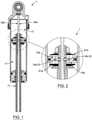
- the present position-relative damper assist system (1) may come in the form of a damper assist system (1) including one and/or several of the following possible components and features (and/or different possible combination(s) and/or permutation(s) thereof): Indeed, according to one possible embodiment, and as can be easily understood when referring to the accompanying drawings, there is provided a position-relative damper assist system (1) for use with a vehicle (whether the vehicle be provided with wheel(s), skid(s), track(s), and/or etc.).
- the position-relative damper assist system (1) may comprise top and bottom mounting components (5,3) cooperating with one another to define a corresponding "stroke" distance (7) (or “travel” distance) between them, and being operable with respect to one another between compression (i.e. "jounce") and extension (i.e. "rebound”) modes along said stroke distance, the top mounting component (5) being operatively connectable to a frame of the vehicle, and the bottom mounting component (5) being operatively connectable to a supporting component of the vehicle.
- the position-relative damper assist system (1) may also comprise a piston assembly (9) being operatively disposed between the top and bottom mounting components (5,3), the piston assembly (9) having a piston head (11) being displaceable within a chamber (13) defined about a portion of one of the top and bottom mounting components (5,3), the piston head (11) being provided with at least one fluid passage (15) for allowing fluid (17) of the chamber (13) to travel from one side of the chamber (13) to another side of the chamber (13) via the piston head (11) of the piston assembly (9), in order to provide a corresponding damping effect.
- the position-relative damper assist system (1) also comprises an adjustment assembly (19) (whether mechanical, electro-mechanical, electro-magnetic, magnetized (ex.
- the position-relative damper assist system (1) also comprises a biasing assembly (21) (whether mechanical, electro-mechanical, electro-magnetic, magnetized (ex.
- the at least one fluid passage (15) of the piston head (11) can comprise at least one active jounce fluid passage (15a) for allowing fluid (17) of the chamber (13) to travel from one side of the chamber (13) to another side of the chamber via the piston head (11) of the piston assembly (9) during the compression mode
- the adjustment assembly (19) can comprise a corresponding jounce adjustment component (19a) being configured for adjustably varying an effective cross-sectional profile of the at least one active jounce fluid passage (15a) in order to in turn vary a corresponding flow rate of fluid (17) passing through said at least one active jounce fluid passage (15a) during the compression mode.
- the jounce adjustment component (19a) can be a spring-loaded jounce adjustment component (19a), and the adjustment assembly (19) can thus comprise a corresponding spring (25) having one extremity operatively abutting against a given supporting component (27), and having another extremity operatively pushing against the jounce adjustment component (19a) for urging the jounce adjustment component (19a) into a given default configuration, the spring-loaded jounce adjustment component (19a) being adjustably operable via the biasing assembly (21) between variable opened and closed configurations, wherein in a fully-opened configuration, the jounce adjustment component (19a) is substantially clear from the at least one active jounce fluid passage (15a) in order to allow a maximal passage of fluid (17) through the at least one active jounce fluid passage (15a), and wherein in a fully-closed configuration, the jounce adjustment component (19a) substantially blocks the at least one active jounce fluid passage (15a) in order to allow a minimal passage of fluid (17) through the at least one active jounce fluid passage (15a).
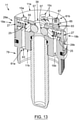
- the jounce adjustment component (19a) is positioned, shaped and sized with respect to the at least one active jounce fluid passage (15a) so that the default configuration of the jounce adjustment component (19a) corresponds to the fully-opened configuration of the jounce adjustment component (19a), as better shown in Figure 13 , for example.
- the jounce adjustment component (19a) may be positioned, shaped and sized with respect to the at least one active jounce fluid passage (15a) so that the default configuration of the jounce adjustment component (19a) corresponds to the fully-closed configuration of the jounce adjustment component (19a).
- the piston head (11) of the piston assembly (9) can comprise a jounce lodging passage (29a) being positioned, shaped and sized for receiving the jounce adjustment component (19a), the jounce lodging passage (29a) being further positioned, shaped and sized for fluidly intersecting the at least one active jounce fluid passage (15a).
- the at least one active jounce fluid passage (15a) can extend longitudinally along the piston head (11), and the jounce lodging passage (29a) can extend transversally with respect to the piston head (11).
- the jounce adjustment component (19a) can comprise a shouldering portion (31a) for resting against a corresponding abutment portion (33a) of the jounce lodging passage (29a) when the jounce adjustment component (19a) is in the default configuration.
- the jounce adjustment component (19a) is configured for adjustably moving in response to the input indicative of the positioning of the piston assembly (9) within the stroke distance (7) being received from said biasing assembly (21).
- the biasing assembly (21) can include a biasing component (35) provided with a jounce displacement-profile surface (35a) interacting with the jounce adjustment component (19a) for adjustably moving the jounce adjustment component (19a) with respect to the at least at least one active jounce fluid passage (15a) (ex. depending on a positioning of the jounce adjustment component (19a) with respect to the jounce displacement-profile surface (35a) of the biasing component (35), etc.).
- the chamber (13) containing the piston head (11) of the piston assembly (9) can be defined about a portion of the top mounting component (5), and the biasing component (35) with corresponding jounce displacement-profile surface (35a) can be mounted onto the top mounting component (5) and can be disposed along the chamber (13) of said top mounting component (5), as exemplified in the accompanying drawings.
- the biasing component (35) may include a profiled bar (37) being provided with the jounce displacement-profile surface (35a), and the profiled bar (37) may removably and pivotably mountable onto the top mounting component (5) via a corresponding attachment component (59), and may also be disposed centrally within the chamber (13) of the top mounting component (5), for example, although various other alternative disposition(s) and/or embodiment(s) are also be contemplated for the present system (1).
- the piston head (11) comprises a corresponding central hole (39) for receiving therethrough the profiled bar (37) of the biasing assembly (21) during a relative displacement of the bottom mounting component (5) with respect to the top mounting component (5).
- the piston head (11) may further comprise an interlocking component (41) disposed about the corresponding central hole (39) for interlocking with the profiled bar (37) during displacement of the profiled bar (37) through said corresponding central hole (39), and the interlocking component (41) may include a pin (41a) being removably mountable onto the piston head (11) via a fastener (43), the pin (41a) being positioned, shaped and sized for extending within the corresponding central hole (39) and for further fitting into a corresponding slot (41b) disposed about the profiled bar (37).
- the pin (41a) can be removably insertable into a corresponding receiving passage (85) defined about the piston head (11), for example, and the receiving passage (85) can be disposed transversally with respect to the piston head (11), and may extend from the central hole (39) of the piston head (11) to a side surface (11c) of the piston head (11), although various other alternative disposition(s) and/or embodiment(s), are also contemplated for the present system (1).
- the above-mentioned fastener (43) may be positioned, shaped and sized so that a top portion thereof is lodged within a corresponding recess (45) of the piston head (11) of the piston assembly (9), so as to prevent the top portion of the fastener (45) from exceeding beyond a top surface (11a) of said piston head (11).
- the position-relative damper assist system (1) can comprise a hollow separator component (47) being removably mountable onto the piston head (11), for use with an internal accumulator (49a), the hollow separator component (47) having an opened end operatively connectable to the corresponding central hole (39) of the piston head (11), and an opposite closed end for separating a fluid (51) of the internal accumulator (49a) from a fluid of the chamber (13).
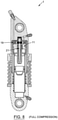
- the hollow separator component (47) is preferably made long enough for receiving the profiled bar (37) when the top and bottom mounting components (5,3) are operated in the "compression" mode (see Figure 8 , for example).
- the profiled bar (37) is preferably made long enough for interacting with the jounce adjustment component (19a) when the top and bottom mounting components (5,3) are operated in the "extension" mode (see Figure 9 , for example).
- the jounce adjustment component (19a) can include a spring-loaded plunger (53) having one end interacting with the jounce displacement-profile surface (35a) for moving in response to a corresponding contour of said jounce displacement-profile surface (35a).
- the jounce adjustment component (19a) can include a spring-loaded poppet (55) provided with an adjacent ball-bearing (57) interacting with the jounce displacement-profile surface (35a) for moving in response to a corresponding contour of said jounce displacement-profile surface (35a).
- the poppet (55) can also comprise a shouldering portion (31) for resting against a corresponding abutment portion (33), and a cross-sectional profile of the ball-bearing (57) is preferably made smaller than a cross-sectional profile of the poppet (55).
- the jounce displacement-profile surface (35a) is a curved jounce displacement-profile surface (35a) for providing at least two contact points to a corresponding component being operatively connected to the jounce adjustment component (19a).
- a jounce displacement-profile surface (35a) with only one contact point could also be used, and the fact that the jounce displacement-profile surface (35a) may be "curved" (and/or shaped otherwise, etc.) and provide a plurality of contact points (ex. two or more, etc.) is particularly advantageous for improved durability of the part(s), etc., when the adjustment assembly (19) and the biasing assembly (21) interact "mechanically", for example.
- the at least one active jounce fluid passage (15a) comprises a pair of active jounce fluid passages (15a) each for allowing fluid (17) of the chamber (13) to travel from one side of the chamber (13) to another side of the chamber via the piston head (11) of the piston assembly (9) during the compression mode
- the jounce adjustment component (19a) can be configured for adjustably varying an effective cross-sectional profile of both active jounce fluid passages (15a) in order to in turn vary a corresponding flow rate of fluid (17) passing through the pair of active jounce fluid passages (15a) during the compression mode.
- One end of the at least one active jounce fluid passage (15a) may be provided with a corresponding jounce shim assembly (61a) being configured for shimming fluid exiting said end of the at least one active jounce fluid passage (15a) during the compression mode.
- the jounce shim assembly (61a) can be further configured for preventing fluid from entering said end of the at least one active jounce fluid passage (15a) (for example, of each active jounce fluid passage (15a), etc.) during the "extension" mode.
- the jounce shim assembly (61a) may include a series of lamellae (63) being stackable onto one another, and the series of lamellae (63) may be nestable within a corresponding recess (65) defined about the piston head (11) of the piston assembly (9).
- the series of lamellae (63) can be secured onto the piston head (11) via at least one fastener (67), and the at least one fastener (67) is preferably positioned, shaped and sized so that a top portion thereof is prevented from exceeding beyond a top surface (11a) of the piston head (11) of the piston assembly (9).
- the at least one fastener (67) includes a pair of fasteners (67) configured for threaded engagement into the series of lamellae (63) and piston head (11), and the series of lamellae (63) may include a plurality of oblong lamellae (63) of different lengths, with a longest lamella (63) being positioned at a bottommost portion of the series of lamellae (63) and a shortest lamella (63) being positioned at an upper portion of the series of lamellae (63), each lamella (63) of the series of lamellae (63) being shorter than a preceding bottom lamella (63), for example.
- the at least one fluid passage (15) of the piston head (11) can also comprise at least one active rebound fluid passage (15b) for allowing fluid (17) of the chamber (13) to travel from one side of the chamber (13) to another side of the chamber (13) via the piston head (11) of the piston assembly (9) during the extension mode
- the adjustment assembly (19) can comprise a corresponding rebound adjustment component (19b) being configured for adjustably varying an effective cross-sectional profile of the at least one active rebound fluid passage (15b) in order to in turn vary a corresponding flow rate of fluid (17) passing through said at least one active rebound fluid passage (15b) during the extension mode.
- the rebound adjustment component (19b) can be a spring-loaded rebound adjustment component (19b), and the adjustment assembly (19) can thus comprise a corresponding spring (25) having one extremity operatively abutting against a given supporting component (27), and having another extremity operatively pushing against the rebound adjustment component (19b) for urging the rebound adjustment component (19b) into a given default configuration, the spring-loaded rebound adjustment component (19b) being adjustably operable via the biasing assembly (21) between variable opened and closed configurations, wherein in a fully-opened configuration, the rebound adjustment component (19b) is substantially clear from the at least one active rebound fluid passage (15b) in order to allow a maximal passage of fluid (17) through the at least one active rebound fluid passage (15b), and wherein in a fully-closed configuration, the rebound adjustment component (19b) substantially blocks the at least one active rebound fluid passage (15b) in order to allow a minimal passage of fluid (17) through the at least one active rebound fluid passage (15b).
- the rebound adjustment component (19b) is positioned, shaped and sized with respect to the at least one active rebound fluid passage (15b) so that the default configuration of the rebound adjustment component (19b) corresponds to the fully-opened configuration of the rebound adjustment component (19b), as better shown in Figure 13 , for example.
- the rebound adjustment component (19b) may be positioned, shaped and sized with respect to the at least one active rebound fluid passage (15b) so that the default configuration of the rebound adjustment component (19b) corresponds to the fully-closed configuration of the rebound adjustment component (19b).
- the piston head (11) of the piston assembly (9) can comprise a rebound lodging passage (29b) being positioned, shaped and sized for receiving the rebound adjustment component (19b), the rebound lodging passage (29b) being further positioned, shaped and sized for fluidly intersecting the at least one active rebound fluid passage (15b).
- the at least one active rebound fluid passage (15b) may extend longitudinally along the piston head (11), and whereas the rebound lodging passage (29b) may extend transversally with respect to the piston head (11).
- the rebound adjustment component (19b) can comprise a shouldering portion (31b) for resting against a corresponding abutment portion (33b) of the rebound lodging passage (29b) when the rebound adjustment component (19b) is in the default configuration.
- the rebound adjustment component (19b) is configured for adjustably moving in response to the input indicative of the positioning of the piston assembly (9) within the stroke distance (7) being received from the biasing assembly (21).
- the above-described single biasing component (35) (and/or a separate one) can be further provided with a rebound displacement-profile surface (35b) interacting with the rebound adjustment component (19b) for adjustably moving the rebound adjustment component (19b) with respect to the at least at least one active rebound fluid passage (15b) (ex. depending on a positioning of the rebound adjustment component (19b) with respect to the rebound displacement-profile surface (35b) of the biasing component (35), etc.).
- the biasing component (35) with corresponding rebound displacement-profile surface (35b) can be mounted onto the top mounting component (7) and can be disposed along the chamber of said top mounting component (7).
- the profiled bar (37) may be further provided with the rebound displacement-profile surface (35b), and is preferably made long enough for interacting with the rebound adjustment component (19b) when the top and bottom mounting components (5,3) are operated in the "extension" mode (see Figure 9 , for example).
- the rebound adjustment component (19b) can include a spring-loaded plunger (53) having one end interacting with the rebound displacement-profile surface (35b) for moving in response to a corresponding contour of said rebound displacement-profile surface (35b).
- the rebound adjustment component (19b) can include a spring-loaded poppet (55) provided with an adjacent ball-bearing (57) interacting with the rebound displacement-profile surface (35b) for moving in response to a corresponding contour of said rebound displacement-profile surface (35b).
- This poppet (55) can also comprise a shouldering portion (31) for resting against a corresponding abutment portion (33), and a cross-sectional profile of the ball-bearing (57) is preferably made smaller than a cross-sectional profile of the poppet (55).
- the rebound displacement-profile surface (35b) is a curved rebound displacement-profile surface (35b) for providing at least two contact points to a corresponding component being operatively connected to the rebound adjustment component (19b).
- the rebound displacement-profile surface (35b) may be provided with a single contact point, as previously discussed when referring to the "jounce" counterpart.
- the at least one active rebound fluid passage (15b) comprises a pair of active rebound fluid passages (15b) each for allowing fluid (17) of the chamber (13) to travel from one side of the chamber (13) to another side of the chamber (13) via the piston head (11) of the piston assembly (9) during the extension mode
- the rebound adjustment component (19b) can be configured for adjustably varying an effective cross-sectional profile of both active rebound fluid passages (15b) in order to in turn vary a corresponding flow rate of fluid (17) passing through the pair of active rebound fluid passages (15b) during the extension mode.
- One end of the at least one active rebound fluid passage (15b) may be provided with a corresponding rebound shim assembly (61b) being configured for shimming fluid (17) exiting said end of the at least one active rebound fluid passage (15b) during the "extension" mode.
- the rebound shim assembly (61b) can be further configured for preventing fluid (17) from entering said end of the at least one active rebound fluid passage (15b) (for example, of each active rebound fluid passage (15b), etc.) during the "compression" mode.
- the rebound shim assembly (61b) can have components and features similar to that of the jounce shim assembly (61a).
- such a directional control and/or flow of the fluid could be achieved via a "ball bearing” and a machined “seat", for example, in which flow can either travel around the ball bearing through the piston head, or the ball bearing becomes seated, blocking all flow through the desired passage (15,15a,15b), etc., as can be easily understood by a person skilled in the art.
- the at least one active jounce fluid passage (15a) and corresponding jounce adjustment component (19a) can be disposed on one side of the piston head (11), and the at least one active rebound fluid passage (15b) and corresponding rebound adjustment component (19b) can be disposed on another opposite side of the piston head (11), as better shown in Figure 13 , for example.
- the jounce lodging passage (29a) and the rebound lodging passage (29b) can be fluidly connected to one another, and the jounce lodging passage (29a) and the rebound lodging passage (29b) can be further fluidly connected to the corresponding central hole (39) of the piston head (11), as also exemplified in Figure 13 .
- the at least one fluid passage (15) of the piston head (11) can comprise at least one passive fluid passage (15c) for allowing fluid (17) of the chamber (13) to travel from one side of the chamber (13) to another side of the chamber via the piston head (11) of the piston assembly (9) during either one (and preferably, both) of the compression and extension modes.
- the at least one fluid passage (15) of the piston head (11) comprises a pair of passive fluid passages (15c) for allowing fluid (17) of the chamber (13) to travel from one side of the chamber (13) to another side of the chamber (13) via the piston head (11) of the piston assembly (9) during either one (and preferably, both) of the compression and extension modes.
- the at least one fluid passage (15) of the piston head (11) includes at least one fluid passage (15) being internal to the piston head (11) of the piston assembly (9), as exemplified in the accompanying figures, but according to alternative possible embodiments of the present system (1), the at least one fluid passage (15) of the piston head (11) can also and/or alternatively include at least one fluid passage (15) being external to the piston head (11) of the piston assembly (9).
- At least one of the top and bottom mounting components (5,3) is provided with an eyelet (69), and optionally, the top and bottom mounting components (5,3) are each provided with a corresponding eyelet (69), and the stroke distance (7) of the top and bottom mounting components (5,3) corresponds to an "eyelet-to-eyelet” distance.
- each eyelet (69) may also be provided with a corresponding bearing (71).
- the position-relative damper assist system (1) can comprise an outer-seal end cap (73) for sealingly closing an interface between the top and bottom mounting components (5,3), the chamber (13) can be operatively connected to at least one corresponding port (75) selected from the group consisting of bleed port (75a) and fill port (75b).
- the present system (1) may be used with and/or for a variety of different piston assemblies (9), but according to one possible embodiment, the piston assembly (9) can comprise a piston rod (77) operatively extending between the bottom mounting component (3) of the position-relative damper assist system (1) and the piston head (11) of the piston assembly (9), with the piston head (11) being removably mountable onto the piston rod (77), if so desired via threading, for example, and the piston head (11) may also comprise a mounting collar (79) extending from a bottom surface (11b) of the piston head (11), the mounting collar (79) being configured for securing onto the piston rod (77).
- the piston assembly (9) can comprise a piston rod (77) operatively extending between the bottom mounting component (3) of the position-relative damper assist system (1) and the piston head (11) of the piston assembly (9), with the piston head (11) being removably mountable onto the piston rod (77), if so desired via threading, for example, and the piston head (11) may also comprise a
- the piston rod (77) can comprise a hollow section being provided an internal accumulator (49a) having a floating piston head (81), and the floating piston head (81) may have a cross-sectional shape being complementary to that of an adjacent separator component (47), for allowing the floating piston head (81) to travel within a greater range for a same given length of the internal accumulator (49a), as better shown in Figure 5, for example.
- Figures 1 and 2 show how the position-relative damper assist system (1) can comprise and/or be used with an external accumulator (49b) configured for cooperating with the piston assembly (9).
- the position-relative damper assist system (1) can comprise a shock-absorbing spring (83) interacting between the bottom and top mounting components (3,5), and the shock-absorbing spring (83) can be a coil spring having one end operatively secured to the top mounting component (5) (via a "spring seat” and/or any other suitable component, for example), and another end operatively secured to the bottom mounting component (3) (via a "retainer” and/or any other suitable component, for example).
- a kit with components for assembling a fully-assembled and fully-operational position-relative damper assist system (1) such as the one described and/or alluded to in the present patent specification, and accompanying drawings.
- a vehicle provided with such as position-relative damper assist system (1).
- the piston head (11) having one and/or several of the various components and/or features described and/or alluded to in the present patent specification, and accompanying drawings. According to yet another possible aspect of the present invention, there is also provided a kit with components for assembling such a piston head (11).
- the damping of the jounce orifice is achieved through the jounce profile tracking assembly (19a,53), which tracks/follows the contours of the damping profile rod - jounce (35a) located in the piston rod (77).
- the damping profile rod (35a,35b) is fixed at the rod attachment point (59), which allows it to rotate freely within the piston rod 77).
- the jounce profile tracking assembly (19a,53) follows the contours of the profile, opening/restricting the flow through the jounce orifice(s) (15a) as required.
- the profile details are selected to provide specific position-relative damping characteristics.
- the jounce profile tracking assembly (19a,53) can be preloaded in a way to ensure proper contact with the damping profile rod (35a,35b), naturally allowing full flow through the jounce orifices (15a) when the contour is smallest and greatest restriction when over profile peaks.
- the preload of the tracking assemblies (19a,53) can be achieved but is not limited to compression springs, wave springs, etc.
- the profile tracking assembly (19b,53) design details can vary in shape, size and quantity. In some instances, the design may be required to support a threshold flow rate/pressure in which some jounce/rebound orifices are not position specific.
- the motion of a single profile tracking assembly could adjust damping within numerous damping orifices, jounce or rebound, depending on functional requirements.
- the damping profile rod (35a,35b) can be adjusted to allow easy modification of damping characteristics relative to position. This could be achieved through an adjustment screw located on the bottom of the piston rod (77), for example.
- the jounce and rebound profiles can be application specific, and in some instances, may mimic one another.
- the cross-sectional design of the damping profile rod (35a,35b,37) could be a variety of shapes such as an 'X', square, or any other suitable and/or functionally equivalent shape, etc.
- "jounce” and “rebound” damping can be controlled through the inclusion of jounce (61a) and rebound (61b) shim stacks.
- the stacks limit flow in their respective directions of travel, effectively functioning as directional flow valves.
- the size of the orifices is influenced by the tracking profile assembly.
- the tracking profile assembly can be made as one device with profile on both side as shown on surface (35b) and surface (35a).
- the tracking profile assembly can also be made of two separate tracking profile assembly.
- An adjustment mechanism made of one adjustment knob or two adjustment knobs could also be used to pre-set the static position of the position damping. The adjustment mechanism could also be used to operate the knobs, etc.
- the present invention is a substantial improvement over the damping systems of the prior art in that, by virtue of its design and components, as briefly explained herein, the present system enables to overcome or at least minimize some of the known drawbacks associated with conventional systems, providing for a simpler, easier, faster, more accurate, more effective, more functional, more reliable and/or more versatile position-relative damper assist system than what is possible with other conventional systems.
- the present position-relative damper assist system and corresponding parts are preferably made of substantially rigid materials, such as metallic materials, hardened polymers, composite materials, polymeric materials (ex. seals, etc.), and/or the like, so as to ensure a proper operation thereof depending on the particular applications for which the position-relative damper assist system is intended and the different parameters (forces, moments, etc.) in cause, as apparent to a person skilled in the art.
Landscapes
- Engineering & Computer Science (AREA)
- General Engineering & Computer Science (AREA)
- Mechanical Engineering (AREA)
- Fluid-Damping Devices (AREA)
- Vehicle Body Suspensions (AREA)
Claims (15)
- - Système d'assistance d'amortisseur par rapport à la position (1) destiné à être utilisé avec un véhicule, le système d'assistance d'amortisseur par rapport à la position (1) comprenant :des composants de montage supérieur et inférieur (5, 3) coopérant l'un avec l'autre pour définir entre eux une distance de course (7) correspondante, et aptes à être actionner l'un par rapport à l'autre entre des modes en compression et en extension le long de ladite distance de course, le composant de montage supérieur (5) étant apte à être relié de manière fonctionnelle à un châssis du véhicule, et le composant de montage inférieur (5) étant apte à être relié de manière fonctionnelle à un composant de support du véhicule ;un ensemble piston (9) disposé de manière fonctionnelle entre les composants de montage supérieur et inférieur (5, 3), l'ensemble piston (9) ayant une tête de piston (11) déplaçable dans une chambre (13) définie autour d'une partie de l'un des composants de montage supérieur et inférieur (5, 3), la tête de piston (11) comportant au moins un passage de fluide (15) pour permettre à du fluide (17) de la chambre (13) de se déplacer d'un côté de la chambre (13) à un autre côté de la chambre (13) par l'intermédiaire de la tête de piston (11) de l'ensemble piston (9), afin de fournir un effet d'amortissement correspondant ;un ensemble de réglage (19) coopérant avec la tête de piston (11) de l'ensemble piston (9) pour faire varier de manière réglable un profil de section transversale effective de l'au moins un passage de fluide (15) afin de faire varier à son tour un débit correspondant du fluide (17) passant à travers ledit au moins un passage de fluide (15), et de faire varier à son tour l'effet d'amortissement résultant ; etun ensemble de sollicitation (21) coopérant avec l'ensemble de réglage (19) pour faire varier de manière sélective une configuration de l'ensemble de réglage (19) en réponse à une entrée donnée indiquant le positionnement de l'ensemble piston (9) dans la distance de course (7), afin de faire varier l'effet d'amortissement résultant en réponse à un profil de déplacement (23) correspondant fourni par l'ensemble de sollicitation (21),caractérisé en ce que l'ensemble de réglage (19) est contenu à l'intérieur de la tête de piston (11) et configuré pour faire varier de manière réglable le profil de section transversale effective de l'au moins un passage de fluide (15) à l'intérieur de ladite tête de piston (19).
- - Système d'assistance d'amortisseur par rapport à la position (1) selon la revendication 1, dans lequel l'au moins un passage de fluide (15) de la tête de piston (11) comprend au moins un passage de fluide antichoc actif (15a) pour permettre à du fluide (17) de la chambre (13) de se déplacer d'un côté de la chambre (13) à un autre côté de la chambre par l'intermédiaire de la tête de piston (11) de l'ensemble piston (9) pendant le mode en compression, et dans lequel l'ensemble de réglage (19) comprend un composant de réglage antichoc (19a) qui est configuré pour faire varier de manière réglable un profil de section transversale effective de l'au moins un passage de fluide antichoc actif (15a) afin de faire varier à son tour un débit correspondant du fluide (17) passant à travers ledit au moins un passage de fluide antichoc actif (15a) pendant le mode en compression.
- - Système d'assistance d'amortisseur par rapport à la position (1) selon la revendication 2, dans lequel le composant de réglage antichoc (19a) est un composant de réglage antichoc à ressort (19a), et l'ensemble de réglage (19) comprenant ainsi un ressort correspondant (25) ayant une extrémité en appui fonctionnel contre un composant de support donné (27), et ayant une autre extrémité poussant de manière fonctionnelle contre le composant de réglage antichoc (19a) pour pousser le composant de réglage antichoc (19a) dans une configuration par défaut donnée, le composant de réglage antichoc à ressort (19a) étant apte à être actionné de manière réglable par l'intermédiaire de l'ensemble de sollicitation (21) entre des configurations ouverte et fermée variables, dans une configuration entièrement ouverte le composant de réglage antichoc (19a) étant sensiblement dégagé de l'au moins un passage de fluide antichoc actif (15a) afin de permettre un passage maximal de fluide (17) à travers l'au moins un passage de fluide antichoc actif (15a), et dans une configuration entièrement fermée le composant de réglage antichoc (19a) obturant sensiblement l'au moins un passage de fluide antichoc actif (15a) afin de permettre un passage minimal de fluide (17) à travers l'au moins un passage de fluide antichoc actif (15a) ;dans lequel le composant de réglage antichoc (19a) est positionné, formé et dimensionné par rapport à l'au moins un passage de fluide antichoc actif (15a) de telle sorte que la configuration par défaut du composant de réglage antichoc (19a) correspond à la configuration entièrement ouverte du composant de réglage antichoc (19a) ou à la configuration entièrement fermée du composant de réglage antichoc (19a) ;dans lequel la tête de piston (11) de l'ensemble piston (9) comprend un passage de réception antichoc (29a) qui est positionné, formé et dimensionné pour recevoir le composant de réglage antichoc (19a), le passage de réception antichoc (29a) étant en outre positionné, formé et dimensionné pour couper fluidiquement l'au moins un passage de fluide antichoc actif (15a) ;dans lequel l'au moins un passage de fluide antichoc actif (15a) s'étend longitudinalement le long de la tête de piston (11), et le passage de réception antichoc (29a) s'étendant transversalement à la tête de piston (11) ;dans lequel le composant de réglage antichoc (19a) comprend une partie épaulée (31a) destinée à reposer contre une partie de butée correspondante (33a) du passage de réception antichoc (29a) lorsque le composant de réglage antichoc (19a) est dans la configuration par défaut ;dans lequel le composant de réglage antichoc (19a) est configuré pour se déplacer de manière réglable en réponse à la réception, en provenant de l'ensemble de sollicitation (21), de l'entrée indiquant le positionnement de l'ensemble piston (9) dans la distance de course (7) ;dans lequel l'ensemble de sollicitation (21) comprend un composant de sollicitation (35) comportant une surface à profil de déplacement antichoc (35a) interagissant avec le composant de réglage antichoc (19a) pour déplacer de manière réglable le composant de réglage antichoc (19a) par rapport à l'au moins un passage de fluide antichoc actif (15a) ;dans lequel la chambre (13) contenant la tête de piston (11) de l'ensemble piston (9) est définie autour d'une partie du composant de montage supérieur (5), et le composant de sollicitation (35) avec la surface à profil de déplacement antichoc (35a) correspondante étant monté sur le composant de montage supérieur (5) et étant disposé le long de la chambre (13) dudit composant de montage supérieur (5) ;dans lequel le composant de sollicitation (35) comprend une barre profilée (37) comportant la surface à profil de déplacement antichoc (35a) ;dans lequel la barre profilée (37) est apte à être montée de manière amovible et pivotante sur le composant de montage supérieur (5) par l'intermédiaire d'un composant de fixation (59) ;dans lequel la barre profilée (37) est disposée de manière centrale à l'intérieur de la chambre (13) du composant de montage supérieur (5) ;dans lequel la tête de piston (11) comprend un trou central correspondant (39) pour recevoir à travers celui-ci la barre profilée (37) de l'ensemble de sollicitation (21) pendant un déplacement relatif du composant de montage inférieur (3) par rapport au composant de montage supérieur (5) ;dans lequel la tête de piston (11) comprend en outre un composant de verrouillage (41) disposé autour du trou central (39) correspondant (39) pour se verrouiller à la barre profilée (37) pendant un déplacement de la barre profilée (37) à travers ledit trou central (39) correspondant ;dans lequel le composant de verrouillage (41) comprend une goupille (41a) apte à être montée de manière amovible sur la tête de piston (11) par l'intermédiaire d'un organe de fixation (43), la goupille (41a) étant positionnée, formée et dimensionnée pour s'étendre à l'intérieur du trou central (39) correspondant et s'adapter en outre dans une rainure (41b) correspondante disposée autour de la barre profilée (37) ;dans lequel la goupille (41a) est apte à être introduite de manière amovible dans un passage de réception (85) correspondant défini autour de la tête de piston (11) ;dans lequel le passage de réception (85) est disposé transversalement à la tête de piston (11) ;dans lequel le passage de réception s'étend à partir du trou central (39) de la tête de piston (11) jusqu'à une surface latérale (11c) de la tête de piston (11) ;dans lequel l'organe de fixation (43) est positionné, formé et dimensionné de telle sorte qu'une partie supérieure de celui-ci est reçue dans un évidement correspondant (45) de la tête de piston (11) de l'ensemble piston (9), de façon à empêcher la partie supérieure de l'organe de fixation (43) de dépasser au-delà d'une surface supérieure (11a) de ladite tête de piston (11) ;dans lequel le système d'assistance d'amortisseur par rapport à la position (1) comprend un composant séparateur creux (47) apte à être monté de manière amovible sur la tête de piston (11), destiné à être utilisé avec un accumulateur interne (49a), le composant séparateur creux (47) ayant une extrémité ouverte apte à être reliée de manière fonctionnelle au trou central (39) correspondant de la tête de piston (11), et une extrémité fermée opposée pour séparer un fluide (51) de l'accumulateur interne (49a) vis-à-vis du fluide (17) de la chambre (13) ;dans lequel le composant séparateur creux (47) est suffisamment long pour recevoir la barre profilée (37) lorsque les composants de montage supérieur et inférieur (5, 3) sont actionnés dans le mode en compression ;dans lequel la barre profilée (37) est suffisamment longue pour interagir avec le composant de réglage antichoc (19a) lorsque les composants de montage supérieur et inférieur (5, 3) sont actionnés dans le mode en extension ;dans lequel le composant de réglage antichoc (19a) comprend un plongeur à ressort (53) ayant une extrémité interagissant avec la surface à profil de déplacement antichoc (35a) pour se déplacer en réponse à un contour correspondant de ladite surface à profil de déplacement antichoc (35a) ;dans lequel le composant de réglage antichoc (19a) comprend un clapet à ressort (55) muni d'un roulement à billes adjacent (57) interagissant avec la surface à profil de déplacement antichoc (35a) pour se déplacer en réponse à un contour correspondant de ladite surface à profil de déplacement antichoc (35a) ;dans lequel le clapet (55) comprend une partie épaulée (31) destinée à reposer contre une partie de butée (33) correspondante ;dans lequel un profil de section transversale du roulement à billes (57) est plus petit qu'un profil de section transversale du clapet (55) ;dans lequel la surface à profil de déplacement antichoc (35a) est une surface à profil de déplacement antichoc courbe (35a) pour fournir au moins deux points de contact à un composant correspondant qui est relié de manière fonctionnelle au composant de réglage antichoc (19a) ;dans lequel l'au moins un passage de fluide antichoc actif (15a) comprend une paire de passages de fluide antichocs actifs (15a), chacun pour permettre à du fluide (17) de la chambre (13) de se déplacer d'un côté de la chambre (13) à un autre côté de la chambre par l'intermédiaire de la tête de piston (11) de l'ensemble piston (9) pendant le mode en compression, et le composant de réglage antichoc (19a) étant configuré pour faire varier de manière réglable un profil de section transversale effective des deux passages de fluide antichocs actifs (15a) afin de faire varier à son tour un débit correspondant du fluide (17) passant à travers la paire de passages de fluide antichocs actifs (15a) pendant le mode en compression ;dans lequel une extrémité de l'au moins un passage de fluide antichoc actif (15a) comporte un ensemble de freinage antichoc (61a) correspondant configuré pour freiner le fluide sortant de ladite extrémité de l'au moins un passage de fluide antichoc actif (15a) pendant le mode en compression ;dans lequel l'ensemble de freinage antichoc (61a) est en outre configuré pour empêcher du fluide de pénétrer dans ladite extrémité de l'au moins un passage de fluide antichoc actif (15a) pendant le mode en extension ;dans lequel l'ensemble de freinage antichoc (61a) comprend une série de lamelles (63) empilables les unes sur les autres ;dans lequel la série de lamelles (63) sont emboîtables à l'intérieur d'un évidement (65) correspondant défini autour de la tête de piston (11) de l'ensemble piston (9) ;dans lequel la série de lamelles (63) sont aptes à être fixées sur la tête de piston (11) par l'intermédiaire d'au moins un organe de fixation (67) ;dans lequel l'au moins un organe de fixation (67) est positionné, formé et dimensionné de telle sorte qu'une partie supérieure de celui-ci est empêchée de dépasser au-delà d'une surface supérieure (11a) de la tête de piston (11) de l'ensemble piston (9) ;dans lequel l'au moins un organe de fixation (67) comprend une paire d'organes de fixation (67) configurés pour un engagement par vissage dans la série de lamelles (63) et la tête de piston (11) ;dans lequel la série de lamelles (63) comprennent une pluralité de lamelles oblongues (63) de différentes longueurs, la lamelle la plus longue (63) étant positionnée à la partie la plus basse de la série de lamelles (63) et la lamelle la plus courte (63) étant positionnée à une partie supérieure de la série de lamelles (63) ; et/oudans lequel chaque lamelle (63) de la série de lamelles (63) est plus courte qu'une lamelle inférieure (63) précédente.
- - Système d'assistance d'amortisseur par rapport à la position (1) selon l'une quelconque des revendications 1 à 3, dans lequel l'au moins un passage de fluide (15) de la tête de piston (11) comprend au moins un passage de fluide de rebond actif (15b) pour permettre à du fluide (17) de la chambre (13) de se déplacer d'un côté de la chambre (13) à un autre côté de la chambre (13) par l'intermédiaire de la tête de piston (11) de l'ensemble piston (9) pendant le mode en extension, et dans lequel l'ensemble de réglage (19) comprend un composant de réglage de rebond (19b) configuré pour faire varier de manière réglable un profil de section transversale effective de l'au moins un passage de fluide de rebond actif (15b) afin de faire varier à son tour un débit correspondant du fluide (17) passant à travers ledit au moins un passage de fluide de rebond actif (15b) pendant le mode en extension.
- - Système d'assistance d'amortisseur par rapport à la position (1) selon la revendication 4, dans lequel le composant de réglage de rebond (19b) est un composant de réglage de rebond à ressort (19b), et l'ensemble de réglage (19) comprenant ainsi un ressort correspondant (25) ayant une extrémité en appui fonctionnel contre un composant de support donné (27), et ayant une autre extrémité poussant de manière fonctionnelle contre le composant de réglage de rebond (19b) pour pousser le composant de réglage de rebond (19b) dans une configuration par défaut donnée, le composant de réglage de rebond à ressort (19b) étant apte à être actionné de manière réglable par l'intermédiaire de l'ensemble de sollicitation (21) entre des configurations ouverte et fermée variables, dans une configuration entièrement ouverte le composant de réglage de rebond (19b) étant sensiblement dégagé de l'au moins un passage de fluide de rebond actif (15b) afin de permettre un passage maximal de fluide (17) à travers l'au moins un passage de fluide de rebond actif (15b), et dans une configuration entièrement fermée le composant de réglage de rebond (19b) obturant sensiblement l'au moins un passage de fluide de rebond actif (15b) afin de permettre un passage minimal de fluide (17) à travers l'au moins un passage de fluide de rebond actif (15b) ;dans lequel le composant de réglage de rebond (19b) est positionné, formé et dimensionné par rapport à l'au moins un passage de fluide de rebond actif (15b) de telle sorte que la configuration par défaut du composant de réglage de rebond (19b) correspond à la configuration entièrement ouverte du composant de réglage de rebond (19b) ou à la configuration entièrement fermée du composant de réglage de rebond (19b) ;dans lequel la tête de piston (11) de l'ensemble piston (9) comprend un passage de réception de rebond (29b) qui est positionné, formé et dimensionné pour recevoir le composant de réglage de rebond (19b), le passage de réception de rebond (29b) étant en outre positionné, formé et dimensionné pour couper fluidiquement l'au moins un passage de fluide de rebond actif (15b) ;dans lequel l'au moins un passage de fluide de rebond actif (15b) s'étend longitudinalement le long de la tête de piston (11), et le passage de réception de rebond (29b) s'étendant transversalement à la tête de piston (11) ;dans lequel le composant de réglage de rebond (19b) comprend une partie épaulée (31b) destinée à reposer contre une partie de butée correspondante (33b) du passage de réception de rebond (29b) lorsque le composant de réglage de rebond (19b) est dans la configuration par défaut ;dans lequel le composant d'ajustement de rebond (19b) est configuré pour se déplacer de manière réglable en réponse à la réception, en provenant de l'ensemble de sollicitation (21), de l'entrée indiquant le positionnement de l'ensemble piston (9) dans la distance de course (7) ;dans lequel le composant de sollicitation (35) comporte en outre une surface à profil de déplacement de rebond (35b) interagissant avec le composant de réglage de rebond (19b) pour déplacer de manière réglable le composant de réglage de rebond (19b) par rapport à l'au moins un passage de fluide de rebond actif (15b) ;dans lequel le composant de sollicitation (35) avec la surface à profil de déplacement de rebond (35b) correspondante est monté sur le composant de montage supérieur (5) et est disposé le long de la chambre dudit composant de montage supérieur (5) ;dans lequel la barre profilée (37) comporte en outre la surface à profil de déplacement de rebond (35b) ;dans lequel la barre profilée (37) est suffisamment longue pour interagir avec le composant de réglage de rebond (19b) lorsque les composants de montage supérieur et inférieur (5, 3) sont actionnés dans le mode en extension ;dans lequel le composant de réglage de rebond (19b) comprend un plongeur à ressort (53) ayant une extrémité interagissant avec la surface à profil de déplacement de rebond (35b) pour se déplacer en réponse à un contour correspondant de ladite surface à profil de déplacement de rebond (35b) ;dans lequel le composant de réglage de rebond (19b) comprend un clapet à ressort (55) muni d'un roulement à billes adjacent (57) interagissant avec la surface à profil de déplacement de rebond (35b) pour se déplacer en réponse à un contour correspondant de ladite surface à profil de déplacement de rebond (35b) ;dans lequel le clapet (55) comprend une partie épaulée (31) destinée à reposer contre une partie de butée (33) correspondante ;dans lequel un profil de section transversale du roulement à billes (57) est plus petit qu'un profil de section transversale du clapet (55) ;dans lequel la surface à profil de déplacement de rebond (35b) est une surface à profil de déplacement de rebond courbe (35b) pour fournir au moins deux points de contact à un composant correspondant qui est relié de manière fonctionnelle au composant de réglage de rebond (19b) ;
dans lequel l'au moins un passage de fluide de rebond actif (15b) comprend une paire de passages de fluide de rebond actifs (15b), chacun pour permettre à du fluide (17) de la chambre (13) de se déplacer d'un côté de la chambre (13) à un autre côté de la chambre (13) par l'intermédiaire de la tête de piston (11) de l'ensemble piston (9) pendant le mode en extension, et le composant de réglage de rebond (19b) étant configuré pour faire varier de manière réglable un profil de section transversale effective des deux passages de fluide de rebond actifs (15b) afin de faire varier à son tour un débit correspondant du fluide (17) passant à travers la paire de passages de fluide de rebond actifs (15b) pendant le mode en extension ;dans lequel une extrémité de l'au moins un passage de fluide de rebond actif (15b) comporte un ensemble de freinage de rebond (61b) correspondant configuré pour freiner le fluide (17) sortant de ladite extrémité de l'au moins un passage de fluide de rebond actif (15b) pendant le mode en extension ;dans lequel l'ensemble de freinage de rebond (61b) est en outre configuré pour empêcher du fluide (17) de pénétrer dans ladite extrémité de l'au moins un passage de fluide de rebond actif (15b) pendant le mode en compression ;dans lequel l'ensemble de freinage de rebond (61b) comprend une série de lamelles (63) empilables les unes sur les autres ;dans lequel la série de lamelles (63) sont emboîtables à l'intérieur d'un évidement (65) correspondant défini autour de la tête de piston (11) de l'ensemble piston (9) ;dans lequel la série de lamelles (63) sont aptes à être fixées sur la tête de piston (11) par l'intermédiaire d'au moins un organe de fixation (67) ;dans lequel l'au moins un organe de fixation (67) est positionné, formé et dimensionné de telle sorte qu'une partie supérieure de celui-ci est empêchée de dépasser au-delà d'une surface supérieure (11a) de la tête de piston (11) de l'ensemble piston (9) ;dans lequel l'au moins un organe de fixation (67) comprend une paire d'organes de fixation (67) configurés pour un engagement par vissage dans la série de lamelles (63) et la tête de piston (11) ;dans lequel la série de lamelles (63) comprennent une pluralité de lamelles oblongues (63) de différentes longueurs, la lamelle la plus longue (63) étant positionnée à la partie la plus basse de la série de lamelles (63) et la lamelle la plus courte (63) étant positionnée à une partie supérieure de la série de lamelles (63) ;dans laquelle chaque lamelle (63) de la série de lamelles (63) est plus courte qu'une lamelle inférieure (63) précédente ;dans lequel l'au moins un passage de fluide antichoc actif (15a) et le composant de réglage de rebond (19a) correspondant sont disposés d'un côté de la tête de piston (11), et l'au moins un passage de fluide de rebond actif (15b) et le composant de réglage de rebond (19b) correspondant sont d'un autre côté, opposé, de la tête de piston (11) ;dans lequel le passage de réception antichoc (29a) et le passage de réception de rebond (29b) sont reliés fluidiquement l'un à l'autre ; et/oudans lequel le passage de réception antichoc (29a) et le passage de réception de rebond (29b) sont en outre reliés fluidiquement au trou central (39) correspondant de la tête de piston (11). - - Système d'assistance d'amortisseur par rapport à la position (1) selon l'une quelconque des revendications 1 à 5, dans lequel l'au moins un passage de fluide (15) de la tête de piston (11) comprend au moins un passage de fluide passif (15c) pour permettre à du fluide (17) de la chambre (13) de se déplacer d'un côté de la chambre (13) à un autre côté de la chambre par l'intermédiaire de la tête de piston (11) de l'ensemble piston (9) pendant l'un ou l'autre des modes en compression et en extension ;dans lequel l'au moins un passage de fluide (15) de la tête de piston (11) comprend une paire de passages de fluide passifs (15c) pour permettre à du fluide (17) de la chambre (13) de se déplacer d'un côté de la chambre (13) à un autre côté de la chambre (13) par l'intermédiaire de la tête de piston (11) de l'ensemble piston (9) pendant l'un ou l'autre des modes en compression et en extension ;dans lequel l'au moins un passage de fluide (15) de la tête de piston (11) comprend au moins un passage de fluide (15) qui est interne à la tête de piston (11) de l'ensemble piston (9) ; et/oudans lequel l'au moins un passage de fluide (15) de la tête de piston (11) comprend au moins un passage de fluide (15) qui est externe à la tête de piston (11) de l'ensemble piston (9).
- - Système d'assistance d'amortisseur par rapport à la position (1) selon l'une quelconque des revendications 1 à 6, dans lequel au moins l'un des composants de montage supérieur et inférieur (5, 3) comporte un œillet (69) ;dans lequel les composants de montage supérieur et inférieur (5, 3) comportent chacun un œillet (69), et la distance de course (7) des composants de montage supérieur et inférieur (5, 3) correspondant à une distance d'œillet à œillet ; et/oudans lequel chaque œillet (69) est muni d'un roulement (71) correspondant.
- - Système d'assistance d'amortisseur par rapport à la position (1) selon l'une quelconque des revendications 1 à 7, dans lequel le système d'assistance d'amortisseur par rapport à la position (1) comprend un capuchon d'extrémité à étanchéité extérieure (73) pour fermer de manière étanche une interface entre les composants de montage supérieur et inférieur (5, 3).
- - Système d'assistance d'amortisseur par rapport à la position (1) selon l'une quelconque des revendications 1 à 8, dans lequel la chambre (13) est reliée de manière fonctionnelle à au moins un orifice (75) correspondant choisi dans le groupe constitué d'un orifice de purge (75a) et d'un orifice de remplissage (75b).
- - Système d'assistance d'amortisseur par rapport à la position (1) selon l'une quelconque des revendications 1 à 9, dans lequel l'ensemble piston (9) comprend une tige de piston (77) s'étendant de manière fonctionnelle entre le composant de montage inférieur (5) du système d'assistance d'amortisseur par rapport à la position (1) et la tête de piston (11) de l'ensemble piston (9) ;dans lequel la tête de piston (11) est apte à être montée de manière amovible sur la tige de piston (77) ;dans lequel la tête de piston (11) est apte à être montée de manière amovible sur la tige de piston (77) par vissage ;dans lequel la tête de piston (11) comprend un collier de montage (79) s'étendant à partir d'une surface inférieure (11b) de la tête de piston (11), le collier de montage (79) étant configuré pour se fixer sur la tige de piston (77) ;dans lequel la tige de piston (77) comprend une section creuse munie d'un accumulateur interne (49a) ayant une tête de piston flottante (81) ; et/oudans lequel la tête de piston flottante (81) a une forme de section transversale complémentaire de celle d'un composant séparateur adjacent (47), pour permettre à la tête de piston flottante (81) de se déplacer sur une plus grande plage pour une même longueur donnée de l'accumulateur interne (49a).
- - Système d'assistance d'amortisseur par rapport à la position (1) selon l'une quelconque des revendications 1 à 10, dans lequel le système d'assistance d'amortisseur par rapport à la position (1) comprend un accumulateur externe (49b) configuré pour coopérer avec l'ensemble piston (9) ;dans lequel le système d'assistance d'amortisseur par rapport à la position (1) comprend un ressort d'absorption de chocs (83) interagissant entre les composants de montage inférieur et supérieur (3, 5) ; et/oudans lequel le ressort d'absorption de chocs (83) est un ressort hélicoïdal ayant une extrémité fixée de manière fonctionnelle au composant de montage supérieur (5) et une autre extrémité fixée de manière fonctionnelle au composant de montage inférieur (5).
- - Véhicule avec un ensemble de suspension comportant au moins un système d'assistance d'amortisseur par rapport à la position selon l'une quelconque des revendications 1 à 11, ledit au moins un système d'amortisseur par rapport à la position étant disposé de manière fonctionnelle autour d'un composant de support avant ou arrière du véhicule.
- - Kit avec des composants pour assembler un système d'assistance d'amortisseur par rapport à la position (1) selon l'une quelconque des revendications 1 à 11.
- - Tête de piston (11) destinée à être utilisée avec un ensemble piston (9) d'un système d'assistance d'amortisseur par rapport à la position (1) selon l'une quelconque des revendications 1 à 11, la tête de piston (11) étant déplaçable à l'intérieur de la chambre du système d'assistance d'amortisseur par rapport à la position (1), et comportant au moins un passage de fluide (15) pour permettre à du fluide (17) de la chambre (13) de se déplacer d'un côté de la chambre (13) à un autre côté de la chambre (13) par l'intermédiaire de la tête de piston (11) de l'ensemble piston (9), afin de fournir un effet d'amortissement correspondant.
- - Kit avec des composants pour assembler une tête de piston (11) selon la revendication 14.
Applications Claiming Priority (2)
| Application Number | Priority Date | Filing Date | Title |
|---|---|---|---|
| US201662364545P | 2016-07-20 | 2016-07-20 | |
| PCT/CA2017/050878 WO2018014134A1 (fr) | 2016-07-20 | 2017-07-20 | Système d'assistance d'amortisseur par rapport à la position |
Publications (3)
| Publication Number | Publication Date |
|---|---|
| EP3488121A1 EP3488121A1 (fr) | 2019-05-29 |
| EP3488121A4 EP3488121A4 (fr) | 2020-04-22 |
| EP3488121B1 true EP3488121B1 (fr) | 2022-03-02 |
Family
ID=60991808
Family Applications (1)
| Application Number | Title | Priority Date | Filing Date |
|---|---|---|---|
| EP17830157.8A Active EP3488121B1 (fr) | 2016-07-20 | 2017-07-20 | Système d'assistance d'amortisseur par rapport à la position |
Country Status (5)
| Country | Link |
|---|---|
| US (2) | US11009096B2 (fr) |
| EP (1) | EP3488121B1 (fr) |
| AU (1) | AU2017298026A1 (fr) |
| CA (1) | CA3006174C (fr) |
| WO (1) | WO2018014134A1 (fr) |
Families Citing this family (6)
| Publication number | Priority date | Publication date | Assignee | Title |
|---|---|---|---|---|
| CA3006174C (fr) * | 2016-07-20 | 2020-09-15 | Elka Suspension Inc. | Systeme d'assistance d'amortisseur par rapport a la position |
| CN112996680B (zh) * | 2018-10-12 | 2023-12-15 | 日立安斯泰莫株式会社 | 悬架控制装置 |
| US11872916B2 (en) | 2020-09-24 | 2024-01-16 | Seats Incorporated | Damper system for suspension of vehicle seat |
| US11479072B2 (en) * | 2020-09-29 | 2022-10-25 | GM Global Technology Operations LLC | Top mount with integrated jounce damper |
| US20230082373A1 (en) * | 2021-09-14 | 2023-03-16 | Fox Factory, Inc. | Bypass port piston |
| US20250237285A1 (en) * | 2024-01-22 | 2025-07-24 | Fox Factory, Inc. | Adjustable position sensitive base valve |
Family Cites Families (50)
| Publication number | Priority date | Publication date | Assignee | Title |
|---|---|---|---|---|
| US1628811A (en) | 1926-05-19 | 1927-05-17 | Houde Eng Corp | Shock absorber |
| US1957997A (en) | 1929-07-27 | 1934-05-08 | N A Petry Company Inc | Hydraulic shock absorber |
| US2009678A (en) | 1931-03-11 | 1935-07-30 | Pennington Engineering Company | Shock absorber |
| US3032145A (en) * | 1958-07-09 | 1962-05-01 | Katz Maurice | Hydraulic shock absorber |
| DE1480194A1 (de) * | 1963-10-02 | 1970-03-12 | Brueninghaus Gmbh Stahlwerke | Stossdaempfer mit selbsttaetiger Hoehenregelung fuer Schraubenfedern |
| GB1021358A (en) * | 1965-01-09 | 1966-03-02 | Ford Motor Co | Shock-absorbers |
| US3724832A (en) * | 1971-03-09 | 1973-04-03 | Menasco Mfg Co | Oleo-pneumatic shock absorber |
| US4061295A (en) * | 1975-12-22 | 1977-12-06 | The Boeing Company | Shock absorbing method and apparatus |
| US4153237A (en) | 1976-11-01 | 1979-05-08 | Supalla Steven A | Hydrapneumatic suspension unit and valving structure |
| FR2549557B1 (fr) | 1983-07-20 | 1987-10-16 | Mte | Dissipateur hydraulique d'energie a taux multiples |
| SE8406018D0 (sv) | 1984-11-28 | 1984-11-28 | Hakan Albertsson | Hydrauldempanordning |
| GB2170294B (en) * | 1984-12-08 | 1987-10-14 | Automotive Products Plc | Shock absorber |
| US4798398A (en) | 1987-08-12 | 1989-01-17 | Unit Rig & Equipment Co. | Dual rate equalizer suspension |
| DE3907355C2 (de) * | 1989-03-08 | 1995-03-09 | Schnetz Fa Albert | Hydraulischer Stoßdämpfer |
| US5044614A (en) | 1990-02-22 | 1991-09-03 | Rau John A | Shock absorber spring adjuster |
| DE69418902T2 (de) | 1994-03-17 | 1999-12-09 | Andre Ricard | Regel- und modulierbare hydropneumatische dämpfungsvorrichtung |
| US5516133A (en) | 1994-08-04 | 1996-05-14 | Stabletec, Inc. | Steering stabilizer for bicycles |
| SE512020C2 (sv) | 1995-05-18 | 2000-01-17 | Oehlins Racing Ab | Anordning vid stötdämpare |
| US6296092B1 (en) | 1998-10-28 | 2001-10-02 | Fox Factory, Inc. | Position-sensitive shock absorber |
| RO118546B1 (ro) | 1999-06-04 | 2003-06-30 | Adrian Ioan Niculescu | Amortizor hidraulic |
| US6382370B1 (en) * | 1999-09-01 | 2002-05-07 | K2 Bike, Inc. | Shock absorber with an adjustable lock-out value and two-stage flow restriction |
| DE19944183A1 (de) * | 1999-09-15 | 2001-03-22 | Bayerische Motoren Werke Ag | Hydraulischer Stossdämpfer für Kraftfahrzeuge |
| US6401884B2 (en) | 1999-12-28 | 2002-06-11 | Ralph S. Norman | Fluidic dampening device |
| WO2002101262A1 (fr) * | 2001-06-13 | 2002-12-19 | Yevgeniy Yvanovich Ternovskiy | Dispositif pour reguler la resistance d'un amortisseur hydraulique |
| US7128192B2 (en) | 2001-08-30 | 2006-10-31 | Fox Factory, Inc. | Inertia valve shock absorber |
| US7273137B2 (en) | 2001-08-30 | 2007-09-25 | Fox Factory, Inc. | Inertia valve shock absorber |
| US6966412B2 (en) | 2003-02-24 | 2005-11-22 | Arctic Cat Inc. | Position-sensitive shock absorber |
| US7374028B2 (en) | 2003-07-08 | 2008-05-20 | Fox Factory, Inc. | Damper with pressure-sensitive compression damping |
| US6880684B1 (en) | 2003-07-18 | 2005-04-19 | Walker Evans | Flow regulator for a gas shock absorber |
| US7628259B2 (en) | 2004-11-08 | 2009-12-08 | Thyssenkrupp Bilstein Of America, Inc. | Fluid flow regulation of a vehicle shock absorber/damper |
| CA2537339C (fr) | 2005-02-17 | 2013-09-03 | Elka Suspension Inc. | Dispositif amortisseur complementaire, et vehicule comprenant ce dispositif |
| US7690666B2 (en) | 2005-08-18 | 2010-04-06 | Specialized Bicycle Components, Inc. | Position sensitive shock absorber |
| WO2008086605A1 (fr) | 2007-01-16 | 2008-07-24 | Denis Boivin | Registre sensible à la position |
| US8807299B2 (en) | 2007-09-26 | 2014-08-19 | Bombardier Recreational Products Inc. | Position sensitive shock absorber |
| US9239090B2 (en) | 2009-01-07 | 2016-01-19 | Fox Factory, Inc. | Suspension damper with remotely-operable valve |
| US8550223B2 (en) | 2008-05-09 | 2013-10-08 | Fox Factory, Inc. | Methods and apparatus for position sensitive suspension dampening |
| US20100170760A1 (en) | 2009-01-07 | 2010-07-08 | John Marking | Remotely Operated Bypass for a Suspension Damper |
| US8857580B2 (en) | 2009-01-07 | 2014-10-14 | Fox Factory, Inc. | Remotely operated bypass for a suspension damper |
| US10060499B2 (en) | 2009-01-07 | 2018-08-28 | Fox Factory, Inc. | Method and apparatus for an adjustable damper |
| US8627932B2 (en) | 2009-01-07 | 2014-01-14 | Fox Factory, Inc. | Bypass for a suspension damper |
| US9038791B2 (en) | 2009-01-07 | 2015-05-26 | Fox Factory, Inc. | Compression isolator for a suspension damper |
| US9556925B2 (en) | 2009-01-07 | 2017-01-31 | Fox Factory, Inc. | Suspension damper with by-pass valves |
| EP2402626B1 (fr) | 2010-07-02 | 2019-03-27 | Fox Factory, Inc. | Dérivation pour amortisseur de suspension |
| EP2410203B1 (fr) | 2010-07-22 | 2020-02-12 | Fox Factory, Inc. | Amortisseur de suspension pour valve actionnée à distance |
| US8465025B2 (en) | 2010-08-31 | 2013-06-18 | Oshkosh Corporation | Gas spring assembly for a vehicle suspension |
| RU2482347C2 (ru) * | 2011-02-18 | 2013-05-20 | Евгений Иванович Терновский | Способ гашения колебаний и устройство для его осуществления (варианты) |
| EP2495472B1 (fr) | 2011-03-03 | 2024-05-01 | Fox Factory, Inc. | Refroidisseur pour amortisseur de suspension |
| EP2530355B1 (fr) | 2011-05-31 | 2019-09-04 | Fox Factory, Inc. | Appareil pour amortissement de suspension sensible au positionnement et/ou réglable |
| US9573435B2 (en) | 2013-09-29 | 2017-02-21 | Elka Suspension Inc. | Dual inline hydraulic device |
| CA3006174C (fr) * | 2016-07-20 | 2020-09-15 | Elka Suspension Inc. | Systeme d'assistance d'amortisseur par rapport a la position |
-
2017
- 2017-07-20 CA CA3006174A patent/CA3006174C/fr active Active
- 2017-07-20 EP EP17830157.8A patent/EP3488121B1/fr active Active
- 2017-07-20 US US16/319,548 patent/US11009096B2/en active Active
- 2017-07-20 AU AU2017298026A patent/AU2017298026A1/en not_active Abandoned
- 2017-07-20 WO PCT/CA2017/050878 patent/WO2018014134A1/fr not_active Ceased
-
2021
- 2021-05-18 US US17/323,239 patent/US11892054B2/en active Active
Also Published As
| Publication number | Publication date |
|---|---|
| WO2018014134A9 (fr) | 2019-09-19 |
| US20210270341A1 (en) | 2021-09-02 |
| EP3488121A1 (fr) | 2019-05-29 |
| CA3006174C (fr) | 2020-09-15 |
| WO2018014134A1 (fr) | 2018-01-25 |
| CA3006174A1 (fr) | 2018-01-25 |
| AU2017298026A1 (en) | 2019-03-07 |
| US11892054B2 (en) | 2024-02-06 |
| AU2017298026A9 (en) | 2019-10-10 |
| US20190316648A1 (en) | 2019-10-17 |
| US11009096B2 (en) | 2021-05-18 |
| EP3488121A4 (fr) | 2020-04-22 |
Similar Documents
| Publication | Publication Date | Title |
|---|---|---|
| US11892054B2 (en) | Position-relative damper assist system | |
| US11578776B2 (en) | Movement stage for a hydraulic shock absorber and shock absorber with the movement stage | |
| US10730358B2 (en) | Shock absorber | |
| US10556477B2 (en) | Suspension damper with by-pass valves | |
| US9239090B2 (en) | Suspension damper with remotely-operable valve | |
| EP2410203B1 (fr) | Amortisseur de suspension pour valve actionnée à distance | |
| KR102570753B1 (ko) | 감쇠력 가변 밸브 조립체 및 이를 포함하는 감쇠력가변식 쇽업소버 | |
| US9682605B2 (en) | Variable dampening speed piston head assembly for radio controlled cars shock absorber and method | |
| EP2486300B1 (fr) | Distributeur automatique d'amortisseur hydraulique | |
| US20220203799A1 (en) | Suspension damper with by-pass valves | |
| CN107620777A (zh) | 用于减震器的弹簧缓冲器鼻形保持部件 | |
| DE202023102485U1 (de) | Stoßdämpfer | |
| US9573435B2 (en) | Dual inline hydraulic device | |
| US7556130B2 (en) | Track system, and vehicle including the same | |
| EP4461987B1 (fr) | Amortisseur de chocs | |
| CA2863072C (fr) | Dispositif hydraulique aligne double | |
| KR20120083661A (ko) | 쇽업소버의 선회 감응밸브 조립체 | |
| KR20170068295A (ko) | 차량용 쇽업소버 |
Legal Events
| Date | Code | Title | Description |
|---|---|---|---|
| STAA | Information on the status of an ep patent application or granted ep patent |
Free format text: STATUS: THE INTERNATIONAL PUBLICATION HAS BEEN MADE |
|
| PUAI | Public reference made under article 153(3) epc to a published international application that has entered the european phase |
Free format text: ORIGINAL CODE: 0009012 |
|
| STAA | Information on the status of an ep patent application or granted ep patent |
Free format text: STATUS: REQUEST FOR EXAMINATION WAS MADE |
|
| 17P | Request for examination filed |
Effective date: 20190219 |
|
| AK | Designated contracting states |
Kind code of ref document: A1 Designated state(s): AL AT BE BG CH CY CZ DE DK EE ES FI FR GB GR HR HU IE IS IT LI LT LU LV MC MK MT NL NO PL PT RO RS SE SI SK SM TR |
|
| AX | Request for extension of the european patent |
Extension state: BA ME |
|
| DAV | Request for validation of the european patent (deleted) | ||
| DAX | Request for extension of the european patent (deleted) | ||
| A4 | Supplementary search report drawn up and despatched |
Effective date: 20200319 |
|
| RIC1 | Information provided on ipc code assigned before grant |
Ipc: F16F 9/48 20060101ALI20200313BHEP Ipc: F16F 9/34 20060101ALI20200313BHEP Ipc: F16F 9/14 20060101AFI20200313BHEP |
|
| GRAP | Despatch of communication of intention to grant a patent |
Free format text: ORIGINAL CODE: EPIDOSNIGR1 |
|
| STAA | Information on the status of an ep patent application or granted ep patent |
Free format text: STATUS: GRANT OF PATENT IS INTENDED |
|
| INTG | Intention to grant announced |
Effective date: 20210920 |
|
| GRAS | Grant fee paid |
Free format text: ORIGINAL CODE: EPIDOSNIGR3 |
|
| GRAA | (expected) grant |
Free format text: ORIGINAL CODE: 0009210 |
|
| STAA | Information on the status of an ep patent application or granted ep patent |
Free format text: STATUS: THE PATENT HAS BEEN GRANTED |
|
| AK | Designated contracting states |
Kind code of ref document: B1 Designated state(s): AL AT BE BG CH CY CZ DE DK EE ES FI FR GB GR HR HU IE IS IT LI LT LU LV MC MK MT NL NO PL PT RO RS SE SI SK SM TR |
|
| REG | Reference to a national code |
Ref country code: GB Ref legal event code: FG4D |
|
| REG | Reference to a national code |
Ref country code: CH Ref legal event code: EP Ref country code: AT Ref legal event code: REF Ref document number: 1472484 Country of ref document: AT Kind code of ref document: T Effective date: 20220315 |
|
| REG | Reference to a national code |
Ref country code: DE Ref legal event code: R096 Ref document number: 602017054154 Country of ref document: DE |
|
| REG | Reference to a national code |
Ref country code: IE Ref legal event code: FG4D |
|
| REG | Reference to a national code |
Ref country code: LT Ref legal event code: MG9D |
|
| REG | Reference to a national code |
Ref country code: SE Ref legal event code: TRGR |
|
| REG | Reference to a national code |
Ref country code: NL Ref legal event code: MP Effective date: 20220302 |
|
| PG25 | Lapsed in a contracting state [announced via postgrant information from national office to epo] |
Ref country code: RS Free format text: LAPSE BECAUSE OF FAILURE TO SUBMIT A TRANSLATION OF THE DESCRIPTION OR TO PAY THE FEE WITHIN THE PRESCRIBED TIME-LIMIT Effective date: 20220302 Ref country code: NO Free format text: LAPSE BECAUSE OF FAILURE TO SUBMIT A TRANSLATION OF THE DESCRIPTION OR TO PAY THE FEE WITHIN THE PRESCRIBED TIME-LIMIT Effective date: 20220602 Ref country code: LT Free format text: LAPSE BECAUSE OF FAILURE TO SUBMIT A TRANSLATION OF THE DESCRIPTION OR TO PAY THE FEE WITHIN THE PRESCRIBED TIME-LIMIT Effective date: 20220302 Ref country code: HR Free format text: LAPSE BECAUSE OF FAILURE TO SUBMIT A TRANSLATION OF THE DESCRIPTION OR TO PAY THE FEE WITHIN THE PRESCRIBED TIME-LIMIT Effective date: 20220302 Ref country code: ES Free format text: LAPSE BECAUSE OF FAILURE TO SUBMIT A TRANSLATION OF THE DESCRIPTION OR TO PAY THE FEE WITHIN THE PRESCRIBED TIME-LIMIT Effective date: 20220302 Ref country code: BG Free format text: LAPSE BECAUSE OF FAILURE TO SUBMIT A TRANSLATION OF THE DESCRIPTION OR TO PAY THE FEE WITHIN THE PRESCRIBED TIME-LIMIT Effective date: 20220602 |
|
| REG | Reference to a national code |
Ref country code: AT Ref legal event code: MK05 Ref document number: 1472484 Country of ref document: AT Kind code of ref document: T Effective date: 20220302 |
|
| PG25 | Lapsed in a contracting state [announced via postgrant information from national office to epo] |
Ref country code: PL Free format text: LAPSE BECAUSE OF FAILURE TO SUBMIT A TRANSLATION OF THE DESCRIPTION OR TO PAY THE FEE WITHIN THE PRESCRIBED TIME-LIMIT Effective date: 20220302 Ref country code: LV Free format text: LAPSE BECAUSE OF FAILURE TO SUBMIT A TRANSLATION OF THE DESCRIPTION OR TO PAY THE FEE WITHIN THE PRESCRIBED TIME-LIMIT Effective date: 20220302 Ref country code: GR Free format text: LAPSE BECAUSE OF FAILURE TO SUBMIT A TRANSLATION OF THE DESCRIPTION OR TO PAY THE FEE WITHIN THE PRESCRIBED TIME-LIMIT Effective date: 20220603 Ref country code: FI Free format text: LAPSE BECAUSE OF FAILURE TO SUBMIT A TRANSLATION OF THE DESCRIPTION OR TO PAY THE FEE WITHIN THE PRESCRIBED TIME-LIMIT Effective date: 20220302 |
|
| PG25 | Lapsed in a contracting state [announced via postgrant information from national office to epo] |
Ref country code: NL Free format text: LAPSE BECAUSE OF FAILURE TO SUBMIT A TRANSLATION OF THE DESCRIPTION OR TO PAY THE FEE WITHIN THE PRESCRIBED TIME-LIMIT Effective date: 20220302 |
|
| PG25 | Lapsed in a contracting state [announced via postgrant information from national office to epo] |
Ref country code: SM Free format text: LAPSE BECAUSE OF FAILURE TO SUBMIT A TRANSLATION OF THE DESCRIPTION OR TO PAY THE FEE WITHIN THE PRESCRIBED TIME-LIMIT Effective date: 20220302 Ref country code: SK Free format text: LAPSE BECAUSE OF FAILURE TO SUBMIT A TRANSLATION OF THE DESCRIPTION OR TO PAY THE FEE WITHIN THE PRESCRIBED TIME-LIMIT Effective date: 20220302 Ref country code: RO Free format text: LAPSE BECAUSE OF FAILURE TO SUBMIT A TRANSLATION OF THE DESCRIPTION OR TO PAY THE FEE WITHIN THE PRESCRIBED TIME-LIMIT Effective date: 20220302 Ref country code: PT Free format text: LAPSE BECAUSE OF FAILURE TO SUBMIT A TRANSLATION OF THE DESCRIPTION OR TO PAY THE FEE WITHIN THE PRESCRIBED TIME-LIMIT Effective date: 20220704 Ref country code: EE Free format text: LAPSE BECAUSE OF FAILURE TO SUBMIT A TRANSLATION OF THE DESCRIPTION OR TO PAY THE FEE WITHIN THE PRESCRIBED TIME-LIMIT Effective date: 20220302 Ref country code: CZ Free format text: LAPSE BECAUSE OF FAILURE TO SUBMIT A TRANSLATION OF THE DESCRIPTION OR TO PAY THE FEE WITHIN THE PRESCRIBED TIME-LIMIT Effective date: 20220302 Ref country code: AT Free format text: LAPSE BECAUSE OF FAILURE TO SUBMIT A TRANSLATION OF THE DESCRIPTION OR TO PAY THE FEE WITHIN THE PRESCRIBED TIME-LIMIT Effective date: 20220302 |
|
| PG25 | Lapsed in a contracting state [announced via postgrant information from national office to epo] |
Ref country code: IS Free format text: LAPSE BECAUSE OF FAILURE TO SUBMIT A TRANSLATION OF THE DESCRIPTION OR TO PAY THE FEE WITHIN THE PRESCRIBED TIME-LIMIT Effective date: 20220702 Ref country code: AL Free format text: LAPSE BECAUSE OF FAILURE TO SUBMIT A TRANSLATION OF THE DESCRIPTION OR TO PAY THE FEE WITHIN THE PRESCRIBED TIME-LIMIT Effective date: 20220302 |
|
| REG | Reference to a national code |
Ref country code: DE Ref legal event code: R097 Ref document number: 602017054154 Country of ref document: DE |
|
| PLBE | No opposition filed within time limit |
Free format text: ORIGINAL CODE: 0009261 |
|
| STAA | Information on the status of an ep patent application or granted ep patent |
Free format text: STATUS: NO OPPOSITION FILED WITHIN TIME LIMIT |
|
| PG25 | Lapsed in a contracting state [announced via postgrant information from national office to epo] |
Ref country code: DK Free format text: LAPSE BECAUSE OF FAILURE TO SUBMIT A TRANSLATION OF THE DESCRIPTION OR TO PAY THE FEE WITHIN THE PRESCRIBED TIME-LIMIT Effective date: 20220302 |
|
| 26N | No opposition filed |
Effective date: 20221205 |
|
| PG25 | Lapsed in a contracting state [announced via postgrant information from national office to epo] |
Ref country code: SI Free format text: LAPSE BECAUSE OF FAILURE TO SUBMIT A TRANSLATION OF THE DESCRIPTION OR TO PAY THE FEE WITHIN THE PRESCRIBED TIME-LIMIT Effective date: 20220302 Ref country code: MC Free format text: LAPSE BECAUSE OF FAILURE TO SUBMIT A TRANSLATION OF THE DESCRIPTION OR TO PAY THE FEE WITHIN THE PRESCRIBED TIME-LIMIT Effective date: 20220302 |
|
| PG25 | Lapsed in a contracting state [announced via postgrant information from national office to epo] |
Ref country code: LU Free format text: LAPSE BECAUSE OF NON-PAYMENT OF DUE FEES Effective date: 20220720 |
|
| PG25 | Lapsed in a contracting state [announced via postgrant information from national office to epo] |
Ref country code: IT Free format text: LAPSE BECAUSE OF FAILURE TO SUBMIT A TRANSLATION OF THE DESCRIPTION OR TO PAY THE FEE WITHIN THE PRESCRIBED TIME-LIMIT Effective date: 20220302 |
|
| PG25 | Lapsed in a contracting state [announced via postgrant information from national office to epo] |
Ref country code: HU Free format text: LAPSE BECAUSE OF FAILURE TO SUBMIT A TRANSLATION OF THE DESCRIPTION OR TO PAY THE FEE WITHIN THE PRESCRIBED TIME-LIMIT; INVALID AB INITIO Effective date: 20170720 |
|
| PG25 | Lapsed in a contracting state [announced via postgrant information from national office to epo] |
Ref country code: MK Free format text: LAPSE BECAUSE OF FAILURE TO SUBMIT A TRANSLATION OF THE DESCRIPTION OR TO PAY THE FEE WITHIN THE PRESCRIBED TIME-LIMIT Effective date: 20220302 Ref country code: CY Free format text: LAPSE BECAUSE OF FAILURE TO SUBMIT A TRANSLATION OF THE DESCRIPTION OR TO PAY THE FEE WITHIN THE PRESCRIBED TIME-LIMIT Effective date: 20220302 |
|
| PG25 | Lapsed in a contracting state [announced via postgrant information from national office to epo] |
Ref country code: TR Free format text: LAPSE BECAUSE OF FAILURE TO SUBMIT A TRANSLATION OF THE DESCRIPTION OR TO PAY THE FEE WITHIN THE PRESCRIBED TIME-LIMIT Effective date: 20220302 |
|
| PG25 | Lapsed in a contracting state [announced via postgrant information from national office to epo] |
Ref country code: MT Free format text: LAPSE BECAUSE OF FAILURE TO SUBMIT A TRANSLATION OF THE DESCRIPTION OR TO PAY THE FEE WITHIN THE PRESCRIBED TIME-LIMIT Effective date: 20220302 |
|
| PGFP | Annual fee paid to national office [announced via postgrant information from national office to epo] |
Ref country code: DE Payment date: 20250715 Year of fee payment: 9 |
|
| PGFP | Annual fee paid to national office [announced via postgrant information from national office to epo] |
Ref country code: GB Payment date: 20250715 Year of fee payment: 9 Ref country code: BE Payment date: 20250715 Year of fee payment: 9 |
|
| PGFP | Annual fee paid to national office [announced via postgrant information from national office to epo] |
Ref country code: FR Payment date: 20250715 Year of fee payment: 9 |
|
| PGFP | Annual fee paid to national office [announced via postgrant information from national office to epo] |
Ref country code: SE Payment date: 20250716 Year of fee payment: 9 Ref country code: CH Payment date: 20250801 Year of fee payment: 9 |
|
| PGFP | Annual fee paid to national office [announced via postgrant information from national office to epo] |
Ref country code: IE Payment date: 20250715 Year of fee payment: 9 |