EP3494121B1 - Composés contenant du bore - Google Patents
Composés contenant du bore Download PDFInfo
- Publication number
- EP3494121B1 EP3494121B1 EP17837709.9A EP17837709A EP3494121B1 EP 3494121 B1 EP3494121 B1 EP 3494121B1 EP 17837709 A EP17837709 A EP 17837709A EP 3494121 B1 EP3494121 B1 EP 3494121B1
- Authority
- EP
- European Patent Office
- Prior art keywords
- continuous flow
- compound
- formula
- making
- iii
- Prior art date
- Legal status (The legal status is an assumption and is not a legal conclusion. Google has not performed a legal analysis and makes no representation as to the accuracy of the status listed.)
- Active
Links
- 0 C[C@@](B1O[C@@](C)([C@@](C2)C(C)(C)[C@]2C2)[C@@]2O1)Cc1cccc(C(O*)=O)c1Oc1ccccc1 Chemical compound C[C@@](B1O[C@@](C)([C@@](C2)C(C)(C)[C@]2C2)[C@@]2O1)Cc1cccc(C(O*)=O)c1Oc1ccccc1 0.000 description 3
- RMAWUVXONBQUDW-UHFFFAOYSA-N CCOC(CC(CC1)CCC1N(CCN(C(OC(C)(C)C)=O)c1ncccc1)C(OC(C)(C)C)=O)=O Chemical compound CCOC(CC(CC1)CCC1N(CCN(C(OC(C)(C)C)=O)c1ncccc1)C(OC(C)(C)C)=O)=O RMAWUVXONBQUDW-UHFFFAOYSA-N 0.000 description 1
Images
Classifications
-
- C—CHEMISTRY; METALLURGY
- C07—ORGANIC CHEMISTRY
- C07F—ACYCLIC, CARBOCYCLIC OR HETEROCYCLIC COMPOUNDS CONTAINING ELEMENTS OTHER THAN CARBON, HYDROGEN, HALOGEN, OXYGEN, NITROGEN, SULFUR, SELENIUM OR TELLURIUM
- C07F5/00—Compounds containing elements of Groups 3 or 13 of the Periodic Table
- C07F5/02—Boron compounds
- C07F5/025—Boronic and borinic acid compounds
Definitions
- the present invention relates to boron-containing compounds, and methods for their preparation.
- Said compounds and pharmaceutical compositions comprising said compounds are useful as inhibitors of beta-lactamase enzymes and as antibacterial agents.
- US 2014/0171390 A1 (Venatorx Pharmaceuticals, Inc.; 19 June 2014) describes boron-containing compounds and compositions that modulate the activity of beta-lactamases, for use in the treatment of bacterial infections (see, e.g., abstract and paragraphs [0005]-[0006] therein).
- Example 48 therein describes a batch production method.
- the invention is a continuous flow process for making a compound of Formula (III): wherein:
- the second continuous flow further comprises heptane, ethyl benzene, or a combination thereof.
- the Lewis acid is provided as a fourth continuous flow further comprising a coordinating ethereal solvent, wherein the coordinating ethereal solvent is 2-methyltetrahydrofuran.
- the water content of the coordinating ethereal solvent is less than 0.08% (w/w).
- the water content of the coordinating ethereal solvent is less than 0.05% (w/w).
- the process comprises pre-cooling the first continuous flow to a temperature in the range of -40 °C to -10 °C.
- the process comprises pre-cooling the second continuous flow to a temperature in the range of -40 °C to -10 °C.
- the third continuous flow has a temperature in the range of -20 °C to +10 °C.
- the process comprises maintaining the collection vessel at the output of the third continuous flow at a temperature in the range of -10 °C to +10 °C.
- the collection vessel is warmed to room temperature in step (f).
- the molar ratio of the base to a compound of Formula (II) is in the range of 1:1 to 1.5:1.
- the molar ratio of the dichloromethane to a compound of Formula (II) is in the range of 5:1 and 7:1.
- the molar ratio of the Lewis acid to a compound of Formula (II) is in the range of 1:1 and 3:1.
- the base is lithium diisopropylamide and the Lewis acid is ZnCl 2 .
- P 1 is methyl and P 2 is tert-butyl.
- the first reactive intermediate is collected into a collection vessel that does not have continuous outflow.
- the first continuous flow further comprises a coordinating ethereal solvent.
- the second continuous flow further comprises a coordinating ethereal solvent.
- the second continuous flow further comprises heptane, ethyl benzene, or a combination thereof.
- the Lewis acid is provided as a fourth continuous flow further comprising a coordinating ethereal solvent.
- the water content of the coordinating ethereal solvent is less than about 0.08% (w/w).
- the water content of the coordinating ethereal solvent is less than about 0.05% (w/w).
- the coordinating ethereal solvent is substantially free of water.
- the dichloromethane is substantially free of water.
- the base is substantially free of water.
- the heptane, ethyl benzene, or a combination thereof is substantially free of water.
- the process comprises pre-cooling the first continuous flow to a temperature in the range of about -40 °C to about -10 °C.
- the process comprises pre-cooling the second continuous flow to a temperature in the range of about -40 °C to about -10 °C.
- the temperature of the mixing chamber is not controlled.
- the mixing in the mixing chamber is performed over about 50 milliseconds to about 500 milliseconds.
- the mixing in the mixing chamber is performed over about 50 milliseconds to about 200 milliseconds.
- the mixing in the mixing chamber is performed over less than about 200 milliseconds.
- the third continuous flow has a temperature in the range of about -20 °C to about +10 °C.
- the process comprises maintaining the collection vessel at the output of the third continuous flow at a temperature in the range of about -10 °C to about +10 °C.
- the collection vessel is warmed to room temperature in step (f).
- the molar ratio of the base to a compound of Formula (II) is in the range of about 1:1 to about 1.5:1. In some embodiments of a continuous flow process for making a compound of Formula (III), the molar ratio of the base to a compound of Formula (II) is in the range of about 1:1 to about 1.3:1. In some embodiments of a continuous flow process for making a compound of Formula (III), the molar ratio of the dichloromethane to a compound of Formula (II) is in the range of about 5:1 and 7:1.
- the molar ratio of the dichloromethane to a compound of Formula (II) is in the range of about 6:1 and 7:1. In some embodiments of a continuous flow process for making a compound of Formula (III), the molar ratio of the Lewis acid to a compound of Formula (II) is in the range of about 1:1 and 3:1. In some embodiments of a continuous flow process for making a compound of Formula (III), the process further comprises a workup. In some embodiments of a continuous flow process for making a compound of Formula (III), the workup comprises a buffered solution.
- the pH of the buffered solution is about 6.
- the buffered solution comprises a chelating agent.
- the buffered solution comprises citric acid, tartaric acid, EDTA, or a combination thereof.
- the base is lithium diisopropylamide.
- the Lewis acid is ZnCl 2 .
- the coordinating ethereal solvent is 2-methyltetrahydrofuran.
- the compound of Formula (III) is obtained in about 90% to about 95% yield (mole%).
- a continuous flow process for making a compound of Formula (III) the process further generates less than about 2% (mole%) of a compound of Formula (IV): In some embodiments of a continuous flow process for making a compound of Formula (III), the process further generates less than about 2% (mole%) of a compound of Formula (V): In some embodiments of a continuous flow process for making a compound of Formula (III), P 1 is methyl. In some embodiments of a continuous flow process for making a compound of Formula (III), P 2 is tert-butyl.
- the first reactive intermediate is collected into a collection vessel that does not have continuous outflow.
- the first continuous flow further comprises a coordinating ethereal solvent.
- the second continuous flow further comprises a coordinating ethereal solvent.
- the water content of the coordinating ethereal solvent is less than about 0.08% (w/w).
- the water content of the coordinating ethereal solvent is less than about 0.05% (w/w). In some embodiments of a continuous flow process for making a compound of Formula (II), the coordinating ethereal solvent is substantially free of water. In some embodiments of a continuous flow process for making a compound of Formula (II), the chloroiodomethane is substantially free of water. In some embodiments of a continuous flow process for making a compound of Formula (II), the hindered Grignard reagent is substantially free of water.
- the process comprises pre-cooling the first continuous flow to a temperature in the range of about -40 °C to about -0 °C. In some embodiments of a continuous flow process for making a compound of Formula (II), the process comprises pre-cooling the second continuous flow to a temperature in the range of about -40 °C to about -0 °C. In some embodiments of a continuous flow process for making a compound of Formula (II), the temperature of the mixing chamber is not controlled. In some embodiments of a continuous flow process for making a compound of Formula (II), the mixing in the mixing chamber is performed over about 500 milliseconds to about 1 second.
- the mixing in the mixing chamber is performed over about 700 milliseconds to about 1 second. In some embodiments of a continuous flow process for making a compound of Formula (II), the mixing in the mixing chamber is performed over less than about 1 second. In some embodiments of a continuous flow process for making a compound of Formula (II), the third continuous flow has a temperature in the range of about -20 °C to about +10 °C. In some embodiments of a continuous flow process for making a compound of Formula (II), the process comprises maintaining the collection vessel at the output of the third continuous flow at a temperature in the range of about -10 °C to about +10 °C.
- the collection vessel is warmed to room temperature in step (e).
- the molar ratio of the hindered Grignard reagent to a compound of Formula (I) is in the range of about 1:1 to about 2:1.
- the molar ratio of the hindered Grignard reagent to a compound of Formula (I) is in the range of about 1:1 to about 1.5:1.
- the molar ratio of the chloroiodomethane to a compound of Formula (I) is in the range of about 1:1 to about 2:1. In some embodiments of a continuous flow process for making a compound of Formula (II), the molar ratio of the chloroiodomethane to a compound of Formula (I) is in the range of about 1:1 to about 1.5:1. In some embodiments of a continuous flow process for making a compound of Formula (II), the hindered Grignard reagent is isopropylmagnesium chloride:lithium chloride.
- the coordinating ethereal solvent is tetrahydrofuran.
- the compound of Formula (II) is obtained in about 90% to about 99% yield (mole%).
- P 1 is methyl.
- P 2 is tert-butyl.
- the protected ammonium reagent is a metal salt of hexaalkyldisilazane.
- n is 1 or 2.
- p is 1 or 2.
- CycA is an optionally substituted cyclopentane or an optionally substituted cyclohexane.
- each Y is independently -NR 4 R 5 or -NR 4 (CR 6 R 7 ) v NR 4 R 5 .
- v is 2 or 3.
- R 1 and R 2 are hydrogen.
- R 4 and R 5 are independently hydrogen or optionally substituted heteroaryl.
- R 6 and R 7 are hydrogen.
- P 1 is methyl. In some embodiments, P 2 is tert-butyl. In some embodiments, P 3 and P 4 are trimethylsilyl. In some embodiments, the process yields the compound of Formula (A) that is at least about 97% (mole%) pure. In some embodiments, the process further comprises step (d) crystallizing the compound of Formula (A). In some embodiments, the compound of Formula (A) is crystalline. In some embodiments, the compound of Formula (A) is free of trifluoroacetic acid. In some embodiments, the compound of Formula (A) is more than about 98% pure (mole%).
- Antibiotics are the most effective drugs for the clinical treatment of bacterial infections. They are in common use due to their advantages of good antibacterial effect with limited side effects. Among them, the beta-lactam class of antibiotics (for example, penicillins, cephalosporins, and carbapenems) is widely used because they have a strong bactericidal effect and low toxicity.
- antibiotics for example, penicillins, cephalosporins, and carbapenems
- beta-lactamases deactivating enzymes
- These beta-lactamases are categorized as "serine" or "metallo” based, respectively, on presence of a key serine or zinc in the enzyme active site.
- the rapid spread of this mechanism of bacterial resistance can severely limit beta-lactam treatment options in the hospital and in the community.
- inhibitors of beta-lactamase have been developed which restore the effectiveness of the beta-lactam class of antibiotics when administered in combination.
- treatment or “treating” or “palliating” or “ameliorating” are used interchangeably herein. These terms refers to an approach for obtaining beneficial or desired results including but not limited to therapeutic benefit and/or a prophylactic benefit.
- therapeutic benefit is meant eradication or amelioration of the underlying disorder being treated.
- a therapeutic benefit is achieved with the eradication or amelioration of one or more of the physiological symptoms associated with the underlying disorder such that an improvement is observed in the patient, notwithstanding that the patient is still afflicted with the underlying disorder.
- the compositions are administered to a patient at risk of developing a particular disease, or to a patient reporting one or more of the physiological symptoms of a disease, even though a diagnosis of this disease has been made.
- room temperature means 25 ⁇ 5°C. In some embodiments, room temperature is 20 °C. In some embodiments, room temperature is 21 °C. In some embodiments, room temperature is 22 °C. In some embodiments, room temperature is 23 °C. In some embodiments, room temperature is 24 °C. In some embodiments, room temperature is 25 °C. In some embodiments, room temperature is 26 °C. In some embodiments, room temperature is 27 °C. In some embodiments, room temperature is 28 °C. In some embodiments, room temperature is 29 °C. In some embodiments, room temperature is 30 °C.
- Alkyl refers to an optionally substituted straight-chain, or optionally substituted branched-chain saturated hydrocarbon monoradical having from one to about ten carbon atoms, or from one to six carbon atoms, wherein a sp3-hybridized carbon of the alkyl residue is attached to the rest of the molecule by a single bond.
- Examples include, but are not limited to, methyl, ethyl, n-propyl, isopropyl, 2-methyl-1-propyl, 2-methyl-2-propyl, 2-methyl-1-butyl, 3-methyl-1-butyl, 2-methyl-3-butyl, 2,2-dimethyl-1-propyl, 2-methyl-1-pentyl, 3-methyl-1-pentyl, 4-methyl-1-pentyl, 2-methyl-2-pentyl, 3-methyl-2-pentyl, 4-methyl-2-pentyl, 2,2-dimethyl-1-butyl, 3,3-dimethyl-1-butyl, 2-ethyl-1-butyl, n-butyl, isobutyl, sec-butyl, t-butyl, n-pentyl, isopentyl, neopentyl, tert-amyl and hexyl, and longer alkyl groups, such as heptyl, octyl,
- C 1 -C 6 alkyl means that the alkyl group consists of 1 carbon atom, 2 carbon atoms, 3 carbon atoms, 4 carbon atoms, 5 carbon atoms or 6 carbon atoms, although the present definition also covers the occurrence of the term "alkyl” where no numerical range is designated.
- the alkyl is a C 1 -C 10 alkyl, a C 1 -C 9 alkyl, a C 1 -C 8 alkyl, a C 1 -C 7 alkyl, a C 1 -C 6 alkyl, a C 1 -C 5 alkyl, a C 1 -C 4 alkyl, a C 1 -C 3 alkyl, a C 1 -C 2 alkyl, or a C 1 alkyl.
- an alkyl group is optionally substituted as described below, for example, with oxo, halogen, amino, nitrile, nitro, hydroxyl, haloalkyl, alkoxy, aryl, cycloalkyl, heterocycloalkyl, heteroaryl, and the like.
- the alkyl is optionally substituted with oxo, halogen, - CN, -CF 3 , -OH, -OMe, -NH 2 , or -NO 2 .
- the alkyl is optionally substituted with oxo, halogen, -CN, -CF 3 , -OH, or -OMe.
- Alkoxy refers to a radical of the formula -OR a where R a is an alkyl radical as defined. Unless stated otherwise specifically in the specification, an alkoxy group may be optionally substituted as described below, for example, with oxo, halogen, amino, nitrile, nitro, hydroxyl, haloalkyl, alkoxy, aryl, cycloalkyl, heterocycloalkyl, heteroaryl, and the like. In some embodiments, an alkoxy is optionally substituted with oxo, halogen, -CN, -CF 3 , -OH, -OMe, -NH 2 , or -NO 2 . In some embodiments, an alkoxy is optionally substituted with oxo, halogen, -CN, -CF 3 , -OH, or -OMe.
- Aryl refers to a radical derived from a hydrocarbon ring system comprising hydrogen, 6 to 30 carbon atoms and at least one aromatic ring.
- the aryl radical may be a monocyclic, bicyclic, tricyclic or tetracyclic ring system, which may include fused (when fused with a cycloalkyl or heterocycloalkyl ring, the aryl is bonded through an aromatic ring atom) or bridged ring systems.
- the aryl is a 6- to 10-membered aryl.
- the aryl is a 6-membered aryl.
- Aryl radicals include, but are not limited to, aryl radicals derived from the hydrocarbon ring systems of anthrylene, naphthylene, phenanthrylene, anthracene, azulene, benzene, chrysene, fluoranthene, fluorene, as-indacene, s-indacene, indane, indene, naphthalene, phenalene, phenanthrene, pleiadene, pyrene, and triphenylene.
- the aryl is phenyl.
- an aryl may be optionally substituted as described below, for example, with halogen, amino, nitrile, nitro, hydroxyl, alkyl, haloalkyl, alkoxy, aryl, cycloalkyl, heterocycloalkyl, heteroaryl, and the like.
- an aryl is optionally substituted with halogen, methyl, ethyl, -CN, -CF 3 , -OH, -OMe, -NH 2 , or -NO 2 .
- an aryl is optionally substituted with halogen, methyl, ethyl, -CN, -CF 3 , -OH, or -OMe.
- Cycloalkyl refers to a stable, partially, or fully saturated, monocyclic or polycyclic carbocyclic ring, which may include fused (when fused with an aryl or a heteroaryl ring, the cycloalkyl is bonded through a non-aromatic ring atom) or bridged ring systems.
- Representative cycloalkyls include, but are not limited to, cycloalkyls having from three to fifteen carbon atoms (C 3 -C 15 cycloalkyl), from three to ten carbon atoms (C 3 -C 10 cycloalkyl), from three to eight carbon atoms (C 3 -C 8 cycloalkyl), from three to six carbon atoms (C 3 -C 6 cycloalkyl), from three to five carbon atoms (C 3 -C 5 cycloalkyl), or three to four carbon atoms (C 3 -C 4 cycloalkyl).
- the cycloalkyl is a 3- to 6-membered cycloalkyl.
- the cycloalkyl is a 5- to 6-membered cycloalkyl.
- Monocyclic cycloalkyls include, for example, cyclopropyl, cyclobutyl, cyclopentyl, cyclohexyl, cycloheptyl, and cyclooctyl.
- Polycyclic cycloalkyls or carbocycles include, for example, adamantyl, norbornyl, decalinyl, bicyclo[3.3.0]octane, bicyclo[4.3.0]nonane, cis-decalin, trans-decalin, bicyclo[2.1.1]hexane, bicyclo[2.2.1]heptane, bicyclo[2.2.2]octane, bicyclo[3.2.2]nonane, bicyclo[3.3.2]decane, and 7,7-dimethyl-bicyclo[2.2.1]heptanyl.
- Partially saturated cycloalkyls include, for example cyclopentenyl, cyclohexenyl, cycloheptenyl, and cyclooctenyl.
- a cycloalkyl is optionally substituted as described below, for example, with oxo, halogen, amino, nitrile, nitro, hydroxyl, alkyl, haloalkyl, alkoxy, aryl, cycloalkyl, heterocycloalkyl, heteroaryl, and the like.
- a cycloalkyl is optionally substituted with oxo, halogen, methyl, ethyl, -CN, -CF 3 , -OH, -OMe, -NH 2 , or -NO 2 .
- a cycloalkyl is optionally substituted with oxo, halogen, methyl, ethyl, - CN, -CF 3 , -OH, or -OMe.
- Halo or “halogen” refers to bromo, chloro, fluoro, or iodo. In some embodiments, halogen is fluoro or chloro. In some embodiments, halogen is fluoro.
- Haloalkyl refers to an alkyl radical, as defined above, that is substituted by one or more halo radicals, as defined above, e.g., trifluoromethyl, difluoromethyl, fluoromethyl, trichloromethyl, 2,2,2-trifluoroethyl, 1,2-difluoroethyl, 3-bromo-2-fluoropropyl, 1,2-dibromoethyl, and the like.
- Heterocycloalkyl refers to a stable 3- to 24-membered partially or fully saturated ring radical comprising 2 to 23 carbon atoms and from one to 8 heteroatoms selected from the group consisting of nitrogen, oxygen, phosphorous, and sulfur.
- the heterocycloalkyl radical may be a monocyclic, bicyclic, tricyclic or tetracyclic ring system, which may include fused (when fused with an aryl or a heteroaryl ring, the heterocycloalkyl is bonded through a non-aromatic ring atom) or bridged ring systems; and the nitrogen, carbon or sulfur atoms in the heterocycloalkyl radical may be optionally oxidized; the nitrogen atom may be optionally quaternized.
- the heterocycloalkyl is a 3- to 6-membered heterocycloalkyl.
- the heterocycloalkyl is a 5- to 6-membered heterocycloalkyl.
- heterocycloalkyl radicals include, but are not limited to, aziridinyl, azetidinyl, dioxolanyl, thienyl[1,3]dithianyl, decahydroisoquinolyl, imidazolinyl, imidazolidinyl, isothiazolidinyl, isoxazolidinyl, morpholinyl, octahydroindolyl, octahydroisoindolyl, 2-oxopiperazinyl, 2-oxopiperidinyl, 2-oxopyrrolidinyl, oxazolidinyl, piperidinyl, piperazinyl, 4-piperidonyl, pyrrolidinyl, pyrazolidinyl, quinuclidinyl, thiazolidinyl, tetrahydrofuryl, trithianyl, tetrahydropyranyl, thiomorpholiny
- heterocycloalkyl also includes all ring forms of the carbohydrates, including but not limited to the monosaccharides, the disaccharides and the oligosaccharides. Unless otherwise noted, heterocycloalkyls have from 2 to 10 carbons in the ring. It is understood that when referring to the number of carbon atoms in a heterocycloalkyl, the number of carbon atoms in the heterocycloalkyl is not the same as the total number of atoms (including the heteroatoms) that make up the heterocycloalkyl (i.e. skeletal atoms of the heterocycloalkyl ring).
- a heterocycloalkyl is optionally substituted as described below, for example, with oxo, halogen, amino, nitrile, nitro, hydroxyl, alkyl, haloalkyl, alkoxy, aryl, cycloalkyl, heterocycloalkyl, heteroaryl, and the like.
- a heterocycloalkyl is optionally substituted with oxo, halogen, methyl, ethyl, -CN, -CF 3 , -OH, -OMe, -NH 2 , or -NO 2 .
- a heterocycloalkyl is optionally substituted with oxo, halogen, methyl, ethyl, -CN, - CF 3 , -OH, or -OMe.
- Heteroaryl refers to a 5- to 14-membered ring system radical comprising hydrogen atoms, one to thirteen carbon atoms, one to six heteroatoms selected from the group consisting of nitrogen, oxygen, phosphorous and sulfur, and at least one aromatic ring.
- the heteroaryl radical may be a monocyclic, bicyclic, tricyclic or tetracyclic ring system, which may include fused (when fused with a cycloalkyl or heterocycloalkyl ring, the heteroaryl is bonded through an aromatic ring atom) or bridged ring systems; and the nitrogen, carbon or sulfur atoms in the heteroaryl radical may be optionally oxidized; the nitrogen atom may be optionally quaternized.
- the heteroaryl is a 5- to 10-membered heteroaryl. In some embodiments, the heteroaryl is a 5- to 6-membered heteroaryl. Examples include, but are not limited to, azepinyl, acridinyl, benzimidazolyl, benzothiazolyl, benzindolyl, benzodioxolyl, benzofuranyl, benzooxazolyl, benzothiazolyl, benzothiadiazolyl, benzo[b][1,4]dioxepinyl, 1,4-benzodioxanyl, benzonaphthofuranyl, benzoxazolyl, benzodioxolyl, benzodioxinyl, benzopyranyl, benzopyranonyl, benzofuranyl, benzofuranonyl, benzothienyl (benzothiophenyl), benzotriazolyl, benzo[4,6]imid
- a heteroaryl is optionally substituted as described below, for example, with halogen, amino, nitrile, nitro, hydroxyl, alkyl, haloalkyl, alkoxy, aryl, cycloalkyl, heterocycloalkyl, heteroaryl, and the like.
- a heteroaryl is optionally substituted with halogen, methyl, ethyl, -CN, -CF 3 , -OH, -OMe, -NH 2 , or -NO 2 .
- a heteroaryl is optionally substituted with halogen, methyl, ethyl, -CN, -CF 3 , -OH, or -OMe.
- the starting materials and reagents used for the synthesis of the compounds described herein are synthesized or are obtained from commercial sources, such as, but not limited to, Sigma-Aldrich, Fisher Scientific (Fisher Chemical), and AcrosOrganics.
- the compounds described herein, and other related compounds having different substituents are synthesized using techniques and materials described herein as well as those that are recognized in the field, such as described, for example, in Fieser and Fieser's Reagents for Organic Synthesis, Volumes 1-17 (John Wiley and Sons, 1991 ); Rodd's Chemistry of Carbon Compounds, Volumes 1-5 and Supplementals (Elsevier Science Publishers, 1989 ); Organic Reactions, Volumes 1-40 (John Wiley and Sons, 1991 ), Larock's Comprehensive Organic Transformations (VCH Publishers Inc., 1989 ), March, Advanced Organic Chemistry 4th Ed., (Wiley 1992 ); Carey and Sundberg, Advanced Organic Chemistry 4th Ed., Vols. A and B (Plenum 2000, 2001 ), and Green and Wuts, Protective Groups in Organic Synthesis 3rd Ed., (Wiley 1999 ).
- boronic esters such as for example compound 3
- the synthesis of boronic esters, such as for example compound 3 includes the homologation of compound 2 by addition of a dihaloalkyllithium reagent to form an intermediate boron "ate" complex in the presence of a Lewis acid catalyst.
- the Lewis acid promotes the rearrangement reaction and minimizes epimerization at the alpha-carbon atom.
- rigorous exclusion of water, maintenance of very low temperature, and careful control of the base and Lewis acid stoichiometries are required for optimum results.
- Matteson reaction An important reaction for the processes described herein is known in the art as the Matteson reaction.
- the Matteson reaction has been reviewed ( Matteson DS, J. Org. Chem (2013) 78, 10009-10023 ) and has found widespread use in the preparation of organoboron compounds, see for example: Martin et al Tetrahedron Lett. (1995) 36, 8399-8402 ; Matteson, DS, et al., Organometallics (1984) 3, 614-18 ; Burns CJ, et al. (WO 2009/064414 ); Pickersgill IF, et al, (WO 2005/097809 ); and Burns CJ, et al. (WO 2014/151958 ).
- the first reactive intermediate is collected into a collection vessel that does not have continuous outflow.
- the Lewis acid is provided as a fourth continuous flow.
- the forth continuous flow comprising the Lewis acid is added to the collection vessel prior to the collection of the first reactive intermediate.
- the forth continuous flow comprising the Lewis acid is added to the collection vessel after the collection of the first reactive intermediate.
- the first continuous flow further comprises a coordinating ethereal solvent.
- the first continuous flow further comprises a coordinating ethereal solvent selected from 2-methyltetrahydrofuran and tetrahydrofuran.
- the first continuous flow further comprises a coordinating ethereal solvent that is 2-methyltetrahydrofuran.
- the water content of the coordinating ethereal solvent comprised in the first continuous flow is less than about 0.08% (w/w).
- the water content of the coordinating ethereal solvent comprised in the first continuous flow is less than about 0.05% (w/w). In some embodiments of a continuous flow process for making a compound of Formula (III), the water content of the coordinating ethereal solvent comprised in the first continuous flow is between about 0.01% and about 0.15% (w/w). In some embodiments of a continuous flow process for making a compound of Formula (III), the water content of the coordinating ethereal solvent comprised in the first continuous flow is between about 0.01% and about 0.08% (w/w).
- the water content of the coordinating ethereal solvent comprised in the first continuous flow is between about 0.01% and about 0.05% (w/w). In some embodiments of a continuous flow process for making a compound of Formula (III), the coordinating ethereal solvent comprised in the first continuous flow is substantially free of water.
- the second continuous flow further comprises a coordinating ethereal solvent.
- the second continuous flow further comprises a coordinating ethereal solvent selected from 2-methyltetrahydrofuran and tetrahydrofuran.
- the second continuous flow further comprises a coordinating ethereal solvent that is 2-methyltetrahydrofuran.
- the water content of the coordinating ethereal solvent comprised in the second continuous flow is less than about 0.08% (w/w).
- the water content of the coordinating ethereal solvent comprised in the second continuous flow is less than about 0.05% (w/w). In some embodiments of a continuous flow process for making a compound of Formula (III), the water content of the coordinating ethereal solvent comprised in the second continuous flow is between about 0.01% and about 0.15% (w/w). In some embodiments of a continuous flow process for making a compound of Formula (III), the water content of the coordinating ethereal solvent comprised in the second continuous flow is between about 0.01% and about 0.08% (w/w).
- the water content of the coordinating ethereal solvent comprised in the second continuous flow is between about 0.01% and about 0.05% (w/w). In some embodiments of a continuous flow process for making a compound of Formula (III), the coordinating ethereal solvent comprised in the second continuous flow is substantially free of water.
- the second continuous flow further comprises heptane, ethyl benzene, or a combination thereof.
- the Lewis acid is provided in a fourth continuous flow.
- the fourth continuous flow further comprises a coordinating ethereal solvent.
- the fourth continuous flow further comprises a coordinating ethereal solvent selected from 2-methyltetrahydrofuran and tetrahydrofuran.
- the fourth continuous flow further comprises a coordinating ethereal solvent that is 2-methyltetrahydrofuran.
- the water content of the coordinating ethereal solvent comprised in the fourth continuous flow is less than about 0.08% (w/w). In some embodiments of a continuous flow process for making a compound of Formula (III), the water content of the coordinating ethereal solvent comprised in the fourth continuous flow is less than about 0.05% (w/w). In some embodiments of a continuous flow process for making a compound of Formula (III), the water content of the coordinating ethereal solvent comprised in the fourth continuous flow is between about 0.01% and about 0.15% (w/w).
- the water content of the coordinating ethereal solvent comprised in the fourth continuous flow is between about 0.01% and about 0.08% (w/w). In some embodiments of a continuous flow process for making a compound of Formula (III), the water content of the coordinating ethereal solvent comprised in the fourth continuous flow is between about 0.01% and about 0.05% (w/w). In some embodiments of a continuous flow process for making a compound of Formula (III), the coordinating ethereal solvent comprised in the fourth continuous flow is substantially free of water.
- the base is substantially free of water.
- the heptane, ethyl benzene, or a combination thereof is substantially free of water.
- the process further comprises pre-cooling the first continuous flow to a temperature in the range of about -60 °C to about -30 °C. In some embodiments of a continuous flow process for making a compound of Formula (III), the process further comprises pre-cooling the first continuous flow to a temperature in the range of about -40 °C to about 0 °C. In some embodiments of a continuous flow process for making a compound of Formula (III), the process further comprises pre-cooling the first continuous flow to a temperature in the range of about -40 °C to about -10 °C.
- the process further comprises pre-cooling the first continuous flow to a temperature in the range of about -40 °C to about -20 °C. In some embodiments of a continuous flow process for making a compound of Formula (III), the process further comprises pre-cooling the first continuous flow to a temperature in the range of about -40 °C to about -30 °C.
- the temperature of the first continuous flow directly correlates with the amount of impurities generated. In some embodiments of a continuous flow process for making a compound of Formula (III), the temperature of the first continuous flow directly correlates with the amount of the dichloroketone side product (Formula (IV)) formed. In some embodiments of a continuous flow process for making a compound of Formula (III), a first continuous flow maintained at a very low temperature, such as a temperature below about -40 °C, about -45 °C, about -50 °C, about -55 °C, or about -60 °C results in increased formation of dichloroketone side product (Formula (IV).
- a very low temperature such as a temperature below about -40 °C, about -45 °C, about -50 °C, about -55 °C, or about -60 °C results in increased formation of dichloroketone side product (Formula (IV).
- the process further comprises pre-cooling the second continuous flow to a temperature in the range of about -60 °C to about -30 °C. In some embodiments of a continuous flow process for making a compound of Formula (III), the process further comprises pre-cooling the second continuous flow to a temperature in the range of about -40 °C to about 0 °C. In some embodiments of a continuous flow process for making a compound of Formula (III), the process further comprises pre-cooling the second continuous flow to a temperature in the range of about -40 °C to about -10 °C.
- the process further comprises pre-cooling the second continuous flow to a temperature in the range of about -40 °C to about -20 °C. In some embodiments of a continuous flow process for making a compound of Formula (III), the process further comprises pre-cooling the second continuous flow to a temperature in the range of about -40 °C to about -30 °C.
- the temperature of the second continuous flow directly correlates with the amount of impurities generated. In some embodiments of a continuous flow process for making a compound of Formula (III), the temperature of the second continuous flow directly correlates with the amount of the dichloroketone side product (Formula (IV)) formed. In some embodiments of a continuous flow process for making a compound of Formula (III), a second continuous flow maintained at a very low temperature such as a temperature below about -40 °C, about -45 °C, about -50 °C, about -55 °C, or about -60 °C results in increased formation of dichloroketone side product (Formula (IV).
- the process further comprises pre-cooling the first continuous flow and the second continuous flow to a temperature in the range of about -40 °C to about 0 °C. In some embodiments of a continuous flow process for making a compound of Formula (III), the process further comprises pre-cooling the first continuous flow and the second continuous flow to a temperature in the range of about -40 °C to about -10 °C. In some embodiments of a continuous flow process for making a compound of Formula (III), the process further comprises pre-cooling the first continuous flow and the second continuous flow to a temperature in the range of about -40 °C to about -20 °C. In some embodiments of a continuous flow process for making a compound of Formula (III), the process further comprises pre-cooling the first continuous flow and the second continuous flow to a temperature in the range of about -40 °C to about -30 °C.
- the temperature of the first continuous flow and second continuous flow directly correlates with the amount of impurities generated. In some embodiments of a continuous flow process for making a compound of Formula (III), the temperature of the first continuous flow and second continuous flow directly correlates with the amount of the dichloroketone side product (Formula (IV)) formed.
- a first continuous flow and a second continuous flow maintained at a very low temperature such as a temperature below about -40 °C, about -45 °C, about -50 °C, about -55 °C, or about -60 °C results in increased formation of dichloroketone side product (Formula (IV).
- the process further comprises maintaining the mixing chamber at a temperature in the range of about - 60 °C to about -30 °C. In some embodiments of a continuous flow process for making a compound of Formula (III), the temperature of the mixing chamber is not controlled.
- the temperature of the mixing chamber directly correlates with the amount of impurities generated. In some embodiments of a continuous flow process for making a compound of Formula (III), the temperature of the mixing chamber directly correlates with the amount of the dichloroketone side product (Formula (IV)) formed. In some embodiments of a continuous flow process for making a compound of Formula (III), a mixing chamber maintained at a very low temperature such as a temperature below about -40 °C, about -45 °C, about -50 °C, about -55 °C, or about -60 °C results in increased formation of dichloroketone side product (Formula (IV).
- the mixing in the mixing chamber is performed over about 50 milliseconds to about 500 milliseconds. In some embodiments of a continuous flow process for making a compound of Formula (III), the mixing in the mixing chamber is performed over about 50 milliseconds to about 200 milliseconds. In some embodiments of a continuous flow process for making a compound of Formula (III), the mixing in the mixing chamber is performed over less than about 200 milliseconds.
- the mixing in the mixing chamber is performed over less than about 190 milliseconds, less than about 180 milliseconds, less than about 170 milliseconds, less than about 160 milliseconds, less than about 150 milliseconds, less than about 140 milliseconds, less than about 130 milliseconds, less than about 120 milliseconds, less than about 110 milliseconds, or less than about 100 milliseconds.
- the mixing time in the mixing chamber directly correlates with the amount of impurities generated.
- longer mixing time than about 200 milliseconds in the mixing chamber correlates with higher levels of starting material (Compound of Formula (II)) and higher levels of dichloroketone side product (Formula (IV).
- the process further comprises maintaining the third continuous flow at a temperature in the range of about -60 °C to about -30 °C.
- the temperature of the third continuous flow is not controlled.
- the third continuous flow has a temperature in the range of about -20 °C to about +10 °C.
- the third continuous flow has a temperature that is about 20 °C higher than the temperature of the first continuous flow or the temperature of the second continuous flow.
- the rise in temperature observed in the third continuous flow is governed by the reaction between the first continuous flow comprising a compound of Formula (II) and dichloromethane and the second continuous flow comprising a base to form the first reactive intermediate.
- the process further comprises maintaining the collection vessel at the output of the third continuous flow at a temperature in the range of about -50 °C to about -15 °C. In some embodiments of a continuous flow process for making a compound of Formula (III), the process further comprises maintaining the collection vessel at the output of the third continuous flow at a temperature in the range of about -10 °C to about +10 °C. In some embodiments of a continuous flow process for making a compound of Formula (III), the process further comprises maintaining the collection vessel at the output of the third continuous flow at a temperature in the range of about -5 °C to about +5 °C. In some embodiments of a continuous flow process for making a compound of Formula (III), the process further comprises maintaining the collection vessel at the output of the third continuous flow at a temperature of about 0 °C.
- the warming of the vessel occurs to a temperature above about -15 °C.
- the collection vessel is warmed to a temperature above about -15 °C in step (f).
- the collection vessel is warmed to room temperature in step (f).
- the molar ratio of the base to a compound of Formula (II) is in the range of about 1:1 to about 2:1. In some embodiments of a continuous flow process for making a compound of Formula (III), the molar ratio of the base to a compound of Formula (II) is in the range of about 1.2:1 to about 1.4:1. In some embodiments of a continuous flow process for making a compound of Formula (III), the molar ratio of the base to a compound of Formula (II) is in the range of about 1:1 to about 1.3:1.
- the molar ratio of the base to a compound of Formula (II) is in the range of about 1:1 to about 1.5:1. In some embodiments of a continuous flow process for making a compound of Formula (III), the molar ratio of the base to a compound of Formula (II) is in the range of about 1:1 to about 1.25:1. In some embodiments of a continuous flow process for making a compound of Formula (III), the molar ratio of the base to a compound of Formula (II) is about 1:1, about 1.1:1, about 1.2:1, about 1.3:1, about 1.4:1, about 1.5:1, about 1.6:1, about 1.7:1, about 1.8:1, about 1.9:1, or about 2:1.
- the amount of excess base used directly correlates with the amount of impurities generated. In some embodiments of a continuous flow process for making a compound of Formula (III), the amount of base used directly correlates with the amount of the dichloroketone side product (Formula (IV)) formed. In some embodiments of a continuous flow process for making a compound of Formula (III), a large excess of base results in increased formation of dichloroketone side product (Formula (IV).
- the molar ratio of the dichloromethane to a compound of Formula (II) is in the range of about 1:1 to about 10:1. In some embodiments of a continuous flow process for making a compound of Formula (III), the molar ratio of the dichloromethane to a compound of Formula (II) is in the range of about 2:1 to about 9:1. In some embodiments of a continuous flow process for making a compound of Formula (III), the molar ratio of the dichloromethane to a compound of Formula (II) is in the range of about 3:1 to about 8:1.
- the molar ratio of the dichloromethane to a compound of Formula (II) is in the range of about 4:1 to about 7:1. In some embodiments of a continuous flow process for making a compound of Formula (III), the molar ratio of the dichloromethane to a compound of Formula (II) is in the range of about 5:1 to about 7:1. In some embodiments of a continuous flow process for making a compound of Formula (III), the molar ratio of the dichloromethane to a compound of Formula (II) is in the range of about 6:1 to about 7:1.
- the molar ratio of the Lewis acid to a compound of Formula (II) is in the range of about 1:1 to about 3:1. In some embodiments of a continuous flow process for making a compound of Formula (III), the molar ratio of the Lewis acid to a compound of Formula (II) is in the range of about 1:1 to about 2:1. In some embodiments of a continuous flow process for making a compound of Formula (III), the molar ratio of the Lewis acid to a compound of Formula (II) is in the range of about 1.6:1 to about 2:1.
- the process further comprises pumping the compound of Formula (III) out of the collection vessel into a workup tank.
- the workup tank comprises a buffered solution.
- the process further comprises working up the reaction with a buffered solution in the collection tank.
- the pH of the buffered solution is about 6.
- the buffered solution comprises a chelating agent.
- the buffered solution comprises citric acid, tartaric acid, EDTA, or a combination thereof.
- the process further comprises maintaining the temperature of the workup tank at a temperature in the range of about -25 °C to about 0 °C.
- the process further comprises maintaining the temperature of the workup tank at a temperature in the range of about -10 °C to about +10 °C.
- the base is lithium diisopropylamide. In some embodiments of a continuous flow process for making a compound of Formula (III), the base is 2,2,6,6-tetramethylpiperidinylmagnesium chloride:lithium chloride.
- the Lewis acid is ZnCl 2 .
- the compound of Formula (III) is obtained in about 90% to about 98% yield (mole%). In some embodiments of a continuous flow process for making a compound of Formula (III), the compound of Formula (III) is obtained in about 90% to about 95% yield. In some embodiments of a continuous flow process for making a compound of Formula (III), the compound of Formula (III) is obtained in about 90%, about 91%, about 92%, about 93%, about 94%, about 95%, about 96%, about 97%, or about 98% yield.
- a continuous flow process for making a compound of Formula (III) the process further generates less than about 2% (mole%) of a compound of Formula (IV): In some embodiments of a continuous flow process for making a compound of Formula (III), the process further generates less than about 3% (mole%) of a compound of Formula (IV). In some embodiments of a continuous flow process for making a compound of Formula (III), the process further generates less than about 4% (mole%) of a compound of Formula (IV). In some embodiments of a continuous flow process for making a compound of Formula (III), the process further generates less than about 5% (mole%) of a compound of Formula (IV).
- a continuous flow process for making a compound of Formula (III) the process further generates less than about 2% (mole%) of a compound of Formula (V): In some embodiments of a continuous flow process for making a compound of Formula (III), the process further generates less than about 3% (mole%) of a compound of Formula (V). In some embodiments of a continuous flow process for making a compound of Formula (III), the process further generates less than about 4% (mole%) of a compound of Formula (V). In some embodiments of a continuous flow process for making a compound of Formula (III), the process further generates less than about 5% (mole%) of a compound of Formula (V).
- a continuous flow process for making a compound of Formula (III) less than about 2% (mole%) of a compound of Formula (II) remains unreacted. In some embodiments of a continuous flow process for making a compound of Formula (III), less than about 3% (mole%) of a compound of Formula (II) remains unreacted. In some embodiments of a continuous flow process for making a compound of Formula (III), less than about 4% (mole%) of a compound of Formula (II) remains unreacted. In some embodiments of a continuous flow process for making a compound of Formula (III), less than about 5% (mole%) of a compound of Formula (II) remains unreacted.
- P 1 is methyl.
- P 2 is tert-butyl.
- the first reactive intermediate is collected into a collection vessel that does not have continuous outflow.
- the first continuous flow further comprises a coordinating ethereal solvent. In some embodiments of a continuous flow process for making a compound of Formula (II), the first continuous flow further comprises a coordinating ethereal solvent selected from 2-methyltetrahydrofuran and tetrahydrofuran. In some embodiments of a continuous flow process for making a compound of Formula (II), the first continuous flow further comprises a coordinating ethereal solvent that is tetrahydrofuran.
- the water content of the coordinating ethereal solvent comprised in the first continuous flow is less than about 0.08% (w/w). In some embodiments of a continuous flow process for making a compound of Formula (II), the water content of the coordinating ethereal solvent comprised in the first continuous flow is less than about 0.05% (w/w). In some embodiments of a continuous flow process for making a compound of Formula (II), the water content of the coordinating ethereal solvent comprised in the first continuous flow is between about 0.01% and about 0.15% (w/w).
- the water content of the coordinating ethereal solvent comprised in the first continuous flow is between about 0.01% and about 0.08% (w/w). In some embodiments of a continuous flow process for making a compound of Formula (II), the water content of the coordinating ethereal solvent comprised in the first continuous flow is between about 0.01% and about 0.05% (w/w). In some embodiments of a continuous flow process for making a compound of Formula (II), the coordinating ethereal solvent comprised in the first continuous flow is substantially free of water.
- the second continuous flow further comprises a coordinating ethereal solvent. In some embodiments of a continuous flow process for making a compound of Formula (II), the second continuous flow further comprises a coordinating ethereal solvent selected from 2-methyltetrahydrofuran and tetrahydrofuran. In some embodiments of a continuous flow process for making a compound of Formula (II), the second continuous flow further comprises a coordinating ethereal solvent that is tetrahydrofuran.
- the water content of the coordinating ethereal solvent comprised in the second continuous flow is less than about 0.08% (w/w). In some embodiments of a continuous flow process for making a compound of Formula (II), the water content of the coordinating ethereal solvent comprised in the second continuous flow is less than about 0.05% (w/w). In some embodiments of a continuous flow process for making a compound of Formula (II), the water content of the coordinating ethereal solvent comprised in the second continuous flow is between about 0.01% and about 0.15% (w/w).
- the water content of the coordinating ethereal solvent comprised in the second continuous flow is between about 0.01% and about 0.08% (w/w). In some embodiments of a continuous flow process for making a compound of Formula (II), the water content of the coordinating ethereal solvent comprised in the second continuous flow is between about 0.01% and about 0.05% (w/w). In some embodiments of a continuous flow process for making a compound of Formula (II), the coordinating ethereal solvent comprised in the second continuous flow is substantially free of water.
- the process further comprises pre-cooling the first continuous flow to a temperature in the range of about -40 °C to about 0 °C. In some embodiments of a continuous flow process for making a compound of Formula (II), the process further comprises pre-cooling the first continuous flow to a temperature in the range of about -30 °C to about 0 °C. In some embodiments of a continuous flow process for making a compound of Formula (II), the process further comprises pre-cooling the first continuous flow to a temperature in the range of about -20 °C to about 0 °C.
- the process further comprises pre-cooling the first continuous flow to a temperature in the range of about -40 °C to about -10 °C. In some embodiments of a continuous flow process for making a compound of Formula (II), the process further comprises pre-cooling the first continuous flow to a temperature in the range of about -40 °C to about -20 °C. In some embodiments of a continuous flow process for making a compound of Formula (II), the process further comprises pre-cooling the first continuous flow to a temperature in the range of about -40 °C to about -30 °C.
- the process further comprises pre-cooling the second continuous flow to a temperature in the range of about -40 °C to about 0 °C. In some embodiments of a continuous flow process for making a compound of Formula (II), the process further comprises pre-cooling the second continuous flow to a temperature in the range of about -30 °C to about 0 °C. In some embodiments of a continuous flow process for making a compound of Formula (II), the process further comprises pre-cooling the second continuous flow to a temperature in the range of about -20 °C to about 0 °C.
- the process further comprises pre-cooling the second continuous flow to a temperature in the range of about -40 °C to about -10 °C. In some embodiments of a continuous flow process for making a compound of Formula (II), the process further comprises pre-cooling the second continuous flow to a temperature in the range of about -40 °C to about -20 °C. In some embodiments of a continuous flow process for making a compound of Formula (II), the process further comprises pre-cooling the second continuous flow to a temperature in the range of about -40 °C to about -30 °C.
- the process further comprises pre-cooling the first continuous flow and the second continuous flow to a temperature in the range of about -40 °C to about 0 °C. In some embodiments of a continuous flow process for making a compound of Formula (II), the process further comprises pre-cooling the first continuous flow and the second continuous flow to a temperature in the range of about -30 °C to about 0 °C. In some embodiments of a continuous flow process for making a compound of Formula (II), the process further comprises pre-cooling the first continuous flow and the second continuous flow to a temperature in the range of about -20 °C to about 0 °C.
- the process further comprises pre-cooling the first continuous flow and the second continuous flow to a temperature in the range of about -40 °C to about -10 °C. In some embodiments of a continuous flow process for making a compound of Formula (II), the process further comprises pre-cooling the first continuous flow and the second continuous flow to a temperature in the range of about -40 °C to about -20 °C. In some embodiments of a continuous flow process for making a compound of Formula (II), the process further comprises pre-cooling the first continuous flow and the second continuous flow to a temperature in the range of about -40 °C to about -30 °C.
- the temperature of the mixing chamber is not controlled.
- the mixing in the mixing chamber is performed over about 500 milliseconds to about 1 second. In some embodiments of a continuous flow process for making a compound of Formula (II), the mixing in the mixing chamber is performed over about 700 milliseconds to about 1 second. In some embodiments of a continuous flow process for making a compound of Formula (II), the mixing in the mixing chamber is performed over less than about 1 second.
- the mixing in the mixing chamber is performed over less than about 950 milliseconds, less than about 900 milliseconds, less than about 850 milliseconds, less than about 800 milliseconds, less than about 750 milliseconds, less than about 700 milliseconds, less than about 650 milliseconds, less than about 600 milliseconds, less than about 550 milliseconds, or less than about 500 milliseconds.
- the temperature of the third continuous flow is not controlled.
- the third continuous flow has a temperature in the range of about -20 °C to about +10 °C.
- the rise in temperature observed in the third continuous flow is governed by the reaction between the first continuous flow comprising a compound of Formula (I) and chloroiodomethane and the second continuous flow comprising a hindered Grignard reagent to form the first reactive intermediate.
- the process further comprises maintaining the collection vessel at the output of the third continuous flow at a temperature in the range of about -10 °C to about +10 °C. In some embodiments of a continuous flow process for making a compound of Formula (II), the process further comprises maintaining the collection vessel at the output of the third continuous flow at a temperature in the range of about -5 °C to about +5 °C. In some embodiments of a continuous flow process for making a compound of Formula (II), the process further comprises maintaining the collection vessel at the output of the third continuous flow at a temperature of about 0 °C.
- the collection vessel is warmed to room temperature in step (e).
- the molar ratio of the hindered Grignard reagent to a compound of Formula (I) is in the range of about 1:1 to about 2:1. In some embodiments of a continuous flow process for making a compound of Formula (II), the molar ratio of the hindered Grignard reagent to a compound of Formula (I) is in the range of about 1.2:1 to about 1.4:1. In some embodiments of a continuous flow process for making a compound of Formula (II), the molar ratio of the hindered Grignard reagent to a compound of Formula (I) is in the range of about 1:1 to about 1.3:1.
- the molar ratio of the hindered Grignard reagent to a compound of Formula (I) is in the range of about 1:1 to about 1.5:1. In some embodiments of a continuous flow process for making a compound of Formula (II), the molar ratio of the hindered Grignard reagent to a compound of Formula (I) is in the range of about 1:1 to about 1.25:1.
- the molar ratio of the hindered Grignard reagent to a compound of Formula (I) is about 1:1, about 1.1:1, about 1.2:1, about 1.3:1, about 1.4:1, about 1.5:1, about 1.6:1, about 1.7:1, about 1.8:1, about 1.9:1, or about 2:1.
- the molar ratio of the chloroiodomethane to a compound of Formula (I) is in the range of about 1:1 to about 2:1. In some embodiments of a continuous flow process for making a compound of Formula (II), the molar ratio of the chloroiodomethane to a compound of Formula (I) is in the range of about 1.2:1 to about 1.4:1. In some embodiments of a continuous flow process for making a compound of Formula (II), the molar ratio of the chloroiodomethane to a compound of Formula (I) is in the range of about 1:1 to about 1.3:1.
- the molar ratio of the chloroiodomethane to a compound of Formula (I) is in the range of about 1:1 to about 1.5:1. In some embodiments of a continuous flow process for making a compound of Formula (II), the molar ratio of the chloroiodomethane to a compound of Formula (I) is in the range of about 1:1 to about 1.25:1.
- the molar ratio of the chloroiodomethane to a compound of Formula (I) is about 1:1, about 1.1:1, about 1.2:1, about 1.3:1, about 1.4:1, about 1.5:1, about 1.6:1, about 1.7:1, about 1.8:1, about 1.9:1, or about 2:1.
- the hindered Grignard reagent is selected from isopropylmagnesium chloride, isobutylmagnesium chloride, and isopropylmagnesium chloride:lithium chloride. In some embodiments of a continuous flow process for making a compound of Formula (II), the hindered Grignard reagent is isopropylmagnesium chloride:lithium chloride.
- the compound of Formula (II) is obtained in about 90% to about 98% yield (mole%). In some embodiments of a continuous flow process for making a compound of Formula (II), the compound of Formula (II) is obtained in about 90% to about 95% yield. In some embodiments of a continuous flow process for making a compound of Formula (II), the compound of Formula (II) is obtained in about 90%, about 91%, about 92%, about 93%, about 94%, about 95%, about 96%, about 97%, or about 98% yield.
- P 1 is methyl.
- P 2 is tert-butyl.
- the protected ammonium reagent is a metal salt of hexaalkyldisilazane.
- P 3 and P 4 are trimethylsilyl.
- n is 1 or 2.
- n is 1.
- n is 2.
- p is 1 or 2.
- p is 1.
- p is 2.
- CycA is an optionally substituted cyclopentane or an optionally substituted cyclohexane.
- CycA is an optionally substituted cyclopentane.
- CycA is an optionally substituted cyclohexane.
- CycA is cyclopentane. In some embodiments, CycA is cyclohexane. In some embodiments, each Y is independently -NR 4 R 5 or -NR 4 (CR 6 R 7 ) v NR 4 R 5 . In some embodiments, v is 2 or 3. In some embodiments, v is 2. In some embodiments, R 1 and R 2 are hydrogen. In some embodiments, R 4 and R 5 are independently hydrogen or optionally substituted heteroaryl. In some embodiments, R 4 and R 5 are hydrogen. In some embodiments, R 6 and R 7 are hydrogen. In some embodiments, P 1 is methyl. In some embodiments, P 2 is tert-butyl. In some embodiments, P 3 and P 4 are trimethylsilyl.
- the process yields the compound of Formula (A) that is at least about 97% (mole%) pure.
- the process further comprises step (d) crystallizing the compound of Formula (A).
- the compound of Formula (A) is crystalline.
- the compound of Formula (A) is free of trifluoroacetic acid.
- the compound of Formula (A) is more than about 98% pure (mole%).
- Also disclosed herein is a process for making a compound of Formula (II) comprising treating a compound of Formula (I): wherein
- the process further comprises maintaining the temperature between about -60 °C and about -20 °C.
- the hindered Grignard reagent is isopropylmagnesium chloride:lithium chloride.
- the dihalomethane is chloroiodomethane.
- P 1 is methyl.
- P 2 is tert-butyl.
- the dichloromethyllithium is generated from dichloromethane and lithium diisopropyl amide.
- P 1 is methyl.
- P 2 is tert-butyl.
- the coordinating ethereal solvent is 2-methyltetrahydrofuran.
- the Lewis acid is ZnCl 2 .
- the process further comprises performing an aqueous workup and extraction wherein the aqueous phase is pH 6 aqueous citric acid buffer.
- a 40 L cryogenic reactor was charged with a toluene/THF solution of Compound 1 (11.267 kg solution [45% w/w], 5.106 kg, 13.22 mol, 1.0 equiv.) followed by chloroiodomethane (3.491 kg, 19.79 mol, 1.5 equiv.) and THF (16 L, 3.1 vol). The dark solution was then cooled with liquid nitrogen cooling to an internal temperature (Ti) of -52 °C.
- 1 H NMR analysis comprises of relative integration of proton signal at 4.30 ppm (Compound 2) to proton signal 4.53 ppm (Compound 1) recorded in d 6 -DMSO at 400 MHz) and the mixture was transferred into a 100 L reactor (precooled to -40 °C) and the cryo-reactor was rinsed with THF (4 L). The reaction mixture was then warmed up to 20 °C within 91 min and stirred at ambient temperature for additional 74 minutes before it was transferred into the addition vessel. The reactor was charged with sat. NH 4 Cl solution (26 L, 5 vol) and water (9 L, 1.7 vol). The reaction mixture was then added within 15 min such that the internal temperature stayed below 35 °C.
- the reaction mixture was diluted with toluene (25 L, 5 vol) and filtered over the silica plug.
- the reactor was rinsed with toluene (5 L, 1 vol) and this solution filtered over the silica plug as well.
- the plug was then flushed with toluene (50 L, 10 vol).
- the combined fractions (102 L) were concentrated under reduced pressure (Tj: 50 °C, 55-45 mbar) to 1.3 vol (94 L distilled off) and Compound 2 was obtained as a brown solution (11.513 kg).
- the product (batch 1) was stored in a glass bottle and a sample was checked for purity by NMR.
- 1 H NMR analysis comprises of relative integration of proton signal at 4.30 ppm (Compound 2) and proton signal 4.53 ppm (Compound 1) against an internal standard (typically maleic acid) recorded in d 6 -DMSO at 400 MHz) The quality was found to be adequate and the batch was released for a final batch combination.
- Compound 1 Compound 2 (solution) Purity Batch 1 11.267 kg Batch 2 11.248 kg Batches 1 + 2 9.57 kg (18.72 kg of 51% w/w, 23.92 mol). 91% ( 1 H NMR assay corrected) 1 H NMR assay: 51.15% w/w; HPLC purity: 89.28% a/a; KF: 0.019% w/w.
- a 40 L cryogenic reactor was charged with Compound 2 (9.383 kg solution, 51% w/w, 4.799 kg, 11.99 mol, 1.0 equiv.) followed by dichloromethane (5 L, 1 vol) and 2-MeTHF (19 L, 4 vol).
- the dark solution was cooled with liquid nitrogen cooling to an internal temperature of -73 °C.
- Lithium diisopropylamide (5.822 kg, 25% in THF/heptane, 1.747 kg, 16.31 mol, 1.36 equiv.) was added above surface over a time period of 95 min such that the internal temperature (Ti) stayed below -67 °C and the conversion was checked by 1 H NMR ( ⁇ 81%).
- the sample for NMR analysis is obtained by transferring an aliquot of the reaction mixture to a solution containing excess zinc chloride in 2-Me THF at -40°C and warming the resulting mixture to room temperature. Workup with aqueous citrate buffer is followed by isolation of the product in the organic phase by evaporation of the solvent under reduced pressure.
- 1 H NMR analysis comprises of relative integration of the proton peak at 4.31 ppm (Compound 2) and the sum of the integration of protons at 4.38 ppm (chloro epimer) and 4.42 ppm (Compound 3 + dichloroketone side product) recorded in d 6 -acetone at 400 MHz.
- a second portion of lithium diisopropylamide (1.448 kg, 25% in THF/heptane, 0.434 kg, 4.05 mol, 0.34 equiv.) was added within 19 min such that Ti stayed below -74 °C and the conversion was checked again by 1 H NMR (91%).
- a 100 L reactor was charged with ZnCl 2 in 2-MeTHF (13.0 kg solution. 25% w/w, 3.25 kg, 23.85 mmol, 2.00 equiv.) and cooled to -37 °C.
- the reaction mixture from the cryo-reactor was transferred to the solution at an internal temperature of -37 to -45 °C and was warmed up to 20 °C within 69 min.
- the reactor was rinsed with toluene (5 L, 1 vol) and this solution filtered over the silica plug as well.
- the plug was then flushed with toluene (50 L, 10 vol).
- the combined fractions (94 L) were concentrated under reduced pressure (Tj: 50 °C, 63-40 mbar) to 1.3 vol (87 L distilled off) and the product was obtained as a brownish solution (9.445 kg).
- the product (batch 1) was stored in a glass bottle and a sample was checked for purity by NMR.
- 1 H NMR analysis comprises of relative integration of the proton peaks at 4.31 ppm (Compound 2) proton at 4.38 ppm (chloro epimer) proton at 4.42 ppm (Compound 3 + dichloroketone side product) and proton at 7.58 (dichloroketone side product) against an internal standard (typically maleic acid) recorded in d 6 -Acetone at 400 MHz.
- the quality was found to be adequate and the batch was released for a final batch combination.
- a solution of Compound 2 (70.24 g, dried by coevaporation with toluene) in dry DCM (35 ml) and dry Me-THF (175 ml) was mixed with a solution of about 12.5 % LDA in Me-THF/heptane/ethyl benzene.
- the starting material solution was about 0.64 M and was pumped with a flow of 40 ml/min
- the LDA solution was about 0.94 M and was pumped with a flow of 32 ml/min to achieve a stoichiometric ratio of about 1.15.
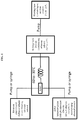
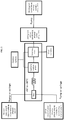
- Pumping was done with two HPLC piston pumps. The mixing was done in the apparatus diagrammed in FIG. 1 (an alternative system is shown in FIG. 2 ).
- the starting material solution was about 0.33 M and was pumped with a flow of 50 ml/min
- the LDA solution was about 0.90 M and was pumped with a flow of 20 ml/min to achieve a stoichiometric ratio of about 1.15.
- Pumping was done with two HPLC piston pumps.
- the mixing was done in the apparatus shown in FIG. 1 with an additional static mixer after the initial T-type-mixer.
- the mixer and the coils were cooled in an ethanol-dry ice-bath at about -50 °C. A conversion of about 48 % was achieved.
- the starting material solution was about 0.33 M and was pumped with a flow of 50 ml/min, the LDA solution wasabout 0.90 M and was pumped with a formal flow of 30 ml/min to achieve a stoichiometric ratio ofabout 1.15.
- Pumping was done with one HPLC piston pump for the starting material and a micro gear pump for the LDA solution.
- the flow of the micro gear pump was formally higher than necessary as the flow is reduced by back-pressure.
- the mixing was done in the apparatus shown in FIG. 1 .
- the mixer and the coils were cooled into an ethanol-dry ice-bath at about -50 °C.
- the starting material solution was about 0.33 M and was pumped with a flow of 50 ml/min
- the LDA solution was about 0.90 M and was pumped with a flow of 22 ml/min to achieve a stoichiometric ratio of about 1.15.
- Pumping was done with two HPLC piston pumps.
- the mixing was done in the apparatus shown in FIG. 1 with an additional small coil after the initial T-type mixer. The mixer and the coils were diving into an ethanol-dry ice-bath at about -50 °C.
- the starting material solution was about 0.35 M and the LDA solution was about 0.85 M.
- the starting material solution was about 0.58 M and was pumped with a flow of 50 ml/min
- the LDA solution was about 0.86 M and was pumped with a flow of 22 ml/min to achieve a stoichiometric ratio of about 1.17.
- Pumping was done with two HPLC piston pumps. The mixing was done in the large apparatus with an additional small coil after the initial T-type mixer. The mixer and the coils were cooled in an ethanol-dry ice-bath.
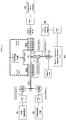
- General reactor setup comprises (as described in FIG. 3):
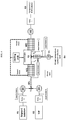
- General reactor setup comprises (as described in FIG. 4):
- Step 1 Synthesis of ethyl 2-[4-[2-(2-pyridylamino)ethylamino]cyclohexyl]acetate
- Step 2 Synthesis of ethyl 2-[4-[tert-butoxycarbonyl-[2-[tert-butoxycarbonyl(2-pyridyl)amino] ethyl] amino] cyclohexyl] acetate
- Step 3 Synthesis of 2-[4-[tert-butoxycarbonyl-[2-[tert-butoxycarbonyl(2-pyridyl)amino]ethyl]amino]cyclohexyl] acetic acid
- Step 4 Synthesis of tert-butyl 2-methoxy-3-((2R)-2-(2-(trans-4-(2-(pyridin-2-ylamino)ethylamino)cyclohexyl)acetamido)-2-(2,9,9-trimethyl-3,5-dioxa-4-bora-tricyclo[6.1.1.0 2,6 ]dec-4-yl)ethyl)benzoate
- Step 5 Synthesis of (R)-2-hydroxy-3-(2-(trans-4-(2-(pyridin-2-ylamino)ethylamino)cyclohexyl) acetamido)-3,4-dihydro-2H-benzo[e][1,2]oxaborinine-8-carboxylic acid
- the remaining aqueous solution was purified directly by reverse phase HPLC Phenomenex Luna C18 column 35x75 mm; flow rate 40 mL/min; eluted with 5-70% CH 3 CN in H 2 O/0.1% TFA over 8 minutes.
- the title compound was isolated as the TFA salt by lyophilization.
Landscapes
- Chemical & Material Sciences (AREA)
- Organic Chemistry (AREA)
- Pharmaceuticals Containing Other Organic And Inorganic Compounds (AREA)
- Organic Low-Molecular-Weight Compounds And Preparation Thereof (AREA)
Claims (15)
- Procédé à flux continu pour préparer un composé de formule (III) :
 P1 est un groupe protecteur d'hydroxyle ; etP2 est un groupe protecteur de carboxyle ;le procédé comprenant :(a) la fourniture d'un premier flux continu d'un composé de formule (II) et de dichlorométhane :
 (b) la fourniture d'un deuxième flux continu d'une base choisie parmi le diisopropylamide de lithium et le chlorure de 2,2,6,6-tétraméthylpipéridinylmagnésium:chlorure de lithium ;(c) le mélange du premier flux continu et du deuxième flux continu dans une chambre de mélange pour produire un troisième flux continu comprenant un premier intermédiaire réactif ;(d) la collecte du premier intermédiaire réactif dans un récipient collecteur à la sortie du troisième flux continu ;(e) le traitement du premier intermédiaire réactif avec un acide de Lewis ; et(f) le chauffage du récipient collecteur pour fournir le composé de formule (III) ;dans lequel :le premier flux continu comprend en outre un solvant éthéré de coordination ;le deuxième flux continu comprend en outre un solvant éthéré de coordination ; etle solvant éthéré de coordination est le 2-méthyltétrahydrofurane.
 - Procédé selon la revendication 1, dans lequel le deuxième flux continu comprend en outre de l'heptane, de l'éthylbenzène ou une combinaison de ceux-ci.
- Procédé selon la revendication 1 ou 2, dans lequel l'acide de Lewis est fourni sous la forme d'un quatrième flux continu comprenant en outre un solvant éthéré de coordination, dans lequel le solvant éthéré de coordination est le 2-méthyltétrahydrofurane.
- Procédé selon l'une quelconque des revendications 1 à 3, dans lequel la teneur en eau du solvant éthéré de coordination est inférieure à 0,08 % (p/p).
- Procédé selon l'une quelconque des revendications 1 à 3, dans lequel la teneur en eau du solvant éthéré de coordination est inférieure à 0,05 % (p/p).
- Procédé selon l'une quelconque des revendications 1 à 5, comprenant le pré-refroidissement du premier flux continu à une température comprise dans la plage de -40 °C à -10 °C.
- Procédé selon l'une quelconque des revendications 1 à 6, comprenant le pré-refroidissement du deuxième flux continu à une température comprise dans la plage de -40 °C à -10 °C.
- Procédé selon l'une quelconque des revendications 1 à 7, dans lequel le troisième flux continu a une température comprise dans la plage de -20 °C à +10 °C.
- Procédé selon l'une quelconque des revendications 1 à 8, comprenant le maintien du récipient collecteur à la sortie du troisième flux continu à une température comprise dans la plage de -10 °C à +10 °C.
- Procédé selon l'une quelconque des revendications 1 à 9, dans lequel le récipient collecteur est réchauffé à la température ambiante à l'étape (f).
- Procédé selon l'une quelconque des revendications 1 à 10, dans lequel le rapport molaire de la base à un composé de formule (II) est compris dans la plage de 1:1 à 1,5:1.
- Procédé selon l'une quelconque des revendications 1 à 11, dans lequel le rapport molaire du dichlorométhane à un composé de formule (II) est compris dans la plage de 5:1 et 7:1.
- Procédé selon l'une quelconque des revendications 1 à 12, dans lequel le rapport molaire de l'acide de Lewis à un composé de formule (II) est compris dans la plage de 1:1 et 3:1.
- Procédé selon l'une quelconque des revendications 1 à 13, dans lequel la base est le diisopropylamide de lithium et l'acide de Lewis est ZnCl2.
- Procédé selon l'une quelconque des revendications 1 à 14, dans lequel P1 est un groupe méthyle et P2 est un groupe tert-butyle.
Applications Claiming Priority (2)
| Application Number | Priority Date | Filing Date | Title |
|---|---|---|---|
| US201662370917P | 2016-08-04 | 2016-08-04 | |
| PCT/US2017/045347 WO2018027062A1 (fr) | 2016-08-04 | 2017-08-03 | Composés contenant du bore |
Publications (3)
| Publication Number | Publication Date |
|---|---|
| EP3494121A1 EP3494121A1 (fr) | 2019-06-12 |
| EP3494121A4 EP3494121A4 (fr) | 2020-03-11 |
| EP3494121B1 true EP3494121B1 (fr) | 2021-10-06 |
Family
ID=61073242
Family Applications (1)
| Application Number | Title | Priority Date | Filing Date |
|---|---|---|---|
| EP17837709.9A Active EP3494121B1 (fr) | 2016-08-04 | 2017-08-03 | Composés contenant du bore |
Country Status (3)
| Country | Link |
|---|---|
| US (2) | US10889600B2 (fr) |
| EP (1) | EP3494121B1 (fr) |
| WO (1) | WO2018027062A1 (fr) |
Families Citing this family (14)
| Publication number | Priority date | Publication date | Assignee | Title |
|---|---|---|---|---|
| CN105026407B (zh) | 2012-12-07 | 2017-09-08 | 维纳拓尔斯制药公司 | β‑内酰胺酶抑制剂 |
| EP2943204B1 (fr) | 2013-01-10 | 2019-03-13 | Venatorx Pharmaceuticals Inc | Inhibiteurs de bêta-lactamase |
| WO2014151958A1 (fr) | 2013-03-14 | 2014-09-25 | VenatoRx Pharmaceuticals, Inc. | Inhibiteurs de bêta-lactamase |
| US9511142B2 (en) | 2014-06-11 | 2016-12-06 | VenatoRx Pharmaceuticals, Inc. | Beta-lactamase inhibitors |
| PT3154989T (pt) | 2014-06-11 | 2021-05-18 | Venatorx Pharmaceuticals Inc | Inibidores de beta-lactamase |
| CN108472284A (zh) | 2015-09-11 | 2018-08-31 | 维纳拓尔斯制药公司 | β-内酰胺酶抑制剂 |
| WO2017100537A1 (fr) | 2015-12-10 | 2017-06-15 | VenatoRx Pharmaceuticals, Inc. | Inhibiteurs de bêta-lactamases |
| EP3494121B1 (fr) | 2016-08-04 | 2021-10-06 | Venatorx Pharmaceuticals, Inc. | Composés contenant du bore |
| MA47743A (fr) | 2017-03-06 | 2020-01-15 | Venatorx Pharmaceuticals Inc | Formes solides et compositions de combinaison comprenant un inhibiteur de bêta-lactamase et leurs utilisations |
| EP3630783A4 (fr) | 2017-05-26 | 2021-03-03 | Venatorx Pharmaceuticals, Inc. | Inhibiteurs protéiques de liaison à la pénicilline |
| US11332485B2 (en) | 2017-05-26 | 2022-05-17 | VenatoRx Pharmaceuticals, Inc. | Penicillin-binding protein inhibitors |
| EP3802551A4 (fr) | 2018-05-25 | 2022-03-02 | Venatorx Pharmaceuticals, Inc. | Inhibiteurs de protéine de liaison à la pénicilline |
| CN113382713A (zh) | 2018-11-29 | 2021-09-10 | 维纳拓尔斯制药公司 | 包含β-内酰胺酶抑制剂的组合式组合物及其用途 |
| EP4225321A4 (fr) | 2020-10-07 | 2024-11-20 | Venatorx Pharmaceuticals, Inc. | Procédé pour composés contenant du bore |
Family Cites Families (42)
| Publication number | Priority date | Publication date | Assignee | Title |
|---|---|---|---|---|
| NZ177159A (en) | 1974-04-20 | 1978-03-06 | Beecham Group Ltd | Clavulanic acid, salts, esters and preparation thereof from streptomyces clavuligerus: pharmaceutical compositions |
| US7271186B1 (en) | 2002-12-09 | 2007-09-18 | Northwestern University | Nanomolar β-lactamase inhibitors |
| CA2528587A1 (fr) | 2003-06-10 | 2005-01-20 | Fulcrum Pharmaceuticals, Inc. | Inhibiteurs de .beta.-lactamases et methodes d'utilisation de ces inhibiteurs |
| ME01975B (fr) | 2004-03-30 | 2015-05-20 | Millennium Pharm Inc | Synthese d'ester borique et de composes acides |
| CN1965838A (zh) | 2005-11-17 | 2007-05-23 | 李海超 | 含头孢匹胺和β-内酰胺酶抑制剂的药物组合物 |
| CA2783572C (fr) | 2005-12-07 | 2016-08-09 | Basilea Pharmaceutica Ag | Associations utiles d'antibiotiques monobactames et d'inhibiteurs de la beta-lactamase |
| JP2011504468A (ja) | 2007-11-13 | 2011-02-10 | プロテズ・ファーマシューティカルズ・インコーポレイテッド | β−ラクタマーゼ阻害剤 |
| US20100120715A1 (en) | 2007-11-13 | 2010-05-13 | Burns Christopher J | Beta-lactamase inhibitors |
| ES2533826T3 (es) | 2008-01-18 | 2015-04-15 | Merck Sharp & Dohme Corp. | Inhibidores de beta-lactamasa |
| US20100292185A1 (en) | 2009-05-12 | 2010-11-18 | Burns Christopher J | Beta-lactamase inhibitors |
| MX2012001156A (es) | 2009-07-28 | 2012-05-08 | Anacor Pharmaceuticals Inc | Moleculas que contienen boro trisustituidas. |
| RS60310B1 (sr) | 2010-08-10 | 2020-07-31 | Rempex Pharmaceuticals Inc | Ciklični derivati estra boronske kiseline, postupak za pripremu injihove terapeutske upotrebe |
| EP2768503A1 (fr) | 2011-07-26 | 2014-08-27 | Wockhardt Limited | Compositions pharmaceutiques comprenant un antibiotique bêta-lactame, du sulbactam et un inhibiteur de bêta-lactamase |
| WO2013053372A1 (fr) | 2011-10-13 | 2013-04-18 | Therabor Pharmaceuticals | Inhibiteurs de type acide boronique de bêta-lactamases |
| JP5798495B2 (ja) * | 2012-01-13 | 2015-10-21 | 住友理工株式会社 | 配線体接続構造体 |
| EP2814483A2 (fr) | 2012-02-15 | 2014-12-24 | Rempex Pharmaceuticals, Inc. | Méthodes de traitement d'infections bactériennes |
| MX2015006715A (es) | 2012-12-03 | 2015-08-14 | Hoffmann La Roche | Compuestos de acido triazolboronico sustituido. |
| CN105026407B (zh) | 2012-12-07 | 2017-09-08 | 维纳拓尔斯制药公司 | β‑内酰胺酶抑制剂 |
| US9101638B2 (en) | 2013-01-04 | 2015-08-11 | Rempex Pharmaceuticals, Inc. | Boronic acid derivatives and therapeutic uses thereof |
| KR20150103270A (ko) | 2013-01-04 | 2015-09-09 | 렘펙스 파머수티클스 인코퍼레이티드 | 보론산 유도체 및 그의 치료적 용도 |
| KR20150103269A (ko) | 2013-01-04 | 2015-09-09 | 렘펙스 파머수티클스 인코퍼레이티드 | 보론산 유도체 및 그의 치료적 용도 |
| EP2943204B1 (fr) | 2013-01-10 | 2019-03-13 | Venatorx Pharmaceuticals Inc | Inhibiteurs de bêta-lactamase |
| WO2014151958A1 (fr) | 2013-03-14 | 2014-09-25 | VenatoRx Pharmaceuticals, Inc. | Inhibiteurs de bêta-lactamase |
| US9120796B2 (en) | 2013-10-02 | 2015-09-01 | Cubist Pharmaceuticals, Inc. | B-lactamase inhibitor picoline salt |
| WO2015157618A1 (fr) | 2014-04-11 | 2015-10-15 | The Texas A&M University System | Nouveaux inhibiteurs de la new delhi métallo-bêta-lactamase (ndm-1) |
| EP3139930B1 (fr) | 2014-05-05 | 2024-08-14 | Melinta Therapeutics, Inc. | Sels et polymorphes de dérivés cycliques d'ester d'acide boronique, et leurs utilisations thérapeutiques |
| SI3140310T1 (sl) | 2014-05-05 | 2020-01-31 | Rempex Pharmaceuticals, Inc. | Sinteza boronatnih soli in njihova uporaba |
| WO2015179308A1 (fr) | 2014-05-19 | 2015-11-26 | Rempex Pharmaceuticals, Inc. | Dérivés d'acide boronique et leurs utilisations thérapeutiques |
| US9511142B2 (en) | 2014-06-11 | 2016-12-06 | VenatoRx Pharmaceuticals, Inc. | Beta-lactamase inhibitors |
| US20150361108A1 (en) | 2014-06-11 | 2015-12-17 | VenatoRx Pharmaceuticals, Inc. | Orally bioavailable beta-lactamase inhibitors |
| US20150361107A1 (en) | 2014-06-11 | 2015-12-17 | VenatoRx Pharmaceuticals, Inc. | Orally bioavailable beta-lactamase inhibitors |
| PT3154989T (pt) | 2014-06-11 | 2021-05-18 | Venatorx Pharmaceuticals Inc | Inibidores de beta-lactamase |
| EA201692301A1 (ru) | 2014-07-01 | 2017-06-30 | Ремпекс Фармасьютикалз, Инк. | Производные бороновой кислоты и их терапевтическое применение |
| EP3233869B1 (fr) | 2014-12-19 | 2019-09-25 | Rempex Pharmaceuticals, Inc. | Appareil et procédé à flux continu pour la production de dérivés d'acide boronique |
| CN108472284A (zh) | 2015-09-11 | 2018-08-31 | 维纳拓尔斯制药公司 | β-内酰胺酶抑制剂 |
| WO2017100537A1 (fr) | 2015-12-10 | 2017-06-15 | VenatoRx Pharmaceuticals, Inc. | Inhibiteurs de bêta-lactamases |
| CN105801610B (zh) * | 2016-04-19 | 2018-05-18 | 武汉维舜医药科技有限公司 | 新型广谱β-内酰胺酶抑制剂 |
| EP3494121B1 (fr) | 2016-08-04 | 2021-10-06 | Venatorx Pharmaceuticals, Inc. | Composés contenant du bore |
| MA47743A (fr) | 2017-03-06 | 2020-01-15 | Venatorx Pharmaceuticals Inc | Formes solides et compositions de combinaison comprenant un inhibiteur de bêta-lactamase et leurs utilisations |
| US11332485B2 (en) | 2017-05-26 | 2022-05-17 | VenatoRx Pharmaceuticals, Inc. | Penicillin-binding protein inhibitors |
| EP3630783A4 (fr) | 2017-05-26 | 2021-03-03 | Venatorx Pharmaceuticals, Inc. | Inhibiteurs protéiques de liaison à la pénicilline |
| CN113382713A (zh) | 2018-11-29 | 2021-09-10 | 维纳拓尔斯制药公司 | 包含β-内酰胺酶抑制剂的组合式组合物及其用途 |
-
2017
- 2017-08-03 EP EP17837709.9A patent/EP3494121B1/fr active Active
- 2017-08-03 US US16/322,372 patent/US10889600B2/en active Active
- 2017-08-03 WO PCT/US2017/045347 patent/WO2018027062A1/fr not_active Ceased
-
2020
- 2020-12-08 US US17/115,514 patent/US11560392B2/en active Active
Also Published As
| Publication number | Publication date |
|---|---|
| US20200181174A1 (en) | 2020-06-11 |
| EP3494121A1 (fr) | 2019-06-12 |
| US11560392B2 (en) | 2023-01-24 |
| EP3494121A4 (fr) | 2020-03-11 |
| WO2018027062A1 (fr) | 2018-02-08 |
| US20210163506A1 (en) | 2021-06-03 |
| US10889600B2 (en) | 2021-01-12 |
Similar Documents
| Publication | Publication Date | Title |
|---|---|---|
| EP3494121B1 (fr) | Composés contenant du bore | |
| KR102147420B1 (ko) | 베타-락타마제 억제제 | |
| ES2730013T3 (es) | Inhibidores de betalactamasa | |
| JP5738310B2 (ja) | ジフェニル−ピラゾロピリジン誘導体、この誘導体の調製および調節因子ではなく核受容体としてのこの誘導体の使用 | |
| MD4219492T2 (ro) | Compuși heterociclici ca imunomodulatori | |
| AU2020312800B2 (en) | N-((1,2,3,5,6,7-hexahydro-s-indacen-4-yl)carbamoyl)-4,5,6,7-tetrahydrobenzofuran -2-sulfonamide derivatives and related compounds as NLPR3 modulators for the treatment of multiple sclerosis (ms) | |
| AU2020314186B2 (en) | NLRP3 modulators | |
| RS65642B1 (sr) | Supstituisani pirazolo(1,5-a)pirimidini i njihova upotreba u lečenju medicinskih poremećaja | |
| JP7068297B2 (ja) | フェニル及びピリジニルヒドロキサム酸 | |
| US20240124469A1 (en) | Pim kinase inhibitor | |
| TWI815439B (zh) | 醯胺衍生物及其應用 | |
| JP6899391B2 (ja) | ガンマのモジュレータとしての化合物 | |
| US11787768B2 (en) | Tetrahydroquinoline-based bromodomain inhibitors | |
| EP4720065A1 (fr) | Inhibiteurs de prmt5 et leurs utilisations | |
| EP4034107A1 (fr) | Inhibiteurs de jak | |
| Chen et al. | Facile synthesis of α-difluoromethyl α-propargylamines from CF2H-substituted N-tert-butanesulfinyl ketimines | |
| CA3150281A1 (fr) | Inhibiteurs de jak | |
| AU2020267661B2 (en) | JAK inhibitors | |
| WO2025042956A1 (fr) | Composés modulateurs de la pde 7 | |
| WO2025059069A1 (fr) | Modulateurs de nlrp3 | |
| WO2015200349A2 (fr) | Inhibiteurs de l'élastase | |
| HK40080028B (zh) | Tyk2假激酶配体 | |
| WO2025148990A1 (fr) | Composé biphényle, son procédé de préparation et intermédiaire, composition pharmaceutique et utilisation associées | |
| CN106316984B (zh) | 一种n-取代五元及六元氮杂环化合物的合成方法 |
Legal Events
| Date | Code | Title | Description |
|---|---|---|---|
| STAA | Information on the status of an ep patent application or granted ep patent |
Free format text: STATUS: THE INTERNATIONAL PUBLICATION HAS BEEN MADE |
|
| PUAI | Public reference made under article 153(3) epc to a published international application that has entered the european phase |
Free format text: ORIGINAL CODE: 0009012 |
|
| STAA | Information on the status of an ep patent application or granted ep patent |
Free format text: STATUS: REQUEST FOR EXAMINATION WAS MADE |
|
| 17P | Request for examination filed |
Effective date: 20190207 |
|
| AK | Designated contracting states |
Kind code of ref document: A1 Designated state(s): AL AT BE BG CH CY CZ DE DK EE ES FI FR GB GR HR HU IE IS IT LI LT LU LV MC MK MT NL NO PL PT RO RS SE SI SK SM TR |
|
| AX | Request for extension of the european patent |
Extension state: BA ME |
|
| DAV | Request for validation of the european patent (deleted) | ||
| DAX | Request for extension of the european patent (deleted) | ||
| A4 | Supplementary search report drawn up and despatched |
Effective date: 20200212 |
|
| RIC1 | Information provided on ipc code assigned before grant |
Ipc: C07F 5/02 20060101AFI20200206BHEP |
|
| GRAP | Despatch of communication of intention to grant a patent |
Free format text: ORIGINAL CODE: EPIDOSNIGR1 |
|
| STAA | Information on the status of an ep patent application or granted ep patent |
Free format text: STATUS: GRANT OF PATENT IS INTENDED |
|
| INTG | Intention to grant announced |
Effective date: 20210302 |
|
| GRAS | Grant fee paid |
Free format text: ORIGINAL CODE: EPIDOSNIGR3 |
|
| GRAA | (expected) grant |
Free format text: ORIGINAL CODE: 0009210 |
|
| STAA | Information on the status of an ep patent application or granted ep patent |
Free format text: STATUS: THE PATENT HAS BEEN GRANTED |
|
| AK | Designated contracting states |
Kind code of ref document: B1 Designated state(s): AL AT BE BG CH CY CZ DE DK EE ES FI FR GB GR HR HU IE IS IT LI LT LU LV MC MK MT NL NO PL PT RO RS SE SI SK SM TR |
|
| REG | Reference to a national code |
Ref country code: GB Ref legal event code: FG4D |
|
| REG | Reference to a national code |
Ref country code: CH Ref legal event code: EP Ref country code: AT Ref legal event code: REF Ref document number: 1436156 Country of ref document: AT Kind code of ref document: T Effective date: 20211015 |
|
| REG | Reference to a national code |
Ref country code: DE Ref legal event code: R096 Ref document number: 602017047287 Country of ref document: DE |
|
| REG | Reference to a national code |
Ref country code: IE Ref legal event code: FG4D |
|
| REG | Reference to a national code |
Ref country code: LT Ref legal event code: MG9D |
|
| REG | Reference to a national code |
Ref country code: NL Ref legal event code: MP Effective date: 20211006 |
|
| PG25 | Lapsed in a contracting state [announced via postgrant information from national office to epo] |
Ref country code: RS Free format text: LAPSE BECAUSE OF FAILURE TO SUBMIT A TRANSLATION OF THE DESCRIPTION OR TO PAY THE FEE WITHIN THE PRESCRIBED TIME-LIMIT Effective date: 20211006 Ref country code: LT Free format text: LAPSE BECAUSE OF FAILURE TO SUBMIT A TRANSLATION OF THE DESCRIPTION OR TO PAY THE FEE WITHIN THE PRESCRIBED TIME-LIMIT Effective date: 20211006 Ref country code: FI Free format text: LAPSE BECAUSE OF FAILURE TO SUBMIT A TRANSLATION OF THE DESCRIPTION OR TO PAY THE FEE WITHIN THE PRESCRIBED TIME-LIMIT Effective date: 20211006 Ref country code: BG Free format text: LAPSE BECAUSE OF FAILURE TO SUBMIT A TRANSLATION OF THE DESCRIPTION OR TO PAY THE FEE WITHIN THE PRESCRIBED TIME-LIMIT Effective date: 20220106 |
|
| PG25 | Lapsed in a contracting state [announced via postgrant information from national office to epo] |
Ref country code: IS Free format text: LAPSE BECAUSE OF FAILURE TO SUBMIT A TRANSLATION OF THE DESCRIPTION OR TO PAY THE FEE WITHIN THE PRESCRIBED TIME-LIMIT Effective date: 20220206 Ref country code: SE Free format text: LAPSE BECAUSE OF FAILURE TO SUBMIT A TRANSLATION OF THE DESCRIPTION OR TO PAY THE FEE WITHIN THE PRESCRIBED TIME-LIMIT Effective date: 20211006 Ref country code: PT Free format text: LAPSE BECAUSE OF FAILURE TO SUBMIT A TRANSLATION OF THE DESCRIPTION OR TO PAY THE FEE WITHIN THE PRESCRIBED TIME-LIMIT Effective date: 20220207 Ref country code: PL Free format text: LAPSE BECAUSE OF FAILURE TO SUBMIT A TRANSLATION OF THE DESCRIPTION OR TO PAY THE FEE WITHIN THE PRESCRIBED TIME-LIMIT Effective date: 20211006 Ref country code: NO Free format text: LAPSE BECAUSE OF FAILURE TO SUBMIT A TRANSLATION OF THE DESCRIPTION OR TO PAY THE FEE WITHIN THE PRESCRIBED TIME-LIMIT Effective date: 20220106 Ref country code: NL Free format text: LAPSE BECAUSE OF FAILURE TO SUBMIT A TRANSLATION OF THE DESCRIPTION OR TO PAY THE FEE WITHIN THE PRESCRIBED TIME-LIMIT Effective date: 20211006 Ref country code: LV Free format text: LAPSE BECAUSE OF FAILURE TO SUBMIT A TRANSLATION OF THE DESCRIPTION OR TO PAY THE FEE WITHIN THE PRESCRIBED TIME-LIMIT Effective date: 20211006 Ref country code: HR Free format text: LAPSE BECAUSE OF FAILURE TO SUBMIT A TRANSLATION OF THE DESCRIPTION OR TO PAY THE FEE WITHIN THE PRESCRIBED TIME-LIMIT Effective date: 20211006 Ref country code: GR Free format text: LAPSE BECAUSE OF FAILURE TO SUBMIT A TRANSLATION OF THE DESCRIPTION OR TO PAY THE FEE WITHIN THE PRESCRIBED TIME-LIMIT Effective date: 20220107 Ref country code: ES Free format text: LAPSE BECAUSE OF FAILURE TO SUBMIT A TRANSLATION OF THE DESCRIPTION OR TO PAY THE FEE WITHIN THE PRESCRIBED TIME-LIMIT Effective date: 20211006 |
|
| REG | Reference to a national code |
Ref country code: DE Ref legal event code: R097 Ref document number: 602017047287 Country of ref document: DE |
|
| PG25 | Lapsed in a contracting state [announced via postgrant information from national office to epo] |
Ref country code: SM Free format text: LAPSE BECAUSE OF FAILURE TO SUBMIT A TRANSLATION OF THE DESCRIPTION OR TO PAY THE FEE WITHIN THE PRESCRIBED TIME-LIMIT Effective date: 20211006 Ref country code: SK Free format text: LAPSE BECAUSE OF FAILURE TO SUBMIT A TRANSLATION OF THE DESCRIPTION OR TO PAY THE FEE WITHIN THE PRESCRIBED TIME-LIMIT Effective date: 20211006 Ref country code: RO Free format text: LAPSE BECAUSE OF FAILURE TO SUBMIT A TRANSLATION OF THE DESCRIPTION OR TO PAY THE FEE WITHIN THE PRESCRIBED TIME-LIMIT Effective date: 20211006 Ref country code: EE Free format text: LAPSE BECAUSE OF FAILURE TO SUBMIT A TRANSLATION OF THE DESCRIPTION OR TO PAY THE FEE WITHIN THE PRESCRIBED TIME-LIMIT Effective date: 20211006 Ref country code: DK Free format text: LAPSE BECAUSE OF FAILURE TO SUBMIT A TRANSLATION OF THE DESCRIPTION OR TO PAY THE FEE WITHIN THE PRESCRIBED TIME-LIMIT Effective date: 20211006 Ref country code: CZ Free format text: LAPSE BECAUSE OF FAILURE TO SUBMIT A TRANSLATION OF THE DESCRIPTION OR TO PAY THE FEE WITHIN THE PRESCRIBED TIME-LIMIT Effective date: 20211006 |
|
| PLBE | No opposition filed within time limit |
Free format text: ORIGINAL CODE: 0009261 |
|
| STAA | Information on the status of an ep patent application or granted ep patent |
Free format text: STATUS: NO OPPOSITION FILED WITHIN TIME LIMIT |
|
| 26N | No opposition filed |
Effective date: 20220707 |
|
| PG25 | Lapsed in a contracting state [announced via postgrant information from national office to epo] |
Ref country code: AL Free format text: LAPSE BECAUSE OF FAILURE TO SUBMIT A TRANSLATION OF THE DESCRIPTION OR TO PAY THE FEE WITHIN THE PRESCRIBED TIME-LIMIT Effective date: 20211006 |
|
| PG25 | Lapsed in a contracting state [announced via postgrant information from national office to epo] |
Ref country code: SI Free format text: LAPSE BECAUSE OF FAILURE TO SUBMIT A TRANSLATION OF THE DESCRIPTION OR TO PAY THE FEE WITHIN THE PRESCRIBED TIME-LIMIT Effective date: 20211006 |
|
| REG | Reference to a national code |
Ref country code: AT Ref legal event code: UEP Ref document number: 1436156 Country of ref document: AT Kind code of ref document: T Effective date: 20211006 |
|
| REG | Reference to a national code |
Ref country code: DE Ref legal event code: R119 Ref document number: 602017047287 Country of ref document: DE |
|
| PG25 | Lapsed in a contracting state [announced via postgrant information from national office to epo] |
Ref country code: MC Free format text: LAPSE BECAUSE OF FAILURE TO SUBMIT A TRANSLATION OF THE DESCRIPTION OR TO PAY THE FEE WITHIN THE PRESCRIBED TIME-LIMIT Effective date: 20211006 |
|
| GBPC | Gb: european patent ceased through non-payment of renewal fee |
Effective date: 20220803 |
|
| PG25 | Lapsed in a contracting state [announced via postgrant information from national office to epo] |
Ref country code: LU Free format text: LAPSE BECAUSE OF NON-PAYMENT OF DUE FEES Effective date: 20220803 |
|
| REG | Reference to a national code |
Ref country code: BE Ref legal event code: MM Effective date: 20220831 |
|
| PG25 | Lapsed in a contracting state [announced via postgrant information from national office to epo] |
Ref country code: IT Free format text: LAPSE BECAUSE OF FAILURE TO SUBMIT A TRANSLATION OF THE DESCRIPTION OR TO PAY THE FEE WITHIN THE PRESCRIBED TIME-LIMIT Effective date: 20211006 |
|
| P01 | Opt-out of the competence of the unified patent court (upc) registered |
Effective date: 20230506 |
|
| PG25 | Lapsed in a contracting state [announced via postgrant information from national office to epo] |
Ref country code: IE Free format text: LAPSE BECAUSE OF NON-PAYMENT OF DUE FEES Effective date: 20220803 Ref country code: FR Free format text: LAPSE BECAUSE OF NON-PAYMENT OF DUE FEES Effective date: 20220831 Ref country code: DE Free format text: LAPSE BECAUSE OF NON-PAYMENT OF DUE FEES Effective date: 20230301 |
|
| PG25 | Lapsed in a contracting state [announced via postgrant information from national office to epo] |
Ref country code: BE Free format text: LAPSE BECAUSE OF NON-PAYMENT OF DUE FEES Effective date: 20220831 |
|
| PG25 | Lapsed in a contracting state [announced via postgrant information from national office to epo] |
Ref country code: GB Free format text: LAPSE BECAUSE OF NON-PAYMENT OF DUE FEES Effective date: 20220803 |
|
| PG25 | Lapsed in a contracting state [announced via postgrant information from national office to epo] |
Ref country code: HU Free format text: LAPSE BECAUSE OF FAILURE TO SUBMIT A TRANSLATION OF THE DESCRIPTION OR TO PAY THE FEE WITHIN THE PRESCRIBED TIME-LIMIT; INVALID AB INITIO Effective date: 20170803 |
|
| PG25 | Lapsed in a contracting state [announced via postgrant information from national office to epo] |
Ref country code: MK Free format text: LAPSE BECAUSE OF FAILURE TO SUBMIT A TRANSLATION OF THE DESCRIPTION OR TO PAY THE FEE WITHIN THE PRESCRIBED TIME-LIMIT Effective date: 20211006 Ref country code: CY Free format text: LAPSE BECAUSE OF FAILURE TO SUBMIT A TRANSLATION OF THE DESCRIPTION OR TO PAY THE FEE WITHIN THE PRESCRIBED TIME-LIMIT Effective date: 20211006 |
|
| PG25 | Lapsed in a contracting state [announced via postgrant information from national office to epo] |
Ref country code: TR Free format text: LAPSE BECAUSE OF FAILURE TO SUBMIT A TRANSLATION OF THE DESCRIPTION OR TO PAY THE FEE WITHIN THE PRESCRIBED TIME-LIMIT Effective date: 20211006 |
|
| PG25 | Lapsed in a contracting state [announced via postgrant information from national office to epo] |
Ref country code: MT Free format text: LAPSE BECAUSE OF FAILURE TO SUBMIT A TRANSLATION OF THE DESCRIPTION OR TO PAY THE FEE WITHIN THE PRESCRIBED TIME-LIMIT Effective date: 20211006 |
|
| PGFP | Annual fee paid to national office [announced via postgrant information from national office to epo] |
Ref country code: AT Payment date: 20250827 Year of fee payment: 9 |
|
| PGFP | Annual fee paid to national office [announced via postgrant information from national office to epo] |
Ref country code: CH Payment date: 20250901 Year of fee payment: 9 |