EP3496202A1 - Matériau d'électrolyte solide, et cellule - Google Patents
Matériau d'électrolyte solide, et cellule Download PDFInfo
- Publication number
- EP3496202A1 EP3496202A1 EP17836689.4A EP17836689A EP3496202A1 EP 3496202 A1 EP3496202 A1 EP 3496202A1 EP 17836689 A EP17836689 A EP 17836689A EP 3496202 A1 EP3496202 A1 EP 3496202A1
- Authority
- EP
- European Patent Office
- Prior art keywords
- solid electrolyte
- electrolyte material
- crystal
- crystal phase
- material according
- Prior art date
- Legal status (The legal status is an assumption and is not a legal conclusion. Google has not performed a legal analysis and makes no representation as to the accuracy of the status listed.)
- Granted
Links
Images



Classifications
-
- H—ELECTRICITY
- H01—ELECTRIC ELEMENTS
- H01M—PROCESSES OR MEANS, e.g. BATTERIES, FOR THE DIRECT CONVERSION OF CHEMICAL ENERGY INTO ELECTRICAL ENERGY
- H01M10/00—Secondary cells; Manufacture thereof
- H01M10/05—Accumulators with non-aqueous electrolyte
- H01M10/056—Accumulators with non-aqueous electrolyte characterised by the materials used as electrolytes, e.g. mixed inorganic/organic electrolytes
- H01M10/0561—Accumulators with non-aqueous electrolyte characterised by the materials used as electrolytes, e.g. mixed inorganic/organic electrolytes the electrolyte being constituted of inorganic materials only
- H01M10/0562—Solid materials
-
- C—CHEMISTRY; METALLURGY
- C01—INORGANIC CHEMISTRY
- C01F—COMPOUNDS OF THE METALS BERYLLIUM, MAGNESIUM, ALUMINIUM, CALCIUM, STRONTIUM, BARIUM, RADIUM, THORIUM, OR OF THE RARE-EARTH METALS
- C01F17/00—Compounds of rare earth metals
- C01F17/30—Compounds containing rare earth metals and at least one element other than a rare earth metal, oxygen or hydrogen, e.g. La4S3Br6
- C01F17/36—Compounds containing rare earth metals and at least one element other than a rare earth metal, oxygen or hydrogen, e.g. La4S3Br6 halogen being the only anion, e.g. NaYF4
-
- H—ELECTRICITY
- H01—ELECTRIC ELEMENTS
- H01B—CABLES; CONDUCTORS; INSULATORS; SELECTION OF MATERIALS FOR THEIR CONDUCTIVE, INSULATING OR DIELECTRIC PROPERTIES
- H01B1/00—Conductors or conductive bodies characterised by the conductive materials; Selection of materials as conductors
- H01B1/06—Conductors or conductive bodies characterised by the conductive materials; Selection of materials as conductors mainly consisting of other non-metallic substances
-
- H—ELECTRICITY
- H01—ELECTRIC ELEMENTS
- H01M—PROCESSES OR MEANS, e.g. BATTERIES, FOR THE DIRECT CONVERSION OF CHEMICAL ENERGY INTO ELECTRICAL ENERGY
- H01M10/00—Secondary cells; Manufacture thereof
- H01M10/05—Accumulators with non-aqueous electrolyte
- H01M10/052—Li-accumulators
-
- H—ELECTRICITY
- H01—ELECTRIC ELEMENTS
- H01M—PROCESSES OR MEANS, e.g. BATTERIES, FOR THE DIRECT CONVERSION OF CHEMICAL ENERGY INTO ELECTRICAL ENERGY
- H01M10/00—Secondary cells; Manufacture thereof
- H01M10/05—Accumulators with non-aqueous electrolyte
- H01M10/052—Li-accumulators
- H01M10/0525—Rocking-chair batteries, i.e. batteries with lithium insertion or intercalation in both electrodes; Lithium-ion batteries
-
- H—ELECTRICITY
- H01—ELECTRIC ELEMENTS
- H01M—PROCESSES OR MEANS, e.g. BATTERIES, FOR THE DIRECT CONVERSION OF CHEMICAL ENERGY INTO ELECTRICAL ENERGY
- H01M10/00—Secondary cells; Manufacture thereof
- H01M10/05—Accumulators with non-aqueous electrolyte
- H01M10/058—Construction or manufacture
- H01M10/0585—Construction or manufacture of accumulators having only flat construction elements, i.e. flat positive electrodes, flat negative electrodes and flat separators
-
- C—CHEMISTRY; METALLURGY
- C01—INORGANIC CHEMISTRY
- C01P—INDEXING SCHEME RELATING TO STRUCTURAL AND PHYSICAL ASPECTS OF SOLID INORGANIC COMPOUNDS
- C01P2002/00—Crystal-structural characteristics
- C01P2002/70—Crystal-structural characteristics defined by measured X-ray, neutron or electron diffraction data
- C01P2002/72—Crystal-structural characteristics defined by measured X-ray, neutron or electron diffraction data by d-values or two theta-values, e.g. as X-ray diagram
-
- C—CHEMISTRY; METALLURGY
- C01—INORGANIC CHEMISTRY
- C01P—INDEXING SCHEME RELATING TO STRUCTURAL AND PHYSICAL ASPECTS OF SOLID INORGANIC COMPOUNDS
- C01P2002/00—Crystal-structural characteristics
- C01P2002/70—Crystal-structural characteristics defined by measured X-ray, neutron or electron diffraction data
- C01P2002/74—Crystal-structural characteristics defined by measured X-ray, neutron or electron diffraction data by peak-intensities or a ratio thereof only
-
- C—CHEMISTRY; METALLURGY
- C01—INORGANIC CHEMISTRY
- C01P—INDEXING SCHEME RELATING TO STRUCTURAL AND PHYSICAL ASPECTS OF SOLID INORGANIC COMPOUNDS
- C01P2002/00—Crystal-structural characteristics
- C01P2002/70—Crystal-structural characteristics defined by measured X-ray, neutron or electron diffraction data
- C01P2002/76—Crystal-structural characteristics defined by measured X-ray, neutron or electron diffraction data by a space-group or by other symmetry indications
-
- H—ELECTRICITY
- H01—ELECTRIC ELEMENTS
- H01M—PROCESSES OR MEANS, e.g. BATTERIES, FOR THE DIRECT CONVERSION OF CHEMICAL ENERGY INTO ELECTRICAL ENERGY
- H01M2300/00—Electrolytes
- H01M2300/0017—Non-aqueous electrolytes
- H01M2300/0065—Solid electrolytes
- H01M2300/0068—Solid electrolytes inorganic
-
- H—ELECTRICITY
- H01—ELECTRIC ELEMENTS
- H01M—PROCESSES OR MEANS, e.g. BATTERIES, FOR THE DIRECT CONVERSION OF CHEMICAL ENERGY INTO ELECTRICAL ENERGY
- H01M2300/00—Electrolytes
- H01M2300/0017—Non-aqueous electrolytes
- H01M2300/0065—Solid electrolytes
- H01M2300/0068—Solid electrolytes inorganic
- H01M2300/008—Halides
-
- Y—GENERAL TAGGING OF NEW TECHNOLOGICAL DEVELOPMENTS; GENERAL TAGGING OF CROSS-SECTIONAL TECHNOLOGIES SPANNING OVER SEVERAL SECTIONS OF THE IPC; TECHNICAL SUBJECTS COVERED BY FORMER USPC CROSS-REFERENCE ART COLLECTIONS [XRACs] AND DIGESTS
- Y02—TECHNOLOGIES OR APPLICATIONS FOR MITIGATION OR ADAPTATION AGAINST CLIMATE CHANGE
- Y02E—REDUCTION OF GREENHOUSE GAS [GHG] EMISSIONS, RELATED TO ENERGY GENERATION, TRANSMISSION OR DISTRIBUTION
- Y02E60/00—Enabling technologies; Technologies with a potential or indirect contribution to GHG emissions mitigation
- Y02E60/10—Energy storage using batteries
-
- Y—GENERAL TAGGING OF NEW TECHNOLOGICAL DEVELOPMENTS; GENERAL TAGGING OF CROSS-SECTIONAL TECHNOLOGIES SPANNING OVER SEVERAL SECTIONS OF THE IPC; TECHNICAL SUBJECTS COVERED BY FORMER USPC CROSS-REFERENCE ART COLLECTIONS [XRACs] AND DIGESTS
- Y02—TECHNOLOGIES OR APPLICATIONS FOR MITIGATION OR ADAPTATION AGAINST CLIMATE CHANGE
- Y02P—CLIMATE CHANGE MITIGATION TECHNOLOGIES IN THE PRODUCTION OR PROCESSING OF GOODS
- Y02P70/00—Climate change mitigation technologies in the production process for final industrial or consumer products
- Y02P70/50—Manufacturing or production processes characterised by the final manufactured product
Definitions
- the present disclosure relates to a solid electrolyte material and a battery.
- PTL 1 discloses an all-solid battery using a sulfide solid electrolyte.
- PTL 2 discloses an all-solid battery using a halide containing indium as a solid electrolyte.
- a solid electrolyte material according to an aspect of the present disclosure is represented by the following Compositional Formula (1): Li 6-3z Y z X 6 Formula (1) where, 0 ⁇ z ⁇ 2 is satisfied; and X represents Cl or Br.
- a solid electrolyte material having a high lithium ion conductivity can be achieved.
- the solid electrolyte material in Embodiment 1 is a compound represented by the following Compositional Formula (2): Li 3 YX 6 Formula (2) where, X represents Cl (chlorine) or Br (bromine).
- a solid electrolyte material (halide solid electrolytic material) having a high lithium ion conductivity can be achieved.
- a solid electrolyte material having a structure stable in an assumed operation temperature range e.g., a range of -30°C to 80°C
- the solid electrolyte material of Embodiment 1 does not have a structure (e.g., the structure in PTL 2) in which the phase transition temperature is present within the operation temperature range of the battery. Consequently, even in an environment with temperature change, phase transition does not occur in the operation temperature range of the battery, and a high ionic conductivity can be stably maintained.
- an all-solid-state secondary battery having excellent charge and discharge characteristics can be achieved by using the solid electrolyte material of Embodiment 1.
- an all-solid-state secondary battery not containing sulfur can be achieved by using the solid electrolyte material of Embodiment 1. That is, the solid electrolyte material of Embodiment 1 does not have a structure (e.g., the structure in PLT 1) generating hydrogen sulfide when exposed to the atmosphere. Accordingly, an all-solid-state secondary battery not generating hydrogen sulfide and having excellent safety can be achieved.
- the solid electrolyte material in Embodiment 1 may include a crystal phase.
- Examples of the crystal phase include a first crystal phase and a second crystal phase described below.
- the solid electrolyte material in Embodiment 1 may include a first crystal phase.
- the arrangement of halogen X is the same as that of Br in Li 3 ErBr 6 (hereinafter, also expressed as LEB) having a crystal structure belonging to space group C2/m.
- a solid electrolyte material having a higher lithium ion conductivity can be achieved.
- a crystal structure like the first crystal phase allows X to be more strongly attracted to the periphery of Y. Consequently, a path through which lithium ions diffuse is formed. Accordingly, the lithium ion conductivity is further improved.
- Fig. 2 is a perspective view illustrating the crystal structure of a Li 3 ErBr 6 structure.
- the Li 3 ErBr 6 structure (LEB structure) has monoclinic symmetry and is a crystal structure belonging to space group C2/m.
- the details of the atomic arrangement are available in the inorganic crystal structure database (ICSD).
- the first crystal phase having the same halogen arrangement as that of the LEB structure includes, in a unit cell, two of the same compositions represented by Compositional Formula (2).
- the LEB structure can be identified by structural analysis using X-ray diffractometry.
- X-ray diffractometry When the measurement is performed by a ⁇ -2 ⁇ method using Cu-K ⁇ rays (wavelength: 1.5405 angstrom and 1.5444 angstrom) as the X-ray, strong peaks are observed within the ranges of diffraction angle 2 ⁇ values of 25° to 28°, 29° to 32°, 41° to 46°, 49° to 55°, and 51° to 58°.
- the solid electrolyte material in Embodiment 1 may satisfy I LEB(110) /I LEB(200) ⁇ 0.01.
- I LEB(200) represents the X-ray diffraction intensity of a first crystal phase plane corresponding to the (200) plane in the crystal structure of Li 3 ErBr 6 .
- I LEB(110) represents the X-ray diffraction intensity of a first crystal phase plane corresponding to the (110) plane in the crystal structure of Li 3 ErBr 6 .
- a solid electrolyte material having a higher lithium ion conductivity can be achieved.
- irregular arrangement of Y can be achieved. Consequently, the conduction path of lithium ions is three-dimensionally connected. Accordingly, the lithium ion conductivity is further improved.
- the arrangement of cations of the solid electrolyte material in Embodiment 1 need not be the same as the arrangement of cations in the LEB structure. That is, at least part of Y (yttrium) and at least part of Li may be irregularly arranged.
- the irregularity of the arrangement of cations can be evaluated by the above-mentioned intensity ratio "I LEB(110) /I LEB(200) " in the XRD pattern.
- I LEB(110) /I LEB(200) about 0.02 (about 2%).
- the value of I LEB(110) /I LEB(200) decreases with an increase in irregularity. As described above, if I LEB(110) /I LEB(200) ⁇ 0.01 (1%), sufficiently irregular arrangement of Y can be achieved.
- the solid electrolyte material in Embodiment 1 may satisfy FWHM 1 /2 ⁇ c 1 ⁇ 0.015.
- FWHM 1 represents the full width at half maximum of an X-ray diffraction peak of a first crystal phase plane corresponding to the (200) plane in the crystal structure of Li 3 ErBr 6 .
- 2 ⁇ c 1 denotes the diffraction angle at the center of the X-ray diffraction peak (peak central value).
- a solid electrolyte material having a higher lithium ion conductivity can be achieved. Specifically, a nonuniform lattice constant can be provided. Consequently, a region having a spread in the lattice is formed. Accordingly, the lithium ion conductivity is further improved.
- the lattice constant of the solid electrolyte material in Embodiment 1 need not be completely uniform. That is, the lattice constant may have some nonuniformity. Specifically, the lattice constant distribution may have a full width at half maximum of about 1% or more.
- the structure of the first crystal phase may be distorted, and the atoms may be arranged at slightly different atomic positions.
- the solid electrolyte material in Embodiment 1 may include a heterogeneous crystal phase having a crystal structure different from that of the first crystal phase.
- the heterogeneous crystal phase may lie between the first crystal phases.
- a solid electrolyte material having a higher lithium ion conductivity can be achieved. Specifically, the conduction of lithium ions between the first crystal phases is enhanced by the heterogeneous crystal phase. Accordingly, the lithium ion conductivity is further improved.
- the solid electrolyte material in Embodiment 1 may include an amorphous phase.
- the amorphous phase may lie between the first crystal phases.
- a solid electrolyte material having a higher lithium ion conductivity can be achieved. Specifically, the conduction of lithium ions between the first crystal phases is enhanced by the amorphous phase. Accordingly, the lithium ion conductivity is further improved.
- the solid electrolyte material in Embodiment 1 may include a second crystal phase.
- the arrangement of halogen X is the same as that of Cl in Li 3 ErCl 6 (hereinafter, also expressed as LEC) having a crystal structure belonging to space group P-3m1.
- a solid electrolyte material having a higher lithium ion conductivity can be achieved.
- a crystal structure like the second crystal phase allows X to be more strongly attracted to the periphery of Y. Consequently, a path through which lithium ions diffuse is formed. Accordingly, the lithium ion conductivity is further improved.
- Fig. 3 is a perspective view illustrating the crystal structure of a Li 3 ErCl 6 structure.
- the Li 3 ErCl 6 structure (LEC structure) has trigonal symmetry and is a crystal structure belonging to space group P-3m1.
- the details of the atomic arrangement are available in the inorganic crystal structure database (ICSD).
- the second crystal phase having the same halogen arrangement as that of the LEC structure includes, in a unit cells, three of the same compositions represented by Compositional Formula (2).
- the LEC structure can be identified by structural analysis using X-ray diffractometry.
- X-ray diffractometry When the measurement is performed by a ⁇ -2 ⁇ method using Cu-K ⁇ rays (wavelength: 1.5405 angstrom and 1.5444 angstrom) as the X-ray, strong peaks are observed within the ranges of diffraction angle 2 ⁇ values of 29.8° to 32°, 38.5° to 41.7°, 46.3° to 50.4°, and 50.8° to 55.4°.
- the solid electrolyte material in Embodiment 1 may satisfy I LEC(110) /I LEC(303) ⁇ 0.3.
- I LEC(303) is the X-ray diffraction intensity of a second crystal phase plane corresponding to the (303) plane in the crystal structure of Li 3 ErCl 6 .
- I LEC(110) is the X-ray diffraction intensity of a second crystal phase plane corresponding to the (110) plane of the crystal structure of Li 3 ErCl 6 .
- a solid electrolyte material having a higher lithium ion conductivity can be achieved.
- irregular arrangement of Y can be achieved. Consequently, the conduction path of lithium ions is three-dimensionally connected. Accordingly, the lithium ion conductivity is further improved.
- the arrangement of cations of the solid electrolyte material in Embodiment 1 need not be the same as the arrangement of cations of the LEC structure. That is, at least part of Y and at least part of Li may be irregularly arranged.
- the irregularity of the arrangement of cations can be evaluated by the above-mentioned intensity ratio "I LEB(110) /I LEB(303) " in the XRD pattern.
- I LEC(110) /I LEC(303) When the arrangement of Y is regular, I LEC(110) /I LEC(303) ⁇ about 0.45 (about 45%). The value of I LEC(110) /I LEC(303) decreases with an increase in irregularity. As described above, if I LEC(110) /I LEC(303) ⁇ 0.30 (30%), sufficiently irregular arrangement of Y can be achieved.
- the solid electrolyte material in Embodiment 1 may satisfy FWHM 2 /2 ⁇ c 2 ⁇ 0.015.
- FWHM 2 represents the full width at half maximum of an X-ray diffraction peak of a second crystal phase plane corresponding to the (303) plane in the crystal structure of Li 3 ErCl 6 .
- 2 ⁇ c 2 denotes the diffraction angle at the center of the X-ray diffraction peak (peak central value).
- a solid electrolyte material having a higher lithium ion conductivity can be achieved. Specifically, a nonuniform lattice constant can be provided. Consequently, a region having a lattice spread is formed. Accordingly, the lithium ion conductivity is further improved.
- the lattice constant of the solid electrolyte material in Embodiment 1 need not be completely uniform. That is, the lattice constant may have some nonuniformity. Specifically, the lattice constant distribution may have a full width at half maximum of about 1% or more.
- the structure of the second crystal phase may be distorted, and the atoms may be arranged at slightly different atomic positions.
- the solid electrolyte material in Embodiment 1 may include a heterogeneous crystal phase having a crystal structure different from that of the second crystal phase.
- the heterogeneous crystal phase may lie between the second crystal phases.
- a solid electrolyte material having a higher lithium ion conductivity can be achieved. Specifically, the conduction of lithium ions between the second crystal phases is enhanced by the heterogeneous crystal phase. Accordingly, the lithium ion conductivity is further improved.
- the solid electrolyte material in Embodiment 1 may include an amorphous phase.
- the second crystal phase may lie between the second crystal phases.
- a solid electrolyte material having a higher lithium ion conductivity can be achieved. Specifically, the conduction of lithium ions between the second crystal phases is enhanced by the amorphous phase. Accordingly, the lithium ion conductivity is further improved.
- the solid electrolyte material in Embodiment 1 may have any shape, such as an acicular, spherical, or oval spherical shape.
- the solid electrolyte material in Embodiment 1 may be in a particle form. A plurality of the particles may be laminated and then formed into a pellet or plate by pressurization.
- the median diameter may be 0.1 ⁇ m or more and 100 ⁇ m or less.
- the median diameter may be 0.5 ⁇ m or more and 10 ⁇ m or less.
- the ionic conductivity can be further increased.
- a more satisfactory dispersion state of the solid electrolyte material of Embodiment 1 and an active material or the like can be formed.
- the solid electrolyte material may have a median diameter smaller than that of the active material.
- the solid electrolyte material in Embodiment 1 can be produced by, for example, the following method.
- Raw material powders of binary halides are prepared at a blending ratio giving a target composition.
- LiCI and YCl 3 are prepared at a molar ratio of 3 : 1.
- X in Compositional Formula (2) can be determined by selecting the types of the raw material powders.
- the raw material powders are sufficiently mixed and are then mixed, pulverized, and reacted with each other using a mechanochemical milling process.
- the raw material powders are sufficiently mixed and may be then sintered in vacuum.
- the structure of the crystal phase (crystal structure) of the solid electrolyte material can be determined by adjusting the reaction method and reaction conditions for the raw material powders.
- Embodiment 2 will now be described. The description overlapping with Embodiment 1 described above is omitted as appropriate.
- the solid electrolyte material in Embodiment 2 is a compound represented by Compositional Formula (1): Li 6-3z Y z X 6 Formula (1) where, 0 ⁇ z ⁇ 2 is satisfied; and X represents Cl or Br.
- a solid electrolyte material (halide solid electrolytic material) having a high lithium ion conductivity can be achieved.
- a solid electrolyte material having a structure being stable in the assumed operation temperature range e.g., a range of -30°C to 80°C
- the solid electrolyte material of Embodiment 2 does not have a structure (e.g., the structure in PTL 2) in which the phase transition temperature is present within the operation temperature range of the battery. Consequently, even in an environment with temperature change, phase transition does not occur in the operation temperature range of the battery, and a high ionic conductivity can be stably maintained.
- an all-solid-state secondary battery having excellent charge and discharge characteristics can be achieved by using the solid electrolyte material of Embodiment 2.
- an all-solid-state secondary battery not containing sulfur can be achieved by using the solid electrolyte material Embodiment 2. That is, the solid electrolyte material of Embodiment 2 does not have a structure (e.g., the structure in PLT 1) generating hydrogen sulfide when exposed to the atmosphere. Accordingly, an all-solid-state secondary battery not generating hydrogen sulfide and having excellent safety can be achieved.
- Embodiment 2 satisfies 0.75 ⁇ z ⁇ 1.5.
- a solid electrolyte material (halide solid electrolytic material) having a higher lithium ion conductivity can be achieved.
- an all-solid-state secondary battery having more excellent charge and discharge characteristics can be achieved.
- Embodiment 2 satisfies 1 ⁇ z ⁇ 1.25.
- a solid electrolyte material (halide solid electrolytic material) having a higher lithium ion conductivity can be achieved.
- an all-solid-state secondary battery having more excellent charge and discharge characteristics can be achieved.
- the solid electrolyte material in Embodiment 2 may include a crystal phase.
- Examples of the crystal phase include a first crystal phase and a third crystal phase described below.
- the solid electrolyte material in Embodiment 2 may include a first crystal phase.
- the arrangement of halogen X is the same as that of Br in Li 3 ErBr 6 (hereinafter, also expressed as LEB) having a crystal structure belonging to space group C2/m.
- a solid electrolyte material having a higher lithium ion conductivity can be achieved.
- a crystal structure like the first crystal phase allows X to be more strongly attracted to the periphery of Y. Consequently, a path through which lithium ions diffuse is formed. Accordingly, the lithium ion conductivity is further improved.
- the Li 3 ErBr 6 structure (LEB structure) has monoclinic symmetry and is a crystal structure belonging to space group C2/m.
- the details of the atomic arrangement are available in the inorganic crystal structure database (ICSD).
- the first crystal phase having the same halogen arrangement as that of the LEB structure includes, in a unit cell, two of the same composition represented by Compositional Formula (1).
- the LEB structure can be identified by structural analysis using X-ray diffractometry.
- X-ray diffractometry When the measurement is performed by a ⁇ -2 ⁇ method using Cu-K ⁇ rays (wavelength: 1.5405 angstrom and 1.5444 angstrom) as the X-ray, strong peaks are observed within the ranges of diffraction angle 2 ⁇ values of 25° to 28°, 29° to 33, 41° to 47°, 49° to 55°, and 51° to 58°.
- the solid electrolyte material in Embodiment 2 may satisfy I LEB(110) /I LEB(200) ⁇ 0.01.
- I LEB(200) represents the X-ray diffraction intensity of a first crystal phase plane corresponding to the (200) plane in the crystal structure of Li 3 ErBr 6 .
- I LEB(110) represents the X-ray diffraction intensity of a first crystal phase plane corresponding to the (110) plane in the crystal structure of Li 3 ErBr 6 .
- a solid electrolyte material having a higher lithium ion conductivity can be achieved.
- irregular arrangement of Y can be achieved. Consequently, the conduction path of lithium ions is three-dimensionally connected. Accordingly, the lithium ion conductivity is further improved.
- the arrangement of cations of the solid electrolyte material in Embodiment 2 need not be the same as the arrangement of cations of the LEB structure. That is, at least part of Y and at least part of Li may be irregularly arranged.
- the irregularity of the arrangement of cations can be evaluated by the above-mentioned intensity ratio "I LEB(110) /I LEB(200) " in the XRD pattern.
- I LEB(110) /I LEB(200) about 0.02 (about 2%).
- the value of I LEB(110) /I LEB(200) decreases with an increase in irregularity. As described above, if I LEB(110) /I LEB(200) ⁇ 0.01 (1%), sufficiently irregular arrangement of Y can be achieved.
- the solid electrolyte material in Embodiment 2 may satisfy FWHM 1 /2 ⁇ c 1 ⁇ 0.015.
- FWHM 1 represents the full width at half maximum of an X-ray diffraction peak of a first crystal phase plane corresponding to the (200) plane in the crystal structure of Li 3 ErBr 6 .
- 2 ⁇ c 1 denotes the diffraction angle at the center of the X-ray diffraction peak (peak central value).
- a solid electrolyte material having a higher lithium ion conductivity can be achieved. Specifically, a nonuniform lattice constant can be provided. Consequently, a region having a lattice spread is formed. Accordingly, the lithium ion conductivity is further improved.
- the lattice constant of the solid electrolyte material in Embodiment 2 need not be completely uniform. That is, the lattice constant may have some nonuniformity. Specifically, the lattice constant distribution may have a full width at half maximum of about 1% or more.
- the structure of the first crystal phase may be distorted, and the atoms may be arranged at slightly different atomic positions.
- the solid electrolyte material in Embodiment 2 may include a heterogeneous crystal phase having a crystal structure different from that of the first crystal phase.
- the heterogeneous crystal phase may lie between the first crystal phases.
- a solid electrolyte material having a higher lithium ion conductivity can be achieved. Specifically, the conduction of lithium ions between the first crystal phases is enhanced by the heterogeneous crystal phase. Accordingly, the lithium ion conductivity is further improved.
- the solid electrolyte material in Embodiment 2 may include an amorphous phase.
- the amorphous phase may lie between the first crystal phases.
- a solid electrolyte material having a higher lithium ion conductivity can be achieved. Specifically, the conduction of lithium ions between the first crystal phases is enhanced by the amorphous phase. Accordingly, the lithium ion conductivity is further improved.
- the solid electrolyte material in Embodiment 2 may include a third crystal phase.
- the arrangement of halogen X is the same as that of Cl in Li 3 YbCl 6 (hereinafter, also expressed as LYC) having a crystal structure belonging to space group Pnma.
- a solid electrolyte material having a higher lithium ion conductivity can be achieved.
- a crystal structure like the third crystal phase allows X to be more strongly attracted to the periphery of Y. Consequently, a path through which lithium ions diffuse is formed. Accordingly, the lithium ion conductivity is further improved.
- Fig. 8 is a perspective view illustrating the crystal structure of a Li 3 YbCl 6 structure.
- the Li 3 YbCl 6 structure has orthorhombic symmetry and is a crystal structure belonging to space group Pnma.
- the details of the atomic arrangement are available in the inorganic crystal structure database (ICSD).
- the third crystal phase having the same halogen arrangement as that of the LYC structure includes, in a unit cell, three of the same compositions represented by Compositional Formula (1).
- the LYC structure can be identified by structural analysis using X-ray diffractometry.
- X-ray diffractometry When the measurement is performed by a ⁇ -2 ⁇ method using Cu-K ⁇ rays (wavelength: 1.5405 angstrom and 1.5444 angstrom) as the X-ray, strong peaks are observed within the ranges of diffraction angle 2 ⁇ values of 29.8° to 32°, 38.5° to 41.7°, 46.3° to 50.4°, and 50.8° to 55.4°.
- the solid electrolyte material in Embodiment 2 may satisfy FWHM 3 /2 ⁇ c 3 ⁇ 0.015.
- FWHM 3 represents the full width at half maximum of an X-ray diffraction peak of a third crystal phase plane corresponding to the (231) plane in the crystal structure of Li 3 YbCl 6 .
- 2 ⁇ c 3 denotes the diffraction angle at the center of the X-ray diffraction peak (peak central value).
- a solid electrolyte material having a higher lithium ion conductivity can be achieved. Specifically, a nonuniform lattice constant can be provided. Consequently, a region having a lattice spread is formed. Accordingly, the lithium ion conductivity is further improved.
- the lattice constant of the solid electrolyte material in Embodiment 2 need not be completely uniform. That is, the lattice constant may have some nonuniformity. Specifically, the lattice constant distribution may have a full width at half maximum of about 1% or more.
- the structure of the third crystal phase may be distorted, and the atoms may be arranged at slightly different atomic positions.
- the solid electrolyte material in Embodiment 2 may include a heterogeneous crystal phase having a crystal structure different from that of the third crystal phase.
- the heterogeneous crystal phase may lie between the third crystal phases.
- a solid electrolyte material having a higher lithium ion conductivity can be achieved. Specifically, the conduction of lithium ions between the third crystal phases is enhanced by the heterogeneous crystal phase. Accordingly, the lithium ion conductivity is further improved.
- the solid electrolyte material in Embodiment 2 may include an amorphous phase.
- the amorphous phase may lie between the third crystal phases.
- a solid electrolyte material having a higher lithium ion conductivity can be achieved. Specifically, the conduction of lithium ions between the third crystal phases is enhanced by the amorphous phase. Accordingly, the lithium ion conductivity is further improved.
- the solid electrolyte material in Embodiment 2 may have any shape, such as an acicular, spherical, or oval spherical shape.
- the solid electrolyte material in Embodiment 2 may be in a particle form. A plurality of the particles may be laminated and then formed into a pellet or plate by pressurization.
- the median diameter may be 0.1 ⁇ m or more and 100 ⁇ m or less.
- the median diameter may be 0.5 ⁇ m or more and 10 ⁇ m or less.
- the ionic conductivity can be further increased.
- a more satisfactory dispersion state of the solid electrolyte material of Embodiment 2 and an active material or the like can be formed.
- the solid electrolyte material may have a median diameter smaller than that of the active material.
- the solid electrolyte material in Embodiment 2 can be produced by, for example, the following method.
- Raw material powders of binary halides are prepared at a blending ratio giving a target composition.
- LiCI and YCl 3 are prepared at a molar ratio of 3 : 1.
- X in Compositional Formula (1) can be determined by selecting the types of the raw material powders.
- the value of "z" in Compositional Formula (1) can be adjusted by adjusting the mixing ratio of the raw material powder including Y.
- the raw material powders are sufficiently mixed and are then mixed, pulverized, and reacted with each other using a mechanochemical milling process.
- the raw material powders may be sufficiently mixed and then sintered in vacuum or in an inert atmosphere (for example, in an argon atmosphere or nitrogen atmosphere).
- the structure of the crystal phase (crystal structure) of a solid electrolyte material can be determined by adjusting the reaction method and reaction conditions for the raw material powders.
- composition of a solid electrolyte material can be determined by, for example, ICP emission spectroscopy, an inert gas melting-infrared absorption method, or an electron probe micro analyzer (EPMA) method.
- ICP emission spectroscopy an inert gas melting-infrared absorption method
- EPMA electron probe micro analyzer
- Embodiment 3 will now be described. The description overlapping with Embodiment 1 or 2 described above is omitted as appropriate.
- the solid electrolyte material in Embodiment 3 is a compound represented by Compositional Formula (1): Li 6-3z Y z X 6 Formula (1) where 0 ⁇ z ⁇ 2 is satisfied; and X represents Cl or Br.
- the solid electrolyte material in Embodiment 3 may include a crystal phase.
- Examples of the crystal phase include a fourth crystal phase and a fifth crystal phase described below.
- the solid electrolyte material in Embodiment 3 may include a fourth crystal phase.
- X is Br.
- X-ray diffractometry when the structural analysis using X-ray diffractometry is performed by a ⁇ -2 ⁇ method using Cu-K ⁇ rays (wavelength: 1.5405 angstrom and 1.5444 angstrom) as the X-ray, peaks are observed within the ranges of diffraction angle 2 ⁇ values of 13.1° to 14.5°, 26.6° to 28.3°, 30.8° to 32.7°, 44.2° to 47.1°, 52.3° to 55.8°, and 54.8° to 58.5°.
- a solid electrolyte material having a higher lithium ion conductivity can be achieved.
- the ionic conductivity is improved by the following effect. That is, a crystal structure like the fourth crystal phase allows Br to be more strongly attracted to the periphery of Y. Consequently, a path through which lithium ions diffuse is formed. Accordingly, the lithium ion conductivity is further improved.
- the solid electrolyte material in Embodiment 3 may satisfy FWHM 4 /2 ⁇ c 4 ⁇ 0.015.
- FWHM 4 represents the full width at half maximum of an X-ray diffraction peak observed within the range of 26.6° to 28.3°.
- 2 ⁇ c 4 denotes the diffraction angle at the center of the X-ray diffraction peak (peak central value).
- a solid electrolyte material having a higher lithium ion conductivity can be achieved.
- the ionic conductivity is improved by the following effect. That is, the structure mentioned above can provide a nonuniform lattice constant. Consequently, a region having a lattice spread is formed. Accordingly, the lithium ion conductivity is further improved.
- the solid electrolyte material in Embodiment 3 may satisfy I 2 /I 1 ⁇ 0.1, more preferably I 2 /I 1 ⁇ 0.01.
- I 1 represents the intensity of the diffraction peak appearing within the range of 26.6° to 28.3°.
- a solid electrolyte material having a higher lithium ion conductivity can be achieved.
- the ionic conductivity is improved by the following effect. That is, the structure described above can provide irregular arrangement of Y. Consequently, the conduction path of lithium ions is three-dimensionally connected. Accordingly, the lithium ion conductivity is further improved.
- the solid electrolyte material in Embodiment 3 may include a heterogeneous crystal phase having a crystal structure different from that of the fourth crystal phase.
- the heterogeneous crystal phase may lie between the fourth crystal phases.
- a solid electrolyte material having a higher lithium ion conductivity can be achieved.
- the ionic conductivity is improved by the following effect. That is, the conduction of lithium ions between the fourth crystal phases is enhanced by the heterogeneous crystal phase. Accordingly, the lithium ion conductivity is further improved.
- the solid electrolyte material in Embodiment 3 may include an amorphous phase.
- the amorphous phase may lie between the fourth crystal phases.
- a solid electrolyte material having a higher lithium ion conductivity can be achieved.
- the ionic conductivity is improved by the following effect. That is, the conduction of lithium ions between the fourth crystal phases is enhanced by the amorphous phase. Accordingly, the lithium ion conductivity is further improved.
- X is Cl.
- X-ray diffractometry is performed by a ⁇ -2 ⁇ method using Cu-K ⁇ rays (wavelength: 1.5405 angstrom and 1.5444 angstrom) as the X-ray, peaks are observed within the ranges of diffraction angle 2 ⁇ values of 15.3° to 16.3°, 29.8° to 32°, 38.5° to 41.7°, 46.3° to 50.4°, and 50.8° to 55.4°.
- a solid electrolyte material having a higher lithium ion conductivity can be achieved.
- the ionic conductivity is improved by the following effect. That is, a crystal structure like the fifth crystal phase allows Cl to be more strongly attracted to the periphery of Y. Consequently, a path through which lithium ions diffuse is formed. Accordingly, the lithium ion conductivity is further improved.
- the solid electrolyte material in Embodiment 3 may satisfy FWHM 5 /2 ⁇ c 5 ⁇ 0.015.
- FWHM 5 represents the full width at half maximum of an X-ray diffraction peak appearing within the range of 29.8° to 32°.
- 2 ⁇ c 5 denotes the diffraction angle at the center of the X-ray diffraction peak (peak central value).
- a solid electrolyte material having a higher lithium ion conductivity can be achieved.
- the ionic conductivity is improved by the following effect. That is, the structure mentioned above can provide a nonuniform lattice constant. Consequently, a region having a lattice spread is formed. Accordingly, the lithium ion conductivity is further improved.
- the solid electrolyte material in Embodiment 3 may satisfy I 4 /I 3 ⁇ 0.3.
- I 3 represents the intensity of the diffraction peak appearing within the range of 29.8° to 32°.
- I 4 represents the intensity of the diffraction peak appearing within the range of 15.3° to 16.3°.
- a solid electrolyte material having a higher lithium ion conductivity can be achieved.
- the ionic conductivity is improved by the following effect. That is, the structure described above can provide irregular arrangement of Y. Consequently, the conduction path of lithium ions is three-dimensionally connected. Accordingly, the lithium ion conductivity is further improved.
- the solid electrolyte material in Embodiment 3 may include a heterogeneous crystal phase having a crystal structure different from that of the fifth crystal phase.
- the heterogeneous crystal phase may lie between the fifth crystal phases.
- a solid electrolyte material having a higher lithium ion conductivity can be achieved.
- the ionic conductivity is improved by the following effect. That is, the conduction of lithium ions between the fifth crystal phases is enhanced by the heterogeneous crystal phase. Accordingly, the lithium ion conductivity is further improved.
- the solid electrolyte material in Embodiment 3 may include an amorphous phase.
- the amorphous phase may lie between the fifth crystal phases.
- a solid electrolyte material having a higher lithium ion conductivity can be achieved.
- the ionic conductivity is improved by the following effect. That is, the conduction of lithium ions between the fifth crystal phases is enhanced by the amorphous phase. Accordingly, the lithium ion conductivity is further improved.
- the solid electrolyte material in Embodiment 3 can be produced by, for example, the following method.
- Raw material powders of binary halides are prepared at a blending ratio giving a target composition.
- LiCI and YCl 3 are prepared at a molar ratio of 3 : 1.
- X in Compositional Formula (1) can be determined by selecting the types of the raw material powders.
- the value of "z" in Compositional Formula (1) can be adjusted by adjusting the mixing ratio of the raw material powder including Y.
- the raw material powders are sufficiently mixed and are then mixed, pulverized, and reacted with each other using a mechanochemical milling process.
- the raw material powders may be sufficiently mixed and then sintered in vacuum or in an inert atmosphere (for example, in an argon atmosphere or nitrogen atmosphere).
- the structure of the crystal phase of a solid electrolyte material can be determined by X-ray powder diffractometry.
- the measurement of X-ray powder diffraction of a sample is preferably performed in an inert atmosphere (for example, in an argon atmosphere or nitrogen atmosphere) or in a dry atmosphere with a dew point -30°C or less.
- Embodiment 4 will now be described. The description overlapping with any one of Embodiments 1 to 3 described above is omitted as appropriate.
- the battery of Embodiment 4 is assembled using the solid electrolyte material described in any of Embodiments 1 to 3.
- the battery of Embodiment 4 includes a solid electrolyte material, a positive electrode, a negative electrode, and an electrolyte layer.
- the electrolyte layer is a layer disposed between the positive electrode and the negative electrode.
- At least one of the electrolyte layer and the negative electrode contains the solid electrolyte material of any one of Embodiments 1 to 3.
- the charge and discharge characteristics of the battery can be improved.
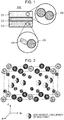
- Fig. 1 is a cross-sectional view illustrating a schematic structure of a battery 1000 in Embodiment 4.
- the battery 1000 of Embodiment 4 includes a positive electrode 201, a negative electrode 203, and an electrolyte layer 202.
- the positive electrode 201 includes positive electrode active material particles 204.
- the electrolyte layer 202 is disposed between the positive electrode 201 and the negative electrode 203.
- the electrolyte layer 202 includes an electrolyte material (for example, solid electrolyte material).
- the negative electrode 203 includes negative electrode active material particles 205 and solid electrolyte particles 100.
- the solid electrolyte particles 100 are particles consisting of the solid electrolyte material of any one of Embodiments 1 to 3 or particles mainly composed of the solid electrolyte material of any one of Embodiments 1 to 3.
- the positive electrode 201 contains a material having properties of occluding and releasing metal ions (for example, lithium ions).
- the positive electrode 201 includes, for example, a positive electrode active material (for example, positive electrode active material particles 204).
- the positive electrode active material examples include lithium-containing transition metal oxides (e.g., Li(NiCoAl)O 2 and LiCoO 2 ), transition metal fluorides, polyanion and fluorinated polyanion materials, transition metal sulfides, transition metal oxyfluorides, transition metal oxysulfides, and transition metal oxynitrides.
- lithium-containing transition metal oxides e.g., Li(NiCoAl)O 2 and LiCoO 2
- transition metal fluorides e.g., Li(NiCoAl)O 2 and LiCoO 2
- transition metal fluorides e.g., Li(NiCoAl)O 2 and LiCoO 2
- polyanion and fluorinated polyanion materials examples include transition metal sulfides, transition metal oxyfluorides, transition metal oxysulfides, and transition metal oxynitrides.
- the positive electrode active material particles 204 may have a median diameter of 0.1 ⁇ m or more and 100 ⁇ m or less. If the median diameter of the positive electrode active material particles 204 is larger than 100 ⁇ m, the diffusion of lithium in the positive electrode active material particles 204 slows down. Accordingly, high output operation of the battery may be difficult.
- the positive electrode 201 may have a thickness of 10 to 500 ⁇ m. If the thickness of the positive electrode is smaller than 10 ⁇ m, it may be difficult to ensure a sufficient energy density of the battery. If the thickness of the positive electrode is larger than 500 ⁇ m, high output operation may be difficult.
- the electrolyte layer 202 includes an electrolyte material.
- the electrolyte material is, for example, a solid electrolyte material. That is, the electrolyte layer 202 may be a solid electrolyte layer.
- the solid electrolyte layer may be constituted of only the solid electrolyte material of any one of Embodiments 1 to 3.
- the solid electrolyte layer may be constituted of only a solid electrolyte material different from the solid electrolyte material of any one of Embodiments 1 to 3.
- the solid electrolyte material different from the solid electrolyte material of any one of Embodiments 1 to 3 include Li 2 MgX 4 , Li 2 FeX 4 , Li(Al,Ga,In)X 4 , Li 3 (Al,Ga,In)X 6 , and Lil (X: F, Cl, Br, or I).
- the solid electrolyte layer may be constituted of both the solid electrolyte material of any one of Embodiments 1 to 3 and the above-mentioned solid electrolyte material different from the solid electrolyte material of any one of Embodiments 1 to 3. In such a case, both materials may be uniformly dispersed.
- a layer of the solid electrolyte material of any one of Embodiments 1 to 3 and a layer of a solid electrolyte material different from the solid electrolyte material of any one of Embodiments 1 to 3 may be successively arranged in the lamination direction of the battery.
- the solid electrolyte layer may have a thickness of 1 ⁇ m or more and 100 ⁇ m or less.
- a thickness of the solid electrolyte layer of smaller than 1 ⁇ m enhances the risk of short-circuiting between the positive electrode 201 and the negative electrode 203.
- the thickness of the solid electrolyte layer is larger than 100 ⁇ m, high output operation may be difficult.
- the negative electrode 203 contains a material having properties of occluding and releasing metal ions (e.g., lithium ions).
- the negative electrode 203 includes, for example, a negative electrode active material (e.g., negative electrode active material particles 205).
- Examples of the negative electrode active material include metal materials, carbon materials, oxides, nitrides, tin compounds, and silicon compounds.
- the metal material may be a simple metal substance. Alternatively, the metal material may be an alloy. Examples of the metal material include lithium metal and lithium alloys.
- Examples of the carbon material include natural graphite, coke, carbon during graphitization, carbon fibers, spherical carbon, artificial graphite, and amorphous carbon. From the viewpoint of capacity density, silicon (Si), tin (Sn), silicon compounds, and tin compounds can be preferably used. In the case of using a negative electrode active material having a low average reaction voltage, the electrolysis-suppressing effect of the solid electrolyte material of any one of Embodiments 1 to 3 is further highly exhibited.
- the negative electrode active material particles 205 may have a median diameter of 0.1 ⁇ m or more and 100 ⁇ m or less. If the median diameter of the negative electrode active material particles 205 is smaller than 0.1 ⁇ m, a risk of failing to form a satisfactory dispersion state of the negative electrode active material particles 205 and the solid electrolyte particles 100 in the negative electrode is caused. Consequently, the charge and discharge characteristics are deteriorated. In contrast, if the median diameter of the negative electrode active material particles 205 is larger than 100 ⁇ m, the diffusion of lithium in the negative electrode active material particles 205 slows down. Accordingly, high output operation of the battery may be difficult.
- the negative electrode active material particles 205 may have a median diameter larger than that of the solid electrolyte particles 100. In such a case, a satisfactory dispersion state of the negative electrode active material particles 205 and a halide solid electrolyte material can be formed.
- the value of v may satisfy 30 ⁇ v ⁇ 95. If the value of v is lower than 30, it may be difficult to ensure a sufficient energy density of the battery. If the value of v is higher than 95, high output operation may be difficult.
- the negative electrode 203 may have a thickness of 10 ⁇ m or more and 500 ⁇ m or less. If the thickness of the negative electrode is smaller than 10 ⁇ m, it may be difficult to ensure a sufficient energy density of the battery. If the thickness of the positive electrode is larger than 500 ⁇ m, high output operation may be difficult.
- At least one of the positive electrode 201, the electrolyte layer 202, and the negative electrode 203 may contain a sulfide solid electrolyte or an oxide solid electrolyte for enhancing the ionic conductivity.
- the sulfide solid electrolyte include Li 2 S-P 2 S 5 , Li 2 S-SiS 2 , Li 2 S-B 2 S 3 , Li 2 S-GeS 2 , Li 3.25 Ge 0.25 P 0.75 S 4 , and Li 10 GeP 2 S 12 .
- oxide solid electrolyte examples include NASICON-type solid electrolytes, such as LiTi 2 (PO 4 ) 3 and element substitutes thereof; (LaLi)TiO 3 perovskite-type solid electrolytes; LISICON-type solid electrolytes, such as Li 14 ZnGe 4 O 16 , Li 4 SiO 4 , and LiGeO 4 and element substitutes thereof; garnet-type solid electrolytes, such as Li 7 La 3 Zr 2 O 12 and element substitutes thereof; Li 3 N and H substitutes thereof; and Li 3 PO 4 and N substitutes thereof.
- NASICON-type solid electrolytes such as LiTi 2 (PO 4 ) 3 and element substitutes thereof
- (LaLi)TiO 3 perovskite-type solid electrolytes such as Li 14 ZnGe 4 O 16 , Li 4 SiO 4 , and LiGeO 4 and element substitutes thereof
- garnet-type solid electrolytes such as Li 7 La 3 Zr 2 O 12 and element substitutes thereof
- At least one of the positive electrode 201, the electrolyte layer 202, and the negative electrode 203 may contain a solid organic polymer electrolyte for enhancing the ionic conductivity.
- a solid organic polymer electrolyte for example, a compound composed of a polymer and a lithium salt can be used.
- the polymer may have an ethylene oxide structure. The ethylene oxide structure allows to contain a large amount of the lithium salt to further enhance the ionic conductivity.
- lithium salt examples include LiPF 6 , LiBF 4 , LiSbF 6 , LiAsF 6 , LiSO 3 CF 3 , LiN(SO 2 CF 3 ) 2 , LiN(SO 2 C 2 F 5 ) 2 , LiN(SO 2 CF 3 )(SO 2 C 4 F 9 ), and LiC(SO 2 CF 3 ) 3 .
- the lithium salt one selected from these lithium salts may be used alone. Alternatively, a mixture of two or more selected from these lithium salts may be used as the lithium salt.
- At least one of the positive electrode 201, the electrolyte layer 202, and the negative electrode 203 may contain a nonaqueous electrolyte solution, a gel electrolyte, and an ionic liquid for facilitating delivery and receipt of lithium ions and improving the output characteristics of the battery.
- the nonaqueous electrolyte solution contains a nonaqueous solvent and a lithium salt dissolved in the nonaqueous solvent.
- the nonaqueous solvent include cyclic carbonate solvents, chain carbonate solvents, cyclic ether solvents, chain ether solvents, cyclic ester solvents, chain ester solvents, and fluorine solvents.
- the cyclic carbonate solvent include ethylene carbonate, propylene carbonate, and butylene carbonate.
- Examples of the chain carbonate solvent include dimethyl carbonate, ethyl methyl carbonate, and diethyl carbonate.
- the cyclic ether solvent include tetrahydrofuran, 1,4-dioxane, and 1,3-dioxolane.
- Examples of the chain ether solvent include 1,2-dimethoxyethane and 1,2-diethoxyethane.
- Examples of the cyclic ester solvent include ⁇ -butyrolactone.
- Examples of the chain ester solvent include methyl acetate.
- Examples of the fluorine solvent include fluoroethylene carbonate, methyl fluoropropionate, fluorobenzene, fluoroethyl methyl carbonate, and fluorodimethylene carbonate.
- the nonaqueous solvent one selected from these nonaqueous solvents may be used alone. Alternatively, a combination of two or more selected from the nonaqueous solvents may be used as the nonaqueous solvent.
- the nonaqueous electrolyte solution may contain at least one fluorine solvent selected from the group consisting of fluoroethylene carbonate, methyl fluoropropionate, fluorobenzene, fluoroethyl methyl carbonate, and fluorodimethylene carbonate.
- the lithium salt include LiPF 6 , LiBF 4 , LiSbF 6 , LiAsF 6 , LiSO 3 CF 3 , LiN(SO 2 CF 3 ) 2 , LiN(SO 2 C 2 F 5 ) 2 , LiN(SO 2 CF 3 )(SO 2 C 4 F 9 ), and LiC(SO 2 CF 3 ) 3 .
- the lithium salt one selected from these lithium salts may be used alone. Alternatively, a mixture of two or more selected from these lithium salts may be used as the lithium salt.
- the concentration of the lithium salt is, for example, in a range of 0.5 to 2 mol/L.
- a polymer material impregnated with a nonaqueous electrolyte solution can be used.
- the polymer material include poly(ethylene oxide), polyacrylonitrile, poly(vinylidene fluoride), poly(methyl methacrylate), and polymers having ethylene oxide bonds.
- the cation constituting the ionic liquid may be, for example, an aliphatic chain quaternary salt, such as tetraalkylammonium and tetraalkylphosphonium; an aliphatic cyclic ammonium, such as pyrrolidiniums, morpholiniums, imidazoliniums, tetrahydropyrimidiniums, piperaziniums, and piperidiniums; or a nitrogen-containing aromatic heterocyclic cation, such as pyridiniums and imidazoliums.
- an aliphatic chain quaternary salt such as tetraalkylammonium and tetraalkylphosphonium
- an aliphatic cyclic ammonium such as pyrrolidiniums, morpholiniums, imidazoliniums, tetrahydropyrimidiniums, piperaziniums, and piperidiniums
- a nitrogen-containing aromatic heterocyclic cation such
- the anion constituting the ionic liquid may be, for example, PF 6 - , BF 4 - , SbF 6 - , AsF 6 - , SO 3 CF 3 - , N(SO 2 CF 3 ) 2 - , N(SO 2 C 2 F 5 ) 2 - , N(SO 2 CF 3 )(SO 2 C 4 F 9 ) - , or C(SO 2 CF 3 ) 3 - .
- the ionic liquid may contain a lithium salt.
- At least one of the positive electrode 201, the electrolyte layer 202, and the negative electrode 203 may contain a binder for enhancing the adhesion between the particles.
- the binder is used for improving the binding properties of the materials constituting the electrodes.
- the binder include poly(vinylidene fluoride), polytetrafluoroethylene, polyethylene, polypropylene, aramid resins, polyamide, polyimide, polyamideimide, polyacrylonitrile, poly(acrylic acid), poly(methyl acrylate), poly(ethyl acrylate), poly(hexyl acrylate), poly(methacrylic acid), poly(methyl methacrylate), poly(ethyl methacrylate), poly(hexyl methacrylate), poly(vinyl acetate), polyvinyl pyrrolidone, polyether, polyether sulfone, hexafluoro polypropylene, styrene butadiene rubber, and carboxymethyl cellulose.
- the binder can be a copolymer of two or more materials selected from tetrafluoroethylene, hexafluoro ethylene, hexafluoropropylene, perfluoroalkyl vinyl ether, vinylidene fluoride, chlorotrifluoroethylene, ethylene, propylene, pentafluoro propylene, fluoromethyl vinyl ether, acrylic acid, and hexadiene.
- the binder may be a mixture of two or more selected from these binders.
- At least one of the positive electrode 201 and the negative electrode 203 may contain a conductive assistant as needed.
- the conductive assistant is used for reducing the electrode resistance.
- the conductive assistant include graphites, such as natural graphite and artificial graphite; carbon blacks, such as acetylene black and Ketjen black; conductive fibers, such as carbon fibers and metal fibers; metal powders, such as carbon fluoride and aluminum; conductive whiskers, such as zinc oxide and potassium titanate; conductive metal oxides, such as titanium oxide; and conductive polymers, such as polyaniline, polypyrrole, and polythiophene.
- the use of a carbon conductive assistant as the conductive assistant can reduce the cost.
- the battery in Embodiment 4 can be constituted to have any shape, such as a coin-like, cylindrical, rectangular, sheet-like, button-like, flat, or laminar shape.
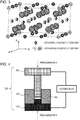
- Fig. 4 is a schematic view illustrating a method for evaluating ionic conductivity.
- a pressure molding die 300 is constituted of an electronically insulated polycarbonate frame 301 and electron-conductive stainless steel upper punch 303 and lower punch 302.
- the ionic conductivity was evaluated using the structure shown in Fig. 4 by the following method.
- the powder of the solid electrolyte material of Example 1 was loaded in the pressure molding die 300 in a dry atmosphere with a dew point of -30°C or less and was uniaxially pressed at 400 MPa to produce a conductivity measurement cell of Example A1.
- leads were taken from the upper punch 303 and the lower punch 302, respectively, and were connected to a potentiostat (VersaSTAT4, Princeton Applied Research) equipped with a frequency response analyzer, and the ionic conductivity at room temperature was measured by an electrochemical impedance measurement technique.
- a potentiostat VersaSTAT4, Princeton Applied Research
- the solid electrolyte material of Example A1 had an ionic conductivity of 3.0 ⁇ 10 -4 S/cm measured at 22°C.
- Fig. 5 is a graph showing temperature dependence of the ionic conductivity of solid electrolytes.
- Example A1 the conductivity measurement cell of Example A1 was placed in a thermostat chamber, and the temperature dependence of conductivity was measured in a temperature-rising process and a temperature-falling process within a range of -30°C to 80°C.
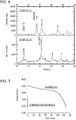
- Fig. 6 is a graph showing XRD patterns of solid electrolyte materials. Peaks were observed at the positions of the 2 ⁇ values of 13.7°, 27.4°, 31.7°, 45.5°, 54.0°, and 56.6°.
- the crystal structure of the solid electrolyte was analyzed by measuring the X-ray diffraction pattern in a dry environment with a dew point of - 45°C or less with an X-ray diffraction apparatus (MiniFlex600, RIGAKU Corporation), using Cu-K ⁇ rays as the X-ray source.
- the resulting X-ray diffraction pattern was analyzed.
- the solid electrolyte material Li 3 YBr 6 of Example A1 and an active material LiCoO 2 (hereinafter, expressed as LCO) were weighed at a volume ratio of 50:50 in an argon glove box and were mixed in an agate mortar to produce a mixture.
- the solid electrolyte material of Example A1 in an amount corresponding to a thickness of 700 ⁇ m and 12.3 mg of the mixture described above were stacked in this order in an insulation outer casing.
- the stacked product was pressure-molded at a pressure of 360 MPa to obtain a first electrode and a solid electrolyte layer.
- a metal In (thickness: 200 ⁇ m) was stacked on the solid electrolyte layer on the side opposite to the side being in contact with the first electrode.
- the stacked product was pressure-molded at a pressure of 80 MPa to produce a laminate composed of the first electrode, the solid electrolyte layer, and a second electrode.
- Example A1 Consequently, a secondary battery of Example A1 was produced.
- Fig. 7 is a graph showing initial discharge characteristics.
- Example A1 the secondary battery of Example A1 was placed in a thermostat chamber of 25°C.
- the battery was constant-current charged at a current value of 0.05C rate (20 hour rate) with respect to the theoretical capacity of the battery, and the charge was terminated when the voltage reached 3.7 V.
- the battery was discharged at a current value of the same 0.05C rate as above, and the discharge was terminated when the voltage reached 1.9 V.
- the initial discharge capacity of the secondary battery of Example A1 was 126 ⁇ Ah.
- the ionic conductivity measured at 22°C was 1.1 ⁇ 10 -4 S/cm.
- the temperature dependence of conductivity did not indicate phase transition within a range of -30°C to 80°C.
- the XRD pattern of the solid electrolyte material of Example A2 is shown in Fig. 6 . Peaks were observed at the positions of the 2 ⁇ values of 15.8°, 31.4°, 40.9°, 48.7°, and 53.6°.
- the solid electrolyte material of Example A2 was used as the solid electrolyte used in the mixture and the solid electrolyte layer.
- Example A1 Excepting the above, production and a charge and discharge test of a secondary battery were implemented as in Example A1.
- the initial discharge capacity of the secondary battery of Example A2 was 70 ⁇ Ah.
- Li 3 InBr 6 was prepared as the solid electrolyte material of Comparative Example 1.
- Example A1 Excepting the above, the ionic conductivity and phase transition were evaluated as in Example A1.
- the ionic conductivity measured at 22°C was less than 1 ⁇ 10 -7 S/cm.
- Example A1 Excepting the above, the ionic conductivity was evaluated as in Example A1.
- the measured ionic conductivity was 8.7 ⁇ 10 -6 S/cm.
- the solid electrolyte material of Comparative Example 2 was used as the solid electrolyte used in the mixture and the solid electrolyte layer.
- Example A1 Excepting the above, production and a charge and discharge test of a secondary battery were implemented as in Example A1.
- the initial discharge capacity of the secondary battery of Comparative Example 2 was less than 1 ⁇ Ah. That is, in the secondary battery of Comparative Example 2, the charge and discharge operation was not observed.
- Table 1 shows the structures in Examples A1 and A2 and Comparative Examples 1 and 2 and the results of each evaluation.
- Solid electrolyte material Anion arrangement FWHM/2 ⁇ c (%) Intensity ratio Conductivity (R.T.) (10 -4 S/cm) Phase transition ( ⁇ 80°C)
- Initial discharge capacity ⁇ Ah
- Example A1 Li 3 YBr 6 LEB 2.3 ⁇ 1% (irregular) 3.0 Not occurred 126
- Example A2 Li 3 YCl 6 LEC 1.8 26% (irregular) 1.1 Not occurred 70
- Comparative Example 1 Li 3 InBr 6 Not identified N/A N/A ⁇ 1E-3 Occurred (about 55°C) - Comparative Example 2 Li 2 FeCl 4 Not identified N/A N/A 8.7E-2 Not occurred ⁇ 1
- Conductivity measurement cells of Examples B1 to B8 were respectively produced as in Example A1 in a glove box kept in a dry and low-oxygen atmosphere with a dew point of -90°C or less and an oxygen value of 5 ppm or less.
- Each of the conductivity measurement cells of Examples B1 to B8 was placed in a thermostat chamber, and the temperature dependence of conductivity was measured in a temperature-rising process and a temperature-falling process within a range of -30°C to 80°C. As a result, in all Examples, no sharp change in conductivity indicating phase transition was observed.
- Fig. 9 is a graph showing temperature dependence of the ionic conductivity of solid electrolytes.
- Example A1 The crystal structure of each of the solid electrolyte materials of Examples B1 to B8 was analyzed as in Example A1.
- Fig. 10 is a graph showing an XRD pattern of a solid electrolyte material.
- the respective solid electrolyte materials of Examples B1 to B8 and an active material LiCoO 2 were weighed at a molar ratio of 50 : 50 in a glove box kept in a dry and low-oxygen atmosphere with a dew point of -90°C or less and an oxygen value of 5 ppm or less.
- the materials were mixed in an agate mortar to produce mixtures of Examples B1 to B8.
- a charge and discharge test of the secondary batteries of Examples B1 to B8 was performed as in Example A1.
- Fig. 11 is a graph showing initial discharge characteristics.
- Table 2 shows the structures in Examples B1 to B8 and the results of each evaluation.
- Initial discharge capacity ( ⁇ Ah) Example B1 Li 4.5 Y 0.5 Br 6 0.5 LEB 1.80 0.45 Not occurred 86
- Conductivity measurement cells of Examples C1 to C8 were respectively produced as in Example A1 in a glove box kept in a dry and low-oxygen atmosphere with a dew point of -90°C or less and an oxygen value of 5 ppm or less.
- Each of the conductivity measurement cells of Examples C1 to C8 was placed in a thermostat chamber, and the temperature dependence of conductivity was measured in a temperature-rising process and a temperature-falling process within a range of -30°C to 80°C. As a result, in all Examples, no sharp change in conductivity indicating phase transition was observed.
- Example A1 The crystal structure of each of the solid electrolyte materials of Examples C1 to C8 was analyzed as in Example A1.
- lattice constants lattice constants of the unit cell defined by the LYC structure
- Fig. 12 is a graph showing an XRD pattern of a solid electrolyte material.
- Table 3 shows the relationship between the full width at half maximum (FWHM) of the LYC(231) diffraction peak and the peak center 2 ⁇ c. In all Examples C1 to C8, FWHM/2 ⁇ c ⁇ 0.015.
- the respective solid electrolyte materials of Examples C1 to C8 and an active material LiCoO 2 were weighed at a molar ratio of 50 : 50 in a glove box kept in a dry and low-oxygen atmosphere with a dew point of -90°C or less and an oxygen value of 5 ppm or less.
- the materials were mixed in an agate mortar to produce mixtures of Examples C1 to C8.
- Table 3 shows the structures in Examples C1 to C8 and the results of each evaluation.
- Example C1 Li 4.5 Y 0.5 Cl 6 0.5 LYC 1.65 0.2 Not occurred 40
- Example C2 Li 3.75 Y 0.75 Cl 6 0.75 LYC 1.70 1 Not occurred 64
- Example C3 Li 3 YCl 6 1.0 LYC 1.75 5.7 Not occurred 70
- Example C5 Li 2.4 Y 1.25 Cl 6 1.25 LYC 1.80 4.4 Not occurred 80
- Example C6 Li 1.8 Y 1.4 Cl 6 1.4 LYC 1.70 2.7 Not occurred 75
- Example C7 Li 1.5 Y 1.5 Cl 6 1.5 LYC 2.50 1.5 Not occurred 73
- Example C8
- the solid electrolyte material according to the present disclosure is an electrolyte material not generating hydrogen sulfide and capable of stably maintaining a high lithium ion conductivity. It is furthermore demonstrated that the solid electrolyte material can achieve an all-solid battery that does not generate hydrogen sulfide and has excellent charge and discharge characteristics.
- the battery of the present disclosure can be used as, for example, an all-solid-state lithium secondary battery.
Landscapes
- Chemical & Material Sciences (AREA)
- Engineering & Computer Science (AREA)
- Manufacturing & Machinery (AREA)
- Chemical Kinetics & Catalysis (AREA)
- Electrochemistry (AREA)
- General Chemical & Material Sciences (AREA)
- Inorganic Chemistry (AREA)
- Organic Chemistry (AREA)
- General Physics & Mathematics (AREA)
- Condensed Matter Physics & Semiconductors (AREA)
- Physics & Mathematics (AREA)
- Materials Engineering (AREA)
- Life Sciences & Earth Sciences (AREA)
- Geology (AREA)
- Secondary Cells (AREA)
- Conductive Materials (AREA)
- Battery Electrode And Active Subsutance (AREA)
Applications Claiming Priority (3)
| Application Number | Priority Date | Filing Date | Title |
|---|---|---|---|
| JP2016153736 | 2016-08-04 | ||
| JP2017113102 | 2017-06-08 | ||
| PCT/JP2017/024934 WO2018025582A1 (fr) | 2016-08-04 | 2017-07-07 | Matériau d'électrolyte solide, et cellule |
Publications (3)
| Publication Number | Publication Date |
|---|---|
| EP3496202A1 true EP3496202A1 (fr) | 2019-06-12 |
| EP3496202A4 EP3496202A4 (fr) | 2019-08-07 |
| EP3496202B1 EP3496202B1 (fr) | 2024-09-25 |
Family
ID=61073711
Family Applications (1)
| Application Number | Title | Priority Date | Filing Date |
|---|---|---|---|
| EP17836689.4A Active EP3496202B1 (fr) | 2016-08-04 | 2017-07-07 | Matériau d'électrolyte solide, et cellule |
Country Status (5)
| Country | Link |
|---|---|
| US (4) | US11239492B2 (fr) |
| EP (1) | EP3496202B1 (fr) |
| JP (1) | JP6934626B2 (fr) |
| CN (5) | CN114976223B (fr) |
| WO (1) | WO2018025582A1 (fr) |
Cited By (41)
| Publication number | Priority date | Publication date | Assignee | Title |
|---|---|---|---|---|
| EP3736827A4 (fr) * | 2018-01-05 | 2021-03-10 | Panasonic Intellectual Property Management Co., Ltd. | Matériau d'électrolyte solide et batterie |
| EP3736823A4 (fr) * | 2018-01-05 | 2021-03-10 | Panasonic Intellectual Property Management Co., Ltd. | Matériau d'électrolyte solide et batterie |
| EP3736832A4 (fr) * | 2018-01-05 | 2021-03-10 | Panasonic Intellectual Property Management Co., Ltd. | Matériau d'électrolyte solide, et batterie |
| EP3736822A4 (fr) * | 2018-01-05 | 2021-03-10 | Panasonic Intellectual Property Management Co., Ltd. | Matériau d'électrolyte solide et batterie |
| EP3745498A4 (fr) * | 2018-01-26 | 2021-03-10 | Panasonic Intellectual Property Management Co., Ltd. | Matériau d'électrode négative et batterie l'utilisant |
| EP3736825A4 (fr) * | 2018-01-05 | 2021-03-10 | Panasonic Intellectual Property Management Co., Ltd. | Matériau d'électrolyte solide et batterie |
| EP3736833A4 (fr) * | 2018-01-05 | 2021-03-10 | Panasonic Intellectual Property Management Co., Ltd. | Matériau d'électrolyte solide et batterie |
| EP3904288A4 (fr) * | 2018-12-26 | 2022-02-23 | Panasonic Intellectual Property Management Co., Ltd. | Procédé de production d'halogénures |
| EP3904291A4 (fr) * | 2018-12-28 | 2022-03-02 | Panasonic Intellectual Property Management Co., Ltd. | Procédé de production d'halogénures |
| EP3904290A4 (fr) * | 2018-12-28 | 2022-03-02 | Panasonic Intellectual Property Management Co., Ltd. | Procédé de production d'un halogénure |
| EP3933978A4 (fr) * | 2019-02-28 | 2022-04-27 | Panasonic Intellectual Property Management Co., Ltd. | Matériau d'électrode positive, et batterie |
| US11411247B2 (en) | 2018-01-05 | 2022-08-09 | Panasonic Intellectual Property Management Co., Ltd. | Solid electrolyte material and battery |
| US11427477B2 (en) | 2018-01-05 | 2022-08-30 | Panasonic Intellectual Property Management Co., Ltd. | Solid electrolyte material and battery |
| US11498849B2 (en) | 2018-01-05 | 2022-11-15 | Panasonic Intellectual Property Management Co., Ltd. | Solid electrolyte material and battery |
| US11498850B2 (en) | 2018-01-05 | 2022-11-15 | Panasonic Intellectual Property Management Co., Ltd. | Solid electrolyte material and battery |
| US11515565B2 (en) | 2018-01-05 | 2022-11-29 | Panasonic Intellectual Property Management Co., Ltd. | Battery |
| US11522217B2 (en) | 2020-04-14 | 2022-12-06 | Saint-Gobain Ceramics & Plastics, Inc. | Electrolyte material and methods of forming |
| US11524902B2 (en) | 2018-01-05 | 2022-12-13 | Panasonic Intellectual Property Management Co., Ltd. | Positive electrode material and battery |
| US11532816B2 (en) | 2020-04-23 | 2022-12-20 | Saint-Gobain Ceramics & Plastics, Inc. | Ion conductive layer including binder material |
| US11637315B2 (en) | 2020-08-07 | 2023-04-25 | Saint-Gobain Ceramics & Plastics, Inc. | Electrolyte material and methods of forming |
| US11637287B2 (en) | 2018-01-26 | 2023-04-25 | Panasonic Intellectual Property Management Co., Ltd. | Positive electrode material and battery using same |
| DE102021127929A1 (de) | 2021-10-27 | 2023-04-27 | Bayerische Motoren Werke Aktiengesellschaft | Kathode sowie eine Lithiumionen-Festkörperbatterie mit der Kathode |
| DE102021127939A1 (de) | 2021-10-27 | 2023-04-27 | Bayerische Motoren Werke Aktiengesellschaft | Lithiumionen-Festkörperbatterie mit einer prälithiierten Anode sowie ein Verfahren zur Herstellung der prälithiierten Anode |
| US11652235B2 (en) | 2018-01-26 | 2023-05-16 | Panasonic Intellectual Property Management Co., Ltd. | Battery |
| US11664531B2 (en) | 2020-04-14 | 2023-05-30 | Saint-Gobain Ceramics & Plastics, Inc. | Ion conductive material including complex metal halide, electrolyte including the same, and methods of forming the same |
| DE102021131511A1 (de) | 2021-12-01 | 2023-06-01 | Bayerische Motoren Werke Aktiengesellschaft | Kathode mit einem fluorhaltigen Polymer sowie eine Festkörperbatterie mit der Kathode |
| US11682764B2 (en) | 2018-01-26 | 2023-06-20 | Panasonic Intellectual Property Management Co., Ltd. | Cathode material and battery using same |
| US11757099B2 (en) | 2020-04-23 | 2023-09-12 | Saint-Gobain Ceramics & Plastics, Inc. | Ion conductive layer and methods of forming |
| US11784345B2 (en) | 2018-01-05 | 2023-10-10 | Panasonic Intellectual Property Management Co., Ltd. | Solid electrolyte material and battery |
| DE102022112792A1 (de) | 2022-05-20 | 2023-11-23 | Bayerische Motoren Werke Aktiengesellschaft | Lithiumbatterie umfassend eine Lithiummetallanode mit einem porösen Stromableiter |
| US11848414B2 (en) | 2021-05-17 | 2023-12-19 | Saint-Gobain Ceramics & Plastics, Inc. | Electrolyte material and methods of forming |
| US11949064B2 (en) | 2018-11-29 | 2024-04-02 | Panasonic Intellectual Property Management Co., Ltd. | Negative electrode material, battery, and method for producing battery |
| US11955599B2 (en) | 2018-11-29 | 2024-04-09 | Panasonic Intellectual Property Management Co., Ltd. | Negative electrode material and battery |
| US12095030B2 (en) | 2018-12-26 | 2024-09-17 | Panasonic Intellectual Property Management Co., Ltd. | Solid-electrolyte material and battery including the same |
| US12139414B2 (en) | 2018-12-26 | 2024-11-12 | Panasonic Intellectual Property Management Co., Ltd. | Method for producing halide |
| US12209030B2 (en) | 2018-01-26 | 2025-01-28 | Panasonic Intellectual Property Management Co., Ltd. | Solid electrolyte material and battery |
| EP4269344A4 (fr) * | 2020-12-25 | 2025-04-02 | Resonac Corporation | Électrolyte solide conducteur d'ions lithium et batterie tout solide |
| EP4117053A4 (fr) * | 2020-03-06 | 2025-05-14 | Toyota Jidosha Kabushiki Kaisha | Batterie à semi-conducteurs |
| US12315874B2 (en) | 2018-12-26 | 2025-05-27 | Panasonic Intellectual Property Management Co., Ltd. | Solid electrolyte and battery using same |
| US12482854B2 (en) | 2019-09-13 | 2025-11-25 | Tdk Corporation | Solid electrolyte layer, all-solid-state secondary battery, and manufacturing method of same |
| US12609349B2 (en) | 2020-06-24 | 2026-04-21 | Tdk Corporation | Solid electrolyte and solid electrolyte battery |
Families Citing this family (124)
| Publication number | Priority date | Publication date | Assignee | Title |
|---|---|---|---|---|
| CN114976223B (zh) * | 2016-08-04 | 2024-09-10 | 松下知识产权经营株式会社 | 固体电解质材料和电池 |
| JP7417926B2 (ja) | 2018-01-05 | 2024-01-19 | パナソニックIpマネジメント株式会社 | 固体電解質材料、および、電池 |
| WO2019135315A1 (fr) * | 2018-01-05 | 2019-07-11 | パナソニックIpマネジメント株式会社 | Matériau d'électrolyte solide, et batterie |
| CN111295719B (zh) * | 2018-01-05 | 2022-03-29 | 松下知识产权经营株式会社 | 固体电解质材料和电池 |
| CN120149365A (zh) | 2018-01-05 | 2025-06-13 | 松下知识产权经营株式会社 | 正极材料和电池 |
| EP3736820A4 (fr) | 2018-01-05 | 2021-03-10 | Panasonic Intellectual Property Management Co., Ltd. | Matériau d'électrolyte solide, et batterie |
| WO2019135319A1 (fr) * | 2018-01-05 | 2019-07-11 | パナソニックIpマネジメント株式会社 | Matériau d'électrolyte solide et batterie |
| WO2019146294A1 (fr) * | 2018-01-26 | 2019-08-01 | パナソニックIpマネジメント株式会社 | Batterie |
| CN111566757B (zh) * | 2018-01-26 | 2022-08-12 | 松下知识产权经营株式会社 | 固体电解质材料和电池 |
| EP3745519B1 (fr) | 2018-01-26 | 2022-11-02 | Panasonic Intellectual Property Management Co., Ltd. | Batterie |
| JP7546910B2 (ja) * | 2018-06-26 | 2024-09-09 | エルジー エナジー ソリューション リミテッド | 二次電池及びその製造方法 |
| JP7182413B2 (ja) * | 2018-09-26 | 2022-12-02 | 古河機械金属株式会社 | 無機材料の製造方法 |
| JP7542196B2 (ja) * | 2018-10-01 | 2024-08-30 | パナソニックIpマネジメント株式会社 | ハロゲン化物固体電解質材料およびこれを用いた電池 |
| EP3863027B1 (fr) * | 2018-10-01 | 2022-06-01 | Panasonic Intellectual Property Management Co., Ltd. | Matériau d'électrolyte solide à base d'halogénure et batterie l'utilisant |
| JP7542194B2 (ja) * | 2018-10-01 | 2024-08-30 | パナソニックIpマネジメント株式会社 | ハロゲン化物固体電解質材料およびこれを用いた電池 |
| CN112204675B (zh) * | 2018-10-01 | 2022-10-14 | 松下知识产权经营株式会社 | 卤化物固体电解质材料和使用该材料的电池 |
| EP3904287A4 (fr) * | 2018-12-26 | 2022-02-16 | Panasonic Intellectual Property Management Co., Ltd. | Procédé de production d'halogénure |
| WO2020137189A1 (fr) | 2018-12-26 | 2020-07-02 | パナソニックIpマネジメント株式会社 | Composition d'électrolyte solide et procédé de production d'un élément d'électrolyte solide |
| JP7378039B2 (ja) * | 2018-12-26 | 2023-11-13 | パナソニックIpマネジメント株式会社 | ハロゲン化物の製造方法 |
| CN112789692B (zh) * | 2018-12-26 | 2024-01-09 | 松下知识产权经营株式会社 | 固体电解质材料和使用它的电池 |
| CN112655105B (zh) | 2018-12-27 | 2024-08-06 | 松下知识产权经营株式会社 | 电池 |
| EP3905405A4 (fr) | 2018-12-27 | 2022-02-23 | Panasonic Intellectual Property Management Co., Ltd. | Batterie |
| WO2020137389A1 (fr) | 2018-12-27 | 2020-07-02 | パナソニックIpマネジメント株式会社 | Batterie |
| JP7417952B2 (ja) | 2018-12-28 | 2024-01-19 | パナソニックIpマネジメント株式会社 | 固体電解質材料およびそれを用いた電池 |
| WO2020137155A1 (fr) * | 2018-12-28 | 2020-07-02 | パナソニックIpマネジメント株式会社 | Matériau d'électrolyte solide et batterie l'utilisant |
| JP7445868B2 (ja) | 2018-12-28 | 2024-03-08 | パナソニックIpマネジメント株式会社 | 固体電解質材料、およびそれを用いた電池 |
| JP7432897B2 (ja) * | 2018-12-28 | 2024-02-19 | パナソニックIpマネジメント株式会社 | 固体電解質材料およびそれを用いた電池 |
| CN109775744B (zh) * | 2019-01-11 | 2022-02-25 | 蜂巢能源科技有限公司 | 卤化钇锂的制备方法及其在固态电解质和电池中的应用 |
| EP3933857B1 (fr) * | 2019-02-28 | 2022-11-30 | Panasonic Intellectual Property Management Co., Ltd. | Matériau électrolytique et batterie l'utilisant |
| EP3940816B1 (fr) * | 2019-03-15 | 2024-05-01 | Panasonic Intellectual Property Management Co., Ltd. | Matériau d'électrolyte solide et batterie l'utilisant |
| EP3940815B1 (fr) | 2019-03-15 | 2023-08-30 | Panasonic Intellectual Property Management Co., Ltd. | Matériau d'électrolyte solide et batterie l'utilisant |
| WO2020188913A1 (fr) | 2019-03-15 | 2020-09-24 | パナソニックIpマネジメント株式会社 | Matériau d'électrolyte solide et batterie l'utilisant |
| CN109950617B (zh) * | 2019-03-20 | 2022-02-15 | 深圳先进技术研究院 | 无机氯化物基固态电解质及其制备方法和应用 |
| CN111916820B (zh) * | 2019-05-08 | 2023-05-05 | 国联汽车动力电池研究院有限责任公司 | 二次电池固态电解质材料及其制备方法与应用 |
| CN112467196A (zh) * | 2019-09-06 | 2021-03-09 | 国联汽车动力电池研究院有限责任公司 | 固态电解质材料和全固态电池 |
| CN110137561A (zh) * | 2019-04-29 | 2019-08-16 | 国联汽车动力电池研究院有限责任公司 | 锂二次电池添加剂及其制备方法与应用 |
| EP3965199A4 (fr) * | 2019-04-29 | 2022-12-14 | China Automotive Battery Research Institute Co, Ltd. | Matériau d'électrolyte solide de pile secondaire au lithium, électrode et pile |
| CN112467074A (zh) * | 2019-09-06 | 2021-03-09 | 国联汽车动力电池研究院有限责任公司 | 电极、电解质薄层及其制备方法 |
| CN113597694B (zh) * | 2019-06-26 | 2025-01-21 | 松下知识产权经营株式会社 | 离子导体材料及电池 |
| WO2021002064A1 (fr) * | 2019-07-04 | 2021-01-07 | パナソニックIpマネジメント株式会社 | Batterie |
| JP7565494B2 (ja) | 2019-07-04 | 2024-10-11 | パナソニックIpマネジメント株式会社 | 正極材料およびこれを用いた電池 |
| JP7478988B2 (ja) * | 2019-07-04 | 2024-05-08 | パナソニックIpマネジメント株式会社 | 固体電解質材料およびこれを用いた電池 |
| CN113853696B (zh) * | 2019-07-04 | 2025-03-07 | 松下知识产权经营株式会社 | 固体电解质材料及使用了该固体电解质材料的电池 |
| CN114207895B (zh) | 2019-08-07 | 2024-03-01 | Tdk株式会社 | 固体电解质、固体电解质层以及固体电解质电池 |
| CN110534802A (zh) * | 2019-09-11 | 2019-12-03 | 蜂巢能源科技有限公司 | 固态电解质及其制备方法和应用 |
| WO2021070595A1 (fr) | 2019-10-10 | 2021-04-15 | パナソニックIpマネジメント株式会社 | Matériau d'électrolyte solide et batterie faisant appel à celui-ci |
| CN114600292A (zh) * | 2019-10-18 | 2022-06-07 | 松下知识产权经营株式会社 | 电池 |
| WO2021089680A1 (fr) | 2019-11-07 | 2021-05-14 | Basf Se | Synthèse à base de solution d'halogénures de métal de transition de lithium |
| JP2023501435A (ja) | 2019-11-07 | 2023-01-18 | ビーエーエスエフ ソシエタス・ヨーロピア | リチウム遷移金属ハロゲン化物 |
| CN114902351B (zh) | 2019-12-27 | 2025-09-23 | 松下知识产权经营株式会社 | 固体电解质组合物、固体电解质组合物的制造方法以及固体电解质部件的制造方法 |
| EP4084116A4 (fr) * | 2019-12-27 | 2023-04-19 | Panasonic Intellectual Property Management Co., Ltd. | Électrode et batterie |
| WO2021131426A1 (fr) * | 2019-12-27 | 2021-07-01 | パナソニックIpマネジメント株式会社 | Composition d'électrolyte solide et particules d'électrolyte solide |
| CN111211356B (zh) * | 2020-01-13 | 2021-09-28 | 国联汽车动力电池研究院有限责任公司 | 一种用于含固体电解质的锂二次电池电解液及其应用 |
| JP7759613B2 (ja) * | 2020-01-29 | 2025-10-24 | パナソニックIpマネジメント株式会社 | 固体電解質材料およびこれを用いた電池 |
| JP7634232B2 (ja) * | 2020-01-29 | 2025-02-21 | パナソニックIpマネジメント株式会社 | 固体電解質材料およびこれを用いた電池 |
| WO2021157361A1 (fr) | 2020-02-05 | 2021-08-12 | パナソニック株式会社 | Matériau d'électrode positive et batterie |
| CN115136372B (zh) * | 2020-02-14 | 2025-06-17 | 松下知识产权经营株式会社 | 固体电解质材料及使用该固体电解质材料的电池 |
| EP4117054A4 (fr) * | 2020-03-05 | 2024-08-07 | Panasonic Intellectual Property Management Co., Ltd. | Matériau d'électrode positive et batterie |
| CN115335327A (zh) | 2020-03-30 | 2022-11-11 | 巴斯夫欧洲公司 | 用于储能应用的固体电解质 |
| JP7664539B2 (ja) * | 2020-03-31 | 2025-04-18 | パナソニックIpマネジメント株式会社 | 固体電解質材料、それを用いた電池、および固体電解質材料の製造方法 |
| WO2021199641A1 (fr) | 2020-03-31 | 2021-10-07 | パナソニックIpマネジメント株式会社 | Matériau d'électrolyte solide et batterie l'utilisant |
| EP4129917A1 (fr) | 2020-03-31 | 2023-02-08 | Panasonic Intellectual Property Management Co., Ltd. | Procédé de production d'halogénure |
| JP7724436B2 (ja) | 2020-03-31 | 2025-08-18 | パナソニックIpマネジメント株式会社 | 固体電解質材料およびこれを用いた電池 |
| EP4131500A4 (fr) | 2020-03-31 | 2023-09-27 | Panasonic Intellectual Property Management Co., Ltd. | Matériau d'électrolyte solide et batterie l'utilisant |
| JP7650007B2 (ja) | 2020-03-31 | 2025-03-24 | パナソニックIpマネジメント株式会社 | ハロゲン化物の製造方法 |
| JP7724435B2 (ja) | 2020-03-31 | 2025-08-18 | パナソニックIpマネジメント株式会社 | 固体電解質材料およびこれを用いた電池 |
| EP4131506A4 (fr) | 2020-03-31 | 2023-09-27 | Panasonic Intellectual Property Management Co., Ltd. | Matériau d'électrolyte solide et batterie l'utilisant |
| EP4129915A1 (fr) | 2020-03-31 | 2023-02-08 | Panasonic Intellectual Property Management Co., Ltd. | Procédé de production d'halogénure |
| JP7555031B2 (ja) | 2020-03-31 | 2024-09-24 | パナソニックIpマネジメント株式会社 | 固体電解質材料およびこれを用いた電池 |
| CN115279697A (zh) | 2020-03-31 | 2022-11-01 | 松下知识产权经营株式会社 | 卤化物的制造方法 |
| JP7650006B2 (ja) | 2020-03-31 | 2025-03-24 | パナソニックIpマネジメント株式会社 | ハロゲン化物の製造方法 |
| CN111453758B (zh) * | 2020-04-03 | 2021-03-30 | 南开大学 | 一类稀土基卤化物钙钛矿材料及其制备方法和应用 |
| WO2021205821A1 (fr) | 2020-04-09 | 2021-10-14 | パナソニックIpマネジメント株式会社 | Matériau d'électrode positive et batterie |
| US20230212024A1 (en) * | 2020-04-14 | 2023-07-06 | Solvay Sa | New lithium rare-earth halides |
| EP4145559A4 (fr) | 2020-04-28 | 2023-10-25 | Panasonic Intellectual Property Management Co., Ltd. | Matériau d'électrode positive et batterie |
| EP4144701A4 (fr) | 2020-04-30 | 2023-12-27 | Panasonic Intellectual Property Management Co., Ltd. | Procédé de production d'oxyhalogénures |
| US12034113B2 (en) | 2020-06-23 | 2024-07-09 | Toyota Motor Engineering & Manufacturing North America, Inc. | LiZnCl4 derivatives in the group of Pmn21 as Li super-ionic conductor, solid electrolyte, and coating layer for Li metal battery and Li-ion battery |
| US11462766B2 (en) | 2020-06-23 | 2022-10-04 | Toyota Motor Engineering & Manufacturing North America, Inc. | LiAlC14 derivatives in the space group of Pnma as Li super-ionic conductor, solid electrolyte, and coating layer for Li metal battery and Li-ion battery |
| JP7825177B2 (ja) * | 2020-06-23 | 2026-03-06 | パナソニックIpマネジメント株式会社 | 固体電解質組成物、固体電解質シートの製造方法、および電池の製造方法 |
| US11641029B2 (en) | 2020-06-23 | 2023-05-02 | Toyota Motor Engineering & Manufacturing North America, Inc. | Metal lithium chloride derivatives in the space group of P21/c as Li super-ionic conductor, solid electrolyte, and coating layer for Li metal battery and Li-ion battery |
| KR102883985B1 (ko) | 2020-07-02 | 2025-11-07 | 삼성전자주식회사 | 고체이온전도체 화합물, 이를 포함하는 고체전해질, 이를 포함하는 전기화학 셀, 및 이의 제조방법 |
| WO2022019098A1 (fr) | 2020-07-22 | 2022-01-27 | パナソニックIpマネジメント株式会社 | Matériau d'électrode positive et batterie |
| EP4186862A4 (fr) | 2020-07-22 | 2024-02-21 | Panasonic Intellectual Property Management Co., Ltd. | Matériau d'électrolyte solide et batterie l'utilisant |
| WO2022018990A1 (fr) | 2020-07-22 | 2022-01-27 | パナソニックIpマネジメント株式会社 | Matériau d'électrolyte solide et batterie faisant appel à celui-ci |
| CN116133991B (zh) * | 2020-07-22 | 2025-09-23 | 松下知识产权经营株式会社 | 固体电解质材料及使用了其的电池 |
| CN111834664B (zh) * | 2020-08-08 | 2022-04-29 | 天目湖先进储能技术研究院有限公司 | 可分离回收的硫化物型固态电解质及其应用 |
| US11928472B2 (en) | 2020-09-26 | 2024-03-12 | Intel Corporation | Branch prefetch mechanisms for mitigating frontend branch resteers |
| US20230387454A1 (en) | 2020-10-16 | 2023-11-30 | Basf Se | Solid lithium ion conducting material containing ytterbium and process for preparation thereof |
| KR20220062880A (ko) | 2020-11-09 | 2022-05-17 | 삼성전자주식회사 | 고체이온전도체, 이를 포함하는 고체전해질 및 전기화학소자, 및 상기 고체이온전도체의 제조방법 |
| KR20220064717A (ko) | 2020-11-12 | 2022-05-19 | 삼성전자주식회사 | 고체이온전도체 화합물, 이를 포함하는 고체전해질, 이를 포함하는 전기화학 셀, 및 이의 제조방법 |
| CN112397779B (zh) * | 2020-11-17 | 2022-09-27 | 郑州新世纪材料基因组工程研究院有限公司 | 一种卤族快离子导体 |
| KR20220071683A (ko) * | 2020-11-24 | 2022-05-31 | 삼성전자주식회사 | 고체이온전도체, 이를 포함하는 고체전해질 및 전기화학소자, 및 상기 고체이온전도체의 제조방법 |
| JP7484695B2 (ja) | 2020-12-22 | 2024-05-16 | トヨタ自動車株式会社 | 全固体電池 |
| JP2022100008A (ja) * | 2020-12-23 | 2022-07-05 | パナソニックIpマネジメント株式会社 | 正極層および全固体電池 |
| JPWO2022137758A1 (fr) * | 2020-12-25 | 2022-06-30 | ||
| KR20220100297A (ko) | 2021-01-08 | 2022-07-15 | 삼성전자주식회사 | 고체이온전도체, 이를 포함하는 고체전해질 및 전기화학소자, 및 상기 고체이온전도체의 제조방법 |
| JP7692271B2 (ja) * | 2021-01-18 | 2025-06-13 | Tdk株式会社 | 活物質層、負極及び全固体電池 |
| CN116583974A (zh) | 2021-01-18 | 2023-08-11 | Tdk株式会社 | 电池及其制造方法 |
| WO2022163039A1 (fr) * | 2021-01-26 | 2022-08-04 | パナソニックIpマネジメント株式会社 | Batterie |
| US12182317B2 (en) | 2021-02-13 | 2024-12-31 | Intel Corporation | Region-based deterministic memory safety |
| JP6947321B1 (ja) | 2021-03-01 | 2021-10-13 | Tdk株式会社 | 電池及び電池の製造方法 |
| WO2022185637A1 (fr) | 2021-03-02 | 2022-09-09 | パナソニックIpマネジメント株式会社 | Matériau d'électrolyte solide et batterie l'utilisant |
| CN116888686A (zh) | 2021-03-02 | 2023-10-13 | 松下知识产权经营株式会社 | 固体电解质材料及使用该固体电解质材料的电池 |
| CN116868282A (zh) | 2021-03-02 | 2023-10-10 | 松下知识产权经营株式会社 | 固体电解质材料及使用该固体电解质材料的电池 |
| JP7708571B2 (ja) | 2021-03-29 | 2025-07-15 | Tdk株式会社 | 固体電解質材および全固体電池 |
| CN117063318A (zh) * | 2021-04-13 | 2023-11-14 | 松下知识产权经营株式会社 | 电池 |
| JP7448506B2 (ja) * | 2021-04-20 | 2024-03-12 | トヨタ自動車株式会社 | 電池 |
| EP4339969A4 (fr) * | 2021-05-10 | 2025-07-16 | Panasonic Ip Man Co Ltd | Électrolyte solide, procédé de production d'électrolyte solide et batterie |
| WO2022244445A1 (fr) | 2021-05-20 | 2022-11-24 | パナソニックIpマネジメント株式会社 | Substance active de cathode revêtue, matériau de cathode et batterie |
| US12504891B2 (en) | 2021-06-24 | 2025-12-23 | Intel Corporation | Zero-redundancy tag storage for bucketed allocators |
| US12580182B2 (en) | 2021-07-07 | 2026-03-17 | Samsung Electronics Co., Ltd. | Coated cathode active material, method of preparing the same, and cathode and non-aqueous electrolyte secondary battery each including the same |
| KR102597452B1 (ko) * | 2021-07-20 | 2023-11-03 | 한국과학기술연구원 | 리튬 이온 전도성을 가진 할로겐계 고체전해질 및 이의 제조방법 |
| JPWO2023013305A1 (fr) | 2021-08-06 | 2023-02-09 | ||
| US12235791B2 (en) | 2021-08-23 | 2025-02-25 | Intel Corporation | Loop driven region based frontend translation control for performant and secure data-space guided micro-sequencing |
| WO2023032473A1 (fr) | 2021-09-01 | 2023-03-09 | パナソニックIpマネジメント株式会社 | Matériau d'électrode positive et batterie |
| CN114864944A (zh) * | 2022-05-18 | 2022-08-05 | 天津中能锂业有限公司 | 一种具有多孔固态电解质层的金属锂带及其制备方法 |
| WO2024009569A1 (fr) | 2022-07-07 | 2024-01-11 | 日本碍子株式会社 | Électrolyte solide et batterie au lithium-ion |
| KR20240105923A (ko) | 2022-12-29 | 2024-07-08 | 현대자동차주식회사 | 새로운 결정구조를 갖는 전고체 전지용 리튬 메탈 할라이드계 고체전해질 |
| JPWO2024201739A1 (fr) | 2023-03-28 | 2024-10-03 | ||
| EP4693338A1 (fr) | 2023-03-28 | 2026-02-11 | NGK Insulators, Ltd. | Électrolyte solide et batterie au lithium-ion |
| EP4693339A1 (fr) | 2023-03-28 | 2026-02-11 | NGK Insulators, Ltd. | Électrolyte solide et batterie au lithium-ion |
| CN121002678A (zh) | 2023-03-31 | 2025-11-21 | Tdk株式会社 | 电极和全固体电池 |
| KR20260010154A (ko) * | 2024-07-12 | 2026-01-20 | 롯데에너지머티리얼즈 주식회사 | 할로겐화물을 포함하는 고체전해질, 그 제조방법 및 이를 포함하는 이차전지 |
| CN120432627A (zh) * | 2025-05-09 | 2025-08-05 | 南开大学 | 一种多阴离子卤化物固态电解质材料及其制备方法和应用 |
Family Cites Families (18)
| Publication number | Priority date | Publication date | Assignee | Title |
|---|---|---|---|---|
| CA2331602C (fr) * | 1992-11-30 | 2002-09-10 | Canon Kabushiki Kaisha | Procede de fabrication d'un materiau actif pour electrode positive d'une batterie secondaire |
| JP4578684B2 (ja) * | 1998-11-10 | 2010-11-10 | パナソニック株式会社 | リチウム二次電池 |
| JP5108205B2 (ja) | 2005-02-28 | 2012-12-26 | 国立大学法人静岡大学 | 全固体型リチウム二次電池 |
| JP2009283344A (ja) * | 2008-05-23 | 2009-12-03 | Idemitsu Kosan Co Ltd | リチウム電池用負極合材、リチウム電池用負極、リチウム電池、装置およびリチウム電池用負極合材の製造方法 |
| JP5493236B2 (ja) * | 2009-04-24 | 2014-05-14 | シャープ株式会社 | 正極活物質およびこれを含む正極を備える非水系二次電池 |
| JP5141675B2 (ja) | 2009-12-16 | 2013-02-13 | トヨタ自動車株式会社 | 硫化物固体電解質材料の製造方法、硫化物固体電解質材料およびリチウム電池 |
| JP5484928B2 (ja) * | 2010-01-19 | 2014-05-07 | 株式会社オハラ | 全固体電池 |
| EP2752932B1 (fr) * | 2011-08-31 | 2018-03-14 | Asahi Glass Company, Limited | Procédé permettant de fabriquer un électrolyte solide conducteur au lithium-ion, et batterie rechargeable au lithium-ion |
| JP2014229579A (ja) * | 2013-05-27 | 2014-12-08 | 株式会社オハラ | リチウムイオン伝導性無機固体複合体 |
| JP6003831B2 (ja) * | 2013-06-28 | 2016-10-05 | トヨタ自動車株式会社 | 硫化物固体電解質材料、硫化物ガラス、リチウム固体電池、および、硫化物固体電解質材料の製造方法 |
| JPWO2015011937A1 (ja) * | 2013-07-25 | 2017-03-02 | 三井金属鉱業株式会社 | リチウムイオン電池用硫化物系固体電解質 |
| JP2015032550A (ja) * | 2013-08-06 | 2015-02-16 | トヨタ自動車株式会社 | 硫化物固体電解質材料、電池および硫化物固体電解質材料の製造方法 |
| DE102014100684B4 (de) | 2014-01-22 | 2017-05-11 | Schott Ag | lonenleitende Glaskeramik mit granatartiger Kristallstruktur, Verfahren zur Herstellung und Verwendung einer solchen Glaskeramik |
| JP6044587B2 (ja) * | 2014-05-15 | 2016-12-14 | トヨタ自動車株式会社 | 硫化物固体電解質材料、電池および硫化物固体電解質材料の製造方法 |
| JP6044588B2 (ja) * | 2014-05-15 | 2016-12-14 | トヨタ自動車株式会社 | 硫化物固体電解質材料、電池および硫化物固体電解質材料の製造方法 |
| CN105186031A (zh) * | 2015-09-21 | 2015-12-23 | 中国科学院上海硅酸盐研究所 | 一种石榴石结构陶瓷电解质材料、制备方法及应用 |
| CN105254184A (zh) * | 2015-11-27 | 2016-01-20 | 宁波大学 | 一种稀土离子掺杂的Li3YCl6微晶玻璃及其制备方法 |
| CN114976223B (zh) * | 2016-08-04 | 2024-09-10 | 松下知识产权经营株式会社 | 固体电解质材料和电池 |
-
2017
- 2017-07-07 CN CN202210796799.4A patent/CN114976223B/zh active Active
- 2017-07-07 CN CN202210796731.6A patent/CN115036565B/zh active Active
- 2017-07-07 CN CN202210796585.7A patent/CN114937812B/zh active Active
- 2017-07-07 CN CN201780011697.4A patent/CN108701860B/zh active Active
- 2017-07-07 EP EP17836689.4A patent/EP3496202B1/fr active Active
- 2017-07-07 CN CN202210796586.1A patent/CN115020799B/zh active Active
- 2017-07-07 JP JP2018531799A patent/JP6934626B2/ja active Active
- 2017-07-07 WO PCT/JP2017/024934 patent/WO2018025582A1/fr not_active Ceased
-
2018
- 2018-11-22 US US16/198,762 patent/US11239492B2/en active Active
-
2021
- 2021-12-15 US US17/551,756 patent/US11721835B2/en active Active
-
2023
- 2023-06-07 US US18/206,932 patent/US12199237B2/en active Active
-
2024
- 2024-12-02 US US18/965,406 patent/US20250118799A1/en active Pending
Cited By (61)
| Publication number | Priority date | Publication date | Assignee | Title |
|---|---|---|---|---|
| US11524902B2 (en) | 2018-01-05 | 2022-12-13 | Panasonic Intellectual Property Management Co., Ltd. | Positive electrode material and battery |
| EP3736823A4 (fr) * | 2018-01-05 | 2021-03-10 | Panasonic Intellectual Property Management Co., Ltd. | Matériau d'électrolyte solide et batterie |
| EP3736832A4 (fr) * | 2018-01-05 | 2021-03-10 | Panasonic Intellectual Property Management Co., Ltd. | Matériau d'électrolyte solide, et batterie |
| EP3736822A4 (fr) * | 2018-01-05 | 2021-03-10 | Panasonic Intellectual Property Management Co., Ltd. | Matériau d'électrolyte solide et batterie |
| EP3736827A4 (fr) * | 2018-01-05 | 2021-03-10 | Panasonic Intellectual Property Management Co., Ltd. | Matériau d'électrolyte solide et batterie |
| EP3736825A4 (fr) * | 2018-01-05 | 2021-03-10 | Panasonic Intellectual Property Management Co., Ltd. | Matériau d'électrolyte solide et batterie |
| EP3736833A4 (fr) * | 2018-01-05 | 2021-03-10 | Panasonic Intellectual Property Management Co., Ltd. | Matériau d'électrolyte solide et batterie |
| US11784345B2 (en) | 2018-01-05 | 2023-10-10 | Panasonic Intellectual Property Management Co., Ltd. | Solid electrolyte material and battery |
| US11777132B2 (en) | 2018-01-05 | 2023-10-03 | Panasonic Intellectual Property Management Co., Ltd. | Solid electrolyte material and battery |
| US11760649B2 (en) | 2018-01-05 | 2023-09-19 | Panasonic Intellectual Property Management Co., Ltd. | Solid electrolyte material and battery |
| US11591236B2 (en) | 2018-01-05 | 2023-02-28 | Panasonic Intellectual Property Management Co., Ltd. | Solid electrolyte material and battery |
| US11411247B2 (en) | 2018-01-05 | 2022-08-09 | Panasonic Intellectual Property Management Co., Ltd. | Solid electrolyte material and battery |
| US11427477B2 (en) | 2018-01-05 | 2022-08-30 | Panasonic Intellectual Property Management Co., Ltd. | Solid electrolyte material and battery |
| US11485646B2 (en) | 2018-01-05 | 2022-11-01 | Panasonic Intellectual Property Management Co., Ltd. | Solid electrolyte material and battery |
| US11498849B2 (en) | 2018-01-05 | 2022-11-15 | Panasonic Intellectual Property Management Co., Ltd. | Solid electrolyte material and battery |
| US11498850B2 (en) | 2018-01-05 | 2022-11-15 | Panasonic Intellectual Property Management Co., Ltd. | Solid electrolyte material and battery |
| US11515565B2 (en) | 2018-01-05 | 2022-11-29 | Panasonic Intellectual Property Management Co., Ltd. | Battery |
| US11560320B2 (en) | 2018-01-05 | 2023-01-24 | Panasonic Intellectual Property Management Co., Ltd. | Solid electrolyte material and battery |
| US11682764B2 (en) | 2018-01-26 | 2023-06-20 | Panasonic Intellectual Property Management Co., Ltd. | Cathode material and battery using same |
| US12206111B2 (en) | 2018-01-26 | 2025-01-21 | Panasonic Intellectual Property Management Co., Ltd. | Cathode material and battery using same |
| EP3745498A4 (fr) * | 2018-01-26 | 2021-03-10 | Panasonic Intellectual Property Management Co., Ltd. | Matériau d'électrode négative et batterie l'utilisant |
| US11637287B2 (en) | 2018-01-26 | 2023-04-25 | Panasonic Intellectual Property Management Co., Ltd. | Positive electrode material and battery using same |
| US11777088B2 (en) | 2018-01-26 | 2023-10-03 | Panasonic Intellectual Property Management Co., Ltd. | Anode material and battery using same |
| US12209030B2 (en) | 2018-01-26 | 2025-01-28 | Panasonic Intellectual Property Management Co., Ltd. | Solid electrolyte material and battery |
| US11652235B2 (en) | 2018-01-26 | 2023-05-16 | Panasonic Intellectual Property Management Co., Ltd. | Battery |
| US11955599B2 (en) | 2018-11-29 | 2024-04-09 | Panasonic Intellectual Property Management Co., Ltd. | Negative electrode material and battery |
| US11949064B2 (en) | 2018-11-29 | 2024-04-02 | Panasonic Intellectual Property Management Co., Ltd. | Negative electrode material, battery, and method for producing battery |
| EP3904288A4 (fr) * | 2018-12-26 | 2022-02-23 | Panasonic Intellectual Property Management Co., Ltd. | Procédé de production d'halogénures |
| US12139414B2 (en) | 2018-12-26 | 2024-11-12 | Panasonic Intellectual Property Management Co., Ltd. | Method for producing halide |
| US12315874B2 (en) | 2018-12-26 | 2025-05-27 | Panasonic Intellectual Property Management Co., Ltd. | Solid electrolyte and battery using same |
| US12091324B2 (en) | 2018-12-26 | 2024-09-17 | Panasonic Intellectual Property Management Co., Ltd. | Method for producing halide |
| US12095030B2 (en) | 2018-12-26 | 2024-09-17 | Panasonic Intellectual Property Management Co., Ltd. | Solid-electrolyte material and battery including the same |
| EP3904291A4 (fr) * | 2018-12-28 | 2022-03-02 | Panasonic Intellectual Property Management Co., Ltd. | Procédé de production d'halogénures |
| EP3904290A4 (fr) * | 2018-12-28 | 2022-03-02 | Panasonic Intellectual Property Management Co., Ltd. | Procédé de production d'un halogénure |
| US12269752B2 (en) | 2018-12-28 | 2025-04-08 | Panasonic Intellectual Property Managemnt Co., Ltd. | Halide production method |
| US11981580B2 (en) | 2018-12-28 | 2024-05-14 | Panasonic Intellectual Property Management Co., Ltd. | Method for producing halides |
| US12119487B2 (en) | 2019-02-28 | 2024-10-15 | Panasonic Intellectual Property Management Co., Ltd. | Positive electrode material and battery |
| EP3933978A4 (fr) * | 2019-02-28 | 2022-04-27 | Panasonic Intellectual Property Management Co., Ltd. | Matériau d'électrode positive, et batterie |
| US12482854B2 (en) | 2019-09-13 | 2025-11-25 | Tdk Corporation | Solid electrolyte layer, all-solid-state secondary battery, and manufacturing method of same |
| EP4117053A4 (fr) * | 2020-03-06 | 2025-05-14 | Toyota Jidosha Kabushiki Kaisha | Batterie à semi-conducteurs |
| US11978847B2 (en) | 2020-04-14 | 2024-05-07 | Saint-Gobain Ceramics & Plastics, Inc. | Ion conductive material, electrolyte including ion conductive material, and methods of forming |
| US11522217B2 (en) | 2020-04-14 | 2022-12-06 | Saint-Gobain Ceramics & Plastics, Inc. | Electrolyte material and methods of forming |
| US11973186B2 (en) | 2020-04-14 | 2024-04-30 | Saint-Gobain Ceramics & Plastics, Inc. | Ion conductive material including halide material, electrolyte including the same, and methods of forming the same |
| US11664531B2 (en) | 2020-04-14 | 2023-05-30 | Saint-Gobain Ceramics & Plastics, Inc. | Ion conductive material including complex metal halide, electrolyte including the same, and methods of forming the same |
| US11735732B2 (en) | 2020-04-23 | 2023-08-22 | Saint-Gobain Ceramics & Plastics, Inc. | Ion conductive layer and methods of forming |
| US11984598B2 (en) | 2020-04-23 | 2024-05-14 | Saint-Gobain Ceramics & Plastics, Inc. | Ion conductive layer and methods of forming |
| US11757099B2 (en) | 2020-04-23 | 2023-09-12 | Saint-Gobain Ceramics & Plastics, Inc. | Ion conductive layer and methods of forming |
| US12095089B2 (en) | 2020-04-23 | 2024-09-17 | Saint-Gobain Ceramics & Plastics, Inc. | Ion conductive layer and methods of forming |
| US11532816B2 (en) | 2020-04-23 | 2022-12-20 | Saint-Gobain Ceramics & Plastics, Inc. | Ion conductive layer including binder material |
| US12609349B2 (en) | 2020-06-24 | 2026-04-21 | Tdk Corporation | Solid electrolyte and solid electrolyte battery |
| US11978849B2 (en) | 2020-08-07 | 2024-05-07 | Saint-Gobain Ceramics & Plastics, Inc. | Electrolyte material and methods of forming |
| US11637315B2 (en) | 2020-08-07 | 2023-04-25 | Saint-Gobain Ceramics & Plastics, Inc. | Electrolyte material and methods of forming |
| EP4269344A4 (fr) * | 2020-12-25 | 2025-04-02 | Resonac Corporation | Électrolyte solide conducteur d'ions lithium et batterie tout solide |
| US12308384B2 (en) | 2021-05-17 | 2025-05-20 | Saint-Gobain Ceramics & Plastics, Inc. | Electrolyte material and methods of forming |
| US11848414B2 (en) | 2021-05-17 | 2023-12-19 | Saint-Gobain Ceramics & Plastics, Inc. | Electrolyte material and methods of forming |
| DE102021127939A1 (de) | 2021-10-27 | 2023-04-27 | Bayerische Motoren Werke Aktiengesellschaft | Lithiumionen-Festkörperbatterie mit einer prälithiierten Anode sowie ein Verfahren zur Herstellung der prälithiierten Anode |
| DE102021127929A1 (de) | 2021-10-27 | 2023-04-27 | Bayerische Motoren Werke Aktiengesellschaft | Kathode sowie eine Lithiumionen-Festkörperbatterie mit der Kathode |
| DE102021131511A1 (de) | 2021-12-01 | 2023-06-01 | Bayerische Motoren Werke Aktiengesellschaft | Kathode mit einem fluorhaltigen Polymer sowie eine Festkörperbatterie mit der Kathode |
| WO2023099162A1 (fr) | 2021-12-01 | 2023-06-08 | Bayerische Motoren Werke Aktiengesellschaft | Cathode ayant un polymère contenant du fluor et batterie à l'état solide comprenant la cathode |
| DE102022112792A1 (de) | 2022-05-20 | 2023-11-23 | Bayerische Motoren Werke Aktiengesellschaft | Lithiumbatterie umfassend eine Lithiummetallanode mit einem porösen Stromableiter |
| WO2023222326A1 (fr) | 2022-05-20 | 2023-11-23 | Bayerische Motoren Werke Aktiengesellschaft | Batterie au lithium comprenant une anode métallique au lithium avec un conducteur de courant poreux |
Also Published As
| Publication number | Publication date |
|---|---|
| JP6934626B2 (ja) | 2021-09-15 |
| CN115036565A (zh) | 2022-09-09 |
| US20220109185A1 (en) | 2022-04-07 |
| US11239492B2 (en) | 2022-02-01 |
| US20190088995A1 (en) | 2019-03-21 |
| EP3496202A4 (fr) | 2019-08-07 |
| JPWO2018025582A1 (ja) | 2019-05-30 |
| US11721835B2 (en) | 2023-08-08 |
| CN115020799A (zh) | 2022-09-06 |
| EP3496202B1 (fr) | 2024-09-25 |
| US12199237B2 (en) | 2025-01-14 |
| WO2018025582A1 (fr) | 2018-02-08 |
| CN114976223B (zh) | 2024-09-10 |
| CN115036565B (zh) | 2025-02-28 |
| CN114937812A (zh) | 2022-08-23 |
| CN114937812B (zh) | 2025-02-28 |
| US20250118799A1 (en) | 2025-04-10 |
| CN108701860A (zh) | 2018-10-23 |
| CN108701860B (zh) | 2022-07-12 |
| CN114976223A (zh) | 2022-08-30 |
| US20230318030A1 (en) | 2023-10-05 |
| CN115020799B (zh) | 2025-02-28 |
Similar Documents
| Publication | Publication Date | Title |
|---|---|---|
| US12199237B2 (en) | Solid electrolyte material and battery | |
| US11760649B2 (en) | Solid electrolyte material and battery | |
| US11427477B2 (en) | Solid electrolyte material and battery | |
| EP3863026B1 (fr) | Matériau d'électrolyte solide aux halogénures et batterie faisant appel à celui-ci | |
| EP3736831B1 (fr) | Matériau d'électrolyte solide et batterie | |
| EP3863025B1 (fr) | Matériau d'électrolyte solide à base d'halogénure et batterie l'utilisant | |
| EP3736825A1 (fr) | Matériau d'électrolyte solide et batterie | |
| EP3736821A1 (fr) | Matériau d'électrolyte solide, et batterie | |
| EP3863028A1 (fr) | Matériau d'électrolyte solide à base d'halogénure et batterie l'utilisant | |
| EP3745421A1 (fr) | Matériau d'électrolyte solide et batterie | |
| EP3905272B1 (fr) | Matériau d'électrolyte solide et batterie l'utilisant | |
| EP3863027B1 (fr) | Matériau d'électrolyte solide à base d'halogénure et batterie l'utilisant | |
| CN111344811A (zh) | 固体电解质材料及电池 | |
| WO2020137392A1 (fr) | Matériau d'électrolyte solide et cellule l'utilisant | |
| EP3736832B1 (fr) | Matériau d'électrolyte solide, et batterie | |
| EP3736823A1 (fr) | Matériau d'électrolyte solide et batterie | |
| EP3996166A1 (fr) | Matériau d'électrolyte solide et batterie l'utilisant | |
| EP3995452A1 (fr) | Matériau d'électrolyte solide et batterie l'utilisant | |
| EP4131506A1 (fr) | Matériau d'électrolyte solide et batterie l'utilisant | |
| EP4131286A1 (fr) | Matériau d'électrolyte solide et batterie l'utilisant |
Legal Events
| Date | Code | Title | Description |
|---|---|---|---|
| STAA | Information on the status of an ep patent application or granted ep patent |
Free format text: STATUS: THE INTERNATIONAL PUBLICATION HAS BEEN MADE |
|
| PUAI | Public reference made under article 153(3) epc to a published international application that has entered the european phase |
Free format text: ORIGINAL CODE: 0009012 |
|
| STAA | Information on the status of an ep patent application or granted ep patent |
Free format text: STATUS: REQUEST FOR EXAMINATION WAS MADE |
|
| 17P | Request for examination filed |
Effective date: 20190103 |
|
| AK | Designated contracting states |
Kind code of ref document: A1 Designated state(s): AL AT BE BG CH CY CZ DE DK EE ES FI FR GB GR HR HU IE IS IT LI LT LU LV MC MK MT NL NO PL PT RO RS SE SI SK SM TR |
|
| AX | Request for extension of the european patent |
Extension state: BA ME |
|
| A4 | Supplementary search report drawn up and despatched |
Effective date: 20190708 |
|
| RIC1 | Information provided on ipc code assigned before grant |
Ipc: H01B 1/06 20060101ALI20190702BHEP Ipc: C01D 15/04 20060101ALI20190702BHEP Ipc: H01M 10/0525 20100101ALI20190702BHEP Ipc: H01M 10/0562 20100101AFI20190702BHEP Ipc: H01M 4/13 20100101ALI20190702BHEP Ipc: H01M 10/0585 20100101ALI20190702BHEP Ipc: H01M 10/052 20100101ALI20190702BHEP |
|
| DAV | Request for validation of the european patent (deleted) | ||
| DAX | Request for extension of the european patent (deleted) | ||
| STAA | Information on the status of an ep patent application or granted ep patent |
Free format text: STATUS: EXAMINATION IS IN PROGRESS |
|
| 17Q | First examination report despatched |
Effective date: 20201007 |
|
| REG | Reference to a national code |
Ref country code: DE Ref legal event code: R079 Free format text: PREVIOUS MAIN CLASS: H01M0010056200 Ipc: C01F0017360000 Ref country code: DE Ref legal event code: R079 Ref document number: 602017085112 Country of ref document: DE Free format text: PREVIOUS MAIN CLASS: H01M0010056200 Ipc: C01F0017360000 |
|
| GRAP | Despatch of communication of intention to grant a patent |
Free format text: ORIGINAL CODE: EPIDOSNIGR1 |
|
| STAA | Information on the status of an ep patent application or granted ep patent |
Free format text: STATUS: GRANT OF PATENT IS INTENDED |
|
| RIC1 | Information provided on ipc code assigned before grant |
Ipc: C01D 15/04 20060101ALI20231128BHEP Ipc: H01M 10/0525 20100101ALI20231128BHEP Ipc: H01M 10/0585 20100101ALI20231128BHEP Ipc: H01M 10/052 20100101ALI20231128BHEP Ipc: H01M 4/13 20100101ALI20231128BHEP Ipc: H01B 1/06 20060101ALI20231128BHEP Ipc: H01M 10/0562 20100101ALI20231128BHEP Ipc: C01F 17/36 20200101AFI20231128BHEP |
|
| INTG | Intention to grant announced |
Effective date: 20240102 |
|
| GRAJ | Information related to disapproval of communication of intention to grant by the applicant or resumption of examination proceedings by the epo deleted |
Free format text: ORIGINAL CODE: EPIDOSDIGR1 |
|
| STAA | Information on the status of an ep patent application or granted ep patent |
Free format text: STATUS: EXAMINATION IS IN PROGRESS |
|
| INTC | Intention to grant announced (deleted) | ||
| GRAP | Despatch of communication of intention to grant a patent |
Free format text: ORIGINAL CODE: EPIDOSNIGR1 |
|
| STAA | Information on the status of an ep patent application or granted ep patent |
Free format text: STATUS: GRANT OF PATENT IS INTENDED |
|
| INTG | Intention to grant announced |
Effective date: 20240506 |
|
| RIN1 | Information on inventor provided before grant (corrected) |
Inventor name: HASEGAWA, SHINYA Inventor name: MIYAZAKI, AKINOBU Inventor name: SAKAIDA, MASASHI Inventor name: OHUCHI, SATORU Inventor name: SAKAI, AKIHIRO Inventor name: ASANO, TETSUYA |
|
| GRAS | Grant fee paid |
Free format text: ORIGINAL CODE: EPIDOSNIGR3 |
|
| GRAA | (expected) grant |
Free format text: ORIGINAL CODE: 0009210 |
|
| STAA | Information on the status of an ep patent application or granted ep patent |
Free format text: STATUS: THE PATENT HAS BEEN GRANTED |
|
| AK | Designated contracting states |
Kind code of ref document: B1 Designated state(s): AL AT BE BG CH CY CZ DE DK EE ES FI FR GB GR HR HU IE IS IT LI LT LU LV MC MK MT NL NO PL PT RO RS SE SI SK SM TR |
|
| REG | Reference to a national code |
Ref country code: GB Ref legal event code: FG4D |
|
| REG | Reference to a national code |
Ref country code: CH Ref legal event code: EP |
|
| REG | Reference to a national code |
Ref country code: DE Ref legal event code: R096 Ref document number: 602017085112 Country of ref document: DE |
|
| REG | Reference to a national code |
Ref country code: IE Ref legal event code: FG4D |
|
| REG | Reference to a national code |
Ref country code: LT Ref legal event code: MG9D |
|
| PG25 | Lapsed in a contracting state [announced via postgrant information from national office to epo] |
Ref country code: NO Free format text: LAPSE BECAUSE OF FAILURE TO SUBMIT A TRANSLATION OF THE DESCRIPTION OR TO PAY THE FEE WITHIN THE PRESCRIBED TIME-LIMIT Effective date: 20241225 |
|
| PG25 | Lapsed in a contracting state [announced via postgrant information from national office to epo] |
Ref country code: GR Free format text: LAPSE BECAUSE OF FAILURE TO SUBMIT A TRANSLATION OF THE DESCRIPTION OR TO PAY THE FEE WITHIN THE PRESCRIBED TIME-LIMIT Effective date: 20241226 Ref country code: FI Free format text: LAPSE BECAUSE OF FAILURE TO SUBMIT A TRANSLATION OF THE DESCRIPTION OR TO PAY THE FEE WITHIN THE PRESCRIBED TIME-LIMIT Effective date: 20240925 |
|
| PG25 | Lapsed in a contracting state [announced via postgrant information from national office to epo] |
Ref country code: BG Free format text: LAPSE BECAUSE OF FAILURE TO SUBMIT A TRANSLATION OF THE DESCRIPTION OR TO PAY THE FEE WITHIN THE PRESCRIBED TIME-LIMIT Effective date: 20240925 |
|
| PG25 | Lapsed in a contracting state [announced via postgrant information from national office to epo] |
Ref country code: LV Free format text: LAPSE BECAUSE OF FAILURE TO SUBMIT A TRANSLATION OF THE DESCRIPTION OR TO PAY THE FEE WITHIN THE PRESCRIBED TIME-LIMIT Effective date: 20240925 |
|
| PG25 | Lapsed in a contracting state [announced via postgrant information from national office to epo] |
Ref country code: RS Free format text: LAPSE BECAUSE OF FAILURE TO SUBMIT A TRANSLATION OF THE DESCRIPTION OR TO PAY THE FEE WITHIN THE PRESCRIBED TIME-LIMIT Effective date: 20241225 |
|
| REG | Reference to a national code |
Ref country code: NL Ref legal event code: MP Effective date: 20240925 |
|
| PG25 | Lapsed in a contracting state [announced via postgrant information from national office to epo] |
Ref country code: RS Free format text: LAPSE BECAUSE OF FAILURE TO SUBMIT A TRANSLATION OF THE DESCRIPTION OR TO PAY THE FEE WITHIN THE PRESCRIBED TIME-LIMIT Effective date: 20241225 Ref country code: NO Free format text: LAPSE BECAUSE OF FAILURE TO SUBMIT A TRANSLATION OF THE DESCRIPTION OR TO PAY THE FEE WITHIN THE PRESCRIBED TIME-LIMIT Effective date: 20241225 Ref country code: LV Free format text: LAPSE BECAUSE OF FAILURE TO SUBMIT A TRANSLATION OF THE DESCRIPTION OR TO PAY THE FEE WITHIN THE PRESCRIBED TIME-LIMIT Effective date: 20240925 Ref country code: GR Free format text: LAPSE BECAUSE OF FAILURE TO SUBMIT A TRANSLATION OF THE DESCRIPTION OR TO PAY THE FEE WITHIN THE PRESCRIBED TIME-LIMIT Effective date: 20241226 Ref country code: FI Free format text: LAPSE BECAUSE OF FAILURE TO SUBMIT A TRANSLATION OF THE DESCRIPTION OR TO PAY THE FEE WITHIN THE PRESCRIBED TIME-LIMIT Effective date: 20240925 Ref country code: BG Free format text: LAPSE BECAUSE OF FAILURE TO SUBMIT A TRANSLATION OF THE DESCRIPTION OR TO PAY THE FEE WITHIN THE PRESCRIBED TIME-LIMIT Effective date: 20240925 |
|
| REG | Reference to a national code |
Ref country code: AT Ref legal event code: MK05 Ref document number: 1726540 Country of ref document: AT Kind code of ref document: T Effective date: 20240925 |
|
| PG25 | Lapsed in a contracting state [announced via postgrant information from national office to epo] |
Ref country code: NL Free format text: LAPSE BECAUSE OF FAILURE TO SUBMIT A TRANSLATION OF THE DESCRIPTION OR TO PAY THE FEE WITHIN THE PRESCRIBED TIME-LIMIT Effective date: 20240925 |
|
| PG25 | Lapsed in a contracting state [announced via postgrant information from national office to epo] |
Ref country code: IS Free format text: LAPSE BECAUSE OF FAILURE TO SUBMIT A TRANSLATION OF THE DESCRIPTION OR TO PAY THE FEE WITHIN THE PRESCRIBED TIME-LIMIT Effective date: 20250125 Ref country code: PT Free format text: LAPSE BECAUSE OF FAILURE TO SUBMIT A TRANSLATION OF THE DESCRIPTION OR TO PAY THE FEE WITHIN THE PRESCRIBED TIME-LIMIT Effective date: 20250127 |
|
| PG25 | Lapsed in a contracting state [announced via postgrant information from national office to epo] |
Ref country code: RO Free format text: LAPSE BECAUSE OF FAILURE TO SUBMIT A TRANSLATION OF THE DESCRIPTION OR TO PAY THE FEE WITHIN THE PRESCRIBED TIME-LIMIT Effective date: 20240925 Ref country code: SM Free format text: LAPSE BECAUSE OF FAILURE TO SUBMIT A TRANSLATION OF THE DESCRIPTION OR TO PAY THE FEE WITHIN THE PRESCRIBED TIME-LIMIT Effective date: 20240925 |
|
| PG25 | Lapsed in a contracting state [announced via postgrant information from national office to epo] |
Ref country code: ES Free format text: LAPSE BECAUSE OF FAILURE TO SUBMIT A TRANSLATION OF THE DESCRIPTION OR TO PAY THE FEE WITHIN THE PRESCRIBED TIME-LIMIT Effective date: 20240925 |
|
| PG25 | Lapsed in a contracting state [announced via postgrant information from national office to epo] |
Ref country code: AT Free format text: LAPSE BECAUSE OF FAILURE TO SUBMIT A TRANSLATION OF THE DESCRIPTION OR TO PAY THE FEE WITHIN THE PRESCRIBED TIME-LIMIT Effective date: 20240925 Ref country code: EE Free format text: LAPSE BECAUSE OF FAILURE TO SUBMIT A TRANSLATION OF THE DESCRIPTION OR TO PAY THE FEE WITHIN THE PRESCRIBED TIME-LIMIT Effective date: 20240925 |
|
| PG25 | Lapsed in a contracting state [announced via postgrant information from national office to epo] |
Ref country code: CZ Free format text: LAPSE BECAUSE OF FAILURE TO SUBMIT A TRANSLATION OF THE DESCRIPTION OR TO PAY THE FEE WITHIN THE PRESCRIBED TIME-LIMIT Effective date: 20240925 Ref country code: PL Free format text: LAPSE BECAUSE OF FAILURE TO SUBMIT A TRANSLATION OF THE DESCRIPTION OR TO PAY THE FEE WITHIN THE PRESCRIBED TIME-LIMIT Effective date: 20240925 |
|
| PG25 | Lapsed in a contracting state [announced via postgrant information from national office to epo] |
Ref country code: IT Free format text: LAPSE BECAUSE OF FAILURE TO SUBMIT A TRANSLATION OF THE DESCRIPTION OR TO PAY THE FEE WITHIN THE PRESCRIBED TIME-LIMIT Effective date: 20240925 Ref country code: SK Free format text: LAPSE BECAUSE OF FAILURE TO SUBMIT A TRANSLATION OF THE DESCRIPTION OR TO PAY THE FEE WITHIN THE PRESCRIBED TIME-LIMIT Effective date: 20240925 |
|
| REG | Reference to a national code |
Ref country code: DE Ref legal event code: R097 Ref document number: 602017085112 Country of ref document: DE |
|
| PG25 | Lapsed in a contracting state [announced via postgrant information from national office to epo] |
Ref country code: DK Free format text: LAPSE BECAUSE OF FAILURE TO SUBMIT A TRANSLATION OF THE DESCRIPTION OR TO PAY THE FEE WITHIN THE PRESCRIBED TIME-LIMIT Effective date: 20240925 |
|
| PLBE | No opposition filed within time limit |
Free format text: ORIGINAL CODE: 0009261 |
|
| STAA | Information on the status of an ep patent application or granted ep patent |
Free format text: STATUS: NO OPPOSITION FILED WITHIN TIME LIMIT |
|
| 26N | No opposition filed |
Effective date: 20250626 |
|
| PG25 | Lapsed in a contracting state [announced via postgrant information from national office to epo] |
Ref country code: SE Free format text: LAPSE BECAUSE OF FAILURE TO SUBMIT A TRANSLATION OF THE DESCRIPTION OR TO PAY THE FEE WITHIN THE PRESCRIBED TIME-LIMIT Effective date: 20240925 |
|
| PGFP | Annual fee paid to national office [announced via postgrant information from national office to epo] |
Ref country code: DE Payment date: 20250722 Year of fee payment: 9 |
|
| PG25 | Lapsed in a contracting state [announced via postgrant information from national office to epo] |
Ref country code: HR Free format text: LAPSE BECAUSE OF FAILURE TO SUBMIT A TRANSLATION OF THE DESCRIPTION OR TO PAY THE FEE WITHIN THE PRESCRIBED TIME-LIMIT Effective date: 20240925 |
|
| REG | Reference to a national code |
Ref country code: CH Ref legal event code: H13 Free format text: ST27 STATUS EVENT CODE: U-0-0-H10-H13 (AS PROVIDED BY THE NATIONAL OFFICE) Effective date: 20260224 |
|
| PG25 | Lapsed in a contracting state [announced via postgrant information from national office to epo] |
Ref country code: LU Free format text: LAPSE BECAUSE OF NON-PAYMENT OF DUE FEES Effective date: 20250707 |
|
| GBPC | Gb: european patent ceased through non-payment of renewal fee |
Effective date: 20250707 |
|
| REG | Reference to a national code |
Ref country code: BE Ref legal event code: MM Effective date: 20250731 |
|
| PG25 | Lapsed in a contracting state [announced via postgrant information from national office to epo] |
Ref country code: GB Free format text: LAPSE BECAUSE OF NON-PAYMENT OF DUE FEES Effective date: 20250707 |
|
| PG25 | Lapsed in a contracting state [announced via postgrant information from national office to epo] |
Ref country code: BE Free format text: LAPSE BECAUSE OF NON-PAYMENT OF DUE FEES Effective date: 20250731 |
|
| PG25 | Lapsed in a contracting state [announced via postgrant information from national office to epo] |
Ref country code: FR Free format text: LAPSE BECAUSE OF NON-PAYMENT OF DUE FEES Effective date: 20250731 |