EP3504094B1 - Procédé de fourniture d'une image d'obtention de visée à un véhicule, appareil électronique et support d'enregistrement lisible par ordinateur associé - Google Patents
Procédé de fourniture d'une image d'obtention de visée à un véhicule, appareil électronique et support d'enregistrement lisible par ordinateur associé Download PDFInfo
- Publication number
- EP3504094B1 EP3504094B1 EP17859738.1A EP17859738A EP3504094B1 EP 3504094 B1 EP3504094 B1 EP 3504094B1 EP 17859738 A EP17859738 A EP 17859738A EP 3504094 B1 EP3504094 B1 EP 3504094B1
- Authority
- EP
- European Patent Office
- Prior art keywords
- external
- vehicle
- image
- electronic apparatus
- external vehicle
- Prior art date
- Legal status (The legal status is an assumption and is not a legal conclusion. Google has not performed a legal analysis and makes no representation as to the accuracy of the status listed.)
- Active
Links
Images







Classifications
-
- B—PERFORMING OPERATIONS; TRANSPORTING
- B60—VEHICLES IN GENERAL
- B60R—VEHICLES, VEHICLE FITTINGS, OR VEHICLE PARTS, NOT OTHERWISE PROVIDED FOR
- B60R1/00—Optical viewing arrangements; Real-time viewing arrangements for drivers or passengers using optical image capturing systems, e.g. cameras or video systems specially adapted for use in or on vehicles
- B60R1/20—Real-time viewing arrangements for drivers or passengers using optical image capturing systems, e.g. cameras or video systems specially adapted for use in or on vehicles
- B60R1/22—Real-time viewing arrangements for drivers or passengers using optical image capturing systems, e.g. cameras or video systems specially adapted for use in or on vehicles for viewing an area outside the vehicle, e.g. the exterior of the vehicle
- B60R1/23—Real-time viewing arrangements for drivers or passengers using optical image capturing systems, e.g. cameras or video systems specially adapted for use in or on vehicles for viewing an area outside the vehicle, e.g. the exterior of the vehicle with a predetermined field of view
- B60R1/24—Real-time viewing arrangements for drivers or passengers using optical image capturing systems, e.g. cameras or video systems specially adapted for use in or on vehicles for viewing an area outside the vehicle, e.g. the exterior of the vehicle with a predetermined field of view in front of the vehicle
-
- B—PERFORMING OPERATIONS; TRANSPORTING
- B60—VEHICLES IN GENERAL
- B60W—CONJOINT CONTROL OF VEHICLE SUB-UNITS OF DIFFERENT TYPE OR DIFFERENT FUNCTION; CONTROL SYSTEMS SPECIALLY ADAPTED FOR HYBRID VEHICLES; ROAD VEHICLE DRIVE CONTROL SYSTEMS FOR PURPOSES NOT RELATED TO THE CONTROL OF A PARTICULAR SUB-UNIT
- B60W50/00—Details of control systems for road vehicle drive control not related to the control of a particular sub-unit, e.g. process diagnostic or vehicle driver interfaces
- B60W50/08—Interaction between the driver and the control system
- B60W50/14—Means for informing the driver, warning the driver or prompting a driver intervention
-
- B—PERFORMING OPERATIONS; TRANSPORTING
- B60—VEHICLES IN GENERAL
- B60W—CONJOINT CONTROL OF VEHICLE SUB-UNITS OF DIFFERENT TYPE OR DIFFERENT FUNCTION; CONTROL SYSTEMS SPECIALLY ADAPTED FOR HYBRID VEHICLES; ROAD VEHICLE DRIVE CONTROL SYSTEMS FOR PURPOSES NOT RELATED TO THE CONTROL OF A PARTICULAR SUB-UNIT
- B60W40/00—Estimation or calculation of non-directly measurable driving parameters for road vehicle drive control systems not related to the control of a particular sub unit, e.g. by using mathematical models
- B60W40/02—Estimation or calculation of non-directly measurable driving parameters for road vehicle drive control systems not related to the control of a particular sub unit, e.g. by using mathematical models related to ambient conditions
-
- G—PHYSICS
- G02—OPTICS
- G02B—OPTICAL ELEMENTS, SYSTEMS OR APPARATUS
- G02B27/00—Optical systems or apparatus not provided for by any of the groups G02B1/00 - G02B26/00, G02B30/00
- G02B27/01—Head-up displays
-
- G—PHYSICS
- G02—OPTICS
- G02B—OPTICAL ELEMENTS, SYSTEMS OR APPARATUS
- G02B27/00—Optical systems or apparatus not provided for by any of the groups G02B1/00 - G02B26/00, G02B30/00
- G02B27/01—Head-up displays
- G02B27/017—Head mounted
-
- G—PHYSICS
- G06—COMPUTING OR CALCULATING; COUNTING
- G06T—IMAGE DATA PROCESSING OR GENERATION, IN GENERAL
- G06T11/00—Two-dimensional [2D] image generation
-
- G—PHYSICS
- G06—COMPUTING OR CALCULATING; COUNTING
- G06T—IMAGE DATA PROCESSING OR GENERATION, IN GENERAL
- G06T11/00—Two-dimensional [2D] image generation
- G06T11/60—Creating or editing images; Combining images with text
-
- G—PHYSICS
- G06—COMPUTING OR CALCULATING; COUNTING
- G06V—IMAGE OR VIDEO RECOGNITION OR UNDERSTANDING
- G06V20/00—Scenes; Scene-specific elements
- G06V20/50—Context or environment of the image
- G06V20/56—Context or environment of the image exterior to a vehicle by using sensors mounted on the vehicle
- G06V20/58—Recognition of moving objects or obstacles, e.g. vehicles or pedestrians; Recognition of traffic objects, e.g. traffic signs, traffic lights or roads
-
- G—PHYSICS
- G06—COMPUTING OR CALCULATING; COUNTING
- G06V—IMAGE OR VIDEO RECOGNITION OR UNDERSTANDING
- G06V20/00—Scenes; Scene-specific elements
- G06V20/50—Context or environment of the image
- G06V20/56—Context or environment of the image exterior to a vehicle by using sensors mounted on the vehicle
- G06V20/588—Recognition of the road, e.g. of lane markings; Recognition of the vehicle driving pattern in relation to the road
-
- G—PHYSICS
- G08—SIGNALLING
- G08G—TRAFFIC CONTROL SYSTEMS
- G08G1/00—Traffic control systems for road vehicles
- G08G1/01—Detecting movement of traffic to be counted or controlled
- G08G1/0104—Measuring and analyzing of parameters relative to traffic conditions
- G08G1/0108—Measuring and analyzing of parameters relative to traffic conditions based on the source of data
- G08G1/0112—Measuring and analyzing of parameters relative to traffic conditions based on the source of data from the vehicle, e.g. floating car data [FCD]
-
- G—PHYSICS
- G08—SIGNALLING
- G08G—TRAFFIC CONTROL SYSTEMS
- G08G1/00—Traffic control systems for road vehicles
- G08G1/01—Detecting movement of traffic to be counted or controlled
- G08G1/0104—Measuring and analyzing of parameters relative to traffic conditions
- G08G1/0108—Measuring and analyzing of parameters relative to traffic conditions based on the source of data
- G08G1/012—Measuring and analyzing of parameters relative to traffic conditions based on the source of data from other sources than vehicle or roadside beacons, e.g. mobile networks
-
- G—PHYSICS
- G08—SIGNALLING
- G08G—TRAFFIC CONTROL SYSTEMS
- G08G1/00—Traffic control systems for road vehicles
- G08G1/01—Detecting movement of traffic to be counted or controlled
- G08G1/017—Detecting movement of traffic to be counted or controlled identifying vehicles
-
- G—PHYSICS
- G08—SIGNALLING
- G08G—TRAFFIC CONTROL SYSTEMS
- G08G1/00—Traffic control systems for road vehicles
- G08G1/01—Detecting movement of traffic to be counted or controlled
- G08G1/04—Detecting movement of traffic to be counted or controlled using optical or ultrasonic detectors
-
- G—PHYSICS
- G08—SIGNALLING
- G08G—TRAFFIC CONTROL SYSTEMS
- G08G1/00—Traffic control systems for road vehicles
- G08G1/09—Arrangements for giving variable traffic instructions
- G08G1/0962—Arrangements for giving variable traffic instructions having an indicator mounted inside the vehicle, e.g. giving voice messages
-
- G—PHYSICS
- G08—SIGNALLING
- G08G—TRAFFIC CONTROL SYSTEMS
- G08G1/00—Traffic control systems for road vehicles
- G08G1/16—Anti-collision systems
- G08G1/166—Anti-collision systems for active traffic, e.g. moving vehicles, pedestrians, bikes
-
- G—PHYSICS
- G08—SIGNALLING
- G08G—TRAFFIC CONTROL SYSTEMS
- G08G1/00—Traffic control systems for road vehicles
- G08G1/16—Anti-collision systems
- G08G1/167—Driving aids for lane monitoring, lane changing, e.g. blind spot detection
-
- H—ELECTRICITY
- H04—ELECTRIC COMMUNICATION TECHNIQUE
- H04N—PICTORIAL COMMUNICATION, e.g. TELEVISION
- H04N21/00—Selective content distribution, e.g. interactive television or video on demand [VOD]
- H04N21/20—Servers specifically adapted for the distribution of content, e.g. VOD servers; Operations thereof
-
- H—ELECTRICITY
- H04—ELECTRIC COMMUNICATION TECHNIQUE
- H04N—PICTORIAL COMMUNICATION, e.g. TELEVISION
- H04N23/00—Cameras or camera modules comprising electronic image sensors; Control thereof
-
- H—ELECTRICITY
- H04—ELECTRIC COMMUNICATION TECHNIQUE
- H04N—PICTORIAL COMMUNICATION, e.g. TELEVISION
- H04N5/00—Details of television systems
- H04N5/222—Studio circuitry; Studio devices; Studio equipment
- H04N5/262—Studio circuits, e.g. for mixing, switching-over, change of character of image, other special effects ; Cameras specially adapted for the electronic generation of special effects
-
- B—PERFORMING OPERATIONS; TRANSPORTING
- B60—VEHICLES IN GENERAL
- B60R—VEHICLES, VEHICLE FITTINGS, OR VEHICLE PARTS, NOT OTHERWISE PROVIDED FOR
- B60R2300/00—Details of viewing arrangements using cameras and displays, specially adapted for use in a vehicle
- B60R2300/10—Details of viewing arrangements using cameras and displays, specially adapted for use in a vehicle characterised by the type of camera system used
- B60R2300/105—Details of viewing arrangements using cameras and displays, specially adapted for use in a vehicle characterised by the type of camera system used using multiple cameras
-
- B—PERFORMING OPERATIONS; TRANSPORTING
- B60—VEHICLES IN GENERAL
- B60R—VEHICLES, VEHICLE FITTINGS, OR VEHICLE PARTS, NOT OTHERWISE PROVIDED FOR
- B60R2300/00—Details of viewing arrangements using cameras and displays, specially adapted for use in a vehicle
- B60R2300/20—Details of viewing arrangements using cameras and displays, specially adapted for use in a vehicle characterised by the type of display used
-
- B—PERFORMING OPERATIONS; TRANSPORTING
- B60—VEHICLES IN GENERAL
- B60R—VEHICLES, VEHICLE FITTINGS, OR VEHICLE PARTS, NOT OTHERWISE PROVIDED FOR
- B60R2300/00—Details of viewing arrangements using cameras and displays, specially adapted for use in a vehicle
- B60R2300/30—Details of viewing arrangements using cameras and displays, specially adapted for use in a vehicle characterised by the type of image processing
- B60R2300/303—Details of viewing arrangements using cameras and displays, specially adapted for use in a vehicle characterised by the type of image processing using joined images, e.g. multiple camera images
-
- B—PERFORMING OPERATIONS; TRANSPORTING
- B60—VEHICLES IN GENERAL
- B60R—VEHICLES, VEHICLE FITTINGS, OR VEHICLE PARTS, NOT OTHERWISE PROVIDED FOR
- B60R2300/00—Details of viewing arrangements using cameras and displays, specially adapted for use in a vehicle
- B60R2300/40—Details of viewing arrangements using cameras and displays, specially adapted for use in a vehicle characterised by the details of the power supply or the coupling to vehicle components
- B60R2300/406—Details of viewing arrangements using cameras and displays, specially adapted for use in a vehicle characterised by the details of the power supply or the coupling to vehicle components using wireless transmission
-
- B—PERFORMING OPERATIONS; TRANSPORTING
- B60—VEHICLES IN GENERAL
- B60R—VEHICLES, VEHICLE FITTINGS, OR VEHICLE PARTS, NOT OTHERWISE PROVIDED FOR
- B60R2300/00—Details of viewing arrangements using cameras and displays, specially adapted for use in a vehicle
- B60R2300/60—Details of viewing arrangements using cameras and displays, specially adapted for use in a vehicle characterised by monitoring and displaying vehicle exterior scenes from a transformed perspective
-
- B—PERFORMING OPERATIONS; TRANSPORTING
- B60—VEHICLES IN GENERAL
- B60R—VEHICLES, VEHICLE FITTINGS, OR VEHICLE PARTS, NOT OTHERWISE PROVIDED FOR
- B60R2300/00—Details of viewing arrangements using cameras and displays, specially adapted for use in a vehicle
- B60R2300/80—Details of viewing arrangements using cameras and displays, specially adapted for use in a vehicle characterised by the intended use of the viewing arrangement
- B60R2300/802—Details of viewing arrangements using cameras and displays, specially adapted for use in a vehicle characterised by the intended use of the viewing arrangement for monitoring and displaying vehicle exterior blind spot views
-
- B—PERFORMING OPERATIONS; TRANSPORTING
- B60—VEHICLES IN GENERAL
- B60W—CONJOINT CONTROL OF VEHICLE SUB-UNITS OF DIFFERENT TYPE OR DIFFERENT FUNCTION; CONTROL SYSTEMS SPECIALLY ADAPTED FOR HYBRID VEHICLES; ROAD VEHICLE DRIVE CONTROL SYSTEMS FOR PURPOSES NOT RELATED TO THE CONTROL OF A PARTICULAR SUB-UNIT
- B60W50/00—Details of control systems for road vehicle drive control not related to the control of a particular sub-unit, e.g. process diagnostic or vehicle driver interfaces
- B60W50/08—Interaction between the driver and the control system
- B60W50/14—Means for informing the driver, warning the driver or prompting a driver intervention
- B60W2050/146—Display means
-
- B—PERFORMING OPERATIONS; TRANSPORTING
- B60—VEHICLES IN GENERAL
- B60W—CONJOINT CONTROL OF VEHICLE SUB-UNITS OF DIFFERENT TYPE OR DIFFERENT FUNCTION; CONTROL SYSTEMS SPECIALLY ADAPTED FOR HYBRID VEHICLES; ROAD VEHICLE DRIVE CONTROL SYSTEMS FOR PURPOSES NOT RELATED TO THE CONTROL OF A PARTICULAR SUB-UNIT
- B60W2420/00—Indexing codes relating to the type of sensors based on the principle of their operation
- B60W2420/40—Photo, light or radio wave sensitive means, e.g. infrared sensors
- B60W2420/403—Image sensing, e.g. optical camera
-
- B—PERFORMING OPERATIONS; TRANSPORTING
- B60—VEHICLES IN GENERAL
- B60Y—INDEXING SCHEME RELATING TO ASPECTS CROSS-CUTTING VEHICLE TECHNOLOGY
- B60Y2400/00—Special features of vehicle units
- B60Y2400/30—Sensors
- B60Y2400/301—Sensors for position or displacement
-
- B—PERFORMING OPERATIONS; TRANSPORTING
- B60—VEHICLES IN GENERAL
- B60Y—INDEXING SCHEME RELATING TO ASPECTS CROSS-CUTTING VEHICLE TECHNOLOGY
- B60Y2400/00—Special features of vehicle units
- B60Y2400/92—Driver displays
-
- G—PHYSICS
- G02—OPTICS
- G02B—OPTICAL ELEMENTS, SYSTEMS OR APPARATUS
- G02B27/00—Optical systems or apparatus not provided for by any of the groups G02B1/00 - G02B26/00, G02B30/00
- G02B27/01—Head-up displays
- G02B27/0101—Head-up displays characterised by optical features
- G02B2027/0138—Head-up displays characterised by optical features comprising image capture systems, e.g. camera
-
- G—PHYSICS
- G02—OPTICS
- G02B—OPTICAL ELEMENTS, SYSTEMS OR APPARATUS
- G02B27/00—Optical systems or apparatus not provided for by any of the groups G02B1/00 - G02B26/00, G02B30/00
- G02B27/01—Head-up displays
- G02B27/0101—Head-up displays characterised by optical features
- G02B2027/014—Head-up displays characterised by optical features comprising information/image processing systems
-
- G—PHYSICS
- G02—OPTICS
- G02B—OPTICAL ELEMENTS, SYSTEMS OR APPARATUS
- G02B27/00—Optical systems or apparatus not provided for by any of the groups G02B1/00 - G02B26/00, G02B30/00
- G02B27/01—Head-up displays
- G02B27/0101—Head-up displays characterised by optical features
- G02B2027/0141—Head-up displays characterised by optical features characterised by the informative content of the display
Definitions
- the present disclosure relates generally to a method for providing a sight securing image to a vehicle and an electronic apparatus therefor, and for example, to a method for providing a sight securing image through a display provided on a vehicle and an electronic apparatus therefor.
- WO 2012/131871 A1 discloses an information display device with first and second acquisition means, an identification means, and a display control means.
- US 2014/341434 A1 discloses a dynamic fusion method of images, but merely relates to receiving broadcast information from surrounding vehicles of a host vehicle.
- US 2009/231431 A1 discloses a method for modifying a view of a user by electronically removing obstructing objects from the view.
- JP 2010267052 discloses a method for improving visibility ahead of a user's vehicle when there is a preceding vehicle.
- JP 2004114709 discloses an image display device for a vehicle.
- JP 2014206888A relates to a vehicle-mounted display device that includes a communication unit that communicates with the outside and has a function of displaying a video received via the communication unit on a display unit.
- a new method is necessary, which enables a driver to clearly recognize necessary information for driving as well as out-of-vehicle situation information, and prevents and/or reduces occurrence of an accident due to careless driving of a driver.
- a vehicle e.g., car
- a transparent display at a front area in order to secure a sight of the user of the vehicle (e.g., a driver who is driving a car).
- a sight of the user of the vehicle e.g., a driver who is driving a car.
- another vehicle outside the vehicle is positioned in front of the vehicle, a situation may occur, in which it is difficult to secure the user's sight because the external vehicle is obstructing the view in the front.
- an example aspect of the present disclosure provides a method for providing a sight securing image for securing driver's sight in consideration of an external vehicle positioned in front and a method therefor.
- a method for providing a sight securing image to a vehicle is defined in claim 1.
- an electronic apparatus is defined in claim 8.
- a vehicle is defined in claim 12.
- non-transitory computer readable recording medium may store a program which when executed by a processor causes an electronic apparatus to performs an operation of determining at least one external vehicle from among a plurality of external vehicles, acquiring an external image photographed at the determined external vehicle, acquiring an external vehicle image in which the determined external vehicle is photographed, generating a sight securing image corresponding to a view obstructed by the external vehicle by compositing at least part of the acquired external image and at least part of the acquired external vehicle image, and providing the generated sight securing image to a display.
- the sight of the user maneuvering the vehicle may be secured to a far distance. Accordingly, as a user may possibly perform safe driving, accident risk may be greatly reduced.
- a sight securing image is provided according to the augmented reality (AR) method through the transparent display positioned at front, a user may immediately see the sight securing image while driving, and thus, attention distraction may be minimized and/or reduced.
- AR augmented reality
- effects that can be acquired or expected according to an example embodiment of the present disclosure may be directly or implicitly described in a detailed description of an embodiment of the present disclosure.
- effects that can be expected according to an example embodiment of the present disclosure will be described in the following detailed description.
- modules may refer, for example, to a unit that performs at least one function or operation and may be implemented as hardware or software, or as a combination of hardware and software.
- a "vehicle” may refer, for example, to a transportation means which is boarded or loaded with a person and/or a cargo and moves, such as, for example, a car, an airplane, a motorbike, a (electric) bicycle, an electric wheel chair, a ship, a train, or the like, but is not limited thereto.
- the car when a vehicle is a car, the car may include small-, medium-, full-sized car, two-wheeled car, and special car, and may further include a sedan, a van, a truck, a bus, a cargo truck, or the like, but is not limited thereto.
- a “user” as used in the present disclosure may refer, for example, to an operator that drives or maneuvers a vehicle or uses an electronic apparatus of the present disclosure, such as a driver, a pilot, an engineer, or a navigator, or the like, but is not limited thereto.
- a “vehicle” of a user in the present disclosure may refer to a vehicle mounted or provided with an electronic apparatus of the present disclosure.
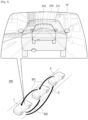
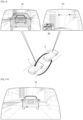
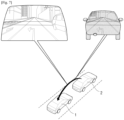
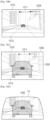
- FIGS. 1A, 1B and 1C are diagrams illustrating an example process in which an electronic apparatus provides a sight securing image according to an example embodiment.
- a traffic situation 100 may refer to a situation in which a vehicle 1 of a user and a plurality of external vehicles 2 to 9 are in the process of driving, stopping or parking, etc.
- the vehicles 1 to 9 may photograph external images using cameras included in the vehicles.
- the camera may include, for example, and without limitation, a camera included in the vehicle during manufacture of the vehicle, a camera (e.g., black box camera, etc.) installed on the vehicle by a user or a seller after release by manufacturer, or a camera temporarily installed on the vehicle by a user (e.g., camera mounted on a holder and observing front or back of the vehicle, etc.).
- External images photographed with the camera may be images including, for example, and without limitation, objects, topography or roads present outside the vehicle.
- the external images may include buildings, mountains, other vehicles, pedestrians, traffic lanes, traffic lights, road signs, street trees, or the like, but are not limited thereto.
- the vehicle 1 of the user may be mounted (provided) with an electronic apparatus 10 to provide a sight securing image.
- the electronic apparatus 10 mounted on the vehicle 1 may be a separate system provided in the vehicle 1, or an advanced drive-assisting system such as advanced driver assist system (ADAS), or a part of the assisting system mentioned above, or the like, but is not limited thereto. Further, the electronic apparatus 10 may include a controller such as electronic control unit (ECU) to electrically control various functions related with the driving of the vehicle, or a part of the controller. Further, when the electronic apparatus 10 may be an external apparatus mounted on the vehicle 1.
- the electronic apparatus 10 may be, for example, and without limitation, a drive-assisting system such as On Board Diagnostics (OBD) connected to vehicle connectors (e.g., OBD terminal, OBD connector, or the like), navigation or the like, or a part of the above.
- OBD On Board Diagnostics
- the electronic apparatus 10 may be a mobile terminal apparatus positioned or mounted within the vehicle 1, including, for example, and without limitation, a smart phone, a tablet personal computer, a mobile phone, a video phone, an e-book reader, a desktop personal computer, a laptop personal computer, a netbook computer, a personal digital assistant (PDA), a portable multimedia player (PMP), an MP3 player, a mobile medical device, a camera, an internet of things or a wearable device, or the like.
- a smart phone a tablet personal computer
- a mobile phone a video phone
- an e-book reader e.g., a desktop personal computer
- laptop personal computer a netbook computer
- PDA personal digital assistant
- PMP portable multimedia player
- MP3 player MP3 player
- the wearable device may include at least one of an accessory type (e.g., watch, ring, bracelet, anklet, necklace, glasses, contact lens, or head-mounted-device (HMD)), fabric or cloth integrated type (e.g., electronic cloth), a body attachment type (e.g., skin pad or tattoo), or a bioimplant circuit, or the like, but is not limited thereto.
- the electronic apparatus 10 may be flexible or a combination of the two or more of the various devices mentioned above.
- the electronic apparatus 10 according to an embodiment may not be limited to the devices mentioned above.
- the term "user” as used herein may refer to a person or a device (e.g., artificial intelligence electronic apparatus) that uses the electronic apparatus 10.
- environment in front may be provided to the user of the vehicle 1 through a transparent display 15 positioned at front of the vehicle 1.
- a transparent display 15 positioned at front of the vehicle 1.
- the user may have a difficulty of checking traffic flows, traffic lights, traffic lanes, signposts, pedestrians, or the like as it is unlikely that the user's sight is secured.
- a driver of the full-sized car makes sudden braking due to abnormal circumstance he or she may find, the user in the back may have a problem in immediately sensing and responding to the sudden braking of the full-sized car which typically has a long braking distance.
- the electronic apparatus 10 mounted on the vehicle 1 of the user may secure user's sight using a method according to an example embodiment of the present disclosure.
- the electronic apparatus 10 may determine at least one external vehicle 2 among a plurality of external vehicles 2 to 9.
- the electronic apparatus 10 may use driving information of a plurality of external vehicles 2 to 9.
- the method of the electronic apparatus 10 for determining the external vehicle 2 will be specifically described below with reference to FIGS. 10A and 10B .
- the electronic apparatus 10 may request external images photographed through or by the external vehicle 2 to the determined external vehicle 2, and acquire the external images photographed through the external vehicle 2 from the external vehicle 2.
- the electronic apparatus 10 may acquire external images photographed through the external vehicle 2 from an external server (or cloud) (not illustrated) positioned outside the vehicle 2.
- an external server or cloud
- the electronic apparatus 10 may provide identification information of the determined external vehicle to the external server, and the external server may transmit the photographed external images through the external vehicle 2 corresponding to the identification information to the electronic apparatus 10.
- the electronic apparatus 10 may acquire the external vehicle images in which the determined external vehicle 2 is photographed.
- the external vehicle images may be, for example, images including the external vehicle 2 which is photographed using the camera included in the vehicle 1 of the user.
- the external vehicle images may be acquired before, after or almost simultaneously with acquisition of the external images photographed through the external vehicle 2.
- the electronic apparatus 10 may composite at least part of the external images and external vehicle images, to generate a sight securing image for providing the sight of a vies which is obstructed by the external vehicle 2.
- the electronic apparatus 10 may generate a sight securing image by acquiring, from the external device, additional images corresponding to the obstructed sight (view) as well as the external images and the external vehicle images.
- the additional images may be road images photographed previously, and these may be the images acquired through an external communication device or surrounding infrastructure.
- the external images photographed by the external vehicle 2 may be images photographed at night or images photographed in bad weather (e.g., rough weather).
- the electronic apparatus 10 may acquire a sight securing image corresponding to the obstructed sight by compositing two or more of: daytime images previously photographed; additional images photographed in clear weather; external images photographed by the external vehicle; and external vehicle images in which the external vehicle is photographed.
- the external communication device or the surrounding infrastructure from which the electronic apparatus 10 requests external additional images may include, for example, road-side-unit (RSU) installed on roadsides.
- RSU road-side-unit
- the electronic apparatus 10 may recognize RSU as one of base stations or terminals, or the like, but is not limited thereto.
- the electronic apparatus 10 may acquire additional images from a V2X server using the vehicle-to-everything (V2X) communication method.
- the V2X server may, for example, be server for providing the V2X service according to the V2X communication.
- the V2X communication method is a general term that refers to every form of the communication method that can be applied to the vehicle, and it represents specific communication technology for implementing 'connected vehicle' or 'networked vehicle.'
- the V2X networking may be largely divided into three: vehicle-to-infrastructure (V2I) communication; vehicle-to-vehicle (V2V) communication; and vehicle-to-pedestrian (V2P) communication, or the like, but is not limited thereto.
- V2I vehicle-to-infrastructure
- V2V vehicle-to-vehicle
- V2P vehicle-to-pedestrian
- the electronic apparatus 10 may provide the generated sight securing image to the display mounted on the vehicle 1.
- the provided sight securing image 110 may be displayed on the transparent display 15 positioned in front of the vehicle 1, as illustrated in FIG. 1C .
- the composited sight securing image may be naturally displayed on the transparent display positioned in front of the user's vehicle 1 with an augmented reality (AR) method.
- AR augmented reality
- the AR method may refer, for example, to compositing virtual images with the real world observed by the user and showing the result as one image.
- the AR method may also be referred to as as a mixed reality (MR), since virtual worlds having additional information are integrated at real time with the real world and viewed as one image.
- MR mixed reality
- the sight securing image may be displayed on a head-up display, a wearable device worn by the user, a dashboard of the display, or the like, but is not limited thereto. Specific examples of a type of the display displaying a sight securing image will be described in greater detail below with reference to FIGS. 13A to 13C .
- the user may easily confirm traffic flows, traffic lights, traffic lanes, signposts, pedestrians or the like using the sight securing image. Accordingly, the user is able to perform safe driving.
- FIG. 2A is a block diagram illustrating an example configuration of a vehicle 200 including an electronic apparatus 10 according to an example embodiment.
- the vehicle 200 may correspond to the vehicle 1 of the user in FIG. 1 .
- the vehicle 200 may correspond to at least one of the vehicles 2 to 9 in FIG. 1 .
- the vehicle 200 may include the electronic apparatus 10 according to an embodiment, the ADAS 210 which is the advanced drive-assisting system, the ECU (electronic control unit) 245 which performs overall control related with driving of the vehicle such as driving/braking/steering of the vehicle 200, a door controller 215 for controlling a door of the vehicle 10, the door 220, a steering apparatus 255 (e.g., wheel or the like), an accelerator 230 (e.g., acceleration pedal or the like), a decelerator 255 (e.g., brake pedal), a communicator (e.g., including communication circuitry) 240, a sensor 250, a camera 235, and a transparent display 260.
- the ADAS 210 which is the advanced drive-assisting system
- the ECU (electronic control unit) 245 which performs overall control related with driving of the vehicle such as driving/braking/steering of the vehicle 200
- a door controller 215 for controlling a door of the vehicle 10, the door 220
- the electronic apparatus 10 is illustrated separately from the ADAS 210 and the ECU 245 which are advanced drive-assisting systems, this is merely one of various example embodiments. According to various example embodiments, the electronic apparatus 10 may be the whole or part of the ADAS 210, or whole or part of the ECU 245.
- the ADAS 210 may be named as a drive-assisting system or advanced drive-assisting system of a driver, and may provide various assisting functions related with safety of the car.
- the ADAS 210 may include an adaptive cruise control function of automatically keeping safety distance by recognizing the vehicle in front, a smart cruise control function of automatically adjusting speed by recognizing distance to the vehicle in front, a traffic jam assist function of keeping certain distance with the vehicle in front in the congested section in the city, an adaptive high beam function of alternately operating an upper light and a lower light according to whether it is night or day or whether there is an oncoming vehicle, a night vision function of sensing and informing in advance the objects unseen by the driver's eyes with an infrared light or thermal light camera, a blind spot warning system of searching and informing whether a vehicle of a blind zone unseen by a driver, and so on.
- the ECU 245 may sense state of the vehicle 200 and determine fuel injection quantity and ignition time to keep an engine of the vehicle 200 in order. For example, the ECU 245 may compensate a water temperature sensor, an oxygen sensor or the like and adjust opening and closing rate of an injector based on ignition time manifold absolute pressure (MAP) values and the fuel injection MAP values which are previously set in consideration of the revolution of an engine of the vehicle 200, air suction quantity, suctioning pressure, and accelerator openness.
- MAP ignition time manifold absolute pressure
- the communicator 240 may include various communication circuitry and perform communication with an external device positioned externally of the vehicle 200 using long distance communication module or near field communication module.
- the communicator 240 may transmit images photographed by the camera 235 to an external device.
- the external device may be, for example, the V2X server, an image storing server including external images photographed at the external vehicle, cloud server, or base station.
- the external device may be another vehicle positioned within certain distance to the vehicle 200.
- the communicator 240 may perform communication with an external device according to communication standards such as IEEE, 3rd Generation (3G), 3GPP, Long Term Evolution (LTE), global positioning system (GPS), or the like, but is not limited thereto.
- communication standards such as IEEE, 3rd Generation (3G), 3GPP, Long Term Evolution (LTE), global positioning system (GPS), or the like, but is not limited thereto.
- the communicator 240 may perform communication with an external device according to communication standards such as Wi-Fi, Bluetooth, NFC, Zigbee, Picocast, or the like, but is not limited thereto.
- the communicator 240 may use, for example, 20-pin connector, 16-pin connector, RJ45 connector, or USB connector, or the like, but is not limited thereto.
- the communicator 240 may perform communication according to communication protocols such as On-Board Diagnosis Version 1 (OBD-1), OBD-2, European On-Board Diagnosis (EOBD), Korean On-Board Diagnosis (KOBD), K-Line, Automotive Ethernet, Media Oriented Systems Transport (MOST), FlexRay, RS-232, Controller Area Network (CAN), or the like, but is not limited thereto.
- OBD-1 On-Board Diagnosis Version 1
- OBD-2 European On-Board Diagnosis
- EOBD European On-Board Diagnosis
- KBD Korean On-Board Diagnosis
- K-Line Automotive Ethernet
- MOST Media Oriented Systems Transport
- FlexRay FlexRay
- RS-232 Controller Area Network
- CAN Controller Area Network
- the sensor 250 may sense surrounding environment of the vehicle 200.
- the sensor 250 may include, for example, an object sensor or a distance sensor such as lidar sensor, radar sensor, ultrasound sensor, vision sensor, infrared sensor, LED sensor, or the like, in order to sense surrounding environment of the vehicle 200.
- the senor 250 may further include, for example, and without limitation, at least one sensor among an acceleration sensor, a gyro sensor, an illuminance sensor, a proximity sensor, a pressure sensor, a noise sensor (e.g., microphone), a video sensor (e.g., camera module), a temperature sensor, a shock sensor, a tilt sensor, a 3-axis magnetic sensor, a voice recognizing sensor, or a timer, or the like.
- the senor 250 may be implemented as a part of the electronic apparatus 10 or a separate device. Meanwhile, in the present disclosure, sensing the surrounding environment of the vehicle 200 may include not only directly sensing at the electronic apparatus 10, but also receiving sensing results through the sensor 250 included separately from the electronic apparatus 10.
- the senor 250 may acquire state information such as fuel state information, engine state information (engine state, engine oil state, timing belt state information), tire information (tire wear or warpage degree, etc.), driving speed information, driving direction information, direction indication, or the like, but is not limited thereto. Further, the sensor 250 may determine whether it is day or night through the illuminance sensor and the sensor 250 may acquire illuminance information according to brightness degree of the day or direction of the user's sight.
- state information such as fuel state information, engine state information (engine state, engine oil state, timing belt state information), tire information (tire wear or warpage degree, etc.), driving speed information, driving direction information, direction indication, or the like, but is not limited thereto.
- the sensor 250 may determine whether it is day or night through the illuminance sensor and the sensor 250 may acquire illuminance information according to brightness degree of the day or direction of the user's sight.
- the camera 235 may, for example, be provided for video signal input, and processes video frames such as still images or video acquired by the image sensor.
- the video frames processed in the camera 235 may be stored in a memory or transmitted to an external apparatus or an external device through the communicator 240.
- Two or more cameras 235 may be provided according to various example implementations.
- the camera 235 may be implemented as various forms such as front camera, back camera, left side camera, right side camera, inner camera, black box camera or the like.
- the camera 235 may include an infrared camera.
- the camera 235 may acquire background information such as objects, topography, roads or the like which are present externally of the vehicle.
- the camera 235 may photograph buildings, mountains, other vehicles, pedestrians, traffic lanes, headlights, street trees or the like which are positioned within certain distance from the vehicle 200.
- the transparent display 260 may refer, for example, to an image display apparatus having a form in which the back of the screen is seen through.
- the transparent display may comprise transparent elements, and may adjust transparency by adjusting light transmittance of the transparent elements or adjust transparency by adjusting RGB values of each pixel.
- the transparent display 260 may display a sight securing image according to an example embodiment.
- the transparent display 260 and a touchpad may form an inter-layer structure to form a touch screen.
- the transparent display 260 may be used as input device as well as output device.
- the transparent display 260 may include at least one of a liquid crystal display, a thin film transistor-liquid crystal display, an organic light-emitting diode, a flexible display, and a 3D display, or the like, but is not limited thereto.
- the transparent display 260 may be provided to correspond to a front window, a side window, and a rear window of the vehicle 200.
- the electronic apparatus 10 may adjust transparency of the transparent display 260 or RGB values of each pixel by adjusting light transmittance of the transparent elements.
- the electronic apparatus 10 which may keep transparent glass state normally, may supply power to the transparent display 260 so that the liquid display blocks the light, thus turning the transparent display 260 to opaque state.
- the transparent display 260 may be implemented in various forms such as, for example, and without limitation, transparent liquid crystal display, transparent thin-film electroluminescent panel, transparent OLED, projecting device, or the like.
- the transparent LCD may refer, for example, to a transparent display implemented by removing a backlight unit from the currently-available LCD device, by using a pair of polarized panels, optical films, transparent thin-film transistors, transparent electrodes, and so on. While the transparent LCD device has disadvantages of lower transparency due to use of polarized panels or optical films, and lower optical efficiency due to use of surrounding light instead of the backlight unit, it has an advantage that a large scale transparent display can be implemented.
- the transparent TFEL may refer, for example, to a device using alternate current inorganic thin-film EL display (AC-TFEL) composed of transparent electrodes, inorganic fluorescent material, and insulating films.
- AC-TFEL is a display that generates light as accelerated electrons pass within the inorganic fluorescent material and excite the fluorescent material.
- the electronic apparatus 10 may determine a position to display the image by adjusting electrons so that the electrons are projected to a suitable position. Because the inorganic fluorescent material and the insulating films have transparent characteristics, significantly transparent display can be implemented.
- the transparent OLED may refer, for example, to a transparent display using OLED which is capable of emitting light itself.
- a transparent display apparatus may be implemented when both electrodes are implemented as transparent electrodes.
- OLED emits light as electrons and holes are injected from both sides of the organic light-emitting layer and coupled within the organic light-emitting layer.
- the transparent OLED apparatus may display images on a desired position using the principle described above.
- the vehicle 200 may further include a memory (not illustrated) storing various programs and data for controlling the vehicle 200.
- a memory (not illustrated) storing various programs and data for controlling the vehicle 200.
- at least part of the memory may be separately provided in the vehicle 200 or may be included in the ECU 245 or the ADAS 210 of the vehicle 200.
- the memory may be included as one of the components of the vehicle 200, which is electrically connected to the electronic apparatus 10.
- the memory may include an embedded memory or a removable memory, for example.
- the embedded memory may include, for example, and without limitation, at least one of a volatile memory (e.g., dynamic RAM (DRAM), static RAM (SRAM), synchronous dynamic RAM (SDRAM)), a non-volatile memory (e.g., one time programmable ROM (OTPROM), programmable ROM (PROM), an erasable and programmable ROM (EPROM), an electrically erasable and programmable ROM (EEPROM), a mask ROM, a flash ROM, a flash memory (e.g., NAND flash or NOR flash), a hard drive, or a solid state drive (SSD), or the like.
- a volatile memory e.g., dynamic RAM (DRAM), static RAM (SRAM), synchronous dynamic RAM (SDRAM)
- a non-volatile memory e.g., one time programmable ROM (OTPROM), programmable ROM (PROM), an era
- the removable memory may further include, for example, and without limitation, a flash drive such as compact flash (CF), securedigital (SD), micro-SD (micro securedigital), mini-SD, xD (extreme digital), multi-media card (MMC) or memory stick, or the like.
- a flash drive such as compact flash (CF), securedigital (SD), micro-SD (micro securedigital), mini-SD, xD (extreme digital), multi-media card (MMC) or memory stick, or the like.
- Programs stored in the memory may be implemented as software, firmware, hardware or any combination of at least two of the above.
- At least part of the programs may be implemented (e.g., executed) by the electronic apparatus 10 of the vehicle 200, for example.
- the programs may include instructions to determine at least one external vehicle among a plurality of external vehicles, composite at least part of external images photographed by the determined external vehicle and at least part of external vehicle images in which the determined external vehicle is photographed, to generate a sight securing image corresponding to the sight obstructed by the external vehicle, and provide the generated sight securing image to the display.
- the vehicle 200 may include the communicator 240 for performing communication with an external vehicle, the camera 235 for photographing external vehicle images, the electronic apparatus 10 for determining at least one external vehicle among a plurality of external vehicles, acquiring the external images photographed by the determined external vehicle through the communicator 240, acquiring the external vehicle images in which the external vehicle is photographed through the camera 235, and generating a sight securing image by compositing at least part of the external images and at least part of the external vehicle images, and the transparent display 260 for displaying the generated sight securing image.
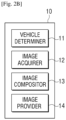
- FIG. 2B is a block diagram illustrating an example configuration of the electronic apparatus 10 for providing a sight securing image to the vehicle 200 according to an embodiment.
- the vehicle determiner 11 may include processing circuitry and/or program elements configured to determine at least one external vehicle among a plurality of external vehicles. For example, the vehicle determiner may determine the external vehicle based on at least one of: driving information of each of a plurality of external vehicles, distance information of each of a plurality of external vehicles measured with the distance sensor, and identification information of each of a plurality of external vehicles.
- the image acquirer 12 may include processing circuitry and/or program elements configured to acquire external images photographed by the determined external vehicle.
- the image acquirer 12 may acquire the external images through the communicator 240 of FIG. 2A .
- the image acquirer 120 may acquire the external image from the external vehicle or the externally-located server through the communicator 240 of FIG. 2A .
- the image acquirer 12 may acquire the external vehicle images in which the determined external vehicle is photographed.
- the image acquirer 12 may acquire the external vehicle images through the camera 235 of FIG. 2A .
- the image compositor 13 may include processing circuitry and/or program elements configured to composite at least part of the external images and at least part of the external vehicle images to generate a sight securing image corresponding to the sight obstructed by the external vehicle.
- the image compositor 13 may overlay at least part of the external vehicle images and at least part of the external images based on common environment information included in both of the external vehicle images and the external images to generate a sight securing image.
- the image provider 14 may include processing circuitry and/or program elements configured to provide the generated sight securing image to the display.
- the image provider 14 may provide the sight securing image to the display 260 of the vehicle 200 of FIG. 2A for display thereof according to the AR method.
- the electronic apparatus 10 may further include an image requestor (not illustrated) for providing range information of a range corresponding to the sight obstructed by the external vehicle to the external vehicle or to the externally-located server.
- an image requestor (not illustrated) for providing range information of a range corresponding to the sight obstructed by the external vehicle to the external vehicle or to the externally-located server.
- the electronic apparatus 10 may further include a request signal receiver (not illustrated) include processing circuitry and/or program elements configured to request a sight securing image.
- a signal for requesting the sight securing image may be a signal generated when a region of the display obstructed by the external vehicle is equal to, or greater than a certain ratio of the entire region of the display, or may be a signal generated when user input intended to display the sight securing image is received.
- the image acquirer 12 may acquire previously photographed additional images corresponding to the obstructed sight from the external device.
- the image compositor 13 may generate a sight securing image by compositing at least part of the external images, at least part of the additional images and at least part of the external vehicle images.
- the image acquirer 12 may acquire a second external image photographed by a second external vehicle positioned in front of the first external vehicle. Further, the image compositor 13 may generate a sight securing image by compositing at least part of the first external image, at least part of the second external image, and at least part of the first external vehicle image.
- FIG. 3 is a diagram illustrating an example electronic apparatus providing a sight securing image according to another example embodiment.
- the traffic situation 300 may be the situation in which the first and second external vehicles 2, 3 are driving, stopping or parking in front of the user's vehicle 1.
- the vehicles 1, 2 and 3 may photograph external images using the cameras included in the vehicles 1, 2 and 3.
- the vehicle determiner 11 of the electronic apparatus 10 mounted on the vehicle 1 of the user may determine at least one first external vehicle 2 to acquire external images.
- the image acquirer 12 of the electronic apparatus 10 may acquire external images from the first external vehicle 2. Further, the image acquirer 12 may acquire the external images in which the first external vehicle 2 is photographed using the camera of the user's vehicle 1.
- the image acquirer 12 may acquire the second external image photographed at the second external vehicle 3 positioned in front of the first external vehicle 2 as well as the first external image photographed at the first external vehicle 2 right positioned in front of the user's vehicle 1.
- the user's vehicle 1, the first external vehicle 2 and the second external vehicle 3 may drive in the same traffic lane.
- the first external vehicle 2 may first acquire the external images photographed at the second external vehicle 3. Under this circumstance, when the electronic apparatus 10 requests the external images, the first external vehicle 2 may transmit the external images photographed at the second external vehicle 3 as well as the external images photographed at the first external vehicle 2.
- the electronic apparatus 10 may request external images to each of a plurality of external vehicles 2, 3.
- the electronic apparatus 10 may acquire the first external image from the first external vehicle 2, and acquire the second external image from the second external vehicle 3.
- the image compositor 13 of the electronic apparatus 10 may generate a sight securing image by compositing at least part of the first external image, at least part of the second external image and at least part of the first external vehicle image.
- the image compositor 13 is easily able to overlay and composite the images described above sequentially.
- the image provider 14 of the electronic apparatus 10 may provide the sight securing image to the display mounted on the vehicle.
- the sight securing image 310 may be displayed on the transparent display 15 of the user's vehicle 1 according to the AR method.
- the sight securing image 310 may include at least part 312 of the second external image as well as at least part 311 of the first external image. Accordingly, since the sight of the user of the vehicle 1 can be secured to a far distance (e.g., greater than a threshold distance, such as, for example, greater than a distance of the vehicle 2 immediately in front of the first vehicle 1), the user may drive more safely.
- the image compositor 13 may acquire additional images through an external communication device or surrounding infrastructure, and acquire a sight securing image by compositing at least part of the acquired additional image, at least part of the first external image, at least part of the second external image, and at least part of the image in which the first external vehicle is photographed.
- FIG. 4 is a diagram illustrating an example process in which an electronic apparatus provides a sight securing image according to another example embodiment.
- the electronic apparatus 10 mounted on the vehicle 1 may determine at least one external vehicle 2 to use the external images photographed by the external vehicle, and acquire the external image photographed through the external vehicle 2. Further, the vehicle 1 may photograph the external vehicle 2 using the camera mounted on the vehicle 1 and acquire the external vehicle images including the external vehicle 2.
- the electronic apparatus 10 may provide the sight securing image to the vehicle 1 using the external images and the external vehicle images, and the vehicle 1 may display the images on the transparent display 15' according to the AR method.
- the electronic apparatus 10 may transmit the external vehicle image or the sight securing image photographed at the vehicle 1 back to the external vehicle 2 positioned in front of the vehicle 1.
- the external vehicle 2 receiving its own image or sight securing image may display the received vehicle images or sight securing image on a part of the transparent display 15" in front.
- the external vehicle 1 may display the external vehicle image or the sight securing image on a region 26 of one side of the transparent display 15".
- the user of the external vehicle 2 may confirm rear posture of the vehicle 2 which is driven by himself or herself, he or she may confirm driving habits, driving states, and so on.
- FIGS. 5A and 5B are diagrams illustrating an example process in which an electronic apparatus provides a sight securing image according to another example embodiment.
- the electronic apparatus 10 may automatically generate and provide a sight securing image according to an embodiment to the display when conditions for requesting a sight securing image are met.
- front environment may be provided to the user through the transparent display 15 positioned at front of the vehicle.
- a part of the entire region of the transparent display 15 may be obstructed by the external vehicle as distance between the user's vehicle and the external vehicle positioned in front of the vehicle becomes closer.
- the electronic apparatus 10 may automatically generate a triggering signal for requesting a sight securing image.
- the electronic apparatus 10 may determine the external vehicle hiding (obscuring) the sight as a vehicle for acquiring the external images.
- the electronic apparatus 10 may acquire external images photographed by the determined external vehicle and external vehicle images in which the external vehicle is photographed.
- the electronic apparatus 10 may generate a sight securing image corresponding to the sight obstructed by the external vehicle by compositing at least part of the acquired external images photographed by the external vehicle and at least part of the external vehicle images.
- the electronic apparatus 10 may provide the generated sight securing image to the display.
- the sight securing image 510 may be displayed on the transparent display 15 according to the AR method.
- the electronic apparatus 10 may automatically generate a sight securing image and display the images on the transparent display 15 when ratio of the region obstructed by the external vehicle with respect to the entire region of the transparent display 15 is equal to, or greater than certain ratio.
- FIGS. 6A, 6B , 6C and 6D are diagrams illustrating an example process of providing images for securing a sight of an electronic apparatus according to another example embodiment.
- the electronic apparatus may generate a sight securing image and provide a result to the display, when user input for requesting a sight securing image is received.
- environment in front may be provided to the user through the transparent display 15 positioned at front of the vehicle.
- the electronic apparatus 10 may receive user input for requesting a sight securing image.
- the electronic apparatus 10 may generate a signal for requesting a sight securing image.
- the vehicle may sense the user's gesture 601 of waving his or her hand away in outer direction showing intention for a display of a sight securing image or removal of the first external vehicle in front.
- the electronic apparatus 10 may generate a triggering signal for requesting the first sight securing image in response to the sensed user's gesture 601.
- the electronic apparatus 10 may generate the first sight securing image corresponding to the sight obstructed by the first external vehicle by compositing at least part of the external image photographed by the first external vehicle and at least part of the first external vehicle image.
- the electronic apparatus 10 may provide the generated first sight securing image to the display. Accordingly, as shown in FIG. 6B , the sight securing image 610 may be displayed on the transparent display 15 according to the AR method. Meanwhile, when another second external vehicle is present in front of the first external vehicle, it may be difficult to secure a complete sight of the user when the second external vehicle is included in a part of the sight secure image.
- the vehicle may sense one more time the user's gesture 602 of waving his or her hand away in outer direction showing intention for the removal of the second external vehicle in front.
- the electronic apparatus 10 may generate a triggering signal for requesting the second sight securing image in response to the sensed user's gesture 602.
- the electronic apparatus 10 may acquire the second external image photographed by the second external vehicle. Further, the electronic apparatus 10 may generate the second sight securing image corresponding to the sight obstructed by the second external vehicle by compositing at least part of the first sight securing image and at least part of the acquired second external image.
- the electronic apparatus 10 may provide the generated second sight securing image to the display. Accordingly, as shown in FIG. 6C , the second sight securing image 620 may be displayed on the transparent display 15 according to the AR method.
- the sight securing image optimized for preference of the user may be provided.
- the user may want to remove the second sight securing image 620 which is being displayed, and request the sight of environment in front through a previous transparent display.
- the vehicle may sense user's gesture 603 of waving his or her hand in an inward direction showing intention of removing the second sight securing image 620 at front.
- the electronic apparatus 10 may remove the second sight securing image 620 displayed on the transparent display 15. Accordingly, as shown in FIG. 6D , screen in front may be provided back on the transparent display 15 as shown in the first process.
- the electronic apparatus 10 may remove the second sight securing image 620 displayed on the display and provide the first sight securing image 610 back on the transparent display.
- the user may perform various user input in addition to gesture.
- the electronic apparatus 10 may display the generated sight securing image on the display in response to the recognized user voice.
- the electronic apparatus 10 may display the generated sight securing image according to an embodiment on the display in response to the user's selecting.
- user interface e.g., button, touch UI, or the like
- the user may perform a gesture of pointing toward far direction (e.g., stretching out the elbow and pointing toward the far direction or upper direction) or gesture of pointing toward nearby direction (e.g., bending the elbow and pointing toward a near direction or lower direction).
- a gesture of pointing toward far direction e.g., stretching out the elbow and pointing toward the far direction or upper direction
- gesture of pointing toward nearby direction e.g., bending the elbow and pointing toward a near direction or lower direction
- the electronic apparatus 10 may display the second sight securing image 620 on the transparent display according to the AR method. Further, according to the gesture of indicating near direction, the electronic apparatus 10 may display the first sight securing image 610 on the transparent display according to the AR method.
- the external vehicle 2 or the external server may transmit the external images photographed through the external vehicle 2 determined by the electronic apparatus 10 to the electronic apparatus 10.
- the external vehicle 2 or the external server transmitting external images may transmit the entire images photographed through the external vehicle 2 as shown in FIG. 7 .
- FIG. 8 is a diagram illustrating an example process of providing a sight securing image according to another example embodiment.
- the emergency situation 801 may be, for example, situation in which the external vehicle 2 suddenly stops or decelerates as emergency situation occurs in front such as car accident, road blocking, pedestrian appearing, or the like.
- the external vehicle 2 may immediately broadcast the photographed external images including the emergency situation 801 through the camera of the external vehicle 2 to neighboring vehicles.
- the neighboring vehicles may include the user's vehicle 1 positioned behind.
- the electronic apparatus 10 mounted on the user's vehicle 1 may generate and provide a sight securing image to the display according to an embodiment, using the received external images.
- the sight securing image 801 including the emergency situation 801 may be displayed on the transparent display 15 according to the AR method.
- the transparent display 15 may additionally display notice information 811 indicating that emergency is currently occurring.
- the notice information 811 may acquire information of the emergency situation acquired from the V2X server, and provide the additional notice information of the emergency situation.
- the notice information may include emergency situation occurring spot, emergency situation occurring traffic lane, emergency situation occurring time, emergency situation report, detour road information, or the like.
- the notice information 811 may include accident information indicating, "Crash accident 200 m ahead," for example.
- the vehicle 1 driving behind generally has a difficulty of checking the emergency situation due to the external vehicle 2 positioned in front.
- the vehicle 1 positioned behind may swiftly check the emergency situation and the user of the vehicle 1 may perform immediate response to the emergency situation.
- the user may search detour roads or change traffic lanes in advance to avoid the spot where emergency situation occurs.
- the image including the emergency situation photographed at one vehicle may be transmitted to another vehicle positioned behind, and another vehicle positioned behind may sequentially transmit the images including the emergency situation to yet another vehicle positioned behind. Accordingly, even when a plurality of vehicles are present in front, the user of the vehicle may sense the emergency situation occurring at remote distance and may proactively act for the emergency situation.
- the first vehicle 1 and the second vehicle 2 may be driving toward each other around the corner of the road.
- the first electronic apparatus 10 of the first vehicle 1 and the second electronic apparatus 10 of the second vehicle 2 which receive the external images from the counterpart vehicle, may respectively generate a sight securing image according to an embodiment using the received external images from the counterpart vehicle. Further, the first electronic apparatus 10 of the first vehicle 1 and the second electronic apparatus 10 of the second vehicle 2 may respectively provide the generated sight securing image to the display.
- the transparent display 15' of the first vehicle 1 may display the sight securing image 910 according to the AR method, in which the corner region is shown transparently or semi-transparently so that the second vehicle 2 is prominently shown.
- the transparent display 15" of the second vehicle 2 may display the sight securing image 920 according to the AR method, in which the corner region is shown transparently or semi-transparently so that the first vehicle 1 is prominently shown.
- the user of the first vehicle 1 and the user of the second vehicle 2 are enabled to perform safe driving because the counterpart vehicle obstructed by the corner region (e.g., buildings, street tress, or the like) is confirmed.
- the corner region e.g., buildings, street tress, or the like
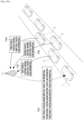
- FIGS. 10A , 10B and 10C are diagrams illustrating an example method of the electronic apparatus for determining an external vehicle according to an example embodiment.
- Each vehicle information of the external vehicles may include driving information of each of the vehicles as shown by 1001, 1002, 1003 of FIG. 10A , for example.
- the driving information may include, for example, at least one of: position of vehicles; moving direction; information of traffic lanes in which vehicles are driving; state information of vehicle maneuvering; information of driving or parking of vehicles; and driving speed of vehicles.
- the V2X server may transmit a vehicle list 1005 having vehicle information of the external vehicles 2, 3, 4 to the vehicle 1 mounted with the electronic apparatus 10.
- the electronic apparatus 10 may determine a vehicle, which is positioned in the same traffic lane, has the same advancing direction as the vehicle of the user and is at a nearest distance, to be the vehicle to acquire external images.
- the electronic apparatus 10 mounted on the vehicle 1 may determine the external vehicle to acquire external images based on a distance sensor (e.g., infrared sensor, LED sensor or the like). For example, the electronic apparatus 10 may directly sense distance to the external vehicles 2, 3 positioned nearby the vehicle 1 using the distance sensor. Next, the electronic apparatus 10 may determine the external vehicle 2 having the nearest sensed distance among the vehicles 2, 3 to be the external vehicle to acquire external images.
- a distance sensor e.g., infrared sensor, LED sensor or the like.
- the electronic apparatus 10 may directly sense distance to the external vehicles 2, 3 positioned nearby the vehicle 1 using the distance sensor.
- the electronic apparatus 10 may determine the external vehicle 2 having the nearest sensed distance among the vehicles 2, 3 to be the external vehicle to acquire external images.
- the electronic apparatus 10 may determine a vehicle to acquire external images based on the information 1011 (e.g., identification information of an external vehicle) included in the images photographed by the camera of the vehicle 1.
- the information 1011 e.g., identification information of an external vehicle
- a forward-facing camera of the vehicle 1 mounted with the electronic apparatus 10 may photograph the external vehicle 2 positioned in front of the vehicle 1.
- identification information e.g., car license number plate, car type, or the like
- the electronic apparatus 10 may determine the external vehicle 2 corresponding to the identification information 1011 to be the vehicle to acquire image information.
- the electronic apparatus 10 may recognize numbers, characters on the license number plate or car type from the photographed images using the image processing technology.
- the electronic apparatus 10 may request external images to the external vehicle 2 corresponding to the identification information 1011, and acquire the external images from the external vehicle 2.
- the electronic apparatus 10 may request the external images photographed at the external vehicle 2 corresponding to the identification information 1011 to the external server, and acquire the external images from the external server.
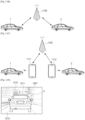
- FIGS. 11A , 11B and 11C are diagrams illustrating an example method of a vehicle mounted with an electronic apparatus for communicating with an external vehicle according to an example embodiment.
- the vehicle 1 of the user may determine the vehicle 2 to acquire external images and perform communication with the determined external vehicle 2.
- the V2V communication of vehicles through a network 1101 may be available between the user's vehicle 1 and the external vehicle 2.
- the communication between vehicles e.g., IEEE 802.11p WAVE
- the communication between vehicles provides high mobility and has features suitable for outdoor environment where interference such as Doppler Shift or the like easily occurs. Since the communication between vehicles is communication of the vehicles moving at high speed in outdoor environment, frequency selective fading may frequently occur.
- the user's vehicle 1 may perform communication with the external vehicle 2 according to an ad-hoc method.
- the ad-hoc method indicates that terminals exchange data in peer-to-peer form without access point (AP, e.g., wireless router).
- the user's vehicle 1 may be grouped with a plurality of external vehicles through ad-hoc or the like.
- the grouped vehicles may share multimedia contents with each other or information provided from navigation.
- the information provided from the navigation may be the information about shortest moving path, current moving position, map information, and so on.
- FIGS. 12A , 12B, 12C and 12D are diagrams illustrating an example method of the electronic apparatus 10 for generating a sight securing image according to an example embodiment.
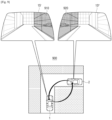
- the image acquirer 12 of the electronic apparatus 10 may acquire the external vehicle images 1201 in which the external vehicle 2 is photographed and the external images 1203 photographed by the external vehicle 2 with the communicator of the vehicle 1 mounted with the electronic apparatus 10.
- the image compositor 13 may generate a sight securing image by compositing the acquired external vehicle images and external images according to various methods of the image processing technology.
- the image compositor 13 may composite two images based on common environment information included in both of the external vehicle images 1201 and the external images 1203.
- the common environment information may be, for example, feature information included in both of the external vehicle images and the external images, and may include at least one among neighboring buildings 1215, traffic lights 1211, traffic lanes 1213, and road signs standing on a roadside indicating traffic regulations and instructions.
- the image compositor 13 may composite two images based on road curve information (e.g., straight road, road curve angle) or road slant information included in the external vehicle images 1201 and the external images 1203.
- the image compositor 13 may generate composited images 1205 including the sight securing image 1220 by rotating, magnifying and reducing at least one of the two images based on the common environment information 1211, 1213, 1215 and overlaying the two images with each other.
- the image compositor 13 may composite images by overlaying, while processing the two images with different transparencies.
- the image compositor 13 may composite images by processing the two images so that an image of the external vehicle has higher transparency than the external image, and overlaying the images.
- the transparent display 15 of the vehicle 1 may display the sight securing image 1220 according to the AR method.
- the display of the electronic apparatus 10 may display the provided sight securing image.
- the sight securing image displayed on the transparent display 15 may be displayed with highlighting.
- the sight securing image may be displayed with flickering for a certain time or displayed with different transparency, brightness or color.
- transparency, brightness or color may be varied according to interior or exterior illuminance of the vehicle.
- the external vehicle displayed according to the AR method may be displayed with an outlining only, or may flicker with certain periodicity.
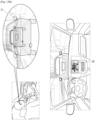
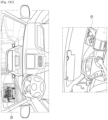
- the sight securing image may be displayed on a head up display 16 of the vehicle.
- the sight securing image may be displayed on the display 17 of a wearable device worn by the user.
- the sight securing image may be displayed on the display 18 positioned on the dashboard of the user's vehicle.
- the sight securing image may be projected as a projector image 18 on the transparent display positioned at the front according to the projector displaying method.
- the sight securing image may be displayed in a space as a 3-dimensional (3D) images 19 according to the 3D object displaying method.
- FIG. 14 is a flowchart illustrating an example method of an electronic apparatus 10 providing a sight securing image according to an example embodiment.
- the electronic apparatus 10 may determine at least one external vehicle among a plurality of external vehicles, at S1401. For example, the electronic apparatus 10 may determine at least one external vehicle to acquire external images based on at least one of: driving information of each of a plurality of external vehicles; distance information of each of a plurality of external vehicles measured with the distance sensor; and identification information of each of a plurality of external vehicles.
- the electronic apparatus 10 may determine at least one of the external vehicles when a signal for requesting the sight securing image is received.
- a signal for requesting the sight securing image may be a signal generated when a region of the display obstructed by the external vehicle is equal to, or greater than a certain ratio of the entire region of the display, or may be a signal generated when user input intended to display the sight securing image is received.
- the electronic apparatus 10 may acquire the external images photographed by the determined external vehicle, at S1403.
- the electronic apparatus 10 may acquire the external images photographed by the external vehicle from the external vehicle or the externally-located server.
- the electronic apparatus 10 may provide range information of a range corresponding to the sight obstructed by the external vehicle to the external vehicle or the externally-located server.
- the electronic apparatus 10 may acquire the external vehicle images in which the determined external vehicle is photographed, at S1405.
- the operation at S1405 may be performed previously to the operation at S1403.
- the electronic apparatus 10 may composite at least part of the external images photographed by the external vehicle and at least part of the external vehicle images, to generate a sight securing image corresponding to the sight obstructed (hidden) by the external vehicle, at S1407.
- the electronic apparatus 10 may acquire, from the external vehicle, additional images previously photographed corresponding to the obstructed sight. Further, the electronic apparatus 10 may generate a sight securing image by compositing at least part of the external images, at least part of the additional images, and at least part of the external vehicle images.
- the electronic apparatus 10 may acquire the second external images photographed by the second external vehicle positioned in front of the first external vehicle.
- the electronic apparatus 10 may acquire the second external images from the first external vehicle or the second external vehicle.
- the electronic apparatus 10 may generate a sight securing image by compositing at least part of the first external images, at least part of the second external images and at least part of the first external vehicle images.
- the electronic apparatus 10 may provide the generated sight securing image to the display, at S1409.
- the electronic apparatus 10 may provide the sight securing image to the transparent display positioned at the front of the vehicle so that the sight securing image is displayed according to the AR method.
- the method according to an example embodiment may be implemented as program instructions that can be performed through various computer means (e.g., a processor) and may be recorded on computer readable recording medium.
- the computer readable recording medium may include singular or combination of program instructions, data files, data structures, and so on.
- Program instructions recorded on the medium may be designed and configured especially for the embodiments of the present disclosure, or may be already known and available to a person skilled in the computer software field.
- Examples of the computer readable recording medium may include magnetic media such as hard disk, floppy disk, and magnetic tape, optical media such as CD-ROM and DVD, magneto-optical media such as floptical disk, and hardware devices such as ROM, RAM, flash memory or the like which are especially configured to store and perform the program instructions.
- Examples of program instructions include not only machine language code such as those generated by a compiler, but also high-level language code that can be executed by a computer using an interpreter, and so on.
Landscapes
- Engineering & Computer Science (AREA)
- Physics & Mathematics (AREA)
- General Physics & Mathematics (AREA)
- Multimedia (AREA)
- Theoretical Computer Science (AREA)
- Mechanical Engineering (AREA)
- Optics & Photonics (AREA)
- Automation & Control Theory (AREA)
- Signal Processing (AREA)
- Chemical & Material Sciences (AREA)
- Analytical Chemistry (AREA)
- Transportation (AREA)
- Mathematical Physics (AREA)
- Human Computer Interaction (AREA)
- Traffic Control Systems (AREA)
- Studio Devices (AREA)
- Closed-Circuit Television Systems (AREA)
- Fittings On The Vehicle Exterior For Carrying Loads, And Devices For Holding Or Mounting Articles (AREA)
Claims (12)
- Procédé de fourniture d'une image de maintien de visibilité à un véhicule (1), comprenant :l'identification d'une région occupée par un véhicule externe (2) parmi une région entière d'un dispositif d'affichage (15) du véhicule ;l'identification du fait de transmettre ou non un signal demandant une image externe au véhicule externe, l'image externe étant générée par une caméra comprise dans le véhicule externe, sur la base d'un rapport de la région identifiée à la région entière ;la transmission d'informations de portée de la région identifiée et du signal demandant l'image externe au véhicule externe sur la base de l'identification du fait que le rapport de la région identifiée à la région entière est supérieur ou égal à un rapport prédéterminé ;en réponse à la transmission des informations de portée et du signal, l'obtention (1403) de l'image externe à partir du véhicule externe, l'image externe obtenue étant transmise de manière sélective selon des informations de portée et correspondant à la région identifiée obstruée par le véhicule externe (2) ;l'obtention (1405) d'une image de véhicule externe comprenant le véhicule externe, l'image de véhicule externe étant générée par une caméra comprise dans le véhicule ;l'obtention, à partir d'un dispositif externe, d'une image supplémentaire correspondant à la région identifiée,l'image supplémentaire étant générée à un instant antérieur à partir d'un instant auquel l'image externe est générée ;la génération (1407) d'une image de maintien de visibilité en composant au moins une partie de l'image externe obtenue, au moins une partie de l'image supplémentaire et au moins une partie de l'image de véhicule externe obtenue ; etla fourniture de l'image de maintien de visibilité générée au dispositif d'affichage.
- Procédé de la revendication 1, dans lequel l'obtention de l'image externe au niveau du véhicule externe (2) comprend l'obtention de l'image externe à partir du véhicule externe ou d'un serveur situé à l'extérieur.
- Procédé de la revendication 1, dans lequel la fourniture au dispositif d'affichage (15) comprend la fourniture de l'image de maintien de visibilité générée à un dispositif d'affichage transparent positionné à l'avant du véhicule (1) et est configuré pour afficher l'image de maintien de visibilité générée selon un procédé de réalité augmentée.
- Procédé de la revendication 1, comprenant en outre la détermination du véhicule externe sur la base d'au moins l'une parmi : des informations de conduite de chacun de la pluralité de véhicules externes ; des informations de distance de chacun de la pluralité de véhicules externes ; et des informations d'identification de chacun de la pluralité de véhicules externes.
- Procédé de la revendication 1, dans lequel la génération d'une image de maintien de visibilité comprend la génération de l'image de maintien de visibilité en superposant au moins une partie de l'image de véhicule externe et de l'image externe sur la base d'informations d'environnement communes comprises à la fois dans l'image de véhicule externe et dans l'image externe.
- Procédé de la revendication 1, dans lequel, lorsque le véhicule externe (2) est un premier véhicule externe et que l'image externe obtenue au niveau du premier véhicule externe est une première image externe, le procédé comprend en outre l'obtention d'une seconde image externe obtenue au niveau d'un second véhicule externe (3) positionné devant le premier véhicule externe, et
dans lequel la génération de l'image de maintien de visibilité comprend la génération de l'image de maintien de visibilité en composant la première image externe, au moins une partie de la seconde image externe et au moins une partie de l'image de véhicule externe. - Procédé de la revendication 6, dans lequel l'obtention de la seconde image externe comprend l'obtention de la seconde image externe à partir du premier véhicule externe (2) ou du second véhicule externe (3).
- Appareil électronique (10) configuré pour fournir une image de maintien de visibilité à un véhicule (1), comprenant :
un processeur comprenant des circuits de traitement configurés pour mettre en œuvre le procédé de la revendication 1. - Appareil électronique (10) de la revendication 8, dans lequel le processeur est configuré pour obtenir l'image externe au niveau du véhicule externe (2) à partir du véhicule externe ou d'un serveur situé à l'extérieur.
- Appareil électronique (10) de la revendication 8, dans lequel le processeur est configuré pour fournir l'image de maintien de visibilité générée à un dispositif d'affichage transparent (15) positionné à l'avant du véhicule (1), le dispositif d'affichage transparent étant configuré pour afficher l'image de maintien de visibilité générée selon un procédé de réalité augmentée.
- Appareil électronique (10) de la revendication 8, dans lequel le processeur est configuré pour déterminer le véhicule externe (2) sur la base d'au moins l'une parmi : des informations de conduite de chacun de la pluralité de véhicules externes ; des informations de distance de chacun de la pluralité de véhicules externes ; et des informations d'identification de chacun de la pluralité de véhicules externes.
- Véhicule (1) comprenant :un communicateur (240) comprenant des circuits de communication configurés pour effectuer une communication avec un véhicule externe (2) ;une caméra (235) configurée pour photographier le véhicule externe ;un appareil électronique (10) comprenant des circuits de traitement configurés pour :identifier une région occupée par le véhicule externe parmi une région entière d'un dispositif d'affichage transparent (15) du véhicule,identifier s'il faut transmettre un signal demandant une image externe au véhicule externe, l'image externe étant générée par une caméra comprise dans le véhicule externe, sur la base d'un rapport de la région identifiée à la région entière,transmettre, par l'intermédiaire du communicateur, des informations de portée de la région identifiée et le signal demandant l'image externe au véhicule externe sur la base de l'identification du fait que le rapport de la région identifiée à la région entière est supérieur ou égal à un rapport prédéterminé,en réponse à la transmission des informations de portée et du signal, obtenir l'image externe à partir du véhicule externe, l'image externe obtenue étant transmise de manière sélective selon des informations de portée et correspondant à la région identifiée obstruée par le véhicule externe (2) ;obtenir une image de véhicule externe comprenant le véhicule externe, l'image de véhicule externe étant générée par la caméra comprise dans le véhicule ;obtenir, à partir d'un dispositif externe, une image supplémentaire correspondant à la région identifiée,l'image supplémentaire étant générée à un instant antérieur à partir d'un instant auquel l'image externe est générée ;générer une image de maintien de visibilité en composant au moins une partie de l'image externe obtenue, au moins une partie de l'image supplémentaire et au moins une partie de l'image de véhicule externe obtenue ; etun dispositif d'affichage transparent (15) configuré pour afficher l'image de maintien de visibilité générée.
Applications Claiming Priority (2)
| Application Number | Priority Date | Filing Date | Title |
|---|---|---|---|
| KR1020160131320A KR102366723B1 (ko) | 2016-10-11 | 2016-10-11 | 운송 수단으로 시야 확보 영상을 제공하는 방법, 이를 위한 전자 장치 및 컴퓨터 판독 가능한 기록 매체 |
| PCT/KR2017/010891 WO2018070717A1 (fr) | 2016-10-11 | 2017-09-28 | Procédé de fourniture d'une image d'obtention de visée à un véhicule, appareil électronique et support d'enregistrement lisible par ordinateur associé |
Publications (4)
| Publication Number | Publication Date |
|---|---|
| EP3504094A1 EP3504094A1 (fr) | 2019-07-03 |
| EP3504094A4 EP3504094A4 (fr) | 2019-09-18 |
| EP3504094B1 true EP3504094B1 (fr) | 2025-03-19 |
| EP3504094C0 EP3504094C0 (fr) | 2025-03-19 |
Family
ID=61830050
Family Applications (1)
| Application Number | Title | Priority Date | Filing Date |
|---|---|---|---|
| EP17859738.1A Active EP3504094B1 (fr) | 2016-10-11 | 2017-09-28 | Procédé de fourniture d'une image d'obtention de visée à un véhicule, appareil électronique et support d'enregistrement lisible par ordinateur associé |
Country Status (5)
| Country | Link |
|---|---|
| US (1) | US10726276B2 (fr) |
| EP (1) | EP3504094B1 (fr) |
| KR (1) | KR102366723B1 (fr) |
| CN (1) | CN109803867B (fr) |
| WO (1) | WO2018070717A1 (fr) |
Families Citing this family (56)
| Publication number | Priority date | Publication date | Assignee | Title |
|---|---|---|---|---|
| US11520460B1 (en) * | 2017-02-06 | 2022-12-06 | United Services Automobile Association (Usaa) | System on board an on-road vehicle for identifying, tagging and reporting hazardous drivers in the vicinity of a host vehicle |
| KR102367053B1 (ko) * | 2017-07-13 | 2022-02-24 | 삼성전자주식회사 | 외부 전자 장치와 통신을 수행하기 위한 전자 장치 |
| US20190096244A1 (en) * | 2017-09-25 | 2019-03-28 | Intel Corporation | Vehicle-to-many-vehicle communication |
| US11488476B2 (en) * | 2018-01-09 | 2022-11-01 | Motional Ad Llc | Detection system and method |
| US10882521B2 (en) * | 2018-02-21 | 2021-01-05 | Blackberry Limited | Method and system for use of sensors in parked vehicles for traffic safety |
| JP7296374B2 (ja) * | 2018-05-08 | 2023-06-22 | ソニーセミコンダクタソリューションズ株式会社 | 画像処理装置、移動装置、および方法、並びにプログラム |
| JP7102275B2 (ja) * | 2018-07-30 | 2022-07-19 | 本田技研工業株式会社 | 表示制御装置及びプログラム |
| KR102628276B1 (ko) * | 2018-08-24 | 2024-01-24 | 현대자동차주식회사 | 차량 및 차량의 클러스터 제어방법 |
| US10607416B2 (en) * | 2018-08-30 | 2020-03-31 | Valeo Comfort And Driving Assistance | Conditional availability of vehicular mixed-reality |
| US20200086789A1 (en) * | 2018-09-13 | 2020-03-19 | Valeo Comfort And Driving Assistance | Mixed reality left turn assistance to promote traffic efficiency and enhanced safety |
| KR102637119B1 (ko) | 2018-10-25 | 2024-02-15 | 삼성전자주식회사 | 냉장고 안의 객체에 관한 정보를 제공하는 방법 및 시스템 |
| DE102018128633A1 (de) * | 2018-11-15 | 2020-05-20 | Valeo Schalter Und Sensoren Gmbh | Verfahren zum Bereitstellen einer visuellen Information über zumindest einen Teil einer Umgebung, Computerprogrammprodukt, mobiles Kommunikationsgerät und Kommunikationssystem |
| DE102018128634A1 (de) * | 2018-11-15 | 2020-05-20 | Valeo Schalter Und Sensoren Gmbh | Verfahren zum Bereitstellen einer visuellen Information über zumindest einen Teil einer Umgebung, Computerprogrammprodukt, mobiles Kommunikationsgerät und Kommunikationssystem |
| DE102018128636A1 (de) * | 2018-11-15 | 2020-05-20 | Valeo Schalter Und Sensoren Gmbh | Verfahren zum Bereitstellen einer visuellen Information über zumindest einen Teil einer Umgebung, Computerprogrammprodukt, mobiles Kommunikationsgerät und Kommunikationssystem |
| US10836313B2 (en) * | 2018-11-28 | 2020-11-17 | Valeo Comfort And Driving Assistance | Mixed reality view for enhancing pedestrian safety |
| JP7147527B2 (ja) * | 2018-12-10 | 2022-10-05 | トヨタ自動車株式会社 | 支援装置、支援方法およびプログラム |
| IL270540A (en) * | 2018-12-26 | 2020-06-30 | Yandex Taxi Llc | Method and system for training a machine learning algorithm to recognize objects from a distance |
| US11257363B2 (en) * | 2019-01-31 | 2022-02-22 | Toyota Jidosha Kabushiki Kaisha | XR-based slot reservation system for connected vehicles traveling through intersections |
| GB2582323B (en) | 2019-03-19 | 2022-02-09 | Jaguar Land Rover Ltd | Image processing system and method |
| US11007938B1 (en) * | 2019-06-18 | 2021-05-18 | Angelo Fernandes | Vehicular safety video system |
| KR102087046B1 (ko) * | 2019-06-28 | 2020-03-10 | 웨이즈원 주식회사 | 자율 주행 차량에서 ldm을 이용하여 차선 기반으로 사각 지대에 대한 정보를 제공하는 방법 및 장치 |
| US11210946B2 (en) * | 2019-07-15 | 2021-12-28 | Verizon Patent And Licensing Inc. | Content sharing between vehicles based on a peer-to-peer connection |
| US11100801B2 (en) * | 2019-08-12 | 2021-08-24 | Toyota Motor North America, Inc. | Utilizing sensors to detect hazard from other vehicle while driving |
| CN110544388A (zh) * | 2019-09-12 | 2019-12-06 | 东软睿驰汽车技术(沈阳)有限公司 | 一种显示交通信号灯的方法和装置 |
| US11034298B2 (en) * | 2019-11-18 | 2021-06-15 | Continental Automotive Systems, Inc. | Vehicle surround view system for identifying unobservable regions while reversing a trailer |
| KR20210082028A (ko) | 2019-12-24 | 2021-07-02 | 김규천 | 안전 주행을 위한 시야 확보 영상을 제공하는 차량용 프로젝션 시스템 |
| JP2021103481A (ja) * | 2019-12-25 | 2021-07-15 | パナソニックIpマネジメント株式会社 | 運転支援装置、運転支援方法及びプログラム |
| KR20210087591A (ko) | 2020-01-02 | 2021-07-13 | 김규천 | 안전 주행을 위한 시야 확보 영상을 제공하는 스마트 버스 및 이를 위한 전자 장치 |
| WO2021172620A1 (fr) * | 2020-02-27 | 2021-09-02 | 엘지전자 주식회사 | Dispositif d'affichage et véhicule équipé de celui-ci |
| JP7711696B2 (ja) * | 2020-02-28 | 2025-07-23 | ソニーグループ株式会社 | 画像処理装置、画像処理方法、プログラム、および画像提示システム |
| JP7495178B2 (ja) * | 2020-04-14 | 2024-06-04 | 株式会社Subaru | 車両の走行支援装置 |
| KR20210130302A (ko) * | 2020-04-21 | 2021-11-01 | 주식회사 만도모빌리티솔루션즈 | 운전자 보조 시스템 |
| CN111703371B (zh) * | 2020-06-16 | 2023-04-07 | 阿波罗智联(北京)科技有限公司 | 交通信息的显示方法、装置、电子设备和存储介质 |
| US11823458B2 (en) | 2020-06-18 | 2023-11-21 | Embedtek, LLC | Object detection and tracking system |
| US11995990B2 (en) | 2020-10-13 | 2024-05-28 | Toyota Motor Engineering & Manufacturing North America, Inc. | Methods and systems for managing connected vehicles in mixed traffic |
| JP7400688B2 (ja) * | 2020-10-19 | 2023-12-19 | トヨタ自動車株式会社 | 表示装置及び表示方法 |
| DE102021212050B4 (de) * | 2020-11-06 | 2024-11-14 | Robert Bosch Gesellschaft mit beschränkter Haftung | Kamerasystem für ein Anhängerkupplungssystem sowie Verfahren zum Erzeugen einer 360 Grad-Bildansicht eines Fahrzeugs, das mit einem Anhänger gekoppelt ist |
| DE102021212088B4 (de) * | 2020-11-06 | 2022-12-15 | Robert Bosch Gesellschaft mit beschränkter Haftung | Rückfahrkamerasystem für ein anhängerkupplungssystem und verfahren zum erzeugen einer darstellung in heckrichtung eines fahrzeuges |
| CN114520871B (zh) * | 2020-11-20 | 2023-09-01 | 华为技术有限公司 | 图像处理方法及其设备 |
| KR20220083002A (ko) * | 2020-12-10 | 2022-06-20 | 현대자동차주식회사 | 차량 |
| KR102931360B1 (ko) * | 2021-01-25 | 2026-02-27 | 주식회사 와이즈오토모티브 | 중장비용 전방 영상 생성 장치 |
| US11700357B2 (en) * | 2021-02-03 | 2023-07-11 | Toyota Motor Engineering & Manufacturing North America, Inc. | Connected camera system for vehicles |
| KR102494756B1 (ko) * | 2021-02-19 | 2023-01-31 | 하나 마이크로일렉트로닉스 퍼블릭 씨오.,엘티디. | 블랙박스 영상 전송 및 수신 방법과 블랙박스 영상 전송 및 수신 장치 |
| US12275414B2 (en) * | 2021-09-30 | 2025-04-15 | AyDeeKay LLC | Dynamic and selective pairing between proximate vehicles |
| US11663939B1 (en) * | 2022-03-23 | 2023-05-30 | GM Global Technology Operations LLC | Augmented reality head-up display for generating a contextual graphic signifying a visually occluded object |
| DE102022107250A1 (de) * | 2022-03-28 | 2023-09-28 | Valeo Schalter Und Sensoren Gmbh | Umgebungserfassung und teleoperiertes Führen eines Ego-Fahrzeugs |
| CN117351756A (zh) * | 2022-06-29 | 2024-01-05 | 中兴通讯股份有限公司 | 视野增强方法、电子设备及存储介质 |
| DE102022116811A1 (de) * | 2022-07-06 | 2024-01-11 | Bayerische Motoren Werke Aktiengesellschaft | Vorrichtung, mobilgerät und verfahren zur erstellung und anzeige eines bild-in-bilds |
| JP2024103242A (ja) * | 2023-01-20 | 2024-08-01 | トヨタ自動車株式会社 | 情報処理装置 |
| US20240317253A1 (en) * | 2023-03-24 | 2024-09-26 | Aptiv Technologies AG | User Interface For Driver Situational Awareness |
| EP4434837A1 (fr) * | 2023-03-24 | 2024-09-25 | Aptiv Technologies AG | Interface utilisateur pour la perception situationnelle d'un conducteur |
| DE102023107901A1 (de) * | 2023-03-28 | 2024-10-02 | Bayerische Motoren Werke Aktiengesellschaft | Verfahren und system zur unterstützung eines fahrers |
| DE102023002284B3 (de) | 2023-06-05 | 2024-08-22 | Mercedes-Benz Group AG | Visualisierte Informationen über verdeckte vorausfahrende Verkehrsteilnehmer |
| WO2025010130A1 (fr) * | 2023-07-05 | 2025-01-09 | Karma Automotive Llc | Procédé de détection et d'alerte de conducteur distrait |
| CN117087527A (zh) * | 2023-10-07 | 2023-11-21 | 天津亦合亦驰科技有限公司 | 一种基于车联网的灯光切换方法及系统 |
| US20250349098A1 (en) * | 2024-05-07 | 2025-11-13 | Ford Global Technologies, Llc | Detect hidden objects using vehicle and infrastructure sensor fusion |
Citations (1)
| Publication number | Priority date | Publication date | Assignee | Title |
|---|---|---|---|---|
| JP2014206888A (ja) * | 2013-04-15 | 2014-10-30 | 本田技研工業株式会社 | 車両の運転支援装置 |
Family Cites Families (29)
| Publication number | Priority date | Publication date | Assignee | Title |
|---|---|---|---|---|
| JP2001283381A (ja) | 2000-03-30 | 2001-10-12 | Toshiba Corp | 車車間通信システム |
| JP4103518B2 (ja) | 2002-09-20 | 2008-06-18 | 株式会社エクォス・リサーチ | 車載画像表示装置 |
| US7778770B2 (en) | 2005-03-31 | 2010-08-17 | Honda Motor Co., Ltd. | Communication system between vehicles |
| JP2007142624A (ja) * | 2005-11-16 | 2007-06-07 | Matsushita Electric Ind Co Ltd | 車両搭載撮像装置 |
| US8072350B2 (en) | 2006-10-13 | 2011-12-06 | Continental Teves Ag & Co. Ohg | Vehicle and method for identifying vehicles located in the surroundings of the vehicle |
| ES2304882B1 (es) * | 2007-04-10 | 2009-10-23 | Vodafone España, S.A. | Metodo y sistema de deteccion de la visualizacion de objetos insertados en paginas web. |
| US8345098B2 (en) * | 2008-03-17 | 2013-01-01 | International Business Machines Corporation | Displayed view modification in a vehicle-to-vehicle network |
| US8629903B2 (en) * | 2009-04-02 | 2014-01-14 | GM Global Technology Operations LLC | Enhanced vision system full-windshield HUD |
| JP5262976B2 (ja) | 2009-05-14 | 2013-08-14 | 株式会社デンソー | 車載表示装置 |
| US8941510B2 (en) | 2010-11-24 | 2015-01-27 | Bcs Business Consulting Services Pte Ltd | Hazard warning system for vehicles |
| KR20120071203A (ko) * | 2010-12-22 | 2012-07-02 | 한국전자통신연구원 | 운전자의 시야 확보 장치 및, 운전자의 시야 확보 방법 |
| WO2012131871A1 (fr) | 2011-03-28 | 2012-10-04 | パイオニア株式会社 | Dispositif d'affichage d'information, procédé de commande, logiciel, et support de stockage |
| US20130083061A1 (en) * | 2011-09-30 | 2013-04-04 | GM Global Technology Operations LLC | Front- and rear- seat augmented reality vehicle game system to entertain & educate passengers |
| KR20130071842A (ko) | 2011-12-21 | 2013-07-01 | 에스엘 주식회사 | 차량의 주변 정보 제공 장치 및 방법 |
| US8793046B2 (en) * | 2012-06-01 | 2014-07-29 | Google Inc. | Inferring state of traffic signal and other aspects of a vehicle's environment based on surrogate data |
| US9180882B1 (en) | 2012-06-20 | 2015-11-10 | Google Inc. | Avoiding blind spots of other vehicles |
| KR102028720B1 (ko) * | 2012-07-10 | 2019-11-08 | 삼성전자주식회사 | 위험 요소에 대한 정보를 디스플레이하는 투명 디스플레이 장치 및 그 방법 |
| KR101957943B1 (ko) | 2012-08-31 | 2019-07-04 | 삼성전자주식회사 | 정보 제공 방법 및 이를 위한 정보 제공 차량 |
| KR102020624B1 (ko) * | 2012-09-03 | 2019-09-10 | 현대모비스 주식회사 | 전방 영상 제공 방법 및 디스플레이 장치 |
| JP5492962B2 (ja) * | 2012-09-28 | 2014-05-14 | 富士重工業株式会社 | 視線誘導システム |
| JP5809653B2 (ja) | 2013-02-28 | 2015-11-11 | 富士フイルム株式会社 | 車間距離算出装置およびその動作制御方法 |
| TWI552897B (zh) | 2013-05-17 | 2016-10-11 | 財團法人工業技術研究院 | 影像動態融合方法與裝置 |
| KR101556581B1 (ko) | 2014-01-13 | 2015-10-01 | 주식회사 엠투브 | 시야 확장용 실시간 무선 영상 공유 시스템 |
| KR101534092B1 (ko) * | 2014-02-07 | 2015-07-06 | 주식회사 엠투브 | 시야 확장용 실시간 무선 영상 공유 장치 |
| KR102124483B1 (ko) * | 2014-05-12 | 2020-06-19 | 엘지전자 주식회사 | 비히클 및 그 제어 방법 |
| US9713956B2 (en) * | 2015-03-05 | 2017-07-25 | Honda Motor Co., Ltd. | Vehicle-to-vehicle communication system providing a spatiotemporal look ahead and method thereof |
| US10062290B2 (en) * | 2015-12-16 | 2018-08-28 | Ford Global Technologies, Llc | Convoy vehicle look-ahead |
| CN105711597B (zh) * | 2016-02-25 | 2018-06-26 | 江苏大学 | 前方局部行驶环境感知系统及方法 |
| CN105730341B (zh) * | 2016-03-11 | 2019-06-07 | 广东钛马车联网信息科技有限公司 | 一种前车视野查看装置、系统及方法 |
-
2016
- 2016-10-11 KR KR1020160131320A patent/KR102366723B1/ko active Active
-
2017
- 2017-09-26 US US15/715,363 patent/US10726276B2/en active Active
- 2017-09-28 EP EP17859738.1A patent/EP3504094B1/fr active Active
- 2017-09-28 WO PCT/KR2017/010891 patent/WO2018070717A1/fr not_active Ceased
- 2017-09-28 CN CN201780062119.3A patent/CN109803867B/zh active Active
Patent Citations (1)
| Publication number | Priority date | Publication date | Assignee | Title |
|---|---|---|---|---|
| JP2014206888A (ja) * | 2013-04-15 | 2014-10-30 | 本田技研工業株式会社 | 車両の運転支援装置 |
Also Published As
| Publication number | Publication date |
|---|---|
| EP3504094A1 (fr) | 2019-07-03 |
| KR20180039924A (ko) | 2018-04-19 |
| CN109803867A (zh) | 2019-05-24 |
| KR102366723B1 (ko) | 2022-02-23 |
| WO2018070717A1 (fr) | 2018-04-19 |
| US10726276B2 (en) | 2020-07-28 |
| EP3504094C0 (fr) | 2025-03-19 |
| EP3504094A4 (fr) | 2019-09-18 |
| CN109803867B (zh) | 2022-07-05 |
| US20180101736A1 (en) | 2018-04-12 |
Similar Documents
| Publication | Publication Date | Title |
|---|---|---|
| EP3504094B1 (fr) | Procédé de fourniture d'une image d'obtention de visée à un véhicule, appareil électronique et support d'enregistrement lisible par ordinateur associé | |
| EP4412852B1 (fr) | Ecran monte sur la tete pour usage dans un vehicule et procede | |
| US11562550B1 (en) | Vehicle and mobile device interface for vehicle occupant assistance | |
| US20200219325A1 (en) | Information providing method and information providing vehicle therefor | |
| KR101741433B1 (ko) | 운전자 보조 장치 및 그 제어방법 | |
| CN106205175B (zh) | 用于车辆的显示设备和车辆 | |
| KR102551099B1 (ko) | 어라운드뷰 제공장치, 제공방법 및 이를 구비한 차량 | |
| EP2857886B1 (fr) | Appareil de commande d'affichage, procédé mis en oeuvre par ordinateur, support de stockage et appareil de projection | |
| EP3798056A1 (fr) | Véhicule | |
| KR102104500B1 (ko) | 정보 제공 방법 및 이를 위한 정보 제공 차량 | |
| KR102690791B1 (ko) | 정보 처리 장치, 정보 처리 방법, 촬영 장치, 조명 장치 및 이동체 | |
| US20230304822A1 (en) | Route guidance device and route guidance method thereof | |
| KR102791689B1 (ko) | 영상 출력 장치 | |
| KR101781689B1 (ko) | 가상 영상 생성장치, 헤드 마운티드 디스플레이 및 차량 | |
| KR101822896B1 (ko) | 운전자 보조 장치 및 그 제어방법 | |
| KR102282368B1 (ko) | 정보 제공 방법 및 이를 위한 정보 제공 차량 | |
| US11747628B2 (en) | AR glasses |
Legal Events
| Date | Code | Title | Description |
|---|---|---|---|
| STAA | Information on the status of an ep patent application or granted ep patent |
Free format text: STATUS: THE INTERNATIONAL PUBLICATION HAS BEEN MADE |
|
| PUAI | Public reference made under article 153(3) epc to a published international application that has entered the european phase |
Free format text: ORIGINAL CODE: 0009012 |
|
| STAA | Information on the status of an ep patent application or granted ep patent |
Free format text: STATUS: REQUEST FOR EXAMINATION WAS MADE |
|
| 17P | Request for examination filed |
Effective date: 20190329 |
|
| AK | Designated contracting states |
Kind code of ref document: A1 Designated state(s): AL AT BE BG CH CY CZ DE DK EE ES FI FR GB GR HR HU IE IS IT LI LT LU LV MC MK MT NL NO PL PT RO RS SE SI SK SM TR |
|
| AX | Request for extension of the european patent |
Extension state: BA ME |
|
| A4 | Supplementary search report drawn up and despatched |
Effective date: 20190821 |
|
| RIC1 | Information provided on ipc code assigned before grant |
Ipc: B60R 1/00 20060101AFI20190814BHEP Ipc: G08G 1/16 20060101ALI20190814BHEP Ipc: G06T 11/00 20060101ALI20190814BHEP Ipc: G02B 27/01 20060101ALI20190814BHEP Ipc: G06K 9/00 20060101ALI20190814BHEP Ipc: G06T 11/60 20060101ALI20190814BHEP Ipc: G08G 1/0962 20060101ALI20190814BHEP |
|
| DAV | Request for validation of the european patent (deleted) | ||
| DAX | Request for extension of the european patent (deleted) | ||
| STAA | Information on the status of an ep patent application or granted ep patent |
Free format text: STATUS: EXAMINATION IS IN PROGRESS |
|
| 17Q | First examination report despatched |
Effective date: 20220721 |
|
| REG | Reference to a national code |
Ipc: B60R0001000000 Ref country code: DE Ref legal event code: R079 Ref document number: 602017088451 Country of ref document: DE Free format text: PREVIOUS MAIN CLASS: B60W0050140000 |
|
| RIC1 | Information provided on ipc code assigned before grant |
Ipc: B60R 1/24 20220101ALI20240912BHEP Ipc: G06V 20/58 20220101ALI20240912BHEP Ipc: G06T 11/60 20060101ALI20240912BHEP Ipc: G08G 1/16 20060101ALI20240912BHEP Ipc: G06T 11/00 20060101ALI20240912BHEP Ipc: G08G 1/0962 20060101ALI20240912BHEP Ipc: G02B 27/01 20060101ALI20240912BHEP Ipc: B60R 1/00 20060101AFI20240912BHEP |
|
| GRAP | Despatch of communication of intention to grant a patent |
Free format text: ORIGINAL CODE: EPIDOSNIGR1 |
|
| STAA | Information on the status of an ep patent application or granted ep patent |
Free format text: STATUS: GRANT OF PATENT IS INTENDED |
|
| INTG | Intention to grant announced |
Effective date: 20241021 |
|
| GRAS | Grant fee paid |
Free format text: ORIGINAL CODE: EPIDOSNIGR3 |
|
| GRAA | (expected) grant |
Free format text: ORIGINAL CODE: 0009210 |
|
| STAA | Information on the status of an ep patent application or granted ep patent |
Free format text: STATUS: THE PATENT HAS BEEN GRANTED |
|
| AK | Designated contracting states |
Kind code of ref document: B1 Designated state(s): AL AT BE BG CH CY CZ DE DK EE ES FI FR GB GR HR HU IE IS IT LI LT LU LV MC MK MT NL NO PL PT RO RS SE SI SK SM TR |
|
| REG | Reference to a national code |
Ref country code: GB Ref legal event code: FG4D |
|
| REG | Reference to a national code |
Ref country code: CH Ref legal event code: EP |
|
| REG | Reference to a national code |
Ref country code: DE Ref legal event code: R096 Ref document number: 602017088451 Country of ref document: DE |
|
| REG | Reference to a national code |
Ref country code: IE Ref legal event code: FG4D |
|
| U01 | Request for unitary effect filed |
Effective date: 20250409 |
|
| U07 | Unitary effect registered |
Designated state(s): AT BE BG DE DK EE FI FR IT LT LU LV MT NL PT RO SE SI Effective date: 20250416 |
|
| PG25 | Lapsed in a contracting state [announced via postgrant information from national office to epo] |
Ref country code: RS Free format text: LAPSE BECAUSE OF FAILURE TO SUBMIT A TRANSLATION OF THE DESCRIPTION OR TO PAY THE FEE WITHIN THE PRESCRIBED TIME-LIMIT Effective date: 20250619 |
|
| PG25 | Lapsed in a contracting state [announced via postgrant information from national office to epo] |
Ref country code: NO Free format text: LAPSE BECAUSE OF FAILURE TO SUBMIT A TRANSLATION OF THE DESCRIPTION OR TO PAY THE FEE WITHIN THE PRESCRIBED TIME-LIMIT Effective date: 20250619 |
|
| PG25 | Lapsed in a contracting state [announced via postgrant information from national office to epo] |
Ref country code: HR Free format text: LAPSE BECAUSE OF FAILURE TO SUBMIT A TRANSLATION OF THE DESCRIPTION OR TO PAY THE FEE WITHIN THE PRESCRIBED TIME-LIMIT Effective date: 20250319 |
|
| PG25 | Lapsed in a contracting state [announced via postgrant information from national office to epo] |
Ref country code: GR Free format text: LAPSE BECAUSE OF FAILURE TO SUBMIT A TRANSLATION OF THE DESCRIPTION OR TO PAY THE FEE WITHIN THE PRESCRIBED TIME-LIMIT Effective date: 20250620 |
|
| PG25 | Lapsed in a contracting state [announced via postgrant information from national office to epo] |
Ref country code: SM Free format text: LAPSE BECAUSE OF FAILURE TO SUBMIT A TRANSLATION OF THE DESCRIPTION OR TO PAY THE FEE WITHIN THE PRESCRIBED TIME-LIMIT Effective date: 20250319 |
|
| PG25 | Lapsed in a contracting state [announced via postgrant information from national office to epo] |
Ref country code: ES Free format text: LAPSE BECAUSE OF FAILURE TO SUBMIT A TRANSLATION OF THE DESCRIPTION OR TO PAY THE FEE WITHIN THE PRESCRIBED TIME-LIMIT Effective date: 20250319 |
|
| PG25 | Lapsed in a contracting state [announced via postgrant information from national office to epo] |
Ref country code: PL Free format text: LAPSE BECAUSE OF FAILURE TO SUBMIT A TRANSLATION OF THE DESCRIPTION OR TO PAY THE FEE WITHIN THE PRESCRIBED TIME-LIMIT Effective date: 20250319 |
|
| PGFP | Annual fee paid to national office [announced via postgrant information from national office to epo] |
Ref country code: GB Payment date: 20250820 Year of fee payment: 9 |
|
| PG25 | Lapsed in a contracting state [announced via postgrant information from national office to epo] |
Ref country code: CZ Free format text: LAPSE BECAUSE OF FAILURE TO SUBMIT A TRANSLATION OF THE DESCRIPTION OR TO PAY THE FEE WITHIN THE PRESCRIBED TIME-LIMIT Effective date: 20250319 |
|
| PG25 | Lapsed in a contracting state [announced via postgrant information from national office to epo] |
Ref country code: SK Free format text: LAPSE BECAUSE OF FAILURE TO SUBMIT A TRANSLATION OF THE DESCRIPTION OR TO PAY THE FEE WITHIN THE PRESCRIBED TIME-LIMIT Effective date: 20250319 |
|
| PG25 | Lapsed in a contracting state [announced via postgrant information from national office to epo] |
Ref country code: IS Free format text: LAPSE BECAUSE OF FAILURE TO SUBMIT A TRANSLATION OF THE DESCRIPTION OR TO PAY THE FEE WITHIN THE PRESCRIBED TIME-LIMIT Effective date: 20250719 |
|
| U20 | Renewal fee for the european patent with unitary effect paid |
Year of fee payment: 9 Effective date: 20250924 |
|
| PLBE | No opposition filed within time limit |
Free format text: ORIGINAL CODE: 0009261 |
|
| STAA | Information on the status of an ep patent application or granted ep patent |
Free format text: STATUS: NO OPPOSITION FILED WITHIN TIME LIMIT |
|
| REG | Reference to a national code |
Ref country code: CH Ref legal event code: L10 Free format text: ST27 STATUS EVENT CODE: U-0-0-L10-L00 (AS PROVIDED BY THE NATIONAL OFFICE) Effective date: 20260128 |
|
| 26N | No opposition filed |
Effective date: 20251222 |
|
| REG | Reference to a national code |
Ref country code: CH Ref legal event code: H13 Free format text: ST27 STATUS EVENT CODE: U-0-0-H10-H13 (AS PROVIDED BY THE NATIONAL OFFICE) Effective date: 20260425 |