EP3526344B1 - Identification et caractérisation antibiotique des pathogènes d'un échantillon métagénomique - Google Patents
Identification et caractérisation antibiotique des pathogènes d'un échantillon métagénomique Download PDFInfo
- Publication number
- EP3526344B1 EP3526344B1 EP17780452.3A EP17780452A EP3526344B1 EP 3526344 B1 EP3526344 B1 EP 3526344B1 EP 17780452 A EP17780452 A EP 17780452A EP 3526344 B1 EP3526344 B1 EP 3526344B1
- Authority
- EP
- European Patent Office
- Prior art keywords
- reads
- ard
- marker
- database
- assigned
- Prior art date
- Legal status (The legal status is an assumption and is not a legal conclusion. Google has not performed a legal analysis and makes no representation as to the accuracy of the status listed.)
- Active
Links
Images

Classifications
-
- G—PHYSICS
- G16—INFORMATION AND COMMUNICATION TECHNOLOGY [ICT] SPECIALLY ADAPTED FOR SPECIFIC APPLICATION FIELDS
- G16B—BIOINFORMATICS, i.e. INFORMATION AND COMMUNICATION TECHNOLOGY [ICT] SPECIALLY ADAPTED FOR GENETIC OR PROTEIN-RELATED DATA PROCESSING IN COMPUTATIONAL MOLECULAR BIOLOGY
- G16B40/00—ICT specially adapted for biostatistics; ICT specially adapted for bioinformatics-related machine learning or data mining, e.g. knowledge discovery or pattern finding
- G16B40/20—Supervised data analysis
-
- C—CHEMISTRY; METALLURGY
- C12—BIOCHEMISTRY; BEER; SPIRITS; WINE; VINEGAR; MICROBIOLOGY; ENZYMOLOGY; MUTATION OR GENETIC ENGINEERING
- C12Q—MEASURING OR TESTING PROCESSES INVOLVING ENZYMES, NUCLEIC ACIDS OR MICROORGANISMS; COMPOSITIONS OR TEST PAPERS THEREFOR; PROCESSES OF PREPARING SUCH COMPOSITIONS; CONDITION-RESPONSIVE CONTROL IN MICROBIOLOGICAL OR ENZYMOLOGICAL PROCESSES
- C12Q1/00—Measuring or testing processes involving enzymes, nucleic acids or microorganisms; Compositions therefor; Processes of preparing such compositions
- C12Q1/68—Measuring or testing processes involving enzymes, nucleic acids or microorganisms; Compositions therefor; Processes of preparing such compositions involving nucleic acids
- C12Q1/6876—Nucleic acid products used in the analysis of nucleic acids, e.g. primers or probes
- C12Q1/6888—Nucleic acid products used in the analysis of nucleic acids, e.g. primers or probes for detection or identification of organisms
- C12Q1/689—Nucleic acid products used in the analysis of nucleic acids, e.g. primers or probes for detection or identification of organisms for bacteria
-
- G—PHYSICS
- G16—INFORMATION AND COMMUNICATION TECHNOLOGY [ICT] SPECIALLY ADAPTED FOR SPECIFIC APPLICATION FIELDS
- G16B—BIOINFORMATICS, i.e. INFORMATION AND COMMUNICATION TECHNOLOGY [ICT] SPECIALLY ADAPTED FOR GENETIC OR PROTEIN-RELATED DATA PROCESSING IN COMPUTATIONAL MOLECULAR BIOLOGY
- G16B20/00—ICT specially adapted for functional genomics or proteomics, e.g. genotype-phenotype associations
-
- G—PHYSICS
- G16—INFORMATION AND COMMUNICATION TECHNOLOGY [ICT] SPECIALLY ADAPTED FOR SPECIFIC APPLICATION FIELDS
- G16B—BIOINFORMATICS, i.e. INFORMATION AND COMMUNICATION TECHNOLOGY [ICT] SPECIALLY ADAPTED FOR GENETIC OR PROTEIN-RELATED DATA PROCESSING IN COMPUTATIONAL MOLECULAR BIOLOGY
- G16B20/00—ICT specially adapted for functional genomics or proteomics, e.g. genotype-phenotype associations
- G16B20/20—Allele or variant detection, e.g. single nucleotide polymorphism [SNP] detection
-
- G—PHYSICS
- G16—INFORMATION AND COMMUNICATION TECHNOLOGY [ICT] SPECIALLY ADAPTED FOR SPECIFIC APPLICATION FIELDS
- G16B—BIOINFORMATICS, i.e. INFORMATION AND COMMUNICATION TECHNOLOGY [ICT] SPECIALLY ADAPTED FOR GENETIC OR PROTEIN-RELATED DATA PROCESSING IN COMPUTATIONAL MOLECULAR BIOLOGY
- G16B30/00—ICT specially adapted for sequence analysis involving nucleotides or amino acids
-
- G—PHYSICS
- G16—INFORMATION AND COMMUNICATION TECHNOLOGY [ICT] SPECIALLY ADAPTED FOR SPECIFIC APPLICATION FIELDS
- G16B—BIOINFORMATICS, i.e. INFORMATION AND COMMUNICATION TECHNOLOGY [ICT] SPECIALLY ADAPTED FOR GENETIC OR PROTEIN-RELATED DATA PROCESSING IN COMPUTATIONAL MOLECULAR BIOLOGY
- G16B30/00—ICT specially adapted for sequence analysis involving nucleotides or amino acids
- G16B30/20—Sequence assembly
-
- C—CHEMISTRY; METALLURGY
- C12—BIOCHEMISTRY; BEER; SPIRITS; WINE; VINEGAR; MICROBIOLOGY; ENZYMOLOGY; MUTATION OR GENETIC ENGINEERING
- C12Q—MEASURING OR TESTING PROCESSES INVOLVING ENZYMES, NUCLEIC ACIDS OR MICROORGANISMS; COMPOSITIONS OR TEST PAPERS THEREFOR; PROCESSES OF PREPARING SUCH COMPOSITIONS; CONDITION-RESPONSIVE CONTROL IN MICROBIOLOGICAL OR ENZYMOLOGICAL PROCESSES
- C12Q1/00—Measuring or testing processes involving enzymes, nucleic acids or microorganisms; Compositions therefor; Processes of preparing such compositions
- C12Q1/68—Measuring or testing processes involving enzymes, nucleic acids or microorganisms; Compositions therefor; Processes of preparing such compositions involving nucleic acids
- C12Q1/6869—Methods for sequencing
-
- C—CHEMISTRY; METALLURGY
- C12—BIOCHEMISTRY; BEER; SPIRITS; WINE; VINEGAR; MICROBIOLOGY; ENZYMOLOGY; MUTATION OR GENETIC ENGINEERING
- C12Q—MEASURING OR TESTING PROCESSES INVOLVING ENZYMES, NUCLEIC ACIDS OR MICROORGANISMS; COMPOSITIONS OR TEST PAPERS THEREFOR; PROCESSES OF PREPARING SUCH COMPOSITIONS; CONDITION-RESPONSIVE CONTROL IN MICROBIOLOGICAL OR ENZYMOLOGICAL PROCESSES
- C12Q1/00—Measuring or testing processes involving enzymes, nucleic acids or microorganisms; Compositions therefor; Processes of preparing such compositions
- C12Q1/68—Measuring or testing processes involving enzymes, nucleic acids or microorganisms; Compositions therefor; Processes of preparing such compositions involving nucleic acids
- C12Q1/6876—Nucleic acid products used in the analysis of nucleic acids, e.g. primers or probes
- C12Q1/6888—Nucleic acid products used in the analysis of nucleic acids, e.g. primers or probes for detection or identification of organisms
-
- C—CHEMISTRY; METALLURGY
- C12—BIOCHEMISTRY; BEER; SPIRITS; WINE; VINEGAR; MICROBIOLOGY; ENZYMOLOGY; MUTATION OR GENETIC ENGINEERING
- C12Q—MEASURING OR TESTING PROCESSES INVOLVING ENZYMES, NUCLEIC ACIDS OR MICROORGANISMS; COMPOSITIONS OR TEST PAPERS THEREFOR; PROCESSES OF PREPARING SUCH COMPOSITIONS; CONDITION-RESPONSIVE CONTROL IN MICROBIOLOGICAL OR ENZYMOLOGICAL PROCESSES
- C12Q2600/00—Oligonucleotides characterized by their use
- C12Q2600/106—Pharmacogenomics, i.e. genetic variability in individual responses to drugs and drug metabolism
-
- C—CHEMISTRY; METALLURGY
- C12—BIOCHEMISTRY; BEER; SPIRITS; WINE; VINEGAR; MICROBIOLOGY; ENZYMOLOGY; MUTATION OR GENETIC ENGINEERING
- C12Q—MEASURING OR TESTING PROCESSES INVOLVING ENZYMES, NUCLEIC ACIDS OR MICROORGANISMS; COMPOSITIONS OR TEST PAPERS THEREFOR; PROCESSES OF PREPARING SUCH COMPOSITIONS; CONDITION-RESPONSIVE CONTROL IN MICROBIOLOGICAL OR ENZYMOLOGICAL PROCESSES
- C12Q2600/00—Oligonucleotides characterized by their use
- C12Q2600/158—Expression markers
Definitions
- the invention relates to the field of metagenomics, and in particular the characterization of antibiotic susceptibility of pathogens in metagenomic samples by asserting the presence of antibiotic resistance markers in their genomes.
- AST Antibiotic Susceptibility Testing
- the microbiology workflow involves the growth of the pathogens (e.g. on a Petri dish) to isolate them and to get a critical biomass needed for subsequent tests.
- different bacteria may require different culture conditions (e.g. aerobic vs. anaerobic bacteria), may compete during culture, or even may not grow at all if the culture conditions are not chosen in a proper manner.
- the choice of a culture medium is thus usually based on assumption about pathogens in the sample.
- tests requires pre-identification of a pathogens (e.g. Gram positive or negative) to choose the reagents of the AST. Robustness of microbiologic technics may be thus sometimes questionable.
- AST Antibiotic Susceptibility Testing
- metagenomics is a Nucleic Acid (NA) sequencing based technics which aims at characterizing the microorganism content of a sample using a linear workflow with less a priori information on this content.
- NA Nucleic Acid
- metagenomics does not involve the growth of bacteria for isolating them and the choice of a step in the metagenomic workflow does not depend on the results of the preceding steps.
- the workflow duration is substantially independent of the microorganisms contained in the sample and it is possible to process samples comprising a mix of different microorganisms (e.g. different bacterial species) and get at the same time the global picture of the microbiological content of the sample.
- HTS High Throughput Sequencing
- WGS Whole Genome Sequencing
- NGS Next Generation Sequencing
- MOCAT2 a metagenomic assembly, annotation and profiling framework
- Bioinformatics, 2016 reads are assembled using the "SOAPdenovo” assembler ( Ruibana Luo et al. "SOAPdenovo2: an empirically improved memory-efficient short-read de novo assembler", GigaSicence, 2012 ), predicted, and annotated very efficiently against a combined catalogue of functional information from multiple databases (eggNOG, KEGG, SEED, ARDB, CARD .). Taxonomic and functional profiling may be used to first identify and get the relative proportion of pathogens, and also get ARD present in the sample.
- taxonomic binning based pipelines they comprises an assignment step (also called “taxonomic binning") consisting in:
- HTS technics thus allows to have access simultaneously to the set of pathogens present in a sample but also to the set of (ARD) contained in their genomes.
- those technics cannot link ARD and pathogens, which is the main piece of information for a clinician who wants to know which pathogen is present in the sample, and which ARD (if any) this particular pathogen harbours.
- antibiotic resistance may be due the presence or absence of resistance genes but also to the presence of specific resistance genes variants, and in this case it is crucial to have access to the most accurate sequences of the resistance determinants.
- a first step to circumvent this problem is to apply the pipeline described in Guigon et al., ("Pathogen Characterization within the Microbial Flora of Bronchoalveolar Lavages by Direct Sample Sequencing", ECCMID, 2015 ), and called “Pipeline1" in the sequel of this document.
- the main steps are: quality control of the reads (filtering and trimming of reads with low quality), elimination of host DNA (filtering of human reads), taxonomic binning, assembly of reads corresponding to each pathogen present in the sample into "contigs”, and finally annotation of the contigs with respect to an ARD reference database.
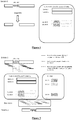
- FIG. 1 illustrates a typical case of failure.
- a metagenomic sample includes DNA from a bacterial species ("species 1”) which harbours a resistance gene.
- species 1 DNA from a bacterial species
- MGE Mobile Genetic Element
- MGEs are a type a DNA moving around between bacterial genomes and are an important source of genetic variability, and thus antibiotic adaptation capability of bacteria.
- Species k the representative genome of Species 1 harbours this ARD, contrary to representative genomes of other species. This might happen, precisely because this ARD is located on a MGE.
- the micro-organism from Species 1 present in the sample under study might have acquired it recently from a strain of Species k, although this transfer has not been observed yet in the reference sequences used to build the Reference Database for taxonomic binning.
- reads located in the ARD region of Species 1 will not be retrieved with the other reads of Species 1 since those they will be set apart as representative of Species k.
- the assembly of Species 1 will lead, in the best case, to 2 contigs, and the ARD will be missing from the assembly.
- reference databases are a static snapshot of the knowledge available at a moment regarding pathogens.
- genomic modification of pathogens in connection with ARD is to update the databases.
- prior art metagenomic analysis is helpless in characterizing the antibiotic sensibility of the pathogen, and even worse, may be misleading by rendering a false result, e.g. in the aforementioned example species k as the resistant pathogen rather than species 1.
- the present invention proposes a new metagenomic analysis which allows to take into account genetic modification in markers of interest using reference database which does not reference those modifications.
- an object of the invention is a method for identifying a pathogen (e.g. bacterium) contained in a metagenomic sample and for identifying pathogenic markers (e.g. antimicrobial susceptibility, virulence,...) in the genome of said pathogen, the method comprising the step of:
- a pathogen e.g. bacterium
- pathogenic markers e.g. antimicrobial susceptibility, virulence, etc.
- the present invention takes advantage of the shearing step describe above.
- the sample comprises several individuals of each pathogen.
- these copies are not fragmented identically on purpose, thereby producing overlapping fragments, the overlap feature being thereafter use for the assembly step.
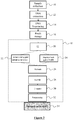
- the assembly process has the opportunity, for said pathogen, to construct contigs comprising the marker. This feature enables the reconstruction of genomes with markers that are different from the representative genomes in the taxonomic database.
- Figures 2 illustrate the invention applied to the sample described in figure 1 , namely a sample with majority DNA from a strain of Species 1 which harbours an ARD located on a GME while the taxonomic database does not store any representative genome having such a feature for Species 1.
- Reads falling in the ARD region are retrieved by mapping reads against an exhaustive ARD database, and reads falling outside the ARD are retrieved by taxonomic binning of reads against the taxonomic database. Then, for each pathogen found in the sample (here only Species 1), reads identified as Species 1 and reads mapping against the ARD are pooled together to be assembled. Because of the "clipping" feature of the reads, i.e.
- At least the portions of reads falling inside the markers have a length greater or equal to 20bp, preferably greater or equal to 25 bp, more preferably greater or equal to 50 bp.
- standard assemblers succeed in assigning a read to a known pathogen genome or a marker with a good probability even when only a small portion of said read aligns with the ARD database.
- the reads have an average length of L bp, with L > 75, and reads that are astride said marker have a portion falling outside said marker in the range [1; L-55] bp.
- the reads have an average length of L bp, with L > 100, and reads that are astride said marker have a portion falling outside said marker in the range [1; L-80] bp.
- the reads have an average length of L bp, with L > 100, and reads that are astride said marker have a portion falling outside said marker in the range [1; L-50] bp.
- the reads that are astride said marker have a first portion falling into said marker and a second portion falling outside said marker, and wherein the length of the second portion is chosen based on mapping against ARD database performance , in particular maximized while still maintaining a correct mapping performance (acceptable proportion of reads to the correct ARD).
- the length of the second portion is chosen such that the probability of good alignment with the ARD database, or probability to get a "true hit", is greater or equal to 70%, preferably greater or equal to 80%.
- the comparison of the set of reads with the second database comprises the mapping of each reads on the pathogenic markers of the second database, independently from the other reads of said set.
- the sequencing is a paired-end sequencing, and if a read is assigned to a marker, a read which it is the complementary of said read is also included in the pool.
- a produced contig comprises only reads assigned to a known marker
- said known pathogenic marker is determined to be part of the known pathogen's genome if: D ARD ⁇ 1 3 ⁇ D path ; 3 ⁇ D path where D ARD is a median sequencing depth of the reads assigned to the known marker and D path is a median sequencing depth of the reads assigned to the known pathogen. and preferable >1
- the method further comprises a step of comparing the contigs to 16SrDNA sequences and/or metaphlan2 markers, and wherein the known pathogen is confirmed based on said comparison.
- the sample is taken from a human or an animal, and wherein the first database comprises also flora and host genomes, and wherein reads assigned to flora and host genomes are filtered out.
- the metagenomic sample is a brochoalveolar lavage sample, an urine sample or a blood sample.
- the pathogenic marker are antibiotic resistance markers or virulence makers.
- Another object of the invention is a computer readable medium storing instruction for executing a method performed by a computer, the method comprising
- Said computer readable medium stores instruction for executing the aforementioned method.
- VAP Ventilarory Acquired Pneumonia
- BAL a (mini)Broncho Alveolar Lavage
- ICU Intensive Care Unit
- a BAL sample is collected from a patient, in 10 , and thereafter process in 12 for nucleic acid extraction from pathogens contained in the sample.
- This preparation comprises successively, by way of example:
- the extracted DNA is thereafter sequenced in 14 using whole genome sequencing HTS technics, e.g. a shotgun technic comprising:
- a set of reads is thereby produced and stored in 16 in a memory of a computer system.
- the DNA sequencing is preferably carried out using HTS technics which reads both ends of the fragments, for example using Illumina® dye sequencing, for instance Miseq WGS paired-end sequencing technics, as described for example in Oulas et al., "Metagenomics: Tools and Insights for Analyzing Next-Generation Sequencing Data Derived from Biodiversity Studies", Bioinform Biol Insights, 2015 . Having both ends of the reads sequenced makes assembly of the reads easier, and in particular facilitate incorporation of an ARD in the genome of a particular pathogen in the case of the taxonomic database does not include representative genomes with the ARD.
- a bioinformatics pipeline 18 according to the invention is then run on the reads to list the pathogens in the sample and figure out if their genomes harbor antibiotic resistance determinants.
- a first step 20 of the pipeline 18 consists in a pre-processing of the reads (usually called "Quality Control” (QC)), namely:
- Pipeline 18 goes on in 22 with:
- a compositional approach such as the "Kraken” tool ( Wood and Salzberg, “Kraken: ultrafast metagenomic sequence classification using exact alignments", Genome Biology, 2014 ), or “Wowpal Wabbit” tool ( Vervier et al., “Large-scale machine learning for metagenomics sequence classification", Bioinformatics, 2015 ), or a comparative approach, such as the "BWA-MEM” tool ( Li, "Aligning sequence reads, clone sequences and assembly contigs with BWA-MEM", Genomics, 2013 ).
- a read is assigned to a pathogen if it maps entirely in a representative genome of this pathogen stored in the taxonomic database.
- Pipeline 18 also comprises a mapping 24 of each read against an ARD reference database that includes ARD of interest.
- a read is assigned to an ARD if: is assigned to an ARD if
- Figure 4 illustrates the probability to retrieve an ARD for a read falling in the ARD, according to the number of bases of the read in the ARD.
- a length of 50bp that maps on an ARD is sufficient to precisely assign a read to this ARD (or, in other words, a length of 50bp is sufficient to determine that a read comes from a genome portion having the ARD). It has been showed that the probability to retrieve a read in an ARD was 80% for reads with 250 bp outside the ARD and 50 bp in the ARD, 83% of the read outside the ARD.
- reads with a portion outside the ARD having a length in the range [0, L-50]bp are thus assigned to the ARD, L being the length of the ARD.
- L being the length of the ARD.
- reads with a length outside the ARD over 50 are assigned to ARD.
- BWA-MEM is run with the non-default parameters "-a -T 0 -k 16 -L 5 -d 100", leading to read assigned to ARD having clipped lengths in the range [0, L-50]bp.
- the reads are mapped independently against the ARD database, even if the reads are paired because of the technics used for sequencing the DNA fragment (e.g. WGS paired-end sequencing technics).
- a read is usually assigned to an ARD not only if it maps against the database but also when its counterpart read maps. However, if one only keep reads that map "in a proper pair", meaning that both reads of the pair map on the ARD database, one only gets paired-end reads with an insert size smaller than a typical ARD length ( ⁇ 1000 bp). For example, in Figure 5 only “read2.1". and “read2.2” would be retrieved as mapped in a proper pair, because they both fall in the ARD. When mapped independently, "read1.1”, “read2.1”, and “read2.2” are also retrieved.
- a read maps on an ARD
- its counterpart read is automatically assigned to this ARD.
- "read 1.2” which does not map on the ARD, is thus automatically assigned to the ARD because "read 2.2" does.
- "Read 1.2” is particularly useful because it falls in a chromosomic region of a pathogen, and together with reads retrieved by taxonomic binning it can be used to reconstruct the whole region, the chromosome and the ARD, as it will described latter.
- Pipeline 18 goes on with a pooling step 26.
- a pool of reads is created, said pool comprising the reads assigned to said pathogen and all the reads assigned to ARD(s).
- the other read is included automatically in the pool because it has been assigned also to the ARD database.
- sequencing depth is larger than 150, a random set of pathogen reads is selected amongst the whole set of reads assigned to said pathogen to have a final average sequencing depth equal to 150.
- An assembly step 28 is then carried out for each created pools of reads in order to produce contigs.
- the assembly step runs "de novo" assemblers such as "IDBA-UD” ( Peng et al., “IDBA-UD: a de novo assembler for single-cell and metagenomic sequencing data with highly uneven depth", Bioinformatics, 2012 ), "MegaHit” ( Li et al., “MEGAHIT: an ultra-fast single-node solution for large and complex metagenomics assembly via succinct de Bruijn graph.”, Bioinformatics, 2015 ), “Omega” ( Haider et al., “Omega: an Overlap-graph de novo Assembler for Metagenomics", Bioinformatics, 2014 ), "Ray Meta” ( Boisvert et al., “Ray Meta: scalable de novo metagenome assembly and profinling", Genome Biology, 2012 ), “Spades” ( Bankevich et al.,
- IDBA-UD and Spades gives the best performance and are thus preferred.
- the parameters for IDBA-UD and Spades are for example default parameters, that is to say respectively "idba_ud500 --mink 40 --maxk maxReadLength --min_pairs 2" and "spades.py --careful --cov-cutoff 3".
- Assembly step 28 thus transforms each pool of reads in a set of contigs (usually named “assembly”), preliminary assigned to a particular pathogen of the taxonomic database, which contigs may comprise one or more ARD.
- the assembly step comprises the following steps: a) reads are first pre-processed with SGA (if it was not performed in QC step 20 ), b) then assembled using a de novo assembler, c) and original reads are mapped against contigs to polish the assembly (i.e. remove ultimate assembly errors). In particular, a contig is discarded if none of the pairs of reads maps against it.
- a following step 30 of the pipeline 18 consists in confirming the identity of pathogens based on the sets of contigs and identifying the ARD in the genome of the identified pathogen(s). In particular, for each set of configs, the following step are carried out:
- Metalphlan2 markers are used for identity confirmation, those markers being described for example in Segata et al., “Metagenomic microbial community profiling using unique clade-specific marker genes", Nature Methods, 2012 .
- a final processing step 30 is then carried out to process the identified ARDs in order to link them to pathogens.
- the origin of reads mapping against the contigs annotated with an ARD is analyzed. If some of the reads that map on a contig with an ARD are obtained from the taxonomic binning against pathogen RDB (step 20 ), thus the ARD is definitively linked to the pathogen. In practice, at least 5% of the total number of reads mapping against the contigs containing an ARD are required to come from step 20.
- the assembly may however comprise ARD contigs that are not derived from step 20.
- ARD contigs that are not derived from step 20.
- all the reads mapping on the contigs are obtained from the mapping of the reads against ARD database (step 24 ).
- ARD database step 24 .
- a first reason rests on the fact that the ARD is not part of the pathogen's genome.
- those contigs may actually corresponds to the pathogen genome. Indeed it may happen that the ARD is located on a particular MGE, that is to say a plasmid.
- the ARD is not integrated in the contigs corresponding to the chromosome of the pathogen, but constitute an independent contig.
- the processing step 30 links the ARD to the pathogen with a smaller evidence by comparing the median sequencing depth of the ARD ( D ARD ) and the median sequencing depth of the pathogen ( D path ), the median sequencing depth being the median of the distribution of the number of reads that map on the assembly each position (obtained at step c. of assembly step 28 ).
- D ARD is the median of the distribution of the number of reads that map at each position of an ARD
- D path is the median of the distribution of the number of read that map at each position of the assembly of the pathogen.
- an ARD is linked to the pathogen(s) with the closest average sequencing depth.
- "ARD2" located on “contig2” should be assigned to "Species 1" (because the median sequencing depth of "contig2” is 4 and the median sequencing depth of "Species1” is 4), while “ARD3" located on “contig3” should be assigned to "Species2” (because the median sequencing depth of "contig3” is 75 and the median sequencing depth of "Species” 2 is 8.).
- the ARD is assigned to all the species that have a median sequencing depth between 1/3 and 3 of the ARD median sequencing depth, and preferably greater than 1 because an ARD may be present in several copies in the genome of the pathogen.
- an information/storing step 34 comprising the storage of the results of the pipeline 18 , in particular, the list of identified pathogens and the ARD linked thereto, and/or the display of those results on a screen of a computer.
- the first validation study relies on in silico simulated metagenomes (validation study 1)
- the second validation study is a set of 3 positive miniBAL metagenomic samples for which only the culture identification is available (validation study 2)
- the third validation study is a set 2 positive BAL metagenomic samples with identification and AST profiles available (validation study 3).
- Kraken is used for taxonomic binning and ARD binning (steps 22 , 24 ) and IDBA-UD is used for assembly (step 28).
- 21 metagenomes have been simulated, each including 1 of the 21 selected pathogens (see Table 1). Each metagenome contains 300000 read pairs from the main pathogen, and 15000 read pairs from flora genomes. Genomes used for the simulations are real public genomes. Reads are simulated according to the Illumina MiSeq error model, with 2 ⁇ 300 bp paired-end reads, with V2 chemistry. Table 1 presents the strain used for the 21 simulated metagenomes, the number of ARD present in each strain, the number of ARD that are retrieved by the prior art pipeline (“P1"), and the number of ARD that are retrieved by the pipeline according to the invention ("P1+2"). Results are clearly in favor of the new pipeline which enables in most cases to recover all the ARD that were present in the original genomes.
- Table 2 Simulated strains and number of ARD found in the genomes of origin, in the assembly with IDBA-UD after P1 only, and in the assembly with IDBA-UD after P1+P2.
- Table 1 Strain # ARDs in the strain # ARDs retrieved by P1 only # ARDs retrieved by P1+P2
- E cloacae JZY01 15 1 15 E coli LFXU01 9 1 8
- E coli LHAT01 6 1 9 K oxytoca 9 2 9 K pneumoniae LFBF01 7 1 7 K pneumoniae CBWI01 15 3 13 H influenzae 1 0 1 P mirabilis 8 0 8 P vulgaris 12 1 12 M morganii 5 1 5 P aeruginosa BADP01 9 8 9 P aeruginosa JTVP01 10 9 10
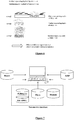
- Figure 7 illustrates a computer system carrying out the pipeline according to the invention.
- Said system comprises the databases described above (taxonomic database, ARD database) as well as database memorizing the reads.
- Those databases are connected to a computing unit, e.g. for example a personal computer, a tablet, a smartphone, a server, network of computers, and more generally any system comprising one or more microprocessors and/or one or more microcontrollers, e.g. a digital signal processor, and/or one more programmable logic device, configured to implement a digital processing the reads as described above.
- a computing unit e.g. for example a personal computer, a tablet, a smartphone, a server, network of computers, and more generally any system comprising one or more microprocessors and/or one or more microcontrollers, e.g. a digital signal processor, and/or one more programmable logic device, configured to implement a digital processing the reads as described above.
- the computer unit comprises computer memories (RAM, ROM, cache memory, mass memory) for the storing the acquired distributions, instructions for executing the method according to the invention, and intermediate and final computation, in particular the list of pathogens and their linked ARD.
- the computer units further comprises a screen for displaying list and ARD.
Landscapes
- Life Sciences & Earth Sciences (AREA)
- Chemical & Material Sciences (AREA)
- Engineering & Computer Science (AREA)
- Physics & Mathematics (AREA)
- Health & Medical Sciences (AREA)
- Proteomics, Peptides & Aminoacids (AREA)
- Analytical Chemistry (AREA)
- Bioinformatics & Cheminformatics (AREA)
- Biophysics (AREA)
- Biotechnology (AREA)
- General Health & Medical Sciences (AREA)
- Medical Informatics (AREA)
- Organic Chemistry (AREA)
- Theoretical Computer Science (AREA)
- Spectroscopy & Molecular Physics (AREA)
- Evolutionary Biology (AREA)
- Bioinformatics & Computational Biology (AREA)
- Zoology (AREA)
- Wood Science & Technology (AREA)
- Molecular Biology (AREA)
- Genetics & Genomics (AREA)
- Immunology (AREA)
- General Engineering & Computer Science (AREA)
- Biochemistry (AREA)
- Microbiology (AREA)
- Data Mining & Analysis (AREA)
- Artificial Intelligence (AREA)
- Bioethics (AREA)
- Computer Vision & Pattern Recognition (AREA)
- Databases & Information Systems (AREA)
- Epidemiology (AREA)
- Evolutionary Computation (AREA)
- Public Health (AREA)
- Software Systems (AREA)
- Measuring Or Testing Involving Enzymes Or Micro-Organisms (AREA)
- Apparatus Associated With Microorganisms And Enzymes (AREA)
Claims (14)
- Procédé d'identification d'un pathogène compris dans un échantillon métagénomique et d'identification de marqueurs pathogènes dans le génome dudit pathogène, le procédé comprenant les étapes :- de traitement (12) de l'échantillon métagénomique pour extraire l'ADN d'au moins des pathogènes compris dans ledit échantillon ;- de séquençage (14) de l'ADN extrait, produisant ainsi un ensemble de séquences numériques d'acides nucléiques, ou « reads » ;- de comparaison (22) de l'ensemble de reads à une première base de données de génomes de pathogènes connus de sorte à assigner des reads aux pathogènes connus ;- de production (26) d'un groupe de reads comprenant au moins les reads assignés à un pathogène parmi lesdits pathogènes connus et d'assemblage (28) des reads du groupe de sorte à produire au moins une séquences numérique assemblée d'acides nucléiques, ou « contigs » ;- de comparaison (30) des contigs produits à une seconde base de données de marqueurs génétiques pathogènes connus de sorte à tester si les contigs produits comprennent un marqueur connu ;caractérisé :- en ce que le procédé comprend une étape de comparaison (24) de l'ensemble de reads à la seconde base de données de sorte à assigner des reads dudit ensemble aux marqueurs pathogènes connus, un read étant assigné à un marqueur pathogène connu s'il tombe entièrement dans ledit marqueur ou s'il est à cheval sur ledit marqueur ;- en ce que le groupe comprend également les reads assignés aux marqueurs pathogènes connus, les contigs étant ainsi assemblés avec les reads assignés aux pathogènes connus et aux reads assignés aux marqueurs pathogènes connus.
- Procédé selon la revendication 1, dans lequel les reads qui sont à cheval sur lesdits marqueurs ont une partie dans ledit marqueur ayant une longueur supérieure ou égale à 20 bp.
- Procédé selon la revendication 1 ou 2, dans lequel les reads ont une longueur moyenne de L bp, avec L > 100, et dans lequel les reads qui sont à cheval sur ledit marqueur ont une partie en dehors du marqueur dans l'intervalle [1 ; L-50] bp.
- Procédé selon la revendication 1, 2 ou 3, dans lequel les reads qui sont à cheval sur ledit marqueur ont une première partie dans ledit marqueur et une seconde partie en dehors dudit marqueur, et dans lequel la longueur de la seconde partie est choisie en fonction de performance d'un mapping sur une base de données d'ARD.
- Procédé selon la revendication 4, dans lequel la longueur de la seconde partie est choisie de sorte à ce que la probabilité d'un assignement correct sur la base de données d'ARD est supérieure ou égale à 70%, de préférence supérieure ou égale à 80%.
- Procédé selon l'une quelconque des revendications précédentes, dans lequel la comparaison de l'ensemble de reads avec la seconde base de données comprend le mapping de chaque read avec les marqueurs pathogènes de la seconde base de données, indépendamment des autres reads dudit ensembles.
- Procédé selon l'une quelconque des revendications précédentes, dans lequel le séquençage est un séquençage par pair, et dans lequel si un read est assigné à un marqueur, un read qui est le complémentaire dudit read est également inclus dans le groupe.
- Procédé selon l'une quelconque des revendications précédentes, dans lequel si un contig produit comprend uniquement des reads assignés à un marqueur connu, ledit marqueur pathogène est déterminé comme appartenant au génome dudit pathogène connu si :

- Procédé selon l'une quelconque des revendications précédentes, dans lequel il comprend en outre une étape de comparaison des contigs avec des séquences 16SrDNA et/ou à des marqueurs metaphlan2 d'une base de données, and dans lequel le pathogène connu est confirmé en fonction de ladite comparaison.
- Procédé selon l'une quelconque des revendications précédentes, dans lequel l'échantillon est prélevé sur un humain ou un animal, dans lequel la première base de données comprends en outre des génomes de flore et de l'hôte, et dans lequel des reads assignés à la flore ou à l'hôte sont éliminés.
- Procédé selon l'une quelconque des revendications précédentes, dans lequel l'échantillon métagénomique est un échantillon de lavage broncho-alvéolaire, un échantillon d'urine ou un échantillon de sang.
- Procédé selon l'une quelconque des revendications précédentes, dans lequel les marqueurs pathogènes sont des marqueurs de résistance à des antibiotiques ou des marqueurs de virulence.
- Support lisible par ordinateur mémorisant des instructions pour exécuter un procédé mis en œuvre par ordinateurs, le procédé comprenant les étapes de :- de comparaison d'un ensemble de reads à une première base de données de génomes de pathogènes connus de sorte à assigner des reads aux pathogènes connus ;- de production d'un groupe de reads comprenant au moins les reads assignés à un pathogène parmi lesdits pathogènes connus et d'assemblage (28) des reads du groupe de sorte à produire au moins une séquences numérique assemblée d'acides nucléiques, ou « contigs » ;- de comparaison des contigs produits à une seconde base de données de marqueurs génétiques pathogènes connus de sorte à tester si les contigs produits comprennent un marqueur connu ;caractérisé :- en ce que le procédé comprend une étape de comparaison de l'ensemble de reads à la seconde base de données de sorte à assigner des reads dudit ensemble aux marqueurs pathogènes connus, un read étant assigné à un marqueur pathogène connu s'il tombe entièrement dans ledit marqueur ou s'il est à cheval sur ledit marqueur ;- en ce que le groupe comprend également les reads assignés aux marqueurs pathogènes connus, les contigs étant ainsi assemblés avec les reads assignés aux pathogènes connus et aux reads assignés aux marqueurs pathogènes connus.
- Support lisible par ordinateur selon la revendication 13, dans lequel il mémorise des instructions pour exécuter un procédé conforme à l'une quelconque des revendications 2-12.
Applications Claiming Priority (2)
| Application Number | Priority Date | Filing Date | Title |
|---|---|---|---|
| EP16193621 | 2016-10-13 | ||
| PCT/EP2017/076029 WO2018069430A1 (fr) | 2016-10-13 | 2017-10-12 | Identification et caractérisation d'antibiotiques d'agents pathogènes dans un échantillon métagénomique |
Publications (2)
| Publication Number | Publication Date |
|---|---|
| EP3526344A1 EP3526344A1 (fr) | 2019-08-21 |
| EP3526344B1 true EP3526344B1 (fr) | 2020-09-30 |
Family
ID=57184303
Family Applications (1)
| Application Number | Title | Priority Date | Filing Date |
|---|---|---|---|
| EP17780452.3A Active EP3526344B1 (fr) | 2016-10-13 | 2017-10-12 | Identification et caractérisation antibiotique des pathogènes d'un échantillon métagénomique |
Country Status (5)
| Country | Link |
|---|---|
| US (1) | US11749381B2 (fr) |
| EP (1) | EP3526344B1 (fr) |
| JP (1) | JP7068287B2 (fr) |
| CN (1) | CN109923217B (fr) |
| WO (1) | WO2018069430A1 (fr) |
Families Citing this family (19)
| Publication number | Priority date | Publication date | Assignee | Title |
|---|---|---|---|---|
| WO2016100955A2 (fr) | 2014-12-20 | 2016-06-23 | Identifygenomics, Llc | Compositions et procédés d'appauvrissement ciblé, d'enrichissement et de séparation d'acides nucléiques utilisant les protéines du système cas/crispr |
| US10538758B2 (en) | 2015-08-19 | 2020-01-21 | Arc Bio, Llc | Capture of nucleic acids using a nucleic acid-guided nuclease-based system |
| US11124831B2 (en) * | 2016-08-10 | 2021-09-21 | New York Genome Center | Ultra-low coverage genome sequencing and uses thereof |
| CN112384608A (zh) * | 2018-05-24 | 2021-02-19 | 纽约市哥伦比亚大学理事会 | 细菌捕获测序平台及其设计、构建和使用方法 |
| FR3099180B1 (fr) | 2019-07-23 | 2022-11-25 | Biomerieux Sa | Procédé de détection et de quantification d'une espèce biologique d'intérêt par analyse métagénomique, comportant l'utilisation d'une espèce de contrôle. |
| FR3099182B1 (fr) * | 2019-07-23 | 2022-11-25 | Biomerieux Sa | Procédé de détection et de quantification d'une espèce biologique d'intérêt par analyse métagénomique |
| FR3099181B1 (fr) * | 2019-07-23 | 2022-11-18 | Biomerieux Sa | Procédé de détection et de quantification d'une espèce biologique d'intérêt par analyse métagénomique, avec prise en compte d'un calibrateur. |
| FR3099183B1 (fr) | 2019-07-23 | 2022-11-18 | Biomerieux Sa | Procédé de détection et de quantification d'une espèce biologique d'intérêt par analyse métagénomique, et détermination d'un niveau de confiance associé |
| CN110438199A (zh) * | 2019-08-15 | 2019-11-12 | 深圳谱元科技有限公司 | 一种新型病原微生物检测的方法 |
| CN113470742B (zh) * | 2020-03-31 | 2024-08-09 | 浙江省疾病预防控制中心 | 数据处理方法、装置、存储介质及计算机设备 |
| CN111627500A (zh) * | 2020-04-16 | 2020-09-04 | 中国科学院生态环境研究中心 | 一种基于宏基因组技术识别水体中携带毒性因子病原菌的方法 |
| CN114067911B (zh) * | 2020-08-07 | 2024-02-06 | 西安中科茵康莱医学检验有限公司 | 获取微生物物种及相关信息的方法和装置 |
| CN112786109B (zh) * | 2021-01-19 | 2024-04-16 | 南京大学 | 一种基因组完成图的基因组组装方法 |
| CN113223618B (zh) * | 2021-05-26 | 2022-09-16 | 予果生物科技(北京)有限公司 | 基于宏基因组的临床重要致病菌毒力基因检测的方法及系统 |
| CN113782100B (zh) * | 2021-11-10 | 2022-02-18 | 中国人民解放军军事科学院军事医学研究院 | 一种基于细菌基因组高通量测序数据鉴定细菌种群携带的质粒类型的方法 |
| CN115101129B (zh) * | 2022-06-27 | 2023-03-24 | 青岛华大医学检验所有限公司 | 一种基于宏基因组测序数据组装病原微生物基因组的方法 |
| CN116525008B (zh) * | 2023-04-28 | 2025-09-12 | 中国科学院软件研究所 | 一种面向自主可控异构众核集群的高性能基因比对方法和系统 |
| CN118230820A (zh) * | 2024-03-19 | 2024-06-21 | 浙江洛兮医学检验实验室有限公司 | 基于宏基因测序数据的耐药基因物种来源鉴定方法 |
| CN118692562B (zh) * | 2024-06-06 | 2025-04-11 | 杭州洛兮医学检验实验室有限公司 | 一种基于二代测序的病原微生物宏基因组检测的生物信息方法 |
Family Cites Families (11)
| Publication number | Priority date | Publication date | Assignee | Title |
|---|---|---|---|---|
| US5234809A (en) | 1989-03-23 | 1993-08-10 | Akzo N.V. | Process for isolating nucleic acid |
| CA2460959A1 (fr) | 2001-09-28 | 2003-05-22 | Incyte Genomics, Inc. | Enzymes |
| US20050221341A1 (en) * | 2003-10-22 | 2005-10-06 | Shimkets Richard A | Sequence-based karyotyping |
| US12180549B2 (en) * | 2007-07-23 | 2024-12-31 | The Chinese University Of Hong Kong | Diagnosing fetal chromosomal aneuploidy using genomic sequencing |
| CN102272601B (zh) * | 2008-10-31 | 2014-09-17 | 生物梅里埃公司 | 采用鉴定剂分离和表征微生物的方法 |
| CN103186716B (zh) * | 2011-12-29 | 2017-02-08 | 上海生物信息技术研究中心 | 基于元基因组学的未知病原快速鉴定系统及分析方法 |
| US8209130B1 (en) | 2012-04-04 | 2012-06-26 | Good Start Genetics, Inc. | Sequence assembly |
| FR3001464B1 (fr) | 2013-01-25 | 2016-02-26 | Biomerieux Sa | Procede d'isolement specifique d'acides nucleiques d'interet |
| US20140288844A1 (en) * | 2013-03-15 | 2014-09-25 | Cosmosid Inc. | Characterization of biological material in a sample or isolate using unassembled sequence information, probabilistic methods and trait-specific database catalogs |
| US20150032711A1 (en) * | 2013-07-06 | 2015-01-29 | Victor Kunin | Methods for identification of organisms, assigning reads to organisms, and identification of genes in metagenomic sequences |
| CA2964480A1 (fr) * | 2014-10-31 | 2016-05-06 | Whole Biome Inc. | Procedes et compositions se rapportant a un traitement microbien et au diagnostic de troubles |
-
2017
- 2017-10-12 EP EP17780452.3A patent/EP3526344B1/fr active Active
- 2017-10-12 WO PCT/EP2017/076029 patent/WO2018069430A1/fr not_active Ceased
- 2017-10-12 JP JP2019519228A patent/JP7068287B2/ja active Active
- 2017-10-12 US US16/342,017 patent/US11749381B2/en active Active
- 2017-10-12 CN CN201780063630.5A patent/CN109923217B/zh active Active
Non-Patent Citations (1)
| Title |
|---|
| None * |
Also Published As
| Publication number | Publication date |
|---|---|
| JP7068287B2 (ja) | 2022-05-16 |
| CN109923217A (zh) | 2019-06-21 |
| JP2019537780A (ja) | 2019-12-26 |
| CN109923217B (zh) | 2023-06-16 |
| US11749381B2 (en) | 2023-09-05 |
| WO2018069430A1 (fr) | 2018-04-19 |
| US20190252042A1 (en) | 2019-08-15 |
| EP3526344A1 (fr) | 2019-08-21 |
Similar Documents
| Publication | Publication Date | Title |
|---|---|---|
| EP3526344B1 (fr) | Identification et caractérisation antibiotique des pathogènes d'un échantillon métagénomique | |
| Orlando et al. | Ancient DNA analysis | |
| US20240395360A1 (en) | Methods for genome assembly and haplotype phasing | |
| Yang et al. | The Phytophthora cactorum genome provides insights into the adaptation to host defense compounds and fungicides | |
| CN105740650B (zh) | 一种快速准确鉴定高通量基因组数据污染源的方法 | |
| JP7591554B2 (ja) | メタゲノミクス分析による標的生物種の検出および定量方法 | |
| WO2018160899A1 (fr) | Systèmes et procédés d'analyse métagénomique | |
| WO2014019267A1 (fr) | Méthode et système pour déterminer des biomarqueurs associés à une condition anormale | |
| US20170283862A1 (en) | Genetic testing for predicting resistance of klebsiella species against antimicrobial agents | |
| Wang et al. | Genome assembly of the A-group Wolbachia in Nasonia oneida using linked-reads technology | |
| Fijarczyk et al. | Lifestyles shape genome size and gene content in fungal pathogens | |
| CN115651990A (zh) | 用于预测大肠埃希菌对抗生素药敏表型的特征基因组合、试剂盒及测序方法 | |
| Hollister et al. | Bioinformation and’omic approaches for characterization of environmental microorganisms | |
| US20240013862A1 (en) | Methods to identify novel insecticidal proteins from complex metagenomic microbial samples | |
| Zhou et al. | Comparative genomic analysis of Mycoplasma anatis strains | |
| Wicaksono et al. | Rhizosphere assembly alters along a chronosequence in the Hallstätter glacier forefield (Dachstein, Austria) | |
| Wang et al. | Noncanonical transcription initiation is primarily tissue specific and epigenetically tuned in paleopolyploid plants | |
| Standeven et al. | An efficient pipeline for creating metagenomic-assembled genomes from ancient oral microbiomes | |
| Samdarshi | Genome sequencing and bioinformatics | |
| Riojas et al. | Identification and characterization of mycobacterial species using whole-genome sequences | |
| De Maayer et al. | The current state of metagenomic analysis | |
| Drage | Whole Genome Sequencing and Analysis of Wild Isolate Fungi in the Genus Eremothecium | |
| Boyes et al. | The genome sequence of the lesser yellow underwing, Noctua comes Hübner, 1813 | |
| Boyes et al. | The genome sequence of the Lesser Yellow Underwing, Noctua comes Hübner, 1813 [version 1; peer review: 2 | |
| Ni et al. | One-Step PCR Amplicon Library Construction (OSPALC, version 1) |
Legal Events
| Date | Code | Title | Description |
|---|---|---|---|
| STAA | Information on the status of an ep patent application or granted ep patent |
Free format text: STATUS: UNKNOWN |
|
| STAA | Information on the status of an ep patent application or granted ep patent |
Free format text: STATUS: THE INTERNATIONAL PUBLICATION HAS BEEN MADE |
|
| PUAI | Public reference made under article 153(3) epc to a published international application that has entered the european phase |
Free format text: ORIGINAL CODE: 0009012 |
|
| STAA | Information on the status of an ep patent application or granted ep patent |
Free format text: STATUS: REQUEST FOR EXAMINATION WAS MADE |
|
| 17P | Request for examination filed |
Effective date: 20190506 |
|
| AK | Designated contracting states |
Kind code of ref document: A1 Designated state(s): AL AT BE BG CH CY CZ DE DK EE ES FI FR GB GR HR HU IE IS IT LI LT LU LV MC MK MT NL NO PL PT RO RS SE SI SK SM TR |
|
| AX | Request for extension of the european patent |
Extension state: BA ME |
|
| DAV | Request for validation of the european patent (deleted) | ||
| DAX | Request for extension of the european patent (deleted) | ||
| REG | Reference to a national code |
Ref country code: DE Ref legal event code: R079 Ref document number: 602017024699 Country of ref document: DE Free format text: PREVIOUS MAIN CLASS: C12Q0001680000 Ipc: C12Q0001689000 |
|
| GRAP | Despatch of communication of intention to grant a patent |
Free format text: ORIGINAL CODE: EPIDOSNIGR1 |
|
| STAA | Information on the status of an ep patent application or granted ep patent |
Free format text: STATUS: GRANT OF PATENT IS INTENDED |
|
| RIC1 | Information provided on ipc code assigned before grant |
Ipc: C12Q 1/6888 20180101ALI20200409BHEP Ipc: G16B 20/00 20190101ALI20200409BHEP Ipc: G16B 30/00 20190101ALI20200409BHEP Ipc: C12Q 1/689 20180101AFI20200409BHEP |
|
| INTG | Intention to grant announced |
Effective date: 20200429 |
|
| GRAS | Grant fee paid |
Free format text: ORIGINAL CODE: EPIDOSNIGR3 |
|
| GRAA | (expected) grant |
Free format text: ORIGINAL CODE: 0009210 |
|
| STAA | Information on the status of an ep patent application or granted ep patent |
Free format text: STATUS: THE PATENT HAS BEEN GRANTED |
|
| AK | Designated contracting states |
Kind code of ref document: B1 Designated state(s): AL AT BE BG CH CY CZ DE DK EE ES FI FR GB GR HR HU IE IS IT LI LT LU LV MC MK MT NL NO PL PT RO RS SE SI SK SM TR |
|
| REG | Reference to a national code |
Ref country code: CH Ref legal event code: EP Ref country code: GB Ref legal event code: FG4D |
|
| REG | Reference to a national code |
Ref country code: AT Ref legal event code: REF Ref document number: 1318858 Country of ref document: AT Kind code of ref document: T Effective date: 20201015 |
|
| REG | Reference to a national code |
Ref country code: DE Ref legal event code: R096 Ref document number: 602017024699 Country of ref document: DE |
|
| REG | Reference to a national code |
Ref country code: IE Ref legal event code: FG4D |
|
| REG | Reference to a national code |
Ref country code: NL Ref legal event code: FP |
|
| PG25 | Lapsed in a contracting state [announced via postgrant information from national office to epo] |
Ref country code: FI Free format text: LAPSE BECAUSE OF FAILURE TO SUBMIT A TRANSLATION OF THE DESCRIPTION OR TO PAY THE FEE WITHIN THE PRESCRIBED TIME-LIMIT Effective date: 20200930 Ref country code: GR Free format text: LAPSE BECAUSE OF FAILURE TO SUBMIT A TRANSLATION OF THE DESCRIPTION OR TO PAY THE FEE WITHIN THE PRESCRIBED TIME-LIMIT Effective date: 20201231 Ref country code: SE Free format text: LAPSE BECAUSE OF FAILURE TO SUBMIT A TRANSLATION OF THE DESCRIPTION OR TO PAY THE FEE WITHIN THE PRESCRIBED TIME-LIMIT Effective date: 20200930 Ref country code: NO Free format text: LAPSE BECAUSE OF FAILURE TO SUBMIT A TRANSLATION OF THE DESCRIPTION OR TO PAY THE FEE WITHIN THE PRESCRIBED TIME-LIMIT Effective date: 20201230 Ref country code: BG Free format text: LAPSE BECAUSE OF FAILURE TO SUBMIT A TRANSLATION OF THE DESCRIPTION OR TO PAY THE FEE WITHIN THE PRESCRIBED TIME-LIMIT Effective date: 20201230 Ref country code: HR Free format text: LAPSE BECAUSE OF FAILURE TO SUBMIT A TRANSLATION OF THE DESCRIPTION OR TO PAY THE FEE WITHIN THE PRESCRIBED TIME-LIMIT Effective date: 20200930 |
|
| PG25 | Lapsed in a contracting state [announced via postgrant information from national office to epo] |
Ref country code: LV Free format text: LAPSE BECAUSE OF FAILURE TO SUBMIT A TRANSLATION OF THE DESCRIPTION OR TO PAY THE FEE WITHIN THE PRESCRIBED TIME-LIMIT Effective date: 20200930 Ref country code: RS Free format text: LAPSE BECAUSE OF FAILURE TO SUBMIT A TRANSLATION OF THE DESCRIPTION OR TO PAY THE FEE WITHIN THE PRESCRIBED TIME-LIMIT Effective date: 20200930 |
|
| REG | Reference to a national code |
Ref country code: LT Ref legal event code: MG4D |
|
| PG25 | Lapsed in a contracting state [announced via postgrant information from national office to epo] |
Ref country code: LT Free format text: LAPSE BECAUSE OF FAILURE TO SUBMIT A TRANSLATION OF THE DESCRIPTION OR TO PAY THE FEE WITHIN THE PRESCRIBED TIME-LIMIT Effective date: 20200930 Ref country code: SM Free format text: LAPSE BECAUSE OF FAILURE TO SUBMIT A TRANSLATION OF THE DESCRIPTION OR TO PAY THE FEE WITHIN THE PRESCRIBED TIME-LIMIT Effective date: 20200930 Ref country code: EE Free format text: LAPSE BECAUSE OF FAILURE TO SUBMIT A TRANSLATION OF THE DESCRIPTION OR TO PAY THE FEE WITHIN THE PRESCRIBED TIME-LIMIT Effective date: 20200930 Ref country code: PT Free format text: LAPSE BECAUSE OF FAILURE TO SUBMIT A TRANSLATION OF THE DESCRIPTION OR TO PAY THE FEE WITHIN THE PRESCRIBED TIME-LIMIT Effective date: 20210201 Ref country code: RO Free format text: LAPSE BECAUSE OF FAILURE TO SUBMIT A TRANSLATION OF THE DESCRIPTION OR TO PAY THE FEE WITHIN THE PRESCRIBED TIME-LIMIT Effective date: 20200930 Ref country code: CZ Free format text: LAPSE BECAUSE OF FAILURE TO SUBMIT A TRANSLATION OF THE DESCRIPTION OR TO PAY THE FEE WITHIN THE PRESCRIBED TIME-LIMIT Effective date: 20200930 |
|
| PG25 | Lapsed in a contracting state [announced via postgrant information from national office to epo] |
Ref country code: PL Free format text: LAPSE BECAUSE OF FAILURE TO SUBMIT A TRANSLATION OF THE DESCRIPTION OR TO PAY THE FEE WITHIN THE PRESCRIBED TIME-LIMIT Effective date: 20200930 Ref country code: IS Free format text: LAPSE BECAUSE OF FAILURE TO SUBMIT A TRANSLATION OF THE DESCRIPTION OR TO PAY THE FEE WITHIN THE PRESCRIBED TIME-LIMIT Effective date: 20210130 Ref country code: ES Free format text: LAPSE BECAUSE OF FAILURE TO SUBMIT A TRANSLATION OF THE DESCRIPTION OR TO PAY THE FEE WITHIN THE PRESCRIBED TIME-LIMIT Effective date: 20200930 Ref country code: AL Free format text: LAPSE BECAUSE OF FAILURE TO SUBMIT A TRANSLATION OF THE DESCRIPTION OR TO PAY THE FEE WITHIN THE PRESCRIBED TIME-LIMIT Effective date: 20200930 |
|
| PG25 | Lapsed in a contracting state [announced via postgrant information from national office to epo] |
Ref country code: LU Free format text: LAPSE BECAUSE OF NON-PAYMENT OF DUE FEES Effective date: 20201012 Ref country code: SK Free format text: LAPSE BECAUSE OF FAILURE TO SUBMIT A TRANSLATION OF THE DESCRIPTION OR TO PAY THE FEE WITHIN THE PRESCRIBED TIME-LIMIT Effective date: 20200930 Ref country code: MC Free format text: LAPSE BECAUSE OF FAILURE TO SUBMIT A TRANSLATION OF THE DESCRIPTION OR TO PAY THE FEE WITHIN THE PRESCRIBED TIME-LIMIT Effective date: 20200930 |
|
| REG | Reference to a national code |
Ref country code: DE Ref legal event code: R097 Ref document number: 602017024699 Country of ref document: DE |
|
| REG | Reference to a national code |
Ref country code: BE Ref legal event code: MM Effective date: 20201031 Ref country code: AT Ref legal event code: UEP Ref document number: 1318858 Country of ref document: AT Kind code of ref document: T Effective date: 20200930 |
|
| PLBE | No opposition filed within time limit |
Free format text: ORIGINAL CODE: 0009261 |
|
| STAA | Information on the status of an ep patent application or granted ep patent |
Free format text: STATUS: NO OPPOSITION FILED WITHIN TIME LIMIT |
|
| PG25 | Lapsed in a contracting state [announced via postgrant information from national office to epo] |
Ref country code: DK Free format text: LAPSE BECAUSE OF FAILURE TO SUBMIT A TRANSLATION OF THE DESCRIPTION OR TO PAY THE FEE WITHIN THE PRESCRIBED TIME-LIMIT Effective date: 20200930 Ref country code: BE Free format text: LAPSE BECAUSE OF NON-PAYMENT OF DUE FEES Effective date: 20201031 |
|
| 26N | No opposition filed |
Effective date: 20210701 |
|
| PG25 | Lapsed in a contracting state [announced via postgrant information from national office to epo] |
Ref country code: IE Free format text: LAPSE BECAUSE OF NON-PAYMENT OF DUE FEES Effective date: 20201012 Ref country code: IT Free format text: LAPSE BECAUSE OF FAILURE TO SUBMIT A TRANSLATION OF THE DESCRIPTION OR TO PAY THE FEE WITHIN THE PRESCRIBED TIME-LIMIT Effective date: 20200930 |
|
| PG25 | Lapsed in a contracting state [announced via postgrant information from national office to epo] |
Ref country code: SI Free format text: LAPSE BECAUSE OF FAILURE TO SUBMIT A TRANSLATION OF THE DESCRIPTION OR TO PAY THE FEE WITHIN THE PRESCRIBED TIME-LIMIT Effective date: 20200930 |
|
| PG25 | Lapsed in a contracting state [announced via postgrant information from national office to epo] |
Ref country code: IS Free format text: LAPSE BECAUSE OF FAILURE TO SUBMIT A TRANSLATION OF THE DESCRIPTION OR TO PAY THE FEE WITHIN THE PRESCRIBED TIME-LIMIT Effective date: 20210130 Ref country code: TR Free format text: LAPSE BECAUSE OF FAILURE TO SUBMIT A TRANSLATION OF THE DESCRIPTION OR TO PAY THE FEE WITHIN THE PRESCRIBED TIME-LIMIT Effective date: 20200930 Ref country code: MT Free format text: LAPSE BECAUSE OF FAILURE TO SUBMIT A TRANSLATION OF THE DESCRIPTION OR TO PAY THE FEE WITHIN THE PRESCRIBED TIME-LIMIT Effective date: 20200930 Ref country code: CY Free format text: LAPSE BECAUSE OF FAILURE TO SUBMIT A TRANSLATION OF THE DESCRIPTION OR TO PAY THE FEE WITHIN THE PRESCRIBED TIME-LIMIT Effective date: 20200930 |
|
| PG25 | Lapsed in a contracting state [announced via postgrant information from national office to epo] |
Ref country code: MK Free format text: LAPSE BECAUSE OF FAILURE TO SUBMIT A TRANSLATION OF THE DESCRIPTION OR TO PAY THE FEE WITHIN THE PRESCRIBED TIME-LIMIT Effective date: 20200930 |
|
| REG | Reference to a national code |
Ref country code: CH Ref legal event code: U11 Free format text: ST27 STATUS EVENT CODE: U-0-0-U10-U11 (AS PROVIDED BY THE NATIONAL OFFICE) Effective date: 20251101 |
|
| PGFP | Annual fee paid to national office [announced via postgrant information from national office to epo] |
Ref country code: NL Payment date: 20251026 Year of fee payment: 9 |
|
| PGFP | Annual fee paid to national office [announced via postgrant information from national office to epo] |
Ref country code: DE Payment date: 20251029 Year of fee payment: 9 |
|
| PGFP | Annual fee paid to national office [announced via postgrant information from national office to epo] |
Ref country code: GB Payment date: 20251027 Year of fee payment: 9 |
|
| PGFP | Annual fee paid to national office [announced via postgrant information from national office to epo] |
Ref country code: AT Payment date: 20251029 Year of fee payment: 9 |
|
| PGFP | Annual fee paid to national office [announced via postgrant information from national office to epo] |
Ref country code: FR Payment date: 20251027 Year of fee payment: 9 |
|
| PGFP | Annual fee paid to national office [announced via postgrant information from national office to epo] |
Ref country code: CH Payment date: 20251101 Year of fee payment: 9 |