EP3528546B1 - Procédé et appareil de communication de données - Google Patents
Procédé et appareil de communication de données Download PDFInfo
- Publication number
- EP3528546B1 EP3528546B1 EP17865021.4A EP17865021A EP3528546B1 EP 3528546 B1 EP3528546 B1 EP 3528546B1 EP 17865021 A EP17865021 A EP 17865021A EP 3528546 B1 EP3528546 B1 EP 3528546B1
- Authority
- EP
- European Patent Office
- Prior art keywords
- parameter
- bss
- sta
- wake
- count value
- Prior art date
- Legal status (The legal status is an assumption and is not a legal conclusion. Google has not performed a legal analysis and makes no representation as to the accuracy of the status listed.)
- Active
Links
Images




Classifications
-
- H—ELECTRICITY
- H04—ELECTRIC COMMUNICATION TECHNIQUE
- H04W—WIRELESS COMMUNICATION NETWORKS
- H04W48/00—Access restriction; Network selection; Access point selection
- H04W48/08—Access restriction or access information delivery, e.g. discovery data delivery
-
- H—ELECTRICITY
- H04—ELECTRIC COMMUNICATION TECHNIQUE
- H04W—WIRELESS COMMUNICATION NETWORKS
- H04W52/00—Power management, e.g. Transmission Power Control [TPC] or power classes
- H04W52/02—Power saving arrangements
- H04W52/0203—Power saving arrangements in the radio access network or backbone network of wireless communication networks
- H04W52/0206—Power saving arrangements in the radio access network or backbone network of wireless communication networks in access points, e.g. base stations
-
- H—ELECTRICITY
- H04—ELECTRIC COMMUNICATION TECHNIQUE
- H04W—WIRELESS COMMUNICATION NETWORKS
- H04W52/00—Power management, e.g. Transmission Power Control [TPC] or power classes
- H04W52/02—Power saving arrangements
- H04W52/0209—Power saving arrangements in terminal devices
- H04W52/0225—Power saving arrangements in terminal devices using monitoring of external events, e.g. the presence of a signal
- H04W52/0229—Power saving arrangements in terminal devices using monitoring of external events, e.g. the presence of a signal where the received signal is a wanted signal
-
- H—ELECTRICITY
- H04—ELECTRIC COMMUNICATION TECHNIQUE
- H04W—WIRELESS COMMUNICATION NETWORKS
- H04W52/00—Power management, e.g. Transmission Power Control [TPC] or power classes
- H04W52/02—Power saving arrangements
-
- H—ELECTRICITY
- H04—ELECTRIC COMMUNICATION TECHNIQUE
- H04W—WIRELESS COMMUNICATION NETWORKS
- H04W52/00—Power management, e.g. Transmission Power Control [TPC] or power classes
- H04W52/02—Power saving arrangements
- H04W52/0209—Power saving arrangements in terminal devices
- H04W52/0212—Power saving arrangements in terminal devices managed by the network, e.g. network or access point is leader and terminal is follower
-
- H—ELECTRICITY
- H04—ELECTRIC COMMUNICATION TECHNIQUE
- H04W—WIRELESS COMMUNICATION NETWORKS
- H04W74/00—Wireless channel access
- H04W74/08—Non-scheduled access, e.g. ALOHA
- H04W74/0808—Non-scheduled access, e.g. ALOHA using carrier sensing, e.g. carrier sense multiple access [CSMA]
-
- H—ELECTRICITY
- H04—ELECTRIC COMMUNICATION TECHNIQUE
- H04W—WIRELESS COMMUNICATION NETWORKS
- H04W76/00—Connection management
- H04W76/20—Manipulation of established connections
- H04W76/27—Transitions between radio resource control [RRC] states
-
- H—ELECTRICITY
- H04—ELECTRIC COMMUNICATION TECHNIQUE
- H04W—WIRELESS COMMUNICATION NETWORKS
- H04W80/00—Wireless network protocols or protocol adaptations to wireless operation
- H04W80/02—Data link layer protocols
-
- H—ELECTRICITY
- H04—ELECTRIC COMMUNICATION TECHNIQUE
- H04W—WIRELESS COMMUNICATION NETWORKS
- H04W88/00—Devices specially adapted for wireless communication networks, e.g. terminals, base stations or access point devices
- H04W88/08—Access point devices
-
- H—ELECTRICITY
- H04—ELECTRIC COMMUNICATION TECHNIQUE
- H04W—WIRELESS COMMUNICATION NETWORKS
- H04W84/00—Network topologies
- H04W84/02—Hierarchically pre-organised networks, e.g. paging networks, cellular networks, WLAN [Wireless Local Area Network] or WLL [Wireless Local Loop]
- H04W84/10—Small scale networks; Flat hierarchical networks
- H04W84/12—WLAN [Wireless Local Area Networks]
-
- Y—GENERAL TAGGING OF NEW TECHNOLOGICAL DEVELOPMENTS; GENERAL TAGGING OF CROSS-SECTIONAL TECHNOLOGIES SPANNING OVER SEVERAL SECTIONS OF THE IPC; TECHNICAL SUBJECTS COVERED BY FORMER USPC CROSS-REFERENCE ART COLLECTIONS [XRACs] AND DIGESTS
- Y02—TECHNOLOGIES OR APPLICATIONS FOR MITIGATION OR ADAPTATION AGAINST CLIMATE CHANGE
- Y02D—CLIMATE CHANGE MITIGATION TECHNOLOGIES IN INFORMATION AND COMMUNICATION TECHNOLOGIES [ICT], I.E. INFORMATION AND COMMUNICATION TECHNOLOGIES AIMING AT THE REDUCTION OF THEIR OWN ENERGY USE
- Y02D30/00—Reducing energy consumption in communication networks
- Y02D30/70—Reducing energy consumption in communication networks in wireless communication networks
Definitions
- the present invention relates to the field of wireless network technologies, and in particular, to a data communication method and apparatus.
- a receive-end device for example, a STA further includes a low-power wake-up receiver (WUR) part in addition to a legacy 802.11 transceiver end (or referred to as an 802.11 main radio, an 802.11 primary transceiver module, or a Wi-Fi primary transceiver module).
- WUR low-power wake-up receiver
- FIG. 3 after the 802.11 primary transceiver module goes to deep sleep, the low-power WUR wakes up and starts to work. If another device (for example, an AP on the left of FIG. 3 ) needs to communicate with a device that has a WUR and an 802.11 primary transceiver module (for example, a STA on the right of FIG.
- the AP first sends a WUR wake-up packet (Wake-Up Packet, WUP) to the WUR.
- WUP Wake-Up Packet
- the WUR wakes up the 802.11 primary transceiver module of the STA, and then the WUR itself goes to sleep.
- the AP communicates with the 802.11 primary transceiver module that is awake.
- the 802.11 primary transceiver module goes to sleep.
- the WUR wakes up and starts listening again to detect whether there is a WUP sent to the WUR, so as to wake up the 802.11 primary transceiver module.
- US 2009/310503 A1 describes a method for managing interaction between DRX cycles and paging cycles.
- US 2016/295504 A1 describes a system enhancement for using extended DRX.
- US 2015/223148 A1 describes a method for reading system information in wireless communication.
- the low-power WUR is used to replace the 802.11 primary transceiver module to listen on a channel when a medium is idle (energy consumption of the WUR in a listening or receiving state is expected to be about 0.1% to 1% that of the 802.11 primary transceiver module, that is, less than 100 uW), so that an energy waste during idle listening of the device can be effectively reduced.
- the primary transceiver of the STA that is equipped with the wake-up receiver usually has a relatively small duty cycle.
- the primary transceiver of the STA sleeps for a relatively long time, usually for several days and even several months.
- a parameter of a primary BSS to which the primary transceiver of the STA belongs changes. For example, a transmission channel between the AP and the primary transceiver of the STA changes to another channel. In this case, after being woken up, the primary transceiver of the STA still uses the original channel to communicate with the AP. As a result, the communication fails.
- Embodiments of the present application provide a data communication method and apparatus, where an AP can send BSS parameter indication information to a STA by using a wake-up packet, thereby effectively ensuring that a primary transceiver of the STA successfully communicates with the AP.
- the embodiments of the present application may be applied to a wireless local area network (Wireless Local Area Network, WLAN).
- WLAN Wireless Local Area Network
- IEEE International Standard Institute of Electrical and Electronics Engineers 802.11 series standards are used for the WLAN.
- the WLAN may include a plurality of basic service sets (Basic Service Set, BSS), and network nodes in the BSSs are stations.
- the stations include an access point (Access Point, AP) station and a non-access point station (English: Non Access Point Station, Non-AP STA for short).
- Each basic service set may include one AP and a plurality of non-AP STAs associated with the AP. It should be noted that, all STAs in the embodiments of the present application are non-access point stations, and all APs in the embodiments of the present application are access point stations.
- the access point station is also referred to as a wireless access point, a hotspot, or the like.
- the AP with a typical coverage radius of tens to hundreds of meters, is an access point for connecting a user to a wired network, and is mainly deployed inside a house, a building, and a campus, and certainly may also be deployed outdoors.
- the AP equivalent to a bridge that connects a wired network and a wireless network, is mainly used to connect various wireless network clients together, and then connect the wireless network to an Ethernet.
- the AP may be a terminal device or network device with a Wi-Fi (English: Wireless Fidelity) chip.
- the AP may be a device that supports the 802.11ax standard.
- the AP may be a device that supports various WLAN standards such as 802.11ac, 802.11n, 802.11g, 802.11b, and 802.11a.
- the non-access point station may be a wireless communications chip, a wireless sensor, or a wireless communications terminal, for example, a mobile phone that supports a Wi-Fi communications function, a tablet computer that supports a Wi-Fi communications function, a set top box that supports a Wi-Fi communications function, a smart television that supports a Wi-Fi communications function, a smart wearable device that supports a Wi-Fi communications function, an in-vehicle communications device that supports a Wi-Fi communications function, or a computer that supports a Wi-Fi communications function.
- the STA can support the 802.11ax standard.
- the station supports various WLAN standards such as 802.11ac, 802.11n, 802.11g, 802.11b, and 802.11a.
- the IEEE 802.11 task groups are preparing for study and development work of 802.11 standards of using a low-power wake-up receiver (Low Power Wake Up Receiver, LP-WUR) as a core technology to reduce power consumption.
- An SG (Study Group, study group) has established in IEEE for the 802.11 standards in June 2016, and a TG (Task Group, task group) is expected to be established by the end of 2016 for a project known as WUR for short.
- a related solution in current legacy 802.11 protocols (802.11b, 802.11a, 802.11g, 802.11n, 802.11ac, and the like) focuses on optimizing a sleep policy of the device.
- a sleep schedule (Sleep Schedule) is introduced to a second time axis in FIG.
- the STA can go to deep sleep (Deep Sleep) when no data is received or sent, to reduce energy consumption of continuous idle listening.
- Deep Sleep deep sleep
- the AP cannot communicate with the STA, and transmission between the two can be performed only after the STA wakes up. This may cause a specific latency (latency).
- the STA usually wakes up from time to time by following a specific sleep policy, to check whether there is data that needs to be received, but this reduces sleep efficiency of the STA (compared with long-time sleep, more energy is consumed if the STA wakes up from time to time but has no useful data that needs to be received or sent).
- a receive-end device such as a STA further includes a low-power wake-up receiver (WUR) part in addition to a legacy 802.11 transceiver end (an 802.11 main radio, an 802.11 primary transceiver module, or a Wi-Fi primary transceiver module).
- WUR Low Power Wake Up Receiver
- the AP first sends a WUR wake-up packet (WUP, Wake-Up Packet, or referred to as a wake-up frame) to the WUR.
- WUP WUR wake-up packet
- the WUR wakes up the 802.11 primary transceiver module of the STA, and then the WUR itself goes to sleep.
- the AP communicates with the 802.11 primary transceiver module that is awake.
- the 802.11 primary transceiver module goes to sleep.
- the WUR wakes up and starts listening again to detect whether there is a WUP sent to the WUR, so as to wake up the 802.11 primary transceiver module.
- the low-power WUR is used to replace the 802.11 primary transceiver module to listen on a channel when a medium is idle (energy consumption of the WUR in a listening or receiving state is expected to be about 0.1% to 1% that of the 802.11 primary transceiver module, that is, less than 100 uW), so that an energy waste during idle listening of the device can be effectively reduced.
- a circuit construction, a frame structure design (such as a WUP), and the like of the WUR need to be relatively simple and low in complexity.
- a WUR circuit structure may include only an energy detect (energy detect) part and a radio frequency (RF, radio frequency) part, and therefore some complex modulation manners cannot be demodulated. Therefore, an easy-to-implement on-off keying (On-Off Keying, OOK) modulation manner, binary phase shift keying (Binary Phase Shift Keying, BPSK) modulation manner, or frequency shift keying (Frequency Shift Keying, FSK) modulation manner may be used for the WUP.
- OOK On-Off Keying
- BPSK Binary Phase Shift Keying
- FSK Frequency Shift Keying
- FIG. 4a A possible WUP frame structure is shown in FIG. 4a .
- 802.11 legacy preamble 802.11 legacy preamble
- WUP payload (payload) part which is modulated by using OOK, and can be understood by only the WUR.
- the WUP payload part may include a wake-up preamble (Wake-Up Preamble, used to recognize a WUP signal), a MAC header (including a WUR ID, used to distinguish different WURs), a frame body (a frame carrier that can carry some other information), and an FCS (Frame Check Sequence, frame check sequence, used to ensure that received data is the same as sent data).
- the WUR ID herein may be a partial or complete station association identifier, or a WUR identifier of the station allocated by the AP, or a receiver MAC address of the station or a partial receiver MAC address, or other information that may be used to distinguish WURs of different stations.
- the WUP payload part may be transmitted by using a narrowband.
- the narrowband may be 1 M, 2 M, 4 M, 8 M, and 16 M.
- the WUP payload part may also be transmitted in a basic unit of 20 M bandwidth.
- FIG. 4b shows another possible WUP frame structure, which includes a 802.11 legacy preamble, a wake-up preamble, a signaling field (used to carry some physical layer signaling, such as an AP identifier, a WUR ID, and a modulation and coding scheme indication), a MAC header, a frame body, and a frame check sequence.
- a 802.11 legacy preamble a wake-up preamble
- a signaling field used to carry some physical layer signaling, such as an AP identifier, a WUR ID, and a modulation and coding scheme indication
- MAC header such as an AP identifier, a WUR ID, and a modulation and coding scheme indication
- the primary transceiver of the STA that is equipped with the wake-up receiver usually has a relatively small duty cycle.
- the primary transceiver of the STA sleeps for a relatively long time, usually for several days and even several months.
- a critical parameter of a primary BSS to which the primary transceiver of the STA belongs changes, that is, a BSS critical parameter managed by the AP changes.
- a transmission channel between the AP and the primary transceiver of the STA changes to another channel.
- the primary transceiver of the STA still uses the original channel to communicate with the AP. In this case, the communication fails.
- a main objective of the present application is to resolve this problem, and a main solution is that an AP sends BSS parameter indication information to a STA by using a wake-up packet, and the STA may communicate with the AP by using the BSS parameter indication information.
- the BSS critical parameter is not limited to a channel number (of a primary channel), and further includes a timestamp, a frequency band number, a bandwidth central frequency, an enhanced distributed channel access (enhanced distributed channel access, EDCA) parameter, an arrival time of a beacon frame, a beacon frame interval, and the like.
- an inner clock is shifted, that is, the inner clock is different from a clock of the AP.
- the AP sends a wake-up packet to the wake-up receiver of the STA, and requires that the primary transceiver of the STA wakes up at a moment T1.
- the primary transceiver of the STA wakes up at an incorrect time. This causes a communication failure.
- FIG. 1 is a schematic diagram of a system in a typical WLAN deployment scenario, including one AP and three STAs associated with the AP.
- the AP may communicate with a STA1, a STA2, and a STA3 separately.
- each STA may have a structure shown in FIG. 3 , that is, include both an 802.11 primary transceiver module and an LP-WUR module, where the LP-WUR module is configured to receive a wake-up packet sent by the AP, and wake up the 802.11 primary transceiver module.
- an AP sends a wake-up packet to at least one station STA that is associated with the AP, for example, sends a wake-up packet to at least one of the STA1, the STA2, and the STA3 in FIG. 1 , where the wake-up packet includes BSS parameter indication information, the BSS parameter indication information includes BSS parameter change indication information or a target parameter of a primary BSS to which a primary transceiver of the STA currently belongs, and the BSS parameter change indication information is used to indicate whether a critical parameter of the primary BSS changes when the primary transceiver of the STA is in a sleep state; and the primary transceiver of the STA communicates with the AP based on the BSS parameter indication information. This ensures that the primary transceiver of the STA can successfully communicate with the AP after waking up.
- FIG. 5 is a schematic flowchart of a data communication method according to an embodiment of the present application.
- the method is executed by a STA.
- the data communication method in this embodiment of the present application includes steps S100 and S101.
- the station (STA) receives a wake-up packet sent by an access point (AP), where the wake-up packet includes basic service set (BSS) parameter indication information, the BSS parameter indication information includes BSS parameter change indication information or a target parameter of a primary BSS to which a primary transceiver of the STA currently belongs, and the BSS parameter change indication information is used to indicate whether at least one critical parameter of the primary BSS changes when the primary transceiver of the STA is in a sleep state.
- BSS basic service set
- the primary transceiver of the STA communicates with the AP based on the BSS parameter indication information.
- the AP sends a wake-up packet to a single STA.
- the STA is triggered to wake up the primary transceiver.
- the STA sends a PS-Poll frame or an acknowledgement frame to the AP, to notify the AP that the STA has woken up.
- the AP returns an acknowledgement (Acknowledgement, Ack) frame or directly transfers data to the STA.
- the AP may alternatively directly send a data frame to the STA after the STA is woken up, without waiting for the STA to send the PS-Poll frame.
- the wake-up packet may be sent to the STA by the AP in a unicast manner, or may be sent to a plurality of STAs by the AP in a multicast or broadcast manner.
- the wake-up packet is a wake-up beacon frame.
- the wake-up beacon frame has a structure similar to that of an 802.11 beacon frame, and is formed by connecting elements in series.
- the wake-up beacon frame is periodically broadcast like the 802.11 beacon frame, and includes a corresponding parameter of wake-up radio.
- the wake-up beacon frame still needs to carry a critical parameter of the primary BSS to which the primary transceiver currently belongs or a change indication field.
- one or more critical parameter of the primary BSS to which the AP and the primary transceiver of the STA belong may change, for example, a channel number (of a primary channel), a timestamp, a frequency band number, a bandwidth central frequency, an EDCA parameter, an arrival time of a beacon frame, and a beacon frame interval.
- the wake-up packet in this embodiment of the present application includes the BSS parameter indication information
- the BSS parameter indication information may be the BSS parameter change indication information that is used to indicate whether the at least one critical parameter of the primary BSS to which the primary transceiver of the STA belongs changes when the primary transceiver of the STA is in the sleep state.
- the BSS parameter change indication information may be a change count value that is counted by the AP and that is used to represent a quantity of change times of the critical parameter of the primary BSS, or the BSS parameter change indication information may be a change identifier delivered to the STA by the AP, or the BSS parameter change indication information may be a latest value of a critical parameter that is in the critical parameter of the primary BSS and that changes when the primary transceiver of the STA is in the sleep state.
- the BSS parameter indication information may alternatively be the target parameter of the primary BSS to which the primary transceiver of the STA currently belongs.
- the target parameter may be a preset critical parameter, for example, at least one critical parameter that may change and that is preset based on an empirical value; or the target parameter may be a non-critical parameter of the primary BSS. This is not limited in the present application.
- the AP delivers a wake-up packet to the STA
- the wake-up packet includes the target parameter.
- the target parameter may include a parameter that does not change.
- the BSS parameter indication information includes the BSS parameter change indication information
- the BSS parameter change indication information includes a first change count value counted by the AP
- the first change count value is used to represent a quantity of change times of the critical parameter of the primary BSS.
- the AP periodically broadcasts the first change count value, or sends a unicast frame to notify a single station of the first change count value.
- the first change count value is carried in a beacon frame (beacon) or an association response frame.
- the AP After the primary transceiver of the station sleeps, the AP still adds the first change count value to the wake-up packet, to send the first change count value to a wake-up receiver of the station that needs to be woken up, or adds the first change count value to a frame such as a wake-up beacon frame, to notify, in a broadcast manner, a sleeping station that is equipped with a wake-up receiver.
- That the primary transceiver of the STA communicates with the AP based on the BSS parameter indication information includes the following step 1 to step 3.
- Step 1 The STA detects whether a second change count value maintained by the STA is the same as the first change count value, where the second change count value is used to represent a quantity of change times of the critical parameter of the primary BSS when the primary transceiver of the STA is in a historical awake state.
- the action of detecting whether the second change count value maintained by the STA is the same as the first change count value may be performed after the STA receives the wake-up packet, that is, performed in a period in which the primary transceiver changes from the sleep state to an awake state; or may be performed after the primary transceiver of the STA is woken up.
- Step 2 If the second change count value is different from the first change count value, the critical parameter of the primary BSS changes when the primary transceiver of the STA is in the sleep state.
- Step 3 When the primary transceiver of the STA changes from the sleep state to an awake state, the primary transceiver of the STA obtains a latest critical parameter of the primary BSS, and communicates with the AP based on the latest critical parameter.
- the wake-up packet carries the BSS parameter change indication information
- the BSS parameter change indication information includes the first change count value counted by the AP
- the first change count value may represent a quantity of change times of the critical parameter of the primary BSS. For example, if a change of the critical parameter of the primary BSS has occurred, the first change count value is incremented by a fixed preset value, where the fixed preset value may be 1, 2, 3, or the like.
- each STA also has a second change count value, where the second change count value is used to represent a quantity of change times of the critical parameter of the primary BSS when the primary transceiver of the STA is in a historical awake state. That is, when the primary transceiver of the STA is in the sleep state, the second change count value no longer changes, and even if the critical parameter of the primary BSS changes, the second change count value no longer increases. It should be noted that an increasing manner of the first change count value is the same as that of the second change count value.
- the BSS parameter change indication information is a token number.
- the AP and the STA each have one token number, the token number of the AP is the first change count value, and the token number of the STA is the second change count value.
- the token number of the AP increments by 1 (1 is only an example herein, and 2 or another number may also be used) each time the critical parameter of the primary BSS to which the primary transceiver belongs changes. For example, if a primary channel number of the primary BSS to which the primary transceiver belongs changes, the token number of the AP increments by 1. It should be noted that if a same critical parameter changes twice, the token number increases twice.
- the AP may periodically broadcast the token number, or sends a unicast frame to notify a single STA of the token number.
- the token number is carried in a beacon frame (beacon) or an association response frame.
- the STA stores the token number, or replaces a previously stored token number.
- the token number of the AP and the token number of the STA are the same.
- the token number of the STA no longer changes. If the critical parameter of the primary BSS to which the primary transceiver of the STA belongs changes when the primary transceiver of the STA is in the sleep state, the token number of the AP may be different from the token number of the STA.
- the AP When the AP needs to wake up the STA, the AP adds the token number of the AP to the wake-up packet, and sends the wake-up packet to a wake-up receiver of the STA; or the AP adds the token number of the AP to a frame such as a wake-up beacon frame, and sends, in a broadcast manner, the wake-up beacon frame to a sleeping STA that is equipped with a wake-up receiver.
- the wake-up beacon frame has a structure similar to that of an 802.11 beacon frame, and is formed by connecting elements in series. However, in addition to being periodically broadcast like the 802.11 frame, the wake-up beacon frame also includes a corresponding parameter of wake-up radio.
- the STA After receiving the token number of the AP, the STA compares the token number of the AP with a locally stored token number (the token number that is locally stored by the STA represents a quantity of change times of the critical parameter of the primary BSS of the primary transceiver of the STA belongs in a historical awake state of the STA). If the token numbers are the same, it indicates that the critical parameter of the primary BSS to which the primary transceiver belongs does not change; or if the token numbers are different, it indicates that the critical parameter of the primary BSS to which the primary transceiver belongs changes.
- That the critical parameter of the primary BSS changes may be one or more of the following:
- the primary transceiver of the STA After the primary transceiver of the STA is woken up (the primary transceiver may be woken up by using the wake-up packet sent by the AP, or may be automatically woken up based on a time that is agreed on with the AP in advance). If the critical parameter of the primary BSS to which the primary transceiver belongs changes, a probe request (probe request frame) is sent to the AP, to request the AP to return a latest critical parameter of the primary BSS. After receiving the probe request frame of the STA, the AP returns a probe response frame, where the probe response frame includes the latest critical parameter of the primary BSS.
- a probe request probe request frame
- the foregoing latest critical parameter may be latest values of all critical parameters of the primary BSS; or the foregoing latest critical parameter may be a value of a critical parameter that changes and that is in all critical parameters of the primary BSS, and does not include a critical parameter that does not change. If the latest critical parameter is a value of a critical parameter that changes and that is in all the critical parameters of the primary BSS, when the STA requests the latest critical parameter from the AP, the STA may report the token number of the STA to the AP, so that the AP determines which critical parameter changes, and delivers, to the STA, a value of the critical parameter that changes.
- the AP sends a wake-up packet to the STA, where the wake-up packet includes a token number 3 of the AP; the STA compares a token number 2 of the STA with the token number of the AP, and finds that they are different; and therefore the STA adds the token number 2 of the STA to a probe request frame and feeds back the probe request frame to the AP.
- the primary transceiver of the STA sends a PS-Poll frame or an Ack frame to the AP after waking up, or waits for the AP to send data to the STA.
- a specific process is shown in FIG. 6 , and details are not described herein again.
- the STA has a wake-up radio transmit end, and the wake-up radio transmit end immediately sends an acknowledgement frame in response to the wake-up packet, that is, sends the acknowledgement frame after a short inter-frame space (short inter-frame space, SIFS for short) time interval after receiving the wake-up packet. Then, the AP sends data to the station after the primary transceiver of the station is woken up.
- the BSS parameter indication information includes the BSS parameter change indication information
- the BSS parameter change indication information includes a change identifier
- the change identifier is used to indicate whether the critical parameter of the primary BSS changes when the STA is in the sleep state.
- That the primary transceiver of the STA communicates with the AP based on the BSS parameter indication information includes the following step 1 to step 3.
- Step 1 The STA reads a value of the change identifier in the wake-up packet.
- Step 2 If the value of the change identifier is a first preset value, the critical parameter of the primary BSS changes, where the first preset value is used to indicate that the critical parameter of the primary BSS changes.
- Step 3 When the primary transceiver of the STA changes from the sleep state to an awake state, the primary transceiver of the STA obtains a latest critical parameter of the primary BSS, and communicates with the AP based on the latest critical parameter.
- the BSS parameter indication information carried in the wake-up packet includes the BSS parameter change indication information
- the BSS parameter change indication information includes a change identifier
- the change identifier is used to indicate whether the critical parameter of the primary BSS to which the primary transceiver of the STA belongs changes when the STA is in the sleep state.
- the change identifier may be a change bit, where "1" indicates that the critical parameter of the primary BSS to which the primary transceiver of the STA belongs changes when the primary transceiver of the STA is in the sleep state, and "0" indicates that the critical parameter of the primary BSS to which the primary transceiver of the STA belongs does not change when the primary transceiver of the STA is in the sleep state.
- the AP sends the wake-up packet to the STA, where the wake-up packet carries a change bit (that is, a change identifier), and the change bit is used to notify the STA that needs to be woken up whether the critical parameter of the primary BSS to which the primary transceiver of the STA belongs changes.
- the AP needs to record a time at which each STA associated with the AP enters a sleep state. In this way, the AP can accurately determine whether the critical parameter of the primary BSS to which the primary transceiver of the STA belongs changes when the primary transceiver of the STA is in the sleep state.
- the wake-up packet that includes the change bit may alternatively be a wake-up beacon frame.
- the AP periodically broadcasts the wake-up beacon frame to notify a STA around the AP. For example, when the critical parameter of the primary BSS changes, the AP broadcasts a wake-up beacon frame once, where the wake-up beacon frame carries a change bit used to indicate that the critical parameter of the primary BSS changes.
- the STA sends a probe request frame to the AP after waking up, and then the AP returns a probe response frame to the STA. If the change bit indicates that the critical parameter of the primary BSS to which the primary transceiver of the STA belongs does not change, the STA sends a PS-Poll frame or an Ack frame to the AP, or waits for the AP to send data to the STA.
- a specific process is shown in FIG. 6 , and details are not described herein again.
- the BSS parameter indication information carried in the wake-up packet includes the BSS parameter change indication information
- the BSS parameter change indication information includes a latest value of a critical parameter that changes and that is in the critical parameter of the primary BSS to which the primary transceiver of the STA belongs.
- the latest value is used to indicate that the critical parameter of the primary BSS changes when the primary transceiver of the STA is in the sleep state.
- the AP sends the wake-up packet to the STA, where the wake-up packet carries a latest value of a critical parameter that changes. It should be noted that the AP needs to record a time at which each STA associated with the AP enters a sleep state. In this way, the AP can accurately determine which critical parameter of the primary BSS to which the primary transceiver of the STA belongs changes when the primary transceiver of the STA is in the sleep state.
- the wake-up packet that includes the latest value of the critical parameter that changes may alternatively be a wake-up beacon frame.
- the AP periodically broadcasts the wake-up beacon frame to notify a STA around the AP. For example, when the critical parameter of the primary BSS changes, the AP broadcasts a wake-up beacon frame once, where the wake-up beacon frame carries a latest value of the critical parameter that changes.
- the STA After the STA changes from the sleep state to the awake state, the STA communicates with the AP by using the latest value.
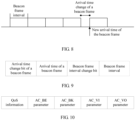
- the critical parameter that changes may include a beacon frame parameter
- the beacon frame parameter includes at least one of an arrival time of a next beacon frame and a beacon frame interval.
- a beacon frame carries some important parameters of the primary BSS.
- the AP usually periodically sends a beacon frame. If a beacon frame parameter of the primary BSS to which the primary transceiver belongs changes, the wake-up packet may include a latest value of the beacon frame parameter, where the beacon frame parameter may include at least one of an arrival time of a beacon frame and a beacon frame interval.
- the AP notifies the STA of the latest value of the beacon frame parameter, so that the primary transceiver of the STA receives the beacon frame at a correct time point after waking up.
- the arrival time of the next beacon frame may be a specific time, or may be a beacon time offset value, where the offset value is a difference between a real arrival time of the next beacon frame and an originally agreed arrival time of the next beacon frame.
- a time change is the beacon time offset value.
- the wake-up packet includes an arrival time change bit of a beacon frame. As shown in FIG. 9 , if the arrival time change bit of the beacon frame indicates that an arrival time of the beacon frame changes, the wake-up packet includes an arrival time of a next beacon frame. In another manner, the wake-up packet always includes both an arrival time change bit of a beacon frame and an arrival time of a next beacon frame.
- the wake-up packet further includes a beacon frame interval change bit. If the beacon frame interval change bit indicates that a beacon frame interval changes, the wake-up packet further includes a new beacon frame interval. In another manner, the wake-up packet always includes both a beacon frame interval change bit and a beacon frame interval.
- the foregoing beacon frame parameter may not only be included in the wake-up packet sent to the station, but also be included in a wake-up packet, such as a wake-up beacon frame, that is broadcast to all stations or that is sent to one or more groups of stations in a multicast manner.
- the critical parameter that changes may include a channel parameter of the primary BSS.
- the channel parameter of the primary BSS includes at least one of a channel number, a secondary channel offset indication, a channel bandwidth, a channel central frequency, and a frequency band number of the primary BSS.
- the wake-up packet includes at least one of a channel number, a secondary channel offset indication, a channel bandwidth, a channel central frequency (including a channel central frequency 1 and a channel central frequency 2), and a frequency band number of the primary BSS, so as to instruct the primary transceiver of the STA that is woken up to communicate with the AP on a correct channel.
- the channel parameter may not only be included in the wake-up packet sent to the STA, but also be included in a wake-up packet, such as a wake-up beacon frame, that is broadcast to all STAs or that is sent to one or more groups of STAs in a multicast manner.
- a wake-up packet such as a wake-up beacon frame
- the channel number may be a primary channel number
- the secondary channel offset indication indicates whether a frequency of a secondary channel is lower than or higher than a frequency (or a reference number) of a primary channel.
- Channel central frequency 1 When a channel bandwidth sequence number is 1 and a bandwidth is 80 MHz, the channel central frequency 1 indicates a central frequency of an 80 MHz channel. 2. When a channel bandwidth sequence number is 1 and a bandwidth is 160 MHz, the channel central frequency 1 indicates a central frequency of a primary 80 MHz channel. 3. When a channel bandwidth sequence number is 1 and a bandwidth is 80+80 MHz, or a channel bandwidth sequence number is 3 (where a channel bandwidth is 80+80 MHz), the channel central frequency 1 indicates a central frequency of a primary 80 MHz channel. 4. When a channel bandwidth sequence number is 2 (160 MHz), the channel central frequency 1 indicates a central frequency of a 160 MHz channel. Channel central frequency 2 1.
- the channel central frequency 2 When a channel bandwidth sequence number is 0 (20MHz or 40 MHz), or a channel bandwidth sequence number is 1 and a bandwidth is 80 MHz, the channel central frequency 2 is a reserved bit. 2. When a channel bandwidth sequence number is 1 and a bandwidth is 160 MHz, the channel central frequency 2 indicates a central frequency of a 160MHz channel. 3. When a channel bandwidth sequence number is 1 and a bandwidth is 80+80 MHz, or a channel bandwidth sequence number is 3 (where a channel bandwidth is 80+80 MHz), the channel central frequency 2 indicates a central frequency of a secondary 80 MHz channel. 4. When a channel bandwidth sequence number is 2 (160 MHz), the channel central frequency 2 is a reserved bit.
- the critical parameter that changes may further include an enhanced distributed channel access (EDCA) parameter of a contention channel of the primary BSS.
- EDCA enhanced distributed channel access
- the EDCA parameter of the primary BSS includes at least one of quality of service QoS information, an access category best effort traffic (AC_BE) parameter, an access category background traffic (AC_BK) parameter, an access category video traffic (AC_VI) parameter, and an access category voice traffic (AC_VO) parameter of the contention channel of the primary BSS, or at least one of a sub-parameter set thereof.
- an access category best effort traffic AC_BE
- an access category background traffic AC_BK
- AC_VI access category video traffic
- AC_VO access category voice traffic
- the wake-up packet includes a QoS Info field, an AC_BE (best effort traffic, Best effort) parameter, an AC_BK (background traffic, background) parameter, an AC_VI (video traffic, video) parameter, an AC_VO (voice traffic, voice) parameter, and the like.
- AC indicates an access category (access category).
- An access traffic of each category further includes an arbitration interframe spacing number (Arbitration Interframe Spacing Number, AIFSN), an exponent form of CWmin (Exponent form of CWmin, ECWmin), an exponent form of CWmax (Exponent form of CWmax, ECWmax), and a transmission opportunity limit (Transmission Opportunity Limit, TXOPLimit).
- AIFSN Arbitr Interframe Spacing Number
- AIFSN Arbitr Interframe Spacing Number
- CWmin Exponent form of CWmin, ECWmin
- CWmax Exponent form of CWmax
- TXOPLimit Transmission Opportunity Limit
- the EDCA parameter may not only be included in a wake-up packet sent to the STA, but also be included in a wake-up packet, such as a wake-up beacon frame, that is broadcast to all STAs or that is sent to one or more groups of STAs in a multicast manner.
- the BSS parameter indication information includes the target parameter of the primary BSS to which the primary transceiver of the STA currently belongs, and the target parameter includes a beacon frame parameter.
- the beacon frame parameter includes at least one of an arrival time of a next beacon frame and a beacon frame interval.
- the BSS parameter indication information includes the target parameter of the primary BSS to which the primary transceiver of the STA currently belongs, and the target parameter includes a channel parameter of the primary BSS.
- the channel parameter of the primary BSS includes at least one of a channel number, a secondary channel offset indication, a channel bandwidth, a channel central frequency, and a frequency band number of the primary BSS.
- the BSS parameter indication information includes the target parameter of the primary BSS to which the primary transceiver of the STA currently belongs, and the target parameter includes an enhanced distributed channel access (EDCA) parameter of a contention channel of the primary BSS.
- EDCA enhanced distributed channel access
- the EDCA parameter of the primary BSS includes at least one of quality of service QoS information, an access category best effort traffic (AC_BE) parameter, an access category background traffic (AC_BK) parameter, an access category video traffic (AC_VI) parameter, and an access category voice traffic (AC_VO) parameter of the contention channel of the primary BSS, or at least one of a sub-parameter set thereof.
- an access category best effort traffic AC_BE
- an access category background traffic AC_BK
- AC_VI access category video traffic
- AC_VO access category voice traffic
- the BSS parameter indication information sent to the STA by the AP may include the target parameter of the primary BSS to which the primary transceiver of the STA currently belongs.
- the target parameter may be a preset critical parameter, for example, at least one critical parameter that is determined based on an empirical value and that may change.
- the AP sends a wake-up packet to the STA, the wake-up packet includes the current target parameter of the primary BSS.
- the target parameter may change, or may not change.
- the target parameter is sent to the STA. After the STA changes from the sleep state to the awake state, the STA communicates with the AP by using the target parameter. In this way, the AP delivers a same type of target parameter to each STA, so that the AP does not need to record a sleep time of each STA.
- the STA receives the wake-up packet sent by the AP, where the wake-up packet includes the BSS parameter indication information, the BSS parameter indication information includes the BSS parameter change indication information or the target parameter of the primary BSS to which the primary transceiver of the STA currently belongs, and the BSS parameter change indication information is used to indicate whether the critical parameter of the primary BSS changes when the primary transceiver of the STA is in the sleep state; and the primary transceiver of the STA communicates with the AP based on the BSS parameter indication information.
- the BSS parameter indication information is sent to the STA by using the wake-up packet, so that the STA can accurately learn of a current critical parameter of the primary BSS, thereby effectively ensuring that the primary transceiver of the STA successfully communicates with the AP after waking up.
- FIG. 11 is a schematic flowchart of another data communication method according to an embodiment of the present application.
- the first network node may be an AP or a STA. If the first network node is an AP, a second network node is a STA; or if the first network node is a STA, a second network node is an AP.
- the data communication method in this embodiment of the present application includes steps S200 and S201.
- the first network node receives a wake-up packet sent by the second network node, where the wake-up packet includes a target parameter value, the target parameter value is an updated value of a communications parameter between the first network node and the second network node, and the communications parameter includes at least one parameter in a target wake up time (TWT) element related to a primary transceiver of a station and/or a transmission operation mode parameter of the second network node.
- TWT target wake up time
- the first network node communicates with the second network node based on the target parameter value.
- the first network node is equipped with a wake-up receiver, and the second network node sends the wake-up packet to the first network node to wake up the first network node. After being woken up, the first network node communicates with the second network node.
- a process of waking up the first network node and a process of communicating with the second network node are usually performed based on the communications parameter.
- a parameter value of the communications parameter may usually change, for example, may change based on a network status.
- the second network node needs to notify the first network node by using the wake-up packet.
- the communications parameter in this embodiment of the present application includes the at least one parameter in the target wake up time (Target wake up time, TWT) element and/or the transmission operation mode parameter of the second network node.
- TWT is a mechanism in which the AP and the primary transceiver of the STA agree on a waking time.
- the STA may be in the sleep state in a time period other than a waking time period, to reduce power consumption.
- the first network node is a STA
- the second network node is an AP
- the STA is equipped with a wake-up receiver.
- the first network node may be an AP
- the second network node is a STA
- the AP is equipped with a wake-up receiver.
- the AP sends a wake-up packet to the STA that is in the sleep state.
- the wake-up receiver of the STA is in an on state
- the primary transceiver of the STA is in the sleep state
- the wake-up packet includes a target parameter value that is the at least one updated parameter in the TWT element between the AP and the STA.
- FIG. 12 is a schematic structural diagram of a TWT element according to an embodiment of the present application.
- the TWT element includes a control field, a request type field, a target wake up time field, a TWT group assignment field, a minimum TWT wake duration field, a TWT wake interval mantissa (TWT Wake Interval Mantissa) field, a TWT channel field, and a null data packet (Null data packet, NDP) paging field.
- TWT Wake Interval Mantissa TWT wake Interval Mantissa
- NDP null data packet
- the request type includes a TWT request field, a TWT establishment command, a trigger indication, an implicit indication, a traffic type, a TWT traffic indication, a TWT wake interval exponent (TWT Wake Interval Exponent), a TWT protection bit, and the like.
- TWT wake interval TWT wake interval mantissa ⁇ 2 (TWT wake interval exponent) .
- the communications parameter includes the target wake up time in the TWT element
- that the first network node communicates with the second network node based on the target parameter value includes: adjusting, by the first network node based on the target parameter value, a target awake time point at which a primary transceiver of the first network node performs communication with the second network node, and communicating with the second network node.
- the AP and the STA agree on a target wake-up time in advance. If the STA does not receive notification information about update of the target wake-up time, the STA wakes up at the pre-agreed target wake-up time, and communicates with the AP. However, when the AP cannot communicate with the STA at the pre-agreed target wake-up time because of a network status change or another reason, if the STA still wakes up at the originally pre-agreed target wake-up time and then communicates with the AP, a communication failure occurs. In this embodiment of the present application, the AP notifies, by using the wake-up packet, the STA that the target wake-up time is updated to the target parameter value, thereby effectively ensuring successful communication between the AP and the STA.
- the wake-up packet sent by the AP includes that the target wake-up time is updated to a postponed target wake-up time.
- the primary transceiver of the STA does not wake up based on the originally agreed target wake-up time. It should be noted that an extra target wake-up time may be added in a similar way.
- the communications parameter includes the minimum TWT wake duration in the TWT element
- communication duration between the AP and the primary transceiver of the STA may be adjusted by adjusting the minimum TWT wake duration in the TWT element. For example, if the AP expects to perform, at the pre-agreed target wake-up time or the updated target wake-up time, longer-time communication with the primary transceiver of the STA that is awake, the AP changes the minimum TWT wake duration in the TWT element by using the wake-up packet. After receiving the wake-up packet, the STA obtains the minimum TWT wake duration through parsing. The STA can learn of, based on the minimum TWT wake duration, duration of communication with the AP after waking up.
- the communications parameter includes the TWT wake interval mantissa and the TWT wake interval exponent in the TWT element
- that the first network node communicates with the second network node based on the target parameter value includes: adjusting, by the first network node based on the target parameter value, an awake period interval at which a primary transceiver of the first network node performs communication with the second network node, and communicating with the second network node.
- the awake period interval of the primary transceiver of the STA may be adjusted by changing the TWT wake interval mantissa and the TWT wake interval exponent in the TWT element.
- the AP may change a TWT wake interval in the TWT element by using the wake-up packet, that is, change the TWT wake interval by using the TWT wake interval mantissa and the TWT wake interval exponent in the TWT element.
- the TWT wake interval exponent is in the request type field in FIG. 12 .
- the wake-up packet includes a TWT parameter overloading field
- the TWT parameter overloading field includes a parameter overloading bit, which may be one bit or several bits.
- the TWT parameter overloading field includes the target parameter value that is the at least one updated parameter in the TWT element.
- That the first network node communicates with the second network node based on the target parameter value includes: adjusting, by the first network node based on the target parameter value, a parameter for a primary transceiver of the first network node to perform communication with the second network node, and communicating with the second network node.
- the wake-up packet may further include the TWT parameter overloading field, the TWT parameter overloading field includes a TWT parameter overloading bit, a trigger indication, a traffic type, a TWT traffic indication, a TWT wake interval exponent, a target wake time, minimum TWT wake duration, and a TWT wake interval mantissa.
- the TWT parameter overloading field includes a TWT parameter overloading bit, a trigger indication, a traffic type, a TWT traffic indication, a TWT wake interval exponent, a target wake time, minimum TWT wake duration, and a TWT wake interval mantissa.
- the trigger indication, the traffic type, the TWT traffic indication, the TWT wake interval exponent, the target wake time, the minimum TWT wake duration, and the TWT wake interval mantissa are overloaded target parameter values; or when the TWT parameter overloading bit is not set to "TWT parameter overloading", these parameters are reserved bits.
- the wake-up packet may further include canceling an originally established TWT field. If the canceling an originally established TWT field is set to "cancellation”, the originally established between the AP and the primary transceiver of the STA is invalid; or if the canceling an originally established TWT field is not set to "cancellation", the originally established between the AP and the primary transceiver of the STA is retained.
- the wake-up packet includes a new TWT parameter established between the primary transceiver of the STA and the AP, and the AP adjusts, based on a new network status, the new TWT parameter established between the AP and the STA, to further reduce power consumption of the STA, meet a service requirement of the STA, and balance network load.
- the transmission operation mode parameter of the second network node includes a maximum quantity of transmittable streams and transmit power information.
- the transmit power information is a maximum transmit power of the second network node or transmit power fluctuation indication information of the second network node, where the transmit power fluctuation indication information is used to indicate whether transmit power fluctuation is allowed during data transmission of the second network node.
- a transmission operation mode parameter for the AP to send data to the primary transceiver of the STA may change, such as a maximum quantity of transmittable streams and transmit power information.
- the transmit power information may be a specific maximum transmit power, or may be a transmit power fluctuation bit indication. For example, a transmit power fluctuation bit indication "1" represents that transmit power fluctuation is allowed during data transmission of the AP, and a transmit power fluctuation bit indication "0" represents that the AP sends data at a same transmit power.
- the transmit power fluctuation bit indication is used to notify the STA that is woken up whether receiver sensitivity of the primary transceiver of the STA needs to be adjusted after the STA wakes up.
- the transmit power fluctuation bit indication indicates that a transmit power fluctuates
- the STA that is woken up needs to adjust the receiver sensitivity of the primary transceiver of the STA, or when the transmit power fluctuation bit indication indicates that a transmit power does not fluctuate, the STA that is woken up does not need to adjust the receiver sensitivity of the primary transceiver of the STA.
- the wake-up packet when the AP sends a wake-up packet to the sleeping STA (the wake-up receiver of the STA is in an on state, and the primary transceiver is in the sleep state), the wake-up packet includes a transmission operation mode field, including a maximum quantity of transmittable streams, transmit power information, and the like.
- the AP sends the wake-up packet to the STA, to notify the STA that is woken up of a transmission operation mode change of the AP associated with the STA, to ensure that STA performs reception in an optimal manner, thereby reducing power consumption.
- the STA may send a wake-up packet to the AP (a wake-up receiver of the AP is in an on state, and the primary transceiver is in the sleep state), to notify the AP that is woken up of a transmission operation mode change of the STA, to ensure that the AP performs reception in an optimal manner, thereby reducing power consumption.
- the first network node receives the wake-up packet sent by the second network node, where the wake-up packet includes the target parameter value, the target parameter value is the updated value of the communications parameter between the first network node and the second network node, and the communications parameter includes the at least one parameter in the target wake up time TWT element and/or the transmission operation mode parameter of the second network node; and the first network node communicates with the second network node based on the target parameter value.
- the first network node may be notified of an updated communications parameter between the first network node and the second network node in a timely manner, ensuring that the first network node successfully communicates with the second network node.
- the second network node notifies, by using the wake-up packet, the first network node of the TWT parameter established between the second network node and the primary transceiver of the first network node or the transmission operation mode parameter of the second network node may be directly extended as: the second network node notifies, by using an 802.11 frame (also referred to as an 802.11 packet), the first network node of the TWT parameter established between the second network node and a wake-up receiver of the first network node or the transmission operation mode parameter of the second network node.
- 802.11 frame also referred to as an 802.11 packet
- the primary transceiver of the first network node uses the 802.11 frame, such as a management frame, to notify the second network node of a latest working duty cycle parameter of the wake-up receiver of the first network node, to help the wake-up receiver of the first network node correctly receive the wake-up packet of the second network node during sleep time of the primary transceiver of the first network node.
- the 802.11 frame such as a management frame
- An embodiment of this application further provides a data communication apparatus.
- the apparatus may be the STA described in the method of FIG. 5 , or may be another device that can implement an action of the STA in the method of FIG. 5 .
- FIG. 13a and FIG. 13b each are a schematic structural diagram of a data communication apparatus according to an embodiment of the present application.
- the data communication apparatus may include a receiving unit 100 and a communications unit 101.
- the receiving unit 100 is configured to receive a wake-up packet sent by an access point AP, where the wake-up packet includes basic service set BSS parameter indication information, the BSS parameter indication information includes BSS parameter change indication information or a target parameter of a primary BSS to which a primary transceiver of a STA currently belongs, and the BSS parameter change indication information is used to indicate whether a critical parameter of the primary BSS changes when the primary transceiver of the STA is in a sleep state.
- the wake-up packet includes basic service set BSS parameter indication information
- the BSS parameter indication information includes BSS parameter change indication information or a target parameter of a primary BSS to which a primary transceiver of a STA currently belongs
- the BSS parameter change indication information is used to indicate whether a critical parameter of the primary BSS changes when the primary transceiver of the STA is in a sleep state.
- the communications unit 101 is configured to communicate with the AP based on the BSS parameter indication information.
- the wake-up packet is sent to the STA by the AP in a unicast manner; or the wake-up packet is sent to the STA by the AP in a broadcast manner or in a multicast manner.
- the BSS parameter indication information includes the BSS parameter change indication information, the BSS parameter change indication information includes a first change count value counted by the AP, and the first change count value is used to represent a quantity of change times of the critical parameter of the primary BSS.
- That the communications unit 101 communicates with the AP based on the BSS parameter indication information specifically includes: detecting whether a second change count value maintained by the STA is the same as the first change count value, where the second change count value is used to represent a quantity of change times of the critical parameter of the primary BSS when the primary transceiver of the STA is in a historical awake state;
- the BSS parameter indication information includes the BSS parameter change indication information, the BSS parameter change indication information includes a change identifier, and the change identifier is used to indicate whether the critical parameter of the primary BSS changes when the STA is in the sleep state.
- That the communications unit 101 communicates with the AP based on the BSS parameter indication information specifically includes:
- the BSS parameter indication information carried in the wake-up packet includes the BSS parameter change indication information
- the BSS parameter change indication information includes a latest value of a critical parameter that changes and that is in the critical parameter of the primary BSS to which the primary transceiver of the STA belongs.
- the latest value is used to indicate that the critical parameter of the primary BSS changes when the primary transceiver of the STA is in the sleep state.
- the communications unit 101 obtains a latest critical parameter of the primary BSS specifically includes:
- the BSS parameter indication information includes the target parameter of the primary BSS to which the primary transceiver of the STA currently belongs, and the target parameter includes a beacon frame parameter.
- the beacon frame parameter includes at least one of an arrival time of a next beacon frame and a beacon frame interval.
- the BSS parameter indication information includes the target parameter of the primary BSS to which the primary transceiver of the STA currently belongs, and the target parameter includes a channel parameter of the primary BSS;
- the channel parameter of the primary BSS includes at least one of a channel number, a secondary channel offset indication, a channel bandwidth, a channel central frequency, and a frequency band number of the primary BSS.
- the BSS parameter indication information includes the target parameter of the primary BSS to which the primary transceiver of the STA currently belongs, and the target parameter includes an enhanced distributed channel access EDCA parameter of a contention channel of the primary BSS.
- the EDCA parameter of the primary BSS includes at least one of quality of service QoS information, an access category best effort traffic AC_BE parameter, an access category background traffic AC_BK parameter, an access category video traffic AC_VI parameter, and an access category voice traffic AC_VO parameter of the contention channel of the primary BSS.
- the apparatus may include a transceiver 1001 and a processor 1002.
- the processor 1002 is configured to control an operation of the apparatus, including performing data transmission (including reception and/or transmission) by using the transceiver 1001.
- the apparatus may further include a memory 1003, where the memory 1003 may include a read-only memory and a random access memory, and is configured to provide the processor 1002 with an instruction and data.
- the memory 1003 may be integrated into the processor 1002, or may be independent of the processor 1002.
- a part of the memory 1003 may further include a non-volatile random access memory (NVRAM).
- Components of the apparatus are coupled together by using a bus system.
- the bus system 1009 further includes a power bus, a control bus, and a status signal bus. However, for clear description, various types of buses in the figure are marked as the bus system 1009.
- the process disclosed in the embodiment of this application in FIG. 5 may be applied to the processor 1002, or may be implemented by the processor 1002.
- steps in the process implemented by the apparatus can be implemented by an integrated logic circuit of hardware in the processor 1002 or by an instruction in a software form.
- the processor 1002 may be a general purpose processor, a digital signal processor, an application-specific integrated circuit, a field programmable gate array or another programmable logic device, a discrete gate or transistor logic device, or a discrete hardware component, and may implement or execute the methods, steps, and logical block diagrams disclosed in the embodiments of this application.
- the general purpose processor may be a microprocessor or any conventional processor or the like.
- the software module may be located in a mature storage medium in the art, such as a random access memory, a flash memory, a read-only memory, a programmable read-only memory, an electrically erasable programmable memory, or a register.
- the storage medium is located in the memory 1003, and the processor 1002 reads information in the memory 1003 and completes the steps in the process described in the embodiments of the present application in combination with hardware of the processor 1002.
- the apparatus when the apparatus is a user equipment STA, the apparatus may further include an input device, such as a keyboard, and an output device, such as a structure of a display, and details are not described herein.
- an input device such as a keyboard
- an output device such as a structure of a display
- the transceiver 1001 is configured to receive a wake-up packet sent by an access point AP, where the wake-up packet includes basic service set BSS parameter indication information, the BSS parameter indication information includes BSS parameter change indication information or a target parameter of a primary BSS to which a primary transceiver of the STA currently belongs, and the BSS parameter change indication information is used to indicate whether a critical parameter of the primary BSS changes when the primary transceiver of the STA is in a sleep state.
- the wake-up packet includes basic service set BSS parameter indication information
- the BSS parameter indication information includes BSS parameter change indication information or a target parameter of a primary BSS to which a primary transceiver of the STA currently belongs
- the BSS parameter change indication information is used to indicate whether a critical parameter of the primary BSS changes when the primary transceiver of the STA is in a sleep state.
- the transceiver 1001 is further configured to communicate with the AP based on the BSS parameter indication information.
- the wake-up packet is sent to the STA by the AP in a unicast manner; or the wake-up packet is sent to the STA by the AP in a broadcast manner or in a multicast manner.
- the BSS parameter indication information includes the BSS parameter change indication information
- the BSS parameter change indication information includes a first change count value counted by the AP
- the first change count value is used to represent a quantity of change times of the critical parameter of the primary BSS.
- the processor 1002 is configured to detect whether a second change count value maintained by the STA is the same as the first change count value, where the second change count value is used to represent a quantity of change times of the critical parameter of the primary BSS when the primary transceiver of the STA is in a historical awake state; and if the second change count value is different from the first change count value, the critical parameter of the primary BSS changes when the primary transceiver of the STA is in the sleep state.
- the transceiver 1001 is further configured to: when the primary transceiver of the STA changes from the sleep state to an awake state, obtain a latest critical parameter of the primary BSS, and communicate with the AP based on the latest critical parameter.
- the BSS parameter indication information includes the BSS parameter change indication information
- the BSS parameter change indication information includes a change identifier
- the change identifier is used to indicate whether the critical parameter of the primary BSS changes when the STA is in the sleep state.
- the processor 1002 is further configured to read a value of the change identifier in the wake-up packet; and if the value of the change identifier is a first preset value, the critical parameter of the primary BSS changes, where the first preset value is used to indicate that the critical parameter of the primary BSS changes.
- the transceiver 1001 is further configured to: when the primary transceiver of the STA changes from the sleep state to an awake state, obtain a latest critical parameter of the primary BSS, and communicate with the AP based on the latest critical parameter.
- the BSS parameter indication information carried in the wake-up packet includes the BSS parameter change indication information
- the BSS parameter change indication information includes a latest value of a critical parameter that changes and that is in the critical parameter of the primary BSS to which the primary transceiver of the STA belongs.
- the latest value is used to indicate that the critical parameter of the primary BSS changes when the primary transceiver of the STA is in the sleep state.
- the transceiver 1001 is further configured to send a probe request frame to the AP, where the probe request frame is used to request the latest critical parameter of the primary BSS.
- the transceiver 1001 is further configured to receive a probe response frame returned by the AP, where the probe response frame carries the latest critical parameter of the primary BSS.
- the BSS parameter indication information includes the target parameter of the primary BSS to which the primary transceiver of the STA currently belongs, and the target parameter includes a beacon frame parameter.
- the beacon frame parameter includes at least one of an arrival time of a next beacon frame and a beacon frame interval.
- the BSS parameter indication information includes the target parameter of the primary BSS to which the primary transceiver of the STA currently belongs, and the target parameter includes a channel parameter of the primary BSS.
- the channel parameter of the primary BSS includes at least one of a channel number, a secondary channel offset indication, a channel bandwidth, a channel central frequency, and a frequency band number of the primary BSS.
- the BSS parameter indication information includes the target parameter of the primary BSS to which the primary transceiver of the STA currently belongs, and the target parameter includes an enhanced distributed channel access EDCA parameter of a contention channel of the primary BSS.
- the EDCA parameter of the primary BSS includes at least one of quality of service QoS information, an access category best effort traffic AC_BE parameter, an access category background traffic AC_BK parameter, an access category video traffic AC_VI parameter, and an access category voice traffic AC_VO parameter of the contention channel of the primary BSS.
- the STA receives the wake-up packet sent by the AP, where the wake-up packet includes the BSS parameter indication information, the BSS parameter indication information includes the BSS parameter change indication information or the target parameter of the primary BSS to which the primary transceiver of the STA currently belongs, and the BSS parameter change indication information is used to indicate whether the critical parameter of the primary BSS changes when the primary transceiver of the STA is in the sleep state; and the primary transceiver of the STA communicates with the AP based on the BSS parameter indication information.
- the BSS parameter indication information is sent to the STA by using the wake-up packet, so that the STA can accurately learn of a current critical parameter of the primary BSS, thereby effectively ensuring that the primary transceiver of the STA successfully communicates with the AP after waking up.
- An embodiment of this application further provides a data communication apparatus.
- the apparatus may be the first network node described in the foregoing method of FIG. 11 , and the first network node may be a STA or an AP. If the first network node is a STA, a second network node in this embodiment of the present application is an AP; or if the first network node is an AP, a second network node in this embodiment of the present application is a STA.
- the data communication apparatus in this embodiment of the present application may alternatively be another device that can implement an action of the first network node in the foregoing method of FIG. 11 .
- FIG. 14a and FIG. 14b each are a schematic structural diagram of a data communication apparatus according to an embodiment of the present application.
- the data communication apparatus may include a receiving unit 200 and a communications unit 201.
- the receiving unit 200 is configured to receive a wake-up packet sent by a second network node, where the wake-up packet includes a target parameter value, the target parameter value is an updated value of a communications parameter between the first network node and the second network node, and the communications parameter includes at least one parameter in a target wake-up time TWT element and/or a transmission operation mode parameter of the second network node.
- the communications unit 201 is configured to communicate with the second network node based on the target parameter value.
- the communications unit 201 communicates with the second network node based on the target parameter value specifically includes: adjusting, based on the target parameter value, a target awake time point at which a primary transceiver of the first network node performs communication with the second network node, and communicating with the second network node.
- the communications unit 201 communicates with the second network node based on the target parameter value specifically includes: adjusting, based on the target parameter value, minimum awake duration during which a primary transceiver of the first network node performs communication with the second network node, and communicating with the second network node.
- the communications unit 201 communicates with the second network node based on the target parameter value specifically includes: adjusting, based on the target parameter value, an awake period interval at which a primary transceiver of the first network node performs communication with the second network node, and communicating with the second network node.
- the wake-up packet includes a TWT parameter overloading field, and the TWT parameter overloading field includes a parameter overloading bit.
- the TWT parameter overloading field includes the target parameter value that is the at least one updated parameter in the TWT element.
- That the communications unit 201 communicates with the second network node based on the target parameter value specifically includes: adjusting, based on the target parameter value, a parameter for a primary transceiver of the first network node to perform communication with the second network node, and communicating with the second network node.
- the transmission operation mode parameter of the second network node includes a maximum quantity of transmittable streams and transmit power information.
- the transmit power information is a maximum transmit power of the second network node or transmit power fluctuation indication information of the second network node, where the transmit power fluctuation indication information is used to indicate whether transmit power fluctuation is allowed during data transmission of the second network node.
- the apparatus may include a transceiver 2001 and a processor 2002.
- the processor 2002 is configured to control an operation of the apparatus, including performing data transmission (including reception and/or transmission) by using the transceiver 2001.
- the apparatus may further include a memory 2003, where the memory 2003 may include a read-only memory and a random access memory, and is configured to provide the processor 2002 with an instruction and data.
- the memory 2003 may be integrated into the processor 2002, or may be independent of the processor 2002.
- a part of the memory 2003 may further include a non-volatile random access memory (NVRAM).
- Components of the apparatus are coupled together by using a bus system.
- the bus system 2009 further includes a power bus, a control bus, and a status signal bus.
- various types of buses in the figure are marked as the bus system 2009.
- the process disclosed in the embodiment of this application in FIG. 11 may be applied to the processor 2002, or may be implemented by the processor 2002.
- steps in the process implemented by the apparatus can be implemented by an integrated logic circuit of hardware in the processor 2002 or by an instruction in a software form.
- the processor 2002 may be a general purpose processor, a digital signal processor, an application-specific integrated circuit, a field programmable gate array or another programmable logic device, a discrete gate or transistor logic device, or a discrete hardware component, and may implement or execute the methods, steps, and logical block diagrams disclosed in the embodiments of this application.
- the general purpose processor may be a microprocessor or any conventional processor or the like.
- the 11 may be directly performed by a hardware processor, or may be performed by using a combination of hardware in the processor and a software module.
- the software module may be located in a mature storage medium in the art, such as a random access memory, a flash memory, a read-only memory, a programmable read-only memory, an electrically erasable programmable memory, or a register.
- the storage medium is located in the memory 2003, and the processor 2002 reads information in the memory 2003 and completes the steps in the process described in the embodiments of the present application in combination with hardware of the processor 2002.
- the apparatus when the apparatus is a user equipment STA, the apparatus may further include an input device, such as a keyboard, and an output device, such as a structure of a display, and details are not described herein.
- an input device such as a keyboard
- an output device such as a structure of a display
- the transceiver 2001 is configured to receive a wake-up packet sent by a second network node, where the wake-up packet includes a target parameter value, the target parameter value is an updated value of a communications parameter between the first network node and the second network node, and the communications parameter includes at least one parameter in a target wake up time TWT element and/or a transmission operation mode parameter of the second network node.
- the transceiver 2001 is further configured to communicate with the second network node based on the target parameter value.
- the processor 2002 is configured to adjust, based on the target parameter value, a target awake time point at which a primary transceiver of the first network node performs communication with the second network node, and communicate with the second network node.
- the processor 2002 is further configured to adjust, based on the target parameter value, minimum awake duration during which a primary transceiver of the first network node performs communication with the second network node, and communicate with the second network node.
- the processor 2002 is further configured to adjust, based on the target parameter value, an awake period interval at which a primary transceiver of the first network node performs communication with the second network node, and communicate with the second network node.
- the wake-up packet includes a TWT parameter overloading field, and the TWT parameter overloading field includes a parameter overloading bit; and when the parameter overloading bit indicates TWT parameter overloading, the TWT parameter overloading field includes the target parameter value that is the at least one updated parameter in the TWT element.
- the processor 2002 is further configured to adjust, based on the target parameter value, a parameter for a primary transceiver of the first network node to perform communication with the second network node, and communicate with the second network node.
- the transmission operation mode parameter of the second network node includes a maximum quantity of transmittable streams and transmit power information.
- the transmit power information is a maximum transmit power of the second network node or transmit power fluctuation indication information of the second network node, where the transmit power fluctuation indication information is used to indicate whether transmit power fluctuation is allowed during data transmission of the second network node.
- the first network node receives the wake-up packet sent by the second network node, where the wake-up packet includes the target parameter value, the target parameter value is the updated value of the communications parameter between the first network node and the second network node, and the communications parameter includes the at least one parameter in the target wake up time TWT element and/or the transmission operation mode parameter of the second network node; and the first network node communicates with the second network node based on the target parameter value.
- the first network node may be notified of an updated communications parameter between the first network node and the second network node in a timely manner, ensuring that the first network node successfully communicates with the second network node.
- An embodiment of the present application further provides a data communication method.
- the data communication method includes the following steps:
- the first network node when detecting that a new TWT needs to be established, the first network node establishes the new TWT with the second network node, and communicates with the second network node based on the new TWT.
- the cancellation instruction information may be one or more bits.
- the wake-up packet includes a TWT parameter cancellation field
- the TWT parameter cancellation field may include cancellation instruction information
- the cancellation instruction information is used to cancel a TWT that is pre-established between an AP and a primary transceiver of a STA. Then, if there is a requirement, for example, there is a new duty cycle service or an energy-saving requirement, the AP re-negotiates with the primary transceiver of the STA to establish a new TWT, and performs communication based on the new TWT.
- an embodiment of the present application further provides a data communication apparatus.
- the data communication apparatus includes a receiving unit and a communications unit.
- the receiving unit is configured to receive a wake-up packet sent by a second network node, where the wake-up packet includes cancellation instruction information, and the cancellation instruction information is used to instruct to cancel a target wake up time TWT that is pre-established between a first network node and the second network node.
- the communications unit is configured to communicate with the second network node based on the cancellation instruction information.
- the first network node when detecting that a new TWT needs to be established, the first network node establishes the new TWT with the second network node, and communicates with the second network node based on the new TWT.
- the program may be stored in a computer readable storage medium.
- the storage medium includes: various media that can store program code, such as a ROM, a random access memory RAM, a magnetic disk, or an optical disc.
Landscapes
- Engineering & Computer Science (AREA)
- Computer Networks & Wireless Communication (AREA)
- Signal Processing (AREA)
- Computer Security & Cryptography (AREA)
- Mobile Radio Communication Systems (AREA)
Claims (8)
- Procédé de communication de données, le procédé est appliqué sur une station, STA, la STA comprend un transmetteur-récepteur primaire et un récepteur de réveil, dans lequel le récepteur de réveil réveille le transmetteur-récepteur primaire lorsque le récepteur de réveil reçoit un paquet de réveil, et le procédé comprenant :la réception (S100), par le récepteur de réveil, lorsque le transmetteur-récepteur primaire de la STA est dans un état de sommeil, du paquet de réveil envoyé par un point d'accès, AP, dans lequel le paquet de réveil comprend des informations d'indication de paramètre d'ensemble de services de base, BSS, les informations d'indication de paramètre de BSS comprennent des informations d'indication de changement de paramètre de BSS indiquant le fait qu'au moins un paramètre critique d'un BSS, auquel la STA appartient, change ou ne change pas ; etle réveil, par le récepteur de réveil de la STA, du transmetteur-récepteur primaire ;la communication (S101), par le transmetteur-récepteur primaire de la STA, avec l'AP, sur la base des informations d'indication de paramètre de BSS ;dans lequel les informations d'indication de changement de paramètre de BSS dans le paquet de réveil comprennent une première valeur de compte de changement, et la première valeur de compte de changement est utilisée pour représenter une quantité d'événements de changement de l'au moins un paramètre critique du BSS ;dans lequel la communication, par le transmetteur-récepteur primaire de la STA, avec l'AP, sur la base des informations d'indication de paramètre de BSS, comprend :
si une deuxième valeur de compte de changement maintenue par la STA est différente de la première valeur de compte de changement, l'obtention, par le transmetteur-récepteur primaire de la STA, d'au moins un tout dernier paramètre critique du BSS, et la communication, avec l'AP, sur la base de l'au moins un tout dernier paramètre critique ; dans lequel la deuxième valeur de compte de changement est utilisée pour représenter une quantité d'événements de changement d'au moins un paramètre critique du BSS lorsque le transmetteur-récepteur primaire de la STA est dans un état d'éveil historique. - Procédé selon la revendication 1, dans lequel, avant la communication avec l'AP, le procédé comprend en outre :la détermination, par la STA, du fait que la deuxième valeur de compte de changement est, ou n'est pas, la même que la première valeur de compte de changement ;si la deuxième valeur de compte de changement est la même que la première valeur de compte de changement, la détermination que l'au moins un paramètre critique du BSS ne change pas ;si la deuxième valeur de compte de changement est différente de la première valeur de compte de changement, la détermination que l'au moins un paramètre critique du BSS, auquel le transmetteur-récepteur primaire appartient, change.
- Procédé selon l'une quelconque des revendications 1 à 2, dans lequel, avant la réception, par le récepteur de réveil, lorsque le transmetteur-récepteur primaire de la STA est dans un état de sommeil, du paquet de réveil, le procédé comprend en outre :la réception, par le transmetteur-récepteur primaire de la STA, lorsque le transmetteur-récepteur primaire est dans un état d'éveil, d'une trame envoyée par l'AP, dans lequel la trame comprenant une troisième valeur de compte de changement représente une quantité d'événements de changement d'au moins un paramètre critique du BSS ; etle remplacement, par la STA, d'une deuxième valeur de compte de changement de la STA par la troisième valeur de compte de changement ; dans lequel la deuxième valeur de compte de changement est utilisée pour représenter une quantité d'événements de changement d'au moins un paramètre critique du BSS lorsque le transmetteur-récepteur primaire de la STA est dans un état d'éveil historique.
- Procédé selon l'une quelconque des revendications 1 à 3, dans lequel l'au moins un paramètre critique du BSS comprend un paramètre de canal du BSS ou un paramètre d'accès de canal distribué amélioré, EDCA, d'un canal de contention du BSS ; etle paramètre de canal du BSS comprend au moins un parmi un numéro de canal, une indication de décalage de canal secondaire, une largeur de bande de canal, une fréquence centrale de canal, et un numéro de bande de fréquence du BSS ; etle paramètre d'EDCA du BSS comprend au moins un parmi des informations de qualité de service, QoS, un paramètre de trafic de meilleur effort de catégorie d'accès, AC_BE, un paramètre de trafic de fond de catégorie d'accès, AC _BK, un paramètre de trafic vidéo de catégorie d'accès, AC_VI, et un paramètre de trafic vocal de catégorie d'accès, AC_VO, du canal de contention du BSS.
- Appareil de communication de données, appliqué sur une station, STA, la STA comprend un transmetteur-récepteur primaire et un récepteur de réveil, dans lequel le récepteur de réveil réveille le transmetteur-récepteur primaire lorsque le récepteur de réveil reçoit un paquet de réveil, l'appareil étant configuré pour :recevoir un paquet de réveil envoyé par un point d'accès, AP, lorsque le transmetteur-récepteur primaire de la STA est dans un état de sommeil, dans lequel le paquet de réveil comprend des informations d'indication de paramètre d'ensemble de services de base, BSS, les informations d'indication de paramètre de BSS comprennent des informations d'indication de changement de paramètre, BSS, et les informations d'indication de changement de paramètre de BSS sont utilisées pour indiquer le fait qu'au moins un paramètre critique d'un BSS, auquel la STA appartient, change ou ne change pas ;réveiller, par le récepteur de réveil de la STA, le transmetteur-récepteur primaire de la STA selon le paquet de réveil ; etcommuniquer avec l'AP sur la base des informations d'indication de paramètre de BSS ; dans lequel les informations d'indication de changement de paramètre de BSS dans le paquet de réveil comprennent une première valeur de compte de changement, et la première valeur de compte de changement est utilisée pour représenter une quantité d'événements de changement de l'au moins un paramètre critique du BSS ;dans lequel l'appareil est en outre configuré pour :obtenir au moins un tout dernier paramètre critique du BSS, et communiquer avec l'AP, sur la base de l'au moins un tout dernier paramètre critique, lorsqu'une deuxième valeur de compte de changement maintenue par la STA est différente de la première valeur de compte de changement ;dans lequel la deuxième valeur de compte de changement est utilisée pour représenter une quantité d'événements de changement d'au moins un paramètre critique du BSS lorsque le transmetteur-récepteur primaire de la STA est dans un état d'éveil historique.
- Appareil selon la revendication 5, dans lequel l'appareil est en outre configuré pour :déterminer le fait que la deuxième valeur de compte de changement est, ou n'est pas, la même que la première valeur de compte de changement ;déterminer que l'au moins un paramètre critique du BSS ne change pas si la deuxième valeur de compte de changement est la même que la première valeur de compte de changement ;déterminer que l'au moins un paramètre critique du BSS, auquel le transmetteur-récepteur primaire appartient, change si la deuxième valeur de compte de changement est différente de la première valeur de compte de changement.
- Appareil selon l'une quelconque des revendications 5 à 6, dans lequel l'appareil est en outre configuré pour :recevoir, par le transmetteur-récepteur primaire de la STA, lorsque le transmetteur-récepteur primaire est dans un état d'éveil, une trame envoyée par l'AP, dans lequel la trame comprenant une troisième valeur de compte de changement représente une quantité d'événements de changement d'au moins un paramètre critique du BSS ; etremplacer une deuxième valeur de compte de changement de la STA par la troisième valeur de compte de changement ; dans lequel la deuxième valeur de compte de changement est utilisée pour représenter une quantité d'événements de changement d'au moins un paramètre critique du BSS lorsque le transmetteur-récepteur primaire de la STA est dans un état d'éveil historique.
- Appareil selon l'une quelconque des revendications 5 à 7, dans lequel l'au moins un paramètre critique du BSS comprend un paramètre de canal du BSS ou un paramètre d'accès de canal distribué amélioré, EDCA, d'un canal de contention du BSS ; etle paramètre de canal du BSS comprend au moins un parmi un numéro de canal, une indication de décalage de canal secondaire, une largeur de bande de canal, une fréquence centrale de canal, et un numéro de bande de fréquence du BSS ; etle paramètre d'EDCA du BSS comprend au moins un parmi des informations de qualité de service, QoS, un paramètre de trafic de meilleur effort de catégorie d'accès, AC_BE, un paramètre de trafic de fond de catégorie d'accès, AC _BK, un paramètre de trafic vidéo de catégorie d'accès, AC_VI, et un paramètre de trafic vocal de catégorie d'accès, AC_VO, du canal de contention du BSS.
Priority Applications (1)
| Application Number | Priority Date | Filing Date | Title |
|---|---|---|---|
| EP23198560.7A EP4319322A3 (fr) | 2016-10-29 | 2017-10-25 | Procédé et appareil de communication de données |
Applications Claiming Priority (2)
| Application Number | Priority Date | Filing Date | Title |
|---|---|---|---|
| CN201610930719.4A CN108377531B (zh) | 2016-10-29 | 2016-10-29 | 一种数据通信方法及装置 |
| PCT/CN2017/107644 WO2018077186A1 (fr) | 2016-10-29 | 2017-10-25 | Procédé et appareil de communication de données |
Related Child Applications (1)
| Application Number | Title | Priority Date | Filing Date |
|---|---|---|---|
| EP23198560.7A Division EP4319322A3 (fr) | 2016-10-29 | 2017-10-25 | Procédé et appareil de communication de données |
Publications (4)
| Publication Number | Publication Date |
|---|---|
| EP3528546A1 EP3528546A1 (fr) | 2019-08-21 |
| EP3528546A4 EP3528546A4 (fr) | 2019-08-21 |
| EP3528546C0 EP3528546C0 (fr) | 2023-10-18 |
| EP3528546B1 true EP3528546B1 (fr) | 2023-10-18 |
Family
ID=62024406
Family Applications (2)
| Application Number | Title | Priority Date | Filing Date |
|---|---|---|---|
| EP17865021.4A Active EP3528546B1 (fr) | 2016-10-29 | 2017-10-25 | Procédé et appareil de communication de données |
| EP23198560.7A Pending EP4319322A3 (fr) | 2016-10-29 | 2017-10-25 | Procédé et appareil de communication de données |
Family Applications After (1)
| Application Number | Title | Priority Date | Filing Date |
|---|---|---|---|
| EP23198560.7A Pending EP4319322A3 (fr) | 2016-10-29 | 2017-10-25 | Procédé et appareil de communication de données |
Country Status (7)
| Country | Link |
|---|---|
| US (1) | US11012932B2 (fr) |
| EP (2) | EP3528546B1 (fr) |
| JP (1) | JP6974454B2 (fr) |
| KR (1) | KR102211930B1 (fr) |
| CN (2) | CN113630852B (fr) |
| BR (1) | BR112019008642A2 (fr) |
| WO (1) | WO2018077186A1 (fr) |
Families Citing this family (29)
| Publication number | Priority date | Publication date | Assignee | Title |
|---|---|---|---|---|
| ES3030007T3 (en) | 2011-10-18 | 2025-06-26 | Lg Electronics Inc | Image decoding method, image encoding method, computer-readable storage medium and transmission method of data for an image |
| US11012938B2 (en) * | 2016-10-23 | 2021-05-18 | Lg Electronics Inc. | Method for transmitting and receiving wake-up signal in wireless LAN system and apparatus therefor |
| US11057830B2 (en) * | 2016-11-10 | 2021-07-06 | Qualcomm Incorporated | Media access control for wakeup radios |
| WO2018200682A1 (fr) * | 2017-04-25 | 2018-11-01 | Marvell World Trade Ltd. | Réveil de faible puissance dans un réseau sans fil |
| WO2018216871A1 (fr) * | 2017-05-24 | 2018-11-29 | Lg Electronics Inc. | Procédé et appareil d'émission et de réception d'un signal de réveil dans un système de communication sans fil |
| US10999798B2 (en) * | 2017-06-26 | 2021-05-04 | Apple Inc. | Efficient scan and service discovery |
| GB2573340B (en) * | 2018-05-04 | 2020-11-25 | Canon Kk | Communication methods and devices |
| JP2019208105A (ja) * | 2018-05-28 | 2019-12-05 | Necプラットフォームズ株式会社 | 無線lanアクセスポイント、無線lan子機、無線lanシステム、無線接続方法、プログラム |
| US11889418B2 (en) | 2018-06-22 | 2024-01-30 | Lg Electronics Inc. | Method and device for receiving WUR discovery frame in wireless LAN system |
| US11134444B2 (en) * | 2018-07-09 | 2021-09-28 | Electronics And Telecommunications Research Institute | Method and apparatus for low power communication in communication system |
| US10567179B1 (en) * | 2018-08-31 | 2020-02-18 | Nxp B.V. | Network device and method for performing network operations in a communications network |
| US10871815B2 (en) * | 2018-09-28 | 2020-12-22 | Sonos, Inc. | Network identification of portable electronic devices while changing power states |
| JP2020113985A (ja) * | 2019-01-15 | 2020-07-27 | キャリア コーポレイションCarrier Corporation | 動的無線通信の方法およびシステム |
| CN112689319B (zh) * | 2019-10-18 | 2023-08-29 | 北京小米移动软件有限公司 | 入网方法及装置 |
| CN113543243B (zh) * | 2020-04-18 | 2022-12-13 | 华为技术有限公司 | 链路处理方法、多链路设备及计算机可读存储介质 |
| KR20220015843A (ko) | 2020-07-31 | 2022-02-08 | 삼성전자주식회사 | 무선 송신 전력을 조정하기 위한 전자 장치 및 이의 동작 방법 |
| CN116017508B (zh) * | 2020-08-14 | 2026-04-14 | 华为技术有限公司 | 适用于多链路的关键bss参数管理方法及相关装置 |
| EP4178301A4 (fr) | 2020-10-30 | 2023-12-13 | Samsung Electronics Co., Ltd. | Dispositif électronique permettant d'ordonnancer à nouveau un canal sans fil sur la base d'un environnement de canal sans fil, et procédé de commande associé |
| US11758471B2 (en) * | 2020-12-17 | 2023-09-12 | Sony Group Corporation | Broadcast frame with feedback |
| US11910225B2 (en) * | 2020-12-18 | 2024-02-20 | Samsung Electronics Co., Ltd. | Adaptive adjustment for target wake time duration configuration |
| US20240111264A1 (en) * | 2021-02-03 | 2024-04-04 | Vega Grieshaber Kg | Method for operating a field device, and system for operating field devices |
| CN116506928B (zh) * | 2021-05-26 | 2024-01-30 | 华为技术有限公司 | 通信方法及装置 |
| US20240365238A1 (en) * | 2021-10-21 | 2024-10-31 | Qualcomm Incorporated | Methods of low power on ear-buds in a btoip (wi-fi) topology |
| CN116800392B (zh) * | 2022-03-15 | 2026-04-21 | 中国移动通信有限公司研究院 | 无线通信方法、设备和存储介质 |
| CN115988442A (zh) * | 2022-11-28 | 2023-04-18 | 西安富立叶微电子有限责任公司 | 一种移动设备与传感器终端的数据通信方法及设备 |
| EP4642126A1 (fr) * | 2022-12-22 | 2025-10-29 | Beijing Xiaomi Mobile Software Co., Ltd. | Procédé et appareil de réglage de protocole r-twt, dispositif, et support de stockage |
| CN116390155B (zh) * | 2023-06-02 | 2023-08-25 | 新华三技术有限公司 | 一种报文收发控制方法、装置、电子设备及存储介质 |
| US20250220578A1 (en) * | 2024-01-03 | 2025-07-03 | Qualcomm Incorporated | Low power wake up signal skipping |
| WO2025199978A1 (fr) * | 2024-03-29 | 2025-10-02 | 深圳Tcl新技术有限公司 | Procédé de communication sans fil pour dispositif d'énergie ambiante ou point d'accès, dispositif de communication et support de stockage |
Citations (1)
| Publication number | Priority date | Publication date | Assignee | Title |
|---|---|---|---|---|
| US20160295512A1 (en) * | 2013-11-13 | 2016-10-06 | Nec Communication Systems, Ltd | Base station, wireless terminal, communication system, communication method, and program |
Family Cites Families (23)
| Publication number | Priority date | Publication date | Assignee | Title |
|---|---|---|---|---|
| US8170002B2 (en) * | 2007-05-31 | 2012-05-01 | Conexant Systems, Inc. | Systems and methods for indicating buffered data at an access point with efficient beacon handling |
| CN101420750B (zh) * | 2007-10-24 | 2010-09-29 | 中兴通讯股份有限公司 | 一种节电状态下终端更新系统配置的方法 |
| US8804546B2 (en) * | 2008-06-13 | 2014-08-12 | Qualcomm Incorporated | Method and apparatus for managing interaction between DRX cycles and paging cycles |
| US8644281B2 (en) * | 2010-07-27 | 2014-02-04 | Lg Electronics Inc. | Method and apparatus of accessing channel in wireless communication system |
| EP2700271B1 (fr) * | 2011-04-18 | 2017-08-23 | Marvell World Trade Ltd. | Réduction de la consommation d'énergie dans un système de communication sans fil |
| US9001720B2 (en) * | 2011-08-31 | 2015-04-07 | Maarten Menzo Wentink | Power save with data fetch time, with end of data indication, and with more data acknowledgement |
| US9351176B2 (en) * | 2012-01-09 | 2016-05-24 | Qualcomm Incorporated | Phase and amplitude tracking in the presence of a walking pilot signal |
| US9204473B2 (en) * | 2012-01-11 | 2015-12-01 | Interdigital Patent Holdings, Inc. | Method and apparatus for accelerated link setup |
| KR20130125276A (ko) * | 2012-05-08 | 2013-11-18 | 한국전자통신연구원 | Short Probe Response를 이용한 효율적인 스캐닝 방법 |
| KR101242282B1 (ko) * | 2012-05-08 | 2013-03-11 | 주식회사 글로스컴 | 무선랜 시스템에서의 물리 레이어 보안 방법 및 이를 이용한 무선랜 시스템 |
| CN108668347B (zh) * | 2012-06-13 | 2021-06-29 | 韩国电子通信研究院 | 无线局域网动态连接识别码分配操作方法、基站和接入点 |
| US9521609B2 (en) * | 2012-08-13 | 2016-12-13 | Lg Electronics Inc. | Method and device for updating system information in wireless LAN system |
| US9241307B2 (en) * | 2012-10-24 | 2016-01-19 | Qualcomm Incorporated | Method and apparatus using an ultra low power signal with scheduled power save modes |
| US9313741B2 (en) * | 2012-12-29 | 2016-04-12 | Intel Corporation | Methods and arrangements to coordinate communications in a wireless network |
| KR20140088375A (ko) * | 2013-01-02 | 2014-07-10 | 삼성전자주식회사 | 무선 통신 시스템에서 기지국 간 무선 링크 복구를 위한 방법 및 장치 |
| US9351250B2 (en) * | 2013-01-31 | 2016-05-24 | Qualcomm Incorporated | Methods and apparatus for low power wake up signal and operations for WLAN |
| EP3030034B1 (fr) | 2013-08-04 | 2019-07-03 | LG Electronics Inc. | Procédé et appareil pour accéder à un canal |
| US9538455B2 (en) * | 2014-02-04 | 2017-01-03 | Qualcomm Incorporated | Techniques for reading system information in wireless communications |
| TWI700948B (zh) * | 2015-04-03 | 2020-08-01 | 美商內數位專利控股公司 | 無線傳輸/接收單元及由其實施的方法 |
| US10111167B2 (en) * | 2015-05-22 | 2018-10-23 | Qualcomm Incorporated | Detection and resolution of a reduced version basic service set identifier collision |
| US20160353382A1 (en) * | 2015-05-27 | 2016-12-01 | Qualcomm Incorporated | Low energy wireless network applications |
| US20180110046A1 (en) * | 2016-10-19 | 2018-04-19 | Qualcomm Incorporated | Procedure for dynamically changing operating parameters of a basic service set (bss) |
| US20180220368A1 (en) * | 2017-02-02 | 2018-08-02 | Qualcomm Incorporated | Changing basic service set (bss) color in dual beacon operation |
-
2016
- 2016-10-29 CN CN202110791870.5A patent/CN113630852B/zh active Active
- 2016-10-29 CN CN201610930719.4A patent/CN108377531B/zh active Active
-
2017
- 2017-10-25 EP EP17865021.4A patent/EP3528546B1/fr active Active
- 2017-10-25 WO PCT/CN2017/107644 patent/WO2018077186A1/fr not_active Ceased
- 2017-10-25 BR BR112019008642A patent/BR112019008642A2/pt unknown
- 2017-10-25 KR KR1020197014969A patent/KR102211930B1/ko active Active
- 2017-10-25 EP EP23198560.7A patent/EP4319322A3/fr active Pending
- 2017-10-25 JP JP2019522749A patent/JP6974454B2/ja active Active
-
2019
- 2019-04-29 US US16/397,693 patent/US11012932B2/en active Active
Patent Citations (1)
| Publication number | Priority date | Publication date | Assignee | Title |
|---|---|---|---|---|
| US20160295512A1 (en) * | 2013-11-13 | 2016-10-06 | Nec Communication Systems, Ltd | Base station, wireless terminal, communication system, communication method, and program |
Also Published As
| Publication number | Publication date |
|---|---|
| US20190253965A1 (en) | 2019-08-15 |
| CN113630852A (zh) | 2021-11-09 |
| JP6974454B2 (ja) | 2021-12-01 |
| CN113630852B (zh) | 2023-04-18 |
| WO2018077186A1 (fr) | 2018-05-03 |
| US11012932B2 (en) | 2021-05-18 |
| EP3528546C0 (fr) | 2023-10-18 |
| EP4319322A2 (fr) | 2024-02-07 |
| EP4319322A3 (fr) | 2024-04-17 |
| CN108377531A (zh) | 2018-08-07 |
| BR112019008642A2 (pt) | 2019-10-01 |
| EP3528546A1 (fr) | 2019-08-21 |
| EP3528546A4 (fr) | 2019-08-21 |
| CN108377531B (zh) | 2021-07-16 |
| KR102211930B1 (ko) | 2021-02-03 |
| JP2019537360A (ja) | 2019-12-19 |
| KR20190070970A (ko) | 2019-06-21 |
Similar Documents
| Publication | Publication Date | Title |
|---|---|---|
| EP3528546B1 (fr) | Procédé et appareil de communication de données | |
| US11044672B2 (en) | Station wake-up method and station | |
| US11546846B2 (en) | State switching method and apparatus | |
| US12232037B2 (en) | Method for sending wake up packet | |
| US20240365228A1 (en) | Quiet interval termination | |
| WO2018040817A1 (fr) | Procédé et appareil de transmission pour un paquet de réveil dans un réseau local sans fil |
Legal Events
| Date | Code | Title | Description |
|---|---|---|---|
| STAA | Information on the status of an ep patent application or granted ep patent |
Free format text: STATUS: THE INTERNATIONAL PUBLICATION HAS BEEN MADE |
|
| PUAI | Public reference made under article 153(3) epc to a published international application that has entered the european phase |
Free format text: ORIGINAL CODE: 0009012 |
|
| STAA | Information on the status of an ep patent application or granted ep patent |
Free format text: STATUS: REQUEST FOR EXAMINATION WAS MADE |
|
| 17P | Request for examination filed |
Effective date: 20190515 |
|
| A4 | Supplementary search report drawn up and despatched |
Effective date: 20190710 |
|
| AK | Designated contracting states |
Kind code of ref document: A1 Designated state(s): AL AT BE BG CH CY CZ DE DK EE ES FI FR GB GR HR HU IE IS IT LI LT LU LV MC MK MT NL NO PL PT RO RS SE SI SK SM TR |
|
| AX | Request for extension of the european patent |
Extension state: BA ME |
|
| DAV | Request for validation of the european patent (deleted) | ||
| DAX | Request for extension of the european patent (deleted) | ||
| STAA | Information on the status of an ep patent application or granted ep patent |
Free format text: STATUS: EXAMINATION IS IN PROGRESS |
|
| 17Q | First examination report despatched |
Effective date: 20201221 |
|
| GRAP | Despatch of communication of intention to grant a patent |
Free format text: ORIGINAL CODE: EPIDOSNIGR1 |
|
| STAA | Information on the status of an ep patent application or granted ep patent |
Free format text: STATUS: GRANT OF PATENT IS INTENDED |
|
| INTG | Intention to grant announced |
Effective date: 20230502 |
|
| GRAS | Grant fee paid |
Free format text: ORIGINAL CODE: EPIDOSNIGR3 |
|
| GRAA | (expected) grant |
Free format text: ORIGINAL CODE: 0009210 |
|
| STAA | Information on the status of an ep patent application or granted ep patent |
Free format text: STATUS: THE PATENT HAS BEEN GRANTED |
|
| AK | Designated contracting states |
Kind code of ref document: B1 Designated state(s): AL AT BE BG CH CY CZ DE DK EE ES FI FR GB GR HR HU IE IS IT LI LT LU LV MC MK MT NL NO PL PT RO RS SE SI SK SM TR |
|
| REG | Reference to a national code |
Ref country code: GB Ref legal event code: FG4D |
|
| REG | Reference to a national code |
Ref country code: CH Ref legal event code: EP |
|
| REG | Reference to a national code |
Ref country code: IE Ref legal event code: FG4D |
|
| REG | Reference to a national code |
Ref country code: DE Ref legal event code: R096 Ref document number: 602017075540 Country of ref document: DE |
|
| U01 | Request for unitary effect filed |
Effective date: 20231018 |
|
| U07 | Unitary effect registered |
Designated state(s): AT BE BG DE DK EE FI FR IT LT LU LV MT NL PT SE SI Effective date: 20231025 |
|
| U20 | Renewal fee for the european patent with unitary effect paid |
Year of fee payment: 7 Effective date: 20240205 |
|
| PG25 | Lapsed in a contracting state [announced via postgrant information from national office to epo] |
Ref country code: GR Free format text: LAPSE BECAUSE OF FAILURE TO SUBMIT A TRANSLATION OF THE DESCRIPTION OR TO PAY THE FEE WITHIN THE PRESCRIBED TIME-LIMIT Effective date: 20240119 |
|
| PG25 | Lapsed in a contracting state [announced via postgrant information from national office to epo] |
Ref country code: IS Free format text: LAPSE BECAUSE OF FAILURE TO SUBMIT A TRANSLATION OF THE DESCRIPTION OR TO PAY THE FEE WITHIN THE PRESCRIBED TIME-LIMIT Effective date: 20240218 |
|
| PG25 | Lapsed in a contracting state [announced via postgrant information from national office to epo] |
Ref country code: ES Free format text: LAPSE BECAUSE OF FAILURE TO SUBMIT A TRANSLATION OF THE DESCRIPTION OR TO PAY THE FEE WITHIN THE PRESCRIBED TIME-LIMIT Effective date: 20231018 |
|
| PG25 | Lapsed in a contracting state [announced via postgrant information from national office to epo] |
Ref country code: IS Free format text: LAPSE BECAUSE OF FAILURE TO SUBMIT A TRANSLATION OF THE DESCRIPTION OR TO PAY THE FEE WITHIN THE PRESCRIBED TIME-LIMIT Effective date: 20240218 Ref country code: GR Free format text: LAPSE BECAUSE OF FAILURE TO SUBMIT A TRANSLATION OF THE DESCRIPTION OR TO PAY THE FEE WITHIN THE PRESCRIBED TIME-LIMIT Effective date: 20240119 Ref country code: ES Free format text: LAPSE BECAUSE OF FAILURE TO SUBMIT A TRANSLATION OF THE DESCRIPTION OR TO PAY THE FEE WITHIN THE PRESCRIBED TIME-LIMIT Effective date: 20231018 |
|
| PG25 | Lapsed in a contracting state [announced via postgrant information from national office to epo] |
Ref country code: RS Free format text: LAPSE BECAUSE OF FAILURE TO SUBMIT A TRANSLATION OF THE DESCRIPTION OR TO PAY THE FEE WITHIN THE PRESCRIBED TIME-LIMIT Effective date: 20231018 Ref country code: PL Free format text: LAPSE BECAUSE OF FAILURE TO SUBMIT A TRANSLATION OF THE DESCRIPTION OR TO PAY THE FEE WITHIN THE PRESCRIBED TIME-LIMIT Effective date: 20231018 Ref country code: NO Free format text: LAPSE BECAUSE OF FAILURE TO SUBMIT A TRANSLATION OF THE DESCRIPTION OR TO PAY THE FEE WITHIN THE PRESCRIBED TIME-LIMIT Effective date: 20240118 Ref country code: HR Free format text: LAPSE BECAUSE OF FAILURE TO SUBMIT A TRANSLATION OF THE DESCRIPTION OR TO PAY THE FEE WITHIN THE PRESCRIBED TIME-LIMIT Effective date: 20231018 |
|
| REG | Reference to a national code |
Ref country code: CH Ref legal event code: PL |
|
| PG25 | Lapsed in a contracting state [announced via postgrant information from national office to epo] |
Ref country code: CH Free format text: LAPSE BECAUSE OF NON-PAYMENT OF DUE FEES Effective date: 20231031 |
|
| REG | Reference to a national code |
Ref country code: DE Ref legal event code: R097 Ref document number: 602017075540 Country of ref document: DE |
|
| PG25 | Lapsed in a contracting state [announced via postgrant information from national office to epo] |
Ref country code: CZ Free format text: LAPSE BECAUSE OF FAILURE TO SUBMIT A TRANSLATION OF THE DESCRIPTION OR TO PAY THE FEE WITHIN THE PRESCRIBED TIME-LIMIT Effective date: 20231018 |
|
| PG25 | Lapsed in a contracting state [announced via postgrant information from national office to epo] |
Ref country code: SK Free format text: LAPSE BECAUSE OF FAILURE TO SUBMIT A TRANSLATION OF THE DESCRIPTION OR TO PAY THE FEE WITHIN THE PRESCRIBED TIME-LIMIT Effective date: 20231018 |
|
| PG25 | Lapsed in a contracting state [announced via postgrant information from national office to epo] |
Ref country code: SM Free format text: LAPSE BECAUSE OF FAILURE TO SUBMIT A TRANSLATION OF THE DESCRIPTION OR TO PAY THE FEE WITHIN THE PRESCRIBED TIME-LIMIT Effective date: 20231018 Ref country code: SK Free format text: LAPSE BECAUSE OF FAILURE TO SUBMIT A TRANSLATION OF THE DESCRIPTION OR TO PAY THE FEE WITHIN THE PRESCRIBED TIME-LIMIT Effective date: 20231018 Ref country code: RO Free format text: LAPSE BECAUSE OF FAILURE TO SUBMIT A TRANSLATION OF THE DESCRIPTION OR TO PAY THE FEE WITHIN THE PRESCRIBED TIME-LIMIT Effective date: 20231018 Ref country code: CZ Free format text: LAPSE BECAUSE OF FAILURE TO SUBMIT A TRANSLATION OF THE DESCRIPTION OR TO PAY THE FEE WITHIN THE PRESCRIBED TIME-LIMIT Effective date: 20231018 Ref country code: CH Free format text: LAPSE BECAUSE OF NON-PAYMENT OF DUE FEES Effective date: 20231031 |
|
| PLBE | No opposition filed within time limit |
Free format text: ORIGINAL CODE: 0009261 |
|
| STAA | Information on the status of an ep patent application or granted ep patent |
Free format text: STATUS: NO OPPOSITION FILED WITHIN TIME LIMIT |
|
| PG25 | Lapsed in a contracting state [announced via postgrant information from national office to epo] |
Ref country code: MC Free format text: LAPSE BECAUSE OF FAILURE TO SUBMIT A TRANSLATION OF THE DESCRIPTION OR TO PAY THE FEE WITHIN THE PRESCRIBED TIME-LIMIT Effective date: 20231018 |
|
| PG25 | Lapsed in a contracting state [announced via postgrant information from national office to epo] |
Ref country code: MC Free format text: LAPSE BECAUSE OF FAILURE TO SUBMIT A TRANSLATION OF THE DESCRIPTION OR TO PAY THE FEE WITHIN THE PRESCRIBED TIME-LIMIT Effective date: 20231018 |
|
| 26N | No opposition filed |
Effective date: 20240719 |
|
| GBPC | Gb: european patent ceased through non-payment of renewal fee |
Effective date: 20240118 |
|
| PG25 | Lapsed in a contracting state [announced via postgrant information from national office to epo] |
Ref country code: IE Free format text: LAPSE BECAUSE OF NON-PAYMENT OF DUE FEES Effective date: 20231025 |
|
| PG25 | Lapsed in a contracting state [announced via postgrant information from national office to epo] |
Ref country code: GB Free format text: LAPSE BECAUSE OF NON-PAYMENT OF DUE FEES Effective date: 20240118 |
|
| PG25 | Lapsed in a contracting state [announced via postgrant information from national office to epo] |
Ref country code: IE Free format text: LAPSE BECAUSE OF NON-PAYMENT OF DUE FEES Effective date: 20231025 Ref country code: GB Free format text: LAPSE BECAUSE OF NON-PAYMENT OF DUE FEES Effective date: 20240118 |
|
| U20 | Renewal fee for the european patent with unitary effect paid |
Year of fee payment: 8 Effective date: 20241031 |
|
| PG25 | Lapsed in a contracting state [announced via postgrant information from national office to epo] |
Ref country code: CY Free format text: LAPSE BECAUSE OF FAILURE TO SUBMIT A TRANSLATION OF THE DESCRIPTION OR TO PAY THE FEE WITHIN THE PRESCRIBED TIME-LIMIT; INVALID AB INITIO Effective date: 20171025 |
|
| PG25 | Lapsed in a contracting state [announced via postgrant information from national office to epo] |
Ref country code: HU Free format text: LAPSE BECAUSE OF FAILURE TO SUBMIT A TRANSLATION OF THE DESCRIPTION OR TO PAY THE FEE WITHIN THE PRESCRIBED TIME-LIMIT; INVALID AB INITIO Effective date: 20171025 |
|
| U20 | Renewal fee for the european patent with unitary effect paid |
Year of fee payment: 9 Effective date: 20251031 |
|
| PG25 | Lapsed in a contracting state [announced via postgrant information from national office to epo] |
Ref country code: TR Free format text: LAPSE BECAUSE OF FAILURE TO SUBMIT A TRANSLATION OF THE DESCRIPTION OR TO PAY THE FEE WITHIN THE PRESCRIBED TIME-LIMIT Effective date: 20231018 |