EP3536382A1 - Agent prophylactique ou thérapeutique contre des maladies cutanées inflammatoires - Google Patents
Agent prophylactique ou thérapeutique contre des maladies cutanées inflammatoires Download PDFInfo
- Publication number
- EP3536382A1 EP3536382A1 EP17867950.2A EP17867950A EP3536382A1 EP 3536382 A1 EP3536382 A1 EP 3536382A1 EP 17867950 A EP17867950 A EP 17867950A EP 3536382 A1 EP3536382 A1 EP 3536382A1
- Authority
- EP
- European Patent Office
- Prior art keywords
- amino acid
- acid sequence
- seq
- sequence
- preventive
- Prior art date
- Legal status (The legal status is an assumption and is not a legal conclusion. Google has not performed a legal analysis and makes no representation as to the accuracy of the status listed.)
- Withdrawn
Links
Images






Classifications
-
- A—HUMAN NECESSITIES
- A61—MEDICAL OR VETERINARY SCIENCE; HYGIENE
- A61P—SPECIFIC THERAPEUTIC ACTIVITY OF CHEMICAL COMPOUNDS OR MEDICINAL PREPARATIONS
- A61P17/00—Drugs for dermatological disorders
-
- A—HUMAN NECESSITIES
- A61—MEDICAL OR VETERINARY SCIENCE; HYGIENE
- A61K—PREPARATIONS FOR MEDICAL, DENTAL OR TOILETRY PURPOSES
- A61K38/00—Medicinal preparations containing peptides
- A61K38/16—Peptides having more than 20 amino acids; Gastrins; Somatostatins; Melanotropins; Derivatives thereof
- A61K38/17—Peptides having more than 20 amino acids; Gastrins; Somatostatins; Melanotropins; Derivatives thereof from animals; from humans
- A61K38/19—Cytokines; Lymphokines; Interferons
- A61K38/191—Tumor necrosis factors [TNF], e.g. lymphotoxin [LT], i.e. TNF-beta
-
- A—HUMAN NECESSITIES
- A61—MEDICAL OR VETERINARY SCIENCE; HYGIENE
- A61K—PREPARATIONS FOR MEDICAL, DENTAL OR TOILETRY PURPOSES
- A61K38/00—Medicinal preparations containing peptides
- A61K38/04—Peptides having up to 20 amino acids in a fully defined sequence; Derivatives thereof
- A61K38/08—Peptides having 5 to 11 amino acids
-
- A—HUMAN NECESSITIES
- A61—MEDICAL OR VETERINARY SCIENCE; HYGIENE
- A61K—PREPARATIONS FOR MEDICAL, DENTAL OR TOILETRY PURPOSES
- A61K9/00—Medicinal preparations characterised by special physical form
- A61K9/06—Ointments; Bases therefor; Other semi-solid forms, e.g. creams, sticks, gels
-
- A—HUMAN NECESSITIES
- A61—MEDICAL OR VETERINARY SCIENCE; HYGIENE
- A61P—SPECIFIC THERAPEUTIC ACTIVITY OF CHEMICAL COMPOUNDS OR MEDICINAL PREPARATIONS
- A61P17/00—Drugs for dermatological disorders
- A61P17/06—Antipsoriatics
-
- A—HUMAN NECESSITIES
- A61—MEDICAL OR VETERINARY SCIENCE; HYGIENE
- A61P—SPECIFIC THERAPEUTIC ACTIVITY OF CHEMICAL COMPOUNDS OR MEDICINAL PREPARATIONS
- A61P19/00—Drugs for skeletal disorders
- A61P19/02—Drugs for skeletal disorders for joint disorders, e.g. arthritis, arthrosis
-
- A—HUMAN NECESSITIES
- A61—MEDICAL OR VETERINARY SCIENCE; HYGIENE
- A61P—SPECIFIC THERAPEUTIC ACTIVITY OF CHEMICAL COMPOUNDS OR MEDICINAL PREPARATIONS
- A61P29/00—Non-central analgesic, antipyretic or antiinflammatory agents, e.g. antirheumatic agents; Non-steroidal antiinflammatory drugs [NSAID]
-
- A—HUMAN NECESSITIES
- A61—MEDICAL OR VETERINARY SCIENCE; HYGIENE
- A61P—SPECIFIC THERAPEUTIC ACTIVITY OF CHEMICAL COMPOUNDS OR MEDICINAL PREPARATIONS
- A61P43/00—Drugs for specific purposes, not provided for in groups A61P1/00-A61P41/00
-
- C—CHEMISTRY; METALLURGY
- C07—ORGANIC CHEMISTRY
- C07K—PEPTIDES
- C07K14/00—Peptides having more than 20 amino acids; Gastrins; Somatostatins; Melanotropins; Derivatives thereof
- C07K14/435—Peptides having more than 20 amino acids; Gastrins; Somatostatins; Melanotropins; Derivatives thereof from animals; from humans
- C07K14/705—Receptors; Cell surface antigens; Cell surface determinants
- C07K14/70575—NGF/TNF-superfamily, e.g. CD70, CD95L, CD153, CD154
-
- A—HUMAN NECESSITIES
- A61—MEDICAL OR VETERINARY SCIENCE; HYGIENE
- A61K—PREPARATIONS FOR MEDICAL, DENTAL OR TOILETRY PURPOSES
- A61K38/00—Medicinal preparations containing peptides
Definitions
- the present invention relates to a preventive or therapeutic agent etc. for an inflammatory skin disease.
- Psoriasis is an inflammatory skin disease, typically accompanied by red rash, scaling, etc.
- the onset of psoriasis is said to involve, for example, abnormalities in T cells and keratinocytes, activation of a Toll-like receptor (TLR)7 pathway and TLR8 pathway, and secretions of various inflammatory cytokines (e.g., TNF- ⁇ , IL-6, and IL-12/23p40) caused by the activation.
- TLR Toll-like receptor
- infliximab and adalimumab are known as TNF- ⁇ inhibitors that regulate the expression of inflammatory cytokines
- ustekinumab is known as a human anti-IL-12/23p40 monoclonal antibody drug.
- a fundamental treatment for psoriasis has not yet been developed.
- PTL RANKL protein inhibits inflammatory cytokines
- PTL 2 discloses that RANKL protein can be effective for contact allergic dermatitis. Although the full length of RANKL protein is used as an active ingredient in PTL 2, it is desirable to use a shorter oligopeptide as an active ingredient from the viewpoint of stability, economy, etc.
- An object of the present invention is to provide a preventive or therapeutic agent for an inflammatory skin disease, such as psoriasis, the agent comprising an oligopeptide as an active ingredient.
- an oligopeptide consisting of an amino acid sequence containing a DE loop sequence of RANKL protein and a ⁇ -strand D sequence of RANKL protein placed adjacent to the N-terminal side of the DE loop sequence has preventive and therapeutic effects on inflammatory skin diseases, such as psoriasis. Further research was conducted based on this finding. Consequently, the present invention has been completed.
- the present invention includes the following embodiments:
- the present invention provides a preventive or therapeutic agent for an inflammatory skin disease, such as psoriasis, the agent comprising an oligopeptide as an active ingredient.
- the oligopeptide used in the present invention (hereinafter sometimes referred to as "the RANKL peptide"), which is from RANKL protein, does not have such a property; rather the oligopeptide can inhibit the activation of osteoclasts by RANKL protein. Therefore, the use of this oligopeptide can prevent or treat inflammatory skin diseases while further reducing the osteoclast activation.
- the oligopeptide used in the present invention has excellent stability and can maintain higher activity even after long-term storage.
- the preventive or therapeutic agent of the present invention which comprises an oligopeptide as an active ingredient, can be provided at a lower cost than existing therapeutic agents containing an antibody as an active ingredient (e.g., infliximab, adalimumab, and ustekinumab). Therefore, the present invention can also contribute to a reduction in medical costs. Inflammatory skin diseases, such as psoriasis, have currently been increasing, and reducing medical costs is an important issue.
- amino acid sequences are all represented by single letters.
- the "identity" of amino acid sequences refers to the degree of identicalness of amino acid sequences in two or more comparable amino acid sequences. Therefore, as the identity of two amino acid sequences is higher, the identity or similarity of the sequences is higher.
- the level of amino acid sequence identity is determined, for example, by FASTA, which is a tool for sequence analysis, using default parameters.
- FASTA is a tool for sequence analysis, using default parameters.
- the level of amino acid sequence identity can be determined using the algorithm BLAST by Karlin and Altschul ( Karlin S, Altschul SF, "Methods for assessing the statistical significance of molecular sequence features by using general scoring schemes," Proc Natl Acad Sci USA.
- conservative substitution means that an amino acid residue is substituted with another amino acid residue having a similar side chain.
- conservative substitutions include substitutions with amino acid residues having basic side chains, such as lysine, arginine, and histidine.
- conservative substitutions include substitutions with the following amino acid residues: amino acid residues with acidic side chains, such as asparagic acid and glutamic acid; amino acid residues with uncharged polar side chains, such as glycine, asparagine, glutamine, serine, threonine, tyrosine, and cysteine; amino acid residues with nonpolar side chains, such as alanine, valine, leucine, isoleucine, proline, phenylalanine, methionine, and tryptophan; amino acid residues with ⁇ -branched side chains, such as threonine, valine, and isoleucine; and amino acid residues with aromatic side chains, such as tyrosine, phenylalanine, tryptophan, and histidine.
- amino acid residues with acidic side chains such as asparagic acid and glutamic acid
- amino acid residues with uncharged polar side chains such as glycine, asparagine, glutamine,
- oligopeptide consisting of an amino acid sequence containing a DE loop sequence of RANKL protein and a ⁇ -strand D sequence of RANKL protein placed adjacent to the N-terminal side of the DE loop sequence (which may be referred to as "the oligopeptide of the present invention" in the present specification).
- the DE loop sequence of RANKL protein may be the following amino acid sequence (a) or (b):
- the ⁇ -strand D sequence of RANKL protein is not particularly limited, as long as it is, among the amino acid sequences of RANKL protein, an amino acid sequence that forms ⁇ -strand D.
- the organism species from which the ⁇ -strand D sequence is derived is not particularly limited. Examples include various mammals, such as humans, monkeys, mice, rats, dogs, cats, and rabbits. Among these, humans, monkeys, mice, rats, etc., are preferable; humans, mice, etc., are more preferable; and humans are even more preferable.
- ⁇ -strand D sequences of various organism species are known. For example, those of mice and rats are disclosed in NPL 1, NPL 2, etc.
- the sequence can be easily determined based on known information (e.g., NPL 1 and NPL 2).
- Specific examples of the ⁇ -strand D sequence of RANKL protein include the amino acid sequence represented by SEQ ID NO: 2 (part of a ⁇ -strand D sequence of mouse-derived RANKL protein), the amino acid sequence represented by SEQ ID NO: 3 (a ⁇ -strand D sequence of mouse-derived RANKL protein), the amino acid sequence represented by SEQ ID NO: 4 (part of a ⁇ -strand D sequence of human-derived RANKL protein), the amino acid sequence represented by SEQ ID NO: 5 (a ⁇ -strand D sequence of human-derived RANKL protein), and the like.
- the ⁇ -strand D sequence may be mutated as long as the oligopeptide of the present invention can exhibit a preventive or therapeutic effect on inflammatory skin diseases.
- the leucine residues at the N-terminus of SEQ ID NOs: 2 and 4 and the leucine residue that is the fourth amino acid from the N-terminus of SEQ ID NOs: 3 and 5, are important for exhibiting preventive and therapeutic effects on inflammatory skin diseases.
- these leucine residues be not mutated.
- the ⁇ -strand D sequence of RANKL protein is preferably the following amino acid sequence (c) or (d):
- the number of mutated (substituted, deleted, added, or inserted) amino acids is preferably 1 to 2, and more preferably 1.
- the amino acid sequence (d) is preferably the following amino acid sequence (d'): (d') an amino acid sequence in which one to three amino acids are added to the N-terminus or C-terminus (preferably N-terminus) of the amino acid sequence represented by any one of SEQ ID NOs: 2 to 5.
- the number of amino acids added is preferably 1 to 2, and more preferably 1.
- placed adjacent to the N-terminal side indicates that the amino acid at the N-terminus of the DE loop sequence and the amino acid at the C-terminus of the above ⁇ -strand D sequence are linked by a peptide bond.
- the amino acid sequence of the oligopeptide of the present invention may contain other sequences than those described above, as long as the oligopeptide of the present invention can exhibit a preventive or therapeutic effect on inflammatory skin diseases.
- the other sequences are not particularly limited, but are preferably determined from the viewpoint, for example, that the intracellular half-life is longer.
- the hydrophilicity of the oligopeptide and the intracellular half-life can be presumed based on various websites (e.g., ExPASy (http://web.expasy.org/protparam/)). When ExPASy is used regarding hydrophilicity, it is preferable to design a sequence so that the "grand average of hydropathicity" shows a negative value.
- the other sequences preferably include a ⁇ -strand E sequence of RANKL protein.
- the ⁇ -strand E sequence is preferably placed adjacent to the C-terminal side of the DE loop sequence.
- the phrase "adjacent to the C-terminal side" indicates that the amino acid at the C-terminus of the DE loop sequence and the amino acid at the N-terminus of the above ⁇ -strand E sequence are linked by a peptide bond.
- the ⁇ -strand E sequence of RANKL protein is not particularly limited, as long as it is, among the amino acid sequences of RANKL protein, an amino acid sequence that forms ⁇ -strand E.
- the organism species from which the ⁇ -strand E sequence is derived is not particularly limited. Examples include various mammals, such as humans, monkeys, mice, rats, dogs, cats, and rabbits. Among these, humans, monkeys, mice, rats, etc., are preferable; humans, mice, etc., are more preferable; and humans are even more preferable.
- ⁇ -strand E sequences of various organism species are known. For example, those of mice and rats are disclosed in NPL 1, NPL 2, etc.
- the sequence can be easily determined based on known information (e.g., NPL 1 and NPL 2).
- Specific examples of the ⁇ -strand E sequence of RANKL protein include the amino acid sequence represented by SEQ ID NO: 6 (a ⁇ -strand E sequence of mouse-derived RANKL protein), the amino acid sequence represented by SEQ ID NO: 7 (part of a ⁇ -strand E sequence of mouse-derived RANKL protein), the amino acid sequence represented by SEQ ID NO: 8 (a ⁇ -strand E sequence of human-derived RANKL protein), the amino acid sequence represented by SEQ ID NO: 9 (part of a ⁇ -strand E sequence of human-derived RANKL protein), and the like.
- the ⁇ -strand E sequence may be mutated as long as the oligopeptide of the present invention can exhibit a preventive or therapeutic effect on inflammatory skin diseases.
- the ⁇ -strand E sequence of RANKL protein is preferably the following amino acid sequence (e) or (f):
- the number of mutated (substituted, deleted, added, or inserted) amino acids is preferably 1 to 2, and more preferably 1.
- the amino acid sequence of the oligopeptide of the present invention is preferably free from a CD-loop sequence of RANKL protein.
- the CD loop sequence of RANKL protein is not particularly limited, as long as it is, among the amino acid sequences of RANKL protein, an amino acid sequence that forms a CD loop.
- the organism species from which the CD loop sequence is derived is not particularly limited. Examples include various mammals, such as humans, monkeys, mice, rats, dogs, cats, and rabbits. Among these, humans, monkeys, mice, rats, etc., are preferable; humans, mice, etc., are more preferable; and humans are even more preferable.
- CD loop sequences of various organism species are known. For example, those of mice and rats are disclosed in NPL 1, NPL 2, etc.
- CD loop sequence of RANKL protein include the amino acid sequence represented by SEQ ID NO: 10 (a CD loop sequence of mouse-derived RANKL protein), the amino acid sequence represented by SEQ ID NO: 11 (a CD loop sequence of human-derived RANKL protein), and the like.
- the CD loop sequence of RANKL protein is preferably the following amino acid sequence (g) or (h) :
- the number of mutated (substituted, deleted, added, or inserted) amino acids is preferably 1 to 2, and more preferably 1.
- the length of the oligopeptide of the present invention is not particularly limited as long as it is a general length as an oligopeptide.
- the length is, for example, 50 amino acid residues or less, preferably 40 amino acid residues or less, more preferably 35 amino acid residues or less, still more preferably 30 amino acid residues or less, still more preferably 25 amino acid residues or less, still even more preferably 20 amino acid residues or less, and still further more preferably 18 amino acid residues or less.
- the length is, for example, 11 amino acid residues or more, preferably 13 amino acid residues or more, and more preferably 15 amino acid residues or more.
- the length is preferably, for example, 11 to 50 amino acid residues, more preferably 11 to 40 amino acid residues, still more preferably 13 to 30 amino acid residues, still more preferably 13 to 20 amino acid residues, and even more preferably 15 to 18 amino acid residues.
- amino acid sequence of the oligopeptide of the invention is preferably the following amino acid sequence (i) or (j) :
- amino acid sequence of the oligopeptide of the invention is more preferably the following amino acid sequence (i') or (j'):
- the number of mutated (substituted, deleted, added, or inserted) amino acids is preferably 1 to 2, and more preferably 1.
- the oligopeptide of the present invention may be chemically modified as long as it can exhibit a preventive or therapeutic effect on inflammatory skin diseases.
- the C-terminus of the oligopeptide of the present invention may be a carboxyl group (-COOH), carboxylate (-COO - ), amide (-CONH 2 ), or ester (-COOR) .
- R in the ester examples include C 1-6 alkyl groups, such as methyl, ethyl, n-propyl, isopropyl, and n-butyl; C 3-8 cycloalkyl groups, such as cyclopentyl and cyclohexyl; C 6-12 aryl groups, such as phenyl and ⁇ -naphthyl; phenyl-C 1-2 alkyl groups, such as benzyl and phenethyl; C 7-14 aralkyl groups, such as ⁇ -naphthyl-C 1-2 alkyl groups (e.g., ⁇ -naphthylmethyl); pivaloyloxymethyl groups; and the like.
- C 1-6 alkyl groups such as methyl, ethyl, n-propyl, isopropyl, and n-butyl
- C 3-8 cycloalkyl groups such as cyclopentyl and cyclohe
- the oligopeptide of the present invention also includes those in which the amino group of the N-terminal amino acid residue is protected by a protecting group (e.g., C 1-6 acyl groups such as C 1-6 alkanoyl, including formyl and acetyl groups), etc.
- a protecting group e.g., C 1-6 acyl groups such as C 1-6 alkanoyl, including formyl and acetyl groups
- the chemical modification is preferably amidation at the C-terminus, protection at the N-terminus with an acetyl group, and the like.
- an oligopeptide with acetylated N-terminus is preferable for its excellent activity.
- an oligopeptide with amidated C-terminus and acetylated N-terminus is more preferable for its excellent stability.
- particularly preferred oligopeptides include MHP1 with amidated C-terminus and acetylated N-terminus, and MHP4 with amidated C-terminus and acetylated N-terminus.
- a known substance for modification may be further added to the oligopeptide of the present invention, for the purpose of improving the stability, pharmacokinetics, bioavailability, etc., of drugs.
- substances for modification include, for example, polyethylene glycol chains.
- the oligopeptide of the present invention includes those having various forms, such as linear oligopeptides, branched oligopeptides, and cyclic oligopeptides, with linear oligopeptides being preferable.
- the oligopeptide of the present invention may be crosslinked by or based on a known means as long as it can exhibit a preventive or therapeutic effect on inflammatory skin diseases.
- the oligopeptide of the present invention may be in the form of a pharmaceutically acceptable salt with an acid or a base.
- the salt is not particularly limited, as long as it is a pharmaceutically acceptable salt.
- Acid salts and basic salts can both be employed.
- acid salts include inorganic acid salts, such as hydrochloride, hydrobromate, sulfate, nitrate, and phosphate; organic acid salts, such as acetate, propionate, tartrate, fumarate, maleate, malate, citrate, methanesulfonate, and p-toluenesulfonate; amino acid salts, such as aspartate and glutamate; and the like.
- basic salts include alkali metal salts, such as sodium salt and potassium salt; alkaline earth metal salts, such as calcium salt and magnesium salt; and the like.
- the oligopeptide of the present invention may be in the form of a solvate.
- the solvent is not particularly limited, as long as it is pharmaceutically acceptable. Examples include water, ethanol, glycerol, acetic acid, and the like.
- the oligopeptide of the present invention can be produced by a known peptide synthesis method, depending on its amino acid sequence.
- the oligopeptide of the present invention exhibits a preventive or therapeutic effect on inflammatory skin diseases, as well as an inhibitory effect on at least one pathway selected from the group consisting of Toll-like receptor 7 pathway and Toll-like receptor 8 pathway (more specifically, an inhibitory effect on an inflammatory response elicited through this pathway (or these pathways)); thus, the oligopeptide of the present invention can be used as an active ingredient of a preventive or therapeutic agent for inflammatory skin diseases or an inhibitor of at least one pathway selected from the group consisting of Toll-like receptor 7 pathway and Toll-like receptor 8 pathway (in the present specification, these may be collectively referred to as "the agent of the present invention").
- the agent of the present invention can be used in various fields, such as medicine and cosmetics.
- the agent of the present invention may be applied to (e.g., administered to, ingested by, inoculated into) animals and humans directly or as various compositions in combination with conventional components.
- the oligopeptides of the present invention may be used alone or in a combination of two or more.
- inflammatory skin diseases include psoriasis, atopic dermatitis, arthritis, lichen planus, palmoplantar pustulosis, bullosis, and the like. Among these, psoriasis, atopic dermatitis, and the like are preferable, and psoriasis is more preferable.
- the content of the active ingredient in the agent of the present invention can be suitably determined taking into consideration the type of target disease, the intended therapeutic effect, the administration method, the treatment period, the patient's age, the patient's body weight, etc.
- the content of the active ingredient in the agent of the present invention can be about 0.0001 parts by weight to 100 parts by weight based on the entire agent of the present invention.
- the administration form of the agent of the present invention is not particularly limited as long as a desired effect is exhibited.
- the agent can be administered to mammals, including humans through an administration route, either peroral or parenteral administration, (e.g., intravenous injection, intramuscular injection, subcutaneous administration, rectal administration, transdermal administration, and local administration).
- the administration form is preferably parenteral administration, more preferably local administration, transdermal administration, and the like.
- the dosage form and production method of the agent for peroral or parenteral administration are well known to those skilled in the art, and the agent in any dosage form can be produced in accordance with conventional methods, for example, by mixing the active ingredient with a pharmaceutically acceptable carrier and the like.
- the dosage form for parenteral administration includes drugs for external use (e.g., ointments, cataplasms, lotions, creams, and gels), suppositories, inhalants, eye drops, eye ointments, nasal drops, ear drops, liposome drugs, injectable drugs (e.g., drip-injectable drugs, intravenously injectable drugs, intramuscularly injectable drugs, subcutaneously injectable drugs, and intradermally injectable drugs), and the like.
- drugs for external use e.g., ointments, cataplasms, lotions, creams, and gels
- suppositories e.g., inhalants
- eye drops e.g., eye ointments, nasal drops, ear drops, liposome drugs
- injectable drugs e.g., drip-injectable drugs, intravenously injectable drugs, intramuscularly injectable drugs, subcutaneously injectable drugs, and intradermally injectable drugs
- an injectable drug can be prepared by dissolving the oligopeptide of the present invention in injectable distilled water; and a solubilizing agent, a buffer, a pH adjuster, a tonicity agent, a soothing agent, a preservative, a stabilizer, and the like can be optionally added thereto.
- the agent of the present invention may in the form of a freeze-dried formulation that is prepared when needed.
- the agent of the present invention may further comprise other medical agents effective in treatment or prevention of diseases.
- the agent of the present invention may also optionally contain components such as a sterilizer, an antiphlogistic, a cellular stimulant, vitamins, and an amino acid.
- an excipient for the carriers used in formulating the agent of the present invention, an excipient, a binder, a disintegrant, a lubricant, a colorant, and a flavoring agent typically used in this technical field can be used; and a stabilizer, an emulsifier, an absorption promoter, a surfactant, a pH adjuster, an antiseptic, an antioxidant, a filler, a moisture agent, a surface activation agent, a dispersant, a buffer, a preservative, a solubilizing agent, a soothing agent, and the like can also optionally be used.
- the dose of the agent of the present invention can be determined taking into consideration various factors, such as the administration route, the type of disease, the degree of symptoms, the patient's age, gender, body weight, severity of disease, pharmacological findings such as pharmacokinetics and toxicological characteristics, use or non-use of a drug delivery system, and whether the agent is administered as part of a combinational drug with other drugs.
- the dose of the agent of the present invention can be about 1 ⁇ g/kg (body weight) to 10 g/kg (body weight) per day.
- the administration schedule of the agent of the present invention can also be determined in consideration of the same factors as the dose. For example, the dose per day as described above can be administered 1 to 4 times a day to a month.
- the agent of the present invention is preferably used externally.
- One embodiment of the present invention includes a drug for external use that is for prevention or treatment of an inflammatory skin disease, the drug comprising the oligopeptide of the present invention.
- the drug for external use of the present invention encompasses a preparation for application to the skin, a preparation for application to the rectum, a preparation for application to the vagina, a preparation for application to the eye, a preparation for application to the ear, and a preparation for application to the nose.
- the dosage form may be, for example, ointments, creams, gels, solutions (e.g., lotions and liniments), patches (cataplasms, tapes), sprays, aerosols, suppositories, eye ointments, eye drops, nasal drops, and ear drops.
- the drug for external use can be administered directly to the lesion.
- the drug for external use of the present invention has an excellent preventive and therapeutic effect on inflammatory diseases and is safe in terms of side effects.
- the drug for external use of the present invention is an ointment, a cream, a gel, or a solution
- the drug for external use of the present invention is an ointment or a cream
- the base is preferably, but not particularly limited to, a hydrophilic base, such as hydrophilic petrolatum or hydrophilic cream.
- the oligopeptide of the present invention may be mixed with a base as is, and is preferably mixed with a base in a state of being dissolved in a solvent.
- the solvent include water and various organic solvents, such as glycol ether, alcohol, and ether, with glycol ether being preferable.
- the content of the active ingredient in the drug for external use according to Embodiment 1 is preferably 0.00001 to 2%, 0.00005 to 1%, 0.0001 to 0.5%, 0.0003 to 0.1%, 0.0005 to 0.05%, and 0.0008 to 0.01%, more preferably 0.001 to 0.005%, and still more preferably 0.002 to 0.003%.
- relatively short RANKL peptide preferably 15 to 20 amino acid residues in length, more preferably 15 to 18 amino acid residues in length, and even more preferably 15 to 16 amino acid residues in length
- MHP4 relatively short RANKL peptide
- the desired effects can be efficiently exhibited even at a very low concentration of RANKL peptide.
- the content of the active ingredient in the drug for external use according to Embodiment 1 is preferably 0.00001 to 2%, 0.00005 to 1%, 0.0001 to 0.5%, 0.0003 to 0.1%, 0.001 to 0.05%, and 0.005 to 0.03%, and more preferably 0.008 to 0.025%.
- RANKL peptide preferably 15 to 40 amino acid residues in length, more preferably 20 to 35 amino acid residues in length, more preferably 25 to 35 amino acid residues in length, and even more preferably 27 to 33 amino acid residues in length
- MHP1 relatively short RANKL peptide
- MHP1 preferably containing a DE loop sequence and a ⁇ -strand D sequence (and more preferably further containing a ⁇ -strand E sequence.
- oligopeptides consisting of the amino acid sequences shown in Table 1 was entrusted to ILS Inc. It was confirmed by HPLC and MS that oligopeptides with the desired sequences were synthesized with high purity. Amino acid residues in these peptides are all L-forms.
- the amino acid sequence of MHP1 is represented by SEQ ID NO: 12
- the amino acid sequence of MHP2 is represented by SEQ ID NO: 13
- the amino acid sequence of MHP3 is represented by SEQ ID NO: 14
- the amino acid sequence of MHP4 is represented by SEQ ID NO: 15
- the amino acid sequence of hMHP4 is represented by SEQ ID NO: 16
- the amino acid sequence of MHP5 is represented by SEQ ID NO: 17
- the amino acid sequence of MHP6 is represented by SEQ ID NO: 18
- the amino acid sequence of MHP12 is represented by SEQ ID NO: 19
- the amino acid sequence of MHP13 is represented by SEQ ID NO: 20.
- RANKL peptide MHP1
- IMQ imiquimod
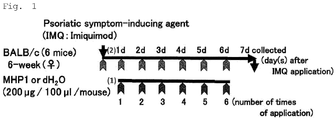
- 5% imiquimod was applied to the hair-removed portion in the back and ear of each mouse (62.5 mg per mouse) (day 0 (0d)).
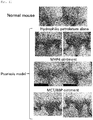
- Fig. 2 shows the photographs of the observation sites in the backs of the mice.
- Fig. 4 shows the results.
- Figs. 2 to 4 indicated that the administration of MHP1 improved psoriatic symptoms.
- the specific examination procedures were as follows.
- MG6 cells (mouse-derived microglial cell line) were cultured in a DMEM medium (+4% FBS) containing MHP1 or MHP4 (final concentration: 7.6, 15.3, or 30.5 ⁇ M) and R848 (final concentration: 1 ⁇ g/ml) or a DMEM medium (+4% FBS) containing R848 (final concentration: 1 ⁇ g/ml) alone for 24 hours by a standard method.
- a DMEM medium (+4% FBS) containing R848 final concentration: 1 ⁇ g/ml
- the concentrations of IL-6 and TNF ⁇ in the medium were measured by the ELISA method.
- the ELISA method was performed using a kit (Quantikine ELISA Mouse TNF-a or Quantikine ELISA Mouse IL-6, produced by R&D Systems).
- Fig. 5a (detected with IL-6) and Fig. 5b (detected with TNF ⁇ ) show the results of the case containing MHP1, and Fig. 5c (detected with IL-6) shows the results of the case containing MHP4.
- Fig. 5 revealed that the increase in the amount of proinflammatory cytokine (IL-6 and TNF ⁇ ) secretion by R848 (comparison between the first column and the second column from the left) was suppressed by MHP1 and MHP4 (comparison between the second column and the third ( Figs. 5a and 5b ) or the third to fifth columns ( Fig. 5 c) from the left). This indicated that MHP1 and MHP4 suppressed the TLR7/8 signals.
- IL-6 and TNF ⁇ proinflammatory cytokine
- the influence of the RANKL peptide on the amount of proinflammatory cytokines (IL-6) secreted from macrophage cells by the stimulation of a TLR7/8 ligand (R848) was examined.
- the specific examination procedures were as follows.
- THP-1 cells human-derived macrophage cell line
- the concentration of IL-6 in the medium was measured by the ELISA method.
- Fig. 6 shows the results.
- Fig. 6 revealed that the increase in the amount of proinflammatory cytokine (IL-6) secretion by R848 (comparison between the first column and the second column from the left) was suppressed by MHP1 and hMHP4 (comparison between the second column and the third to fourth columns from the left). This indicated that MHP1 and hMHP4 suppressed the TLR7/8 signals. Additionally, MHP1 and hMHP4 had similar TLR7/8 signal suppression effects.
- IL-6 proinflammatory cytokine
- the influence of the RANKL peptide on the amount of proinflammatory cytokines (IL-12/23) secreted from macrophage cells by the stimulation of a TLR7/8 ligand (R848) was examined.
- the specific examination procedures were as follows.
- THP-1 cells human-derived macrophage cell line
- a DMEM medium (+4% FBS) containing MHP1, MHP4, or hMHP4 final concentration of each: 30.5 ⁇ M
- R848 final concentration: 10 ⁇ g/ml
- a DMEM medium (+4% FBS) containing R848 final concentration: 10 ⁇ g/ml alone
- a kit Quantantikine ELISA kits, produced by R&D Systems
- Fig. 7 revealed that the increase in the amount of proinflammatory cytokine (IL-12/23) secretion by R848 (comparison between the first column and the second column from the left) was suppressed by the RANKL peptide (comparison between the second column and the third to fifth columns from the left). This indicated that the RANKL peptide suppressed the TLR7/8 signals.
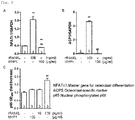
- MHP1 final concentration: 100 ⁇ g/ml
- RANKL protein final concentration: 10 ng/ml
- DMEM medium (+4% FBS DMEM medium (+4% FBS
- Fig. 8 revealed that MHP1 slightly activated NF ⁇ B, but did not promote the expression of osteoclast-related mRNA.
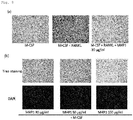
- Osteoclast Culture Kit V-2 (OSC33, produced by Cosmo Bio Co., Ltd.) was used. According to the manual of the kit, the culturing of osteoclast precursor cells was started in the presence of M-CSF (final concentration: 50 ng/ml) in the A and B groups, and in the presence of M-CSF (final concentration: 50 ng/ml) and MHP1 (final concentration: 30, 50, or 100 ⁇ g/ml) in the C and D groups.
- the A group was cultured in the presence of M-CSF (final concentration: 50 ng/ml)
- the B group was cultured in the presence of M-CSF (final concentration: 50 ng/ml) and RANKL protein (final concentration: 50 ng/ml)
- the C group was cultured in the presence of M-CSF (final concentration: 50 ng/ml) and MHP1 (final concentration: 30, 50, or 100 ⁇ g/ml)
- the D group was cultured in the presence of M-CSF (final concentration: 50 ng/ml), RANKL protein (final concentration: 50 ng/ml), and MHP1 (final concentration: 30, 50, or 100 ⁇ g/ml).
- Fig. 9 shows the results.
- Fig. 9 (a) shows TRAP staining images of the A, B, and D groups
- Fig. 9 (b) shows TRAP staining images and nuclear staining images of the C group.
- Fig. 9 (a) indicated that the differentiation of osteoclasts promoted by RANKL was inhibited by MHP1 (comparison between the B group and the C group).
- Fig. 9 (b) indicated that the differentiation of osteoclasts did not occur even when MHP1 was added.
- the stability of the RANKL peptide was examined.
- the specific examination procedures were as follows.
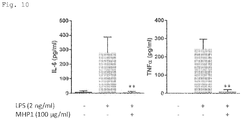
- MHP1 was dissolved in water to a concentration of 2 mg/ml, and stored at 4°C for 208 days. Thereafter, MG6 cells (mouse-derived microglial cell line) were cultured in a DMEM medium (+4% FBS) containing MHP1 (final concentration: 100 ⁇ g/ml) and LPS (final concentration: 2 ng/ml) for 24 hours by a standard method. After culturing, the concentrations of IL-6 and TNF ⁇ in the medium were measured by the ELISA method. Fig. 10 shows the results.
- Fig. 10 revealed that MHP1 exhibited a proinflammatory cytokine secretion-inhibiting effect even after long-term storage, in the same manner as MHP1 before storage. This indicated that the stability of MHP1 was high.
- RANKL peptide MHP4 improved psoriatic symptoms caused by the administration of imiquimod (IMQ), which is a psoriatic symptom-inducing agent. Specifically, the following procedure was performed according to the dosing schedule shown in Fig. 1 except that the first application of an ointment was performed 6 hours after the first imiquimod application. In Example 1, the RANKL peptide aqueous solution was administered, while a RANKL peptide ointment was administered in this example.
- IMQ imiquimod
- Fig. 11 shows the photographs of observation sites in the backs of the mice.
- Figs. 11 to 14 indicated that the administration of MHP4 improved psoriasis symptoms.
- RANKL peptide MHP1-8 improved atopic dermatitis symptoms caused by the intradermal administration of a mite antigen, which is an atopic dermatitis-inducing agent, was examined.
- the specific examination procedures were as follows.
- mice BALB/c 6-week-old female mice were prepared.
- the mite antigen was intradermally administered to the pinna of each mouse (day 0 (0d)).
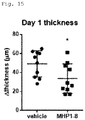
- Fig. 15 shows the results.
- Fig. 15 indicated that the administration of MHP1-8 improved atopic dermatitis symptoms.
- RANKL peptide MHP1-7 improved psoriatic symptoms caused by the administration of imiquimod (IMQ), which is a psoriatic symptom-inducing agent. Specifically, the following procedure was performed according to the dosing schedule shown in Fig. 1 except that the first application of an ointment was performed 6 hours after the first imiquimod application. As in Example 8, a RANKL peptide ointment was administered in this example.
- IMQ imiquimod
- Fig. 16 indicated that the administration of MHP1-7 improved psoriasis symptoms.
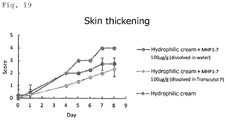
- RANKL peptide MHP1-7 improved psoriatic symptoms caused by the administration of imiquimod (IMQ), which is a psoriatic symptom-inducing agent, was examined. Specifically, the following procedure was performed according to the dosing schedule shown in Fig. 1 except that the first application of an ointment was performed 6 hours after the first imiquimod application.
- IMQ imiquimod
- Hydrophilic cream ointment 1 was prepared by mixing a MHP1-7 aqueous solution with a hydrophilic cream
- hydrophilic cream ointment 2 was prepared by mixing MHP1-7 in a Transcutol P (diethylene glycol monoethyl ether) solution with a hydrophilic cream.
- Figs. 17 to 19 indicated that the administration of MHP1-7 improved psoriasis symptoms.
- Hydrophilic cream ointment 2 in which a glycol ether solution of RANKL peptide was formed into an ointment had higher improvement effects.
- Each RANKL peptide was dissolved in water to a concentration of 2 mg/ml to produce RANKL peptide-containing lotions.
- the RANKL peptide (MHP4) was mixed with hydrophilic petrolatum to produce an ointment having a concentration of 25 ⁇ g/g.
- the RANKL peptide (MHP1-7) was mixed with hydrophilic petrolatum to produce ointments having concentrations of 100 ⁇ g/g and 200 ⁇ g/g.
- the RANKL peptide (MHP1-7) was mixed with a hydrophilic cream to produce a cream having a concentration of 100 ⁇ g/g.
Landscapes
- Health & Medical Sciences (AREA)
- Life Sciences & Earth Sciences (AREA)
- Chemical & Material Sciences (AREA)
- General Health & Medical Sciences (AREA)
- Medicinal Chemistry (AREA)
- Veterinary Medicine (AREA)
- Public Health (AREA)
- Animal Behavior & Ethology (AREA)
- Pharmacology & Pharmacy (AREA)
- Organic Chemistry (AREA)
- Bioinformatics & Cheminformatics (AREA)
- Engineering & Computer Science (AREA)
- General Chemical & Material Sciences (AREA)
- Chemical Kinetics & Catalysis (AREA)
- Nuclear Medicine, Radiotherapy & Molecular Imaging (AREA)
- Immunology (AREA)
- Dermatology (AREA)
- Epidemiology (AREA)
- Gastroenterology & Hepatology (AREA)
- Proteomics, Peptides & Aminoacids (AREA)
- Zoology (AREA)
- Rheumatology (AREA)
- Pain & Pain Management (AREA)
- Physical Education & Sports Medicine (AREA)
- Orthopedic Medicine & Surgery (AREA)
- Cell Biology (AREA)
- Toxicology (AREA)
- Biochemistry (AREA)
- Biophysics (AREA)
- Genetics & Genomics (AREA)
- Molecular Biology (AREA)
- Medicines That Contain Protein Lipid Enzymes And Other Medicines (AREA)
- Peptides Or Proteins (AREA)
Applications Claiming Priority (2)
| Application Number | Priority Date | Filing Date | Title |
|---|---|---|---|
| JP2016216958 | 2016-11-07 | ||
| PCT/JP2017/040115 WO2018084311A1 (fr) | 2016-11-07 | 2017-11-07 | Agent prophylactique ou thérapeutique contre des maladies cutanées inflammatoires |
Publications (2)
| Publication Number | Publication Date |
|---|---|
| EP3536382A1 true EP3536382A1 (fr) | 2019-09-11 |
| EP3536382A4 EP3536382A4 (fr) | 2019-11-13 |
Family
ID=62076547
Family Applications (1)
| Application Number | Title | Priority Date | Filing Date |
|---|---|---|---|
| EP17867950.2A Withdrawn EP3536382A4 (fr) | 2016-11-07 | 2017-11-07 | Agent prophylactique ou thérapeutique contre des maladies cutanées inflammatoires |
Country Status (4)
| Country | Link |
|---|---|
| US (1) | US11819537B2 (fr) |
| EP (1) | EP3536382A4 (fr) |
| JP (1) | JP6710416B2 (fr) |
| WO (1) | WO2018084311A1 (fr) |
Cited By (1)
| Publication number | Priority date | Publication date | Assignee | Title |
|---|---|---|---|---|
| EP4223305A4 (fr) * | 2020-10-02 | 2024-05-01 | Osaka University | Inhibiteur de la voie de signalisation wnt |
Families Citing this family (1)
| Publication number | Priority date | Publication date | Assignee | Title |
|---|---|---|---|---|
| KR102125625B1 (ko) * | 2018-11-27 | 2020-06-22 | 서상준 | 아토피성 질환의 완화 및 치료용 패드 |
Family Cites Families (6)
| Publication number | Priority date | Publication date | Assignee | Title |
|---|---|---|---|---|
| KR100463168B1 (ko) * | 2001-06-30 | 2004-12-23 | 영 근 권 | Trance를 이용한 허혈성 질환의 치료방법 |
| MXPA04003527A (es) * | 2001-10-15 | 2005-06-20 | Barnes Jewish Hospital | Compuestos de antiresorcion osea. |
| EP1854458A1 (fr) | 2006-05-08 | 2007-11-14 | IMBA-Institut für Molekulare Biotechnologie GmbH | Utilisation d'un composé avec activité RANKL |
| KR101283915B1 (ko) | 2012-09-25 | 2013-07-16 | (주)유양디앤유 | 작물의 발아 및 육묘 환경을 제공하는 조사료 재배장치 |
| WO2014119438A1 (fr) | 2013-01-29 | 2014-08-07 | 国立大学法人大阪大学 | Médicament prophylactique ou thérapeutique pour un infarctus |
| WO2016186071A1 (fr) * | 2015-05-20 | 2016-11-24 | 国立大学法人大阪大学 | Oligopeptide ayant une activité d'inhibition de la sécrétion de cytokine pro-inflammatoire |
-
2017
- 2017-11-07 JP JP2018549113A patent/JP6710416B2/ja not_active Expired - Fee Related
- 2017-11-07 EP EP17867950.2A patent/EP3536382A4/fr not_active Withdrawn
- 2017-11-07 US US16/345,028 patent/US11819537B2/en active Active
- 2017-11-07 WO PCT/JP2017/040115 patent/WO2018084311A1/fr not_active Ceased
Cited By (1)
| Publication number | Priority date | Publication date | Assignee | Title |
|---|---|---|---|---|
| EP4223305A4 (fr) * | 2020-10-02 | 2024-05-01 | Osaka University | Inhibiteur de la voie de signalisation wnt |
Also Published As
| Publication number | Publication date |
|---|---|
| US20190365859A1 (en) | 2019-12-05 |
| US11819537B2 (en) | 2023-11-21 |
| EP3536382A4 (fr) | 2019-11-13 |
| JPWO2018084311A1 (ja) | 2019-09-26 |
| WO2018084311A1 (fr) | 2018-05-11 |
| JP6710416B2 (ja) | 2020-06-17 |
Similar Documents
| Publication | Publication Date | Title |
|---|---|---|
| KR101426070B1 (ko) | Cd36 발현을 감소시키는 방법 | |
| EP4194007B1 (fr) | Vaccin de conjugué ciblant une protéine in vivo responsable d'une affection | |
| JP2020196762A (ja) | 熱傷及び二次性合併症の予防及び治療方法 | |
| US20180264080A1 (en) | TOPICAL APPLICATIONS OF Kv1.3 CHANNEL BLOCKING PEPTIDES TO TREAT SKIN INFLAMMATION | |
| EP2922869B1 (fr) | Peptides qui stimulent l'adipogenèse sous-cutanée | |
| AU2021221579B2 (en) | Inhibitors of NF kappa-B activity for treatment of diseases and disorders | |
| US11819537B2 (en) | Preventive or therapeutic method for inflammatory skin disease | |
| EP4516802A1 (fr) | Nouveau peptide anti-inflammatoire et son utilisation | |
| US9688724B2 (en) | Methods for limiting development of a skin wound | |
| US10517926B2 (en) | Oligopeptide having proinflammatory cytokine secretion-inhibiting activity | |
| US12285404B2 (en) | Prevention of rosacea inflammation | |
| JP4950571B2 (ja) | コラーゲン産生促進能を有する組成物 | |
| US20170000840A1 (en) | Methods for preventing and treating oral cancers | |
| US20230374103A1 (en) | Wnt SIGNALING PATHWAY INHIBITOR | |
| WO2016060190A1 (fr) | AGENT THÉRAPEUTIQUE DESTINÉ AU TROUBLE COGNITIF INDUIT PAR LA β-PROTÉINE AMYLOÏDE | |
| WO2025111563A1 (fr) | Compositions à base de peptides de lait pour utilisation pharmaceutique et cosméceutique | |
| KR102499473B1 (ko) | 여성 성기능장애를 치료하기 위한 신규한 펩타이드군 | |
| KR20260002193A (ko) | 신규 펩타이드 및 그의 용도 | |
| WO2021132201A1 (fr) | Agent prophylactique ou thérapeutique pour une maladie démyélinisante | |
| JPH1121298A (ja) | 知覚過敏抑制ペプチド | |
| WO2014041537A1 (fr) | Inhibiteurs de la protéine kinase c (pkc) alpha pour traiter et prévenir les toxicités causées par un rayonnement |
Legal Events
| Date | Code | Title | Description |
|---|---|---|---|
| STAA | Information on the status of an ep patent application or granted ep patent |
Free format text: STATUS: THE INTERNATIONAL PUBLICATION HAS BEEN MADE |
|
| PUAI | Public reference made under article 153(3) epc to a published international application that has entered the european phase |
Free format text: ORIGINAL CODE: 0009012 |
|
| STAA | Information on the status of an ep patent application or granted ep patent |
Free format text: STATUS: REQUEST FOR EXAMINATION WAS MADE |
|
| 17P | Request for examination filed |
Effective date: 20190606 |
|
| AK | Designated contracting states |
Kind code of ref document: A1 Designated state(s): AL AT BE BG CH CY CZ DE DK EE ES FI FR GB GR HR HU IE IS IT LI LT LU LV MC MK MT NL NO PL PT RO RS SE SI SK SM TR |
|
| AX | Request for extension of the european patent |
Extension state: BA ME |
|
| REG | Reference to a national code |
Ref country code: DE Ref legal event code: R079 Free format text: PREVIOUS MAIN CLASS: A61P0043000000 Ipc: C07K0014705000 |
|
| A4 | Supplementary search report drawn up and despatched |
Effective date: 20191016 |
|
| RIC1 | Information provided on ipc code assigned before grant |
Ipc: A61P 29/00 20060101ALI20191010BHEP Ipc: A61P 17/06 20060101ALI20191010BHEP Ipc: A61P 19/02 20060101ALI20191010BHEP Ipc: A61P 43/00 20060101ALI20191010BHEP Ipc: A61K 38/00 20060101ALI20191010BHEP Ipc: A61P 17/00 20060101ALI20191010BHEP Ipc: A61K 38/10 20060101ALI20191010BHEP Ipc: C07K 14/705 20060101AFI20191010BHEP |
|
| DAV | Request for validation of the european patent (deleted) | ||
| DAX | Request for extension of the european patent (deleted) | ||
| 18W | Application withdrawn |
Effective date: 20240620 |