EP3544366A1 - Procédé et dispositif de traitement de défaillance de réseau - Google Patents
Procédé et dispositif de traitement de défaillance de réseau Download PDFInfo
- Publication number
- EP3544366A1 EP3544366A1 EP17881082.6A EP17881082A EP3544366A1 EP 3544366 A1 EP3544366 A1 EP 3544366A1 EP 17881082 A EP17881082 A EP 17881082A EP 3544366 A1 EP3544366 A1 EP 3544366A1
- Authority
- EP
- European Patent Office
- Prior art keywords
- data
- terminal device
- connection
- threshold
- downlink
- Prior art date
- Legal status (The legal status is an assumption and is not a legal conclusion. Google has not performed a legal analysis and makes no representation as to the accuracy of the status listed.)
- Granted
Links
Images



Classifications
-
- H—ELECTRICITY
- H04—ELECTRIC COMMUNICATION TECHNIQUE
- H04W—WIRELESS COMMUNICATION NETWORKS
- H04W76/00—Connection management
- H04W76/10—Connection setup
- H04W76/19—Connection re-establishment
-
- H—ELECTRICITY
- H04—ELECTRIC COMMUNICATION TECHNIQUE
- H04L—TRANSMISSION OF DIGITAL INFORMATION, e.g. TELEGRAPHIC COMMUNICATION
- H04L41/00—Arrangements for maintenance, administration or management of data switching networks, e.g. of packet switching networks
- H04L41/06—Management of faults, events, alarms or notifications
- H04L41/0681—Configuration of triggering conditions
-
- H—ELECTRICITY
- H04—ELECTRIC COMMUNICATION TECHNIQUE
- H04W—WIRELESS COMMUNICATION NETWORKS
- H04W28/00—Network traffic management; Network resource management
- H04W28/02—Traffic management, e.g. flow control or congestion control
- H04W28/0231—Traffic management, e.g. flow control or congestion control based on communication conditions
- H04W28/0236—Traffic management, e.g. flow control or congestion control based on communication conditions radio quality, e.g. interference, losses or delay
-
- H—ELECTRICITY
- H04—ELECTRIC COMMUNICATION TECHNIQUE
- H04W—WIRELESS COMMUNICATION NETWORKS
- H04W60/00—Affiliation to network, e.g. registration; Terminating affiliation with the network, e.g. de-registration
- H04W60/04—Affiliation to network, e.g. registration; Terminating affiliation with the network, e.g. de-registration using triggered events
-
- H—ELECTRICITY
- H04—ELECTRIC COMMUNICATION TECHNIQUE
- H04W—WIRELESS COMMUNICATION NETWORKS
- H04W24/00—Supervisory, monitoring or testing arrangements
- H04W24/04—Arrangements for maintaining operational condition
Definitions
- Embodiments of the present invention relate to the field of communications technologies, and in particular, to a network fault handling method and device.
- a terminal device for example, a mobile phone or a computer
- the terminal device needs to communicate with a base station, and obtains the data service from the core network by using the base station.
- a terminal device may usually send uplink data, but the terminal device cannot receive downlink data sent by a core network side. Consequently, a user cannot obtain a normal data service by using the terminal device. In this case, based on personal experience, the user usually needs to re-switch on a data switch of the terminal device, enable and disable an airplane mode of the terminal device, or the like, so that the terminal device can normally obtain the data service.
- the user may obviously perceive an Internet access fault, and needs to rectify a network fault by relying on the personal experience of the user, thereby resulting in poor user experience.
- This application provides a network fault handling method and device, so that a downlink data link fault can be automatically detected and rectified, thereby improving user's use experience.
- this application provides a network fault handling method.
- a network fault handling apparatus can obtain, in real time or periodically, a first data amount of uplink data sent by a terminal device within preset duration and a second data amount of downlink packet data received by the terminal device within the preset duration, analyze the first data amount and the second data amount, and may determine, when determining that the first data amount is greater than a first threshold and the second data amount is equal to 0, that a downlink of the terminal device is faulty.
- the network fault handling apparatus can re-establish a radio resource control RRC connection and/or re-obtain an Internet Protocol IP connection resource, to automatically rectify a downlink fault.
- the network fault handling apparatus can automatically detect a downlink data link fault, and can automatically rectify the downlink data link fault when detecting the downlink data link fault, so that a user no longer perceives a network fault, and the user does not need to manually rectify the network fault, thereby improving user experience.
- a data type of the uplink data includes a Transmission Control Protocol TCP type, a domain name system DNS type, and a User Datagram Protocol UDP type.
- the network fault handling apparatus may further first determine that signal received quality of the terminal device is greater than a preset quality threshold.
- the network fault handling apparatus may re-establish the RRC connection and/or re-obtain the IP connection resource in at least the following two feasible implementations.
- the re-establishing the RRC connection includes:
- the re-obtaining the IP connection resource includes:
- the first PDN connection is reconnected or the TAU procedure is triggered, so that the terminal device can re-obtain the IP connection resource, and therefore it may be determined that the terminal device and a core network can normally communicate with each other.
- the re-establishing the first PDN connection includes:
- this application provides a network fault handling device, including a processor, a memory, and a communications bus.
- the memory is configured to store a program instruction
- the communications bus is configured to implement a connection between components
- the processor is configured to read the program instruction from the memory to perform the following operations:
- a data type of the uplink data includes a Transmission Control Protocol TCP type, a domain name system DNS type, and a User Datagram Protocol UDP type.
- the processor before the processor re-establishes the RRC connection and/or re-obtains the IP connection resource, the processor is further configured to: determine that signal received quality of the terminal device is greater than a preset quality threshold.
- the processor is specifically configured to:
- the processor is specifically configured to:
- the processor is specifically configured to:
- the processor is specifically configured to:
- the processor is specifically configured to:
- this application provides a network fault handling apparatus, including an obtaining module and a fault handling module, where the obtaining module is configured to obtain a first data amount of uplink data sent by a terminal device within preset duration; the obtaining module is further configured to obtain a second data amount of downlink packet data received by the terminal device within the preset duration; and the fault handling module is configured to: when determining that the first data amount is greater than a first threshold and the second data amount is equal to 0, re-establish a radio resource control RRC connection and/or re-obtain an Internet Protocol IP connection resource.
- a data type of the uplink data includes a Transmission Control Protocol TCP type, a domain name system DNS type, and a User Datagram Protocol UDP type.
- the apparatus further includes a determining module, where the determining module is configured to: before the fault handling module re-establishes the RRC connection and/or re-obtains the IP connection resource, determine that signal received quality of the terminal device is greater than a preset quality threshold.
- the fault handling module is specifically configured to:
- the fault handling module is specifically configured to: determine whether a quantity of data units in an uplink cache queue in a data link layer is less than a second threshold, and a quantity of data units in a downlink cache queue in the data link layer is greater than a third threshold; and if the quantity of data units in the uplink cache queue is less than the second threshold, and the quantity of data units in the downlink cache queue is greater than the third threshold, re-obtain the IP connection resource; or if the quantity of data units in the uplink cache queue is not less than the second threshold, or the quantity of data units in the downlink cache queue is not greater than the third threshold, re-establish the RRC connection, and determine whether a downlink data link fault is rectified; and if it is determined that the downlink data link fault is not rectified, re-obtain the IP connection resource.
- the fault handling module is specifically configured to: determine a base station to which the terminal device is currently connected; and re-establish an RRC connection to the base station.
- the fault handling module is specifically configured to: determine a first PDN connection used to send the uplink data; determine whether a quantity of public data network PDN connections currently existing in the terminal device is greater than 1; and if the quantity of public data network PDN connections is greater than 1, disconnect and re-establish the first PDN connection; or if the quantity of public data network PDN connections is not greater than 1, determine whether an operator corresponding to the terminal device supports a plurality of PDN connections; and if the operator corresponding to the terminal device supports a plurality of PDN connections, re-establish the first PDN connection; or if the operator corresponding to the terminal device does not support a plurality of PDN connections, trigger a tracking area update TAU procedure.
- the fault handling module is specifically configured to:
- the network fault handling apparatus obtains the first data amount of the uplink data sent by the terminal device within the preset duration, obtains the second data amount of the downlink packet data received by the terminal device within the preset duration, and may determine, when determining that the first data amount is greater than the first threshold and the second data amount is equal to 0, that the downlink data link fault occurs.
- the network fault handling apparatus rectifies the downlink data link fault by re-establishing the RRC connection and/or re-obtaining the IP connection resource.
- the network fault handling apparatus can effectively rectify the downlink data link fault in the foregoing manner.
- the network fault handling apparatus can automatically detect the downlink data link fault, and can automatically rectify the downlink data link fault when detecting the downlink data link fault, so that a user no longer perceives a network fault, and the user does not need to manually rectify the network fault, thereby improving user experience.
- FIG. 1 is a schematic diagram of an application scenario of a network fault handling method according to this application.
- the application scenario includes a terminal device 101, a base station 102, and a core network 103.
- the terminal device 101 can normally send uplink data to the base station 102, but the terminal device 101 cannot receive downlink packet data sent by the core network 103.
- the terminal device may be a wireless terminal or a wired terminal.
- the wireless terminal may refer to a device that provides a user with voice and/or other service data connectivity, a handheld device with a wireless connection function, or another processing device connected to a wireless modem.
- the wireless terminal may communicate with one or more core networks by using a radio access network (Radio Access Network, RAN).
- RAN Radio Access Network
- the wireless terminal may be a mobile terminal, such as a mobile phone (also referred to as a "cellular" phone) and a computer with a mobile terminal, for example, may be a portable, pocket-sized, handheld, computer built-in, or in-vehicle mobile apparatus, which exchanges voice and/or data with the radio access network.
- the wireless terminal may be a device such as a personal communications service (Personal Communications Service, PCS) phone, a cordless telephone set, a Session Initiation Protocol (Session Initiation Protocol, SIP) phone, a wireless local loop (Wireless Local Loop, WLL) station, or a personal digital assistant (Personal Digital Assistant, PDA).
- PCS Personal Communications Service
- SIP Session Initiation Protocol
- WLL Wireless Local Loop
- PDA Personal Digital Assistant
- the wireless terminal may also be referred to as a system, a subscriber unit (Subscriber Unit), a subscriber station (Subscriber Station), a mobile station (Mobile Station), a mobile console (Mobile), a remote station (Remote Station), a remote terminal (Remote Terminal), an access terminal (Access Terminal), a user terminal (User Terminal), a user agent (User Agent), or user equipment (User Device or User Equipment), which is not limited herein.
- the base station may be a base transceiver station (Base Transceiver Station, BTS) in Global System for Mobile communications (Global System of Mobile communication, GSM) or Code Division Multiple Access (Code Division Multiple Access, CDMA), or may be a NodeB (NodeB, NB) in Wideband Code Division Multiple Access (Wideband Code Division Multiple Access, WCDMA), or may be an evolved NodeB (Evolutional NodeB, eNB or eNodeB) in Long Term Evolution (Long Term Evolution, LTE), which is not limited herein.
- BTS Base Transceiver Station
- GSM Global System of Mobile communication
- CDMA Code Division Multiple Access
- NodeB NodeB
- WCDMA Wideband Code Division Multiple Access
- Evolutional NodeB, eNB or eNodeB Long Term Evolution
- FIG. 2 is a first schematic flowchart of a network fault handling method according to this application. Referring to FIG. 2 , the method may include the following steps.
- a technical solution provided in this application may be executed by a network fault handling apparatus.
- the network fault handling apparatus is disposed in a terminal.
- the network fault handling apparatus may be implemented by using software and/or hardware.
- the preset duration may be a plurality of consecutive sampling periods.
- duration of one sampling period may be 4 seconds
- the preset duration may be four consecutive sampling periods, to be specific, the preset duration may be 16 seconds.
- the preset duration may be set based on an actual requirement. This is not specifically limited in this application.
- the uplink data is usually data related to a data service of a user, and the uplink data is usually used to instruct a core network to feed back a response message.
- a type of the uplink data may include a Transmission Control Protocol (Transmission Control Protocol, TCP) type, a domain name system (Domain Name System, DNS) type, and a User Datagram Protocol (User Datagram Protocol, UDP) type.
- TCP Transmission Control Protocol
- DNS Domain Name System
- UDP User Datagram Protocol
- the uplink data may be IPv4 data, or may be IPv6 data.
- the first data amount may be a quantity of packets of the uplink data sent by the terminal device within the preset duration.
- a baseband processor modem of the terminal device may monitor and collect statistics about the uplink data of the terminal device.
- the downlink packet data is downlink data sent by the core network to the terminal device.
- the second data amount may be a quantity of packets of the downlink data received by the terminal device within the preset duration.
- the network fault handling apparatus determines whether the first data amount is greater than the first threshold and the second data amount is 0, and if the first data amount is greater than the first threshold and the second data amount is 0, the network fault handling apparatus may determine that a downlink data link is faulty. It should be noted that when determining that the first data amount is greater than the first threshold and the second data amount is less than a preset threshold, the network fault handling apparatus may determine that a downlink data link is faulty. In an actual application process, a value of the preset threshold is usually relatively small, and the first threshold and the preset threshold may be set based on an actual requirement. This is not specifically limited in this application.
- the network fault handling apparatus may further obtain signal received quality of the terminal device, and determine whether the signal received quality is greater than a preset quality threshold, and if the signal received quality is not greater than the preset quality threshold, it may indicate that the terminal device cannot receive the downlink packet data because the signal received quality of the terminal device is extremely poor. In this case, the network fault handling apparatus cannot determine whether a downlink data link is faulty.
- the terminal device may send a connection re-establishment request (Connection Re-establishment Request, CRC) message to a base station, to request to re-establish an RRC connection to the base station.
- CRC Connection Re-establishment Request
- the terminal device may determine whether a downlink data link fault is rectified, and if the downlink data link fault is rectified, a procedure ends; or if the downlink data link fault is not rectified, the IP connection resource is re-obtained.
- the terminal device may determine whether the downlink packet data can be received, and if the downlink packet data can be received, it indicates that the downlink data link is repaired; or if the downlink packet data cannot be received, it indicates that the downlink data link is not repaired.
- the IP connection resource may be re-obtained by re-establishing a PDN connection between the terminal device and the core network or triggering a tracking area update (Tracking Area Update, TAU) TAU procedure. Specifically, a method for re-obtaining the IP connection resource is described in detail in the embodiment shown in FIG. 3 , and is not described herein.
- the process of re-obtaining the IP connection resource may be implemented in one or more of manners such as establishing a PDN connection, disconnecting a PDN connection, allocating a bearer resource, and modifying a bearer resource.
- processes of establishing the PDN connection, disconnecting the PDN connection, allocating the bearer resource, and modifying the bearer resource refer to the 3GPP TS 24.301 V14.3.0 (2017-03 ). In this application, details are not described herein.
- the RRC connection between the terminal device and the base station is re-established, so that the base station can re-allocate a resource to the terminal device, so as to resolve a problem that because the resource allocated by the base station to the terminal device is abnormal (for example, insufficient), the base station cannot send, to the terminal device, data delivered by the core network.
- the IP connection resource is re-obtained, so that the core network can re-allocate a resource to the terminal device, so as to resolve a problem that because the resource allocated by the core network to the terminal device is abnormal, the core network cannot send data to the terminal device by using the base station.
- the technical solution shown in this application may be further executed in a process in which a user is using the terminal device (for example, a mobile phone is in a screen-on state).
- the network fault handling apparatus obtains the first data amount of the uplink data sent by the terminal device within the preset duration, obtains the second data amount of the downlink packet data received by the terminal device within the preset duration, and may determine, when determining that the first data amount is greater than the first threshold and the second data amount is equal to 0, that the downlink data link fault occurs.
- the network fault handling apparatus rectifies the downlink data link fault by re-establishing the RRC connection and/or re-obtaining the IP connection resource.
- the network fault handling apparatus can effectively rectify the downlink data link fault in the foregoing manner.
- the network fault handling apparatus can automatically detect the downlink data link fault, and can automatically rectify the downlink data link fault when detecting the downlink data link fault, so that a user no longer perceives a network fault, and the user does not need to manually rectify the network fault, thereby improving user experience.
- the IP connection resource may be re-obtained in the following feasible implementation.
- the IP connection resource may be re-obtained in the following feasible implementation.
- FIG. 3 refers to the embodiment shown in FIG. 3 .
- FIG. 3 is a schematic flowchart of a method for re-obtaining an IP connection resource according to this application. Referring to FIG. 3 , the method may include the following steps.
- a PDN connection used by a core network to send downlink data is the same as a PDN connection used for uplink data corresponding to the downlink data. For example, if the core network receives, by using a PDN 1, uplink data sent by a terminal device, when the core network needs to send downlink data corresponding to the uplink data to the terminal device, the core network sends the downlink data to the terminal device by using the PDN 1.
- S303 is performed if the quantity of PDN connections is greater than 1.
- S304 to S306 are performed if the quantity of PDN connections is not greater than 1.
- the PDN connection currently existing in the terminal device is configured in the terminal device, and there may be one or more PDN connections currently existing in the terminal device.
- a first PDN connection may be directly reconnected.
- the first PDN connection may be directly disconnected and re-established.
- S305 to S307 are performed if the operator corresponding to the terminal device supports a plurality of PDN connections.
- S308 is performed if the operator corresponding to the terminal device does not support a plurality of PDN connections.
- the operator corresponding to the terminal device is an operator that currently provides a network server for the terminal device.
- the terminal device may obtain, from the operator, a parameter (for example, an access point (Access Point Name, APN) parameter) corresponding to the standby PDN connection, and establish the standby PDN connection to the core network based on the parameter corresponding to the standby PDN connection.
- a parameter for example, an access point (Access Point Name, APN) parameter
- APN Access Point Name
- the terminal device may send a TAU request message to the core network, so that the core network updates a tracking area (Tracking Area, TA) parameter of the terminal device.
- TA Tracking Area
- a PDN between the terminal device and the core network is reconnected or the TAU procedure is triggered, to re-obtain an IP connection resource.
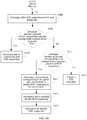
- FIG. 4A and FIG. 4B are a second schematic flowchart of a network fault handling method according to this application. Referring to FIG. 4A and FIG. 4B , the method may include the following steps.
- the sampling period may be 4 seconds. Certainly, the sampling period may be set based on an actual requirement.
- S402. Obtain, by using the modem of the terminal device, a second quantity of packets of downlink packet data received by the terminal device within the four consecutive sampling periods.
- S404 is performed if the first quantity of packets is greater than the first threshold and the second quantity of packets is 0.
- S416 is performed if the first quantity of packets is not greater than the first threshold or the second quantity of packets is not 0.
- S405 is performed if the signal received quality of the terminal device is greater than the preset quality threshold.
- S416 is performed if the signal received quality of the terminal device is not greater than the preset quality threshold.
- the terminal device When it is determined that the signal received quality of the terminal device is less than or equal to the preset quality threshold, it may indicate that the terminal device cannot receive the downlink packet data because the signal received quality of the terminal device is extremely poor. Therefore, it cannot be determined whether a downlink data link is faulty, and a procedure ends.
- S405. Determine whether a quantity of acknowledgement mode protocol data units (Acknowledgement Mode Protocol Data Unit, AM PDU) in an uplink cache queue in a radio link control (Radio Link Control, RLC) data radio bearer (Data Radio Bearer, DRB) is less than a second threshold, and a quantity of downlink acknowledgement mode acknowledgement protocol data units (Acknowledgement Mode Acknowledgement Protocol Data Unit, AM ACK PDU) in the RLC DRB is greater than a third threshold.
- RLC Radio Link Control
- DRB Data Radio Bearer
- S408 is performed if the quantity of acknowledgement mode protocol data units in the uplink cache queue is less than the second threshold, and the quantity of downlink acknowledgement mode acknowledgement protocol data units is greater than the third threshold.
- S406 is performed if the quantity of acknowledgement mode protocol data units in the uplink cache queue is not less than the second threshold, or the quantity of downlink acknowledgement mode acknowledgement protocol data units is not greater than the third threshold.
- the third threshold When it is determined that the quantity of downlink AM ACK PDUs in the RLC DRB is greater than the third threshold, it indicates that a base station can normally send feedback information to the terminal device.
- the quantity of AM PDUs in the uplink cache queue in the RLC DRB is less than the second threshold, it indicates that the terminal device can send to-be-sent uplink data to the base station in time by using a data link layer. Therefore, when it is determined that the quantity of AM PDUs in the uplink cache queue in the RLC DRB is less than the second threshold, and the quantity of downlink AM ACK PDUs in the RLC DRB is greater than the third threshold, it may be determined that an RRC link between the terminal device and the base station is normal. Otherwise, it indicates that an RRC link between the terminal device and the base station is faulty.
- S406. Determine a base station to which the terminal device is currently connected, and re-establish an RRC connection to the base station.
- S416 is performed if the downlink data link fault is rectified.
- S408 is performed if the downlink data link fault is not rectified.
- S410 is performed if the quantity of PDN connections is greater than 1.
- S411 is performed if the quantity of PDN connections is not greater than 1.
- S412 to S414 are performed if the operator corresponding to the terminal device supports a plurality of PDN connections.
- S415 is performed if the operator corresponding to the terminal device does not support a plurality of PDN connections.
- a network fault handling apparatus can automatically detect the downlink data link fault, and can automatically rectify the downlink data link fault when detecting the downlink data link fault, so that a user no longer perceives a network fault, and the user does not need to manually rectify the network fault, thereby improving user experience.
- FIG. 5 is a schematic structural diagram of a network fault handling device according to this application.
- the network fault handling device may be disposed in a terminal device.
- the device may include a processor 11, a memory 12, and a communications bus 13.
- the memory 12 is configured to store a program instruction
- the communications bus 13 is configured to implement a connection between components
- the processor 11 is configured to read the program instruction from the memory to perform the following operations:
- the network fault handling device provided in this application may execute the technical solution shown in the foregoing method embodiment.
- An implementation principle and a beneficial effect of the network fault handling device are similar to those of the foregoing method embodiment, and details are not described herein.
- a data type of the uplink data includes a Transmission Control Protocol TCP type, a domain name system DNS type, and a User Datagram Protocol UDP type.
- the processor 11 before the processor 11 re-establishes the RRC connection and/or re-obtains the IP connection resource, the processor 11 is further configured to: determine that signal received quality of the terminal device is greater than a preset quality threshold.
- the processor 11 is specifically configured to:
- the processor 11 is specifically configured to:
- the processor 11 is specifically configured to:
- the processor 11 is specifically configured to:
- the processor 11 is specifically configured to:
- the network fault handling device provided in this application may execute the technical solution shown in the foregoing method embodiment.
- An implementation principle and a beneficial effect of the network fault handling device are similar to those of the foregoing method embodiment, and details are not described herein.
- FIG. 6 is a first schematic structural diagram of a network fault handling apparatus according to this application.
- the network fault handling apparatus may be disposed in a terminal device.
- the apparatus may include an obtaining module 21 and a fault handling module 22.
- the obtaining module 21 is configured to obtain a first data amount of uplink data sent by a terminal device within preset duration.
- the obtaining module 21 is further configured to obtain a second data amount of downlink packet data received by the terminal device within the preset duration.
- the fault handling module 22 is configured to: when determining that the first data amount is greater than a first threshold and the second data amount is equal to 0, re-establish a radio resource control RRC connection and/or re-obtain an Internet Protocol IP connection resource.
- the network fault handling apparatus provided in this application may execute the technical solution shown in the foregoing method embodiment.
- An implementation principle and a beneficial effect of the network fault handling apparatus are similar to those of the foregoing method embodiment, and details are not described herein.
- a data type of the uplink data includes a Transmission Control Protocol TCP type, a domain name system DNS type, and a User Datagram Protocol UDP type.
- FIG. 7 is a second schematic structural diagram of a network fault handling apparatus according to this application. Based on the embodiment shown in FIG. 6 , referring to FIG. 7 , the apparatus further includes a determining module 23.
- the determining module 23 is configured to: before the fault handling module 22 re-establishes the RRC connection and/or re-obtains the IP connection resource, determine that signal received quality of the terminal device is greater than a preset quality threshold.
- the fault handling module 22 is specifically configured to:
- the fault handling module 22 is specifically configured to: determine whether a quantity of data units in an uplink cache queue in a data link layer is less than a second threshold, and a quantity of data units in a downlink cache queue in the data link layer is greater than a third threshold; and if the quantity of data units in the uplink cache queue is less than the second threshold, and the quantity of data units in the downlink cache queue is greater than the third threshold, re-obtain the IP connection resource; or if the quantity of data units in the uplink cache queue is not less than the second threshold, or the quantity of data units in the downlink cache queue is not greater than the third threshold, re-establish the RRC connection, and determine whether a downlink data link fault is rectified; and if it is determined that the downlink data link fault is not rectified, re-obtain the IP connection resource.
- the fault handling module 22 is specifically configured to: determine a base station to which the terminal device is currently connected; and re-establish an RRC connection to the base station.
- the fault handling module 22 is specifically configured to:
- the fault handling module 22 is specifically configured to:
- the network fault handling apparatus provided in this application may execute the technical solution shown in the foregoing method embodiment.
- An implementation principle and a beneficial effect of the network fault handling apparatus are similar to those of the foregoing method embodiment, and details are not described herein.
- the program may be stored in a computer readable storage medium. When the program runs, the steps of the method embodiments are performed.
- the foregoing storage medium includes: any medium that can store program code, such as a ROM, a RAM, a magnetic disk, or an optical disc.
Landscapes
- Engineering & Computer Science (AREA)
- Computer Networks & Wireless Communication (AREA)
- Signal Processing (AREA)
- Mobile Radio Communication Systems (AREA)
Applications Claiming Priority (2)
| Application Number | Priority Date | Filing Date | Title |
|---|---|---|---|
| CN201611155224 | 2016-12-14 | ||
| PCT/CN2017/081395 WO2018107635A1 (fr) | 2016-12-14 | 2017-04-21 | Procédé et dispositif de traitement de défaillance de réseau |
Publications (3)
| Publication Number | Publication Date |
|---|---|
| EP3544366A4 EP3544366A4 (fr) | 2019-09-25 |
| EP3544366A1 true EP3544366A1 (fr) | 2019-09-25 |
| EP3544366B1 EP3544366B1 (fr) | 2025-09-24 |
Family
ID=62557945
Family Applications (1)
| Application Number | Title | Priority Date | Filing Date |
|---|---|---|---|
| EP17881082.6A Active EP3544366B1 (fr) | 2016-12-14 | 2017-04-21 | Procédé et dispositif de traitement de défaillance de réseau |
Country Status (4)
| Country | Link |
|---|---|
| US (1) | US10986685B2 (fr) |
| EP (1) | EP3544366B1 (fr) |
| CN (1) | CN108605257B (fr) |
| WO (1) | WO2018107635A1 (fr) |
Cited By (1)
| Publication number | Priority date | Publication date | Assignee | Title |
|---|---|---|---|---|
| WO2021244380A1 (fr) * | 2020-06-02 | 2021-12-09 | Qualcomm Incorporated | Rapport de rétroaction de couche de commande de liaison radio pour codes sans débit |
Families Citing this family (5)
| Publication number | Priority date | Publication date | Assignee | Title |
|---|---|---|---|---|
| US11368861B2 (en) * | 2019-03-29 | 2022-06-21 | Lg Electronics Inc. | Method and apparatus for transmitting stuck indication by user equipment in wireless communication system |
| CN111800840B (zh) * | 2020-06-29 | 2022-10-28 | RealMe重庆移动通信有限公司 | 小区连接控制方法、装置、移动终端及存储介质 |
| US12052296B2 (en) * | 2020-09-24 | 2024-07-30 | Avaya Management L.P. | Methods and systems for maintaining conditional communication sessions using terminable authentication signals |
| US11968674B2 (en) * | 2021-02-04 | 2024-04-23 | Qualcomm Incorporated | Controlling modem memory used by uplink data |
| CN113992731B (zh) * | 2021-11-02 | 2024-04-30 | 四川安迪科技实业有限公司 | 基于stomp协议的异常控制方法及装置 |
Family Cites Families (23)
| Publication number | Priority date | Publication date | Assignee | Title |
|---|---|---|---|---|
| US20050172894A1 (en) * | 2004-02-10 | 2005-08-11 | Farnworth Warren M. | Selective deposition system and method for initiating deposition at a defined starting surface |
| CN101815314A (zh) * | 2009-02-20 | 2010-08-25 | 华为技术有限公司 | 发现无线网络问题的方法、装置及系统 |
| CN101998469A (zh) | 2009-08-17 | 2011-03-30 | 中兴通讯股份有限公司 | 基于载波聚合的无线链路故障处理方法及用户设备 |
| CN101789880B (zh) * | 2010-01-22 | 2012-09-05 | 中国电信股份有限公司 | 基于IP接入网实现上行QoS的方法和多业务接入网关 |
| JP5986084B2 (ja) * | 2010-08-13 | 2016-09-06 | インターデイジタル パテント ホールディングス インコーポレイテッド | デバイス内干渉軽減のための方法およびシステム |
| GB2484117A (en) * | 2010-09-30 | 2012-04-04 | Fujitsu Ltd | Automated network coverage hole detection by systematically modifying a connection reestablishment timer (T311) in a number of UEs |
| JP4927213B1 (ja) * | 2010-12-03 | 2012-05-09 | 株式会社エヌ・ティ・ティ・ドコモ | 移動通信方法、ゲートウェイ装置、移動管理ノード及び呼セッション制御サーバ装置 |
| WO2012139798A1 (fr) * | 2011-04-15 | 2012-10-18 | Telefonaktiebolaget L M Ericsson (Publ) | Procédés et dispositifs de surveillance de liaison radio |
| CN102293029B (zh) | 2011-04-26 | 2014-01-01 | 华为技术有限公司 | 一种用户面缓冲器内存的恢复方法及装置 |
| US8908504B2 (en) * | 2011-07-01 | 2014-12-09 | Qualcomm Incorporated | Pre-agreed radio link failure recovery channel sequence |
| WO2013045537A1 (fr) * | 2011-09-30 | 2013-04-04 | Nokia Siemens Networks Oy | Filtrage de rapport de panne de liaison hertzienne |
| WO2013107044A1 (fr) * | 2012-01-20 | 2013-07-25 | 富士通株式会社 | Procédé d'analyse d'une cause de défaillance de liaison, et procédé et dispositif d'optimisation du réseau associés |
| CN103384376B (zh) * | 2012-05-04 | 2016-12-14 | 华为技术有限公司 | 链路覆盖问题确定方法、装置与系统 |
| US20160057800A1 (en) | 2013-08-27 | 2016-02-25 | Samsung Electronics Co., Ltd. | Method and system for random access procedure and radio link failure in inter-enb carrier aggregation |
| WO2015042779A1 (fr) * | 2013-09-24 | 2015-04-02 | 华为技术有限公司 | Terminal, station de base et procédé utilisés ainsi pour envoyer des informations d'échec |
| EP2854449B1 (fr) * | 2013-09-26 | 2018-01-31 | Alcatel Lucent | Noeuds de réseau de télécommunications sans fil et procédés |
| CN106465441B (zh) * | 2014-05-16 | 2019-12-10 | Lg电子株式会社 | 在无线通信系统中用于处理无线电链路失败的ran协助信息的方法和装置 |
| EP3248407B1 (fr) * | 2015-01-22 | 2025-02-19 | Nokia Solutions and Networks Oy | Amélioration de l'analyse de trou de couverture |
| JP2018093249A (ja) * | 2015-04-03 | 2018-06-14 | シャープ株式会社 | 無線通信システム、端末装置、基地局装置、無線通信方法および集積回路 |
| CN107637145B (zh) * | 2015-06-11 | 2022-04-22 | 英特尔公司 | 蜂窝IoT网络架构 |
| US20170099622A1 (en) * | 2015-10-06 | 2017-04-06 | General Motors Llc | Restoration of packet data connectivity to a telematics unit following network failure |
| US10097462B2 (en) * | 2016-04-02 | 2018-10-09 | Niciria, Inc. | Throughput resilience during link failover |
| CN106028470B (zh) * | 2016-07-29 | 2019-07-09 | 武汉虹信通信技术有限责任公司 | 一种实现无线资源控制连接重建的方法及小基站簇控制器 |
-
2017
- 2017-04-21 EP EP17881082.6A patent/EP3544366B1/fr active Active
- 2017-04-21 WO PCT/CN2017/081395 patent/WO2018107635A1/fr not_active Ceased
- 2017-04-21 US US16/469,322 patent/US10986685B2/en active Active
- 2017-04-21 CN CN201780009365.2A patent/CN108605257B/zh active Active
Cited By (1)
| Publication number | Priority date | Publication date | Assignee | Title |
|---|---|---|---|---|
| WO2021244380A1 (fr) * | 2020-06-02 | 2021-12-09 | Qualcomm Incorporated | Rapport de rétroaction de couche de commande de liaison radio pour codes sans débit |
Also Published As
| Publication number | Publication date |
|---|---|
| CN108605257B (zh) | 2020-12-04 |
| US10986685B2 (en) | 2021-04-20 |
| EP3544366A4 (fr) | 2019-09-25 |
| EP3544366B1 (fr) | 2025-09-24 |
| CN108605257A (zh) | 2018-09-28 |
| US20200077462A1 (en) | 2020-03-05 |
| WO2018107635A1 (fr) | 2018-06-21 |
Similar Documents
| Publication | Publication Date | Title |
|---|---|---|
| EP3544366B1 (fr) | Procédé et dispositif de traitement de défaillance de réseau | |
| US10356678B2 (en) | Method for acquiring UE capability, terminal, and base station | |
| US9219643B2 (en) | Node and method for the handling of serving gateway partial failure | |
| EP3065465B1 (fr) | Procédé de sélection de réseau et dispositif de réseau central | |
| US10165556B2 (en) | Data transmission method and user equipment | |
| EP2953396B1 (fr) | Procédé de contrôle de service, entité de gestion de la mobilité, et centre de commutation du service mobile | |
| EP3282761B1 (fr) | Procédé de commande de transmission et appareil | |
| EP3079390A1 (fr) | Procédé de distribution de contexte de clé de sécurité, entité de gestion de mobilité et station de base | |
| EP2991440B1 (fr) | Procédé et dispositif de connexion à un réseau | |
| JP2014527352A (ja) | デュアルモード端末の性能情報報告方法及び装置 | |
| EP3079384A1 (fr) | Procédé pour transmettre un petit paquet de données, station de base et équipement utilisateur | |
| US10530693B2 (en) | Congestion control method and apparatus, and related device | |
| EP3223576A1 (fr) | Procédé de commande de système de communications radio multimode, terminal et serveur de commande | |
| EP2983438B1 (fr) | Procédé de transmission de données, dispositif de communication et système de communication | |
| CN110167142A (zh) | 无线资源控制rrc连接方法、重连接方法和装置 | |
| US10524172B2 (en) | User equipment and network access method | |
| EP2934040B1 (fr) | Procédé de fourniture de service d'application | |
| US11265771B2 (en) | AT commands for supporting session and service continuity modes of 5G protocol data unitsession operations | |
| EP3136777A1 (fr) | Procédé et appareil de détermination de raison de descente de kpi | |
| US9237484B2 (en) | Method, system and device for configuring radio access bearers in mobile networks with multi-RAB capability | |
| US20160014814A1 (en) | User equipment collision detection method, user equipment, and base station | |
| CN106255092B (zh) | 确定源sgsn的方法和装置 |
Legal Events
| Date | Code | Title | Description |
|---|---|---|---|
| STAA | Information on the status of an ep patent application or granted ep patent |
Free format text: STATUS: THE INTERNATIONAL PUBLICATION HAS BEEN MADE |
|
| PUAI | Public reference made under article 153(3) epc to a published international application that has entered the european phase |
Free format text: ORIGINAL CODE: 0009012 |
|
| STAA | Information on the status of an ep patent application or granted ep patent |
Free format text: STATUS: REQUEST FOR EXAMINATION WAS MADE |
|
| 17P | Request for examination filed |
Effective date: 20190619 |
|
| A4 | Supplementary search report drawn up and despatched |
Effective date: 20190806 |
|
| AK | Designated contracting states |
Kind code of ref document: A1 Designated state(s): AL AT BE BG CH CY CZ DE DK EE ES FI FR GB GR HR HU IE IS IT LI LT LU LV MC MK MT NL NO PL PT RO RS SE SI SK SM TR |
|
| AX | Request for extension of the european patent |
Extension state: BA ME |
|
| DAV | Request for validation of the european patent (deleted) | ||
| DAX | Request for extension of the european patent (deleted) | ||
| STAA | Information on the status of an ep patent application or granted ep patent |
Free format text: STATUS: EXAMINATION IS IN PROGRESS |
|
| 17Q | First examination report despatched |
Effective date: 20210511 |
|
| GRAP | Despatch of communication of intention to grant a patent |
Free format text: ORIGINAL CODE: EPIDOSNIGR1 |
|
| STAA | Information on the status of an ep patent application or granted ep patent |
Free format text: STATUS: GRANT OF PATENT IS INTENDED |
|
| RIC1 | Information provided on ipc code assigned before grant |
Ipc: H04W 24/04 20090101ALN20250417BHEP Ipc: H04W 76/19 20180101AFI20250417BHEP |
|
| INTG | Intention to grant announced |
Effective date: 20250513 |
|
| RIN1 | Information on inventor provided before grant (corrected) |
Inventor name: TAO, HUATAO Inventor name: FANG, QIANJUN Inventor name: SHI, SHUAI |
|
| GRAS | Grant fee paid |
Free format text: ORIGINAL CODE: EPIDOSNIGR3 |
|
| GRAA | (expected) grant |
Free format text: ORIGINAL CODE: 0009210 |
|
| STAA | Information on the status of an ep patent application or granted ep patent |
Free format text: STATUS: THE PATENT HAS BEEN GRANTED |
|
| AK | Designated contracting states |
Kind code of ref document: B1 Designated state(s): AL AT BE BG CH CY CZ DE DK EE ES FI FR GB GR HR HU IE IS IT LI LT LU LV MC MK MT NL NO PL PT RO RS SE SI SK SM TR |
|
| REG | Reference to a national code |
Ref country code: GB Ref legal event code: FG4D |
|
| REG | Reference to a national code |
Ref country code: CH Ref legal event code: EP |
|
| REG | Reference to a national code |
Ref country code: DE Ref legal event code: R096 Ref document number: 602017091959 Country of ref document: DE |
|
| REG | Reference to a national code |
Ref country code: IE Ref legal event code: FG4D |
|
| REG | Reference to a national code |
Ref country code: NL Ref legal event code: FP |
|
| PG25 | Lapsed in a contracting state [announced via postgrant information from national office to epo] |
Ref country code: NO Free format text: LAPSE BECAUSE OF FAILURE TO SUBMIT A TRANSLATION OF THE DESCRIPTION OR TO PAY THE FEE WITHIN THE PRESCRIBED TIME-LIMIT Effective date: 20251224 |
|
| REG | Reference to a national code |
Ref country code: LT Ref legal event code: MG9D |
|
| PG25 | Lapsed in a contracting state [announced via postgrant information from national office to epo] |
Ref country code: FI Free format text: LAPSE BECAUSE OF FAILURE TO SUBMIT A TRANSLATION OF THE DESCRIPTION OR TO PAY THE FEE WITHIN THE PRESCRIBED TIME-LIMIT Effective date: 20250924 |
|
| PG25 | Lapsed in a contracting state [announced via postgrant information from national office to epo] |
Ref country code: HR Free format text: LAPSE BECAUSE OF FAILURE TO SUBMIT A TRANSLATION OF THE DESCRIPTION OR TO PAY THE FEE WITHIN THE PRESCRIBED TIME-LIMIT Effective date: 20250924 |
|
| PG25 | Lapsed in a contracting state [announced via postgrant information from national office to epo] |
Ref country code: GR Free format text: LAPSE BECAUSE OF FAILURE TO SUBMIT A TRANSLATION OF THE DESCRIPTION OR TO PAY THE FEE WITHIN THE PRESCRIBED TIME-LIMIT Effective date: 20251225 |
|
| PG25 | Lapsed in a contracting state [announced via postgrant information from national office to epo] |
Ref country code: SE Free format text: LAPSE BECAUSE OF FAILURE TO SUBMIT A TRANSLATION OF THE DESCRIPTION OR TO PAY THE FEE WITHIN THE PRESCRIBED TIME-LIMIT Effective date: 20250924 |
|
| PG25 | Lapsed in a contracting state [announced via postgrant information from national office to epo] |
Ref country code: LV Free format text: LAPSE BECAUSE OF FAILURE TO SUBMIT A TRANSLATION OF THE DESCRIPTION OR TO PAY THE FEE WITHIN THE PRESCRIBED TIME-LIMIT Effective date: 20250924 |
|
| PG25 | Lapsed in a contracting state [announced via postgrant information from national office to epo] |
Ref country code: BG Free format text: LAPSE BECAUSE OF FAILURE TO SUBMIT A TRANSLATION OF THE DESCRIPTION OR TO PAY THE FEE WITHIN THE PRESCRIBED TIME-LIMIT Effective date: 20250924 |
|
| PG25 | Lapsed in a contracting state [announced via postgrant information from national office to epo] |
Ref country code: RS Free format text: LAPSE BECAUSE OF FAILURE TO SUBMIT A TRANSLATION OF THE DESCRIPTION OR TO PAY THE FEE WITHIN THE PRESCRIBED TIME-LIMIT Effective date: 20251224 |
|
| REG | Reference to a national code |
Ref country code: AT Ref legal event code: MK05 Ref document number: 1841500 Country of ref document: AT Kind code of ref document: T Effective date: 20250924 |
|
| PG25 | Lapsed in a contracting state [announced via postgrant information from national office to epo] |
Ref country code: SM Free format text: LAPSE BECAUSE OF FAILURE TO SUBMIT A TRANSLATION OF THE DESCRIPTION OR TO PAY THE FEE WITHIN THE PRESCRIBED TIME-LIMIT Effective date: 20250924 |
|
| PG25 | Lapsed in a contracting state [announced via postgrant information from national office to epo] |
Ref country code: ES Free format text: LAPSE BECAUSE OF FAILURE TO SUBMIT A TRANSLATION OF THE DESCRIPTION OR TO PAY THE FEE WITHIN THE PRESCRIBED TIME-LIMIT Effective date: 20250924 |
|
| PG25 | Lapsed in a contracting state [announced via postgrant information from national office to epo] |
Ref country code: AT Free format text: LAPSE BECAUSE OF FAILURE TO SUBMIT A TRANSLATION OF THE DESCRIPTION OR TO PAY THE FEE WITHIN THE PRESCRIBED TIME-LIMIT Effective date: 20250924 |
|
| PG25 | Lapsed in a contracting state [announced via postgrant information from national office to epo] |
Ref country code: IT Free format text: LAPSE BECAUSE OF FAILURE TO SUBMIT A TRANSLATION OF THE DESCRIPTION OR TO PAY THE FEE WITHIN THE PRESCRIBED TIME-LIMIT Effective date: 20250924 |
|
| PGFP | Annual fee paid to national office [announced via postgrant information from national office to epo] |
Ref country code: NL Payment date: 20260317 Year of fee payment: 10 |
|
| PG25 | Lapsed in a contracting state [announced via postgrant information from national office to epo] |
Ref country code: IS Free format text: LAPSE BECAUSE OF FAILURE TO SUBMIT A TRANSLATION OF THE DESCRIPTION OR TO PAY THE FEE WITHIN THE PRESCRIBED TIME-LIMIT Effective date: 20260124 |
|
| PG25 | Lapsed in a contracting state [announced via postgrant information from national office to epo] |
Ref country code: CZ Free format text: LAPSE BECAUSE OF FAILURE TO SUBMIT A TRANSLATION OF THE DESCRIPTION OR TO PAY THE FEE WITHIN THE PRESCRIBED TIME-LIMIT Effective date: 20250924 Ref country code: PT Free format text: LAPSE BECAUSE OF FAILURE TO SUBMIT A TRANSLATION OF THE DESCRIPTION OR TO PAY THE FEE WITHIN THE PRESCRIBED TIME-LIMIT Effective date: 20260126 |
|
| PG25 | Lapsed in a contracting state [announced via postgrant information from national office to epo] |
Ref country code: PL Free format text: LAPSE BECAUSE OF FAILURE TO SUBMIT A TRANSLATION OF THE DESCRIPTION OR TO PAY THE FEE WITHIN THE PRESCRIBED TIME-LIMIT Effective date: 20250924 |
|
| PG25 | Lapsed in a contracting state [announced via postgrant information from national office to epo] |
Ref country code: EE Free format text: LAPSE BECAUSE OF FAILURE TO SUBMIT A TRANSLATION OF THE DESCRIPTION OR TO PAY THE FEE WITHIN THE PRESCRIBED TIME-LIMIT Effective date: 20250924 Ref country code: SK Free format text: LAPSE BECAUSE OF FAILURE TO SUBMIT A TRANSLATION OF THE DESCRIPTION OR TO PAY THE FEE WITHIN THE PRESCRIBED TIME-LIMIT Effective date: 20250924 |