EP3555885B1 - Procédé et codeur de gestion de coefficients de représentation d'enveloppe - Google Patents
Procédé et codeur de gestion de coefficients de représentation d'enveloppe Download PDFInfo
- Publication number
- EP3555885B1 EP3555885B1 EP17816811.8A EP17816811A EP3555885B1 EP 3555885 B1 EP3555885 B1 EP 3555885B1 EP 17816811 A EP17816811 A EP 17816811A EP 3555885 B1 EP3555885 B1 EP 3555885B1
- Authority
- EP
- European Patent Office
- Prior art keywords
- shape
- coefficients
- gain
- envelope representation
- encoder
- Prior art date
- Legal status (The legal status is an assumption and is not a legal conclusion. Google has not performed a legal analysis and makes no representation as to the accuracy of the status listed.)
- Active
Links
Images



Classifications
-
- G—PHYSICS
- G10—MUSICAL INSTRUMENTS; ACOUSTICS
- G10L—SPEECH ANALYSIS TECHNIQUES OR SPEECH SYNTHESIS; SPEECH RECOGNITION; SPEECH OR VOICE PROCESSING TECHNIQUES; SPEECH OR AUDIO CODING OR DECODING
- G10L19/00—Speech or audio signals analysis-synthesis techniques for redundancy reduction, e.g. in vocoders; Coding or decoding of speech or audio signals, using source filter models or psychoacoustic analysis
- G10L19/02—Speech or audio signals analysis-synthesis techniques for redundancy reduction, e.g. in vocoders; Coding or decoding of speech or audio signals, using source filter models or psychoacoustic analysis using spectral analysis, e.g. transform vocoders or subband vocoders
- G10L19/0212—Speech or audio signals analysis-synthesis techniques for redundancy reduction, e.g. in vocoders; Coding or decoding of speech or audio signals, using source filter models or psychoacoustic analysis using spectral analysis, e.g. transform vocoders or subband vocoders using orthogonal transformation
-
- G—PHYSICS
- G10—MUSICAL INSTRUMENTS; ACOUSTICS
- G10L—SPEECH ANALYSIS TECHNIQUES OR SPEECH SYNTHESIS; SPEECH RECOGNITION; SPEECH OR VOICE PROCESSING TECHNIQUES; SPEECH OR AUDIO CODING OR DECODING
- G10L19/00—Speech or audio signals analysis-synthesis techniques for redundancy reduction, e.g. in vocoders; Coding or decoding of speech or audio signals, using source filter models or psychoacoustic analysis
- G10L19/02—Speech or audio signals analysis-synthesis techniques for redundancy reduction, e.g. in vocoders; Coding or decoding of speech or audio signals, using source filter models or psychoacoustic analysis using spectral analysis, e.g. transform vocoders or subband vocoders
- G10L19/032—Quantisation or dequantisation of spectral components
- G10L19/038—Vector quantisation, e.g. TwinVQ audio
-
- G—PHYSICS
- G10—MUSICAL INSTRUMENTS; ACOUSTICS
- G10L—SPEECH ANALYSIS TECHNIQUES OR SPEECH SYNTHESIS; SPEECH RECOGNITION; SPEECH OR VOICE PROCESSING TECHNIQUES; SPEECH OR AUDIO CODING OR DECODING
- G10L19/00—Speech or audio signals analysis-synthesis techniques for redundancy reduction, e.g. in vocoders; Coding or decoding of speech or audio signals, using source filter models or psychoacoustic analysis
- G10L2019/0001—Codebooks
- G10L2019/0002—Codebook adaptations
Definitions
- the present embodiments generally relate to speech and audio encoding, and in particular to handling of envelope representation coefficients.
- the audio signals are represented digitally in a compressed form using for example Linear Predictive Coding, LPC.
- LPC coefficients are sensitive to distortions, which may occur to a signal transmitted in a communication network from a transmitting unit to a receiving unit, the LPC coefficients might be transformed to envelope representation coefficients at the encoder. Further, the envelope representation coefficients may be compressed, i.e. coded, in order to save bandwidth over the communication interface between the transmitting unit and the receiving unit.
- US 2004/176951 A1 discloses an encoder of a communication system for handling input envelope representation coefficients.
- a further use of the spectral envelope is to apply a mean removed normalized frequency envelope to scale a frequency domain signal prior to quantization, based on a quantized spectral envelope in order to control the frequency location and magnitude of the spectral line quantization errors introduced in the spectral line quantization for those frequency locations.
- the mean removed normalized frequency envelope may be represented as a vector of scale factors.
- LSF coefficients provide a compact representation of a spectral envelope, especially suited for speech signals.
- LSF coefficients are used in speech and audio coders to represent and transmit the envelope of the signal to be coded.
- the LSFs are a representation typically based on linear prediction.
- the LSFs comprise an ordered set of angles in the range from 0 to pi, or equivalently a set of frequencies from 0 to Fs/2, where Fs is the sampling frequency of the time domain signal.
- the LSF coefficients can be quantized on the encoder side and are then sent to the decoder side. LSF coefficients are robust to quantization errors due to their ordering property.
- the input LSF coefficient values are easily used to weigh the quantization error for each individual LSF coefficient, a weighing principle which coincides well with a wish to reduce the codec quantization error more in perceptually important frequency areas than in less important areas.
- Legacy methods such as AMR-WB (Adaptive Multi-Rate Wide Band) use a large stored codebook or several medium sized codebooks in several stages, such as Multistage Vector Quantizer (MSVQ) or Split MSVQ, for LSF, or Immittance Spectral Frequencies (ISF), quantization, and typically make an exhaustive search in codebooks that is computationally costly.
- MSVQ Multistage Vector Quantizer
- ISF Immittance Spectral Frequencies
- an algorithmic VQ can be used, e.g. in EVS (Enhanced Voice Service) a scaled D8 + lattice VQ is used which applies a shaped lattice to encode the LSF coefficients.
- EVS Enhanced Voice Service
- a scaled D8 + lattice VQ is used which applies a shaped lattice to encode the LSF coefficients.
- the benefit of using a structured lattice VQ is that the search in codebooks may be simplified and the storage requirements for codebooks may be reduced, as the structured nature of algorithmic Lattice VQs can be used.
- Other examples of lattices are D8, RE8.
- Trellis Coded Quantization, TCQ is employed for LSF quantization.
- TCQ is also a structured algorithmic VQ.
- An object of embodiments herein is to provide efficient compression requiring low computational complexity at the encoder.
- Figure 1 shows a communication network 100 comprising a transmitting unit 10 and a receiving unit 20.
- the transmitting unit 10 is operatively connected to the receiving unit 20 via a communication channel 30.
- the communication channel 30 may be a direct connection or an indirect connection via one or more routers or switches.
- the communication channel 30 may be through a wireline connection, e.g. via one or more optical cables or metallic cables, or through a wireless connection, e.g. a direct wireless connection or a connection via a wireless network comprising more than one link.
- the transmitting unit 10 comprises an encoder 1600.
- the receiving unit 20 comprises a decoder 1800.
- FIG. 2 depicts an exemplary wireless communications network 100 in which embodiments herein may be implemented.
- the wireless communications network 100 may be a wireless communications network such as an LTE (Long Term Evolution), LTE-Advanced, Next Evolution, WCDMA (Wideband Code Division Multiple Access), GSM/EDGE (Global System for Mobile communications / Enhanced Data rates for GSM Evolution), UMTS (Universal Mobile Telecommunication System) or WiFi (Wireless Fidelity), or any other similar cellular network or system.
- LTE Long Term Evolution
- LTE-Advanced Next Evolution
- WCDMA Wideband Code Division Multiple Access
- GSM/EDGE Global System for Mobile communications / Enhanced Data rates for GSM Evolution
- UMTS Universal Mobile Telecommunication System
- WiFi Wireless Fidelity
- the wireless communications network 100 comprises a network node 110.
- the network node 110 serves at least one cell 112.
- the network node 110 may be a base station, a radio base station, a nodeB, an eNodeB, a Home Node B, a Home eNode B or any other network unit capable of communicating with a wireless device within the cell 112 served by the network node depending e.g. on the radio access technology and terminology used.
- the network node may also be a base station controller, a network controller, a relay node, a repeater, an access point, a radio access point, a Remote Radio Unit, RRU, or a Remote Radio Head, RRH.
- a wireless device 121 is located within the first cell 112.
- the device 121 is configured to communicate within the wireless communications network 100 via the network node 110 over a radio link, also called wireless communication channel, when present in the cell 112 served by the network node 110.
- the wireless device 121 may e.g. be any kind of wireless device such as a mobile phone, cellular phone, Personal Digital Assistants, PDA, a smart phone, tablet, sensor equipped with wireless communication abilities, Laptop Mounted Equipment, LME, e.g. USB, Laptop Embedded Equipment, LEE, Machine Type Communication, MTC, device, Machine to Machine, M2M, device, cordless phone, e.g.
- the mentioned encoder 1600 may be situated in the network node 110 and the mentioned decoder 1800 may be situated in the wireless device 121, or the encoder 1600 may be situated in the wireless device 121 and the decoder 1800 may be situated in the network node 110.
- Embodiments described herein may also be implemented in a short-range radio wireless communication network such as a Bluetooth based network.
- a short-range radio wireless communication network communication may be performed between different short-range radio communication enabled communication devices, which may have a relation such as the relation between an access point/base station and a wireless device.
- the short-range radio enabled communication devices may also be two wireless devices communicating directly with each other, leaving the cellular network discussion of Figure 2 obsolete.
- Figure 3 shows an exemplary communication network 100 comprising a first and a second short-range radio enabled communication devices 131, 132 that communicate directly with each other via a short-range radio communication channel.
- the mentioned encoder 1600 may be situated in the first short-range radio enabled communication device 131 and the mentioned decoder 1800 may be situated in the second short-range radio enabled communication device 132, or vice versa.
- both communication devices comprise an encoder as well as a decoder to enable two-way communication.
- the communication network may be a wireline communication network.
- such a problem may be solved by a method performed by an encoder of a communication system for handling input envelope representation coefficients as presented above.
- Figure 4 is an illustrated example of actions or operations that may be taken or performed by an encoder, or by a transmitting unit comprising the encoder.
- the "encoder” may correspond to "a transmitting unit comprising an encoder”.
- the method of the example shown in Figure 4 may comprise one or more of the following actions: Action 202. Quantize the input envelope representation coefficients using a first number of bits.
- Action 204 Determine envelope representation residual coefficients as first compressed envelope representation coefficients subtracted from the input envelope representation coefficients.
- Action 206 Transform the envelope representation residual coefficients into a warped domain so as to obtain transformed envelope representation residual coefficients.
- Action 208 Apply at least one of a plurality of gain-shape coding schemes on the transformed envelope representation residual coefficients in order to achieve gain-shape coded envelope representation residual coefficients, where the plurality of gain-shape coding schemes have mutually different trade-offs in one or more of gain resolution and shape resolution for one or more of the transformed envelope representation residual coefficients.
- Action 210 Transmit, over a communication channel to a decoder, a representation of the first compressed envelope representation coefficients, the gain-shape coded envelope representation residual coefficients, and information on the at least one applied gain-shape coding scheme.
- such a problem may be solved by a method performed by an decoder of a communication system for handling envelope representation residual coefficients as presented above.
- Figure 5 is an illustrated example of actions or operations that may be taken or performed by a decoder, or by a receiving unit comprising the decoder.
- the "decoder” may correspond to "a receiving unit comprising a decoder”.
- the method of the example shown in Figure 5 may comprise one or more of the following actions: Action 301. Receive, over a communication channel from an encoder (1600), a representation of first compressed envelope representation coefficients, gain-shape coded envelope representation residual coefficients, and information on at least one applied gain-shape coding scheme, applied by the encoder.
- Action 302. Receive, over the communication channel and from the encoder, the first number of bits used at a quantizer of the encoder.
- Action 304 Apply at least one of a plurality of gain-shape decoding schemes on the received gain-shape coded envelope representation residual coefficients according to the received information on at least one applied gain-shape coding scheme, in order to achieve envelope representation residual coefficients, where the plurality of gain-shape decoding schemes have mutually different trade-offs in one or more of gain resolution and shape resolution for one or more of the gain-shape coded envelope representation residual coefficients.
- Action 306. Transform the envelope representation residual coefficients from a warped domain into an envelope representation original domain so as to obtain transformed envelope representation residual coefficients.
- Action 307. De-the quantize envelope representation coefficients using a first number of bits corresponding to the number of bits used for quantizing envelope representation coefficients at a quantizer of the encoder.
- Action 308. Determine envelope representation coefficients as the transformed envelope representation residual coefficients added with the received first compressed envelope representation coefficients.
- the encoder performs the following actions:
- the encoder applies a low bit rate first stage quantizer to the mean removed envelope representation coefficients, resulting in envelope representation residual coefficients.
- a lower bitrate requires smaller storage than a bitrate that is higher than the low bitrate.
- the mean removed envelope representation coefficients are input envelope representation coefficients with the mean value removed.
- the encoder transforms the envelope representation residual coefficients to a warped domain (e.g applying Hadamard transform, Rotated DCT transform, or DCT transform.
- the encoder selectively applies at least one of a plurality of submode gain-shape coding schemes of the transformed envelope representation residual coefficients, where the submode schemes have different trade-offs in gain resolution and/or resolution for the shape of the coefficients (i.e. across the transformed envelope representation residual coefficients).
- the gain-shape submodes may use different resolution (in bits/coefficient) for different subsets.
- subsets ⁇ A/B ⁇ ⁇ even+last ⁇ / ⁇ odd-last ⁇ Hadamard coefficients, DCT ⁇ 0-9 ⁇ and DCT ⁇ 10-15 ⁇ .
- An outlier mode may have one single full set of all the coefficients in the residual, whereas the regular mode may have several, or restricted, subsets, covering different dimensions with differing resolutions (bits/coefficient).
- the submode scheme selection is made by a combination of low complex Pyramid Vector Quantizer-, PVQ-projection and shape fine search selection followed by an optional global mean square error, MSE, optimization.
- MSE global mean square error
- the MSE optimization is global in the sense that both gain and shape and all submodes are evaluated. This saves average complexity.
- the action results in a submode index and possibly a gain codeword, and shape code word(s) for the selected submode.
- the selectively applying may be realized by searching an initial outlier submode and subsequently a non-outlier mode.
- the gain-shape sub-mode selection is made by a combination of low complex Pyramid VQ (PVQ) shape fine search selection and then an optional global (mean square error) MSE optimization(global in the sense that both gain and shape and all submodes are evaluated).
- PVQ low complex Pyramid VQ
- MSE global (mean square error) MSE optimization(global in the sense that both gain and shape and all submodes are evaluated). This saves average complexity and results in a shape-gain submode index j and possibly a gain codeword i , and shape code word(s) for the selected shape-gain submode j .
- the encoder searches an initial outlier submode and eventually a non-outlier mode.
- the encoder sends first stage VQ codewords over the channel to the decoder.
- the encoder sends high level submode-information over the channel to the decoder.
- the encoder combines gain codeword(s) with the shape index and send these over the channel to the decoder, if required by the selected gain-shape submode j .
- shape PVQ codeword(s) are indexed, optionally combined with a part of the gain codeword and/or a part of the submode index by the encoder, and sent by the encoder over the channel to the decoder.
- first stage VQ may be reduced to 25% of its original codebook size decreasing both Table ROM (Read Only Memory) and first stage search complexity.
- the structured PVQ based sub-modes may be searched with an extended (low complex) linear search, even though there are several gain-shape combination sub-modes for the envelope representation coefficients available.
- the structured PVQ based sub-modes may be optimized to handle both outliers, where outliers are the envelope representation residual coefficients with an atypical high and low energy, and also handle non-outlier target vectors with sufficient resolution.
- the proposed method requires as input a vector of envelope representation coefficients.
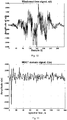
- Figure 10 depicts an example of a time domain signal s(t) .
- the example shown is 20 ms of a 16 kHz sampled signal.
- Figure 11 shows the spectral coefficients c(n) (also known as spectral lines) obtained for the time signal in Figure 10 .
- the time signal is an audio signal, such as a speech signal.
- An analysis window might be applied before the MDCT, see e.g. MDCT application and definition in ITU-T G.719 encoder.
- the band sizes could alternatively be logarithmic or semi- logarithmic band sizes (as in aforementioned document ITU-T G.719)).
- RMS Root Mean Square
- Figure 12 shows the logarithmic spectral band energies enLog(band) as obtained from the spectral coefficients c(n) according to Equation (1).
- Figure 13 shows the scale factors scf(n) as obtained from the logarithmic spectral band energies enLog(band) according to Equation (2).
- the first stage is a 10 bit split VQ and the second stage is a low complex algorithmic Pyramid VQ (PVQ).
- VQ complex algorithmic Pyramid VQ
- the presented VQ-scheme can typically be realized in the range of 20-60 bits without any drastic increase in complexity with increased bit rate.
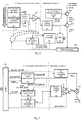
- Figure 14 schematically illustrates functional modules of an encoder employing the above disclosed stage 1 and stage 2 VQ.
- a complementary representation of this encoder is shown in Figure 6 .
- the first stage is a split VQ employing two off-line trained stochastic codebooks LFCB and HFCB.
- Each codebook row has dimension 8 and the number of codebook columns is limited to 32, requiring 5 bits for each split for transmission.
- module 611 overall direction
- module 612 outlier shapes
- module 613 regular shapes
- module 611 implements actions 801 through 810
- the shapeind, gainind, unitShapeIdxs indices results in a total of 2 28 possible gain-shape combinations
- the target of the second stage search is to find the set of indices that results in a minimum dMSE distortion value.
- this overall gain-shape MSE minimization and analysis is implemented by the normalized shape selector module 614, the adjustment gain application module 615, the subtraction module 618 and the MSE minimization module 616.
- the MSE minimization module 616 as depicted in Figure 6 may also include varying the shapes y j , (a unit energy normalized x j , would be x q,shape , ) .
- This general error minimization loop indicated in Figure 6 and by Equation 10 indicates that the MSE error is evaluated in the original scale factor domain, however given that the implemented analysis transform and synthesis transform is of high enough numerical precision the gain-shape MSE optimization may preferably be made in the transformed scale factor domain (See Equation 11, Figure 14 ) to save encoder side processing complexity.
- the second stage employs a 16-dimensional DCT-rotation using a 16-by-16 matrix D .
- DCT reverse (i.e., analysis) transform D
- IDCT forward(synthesis) transform
- the coefficients of the full D rotation matrix are listed below. It should be noted that the conventional DCT() and IDCT() functions could be used to realize these transformations.
- I.e. X q is the unit energy normalized integer vector y , a deterministic point on the unit energy hypersphere.
- n best n c , if Q PVQ ⁇ shape k n c ⁇ Q PVQ ⁇ shape k n best
- a projection to K (on the PVQ(N,K) pyramids surface) might also be used. It numerical precision issues result in a point above the pyramids surface, a new valid projection at or below the surface needs to be performed, or alternatively unit pulses are removed until the surface of the pyramid is reached.
- the set B positions only contain one single non-stacked unit pulse with a fixed energy contribution. This means that the search for the single pulse in set B may be simplified to search only for the maximum absolute value in the six set B locations.
- Equation (12) Four signed integer pulse configurations vectors y j are established by using distortion measure d PVQ-shape and then their corresponding unit energy shape vectors x q,j are computed according to Equation (12). As each total pulse configuration y j always spans 16 coefficients, the energy normalization is always performed over dimension 16, even though two shorter sets are used for enumeration of the y 0 integer vector.
- a final step of setting the signs of the non-zero entries in y j (n) based on the corresponding sign of the target vector x(n) is performed.
- Table 2 Informational example of PVQ search strategy for the described PVQ based shapes.
- Table 3 Informational example of potentially available integer vectors y j and unit energy normalized vectors x q,j , after the PVQ search.
- Example Integer vector y j Corresponding unit energy normalized vector x q,j (NB!
- y o [-10,0,0,0,0,0,0,0,0,0,0, 0,0, 0,0,0,0,0, 1]
- x q,0 [-0.995,0,0,0,0,0,0,0,0,0,0,0,0,0,0,0,0.100]
- y 1 [0,0 , 0,0,0,0, 0 , 0 , 0 , 0, 10,0,0,0,0,0,0]
- x q,1 [0,0,0,0,0,0,0,0,0,0, 0,1.0, 0,0,0,0,0,0,07 2
- y 2 [0,0,0 ,0 , 0,0,0,0,0,0 , 0 , 1,0,0,0,0,0,0,-7]
- x q,2 [0,0,0,0,0,0,0,0,0,0,0,
- the best possible shape and gain is determined among the possible shape candidates and each corresponding gain set.
- the pulse configuration(s) of the selected shape are enumerated using an efficient scheme which separates each PVQ(N, K) pulse configuration into two short codewords; a leading sign index bit and an integer MPVQ-index codeword.
- the MPVQ-index bit-space is typically fractional (i.e. a non-power of 2 total number of pulse configurations).
- the enumeration scheme uses an indexing offsets table A(n, k) which may be found as tabled unsigned integer values below.
- MPVQ enumeration calls for a selected shape are summarized in Table 5: Table 5: Scale factor VQ second stage shape enumeration of integer vector y j into leading signs indices and MPVQ shape indices for each possible selected shape index j.
- stage 1 indices are multiplexed in the following order: ind _ LF (5 bits) followed by ind _ HF (5 bits).
- the shape index j In combination with the fractional sized MPVQ-indices, the shape index j , the second stage shape codewords and potentially an LSB of the gain codeword are jointly encoded.
- the overall parameter encoding order for the second stage multiplexing components is shown in Table 6. Table 6: Multiplexing order and parameters for the second stage.
- the LSB submode bit is encoded as a specific bitspace section inside the overall joint shape codeword index joint .
- each leading sign is multiplexed as 1 if the leading sign is negative and multiplexed as a 0 if the leading sign is positive.
- Table 7 shows submode bit values, sizes of the various second stage MPVQ shape indices, and the adjustment gain separation sections for each shape index ( j ).
- Table 7 Submode bit values, sizes of the various second stage MPVQ shape indices, and the adjustment gain separation sections for each shape index ( j ).
- Shape index (j) Shape name MSB Submode bit value (regular/outlier) SZ MPVQ Set A (excl. LeadSign A ) SZ MPVQ Set B (excl.
- index joint , 1 LSB gain ⁇ SZ shapeA , 1 + index shapeA , 1
- Equation (30 the x q,j ( n ) ⁇ D T vector times matrix multiplication realizes the IDCT synthesis transform. Even though this (Equations 30 and 31) quantized scale factor generation takes place on the encoder side, the corresponding steps are performed the same way in the decoder, see Figure 7 modules 702; SCF VQ-stage 1 contribution, 706; Inverse warping/ transform, the adjustment gain in module 707, and the addition in module 708.
- the decoder performs the following steps.
- a set of 16 quantized scale factors is first decoded as described for/in the encoder. These quantized scale factors are the same as the quantized scale factors obtained in the encoder. The quantized scale factors are then used to shape the received MDCT normalized spectrum coefficient as described below.
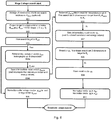
- Figure 15 schematically illustrates functional modules of a corresponding decoder for the encoder employing the above disclosed stage 1 and stage 2 VQ.
- a complementary representation of this decoder is shown in Figure 7 .
- the first stage parameters are decoded, in Figure 7 this is performed by the demultiplexor module 701; and in Figure 14 this is performed by the bitstream demultiplexor module 1501 as follows:
- the first stage indices ind _ LF and ind_HF are converted to signal st1(n) according to Equations (7) and (8) above, in Figure 7 this is performed in the stage 1 contribution module 702; and in Figure 14 this is performed by the stage 1 inverse split VQ module 1502.
- the shape selection, the second stage shape codewords and the adjustment gain least significant bit are jointly encoded as described in Table 7.
- the reverse process takes place.
- the second stage submode bit, initial gain index and the Leading Sign index are first read from the bitstream decoded as follows:
- the 24- or 25-bit joint index is read from the demux module 701, where the joint index is denoted tmp32 in the pseudo code above, decomposition is performed by the joint shape index decomposition module 703, and the resulting decoded shape index j and the resulting shape indices ( idxA, LS_indB ,indxB)) are forwarded to the de-enumeration module 704.
- the LS_indA index bit is a single bit it may be obtained directly from the demux module 701.
- the joint shape index decomposition module 703 also outputs the least significant gain bit gainLSB and combines that into a final gain index i .
- the vector y j is normalized into a unit energy vector x q.j by the PVQ unit energy normalization module 705.
- the forward synthesis transform (DCT) is applied by the inverse warping/transform module 706, and the resulting vector is then by the adjustment gain module 707 scaled by gain G i,j .
- the quantized scale factor signal is obtained by adding the scaled vector, by the adder module 708, to the SCF VQ-stage 1 contribution module702.
- shape_j is 0, two shapes A(LS_indA, idxA), B(LS_indB, idxB), are de-enumerated into signed integer vectors, otherwise ( shape_j is not 0) only one shape is de-enumerated.
- the setup of the four possible shape configurations are described in Table 1.
- MPVQ de-enumeration calls according to Table 8 are made for the demultiplexed shape ( j ).
- Table 8 Scale factor VQ second stage shape de-enumeration into integer vector y j for each possible received shape index j.
- the de-enumerated signed integer vector y j is normalized to an unit energy vector x q,j over dimension 16 according to Equation (12).
- the adjustment gain value G i,j for gain index i and shape index j is determined based on table lookup (see encoder Table 4).
- the final quantized scale factor generation is in Figure 7 performed by modules 702 (stage 1 contribution), 706 (forward synthesis transform) and 707 (gain application) together with the vector addition in module 708.
- the quantized scale factor generation is also illustrated in Figure 15 modules 1502 (stage 1 inverse VQ), 1505 (inverse synthesis transform), 1506 (adjustment gain application), and 1507 (vector addition).
- Decoder side inverse quantization of the normalized spectrum and scale factor application.
- the signal sQ(t) is windowed and the required MDCT overlap add (OLA) operation is performed to obtain the final synthesized time domain signal, see e.g. ITU-T G.719 decoder where a sine window is applied before the MDCT OLA.
- OLA MDCT overlap add
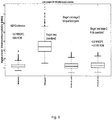
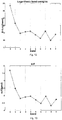
- FIG. 9 shows example results in terms of Spectral Distortion (SD) for 38 bit quantization of the envelope representation coefficients.
- SD Spectral Distortion
- 'MSVQ' Multistage-Split VQ
- the median is given as the center line in each box, and the complete box shows the 25 and 75 percentiles, and crosses show outlier points.
- the example fully quantized 'PVQ-D-Q' 38 bit quantizer provides much lower complexity in terms of both Weighted Million Operations per Second (WMOPS) and required table Read Only Memory (ROM).
- WOPS Weighted Million Operations per Second
- ROM Read Only Memory
- the second stage reduces the SD from the first stage (3.5 dB) to about 1.25 dB when both the first and the second stage are employed.
- an efficient low complexity method is provided for quantization of envelope representation coefficients.
- application of a transform to the envelope representation residual coefficients enables a very low rate and low complex first stage in the VQ without sacrificing performance.
- selection of an outlier sub-mode in a multimode PVQ quantizer enables efficient handling of envelope representation residual coefficient outliers.
- Outliers have very high or very low energy/gains or an atypical shape.
- selection of a regular sub-mode in a multimode PVQ quantizer enables higher resolution coding of the most frequent/typical envelope representation residual coefficients/shapes.
- the outlier mode employs a non-split VQ while the regular non-outlier submode employs a split-VQ, with different bits/coefficient in each split segment.
- the split segments may preferably be a nonlinear sample of the transformed vector.
- application of an efficient dual/multi-mode PVQ-search enables a very efficient search and sub-mode selection in a multimode PVQ-based gain-shape structure.
- the herein disclosed methods enable efficient usage of a fractional bitspace through the use joint combination of shape indices, LSB gains and LSB of submode indications.
- an encoder 1600 and a decoder 1800 are provided.
- Figs. 16-17 are block diagrams depicting the encoder 1600.
- Figs. 18-19 are block diagrams depicting the decoder 1800.
- the encoder 1600 is configured to perform the methods described for the encoder 1600 in the embodiments described herein, while the decoder 1800 is configured to perform the methods described for the decoder 1800 described herein.
- the embodiments may be implemented through one or more processors 1603 in the encoder depicted in Figure 16 and Figure 17 , together with computer program code 1605 for performing the functions and/or method actions of the embodiments herein.
- the program code mentioned above may also be provided as a computer program product, for instance in the form of a data carrier carrying computer program code for performing embodiments herein when being loaded into the encoder 1600.
- a data carrier carrying computer program code for performing embodiments herein when being loaded into the encoder 1600.
- One such carrier may be in the form of a CD ROM disc. It is however feasible with other data carriers such as a memory stick.
- the computer program code may furthermore be provided as pure program code on a server and downloaded to the encoder 1600.
- the encoder 1600 may further comprise a communication unit 1602 for wireline or wireless communication with e.g. the decoder 1800.
- the communication unit may be a wireline or wireless receiver and transmitter or a wireline or wireless transceiver.
- the encoder 1600 further comprises a memory 1604.
- the memory 1604 may, for example, be used to store applications or programs to perform the methods herein and/or any information used by such applications or programs.
- the computer program code may be downloaded in the memory 1604.
- the encoder 1600 may according to the embodiment of Figure 17 comprises a determining module 1702 for determining envelope representation residual coefficients as first compressed envelope representation coefficients subtracted from the input envelope representation coefficients, a transforming module 1704 for the envelope representation residual coefficients into a warped domain so as to obtain transformed envelope representation residual coefficients, an applying module for 1706 for applying at least one of a plurality of gain-shape coding schemes on the transformed envelope representation residual coefficients in order to achieve gain-shape coded envelope representation residual coefficients, where the plurality of gain-shape coding schemes have mutually different trade-offs in one or more of gain resolution and shape resolution for one or more of the transformed envelope representation residual coefficients, and a transmitting module 1708 for transmitting, over a communication channel to a decoder, a representation of the first compressed envelope representation coefficients, the gain-shape coded envelope representation residual coefficients, and information on the at least one applied gain-shape coding scheme.
- the encoder 1600 may optionally further comprise a quantizing module 17
- the examples useful for understanding the invention herein may be implemented through one or more processors 1803 in the decoder 1800 depicted in Figure 18 and Figure 19 , together with computer program code 1805 for performing the functions and/or method actions of the embodiments herein.
- the program code mentioned above may also be provided as a computer program product, for instance in the form of a data carrier carrying computer program code for performing embodiments herein when being loaded into the decoder 1800.
- a data carrier may be in the form of a CD ROM disc. It is however feasible with other data carriers such as a memory stick.
- the computer program code may furthermore be provided as pure program code on a server and downloaded to the decoder 1800.
- the decoder 1800 may further comprise a communication unit 1802 for wireline or wireless communication with the e.g. the encoder 1600.
- the communication unit may be a wireline or wireless receiver and transmitter or a transceiver.
- the decoder 1800 further comprises a memory 1804.
- the memory 1804 may, for example, be used to store applications or programs to perform the methods herein and/or any information used by such applications or programs.
- the computer program code may be downloaded in the memory 1804.
- the decoder 1800 may according to Figure 19 comprise a receiving module 1902 for receiving, over a communication channel from an encoder 1600, a representation of first compressed envelope representation coefficients, gain-shape coded envelope representation residual coefficients, and information on at least one applied gain-shape coding scheme, applied by the encoder, an applying module 1904 for applying at least one of a plurality of gain-shape decoding schemes on the received gain-shape coded envelope representation residual coefficients according to the received information on at least one applied gain-shape coding scheme, in order to achieve envelope representation residual coefficients, where the plurality of gain-shape decoding schemes have mutually different trade-offs in one or more of gain resolution and shape resolution for one or more of the gain-shape coded envelope representation residual coefficients, a transforming module 1906 for transforming the envelope representation residual coefficients from a warped domain into an envelope representation original domain so as to obtain transformed envelope representation residual coefficients, and a determining module 1908 for determining envelope representation coefficients as the transformed envelope representation residual
- circuits may be implemented using digital logic and/or one or more microcontrollers, microprocessors, or other digital hardware. In some embodiments, several or all of the various functions may be implemented together, such as in a single application-specific integrated circuit (ASIC), or in two or more separate devices with appropriate hardware and/or software interfaces between them.
- ASIC application-specific integrated circuit
Landscapes
- Engineering & Computer Science (AREA)
- Physics & Mathematics (AREA)
- Spectroscopy & Molecular Physics (AREA)
- Computational Linguistics (AREA)
- Signal Processing (AREA)
- Health & Medical Sciences (AREA)
- Audiology, Speech & Language Pathology (AREA)
- Human Computer Interaction (AREA)
- Acoustics & Sound (AREA)
- Multimedia (AREA)
- Compression, Expansion, Code Conversion, And Decoders (AREA)
- Transmission Systems Not Characterized By The Medium Used For Transmission (AREA)
Claims (21)
- Procédé réalisé par un encodeur (1600) d'un système de communication (100) destiné à traiter des coefficients de représentation d'enveloppe d'entrée, le procédé comprenant :la détermination (204) de coefficients résiduels de représentation d'enveloppe en tant que premiers coefficients de représentation d'enveloppe compressés soustraits des coefficients de représentation d'enveloppe d'entrée ;la transformation (206) des coefficients résiduels de représentation d'enveloppe en un domaine déformé de façon à obtenir des coefficients résiduels de représentation d'enveloppe transformés ;l'application (208) d'au moins l'un d'une pluralité de schémas de codage de forme de gain sur les coefficients résiduels de représentation d'enveloppe transformés afin d'atteindre des coefficients résiduels de représentation d'enveloppe à codage de forme de gain, où la pluralité de schémas de codage de forme de gain ont des compromis mutuellement différents dans au moins l'une d'une résolution de gain et d'une résolution de forme pour au moins l'un des coefficients résiduels de représentation d'enveloppe transformés ; etla transmission (210), sur un canal de communication à un décodeur, d'une représentation des premiers coefficients de représentation d'enveloppe compressés, des coefficients résiduels de représentation d'enveloppe à codage de forme de gain et d'informations sur l'au moins un schéma de codage de forme de gain appliqué.
- Procédé selon la revendication 1, comprenant en outre :la quantification (202) des coefficients de représentation d'enveloppe d'entrée à l'aide d'un premier nombre de bits,et dans lequel la détermination (204) de coefficients résiduels de représentation d'enveloppe comprend la soustraction des coefficients de représentation d'enveloppe quantifiés à partir des coefficients de représentation d'enveloppe d'entrée, et les premiers coefficients de représentation d'enveloppe compressés transmis sont les coefficients de représentation d'enveloppe quantifiés.
- Procédé selon l'une quelconque des revendications précédentes, dans lequel l'application (208) au moins de l'un d'une pluralité de schémas de codage de forme de gain sur les coefficients résiduels de représentation d'enveloppe transformés comprend l'application sélective de l'au moins un de la pluralité de schémas de codage de forme de gain.
- Procédé selon la revendication 3, dans lequel la sélection dans l'application sélective (208) de l'au moins un de la pluralité de schémas de codage de forme de gain est réalisée par une combinaison d'une projection de forme PVQ et d'une recherche affinée de forme pour rechercher un premier point de code en pyramide PVQ sur des dimensions disponibles par coefficient résiduel de représentation d'enveloppe.
- Procédé selon la revendication 3, dans lequel la sélection dans l'application sélective (208) de l'au moins un de la pluralité de schémas de codage de forme de gain est réalisée par une combinaison d'une projection de forme PVQ et d'une recherche affinée de forme pour rechercher un premier point de code en pyramide PVQ sur des dimensions disponibles suivie d'une autre recherche affinée de forme pour rechercher un deuxième point de code en pyramide PVQ dans un ensemble restreint de dimensions.
- Procédé selon l'une quelconque des revendications précédentes, dans lequel au moins certains de la pluralité de schémas de codage de forme de gain utilisent des résolutions binaires mutuellement différentes pour des sous-ensembles différents de coefficients résiduels de représentation d'enveloppe.
- Procédé selon l'une quelconque des revendications précédentes, dans lequel les coefficients de représentation d'enveloppe d'entrée sont des coefficients de représentation d'enveloppe à moyenne supprimée.
- Procédé selon l'une quelconque des revendications précédentes, dans lequel l'application (208) d'au moins l'un d'une pluralité de schémas de codage de forme de gain sur les coefficients résiduels de représentation d'enveloppe transformés comprend l'application d'une VQ à deux étapes.
- Procédé selon la revendication 8, dans lequel la VQ à deux étapes comprend une VQ divisée de première étape et une PVQ de deuxième étape.
- Procédé selon la revendication 9, dans lequel la VQ divisée utilise deux livres de code stochastiques à apprentissage hors ligne.
- Procédé selon la revendication 10, dans lequel les deux livres de code stochastiques à apprentissage hors ligne ne sont pas plus grands que la moitié de la taille de livres de code utilisés pendant la PVQ de deuxième étape.
- Procédé selon la revendication 9, dans lequel la PVQ utilise l'application d'une matrice de rotation DCT, l'application d'une recherche de forme, l'application d'une quantification de gain d'ajustement et de sous-mode, et l'application d'une énumération de forme.
- Procédé selon la revendication 12, dans lequel la VQ à deux étapes utilise un total de 38 bits entiers.
- Procédé selon l'une quelconque des revendications précédentes, dans lequel un espace de bit d'entier pour un multiplexage de forme de gain est utilisé par sectionnement d'un mot de code de forme jointe en plusieurs sous-sections, et où une sous-section spécifique indique le bit le moins significatif de sous-mode, un bit le moins significatif de gain, ou un mot de code de forme supplémentaire.
- Procédé selon l'une quelconque des revendications précédentes, dans lequel la représentation est définie par des indices sur des livres de code.
- Procédé selon l'une quelconque des revendications précédentes, dans lequel la représentation est définie par les premiers coefficients de représentation d'enveloppe compressés, les coefficients résiduels de représentation d'enveloppe à codage de forme de gain, et les informations sur au moins un schéma de codage de forme de gain appliqué eux-mêmes.
- Procédé selon l'une quelconque des revendications précédentes, dans lequel les coefficients de représentation d'enveloppe représentent des facteurs d'échelle.
- Procédé selon l'une quelconque des revendications précédentes, dans lequel les coefficients de représentation d'enveloppe représentent une forme d'onde audio encodée.
- Encodeur (1600) d'un système de communication (100) destiné à traiter des coefficients de représentation d'enveloppe d'entrée, l'encodeur comprenant une circuiterie de traitement (1603), la circuiterie de traitement étant configurée pour amener l'encodeur (1600) à :déterminer des coefficients résiduels de représentation d'enveloppe en tant que premiers coefficients de représentation d'enveloppe compressés soustraits des coefficients de représentation d'enveloppe d'entrée ;transformer les coefficients résiduels de représentation d'enveloppe en un domaine déformé de façon à obtenir des coefficients résiduels de représentation d'enveloppe transformés ;appliquer au moins l'un d'une pluralité de schémas de codage de forme de gain sur les coefficients résiduels de représentation d'enveloppe transformés afin d'atteindre des coefficients résiduels de représentation d'enveloppe à codage de forme de gain, où la pluralité de schémas de codage de forme de gain ont des compromis mutuellement différents dans au moins l'une d'une résolution de gain et d'une résolution de forme pour au moins l'un des coefficients résiduels de représentation d'enveloppe transformés ; et
transmettre, sur un canal de communication à un décodeur, une représentation des premiers coefficients de représentation d'enveloppe compressés, des coefficients résiduels de représentation d'enveloppe à codage de forme de gain et d'informations sur l'au moins un schéma de codage de forme de gain appliqué. - Encodeur (1600) selon la revendication 19, l'encodeur étant en outre configuré pour réaliser le procédé selon l'une quelconque des revendications 1 à 18.
- Programme informatique (1605) destiné à traiter des coefficients de représentation d'enveloppe d'entrée, le programme informatique comprenant un code informatique qui, lorsqu'il est exécuté sur une circuiterie de traitement (1603) d'un encodeur (1600), amène l'encodeur (1600) à :déterminer (204) des coefficients résiduels de représentation d'enveloppe en tant que premiers coefficients de représentation d'enveloppe compressés soustraits des coefficients de représentation d'enveloppe d'entrée ;transformer (206) les coefficients résiduels de représentation d'enveloppe en un domaine déformé de façon à obtenir des coefficients résiduels de représentation d'enveloppe transformés ;appliquer (208) au moins l'un d'une pluralité de schémas de codage de forme de gain sur les coefficients résiduels de représentation d'enveloppe transformés afin d'atteindre des coefficients résiduels de représentation d'enveloppe à codage de forme de gain, où la pluralité de schémas de codage de forme de gain ont des compromis mutuellement différents dans au moins l'une d'une résolution de gain et d'une résolution de forme pour au moins l'un des coefficients résiduels de représentation d'enveloppe transformés ; ettransmettre (210), sur un canal de communication à un décodeur, une représentation des premiers coefficients de représentation d'enveloppe compressés, des coefficients résiduels de représentation d'enveloppe à codage de forme de gain et d'informations sur l'au moins un schéma de codage de forme de gain appliqué.
Priority Applications (3)
| Application Number | Priority Date | Filing Date | Title |
|---|---|---|---|
| PL17816811T PL3555885T3 (pl) | 2016-12-16 | 2017-12-15 | Sposób i koder do obsługi współczynników reprezentacji obwiedni |
| EP20177960.0A EP3723087B1 (fr) | 2016-12-16 | 2017-12-15 | Procédé et codeur pour manipuler des coefficients de représentation d'enveloppe |
| EP25188351.8A EP4607513A1 (fr) | 2016-12-16 | 2017-12-15 | Procédé et codeur pour gérer des coefficients de représentation d'enveloppe |
Applications Claiming Priority (3)
| Application Number | Priority Date | Filing Date | Title |
|---|---|---|---|
| US201662435173P | 2016-12-16 | 2016-12-16 | |
| US201762583791P | 2017-11-09 | 2017-11-09 | |
| PCT/EP2017/082951 WO2018109143A1 (fr) | 2016-12-16 | 2017-12-15 | Procédés, codeur et décodeur de gestion de coefficients de représentation d'enveloppe |
Related Child Applications (2)
| Application Number | Title | Priority Date | Filing Date |
|---|---|---|---|
| EP25188351.8A Division EP4607513A1 (fr) | 2016-12-16 | 2017-12-15 | Procédé et codeur pour gérer des coefficients de représentation d'enveloppe |
| EP20177960.0A Division EP3723087B1 (fr) | 2016-12-16 | 2017-12-15 | Procédé et codeur pour manipuler des coefficients de représentation d'enveloppe |
Publications (2)
| Publication Number | Publication Date |
|---|---|
| EP3555885A1 EP3555885A1 (fr) | 2019-10-23 |
| EP3555885B1 true EP3555885B1 (fr) | 2020-06-24 |
Family
ID=60702783
Family Applications (3)
| Application Number | Title | Priority Date | Filing Date |
|---|---|---|---|
| EP17816811.8A Active EP3555885B1 (fr) | 2016-12-16 | 2017-12-15 | Procédé et codeur de gestion de coefficients de représentation d'enveloppe |
| EP25188351.8A Pending EP4607513A1 (fr) | 2016-12-16 | 2017-12-15 | Procédé et codeur pour gérer des coefficients de représentation d'enveloppe |
| EP20177960.0A Active EP3723087B1 (fr) | 2016-12-16 | 2017-12-15 | Procédé et codeur pour manipuler des coefficients de représentation d'enveloppe |
Family Applications After (2)
| Application Number | Title | Priority Date | Filing Date |
|---|---|---|---|
| EP25188351.8A Pending EP4607513A1 (fr) | 2016-12-16 | 2017-12-15 | Procédé et codeur pour gérer des coefficients de représentation d'enveloppe |
| EP20177960.0A Active EP3723087B1 (fr) | 2016-12-16 | 2017-12-15 | Procédé et codeur pour manipuler des coefficients de représentation d'enveloppe |
Country Status (8)
| Country | Link |
|---|---|
| US (4) | US10580422B2 (fr) |
| EP (3) | EP3555885B1 (fr) |
| CN (2) | CN116343804A (fr) |
| ES (2) | ES2821141T3 (fr) |
| MX (1) | MX2019006535A (fr) |
| PL (1) | PL3555885T3 (fr) |
| PT (1) | PT3555885T (fr) |
| WO (1) | WO2018109143A1 (fr) |
Families Citing this family (3)
| Publication number | Priority date | Publication date | Assignee | Title |
|---|---|---|---|---|
| US10950251B2 (en) * | 2018-03-05 | 2021-03-16 | Dts, Inc. | Coding of harmonic signals in transform-based audio codecs |
| US12073842B2 (en) * | 2019-06-24 | 2024-08-27 | Qualcomm Incorporated | Psychoacoustic audio coding of ambisonic audio data |
| CN112735449B (zh) * | 2020-12-30 | 2023-04-14 | 北京百瑞互联技术有限公司 | 优化频域噪声整形的音频编码方法及装置 |
Family Cites Families (20)
| Publication number | Priority date | Publication date | Assignee | Title |
|---|---|---|---|---|
| US4912764A (en) * | 1985-08-28 | 1990-03-27 | American Telephone And Telegraph Company, At&T Bell Laboratories | Digital speech coder with different excitation types |
| ES2259158T3 (es) * | 2002-09-19 | 2006-09-16 | Matsushita Electric Industrial Co., Ltd. | Metodo y aparato decodificador audio. |
| KR100487719B1 (ko) | 2003-03-05 | 2005-05-04 | 한국전자통신연구원 | 광대역 음성 부호화를 위한 엘에스에프 계수 벡터 양자화기 |
| CN1965352B (zh) * | 2004-06-08 | 2011-05-25 | 皇家飞利浦电子股份有限公司 | 音频编码 |
| US20060136202A1 (en) * | 2004-12-16 | 2006-06-22 | Texas Instruments, Inc. | Quantization of excitation vector |
| UA94041C2 (ru) * | 2005-04-01 | 2011-04-11 | Квелкомм Инкорпорейтед | Способ и устройство для фильтрации, устраняющей разреженность |
| US8260611B2 (en) | 2005-04-01 | 2012-09-04 | Qualcomm Incorporated | Systems, methods, and apparatus for highband excitation generation |
| JP5547081B2 (ja) * | 2007-11-02 | 2014-07-09 | 華為技術有限公司 | 音声復号化方法及び装置 |
| US8422569B2 (en) * | 2008-01-25 | 2013-04-16 | Panasonic Corporation | Encoding device, decoding device, and method thereof |
| CN101588182A (zh) * | 2008-05-19 | 2009-11-25 | 华为技术有限公司 | 矢量规整的方法及装置和矢量规整的解码方法及装置 |
| KR101423737B1 (ko) * | 2010-01-21 | 2014-07-24 | 한국전자통신연구원 | 오디오 신호의 디코딩 방법 및 장치 |
| CN102222505B (zh) | 2010-04-13 | 2012-12-19 | 中兴通讯股份有限公司 | 可分层音频编解码方法系统及瞬态信号可分层编解码方法 |
| WO2012122299A1 (fr) * | 2011-03-07 | 2012-09-13 | Xiph. Org. | Attribution de bits et partitionnement en bandes dans une quantification vectorielle sous forme de gain pour un codage audio |
| PL2908313T3 (pl) * | 2011-04-15 | 2019-11-29 | Ericsson Telefon Ab L M | Adaptacyjny podział współczynnika kształt - wzmocnienie |
| NO2669468T3 (fr) * | 2011-05-11 | 2018-06-02 | ||
| PT3111560T (pt) * | 2014-02-27 | 2021-07-08 | Ericsson Telefon Ab L M | Método e aparelho para indexação e desindexação de quantificação vetorial em pirâmide de vetores de amostra de áudio/vídeo |
| EP3117432B1 (fr) * | 2014-03-14 | 2019-05-08 | Telefonaktiebolaget LM Ericsson (publ) | Procédé et appareil de codage audio |
| EP3555886B1 (fr) * | 2016-12-16 | 2020-05-13 | Telefonaktiebolaget LM Ericsson (PUBL) | Procédés, codeur et décodeur de gestion de coefficients de fréquence spectrale de ligne |
| US12073842B2 (en) * | 2019-06-24 | 2024-08-27 | Qualcomm Incorporated | Psychoacoustic audio coding of ambisonic audio data |
| US11361776B2 (en) * | 2019-06-24 | 2022-06-14 | Qualcomm Incorporated | Coding scaled spatial components |
-
2017
- 2017-12-15 EP EP17816811.8A patent/EP3555885B1/fr active Active
- 2017-12-15 US US15/774,535 patent/US10580422B2/en active Active
- 2017-12-15 ES ES17816811T patent/ES2821141T3/es active Active
- 2017-12-15 PL PL17816811T patent/PL3555885T3/pl unknown
- 2017-12-15 ES ES20177960T patent/ES3047123T3/es active Active
- 2017-12-15 MX MX2019006535A patent/MX2019006535A/es unknown
- 2017-12-15 EP EP25188351.8A patent/EP4607513A1/fr active Pending
- 2017-12-15 EP EP20177960.0A patent/EP3723087B1/fr active Active
- 2017-12-15 PT PT178168118T patent/PT3555885T/pt unknown
- 2017-12-15 CN CN202211569599.1A patent/CN116343804A/zh active Pending
- 2017-12-15 WO PCT/EP2017/082951 patent/WO2018109143A1/fr not_active Ceased
- 2017-12-15 CN CN201780075965.9A patent/CN110050304B/zh active Active
-
2020
- 2020-02-06 US US16/783,823 patent/US11430455B2/en active Active
-
2022
- 2022-08-22 US US17/821,344 patent/US11990145B2/en active Active
-
2024
- 2024-04-29 US US18/649,620 patent/US20240395268A1/en active Pending
Non-Patent Citations (1)
| Title |
|---|
| None * |
Also Published As
| Publication number | Publication date |
|---|---|
| US11990145B2 (en) | 2024-05-21 |
| ES2821141T3 (es) | 2021-04-23 |
| BR112019008054A2 (pt) | 2019-07-02 |
| US20190362730A1 (en) | 2019-11-28 |
| PL3555885T3 (pl) | 2021-01-11 |
| US20230072546A1 (en) | 2023-03-09 |
| CN110050304B (zh) | 2022-11-29 |
| ES3047123T3 (en) | 2025-12-03 |
| US20240395268A1 (en) | 2024-11-28 |
| MX2019006535A (es) | 2019-08-21 |
| EP3723087A1 (fr) | 2020-10-14 |
| CN116343804A (zh) | 2023-06-27 |
| US11430455B2 (en) | 2022-08-30 |
| US20200176005A1 (en) | 2020-06-04 |
| EP3555885A1 (fr) | 2019-10-23 |
| EP4607513A1 (fr) | 2025-08-27 |
| EP3723087C0 (fr) | 2025-08-13 |
| EP3723087B1 (fr) | 2025-08-13 |
| PT3555885T (pt) | 2020-07-20 |
| WO2018109143A1 (fr) | 2018-06-21 |
| CN110050304A (zh) | 2019-07-23 |
| US10580422B2 (en) | 2020-03-03 |
Similar Documents
| Publication | Publication Date | Title |
|---|---|---|
| US20240395268A1 (en) | Methods, encoder and decoder for handling envelope representation coefficients | |
| US10841584B2 (en) | Method and apparatus for pyramid vector quantization de-indexing of audio/video sample vectors | |
| EP3555886B1 (fr) | Procédés, codeur et décodeur de gestion de coefficients de fréquence spectrale de ligne | |
| KR101390051B1 (ko) | 벡터 양자화 장치, 벡터 역양자화 장치, 및 이러한 방법 | |
| EP2557566B1 (fr) | Procédé et appareil pour le traitement d'un signal audio | |
| WO2007114290A1 (fr) | dispositif de quantification de vecteur, dispositif de déquantification de vecteur, procédé de quantification de vecteur et procédé de déquantification de vecteur | |
| CN115699169B (zh) | 编码装置、解码装置、编码方法及解码方法 | |
| US8493244B2 (en) | Vector quantization device, vector inverse-quantization device, and methods of same | |
| US20040176951A1 (en) | LSF coefficient vector quantizer for wideband speech coding | |
| KR20130112869A (ko) | 양자화 장치 및 양자화 방법 | |
| CN112352277B (zh) | 编码装置及编码方法 | |
| US20240177723A1 (en) | Encoding device, decoding device, encoding method, and decoding method | |
| US8949117B2 (en) | Encoding device, decoding device and methods therefor | |
| US12579990B2 (en) | Encoding device, decoding device, encoding method, and decoding method | |
| US20250252963A1 (en) | Method for quantizing line spectral frequencies | |
| CN116964944A (zh) | 编码装置、解码装置、编码方法及解码方法 |
Legal Events
| Date | Code | Title | Description |
|---|---|---|---|
| STAA | Information on the status of an ep patent application or granted ep patent |
Free format text: STATUS: UNKNOWN |
|
| STAA | Information on the status of an ep patent application or granted ep patent |
Free format text: STATUS: THE INTERNATIONAL PUBLICATION HAS BEEN MADE |
|
| PUAI | Public reference made under article 153(3) epc to a published international application that has entered the european phase |
Free format text: ORIGINAL CODE: 0009012 |
|
| STAA | Information on the status of an ep patent application or granted ep patent |
Free format text: STATUS: REQUEST FOR EXAMINATION WAS MADE |
|
| 17P | Request for examination filed |
Effective date: 20190613 |
|
| AK | Designated contracting states |
Kind code of ref document: A1 Designated state(s): AL AT BE BG CH CY CZ DE DK EE ES FI FR GB GR HR HU IE IS IT LI LT LU LV MC MK MT NL NO PL PT RO RS SE SI SK SM TR |
|
| AX | Request for extension of the european patent |
Extension state: BA ME |
|
| GRAP | Despatch of communication of intention to grant a patent |
Free format text: ORIGINAL CODE: EPIDOSNIGR1 |
|
| STAA | Information on the status of an ep patent application or granted ep patent |
Free format text: STATUS: GRANT OF PATENT IS INTENDED |
|
| INTG | Intention to grant announced |
Effective date: 20200120 |
|
| DAV | Request for validation of the european patent (deleted) | ||
| DAX | Request for extension of the european patent (deleted) | ||
| GRAS | Grant fee paid |
Free format text: ORIGINAL CODE: EPIDOSNIGR3 |
|
| GRAA | (expected) grant |
Free format text: ORIGINAL CODE: 0009210 |
|
| STAA | Information on the status of an ep patent application or granted ep patent |
Free format text: STATUS: THE PATENT HAS BEEN GRANTED |
|
| AK | Designated contracting states |
Kind code of ref document: B1 Designated state(s): AL AT BE BG CH CY CZ DE DK EE ES FI FR GB GR HR HU IE IS IT LI LT LU LV MC MK MT NL NO PL PT RO RS SE SI SK SM TR |
|
| REG | Reference to a national code |
Ref country code: GB Ref legal event code: FG4D |
|
| REG | Reference to a national code |
Ref country code: CH Ref legal event code: EP |
|
| REG | Reference to a national code |
Ref country code: FI Ref legal event code: FGE |
|
| REG | Reference to a national code |
Ref country code: AT Ref legal event code: REF Ref document number: 1284687 Country of ref document: AT Kind code of ref document: T Effective date: 20200715 |
|
| REG | Reference to a national code |
Ref country code: DE Ref legal event code: R096 Ref document number: 602017018834 Country of ref document: DE |
|
| REG | Reference to a national code |
Ref country code: PT Ref legal event code: SC4A Ref document number: 3555885 Country of ref document: PT Date of ref document: 20200720 Kind code of ref document: T Free format text: AVAILABILITY OF NATIONAL TRANSLATION Effective date: 20200715 |
|
| REG | Reference to a national code |
Ref country code: IE Ref legal event code: FG4D |
|
| REG | Reference to a national code |
Ref country code: SE Ref legal event code: TRGR |
|
| REG | Reference to a national code |
Ref country code: NL Ref legal event code: FP |
|
| PG25 | Lapsed in a contracting state [announced via postgrant information from national office to epo] |
Ref country code: GR Free format text: LAPSE BECAUSE OF FAILURE TO SUBMIT A TRANSLATION OF THE DESCRIPTION OR TO PAY THE FEE WITHIN THE PRESCRIBED TIME-LIMIT Effective date: 20200925 Ref country code: NO Free format text: LAPSE BECAUSE OF FAILURE TO SUBMIT A TRANSLATION OF THE DESCRIPTION OR TO PAY THE FEE WITHIN THE PRESCRIBED TIME-LIMIT Effective date: 20200924 Ref country code: LT Free format text: LAPSE BECAUSE OF FAILURE TO SUBMIT A TRANSLATION OF THE DESCRIPTION OR TO PAY THE FEE WITHIN THE PRESCRIBED TIME-LIMIT Effective date: 20200624 |
|
| REG | Reference to a national code |
Ref country code: LT Ref legal event code: MG4D |
|
| PG25 | Lapsed in a contracting state [announced via postgrant information from national office to epo] |
Ref country code: RS Free format text: LAPSE BECAUSE OF FAILURE TO SUBMIT A TRANSLATION OF THE DESCRIPTION OR TO PAY THE FEE WITHIN THE PRESCRIBED TIME-LIMIT Effective date: 20200624 Ref country code: BG Free format text: LAPSE BECAUSE OF FAILURE TO SUBMIT A TRANSLATION OF THE DESCRIPTION OR TO PAY THE FEE WITHIN THE PRESCRIBED TIME-LIMIT Effective date: 20200924 Ref country code: LV Free format text: LAPSE BECAUSE OF FAILURE TO SUBMIT A TRANSLATION OF THE DESCRIPTION OR TO PAY THE FEE WITHIN THE PRESCRIBED TIME-LIMIT Effective date: 20200624 Ref country code: HR Free format text: LAPSE BECAUSE OF FAILURE TO SUBMIT A TRANSLATION OF THE DESCRIPTION OR TO PAY THE FEE WITHIN THE PRESCRIBED TIME-LIMIT Effective date: 20200624 |
|
| REG | Reference to a national code |
Ref country code: AT Ref legal event code: MK05 Ref document number: 1284687 Country of ref document: AT Kind code of ref document: T Effective date: 20200624 |
|
| PG25 | Lapsed in a contracting state [announced via postgrant information from national office to epo] |
Ref country code: AL Free format text: LAPSE BECAUSE OF FAILURE TO SUBMIT A TRANSLATION OF THE DESCRIPTION OR TO PAY THE FEE WITHIN THE PRESCRIBED TIME-LIMIT Effective date: 20200624 |
|
| PG25 | Lapsed in a contracting state [announced via postgrant information from national office to epo] |
Ref country code: AT Free format text: LAPSE BECAUSE OF FAILURE TO SUBMIT A TRANSLATION OF THE DESCRIPTION OR TO PAY THE FEE WITHIN THE PRESCRIBED TIME-LIMIT Effective date: 20200624 Ref country code: RO Free format text: LAPSE BECAUSE OF FAILURE TO SUBMIT A TRANSLATION OF THE DESCRIPTION OR TO PAY THE FEE WITHIN THE PRESCRIBED TIME-LIMIT Effective date: 20200624 Ref country code: SM Free format text: LAPSE BECAUSE OF FAILURE TO SUBMIT A TRANSLATION OF THE DESCRIPTION OR TO PAY THE FEE WITHIN THE PRESCRIBED TIME-LIMIT Effective date: 20200624 Ref country code: EE Free format text: LAPSE BECAUSE OF FAILURE TO SUBMIT A TRANSLATION OF THE DESCRIPTION OR TO PAY THE FEE WITHIN THE PRESCRIBED TIME-LIMIT Effective date: 20200624 |
|
| PG25 | Lapsed in a contracting state [announced via postgrant information from national office to epo] |
Ref country code: IS Free format text: LAPSE BECAUSE OF FAILURE TO SUBMIT A TRANSLATION OF THE DESCRIPTION OR TO PAY THE FEE WITHIN THE PRESCRIBED TIME-LIMIT Effective date: 20201024 Ref country code: SK Free format text: LAPSE BECAUSE OF FAILURE TO SUBMIT A TRANSLATION OF THE DESCRIPTION OR TO PAY THE FEE WITHIN THE PRESCRIBED TIME-LIMIT Effective date: 20200624 |
|
| REG | Reference to a national code |
Ref country code: DE Ref legal event code: R097 Ref document number: 602017018834 Country of ref document: DE |
|
| REG | Reference to a national code |
Ref country code: ES Ref legal event code: FG2A Ref document number: 2821141 Country of ref document: ES Kind code of ref document: T3 Effective date: 20210423 |
|
| PG25 | Lapsed in a contracting state [announced via postgrant information from national office to epo] |
Ref country code: DK Free format text: LAPSE BECAUSE OF FAILURE TO SUBMIT A TRANSLATION OF THE DESCRIPTION OR TO PAY THE FEE WITHIN THE PRESCRIBED TIME-LIMIT Effective date: 20200624 |
|
| PLBE | No opposition filed within time limit |
Free format text: ORIGINAL CODE: 0009261 |
|
| STAA | Information on the status of an ep patent application or granted ep patent |
Free format text: STATUS: NO OPPOSITION FILED WITHIN TIME LIMIT |
|
| 26N | No opposition filed |
Effective date: 20210325 |
|
| REG | Reference to a national code |
Ref country code: CH Ref legal event code: PL |
|
| PG25 | Lapsed in a contracting state [announced via postgrant information from national office to epo] |
Ref country code: MC Free format text: LAPSE BECAUSE OF FAILURE TO SUBMIT A TRANSLATION OF THE DESCRIPTION OR TO PAY THE FEE WITHIN THE PRESCRIBED TIME-LIMIT Effective date: 20200624 Ref country code: SI Free format text: LAPSE BECAUSE OF FAILURE TO SUBMIT A TRANSLATION OF THE DESCRIPTION OR TO PAY THE FEE WITHIN THE PRESCRIBED TIME-LIMIT Effective date: 20200624 |
|
| REG | Reference to a national code |
Ref country code: BE Ref legal event code: MM Effective date: 20201231 |
|
| PG25 | Lapsed in a contracting state [announced via postgrant information from national office to epo] |
Ref country code: LU Free format text: LAPSE BECAUSE OF NON-PAYMENT OF DUE FEES Effective date: 20201215 |
|
| PG25 | Lapsed in a contracting state [announced via postgrant information from national office to epo] |
Ref country code: LI Free format text: LAPSE BECAUSE OF NON-PAYMENT OF DUE FEES Effective date: 20201231 Ref country code: CH Free format text: LAPSE BECAUSE OF NON-PAYMENT OF DUE FEES Effective date: 20201231 |
|
| PG25 | Lapsed in a contracting state [announced via postgrant information from national office to epo] |
Ref country code: MT Free format text: LAPSE BECAUSE OF FAILURE TO SUBMIT A TRANSLATION OF THE DESCRIPTION OR TO PAY THE FEE WITHIN THE PRESCRIBED TIME-LIMIT Effective date: 20200624 Ref country code: CY Free format text: LAPSE BECAUSE OF FAILURE TO SUBMIT A TRANSLATION OF THE DESCRIPTION OR TO PAY THE FEE WITHIN THE PRESCRIBED TIME-LIMIT Effective date: 20200624 |
|
| PG25 | Lapsed in a contracting state [announced via postgrant information from national office to epo] |
Ref country code: MK Free format text: LAPSE BECAUSE OF FAILURE TO SUBMIT A TRANSLATION OF THE DESCRIPTION OR TO PAY THE FEE WITHIN THE PRESCRIBED TIME-LIMIT Effective date: 20200624 |
|
| PG25 | Lapsed in a contracting state [announced via postgrant information from national office to epo] |
Ref country code: BE Free format text: LAPSE BECAUSE OF NON-PAYMENT OF DUE FEES Effective date: 20201231 |
|
| P01 | Opt-out of the competence of the unified patent court (upc) registered |
Effective date: 20230523 |
|
| PGFP | Annual fee paid to national office [announced via postgrant information from national office to epo] |
Ref country code: PT Payment date: 20251124 Year of fee payment: 9 |
|
| PGFP | Annual fee paid to national office [announced via postgrant information from national office to epo] |
Ref country code: GB Payment date: 20251229 Year of fee payment: 9 |
|
| PGFP | Annual fee paid to national office [announced via postgrant information from national office to epo] |
Ref country code: IT Payment date: 20251219 Year of fee payment: 9 Ref country code: FI Payment date: 20251226 Year of fee payment: 9 |
|
| PGFP | Annual fee paid to national office [announced via postgrant information from national office to epo] |
Ref country code: NL Payment date: 20251226 Year of fee payment: 9 Ref country code: FR Payment date: 20251226 Year of fee payment: 9 |
|
| PGFP | Annual fee paid to national office [announced via postgrant information from national office to epo] |
Ref country code: TR Payment date: 20251121 Year of fee payment: 9 |
|
| PGFP | Annual fee paid to national office [announced via postgrant information from national office to epo] |
Ref country code: SE Payment date: 20251227 Year of fee payment: 9 |
|
| PGFP | Annual fee paid to national office [announced via postgrant information from national office to epo] |
Ref country code: IE Payment date: 20251229 Year of fee payment: 9 Ref country code: CZ Payment date: 20251125 Year of fee payment: 9 |
|
| PGFP | Annual fee paid to national office [announced via postgrant information from national office to epo] |
Ref country code: PL Payment date: 20251120 Year of fee payment: 9 |
|
| PGFP | Annual fee paid to national office [announced via postgrant information from national office to epo] |
Ref country code: ES Payment date: 20260102 Year of fee payment: 9 |
|
| PGFP | Annual fee paid to national office [announced via postgrant information from national office to epo] |
Ref country code: DE Payment date: 20251229 Year of fee payment: 9 |