EP3565432B1 - Dispositif et système de traitement capillaire et procédé de traitement cosmétique des cheveux - Google Patents
Dispositif et système de traitement capillaire et procédé de traitement cosmétique des cheveux Download PDFInfo
- Publication number
- EP3565432B1 EP3565432B1 EP17816765.6A EP17816765A EP3565432B1 EP 3565432 B1 EP3565432 B1 EP 3565432B1 EP 17816765 A EP17816765 A EP 17816765A EP 3565432 B1 EP3565432 B1 EP 3565432B1
- Authority
- EP
- European Patent Office
- Prior art keywords
- hair
- hair treatment
- sensor
- exemplary embodiments
- various exemplary
- Prior art date
- Legal status (The legal status is an assumption and is not a legal conclusion. Google has not performed a legal analysis and makes no representation as to the accuracy of the status listed.)
- Active
Links
Images





Classifications
-
- A—HUMAN NECESSITIES
- A45—HAND OR TRAVELLING ARTICLES
- A45D—HAIRDRESSING OR SHAVING EQUIPMENT; EQUIPMENT FOR COSMETICS OR COSMETIC TREATMENTS, e.g. FOR MANICURING OR PEDICURING
- A45D1/00—Curling-tongs, i.e. tongs for use when hot; Curling-irons, i.e. irons for use when hot; Accessories therefor
- A45D1/28—Curling-tongs, i.e. tongs for use when hot; Curling-irons, i.e. irons for use when hot; Accessories therefor with means for controlling or indicating the temperature
-
- A—HUMAN NECESSITIES
- A61—MEDICAL OR VETERINARY SCIENCE; HYGIENE
- A61B—DIAGNOSIS; SURGERY; IDENTIFICATION
- A61B5/00—Measuring for diagnostic purposes; Identification of persons
- A61B5/0059—Measuring for diagnostic purposes; Identification of persons using light, e.g. diagnosis by transillumination, diascopy, fluorescence
- A61B5/0075—Measuring for diagnostic purposes; Identification of persons using light, e.g. diagnosis by transillumination, diascopy, fluorescence by spectroscopy, i.e. measuring spectra, e.g. Raman spectroscopy, infrared absorption spectroscopy
-
- A—HUMAN NECESSITIES
- A45—HAND OR TRAVELLING ARTICLES
- A45D—HAIRDRESSING OR SHAVING EQUIPMENT; EQUIPMENT FOR COSMETICS OR COSMETIC TREATMENTS, e.g. FOR MANICURING OR PEDICURING
- A45D1/00—Curling-tongs, i.e. tongs for use when hot; Curling-irons, i.e. irons for use when hot; Accessories therefor
- A45D1/02—Curling-tongs, i.e. tongs for use when hot; Curling-irons, i.e. irons for use when hot; Accessories therefor with means for internal heating, e.g. by liquid fuel
- A45D1/04—Curling-tongs, i.e. tongs for use when hot; Curling-irons, i.e. irons for use when hot; Accessories therefor with means for internal heating, e.g. by liquid fuel by electricity
-
- A—HUMAN NECESSITIES
- A45—HAND OR TRAVELLING ARTICLES
- A45D—HAIRDRESSING OR SHAVING EQUIPMENT; EQUIPMENT FOR COSMETICS OR COSMETIC TREATMENTS, e.g. FOR MANICURING OR PEDICURING
- A45D2/00—Hair-curling or hair-waving appliances ; Appliances for hair dressing treatment not otherwise provided for
- A45D2/001—Hair straightening appliances
-
- A—HUMAN NECESSITIES
- A45—HAND OR TRAVELLING ARTICLES
- A45D—HAIRDRESSING OR SHAVING EQUIPMENT; EQUIPMENT FOR COSMETICS OR COSMETIC TREATMENTS, e.g. FOR MANICURING OR PEDICURING
- A45D20/00—Hair drying devices; Accessories therefor
-
- A—HUMAN NECESSITIES
- A45—HAND OR TRAVELLING ARTICLES
- A45D—HAIRDRESSING OR SHAVING EQUIPMENT; EQUIPMENT FOR COSMETICS OR COSMETIC TREATMENTS, e.g. FOR MANICURING OR PEDICURING
- A45D20/00—Hair drying devices; Accessories therefor
- A45D20/22—Helmets with hot air supply or ventilating means, e.g. electrically heated air current
- A45D20/30—Electric circuitry specially adapted for hair drying devices
-
- A—HUMAN NECESSITIES
- A45—HAND OR TRAVELLING ARTICLES
- A45D—HAIRDRESSING OR SHAVING EQUIPMENT; EQUIPMENT FOR COSMETICS OR COSMETIC TREATMENTS, e.g. FOR MANICURING OR PEDICURING
- A45D44/00—Other cosmetic or toiletry articles, e.g. for hairdressers' rooms
- A45D44/005—Other cosmetic or toiletry articles, e.g. for hairdressers' rooms for selecting or displaying personal cosmetic colours or hairstyle
-
- A—HUMAN NECESSITIES
- A61—MEDICAL OR VETERINARY SCIENCE; HYGIENE
- A61B—DIAGNOSIS; SURGERY; IDENTIFICATION
- A61B5/00—Measuring for diagnostic purposes; Identification of persons
- A61B5/44—Detecting, measuring or recording for evaluating the integumentary system, e.g. skin, hair or nails
- A61B5/448—Hair evaluation, e.g. for hair disorder diagnosis
-
- A—HUMAN NECESSITIES
- A45—HAND OR TRAVELLING ARTICLES
- A45D—HAIRDRESSING OR SHAVING EQUIPMENT; EQUIPMENT FOR COSMETICS OR COSMETIC TREATMENTS, e.g. FOR MANICURING OR PEDICURING
- A45D44/00—Other cosmetic or toiletry articles, e.g. for hairdressers' rooms
- A45D2044/007—Devices for determining the condition of hair or skin or for selecting the appropriate cosmetic or hair treatment
-
- A—HUMAN NECESSITIES
- A45—HAND OR TRAVELLING ARTICLES
- A45D—HAIRDRESSING OR SHAVING EQUIPMENT; EQUIPMENT FOR COSMETICS OR COSMETIC TREATMENTS, e.g. FOR MANICURING OR PEDICURING
- A45D2200/00—Details not otherwise provided for in A45D
- A45D2200/20—Additional enhancing means
- A45D2200/205—Radiation, e.g. UV, infrared
-
- A—HUMAN NECESSITIES
- A61—MEDICAL OR VETERINARY SCIENCE; HYGIENE
- A61B—DIAGNOSIS; SURGERY; IDENTIFICATION
- A61B5/00—Measuring for diagnostic purposes; Identification of persons
- A61B5/0002—Remote monitoring of patients using telemetry, e.g. transmission of vital signals via a communication network
- A61B5/0004—Remote monitoring of patients using telemetry, e.g. transmission of vital signals via a communication network characterised by the type of physiological signal transmitted
Definitions
- the invention relates to a hair treatment device according to claim 1, a hair treatment system according to claim 10 and a method for cosmetically treating hair according to claim 11.
- Hair condition can vary greatly depending on treatment history and predisposition. This information can be important so that a correct cosmetic hair treatment and/or a cosmetic hair treatment product that is appropriate to the degree of hair damage can be selected.
- Areas of hair cosmetics concern, for example, hair styling, hair care, hair reshaping (e.g. straightening and/or curling, permanent, semi-permanent or temporary, whereby temporary hair reshaping can also be considered as belonging to the hair styling area) and/or hair coloring (also referred to as hair coloring, permanent or temporary). ).
- hair reshaping e.g. straightening and/or curling, permanent, semi-permanent or temporary, whereby temporary hair reshaping can also be considered as belonging to the hair styling area
- hair coloring also referred to as hair coloring, permanent or temporary.
- Hair styling and temporary hair deformation can essentially be due to the effect of hair styling agents.
- the hair is usually coated on the surface with a styling agent. This coating causes a change in the holding properties of the hair.
- the styling products should be adapted to the individual condition of the hair or selected taking the individual condition into account.
- Care products should also be tailored to the individual condition of the hair. Users often use incorrect care products, i.e. care products that are not tailored to their hair condition, which, for example, weigh down the hair or make it difficult to manage.
- the hair structure is intervened to achieve the cosmetic effect. This is done, for example, by heating the hair using a straightening iron or a curling iron. This process may not be harmless to the hair due to the high temperatures involved (120°C to 240°C). In particular Previously damaged hair can be severely (further) damaged if semi-permanent hair shaping is used incorrectly, for example if too much heat is applied from a straightener. The exact coordination of the temperatures and/or cosmetic care products used during straightening can therefore be even more important in semi-permanent hair shaping than in the care and temporary hair shaping processes described above. With regard to hair coloring, damaged, already colored and/or gray hair can often lead to deviations from a desired coloring result when dyed (for example when dyed by the user himself).
- the document US2012312320 A1 describes a straightening iron with sensors and a control unit for adapting the heat applied to the hair to the determined moisture content of the hair.
- a hair treatment device which determines a hair condition using at least one integrated sensor and, based on the determined hair condition, controls a hair treatment parameter and/or doses at least one hair treatment agent and/or provides a hair treatment recommendation.
- the hair treatment parameter may be a parameter that is adjustable on the hair treatment device, for example a temperature of the hair treatment device.
- the hair treatment agent can be applied by means of the hair treatment device, for example to the hair and/or to the scalp, and dosage, for example by means of valves, can be carried out by means of the hair treatment device.
- the hair treatment recommendation can relate to hair treatment parameters of a hair treatment carried out using the hair treatment device, which are not accessible to direct control by means of the hair treatment device, for example a recommendation as to which hair treatment agent should be filled into tanks of the hair treatment device and/or at what speed a hair treatment needs to be carried out along the hair, or something similar.
- the release of care and/or styling products and the heating of the hair can be combined in one process step.
- methods for semi-permanent hair shaping, temporary hair shaping and hair care are provided.
- various exemplary embodiments provide methods using small current-carrying devices such as straighteners, curling irons or drying hoods, as well as the hair treatment devices and hair treatment systems suitable for this purpose.
- various exemplary embodiments provide methods using small current-carrying devices such as combs or brushes, as well as the hair treatment devices and hair treatment systems suitable for this purpose.
- methods which include a combination of a styling device (e.g. comb, brush, curling iron, drying hood, in particular straightening iron), a sensor system, i.e. at least one sensor, the at least one sensor being integrated into the styling device or not integrated into the styling device can be, use a processor and an actuator.
- a styling device e.g. comb, brush, curling iron, drying hood, in particular straightening iron
- a sensor system i.e. at least one sensor, the at least one sensor being integrated into the styling device or not integrated into the styling device can be, use a processor and an actuator.
- hair treatment devices and hair treatment systems which have a combination of a styling device (e.g. comb, brush, curling iron, drying hood, in particular straightener), a sensor system, i.e. at least one sensor, the at least one sensor being integrated into the styling device or not integrated into the styling device may have a processor and an actuator.
- a styling device e.g. comb, brush, curling iron, drying hood, in particular straightener
- a sensor system i.e. at least one sensor, the at least one sensor being integrated into the styling device or not integrated into the styling device may have a processor and an actuator.
- the processor can be set up to receive sensor data from the sensor, evaluate the sensor data and, if necessary, compare the evaluated sensor data with at least one external database (e.g. using a cloud).
- the processor can also be set up to derive instructions for action from the evaluated sensor data (eg a process profile including temperature and/or care and/or styling agents used).
- the processor can also be set up to derive instructions for action from the evaluated sensor data (eg a process profile including temperature and/or care and/or styling agents used).
- the processor can also be set up to, if necessary, transmit instructions for action to the actuator, whereby the actuator can be part of the hair treatment device or the hair treatment system.
- the actuator can implement the action instructions provided by the processor.
- an action carried out by the actuator can have a visual effect (e.g. as a warning light, image, diagram, pictogram, a film shown on a screen, e.g. the screen of a smartphone, or similar).
- the action carried out by the actuator can have a mechanical effect (e.g. as an automatic temperature setting and/or automatic dosage setting on the styling device and/or a vibration).
- the action carried out by the actuator can have an acoustic effect (e.g. as a warning tone, voice output or similar).
- the sensor may include a hair damage sensor.
- the hair damage sensor can be set up to use near-infrared spectroscopy and/or fluorescence spectroscopy to determine a content of oxidative and/or chemical degradation products of hair ingredients, in particular a cysteic acid content, in the hair and to use this to determine the degree of hair damage to the hair.
- the hair damage sensor can be set up to record acoustic emissions detected while combing the hair and use this to determine the degree of hair damage to the hair, possibly with the help of the processor.
- the hair damage sensor may include a microscopic photosensor.
- the microscopic photosensor can be set up to determine a hair surface roughness or to enable the hair surface roughness to be determined.
- the sensor can have a hair thickness sensor.
- the hair thickness sensor can be set up to determine a hair thickness using a light sensor. For example, when determining hair thickness, it can be taken into account that thicker hair absorbs more light.
- the hair thickness sensor can be set up in such a way that a predetermined amount of hair, for example in one layer, can be introduced into a predetermined volume, and the volume is irradiated by light with a predetermined intensity, the amount of light being irradiated after the hair has been irradiated reaches the sensor, can be measured using the sensor.
- the hair thickness sensor possibly in conjunction with the processor, the hair thickness can be determined based on the detected light.
- the hair thickness sensor For example, in a case where the hair thickness sensor has a color camera, it can also be used to determine a hair color and/or a gray content, possibly with the help of the processor.
- the hair thickness sensor can have an ultrasonic sensor.
- the ultrasonic sensor can be set up to emit ultrasonic waves in the direction of the hair, to detect ultrasonic waves reflected by the hair and to determine the hair thickness from this, possibly in conjunction with the processor.
- the at least one sensor can have a hair length sensor.
- the hair length sensor can, for example, have at least one position sensor that enables a distance traveled in the hair to be determined.
- the hair length sensor can be combined with a sensor for calculating the combability of the hair (see below).
- the hair length can be provided by the user.
- the user can measure the hair length himself and provide the measured hair length value to the hair treatment device or the hair treatment system.
- the hair thickness sensor can have a photo-optical sensor, in which an image of at least one hair is recorded.
- the hair thickness sensor can have a thermal sensor.
- the at least one sensor can have a gray component sensor.
- An image of the hair can be recorded from the at least one gray component sensor using an optical sensor, for example using a camera.
- the image can be compared in various exemplary embodiments with at least one existing image, for example a reference image, which can be stored internally and/or externally, for example, in order to determine the gray content.
- the senor can have a smoothness/curly sensor, which can be set up to determine a hair structure in the sense of straight hair to curly or frizzy hair.
- the smoothness/curly sensor can have a camera.
- the smoothness/curly sensor can be in Various exemplary embodiments can be set up, if necessary in conjunction with the processor, for example by means of an image processing program, to determine the smoothness or curliness of the hair.
- the sensor may include a hair moisture sensor.
- the hair moisture sensor can be set up to determine the water content of the hair.
- the hair moisture sensor can, for example, be designed as a near-infrared spectroscope, which can be set up to examine near-infrared (NIR) absorption structures of water and use this to determine the hair moisture, if necessary with the help of the processor.
- NIR near-infrared
- the at least one sensor can have a combing work sensor.
- the combing work sensor can be set up to detect an effort (for example using strain gauges) that is used when combing the hair.
- the senor can have a color sensor.
- the color sensor can detect a user's hair color.
- the color sensor may include or be a high-end multi-band sensor or a multi-spectral color sensor.
- the at least one sensor can have a hair density sensor.
- the hair density sensor can, for example, have a camera or a camera attachment, which can be set up to be held directly against a hair root area, for example to be placed directly on a scalp.
- a hair density can be determined using the image, for example based on a number of hairs and/or a distance between the hairs.
- the senor can be set up to determine further hair condition parameters.
- the senor for example in the case of a spectrometer or a camera, can be set up to determine several hair condition parameters, for example both the degree of hair damage based on the cysteic acid absorption structures in the NIR spectrum and the hair moisture based on the water absorption structures in the NIR spectrum .
- the hair treatment device or the hair treatment system can have or be a heatable device.
- the heating device can be in Various exemplary embodiments can be controlled or regulated depending on the results of the hair analysis (damage, hair thickness, curliness, water content). For example, when the hair is more intact, thicker, curlier and/or wetter, the hair treatment device or system can be controlled or regulated to treat the hair at a higher temperature than when the hair is more damaged, thinner, straighter and/or drier.
- the hair treatment device and/or the hair treatment system may have a straightening iron, a curling iron and/or a drying hood with a temperature control and/or a temperature regulation.
- the hair treatment device and/or the hair treatment system can have a straightening iron, a curling iron and/or a drying hood with a (e.g. refillable) tank for receiving and metered delivery of a hair treatment agent (also referred to as an active substance tank) and a metering device.
- a hair treatment agent also referred to as an active substance tank
- the hair treatment device and/or the hair treatment system can have a comb and/or a brush with a (e.g. refillable) tank for receiving and metered delivery of a hair treatment agent and a metering device.
- a comb and/or a brush with a (e.g. refillable) tank for receiving and metered delivery of a hair treatment agent and a metering device.
- the hair treatment device and/or the hair treatment system can have the sensor system in a double version.
- a plurality of (e.g. similar) sensors can be arranged in such a way that the user can immediately receive feedback as to whether further treatment (also referred to as “post-treatment”) is necessary.
- the hair treatment device and/or the hair treatment system e.g. the styling device, may have sensors on both sides of the heating device, with a sensor measuring a hair condition parameter before and a sensor measuring a (e.g. the same) hair condition parameter after the temperature treatment of the hair.
- the hair treatment device and/or the hair treatment system may alternatively or additionally have a dispensing device.
- a hair treatment agent for example a care or styling agent, can be located in the dispensing device.
- the hair treatment agent which may have a (e.g. chemical) composition, can optionally be applied to the hair in different volumes/quantities depending on the position [root, middle, tips]. .
- two or more agents can be applied to the hair in different mixing ratios depending on the position [root, middle, tips] or at different positions using the hair treatment device and/or the hair treatment system, or can be applied to the hair.
- the hair treatment device and/or the hair treatment system may have a dispensing device, which may have pumps for dispensing the agents, for example using wireless instructions (e.g. instructions transmitted via WLAN, Bluetooth, or similar) sent by the processor can, be or be controlled. For example, a flow rate of the agent or agents can be set.
- wireless instructions e.g. instructions transmitted via WLAN, Bluetooth, or similar
- a flow rate of the agent or agents can be set.
- a user can receive information about a condition of their hair (also referred to as hair status).
- a user can receive a personalized cosmetic treatment and/or treatment recommendation tailored to their hair status.
- a user can receive information about the course of the application while a hair treatment is being carried out.
- a hair treatment result can be optimized while the hair treatment is being carried out, so that frustration can be avoided.
- a time-saving hair treatment method can be provided, for example by performing a (temporary, semi-permanent or permanent) hair reshaping treatment at least partially together with a hair care treatment.
- a hair treatment device can be provided in the form of a straightening iron, in which the at least one sensor is integrated into the straightening iron, an electronic circuit device, which may have a processor, is integrated into the straightening iron, and a first actuator which, for example, has a temperature control or may have a temperature control which controls or regulates a temperature of heated surfaces of the straightening iron, in which the straightening iron is integrated.
- the straightening iron can have a second actuator, which can, for example, have a dispenser for a hair care and/or hair styling agent.
- a hair treatment system can be provided in the form of a straightening iron, in which the at least one sensor is part of a first separate communication-capable (i.e. having a data exchange device) device (for example a smartphone that has a camera, a spectrometer with the data exchange device or something like that so-called "acoustic comb", which can be set up to detect noises generated during combing), an electronic circuit device which can have a processor in which the straightening iron is integrated, and a first actuator which can have, for example, a temperature control or a temperature control, which controls or regulates a temperature of heated surfaces of the straightener, is integrated into the straightener.
- a data exchange device for example a smartphone that has a camera, a spectrometer with the data exchange device or something like that so-called "acoustic comb", which can be set up to detect noises generated during combing
- an electronic circuit device which can have a processor in which the straightening iron is integrated
- a first actuator which
- the straightening iron can have a second actuator, which can, for example, have a dispenser for a hair care and/or hair styling agent.
- the straightener can have a data exchange device, for example for receiving measured values recorded by the at least one sensor.
- a hair treatment system can be provided in the form of a straightening iron, in which the at least one sensor is part of a first separate communication-capable (i.e. having a data exchange device) device (for example a smartphone that has a camera, a spectrometer with the data exchange device or something like that so-called "acoustic comb", which can be set up to detect noises generated during combing), an electronic circuit device which can have a processor integrated into the first separate communication-capable device, and a first actuator which, for example, has a temperature control or a temperature regulation may have, which controls or regulates a temperature of heated surfaces of the straightener, is integrated into the straightener.
- a first separate communication-capable device for example a smartphone that has a camera, a spectrometer with the data exchange device or something like that so-called "acoustic comb", which can be set up to detect noises generated during combing
- an electronic circuit device which can have a processor integrated into the first separate communication-capable device
- the straightening iron can have a second actuator, which can, for example, have a dispenser for a hair care and/or hair styling agent.
- the straightener may have a data exchange device, for example for receiving recommendations and/or control instructions determined by the electronic circuit device.
- a hair treatment system in the form of a straightening iron may be provided, in which the at least one sensor in which the at least one sensor is integrated into the straightening iron, an electronic circuit device which may have a processor, part of a second separate communication-capable (ie a data exchange device having) device (for example part of a smartphone, on which, for example, an app can be installed, or for example a cloud or similar), and a first actuator, for example a temperature control or a May have temperature control, which controls or regulates a temperature of heated surfaces of the straightener, in which the straightener is integrated.
- a second separate communication-capable ie a data exchange device having
- a first actuator for example a temperature control or a May have temperature control, which controls or regulates a temperature of heated surfaces of the straightener, in which the straightener is integrated.
- the straightening iron can have a second actuator, which can, for example, have a dispenser for a hair care and/or hair styling agent.
- the straightener may have a data exchange device, for example for receiving recommendations and/or control instructions determined by the electronic circuit device.
- a hair treatment system can be provided in the form of a straightening iron, in which the at least one sensor is part of a first separate communication-capable (i.e. having a data exchange device) device (for example a smartphone that has a camera, a spectrometer with the data exchange device or something like that so-called "acoustic comb", which can be set up to detect noises generated during combing), an electronic circuit device, which can have a processor, is part of a second separate communication-capable (i.e.
- the straightening iron can have a second actuator, which can, for example, have a dispenser for a hair care and/or hair styling agent.
- the straightener may have a data exchange device, for example for receiving recommendations and/or control instructions determined by the electronic circuit device.
- a hair treatment device can be provided in the form of a comb, in which the at least one sensor (for example in the form of a microphone or a camera for detecting hair condition parameters) is integrated into the comb, an electronic circuit device, which can have a processor, in the comb is integrated, wherein the processor can be set up to use the recorded hair condition parameters to determine, for example, a degree of hair damage and based on this at least one control parameter and possibly at least one recommendation, and a first actuator, for example a dosing device for a hair care and / or May have hair styling agents, is integrated into the comb or can be connected to the comb to form an integrated system, for example in the form of an attachment for the comb.
- the at least one sensor for example in the form of a microphone or a camera for detecting hair condition parameters
- an electronic circuit device which can have a processor, in the comb is integrated, wherein the processor can be set up to use the recorded hair condition parameters to determine, for example, a degree of hair damage and based on
- a hair treatment system can be provided in the form of a comb, in which the at least one sensor is part of a first separate communication-capable (i.e. having a data exchange device) device (for example a smartphone that has a camera, a spectrometer with the data exchange device or something like that so-called "acoustic comb"), an electronic circuit device which can have a processor, is integrated into the comb, wherein the processor can be set up to use the detected hair condition parameters, for example, to determine a degree of hair damage and, based thereon, at least one control parameter and possibly at least one recommendation determine, and a first actuator, which can have, for example, a dispenser for a hair care and / or hair styling agent, is integrated into the comb or can be connected to the comb to form an integrated system, for example in the form of an attachment for the comb.
- the comb may have a data exchange device, for example for receiving recommendations and/or control instructions determined by the electronic circuit device.
- a hair treatment system can be provided in the form of a comb, in which the at least one sensor is part of a first separate communication-capable (i.e. having a data exchange device) device (for example a smartphone that has a camera, a spectrometer with the data exchange device or something like that so-called "acoustic comb"), an electronic circuit device, which can have a processor, is integrated into the first separate communication-capable device, and a first actuator, which can, for example, have a dispenser for a hair care and / or hair styling agent, is integrated into the comb or can be connected to the comb to form an integrated system, for example in the form of an attachment for the comb.
- the comb may have a data exchange device, for example for receiving recommendations and/or control instructions determined by the electronic circuit device.
- a hair treatment system may be provided in the form of a comb, in which the at least one sensor is integrated into the comb, an electronic circuit device, which may include a processor, is part of a second separate communication-capable (ie, having a data exchange device) device (for example Part of a smartphone, on which, for example, an app can be installed, or for example a cloud or similar), and a first actuator, which can, for example, have a dispenser for a hair care and / or hair styling product, is integrated into the comb or with the comb can be connected to an integrated system, for example in the form of an attachment for the comb.
- the comb can have one Have data exchange device, for example for receiving recommendations and / or control instructions determined by the electronic circuit device.
- a hair treatment system can be provided in the form of a comb, in which the at least one sensor is part of a first separate communication-capable (i.e. having a data exchange device) device (for example a smartphone that has a camera, a spectrometer with the data exchange device, etc so-called "acoustic comb"), an electronic circuit device which may have a processor, is part of a second separate communication-capable (i.e.
- a data exchange device for example part of a smartphone, on which, for example, an app can be installed, or for example a cloud or similar
- a first actuator which can, for example, have a dispenser for a hair care and/or hair styling product, is integrated into the comb or can be connected to the comb to form an integrated system, for example in the form of an attachment for the comb.
- the comb may have a data exchange device, for example for receiving recommendations and/or control instructions determined by the electronic circuit device.
- a hair treatment system can be provided, which can have a hair treatment device (e.g. a straightening iron, a curling iron, a comb, a brush or the like), and further a hair condition determination device, which can be set up to detect a degree of hair damage, for example by means of at least one sensor integrated into the hair condition determination device (the hair condition determination device can be, for example, a comb equipped with sensors or an NIR camera or an NIR spectrometer or a UV spectrometer or a UV/VIS spectrometer or a VIS/NIR - Have spectrometers, which can be suitable for determining a hair condition parameter, e.g. a hair structure).
- a hair treatment device e.g. a straightening iron, a curling iron, a comb, a brush or the like
- a hair condition determination device which can be set up to detect a degree of hair damage, for example by means of at least one sensor integrated into the hair condition determination device
- targeted information e.g. control or regulation instructions
- the hair treatment device e.g. a "smart" straightener
- Control instructions to control or regulate a hair treatment parameter and/or to dose a hair treatment agent in the case of the straightening iron, for example, a temperature can be set with which the hair can be treated without further damage.
- Data can be exchanged wirelessly, e.g. via Bluetooth, WLAN or Near Field Communication technology (NFC technology).
- a hair treatment system may be provided which includes a hair treatment device (e.g. a straightener, a curling iron, a comb, a brush or similar), and can also have a data connection (the term connectivity is also used for the possibility of data exchange) between an external app and the hair treatment device (e.g. a hair care/styling device).
- care/styling parameters can be provided, for example predetermined (in a case where the hair treatment device has the straightening iron or the curling iron, the parameter can have, for example, a maximum temperature), whereby the provided parameter can be related to a degree of damage of the hair, ie depending on the degree of damage to the hair, the parameter can have a different value.
- a temperature of a straightening iron can be controlled or regulated taking into account the degree of damage to the hair.
- a "smart" styling device e.g. a comb, a brush, a curling iron, a straightening iron or similar
- a "smart” device e.g. a smartphone, a tablet, a smart mirror or similar
- the styling device and/or the terminal device can be set up to record one or more hair condition parameters, e.g. hair properties.
- the collected data can be evaluated using the styling device and/or the end device, for example using an app and/or a program that can be installed on the styling device and/or the end device, and the user can be provided with a (personalized) recommendation , for example in the form of so-called DOs (recommendations) and DON'Ts (warnings). An example of this would be "Don't use a product that contains wax".
- the recommendation can be provided optically, for example by means of a display device, for example by means of a display.
- the recommendation can alternatively or additionally be provided acoustically, for example as a voice output.
- the recommendation can be provided by means of the styling device and/or by means of the terminal device.
- the hair treatment device or the hair treatment system can have an input device.
- the input device can be set up to receive at least one input from the user and to provide it to the electronic circuit device and/or an external data processing device.
- Parameters to be entered by the user can include, for example, a desired hair color, a desired treatment (e.g. hair reshaping, styling, care), a hair length, a hair curliness (for example, comparison images can be provided for input) or similar.
- the hair treatment device may further comprise a dispensing device.
- a hair treatment agent can be arranged in the dispensing device, for example in at least one tank, for example a hair care agent, a hair styling agent or a hair dye.
- the hair treatment agent can be applied in different volumes or amounts depending on the position (e.g. roots/middle/tips), for example a different volume/a different amount on the ends of the hair than on the hairline.
- two or more hair treatment agents can be applied to the hair in different mixing ratios depending on the position (e.g. roots/middle/tips) or on different areas of the hair (e.g. as an ombre coloring).
- the dispensing device can have at least one pump for dispensing the hair treatment agent.
- the at least one pump can be controlled or regulated, for example, using a smartphone or similar, for example using an app.
- a flow rate of the hair treatment agent can be set using the smartphone.
- the dispensing device may be separate from the hair treatment device.
- the dispensing device can be controlled by means of a wireless transmission device, for example by the dispensing device receiving control commands by means of the wireless transmission device.
- the wireless transmission device can, for example, be part of the electronic circuit device.
- the wireless transmission device can have a chip or tag that enables wireless data transmission, for example using Bluetooth, WLAN (WiFi), ZigBee, NFC, Wibree, Thread, WiMAX or similar.
- providing the recommendation to the user may include providing it by transmitting the recommendation to a display device and displaying the recommendation.
- the transmission can take place using a wireless transmission device.
- the wireless transmission device can, for example, be part of the electronic circuit device.
- the wireless transmission device can have a chip or tag that enables wireless data transmission, for example using Bluetooth, WLAN (WiFi), ZigBee, NFC, Wibree, Thread, WiMAX or similar.
- a data comparison can be carried out between the smart terminal and/or the smart styling device and data, e.g. reference data, which can be stored in a cloud, for example.
- the data can include data from other users, which, for example, have the same at least one hair condition parameter, and, for example, corresponding derived recommendations/measures.
- a user can receive information about the course of the application while a hair treatment is being carried out. This can make it possible to optimize a hair treatment result while it is being carried out. This can avoid frustration for the user.
- a user can receive information about a hair condition, i.e. a status of the hair, which enables generation of (e.g. direct) instructions, for example an instruction as to when a coloring process must be completed (e.g. by rinsing the hair in a timely manner in order to achieve a to avoid a color that is too dark).
- a hair condition i.e. a status of the hair
- generation of (e.g. direct) instructions for example an instruction as to when a coloring process must be completed (e.g. by rinsing the hair in a timely manner in order to achieve a to avoid a color that is too dark).
- the recommendation for care and styling products and/or the application instructions can relate to a chemical composition of the recommended and non-recommended care and styling products, for example in the form of so-called DOs (recommendations) and DON'Ts (warnings).
- DOs discommendations
- DON'Ts warnings
- An example of this would be "Don't use a product that contains wax”.
- a suitable styling product can be recommended to the user in various embodiments.
- it can be disadvantageous to use a styling wax on thin, thin hair, as it quickly appears greasy and unkempt on this type of hair.
- the “wax” category includes products that are characterized by a high proportion of wax components, petroleum jelly, emulsifiers and oils or oily or oil-containing components. Emulsions, which can also be characterized by a high proportion of the raw materials just described, are also not recommended for thin, thin hair.
- the use of these ingredients for a determined hair type can be recommended to the user or their use can be discouraged.
- the user can be recommended a product in various embodiments that either supports their natural curls or, in the case of waves, can also strengthen (also known as pushing) and stabilize them.
- Certain polymers such as Styleze CC10 (VP/DMAPA Acrylates Copolymer), Mirustyle CP (Polyquaternium-72) can be particularly helpful here.
- standard polymers such as PVP, PVP/VA, etc., can also be suitable for supporting the hold of the curls, and/or other polymers whose curl-holding or curl-creating abilities are known to those skilled in the art at the time of publication.
- Curls usually require a lot of care, so a nourishing emulsion/lotion can also be beneficial for curly hair. Mousses can also be used to support bounce and bounce and to define the curls.
- the polymers mentioned above for curl definition can be used. Curl definition can also be achieved with a light wax, whereas a (heavy) wax tends to weigh down waves and probably cannot help the consumer maintain their styling results over a longer period of time.
- polymers for example as mentioned above
- choosing the right product can usually be related to the desired styling result.
- a blow-dry spray or a mousse can be intended to provide support when blow-drying, and at the same time can contain nourishing styling components that allow you to work with a comb and brush on damp hair (e.g. Polyquaternium-4,11,46, etc., chitosan, polyacrylamidopropyltrimonium chloride, etc.).
- a hairspray can be used to fix the final hairstyle and, if possible, to protect it from external influences endangering the hairstyle.
- An example of such an external influence would be the influence of high humidity.
- Certain polymers can counteract this, e.g. amphomer (see table).
- Short, strong hair can be shaped and held well with gels, waxes, pastes, creams and hair sprays (see table).
- physical properties of the recommended and non-recommended care and styling products may be decisive or influential in determining whether a product is suitable for a given person hair type is considered recommended or not.
- long-haired women can also often use hairspray to fix their hairstyle.
- a non-strongly adhesive product may or may not be preferred.
- a configuration also referred to as application form, application form, etc.
- the recommended and non-recommended care and styling products DOs and DON'Ts, e.g. spray rather than gel
- DOs and DON'Ts e.g. spray rather than gel
- the determined recommendation can be used for producing an optimal/personalized styling product, e.g. as an order for producing an optimal/personalized styling product.
- the optimal/personalized hair treatment product can be a product manufactured specifically for the customer or a so-called “mass customized” product.
- a “mass customized” product individualization can be achieved by varying a few, but from the customer’s perspective, crucial features of a product.
- These “mass customized” products are preferably based on the concept of modularization, which means that the product can be individually assembled from various modules/components.
- the selection of chemically and/or physically incompatible ingredients or the selection of ingredients that are unsuitable for the determined hair condition can be avoided.
- the selection of ingredients suitable for the determined hair condition can be specified or suggested by the product configurator.
- a dispensing device can be used for optimized dispensing of hair treatment product.
- This dispensing device can preferably be present at a hairdresser or at a point of sale (POS) of hair treatment products.
- the user can select their hair condition and, if necessary, the desired amount of product using a digital display and touch screen.
- a saved recommendation can already be programmed into the device, for example stored (i.e. saved) in a database.
- Such recommendations may be known from the leaflets for hair coloring products, which often state that, for example, two coloring packs should be used for shoulder-length hair.
- a (quantity and) product recommendation can be made. This can either be confirmed, expanded or reduced by the user if, for example, they already know that they tend to use more/less product than is normally stated on packaging.
- a method for the cosmetic treatment of hair is provided, which enables a correct product selection, i.e. that matches the degree of hair damage.
- a correct product selection i.e. that matches the degree of hair damage.
- an exact match product can be used for hair coloring, bleaching, perming, hair care and/or hair styling given the level of hair damage.
- a user can determine their own level of hair damage and/or other hair condition parameters, for example without carrying out complex microscopy and/or having background knowledge for a corresponding evaluation. This makes it possible for the user to forego expert help when determining the condition of his hair.
- the sensors for example with regard to data transmission between the sensors and a data processing device, an arrangement of the sensors, etc. This is to be understood as meaning that the sensors constitute a totality of in The hair treatment device or the hair treatment system can have sensors arranged, for example a total of camera/s, temperature sensor/s, microphone/s, etc., or, if this is clear from the context, a part of the sensors mentioned.
- the hair treatment system may comprise an electronic device, for example a mobile electronic device (also referred to as a mobile device), for example a smartphone or a tablet, or for example another data processing device (for example a PC).
- the hair treatment system can also use a (possibly further) external data processing device, for example a cloud, for signal evaluation, for example as an extension of the signal evaluation.
- the signals detected by the sensors can be compared with signals stored in a database (also referred to as comparison signals, comparison data, reference signals or reference data).
- the degree of hair damage or another hair condition parameter can be classified on the basis of this, for example by assigning degrees of hair damage to the comparison signals, and the degree of hair damage or the other hair condition parameter of the comparison signal that is most similar to the measured signal is assigned to the measured hair.
- the reference data which can be provided, for example, as a database, can in various exemplary embodiments be obtained empirically (e.g. in the laboratory) for hair whose degree of hair damage can be known and.
- there may also be further information about the hair that serves as the basis for the reference spectra e.g. "hair bleached four times - high degree of damage" or "untreated hair - no damage", and / or for the hair that is used to determine the Reference spectra are used, a development of a hair condition, e.g. the degree of hair damage, can be provided, e.g.
- the hair treatment can comprise a nourishing hair treatment and / or a damaging hair treatment.
- An agent e.g. product and/or ingredient
- An agent that was used in a treatment may also have been recorded using the database.
- a user can also be provided with additional information (e.g. taken from the database), for example which level of treatment his hair condition corresponds to, and/or how his hair condition is likely to develop if he carries out a specific treatment, for example uses a specific agent.
- additional information e.g. taken from the database
- the database can be created using user data as an alternative to being created in the laboratory (and, for example, continuously supplemented).
- the database created in the laboratory can be supplemented with user data, which can be made available via the cloud.
- the hair treatment device may be provided as an accessory, e.g., a "smart accessory” (also referred to as a "smart accessory”) for a smartphone (or similar device such as a tablet, an iPod, or the like) that comes with connected to the smartphone, e.g. can be plugged into it, which makes it possible to use processing options and/or sensors of the smartphone.
- a “smart accessory” also referred to as a "smart accessory”
- the hair treatment system may have such an accessory.
- the hair treatment system can be provided as an independent device, which can, for example, have its own device for transmitting data and can therefore be a so-called "Internet of Things (loT)" device.
- the independent hair treatment device can transmit the recorded data (e.g. acoustic data and possibly speed data) to an external data processing device, for example to a cloud, for example using Bluetooth, WLAN (WiFi), NFC or similar.
- the recorded data may be analyzed using software algorithms to determine a hair condition parameter, e.g., a level of hair damage.
- the reference data for example when the reference data is provided using the cloud, it can be available to a user at any time in order to be used as reference data for a comparison.
- the data acquired by means of the hair treatment device or by means of the hair treatment system can be stored, for example in a memory integrated in the hair treatment device and/or in the external data processing device, for example the cloud.
- the stored data can be saved in such a way that at least the user is able to recognize this data as their data. This makes it possible to compare hair information that was obtained, for example, at different times (e.g. before and after a treatment).
- the hair treatment device and/or the hair treatment system may have a connection for transmitting data, for example between a smartphone/tablet, which may be part of the hair treatment system, and a cloud, and/or between the hair treatment device and a smartphone/tablet, and/or between a hair treatment device and a cloud.
- a known data transmission standard can be used for data transmission, e.g. Bluetooth, WLAN (WiFi), NFC or similar.
- the hair treatment device or the hair treatment system can have a corresponding data transmission device for sending and/or receiving the data.
- data collected by means of the hair treatment device i.e. the determined at least one sensor value and/or data and/or recommendations determined based thereon and/or a control or regulation parameter
- the determined at least one sensor value and/or data and/or recommendations determined based thereon and/or a control or regulation parameter can be provided.
- the analysis may be performed by the hair treatment device itself, for example by means of the circuit device, and an analysis result may be transmitted to a display device, for example a display, a speaker, a smartphone or the like, to provide the analysis result.
- a display device for example a display, a speaker, a smartphone or the like
- the data can be transferred to/to an external data processing device (also referred to as an external platform), e.g. to a smartphone with an app, to a cloud, etc.
- an external data processing device also referred to as an external platform
- the data can be examined using it for example, to determine a control or regulation parameter and/or a recommendation.
- matching the cosmetic treatment with individualized consumer data may enable an iterative cosmetic treatment cycle, improve a result of the cosmetic treatment and/or increase the user's motivation to continue the treatment.
- a user can be provided with information about a status of the hair (also referred to as hair condition), which can further be used to determine an individual control or regulation of the hair treatment device that is tailored to the user's hair condition and/or a recommendation , for example a product recommendation (e.g. for a hair care and/or a hair styling product and/or a hair coloring product) and/or a care recommendation, for example a care recommendation which concerns the user's hair.
- a product recommendation e.g. for a hair care and/or a hair styling product and/or a hair coloring product
- care recommendation for example a care recommendation which concerns the user's hair.
- a hair coloring product may be excluded from the hair treatment agents to be used.
- the control parameter or the recommendation can be determined directly by means of the hair treatment device, i.e. the electronic circuit device can be set up to determine the control parameter or the recommendation itself (also referred to as direct).
- the electronic circuit device can be or have a data processing device, e.g. it can be equipped with a memory and a processor, e.g. a microprocessor, which can be set up, e.g. by means of programming, to receive the sensor data and either provide it directly to the user, or to use the sensor data to provide the recommendation.
- the sensor data can be compared with a database, which may have been obtained empirically, for example. Recommendations can be assigned to a plurality of sensor data in the database.
- the electronic circuit device can be set up to indirectly determine the control or regulation parameter or the recommendation, e.g. product or treatment recommendation.
- the electronic circuit device can be equipped (e.g. in addition to a memory and a processor, e.g. a microprocessor) with a data transmission device, which can be set up to transmit the sensor data received from the electronic circuit device to an external data processing device, e.g. to a computer, e.g.
- the control or regulation parameter or the recommendation can be determined in order to determine the control or regulation parameter or to provide the recommendation, for example by transmitting it to a display device and/or by transmitting the recommendation back to the electronic circuit device (e.g. by means of the data transmission device).
- the data transmission can take place in multiple stages, for example by first transmitting the sensor data from the circuit device to the display device (e.g. a smartphone, a tablet or similar), and the display device transmits the sensor data to the external data processing device (e.g. the cloud). .
- control or regulation parameters or the recommendation can involve setting control or regulation parameters in the device to be controlled or regulated (e.g. heatable part of the device, pump of a dispensing device or the like) and/or or providing by transmitting the recommendation to a display device and displaying the recommendation.
- control or regulation parameters in the device e.g. heatable part of the device, pump of a dispensing device or the like
- the transmission can take place using a wireless transmission device.
- the wireless transmission device can, for example, be part of the electronic circuit device.
- the wireless transmission device can have a chip or tag that enables wireless data transmission, for example using Bluetooth, WLAN (WiFi), ZigBee, NFC, Wibree, Threald, WiMAX or similar.
- the display device may include a computer screen, a smartphone, a tablet, an iPad, a smart mirror, a smart watch, a laptop, or the like.
- a hair treatment device may have a device body, at least one sensor arranged in or on the device body for detecting a hair condition parameter and an electronic circuit device arranged in or on the device body, wherein the electronic circuit device may be coupled to the at least one sensor for receiving the detected hair condition parameter, and wherein the Electronic circuit device can further be set up to control at least one hair treatment parameter and / or to dose at least one hair treatment agent and / or to provide a hair treatment recommendation based on the received recorded hair condition parameter.
- the hair treatment device can have a straightening iron.
- the controlled hair treatment parameter may include a temperature of the hair treatment device.
- the at least one sensor can be set up to be brought into contact with the user's hair while detecting the at least one hair condition parameter.
- the electronic circuit device can further be set up to determine hair condition information and/or a recommendation based on the received sensor value and to provide it to the user.
- the recommendation may include at least one recommendation selected from the group consisting of hair care product recommendations, hair styling product recommendations and hair treatment recommendation.
- the at least one sensor can be arranged sealed in the device body.
- the electronic circuit device may include a wireless data exchange device.
- the senor may comprise at least one sensor selected from a group of sensors, the group of sensors comprising: a camera for recording a digital image of the hair, a temperature sensor, a humidity sensor, a microphone, a color sensor and a tensile force meter.
- a hair treatment system may include a hair treatment device according to various embodiments and have a display device, wherein the at least one hair treatment device can be set up to transmit the hair condition information and / or the recommendation to the display device by means of the data exchange device.
- the display device may include a computer screen, a smartphone, a tablet, an iPad, a smart mirror, a smart watch, or a laptop.
- a hair treatment system can have a device body, at least one sensor arranged in or on the device body for detecting a hair condition parameter, an electronic circuit device arranged in or on the device body with a wireless data exchange device and a data processing device, wherein the electronic circuit device can be coupled to the at least one sensor for receiving of the detected hair condition parameter, wherein the electronic circuit device can further be set up to transmit the received hair condition parameter to the data processing device by means of the wireless data exchange device, wherein the data processing device can be set up, based on the received detected hair condition parameter, a control of a hair treatment parameter and/or a dosage of a hair treatment product and the electronic one Circuit device or a further electronic circuit device arranged in a treatment device by means of the wireless data exchange device, and wherein the electronic circuit device or the further electronic circuit device can further be set up to control the at least one hair treatment parameter and/or to meter the at least one hair treatment agent.
- the data processing device can have a smartphone, an iPad or a tablet.
- a method for cosmetically treating a user's hair may comprise detecting a hair condition parameter by means of the at least one sensor and during treatment and/or before treating the hair by means of a hair treatment device according to various exemplary embodiments or by means of a hair treatment system according to various exemplary embodiments Controlling at least one hair treatment parameter and/or dosing at least one hair treatment agent and/or recommending at least one hair treatment based on the at least one hair condition parameter.
- the hair treatment parameter may include a temperature of the hair treatment device.
- the hair treatment device can have a straightening iron.
- the method can further comprise transmitting the detected hair condition parameter to the data processing device, and a Receiving the information provided by the external data processing device, wherein the at least one hair treatment parameter and/or the hair treatment agent dosage can be determined based on the at least one hair condition parameter by means of the data processing device.
- the external data processing device can have or be a cloud.
- FIG. 1 shows a schematic representation of a hair treatment device 100 according to various exemplary embodiments
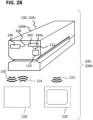
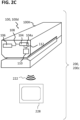
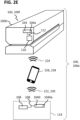
- FIG. 2A to FIG. 2E each show a schematic representation of a hair treatment system 200 according to various exemplary embodiments
- FIG. 3A shows a schematic representation of an application of a hair treatment device 100 according to various exemplary embodiments
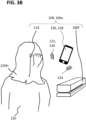
- FIG. 3B a schematic representation of an application of a hair treatment system 200 according to various exemplary embodiments.
- a hair treatment device 100 (various embodiments are identified as 100a, 100b, etc.) is provided.
- the hair treatment device 100 is shown schematically as a straightening iron in the figures, it should be understood that the hair treatment device can also be of a different type, for example as described above.
- the hair treatment device can have a curling iron, a comb, a brush, a drying hood or the like. If applicable, it should be understood that the statements in connection with the figures should also apply to such types of hair treatment devices.
- the hair treatment device 100 may include a device body 100K.
- the device body 100K may be formed of or include a solid material, such as plastic or metal.
- the device body 100K may be formed of or include a material commonly used for a hair straightener, a comb, a brush, or the like.
- the hair treatment device 100, 100a can also have a controllable or regulatable heating device (not shown), which can be integrated, for example, into the device body 100K.
- the hair treatment device 100 may have at least one sensor 106 arranged in or on the device body for detecting at least one hair condition parameter, for example a hair condition parameter as stated above, e.g. a hair moisture sensor, a hair damage level sensor, a hair thickness sensor, a gray content sensor, a hair density sensor, a curliness sensor or the like .
- a hair condition parameter as stated above, e.g. a hair moisture sensor, a hair damage level sensor, a hair thickness sensor, a gray content sensor, a hair density sensor, a curliness sensor or the like .
- the at least one sensor 106 can be set up to detect more than one parameter, for example the sensor 106 can have an NIR spectrometer, which can be set up to detect both parameters for determining the hair moisture and parameters for determining the degree of hair damage , and/or the sensor 106 can have a camera, which can be set up to determine both parameters for determining the curliness and parameters for determining the gray component.
- the sensor 106 can have an NIR spectrometer, which can be set up to detect both parameters for determining the hair moisture and parameters for determining the degree of hair damage
- the sensor 106 can have a camera, which can be set up to determine both parameters for determining the curliness and parameters for determining the gray component.
- the senor 106 may be installed in the device body 100K, for example, installed in a sealed manner. This makes it possible for the hair treatment device 100 to be insensitive to moisture and dirt. For example, sealing can ensure that the hair treatment device can be cleaned without damaging the sensor 106 or another device.
- the sensor 106 can, for example, be cast in during an injection molding of the device body 100K.
- the device body 100K may be transparent between the sensor 106 and a surface of the device body 100K.
- the sensor 106 may be arranged in the device body 100 such that it faces or is in contact with the hair 220H of the user 220 in a usual arrangement of the hair on or in the hair treatment device 100 .
- the hair treatment device may include an electronic circuit device 104 disposed in or on the device body 100K.
- the electronic circuit device 104 may be coupled to the at least one sensor 106, for example by means of a connection 108, for receiving the detected sensor value. If a plurality of sensors 106 are present, the circuit device 104 may have its own coupling to each of the sensors 106. In various exemplary embodiments, the coupling can have or be an electrically conductive connection, a (fiber) fiber connection and/or a wireless connection. The electronic circuit device 104 may be configured to receive the at least one sensor value from the at least one sensor 106.
- the electronic circuit device 104 can be or have a data processing device, for example it can be equipped with a memory and a processor, for example a microprocessor, which can be set up, for example by means of programming, to receive the data from the sensor 106 and either to directly control or regulate a hair treatment parameter, or to use the sensor data to provide the user 220 with a recommendation.
- a data processing device for example it can be equipped with a memory and a processor, for example a microprocessor, which can be set up, for example by means of programming, to receive the data from the sensor 106 and either to directly control or regulate a hair treatment parameter, or to use the sensor data to provide the user 220 with a recommendation.
- the electronic circuit device 104 can be set up in various exemplary embodiments to determine at least one recommendation based on the data received from the sensor 106 and to provide it to the user 220.
- the hair treatment device can also have a controllable or regulatable actuator 110.
- the actuator 110 can be set up to influence a hair treatment parameter.
- the actuator 110 can be controlled or regulated by means of the electronic circuit device 104.
- the actuator 110 can be connected to the electronic circuit device 104 by means of a connection 112.
- the connection 112 can have or be an electrically conductive connection, a (fiber) connection and/or a wireless connection.
- the actuator 110 can have a temperature control or regulation of a heatable part of the hair treatment device 100.
- the hair treatment device 100 can be set up to control the actuator 110, for example a degree of hair damage, curliness etc. to set the appropriate temperature for the hair treatment, e.g. a straightening process or a curling process.
- the hair treatment device 100 can be set up to regulate the actuator 110, for example. to set a temperature for the hair treatment, e.g. a straightening process or a curling process, corresponding to the degree of hair damage, curliness or similar, and to adjust it based on the recorded temperature (e.g. in particular the temperature behind the heating device, i.e. after the heat treatment).
- a temperature for the hair treatment e.g. a straightening process or a curling process, corresponding to the degree of hair damage, curliness or similar
- the recorded temperature e.g. in particular the temperature behind the heating device, i.e. after the heat treatment.
- the hair treatment device 100 can be set up to regulate the actuator 110 based solely on temperature sensor data.
- the actuator 110 can be set up to be set to a relatively high temperature, for example in a range of about 200 ° C to about 230 ° C, when it is determined that For example, the hair 220H of the user 220 is undamaged and/or thick, and at a relatively low temperature to be set, for example in a range from approximately 150 ° C to approximately 180 ° C, if it is determined that the hair 220H of the user 220 is, for example, previously damaged and / or thin.
- the user 220 can also be provided with a hair treatment recommendation, e.g. in the case of the straightening iron or curling iron, a recommendation "treat each strand of hair for a maximum of five seconds" or similar.
- a hair treatment recommendation e.g. in the case of the straightening iron or curling iron, a recommendation "treat each strand of hair for a maximum of five seconds" or similar.
- the actuator 110 can, for example, alternatively or in addition to temperature control or regulation, have a controllable dispensing device (also referred to as a dosing device), which can be set up to dose a hair treatment agent based on the recorded sensor data.
- a controllable dispensing device also referred to as a dosing device
- the dispensing device can have at least one pump and/or at least one valve, which can be controlled or regulated in such a way that a volume or an amount of the hair treatment agent can be metered.
- the dosing can take place depending on a position of the hair treatment device 100 on the hair 220H, for example when it is determined that the hair treatment device 100 is located at the hairline, a different amount of the hair treatment agent can be dispensed than when it is determined that the hair treatment device 100 located at the ends of the hair.
- the ends of the hair may require a larger amount of a hair product than the roots, while the reverse may be the case with a hair dye.
- a hair treatment system 200, 200a may be provided.
- the hair treatment system 200, 200a can have a hair treatment device 100, 100b, which can be essentially similar or identical to the hair treatment device 100a.
- the hair treatment device 100, 100b can also have a data exchange device 104a, which can be set up to transmit and receive data wirelessly.
- the hair treatment system 200, 200a can also have an external data processing device 226, which can, for example, be part of a smartphone, a tablet or the like, or, for example, a cloud.
- an external data processing device 226, can, for example, be part of a smartphone, a tablet or the like, or, for example, a cloud.
- the data processing device 226 can be set up to receive the recorded sensor data from the data processing device 100b, to determine the control or regulation parameters and/or the at least one recommendation and to transmit these to the hair treatment device 100b.
- the hair treatment device 200b can, as described above, be set up to indirectly determine the control or regulation parameters and/or the at least one recommendation.
- a hair treatment system 200, 200b may be provided.
- the hair treatment system 200, 200b can have a hair treatment device 100, 100c, which can be essentially similar or identical to the hair treatment device 100a and/or the hair treatment device 100b.
- the data exchange device 104a of the hair treatment device 100, 100c can be set up in various exemplary embodiments to transmit and receive data wirelessly.
- the hair treatment system 200, 200b can further have a display device 228 in various exemplary embodiments.
- the data processing device 226 can be set up to receive the recorded sensor data from the data processing device 100c, to determine the control or regulation parameters and/or the at least one recommendation and to transmit these to the hair treatment device 100c.
- the hair treatment device can be set up to indirectly determine the control or regulation parameters and/or the at least one recommendation.
- the display device 228 can be set up to receive data from the data processing device 100c, for example a recommendation determined by means of the electronic circuit device 104 and/or the external data processing device 226, for example a hair treatment recommendation and/or a recommended hair care product.
- a hair treatment system 200, 200c may be provided.
- the hair treatment system 200, 200c can have a hair treatment device 100, 100d, which can be substantially similar or identical to the hair treatment device 100a and/or the hair treatment device 100b and/or the hair treatment device 100c.
- the data exchange device 104a of the hair treatment device 100, 100c can be set up in various exemplary embodiments to transmit and receive data wirelessly.
- the hair treatment system 200, 200c can have a display device 228 in various exemplary embodiments.
- the display device 228 can be set up to receive data from the data processing device 100d, for example a recommendation determined by means of the electronic circuit device 104, for example a hair treatment recommendation and/or a recommended hair care product.
- a hair treatment system 200, 200d may be provided.
- the hair treatment system 200, 200d can have a hair treatment device 100, 100e, which can be substantially similar or identical to the hair treatment device 100a and/or the hair treatment device 100b and/or the hair treatment device 100c and/or the hair treatment device 100d.
- the data exchange device 104a of the hair treatment device 100, 100e can be set up in various exemplary embodiments to transmit and receive data wirelessly.
- the at least one sensor 106 cannot be integrated into the hair treatment device 100e, but rather be part of an external sensor device 114.
- the external sensor device 114 may further include an electronic circuit device 1040 and a wireless data exchange device 1040a, which may be similar or the same as the electronic circuit device 104 and the wireless data exchange device 104a from the previous embodiments.
- the electronic circuit device 1040 may be coupled to the at least one sensor 106 by means of a data connection 108, which may be similar or the same as the data connection 108 from the previous exemplary embodiments.
- the external sensor device 114 can be set up to transmit to the hair treatment device 100e the detected sensor data and/or control parameters and/or recommendations determined based on the sensor data (e.g. by means of the circuit device 1040) (represented as signal 224), for example by means of the data exchange device 1040a.
- the hair treatment device 100e can be set up to control or regulate the actuator 110 based on the received control or regulation parameters and/or to determine control or regulation parameters based on the received sensor data (e.g. by means of the electronic circuit device 104) and based on the determined Control or regulation parameters to control or regulate the actuator 110.
- a hair treatment system 200, 200e may be provided.
- the hair treatment system 200, 200e can have a hair treatment device 100, 100f, which is essentially similar or identical to the hair treatment device 100a and/or the hair treatment device 100b and/or the hair treatment device 100c and/or the hair treatment device 100d and/or the hair treatment device 100e can be.
- the data exchange device 104a of the hair treatment device 100, 100e can be set up in various exemplary embodiments to transmit and receive data wirelessly.
- the hair treatment device 100f and the external sensor device 114 can be set up not to exchange their data directly with one another, but rather by means of a combined data processing and display device 226, 228 (e.g. a smartphone, a tablet, a laptop or similar). .
- the combined data processing and display device 226, 228 can function as the heart of the hair treatment system 200e.
- an app or a program can be installed on the combined data processing and display device 226, 228, which can be set up to manage the acquisition of the sensor data and the control/regulation of the hair treatment parameters, if necessary itself, for example as an alternative or in addition to electronic circuit device 104 and/or the electronic circuit device 1040, to determine the control or regulation parameters and/or the recommendation and/or, possibly alternatively or in addition to the hair treatment device 100f, to provide the recommendation, for example by means of the display device 228 or for example by means of a speaker.
- the combined data processing and display device 226, 228 can also be set up to provide the sensor data to a (further) external data processing device 226, for example a cloud, and to provide the control parameters received from the (further) external data processing device 226 and/or to transmit the recommendation to the hair treatment device 100f and/or to provide the recommendation.
- a database can be used as described above, in which the sensor data or possibly combinations of sensor data, the hair conditions (e.g. levels of hair damage) can be assigned.
- the database can have been created in advance through experiments and/or can be continually created or supplemented using user data, for example when using a cloud.
- the database may further provide a product recommendation based on hair condition, e.g., level of hair damage.
- At least one product recommendation can be assigned to the level of hair damage in the database.
- Hair damage level Product recommendation very low Product with very little care content small amount
- Low maintenance product medium Medium care product strong Product with a high care content
- the recorded (measured) sensor values can either be evaluated directly in the hair treatment device 100, for example by means of the electronic circuit device 104, or can be evaluated indirectly by being transmitted to an external data processing device 226 in order to be evaluated there, for example as described above.
- the sensor data or parts of the sensor data can be in different formats Embodiments are evaluated by means of a comparison with (eg empirically obtained) database entries.
- a determined hair condition e.g. degree of hair damage
- a recommendation e.g. a product or treatment recommendation.
- the determined hair treatment agent e.g. hair care agent
- the hair treatment device or the hair treatment system can be applied to the hair by means of the hair treatment device or the hair treatment system, with control or regulation parameters for dosing the hair treatment agent by means of the electronic circuit device 104, the electronic circuit device 1040 and / or the external data processing device 226 and/or the further external data processing device can be provided.
- FIG. 3A shows a schematic representation of an application of a hair treatment device 100 according to various exemplary embodiments
- FIG. 3B shows a schematic representation of an application of a hair treatment system 200, 200e according to various exemplary embodiments.
- the hair treatment device 100a can be used for hair treatment in a manner usual for the hair treatment device. Shown is a straightening iron into which the hair 220H is clamped strand by strand and which is typically moved in the direction of the arrow, ie from the hairline towards the hair tips. Analogously, for example, when using a curling iron as a hair treatment device, the hair is wound strand by strand onto the hair treatment device 100, when using a comb as a hair treatment device, the hair is combed through strands, etc.
- the hair treatment device 100 can be set up according to various exemplary embodiments to detect at least one sensor value and to control or regulate at least one hair treatment parameter and/or to provide at least one recommendation during the hair treatment, for example as described above, by means of at least one sensor 106 .
- the hair treatment system 200 can be used for a hair treatment.
- An external sensor device 114 can be used, as described above, to determine at least one hair condition parameter, for example a degree of hair damage or the like.
- the external sensor device 114 can be brought into optical and/or physical contact with the hair 220H of the user 220.
- the at least one sensor value and/or a hair condition parameter determined therefrom and/or a control or regulation parameter can be transmitted to the combined data processing/display device 226, 228 (represented as a signal 222, 230), and the at least one sensor value and/or or a hair condition parameter determined therefrom and/or a control or regulation parameter can be transmitted to the hair treatment device 100f, for example to control and/or regulate the at least one actuator 110 and/or to display the at least one recommendation.
- a transmission of the at least one sensor value and/or a hair condition parameter determined therefrom and/or a control or regulation parameter to the hair treatment device 100f before using the hair treatment device 100f can also take place simultaneously with the use.
- the other hair treatment devices and hair treatment systems described above can be used in a similar manner to that described here by way of example for one of the hair treatment devices and one of the hair treatment systems.
- FIG. 4 shows a flowchart 400 of a method for cosmetically treating a user's hair according to various exemplary embodiments.
- the method for cosmetically treating a user's hair may include detecting a hair condition parameter using at least one sensor during treatment and/or before treating hair using a hair treatment device or using a hair treatment system according to various exemplary embodiments (in 410) and controlling at least one hair treatment parameter and/or dosing at least one hair treatment agent and/or recommending at least one hair treatment based on the at least one hair condition parameter (in 420).
- programming for example software
- Any software that provides the functionality described above can be used.
- the user uses a smartphone, a tablet or similar, the software can be provided as an app.
- the circuit device integrated in the hair treatment device and/or an external data processing device can be suitable for carrying out the method Providing hair condition information, e.g. to be used in determination processes, e.g. by comparing with a database/reference values or similar.
- the programming/software does not need to be provided on the smartphone, tablet, laptop, etc. It may be sufficient, for example, if the circuit device integrated into the hair treatment device and/or the smartphone or the like is connected via the Internet, via WLAN or in another common way to an (e.g. another) external data processing device, e.g.
- a computer for example a cloud
- the calculations can be carried out, for example, by means of the (further) external data processing device, for example by means of the computer, and the result can be provided to the smartphone/tablet or the like and/or the internal circuit device.
Landscapes
- Health & Medical Sciences (AREA)
- Life Sciences & Earth Sciences (AREA)
- Physics & Mathematics (AREA)
- Heart & Thoracic Surgery (AREA)
- Molecular Biology (AREA)
- Pathology (AREA)
- Engineering & Computer Science (AREA)
- Biomedical Technology (AREA)
- Veterinary Medicine (AREA)
- Medical Informatics (AREA)
- Biophysics (AREA)
- Surgery (AREA)
- Animal Behavior & Ethology (AREA)
- General Health & Medical Sciences (AREA)
- Public Health (AREA)
- Spectroscopy & Molecular Physics (AREA)
- Dermatology (AREA)
- Cosmetics (AREA)
Claims (14)
- Dispositif de traitement des cheveux, présentant :un corps de dispositif ;au moins un capteur disposé dans ou sur le corps de dispositif et permettant de détecter un paramètre d'état des cheveux ; etun dispositif à circuit électronique disposé dans ou sur le corps de dispositif,dans lequel le dispositif à circuit électronique est couplé à l'au moins un capteur pour la réception du paramètre d'état des cheveux détecté, etdans lequel le dispositif à circuit électronique est en outre configuré pour déterminer, sur la base de la valeur de capteur reçue, une information concernant l'état des cheveux sous la forme d'un degré d'endommagement des cheveux,dans lequel le dispositif à circuit électronique est en outre configuré pour commander au moins un paramètre de traitement des cheveux et pour doser au moins un agent de traitement des cheveux sur la base du degré d'endommagement des cheveux déterminé.
- Dispositif de traitement des cheveux selon la revendication 1,
dans lequel le dispositif de traitement des cheveux présente un fer à lisser. - Dispositif de traitement des cheveux selon la revendication 1 ou 2,
dans lequel le paramètre de traitement des cheveux commandé présente une température du dispositif de traitement des cheveux. - Dispositif de traitement des cheveux selon l'une des revendications 1 à 3,
dans lequel l'au moins un capteur est configuré pour être amené en contact avec les cheveux de l'utilisateur pendant la détection de l'au moins un paramètre d'état des cheveux. - Dispositif de traitement des cheveux selon l'une des revendications 1 à 4,
dans lequel le dispositif à circuit électronique est en outre configuré pour déterminer une recommandation et pour la fournir à l'utilisateur sur la base du degré d'endommagement des cheveux déterminé. - Dispositif de traitement des cheveux selon la revendication 5, dans lequel la recommandation présente au moins une recommandation choisie dans le groupe constitué de recommandations de produits de soins des cheveux, recommandations de produits de coiffage des cheveux et recommandations de traitement des cheveux.
- Dispositif de traitement des cheveux selon l'une des revendications 1 à 6,
dans lequel l'au moins un capteur est disposé de manière scellée dans le corps de dispositif. - Dispositif de traitement des cheveux selon l'une des revendications 1 à 7,
dans lequel le dispositif à circuit électronique présente un dispositif d'échange de données sans fil. - Dispositif de traitement des cheveux selon l'une des revendications 1 à 8,
dans lequel le capteur présente au moins un élément parmi un groupe de capteurs, le groupe de capteurs présentant :une caméra permettant d'enregistrer une image numérique des cheveux ;un capteur de température ;un capteur d'humidité ;un microphone ;un capteur de couleur ; etun appareil de mesure de force de traction. - Système de traitement des cheveux, présentant :un dispositif de traitement des cheveux selon l'une des revendications 5 ou 6 en combinaison avec l'une des revendications 8 ou 9 ; etun dispositif d'affichage,dans lequel l'au moins un dispositif de traitement des cheveux est configuré pour transmettre au dispositif d'affichage l'information concernant l'état des cheveux et/ou la recommandation au moyen du dispositif d'échange de données.
- Procédé permettant le traitement cosmétique des cheveux d'un utilisateur, présentant :pendant un traitement et/ou avant un traitement des cheveux au moyen d'un dispositif de traitement des cheveux selon l'une des revendications 1 à 9 ou au moyen d'un système de traitement des cheveux selon la revendication 10, la détection d'un paramètre d'état des cheveux au moyen de l'au moins un capteur ; etla commande d'au moins un paramètre de traitement des cheveux et/ou le dosage d'au moins un agent de traitement des cheveux et/ou la recommandation d'au moins un traitement des cheveux sur la base de l'au moins un paramètre d'état des cheveux.
- Procédé selon la revendication 11,
dans lequel le paramètre de traitement des cheveux présente une température du dispositif de traitement des cheveux. - Procédé selon la revendication 11 ou 12,
dans lequel le dispositif de traitement des cheveux présente un fer à lisser. - Procédé selon l'une des revendications 11 à 13, présentant en outre :la transmission du paramètre d'état des cheveux détecté à un dispositif de traitement de données externe ; etla réception de l'information fournie par le dispositif de traitement de données externe,dans lequel la détermination de l'au moins un paramètre de traitement des cheveux et/ou du dosage d'agent de traitement des cheveux est effectuée sur la base de l'au moins un paramètre d'état des cheveux au moyen du dispositif de traitement de données externe.
Applications Claiming Priority (2)
| Application Number | Priority Date | Filing Date | Title |
|---|---|---|---|
| DE102017200073.2A DE102017200073A1 (de) | 2017-01-04 | 2017-01-04 | Haarbehandlungsvorrichtung, Haarbehandlungssystem und Verfahren zum kosmetischen Behandeln von Haaren |
| PCT/EP2017/082654 WO2018127371A1 (fr) | 2017-01-04 | 2017-12-13 | Dispositif et système de traitement capillaire et procédé de traitement cosmétique des cheveux |
Publications (2)
| Publication Number | Publication Date |
|---|---|
| EP3565432A1 EP3565432A1 (fr) | 2019-11-13 |
| EP3565432B1 true EP3565432B1 (fr) | 2024-02-07 |
Family
ID=60702759
Family Applications (1)
| Application Number | Title | Priority Date | Filing Date |
|---|---|---|---|
| EP17816765.6A Active EP3565432B1 (fr) | 2017-01-04 | 2017-12-13 | Dispositif et système de traitement capillaire et procédé de traitement cosmétique des cheveux |
Country Status (4)
| Country | Link |
|---|---|
| US (1) | US12213573B2 (fr) |
| EP (1) | EP3565432B1 (fr) |
| DE (1) | DE102017200073A1 (fr) |
| WO (1) | WO2018127371A1 (fr) |
Families Citing this family (10)
| Publication number | Priority date | Publication date | Assignee | Title |
|---|---|---|---|---|
| KR101936751B1 (ko) | 2017-05-22 | 2019-04-09 | 주식회사 엘지생활건강 | 화장품 공급 장치 및 그의 동작 방법 |
| CN111050594B (zh) * | 2017-09-10 | 2021-04-27 | 皇家飞利浦有限公司 | 毛发造型设备 |
| GB2569660B (en) * | 2017-12-22 | 2022-03-02 | Jemella Ltd | Thermal control apparatus and method |
| EP4125491B1 (fr) * | 2020-04-02 | 2024-05-08 | Koninklijke Philips N.V. | Dispositif de coiffure comprenant un mécanisme de mouillage de cheveux |
| CN111374419A (zh) * | 2020-04-17 | 2020-07-07 | 浙江科秀五金有限公司 | 直板夹 |
| JP7630102B2 (ja) * | 2021-02-05 | 2025-02-17 | パナソニックIpマネジメント株式会社 | ヘアケア装置 |
| JP7531160B2 (ja) * | 2021-02-05 | 2024-08-09 | パナソニックIpマネジメント株式会社 | ヘアケア装置 |
| EP4468911A2 (fr) * | 2022-01-24 | 2024-12-04 | L'oreal | Détection automatique de caractéristiques capillaires à l'aide d'un dispositif de distribution de formulation |
| CN117016944A (zh) * | 2023-07-07 | 2023-11-10 | 深圳市奋达科技股份有限公司 | 智能美发器具、头发颜色的识别方法、系统、装置及介质 |
| GB2632005A (en) * | 2023-07-21 | 2025-01-22 | Dyson Technology Ltd | Hair styling appliance |
Family Cites Families (9)
| Publication number | Priority date | Publication date | Assignee | Title |
|---|---|---|---|---|
| US7472577B2 (en) | 2005-01-24 | 2009-01-06 | Kao Corporation | Hair sensor |
| AU2007269726B2 (en) * | 2006-06-30 | 2011-10-20 | The Procter & Gamble Company | Device for measuring moisture in overlays (like hair) of a microstrip directional coupler |
| KR20140058494A (ko) * | 2011-06-13 | 2014-05-14 | 쿨웨이 인코포레이티드 | 동적이고 최적인 모발 스타일링 온도 제어를 위한 모발 관리 도구 및 방법 |
| FR3000877B1 (fr) | 2013-01-15 | 2018-09-07 | Withings | Brosse a cheveux instrumentee et connectee, et systeme informatif utilisant une telle brosse |
| US10231531B2 (en) * | 2015-11-04 | 2019-03-19 | ColorCulture Network, LLC | System, method and device for analysis of hair and skin and providing formulated hair and skin products |
| US10405630B2 (en) * | 2016-07-29 | 2019-09-10 | Spur Concepts Inc | Systems and methods for delivering heat in a battery powered blow dryer |
| US10909881B2 (en) * | 2016-09-13 | 2021-02-02 | L'oreal | Systems, devices, and methods including connected styling tools |
| CA3107284A1 (fr) * | 2016-11-09 | 2018-05-17 | Lg Farouk Co. | Procede et appareil d'analyse et de traitement des cheveux |
| FR3061499B1 (fr) * | 2016-12-30 | 2019-05-24 | L'oreal | Systeme pour realiser un traitement de la chevelure, a relier a au moins une arrivee d'eau |
-
2017
- 2017-01-04 DE DE102017200073.2A patent/DE102017200073A1/de not_active Ceased
- 2017-12-13 EP EP17816765.6A patent/EP3565432B1/fr active Active
- 2017-12-13 US US16/475,568 patent/US12213573B2/en active Active
- 2017-12-13 WO PCT/EP2017/082654 patent/WO2018127371A1/fr not_active Ceased
Also Published As
| Publication number | Publication date |
|---|---|
| EP3565432A1 (fr) | 2019-11-13 |
| DE102017200073A1 (de) | 2018-07-05 |
| US12213573B2 (en) | 2025-02-04 |
| US20210127811A1 (en) | 2021-05-06 |
| WO2018127371A1 (fr) | 2018-07-12 |
Similar Documents
| Publication | Publication Date | Title |
|---|---|---|
| EP3629889B1 (fr) | Dispositif et système de traitement des cheveux et procédé de traitement cosmétique des cheveux | |
| WO2018127371A1 (fr) | Dispositif et système de traitement capillaire et procédé de traitement cosmétique des cheveux | |
| EP3652746B1 (fr) | Système et procédé permettant d'améliorer un état des cheveux d'un point de vue cosmétique | |
| EP3651609B1 (fr) | Système de traitement capillaire et procédé de traitement cosmétique des cheveux | |
| EP3629887B1 (fr) | Dispositif de détermination de l'état des cheveux, système de détermination de l'état des cheveux et procédé pour la détermination d'un état des cheveux | |
| WO2019011699A1 (fr) | Système de séchage des cheveux et procédé pour sécher des cheveux au sèche-cheveux | |
| EP3793426B1 (fr) | Détermination par spectroscopie dans le proche infrarouge du niveau de détérioration du cheveu liée à la réduction | |
| WO2018007358A1 (fr) | Procédé pour établir un traitement capillaire spécifique pour un utilisateur | |
| WO2018114717A1 (fr) | Dispositif de détermination d'informations capillaires, système de détermination d'informations capillaires et procédé de mise à disposition d'une information d'état capillaire | |
| WO2019219350A1 (fr) | Détermination d'un taux d'allongement du cheveu avec un capteur proche infrarouge | |
| EP3559662B1 (fr) | Dispositif d'analyse des cheveux | |
| DE102017209227A1 (de) | Verfahren und Vorrichtung zum Bereitstellen eines Haarbehandlungsmittels | |
| EP3679347B1 (fr) | Procédé et dispositif pour déterminer un degré de détérioration thermique des cheveux | |
| JP2007532925A (ja) | 繊維性基材の特性を評価し、繊維性基材を処理する方法 | |
| WO2019052737A1 (fr) | Dispositif pour la détermination de propriétés de surface de corps | |
| WO2018166814A1 (fr) | Procédé et dispositif de détermination de l'élasticité cutanée |
Legal Events
| Date | Code | Title | Description |
|---|---|---|---|
| STAA | Information on the status of an ep patent application or granted ep patent |
Free format text: STATUS: UNKNOWN |
|
| STAA | Information on the status of an ep patent application or granted ep patent |
Free format text: STATUS: THE INTERNATIONAL PUBLICATION HAS BEEN MADE |
|
| PUAI | Public reference made under article 153(3) epc to a published international application that has entered the european phase |
Free format text: ORIGINAL CODE: 0009012 |
|
| STAA | Information on the status of an ep patent application or granted ep patent |
Free format text: STATUS: REQUEST FOR EXAMINATION WAS MADE |
|
| 17P | Request for examination filed |
Effective date: 20190605 |
|
| AK | Designated contracting states |
Kind code of ref document: A1 Designated state(s): AL AT BE BG CH CY CZ DE DK EE ES FI FR GB GR HR HU IE IS IT LI LT LU LV MC MK MT NL NO PL PT RO RS SE SI SK SM TR |
|
| AX | Request for extension of the european patent |
Extension state: BA ME |
|
| DAV | Request for validation of the european patent (deleted) | ||
| DAX | Request for extension of the european patent (deleted) | ||
| STAA | Information on the status of an ep patent application or granted ep patent |
Free format text: STATUS: EXAMINATION IS IN PROGRESS |
|
| 17Q | First examination report despatched |
Effective date: 20211207 |
|
| P01 | Opt-out of the competence of the unified patent court (upc) registered |
Effective date: 20230531 |
|
| GRAP | Despatch of communication of intention to grant a patent |
Free format text: ORIGINAL CODE: EPIDOSNIGR1 |
|
| STAA | Information on the status of an ep patent application or granted ep patent |
Free format text: STATUS: GRANT OF PATENT IS INTENDED |
|
| RIC1 | Information provided on ipc code assigned before grant |
Ipc: A45D 20/00 20060101ALI20230901BHEP Ipc: A45D 2/00 20060101ALI20230901BHEP Ipc: A45D 1/28 20060101ALI20230901BHEP Ipc: A45D 1/04 20060101ALI20230901BHEP Ipc: A45D 44/00 20060101ALI20230901BHEP Ipc: A61B 5/00 20060101ALI20230901BHEP Ipc: A45D 1/00 20060101AFI20230901BHEP |
|
| INTG | Intention to grant announced |
Effective date: 20230925 |
|
| GRAS | Grant fee paid |
Free format text: ORIGINAL CODE: EPIDOSNIGR3 |
|
| GRAA | (expected) grant |
Free format text: ORIGINAL CODE: 0009210 |
|
| STAA | Information on the status of an ep patent application or granted ep patent |
Free format text: STATUS: THE PATENT HAS BEEN GRANTED |
|
| AK | Designated contracting states |
Kind code of ref document: B1 Designated state(s): AL AT BE BG CH CY CZ DE DK EE ES FI FR GB GR HR HU IE IS IT LI LT LU LV MC MK MT NL NO PL PT RO RS SE SI SK SM TR |
|
| REG | Reference to a national code |
Ref country code: GB Ref legal event code: FG4D Free format text: NOT ENGLISH |
|
| REG | Reference to a national code |
Ref country code: CH Ref legal event code: EP |
|
| REG | Reference to a national code |
Ref country code: IE Ref legal event code: FG4D Free format text: LANGUAGE OF EP DOCUMENT: GERMAN |
|
| REG | Reference to a national code |
Ref country code: DE Ref legal event code: R096 Ref document number: 502017015818 Country of ref document: DE |
|
| REG | Reference to a national code |
Ref country code: LT Ref legal event code: MG9D |
|
| REG | Reference to a national code |
Ref country code: NL Ref legal event code: MP Effective date: 20240207 |
|
| PG25 | Lapsed in a contracting state [announced via postgrant information from national office to epo] |
Ref country code: IS Free format text: LAPSE BECAUSE OF FAILURE TO SUBMIT A TRANSLATION OF THE DESCRIPTION OR TO PAY THE FEE WITHIN THE PRESCRIBED TIME-LIMIT Effective date: 20240607 |
|
| PG25 | Lapsed in a contracting state [announced via postgrant information from national office to epo] |
Ref country code: LT Free format text: LAPSE BECAUSE OF FAILURE TO SUBMIT A TRANSLATION OF THE DESCRIPTION OR TO PAY THE FEE WITHIN THE PRESCRIBED TIME-LIMIT Effective date: 20240207 |
|
| PG25 | Lapsed in a contracting state [announced via postgrant information from national office to epo] |
Ref country code: GR Free format text: LAPSE BECAUSE OF FAILURE TO SUBMIT A TRANSLATION OF THE DESCRIPTION OR TO PAY THE FEE WITHIN THE PRESCRIBED TIME-LIMIT Effective date: 20240508 |
|
| PG25 | Lapsed in a contracting state [announced via postgrant information from national office to epo] |
Ref country code: NL Free format text: LAPSE BECAUSE OF FAILURE TO SUBMIT A TRANSLATION OF THE DESCRIPTION OR TO PAY THE FEE WITHIN THE PRESCRIBED TIME-LIMIT Effective date: 20240207 Ref country code: HR Free format text: LAPSE BECAUSE OF FAILURE TO SUBMIT A TRANSLATION OF THE DESCRIPTION OR TO PAY THE FEE WITHIN THE PRESCRIBED TIME-LIMIT Effective date: 20240207 Ref country code: RS Free format text: LAPSE BECAUSE OF FAILURE TO SUBMIT A TRANSLATION OF THE DESCRIPTION OR TO PAY THE FEE WITHIN THE PRESCRIBED TIME-LIMIT Effective date: 20240507 |
|
| PG25 | Lapsed in a contracting state [announced via postgrant information from national office to epo] |
Ref country code: ES Free format text: LAPSE BECAUSE OF FAILURE TO SUBMIT A TRANSLATION OF THE DESCRIPTION OR TO PAY THE FEE WITHIN THE PRESCRIBED TIME-LIMIT Effective date: 20240207 |
|
| PG25 | Lapsed in a contracting state [announced via postgrant information from national office to epo] |
Ref country code: RS Free format text: LAPSE BECAUSE OF FAILURE TO SUBMIT A TRANSLATION OF THE DESCRIPTION OR TO PAY THE FEE WITHIN THE PRESCRIBED TIME-LIMIT Effective date: 20240507 Ref country code: NO Free format text: LAPSE BECAUSE OF FAILURE TO SUBMIT A TRANSLATION OF THE DESCRIPTION OR TO PAY THE FEE WITHIN THE PRESCRIBED TIME-LIMIT Effective date: 20240507 Ref country code: NL Free format text: LAPSE BECAUSE OF FAILURE TO SUBMIT A TRANSLATION OF THE DESCRIPTION OR TO PAY THE FEE WITHIN THE PRESCRIBED TIME-LIMIT Effective date: 20240207 Ref country code: LT Free format text: LAPSE BECAUSE OF FAILURE TO SUBMIT A TRANSLATION OF THE DESCRIPTION OR TO PAY THE FEE WITHIN THE PRESCRIBED TIME-LIMIT Effective date: 20240207 Ref country code: IS Free format text: LAPSE BECAUSE OF FAILURE TO SUBMIT A TRANSLATION OF THE DESCRIPTION OR TO PAY THE FEE WITHIN THE PRESCRIBED TIME-LIMIT Effective date: 20240607 Ref country code: HR Free format text: LAPSE BECAUSE OF FAILURE TO SUBMIT A TRANSLATION OF THE DESCRIPTION OR TO PAY THE FEE WITHIN THE PRESCRIBED TIME-LIMIT Effective date: 20240207 Ref country code: GR Free format text: LAPSE BECAUSE OF FAILURE TO SUBMIT A TRANSLATION OF THE DESCRIPTION OR TO PAY THE FEE WITHIN THE PRESCRIBED TIME-LIMIT Effective date: 20240508 Ref country code: FI Free format text: LAPSE BECAUSE OF FAILURE TO SUBMIT A TRANSLATION OF THE DESCRIPTION OR TO PAY THE FEE WITHIN THE PRESCRIBED TIME-LIMIT Effective date: 20240207 Ref country code: ES Free format text: LAPSE BECAUSE OF FAILURE TO SUBMIT A TRANSLATION OF THE DESCRIPTION OR TO PAY THE FEE WITHIN THE PRESCRIBED TIME-LIMIT Effective date: 20240207 Ref country code: BG Free format text: LAPSE BECAUSE OF FAILURE TO SUBMIT A TRANSLATION OF THE DESCRIPTION OR TO PAY THE FEE WITHIN THE PRESCRIBED TIME-LIMIT Effective date: 20240207 |
|
| PG25 | Lapsed in a contracting state [announced via postgrant information from national office to epo] |
Ref country code: PL Free format text: LAPSE BECAUSE OF FAILURE TO SUBMIT A TRANSLATION OF THE DESCRIPTION OR TO PAY THE FEE WITHIN THE PRESCRIBED TIME-LIMIT Effective date: 20240207 Ref country code: PT Free format text: LAPSE BECAUSE OF FAILURE TO SUBMIT A TRANSLATION OF THE DESCRIPTION OR TO PAY THE FEE WITHIN THE PRESCRIBED TIME-LIMIT Effective date: 20240607 |
|
| PG25 | Lapsed in a contracting state [announced via postgrant information from national office to epo] |
Ref country code: SE Free format text: LAPSE BECAUSE OF FAILURE TO SUBMIT A TRANSLATION OF THE DESCRIPTION OR TO PAY THE FEE WITHIN THE PRESCRIBED TIME-LIMIT Effective date: 20240207 Ref country code: PT Free format text: LAPSE BECAUSE OF FAILURE TO SUBMIT A TRANSLATION OF THE DESCRIPTION OR TO PAY THE FEE WITHIN THE PRESCRIBED TIME-LIMIT Effective date: 20240607 Ref country code: PL Free format text: LAPSE BECAUSE OF FAILURE TO SUBMIT A TRANSLATION OF THE DESCRIPTION OR TO PAY THE FEE WITHIN THE PRESCRIBED TIME-LIMIT Effective date: 20240207 Ref country code: LV Free format text: LAPSE BECAUSE OF FAILURE TO SUBMIT A TRANSLATION OF THE DESCRIPTION OR TO PAY THE FEE WITHIN THE PRESCRIBED TIME-LIMIT Effective date: 20240207 |
|
| PG25 | Lapsed in a contracting state [announced via postgrant information from national office to epo] |
Ref country code: DK Free format text: LAPSE BECAUSE OF FAILURE TO SUBMIT A TRANSLATION OF THE DESCRIPTION OR TO PAY THE FEE WITHIN THE PRESCRIBED TIME-LIMIT Effective date: 20240207 |
|
| PG25 | Lapsed in a contracting state [announced via postgrant information from national office to epo] |
Ref country code: SM Free format text: LAPSE BECAUSE OF FAILURE TO SUBMIT A TRANSLATION OF THE DESCRIPTION OR TO PAY THE FEE WITHIN THE PRESCRIBED TIME-LIMIT Effective date: 20240207 |
|
| PG25 | Lapsed in a contracting state [announced via postgrant information from national office to epo] |
Ref country code: EE Free format text: LAPSE BECAUSE OF FAILURE TO SUBMIT A TRANSLATION OF THE DESCRIPTION OR TO PAY THE FEE WITHIN THE PRESCRIBED TIME-LIMIT Effective date: 20240207 Ref country code: CZ Free format text: LAPSE BECAUSE OF FAILURE TO SUBMIT A TRANSLATION OF THE DESCRIPTION OR TO PAY THE FEE WITHIN THE PRESCRIBED TIME-LIMIT Effective date: 20240207 |
|
| PG25 | Lapsed in a contracting state [announced via postgrant information from national office to epo] |
Ref country code: SK Free format text: LAPSE BECAUSE OF FAILURE TO SUBMIT A TRANSLATION OF THE DESCRIPTION OR TO PAY THE FEE WITHIN THE PRESCRIBED TIME-LIMIT Effective date: 20240207 |
|
| PG25 | Lapsed in a contracting state [announced via postgrant information from national office to epo] |
Ref country code: SM Free format text: LAPSE BECAUSE OF FAILURE TO SUBMIT A TRANSLATION OF THE DESCRIPTION OR TO PAY THE FEE WITHIN THE PRESCRIBED TIME-LIMIT Effective date: 20240207 Ref country code: SK Free format text: LAPSE BECAUSE OF FAILURE TO SUBMIT A TRANSLATION OF THE DESCRIPTION OR TO PAY THE FEE WITHIN THE PRESCRIBED TIME-LIMIT Effective date: 20240207 Ref country code: RO Free format text: LAPSE BECAUSE OF FAILURE TO SUBMIT A TRANSLATION OF THE DESCRIPTION OR TO PAY THE FEE WITHIN THE PRESCRIBED TIME-LIMIT Effective date: 20240207 Ref country code: EE Free format text: LAPSE BECAUSE OF FAILURE TO SUBMIT A TRANSLATION OF THE DESCRIPTION OR TO PAY THE FEE WITHIN THE PRESCRIBED TIME-LIMIT Effective date: 20240207 Ref country code: DK Free format text: LAPSE BECAUSE OF FAILURE TO SUBMIT A TRANSLATION OF THE DESCRIPTION OR TO PAY THE FEE WITHIN THE PRESCRIBED TIME-LIMIT Effective date: 20240207 Ref country code: CZ Free format text: LAPSE BECAUSE OF FAILURE TO SUBMIT A TRANSLATION OF THE DESCRIPTION OR TO PAY THE FEE WITHIN THE PRESCRIBED TIME-LIMIT Effective date: 20240207 |
|
| REG | Reference to a national code |
Ref country code: DE Ref legal event code: R097 Ref document number: 502017015818 Country of ref document: DE |
|
| PG25 | Lapsed in a contracting state [announced via postgrant information from national office to epo] |
Ref country code: IT Free format text: LAPSE BECAUSE OF FAILURE TO SUBMIT A TRANSLATION OF THE DESCRIPTION OR TO PAY THE FEE WITHIN THE PRESCRIBED TIME-LIMIT Effective date: 20240207 |
|
| PLBE | No opposition filed within time limit |
Free format text: ORIGINAL CODE: 0009261 |
|
| STAA | Information on the status of an ep patent application or granted ep patent |
Free format text: STATUS: NO OPPOSITION FILED WITHIN TIME LIMIT |
|
| PG25 | Lapsed in a contracting state [announced via postgrant information from national office to epo] |
Ref country code: IT Free format text: LAPSE BECAUSE OF FAILURE TO SUBMIT A TRANSLATION OF THE DESCRIPTION OR TO PAY THE FEE WITHIN THE PRESCRIBED TIME-LIMIT Effective date: 20240207 |
|
| 26N | No opposition filed |
Effective date: 20241108 |
|
| PG25 | Lapsed in a contracting state [announced via postgrant information from national office to epo] |
Ref country code: SI Free format text: LAPSE BECAUSE OF FAILURE TO SUBMIT A TRANSLATION OF THE DESCRIPTION OR TO PAY THE FEE WITHIN THE PRESCRIBED TIME-LIMIT Effective date: 20240207 |
|
| PG25 | Lapsed in a contracting state [announced via postgrant information from national office to epo] |
Ref country code: MC Free format text: LAPSE BECAUSE OF FAILURE TO SUBMIT A TRANSLATION OF THE DESCRIPTION OR TO PAY THE FEE WITHIN THE PRESCRIBED TIME-LIMIT Effective date: 20240207 |
|
| REG | Reference to a national code |
Ref country code: CH Ref legal event code: PL |
|
| PG25 | Lapsed in a contracting state [announced via postgrant information from national office to epo] |
Ref country code: LU Free format text: LAPSE BECAUSE OF NON-PAYMENT OF DUE FEES Effective date: 20241213 |
|
| REG | Reference to a national code |
Ref country code: BE Ref legal event code: MM Effective date: 20241231 |
|
| PG25 | Lapsed in a contracting state [announced via postgrant information from national office to epo] |
Ref country code: BE Free format text: LAPSE BECAUSE OF NON-PAYMENT OF DUE FEES Effective date: 20241231 |
|
| PG25 | Lapsed in a contracting state [announced via postgrant information from national office to epo] |
Ref country code: CH Free format text: LAPSE BECAUSE OF NON-PAYMENT OF DUE FEES Effective date: 20241231 |
|
| PG25 | Lapsed in a contracting state [announced via postgrant information from national office to epo] |
Ref country code: IE Free format text: LAPSE BECAUSE OF NON-PAYMENT OF DUE FEES Effective date: 20241213 |
|
| PGFP | Annual fee paid to national office [announced via postgrant information from national office to epo] |
Ref country code: DE Payment date: 20251211 Year of fee payment: 9 |
|
| PGFP | Annual fee paid to national office [announced via postgrant information from national office to epo] |
Ref country code: GB Payment date: 20251219 Year of fee payment: 9 |
|
| PGFP | Annual fee paid to national office [announced via postgrant information from national office to epo] |
Ref country code: FR Payment date: 20251229 Year of fee payment: 9 |
|
| REG | Reference to a national code |
Ref country code: AT Ref legal event code: MM01 Ref document number: 1654776 Country of ref document: AT Kind code of ref document: T Effective date: 20241213 |
|
| PG25 | Lapsed in a contracting state [announced via postgrant information from national office to epo] |
Ref country code: AT Free format text: LAPSE BECAUSE OF NON-PAYMENT OF DUE FEES Effective date: 20241213 |
|
| PG25 | Lapsed in a contracting state [announced via postgrant information from national office to epo] |
Ref country code: CY Free format text: LAPSE BECAUSE OF FAILURE TO SUBMIT A TRANSLATION OF THE DESCRIPTION OR TO PAY THE FEE WITHIN THE PRESCRIBED TIME-LIMIT Effective date: 20240207 |