EP3629887B1 - Dispositif de détermination de l'état des cheveux, système de détermination de l'état des cheveux et procédé pour la détermination d'un état des cheveux - Google Patents
Dispositif de détermination de l'état des cheveux, système de détermination de l'état des cheveux et procédé pour la détermination d'un état des cheveux Download PDFInfo
- Publication number
- EP3629887B1 EP3629887B1 EP18728120.9A EP18728120A EP3629887B1 EP 3629887 B1 EP3629887 B1 EP 3629887B1 EP 18728120 A EP18728120 A EP 18728120A EP 3629887 B1 EP3629887 B1 EP 3629887B1
- Authority
- EP
- European Patent Office
- Prior art keywords
- hair
- light
- condition determination
- condition
- determination device
- Prior art date
- Legal status (The legal status is an assumption and is not a legal conclusion. Google has not performed a legal analysis and makes no representation as to the accuracy of the status listed.)
- Active
Links
Images



Classifications
-
- A—HUMAN NECESSITIES
- A61—MEDICAL OR VETERINARY SCIENCE; HYGIENE
- A61B—DIAGNOSIS; SURGERY; IDENTIFICATION
- A61B5/00—Measuring for diagnostic purposes; Identification of persons
- A61B5/44—Detecting, measuring or recording for evaluating the integumentary system, e.g. skin, hair or nails
- A61B5/448—Hair evaluation, e.g. for hair disorder diagnosis
-
- A—HUMAN NECESSITIES
- A45—HAND OR TRAVELLING ARTICLES
- A45D—HAIRDRESSING OR SHAVING EQUIPMENT; EQUIPMENT FOR COSMETICS OR COSMETIC TREATMENTS, e.g. FOR MANICURING OR PEDICURING
- A45D24/00—Hair combs for care of the hair; Accessories therefor
- A45D24/04—Multi-part combs
- A45D24/10—Multi-part combs combined with additional devices
-
- A—HUMAN NECESSITIES
- A45—HAND OR TRAVELLING ARTICLES
- A45D—HAIRDRESSING OR SHAVING EQUIPMENT; EQUIPMENT FOR COSMETICS OR COSMETIC TREATMENTS, e.g. FOR MANICURING OR PEDICURING
- A45D44/00—Other cosmetic or toiletry articles, e.g. for hairdressers' rooms
- A45D44/005—Other cosmetic or toiletry articles, e.g. for hairdressers' rooms for selecting or displaying personal cosmetic colours or hairstyle
-
- A—HUMAN NECESSITIES
- A46—BRUSHWARE
- A46B—BRUSHES
- A46B15/00—Other brushes; Brushes with additional arrangements
- A46B15/0002—Arrangements for enhancing monitoring or controlling the brushing process
-
- A—HUMAN NECESSITIES
- A46—BRUSHWARE
- A46B—BRUSHES
- A46B15/00—Other brushes; Brushes with additional arrangements
- A46B15/0002—Arrangements for enhancing monitoring or controlling the brushing process
- A46B15/0016—Arrangements for enhancing monitoring or controlling the brushing process with enhancing means
- A46B15/0034—Arrangements for enhancing monitoring or controlling the brushing process with enhancing means with a source of radiation, e.g. UV, IR, LASER, X-ray for irradiating the teeth and associated surfaces
-
- A—HUMAN NECESSITIES
- A46—BRUSHWARE
- A46B—BRUSHES
- A46B9/00—Arrangements of the bristles in the brush body
- A46B9/02—Position or arrangement of bristles in relation to surface of the brush body, e.g. inclined, in rows, in groups
- A46B9/023—Position or arrangement of bristles in relation to surface of the brush body, e.g. inclined, in rows, in groups arranged like in hair brushes, e.g. hair treatment, dyeing, streaking
-
- A—HUMAN NECESSITIES
- A61—MEDICAL OR VETERINARY SCIENCE; HYGIENE
- A61B—DIAGNOSIS; SURGERY; IDENTIFICATION
- A61B5/00—Measuring for diagnostic purposes; Identification of persons
- A61B5/0002—Remote monitoring of patients using telemetry, e.g. transmission of vital signals via a communication network
- A61B5/0004—Remote monitoring of patients using telemetry, e.g. transmission of vital signals via a communication network characterised by the type of physiological signal transmitted
- A61B5/0013—Medical image data
-
- A—HUMAN NECESSITIES
- A61—MEDICAL OR VETERINARY SCIENCE; HYGIENE
- A61B—DIAGNOSIS; SURGERY; IDENTIFICATION
- A61B5/00—Measuring for diagnostic purposes; Identification of persons
- A61B5/0059—Measuring for diagnostic purposes; Identification of persons using light, e.g. diagnosis by transillumination, diascopy, fluorescence
- A61B5/0071—Measuring for diagnostic purposes; Identification of persons using light, e.g. diagnosis by transillumination, diascopy, fluorescence by measuring fluorescence emission
-
- A—HUMAN NECESSITIES
- A61—MEDICAL OR VETERINARY SCIENCE; HYGIENE
- A61B—DIAGNOSIS; SURGERY; IDENTIFICATION
- A61B5/00—Measuring for diagnostic purposes; Identification of persons
- A61B5/0059—Measuring for diagnostic purposes; Identification of persons using light, e.g. diagnosis by transillumination, diascopy, fluorescence
- A61B5/0082—Measuring for diagnostic purposes; Identification of persons using light, e.g. diagnosis by transillumination, diascopy, fluorescence adapted for particular medical purposes
-
- A—HUMAN NECESSITIES
- A61—MEDICAL OR VETERINARY SCIENCE; HYGIENE
- A61B—DIAGNOSIS; SURGERY; IDENTIFICATION
- A61B5/00—Measuring for diagnostic purposes; Identification of persons
- A61B5/48—Other medical applications
- A61B5/486—Biofeedback
-
- A—HUMAN NECESSITIES
- A61—MEDICAL OR VETERINARY SCIENCE; HYGIENE
- A61B—DIAGNOSIS; SURGERY; IDENTIFICATION
- A61B5/00—Measuring for diagnostic purposes; Identification of persons
- A61B5/68—Arrangements of detecting, measuring or recording means, e.g. sensors, in relation to patient
- A61B5/6887—Arrangements of detecting, measuring or recording means, e.g. sensors, in relation to patient mounted on external non-worn devices, e.g. non-medical devices
-
- A—HUMAN NECESSITIES
- A61—MEDICAL OR VETERINARY SCIENCE; HYGIENE
- A61B—DIAGNOSIS; SURGERY; IDENTIFICATION
- A61B5/00—Measuring for diagnostic purposes; Identification of persons
- A61B5/74—Details of notification to user or communication with user or patient; User input means
- A61B5/742—Details of notification to user or communication with user or patient; User input means using visual displays
-
- G—PHYSICS
- G01—MEASURING; TESTING
- G01N—INVESTIGATING OR ANALYSING MATERIALS BY DETERMINING THEIR CHEMICAL OR PHYSICAL PROPERTIES
- G01N21/00—Investigating or analysing materials by the use of optical means, i.e. using sub-millimetre waves, infrared, visible or ultraviolet light
- G01N21/17—Systems in which incident light is modified in accordance with the properties of the material investigated
- G01N21/25—Colour; Spectral properties, i.e. comparison of effect of material on the light at two or more different wavelengths or wavelength bands
- G01N21/31—Investigating relative effect of material at wavelengths characteristic of specific elements or molecules, e.g. atomic absorption spectrometry
- G01N21/35—Investigating relative effect of material at wavelengths characteristic of specific elements or molecules, e.g. atomic absorption spectrometry using infrared light
- G01N21/359—Investigating relative effect of material at wavelengths characteristic of specific elements or molecules, e.g. atomic absorption spectrometry using infrared light using near infrared light
-
- G—PHYSICS
- G01—MEASURING; TESTING
- G01N—INVESTIGATING OR ANALYSING MATERIALS BY DETERMINING THEIR CHEMICAL OR PHYSICAL PROPERTIES
- G01N21/00—Investigating or analysing materials by the use of optical means, i.e. using sub-millimetre waves, infrared, visible or ultraviolet light
- G01N21/62—Systems in which the material investigated is excited whereby it emits light or causes a change in wavelength of the incident light
- G01N21/63—Systems in which the material investigated is excited whereby it emits light or causes a change in wavelength of the incident light optically excited
- G01N21/64—Fluorescence; Phosphorescence
- G01N21/645—Specially adapted constructive features of fluorimeters
-
- G—PHYSICS
- G09—EDUCATION; CRYPTOGRAPHY; DISPLAY; ADVERTISING; SEALS
- G09B—EDUCATIONAL OR DEMONSTRATION APPLIANCES; APPLIANCES FOR TEACHING, OR COMMUNICATING WITH, THE BLIND, DEAF OR MUTE; MODELS; PLANETARIA; GLOBES; MAPS; DIAGRAMS
- G09B19/00—Teaching not covered by other main groups of this subclass
-
- A—HUMAN NECESSITIES
- A45—HAND OR TRAVELLING ARTICLES
- A45D—HAIRDRESSING OR SHAVING EQUIPMENT; EQUIPMENT FOR COSMETICS OR COSMETIC TREATMENTS, e.g. FOR MANICURING OR PEDICURING
- A45D44/00—Other cosmetic or toiletry articles, e.g. for hairdressers' rooms
- A45D2044/007—Devices for determining the condition of hair or skin or for selecting the appropriate cosmetic or hair treatment
-
- A—HUMAN NECESSITIES
- A46—BRUSHWARE
- A46B—BRUSHES
- A46B2200/00—Brushes characterized by their functions, uses or applications
- A46B2200/10—For human or animal care
- A46B2200/104—Hair brush
-
- A—HUMAN NECESSITIES
- A61—MEDICAL OR VETERINARY SCIENCE; HYGIENE
- A61B—DIAGNOSIS; SURGERY; IDENTIFICATION
- A61B2503/00—Evaluating a particular growth phase or type of persons or animals
- A61B2503/12—Healthy persons not otherwise provided for, e.g. subjects of a marketing survey
-
- A—HUMAN NECESSITIES
- A61—MEDICAL OR VETERINARY SCIENCE; HYGIENE
- A61B—DIAGNOSIS; SURGERY; IDENTIFICATION
- A61B2562/00—Details of sensors; Constructional details of sensor housings or probes; Accessories for sensors
- A61B2562/02—Details of sensors specially adapted for in-vivo measurements
- A61B2562/0204—Acoustic sensors
-
- G—PHYSICS
- G16—INFORMATION AND COMMUNICATION TECHNOLOGY [ICT] SPECIALLY ADAPTED FOR SPECIFIC APPLICATION FIELDS
- G16H—HEALTHCARE INFORMATICS, i.e. INFORMATION AND COMMUNICATION TECHNOLOGY [ICT] SPECIALLY ADAPTED FOR THE HANDLING OR PROCESSING OF MEDICAL OR HEALTHCARE DATA
- G16H40/00—ICT specially adapted for the management or administration of healthcare resources or facilities; ICT specially adapted for the management or operation of medical equipment or devices
- G16H40/60—ICT specially adapted for the management or administration of healthcare resources or facilities; ICT specially adapted for the management or operation of medical equipment or devices for the operation of medical equipment or devices
- G16H40/63—ICT specially adapted for the management or administration of healthcare resources or facilities; ICT specially adapted for the management or operation of medical equipment or devices for the operation of medical equipment or devices for local operation
Definitions
- the invention relates to a hair condition determination device, a hair condition determination system and a method for determining a hair condition.
- an effect of the product e.g. an intensity of a coloring, an effectiveness of a care product or a hair shaping effect of a permanent wave, can depend heavily on the condition of the hair, in particular the degree of damage to the hair.
- determining damage to the hair can be of great importance and represent an important parameter for the user to (objectively) assess his hair health.
- Hair damage can be caused by natural or artificial processes.
- the most important type of damage can be oxidative damage.
- the natural processes can include a combined (eg, simultaneous) exposure of the hair to UV light and oxygen (O 2 ).
- the artificially induced processes can include, for example, using hair dyes (also referred to as colorations, which also includes bleaching), and/or styling or reshaping the hair (e.g. creating a permanent wave).
- hair dyes also referred to as colorations, which also includes bleaching
- styling or reshaping the hair e.g. creating a permanent wave
- cysteic acid content can be increased due to oxidation of the amino acids cystine and cysteine, which occur very frequently in the hair, to form cysteic acid.
- cysteic acid content can be increased due to oxidation of the amino acids cystine and cysteine, which occur very frequently in the hair, to form cysteic acid.
- cystine/cysteine to cysteic acid can destroy the mechanical stability of the hair and even lead to complete hair breakage with multiple applications.
- previously macroscopically perceptible, e.g. tactile, properties of the hair for example a surface condition, e.g. a surface roughness, can be negatively influenced.
- damaged hair can have a higher surface roughness than undamaged hair.
- Human hair consists of proteins, lipids, water, trace elements and pigments.
- the fiber protein keratin is the main component of hair.
- the lipids present in human hair are either free or covalently bound.
- Melanins are reddish, brown or black pigments that cause the coloring of the hair.
- the results of cosmetic treatments can depend on other properties of the treated hair, for example (particularly in the case of coloring), hair color, hair structure (particularly in the case of styling, e.g. a permanent wave, straightening, etc.), moisture content (in the case of a care product) , etc.
- document WO 2017/032636 A1 describes an imaging device that determines the properties of hair by analyzing magnified images of hair.
- document US2015/0342515 describes an imaging device that determines the properties of hair by analyzing magnified images of hair.
- A1 describes a brush containing an acceleration sensor and an image acquisition device for determining hair properties.
- a hair condition determination device which makes it possible to determine a user's hair condition by means of an optical sensor.
- the present invention relates to a hair condition determination device for providing information regarding a hair condition of a user's hair, comprising:a device body having at least a first region and a second region, which are designed such that the user's hair is between the first region and the second area are movable;at least one optional light source arranged in or on the device body for illuminating the hair of the user;at least one optical sensor arranged in or on the device body for detecting light which was emitted by the light source and has interacted with the hair, and/ or from ambient light that has interacted with the hair; andan electronic circuit device arranged in or on the device body,wherein the electronic circuit device is coupled to the optical sensor for receiving a signal generated by means of the detected light,andwherein the electronic circuit device is configured to determine information regarding the hair condition of the user based on the received signal and to provide the user with the information, wherein the hair condition determination device is set up such that the optical sensor is used to determine a degree of hair damage by determining a cysteic acid content, the
- the present invention also relates to a hair condition determination system, comprising: the hair condition determination device according to the invention; and a display device, wherein the at least one hair condition determination device is set up to transmit the hair condition information to the display device by means of the data exchange device.
- the present invention relates to a method for providing hair condition information regarding a user's hair, comprising: arranging the hair condition determination device according to the invention or the hair condition determination system according to the invention in such a way that the user's hair faces a light entry area of the hair condition determination device; optionally illuminating the hair with the light source; optionally during the illuminating, detecting at least a portion of the light that has interacted with the hair and/or ambient light that has interacted with the hair; determining hair condition information regarding the user's hair based on the detected light; and providing the hair condition information.
- the hair condition can be determined while the hair is being brushed or combed, i.e. the hair condition determination device can be shaped like a comb or a brush.
- a recommendation can be provided on the basis of the determined hair condition, e.g. with regard to a cosmetic hair treatment product and/or a hair treatment recommendation.
- An optical sensor is to be understood here as a sensor which, by means of optical elements, directs light in the broader sense (UV light, visible light (also referred to as VIS for short), near infrared light (NIR) and/or infrared light (IR)) and by means of a Detector (e.g. an electronic detector, e.g. for visible light, for NIR and/or IR light, a photometer or the like) is detected.
- UV light visible light
- NIR near infrared light
- IR infrared light
- Detector e.g. an electronic detector, e.g. for visible light, for NIR and/or IR light, a photometer or the like
- the device or the system can have a data processing device for directly or indirectly determining the condition of the hair and, if necessary, for directly or indirectly determining the recommendation (e.g. the hair treatment product and/or the hair treatment recommendation).
- a data processing device for directly or indirectly determining the condition of the hair and, if necessary, for directly or indirectly determining the recommendation (e.g. the hair treatment product and/or the hair treatment recommendation).
- the hair condition may include hair damage and/or hair status.
- the hair damage can be oxidative hair damage, surface damage or mechanical hair damage.
- the hair status can include a hair color, a content of a hair ingredient, a hair thickness, a curl of hair and/or a proportion of gray hair.
- the hair ingredient can include water, melanins, lipids, amino acids and mixtures thereof.
- a preferred hair ingredient, the content of which is determined to determine a hair status, is water.
- human hair also contains the amino acids cystine, ornithine and citrulline.
- the hair ingredient whose content is determined is an amino acid selected from the group consisting of glycine, alanine, valine, isoleucine, leucine, phenylalanine, tyrosine, lysine, arginine, histidine, aspartic acid, glutamic acid, threonine, serine, glutamine, asparagine, methionine, cysteine, proline, tryptophan, cystine, ornithine, citrulline and mixtures thereof.
- amino acid selected from the group consisting of glycine, alanine, valine, isoleucine, leucine, phenylalanine, tyrosine, lysine, arginine, histidine, aspartic acid, glutamic acid, threonine, serine, glutamine, asparagine, methionine, cysteine, proline, tryptophan, cystine, ornithine, citrulline and mixtures thereof.
- At least one hair parameter can be determined by a user or a hairdresser with the aid of a comb or a brush, which is provided with at least one optical sensor. This means that at least hair parameters can be determined during a combing/styling process that takes place anyway during hair care.
- the optical sensor can be, for example, a near-infrared sensor (NIR sensor), e.g. an NIR spectrometer or an NIR camera, which can be set up to determine hair damage and/or a hair condition.
- NIR sensor near-infrared sensor
- the optical sensor can be, for example, a near-infrared sensor (NIR sensor), e.g. an NIR spectrometer or an NIR camera, which can be set up to determine hair damage and/or a hair condition.
- NIR sensor near-infrared sensor
- the optical sensor can be, for example, a sensor for visible light, for example a spectrometer or a camera for a spectral range of the visible light, particularly in an area where fluorescent light is emitted from the hair.
- the optical sensor can be set up to determine hair damage and/or the condition of the hair.
- the optical sensor for visible light or another sensor for visible light can be set up in various exemplary embodiments to determine an initial hair color of the user.
- the camera or an additional camera
- it can also be used to determine another hair status, such as a hair density and/or a hair thickness.
- a further sensor can be provided, for example a (contact) microphone for determining a surface roughness of the hair, which represents a measure of surface damage to the hair.
- the optical sensor for determining the hair damage or the hair status can be provided in a basic version of the hair condition determination device, whereas a premium version can have at least one additional sensor, for example the (contact) microphone, which is in/ can be arranged on teeth of the comb or the brush or a further optical sensor.
- the optical sensor and the further optical sensor can each be arranged at different positions on or in the device body.
- a combination of several of the sensors mentioned above can make it possible to obtain a more comprehensive picture of the condition of the hair.
- a detection of two or more hair conditions can be understood as a two- or multi-dimensional measurement, by means of which an analysis result regarding the hair condition can be improved.
- an input device can be used to enter a desired result, for example a desired hair color, a desired grooming condition, a desired styling (e.g. curls with a graduated curl or the like).
- the input device can be used to provide the hair condition determination device with further information that can be taken into account when determining the recommendation, e.g. whether a product should be waterproof, should contain UV protection, age and/or gender of the person user (e.g. in the event that a care product is scented), etc.
- the hair condition determination device can take into account the desired result when determining the recommendation, e.g. the hair treatment agent, such that the recommended product and/or hair treatment is suitable for bringing about the desired result on the user's hair.
- the recommendation e.g. the hair treatment agent
- the microphone can also be used as an input microphone in various embodiments.
- another conventional input device e.g. buttons, a touch-sensitive screen, etc.
- buttons, a touch-sensitive screen, etc. can alternatively or additionally be provided as an input device on the hair condition determination device.
- the hair condition determination device can have an output device for outputting the hair condition information and/or the recommendation, for example a loudspeaker and/or a display.
- the hair condition determination device can be part of a hair condition determination system, which can also have at least one display device, which can be used as an output device for the hair condition information and/or the recommendation.
- the display device can also be used as an input device and/or as an external data processing device.
- the styling agent can have a hair wax or gel, a straightener, a hairspray, a hair mousse or the like.
- data and/or empirical values from (other) users who have a similar hair condition e.g. a similar degree of damage and/or a similar hair status
- a similar profile e.g. a similar degree of damage and/or a similar hair status
- a broad set of data and/or experience can be used to optimize the result.
- the system can optionally be designed as a learning system.
- the hair condition determination device can be set up to transmit a current hair damage condition of a user, which can have been determined, for example, using the NIR sensor, from the hair condition determination device (e.g. a so-called “smart comb”) to a hair treatment agent mixing device which is an individual hair treatment agent composition can determine and provide the user with a corresponding hair treatment agent.
- the hair condition determination device e.g. a so-called “smart comb”
- a hair treatment agent mixing device which is an individual hair treatment agent composition can determine and provide the user with a corresponding hair treatment agent.
- a standardized and objective assessment of the treatment result can be made possible by means of the hair condition determination device.
- the hair condition of the user can be determined after following the recommendation, e.g. after using the recommended product and/or after carrying out the recommended treatment, using the optical sensor contained in the brush or the comb and possibly other sensors.
- a comb or brush-shaped configuration of the device body which is intended to move the hair between comb teeth or brush bristles, which is typically done in such a way that the hair touches a support area carrying the teeth or bristles, enables the optical sensor to be arranged in the support area, which can mean that the hair is reliably arranged at a fixed, predetermined distance from the sensor during the measurement without following complex instructions and/or providing a spacer, which improves the uniformity and reliability of the measurement results.
- the hair condition determination device is set up in such a way that the optical sensor can be used to determine a degree of (oxidative) hair damage precisely by determining a cysteic acid content.
- the optical sensor is set up to take one or more recordings in a fluorescence range and/or in a near-infrared range (NIR range).
- the fluorescence range can be a wavelength range in which damaged hair emits intrinsic fluorescence and/or a wavelength range in which fluorescent dyes, which are more strongly adsorbed by damaged hair than by undamaged hair, emit fluorescent light.
- the near-infrared range can be a wavelength range in which (damaged) hair has absorption structures, for example in which water or cysteic acid absorbs light.
- detection takes place in the near-infrared (780-2500 nm or approx. 12,800-4,000 cm -1 ).
- NIR near infrared
- IR infrared
- Undamaged hair can typically have a cysteic acid content in a range from about 0.5% to about 1% (by weight). If there is damage, for example as a result of multiple bleaching and/or other damage mechanisms, the cysteic acid content can rise to over 15% (weight).
- this property is used to quantify the degree of damage to the hair as a level of cysteic acid.
- damaged hair can show its own fluorescence, which is used to determine the degree of damage by detecting a fluorescence intensity of the hair.
- the hair can be wetted with a fluorescent dye solution which is better adsorbed by damaged hair than by undamaged hair, where the fluorescent dye solution can contain rhodamine B, coumarin and/or fluorescein.
- the hair can be exposed to UV light (e.g., light in a wavelength range from about 315 nm to about 380 nm) using the light source.
- the sensor device can be provided with a UV light source.
- the UV light source can be a UV LED or other suitable light source small enough to be placed in a body of a comb or brush.
- Fluorescent light emitted by the hair can be registered during exposure.
- the fluorescence intensity can be determined from the registered light.
- the degree of damage to the hair can then be determined by including the fluorescence intensity of the hair.
- the optical sensor can be receptive at least in the fluorescence wavelength range.
- the optical sensor can have or be a camera, a photometer, a colorimeter and/or a spectrometer, for example.
- a filter can be arranged between the hair and the optical sensor in various exemplary embodiments.
- optical sensors for the visible wavelength range or for the NIR or IR range
- optical sensors for the visible wavelength range or for the NIR or IR range
- At least one light guide device can be provided.
- the space-requiring component e.g. the light source and/or the detector
- the at least one light guide device can be designed in such a way that it conducts a conduction of light (e.g.
- the light-guiding device e.g. optical fibers, light-guiding channels, mirrors and/or other optical elements, etc., with care being taken to ensure that any light-transmissive material used is light-transmissive for the wavelength range to be guided in each case , e.g. in the case of NIR light for the NIR wavelength range up to about 2.5 ⁇ m.
- the near infrared (NIR) and/or an infrared (IR) spectrum can be obtained, for example by means of ATR (near) infrared spectroscopy (from English “attenuated total reflection”) .
- ATR near infrared spectroscopy
- a mathematical model can be created by measuring calibration hair samples which have a cysteic acid content determined using a known analytical method.
- the model can, in various exemplary embodiments, allow the content of cysteic acid, and thus the hair damage, to be calculated.
- An analysis of at least part of the spectrum and an application of the model can be carried out using the data processing device, for example (with suitable apps) using known smartphones, tablets, smart mirrors or the like.
- the light source can be an NIR light source and/or an IR light source for exposing the hair to NIR or IR light.
- the degree of damage to hair can be determined using either the near-infrared range, ie by irradiating the hair with the near-infrared light and spectral analysis of at least part of the NIR light after it has interacted with the hair, or using the infrared range, ie by irradiating the hair with infrared light and spectral analysis of at least part of the IR light after this has interacted with the hair, or using both the near infrared and the infrared range, ie by irradiating the hair with near infrared and infrared light and spectrally analyzing at least part of the NIR and at least part of the IR light after this interacted with the hair.
- a measured near-infrared (NIR) range can have wavenumbers from about 12500 cm -1 to about 4000 cm -1 , eg from about 5022 cm -1 to about 4020 cm -1 .
- This wavelength range can have, among other things, characteristic overtone and combination vibrations of, for example, CH, OH and NH groups.
- the at least part of the near infrared and/or infrared light can have an (infrared) wave number range from about 1100 cm -1 to about 1000 cm -1 , eg around about 1040 cm -1 .
- the relevant absorption bands of the component cysteic acid to be analyzed can be located.
- a calibration model can be created based on the results of a quantitative computer-aided evaluation (also referred to as chemometric analysis) for a plurality of calibration hair samples in combination with values for a cysteic acid content of the respective calibration hair sample obtained for the same calibration hair samples using an independent method, e.g will.
- a quantitative computer-aided evaluation also referred to as chemometric analysis
- the concentration of cysteic acid (as a measure of the hair damage) can be calculated very easily for the hair to be measured in various exemplary embodiments from the recorded (N)IR spectrum from the spectra in comparison with the calibration spectra.
- suitable mathematical models of predictive analytics can be used to quantify the cysteic acid content (e.g. by means of fluorescence analysis and/or by means of (N)IR spectroscopy) or the degree of damage (e.g. by means of interference reflection microscopy and/or by means of acoustic analysis).
- a method that is simple to use which enables a precise determination of a degree of oxidative damage to hair with the aid of fluorescence detection and/or by detection of absorption and methods from predictive analytics.
- a portable data processing device also referred to as a mobile data processing device, can be used to provide the determined hair condition or the recommendation.
- a smartphone, an iPad, a tablet or a laptop, for example, can be used as a portable data processing device.
- a method can be provided which makes it possible, by means of simple image analysis methods which can be carried out, for example, using a simple device (e.g. a UV LED, a white light, NIR and/or IR lighting device, a filter, a portable NIR sensor, an (NIR and/or VIS) spectrometer arranged in or on the device body of the determination device, possibly in connection with a mobile data processing device (e.g. a smartphone) and possibly a predictive analytics method, information regarding a hair condition of a user and possibly a recommendation based on it.
- a simple device e.g. a UV LED, a white light, NIR and/or IR lighting device, a filter, a portable NIR sensor, an (NIR and/or VIS) spectrometer arranged in or on the device body of the determination device, possibly in connection with a mobile data processing device (e.g. a smartphone) and possibly a predictive analytics method, information regarding a hair condition of a user and possibly a recommendation
- an intensity of an absorption of the (N)IR light by the cysteic acid or an intensity of fluorescent light can be easily detected using image analysis methods under standardized conditions.
- a mathematical model can be created by measuring standard hair samples, which have a cysteic acid content determined using known, complex methods, which can then be used on the consumer's hair based on the registered (N)IR Absorption or the registered fluorescent light and the fluorescence intensity determined therefrom allows a calculation of a content of cysteic acid, and thus the hair damage.
- the image analysis can be carried out, for example (with suitable apps) using known smartphones, tablets or the like.
- the use of mathematical models from the field of predictive analytics allows the damage (which forms a dependent variable in the models) to be calculated much more precisely than is possible with simple models, eg a simple linear regression, would be possible.
- the methods can use a large number of input variables in parallel and also map non-linear relationships.
- these models allow for inclusion of categorical, non-metric input variables, such as hair color (e.g., blonde, brown, black, etc.) and/or ethnicity of hair type (e.g., Caucasian, Asian, Afro-American) , which can have an influence on a resulting NIR absorption or fluorescence intensity.
- the input variables can be determined by means of the hair condition determination device be detected, for example the hair color using the optical sensor if the optical sensor has a sensor that is receptive in a visible spectral range, or possibly another sensor arranged in the device body if the further sensor is receptive in the visible spectral range.
- the plurality of parameters influencing NIR absorption or influencing fluorescence intensity can have a hair color and/or an ethnicity of a type of hair. If there are no sensors for detecting the NIR-influencing absorption or fluorescence intensity-influencing parameters in the hair condition determination device, these parameters can also be provided by means of the input device in the hair condition determination device.
- the predictive analytics may use at least one method from a group of methods, the group of methods comprising: linear or multi-linear regression, polynomial regression, neural network methods, support vector machine methods, decision trees methods ("decision trees”, “random forest”, “tree ensembles”) and other methods.
- the hair condition determination device can have a sensor for determining external hair damage as a further sensor, e.g. a sensor for detecting acoustic emissions, e.g. a microphone, e.g. a contact microphone.
- a sensor for determining external hair damage as a further sensor, e.g. a sensor for detecting acoustic emissions, e.g. a microphone, e.g. a contact microphone.
- the senor for detecting acoustic emissions may also be referred to as a microphone for the sake of simplicity.
- the sensor for detecting acoustic emissions can also be, for example, an acceleration sensor (which can be suitable for detecting accelerations due to acoustic emissions in a certain frequency range) or the like.
- the hair condition determination device can have one or more measurement systems for acoustic emissions (i.e. sound emissions; a contact microphone from Korg can be used as an exemplary measurement system for acoustic emissions) attached to the device body from the outside and/or integrated therein and/or Have measuring probes for acoustic emissions.
- acoustic emissions i.e. sound emissions; a contact microphone from Korg can be used as an exemplary measurement system for acoustic emissions
- the sensor device which has the microphone, can be used to record signals from generated sound or vibrations that arise when the user's hair is combed through.
- the hair condition determination device can furthermore have an internal or external amplifier for amplifying signals measured by means of the measuring system for acoustic emissions.
- an analysis of hair damage can be provided by digitizing and evaluating information from the microphone by the electronic circuit device.
- the information can be provided after processing or for comparison with already recorded examples (reference data).
- a degree of hair damage can be known for the reference data, so that as a result of the comparison, for example, the degree of hair damage of the most similar reference data can be provided as a result in digital form, e.g. transmitted back.
- the provision of the reference data and/or the comparison with the reference data can take place in various exemplary embodiments in or by means of a cloud server architecture (in short: cloud).
- gyroscopes and/or accelerometers may be used to determine a start and/or end of a combing/brushing event. Assuming that a combing/brushing process typically begins at the roots of the hair and ends at the tips of the hair, a spatially resolved determination of the hair condition information can be made possible, possibly in combination with a speed determined by the sensors and at which the hair condition determination device is moved , e.g. hairline/mid-section/tips.
- data can be transmitted from the hair condition determination device to the external data processing device by means of a cable or via known radio data transmission standards (e.g. Bluetooth, WLAN, ZigBee, Thread, NFC, etc.).
- radio data transmission standards e.g. Bluetooth, WLAN, ZigBee, Thread, NFC, etc.
- a hair condition determination device for providing information relating to a hair condition of a user's hair.
- the hair condition determination device may have a device body with at least a first region and a second region, wherein the first region and the second region are configured such that the user's hair is movable between the first region and the second region, at least one optional im or a light source arranged on the device body for illuminating the hair of the user, at least an optical sensor arranged in or on the device body for detecting light which has been emitted from the light source and has interacted with the hair and/or ambient light which has interacted with the hair, and an electronic circuit device arranged in or on the device body, wherein the electronic circuit device is coupled to the optical sensor for receiving the detected light, and wherein the electronic circuit device is configured, based on the received detected light, to provide the user with information regarding his/her hair condition.
- the hair may be positioned between the first and second regions during detection of the light.
- the hair can be moved between the first and second regions while detecting the light.
- the device body can be shaped as a comb or a brush, with the first region and the second region having two adjacent comb teeth or two adjacent bristles the brush may have.
- the comb or the brush can have a handle, in which case the at least one optical sensor and a light entry area for supplying the light to the optical sensor can be arranged in the handle.
- the light source may include a UV light source and the at least one optical sensor may include a visible light detector for detecting fluorescent light.
- the light source may include an NIR light source and the at least one optical sensor may include an NIR detector for detecting near-infrared light.
- the light source may include a VIS/NIR light source and the at least one optical sensor may include a VIS/NIR detector for detecting visible light and near-infrared light.
- the electronic circuit device can be set up to determine a recommendation based on the determined hair condition and to provide it to the user.
- the recommendation may include at least one of a hair care product recommendation, a hair coloring product recommendation, a hair styling product recommendation, and a hair treatment recommendation.
- the hair condition determination device can also have at least one additional sensor for detecting an additional hair condition.
- the at least one further sensor can have a microphone for determining a surface roughness of the hair.
- the electronic circuit device may include a wireless data exchange device.
- a hair condition determination system can have a hair condition determination device according to various exemplary embodiments and a display device, wherein the at least one hair condition determination device can be set up to transmit the hair condition information to the display device by means of the data exchange device.
- the display device can have a computer screen, a smartphone, a tablet, an iPad, a smart mirror or a laptop.
- a method for providing hair condition information relating to a user's hair can include arranging a hair condition determination device according to various exemplary embodiments such that the user's hair faces a light entry area of the hair condition determination device, while optionally illuminating the hair by means of the light source, detecting at least part of the light which interacted with the hair and/or ambient light that interacted with the hair, optionally during the illuminating, and providing hair condition information regarding the user's hair based on the detected light.
- the light entry area can be set up to feed the light to the at least one optical sensor.
- the method can also include determining at least one recommendation based on the determined hair condition.
- the recommendation may include at least one of a hair care product recommendation, a hair coloring product recommendation, a hair styling product recommendation, and a hair treatment recommendation.
- the hair condition determination device is designed, after issuing a recommendation, in particular a product recommendation, to receive an input from a user and, based on this input, to initiate an action relating to the displayed/issued product.
- the action can relate, for example, to the user being offered a product for sale, for example a hair care product, a hair coloring product and/or a hair styling product, and the user being able to initiate the purchase by making an entry.
- the user can also be offered further information about the purchase. This additional information may refer to more detailed treatment and application instructions.
- the hair condition determination device receives, for example, the request that the user would like to purchase the product, stores the request and/or transmits the request to a trading company that sells the products. The user is prompted by the hair condition determination device, for example via the output device, to enter his personal data (address, bank information, shipping preference, etc.) via the input unit.
- the user can be told where, for example in a drug store, in a hairdressing salon, in a pharmacy, etc. in his vicinity, he can purchase the product that has been given out, for example displayed, on site.
- a product manufactured individually for the user can be recommended to the user and an ordering process can be initiated, for example by calling up the website of a manufacturer of individual hair treatment products.
- This can be a hair treatment product specially manufactured for one user or a so-called “mass customized” product.
- a “mass customized” product individualization can be achieved by varying a few features of a product that are crucial from the customer's point of view.
- These "mass customized” products are preferably based on the concept of modularization, which means that the product can be put together individually from various modules/components.
- the relevant product features include in particular the chemical ingredients of the product, the physical properties of the product and the type of packaging of the product.
- a product configurator for example, the selection of chemically and/or physically incompatible ingredients or the selection of ingredients that are unsuitable for the determined hair condition can be avoided.
- the selection of suitable ingredients for the determined hair condition can be specified or suggested by the product configurator.
- a mixing device preferably an intelligent mixing device (smart mixer).
- the determined hair condition can include at least one of hair damage and hair status.
- the hair damage can be oxidative hair damage.
- the hair status can have a hair color, a water content of hair and/or a hair thickness.
- a method for determining a treatment agent based on the determined hair condition comprises the steps of taking the determined hair condition and selecting a treatment product for hair based on the determined hair condition and outputting information about the selected treatment product.
- a computer program product is specified, which is designed to carry out the methods as described herein when they are carried out on a device as also described herein.
- a smartphone referred to herein is representative of all similar types of portable computing devices, i.e., smartphones, tablets, iPads, laptops, etc., unless the context otherwise dictates otherwise. The same applies to smartphone cameras and the like.
- a comb is to be understood herein as a device for combing hair, in which comb teeth are formed as a substantially one-dimensional arrangement.
- a brush is to be understood herein as a device for brushing hair, in which bristles are formed as a substantially two-dimensional arrangement.
- a hair dye means herein a hair color changing agent.
- the hair colorant can either be a colorant to produce a hair color (e.g. black, brown or red), or a bleaching agent to remove/lighten a hair color by destroying melanin.
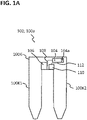
- FIG. 1A and FIG. 1B each show a schematic representation of a hair condition determination device 100 according to various exemplary embodiments
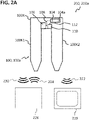
- FIG. 2A , FIG. , FIG. 2C and FIG. 2D each show a schematic representation of a hair condition determination system 200 according to various exemplary embodiments
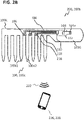
- FIG. 3A shows a schematic illustration of a use of a hair condition determination device according to various exemplary embodiments
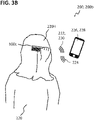
- FIG. 3B shows a schematic illustration of a use of a hair condition determination system according to various embodiments.
- Different exemplary embodiments of the hair condition determination device 100 and of the hair condition determination system 200 are identified by suffix letters.
- the hair condition determination device 100 can have a device body 100K with at least a first area 100K1 and a second area 100K2, wherein the first area 100K1 and the second area 100K2 can be designed in such a way that the hair 220H of the user 220 is between the first Area 100K1 and the second area 100K2 are movable.
- the device 100 can also have at least one light source 106 arranged in or on the device body 100K for illuminating hair 220H of the user 220.
- the device 100 can also have at least one optical sensor 110 arranged in or on the device body 100K for detecting light which was emitted by the light source 106 and interacted with the hair 220H moved between the first area and the second area.
- the device 100 may further include, in various embodiments, an electronic circuit device 104 arranged in or on the device body 100K, wherein the electronic circuit device 104 may be coupled to the optical sensor 110 for receiving a signal generated by means of the detected light, and wherein the electronic circuit device 104 can be arranged, based on the received signal, to determine and provide information regarding the hair condition of the user 220.
- an electronic circuit device 104 arranged in or on the device body 100K, wherein the electronic circuit device 104 may be coupled to the optical sensor 110 for receiving a signal generated by means of the detected light, and wherein the electronic circuit device 104 can be arranged, based on the received signal, to determine and provide information regarding the hair condition of the user 220.
- the hair condition determination device 100 has an optical sensor 110 for determining a hair damage and/or a hair condition of the hair 220H.
- the hair condition determination device 100 has an optical sensor 110 for determining a cysteic acid content of the hair 220H.
- the hair condition determination device 100 has an optical sensor 110 for determining a water content of the hair 220H.
- the hair condition determination device 100 can have an optical sensor 110 for determining a color of the hair 220H.
- the optical sensor 110e for determining a cysteic acid content of the hair 220H can, in various exemplary embodiments, have a camera and/or a spectrometer for detecting fluorescent light in a wavelength range of visible light, the fluorescent light from the hair 220H when irradiated with UV -Light is emitted.
- the hair condition determination device 100 can have a light source 106, e.g. a UV lamp, a UV LED or the like, which is suitable for emitting UV light in a wavelength range which damaged hair for emitting fluorescent light stimulates.
- a light source 106 e.g. a UV lamp, a UV LED or the like, which is suitable for emitting UV light in a wavelength range which damaged hair for emitting fluorescent light stimulates.
- the fluorescent light may be intrinsic fluorescence of the damaged hair 220H, and/or fluorescence of fluorescent dye adsorbed in the hair 220H.
- the hair 220H may have been removed from the head, for example for wetting the hair with a fluorescent dye solution and/or for registering the fluorescent light, or the hair may remain on the user's head, for example for registering the hair's intrinsic fluorescence.
- the irradiation, detection and evaluation of the detected sensor signal can take place in various exemplary embodiments as described above.
- a degree of hair damage can thus be determined as hair condition information.
- the optical sensor 110 for determining a cysteic acid content or another ingredient content of the hair 220H can have a camera and/or a spectrometer for detecting (near) infrared light, the (near) infrared light being Hair 220H is radiated, while the hair 220H is irradiated with and interacts with the (near) infrared light, e.g., absorbing part of it.
- the light source 106 can have an (N)IR lamp which is suitable for emitting (N)IR light at least in a wavelength range in which cysteic acid absorbs light.
- the light source 106 can be connected to the electronic circuit device 104, for example by means of a connection 108.
- the irradiation, detection and evaluation of the detected sensor signal can take place in various exemplary embodiments as described above.
- a degree of hair damage and/or a hair status can thus be determined as hair condition information.
- an exit area of the light source 106 from the device body and an entry area of the optical sensor 110 can be arranged relative to one another in such a way that light which is emitted from the light source 106 to the hair 220H, after interacting with the hair 220H, is at least partially so in Direction is emitted to the optical sensor 110 that it can be detected by the optical sensor 110.
- the optical sensor 110 designed as a spectrometer can be set up both to record the fluorescent light or (N)IR light in an evaluable manner and to enable the hair color or, for example, the water content of the hair to be determined.
- the optical sensor 110 can be arranged adjacent to the light source 106, as exemplified in FIG FIG. 1A , FIG. 2A , FIG. 2C and 2D for the hair condition determination device 100a.
- the optical sensor 110 can be arranged within the light source 106 (eg surrounded by the light source), as exemplified in FIG FIG. 1B for the hair condition determination device 100b (part of the bristles are shown in FIG. 1B not shown to reveal sensor 110 and light source 106).
- the light source 106 and/or the optical sensor 110 can be arranged at a distance from the exit or entry area.
- the light source 106 can be arranged at a distance from the light exit area, for example at a point on the device body 100K which provides more space, and the light to be emitted can be guided to the light exit area by means of a light guide device.
- the optical sensor 110 can be arranged at a distance from a light entry area 216, for example at a point on the device body 100K which provides more space, and the light entering the light entry area 216 can be conveyed to the optical sensor by means of a light guide device 218 110 (e.g. the detector).
- a light guide device 218 110 e.g. the detector
- the at least one optical sensor 110 (and optionally the light source 106) can be arranged in the handle 100G of the device body 100K, and the light entry area 216 for supplying the light from the hair to the optical sensor 110 can also be arranged in the handle, for example at one end of the handle .
- the comb or the brush can be arranged in such a way that the light entry area 216 faces the hair 102H, in the exemplary embodiment in FIG FIG. 2D for example with the end of the handle towards the hair 102H. It can thus be made possible, for example, for a hairdresser to briefly turn the comb or the brush over during a hairstyling operation and take a measurement to record the condition of the hair.
- arranging the light entry area 216 at a location of the device body 100K at which the first area 100K1 and the second area 100K2 are attached to the device body 100K, i.e. between the tines of the comb or between the bristles of the brush allow an im To ensure a substantially constant distance between the light entry area 216 and the hairs 220H arranged between the first area 100K1 and the second area 100K2, without having to instruct the user 220 on how to position the hair condition determination device 100 relative to his hair, as is usually the case combing or brushing occurs such that the hair is in contact with the device body 100K between the tines 100K1, 100K2 or bristles.
- a fluctuation range in the measured values can thus be reduced without additional effort, ie more reliable hair condition measurement results can be achieved.
- a plurality of light sources 106 and/or a plurality of light exit regions can be provided.
- a plurality of optical sensors 110 and/or a plurality of light entry areas 216 can be provided, wherein the plurality of optical sensors 110 can be configured to detect the same type of signal, e.g. either fluorescent light or (near) infrared light or visible light Light.
- the plurality of optical sensors 110 can be configured to detect different types of signals, e.g., fluorescent light and (near) infrared light or visible light and (near) infrared light or fluorescent light, visible light and (near) infrared light.
- At least one additional optical sensor can also be provided (not shown), which can be set up to detect light in order to detect at least one additional sensor value, which can be used when determining the condition of the hair.
- the at least one further optical sensor can have a color camera and/or a spectrometer, for example, which can be set up to detect light in a number of visible wavelength ranges, which enables the hair color of the user 220 to be determined, for example as described above.
- the device for determining the condition of the hair can have an output device 128 which can be set up to provide the condition of the hair determined and, if necessary, a recommendation determined using the condition of the hair determined.
- the output device 128 can be a display device 128 (also referred to as a display), such as in FIG FIG. 1B shown.
- the hair condition determination device can have another output device 128, for example a loudspeaker.
- the determined hair condition (e.g. the determined degree of hair damage) and possibly a recommendation determined using the determined hair condition, e.g. a recommendation for a hair coloring product, a hair care product, hair styling and/or a hair treatment, can be provided by means of the output device 128.
- a recommendation determined using the determined hair condition e.g. a recommendation for a hair coloring product, a hair care product, hair styling and/or a hair treatment
- an external output device 228 can be provided, which together with the hair condition determination device 100 can form a hair condition determination system 200, as is exemplified in FIG. 2A , 2 B , 2C , 2D and FIG. 3B is shown.
- the electronic circuit device 104 can transmit the data to be displayed to the output device 228 as a signal 222, for example by means of the device 104a for wireless transmission of data.
- the output device 228, for example a display 228, can be used in various exemplary embodiments, as in FIG. 2A and FIG. 2C shown, only fulfill an output function.
- the output device 228 may be part of the external data processing device 226 .
- the external data processing device 226 can optionally fulfill additional tasks, for example as the input device, for determining the hair condition and/or the recommendation, for storing results for creating a time history, etc.
- the hair condition determination device can have an input device.
- the input device is only shown in the figures for examples in which the display 128 integrated into the device 100 or an external display 228 can also be used as an input device, for example in the case of a touch-sensitive display.
- the input device can be used, for example, to enter a desired result, for example a desired hair color, a desired grooming condition, a desired styling (e.g. curls with a graduated curl or the like).
- the input device can be used to provide the hair condition determination device with further information, which can be taken into account when determining the recommendation, e.g. whether a product should be waterproof, should contain a UV filter, age, ethnicity and/or user's gender, etc.
- the at least one further sensor can have a microphone for determining a surface roughness of the hair, for example as described above.
- the degree of (surface) damage to the hair can be determined on the basis of the determined surface roughness, for example as described above.
- the registered light and/or the registered noise or possibly another or further detected sensor value can be stored as raw data and/or in processed form, for example as a digital photo or another quantification of the registered light, as an audio file, Fourier transformation or similar. ⁇ . be transmitted to the electronic circuit device 104, for example by means of a connection 112.
- the electronic circuit device 104 can be set up to determine the hair condition, e.g. the degree of hair damage and/or the hair status, and/or the recommendation directly, i.e. itself, e.g.
- the electronic circuit device 104 can be set up to determine the hair condition, e.g. the degree of hair damage and/or the hair status, and/or the recommendation indirectly, for example by transmitting the raw sensor data and/or partially evaluated sensor data and/or from a hair condition to an external data processing device 226, for example to a portable data processing device (e.g. a smartphone or similar) as in FIG. 2 B and FIG. 3B shown by way of example, or for example to another external data processing device, e.g. a cloud server architecture 226 ("cloud") as in FIG. 2A shown by way of example, wherein when provided to the cloud, the electronic circuit device 104 can also be set up to receive a result from the external data processing device (eg the cloud) 226 and to make it available by means of an output device 128, 228.
- an external data processing device 226 for example to a portable data processing device (e.g. a smartphone or similar) as in FIG. 2 B and FIG. 3B shown by way of example, or for example to another external data processing
- the electronic circuit device 104 can have a device 104a for wireless data transmission, for example for data transmission using WLAN, Bluetooth, ZigBee, Thread, NFC or the like, e.g. as described above. Data can be transmitted to or received from the external data processing device 226 by means of the device 104a for wireless data transmission.
- a device 104a for wireless data transmission for example for data transmission using WLAN, Bluetooth, ZigBee, Thread, NFC or the like, e.g. as described above.
- Data can be transmitted to or received from the external data processing device 226 by means of the device 104a for wireless data transmission.
- the hair condition determination device can be designed as a learning system, for example by the user 220 and/or other users providing the hair condition before the recommendation is applied and the hair condition after the recommendation is applied to the data processing device (for example using the cloud). provide.
- the determination of the hair condition can include a computer-aided determination of the degree of hair damage and/or the hair color or another hair status, for example a water content of the hair, for example by means of predictive analytics, for example as described above.
- determining a recommendation can include computer-aided determination of a hair treatment agent and/or a hair treatment recommendation, for example by means of predictive analytics, including the determined hair condition, for example as described above.
- the external data processing device 226, e.g. the smartphone can be equipped with appropriate software, for example an app, for example as described above.
- a cysteic acid content can be determined using the electronic circuit device 104 or using the external data processing device 226 based on a measure (e.g. an equivalent width) for the (N)IR absorption or the determined fluorescence intensity.
- a measure e.g. an equivalent width
- mathematical models from the field of predictive analytics can be used to establish a relationship between the measure of (N)IR absorption or the (standardized) fluorescence intensity and an associated cysteic acid content (and thus a degree of damage to the hair). to investigate.
- a relationship between cysteic acid content and (N)IR absorption or cysteic acid content and fluorescence intensity or corresponding data values can be included in the model as independent parameters, which can be determined by measuring standard hair samples, which have a cysteic acid content determined using known, complex methods, have been determined or have been mathematically modeled.
- the degree of damage to the hair can be determined on a categorical scale (e.g., mild, moderate, severe).
- the degree of damage can be determined on a metric scale (e.g. percentage of the cysteic acid content, volume of a combing noise in dB or the like).
- the predictive analytics method instead of the predictive analytics method, other, e.g., simpler, methods for determining the hair condition, e.g., the degree of damage or the hair color, and/or for determining the recommendation can be used.
- the hair condition determination device determines the condition of the hair after treatment with the hair treatment agent.
- a different device for example one of identical construction, can be used to determine the condition of the hair after the treatment, and the determined condition of the hair can be transmitted to the data processing device.
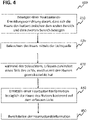
- FIG. 4 shows a flowchart 400, which represents a method for providing a hair treatment agent according to various exemplary embodiments.
- a device according to various exemplary embodiments as described above can be used to carry out the method.
- the method may include moving a hair condition determination device such that the user's hair moves between the first region and the second region (in 410), illuminating the hair with the light source (in 420), while illuminating detecting at least a portion of the light that has interacted with the hair (in 430), determining hair condition information regarding the user's hair based on the detected light (n 440), and providing the hair condition information (in 450).
Landscapes
- Health & Medical Sciences (AREA)
- Life Sciences & Earth Sciences (AREA)
- Physics & Mathematics (AREA)
- General Health & Medical Sciences (AREA)
- Engineering & Computer Science (AREA)
- Pathology (AREA)
- Public Health (AREA)
- Animal Behavior & Ethology (AREA)
- Surgery (AREA)
- Veterinary Medicine (AREA)
- Molecular Biology (AREA)
- Medical Informatics (AREA)
- Heart & Thoracic Surgery (AREA)
- Biomedical Technology (AREA)
- Biophysics (AREA)
- General Physics & Mathematics (AREA)
- Business, Economics & Management (AREA)
- Dermatology (AREA)
- Optics & Photonics (AREA)
- Dentistry (AREA)
- Nuclear Medicine, Radiotherapy & Molecular Imaging (AREA)
- Immunology (AREA)
- Biochemistry (AREA)
- Analytical Chemistry (AREA)
- Chemical & Material Sciences (AREA)
- Spectroscopy & Molecular Physics (AREA)
- Entrepreneurship & Innovation (AREA)
- Educational Administration (AREA)
- Educational Technology (AREA)
- Theoretical Computer Science (AREA)
- Biodiversity & Conservation Biology (AREA)
- Radiology & Medical Imaging (AREA)
- Physiology (AREA)
- Computer Networks & Wireless Communication (AREA)
- Measurement Of The Respiration, Hearing Ability, Form, And Blood Characteristics Of Living Organisms (AREA)
- Measuring And Recording Apparatus For Diagnosis (AREA)
- Brushes (AREA)
Claims (15)
- Dispositif de détermination (100, 100b) de l'état des cheveux permettant de fournir des informations concernant un état des cheveux de cheveux (220H) d'un utilisateur (220), comprenant :un corps de dispositif (100K) comportant au moins une première région (100K1) et une seconde région (100K2), conçu de sorte que les cheveux de l'utilisateur sont mobiles entre la première région et la seconde région ;au moins une source de lumière (106) facultative disposée dans ou sur le corps de dispositif et permettant d'éclairer les cheveux de l'utilisateur ;au moins un capteur optique (110) disposé dans ou sur le corps de dispositif etpermettant de saisir de la lumière qui a été émise depuis la source de lumière et qui a interagi avec les cheveux et/ou de la lumière ambiante qui a interagi avec les cheveux ; etun dispositif de circuit électronique (104) disposé dans ou sur le corps de dispositif, dans lequel le dispositif de circuit électronique est couplé au capteur optique pour recevoir un signal généré au moyen de la lumière saisie, etdans lequel le dispositif de circuit électronique est configuré pour déterminer des informations concernant l'état des cheveux de l'utilisateur sur la base du signal reçu et pour fournir les informations à l'utilisateur,caractérisé en ce quele dispositif de détermination de l'état des cheveux est configuré de telle sorte que le capteur optique détermine un degré de l'endommagement des cheveux en déterminant une teneur en acide cystéique, le capteur optique étant configuré pour effectuer un ou plusieurs enregistrements dans une plage de fluorescence et/ou dans une plage du proche infrarouge,dans lequel le dispositif de détermination de l'état des cheveux est en outre configuré de telle sorte que la teneur en eau des cheveux est déterminée au moyen du capteur optique.
- Dispositif de détermination de l'état des cheveux selon la revendication 1,
dans lequel le corps de dispositif est en forme de peigne ou de brosse, et dans lequel la première région et la seconde région comprennent deux dents de peigne adjacentes ou deux poils adjacents de la brosse. - Dispositif de détermination de l'état des cheveux selon l'une des revendications 1 ou 2, dans lequel la source de lumière comprend une source de lumière UV et l'au moins un capteur optique comprend un détecteur de lumière visible permettant de saisir de la lumière fluorescente.
- Dispositif de détermination de l'état des cheveux selon l'une des revendications 1 à 3, dans lequel la source de lumière comprend une source de lumière NIR et l'au moins un capteur optique comprend un détecteur NIR permettant de saisir de la lumière infrarouge proche.
- Dispositif de détermination de l'état des cheveux selon l'une des revendications 1 à 4, dans lequel le dispositif de circuit électronique est configuré pour déterminer et fournir à l'utilisateur une recommandation sur la base de l'état des cheveux déterminé.
- Dispositif de détermination de l'état des cheveux selon la revendication 5, dans lequel la recommandation comprend une recommandation de produit de soin des cheveux, et/ou une recommandation de produit de coiffage des cheveux, et/ou un produit de coloration des cheveux et/ou une recommandation de traitement des cheveux.
- Dispositif de détermination de l'état des cheveux selon l'une des revendications 1 à 6, comprenant en outre :
au moins un autre capteur permettant de saisir un autre état des cheveux. - Dispositif de détermination de l'état des cheveux selon la revendication 7,
dans lequel l'au moins un autre capteur comprend un microphone. - Dispositif de détermination de l'état des cheveux selon l'une des revendications 1 à 8, dans lequel le dispositif de circuit électronique comprend un dispositif d'échange de données sans fil.
- Système de détermination (200) de l'état des cheveux, comprenant :un dispositif de détermination de l'état des cheveux selon la revendication 9 ; etun dispositif d'affichage (128),dans lequel l'au moins un dispositif de détermination de l'état des cheveux est configuré pour transmettre les informations concernant l'état des cheveux au dispositif d'affichage au moyen du dispositif d'échange de données.
- Système de détermination de l'état des cheveux selon la revendication 10,
dans lequel le dispositif d'affichage comprend un écran d'ordinateur, un smartphone, une tablette ou un ordinateur portable. - Procédé permettant de fournir des informations concernant l'état des cheveux concernant des cheveux (220H) d'un utilisateur (220), comprenant :la disposition d'un dispositif de détermination (100, 100b) de l'état des cheveux selon l'une des revendications 1 à 9 ou d'un système de détermination (200) de l'état des cheveux selon l'une des revendications 10 ou 11, de telle sorte que les cheveux de l'utilisateur font face à une région d'entrée de lumière (216) du dispositif de détermination de l'état des cheveux ; l'éclairage éventuel des cheveux au moyen de la source de lumière (106) ;éventuellement lors de l'éclairage, la saisie d'au moins une partie de la lumière ayant interagi avec les cheveux et/ou de la lumière ambiante ayant interagi avec les cheveux ;la détermination d'informations concernant l'état des cheveux concernant les cheveux de l'utilisateur sur la base de la lumière saisie ; etla fourniture des informations concernant l'état des cheveux.
- Procédé selon la revendication 12, comprenant en outre :
la détermination d'au moins une recommandation sur la base de l'état des cheveux déterminé. - Procédé selon la revendication 13,
dans lequel la recommandation comprend une recommandation de produit de soin des cheveux, et/ou une recommandation de produit de coloration des cheveux, et/ou une recommandation de produit de coiffage des cheveux et/ou une recommandation de produit de traitement des cheveux. - Procédé selon l'une des revendications 12 à 14,
dans lequel l'état des cheveux déterminé comprend au moins l'un parmi un endommagement des cheveux et/ou une condition des cheveux.
Applications Claiming Priority (2)
| Application Number | Priority Date | Filing Date | Title |
|---|---|---|---|
| DE102017209225.4A DE102017209225A1 (de) | 2017-05-31 | 2017-05-31 | Haarzustands-Ermittlungsvorrichtung, Haarzustands-Ermittlungssystem und Verfahren zum Ermitteln eines Haarzustands |
| PCT/EP2018/063984 WO2018219892A1 (fr) | 2017-05-31 | 2018-05-29 | Dispositif de détermination de l'état des cheveux, système de détermination de l'état des cheveux et procédé pour la détermination d'un état des cheveux |
Publications (2)
| Publication Number | Publication Date |
|---|---|
| EP3629887A1 EP3629887A1 (fr) | 2020-04-08 |
| EP3629887B1 true EP3629887B1 (fr) | 2022-07-06 |
Family
ID=62455486
Family Applications (1)
| Application Number | Title | Priority Date | Filing Date |
|---|---|---|---|
| EP18728120.9A Active EP3629887B1 (fr) | 2017-05-31 | 2018-05-29 | Dispositif de détermination de l'état des cheveux, système de détermination de l'état des cheveux et procédé pour la détermination d'un état des cheveux |
Country Status (4)
| Country | Link |
|---|---|
| US (1) | US12064254B2 (fr) |
| EP (1) | EP3629887B1 (fr) |
| DE (1) | DE102017209225A1 (fr) |
| WO (1) | WO2018219892A1 (fr) |
Families Citing this family (13)
| Publication number | Priority date | Publication date | Assignee | Title |
|---|---|---|---|---|
| US11172873B2 (en) | 2018-05-17 | 2021-11-16 | The Procter & Gamble Company | Systems and methods for hair analysis |
| EP3671183B1 (fr) * | 2018-12-18 | 2025-06-18 | Henkel AG & Co. KGaA | Procédé de détermination d'une composition des pigments dans une fibre de cheveux |
| CN111374636B (zh) * | 2018-12-29 | 2022-05-17 | Oppo广东移动通信有限公司 | 信息推送方法及相关产品 |
| US20210195713A1 (en) * | 2019-12-18 | 2021-06-24 | L'oreal | Location based lighting experience |
| US11612236B2 (en) | 2020-05-19 | 2023-03-28 | The Procter & Gamble Company | Smart hair grooming device |
| US11928717B2 (en) * | 2020-10-29 | 2024-03-12 | L'oreal | Device for measuring hair exposure to pollutants or proximity to pollutant sources and recommending personalized haircare products |
| US20220164852A1 (en) * | 2020-11-20 | 2022-05-26 | The Procter & Gamble Company | Digital Imaging and Learning Systems and Methods for Analyzing Pixel Data of an Image of a Hair Region of a User's Head to Generate One or More User-Specific Recommendations |
| CN112472031B (zh) * | 2020-12-02 | 2021-07-27 | 江西中医药大学 | 一种毛发健康检测管理系统及方法 |
| US12039732B2 (en) | 2021-04-14 | 2024-07-16 | The Procter & Gamble Company | Digital imaging and learning systems and methods for analyzing pixel data of a scalp region of a users scalp to generate one or more user-specific scalp classifications |
| EP4376672A1 (fr) * | 2021-07-29 | 2024-06-05 | Unilever IP Holdings B.V. | Surveillance et retour de soins capillaires |
| US12295908B2 (en) | 2021-12-15 | 2025-05-13 | Anne Dani McCants | Scalp stimulation assembly |
| US20250191248A1 (en) * | 2023-12-07 | 2025-06-12 | L'oreal | Hair color simulation using a hair color classification guided network |
| US20250239026A1 (en) * | 2024-01-23 | 2025-07-24 | L'oreal | Method and system for 3d hair virtual try on |
Family Cites Families (8)
| Publication number | Priority date | Publication date | Assignee | Title |
|---|---|---|---|---|
| DE19506677A1 (de) * | 1995-02-25 | 1996-08-29 | Wella Ag | Verfahren und Anordnung zur Bestimmung der Beschaffenheit von Haar |
| GB0023472D0 (en) | 2000-09-25 | 2000-11-08 | Procter & Gamble | Method,apparatus and system for assessing hair condition |
| US20080218732A1 (en) * | 2005-07-27 | 2008-09-11 | University Of Massachusetts Lowell | Infrared Scanner for Biological Applications |
| US20090036800A1 (en) * | 2007-07-30 | 2009-02-05 | Michael Rabin | Hair Densitometer |
| FR2933584B1 (fr) * | 2008-07-10 | 2011-12-23 | Oreal | Procedes de traitement des matieres keratiniques et appareil pour la mise en oeuvre de tels procedes |
| MX2013014786A (es) * | 2011-06-15 | 2014-01-20 | Procter & Gamble | Dispositivo para analizar fibras de cabello y metodos para usar el dispositivo. |
| FR3000877B1 (fr) * | 2013-01-15 | 2018-09-07 | Withings | Brosse a cheveux instrumentee et connectee, et systeme informatif utilisant une telle brosse |
| WO2017032636A1 (fr) | 2015-08-27 | 2017-03-02 | Unilever Plc | Dispositif |
-
2017
- 2017-05-31 DE DE102017209225.4A patent/DE102017209225A1/de not_active Withdrawn
-
2018
- 2018-05-29 EP EP18728120.9A patent/EP3629887B1/fr active Active
- 2018-05-29 WO PCT/EP2018/063984 patent/WO2018219892A1/fr not_active Ceased
- 2018-05-29 US US16/609,365 patent/US12064254B2/en active Active
Also Published As
| Publication number | Publication date |
|---|---|
| EP3629887A1 (fr) | 2020-04-08 |
| US12064254B2 (en) | 2024-08-20 |
| US20200196936A1 (en) | 2020-06-25 |
| DE102017209225A1 (de) | 2018-12-06 |
| WO2018219892A1 (fr) | 2018-12-06 |
Similar Documents
| Publication | Publication Date | Title |
|---|---|---|
| EP3629887B1 (fr) | Dispositif de détermination de l'état des cheveux, système de détermination de l'état des cheveux et procédé pour la détermination d'un état des cheveux | |
| EP3668375B1 (fr) | Système et procédé pour déterminer un état des cheveux | |
| EP3481280B1 (fr) | Procédé pour établir un traitement capillaire spécifique pour un utilisateur | |
| EP3481275B1 (fr) | Procédé et dispositif pour déterminer un degré de détérioration des cheveux et procédé pour déterminer un moyen pour traiter les cheveux spécifique à l'utilisateur | |
| EP3481277B1 (fr) | Procédé pour établir un traitement capillaire spécifique pour un utilisateur | |
| EP3481276B1 (fr) | Procédé pour établir un traitement capillaire spécifique pour un utilisateur | |
| DE102017209860B4 (de) | Verfahren und Vorrichtung zum Ermitteln eines Körperbereichzustands | |
| EP3723603B1 (fr) | Dispositif de détermination d'état d'une chevelure et procédé pour fournir des informations d'état de chevelure | |
| EP3793426B1 (fr) | Détermination par spectroscopie dans le proche infrarouge du niveau de détérioration du cheveu liée à la réduction | |
| EP3793401B1 (fr) | Détermination d'un taux d'allongement du cheveu avec un capteur proche infrarouge | |
| EP3649459B1 (fr) | Système pour la gestion d'informations d'état de chevelure et procédé pour l'optimisation d'un système de conseils cosmétiques | |
| EP3457910B1 (fr) | Procédé et dispositif permettant de déterminer un degré de détérioration des cheveux | |
| EP3629888B1 (fr) | Procédé et dispositif pour fournir un produit de soin capillaire | |
| EP3679347B1 (fr) | Procédé et dispositif pour déterminer un degré de détérioration thermique des cheveux | |
| DE102016222193A1 (de) | Verfahren zum Ermitteln einer nutzerspezifischen Haarbehandlung I | |
| DE102016222180A1 (de) | Verfahren zum Ermitteln einer nutzerspezifischen Haarbehandlung II | |
| DE102016223916A1 (de) | Verfahren zum Ermitteln einer nutzerspezifischen Haarbehandlung III |
Legal Events
| Date | Code | Title | Description |
|---|---|---|---|
| STAA | Information on the status of an ep patent application or granted ep patent |
Free format text: STATUS: UNKNOWN |
|
| STAA | Information on the status of an ep patent application or granted ep patent |
Free format text: STATUS: THE INTERNATIONAL PUBLICATION HAS BEEN MADE |
|
| PUAI | Public reference made under article 153(3) epc to a published international application that has entered the european phase |
Free format text: ORIGINAL CODE: 0009012 |
|
| STAA | Information on the status of an ep patent application or granted ep patent |
Free format text: STATUS: REQUEST FOR EXAMINATION WAS MADE |
|
| 17P | Request for examination filed |
Effective date: 20191115 |
|
| AK | Designated contracting states |
Kind code of ref document: A1 Designated state(s): AL AT BE BG CH CY CZ DE DK EE ES FI FR GB GR HR HU IE IS IT LI LT LU LV MC MK MT NL NO PL PT RO RS SE SI SK SM TR |
|
| AX | Request for extension of the european patent |
Extension state: BA ME |
|
| DAV | Request for validation of the european patent (deleted) | ||
| DAX | Request for extension of the european patent (deleted) | ||
| GRAP | Despatch of communication of intention to grant a patent |
Free format text: ORIGINAL CODE: EPIDOSNIGR1 |
|
| STAA | Information on the status of an ep patent application or granted ep patent |
Free format text: STATUS: GRANT OF PATENT IS INTENDED |
|
| INTG | Intention to grant announced |
Effective date: 20220119 |
|
| GRAS | Grant fee paid |
Free format text: ORIGINAL CODE: EPIDOSNIGR3 |
|
| GRAA | (expected) grant |
Free format text: ORIGINAL CODE: 0009210 |
|
| STAA | Information on the status of an ep patent application or granted ep patent |
Free format text: STATUS: THE PATENT HAS BEEN GRANTED |
|
| AK | Designated contracting states |
Kind code of ref document: B1 Designated state(s): AL AT BE BG CH CY CZ DE DK EE ES FI FR GB GR HR HU IE IS IT LI LT LU LV MC MK MT NL NO PL PT RO RS SE SI SK SM TR |
|
| REG | Reference to a national code |
Ref country code: AT Ref legal event code: REF Ref document number: 1502255 Country of ref document: AT Kind code of ref document: T Effective date: 20220715 Ref country code: CH Ref legal event code: EP |
|
| REG | Reference to a national code |
Ref country code: DE Ref legal event code: R096 Ref document number: 502018010095 Country of ref document: DE |
|
| REG | Reference to a national code |
Ref country code: IE Ref legal event code: FG4D Free format text: LANGUAGE OF EP DOCUMENT: GERMAN |
|
| REG | Reference to a national code |
Ref country code: LT Ref legal event code: MG9D |
|
| REG | Reference to a national code |
Ref country code: NL Ref legal event code: MP Effective date: 20220706 |
|
| PG25 | Lapsed in a contracting state [announced via postgrant information from national office to epo] |
Ref country code: SE Free format text: LAPSE BECAUSE OF FAILURE TO SUBMIT A TRANSLATION OF THE DESCRIPTION OR TO PAY THE FEE WITHIN THE PRESCRIBED TIME-LIMIT Effective date: 20220706 Ref country code: RS Free format text: LAPSE BECAUSE OF FAILURE TO SUBMIT A TRANSLATION OF THE DESCRIPTION OR TO PAY THE FEE WITHIN THE PRESCRIBED TIME-LIMIT Effective date: 20220706 Ref country code: PT Free format text: LAPSE BECAUSE OF FAILURE TO SUBMIT A TRANSLATION OF THE DESCRIPTION OR TO PAY THE FEE WITHIN THE PRESCRIBED TIME-LIMIT Effective date: 20221107 Ref country code: NO Free format text: LAPSE BECAUSE OF FAILURE TO SUBMIT A TRANSLATION OF THE DESCRIPTION OR TO PAY THE FEE WITHIN THE PRESCRIBED TIME-LIMIT Effective date: 20221006 Ref country code: NL Free format text: LAPSE BECAUSE OF FAILURE TO SUBMIT A TRANSLATION OF THE DESCRIPTION OR TO PAY THE FEE WITHIN THE PRESCRIBED TIME-LIMIT Effective date: 20220706 Ref country code: LV Free format text: LAPSE BECAUSE OF FAILURE TO SUBMIT A TRANSLATION OF THE DESCRIPTION OR TO PAY THE FEE WITHIN THE PRESCRIBED TIME-LIMIT Effective date: 20220706 Ref country code: LT Free format text: LAPSE BECAUSE OF FAILURE TO SUBMIT A TRANSLATION OF THE DESCRIPTION OR TO PAY THE FEE WITHIN THE PRESCRIBED TIME-LIMIT Effective date: 20220706 Ref country code: FI Free format text: LAPSE BECAUSE OF FAILURE TO SUBMIT A TRANSLATION OF THE DESCRIPTION OR TO PAY THE FEE WITHIN THE PRESCRIBED TIME-LIMIT Effective date: 20220706 Ref country code: ES Free format text: LAPSE BECAUSE OF FAILURE TO SUBMIT A TRANSLATION OF THE DESCRIPTION OR TO PAY THE FEE WITHIN THE PRESCRIBED TIME-LIMIT Effective date: 20220706 |
|
| PG25 | Lapsed in a contracting state [announced via postgrant information from national office to epo] |
Ref country code: PL Free format text: LAPSE BECAUSE OF FAILURE TO SUBMIT A TRANSLATION OF THE DESCRIPTION OR TO PAY THE FEE WITHIN THE PRESCRIBED TIME-LIMIT Effective date: 20220706 Ref country code: IS Free format text: LAPSE BECAUSE OF FAILURE TO SUBMIT A TRANSLATION OF THE DESCRIPTION OR TO PAY THE FEE WITHIN THE PRESCRIBED TIME-LIMIT Effective date: 20221106 Ref country code: HR Free format text: LAPSE BECAUSE OF FAILURE TO SUBMIT A TRANSLATION OF THE DESCRIPTION OR TO PAY THE FEE WITHIN THE PRESCRIBED TIME-LIMIT Effective date: 20220706 Ref country code: GR Free format text: LAPSE BECAUSE OF FAILURE TO SUBMIT A TRANSLATION OF THE DESCRIPTION OR TO PAY THE FEE WITHIN THE PRESCRIBED TIME-LIMIT Effective date: 20221007 |
|
| REG | Reference to a national code |
Ref country code: DE Ref legal event code: R097 Ref document number: 502018010095 Country of ref document: DE |
|
| PG25 | Lapsed in a contracting state [announced via postgrant information from national office to epo] |
Ref country code: SM Free format text: LAPSE BECAUSE OF FAILURE TO SUBMIT A TRANSLATION OF THE DESCRIPTION OR TO PAY THE FEE WITHIN THE PRESCRIBED TIME-LIMIT Effective date: 20220706 Ref country code: RO Free format text: LAPSE BECAUSE OF FAILURE TO SUBMIT A TRANSLATION OF THE DESCRIPTION OR TO PAY THE FEE WITHIN THE PRESCRIBED TIME-LIMIT Effective date: 20220706 Ref country code: DK Free format text: LAPSE BECAUSE OF FAILURE TO SUBMIT A TRANSLATION OF THE DESCRIPTION OR TO PAY THE FEE WITHIN THE PRESCRIBED TIME-LIMIT Effective date: 20220706 Ref country code: CZ Free format text: LAPSE BECAUSE OF FAILURE TO SUBMIT A TRANSLATION OF THE DESCRIPTION OR TO PAY THE FEE WITHIN THE PRESCRIBED TIME-LIMIT Effective date: 20220706 |
|
| PLBE | No opposition filed within time limit |
Free format text: ORIGINAL CODE: 0009261 |
|
| STAA | Information on the status of an ep patent application or granted ep patent |
Free format text: STATUS: NO OPPOSITION FILED WITHIN TIME LIMIT |
|
| PG25 | Lapsed in a contracting state [announced via postgrant information from national office to epo] |
Ref country code: SK Free format text: LAPSE BECAUSE OF FAILURE TO SUBMIT A TRANSLATION OF THE DESCRIPTION OR TO PAY THE FEE WITHIN THE PRESCRIBED TIME-LIMIT Effective date: 20220706 Ref country code: EE Free format text: LAPSE BECAUSE OF FAILURE TO SUBMIT A TRANSLATION OF THE DESCRIPTION OR TO PAY THE FEE WITHIN THE PRESCRIBED TIME-LIMIT Effective date: 20220706 |
|
| REG | Reference to a national code |
Ref country code: DE Ref legal event code: R084 Ref document number: 502018010095 Country of ref document: DE |
|
| 26N | No opposition filed |
Effective date: 20230411 |
|
| PG25 | Lapsed in a contracting state [announced via postgrant information from national office to epo] |
Ref country code: AL Free format text: LAPSE BECAUSE OF FAILURE TO SUBMIT A TRANSLATION OF THE DESCRIPTION OR TO PAY THE FEE WITHIN THE PRESCRIBED TIME-LIMIT Effective date: 20220706 |
|
| P01 | Opt-out of the competence of the unified patent court (upc) registered |
Effective date: 20230705 |
|
| PG25 | Lapsed in a contracting state [announced via postgrant information from national office to epo] |
Ref country code: SI Free format text: LAPSE BECAUSE OF FAILURE TO SUBMIT A TRANSLATION OF THE DESCRIPTION OR TO PAY THE FEE WITHIN THE PRESCRIBED TIME-LIMIT Effective date: 20220706 |
|
| REG | Reference to a national code |
Ref country code: CH Ref legal event code: PL |
|
| PG25 | Lapsed in a contracting state [announced via postgrant information from national office to epo] |
Ref country code: MC Free format text: LAPSE BECAUSE OF FAILURE TO SUBMIT A TRANSLATION OF THE DESCRIPTION OR TO PAY THE FEE WITHIN THE PRESCRIBED TIME-LIMIT Effective date: 20220706 |
|
| REG | Reference to a national code |
Ref country code: BE Ref legal event code: MM Effective date: 20230531 |
|
| PG25 | Lapsed in a contracting state [announced via postgrant information from national office to epo] |
Ref country code: MC Free format text: LAPSE BECAUSE OF FAILURE TO SUBMIT A TRANSLATION OF THE DESCRIPTION OR TO PAY THE FEE WITHIN THE PRESCRIBED TIME-LIMIT Effective date: 20220706 Ref country code: LU Free format text: LAPSE BECAUSE OF NON-PAYMENT OF DUE FEES Effective date: 20230529 Ref country code: LI Free format text: LAPSE BECAUSE OF NON-PAYMENT OF DUE FEES Effective date: 20230531 Ref country code: IT Free format text: LAPSE BECAUSE OF FAILURE TO SUBMIT A TRANSLATION OF THE DESCRIPTION OR TO PAY THE FEE WITHIN THE PRESCRIBED TIME-LIMIT Effective date: 20220706 Ref country code: CH Free format text: LAPSE BECAUSE OF NON-PAYMENT OF DUE FEES Effective date: 20230531 |
|
| REG | Reference to a national code |
Ref country code: IE Ref legal event code: MM4A |
|
| PG25 | Lapsed in a contracting state [announced via postgrant information from national office to epo] |
Ref country code: IE Free format text: LAPSE BECAUSE OF NON-PAYMENT OF DUE FEES Effective date: 20230529 |
|
| PG25 | Lapsed in a contracting state [announced via postgrant information from national office to epo] |
Ref country code: IE Free format text: LAPSE BECAUSE OF NON-PAYMENT OF DUE FEES Effective date: 20230529 |
|
| PG25 | Lapsed in a contracting state [announced via postgrant information from national office to epo] |
Ref country code: BE Free format text: LAPSE BECAUSE OF NON-PAYMENT OF DUE FEES Effective date: 20230531 |
|
| REG | Reference to a national code |
Ref country code: AT Ref legal event code: MM01 Ref document number: 1502255 Country of ref document: AT Kind code of ref document: T Effective date: 20230529 |
|
| PG25 | Lapsed in a contracting state [announced via postgrant information from national office to epo] |
Ref country code: AT Free format text: LAPSE BECAUSE OF NON-PAYMENT OF DUE FEES Effective date: 20230529 |
|
| PG25 | Lapsed in a contracting state [announced via postgrant information from national office to epo] |
Ref country code: AT Free format text: LAPSE BECAUSE OF NON-PAYMENT OF DUE FEES Effective date: 20230529 |
|
| PG25 | Lapsed in a contracting state [announced via postgrant information from national office to epo] |
Ref country code: BG Free format text: LAPSE BECAUSE OF FAILURE TO SUBMIT A TRANSLATION OF THE DESCRIPTION OR TO PAY THE FEE WITHIN THE PRESCRIBED TIME-LIMIT Effective date: 20220706 |
|
| PG25 | Lapsed in a contracting state [announced via postgrant information from national office to epo] |
Ref country code: BG Free format text: LAPSE BECAUSE OF FAILURE TO SUBMIT A TRANSLATION OF THE DESCRIPTION OR TO PAY THE FEE WITHIN THE PRESCRIBED TIME-LIMIT Effective date: 20220706 |
|
| PGFP | Annual fee paid to national office [announced via postgrant information from national office to epo] |
Ref country code: DE Payment date: 20250521 Year of fee payment: 8 |
|
| PGFP | Annual fee paid to national office [announced via postgrant information from national office to epo] |
Ref country code: FR Payment date: 20250528 Year of fee payment: 8 |
|
| PG25 | Lapsed in a contracting state [announced via postgrant information from national office to epo] |
Ref country code: CY Free format text: LAPSE BECAUSE OF FAILURE TO SUBMIT A TRANSLATION OF THE DESCRIPTION OR TO PAY THE FEE WITHIN THE PRESCRIBED TIME-LIMIT; INVALID AB INITIO Effective date: 20180529 |
|
| PG25 | Lapsed in a contracting state [announced via postgrant information from national office to epo] |
Ref country code: HU Free format text: LAPSE BECAUSE OF FAILURE TO SUBMIT A TRANSLATION OF THE DESCRIPTION OR TO PAY THE FEE WITHIN THE PRESCRIBED TIME-LIMIT; INVALID AB INITIO Effective date: 20180529 |
|
| PG25 | Lapsed in a contracting state [announced via postgrant information from national office to epo] |
Ref country code: TR Free format text: LAPSE BECAUSE OF FAILURE TO SUBMIT A TRANSLATION OF THE DESCRIPTION OR TO PAY THE FEE WITHIN THE PRESCRIBED TIME-LIMIT Effective date: 20220706 |
|
| PGFP | Annual fee paid to national office [announced via postgrant information from national office to epo] |
Ref country code: GB Payment date: 20260306 Year of fee payment: 9 |