EP3567797A1 - Appareil et procédé de traitement de données de sécurité - Google Patents
Appareil et procédé de traitement de données de sécurité Download PDFInfo
- Publication number
- EP3567797A1 EP3567797A1 EP18862074.4A EP18862074A EP3567797A1 EP 3567797 A1 EP3567797 A1 EP 3567797A1 EP 18862074 A EP18862074 A EP 18862074A EP 3567797 A1 EP3567797 A1 EP 3567797A1
- Authority
- EP
- European Patent Office
- Prior art keywords
- user plane
- key
- base station
- pdu session
- target
- Prior art date
- Legal status (The legal status is an assumption and is not a legal conclusion. Google has not performed a legal analysis and makes no representation as to the accuracy of the status listed.)
- Granted
Links
Images








Classifications
-
- H—ELECTRICITY
- H04—ELECTRIC COMMUNICATION TECHNIQUE
- H04L—TRANSMISSION OF DIGITAL INFORMATION, e.g. TELEGRAPHIC COMMUNICATION
- H04L9/00—Cryptographic mechanisms or cryptographic arrangements for secret or secure communications; Network security protocols
- H04L9/08—Key distribution or management, e.g. generation, sharing or updating, of cryptographic keys or passwords
- H04L9/0861—Generation of secret information including derivation or calculation of cryptographic keys or passwords
-
- H—ELECTRICITY
- H04—ELECTRIC COMMUNICATION TECHNIQUE
- H04W—WIRELESS COMMUNICATION NETWORKS
- H04W12/00—Security arrangements; Authentication; Protecting privacy or anonymity
- H04W12/10—Integrity
- H04W12/106—Packet or message integrity
-
- H—ELECTRICITY
- H04—ELECTRIC COMMUNICATION TECHNIQUE
- H04L—TRANSMISSION OF DIGITAL INFORMATION, e.g. TELEGRAPHIC COMMUNICATION
- H04L63/00—Network architectures or network communication protocols for network security
- H04L63/06—Network architectures or network communication protocols for network security for supporting key management in a packet data network
-
- H—ELECTRICITY
- H04—ELECTRIC COMMUNICATION TECHNIQUE
- H04L—TRANSMISSION OF DIGITAL INFORMATION, e.g. TELEGRAPHIC COMMUNICATION
- H04L67/00—Network arrangements or protocols for supporting network services or applications
- H04L67/14—Session management
- H04L67/141—Setup of application sessions
-
- H—ELECTRICITY
- H04—ELECTRIC COMMUNICATION TECHNIQUE
- H04L—TRANSMISSION OF DIGITAL INFORMATION, e.g. TELEGRAPHIC COMMUNICATION
- H04L69/00—Network arrangements, protocols or services independent of the application payload and not provided for in the other groups of this subclass
- H04L69/24—Negotiation of communication capabilities
-
- H—ELECTRICITY
- H04—ELECTRIC COMMUNICATION TECHNIQUE
- H04L—TRANSMISSION OF DIGITAL INFORMATION, e.g. TELEGRAPHIC COMMUNICATION
- H04L9/00—Cryptographic mechanisms or cryptographic arrangements for secret or secure communications; Network security protocols
- H04L9/08—Key distribution or management, e.g. generation, sharing or updating, of cryptographic keys or passwords
-
- H—ELECTRICITY
- H04—ELECTRIC COMMUNICATION TECHNIQUE
- H04L—TRANSMISSION OF DIGITAL INFORMATION, e.g. TELEGRAPHIC COMMUNICATION
- H04L9/00—Cryptographic mechanisms or cryptographic arrangements for secret or secure communications; Network security protocols
- H04L9/08—Key distribution or management, e.g. generation, sharing or updating, of cryptographic keys or passwords
- H04L9/0816—Key establishment, i.e. cryptographic processes or cryptographic protocols whereby a shared secret becomes available to two or more parties, for subsequent use
- H04L9/0819—Key transport or distribution, i.e. key establishment techniques where one party creates or otherwise obtains a secret value, and securely transfers it to the other(s)
- H04L9/0822—Key transport or distribution, i.e. key establishment techniques where one party creates or otherwise obtains a secret value, and securely transfers it to the other(s) using key encryption key
-
- H—ELECTRICITY
- H04—ELECTRIC COMMUNICATION TECHNIQUE
- H04L—TRANSMISSION OF DIGITAL INFORMATION, e.g. TELEGRAPHIC COMMUNICATION
- H04L9/00—Cryptographic mechanisms or cryptographic arrangements for secret or secure communications; Network security protocols
- H04L9/08—Key distribution or management, e.g. generation, sharing or updating, of cryptographic keys or passwords
- H04L9/0861—Generation of secret information including derivation or calculation of cryptographic keys or passwords
- H04L9/0863—Generation of secret information including derivation or calculation of cryptographic keys or passwords involving passwords or one-time passwords
-
- H—ELECTRICITY
- H04—ELECTRIC COMMUNICATION TECHNIQUE
- H04W—WIRELESS COMMUNICATION NETWORKS
- H04W12/00—Security arrangements; Authentication; Protecting privacy or anonymity
- H04W12/03—Protecting confidentiality, e.g. by encryption
- H04W12/033—Protecting confidentiality, e.g. by encryption of the user plane, e.g. user's traffic
-
- H—ELECTRICITY
- H04—ELECTRIC COMMUNICATION TECHNIQUE
- H04W—WIRELESS COMMUNICATION NETWORKS
- H04W12/00—Security arrangements; Authentication; Protecting privacy or anonymity
- H04W12/04—Key management, e.g. using generic bootstrapping architecture [GBA]
- H04W12/041—Key generation or derivation
-
- H—ELECTRICITY
- H04—ELECTRIC COMMUNICATION TECHNIQUE
- H04W—WIRELESS COMMUNICATION NETWORKS
- H04W12/00—Security arrangements; Authentication; Protecting privacy or anonymity
- H04W12/06—Authentication
-
- H—ELECTRICITY
- H04—ELECTRIC COMMUNICATION TECHNIQUE
- H04W—WIRELESS COMMUNICATION NETWORKS
- H04W36/00—Hand-off or reselection arrangements
- H04W36/0005—Control or signalling for completing the hand-off
- H04W36/0011—Control or signalling for completing the hand-off for data sessions of end-to-end connection
- H04W36/0033—Control or signalling for completing the hand-off for data sessions of end-to-end connection with transfer of context information
- H04W36/0038—Control or signalling for completing the hand-off for data sessions of end-to-end connection with transfer of context information of security context information
-
- H—ELECTRICITY
- H04—ELECTRIC COMMUNICATION TECHNIQUE
- H04W—WIRELESS COMMUNICATION NETWORKS
- H04W76/00—Connection management
- H04W76/10—Connection setup
- H04W76/19—Connection re-establishment
-
- H—ELECTRICITY
- H04—ELECTRIC COMMUNICATION TECHNIQUE
- H04W—WIRELESS COMMUNICATION NETWORKS
- H04W76/00—Connection management
- H04W76/20—Manipulation of established connections
- H04W76/27—Transitions between radio resource control [RRC] states
-
- H—ELECTRICITY
- H04—ELECTRIC COMMUNICATION TECHNIQUE
- H04L—TRANSMISSION OF DIGITAL INFORMATION, e.g. TELEGRAPHIC COMMUNICATION
- H04L67/00—Network arrangements or protocols for supporting network services or applications
- H04L67/14—Session management
- H04L67/146—Markers for unambiguous identification of a particular session, e.g. session cookie or URL-encoding
-
- H—ELECTRICITY
- H04—ELECTRIC COMMUNICATION TECHNIQUE
- H04W—WIRELESS COMMUNICATION NETWORKS
- H04W80/00—Wireless network protocols or protocol adaptations to wireless operation
- H04W80/02—Data link layer protocols
Definitions
- This application relates to the field of communications technologies, and in particular, to a data security processing method and an apparatus.
- a security authentication process is as follows: A mobility management entity (Mobility Management Entity, MME) generates a network-side air interface protection key (KeNB), and then sends the KeNB and UE security capability information to the base station. The base station selects a proper security algorithm (encryption algorithm and integrity protection algorithm) based on the UE security capability information and a security capability of the base station, and then sends the proper security algorithm to the UE.
- MME Mobility Management Entity
- KeNB network-side air interface protection key
- the base station selects a proper security algorithm (encryption algorithm and integrity protection algorithm) based on the UE security capability information and a security capability of the base station, and then sends the proper security algorithm to the UE.
- the base station derives a user plane key and a control plane key at an access stratum based on the KeNB by using a key derivation algorithm.
- the user plane key includes a user plane encryption key (Key User Plane encryption, KUPenc) and a user plane integrity protection key (Key User Plane integrity, KUPint).
- the control plane key includes a radio resource control (Radio Resource Control, RRC) signaling protection key (RRC encryption key (Key RRC encryption, KRRCenc) and an RRC integrity protection key (Key RRC integrity, KRRCint).
- RRC Radio Resource Control
- the UE side may derive all non-access stratum keys and access stratum keys.
- a process in which the UE side derives the user plane key and the control plane key at the access stratum based on the KeNB by using the key derivation algorithm is the same as that on the base station side, and a same key derivation algorithm specified in a protocol is used.
- the UE encrypts and/or performs integrity protection on user plane data and an RRC message based on the encryption algorithm and the integrity protection algorithm selected by the base station and the user plane key and the control plane key. This is also the case when the base station side sends data.
- both the UE side and the base station side use a key derivation algorithm to derive a user plane key and a control plane key at an access stratum based on KeNB, and then encryption and integrity protection for all services of the UE use a key that is the same as a key (including a user plane key and a control plane key) generated when the PDU session is set up for the first time.
- PDU Protocol Data Unit
- This application provides a data security processing method and an apparatus, so as to improve data transmission security.
- this application provides a data security processing method, including: setting up a first protocol data unit PDU session; deriving, by a first base station, a first user plane key based on a received base key; performing, by the first base station, security processing on user plane data in the first PDU session by using the first user plane key and a security algorithm; setting up a second PDU session; deriving, by the first base station, a second user plane key based on the base key; and performing, by the first base station, security processing on user plane data in the second PDU session by using the second user plane key and the security algorithm, where the user plane key includes a user plane encryption key and/or a user plane integrity protection key.
- the first base station each time a PDU session is set up, derives a user plane key based on the base key and a PDU session identifier of the PDU session, and performs security processing on user plane data in the PDU session by using the derived user plane key and the security algorithm.
- Different PDU sessions use different user plane keys, thereby improving data transmission security.
- the deriving, by a first base station, a first user plane key based on a received base key includes: deriving, by the first base station, the first user plane key based on the base key and a first parameter, where the first parameter is a first PDU session identifier; and the deriving, by the first base station, a second user plane key based on the base key includes: deriving, by the first base station, the second user plane key based on the base key and a second parameter, where the second parameter is a second PDU session identifier.
- the method further includes: sending, by the first base station, a target base key and at least one PDU session identifier to a second base station, so that the second base station derives, based on the target base key and the at least one PDU session identifier, a user plane key corresponding to the PDU session identifier, where the target base key is derived by the first base station based on the base key and a third parameter.
- the method further includes:
- the first base station is a source base station
- the second base station is a target handover base station
- the third parameter includes at least one of a next-hop chain counter NCC, a target cell identifier, and frequency information.
- the first base station derives the target base key based on the base key and the third parameter, and sends the derived target base key and the at least one PDU session identifier to the second base station.
- the second base station derives, based on the target base key and the at least one PDU session identifier, the user plane key corresponding to the PDU session identifier.
- the second base station selects the target security algorithm for the UE based on the UE security capability information sent by the first base station. Therefore, the second base station performs security processing on the user plane data in the PDU session by using the user plane key corresponding to the PDU session identifier and the target security algorithm.
- the first base station further sends the third parameter and the at least one PDU session identifier to the UE.
- the UE derives the target base key based on the base key of the UE and the third parameter, derives, based on the target base key and the at least one PDU session identifier, the user plane key corresponding to the PDU session identifier, and performs security processing on the user plane data in the PDU session by using the user plane key corresponding to the PDU session identifier and the target security algorithm.
- the third parameter includes at least one of the NCC, the target cell identifier, and the frequency information, key derivation and exchange in a process in which the source base station is handed over to the target handover base station are implemented.
- the first base station is a master base station
- the second base station is a secondary base station
- the third parameter includes a secondary cell group SCG counter.
- the method further includes: sending, by the first base station to the second base station, an indication indicating whether user plane integrity protection corresponding to the PDU session identifier is enabled, so that the second base station determines, according to the indication, whether to derive a user plane integrity protection key corresponding to the PDU session identifier.
- the first base station includes a centralized unit CU and a distributed unit DU
- the CU includes a control plane CU and a user plane CU
- the control plane CU is connected to the user plane CU through a communications interface
- the deriving, by the first base station, the first user plane key based on the base key and a first parameter includes: deriving, by the control plane CU, the first user plane key based on the base key and the first parameter, and sending the first parameter and the first user plane key corresponding to the first parameter to the user plane CU
- the deriving, by the first base station, the second user plane key based on the base key and a second parameter includes: deriving, by the control plane CU, the second user plane key based on the base key and the second parameter, and sending the second parameter and the second user plane key corresponding to the second parameter to the user plane CU.
- the control plane CU receives the base key sent by the core network, derives a user plane key based on the base key and a PDU session identifier of each PDU session, and sends the PDU session identifier and the user plane key corresponding to the PDU session identifier to the user plane CU.
- the user plane CU performs security processing on the user plane data in the PDU session by using the user plane key corresponding to the PDU session identifier and the security algorithm, thereby improving data transmission security in a CP-UP separation scenario.
- the first base station includes a centralized unit CU and a distributed unit DU
- the CU includes a control plane CU and a user plane CU
- the control plane CU is connected to the user plane CU through a communications interface
- the deriving, by the first base station, the first user plane key based on the base key and a first parameter includes: sending, by the control plane CU, the base key and the first parameter to the user plane CU, and deriving, by the user plane CU, the first user plane key based on the base key and the first parameter
- the deriving, by the first base station, the second user plane key based on the base key and a second parameter includes: sending, by the control plane CU, the base key and the second parameter to the user plane CU, and deriving, by the user plane CU, the second user plane key based on the base key and the second parameter.
- the control plane CU receives the base key sent by the core network, and sends the base key and a PDU session identifier of each PDU session to the user plane CU.
- the user plane CU derives a user plane key based on the base key and the PDU session identifier of each PDU session, and performs security processing on the user plane data in the PDU session by using the user plane key corresponding to the PDU session identifier and the security algorithm, thereby improving data transmission security in a CP-UP separation scenario.
- the method further includes: sending, by the control plane CU to the user plane CU, an indication indicating whether user plane integrity protection corresponding to the PDU session identifier is enabled; and determining, by the user plane CU according to the indication, whether to derive a user plane integrity protection key corresponding to the PDU session identifier.
- the method further includes: sending, by the control plane CU, the security algorithm to the user plane CU; the performing, by the first base station, security processing on user plane data in the first PDU session by using the first user plane key and a security algorithm includes: performing, by the user plane CU, security processing on the user plane data in the first PDU session by using the first user plane key and the security algorithm; and the performing, by the first base station, security processing on user plane data in the second PDU session by using the second user plane key and the security algorithm includes: performing, by the user plane CU, security processing on the user plane data in the second PDU session by using the second user plane key and the security algorithm.
- the method further includes: receiving, by the first base station, a radio resource control RRC reestablishment message or an RRC resume message sent by UE, where the RRC reestablishment message or the RRC resume message includes at least one of a UE identity, an original cell identifier, an authentication code shortMAC-I, a control plane CU indication or a user plane CU indication, and a PDU session identifier; and generating, by the first base station, shortMAC-I based on at least one of the UE identity, the original cell identifier, the control plane CU indication or the user plane CU indication, and the PDU session identifier, and determining, by comparing the generated shortMAC-I with the shortMAC-I sent by the UE, whether authentication succeeds.
- the first base station receives the RRC reestablishment message or the RRC resume message sent by the UE, and the first base station generates the shortMAC-I based on at least one of the UE identity, the original cell identifier, the control plane CU indication or the user plane CU indication, and the PDU session identifier, and determines, by comparing the generated shortMAC-I with the shortMAC-I sent by the UE, whether authentication succeeds, thereby implementing data transmission security in an RRC reestablishment or RRC resume scenario.
- the method further includes: receiving, by the first base station, a first PDU session identifier and an indication indicating whether user plane integrity protection corresponding to the first PDU session identifier is enabled, where the first PDU session identifier and the indication are sent by a core network; determining, by the first base station according to the indication, whether to derive a user plane integrity protection key corresponding to the first PDU session identifier; receiving, by the first base station, a second PDU session identifier and an indication indicating whether user plane integrity protection corresponding to the second PDU session identifier is enabled, where the second PDU session identifier and the indication are sent by the core network; and determining, by the first base station according to the indication, whether to derive a user plane integrity protection key corresponding to the second PDU session identifier.
- this application provides a data security processing method, including: sending, by a first base station to a second base station, a target control plane base key, at least one PDU session identifier, and a target user plane base key respectively corresponding to the at least one PDU session identifier, so that the second base station derives a target control plane key based on the target control plane base key and derives a target user plane key based on the target user plane base key, where the target control plane key includes a control plane encryption key and/or a control plane integrity protection key, and the target user plane key includes a user plane encryption key and/or a user plane integrity protection key; where the target control plane base key is derived by the first base station based on a control plane base key and a first parameter, the target user plane base key is derived by the first base station based on a user plane base key and a second parameter, the second parameter is in a one-to-one correspondence with a PDU session identifier, the control plane base key is sent by
- the first base station sends, to the second base station, the target control plane base key, the at least one PDU session identifier, and the target user plane base key respectively corresponding to the at least one PDU session identifier.
- the second base station derives the target control plane key based on the target control plane base key, and derives the target user plane key based on the target user plane base key, so that the second base station performs security processing on control plane data by using the target control plane key and a target first security algorithm, and performs security processing on user plane data in the PDU session by using the target user plane key and a target second security algorithm, thereby implementing key derivation and exchange in a process in which a source base station is handed over to a target handover base station.
- the method further includes:
- the first base station is a source base station
- the second base station is a target handover base station
- the first parameter includes at least one of a next-hop chain counter NCC, a target cell identifier, and frequency information
- the second parameter includes at least one of an NCC, a target cell identifier, a PDU session identifier, and frequency information.
- this application provides a data security processing method, including:
- the first base station sends, to the second base station, the at least one PDU session identifier and the target user plane base key respectively corresponding to the at least one PDU session identifier.
- the second base station derives the target user plane key based on the target user plane base key, so that the second base station performs security processing on the control plane data by using the target control plane key and the target first security algorithm, and performs security processing on the user plane data in the PDU session by using the target user plane key and the target second security algorithm, thereby implementing key derivation and exchange in a DC scenario.
- the method further includes: sending, by the first base station, a target second security algorithm to user equipment UE, where the target second security algorithm is selected by the second base station for the UE based on UE security capability information sent by the first base station, and sent by the second base station to the first base station; and sending, by the first base station, the second parameter to the UE, so that the UE derives the target user plane base key based on a user plane base key of the UE and the second parameter, derives the target user plane key based on the target user plane base key, and performs security processing on user plane data corresponding to the PDU session identifier by using the target user plane key and the target second security algorithm.
- the method further includes: sending, by the first base station, a target control plane base key to the second base station, so that the second base station derives a target control plane key based on the target control plane base key, and the target control plane base key is derived by the first base station based on the control plane base key and a first parameter.
- the method further includes:
- the first base station is a master base station
- the second base station is a secondary base station
- the first parameter includes a secondary cell group SCG counter
- the second parameter includes an SCG counter and a PDU session identifier
- the method further includes: sending, by the first base station to the second base station, an indication indicating whether user plane integrity protection corresponding to the PDU session identifier is enabled, so that the second base station determines, according to the indication, whether to derive a user plane integrity protection key corresponding to the PDU session identifier.
- this application provides a data security processing method, including: setting up a PDU session, and receiving, by a control plane centralized unit CU, a user plane base key sent by a core network; deriving, by the control plane CU, a user plane key based on the user plane base key, and sending a PDU session identifier and a user plane key corresponding to the PDU session identifier to a user plane CU, where the user plane key includes a user plane encryption key and/or a user plane integrity protection key; and performing, by the user plane CU, security processing on user plane data in the PDU session by using the user plane key corresponding to the PDU session identifier and a security algorithm; where the control plane CU is connected to the user plane CU through a communications interface.
- the control plane CU receives the user plane base key sent by the core network, and the control plane CU derives the user plane key based on the user plane base key, and sends the PDU session identifier and the user plane key corresponding to the PDU session identifier to the user plane CU.
- the user plane CU performs security processing on the user plane data in the PDU session by using the user plane key corresponding to the PDU session identifier and the security algorithm, thereby improving data transmission security in a CP-UP separation scenario.
- this application provides a data security processing method, including: setting up a PDU session, and receiving, by a control plane centralized unit CU, a user plane base key sent by a core network; sending, by the control plane CU, a PDU session identifier and a user plane base key corresponding to the PDU session identifier to a user plane CU; deriving, by the user plane CU, a user plane key based on the user plane base key, where the user plane key includes a user plane encryption key and/or a user plane integrity protection key; and performing, by the user plane CU, security processing on user plane data in the PDU session by using a user plane key corresponding to the PDU session identifier and a security algorithm; where the control plane CU is connected to the user plane CU through a communications interface.
- the control plane CU receives the user plane base key sent by the core network, and the control plane CU sends the PDU session identifier and the user plane base key corresponding to the PDU session identifier to the user plane CU.
- the user plane CU derives the user plane key based on the user plane base key, and finally the user plane CU performs security processing on the user plane data in the PDU session by using the user plane key corresponding to the PDU session identifier and the security algorithm, thereby improving data transmission security in a CP-UP separation scenario.
- the method further includes: sending, by the control plane CU to the user plane CU, an indication indicating whether user plane integrity protection corresponding to the PDU session identifier is enabled; and determining, by the user plane CU according to the indication, whether to derive a user plane integrity protection key corresponding to the PDU session identifier.
- the method further includes: sending, by the control plane CU to the user plane CU, a security algorithm selected based on user equipment UE security capability information.
- this application provides a base station, including: a key derivation module, configured to: derive a first user plane key based on a received base key when a first protocol data unit PDU session is set up; and a processing module, configured to perform security processing on user plane data in the first PDU session by using the first user plane key and a security algorithm.
- the key derivation module is further configured to: derive a second user plane key based on the base key when a second PDU session is set up.
- the processing module is further configured to perform security processing on user plane data in the second PDU session by using the second user plane key and the security algorithm, where the user plane key includes a user plane encryption key and/or a user plane integrity protection key.
- the key derivation module is specifically configured to derive the first user plane key based on the base key and a first parameter, where the first parameter is a first PDU session identifier; and derive the second user plane key based on the base key and a second parameter, where the second parameter is a second PDU session identifier.
- the base station further includes a sending module, configured to send a target base key and at least one PDU session identifier to a second base station, so that the second base station derives, based on the target base key and the at least one PDU session identifier, a user plane key corresponding to the PDU session identifier, where the target base key is derived by the base station based on the base key and a third parameter.
- a sending module configured to send a target base key and at least one PDU session identifier to a second base station, so that the second base station derives, based on the target base key and the at least one PDU session identifier, a user plane key corresponding to the PDU session identifier, where the target base key is derived by the base station based on the base key and a third parameter.
- the sending module is further configured to: after sending the target base key and the at least one PDU session identifier to the second base station, send a target security algorithm to user equipment UE, where the target security algorithm is selected by the second base station for the UE based on UE security capability information sent by the base station, and sent by the second base station to the base station; and send the third parameter and the at least one PDU session identifier to the UE, so that the UE derives the target base key based on a base key of the UE and the third parameter, derives, based on the target base key and the at least one PDU session identifier, the user plane key corresponding to the PDU session identifier, and then performs security processing on user plane data in the PDU session by using the user plane key corresponding to the PDU session identifier and the target security algorithm.
- the base station is a source base station
- the second base station is a target handover base station
- the third parameter includes at least one of a next-hop chain counter NCC, a target cell identifier, and frequency information.
- the base station is a master base station
- the second base station is a secondary base station
- the third parameter includes a secondary cell group SCG counter.
- the sending module is further configured to send, to the second base station, an indication indicating whether user plane integrity protection corresponding to the PDU session identifier is enabled, so that the second base station determines, according to the indication, whether to derive a user plane integrity protection key corresponding to the PDU session identifier.
- the base station includes a centralized unit CU and a distributed unit DU.
- the CU includes a control plane CU and a user plane CU.
- the control plane CU is connected to the user plane CU through a communications interface.
- the key derivation module is specifically configured to: control the control plane CU to derive the first user plane key based on the base key and the first parameter, and send the first parameter and the first user plane key corresponding to the first parameter to the user plane CU.
- the key derivation module is specifically configured to: control the control plane CU to derive the second user plane key based on the base key and the second parameter, and send the second parameter and the second user plane key corresponding to the second parameter to the user plane CU.
- the base station includes a centralized unit CU and a distributed unit DU.
- the CU includes a control plane CU and a user plane CU.
- the control plane CU is connected to the user plane CU through a communications interface.
- the key derivation module is specifically configured to: control the control plane CU to send the base key and the first parameter to the user plane CU, so that the user plane CU derives the first user plane key based on the base key and the first parameter.
- the key derivation module is specifically configured to: control the control plane CU to send the base key and the second parameter to the user plane CU, so that the user plane CU derives the second user plane key based on the base key and the second parameter.
- the key derivation module is further configured to: control the control plane CU to send, to the user plane CU, an indication indicating whether user plane integrity protection corresponding to the PDU session identifier is enabled; and control the user plane CU to determine, according to the indication, whether to derive a user plane integrity protection key corresponding to the PDU session identifier.
- the processing module is configured to control the control plane CU to send the security algorithm to the user plane CU; the processing module is configured to control the user plane CU to perform security processing on user plane data in the first PDU session by using the first user plane key and the security algorithm; and the processing module is configured to control the user plane CU to perform security processing on user plane data in the second PDU session by using the second user plane key and the security algorithm.
- the base station further includes a first receiving module, configured to receive a radio resource control RRC reestablishment message or an RRC resume message sent by UE, where the RRC reestablishment message or the RRC resume message includes at least one of a UE identity, an original cell identifier, an authentication code shortMAC-I, a control plane CU indication or a user plane CU indication, and a PDU session identifier.
- a radio resource control RRC reestablishment message or an RRC resume message sent by UE, where the RRC reestablishment message or the RRC resume message includes at least one of a UE identity, an original cell identifier, an authentication code shortMAC-I, a control plane CU indication or a user plane CU indication, and a PDU session identifier.
- the processing module is further configured to generate shortMAC-I based on at least one of the UE identity, the original cell identifier, the control plane CU indication or the user plane CU indication, and the PDU session identifier, and determine, by comparing the generated shortMAC-I with the shortMAC-I sent by the UE, whether authentication succeeds.
- the base station further includes a second receiving module, configured to receive a first PDU session identifier and an indication indicating whether user plane integrity protection corresponding to the first PDU session identifier is enabled, where the first PDU session identifier and the indication are sent by a core network.
- the processing module is further configured to: determine, according to the indication, whether to derive a user plane integrity protection key corresponding to the first PDU session identifier.
- the second receiving module is further configured to receive a second PDU session identifier and an indication indicating whether user plane integrity protection corresponding to a second PDU session identifier is enabled, where the second PDU session identifier and the indication are sent by the core network.
- the processing module is further configured to: determine, according to the indication, whether to derive a user plane integrity protection key corresponding to the second PDU session identifier.
- this application provides a base station, including: a sending module, configured to send, to a second base station, a target control plane base key, at least one PDU session identifier, and a target user plane base key respectively corresponding to the at least one PDU session identifier, so that the second base station derives a target control plane key based on the target control plane base key, and derives a target user plane key based on the target user plane base key, where the target control plane key includes a control plane encryption key and/or a control plane integrity protection key, and the target user plane key includes a user plane encryption key and/or a user plane integrity protection key; and a derivation module, configured to derive the target control plane base key based on a control plane base key and a first parameter, and derive the target user plane base key based on a user plane base key and a second parameter, where the second parameter is in a one-to-one correspondence with a PDU session identifier, the control plane base key is sent by
- the sending module is further configured to: after sending, to the second base station, the target control plane base key, the at least one PDU session identifier, and the target user plane base key respectively corresponding to the at least one PDU session identifier, send a target first security algorithm and a target second security algorithm to user equipment UE, where the target first security algorithm and the target second security algorithm are selected by the second base station for the UE based on UE security capability information sent by the base station, and sent by the second base station to the base station; and send the first parameter and the second parameter to the UE, so that the UE derives the target control plane base key based on a control plane base key of the UE and the first parameter, derives the target user plane base key based on a user plane base key of the UE and the second parameter, derives the target control plane key based on the target control plane base key, derives the target user plane key based on the target user plane base key, performs security processing on control plane data by using the target control plane key and the target
- the base station is a source base station
- the second base station is a target handover base station
- the first parameter includes at least one of a next-hop chain counter NCC, a target cell identifier, and frequency information
- the second parameter includes at least one of an NCC, a target cell identifier, a PDU session identifier, and frequency information.
- this application provides a base station, including: a sending module, configured to send, to a second base station, at least one PDU session identifier and a target user plane base key respectively corresponding to the at least one PDU session identifier, so that the second base station derives a target user plane key based on the target user plane base key, where the target user plane key includes a user plane encryption key and/or a user plane integrity protection key; and a derivation module, configured to derive the target user plane base key based on a user plane base key and a second parameter, where the second parameter is in a one-to-one correspondence with the PDU session identifier, and the user plane base key is sent by a core network when a PDU session is set up.
- a sending module configured to send, to a second base station, at least one PDU session identifier and a target user plane base key respectively corresponding to the at least one PDU session identifier, so that the second base station derives a target user plane key based on the target user
- the sending module is further configured to: after sending, to the second base station, the at least one PDU session identifier and the target user plane base key respectively corresponding to the at least one PDU session identifier, send a target second security algorithm to user equipment UE, where the target second security algorithm is selected by the second base station for the UE based on UE security capability information sent by the base station, and sent by the second base station to the base station; and send the second parameter to the UE, so that the UE derives the target user plane base key based on a user plane base key of the UE and the second parameter, derives the target user plane key based on the target user plane base key, and performs security processing on user plane data corresponding to the PDU session identifier by using the target user plane key and the target second security algorithm.
- the sending module is further configured to: when sending, to the second base station, the at least one PDU session identifier and the target user plane base key respectively corresponding to the at least one PDU session identifier, send a target control plane base key to the second base station, so that the second base station derives a target control plane key based on the target control plane base key, where the target control plane base key is derived by the base station based on a control plane base key and a first parameter.
- the sending module is further configured to: after sending the target control plane base key to the second base station, send a target first security algorithm to the UE, where the target first security algorithm is selected by the second base station for the UE based on the UE security capability information sent by the base station, and sent by the second base station to the base station; and send the first parameter to the UE, so that the UE derives the target control plane base key based on a control plane base key of the UE and the first parameter, derives the target control plane key based on the target control plane base key, and performs security processing on control plane data by using the target control plane key and the target first security algorithm.
- the base station is a master base station
- the second base station is a secondary base station
- the first parameter includes an SCG counter
- the second parameter includes an SCG counter and a PDU session identifier
- the sending module is further configured to send, to the second base station, an indication indicating whether user plane integrity protection corresponding to the PDU session identifier is enabled, so that the second base station determines, according to the indication, whether to derive a user plane integrity protection key corresponding to the PDU session identifier.
- this application provides a base station, including a centralized unit CU and a distributed unit DU, where the CU includes a control plane CU and a user plane CU, and the control plane CU is connected to the user plane CU through a communications interface; the control plane CU is configured to:
- this application provides a base station, including a centralized unit CU and a distributed unit DU, where the CU includes a control plane CU and a user plane CU, and the control plane CU is connected to the user plane CU through a communications interface; the control plane CU is configured to: when a PDU session is set up, receive a user plane base key sent by a core network; and send a PDU session identifier and a user plane base key corresponding to the PDU session identifier to the user plane CU; and the user plane CU is configured to derive a user plane key based on the user plane base key, where the user plane key includes a user plane encryption key and/or a user plane integrity protection key; and perform security processing on user plane data in the PDU session by using the user plane key corresponding to the PDU session identifier and the security algorithm.
- control plane CU is further configured to send, to the user plane CU, an indication indicating whether user plane integrity protection corresponding to the PDU session identifier is enabled; and the user plane CU is further configured to determine, according to the indication, whether to derive a user plane integrity protection key corresponding to the PDU session identifier.
- control plane CU is further configured to send, to the user plane CU, a security algorithm selected based on user equipment UE security capability information.
- beneficial effects of the base station provided in the tenth aspect and the possible designs of the tenth aspect refer to the beneficial effects brought by the fifth aspect and the possible implementations of the fifth aspect. Details are not described herein again.
- this application provides a base station, including a memory, a processor, and a transceiver, where the memory, the processor, and the transceiver communicate with each other by using a bus; the transceiver is used by the base station to perform data receiving/sending with the external; the memory stores a program instruction; and the processor invokes the program instruction stored in the memory, so as to perform an operation on a base station in the data security processing method according to the first aspect and any possible design of the first aspect, the second aspect and any possible design of the second aspect, the third aspect and any possible design of the third aspect, the fourth aspect and any possible design of the fourth aspect, or the fifth aspect and any possible design of the fifth aspect.
- this application provides a system chip, applied to a base station, and the system chip includes an input/output interface, at least one processor, a memory, and a bus; the input/output interface, the at least one processor, and the memory communicate with each other by using the bus, the memory stores a program instruction, and the input/output interface is used by the system chip to perform data receiving/sending with the external; and the at least one processor invokes the program instruction stored in the memory, so as to perform an operation on a base station in the data security processing method according to the first aspect and any possible design of the first aspect, the second aspect and any possible design of the second aspect, the third aspect and any possible design of the third aspect, the fourth aspect and any possible design of the fourth aspect, or the fifth aspect and any possible design of the fifth aspect.
- this application provides a computer program product, applied to a base station, where the computer program product includes an instruction, and when the instruction is executed by a computing apparatus, an operation on a base station in the data security processing method according to the first aspect and any possible design of the first aspect, the second aspect and any possible design of the second aspect, the third aspect and any possible design of the third aspect, the fourth aspect and any possible design of the fourth aspect, or the fifth aspect and any possible design of the fifth aspect is performed.
- this application provides a computer readable storage medium, applied to a base station, where the computer readable storage medium includes an instruction, and when the instruction is executed by a computing apparatus, an operation on a base station in the data security processing method according to the first aspect and any possible design of the first aspect, the second aspect and any possible design of the second aspect, the third aspect and any possible design of the third aspect, the fourth aspect and any possible design of the fourth aspect, or the fifth aspect and any possible design of the fifth aspect is performed.
- Network architectures and service scenarios described in this application are intended to describe the technical solutions in this application clearly, but are not intended to limit the technical solutions provided in this application.
- a person of ordinary skill in the art may know that as the network architectures evolve and a new service scenario emerges, the technical solutions provided in this application are also applicable to a similar technical problem.
- the technical solutions of this application may be applied to a mobile communications system such as a 5th generation mobile communications (the 5th Generation mobile communication technology, 5G) system or an LTE system, and may also be applied to various forms of systems in which functions of a base station are separated.
- a communications system to which this application is applied related network elements include a base station (also referred to as an access network device) and UE (also referred to as a terminal device).
- the technical solutions of this application are mainly applied to a security authentication process between a base station and UE.
- the base station and the UE derive a user plane key based on a base key or a user plane base key, implementing key generation and exchange at a PDU session granularity, and implementing key derivation and exchange in a scenario in which a control plane CU is separated from a user plane CU, in a dual-connectivity (Dual-connectivity, DC) scenario, in an RRC reestablishment scenario, in a handover (Handover, HO) scenario, and the like in a 5G system.
- DC Dual-connectivity
- RRC reestablishment scenario in a handover (Handover, HO) scenario
- the following describes in detail a network architecture of this application, a CU-DU separation scenario, a DC scenario, an RRC reestablishment scenario, and an HO scenario that are related to this application.
- FIG. 1 is a schematic diagram of a network architecture of a 5G system.
- a core network is a 5G core network (5G Core Network, 5GC)
- a base station is referred to as a gNB/ng-eNB, and mainly includes an RRC/service data adaptation protocol layer (Service Data Adaptation Protocol, SDAP)/PDCP/radio link control (Radio Link Control, RLC)/medium access control (Medium Access Control, MAC)/physical layer (Physical Layer, PHY) protocol layer.
- SDAP Service Data Adaptation Protocol
- RLC Radio Link Control
- MAC Medium Access Control
- Physical Layer Physical Layer
- gNBs are connected to each other through an Xn interface, and the gNB and the 5GC are connected to each other through an Ng interface.
- An access and mobility management function (Access and Mobility management Function, AMF)/a user plane function (User Plane Function, UPF) is equivalent to an MME in an LTE system.
- AMF Access and Mobility management Function
- UPF User Plane Function
- the AMF is mainly responsible for admission, and the UPF is mainly responsible for session (session) management.
- FIG. 2 is a schematic diagram of CU-DU division in a 5G system.
- a base station may include a centralized unit (Centralized Unit, CU) and a distributed unit (Distributed Unit, DU). That is, functions of a base station in an original access network are separated, some functions of the base station are deployed on one CU, and a remaining function is deployed on the DU, and a plurality of DUs share one CU. Therefore, costs can be reduced, and network extension is easy.
- CU Centralized Unit
- DU distributed Unit
- the CU is connected to the DU through an F1 interface, and on behalf of a gNB, the CU is connected to a core network through an Ng interface.
- CU-DU division may be performed by a protocol stack.
- RRC and PDCP layers are deployed on the CU, and remaining RLC layer, MAC layer, and PHY layer are deployed on the DU.
- the CU may be further divided into a control plane CU (CU-CP) and a user plane CU (CU-UP).
- FIG. 3 is a schematic diagram of CU division. As shown in FIG. 3 , the CU-CP and the CU-UP are connected through an E1 interface.
- the CU-CP On behalf of the gNB, the CU-CP is connected to the core network through the Ng interface, the CU-CP is connected to the DU through F1-C (control plane), and the CU-UP is connected to the DU through F1-U (user plane).
- a PDCP-C is also in the CU-UP.
- the CU-CP is responsible for a control plane function, and mainly includes RRC and a control plane packet data convergence protocol (Packet Data Convergence Protocol-Control, PDCP-C).
- the PDCP-C is mainly responsible for encryption and decryption, integrity protection, data transmission, and the like of control plane data.
- the CU-UP is responsible for a user plane function, and mainly includes the SDAP and a user plane PDCP (PDCP-U).
- the SDAP is mainly responsible for processing data of the core network and mapping a data flow (flow) to a bearer.
- the PDCP-U is mainly responsible for encryption and decryption, integrity protection, header compression, serial number maintenance, data transmission, and the like of a data plane.
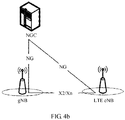
- FIG. 4a to FIG. 4d are schematic diagrams of four architectures in which dual-connectivity is implemented between LTE and NR.
- a core network in FIG. 4a is an evolved packet core (Evolved Packet Core, EPC) of an LTE system.
- EPC evolved Packet Core
- a master base station Master Node, MeNB, referred to as MN in 5G
- an LTE eNB may establish a control plane connection and a user plane connection to the EPC for UE.
- a gNB can establish only a user plane connection to the EPC.
- the EPC is connected to the gNB through an S1 interface
- the EPC is connected to the eNB through the S1 interface
- the eNB is connected to the gNB through an X2/Xn interface.
- a core network in FIG. 4b is a (Next Generation Core network, NGC) (or referred to as a 5GC).
- NGC Next Generation Core network
- a gNB may establish a control plane connection and a user plane connection to the NGC for UE.
- an LTE eNB can establish only a user plane connection to the NGC.
- a core network in FIG. 4c is an NGC.
- an LTE eNB may establish a control plane connection and a user plane connection to the NGC for UE.
- a gNB can establish only a user plane connection to the NGC.
- the NGC is connected to the gNB through an NG interface, the NGC is connected to the eNB through the NG interface, and the eNB is connected to the gNB through an X2/Xn interface.
- a core network in FIG. 4d is an NGC.
- a first gNB may establish a control plane connection and a user plane connection to the NGC for UE.
- a second gNB can establish only a user plane connection to the NGC.
- the NGC is connected to the first gNB through an NG interface
- the NGC is connected to the second gNB through the NG interface
- the gNBs are connected to each other through an Xn interface.
- FIG. 4a is used as an example.
- Bearer types include a master cell group (Master Cell Group, MCG) bearer, a secondary cell group (Secondary Cell Group, SCG) bearer, an MCG split bearer, and an SCG split bearer.
- FIG. 5 is a schematic diagram of the MCG bearer, the SCG bearer, the MCG split bearer, and the SCG split bearer.
- a master base station is referred to as a master base station
- a secondary base station is referred to as a secondary base station. All data of the MCG bearer is sent by the master base station to UE.
- All data of the SCG bearer is sent by the secondary base station to the UE.
- Data of the MCG split bearer is sent from a core network to the master base station, the master base station offloads the data at a PDCP layer and sends some data to the secondary base station, the secondary base station sends the data to the UE, and remaining data is sent by the master base station to the UE.
- Data of the SCG split bearer is sent from the core network to the secondary base station, the secondary base station offloads the data at the PDCP layer and sends some data to the master base station, the master base station sends the data to the UE, and remaining data is sent by the secondary base station to the UE.
- an RRC reestablishment procedure is initiated.
- the UE sends an RRC reestablishment request message to a base station.
- the RRC reestablishment request message includes a cell radio network temporary identifier (Cell Radio Network Temporary Identifier, C-RNTI), an original cell physical cell identifier (Physical Cell Identity, PCI), and an authentication code (shortMAC-I).
- C-RNTI Cell Radio Network Temporary Identifier
- PCI Physical Cell Identity
- shortMAC-I authentication code
- Input parameters of the ShortMAC-I include KRRCint and authentication code input parameters (VarShort MAC-Input) that include a Cell ID, a PCI, and a C-RNTI.
- the Cell ID is a target cell identifier
- the PCI is an identifier of an originally connected cell before the radio link failure.
- An eNB to which the UE is reconnected may derive shortMAC-I based on the C-RNTI, the PCI, and the like that are provided by the UE, and with reference to existing information of the eNB (for example, the UE is connected to the original eNB, or the information is obtained from the original eNB by using an HO preparation procedure or a radio link failure indication), so as to verify validity of the UE.
- the UE After entering an inactive (inactive) state, the UE initiates an RRC resume procedure.
- the only difference lies in that the user identifier C-RNTI is replaced by a resume A-RNTI.
- Other descriptions are the same, and details are not described again.
- a security mode command (Security Mode Command, SMC) process of non-access stratum security (security) is mainly used by an MME and the UE to separately generate a non-access stratum encryption key and a non-access stratum integrity protection key, and then the MME generates a network-side air interface protection key (KeNB for short) and sends the KeNB and UE security capability information to the eNB by using an initial context setup request (Initial Context Setup Request).
- SMC Security Mode Command
- KeNB network-side air interface protection key
- the eNB selects a proper security algorithm (encryption algorithm and integrity protection algorithm) based on the UE security capability information and a security capability of the base station.
- An SMC process of access stratum security is used by the eNB and the UE to negotiate a security algorithm, and separately generate a control plane key and a user plane key.
- a specific process is as follows: The eNB derives a user plane key (KUPenc and KUPint) and a control plane key-RRC signaling protection key (KRRCenc and KRRCint, where the former is used for encryption and decryption, and the latter is used for integrity protection) of the access stratum based on the KeNB.
- the security algorithm includes an encryption algorithm and an integrity protection algorithm.
- the eNB When the eNB derives the user plane key (KUPenc and KUPint) and the RRC signaling protection key (KRRCenc and KRRCint) of the access stratum based on the KeNB, a key derivation algorithm is used. In the LTE system, the algorithm is specified by a protocol and does not need to be negotiated. When encryption or integrity protection is performed on data or an RRC message based on the user plane key or the control plane key, an algorithm used is an encryption algorithm or an integrity protection algorithm. The encryption algorithm and the integrity protection algorithm need to be selected by the eNB based on a security algorithm supported by the UE that is included in the UE security capability information and a security algorithm supported by the eNB.
- the UE performs encryption and/or integrity protection on user plane data and the RRC message based on the encryption algorithm and the integrity protection algorithm that are selected by the eNB, the user plane key (KUPenc and KUPint), and the control plane key-RRC signaling protection key (KRRCenc and KRRCint).
- QoS Quality of service
- 5G data radio bearer
- QoS management in an LTE system is on a DRB basis
- QoS management in a 5G system is on a QoS flow basis. That is, data from an NGC is differentiated for different flows.
- the NGC sets up at least one PDU session with a base station.
- Each PDU session includes at least one QoS flow.
- the base station maps one or more QoS flows to one DRB, and each DRB is corresponding to at least one QoS flow. Therefore, one PDU session may be corresponding to a plurality of DRBs. Therefore, there is a requirement for implementing key generation and exchange at a DRB granularity.
- This application may further implement key generation and exchange at a DRB granularity.
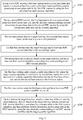
- FIG. 6 is a flowchart of an embodiment of a data security processing method according to this application. As shown in FIG. 6 , the method in this embodiment may include the following steps.
- a first base station sets up a first PDU session, a first base station derives a first user plane key based on a received base key, and the first base station performs security processing on user plane data in the first PDU session by using the first user plane key and a security algorithm.
- the base key is a network-side base key (KgNB) generated by a core network, and the core network (for example, an AMF network element) sends the base key to the first base station, and may further send UE security capability information.
- the user plane key includes a user plane encryption key and/or a user plane integrity protection key.
- the first base station derives the first user plane key based on the received base key in S101 may be as follows: The first base station derives the first user plane key based on the base key and a first parameter, where the first parameter is a first PDU session identifier. The first base station derives the first user plane key based on the base key, the first PDU session identifier, and a key derivation algorithm. It should be noted that the key derivation algorithm for deriving the first user plane key by the first base station based on the base key may be specified in a protocol and does not need to be negotiated. Alternatively, the key derivation algorithm may be obtained through negotiation.
- UE adds a key derivation algorithm (which may be extended to a control plane key derivation algorithm and a user plane key derivation algorithm) supported by the UE to the UE security capability information. Then, the first base station may finally select a proper key derivation algorithm or a control plane key derivation algorithm and a user plane key derivation algorithm based on the key derivation algorithm supported by the UE and a key derivation algorithm supported by the first base station.
- a key derivation algorithm which may be extended to a control plane key derivation algorithm and a user plane key derivation algorithm supported by the UE to the UE security capability information.
- the first base station may finally select a proper key derivation algorithm or a control plane key derivation algorithm and a user plane key derivation algorithm based on the key derivation algorithm supported by the UE and a key derivation algorithm supported by the first base station.
- the first base station performs security processing on the user plane data in the first PDU session by using the first user plane key and the security algorithm may specifically include the following:
- the first base station selects a proper security algorithm based on the UE security capability information and a security algorithm supported by the first base station, where the security algorithm includes an encryption algorithm and an integrity protection algorithm.
- the security algorithm may alternatively include a control plane security algorithm and a user plane security algorithm.
- the control plane security algorithm includes a control plane encryption algorithm and a control plane integrity protection algorithm
- the user plane security algorithm includes a user plane encryption algorithm and a user plane integrity protection algorithm. Then, the first base station performs security processing on the user plane data in the first PDU session by using the first user plane key and the security algorithm or the user plane security algorithm.
- the first base station sends the selected security algorithm or the control plane security algorithm and the user plane security algorithm to the UE, and may further send the first PDU session identifier, a next-hop chain counter (Next HopChaining Count, NCC), and the like.
- NCC Next HopChaining Count
- the UE is notified by the first base station by using an SMC message or an RRC reconfiguration message.
- the UE derives the first user plane key based on the base key and the first PDU session identifier by using the key derivation algorithm or the user plane key derivation algorithm (specified in the protocol or provided by the first base station).
- the UE performs security processing on the user plane data in the first PDU session by using the first user plane key and the security algorithm or the user plane security algorithm.
- the first base station derives a second user plane key based on the base key, and the first base station performs security processing on user plane data in the second PDU session by using the second user plane key and the security algorithm.
- the first base station derives the second user plane key based on the base key in S102 may be as follows: The first base station derives the second user plane key based on the base key and a second parameter, where the second parameter is a second PDU session identifier.
- the first base station performs security processing on the user plane data in the second PDU session by using the second user plane key and the security algorithm may specifically include the following:
- the first base station selects a proper security algorithm based on the UE security capability information and the security algorithm supported by the first base station, where the security algorithm includes the encryption algorithm and the integrity protection algorithm.
- the security algorithm may alternatively include a control plane security algorithm and a user plane security algorithm.
- the control plane security algorithm includes a control plane encryption algorithm and a control plane integrity protection algorithm
- the user plane security algorithm includes a user plane encryption algorithm and a user plane integrity protection algorithm. Then, the first base station performs security processing on the user plane data in the second PDU session by using the second user plane key and the security algorithm or the user plane security algorithm.
- the first base station sends the selected security algorithm or the control plane security algorithm and the user plane security algorithm to the UE, and may further send the second PDU session identifier, a next-hop chain counter, and the like.
- the UE is notified by the first base station by using an SMC message or an RRC reconfiguration message.
- the UE derives the second user plane key based on the base key and the second PDU session identifier by using the key derivation algorithm or the user plane key derivation algorithm (specified in the protocol or provided by the first base station).
- the UE performs security processing on the user plane data in the second PDU session by using the second user plane key and the security algorithm or the user plane security algorithm.
- the method further includes the following:
- the first base station receives a first PDU session identifier and an indication indicating whether user plane integrity protection corresponding to the first PDU session identifier is enabled, where the first PDU session identifier and the indication are sent by the core network.
- the first base station determines, according to the indication, whether to derive a user plane integrity protection key corresponding to the first PDU session identifier and whether to use the integrity protection key to perform user plane integrity protection on user plane data corresponding to the first PDU session identifier.
- the first base station receives the first PDU session identifier, a QoS flow list included in the first PDU session, and an indication indicating whether user plane integrity protection corresponding to each QoS flow identifier is enabled, where the first PDU session identifier, the QoS flow list included in the first PDU session, and the indication are sent by the core network.
- the first base station derives the user plane integrity protection key corresponding to the first PDU session identifier, and subsequently determines, according to the indication indicating whether user plane integrity protection corresponding to the QoS flow identifier is enabled, whether to use the user plane integrity protection key to perform integrity protection on user plane data corresponding to the QoS flow identifier.
- the first PDU session includes five QoS flows, user plane integrity protection of a QoS flow 3 is enabled, and user plane integrity protection of other QoS flows is disabled.
- the first base station derives the user plane integrity protection key corresponding to the first PDU session, and then determines, according to the indication, whether to perform integrity protection on user plane data of the QoS flow.
- the first PDU session includes five QoS flows, and user plane integrity protection of all QoS flows is disabled. Then, after the first base station derives the user plane integrity protection key corresponding to the first PDU session, the first base station does not perform integrity protection on user plane data corresponding to any QoS flow.
- the first base station derives the user plane integrity protection key corresponding to the first PDU session identifier only when at least one of indications indicating whether user plane integrity protection corresponding to the QoS flow list included in the first PDU session is enabled indicates that user plane integrity protection is enabled. Subsequently, integrity protection is performed only on user plane data corresponding to a QoS flow identifier for which user plane integrity protection is indicated to be enabled. For example, the first PDU session includes five QoS flows, user plane integrity protection of a QoS flow 3 is indicated to be enabled, and user plane integrity protection of other QoS flows is indicated to be disabled.
- the first base station derives the user plane integrity protection key, and then determines, according to the indication, whether to perform integrity protection on user plane data of the QoS flow.
- the first PDU session includes five QoS flows, and user plane integrity protection of all QoS flows is indicated to be disabled. Then, the first base station determines not to derive the user plane integrity protection key corresponding to the first PDU session.
- the first base station receives a second PDU session identifier and an indication indicating whether user plane integrity protection corresponding to the second PDU session identifier is enabled, where the second PDU session identifier and the indication are sent by the core network.
- the first base station determines, according to the indication, whether to derive a user plane integrity protection key corresponding to the second PDU session identifier.
- the first base station receives the second PDU session identifier, a QoS flow list included in the first PDU session, and an indication indicating whether user plane integrity protection corresponding to each QoS flow identifier is enabled, where the second PDU session identifier, the QoS flow list included in the first PDU session, and the indication are sent by the core network.
- an operation performed by the first base station is the same as an operation performed when the first base station receives the first PDU session identifier and the indication indicating whether user plane integrity protection is enabled.
- the core network sends, to the first base station, a PDU session identifier and an indication indicating whether user plane integrity protection corresponding to the PDU session identifier is enabled. If the indication indicates that user plane integrity protection corresponding to the PDU session identifier is "enabled”, the first base station derives a user plane integrity protection key corresponding to the PDU session identifier according to the received indication. If the indication indicates that user plane integrity protection corresponding to the PDU session identifier is "disabled", the first base station does not need to derive the user plane integrity protection key corresponding to the PDU session identifier.
- the indication indicating whether user plane integrity protection is enabled is nonrestrictive, and may be extended to an indication indicating whether control plane encryption, control plane integrity protection, user plane encryption, and user plane integrity protection are enabled.
- An integrity protection key is referred to as integrity protection.
- the core network when setting up a PDU session for UE for the first time, the core network provides KgNB, UE security capability information, and an indication indicating whether user plane integrity protection is enabled. Each time setting up a PDU session, the core network may further provide indications indicating whether control plane integrity protection of the PDU session is enabled, whether control plane encryption of the PDU session is enabled, and whether user plane encryption of the PDU session is enabled.
- each QoS flow identifier is corresponding to an indication indicating whether control plane encryption is enabled, an indication indicating whether control plane integrity protection is enabled, an indication indicating whether user plane encryption is enabled, or an indication indicating whether user plane integrity protection is enabled.
- the first base station each time a PDU session is set up, derives a user plane key based on the base key and a PDU session identifier of the PDU session, and performs security processing on user plane data in the PDU session by using the derived user plane key and the security algorithm.
- Different PDU sessions use different user plane keys, thereby improving data transmission security.
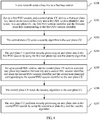
- FIG. 7 is a flowchart of an embodiment of another data security processing method according to this application. As shown in FIG. 7 , the method in this embodiment may further include the following steps based on the method shown in FIG. 6 .
- the first base station derives a target base key for a second base station based on the base key and a third parameter.
- the first base station is a source base station
- the second base station is a target handover base station.
- the first base station decides to perform a handover action for the UE
- the first base station derives the target base key for the second base station based on the base key and the third parameter.
- the third parameter includes at least one of an NCC, a target cell identifier, and frequency information.
- the first base station sends the target base key and at least one PDU session identifier to the second base station.
- the first base station further sends at least one of the UE security capability information, the target cell identifier, the frequency information, and the key derivation algorithm to the second base station may further include the following:
- the first base station sends, to the second base station, an indication indicating whether user plane integrity protection corresponding to the PDU session identifier is enabled, so that the second base station determines, according to the indication, whether to derive a user plane integrity protection key corresponding to the PDU session identifier.
- the first base station receives the indication that is sent by the core network and that indicates whether user plane integrity protection corresponding to the PDU session identifier is enabled, and the first base station may further send, to the second base station, an indication indicating whether a user plane encryption key corresponding to the PDU session identifier is enabled.
- the first base station receives an indication that is sent by the core network and that indicates whether user plane integrity protection corresponding to a QoS flow identifier in a PDU session is enabled, and the first base station may further send, to the second base station, an indication indicating whether user plane integrity protection corresponding to the QoS flow identifier corresponding to the PDU session identifier is enabled.
- the first base station may further send, to the second base station, an indication indicating whether user plane integrity protection corresponding to a DRB identifier is enabled.
- the indication may further be extended to an indication indicating whether control plane encryption is enabled, an indication indicating whether control plane integrity protection is enabled, an indication indicating whether user plane encryption is enabled, or an indication indicating whether user plane integrity protection is enabled.
- the handover request includes information in the following form: >Target Cell ID Target cell identifier > carrier Freq Frequency information >UE security capability UE security capability information >K*gNB Target base key >PDU session to be setup List PDU session setup list >>PDU session ID PDU session identifier >>UP integrity indication Indication indicating whether user plane integrity protection isenabled
- the first base station provides an indication indicating whether user plane integrity protection at a DRB granularity is enabled, for example: >Target Cell ID Target cell identifier > carrier Freq Frequency information >UE security capability UE security capability information >K*gNB Target base key >PDU session to be setup List PDU session setup list >>PDU session ID PDU session identifier >>>DRB list >>>>DRB ID >>>>UP integrity indication Indication indicating whether user plane integrity protection is enabled
- the first base station provides an indication indicating whether user plane integrity protection at a QoS flow granularity is enabled, for example: >Target Cell ID Target cell identifier > carrier Freq Frequency information >UE security capability UE security capability information >K*gNB Target base key >PDU session to be setup List PDU session setup list >>PDU session ID PDU session identifier >>>QoS flow list >>>>QoS flow ID >>>>UP integrity indication Indication indicating whether user plane integrity protection is enabled
- the second base station derives, based on the target base key and the at least one PDU session identifier, a user plane key corresponding to the PDU session identifier.
- the second base station after receiving the UE security capability information sent by the first base station, the second base station selects a security algorithm (which may further include a control plane security algorithm and a user plane security algorithm, a control plane encryption algorithm, a control plane integrity protection algorithm, a user plane encryption algorithm, a user plane integrity protection algorithm, or the like) based on the UE security capability information and a security capability of the second base station.
- a security algorithm which may further include a control plane security algorithm and a user plane security algorithm, a control plane encryption algorithm, a control plane integrity protection algorithm, a user plane encryption algorithm, a user plane integrity protection algorithm, or the like.
- the user plane key corresponding to the PDU session identifier is specifically as follows: For example, there are five PDU session identifiers in total, a user plane key 1 is derived based on the target base key and a PDU session identifier 1, a user plane key 2 is derived based on the target base key and a PDU session identifier 2, ..., and a user plane key 5 is derived based on the target base key and a PDU session identifier 5.
- the second base station sends the selected security algorithm and other information (for example, a cell radio network temporary identifier (Cell Radio Network Temporary Identifier, C-RNTI) used by the UE in a target cell) to the second base station through an Xn interface (an interface between the first base station and the second base station).
- a cell radio network temporary identifier Cell Radio Network Temporary Identifier, C-RNTI
- the method may further include the following steps:
- the third parameter includes at least one of an NCC, a target cell identifier, and frequency information.
- an indication indicating whether user plane integrity protection is enabled may be further included.
- the indication indicating whether user plane integrity protection is enabled may be at a PDU session granularity, a DRB granularity, or a QoS flow granularity.
- the information sent to the UE in S105 and S106 may include, for example, information in the following form in the RRC message: >Target Cell ID Target cell identifier >carrier Freq Frequency information >NCC (used to generate the target base key K*gNB) >Target security algorithm >>Encryption algorithm (may further be distinguished for a control plane and a user plane) >>Integrity protection algorithm (may further be distinguished for a control plane and a user plane) >>Key derivation algorithm (probably does not exist) >PDU session list PDU session list >>PDU session ID PDU session identifier >>UP integrity indication Indication indicating whether user plane integrity protection is enabled
- the information sent to the UE in S105 and S106 may include, for example, information in the following form in the RRC message: >Target Cell ID Target cell identifier >carrier Freq Frequency information >NCC (used to generate the target base key K*gNB) >PDU session list PDU session list >>PDU session ID PDU session identifier >>UP integrity indication Indication indicating whether user plane integrity protection is enabled >>Target security algorithm >>>Encryption algorithm (may further be distinguished for a control plane and a user plane) >>>Integrity protection algorithm (may further be distinguished for a control plane and auser plane) >>>Key derivation algorithm (probably does not exist)
- the indications indicating whether user plane integrity protection is enabled in the foregoing examples are at a PDU session granularity.
- the foregoing indications may alternatively be at a DRB granularity or a QoS flow granularity. Details are not described herein. All the above parameters exist or do not exist based on actual conditions.
- the UE derives the target base key based on a base key of the UE and the third parameter, derives, based on the target base key and the at least one PDU session identifier, a user plane key corresponding to the PDU session identifier, and then performs security processing on user plane data in the PDU session by using the user plane key corresponding to the PDU session identifier and the target security algorithm.
- the third parameter includes a secondary cell group SCG counter, and a same process S103 to S107 is performed.
- the first base station derives the target base key based on the base key and the third parameter, and sends the derived target base key and the at least one PDU session identifier to the second base station.
- the second base station derives, based on the target base key and the at least one PDU session identifier, the user plane key corresponding to the PDU session identifier.
- the second base station selects the target security algorithm for the UE based on the UE security capability information sent by the first base station. Therefore, the second base station performs security processing on the user plane data in the PDU session by using the user plane key corresponding to the PDU session identifier and the target security algorithm.
- the first base station further sends the third parameter and the at least one PDU session identifier to the UE.
- the UE derives the target base key based on the base key of the UE and the third parameter, derives, based on the target base key and the at least one PDU session identifier, the user plane key corresponding to the PDU session identifier, and performs security processing on the user plane data in the PDU session by using the user plane key corresponding to the PDU session identifier and the target security algorithm.
- the third parameter includes at least one of the NCC, the target cell identifier, and the frequency information, key derivation and exchange in a process in which the source base station is handed over to the target handover base station are implemented.
- the third parameter includes the secondary cell group SCG counter, key derivation and exchange in the DC scenario are implemented.
- FIG. 8 is a flowchart of an embodiment of a data security processing method according to this application.
- a first base station includes a CU and a DU
- the CU includes a control plane CU and a user plane CU
- the control plane CU is connected to the user plane CU through a communications interface.
- the method in this embodiment may include the following steps.
- a core network sends a base key to the first base station, and may further send UE security capability information.
- an indication indicating whether user plane integrity protection at a PDU session granularity or a QoS flow granularity is enabled may be further included.
- the indication may further be extended to an indication indicating whether control plane encryption, control plane integrity protection, user plane encryption, and user plane integrity protection are enabled.
- the control plane CU receives the base key sent by the core network.
- the control plane CU receives the indication that is sent by the core network and that indicates whether user plane integrity protection at a PDU session granularity or a QoS flow granularity is enabled.
- a key derivation algorithm for deriving the first user plane key may be specified in a protocol, or may be selected by the control plane CU based on a UE security capability and a security capability of the control plane CU. If the control plane CU selects the key derivation algorithm based on the UE security capability and the security capability of the control plane CU, the key derivation algorithm may be at a UE granularity, or may be at a PDU session granularity.
- the key derivation algorithm may alternatively be obtained as follows: The user plane CU sends a security capability of the user plane CU to the control plane CU, and the control plane CU selects the key derivation algorithm based on the UE security capability and the user plane security capability.
- control plane CU may send, to the user plane CU through an E1 interface, the first PDU session identifier and the first user plane key corresponding to the first PDU session identifier.
- the control plane CU includes, by using a UE context connection setup request (UE context setup request) or PDU session setup request (session setup request) message, the first PDU session identifier and the first user plane key corresponding to the first PDU session identifier.
- UE context setup request UE context setup request
- PDU session setup request session setup request
- first PDU session identifier and the first user plane key corresponding to the first PDU session identifier are sent by using a UE-level message (for example, the UE context setup request), information in the following form may be included: >CU-CP E1APUE ID E1 interface identifier of the UE on a CU-CP side >PDU session list >>PDU session ID >>KUPenc >>KUPint
- the control plane CU determines, according to the user plane integrity protection indication sent by the core network, whether to derive the user plane integrity protection key KUPint. If the core network indicates that user plane integrity protection is disabled, the control plane CU does not provide the user plane integrity protection key to the user plane CU. Similarly, if the user plane encryption indication provided by the core network indicates that user plane encryption is disabled, the control plane CU does not provide the user plane encryption key KUPenc to the user plane CU.
- a message sent by the control plane CU to the user plane CU may include the following content: >CU-CP E1APUE ID E1 interface identifier of the UE on a CU-CP side >PDU session list >>PDU session ID >>KUPenc >>QoS flow list >>>QoS flow ID >>>KUPint
- first PDU session identifier and the first user plane key corresponding to the first PDU session identifier are sent by using a PDU session-level message (for example, the PDU session setup request)
- information in the following form may be included: >CU-CP E1APUEID E1 interface identifier of the UE on a CU-CP side >PDU session ID >KUPenc >KUPint
- control plane CU provides the user plane integrity protection key KUPint and the user plane encryption key KUPenc is the same as that in the foregoing operation.
- a message sent by the control plane CU to the user plane CU may include the following content: >CU-CP E1APUEID E1 interface identifier of the UE on a CU-CP side >PDU session ID >KUPenc >QoS flow list >>QoS flow ID >>KUPint
- the control plane CU sends a security algorithm to the user plane CU.
- the security algorithm is selected by the control plane CU for the UE based on the UE security capability information and a security capability of the first base station.
- the user plane CU sends in advance a security algorithm supported by the user plane CU to the control plane CU, and the control plane CU selec ts a proper security algorithm based on the security algorithm supported by the user plane CU and a UE security algorithm capability.
- the security algorithm includes an encryption algorithm and an integrity protection algorithm.
- the control plane CU herein sends the user plane security algorithm to the user plane CU, where the user plane security algorithm includes a user plane encryption algorithm and a user plane integrity protection algorithm.
- the user plane CU performs security processing on user plane data in the first PDU session by using the first user plane key and the security algorithm.
- the indication indicating whether user plane integrity protection is enabled is at a PDU session granularity
- the control plane CU provides KUPenc and KUPint corresponding to the first PDU session
- the user plane CU performs encryption and integrity protection processing on the user plane data corresponding to the first PDU session identifier.
- the control plane CU provides only KUPenc corresponding to the first PDU session
- the user plane CU performs encryption processing only on the user plane data corresponding to the first PDU session.
- the indication indicating whether user plane integrity protection is enabled is at a QoS flow granularity
- the control plane CU provides KUPenc and KUPint corresponding to the first PDU session
- the user plane CU performs encryption processing on the user plane data corresponding to the first PDU session identifier.
- the user plane CU determines, according to the indication indicating whether user plane integrity protection corresponding to the QoS flow identifier is enabled, whether to perform integrity protection processing on user plane data corresponding to the QoS flow identifier.
- the control plane CU sends the security algorithm to the user plane CU.
- the control plane CU sends the security algorithm to the user plane CU when a PDU session is set up for the first time.
- the security algorithm is at a PDU session level, that is, when security algorithms of PDU sessions are different, S206 needs to be performed each time a PDU session is set up.
- the user plane CU performs security processing on user plane data in the second PDU session by using the second user plane key and the security algorithm.
- the user plane key includes a user plane encryption key and/or a user plane integrity protection key.
- the control plane CU receives the base key sent by the core network, derives the user plane key based on the base key and a PDU session identifier of each PDU session, and sends the PDU session identifier and the user plane key corresponding to the PDU session identifier to the user plane CU.
- the user plane CU performs security processing on user plane data in the PDU session by using the user plane key corresponding to the PDU session identifier and the security algorithm, thereby improving data transmission security in a CP-UP separation scenario.
- FIG. 9 is a flowchart of an embodiment of another data security processing method according to this application.
- a first base station includes a CU and a DU
- the CU includes a control plane CU and a user plane CU
- the control plane CU is connected to the user plane CU through a communications interface.
- the method in this embodiment may include the following steps.
- a core network sends a base key to the first base station, and may further send UE security capability information.
- an indication indicating whether user plane integrity protection at a PDU granularity or a QoS flow granularity is enabled may be further included, and the indication may further be extended to an indication indicating whether control plane encryption, control plane integrity protection, user plane encryption, and user plane integrity protection are enabled.
- the control plane CU receives the base key sent by the core network.
- the user plane CU derives a first user plane key based on the base key and the first PDU session identifier.
- control plane CU sends, to the user plane CU, an indication that is sent by the core network and that indicates whether user plane integrity protection corresponding to the first PDU session identifier is enabled, and certainly an indication indicating whether user plane encryption corresponding to the first PDU session identifier is enabled may be further included.
- the user plane CU determines, according to the indication, whether to derive a user plane integrity protection key and a user plane encryption key. When the control plane CU does not provide the indication, the user plane CU needs to derive a corresponding user plane key by default.
- control plane CU sends, to the user plane CU, an indication that is sent by the core network and that indicates whether user plane integrity protection corresponding to each QoS flow identifier in the first PDU session identifier is enabled, and the user plane CU decides, according to the indication, whether to derive a user plane integrity protection key corresponding to the first PDU session and whether to perform integrity protection processing on user plane data corresponding to a QoS flow.
- the user plane CU derives the user plane integrity protection key corresponding to the first PDU session, and performs integrity protection processing on user plane data corresponding to the QoS flow for which user plane integrity protection is indicated to be enabled.
- the control plane CU sends a security algorithm to the user plane CU.
- the security algorithm is selected by the control plane CU for the UE based on the UE security capability information and a security capability of the first base station.
- the user plane CU sends in advance a user plane security algorithm supported by the user plane CU to the control plane CU, and the control plane CU selects a proper security algorithm based on the user plane security algorithm supported by the user plane CU and a UE security algorithm capability.
- the security algorithm includes an encryption algorithm and an integrity protection algorithm.
- the control plane CU herein sends the user plane security algorithm to the user plane CU, where the user plane security algorithm includes a user plane encryption algorithm and a user plane integrity protection algorithm.
- the user plane CU performs security processing on user plane data in the first PDU session by using the first user plane key and the security algorithm.
- the user plane CU derives a second user plane key based on the base key and the second PDU session identifier.
- the control plane CU sends the security algorithm to the user plane CU.
- the control plane CU sends the security algorithm to the user plane CU when a PDU session is set up for the first time.
- the security algorithm is at a PDU session level, that is, when security algorithms of PDU sessions are different, S206 needs to be performed each time a PDU session is set up.
- the user plane CU performs security processing on user plane data in the second PDU session by using the second user plane key and the security algorithm.
- the control plane CU receives the base key sent by the core network, and sends the base key and a PDU session identifier of each PDU session to the user plane CU.
- the user plane CU derives a user plane key based on the base key and the PDU session identifier of each PDU session, and performs security processing on user plane data in the PDU session by using the user plane key corresponding to the PDU session identifier and the security algorithm, thereby improving data transmission security in a CP-UP separation scenario.
- FIG. 10 is a flowchart of an embodiment of another data security processing method according to this application.
- an RRC reestablishment procedure is initiated.
- the method in this embodiment may further include the following steps.
- the first base station receives an RRC reestablishment message or an RRC resume message sent by the UE, where the RRC reestablishment message or the RRC resume message includes at least one of a UE identity, an original cell identifier, an authentication code (shortMAC-I), a control plane CU indication or a user plane CU indication, and a PDU session identifier.
- the RRC reestablishment message or the RRC resume message includes at least one of a UE identity, an original cell identifier, an authentication code (shortMAC-I), a control plane CU indication or a user plane CU indication, and a PDU session identifier.
- the UE identity may be an air interface identifier such as a C-RNTI or a resume identifier (A-RNTI).
- the first base station generates shortMAC-I based on at least one of the UE identity, the original cell identifier, the control plane CU indication or the user plane CU indication, and the PDU session identifier, and determines, by comparing the generated shortMAC-I with the shortMAC-I sent by the UE, whether authentication succeeds.
- the base station selects a corresponding control plane integrity protection key or user plane integrity protection key according to the control plane indication or the user plane CU indication to generate the shortMAC-I.
- the base station generates the shortMAC-I based on the UE identity, the original cell identifier, an identity of a currently accessed cell, and the control plane integrity protection key or the user plane integrity protection key.
- the user plane integrity protection key may be selected as specified in a protocol, for example, a user plane integrity protection key with a minimum PDU session identifier.
- the base station Select, based on the PDU session identifier, a user plane integrity protection key corresponding to the PDU session identifier to generate the shortMAC-I. For example, the base station generates the shortMAC-I based on the UE identity, the original cell identifier, the identity of the currently accessed cell, and the user plane integrity protection key corresponding to the PDU session identifier.
- the first base station receives the RRC reestablishment message or the RRC resume message sent by the UE, and the first base station generates the shortMAC-I based on at least one of the UE identity, the original cell identifier, the control plane CU indication or the user plane CU indication, and the PDU session identifier, so as to verify validity of the UE by using shortMAC-I, thereby implementing data transmission security in an RRC reestablishment or RRC resume scenario.
- the foregoing method provided in the embodiments shown in FIG. 6 to FIG. 10 may be used.
- FIG. 11 is a flowchart of an embodiment of another data security processing method according to this application. As shown in FIG. 11 , the method in this embodiment may include the following steps.
- a core network sends a base key to a first base station, where the base key includes a control plane base key and a user plane base key, and the user plane base key is in a one-to-one correspondence with a PDU session identifier.
- the control plane base key may be provided by the core network when a PDU session is set up for the user for the first time, and the user plane base key (UP KgNB) may be provided each time a PDU session is set up.
- the core network sends the base key to the first base station, and may further send UE security capability information and an indication indicating whether user plane integrity protection is enabled.
- the indication may further be extended to an indication indicating whether control plane encryption, control plane integrity protection, user plane encryption, and user plane integrity protection are enabled.
- the indication indicating whether user plane integrity protection is enabled and the indication indicating whether user plane encryption is enabled may be at a PDU session granularity or at a QoS flow granularity.
- an AMF network element of the core network provides both the CP KgNB and UP KgNB1, the UE security capability information, and the like in an initial context setup request (Initial Context setup request) of an Ng interface.
- a message in the following form is included: >AMF NGAPUEID NG interface identifier of the UE on an AMF side >UE security capability UE security capability information >CP KgNB >PDU session ID PDU session identifier >UP KgNB1 >UP integrity indication Indication indicating whether user plane integrity protection is enabled
- the initial context setup request message includes a message in the following form: >AMF NGAPUEID NG interface identifier of the UE on an AMF side >UE security capability UE security capability information >CP KgNB >PDU session ID PDU session identifier >UP KgNB1 >>QoS flow list >>>QoS flow ID >>>UP integrity indication Indication indicating whether user plane integrity protection is enabled
- UP KgNB2 UP KgNB3 and the like
- the UE security capability information (probably not provided because the UE security capability information is provided for the first time) may be provided.
- the foregoing messages are all examples, and this application is not limited thereto.
- a message in the following form is included: >AMF NGAPUEID NG interface identifier of the UE on an AMF side >PDU session ID >UP KgNB2 >UP integrity indication Indication indicating whether user plane integrity protection is enabled
- the indication indicating whether user plane integrity protection is enabled may alternatively be at a QoS flow granularity, and details are not described herein.
- the first base station derives a control plane key based on the control plane base key, and derives a user plane key based on the user plane base key.
- the user plane base key is at a PDU session granularity, and each time a PDU session is set up, the user plane base key is sent.
- a key derivation algorithm for deriving the user plane key by the first base station based on the user plane base key may be specified in a protocol and does not need to be negotiated.
- the key derivation algorithm may be obtained through negotiation.
- the UE adds, to the UE security capability information, a key derivation algorithm (which may be extended to a control plane key derivation algorithm and a user plane key derivation algorithm) supported by the UE.
- the first base station may finally select a proper key derivation algorithm based on the key derivation algorithm supported by the UE and a key derivation algorithm supported by the first base station.
- the first base station performs security processing on user plane data in the PDU session by using the user plane key and a security algorithm.
- the first base station selects a proper security algorithm based on the UE security capability information and a security algorithm supported by the first base station.
- the security algorithm includes an encryption algorithm and an integrity protection algorithm.
- the security algorithm may further include a control plane security algorithm and a user plane security algorithm.
- the control plane security algorithm includes a control plane encryption algorithm and a control plane integrity protection algorithm
- the user plane security algorithm includes a user plane encryption algorithm and a user plane integrity protection algorithm. Then, the first base station performs security processing on the user plane data in the PDU session by using the user plane key and the security algorithm or the user plane security algorithm.
- the first base station sends the selected security algorithm or control plane security algorithm and the user plane security algorithm to the UE, and may further send an indication indicating whether user plane integrity protection is enabled. For example, the UE is notified by the first base station by using an SMC message or an RRC reconfiguration message. The UE derives, based on the base key, the user plane key by using the key derivation algorithm or the user plane key derivation algorithm (specified in the protocol or provided by the first base station). Finally, the UE performs security processing on the user plane data in the PDU session by using the user plane key and the security algorithm or the user plane security algorithm.
- the first base station decides, according to an indication that is sent by the core network and that indicates whether user plane integrity protection at a PDU session granularity or a QoS flow granularity is enabled, whether to perform user plane integrity protection processing on user plane data corresponding to a PDU session identifier or a QoS flow identifier.
- the first base station further sends, to the UE, the indication indicating whether user plane integrity protection at a PDU session granularity or a QoS flow granularity is enabled, so that the UE decides whether to perform user plane integrity protection processing on the user plane data corresponding to the PDU session identifier or the QoS flow identifier.
- the indication may further be extended to an indication indicating whether control plane encryption, control plane integrity protection, user plane encryption, and user plane integrity protection are enabled.
- the first base station receives the user plane base key, derives a user plane key based on the user plane base key, and performs security processing on user plane data in the PDU session by using the derived user plane key and the security algorithm.
- Different PDU sessions use different user plane keys, thereby improving data transmission security.
- FIG. 12A and FIG. 12B are a flowchart of an embodiment of another data security processing method according to this application. As shown in FIG. 12A and FIG. 12B , the method in this embodiment may further include the following steps based on the method shown in FIG. 11 .
- the first base station derives a target control plane base key based on the control plane base key and a first parameter, and derives a target user plane base key based on the user plane base key and a second parameter, where the second parameter is in a one-to-one correspondence with the PDU session identifier.
- the control plane base key is sent by the core network when the PDU session is set up for the first time
- the user plane base key is sent by the core network when a PDU session is set up.
- the first base station is a source base station
- a second base station is a target handover base station.
- the first parameter includes at least one of an NCC, a target cell identifier, and frequency information
- the second parameter includes at least one of an NCC, a target cell identifier, a PDU session identifier, and frequency information.
- the first base station derives the target user plane base key based on the user plane base key and the second parameter. For example, before the handover, four PDU sessions are set up, and are corresponding to four user plane base keys and four PDU session identifiers.
- the first base station derives a target user plane base key 1 based on at least one of a user plane base key 1, the NCC, a target cell identifier 1, a PDU session identifier 1, and frequency information 1.
- the first base station derives a target user plane base key 2 based on at least one of a user plane base key 2, the NCC, a target cell identifier 2, a PDU session identifier 2, and frequency information 2.
- the first base station derives a target user plane base key 4 based on a user plane base key 4, the NCC, a target cell identifier 4, a PDU session identifier 4, and frequency information 4.
- the target cell identifiers 1, 2, 3, and 4 are the same.
- the first base station sends, to the second base station, the target control plane base key, at least one PDU session identifier, and a target user plane base key respectively corresponding to the at least one PDU session identifier.
- the first base station sends, to the second base station, the target control plane base key, four PDU session identifiers, and target user plane base keys respectively corresponding to the four PDU session identifiers.
- the method may further include the following:
- the first base station sends, to the second base station, an indication indicating whether user plane integrity protection corresponding to a PDU session identifier, or corresponding to a DRB identifier, or corresponding to a QoS flow identifier is enabled, so that the second base station determines, according to the indication, whether to derive a user plane integrity protection key corresponding to the PDU session identifier, or the DRB identifier, or the QoS flow identifier.
- the indication may further be extended to an indication indicating whether control plane encryption, control plane integrity protection, user plane encryption, and user plane integrity protection are enabled.
- the foregoing information may be included in a handover request (Handover request) message sent by the first base station to the second base station, for example, the handover request includes information in the following form: >Target Cell ID Target cell identifier > carrier Freq Frequency information >UE security capability UE security capability information >CP K*gNB Target control plane base key >PDU session to be setup List PDU session setup list >>PDU session ID PDU session identifier >>UP K*gNB Target user plane base key >>UP integrity indication Indication indicating whether user plane integrity protection is enabled
- the second base station derives a target control plane key based on the target control plane base key, and derives a target user plane key based on the target user plane base key; and the second base station performs security processing on control plane data by using the target control plane key and a target first security algorithm, and performs security processing on user plane data in the PDU session by using the target user plane key and a target second security algorithm.
- the target control plane key includes a control plane encryption key and/or a control plane integrity protection key
- the target user plane key includes a user plane encryption key and/or a user plane integrity protection key.
- the target first security algorithm is selected by the second base station based on a UE security capability sent by the first base station and a security capability of the second base station
- the target second security algorithm is selected by the second base station based on the UE security capability sent by the first base station and the security capability of the second base station.
- the second base station further decides, according to the indication indicating whether user plane integrity protection at a PDU session granularity, a DRB granularity, or a QoS flow granularity is enabled, whether to perform integrity protection processing on user plane data corresponding to the PDU session identifier, the DRB identifier, or the QoS flow identifier.
- the method may further include the following steps:
- the second base station selects the target first security algorithm and the target second security algorithm for the UE based on the UE security capability information sent by the first base station, and sends the target first security algorithm and the target second security algorithm to the first base station.
- the target first security algorithm is the same as the target second security algorithm
- the first base station needs to send only a target security algorithm to the second base station.
- the first base station sends the target first security algorithm and the target second security algorithm to the UE.
- the first base station sends the first parameter and the second parameter to the UE.
- the first parameter includes at least one of the NCC, the target cell identifier, and the frequency information
- the second parameter includes at least one of the NCC, the PDU session identifier, the target cell identifier, and the frequency information.
- the information sent to the UE in S408 and S409 may include, for example, information in the following form in an RRC message: >Target Cell ID Target cell identifier > carrier Freq Frequency information >NCC for CP (used to generate the target control plane base key) >First security algorithm >>Encryption algorithm (may further be distinguished for a control plane and a user plane) >>Integrity protection algorithm (may further be distinguished for a control plane and a user plane) >>Key derivation algorithm (probably does not exist) >Second security algorithm >>Encryption algorithm (may further be distinguished for a control plane and a user plane) >>Integrity protection algorithm (may further be distinguished for a control plane and a user plane) >>Key derivation algorithm (probably does not exist) >PDU session list PDU session list >>PDU session ID PDU session identifier >>NCC for UP (used to generate the target user plane base key)
- the information sent to the UE in S408 and S409 may include, for example, information in the following form in the RRC message: >Target Cell ID Target cell identifier > carrier Freq Frequency information >NCC for CP (used to generate the target control plane base key) >PDU session list PDU session list >>PDU session ID PDU session identifier >>NCC for UP (used to generate the target user plane base key) >First security algorithm >>Encryption algorithm (may further be distinguished for a control plane and a user plane) >>Integrity protection algorithm (may further be distinguished for a control plane and a user plane) >>Key derivation algorithm (probably does not exist) >Second security algorithm >>Encryption algorithm (may further be distinguished for a control plane and a user plane) >>Integrity protection algorithm (may further be distinguished for a control plane and a user plane) >>Key derivation algorithm (probably does not exist) >Second security algorithm >>Encryption algorithm (may further be distinguished for
- the UE derives the target control plane base key based on a control plane base key of the UE and the first parameter, derives the target user plane base key based on a user plane base key of the UE and the second parameter, derives the target control plane key based on the target control plane base key, derives the target user plane key based on the target user plane base key, performs security processing on the control plane data by using the target control plane key and the target first security algorithm, and performs security processing on the user plane data in the PDU session by using the target user plane key and the target second security algorithm.
- the first base station sends, to the second base station, the target control plane base key, the at least one PDU session identifier, and the target user plane base key respectively corresponding to the at least one PDU session identifier.
- the second base station derives the target control plane key based on the target control plane base key, and derives the target user plane key based on the target user plane base key, so that the second base station performs security processing on the control plane data by using the target control plane key and the target first security algorithm, and performs security processing on the user plane data in the PDU session by using the target user plane key and the target second security algorithm, thereby implementing key derivation and exchange in a process in which the source base station is handed over to the target handover base station.
- FIG. 13A and FIG. 13B are a flowchart of an embodiment of another data security processing method according to this application. As shown in FIG. 13A and FIG. 13B , the method in this embodiment may further include the following steps based on the method shown in FIG. 11 .
- the first base station derives a target user plane base key based on the user plane base key and a second parameter, where the second parameter is in a one-to-one correspondence with the PDU session identifier, and the user plane base key is sent by the core network when the PDU session is set up.
- the first base station sends, to a second base station, at least one PDU session identifier and a target user plane base key respectively corresponding to the at least one PDU session identifier.
- the first base station is a master base station
- the second base station is a secondary base station
- the second parameter includes at least one of an SCG counter or a PDU session identifier.
- the first base station further sends an indication indicating whether user plane integrity protection at a PDU session granularity, a DRB granularity, or a QoS flow granularity is enabled.
- the indication may further be extended to an indication indicating whether control plane encryption, control plane integrity protection, user plane encryption, and user plane integrity protection are enabled.
- the second base station derives a target user plane key based on the target user plane base key, and performs security processing on user plane data corresponding to the PDU session identifier by using the target user plane key and a target second security algorithm.
- the target second security algorithm is a target second security algorithm selected by the second base station for the UE based on the UE security capability information sent by the first base station.
- the target user plane key includes a user plane encryption key and/or a user plane integrity protection key.
- the method may further include the following steps:
- the method may further include the following steps: S410'.
- the first base station derives a target control plane base key based on the control plane base key and the first parameter, and the first base station sends the target control plane base key to the second base station.
- the first parameter includes an SCG counter.
- dual-connectivity DC may be extended as follows:
- the secondary base station may also send an RRC message.
- the secondary base station also needs to derive the control plane key based on the base key or the control plane base key.
- the second base station derives a target control plane key based on the target control plane base key, and performs security processing on the control plane data by using the target control plane key and a target first security algorithm.
- the target first security algorithm is a target first security algorithm selected by the second base station for the UE based on the UE security capability information sent by the first base station.
- the second base station selects the target first security algorithm for the UE based on the UE security capability information sent by the first base station, and sends the target first security algorithm to the first base station.
- the first base station sends the target first security algorithm to the UE, and the first base station sends the first parameter to the UE.
- the UE derives the target control plane base key based on a control plane base key of the UE and the first parameter, derives the target control plane key based on the target control plane base key, and performs security processing on the control plane data by using the target control plane key and the target first security algorithm.
- the method further includes the following:
- the first base station sends, to the second base station, an indication indicating whether user plane integrity protection corresponding to the PDU session identifier is enabled; and the second base station determines, according to the indication, whether to derive a user plane integrity protection key corresponding to the PDU session identifier.
- the indication that is sent by the first base station and that indicates whether user plane integrity protection is enabled may be at a PDU session granularity, a DRB granularity, or a QoS flow granularity.
- the indication may further be extended to an indication indicating whether control plane encryption, control plane integrity protection, user plane encryption, and user plane integrity protection are enabled.
- the first base station sends, to the second base station, the at least one PDU session identifier and the target user plane base key respectively corresponding to the at least one PDU session identifier.
- the second base station derives the target user plane key based on the target user plane base key, so that the second base station performs security processing on the control plane data by using the target control plane key and the target first security algorithm, and performs security processing on the user plane data in the PDU session by using the target user plane key and the target second security algorithm, thereby implementing key derivation and exchange in a DC scenario.
- FIG. 14 is an interaction flowchart of an embodiment of a data security processing method according to this application.
- a base station includes a CU and a DU
- the CU includes a control plane CU and a user plane CU
- the control plane CU is connected to the user plane CU through a communications interface.
- the method in this embodiment may include the following steps.
- the control plane CU derives a user plane key based on the user plane base key, and sends, to the user plane CU, a PDU session identifier and a user plane key corresponding to the PDU session identifier, where the user plane key includes a user plane encryption key and/or a user plane integrity protection key.
- the user plane CU performs security processing on user plane data in the PDU session by using the user plane key corresponding to the PDU session identifier and a security algorithm.
- the security algorithm includes an encryption algorithm and an integrity protection algorithm.
- a control plane security algorithm and a user plane security algorithm may be the same or may be different.
- the foregoing security algorithm is the user plane security algorithm.
- the foregoing security algorithm is a user plane security algorithm corresponding to the PDU session identifier.
- the security algorithm herein is a security algorithm selected by the control plane CU based on a security capability of the control plane CU and UE security capability information.
- the user plane CU sends in advance a user plane security algorithm supported by the user plane CU to the control plane CU, and the control plane CU selects a proper security algorithm based on the user plane security algorithm supported by the user plane CU and a UE security algorithm capability.
- control plane CU may further send, to the user plane CU, an indication indicating whether user plane integrity protection at a DRB granularity or a QoS flow granularity is enabled.
- the control plane CU sends a user plane integrity protection key of a PDU 1 to the user plane CU, and provides an indication indicating whether user plane integrity protection at a DRB granularity or a QoS flow granularity is enabled.
- the user plane decides, according to the indication, whether to perform integrity protection on user plane data corresponding to the DRB identifier or a QoS flow identifier.
- the indication may further be extended to an indication indicating whether control plane encryption, control plane integrity protection, user plane encryption, and user plane integrity protection are enabled.
- control plane CU receives the user plane base key sent by the core network, and the control plane CU derives the user plane key based on the user plane base key, and sends the PDU session identifier and the user plane key corresponding to the PDU session identifier to the user plane CU.
- the user plane CU performs security processing on the user plane data in the PDU session by using the user plane key corresponding to the PDU session identifier and the security algorithm, thereby improving data transmission security in a CP-UP separation scenario.
- FIG. 15 is a flowchart of an embodiment of a data security processing method according to this application.
- a base station includes a CU and a DU
- the CU includes a control plane CU and a user plane CU
- the control plane CU is connected to the user plane CU through a communications interface.
- the method in this embodiment may include the following steps.
- the control plane CU sends, to the user plane CU, a PDU session identifier and a user plane base key corresponding to the PDU session identifier.
- the user plane CU derives a user plane key based on the user plane base key, where the user plane key includes a user plane encryption key and/or a user plane integrity protection key.
- the user plane CU performs security processing on user plane data in the PDU session by using a user plane key corresponding to the PDU session identifier and a security algorithm. Obtaining of the security algorithm is the same as that in step S503.
- the method further includes the following:
- the control plane CU sends, to the user plane CU, an indication indicating whether user plane integrity protection corresponding to the PDU session identifier is enabled.
- the control plane CU further sends an indication indicating whether user plane integrity protection at a DRB granularity or a QoS flow granularity is enabled.
- the indication may further be extended to an indication indicating whether control plane encryption, control plane integrity protection, user plane encryption, and user plane integrity protection are enabled.
- the user plane CU determines, according to the indication, whether to derive a user plane integrity protection key corresponding to the PDU session identifier.
- the method further includes the following:
- the control plane CU sends a security algorithm selected based on UE security capability information to the user plane CU.
- the security algorithm herein is a security algorithm selected by the control plane CU based on a security algorithm capability of the control plane CU and a UE security algorithm capability.
- the user plane CU sends in advance a user plane security algorithm supported by the user plane CU to the control plane CU, and the control plane CU selects a proper security algorithm based on the user plane security algorithm supported by the user plane CU and the UE security algorithm capability.
- the user plane CU performs security processing on the user plane data by using the user plane key and the security algorithm.
- control plane CU receives the user plane base key sent by the core network, and the control plane CU sends the PDU session identifier and the user plane base key corresponding to the PDU session identifier to the user plane CU.
- the user plane CU derives the user plane key based on the user plane base key, and finally the user plane CU performs security processing on the user plane data in the PDU session by using the user plane key corresponding to the PDU session identifier and the security algorithm, thereby improving data transmission security in a CP-UP separation scenario.
- FIG. 16 is a flowchart of an embodiment of another data security processing method according to this application.
- the method in this embodiment may further include S411 and S412.
- FIG. 17 is a schematic structural diagram of an embodiment of a base station according to this application.
- the base station in this embodiment may include a key derivation module 11 and a processing module 12.
- the key derivation module 11 is configured to derive a first user plane key based on a received base key when a first protocol data unit PDU session is set up
- the processing module 12 is configured to perform security processing on user plane data in the first PDU session by using the first user plane key and a security algorithm.
- the key derivation module 11 is further configured to: derive a second user plane key based on the base key when a second PDU session is set up, and the processing module 12 is further configured to perform security processing on user plane data in the second PDU session by using the second user plane key and the security algorithm, where the user plane key includes a user plane encryption key and/or a user plane integrity protection key.
- the key derivation module 11 is specifically configured to derive the first user plane key based on the base key and a first parameter, where the first parameter is a first PDU session identifier; and derive the second user plane key based on the base key and a second parameter, where the second parameter is a second PDU session identifier.
- the apparatus in this embodiment may be configured to perform the technical solutions in the method embodiment shown in FIG. 6 .
- An implementation principle and technical effects of the apparatus are similar to those of the method embodiment. Details are not described herein again.
- FIG. 18 is a schematic structural diagram of an embodiment of a base station according to this application.
- the base station in this embodiment may further include a sending module 13.
- the sending module 13 is configured to send a target base key and at least one PDU session identifier to a second base station, so that the second base station derives, based on the target base key and the at least one PDU session identifier, a user plane key corresponding to the PDU session identifier, where the target base key is derived by the key derivation module based on the base key and a third parameter.
- the sending module 13 is further configured to: after sending the target base key and the at least one PDU session identifier to the second base station, send a target security algorithm to user equipment UE, where the target security algorithm is selected by the second base station for the UE based on UE security capability information sent by the base station, and sent by the second base station to the base station; and send the third parameter and the at least one PDU session identifier to the UE, so that the UE derives the target base key based on a base key of the UE and the third parameter, derives, based on the target base key and the at least one PDU session identifier, the user plane key corresponding to the PDU session identifier, and then performs security processing on user plane data in the PDU session by using the user plane key corresponding to the PDU session identifier and the target security algorithm.
- the base station in this embodiment is a source base station
- the second base station is a target handover base station
- the third parameter includes at least one of a next-hop chain counter NCC, a target cell identifier, and frequency information.
- the base station in this embodiment is a master base station
- the second base station is a secondary base station
- the third parameter includes a secondary cell group SCG counter.
- the sending module 13 is further configured to send, to the second base station, an indication indicating whether user plane integrity protection corresponding to the PDU session identifier is enabled, so that the second base station determines, according to the indication, whether to derive a user plane integrity protection key corresponding to the PDU session identifier.
- the base station includes a centralized unit CU and a distributed unit DU.
- the CU includes a control plane CU and a user plane CU.
- the control plane CU is connected to the user plane CU through a communications interface.
- the key derivation module 11 is specifically configured to: control the control plane CU to derive the first user plane key based on the base key and the first parameter, and send the first parameter and the first user plane key corresponding to the first parameter to the user plane CU.
- the key derivation module 11 is specifically configured to: control the control plane CU to derive the second user plane key based on the base key and the second parameter, and send the second parameter and the second user plane key corresponding to the second parameter to the user plane CU.
- the base station includes a centralized unit CU and a distributed unit DU.
- the CU includes a control plane CU and a user plane CU.
- the control plane CU is connected to the user plane CU through a communications interface.
- the key derivation module 11 is specifically configured to: control the control plane CU to send the base key and the first parameter to the user plane CU, so that the user plane CU derives the first user plane key based on the base key and the first parameter.
- the key derivation module 11 is specifically configured to: control the control plane CU to send the base key and the second parameter to the user plane CU, so that the user plane CU derives the second user plane key based on the base key and the second parameter.
- the key derivation module 11 is further configured to: control the control plane CU to send, to the user plane CU, an indication indicating whether user plane integrity protection corresponding to the PDU session identifier is enabled; and control the user plane CU to determine, according to the indication, whether to derive a user plane integrity protection key corresponding to the PDU session identifier.
- the processing module 12 is configured to control the control plane CU to send the security algorithm to the user plane CU.
- the processing module is configured to control the user plane CU to perform security processing on the user plane data in the first PDU session by using the first user plane key and the security algorithm.
- the processing module 12 is configured to control the user plane CU to perform security processing on the user plane data in the second PDU session by using the second user plane key and the security algorithm.
- the apparatus in this embodiment may be configured to perform the technical solutions of the method embodiment shown in any one of FIG. 7 to FIG. 9 .
- An implementation principle and technical effects of the apparatus are similar to those of the method embodiment. Details are not described herein again.
- FIG. 19 is a schematic structural diagram of an embodiment of a base station according to this application.
- the base station may further include a first receiving module 14.
- the first receiving module 14 is configured to receive a radio resource control RRC reestablishment message or an RRC resume message sent by the UE, where the RRC reestablishment message or the RRC resume message includes at least one of a UE identity, an original cell identifier, shortMAC-I, a control plane CU indication or a user plane CU indication, and a PDU session identifier.
- the processing module 12 is further configured to generate shortMAC-I based on at least one of the UE identity, the original cell identifier, the control plane CU indication or the user plane CU indication, and the PDU session identifier, and determine, by comparing the generated shortMAC-I with the shortMAC-I sent by the UE, whether authentication succeeds.
- the apparatus in this embodiment may be configured to perform the technical solutions in the method embodiment shown in FIG. 10 or FIG. 16 .
- An implementation principle and technical effects of the apparatus are similar to those of the method embodiment. Details are not described herein again.
- FIG. 20 is a schematic structural diagram of an embodiment of a base station according to this application.
- the base station may further include a second receiving module 15.
- the second receiving module 15 is configured to receive a first PDU session identifier and an indication indicating whether user plane integrity protection corresponding to the first PDU session identifier is enabled, where the first PDU session identifier and the indication are sent by a core network.
- the processing module 12 is further configured to: determine, according to the indication, whether to derive a user plane integrity protection key corresponding to the first PDU session identifier.
- the second receiving module 15 is further configured to receive a second PDU session identifier and an indication indicating whether user plane integrity protection corresponding to the second PDU session identifier is enabled, where the second PDU session identifier and the indication are sent by the core network.
- the processing module 12 is further configured to determine, according to the indication, whether to derive a user plane integrity protection key corresponding to the second PDU session identifier.
- FIG. 21 is a schematic structural diagram of an embodiment of a base station according to this application.
- the base station in this embodiment may include a sending module 21 and a derivation module 22.
- the sending module 21 is configured to send, to a second base station, a target control plane base key, at least one PDU session identifier, and a target user plane base key respectively corresponding to the at least one PDU session identifier, so that the second base station derives a target control plane key based on the target control plane base key, and derives a target user plane key based on the target user plane base key, where the target control plane key includes a control plane encryption key and/or a control plane integrity protection key, and the target user plane key includes a user plane encryption key and/or a user plane integrity protection key.
- the derivation module 22 is configured to derive the target control plane base key based on a control plane base key and a first parameter, and derive the target user plane base key based on a user plane base key and a second parameter, where the second parameter is in a one-to-one correspondence with a PDU session identifier, the control plane base key is sent by a core network when a PDU session is set up for the first time, and the user plane base key is sent by the core network when a PDU session is set up.
- the sending module 21 is further configured to: after sending, to the second base station, the target control plane base key, the at least one PDU session identifier, and the target user plane base key respectively corresponding to the at least one PDU session identifier, send a target first security algorithm and a target second security algorithm to user equipment UE, where the target first security algorithm and the target second security algorithm are selected by the second base station for the UE based on UE security capability information sent by the base station, and sent by the second base station to the base station; and send the first parameter and the second parameter to the UE, so that the UE derives the target control plane base key based on a control plane base key of the UE and the first parameter, derives the target user plane base key based on a user plane base key of the UE and the second parameter, derives the target control plane key based on the target control plane base key, derives the target user plane key based on the target user plane base key, performs security processing on control plane data by using the target control plane key and the target first security
- the base station in this embodiment is a source base station, and the second base station is a target handover base station.
- the first parameter includes at least one of a next-hop chain counter NCC, a target cell identifier, and frequency information
- the second parameter includes at least one of an NCC, a target cell identifier, a PDU session identifier, and frequency information.
- the sending module 21 is further configured to send, to the second base station, an indication indicating whether user plane integrity protection corresponding to the PDU session identifier is enabled, so that the second base station determines, according to the indication, whether to derive a user plane integrity protection key corresponding to the PDU session identifier.
- the apparatus in this embodiment may be configured to perform the technical solutions in the method embodiment shown in FIG. 12A and FIG. 12B .
- An implementation principle and technical effects of the apparatus are similar to those of the method embodiment. Details are not described herein again.
- FIG. 22 is a schematic structural diagram of an embodiment of a base station according to this application.
- the base station in this embodiment may include a sending module 31 and a derivation module 32.
- the sending module 31 is configured to send, to a second base station, at least one PDU session identifier and a target user plane base key respectively corresponding to the at least one PDU session identifier, so that the second base station derives a target user plane key based on the target user plane base key, where the target user plane key includes a user plane encryption key and/or a user plane integrity protection key.
- the derivation module 32 is configured to derive the target user plane base key based on a user plane base key and a second parameter, where the second parameter is in a one-to-one correspondence with the PDU session identifier, and the user plane base key is sent by a core network when a PDU session is set up.
- the sending module 31 is further configured to: after sending, to the second base station, the at least one PDU session identifier and the target user plane base key respectively corresponding to the at least one PDU session identifier, send a target second security algorithm to user equipment UE, where the target second security algorithm is selected by the second base station for the UE based on UE security capability information sent by the base station, and sent by the second base station to the base station; and send the second parameter to the UE, so that the UE derives the target user plane base key based on a user plane base key of the UE and the second parameter, derives the target user plane key based on the target user plane base key, and performs security processing on user plane data corresponding to the PDU session identifier by using the target user plane key and the target second security algorithm.
- the sending module 31 is further configured to: when sending, to the second base station, the at least one PDU session identifier and the target user plane base key respectively corresponding to the at least one PDU session identifier, send a target control plane base key to the second base station, so that the second base station derives a target control plane key based on the target control plane base key, where the target control plane base key is derived by the base station based on a control plane base key and a first parameter.
- the sending module 31 is further configured to: after sending the target control plane base key to the second base station, send a target first security algorithm to the UE, where the target first security algorithm is selected by the second base station for the UE based on the UE security capability information sent by the base station, and sent by the second base station to the base station; and send the first parameter to the UE, so that the UE derives the target control plane base key based on a control plane base key of the UE and the first parameter, then derives the target control plane key based on the target control plane base key, and performs security processing on control plane data by using the target control plane key and the target first security algorithm.
- the base station in this embodiment is a master base station, and the second base station is a secondary base station.
- the first parameter includes an SCG counter, and the second parameter includes an SCG counter and a PDU session identifier.
- the sending module 31 is further configured to send, to the second base station, an indication indicating whether user plane integrity protection corresponding to the PDU session identifier is enabled, so that the second base station determines, according to the indication, whether to derive a user plane integrity protection key corresponding to the PDU session identifier.
- the apparatus in this embodiment may be configured to perform the technical solutions in the method embodiment shown in FIG. 13A and FIG. 13B .
- An implementation principle and technical effects of the apparatus are similar to those of the method embodiment. Details are not described herein again.
- FIG. 23 is a schematic structural diagram of an embodiment of a base station according to this application.
- the base station in this embodiment includes a CU 41 and a DU 42.
- the CU includes a control plane CU 411 and a user plane CU 412.
- the control plane CU 411 is connected to the user plane CU 412 through a communications interface.
- the control plane CU 411 is configured to: when a PDU session is set up, receive a user plane base key sent by a core network; derive a user plane key based on the user plane base key; and send a PDU session identifier and a user plane key corresponding to the PDU session identifier to the user plane CU 412, where the user plane key includes a user plane encryption key and/or a user plane integrity protection key.
- the user plane CU 412 is configured to perform security processing on user plane data in the PDU session by using the user plane key corresponding to the PDU session identifier and a security algorithm.
- the apparatus in this embodiment may be configured to perform the technical solutions in the method embodiment shown in FIG. 14 .
- An implementation principle and technical effects of the apparatus are similar to those of the method embodiment. Details are not described herein again.
- FIG. 24 is a schematic structural diagram of an embodiment of a base station according to this application.
- the base station in this embodiment includes a CU 51 and a DU 52.
- the CU includes a control plane CU 511 and a user plane CU 512.
- the control plane CU 511 is connected to the user plane CU 512 through a communications interface.
- the control plane CU 511 is configured to: when a PDU session is set up, receive a user plane base key sent by a core network; and send a PDU session identifier and a user plane base key corresponding to the PDU session identifier to the user plane CU 512.
- the user plane CU 512 is configured to derive a user plane key based on the user plane base key, where the user plane key includes a user plane encryption key and/or a user plane integrity protection key; and perform security processing on user plane data in the PDU session by using a user plane key corresponding to the PDU session identifier and a security algorithm.
- control plane CU 511 is further configured to send, to the user plane CU 512, an indication indicating whether user plane integrity protection corresponding to the PDU session identifier is enabled.
- the user plane CU 512 is further configured to determine, according to the indication, whether to derive a user plane integrity protection key corresponding to the PDU session identifier.
- control plane CU 511 is further configured to send a security algorithm selected based on user equipment UE security capability information to the user plane CU 512.
- the apparatus in this embodiment may be configured to perform the technical solutions in the method embodiment shown in FIG. 15 .
- An implementation principle and technical effects of the apparatus are similar to those of the method embodiment. Details are not described herein again.
- FIG. 25 is a schematic structural diagram of a base station according to this application.
- the base station 700 includes a memory 701, a processor 702, and a transceiver 703.
- the memory 701, the processor 702, and the transceiver 703 communicate with each other by using a bus 704.
- the transceiver 702 is used by the base station to perform data receiving/sending with the external.
- the memory 701 stores a program instruction.
- the processor invokes the program instruction stored in the memory, so as to perform an operation on a base station in the method in any one of the embodiments shown in FIG. 6 to FIG. 16 .
- the transceiver 702 is used by the base station to perform data receiving/sending with the external.
- the memory 701 stores a program instruction.
- the processor invokes the program instruction stored in the memory, so as to perform an operation on a base station in the method in any one of the embodiments shown in FIG. 6 to FIG. 16 .
- This application further provides a system chip, applied to a base station.
- the system chip includes an input/output interface, at least one processor, a memory, and a bus.
- the input/output interface, the at least one processor, and the memory communicate with each other by using the bus.
- the memory stores a program instruction
- the input/output interface is used by the system chip to perform data receiving/sending with the external
- the at least one processor invokes the program instruction stored in the memory, to perform an operation on a base station in the method in any one of the embodiments shown in FIG. 6 to FIG. 16 .
- This application further provides a program product, applied to a base station.
- the computer program product includes an instruction, and when the instruction is executed by a computing apparatus, an operation on a base station in the method in any one of the embodiments shown in FIG. 6 to FIG. 16 is performed.
- This application further provides a readable storage medium, applied to a base station.
- the computer readable storage medium includes an instruction, and when the instruction is executed by a computing apparatus, an operation on a base station in the method in any one of the embodiments shown in FIG. 6 to FIG. 16 is performed.
- the program may be stored in a computer-readable storage medium.
- the foregoing storage medium includes various media that can store program code, such as a ROM, a RAM, a magnetic disk, or an optical disc.
Landscapes
- Engineering & Computer Science (AREA)
- Computer Networks & Wireless Communication (AREA)
- Signal Processing (AREA)
- Computer Security & Cryptography (AREA)
- Computer Hardware Design (AREA)
- Computing Systems (AREA)
- General Engineering & Computer Science (AREA)
- Mobile Radio Communication Systems (AREA)
Applications Claiming Priority (2)
| Application Number | Priority Date | Filing Date | Title |
|---|---|---|---|
| CN201710910826.5A CN109586900B (zh) | 2017-09-29 | 2017-09-29 | 数据安全处理方法及装置 |
| PCT/CN2018/108657 WO2019062920A1 (fr) | 2017-09-29 | 2018-09-29 | Appareil et procédé de traitement de données de sécurité |
Publications (3)
| Publication Number | Publication Date |
|---|---|
| EP3567797A1 true EP3567797A1 (fr) | 2019-11-13 |
| EP3567797A4 EP3567797A4 (fr) | 2020-02-12 |
| EP3567797B1 EP3567797B1 (fr) | 2022-08-10 |
Family
ID=65902520
Family Applications (1)
| Application Number | Title | Priority Date | Filing Date |
|---|---|---|---|
| EP18862074.4A Active EP3567797B1 (fr) | 2017-09-29 | 2018-09-29 | Appareil et procédé de traitement de données de sécurité |
Country Status (4)
| Country | Link |
|---|---|
| US (1) | US11510059B2 (fr) |
| EP (1) | EP3567797B1 (fr) |
| CN (1) | CN109586900B (fr) |
| WO (1) | WO2019062920A1 (fr) |
Cited By (1)
| Publication number | Priority date | Publication date | Assignee | Title |
|---|---|---|---|---|
| EP4145760A4 (fr) * | 2020-05-26 | 2023-10-18 | Huawei Technologies Co., Ltd. | Procédé et appareil d'obtention de clé |
Families Citing this family (30)
| Publication number | Priority date | Publication date | Assignee | Title |
|---|---|---|---|---|
| CN110366177B (zh) | 2013-12-24 | 2022-06-14 | 日本电气株式会社 | 通信系统中的主基站、辅基站和用户设备及其通信方法 |
| CN110167018B (zh) | 2018-02-11 | 2021-12-10 | 华为技术有限公司 | 一种安全保护的方法、装置及接入网设备 |
| US11057766B2 (en) * | 2018-11-01 | 2021-07-06 | Nokia Technologies Oy | Security management in disaggregated base station in communication system |
| CN111866857B (zh) * | 2019-04-28 | 2022-03-08 | 华为技术有限公司 | 通信方法及其装置 |
| WO2020221688A1 (fr) * | 2019-04-29 | 2020-11-05 | Telefonaktiebolaget Lm Ericsson (Publ) | Protection d'intégrité de plan utilisateur |
| CN112087816B (zh) * | 2019-06-14 | 2023-05-16 | 华为技术有限公司 | 安全激活状态确定方法及相关产品 |
| JP6864045B2 (ja) * | 2019-07-17 | 2021-04-21 | シャープ株式会社 | 端末装置、基地局装置、および、方法 |
| CN113841366B (zh) | 2019-08-18 | 2023-01-13 | 华为技术有限公司 | 通信方法及装置 |
| WO2021056464A1 (fr) * | 2019-09-27 | 2021-04-01 | 华为技术有限公司 | Procédé de traitement de la sécurité des données et appareil de communication |
| CN115428498A (zh) * | 2020-04-24 | 2022-12-02 | 联想(新加坡)私人有限公司 | 相异用户平面安全 |
| CN113766497B (zh) * | 2020-06-01 | 2023-03-21 | 中国电信股份有限公司 | 密钥分发方法、装置、计算机可读存储介质及基站 |
| CN112788594B (zh) * | 2020-06-03 | 2023-06-27 | 中兴通讯股份有限公司 | 数据传输方法、装置和系统、电子设备、存储介质 |
| CN114095917B (zh) * | 2020-07-29 | 2026-01-09 | 华为技术有限公司 | 一种用户面集中单元安全处理方法以及相关装置 |
| CN114079915B (zh) * | 2020-08-06 | 2024-11-22 | 华为技术有限公司 | 确定用户面安全算法的方法、系统及装置 |
| US12185390B2 (en) * | 2020-10-09 | 2024-12-31 | Nokia Technologies Oy | Data transmission with stateless routing |
| EP4238337A4 (fr) * | 2020-10-29 | 2024-07-10 | Apple Inc. | Protection d'intégrité de plan utilisateur dans une configuration en en-dc |
| CN116783917A (zh) * | 2021-01-30 | 2023-09-19 | 华为技术有限公司 | 一种安全参数的获取方法、装置及系统 |
| US11689975B2 (en) * | 2021-06-17 | 2023-06-27 | Qualcomm Incorporated | Enhanced reestablishment procedure in integrated access and backhaul nodes |
| CN115696319A (zh) * | 2021-07-27 | 2023-02-03 | 华为技术有限公司 | 一种通信方法及装置 |
| US11902260B2 (en) * | 2021-08-02 | 2024-02-13 | Cisco Technology, Inc. | Securing control/user plane traffic |
| CN113872752B (zh) * | 2021-09-07 | 2023-10-13 | 哲库科技(北京)有限公司 | 安全引擎模组、安全引擎装置和通信设备 |
| CN115884173A (zh) * | 2021-09-28 | 2023-03-31 | 华为技术有限公司 | 一种通信方法及装置 |
| CN116074814A (zh) * | 2021-10-30 | 2023-05-05 | 华为技术有限公司 | 通信方法和装置 |
| CN116233848B (zh) * | 2021-12-03 | 2026-03-20 | 荣耀终端股份有限公司 | 一种数据传输保护方法、设备及系统 |
| CN116266785A (zh) * | 2021-12-17 | 2023-06-20 | 中国移动通信有限公司研究院 | 密钥生成方法、mep服务器、应用服务器及核心网网元 |
| CN117062055A (zh) * | 2022-05-06 | 2023-11-14 | 华为技术有限公司 | 安全保护方法及通信装置 |
| CN118488435A (zh) * | 2023-02-10 | 2024-08-13 | 华为技术有限公司 | 一种密码算法协商方法及装置 |
| TWI877848B (zh) * | 2023-10-20 | 2025-03-21 | 財團法人資訊工業策進會 | 資安測試方法和資安測試裝置 |
| WO2025164948A1 (fr) * | 2024-01-29 | 2025-08-07 | Lg Electronics Inc. | Procédé et appareil de transmission d'unité de données avec code factice dans un système de communication sans fil |
| CN121367911A (zh) * | 2024-07-19 | 2026-01-20 | 华为技术有限公司 | 一种通信方法、通信装置及通信系统 |
Family Cites Families (12)
| Publication number | Priority date | Publication date | Assignee | Title |
|---|---|---|---|---|
| US20110305339A1 (en) * | 2010-06-11 | 2011-12-15 | Karl Norrman | Key Establishment for Relay Node in a Wireless Communication System |
| CN102612029B (zh) * | 2011-01-19 | 2015-09-30 | 华为技术有限公司 | 认证方法和认证设备 |
| CN103929740B (zh) * | 2013-01-15 | 2017-05-10 | 中兴通讯股份有限公司 | 数据安全传输方法及lte接入网系统 |
| GB2509937A (en) * | 2013-01-17 | 2014-07-23 | Nec Corp | Providing security information to a mobile device in which user plane data and control plane signalling are communicated via different base stations |
| CN104185177B (zh) * | 2013-05-27 | 2019-02-01 | 中兴通讯股份有限公司 | 一种安全密钥管理方法、装置和系统 |
| WO2015037926A1 (fr) | 2013-09-11 | 2015-03-19 | Samsung Electronics Co., Ltd. | Procédé et système de communication sécurisée pour une transmission entre enb |
| US10097995B2 (en) * | 2015-07-12 | 2018-10-09 | Qualcomm Incorporated | Network architecture and security with encrypted network reachability contexts |
| US11026142B2 (en) * | 2016-01-20 | 2021-06-01 | Qualcomm Incorporated | Techniques for providing uplink-based mobility |
| CN110536254B (zh) * | 2016-01-25 | 2022-02-22 | 展讯通信(上海)有限公司 | 小区切换方法及装置、存储介质、基站 |
| WO2018029933A1 (fr) * | 2016-08-10 | 2018-02-15 | 日本電気株式会社 | Nœud de réseau d'accès radioélectrique, terminal sans fil, nœud de réseau central et procédés associés |
| WO2018174887A1 (fr) * | 2017-03-23 | 2018-09-27 | Nokia Technologies Oy | Commande de flux de tunnel |
| US10681072B2 (en) * | 2017-08-31 | 2020-06-09 | Blackberry Limited | Method and system for user plane traffic characteristics and network security |
-
2017
- 2017-09-29 CN CN201710910826.5A patent/CN109586900B/zh active Active
-
2018
- 2018-09-29 WO PCT/CN2018/108657 patent/WO2019062920A1/fr not_active Ceased
- 2018-09-29 EP EP18862074.4A patent/EP3567797B1/fr active Active
-
2019
- 2019-09-19 US US16/576,121 patent/US11510059B2/en active Active
Cited By (1)
| Publication number | Priority date | Publication date | Assignee | Title |
|---|---|---|---|---|
| EP4145760A4 (fr) * | 2020-05-26 | 2023-10-18 | Huawei Technologies Co., Ltd. | Procédé et appareil d'obtention de clé |
Also Published As
| Publication number | Publication date |
|---|---|
| EP3567797B1 (fr) | 2022-08-10 |
| CN109586900A (zh) | 2019-04-05 |
| CN109586900B (zh) | 2020-08-07 |
| EP3567797A4 (fr) | 2020-02-12 |
| WO2019062920A1 (fr) | 2019-04-04 |
| US20200015088A1 (en) | 2020-01-09 |
| US11510059B2 (en) | 2022-11-22 |
Similar Documents
| Publication | Publication Date | Title |
|---|---|---|
| US11510059B2 (en) | Data security processing method and apparatus | |
| US11785510B2 (en) | Communication system | |
| EP3576446B1 (fr) | Procédé de dérivation de clé | |
| EP2663107B1 (fr) | Procédé et appareil de génération de clé | |
| EP3493601B1 (fr) | Sélection d'une tranche de réseau | |
| CN101945384B (zh) | Rrc连接重建立时的安全密钥处理方法、装置及系统 | |
| US20170359719A1 (en) | Key generation method, device, and system | |
| EP3440860B1 (fr) | Procédure de rafraîchissement de clé de sécurité optimisée pour mc 5g | |
| CN113170369A (zh) | 用于在系统间改变期间的安全上下文处理的方法和装置 | |
| CN104936171B (zh) | 安全算法的确定方法及装置 | |
| EP2648437A1 (fr) | Procédé, appareil et système de génération de clé | |
| EP3614709B1 (fr) | Procédé de génération de clés et dispositifs associés | |
| EP3648508B1 (fr) | Procédé et dispositif de communication | |
| WO2022148469A1 (fr) | Procédé, appareil et système de protection de sécurité | |
| EP3793317B1 (fr) | Procédé de mise à jour de clé, dispositif, et support de stockage | |
| WO2021073382A1 (fr) | Appareil et procédé d'enregistrement | |
| CN119678517B (zh) | 用于无线网络中的scg安全的方法、设备和系统 | |
| CN119586210B (zh) | 无线网络中用于scg安全性的方法、设备和系统 | |
| US20250119731A1 (en) | Method, device, and system for scg security in wireless networks |
Legal Events
| Date | Code | Title | Description |
|---|---|---|---|
| STAA | Information on the status of an ep patent application or granted ep patent |
Free format text: STATUS: THE INTERNATIONAL PUBLICATION HAS BEEN MADE |
|
| PUAI | Public reference made under article 153(3) epc to a published international application that has entered the european phase |
Free format text: ORIGINAL CODE: 0009012 |
|
| STAA | Information on the status of an ep patent application or granted ep patent |
Free format text: STATUS: REQUEST FOR EXAMINATION WAS MADE |
|
| 17P | Request for examination filed |
Effective date: 20190807 |
|
| AK | Designated contracting states |
Kind code of ref document: A1 Designated state(s): AL AT BE BG CH CY CZ DE DK EE ES FI FR GB GR HR HU IE IS IT LI LT LU LV MC MK MT NL NO PL PT RO RS SE SI SK SM TR |
|
| AX | Request for extension of the european patent |
Extension state: BA ME |
|
| A4 | Supplementary search report drawn up and despatched |
Effective date: 20200113 |
|
| RIC1 | Information provided on ipc code assigned before grant |
Ipc: H04L 9/08 20060101AFI20200107BHEP Ipc: H04L 29/06 20060101ALI20200107BHEP Ipc: H04W 12/04 20090101ALI20200107BHEP Ipc: H04W 80/02 20090101ALI20200107BHEP Ipc: H04L 29/08 20060101ALI20200107BHEP |
|
| STAA | Information on the status of an ep patent application or granted ep patent |
Free format text: STATUS: EXAMINATION IS IN PROGRESS |
|
| 17Q | First examination report despatched |
Effective date: 20200923 |
|
| DAV | Request for validation of the european patent (deleted) | ||
| DAX | Request for extension of the european patent (deleted) | ||
| REG | Reference to a national code |
Ref country code: DE Ref legal event code: R079 Ref document number: 602018039235 Country of ref document: DE Free format text: PREVIOUS MAIN CLASS: H04L0009080000 Ipc: H04L0009400000 |
|
| GRAP | Despatch of communication of intention to grant a patent |
Free format text: ORIGINAL CODE: EPIDOSNIGR1 |
|
| STAA | Information on the status of an ep patent application or granted ep patent |
Free format text: STATUS: GRANT OF PATENT IS INTENDED |
|
| RIC1 | Information provided on ipc code assigned before grant |
Ipc: H04L 69/24 20220101ALI20220212BHEP Ipc: H04W 12/033 20210101ALI20220212BHEP Ipc: H04W 80/02 20090101ALI20220212BHEP Ipc: H04L 67/146 20220101ALI20220212BHEP Ipc: H04W 12/041 20210101ALI20220212BHEP Ipc: H04L 67/141 20220101ALI20220212BHEP Ipc: H04L 9/08 20060101ALI20220212BHEP Ipc: H04L 9/40 20220101AFI20220212BHEP |
|
| INTG | Intention to grant announced |
Effective date: 20220311 |
|
| GRAS | Grant fee paid |
Free format text: ORIGINAL CODE: EPIDOSNIGR3 |
|
| GRAA | (expected) grant |
Free format text: ORIGINAL CODE: 0009210 |
|
| STAA | Information on the status of an ep patent application or granted ep patent |
Free format text: STATUS: THE PATENT HAS BEEN GRANTED |
|
| AK | Designated contracting states |
Kind code of ref document: B1 Designated state(s): AL AT BE BG CH CY CZ DE DK EE ES FI FR GB GR HR HU IE IS IT LI LT LU LV MC MK MT NL NO PL PT RO RS SE SI SK SM TR |
|
| REG | Reference to a national code |
Ref country code: AT Ref legal event code: REF Ref document number: 1511379 Country of ref document: AT Kind code of ref document: T Effective date: 20220815 Ref country code: CH Ref legal event code: EP |
|
| REG | Reference to a national code |
Ref country code: IE Ref legal event code: FG4D |
|
| REG | Reference to a national code |
Ref country code: DE Ref legal event code: R096 Ref document number: 602018039235 Country of ref document: DE |
|
| REG | Reference to a national code |
Ref country code: NL Ref legal event code: MP Effective date: 20220810 |
|
| REG | Reference to a national code |
Ref country code: LT Ref legal event code: MG9D |
|
| PG25 | Lapsed in a contracting state [announced via postgrant information from national office to epo] |
Ref country code: SE Free format text: LAPSE BECAUSE OF FAILURE TO SUBMIT A TRANSLATION OF THE DESCRIPTION OR TO PAY THE FEE WITHIN THE PRESCRIBED TIME-LIMIT Effective date: 20220810 Ref country code: RS Free format text: LAPSE BECAUSE OF FAILURE TO SUBMIT A TRANSLATION OF THE DESCRIPTION OR TO PAY THE FEE WITHIN THE PRESCRIBED TIME-LIMIT Effective date: 20220810 Ref country code: PT Free format text: LAPSE BECAUSE OF FAILURE TO SUBMIT A TRANSLATION OF THE DESCRIPTION OR TO PAY THE FEE WITHIN THE PRESCRIBED TIME-LIMIT Effective date: 20221212 Ref country code: NO Free format text: LAPSE BECAUSE OF FAILURE TO SUBMIT A TRANSLATION OF THE DESCRIPTION OR TO PAY THE FEE WITHIN THE PRESCRIBED TIME-LIMIT Effective date: 20221110 Ref country code: NL Free format text: LAPSE BECAUSE OF FAILURE TO SUBMIT A TRANSLATION OF THE DESCRIPTION OR TO PAY THE FEE WITHIN THE PRESCRIBED TIME-LIMIT Effective date: 20220810 Ref country code: LV Free format text: LAPSE BECAUSE OF FAILURE TO SUBMIT A TRANSLATION OF THE DESCRIPTION OR TO PAY THE FEE WITHIN THE PRESCRIBED TIME-LIMIT Effective date: 20220810 Ref country code: LT Free format text: LAPSE BECAUSE OF FAILURE TO SUBMIT A TRANSLATION OF THE DESCRIPTION OR TO PAY THE FEE WITHIN THE PRESCRIBED TIME-LIMIT Effective date: 20220810 Ref country code: FI Free format text: LAPSE BECAUSE OF FAILURE TO SUBMIT A TRANSLATION OF THE DESCRIPTION OR TO PAY THE FEE WITHIN THE PRESCRIBED TIME-LIMIT Effective date: 20220810 |
|
| REG | Reference to a national code |
Ref country code: AT Ref legal event code: MK05 Ref document number: 1511379 Country of ref document: AT Kind code of ref document: T Effective date: 20220810 |
|
| PG25 | Lapsed in a contracting state [announced via postgrant information from national office to epo] |
Ref country code: PL Free format text: LAPSE BECAUSE OF FAILURE TO SUBMIT A TRANSLATION OF THE DESCRIPTION OR TO PAY THE FEE WITHIN THE PRESCRIBED TIME-LIMIT Effective date: 20220810 Ref country code: IS Free format text: LAPSE BECAUSE OF FAILURE TO SUBMIT A TRANSLATION OF THE DESCRIPTION OR TO PAY THE FEE WITHIN THE PRESCRIBED TIME-LIMIT Effective date: 20221210 Ref country code: HR Free format text: LAPSE BECAUSE OF FAILURE TO SUBMIT A TRANSLATION OF THE DESCRIPTION OR TO PAY THE FEE WITHIN THE PRESCRIBED TIME-LIMIT Effective date: 20220810 Ref country code: GR Free format text: LAPSE BECAUSE OF FAILURE TO SUBMIT A TRANSLATION OF THE DESCRIPTION OR TO PAY THE FEE WITHIN THE PRESCRIBED TIME-LIMIT Effective date: 20221111 |
|
| REG | Reference to a national code |
Ref country code: DE Ref legal event code: R119 Ref document number: 602018039235 Country of ref document: DE |
|
| PG25 | Lapsed in a contracting state [announced via postgrant information from national office to epo] |
Ref country code: SM Free format text: LAPSE BECAUSE OF FAILURE TO SUBMIT A TRANSLATION OF THE DESCRIPTION OR TO PAY THE FEE WITHIN THE PRESCRIBED TIME-LIMIT Effective date: 20220810 Ref country code: RO Free format text: LAPSE BECAUSE OF FAILURE TO SUBMIT A TRANSLATION OF THE DESCRIPTION OR TO PAY THE FEE WITHIN THE PRESCRIBED TIME-LIMIT Effective date: 20220810 Ref country code: ES Free format text: LAPSE BECAUSE OF FAILURE TO SUBMIT A TRANSLATION OF THE DESCRIPTION OR TO PAY THE FEE WITHIN THE PRESCRIBED TIME-LIMIT Effective date: 20220810 Ref country code: DK Free format text: LAPSE BECAUSE OF FAILURE TO SUBMIT A TRANSLATION OF THE DESCRIPTION OR TO PAY THE FEE WITHIN THE PRESCRIBED TIME-LIMIT Effective date: 20220810 Ref country code: CZ Free format text: LAPSE BECAUSE OF FAILURE TO SUBMIT A TRANSLATION OF THE DESCRIPTION OR TO PAY THE FEE WITHIN THE PRESCRIBED TIME-LIMIT Effective date: 20220810 Ref country code: AT Free format text: LAPSE BECAUSE OF FAILURE TO SUBMIT A TRANSLATION OF THE DESCRIPTION OR TO PAY THE FEE WITHIN THE PRESCRIBED TIME-LIMIT Effective date: 20220810 |
|
| REG | Reference to a national code |
Ref country code: CH Ref legal event code: PL |
|
| REG | Reference to a national code |
Ref country code: BE Ref legal event code: MM Effective date: 20220930 |
|
| PG25 | Lapsed in a contracting state [announced via postgrant information from national office to epo] |
Ref country code: SK Free format text: LAPSE BECAUSE OF FAILURE TO SUBMIT A TRANSLATION OF THE DESCRIPTION OR TO PAY THE FEE WITHIN THE PRESCRIBED TIME-LIMIT Effective date: 20220810 Ref country code: MC Free format text: LAPSE BECAUSE OF FAILURE TO SUBMIT A TRANSLATION OF THE DESCRIPTION OR TO PAY THE FEE WITHIN THE PRESCRIBED TIME-LIMIT Effective date: 20220810 Ref country code: EE Free format text: LAPSE BECAUSE OF FAILURE TO SUBMIT A TRANSLATION OF THE DESCRIPTION OR TO PAY THE FEE WITHIN THE PRESCRIBED TIME-LIMIT Effective date: 20220810 |
|
| PLBE | No opposition filed within time limit |
Free format text: ORIGINAL CODE: 0009261 |
|
| STAA | Information on the status of an ep patent application or granted ep patent |
Free format text: STATUS: NO OPPOSITION FILED WITHIN TIME LIMIT |
|
| PG25 | Lapsed in a contracting state [announced via postgrant information from national office to epo] |
Ref country code: LU Free format text: LAPSE BECAUSE OF NON-PAYMENT OF DUE FEES Effective date: 20220929 Ref country code: AL Free format text: LAPSE BECAUSE OF FAILURE TO SUBMIT A TRANSLATION OF THE DESCRIPTION OR TO PAY THE FEE WITHIN THE PRESCRIBED TIME-LIMIT Effective date: 20220810 |
|
| 26N | No opposition filed |
Effective date: 20230511 |
|
| PG25 | Lapsed in a contracting state [announced via postgrant information from national office to epo] |
Ref country code: LI Free format text: LAPSE BECAUSE OF NON-PAYMENT OF DUE FEES Effective date: 20220930 Ref country code: IE Free format text: LAPSE BECAUSE OF NON-PAYMENT OF DUE FEES Effective date: 20220929 Ref country code: FR Free format text: LAPSE BECAUSE OF NON-PAYMENT OF DUE FEES Effective date: 20221010 Ref country code: DE Free format text: LAPSE BECAUSE OF NON-PAYMENT OF DUE FEES Effective date: 20230401 Ref country code: CH Free format text: LAPSE BECAUSE OF NON-PAYMENT OF DUE FEES Effective date: 20220930 |
|
| PG25 | Lapsed in a contracting state [announced via postgrant information from national office to epo] |
Ref country code: SI Free format text: LAPSE BECAUSE OF FAILURE TO SUBMIT A TRANSLATION OF THE DESCRIPTION OR TO PAY THE FEE WITHIN THE PRESCRIBED TIME-LIMIT Effective date: 20220810 |
|
| PG25 | Lapsed in a contracting state [announced via postgrant information from national office to epo] |
Ref country code: BE Free format text: LAPSE BECAUSE OF NON-PAYMENT OF DUE FEES Effective date: 20220930 |
|
| PG25 | Lapsed in a contracting state [announced via postgrant information from national office to epo] |
Ref country code: HU Free format text: LAPSE BECAUSE OF FAILURE TO SUBMIT A TRANSLATION OF THE DESCRIPTION OR TO PAY THE FEE WITHIN THE PRESCRIBED TIME-LIMIT; INVALID AB INITIO Effective date: 20180929 |
|
| PG25 | Lapsed in a contracting state [announced via postgrant information from national office to epo] |
Ref country code: CY Free format text: LAPSE BECAUSE OF FAILURE TO SUBMIT A TRANSLATION OF THE DESCRIPTION OR TO PAY THE FEE WITHIN THE PRESCRIBED TIME-LIMIT Effective date: 20220810 |
|
| PG25 | Lapsed in a contracting state [announced via postgrant information from national office to epo] |
Ref country code: MK Free format text: LAPSE BECAUSE OF FAILURE TO SUBMIT A TRANSLATION OF THE DESCRIPTION OR TO PAY THE FEE WITHIN THE PRESCRIBED TIME-LIMIT Effective date: 20220810 Ref country code: IT Free format text: LAPSE BECAUSE OF FAILURE TO SUBMIT A TRANSLATION OF THE DESCRIPTION OR TO PAY THE FEE WITHIN THE PRESCRIBED TIME-LIMIT Effective date: 20220810 |
|
| PG25 | Lapsed in a contracting state [announced via postgrant information from national office to epo] |
Ref country code: TR Free format text: LAPSE BECAUSE OF FAILURE TO SUBMIT A TRANSLATION OF THE DESCRIPTION OR TO PAY THE FEE WITHIN THE PRESCRIBED TIME-LIMIT Effective date: 20220810 |
|
| PG25 | Lapsed in a contracting state [announced via postgrant information from national office to epo] |
Ref country code: BG Free format text: LAPSE BECAUSE OF FAILURE TO SUBMIT A TRANSLATION OF THE DESCRIPTION OR TO PAY THE FEE WITHIN THE PRESCRIBED TIME-LIMIT Effective date: 20220810 |
|
| PG25 | Lapsed in a contracting state [announced via postgrant information from national office to epo] |
Ref country code: MT Free format text: LAPSE BECAUSE OF FAILURE TO SUBMIT A TRANSLATION OF THE DESCRIPTION OR TO PAY THE FEE WITHIN THE PRESCRIBED TIME-LIMIT Effective date: 20220810 |
|
| PGFP | Annual fee paid to national office [announced via postgrant information from national office to epo] |
Ref country code: GB Payment date: 20250807 Year of fee payment: 8 |