EP3569268A1 - Système et procédé pour authentifier des composants jetables dans une photophérèse extracorporelle - Google Patents
Système et procédé pour authentifier des composants jetables dans une photophérèse extracorporelle Download PDFInfo
- Publication number
- EP3569268A1 EP3569268A1 EP19174900.1A EP19174900A EP3569268A1 EP 3569268 A1 EP3569268 A1 EP 3569268A1 EP 19174900 A EP19174900 A EP 19174900A EP 3569268 A1 EP3569268 A1 EP 3569268A1
- Authority
- EP
- European Patent Office
- Prior art keywords
- label
- input
- irradiation
- state
- visibility
- Prior art date
- Legal status (The legal status is an assumption and is not a legal conclusion. Google has not performed a legal analysis and makes no representation as to the accuracy of the status listed.)
- Granted
Links
Images



Classifications
-
- A—HUMAN NECESSITIES
- A61—MEDICAL OR VETERINARY SCIENCE; HYGIENE
- A61M—DEVICES FOR INTRODUCING MEDIA INTO, OR ONTO, THE BODY; DEVICES FOR TRANSDUCING BODY MEDIA OR FOR TAKING MEDIA FROM THE BODY; DEVICES FOR PRODUCING OR ENDING SLEEP OR STUPOR
- A61M1/00—Suction or pumping devices for medical purposes; Devices for carrying-off, for treatment of, or for carrying-over, body-liquids; Drainage systems
- A61M1/36—Other treatment of blood in a by-pass of the natural circulatory system, e.g. temperature adaptation, irradiation ; Extra-corporeal blood circuits
- A61M1/3681—Other treatment of blood in a by-pass of the natural circulatory system, e.g. temperature adaptation, irradiation ; Extra-corporeal blood circuits by irradiation
-
- G—PHYSICS
- G16—INFORMATION AND COMMUNICATION TECHNOLOGY [ICT] SPECIALLY ADAPTED FOR SPECIFIC APPLICATION FIELDS
- G16H—HEALTHCARE INFORMATICS, i.e. INFORMATION AND COMMUNICATION TECHNOLOGY [ICT] SPECIALLY ADAPTED FOR THE HANDLING OR PROCESSING OF MEDICAL OR HEALTHCARE DATA
- G16H40/00—ICT specially adapted for the management or administration of healthcare resources or facilities; ICT specially adapted for the management or operation of medical equipment or devices
- G16H40/40—ICT specially adapted for the management or administration of healthcare resources or facilities; ICT specially adapted for the management or operation of medical equipment or devices for the management of medical equipment or devices, e.g. scheduling maintenance or upgrades
-
- A—HUMAN NECESSITIES
- A61—MEDICAL OR VETERINARY SCIENCE; HYGIENE
- A61M—DEVICES FOR INTRODUCING MEDIA INTO, OR ONTO, THE BODY; DEVICES FOR TRANSDUCING BODY MEDIA OR FOR TAKING MEDIA FROM THE BODY; DEVICES FOR PRODUCING OR ENDING SLEEP OR STUPOR
- A61M1/00—Suction or pumping devices for medical purposes; Devices for carrying-off, for treatment of, or for carrying-over, body-liquids; Drainage systems
- A61M1/36—Other treatment of blood in a by-pass of the natural circulatory system, e.g. temperature adaptation, irradiation ; Extra-corporeal blood circuits
- A61M1/3621—Extra-corporeal blood circuits
- A61M1/3622—Extra-corporeal blood circuits with a cassette forming partially or totally the blood circuit
- A61M1/36225—Extra-corporeal blood circuits with a cassette forming partially or totally the blood circuit with blood pumping means or components thereof
-
- G—PHYSICS
- G06—COMPUTING OR CALCULATING; COUNTING
- G06K—GRAPHICAL DATA READING; PRESENTATION OF DATA; RECORD CARRIERS; HANDLING RECORD CARRIERS
- G06K19/00—Record carriers for use with machines and with at least a part designed to carry digital markings
- G06K19/06—Record carriers for use with machines and with at least a part designed to carry digital markings characterised by the kind of the digital marking, e.g. shape, nature, code
- G06K19/067—Record carriers with conductive marks, printed circuits or semiconductor circuit elements, e.g. credit or identity cards also with resonating or responding marks without active components
- G06K19/07—Record carriers with conductive marks, printed circuits or semiconductor circuit elements, e.g. credit or identity cards also with resonating or responding marks without active components with integrated circuit chips
- G06K19/0723—Record carriers with conductive marks, printed circuits or semiconductor circuit elements, e.g. credit or identity cards also with resonating or responding marks without active components with integrated circuit chips the record carrier comprising an arrangement for non-contact communication, e.g. wireless communication circuits on transponder cards, non-contact smart cards or RFIDs
-
- G—PHYSICS
- G06—COMPUTING OR CALCULATING; COUNTING
- G06K—GRAPHICAL DATA READING; PRESENTATION OF DATA; RECORD CARRIERS; HANDLING RECORD CARRIERS
- G06K7/00—Methods or arrangements for sensing record carriers, e.g. for reading patterns
- G06K7/10—Methods or arrangements for sensing record carriers, e.g. for reading patterns by electromagnetic radiation, e.g. optical sensing; by corpuscular radiation
- G06K7/10009—Methods or arrangements for sensing record carriers, e.g. for reading patterns by electromagnetic radiation, e.g. optical sensing; by corpuscular radiation sensing by radiation using wavelengths larger than 0.1 mm, e.g. radio-waves or microwaves
- G06K7/10366—Methods or arrangements for sensing record carriers, e.g. for reading patterns by electromagnetic radiation, e.g. optical sensing; by corpuscular radiation sensing by radiation using wavelengths larger than 0.1 mm, e.g. radio-waves or microwaves the interrogation device being adapted for miscellaneous applications
-
- A—HUMAN NECESSITIES
- A61—MEDICAL OR VETERINARY SCIENCE; HYGIENE
- A61M—DEVICES FOR INTRODUCING MEDIA INTO, OR ONTO, THE BODY; DEVICES FOR TRANSDUCING BODY MEDIA OR FOR TAKING MEDIA FROM THE BODY; DEVICES FOR PRODUCING OR ENDING SLEEP OR STUPOR
- A61M1/00—Suction or pumping devices for medical purposes; Devices for carrying-off, for treatment of, or for carrying-over, body-liquids; Drainage systems
- A61M1/36—Other treatment of blood in a by-pass of the natural circulatory system, e.g. temperature adaptation, irradiation ; Extra-corporeal blood circuits
- A61M1/3621—Extra-corporeal blood circuits
- A61M1/3622—Extra-corporeal blood circuits with a cassette forming partially or totally the blood circuit
- A61M1/36222—Details related to the interface between cassette and machine
-
- A—HUMAN NECESSITIES
- A61—MEDICAL OR VETERINARY SCIENCE; HYGIENE
- A61M—DEVICES FOR INTRODUCING MEDIA INTO, OR ONTO, THE BODY; DEVICES FOR TRANSDUCING BODY MEDIA OR FOR TAKING MEDIA FROM THE BODY; DEVICES FOR PRODUCING OR ENDING SLEEP OR STUPOR
- A61M2205/00—General characteristics of the apparatus
- A61M2205/18—General characteristics of the apparatus with alarm
-
- A—HUMAN NECESSITIES
- A61—MEDICAL OR VETERINARY SCIENCE; HYGIENE
- A61M—DEVICES FOR INTRODUCING MEDIA INTO, OR ONTO, THE BODY; DEVICES FOR TRANSDUCING BODY MEDIA OR FOR TAKING MEDIA FROM THE BODY; DEVICES FOR PRODUCING OR ENDING SLEEP OR STUPOR
- A61M2205/00—General characteristics of the apparatus
- A61M2205/27—General characteristics of the apparatus preventing use
- A61M2205/273—General characteristics of the apparatus preventing use preventing reuse, e.g. of disposables
-
- A—HUMAN NECESSITIES
- A61—MEDICAL OR VETERINARY SCIENCE; HYGIENE
- A61M—DEVICES FOR INTRODUCING MEDIA INTO, OR ONTO, THE BODY; DEVICES FOR TRANSDUCING BODY MEDIA OR FOR TAKING MEDIA FROM THE BODY; DEVICES FOR PRODUCING OR ENDING SLEEP OR STUPOR
- A61M2205/00—General characteristics of the apparatus
- A61M2205/50—General characteristics of the apparatus with microprocessors or computers
-
- A—HUMAN NECESSITIES
- A61—MEDICAL OR VETERINARY SCIENCE; HYGIENE
- A61M—DEVICES FOR INTRODUCING MEDIA INTO, OR ONTO, THE BODY; DEVICES FOR TRANSDUCING BODY MEDIA OR FOR TAKING MEDIA FROM THE BODY; DEVICES FOR PRODUCING OR ENDING SLEEP OR STUPOR
- A61M2205/00—General characteristics of the apparatus
- A61M2205/58—Means for facilitating use, e.g. by people with impaired vision
- A61M2205/583—Means for facilitating use, e.g. by people with impaired vision by visual feedback
-
- A—HUMAN NECESSITIES
- A61—MEDICAL OR VETERINARY SCIENCE; HYGIENE
- A61M—DEVICES FOR INTRODUCING MEDIA INTO, OR ONTO, THE BODY; DEVICES FOR TRANSDUCING BODY MEDIA OR FOR TAKING MEDIA FROM THE BODY; DEVICES FOR PRODUCING OR ENDING SLEEP OR STUPOR
- A61M2205/00—General characteristics of the apparatus
- A61M2205/60—General characteristics of the apparatus with identification means
- A61M2205/6054—Magnetic identification systems
-
- A—HUMAN NECESSITIES
- A61—MEDICAL OR VETERINARY SCIENCE; HYGIENE
- A61M—DEVICES FOR INTRODUCING MEDIA INTO, OR ONTO, THE BODY; DEVICES FOR TRANSDUCING BODY MEDIA OR FOR TAKING MEDIA FROM THE BODY; DEVICES FOR PRODUCING OR ENDING SLEEP OR STUPOR
- A61M2205/00—General characteristics of the apparatus
- A61M2205/60—General characteristics of the apparatus with identification means
- A61M2205/6063—Optical identification systems
-
- A—HUMAN NECESSITIES
- A61—MEDICAL OR VETERINARY SCIENCE; HYGIENE
- A61M—DEVICES FOR INTRODUCING MEDIA INTO, OR ONTO, THE BODY; DEVICES FOR TRANSDUCING BODY MEDIA OR FOR TAKING MEDIA FROM THE BODY; DEVICES FOR PRODUCING OR ENDING SLEEP OR STUPOR
- A61M2205/00—General characteristics of the apparatus
- A61M2205/60—General characteristics of the apparatus with identification means
- A61M2205/6063—Optical identification systems
- A61M2205/6072—Bar codes
Definitions
- the present disclosure relates generally to systems and methods of authenticating medical device disposable components and, in particular, to systems and methods for authenticating disposable components with photo-reactive and RFID labeling in extracorporeal photopheresis procedures.
- Light irradiation therapy may be used for the treatment of various blood diseases to, e.g., eliminate immunogenicity in cells, inactivate or kill selected cells, inactivate viruses or bacteria, and/or activate desirable immune responses.
- the photoactivatable drug psoralen may be used to treat pathogenic blood cells, such as lymphocytes, in an extracorporeal photopherisis (ECP) procedure in which the patient receives 8-methoxypsoralen (8-MOP), blood is withdrawn from the patient, the white cells separated (typically by centrifugation), and subjected to UV light to activate the 8-MOP molecules.
- ECP extracorporeal photopherisis
- the photoactivated 8-MOP may alter the DNA of the pathogenic leukocytes, and the fluid with the altered leukocytes may be reinfused back into the patient to induce an immune system response.
- Light irradiation therapy may be performed by and/or in connection with a medical device instrument, such as an apheresis instrument.
- a medical device instrument such as an apheresis instrument.
- An apheresis instrument may be used to separate blood components from whole blood by passing blood of a donor/patient through the instrument to separate one or more blood components from the whole blood. The remainder of the whole blood may be returned to the circulatory system of the donor/patient and/or collected.
- the medical device instrument may utilize a centrifuge and/or membrane separator to separate blood components.
- a disposable component may be connected to the instrument for collection of a desired blood component.
- the instrument hardware may have pumps, clamps, and valves that move and direct fluid or blood through the disposable component.
- Part of the disposable component may include a bag into which the desired blood component is collected for light irradiation therapy.
- the present disclosure is directed to a medical device verification system for an extracorporeal photopheresis procedure comprising a reusable irradiation device comprising a UV light source and a scanner.
- a fluid circuit is configured to cooperatively associate with the reusable irradiation device, the fluid circuit comprising a disposable cell suspension container having a photo-reactive label comprising an identifiable code.
- the identifiable code is unobscured to the scanner when the label in a first state and is obscured to the scanner when the label is in a second state.
- a programmable controller for the photopheresis procedure configured to receive a first input from the scanner prior to an irradiation step, the first input comprising identification of a state of the label.
- the irradiation step is performed by irradiating the disposable cell suspension container for a predetermined period of time at or above the threshold UV irradiation level.
- a second input is received from the scanner during the irradiation step, the second input comprising identification of a state of the label.
- the irradiation step is continued.
- a response action is provided if the first input comprises identification of the second state of the label and/or if the second input comprises identification of the first state of the label.
- a reusable irradiation device comprises a UV light source and a scanner.
- a fluid circuit is configured to cooperatively associate with the reusable irradiation device, the fluid circuit comprising a disposable cell suspension container having a photo-reactive label comprising an identifiable code.
- the identifiable code is obscured to the scanner when the label is in a first state and unobscured to the scanner when the label is in a second state.
- a programmable controller for the photopheresis procedure is configured to receive a first input from the scanner prior to an irradiation step, the first input comprising identification of a state of the label.
- the irradiation step is performed by irradiating the disposable cell suspension container for a predetermined period of time at or above the threshold UV irradiation level.
- a second input from the scanner is received during the irradiation step, the second input comprising identification of a state of the label.
- the irradiation step is continued.
- a response action is provided if the first input comprises identification of the first state of the label and/or if the second input comprises identification of the second state of the label.
- the present disclosure is directed to a computer-implemented method for approving a medical device disposable component used in an extracorporeal photopheresis procedure.
- a reusable irradiation device comprising a UV light source and a scanner is provided.
- the reusable irradiation device is configured to irradiate a target cell suspension in an irradiation step.
- a photo-reactive label is provided comprising an identifiable code on a disposable component configured for irradiation within the reusable irradiation device and UV light source.
- the identifiable code is at a first state of visibility to the scanner when not having been exposed to a threshold UV irradiation level and a second state of visibility to the scanner after being exposed to the threshold UV irradiation level.
- a programmable controller is provided configured to receive a first input from the scanner prior to the irradiation step, the first input comprising identification of a state of visibility of the label, and configured to receive a second input from the scanner during the irradiation step, the second input comprising identification of a state of visibility of the label.
- the irradiation step is performed by irradiating the disposable cell suspension container for a predetermined period of time at or above the threshold UV irradiation level. Based on receiving the second input from the scanner identifying the second state of visibility of the label, the irradiation step is continued. A response action is provided if the first input comprises identification of the second state of visibility of the label and/or if the second input comprises identification of the first state of visibility of the label.
- Some embodiments may prevent use of counterfeit, already-used, and/or repurposed disposable components in extracorporeal photopheresis.
- Some embodiments may enable instrument and/or disposable component authentication with minimal user intervention.
- Some embodiments may increase difficulty in replicating authenticity markers and thereby improve copycat protection for disposable components.
- Some embodiments may allow for an ECP treatment light source to be dually used also for authentication purposes.
- Some embodiments may incorporate RFID tags to prevent unauthorized use.
- Some embodiments may allow for an authentication label to be dually used also for verifying that irradiation has taken place.
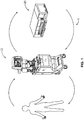
- Fig. 1 shows, in general, the mechanical components that make up an ECP system 5 and that may be used in one or more of the methods described herein.
- the system 5 may include a separation component 10 and a treatment (i.e., irradiation) component 20.
- Irradiation component 20 may be independent and housed separately from the separation component 10, or components 20 and 10 may be integrated into a single device.
- the separation device 10 and irradiation device 20 may be located adjacent to each other, allowing an operator or clinician to have access to both devices during a particular treatment procedure.
- a blood source e.g., donor, patient, blood container
- the separation device 10 may have one or more features of an apheresis device, such as those described in greater detail in U.S. Patent Nos. 5,868,696 and 6,027,657 , and PCT Patent Application No. PCT/US2012/28492 , which are hereby incorporated herein by reference in their entireties, although any suitable separation device may be used.
- the embodiments disclosed herein are described in conjunction with a separation device 10, the present embodiments may be applicable to an irradiation device 20 alone, in which case the target cell population may be provided to the irradiation device 20 subsequent to being collected elsewhere. While improved authorization/authentication systems and methods will be described herein with reference to apheresis and photopheresis, it should be understood that these principles may be employed with other medical procedures involving a specific range of light frequencies without departing from the scope of the present disclosure.
- whole blood may be withdrawn from the blood source and introduced into the separation component 10 where the whole blood is separated to provide a target cell population.
- the target cell population may be mononuclear cells (MNCs) or MNCs of a particular type (lymphocytes, monocytes, and/or dendritic cells, etc.).
- MNCs mononuclear cells
- Other components separated from the whole blood such as red blood cells (RBCs), plasma, and/or platelets may be returned to the blood source or collected in pre-attached containers of the blood processing set.
- the separated target cell population e.g., mononuclear cells
- treatment of mononuclear cells may involve the photoactivation of a photoactive agent that has been combined with the mononuclear cells.
- Mononuclear cells may be collected using a device described in greater detail in the aforementioned US. Pat. No. 6,027,657 .
- the apparatus used for the harvesting, collection and reinfusion of mononuclear cells may be a "multifunctional" automated apheresis device, as is the case with that described in US. Pat. No. 6,027,657 .
- the separation component 10 may be a multifunctional automated apparatus that can perform various collection protocols and/or serve multiple purposes, as may be needed by a particular hospital or facility, such that it can be used not only in the systems and methods for performing photopheresis treatment of MNC as described herein, but can also be used for other purposes including the collection of blood and blood components including platelets, plasma, red blood cells, granulocytes and/or perform plasma/RBC exchange, among other functions required by a hospital or medical facility.
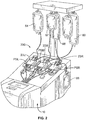
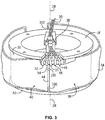
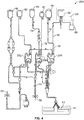
- Figs. 2-4 depict a separator 10 with fluid circuit 200 mounted thereon ( Fig. 2 ), the fluid circuit ( Fig. 4 ) having a blood processing container 14 ( Fig. 3 ) defining a separation chamber 12 suitable for harvesting mononuclear cells (MNC) from whole blood.
- a disposable processing set or fluid circuit 200 (which includes container 14) may be mounted on the front panel of separator 10.
- the fluid circuit 200 may include a plurality of processing cassettes 23L, 23M and 23R with tubing loops for association with peristaltic pumps on separator 10.
- Fluid circuit 200 may also include a network of tubing and pre-connected containers for establishing flow communication with the blood source and for processing and collecting fluids and blood and blood components, as shown in Fig. 4 .
- disposable processing set 200 may include a container 60 for supplying anticoagulant, a waste container 62 for collecting waste from one or more steps in the process for treating and washing mononuclear cells, a container 64 for holding saline or other wash or resuspension medium, a container 66 for collecting plasma, a container 68 for collecting the mononuclear cells and, optionally, container 69 for holding the photoactivation agent.
- Container 68 may also serve as the illumination container, and the illumination container 68 may be pre-attached to and integral with the disposable set 200. Alternatively, container 68 may be attached to set 200 by known sterile connection techniques, such as sterile docking or the like.
- container 68 is shown as suspended from device 10. However, container 68 may be housed within an adjacent separately housed irradiation device 20 (as shown by broken lines in Fig. 4 ), thereby eliminating the step of having the operator place container 68 into irradiation device 20.
- the tubing leading to and/or from container 68 in fluid circuit 200 may be of a sufficient length to reach an irradiation device 20 that is adjacent to but housed separately from the separation device.
- fluid circuit 200 may include inlet line 72, an anticoagulant (AC) line 74 for delivering AC from container 60, an RBC line 76 for conveying red blood cells from chamber 12 of container 14 to container 67, a platelet poor plasma (PPP) line 78 for conveying PPP to container 66 and line 80 for conveying mononuclear cells to and from blood processing container 14 and collection/illumination container 68.
- the blood processing set may include one or more venipuncture needle(s) for accessing the blood source, e.g., the circulatory system of a patient.
- fluid circuit 200 may include inlet needle 70 and return needle 82. In an alternative embodiment, a single needle may serve as both the inlet and outlet needle.
- Fluid flow through fluid circuit 200 may be driven, controlled and adjusted by a microprocessor-based controller in cooperation with the valves, pumps, weight scales and sensors of device 10 and fluid circuit 200, the details of which are described in the aforementioned U.S. Pat. No. 6,027,657 , although any suitable controller may be used.
- the fluid circuit may be further adapted for association with the irradiation device 20.
- a suitable irradiation device is described in U.S. Pat. No. 7,433,030 , which is incorporated by reference herein in its entirety, although any irradiation device may be used.
- the irradiation device 20 may include a tray or other holder for receiving one or more containers during treatment.
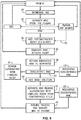
- Fig. 5 depicts one embodiment of an online method of treating mononuclear cells.
- An "online" photopheresis system includes both the blood separation device and the irradiation device in an integrated system.
- An online system provides for reinfusion of treated target cells back to the blood source.
- Whole blood may first be withdrawn from a blood source (step 30) through inlet needle 70 and introduced into the separation chamber 12 of container 14 of processing set 200, where the whole blood is subjected to, for example, a centrifugal field.
- the centrifugal field may separate the target cell population, i.e., mononuclear cells, from red blood cells, platelets and plasma (step 32).
- the components such as red blood cells and platelets may be returned to the blood source or may be diverted to a container (e.g., container 67) for further processing. Collection of the mononuclear cells may proceed in one or more cycles, with the number of processing cycles conducted in a given therapeutic procedure depending upon the total volume of MNCs to be collected.
- Fig. 5 depicts an online method of treating MNCs, offline methods are available as well.
- an apheresis device may be used to collect target cells.
- the collected target cells typically contained in one or more collection containers, are severed or otherwise separated from the tubing set used during collection, where they are later treated in a separate irradiation or UV light device followed by subsequent reinfusion of the treated cells to a blood source.
- the irradiation device which device may be located in another room or laboratory
- communication with the blood source is severed and the cells detached from the blood source.
- Collected target cells may be concentrated, diluted, or otherwise processed in preparation for irradiation within collection/illumination container 68 ( Fig. 4 ).
- collected target cells may be diluted with plasma and/or saline, e.g., at step 33 of Fig. 5 , to achieve a desired hematocrit.
- Collected target cells may also be combined with a suitable photoactivation agent, e.g., step 34 of Fig. 5 , in preparation for irradiation.
- Fig. 6 shows an illumination container comprising features useful for labeling, tracking, and/or authenticating disposable components, according to an exemplary embodiment.
- illumination container 68 that is part of disposable circuit 200 of Fig. 4 may comprise a tag 57 and/or a code 56 useful in preventing damage, alteration, falsification, and/or reuse of container 68 and/or any part of disposable circuit 200. Incorporating the tag 57 and/or code 56 onto container 68 may also prevent use of an otherwise legitimate disposable circuit intended for a different procedure performed by the system 5, separation component 10, and/or treatment component 20 ( Fig. 1 ).
- the system 5 may be programmed with a variety of other procedures, e.g., MNC collection (without photopheresis), platelet collection, offline photopheresis, etc., with each procedure having a corresponding and different disposable circuit.
- MNC collection without photopheresis
- platelet collection offline photopheresis
- offline photopheresis etc.
- a user may be prevented from attempting to perform the online photopheresis procedure with a disposable circuit meant for, e.g., MNC collection, by scanning for the tag 57 and/or code 56 on container 68 to verify correctness of procedure and disposable circuit.
- Tag 57 and/or code 56 may preferably maintain structural integrity during any storage period of container 68.
- code may be understood as an identification feature that provides relatively high labeling capacity or serialization.
- a code may contain information decodable by a computer that may recognize a product and its details by cross-checking with established reference codes in a database or data repository.
- tag may be understood as an identification feature that provides limited labeling capacity and may be recognized by a computer but not decodable with information by the computer.
- a tag may be used for simple authentication and/or tracking but may contain minimal information regarding details of the specific product.
- a compound with characteristic optical emission in response to specific irradiation may be used for the tag 57 and/or code 56 of container 68.
- a compound with characteristic optical emission may be described as a material that is reversibly or irreversibly transformed by light at certain excitation wavelengths to generate emission at a different wavelength or intensity than prior to transformation. Transformation may comprise isomerization, formation of color centers in crystalline salts, breaking or creation of covalent bonds (e.g., cross-linking in polymers), etc.
- a material that is transformed by UV light may be used.
- UV-sensitive materials resulting in generation of emission at a different wavelength or intensity than prior to transformation include photochromic ink, various coumarin derivatives, diarylethene derivatives incorporating trimethylsilyl (TMS) groups, ionic halide salts, lithium pentacosa-10,12-diynoic acid, and polyacetylene monomers.
- TMS trimethylsilyl
- a select molecule or combination of molecules with characteristic optical emission may be dissolved in a solvent or ink suitable for printing and/or coating on a medical device disposable component, such as container 68 ( Fig. 4 ).
- a coating material such as Rad-Sure product available from International Specialty Products may be used.
- a design, code, or pattern made visible or invisible by the photo-reactive entity may be sensed, recognized, and/or decoded before, during, and/or after irradiation.
- the disposable component to be tagged/coded is a fluid container such as the container 68 of Fig.
- the substrate upon which the identifiable feature may be printed may be an inner or outer surface of the container 68.
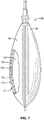
- Fig. 7 shows a side view of container 68, according to an exemplary embodiment.
- container 68 comprising container walls 92 may be made of a single layer of a polymer material, such as PVC or non-PVC polymer or polymer blend. In such a case, the identifiable feature may be printed or attached directly on the wall 92 of container 68.
- container wall 92 may be made of a multiple sheet laminate wherein an inner layer 13 is made of one material and outer layer 17 is made of a different material.
- the substrate upon which the identifiable feature may be printed may be separate from inner layer 13 and outer layer 17 and be placed between layers and form a part of the container wall 92.
- the identifiable feature may be printed on outer surface 17a of outer layer 17, inner surface 17b of outer layer 17, outer layer 13a of inner layer 13, and/or inner surface 13b of inner layer 13.
- the label may be affixed by the manufacturer at the time of kit build.
- the identifiable feature may be made available on separate labels that may be affixed to the container 68 at time of use.
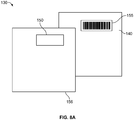
- Fig. 8A is a diagrammatic illustration of one embodiment of an identifiable feature.
- Fig. 8A shows a label 130 comprising a substrate 140 upon which an identifiable feature 155, e.g., bar code, tag, etc., may be printed.
- the identifiable feature 155 may be at a first state of visibility, e.g., visible to the naked eye, human- or machine-readable, prior to irradiation, and/or not comprise photo-reactive material.
- a photo-reactive entity 150 e.g., UV-reactive
- the photo-reactive entity 150 may be coated directly over the identifiable feature 155 or may be overlaid via a transparent layer 156.
- the photo-reactive entity 150 may comprise a polyacetylene monomer and/or lithium pentacosa-10,12-diynoic acid.
- the salt may be mixed with gelatin.
- the photo-reactive entity 150 may comprise different ratios of gelatin and salt as well as varying thickness of coating based on the desired sensitivity to different intensities of irradiation. In one embodiment, a 1:1 by weight mixture of gelatin and the lithium salt may be used.
- the photo-reactive coating may comprise a thickness of about 20 microns.
- the photo-reactive entity 150 may be colorless or a light color, e.g., yellow. Between UV irradiation levels of about 1-10 J/cm 2 , the photo-reactive entity 150 may develop some color but not be fully opaque. At UV levels above about 10 J/cm 2 , the photo-reactive entity 150 may fully obscure the identifiable feature 155 from being readable by the naked eye or by a machine. When the identifiable feature 155 is not readable by the naked eye or machine, the identifiable feature 155 may be characterized as being in a second state of visibility different from the first state of visibility.
- Figs. 8B and 8C respectively illustrate labels prior to irradiation and subsequent to irradiation, according to an exemplary embodiment.
- Fig. 8B shows the label 130 of Fig. 8A prior to irradiation in which the identifiable feature 155, e.g., barcode, is visible and machine-readable because the photo-reactive entity 150 is yet colorless or light-colored in the absence of irradiation.
- the photo-reactive entity 150 may turn fully opaque or dark-colored ( Fig. 8C ) to render the identifiable feature 155 not visible or machine-readable.
- the label 130 may contain other useful information 153, such as product manufacturer name, expiration date, lot number, product code, etc.
- the label 130 may also contain a legend 154 intended to provide indicia to a user whether irradiation has occurred at an appropriate step of the procedure and/or whether the correct dosage of irradiation has been applied.
- embodiments may not incorporate a coating to obscure the identifiable feature, such as an embodiment in which the identifiable feature itself comprises photo-reactive material.
- a bar code may be printed in the photo-reactive material and be invisible prior to irradiation and be visible during and after irradiation.
- the identifiable feature may be unreadable at UV radiation levels less than about 1 J/cm 2 and fully readable at UV levels above about 10 J/cm2.
- both a tag 57 and a code 56 may be incorporated onto the container 68.
- the tag 57 may comprise a RFID tag that uniquely pairs the container 68 with one irradiation procedure of the irradiation device 20 ( Fig. 1 ).
- the unique identifier of the RFID tag may be received and read by the irradiation device 20 to check whether the container 68 is an authorized container prior to proceeding with irradiation.
- the RFID device may utilize electrically erasable programmable read-only memory (EEPROM) to store authentication data.
- EEPROM electrically erasable programmable read-only memory
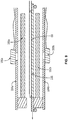
- Fig. 9 shows a cross-sectional view of the irradiation component 20 of Fig. 1 holding container 68 having a RFID tag and a photo-identifiable code and containing a target cell product.
- a RFID reader 100a may be mounted above an upper bank 102a of a plurality of irradiation transmitters (e.g., UV light bulbs). The RFID reader 100a may be disposed at any location suitable for reading the RFID tag of container 68.
- a reflector plate 104a may be disposed above the upper bank 102a of light bulbs to reflect light emitted by the bulbs.
- An exposure plane 106 comprised of material transparent to the specific range of wavelengths emitted by the upper bank 102a (e.g., UV-transparent material) may be disposed below the upper bank 102a of light bulbs to support illumination container 68.
- a lower bank 102b of a plurality of irradiation transmitters, e.g., UV light bulbs, may be disposed below the exposure plane 106.
- a second reflector plate 104b may be disposed below the lower bank 102b of irradiation transmitters to reflect light emitted by the light bulbs.
- One or more barcode readers 100b may be mounted below the lower bank 102b of the light bulbs.
- the barcode reader 100b may be disposed at any location suitable for reading the barcode of container 68, including, e.g., above the upper bank 102a of UV bulbs.
- the irradiation device 20 may include any number of RFID readers 100a and barcode readers 100b, depending on the number of the tags and/or codes, and the readers 100a, 100b, may be disposed according to a predetermined layout of tags and/or codes on the container 68.
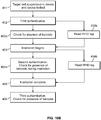
- Fig. 10A depicts one embodiment of a method for authenticating a disposable component for photopheresis using the label depicted in Figs. 8B and 8C .
- container 68 Fig. 4
- the device 20 may be configured to lock out access to the container 68 throughout the authentication process.
- the first authentication step may initiate, in which a barcode reader 100b checks at step 302a for the presence and authenticity of barcode 155 ( Fig. 8B ).
- the barcode 155 may be one of many serialized or unique barcodes that may be compared by the system against a remote data repository to ensure each disposable unit, e.g., container 68, is used only once.
- the first authentication step may also comprise the RFID reader 100a checking at step 302b for the RFID tag 57 ( Fig. 6 ). Incorporating two separate authentications with RFID and the barcode may be useful for increasing the difficulty of counterfeiting and reuse of the container 68 and increasing the difficulty of bypassing the authentication mechanisms.
- the ECP system 5 may be configured to generate a response action if either step 302a or step 302b fails.
- the response action may comprise the processing circuit of the ECP system terminating the procedure, notifying an operator to load an authorized container, etc.
- irradiation may begin. Once irradiation levels reach a threshold determined by the reactiveness of the photo-reactive entity 150 of label 130, the device 20 may perform a second authentication at step 304a in which the barcode reader 100b checks for the absence of the barcode 155, as depicted in Fig. 8C .
- the second authentication step may also comprise the RFID reader 100a checking at step 304b for the RFID tag 57.
- the system 5 may be configured to generate a response action if either step 304a or step 304b fails. If the second authentication step is successfully completed, the system may proceed to completion of the irradiation therapy at step 305.
- the device 20 may perform a last authentication step in which the barcode reader 100b checks again for the absence of the barcode 155. A reappearance of the barcode 155 readable by the reader 100b may trigger a response action in which the remainder of the procedure is terminated or an alert is transmitted to an authorized user.
- Fig. 10B depicts a method for authenticating a disposable component for photopheresis using a label comprising a bar code printed in photo-reactive material that is invisible prior to irradiation and visible during and after irradiation.
- container 68 containing target cells to be irradiated may be loaded into the irradiation device 20 and the door locked prior to beginning irradiation.
- the device 20 may be configured to lock out access to the container 68 throughout the authentication process.
- the first authentication step may initiate, in which a barcode reader 100b checks at step 402a for the absence of a barcode.
- the first authentication step may also comprise the RFID reader 100a checking at step 402b for a RFID tag.
- the ECP system 5 may be configured to generate a response action if either step 402a or step 402b fails.
- the response action may comprise the processing circuit of the ECP system terminating the procedure, notifying an operator to load an authentic container, etc.
- irradiation may begin.
- the device 20 may perform a second authentication at step 404a in which the barcode reader 100b checks for the presence and authenticity of the barcode.
- the barcode may be one of many serialized or unique barcodes that may be compared by the system against a remote data repository to ensure each disposable unit, e.g., container 68, is used only once.
- the second authentication step may also comprise the RFID reader 100a checking at step 404b for the RFID tag.
- the system may be configured to generate a response action if either step 404a or step 404b fails. If the second authentication step is successfully completed, the system may proceed to completion of the irradiation therapy at step 405.
- the device 20 may perform a last authentication step in which the barcode reader 100b checks again for the presence and authenticity of the barcode. A disappearance of the barcode readable by the reader 100b may trigger a response action in which the remainder of the procedure is terminated or an alert is transmitted to an authorized user.
- a medical device verification system for an extracorporeal photopheresis procedure comprising a reusable irradiation device comprising a UV light source and a scanner.
- a fluid circuit is configured to cooperatively associate with the reusable irradiation device, the fluid circuit comprising a disposable cell suspension container having a photo-reactive label comprising an identifiable code.
- the identifiable code is unobscured to the scanner when the label in a first state and is obscured to the scanner when the label is in a second state.
- a programmable controller for the photopheresis procedure configured to receive a first input from the scanner prior to an irradiation step, the first input comprising identification of a state of the label. Based on receiving the first input from the scanner identifying the first state of the label, the irradiation step is performed by irradiating the disposable cell suspension container for a predetermined period of time at or above the threshold UV irradiation level. A second input is received from the scanner during the irradiation step, the second input comprising identification of a state of the label. Based on receiving the second input from the scanner identifying the second state of the label, the irradiation step is continued. A response action is provided if the first input comprises identification of the second state of the label and/or if the second input comprises identification of the first state of the label.
- the photo-reactive label comprises a photo-reactive material directly coated over the identifiable code or disposed atop a transparent layer overlaid over the identifiable code.
- the photo-reactive label comprises a photo-reactive material comprising a polyacetylene monomer and/or lithium pentacosa-10,12-diynoic acid.
- the threshold UV irradiation level is 10 J/cm 2 .
- the reusable irradiation device further comprises a RFID reader.
- the disposable cell suspension container further comprises a RFID tag that uniquely pairs the disposable cell suspension container with one irradiation procedure of the reusable irradiation device.
- the programmable controller is further configured to receive a third input from the RFID reader indicating recognition of the RFID tag as an authorized RFID tag and proceed with the extracorporeal photopheresis procedure only if the third input is received. A response action is provided if the third input is not received.
- the response action comprises at least one of terminating the extracorporeal photopheresis procedure, terminating irradiation, notifying an operator to load an authorized container, and transmitting an alert to an authorized user.
- the programmable controller for the photopheresis procedure is further configured to receive a third input from the scanner after the irradiation step, the third input comprising identification of a state of the label.
- the response action is provided if the third input comprises identification of the first state of the label.
- a medical device verification system for an extracorporeal photopheresis procedure.
- a reusable irradiation device comprises a UV light source and a scanner.
- a fluid circuit is configured to cooperatively associate with the reusable irradiation device, the fluid circuit comprising a disposable cell suspension container having a photo-reactive label comprising an identifiable code. The identifiable code is obscured to the scanner when the label is in a first state and unobscured to the scanner when the label is in a second state.
- a programmable controller for the photopheresis procedure is configured to receive a first input from the scanner prior to an irradiation step, the first input comprising identification of a state of the label.
- the irradiation step is performed by irradiating the disposable cell suspension container for a predetermined period of time at or above the threshold UV irradiation level.
- a second input from the scanner is received during the irradiation step, the second input comprising identification of a state of the label.
- the irradiation step is continued.
- a response action is provided if the first input comprises identification of the second state of the label and/or if the second input comprises identification of the first state of the label.
- the identifiable code is printed with a photo-reactive material.
- the photo-reactive label comprises a photo-reactive material comprising a polyacetylene monomer and/or lithium pentacosa-10,12-diynoic acid.
- the threshold UV irradiation level is 10 J/cm2.
- the reusable irradiation device further comprises a RFID reader
- the disposable cell suspension container further comprises a RFID tag that uniquely pairs the disposable cell suspension container with one irradiation procedure of the reusable irradiation device.
- the programmable controller is further configured to receive a third input from the RFID reader indicating recognition of the RFID tag as an authorized RFID tag and proceed with the extracorporeal photopheresis procedure only if the third input is received. A response action is provided if the third input is not received.
- the response action comprises at least one of terminating the extracorporeal photopheresis procedure, terminating irradiation, notifying an operator to load an authorized container, and transmitting an alert to an authorized user.
- the programmable controller for the photopheresis procedure is further configured to receive a third input from the scanner after the irradiation step, the third input comprising identification of a state of the label.
- the response action is provided if the third input comprises identification of the first state of the label.
- a computer-implemented method for approving a medical device disposable component used in an extracorporeal photopheresis procedure comprising a UV light source and a scanner is provided.
- the reusable irradiation device is configured to irradiate a target cell suspension in an irradiation step.
- a photo-reactive label is provided comprising an identifiable code on a disposable component configured for irradiation within the reusable irradiation device and UV light source.
- the identifiable code is at a first state of visibility to the scanner when not having been exposed to a threshold UV irradiation level and a second state of visibility to the scanner after being exposed to the threshold UV irradiation level.
- a programmable controller is provided configured to receive a first input from the scanner prior to the irradiation step, the first input comprising identification of a state of visibility of the label, and configured to receive a second input from the scanner during the irradiation step, the second input comprising identification of a state of visibility of the label.
- the irradiation step is performed by irradiating the disposable cell suspension container for a predetermined period of time at or above the threshold UV irradiation level. Based on receiving the second input from the scanner identifying the second state of visibility of the label, the irradiation step is continued. A response action is provided if the first input comprises identification of the second state of visibility of the label and/or if the second input comprises identification of the first state of visibility of the label.
- the photo-reactive label comprises a photo-reactive material comprising a polyacetylene monomer and/or lithium pentacosa-10,12-diynoic acid.
- the threshold UV irradiation level is 10 J/cm2.
- the reusable irradiation device further comprises a RFID reader.
- the disposable component further comprises a RFID tag that uniquely pairs the disposable component with one irradiation procedure of the reusable irradiation device.
- a third input is received via the programmable controller from the RFID reader indicating recognition of the RFID tag as an authorized RFID tag.
- the extracorporeal photopheresis procedure proceeds only if the third input is received.
- the response action is provided if the third input is not received.
- the response action comprises at least one of terminating the extracorporeal photopheresis procedure, terminating irradiation, notifying an operator to load an authorized container, and transmitting an alert to an authorized user.
- a third input is received via the programmable controller from the scanner after the irradiation step, the third input comprising identification of a state of visibility of the label.
- the response action is provided if the third input comprises identification of the first state of visibility of the label.
- a medical device verification system for an extracorporeal photopheresis procedure.
- a reusable irradiation device comprises a UV light source and a scanner.
- a fluid circuit is configured to cooperatively associate with the reusable irradiation device, the fluid circuit comprising a disposable cell suspension container having a photo-reactive label comprising an identifiable code.
- the identifiable code is at a first state of visibility to the scanner when the label has not been exposed to a threshold UV irradiation level and is at a second state of visibility to the scanner when the label has been exposed to the threshold UV irradiation level.
- a programmable controller for the photopheresis procedure is configured to receive a first input from the scanner prior to an irradiation step, the first input comprising identification of a state of visibility of the label. Based on receiving the first input from the scanner identifying the first state of visibility of the label, the irradiation step is performed by irradiating the disposable cell suspension container for a predetermined period of time at or above the threshold UV irradiation level. A second input from the scanner is received during the irradiation step, the second input comprising identification of a state of visibility of the label. Based on receiving the second input from the scanner identifying the second state of the label, the irradiation step is continued. A response action is provided if the first input comprises identification of the second state of visibility of the label and/or if the second input comprises identification of the first state of the label.
- the photo-reactive label comprises a photo-reactive material directly coated over the identifiable code or disposed atop a transparent layer overlaid over the identifiable code.
- the photo-reactive label comprises a photo-reactive material comprising a polyacetylene monomer and/or lithium pentacosa-10,12-diynoic acid.
- the identifiable code is printed with a photo-reactive material.
- the photo-reactive label comprises a photo-reactive material comprising a polyacetylene monomer and/or lithium pentacosa-10,12-diynoic acid.
- the threshold UV irradiation level is 10 J/cm 2 .
- the reusable irradiation device further comprises a RFID reader
- the disposable cell suspension container further comprises a RFID tag that uniquely pairs the disposable cell suspension container with one irradiation procedure of the reusable irradiation device.
- the programmable controller is further configured to receive a third input from the RFID reader indicating recognition of the RFID tag as an authorized RFID tag and proceed with the extracorporeal photopheresis procedure only if the third input is received. A response action is provided if the third input is not received.
- the response action comprises at least one of terminating the extracorporeal photopheresis procedure, terminating irradiation, notifying an operator to load an authorized container, and transmitting an alert to an authorized user.
- the programmable controller for the photopheresis procedure is further configured to receive a third input from the scanner after the irradiation step, the third input comprising identification of a state of the label.
- the response action is provided if the third input comprises identification of the first state of the label.
Landscapes
- Health & Medical Sciences (AREA)
- Engineering & Computer Science (AREA)
- Vascular Medicine (AREA)
- Heart & Thoracic Surgery (AREA)
- General Health & Medical Sciences (AREA)
- Biomedical Technology (AREA)
- Public Health (AREA)
- Life Sciences & Earth Sciences (AREA)
- Animal Behavior & Ethology (AREA)
- Hematology (AREA)
- Anesthesiology (AREA)
- Veterinary Medicine (AREA)
- Cardiology (AREA)
- Physics & Mathematics (AREA)
- Toxicology (AREA)
- General Business, Economics & Management (AREA)
- Business, Economics & Management (AREA)
- General Physics & Mathematics (AREA)
- Theoretical Computer Science (AREA)
- Computer Hardware Design (AREA)
- Electromagnetism (AREA)
- Artificial Intelligence (AREA)
- Computer Vision & Pattern Recognition (AREA)
- Microelectronics & Electronic Packaging (AREA)
- Computer Networks & Wireless Communication (AREA)
- Epidemiology (AREA)
- Medical Informatics (AREA)
- Primary Health Care (AREA)
- External Artificial Organs (AREA)
- Apparatus For Disinfection Or Sterilisation (AREA)
Applications Claiming Priority (1)
| Application Number | Priority Date | Filing Date | Title |
|---|---|---|---|
| US201862673714P | 2018-05-18 | 2018-05-18 |
Publications (3)
| Publication Number | Publication Date |
|---|---|
| EP3569268A1 true EP3569268A1 (fr) | 2019-11-20 |
| EP3569268B1 EP3569268B1 (fr) | 2025-04-09 |
| EP3569268C0 EP3569268C0 (fr) | 2025-04-09 |
Family
ID=66589332
Family Applications (1)
| Application Number | Title | Priority Date | Filing Date |
|---|---|---|---|
| EP19174900.1A Active EP3569268B1 (fr) | 2018-05-18 | 2019-05-16 | Système et procédé pour authentifier des composants jetables dans une photophérèse extracorporelle |
Country Status (2)
| Country | Link |
|---|---|
| US (1) | US10886022B2 (fr) |
| EP (1) | EP3569268B1 (fr) |
Families Citing this family (4)
| Publication number | Priority date | Publication date | Assignee | Title |
|---|---|---|---|---|
| EP3632484B1 (fr) | 2018-10-04 | 2025-12-03 | Fenwal, Inc. | Systèmes de collecte d'échantillons dans une procédure de photophérèse |
| EP3666311B1 (fr) | 2018-12-13 | 2026-02-04 | Fenwal, Inc. | Systèmes et procédés de traitement d'un fluide biologique avec lumière dans le cas d'une panne d'une ampoule |
| US11883543B2 (en) | 2019-04-16 | 2024-01-30 | Fenwal, Inc. | Systems and methods for photoactivation of a biological fluid |
| US12558469B2 (en) | 2021-08-06 | 2026-02-24 | Fenwal, Inc. | Systems and methods for converting an apheresis fluid processing circuit to single or double needle mode |
Citations (6)
| Publication number | Priority date | Publication date | Assignee | Title |
|---|---|---|---|---|
| US5868696A (en) | 1993-12-22 | 1999-02-09 | Baxter International Inc. | Peristaltic pump tube holder with pump tube shield and cover |
| US6027657A (en) | 1997-07-01 | 2000-02-22 | Baxter International Inc. | Systems and methods for collecting diluted mononuclear cells |
| US20080029606A1 (en) * | 2006-07-21 | 2008-02-07 | Isp Investments Inc. | Human and scanner readable radiation exposure indicator with reactive barcode |
| US7433030B2 (en) | 1999-06-03 | 2008-10-07 | Fenwal, Inc. | Apparatus, systems and methods for processing and treating a biological fluid with light |
| WO2017048673A1 (fr) * | 2015-09-14 | 2017-03-23 | Fenwal, Inc. | Appareil, systèmes et procédés de stockage, traitement et/ou traitement de composants du sang |
| EP3422354A1 (fr) * | 2017-06-29 | 2019-01-02 | Fenwal, Inc. | Système et procédé d'authentification de composants jetables d'un dispositif médical |
Family Cites Families (8)
| Publication number | Priority date | Publication date | Assignee | Title |
|---|---|---|---|---|
| US7079230B1 (en) | 1999-07-16 | 2006-07-18 | Sun Chemical B.V. | Portable authentication device and method of authenticating products or product packaging |
| US7049208B2 (en) | 2004-10-11 | 2006-05-23 | Intel Corporation | Method of manufacturing of thin based substrate |
| US20090166427A1 (en) | 2007-12-27 | 2009-07-02 | Jeffrey Allen Chambers | Authentication/security labels and associated method containing photochromic inks |
| CN103415329B (zh) | 2011-03-11 | 2015-05-13 | 汾沃有限公司 | 膜分离装置、利用该装置的系统和方法以及数据管理系统和方法 |
| US9064137B2 (en) | 2013-03-08 | 2015-06-23 | Fenwal, Inc. | Counterfeit protection and verification system and method |
| WO2016057956A1 (fr) | 2014-10-10 | 2016-04-14 | Sun Chemical Corporation | Système d'authentification |
| JP6632359B2 (ja) | 2015-01-05 | 2020-01-22 | フェンウォール、インコーポレイテッド | 体外フォトフェレーシスにおいて照射受光部を用いて最小ヘマトクリットを検出するためのシステムと方法 |
| EP3390066B1 (fr) | 2015-12-17 | 2021-03-10 | Sicpa Holding Sa | Élément de sécurité formé à partir d'au moins deux matériaux présents dans les zones se chevauchant partiellement, articles portant l'élément de sécurité et procédés d'authentification |
-
2019
- 2019-04-24 US US16/392,802 patent/US10886022B2/en active Active
- 2019-05-16 EP EP19174900.1A patent/EP3569268B1/fr active Active
Patent Citations (6)
| Publication number | Priority date | Publication date | Assignee | Title |
|---|---|---|---|---|
| US5868696A (en) | 1993-12-22 | 1999-02-09 | Baxter International Inc. | Peristaltic pump tube holder with pump tube shield and cover |
| US6027657A (en) | 1997-07-01 | 2000-02-22 | Baxter International Inc. | Systems and methods for collecting diluted mononuclear cells |
| US7433030B2 (en) | 1999-06-03 | 2008-10-07 | Fenwal, Inc. | Apparatus, systems and methods for processing and treating a biological fluid with light |
| US20080029606A1 (en) * | 2006-07-21 | 2008-02-07 | Isp Investments Inc. | Human and scanner readable radiation exposure indicator with reactive barcode |
| WO2017048673A1 (fr) * | 2015-09-14 | 2017-03-23 | Fenwal, Inc. | Appareil, systèmes et procédés de stockage, traitement et/ou traitement de composants du sang |
| EP3422354A1 (fr) * | 2017-06-29 | 2019-01-02 | Fenwal, Inc. | Système et procédé d'authentification de composants jetables d'un dispositif médical |
Also Published As
| Publication number | Publication date |
|---|---|
| EP3569268B1 (fr) | 2025-04-09 |
| EP3569268C0 (fr) | 2025-04-09 |
| US10886022B2 (en) | 2021-01-05 |
| US20190355468A1 (en) | 2019-11-21 |
Similar Documents
| Publication | Publication Date | Title |
|---|---|---|
| EP3569268B1 (fr) | Système et procédé pour authentifier des composants jetables dans une photophérèse extracorporelle | |
| US20030072676A1 (en) | Radio frequency of electromagnetic information systems and methods for use in extracorporeal blood processing | |
| JP3303094B2 (ja) | 血液製品照射のための容器 | |
| US10213544B2 (en) | Methods for treating a suspension of mononuclear cells to facilitate extracorporeal photopheresis | |
| US6258577B1 (en) | Method and apparatus for inactivation of biological contaminants using endogenous alloxazine or isoalloxazine photosensitizers | |
| JP7471335B2 (ja) | 血液および血液成分の貯蔵、処置、および/または、処理のための装置、システムおよび方法 | |
| MXPA01012433A (es) | Aparato, sistemas y metodos para procesar y tratar un fluido biologico con luz. | |
| EP3422354B1 (fr) | Système et procédé d'authentification de composants jetables d'un dispositif médical | |
| US9974899B2 (en) | Method for delivering desired light dose to cells in a light attenuating medium | |
| EP3040093B1 (fr) | Système et procédé de détection d'hématocrite minimale par des récepteurs d'irradiation pendant une photophérèse extracorporelle | |
| EP3328443B1 (fr) | Systèmes et procédés de détection de fuites de fluide à l'aide d'un capteur optique sans contact | |
| MXPA01012434A (es) | Aparato procesador y metodos para procesar y tratar un fluido biologico. | |
| JPH09509604A (ja) | バッグの処理を示す識別システムを含んだバッグ | |
| EP3632484B1 (fr) | Systèmes de collecte d'échantillons dans une procédure de photophérèse | |
| US20100189597A1 (en) | Methods and Systems for Preparing Blood Products | |
| US11020522B1 (en) | Centrifuge system and method with component tracking | |
| EP3679968A2 (fr) | Systèmes et procédés permettant de vérifier qu'un produit biologique est prêt pour un traitement | |
| EP3666311B1 (fr) | Systèmes et procédés de traitement d'un fluide biologique avec lumière dans le cas d'une panne d'une ampoule | |
| US10639412B2 (en) | Indicating to a medical device performance of an operation by another medical device | |
| EP3497598B1 (fr) | Appareil de sécurité et méthode pour la persécution, le contrôl et la surveillance de l'administration des agents medicaux | |
| US20240358906A1 (en) | Methods And Systems For Determining Subject Specific Amounts For Collection | |
| AU2023312206A1 (en) | Apparatus and method for irradiating a biological fluid | |
| OReilly | Plasma-collection plant has to overcome tainted-blood fallout in search for donors |
Legal Events
| Date | Code | Title | Description |
|---|---|---|---|
| PUAI | Public reference made under article 153(3) epc to a published international application that has entered the european phase |
Free format text: ORIGINAL CODE: 0009012 |
|
| STAA | Information on the status of an ep patent application or granted ep patent |
Free format text: STATUS: THE APPLICATION HAS BEEN PUBLISHED |
|
| AK | Designated contracting states |
Kind code of ref document: A1 Designated state(s): AL AT BE BG CH CY CZ DE DK EE ES FI FR GB GR HR HU IE IS IT LI LT LU LV MC MK MT NL NO PL PT RO RS SE SI SK SM TR |
|
| AX | Request for extension of the european patent |
Extension state: BA ME |
|
| STAA | Information on the status of an ep patent application or granted ep patent |
Free format text: STATUS: REQUEST FOR EXAMINATION WAS MADE |
|
| 17P | Request for examination filed |
Effective date: 20200519 |
|
| RBV | Designated contracting states (corrected) |
Designated state(s): AL AT BE BG CH CY CZ DE DK EE ES FI FR GB GR HR HU IE IS IT LI LT LU LV MC MK MT NL NO PL PT RO RS SE SI SK SM TR |
|
| STAA | Information on the status of an ep patent application or granted ep patent |
Free format text: STATUS: EXAMINATION IS IN PROGRESS |
|
| 17Q | First examination report despatched |
Effective date: 20210304 |
|
| GRAP | Despatch of communication of intention to grant a patent |
Free format text: ORIGINAL CODE: EPIDOSNIGR1 |
|
| STAA | Information on the status of an ep patent application or granted ep patent |
Free format text: STATUS: GRANT OF PATENT IS INTENDED |
|
| GRAJ | Information related to disapproval of communication of intention to grant by the applicant or resumption of examination proceedings by the epo deleted |
Free format text: ORIGINAL CODE: EPIDOSDIGR1 |
|
| STAA | Information on the status of an ep patent application or granted ep patent |
Free format text: STATUS: EXAMINATION IS IN PROGRESS |
|
| INTG | Intention to grant announced |
Effective date: 20220325 |
|
| RIN1 | Information on inventor provided before grant (corrected) |
Inventor name: BERNARD, CHRISTIAN R. Inventor name: YOUNG, NICOLE F. Inventor name: NELSON, BRIAN C. Inventor name: NGUYEN, LAN T. Inventor name: ABEDIN, TANIMA JAHAN Inventor name: WEGENER, CHRISTOPHER J. Inventor name: ALI, ZAHRA R. |
|
| INTC | Intention to grant announced (deleted) | ||
| GRAP | Despatch of communication of intention to grant a patent |
Free format text: ORIGINAL CODE: EPIDOSNIGR1 |
|
| STAA | Information on the status of an ep patent application or granted ep patent |
Free format text: STATUS: GRANT OF PATENT IS INTENDED |
|
| INTG | Intention to grant announced |
Effective date: 20240522 |
|
| GRAS | Grant fee paid |
Free format text: ORIGINAL CODE: EPIDOSNIGR3 |
|
| GRAA | (expected) grant |
Free format text: ORIGINAL CODE: 0009210 |
|
| STAA | Information on the status of an ep patent application or granted ep patent |
Free format text: STATUS: THE PATENT HAS BEEN GRANTED |
|
| AK | Designated contracting states |
Kind code of ref document: B1 Designated state(s): AL AT BE BG CH CY CZ DE DK EE ES FI FR GB GR HR HU IE IS IT LI LT LU LV MC MK MT NL NO PL PT RO RS SE SI SK SM TR |
|
| REG | Reference to a national code |
Ref country code: GB Ref legal event code: FG4D |
|
| REG | Reference to a national code |
Ref country code: CH Ref legal event code: EP |
|
| REG | Reference to a national code |
Ref country code: DE Ref legal event code: R096 Ref document number: 602019061024 Country of ref document: DE |
|
| REG | Reference to a national code |
Ref country code: IE Ref legal event code: FG4D |
|
| GRAT | Correction requested after decision to grant or after decision to maintain patent in amended form |
Free format text: ORIGINAL CODE: EPIDOSNCDEC |
|
| APAW | Appeal reference deleted |
Free format text: ORIGINAL CODE: EPIDOSDREFNO |
|
| PUAC | Information related to the publication of a b1 document modified or deleted |
Free format text: ORIGINAL CODE: 0009299EPPU |
|
| STAA | Information on the status of an ep patent application or granted ep patent |
Free format text: STATUS: GRANT OF PATENT IS INTENDED |
|
| REG | Reference to a national code |
Ref country code: CH Ref legal event code: PK Free format text: DIE ERTEILUNG WURDE VOM EPA WIDERRUFEN. |
|
| U01 | Request for unitary effect filed |
Effective date: 20241127 |
|
| APAV | Appeal reference deleted |
Free format text: ORIGINAL CODE: EPIDOSDREFNE |
|
| DB1 | Publication of patent cancelled |
Effective date: 20241206 |
|
| REG | Reference to a national code |
Ref country code: DE Ref legal event code: R107 Ref document number: 602019061024 Country of ref document: DE |
|
| APAF | Appeal reference modified |
Free format text: ORIGINAL CODE: EPIDOSCREFNE |
|
| APBV | Interlocutory revision of appeal recorded |
Free format text: ORIGINAL CODE: EPIDOSNIRAPE |
|
| GRAJ | Information related to disapproval of communication of intention to grant by the applicant or resumption of examination proceedings by the epo deleted |
Free format text: ORIGINAL CODE: EPIDOSDIGR1 |
|
| STAA | Information on the status of an ep patent application or granted ep patent |
Free format text: STATUS: EXAMINATION IS IN PROGRESS |
|
| GRAS | Grant fee paid |
Free format text: ORIGINAL CODE: EPIDOSNIGR3 |
|
| STAA | Information on the status of an ep patent application or granted ep patent |
Free format text: STATUS: GRANT OF PATENT IS INTENDED |
|
| GRAP | Despatch of communication of intention to grant a patent |
Free format text: ORIGINAL CODE: EPIDOSNIGR1 |
|
| REG | Reference to a national code |
Ref country code: LT Ref legal event code: MG9D |
|
| GRAA | (expected) grant |
Free format text: ORIGINAL CODE: 0009210 |
|
| STAA | Information on the status of an ep patent application or granted ep patent |
Free format text: STATUS: THE PATENT HAS BEEN GRANTED |
|
| REG | Reference to a national code |
Ref country code: AT Ref legal event code: REZ Ref document number: 1736300 Country of ref document: AT Kind code of ref document: T Effective date: 20241030 |
|
| INTG | Intention to grant announced |
Effective date: 20250214 |
|
| AK | Designated contracting states |
Kind code of ref document: B1 Designated state(s): AL AT BE BG CH CY CZ DE DK EE ES FI FR GB GR HR HU IE IS IT LI LT LU LV MC MK MT NL NO PL PT RO RS SE SI SK SM TR |
|
| REG | Reference to a national code |
Ref country code: CH Ref legal event code: EP |
|
| U01 | Request for unitary effect filed |
Effective date: 20250416 |
|
| U07 | Unitary effect registered |
Designated state(s): AT BE BG DE DK EE FI FR IT LT LU LV MT NL PT RO SE SI Effective date: 20250423 |
|
| U20 | Renewal fee for the european patent with unitary effect paid |
Year of fee payment: 7 Effective date: 20250527 |
|
| PG25 | Lapsed in a contracting state [announced via postgrant information from national office to epo] |
Ref country code: PL Free format text: LAPSE BECAUSE OF FAILURE TO SUBMIT A TRANSLATION OF THE DESCRIPTION OR TO PAY THE FEE WITHIN THE PRESCRIBED TIME-LIMIT Effective date: 20250409 |
|
| PGFP | Annual fee paid to national office [announced via postgrant information from national office to epo] |
Ref country code: GB Payment date: 20250605 Year of fee payment: 7 |
|
| PG25 | Lapsed in a contracting state [announced via postgrant information from national office to epo] |
Ref country code: ES Free format text: LAPSE BECAUSE OF FAILURE TO SUBMIT A TRANSLATION OF THE DESCRIPTION OR TO PAY THE FEE WITHIN THE PRESCRIBED TIME-LIMIT Effective date: 20250409 |
|
| PG25 | Lapsed in a contracting state [announced via postgrant information from national office to epo] |
Ref country code: NO Free format text: LAPSE BECAUSE OF FAILURE TO SUBMIT A TRANSLATION OF THE DESCRIPTION OR TO PAY THE FEE WITHIN THE PRESCRIBED TIME-LIMIT Effective date: 20250709 |
|
| REG | Reference to a national code |
Ref country code: CH Ref legal event code: H13 Free format text: ST27 STATUS EVENT CODE: U-0-0-H10-H13 (AS PROVIDED BY THE NATIONAL OFFICE) Effective date: 20251223 |
|
| PG25 | Lapsed in a contracting state [announced via postgrant information from national office to epo] |
Ref country code: SM Free format text: LAPSE BECAUSE OF FAILURE TO SUBMIT A TRANSLATION OF THE DESCRIPTION OR TO PAY THE FEE WITHIN THE PRESCRIBED TIME-LIMIT Effective date: 20250409 |
|
| PG25 | Lapsed in a contracting state [announced via postgrant information from national office to epo] |
Ref country code: CH Free format text: LAPSE BECAUSE OF NON-PAYMENT OF DUE FEES Effective date: 20250531 |
|
| PG25 | Lapsed in a contracting state [announced via postgrant information from national office to epo] |
Ref country code: CZ Free format text: LAPSE BECAUSE OF FAILURE TO SUBMIT A TRANSLATION OF THE DESCRIPTION OR TO PAY THE FEE WITHIN THE PRESCRIBED TIME-LIMIT Effective date: 20250409 |
|
| PG25 | Lapsed in a contracting state [announced via postgrant information from national office to epo] |
Ref country code: SK Free format text: LAPSE BECAUSE OF FAILURE TO SUBMIT A TRANSLATION OF THE DESCRIPTION OR TO PAY THE FEE WITHIN THE PRESCRIBED TIME-LIMIT Effective date: 20250409 |
|
| PG25 | Lapsed in a contracting state [announced via postgrant information from national office to epo] |
Ref country code: MC Free format text: LAPSE BECAUSE OF FAILURE TO SUBMIT A TRANSLATION OF THE DESCRIPTION OR TO PAY THE FEE WITHIN THE PRESCRIBED TIME-LIMIT Effective date: 20250409 |
|
| PLBE | No opposition filed within time limit |
Free format text: ORIGINAL CODE: 0009261 |
|
| STAA | Information on the status of an ep patent application or granted ep patent |
Free format text: STATUS: NO OPPOSITION FILED WITHIN TIME LIMIT |
|
| REG | Reference to a national code |
Ref country code: CH Ref legal event code: L10 Free format text: ST27 STATUS EVENT CODE: U-0-0-L10-L00 (AS PROVIDED BY THE NATIONAL OFFICE) Effective date: 20260218 |
|
| 26N | No opposition filed |
Effective date: 20260112 |
|
| PG25 | Lapsed in a contracting state [announced via postgrant information from national office to epo] |
Ref country code: IE Free format text: LAPSE BECAUSE OF NON-PAYMENT OF DUE FEES Effective date: 20250516 |