EP3578032B1 - Procédé de commande d'une campagne de récolte agricole - Google Patents
Procédé de commande d'une campagne de récolte agricole Download PDFInfo
- Publication number
- EP3578032B1 EP3578032B1 EP19168031.3A EP19168031A EP3578032B1 EP 3578032 B1 EP3578032 B1 EP 3578032B1 EP 19168031 A EP19168031 A EP 19168031A EP 3578032 B1 EP3578032 B1 EP 3578032B1
- Authority
- EP
- European Patent Office
- Prior art keywords
- control
- machine
- control routine
- harvesting
- field
- Prior art date
- Legal status (The legal status is an assumption and is not a legal conclusion. Google has not performed a legal analysis and makes no representation as to the accuracy of the status listed.)
- Active
Links
Images

Classifications
-
- A—HUMAN NECESSITIES
- A01—AGRICULTURE; FORESTRY; ANIMAL HUSBANDRY; HUNTING; TRAPPING; FISHING
- A01D—HARVESTING; MOWING
- A01D41/00—Combines, i.e. harvesters or mowers combined with threshing devices
- A01D41/12—Details of combines
- A01D41/127—Control or measuring arrangements specially adapted for combines
- A01D41/1278—Control or measuring arrangements specially adapted for combines for automatic steering
-
- A—HUMAN NECESSITIES
- A01—AGRICULTURE; FORESTRY; ANIMAL HUSBANDRY; HUNTING; TRAPPING; FISHING
- A01B—SOIL WORKING IN AGRICULTURE OR FORESTRY; PARTS, DETAILS, OR ACCESSORIES OF AGRICULTURAL MACHINES OR IMPLEMENTS, IN GENERAL
- A01B69/00—Steering of agricultural machines or implements; Guiding agricultural machines or implements on a desired track
- A01B69/003—Steering or guiding of machines or implements pushed or pulled by or mounted on agricultural vehicles such as tractors, e.g. by lateral shifting of the towing connection
- A01B69/004—Steering or guiding of machines or implements pushed or pulled by or mounted on agricultural vehicles such as tractors, e.g. by lateral shifting of the towing connection automatic
-
- A—HUMAN NECESSITIES
- A01—AGRICULTURE; FORESTRY; ANIMAL HUSBANDRY; HUNTING; TRAPPING; FISHING
- A01B—SOIL WORKING IN AGRICULTURE OR FORESTRY; PARTS, DETAILS, OR ACCESSORIES OF AGRICULTURAL MACHINES OR IMPLEMENTS, IN GENERAL
- A01B79/00—Methods for working soil
- A01B79/005—Precision agriculture
-
- A—HUMAN NECESSITIES
- A01—AGRICULTURE; FORESTRY; ANIMAL HUSBANDRY; HUNTING; TRAPPING; FISHING
- A01B—SOIL WORKING IN AGRICULTURE OR FORESTRY; PARTS, DETAILS, OR ACCESSORIES OF AGRICULTURAL MACHINES OR IMPLEMENTS, IN GENERAL
- A01B79/00—Methods for working soil
- A01B79/02—Methods for working soil combined with other agricultural processing, e.g. fertilising, planting
-
- A—HUMAN NECESSITIES
- A01—AGRICULTURE; FORESTRY; ANIMAL HUSBANDRY; HUNTING; TRAPPING; FISHING
- A01D—HARVESTING; MOWING
- A01D41/00—Combines, i.e. harvesters or mowers combined with threshing devices
- A01D41/12—Details of combines
- A01D41/127—Control or measuring arrangements specially adapted for combines
-
- G—PHYSICS
- G05—CONTROLLING; REGULATING
- G05D—SYSTEMS FOR CONTROLLING OR REGULATING NON-ELECTRIC VARIABLES
- G05D1/00—Control of position, course, altitude or attitude of land, water, air or space vehicles, e.g. using automatic pilots
- G05D1/02—Control of position or course in two dimensions
- G05D1/021—Control of position or course in two dimensions specially adapted to land vehicles
- G05D1/0212—Control of position or course in two dimensions specially adapted to land vehicles with means for defining a desired trajectory
- G05D1/0217—Control of position or course in two dimensions specially adapted to land vehicles with means for defining a desired trajectory in accordance with energy consumption, time reduction or distance reduction criteria
-
- G—PHYSICS
- G05—CONTROLLING; REGULATING
- G05D—SYSTEMS FOR CONTROLLING OR REGULATING NON-ELECTRIC VARIABLES
- G05D1/00—Control of position, course, altitude or attitude of land, water, air or space vehicles, e.g. using automatic pilots
- G05D1/02—Control of position or course in two dimensions
- G05D1/021—Control of position or course in two dimensions specially adapted to land vehicles
- G05D1/0212—Control of position or course in two dimensions specially adapted to land vehicles with means for defining a desired trajectory
- G05D1/0219—Control of position or course in two dimensions specially adapted to land vehicles with means for defining a desired trajectory ensuring the processing of the whole working surface
-
- G—PHYSICS
- G05—CONTROLLING; REGULATING
- G05D—SYSTEMS FOR CONTROLLING OR REGULATING NON-ELECTRIC VARIABLES
- G05D1/00—Control of position, course, altitude or attitude of land, water, air or space vehicles, e.g. using automatic pilots
- G05D1/02—Control of position or course in two dimensions
- G05D1/021—Control of position or course in two dimensions specially adapted to land vehicles
- G05D1/0287—Control of position or course in two dimensions specially adapted to land vehicles involving a plurality of land vehicles, e.g. fleet or convoy travelling
Definitions
- the present invention relates to a method for controlling an agricultural harvesting campaign according to claim 1 and to a self-propelled agricultural working machine for carrying out such a method according to claim 18.
- self-propelled agricultural machine is to be understood broadly in this context. This includes not only harvesting machines such as combine harvesters and forage harvesters, but also tractors or similar.
- the known method for controlling a harvesting operation in the form of a combine harvester uses machine-local field information provided by the sensors of a working machine to optimize harvesting process chains.
- the optimization is based on field information from an environment detection device that is assigned to the relevant working machine. Using the environment detection device, crop properties such as crop density or grain moisture can be determined and processed as part of the optimization.
- Another method for controlling a harvest campaign is, for example, EP 2 174 537 A1 known.
- the optimized control of an entire harvest campaign in which predetermined harvesting actions are to be carried out on a field contingent, i.e. on a field area consisting of one or more fields, within a campaign period, represents a complex challenge depending on the optimization criteria, which can only be mastered to a limited extent using the known methods.
- the invention is based on the problem of designing and developing the known method in such a way that the optimization of the control of an agricultural harvest campaign is improved with low control complexity.
- control of the harvest campaign is structured in different control application levels. This means that the control of the harvest campaign is distributed across the application levels so that the control complexity of the individual application levels is low.
- the information generated includes remote sensing field information.
- the embodiment according to the invention relates to the structuring of the application levels into a coarse application level, a fine application level and a machine application level.
- this three-part division has proven to be particularly low-complexity in terms of control technology implementation with regard to the generation of processing sequences, harvesting actions and machine control data.
- control routine is to be understood in the sense of a routine that is sequentially and/or can run in parallel to other routines and can be implemented in software in the usual way.
- the control routines run on a control system that can be equipped with distributed control hardware in a manner to be explained below.
- machine-local information is available for controlling the harvest campaign, but also information from data sources remote from the machine fleet. Such information is referred to here as remote sensing field information.
- remote sensing field information is referred to here as remote sensing field information.
- both types of information are constantly available in all control routines.
- georeferenced remote sensing field information from data sources remote from the machine fleet is processed, wherein in at least one of the control routines, georeferenced live field information from machine-specific data sources, in particular sensor data sources, of the machine fleet is processed and wherein at least part of this field information is processed in at least two control routines (claim 3).
- control routines each of which is assigned to one of the above application levels and which can run at least for the most part simultaneously.
- the processing sequence of the harvesting actions over the campaign period be generated in a coarse control routine based on the above field information, that harvesting process chains be generated in a fine control routine based on the field information to implement the processing sequence, and that machine control data be generated during harvesting operation in a machine control routine based on the field information to implement the harvesting process chains.
- the rough control routine is therefore only concerned with the chronological order in which the various harvest actions are processed over the campaign period.
- a harvest action can involve harvesting an entire field or harvesting a field zone that will be explained later.
- the detailed control routine concerns the generation of the harvesting process chains that are required for the above harvesting actions to be carried out. This involves the definition of sub-processes such as harvesting sub-processes, loading sub-processes or the like. Finally, the machine control routine concerns the generation of specific machine control data for controlling the work machines.
- control routines By structuring the control routines into the coarse control routine, the fine control routine and the machine control routine, the complexity of controlling an entire agricultural harvesting campaign is reduced, so that the increase in complexity associated with processing the remote sensing field information and the machine-local field information itself is to a certain extent compensated.
- the rough control routine can also use the machine-local field information to check whether the live field information is consistent with the remote sensing field information. If necessary, the processing sequence can be adjusted or the remote sensing field information can even be corrected during harvesting.
- the crop density of a complete field is derived from the remote sensing field information, so that a corresponding long-term planning of the overloading sub-processes is possible.
- the remote sensing field information can also be used in the machine control routine, for example to estimate whether fluctuations in the machine-local field information are probably only "outliers" or a systematic trend.
- the proposed method provides a particularly good basis for optimizing the control of an agricultural harvest campaign, which allows a particularly high level of robustness, especially in view of the expected redundancies between the remote sensing field information and the live field information.
- the proposed method can be operated on a distributed system hardware according to claim 4, which allows an adaptation of the control system to the respective control system boundary conditions.
- the further preferred embodiment according to claim 5 relates to the division of the field quota assigned to the harvest campaign into georeferenced field zones, in each of which a good property is uniformly present, and that the definition of the field zones is stored in the control system. This particularly simplifies the generation of the processing sequence in the rough control routine by considering the field zones as a unit in the relevant planning steps.
- the machine control data are always generated during the harvesting operation as part of the machine control routine, as proposed in claim 7.
- the generation of the processing sequence as part of the coarse control routine and the generation of the harvesting process chains as part of the fine control routine are preferably generated at least before the harvesting operation.
- all control routines can run in an overlapping manner.
- the also preferred embodiments according to claims 8 and 9 relate to the storage of already generated, optimized harvesting process chains or machine control data in the control system, specifically with an explicit reference to the respective field zone.
- the field zones are not only assigned a good property, but optimized harvesting process chains or machine control data are assigned.
- a time-of-day-dependent change in the properties of the field contingent as a whole or of the field zones is the subject of claims 11 to 13.
- the remote sensing field information and/or the live field information and/or the field zones are each referenced to the time of day.
- a control of the agricultural harvest campaign can be created that is optimized for the respective time of day, without the complexity of the associated planning steps increasing excessively.
- the further preferred embodiment according to claim 14 takes into account the fact that remote sensing field information is often not available in absolute values, so that a calibration of this information is always necessary.
- the field zones are displayed to the machine operator so that the operator has access to the information underlying the processing sequence.
- the definition of the field zones allows a particularly clear, in particular graphic, representation.
- the further preferred embodiments according to claims 16 and 17 relate to advantageous variants for the generation of the remote sensing field information on the one hand and the live field information on the other hand.
- the proposed solution can be applied to a wide range of agricultural machines 1 .
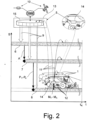
- Fig. 1 In the scenario indicated, the work machines 1 are assigned to a machine fleet 2.
- the work machines 1 are, for example, combine harvesters, transport teams, balers, tractors or the like.
- the proposed method is used to control an agricultural harvest campaign.
- the term "harvest campaign” is defined here as meaning that in the harvest campaign, predetermined harvesting actions E 1 -E n are processed within a campaign period t K by several agricultural working machines 1 of the machine fleet 2 on a field quota 3 assigned to the harvest campaign.
- the term "field quota” refers to a field or a plurality of fields that are to be processed within the campaign period t K.
- the field contingent 3 comprises two fields 3a, 3b, which are directly adjacent to one another at a boundary line 4. In principle, however, it can also be provided that the fields 3a, 3b of a field contingent 3 are arranged at least partially separately from one another.
- the campaign period t K can vary depending on the prevailing conditions.
- the campaign period t K represents a harvest period for the crop in question, which usually extends over several months.
- the work machines 1 To control such an agricultural harvest campaign, the work machines 1 must be used in the most optimal chronological order possible with the most optimal machine control data possible.
- Extensive field information is available for this purpose, which can be not only georeferenced, but also time-of-day referenced. This means that the relevant field information takes on different values not only depending on the location, but also depending on the time.
- control of the harvest campaign be carried out in different control application levels.
- information is generated that is required for the implementation of control tasks.
- the information generated is made available to all other application levels.
- the information generated in this way includes at least remote sensing field information, which has yet to be explained. The resulting reduction in complexity in the control of the harvest campaign has already been explained above.
- three application levels are defined, which is not to be understood as limiting.
- the processing sequence A of the harvesting actions E 1 -E n over the campaign period t K is generated and made available to the other application levels.
- harvesting process chains P 1 -P n are generated and in turn made available to the other application levels.
- machine control data M 1 -M n are generated and made available to the other application levels. This means that the various application levels ultimately represent planning levels in which the harvesting campaign is planned with different levels of abstraction.
- each application level is assigned a control routine in which the part of the control of the harvest campaign that is allocated to the respective application level is carried out.
- the coarse application level is assigned a A coarse control routine is assigned to the fine application level, a fine control routine is assigned to the fine application level, and a machine control routine is assigned to the machine application level.
- control routine is to be understood as meaning that a control process of some kind is running, which is particularly software-based on the system hardware of the control system 5, which is still to be explained.
- the control routines 6-8 can run sequentially and/or at least partially overlapping, i.e. simultaneously.
- control routines 6-8 have extensive field information available for processing the control tasks. In the present case, it is assumed that at least two basic types of field information are available. Firstly, it is intended that at least one of the control routines 6-8 processes georeferenced remote sensing field information 9 from data sources 10 remote from the machine fleet 2. This is field information that is stored in data sources 10 remote from the machine.
- georeferenced live field information 11 from machine-specific data sources, in particular sensor data sources such as the sensors 12, of the machine fleet 2 is processed.
- the live field information 11 here and preferably is the field information that is generated and provided locally on the machine, i.e. by the machine's own sensors 12, during ongoing harvesting operations. This can be machine-internal field information such as the layer height, the grain moisture or the like of the crop flow passing through the working machine 1.
- the live field information 11 can also be environmental information such as the crop density or the crop moisture in the immediate vicinity of the working machine 1.
- every control information available in a control routine 6-8 is available in all other control routines 6-8. This continuity in the availability of field information across all control routines 6-8 and thus across all application levels allows the harvest campaign to be optimized, taking into account all field information relevant in the individual case.
- the remote sensing field information 9 includes field information relating to a field contingent 3 assigned to the harvest campaign.
- field information is in particular biomass maps, grain mass maps, NKB mass maps (NKB non-grain components), ripening maps, yield maps, swath deposition maps, soil moisture maps, dew maps, weed maps, weather information or the like.
- This remote sensing field information 9 is generated or provided by means of the relevant system hardware 13, 14 from satellites, drones, machine-remote databases 15 or the like.
- the live field information 11 is generated or provided by the machine-side sensors of at least one work machine 1, here and preferably several work machines 1, of the machine fleet 2.
- a rough control routine 6 is provided in which the processing sequence is determined based on the field information 9, 11. A of the harvesting actions E 1 -E n over the campaign period t K is generated. To control this processing sequence A, harvesting process chains P 1 -P n are generated in a fine control routine 7 based on the field information 9, 11, which relate to the sub-processes of the harvesting actions E 1 -E n on which the processing sequence A is based. These include, for example, overloading sub-processes, transport sub-processes or the like.
- machine control data M 1 -M n for controlling the work machines 1 are generated in a machine control routine 8 based on the field information 9, 11.
- the machine control data is data that is required for operating the work machine 1. This includes, for example, driving machine settings such as the target forward speed and the target tire pressure or aggregate settings such as threshing unit settings, attachment settings or the like.
- the control of the harvest campaign can be closely aligned to the current and dynamically changing conditions.
- a prediction of a good property over the course of a day can also be made based on the remote sensing field information 9 and the live field information 11, which can be further refined if necessary, in particular based on the live field information 11.
- control system 5 is a hardware-distributed control system.
- the machine-side system hardware 14 can in principle be designed as part of a driver assistance system that is already provided for the respective work machine 1. However, it is also conceivable that this machine-side system hardware 14 is implemented in addition to an existing machine control or an existing driver assistance system.
- Fig. 1 shows another interesting variant for the proposed solution, in which the field quota 3 assigned to the harvest campaign is divided into georeferenced field zones 16, in particular to simplify the generation of the processing sequence A of the harvesting actions E 1 -E n .
- the field quota 3 assigned to the harvest campaign is divided into georeferenced field zones 16 depending on at least one property derived from the remote sensing field information 9 and/or live field information 11, in each of which one property is uniformly present.
- a field zone 16 can be defined by the grain moisture of the grain stock to be harvested being in a predetermined moisture range.
- the identically defined field zones 16 have been provided with correspondingly identical hatching.
- the field quota 3 By dividing the field quota 3 into georeferenced field zones of the same quality, the field quota 3 can be easily structured with regard to the respective quality of interest.
- the advantage here is the fact that the harvesting operation can be carried out differently for the different field zones.
- working machines 1 with different throughput can be distributed to the field zones 16 of different
- inventory density can be distributed in such a way that overall machine utilization is optimal.
- the machine control data are generated as part of the machine control routine 8, preferably during the harvesting operation.
- the processing sequence as part of the coarse control routine 6 and the harvesting process chains P 1 -P n as part of the fine control routine 7 are generated at least before the harvesting operation.
- the processing sequence and the harvesting process chains P 1 -P n are continuously optimized, i.e. also during the harvesting operation, with regard to the current field information 9, 11.
- optimized harvesting process chains P 1 -P n are generated according to an optimization strategy within the framework of the fine control routine 7.
- optimized machine control data M 1 -M n are generated according to an optimization strategy within the framework of the machine control routine 8. It is now essential that the optimized harvesting process chains P 1 -P n and/or the optimized machine control data M 1 -M n can be stored together with the respective assigned field zone 16 as remote sensing field information 9 in the control system 5.
- optimization results generated on a first work machine 1 can be used for another work machine 1.
- the first-mentioned work machine 1 needs to be equipped with a control system for optimization, while the other work machine 1 only needs to be equipped with a rudimentary control system.
- the remote sensing field information 9 assigned to this field zone 16 is used as a basis for generating the harvesting process chains P 1 -P n and/or generating the machine control data M 1 -M n for a field zone 16.
- this remote sensing field information 9 may be optimization results, for example in the form of optimized aggregate settings or the like.
- a particularly simple generation of the processing sequence A results from the fact that the processing sequence A of the harvesting actions E 1 -E n is defined in the coarse control routine 6 in such a way that the field zones 16 are each harvested as a unit. This uniform treatment of the field zones 16 within the scope of the control routines results in a particularly significant reduction in the complexity mentioned above.
- the processing sequence is generated in a time-referenced, in particular time-of-day-referenced manner in the coarse control routine 6, whereby the remote sensing field information 9 and/or the live field information 11 are correspondingly time-of-day-referenced for this purpose.
- time-of-day-referenced in this example means that, as part of the generation of the processing sequence, the harvesting actions E 1 -E n are assigned a time stamp that also includes a time of day for the processing of the relevant harvesting action E 1 -E n .
- the relevant field information 9, 11 is time-of-day-referenced, as indicated above.
- the field zones 16 are referenced to the time of day.
- the field quota 3 assigned to the harvest campaign is divided into field zones 16 separately for different times of day and stored in the control system.
- time-of-day referenced processing sequence is shown, for example, by the fact that in the coarse control routine 6, in the event that at least some of the field zones 16 assume changing property values, here and preferably grain moisture values, at different times of the day, the processing sequence A is generated over the course of the day with regard to the changing property values.
- Fig. 1 This is indicated by the fact that the processing sequence A, depending on the expected processing time, provides for the harvesting of the next field zone, which preferably has an identical field zone definition.
- a particularly advantageous feature of the proposed solution is the fact that remote sensing field information 9 and live field information 11 can be present at the same time, for example when the processing sequence A is generated as part of the coarse control routine 6.
- a comparison can be made between the remote sensing field information 9 and the live field information 11, so that the outliers in the field information mentioned above are not taken into account.
- it can be provided in this sense that at least part of the remote sensing field information 9 is calibrated based on the live field information 11. This is also appropriate in view of the fact that remote sensing field information 9 is often not available in absolute values, but only in relative values.
- the high level of clarity of the field zones 16 mentioned above can also be used to advantage by the machine operator.
- the field zones 16 are transferred to the respective machine control of at least some of the work machines 1 and are displayed by means of the respective machine control.
- the operator of the respective work machine 1 can thus check whether the division of the field zones 16 with regard to the respective property corresponds to the actual conditions or not. Based on this, the operator can intervene in the control of the work machine 1 if necessary to make corrections.
- the agricultural working machine 1 is claimed as such for carrying out a method as described above, in accordance with the proposal. Reference may be made to all relevant statements.
Landscapes
- Engineering & Computer Science (AREA)
- Life Sciences & Earth Sciences (AREA)
- Environmental Sciences (AREA)
- Mechanical Engineering (AREA)
- Soil Sciences (AREA)
- Radar, Positioning & Navigation (AREA)
- Aviation & Aerospace Engineering (AREA)
- Remote Sensing (AREA)
- Physics & Mathematics (AREA)
- General Physics & Mathematics (AREA)
- Automation & Control Theory (AREA)
- Management, Administration, Business Operations System, And Electronic Commerce (AREA)
- Combines (AREA)
Claims (17)
- Procédé de contrôle d'une campagne de récolte agricole à l'aide d'un système de contrôle (5), lors de laquelle des actions de récolte (E1-En) prédéfinies sont exécutées par plusieurs machines agricoles (1) d'un parc de machines (2) au cours d'une période de campagne (tK), sur un contingent de champ (3) associé à la campagne de récolte, le contrôle de la campagne de récolte étant réalisé à l'aide du système de contrôle (5) dans des niveaux d'application différents du point de vue de la technique de contrôle, dans lesquels sont générées respectivement des informations, lesdites informations générées étant mises à la disposition respectivement de tous les autres niveaux d'application, et les informations générées comprenant des informations de champ de télédétection, sachant que dans un niveau d'application grossier, l'ordre d'exécution (A) des actions de récolte (E1-En) au cours de la période de campagne (tK) est généré et mis à la disposition des autres niveaux d'application, et que dans un niveau d'application fin, des chaînes de processus de récolte (P1-Pn) sont générées et mises à la disposition des autres niveaux d'application, et que des données de commande de machine (M1-Mn) sont générées dans un niveau d'application de machine et mises à la disposition des autres niveaux d'application.
- Procédé selon la revendication 1, caractérisé en ce qu'est associée aux niveaux d'application, respectivement une routine de contrôle (6-8) dans laquelle est exécutée la partie du contrôle de la campagne de récolte qui correspond au niveau d'application respectif, de préférence en ce qu'une routine de contrôle grossière (6) est associée au niveau d'application grossier, en ce qu'une routine de contrôle fine (7) est associée au niveau d'application fin, et en ce qu'une routine de commande de machine (8) est associée au niveau d'application de machine.
- Procédé selon la revendication 2, caractérisé en ce que des informations de champ de télédétection (9) géoréférencées, issues de sources de données situées à distance des machines par rapport au parc de machines, sont traitées dans au moins une des routines de contrôle (6-8), en ce que des informations de champ en direct (11) géoréférencées, issues de sources de données propres aux machines, notamment de sources de données à capteurs (12), du parc de machines (2) sont traitées dans au moins une des routines de contrôle (6-8), et en ce qu'au moins une partie de ces informations de champ (9, 11) est traitée dans au moins deux routines de contrôle (6-8), de préférence en ce que chaque information de contrôle disponible dans une routine de contrôle (6-8) est disponible dans toutes les autres routines de contrôle (6-8).
- Procédé selon les revendications 2 et 3, caractérisé en ce que l'ordre d'exécution (A) des actions de récolte (E1-En) au cours de la période de campagne (tK) est généré dans une routine de contrôle grossière (6), sur la base des informations de champ (9, 11), où des chaînes de processus de récolte (P1-Pn) sont générées dans une routine de contrôle fine (7), sur la base des informations de champ (9, 11), à des fins de contrôle de l'ordre d'exécution (A), et en ce que des données de commande de machine (M1-Mn) sont générées dans une routine de commande de machine (8) qui est exécutée pendant l'opération de récolte, sur la base des informations de champ (9, 11), à des fins de contrôle des chaînes de processus de récolte (P1-Pn).
- Procédé selon la revendication 4, caractérisé en ce qu'au moins une partie du système de contrôle (5), notamment la routine de contrôle grossière (6) et la routine de contrôle fine (7), se déroule sur un matériel de système (13) situé à distance de la machine, et en ce qu'au moins une partie du système de contrôle (5), notamment la routine de commande de machine (8), se déroule sur un matériel de système (14) situé côté machine.
- Procédé selon la revendication 4 et le cas échéant selon la revendication 5, caractérisé en ce que dans la routine de contrôle grossière (6), le contingent de champ (3) associé à la campagne de récolte est divisé en zones de champ géoréférencées, en fonction d'au moins une propriété du produit à récolter qui est dérivée des informations de champ de télédétection (9) et/ou des informations de champ en direct (11), zones dans lesquelles respectivement une propriété du produit à récolter est présente de manière uniforme, et en ce que la définition des zones de champ est enregistrée dans le système de contrôle (5).
- Procédé selon la revendication 4 et le cas échéant selon la revendication 5 ou 6, caractérisé en ce que les données de commande de machine (M1-Mn) sont générées dans le cadre de la routine de commande de machine (8), au cours de l'opération de récolte, et en ce que l'ordre d'exécution est généré dans le cadre de la routine de contrôle grossière (6) et les chaînes de processus de récolte (P1-Pn) sont générées dans le cadre de la routine de contrôle fine (7), au moins également avant l'opération de récolte.
- Procédé selon la revendication 4 et le cas échéant selon une des revendications 5 à 7, caractérisé en ce que dans le cadre de la routine de contrôle fine (7), sont générées des chaînes de processus de récolte (P1-Pn) optimisées selon une stratégie d'optimisation, et/ou en ce que dans le cadre de la routine de commande de machine (8), sont générées des données de commande de machine (M1-Mn) optimisées selon une stratégie d'optimisation, et en ce que les chaînes de processus de récolte (P1-Pn) optimisées et/ou les données de commande de machine (M1-Mn) optimisées sont enregistrées dans le système de contrôle (5), conjointement avec la zone de champ (16) respective associée, en tant qu'informations de champ de télédétection (9).
- Procédé selon la revendication 4 et le cas échéant selon une des revendications 5 à 8, caractérisé en ce que dans le cadre de la routine de contrôle fine (7) et/ou dans le cadre de la routine de commande de machine (8), la génération des chaînes de processus de récolte (P1-Pn) et/ou la génération des données de commande de machine (M1-Mn) pour une zone de champ (16) ont pour base les informations de champ de télédétection (9) associées à cette zone de champ (16).
- Procédé selon la revendication 4 et le cas échéant selon une des revendications 5 à 9, caractérisé en ce que dans la routine de contrôle grossière (6), l'ordre d'exécution (A) des actions de récolte (E1-En) est défini de manière à ce que les zones de champ (16) soient soumises à la récolte respectivement en tant qu'unité.
- Procédé selon la revendication 4 et le cas échéant selon une des revendications 5 à 10, caractérisé en ce que dans la routine de contrôle grossière (6), l'ordre d'exécution (A) est généré en référence au temps, notamment en référence à l'heure de la journée, et en ce que l'on procède à cet effet au référencement des informations de champ de télédétection (9) en fonction de l'heure de la journée.
- Procédé selon la revendication 4 et le cas échéant selon une des revendications 5 à 11, caractérisé en ce que les zones de champ (16) sont référencées en fonction de l'heure de la journée et en ce que dans la routine de contrôle grossière (6), la division du contingent de champ (3), associé à la campagne de récolte, en zones de champ (16) est réalisée séparément pour des heures différentes de la journée et est enregistrée dans le système de contrôle (5).
- Procédé selon la revendication 4 et le cas échéant selon une des revendications 5 à 12, caractérisé en ce que dans le cas où au moins une partie des zones de champ (16) adopte des valeurs de propriété de culture qui varient à des heures différentes de la journée, notamment des valeurs d'humidité des grains, la routine de contrôle grossière (6) génère l'ordre d'exécution (A) au cours de la journée, par rapport aux valeurs de propriété de culture qui varient.
- Procédé selon la revendication 4 et le cas échéant selon une des revendications 5 à 13, caractérisé en ce qu'au moins une partie des informations de champ de télédétection (9) est calibrée sur la base des informations de champ en direct (11).
- Procédé selon la revendication 4 et le cas échéant selon une des revendications 5 à 14, caractérisé en ce que dans la routine de commande de machine (8), les zones de champ (16) sont transmises à la commande de machine respective d'au moins une partie des machines de travail (1) et sont visualisées à l'aide de la commande de machine respective.
- Procédé selon la revendication 4 et le cas échéant selon une des revendications 5 à 15, caractérisé en ce que les informations de champ de télédétection (9) comprennent des informations de champ concernant un contingent de champ (3) associé à la campagne de récolte, notamment des cartes de biomasse, des cartes de masse de grains, des cartes de masse de constituants non grains, des cartes de maturation complète, des cartes de rendement, des cartes d'andainage, des cartes d'humidité du sol, des cartes de rosée, des cartes de mauvaises herbes, des informations météorologiques et autres, qui sont fournies par les sources de données situées à distance des machines, notamment par des satellites, des drones, des bases de données ou autres dispositifs situés à distance des machines.
- Procédé selon la revendication 4 et le cas échéant selon une des revendications 5 à 16, caractérisé en ce que les informations de champ en direct (11) sont générées par les capteurs (12), situés côté machine, d'au moins une machine de travail (1), de préférence de plusieurs machines de travail (1), du parc de machines (2).
Applications Claiming Priority (1)
| Application Number | Priority Date | Filing Date | Title |
|---|---|---|---|
| DE102018113327.8A DE102018113327A1 (de) | 2018-06-05 | 2018-06-05 | Verfahren zur Steuerung einer landwirtschaftlichen Erntekampagne |
Publications (2)
| Publication Number | Publication Date |
|---|---|
| EP3578032A1 EP3578032A1 (fr) | 2019-12-11 |
| EP3578032B1 true EP3578032B1 (fr) | 2024-12-18 |
Family
ID=66102913
Family Applications (1)
| Application Number | Title | Priority Date | Filing Date |
|---|---|---|---|
| EP19168031.3A Active EP3578032B1 (fr) | 2018-06-05 | 2019-04-09 | Procédé de commande d'une campagne de récolte agricole |
Country Status (3)
| Country | Link |
|---|---|
| US (1) | US11240962B2 (fr) |
| EP (1) | EP3578032B1 (fr) |
| DE (1) | DE102018113327A1 (fr) |
Families Citing this family (80)
| Publication number | Priority date | Publication date | Assignee | Title |
|---|---|---|---|---|
| US10581952B1 (en) | 2015-11-06 | 2020-03-03 | Scruggs Equipment Company, Inc. | Device and method for manufacturer-independent interface between mobile computers and remotely accessible data storage |
| US11589509B2 (en) | 2018-10-26 | 2023-02-28 | Deere & Company | Predictive machine characteristic map generation and control system |
| US11079725B2 (en) | 2019-04-10 | 2021-08-03 | Deere & Company | Machine control using real-time model |
| US11672203B2 (en) | 2018-10-26 | 2023-06-13 | Deere & Company | Predictive map generation and control |
| US11240961B2 (en) | 2018-10-26 | 2022-02-08 | Deere & Company | Controlling a harvesting machine based on a geo-spatial representation indicating where the harvesting machine is likely to reach capacity |
| US12069978B2 (en) | 2018-10-26 | 2024-08-27 | Deere & Company | Predictive environmental characteristic map generation and control system |
| US11467605B2 (en) | 2019-04-10 | 2022-10-11 | Deere & Company | Zonal machine control |
| US11957072B2 (en) | 2020-02-06 | 2024-04-16 | Deere & Company | Pre-emergence weed detection and mitigation system |
| US11641800B2 (en) | 2020-02-06 | 2023-05-09 | Deere & Company | Agricultural harvesting machine with pre-emergence weed detection and mitigation system |
| US11178818B2 (en) | 2018-10-26 | 2021-11-23 | Deere & Company | Harvesting machine control system with fill level processing based on yield data |
| US11653588B2 (en) | 2018-10-26 | 2023-05-23 | Deere & Company | Yield map generation and control system |
| US11206763B2 (en) * | 2018-10-31 | 2021-12-28 | Deere & Company | Weed seed based harvester working member control |
| US10986778B2 (en) * | 2018-10-31 | 2021-04-27 | Deere & Company | Weed seed devitalizer control |
| US11234366B2 (en) | 2019-04-10 | 2022-02-01 | Deere & Company | Image selection for machine control |
| US11778945B2 (en) | 2019-04-10 | 2023-10-10 | Deere & Company | Machine control using real-time model |
| DE102019119110A1 (de) | 2019-07-15 | 2021-01-21 | Claas Selbstfahrende Erntemaschinen Gmbh | Verfahren zur Abarbeitung eines landwirtschaftlichen Arbeitsprozesses auf einem Feld |
| DE102019119106A1 (de) | 2019-07-15 | 2021-01-21 | Claas Selbstfahrende Erntemaschinen Gmbh | Verfahren zur Abarbeitung eines landwirtschaftlichen Ernteprozesses |
| US12035648B2 (en) | 2020-02-06 | 2024-07-16 | Deere & Company | Predictive weed map generation and control system |
| US12329148B2 (en) | 2020-02-06 | 2025-06-17 | Deere & Company | Predictive weed map and material application machine control |
| US12225846B2 (en) | 2020-02-06 | 2025-02-18 | Deere & Company | Machine control using a predictive map |
| US20210294337A1 (en) * | 2020-03-17 | 2021-09-23 | Unverferth Manufacturing Company, Inc. | Automated cart operation |
| US11477940B2 (en) * | 2020-03-26 | 2022-10-25 | Deere & Company | Mobile work machine control based on zone parameter modification |
| WO2021222712A1 (fr) * | 2020-05-01 | 2021-11-04 | Kinze Manufacturing, Inc. | Jeu de partage de données de dispositif de plantation connecté |
| WO2022036114A1 (fr) | 2020-08-13 | 2022-02-17 | J. & M. Manufacturing Co., Inc. | Système de remplissage de grains automatisé et procédés associés |
| US20220110258A1 (en) | 2020-10-09 | 2022-04-14 | Deere & Company | Map generation and control system |
| US11983009B2 (en) | 2020-10-09 | 2024-05-14 | Deere & Company | Map generation and control system |
| US11844311B2 (en) | 2020-10-09 | 2023-12-19 | Deere & Company | Machine control using a predictive map |
| US11474523B2 (en) | 2020-10-09 | 2022-10-18 | Deere & Company | Machine control using a predictive speed map |
| US11675354B2 (en) | 2020-10-09 | 2023-06-13 | Deere & Company | Machine control using a predictive map |
| US11895948B2 (en) | 2020-10-09 | 2024-02-13 | Deere & Company | Predictive map generation and control based on soil properties |
| US12386354B2 (en) | 2020-10-09 | 2025-08-12 | Deere & Company | Predictive power map generation and control system |
| US11874669B2 (en) | 2020-10-09 | 2024-01-16 | Deere & Company | Map generation and control system |
| US12013245B2 (en) | 2020-10-09 | 2024-06-18 | Deere & Company | Predictive map generation and control system |
| US11635765B2 (en) | 2020-10-09 | 2023-04-25 | Deere & Company | Crop state map generation and control system |
| US11592822B2 (en) | 2020-10-09 | 2023-02-28 | Deere & Company | Machine control using a predictive map |
| US11727680B2 (en) | 2020-10-09 | 2023-08-15 | Deere & Company | Predictive map generation based on seeding characteristics and control |
| US20220110238A1 (en) | 2020-10-09 | 2022-04-14 | Deere & Company | Machine control using a predictive map |
| US11825768B2 (en) | 2020-10-09 | 2023-11-28 | Deere & Company | Machine control using a predictive map |
| US11864483B2 (en) | 2020-10-09 | 2024-01-09 | Deere & Company | Predictive map generation and control system |
| US11849672B2 (en) | 2020-10-09 | 2023-12-26 | Deere & Company | Machine control using a predictive map |
| US11871697B2 (en) | 2020-10-09 | 2024-01-16 | Deere & Company | Crop moisture map generation and control system |
| US11927459B2 (en) | 2020-10-09 | 2024-03-12 | Deere & Company | Machine control using a predictive map |
| US12419220B2 (en) | 2020-10-09 | 2025-09-23 | Deere & Company | Predictive map generation and control system |
| US11650587B2 (en) | 2020-10-09 | 2023-05-16 | Deere & Company | Predictive power map generation and control system |
| US11711995B2 (en) | 2020-10-09 | 2023-08-01 | Deere & Company | Machine control using a predictive map |
| US11845449B2 (en) | 2020-10-09 | 2023-12-19 | Deere & Company | Map generation and control system |
| US11946747B2 (en) | 2020-10-09 | 2024-04-02 | Deere & Company | Crop constituent map generation and control system |
| US11889788B2 (en) | 2020-10-09 | 2024-02-06 | Deere & Company | Predictive biomass map generation and control |
| US12178158B2 (en) | 2020-10-09 | 2024-12-31 | Deere & Company | Predictive map generation and control system for an agricultural work machine |
| US12069986B2 (en) | 2020-10-09 | 2024-08-27 | Deere & Company | Map generation and control system |
| US12550802B2 (en) | 2020-10-08 | 2026-02-17 | Deere & Company | Predictive machine characteristic map generation and control system |
| US12422847B2 (en) | 2020-10-09 | 2025-09-23 | Deere & Company | Predictive agricultural model and map generation |
| US11849671B2 (en) | 2020-10-09 | 2023-12-26 | Deere & Company | Crop state map generation and control system |
| US11889787B2 (en) | 2020-10-09 | 2024-02-06 | Deere & Company | Predictive speed map generation and control system |
| US12250905B2 (en) | 2020-10-09 | 2025-03-18 | Deere & Company | Machine control using a predictive map |
| US12127500B2 (en) | 2021-01-27 | 2024-10-29 | Deere & Company | Machine control using a map with regime zones |
| DE102021120759A1 (de) | 2021-08-10 | 2023-02-16 | Claas Tractor Sas | Verfahren zur Messung einer absoluten Arbeitshöhe mehrerer landwirtschaftlicher Anbaugeräte |
| DE102021120812A1 (de) * | 2021-08-10 | 2023-02-16 | Claas Tractor Sas | Verfahren zur Planung eines optimierten Bodenbearbeitungsprozesses |
| US12229886B2 (en) | 2021-10-01 | 2025-02-18 | Deere & Company | Historical crop state model, predictive crop state map generation and control system |
| NL2029584B1 (en) | 2021-11-02 | 2023-06-01 | Agxeed Holding B V | Autonomous tractor and method to cultivate farmland using this tractor |
| NL2029583B1 (en) | 2021-11-02 | 2023-06-01 | Agxeed Holding B V | Autonomous tractor and method to cultivate farmland using this tractor |
| US12310286B2 (en) | 2021-12-14 | 2025-05-27 | Deere & Company | Crop constituent sensing |
| US12302791B2 (en) | 2021-12-20 | 2025-05-20 | Deere & Company | Crop constituents, predictive mapping, and agricultural harvester control |
| US12245549B2 (en) | 2022-01-11 | 2025-03-11 | Deere & Company | Predictive response map generation and control system |
| US12520759B2 (en) | 2022-01-26 | 2026-01-13 | Deere & Company | Systems and methods for predicting material dynamics |
| US12082531B2 (en) * | 2022-01-26 | 2024-09-10 | Deere & Company | Systems and methods for predicting material dynamics |
| NL2031414B1 (en) | 2022-03-28 | 2023-10-10 | Agxeed Holding B V | A method to cultivate a piece of farmland with an autonomous tractor and a tractor for employing the method |
| US12295288B2 (en) | 2022-04-05 | 2025-05-13 | Deere &Company | Predictive machine setting map generation and control system |
| US12298767B2 (en) | 2022-04-08 | 2025-05-13 | Deere & Company | Predictive material consumption map and control |
| US12582035B2 (en) | 2022-04-08 | 2026-03-24 | Deere & Company | Systems and methods for predictive power requirements and control |
| US12058951B2 (en) | 2022-04-08 | 2024-08-13 | Deere & Company | Predictive nutrient map and control |
| US12284934B2 (en) | 2022-04-08 | 2025-04-29 | Deere & Company | Systems and methods for predictive tractive characteristics and control |
| US12358493B2 (en) | 2022-04-08 | 2025-07-15 | Deere & Company | Systems and methods for predictive power requirements and control |
| DE102022110279A1 (de) * | 2022-04-27 | 2023-11-02 | Claas E-Systems Gmbh | Schwarmassistenzsystem zum Planen und Steuern des Einsatzes mindestens einer autonomen landwirtschaftlichen Universal-Arbeitsmaschine |
| DE102022110211A1 (de) | 2022-04-27 | 2023-11-02 | Claas E-Systems Gmbh | Schwarmassistenzsystem für autonome landwirtschaftliche Universal-Arbeitsmaschinen |
| US12604791B2 (en) | 2022-07-06 | 2026-04-21 | Deere & Company | Machine control based upon estimated operator skill level trend |
| EP4568467A4 (fr) | 2022-08-11 | 2026-05-06 | Deere & Co | Systèmes et procédés de logistique de récolte prédictive |
| AU2022473991A1 (en) | 2022-08-11 | 2024-11-14 | Deere & Company | Systems and methods for predictive harvesting logistics |
| DE102023119546A1 (de) * | 2023-07-25 | 2025-01-30 | Claas Selbstfahrende Erntemaschinen Gmbh | Routenplanungssystem einer Ernteprozesskette |
| NL2037970B1 (en) | 2024-06-18 | 2026-01-12 | Agxeed Holding B V | A method to cultivate a piece of farmland with an autonomous tractor and a system and tractor for employing the method |
Citations (1)
| Publication number | Priority date | Publication date | Assignee | Title |
|---|---|---|---|---|
| EP2174537B1 (fr) * | 2008-10-08 | 2013-05-22 | CLAAS Selbstfahrende Erntemaschinen GmbH | Procédé de commande d'utilisation de machines agricoles |
Family Cites Families (21)
| Publication number | Priority date | Publication date | Assignee | Title |
|---|---|---|---|---|
| US7379959B2 (en) * | 2002-09-07 | 2008-05-27 | Appistry, Inc. | Processing information using a hive of computing engines including request handlers and process handlers |
| US7854108B2 (en) * | 2003-12-12 | 2010-12-21 | Vision Robotics Corporation | Agricultural robot system and method |
| DE102006030970A1 (de) * | 2006-07-03 | 2008-01-17 | Claas Selbstfahrende Erntemaschinen Gmbh | Methode zur Datenkonfiguration und Bereitstellung insbesondere für landwirtschaftliche Arbeitsmaschinen |
| US20110054921A1 (en) * | 2009-08-25 | 2011-03-03 | Lynds Heather | System for planning the planting and growing of plants |
| US8738238B2 (en) * | 2009-11-12 | 2014-05-27 | Deere & Company | Coordination of vehicle movement in a field |
| DE102011088700A1 (de) | 2011-12-15 | 2013-06-20 | Claas Selbstfahrende Erntemaschinen Gmbh | Verfahren zur Planung einer Prozesskette für einen landwirtschaftlichen Arbeitseinsatz |
| US20160026940A1 (en) * | 2011-12-30 | 2016-01-28 | Aglytix, Inc. | Methods, apparatus and systems for generating, updating and executing a crop-harvesting plan |
| US20130173321A1 (en) * | 2011-12-30 | 2013-07-04 | Jerome Dale Johnson | Methods, apparatus and systems for generating, updating and executing a crop-harvesting plan |
| WO2014105930A1 (fr) * | 2012-12-28 | 2014-07-03 | Agco Corporation | Attribution à plusieurs machines de trajets planifiés pour couvrir une zone de manière conjointe |
| DE102013008339A1 (de) * | 2013-05-16 | 2014-11-20 | Claas Selbstfahrende Erntemaschinen Gmbh | Serversystem zur Venvaltung von Sequenzen für landwirtschaftliche Arbeitsmaschinen |
| US9710771B2 (en) * | 2014-02-10 | 2017-07-18 | Trimble Inc. | Real-time crop processing management |
| US10109024B2 (en) * | 2014-09-05 | 2018-10-23 | The Climate Corporation | Collecting data to generate an agricultural prescription |
| US11080798B2 (en) * | 2014-09-12 | 2021-08-03 | The Climate Corporation | Methods and systems for managing crop harvesting activities |
| US10185790B2 (en) * | 2015-01-23 | 2019-01-22 | Clearag, Inc. | Modeling of crop growth for desired moisture content of targeted livestock feedstuff for determination of harvest windows using field-level diagnosis and forecasting of weather conditions and observations and user input of harvest condition states |
| AU2015394080B2 (en) * | 2015-05-01 | 2018-11-08 | Hitachi, Ltd. | Farm field management apparatus, farm field management method, and storage medium |
| DE102015108374A1 (de) * | 2015-05-27 | 2016-12-01 | Claas Selbstfahrende Erntemaschinen Gmbh | Verfahren zur Ansteuerung einer selbstfahrenden Erntemaschine |
| US20180232674A1 (en) * | 2015-11-05 | 2018-08-16 | Agco International Gmbh | Method and system for determining work trajectories for a fleet of working units in a harvest operation |
| WO2017164097A1 (fr) * | 2016-03-25 | 2017-09-28 | 日本電気株式会社 | Dispositif de traitement d'informations, procédé de commande pour dispositif de traitement d'informations, et support d'enregistrement ayant mémorisé un programme de commande pour dispositif de traitement d'informations |
| DE102016118651A1 (de) | 2016-09-30 | 2018-04-05 | Claas Selbstfahrende Erntemaschinen Gmbh | Selbstfahrende landwirtschaftliche Arbeitsmaschine |
| BE1024475B1 (nl) * | 2017-05-09 | 2018-03-01 | Cnh Industrial Belgium Nv | Werkwijze voor het oogsten en oogsttoestel |
| US10937148B2 (en) * | 2018-01-15 | 2021-03-02 | The Boeing Company | System and method for monitoring crops |
-
2018
- 2018-06-05 DE DE102018113327.8A patent/DE102018113327A1/de not_active Withdrawn
-
2019
- 2019-04-09 EP EP19168031.3A patent/EP3578032B1/fr active Active
- 2019-06-04 US US16/430,640 patent/US11240962B2/en active Active
Patent Citations (1)
| Publication number | Priority date | Publication date | Assignee | Title |
|---|---|---|---|---|
| EP2174537B1 (fr) * | 2008-10-08 | 2013-05-22 | CLAAS Selbstfahrende Erntemaschinen GmbH | Procédé de commande d'utilisation de machines agricoles |
Also Published As
| Publication number | Publication date |
|---|---|
| US11240962B2 (en) | 2022-02-08 |
| US20190364734A1 (en) | 2019-12-05 |
| EP3578032A1 (fr) | 2019-12-11 |
| DE102018113327A1 (de) | 2019-12-05 |
Similar Documents
| Publication | Publication Date | Title |
|---|---|---|
| EP3578032B1 (fr) | Procédé de commande d'une campagne de récolte agricole | |
| EP3766324B1 (fr) | Procédé d'exécution d'un processus de travail agricole sur un champ | |
| EP3666050B1 (fr) | Système de travail agricole | |
| EP3626038B1 (fr) | Engin de travail agricole | |
| EP3586596B1 (fr) | Engin de travail agricole | |
| DE102015108374A1 (de) | Verfahren zur Ansteuerung einer selbstfahrenden Erntemaschine | |
| EP3593616A1 (fr) | Engin de travail agricole | |
| EP1875792B1 (fr) | Méthode destinée à la configuration et l'extraction de données pour des machines agricoles | |
| DE102017122300A1 (de) | Arbeitsmaschine | |
| EP2728523A1 (fr) | Système d'assistance pour l'optimisation du fonctionnement d'un véhicule | |
| EP1446997A1 (fr) | Méthode pour l'optimisation de paramètres réglables | |
| EP3932162B1 (fr) | Système de détermination de la position d'une caméra dans un dispositif caméra par rapport à un niveau de plancher | |
| EP3139235B1 (fr) | Procédé d'exploitation de machines agricoles | |
| EP3818803A1 (fr) | Système d'aide à la détermination d'une prévision du bénéfice pour un champ agricole | |
| EP1166613B1 (fr) | Méthode pour contrôler et/ou régler des machines agricoles de travail et/ou de distribution | |
| EP3242257A1 (fr) | Procédé et agencement d'optimisation de paramètres de travail d'une machine de récolte | |
| EP3864945A1 (fr) | Machine de travail agricole | |
| EP4133928B1 (fr) | Procédé d'automatisation d'une tâche de travail agricole | |
| EP4102426A1 (fr) | Procédure de détermination d'une stratégie de culture agricole optimisée | |
| EP4310744A1 (fr) | Système d'assistance pour l'assistance à la récolte | |
| DE102024114798A1 (de) | Planungssystem | |
| DE102024114797A1 (de) | Planungssystem | |
| EP4657346A1 (fr) | Système de planification | |
| EP4075367A1 (fr) | Système informatique destiné à la connexion à une machine de travail agricole | |
| DE102021125939A1 (de) | Verfahren zur Automatisierung einer landwirtschaftlichen Arbeitsaufgabe |
Legal Events
| Date | Code | Title | Description |
|---|---|---|---|
| PUAI | Public reference made under article 153(3) epc to a published international application that has entered the european phase |
Free format text: ORIGINAL CODE: 0009012 |
|
| STAA | Information on the status of an ep patent application or granted ep patent |
Free format text: STATUS: THE APPLICATION HAS BEEN PUBLISHED |
|
| AK | Designated contracting states |
Kind code of ref document: A1 Designated state(s): AL AT BE BG CH CY CZ DE DK EE ES FI FR GB GR HR HU IE IS IT LI LT LU LV MC MK MT NL NO PL PT RO RS SE SI SK SM TR |
|
| AX | Request for extension of the european patent |
Extension state: BA ME |
|
| STAA | Information on the status of an ep patent application or granted ep patent |
Free format text: STATUS: REQUEST FOR EXAMINATION WAS MADE |
|
| 17P | Request for examination filed |
Effective date: 20200612 |
|
| RBV | Designated contracting states (corrected) |
Designated state(s): AL AT BE BG CH CY CZ DE DK EE ES FI FR GB GR HR HU IE IS IT LI LT LU LV MC MK MT NL NO PL PT RO RS SE SI SK SM TR |
|
| STAA | Information on the status of an ep patent application or granted ep patent |
Free format text: STATUS: EXAMINATION IS IN PROGRESS |
|
| 17Q | First examination report despatched |
Effective date: 20210805 |
|
| P01 | Opt-out of the competence of the unified patent court (upc) registered |
Effective date: 20230516 |
|
| GRAP | Despatch of communication of intention to grant a patent |
Free format text: ORIGINAL CODE: EPIDOSNIGR1 |
|
| STAA | Information on the status of an ep patent application or granted ep patent |
Free format text: STATUS: GRANT OF PATENT IS INTENDED |
|
| INTG | Intention to grant announced |
Effective date: 20240724 |
|
| GRAS | Grant fee paid |
Free format text: ORIGINAL CODE: EPIDOSNIGR3 |
|
| GRAA | (expected) grant |
Free format text: ORIGINAL CODE: 0009210 |
|
| STAA | Information on the status of an ep patent application or granted ep patent |
Free format text: STATUS: THE PATENT HAS BEEN GRANTED |
|
| AK | Designated contracting states |
Kind code of ref document: B1 Designated state(s): AL AT BE BG CH CY CZ DE DK EE ES FI FR GB GR HR HU IE IS IT LI LT LU LV MC MK MT NL NO PL PT RO RS SE SI SK SM TR |
|
| REG | Reference to a national code |
Ref country code: CH Ref legal event code: EP |
|
| REG | Reference to a national code |
Ref country code: DE Ref legal event code: R096 Ref document number: 502019012656 Country of ref document: DE |
|
| REG | Reference to a national code |
Ref country code: IE Ref legal event code: FG4D Free format text: LANGUAGE OF EP DOCUMENT: GERMAN |
|
| REG | Reference to a national code |
Ref country code: LT Ref legal event code: MG9D |
|
| PG25 | Lapsed in a contracting state [announced via postgrant information from national office to epo] |
Ref country code: HR Free format text: LAPSE BECAUSE OF FAILURE TO SUBMIT A TRANSLATION OF THE DESCRIPTION OR TO PAY THE FEE WITHIN THE PRESCRIBED TIME-LIMIT Effective date: 20241218 |
|
| PG25 | Lapsed in a contracting state [announced via postgrant information from national office to epo] |
Ref country code: FI Free format text: LAPSE BECAUSE OF FAILURE TO SUBMIT A TRANSLATION OF THE DESCRIPTION OR TO PAY THE FEE WITHIN THE PRESCRIBED TIME-LIMIT Effective date: 20241218 |
|
| PG25 | Lapsed in a contracting state [announced via postgrant information from national office to epo] |
Ref country code: BG Free format text: LAPSE BECAUSE OF FAILURE TO SUBMIT A TRANSLATION OF THE DESCRIPTION OR TO PAY THE FEE WITHIN THE PRESCRIBED TIME-LIMIT Effective date: 20241218 |
|
| PG25 | Lapsed in a contracting state [announced via postgrant information from national office to epo] |
Ref country code: NO Free format text: LAPSE BECAUSE OF FAILURE TO SUBMIT A TRANSLATION OF THE DESCRIPTION OR TO PAY THE FEE WITHIN THE PRESCRIBED TIME-LIMIT Effective date: 20250318 |
|
| REG | Reference to a national code |
Ref country code: NL Ref legal event code: MP Effective date: 20241218 |
|
| PG25 | Lapsed in a contracting state [announced via postgrant information from national office to epo] |
Ref country code: LV Free format text: LAPSE BECAUSE OF FAILURE TO SUBMIT A TRANSLATION OF THE DESCRIPTION OR TO PAY THE FEE WITHIN THE PRESCRIBED TIME-LIMIT Effective date: 20241218 Ref country code: GR Free format text: LAPSE BECAUSE OF FAILURE TO SUBMIT A TRANSLATION OF THE DESCRIPTION OR TO PAY THE FEE WITHIN THE PRESCRIBED TIME-LIMIT Effective date: 20250319 |
|
| PG25 | Lapsed in a contracting state [announced via postgrant information from national office to epo] |
Ref country code: RS Free format text: LAPSE BECAUSE OF FAILURE TO SUBMIT A TRANSLATION OF THE DESCRIPTION OR TO PAY THE FEE WITHIN THE PRESCRIBED TIME-LIMIT Effective date: 20250318 |
|
| PG25 | Lapsed in a contracting state [announced via postgrant information from national office to epo] |
Ref country code: NL Free format text: LAPSE BECAUSE OF FAILURE TO SUBMIT A TRANSLATION OF THE DESCRIPTION OR TO PAY THE FEE WITHIN THE PRESCRIBED TIME-LIMIT Effective date: 20241218 |
|
| PG25 | Lapsed in a contracting state [announced via postgrant information from national office to epo] |
Ref country code: SM Free format text: LAPSE BECAUSE OF FAILURE TO SUBMIT A TRANSLATION OF THE DESCRIPTION OR TO PAY THE FEE WITHIN THE PRESCRIBED TIME-LIMIT Effective date: 20241218 |
|
| PG25 | Lapsed in a contracting state [announced via postgrant information from national office to epo] |
Ref country code: PL Free format text: LAPSE BECAUSE OF FAILURE TO SUBMIT A TRANSLATION OF THE DESCRIPTION OR TO PAY THE FEE WITHIN THE PRESCRIBED TIME-LIMIT Effective date: 20241218 |
|
| PGFP | Annual fee paid to national office [announced via postgrant information from national office to epo] |
Ref country code: DE Payment date: 20250422 Year of fee payment: 7 |
|
| PG25 | Lapsed in a contracting state [announced via postgrant information from national office to epo] |
Ref country code: ES Free format text: LAPSE BECAUSE OF FAILURE TO SUBMIT A TRANSLATION OF THE DESCRIPTION OR TO PAY THE FEE WITHIN THE PRESCRIBED TIME-LIMIT Effective date: 20241218 |
|
| PG25 | Lapsed in a contracting state [announced via postgrant information from national office to epo] |
Ref country code: IS Free format text: LAPSE BECAUSE OF FAILURE TO SUBMIT A TRANSLATION OF THE DESCRIPTION OR TO PAY THE FEE WITHIN THE PRESCRIBED TIME-LIMIT Effective date: 20250418 |
|
| PGFP | Annual fee paid to national office [announced via postgrant information from national office to epo] |
Ref country code: BE Payment date: 20250418 Year of fee payment: 7 |
|
| PG25 | Lapsed in a contracting state [announced via postgrant information from national office to epo] |
Ref country code: PT Free format text: LAPSE BECAUSE OF FAILURE TO SUBMIT A TRANSLATION OF THE DESCRIPTION OR TO PAY THE FEE WITHIN THE PRESCRIBED TIME-LIMIT Effective date: 20250421 |
|
| PG25 | Lapsed in a contracting state [announced via postgrant information from national office to epo] |
Ref country code: EE Free format text: LAPSE BECAUSE OF FAILURE TO SUBMIT A TRANSLATION OF THE DESCRIPTION OR TO PAY THE FEE WITHIN THE PRESCRIBED TIME-LIMIT Effective date: 20241218 |
|
| PGFP | Annual fee paid to national office [announced via postgrant information from national office to epo] |
Ref country code: FR Payment date: 20250425 Year of fee payment: 7 |
|
| PG25 | Lapsed in a contracting state [announced via postgrant information from national office to epo] |
Ref country code: RO Free format text: LAPSE BECAUSE OF FAILURE TO SUBMIT A TRANSLATION OF THE DESCRIPTION OR TO PAY THE FEE WITHIN THE PRESCRIBED TIME-LIMIT Effective date: 20241218 |
|
| PG25 | Lapsed in a contracting state [announced via postgrant information from national office to epo] |
Ref country code: SK Free format text: LAPSE BECAUSE OF FAILURE TO SUBMIT A TRANSLATION OF THE DESCRIPTION OR TO PAY THE FEE WITHIN THE PRESCRIBED TIME-LIMIT Effective date: 20241218 |
|
| PG25 | Lapsed in a contracting state [announced via postgrant information from national office to epo] |
Ref country code: CZ Free format text: LAPSE BECAUSE OF FAILURE TO SUBMIT A TRANSLATION OF THE DESCRIPTION OR TO PAY THE FEE WITHIN THE PRESCRIBED TIME-LIMIT Effective date: 20241218 |
|
| PG25 | Lapsed in a contracting state [announced via postgrant information from national office to epo] |
Ref country code: IT Free format text: LAPSE BECAUSE OF FAILURE TO SUBMIT A TRANSLATION OF THE DESCRIPTION OR TO PAY THE FEE WITHIN THE PRESCRIBED TIME-LIMIT Effective date: 20241218 |
|
| PG25 | Lapsed in a contracting state [announced via postgrant information from national office to epo] |
Ref country code: SE Free format text: LAPSE BECAUSE OF FAILURE TO SUBMIT A TRANSLATION OF THE DESCRIPTION OR TO PAY THE FEE WITHIN THE PRESCRIBED TIME-LIMIT Effective date: 20241218 |
|
| REG | Reference to a national code |
Ref country code: DE Ref legal event code: R097 Ref document number: 502019012656 Country of ref document: DE |
|
| PG25 | Lapsed in a contracting state [announced via postgrant information from national office to epo] |
Ref country code: DK Free format text: LAPSE BECAUSE OF FAILURE TO SUBMIT A TRANSLATION OF THE DESCRIPTION OR TO PAY THE FEE WITHIN THE PRESCRIBED TIME-LIMIT Effective date: 20241218 |
|
| PLBE | No opposition filed within time limit |
Free format text: ORIGINAL CODE: 0009261 |
|
| STAA | Information on the status of an ep patent application or granted ep patent |
Free format text: STATUS: NO OPPOSITION FILED WITHIN TIME LIMIT |
|
| REG | Reference to a national code |
Ref country code: CH Ref legal event code: L10 Free format text: ST27 STATUS EVENT CODE: U-0-0-L10-L00 (AS PROVIDED BY THE NATIONAL OFFICE) Effective date: 20251029 |
|
| REG | Reference to a national code |
Ref country code: CH Ref legal event code: H13 Free format text: ST27 STATUS EVENT CODE: U-0-0-H10-H13 (AS PROVIDED BY THE NATIONAL OFFICE) Effective date: 20251125 |
|
| 26N | No opposition filed |
Effective date: 20250919 |
|
| PG25 | Lapsed in a contracting state [announced via postgrant information from national office to epo] |
Ref country code: LU Free format text: LAPSE BECAUSE OF NON-PAYMENT OF DUE FEES Effective date: 20250409 |
|
| PG25 | Lapsed in a contracting state [announced via postgrant information from national office to epo] |
Ref country code: MC Free format text: LAPSE BECAUSE OF FAILURE TO SUBMIT A TRANSLATION OF THE DESCRIPTION OR TO PAY THE FEE WITHIN THE PRESCRIBED TIME-LIMIT Effective date: 20241218 |
|
| GBPC | Gb: european patent ceased through non-payment of renewal fee |
Effective date: 20250409 |
|
| PG25 | Lapsed in a contracting state [announced via postgrant information from national office to epo] |
Ref country code: GB Free format text: LAPSE BECAUSE OF NON-PAYMENT OF DUE FEES Effective date: 20250409 |
|
| PG25 | Lapsed in a contracting state [announced via postgrant information from national office to epo] |
Ref country code: CH Free format text: LAPSE BECAUSE OF NON-PAYMENT OF DUE FEES Effective date: 20250430 |
|
| PG25 | Lapsed in a contracting state [announced via postgrant information from national office to epo] |
Ref country code: IE Free format text: LAPSE BECAUSE OF NON-PAYMENT OF DUE FEES Effective date: 20250409 |