EP3587468B1 - Polycarbonate diol - Google Patents
Polycarbonate diol Download PDFInfo
- Publication number
- EP3587468B1 EP3587468B1 EP19181637.0A EP19181637A EP3587468B1 EP 3587468 B1 EP3587468 B1 EP 3587468B1 EP 19181637 A EP19181637 A EP 19181637A EP 3587468 B1 EP3587468 B1 EP 3587468B1
- Authority
- EP
- European Patent Office
- Prior art keywords
- polycarbonate diol
- diol
- organic polyisocyanate
- reaction
- polyurethane
- Prior art date
- Legal status (The legal status is an assumption and is not a legal conclusion. Google has not performed a legal analysis and makes no representation as to the accuracy of the status listed.)
- Active
Links
Images
Classifications
-
- C—CHEMISTRY; METALLURGY
- C08—ORGANIC MACROMOLECULAR COMPOUNDS; THEIR PREPARATION OR CHEMICAL WORKING-UP; COMPOSITIONS BASED THEREON
- C08G—MACROMOLECULAR COMPOUNDS OBTAINED OTHERWISE THAN BY REACTIONS ONLY INVOLVING UNSATURATED CARBON-TO-CARBON BONDS
- C08G18/00—Polymeric products of isocyanates or isothiocyanates
- C08G18/06—Polymeric products of isocyanates or isothiocyanates with compounds having active hydrogen
- C08G18/70—Polymeric products of isocyanates or isothiocyanates with compounds having active hydrogen characterised by the isocyanates or isothiocyanates used
- C08G18/72—Polyisocyanates or polyisothiocyanates
- C08G18/74—Polyisocyanates or polyisothiocyanates cyclic
- C08G18/75—Polyisocyanates or polyisothiocyanates cyclic cycloaliphatic
- C08G18/751—Polyisocyanates or polyisothiocyanates cyclic cycloaliphatic containing only one cycloaliphatic ring
- C08G18/752—Polyisocyanates or polyisothiocyanates cyclic cycloaliphatic containing only one cycloaliphatic ring containing at least one isocyanate or isothiocyanate group linked to the cycloaliphatic ring by means of an aliphatic group
- C08G18/753—Polyisocyanates or polyisothiocyanates cyclic cycloaliphatic containing only one cycloaliphatic ring containing at least one isocyanate or isothiocyanate group linked to the cycloaliphatic ring by means of an aliphatic group containing one isocyanate or isothiocyanate group linked to the cycloaliphatic ring by means of an aliphatic group having a primary carbon atom next to the isocyanate or isothiocyanate group
- C08G18/755—Polyisocyanates or polyisothiocyanates cyclic cycloaliphatic containing only one cycloaliphatic ring containing at least one isocyanate or isothiocyanate group linked to the cycloaliphatic ring by means of an aliphatic group containing one isocyanate or isothiocyanate group linked to the cycloaliphatic ring by means of an aliphatic group having a primary carbon atom next to the isocyanate or isothiocyanate group and at least one isocyanate or isothiocyanate group linked to a secondary carbon atom of the cycloaliphatic ring, e.g. isophorone diisocyanate
-
- C—CHEMISTRY; METALLURGY
- C08—ORGANIC MACROMOLECULAR COMPOUNDS; THEIR PREPARATION OR CHEMICAL WORKING-UP; COMPOSITIONS BASED THEREON
- C08G—MACROMOLECULAR COMPOUNDS OBTAINED OTHERWISE THAN BY REACTIONS ONLY INVOLVING UNSATURATED CARBON-TO-CARBON BONDS
- C08G18/00—Polymeric products of isocyanates or isothiocyanates
- C08G18/06—Polymeric products of isocyanates or isothiocyanates with compounds having active hydrogen
- C08G18/08—Processes
- C08G18/0804—Manufacture of polymers containing ionic or ionogenic groups
- C08G18/0819—Manufacture of polymers containing ionic or ionogenic groups containing anionic or anionogenic groups
-
- C—CHEMISTRY; METALLURGY
- C08—ORGANIC MACROMOLECULAR COMPOUNDS; THEIR PREPARATION OR CHEMICAL WORKING-UP; COMPOSITIONS BASED THEREON
- C08G—MACROMOLECULAR COMPOUNDS OBTAINED OTHERWISE THAN BY REACTIONS ONLY INVOLVING UNSATURATED CARBON-TO-CARBON BONDS
- C08G18/00—Polymeric products of isocyanates or isothiocyanates
- C08G18/06—Polymeric products of isocyanates or isothiocyanates with compounds having active hydrogen
- C08G18/08—Processes
- C08G18/10—Prepolymer processes involving reaction of isocyanates or isothiocyanates with compounds having active hydrogen in a first reaction step
-
- C—CHEMISTRY; METALLURGY
- C08—ORGANIC MACROMOLECULAR COMPOUNDS; THEIR PREPARATION OR CHEMICAL WORKING-UP; COMPOSITIONS BASED THEREON
- C08G—MACROMOLECULAR COMPOUNDS OBTAINED OTHERWISE THAN BY REACTIONS ONLY INVOLVING UNSATURATED CARBON-TO-CARBON BONDS
- C08G18/00—Polymeric products of isocyanates or isothiocyanates
- C08G18/06—Polymeric products of isocyanates or isothiocyanates with compounds having active hydrogen
- C08G18/08—Processes
- C08G18/16—Catalysts
- C08G18/22—Catalysts containing metal compounds
- C08G18/24—Catalysts containing metal compounds of tin
- C08G18/244—Catalysts containing metal compounds of tin tin salts of carboxylic acids
- C08G18/246—Catalysts containing metal compounds of tin tin salts of carboxylic acids containing also tin-carbon bonds
-
- C—CHEMISTRY; METALLURGY
- C08—ORGANIC MACROMOLECULAR COMPOUNDS; THEIR PREPARATION OR CHEMICAL WORKING-UP; COMPOSITIONS BASED THEREON
- C08G—MACROMOLECULAR COMPOUNDS OBTAINED OTHERWISE THAN BY REACTIONS ONLY INVOLVING UNSATURATED CARBON-TO-CARBON BONDS
- C08G18/00—Polymeric products of isocyanates or isothiocyanates
- C08G18/06—Polymeric products of isocyanates or isothiocyanates with compounds having active hydrogen
- C08G18/28—Polymeric products of isocyanates or isothiocyanates with compounds having active hydrogen characterised by the compounds used containing active hydrogen
- C08G18/30—Low-molecular-weight compounds
- C08G18/34—Carboxylic acids; Esters thereof with monohydroxyl compounds
- C08G18/348—Hydroxycarboxylic acids
-
- C—CHEMISTRY; METALLURGY
- C08—ORGANIC MACROMOLECULAR COMPOUNDS; THEIR PREPARATION OR CHEMICAL WORKING-UP; COMPOSITIONS BASED THEREON
- C08G—MACROMOLECULAR COMPOUNDS OBTAINED OTHERWISE THAN BY REACTIONS ONLY INVOLVING UNSATURATED CARBON-TO-CARBON BONDS
- C08G18/00—Polymeric products of isocyanates or isothiocyanates
- C08G18/06—Polymeric products of isocyanates or isothiocyanates with compounds having active hydrogen
- C08G18/28—Polymeric products of isocyanates or isothiocyanates with compounds having active hydrogen characterised by the compounds used containing active hydrogen
- C08G18/40—High-molecular-weight compounds
- C08G18/42—Polycondensates having carboxylic or carbonic ester groups in the main chain
- C08G18/44—Polycarbonates
-
- C—CHEMISTRY; METALLURGY
- C08—ORGANIC MACROMOLECULAR COMPOUNDS; THEIR PREPARATION OR CHEMICAL WORKING-UP; COMPOSITIONS BASED THEREON
- C08G—MACROMOLECULAR COMPOUNDS OBTAINED OTHERWISE THAN BY REACTIONS ONLY INVOLVING UNSATURATED CARBON-TO-CARBON BONDS
- C08G18/00—Polymeric products of isocyanates or isothiocyanates
- C08G18/06—Polymeric products of isocyanates or isothiocyanates with compounds having active hydrogen
- C08G18/28—Polymeric products of isocyanates or isothiocyanates with compounds having active hydrogen characterised by the compounds used containing active hydrogen
- C08G18/65—Low-molecular-weight compounds having active hydrogen with high-molecular-weight compounds having active hydrogen
- C08G18/66—Compounds of groups C08G18/42, C08G18/48, or C08G18/52
- C08G18/6633—Compounds of group C08G18/42
- C08G18/6659—Compounds of group C08G18/42 with compounds of group C08G18/34
-
- C—CHEMISTRY; METALLURGY
- C08—ORGANIC MACROMOLECULAR COMPOUNDS; THEIR PREPARATION OR CHEMICAL WORKING-UP; COMPOSITIONS BASED THEREON
- C08G—MACROMOLECULAR COMPOUNDS OBTAINED OTHERWISE THAN BY REACTIONS ONLY INVOLVING UNSATURATED CARBON-TO-CARBON BONDS
- C08G18/00—Polymeric products of isocyanates or isothiocyanates
- C08G18/06—Polymeric products of isocyanates or isothiocyanates with compounds having active hydrogen
- C08G18/70—Polymeric products of isocyanates or isothiocyanates with compounds having active hydrogen characterised by the isocyanates or isothiocyanates used
- C08G18/72—Polyisocyanates or polyisothiocyanates
- C08G18/73—Polyisocyanates or polyisothiocyanates acyclic
-
- C—CHEMISTRY; METALLURGY
- C08—ORGANIC MACROMOLECULAR COMPOUNDS; THEIR PREPARATION OR CHEMICAL WORKING-UP; COMPOSITIONS BASED THEREON
- C08G—MACROMOLECULAR COMPOUNDS OBTAINED OTHERWISE THAN BY REACTIONS ONLY INVOLVING UNSATURATED CARBON-TO-CARBON BONDS
- C08G18/00—Polymeric products of isocyanates or isothiocyanates
- C08G18/06—Polymeric products of isocyanates or isothiocyanates with compounds having active hydrogen
- C08G18/70—Polymeric products of isocyanates or isothiocyanates with compounds having active hydrogen characterised by the isocyanates or isothiocyanates used
- C08G18/72—Polyisocyanates or polyisothiocyanates
- C08G18/74—Polyisocyanates or polyisothiocyanates cyclic
- C08G18/75—Polyisocyanates or polyisothiocyanates cyclic cycloaliphatic
- C08G18/758—Polyisocyanates or polyisothiocyanates cyclic cycloaliphatic containing two or more cycloaliphatic rings
-
- C—CHEMISTRY; METALLURGY
- C08—ORGANIC MACROMOLECULAR COMPOUNDS; THEIR PREPARATION OR CHEMICAL WORKING-UP; COMPOSITIONS BASED THEREON
- C08G—MACROMOLECULAR COMPOUNDS OBTAINED OTHERWISE THAN BY REACTIONS ONLY INVOLVING UNSATURATED CARBON-TO-CARBON BONDS
- C08G64/00—Macromolecular compounds obtained by reactions forming a carbonic ester link in the main chain of the macromolecule
- C08G64/02—Aliphatic polycarbonates
-
- C—CHEMISTRY; METALLURGY
- C09—DYES; PAINTS; POLISHES; NATURAL RESINS; ADHESIVES; COMPOSITIONS NOT OTHERWISE PROVIDED FOR; APPLICATIONS OF MATERIALS NOT OTHERWISE PROVIDED FOR
- C09D—COATING COMPOSITIONS, e.g. PAINTS, VARNISHES OR LACQUERS; FILLING PASTES; CHEMICAL PAINT OR INK REMOVERS; INKS; CORRECTING FLUIDS; WOODSTAINS; PASTES OR SOLIDS FOR COLOURING OR PRINTING; USE OF MATERIALS THEREFOR
- C09D175/00—Coating compositions based on polyureas or polyurethanes; Coating compositions based on derivatives of such polymers
- C09D175/04—Polyurethanes
- C09D175/06—Polyurethanes from polyesters
Definitions
- the present invention relates to a polycarbonate diol.
- a polycarbonate diol is known as, for example, a material excellent in hydrolysis resistance, light stability, oxidative degradation resistance, and heat resistance, which makes a soft segment in polyurethanes and thermoplastic elastomers, and used as a component of surface treatment agents for synthetic leather or artificial leather, or as a component of film coating agents.
- a coating agent for artificial leather or as the surface layer thereof an aqueous polyurethane resin dispersion containing polyester polycarbonate polyol having an alicyclic structure in the main chain is disclosed (for example, refer to International Publication No. WO 2016/039395 ).
- an aqueous polyurethane resin emulsion composition made from a polycarbonate diol containing polyester polyol obtained by ring-opening addition polymerization of a cyclic ester compound is disclosed (for example, refer to Japanese Patent Laid-Open No. 2016-44240 ).
- a biaxially stretched polyester film having a coating layer containing a polyurethane resin containing polycarbonate polyol as a component at least on one face of the film is disclosed (for example, refer to International Publication No. WO 2010/041408 ).
- an object of the present invention is to provide a polycarbonate diol suitable for use, for example, as a constituent material of surface treatment agents for synthetic leather or artificial leather and film coating agents, and further, as a starting material of polyurethane, thermoplastic elastomers, etc. More specifically, an object of the present invention is to provide a polycarbonate diol exhibiting moist heat resistance and perspiration resistance in addition to excellent abrasion resistance, when used as a constituent material of surface treatment agents for synthetic leather or artificial leather and film coating agents.
- the present inventor has conducted diligent studies to attain the object and consequently completed the present invention by gaining the findings that a polycarbonate diol having a repeating unit represented by the following formula (A) and a terminal hydroxyl group can achieve the object due to having a specific structure.
- the present invention is configured as follows.
- a polycarbonate diol of the present invention can exhibit moist heat resistance and perspiration resistance in addition to excellent abrasion resistance, when used as a constituent material of surface treatment agents for synthetic leather or artificial leather and film coating agents. Having these properties, the polycarbonate diol of the present invention can be suitably used as a constituent material of surface treatment agents for synthetic leather or artificial leather and film coating agents.
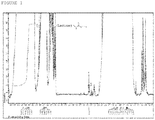
- Figure 1 shows a 1 H-NMR chart of a polycarbonate diol obtained in Example 8.
- the mode for carrying out the present invention (hereinafter, referred to as the "present embodiment") will be described in detail.
- the present invention is not limited by the description below and can be carried out with various modification or changes made therein.
- a polycarbonate diol of the present embodiment comprises a repeating unit represented by the following formula (A) and a terminal hydroxyl group.
- R represents a divalent aliphatic or alicyclic hydrocarbon having 3 to 15 carbon atoms, and a plurality of R may be the same or different in all the repeating units.
- 10 to 100 mol% of the repeating unit represented by formula (A) are preferably a repeating unit represented by the following formula (B).
- the polycarbonate diol of the present embodiment tends to have higher perspiration resistance, in the case of having a ratio of the repeating unit represented by formula (B) to the repeating unit represented by formula (A) of 10 mol% or more. Further, the polycarbonate diol of the present embodiment has a ratio of the repeating unit represented by formula (B) to the repeating unit represented by formula (A) of preferably 20 mol% or more, more preferably 30 mol% or more, so that the perspiration resistance and the abrasion resistance are more improved.
- the repeating unit represented by formula (A) comprises the repeating unit represented by formula (B) and a repeating unit represented by the following formula (C):
- R 1 represents a divalent aliphatic hydrocarbon having 3 to 6 carbon atoms other than (CH 2 ) 4 derived from 1,4-butane diol, and the aliphatic hydrocarbon may have a branched structure.
- the aliphatic hydrocarbon having an unbranched structure is more preferred because higher heat resistance of the polycarbonate diol tends to be achieved.
- a plurality of R 1 may be the same or different.
- the repeating units represented by formula (A) comprising the repeating units (B) and (C) are preferred, because the perspiration resistance and the abrasion resistance are increased.
- a ratio of the repeating unit represented by formula (B) of 1 to 99 mol% relative to both of the repeating unit represented by formula (B) and the repeating unit represented by formula (C) is preferred; a ratio of 25 to 99 mol% is more preferred because the perspiration resistance and the abrasion resistance are enhanced; a ratio of 30 to 75 mol% is more preferred because the polycarbonate diol becomes liquid at room temperature (20°C), allowing easy handling; and a ratio of 40 to 60 mol% is particularly preferred, because the polycarbonate diol has reduced crystallinity with a tendency to produce a flexible polyurethane.
- the polycarbonate diol of the present embodiment has an integrated value of signals at 2.43 to 2.50 ppm (hereinafter also referred to as a "integrated value ratio") of 0.01 to 1.0 relative to the integrated value of signals at 3.90 to 4.45 ppm taken as 1000.
- the signals at 3.90 to 4.45 ppm are presumed to be signals of methylene bonded to carbonate and the signals at 2.43 to 2.50 ppm are presumed to be signals of methylene bonded to carbonyl in an ester.
- the integrated value ratio can be an index expressing the abundance of a presumed specific ester structure contained in a certain repeating unit.
- the polycarbonate diol of the present embodiment has enhanced adhesion to a substrate.
- the coating layer is naturally required not to easily abrade, and adhesion between the coating layer and the substrate is influential; for example, lower adhesion causes reduction in the abrasion resistance or peeling of the coating layer due to friction. In order to obtain high abrasion resistance, higher adhesion is therefore preferred.
- the integrated value ratio is preferably 0.02 or more, more preferably 0.05 or more.
- a polyurethane made from a polyester polyol has poor hot water resistance and perspiration resistance in comparison with a polyurethane made from a polycarbonate diol.
- the polycarbonate diol of the present embodiment causes no reduction in the hot water resistance and the perspiration resistance in the case of having an integrated value ratio of 1.0 or less, more preferably 0.8 or less.
- the polycarbonate diol of the present embodiment has a ratio of the terminal OH group of preferably 95.0 to 99.9%. With a ratio of the terminal OH group of 99.9% or less, reduction in the smoothness of the coating layer surface due to formation of fine high-molecular weight gel is prevented, and with a ratio of the terminal OH group of 95.0% or more, a high-molecular weight polyurethane can be obtained, which are preferable.
- the ratio of the terminal OH group is more preferably 97.0 to 99.9%, still more preferably 98.0 to 99.9%.
- the ratio of the terminal OH group is defined as follows.
- a polycarbonate diol in an amount of 70 g to 100 g is heated to a temperature of 160°C to 200°C under a pressure of 0.4 kPa or less and stirred, so that a fraction corresponding to about 1 to 2 wt% of the polycarbonate diol, i.e., about 1 g (0.7 to 2 g) of initial fraction, is obtained.
- the fraction obtained is dissolved in about 100 g (95 to 105 g) of acetone, and the resulting solution is collected.
- the solution collected is subjected to gas chromatography analysis (hereinafter referred to also as "GC analysis"), and the ratio of the terminal OH group is calculated from the peak area value in the chromatograph obtained, by using the following equation (1).
- GC analysis was performed using a Gas Chromatography 6890 (manufactured by Hewlett Packard in US) having a column DB-WAX (manufactured by J&W in US) with a length of 30 m and a film thickness of 0.25 ⁇ m, with use of a hydrogen flame ionization detector (FID) as a detector.
- FID hydrogen flame ionization detector
- the temperature rising profile of the column the temperature is raised from 60°C to 250°C at a rate of 10°C/min and then maintained at the temperature for 15 minutes.
- the identification of each peak in the GC analysis was performed by the following GC-MS apparatus.
- a GC apparatus 6890 manufactured by Hewlett Packard in US
- a column DB-WAX manufactured by J&W in US
- the temperature was raised from an initial temperature of 40°C to 220°C at a temperature rising rate of 10°C/min.
- an Auto-mass SUN manufactured by JEOL Ltd. in Japan
- the measurement is performed at an ionization voltage of 70 eV, in a scanning range m/z of 10 to 500, with a photomultiplier gain of 450 V.
- Ratio % of terminal OH group B / A ⁇ 100
- the ratio of the terminal OH group corresponds to the ratio of the OH group to all the terminal groups of polycarbonate diol.
- the terminal portion of the polycarbonate diol is distilled as alcohols (refer to the following formula (a)).
- the distilled alcohols are not particularly limited, and examples thereof include a diol used as a starting material, impurities contained in the starting material such as cyclohexane diol and 1,5-hexane diol, a monoalcohol such as methanol derived from starting material carbonate compounds, and a monoalcohol having an unsaturated hydrocarbon produced by a side reaction during polymerization.
- X is -R 2 -OH or R 2
- R 1 and R 2 each represent a hydrocarbon.
- the ratio of diols to all the alcohols in the fraction is the ratio of the terminal OH group.
- a method for manufacturing the polycarbonate diol of the present embodiment is not particularly limited, except for the method for controlling the integrated value ratio within a specific range.
- Examples of the method include various methods described in Polymer Reviews, vol. 9, pp. 9 to 20 (1994) by Schnell . The method for controlling the integrated value ratio within a specific range will be described later.
- the hydroxy value of the polycarbonate diol of the present embodiment is preferably 32 to 280 mg-KOH/g. Having a hydroxy value of 280 mg-KOH/g or less, the polycarbonate diol of the present embodiment produces a polyurethane having excellent flexibility. Having a hydroxy value of 32 mg-KOH/g or more, the polycarbonate diol of the present embodiment allows a coating agent to have any solid content concentration without limitation, which is preferable.
- the hydroxy value of the polycarbonate diol of the present embodiment is more preferably 35 to 140 mg-KOH/g.
- the hydroxy value of the polycarbonate diol may be measured by the method described in Examples described below.
- polycarbonate diol of the present embodiment is manufactured from a diol and a carbonate compound as starting materials
- various methods described in, for example, Polymer Reviews, vol. 9, pp. 9 to 20 (1994) by Schnell may be employed as described above.
- the diol for use as a starting material include, but not particularly limited to, a diol having no side chain such as 1,3-propane diol, 1,4-butane diol, 1,5-pentane diol, 1,6-hexane diol, 1,7-heptane diol, 1,8-octane diol, 1,9-nonane diol, 1,10-dodecane diol, 1,11-undecane diol, 1,12-dodecane diol, 1,13-tridecane diol, 1,14-tetradecane diol, and 1,15-pentadecane diol; a diol having a side chain such as 2-methyl-1,8-octane diol, 2-ethyl-1,6-hexane diol, 2-methyl-1,3-propane diol, 3-methyl-1,5-pentane diol, 2,4-dimethyl
- One or two or more of the diols may be used as a starting material of the polycarbonate diol.
- 1,4-butane diol the abrasion resistance and the perspiration resistance are enhanced, which is preferable.
- 1,4-butane diol and one or two or more of 1,3-propane diol, 1,5-pentane diol, 1,6-hexane diol, 2-methyl-1,3-propane diol, and 3-methyl-1,5-pentane diol as starting materials of the polycarbonate diol is preferred, and using 1,4-butane diol and one or two or more of 1,3-propane diol, 1,5-pentane diol, and 1,6-hexane diol as starting materials of the polycarbonate diol is more preferred.
- a compound having three or more hydroxyl groups in a molecule such as trimethylol ethane, trimethylol propane, hexane triol, and pentaerythritol also may be used as a starting material of a polycarbonate diol, within a range without impairing the performance of the polycarbonate diol of the present embodiment.
- a compound having three or more hydroxyl groups in a molecule too much as a starting material of the polycarbonate diol causes gelation due to cross-linking during polymerization reaction of polycarbonate.
- the ratio of the compound is therefore controlled to preferably 0.1 to 5 mol% relative to the number of moles of the diols for use as a starting material of the polycarbonate diol.
- the ratio is more preferably 0.1 to 1 mol%.
- Examples of the carbonate as a starting material of the polycarbonate diol of the present embodiment include, but not particularly limited to, a dialkyl carbonate such as dimethyl carbonate, diethyl carbonate, dipropyl carbonate, and dibutyl carbonate; a diaryl carbonate such as diphenyl carbonate; and an alkylene carbonate such as ethylene carbonate, trimethylene carbonate, 1,2-propylene carbonate, 1,2-butylene carbonate, 1,3-butylene carbonate, and 1,2-pentylene carbonate.
- a dialkyl carbonate such as dimethyl carbonate, diethyl carbonate, dipropyl carbonate, and dibutyl carbonate
- a diaryl carbonate such as diphenyl carbonate
- an alkylene carbonate such as ethylene carbonate, trimethylene carbonate, 1,2-propylene carbonate, 1,2-butylene carbonate, 1,3-butylene carbonate, and 1,2-pentylene carbonate.
- One or two or more carbonates thereof may
- a catalyst In manufacturing of the polycarbonate diol of the present embodiment, addition of a catalyst is preferred.
- the catalyst include, but not particularly limited to, an alcoholate, a hydride, an oxide, an amide, a carbonate, a hydroxide, and a nitrogen-containing borate of an alkaline metal such as lithium, sodium, and potassium, and an alkaline earth metal such as magnesium, calcium, strontium, and barium, and further, a basic alkaline metal salt and alkaline earth metal salt of an organic acid.
- examples of the catalyst include, but not particularly limited to, a metal, a salt, an alkoxide, and an organic compound of aluminum, titanium, vanadium, chromium, manganese, iron, cobalt, nickel, copper, zinc, gallium, germanium, zirconium, niobium, molybdenum, ruthenium, rhodium, palladium, silver, indium, tin, antimony, tungsten, rhenium, osmium, iridium, platinum, gold, thallium, lead, bismuth, and ytterbium.
- One or a plurality of the catalysts may be selected therefrom for use.
- catalysts of the metal, salt, alkoxide, and organic compound of sodium, potassium, magnesium, calcium, titanium, zirconium, tin, lead, or ytterbium is preferred, enabling the polymerization of polycarbonate diol to be favorably performed with little effect on the urethane reaction using the polycarbonate diol thus produced.
- Use of titanium, ytterbium, tin, or zirconium as the catalyst is more preferred.
- the polycarbonate diol of the present embodiment may include the catalyst described above.
- the content of the catalyst as the amount of metal elements measured by using inductively coupled plasma (hereinafter also referred to as "ICP") is preferably 0.0001 to 0.05 wt%.
- ICP inductively coupled plasma
- the content of the catalyst as the amount of metal elements measured by using ICP is more preferably 0.0005 to 0.02 wt%.
- the content of at least one metal element selected from the group consisting of titanium, ytterbium, tin, and zirconium measured by using ICP is preferably 0.0001 to 0.05 wt%, more preferably 0.0005 to 0.02 wt%.
- the total content of titanium, ytterbium, tin, and zirconium measured by using ICP is preferably 0.0001 to 0.05 wt%, more preferably 0.0005 to 0.02 wt%.
- the content of metal elements in the polycarbonate diol can be measured by a method described in the Examples described below.
- the catalyst used in manufacturing of the polycarbonate diol be treated with a phosphorus compound.
- the phosphorus compound include, but not particularly limited to, a phosphate triester such as trimethyl phosphate, triethyl phosphate, tributyl phosphate, di-2-ethylhexyl phosphate, triphenyl phosphate, tricresyl phosphate, and cresyl-diphenyl phosphate; an acidic phosphate such as methyl acid phosphate, ethyl acid phosphate, propyl acid phosphate, isopropyl acid phosphate, butyl acid phosphate, lauryl acid phosphate, stearyl acid phosphate, 2-ethylhexyl acid phosphate, isodecyl acid phosphate, butoxyethyl acid phosphat
- the polycarbonate diol of the present embodiment may contain phosphorus compounds.
- the content of phosphorus compounds in terms of phosphorus element (P) content measured by using ICP is preferably 0.0001 to 0.05 wt%.
- the phosphorus compound content measured by using ICP is more preferably 0.0005 to 0.02 wt%.
- the water content in the polycarbonate diol of the present embodiment is preferably 10 to 500 ppm.
- a specific example of a method for manufacturing the polycarbonate diol of the present embodiment is shown as follows. Manufacturing of the polycarbonate diol of the present embodiment may be performed, for example, in two steps, though not particularly limited thereto. A diol and a carbonate are mixed at a molar ratio (diol:carbonate) of, for example, 20:1 to 1:10, and the mixture is subjected to a first step reaction under normal pressure or reduced pressure, at 100 to 250°C. In the case of using dimethyl carbonate as the carbonate, the methanol produced is removed as a mixture with dimethyl carbonate, so that a low-molecular weight polycarbonate diol can be obtained.
- the ethanol produced is removed as a mixture with diethyl carbonate, so that a low-molecular weight polycarbonate diol can be obtained.
- the ethylene glycol produced is removed as a mixture with ethylene carbonate, so that a low-molecular weight polycarbonate diol can be obtained.
- the reaction product in the first step is heated under reduced pressure at 160 to 250°C to remove the unreacted diol and carbonate and condense the low-molecular weight polycarbonate diol, so that a polycarbonate diol having a specific molecular weight can be obtained.
- Examples of the method for producing a polycarbonate diol having an integrated value ratio in the present embodiment include a method of using a dibasic acid or a dibasic acid ester, lactone, and polyester polyol.
- Examples of the dibasic acid include, but not particularly limited to, oxalic acid, malonic acid, succinic acid, glutaric acid, adipic acid, tartaric acid, glutamic acid, sebacic acid, and brassylic acid.
- Examples of the dibasic ester include, but not particularly limited to, methyl, ethyl, butyl, isobutyl, 2-ethylhexyl, isodecyl, and isononyl esters of the dibasic acids.
- lactone examples include, but not particularly limited to, ⁇ -acetolactone, ⁇ -propiolactone, ⁇ -butyrolactone, ⁇ -valerolactone, and ⁇ -caprolactone.
- the polyester polyol can be obtained, for example, by a condensation reaction of one or a mixture of two or more of dibasic acids and one or a mixture of two or more of polyhydric alcohols, though not particularly limited thereto.
- dibasic acid examples include, but not particularly limited to, a carboxylic acid such as succinic acid, adipic acid, dimer acid, maleic anhydride, phthalic anhydride, isophthalic acid, terephthalic acid, and 1,4-cyclohexane dicarboxylic acid.
- a carboxylic acid such as succinic acid, adipic acid, dimer acid, maleic anhydride, phthalic anhydride, isophthalic acid, terephthalic acid, and 1,4-cyclohexane dicarboxylic acid.
- polyhydric alcohol examples include, but not particularly limited to, ethylene glycol, propylene glycol, diethylene glycol, 1,4-butane diol, neopentyl glycol, 1,6-hexane diol, trimethylpentane diol, cyclohexane diol, trimethylol propane, glycerol, pentaerythritol, 2-methylol propane diol, and ethoxylated trimethylol propane.
- polycaprolactones obtained by ring-opening polymerization of lactones such as ⁇ -caprolactone with use of a polyhydric alcohol can be used as polyester polyols, though not particularly limited thereto.
- the hot water resistance of the resulting polycarbonate diol can be maintained, which is preferable.
- Use of one or two or more lactones selected from ⁇ -butyrolactone, ⁇ -valerolactone, and ⁇ -caprolactone is more preferable.
- the method include a method of mixing a dibasic acid or a dibasic acid ester, a lactone, and a polyester polyol with a diol and a carbonate as starting materials for polymerization to produce the polycarbonate diol, and a method of adding a dibasic acid or a dibasic acid ester, a lactone, and a polyester polyol to a general polycarbonate diol and heating the obtained mixture at a temperature of 100 to 200°C for 30 minutes to 5 hours.
- the ratio of the terminal OH group in the polycarbonate diol for use in the present embodiment can be adjusted by selecting one method or appropriately combining methods depending on the manufacturing conditions such as impurities in the starting material, temperature, and time, and further, in the case of using dialkyl carbonate and/or diaryl carbonate as the starting material carbonate, conditions such as a charging ratio between diol and carbonate in the starting material.
- dialkyl carbonate and/or diaryl carbonate as the starting material carbonate
- the starting material diol and carbonate are charged for the reaction at a stoichiometric ratio or a ratio close thereto corresponding to the molecular weight of the target polycarbonate diol
- an alkyl group and an aryl group derived from the carbonate tend to remain at the terminal of the polycarbonate diol.
- the amount of the diol relative to the carbonate in the starting material is therefore adjusted to, for example, 1.01 to 10 times the stoichiometric amount, so that the polycarbonate diol can have an increased amount of the terminal hydroxyl group with reduced amounts of the terminal alkyl group and the terminal aryl group.
- a vinyl group is present at the terminal of the polycarbonate diol, and in the case of using dimethyl carbonate as the carbonate, a methyl ester or a methyl ether is present at the terminal.
- the side reactions tend to occur with increase in the reaction temperature and increase in the reaction time.
- the polycarbonate diol of the present embodiment can be used as a constituent material of surface treatment agents for synthetic leather or artificial leather and film coating agents, as a starting material of polyurethanes and thermoplastic elastomers, and further, as a modifier of polyesters.
- the polycarbonate diol of the present embodiment when used as a constituent material of surface treatment agents for synthetic leather or artificial leather and film coating agents, can exhibit moist heat resistance and perspiration resistance in addition to excellent abrasion resistance.
- thermoplastic polyurethane of the present embodiment can be obtained by using the polycarbonate diol described above and a polyisocyanate.
- the coating composition of the present embodiment comprises the polycarbonate diol described above and an organic polyisocyanate.
- the coating composition of the present embodiment preferably comprises a urethane prepolymer obtained by reacting the polycarbonate diol described above with an organic polyisocyanate, the urethane prepolymer having a terminal isocyanate group.
- the coating composition of the present embodiment comprises a polyurethane resin obtained by a reaction of the polycarbonate diol described above, an organic polyisocyanate, and a chain extender
- a polyurethane resin obtained by a reaction of the polycarbonate diol described above, an organic polyisocyanate, and a chain extender is an aqueous coating composition which comprises a polyurethane resin obtained by a reaction of the polycarbonate diol described above, an organic polyisocyanate, and a chain extender.
- the surface treatment agent of the present embodiment comprises the polycarbonate diol described above and an organic polyisocyanate.
- the surface treatment agent of the present embodiment preferably comprises a urethane prepolymer as a reaction product of the polycarbonate diol described above and an organic polyisocyanate, the urethane prepolymer having a terminal isocyanate group.
- the surface treatment agent of the present embodiment comprises a polyurethane resin as a reaction product of the polycarbonate diol described above, an organic polyisocyanate, and a chain extender
- a polyurethane resin as a reaction product of the polycarbonate diol described above, an organic polyisocyanate, and a chain extender
- organic polyisocyanate for use include, but not particularly limited to, a publicly known aromatic diisocyanate such as 2,4-tolylene diisocyanate, 2,6-tolylene diisocyanate, a mixture of the tolylene diisocyanates (TDI), crude TDI, diphenylmethane-4,4'-diisocyanate (MDI), crude MDI, naphthalene-1,5-diisocyanate (NDI), 3,3'-dimethyl-4,4'-biphenylene diisocyanate, polymethylene polyphenyl isocyanate, xylylene diisocyanate (XDI), and phenylene diisocyanate; a publicly known aliphatic diisocyanate such as 4,4'-methylene biscyclohexyl diisocyanate (hydrogenated MDI), hexamethylene diisocyanate (HMDI), isophorone diisocyanate (IPDI), and
- a chain extender may be used as a copolymerizable component when desired.
- a chain extender commonly used in the polyurethane industry such as water, a low-molecular weight polyol, and a polyamine may be used, though not particularly limited thereto.
- chain extender examples include, but not particularly limited to, a low-molecular weight polyol such as ethylene glycol, 1,3-propane diol, 1,4-butane diol, 1,5-pentane diol, 1,6-hexane diol, neopentyl glycol, 1,10-decane diol, 1,1-cyclohexane dimethanol, 1,4-cyclohexane dimethanol, xylylene glycol, and bis(p-hydroxy)diphenyl, bis(p-hydroxyphenyl)propane; and a polyamine such as ethylene diamine, hexamethylene diamine, isophorone diamine, xylylene diamine, diphenyl diamine, and diamino diphenylmethane.
- chain extenders may be used singly or in combinations of two or more.
- a manufacturing method publicly known in the industry is used.
- a two-component solvent-based coating composition produced by mixing a coating main agent obtained from the polycarbonate diol described above and a curing agent made of an organic polyisocyanate just before coating; a one-component solvent-based coating composition made of a urethane prepolymer having a terminal isocyanate group obtained by a reaction between the polycarbonate diol described above and an organic polyisocyanate; a one-component solvent-based coating composition made of a urethane prepolymer having a terminal isocyanate group obtained by a reaction between the polycarbonate diol and an organic polyisocyanate; a one-component solvent-based coating composition made of a polyurethane resin obtained by a reaction of the polycarbonate diol described above, an organic polyisocyanate, and a chain extender; or a one-component aqueous coating composition can be manufactured.
- a curing accelerator for example, a curing accelerator (catalyst), a filler, a dispersant, a flame retardant, a dye, an organic or inorganic pigment, a mold releasing agent, a flowability adjustor, a plasticizer, an antioxidant, a UV absorber, a photo stabilizer, a defoamer, a leveling agent, a colorant, a solvent, etc.
- a curing accelerator catalyst
- a filler for example, a filler, a dispersant, a flame retardant, a dye, an organic or inorganic pigment, a mold releasing agent, a flowability adjustor, a plasticizer, an antioxidant, a UV absorber, a photo stabilizer, a defoamer, a leveling agent, a colorant, a solvent, etc.
- the pigment examples include, but not particularly limited to, an inorganic pigment such as titanium dioxide, zinc oxide, iron oxide, calcium carbonate, barium sulfate, chrome yellow, clay, talc, and carbon block, and an organic pigment such as an azo-based pigment, a diazo-based pigment, a condensed azo-based pigment, a thioindigo-based pigment, an indanthrone-based pigment, an anthraquinone-based pigment, a benzimidazole-based pigment, a phthalocyanine-based pigment, an isoindolinone-based pigment, a perylene-based pigment, a quinacridone-based pigment, a dioxane-based pigment, and a diketopyrrolopyrrole-based pigment.
- an inorganic pigment such as titanium dioxide, zinc oxide, iron oxide, calcium carbonate, barium sulfate, chrome yellow, clay, talc, and carbon block
- an organic pigment such as an azo-based pigment,
- curing accelerator examples include, but not particularly limited to, dibutyltin diacetate, dibutyltin dioctylate, dibutyltin dilaurate, triethylamine, diethanol amine, p-toluene sulfonic acid, dodecylbenzene sulfonic acid, and dinonylnaphthalene sulfonic acid.
- UV absorber examples include, but not particularly limited to, a benzophenone-based absorber, a benzotriazole-based absorber, a cyanoacrylate-based absorber, a salicylate-based absorber, and an oxanilide-based absorber.
- UV stabilizer examples include a hindered amine-based compound.
- the solvent for coating material examples include, but not particularly limited to, dimethylformamide, diethylformamide, dimethylacetamide, dimethyl sulfoxide, tetrahydrofuran, acetone, methyl ethyl ketone, methyl isobutyl ketone, dioxane, cyclohexanone, benzene, toluene, xylene, ethyl cellosolve, ethyl acetate, butyl acetate, ethanol, isopropanol, n-butanol, and water. These solvents may be used singly or a plurality thereof may be mixed for use.
- the method for manufacturing the thermoplastic polyurethane of the present embodiment is not particularly limited and a polyurethane formation reaction publicly known in the polyurethane industry is used. For example, through a reaction between the polycarbonate diol described above and an organic polyisocyanate under an atmospheric pressure at a temperature in the range from normal temperature to 200°C, a thermoplastic polyurethane can be manufactured. In the case of using a chain extender, the addition may be performed at the start of the reaction, or in the middle of the reaction.
- US Patent No. 5,070,173 serves as a reference.
- a publicly known polymerization catalyst and solvent may be used.
- the polymerization catalyst for use include, but not particularly limited to, dibutyltin dilaurate.
- a stabilizer such as a heat stabilizer (for example, an antioxidant) and a photo stabilizer is preferably added.
- a plasticizer, an inorganic filler, a lubricant, a colorant, a silicone oil, a foaming agent, a flame retardant, etc. may be added thereto.
- the integrated value ratio of the polycarbonate diol was determined as described below.
- Each of the components contained in the polycarbonate diol was analyzed as follows. First, a sample was weighed and placed in a decomposition container made of Teflon (R), to which high-purity nitric acid (manufactured by Kanto Chemical Co., Inc.) was added to perform decomposition by using a microwave decomposition apparatus (ETHOS TC, manufactured by Milestone General K.K.). The sample was completely decomposed, and the resulting decomposition solution was colorless and transparent. Pure water was added to the decomposition solution to make a test solution. The resulting test solution was subjected to quantitative analysis based on reference solutions of respective elements by using an inductively coupled plasma analyzer (iCAP6300 Duo, manufactured by Thermo Fisher Scientific K.K.) .
- iCAP6300 Duo manufactured by Thermo Fisher Scientific K.K.
- the ratio of the terminal OH group in the polycarbonate diol was determined as follows. First, 70 g to 100 g of polycarbonate diol was weighed and placed in a 300-mL eggplant flask. Using a rotary evaporator connected to a trap sphere for fraction collection, the polycarbonate diol in the eggplant flask was heated and stirred in a heating bath at about 180°C under a pressure of 0.4 kPa or less, so that a fraction corresponding to about 1 to 2 wt% of the polycarbonate diol, i.e., about 1 g (0.7 to 2 g) of an initial fraction, was obtained in the trap sphere.
- the fraction obtained was dissolved in about 100 g (95 to 105 g) of acetone to be collected as the solution.
- the collected solution was subjected to gas chromatography analysis (hereinafter also referred to as "GC analysis"), and the ratio of the terminal OH group in the polycarbonate diol was calculated from the peak area value in the resulting chromatograph, by using the following equation (1).
- the GC analysis was performed using a Gas Chromatography 6890 (manufactured by Hewlett Packard in US) having a column DB-WAX (manufactured by J&W in US) with a length of 30 m and a film thickness of 0.25 ⁇ m, with use of a hydrogen flame ionization detector (FID) as a detector.
- FID hydrogen flame ionization detector
- the temperature rising profile of the column the temperature was raised from 60°C to 250°C at a rate of 10°C/min and then maintained at the temperature for 15 minutes.
- the identification of each peak in the GC analysis was performed by the following GC-MS apparatus.
- the GC apparatus an apparatus 6890 (manufactured by Hewlett Packard in US) having a column DB-WAX (manufactured by J&W in US) was used.
- the temperature was raised from an initial temperature of 40°C to 220°C at a temperature rising rate of 10°C/min.
- an Auto-mass SUN manufactured by JEOL Ltd. in Japan
- the composition of the polycarbonate diol was determined as described below. First, 1 g of a sample was weighed and placed in a 100-mL eggplant flask, in which 30 g of ethanol and 4 g of potassium hydroxide were placed to obtain a mixture. The resulting mixture was heated in an oil bath at 100°C for 1 hour. After the mixture was cooled to room temperature, one to two drops of phenolphthalein were added to the mixture as an indicator, and the mixture was neutralized with hydrochloric acid. The mixture was then cooled in a refrigerator for 3 hours, and after removal of precipitated salt by filtration, the filtrate was analyzed by gas chromatography (GC).
- GC gas chromatography
- the GC analysis was performed using a Gas Chromatography GC14B (manufactured by Shimadzu Corporation) having a column DB-WAX (manufactured by J&W in US) with a length of 30 m and a film thickness of 0.25 ⁇ m, with use of diethylene glycol diethyl ester as internal reference and a hydrogen flame ionization detector (FID) as a detector.
- a hydrogen flame ionization detector FID
- the temperature rising profile of the column the temperature was maintained at 60°C for 5 minutes, and then raised to 250°C at a rate of 10°C/min. Based on the area value of the diol obtained by the GC analysis, the composition of the polycarbonate diol was determined.
- the hydroxy value of the polycarbonate diol was determined according to "neutralization titration method (JIS K0070-1992)" with use of acetic anhydride and pyridine for titration of ethanol solution of potassium hydroxide.
- a polycarbonate diol heated to 80°C was placed in a transparent sample bottle and cooled for visual observation at room temperature.
- the sample was determined to be in a liquid state in the case of being transparent and having flowability even just a bit when the sample bottle was tilted; and the sample was determined to be in a solid state in the case of being opaque and/or having no changes in the state when the sample bottle was tilted.
- a surface-treated face of synthetic leather was evaluated through visual observation of the appearance of the test piece.
- the degree and quantity of defects were designated by grades 0 to 5, and regarded as the abrasion resistance.
- the wheel for use was H22, and a 500-g weight was used.
- a synthetic leather was immersed in hot water at 80°C for 1 day. Water on the surface was wiped off, and the leather was then cured in a thermostatic chamber at 23°C and 50% RH for 7 days.
- the abrasion resistance was evaluated by the method described above, and the change in the grades from before testing was regarded as the change in the abrasion resistance.
- a polyurethane film obtained from the polycarbonate diol was cut into a strip of 10 mm by 80 mm, which was cured in a thermostat chamber at 23°C and 50% RH for 3 days to make a test piece.
- the breaking strength (unit: MPa) of the test piece was measured by a tensile strength tester Tensilon (RTC-1250A, manufactured by ORIENTEC) with a distance between chucks of 50 mm and at a tensile rate of 100 mm/min, and regarded as the breaking strength before testing of hot water resistance.
- the polyurethane film was immersed in hot water at 90°C for 3 days, and cured in a thermostat chamber at 23°C and 50% RH for 7 days to make a test piece, of which breaking strength (unit: MPa) was measured by the method described above, and regarded as the breaking strength after testing of hot water resistance.
- the strength retention ratio was determined by the following equation (3) and regarded as the indicator of the hot water resistance of polyurethane.
- Strength retention ratio % F / E ⁇ 100
- the perspiration resistance of the surface-treated face was evaluated by the method described above, and regarded as the perspiration resistance of polyurethane.
- the heat stability (heat resistance) of the polycarbonate diol was determined as described below. Using a simultaneous thermogravimetric analyzer (STA7000RV, manufactured by Hitachi High-Tech Science Corporation), measurement was performed under nitrogen to determine the temperature at which the mass of the sample decreased by 5%, and the temperature was regarded as the heat resistance of the polycarbonate diol. The heat resistance of the polycarbonate diol was evaluated higher with increase in the temperature at which the mass of the sample decreased by 5%.
- a polyurethane film obtained from the polycarbonate diol was cut into a strip of 10 mm by 80 mm, which was cured in a thermostat chamber at 23°C and 50% RH for 3 days to make a test piece.
- the stress (unit: MPa) of the test piece was measured by a tensile strength tester Tensilon (RTC-1250A, manufactured by ORIENTEC) with a distance between chucks of 50 mm and at a tensile rate of 100 mm/min, and the stress at 10% elongation was regarded as the flexibility of the polyurethane.
- the polyurethane was regarded to have high flexibility when the stress value was small.
- the pressure in the flask was then reduced to 12 kPa, and the reaction was performed at 175°C for further 10 hours while distilling off the diol and dimethyl carbonate.
- 0.22 g of 2-ethylhexyl acid phosphate was then added as a phosphorus compound, and the mixture in the flask was heated at 120°C for 5 hours to obtain a polycarbonate diol.
- the analysis results of the polycarbonate diol produced are shown in Table 1.
- the polycarbonate diol is abbreviated to PC-21.
- the pressure in the flask was then reduced to 12 kPa, and the reaction was performed at 175°C for further 10 hours while distilling off the diol and dimethyl carbonate.
- 0.22 g of 2-ethylhexyl acid phosphate was then added as a phosphorus compound, and the mixture in the flask was heated at 120°C for 5 hours to obtain a polycarbonate diol.
- the analysis results of the polycarbonate diol produced are shown in Table 1.
- the polycarbonate diol is abbreviated to PC-1.
- Example 2 A reaction was performed in the same manner as in Example 1 except that the amount of ⁇ -butyrolactone was changed to 0.03 g.
- the analysis results of the resulting polycarbonate diol are shown in Table 1.
- the polycarbonate diol is abbreviated to PC-2.
- Example 2 A reaction was performed in the same manner as in Example 1 except that the amount of ⁇ -butyrolactone was changed to 0.21 g.
- the analysis results of the resulting polycarbonate diol are shown in Table 1.
- the heat stability (heat resistance) of the polycarbonate diol was 298°C.
- the polycarbonate diol is abbreviated to PC-3.
- Example 2 A reaction was performed in the same manner as in Example 1 except that the amount of ⁇ -butyrolactone was changed to 0.64 g.
- the analysis results of the resulting polycarbonate diol are shown in Table 1.
- the polycarbonate diol is abbreviated to PC-4.
- Example 2 A reaction was performed in the same manner as in Example 1 except that the amount of ⁇ -butyrolactone was changed to 0.92 g.
- the analysis results of the resulting polycarbonate diol are shown in Table 1.
- the polycarbonate diol is abbreviated to PC-22.
- the pressure in the flask was reduced to 12 kPa, and the reaction was performed at 175°C for further 10 hours while distilling off the diol and ethylene carbonate. Subsequently, 0.04 g of ⁇ -caprolactone was added to perform a reaction at 150°C for 5 hours. To the flask, 0.39 g of 2-ethylhexyl acid phosphate was then added as a phosphorus compound, and the mixture in the flask was heated at 120°C for 5 hours to obtain a polycarbonate diol.
- the analysis results of the polycarbonate diol produced are shown in Table 1. The polycarbonate diol is abbreviated to PC-5.
- Example 5 A reaction was performed in the same manner as in Example 5 except that the amount of 1,4-butane diol was changed to 135 g (1.5 mol) and the amount of 1,6-hexane diol was changed to 650 g (5.5 mol).
- the analysis results of the resulting polycarbonate diol are shown in Table 1.
- the polycarbonate diol is abbreviated to PC-6.
- Example 5 A reaction was performed in the same manner as in Example 5 except that the amount of 1,4-butane diol was changed to 215 g (3.4 mol) and the amount of 1,6-hexane diol was changed to 550 g (4.7 mol).
- the analysis results of the resulting polycarbonate diol are shown in Table 1.
- the polycarbonate diol is abbreviated to PC-7.
- Example 5 A reaction was performed in the same manner as in Example 5 except that the amount of 1,4-butane diol was changed to 455 g (5.1 mol) and the amount of 1,6-hexane diol was changed to 230 g (2.0 mol).
- the analysis results of the resulting polycarbonate diol are shown in Table 1. Also, the heat stability (heat resistance) of the polycarbonate diol was 291°C.
- the polycarbonate diol is abbreviated to PC-8.
- the 1 H-NMR analysis chart of polycarbonate diol PC-8 obtained in Example 8 is shown in Figure 1 .
- Example 5 A reaction was performed in the same manner as in Example 5 except that the amount of 1,4-butane diol was changed to 515 g (5.7 mol) and the amount of 1,6-hexane diol was changed to 140 g (1.2 mol).
- the analysis results of the resulting polycarbonate diol are shown in Table 1.
- the polycarbonate diol is abbreviated to PC-9.
- the pressure in the flask was reduced to 12 kPa, and the reaction was performed at 170°C for further 3 hours while distilling off the diol and ethylene carbonate.
- 0.22 g of 2-ethylhexyl acid phosphate was then added as a phosphorus compound, and the mixture in the flask was heated at 120°C for 5 hours to obtain a polycarbonate diol.
- the analysis results of the polycarbonate diol produced are shown in Table 1.
- the polycarbonate diol is abbreviated to PC-10.
- Example 10 A reaction was performed in the same manner as in Example 10 except that the pressure in the flask was changed to 12 kPa and the reaction time at a temperature of 170°C was changed to 8 hours.
- the analysis results of the resulting polycarbonate diol are shown in Table 1.
- the polycarbonate diol is abbreviated to PC-11.
- the heat stability (heat resistance) of the polycarbonate diol was 258°C.
- the polycarbonate diol is abbreviated to PC-12.
- Example 12 A reaction was performed in the same manner as in Example 12 except that the pressure in the flask was changed to 12 kPa and the reaction time at a temperature of 175°C was changed to 30 hours.
- the analysis results of the resulting polycarbonate diol are shown in Table 1.
- the polycarbonate diol is abbreviated to PC-13.
- the pressure in the flask was reduced to 12 kPa, and the reaction was performed at 175°C for further 15 hours while distilling off the diol and ethylene carbonate.
- 0.33 g of 2-ethylhexyl acid phosphate was then added as a phosphorus compound, and the mixture in the flask was heated at 120°C for 5 hours to obtain a polycarbonate diol.
- the analysis results of the polycarbonate diol produced are shown in Table 1.
- the polycarbonate diol is abbreviated to PC-14.
- the pressure in the flask was then reduced to 12 kPa, and the reaction was performed at 175°C for further 10 hours while distilling off the diol and dimethyl carbonate.
- 0.33 g of 2-ethylhexyl acid phosphate was then added as a phosphorus compound, and the mixture in the flask was heated at 120°C for 5 hours to obtain a polycarbonate diol.
- the analysis results of the polycarbonate diol produced are shown in Table 1.
- the polycarbonate diol is abbreviated to PC-15.
- the pressure in the flask was reduced to 12 kPa, and the reaction was performed at 175°C for further 15 hours while distilling off the diol and ethylene carbonate.
- 0.33 g of 2-ethylhexyl acid phosphate was then added as a phosphorus compound, and the mixture in the flask was heated at 120°C for 5 hours to obtain a polycarbonate diol.
- the analysis results of the polycarbonate diol produced are shown in Table 1.
- the polycarbonate diol is abbreviated to PC-16.
- reaction container After the temperature of the reaction container was adjusted to 30°C, 640 g of distilled water was added to the urethane prepolymer at a rate of 20 g/min while stirring, so that an emulsion of the urethane prepolymer solution was obtained. Further, in the reaction container, 23.8 g of 20 wt% aqueous solution of ethylene diamine was added as a chain extender while stirring over 30 minutes. The temperature in the reaction container was then adjusted to 40°C, and the reaction was performed for further 30 minutes.
- the MEK as a solvent was distilled off while raising the internal temperature of the reaction container to 80°C under reduced pressure over 3 hours, so that a water-dispersed polyurethane resin with a solid content of about 30 wt% was obtained.
- a water-dispersed polyurethane resin was prepared in the same manner as in Application Example 1 except that PC-2 to PC-15 were used as a polycarbonate diol, to perform the surface treatment of synthetic leather. In the case of using PC-13, however, no water-dispersed polyurethane having an intended particle diameter was obtained due to increased viscosity of the prepolymer.
- the physical properties were evaluated using the synthetic leather, and the evaluation results are shown in Table 2.
- a water-dispersed polyurethane resin was prepared in the same manner as in Application Example 1 except that PC-21 and PC-22 were used as a polycarbonate diol, to perform the surface treatment of synthetic leather.
- the physical properties were evaluated using the synthetic leather, and the evaluation results are shown in Table 2.
- the polyurethane resin solution obtained was spread on a glass plate, left standing at room temperature for 30 minutes for removal of the solvent, and then dried in a dryer at 100°C for 2 hours to obtain a polyurethane film.
- the physical properties were evaluated using the polyurethane film, and the evaluation results are shown in Table 3.
- Polyurethane films were obtained in the same manner as in Application Example 16 except that PC-2 to PC-16 were used as a polycarbonate diol.
- the physical properties were evaluated using the polyurethane films, and the evaluation results are shown in Table 3.
- Polyurethane films were obtained in the same manner as in Application Example 16 except that PC-21 and PC-22 were used as a polycarbonate diol.
- the physical properties were evaluated using the polyurethane films, and the evaluation results are shown in Table 3.
- a polyurethane film was obtained in the same manner as in Application Example 32 except that PC-7 was used as a polycarbonate diol. Using the polyurethane film, the flexibility of the polyurethane was evaluated and was 1.3 MPa.
- a polyurethane film was obtained in the same manner as in Application Example 32 except that PC-8 was used as a polycarbonate diol. Using the polyurethane film, the flexibility of the polyurethane was evaluated and was 1.4 MPa.
- a polyurethane film was obtained in the same manner as in Application Example 32 except that PC-12 was used as a polycarbonate diol. Using the polyurethane film, the flexibility of the polyurethane was evaluated and was 1.8 MPa.
- a polyurethane film was obtained in the same manner as in Application Example 32 except that PC-14 was used as a polycarbonate diol. Using the polyurethane film, the flexibility of the polyurethane was evaluated and was 1.4 MPa.
- a polyurethane film was obtained in the same manner as in Application Example 32 except that PC-16 was used as a polycarbonate diol. Using the polyurethane film, the flexibility of the polyurethane was evaluated and was 1.1 MPa.
- the polycarbonate diol of the present invention can exhibit moist heat resistance and perspiration resistance in addition to excellent abrasion resistance, when used as a constituent material of surface treatment agents for synthetic leather or artificial leather and film coating agents. Having these properties, the polycarbonate diol of the present invention can be suitably used as a constituent material of surface treatment agents for synthetic leather or artificial leather and film coating agents.
Landscapes
- Chemical & Material Sciences (AREA)
- Organic Chemistry (AREA)
- Health & Medical Sciences (AREA)
- Chemical Kinetics & Catalysis (AREA)
- Medicinal Chemistry (AREA)
- Polymers & Plastics (AREA)
- Engineering & Computer Science (AREA)
- Life Sciences & Earth Sciences (AREA)
- Materials Engineering (AREA)
- Wood Science & Technology (AREA)
- Manufacturing & Machinery (AREA)
- Polyurethanes Or Polyureas (AREA)
Claims (13)
- Polycarbonate diol comprenant un motif répétitif représenté par la formule (A) suivante et un groupe hydroxyle terminal, dans lequel le polycarbonate diol a une valeur intégrée des signaux à 2,43 à 2,50 ppm de 0,01 à 1,0 par rapport à une valeur intégrée des signaux à 3,90 à 4,45 ppm considérée comme étant de 1 000 dans un spectre 1H-RMN mesuré en utilisant du chloroforme deutéré en tant que solvant et du tétraméthylsilane en tant que matériau de référence, dans lequel la valeur intégrée des signaux est déterminée tel que décrit dans « 1. Détermination du rapport de valeurs intégrées du polycarbonate diol (1H-RMN) » dans la description :

- Polycarbonate diol selon la revendication 1, dans lequel 10 à 100 % en mol du motif répétitif représenté par la formule (A) est un motif répétitif représenté par la formule (B) suivante :

- Polycarbonate diol selon la revendication 1 ou 2, ayant un indice d'hydroxyle de 32 à 280 mg-KOH/g mesuré par le procédé de titrage par neutralisation spécifié dans JIS K0070 (1992).
- Polycarbonate diol selon l'une quelconque des revendications 1 à 3, dans lequel le motif répétitif représenté par la formule (A) comprend un motif répétitif représenté par la formule (B) suivante et un motif répétitif représenté par la formule (C) suivante :


- Composition de revêtement comprenant le polycarbonate diol selon l'une quelconque des revendications 1 à 4 et un polyisocyanate organique.
- Composition de revêtement comprenant un prépolymère d'uréthane en tant que produit réactionnel du polycarbonate diol selon l'une quelconque des revendications 1 à 4 et d'un polyisocyanate organique, le prépolymère d'uréthane comportant un groupe isocyanate terminal.
- Composition de revêtement comprenant une résine de polyuréthane en tant que produit réactionnel du polycarbonate diol selon l'une quelconque des revendications 1 à 4, d'un polyisocyanate organique, et d'un allongeur de chaîne.
- Composition de revêtement aqueuse comprenant une résine de polyuréthane en tant que produit réactionnel du polycarbonate diol selon l'une quelconque des revendications 1 à 4, d'un polyisocyanate organique, et d'un allongeur de chaîne.
- Agent de traitement de surface comprenant le polycarbonate diol selon l'une quelconque des revendications 1 à 4 et un polyisocyanate organique.
- Agent de traitement de surface comprenant un prépolymère d'uréthane en tant que produit réactionnel du polycarbonate diol selon l'une quelconque des revendications 1 à 4 et d'un polyisocyanate organique, le prépolymère d'uréthane comportant un groupe isocyanate terminal.
- Agent de traitement de surface comprenant une résine de polyuréthane en tant que produit réactionnel du polycarbonate diol selon l'une quelconque des revendications 1 à 4, d'un polyisocyanate organique, et d'un allongeur de chaîne.
- Agent de traitement de surface aqueux comprenant une résine de polyuréthane en tant que produit réactionnel du polycarbonate diol selon l'une quelconque des revendications 1 à 4, d'un polyisocyanate organique, et d'un allongeur de chaîne.
- Polyuréthane thermoplastique en tant que produit réactionnel du polycarbonate diol selon l'une quelconque des revendications 1 à 4 et d'un polyisocyanate organique.
Applications Claiming Priority (2)
| Application Number | Priority Date | Filing Date | Title |
|---|---|---|---|
| JP2018118208 | 2018-06-21 | ||
| JP2019114705A JP7395268B2 (ja) | 2018-06-21 | 2019-06-20 | ポリカーボネートジオール |
Publications (2)
| Publication Number | Publication Date |
|---|---|
| EP3587468A1 EP3587468A1 (fr) | 2020-01-01 |
| EP3587468B1 true EP3587468B1 (fr) | 2021-01-20 |
Family
ID=67437421
Family Applications (1)
| Application Number | Title | Priority Date | Filing Date |
|---|---|---|---|
| EP19181637.0A Active EP3587468B1 (fr) | 2018-06-21 | 2019-06-21 | Polycarbonate diol |
Country Status (1)
| Country | Link |
|---|---|
| EP (1) | EP3587468B1 (fr) |
Families Citing this family (2)
| Publication number | Priority date | Publication date | Assignee | Title |
|---|---|---|---|---|
| CN111303373B (zh) * | 2020-02-25 | 2022-07-12 | 万华化学集团股份有限公司 | 一种低色度脲基甲酸酯组合物及其制备方法和应用 |
| CN120829574A (zh) * | 2024-04-23 | 2025-10-24 | 旭化成株式会社 | 聚碳酸酯二醇 |
Family Cites Families (5)
| Publication number | Priority date | Publication date | Assignee | Title |
|---|---|---|---|---|
| DE3855663T2 (de) | 1987-08-04 | 1997-06-05 | Asahi Chemical Ind | Copolycarbonate |
| JP5467752B2 (ja) | 2008-10-06 | 2014-04-09 | 三菱樹脂株式会社 | 二軸延伸ポリエステルフィルム |
| WO2014069563A1 (fr) * | 2012-10-31 | 2014-05-08 | 宇部興産株式会社 | Polyester polycarbonate polyol |
| JP6578636B2 (ja) | 2014-08-22 | 2019-09-25 | 東ソー株式会社 | 水性ポリウレタン樹脂エマルジョン組成物、該組成物を用いた合成皮革、人工皮革用表面処理剤 |
| WO2016039395A1 (fr) | 2014-09-09 | 2016-03-17 | 宇部興産株式会社 | Dispersion aqueuse de résine polyuréthane, film de résine polyuréthane obtenu à l'aide de celle-ci, et cuir synthétique |
-
2019
- 2019-06-21 EP EP19181637.0A patent/EP3587468B1/fr active Active
Non-Patent Citations (1)
| Title |
|---|
| None * |
Also Published As
| Publication number | Publication date |
|---|---|
| EP3587468A1 (fr) | 2020-01-01 |
Similar Documents
| Publication | Publication Date | Title |
|---|---|---|
| EP2213695B1 (fr) | Polycarbonate diol à stabilisation facilitée | |
| JP6129681B2 (ja) | ポリカーボネートジオール、熱可塑性ポリウレタン、コーティング組成物及び塗膜 | |
| TWI567104B (zh) | Polycarbonate diol | |
| TWI546317B (zh) | Polycarbonate diol containing carbonate compounds | |
| JP6866037B2 (ja) | ポリカーボネートジオール組成物 | |
| JP6716262B2 (ja) | ポリカーボネートジオール | |
| EP3587468A1 (fr) | Polycarbonate diol | |
| JP7395268B2 (ja) | ポリカーボネートジオール | |
| JP6752022B2 (ja) | ポリカーボネートジオール | |
| JPH10273514A (ja) | ポリウレタン樹脂の製造法 | |
| JP6329457B2 (ja) | コポリカーボネートジオール、熱可塑性ポリウレタン、コーティング組成物及び塗膜 | |
| JP2013166852A (ja) | ポリカーボネートジオール | |
| EP3936551B1 (fr) | Polycarbonate diol | |
| EP4056622B1 (fr) | Polyester polycarbonate polyol et cuir synthétique | |
| EP3828215B1 (fr) | Résine de polyurée | |
| JPH10251369A (ja) | ポリウレタン樹脂の製造方法 | |
| CN122071576A (zh) | 聚碳酸酯多元醇组合物、粘接剂组合物、水系聚氨酯、水分散组合物、合成皮革用聚氨酯和合成皮革 |
Legal Events
| Date | Code | Title | Description |
|---|---|---|---|
| PUAI | Public reference made under article 153(3) epc to a published international application that has entered the european phase |
Free format text: ORIGINAL CODE: 0009012 |
|
| STAA | Information on the status of an ep patent application or granted ep patent |
Free format text: STATUS: REQUEST FOR EXAMINATION WAS MADE |
|
| STAA | Information on the status of an ep patent application or granted ep patent |
Free format text: STATUS: EXAMINATION IS IN PROGRESS |
|
| 17P | Request for examination filed |
Effective date: 20190813 |
|
| AK | Designated contracting states |
Kind code of ref document: A1 Designated state(s): AL AT BE BG CH CY CZ DE DK EE ES FI FR GB GR HR HU IE IS IT LI LT LU LV MC MK MT NL NO PL PT RO RS SE SI SK SM TR |
|
| AX | Request for extension of the european patent |
Extension state: BA ME |
|
| 17Q | First examination report despatched |
Effective date: 20191213 |
|
| GRAP | Despatch of communication of intention to grant a patent |
Free format text: ORIGINAL CODE: EPIDOSNIGR1 |
|
| STAA | Information on the status of an ep patent application or granted ep patent |
Free format text: STATUS: GRANT OF PATENT IS INTENDED |
|
| INTG | Intention to grant announced |
Effective date: 20200929 |
|
| GRAS | Grant fee paid |
Free format text: ORIGINAL CODE: EPIDOSNIGR3 |
|
| GRAA | (expected) grant |
Free format text: ORIGINAL CODE: 0009210 |
|
| STAA | Information on the status of an ep patent application or granted ep patent |
Free format text: STATUS: THE PATENT HAS BEEN GRANTED |
|
| AK | Designated contracting states |
Kind code of ref document: B1 Designated state(s): AL AT BE BG CH CY CZ DE DK EE ES FI FR GB GR HR HU IE IS IT LI LT LU LV MC MK MT NL NO PL PT RO RS SE SI SK SM TR |
|
| REG | Reference to a national code |
Ref country code: GB Ref legal event code: FG4D |
|
| REG | Reference to a national code |
Ref country code: CH Ref legal event code: EP |
|
| REG | Reference to a national code |
Ref country code: DE Ref legal event code: R096 Ref document number: 602019002265 Country of ref document: DE |
|
| REG | Reference to a national code |
Ref country code: AT Ref legal event code: REF Ref document number: 1356355 Country of ref document: AT Kind code of ref document: T Effective date: 20210215 |
|
| REG | Reference to a national code |
Ref country code: IE Ref legal event code: FG4D |
|
| REG | Reference to a national code |
Ref country code: NL Ref legal event code: MP Effective date: 20210120 |
|
| REG | Reference to a national code |
Ref country code: LT Ref legal event code: MG9D |
|
| REG | Reference to a national code |
Ref country code: AT Ref legal event code: MK05 Ref document number: 1356355 Country of ref document: AT Kind code of ref document: T Effective date: 20210120 |
|
| PG25 | Lapsed in a contracting state [announced via postgrant information from national office to epo] |
Ref country code: NO Free format text: LAPSE BECAUSE OF FAILURE TO SUBMIT A TRANSLATION OF THE DESCRIPTION OR TO PAY THE FEE WITHIN THE PRESCRIBED TIME-LIMIT Effective date: 20210420 Ref country code: PT Free format text: LAPSE BECAUSE OF FAILURE TO SUBMIT A TRANSLATION OF THE DESCRIPTION OR TO PAY THE FEE WITHIN THE PRESCRIBED TIME-LIMIT Effective date: 20210520 Ref country code: LT Free format text: LAPSE BECAUSE OF FAILURE TO SUBMIT A TRANSLATION OF THE DESCRIPTION OR TO PAY THE FEE WITHIN THE PRESCRIBED TIME-LIMIT Effective date: 20210120 Ref country code: HR Free format text: LAPSE BECAUSE OF FAILURE TO SUBMIT A TRANSLATION OF THE DESCRIPTION OR TO PAY THE FEE WITHIN THE PRESCRIBED TIME-LIMIT Effective date: 20210120 Ref country code: BG Free format text: LAPSE BECAUSE OF FAILURE TO SUBMIT A TRANSLATION OF THE DESCRIPTION OR TO PAY THE FEE WITHIN THE PRESCRIBED TIME-LIMIT Effective date: 20210420 Ref country code: GR Free format text: LAPSE BECAUSE OF FAILURE TO SUBMIT A TRANSLATION OF THE DESCRIPTION OR TO PAY THE FEE WITHIN THE PRESCRIBED TIME-LIMIT Effective date: 20210421 Ref country code: FI Free format text: LAPSE BECAUSE OF FAILURE TO SUBMIT A TRANSLATION OF THE DESCRIPTION OR TO PAY THE FEE WITHIN THE PRESCRIBED TIME-LIMIT Effective date: 20210120 |
|
| PG25 | Lapsed in a contracting state [announced via postgrant information from national office to epo] |
Ref country code: AT Free format text: LAPSE BECAUSE OF FAILURE TO SUBMIT A TRANSLATION OF THE DESCRIPTION OR TO PAY THE FEE WITHIN THE PRESCRIBED TIME-LIMIT Effective date: 20210120 Ref country code: LV Free format text: LAPSE BECAUSE OF FAILURE TO SUBMIT A TRANSLATION OF THE DESCRIPTION OR TO PAY THE FEE WITHIN THE PRESCRIBED TIME-LIMIT Effective date: 20210120 Ref country code: PL Free format text: LAPSE BECAUSE OF FAILURE TO SUBMIT A TRANSLATION OF THE DESCRIPTION OR TO PAY THE FEE WITHIN THE PRESCRIBED TIME-LIMIT Effective date: 20210120 Ref country code: RS Free format text: LAPSE BECAUSE OF FAILURE TO SUBMIT A TRANSLATION OF THE DESCRIPTION OR TO PAY THE FEE WITHIN THE PRESCRIBED TIME-LIMIT Effective date: 20210120 Ref country code: SE Free format text: LAPSE BECAUSE OF FAILURE TO SUBMIT A TRANSLATION OF THE DESCRIPTION OR TO PAY THE FEE WITHIN THE PRESCRIBED TIME-LIMIT Effective date: 20210120 |
|
| PG25 | Lapsed in a contracting state [announced via postgrant information from national office to epo] |
Ref country code: IS Free format text: LAPSE BECAUSE OF FAILURE TO SUBMIT A TRANSLATION OF THE DESCRIPTION OR TO PAY THE FEE WITHIN THE PRESCRIBED TIME-LIMIT Effective date: 20210520 |
|
| REG | Reference to a national code |
Ref country code: DE Ref legal event code: R097 Ref document number: 602019002265 Country of ref document: DE Ref country code: ES Ref legal event code: FG2A Ref document number: 2868148 Country of ref document: ES Kind code of ref document: T3 Effective date: 20211021 |
|
| PG25 | Lapsed in a contracting state [announced via postgrant information from national office to epo] |
Ref country code: EE Free format text: LAPSE BECAUSE OF FAILURE TO SUBMIT A TRANSLATION OF THE DESCRIPTION OR TO PAY THE FEE WITHIN THE PRESCRIBED TIME-LIMIT Effective date: 20210120 Ref country code: CZ Free format text: LAPSE BECAUSE OF FAILURE TO SUBMIT A TRANSLATION OF THE DESCRIPTION OR TO PAY THE FEE WITHIN THE PRESCRIBED TIME-LIMIT Effective date: 20210120 Ref country code: SM Free format text: LAPSE BECAUSE OF FAILURE TO SUBMIT A TRANSLATION OF THE DESCRIPTION OR TO PAY THE FEE WITHIN THE PRESCRIBED TIME-LIMIT Effective date: 20210120 |
|
| PLBE | No opposition filed within time limit |
Free format text: ORIGINAL CODE: 0009261 |
|
| STAA | Information on the status of an ep patent application or granted ep patent |
Free format text: STATUS: NO OPPOSITION FILED WITHIN TIME LIMIT |
|
| PG25 | Lapsed in a contracting state [announced via postgrant information from national office to epo] |
Ref country code: DK Free format text: LAPSE BECAUSE OF FAILURE TO SUBMIT A TRANSLATION OF THE DESCRIPTION OR TO PAY THE FEE WITHIN THE PRESCRIBED TIME-LIMIT Effective date: 20210120 Ref country code: SK Free format text: LAPSE BECAUSE OF FAILURE TO SUBMIT A TRANSLATION OF THE DESCRIPTION OR TO PAY THE FEE WITHIN THE PRESCRIBED TIME-LIMIT Effective date: 20210120 Ref country code: RO Free format text: LAPSE BECAUSE OF FAILURE TO SUBMIT A TRANSLATION OF THE DESCRIPTION OR TO PAY THE FEE WITHIN THE PRESCRIBED TIME-LIMIT Effective date: 20210120 |
|
| 26N | No opposition filed |
Effective date: 20211021 |
|
| REG | Reference to a national code |
Ref country code: DE Ref legal event code: R119 Ref document number: 602019002265 Country of ref document: DE |
|
| PG25 | Lapsed in a contracting state [announced via postgrant information from national office to epo] |
Ref country code: AL Free format text: LAPSE BECAUSE OF FAILURE TO SUBMIT A TRANSLATION OF THE DESCRIPTION OR TO PAY THE FEE WITHIN THE PRESCRIBED TIME-LIMIT Effective date: 20210120 Ref country code: MC Free format text: LAPSE BECAUSE OF FAILURE TO SUBMIT A TRANSLATION OF THE DESCRIPTION OR TO PAY THE FEE WITHIN THE PRESCRIBED TIME-LIMIT Effective date: 20210120 |
|
| PG25 | Lapsed in a contracting state [announced via postgrant information from national office to epo] |
Ref country code: SI Free format text: LAPSE BECAUSE OF FAILURE TO SUBMIT A TRANSLATION OF THE DESCRIPTION OR TO PAY THE FEE WITHIN THE PRESCRIBED TIME-LIMIT Effective date: 20210120 |
|
| REG | Reference to a national code |
Ref country code: BE Ref legal event code: MM Effective date: 20210630 |
|
| PG25 | Lapsed in a contracting state [announced via postgrant information from national office to epo] |
Ref country code: LU Free format text: LAPSE BECAUSE OF NON-PAYMENT OF DUE FEES Effective date: 20210621 |
|
| PG25 | Lapsed in a contracting state [announced via postgrant information from national office to epo] |
Ref country code: IT Free format text: LAPSE BECAUSE OF FAILURE TO SUBMIT A TRANSLATION OF THE DESCRIPTION OR TO PAY THE FEE WITHIN THE PRESCRIBED TIME-LIMIT Effective date: 20210120 Ref country code: IE Free format text: LAPSE BECAUSE OF NON-PAYMENT OF DUE FEES Effective date: 20210621 Ref country code: DE Free format text: LAPSE BECAUSE OF NON-PAYMENT OF DUE FEES Effective date: 20220101 |
|
| PG25 | Lapsed in a contracting state [announced via postgrant information from national office to epo] |
Ref country code: IS Free format text: LAPSE BECAUSE OF FAILURE TO SUBMIT A TRANSLATION OF THE DESCRIPTION OR TO PAY THE FEE WITHIN THE PRESCRIBED TIME-LIMIT Effective date: 20210520 Ref country code: FR Free format text: LAPSE BECAUSE OF NON-PAYMENT OF DUE FEES Effective date: 20210630 |
|
| PG25 | Lapsed in a contracting state [announced via postgrant information from national office to epo] |
Ref country code: BE Free format text: LAPSE BECAUSE OF NON-PAYMENT OF DUE FEES Effective date: 20210630 |
|
| REG | Reference to a national code |
Ref country code: CH Ref legal event code: PL |
|
| PG25 | Lapsed in a contracting state [announced via postgrant information from national office to epo] |
Ref country code: LI Free format text: LAPSE BECAUSE OF NON-PAYMENT OF DUE FEES Effective date: 20220630 Ref country code: CH Free format text: LAPSE BECAUSE OF NON-PAYMENT OF DUE FEES Effective date: 20220630 |
|
| PG25 | Lapsed in a contracting state [announced via postgrant information from national office to epo] |
Ref country code: NL Free format text: LAPSE BECAUSE OF NON-PAYMENT OF DUE FEES Effective date: 20210120 Ref country code: CY Free format text: LAPSE BECAUSE OF FAILURE TO SUBMIT A TRANSLATION OF THE DESCRIPTION OR TO PAY THE FEE WITHIN THE PRESCRIBED TIME-LIMIT Effective date: 20210120 |
|
| PG25 | Lapsed in a contracting state [announced via postgrant information from national office to epo] |
Ref country code: HU Free format text: LAPSE BECAUSE OF FAILURE TO SUBMIT A TRANSLATION OF THE DESCRIPTION OR TO PAY THE FEE WITHIN THE PRESCRIBED TIME-LIMIT; INVALID AB INITIO Effective date: 20190621 |
|
| GBPC | Gb: european patent ceased through non-payment of renewal fee |
Effective date: 20230621 |
|
| PG25 | Lapsed in a contracting state [announced via postgrant information from national office to epo] |
Ref country code: MK Free format text: LAPSE BECAUSE OF FAILURE TO SUBMIT A TRANSLATION OF THE DESCRIPTION OR TO PAY THE FEE WITHIN THE PRESCRIBED TIME-LIMIT Effective date: 20210120 Ref country code: GB Free format text: LAPSE BECAUSE OF NON-PAYMENT OF DUE FEES Effective date: 20230621 |
|
| PG25 | Lapsed in a contracting state [announced via postgrant information from national office to epo] |
Ref country code: TR Free format text: LAPSE BECAUSE OF FAILURE TO SUBMIT A TRANSLATION OF THE DESCRIPTION OR TO PAY THE FEE WITHIN THE PRESCRIBED TIME-LIMIT Effective date: 20210120 |
|
| PG25 | Lapsed in a contracting state [announced via postgrant information from national office to epo] |
Ref country code: MT Free format text: LAPSE BECAUSE OF FAILURE TO SUBMIT A TRANSLATION OF THE DESCRIPTION OR TO PAY THE FEE WITHIN THE PRESCRIBED TIME-LIMIT Effective date: 20210120 |
|
| PGFP | Annual fee paid to national office [announced via postgrant information from national office to epo] |
Ref country code: ES Payment date: 20250701 Year of fee payment: 7 |