EP3589287B1 - Makrocyclische verbindungen zur behandlung von medizinischen erkrankungen - Google Patents
Makrocyclische verbindungen zur behandlung von medizinischen erkrankungen Download PDFInfo
- Publication number
- EP3589287B1 EP3589287B1 EP18760627.2A EP18760627A EP3589287B1 EP 3589287 B1 EP3589287 B1 EP 3589287B1 EP 18760627 A EP18760627 A EP 18760627A EP 3589287 B1 EP3589287 B1 EP 3589287B1
- Authority
- EP
- European Patent Office
- Prior art keywords
- alkyl
- independently selected
- cycloalkyl
- heterocycle
- haloalkyl
- Prior art date
- Legal status (The legal status is an assumption and is not a legal conclusion. Google has not performed a legal analysis and makes no representation as to the accuracy of the status listed.)
- Active
Links
Images



Classifications
-
- C—CHEMISTRY; METALLURGY
- C07—ORGANIC CHEMISTRY
- C07D—HETEROCYCLIC COMPOUNDS
- C07D487/00—Heterocyclic compounds containing nitrogen atoms as the only ring hetero atoms in the condensed system, not provided for by groups C07D451/00 - C07D477/00
- C07D487/02—Heterocyclic compounds containing nitrogen atoms as the only ring hetero atoms in the condensed system, not provided for by groups C07D451/00 - C07D477/00 in which the condensed system contains two hetero rings
- C07D487/08—Bridged systems
-
- A—HUMAN NECESSITIES
- A61—MEDICAL OR VETERINARY SCIENCE; HYGIENE
- A61P—SPECIFIC THERAPEUTIC ACTIVITY OF CHEMICAL COMPOUNDS OR MEDICINAL PREPARATIONS
- A61P31/00—Antiinfectives, i.e. antibiotics, antiseptics, chemotherapeutics
- A61P31/12—Antivirals
-
- A—HUMAN NECESSITIES
- A61—MEDICAL OR VETERINARY SCIENCE; HYGIENE
- A61P—SPECIFIC THERAPEUTIC ACTIVITY OF CHEMICAL COMPOUNDS OR MEDICINAL PREPARATIONS
- A61P7/00—Drugs for disorders of the blood or the extracellular fluid
-
- A—HUMAN NECESSITIES
- A61—MEDICAL OR VETERINARY SCIENCE; HYGIENE
- A61P—SPECIFIC THERAPEUTIC ACTIVITY OF CHEMICAL COMPOUNDS OR MEDICINAL PREPARATIONS
- A61P7/00—Drugs for disorders of the blood or the extracellular fluid
- A61P7/02—Antithrombotic agents; Anticoagulants; Platelet aggregation inhibitors
-
- C—CHEMISTRY; METALLURGY
- C07—ORGANIC CHEMISTRY
- C07D—HETEROCYCLIC COMPOUNDS
- C07D471/00—Heterocyclic compounds containing nitrogen atoms as the only ring hetero atoms in the condensed system, at least one ring being a six-membered ring with one nitrogen atom, not provided for by groups C07D451/00 - C07D463/00
- C07D471/12—Heterocyclic compounds containing nitrogen atoms as the only ring hetero atoms in the condensed system, at least one ring being a six-membered ring with one nitrogen atom, not provided for by groups C07D451/00 - C07D463/00 in which the condensed system contains three hetero rings
- C07D471/18—Bridged systems
-
- C—CHEMISTRY; METALLURGY
- C07—ORGANIC CHEMISTRY
- C07D—HETEROCYCLIC COMPOUNDS
- C07D487/00—Heterocyclic compounds containing nitrogen atoms as the only ring hetero atoms in the condensed system, not provided for by groups C07D451/00 - C07D477/00
- C07D487/12—Heterocyclic compounds containing nitrogen atoms as the only ring hetero atoms in the condensed system, not provided for by groups C07D451/00 - C07D477/00 in which the condensed system contains three hetero rings
- C07D487/18—Bridged systems
-
- C—CHEMISTRY; METALLURGY
- C07—ORGANIC CHEMISTRY
- C07D—HETEROCYCLIC COMPOUNDS
- C07D498/00—Heterocyclic compounds containing in the condensed system at least one hetero ring having nitrogen and oxygen atoms as the only ring hetero atoms
- C07D498/02—Heterocyclic compounds containing in the condensed system at least one hetero ring having nitrogen and oxygen atoms as the only ring hetero atoms in which the condensed system contains two hetero rings
- C07D498/08—Bridged systems
-
- C—CHEMISTRY; METALLURGY
- C07—ORGANIC CHEMISTRY
- C07D—HETEROCYCLIC COMPOUNDS
- C07D513/00—Heterocyclic compounds containing in the condensed system at least one hetero ring having nitrogen and sulfur atoms as the only ring hetero atoms, not provided for in groups C07D463/00, C07D477/00 or C07D499/00 - C07D507/00
- C07D513/02—Heterocyclic compounds containing in the condensed system at least one hetero ring having nitrogen and sulfur atoms as the only ring hetero atoms, not provided for in groups C07D463/00, C07D477/00 or C07D499/00 - C07D507/00 in which the condensed system contains two hetero rings
- C07D513/08—Bridged systems
-
- C—CHEMISTRY; METALLURGY
- C07—ORGANIC CHEMISTRY
- C07D—HETEROCYCLIC COMPOUNDS
- C07D519/00—Heterocyclic compounds containing more than one system of two or more relevant hetero rings condensed among themselves or condensed with a common carbocyclic ring system not provided for in groups C07D453/00 or C07D455/00
Definitions
- This invention provides macrocyclic compounds to treat medical disorders, such as complement-mediated disorders.
- the complement system is a part of the innate immune system which does not adapt to changes over the course of the host's life, but is recruited and used by the adaptive immune system. For example, it assists, or complements, the ability of antibodies and phagocytic cells to clear pathogens.
- This sophisticated regulatory pathway allows rapid reaction to pathogenic organisms while protecting host cells from destruction.
- Over thirty proteins and protein fragments make up the complement system. These proteins act through opsonization (enhancing phagocytosis of antigens), chemotaxis (attracting macrophages and neutrophils), cell lysis (rupturing membranes of foreign cells), and agglutination (clustering and binding of pathogens together).
- Complement Factor D plays an early and central role in activation of the alternative pathway of the complement cascade. Activation of the alternative complement pathway is initiated by spontaneous hydrolysis of a thioester bond within C3 to produce C3(H 2 O), which associates with Factor B to form the C3(H 2 O)B complex.
- Complement Factor D acts to cleave Factor B within the C3(H 2 O)B complex to form Ba and Bb. The Bb fragment remains associated with C3(H 2 O) to form the alternative pathway C3 convertase C3(H 2 O)Bb.
- C3b generated by any of the C3 convertases also associates with Factor B to form C3bB, which Factor D cleaves to generate the later stage alternative pathway C3 convertase C3bBb.
- This latter form of the alternative pathway C3 convertase may provide important downstream amplification within all three of the defined complement pathways, leading ultimately to the recruitment and assembly of additional factors in the complement cascade pathway, including the cleavage of C5 to C5a and C5b.
- C5b acts in the assembly of factors C6, C7, C8, and C9 into the membrane attack complex, which can destroy pathogenic cells by lysing the cell.
- complement The dysfunction of or excessive activation of complement has been linked to certain autoimmune, inflammatory, and neurodegenerative diseases, as well as ischemia-reperfusion injury and cancer.
- activation of the alternative pathway of the complement cascade contributes to the production of C3a and C5a, both potent anaphylatoxins, which also have roles in a number of inflammatory disorders. Therefore, in some instances, it is desirable to decrease the response of the complement pathway, including the alternative complement pathway.
- disorders mediated by the complement pathway include age-related macular degeneration (AMD), paroxysmal nocturnal hemoglobinuria (PNH), multiple sclerosis, and rheumatoid arthritis.
- AMD age-related macular degeneration
- PNH paroxysmal nocturnal hemoglobinuria
- multiple sclerosis multiple sclerosis
- rheumatoid arthritis Some examples include age-related macular degeneration (AMD), paroxysmal nocturnal hemoglobinuria (PNH), multiple sclerosis, and
- ASD Age-related macular degeneration
- Paroxysmal nocturnal hemoglobinuria is a non-malignant, hematological disorder characterized by the expansion of hematopoietic stem cells and progeny mature blood cells that are deficient in some surface proteins. PNH erythrocytes are not capable of modulating their surface complement activation, which leads to the typical hallmark of PNH - the chronic activation of complement mediated intravascular anemia.
- the anti-C5 monoclonal antibody eculizumab has been approved in the U.S. for treatment of PNH
- many of the patients treated with eculizumab remain anemic, and many patients continue to require blood transfusions.
- treatment with eculizumab requires life-long intravenous injections.
- C3G is a recently defined entity comprised of dense deposit disease (DDD) and C3 glomerulonephritis (C3GN) which encompasses a population of chronic kidney diseases wherein elevated activity of the alternative complement pathway and terminal complement pathway results in glomerular deposits made solely of complement C3 and no immunoglobulin (Ig).
- DDD dense deposit disease
- C3GN C3 glomerulonephritis
- Immune-complex membranoproliferative glomerulonephritis is a renal disease which shares many clinical, pathologic, genetic and laboratory features with C3G, and therefore can be considered a sister disease of C3G.
- Patients with idiopathic IC-MPGN can have low C3 and normal C4 levels, similar to those observed in C3G, as well as many of the same genetic or acquired factors that are associated with abnormal alternative pathway activity.
- aHUS hemolytic uremic syndrome
- HUS hemolytic uremic syndrome
- NMO neuromyelitis
- MG myasthenia gravis
- MG myasthenia gravis
- fatty liver nonalcoholic steatohepatitis
- NASH nonalcoholic steatohepatitis
- liver inflammation cirrhosis
- liver failure dermatomyositis
- amyotrophic lateral sclerosis amyotrophic lateral sclerosis
- Factor D is an attractive target for inhibition or regulation of the complement cascade due to its early and essential role in the alternative complement pathway, and for its potential role in signal amplification within the classical and lectin complement pathways. Inhibition of Factor D effectively interrupts the pathway and attenuates the formation of the membrane attack complex.
- Biocryst Pharmaceuticals US Pat. No. 6,653,340 titled "Compounds useful in the complement, coagulate and kallikrein pathways and method for their preparation” describes fused bicyclic ring compounds that are potent inhibitors of Factor D. Development of the Factor D inhibitor BCX1470 was discontinued due to lack of specificity and short half-life of the compound.
- Novartis PCT patent publication WO2012/093101 titled "Indole compounds or analogues thereof useful for the treatment of age-related macular degeneration" describes certain Factor D inhibitors. Additional Factor D inhibitors are described in Novartis PCT patent publications WO2013/164802 , WO2013/192345 , WO2014/002051 , WO2014/002052 , WO2014/002053 , WO2014/002054 , WO2014/002057 , WO2014/002058 , WO2014/002059 , WO2014/005150 , WO2014/009833 , WO2014/143638 , WO2015/009616 , WO2015/009977 , and WO2015/066241 .
- PCT patent publication WO2017/098328 titled “Therapeutic Inhibitory Compounds” describes various Factor D inhibitors with variations in the central core ring heterocycle ring.
- PCT patent publication WO2018/015818 is also titled “Therapeutic Inhibitory Compounds” and describes Factor D inhibitors without cyclic central core.
- Alexion Pharmaceuticals PCT patent publication WO1995/029697 titled "Methods and compositions for the treatment of glomerulonephritis and other inflammatory diseases” discloses antibodies directed to C5 of the complement pathway for the treatment of glomerulonephritis and inflammatory conditions involving pathologic activation of the complement system.
- Alexion Pharmaceutical's anti-C5 antibody eculizumab Soliris ®
- Soliris ® is currently the only complement-specific antibody on the market, and is the first and only approved treatment for paroxysmal nocturnal hemoglobinuria (PNH).
- Additional Complement Factor D inhibitors are described in U.S. Patent Nos. 9,828,396 ; 9,695,205 ; 9,598,446 ; 9,732,103 ; 9,796,741 ; 9,732,104 ; 9,663,543 ; 9,758,537 ; and 9,643,986 ; International Publication Nos. WO 2015/130784 ; WO 2015/130795 ; WO 2015/130806 ; WO 2015/130830 ; WO 2015/130838 ; WO 2015/130842 ; WO 2015/130845 ; and WO 2015/130854 ; and U.S. Patent Publication Nos.
- the claimed invention includes an active compound of Formula I, Formula II, Formula III, Formula IV, Formula V, Formula VI, Formula VII, or Formula VIII (described below) or a pharmaceutically acceptable salt, prodrug, isotopic analog, N-oxide, or isolated isomer thereof, optionally in a pharmaceutically acceptable composition, wherein each of the Formulas is a macrocyclic compound.
- an active compound or its salt or composition, as described herein is used to treat a medical disorder which is an inflammatory or immune condition, a disorder mediated by the complement cascade (including a dysfunctional cascade), a disorder or abnormality of a cell that adversely affects the ability of the cell to engage in or respond to normal complement activity including the alternative complement pathway, or an undesired complement-mediated response to a medical treatment, such as surgery or other medical procedure or a pharmaceutical or biopharmaceutical drug administration, a blood transfusion, or other allogenic tissue or fluid administration.
- a medical disorder which is an inflammatory or immune condition, a disorder mediated by the complement cascade (including a dysfunctional cascade), a disorder or abnormality of a cell that adversely affects the ability of the cell to engage in or respond to normal complement activity including the alternative complement pathway, or an undesired complement-mediated response to a medical treatment, such as surgery or other medical procedure or a pharmaceutical or biopharmaceutical drug administration, a blood transfusion, or other allogenic tissue or fluid administration
- macrocyclic compounds can be used to treat such conditions in a host in need thereof, typically a human.
- the active compound may act as an inhibitor of the Complement Factor D cascade.
- a method for the treatment of such a disorder includes the administration of an effective amount of a compound of Formula I, Formula II, Formula III, Formula IV, Formula V, Formula VI, Formula VII, or Formula VIII or a pharmaceutically acceptable salt, prodrug, isotopic analog, N-oxide, or isolated isomer thereof, optionally in a pharmaceutically acceptable composition, as described in more detail below.
- compounds are provided that have minimal effect on BSEP (bile salt export pump protein) (e.g., with an ICso of greater than about 20, 30, 40, 50, 60, 75 or 100 ⁇ M or greater), or with a therapeutic index of BSEP relative to complement D inhibition (e.g., IC 50 inhibition of BSEP/IC 50 inhibition of complement D inhibitor), of about at least 50, 100, 200, 300, 400, 500, 750 or 1000 or greater).
- BSEP inhibition correlates with cholestatic drug-induced liver injury.
- Certain compounds of the present invention with low BSEP inhibition have at least one R 201 .
- the compounds of the present invention exhibit minimal hydrolysis of the amide bond between the C ring and the B ring in vivo, for example, by including a proline that has a cis-substituent relative to the proline-carbonyl bond directed toward the B-ring.
- the cis-substituent is in the Q3 position or the Q2 position or is a group that bridges Q3 and Q2.
- an R 301 acylated embodiment of an active compound of the invention that exhibits extended half-life or other advantageous pharmacokinetic properties, which may be achieved by albumin stabilization in vivo.
- the acylated analogue can include several linking moieties in linear, branched or cyclic manner. In some embodiments, either one or a series of amino acids is used as a linker to a terminal fatty acid.
- a non-natural amino acid, 8-amino-3,6-dioxaoctanoic acid (one or several in sequence) is covalently bound to the selected complement D inhibitor of the present invention through a functional group such as a carboxylic acid, sulfonyl, hydroxyl or amino group.
- a functional group such as a carboxylic acid, sulfonyl, hydroxyl or amino group.
- the 8-amino-3,6-dioxaoctanoic acid or similar molecule is covalently linked to an aliphatic acid, including but not limited to a C 16 , C 18 , C 20 aliphatic acid, or a dicarboxylic acid, including but not limited to a C 8 , C 10 , C 12 , C 14 , C 16 , C 18 or C 20 diacid.
- One or more amino acids can also be used in the selected configuration to add length or functionality.
- nonlimiting embodiments include the use of a divalent linker moiety such as a dicarboxylic acid, amino acid, diamine, hydroxycarboxylic acid, hydroxyamine, di-hydroxy compound, or other compound that has at least two functional groups that can link the parent molecule with another linking moiety, and which may be albumin or other protein stabilized in vivo.
- a divalent linker moiety such as a dicarboxylic acid, amino acid, diamine, hydroxycarboxylic acid, hydroxyamine, di-hydroxy compound, or other compound that has at least two functional groups that can link the parent molecule with another linking moiety, and which may be albumin or other protein stabilized in vivo.
- 2, 3, 4 or 5 linking moieties are covalently bound in sequence, branched or cyclic fashion to the parent compound.
- an R 301 acyl group is located in a position of the active compound that does not significantly adversely affect the complement D inhibition of the molecule, for example, as (i) a substituent on the R 32 group or (ii) a substituent on a C-ring, such as proline, or as a substituent on a substituent on the C-ring, such as on an R 1 , R 2 or R 3 substituent, including for example, on a bridged moiety such as a fused cyclopropyl on the proline ring.
- the acyl group has an aliphatic or heteroaliphatic carbon range of about C 12 , C 14 , C 16 , C 18 , C 20 , C 22 or C 24 .
- the disorder is associated with the alternative complement cascade pathway. In yet another embodiment, the disorder is associated with the complement classical pathway. In a further embodiment, the disorder is associated with the complement lectin pathway.
- the active compound or its salt or prodrug may act through a different mechanism of action than the complement cascade, or in particular as a Complement Factor D inhibitor, to treat the disorder described herein.
- C3 Glomerulonephritis C3G
- a method for the treatment of C3 Glomerulonephritis includes the administration of an effective amount of a compound to a host of Formula I, Formula II, Formula III, Formula IV, Formula V, Formula VI, Formula VII, or Formula VIII or a pharmaceutically acceptable salt, prodrug, isotopic analog, N-oxide, or isolated isomer thereof, optionally in a pharmaceutically acceptable composition.
- a method for the treatment of paroxysmal nocturnal hemoglobinuria includes the administration of an effective amount of a compound to a host of Formula I, Formula II, Formula III, Formula IV, Formula V, Formula VI, Formula VII, or Formula VIII or a pharmaceutically acceptable salt, prodrug, isotopic analog, N-oxide, or isolated isomer thereof, optionally in a pharmaceutically acceptable composition.
- PNH paroxysmal nocturnal hemoglobinuria
- a method for the treatment of wet or dry age-related macular degeneration (AMD) in a host includes the administration of an effective amount of a compound of Formula I, Formula II, Formula III, Formula IV, Formula V, Formula VI, Formula VII, or Formula VIII, or a pharmaceutically acceptable salt, prodrug, isotopic analog, N-oxide, or isolated isomer thereof, optionally in a pharmaceutically acceptable composition.
- AMD age-related macular degeneration
- a method for the treatment of rheumatoid arthritis in a host includes the administration of an effective amount of a compound of Formula I, Formula II, Formula III, Formula IV, Formula V, Formula VI, Formula VII, or Formula VIII or a pharmaceutically acceptable salt, prodrug, isotopic analog, N-oxide, or isolated isomer thereof, optionally in a pharmaceutically acceptable composition.
- a method for the treatment of multiple sclerosis in a host includes the administration of an effective amount of a compound of Formula I, Formula II, Formula III, Formula IV, Formula V, Formula VI, Formula VII, or Formula VIII or a pharmaceutically acceptable salt, prodrug, isotopic analog, N-oxide, or isolated isomer thereof, optionally in a pharmaceutically acceptable composition.
- an active compound or its salt or prodrug as described herein can be used to treat fatty liver and conditions stemming from fatty liver, nonalcoholic steatohepatitis (NASH), liver inflammation, cirrhosis, and liver failure, dermatomyocitis, or amyotrophic lateral sclerosis.
- NASH nonalcoholic steatohepatitis
- the active compound or its pharmaceutically acceptable salt, prodrug, isotopic analog, N-oxide, or isolated isomer thereof, optionally in a pharmaceutically acceptable composition, as disclosed herein is also useful for administration in combination (in the same or a different dosage form) or alternation with a second pharmaceutical agent for use in ameliorating or reducing a side effect of the second pharmaceutical agent.
- the active compound may be used in combination with an adoptive cell transfer therapy to reduce an inflammatory response associated with such therapy, for example, a cytokine mediated response such as cytokine response syndrome.
- the adoptive cell transfer therapy is a chimeric antigen receptor T-Cell (CAR T) or a dendritic cell used to treat a hematologic or solid tumor, for example, a B-cell related hematologic cancer.
- the hematologic or solid tumor is acute lymphoblastic leukemia (ALL), acute myeloid leukemia (AML), non-Hodgkin's lymphoma, chronic lymphocytic leukemia (CLL), pancreatic cancer, glioblastoma, or a cancer that expresses CD19.
- the associated inflammatory response is a cytokine mediated response.
- Another embodiment includes the administration of an effective amount of an active compound or a pharmaceutically acceptable salt, prodrug, isotopic analog, N-oxide, or isolated isomer thereof, optionally in a pharmaceutically acceptable composition to a host to treat an ocular, pulmonary, gastrointestinal, or other disorder that can benefit from topical or local delivery.
- any of the compounds described herein can be administered to the eye in any desired form of administration, including via intravitreal, intrastromal, intracameral, sub-tenon, sub-retinal, retro-bulbar, peribulbar, suprachorodial, choroidal, subchoroidal, conjunctival, subconjunctival, episcleral, posterior juxtascleralscleral, circumcorneal, and tear duct injections, or through a mucus, mucin, or a mucosal barrier, in an immediate or controlled release fashion.
- the active compound includes a lipophilic group, such as a lipophilic acyl group, which is delivered to the eye in a polymeric drug delivery system such as polylactic acid, polylactide-co-glycolide, polyglycolide or other erodible polymer, or a combination thereof, or in another type of lipophilic material for ocular delivery.
- a lipophilic active molecule is more soluble in the polymeric or other form of delivery system than in ocular fluid.
- an active compound provided herein can be used to treat or prevent a disorder in a host mediated by Complement Factor D, or by an excessive or detrimental amount of the complement-C3 amplification loop of the complement pathway.
- the disclosure includes methods to treat or prevent complement associated disorders that are induced by antibody-antigen interactions, a component of an immune or autoimmune disorder or by ischemic injury.
- the disclosure also provides methods to decrease inflammation or an immune response, including an autoimmune response, where mediated or affected by Factor D.
- a method for treating a host, typically a human, with a disorder mediated by the complement system, that includes administration of a prophylactic antibiotic or vaccine to reduce the possibility of a bacterial infection during the treatment using one of the compounds described herein.
- the host typically a human
- the host is given a prophylactic vaccine prior to, during or after treatment with one of the compounds described herein.
- the host typically a human
- the infection is a meningococcal infection (e.g., septicemia and/or meningitis), an Aspergillus infection, or an infection due to an encapsulated organism, for example, Streptococcus pneumoniae or Haemophilus influenza type b (Hib), especially in children.
- the vaccine or antibiotic is administered to the patient after contracting an infection due to, or concomitant with inhibition of the complement system.
- the disclosure provides a compound of Formula I: or a pharmaceutically acceptable salt, isotopic analog, prodrug, N-oxide, or isolated isomer thereof, optionally in a pharmaceutically acceptable carrier; wherein:
- the disclosure provides a compound of Formula II: or a pharmaceutically acceptable salt, isotopic analog, prodrug, N-oxide, or isolated isomer thereof, optionally in a pharmaceutically acceptable carrier; wherein:
- the disclosure provides a compound of Formula III: or a pharmaceutically acceptable salt, isotopic analog, prodrug, N-oxide, or isolated isomer thereof, optionally in a pharmaceutically acceptable carrier; wherein:
- the disclosure provides a compound of Formula IV: or a pharmaceutically acceptable salt, isotopic analog, prodrug, N-oxide, or isolated isomer thereof, optionally in a pharmaceutically acceptable carrier; wherein:
- the disclosure provides a compound of Formula V: or a pharmaceutically acceptable salt, isotopic analog, prodrug, N-oxide, or isolated isomer thereof, optionally in a pharmaceutically acceptable carrier; wherein:
- the disclosure provides a compound of Formula VI: or a pharmaceutically acceptable salt, isotopic analog, prodrug, N-oxide, or isolated isomer thereof, optionally in a pharmaceutically acceptable carrier; wherein:
- the disclosure provides a compound of Formula VII: or a pharmaceutically acceptable salt, isotopic analog, prodrug, N-oxide, or isolated isomer thereof, optionally in a pharmaceutically acceptable carrier; wherein:
- the present disclosure thus includes at least the following features:
- the compounds in any of the Formulas described herein include enantiomers, mixtures of enantiomers, diastereomers, tautomers, racemates and other isomers, such as rotamers, as if each is specifically described, unless otherwise indicated or otherwise excluded by context.
- the present disclosure includes compounds of Formula I, Formula II, Formula III, Formula IV, Formula V, Formula VI, Formula VII, or Formula VIII with at least one desired isotopic substitution of an atom, at an amount above the natural abundance of the isotope, i.e., enriched.
- Isotopes are atoms having the same atomic number but different mass numbers, i.e., the same number of protons but a different number of neutrons.
- isotopes examples include isotopes of hydrogen, carbon, nitrogen, oxygen, phosphorous, fluorine, and chlorine, such as 2 H, 3 H, 11 C, 13 C, 14 C, 15 N, 18 F 31 P, 32 P, 35 S, 36 CI, 125 I respectively.
- isotopically labelled compounds can be used in metabolic studies (with 14 C), reaction kinetic studies (with, for example 2 H or 3 H), detection or imaging techniques, such as positron emission tomography (PET) or single-photon emission computed tomography (SPECT) including drug or substrate tissue distribution assays, or in radioactive treatment of patients.
- PET positron emission tomography
- SPECT single-photon emission computed tomography
- an 18 F labeled compound may be particularly desirable for PET or SPECT studies.
- Isotopically labeled compounds of this invention and prodrugs thereof can generally be prepared by carrying out the procedures disclosed in the schemes or in the examples and preparations described below by substituting a readily available isotopically labeled reagent for a non-isotopically labeled reagent.
- isotopes of hydrogen for example, deuterium ( 2 H) and tritium ( 3 H) may optionally be used anywhere in described structures that achieves the desired result.
- isotopes of carbon e.g., 13 C and 14 C, may be used.
- the isotopic substitution is replacing hydrogen with a deuterium at one or more locations on the molecule to improve the performance of the drug, for example, the pharmacodynamics, pharmacokinetics, biodistribution, half-life, stability, AUC, Tmax, Cmax, etc.
- the deuterium can be bound to carbon in a location of bond breakage during metabolism (an ⁇ -deuterium kinetic isotope effect) or next to or near the site of bond breakage (a ⁇ -deuterium kinetic isotope effect).
- Isotopic substitutions for example deuterium substitutions, can be partial or complete. Partial deuterium substitution means that at least one hydrogen is substituted with deuterium.
- the isotope is 80, 85, 90, 95 or 99% or more enriched in an isotope at any location of interest.
- deuterium is 80, 85, 90, 95 or 99% enriched at a desired location. Unless otherwise stated, the enrichment at any point is above natural abundance. And in an embodiment is enough to alter a detectable property of the drug in a human.
- the substitution of a hydrogen atom for a deuterium atom can be provided in any of A1, A2, A3, B1, B2, B3, C1, C2, C3, C4, L1, L2, orL3. In one embodiment, the substitution of a hydrogen atom for a deuterium atom occurs within any R group.
- the R group is selected from any of R, R ' , R 1 , R 1' , R 2 , R 2' , R 3 , R 3' , R 4, R 5 , R 6 , R 6' , R 7 , R 8 , R 8' , R 9 , R 10 , R 11 , R 12 , R 13 , R 14 , R 15 , R 16 , R 17 , R 18 , R 18' , R 19 , R 21 , R 22 , R 23 , R 24 , R 25 , R 30 , R 31 , R 32 , R 33 , R 34 , R 35 , R 36 , R 40 , R 41 , R 42 , R 43 , R 44 , R 45 , R 46 , R 47 , R 48 , R 49 , R 50 , R 51 , R 52 , R 52a , R 53 , R 54 , R 71 , R 73 , R 74 , R 75 , R 50
- the alkyl residue may be deuterated (in nonlimiting embodiments, CD 3 , CH 2 CD 3 , CD 2 CD 3 , CDH 2 , CD 2 H, CD 3 , CHDCH 2 D, CH 2 CD 3 , CHDCHD 2 , OCDH 2 , OCD 2 H, or OCD 3 etc.).
- an R group has a " ' " or an "a" designation, which in one embodiment can be deuterated.
- the unsubstituted methylene carbon may be deuterated.
- the compound of the present invention may form a solvate with solvents (including water). Therefore, in one embodiment, the invention includes a solvated form of the active compound.
- solvate refers to a molecular complex of a compound of the present invention (including a salt thereof) with one or more solvent molecules.
- solvents are water, ethanol, dimethyl sulfoxide, acetone and other common organic solvents.
- hydrate refers to a molecular complex comprising a compound of the invention and water.
- Pharmaceutically acceptable solvates in accordance with the invention include those wherein the solvent of crystallization may be isotopically substituted, e.g. D 2 O, d 6 -acetone, d 6 -DMSO.
- a solvate can be in a liquid or solid form.
- a dash (“-") that is not between two letters or symbols is used to indicate a point of attachment for a substituent.
- substituted means that any one or more hydrogens on the designated atom or group is replaced with a moiety selected from the indicated group, provided that the designated atom's normal valence is not exceeded and the resulting compound is stable.
- a pyridyl group substituted by oxo is a pyridone.
- a stable active compound refers to a compound that can be isolated and can be formulated into a dosage form with a shelf life of at least one month.
- a stable manufacturing intermediate or precursor to an active compound is stable if it does not degrade within the period needed for reaction or other use.
- a stable moiety or substituent group is one that does not degrade, react or fall apart within the period necessary for use.
- Nonlimiting examples of unstable moieties are those that combine heteroatoms in an unstable arrangement, as typically known and identifiable to those of skill in the art.
- Any suitable group may be present on a "substituted" or “optionally substituted” position that forms a stable molecule and meets the desired purpose of the invention and includes, but is not limited to, e.g., halogen (which can independently be F, Cl, Br or I); cyano; hydroxyl; nitro; azido; alkanoyl (such as a C 2 -C 6 alkanoyl group); carboxamide; alkyl, cycloalkyl, alkenyl, alkynyl, alkoxy, aryloxy such as phenoxy; thioalkyl including those having one or more thioether linkages; alkylsulfinyl; alkylsulfonyl groups including those having one or more sulfonyl linkages; aminoalkyl groups including groups having more than one N atoms; aryl (e.g., phenyl, biphenyl, naphthyl, or the like, each ring either substituted
- "optionally substituted” includes one or more substituents independently selected from halogen, hydroxyl, amino, cyano, -CHO, -COOH, -CONH 2 , alkyl including C 1 -C 6 alkyl, alkenyl including C 2 -C 6 alkenyl, alkynyl including C 2 -C 6 alkynyl, -C 1 -C 6 alkoxy, alkanoyl including C 2 -C 6 alkanoyl, C 1 -C 6 alkylester, (mono- and di-C 1 -C 6 alkylamino)C 0 -C 2 alkyl, haloalkyl including C 1 -C 6 haloalkyl, hydoxyC 1 -C 6 alkyl, ester, carbamate, urea, sulfonamide,-Ci-C 6 alkyl(heterocyclo
- Alkyl is a branched or straight chain saturated aliphatic hydrocarbon group. In one embodiment, the alkyl contains from 1 to about 12 carbon atoms, more generally from 1 to about 6 carbon atoms or from 1 to about 4 carbon atoms. In one embodiment, the alkyl contains from 1 to about 8 carbon atoms. In certain embodiments, the alkyl is C 1 -C 2 , C 1 -C 3 , C 1 -C 4 , C 1 -C 5 or C 1 -C 6 .
- the specified ranges as used herein indicate an alkyl group having each member of the range described as an independent species.
- C 1 -C 6 alkyl indicates a straight or branched alkyl group having from 1, 2, 3, 4, 5, or 6 carbon atoms and is intended to mean that each of these is described as an independent species.
- C 1 -C 4 alkyl indicates a straight or branched alkyl group having from 1, 2, 3, or 4 carbon atoms and is intended to mean that each of these is described as an independent species.
- C 0 -C n alkyl is used herein in conjunction with another group, for example, (C 3- C 7 cycloalkyl)C 0 -C 4 alkyl, or -C 0 -C 4 alkyl(C 3 -C 7 cycloalkyl), the indicated group, in this case cycloalkyl, is either directly bound by a single covalent bond (Coalkyl), or attached by an alkyl chain in this case 1, 2, 3, or 4 carbon atoms.
- Alkyls can also be attached via other groups such as heteroatoms as in -O-C 0 -C 4 alkyl(C 3 -C 7 Cycloalkyl).
- alkyl examples include, but are not limited to, methyl, ethyl, n-propyl, isopropyl, n-butyl, isobutyl, sec-butyl, t-butyl, n-pentyl, isopentyl, tert- pentyl, neopentyl, n-hexyl, 2-methylpentane, 3-methylpentane, 2,2-dimethylbutane, 2,3-dimethylbutane, and hexyl.
- the alkyl group is optionally substituted as described above.
- trimethylsilyl can be used instead of t-butyl.
- alk when a term is used that includes "alk” it should be understood that "cycloalkyl” or “carbocyclic” can be considered part of the definition, unless unambiguously excluded by the context.
- alkyl, alkenyl, alkynyl, alkoxy, alkanoyl, alkenloxy, haloalkyl, aminoalkyl, alkylene, alkenylene, alkynylene, etc. can all be considered to include the cyclic forms of alkyl, unless unambiguously excluded by context.
- Alkenyl is a branched or straight chain aliphatic hydrocarbon group having one or more carbon-carbon double bonds that may occur at a stable point along the chain. Nonlimiting examples are C 2 -C 8 alkenyl, C 2 -C 7 alkenyl, C 2 -C 6 alkenyl, C 2 -C 5 alkenyl and C 2 -C 4 alkenyl.
- the specified ranges as used herein indicate an alkenyl group having each member of the range described as an independent species, as described above for the alkyl moiety. Examples of alkenyl include, but are not limited to, ethenyl and propenyl. In one embodiment, the alkenyl group is optionally substituted as described above.
- a "squiggly" bond alkene (e.g. ) in a compound described herein means that the alkene can be in either the cis or trans stereoconfiguration or a mixture thereof. For example, can be either or a mixture thereof.
- a "squiggly” bond is used it is understood that both the cis , trans , and mixtures thereof are independently described. The structures are drawn with a "squiggly” bond simply to save space.
- an alkene can be alternatively in the cis or trans stereoconfiguration or a mixture thereof.
- an alkene can be alternatively in the cis or trans stereoconfiguration or a mixture thereof.
- in one embodiment thereof. can be or a mixture thereof.
- the stereoisomer is more than 75% cis or trans, more than 80% cis or trans, more than 85% cis or trans, 90% cis or trans, more than 95% cis or trans, or more than 99% cis or trans.
- Alkynyl is a branched or straight chain aliphatic hydrocarbon group having one or more carbon-carbon triple bonds that may occur at any stable point along the chain, for example, C 2 -C 8 alkynyl or C 2 -C 6 alkynyl.
- the specified ranges as used herein indicate an alkynyl group having each member of the range described as an independent species, as described above for the alkyl moiety.
- alkynyl examples include, but are not limited to, ethynyl, propynyl, 1-butynyl, 2-butynyl, 3-butynyl, 1-pentynyl, 2-pentynyl, 3-pentynyl, 4-pentynyl, 1-hexynyl, 2-hexynyl, 3-hexynyl, 4-hexynyl and 5-hexynyl.
- the alkynyl group is optionally substituted as described above.
- Alkylene is a divalent saturated hydrocarbon. Alkylenes, for example, can be a 1, 2, 3, 4, 5, 6, 7 to 8 carbon moiety, 1 to 6 carbon moiety, or an indicated number of carbon atoms, for example C 1 -C 2 alkylene, C 1 -C 3 alkylene, C 1 -C 4 alkylene, Ci-Csalkylene, or C 1 -C 6 alkylene.
- Alkenylene is a divalent hydrocarbon having at least one carbon-carbon double bond. Alkenylenes, for example, can be a 2 to 8 carbon moiety, 2 to 6 carbon moiety, or an indicated number of carbon atoms, for example C 2 -C 4 alkenylene.
- Alkynylene is a divalent hydrocarbon having at least one carbon-carbon triple bond.
- Alkynylenes for example, can be a 2 to 8 carbon moiety, 2 to 6 carbon moiety, or an indicated number of carbon atoms, for example C 2 -C 4 alkynylene.
- Alkoxy is an alkyl group as defined above covalently bound through an oxygen bridge (-O-).
- alkoxy include, but are not limited to, methoxy, ethoxy, n-propoxy, i-propoxy, n-butoxy, 2-butoxy, t-butoxy, n-pentoxy, 2-pentoxy, 3-pentoxy, isopentoxy, neopentoxy, n-hexoxy, 2-hexoxy, 3-hexoxy, and 3-methylpentoxy.
- an "alkylthio" or a "thioalkyl” group is an alkyl group as defined above with the indicated number of carbon atoms covalently bound through a sulfur bridge (-S-). In one embodiment, the alkoxy group is optionally substituted as described above.
- Alkenyloxy is an alkenyl group as defined covalently bound to the group it substitutes by an oxygen bridge (-O-).
- Aliphatic refers to a saturated or unsaturated, straight, branched, or cyclic hydrocarbon. “Aliphatic” is intended herein to include, but is not limited to, alkyl, alkenyl, alkynyl, cycloalkyl, cycloalkenyl, and cycloalkynyl moieties, and thus incorporates each of these definitions.
- "aliphatic” is used to indicate those aliphatic groups having 1-20 carbon atoms. The aliphatic chain can be, for example, mono-unsaturawd, di-unsaturated, tri-unsaturated, polyunsaturated, or alkynyl.
- Unsaturated aliphatic groups can be in a cis or trans configuration.
- the aliphatic group contains from 1 to about 12 carbon atoms, more generally from 1 to about 6 carbon atoms or from 1 to about 4 carbon atoms.
- the aliphatic group contains from 1 to about 8 carbon atoms.
- the aliphatic group is C 1 -C 2 , C 1 -C 3 , C 1 -C 4 , C 1 -C 5 or C 1 -C 6 .
- the specified ranges as used herein indicate an aliphatic group having each member of the range described as an independent species.
- C 1 -C 6 aliphatic as used herein indicates a straight or branched alkyl, alkenyl, or alkynyl group having from 1, 2, 3, 4, 5, or 6 carbon atoms and is intended to mean that each of these is described as an independent species.
- C 1 -C 4 aliphatic as used herein indicates a straight or branched alkyl, alkenyl, or alkynyl group having from 1, 2, 3, or 4 carbon atoms and is intended to mean that each of these is described as an independent species.
- the aliphatic group is substituted with one or more functional groups that results in the formation of a stable moiety.
- Heteroaliphatic refers to an aliphatic moiety that contains at least one heteroatom in the chain, for example, an amine, carbonyl, carboxy, oxo, thio, phosphate, phosphonate, nitrogen, phosphorus, silicon, or boron atoms in place of a carbon atom.
- the only heteroatom is nitrogen.
- the only heteroatom is oxygen.
- the only heteroatom is sulfur.
- Heteroaliphatic is intended herein to include, but is not limited to, heteroalkyl, heteroalkenyl, heteroalkynyl, heterocycloalkyl, heterocycloalkenyl, and heterocycloalkynyl moieties.
- heteroaliphatic is used to indicate a heteroaliphatic group (cyclic, acyclic, substituted, unsubstituted, branched or unbranched) having 1-20 carbon atoms.
- the heteroaliphatic group is optionally substituted in a manner that results in the formation of a stable moiety.
- Nonlimiting examples of heteroaliphatic moieties are polyethylene glycol, polyalkylene glycol, amide, polyamide, polylactide, polyglycolide, thioether, ether, alkyl-heterocycle-alkyl, -O-alkyl-O-alkyl, alkyl-O-haloalkyl, etc.
- the alkanoyl group is optionally substituted as described above.
- Alkylester is an alkyl group as defined herein covalently bound through an ester linkage.
- “Amide” or “carboxamide” is -C(O)NR a R b wherein R a and R b are each independently selected from hydrogen, alkyl, for example, alkyl including C 1 -C 6 alkyl, alkenyl, for example, C 2 -C 6 alkenyl, alkynyl, for example, C 2 -C 6 alkynyl, -C 0 -C 4 alkyl(C 3 -C 7 cycloalkyl), -C 0 -C 4 alkyl(C 3 -C 7 heterocycloalkyl), -C 0 -C 4 alkyl(aryl), and -C 0 -C 4 alkyl(heteroaryl); or together with the nitrogen to which they are bonded, R a and R b can form a C 3 -C 7 heterocyclic ring.
- the R a and R b groups are each independently be optionally substituted as described herein.
- Carbocyclic group is a saturated or partially unsaturated (i.e., not aromatic) group containing all carbon ring atoms.
- a carbocyclic group typically contains 1 ring of 3 to 7 carbon atoms or 2 fused rings each containing 3 to 7 carbon atoms.
- Cycloalkyl substituents may be pendant from a substituted nitrogen or carbon atom, or a substituted carbon atom that may have two substituents can have a cycloalkyl group, which is attached as a spiro group.
- carbocyclic rings examples include cyclohexenyl, cyclohexyl, cyclopentenyl, cyclopentyl, cyclobutenyl, cyclobutyl and cyclopropyl rings.
- the carbocyclic ring is optionally substituted as described above.
- the cycloalkyl is a partially unsaturated (i.e., not aromatic) group containing all carbon ring atoms.
- the cycloalkyl is a saturated group containing all carbon ring atoms.
- Carbocyclic-oxy group is a monocyclic carbocyclic ring or a mono- or bi-cyclic carbocyclic group as defined above attached to the group it substitutes via an oxygen, -O-, linker.
- Haloalkyl indicates both branched and straight-chain alkyl groups substituted with 1 or more halogen atoms, up to the maximum allowable number of halogen atoms.
- haloalkyl include, but are not limited to, trifluoromethyl, monofluoromethyl, difluoromethyl, 2-fluoroethyl, and penta-fluoroethyl.
- Haloalkoxy indicates a haloalkyl group as defined herein attached through an oxygen bridge (oxygen of an alcohol radical).
- Hydroxyalkyl is an alkyl group as previously described, substituted with at least one hydroxyl subsitutuent.
- Aminoalkyl is an alkyl group as previously described, substituted with at least one amino subsitutuent.
- Halo or "halogen” indicates independently, any of fluoro, chloro, bromo or iodo.
- Aryl indicates an aromatic group containing only carbon in the aromatic ring or rings.
- the aryl group contains 1 to 3 separate or fused rings and is 6 to about 14 or 18 ring atoms, without heteroatoms as ring members.
- such aryl groups may be further substituted with carbon or non-carbon atoms or groups. Such substitution may include fusion to a 4 to 7 or a 5 to 7-membered saturated or partially unsaturated cyclic group that optionally contains 1, 2 or 3 heteroatoms independently selected from N, O, B, P, Si and/or S, to form, for example, a 3,4-methylenedioxyphenyl group.
- Aryl groups include, for example, phenyl and naphthyl, including 1-naphthyl and 2-naphthyl.
- aryl groups are pendant.
- An example of a pendant ring is a phenyl group substituted with a phenyl group.
- the aryl group is optionally substituted as described above.
- heterocycle refers to a saturated or a partially unsaturated (i.e., having one or more double and/or triple bonds within the ring without aromaticity) carbocyclic moiety of 3 to about 12, and more typically 3, 4, 5, 6, 7, 8 to 10 ring atoms in which at least one ring atom is a heteroatom selected from nitrogen, oxygen, phosphorus sulfur, silicon and boron, the remaining ring atoms being C, where one or more ring atoms is optionally substituted independently with one or more substituents described above.
- a heterocycle may be a monocycle having 3 to 7 ring members (2 to 6 carbon atoms and 1 to 4 heteroatoms selected from N, O, P, S, Si and B) or a bicycle having 6 to 10 ring members (4 to 9 carbon atoms and 1 to 6 heteroatoms selected from N, O, P, S, Si and B), for example: a bicyclo [4,5], [5,5], [5,6], or [6,6] system.
- the only heteroatom is nitrogen.
- the only heteroatom is oxygen.
- the only heteroatom is sulfur, boron or silicon.
- heterocyclic rings include, but are not limited to, pyrrolidinyl, dihydrofuranyl, tetrahydrothienyl, tetrahydropyranyl, dihydropyranyl, tetrahydrothiopyranyl, piperidino, piperidonyl, morpholino, thiomorpholino, thioxanyl, piperazinyl, homopiperazinyl, azetidinyl, oxetanyl, thietanyl, homopiperidinyl, oxepanyl, thiepanyl, oxazepinyl, diazepinyl, thiazepinyl, 2-pyrrolinyl, 3-pyrrolinyl, indolinyl, 2H-pyranyl, 4H-pyranyl, dioxanyl, 1,3-dioxolanyl, pyrazolinyl, dithianyl, dithiolanyl, di
- Spiro moieties are also included within the scope of this definition.
- the heterocycle groups herein are optionally substituted independently with one or more substituents described herein, for example, 1, 2, or 3 substituents.
- Heterocyclicoxy group is a monocyclic heterocyclic ring or a bicyclic heterocyclic group as described previously linked to the group it substitutes via an oxygen, -O-, linker.
- Heteroaryl refers to a stable monocyclic, bicyclic, or multicyclic aromatic ring which contains from 1 to 3, or in some embodiments from 1, 2, or 3 heteroatoms selected from N, O, S, B or P with remaining ring atoms being carbon, or a stable bicyclic or tricyclic system containing at least one 5, 6, or 7 membered aromatic ring which contains from 1 to 3, or in some embodiments from 1 to 2, heteroatoms selected from N, O, S, B or P with remaining ring atoms being carbon.
- the only heteroatom is nitrogen.
- the only heteroatom is oxygen.
- the only heteroatom is sulfur.
- Monocyclic heteroaryl groups typically have from 5, 6, or 7 ring atoms.
- bicyclic heteroaryl groups are 8- to 10-membered heteroaryl groups, that is, groups containing 8 or 10 ring atoms in which one 5, 6, or 7 member aromatic ring is fused to a second aromatic or non-aromatic ring.
- the total number of S and O atoms in the heteroaryl group exceeds 1, these heteroatoms are not adjacent to one another.
- the total number of S and O atoms in the heteroaryl group is not more than 2.
- the total number of S and O atoms in the aromatic heterocycle is not more than 1.
- heteroaryl groups include, but are not limited to, pyridinyl (including, for example, 2-hydroxypyridinyl), imidazolyl, imidazopyridinyl, pyrimidinyl (including, for example, 4-hydroxypyrimidinyl), pyrazolyl, triazolyl, pyrazinyl, tetrazolyl, furyl, thienyl, isoxazolyl, thiazolyl, oxadiazolyl, oxazolyl, isothiazolyl, pyrrolyl, quinolinyl, isoquinolinyl, tetrahydroisoquinolinyl, indolyl, benzimidazolyl, benzofuranyl, cinnolinyl, indazolyl, indolizinyl, phthalazinyl, pyridazinyl, triazinyl, isoindolyl, pteridinyl, puriny
- Heterocycloalkyl is a fully saturated heterocycle as defined herein. It may have, for example, include 1, 2, 3, or 4 heteroatoms independently selected from N, S, O, Si and B with the remaining ring atoms being carbon. In a typical embodiment, nitrogen is the heteroatom. Monocyclic heterocycloalkyl groups typically have from 3 to about 8 ring atoms or from 4 to 6 ring atoms.
- mono- and/ or di-alkylamino indicate a secondary or tertiary alkylamino group, wherein the alkyl groups are independently selected as defined herein.
- the point of attachment of the alkylamino group is on the nitrogen.
- mono- and di-alkylamino groups include ethylamino, dimethylamino, and methyl-propyl-amino.
- a “dosage form” means a unit of administration of an active agent.
- dosage forms include tablets, capsules, injections, suspensions, liquids, emulsions, implants, particles, spheres, creams, ointments, suppositories, inhalable forms, transdermal forms, buccal, sublingual, topical, gel, mucosal, and the like.
- a “dosage form” can also include an implant, for example an optical implant.
- “Pharmaceutical compositions” are compositions comprising at least one active agent, and at least one other substance, such as a carrier. “Pharmaceutical combinations” are combinations of at least two active agents which may be combined in a single dosage form or provided together in separate dosage forms with instructions that the active agents are to be used together to treat any disorder described herein.
- a “pharmaceutically acceptable salt” is a derivative of the disclosed compound in which the parent compound is modified by making inorganic and organic, pharmaceutically acceptable, acid or base addition salts thereof.
- the salts of the present compounds can be synthesized from a parent compound that contains a basic or acidic moiety by conventional chemical methods. Generally, such salts can be prepared by reacting free acid forms of these macrocyclic compounds with a stoichiometric amount of the appropriate base (such as Na, Ca, Mg, or K hydroxide, carbonate, bicarbonate, or the like), or by reacting free base forms of these macrocyclic compounds with a stoichiometric amount of the appropriate acid. Such reactions are typically carried out in water or in an organic solvent, or in a mixture of the two.
- salts of the present compounds further include solvates of the compounds and of the compound salts.
- Examples of pharmaceutically acceptable salts include, but are not limited to, mineral or organic acid salts of basic residues such as amines; alkali or organic salts of acidic residues such as carboxylic acids; and the like.
- the pharmaceutically acceptable salts include salts which are acceptable for human consumptionand the quaternary ammonium salts of the parent compound formed, for example, from inorganic or organic acids.
- salts examples include those derived from inorganic acids such as hydrochloric, hydrobromic, sulfuric, sulfamic, phosphoric, nitric and the like; and the salts prepared from organic acids such as acetic, propionic, succinic, glycolic, stearic, lactic, malic, tartaric, citric, ascorbic, pamoic, maleic, hydroxymaleic, phenylacetic, glutamic, benzoic, salicylic, mesylic, esylic, besylic, sulfanilic, 2-acetoxybenzoic, fumaric, toluenesulfonic, methanesulfonic, ethane disulfonic, oxalic, isethionic, HOOC-(CH 2 ) n -COOH where n is 0-4, and the like, or using a different acid that produces the same counterion.
- inorganic acids such as hydrochloric, hydrobromic, sulfuric
- carrier applied to pharmaceutical compositions/combinations of the invention refers to a diluent, excipient, or vehicle with which an active compound is provided.
- a "pharmaceutically acceptable excipient” means an excipient that is useful in preparing a pharmaceutical composition/combination that is generally safe, acceptable for human consumption, and neither biologically nor otherwise inappropriate for administration to a host, typically a human. In one embodiment, an excipient is used that is acceptable for veterinary use.
- a “patient” or “host” or “subject” is a human or non-human animal in need of treatment or prevention of any of the disorders as specifically described herein, including but not limited to by modulation of the Complement Factor D pathway or with a condition that is treatable with one of the compounds described herein.
- the host is a human.
- a “patient” or “host” or “subject” also refers to for example, a mammal, primate (e.g., human), cows, sheep, goat, horse, dog, cat, rabbit, rat, mice, bird and the like.
- a “prodrug” as used herein means a compound which when administered to a host in vivo is converted into a parent drug described herein.
- the term "parent drug” means any of the presently described chemical compounds herein.
- Prodrugs can be used to achieve any desired effect, including to enhance properties of the parent drug or to improve the pharmaceutic or pharmacokinetic properties of the parent, including to increase the half-life of the drug in vivo.
- Prodrug strategies provide choices in modulating the conditions for in vivo generation of the parent drug.
- prodrug strategies include covalent attachment of removable groups, or removable portions of groups, for example, but not limited to acylation, phosphorylation, phosphonylation, phosphoramidate derivatives, amidation, reduction, oxidation, esterification, alkylation, other carboxy derivatives, sulfoxy or sulfone derivatives, carbonylation or anhydride, among others.
- the prodrug renders the parent compound more lipophilic.
- a prodrug can be provided that has several prodrug moieties in linear, branched or cyclic manner.
- nonlimiting embodiments include the use of a divalent linker moiety such as a dicarboxylic acid, amino acid, diamine, hydroxycarboxylic acid, hydroxyamine, di-hydroxy compound, or other compound that has at least two functional groups that can link the parent molecule with another prodrug moiety, and is typically biodegradable in vivo.
- a divalent linker moiety such as a dicarboxylic acid, amino acid, diamine, hydroxycarboxylic acid, hydroxyamine, di-hydroxy compound, or other compound that has at least two functional groups that can link the parent molecule with another prodrug moiety, and is typically biodegradable in vivo.
- 2, 3, 4 or 5 prodrug biodegradable moieties are covalently bound in sequence, branched or cyclic fashion to the parent compound.
- prodrugs according to the present invention are formed with:
- a prodrug is disclosed by attaching a natural or non-natural amino acid to an appropriate functional moiety on the parent compound, for example, oxygen, nitrogen or sulfur, and typically oxygen or nitrogen, usually in a manner such that the amino acid can be cleaved in vivo to provide the parent drug.
- the amino acid can be used alone or covalently linked (straight, branched or cyclic) to one or more other prodrug moieties to modify the parent drug to achieve the desired performance, such as increased half-life, lipophilicity, or other drug delivery or pharmacokinetic properties.
- the amino acid can be any compound with an amino group and a carboxylic acid, which includes an aliphatic amino acid, alkyl amino acid, aromatic amino acid, heteroaliphatic amino acid, heceroalkyl amino acid, or heterocyclic amino acid or heteroaryl amino acid.
- Providing a compound with at least one additional active agent can mean that the compound and the additional active agent(s) are provided simultaneously in a single dosage form, provided concomitantly in separate dosage forms, or provided in separate dosage forms for administration.
- the compound administrations are separated by some amount of time that is within the time in which both the compound and the at least one additional active agent are within the blood stream of a patient.
- the compound and the additional active agent need not be prescribed for a patient by the same medical care worker.
- the additional active agent or agents need not require a prescription.
- Administration of the compound or the at least one additional active agent can occur via any appropriate route, for example, oral tablets, oral capsules, oral liquids, inhalation, injection, suppositories, parenteral, sublingual, buccal, intravenous, intraaortal, transdermal, polymeric controlled delivery, non-polymeric controlled delivery, nano or microparticles, liposomes, and/or topical contact.
- the instructions for administration in a form of combination therapy is provided in the drug labeling.
- a “therapeutically effective amount” of a pharmaceutical composition/combination of this invention means an amount effective, when administered to a host, provides a therapeutic benefit such as an amelioration of symptoms or reduction or dimunition of the disease itself.
- a therapeutically effective amount is an amount sufficient to prevent a significant increase or will significantly reduce the detectable level of Complement Factor D in the patient's blood, serum, or tissues.
- alkyl is a C 1 -C 10 alkyl, C 1 -C 9 alkyl, Ci-Csalkyl, C 1 -C 7 alkyl, C 1 -C 6 alkyl, Ci-Csalkyl, C 1 -C 4 alkyl, C 1 -C 3 alkyl, or C 1 -C 2 alkyl.
- alkyl has one carbon
- alkyl has two carbons.
- alkyl has three carbons.
- alkyl has four carbons.
- alkyl has five carbons.
- alkyl has six carbons.
- alkyl include: methyl, ethyl, propyl, butyl, pentyl, and hexyl.
- alkyl examples include: isopropyl, isobutyl, isopentyl, and isohexyl.
- alkyl examples include: sec -butyl, sec -pentyl, and sec -hexyl.
- alkyl examples include: tert -butyl, tert -pentyl, and tert -hexyl.
- alkyl include: neopentyl, 3-pentyl, and active pentyl.
- alkyl is “substituted alkyl”
- alkenyl is “substituted alkenyl”
- alkynyl is “substituted alkynyl”
- haloalkyl is a Ci-Ciohaloalkyl, C 1 -C 9 haloalkyl, C 1 -Cshaloalkyl, C 1 -C 7 haloalkyl, C 1 -C 6 haloalkyl, Ci-Cshaloalkyl, C 1 -C 4 haloalkyl, C 1 -C 3 haloalkyl, and C 1 -C 2 haloalkyl.
- haloalkyl has one carbon
- haloalkyl has one carbon and one halogen.
- haloalkyl has one carbon and two halogens.
- haloalkyl has one carbon and three halogens.
- haloalkyl has two carbons.
- haloalkyl has three carbons.
- haloalkyl has four carbons.
- haloalkyl has five carbons.
- haloalkyl has six carbons.
- haloalkyl include:
- haloalkyl include:
- haloalkyl include:
- haloalkyl include:
- aryl is a 6 carbon aromatic group (phenyl)
- aryl is a 10 carbon aromatic group (napthyl)
- aryl is "substituted aryl”.
- heteroaryl is a 5 membered aromatic group containing 1, 2, or 3, nitrogen atoms.
- Non-limiting examples of 5 membered "heteroaryl” groups include pyrrole, furan, thiophene, pyrazole, imidazole, triazole, isoxazole, oxazole, oxadiazole, oxatriazole, isothiazole, thiazole, thiadiazole, and thiatriazole.
- heteroaryl is a 6 membered aromatic group containing 1, 2, or 3 nitrogen atoms (i.e. pyridinyl, pyridazinyl, triazinyl, pyrimidinyl, and pyrazinyl).
- Non-limiting examples of 6 membered "heteroaryl" groups with 1 or 2 nitrogen atoms include: and
- heteroaryl is a 9 membered bicyclic aromatic group containing 1 or 2 atoms selected from nitrogen, oxygen, and sulfur.
- heteroaryl groups that are bicyclic include indole, benzofuran, isoindole, indazole, benzimidazole, azaindole, azaindazole, purine, isobenzofuran, benzothiophene, benzoisoxazole, benzoisothiazole, benzooxazole, and benzothiazole.
- heteroaryl groups that are bicyclic include:
- heteroaryl groups that are bicyclic include:
- heteroaryl groups that are bicyclic include:
- heteroaryl is a 10 membered bicyclic aromatic group containing 1 or 2 atoms selected from nitrogen, oxygen, and sulfur.
- heteroaryl groups that are bicyclic include quinoline, isoquinoline, quinoxaline, phthalazine, quinazoline, cinnoline, and naphthyridine.
- heteroaryl groups that are bicyclic include:
- heteroaryl is “substituted heteroaryl”
- cycloalkyl is a C 3 -C 8 cycloalkyl, C 3 -C 7 cycloalkyl, C 3 -C 6 cycloalkyl, C 3 -C 5 cycloalkyl, C 3 -C 4 cycloalkyl, C 4 -C 8 cycloalkyl, C 5 -C 8 cycloalkyl, or C 6 -C 8 cycloalkyl.
- cycloalkyl has three carbons.
- cycloalkyl has four carbons.
- cycloalkyl has five carbons.
- cycloalkyl has six carbons.
- cycloalkyl has seven carbons.
- cycloalkyl has eight carbons.
- cycloalkyl has nine carbons.
- cycloalkyl has ten carbons.
- cycloalkyl include: cyclopropyl, cyclobutyl, cyclopentyl, cyclohexyl, cycloheptyl, cyclooctyl, and cyclodecyl.
- cycloalkyl is a “substituted cycloalkyl”
- heterocycle refers to a cyclic ring with one nitrogen and 3, 4, 5, 6, 7, or 8 carbon atoms.
- heterocycle refers to a cyclic ring with one nitrogen and one oxygen and 3, 4, 5, 6, 7, or 8 carbon atoms.
- heterocycle refers to a cyclic ring with two nitrogens and 3, 4, 5, 6, 7, or 8 carbon atoms.
- heterocycle refers to a cyclic ring with one oxygen and 3, 4, 5, 6, 7, or 8 carbon atoms.
- heterocycle refers to a cyclic ring with one sulfur and 3, 4, 5, 6, 7, or 8 carbon atoms.
- heterocycle examples include aziridine, oxirane, thiirane, azetidine, 1,3-diazetidine, oxetane, and thietane.
- heterocycle examples include pyrrolidine, 3-pyrroline, 2-pyrroline, pyrazolidine, and imidazolidine.
- heterocycle examples include tetrahydrofuran, 1,3-dioxolane, tetrahydrothiophene, 1,2-oxathiolane, and 1,3-oxathiolane.
- heterocycle include piperidine, piperazine, tetrahydropyran, 1,4-dioxane, thiane, 1,3-dithiane, 1,4-dithiane, morpholine, and thiomorpholine.
- heterocycle also include:
- heterocycle includes:
- heterocycle includes:
- heterocycle also include:
- heterocycle also include:
- heterocycle includes:
- heterocycle includes:
- heterocycle is “substituted heterocycle”.
- A2 is selected from:
- A3 is selected from:
- Non-limiting examples of A1 include: and
- A1 is selected from: and
- A1 is selected from:
- A is selected from: and
- A is selected from: , and
- A is selected from: and
- A is selected from: and
- A1 is selected from:
- A1 is selected from:
- A1 is selected from: and
- A1 is selected from:
- A1 is selected from:
- A1 is selected from: and
- R 101 is C 1- C 4 alkyl or C 3 -C 7 cycloalkyl.
- A1 is selected from:
- A1 is selected from:
- A1 Additional non-limiting examples of A1 include:
- A1 Additional non-limiting examples of A1 include:
- A1 is selected from:
- A1 is selected from:
- A1 is selected from:
- R 32 is selected from:
- R 36 is selected from:
- B is selected from: wherein R 27 is hydrogen, methyl, or trifluoromethyl; R 28 is hydrogen or halogen; and R 29 is hydrogen, methyl, trifluoromethyl, or -Si(CH 3 ) 2 C(CH 3 ) 3 .
- B is selected from:
- B moieties include, but are not limited to and
- B1 is selected from:
- B1 is selected from:
- B1 is selected from:
- B1 is selected from:
- B1 is selected from:
- B1 is selected from:
- B1 is selected from:
- B1 is selected from:
- B1 is selected from:
- B1 is selected from:
- B1 is selected from:
- B1 is selected from:
- B1 is selected from:
- B1 is selected from:
- B1 is selected from:
- B1 is selected from:
- B1 is selected from:
- B1 is selected from:
- B1 is selected from:
- B1 is selected from:
- B1 is selected from:
- B1 is selected from:
- B1 is selected from:
- B1 is selected from:
- B1 is selected from:
- B1 is selected from:
- B1 is selected from:
- B1 is selected from:
- B1 is selected from:
- B1 is selected from:
- R 25 , R 26 , R 27 , and R 28 are independently selected from hydrogen, halogen, and C 1 -C 6 alkyl.
- B1 is selected from:
- B1 is selected from:
- B1 is selected from:
- B1 is selected from:
- B1 is selected from: , and
- B1 is selected from:
- B1 is selected from:
- B1 is selected from:
- B1 is selected from:
- B4 is -alkyl-Si(alkyl) 3 or -alkyl-SFs.
- B1 is substituted with oxo.
- the nitrogen may also be substituted as defined herein.
- substituted with an oxo can be selected from the following compounds: And examples of include:
- B1 is selected from:
- R 32 is a heteroaryl ring substituted with oxo as allowed by valence.
- R 32 ring is a nitrogen containing heteroaryl group then the nitrogen may also be substituted as defined herein.
- substituted with an oxo can be selected from the following compounds:
- R 32 is selected from:
- B1 is an alkyl group.
- B1 is an alkenyl group.
- C1 is selected from:
- C1 is selected from:
- a methyl group in a structure illustrated above can be replaced with a different alkyl group, as defined herein.
- the fluoro atoms in the structures illustrated above can be replaced with any other halogen. Any of the structures illustrated above or otherwise can be optionally substituted with 0, 1, 2, 3, or 4, as appropriate, and independently, with an R 48 substituent.
- central core small mimetics of a beta-turn, beta turn inducers, reverse turn mimetics and foldamer monomers include:
- C is selected from: and wherein:
- C1 is selected from:
- C1 is selected from:
- C1 is selected from:
- C1 is selected from:
- R 1 is selected from F, Cl, Br, and C 1 -C 6 alkyl.
- R 1 is selected from hydroxyl and C 1 -C 6 alkoxy.
- R 1 is selected from C 2 -C 6 alkynyl, C 2 -C 6 alkanoyl, and Ci-C 6 thioalkyl.
- R 1 is selected from aminoC 1 -C 6 alkyl and -C 0 -C 4 alkylNR 9 R 10 .
- L1 is selected from:
- L1 is selected from:
- L1 is selected from:
- L1 is selected from:
- methyl groups in the structures illustrated above can be replaced with another alkyl group, as defined herein.
- L1 is selected from:
- Non-limiting examples of L1 include:
- Non-limiting examples of L1 include:
- Non-limiting examples of L1 include:
- Non-limiting examples of L1 include:
- Non-limiting examples of L1 include:
- the methyl groups in the structures illustrated above can be replaced with another alkyl or acyl, as defined herein.
- the carbocyclic, heterocyclic, aryl or heteroaryl rings can be optionally substituted.
- any of the structures illustrated above or below can be optionally substituted with 0, 1, 2, 3, or 4, as appropriate, and independently, of an R 48 substituent.
- L1 is a bond. In certain embodiments, if L1 is heterocyclic or heteroaryl, then B can be hydrogen.
- R 201 is selected from -(CH 2 ) m -O-heterocycle, -(CH 2 ) m -NH-heterocycle, or -(CH 2 ) m -NR 9 -heterocycle;
- R 201 is selected from -(CH 2 ) m -NR 9 R 10 , -(CH 2 ) m -OR 9 , or - (CH 2 ) m -heterocycle;
- R 201 is selected from -CH 2 -O-heterocycle, -CH 2 -NH-heterocycle, or -CH 2 -NR 9 -heterocycle;
- R 201 is selected from -CH 2 -NR 9 R 10 , -CH 2 -OR 9 , or -CH 2 -heterocycle;
- R 201 is selected from -(CH 2 ) m -NH 2 , -(CH 2 ) m -OH, or -(CH 2 ) m -OC 1 -C 6 alkyl;
- R 201 is selected from:
- R 201 is selected from:
- R 201 is selected from:
- R 201 is selected from:
- R 201 is selected from:
- R 201 is selected from:
- R 201 is selected from: , and
- R 201 is selected from:
- R 201 is selected from:
- R 201 is selected from:
- R 201 is selected from:
- R 301 examples are provided below.
- R 301 is monovalently attached to the molecule.
- the divalent species below are presented to illustrate that the R 301 can be linked at either point and the other is capped for example with H, alkyl, halogen, haloalkyl, aryl, heteroaryl, and heterocycle, each of which may be optionally substituted as described herein.
- R 301 is selected from: wherein if the moiety is shown as a divalent species, it can also be capped with a bioactive moiety or prodrug moiety.
- R 301 is selected from:
- R 301 is wherein R 302 , R 303 , R 304 , R 305 , R 306 , R 307 , and R 308 are selected from: bond, polyethylene glycol, a natural amino acid, an unnatural amino acid, and
- R 302 , R 303 , R 304 , R 305 , R 306 , R 307 , and R 308 are selected to be bond.
- none of R 302 , R 303 , R 304 , R 305 , R 306 , R 307 , and R 308 are selected to be bond.
- R 302 , R 303 , R 304 , R 305 , R 306 , R 307 , and R 308 are selected to be bond.
- R 302 , R 303 , R 304 , R 305 , R 306 , R 307 , and R 308 are selected to be bond.
- R 302 , R 303 , R 304 , R 305 , R 306 , R 307 , and R 308 are selected to be bond.
- R 302 , R 303 , R 304 , R 305 , R 306 , R 307 , and R 308 are selected to be bond.
- R 302 , R 303 , R 304 , R 305 , R 306 , R 307 , and R 308 are selected to be bond.
- Non-limiting examples of compounds of the present invention with a R 301 group include:
- Non-limiting examples of compounds of the present invention with a R 301 group include:
- Non-limiting examples of compounds of the present invention with a R 301 group include:
- Non-limiting examples of compounds of the present invention with a R 301 group include:
- Non-limiting examples of compounds with an R 301 and/or R 201 substituent of the present invention include:
- Non-limiting examples of compounds with an R 301 and/or R 201 substituent of the present invention include:
- R 32 is:
- any of the active compounds can be provided in its N-oxide form to a patient in need thereof.
- an N-oxide of an active compound or a precursor of the active compound is used in a manufacturing scheme.
- the N-oxide is a metabolite of administration of one of the active compounds herein, and may have independent activity.
- the N-oxide can be formed by treating the compound of interest with an oxidizing agent, for example a suitable peroxyacid or peroxide, to generate an N-oxide compound.
- a heteroaryl group for example a pyridyl group
- an oxidizing agent such as sodium percarbonate
- a rhenium-based catalyst under mild reaction conditions to generate an N-oxide compound.
- oxidizing agent such as sodium percarbonate
- protecting groups may be necessary to carry out the chemistry. See, Jain, S.L. et al., "Rhenium-Catalyzed Highly Efficient Oxidations of Tertiary Nitrogen Compounds to N-Oxides Using Sodium Percarbonate as Oxygen Source, Synlett, 2261-2663, 2006 .
- the N-oxide is in the A-Ring. In one embodiment the N-oxide is in the B-Ring. In one embodiment the N-oxide is on the R 32 group.
- any of the active compounds with a sulfur can be provided in its sulfoxide or sulfone form to a patient in need thereof.
- a sulfoxide or sulfone of one of the active compounds or a precursor of the active compound is used in a manufacturing scheme.
- a sulfur atom in a selected compound as described herein can be oxidized to form a sulfoxide or a sulfone using known methods.
- TAPC 1,3,.5-triazo-2,4,6-triphosphorine-2,2,4,4,6,6-tetrachloride
- Sulfides can be oxidized to sulfones using, for example, niobium carbide as the catalyst, see, Kirihara, A., et al., "Tantalum Cardide or Niobium Carbide Catalyzed Oxidation of Sulfides with Hydrogen Peroxide: Highly Efficient and Chemoselective Syntheses of Sulfoxides and Sulfones", Synlett, 1557-1561 (2010 ).
- Urea-hydrogen peroxide adduct is a stable inexpensive and easily handled reagent for the oxidation of sulfides to sulfones, see Varma, R.S.
- R 53 is cyano, nitro, hydroxyl or C 1 -C 6 alkoxy.
- Z 3 is C(R 1 R 1' ).
- Z 4a is N, CH or CZ.
- the compound of the present invention is selected from: wherein ⁇ B is a moiety selected from B1 in a divalent form.
- the compound of the present invention is selected from: wherein ⁇ B is a moiety selected from B1 in a divalent form.
- the compound of the present invention is selected from: and
- the compound of the present invention is selected from: wherein ⁇ B is a moiety selected from B1 in a divalent form.
- the compound of the present invention is selected from: , wherein ⁇ B is a moiety selected from B1 in a divalent form.
- the disclosure includes compounds and salts of Formulas in Table 1 for any use and in any composition described in this application.
- the compound of the present invention is selected from: and
- the compound of the present invention is selected from: and
- X 9 -L 3 -X 10 or X 10 -L 3 -X 9 is selected from:
- X 9 -L 3 -X 10 or X 10 -L 3 -X 9 is
- X 9 -L 3 -X 10 or X 10 -L 3 -X 9 is selected from:
- X 9 -L 3 -X 10 or X 10 -L 3 -X 9 is selected from:
- X 9 -L 3 -X 10 or X 10 -L 3 -X 9 is selected from:
- X 9 -L 3 -X 10 or X 10 -L 3 -X 9 is selected from:
- X 9 -L 3 -X 10 or X 10 -L 3 -X 9 is selected from:
- X 9 -L 3 -X 10 or X 10 -L 3 -X 9 is selected from:
- X 9 -L 3 -X 10 or X 10 -L 3 -X 9 is selected from:
- X 9 -L 3 -X 10 or X 10 -L 3 -X 9 is selected from: and
- X 9 -L 3 -X 10 or X 10 -L 3 -X 9 is selected from:
- X 9 -L 3 -X 10 or X 10 -L 3 -X 9 is selected from:
- X 9 -L 3 -X 10 or X 10 -L 3 -X 9 is selected from:
- R 32 is selected from:
- R 32 is selected from:
- R 11 , R 12 , R 13 , R 14 , or R 15 is -alkyl-R 32 or -O-alkyl-R 32 .
- R 11 , R 12 , R 13 , R 14 , or R 15 is
- R 11 , R 12 , R 13 , R 14 , or R 15 is
- a compound of Formula: is provided, wherein B1 and R 32 are as defined above.
- B1 is selected from:
- R 9 is haloalkyl
- X 3 , X 4 , X 5 , X 6 , X 7 , or X 8 is -Si(alkyl) 2 -.
- R 104 is alkoxy or haloalkoxy.
- a compound of one of the following formulas or a pharmaceutically acceptable salt, isotopic analog, prodrug, or isolated isomer thereof; wherein all variables are as defined herein.
- Z is haloalkyl
- this invention includes a compound of Formula I, Formula II, Formula III, Formula IV, Formula V, Formula VI, Formula VII, or Formula VIII a pharmaceutically acceptable salt, prodrug, isotopic analog, N-oxide, or isolated isomer thereof, optionally in a pharmaceutically acceptable composition, wherein at least one of R 12 or R 13 on the A1 or A2 group is an heteroaryl, or heterocycle for example, R 32 .
- R 12 and R 13 is selected from R 31 and the other of R 12 and R 13 is selected from R 32 .
- each of R 12 and R 13 can be independently selected from R 32 .
- R 31 is selected from hydrogen, halogen, hydroxyl, nitro, cyano, amino, -COOH, haloalkyl including C 1 -C 6 haloalkyl, haloalkoxy including C 1 -C 6 haloalkoxy, alkyl including C 1 -C 6 alkyl, -C 0 -C 4 alkyl(C 3 -C 7 cycloalkyl), alkenyl including C 2 -C 6 alkenyl, alkanoyl including C 2 -C 6 alkanoyl, alkoxy including C 1 -C 6 alkoxy, alkenyloxy including C 2 -C 6 alkenyloxy, -C(O)OR 9 , thioalkyl including C 1 -C 6 thioalkyl, -C 0 -C 4 alkylNR 9 R 10 , -C(O)NR 9 R 10 , -SO 2 R 9 , -SO 2 NR 9 R 10 ,
- R 32 is selected from heteroaryl; saturated heterocycle or partially unsaturated heterocycle; wherein the heteroaryl, saturated heterocycle or partially unsaturated heterocycle ring can be optionally substituted.
- R 12 is R 32 .
- R 13 is R 32 .
- R 12 is an optionally substituted heteroaryl.
- R 13 is an optionally substituted heteroaryl.
- R 12 is R 32 .
- R 12 is R 32 , which is (4- to 7-membered heterocycloalkyl) having 1, 2, or 3 heteroatoms independently selected from N, O, and S.
- the disclosure provides compounds of Formula I, Formula II, Formula III, Formula IV, Formula V, Formula VI, Formula VII, or Formula VIII, wherein;
- the disclosure provides compounds of Formula I, Formula II, Formula III, Formula IV, Formula V, Formula VI, Formula VII, or Formula VIII wherein;
- the disclosure provides compounds of Formula I, Formula II, Formula III, Formula IV, Formula V, Formula VI, Formula VII, or Formula VIII, wherein one of R 12 and R 13 is hydrogen, hydroxyl, halogen, methyl, or methoxy; and the other of R 12 and R 13 is R 32 , where R 32 is selected from heteroaryl; saturated heterocycle or partially unsaturated heterocycle; wherein the heteroaryl; saturated heterocycle or partially unsaturated heterocycle ring, can be optionally substituted.
- R 32 may be unsubstituted or substituted with one or more substituents independently selected from halogen, hydroxyl, nitro, cyano, amino, oxo, -B(OH) 2 , -Si(CH 3 ) 3 , -COOH, -CONH 2 , -P(O)(OH) 2 , C 1 -C 6 alkyl, alkoxy including C 1 -C 6 alkoxy, -Co-C 2 alkyl(mono- and di-C 1 -C 4 alkylamino), C 1 -C 6 alkylester, C 1 -C 4 alkylamino, C 1 -C 4 hydroxylalkyl, haloalkyl including C 1 -C 6 haloalkyl, and haloalkoxy including C 1 -C 6 haloalkoxy.
- substituents independently selected from halogen, hydroxyl, nitro, cyano, amino, oxo, -B(OH
- R 31 is hydrogen and R 32 is pyrimidinyl.
- R 31 is hydrogen and R 32 is pyrimidine substituted with a methyl group.
- -L1-B1- is: wherein
- -L-B1- moiety is selected:
- -L1-B1- moiety is selected:
- -L1-B1- moiety is selected:
- -L1-B1- moiety is selected:
- m is 0.
- the disclosure further includes compounds and salts in which B1 is 2-fluoro-3-chlorophenyl.
- B1 is 2-fluoro-3-chlorophenyl.
- another carbocyclic, aryl, heterocyclic, or heteroaryl group such as 2-bromo-pyridin-6-yl, 1-(2,2,2-trifluoroethyl)-1H-pyrazol-3-yl, 2,2-dichlorocyclopropylmethyl, or 2-fluoro-3-trimethylsilylphenyl is used.
- B1 is phenyl, pyridyl, or indanyl each of which is unsubstituted or substituted with one or more substituents independently selected from hydrogen, halogen, hydroxyl, nitro, cyano, alkyl including C 1 -C 6 alkyl, alkenyl including C 2 -C 6 alkenyl, alkanoyl including C 2 -C 6 alkanoyl, alkoxy including C 1 -C 6 alkoxy, thioalkyl including Ci-C 6 thioalkyl, (mono- and di-C 1 -C 6 alkylamino)C 0 -C 4 alkyl, (C 3 -C 7 cycloalkyl)C 0 -C 4 alkyl, -Co-C 4 alkoxy(C 3 -C 7 cycloalkyl), (phenyl)C 0 -C 2 alkyl, (pyridyl)C 0 -C 2 alkyl
- B1 is phenyl or pyridyl substituted with 1, 2, or 3 substituents selected from chloro, bromo, hydroxyl, -SCF 3 , C 1 -C 6 alkyl, C 1 -C 6 alkoxy, trifluoromethyl, phenyl and trifluoromethoxy each of which substituents other than chloro, bromo, hydroxyl, -SCF 3 , can be optionally substitued.
- B1 is a 2-fluoro-3-chlorophenyl or a 2-fluoro-3-trifluoromethoxyphenyl group.
- B1 is pyridyl, optionally substituted with halogen, Ci-C 6 alkoxy, and trifluoromethyl.
- B1 is phenyl, substituted with 1, 2, or 3 substituents independently selected from halogen, C 1 -C 6 alkyl, C 1 -C 6 alkoxy, trifluoromethyl, and optionally substituted phenyl.
- R 23 is independently selected at each occurrence from (C 3 -C 7 cycloalkyl)C 0 -C 4 alkyl, (phenyl)C 0 -C 4 alkyl, (4- to 7-membered heterocycloalkyl)C 0 -C 4 alkyl having 1, 2, or 3 heteroatoms independently selected from N, O, and S, and (5- or 6- membered unsaturated or aromatic heterocycle)C 0 -C 4 alkyl having 1, 2, or 3 heteroatoms independently selected from N, O, and S.
- L1-B1 is: or
- R 27' , and R 28' are independently selected from hydrogen, fluoro, bromo, iodo, hydroxyl, nitro, cyano, alkyl including C 1 -C 6 alkyl, alkenyl including C 2 -C 6 alkenyl, alkanoyl including C 2 -C 6 alkanoyl, C 2 -C 6 alkoxy, C 2 -C 6 thioalkyl, (mono- and di-C 1 -C 6 alkylamino)C 0 -C 4 alkyl, (C 3 -C 7 cycloalkyl)C 0 -C 4 alkyl, (aryl)C 0 -C 4 alkyl-, (heteroaryl)C 0 -C 4 alkyl-, and -Co-C 4 alkoxy(C 3 -C 7 cycloalkyl); each of which R 27' , and R 28' other than hydrogen, fluoro, bromo, iodo
- Exemplary compounds of the present invention include:
- Active compounds described herein can be administered to a host in need thereof as the neat chemical, but are more typically administered as a pharmaceutical composition that includes an effective amount for a host, typically a human, in need of such treatment of an active compound as described herein or its pharmaceutically acceptable salt, prodrug, isotopic analog, N-oxide, or isolated isomer thereof.
- the disclosure provides pharmaceutical compositions comprising an effective amount of a compound or its pharmaceutically acceptable salt, prodrug, isotopic analog, N-oxide, or isolated isomer thereof together with at least one pharmaceutically acceptable carrier for any of the uses described herein.
- the pharmaceutical composition may contain a compound or salt as the only active agent, or, in an alternative embodiment, the compound and at least one additional active agent.
- an effective amount of an active compound as described herein, or the active compound described herein in combination or alternation with, or preceded by, concomitant with or followed by another active agent can be used in an amount sufficient to (a) inhibit the progression of a disorder mediated by the complement pathway, including an inflammatory, immune, including an autoimmune, disorder or Complement Factor D related disorder; (b) cause a regression of an inflammatory, immune, including an autoimmune, disorder or Complement Factor D related disorder; (c) cause a cure of an inflammatory, immune, including an autoimmune, disorder or Complement Factor D related disorder; or inhibit or prevent the development of an inflammatory, immune, including an autoimmune, disorder or Complement Factor D related disorder. Accordingly, an effective amount of an active compound or its salt or composition described herein will provide a sufficient amount of the active agent when administered to a patient to provide a clinical benefit.
- the exact amount of the active compound or pharmaceutical composition described herein to be delivered to the host, typically a human, in need thereof, will be determined by the health care provider to achieve the desired clinical benefit.
- the pharmaceutical composition is in a dosage form that contains from about 0.1 mg to about 2000 mg, from about 10 mg to about 1000 mg, from about 100 mg to about 800 mg, or from about 200 mg to about 600 mg of the active compound and optionally from about 0.1 mg to about 2000 mg, from about 10 mg to about 1000 mg, from about 100 mg to about 800 mg, or from about 200 mg to about 600 mg of an additional active agent in a unit dosage form.
- Examples are dosage forms with at least about 0.5, 1, 1.5, 2, 2.5, 3, 3.5, 4, 4.5, 5, 10, 15, 20, 25, 50, 75, 100, 150, 200, 250, 300, 350, 400, 450, 500, 550, 600, 650, 700, 750, 800, 900, 1000, 1100, 1200, 1250, 1300, 1400, 1500, or 1600 mg of active compound, or its salt or prodrug.
- the dosage form has at least about 1mg, 5 mg, 10 mg, 25 mg, 50 mg, 75 mg, 100 mg, 200 mg, 400 mg, 500 mg, 600 mg, 1000mg, 1200 mg, or 1600 mg of active compound, or its salt. The amount of active compound in the dosage form is calculated without reference to the salt.
- the dosage form can be administered, for example, once a day (q.d.), twice a day (b.i.d.), three times a day (t.i.d.), four times a day (q.i.d.), once every other day (Q2d), once every third day (Q3d), as needed, or any dosage schedule that provides treatment of a disorder described herein.
- the pharmaceutical composition may for example include a molar ratio of the active compound and an additional active agent that achieves the desired result.
- the pharmaceutical composition may contain a molar ratio of about 0.5:1, about 1:1, about 2:1, about 3:1 or from about 1.5:1 to about 4:1 of an additional active agent in combination with the active compound (additional active agent: active compound), or its salt, described herein.
- the additional active agent is an anti-inflammatory or immunosuppressing agent.
- Compounds disclosed herein or used as described herein may be administered orally, topically, parenterally, by inhalation or spray, sublingually, via implant, including ocular implant, transdermally, via buccal administration, rectally, as an ophthalmic solution, injection, including ocular injection, intravenous, intra-aortal, intracranial, subdermal, intraperitoneal, subcutaneous, transnasal, sublingual, intrathecal, or rectal or by other means, in dosage unit formulations containing conventional pharmaceutically acceptable carriers.
- the compound can be administered, as desired, for example, as a solution, suspension, or other formulation via intravitreal, intrastromal, intracameral, sub-tenon, sub-retinal, retro-bulbar, peribulbar, suprachorodial, subchorodial, chorodial, conjunctival, subconjunctival, episcleral, periocular, transscleral, retrobulbar, posterior juxtascleral, circumcorneal, or tear duct injections, or through a mucus, mucin, or a mucosal barrier, in an immediate or controlled release fashion or via an ocular device, injection, or topically administered formulation, for example a solution or suspension provided as an eye drop.
- the pharmaceutical composition may be formulated as any pharmaceutically useful form, e.g., as an aerosol, a cream, a gel, a gel cap, a pill, a microparticle, a nanoparticle, an injection or infusion solution, a capsule, a tablet, a syrup, a transdermal patch, a subcutaneous patch, a dry powder, an inhalation formulation, in a medical device, suppository, buccal, or sublingual formulation, parenteral formulation, or an ophthalmic solution or suspension.
- Some dosage forms, such as tablets and capsules are subdivided into suitably sized unit doses containing appropriate quantities of the active components, e.g., an effective amount to achieve the desired purpose.
- compositions, and methods of manufacturing such compositions, suitable for administration as contemplated herein are known in the art.
- known techniques include, for example, US Patent Nos. 4,983,593 , 5,013,557 , 5,456,923 , 5,576,025 , 5,723,269 , 5,858,411 , 6,254,889 , 6,303,148 , 6,395,302 , 6,497,903 , 7,060,296 , 7,078,057 , 7,404,828 , 8,202,912 , 8,257,741 , 8,263,128 , 8,337,899 , 8,431,159 , 9,028,870 , 9,060,938 , 9,211,261 , 9,265,731 , 9,358,478 , and 9,387,252 , incorporated by reference herein.
- compositions contemplated here can optionally include a carrier.
- Carriers must be of sufficiently high purity and sufficiently low toxicity to render them suitable for administration to the patient being treated.
- the carrier can be inert or it can possess pharmaceutical benefits of its own.
- the amount of carrier employed in conjunction with the compound is sufficient to provide a practical quantity of material for administration per unit dose of the compound.
- Classes of carriers include, but are not limited to binders, buffering agents, coloring agents, diluents, disintegrants, emulsifiers, fillers, flavorants, glidents, lubricants, pH modifiers, preservatives, stabilizers, surfactants, solubilizers, tableting agents, and wetting agents.
- Some carriers may be listed in more than one class, for example vegetable oil may be used as a lubricant in some formulations and a diluent in others.
- Exemplary pharmaceutically acceptable carriers include sugars, starches, celluloses, powdered tragacanth, malt, gelatin; talc, and vegetable oils.
- examples of other matrix materials, fillers, or diluents include lactose, mannitol, xylitol, microcrystalline cellulose, calcium diphosphate, and starch.
- surface active agents include sodium lauryl sulfate and polysorbate 80.
- Examples of drug complexing agents or solubilizers include the polyethylene glycols, caffeine, xanthene, gentisic acid and cylodextrins.
- Examples of disintegrants include sodium starch gycolate, sodium alginate, carboxymethyl cellulose sodium, methyl cellulose, colloidal silicon dioxide, and croscarmellose sodium.
- Examples of binders include methyl cellulose, microcrystalline cellulose, starch, and gums such as guar gum, and tragacanth.
- Examples of lubricants include magnesium stearate and calcium stearate.
- pH modifiers include acids such as citric acid, acetic acid, ascorbic acid, lactic acid, aspartic acid, succinic acid, phosphoric acid, and the like; bases such as sodium acetate, potassium acetate, calcium oxide, magnesium oxide, trisodium phosphate, sodium hydroxide, calcium hydroxide, aluminum hydroxide, and the like, and buffers generally comprising mixtures of acids and the salts of said acids.
- bases such as sodium acetate, potassium acetate, calcium oxide, magnesium oxide, trisodium phosphate, sodium hydroxide, calcium hydroxide, aluminum hydroxide, and the like, and buffers generally comprising mixtures of acids and the salts of said acids.
- buffers generally comprising mixtures of acids and the salts of said acids.
- optionalal other active agents may be included in a pharmaceutical composition, which do not substantially interfere with the activity of the compound of the present invention.
- the pharmaceutical composition for administration further includes a compound or salt of Formula I, Formula II, Formula III, Formula IV, Formula V, Formula VI, Formula VII, or Formula VIII and optionally comprises one or more of a phosphoglyceride; phosphatidylcholine; dipalmitoyl phosphatidylcholine (DPPC); dioleylphosphatidyl ethanolamine (DOPE); dioleyloxypropyltriethylammonium (DOTMA); dioleoylphosphatidylcholine; cholesterol; cholesterol ester; diacylglycerol; diacylglycerolsuccinate; diphosphatidyl glycerol (DPPG); hexanedecanol; fatty alcohol such as polyethylene glycol (PEG); polyoxyethylene-9-lauryl ether; a surface active fatty acid, such as palmitic acid or oleic acid; fatty acid; fatty acid monoglyceride; fatty acid diglyceride; fatty acid
- the pharmaceutical preparation may include polymers for controlled delivery of the described compounds, including, but not limited to pluronic polymers, polyesters (e.g., polylactic acid, poly(lactic-co-glycolic acid), polycaprolactone, polyvalerolactone, poly(1,3-dioxan-2one)); polyanhydrides (e.g., poly(sebacic anhydride)); polyethers (e.g., polyethylene glycol); polyurethanes; polymethacrylates; polyacrylates; and polycyanoacrylates.
- polymers may be modified with polyethylene glycol (PEG), with a carbohydrate, and/or with acyclic polyacetals derived from polysaccharides. See, e.g., Papisov, 2001, ACS Symposium Series, 786:301 , incorporated by reference herein.
- the compounds of the present invention can be formulated as particles.
- the particles are or include microparticles.
- the particles are or include nanoparticles.
- common techniques for preparing particles include, but are not limited to, solvent evaporation, solvent removal, spray drying, phase inversion, coacervation, and low temperature casting. Suitable methods of particle formulation are briefly described below.
- Pharmaceutically acceptable excipients including pH modifying agents, disintegrants, preservatives, and antioxidants, can optionally be incorporated into the particles during particle formation.
- the particles are derived through a solvent evaporation method.
- a compound described herein or polymer matrix and one or more compounds described herein
- a volatile organic solvent such as methylene chloride.
- the organic solution containing a compound described herein is then suspended in an aqueous solution that contains a surface active agent such as poly(vinyl alcohol).
- the resulting emulsion is stirred until most of the organic solvent evaporated, leaving solid nanoparticles or microparticles.
- the resulting nanoparticles or microparticles are washed with water and dried overnight in a lyophilizer. Nanoparticles with different sizes and morphologies can be obtained by this method.
- compositions which contain labile polymers may degrade during the fabrication process due to the presence of water.
- labile polymers such as certain polyanhydrides
- methods which are performed in completely or substantially anhydrous organic solvents can be used to make the particles.
- Solvent removal can also be used to prepare particles from a compound that is hydrolytically unstable.
- the compound or polymer matrix and one or more compounds
- a volatile organic solvent such as methylene chloride.
- This mixture is then suspended by stirring in an organic oil (such as silicon oil) to form an emulsion.
- Solid particles form from the emulsion, which can subsequently be isolated from the supernatant.
- the external morphology of spheres produced with this technique is highly dependent on the identity of the drug.
- an active compound as described herein is administered to a patient in need thereof as particles formed by solvent removal.
- the present invention provides particles formed by solvent removal comprising a compound of the present invention and one or more pharmaceutically acceptable excipients as defined herein.
- the particles formed by solvent removal comprise a compound of the present invention and an additional therapeutic agent.
- the particles formed by solvent removal comprise a compound of the present invention, an additional therapeutic agent, and one or more pharmaceutically acceptable excipients.
- any of the described particles formed by solvent removal can be formulated into a tablet and then coated to form a coated tablet.
- the particles formed by solvent removal are formulated into a tablet but the tablet is uncoated.
- the particles are derived by spray drying.
- a compound or polymer matrix and one or more compounds
- an organic solvent such as methylene chloride.
- the solution is pumped through a micronizing nozzle driven by a flow of compressed gas, and the resulting aerosol is suspended in a heated cyclone of air, allowing the solvent to evaporate from the micro droplets, forming particles.
- Microparticles and nanoparticles can be obtained using this method.
- an active compound as described herein is administered to a patient in need thereof as a spray dried dispersion (SDD).
- the present invention provides a spray dried dispersion (SDD) comprising a compound of the present invention and one or more pharmaceutically acceptable excipients as defined herein.
- the SDD comprises a compound of the present invention and an additional therapeutic agent.
- the SDD comprises a compound of the present invention, an additional therapeutic agent, and one or more pharmaceutically acceptable excipients.
- any of the described spray dried dispersions can be coated to form a coated tablet.
- the spray dried dispersion is formulated into a tablet but is uncoated.
- Particles can be formed from the active compound as described herein using a phase inversion method.
- the compound or polymer matrix and one or more active compounds
- the solution is poured into a strong non-solvent for the compound to spontaneously produce, under favorable conditions, microparticles or nanoparticles.
- the method can be used to produce nanoparticles in a wide range of sizes, including, for example, from nanoparticles to microparticles, typically possessing a narrow particle size distribution.
- an active compound as described herein is administered to a patient in need thereof as particles formed by phase inversion.
- the present invention provides particles formed by phase inversion comprising a compound of the present invention and one or more pharmaceutically acceptable excipients as defined herein.
- the particles formed by phase inversion comprise a compound of the present invention and an additional therapeutic agent.
- the particles formed by phase inversion comprise a compound of the present invention, an additional therapeutic agent, and one or more pharmaceutically acceptable excipients.
- any of the described particles formed by phase inversion can be formulated into a tablet and then coated to form a coated tablet.
- the particles formed by phase inversion are formulated into a tablet but the tablet is uncoated.
- Coacervation involves the separation of a compound (or polymer matrix and one or more compounds) solution into two immiscible liquid phases.
- One phase is a dense coacervate phase, which contains a high concentration of the compound, while the second phase contains a low concentration of the compound.
- the compound forms nanoscale or microscale droplets, which harden into particles.
- Coacervation may be induced by a temperature change, addition of a non-solvent or addition of a micro-salt (simple coacervation), or by the addition of another polymer thereby forming an interpolymer complex (complex coacervation).
- an active compound as described herein is administered to a patient in need thereof as particles formed by coacervation.
- the present invention provides particles formed by coacervation comprising a compound of the present invention and one or more pharmaceutically acceptable excipients as defined herein.
- the particles formed by coacervation comprise a compound of the present invention and an additional therapeutic agent.
- the particles formed by coacervation comprise a compound of the present invention, an additional therapeutic agent, and one or more pharmaceutically acceptable excipients.
- any of the described particles formed by coacervation can be formulated into a tablet and then coated to form a coated tablet.
- the particles formed by coacervation are formulated into a tablet but the tablet is uncoated.
- a compound of the present invention is administered to a patient in need thereof as particles formed by low temperature casting.
- the present invention provides particles formed by low temperature casting comprising a compound of the present invention and one or more pharmaceutically acceptable excipients as defined herein.
- the particles formed by low temperature casting comprise a compound of the present invention and an additional therapeutic agent.
- the particles formed by low temperature casting comprise a compound of the present invention, an additional therapeutic agent, and one or more pharmaceutically acceptable excipients.
- any of the described particles formed by low temperature casting can be formulated into a tablet and then coated to form a coated tablet.
- the particles formed by low temperature casting are formulated into a tablet but the tablet is uncoated.
- an effective amount of an active compound as described herein is incorporated into a nanoparticle, e.g. for convenience of delivery and/or extended release delivery.
- a nanoparticle e.g. for convenience of delivery and/or extended release delivery.
- the use of materials in nanoscale provides one the ability to modify fundamental physical properties such as solubility, diffusivity, blood circulation half-life, drug release characteristics, and/or immunogenicity.
- a number of nanoparticle-based therapeutic and diagnostic agents have been developed for the treatment of cancer, diabetes, pain, asthma, allergy, and infections. These nanoscale agents may provide more effective and/or more convenient routes of administration, lower therapeutic toxicity, extend the product life cycle, and ultimately reduce health-care costs. As therapeutic delivery systems, nanoparticles can allow targeted delivery and controlled release.
- nanoparticle-based compound delivery can be used to release compounds at a sustained rate and thus lower the frequency of administration, deliver drugs in a targeted manner to minimize systemic side effects, or deliver two or more drugs simultaneously for combination therapy to generate a synergistic effect and suppress drug resistance.
- a number of nanotechnology-based therapeutic products have been approved for clinical use. Among these products, liposomal drugs and polymer-based conjugates account for a large proportion of the products. See, Zhang, L., et al., Nanoparticles in Medicine: Therapeutic Applications and Developments, Clin. Pharm. and Ther., 83(5):761-769, 2008 .
- polyesters include poly(L-lactide-co-L-lysine) ( Barrera et al., 1993, J. Am. Chem.
- the polymeric particle is between about 0.1 nm to about 10000 nm, between about 1 nm to about 1000 nm, between about 10 nm and 1000 nm, between about 1 and 100 nm, between about 1 and 10 nm, between about 1 and 50 nm, between about 100 nm and 800 nm, between about 400 nm and 600 nm, or about 500 nm.
- the microparticles are no more than about 0.1 nm, 0.5 nm, 1.0 nm, 5.0 nm, 10 nm, 25 nm, 50 nm, 75 nm, 100 nm, 150 nm, 200 nm, 250 nm, 300 nm, 400 nm, 450 nm, 500 nm, 550 nm, 600 nm, 650 nm, 700 nm, 750 nm, 800 nm, 850 nm, 900 nm, 950 nm, 1000 nm, 1250 nm, 1500 nm, 1750 nm, or 2000 nm.
- a compound described herein may be covalently coupled to a polymer used in the nanoparticle, for example a polystyrene particle, PLGA particle, PLA particle, or other nanoparticle.
- compositions can be formulated for oral administration. These compositions can contain any amount of active compound that achieves the desired result, for example between 0.1 and 99 weight % (wt.%) of the compound and usually at least about 5 wt.% of the compound. Some embodiments contain at least about 10%, 15%, 20%, 25 wt.% to about 50 wt. % or from about 5 wt.% to about 75 wt.% of the compound.
- compositions suitable for rectal administration are typically presented as unit dose suppositories. These may be prepared by admixing the active compound with one or more conventional solid carriers, for example, cocoa butter, and then shaping the resulting mixture.
- conventional solid carriers for example, cocoa butter
- compositions suitable for topical application to the skin preferably take the form of an ointment, cream, lotion, paste, gel, spray, aerosol, or oil.
- Carriers which may be used include petroleum jelly, lanoline, polyethylene glycols, alcohols, transdermal enhancers, and combinations of two or more thereof.
- compositions suitable for transdermal administration may be presented as discrete patches adapted to remain in intimate contact with the epidermis of the recipient for a prolonged period of time.
- Pharmaceutical compositions suitable for transdermal administration may also be delivered by iontophoresis (see, for example, Pharmaceutical Research 3 (6):318 (1986 )) and typically take the form of an optionally buffered aqueous solution of the active compound.
- microneedle patches or devices are provided for delivery of drugs across or into biological tissue, particularly the skin. The microneedle patches or devices permit drug delivery at clinically relevant rates across or into skin or other tissue barriers, with minimal or no damage, pain, or irritation to the tissue.
- compositions suitable for administration to the lungs can be delivered by a wide range of passive breath driven and active power driven single/-multiple dose dry powder inhalers (DPI).
- DPI dry powder inhalers
- the devices most commonly used for respiratory delivery include nebulizers, metered-dose inhalers, and dry powder inhalers.
- nebulizers include jet nebulizers, ultrasonic nebulizers, and vibrating mesh nebulizers.
- Selection of a suitable lung delivery device depends on parameters, such as nature of the drug and its formulation, the site of action, and pathophysiology of the lung.
- inhalation drug delivery devices and methods include, for example, US 7,383,837 titled “Inhalation device” (SmithKline Beecham Corporation) ; WO/2006/033584 titled “Powder inhaler” (Glaxo SmithKline Pharmaceuticals SA) ; WO/2005/044186 titled “Inhalable pharmaceutical formulations employing desiccating agents and methods of administering the same” (Glaxo Group Ltd and SmithKline Beecham Corporation) ; US9,095,670 titled "Inhalation device and method of dispensing medicament", US 8,205,611 titled “Dry powder inhaler” (Astrazeneca AB) ; WO/2013/038170 titled “Inhaler” (Astrazeneca AB and Astrazeneca UK Ltd.) ; US/2014/0352690 titled “Inhalation Device with Feedback System", US 8,910,625 and US/2015/0165137 titled “Inhalation Device for Use in Aerosol Therapy”
- Additional non-limiting examples of methods and devices for drug delivery to the eye include, for example, WO2011/106702 and US 8,889,193 titled “Sustained delivery of therapeutic agents to an eye compartment”, WO2013/138343 and US 8,962,577 titled “Controlled release formulations for the delivery of HIF-1 inhibitors", WO/2013/138346 and US2013/0272994 titled "Non-Linear Multiblock Copolymer-Drug Conjugates for the Delivery of Active Agents", WO2005/072710 and US 8,957,034 titled “Drug and Gene Carrier Particles that Rapidly Move Through Mucus Barriers", WO2008/030557 , US2010/0215580 , US2013/0164343 titled “Compositions and Methods for Enhancing Transport Through Mucous", WO2012/061703 , US2012/0121718 , and US2013/0236556 titled “Compositions and Methods Relating to Reduced Mucoadhesion",
- Additional non-limiting examples of drug delivery devices and methods include, for example, US20090203709 titled “Pharmaceutical Dosage Form For Oral Administration Of Tyrosine Kinase Inhibitor” (Abbott Laboratories ); US20050009910 titled “Delivery of an active drug to the posterior part of the eye via subconjunctival or periocular delivery of a prodrug”, US 20130071349 titled “Biodegradable polymers for lowering intraocular pressure", US 8,481,069 titled “Tyrosine kinase microspheres", US 8,465,778 titled “Method of making tyrosine kinase microspheres", US 8,409,607 titled “Sustained release intraocular implants containing tyrosine kinase inhibitors and related methods", US 8,512,738 and US 2014/0031408 titled “Biodegradable intravitreal tyrosine kinase implants", US 2014/02949
- an effective amount of an active compound or its salt or composition as described herein is used to treat a medical disorder which is an inflammatory or immune condition, a disorder mediated by the complement cascade (including a dysfunctional cascade) including a Complement Factor D -related disorder or alternative complement pathway-related disorder, a disorder or abnormality of a cell that adversely affects the ability of the cell to engage in or respond to normal complement activity, or an undesired complement-mediated response to a medical treatment, such as surgery or other medical procedure or a pharmaceutical or biopharmaceutical drug administration, a blood transfusion, or other allogenic tissue or fluid administration.
- a method of treatment is mentioned, it is to be understood that this is supposed to mean a compounds for use in a method of treatment.
- the disorder is selected from fatty liver and conditions stemming from fatty liver, such as nonalcoholic steatohepatitis (NASH), liver inflammation, cirrhosis and liver failure.
- NASH nonalcoholic steatohepatitis
- a method is provided for treating fatty liver disease in a host by administering an effective amount of an active compound or its salt or composition as described herein.
- an active compound or its salt or composition as described herein is used to modulate an immune response prior to or during surgery or other medical procedure.
- One non-limiting example is use in connection with acute or chronic graft versus host disease, which is a common complication as a result of allogeneic tissue transplant, and can also occur as a result of a blood transfusion.
- the present invention provides a method of treating or preventing dermatomyositis by administering to a subject in need thereof an effective amount of an active compound or its salt or composition as described herein.
- the present invention provides a method of treating or preventing amyotrophic lateral sclerosis by administering to a subject in need thereof an effective amount of an active compound or its salt or composition as described herein.
- the present invention provides a method of treating or preventing abdominal aortic aneurysm, hemodialysis complications, hemolytic anemia, or hemodialysis by administering to a subject in need thereof an effective amount of an active compound or its salt or composition as described herein.
- a method for the treatment or prevention of cytokine or inflammatory reactions in response to the administration of pharmaceutical or biotherapeutic (e.g. CAR T-cell therapy or monoclonal antibody therapy) in a host by administering an effective amount of an active compound or its salt or composition as described herein.
- cytokine or inflammatory reactions may occur in response to a number of factors, such as the administrations of biotherapeutics.
- the cytokine or inflammatory reaction is cytokine release syndrome.
- the cytokine or inflammatory reaction is tumor lysis syndrome (which also leads to cytokine release). Symptoms of cytokine release syndrome range from fever, headache, and skin rashes to bronchospasm, hypotension and even cardiac arrest. Severe cytokine release syndrome is described as cytokine storm, and can be fatal.
- Fatal cytokine storms have been observed in response to infusion with several monoclonal antibody therapeutics. See, Abramowicz D, et al. "Release of tumor necrosis factor, interleukin-2, and gamma-interferon in serum after injection of OKT3 monoclonal antibody in kidney transplant recipients” Transplantation (1989) 47(4):606-8 ; Chatenoud L, et al. "In vivo cell activation following OKT3 administration. Systemic cytokine release and modulation by corticosteroids” Transplantation (1990) 49(4):697-702 ; and Lim LC, Koh LP, and Tan P.
- bi-specific T-cell engagers directs T-cells to target and bind with a specific antigen on the surface of a cancer cell.
- Blinatumomab (Amgen)
- Amgen a BiTE has recently been approved as a second line therapy in Philadelphia chromosome-negative relapsed or refractory acute lymphoblastic leukemia.
- Blinatumomab is given by continuous intravenous infusion in 4-week cycles.
- the use of BiTE agents has been associated with adverse immune responses, including cytokine release syndrome.
- cytokines in the CRS associated with ACT include IL-10, IL-6, and IFN-y ( Klinger et al., Immunopharmacologic response of patients with B-lineage acute lymphoblastic leukemia to continuous infusion of T cell-engaging CD19/CD3-bispecific BiTE antibody blinatumomab. Blood (2012) 119:6226-6233 ).
- the disorder is episcleritis, idiopathic episcleritis, anterior episcleritis, or posterior episcleritis.
- the disorder is idiopathic anterior uveitis, HLA-B27 related uveitis, herpetic keratouveitis, Posner Schlossman syndrome, Fuch's heterochromic iridocyclitis, or cytomegalovirus anterior uveitis.
- the present invention provides a method of treating or preventing a C3 glomurenopathy by administering to a subject in need thereof an effective amount of an active compound or its salt or composition as described herein.
- the disorder is selected from dense deposit disease (DDD) and C3 glomerulonephritis (C3GN).
- the present invention provides a method of treating or preventing a IC-MPGN by administering to a subject in need thereof an effective amount of an active compound or its salt or composition as described herein.
- the present invention provides a method of treating or preventing a paroxysmal nocturnal hemoglobinuria (PNH) by administering to a subject in need thereof an effective amount of an active compound or its salt or composition as described herein.
- PNH paroxysmal nocturnal hemoglobinuria
- the present invention provides a method of treating or preventing age-related macular degeneration (AMD) by administering to a subject in need thereof an effective amount of an active compound or its salt or composition as described herein.
- AMD age-related macular degeneration
- the present invention provides a method of treating or preventing rheumatoid arthritis by administering to a subject in need thereof an effective amount of an active compound or its salt or composition as described herein.
- the present disclosure provides a method of treating or preventing multiple sclerosis by administering to a subject in need thereof an effective amount of an active compound or its salt or composition as described herein.
- the present disclosure provides a method of treating or preventing myasthenia gravis by administering to a subject in need thereof an effective amount of an active compound or its salt or composition as described herein.
- the present disclosure provides a method of treating or preventing atypical hemolytic uremic syndrome (aHUS) by administering to a subject in need thereof an effective amount of an active compound or its salt or composition as described herein.
- aHUS atypical hemolytic uremic syndrome
- the present disclosure provides a method of treating or preventing neuromyelitis optica (NMO) by administering to a subject in need thereof an effective amount of an active compound or its salt or composition as described herein.
- NMO neuromyelitis optica
- the present disclosure provides a method of treating or preventing a disorder as described below by administering to a subject in need thereof an effective amount of an active compound or its salt or composition as described herein, including:
- the disorder is selected from:
- the disorder is selected from:
- the disorder is selected from:
- Neisseria meningitidis shiga toxin E. coli-related hemolytic uremic syndrome (STEC-HUS), hemolytic uremic syndrome (HUS); Streptococcus, or poststreptococcal glomerulonephritis.
- the disorder is selected from:
- hyperlipidemia hypertension, hypoalbuminemia, hypobolemic shock, hypocomplementemic urticarial vasculitis syndrome, hypophosphastasis, hypovolemic shock, idiopathic pneumonia syndrome, or idiopathic pulmonary fibrosis;
- an active compound or its salt or composition as described herein is useful for treating or preventing a disorder selected from autoimmune oophoritis, endometriosis, autoimmune orchitis, Ord's thyroiditis, autoimmune enteropathy, coeliac disease, Hashimoto's encephalopathy, antiphospholipid syndrome (APLS) (Hughes syndrome), aplastic anemia, autoimmune lymphoproliferative syndrome (Canale-Smith syndrome), autoimmune neutropenia, Evans syndrome, pernicious anemia, pure red cell aplasia, thrombocytopenia, adipose dolorosa (Dercum's disease), adult onset Still's disease, ankylosing spondylitis, CREST syndrome, drug-induced lupus, eosinophilic fasciitis (Shulman's syndrome), Felty syndrome, IgG4-related disease, mixed connective tissue disease (MCTD), palindromic rheumatism (Hench-Ro
- eye disorders that may be treated according to the compositions and methods disclosed herein include amoebic keratitis, fungal keratitis, bacterial keratitis, viral keratitis, onchorcercal keratitis, bacterial keratoconjunctivitis, viral keratoconjunctivitis, corneal dystrophic diseases, Fuchs' endothelial dystrophy, Sjogren's syndrome, Stevens-Johnson syndrome, autoimmune dry eye diseases, environmental dry eye diseases, corneal neovascularization diseases, post-corneal transplant rejection prophylaxis and treatment, autoimmune uveitis, infectious uveitis, posterior uveitis (including toxoplasmosis), pan-uveitis, an inflammatory disease of the vitreous or retina, endophthalmitis prophylaxis and treatment, macular edema, macular degeneration, age related macular degeneration, proliferative and non-proliferative diabetic retin
- the disorder is selected from glaucoma, diabetic retinopathy, blistering cutaneous diseases (including bullous pemphigoid, pemphigus, and epidermolysis bullosa), ocular cicatrical pemphigoid, uveitis, adult macular degeneration, diabetic retinopa retinitis pigmentosa, macular edema, diabetic macular edema, Behcet's uveitis, multifocal choroiditis, Vogt-Koyangi-Harada syndrome, imtermediate uveitis, birdshot retino-chorioditis, sympathetic ophthalmia, ocular dicatricial pemphigoid, ocular pemphigus, nonartertic ischemic optic neuropathy, postoperative inflammation, and retinal vein occlusion, or central retinal vein occulusion (CVRO).
- glaucoma including bullous pemphigo
- complement mediated diseases include ophthalmic diseases (including early or neovascular age-related macular degeneration and geographic atrophy), autoimmune diseases (including arthritis, rheumatoid arthritis), respiratory diseases, cardiovascular diseases.
- ophthalmic diseases including early or neovascular age-related macular degeneration and geographic atrophy
- autoimmune diseases including arthritis, rheumatoid arthritis
- respiratory diseases including cardiovascular diseases.
- the compounds of the invention are suitable for use in the treatment of diseases and disorders associated with fatty acid metabolism, including obesity and other metabolic disorders.
- disorders that may be treated or prevented by an active compound or its salt or composition as described herein also include, but are not limited to:
- a method for the treatment of sickle cell in a host includes the administration of an effective amount of an active compound or its salt or composition as described herein.
- a method for the treatment of immunothrombocytopenic purpura (ITP), thrombotic thrombocytopenic purpura (TTP), or idiopathic thrombocytopenic purpura (ITP) in a host includes the administration of an effective amount of an active compound or its salt or composition as described herein.
- a method for the treatment of ANCA-vasculitis in a host includes the administration of an effective amount of an active compound or its salt or composition as described herein.
- a method for the treatment of IgA nephropathy in a host includes the administration of an effective amount of an active compound or its salt or composition as described herein.
- a method for the treatment of rapidly progressing glomerulonephritis (RPGN) in a host is provided that includes the administration of an effective amount of an active compound or its salt or composition as described herein.
- RPGN rapidly progressing glomerulonephritis
- a method for the treatment of lupus nephritis in a host is provided that includes the administration of an effective amount of an active compound or its salt or composition as described herein.
- a method for the treatment of hemorraghic dengue fever, in a host is provided that includes the administration of an effective amount of an active compound or its salt or composition as described herein.
- an active compound or its salt or composition as described herein is used in the treatment of an autoimmune disorder.
- the complement pathway enhances the ability of antibodies and phagocytic cells to clear microbes and damaged cells from the body. It is part of the innate immune system and in healthy individuals is an essential process. Inhibiting the complement pathway will decrease the body's immune system response. Therefore, it is an object of the present invention to treat autoimmune disorders by administering an effective does of an active compound or its salt or composition as described herein to a subject in need thereof.
- the autoimmune disorder is caused by activity of the complement system. In one embodiment the autoimmune disorder is caused by activity of the alternative complement pathway. In one embodiment the autoimmune disorder is caused by activity of the classical complement pathway. In another embodiment the autoimmune disorder is caused by a mechanism of action that is not directly related to the complement system, such as the over-proliferation of T-lymphocytes or the over-production of cytokines.
- Non-limiting examples of autoimmune disorders include: lupus, allograft rejection, autoimmune thyroid diseases (such as Graves' disease and Hashimoto's thyroiditis), autoimmune uveoretinitis, giant cell arteritis, inflammatory bowel diseases (including Crohn's disease, ulcerative colitis, regional enteritis, granulomatous enteritis, distal ileitis, regional ileitis, and terminal ileitis), diabetes, multiple sclerosis, pernicious anemia, psoriasis, rheumatoid arthritis, sarcoidosis, and scleroderma.
- autoimmune thyroid diseases such as Graves' disease and Hashimoto's thyroiditis
- autoimmune uveoretinitis giant cell arteritis
- inflammatory bowel diseases including Crohn's disease, ulcerative colitis, regional enteritis, granulomatous enteritis, distal ileitis, regional ileitis, and terminal ileitis
- diabetes
- an active compound or its salt or composition as described herein is used in the treatment of lupus.
- lupus include lupus erythematosus, cutaneous lupus, discoid lupus erythematosus, chilblain lupus erythematosus, or lupus erythematosus-lichen planus overlap syndrome.
- Lupus erythematosus is a general category of disease that includes both systemic and cutaneous disorders.
- the systemic form of the disease can have cutaneous as well as systemic manifestations.
- SLE is an inflammatory disorder of unknown etiology that occurs predominantly in women, and is characterized by articular symptoms, butterfly erythema, recurrent pleurisy, pericarditis, generalized adenopathy, splenomegaly, as well as CNS involvement and progressive renal failure.
- the sera of most patients (over 98%) contain antinuclear antibodies, including anti-DNA antibodies. High titers of anti-DNA antibodies are essentially specific for SLE. Conventional treatment for this disease has been the administration of corticosteroids or immunosuppressants.
- DLE chronic cutaneous lupus
- subacute cutaneous lupus subacute cutaneous lupus
- acute cutaneous lupus a disfiguring chronic disorder primarily affecting the skin with sharply circumscribed macules and plaques that display erythema, follicular plugging, scales, telangiectasia and atrophy. The condition is often precipitated by sun exposure, and the early lesions are erythematous, round scaling papules that are 5 to 10 mm in diameter and display follicular plugging.
- DLE lesions appear most commonly on the cheeks, nose, scalp, and ears, but they may also be generalized over the upper portion of the trunk, extensor surfaces of the extremities, and on the mucous membranes of the mouth. If left untreated, the central lesion atrophies and leaves a scar. Unlike SLE, antibodies against double-stranded DNA (e.g., DNA-binding test) are almost invariably absent in DLE.
- MS multiple Sclerosis is an autoimmune demyelinating disorder that is believed to be T lymphocyte dependent.
- MS generally exhibits a relapsing-remitting course or a chronic progressive course.
- the etiology of MS is unknown, however, viral infections, genetic predisposition, environment, and autoimmunity all appear to contribute to the disorder.
- Lesions in MS patients contain infiltrates of predominantly T lymphocyte mediated microglial cells and infiltrating macrophages.
- CD4+ T lymphocytes are the predominant cell type present at these lesions.
- the hallmark of the MS lesion is plaque, an area of demyelination sharply demarcated from the usual white matter seen in MRI scans. Histological appearance of MS plaques varies with different stages of the disease.
- Diabetes can refer to either type 1 or type 2 diabetes.
- an active compound or its salt or composition as described herein is provided at an effective dose to treat a patient with type 1 diabetes.
- an active compound or its salt or composition as described herein is provided at an effective dose to treat a patient with type 2 diabetes.
- Type 1 diabetes is an autoimmune disease.
- An autoimmune disease results when the body's system for fighting infection (the immune system) turns against a part of the body. The pancreas then produces little or no insulin.
- an active compound or its salt or composition as described herein may be provided in combination or alternation with or preceded by, concomitant with or followed by, an effective amount of at least one additional therapeutic agent, for example, for treatment of a disorder listed herein.
- additional therapeutic agent for example, for treatment of a disorder listed herein.
- second active agents for such combination therapy are provided below.
- an active compound or its salt or composition as described herein may be provided in combination or alternation with at least one additional inhibitor of the complement system or a second active compound with a different biological mechanism of action.
- additional inhibitor of the complement system or a second active compound with a different biological mechanism of action.
- an active compound or its salt or composition as described herein may be provided together with a protease inhibitor, a soluble complement regulator, a therapeutic antibody (monoclonal or polyclonal), complement component inhibitor, receptor agonist, or siRNA.
- an active compound described herein is administered in combination or alternation with an antibody against tumor necrosis factor (TNF), including but not limited to infliximab (Remicade), adalimumab, certolizumab, golimumab, or a receptor fusion protein such as etanercept (Embrel).
- TNF tumor necrosis factor
- an active compound as described herein can be administered in combination or alternation with an anti-CD20 antibody, including but not limited to rituximab (Rituxan), adalimumab (Humira), ofatumumab (Arzerra), tositumomab (Bexxar), obinutuzumab (Gazyva), or ibritumomab (Zevalin).
- an anti-CD20 antibody including but not limited to rituximab (Rituxan), adalimumab (Humira), ofatumumab (Arzerra), tositumomab (Bexxar), obinutuzumab (Gazyva), or ibritumomab (Zevalin).
- an active compound as described herein can be administered in combination or alternation with an anti-IL6 antibody, including but not limited to tocilizumab (Actemra) and siltuximab (Sylvant).
- an anti-IL6 antibody including but not limited to tocilizumab (Actemra) and siltuximab (Sylvant).
- an active compound as described herein can be administered in combination or alternation with an IL17 inhibitor, including but not limited to secukibumab (Cosentyx).
- an IL17 inhibitor including but not limited to secukibumab (Cosentyx).
- an active compound as described herein can be administered in combination or alternation with a p40 (IL12/IL23) inhibitor, including but not limited to ustekinumab (Stelara).
- a p40 (IL12/IL23) inhibitor including but not limited to ustekinumab (Stelara).
- an active compound as described herein can be administered in combination or alteration with an IL23 inhibitor, including but not limited to risankizumab.
- an active compound as described herein can be administered in combination or alteration with an anti-interferon ⁇ antibody, for example but not limited to sifalimumab.
- an active compound as described herein can be administered in combination or alteration with a kinase inhibitor, for example but not limited to a JAK1/JAK3 inhibitor, for example but not limited to tofacitinib (Xelianz).
- a kinase inhibitor for example but not limited to a JAK1/JAK3 inhibitor, for example but not limited to tofacitinib (Xelianz).
- an active compound as described herein can be administered in combination or alteration with a JAK1/JAK2 inhibitor, for example but not limited to baracitibib.
- an active compound as described herein can be administered in combination or alteration with an anti-VEGF agent, for example but not limited to: aflibercept (Eylea ® ; Regeneron Pharmaceuticals); ranibizumab (Lucentis ® : Genentech and Novartis); pegaptanib (Macugen ® ; OSI Pharmaceuticals and Pfizer); bevacizumab (Avastin; Genentech/Roche); lapatinib (Tykerb); sunitinib (Sutent); axitinib (Inlyta); pazopanib; sorafenib (Nexavar); ponatinib (Inclusig); regorafenib (Stivarga); cabozantinib (Abometyx; Cometriq); vendetanib (Caprelsa); ramucirumab (Cyramza); lenvatinib (Lenvima); ziv-aflibercept (E
- an active compound as described herein can be administered in combination or alternation with an immune checkpoint inhibitor.
- checkpoint inhibitors include anti-PD-1 or anti-PDL1 antibodies, for example, nivolumab (Opdivo), pembrolizumab (Keytruda), pidilizumab, AMP-224 (AstraZeneca and MedImmune), PF-06801591 (Pfizer), MEDI0680 (AstraZeneca), PDR001 (Novartis), REGN2810 (Regeneron), SHR-12-1 (Jiangsu Hengrui Medicine Company and Incyte Corporation), TSR-042 (Tesaro), and the PD-L1/VISTA inhibitor CA-170 (Curis Inc.), atezolizumab, durvalumab, and KN035, or anti-CTLA4 antibodies , for example Ipilimumab, Tremelimumab, AGEN1884 and AGEN2041 (Agen
- Non-limiting examples of active agents that can be used in combination with active compounds described herein are:
- Protease inhibitors plasma-derived C1-INH concentrates, for example Cetor ® (Sanquin), Berinert-P ® (CSL Behring, Lev Pharma), and Cinryze ® ; recombinant human C1-inhibitors, for example Rhucin ® ; ritonavir (Norvir ® , Abbvie, Inc.);
- Soluble complement regulators Soluble complement receptor 1 (TP10) (Avant Immunotherapeutics); sCR1-sLe x /TP-20 (Avant Immunotherapeutics); MLN-2222 /CAB-2 (Millenium Pharmaceuticals); Mirococept (Inflazyme Pharmaceuticals);
- Therapeutic antibodies Eculizumab/Soliris (Alexion Pharmaceuticals); Pexelizumab (Alexion Pharmaceuticals); Ofatumumab (Genmab A/S); TNX-234 (Tanox); TNX-558 (Tanox); TA106 (Taligen Therapeutics); Neutrazumab (G2 Therapies); Anti-properdin (Novelmed Therapeutics); HuMax-CD38 (Genmab A/S);
- Complement component inhibitors Compstatin/POT-4 (Potentia Pharmaceuticals); ARC1905 (Archemix); 4(1MEW)APL-1,APL-2 (Appelis); CP40/AMY-101,PEG-Cp40 (Amyndas);
- PDGF inhibitors Sorafenib Tosylate; Imatinib Mesylate (STI571); Sunitinib Malate; Ponatinib (AP24534); Axitinib; Imatinib (STI571); Nintedanib (BIBF 1120); Pazopanib HCl (GW786034 HCl); Dovitinib (TKI-258, CHIR-258); Linifanib (ABT-869); Crenolanib (CP-868596); Masitinib (AB1010); Tivozanib (AV-951); Motesanib Diphosphate (AMG-706); Amuvatinib (MP-470); TSU-68 (SU6668, Orantinib); CP-673451; Ki8751; Telatinib; PP121; Pazopanib; KRN 633; Dovitinib (TKI-258) Dilactic Acid; MK-2461; Tyrphostin (AG 1296); Dovitinib
- Anti-factor H or anti-factor B agents Anti-FB siRNA (Alnylam); FCFD4514S (Genentech/Roche) SOMAmers for CFB and CFD (SomaLogic); TA106 (Alexion Pharmaceuticals); 5C6, and AMY-301 (Amyndas);
- Complement C3 or CAP C3 Convertase targeting molecules TT30 (CR2/CFH) (Alexion); TT32 (CR2/CR1) (Alexion Pharmaceuticals); Nafamostat (FUT-175, Futhan) (Torri Pharmaceuticals); Bikaciomab, NM9308 (Novelmed); CVF, HC-1496 (InCode) ALXN1102/ALXN1103 (TT30) (Alexion Pharmaceuticals); rFH (Optherion); H17 C3 (C3b/iC3b) (EluSys Therapeutics); Mini-CFH (Amyndas) Mirococept (APT070); sCR1 (CDX-1135) (Celldex); CRIg/CFH;
- Anti-CR3, anti-MASP2, anti C1s, and anti-Cln molecules Cynryze (ViroPharma/Baxter); TNT003 (True North); OMS721 (Omeros); OMS906 (Omeros); and Imprime PGG (Biothera);
- Receptor agonists PMX-53 (Peptech Ltd.); JPE-137 (Jerini); JSM-7717 (Jerini);
- Imides and glutarimide derivatives such as thalidomide, lenalidomide, pomalidomide;
- Non-limiting examples of potential therapeutics for combination therapy Name Target Company Class of Molecule LFG316 C5 Novartis/Morphosys Monoclonal antibody 4(1MEW)APL-1,APL-2 C3/C3b Apellis Compstatin Family 4(1MeW)POT-4 C3/C3b Potentia Compstatin Family Anti-C5 siRNA C5 Alnylam Si-RNA Anti-FB siRNA CFB Alnylam SiRNA ARC1005 C5 Novo Nordisk Aptamers ATA C5 N.A.
- an active compound or its salt or composition as described herein may be provided together with a compound that inhibits an enzyme that metabolizes an administered protease inhibitor.
- a compound or salt may be provided together with ritonavir.
- an active compound or its salt or composition as described herein may be provided in combination with a complement C5 inhibitor or C5 convertase inhibitor.
- an active compound or its salt or composition as described herein may be provided in combination with eculizumab, a monoclonal antibody directed to the complement factor C5 and manufactured and marketed by Alexion Pharmaceuticals under the tradename Soliris. Eculizumab has been approved by the U.S. FDA for the treatment of PNH and aHUS.
- an active compound or its salt or composition as described herein may be provided together with a compound that inhibits Complement Factor D.
- an active compound or its salt or composition as described herein as described herein can be used in combination or alternation with a compound described in Biocryst Pharmaceuticals US Pat. No.
- an active compound or its salt or composition as described herein is administered in combination with an anti-inflammatory drug, antimicrobial agent, anti-angiogenesis agent, immunosuppressant, antibody, steroid, ocular antihypertensive drug or combinations thereof.
- agents include amikacin, anecortane acetate, anthracenedione, anthracycline, an azole, amphotericin B, bevacizumab, camptothecin, cefuroxime, chloramphenicol, chlorhexidine, chlorhexidine digluconate, clortrimazole, a clotrimazole cephalosporin, corticosteroids, dexamethasone, desamethazone, econazole, eftazidime, epipodophyllotoxin, fluconazole, flucytosine, fluoropyrimidines, fluoroquinolines, gatifloxacin, glycopeptides, imidazoles, itraconazole, ivermectin, ketoconazole, levofloxacin, macrolides, miconazole, miconazole nitrate, moxifloxacin, natamycin, neomycin, n
- an active compound or its salt or composition as described herein can be administered in combination or alternation with at least one immunosuppressive agent.
- the immunosuppressive agent as non-limiting examples, may be a calcineurin inhibitor, e.g. a cyclosporin or an ascomycin, e.g. Cyclosporin A (NEORAL ® ), FK506 (tacrolimus), pimecrolimus, a mTOR inhibitor, e.g. rapamycin or a derivative thereof, e.g.
- Sirolimus (RAPAMUNE ® ), Everolimus (Certican ® ), temsirolimus, zotarolimus, biolimus-7, biolimus-9, a rapalog, e.g.ridaforolimus, azathioprine, campath 1H, a SIP receptor modulator, e.g. fingolimod or an analogue thereof, an anti IL-8 antibody, mycophenolic acid or a salt thereof, e.g. sodium salt, or a prodrug thereof, e.g.
- Mycophenolate Mofetil (CELLCEPT ® ), OKT3 (ORTHOCLONE OKT3 ® ), Prednisone, ATGAM ® , THYMOGLOBULIN ® , Brequinar Sodium, OKT4, T10B9.A-3A, 33B3.1, 15-deoxyspergualin, tresperimus, Leflunomide ARAVA ® , CTLAI-Ig, anti-CD25, anti-IL2R, Basiliximab (SIMULECT ® ), Daclizumab (ZENAPAX ® ), mizorbine, methotrexate, dexamethasone, ISAtx-247, SDZ ASM 981 (pimecrolimus, Elidel ® ), CTLA4lg (Abatacept), belatacept, LFA3lg, etanercept (sold as Enbrel ® by Immunex), adalimumab (Humira ® ), inf
- anti-inflammatory agents examples include methotrexate, dexamethasone, dexamethasone alcohol, dexamethasone sodium phosphate, fluromethalone acetate, fluromethalone alcohol, lotoprendol etabonate, medrysone, prednisolone acetate, prednisolone sodium phosphate, difluprednate, rimexolone, hydrocortisone, hydrocortisone acetate, lodoxamide tromethamine, aspirin, ibuprofen, suprofen, piroxicam, meloxicam, flubiprofen, naproxan, ketoprofen, tenoxicam, diclofenac sodium, ketotifen fumarate, diclofenac sodium, nepafenac, bromfenac, flurbiprofen sodium, suprofen, celecoxib, naproxen, rofecoxib, glucocorticoids, diclofe
- an active compound or its salt or composition as described herein is combined with one or more non-steroidal anti-inflammatory drugs (NSAIDs) selected from naproxen sodium (Anaprox), celecoxib (Celebrex), sulindac (Clinoril), oxaprozin (Daypro), salsalate (Disalcid), diflunisal (Dolobid), piroxicam (Feldene), indomethacin (Indocin), etodolac (Lodine), meloxicam (Mobic), naproxen (Naprosyn), nabumetone (Relafen), ketorolac tromethamine (Toradol), naproxen/esomeprazole (Vimovo), and diclofenac (Voltaren), and combinations thereof.
- NSAIDs non-steroidal anti-inflammatory drugs
- an active compound or its salt or composition as described herein is administered in combination or alteration with an omega-3 fatty acid or a peroxisome proliferator-activated receptor (PPARs) agonist.
- Omega-3 fatty acids are known to reduce serum triglycerides by inhibiting DGAT and by stimulating peroxisomal and mitochondrial beta oxidation.
- Two omega-3 fatty acids, eicosapentaenoic acid (EPA) and docosahexaenoic acid (DHA) have been found to have high affinity for both PPAR-alpha and PPAR-gamma.
- Marine oils e.g., fish oils, are a good source of EPA and DHA, which have been found to regulate lipid metabolism.
- Omega-3 fatty acids have been found to have beneficial effects on the risk factors for cardiovascular diseases, especially mild hypertension, hypertriglyceridemia and on the coagulation factor VII phospholipid complex activity.
- Omega-3 fatty acids lower serum triglycerides, increase serum HDL- cholesterol, lower systolic and diastolic blood pressure and the pulse rate, and lower the activity of the blood coagulation factor VII-phospholipid complex.
- omega-3 fatty acids seem to be well tolerated, without giving rise to any severe side effects.
- One such form of omega-3 fatty acid is a concentrate of omega-3, long chain, polyunsaturated fatty acids from fish oil containing DHA and EPA and is sold under the trademark Omacor ® .
- Such a form of omega-3 fatty acid is described, for example, in U.S. Patent Nos. 5,502,077 , 5,656,667 and 5,698,594 , the disclosures of which are incorporated herein by reference.
- Peroxisome proliferator-activated receptors are members of the nuclear hormone receptor superfamily ligand-activated transcription factors that are related to retinoid, steroid and thyroid hormone receptors. There are three distinct PPAR subtypes that are the products of different genes and are commonly designated PPAR-alpha, PPAR-beta/delta (or merely, delta) and PPAR-gamma.
- PPAR agonists e.g., PPAR-alpha agonists, PPAR-gamma agonists and PPAR-delta agonists.
- Some pharmacological agents are combinations of PPAR agonists, such as alpha/gamma agonists, etc., and some other pharmacological agents have dual agonist/antagonist activity.
- Fibrates such as fenofibrate, bezafibrate, clofibrate and gemfibrozil, are PPAR-alpha agonists and are used in patients to decrease lipoproteins rich in triglycerides, to increase HDL and to decrease atherogenic-dense LDL. Fibrates are typically orally administered to such patients.
- Fenofibrate or 2-[4-(4-chlorobenzoyl)phenoxy]-2-methyl-propanoic acid, 1-methylethyl ester has been known for many years as a medicinally active principle because of its efficacy in lowering blood triglyceride and cholesterol levels.
- the present disclosure provides a method of treating or preventing age-related macular degeneration (AMD) by administering to a subject in need thereof an effective amount of an active compound or its salt or composition as described herein in combination with an anti-VEGF agent.
- anti-VEGF agents include, but are not limited to, aflibercept (Eylea ® ; Regeneron Pharmaceuticals); ranibizumab (Lucentis ® : Genentech and Novartis); pegaptanib (Macugen ® ; OSI Pharmaceuticals and Pfizer); bevacizumab (Avastin; Genentech/Roche); lapatinib (Tykerb); sunitinib (Sutent); axitinib (Inlyta); pazopanib; sorafenib (Nexavar); ponatinib (Inclusig); regorafenib (Stivarga); Cabozantinib (Abometyx; Co
- the present disclosure provides a method of treating or preventing age-related macular degeneration (AMD) by administering to a subject in need thereof an effective amount of an active compound or its salt or composition as described herein in combination with a complement C5 inhibitor, for example, a complement C5 inhibitor described herein and in the table above titled Non-limiting examples of potential therapeutics for combination therapy, including, but not limited to, eculizumab; LFG316 (Novartis/Morphosys); Anti-C5 siRNA (Alnylam); ARC1005 (Novo Nordisk); Coversin (Volution Immuno-Pharmaceuticals); Mubodine (Adienne Pharma); RA101348 (Ra Pharma); SOBI002 (Swedish Orphan Biovitrum); SOMAmers (SomaLogic); Erdigna (Adienne Pharma); ARC1905 (Opthotech); MEDI7814 (MedImmune); NOX-D19 (Noxxon); IFX-1, CaCP
- the present disclosure provides a method of treating or preventing age-related macular degeneration (AMD) by administering to a subject in need thereof an effective amount of an active compound or its salt or composition as described herein in combination with anti-properidin agent, for example, an anti-properidin agent as described above, including but not limited to NM9401 (Novelmed).
- AMD age-related macular degeneration
- the present disclosure provides a method of treating or preventing age-related macular degeneration (AMD) by administering to a subject in need thereof an effective amount of an active compound or its salt or composition as described herein in combination with a complement C3 inhibitor for example, a complement C3 inhibitor described above, including, but not limited to, a compstatin or compstatin analogue, for example Compstatin/POT-4 (Potentia Pharmaceuticals); ARC1905 (Archemix); 4(1MEW)APL-1,APL-2 (Appelis); CP40/AMY-101,PEG-Cp40 (Amyndas) Complement C3 or CAP C3 Convertase targeting molecules: TT30 (CR2/CFH) (Alexion); TT32 (CR2/CR1) (Alexion Pharmaceuticals); Nafamostat (FUT-175, Futhan) (Torri Pharmaceuticals); Bikaciomab, NM9308 (Novelmed); CVF, HC-1496 (InCode) AL
- the present disclosure provides a method of treating or preventing age-related macular degeneration (AMD) by administering to a subject in need thereof an effective amount of an active compound or its salt or composition as described herein in combination with an anti-factor H or anti-factor B agent selected from Anti-FB siRNA (Alnylam); FCFD4514S (Genentech/Roche) SOMAmers for CFB and CFD (SomaLogic); TA106 (Alexion Pharmaceuticals); 5C6, and AMY-301 (Amyndas).
- AMD age-related macular degeneration
- the present disclosure provides a method of treating or preventing age-related macular degeneration (AMD) by administering to a subject in need thereof an effective amount of an active compound or its salt or composition as described herein in combination with an anti-MASP2, anti-CIs or anti-CR3 molecules, for example, but not limited to: Cynryze (ViroPharma/Baxter); TNT003 (True North); OMS721 (Omeros); OMS906 (Omeros); and Imprime PGG (Biothera).
- AMD age-related macular degeneration
- the present disclosure provides a method of treating or preventing age-related macular degeneration (AMD) by administering to a subject in need thereof an effective amount of an active compound or its salt or composition as described herein in combination with an PDGF inhibitor, for example as described herein including but not limited to Sorafenib Tosylate; Imatinib Mesylate (STI571); Sunitinib Malate; Ponatinib (AP24534); Axitinib; Imatinib (STI571); Nintedanib (BIBF 1120); Pazopanib HCl (GW786034 HCl); Dovitinib (TKI-258, CHIR-258); Linifanib (ABT-869); Crenolanib (CP-868596); Masitinib (AB1010); Tivozanib (AV-951); Motesanib Diphosphate (AMG-706); Amuvatinib (MP-470); TSU-68 (SU6668, Orantin
- the present disclosure provides a method of treating or preventing paroxysmal nocturnal hemoglobinuria (PNH) by administering to a subject in need thereof an effective amount of an active compound or its salt or composition as described herein with an additional inhibitor of the complement system or another active compound with a different biological mechanism of action.
- the present invention provides a method of treating or preventing paroxysmal nocturnal hemoglobinuria (PNH) by administering to a subject in need thereof an effective amount of an active compound or its salt or composition as described herein in combination or alternation with eculizumab.
- the present invention provides a method of treating or preventing paroxysmal nocturnal hemoglobinuria (PNH) by administering to a subject in need thereof an effective amount of an active compound or its salt or composition as described herein in combination or alternation with CP40.
- the additional agent is PEGylated-CP40.
- CP40 is a peptide inhibitor that shows a strong binding affinity for C3b and inhibits hemolysis of paroxysmal nocturnal hemoglobinuria (PNH) erythrocytes.
- the additional agent is a complement component inhibitor, for example but not limited to Compstatin/POT-4 (Potentia Pharmaceuticals); ARC1905 (Archemix); 4(1MEW)APL-1,APL-2 (Appelis); CP40/AMY-101,PEG-Cp40 (Amyndas); a PDGF inhibitor, for example, but not limited to Sorafenib Tosylate; Imatinib Mesylate (STI571); Sunitinib Malate; Ponatinib (AP24534); Axitinib; Imatinib (STI571); Nintedanib (BIBF 1120); Pazopanib HCl (GW786034 HCl); Dovitinib (TKI-258, CHIR-258); Linifanib (ABT-869); Crenolanib (CP-868596); Masitinib (AB1010); Tivozanib (AV-951); Motesanib Diphosphate (AMG-706
- the present disclosure provides a method of treating or preventing rheumatoid arthritis by administering to a subject in need thereof an effective amount of a composition comprising an active compound or its salt or composition as described herein in combination or alternation with an additional inhibitor of the complement system, or an active agent that functions through a different mechanism of action.
- the present invention provides a method of treating or preventing rheumatoid arthritis by administering to a subject in need thereof an effective amount of an active compound or its salt or composition as described herein in combination or alternation with methotrexate.
- an active compound or its salt or composition as described herein is administered in combination or alternation with at least one additional therapeutic agent selected from: salicylates including aspirin (Anacin, Ascriptin, Bayer Aspirin, Ecotrin) and salsalate (Mono-Gesic, Salgesic); nonsteroidal anti-inflammatory drugs (NSAIDs); nonselective inhibitors of the cyclo-oxygenase (COX-1 and COX-2) enzymes, including diclofenac (Cataflam, Voltaren), ibuprofen (Advil, Motrin), ketoprofen (Orudis), naproxen (Aleve, Naprosyn), piroxicam (Feldene), etodolac (Lodine), indomethacin, oxaprozin (Daypro), nabumetone (Relafen), and meloxicam (Mobic); selective cyclo-oxygenase-2 (COX-2) inhibitors including Celecoxib (Anacin,
- the present disclosure provides a method of treating or preventing multiple sclerosis by administering to a subject in need thereof an effective amount of an active compound or its salt or composition as described herein in combination or alternation with an additional inhibitor of the complement system, or an active agent that functions through a different mechanism of action.
- the present invention provides a method of treating or preventing multiple sclerosis by administering to a subject in need thereof an effective amount of an active compound or its salt or composition as described herein in combination or alternation with a corticosteroid.
- corticosteroids include, but are not limited to, prednisone, dexamethasone, solumedrol, and methylprednisolone.
- an active compound or its salt or composition as described herein is combined with at least one anti-multiple sclerosis drug, for example, selected from: Aubagio (teriflunomide), Avonex (interferon beta-la), Betaseron (interferon beta-lb), Copaxone (glatiramer acetate), Extavia (interferon beta-lb), Gilenya (fingolimod), Lemtrada (alemtuzumab), Novantrone (mitoxantrone), Plegridy (peginterferon beta-la), Rebif (interferon beta-la), Tecfidera (dimethyl fumarate), Tysabri (natalizumab), Solu-Medrol (methylprednisolone), High-dose oral Deltasone (prednisone), H.P. Acthar Gel (ACTH), or a combination thereof.
- Aubagio teriflunomide
- Avonex interferon beta-la
- Betaseron interferon beta-
- an active compound or its salt or composition as described herein is useful in a combination with another pharmaceutical agent to ameliorate or reduce a side effect of the agent.
- an active compound or its salt or composition as described herein may be used in combination with adoptive cell transfer therapies to reduce an associated inflammatory response associated with such therapies, for example, a cytokine mediated response such as cytokine release syndrome.
- the adoptive cell transfer therapy includes the use of a chimeric antigen receptor T-Cell (CAR T).
- the adoptive cell transfer therapy includes the use of a chimeric antigen receptor T-Cell (CAR T) or a dendritic cell to treat a hematologic or solid tumor, for example, a B-cell related hematologic cancer.
- CAR T chimeric antigen receptor T-Cell
- the hematologic or solid tumor is acute lymphoblastic leukemia (ALL), acute myeloid leukemia (AML), non-Hodgkin's lymphoma, chronic lymphocytic leukemia (CLL), pancreatic cancer, glioblastoma, or a cancer that expresses CD19.
- an active compound or its salt or composition as described herein may be provided in combination with eculizumab for the treatment of PNH, aHUSs, STEC-HUS, ANCA-vasculitis, AMD, CAD, C3 glomerulopathy, for example DDD or C3GN, chronic hemolysis, neuromyelitis optica, or transplantation rejection.
- an active compound or its salt or composition as described herein may be provided in combination with compstatin or a compstatin derivative for the treatment of PNH, aHUSs, STEC-HUS, ANCA-vasculitis, AMD, CAD, C3 glomerulopathy, for example DDD or C3GN, chronic hemolysis, neuromyelitis optica, or transplantation rejection.
- the additional agent is a complement component inhibitor, for example but not limited to Compstatin/POT-4 (Potentia Pharmaceuticals); ARC1905 (Archemix); 4(1MEW)APL-1,APL-2 (Appelis); CP40/AMY-101,PEG-Cp40 (Amyndas); aPDGF inhibitor, for example, but not limited to Sorafenib Tosylate; Imatinib Mesylate (STI571); Sunitinib Malate; Ponatinib (AP24534); Axitinib; Imatinib (STI571); Nintedanib (BIBF 1120); Pazopanib HCl (GW786034 HCl); Dovitinib (TKI-258, CHIR-258); Linifanib (ABT-869); Crenolanib (CP-868596); Masitinib (AB1010); Tivozanib (AV-951); Motesanib Diphosphate (AMG-706);
- an active compound or its salt or composition as described herein may be provided in combination with rituxan for the treatment of a complement mediated disorder.
- the complement mediated disorder is, for example, rheumatoid arthritis, Granulomatosis with Polyangiitis (GPA) (Wegener's Granulomatosis), and Microscopic Polyangiitis (MPA).
- the disorder is Lupus.
- an active compound or its salt or composition as described herein may be provided in combination with cyclophosphamide for the treatment of a complement mediated disorder.
- the disorder is an autoimmune disease.
- the complement mediated disorder is, for example, rheumatoid arthritis, Granulomatosis with Polyangiitis (GPA) (Wegener's Granulomatosis), and Microscopic Polyangiitis (MPA).
- the disorder is Lupus.
- an active compound or its salt or composition as described herein is dosed in combination with a conventional DLE treatment for the treatment of lupus to a subject in need thereof.
- Examples of conventional DLE treatments include topical corticosteroid ointments or creams, such as triamcinolone acetonide, fluocinolone, flurandrenolide, betamethasone valerate, or betamethasone dipropionate. Resistant plaques can be injected with an intradermal corticosteroid. Other potential DLE treatments include calcineurin inhibitors such as pimecrolimus cream or tacrolimus ointment. Particularly resistant cases can be treated with systemic antimalarial drugs, such as hydroxychloroquine (PLAQUENIL).
- PDAQUENIL systemic antimalarial drugs
- an active compound or its salt or composition as described herein may be provided in combination with methotrexate for the treatment of Lupus.
- an active compound or its salt or composition as described herein may be provided in combination with azathioprine for the treatment of Lupus.
- an active compound or its salt or composition as described herein may be provided in combination with a non-steroidal anti-inflammatory drug for the treatment of Lupus.
- an active compound or its salt or composition as described herein may be provided in combination with a corticosteroid for the treatment of Lupus.
- an active compound or its salt or composition as described herein may be provided in combination with a belimumab (Benlysta) for the treatment of Lupus.
- a belimumab (Benlysta) for the treatment of Lupus.
- an active compound or its salt or composition as described herein may be provided in combination with hydroxychloroquine (Plaquenil) for the treatment of Lupus.
- hydroxychloroquine Plaquenil
- an active compound or its salt or composition as described herein may be provided in combination with sifalimumab for the treatment of Lupus.
- an active compound or its salt or composition as described herein may be provided in combination with OMS721 (Omeros) for the treatment of a complement mediated disorder.
- an active compound or its salt or composition as described herein may be provided in combination with OMS906 (Omeros) for the treatment of a complement mediated disorder.
- the complement mediated disorder is, for example, thrombotic thrombocytopenic purpura (TTP) or aHUS.
- an active compound or its salt or composition as described herein may be provided in combination with an anti-inflammatory agent, immunosuppressive agent, or anti-cytokine agent for the treatment or prevention of cytokine or inflammatory reactions in response to the administration of pharmaceuticals or biotherapeutics (e.g. adoptive T-cell therapy (ACT) such as CAR T-cell therapy, or monoclonal antibody therapy).
- an anti-inflammatory agent e.g. an anti-inflammatory agent, immunosuppressive agent, or anti-cytokine agent for the treatment or prevention of cytokine or inflammatory reactions in response to the administration of pharmaceuticals or biotherapeutics (e.g. adoptive T-cell therapy (ACT) such as CAR T-cell therapy, or monoclonal antibody therapy).
- ACT adoptive T-cell therapy
- CAR T-cell therapy e.g., CAR T-cell therapy, or monoclonal antibody therapy
- an active compound or its salt or composition as described herein may be provided in combination with a corticosteroid, for example prednisone, dexamethasone, solumedrol, and methylprednisolone, and/or anti-cytokine compounds targeting, e.g., IL-4, IL-10, IL-11, IL-13 and TGF ⁇ .
- a corticosteroid for example prednisone, dexamethasone, solumedrol, and methylprednisolone
- anti-cytokine compounds targeting e.g., IL-4, IL-10, IL-11, IL-13 and TGF ⁇ .
- an active compound or its salt or composition as described herein may be provided in combination with an anti-cytokine inhibitor including, but are not limited to, adalimumab, infliximab, etanercept, protopic, efalizumab, alefacept, anakinra, siltuximab, secukibumab, ustekinumab, golimumab, and tocilizumab, or a combination thereof.
- an anti-cytokine inhibitor including, but are not limited to, adalimumab, infliximab, etanercept, protopic, efalizumab, alefacept, anakinra, siltuximab, secukibumab, ustekinumab, golimumab, and tocilizumab, or a combination thereof.
- Additional anti-inflammatory agents that can be used in combination with an active compound or its salt or composition as described herein include, but are not limited to, non-steroidal anti-inflammatory drug(s) (NSAIDs); cytokine suppressive anti-inflammatory drug(s) (CSAIDs); CDP-571/BAY-10-3356 (humanized anti-TNFa antibody; Celltech/Bayer); cA2/infliximab (chimeric anti-TNFa antibody; Centocor); 75 kdTNFR-IgG/etanercept (75 kD TNF receptor-IgG fusion protein; Immunex); 55 kdTNF-IgG (55 kD TNF receptor-IgG fusion protein; Hoffmann-LaRoche); IDEC-CE9.1/SB 210396 (non-depleting primatized anti-CD4 antibody; IDEC/SmithKline); DAB 486-IL-2 and/or DAB 389-IL-2 (IL-2 fusion proteins; Seragen); Anti-Tac (
- an active compound or its salt or composition as described herein may be provided in combination with a corticosteroid for the treatment or prevention of cytokine or inflammatory reactions in response to the administration of pharmaceuticals or biotherapeutics.
- an active compound or its salt or composition as described herein may be provided in combination with etarnercept for the treatment or prevention of cytokine or inflammatory reactions in response to the administration of pharmaceuticals or biotherapeutics.
- an active compound or its salt or composition as described herein may be provided in combination with tocilizumab for the treatment or prevention of cytokine or inflammatory reactions in response to the administration of pharmaceuticals or biotherapeutics.
- an active compound or its salt or composition as described herein may be provided in combination with etarnercept and tocilizumab for the treatment or prevention of cytokine or inflammatory reactions in response to the administration of pharmaceuticals or biotherapeutics.
- an active compound or its salt or composition as described herein may be provided in combination with infliximab for the treatment or prevention of cytokine or inflammatory reactions in response to the administration of pharmaceuticals or biotherapeutics.
- an active compound or its salt or composition as described herein may be provided in combination with golimumab for the treatment or prevention of cytokine or inflammatory reactions in response to the administration of pharmaceuticals or biotherapeutics.
- a method for treating a host in need thereof that comprises administering an effective amount of a prophylactic anti-bacterial vaccine prior to administration of an active compound or its salt or composition for any of the disorders described herein.
- a method is provided for treating a host in need thereof that comprises administering an effective amount of a prophylactic anti-bacterial drug, such as a pharmaceutical drug, prior to administration of an active compound or its salt or composition for any of the disorders described herein.
- a method is provided for treating a host in need thereof that comprises administering an effective amount of an anti-bacterial vaccine after administration of an active compound or its salt or composition for any of the disorders described herein.
- a method for treating a host in need thereof comprises administering an effective amount of an anti-bacterial drug, such as a pharmaceutical drug, after administration of an active compound or its salt or composition for any of the disorders described herein.
- the disorder is PNH, C3G, or aHUS.
- the host has received an organ or other tissue or biological fluid transplant.
- the host is also administered eculizumab.
- an active compound or its salt or composition as described herein is administered to a host concomitantly to a subject following the prophylactic administration of a vaccine against a bacterial infection.
- the complement mediated disorder is PNH, C3G, or aHUS.
- the subject has received an organ or other tissue or biological fluid transplant.
- the subject is also administered eculizumab.
- an active compound or its salt or composition as described herein is administered to a subject concomitantly with the prophylactic administration of a vaccine against a bacterial infection.
- the complement mediated disorder is PNH, C3G, or aHUS.
- the subject has received an organ or other tissue or biological fluid transplant.
- the subject is also administered eculizumab.
- an active compound or its salt or composition as described herein is administered to a subject and, during the administration period of the compound or salt, a vaccine against a bacterial infection is administered to the subject.
- the complement mediated disorder is PNH, C3G, or aHUS.
- the subject has received an organ or other tissue or biological fluid transplant.
- the subject is also administered eculizumab.
- the subject is administered an active compound or its salt or composition as described herein in combination with an antibiotic compound for the duration of Factor D inhibitor administration.
- the complement mediated disorder is PNH, C3G, or aHUS.
- the subject has received an organ or other tissue or biological fluid transplant.
- the subject is also administered eculizumab.
- an active compound or its salt or composition as described herein is administered to a subject following the prophylactic administration of a vaccine against a bacterial infection, and in combination with an antibiotic compound for the duration of Factor D inhibitor administration.
- the complement mediated disorder is PNH or aHUS.
- the subject has received an organ or other tissue or biological fluid transplant.
- the subject is also administered eculizumab.
- the subject prior to receiving an active compound or its salt or composition as described herein, is vaccinated against a bacterial infection caused by the bacterium Neisseria meningitidis. In one embodiment, the subject is vaccinated against a bacterial infection caused by the bacterium Haemophilus influenzae. In one embodiment, the Haemophilus influenzae is Haemophilus influenzae serotype B (Hib). In one embodiment, the subject is vaccinated against a bacterial infection caused by Streptococcus pneumoniae.
- Hib Haemophilus influenzae serotype B
- the subject is vaccinated against a bacterial infection caused by the bacterium Nisseria meningitidis, Haemophilus influenzae, or Streptococcus pneumoniae, or a combination of one or more of Nisseria meningitidis, Haemophilus influenzae, or Streptococcus pneumoniae. In one embodiment, the subject is vaccinated against a bacterial infection caused by the bacterium Nisseria meningitidis, Haemophilus influenzae, and Streptococcus pneumoniae.
- the subject is vaccinated against a bacterial infection caused by a bacterium selected from a Gram-negative bacterium. In one embodiment, the subject is vaccinated against a bacterial infection caused by a bacterium selected from a Gram-positive bacterium.
- the subject is vaccinated against a bacterial infection caused by the bacterium Nisseria meningitidis, Haemophilus influenzae, or Streptococcus pneunemoniae, or a combination of one or more of Nisseria meningitidis, Haemophilus influenzae, or Streptococcus pneumoniae, and one or more of, but not limited to, Bacillus anthracis, Bordetella pertussis, Clostridium tetani, Corynebacterium diphtheria, Coxiella burnetii, Mycobacterium tuberculosis, Salmonella typhi, Vibrio cholerae, Anaplasma phagocytophilum, Ehrlichia ewingii, Ehrlichia chaffeensis, Ehrlichia canis, Neorickettsia sennetsu, Mycobacterium leprae, Borrelia burgdorferi, Borrelia mayonii, Borrelia
- the subject is vaccinated with one or more vaccines selected from, but not limited to, typhoid vaccine, live (Vivotif Berna Vaccine, PaxVax), typhoid Vi polysaccharide vaccine (Typhim Vi, Sanofi), pneumococcal 23-polyvalent vaccine, PCV13 (Pneumovax 23, Merck), pneumococcal 7-valent vaccine, PCV7 (Prevnar, Pfizer), pneumococcal 13-valent vaccine, PCV13 (Prevnar 13, Pfizer), haemophilus b conjugate (prp-t) vaccine (ActHIB, Sanofi; Hibrix, GSK), haemophilus b conjugate (hboc) vaccine (HibTITER, Neuron Biotech), haemophilus b conjugate (prp-omp) vaccine (PedvaxHIB, Merck), haemophilus b conjugate (prp-t) vaccine/mening
- a subject receiving a compound of the present invention to treat a disorder is prophylactically administered an antibiotic compound in addition to a Factor D inhibitor described herein.
- the subject is administered an antibiotic compound for the duration of administration of the active compound to reduce the development of a bacterial infection.
- Antibiotic compounds for concomitant administration with a Factor D inhibitor described herein can be any antibiotic useful in preventing or reducing the effect of a bacterial infection.
- Antibiotics are well known in the art and include, but are not limited to, amikacin (Amikin), gentamicin (Garamycin), kanamycin (Kantrex), neomycin (Neo-Fradin), netilmicin (Netromycin), tobramycin (Nebcin), paromomycin (Humatin), streptomycin, spectinomycin (Trobicin), geldanamycin, herbimycin, rifaximin (Xifaxan), loracarbef (Lorabid), ertapenem (Invanz), doripenem (Doribax), imipenem/cilastatin (Primaxin), meropenem (Merrem), cefadroxil (Duricef), cefazolin (Ancef), cefalotin/cefalothin (Keflin), cephalexin (Keflex), cefaclor (Distaclor), cefamandole (Mandol
- the subject is administered a prophylactic antibiotic selected from cephalosporin, for example, ceftriaxone or cefotaxime, ampicillin-sulbactam, Penicillin G, ampicillin, chloramphenicol, fluoroquinolone, aztreonam, levofloxacin, moxifloxacin, gemifloxacin, vancomycin, clindamycin, cefazolin, azithromycin, meropenem, ceftaroline, tigecycline, clarithromycin, moxifloxacin, trimethoprim/sulfamethoxazole, cefuroxime, axetil, ciprofloxacin, rifampin, minocycline, spiramycin, and cefixime, or a combination of two or more thereof.
- cephalosporin for example, ceftriaxone or cefotaxime, ampicillin-sulbactam, Penicillin G, ampicillin, chloramphenicol, fluoro
- Z A is halogen
- deuterated L-proline synthons are disclosed.
- Deuterated synthons include, but are not limited to, for example, the following compounds:
- Structure A can be treated with deuterium oxide to generate Structure B. See, Barraclough, P. et al. Tetrahedron Lett. 2005, 46, 4653-4655 ; Barraclough, P. et al. Org. Biomol. Chem. 2006, 4, 1483-1491 and WO 2014/037480 (p. 103). Structure B can be reduced to generate Structure C. See, Barraclough, P. et al. Tetrahedron Lett. 2005, 46, 4653-4655 ; Barraclough, P. et al. Org. Biomol. Chem. 2006, 4, 1483-1491 . Structure C can be treated with Mitsunobu reaction conditions to generate Structure D. Structure B can be treated with DAST to generate Structure E.
- Structure A can be treated with sodium borodeuteride to generate Structure F. See, Dormoy, J. -R.; Castro, B. Synthesis 1986, 81-82 .
- Compound F can be used to generate Structure K. See, Dormoy, J. -R.; Castro, B. Synthesis 1986, 81-82 .
- Structure B can be treated with a deuterated reducing agent, for example sodium borodeuteride to generate Structure G.
- Structure G can be treated with DAST to generate Structure H.
- Structure F can be used to generate Structure K. See, Dormoy, J. -R.; Castro, B. Synthesis 1986, 81-82 .
- Structure G can be used to generate Structure I.
- Structure J can be prepared according to Hruby, V. J. et al. J. Am. Chem. Soc. 1979, 101, 202-212 .
- Structures A-J can be used to prepare compounds of Formula I.
- 5-azaspiro[2.4]heptane-4,5-dicarboxylic acid, 5-(1,1-dimethylethyl) ester, (4 S )-, CAS 209269-08-9 can be prepared as described in Tandon, M. et al. Bioorg. Med. Chem. Lett. 1998, 8, 1139-1144 .
- Step 2 the protected azaspiro[2.4]heptane is coupled to an amine in the presence of an organic solvent, a base and a coupling reagent to generate an amide bond; the L-B moiety.
- the amine is (3-chloro-2-fluorophenyl) methanamine.
- the organic solvent is DMF.
- the base is diisopropylethylamine.
- the coupling reagent is HATU.
- the protecting group is removed.
- the starting material is reacted with an acid in the presence of an organic solvent.
- the acid is 4N hydrochloric acid.
- the organic solvent is dioxane.
- (4S) 4-oxazolidinecarboxylic acid, hydrochloride is treated with an amine protecting reagent.
- the amine protecting reagent is di- tert -butyl dicarbonate.
- 3,4-oxazolidinedicarboxylic acid, 3-(1,1-dimethylethyl) ester, (4S)- is commercially available from JPM2 Pharmaceuticals.
- the reaction is carried out in an organic solvent in the presence of a base.
- the organic solvent is acetonitrile.
- the base is 4-dimentylaminopyridine (DMAP).
- the protected 4-oxazolidinecarboxylic acid is coupled to an amine in the presence of an organic solvent, a base and a coupling reagent to generate an amide bond; the L-B moiety.
- the amine is (3-chloro-2-fluorophenyl) methanamine.
- the organic solvent is DMF.
- the base is diisopropylethylamine.
- the coupling reagent is HATU.
- the protecting group is removed.
- the starting material is reacted with an acid in the presence of an organic solvent.
- the acid is 4N hydrochloric acid.
- the organic solvent is dioxane.
- Step 2 the carboxylic acid is coupled to an amine in the presence of an organic solvent, a base and a coupling reagent to generate an amide bond; the L-B moiety.
- the amine is (3-chloro-2-fluorophenyl) methanamine.
- the organic solvent is DMF.
- the base is diisopropylethylamine.
- the coupling reagent is HATU.
- Step 3 the protecting group is removed.
- the starting material is reacted with an acid in the presence of an organic solvent.
- the acid is 4N hydrochloric acid.
- the organic solvent is dioxane. Routes 2a, 2b, 2c, and 2d.
- Boc-L-proline is coupled to an amine in the presence of an organic solvent, a base and a coupling reagent to generate an amide bond; the L-B moiety.
- the amine is (3-chloro-2-fluorophenyl) methanamine.
- the organic solvent is DMF.
- the base is diisopropylethylamine.
- the coupling reagent is HATU.
- the Boc protecting group is removed.
- the starting material is reacted with an acid in the presence of an organic solvent.
- the acid is 4N hydrochloric acid.
- the organic solvent is dioxane.
- Additional starting materials that can readily be converted to Central-L-B-Synthons include, but are not limited to: (S)-1-( tert -butoxycarbonyl)-2,3-dihydro-1H-pyrrole-2-carboxylic acid, CAS 90104-21-5 , available from Ark Pharm; cyclopent-1-ene-1,2-dicarboxylic acid, CAS 3128-15-2 , purchased from Ark Pharm; imidazole, 1H-imidazole-1,2-dicarboxylic acid, 1-(1,1-dimethylethyl) 2-ethyl ester, CAS 553650-00-3 , commercially available from FCH Group; Boc-L-octahydroindole-2-carboxylic acid can be purchased from Chem Impex.
- the compound can be prepared according to the procedures disclosed in WO 2004/111041 ;
- (S)-Boc-5-oxopyrrolidine-2-carboxylic acid is available from the Aldrich Chemical Co.;
- (1S,2S,5R)-3-( tert -butoxycarbonyl)-3-azabicyclo[3.3.0]hexane-2-carboxylic acid is available from Ark Pharm;
- (S)-3-Boc-thiazolidine-2-carboxylic acid is available from Alfa Aesar;
- (2S,4R)-1-( tert -butoxycarbonyl)-4-chloropyrrolidine-2-carboxylic acid is available from Arch Bioscience;
- (1S,3aR,6aS)-2-( tert -butoxycarbonyl)octahydrocyclopenta[c]pyrrole-1-carboxylic acid is available from Ark Pharm;
- the compound can be prepared as disclosed by Braun, J.V.; Heymons, Albrecht Berichte der Deutschen Chemischenmaschine [Abander] B: Abschen (1930) 63B, 502-7 .
- the compounds (2S,3S,4S)-4-fluoro-3-methoxy-pyrrolidine-1,2-dicarboxylic acid 1- tert -butyl ester and (2R,3R,4R)-3-fluoro-4-methoxy-pyrrolidine-1,2-dicarboxylic acid 1-tert- butyl ester can be prepared as a mixture according to WO 2012/093101 to Novartis and the regioisomers can be ultimately separated once coupled to generate the central core-L-B synthons.
- the compound (S)-Boc-5-oxopyrrolidine-2-carboxylic acid is available from the Aldrich Chemical Co.
- Step 3 2-( tert -Butyl) 3-ethyl (3S)-5-(hydroxymethyl)-2-azabicyclo[3.1.0]hexane-2,3-dicarboxylate (2-S5)
- Step 4 2-( tert -Butyl) 3-ethyl (3S)-5-(((methylsulfonyl)oxy)methyl)-2-azabicyclo[3.1.0]hexane-2,3-dicarboxylate (2-S6)
- Step 5 2-( tert -Butyl) 3-ethyl (3 S )-5-(azidomethyl)-2-azabicyclo[3.1.0]hexane-2,3-dicarboxylate (2-S7)
- Step 7 tert-Butyl (3 S )-3-((3-((allyloxy)methyl)-6-bromopyridin-2-yl)carbamoyl)-5-(azidomethyl)-2-azabicyclo[3.1.0]hexane-2-carboxylate (2-S9)
- Step 8 tert-Butyl (3 S )-3-((3-((allyloxy)methyl)-6-bromopyridin-2-yl)carbamoyl)-5-(aminomethyl)-2-azabicyclo[3.1.0]hexane-2-carboxylate (2-S10)
- Step 9 tert -Butyl (3S)-3-((3-((allyloxy)methyl)-6-bromopyridin-2-yl)carbamoyl)-5-(pent-4-enamidomethyl)-2-azabicyclo[3.1.0]hexane-2-carboxylate (2-S11)
- Step 10 tert-Butyl (4 1 R,4 3 S,4 5 R,E)-1 6 -bromo-3,7-dioxo-13-oxa-4 2 ,2,6-triaza-1(2,3)-pyridina-4(3,5)-bicyclo[3.1.0]hexanacyclotetradecaphan-10-ene-4 2 -carboxylate (2-12)
- Step 11 (4 1 R ,4 3 S ,4 5 R,E )-1 6 -Bromo-13-oxa-4 2 ,2,6-triaza-1(2,3)-pyridina-4(3,5)-bicyclo[3.1.0]hexanacyclotetradecaphan-10-ene-3,7-dione TFA salt (2-S13)
- Step 12 (4 1 R ,4 3 S ,4 5 R , E )-4 2 -(2-(3-Acetyl-5-(2-methylpyrimidin-5-yl)-1 H -indazol-1-yl)acetyl)-1 6 -bromo-13-oxa-4 2 ,2,6-triaza-1(2,3)-pyridina-4(3,5)-bicyclo[3.1.0]hexanacyclotetradecaphan-10-ene-3,7-dione (2)
- Step 1 2-( tert -Butyl) 3-ethyl (1 R ,3 S ,5 S )-5-(hydroxymethyl)-2-azabicyclo[3.1.0]hexane-2,3-dicarboxylate (3-S2)
- reaction mixture was stirred at -5 °C for 2 hours before additional diethylzinc (1M in hexanes, 0.6 mL) and diiodomethane (0.055 mL) were added and the reaction was kept at -5 °C for an additional 1 hour.
- Saturated NH 4 Cl aqueous solution (10 mL) was added at 0 °C and the reaction was stirred at room temperature for 10 minutes.
- the reaction mixture was filtered to remove solid before the aqueous layer was extracted with DCM and the combined organic layer was washed with brine and dried over anhydrous Na 2 SO 4 .
- the solution was filtered and the solvent was removed under reduced pressure.
- Step 2 2-( tert -Butyl) 3-ethyl (1 R ,3 S ,5 S )-5-(((methylsulfonyl)oxy)methyl)-2-azabicyclo[3.1.0]hexane-2,3-dicarboxylate (3-S3)
- Step 3 (1 R ,3 S ,5 S )-5-((Allyloxy)methyl)-2-( tert -butoxycarbonyl)-2-azabicyclo[3.1.0]hexane-3-carboxylic acid (3-S4)
- Step 4 tert -Butyl (1 R ,3 S ,5 S )-5-((allyloxy)methyl)-3-((3-((allyloxy)methyl)-6-bromopyridin-2-yl)carbamoyl)-2-azabicyclo[3.1.0]hexane-2-carboxylate (3-S6)
- Step 5 tert -Butyl (4 1 R ,4 3 S ,4 5 S , E )-1 6 -bromo-3-oxo-6,11-dioxa-4 2 ,2-diaza-1(2,3)-pyridina-4(3,5)-bicyclo[3.1.0]hexanacyclododecaphan-8-ene-4 2 -carboxylate (3-S7)
- Step 6 (4 1 R ,4 3 S ,4 5 S , E )-1 6 -Bromo-6,11-dioxa-4 2 ,2-diaza-1(2,3)-pyridina-4(3,5)-bicyclo[3.1.0]hexanacyclododecaphan-8-en-3-one Trifluoroacetic Acid Salt (3-S8)
- Step 7 (4 1 R ,4 3 S ,4 5 S , E )-4 2 -(2-(3-Acetyl-5-(2-methylpyrimidin-5-yl)-1 H- indazol-1-yl)acetyl)-1 6 -bromo-6,11-dioxa-4 2 ,2-diaza-1(2,3)-pyridina-4(3,5)-bicyclo[3.1.0]hexanacyclododecaphan-8-en-3-one (3)
- Step 1 tert-Butyl (4 1 R ,4 3 S ,4 5 S )-1 6 -bromo-3-oxo-6,11-dioxa-4 2 ,2-diaza-1(2,3)-pyridina-4(3,5)-bicyclo[3.1.0]hexanacyclododecaphane-4 2 -carboxylate (4-S2)
- Step 2 (4 1 R ,4 3 S ,4 5 S )-1 6 -Bromo-6,11-dioxa-4 2 ,2-diaza-1(2,3)-pyridina-4(3,5)-bicyclo[3.1.0]hexanacyclododecaphan-3-one Trifluoroacetic Acid Salt (4-S3)
- Step 3 (4 1 R ,4 3 S ,4 5 S )-4 2 -(2-(3-Acetyl-5-(2-methylpyrimidin-5-yl)-1 H -indazol-1-yl)acetyl)-1 6 - bromo-6,11-dioxa-4 2 ,2-diaza-1(2,3)-pyridina-4(3,5)-bicyclo[3.1.0]hexanacyclododecaphan-3-one (4)
- Step 3 tert -Butyl (1 R ,3 S ,5 S )-5-((allyloxy)methyl)-3-((3-((allyloxy)methyl)pyridin-2-yl)carbamoyl)-2-azabicyclo[3.1.0]hexane-2-carboxylate (5-S5)
- Step 4 tert -Butyl (4 1 R ,4 3 S ,4 5 S , E )-3-oxo-6,11-dioxa-42,2-diaza-1(2,3)-pyridina-4(3,5)-bicyclo[3.1.0]hexanacyclododecaphan-8-ene-4 2 -carboxylate (5-S6)
- Step 5 (4 1 R ,4 3 S ,4 5 S , E )-6,11-Dioxa-4 2 ,2-diaza-1(2,3)-pyridina-4(3,5)-bicyclo[3.1.0]hexanacyclododecaphan-8-en-3-one Trifluoroacetic Acid Salt (5-S7)
- Step 6 (4 1 R ,4 3 S ,4 5 S , E )-4 2 -(2-(3-Acetyl-5-(2-methylpyrimidin-5-yl)-1 H- indazol-1-yl)acetyl)-6,11-dioxa-4 2 ,2-diaza-1(2,3)-pyridina-4(3,5)-bicyclo[3.1.0]hexanacyclododecaphan-8-en-3-one (5)
- Step 1 tert -Butyl (4 1 R ,4 3 S ,4 5 R , E )-1 6 -bromo-6-methyl-3-oxo-11-oxa-4 2 ,2,6-triaza-1(2,3)-pyridina-4(3,5)-bicyclo[3.1.0]hexanacyclododecaphan-8-ene-42-carboxylate (6-S2)
- Step 2 (4 1 R ,4 3 S ,4 5 R , E )-1 6 -Bromo-6-methyl-11-oxa-4 2 ,2,6-triaza-1(2,3)-pyridina-4(3,5)-bicyclo[3.1.0]hexanacyclododecaphan-8-en-3-one Trifluoroacetic Acid Salt (6-S3)
- Step 3 (4 1 R ,4 3 S ,4 5 R , E )-4 2 -(2-(3-Acetyl-5-(2-methylpyrimidin-5-yl)-1 H- indazol-1-yl)acetyl)-1 6 -bromo-6-methyl-11-oxa-4 2 ,2,6-triaza-1(2,3)-pyridina-4(3,5)-bicyclo[3.1.0]hexanacyclododecaphan-8-en-3-one (6)
- Step 1 tert -Butyl (4 1 R ,4 3 S ,4 5 R )-1 6 -bromo-6-methyl-3-oxo-11-oxa-4 2 ,2,6-triaza-1(2,3)-pyridina-4(3,5)-bicyclo[3.1.0]hexanacyclododecaphane-4 2 -carboxylate (7-S2)
- Step 2 (4 1 R ,4 3 S ,4 5 R )-1 6 -Bromo-6-methyl-11-oxa-4 2 ,2,6-triaza-1(2,3)-pyridina-4(3,5)-bicyclo[3.1.0]hexanacyclododecaphan-3-one Trifluoroacetic acid salt. salt (7-S3)
- Step 3 (4 1 R ,4 3 S ,4 5 R )-4 2 -(2-(3-Acetyl-5-(2-methylpyrimidin-5-yl)-1 H- indazol-1-yl)acetyl)-1 6 - bromo-6-methyl-11-oxa-4 2 ,2,6-triaza-1(2,3)-pyridina-4(3,5)-bicyclo[3.1.0]hexanacyclododecaphan-3-one (7)
- Step 1 tert-Butyl (4 1 R ,4 3 S ,4 5 R , E )-1 6 -bromo-6-methyl-3-oxo-4 2 ,2,6-triaza-1(2,3)-pyridina-4(3,5)-bicyclo[3.1.0]hexanacyclododecaphan-11-ene-42-carboxylate (8-S2)
- Step 2 (4 1 R ,4 3 S ,4 5 R , E )-1 6 -Bromo-6-methyl-4 2 ,2,6-triaza-1(2,3)-pyridina-4(3,5)-bicyclo[3.1.0]hexanacyclododecaphan-11-en-3-one TFA salt (8-S3)
- Step 3 (4 1 R ,4 3 S ,4 5 R,E )-4 2 -(2-(3-acetyl-5-(2-methylpyrimidin-5-yl)-1 H -indazol-1-yl)acetyl)-1 6 -bromo-6-methyl-4 2 ,2,6-triaza-1(2,3)-pyridina-4(3,5)-bicyclo[3.1.0]hexanacyclododecaphan-11-en-3-one (8)
- Step 1 tert-Butyl (4 1 R ,4 3 S ,4 5 R , E )-1 6 -bromo-3-oxo-7-thia-4 2 ,2,6-triaza-1(2,3)-pyridina-4(3,5)-bicyclo[3.1.0]hexanacycloundecaphan-10-ene-42-carboxylate 7,7-dioxide (9-S2)
- Step 2 (4 1 R ,4 3 S ,4 5 R , E )-1 6 -Bromo-7-thia-4 2 ,2,6-triaza-1(2,3)-pyridina-4(3,5)-bicyclo[3.1.0]hexanacycloundecaphan-10-en-3-one 7,7-dioxide TFA salt (9-S3)
- Step 3 (4 1 R ,4 3 S ,4 5 R , E )-4 2 -(2-(3-Acetyl-5-(2-methylpyrimidin-5-yl)-1 H -indazol-1-yl)acetyl)-1 6 -bromo-7-thia-4 2 ,2,6-triaza-1(2,3)-pyridina-4(3,5)-bicyclo[3.1.0]hexanacycloundecaphan-10-en-3-one 7,7-dioxide (9)
- Step 1 Ethyl 3-acetyl-1-(2-(tert-butoxy)-2-oxoethyl)-1 H- pyrazole-5-carboxylate (15-S3)
- Step 2 2-(3-Acetyl-5-(ethoxycarbonyl)-1 H- pyrazol-1-yl)acetic acid (15-S4)
- Step 3 Ethyl 3-acetyl-1-(2-((1 R ,3 S ,5 R )-3-((3-((allyloxy)methyl)-6-bromopyridin-2-yl)carbamoyl)-5-methyl-2-azabicyclo[3.1.0]hexan-2-yl)-2-oxoethyl)-1 H -pyrazole-5-carboxylate (15-S6)
- Step 4 3-Acetyl-1-(2-((1 R ,3 S ,5 R )-3-((3-((allyloxy)methyl)-6-bromopyridin-2-yl)carbamoyl)-5-methyl-2-azabicyclo[3.1.0]hexan-2-yl)-2-oxoethyl)-1 H -pyrazole-5-carboxylic acid (15-S7)
- Step 5 (1 R ,3 S ,5 R )-2-(2-(3-acetyl-5-(but-3-en-1-ylcarbamoyl)-1 H -pyrazol-1-yl)acetyl)-N-(3-((allyloxy)methyl)-6-bromopyridin-2-yl)-5-methyl-2-azabicyclo[3.1.0]hexane-3-carboxamide (15-S8)
- Step 6 (18a S ,19a R ,20a R , E )-2-Acetyl-15-bromo-19a-methyl-5,6,7,10,12,17,19,19a,20,20a-decahydro-4 H -cyclopropa[4,5]pyrrolo[2,1-g]pyrazolo[1,5-k]pyrido[3,2-c][1]oxa[5,8,11,14]tetraazacyclononadecine-4,18,22(18a H ,23 H )-trione (14) and (18a S ,19a R ,20a R , Z )-2-Acetyl-15-bromo-19a-methyl-5,6,7,10,12,17,19,19a,20,20a-decahydro-4 H -cyclopropa[4,5]pyrrolo[2,1-g]pyrazolo[1,5-k]pyrido[3,2-c][1]oxa[5,8,11,14]t
- Step 2 tert -Butyl (1 R ,3 S ,5 R )-5-(azidomethyl)-3-((6-bromo-3-((prop-2-yn-1-yloxy)methyl)pyridin-2-yl)carbamoyl)-2-azabicyclo[3.1.0]hexane-2-carboxylate (18-S4)
- Step 3 (1 R ,3 S ,5 R )-5-(Azidomethyl)- N -(6-bromo-3-((prop-2-yn-1-yloxy)methyl)pyridin-2-yl)-2-azabicyclo[3.1.0]hexane-3-carboxamide Trifluoroacetic Acid Salt (18-S5)
- Step 4 (1 R ,3 S ,5 R )-2-(2-(3-Acetyl-5-(2-methylpyrimidin-5-yl)-1 H -indazol-1-yl)acetyl)-5-(azidomethyl)- N -(6-bromo-3-((prop-2-yn-1-yloxy)methyl)pyridin-2-yl)-2-azabicyclo[3.1.0]hexane-3-carboxamide (18-S7)
- Step 5 (3 1 R ,3 3 S ,3 5 R , Z -3 2 -(2-(3-Acetyl-5-(2-methylpyrimidin-5-yl)-1 H- indazol-1-yl)acetyl)-6 6 -bromo-1 1 H- 8-oxa-3 2 ,5-diaza-6(2,3)-pyridina-1(1,4)-triazola-3(5,3)-bicyclo[3.1.0]hexanacyclononaphan-4-one (18)
- Step 1 2-( tert -Butyl) 3-ethyl (1 R ,3 S ,5 S )-5-formyl-2-azabicyclo[3.1.0]hexane-2,3-dicarboxylate (19-S2)
- Step 2 2-( tert -Butyl) 3-ethyl (1 R ,3 S ,5 R )-5-vinyl-2-azabicyclo[3.1.0]hexane-2,3-dicarboxylate (19-S3)
- Step 3 (1 R ,3 S ,5 R )-2- (tert -Butoxycarbonyl)-5-vinyl-2-azabicyclo[3.1.0]hexane-3-carboxylic acid (19-S4)
- Step 4 t ert -Butyl (1 R ,3 S ,5 R )-3-((6-bromo-3-(2-methoxy-2-oxoethyl)pyridin-2-yl)carbamoyl)-5-vinyl-2-azabicyclo[3.1.0]hexane-2-carboxylate (19-S6)
- Step 5 2-(6-Bromo-2-((1R,3S,5R)-2-(tert-butoxycarbonyl)-5-vinyl-2-azabicyclo[3.1.0]hexane-3-carboxamido)pyridin-3-yl)acetic acid (19-S7)
- Step 6 tert -Butyl (1 R ,3 S ,5 R )-3-((6-bromo-3-(2-(hex-5-en-1-yl(methyl)amino)-2-oxoethyl)pyridin-2-yl)carbamoyl)-5-vinyl-2-azabicyclo[3.1.0]hexane-2-carboxylate (19-S9)
- reaction mixture was diluted with EtOAc (20 mL) and water (10mL) and the aqueous layers were extracted with EtOAC (15mL). The combined organic layers were washed with saturated aqueous NaHCO 3 (15mL) and brine, dried over anhydrous Na 2 SO 4 , filtered, and concentrated to dryness. The residue was purified by column chromatography on silica gel to afford 19-29 (22mg).
- Step 7 tert -Butyl (41 R ,43 S ,45 R , E )-16-bromo-11-methyl-3,12-dioxo-42,2,11-triaza-1(2,3)-pyridina-4(3,5)-bicyclo[3.1.0]hexanacyclotridecaphan-5-ene-42-carboxylate (19-S10)
- Step 8 (41 R ,43 S ,45 R , E )-16-Bromo-11-methyl-42,2,11-triaza-1(2,3)-pyridina-4(3,5)-bicyclo[3.1.0]hexanacyclotridecaphan-5-ene-3,12-dione hydrochloride (19-S11)
- Step 9 (41 R ,43 S ,45 R,E )-42-(2-(3-Acetyl-5-(2-methylpyrimidin-5-yl)-1 H -indazol-1-yl)acetyl)-16-bromo-11-methyl-42,2,11-triaza-1(2,3)-pyridina-4(3,5)-bicyclo[3.1.0]hexanacyclotridecaphan-5-ene-3,12-dione (19)
- Step 1 (1 R ,3 S ,5 R )- tert -Butyl 3-(6-bromo-3-methylpyridin-2-ylcarbamoyl)-5-(hex-5-enamidomethyl)-2-azabicyclo[3.1.0]hexane-2-carboxylate (21-S2)
- Step 2 (1 R ,3 S ,5 R )- N -(6-Bromo-3-methylpyridin-2-yl)-5-(hex-5-enamidomethyl)-2-azabicyclo[3.1.0]hexane-3-carboxamide Hydrochloride (21-S3)
- Step 3 (1 R ,3 S ,5 R )-2-(2-(3-Acetyl-7-(but-3-enyl)-5-(2-methylpyrimidin-5-yl)-1 H -indazol-1-yl)acetyl)- N -(6-bromo-3-methylpyridin-2-yl)-5-(hex-5-enamidomethyl)-2-azabicyclo[3.1.0]hexane-3-carboxamide (21-S5)
- Step 4 (41 R ,43 S ,45 R , Z )-13-Acetyl- N -(6-bromo-3-methylpyridin-2-yl)-15-(2-methylpyrimidin-5-yl)-3,7-dioxo-11 H -42,6-diaza-1(1,7)-indazola-4(2,5)-bicyclo[3.1.0]hexanacyclotetradecaphan-11-ene-43-carboxamide (20) and (41 R ,43 S ,45 R,Z )-13-Acetyl- N -(6-bromo-3-methylpyridin-2-yl)-15-(2-methylpyrimidin-5-yl)-3,7-dioxo-11 H- 42,6-diaza-1(1,7)-indazola-4(2,5)-bicyclo[3.1.0]hexanacyclotridecaphan-11-ene-43-carboxamide (21)
- Step 1 (1 R ,3 S ,5 R )-5-(Azidomethyl)-2-(tert-butoxycarbonyl)-2-azabicyclo[3.1.0]hexane-3-carboxylic acid (22-S2)
- Step 2 tert -Butyl (1 R ,3 S ,5 R )-3-((3-((allyloxy)methyl)-6-bromopyridin-2-yl)carbamoyl)-5-(azidomethyl)-2-azabicyclo[3.1.0]hexane-2-carboxylate (22-S4)
- Step 3 tert -Butyl (1 R ,3 S ,5 R )-3-((3-((allyloxy)methyl)-6-bromopyridin-2-yl)carbamoyl)-5-(aminomethyl)-2-azabicyclo[3.1.0]hexane-2-carboxylate (22-S5)
- Step 4 tert -Butyl (1 R ,3 S ,5 R )-5-(((S)-2-acetamidopent-4-enamido)methyl)-3-((3-((allyloxy)methyl)-6-bromopyridin-2-yl)carbamoyl)-2-azabicyclo[3.1.0]hexane-2-carboxylate (22-S7)
- Step 5 tert -Butyl (41 R ,43 S ,45 R ,8 S )-8-acetamido-16-bromo-3,7-dioxo-13-oxa-42,2,6-triaza-1(2,3)-pyridina-4(3,5)-bicyclo[3.1.0]hexanacyclotetradecaphan-10-ene-42-carboxylate (22-S8)
- Step 6 N -((41 R ,43 S ,45 R ,8 S )-16-Bromo-3,7-dioxo- 13-oxa-42,2,6-triaza-1 (2,3)-pyridina-4(3,5)-bicyclo[3.1.0]hexanacyclotetradecaphan-10-en-8-yl)acetamide hydrochloride (22-S9)
- Step 7 N -((41 R ,43 S ,45 R ,8 S )-42-(2-(3-Acetyl-5-(2-methylpyrimidin-5-yl)-1 H -indazol-1-yl)acetyl)-16-bromo-3,7-dioxo-13-oxa-42,2,6-triaza-1(2,3)-pyridina-4(3,5)-bicyclo[3.1.0]hexanacyclotetradecaphan-10-en-8-yl)acetamide (22)
- Step 1 tert -Butyl 2-(3-acetyl-5-(2-methylpyrimidin-5-yl)-7-(oct-7-enyl)-1 H -indazol-1-yl) acetate (24-2)
- Step 2 2-(3-Acetyl-5-(2-methylpyrimidin-5-yl)-7-(oct-7-enyl)-1 H -indazol-1-yl) acetic acid (24-3)
- Step 3 (1 R , 3 S , 5 S )-2-(2-(3-Acetyl-5-(2-methylpyrimidin-5-yl)-7-(oct-7-enyl)-1 H -indazol-1-yl) acetyl)-5-(allyloxymethyl)- N -(6-bromo-3-methylpyridin-2-yl)-2-azabicyclo [3.1.0] hexane-3- carboxamide (24-5)
- Step 4 (41 R ,43 S ,45 S,Z )-13-Acetyl- N -(6-bromo-3-methylpyridin-2-yl)-15-(2-methylpyrimidin-5-yl)-3-oxo-11 H -6-oxa-42-aza-1(1,7)-indazola-4(2,5)-bicyclo[3.1.0]hexanacyclopentadecaphan-8-ene-43-carboxamide (24-6) and (41 R ,43 S ,45 S , E )-13-Acetyl-N-(6-bromo-3-methylpyridin-2-yl)-15-(2-methylpyrimidin-5-yl)-3-oxo-11 H -6-oxa-42-aza-1(1,7)-indazola-4(2,5)-bicyclo[3.1.0]hexanacyclotetradecaphan-8-ene-43-carboxamide (24-6A)
- Step 5 (41 R ,43 S ,45 S )-13-Acetyl- N -(6-bromo-3-methylpyridin-2-yl)-15-(2-methylpyrimidin-5-yl)-3-oxo-11 H -6-oxa-42-aza-1(1,7)-indazola-4(2,5)-bicyclo[3.1.0]hexanacyclotetradecaphane-43-carboxamide (23) and (41 R ,43 S ,45 S )-13-Acetyl- N -(6-bromo-3-methylpyridin-2-yl)-15-(2-methylpyrimidin-5-yl)-3-oxo-11 H -6-oxa-42-aza-1(1,7)-indazola-4(2,5)-bicyclo [3.1.0] hexanacyclopentadecaphane-43-carboxamide (24)
- Step 1 2-tert-Butyl 3-Ethyl (1 R ,3 S ,5 R )-5-[(4-Iodopyrazol-1-yl)methyl]-2-azabicyclo[3.1.0]hexane-2,3-dicarboxylate (27-S2)
- Step 2 (1 R ,3 S ,5 R )-2-( tert -Butoxycarbonyl)-5-[(4-iodopyrazol-1-yl)methyl]-2-azabicyclo[3.1.0]hexane-3-carboxylic Acid (27-S3)
- Step 3 tert-Butyl (1 R ,3 S ,5 R )-3-(16-Bromo-3-[(prop-2-en-1-yloxy)methyl]pyridin-2-yl ⁇ carbamoyl)-5-[(4-iodopyrazol-1-yl)methyl]-2-azabicyclo[3.1.0]hexane-2-carboxylate (27-S4)
- Step 4 tert-Butyl (1 R ,19 S ,21 R )-14-Bromo-7-methylidene-18-oxo-9-oxa-3,4,15,17,20-pentaazapentacyclo[17.3.1.1 3 , 6 .0 1 , 21 .0 11 , 16 ]tetracosa-4,6(24),11,13,15-pentaene-20-carboxylate (27-S5)
- Step 5 (1 R ,19 S ,21 R )-14-Bromo-7-methylidene-9-oxa-3,4,15,17,20-pentaazapentacyclo[17.3.1.1 3 , 6 .0 1 , 21 .0 11 , 16 ]tetracosa-4,6(24),11,13,15-pentaen-18-one Trifluoroacetic Acid Salt (27-S6)
- Step 6 (1 R ,19 S ,21 R )-20- ⁇ 2-[3-acetyl-5-(2-methylpyrimidin-5-yl)pyrazolo[3,4-c]pyridin-1-yl]acetyl ⁇ -14-bromo-7-methylidene-9-oxa-3,4,15,17,20-pentaazapentacyclo[17.3.1.1 3 , 6 .0 1 , 21 .0 11 , 16 ]tetracosa-4,6(24),11,13,15-pentaen-18-one (27)
- Step 1 2- tert -Butyl 3-Ethyl (1 R ,3 S ,5 R )-5-[(3-Iodopyrazol-1-yl)methyl]-2-azabicyclo[3.1.0]hexane-2,3-dicarboxylate (28-S2)
- Step 2 2- tert -Butyl 3-Ethyl (1 R ,3 S ,5 R )-5-[(3-Ethenylpyrazol-1-yl)methyl]-2-azabicyclo[3.1.0]hexane-2,3-dicarboxylate (28-S3)
- Step 3 (1 R ,3 S ,5 R )-2-( tert -Butoxycarbonyl)-5-[(3-ethenylpyrazol-1-yl)methyl]-2-azabicyclo[3.1.0]hexane-3-carboxylic Acid (28-S4)
- Step 4 tert-Butyl (1 R ,3 S ,5 R )-3-( ⁇ 6-bromo-3-[(prop-2-en-1-yloxy)methyl]pyridin-2-yl ⁇ carbamoyl)-5-[(3-ethenylpyrazol-1-yl)methyl]-2-azabicyclo[3.1.0]hexane-2-carboxylate (28-S5)
- Step 5 tert-Butyl (1 R ,7 E ,20 S ,22 R )-15-Bromo-19-oxo-10-oxa-3,16,18,21,25-pentaazapentacyclo[18.3.1.1 3 , 6 .0 1 , 22 .0 12 , 17 ]pentacosa-4,6(25),7,12,14,16-hexaene-21-carboxylate (28-S6) and tert-Butyl (1 R ,7 Z ,20 S ,22 R )-15-bromo-19-oxo-10-oxa-3,16,18,21,25-pentaazapentacyclo[18.3.1.1 3 , 6 .0 1 , 22 .0 12 , 17 ]pentacosa-4,6(25),7,12,14,16-hexaene-21-carboxylate (28-S7)
- Step 6 (1 R ,7 E ,20 S ,22 R )-15-Bromo-10-oxa-3,16,18,21,25-pentaazapentacyclo[18.3.1.1 3 , 6 .0 1 , 22 .0 12 , 17 ]pentacosa-4,6(25),7,12,14,16-hexaen-19-one Trifluoroacetic Acid Salt (29-S8)
- Step 7 (1 R ,7 E ,20 S ,22 R )-21- ⁇ 2-[3-acetyl-5-(2-methylpyrimidin-5-yl)indazol-1-yl]acetyl ⁇ -15-bromo-10-oxa-3,16,18,21,25-pentaazapentacyclo[18.3.1.1 3 , 6 .0 1 , 22 .0 12 , 17 ]pentacosa-4,6(25),7,12,14,16-hexaen-19-one (28)
- Step 1 (1 R ,3 S ,5 R )-3-Benzyl 2- tert -Butyl 5-(penta-1,4-dien-1-yl)-2-azabicyclo[3.1.0]hexane-2,3-dicarboxylate (30-S2)
- Step 2 (1 R ,3 S ,5 R )-2-( tert -Butoxycarbonyl)-5-(penta-1,4-dien-1-yl)-2-azabicyclo[3.1.0]hexane-3-carboxylic Acid (30-S3)
- Step 3 (1 R ,3 S ,5 R )- tert -Butyl 3-((6-bromo-3-methylpyridin-2-yl)carbamoyl)-5-(penta-1,4-dien-1-yl)-2-azabicyclo[3.1.0]hexane-2-carboxylate (30-S4)
- Step 4 (1 R ,3 S ,5 R )- N -(6-Bromo-3-methylpyridin-2-yl)-5-(penta-1,4-dien-1-yl)-2-azabicyclo[3.1.0]hexane-3-carboxamide Trifluoroacetic Acid Salt (30S-5)
- Step 5 (1 R ,3 S ,5 R )-2-(2-(3-Acetyl-7-(hex-5-en-1-yl)-5-(2-methylpyrimidin-5-yl)-1 H -indazol-1-yl)acetyl)- N -(6-bromo-3-methylpyridin-2-yl)-5-(penta-1,4-dien-1-yl)-2-azabicyclo[3.1.0]hexane-3-carboxamide (30-S6)
- Step 6 (41R,43S,45R)-13-Acetyl-N-(6-bromo-3-methylpyridin-2-yl)-15-(2-methylpyrimidin-5-yl)-3-oxo-11 H -42-aza-1(1,7)-indazola-4(2,5)-bicyclo[3.1.0]hexanacyclotridecaphane-5,8-diene-43-carboxamide (30S-7)
- Step 7 (41 R ,43 S ,45 R )-13-Acetyl- N -(6-bromo-3-methylpyridin-2-yl)-15-(2-methylpyrimidin-5-yl)-3-oxo-11 H -42-aza-1(1,7)-indazola-4(2,5)-bicyclo[3.1.0]hexanacyclotridecaphane-43-carboxamide (30)
- Step 1 (1R,3S,SR)-2- tert -Butyl 3-Ethyl 5-((2,2-Dimethylpent-4-enamido)methyl)-2-azabicyclo [3.1.0] hexane-2,3-dicarboxylate (31S-2)
- Step 2 (1 R ,3 S ,5 R )-2-( tert -Butoxycarbonyl)-5-((2,2-dimethylpent-4-enamido)methyl)-2-azabicyclo[3.1.0]hexane-3-carboxylic Acid (31S-3)
- Step 3 (1 R ,3 S ,5 R )- tert -Butyl 3-(3-(Allyloxymethyl)-6-bromopyridin-2-ylcarbamoyl)-5-((2,2-dimethylpent-4-enamido)methyl)-2-azabicyclo[3.1.0]hexane-2-carboxylate (31S-4)
- Step 4 tert-Butyl (41R,43S,45R)-16-Bromo-8,8-dimethyl-3,7-dioxo-13-oxa-42,2,6-triaza-1(2,3)-pyridina-4(3,5)-bicyclo[3.1.0]hexanacyclotetradecaphan-10-ene-42-carboxylate (31S-5)
Landscapes
- Organic Chemistry (AREA)
- Chemical & Material Sciences (AREA)
- Health & Medical Sciences (AREA)
- Life Sciences & Earth Sciences (AREA)
- Veterinary Medicine (AREA)
- General Health & Medical Sciences (AREA)
- Public Health (AREA)
- Chemical Kinetics & Catalysis (AREA)
- General Chemical & Material Sciences (AREA)
- Medicinal Chemistry (AREA)
- Nuclear Medicine, Radiotherapy & Molecular Imaging (AREA)
- Pharmacology & Pharmacy (AREA)
- Animal Behavior & Ethology (AREA)
- Engineering & Computer Science (AREA)
- Bioinformatics & Cheminformatics (AREA)
- Diabetes (AREA)
- Hematology (AREA)
- Communicable Diseases (AREA)
- Oncology (AREA)
- Virology (AREA)
- Pharmaceuticals Containing Other Organic And Inorganic Compounds (AREA)
Claims (12)
- Verbindung, ausgewählt aus Formel:a)

wobei:R1' ausgewählt ist aus Wasserstoff, R201, Halogen, Hydroxyl, Nitro, Cyano, Amino, C1-C6-Alkyl, C2-C6-Alkenyl, C2-C6-Alkinyl, C1-C6-Alkoxy, C2-C6-Alkanoyl, C1-C6-Alkylthio-, Hydroxy-C1-C6-Alkyl-, Amino-C1-C6-Alkyl-, -C0-C4-AlkylNR9R10, -C(O)OR9, -OC(O)R9, -NR9C(O)R10, - C(O)NR9R10, -OC(O)NR9R10, -NR9C(O)OR10, -OR', -NR'R", C1-C6-Halogenalkyl und C1-C6-Halogenalkoxy;R' und R" unabhängig ausgewählt sind aus H, R201, Alkyl, Cycloalkyl, Cycloalkylalkyl, Heterocyclus, Heterocycloalkyl, Aryl, Arylalkyl, Heteroaryl und Heteroarylalkyl;X52, X52 und X53 ausgewählt sind aus N und CR13;L1 L3
L3 jedes X3, X4, X5, X6, X7 und X8 unabhängig ausgewählt ist aus Alkyl, Bindung, -C(R52)2, -C(R52)2C(R52)2-, - C(R52)2C(R52)2C(R52)2-, -C(O)-, -C(S)-, -P(O)OR9-, -S(O)-, -S(O)2-, -O-, -S-, R201 in einem zweiwertigen Zustand, Alkenylen, Alkinylen, Heterocyclus, Heteroalkylen, Heteroalkinylen, Heteroalkenylen, Arylalkyl, Heterocycloalkyl, Heteroarylalkyl, Aryl, Heteroaryl, Cycloalkyl und -NR9-;X9 und X10 unabhängig ausgewählt sind aus Alkylen,-C(R52)2-, -C(R52)2O-, -C(R52)2NR9-, -C(R52)2OC(O)-, - C(R52)2NR9C(O)-, -O-, -S-, -C(O)-, -C(S)-, -P(O)OR9-, - S(O)-, -S(O)2-, Alkenylen, Alkinylen, R201 in einem zweiwertigen Zustand, R32 in einem zweiwertigen Zustand, -NR9-, -CH2O-, -CH2N(H)-, -CH2OC(O)-, -CH2N(H)C(O)-, - CH2N(CH3)- und -CH2N(CH3)C(O)-;R9 und R10 bei jedem Vorkommen unabhängig ausgewählt sind aus Wasserstoff, C1-C6-Alkyl, (C3-C7-Cycloalkyl) C0-C4-Alkyl, -C0-C4-Alkyl (C3-C7-Cycloalkyl) und -O-C0-C4-Alkyl (C3-C7-Cycloalkyl) ;R13 bei jedem Vorkommen unabhängig ausgewählt ist aus Wasserstoff, R201, Halogen, Hydroxyl, Nitro, Cyano, - O(PO)(OR9)2, -(PO)(OR9)2, C1-C6-Alkyl, C2-C6-Alkenyl, C2-C6-Alkinyl, -C2-C6-Alkenyl-Aryl, -C2-C6-Alkenyl-Cycloalkyl, -C2-C6-Alkenyl-Heterocyclus, -C2-C6-Alkenyl-Heteroaryl, C2-C6-Alkinyl, -C2-C6-Alkinyl-Aryl, -C2-C6-Alkinyl-Cycloalkyl, C2-C6-Alkinyl(Heterocyclus), -C2-C6-Alkinyl-Heteroaryl, C2-C6-Alkanoyl, C1-C6-Alkoxy, C1-C6-Thioalkyl, -C0-C4-Alkyl(Mono- und Dialkylamino), -C0-C4-Alkyl (C3-C7-Cycloalkyl), -C0-C4-Alkoxy (C3-C7-Cycloalkyl), C1-C6-Halogenalkyl, C1-C6-Halogenalkoxy, Amino, -COOH, - C0-C4-Alkyl(C3-C7-Cycloalkyl), C2-C6-Alkenyloxy, -C(O)OR9, C0-C4-AlkylNR9R10, -C(O)NR9R10, -SO2R9, -SO2NR9R10, -OC(O)R9, -C(NR9)NR9R10 und R32, wobei jedes davon außer Wasserstoff, Halogen, Hydroxyl, Nitro, Cyano, Halogenalkyl und Halogenalkoxy gegebenenfalls durch einen oder mehrere Substituenten substituiert ist, die unabhängig ausgewählt sind aus Halogen, Hydroxyl, Nitro, Cyano, Amino, -COOH, -CONH2, C1-C6-Halogenalkyl, C1-C6-Halogenalkoxy, Phenyl, 4- bis 7-gliedrigem Heterocyclus, der 1, 2 oder 3 Heteroatome enthält, die unabhängig ausgewählt sind aus N, O und S, wobei jedes Phenyl oder jeder 4- bis 7- gliedrige Heterocyclus gegebenenfalls durch einen oder mehrere Substituenten substituiert ist, die unabhängig ausgewählt sind aus Halogen, Hydroxyl, Nitro, Cyano, C1-C6-Alkyl, C2-C6-Alkenyl, C2-C6-Alkanoyl, C1-C6-Alkoxy, (Mono- und Dialkylamino) C0-C4-Alkyl, C1-C6-Alkylester, -C0-C4-Alkyl(C3-C7-Cycloalkyl), C1-C6-Halogenalkyl und C1-C6-Halogenalkoxy;R17 Wasserstoff, C1-C6-Alkyl oder -C0-C4-Alkyl(C3-C7-Cycloalkyl) ist;R18 und R18' unabhängig ausgewählt sind aus Wasserstoff, Halogen, Hydroxymethyl und Methyl;R21 und R22 unabhängig ausgewählt sind aus Wasserstoff, Hydroxyl, Cyano, Amino, C1-C6-Alkyl, C1-C6-Halogenalkyl, C1-C6-Alkoxy, (C3-C7-Cycloalkyl) C0-C4-Alkyl, (Phenyl) C0-C4-Alkyl, -C1-C4-AlkylOC(O)OC1-C6-Alkyl, -C1-C4-AlkylOC(O)C1-C6-Alkyl, -C1-C4-AlkylC(O)OC1-C6-Alkyl, (4-bis 7-gliedriges Heterocycloalkyl)-C0-C4-Alkyl mit 1, 2 oder 3 Heteroatomen, die unabhängig ausgewählt sind aus N, O und S, und (5- oder 6- gliedriger ungesättigter oder aromatischer Heterocyclus) C0-C4-Alkyl mit 1, 2 oder 3 Heteroatomen, die unabhängig ausgewählt sind aus N, O und S, und jedes R21 und R22 gegebenenfalls substituiert sein kann;oder R21 und R22 zusammengenommen werden können, um einen carbocyclischen oder heterocyclischen Ring zu bilden;R23 unabhängig ausgewählt ist aus C1-C6-Alkyl, C1-C6-Halogenalkyl, (Aryl) C0-C4-Alkyl, (C3-C7-Cycloalkyl) C0-C4-Alkyl, (Phenyl)C0-C4-Alkyl, (4- bis 7-gliedriges Heterocycloalkyl) C0-C4-Alkyl mit 1, 2 oder 3 Heteroatomen, die unabhängig ausgewählt sind aus N, O und S, und (5- oder 6- gliedriger ungesättigter oder aromatischer Heterocyclus) C0-C4-Alkyl mit 1, 2 oder 3 Heteroatomen, die unabhängig ausgewählt sind aus N, O und S, wobei jedes R23 gegebenenfalls substituiert sein kann;R24 und R25 mit dem Stickstoff, an den sie gebunden sind, zusammengenommen werden, um eine 4- bis 7-gliedrige monocyclische Heterocycloalkylgruppe oder eine 6- bis 10-gliedrige bicyclische heterocyclische Gruppe mit kondensiertem, Spiro- oder verbrücktem Ring zu bilden, wobei jedes R24 und R25 gegebenenfalls substituiert sein kann;R32 ausgewählt ist aus Wasserstoff, Aryl, Heteroaryl und Heterocyclus, wobei das Aryl, das Heteroaryl und der Heterocyclus gegebenenfalls durch 1, 2, 3 oder 4 Substituenten substituiert sein können, die unabhängig ausgewählt sind aus Halogen, Hydroxyl, Amino, Cyano, - CHO, -COOH, -CONH2, C1-C6-Alkyl, C2-C6-Alkenyl, C2-C6-Alkinyl, C1-C6-Alkoxy, C2-C6-Alkanoyl, C1-C6-Alkylester, (Mono- und Di-C1-C6-alkylamino) -C0-C2-Alkyl, C1-C6-Halogenalkyl, Hydoxy-C1-C6-Alkyl, -C0-C6-Alkyl-Heterocyclus, -C0-C6-Alkyl-Heteroaryl, C1-C6-Halogenalkoxy und R201;B1 Heteroaryl, Heterocyclus, Aryl, monocyclischer oder bicyclischer Carbocyclus, C2-C6-Alkenyl, C2-C6-Alkinyl, Biphenyl oder Alkyl ist;wobei jedes B1 gegebenenfalls durch einen oder mehrere Substituenten substituiert ist, die unabhängig ausgewählt sind aus R33, R34, R35, R36 und R201;R33 unabhängig ausgewählt ist aus Halogen, Hydroxyl, - COOH, Cyano, C1-C6-Alkyl, C2-C6-Alkanoyl, C1-C6-Alkoxy, - C0-C4-AlkylNR9R10, -SO2R9, C1-C6-Halogenalkyl und C1-C6-Halogenalkoxy;R34 unabhängig ausgewählt ist aus Nitro, C2-C6-Alkenyl, C2-C6-Alkinyl, C1-C6-Thioalkyl, -JC3-C7-Cycloalkyl,-B(OH)2, -JC(O)NR9R23, -JOSO2OR21, -C(O)(CH2)1-4S(O)R21,-O(CH2)1-4S(O)NR21R22, -JOP(O)(OR21)(OR22),-JP(O)(OR21)(OR22), -JOP(O)(OR21)R22, -JP(O)(OR21)R22,-JOP(O)R21R22, -JP(O)R21R22, -JSP(O)(OR21)(OR22),-JSP(O)(OR21)(R22), -JSP(O)(R21)(R22),-JNR9P(O)(NHR21)(NHR22), -JNR9P(O)(OR21)(NHR22),-JNR9P(O)(OR21)(OR22), -JC(S)R21, -JNR21SO2R22,-JNR9S(O)NR10R22, -JNR9SO2NR10R22, -JSO2NR9COR22,-JSO2NR9CONR21R22, -JNR21SO2R22, -JC(O)NR21SO2R22,-JC(NH2)=NR22, -JCH(NH2)NR9S(O)2R22, -JOC(O)NR21R22,-JNR21C(O)OR22, -JNR21OC(O)R22, -(CH2)1-4C(O)NR21R22,-JC(O)NR24R25, -JNR9C(O)R21, -JC(O)R21, -JNR9C(O)NR10R22,-CCR21, -(CH2)1-4OC(O)R21 und -JC(O)OR23; wobei jedes R34 gegebenenfalls durch einen oder mehrere Substituenten substituiert ist, die unabhängig ausgewählt sind aus Halogen, Hydroxyl, Nitro, Cyano, Amino, Oxo, -B(OH)2,-Si(CH3)3, -COOH, -CONH2, -P(O)(OH)2, C1-C6-Alkyl, -C0-C4-Alkyl (C3-C7-Cycloalkyl), C1-C6-Alkoxy, -C0-C2-Alkyl (Mono-und Di-C1-C4-alkylamino), C1-C6-Alkylester, C1-C4-Alkylamino, C1-C4-Hydroxylalkyl, C1-C6-Halogenalkyl und C1-C6-Halogenal koxy;R35 unabhängig ausgewählt ist aus Naphthyl, Naphthyloxy, Indanyl, (4- bis 7-gliedriges Heterocycloalkyl)-C0-C4-Alkyl, das 1 oder 2 Heteroatome enthält, die ausgewählt sind aus N, O und S, und bicyclischem Heterocyclus, der 1, 2 oder 3 Heteroatome enthält, die unabhängig ausgewählt sind aus N, O und S, und 4- bis 7-Ringatome in jedem Ring enthält; wobei jedes R35 gegebenenfalls durch einen oder mehrere Substituenten substituiert ist, die unabhängig ausgewählt sind aus Halogen, Hydroxyl, Nitro, Cyano, C1-C6-Alkyl, C2-C6-Alkenyl, C2-C6-Alkanoyl, C1-C6-Alkoxy, (Mono- und Dialkylamino) C0-C4-Alkyl, C1-C6-Alkylester, -C0-C4-Alkyl(C3-C7-Cycloalkyl), -SO2R9, C1-C6-Halogenalkyl und C1-C6-Halogenalkoxy;R36 unabhängig ausgewählt ist aus Tetrazolyl, (Phenyl)C0-C2-Alkyl, (Phenyl)C1-C6-Alkoxy, Phenoxy und Heteroaryl, das 1, 2 oder 3 Heteroatome enthält, unabhängig ausgewählt aus N, O, B und S, wobei jedes R36 gegebenenfalls durch einen oder mehrere Substituenten substituiert ist, die unabhängig ausgewählt sind aus Halogen, Hydroxyl, Nitro, Cyano, C1-C6-Alkyl, C2-C6-Alkenyl, C2-C6-Alkanoyl, C1-C6-Alkoxy, (Mono- und Dialkylamino) C0-C4-Alkyl, C1-C6-Alkylester, -C0-C4-Alkyl (C3-C7-Cycloalkyl), -SO2R9, -OSi(CH3)2C(CH3)3,-Si(CH3)2C(CH3)3, C1-C6-Halogenalkyl und C1-C6-Halogenalkoxy;R52 unabhängig ausgewählt ist aus Halogen, Wasserstoff oder gegebenenfalls substituiertem Alkyl, Amino, Hydroxyl, Aminoalkyl, Alkenyl, Alkinyl, C2-C6-Alkenyl(Aryl), C2-C6-Alkenyl(Cycloalkyl), C2-C6-Alkenyl(Heterocyclus), C2-C6-Alkenyl(Heteroaryl), Alkinyl, C2-C6-Alkinyl(Aryl), C2-C6-Alkinyl(Cycloalkyl), C2-C6-Alkinyl(Heterocyclus), C2-C6-Alkinyl(Heteroaryl), Alkanoyl, C1-C6-Alkoxy, C1-C6-Thioalkyl, -C0-C4-Alkyl (Mono- und Dialkylamino), -C0-C4-Alkyl (C3-C7-Cycloalkyl), -C0-C4-Alkoxy (C3-C7-Cycloalkyl), Halogenalkyl, Halogenalkoxy, -COOH, -C0-C4-Alkyl (C3-C7-Cycloalkyl), C2-C6-Alkenyloxy, -C(O)OR9, -C0-C4-AlkylNR9R10, -C(O)NR9R10, -SO2R9, -SO2NR9R10, -OC(O)R9, R201 und N(R9)C(O)R10;oder zwei R52-Gruppen zusammengenommen werden können, um eine Oxo- oder Alkengruppe zu bilden;oder zwei R52-Gruppen zusammengenommen werden können, um einen 3- bis 6-gliedrigen carbocyclischen Spiroring oder einen 3- bis 6-gliedrigen heterocyclischen Spiroring zu bilden, der 1 oder 2 Heteroatome enthält, die unabhängig ausgewählt sind aus N, O oder S;R201 ausgewählt ist aus Aminoalkyl-, Alkylaminoalkyl-, Heterocycloalkyl-, Hydroxyalkyl, -Alkyl-O-Alkyl, -AlkylS-Alkyl, -Alkyl-N(Alkyl)-Alkyl, -Alkyl-NH-Alkyl, - Aliphatisch-O-Aliphatisch, -Aliphatisch-S-Aliphatisch, Aliphatisch-N(Aliphatisch)-Aliphatisch, Aliphatisch-NH-Aliphatisch, Aliphatisch-O-Heterocyclus, Aliphatisch-S-Heterocyclus, Aliphatisch-N(Aliphatisch)-Heterocyclus, Aliphatisch-NH-Heterocyclus, Alkyl-NHC(O)Halogenalkyl, - Alkyl-NR9C(O)Halogenalkyl, Alkyl-C(O)NH-Halogenalkyl, Alkyl-C(O)NR9-Halogenalkyl, Alkyl-NHC(O)Halogenalkyl, Alkyl-NR9C(O)-Aliphatisch, Alkyl-C(O)NH-Aliphatisch, Alkyl-NR9C(O)-Aliphatisch, Alkyl-NHC(O)-Aliphatisch, substituiertes-Alkyl-N(R9)-substituiertes-Alkyl, Alkyl-O-Halogenalkyl, Alkyl-Heteroaryl, Heteroaryl, Heterocyclus, Alkyl-Heterocyclus und -N(Aliphatisch)2;J unabhängig ausgewählt ist aus einer kovalenten Bindung, C1-C4-Alkylen, -OC1-C4-Alkylen, C2-C4-Alkenylen und C2-C4-Alkinylen; undm 0, 1, 2 oder 3 ist; oderb)
wobei:R1' ausgewählt ist aus Wasserstoff, R201, Halogen, Hydroxyl, Nitro, Cyano, Amino, C1-C6-Alkyl, C2-C6-Alkenyl, C2-C6-Alkinyl, C1-C6-Alkoxy, C2-C6-Alkanoyl, C1-C6-Alkylthio-, Hydroxy-C1-C6-Alkyl-, Amino-C1-C6-Alkyl-, -Co-C4-AlkylNR9R10, -C(O)OR9, -OC(O)R9, NR9C(O)R10,-C(O)NR9R10, -OC(O)NR9R10, -NR9C(O)OR10, -OR', -NR'R", C1-C6-Halogenalkyl und C1-C6-Halogenalkoxy;R' und R" unabhängig ausgewählt sind aus H, R201, Alkyl, Cycloalkyl, Cycloalkylalkyl, Heterocyclus, Heterocycloalkyl, Aryl, Arylalkyl, Heteroaryl und Heteroarylalkyl;L1 L3
L3 jedes X3, X4, X5, X6, X7 und X8 unabhängig ausgewählt ist aus Alkyl, Bindung, -C(R52)2, -C(R52)2C(R52)2-,-C(R52)2C(R52)2C(R52)2-, -C(O)-, -C(S)-, -P(O)OR9-, -S(O)-, -S(O)2-, -O-, -S-, R201 in einem zweiwertigen Zustand, Alkenylen, Alkinylen, Heterocyclus, Heteroalkylen, Heteroalkinylen, Heteroalkenylen, Arylalkyl, Heterocycloalkyl, Heteroarylalkyl, Aryl, Heteroaryl, Cycloalkyl und -NR9-;X9 und X10 unabhängig ausgewählt sind aus Alkylen,-C(R52)2-, -C(R52)2O-, -C(R52)2NR9-, -C(R52)2OC(O)-,-C(R52)2NR9C(O)-, -O-, -S-, -C(O)-, -C(S)-, -P(O)OR9-,-S(O)-, -S(O)2-, Alkenylen, Alkinylen, R201 in einem zweiwertigen Zustand, R32 in einem zweiwertigen Zustand, -NR9- -CH2O-, -CH2N(H)-, -CH2OC(O)-, -CH2N(H)C(O)-,-CH2N(CH3)- und -CH2N(CH3)C(O)-;X11 N oder CR11 ist;X12 N oder CR12 ist;X13 N oder CR13 ist;X14 N oder CR14 ist;wobei nicht mehr als 2 von X11, X12, X13 und X14 N sind;R9 und R10 bei jedem Vorkommen unabhängig ausgewählt sind aus Wasserstoff, C1-C6-Alkyl, (C3-C7-Cycloalkyl)C0-C4-Alkyl, -C0-C4-Alkyl(C3-C7-Cycloalkyl) und -O-C0-C4-Alkyl (C3-C7-Cycloalkyl) ;R11, R12, R13 und R14 bei jedem Vorkommen unabhängig ausgewählt sind aus Wasserstoff, R201, Halogen, Hydroxyl, Nitro, Cyano, -O(PO)(OR9)2, -(PO)(OR9)2, C1-C6-Alkyl, C2-C6-Alkenyl, C2-C6-Alkinyl, -C2-C6-Alkenyl-Aryl, -C2-C6-Alkenyl-Cycloalkyl, -C2-C6-Alkenyl-Heterocyclus, -C2-C6-Alkenyl-Heteroaryl, C2-C6-Alkinyl, -C2-C6-Alkinyl-Aryl,-C2-C6-Alkinyl-Cycloalkyl, C2-C6-Alkinyl(Heterocyclus),-C2-C6-Alkinyl-Heteroaryl, C2-C6-Alkanoyl, C1-C6-Alkoxy, C1-C6-Thioalkyl, -C0-C4-Alkyl(Mono- und Dialkylamino),-C0-C4-Alkyl (C3-C7-Cycloalkyl), -C0-C4-Alkoxy(C3-C7-Cycloalkyl), C1-C6-Halogenalkyl, C1-C6-Halogenalkoxy, Amino, -COOH, -C0-C4-Alkyl(C3-C7-Cycloalkyl), C2-C6-Alkenyloxy, -C(O)OR9, C0-C4-AlkylNR9R10, -C(O)NR9R10,-SO2R9, -SO2NR9R10, -OC(O)R9, -C(NR9) NR9R10 und R32, wobei jedes davon außer Wasserstoff, Halogen, Hydroxyl, Nitro, Cyano, Halogenalkyl und Halogenalkoxy gegebenenfalls durch einen oder mehrere Substituenten substituiert ist, die unabhängig ausgewählt sind aus Halogen, Hydroxyl, Nitro, Cyano, Amino, -COOH, -CONH2, C1-C6-Halogenalkyl, C1-C6-Halogenalkoxy, Phenyl, 4- bis 7-gliedrigem Heterocyclus, der 1, 2 oder 3 Heteroatome enthält, die unabhängig ausgewählt sind aus N, O und S, wobei jedes Phenyl oder jeder 4- bis 7-gliedrige Heterocyclus gegebenenfalls durch einen oder mehrere Substituenten substituiert ist, die unabhängig ausgewählt sind aus Halogen, Hydroxyl, Nitro, Cyano, C1-C6-Alkyl, C2-C6-Alkenyl, C2-C6-Alkanoyl, C1-C6-Alkoxy, (Mono- und Di-alkylamino) C0-C4-Alkyl, C1-C6-Alkylester, C0-C4-Alkyl (C3-C7-Cycloalkyl), C1-C6-Halogenalkyl und C1-C6-Halogenalkoxy;R17 Wasserstoff, C1-C6-Alkyl oder -C0-C4-Alkyl (C3-C7-Cycloalkyl) ist;R18 und R18' unabhängig ausgewählt sind aus Wasserstoff, Halogen, Hydroxymethyl und Methyl;R21 und R22 unabhängig ausgewählt sind aus Wasserstoff, Hydroxyl, Cyano, Amino, C1-C6-Alkyl, C1-C6-Halogenalkyl, C1-C6-Alkoxy, (C3-C7-Cycloalkyl) C0-C4-Alkyl, (Phenyl) C0-C4-Alkyl, -C1-C4-AlkylOC(O)OC1-C6-Alkyl, -C1-C4-AlkylOC(O)C1-C6-Alkyl, -C1-C4-AlkylC(O)OC1-C6-Alkyl, (4-bis 7-gliedriges Heterocycloalkyl) C0-C4-Alkyl mit 1, 2 oder 3 Heteroatomen, die unabhängig ausgewählt sind aus N, O und S, und (5- oder 6-gliedriger ungesättigter oder aromatischer Heterocyclus) C0-C4-Alkyl mit 1, 2 oder 3 Heteroatomen, die unabhängig ausgewählt sind aus N, O und S, und jedes R21 und R22 gegebenenfalls substituiert sein kann;oder R21 und R22 zusammengenommen werden können, um einen carbocyclischen oder heterocyclischen Ring zu bilden;R23 unabhängig ausgewählt ist aus C1-C6-Alkyl, C1-C6-Halogenalkyl, (Aryl) C0-C4-Alkyl, (C3-C7-Cycloalkyl) C0-C4-Alkyl, (Phenyl)C0-C4-Alkyl, (4- bis 7-gliedriges Heterocycloalkyl) C0-C4-Alkyl mit 1, 2 oder 3 Heteroatomen, die unabhängig ausgewählt sind aus N, O und S, und (5- oder 6-gliedrigerer ungesättigter oder aromatischer Heterocyclus) C0-C4-Alkyl mit 1, 2 oder 3 Heteroatomen, die unabhängig ausgewählt sind aus N, O und S, wobei jedes R23 gegebenenfalls substituiert sein kann;R24 und R25 mit dem Stickstoff, an den sie gebunden sind, zusammengenommen werden, um eine 4- bis 7-gliedrige monocyclische Heterocycloalkylgruppe oder eine 6- bis 10-gliedrige bicyclische heterocyclische Gruppe mit kondensiertem, Spiro- oder verbrücktem Ring zu bilden, wobei jedes R24 und R25 gegebenenfalls substituiert sein kann;R32 ausgewählt ist aus Wasserstoff, Aryl, Heteroaryl und Heterocyclus, wobei das Aryl, das Heteroaryl und der Heterocyclus gegebenenfalls durch 1, 2, 3 oder 4 Substituenten substituiert sein können, die unabhängig ausgewählt sind aus Halogen, Hydroxyl, Amino, Cyano, - CHO, -COOH, -CONH2, C1-C6-Alkyl, C2-C6-Alkenyl, C2-C6-Alkinyl, C1-C6-Alkoxy, C2-C6-Alkanoyl, C1-C6-Alkylester, (Mono- und Di-C1-C6-Alkylamino) C0-C2-Alkyl, C1-C6-Halogenalkyl, Hydroxy-C1-C6-Alkyl, -C0-C6-Alkyl-Heterocyclus, -C0-C6-Alkyl-Heteroaryl, C1-C6-Halogenalkoxy und R201;B2 ein Heteroaryl, ein Heterocyclus oder eine Arylgruppe ist, die an zwei unabhängigen Positionen direkt an sowohl L1 als auch X10 gebunden ist;wobei jedes B2 gegebenenfalls durch einen oder mehrere Substituenten substituiert ist, die unabhängig ausgewählt sind aus R33, R34, R35, R36 und R201;R33 unabhängig ausgewählt ist aus Halogen, Hydroxyl, - COOH, Cyano, C1-C6-Alkyl, C2-C6-Alkanoyl, C1-C6-Alkoxy, - C0-C4-AlkylNR9R10, -SO2R9, C1-C6-Halogenalkyl und C1-C6-Halogenalkoxy;R34 unabhängig ausgewählt ist aus Nitro, C2-C6-Alkenyl, C2-C6-Alkinyl, C1-C6-Thioalkyl, -JC3-C7-Cycloalkyl,-B(OH)2, -JC(O)NR9R23, -JOSO2OR21, -C(O)(CH2)1-4S(O)R21,-O(CH2)1-4S(O)NR21R22, -JOP(O)(OR21)(OR22),-JP(O)(OR21)(OR22), -JOP(O)(OR21)R22, -JP(O)(OR21)R22,-JOP(O)R21R22, -JP(O)R21R22, -JSP(O)(OR21)(OR22),-JSP(O)(OR21)(R22), -JSP(O)(R21)(R22),-JNR9P(O)(NHR21)(NHR22), -JNR9P(O)(OR21)(NHR22),-JNR9P(O)(OR21)(OR22), -JC(S)R21, -JNR21SO2R22,-JNR9S(O)NR10R22, -JNR9SO2NR10R22, -JSO2NR9COR22,-JSO2NR9CONR21R22, -JNR21SO2R22, -JC(O)NR21SO2R22,-JC(NH2)=NR22, -JCH(NH2)NR9S(O)2R22, -JOC(O)NR21R22,-JNR21C(O)OR22, -JNR21OC(O)R22, -(CH2)1-4C(O)NR21R22,-JC(O)NR24R25, -JNR9C(O)R21, -JC(O)R21, -JNR9C(O)NR10R22,-CCR21, -(CH2)1-4OC(O)R21 und -JC(O)OR23; wobei jedes R34 gegebenenfalls durch einen oder mehrere Substituenten substituiert ist, die unabhängig ausgewählt sind aus Halogen, Hydroxyl, Nitro, Cyano, Amino, Oxo, -B(OH)2,-Si(CH3) 3, -COOH, -CONH2, -P(O)(OH)2, C1-C6-Alkyl, -C0-C4-Alkyl (C3-C7-Cycloalkyl), C1-C6-Alkoxy, -C0-C2-Alkyl (Mono-und Di-C1-C4-alkylamino), C1-C6-Alkylester, C1-C4-Alkylamino, C1-C4-Hydroxylalkyl, C1-C6-Halogenalkyl und C1-C6-Halogenalkoxy;R35 unabhängig ausgewählt ist aus Naphthyl, Naphthyloxy, Indanyl, (4- bis 7-gliedriges Heterocycloalkyl)-C0-C4-Alkyl, das 1 oder 2 Heteroatome enthält, die ausgewählt sind aus N, O und S, und bicyclischem Heterocyclus, der 1, 2 oder 3 Heteroatome enthält, die unabhängig ausgewählt sind aus N, O und S, und 4- bis 7-Ringatome in jedem Ring enthält; wobei jedes R35 gegebenenfalls durch einen oder mehrere Substituenten substituiert ist, die unabhängig ausgewählt sind aus Halogen, Hydroxyl, Nitro, Cyano, C1-C6-Alkyl, C2-C6-Alkenyl, C2-C6-Alkanoyl, C1-C6-Alkoxy, (Mono- und Dialkylamino) C0-C4-Alkyl, C1-C6-Alkylester, -C0-C4-Alkyl(C3-C7-Cycloalkyl), -SO2R9, C1-C6-Halogenalkyl und C1-C6-Halogenalkoxy;R36 unabhängig ausgewählt ist aus Tetrazolyl, (Phenyl)C0-C2-Alkyl, (Phenyl)C1-C6-Alkoxy, Phenoxy und Heteroaryl, das 1, 2 oder 3 Heteroatome enthält, die unabhängig ausgewählt sind aus N, O, B und S, wobei jedes R36 gegebenenfalls durch einen oder mehrere Substituenten substituiert ist, die unabhängig ausgewählt sind aus Halogen, Hydroxyl, Nitro, Cyano, C1-C6-Alkyl, C2-C6-Alkenyl, C2-C6-Alkanoyl, C1-C6-Alkoxy, (Mono- und Dialkylamino) C0-C4-Alkyl, C1-C6-Alkylester, -C0-C4-Alkyl (C3-C7-Cycloalkyl), -OSi(CH3)2C(CH3)3,-Si(CH3)2C(CH3)3, C1-C6-Halogenalkyl und C1-C6-Halogenalkoxy;R52 unabhängig ausgewählt ist aus Halogen, Wasserstoff oder gegebenenfalls substituiertem Alkyl, Amino, Hydroxyl, Aminoalkyl, Alkenyl, Alkinyl, C2-C6-Alkenyl (Aryl), C2-C6-Alkenyl(Cycloalkyl), C2-C6-Alkenyl(Heterocyclus), C2-C6-Alkenyl(Heteroaryl), Alkinyl, C2-C6-Alkinyl(Aryl), C2-C6-Alkinyl(Cycloalkyl), C2-C6-Alkinyl(Heterocyclus), C2-C6-Alkinyl(Heteroaryl), Alkanoyl, C1-C6-Alkoxy, C1-C6-Thioalkyl, -C0-C4-Alkyl (Mono- und Dialkylamino), -C0-C4-Alkyl (C3-C7-Cycloalkyl), C0-C4-Alkoxy(C3-C7-Cycloalkyl), Halogenalkyl, Halogenalkoxy, -COOH, -C0-C4-Alkyl(C3-C7-Cycloalkyl), C2-C6-Alkenyloxy, -C(O)OR9, -C0-C4-AlkylNR9R10, -C(O)NR9R10, -SO2R9, -SO2NR9R10, -OC(O)R9, R201 und N(R9)C(O)R10;oder zwei R52-Gruppen zusammengenommen werden können, um eine Oxo- oder Alkengruppe zu bilden;oder zwei R52-Gruppen zusammengenommen werden können, um einen 3- bis 6-gliedrigen carbocyclischen Spiroring oder einen 3- bis 6-gliedrigen heterocyclischen Spiroring zu bilden, der 1 oder 2 Heteroatome enthält, die unabhängig ausgewählt sind aus N, O oder S;R201 ausgewählt ist aus Aminoalkyl-, Alkylaminoalkyl-, Heterocycloalkyl-, Hydroxyalkyl, -Alkyl-O-Alkyl, -AlkylS-Alkyl, -Alkyl-N(Alkyl)-Alkyl, -Alkyl-NH-Alkyl, - Aliphatisch-O-Aliphatisch, -Aliphatisch-S-Aliphatisch, Aliphatisch-N(Aliphatisch)-Aliphatisch, -Aliphatisch-NH-Aliphatisch, -Aliphatisch-O-Heterocyclus,-Aliphatisch-S-Heterocyclus, -Aliphatisch-N(Aliphatisch)-Heterocyclus, -Aliphatisch-NH-Heterocyclus, -Alkyl-NHC-(O)Halogenalkyl, -Alkyl-NR9C(O)Halogenalkyl, -Alkyl-C(O)NH-Halogenalkyl, -Alkyl-C(O)NR9-Halogenalkyl, -Alkyl-NHC(O)Halogenalkyl, -Alkyl-NR9C(O)Aliphatisch, Alkyl-C(O)NH-Aliphatisch, -Alkyl-NR9C(O)Aliphatisch, -Alkyl-NHC(O)-Aliphatisch, substituiertes-Alkyl-N(R3)-substituiertes-Alkyl, -Alkyl-O-Halogenalkyl, Alkyl-Heteroaryl, Heteroaryl, Heterocyclus, Alkyl-Heterocyclus und -N(Aliphatisch)2;J unabhängig ausgewählt ist aus einer kovalenten Bindung, C1-C4-Alkylen, -OC1-C4-Alkylen, C2-C4-Alkenylen und C2-C4-Alkinylen; undm 0, 1, 2 oder 3 ist; oderc)
- Verbindung nach Anspruch 1, wobei R32


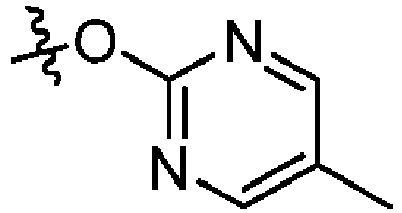
- Verbindung nach einem der Ansprüche 1 oder 2, wobei X9-L3-X10 oder X10-L3-X9 ausgewählt ist aus:





- Verbindung nach einem der Ansprüche 1-3, wobei X9-L3-X10 oder X10-L3-X9 ausgewählt ist aus:

- Verbindung nach einem der Ansprüche 1-4, wobei B1 ein sechsgliedriges Heteroaryl ist, das durch 1, 2 oder 3 Gruppen substituiert ist, die ausgewählt sind aus R33.
- Verbindung nach Anspruch 1 mit der folgenden Struktur:


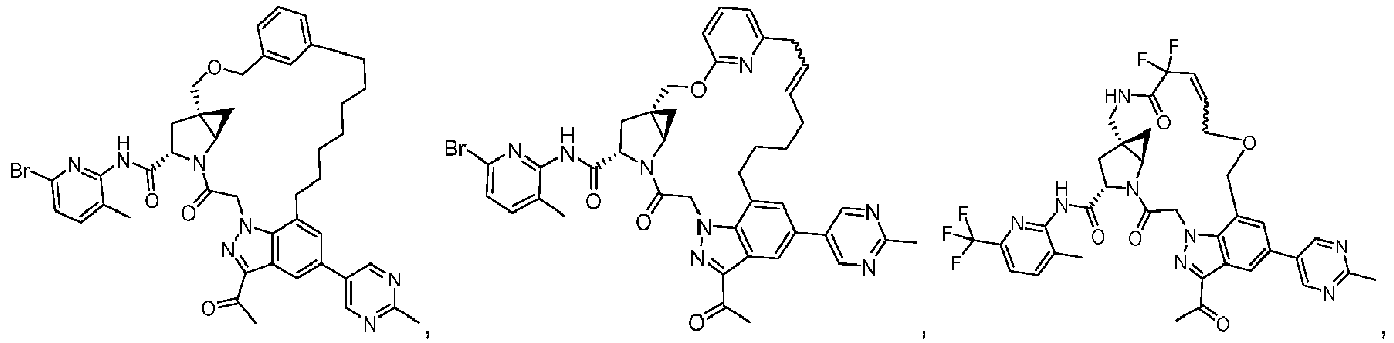


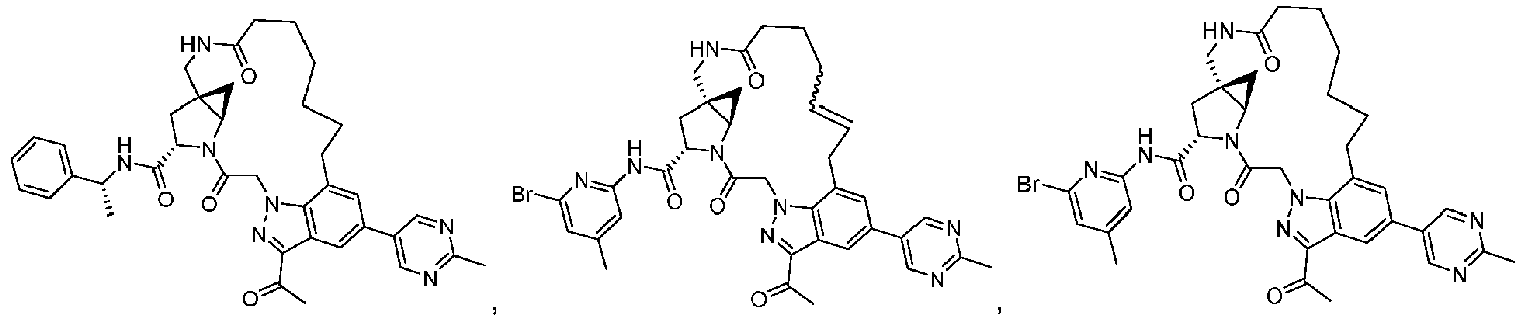


- Verbindung nach Anspruch 1 mit der folgenden Struktur:


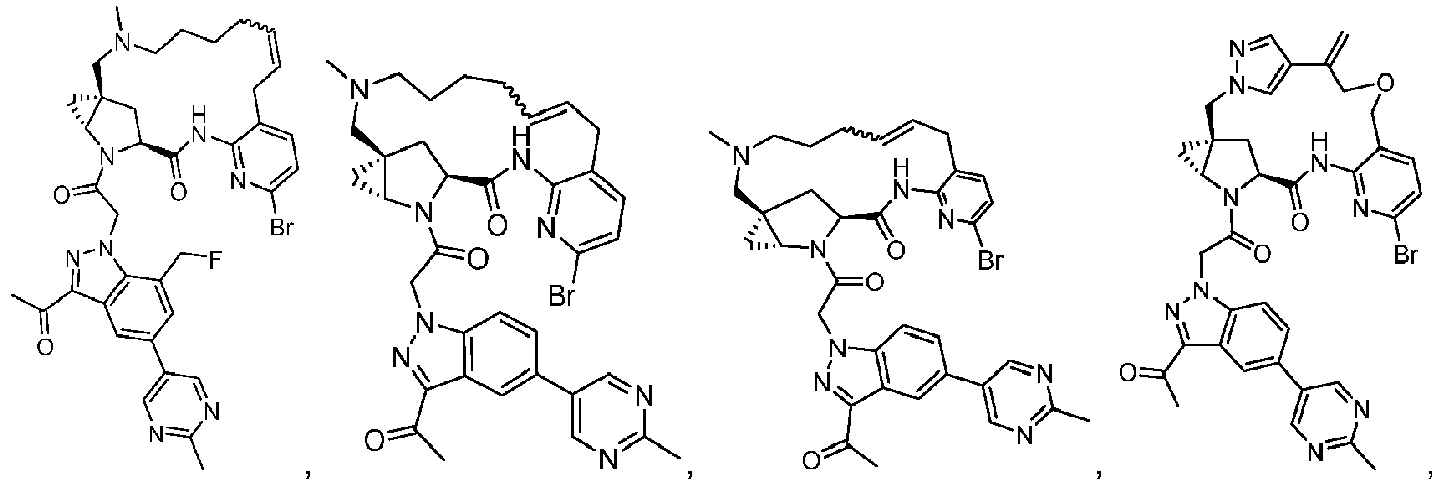


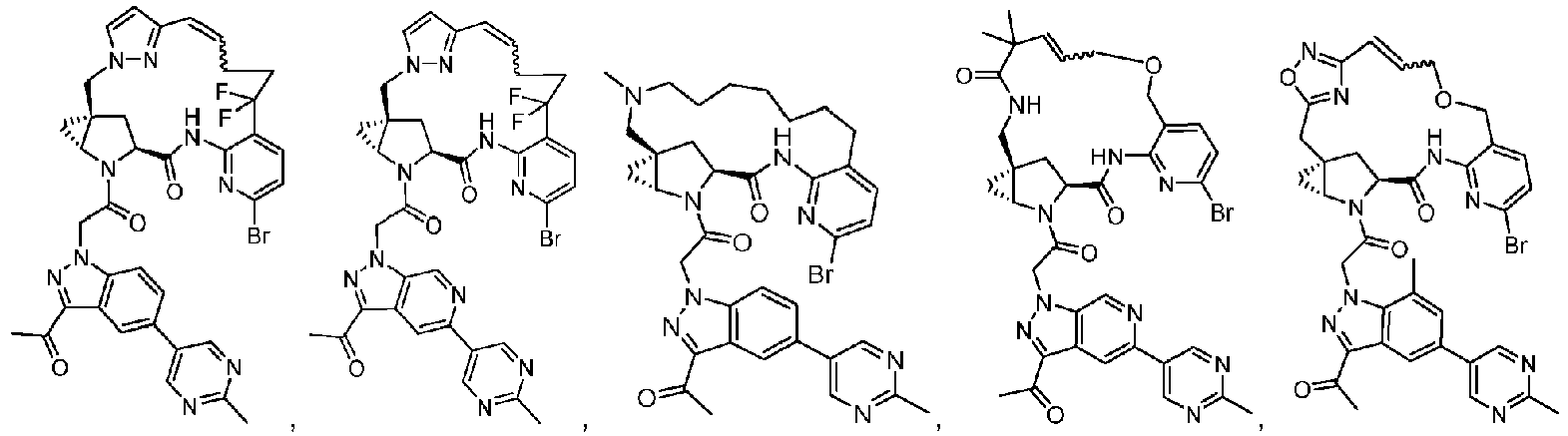

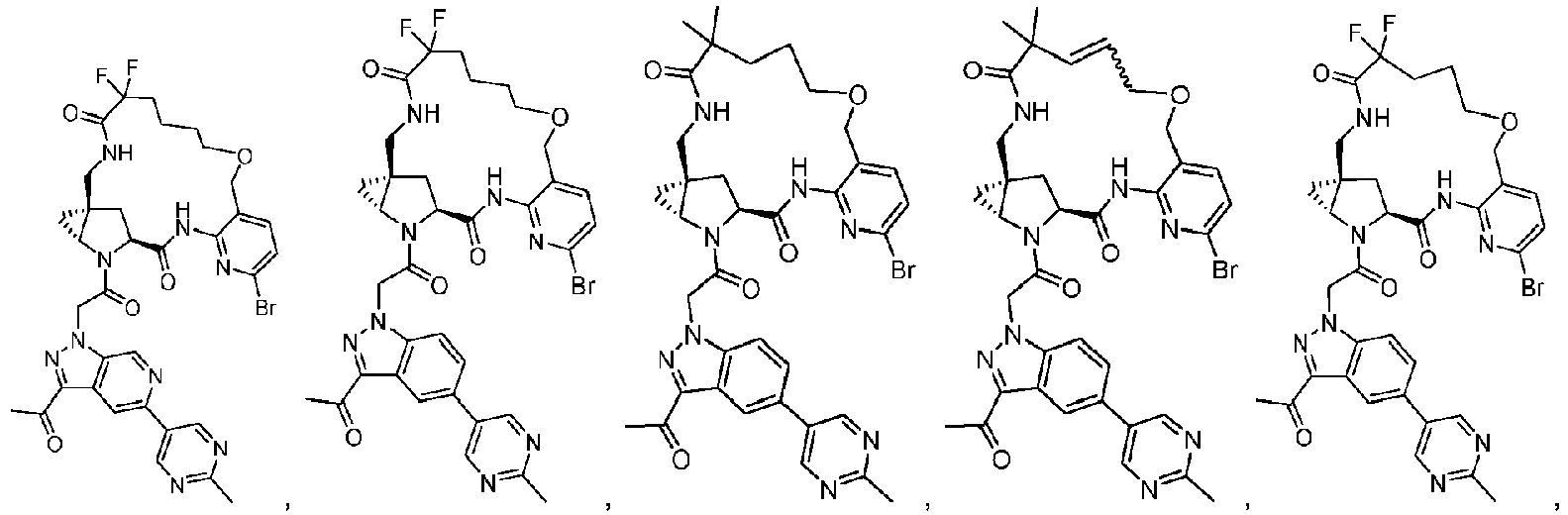


- Verbindung mit der folgenden Struktur:


- Pharmazeutische Zusammensetzung, umfassend eine Verbindung nach einem der Ansprüche 1-8, oder ein pharmazeutisch annehmbares Salz davon, und einen pharmazeutisch annehmbaren Träger.
- Verbindung nach einem der Ansprüche 1-8, oder ein pharmazeutisch annehmbares Salz davon, oder pharmazeutische Zusammensetzung nach Anspruch 9 zur Verwendung in einem Verfahren zum Behandeln einer durch Komplementfaktor D vermittelten Krankheit, das die Verabreichung einer therapeutisch wirksamen Menge der Verbindung oder des Salzes davon oder der pharmazeutischen Zusammensetzung an ein Individuum umfasst, das dieser bedarf.
- Verbindung oder Zusammensetzung zur Verwendung nach Anspruch 10, wobei das Individuum ein Mensch ist.
- Verbindung oder Zusammensetzung zur Verwendung nach Anspruch 10 oder 11, wobei die Krankheit ausgewählt ist aus der Entstehung von Fettleber und aus Fettleber herrührenden Leiden, wie etwa nichtalkoholische Steatohepatitis (NASH), Leberentzündung, Zirrhose oder Leberversagen; Dermatomyositis; amyotrophe Lateralsklerose; Cytokin- oder Entzündungsreaktionen als Reaktion auf Biotherapeutika, vorzugsweise CAR-T-Zell-Therapie; paroxysmale nächtliche Hämoglobinurie (PNH), rheumatoide Arthritis, multiple Sklerose, altersbedingte Makuladegeneration (AMD), Retinadegeneration, sonstige Augenerkrankungen, vorzugsweise geographische Atrophie; eine Atemwegserkrankung und eine Herz-Kreislauf-Erkrankung.
Applications Claiming Priority (4)
| Application Number | Priority Date | Filing Date | Title |
|---|---|---|---|
| US201762465600P | 2017-03-01 | 2017-03-01 | |
| US201762466252P | 2017-03-02 | 2017-03-02 | |
| US201762500287P | 2017-05-02 | 2017-05-02 | |
| PCT/US2018/020531 WO2018160892A1 (en) | 2017-03-01 | 2018-03-01 | Macrocyclic compounds for treatment of medical disorders |
Publications (3)
| Publication Number | Publication Date |
|---|---|
| EP3589287A1 EP3589287A1 (de) | 2020-01-08 |
| EP3589287A4 EP3589287A4 (de) | 2020-08-12 |
| EP3589287B1 true EP3589287B1 (de) | 2022-09-14 |
Family
ID=63370268
Family Applications (1)
| Application Number | Title | Priority Date | Filing Date |
|---|---|---|---|
| EP18760627.2A Active EP3589287B1 (de) | 2017-03-01 | 2018-03-01 | Makrocyclische verbindungen zur behandlung von medizinischen erkrankungen |
Country Status (4)
| Country | Link |
|---|---|
| US (3) | US11053253B2 (de) |
| EP (1) | EP3589287B1 (de) |
| ES (1) | ES2933513T3 (de) |
| WO (1) | WO2018160892A1 (de) |
Families Citing this family (19)
| Publication number | Priority date | Publication date | Assignee | Title |
|---|---|---|---|---|
| KR20160118368A (ko) | 2014-02-25 | 2016-10-11 | 아칠리온 파르마세우티칼스 인코포레이티드 | 보체 매개된 장애의 치료를 위한 에터 화합물 |
| WO2017035405A1 (en) | 2015-08-26 | 2017-03-02 | Achillion Pharmaceuticals, Inc. | Amino compounds for treatment of immune and inflammatory disorders |
| WO2017035401A1 (en) | 2015-08-26 | 2017-03-02 | Achillion Pharmaceuticals, Inc. | Amide compounds for treatment of immune and inflammatory disorders |
| AR106018A1 (es) | 2015-08-26 | 2017-12-06 | Achillion Pharmaceuticals Inc | Compuestos de arilo, heteroarilo y heterocíclicos para el tratamiento de trastornos médicos |
| WO2017035361A1 (en) | 2015-08-26 | 2017-03-02 | Achillion Pharmaceuticals, Inc. | Disubstituted compounds for the treatment of medical disorders |
| EP3340983B1 (de) | 2015-08-26 | 2023-10-04 | Achillion Pharmaceuticals, Inc. | Aryl, heteroaryl und heterocyclische verbindungen zur behandlung von immun- und entzündungserkrankungen |
| KR102632860B1 (ko) | 2017-03-01 | 2024-02-02 | 아칠리온 파르마세우티칼스 인코포레이티드 | 의학적 장애의 치료를 위한 아릴, 헤테로아릴, 및 헤테로사이클릭 약학적 화합물 |
| WO2018160891A1 (en) | 2017-03-01 | 2018-09-07 | Achillion Pharmaceutical, Inc. | Pharmaceutical compounds for treatment of medical disorders |
| WO2018160892A1 (en) | 2017-03-01 | 2018-09-07 | Achillion Pharmaceuticals, Inc. | Macrocyclic compounds for treatment of medical disorders |
| EP3661493A4 (de) | 2017-08-02 | 2021-04-14 | Achillion Pharmaceuticals, Inc. | Therapiepläne zur behandlung von paroxysmaler nächtlicher hämoglobinurie |
| US20230022157A1 (en) | 2018-08-20 | 2023-01-26 | Achillion Pharmaceuticals, Inc. | Pharmaceutical compounds for the treatment of complement factor d medical disorders |
| EP3846803A4 (de) * | 2018-09-06 | 2022-08-10 | Achillion Pharmaceuticals, Inc. | Makrocyclische verbindungen zur behandlung von medizinischen erkrankungen |
| US11814363B2 (en) | 2018-09-06 | 2023-11-14 | Achillion Pharmaceuticals, Inc. | Morphic forms of danicopan |
| EP3856164B1 (de) | 2018-09-25 | 2024-08-07 | Achillion Pharmaceuticals, Inc. | Morphische formen von komplementfaktor-d-inhibitoren |
| BR112021011727A2 (pt) | 2018-12-17 | 2021-08-31 | Achillion Pharmaceuticals, Inc | Dosagem direcionada para o tratamento de distúrbios mediados do complemento |
| WO2020198062A1 (en) | 2019-03-22 | 2020-10-01 | Achillion Pharmaceuticals, Inc. | Pharmaceutical compounds for the treatment of complement mediated disorders |
| CN115362162A (zh) | 2020-02-20 | 2022-11-18 | 艾其林医药公司 | 用于治疗补体因子d介导的障碍的杂芳基化合物 |
| US20230346784A1 (en) * | 2020-08-28 | 2023-11-02 | Alexion Pharmaceuticals, Inc. | Method for treating complement mediated disorders caused by betacoronaviruses |
| CA3193488A1 (en) | 2020-09-23 | 2022-03-31 | Jason Allan Wiles | Pharmaceutical compounds for the treatment of complement mediated disorders |
Family Cites Families (88)
| Publication number | Priority date | Publication date | Assignee | Title |
|---|---|---|---|---|
| GB9206757D0 (en) | 1992-03-27 | 1992-05-13 | Ferring Bv | Novel peptide receptor ligands |
| US6074642A (en) | 1994-05-02 | 2000-06-13 | Alexion Pharmaceuticals, Inc. | Use of antibodies specific to human complement component C5 for the treatment of glomerulonephritis |
| US6653340B1 (en) | 1997-06-03 | 2003-11-25 | Biocryst Pharmaceuticals, Inc. | Compounds useful in the complement, coagulat and kallikrein pathways and method for their preparation |
| HUP0101275A3 (en) | 1998-03-26 | 2002-12-28 | Japan Tobacco Inc | Amide derivatives and pharmaceutical compositions containing them as nociceptin antagonists |
| WO2000014095A1 (en) | 1998-09-09 | 2000-03-16 | Metabasis Therapeutics, Inc. | Novel heteroaromatic inhibitors of fructose 1,6-bisphosphatase |
| EP1219611A4 (de) | 1999-09-03 | 2003-03-19 | Ajinomoto Kk | Neuartige prozesse zur herstellung von oxazepin-derivaten |
| US7528165B2 (en) | 2001-12-13 | 2009-05-05 | National Health Research Institutes | Indole compounds |
| US20060100431A1 (en) | 2002-07-16 | 2006-05-11 | Amura Therapeutics Limited | Biologically active compounds |
| EP1567487A4 (de) | 2002-11-15 | 2005-11-16 | Bristol Myers Squibb Co | Offenkettige, mit prolylharnstoff verwandtemodulatoren der androgenrezeptorfunktion |
| AU2003902946A0 (en) | 2003-06-12 | 2003-06-26 | Fujisawa Pharmaceutical Co., Ltd. | Dpp-iv inhibitor |
| DK1713503T3 (da) | 2004-02-10 | 2013-11-04 | Univ Colorado Regents | Hæmning af faktor b, den alternative komplemenpathway og dertil relaterede fremgangsmåde |
| ES2530056T3 (es) | 2004-03-24 | 2015-02-26 | Shire Orphan Therapies Gmbh | Nuevos compuestos para la inhibición de la angiogénesis y su uso |
| US7417063B2 (en) | 2004-04-13 | 2008-08-26 | Bristol-Myers Squibb Company | Bicyclic heterocycles useful as serine protease inhibitors |
| EP1814576A2 (de) | 2004-07-20 | 2007-08-08 | Critical Therapeutics, Inc. | Kombinationstherapien von hmgb- und komplementinhibitoren gegen entzündungen |
| US8663639B2 (en) | 2005-02-09 | 2014-03-04 | Santen Pharmaceutical Co., Ltd. | Formulations for treating ocular diseases and conditions |
| US8168584B2 (en) | 2005-10-08 | 2012-05-01 | Potentia Pharmaceuticals, Inc. | Methods of treating age-related macular degeneration by compstatin and analogs thereof |
| JP2009519342A (ja) | 2005-12-12 | 2009-05-14 | ジェネラブズ テクノロジーズ インコーポレーティッド | N−(6員芳香環)−アミド抗ウイルス化合物 |
| SI2041156T1 (sl) | 2006-07-13 | 2014-04-30 | Achillion Pharmacetuticals, Inc. | Peptidi 4-amino-4-oksobutanoila kot inhibitorji virusne replikacije |
| JPWO2008047831A1 (ja) | 2006-10-17 | 2010-02-25 | 協和発酵キリン株式会社 | Jak阻害剤 |
| US8193237B2 (en) | 2007-01-15 | 2012-06-05 | Santen Pharmaceutical Co., Ltd. | Indole derivative having IκB kinase β inhibitory activity |
| US8524716B2 (en) | 2007-12-24 | 2013-09-03 | Janssen R&D Ireland | Macrocyclic indoles as hepatitis C virus inhibitors |
| WO2009091826A2 (en) | 2008-01-14 | 2009-07-23 | The Board Of Regents Of The University Of Texas System | Compositions and methods related to a human cd19-specific chimeric antigen receptor (h-car) |
| US8410139B2 (en) | 2009-10-07 | 2013-04-02 | Bristol-Myers Squibb Company | Prodrugs of a piperidinyl derivative as modulators of chemokine receptor activity |
| EP2490026A4 (de) | 2009-10-16 | 2013-08-21 | Mochida Pharm Co Ltd | Marker in zusammenhang mit nicht alkoholischer steatohepatitis |
| EP2496259B1 (de) | 2009-11-05 | 2017-02-22 | Alexion Pharmaceuticals, Inc. | Behandlung von paroxysmaler nächtlicher hämoglobinurie |
| RS61281B1 (sr) | 2009-12-31 | 2021-02-26 | Hutchison Medipharma Ltd | Sintetički intermedijer koristan u pripremi triazolopiridinskih c-met inhibitora |
| AU2011239966B2 (en) | 2010-04-16 | 2014-05-08 | Ac Immune S.A. | Novel compounds for the treatment of diseases associated with amyloid or amyloid-like proteins |
| US9421240B2 (en) | 2010-06-22 | 2016-08-23 | Apellis Pharmaceuticals, Inc. | Compstatin analogs for treatment of neuropathic pain |
| KR20140027090A (ko) | 2011-01-04 | 2014-03-06 | 노파르티스 아게 | 연령-관련 황반 변성 (amd)의 치료에 유용한 인돌 화합물 또는 그의 유사체 |
| KR101931311B1 (ko) | 2011-05-27 | 2018-12-20 | 아칠리온 파르마세우티칼스 인코포레이티드 | Hcv 감염 치료에 유용한 치환된 앨리팬, 시클로팬, 헤테라팬, 헤테로팬, 헤테로-헤테라팬 및 메탈로센 |
| CA2877474A1 (en) | 2011-06-20 | 2012-12-27 | Myrexis, Inc. | Compounds and therapeutic uses thereof |
| EP2723361B1 (de) | 2011-06-22 | 2019-10-30 | Apellis Pharmaceuticals, Inc. | Verfahren zur behandlung chronischer erkrankungen mit komplementinhibitoren |
| CN111700880A (zh) | 2012-05-03 | 2020-09-25 | 卡拉制药公司 | 显示提高的粘膜转移的药物纳米粒子 |
| US9056874B2 (en) | 2012-05-04 | 2015-06-16 | Novartis Ag | Complement pathway modulators and uses thereof |
| EP2861246B1 (de) | 2012-06-18 | 2021-01-20 | Omeros Corporation | Zusammensetzungen und verfahren zur hemmung von masp-1 und/oder masp-2 und/oder masp-3 zur behandlung verschiedener erkrankungen und störungen |
| AU2013277154A1 (en) | 2012-06-20 | 2014-12-18 | Jonathan E. Grob | Complement pathway modulators and uses thereof |
| EP2867225B1 (de) | 2012-06-28 | 2017-08-09 | Novartis AG | Pyrrolidinderivate und ihre verwendung als komplementwegmodulatoren |
| ES2712190T3 (es) | 2012-06-28 | 2019-05-09 | Novartis Ag | Moduladores de la vía del complemento y sus usos |
| WO2014002053A1 (en) | 2012-06-28 | 2014-01-03 | Novartis Ag | Pyrrolidine derivatives and their use as complement pathway modulators |
| JP6273274B2 (ja) | 2012-06-28 | 2018-01-31 | ノバルティス アーゲー | 補体経路モジュレーターおよびその使用 |
| EP2867229B1 (de) | 2012-06-28 | 2017-07-26 | Novartis AG | Pyrrolidinderivate und ihre verwendung als komplementwegmodulatoren |
| US20150191462A1 (en) | 2012-06-28 | 2015-07-09 | Novartis Ag | Pyrrolidine derivatives and their use as complement pathway modulators |
| WO2014002059A1 (en) | 2012-06-29 | 2014-01-03 | Novartis Ag | CRYSTALLINE FORMS OF 1-(2-((1R,3S,5R)-3-(((R)-1-(3-chloro-2-fluorophenyl)ethyl)carbamoyl)-2-azabicyclo[3.1.0]hexan-2-yl)-2-oxoethyl)-1Hpyrazolo[3,4-c]pyridine-3-carboxamide |
| WO2014005150A1 (en) | 2012-06-29 | 2014-01-03 | Novartis Ag | Crystalline forms of l-(2-((lr,3s,5r)-3-( (2 -fluoro-3 - (trifluoromethoxy) phenyl) carbamoyl) - 2 -azabicycl o [3.1.0] hexan- 2 -yl) - 2 -oxoethyl) - 5 -methyl - 1h - pyrazolo [3, 4 -c] pyridine - 3 - carboxami de and salts thereof |
| EP2872503B1 (de) | 2012-07-12 | 2018-06-20 | Novartis AG | Modulatoren des komplementweges und verwendungen davon |
| MX2015002954A (es) | 2012-09-10 | 2015-06-05 | Hoffmann La Roche | Nuevas 6-aminoacido-heteroarilhidropirimidinas para el tratamiento y profilaxis de la infeccion del virus de la hepatitis b. |
| US9773428B2 (en) | 2012-12-11 | 2017-09-26 | Fluidity Software, Inc. | Computerized system and method for teaching, learning, and assessing step by step solutions to stem problems |
| CA2899034A1 (en) | 2013-01-23 | 2014-07-31 | Musc Foundation For Research Development | Targeting constructs based on natural antibodies and uses thereof |
| CN105229003B (zh) | 2013-03-14 | 2017-03-15 | 诺华股份有限公司 | 作为补体因子b抑制剂用于治疗眼科疾病的2‑(1h‑吲哚‑4‑基甲基)‑3h‑咪唑并[4,5‑b]吡啶‑6‑甲腈衍生物 |
| JP2016169161A (ja) | 2013-07-19 | 2016-09-23 | 大日本住友製薬株式会社 | 新規イミダゾピリジン化合物 |
| SI3011345T1 (sl) | 2013-08-07 | 2017-12-29 | Alexion Pharmaceuticals, Inc. | Biomarkerski proteini za atipični hemolitični uremični sindrom (ahus) |
| KR20160118368A (ko) | 2014-02-25 | 2016-10-11 | 아칠리온 파르마세우티칼스 인코포레이티드 | 보체 매개된 장애의 치료를 위한 에터 화합물 |
| WO2017035418A1 (en) | 2015-08-26 | 2017-03-02 | Achillion Pharmaceuticals, Inc. | Disubstituted compounds for treatment of immune and inflammatory disorders |
| WO2017035362A1 (en) | 2015-08-26 | 2017-03-02 | Achillion Pharmaceuticals, Inc. | Use of complement pathway inhibitor compounds to mitigate adoptive t-cell therapy associated adverse immune responses |
| WO2017035411A1 (en) | 2015-08-26 | 2017-03-02 | Achillion Pharmaceuticals, Inc. | Ether compounds for treatment of immune and inflammatory disorders |
| EP3340982B1 (de) | 2015-08-26 | 2021-12-15 | Achillion Pharmaceuticals, Inc. | Verbindungen zur behandlung von immun- und entzündungserkrankungen |
| AR105809A1 (es) | 2015-08-26 | 2017-11-08 | Achillion Pharmaceuticals Inc | Compuestos para el tratamiento de trastornos médicos |
| WO2017035352A1 (en) | 2015-08-26 | 2017-03-02 | Achillion Pharmaceuticals, Inc. | Carbamate, ester, and ketone compounds for treatment of medical disorders |
| WO2017035348A1 (en) | 2015-08-26 | 2017-03-02 | Achillion Pharmaceuticals, Inc. | Alkyne compounds for treatment of medical disorders |
| WO2017035401A1 (en) | 2015-08-26 | 2017-03-02 | Achillion Pharmaceuticals, Inc. | Amide compounds for treatment of immune and inflammatory disorders |
| EP3340983B1 (de) | 2015-08-26 | 2023-10-04 | Achillion Pharmaceuticals, Inc. | Aryl, heteroaryl und heterocyclische verbindungen zur behandlung von immun- und entzündungserkrankungen |
| US10385097B2 (en) | 2015-08-26 | 2019-08-20 | Achillion Pharmaceuticals, Inc. | Ether compounds for treatment of medical disorders |
| WO2017035413A2 (en) | 2015-08-26 | 2017-03-02 | Achillion Pharmaceuticals, Inc. | Carbamate, ester, and ketone compounds for treatment of immune and inflammatory disorders |
| WO2017035405A1 (en) | 2015-08-26 | 2017-03-02 | Achillion Pharmaceuticals, Inc. | Amino compounds for treatment of immune and inflammatory disorders |
| WO2017035361A1 (en) | 2015-08-26 | 2017-03-02 | Achillion Pharmaceuticals, Inc. | Disubstituted compounds for the treatment of medical disorders |
| WO2017035415A1 (en) | 2015-08-26 | 2017-03-02 | Achillion Pharmaceuticals, Inc. | Alkyne compounds for treatment of immune and inflammatory disorders |
| WO2017035417A1 (en) | 2015-08-26 | 2017-03-02 | Achillion Pharmaceuticals, Inc. | Phosphonate compounds for treatment of immune and inflammatory disorders |
| AR106018A1 (es) | 2015-08-26 | 2017-12-06 | Achillion Pharmaceuticals Inc | Compuestos de arilo, heteroarilo y heterocíclicos para el tratamiento de trastornos médicos |
| WO2017035351A1 (en) | 2015-08-26 | 2017-03-02 | Achillion Pharmaceuticals, Inc. | Amino compounds for treatment of medical disorders |
| AR105808A1 (es) | 2015-08-26 | 2017-11-08 | Achillion Pharmaceuticals Inc | Compuestos de amida para el tratamiento de trastornos médicos |
| WO2017035357A1 (en) | 2015-08-26 | 2017-03-02 | Achillion Pharmaceuticals, Inc. | Phosphonate compounds for treatment of medical disorders |
| CN109310675A (zh) | 2015-12-11 | 2019-02-05 | 莱福斯希医药公司 | 治疗性抑制化合物 |
| TWI747873B (zh) | 2016-02-01 | 2021-12-01 | 美商百歐克斯製藥公司 | 苯并吡唑化合物及其類似物 |
| CN109414441A (zh) | 2016-06-27 | 2019-03-01 | 艾其林医药公司 | 治疗医学障碍的喹唑啉和吲哚化合物 |
| WO2018160892A1 (en) | 2017-03-01 | 2018-09-07 | Achillion Pharmaceuticals, Inc. | Macrocyclic compounds for treatment of medical disorders |
| KR102632860B1 (ko) | 2017-03-01 | 2024-02-02 | 아칠리온 파르마세우티칼스 인코포레이티드 | 의학적 장애의 치료를 위한 아릴, 헤테로아릴, 및 헤테로사이클릭 약학적 화합물 |
| WO2018160891A1 (en) | 2017-03-01 | 2018-09-07 | Achillion Pharmaceutical, Inc. | Pharmaceutical compounds for treatment of medical disorders |
| EP3661493A4 (de) | 2017-08-02 | 2021-04-14 | Achillion Pharmaceuticals, Inc. | Therapiepläne zur behandlung von paroxysmaler nächtlicher hämoglobinurie |
| US20200262897A1 (en) | 2017-10-04 | 2020-08-20 | Alexion Pharmaceuticals, Inc. | Dosage and administration of anti-c5 antibodies for treatment of patients with membranoproliferative glomerulonephritis |
| US20230022157A1 (en) | 2018-08-20 | 2023-01-26 | Achillion Pharmaceuticals, Inc. | Pharmaceutical compounds for the treatment of complement factor d medical disorders |
| EP3846803A4 (de) | 2018-09-06 | 2022-08-10 | Achillion Pharmaceuticals, Inc. | Makrocyclische verbindungen zur behandlung von medizinischen erkrankungen |
| US11814363B2 (en) | 2018-09-06 | 2023-11-14 | Achillion Pharmaceuticals, Inc. | Morphic forms of danicopan |
| EP3856164B1 (de) | 2018-09-25 | 2024-08-07 | Achillion Pharmaceuticals, Inc. | Morphische formen von komplementfaktor-d-inhibitoren |
| WO2020109343A1 (en) | 2018-11-29 | 2020-06-04 | F. Hoffmann-La Roche Ag | Combination therapy for treatment of macular degeneration |
| BR112021011727A2 (pt) | 2018-12-17 | 2021-08-31 | Achillion Pharmaceuticals, Inc | Dosagem direcionada para o tratamento de distúrbios mediados do complemento |
| CA3148119A1 (en) | 2019-07-31 | 2021-02-04 | Biocryst Pharmaceuticals, Inc. | Dosing regimens for oral complement factor d inhibitors |
| CR20220624A (es) | 2020-06-10 | 2023-07-06 | Sanofi Sa | Antagonista del receptor crf1 para el tratamiento de la hiperplasia suprarrenal congénita |
| US20230346784A1 (en) | 2020-08-28 | 2023-11-02 | Alexion Pharmaceuticals, Inc. | Method for treating complement mediated disorders caused by betacoronaviruses |
-
2018
- 2018-03-01 WO PCT/US2018/020531 patent/WO2018160892A1/en not_active Ceased
- 2018-03-01 ES ES18760627T patent/ES2933513T3/es active Active
- 2018-03-01 EP EP18760627.2A patent/EP3589287B1/de active Active
-
2019
- 2019-08-29 US US16/555,930 patent/US11053253B2/en active Active
-
2021
- 2021-05-07 US US17/314,155 patent/US11718626B2/en active Active
-
2023
- 2023-05-11 US US18/196,002 patent/US12297205B2/en active Active
Also Published As
| Publication number | Publication date |
|---|---|
| US20240059702A1 (en) | 2024-02-22 |
| EP3589287A1 (de) | 2020-01-08 |
| US20210300934A1 (en) | 2021-09-30 |
| US11053253B2 (en) | 2021-07-06 |
| ES2933513T3 (es) | 2023-02-09 |
| US20200002347A1 (en) | 2020-01-02 |
| US12297205B2 (en) | 2025-05-13 |
| WO2018160892A1 (en) | 2018-09-07 |
| US11718626B2 (en) | 2023-08-08 |
| EP3589287A4 (de) | 2020-08-12 |
Similar Documents
| Publication | Publication Date | Title |
|---|---|---|
| US12297205B2 (en) | Macrocyclic compounds for treatment of medical disorders | |
| JP7390449B2 (ja) | 医学的障害の治療のためのアリール、ヘテロアリール及び複素環式医薬化合物 | |
| US12006307B2 (en) | Pharmaceutical compounds for treatment of medical disorders | |
| EP3340983B1 (de) | Aryl, heteroaryl und heterocyclische verbindungen zur behandlung von immun- und entzündungserkrankungen | |
| JP7538113B2 (ja) | 補体d因子の医学的障害の治療のための医薬化合物 | |
| WO2017035405A1 (en) | Amino compounds for treatment of immune and inflammatory disorders | |
| WO2017035415A1 (en) | Alkyne compounds for treatment of immune and inflammatory disorders | |
| WO2017035401A1 (en) | Amide compounds for treatment of immune and inflammatory disorders | |
| WO2017035349A1 (en) | Amide compounds for treatment of medical disorders | |
| WO2017035413A2 (en) | Carbamate, ester, and ketone compounds for treatment of immune and inflammatory disorders | |
| WO2017035417A1 (en) | Phosphonate compounds for treatment of immune and inflammatory disorders | |
| WO2017035418A1 (en) | Disubstituted compounds for treatment of immune and inflammatory disorders | |
| WO2017035411A1 (en) | Ether compounds for treatment of immune and inflammatory disorders | |
| US11814391B2 (en) | Macrocyclic compounds for the treatment of medical disorders | |
| RU2773030C2 (ru) | Арильные, гетероарильные и гетероциклические фармацевтические соединия для лечения медицинских нарушений | |
| HK40072622A (en) | Aryl, heteroaryl, and heterocyclic pharmaceutical compounds for treatment of medical disorders | |
| EA041794B1 (ru) | Арильные, гетероарильные и гетероциклические фармацевтические соединения для лечения медицинских нарушений |
Legal Events
| Date | Code | Title | Description |
|---|---|---|---|
| STAA | Information on the status of an ep patent application or granted ep patent |
Free format text: STATUS: THE INTERNATIONAL PUBLICATION HAS BEEN MADE |
|
| PUAI | Public reference made under article 153(3) epc to a published international application that has entered the european phase |
Free format text: ORIGINAL CODE: 0009012 |
|
| STAA | Information on the status of an ep patent application or granted ep patent |
Free format text: STATUS: REQUEST FOR EXAMINATION WAS MADE |
|
| 17P | Request for examination filed |
Effective date: 20190924 |
|
| AK | Designated contracting states |
Kind code of ref document: A1 Designated state(s): AL AT BE BG CH CY CZ DE DK EE ES FI FR GB GR HR HU IE IS IT LI LT LU LV MC MK MT NL NO PL PT RO RS SE SI SK SM TR |
|
| AX | Request for extension of the european patent |
Extension state: BA ME |
|
| DAV | Request for validation of the european patent (deleted) | ||
| DAX | Request for extension of the european patent (deleted) | ||
| REG | Reference to a national code |
Ref country code: DE Ref legal event code: R079 Ref document number: 602018040683 Country of ref document: DE Free format text: PREVIOUS MAIN CLASS: A61K0031530000 Ipc: C07D0498080000 |
|
| A4 | Supplementary search report drawn up and despatched |
Effective date: 20200715 |
|
| RIC1 | Information provided on ipc code assigned before grant |
Ipc: A61P 31/12 20060101ALI20200709BHEP Ipc: C07D 487/18 20060101ALI20200709BHEP Ipc: A61K 31/53 20060101ALI20200709BHEP Ipc: C07D 498/08 20060101AFI20200709BHEP Ipc: C07D 471/18 20060101ALI20200709BHEP |
|
| RAP3 | Party data changed (applicant data changed or rights of an application transferred) |
Owner name: ACHILLION PHARMACEUTICALS, INC. |
|
| RIN1 | Information on inventor provided before grant (corrected) |
Inventor name: EASTMAN, KYLE, J. Inventor name: AGARWAL, ATUL Inventor name: BARRISH, JOEL, CHARLES Inventor name: GADHACHANDA, VENKAT, RAO Inventor name: CHEN, DAWEI Inventor name: PHADKE, AVINASH, S. Inventor name: WILES, JASON, ALLAN |
|
| GRAP | Despatch of communication of intention to grant a patent |
Free format text: ORIGINAL CODE: EPIDOSNIGR1 |
|
| STAA | Information on the status of an ep patent application or granted ep patent |
Free format text: STATUS: GRANT OF PATENT IS INTENDED |
|
| INTG | Intention to grant announced |
Effective date: 20220311 |
|
| RIN1 | Information on inventor provided before grant (corrected) |
Inventor name: EASTMAN, KYLE, J. Inventor name: AGARWAL, ATUL Inventor name: BARRISH, JOEL, CHARLES Inventor name: GADHACHANDA, VENKAT, RAO Inventor name: CHEN, DAWEI Inventor name: PHADKE, AVINASH, S. Inventor name: WILES, JASON, ALLAN |
|
| GRAS | Grant fee paid |
Free format text: ORIGINAL CODE: EPIDOSNIGR3 |
|
| GRAA | (expected) grant |
Free format text: ORIGINAL CODE: 0009210 |
|
| STAA | Information on the status of an ep patent application or granted ep patent |
Free format text: STATUS: THE PATENT HAS BEEN GRANTED |
|
| AK | Designated contracting states |
Kind code of ref document: B1 Designated state(s): AL AT BE BG CH CY CZ DE DK EE ES FI FR GB GR HR HU IE IS IT LI LT LU LV MC MK MT NL NO PL PT RO RS SE SI SK SM TR |
|
| REG | Reference to a national code |
Ref country code: GB Ref legal event code: FG4D |
|
| REG | Reference to a national code |
Ref country code: CH Ref legal event code: EP |
|
| REG | Reference to a national code |
Ref country code: DE Ref legal event code: R096 Ref document number: 602018040683 Country of ref document: DE |
|
| REG | Reference to a national code |
Ref country code: IE Ref legal event code: FG4D |
|
| REG | Reference to a national code |
Ref country code: AT Ref legal event code: REF Ref document number: 1518634 Country of ref document: AT Kind code of ref document: T Effective date: 20221015 |
|
| REG | Reference to a national code |
Ref country code: LT Ref legal event code: MG9D |
|
| REG | Reference to a national code |
Ref country code: NL Ref legal event code: MP Effective date: 20220914 |
|
| PG25 | Lapsed in a contracting state [announced via postgrant information from national office to epo] |
Ref country code: SE Free format text: LAPSE BECAUSE OF FAILURE TO SUBMIT A TRANSLATION OF THE DESCRIPTION OR TO PAY THE FEE WITHIN THE PRESCRIBED TIME-LIMIT Effective date: 20220914 Ref country code: RS Free format text: LAPSE BECAUSE OF FAILURE TO SUBMIT A TRANSLATION OF THE DESCRIPTION OR TO PAY THE FEE WITHIN THE PRESCRIBED TIME-LIMIT Effective date: 20220914 Ref country code: NO Free format text: LAPSE BECAUSE OF FAILURE TO SUBMIT A TRANSLATION OF THE DESCRIPTION OR TO PAY THE FEE WITHIN THE PRESCRIBED TIME-LIMIT Effective date: 20221214 Ref country code: LV Free format text: LAPSE BECAUSE OF FAILURE TO SUBMIT A TRANSLATION OF THE DESCRIPTION OR TO PAY THE FEE WITHIN THE PRESCRIBED TIME-LIMIT Effective date: 20220914 Ref country code: LT Free format text: LAPSE BECAUSE OF FAILURE TO SUBMIT A TRANSLATION OF THE DESCRIPTION OR TO PAY THE FEE WITHIN THE PRESCRIBED TIME-LIMIT Effective date: 20220914 Ref country code: FI Free format text: LAPSE BECAUSE OF FAILURE TO SUBMIT A TRANSLATION OF THE DESCRIPTION OR TO PAY THE FEE WITHIN THE PRESCRIBED TIME-LIMIT Effective date: 20220914 |
|
| REG | Reference to a national code |
Ref country code: ES Ref legal event code: FG2A Ref document number: 2933513 Country of ref document: ES Kind code of ref document: T3 Effective date: 20230209 |
|
| REG | Reference to a national code |
Ref country code: AT Ref legal event code: MK05 Ref document number: 1518634 Country of ref document: AT Kind code of ref document: T Effective date: 20220914 |
|
| PG25 | Lapsed in a contracting state [announced via postgrant information from national office to epo] |
Ref country code: HR Free format text: LAPSE BECAUSE OF FAILURE TO SUBMIT A TRANSLATION OF THE DESCRIPTION OR TO PAY THE FEE WITHIN THE PRESCRIBED TIME-LIMIT Effective date: 20220914 Ref country code: GR Free format text: LAPSE BECAUSE OF FAILURE TO SUBMIT A TRANSLATION OF THE DESCRIPTION OR TO PAY THE FEE WITHIN THE PRESCRIBED TIME-LIMIT Effective date: 20221215 |
|
| PG25 | Lapsed in a contracting state [announced via postgrant information from national office to epo] |
Ref country code: SM Free format text: LAPSE BECAUSE OF FAILURE TO SUBMIT A TRANSLATION OF THE DESCRIPTION OR TO PAY THE FEE WITHIN THE PRESCRIBED TIME-LIMIT Effective date: 20220914 Ref country code: RO Free format text: LAPSE BECAUSE OF FAILURE TO SUBMIT A TRANSLATION OF THE DESCRIPTION OR TO PAY THE FEE WITHIN THE PRESCRIBED TIME-LIMIT Effective date: 20220914 Ref country code: PT Free format text: LAPSE BECAUSE OF FAILURE TO SUBMIT A TRANSLATION OF THE DESCRIPTION OR TO PAY THE FEE WITHIN THE PRESCRIBED TIME-LIMIT Effective date: 20230116 Ref country code: CZ Free format text: LAPSE BECAUSE OF FAILURE TO SUBMIT A TRANSLATION OF THE DESCRIPTION OR TO PAY THE FEE WITHIN THE PRESCRIBED TIME-LIMIT Effective date: 20220914 Ref country code: AT Free format text: LAPSE BECAUSE OF FAILURE TO SUBMIT A TRANSLATION OF THE DESCRIPTION OR TO PAY THE FEE WITHIN THE PRESCRIBED TIME-LIMIT Effective date: 20220914 |
|
| PG25 | Lapsed in a contracting state [announced via postgrant information from national office to epo] |
Ref country code: SK Free format text: LAPSE BECAUSE OF FAILURE TO SUBMIT A TRANSLATION OF THE DESCRIPTION OR TO PAY THE FEE WITHIN THE PRESCRIBED TIME-LIMIT Effective date: 20220914 Ref country code: PL Free format text: LAPSE BECAUSE OF FAILURE TO SUBMIT A TRANSLATION OF THE DESCRIPTION OR TO PAY THE FEE WITHIN THE PRESCRIBED TIME-LIMIT Effective date: 20220914 Ref country code: IS Free format text: LAPSE BECAUSE OF FAILURE TO SUBMIT A TRANSLATION OF THE DESCRIPTION OR TO PAY THE FEE WITHIN THE PRESCRIBED TIME-LIMIT Effective date: 20230114 Ref country code: EE Free format text: LAPSE BECAUSE OF FAILURE TO SUBMIT A TRANSLATION OF THE DESCRIPTION OR TO PAY THE FEE WITHIN THE PRESCRIBED TIME-LIMIT Effective date: 20220914 |
|
| P01 | Opt-out of the competence of the unified patent court (upc) registered |
Effective date: 20230413 |
|
| REG | Reference to a national code |
Ref country code: DE Ref legal event code: R097 Ref document number: 602018040683 Country of ref document: DE |
|
| PG25 | Lapsed in a contracting state [announced via postgrant information from national office to epo] |
Ref country code: NL Free format text: LAPSE BECAUSE OF FAILURE TO SUBMIT A TRANSLATION OF THE DESCRIPTION OR TO PAY THE FEE WITHIN THE PRESCRIBED TIME-LIMIT Effective date: 20220914 Ref country code: AL Free format text: LAPSE BECAUSE OF FAILURE TO SUBMIT A TRANSLATION OF THE DESCRIPTION OR TO PAY THE FEE WITHIN THE PRESCRIBED TIME-LIMIT Effective date: 20220914 |
|
| PLBE | No opposition filed within time limit |
Free format text: ORIGINAL CODE: 0009261 |
|
| STAA | Information on the status of an ep patent application or granted ep patent |
Free format text: STATUS: NO OPPOSITION FILED WITHIN TIME LIMIT |
|
| PG25 | Lapsed in a contracting state [announced via postgrant information from national office to epo] |
Ref country code: DK Free format text: LAPSE BECAUSE OF FAILURE TO SUBMIT A TRANSLATION OF THE DESCRIPTION OR TO PAY THE FEE WITHIN THE PRESCRIBED TIME-LIMIT Effective date: 20220914 |
|
| 26N | No opposition filed |
Effective date: 20230615 |
|
| PG25 | Lapsed in a contracting state [announced via postgrant information from national office to epo] |
Ref country code: SI Free format text: LAPSE BECAUSE OF FAILURE TO SUBMIT A TRANSLATION OF THE DESCRIPTION OR TO PAY THE FEE WITHIN THE PRESCRIBED TIME-LIMIT Effective date: 20220914 |
|
| PG25 | Lapsed in a contracting state [announced via postgrant information from national office to epo] |
Ref country code: MC Free format text: LAPSE BECAUSE OF FAILURE TO SUBMIT A TRANSLATION OF THE DESCRIPTION OR TO PAY THE FEE WITHIN THE PRESCRIBED TIME-LIMIT Effective date: 20220914 |
|
| REG | Reference to a national code |
Ref country code: CH Ref legal event code: PL |
|
| REG | Reference to a national code |
Ref country code: BE Ref legal event code: MM Effective date: 20230331 |
|
| PG25 | Lapsed in a contracting state [announced via postgrant information from national office to epo] |
Ref country code: LU Free format text: LAPSE BECAUSE OF NON-PAYMENT OF DUE FEES Effective date: 20230301 |
|
| REG | Reference to a national code |
Ref country code: IE Ref legal event code: MM4A |
|
| PG25 | Lapsed in a contracting state [announced via postgrant information from national office to epo] |
Ref country code: LI Free format text: LAPSE BECAUSE OF NON-PAYMENT OF DUE FEES Effective date: 20230331 Ref country code: IE Free format text: LAPSE BECAUSE OF NON-PAYMENT OF DUE FEES Effective date: 20230301 Ref country code: CH Free format text: LAPSE BECAUSE OF NON-PAYMENT OF DUE FEES Effective date: 20230331 |
|
| PG25 | Lapsed in a contracting state [announced via postgrant information from national office to epo] |
Ref country code: BE Free format text: LAPSE BECAUSE OF NON-PAYMENT OF DUE FEES Effective date: 20230331 |
|
| PGFP | Annual fee paid to national office [announced via postgrant information from national office to epo] |
Ref country code: DE Payment date: 20240327 Year of fee payment: 7 Ref country code: GB Payment date: 20240327 Year of fee payment: 7 |
|
| PGFP | Annual fee paid to national office [announced via postgrant information from national office to epo] |
Ref country code: IT Payment date: 20240321 Year of fee payment: 7 Ref country code: FR Payment date: 20240325 Year of fee payment: 7 |
|
| PGFP | Annual fee paid to national office [announced via postgrant information from national office to epo] |
Ref country code: ES Payment date: 20240401 Year of fee payment: 7 |
|
| PG25 | Lapsed in a contracting state [announced via postgrant information from national office to epo] |
Ref country code: BG Free format text: LAPSE BECAUSE OF FAILURE TO SUBMIT A TRANSLATION OF THE DESCRIPTION OR TO PAY THE FEE WITHIN THE PRESCRIBED TIME-LIMIT Effective date: 20220914 |
|
| PG25 | Lapsed in a contracting state [announced via postgrant information from national office to epo] |
Ref country code: BG Free format text: LAPSE BECAUSE OF FAILURE TO SUBMIT A TRANSLATION OF THE DESCRIPTION OR TO PAY THE FEE WITHIN THE PRESCRIBED TIME-LIMIT Effective date: 20220914 |
|
| PGFP | Annual fee paid to national office [announced via postgrant information from national office to epo] |
Ref country code: TR Payment date: 20250221 Year of fee payment: 8 |
|
| PG25 | Lapsed in a contracting state [announced via postgrant information from national office to epo] |
Ref country code: CY Free format text: LAPSE BECAUSE OF FAILURE TO SUBMIT A TRANSLATION OF THE DESCRIPTION OR TO PAY THE FEE WITHIN THE PRESCRIBED TIME-LIMIT; INVALID AB INITIO Effective date: 20180301 |
|
| PG25 | Lapsed in a contracting state [announced via postgrant information from national office to epo] |
Ref country code: HU Free format text: LAPSE BECAUSE OF FAILURE TO SUBMIT A TRANSLATION OF THE DESCRIPTION OR TO PAY THE FEE WITHIN THE PRESCRIBED TIME-LIMIT; INVALID AB INITIO Effective date: 20180301 |
|
| REG | Reference to a national code |
Ref country code: DE Ref legal event code: R119 Ref document number: 602018040683 Country of ref document: DE |
|
| GBPC | Gb: european patent ceased through non-payment of renewal fee |
Effective date: 20250301 |
|
| PG25 | Lapsed in a contracting state [announced via postgrant information from national office to epo] |
Ref country code: DE Free format text: LAPSE BECAUSE OF NON-PAYMENT OF DUE FEES Effective date: 20251001 |
|
| PG25 | Lapsed in a contracting state [announced via postgrant information from national office to epo] |
Ref country code: GB Free format text: LAPSE BECAUSE OF NON-PAYMENT OF DUE FEES Effective date: 20250301 |
|
| PG25 | Lapsed in a contracting state [announced via postgrant information from national office to epo] |
Ref country code: FR Free format text: LAPSE BECAUSE OF NON-PAYMENT OF DUE FEES Effective date: 20250331 Ref country code: IT Free format text: LAPSE BECAUSE OF NON-PAYMENT OF DUE FEES Effective date: 20250301 |
|
| REG | Reference to a national code |
Ref country code: ES Ref legal event code: FD2A Effective date: 20260424 |