EP3597645B1 - Kondensierte cyclische verbindung, zusammensetzung mit der kondensierten cyclischen verbindung und organische lichtemittierende vorrichtung mit der kondensierten cyclischen verbindung - Google Patents
Kondensierte cyclische verbindung, zusammensetzung mit der kondensierten cyclischen verbindung und organische lichtemittierende vorrichtung mit der kondensierten cyclischen verbindung Download PDFInfo
- Publication number
- EP3597645B1 EP3597645B1 EP19184904.1A EP19184904A EP3597645B1 EP 3597645 B1 EP3597645 B1 EP 3597645B1 EP 19184904 A EP19184904 A EP 19184904A EP 3597645 B1 EP3597645 B1 EP 3597645B1
- Authority
- EP
- European Patent Office
- Prior art keywords
- group
- formula
- substituted
- salt
- unsubstituted
- Prior art date
- Legal status (The legal status is an assumption and is not a legal conclusion. Google has not performed a legal analysis and makes no representation as to the accuracy of the status listed.)
- Active
Links
Images

Classifications
-
- C—CHEMISTRY; METALLURGY
- C07—ORGANIC CHEMISTRY
- C07D—HETEROCYCLIC COMPOUNDS
- C07D407/00—Heterocyclic compounds containing two or more hetero rings, at least one ring having oxygen atoms as the only ring hetero atoms, not provided for by group C07D405/00
- C07D407/02—Heterocyclic compounds containing two or more hetero rings, at least one ring having oxygen atoms as the only ring hetero atoms, not provided for by group C07D405/00 containing two hetero rings
- C07D407/10—Heterocyclic compounds containing two or more hetero rings, at least one ring having oxygen atoms as the only ring hetero atoms, not provided for by group C07D405/00 containing two hetero rings linked by a carbon chain containing aromatic rings
-
- C—CHEMISTRY; METALLURGY
- C07—ORGANIC CHEMISTRY
- C07D—HETEROCYCLIC COMPOUNDS
- C07D307/00—Heterocyclic compounds containing five-membered rings having one oxygen atom as the only ring hetero atom
- C07D307/77—Heterocyclic compounds containing five-membered rings having one oxygen atom as the only ring hetero atom ortho- or peri-condensed with carbocyclic rings or ring systems
- C07D307/91—Dibenzofurans; Hydrogenated dibenzofurans
-
- C—CHEMISTRY; METALLURGY
- C07—ORGANIC CHEMISTRY
- C07D—HETEROCYCLIC COMPOUNDS
- C07D333/00—Heterocyclic compounds containing five-membered rings having one sulfur atom as the only ring hetero atom
- C07D333/50—Heterocyclic compounds containing five-membered rings having one sulfur atom as the only ring hetero atom condensed with carbocyclic rings or ring systems
- C07D333/76—Dibenzothiophenes
-
- C—CHEMISTRY; METALLURGY
- C07—ORGANIC CHEMISTRY
- C07D—HETEROCYCLIC COMPOUNDS
- C07D401/00—Heterocyclic compounds containing two or more hetero rings, having nitrogen atoms as the only ring hetero atoms, at least one ring being a six-membered ring with only one nitrogen atom
- C07D401/02—Heterocyclic compounds containing two or more hetero rings, having nitrogen atoms as the only ring hetero atoms, at least one ring being a six-membered ring with only one nitrogen atom containing two hetero rings
- C07D401/10—Heterocyclic compounds containing two or more hetero rings, having nitrogen atoms as the only ring hetero atoms, at least one ring being a six-membered ring with only one nitrogen atom containing two hetero rings linked by a carbon chain containing aromatic rings
-
- C—CHEMISTRY; METALLURGY
- C07—ORGANIC CHEMISTRY
- C07D—HETEROCYCLIC COMPOUNDS
- C07D403/00—Heterocyclic compounds containing two or more hetero rings, having nitrogen atoms as the only ring hetero atoms, not provided for by group C07D401/00
- C07D403/02—Heterocyclic compounds containing two or more hetero rings, having nitrogen atoms as the only ring hetero atoms, not provided for by group C07D401/00 containing two hetero rings
- C07D403/04—Heterocyclic compounds containing two or more hetero rings, having nitrogen atoms as the only ring hetero atoms, not provided for by group C07D401/00 containing two hetero rings directly linked by a ring-member-to-ring-member bond
-
- C—CHEMISTRY; METALLURGY
- C07—ORGANIC CHEMISTRY
- C07D—HETEROCYCLIC COMPOUNDS
- C07D403/00—Heterocyclic compounds containing two or more hetero rings, having nitrogen atoms as the only ring hetero atoms, not provided for by group C07D401/00
- C07D403/02—Heterocyclic compounds containing two or more hetero rings, having nitrogen atoms as the only ring hetero atoms, not provided for by group C07D401/00 containing two hetero rings
- C07D403/10—Heterocyclic compounds containing two or more hetero rings, having nitrogen atoms as the only ring hetero atoms, not provided for by group C07D401/00 containing two hetero rings linked by a carbon chain containing aromatic rings
-
- C—CHEMISTRY; METALLURGY
- C07—ORGANIC CHEMISTRY
- C07D—HETEROCYCLIC COMPOUNDS
- C07D403/00—Heterocyclic compounds containing two or more hetero rings, having nitrogen atoms as the only ring hetero atoms, not provided for by group C07D401/00
- C07D403/14—Heterocyclic compounds containing two or more hetero rings, having nitrogen atoms as the only ring hetero atoms, not provided for by group C07D401/00 containing three or more hetero rings
-
- C—CHEMISTRY; METALLURGY
- C07—ORGANIC CHEMISTRY
- C07D—HETEROCYCLIC COMPOUNDS
- C07D405/00—Heterocyclic compounds containing both one or more hetero rings having oxygen atoms as the only ring hetero atoms, and one or more rings having nitrogen as the only ring hetero atom
- C07D405/02—Heterocyclic compounds containing both one or more hetero rings having oxygen atoms as the only ring hetero atoms, and one or more rings having nitrogen as the only ring hetero atom containing two hetero rings
- C07D405/10—Heterocyclic compounds containing both one or more hetero rings having oxygen atoms as the only ring hetero atoms, and one or more rings having nitrogen as the only ring hetero atom containing two hetero rings linked by a carbon chain containing aromatic rings
-
- C—CHEMISTRY; METALLURGY
- C07—ORGANIC CHEMISTRY
- C07D—HETEROCYCLIC COMPOUNDS
- C07D405/00—Heterocyclic compounds containing both one or more hetero rings having oxygen atoms as the only ring hetero atoms, and one or more rings having nitrogen as the only ring hetero atom
- C07D405/14—Heterocyclic compounds containing both one or more hetero rings having oxygen atoms as the only ring hetero atoms, and one or more rings having nitrogen as the only ring hetero atom containing three or more hetero rings
-
- C—CHEMISTRY; METALLURGY
- C07—ORGANIC CHEMISTRY
- C07D—HETEROCYCLIC COMPOUNDS
- C07D409/00—Heterocyclic compounds containing two or more hetero rings, at least one ring having sulfur atoms as the only ring hetero atoms
- C07D409/02—Heterocyclic compounds containing two or more hetero rings, at least one ring having sulfur atoms as the only ring hetero atoms containing two hetero rings
- C07D409/10—Heterocyclic compounds containing two or more hetero rings, at least one ring having sulfur atoms as the only ring hetero atoms containing two hetero rings linked by a carbon chain containing aromatic rings
-
- C—CHEMISTRY; METALLURGY
- C07—ORGANIC CHEMISTRY
- C07F—ACYCLIC, CARBOCYCLIC OR HETEROCYCLIC COMPOUNDS CONTAINING ELEMENTS OTHER THAN CARBON, HYDROGEN, HALOGEN, OXYGEN, NITROGEN, SULFUR, SELENIUM OR TELLURIUM
- C07F15/00—Compounds containing elements of Groups 8, 9, 10 or 18 of the Periodic Table
- C07F15/0006—Compounds containing elements of Groups 8, 9, 10 or 18 of the Periodic Table compounds of the platinum group
- C07F15/002—Osmium compounds
-
- C—CHEMISTRY; METALLURGY
- C07—ORGANIC CHEMISTRY
- C07F—ACYCLIC, CARBOCYCLIC OR HETEROCYCLIC COMPOUNDS CONTAINING ELEMENTS OTHER THAN CARBON, HYDROGEN, HALOGEN, OXYGEN, NITROGEN, SULFUR, SELENIUM OR TELLURIUM
- C07F15/00—Compounds containing elements of Groups 8, 9, 10 or 18 of the Periodic Table
- C07F15/0006—Compounds containing elements of Groups 8, 9, 10 or 18 of the Periodic Table compounds of the platinum group
- C07F15/0033—Iridium compounds
- C07F15/004—Iridium compounds without a metal-carbon linkage
-
- C—CHEMISTRY; METALLURGY
- C07—ORGANIC CHEMISTRY
- C07F—ACYCLIC, CARBOCYCLIC OR HETEROCYCLIC COMPOUNDS CONTAINING ELEMENTS OTHER THAN CARBON, HYDROGEN, HALOGEN, OXYGEN, NITROGEN, SULFUR, SELENIUM OR TELLURIUM
- C07F15/00—Compounds containing elements of Groups 8, 9, 10 or 18 of the Periodic Table
- C07F15/0006—Compounds containing elements of Groups 8, 9, 10 or 18 of the Periodic Table compounds of the platinum group
- C07F15/0086—Platinum compounds
- C07F15/0093—Platinum compounds without a metal-carbon linkage
-
- C—CHEMISTRY; METALLURGY
- C07—ORGANIC CHEMISTRY
- C07F—ACYCLIC, CARBOCYCLIC OR HETEROCYCLIC COMPOUNDS CONTAINING ELEMENTS OTHER THAN CARBON, HYDROGEN, HALOGEN, OXYGEN, NITROGEN, SULFUR, SELENIUM OR TELLURIUM
- C07F7/00—Compounds containing elements of Groups 4 or 14 of the Periodic Table
- C07F7/02—Silicon compounds
- C07F7/08—Compounds having one or more C—Si linkages
- C07F7/0803—Compounds with Si-C or Si-Si linkages
- C07F7/081—Compounds with Si-C or Si-Si linkages comprising at least one atom selected from the elements N, O, halogen, S, Se or Te
- C07F7/0812—Compounds with Si-C or Si-Si linkages comprising at least one atom selected from the elements N, O, halogen, S, Se or Te comprising a heterocyclic ring
- C07F7/0816—Compounds with Si-C or Si-Si linkages comprising at least one atom selected from the elements N, O, halogen, S, Se or Te comprising a heterocyclic ring said ring comprising Si as a ring atom
-
- C—CHEMISTRY; METALLURGY
- C09—DYES; PAINTS; POLISHES; NATURAL RESINS; ADHESIVES; COMPOSITIONS NOT OTHERWISE PROVIDED FOR; APPLICATIONS OF MATERIALS NOT OTHERWISE PROVIDED FOR
- C09K—MATERIALS FOR MISCELLANEOUS APPLICATIONS, NOT PROVIDED FOR ELSEWHERE
- C09K11/00—Luminescent materials, e.g. electroluminescent or chemiluminescent
- C09K11/06—Luminescent materials, e.g. electroluminescent or chemiluminescent containing organic luminescent materials
-
- H—ELECTRICITY
- H05—ELECTRIC TECHNIQUES NOT OTHERWISE PROVIDED FOR
- H05B—ELECTRIC HEATING; ELECTRIC LIGHT SOURCES NOT OTHERWISE PROVIDED FOR; CIRCUIT ARRANGEMENTS FOR ELECTRIC LIGHT SOURCES, IN GENERAL
- H05B33/00—Electroluminescent light sources
- H05B33/12—Light sources with substantially two-dimensional [2D] radiating surfaces
- H05B33/20—Light sources with substantially two-dimensional [2D] radiating surfaces characterised by the chemical or physical composition or the arrangement of the material in which the electroluminescent material is embedded
-
- H—ELECTRICITY
- H10—SEMICONDUCTOR DEVICES; ELECTRIC SOLID-STATE DEVICES NOT OTHERWISE PROVIDED FOR
- H10K—ORGANIC ELECTRIC SOLID-STATE DEVICES
- H10K50/00—Organic light-emitting devices
- H10K50/10—OLEDs or polymer light-emitting diodes [PLED]
- H10K50/11—OLEDs or polymer light-emitting diodes [PLED] characterised by the electroluminescent [EL] layers
-
- H—ELECTRICITY
- H10—SEMICONDUCTOR DEVICES; ELECTRIC SOLID-STATE DEVICES NOT OTHERWISE PROVIDED FOR
- H10K—ORGANIC ELECTRIC SOLID-STATE DEVICES
- H10K50/00—Organic light-emitting devices
- H10K50/10—OLEDs or polymer light-emitting diodes [PLED]
- H10K50/11—OLEDs or polymer light-emitting diodes [PLED] characterised by the electroluminescent [EL] layers
- H10K50/12—OLEDs or polymer light-emitting diodes [PLED] characterised by the electroluminescent [EL] layers comprising dopants
-
- H—ELECTRICITY
- H10—SEMICONDUCTOR DEVICES; ELECTRIC SOLID-STATE DEVICES NOT OTHERWISE PROVIDED FOR
- H10K—ORGANIC ELECTRIC SOLID-STATE DEVICES
- H10K50/00—Organic light-emitting devices
- H10K50/10—OLEDs or polymer light-emitting diodes [PLED]
- H10K50/14—Carrier transporting layers
- H10K50/15—Hole transporting layers
-
- H—ELECTRICITY
- H10—SEMICONDUCTOR DEVICES; ELECTRIC SOLID-STATE DEVICES NOT OTHERWISE PROVIDED FOR
- H10K—ORGANIC ELECTRIC SOLID-STATE DEVICES
- H10K50/00—Organic light-emitting devices
- H10K50/10—OLEDs or polymer light-emitting diodes [PLED]
- H10K50/14—Carrier transporting layers
- H10K50/16—Electron transporting layers
-
- H—ELECTRICITY
- H10—SEMICONDUCTOR DEVICES; ELECTRIC SOLID-STATE DEVICES NOT OTHERWISE PROVIDED FOR
- H10K—ORGANIC ELECTRIC SOLID-STATE DEVICES
- H10K85/00—Organic materials used in the body or electrodes of devices covered by this subclass
- H10K85/60—Organic compounds having low molecular weight
- H10K85/649—Aromatic compounds comprising a hetero atom
- H10K85/657—Polycyclic condensed heteroaromatic hydrocarbons
- H10K85/6572—Polycyclic condensed heteroaromatic hydrocarbons comprising only nitrogen in the heteroaromatic polycondensed ring system, e.g. phenanthroline or carbazole
-
- H—ELECTRICITY
- H10—SEMICONDUCTOR DEVICES; ELECTRIC SOLID-STATE DEVICES NOT OTHERWISE PROVIDED FOR
- H10K—ORGANIC ELECTRIC SOLID-STATE DEVICES
- H10K85/00—Organic materials used in the body or electrodes of devices covered by this subclass
- H10K85/60—Organic compounds having low molecular weight
- H10K85/649—Aromatic compounds comprising a hetero atom
- H10K85/657—Polycyclic condensed heteroaromatic hydrocarbons
- H10K85/6574—Polycyclic condensed heteroaromatic hydrocarbons comprising only oxygen in the heteroaromatic polycondensed ring system, e.g. cumarine dyes
-
- H—ELECTRICITY
- H10—SEMICONDUCTOR DEVICES; ELECTRIC SOLID-STATE DEVICES NOT OTHERWISE PROVIDED FOR
- H10K—ORGANIC ELECTRIC SOLID-STATE DEVICES
- H10K85/00—Organic materials used in the body or electrodes of devices covered by this subclass
- H10K85/60—Organic compounds having low molecular weight
- H10K85/649—Aromatic compounds comprising a hetero atom
- H10K85/657—Polycyclic condensed heteroaromatic hydrocarbons
- H10K85/6576—Polycyclic condensed heteroaromatic hydrocarbons comprising only sulfur in the heteroaromatic polycondensed ring system, e.g. benzothiophene
-
- C—CHEMISTRY; METALLURGY
- C09—DYES; PAINTS; POLISHES; NATURAL RESINS; ADHESIVES; COMPOSITIONS NOT OTHERWISE PROVIDED FOR; APPLICATIONS OF MATERIALS NOT OTHERWISE PROVIDED FOR
- C09K—MATERIALS FOR MISCELLANEOUS APPLICATIONS, NOT PROVIDED FOR ELSEWHERE
- C09K2211/00—Chemical nature of organic luminescent or tenebrescent compounds
- C09K2211/10—Non-macromolecular compounds
- C09K2211/1003—Carbocyclic compounds
- C09K2211/1007—Non-condensed systems
-
- C—CHEMISTRY; METALLURGY
- C09—DYES; PAINTS; POLISHES; NATURAL RESINS; ADHESIVES; COMPOSITIONS NOT OTHERWISE PROVIDED FOR; APPLICATIONS OF MATERIALS NOT OTHERWISE PROVIDED FOR
- C09K—MATERIALS FOR MISCELLANEOUS APPLICATIONS, NOT PROVIDED FOR ELSEWHERE
- C09K2211/00—Chemical nature of organic luminescent or tenebrescent compounds
- C09K2211/10—Non-macromolecular compounds
- C09K2211/1018—Heterocyclic compounds
- C09K2211/1025—Heterocyclic compounds characterised by ligands
- C09K2211/1088—Heterocyclic compounds characterised by ligands containing oxygen as the only heteroatom
-
- C—CHEMISTRY; METALLURGY
- C09—DYES; PAINTS; POLISHES; NATURAL RESINS; ADHESIVES; COMPOSITIONS NOT OTHERWISE PROVIDED FOR; APPLICATIONS OF MATERIALS NOT OTHERWISE PROVIDED FOR
- C09K—MATERIALS FOR MISCELLANEOUS APPLICATIONS, NOT PROVIDED FOR ELSEWHERE
- C09K2211/00—Chemical nature of organic luminescent or tenebrescent compounds
- C09K2211/10—Non-macromolecular compounds
- C09K2211/1018—Heterocyclic compounds
- C09K2211/1025—Heterocyclic compounds characterised by ligands
- C09K2211/1092—Heterocyclic compounds characterised by ligands containing sulfur as the only heteroatom
-
- H—ELECTRICITY
- H10—SEMICONDUCTOR DEVICES; ELECTRIC SOLID-STATE DEVICES NOT OTHERWISE PROVIDED FOR
- H10K—ORGANIC ELECTRIC SOLID-STATE DEVICES
- H10K2101/00—Properties of the organic materials covered by group H10K85/00
- H10K2101/10—Triplet emission
Definitions
- One or more embodiments relate to a condensed cyclic compound, a composition including the same, and an organic light-emitting device including the condensed cyclic compound
- OLEDs Organic light-emitting devices
- OLEDs are self-emission devices that produce full-color images, and that also have wide viewing angles, high contrast ratios, short response times, and excellent characteristics in terms of brightness, driving voltage, and response speed.
- an organic light-emitting device includes an anode, a cathode, and an organic layer disposed between the anode and the cathode, wherein the organic layer includes an emission layer.
- a hole transport region may be disposed between the anode and the emission layer, and an electron transport region may be disposed between the emission layer and the cathode.
- Holes provided from the anode may move toward the emission layer through the hole transport region, and electrons provided from the cathode may move toward the emission layer through the electron transport region.
- Carriers, such as holes and electrons recombine in the emission layer to produce excitons. These excitons transit from an excited state to a ground state, thereby generating light.
- JP 2017 119663 A discloses a compound for use as a light emitting material and an organic light emitting device using the same.
- US 2016/0118601 A1 discloses a condensed cyclic compound and an organic light emitting device including the same.
- aspects of the present disclosure provide a novel condensed cyclic compound, a composition including the condensed cyclic compound, and an organic light-emitting device including the condensed cyclic compound.
- An aspect provides a condensed cyclic compound in accordance with claim 1.
- An embodiment of the invention provides a composition including a first compound and a second compound,
- FIGURE is a schematic view of an organic light-emitting device according to an embodiment.
- first, second, third etc. may be used herein to describe various elements, components, regions, layers, and/or sections, these elements, components, regions, layers, and/or sections should not be limited by these terms. These terms are only used to distinguish one element, component, region, layer, or section from another element, component, region, layer, or section. Thus, a first element, component, region, layer, or section discussed below could be termed a second element, component, region, layer, or section without departing from the teachings of the present embodiments.
- Exemplary embodiments are described herein with reference to cross section illustrations that are schematic illustrations of idealized embodiments. As such, variations from the shapes of the illustrations as a result, for example, of manufacturing techniques and/or tolerances, are to be expected. Thus, embodiments described herein should not be construed as limited to the particular shapes of regions as illustrated herein but are to include deviations in shapes that result, for example, from manufacturing. For example, a region illustrated or described as flat may, typically, have rough and/or nonlinear features. Moreover, sharp angles that are illustrated may be rounded. Thus, the regions illustrated in the figures are schematic in nature and their shapes are not intended to illustrate the precise shape of a region and are not intended to limit the scope of the present claims.
- a condensed cyclic compound according to the invention is represented by Formula 1: Formula 1 Ar 1 -L 1 -Ar 2 .
- L 1 is a group represented by Formula 2
- Ar 1 is a group represented by Formula 3A
- Ar 2 is a group represented by Formula 3B:
- Formulae 2, 3A, and 3B are each independently the same as described herein.
- L 1 (that is, a group represented by Formula 2) includes at least one cyano group (for example, one, two, three, four, five, six, seven, or eight cyano groups).
- the group represented by Formula 2 may include two or more benzene rings (for example, two, three, four, or five benzene rings) linked via a single bond.
- Ar 1 and Ar 2 in Formula 1 may be identical to each other.
- Ar 1 and Ar 2 in Formula 1 may be different from each other.
- X 1 and X 2 in Formulae 3A and 3B are each independently O or S.
- X 1 and X 2 may be identical to each other.
- X 1 and X 2 may be different from each other.
- R 1 is selected from:
- R 1 to R 3 and R 41 to R 44 may each independently be selected from:
- a1 to a3 and a41 to a44 respectively indicate the number of groups R 1 to R 3 and groups R 41 to R 44 , a1, a41, and a43 are each independently an integer from 0 to 3, a2, a42, and a44 are each independently an integer from 0 to 4, and a3 is an integer from 0 to 5.
- groups R 1 to R 3 and groups R 41 to R 44 may be identical to or different from each other, respectively.
- a1 to a3 and a41 to a44 may each independently be 0 or 1, but embodiments of the present disclosure are not limited thereto.
- At least one selected from groups R 2 in the number of a2, and groups R 3 in the number of a3 may be a cyano group.
- R 1 is not a cyano group.
- R 1 is not a cyano group, one, two, three, four, or five, selected from groups R 2 in the number of a2 and groups R 3 in the number of a3 may be a cyano group.
- n1 to n3 respectively indicate the number of moieties, n1 is an integer from 0 to 5, and n2 and n3 are each independently an integer from 1 to 4.
- a moiety represented by in Formula 2 may be a single bond, when n1 is two or more, two or more moieties represented by in Formula 2 may be identical to or different from each other, when n2 is two or more, two or more moieties represented by in Formula 2 may be identical to or different from each other, and when n3 is two or more, two or more moieties represented by in Formula 2 may be identical to or different from each other.
- n1 in Formula 2 may be 0, 1, or 2.
- n2 and n3 in Formula 2 may each independently be 1 or 2.
- * in Formula 2 indicates a binding site to Ar 1 in Formula 1
- *' in Formula 2 indicates a binding site to Ar 2 in Formula 1
- * in Formula 3A and *' in Formula 3B each indicate a binding site to L 1 in Formula 1.
- R 21 to R 23 may each independently be the same as described in connection with R 2 , a21 and a22 may each independently be an integer from 0 to 4, a23 may be an integer from 0 to 3, indicates a binding site to a left benzene ring in Formula 2, and *1 and *2 each indicate a binding site to a right benzene ring in Formula 2.
- a moiety represented by in Formula 2 may be selected from groups represented by Formulae 6-1 to 6-21:
- R 3 may be the same as described herein, R 3a and R 3b may each independently be the same as described in connection with R 3 , and *" indicates a binding site to a neighboring benzene ring in Formula 2.
- R 3 , R 3a , and R 3b may not be a cyano group.
- Ar 1 in Formula 1 may be selected from groups represented by Formulae 3A-1 to 3A-4, and Ar 2 in Formula 1 may be selected from groups represented by Formulae 3B-1 to 3B-4:
- R 41 to R 44 and a41 to a44 may each independently be the same as described herein, and * and *' each indicate a binding site to L 1 in Formula 1.
- Ar 1 in Formula 1 may be selected from groups represented by Formulae 3A(1) to 3A(30), and Ar 2 in Formula 1 may be selected from groups represented by Formulae 3B(1) to 3B(30), but embodiments of the present disclosure are not limited thereto:
- R 41 to R 44 may each independently be the same as described herein, R 41 to R 44 may not be hydrogen, and * and *' each indicate a binding site to L 1 in Formula 1.
- the condensed cyclic compound may be represented by one selected from Formulae 1(1) to 1(20):
- i) at least one selected from R 11 and R 31 in Formula 1(1), ii) at least one selected from R 11 , R 31 , and R 32 in Formulae 1(2), 1(3), and 1(16), iii) at least one selected from R 11 and R 31 to R 33 in Formula 1(4), iv) at least one selected from R 11 , R 21 , and R 31 in Formulae 1 (5) and 1(6), v) at least one selected from R 11 , R 21 , R 31 , and R 32 in Formulae 1(8) to 1(11), 1(13), 1(14), and 1(17) to 1(19), and vi) at least one selected from R 11 , R 21 , and R 31 to R 33 in Formulae 1(12), 1(15), and 1(20) may be a cyano group.
- the condensed cyclic compound represented by Formula 1 may include one to ten cyano groups, for example, one, two, three, four, five, six, seven, or eight cyano groups, but embodiments of the present disclosure are not limited thereto.
- the condensed cyclic compound may be one selected from Compounds 1 to 3, 6 to 10, 20, 38, 41, 42, 44 to 49, 51 to 54, 56, 57, 59 to 66, 69, 71 to 85, 87 to 90, 93to 107, 110to 112, 114 to 119, 121 to 123, 125 to 130, 132, 133, 135 to 143, 146, 147, 150 to 163, 166 to 171, 180, 186 to 203, 206 to 211, 220, 226 to 283, 287 to 289, 300, 306 to 323, 327 to 329, 340, 346 to 363, 367 to 369, 380, 386 to 403, 407 to 409, 420, 426 to 443, 447 to 449, 460, 466 to 483, 487 to 489, 500, 506 to 523, 527 to 529, 545 to 563, 583, 584, 586 to 593, 598, 5
- Ar 1 is a group represented by Formula 3A
- Ar 2 is a group represented by Formula 3B. That is, Ar 1 and Ar 2 in Formula 1 may each independently include a dibenzofuran ring or a dibenzothiophene ring. Therefore, since the condensed cyclic compound represented by Formula 1 may have high glass transition temperature (T g ), high thermal decomposition temperature (T d ), excellent thermal stability, and high charge mobility, an electronic device, for example, an organic light-emitting device, which includes the condensed cyclic compound represented by Formula 1, may have high luminescent efficiency and/or a long lifespan.
- T g glass transition temperature
- T d high thermal decomposition temperature
- an electronic device for example, an organic light-emitting device, which includes the condensed cyclic compound represented by Formula 1 may have high luminescent efficiency and/or a long lifespan.
- L 1 that is, a group represented by Formula 2 in Formula 1 includes at least one cyano group. Therefore, since the condensed cyclic compound represented by Formula 1 has a relatively high triplet (T 1 ) energy level and excellent electron mobility characteristics, an electronic device, for example, an organic light-emitting device (in an embodiment, an organic light-emitting device that emits blue light), which includes the condensed cyclic compound represented by Formula 1, may have high luminescent efficiency and/or a long lifespan.
- an organic light-emitting device in an embodiment, an organic light-emitting device that emits blue light
- the group represented by Formula 2 essentially includes two or more benzene rings linked via a single bond. Therefore, the intramolecular conjugation length of the condensed cyclic compound represented by Formula 1 may appropriately increase and charge mobility characteristics may be improved. Due to the molecular size increase effect, the condensed cyclic compound represented by Formula 1 may have high glass transition temperature (T g ) and thermal decomposition temperature (T d ), and thus, the condensed cyclic compound represented by Formula 1 may have excellent thermal stability.
- T g glass transition temperature
- T d thermal decomposition temperature
- an electronic device for example, an organic light-emitting device (in an embodiment, an organic light-emitting device that emits blue light), which includes the condensed cyclic compound represented by Formula 1, may have high luminescent efficiency and/or a long lifespan.
- the condensed cyclic compound represented by Formula 1 may have electric characteristics suitable for use as a material for an organic light-emitting device, in particular, a blue light-emitting device, for example, a host material in an emission layer. Therefore, an organic light-emitting device including the condensed cyclic compound may have high efficiency and/or a long lifespan.
- HOMO, LUMO, T 1 , and S 1 energy levels of some Compounds were evaluated by using a DFT method of Gaussian program (structurally optimized at a level of B3LYP, 6-31 G(d,p)), and results thereof are shown in Table 1.
- the condensed cyclic compound represented by Formula 1 has a relatively high triplet (T 1 ) energy level and may freely adjust the HOMO and LUMO energy levels according to the type of the substituent.
- a method of synthesizing the condensed cyclic compound represented by Formula 1 may be recognized by those of ordinary skill in the art by referring to Synthesis Examples provided below.
- compositions including a first compound and a second compound
- the first compound may be different from the second compound.
- composition may be used to manufacture, for example, an organic layer of an electronic device (for example, an organic light-emitting device).
- an organic layer of an electronic device for example, an organic light-emitting device.
- the first compound may be an electron transport material
- the second compound may be a hole transport material
- the composition may consist of the first compound and the second compound, but embodiments of the present disclosure are not limited thereto.
- the condensed cyclic compound represented by Formula 1, which may be the first compound in the composition, is the same as described herein.
- the second compound in the composition may be selected from compounds represented by Formula H-1: Formula H-1 Ar 11 -(L 11 ) d1 -Ar 12 .
- L 11 may be selected from:
- At least one selected from CY 1 and CY 2 in Formulae 11 and 12 may each independently be a benzene group, but embodiments of the present disclosure are not limited thereto.
- a 23 in Formulae 11-1 to 11-7 and 12-1 to 12-7 may be selected from O, S, N(R 55 ), C(R 55 )(R 56 ), and Si(R 55 )(R 56 ) and A 23 in Formulae 11-8 and 12-8 may be N(R 55 ) and 2)
- a 24 in Formulae 11-1 to 11-7 and 12-1 to 12-7 may be selected from O, S, N(R 57 ), C(R 57 )(R 58 ), and Si(R 57 )(R 58 ) and A 24 in Formulae 11-8 and 12-8 may be N(R 57 ),
- in the composition in the composition,
- the second compound in the composition may be selected from Compounds H-1 to H-32, but embodiments of the present disclosure are not limited thereto:
- a weight ratio of the first compound to the second compound may be in a range of about 1:99 to about 99:1, for example, about 70:30 to about 30:70.
- the weight ratio of the first compound to the second compound may be in a range of about 40:60 to about 60:40, but embodiments of the present disclosure are not limited thereto. While not wishing to be bound by theory, it is understood that when the weight ratio of the first compound and the second compound is within this range, the composition may provide excellent charge transport balance.
- the condensed cyclic compound represented by Formula 1 or a composition including the first compound and the second compound may be suitable for an organic layer, for example, an emission layer and/or an electron transport region, in the organic light-emitting device.
- an organic light-emitting device including: a first electrode; a second electrode; and an organic layer disposed between the first electrode and the second electrode, wherein the organic layer including an emission layer and at least one condensed cyclic compound represented by Formula 1 described above or the composition described above.
- the organic light-emitting device may have, due to the inclusion of an organic layer including the condensed cyclic compound represented by Formula 1 the composition including the first compound and the second compound, low driving voltage, high luminescent efficiency (current efficiency), high brightness, and a long lifespan.
- the emission layer in the organic light-emitting device may include at least one condensed cyclic compound represented by Formula 1, or may include the composition including the first compound and the second compound described above.
- the emission layer in the organic light-emitting device may include a host and a dopant
- the host may include the condensed cyclic compound represented by Formula 1, or may include the composition including the first compound and the second compound described above
- the dopant may include a phosphorescent dopant or a fluorescent dopant.
- the dopant may include a phosphorescent dopant (for example, an organometallic compound including a transition metal or an organometallic compound represented by Formula 81).
- the condensed cyclic compound included in the host may transfer energy to the dopant due to a delayed fluorescence emission mechanism.
- An amount of the host in the emission layer may be larger than an amount of the dopant in the emission layer.
- the host may further include any host, in addition to the condensed cyclic compound represented by Formula 1 or the composition including the first compound and the second compound.
- the emission layer in the organic light-emitting device may include a host and a dopant, and the dopant may include at least one condensed cyclic compound represented by Formula 1.
- the condensed cyclic compound included in the dopant may act as an emitter that emits delayed fluorescence due to a delayed fluorescence emission mechanism.
- the dopant may further include any known emission dopant, and the condensed cyclic compound may act as an auxiliary dopant that transfers energy to the emission dopant due to a delayed fluorescence emission mechanism.
- An amount of the host in the emission layer may be larger than an amount of the dopant in the emission layer.
- the host may include any host.
- the emission layer may emit red light, green light, or blue light.
- the emission layer may emit blue light.
- the emission layer may be a blue light emission layer including a phosphorescent dopant.
- the condensed cyclic compound represented by Formula 1 may be included in the electron transport region of the organic light-emitting device.
- the electron transport region may include at least one of a hole blocking layer and an electron transport layer, wherein the at least one of the hole blocking layer and the electron transport layer may include the condensed cyclic compound represented by Formula 1.
- the electron transport region of the organic light-emitting device may include the hole blocking layer, and the hole blocking layer may include the condensed cyclic compound represented by Formula 1.
- the hole blocking layer may directly contact the emission layer.
- the electron transport region may include a hole blocking layer and an electron transport layer, and the hole blocking layer may be disposed between the emission layer and the electron transport layer and include at least one condensed cyclic compound represented by Formula 1.
- the organic layer in the organic light-emitting device may include, in addition to the condensed cyclic compound represented by Formula 1,
- Y 81 may be nitrogen, Y 82 may be carbon, ring CY 81 may be selected from a 5-membered ring including two nitrogen atoms as ring-forming atom, and ring CY 82 may be selected from a benzene group, a naphthalene group, a fluorene group, a dibenzofuran group, and a dibenzothiophene group, but embodiments of the present disclosure are not limited thereto.
- Y 81 may be nitrogen, Y 82 may be carbon, ring CY 81 may be an imidazole group or a 2,3-dihydro-1H-imidazole group, and ring CY 82 may be selected from a benzene group, a naphthalene group, a fluorene group, a dibenzofuran group, and a dibenzothiophene group, but embodiments of the present disclosure are not limited thereto.
- At least one selected from R 81 in the number of a81 and R 82 in the number of a82 may each independently be a cyano group.
- At least one selected from R 82 in the number of a82 may each independently be a cyano group.
- At least one selected from R 81 in the number of a81 and R 82 in the number of a82 may each independently be deuterium.
- L 82 may be selected from ligands represented by Formula e3-1(1) to 3-1(60), 3-1(61) to 3-1(69), 3-1(71) to 3-1(79), 3-1(81) to 3-1(88), 3-1(91) to 3-1(98), and 3-1(101) to 3-1(114):
- M may be Ir, and the sum of n81 and n82 may be 3; or M may be Pt, and the sum of n81 and n82 may be 2.
- the organometallic compound represented by Formula 81 may be neutral, rather than a salt consisting of a pair of a cation and an anion.
- the organometallic compound represented by Formula 81 may include at least one selected from Compounds PD1 to PD78 and Flr 6 , but embodiments of the present disclosure are not limited thereto:
- (an organic layer) includes at least one condensed cyclic compounds represented by Formula 1" as used herein may include an embodiment in which "(an organic layer) includes identical condensed cyclic compounds represented by Formula 1" and an embodiment in which "(an organic layer) includes two or more different condensed cyclic compounds represented by Formula 1.”
- the organic layer may include, as the condensed cyclic compound, only Compound 1.
- Compound 1 may be included in an emission layer of the organic light-emitting device.
- the organic layer may include, as the condensed cyclic compound, Compound 1 and Compound 2.
- Compound 1 and Compound 2 may be included in an identical layer (for example, Compound 1 and Compound 2 may both be included in an emission layer), or different layers (for example, Compound 1 may be included in an emission layer and Compound 2 may be included in a hole blocking layer).
- the first electrode may be an anode, which is a hole injection electrode, and the second electrode may be a cathode, which is an electron injection electrode; or the first electrode may be a cathode, which is an electron injection electrode, and the second electrode may be an anode, which is a hole injection electrode.
- organic layer refers to a single layer and/or a plurality of layers between the first electrode and the second electrode of the organic light-emitting device.
- the “organic layer” may include, in addition to an organic compound, an organometallic complex including metal.
- the FIGURE is a schematic view of an organic light-emitting device 10 according to an embodiment.
- the organic light-emitting device 10 includes a first electrode 11, an organic layer 15, and a second electrode 19, which are sequentially stacked.
- a substrate may be additionally disposed under the first electrode 11 or above the second electrode 19.
- the substrate any substrate that is used in general organic light-emitting devices may be used, and the substrate may be a glass substrate or a transparent plastic substrate, each having excellent mechanical strength, thermal stability, transparency, surface smoothness, ease of handling, and water resistance.
- the first electrode 11 may be formed by depositing or sputtering a material for forming the first electrode 11 on the substrate.
- the first electrode 11 may be an anode.
- the material for forming the first electrode 11 may be selected from materials with a high work function to facilitate hole injection.
- the first electrode 11 may be a reflective electrode, a semi-transmissive electrode, or a transmissive electrode.
- the material for forming the first electrode may be, for example, indium tin oxide (ITO), indium zinc oxide (IZO), tin oxide (SnO 2 ), and zinc oxide (ZnO).
- magnesium (Mg), aluminum (Al), aluminum-lithium (Al-Li), calcium (Ca), magnesium-indium (Mg-In), or magnesium-silver (Mg-Ag) may be used as the material for forming the first electrode.
- the first electrode 11 may have a single-layered structure or a multi-layered structure including two or more layers.
- the first electrode 11 may have a three-layered structure of ITO/Ag/ITO, but the structure of the first electrode 110 is not limited thereto.
- the organic layer 15 is disposed on the first electrode 11.
- the organic layer 15 may include a hole transport region, an emission layer, and an electron transport region.
- the hole transport region may be disposed between the first electrode 11 and the emission layer.
- the hole transport region may include at least one selected from a hole injection layer, a hole transport layer, an electron blocking layer, and a buffer layer.
- the hole transport region may include only either a hole injection layer or a hole transport layer.
- the hole transport region may have a hole injection layer/hole transport layer structure or a hole injection layer/hole transport layer/electron blocking layer structure, which are sequentially stacked in this stated order from the first electrode 11.
- a hole injection layer may be formed on the first electrode 11 by using one or more suitable methods selected from vacuum deposition, spin coating, casting, or Langmuir-Blodgett (LB) deposition.
- suitable methods selected from vacuum deposition, spin coating, casting, or Langmuir-Blodgett (LB) deposition.
- the deposition conditions may vary according to a compound that is used to form the hole injection layer, and the structure and thermal characteristics of the hole injection layer.
- the deposition conditions may include a deposition temperature of about 100 °C to about 500°C, a vacuum pressure of about 10 -8 torr to about 10 -3 torr, and a deposition rate of about 0.01 ⁇ /sec to about 100 ⁇ /sec.
- the deposition conditions are not limited thereto.
- coating conditions may vary according to the material used to form the hole injection layer, and the structure and thermal properties of the hole injection layer.
- a coating speed may be from about 2,000 revolutions per minute (rpm) to about 5,000 rpm
- a temperature at which a heat treatment is performed to remove a solvent after coating may be from about 80 °C to about 200 °C.
- the coating conditions are not limited thereto.
- Conditions for forming a hole transport layer and an electron blocking layer may be understood by referring to conditions for forming the hole injection layer.
- the hole transport region may include at least one selected from m-MTDATA, TDATA, 2-TNATA, NPB, ⁇ -NPB, TPD, Spiro-TPD, Spiro-NPB, methylated-NPB, TAPC, HMTPD, 4,4',4"-tris(N-carbazolyl)triphenylamine (TCTA), polyaniline/dodecylbenzene sulfonic acid (PANI/DBSA), poly(3,4-ethylenedioxythiophene)/poly(4-styrene sulfonate) (PEDOT/PSS), polyaniline/camphor sulfonic acid (PANI/CSA), polyaniline/poly(4-styrene sulfonate) (PANI/PSS), a compound represented by Formula 201 below, and a compound represented by Formula 202 below:
- Ar 101 and Ar 102 may each independently be selected from:
- xa and xb may each independently be an integer from 0 to 5, or 0, 1, or 2.
- xa is 1 and xb is 0, but xa and xb are not limited thereto.
- R 101 to R 108 , R 111 to R 119 , and R 121 to R 124 may each independently be selected from:
- R 109 may be selected from:
- the compound represented by Formula 201 may be represented by Formula 201A, but embodiments of the present disclosure are not limited thereto:
- R 101 , R 111 , R 112 , and R 109 may each independently be the same as defined above.
- the compound represented by Formula 201 and the compound represented by Formula 202 may include Compounds HT1 to HT20, but embodiments of the present disclosure are not limited thereto.
- a thickness of the hole transport region may be in a range of about 100 ⁇ to about 10,000 ⁇ , for example, about 100 ⁇ to about 1,000 ⁇ .
- the thickness of the hole injection layer may be in a range of about 100 ⁇ to about 10,000 ⁇ , and for example, about 100 ⁇ to about 1,000 ⁇
- the thickness of the hole transport layer may be in a range of about 50 ⁇ to about 2,000 ⁇ , and for example, about 100 ⁇ to about 1,500 ⁇ . While not wishing to be bound by theory, it is understood that when the thicknesses of the hole transport region, the hole injection layer, and the hole transport layer are within these ranges, satisfactory hole transporting characteristics may be obtained without a substantial increase in driving voltage.
- the hole transport region may further include, in addition to these materials, a charge-generation material for the improvement of conductive properties.
- the charge-generation material may be homogeneously or non-homogeneously dispersed in the hole transport region.
- the charge-generation material may be, for example, a p-dopant.
- the p-dopant may be one selected from a quinone derivative, a metal oxide, and a cyano group-containing compound, but embodiments of the present disclosure are not limited thereto.
- Non-limiting examples of the p-dopant are a quinone derivative, such as tetracyanoquinonedimethane (TCNQ) or 2,3,5,6-tetrafluoro-tetracyano-1,4-benzoquinonedimethane (F4-TCNQ); a metal oxide, such as a tungsten oxide or a molybdenium oxide; and a cyano group-containing compound, such as Compound HT-D1 or Compound HT-D2 below, but are not limited thereto.
- a quinone derivative such as tetracyanoquinonedimethane (TCNQ) or 2,3,5,6-tetrafluoro-tetracyano-1,4-benzoquinonedimethane (F4-TCNQ)
- a metal oxide such as a tungsten oxide or a molybdenium oxide
- a cyano group-containing compound such as Compound HT-D1 or Compound
- the hole transport region may include a buffer layer.
- the buffer layer may compensate for an optical resonance distance according to a wavelength of light emitted from the emission layer, and thus, efficiency of a formed organic light-emitting device may be improved.
- the hole transport region may further include an electron blocking layer.
- the electron blocking layer may include, for example, mCP, but a material therefor is not limited thereto.
- a thickness of the electron blocking layer may be in a range of about 50 ⁇ to about 1,000 ⁇ , for example, about 70 ⁇ to about 500 ⁇ . While not wishing to be bound by theory, it is understood that when the thickness of the electron blocking layer is within the range described above, the electron blocking layer may have satisfactory electron blocking characteristics without a substantial increase in driving voltage.
- an emission layer may be formed on the hole transport region by vacuum deposition, spin coating, casting, LB deposition, or the like.
- the deposition or coating conditions may be similar to those applied in forming the hole injection layer although the deposition or coating conditions may vary according to a compound that is used to form the emission layer.
- the emission layer may be patterned into a red emission layer, a green emission layer, and a blue emission layer.
- the emission layer may emit white light.
- the emission layer may include the condensed cyclic compound represented by Formula 1.
- the emission layer may include the compound represented by Formula 1 alone.
- the emission layer may include the condensed cyclic compound represented by Formula 1, and the emission layer may further include:
- the condensed cyclic compound represented by Formula 1, the second compound, and the organometallic compound represented by Formula 81 may each independently be the same as described herein.
- an amount of the dopant may be in a range of about 0.01 parts by weight to about 20 parts by weight based on 100 parts by weight of the emission layer, but embodiments of the present disclosure are not limited thereto. While not wishing to be bound by theory, it is understood that when the amount of the dopant is within this range, light emission may be implemented without a quenching phenomenon.
- the weight ratio of the condensed cyclic compound represented by Formula 1 to the second compound may be in a range of about 1:99 to about 99:1, for example, about 70:30 to about 30:70.
- the ratio of the condensed cyclic compound represented by Formula 1 to the second compound may be in a range of about 60:40 to about 40:60. While not wishing to be bound by theory, it is understood that when the weight ratio of the condensed cyclic compound represented by Formula 1 to the second compound in the emission layer is within this range, charge transport balance in the emission layer may be effectively achieved.
- a thickness of the emission layer may be in a range of about 100 ⁇ to about 1000 ⁇ , for example, about 200 ⁇ to about 600 ⁇ . While not wishing to be bound by theory, it is understood that when the thickness of the emission layer is within this range, excellent light emission characteristics may be exhibited without a substantial increase in driving voltage.
- An electron transport region may be disposed on the emission layer.
- the electron transport region may include at least one selected from a hole blocking layer, an electron transport layer, and an electron injection layer.
- the electron transport region may have a hole blocking layer/electron transport layer/electron injection layer structure or an electron transport layer/electron injection layer structure, but the structure of the electron transport region is not limited thereto.
- the electron transport layer may have a single-layered structure or a multi-layered structure including two or more different materials.
- Conditions for forming the hole blocking layer, the electron transport layer, and the electron injection layer which constitute the electron transport region may be understood by referring to the conditions for forming the hole injection layer.
- the hole blocking layer may include, for example, at least one of BCP and Bphen, but may also include other materials.
- the hole blocking layer may include the condensed cyclic compound represented by Formula 1.
- a thickness of the hole blocking layer may be in a range of about 20 ⁇ to about 1,000 ⁇ , for example, about 30 ⁇ to about 300 ⁇ . When the thickness of the hole blocking layer is within these ranges, the hole blocking layer may have improved hole blocking ability without a substantial increase in driving voltage.
- the electron transport layer may further include at least one selected from BCP, Bphen, Alq 3 , BAIq, TAZ, and NTAZ.
- the electron transport layer may include at least one selected from Compounds ET1, ET2, and ET3, but embodiments of the present disclosure are not limited thereto:
- a thickness of the electron transport layer may be in a range of about 100 ⁇ to about 1,000 ⁇ , for example, about 150 ⁇ to about 500 ⁇ . When the thickness of the electron transport layer is within the range described above, the electron transport layer may have satisfactory electron transport characteristics without a substantial increase in driving voltage.
- the electron transport layer may further include, in addition to the materials described above, a metal-containing material.
- the metal-containing material may include a Li complex.
- the Li complex may include, for example, Compound ET-D1 (lithium 8-hydroxyquinolate, LiQ) or ET-D2.
- the electron transport region may include an electron injection layer that promotes flow of electrons from the second electrode 19 thereinto.
- the electron injection layer may include at least one selected from LiQ, LiF, NaCl, CsF, Li 2 O, and BaO.
- a thickness of the electron injection layer may be in a range of about 1 ⁇ to about 100 ⁇ , for example, about 3 ⁇ to about 90 ⁇ . While not wishing to be bound by theory, it is understood that when the thickness of the electron injection layer is within the range described above, the electron injection layer may have satisfactory electron injection characteristics without a substantial increase in driving voltage.
- the second electrode 19 is disposed on the organic layer 15.
- the second electrode 19 may be a cathode.
- a material for forming the second electrode 19 may be selected from metal, an alloy, an electrically conductive compound, and a combination thereof, which have a relatively low work function.
- lithium (Li), magnesium (Mg), aluminum (Al), aluminum-lithium (Al-Li), calcium (Ca), magnesium-indium (Mg-In), or magnesium-silver (Mg-Ag) may be used as a material for forming the second electrode 19.
- a transmissive electrode formed using ITO or IZO may be used as the second electrode 19.
- C 1 -C 60 alkyl group refers to a linear or branched saturated aliphatic hydrocarbon monovalent group having 1 to 60 carbon atoms, and non-limiting examples thereof include a methyl group, an ethyl group, a propyl group, an iso-butyl group, a sec-butyl group, a tert-butyl group, a pentyl group, an iso-amyl group, and a hexyl group.
- C 1 -C 60 alkylene group refers to a divalent group having the same structure as the C 1 -C 60 alkyl group.
- C 1 -C 60 alkoxy group refers to a monovalent group represented by -OA 101 (wherein A 101 is the C 1 -C 60 alkyl group), and non-limiting examples thereof include a methoxy group, an ethoxy group, and an iso-propyloxy group.
- C 2 -C 60 alkenyl group refers to a hydrocarbon group formed by including at least one carbon-carbon double bond in the middle or at the terminus of the C 2 -C 60 alkyl group, and examples thereof include an ethenyl group, a propenyl group, and a butenyl group.
- C 2 -C 60 alkenylene group refers to a divalent group having the same structure as the C 2 -C 60 alkenyl group.
- C 2 -C 60 alkynyl group refers to a hydrocarbon group formed by including at least one carbon-carbon triple bond in the middle or at the terminus of the C 2 -C 60 alkyl group, and examples thereof include an ethynyl group, and a propynyl group.
- C 2 -C 60 alkynylene group refers to a divalent group having the same structure as the C 2 -C 60 alkynyl group.
- C 3 -C 10 cycloalkyl group refers to a monovalent saturated hydrocarbon monocyclic group having 3 to 10 carbon atoms, and non-limiting examples thereof include a cyclopropyl group, a cyclobutyl group, a cyclopentyl group, a cyclohexyl group, and a cycloheptyl group.
- C 3 -C 10 cycloalkylene group refers to a divalent group having the same structure as the C 3 -C 10 cycloalkyl group.
- C 1 -C 10 heterocycloalkyl group refers to a monovalent saturated monocyclic group having at least one heteroatom selected from N, O, P, Si and S as a ring-forming atom and 1 to 10 carbon atoms, and non-limiting examples thereof include a tetrahydrofuranyl group, and a tetrahydrothiophenyl group.
- C 1 -C 10 heterocycloalkylene group refers to a divalent group having the same structure as the C 1 -C 10 heterocycloalkyl group.
- C 3 -C 10 cycloalkenyl group refers to a monovalent monocyclic group that has 3 to 10 carbon atoms and at least one carbon-carbon double bond in the ring thereof and no aromaticity, and non-limiting examples thereof include a cyclopentenyl group, a cyclohexenyl group, and a cycloheptenyl group.
- C 3 -C 10 cycloalkenylene group refers to a divalent group having the same structure as the C 3 -C 10 cycloalkenyl group.
- C 1 -C 10 heterocycloalkenyl group refers to a monovalent monocyclic group that has at least one heteroatom selected from N, O, P, Si, and S as a ring-forming atom, 1 to 10 carbon atoms, and at least one double bond in its ring.
- Examples of the C 1 -C 10 heterocycloalkenyl group are a 2,3-dihydrofuranyl group, and a 2,3-dihydrothiophenyl group.
- C 1 -C 10 heterocycloalkenylene group refers to a divalent group having the same structure as the C 1 -C 10 heterocycloalkenyl group.
- C 6 -C 60 aryl group refers to a monovalent group having a carbocyclic aromatic system having 6 to 60 carbon atoms
- C 6 -C 60 arylene group refers to a divalent group having a carbocyclic aromatic system having 6 to 60 carbon atoms.
- Non-limiting examples of the C 6 -C 60 aryl group include a phenyl group, a naphthyl group, an anthracenyl group, a phenanthrenyl group, a pyrenyl group, and a chrysenyl group.
- the C 6 -C 60 aryl group and the C 6 -C 60 arylene group each include two or more rings, the rings may be fused to each other.
- C 1 -C 60 heteroaryl group refers to a monovalent group having an aromatic system that has at least one heteroatom selected from N, O, P, Si, and S as a ring-forming atom, and 1 to 60 carbon atoms.
- C 1 -C 60 heteroarylene group refers to a divalent group having an aromatic system that has at least one heteroatom selected from N, O, P, Si, and S as a ring-forming atom, and 1 to 60 carbon atoms.
- Non-limiting examples of the C 1 -C 60 heteroaryl group include a pyridinyl group, a pyrimidinyl group, a pyrazinyl group, a pyridazinyl group, a triazinyl group, a quinolinyl group, and an isoquinolinyl group.
- the C 1 -C 60 heteroaryl group and the C 1 -C 60 heteroarylene group each include two or more rings, the rings may be fused to each other.
- C 6 -C 60 aryloxy group refers to -OA 102 (wherein A 102 is the C 6 -C 60 aryl group), and a C 6 -C 60 arylthio group as used herein indicates -SA 103 (wherein A 103 is the C 6 -C 60 aryl group).
- the term "monovalent non-aromatic condensed polycyclic group” as used herein refers to a monovalent group having two or more rings condensed to each other, only carbon atoms (for example, the number of carbon atoms may be in a range of 8 to 60) as a ring-forming atom, and no aromaticity in its entire molecular structure.
- Non-limiting examples of the monovalent non-aromatic condensed polycyclic group include a fluorenyl group.
- divalent non-aromatic condensed polycyclic group refers to a divalent group having the same structure as the monovalent non-aromatic condensed polycyclic group.
- the term "monovalent non-aromatic condensed heteropolycyclic group” as used herein refers to a monovalent group having two or more rings condensed to each other, a heteroatom selected from N, O, P, Si, and S, other than carbon atoms (for example, the number of carbon atoms may be in a range of 2 to 60), as a ring-forming atom, and no aromaticity in its entire molecular structure.
- Non-limiting examples of the monovalent non-aromatic condensed heteropolycyclic group include a carbazolyl group.
- divalent non-aromatic condensed heteropolycyclic group refers to a divalent group having the same structure as the monovalent non-aromatic condensed heteropolycyclic group.
- At least one substituent of the substituted C 1 -C 60 alkyl group, the substituted C 2 -C 60 alkenyl group, the substituted C 2 -C 60 alkynyl group, the substituted C 1 -C 60 alkoxy group, the substituted C 3 -C 10 cycloalkyl group, the substituted C 1 -C 10 heterocycloalkyl group, the substituted C 3 -C 10 cycloalkenyl group, the substituted C 1 -C 10 heterocycloalkenyl group, the substituted C 6 -C 60 aryl group, the substituted C 6 -C 60 aryloxy group, the substituted C 6 -C 60 arylthio group, the substituted C 1 -C 60 heteroaryl group, the substituted monovalent non-aromatic condensed polycyclic group, and the substituted monovalent non-aromatic condensed heteropolycyclic group is selected from:
- Q 11 to Q 17 , Q 21 to Q 27 , and Q 31 to Q 37 as used herein may each independently be selected from hydrogen, deuterium, -F, -Cl, -Br, -I, a hydroxyl group, a cyano group, a nitro group, an amino group, an amidino group, a hydrazine group, a hydrazone group, a carboxylic acid group or a salt thereof, a sulfonic acid group or a salt thereof, a phosphoric acid group or a salt thereof, a substituted or unsubstituted C 1 -C 60 alkyl group, a substituted or unsubstituted C 2 -C 60 alkenyl group, a substituted or unsubstituted C 2 -C 60 alkynyl group, a substituted or unsubstituted C 1 -C 60 alkoxy group, a substituted or unsubstituted C 3 -C 10 cycloal
- a solvent such as iso-propyl alcohol, acetone, or methanol
- Compound HT3 and Compound HT-D2 were co-deposited on the ITO electrode of the glass substrate to form a hole injection layer having a thickness of 100 ⁇ , Compound HT3 was deposited on the hole injection layer to form a hole transport layer having a thickness of 1,300 ⁇ , and mCP was deposited on the hole transport layer to form an electron blocking layer having a thickness of 100 ⁇ , thereby forming a hole transport region.
- Compound 1 (host) and Fire (dopant, 10 weight%) were co-deposited on the hole transport region to form an emission layer having a thickness of 400 ⁇ .
- BCP was vacuum-deposited on the emission layer to form a hole blocking layer having a thickness of 100 ⁇
- Compound ET3 and LiQ were vacuum-deposited on the hole blocking layer to form an electron transport layer having a thickness of 300 ⁇
- LiQ was deposited on the electron transport layer to form an electron injection layer having a thickness of 10 ⁇
- Al was deposited on the electron injection layer to form a second electrode (cathode) having a thickness of 1,200 ⁇ , thereby completing the manufacture of an organic light-emitting device.
- Organic light-emitting devices were manufactured in the same manner as in Example 1, except that Compounds shown in Table 2 were each used instead of Compound 1 as a host in forming an emission layer.
- a change in current density according to a voltage, a change in brightness, and luminescent efficiency of the organic light-emitting devices manufactured according to Examples 1 to 14 and Comparative Examples A to C were measured.
- a specific measuring method is as follows, and results thereof are shown in Table 2.
- a current flowing in the organic light-emitting device was measured by using a current-voltage meter while a voltage was raised from 0 volts (V) to 10 V, and the measured current value was divided by an area to obtain a current density.
- the driving voltage, current efficiency, and durability in Table 2 were represented by relative values (%) when the driving voltage, current efficiency, and durability of the organic light-emitting device manufactured according to Comparative Example A were 100 %.
- Table 2 Host Driving voltage (relative value) Current efficiency (relative value) Durability (relative value) Color Example 1 1 82 205 246 Blue Example 2 2 79 201 278 Blue Example 3 3 79 185 301 Blue Example 4 9 64 230 205 Blue Example 5 44 62 221 206 Blue Example 6 62 74 245 205 Blue Example 7 201 80 190 180 Blue Example 8 321 77 214 195 Blue Example 9 521 75 231 200 Blue Example 10 667 80 175 189 Blue Example 11 746 81 188 204 Blue Example 12 761 83 195 181 Blue Example 13 762 80 205 185 Blue Example 14 1521 79 221 205 Blue Comparative Example A A 100 100 100 Blue Comparative Example B B 89 159 178 Blue Comparative Example C C 85 167
- the organic light-emitting devices of Examples 1 to 14 have a lower driving voltage, higher current efficiency, and higher durability, as compared with those of the organic light-emitting devices of Comparative Examples A to C, and emit blue light.
- the organic light-emitting device including the condensed cyclic compound may have a low driving voltage, high luminescent efficiency (current efficiency), and long lifespan characteristics.
Landscapes
- Chemical & Material Sciences (AREA)
- Organic Chemistry (AREA)
- Physics & Mathematics (AREA)
- Engineering & Computer Science (AREA)
- Materials Engineering (AREA)
- Spectroscopy & Molecular Physics (AREA)
- Optics & Photonics (AREA)
- Electroluminescent Light Sources (AREA)
Claims (15)
- Kondensierte cyclische Verbindung, dargestellt durch Formel 1:
Formel 1 Ar1-L1-Ar2,
wobei, in Formel 1, L1 eine von Formel 2 dargestellte Gruppe ist, Ar1 eine von Formel 3A dargestellte Gruppe ist und Ar2 eine von Formel 3B dargestellte Gruppe ist, undL1 in Formel 1 mindestens eine Cyanogruppe umfasst:
 wobei, in Formeln 2, 3A und 3B,X1 und X2 jeweils unabhängig O oder S sind,R1 ausgewählt ist aus:Wasserstoff, Deuterium, -F, einer Hydroxylgruppe, einer Nitrogruppe,einer C1-C20-Alkylgruppe und einer C1-C20-Alkoxygruppe, jeweils unsubstituiert oder substituiert mit mindestens einem, ausgewählt aus Deuterium, -F, einer Hydroxylgruppe, einer Cyanogruppe und einer Nitrogruppe,einer Cyclopentylgruppe, einer Cyclohexylgruppe, einer Cyclopentenylgruppe, einer Cyclohexenylgruppe, einer Cycloheptenylgruppe, einer Phenylgruppe, einer Biphenylgruppe, einer Terphenylgruppe, einer Pentalenylgruppe, einer Indenylgruppe, einer Naphthylgruppe, einer Azulenylgruppe, einer Heptalenylgruppe, einer Indacenylgruppe, einer Acenaphthylgruppe, einer Fluorenylgruppe, einer Spirobifluorenylgruppe, einer Phenalenylgruppe, einer Phenanthrenylgruppe, einer Anthracenylgruppe, einer Fluoranthenylgruppe, einer Triphenylenylgruppe, einer Pyrenylgruppe, einer Chrysenylgruppe, einer Naphthacenylgruppe, einer Picenylgruppe, einer Perylenylgruppe, einer Pentaphenylgruppe, einer Hexacenylgruppe, einer Pyrrolylgruppe, einer Imidazolylgruppe, einer Pyrazolylgruppe, einer Pyridinylgruppe, einer Pyrazinylgruppe, einer Pyrimidinylgruppe, einer Pyridazinylgruppe, einer Isoindolylgruppe, einer Indolylgruppe, einer Indazolylgruppe, einer Purinylgruppe, einer Chinolinylgruppe, einer Isochinolinylgruppe, einer Benzochinolinylgruppe, einer Phthalazinylgruppe, einer Naphthyridinylgruppe, einer Chinoxalinylgruppe, einer Chinazolinylgruppe, einer Cinnolinylgruppe, einer Carbazolylgruppe, einer Phenanthridinylgruppe, einer Acridinylgruppe, einer Phenanthrolinylgruppe, einer Phenazinylgruppe, einer Benzoxazolylgruppe, einer Benzoimidazolylgruppe, einer Furanylgruppe, einer Benzofuranylgruppe, einer Thiophenylgruppe, einer Benzothiophenylgruppe, einer Thiazolylgruppe, einer Isothiazolylgruppe, einer Benzothiazolylgruppe, einer Isoxazolylgruppe, einer Oxazolylgruppe, einer Triazolylgruppe, einer Tetrazolylgruppe, einer Oxadiazolylgruppe, einer Triazinylgruppe, einer Dibenzofuranylgruppe, einer Dibenzothiophenylgruppe, einer Benzocarbazolylgruppe, einer Dibenzocarbazolylgruppe, einer Imidazopyrimidinylgruppe, einer Imidazopyridinylgruppe, einer Pyridoindolylgruppe, einer Benzofuropyridinylgruppe, einer Benzothienopyridinylgruppe, einer Pyrimidoindolylgruppe, einer Benzofuropyrimidinylgruppe, einer Benzothienopyrimidinylgruppe, einer Phenoxazinylgruppe, einer Pyridobenzooxazinylgruppe und einer Pyridobenzothiazinylgruppe, jeweils unsubstituiert oder substituiert mit mindestens einem, ausgewählt aus Deuterium, -F, einer Hydroxylgruppe, einer Cyanogruppe, einer Nitrogruppe, einer C1-C20-Alkylgruppe, einer C1-C20-Alkoxygruppe, einer Phenylgruppe, einer Biphenylgruppe und einer Terphenylgruppe, und-Si(Q1)(Q2)(Q3), -N(Q4)(Q5) und -B(Q6)(Q7),R2, R3 und R41 bis R44 jeweils unabhängig ausgewählt sind aus:Wasserstoff, Deuterium, -F, einer Hydroxylgruppe, einer Cyanogruppe, einer Nitrogruppe,einer C1-C20-Alkylgruppe und einer C1-C20-Alkoxygruppe, jeweils unsubstituiert oder substituiert mit mindestens einem, ausgewählt aus Deuterium, -F, einer Hydroxylgruppe, einer Cyanogruppe und einer Nitrogruppe,einer Cyclopentylgruppe, einer Cyclohexylgruppe, einer Cyclopentenylgruppe, einer Cyclohexenylgruppe, einer Cycloheptenylgruppe, einer Phenylgruppe, einer Biphenylgruppe, einer Terphenylgruppe, einer Pentalenylgruppe, einer Indenylgruppe, einer Naphthylgruppe, einer Azulenylgruppe, einer Heptalenylgruppe, einer Indacenylgruppe, einer Acenaphthylgruppe, einer Fluorenylgruppe, einer Spirobifluorenylgruppe, einer Phenalenylgruppe, einer Phenanthrenylgruppe, einer Anthracenylgruppe, einer Fluoranthenylgruppe, einer Triphenylenylgruppe, einer Pyrenylgruppe, einer Chrysenylgruppe, einer Naphthacenylgruppe, einer Picenylgruppe, einer Perylenylgruppe, einer Pentaphenylgruppe, einer Hexacenylgruppe, einer Pyrrolylgruppe, einer Imidazolylgruppe, einer Pyrazolylgruppe, einer Pyridinylgruppe, einer Pyrazinylgruppe, einer Pyrimidinylgruppe, einer Pyridazinylgruppe, einer Isoindolylgruppe, einer Indolylgruppe, einer Indazolylgruppe, einer Purinylgruppe, einer Chinolinylgruppe, einer Isochinolinylgruppe, einer Benzochinolinylgruppe, einer Phthalazinylgruppe, einer Naphthyridinylgruppe, einer Chinoxalinylgruppe, einer Chinazolinylgruppe, einer Cinnolinylgruppe, einer Carbazolylgruppe, einer Phenanthridinylgruppe, einer Acridinylgruppe, einer Phenanthrolinylgruppe, einer Phenazinylgruppe, einer Benzoxazolylgruppe, einer Benzoimidazolylgruppe, einer Furanylgruppe, einer Benzofuranylgruppe, einer Thiophenylgruppe, einer Benzothiophenylgruppe, einer Thiazolylgruppe, einer Isothiazolylgruppe, einer Benzothiazolylgruppe, einer Isoxazolylgruppe, einer Oxazolylgruppe, einer Triazolylgruppe, einer Tetrazolylgruppe, einer Oxadiazolylgruppe, einer Triazinylgruppe, einer Dibenzofuranylgruppe, einer Dibenzothiophenylgruppe, einer Benzocarbazolylgruppe, einer Dibenzocarbazolylgruppe, einer Imidazopyrimidinylgruppe, einer Imidazopyridinylgruppe, einer Pyridoindolylgruppe, einer Benzofuropyridinylgruppe, einer Benzothienopyridinylgruppe, einer Pyrimidoindolylgruppe, einer Benzofuropyrimidinylgruppe, einer Benzothienopyrimidinylgruppe, einer Phenoxazinylgruppe, einer Pyridobenzooxazinylgruppe und einer Pyridobenzothiazinylgruppe, jeweils unsubstituiert oder substituiert mit mindestens einem, ausgewählt aus Deuterium, -F, einer Hydroxylgruppe, einer Cyanogruppe, einer Nitrogruppe, einer C1-C20-Alkylgruppe, einer C1-C20-Alkoxygruppe, einer Phenylgruppe, einer Biphenylgruppe und einer Terphenylgruppe, und-Si(Q1)(Q2)(Q3), -N(Q4)(Q5) und -B(Q6)(Q7),a1, a41 und a43 jeweils unabhängig eine ganze Zahl von 0 bis 3 sind,a2, a42 und a44 jeweils unabhängig eine ganze Zahl von 0 bis 4 sind,a3 eine ganze Zahl von 0 bis 5 ist,n1 eine ganze Zahl von 0 bis 5 ist,n2 und n3 jeweils unabhängig eine ganze Zahl von 1 bis 4 sind,* in Formel 2 eine Bindungsstelle an Ar1 in Formel 1 angibt,*' in Formel 2 eine Bindungsstelle an Ar2 in Formel 1 angibt,* in Formel 3A und *'in Formel 3B jeweils eine Bindungsstelle an L1 in Formel 1 angeben,mindestens ein Substituent der substituierten C1-C60-Alkylgruppe, der substituierten C2-C60-Alkenylgruppe, der substituierten C2-C60-Alkinylgruppe, der substituierten C1-C60-Alkoxygruppe, der substituierten C3-C10-Cycloalkylgruppe, der substituierten C1-C10-Heterocycloalkylgruppe, der substituierten C3-C10-Cycloalkenylgruppe, der substituierten C1- C10-Heterocycloalkenylgruppe, der substituierten C6-C60-Arylgruppe, der substituierten C6-C60-Aryloxygruppe, der substituierten C6-C60-Arylthiogruppe, der substituierten C1-C60-Heteroarylgruppe, der substituierten monovalenten nichtaromatischen kondensierten polycyclischen Gruppe und der substituierten monovalenten nichtaromatischen kondensierten heteropolycyclischen Gruppe ausgewählt ist aus:Deuterium, -CD3, -CD2H, -CDH2, -F, -Cl, -Br, -I, einer Hydroxylgruppe, einer Cyanogruppe, einer Nitrogruppe, einer Aminogruppe, einer Amidinogruppe, einer Hydrazingruppe, einer Hydrazongruppe, einer Carboxylsäuregruppe oder einem Salz davon, einer Sulfonsäuregruppe oder einem Salz davon, einer Phosphorsäuregruppe oder einem Salz davon, einer C1-C60-Alkylgruppe, einer C2-C60-Alkenylgruppe, einer C2-C60-Alkinylgruppe und einer C1-C60-Alkoxygruppe,einer C1-C60-Alkylgruppe, einer C2-C60-Alkenylgruppe, einer C2-C60-Alkinylgruppe und einer C1-C60-Alkoxygruppe, jeweils substituiert mit mindestens einem, ausgewählt aus Deuterium, -CD3, -CD2H, -CDH2, -F, -Cl, -Br, -I, einer Hydroxylgruppe, einer Cyanogruppe, einer Nitrogruppe, einer Aminogruppe, einer Amidinogruppe, einer Hydrazingruppe, einer Hydrazongruppe, einer Carboxylsäuregruppe oder einem Salz davon, einer Sulfonsäuregruppe oder einem Salz davon, einer Phosphorsäuregruppe oder einem Salz davon, einer C3-C10-Cycloalkylgruppe, einer C1-C10-Heterocycloalkylgruppe, einer C3-C10-Cycloalkenylgruppe, einer C1-C10-Heterocycloalkenylgruppe, einer C6-C60-Arylgruppe, einer C6-C60-Aryloxygruppe, einer C6-C60-Arylthiogruppe, einer C1-C60-Heteroarylgruppe, einer monovalenten nichtaromatischen kondensierten polycyclischen Gruppe, einer monovalenten nichtaromatischen kondensierten heteropolycyclischen Gruppe, -Si(Q11)(Q12)(Q13), -N(Q14)(Q15) und -B(Q16)(Q17);einer C3-C10-Cycloalkylgruppe, einer C1-C10-Heterocycloalkylgruppe, einer C3-C10-Cycloalkenylgruppe, einer C1-C10-Heterocycloalkenylgruppe, einer C6-C60-Arylgruppe, einer C6-C60-Aryloxygruppe, einer C6-C60-Arylthiogruppe, einer C1-C60-Heteroarylgruppe, einer monovalenten nichtaromatischen kondensierten polycyclischen Gruppe und einer monovalenten nichtaromatischen kondensierten heteropolycyclischen Gruppe;einer C3-C10-Cycloalkylgruppe, einer C1-C10-Heterocycloalkylgruppe, einer C3-C10-Cycloalkenylgruppe, einer C1-C10-Heterocycloalkenylgruppe, einer C6-C60-Arylgruppe, einer C6-C60-Aryloxygruppe, einer C6-C60-Arylthiogruppe, einer C1-C60-Heteroarylgruppe, einer monovalenten nichtaromatischen kondensierten polycyclischen Gruppe und einer monovalenten nichtaromatischen kondensierten heteropolycyclischen Gruppe, jeweils substituiert mit mindestens einem, ausgewählt aus Deuterium, -CD3, -CD2H, -CDH2, -F, -Cl, -Br, -I, einer Hydroxylgruppe, einer Cyanogruppe, einer Nitrogruppe, einer Aminogruppe, einer Amidinogruppe, einer Hydrazingruppe, einer Hydrazongruppe, einer Carboxylsäuregruppe oder einem Salz davon, einer Sulfonsäuregruppe oder einem Salz davon, einer Phosphorsäuregruppe oder einem Salz davon, einer C1-C60-Alkylgruppe, einer C2-C60-Alkenylgruppe, einer C2-C60-Alkinylgruppe, einer C1-C60-Alkoxygruppe, einer C3-C10-Cycloalkylgruppe, einer C1-C10-Heterocycloalkylgruppe, einer C3-C10-Cycloalkenylgruppe, einer C1-C10-Heterocycloalkenylgruppe, einer C6-C60-Arylgruppe, einer C6-C60-Aryloxygruppe, einer C6-C60-Arylthiogruppe, einer C1-C60-Heteroarylgruppe, einer monovalenten nichtaromatischen kondensierten polycyclischen Gruppe, einer monovalenten nichtaromatischen kondensierten heteropolycyclischen Gruppe, -Si(Q21)(Q22)(Q23), -N(Q24)(Q25) und -B(Q26)(Q27); und-Si(Q31)(Q32)(Q33), -N(Q34)(Q35) und -B(Q36)(Q37),Q1 bis Q7 jeweils unabhängig eine C1-C20-Alkylgruppe oder eine C6-C60-Arylgruppe sind undQ11 bis Q17, Q21 bis Q27 und Q31 bis Q37 jeweils unabhängig ausgewählt sind aus Wasserstoff, Deuterium, -F, -Cl, -Br, -I, einer Hydroxylgruppe, einer Cyanogruppe, einer Nitrogruppe, einer Aminogruppe, einer Amidinogruppe, einer Hydrazingruppe, einer Hydrazongruppe, einer Carboxylsäuregruppe oder einem Salz davon, einer Sulfonsäuregruppe oder einem Salz davon, einer Phosphorsäuregruppe oder einem Salz davon, einer substituierten oder unsubstituierten C1-C60-Alkylgruppe, einer substituierten oder unsubstituierten C2-C60-Alkenylgruppe, einer substituierten oder unsubstituierten C2-C60-Alkinylgruppe, einer substituierten oder unsubstituierten C1-C60-Alkoxygruppe, einer substituierten oder unsubstituierten C3-C10-Cycloalkylgruppe, einer substituierten oder unsubstituierten C1-C10-Heterocycloalkylgruppe, einer substituierten oder unsubstituierten C3-C10-Cycloalkenylgruppe, einer substituierten oder unsubstituierten C1-C10-Heterocycloalkenylgruppe, einer substituierten oder unsubstituierten C6-C60-Arylgruppe, einer substituierten oder unsubstituierten C6-C60-Aryloxygruppe, einer substituierten oder unsubstituierten C6-C60-Arylthiogruppe, einer substituierten oder unsubstituierten C1-C60-Heteroarylgruppe, einer substituierten oder unsubstituierten monovalenten nichtaromatischen kondensierten polycyclischen Gruppe und einer substituierten oder unsubstituierten monovalenten nichtaromatischen kondensierten heteropolycyclischen Gruppe.
 - Kondensierte cyclische Verbindung nach Anspruch 1, wobei
L1 in Formel 1 eine, zwei, drei, vier, fünf, sechs, sieben oder acht Cyanogruppen umfasst. - Kondensierte cyclische Verbindung nach Anspruch 2, wobei
die von Formel 2 dargestellte Gruppe zwei, drei, vier oder fünf Benzolringe umfasst, die über eine Einfachbindung verbunden sind. - Kondensierte cyclische Verbindung nach einem der Ansprüche 1-3, wobeii) X1 und X2 miteinander identisch sind und die Kohlenstoffanzahl, woran L1 in Formel 1 in Formel 3A gebunden ist, und die Kohlenstoffanzahl, woran L1 in Formel 1 in Formel 3B gebunden ist, miteinander identisch sind;ii) X1 und X2 voneinander verschieden sind und die Kohlenstoffanzahl, woran L1 in Formel 1 in Formel 3A gebunden ist, und die Kohlenstoffanzahl, woran L1 in Formel 1 in Formel 3B gebunden ist, miteinander identisch sind;iii) X1 und X2 miteinander identisch sind und die Kohlenstoffanzahl, woran L1 in Formel 1 in Formel 3A gebunden ist, und die Kohlenstoffanzahl, woran L1 in Formel 1 in Formel 3B gebunden ist, voneinander verschieden sind; oderiv) X1 und X2 voneinander verschieden sind und die Kohlenstoffanzahl, woran L1 in Formel 1 in Formel 3A gebunden ist, und die Kohlenstoffanzahl, woran L1 in Formel 1 in Formel 3B gebunden ist, voneinander verschieden sind.
- Kondensierte cyclische Verbindung nach einem der Ansprüche 1-4, wobei n2 und n3 in Formel 2 jeweils unabhängig 1 oder 2 sind; und/oder
wobei,in Formel 2, n3 1 ist und eine von in Formel 2, n3 2 ist und eine von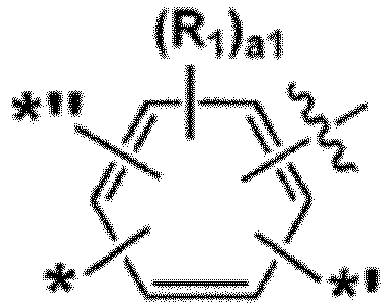





 wobei, in Formeln 4-1 bis 4-48,R1 und a1 jeweils unabhängig das gleiche wie in Anspruch 1 beschrieben sind,a12 eine ganze Zahl von 0 bis 2 ist,* eine Bindungsstelle an Ar1 in Formel 1 angibt,*' eine Bindungsstelle an Ar2 in Formel 1 angibt und
- Kondensierte cyclische Verbindung nach einem der Ansprüche 1-5, wobei,in Formel 2, n2 1 ist und eine von
 in Formel 2, n2 2 ist und eine von


 wobei, in Formeln 5-1 bis 5-24, R21 bis R23 jeweils unabhängig das gleiche wie im Zusammenhang mit R2 in Anspruch 1 beschrieben sind, a21 und a22 jeweils unabhängig eine ganze Zahl von 0 bis 4 sind, a23 eine ganze Zahl von 0 bis 3 ist,
- Kondensierte cyclische Verbindung nach einem der Ansprüche 1-6, wobeieine von
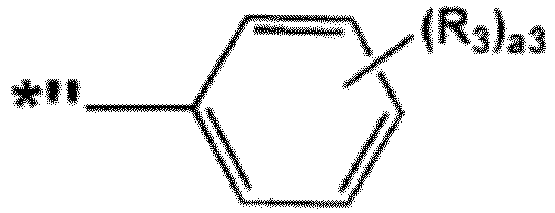


 wobei, in Formeln 6-1 bis 6-21, R3 das gleiche wie in Anspruch 1 beschrieben ist, R3a und R3b jeweils unabhängig das gleiche wie im Zusammenhang mit R3 in Anspruch 1 beschrieben sind und *" eine Bindungsstelle an einen benachbarten Benzolring in Formel 2 angibt.
 - Kondensierte cyclische Verbindung nach einem der Ansprüche 1-7, wobeiAr1 in Formel 1 aus Gruppen ausgewählt ist, die von Formeln 3A-1 bis 3A-4 dargestellt sind, und Ar2 in Formel 1 aus Gruppen ausgewählt ist, die von Formeln 3B-1 bis 3B-4 dargestellt sind:

 wobei, in Formeln 3A-1 bis 3A-4 und 3B-1 bis 3B-4, R41 bis R44 und a41 bis a44 jeweils unabhängig das gleiche wie in Anspruch 1 beschrieben sind und * und *' jeweils eine Bindungsstelle an L1 in Formel 1 angeben.
 - Kondensierte cyclische Verbindung nach einem der Ansprüche 1-8, wobeiAr1 in Formel 1 aus Gruppen ausgewählt ist, die von Formeln 3A(1) bis 3A(30) dargestellt sind, und Ar2 in Formel 1 aus Gruppen ausgewählt ist, die von Formeln 3B(1) bis 3B(30) dargestellt sind:





 wobei, in Formeln 3A(1) bis 3A(30) und 3B(1) bis 3B(30), R41 bis R44 jeweils unabhängig das gleiche wie in Anspruch 1 beschrieben sind, R41 bis R44 nicht Wasserstoff sind und * und *' jeweils eine Bindungsstelle an L1 in Formel 1 angeben.
 - Kondensierte cyclische Verbindung nach einem der Ansprüche 1-9, wobeidie kondensierte cyclische Verbindung von einer dargestellt ist, die aus Formeln 1(1) bis 1(20) ausgewählt ist:


 wobei, in Formeln 1(1) bis 1(20),Ar1 und Ar2 jeweils unabhängig das gleiche wie in Anspruch 1 beschrieben sind,R11 das gleiche wie im Zusammenhang mit R1 in Anspruch 1 beschrieben ist, a12 eine ganze Zahl von 0 bis 2 ist und a13 eine ganze Zahl von 0 bis 3 ist,R21 das gleiche wie im Zusammenhang mit R2 in Anspruch 1 beschrieben ist, a23 eine ganze Zahl von 0 bis 3 ist und a24 eine ganze Zahl von 0 bis 4 ist, undR31 bis R33 jeweils unabhängig das gleiche wie im Zusammenhang mit R3 in Anspruch 1 beschrieben sind und a35 eine ganze Zahl von 0 bis 5 ist.
 - Zusammensetzung, umfassend:eine erste Verbindung und eine zweite Verbindung,wobei die erste Verbindung eine kondensierte cyclische Verbindung nach einem der Ansprüche 1-10 ist,die zweite Verbindung eine Verbindung ist, die mindestens eine umfasst, die aus einer Carbazolgruppe, einer Dibenzofurangruppe, einer Dibenzothiophengruppe, einer Indenocarbazolgruppe, einer Indolocarbazolgruppe, einer Benzofurocarbazolgruppe, einer Benzothienocarbazolgruppe, einer Acridingruppe, einer Dihydroacridingruppe und einer Triindolobenzolgruppe ausgewählt ist und eine elektronenziehende Gruppe nicht umfasst,die elektronenziehende Gruppe ausgewählt ist aus:-F, -CFH2, -CF2H, -CF3, -CN und -NO2;einer C1-C60-Alkylgruppe, die substituiert ist mit mindestens einem, ausgewählt aus -F, - CFH2, -CF2H, -CF3, -CN und -NO2;einer C1-C60-Heteroarylgruppe und einer monovalenten nichtaromatischen kondensierten heteropolycyclischen Gruppe, die jeweils *=N-*' als ringbildende Einheit umfassen; undeiner C1-C60-Heteroarylgruppe und einer monovalenten nichtaromatischen kondensierten heteropolycyclischen Gruppe, jeweils substituiert mit mindestens einem, ausgewählt aus Deuterium, -F, -CFH2, -CF2H, -CF3, -Cl, -Br, -I, einer Hydroxylgruppe, einer Cyanogruppe, einer Nitrogruppe, einer Aminogruppe, einer Amidinogruppe, einer Hydrazingruppe, einer Hydrazongruppe, einer Carboxylsäuregruppe oder einem Salz davon, einer Sulfonsäuregruppe oder einem Salz davon, einer Phosphorsäuregruppe oder einem Salz davon, einer substituierten oder unsubstituierten C1-C60-Alkylgruppe, einer substituierten oder unsubstituierten C2-C60-Alkenylgruppe, einer substituierten oder unsubstituierten C2-C60-Alkinylgruppe, einer substituierten oder unsubstituierten C1-C60-Alkoxygruppe, einer substituierten oder unsubstituierten C3-C10-Cycloalkylgruppe, einer substituierten oder unsubstituierten C1-C10-Heterocycloalkylgruppe, einer substituierten oder unsubstituierten C3-C10-Cycloalkenylgruppe, einer substituierten oder unsubstituierten C1-C10-Heterocycloalkenylgruppe, einer substituierten oder unsubstituierten C6-C60-Arylgruppe, einer substituierten oder unsubstituierten C6-C60-Aryloxygruppe, einer substituierten oder unsubstituierten C6-C60-Arylthiogruppe, einer substituierten oder unsubstituierten C1-C60-Heteroarylgruppe, einer substituierten oder unsubstituierten einer monovalenten nichtaromatischen kondensierten polycyclischen Gruppe und einer substituierten oder unsubstituierten monovalenten nichtaromatischen kondensierten heteropolycyclischen Gruppe, und jeweils umfassend *=N-*' als ringbildende Einheit.
- Zusammensetzung nach Anspruch 11, wobeidie zweite Verbindung aus Verbindungen ausgewählt ist, die dargestellt sind von Formel H-1:
Formel H-1 Ar11-(L11)d1-Ar12
 wobei, in Formeln H-1, 11 und 12,L11 ausgewählt ist aus:einer Einfachbindung, einer Phenylengruppe, einer Naphthylengruppe, einer Fluorenylengruppe, einer Carbazolylengruppe, einer Dibenzofuranylengruppe und einer Dibenzothiophenylengruppe; undeiner Phenylengruppe, einer Naphthylengruppe, einer Fluorenylengruppe, einer Carbazolylengruppe, einer Dibenzofuranylengruppe und einer Dibenzothiophenylengruppe, jeweils substituiert mit mindestens einem, ausgewählt aus Deuterium, einer C1-C10-Alkylgruppe, einer C1-C10-Alkoxygruppe, einer Phenylgruppe, einer Naphthylgruppe, einer Fluorenylgruppe, einer Carbazolylgruppe, einer Dibenzofuranylgruppe, einer Dibenzothiophenylgruppe, einer Biphenylgruppe und -Si(Q11)(Q12)(Q13),d1 eine ganze Zahl von 1 bis 10 ist, wobei, wenn d1 zwei oder mehr ist, zwei oder mehr Gruppen L11 identisch miteinander oder unterschiedlich voneinander sind,Ar11 aus Gruppen ausgewählt ist, die von Formeln 11 bis 12 dargestellt sind,Ar12 ausgewählt ist aus:Gruppen, die dargestellt sind von Formeln 11 und 12, einer Phenylgruppe und einer Naphthylgruppe; undeiner Phenylgruppe und einer Naphthylgruppe, jeweils substituiert mit mindestens einem, ausgewählt aus Deuterium, einer Hydroxylgruppe, einer Aminogruppe, einer Amidinogruppe, einer Hydrazingruppe, einer Hydrazongruppe, einer Carboxylsäuregruppe oder einem Salz davon, einer Sulfonsäuregruppe oder einem Salz davon, einer Phosphorsäuregruppe oder einem Salz davon, einer C1-C20-Alkylgruppe, einer C1-C20-Alkoxygruppe, einer Phenylgruppe, einer Naphthylgruppe, einer Fluorenylgruppe, einer Carbazolylgruppe, einer Dibenzofuranylgruppe, einer Dibenzothiophenylgruppe und einer Biphenylgruppe,CY1 und CY2 jeweils unabhängig ausgewählt sind aus einer Benzolgruppe, einer Naphthalingruppe, einer Fluorengruppe, einer Carbazolgruppe, einer Benzocarbazolgruppe, einer Indolocarbazolgruppe, einer Dibenzofurangruppe, einer Dibenzothiophengruppe und einer Dibenzosilolgruppe,A21 ausgewählt ist aus einer Einfachbindung, O, S, N(R51), C(R51)(R52) und Si(R51)(R52),A22 ausgewählt ist aus einer Einfachbindung, O, S, N(R53), C(R53)(R54) und Si(R53)(R54),mindestens eines, das aus A21 und A22 in Formel 12 ausgewählt ist, keine Einfachbindung ist,R51 bis R54, R60 und R70 jeweils unabhängig ausgewählt sind aus:Wasserstoff, Deuterium, einer Hydroxylgruppe, einer Aminogruppe, einer Amidinogruppe, einer Hydrazingruppe, einer Hydrazongruppe, einer Carboxylsäuregruppe oder einem Salz davon, einer Sulfonsäuregruppe oder einem Salz davon, einer Phosphorsäuregruppe oder einem Salz davon, einer C1-C20-Alkylgruppe und einer C1-C20-Alkoxygruppe;einer C1-C20-Alkylgruppe und einer C1-C20-Alkoxygruppe, jeweils substituiert mit mindestens einem, ausgewählt aus Deuterium, einer Hydroxylgruppe, einer Aminogruppe, einer Amidinogruppe, einer Hydrazingruppe, einer Hydrazongruppe, einer Carboxylsäuregruppe oder einem Salz davon, einer Sulfonsäuregruppe oder einem Salz davon, einer Phosphorsäuregruppe oder einem Salz davon, einer Phenylgruppe, einer Naphthylgruppe, einer Fluorenylgruppe, einer Carbazolylgruppe, einer Dibenzofuranylgruppe und einer Dibenzothiophenylgruppe;einer Phenylgruppe, einer Naphthylgruppe, einer Fluorenylgruppe, einer Carbazolylgruppe, einer Dibenzofuranylgruppe und einer Dibenzothiophenylgruppe;einer Phenylgruppe, einer Naphthylgruppe, eine Fluorenylgruppe, einer Carbazolylgruppe, einer Dibenzofuranylgruppe und einer Dibenzothiophenylgruppe, jeweils substituiert mit mindestens einem, ausgewählt aus Deuterium, einer Hydroxylgruppe, einer Aminogruppe, einer Amidinogruppe, einer Hydrazingruppe, einer Hydrazongruppe, einer Carboxylsäuregruppe oder einem Salz davon, einer Sulfonsäuregruppe oder einem Salz davon, eine Phosphorsäuregruppe oder einem Salz davon, einer C1-C20-Alkylgruppe, einer C1-C20-Alkoxygruppe, einer Phenylgruppe, einer Naphthylgruppe, einer Fluorenylgruppe, einer Carbazolylgruppe, einer Dibenzofuranylgruppe, einer Dibenzothiophenylgruppe und einer Biphenylgruppe; und-Si(Q1)(Q2)(Q3),e1 und e2 jeweils unabhängig eine ganze Zahl von 0 bis 10 sind,Q1 bis Q3 und Q11 bis Q13 jeweils unabhängig ausgewählt sind aus Wasserstoff, Deuterium, einer Hydroxylgruppe, einer Aminogruppe, einer Amidinogruppe, einer Hydrazingruppe, einer Hydrazongruppe, einer Carboxylsäuregruppe oder einem Salz davon, einer Sulfonsäuregruppe oder einem Salz davon, einer Phosphorsäuregruppe oder einem Salz davon, einer Phenylgruppe, einer Naphthylgruppe, einer Fluorenylgruppe, einer Carbazolylgruppe, einer Dibenzofuranylgruppe, einer Dibenzothiophenylgruppe und einer Biphenylgruppe, und* eine Bindungsstelle an ein benachbartes Atom angibt;vorzugsweise, wobeiAr11 ausgewählt ist aus Gruppen, die von Formeln 11-1 bis 11-8 und 12-1 bis 12-8 dargestellt sind, undAr12 ausgewählt ist aus:Gruppen, die dargestellt sind von Formeln 11-1 bis 11-8 und 12-1 bis 12-8, einer Phenylgruppe und einer Naphthylgruppe; undeiner Phenylgruppe und einer Naphthylgruppe, jeweils substituiert mit mindestens einem, ausgewählt aus Deuterium, einer Hydroxylgruppe, einer Aminogruppe, einer Amidinogruppe, einer Hydrazingruppe, einer Hydrazongruppe, einer Carboxylsäuregruppe oder einem Salz davon, einer Sulfonsäuregruppe oder einem Salz davon, einer Phosphorsäuregruppe oder einem Salz davon, einer C1-C20-Alkylgruppe, einer C1-C20-Alkoxygruppe, einer Phenylgruppe, einer Naphthylgruppe, einer Fluorenylgruppe, einer Carbazolylgruppe, einer Dibenzofuranylgruppe, einer Dibenzothiophenylgruppe und einer Biphenylgruppe:


 wobei, in Formeln 11-1 bis 11-8 und 12-1 bis 12-8,A23 in Formeln 11-1 bis 11-7 und 12-1 bis 12-7 ausgewählt ist aus O, S, N(R55), C(R55)(R56) und Si(R55)(R56) und A23 in Formeln 11-8 und 12-8 N(Rss) ist,A24 in Formeln 11-1 bis 11-7 und 12-1 bis 12-7 ausgewählt ist aus O, S, N(R57), C(R57)(R58) und Si(R57)(R58) und A24 in Formeln 11-8 und 12-8 N(R57) ist,A21, A22, R60 und R70 jeweils unabhängig das gleiche wie im Zusammenhang mit Formeln 11 und 12 beschrieben sind,R55 bis R58 jeweils unabhängig das gleiche wie im Zusammenhang mit R51 der Formeln 11 und 12 beschrieben sind,R61 das gleiche wie im Zusammenhang mit R60 der Formeln 11 und 12 beschrieben ist,e16 eine ganze Zahl von 0 bis 6 ist,e15 eine ganze Zahl von 0 bis 5 ist,e14 eine ganze Zahl von 0 bis 4 ist,e13 eine ganze Zahl von 0 bis 3 ist,e24 eine ganze Zahl von 0 bis 4 ist, und* eine Bindungsstelle an ein benachbartes Atom angibt.
 - Organische lichtemittierende Vorrichtung, umfassend:eine erste Elektrode;eine zweite Elektrode; undeine organische Schicht, die zwischen der ersten Elektrode und der zweiten Elektrode angeordnet ist,wobei die organische Schicht eine Emissionsschicht umfasst, undwobei die organische Schicht mindestens eine von Formel 1 eines der Ansprüche 1-10 dargestellte kondensierte cyclische Verbindung umfasst.
- Organische lichtemittierende Vorrichtung nach Anspruch 13, wobei
die Emissionsschicht mindestens eine von Formel 1 dargestellte kondensierte cyclische Verbindung umfasst;
vorzugsweise, wobei die Emissionsschicht blaues Licht emittiert. - Organische lichtemittierende Vorrichtung nach Ansprüchen 13 oder 14, wobeidie Emissionsschicht einen Wirt und einen Dotierstoff umfasst,der Wirt mindestens eine von Formel 1 dargestellte kondensierte cyclische Verbindung umfasst, undder Dotierstoff einen phosphoreszierenden Dotierstoff umfasst; und/oder wobeidie organische Schicht ferner einen Elektronentransportbereich umfasst, der zwischen der Emissionsschicht und der zweiten Elektrode angeordnet ist,der Elektronentransportbereich eine Lochblockierschicht und eine Elektronentransportschicht umfasst,die Lochblockierschicht zwischen der Emissionsschicht und der Elektronentransportschicht angeordnet ist, unddie Lochblockierschicht die mindestens eine von Formel 1 dargestellte kondensierte cyclische Verbindung umfasst.
Applications Claiming Priority (1)
| Application Number | Priority Date | Filing Date | Title |
|---|---|---|---|
| KR1020180084762A KR102703720B1 (ko) | 2018-07-20 | 2018-07-20 | 축합환 화합물, 이를 포함한 조성물 및 이를 포함한 유기 발광 소자 |
Publications (2)
| Publication Number | Publication Date |
|---|---|
| EP3597645A1 EP3597645A1 (de) | 2020-01-22 |
| EP3597645B1 true EP3597645B1 (de) | 2024-05-08 |
Family
ID=67211575
Family Applications (1)
| Application Number | Title | Priority Date | Filing Date |
|---|---|---|---|
| EP19184904.1A Active EP3597645B1 (de) | 2018-07-20 | 2019-07-08 | Kondensierte cyclische verbindung, zusammensetzung mit der kondensierten cyclischen verbindung und organische lichtemittierende vorrichtung mit der kondensierten cyclischen verbindung |
Country Status (4)
| Country | Link |
|---|---|
| US (1) | US11053228B2 (de) |
| EP (1) | EP3597645B1 (de) |
| KR (1) | KR102703720B1 (de) |
| CN (1) | CN110734418B (de) |
Families Citing this family (2)
| Publication number | Priority date | Publication date | Assignee | Title |
|---|---|---|---|---|
| EP3604321B1 (de) | 2018-07-31 | 2022-02-09 | Samsung Electronics Co., Ltd. | Organometallische verbindung, organische lichtemittierende vorrichtung damit und diagnosezusammensetzung mit der organometallischen verbindung |
| KR102856251B1 (ko) | 2018-12-21 | 2025-09-09 | 삼성에스디아이 주식회사 | 축합환 화합물 및 이를 포함한 유기 발광 소자 |
Family Cites Families (26)
| Publication number | Priority date | Publication date | Assignee | Title |
|---|---|---|---|---|
| JP4947955B2 (ja) | 2005-11-04 | 2012-06-06 | 三洋電機株式会社 | ジベンゾチオフェン誘導体及びそれらを用いた有機エレクトロルミネッセンス素子 |
| US8273467B2 (en) | 2006-02-28 | 2012-09-25 | Fujifilm Corporation | Organic electroluminescent device |
| WO2009008100A1 (ja) | 2007-07-10 | 2009-01-15 | Idemitsu Kosan Co., Ltd. | 有機エレクトロルミネッセンス素子用材料及びそれを用いた有機エレクトロルミネッセンス素子 |
| JP5658478B2 (ja) | 2010-04-23 | 2015-01-28 | ユー・ディー・シー アイルランド リミテッド | 有機電界発光素子、並びにm−キンクフェニル構造を有する電荷輸送材料及び化合物 |
| JP5814031B2 (ja) | 2010-07-30 | 2015-11-17 | ユー・ディー・シー アイルランド リミテッド | 有機電界発光素子、及びジベンゾチオフェン構造又はジベンゾフラン構造を有する有機電界発光素子用材料 |
| JPWO2013069242A1 (ja) | 2011-11-07 | 2015-04-02 | 出光興産株式会社 | 有機エレクトロルミネッセンス素子用材料及びそれを用いた有機エレクトロルミネッセンス素子 |
| TR201907782T4 (tr) * | 2011-11-30 | 2019-06-21 | Panasonic Ip Corp America | Ağ düğümü ve iletişim yöntemi. |
| KR101993223B1 (ko) * | 2012-10-10 | 2019-06-26 | 엘지전자 주식회사 | 의류처리장치 |
| JP6187080B2 (ja) * | 2012-10-11 | 2017-08-30 | Tdk株式会社 | 電界発光素子 |
| JP6486824B2 (ja) * | 2013-08-09 | 2019-03-20 | 出光興産株式会社 | 有機エレクトロルミネッセンス用組成物、有機エレクトロルミネッセンス素子用材料、有機エレクトロルミネッセンス素子用材料溶液及び有機エレクトロルミネッセンス素子 |
| KR102191996B1 (ko) * | 2013-09-27 | 2020-12-17 | 삼성디스플레이 주식회사 | 헤테로고리 화합물 및 이를 포함한 유기 발광 소자 |
| KR101618426B1 (ko) | 2014-01-21 | 2016-05-04 | 주식회사 두산 | 유기 화합물 및 이를 포함하는 유기 전계 발광 소자 |
| KR102308116B1 (ko) * | 2014-10-23 | 2021-10-05 | 삼성전자주식회사 | 축합환 화합물 및 이를 포함한 유기 발광 소자 |
| EP3072943B1 (de) | 2015-03-26 | 2018-05-02 | Idemitsu Kosan Co., Ltd. | Dibenzofuran/carbazol-substituierte benzonitrile |
| KR102399573B1 (ko) * | 2015-08-04 | 2022-05-19 | 삼성디스플레이 주식회사 | 화합물 및 이를 포함하는 유기 발광 소자 |
| US10098595B2 (en) * | 2015-08-06 | 2018-10-16 | Texas Instruments Incorporated | Low power photon counting system |
| EP3348544A4 (de) * | 2015-09-11 | 2019-03-27 | Toray Industries, Inc. | Verfahren zur herstellung von caprolactam |
| KR102509827B1 (ko) * | 2015-09-22 | 2023-03-15 | 덕산네오룩스 주식회사 | 유기전기소자용 화합물, 이를 이용한 유기전기소자 및 그 전자 장치 |
| KR102572294B1 (ko) | 2015-09-25 | 2023-08-30 | 덕산네오룩스 주식회사 | 유기전기 소자용 화합물, 이를 이용한 유기전기소자 및 그 전자 장치 |
| WO2017115834A1 (ja) * | 2015-12-28 | 2017-07-06 | 株式会社Kyulux | 化合物、発光材料および有機発光素子 |
| JP6829547B2 (ja) | 2015-12-28 | 2021-02-10 | 株式会社Kyulux | 化合物、発光材料および有機発光素子 |
| EP3190164B1 (de) * | 2016-01-05 | 2019-07-24 | Samsung Electronics Co., Ltd | Zusammensetzung, dünnschicht mit der zusammensetzung und organische lichtemittierende vorrichtung mit der zusammensetzung oder der dünnschicht |
| WO2018139662A1 (ja) * | 2017-01-30 | 2018-08-02 | 出光興産株式会社 | 有機エレクトロルミネッセンス素子及び電子機器 |
| CN110914378A (zh) * | 2017-06-23 | 2020-03-24 | 九州有机光材股份有限公司 | 用于有机发光二极管中的组合物 |
| WO2019004254A1 (ja) * | 2017-06-27 | 2019-01-03 | 株式会社Kyulux | 発光材料、化合物、遅延蛍光体および発光素子 |
| EP4498784A3 (de) * | 2018-03-30 | 2025-04-23 | Kyulux, Inc. | Stoffzusammensetzung zur verwendung in organischen leuchtdioden |
-
2018
- 2018-07-20 KR KR1020180084762A patent/KR102703720B1/ko active Active
-
2019
- 2019-07-08 EP EP19184904.1A patent/EP3597645B1/de active Active
- 2019-07-12 US US16/510,187 patent/US11053228B2/en active Active
- 2019-07-18 CN CN201910650293.0A patent/CN110734418B/zh active Active
Also Published As
| Publication number | Publication date |
|---|---|
| CN110734418A (zh) | 2020-01-31 |
| US11053228B2 (en) | 2021-07-06 |
| KR102703720B1 (ko) | 2024-09-06 |
| EP3597645A1 (de) | 2020-01-22 |
| US20200031812A1 (en) | 2020-01-30 |
| KR20200009834A (ko) | 2020-01-30 |
| CN110734418B (zh) | 2024-01-26 |
Similar Documents
| Publication | Publication Date | Title |
|---|---|---|
| EP3263569B1 (de) | Kondensierte cyclische verbindung, zusammensetzung damit, und organische lichtemittierende vorrichtung mit kondensierter cyclischer verbindung | |
| KR102541267B1 (ko) | 축합환 화합물 및 이를 포함한 유기 발광 소자 | |
| KR102390371B1 (ko) | 유기금속 화합물 및 이를 포함한 유기 발광 소자 | |
| KR102877616B1 (ko) | 조성물 및 이를 포함한 유기 발광 소자 | |
| KR102587955B1 (ko) | 축합환 화합물 및 이를 포함한 유기 발광 소자 | |
| EP4016656A1 (de) | Organometallische verbindung, organische lichtemittierende vorrichtung damit und diagnosezusammensetzung mit der organometallischen verbindung | |
| EP3988557A1 (de) | Organometallische verbindung, organische lichtemittierende vorrichtung damit und diagnosezusammensetzung mit der organometallischen verbindung | |
| EP4086265B1 (de) | Organometallische verbindung, organische lichtemittierende vorrichtung damit und elektronisches gerät mit der organischen lichtemittierenden vorrichtung | |
| EP3644385A1 (de) | Kondensierte cyclische verbindung, zusammensetzung damit und organische lichtemittierende vorrichtung damit | |
| KR20170000323A (ko) | 축합환 화합물 및 이를 포함한 유기 발광 소자 | |
| KR102804986B1 (ko) | 헤테로시클릭 화합물 및 이를 포함한 유기 발광 소자 | |
| KR102739117B1 (ko) | 축합환 화합물 및 이를 포함한 유기 발광 소자 | |
| EP3597645B1 (de) | Kondensierte cyclische verbindung, zusammensetzung mit der kondensierten cyclischen verbindung und organische lichtemittierende vorrichtung mit der kondensierten cyclischen verbindung | |
| KR20250053814A (ko) | 축합환 화합물, 이를 포함한 유기 발광 소자, 및 이를 포함한 전자 장치 | |
| KR20200078215A (ko) | 축합환 화합물 및 이를 포함한 유기 발광 소자 | |
| KR102715029B1 (ko) | 실릴계 화합물 및 이를 포함하는 유기 발광 소자 | |
| EP4027400A1 (de) | Organische lichtemittierende vorrichtung | |
| EP3702349B1 (de) | Heterocyclische verbindung und organische lichtemittierende vorrichtung damit | |
| KR102866069B1 (ko) | 헤테로시클릭 화합물 및 이를 포함한 유기 발광 소자 | |
| KR102852290B1 (ko) | 조성물 및 이를 포함한 유기 발광 소자 | |
| KR102805277B1 (ko) | 유기 발광 소자 | |
| US11469381B2 (en) | Condensed cyclic compound and organic light-emitting device including the same | |
| KR102887177B1 (ko) | 유기금속 화합물, 이를 포함한 유기 발광 소자 및 유기 발광 소자를 포함한 전자 장치 | |
| KR102875792B1 (ko) | 유기금속 화합물, 이를 포함한 유기 발광 소자 및 유기 발광 소자를 포함한 전자 장치 | |
| KR102921420B1 (ko) | 유기금속 화합물, 이를 포함한 유기 발광 소자 및 유기 발광 소자를 포함한 전자 장치 |
Legal Events
| Date | Code | Title | Description |
|---|---|---|---|
| PUAI | Public reference made under article 153(3) epc to a published international application that has entered the european phase |
Free format text: ORIGINAL CODE: 0009012 |
|
| STAA | Information on the status of an ep patent application or granted ep patent |
Free format text: STATUS: THE APPLICATION HAS BEEN PUBLISHED |
|
| AK | Designated contracting states |
Kind code of ref document: A1 Designated state(s): AL AT BE BG CH CY CZ DE DK EE ES FI FR GB GR HR HU IE IS IT LI LT LU LV MC MK MT NL NO PL PT RO RS SE SI SK SM TR |
|
| AX | Request for extension of the european patent |
Extension state: BA ME |
|
| STAA | Information on the status of an ep patent application or granted ep patent |
Free format text: STATUS: REQUEST FOR EXAMINATION WAS MADE |
|
| 17P | Request for examination filed |
Effective date: 20200722 |
|
| RBV | Designated contracting states (corrected) |
Designated state(s): AL AT BE BG CH CY CZ DE DK EE ES FI FR GB GR HR HU IE IS IT LI LT LU LV MC MK MT NL NO PL PT RO RS SE SI SK SM TR |
|
| STAA | Information on the status of an ep patent application or granted ep patent |
Free format text: STATUS: EXAMINATION IS IN PROGRESS |
|
| 17Q | First examination report despatched |
Effective date: 20220208 |
|
| P01 | Opt-out of the competence of the unified patent court (upc) registered |
Effective date: 20230530 |
|
| GRAP | Despatch of communication of intention to grant a patent |
Free format text: ORIGINAL CODE: EPIDOSNIGR1 |
|
| STAA | Information on the status of an ep patent application or granted ep patent |
Free format text: STATUS: GRANT OF PATENT IS INTENDED |
|
| RIC1 | Information provided on ipc code assigned before grant |
Ipc: H10K 101/10 20230101ALI20231106BHEP Ipc: H05B 33/20 20060101ALI20231106BHEP Ipc: H10K 85/60 20230101ALI20231106BHEP Ipc: C07D 333/76 20060101ALI20231106BHEP Ipc: C09K 11/06 20060101ALI20231106BHEP Ipc: C07D 307/91 20060101AFI20231106BHEP |
|
| INTG | Intention to grant announced |
Effective date: 20231130 |
|
| GRAS | Grant fee paid |
Free format text: ORIGINAL CODE: EPIDOSNIGR3 |
|
| GRAA | (expected) grant |
Free format text: ORIGINAL CODE: 0009210 |
|
| STAA | Information on the status of an ep patent application or granted ep patent |
Free format text: STATUS: THE PATENT HAS BEEN GRANTED |
|
| AK | Designated contracting states |
Kind code of ref document: B1 Designated state(s): AL AT BE BG CH CY CZ DE DK EE ES FI FR GB GR HR HU IE IS IT LI LT LU LV MC MK MT NL NO PL PT RO RS SE SI SK SM TR |
|
| REG | Reference to a national code |
Ref country code: GB Ref legal event code: FG4D |
|
| REG | Reference to a national code |
Ref country code: CH Ref legal event code: EP |
|
| REG | Reference to a national code |
Ref country code: DE Ref legal event code: R096 Ref document number: 602019051825 Country of ref document: DE |
|
| REG | Reference to a national code |
Ref country code: IE Ref legal event code: FG4D |
|
| REG | Reference to a national code |
Ref country code: LT Ref legal event code: MG9D |
|
| REG | Reference to a national code |
Ref country code: NL Ref legal event code: MP Effective date: 20240508 |
|
| PG25 | Lapsed in a contracting state [announced via postgrant information from national office to epo] |
Ref country code: IS Free format text: LAPSE BECAUSE OF FAILURE TO SUBMIT A TRANSLATION OF THE DESCRIPTION OR TO PAY THE FEE WITHIN THE PRESCRIBED TIME-LIMIT Effective date: 20240908 |
|
| PG25 | Lapsed in a contracting state [announced via postgrant information from national office to epo] |
Ref country code: BG Free format text: LAPSE BECAUSE OF FAILURE TO SUBMIT A TRANSLATION OF THE DESCRIPTION OR TO PAY THE FEE WITHIN THE PRESCRIBED TIME-LIMIT Effective date: 20240508 |
|
| PG25 | Lapsed in a contracting state [announced via postgrant information from national office to epo] |
Ref country code: HR Free format text: LAPSE BECAUSE OF FAILURE TO SUBMIT A TRANSLATION OF THE DESCRIPTION OR TO PAY THE FEE WITHIN THE PRESCRIBED TIME-LIMIT Effective date: 20240508 Ref country code: FI Free format text: LAPSE BECAUSE OF FAILURE TO SUBMIT A TRANSLATION OF THE DESCRIPTION OR TO PAY THE FEE WITHIN THE PRESCRIBED TIME-LIMIT Effective date: 20240508 |
|
| PG25 | Lapsed in a contracting state [announced via postgrant information from national office to epo] |
Ref country code: GR Free format text: LAPSE BECAUSE OF FAILURE TO SUBMIT A TRANSLATION OF THE DESCRIPTION OR TO PAY THE FEE WITHIN THE PRESCRIBED TIME-LIMIT Effective date: 20240809 |
|
| PG25 | Lapsed in a contracting state [announced via postgrant information from national office to epo] |
Ref country code: PT Free format text: LAPSE BECAUSE OF FAILURE TO SUBMIT A TRANSLATION OF THE DESCRIPTION OR TO PAY THE FEE WITHIN THE PRESCRIBED TIME-LIMIT Effective date: 20240909 |
|
| REG | Reference to a national code |
Ref country code: AT Ref legal event code: MK05 Ref document number: 1684903 Country of ref document: AT Kind code of ref document: T Effective date: 20240508 |
|
| PG25 | Lapsed in a contracting state [announced via postgrant information from national office to epo] |
Ref country code: NL Free format text: LAPSE BECAUSE OF FAILURE TO SUBMIT A TRANSLATION OF THE DESCRIPTION OR TO PAY THE FEE WITHIN THE PRESCRIBED TIME-LIMIT Effective date: 20240508 |
|
| PG25 | Lapsed in a contracting state [announced via postgrant information from national office to epo] |
Ref country code: ES Free format text: LAPSE BECAUSE OF FAILURE TO SUBMIT A TRANSLATION OF THE DESCRIPTION OR TO PAY THE FEE WITHIN THE PRESCRIBED TIME-LIMIT Effective date: 20240508 |
|
| PG25 | Lapsed in a contracting state [announced via postgrant information from national office to epo] |
Ref country code: AT Free format text: LAPSE BECAUSE OF FAILURE TO SUBMIT A TRANSLATION OF THE DESCRIPTION OR TO PAY THE FEE WITHIN THE PRESCRIBED TIME-LIMIT Effective date: 20240508 |
|
| PG25 | Lapsed in a contracting state [announced via postgrant information from national office to epo] |
Ref country code: PL Free format text: LAPSE BECAUSE OF FAILURE TO SUBMIT A TRANSLATION OF THE DESCRIPTION OR TO PAY THE FEE WITHIN THE PRESCRIBED TIME-LIMIT Effective date: 20240508 |
|
| PG25 | Lapsed in a contracting state [announced via postgrant information from national office to epo] |
Ref country code: LV Free format text: LAPSE BECAUSE OF FAILURE TO SUBMIT A TRANSLATION OF THE DESCRIPTION OR TO PAY THE FEE WITHIN THE PRESCRIBED TIME-LIMIT Effective date: 20240508 |
|
| PG25 | Lapsed in a contracting state [announced via postgrant information from national office to epo] |
Ref country code: PT Free format text: LAPSE BECAUSE OF FAILURE TO SUBMIT A TRANSLATION OF THE DESCRIPTION OR TO PAY THE FEE WITHIN THE PRESCRIBED TIME-LIMIT Effective date: 20240909 Ref country code: PL Free format text: LAPSE BECAUSE OF FAILURE TO SUBMIT A TRANSLATION OF THE DESCRIPTION OR TO PAY THE FEE WITHIN THE PRESCRIBED TIME-LIMIT Effective date: 20240508 Ref country code: NO Free format text: LAPSE BECAUSE OF FAILURE TO SUBMIT A TRANSLATION OF THE DESCRIPTION OR TO PAY THE FEE WITHIN THE PRESCRIBED TIME-LIMIT Effective date: 20240808 Ref country code: NL Free format text: LAPSE BECAUSE OF FAILURE TO SUBMIT A TRANSLATION OF THE DESCRIPTION OR TO PAY THE FEE WITHIN THE PRESCRIBED TIME-LIMIT Effective date: 20240508 Ref country code: LV Free format text: LAPSE BECAUSE OF FAILURE TO SUBMIT A TRANSLATION OF THE DESCRIPTION OR TO PAY THE FEE WITHIN THE PRESCRIBED TIME-LIMIT Effective date: 20240508 Ref country code: IS Free format text: LAPSE BECAUSE OF FAILURE TO SUBMIT A TRANSLATION OF THE DESCRIPTION OR TO PAY THE FEE WITHIN THE PRESCRIBED TIME-LIMIT Effective date: 20240908 Ref country code: HR Free format text: LAPSE BECAUSE OF FAILURE TO SUBMIT A TRANSLATION OF THE DESCRIPTION OR TO PAY THE FEE WITHIN THE PRESCRIBED TIME-LIMIT Effective date: 20240508 Ref country code: GR Free format text: LAPSE BECAUSE OF FAILURE TO SUBMIT A TRANSLATION OF THE DESCRIPTION OR TO PAY THE FEE WITHIN THE PRESCRIBED TIME-LIMIT Effective date: 20240809 Ref country code: FI Free format text: LAPSE BECAUSE OF FAILURE TO SUBMIT A TRANSLATION OF THE DESCRIPTION OR TO PAY THE FEE WITHIN THE PRESCRIBED TIME-LIMIT Effective date: 20240508 Ref country code: ES Free format text: LAPSE BECAUSE OF FAILURE TO SUBMIT A TRANSLATION OF THE DESCRIPTION OR TO PAY THE FEE WITHIN THE PRESCRIBED TIME-LIMIT Effective date: 20240508 Ref country code: BG Free format text: LAPSE BECAUSE OF FAILURE TO SUBMIT A TRANSLATION OF THE DESCRIPTION OR TO PAY THE FEE WITHIN THE PRESCRIBED TIME-LIMIT Effective date: 20240508 Ref country code: AT Free format text: LAPSE BECAUSE OF FAILURE TO SUBMIT A TRANSLATION OF THE DESCRIPTION OR TO PAY THE FEE WITHIN THE PRESCRIBED TIME-LIMIT Effective date: 20240508 Ref country code: RS Free format text: LAPSE BECAUSE OF FAILURE TO SUBMIT A TRANSLATION OF THE DESCRIPTION OR TO PAY THE FEE WITHIN THE PRESCRIBED TIME-LIMIT Effective date: 20240808 |
|
| PG25 | Lapsed in a contracting state [announced via postgrant information from national office to epo] |
Ref country code: DK Free format text: LAPSE BECAUSE OF FAILURE TO SUBMIT A TRANSLATION OF THE DESCRIPTION OR TO PAY THE FEE WITHIN THE PRESCRIBED TIME-LIMIT Effective date: 20240508 |
|
| PG25 | Lapsed in a contracting state [announced via postgrant information from national office to epo] |
Ref country code: EE Free format text: LAPSE BECAUSE OF FAILURE TO SUBMIT A TRANSLATION OF THE DESCRIPTION OR TO PAY THE FEE WITHIN THE PRESCRIBED TIME-LIMIT Effective date: 20240508 |
|
| PG25 | Lapsed in a contracting state [announced via postgrant information from national office to epo] |
Ref country code: CZ Free format text: LAPSE BECAUSE OF FAILURE TO SUBMIT A TRANSLATION OF THE DESCRIPTION OR TO PAY THE FEE WITHIN THE PRESCRIBED TIME-LIMIT Effective date: 20240508 |
|
| PG25 | Lapsed in a contracting state [announced via postgrant information from national office to epo] |
Ref country code: SK Free format text: LAPSE BECAUSE OF FAILURE TO SUBMIT A TRANSLATION OF THE DESCRIPTION OR TO PAY THE FEE WITHIN THE PRESCRIBED TIME-LIMIT Effective date: 20240508 Ref country code: RO Free format text: LAPSE BECAUSE OF FAILURE TO SUBMIT A TRANSLATION OF THE DESCRIPTION OR TO PAY THE FEE WITHIN THE PRESCRIBED TIME-LIMIT Effective date: 20240508 |
|
| PG25 | Lapsed in a contracting state [announced via postgrant information from national office to epo] |
Ref country code: SM Free format text: LAPSE BECAUSE OF FAILURE TO SUBMIT A TRANSLATION OF THE DESCRIPTION OR TO PAY THE FEE WITHIN THE PRESCRIBED TIME-LIMIT Effective date: 20240508 |
|
| PG25 | Lapsed in a contracting state [announced via postgrant information from national office to epo] |
Ref country code: SM Free format text: LAPSE BECAUSE OF FAILURE TO SUBMIT A TRANSLATION OF THE DESCRIPTION OR TO PAY THE FEE WITHIN THE PRESCRIBED TIME-LIMIT Effective date: 20240508 Ref country code: SK Free format text: LAPSE BECAUSE OF FAILURE TO SUBMIT A TRANSLATION OF THE DESCRIPTION OR TO PAY THE FEE WITHIN THE PRESCRIBED TIME-LIMIT Effective date: 20240508 Ref country code: RO Free format text: LAPSE BECAUSE OF FAILURE TO SUBMIT A TRANSLATION OF THE DESCRIPTION OR TO PAY THE FEE WITHIN THE PRESCRIBED TIME-LIMIT Effective date: 20240508 Ref country code: EE Free format text: LAPSE BECAUSE OF FAILURE TO SUBMIT A TRANSLATION OF THE DESCRIPTION OR TO PAY THE FEE WITHIN THE PRESCRIBED TIME-LIMIT Effective date: 20240508 Ref country code: DK Free format text: LAPSE BECAUSE OF FAILURE TO SUBMIT A TRANSLATION OF THE DESCRIPTION OR TO PAY THE FEE WITHIN THE PRESCRIBED TIME-LIMIT Effective date: 20240508 Ref country code: CZ Free format text: LAPSE BECAUSE OF FAILURE TO SUBMIT A TRANSLATION OF THE DESCRIPTION OR TO PAY THE FEE WITHIN THE PRESCRIBED TIME-LIMIT Effective date: 20240508 |
|
| PG25 | Lapsed in a contracting state [announced via postgrant information from national office to epo] |
Ref country code: IT Free format text: LAPSE BECAUSE OF FAILURE TO SUBMIT A TRANSLATION OF THE DESCRIPTION OR TO PAY THE FEE WITHIN THE PRESCRIBED TIME-LIMIT Effective date: 20240508 Ref country code: MC Free format text: LAPSE BECAUSE OF FAILURE TO SUBMIT A TRANSLATION OF THE DESCRIPTION OR TO PAY THE FEE WITHIN THE PRESCRIBED TIME-LIMIT Effective date: 20240508 |
|
| REG | Reference to a national code |
Ref country code: DE Ref legal event code: R097 Ref document number: 602019051825 Country of ref document: DE |
|
| REG | Reference to a national code |
Ref country code: CH Ref legal event code: PL |
|
| PLBE | No opposition filed within time limit |
Free format text: ORIGINAL CODE: 0009261 |
|
| STAA | Information on the status of an ep patent application or granted ep patent |
Free format text: STATUS: NO OPPOSITION FILED WITHIN TIME LIMIT |
|
| PG25 | Lapsed in a contracting state [announced via postgrant information from national office to epo] |
Ref country code: LU Free format text: LAPSE BECAUSE OF NON-PAYMENT OF DUE FEES Effective date: 20240708 |
|
| PG25 | Lapsed in a contracting state [announced via postgrant information from national office to epo] |
Ref country code: LU Free format text: LAPSE BECAUSE OF NON-PAYMENT OF DUE FEES Effective date: 20240708 |
|
| 26N | No opposition filed |
Effective date: 20250211 |
|
| PG25 | Lapsed in a contracting state [announced via postgrant information from national office to epo] |
Ref country code: BE Free format text: LAPSE BECAUSE OF NON-PAYMENT OF DUE FEES Effective date: 20240731 Ref country code: SI Free format text: LAPSE BECAUSE OF FAILURE TO SUBMIT A TRANSLATION OF THE DESCRIPTION OR TO PAY THE FEE WITHIN THE PRESCRIBED TIME-LIMIT Effective date: 20240508 Ref country code: CH Free format text: LAPSE BECAUSE OF NON-PAYMENT OF DUE FEES Effective date: 20240731 |
|
| REG | Reference to a national code |
Ref country code: BE Ref legal event code: MM Effective date: 20240731 |
|
| PGFP | Annual fee paid to national office [announced via postgrant information from national office to epo] |
Ref country code: GB Payment date: 20250612 Year of fee payment: 7 |
|
| PGFP | Annual fee paid to national office [announced via postgrant information from national office to epo] |
Ref country code: FR Payment date: 20250623 Year of fee payment: 7 |
|
| PG25 | Lapsed in a contracting state [announced via postgrant information from national office to epo] |
Ref country code: IE Free format text: LAPSE BECAUSE OF NON-PAYMENT OF DUE FEES Effective date: 20240708 |
|
| PG25 | Lapsed in a contracting state [announced via postgrant information from national office to epo] |
Ref country code: SE Free format text: LAPSE BECAUSE OF FAILURE TO SUBMIT A TRANSLATION OF THE DESCRIPTION OR TO PAY THE FEE WITHIN THE PRESCRIBED TIME-LIMIT Effective date: 20240508 |
|
| PGFP | Annual fee paid to national office [announced via postgrant information from national office to epo] |
Ref country code: DE Payment date: 20250611 Year of fee payment: 7 |
|
| PG25 | Lapsed in a contracting state [announced via postgrant information from national office to epo] |
Ref country code: CY Free format text: LAPSE BECAUSE OF FAILURE TO SUBMIT A TRANSLATION OF THE DESCRIPTION OR TO PAY THE FEE WITHIN THE PRESCRIBED TIME-LIMIT; INVALID AB INITIO Effective date: 20190708 |
|
| PG25 | Lapsed in a contracting state [announced via postgrant information from national office to epo] |
Ref country code: HU Free format text: LAPSE BECAUSE OF FAILURE TO SUBMIT A TRANSLATION OF THE DESCRIPTION OR TO PAY THE FEE WITHIN THE PRESCRIBED TIME-LIMIT; INVALID AB INITIO Effective date: 20190708 |