EP3599251B1 - Konstruktion eines gegen cd20-antigen gerichteten antigenrezeptors und aktivitätsidentifizierung von manipulierten t-zellen davon - Google Patents
Konstruktion eines gegen cd20-antigen gerichteten antigenrezeptors und aktivitätsidentifizierung von manipulierten t-zellen davon Download PDFInfo
- Publication number
- EP3599251B1 EP3599251B1 EP18751050.8A EP18751050A EP3599251B1 EP 3599251 B1 EP3599251 B1 EP 3599251B1 EP 18751050 A EP18751050 A EP 18751050A EP 3599251 B1 EP3599251 B1 EP 3599251B1
- Authority
- EP
- European Patent Office
- Prior art keywords
- car
- cells
- cell
- chimeric antigen
- antigen receptor
- Prior art date
- Legal status (The legal status is an assumption and is not a legal conclusion. Google has not performed a legal analysis and makes no representation as to the accuracy of the status listed.)
- Active
Links
Images

Classifications
-
- C—CHEMISTRY; METALLURGY
- C07—ORGANIC CHEMISTRY
- C07K—PEPTIDES
- C07K14/00—Peptides having more than 20 amino acids; Gastrins; Somatostatins; Melanotropins; Derivatives thereof
- C07K14/435—Peptides having more than 20 amino acids; Gastrins; Somatostatins; Melanotropins; Derivatives thereof from animals; from humans
- C07K14/705—Receptors; Cell surface antigens; Cell surface determinants
- C07K14/70503—Immunoglobulin superfamily
- C07K14/7051—T-cell receptor (TcR)-CD3 complex
-
- A—HUMAN NECESSITIES
- A61—MEDICAL OR VETERINARY SCIENCE; HYGIENE
- A61K—PREPARATIONS FOR MEDICAL, DENTAL OR TOILETRY PURPOSES
- A61K40/00—Cellular immunotherapy
- A61K40/10—Cellular immunotherapy characterised by the cell type used
- A61K40/11—T-cells, e.g. tumour infiltrating lymphocytes [TIL] or regulatory T [Treg] cells; Lymphokine-activated killer [LAK] cells
-
- A—HUMAN NECESSITIES
- A61—MEDICAL OR VETERINARY SCIENCE; HYGIENE
- A61K—PREPARATIONS FOR MEDICAL, DENTAL OR TOILETRY PURPOSES
- A61K40/00—Cellular immunotherapy
- A61K40/30—Cellular immunotherapy characterised by the recombinant expression of specific molecules in the cells of the immune system
- A61K40/31—Chimeric antigen receptors [CAR]
-
- A—HUMAN NECESSITIES
- A61—MEDICAL OR VETERINARY SCIENCE; HYGIENE
- A61K—PREPARATIONS FOR MEDICAL, DENTAL OR TOILETRY PURPOSES
- A61K40/00—Cellular immunotherapy
- A61K40/40—Cellular immunotherapy characterised by antigens that are targeted or presented by cells of the immune system
- A61K40/41—Vertebrate antigens
- A61K40/42—Cancer antigens
- A61K40/4202—Receptors, cell surface antigens or cell surface determinants
- A61K40/4221—CD20
-
- A—HUMAN NECESSITIES
- A61—MEDICAL OR VETERINARY SCIENCE; HYGIENE
- A61K—PREPARATIONS FOR MEDICAL, DENTAL OR TOILETRY PURPOSES
- A61K9/00—Medicinal preparations characterised by special physical form
- A61K9/0012—Galenical forms characterised by the site of application
- A61K9/0019—Injectable compositions; Intramuscular, intravenous, arterial, subcutaneous administration; Compositions to be administered through the skin in an invasive manner
-
- A—HUMAN NECESSITIES
- A61—MEDICAL OR VETERINARY SCIENCE; HYGIENE
- A61P—SPECIFIC THERAPEUTIC ACTIVITY OF CHEMICAL COMPOUNDS OR MEDICINAL PREPARATIONS
- A61P35/00—Antineoplastic agents
-
- A—HUMAN NECESSITIES
- A61—MEDICAL OR VETERINARY SCIENCE; HYGIENE
- A61P—SPECIFIC THERAPEUTIC ACTIVITY OF CHEMICAL COMPOUNDS OR MEDICINAL PREPARATIONS
- A61P35/00—Antineoplastic agents
- A61P35/02—Antineoplastic agents specific for leukemia
-
- C—CHEMISTRY; METALLURGY
- C07—ORGANIC CHEMISTRY
- C07K—PEPTIDES
- C07K14/00—Peptides having more than 20 amino acids; Gastrins; Somatostatins; Melanotropins; Derivatives thereof
- C07K14/435—Peptides having more than 20 amino acids; Gastrins; Somatostatins; Melanotropins; Derivatives thereof from animals; from humans
- C07K14/705—Receptors; Cell surface antigens; Cell surface determinants
- C07K14/70503—Immunoglobulin superfamily
- C07K14/70517—CD8
-
- C—CHEMISTRY; METALLURGY
- C07—ORGANIC CHEMISTRY
- C07K—PEPTIDES
- C07K14/00—Peptides having more than 20 amino acids; Gastrins; Somatostatins; Melanotropins; Derivatives thereof
- C07K14/435—Peptides having more than 20 amino acids; Gastrins; Somatostatins; Melanotropins; Derivatives thereof from animals; from humans
- C07K14/705—Receptors; Cell surface antigens; Cell surface determinants
- C07K14/70503—Immunoglobulin superfamily
- C07K14/70521—CD28, CD152
-
- C—CHEMISTRY; METALLURGY
- C07—ORGANIC CHEMISTRY
- C07K—PEPTIDES
- C07K14/00—Peptides having more than 20 amino acids; Gastrins; Somatostatins; Melanotropins; Derivatives thereof
- C07K14/435—Peptides having more than 20 amino acids; Gastrins; Somatostatins; Melanotropins; Derivatives thereof from animals; from humans
- C07K14/705—Receptors; Cell surface antigens; Cell surface determinants
- C07K14/70578—NGF-receptor/TNF-receptor superfamily, e.g. CD27, CD30, CD40, CD95
-
- C—CHEMISTRY; METALLURGY
- C07—ORGANIC CHEMISTRY
- C07K—PEPTIDES
- C07K16/00—Immunoglobulins [IG], e.g. monoclonal or polyclonal antibodies
- C07K16/18—Immunoglobulins [IG], e.g. monoclonal or polyclonal antibodies against material from animals or humans
- C07K16/28—Immunoglobulins [IG], e.g. monoclonal or polyclonal antibodies against material from animals or humans against receptors, cell surface antigens or cell surface determinants
- C07K16/2887—Immunoglobulins [IG], e.g. monoclonal or polyclonal antibodies against material from animals or humans against receptors, cell surface antigens or cell surface determinants against CD20
-
- C—CHEMISTRY; METALLURGY
- C07—ORGANIC CHEMISTRY
- C07K—PEPTIDES
- C07K19/00—Hybrid peptides, i.e. peptides covalently bound to nucleic acids, or non-covalently bound protein-protein complexes
-
- C—CHEMISTRY; METALLURGY
- C12—BIOCHEMISTRY; BEER; SPIRITS; WINE; VINEGAR; MICROBIOLOGY; ENZYMOLOGY; MUTATION OR GENETIC ENGINEERING
- C12N—MICROORGANISMS OR ENZYMES; COMPOSITIONS THEREOF; PROPAGATING, PRESERVING, OR MAINTAINING MICROORGANISMS; MUTATION OR GENETIC ENGINEERING; CULTURE MEDIA
- C12N15/00—Mutation or genetic engineering; DNA or RNA concerning genetic engineering, vectors, e.g. plasmids, or their isolation, preparation or purification; Use of hosts therefor
- C12N15/09—Recombinant DNA-technology
- C12N15/11—DNA or RNA fragments; Modified forms thereof; Non-coding nucleic acids having a biological activity
- C12N15/62—DNA sequences coding for fusion proteins
-
- C—CHEMISTRY; METALLURGY
- C12—BIOCHEMISTRY; BEER; SPIRITS; WINE; VINEGAR; MICROBIOLOGY; ENZYMOLOGY; MUTATION OR GENETIC ENGINEERING
- C12N—MICROORGANISMS OR ENZYMES; COMPOSITIONS THEREOF; PROPAGATING, PRESERVING, OR MAINTAINING MICROORGANISMS; MUTATION OR GENETIC ENGINEERING; CULTURE MEDIA
- C12N15/00—Mutation or genetic engineering; DNA or RNA concerning genetic engineering, vectors, e.g. plasmids, or their isolation, preparation or purification; Use of hosts therefor
- C12N15/09—Recombinant DNA-technology
- C12N15/63—Introduction of foreign genetic material using vectors; Vectors; Use of hosts therefor; Regulation of expression
- C12N15/79—Vectors or expression systems specially adapted for eukaryotic hosts
- C12N15/85—Vectors or expression systems specially adapted for eukaryotic hosts for animal cells
- C12N15/86—Viral vectors
-
- C—CHEMISTRY; METALLURGY
- C12—BIOCHEMISTRY; BEER; SPIRITS; WINE; VINEGAR; MICROBIOLOGY; ENZYMOLOGY; MUTATION OR GENETIC ENGINEERING
- C12N—MICROORGANISMS OR ENZYMES; COMPOSITIONS THEREOF; PROPAGATING, PRESERVING, OR MAINTAINING MICROORGANISMS; MUTATION OR GENETIC ENGINEERING; CULTURE MEDIA
- C12N5/00—Undifferentiated human, animal or plant cells, e.g. cell lines; Tissues; Cultivation or maintenance thereof; Culture media therefor
- C12N5/06—Animal cells or tissues; Human cells or tissues
- C12N5/0602—Vertebrate cells
- C12N5/0634—Cells from the blood or the immune system
- C12N5/0636—T lymphocytes
-
- C—CHEMISTRY; METALLURGY
- C12—BIOCHEMISTRY; BEER; SPIRITS; WINE; VINEGAR; MICROBIOLOGY; ENZYMOLOGY; MUTATION OR GENETIC ENGINEERING
- C12N—MICROORGANISMS OR ENZYMES; COMPOSITIONS THEREOF; PROPAGATING, PRESERVING, OR MAINTAINING MICROORGANISMS; MUTATION OR GENETIC ENGINEERING; CULTURE MEDIA
- C12N5/00—Undifferentiated human, animal or plant cells, e.g. cell lines; Tissues; Cultivation or maintenance thereof; Culture media therefor
- C12N5/10—Cells modified by introduction of foreign genetic material
-
- C—CHEMISTRY; METALLURGY
- C12—BIOCHEMISTRY; BEER; SPIRITS; WINE; VINEGAR; MICROBIOLOGY; ENZYMOLOGY; MUTATION OR GENETIC ENGINEERING
- C12N—MICROORGANISMS OR ENZYMES; COMPOSITIONS THEREOF; PROPAGATING, PRESERVING, OR MAINTAINING MICROORGANISMS; MUTATION OR GENETIC ENGINEERING; CULTURE MEDIA
- C12N7/00—Viruses; Bacteriophages; Compositions thereof; Preparation or purification thereof
-
- A—HUMAN NECESSITIES
- A61—MEDICAL OR VETERINARY SCIENCE; HYGIENE
- A61K—PREPARATIONS FOR MEDICAL, DENTAL OR TOILETRY PURPOSES
- A61K39/00—Medicinal preparations containing antigens or antibodies
- A61K2039/505—Medicinal preparations containing antigens or antibodies comprising antibodies
-
- A—HUMAN NECESSITIES
- A61—MEDICAL OR VETERINARY SCIENCE; HYGIENE
- A61K—PREPARATIONS FOR MEDICAL, DENTAL OR TOILETRY PURPOSES
- A61K39/00—Medicinal preparations containing antigens or antibodies
- A61K2039/54—Medicinal preparations containing antigens or antibodies characterised by the route of administration
-
- A—HUMAN NECESSITIES
- A61—MEDICAL OR VETERINARY SCIENCE; HYGIENE
- A61K—PREPARATIONS FOR MEDICAL, DENTAL OR TOILETRY PURPOSES
- A61K38/00—Medicinal preparations containing peptides
-
- C—CHEMISTRY; METALLURGY
- C07—ORGANIC CHEMISTRY
- C07K—PEPTIDES
- C07K2317/00—Immunoglobulins specific features
- C07K2317/50—Immunoglobulins specific features characterized by immunoglobulin fragments
- C07K2317/52—Constant or Fc region; Isotype
- C07K2317/524—CH2 domain
-
- C—CHEMISTRY; METALLURGY
- C07—ORGANIC CHEMISTRY
- C07K—PEPTIDES
- C07K2317/00—Immunoglobulins specific features
- C07K2317/50—Immunoglobulins specific features characterized by immunoglobulin fragments
- C07K2317/52—Constant or Fc region; Isotype
- C07K2317/526—CH3 domain
-
- C—CHEMISTRY; METALLURGY
- C07—ORGANIC CHEMISTRY
- C07K—PEPTIDES
- C07K2317/00—Immunoglobulins specific features
- C07K2317/50—Immunoglobulins specific features characterized by immunoglobulin fragments
- C07K2317/52—Constant or Fc region; Isotype
- C07K2317/53—Hinge
-
- C—CHEMISTRY; METALLURGY
- C07—ORGANIC CHEMISTRY
- C07K—PEPTIDES
- C07K2317/00—Immunoglobulins specific features
- C07K2317/60—Immunoglobulins specific features characterized by non-natural combinations of immunoglobulin fragments
- C07K2317/62—Immunoglobulins specific features characterized by non-natural combinations of immunoglobulin fragments comprising only variable region components
- C07K2317/622—Single chain antibody (scFv)
-
- C—CHEMISTRY; METALLURGY
- C07—ORGANIC CHEMISTRY
- C07K—PEPTIDES
- C07K2317/00—Immunoglobulins specific features
- C07K2317/70—Immunoglobulins specific features characterized by effect upon binding to a cell or to an antigen
- C07K2317/73—Inducing cell death, e.g. apoptosis, necrosis or inhibition of cell proliferation
- C07K2317/732—Antibody-dependent cellular cytotoxicity [ADCC]
-
- C—CHEMISTRY; METALLURGY
- C07—ORGANIC CHEMISTRY
- C07K—PEPTIDES
- C07K2317/00—Immunoglobulins specific features
- C07K2317/70—Immunoglobulins specific features characterized by effect upon binding to a cell or to an antigen
- C07K2317/76—Antagonist effect on antigen, e.g. neutralization or inhibition of binding
-
- C—CHEMISTRY; METALLURGY
- C07—ORGANIC CHEMISTRY
- C07K—PEPTIDES
- C07K2319/00—Fusion polypeptide
- C07K2319/01—Fusion polypeptide containing a localisation/targetting motif
- C07K2319/02—Fusion polypeptide containing a localisation/targetting motif containing a signal sequence
-
- C—CHEMISTRY; METALLURGY
- C07—ORGANIC CHEMISTRY
- C07K—PEPTIDES
- C07K2319/00—Fusion polypeptide
- C07K2319/01—Fusion polypeptide containing a localisation/targetting motif
- C07K2319/03—Fusion polypeptide containing a localisation/targetting motif containing a transmembrane segment
-
- C—CHEMISTRY; METALLURGY
- C07—ORGANIC CHEMISTRY
- C07K—PEPTIDES
- C07K2319/00—Fusion polypeptide
- C07K2319/30—Non-immunoglobulin-derived peptide or protein having an immunoglobulin constant or Fc region, or a fragment thereof, attached thereto
-
- C—CHEMISTRY; METALLURGY
- C07—ORGANIC CHEMISTRY
- C07K—PEPTIDES
- C07K2319/00—Fusion polypeptide
- C07K2319/33—Fusion polypeptide fusions for targeting to specific cell types, e.g. tissue specific targeting, targeting of a bacterial subspecies
-
- C—CHEMISTRY; METALLURGY
- C12—BIOCHEMISTRY; BEER; SPIRITS; WINE; VINEGAR; MICROBIOLOGY; ENZYMOLOGY; MUTATION OR GENETIC ENGINEERING
- C12N—MICROORGANISMS OR ENZYMES; COMPOSITIONS THEREOF; PROPAGATING, PRESERVING, OR MAINTAINING MICROORGANISMS; MUTATION OR GENETIC ENGINEERING; CULTURE MEDIA
- C12N2510/00—Genetically modified cells
-
- C—CHEMISTRY; METALLURGY
- C12—BIOCHEMISTRY; BEER; SPIRITS; WINE; VINEGAR; MICROBIOLOGY; ENZYMOLOGY; MUTATION OR GENETIC ENGINEERING
- C12N—MICROORGANISMS OR ENZYMES; COMPOSITIONS THEREOF; PROPAGATING, PRESERVING, OR MAINTAINING MICROORGANISMS; MUTATION OR GENETIC ENGINEERING; CULTURE MEDIA
- C12N2740/00—Reverse transcribing RNA viruses
- C12N2740/00011—Details
- C12N2740/10011—Retroviridae
- C12N2740/15011—Lentivirus, not HIV, e.g. FIV, SIV
- C12N2740/15041—Use of virus, viral particle or viral elements as a vector
- C12N2740/15043—Use of virus, viral particle or viral elements as a vector viral genome or elements thereof as genetic vector
-
- C—CHEMISTRY; METALLURGY
- C12—BIOCHEMISTRY; BEER; SPIRITS; WINE; VINEGAR; MICROBIOLOGY; ENZYMOLOGY; MUTATION OR GENETIC ENGINEERING
- C12N—MICROORGANISMS OR ENZYMES; COMPOSITIONS THEREOF; PROPAGATING, PRESERVING, OR MAINTAINING MICROORGANISMS; MUTATION OR GENETIC ENGINEERING; CULTURE MEDIA
- C12N2740/00—Reverse transcribing RNA viruses
- C12N2740/00011—Details
- C12N2740/10011—Retroviridae
- C12N2740/16011—Human Immunodeficiency Virus, HIV
- C12N2740/16041—Use of virus, viral particle or viral elements as a vector
- C12N2740/16043—Use of virus, viral particle or viral elements as a vector viral genome or elements thereof as genetic vector
-
- C—CHEMISTRY; METALLURGY
- C12—BIOCHEMISTRY; BEER; SPIRITS; WINE; VINEGAR; MICROBIOLOGY; ENZYMOLOGY; MUTATION OR GENETIC ENGINEERING
- C12N—MICROORGANISMS OR ENZYMES; COMPOSITIONS THEREOF; PROPAGATING, PRESERVING, OR MAINTAINING MICROORGANISMS; MUTATION OR GENETIC ENGINEERING; CULTURE MEDIA
- C12N2750/00—MICROORGANISMS OR ENZYMES; COMPOSITIONS THEREOF; PROPAGATING, PRESERVING, OR MAINTAINING MICROORGANISMS; MUTATION OR GENETIC ENGINEERING; CULTURE MEDIA ssDNA viruses
- C12N2750/00011—Details
- C12N2750/14011—Parvoviridae
- C12N2750/14111—Dependovirus, e.g. adenoassociated viruses
- C12N2750/14141—Use of virus, viral particle or viral elements as a vector
- C12N2750/14143—Use of virus, viral particle or viral elements as a vector viral genome or elements thereof as genetic vector
Definitions
- the present invention provides a sequence component of chimeric antigen receptor targeting CD20 antigen, and a preparation method for its modified T cells (CART20) and activity identification thereof.
- the present invention identifies a chimeric antigen receptor structure for treating CD20 positive B cell lymphoma.
- Malignant tumors of the blood system account for about 10% of human malignant tumors, and 95% of malignant tumors of the blood system are derived from B lymphocytes.
- Traditional chemotherapy and radiotherapy play an important role in the treatment of malignant tumors of the blood system.
- Some patients also have significant effects, but most of them are difficult to cure.
- New and effective treatments have been a hot topic in this field.
- Adoptive T cell therapy has shown its powerful efficacy and bright prospect in the clinical treatment of malignant tumors.
- multiple centers independently using Chimeric Antigen Receptor (CAR)-modified T cells to target recurrent, refractory malignant tumors of CD19-expressed B cell have achieved unprecedented success.
- CAR Chimeric Antigen Receptor
- R/R B-ALL refractory acute B-cell lymphoma
- CD20 is a glycosylated protein and is the first identified B cell membrane marker. CD20 is also known as B1, and encoded by the MS4A gene. CD20 molecule has four transmembrane hydrophobic regions, and its N-terminal and C-terminal are located on the cytoplasmic side, thereby forming two closed loops outside the cell, which are respectively called big loop and small loop. CD20 is specifically expressed in more than 95% of normal and cancerous B cells. These cells are in the pre-B cell stage and subsequent developmental stages, and CD20 stops expression until the cells differentiated into plasma cells. Therefore, CD20 is an ideal target for immunotherapy of B cell malignancies.
- Rituximab (MabThera ® , Rituxan ® ) is the first generation of chimeric monoclonal antibody targeting CD20 which is firstly approved by the US FDA and the European EMA for treating indolent lymphoma.
- Rituximab recognizes and binds to the big loop structure of the extracellular domain of CD20, and it kills tumor cells by ADCC-mediated killing effect.
- Rituximab alone shows limited activity and short duration of response, but its combination with chemotherapy can significantly enhance the efficacy of chemotherapy.
- Rituximab is used for the treatment of lymphoma, and half of the patients have a complete response (CR) or a partial response (PR).
- Ofatumumab (Arzerra ® ) is the first completely humanized CD20 therapeutic antibody. Unlike Rituximab, the epitope recognized by Ofatumumab contains parts of the big loop and the small loop of CD20. At the same time, the tumor killing method of Ofatumumab is mainly through the complement-dependent pathway, followed by ADCC-dependent tumor killing effect.
- Obinutuzumab (Gazyvaro ® , Gazyva ® ) is a humanized type II CD20 antibody that reduces fucosylation levels and optimizes FcyRIIIa affinity.
- Obinutuzumab recognizes and binds to the big loop of the extracellular molecule of CD20, and mediates the killing effect on tumor mainly through the ADCC effect.
- the binding of Obinutuzumab to CD20 molecule also has the effect of inducing apoptosis of tumor cells.
- the NHL does not respond to Rituximab treatment
- Obinutuzumab is combined with bendamustine, a nitrogen mustard drug.
- cellular immunotherapy is an emerging and highly effective tumor treatment model, and is a new type of autoimmunolgy treatment for cancer. It is a method for in vitro culture and amplification of immune cells collected from a patient using biotechnology and biological agents, and then the cells are transfused back to the patient to stimulate and enhance the body's autoimmune function, thereby achieving the purpose of treating tumors.
- the skilled in the art have been working to develop new cellular immunotherapy to increase its efficiency and reduce its side effect.
- many therapeutic antibodies as described above have been developed in these years, their clinical therapeutic effects have not reached the same level of therapeutic effects as CART19. Therefore, the development of CART therapy targeting CD20 has great market value and social significance.
- the present invention relates to the construction of a chimeric antigen receptor structure targeting CD20, a preparation method of a chimeric antigen receptor engineered T cell targeting CD20, and activity identification thereof.
- a chimeric antigen receptor wherein the CAR has amino acid sequence SEQ ID NO: 5.
- a nucleic acid molecule is provided, encoding the chimeric antigen receptor (CAR) of the first aspect of the invention.
- the nucleic acid molecule is isolated.
- a vector comprising the nucleic acid molecule of the second aspect of the invention.
- the vector is a lentiviral vector.
- a host cell comprising the vector of the third aspect of the invention or having the exogenous nucleic acid molecule of the second aspect of the invention integrated into its genome.
- the cell is an isolated cell, and/or the cell is a genetically engineered cell.
- the cell is a mammalian cell.
- the cell is a T cell.
- a pharmaceutical composition comprising a pharmaceutically acceptable carrier and the chimeric antigen receptor of the first aspect of the invention, the nucleic acid molecule of the second aspect of the invention, the vector of the third aspect of the invention, or the cell of the fourth aspect of the invention.
- a sixth aspect of the invention provides the chimeric antigen receptor of the first aspect of the invention, the nucleic acid molecule of the second aspect of the invention, the vector of the third aspect of the invention, or the cell of the fourth aspect of the invention for use in treating a tumor.
- the tumor comprises CD20 positive tumor.
- a method for preparing a CAR-T cell (CAR-modified T cell) expressing the chimeric antigen receptor of the first aspect of the invention, comprising the steps of: transducing the nucleic acid molecule of the second aspect of the invention or the vector of the third aspect of the invention into a T cell, thereby obtaining the CAR-T cell.
- the extracellular antigen binding domain of the chimeric antigen receptor includes the antibody heavy chain variable region shown in SEQ ID NO: 1 and the antibody light chain variable region shown in SEQ ID NO: 2.
- the experimental results show that the chimeric antigen receptor provided by the present invention shows extremely high killing ability against tumor cells.
- chimeric antigen receptors targeting CD20 were constructed by combining various transmembrane and intracellular components with the amino acid sequences of the variable regions in various anti-CD20 antibodies. The expression of such chimeric antigen receptors in primary T cells was completed. The detection method of receptor expression intensity was established.
- CAR-T cells The ability of the CAR-T cells to recognize CD20 antigen in vitro and in vivo, as well as the difference in the activity of scavenging malignant tumors carrying CD20 antigen in vitro and in vivo were identified, providing a new effective method and preparation for the clinical application of CAR T in treating CD20 positive leukemia and lymphoma.
- the invention provides a chimeric antigen receptor (CAR) comprising an extracellular domain, a transmembrane domain, and an intracellular domain.
- the extracellular domain comprises a target-specific binding element (also known as an antigen binding domain).
- the intracellular domain includes a co-stimulatory signaling region and a ⁇ chain moiety.
- the co-stimulatory signaling region refers to a part of the intracellular domain that includes a co-stimulatory molecule.
- the co-stimulatory molecule is a cell surface molecule required for efficient response of lymphocytes to antigens, rather than an antigen receptor or its ligand.
- the extracellular domain of the CAR provided by the invention comprises an antigen binding domain targeting CD20.
- antigen recognition can be performed based on antigen binding specificity.
- it binds to its cognate antigen, it affects a tumor cell so that the tumor cell fails to grow, is prompted to die, or otherwise is affected so that the tumor burden in a patient is diminished or eliminated.
- the antigen binding domain is preferably fused with an intracellular domain from one or more of a co-stimulatory molecule and a ⁇ chain.
- the antigen binding domain is fused with an intracellular domain of a combination of a 4-1BB signaling domain and/or a CD28 signaling domain, and a CD3 ⁇ signaling domain.
- the CAR targeting CD20 of the invention comprises the specific signaling domain of the invention (the transmembrane region of CD8, the intracellular signal domains of CD137 and CD3 ⁇ are made in series).
- the signaling domain of the invention significantly increases anti-tumor activity and in vivo persistence of CAR-T cells compared to an otherwise identical CAR targeting CD20.
- CAR chimeric antigen receptor
- the DNA sequence encoding CAR-T20.19 (SEQ ID NO: 6) is as follows:
- the CAR of the invention comprises a target-specific binding element referred to as antigen binding domain.
- the antigen binding domain of the CAR of the invention is a specific binding element targeting CD20.
- the antigen binding domain comprises a heavy chain variable region and a light chain variable region of an anti-CD20 antibody.
- the CAR can be designed to comprise a transmembrane domain fused to the extracellular domain of the CAR.
- a transmembrane domain that is naturally associated with one of the domains in the CAR is used.
- transmembrane domains may be selected or modified by amino acid substitutions to avoid binding such domains to the transmembrane domain of the same or different surface membrane proteins, thereby minimizing the interaction with other members of the receptor complexes.
- the hinge region comprises the following amino acid sequence (IgG4 Hinge-CH2-CH3 hinge region):
- the hinge region comprises the following amino acid sequence (IgG4 Hinge-CH2-CH3 (L235E, N297Q)):
- the amino acid sequence of the transmembrane region derived from CD8 is as follows: IYIWAPLAGT CGVLLLSLVI TLYC 24 (SEQ ID NO:21)
- the coding DNA sequence thereof is as follows:
- CD28TM amino acid sequence of the transmembrane region derived from CD28
- the intracellular domain in the CAR described herein comprises the signaling domain of 4-1BB and the signaling domain of CD3 ⁇ .
- the intracellular signaling domain of 4-1BB comprises the following amino acid sequence: KRGRKKLLYI FKQPFMRPVQ TTQEEDGCSC RFPEEEEGGC EL 42 (SEQ ID N0:23)
- the coding DNA sequence thereof is as follows:
- the intracellular signaling domain derived from CD28 comprises the following amino acid sequence: RSKRSRLLHS DYMNMTPRRP GPTRKHYQPY APPRDFAAYR S 41 (SEQ ID N0:39)
- the coding DNA sequence thereof is as follows:
- the intracellular signaling domain of CD3 ⁇ comprises the following amino acid sequence:
- the coding DNA sequence thereof is as follows:
- the invention also provides a DNA construct encoding the CAR sequences of the invention.
- nucleic acid sequences coding for the desired molecules can be obtained using recombinant methods known in the art, such as, for example by screening libraries from cells expressing the gene, by deriving the gene from a vector known to include the same, or by isolating directly from cells and tissues containing the same, using standard techniques.
- the gene of interest can be produced synthetically.
- the present invention also provides vectors in which the DNA construct of the present invention is inserted.
- Vectors derived from retroviruses such as the lentivirus are suitable tools to achieve long-term gene transfer since they allow long-term, stable integration of a transgene and its propagation in daughter cells.
- Lentiviral vectors have the advantage over vectors derived from onco-retroviruses such as murine leukemia viruses in that they can transduce non-proliferating cells, such as hepatocytes. They also have the advantage of low immunogenicity.
- the expression of natural or synthetic nucleic acids encoding CARs is typically achieved by operably linking a nucleic acid encoding the CAR polypeptide or portions thereof to a promoter, and incorporating the construct into an expression vector.
- the vectors can be suitable for replication and integration in eukaryotes.
- Typical cloning vectors contain transcription and translation terminators, initiation sequences, and promoters useful for regulation of the expression of the desired nucleic acid sequence.
- the expression constructs of the present invention may also be used for nucleic acid immune and gene therapy, using standard gene delivery protocols. Methods for gene delivery are known in the art. See, e.g., U.S, Pat. Nos. 5,399,346 , 5,580,859 , 5,589,466 .
- the invention provides a gene therapy vector,
- retroviruses provide a convenient platform for gene delivery systems.
- a selected gene can be inserted into a vector and packaged in retroviral particles using techniques known in the art.
- the recombinant virus can then be isolated and delivered to cells of the subject either in vivo or ex vivo.
- retroviral systems are known in the art.
- adenovirus vectors are used.
- a number of adenovirus vectors are known in the art.
- lentivirus vectors are used.
- promoter elements e.g., enhancers
- promoters regulate the frequency of transcriptional initiation.
- these are located in the region 30-110 bp upstream of the start site, although a number of promoters have recently been shown to contain functional elements downstream of the start site as well.
- the spacing between promoter elements frequently is flexible, so that promoter function is preserved when elements are inverted or moved relative to one another.
- tk thymidine kinase
- the spacing between promoter elements can be increased to 50 bp apart before activity begins to decline.
- individual elements can function either cooperatively or independently to activate transcription.
- a suitable promoter is the immediate early cytomegalovirus (CMV) promoter sequence.
- CMV immediate early cytomegalovirus
- This promoter sequence is a strong constitutive promoter sequence capable of driving high levels of expression of any polynucleotide sequence operatively linked thereto.
- Another example of a suitable promoter is Elongation Growth Factor-1 ⁇ (EF- 1 ⁇ ).
- constitutive promoter sequences may also be used, including, but not limited to the simian virus 40 (SV40) early promoter, mouse mammary tumor virus (MMTV), human immunodeficiency virus (HIV) long terminal repeat (LTR) promoter, MoMuLV promoter, an avian leukemia virus promoter, an Epstein-Barr virus immediate early promoter, a Rous sarcoma virus promoter, as well as human gene promoters such as, but not limited to, the actin promoter, the myosin promoter, the hemoglobin promoter, and the creatine kinase promoter.
- SV40 simian virus 40
- MMTV mouse mammary tumor virus
- HSV human immunodeficiency virus
- LTR long terminal repeat
- MoMuLV promoter MoMuLV promoter
- an avian leukemia virus promoter an Epstein-Barr virus immediate early promoter
- Rous sarcoma virus promoter as well as human gene promoters such as
- inducible promoters are also contemplated as part of the invention.
- the use of an inducible promoter provides a molecular switch capable of turning on expression of the polynucleotide sequence which it is operatively linked when such expression is desired, or turning off the expression when expression is not desired.
- inducible promoters include, but are not limited to a metallothionein promoter, a glucocorticoid promoter, a progesterone promoter, and a tetracycline promoter.
- the expression vector to be introduced into a ceil can also contain either a selectable marker gene or a reporter gene or both to facilitate identification and selection of expressing cells from the population of cells sought to be transfected or infected through viral vectors.
- the selectable marker may be carried on a separate piece of DNA and used in a co- transfection procedure. Both selectable markers and reporter genes may be flanked with appropriate regulatory sequences to enable expression in the host cells.
- Useful selectable markers include, for example, antibiotic-resistance genes, such as neo and the like.
- Reporter genes are used for identifying potentially transfected cells and for evaluating the functionality of regulatory sequences.
- a reporter gene is a gene that is not present in or expressed by the recipient organism or tissue and that encodes a polypeptide whose expression is manifested by some easily detectable property, e.g., enzymatic activity. Expression of the reporter gene is assayed at a suitable time after the DNA has been introduced into the recipient cells.
- Suitable reporter genes may include genes encoding luciferase, beta-galactosidase, chloramphenicol acetyl transferase, secreted alkaline phosphatase, or the green fluorescent protein gene (e.g., Ui-Tei et al., 2000 FEBS Letters 479: 79-82 ).
- Suitable expression systems are well known and may be prepared using known techniques or obtained commercially.
- the construct with the minimal 5' flanking region showing the highest level of expression of reporter gene is identified as the promoter.
- Such promoter regions may be linked to a reporter gene and used to evaluate agents for the ability to modulate promoter-driven transcription.
- the vector can be readily introduced into a host cell, e.g., mammalian, bacterial, yeast, or insect cell by any method in the art.
- the expression vector can be transferred into a host cell by physical, chemical, or biological means.
- Physical methods for introducing a polynucleotide into a host cell include calcium phosphate precipitation, lipofection, particle bombardment, microinjection, electroporation, and the like. Methods for producing cells comprising vectors and/or exogenous nucleic acids are well-known in the art. See, for example, Sambrook et al. (2001, Molecular Cloning: A Laboratory Manual, Cold Spring Harbor Laboratory, New York ). A preferred method for the introduction of a polynucleotide into a host cell is calcium phosphate transfection.
- Biological methods for introducing a polynucleotide of interest into a host cell include the use of DNA and RNA vectors.
- Viral vectors, and especially retroviral vectors have become the most widely used method for inserting genes into mammalian, e.g., human cells.
- Other viral vectors can be derived from lentivirus, poxviruses, herpes simplex virus I, adenoviruses and adeno-associated viruses, and the like. See, for example, U.S. Pat, Nos. 5,350,674 and 5,585,362 .
- Chemical means for introducing a polynucleotide into a host cell include colloidal dispersion systems, such as macromolecule complexes, nanocapsules, microspheres, beads, and lipid-based systems including oil-in-water emulsions, micelles, mixed micelles, and liposomes.
- colloidal dispersion systems such as macromolecule complexes, nanocapsules, microspheres, beads, and lipid-based systems including oil-in-water emulsions, micelles, mixed micelles, and liposomes.
- An exemplary colloidal system for use as a delivery vehicle in vitro and in vivo is a liposome (e.g., an artificial membrane vesicle).
- an exemplary delivery vehicle is a liposome.
- lipid formulations is contemplated for the introduction of the nucleic acids into a host cell ( in vitro , ex vivo or in vivo ) .
- the nucleic acid may be associated with a lipid.
- the nucleic acid associated with a lipid may be encapsulated in the aqueous interior of a liposome, interspersed within the lipid bilayer of a liposome, attached to a liposome via a linking molecule that is associated with both the liposome and the oligonucleotide, entrapped in a liposome, complexed with a liposome, dispersed in a solution containing a lipid, mixed with a lipid, combined with a lipid, contained as a suspension in a lipid, contained or complexed with a micelle, or otherwise associated with a lipid.
- Lipid, lipid/DNA or lipid/expression vector associated compositions are not limited to any particular structure in solution.
- Lipids are fatty substances which may be naturally occurring or synthetic lipids.
- lipids include the fatty droplets that naturally occur in the cytoplasm as well as the class of compounds which contain long-chain aliphatic hydrocarbons and their derivatives, such as fatty acids, alcohols, amines, amino alcohols, and aldehydes.
- genome editing technique is exemplarily employed to complete the invention, for example CRISPR-Cas9, ZFN or TALEN.
- the vector is a lentiviral vector.
- the DNA construct further comprises a signal peptide coding sequence.
- the signal peptide sequence is ligated upstream of the nucleic acid sequence of antigen binding domain.
- the signal peptide is a human CD8a signal peptide.
- amino acid sequence of the signal peptide is as follows:
- the amino acid sequence of CD8 leader sequence is : MALPVTALLL PLALLLHAAR P 21 (SEQ ID N0:27)
- the DNA sequence encoding CD8 leader sequence is :
- the present invention encompasses a cell (e.g., T cell) transduced with a lentiviral vector (LV) encoding the CAR of the invention.
- the transduced T cell can elicit a CAR-mediated T-cell response.
- a method for stimulating a T cell-mediated immune response to a target cell population or tissue in a mammal comprising the step of administering to the mammal a T cell that expresses the CAR of the invention.
- the present invention includes a type of cellular therapy where T cells are genetically modified to express the CAR of the invention and the CAR-T cell is infused to a recipient in need thereof.
- the infused cell is able to kill tumor cells in the recipient.
- CAR-T cells are able to replicate in vivo resulting in long-term persistence that can lead to sustained tumor control.
- the CAR-T cells of the invention can undergo robust in vivo T cell expansion and can persist for an extended amount of time.
- the CAR mediated immune response may be part of an adoptive immunotherapy approach in which CAR-modified T cells induce an immune response specific to the antigen binding moiety in the CAR.
- an anti-CD20 CAR-T cell elicits an immune response specific against cells expressing CD20.
- CD20 positive tumors may include CD20 positive non-solid tumors (such as hematological tumors, for example, leukemias and lymphomas) or solid tumors.
- Types of tumors or cancers to be treated with the CARs of the invention include, but are not limited to, carcinoma, blastoma, and sarcoma, and certain leukemia or lymphoid malignancies, benign and malignant tumors, and malignancies e.g., sarcomas, carcinomas, and melanomas.
- sarcomas e.g., sarcomas, carcinomas, and melanomas.
- adult tumors/cancers and pediatric tumors/cancers are also included.
- Hematologic cancers are cancers of the blood or bone marrow.
- hematological (or hematogenous) cancers include leukemias, including acute leukemias (such as acute lymphocytic leukemia, acute myelocytic leukemia, acute myelogenous leukemia and myeloblasts, promyeiocytic, myelomonocytic, monocytic and erythroleukemia), chronic leukemias (such as chronic myelocytic (granulocytic) leukemia, chronic myelogenous leukemia, and chronic lymphocytic leukemia), polycythemia vera, lymphoma, Hodgkin's disease, non-Hodgkin's lymphoma (indolent and high grade forms), multiple myeloma, Waldenstrom's macroglobulinemia, heavy chain disease, myelodysplastic syndrome, hairy cell leukemia and myelodysplasia.
- Solid tumors are abnormal masses of tissue that usually do not contain cysts or liquid areas. Solid tumors can be benign or malignant. Different types of solid tumors are named for the type of cells that form them (such as sarcomas, carcinomas, and lymphomas). Examples of solid tumors, such as sarcomas and carcinomas, include fibrosarcoma, myxosarcoma, liposarcoma, mesothelioma, malignant lymphoma, pancreatic cancer and ovarian cancer.
- the CAR-modified T cells of the invention may also serve as a type of vaccine for ex vivo immunization and/or in vivo therapy in a mammal.
- the mammal is a human.
- cells are isolated from a mammal (preferably a human) and genetically modified (i.e., transduced or transfected in vitro ) with a vector expressing a CAR disclosed herein.
- the CAR-modified cell can be administered to a mammalian recipient to provide a therapeutic benefit.
- the mammalian recipient may be a human and the CAR-modified cell can be autologous with respect to the recipient.
- the cells can be allogeneic, syngeneic or xenogeneic with respect to the recipient.
- compositions and methods for in vivo immunization to elicit an immune response directed against an antigen in a patient In addition to using a cell-based vaccine in terms of ex vivo immunization, the present disclosure also provides compositions and methods for in vivo immunization to elicit an immune response directed against an antigen in a patient.
- the cells activated and expanded as described herein may be utilized in the treatment and prevention of diseases that arise in individuals who are immunocompromised.
- the CAR-modified T cells of the invention are used in the treatment of CCL.
- the cells of the invention are used in the treatment of patients at risk for developing CCL.
- the use for the treatment or prevention of CCL comprising administering to a subject in need thereof, a therapeutically effective amount of the CAR-modified T cells of the invention.
- the CAR-modified T cells of the present invention may be administered either alone, or as a pharmaceutical composition in combination with diluents and/or with other components such as IL-2, IL-17 or other cytokines or cell populations.
- pharmaceutical compositions of the present invention may comprise a target cell population as described herein, in combination with one or more pharmaceutically or physiologically acceptable carriers, diluents or excipients.
- compositions may comprise buffers such as neutral buffered saline, phosphate buffered saline and the like; carbohydrates such as glucose, mannose, sucrose or dextrans, mannitol; proteins; polypeptides or amino acids such as glycine; antioxidants; chelating agents such as EDTA or glutathione; adjuvants (e.g., aluminum hydroxide); and preservatives.
- buffers such as neutral buffered saline, phosphate buffered saline and the like
- carbohydrates such as glucose, mannose, sucrose or dextrans, mannitol
- proteins polypeptides or amino acids
- antioxidants such as glycine
- chelating agents such as EDTA or glutathione
- adjuvants e.g., aluminum hydroxide
- preservatives e.g., aluminum hydroxide
- compositions of the present invention may be administered in a manner appropriate to the disease to be treated (or prevented).
- the quantity and frequency of administration will be determined by such factors as the condition of the patient, and the type and severity of the patient's disease, although appropriate dosages may be determined by clinical trials.
- an immunologically effective amount When “an immunologically effective amount”, “an anti-tumor effective amount”, “an tumor-inhibiting effective amount”, or “therapeutic amount” is indicated, the precise amount of the compositions of the present invention to be administered can be determined by a physician with consideration of individual differences in age, weight, tumor size, extent of infection or metastasis, and condition of the patient (subject). It can generally be stated that a pharmaceutical composition comprising the T cells described herein may be administered at a dosage of 10 4 to 10 9 cells/kg body weight, preferably 10 5 to 10 6 cells/kg body weight, including all integer values within those ranges. T cell compositions may also be administered multiple times at these dosages.
- the cells can be administered by using infusion techniques that are commonly known in immunotherapy (see, e.g., Rosenberg et al,, New Eng. J. of Med. 319: 1676, 1988 ).
- the optimal dosage and treatment regime for a particular patient can readily be determined by one skilled in the art of medicine by monitoring the patient for signs of disease and adjusting the treatment accordingly.
- compositions described herein may be administered to a patient subcutaneously, intradermaliy, intratumorally, intranodally, intramedullary, intramuscularly, by intravenous (i.v.) injection, or intraperitoneally.
- the T cell compositions of the present invention are administered to a patient by intradermal or subcutaneous injection.
- the T cell compositions of the present invention are preferably administered by i.v. injection.
- the compositions of T cells may be injected directly into a tumor, lymph node, or site of infection.
- cells activated and expanded using the methods described herein, or other methods known in the art where T cells are expanded to therapeutic levels are to be administered to a patient in conjunction with (e.g., before, simultaneously or following) any number of relevant treatment modalities, including but not limited to treatment with agents such as antiviral therapy, cidofovir and interleukin-2, Cytarabine (also known as ARA-C) or natalizumab treatment for MS patients or efalizumab treatment for psoriasis patients or other treatments for PML patients.
- agents such as antiviral therapy, cidofovir and interleukin-2, Cytarabine (also known as ARA-C) or natalizumab treatment for MS patients or efalizumab treatment for psoriasis patients or other treatments for PML patients.
- the T cells of the invention may be used in combination with chemotherapy, radiation, immunosuppressive agents, such as cyclosporin, azathioprine, methotrexate, mycophenolate, and FK506, antibodies, or other immunotherapeutic agents.
- the cell compositions of the present invention are administered to a patient in conjunction with (e.g., before, simultaneously or following) bone marrow transplantation, or the use of chemotherapy agents such as, fludarabine, external-beam radiation therapy (XRT), cyclophosphamide.
- chemotherapy agents such as, fludarabine, external-beam radiation therapy (XRT), cyclophosphamide.
- subjects may undergo standard treatment with high dose chemotherapy followed by peripheral blood stem cell transplantation.
- subjects receive an infusion of the expanded immune cells of the present invention.
- expanded cells are administered before or following surgery.
- the dosage of the above treatments to be administered to a patient will vary with the precise nature of the condition being treated and the recipient of the treatment.
- the scaling of dosages for human administration can be performed according to art-accepted practices.
- 1 ⁇ 10 6 to 1 ⁇ 10 10 of the modified T cells of the invention e.g., CAR-T 20 cells
- the full-length DNA synthesis and cloning construction of coding plasmids were commissioned by Shanghai Boyi Biotechnology Co., Ltd. Different anti-CD20 scFv coding sequences were used in each plasmid.
- the cloning vector was selected as pWPT lentiviral vector.
- the cloning sites were BamH I and Sal I sites.
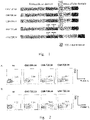
- the specific sequence structure is shown in Figure 1 . The amino acid and nucleotide sequences of each element are as described above.
- CAR-T20.13, CAR-T20.14, CAR-T20.16, CAR-T20.19, CAR-T20.20 with better effects are taken as examples.
- the preparation process of CAR-modified T cell targeting CD20 antigen is improved, and GT-551 serum-free medium supplemented with 2% human albumin was selected to culture lymphocytes in vitro.
- Example 3 Detection of the integration rate of the CAR gene in the T cell genome and the expression level of the encoded protein thereof on the membrane surface.
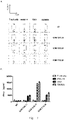
- the deCAR-T20 cells cultured on day 6 in Example 2 were co-cultured with target cells. Then the up-regulated level of CD137 and the secretion level of IFN ⁇ in the culture supernatant were examined. 1 ⁇ 10 5 of CART-20 cells (cultured on day 6) were cultured respectively with CD20-positive RAJI and RAMOS tumor cell lines, and CD20-negative MOLT-4 tumor cell line, or without tumor cells, in 200 ⁇ l GT-551 medium for 18h in a ratio of 1:1. Then the expression level of CD137 on the surface of T cell membrane was detected by flow cytometry ( Fig. 3A ) and the secretion level of IFN ⁇ in the culture supernatant was detected by ELISA ( Fig. 3B ).
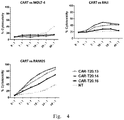
- CART-20.13, CART-20.14 and CAR-T20.16 cells (cultured on day 11) from Example 2 were co-cultured respectively with 1 ⁇ 10 4 of CFSE-labeled CD20-negative (MOLT-4) or CD20-positive (RAJI, RAMOS) tumor cell lines in 200 ⁇ l GT-551 medium for 4h. Then the cell pellet was collected by centrifugation. The cells were washed twice with PBS and stained for 30 min with Annexin V-APC dye in a ratio of 1:50 in 100 ⁇ l of dyeing solution. After washing with PBSonce, the proportion of Annexin V positive cells in CFSE positive cells was analyzed on a flow cytometry.
- Example 6 Identification of the in vitro activation ability of the third generation chimeric antigen receptor and the chimeric antigen receptor with mutation in hinge region
- Example 7 Detection of the ability of CAR-T20 cells to scavenge CD20 positive cells in vivo
Landscapes
- Health & Medical Sciences (AREA)
- Life Sciences & Earth Sciences (AREA)
- Chemical & Material Sciences (AREA)
- Organic Chemistry (AREA)
- Genetics & Genomics (AREA)
- General Health & Medical Sciences (AREA)
- Engineering & Computer Science (AREA)
- Immunology (AREA)
- Zoology (AREA)
- Biomedical Technology (AREA)
- Biochemistry (AREA)
- Bioinformatics & Cheminformatics (AREA)
- Wood Science & Technology (AREA)
- Biotechnology (AREA)
- Molecular Biology (AREA)
- Medicinal Chemistry (AREA)
- Biophysics (AREA)
- General Engineering & Computer Science (AREA)
- Veterinary Medicine (AREA)
- Public Health (AREA)
- Animal Behavior & Ethology (AREA)
- Cell Biology (AREA)
- Proteomics, Peptides & Aminoacids (AREA)
- Epidemiology (AREA)
- Microbiology (AREA)
- Toxicology (AREA)
- Gastroenterology & Hepatology (AREA)
- Pharmacology & Pharmacy (AREA)
- Plant Pathology (AREA)
- Physics & Mathematics (AREA)
- Hematology (AREA)
- Virology (AREA)
- Chemical Kinetics & Catalysis (AREA)
- General Chemical & Material Sciences (AREA)
- Nuclear Medicine, Radiotherapy & Molecular Imaging (AREA)
- Oncology (AREA)
- Dermatology (AREA)
- Peptides Or Proteins (AREA)
- Micro-Organisms Or Cultivation Processes Thereof (AREA)
- Medicines Containing Material From Animals Or Micro-Organisms (AREA)
Claims (8)
- Chimärer Antigenrezeptor (CAR), wobei der CAR die Aminosäuresequenz SEQ ID NO: 5 aufweist.
- Nukleinsäuremolekül, das den chimären Antigenrezeptor (CAR) nach Anspruch 1 codiert.
- Vektor, umfassend das Nukleinsäuremolekül nach Anspruch 2.
- Wirtszelle, die den Vektor nach Anspruch 3 umfasst oder in deren Genom ein exogenes Nukleinsäuremolekül nach Anspruch 2 integriert ist.
- Pharmazeutische Zusammensetzung, umfassend einen pharmazeutisch verträglichen Träger und den chimären Antigenrezeptor nach Anspruch 1, das Nukleinsäuremolekül nach Anspruch 2, den Vektor nach Anspruch 3 oder die Zelle nach Anspruch 4.
- Pharmazeutische Zusammensetzung nach Anspruch 5 zur Verwendung bei der Behandlung eines Tumors.
- Pharmazeutische Zusammensetzung zur Verwendung nach Anspruch 6, wobei der Tumor eine CD20-positive Leukämie oder ein Lymphom ist.
- In-vitro-Verfahren zum Herstellen einer CAR-T-Zelle (CAR-modifizierten T-Zelle), die den chimären Antigenrezeptor nach Anspruch 1 exprimiert, das einen Schritt von folgendem umfasst: Transduzieren des Nukleinsäuremoleküls nach Anspruch 2 oder des Vektors nach Anspruch 3 in eine T-Zelle, wodurch die CAR-T-Zelle erhalten wird.
Priority Applications (5)
| Application Number | Priority Date | Filing Date | Title |
|---|---|---|---|
| SM20230059T SMT202300059T1 (it) | 2017-02-08 | 2018-02-08 | Costruzione di un recettore chimerico per l’antigene mirato a un antigene cd20 e identificazione dell’attività delle relative cellule t ingegnerizzate |
| RS20230128A RS64106B1 (sr) | 2017-02-08 | 2018-02-08 | Konstrukcija himernog antigenskog receptora koji ciljno deluje na cd20 antigen i identifikacija aktivnosti njegovih projektovanih t ćelija |
| SI201830854T SI3599251T1 (sl) | 2017-02-08 | 2018-02-08 | Konstrukcija kimernega antigenskega receptorja, ciljnega na antigen CD20, in identifikacija aktivnosti njegovih inženiriranih T-celic |
| EP22206642.5A EP4194473A1 (de) | 2017-02-08 | 2018-02-08 | Konstruktion eines gegen cd20-antigen gerichteten chimären antigenrezeptors und aktivitätsidentifizierung von manipulierten t-zellen davon |
| HRP20230150TT HRP20230150T1 (hr) | 2017-02-08 | 2018-02-08 | Konstrukcija kimernog antigenskog receptora koji cilja cd20 antigen i identifikacija aktivnosti njegovih inženjerskih t-stanica |
Applications Claiming Priority (2)
| Application Number | Priority Date | Filing Date | Title |
|---|---|---|---|
| CN201710069569.7A CN108395482B (zh) | 2017-02-08 | 2017-02-08 | 一种靶向cd20抗原嵌合抗原受体的构建及其工程化t细胞的活性鉴定 |
| PCT/CN2018/075867 WO2018145649A1 (zh) | 2017-02-08 | 2018-02-08 | 一种靶向cd20抗原嵌合抗原受体的构建及其工程化t细胞的活性鉴定 |
Related Child Applications (1)
| Application Number | Title | Priority Date | Filing Date |
|---|---|---|---|
| EP22206642.5A Division EP4194473A1 (de) | 2017-02-08 | 2018-02-08 | Konstruktion eines gegen cd20-antigen gerichteten chimären antigenrezeptors und aktivitätsidentifizierung von manipulierten t-zellen davon |
Publications (3)
| Publication Number | Publication Date |
|---|---|
| EP3599251A1 EP3599251A1 (de) | 2020-01-29 |
| EP3599251A4 EP3599251A4 (de) | 2020-11-18 |
| EP3599251B1 true EP3599251B1 (de) | 2022-11-16 |
Family
ID=63094096
Family Applications (2)
| Application Number | Title | Priority Date | Filing Date |
|---|---|---|---|
| EP22206642.5A Pending EP4194473A1 (de) | 2017-02-08 | 2018-02-08 | Konstruktion eines gegen cd20-antigen gerichteten chimären antigenrezeptors und aktivitätsidentifizierung von manipulierten t-zellen davon |
| EP18751050.8A Active EP3599251B1 (de) | 2017-02-08 | 2018-02-08 | Konstruktion eines gegen cd20-antigen gerichteten antigenrezeptors und aktivitätsidentifizierung von manipulierten t-zellen davon |
Family Applications Before (1)
| Application Number | Title | Priority Date | Filing Date |
|---|---|---|---|
| EP22206642.5A Pending EP4194473A1 (de) | 2017-02-08 | 2018-02-08 | Konstruktion eines gegen cd20-antigen gerichteten chimären antigenrezeptors und aktivitätsidentifizierung von manipulierten t-zellen davon |
Country Status (16)
| Country | Link |
|---|---|
| US (6) | US11066457B2 (de) |
| EP (2) | EP4194473A1 (de) |
| JP (4) | JP6918145B2 (de) |
| CN (1) | CN108395482B (de) |
| DK (1) | DK3599251T5 (de) |
| ES (1) | ES2936474T3 (de) |
| FI (1) | FI3599251T3 (de) |
| HR (1) | HRP20230150T1 (de) |
| HU (1) | HUE061346T2 (de) |
| LT (1) | LT3599251T (de) |
| PL (1) | PL3599251T3 (de) |
| PT (1) | PT3599251T (de) |
| RS (1) | RS64106B1 (de) |
| SI (1) | SI3599251T1 (de) |
| SM (1) | SMT202300059T1 (de) |
| WO (1) | WO2018145649A1 (de) |
Families Citing this family (24)
| Publication number | Priority date | Publication date | Assignee | Title |
|---|---|---|---|---|
| BR112015005645B1 (pt) | 2012-09-14 | 2021-03-30 | Joy Global Underground Mining Llc | Cabeça de corte para máquina de mineração e máquina de mineração |
| CN108395482B (zh) * | 2017-02-08 | 2021-02-05 | 西比曼生物科技(香港)有限公司 | 一种靶向cd20抗原嵌合抗原受体的构建及其工程化t细胞的活性鉴定 |
| AU2018308088B2 (en) | 2017-07-25 | 2025-05-29 | Truebinding, Inc. | Treating cancer by blocking the interaction of TIM-3 and its ligand |
| KR102766089B1 (ko) * | 2017-10-19 | 2025-02-13 | 에프. 호프만-라 로슈 아게 | 오비누투주맙에 의한 cd20-양성 b 세포 림프종의 치료 |
| CA3112584A1 (en) * | 2018-09-17 | 2020-03-26 | The United States Of America, As Represented By The Secretary, Department Of Health And Human Services | Bicistronic chimeric antigen receptors targeting cd19 and cd20 and their uses |
| KR102840400B1 (ko) | 2018-12-12 | 2025-08-04 | 카이트 파마 인코포레이티드 | 키메라 항원 수용체 및 car-t 세포 및 사용 방법 |
| CN109593137B (zh) * | 2018-12-29 | 2023-04-14 | 博生吉医药科技(苏州)有限公司 | 抗cd20抗体的新型cd20-car载体的构建及应用 |
| AU2020214796A1 (en) | 2019-01-30 | 2021-07-29 | Truebinding, Inc. | Anti-Gal3 antibodies and uses thereof |
| JP2023516595A (ja) * | 2020-02-27 | 2023-04-20 | ソレント・セラピューティクス・インコーポレイテッド | Cd20を結合する二量体抗原受容体(dar) |
| CN113402612A (zh) | 2020-03-17 | 2021-09-17 | 西比曼生物科技(香港)有限公司 | 靶向cd19和cd20的联合嵌合抗原受体及其应用 |
| WO2021242776A2 (en) | 2020-05-26 | 2021-12-02 | Truebinding, Inc. | Methods of treating inflammatory diseases by blocking galectin-3 |
| WO2022140388A1 (en) | 2020-12-21 | 2022-06-30 | Allogene Therapeutics, Inc. | Protease-activating cd45-gate car |
| EP4284824A4 (de) * | 2021-01-27 | 2025-03-12 | AbelZeta Inc. | Chimäre antigenrezeptoren zum targeting von cd20 |
| CA3204417A1 (en) | 2021-01-29 | 2022-08-04 | Allogene Therapeutics, Inc. | Knockdown or knockout of one or more of tap2, nlrc5, ?2m, trac, rfx5, rfxap and rfxank to mitigate t cell recognition of allogeneic cell products |
| CA3225252A1 (en) | 2021-07-14 | 2023-01-19 | Jordan JARJOUR | Engineered t cell receptors fused to binding domains from antibodies |
| IL311665A (en) * | 2021-10-01 | 2024-05-01 | Univ Texas | Antibody loaded immune cells and methods for use in cancer treatment |
| CN119546328A (zh) | 2022-04-08 | 2025-02-28 | 再生元制药公司 | 多部分受体和信号传导复合物 |
| CN117003872A (zh) * | 2022-04-28 | 2023-11-07 | 北京天广实生物技术股份有限公司 | 含有突变轻链可变区骨架的单链抗体片段 |
| JP2025525779A (ja) | 2022-07-29 | 2025-08-07 | アロジーン セラピューティクス,インコーポレイテッド | 免疫細胞の認識を低減させるために遺伝子発現が低下した、操作された細胞 |
| CA3278900A1 (en) * | 2023-03-31 | 2024-10-03 | AbelZeta Inc. | BISPECIFIC CHIMERIC ANTIGENIC RECEPTORS TARGETING CD20 AND BCMA |
| WO2025059162A1 (en) | 2023-09-11 | 2025-03-20 | Dana-Farber Cancer Institute, Inc. | Car-engager containing il-2 variants to enhance the functionality of car t cells |
| WO2025096560A1 (en) | 2023-10-30 | 2025-05-08 | Allogene Therapeutics, Inc. | Engineered cells |
| WO2025097041A1 (en) * | 2023-11-03 | 2025-05-08 | Board Of Regents, The University Of Texas System | Methods for the detection and treatment of resistant cancers co-expressing alpp and/or alpg/alppl2 |
| WO2025218739A1 (en) * | 2024-04-17 | 2025-10-23 | Jw Therapeutics R & D (Shanghai) Co., Ltd. | Polypeptide systems |
Family Cites Families (121)
| Publication number | Priority date | Publication date | Assignee | Title |
|---|---|---|---|---|
| US5703055A (en) | 1989-03-21 | 1997-12-30 | Wisconsin Alumni Research Foundation | Generation of antibodies through lipid mediated DNA delivery |
| US5399346A (en) | 1989-06-14 | 1995-03-21 | The United States Of America As Represented By The Department Of Health And Human Services | Gene therapy |
| US5585362A (en) | 1989-08-22 | 1996-12-17 | The Regents Of The University Of Michigan | Adenovirus vectors for gene therapy |
| US5350674A (en) | 1992-09-04 | 1994-09-27 | Becton, Dickinson And Company | Intrinsic factor - horse peroxidase conjugates and a method for increasing the stability thereof |
| US6074841A (en) | 1996-08-19 | 2000-06-13 | Millennium Biotherapeutics, Inc. | Don-1 gene and polypeptides and uses therefor |
| TWI239352B (en) | 1997-07-23 | 2005-09-11 | Takara Bio Inc | Gene transfer method with the use of serum-free medium |
| WO2000023573A2 (en) * | 1998-10-20 | 2000-04-27 | City Of Hope | Cd20-specific redirected t cells and their use in cellular immunotherapy of cd20+ malignancies |
| CA2386270A1 (en) | 1999-10-15 | 2001-04-26 | University Of Massachusetts | Rna interference pathway genes as tools for targeted genetic interference |
| US6326193B1 (en) | 1999-11-05 | 2001-12-04 | Cambria Biosciences, Llc | Insect control agent |
| AU2001275474A1 (en) | 2000-06-12 | 2001-12-24 | Akkadix Corporation | Materials and methods for the control of nematodes |
| AU2001297703B2 (en) | 2000-11-07 | 2006-10-19 | City Of Hope | CD19-specific redirected immune cells |
| US8287864B2 (en) | 2002-02-14 | 2012-10-16 | Immunomedics, Inc. | Structural variants of antibodies for improved therapeutic characteristics |
| US7446190B2 (en) | 2002-05-28 | 2008-11-04 | Sloan-Kettering Institute For Cancer Research | Nucleic acids encoding chimeric T cell receptors |
| CN101928344B (zh) * | 2002-10-17 | 2014-08-13 | 根马布股份公司 | 抗cd20的人单克隆抗体 |
| EP2216342B1 (de) | 2003-07-31 | 2015-04-22 | Immunomedics, Inc. | Anti-CD19 Antikörper |
| DE602004030811D1 (de) * | 2003-10-16 | 2011-02-10 | Micromet Ag | Multispezifische deimmunisierte cd3-bindende moleküle |
| US7435596B2 (en) | 2004-11-04 | 2008-10-14 | St. Jude Children's Research Hospital, Inc. | Modified cell line and method for expansion of NK cell |
| US20130266551A1 (en) | 2003-11-05 | 2013-10-10 | St. Jude Children's Research Hospital, Inc. | Chimeric receptors with 4-1bb stimulatory signaling domain |
| WO2007146968A2 (en) * | 2006-06-12 | 2007-12-21 | Trubion Pharmaceuticals, Inc. | Single-chain multivalent binding proteins with effector function |
| EP2046383B1 (de) * | 2006-07-04 | 2014-11-19 | Genmab A/S | Cd20-bindungsmoleküle zur behandlung von copd |
| CA2682527C (en) | 2007-03-30 | 2017-07-11 | Memorial Sloan-Kettering Cancer Center | Constitutive expression of costimulatory ligands on adoptively transferred t lymphocytes |
| JP2010532764A (ja) * | 2007-07-06 | 2010-10-14 | トゥルビオン・ファーマシューティカルズ・インコーポレーテッド | C末端に配置された特異的結合性ドメインを有する結合性ペプチド |
| NZ583019A (en) | 2007-07-31 | 2011-05-27 | Regeneron Pharma | Human antibodies to human cd20 and method of using thereof |
| RU2476441C2 (ru) | 2007-10-19 | 2013-02-27 | Сиэтл Дженетикс, Инк. | Cd19-связывающие средства и их применение |
| EP2205277B1 (de) * | 2007-10-22 | 2017-07-26 | Genmab A/S | Neuartige antikörpertherapien |
| CN101544694A (zh) * | 2008-03-28 | 2009-09-30 | 上海中信国健药业有限公司 | 抗cd20四价抗体、其制备方法和应用 |
| PH12013501201A1 (en) | 2010-12-09 | 2013-07-29 | Univ Pennsylvania | Use of chimeric antigen receptor-modified t cells to treat cancer |
| JP6850528B2 (ja) | 2012-02-13 | 2021-03-31 | シアトル チルドレンズ ホスピタル ドゥーイング ビジネス アズ シアトル チルドレンズ リサーチ インスティテュート | 二重特異性キメラ抗原受容体およびその治療的使用 |
| EP2827889A1 (de) | 2012-03-19 | 2015-01-28 | Deutsches Krebsforschungszentrum | B-zell-rezeptorkomplexbindendende proteine mit t-zell-epitopen |
| KR102437522B1 (ko) | 2012-05-25 | 2022-08-26 | 셀렉티스 | 면역요법을 위한 동종이형 및 면역억제제 저항성인 t 세포의 조작 방법 |
| WO2014012085A2 (en) | 2012-07-13 | 2014-01-16 | Zymeworks Inc. | Bispecific asymmetric heterodimers comprising anti-cd3 constructs |
| CA2881981A1 (en) | 2012-08-20 | 2014-02-27 | Fred Hutchinson Cancer Research Center | Method and compositions for cellular immunotherapy |
| EP4303232A3 (de) | 2013-02-15 | 2024-04-17 | The Regents of The University of California | Chimärer antigen-rezeptor und verfahren zur verwendung davon |
| US9499855B2 (en) | 2013-03-14 | 2016-11-22 | Elwha Llc | Compositions, methods, and computer systems related to making and administering modified T cells |
| UY35468A (es) | 2013-03-16 | 2014-10-31 | Novartis Ag | Tratamiento de cáncer utilizando un receptor quimérico de antígeno anti-cd19 |
| JP2015092865A (ja) * | 2013-11-13 | 2015-05-18 | 国立大学法人名古屋大学 | ヒト化抗cd20キメラ抗原レセプター |
| CN113354744A (zh) | 2013-12-20 | 2021-09-07 | 弗雷德哈钦森癌症研究中心 | 带标签的嵌合效应分子及其受体 |
| US20160333108A1 (en) | 2014-01-13 | 2016-11-17 | Stephen J. Forman | CHIMERIC ANTIGEN RECEPTORS (CARs) HAVING MUTATIONS IN THE FC SPACER REGION AND METHODS FOR THEIR USE |
| CN106279434B (zh) * | 2014-02-24 | 2020-07-03 | 西比曼生物科技(上海)有限公司 | 工程化cd20靶向性的nkt细胞及其制备方法和应用 |
| GB201407852D0 (en) | 2014-05-02 | 2014-06-18 | Iontas Ltd | Preparation of libraries od protein variants expressed in eukaryotic cells and use for selecting binding molecules |
| MX383150B (es) | 2014-06-02 | 2025-03-13 | Us Health | Receptores quiméricos de antígeno que tienen como diana a cd-19. |
| SG10201913765YA (en) * | 2014-07-21 | 2020-03-30 | Novartis Ag | Treatment of cancer using a cd33 chimeric antigen receptor |
| TWI805109B (zh) | 2014-08-28 | 2023-06-11 | 美商奇諾治療有限公司 | 對cd19具專一性之抗體及嵌合抗原受體 |
| BR112017008042A2 (pt) | 2014-10-20 | 2017-12-26 | Juno Therapeutics Inc | métodos e composições para dosagem em terapia de célula adotiva |
| CA2969456A1 (en) | 2014-12-03 | 2016-06-09 | Juno Therapeutics, Inc. | Methods and compositions for adoptive cell therapy |
| EP4400516A1 (de) * | 2014-12-15 | 2024-07-17 | The Regents of the University of California | Bispezifischer chimärer or-gate-antigenrezeptor mit reaktion auf cd19 und cd20 |
| CA2969384A1 (en) * | 2014-12-17 | 2016-06-23 | Cellectis | Inhibitory chimeric antigen receptor (icar or n-car) expressing non-t cell transduction domain |
| CN107660214B (zh) | 2015-01-08 | 2022-02-08 | 根马布股份公司 | 针对cd3和cd20的双特异性抗体 |
| US11161907B2 (en) | 2015-02-02 | 2021-11-02 | Novartis Ag | Car-expressing cells against multiple tumor antigens and uses thereof |
| MX2017010072A (es) * | 2015-02-05 | 2017-11-09 | Molecular Templates Inc | Moleculas multivalentes que se enlazan a cd20, las cuales comprenden regiones efectoras de la subunidad a de la toxina shiga, y composiciones enriquecidas de las mismas. |
| WO2016134284A1 (en) | 2015-02-19 | 2016-08-25 | University Of Florida Research Foundation, Inc. | Chimeric antigen receptors and uses thereof |
| MA41613A (fr) * | 2015-02-23 | 2018-01-02 | Abbvie Stemcentrx Llc | Récepteurs antigéniques chimériques anti-dll3 et procédés d'utilisation desdits récepteurs |
| GB201503742D0 (en) | 2015-03-05 | 2015-04-22 | Ucl Business Plc | Chimeric antigen receptor |
| MX2017012939A (es) * | 2015-04-08 | 2018-05-22 | Novartis Ag | Terapias cd20, terapias cd22 y terapias de combinacion con una celula que expresa un receptor quimerico de antigeno (car) de cd19. |
| GB201506223D0 (en) | 2015-04-13 | 2015-05-27 | Ucl Business Plc | Chimeric protein |
| WO2016168773A2 (en) | 2015-04-15 | 2016-10-20 | The California Institute For Biomedical Research | Optimized pne-based chimeric receptor t cell switches and uses thereof |
| WO2016176651A2 (en) | 2015-04-29 | 2016-11-03 | Fred Hutchinson Cancer Research Center | Modified hematopoietic stem/progenitor and non-t effector cells, and uses thereof |
| WO2016179319A1 (en) | 2015-05-04 | 2016-11-10 | Cellerant Therapeutics, Inc. | Chimeric antigen receptors with ctla4 signal transduction domains |
| US10639329B2 (en) | 2015-06-12 | 2020-05-05 | Lentigen Technology, Inc. | Method to treat cancer with engineered T-cells |
| US10493139B2 (en) | 2015-07-24 | 2019-12-03 | Innovative Cellular Therapeutics CO., LTD. | Humanized anti-CD19 antibody and use thereof with chimeric antigen receptor |
| KR102011789B1 (ko) | 2015-08-05 | 2019-08-19 | 주식회사 셀랩메드 | 키메라 항원 수용체 및 키메라 항원 수용체가 발현된 t 세포 |
| WO2017027291A1 (en) | 2015-08-07 | 2017-02-16 | Seattle Children's Hospital (dba Seattle Children's Research Institute) | Bispecific car t-cells for solid tumor targeting |
| CN105384825B (zh) * | 2015-08-11 | 2018-06-01 | 南京传奇生物科技有限公司 | 一种基于单域抗体的双特异性嵌合抗原受体及其应用 |
| WO2017040324A1 (en) | 2015-08-28 | 2017-03-09 | The Trustees Of The University Of Pennsylvania | Methods and compositions for cells expressing a chimeric intracellular signaling molecule |
| JP7115982B2 (ja) * | 2015-10-30 | 2022-08-09 | アレタ・バイオセラピューティクス・インコーポレイテッド | 癌の治療のための組成物及び方法 |
| MX2018005618A (es) | 2015-11-05 | 2018-08-01 | Juno Therapeutics Inc | Receptores quimericos que contienen dominios inductores de traf y composiciones y metodos relacionados. |
| AU2017225733A1 (en) | 2016-03-04 | 2018-09-27 | Novartis Ag | Cells expressing multiple chimeric antigen receptor (CAR) molecules and uses therefore |
| KR102499191B1 (ko) * | 2016-03-18 | 2023-02-13 | 프레드 허친슨 캔서 센터 | Cd20 면역요법을 위한 조성물 및 방법 |
| WO2017172981A2 (en) | 2016-03-29 | 2017-10-05 | University Of Southern California | Chimeric antigen receptors targeting cancer |
| CA3018253A1 (en) | 2016-03-31 | 2017-10-05 | University Of Southern California | A highly sensitive and specific luciferase based reporter assay for antigen detection |
| PT3436079T (pt) | 2016-04-01 | 2021-10-06 | Kite Pharma Inc | Recetores de antigénios quiméricos e de células t e métodos de uso |
| CN107868791B (zh) | 2016-09-26 | 2021-11-23 | 阿思科力(苏州)生物科技有限公司 | 一种加强型Slit2 CAR-T和CAR-NK细胞制备方法和应用 |
| EP3523331A1 (de) | 2016-10-07 | 2019-08-14 | Novartis AG | Chimäre antigenrezeptoren zur behandlung von krebs |
| CN107936120B (zh) | 2016-10-13 | 2021-03-09 | 上海赛比曼生物科技有限公司 | Cd19靶向性的嵌合抗原受体及其制法和应用 |
| EP3336107A1 (de) | 2016-12-15 | 2018-06-20 | Miltenyi Biotec GmbH | Immunzellen zur expression eines antigenbindenden rezeptors und eines chimären costimulatorischen rezeptors |
| CN108250301A (zh) | 2016-12-29 | 2018-07-06 | 天津天锐生物科技有限公司 | 一种多靶点嵌合抗原受体 |
| CN108276493B (zh) | 2016-12-30 | 2023-11-14 | 南京传奇生物科技有限公司 | 一种嵌合抗原受体及其应用 |
| CN108395482B (zh) | 2017-02-08 | 2021-02-05 | 西比曼生物科技(香港)有限公司 | 一种靶向cd20抗原嵌合抗原受体的构建及其工程化t细胞的活性鉴定 |
| WO2018156791A1 (en) | 2017-02-22 | 2018-08-30 | Aleta Biotherapeutics Inc. | Compositions and methods for tumor transduction |
| TW201900672A (zh) | 2017-03-27 | 2019-01-01 | 瑞士商赫孚孟拉羅股份公司 | 改良之抗原結合受體型式 |
| SG10201912400VA (en) | 2017-04-24 | 2020-02-27 | Kite Pharma Inc | Humanized antigen-binding domains against cd19 and methods of use |
| US11434290B2 (en) | 2017-06-08 | 2022-09-06 | H. Lee Moffitt Cancer Center And Research Institute, Inc. | Chimeric antigen receptors with enhanced NFκB signaling |
| US10442867B2 (en) | 2017-07-31 | 2019-10-15 | Lentigen Technology, Inc. | Compositions and methods for treating cancer with anti-CD19/CD20 immunotherapy |
| CN109423495A (zh) | 2017-08-24 | 2019-03-05 | 上海恒润达生生物科技有限公司 | 一种双靶向嵌合抗原受体及其用途 |
| AU2018331517B2 (en) | 2017-09-15 | 2024-10-03 | Lentigen Technology, Inc. | Compositions and methods for treating cancer with anti-CD19 immunotherapy |
| US11905528B2 (en) | 2017-10-12 | 2024-02-20 | Icell Gene Therapeutics Inc. | Compound chimeric antigen receptor (cCAR) targeting multiple antigens, compositions and methods of use thereof |
| TW201922256A (zh) | 2017-10-27 | 2019-06-16 | 中國大陸商浙江導明醫藥科技有限公司 | 治療淋巴樣惡性疾病之方法 |
| WO2019099707A1 (en) | 2017-11-16 | 2019-05-23 | Kite Pharma, Inc | Modified chimeric antigen receptors and methods of use |
| MA51428A (fr) | 2017-12-22 | 2020-11-04 | Bluebird Bio Inc | Récepteur d'antigène chimérique multivalent |
| CN108315305B (zh) | 2017-12-26 | 2020-11-06 | 沣潮医药科技(上海)有限公司 | 携带嵌合抗原受体的免疫细胞外泌体的制备方法及其应用 |
| CN109971725B (zh) | 2017-12-28 | 2024-02-02 | 上海细胞治疗研究院 | 抗体修饰的嵌合抗原受体修饰t细胞及其用途 |
| CN108285486A (zh) | 2018-01-15 | 2018-07-17 | 浙江阿思科力生物科技有限公司 | 以cd20为靶点的特异性抗体、car-nk细胞及其制备和应用 |
| CN108017717B (zh) | 2018-01-24 | 2019-08-16 | 首都医科大学宣武医院 | 一种用于体外高效定向扩增的嵌合抗原受体及其应用 |
| WO2019154313A1 (zh) | 2018-02-11 | 2019-08-15 | 江苏恒瑞医药股份有限公司 | 一种分离的嵌合抗原受体以及包含其的修饰t细胞及用途 |
| EP3784351A1 (de) | 2018-04-27 | 2021-03-03 | Novartis AG | Car-t-zelltherapien mit erhöhter wirksamkeit |
| CN108715616A (zh) | 2018-04-27 | 2018-10-30 | 上海恒润达生生物科技有限公司 | 靶向人源化间皮素的嵌合抗原受体方法和用途 |
| KR20210033941A (ko) | 2018-04-28 | 2021-03-29 | 이뮤노테크 바이오팜 씨오., 엘티디. | 개선된 t-세포 요법 |
| CN110526983B (zh) | 2018-05-24 | 2022-02-11 | 北京马力喏生物科技有限公司 | 改良型抗cd19 car-t细胞 |
| SG11202011383VA (en) | 2018-05-31 | 2020-12-30 | Univ Washington | Chimeric antigen receptor t cells (car-t) for the treatment of cancer |
| CN110606893B (zh) | 2018-06-15 | 2022-11-15 | 北昊干细胞与再生医学研究院有限公司 | 一种靶向cd19和cd20双抗原的嵌合性抗原受体t细胞治疗肿瘤的方法 |
| WO2020010235A1 (en) | 2018-07-05 | 2020-01-09 | H. Lee Moffitt Cancer Center And Research Institute Inc. | Car t cells that target b-cell antigens |
| US20210079111A1 (en) | 2018-08-04 | 2021-03-18 | AbCyte Therapeutics Inc. | Cd19-cd20 bispecific and dual passway car-t and methods for use thereof |
| EP3829312A4 (de) | 2018-08-04 | 2022-07-06 | Abcyte Therapeutics Inc. | Multifunktionales und multi-targeting-car-system und verfahren zur verwendung davon |
| CA3112584A1 (en) | 2018-09-17 | 2020-03-26 | The United States Of America, As Represented By The Secretary, Department Of Health And Human Services | Bicistronic chimeric antigen receptors targeting cd19 and cd20 and their uses |
| WO2020061796A1 (en) | 2018-09-26 | 2020-04-02 | Hrain Biotechnology Co., Ltd. | Bcma-and-cd19-targeting chimeric antigen receptor and uses thereof |
| AU2019354391A1 (en) | 2018-10-01 | 2021-05-06 | Adicet Therapeutics, Inc. | Compositions and methods regarding engineered and non- engineered γδ-Τ cells for treatment of hematological tumors |
| CN109536455B (zh) | 2018-12-11 | 2020-02-21 | 武汉波睿达生物科技有限公司 | 一种car-nk细胞及其制备方法和应用 |
| KR102840400B1 (ko) | 2018-12-12 | 2025-08-04 | 카이트 파마 인코포레이티드 | 키메라 항원 수용체 및 car-t 세포 및 사용 방법 |
| CN109575143B (zh) | 2018-12-29 | 2022-06-17 | 博生吉医药科技(苏州)有限公司 | 双特异性cd20-cd19-car及其应用 |
| WO2020151752A1 (zh) | 2019-01-22 | 2020-07-30 | 亘喜生物科技(上海)有限公司 | Cd20组合靶向的工程化免疫细胞 |
| CN113784989B (zh) * | 2019-03-25 | 2024-11-15 | 免疫功坊股份有限公司 | 带有金属结合区的复合多肽及其分子构建体 |
| US20220195007A1 (en) | 2019-04-12 | 2022-06-23 | St. Jude Children's Research Hospital, Inc. | Chimeric antigen receptors with cd20 safety switch |
| CN112390891B (zh) | 2019-08-14 | 2022-06-03 | 苏州方德门达新药开发有限公司 | 嵌合抗原受体及其构建方法和应用 |
| CN110845623B (zh) | 2019-10-11 | 2021-07-09 | 厦门大学 | 一种egfr特异性嵌合抗原受体及其应用 |
| EP4069285A1 (de) | 2019-12-06 | 2022-10-12 | Precision BioSciences, Inc. | Methoden zur krebsimmuntherapie unter verwendung von lymphodepletionsregimen und allogenen cd19-, cd20- oder bcma-car-t-zellen |
| US20230212255A1 (en) | 2020-03-17 | 2023-07-06 | Cellular Biomedicine Group Inc. | Combined chimeric antigen receptor targeting cd19 and cd20 and applications thereof |
| US20230104705A1 (en) | 2020-03-17 | 2023-04-06 | Cellular Biomedicine Group Inc. | Combined chimeric antigen receptor targeting cd19 and cd20 and application thereof |
| CN113402612A (zh) | 2020-03-17 | 2021-09-17 | 西比曼生物科技(香港)有限公司 | 靶向cd19和cd20的联合嵌合抗原受体及其应用 |
| CN112608387B (zh) | 2020-12-21 | 2023-05-05 | 汤朝阳 | Cd19和cd20双靶点嵌合抗原受体及其应用 |
| US20240115605A1 (en) | 2021-01-27 | 2024-04-11 | Cellular Biomedicine Group, Inc. | Chimeric antigen receptors targeting cd20 |
| CA3278900A1 (en) * | 2023-03-31 | 2024-10-03 | AbelZeta Inc. | BISPECIFIC CHIMERIC ANTIGENIC RECEPTORS TARGETING CD20 AND BCMA |
-
2017
- 2017-02-08 CN CN201710069569.7A patent/CN108395482B/zh active Active
-
2018
- 2018-02-08 SM SM20230059T patent/SMT202300059T1/it unknown
- 2018-02-08 SI SI201830854T patent/SI3599251T1/sl unknown
- 2018-02-08 HR HRP20230150TT patent/HRP20230150T1/hr unknown
- 2018-02-08 WO PCT/CN2018/075867 patent/WO2018145649A1/zh not_active Ceased
- 2018-02-08 RS RS20230128A patent/RS64106B1/sr unknown
- 2018-02-08 FI FIEP18751050.8T patent/FI3599251T3/fi active
- 2018-02-08 PT PT187510508T patent/PT3599251T/pt unknown
- 2018-02-08 PL PL18751050.8T patent/PL3599251T3/pl unknown
- 2018-02-08 JP JP2019563660A patent/JP6918145B2/ja active Active
- 2018-02-08 HU HUE18751050A patent/HUE061346T2/hu unknown
- 2018-02-08 ES ES18751050T patent/ES2936474T3/es active Active
- 2018-02-08 LT LTEPPCT/CN2018/075867T patent/LT3599251T/lt unknown
- 2018-02-08 EP EP22206642.5A patent/EP4194473A1/de active Pending
- 2018-02-08 US US16/484,482 patent/US11066457B2/en active Active
- 2018-02-08 EP EP18751050.8A patent/EP3599251B1/de active Active
- 2018-02-08 DK DK18751050.8T patent/DK3599251T5/da active
-
2021
- 2021-06-21 US US17/352,915 patent/US11472858B2/en active Active
- 2021-07-20 JP JP2021119965A patent/JP7241133B2/ja active Active
-
2022
- 2022-04-19 US US17/723,859 patent/US11618778B2/en active Active
- 2022-05-23 US US17/750,855 patent/US11608369B2/en active Active
- 2022-06-03 US US17/831,637 patent/US12583903B2/en active Active
-
2023
- 2023-02-23 US US18/173,187 patent/US20230242613A1/en active Pending
- 2023-03-06 JP JP2023033593A patent/JP7571178B2/ja active Active
-
2024
- 2024-10-09 JP JP2024176918A patent/JP7767549B2/ja active Active
Also Published As
Similar Documents
| Publication | Publication Date | Title |
|---|---|---|
| EP3599251B1 (de) | Konstruktion eines gegen cd20-antigen gerichteten antigenrezeptors und aktivitätsidentifizierung von manipulierten t-zellen davon | |
| AU2023204159B2 (en) | Bcma-targeted chimeric antigen receptor as well as preparation method therefor and application thereof | |
| US12448432B2 (en) | Combined chimeric antigen receptor targeting CD19 and CD20 and application thereof | |
| CN109575143B (zh) | 双特异性cd20-cd19-car及其应用 | |
| CN107936120B (zh) | Cd19靶向性的嵌合抗原受体及其制法和应用 | |
| CN108395481B (zh) | 一种靶向cd20的car的构建及其工程化t细胞的活性鉴定 | |
| WO2022164886A2 (en) | Chimeric antigen receptors targeting cd20 | |
| US20250186492A1 (en) | Car-t cell targeting b7-h3 and application thereof in treatment of acute myeloid leukemia | |
| CN110054698A (zh) | 抗cd19抗体的新型cd19-car载体的构建及应用 | |
| HK40092581A (en) | Construction of chimeric antigen receptor targeting cd20 antigen and activity identification of engineered t cells thereof | |
| CN109593137B (zh) | 抗cd20抗体的新型cd20-car载体的构建及应用 | |
| KR20220167330A (ko) | Cd22-표적화된 키메라 항원 수용체, 그의 제조 방법 및 그의 적용 | |
| HK40044103A (en) | Bcma-targeted chimeric antigen receptor as well as preparation method therefor and application thereof |
Legal Events
| Date | Code | Title | Description |
|---|---|---|---|
| REG | Reference to a national code |
Ref country code: HR Ref legal event code: TUEP Ref document number: P20230150T Country of ref document: HR |
|
| STAA | Information on the status of an ep patent application or granted ep patent |
Free format text: STATUS: THE INTERNATIONAL PUBLICATION HAS BEEN MADE |
|
| PUAI | Public reference made under article 153(3) epc to a published international application that has entered the european phase |
Free format text: ORIGINAL CODE: 0009012 |
|
| STAA | Information on the status of an ep patent application or granted ep patent |
Free format text: STATUS: REQUEST FOR EXAMINATION WAS MADE |
|
| 17P | Request for examination filed |
Effective date: 20190906 |
|
| AK | Designated contracting states |
Kind code of ref document: A1 Designated state(s): AL AT BE BG CH CY CZ DE DK EE ES FI FR GB GR HR HU IE IS IT LI LT LU LV MC MK MT NL NO PL PT RO RS SE SI SK SM TR |
|
| AX | Request for extension of the european patent |
Extension state: BA ME |
|
| DAV | Request for validation of the european patent (deleted) | ||
| DAX | Request for extension of the european patent (deleted) | ||
| RAP1 | Party data changed (applicant data changed or rights of an application transferred) |
Owner name: CELLULAR BIOMEDICINE GROUP HK LIMITED |
|
| A4 | Supplementary search report drawn up and despatched |
Effective date: 20201015 |
|
| RIC1 | Information provided on ipc code assigned before grant |
Ipc: A61K 35/17 20150101ALI20201009BHEP Ipc: C12N 15/62 20060101ALI20201009BHEP Ipc: C12N 15/867 20060101ALI20201009BHEP Ipc: C12N 5/10 20060101ALI20201009BHEP Ipc: A61P 35/00 20060101ALI20201009BHEP Ipc: C07K 19/00 20060101AFI20201009BHEP |
|
| STAA | Information on the status of an ep patent application or granted ep patent |
Free format text: STATUS: EXAMINATION IS IN PROGRESS |
|
| 17Q | First examination report despatched |
Effective date: 20220103 |
|
| GRAP | Despatch of communication of intention to grant a patent |
Free format text: ORIGINAL CODE: EPIDOSNIGR1 |
|
| STAA | Information on the status of an ep patent application or granted ep patent |
Free format text: STATUS: GRANT OF PATENT IS INTENDED |
|
| INTG | Intention to grant announced |
Effective date: 20220607 |
|
| GRAS | Grant fee paid |
Free format text: ORIGINAL CODE: EPIDOSNIGR3 |
|
| GRAA | (expected) grant |
Free format text: ORIGINAL CODE: 0009210 |
|
| STAA | Information on the status of an ep patent application or granted ep patent |
Free format text: STATUS: THE PATENT HAS BEEN GRANTED |
|
| AK | Designated contracting states |
Kind code of ref document: B1 Designated state(s): AL AT BE BG CH CY CZ DE DK EE ES FI FR GB GR HR HU IE IS IT LI LT LU LV MC MK MT NL NO PL PT RO RS SE SI SK SM TR |
|
| REG | Reference to a national code |
Ref country code: GB Ref legal event code: FG4D |
|
| REG | Reference to a national code |
Ref country code: CH Ref legal event code: EP |
|
| REG | Reference to a national code |
Ref country code: DE Ref legal event code: R096 Ref document number: 602018043138 Country of ref document: DE |
|
| REG | Reference to a national code |
Ref country code: IE Ref legal event code: FG4D |
|
| REG | Reference to a national code |
Ref country code: AT Ref legal event code: REF Ref document number: 1531743 Country of ref document: AT Kind code of ref document: T Effective date: 20221215 |
|
| REG | Reference to a national code |
Ref country code: NL Ref legal event code: FP |
|
| RAP2 | Party data changed (patent owner data changed or rights of a patent transferred) |
Owner name: CELLULAR BIOMEDICINE GROUP INC. |
|
| REG | Reference to a national code |
Ref country code: NL Ref legal event code: PD Owner name: CELLULAR BIOMEDICINE GROUP INC.; US Free format text: DETAILS ASSIGNMENT: CHANGE OF OWNER(S), ASSIGNMENT; FORMER OWNER NAME: CELLULAR BIOMEDICINE GROUP HK LIMITED Effective date: 20230119 |
|
| REG | Reference to a national code |
Ref country code: SE Ref legal event code: TRGR |
|
| REG | Reference to a national code |
Ref country code: BE Ref legal event code: PD Owner name: CELLULAR BIOMEDICINE GROUP INC.; US Free format text: DETAILS ASSIGNMENT: CHANGE OF OWNER(S), ASSIGNMENT; FORMER OWNER NAME: CELLULAR BIOMEDICINE GROUP HK LIMITED Effective date: 20230119 Ref country code: DK Ref legal event code: T3 Effective date: 20230216 |
|
| REG | Reference to a national code |
Ref country code: NO Ref legal event code: T2 Effective date: 20221116 |
|
| REG | Reference to a national code |
Ref country code: PT Ref legal event code: SC4A Ref document number: 3599251 Country of ref document: PT Date of ref document: 20230228 Kind code of ref document: T Free format text: AVAILABILITY OF NATIONAL TRANSLATION Effective date: 20230222 |
|
| REG | Reference to a national code |
Ref country code: GB Ref legal event code: 732E Free format text: REGISTERED BETWEEN 20230209 AND 20230215 |
|
| REG | Reference to a national code |
Ref country code: HR Ref legal event code: ODRP Ref document number: P20230150T Country of ref document: HR Payment date: 20230223 Year of fee payment: 6 Ref country code: ES Ref legal event code: FG2A Ref document number: 2936474 Country of ref document: ES Kind code of ref document: T3 Effective date: 20230317 |
|
| REG | Reference to a national code |
Ref country code: HR Ref legal event code: T1PR Ref document number: P20230150 Country of ref document: HR |
|
| REG | Reference to a national code |
Ref country code: EE Ref legal event code: FG4A Ref document number: E023105 Country of ref document: EE Effective date: 20230222 |
|
| REG | Reference to a national code |
Ref country code: GR Ref legal event code: EP Ref document number: 20230400268 Country of ref document: GR Effective date: 20230410 |
|
| REG | Reference to a national code |
Ref country code: SK Ref legal event code: T3 Ref document number: E 41382 Country of ref document: SK |
|
| P01 | Opt-out of the competence of the unified patent court (upc) registered |
Effective date: 20230512 |
|
| REG | Reference to a national code |
Ref country code: HU Ref legal event code: AG4A Ref document number: E061346 Country of ref document: HU |
|
| REG | Reference to a national code |
Ref country code: DE Ref legal event code: R097 Ref document number: 602018043138 Country of ref document: DE |
|
| PLBE | No opposition filed within time limit |
Free format text: ORIGINAL CODE: 0009261 |
|
| STAA | Information on the status of an ep patent application or granted ep patent |
Free format text: STATUS: NO OPPOSITION FILED WITHIN TIME LIMIT |
|
| 26N | No opposition filed |
Effective date: 20230817 |
|
| PG25 | Lapsed in a contracting state [announced via postgrant information from national office to epo] |
Ref country code: LU Free format text: LAPSE BECAUSE OF NON-PAYMENT OF DUE FEES Effective date: 20230208 |
|
| REG | Reference to a national code |
Ref country code: HR Ref legal event code: ODRP Ref document number: P20230150 Country of ref document: HR Payment date: 20240122 Year of fee payment: 7 |
|
| REG | Reference to a national code |
Ref country code: AT Ref legal event code: UEP Ref document number: 1531743 Country of ref document: AT Kind code of ref document: T Effective date: 20221116 Ref country code: EE Ref legal event code: HC1A Ref document number: E023105 Country of ref document: EE |
|
| REG | Reference to a national code |
Ref country code: NL Ref legal event code: HC Owner name: ABELZETA INC.; US Free format text: DETAILS ASSIGNMENT: CHANGE OF OWNER(S), CHANGE OF OWNER(S) NAME; FORMER OWNER NAME: CELLULAR BIOMEDICINE GROUP INC. Effective date: 20240524 |
|
| PGRI | Patent reinstated in contracting state [announced from national office to epo] |
Ref country code: AL Effective date: 20230216 |
|
| REG | Reference to a national code |
Ref country code: DK Ref legal event code: T5 Effective date: 20240826 |
|
| REG | Reference to a national code |
Ref country code: LU Ref legal event code: NF |
|
| PG25 | Lapsed in a contracting state [announced via postgrant information from national office to epo] |
Ref country code: LU Free format text: LAPSE BECAUSE OF NON-PAYMENT OF DUE FEES Effective date: 20230208 |
|
| PGRI | Patent reinstated in contracting state [announced from national office to epo] |
Ref country code: LU Effective date: 20240916 |
|
| REG | Reference to a national code |
Ref country code: SK Ref legal event code: TC4A Ref document number: E 41382 Country of ref document: SK Owner name: ABELZETA INC., ROCKVILLE, MD, US Effective date: 20241003 |
|
| PG25 | Lapsed in a contracting state [announced via postgrant information from national office to epo] |
Ref country code: CY Free format text: LAPSE BECAUSE OF NON-PAYMENT OF DUE FEES Effective date: 20240208 |
|
| REG | Reference to a national code |
Ref country code: ES Ref legal event code: PC2A Owner name: ABELZETA INC. Effective date: 20241025 |
|
| PG25 | Lapsed in a contracting state [announced via postgrant information from national office to epo] |
Ref country code: LU Free format text: LAPSE BECAUSE OF NON-PAYMENT OF DUE FEES Effective date: 20230208 Ref country code: CY Free format text: LAPSE BECAUSE OF NON-PAYMENT OF DUE FEES Effective date: 20240208 |
|
| PGRI | Patent reinstated in contracting state [announced from national office to epo] |
Ref country code: LU Effective date: 20240916 |
|
| REG | Reference to a national code |
Ref country code: LU Ref legal event code: HC Owner name: ABELZETA INC.; US Free format text: FORMER OWNER: CELLULAR BIOMEDICINE GROUP INC. Effective date: 20241021 |
|
| REG | Reference to a national code |
Ref country code: AT Ref legal event code: HC Ref document number: 1531743 Country of ref document: AT Kind code of ref document: T Owner name: ABELZETA INC., HK Effective date: 20241104 |
|
| REG | Reference to a national code |
Ref country code: DE Ref legal event code: R081 Ref document number: 602018043138 Country of ref document: DE Owner name: ABELZETA INC. (N.D.GES.D. STAATES DELAWARE), R, US Free format text: FORMER OWNER: CELLULAR BIOMEDICINE GROUP HK LTD., HONGKONG, HK |
|
| REG | Reference to a national code |
Ref country code: HR Ref legal event code: ODRP Ref document number: P20230150 Country of ref document: HR Payment date: 20250109 Year of fee payment: 8 |
|
| PGFP | Annual fee paid to national office [announced via postgrant information from national office to epo] |
Ref country code: PT Payment date: 20250207 Year of fee payment: 8 |
|
| PGFP | Annual fee paid to national office [announced via postgrant information from national office to epo] |
Ref country code: BG Payment date: 20250115 Year of fee payment: 8 |
|
| PGFP | Annual fee paid to national office [announced via postgrant information from national office to epo] |
Ref country code: LV Payment date: 20250103 Year of fee payment: 8 Ref country code: EE Payment date: 20250103 Year of fee payment: 8 Ref country code: GR Payment date: 20250116 Year of fee payment: 8 Ref country code: CH Payment date: 20250301 Year of fee payment: 8 Ref country code: SI Payment date: 20250114 Year of fee payment: 8 |
|
| PGFP | Annual fee paid to national office [announced via postgrant information from national office to epo] |
Ref country code: PL Payment date: 20250108 Year of fee payment: 8 Ref country code: CZ Payment date: 20250116 Year of fee payment: 8 |
|
| PGFP | Annual fee paid to national office [announced via postgrant information from national office to epo] |
Ref country code: CY Payment date: 20250122 Year of fee payment: 8 Ref country code: SK Payment date: 20250113 Year of fee payment: 8 |
|
| PGFP | Annual fee paid to national office [announced via postgrant information from national office to epo] |
Ref country code: MT Payment date: 20250224 Year of fee payment: 8 |
|
| PGFP | Annual fee paid to national office [announced via postgrant information from national office to epo] |
Ref country code: AL Payment date: 20250207 Year of fee payment: 8 |
|
| PGFP | Annual fee paid to national office [announced via postgrant information from national office to epo] |
Ref country code: MK Payment date: 20250102 Year of fee payment: 8 |
|
| PGFP | Annual fee paid to national office [announced via postgrant information from national office to epo] |
Ref country code: FR Payment date: 20251231 Year of fee payment: 9 |
|
| REG | Reference to a national code |
Ref country code: HR Ref legal event code: ODRP Ref document number: P20230150 Country of ref document: HR Payment date: 20260109 Year of fee payment: 9 |
|
| PGFP | Annual fee paid to national office [announced via postgrant information from national office to epo] |
Ref country code: LU Payment date: 20260129 Year of fee payment: 9 Ref country code: NL Payment date: 20260106 Year of fee payment: 9 |
|
| REG | Reference to a national code |
Ref country code: CH Ref legal event code: U11 Free format text: ST27 STATUS EVENT CODE: U-0-0-U10-U11 (AS PROVIDED BY THE NATIONAL OFFICE) Effective date: 20260301 |
|
| PGFP | Annual fee paid to national office [announced via postgrant information from national office to epo] |
Ref country code: HU Payment date: 20260130 Year of fee payment: 9 |
|
| PGFP | Annual fee paid to national office [announced via postgrant information from national office to epo] |
Ref country code: SM Payment date: 20260129 Year of fee payment: 9 |
|
| PGFP | Annual fee paid to national office [announced via postgrant information from national office to epo] |
Ref country code: SE Payment date: 20251230 Year of fee payment: 9 |
|
| PGFP | Annual fee paid to national office [announced via postgrant information from national office to epo] |
Ref country code: GB Payment date: 20260106 Year of fee payment: 9 Ref country code: LT Payment date: 20260102 Year of fee payment: 9 |
|
| PGFP | Annual fee paid to national office [announced via postgrant information from national office to epo] |
Ref country code: MC Payment date: 20260129 Year of fee payment: 9 Ref country code: ES Payment date: 20260311 Year of fee payment: 9 |
|
| PGFP | Annual fee paid to national office [announced via postgrant information from national office to epo] |
Ref country code: NO Payment date: 20260211 Year of fee payment: 9 Ref country code: DK Payment date: 20260213 Year of fee payment: 9 Ref country code: DE Payment date: 20251230 Year of fee payment: 9 Ref country code: IE Payment date: 20260102 Year of fee payment: 9 |
|
| PGFP | Annual fee paid to national office [announced via postgrant information from national office to epo] |
Ref country code: AT Payment date: 20260127 Year of fee payment: 9 Ref country code: HR Payment date: 20260109 Year of fee payment: 9 |
|
| PGFP | Annual fee paid to national office [announced via postgrant information from national office to epo] |
Ref country code: RO Payment date: 20260127 Year of fee payment: 9 Ref country code: FI Payment date: 20260213 Year of fee payment: 9 Ref country code: BE Payment date: 20260105 Year of fee payment: 9 Ref country code: IT Payment date: 20260122 Year of fee payment: 9 |
|
| PGFP | Annual fee paid to national office [announced via postgrant information from national office to epo] |
Ref country code: RS Payment date: 20260115 Year of fee payment: 9 |
|
| PGFP | Annual fee paid to national office [announced via postgrant information from national office to epo] |
Ref country code: IS Payment date: 20260206 Year of fee payment: 9 |
|
| PGFP | Annual fee paid to national office [announced via postgrant information from national office to epo] |
Ref country code: TR Payment date: 20260206 Year of fee payment: 9 |