EP3610035B1 - Compositions et méthodes de thérapie génique transitoire à stabilité améliorée - Google Patents
Compositions et méthodes de thérapie génique transitoire à stabilité améliorée Download PDFInfo
- Publication number
- EP3610035B1 EP3610035B1 EP18784503.7A EP18784503A EP3610035B1 EP 3610035 B1 EP3610035 B1 EP 3610035B1 EP 18784503 A EP18784503 A EP 18784503A EP 3610035 B1 EP3610035 B1 EP 3610035B1
- Authority
- EP
- European Patent Office
- Prior art keywords
- sequence
- rna
- nucleic acid
- icrc
- circularized
- Prior art date
- Legal status (The legal status is an assumption and is not a legal conclusion. Google has not performed a legal analysis and makes no representation as to the accuracy of the status listed.)
- Active
Links
Images
















Classifications
-
- C—CHEMISTRY; METALLURGY
- C07—ORGANIC CHEMISTRY
- C07H—SUGARS; DERIVATIVES THEREOF; NUCLEOSIDES; NUCLEOTIDES; NUCLEIC ACIDS
- C07H21/00—Compounds containing two or more mononucleotide units having separate phosphate or polyphosphate groups linked by saccharide radicals of nucleoside groups, e.g. nucleic acids
-
- C—CHEMISTRY; METALLURGY
- C12—BIOCHEMISTRY; BEER; SPIRITS; WINE; VINEGAR; MICROBIOLOGY; ENZYMOLOGY; MUTATION OR GENETIC ENGINEERING
- C12Q—MEASURING OR TESTING PROCESSES INVOLVING ENZYMES, NUCLEIC ACIDS OR MICROORGANISMS; COMPOSITIONS OR TEST PAPERS THEREFOR; PROCESSES OF PREPARING SUCH COMPOSITIONS; CONDITION-RESPONSIVE CONTROL IN MICROBIOLOGICAL OR ENZYMOLOGICAL PROCESSES
- C12Q1/00—Measuring or testing processes involving enzymes, nucleic acids or microorganisms; Compositions therefor; Processes of preparing such compositions
- C12Q1/68—Measuring or testing processes involving enzymes, nucleic acids or microorganisms; Compositions therefor; Processes of preparing such compositions involving nucleic acids
-
- A—HUMAN NECESSITIES
- A61—MEDICAL OR VETERINARY SCIENCE; HYGIENE
- A61K—PREPARATIONS FOR MEDICAL, DENTAL OR TOILETRY PURPOSES
- A61K31/00—Medicinal preparations containing organic active ingredients
- A61K31/70—Carbohydrates; Sugars; Derivatives thereof
- A61K31/7088—Compounds having three or more nucleosides or nucleotides
-
- A—HUMAN NECESSITIES
- A61—MEDICAL OR VETERINARY SCIENCE; HYGIENE
- A61K—PREPARATIONS FOR MEDICAL, DENTAL OR TOILETRY PURPOSES
- A61K31/00—Medicinal preparations containing organic active ingredients
- A61K31/70—Carbohydrates; Sugars; Derivatives thereof
- A61K31/7088—Compounds having three or more nucleosides or nucleotides
- A61K31/7105—Natural ribonucleic acids, i.e. containing only riboses attached to adenine, guanine, cytosine or uracil and having 3'-5' phosphodiester links
-
- A—HUMAN NECESSITIES
- A61—MEDICAL OR VETERINARY SCIENCE; HYGIENE
- A61K—PREPARATIONS FOR MEDICAL, DENTAL OR TOILETRY PURPOSES
- A61K31/00—Medicinal preparations containing organic active ingredients
- A61K31/70—Carbohydrates; Sugars; Derivatives thereof
- A61K31/7088—Compounds having three or more nucleosides or nucleotides
- A61K31/7115—Nucleic acids or oligonucleotides having modified bases, i.e. other than adenine, guanine, cytosine, uracil or thymine
-
- A—HUMAN NECESSITIES
- A61—MEDICAL OR VETERINARY SCIENCE; HYGIENE
- A61K—PREPARATIONS FOR MEDICAL, DENTAL OR TOILETRY PURPOSES
- A61K35/00—Medicinal preparations containing materials or reaction products thereof with undetermined constitution
- A61K35/12—Materials from mammals; Compositions comprising non-specified tissues or cells; Compositions comprising non-embryonic stem cells; Genetically modified cells
- A61K35/14—Blood; Artificial blood
- A61K35/17—Lymphocytes; B-cells; T-cells; Natural killer cells; Interferon-activated or cytokine-activated lymphocytes
-
- A—HUMAN NECESSITIES
- A61—MEDICAL OR VETERINARY SCIENCE; HYGIENE
- A61P—SPECIFIC THERAPEUTIC ACTIVITY OF CHEMICAL COMPOUNDS OR MEDICINAL PREPARATIONS
- A61P35/00—Antineoplastic agents
-
- C—CHEMISTRY; METALLURGY
- C07—ORGANIC CHEMISTRY
- C07K—PEPTIDES
- C07K14/00—Peptides having more than 20 amino acids; Gastrins; Somatostatins; Melanotropins; Derivatives thereof
- C07K14/435—Peptides having more than 20 amino acids; Gastrins; Somatostatins; Melanotropins; Derivatives thereof from animals; from humans
- C07K14/475—Growth factors; Growth regulators
- C07K14/505—Erythropoietin [EPO]
-
- C—CHEMISTRY; METALLURGY
- C12—BIOCHEMISTRY; BEER; SPIRITS; WINE; VINEGAR; MICROBIOLOGY; ENZYMOLOGY; MUTATION OR GENETIC ENGINEERING
- C12N—MICROORGANISMS OR ENZYMES; COMPOSITIONS THEREOF; PROPAGATING, PRESERVING, OR MAINTAINING MICROORGANISMS; MUTATION OR GENETIC ENGINEERING; CULTURE MEDIA
- C12N15/00—Mutation or genetic engineering; DNA or RNA concerning genetic engineering, vectors, e.g. plasmids, or their isolation, preparation or purification; Use of hosts therefor
- C12N15/09—Recombinant DNA-technology
- C12N15/10—Processes for the isolation, preparation or purification of DNA or RNA
- C12N15/1003—Extracting or separating nucleic acids from biological samples, e.g. pure separation or isolation methods; Conditions, buffers or apparatuses therefor
- C12N15/1006—Extracting or separating nucleic acids from biological samples, e.g. pure separation or isolation methods; Conditions, buffers or apparatuses therefor by means of a solid support carrier, e.g. particles, polymers
- C12N15/101—Extracting or separating nucleic acids from biological samples, e.g. pure separation or isolation methods; Conditions, buffers or apparatuses therefor by means of a solid support carrier, e.g. particles, polymers by chromatography, e.g. electrophoresis, ion-exchange, reverse phase
-
- C—CHEMISTRY; METALLURGY
- C12—BIOCHEMISTRY; BEER; SPIRITS; WINE; VINEGAR; MICROBIOLOGY; ENZYMOLOGY; MUTATION OR GENETIC ENGINEERING
- C12P—FERMENTATION OR ENZYME-USING PROCESSES TO SYNTHESISE A DESIRED CHEMICAL COMPOUND OR COMPOSITION OR TO SEPARATE OPTICAL ISOMERS FROM A RACEMIC MIXTURE
- C12P19/00—Preparation of compounds containing saccharide radicals
- C12P19/26—Preparation of nitrogen-containing carbohydrates
- C12P19/28—N-glycosides
- C12P19/30—Nucleotides
-
- A—HUMAN NECESSITIES
- A61—MEDICAL OR VETERINARY SCIENCE; HYGIENE
- A61K—PREPARATIONS FOR MEDICAL, DENTAL OR TOILETRY PURPOSES
- A61K48/00—Medicinal preparations containing genetic material which is inserted into cells of the living body to treat genetic diseases; Gene therapy
Definitions
- the present invention relates generally to compositions of circularized RNA, method of producing, purifying, and using same.
- Circular RNA is useful in the design and production of stable forms of RNA. Circular RNA can also be particularly interesting and useful for in vivo applications, especially in the research area of RNA-based control of gene expression and therapeutics, including protein replacement therapy and vaccination.
- the invention features a nucleic acid as set out in the claims including a 5' imperfect complement-reverse complement (iCRC) sequence; a 5' untranslated region (UTR) sequence; an RNA sequence; a 3' UTR sequence; and a 3' iCRC sequence.
- the 5' iCRC sequence and the 3' iCRC sequence have the following characteristics: one or more nucleotide mismatches such that the 5' iCRC sequence and the 3' iCRC are not 100% complementary; an annealing temperature (T a ) less than 16 °C; and a melting temperature (T m ) greater than 37 °C.
- the RNA sequence may be capable of being translated into a polypeptide, may comprise a RNA that is a reverse complement of an endogenous RNA, e.g., an mRNA, a miRNA, a tRNA, an rRNA, or a IncRNA, or may be capable of binding to an RNA-binding protein (RBP).
- RNA-binding protein RBP
- the nucleic acid may further include at least one random nucleotide sequence comprising between 5 and 25 nucleotides, e.g., 10 to 50 nucleotides, (e.g., 10, 15, or 20 nucleotides).
- the random nucleotide sequence is located at the nucleic acid's 5' end and/or the nucleic acid's 3' end.
- a 5' random nucleotide sequence may be located at the nucleic acid's 5' end and/or the 3' random nucleotide sequence is located at the nucleic acid's 3' end; the 5' random nucleotide sequence may be located upstream of the 5' iCRC sequence and/or the 3' random nucleotide sequence is located downstream of the 3' iCRC sequence.
- the nucleic acid may further include at least one 5' and/or 3' polyA sequence comprising between 5 and 25 nucleotides, e.g., 10 to 50 nucleotides (e.g., 10, 20, or 30 nucleotides), and located towards the nucleic acid's 5' end and/or towards the nucleic acid's 3' end.
- the 5' polyA sequence may be located 5' to the 5' iCRC sequence and/or the 3' polyA sequence is located 3' to the 3' iCRC sequence.
- the 5' and/or the 3' iCRC sequence may comprise 10 to 50 nucleotides, e.g., 10, 20, 30, or 40 nucleotides.
- the 5' and/or the 3' iCRC sequences comprise 20 nucleotides.
- the 5' UTR may be polyAx30, polyAx120, PPT19, PPT19x4, GAAAx7, or polyAx30-EMCV.
- the 3' UTR may be HbB1-PolyAx10, HbB1, HbB1x2, or a motif from the Elastin 3' UTR, e.g., a 3' UTR comprising the Elastin 3' UTR or a motif thereof, e.g., which is repeated twice or three times.
- the RNA sequence may comprise at least 30 nucleotides, e.g., at least 300 nucleotides (e.g., at least 500 nucleotides).
- the RNA encodes a polypeptide.
- the polypeptide is a tumor-associated antigen, a chimeric antigen receptor, a bacterial or viral antigen, a transposase or a nuclease, a transcription factor, a hormone, an scFv, a Fab, a single-domain antibody (sdAb), or a therapeutic protein.
- the therapeutic protein may be preproinsulin, hypocretin, human growth hormone, leptin, oxytocin, vasopressin, factor VII, factor VIII, factor IX, erythropoietin, G-CSF, alpha-galactosidase A, iduronidase, N-acetylgalactosamine-4-sulfatase, FSH, DNase, tissue plasminogen activator, glucocerebrosidase, interferon, or IGF-1.
- the polypeptide may comprise an epitope for presentation by an antigen presenting cell.
- the polypeptide may lead to improved T-cell priming, as determined by increased production of IFN- ⁇ , including by proliferating cells.
- the 5' UTR may include an internal ribosome entry site (IRES); preferably, an encephalomyocarditis virus (EMCV) IRES or a PPT19 IRES.
- IRES internal ribosome entry site
- EMCV encephalomyocarditis virus
- the nucleic acid may include a modified nucleotide, e.g., 5-propynyluridine, 5-propynylcytidine, 6-methyladenine, 6-methylguanine, N,N,-dimethyladenine, 2-propyladenine, 2-propylguanine, 2-aminoadenine, 1-methylinosine, 3-methyluridine, 5-methylcytidine, 5-methyluridine, 5-(2-amino)propyl uridine, 5-halocytidine, 5-halouridine, 4-acetylcytidine, 1-methyladenosine, 2-methyladenosine, 3-methylcytidine, 6-methyluridine, 2-methylguanosine, 7-methylguanosine, 2,2-dimethylguanosine, 5-methylaminoethyluridine, 5-methyloxyuridine, 7-deaza-adenosine, 6-azouridine, 6-azocytidine, 6-azothymidine, 5-methyl-2-thiour
- the nucleic acid comprises A nucleotides, U nucleotides, G nucleotides, and C nucleotides, and wherein one or more of the following conditions apply: (i) one or more of the A nucleotides are modified adenosine analogs; (ii) one or more of the U nucleotides are modified uridine analogs; (iii) one or more of the G nucleotides are modified guanosine analogs; or (iv) one or more of the C nucleotides are modified cytidine analogs.
- one or more of the following conditions apply: (i) all of the A nucleotides are modified; (ii) all of the U nucleotides are modified; (iii) all of the G nucleotides are modified; or (iv) all of the C nucleotides are modified. In some embodiments, one or more of the following conditions apply: (i) approximately half of the A nucleotides are modified; (ii) approximately half of the U nucleotides are modified; (iii) approximately half of the G nucleotides are modified; or (iv) approximately half of the C nucleotides are modified.
- the nucleic acid comprises C nucleotides and U nucleotides, wherein 50% of the C nucleotides are modified and 50% of the U nucleotides are modified.
- the nucleic acid comprises C nucleotides and U nucleotides, wherein 50% of the C nucleotides are 5-methylcytidine and 50% of the U nucleotides are pseudouridine.
- the nucleic acid comprises C nucleotides and U nucleotides, wherein 50% of the C nucleotides are 5-methylcytidine and 50% of the U nucleotides are N1-methylpseudouridine.
- modified nucleotide analogs are selected from the group consisting of N6-methyladenosine, 5-methylcytidine, pseudouridine, 2-thiouridine, N1-methylpseudouridine, and thienoguanosine.
- the nucleic acid's 5' and 3' termini are not ligated, such that the nucleic acid is non-circularized.
- the nucleic acid's 5' and 3' termini are ligated such that the nucleic acid is circularized.
- a circularized nucleic acid has greater stability ( in vitro or in vivo ) relative to a non-circularized nucleic acid; such a circularized nucleic acid provides greater and/or sustained polypeptide translation ( in vitro or in vivo ) relative to a circularized nucleic acid having CRC sequence having 100% homology.
- the circularized nucleic acid provides greater and/or sustained polypeptide translation ( in vitro or in vivo ) relative to a non-circularized nucleic acid having CRC sequence and 100% homology.
- the nucleic acid does not invoke an appreciable immune response in vivo.
- Another aspect of the present invention is a cell as set out in the claims comprising any above-described nucleic acid, e.g., a circularized nucleic acid.
- a cell comprising an above-described circularized nucleic acid may further comprise a non-circularized nucleic acid having any above-described feature.
- the cell may be in vitro (e.g., the cell may be of a cell culture or isolated from a biological source).
- Another aspect of the present invention is a method for circularizing a nucleic acid as set out in the claims comprising: (a) obtaining any above-described nucleic acid and in which the nucleic acid is non-circularized; and (b) ligating the 5' terminus of the nucleic acid to its 3' terminus, thereby producing a circularized nucleic acid.
- the method may further include converting the 5' triphosphate of the nucleic acid into a 5' monophosphate, e.g., by contacting the 5' triphosphate with RNA 5' pyrophosphohydrolase (RppH) or an ATP diphosphohydrolase (apyrase).
- converting the 5' triphosphate of the nucleic acid into a 5' monophosphate may occur by a two-step reaction comprising: (a) contacting the 5' nucleotide of the non-circularized nucleic acid with a phosphatase (e.g., Antarctic Phosphatase, Shrimp Alkaline Phosphatase, or Calf Intestinal Phosphatase) to remove all three phosphates; and (b) contacting the 5' nucleotide after step (a) with a kinase (e.g., Polynucleotide Kinase) that adds a single phosphate.
- a phosphatase e.g., Antarctic Phosphatase, Shrimp Alkaline Phosphatase, or Calf Intestinal Phosphatase
- a kinase e.g., Polynucleotide Kinase
- the method may further include polyadenylating the non-circularized nucleic acid molecules and separating the polyadenylated non-circularized nucleic acid molecules from the circularized nucleic acid molecules.
- non-circularized nucleic acid molecules may be digested with an RNase, e.g., RNase R, Exonuclease T, ⁇ Exonuclease, Exonuclease I, Exonuclease VII, T7 Exonuclease, or XRN-1; preferably, the RNase is RNase R and/or XRN-1.
- RNase is RNase R and/or XRN-1.
- Non-circularized nucleic acid molecules may be digested with an RNase after the initial ligation or after the ligation is repeated at least one additional time.
- the obtained nucleic acid is synthesized by in vitro transcription (IVT).
- Yet another aspect of the present invention is a circularized nucleic acid produced by an above-described method.
- An aspect of the present invention is a composition comprising any above-described circularized nucleic acid.
- the compositions are useful in vaccinating a subject, in producing a chimeric antigen receptor or T-cell receptor, in treating cancer, or for in vivo protein replacement therapy.
- composition may further comprise a non-circularized nucleic acid having any above-described feature.
- the application provides techniques for increasing therapeutic effectiveness of a circular nucleic acid.
- contamination of circularized RNA with unwanted linear RNA can lead to unwanted biological response-e.g., e.g. through induction of innate immunity caused by linear RNA reacting with the immune system. Therefore, it becomes essential to prepare circular RNA for human therapeutic applications in the purest form possible.
- the application provides methods for generating and isolating the circular form for therapeutic applications.
- the application provides techniques for selectively enriching, isolating, and/or purifying a circularized RNA form relative to a linear RNA form.
- selective modifications can be made to enhance purity of a desired circularized product.
- selective modifications include selectively modifying the size of one form relative to another to enhance separation by size purification means, selectively modifying the charge of one form over another to enhance separation by ion chromatography and electrophoretic means, selectively tagging a linear form for degradation, and selectively modifying one form to comprise a capture moiety that permits the capture of that form.
- the invention provides circularized nucleic acids (e.g. RNA), compositions comprising circularized nucleic acids, methods of circularizing nucleic acids, and methods of using circularized nucleic acids.
- RNA circularized nucleic acids
- compositions comprising circularized nucleic acids
- methods of circularizing nucleic acids and methods of using circularized nucleic acids.
- the nucleic acids, compositions, and methods are based upon the previous observation that circularization is more dependent on the proximity and availability of the free ends of the RNA than the size of the RNA construct.
- the present invention is an improvement of the inventions described in WO 2016/197121 .
- RNA-based therapy affords benefits of gene therapy while remaining transient. Because RNA may be used as a transient, cytoplasmic expression system, RNA-based therapies can be applied in quiescent and/or slowly proliferating cells (i.e., muscle cells and hepatocytes).
- quiescent and/or slowly proliferating cells i.e., muscle cells and hepatocytes.
- the instability of RNA which is largely attributable to exonuclease-mediated degradation, has limited the clinical translation of RNA.
- the majority of RNA is degraded by exonucleases acting at both ends or at one end of the molecule after deadenylation and/or decapping.
- the sub-optimal stability of linear RNA remains an unresolved issue hindering the feasibility of RNA-based therapies.
- the majority of efforts to stabilize RNA have focused on linear RNA and modification thereof.
- Linear RNA is prone to exonuclease degradation from the 5' to 3' end and from the 3' to 5' end, whereas circularized RNA transcripts have increased serum stability and/or intracellular stability, at least in part because there are no ends available to serve as substrates for exonucleases.
- the invention described in WO 2016/197121 possessed several new and advantageous features overcoming prior disadvantages encountered with other methods of creating circularized RNA.
- the invention described in WO 2016/197121 had the following advantages: 1) an optimized method for generating circularized RNA in higher yields than previously obtained; 2) circularized RNA encoding therapeutic proteins; 3) circularized RNA having improved stability (in solution, in cells, and in vivo ); 4) longer circularized RNA molecules than previously obtained; 5) use of circularized RNA for therapeutic gene transfer into cells; 6) use of circularized RNA for improved vaccination; and 7) use of circularized non-coding RNA for binding to endogenous target RNAs and/or RNA-binding proteins.
- CRC sequence motifs together with random nucleotides (e.g., nucleotides of a tail sequence) at the 5' and 3' ends of a desired RNA facilitates enzymatic circularization of RNA. While CRC sequence motifs greatly enhanced circularization efficiency, an unexpected problem is that the double stranded regions caused by the CRC sequence motifs can be recognized by the pattern recognition receptors of the immune system that consequently lead to decreased translation.
- the addition of one or more point mutations into the CRC sequence motif can reduce the melting temperature such that the double stranded motif is intact during ligation temperatures to facilitate the circularization of the RNA but disassociates at body temperature. This provides the benefit of bringing the two ends of the mRNA molecule together (with a retarded off-rate) during ligation while bypassing the immune recognition and translation inhibition the CRC sequence motif can induce once the circular mRNA is introduced into cells.
- the present invention is based upon 5' and 3' motifs that allow highly efficient enzymatic circularization of RNA. Specifically, complement-reverse complement (CRC) sequence motifs with one or more point mutations (i.e., nucleotide mismatches). These modified CRC motifs are referred to herein as imperfect CRCs or iCRCs.
- CRC complement-reverse complement
- the invention provides a nucleic acid (DNA or RNA) as set out in the claims comprising a 5' imperfect complement-reverse complement (iCRC) sequence; a 5' untranslated region (UTR) sequence; an RNA sequence (e.g., an open reading frame); a 3' untranslated region (UTR) sequence; and a 3' imperfect CRC sequence along with random nucleotides on the distal ends of the imperfect CRC motifs (e.g., 5' and 3' tail sequences).
- iCRC 5' imperfect complement-reverse complement
- the invention provides a nucleic acid (DNA or RNA) as set out in the claims comprising in 5' to 3' order: a 5' iCRC sequence (e.g., a 5' tail sequence and a 5' sequence that hybridizes to the 3' iCRC motif under ligation reaction conditions); a 5' UTR sequence; an RNA sequence (e.g., an open reading frame); a 3' UTR sequence; and a 3' iCRC sequence (e.g., a 3' sequence that hybridizes to the 5' iCRC motif under ligation reaction conditions and a 3' tail sequence).
- a 5' iCRC sequence e.g., a 5' tail sequence and a 5' sequence that hybridizes to the 3' iCRC motif under ligation reaction conditions
- a 5' UTR sequence e.g., a 5' tail sequence and a 5' sequence that hybridizes to the 3' iCRC motif under ligation reaction conditions
- the RNA sequence may be an RNA sequence capable of being translated into a polypeptide; the RNA sequence may comprise an open reading frame; the RNA sequence may be a non-coding RNA, e.g., an RNA that is a reverse complement of an endogenous RNA, i.e., an mRNA, a miRNA, a tRNA, an rRNA, or a lncRNA; or the RNA sequence may be capable of binding to an RNA-binding protein (RBP).
- RBP RNA-binding protein
- the 5' iCRC sequence and/or the 3' iCRC sequence has one, two, three, four, five, six, seven, eight, nine, ten, or more nucleotide mismatches.
- the number of mismatches in the base-pairing of the 5' iCRC sequence and the 3' iCRC sequence are such that the sequences are at least 70% and less than 100% complementary.
- the 5' and 3' iCRC sequences are between 70% and 95%, between 70% and 90%, between 70% and 80%, between 75% and 95%, between 75% and 90%, between 80% and 95%, or between 80% and 90% complementary.
- the one or more nucleotide mismatches are such that the 5' iCRC sequence and the 3' iCRC are not 100% complementary.
- the mismatches result in the 5' iCRC and the 3' iCRC having an annealing temperature (T a ) less than 25 °C and/or a melting temperature (T m ) greater than 25 °C.
- T a annealing temperature
- T m melting temperature
- the T a is above the ligation temperature of about 16 °C and the T m is below body temperature (about 37 °C).
- the 5' iCRC and 3' iCRC are predominantly annealed at a temperature at which ligation can occur and that the 5' iCRC and 3' iCRC are melted when introduced into the body-one preferably operates comfortably within a temperature range of between 16 °C and 37 °C.
- selecting a T m of 25 °C will ensure that the 5' iCRC and 3' iCRC will be preferentially melted when introduced into the body and exposed to a temperature above 25 °C, and that the 5' iCRC and 3' iCRC will be preferentially annealed during a ligation reaction performed at 20 °C.
- ideal melting temperatures for iCRC constructs are between 20 °C and 34 °C, more preferably between 23 °C and 30 °C, or between 25 °C and 28 °C.
- Algorithms and methods for calculating T m are well known in the art and include, without limitation, methods of experimentally determining T m (e.g., by measuring the absorbance change of the oligonucleotide sequence with its complement as a function of temperature, and determining the halfway point on a plot of absorbance versus time) and methods of theoretically determining Tm (e.g., the nearest neighbors method, as described in: Freier SM, Kierzek R, Jaeger JA, Sugimoto N, Caruthers MH, Neilson T, & Turner DH (1986). Improved free-energy parameters for predictions of RNA duplex stability.
- the 5' or 3' iCRC sequence comprises 10 to 50 nucleotides, e.g., 10, 20, 30, 40, or 50 nucleotides.
- the 5' and/or 3' iCRC sequence is selected from Table 1: Table 1: Imperfect CRC sequence list with predicted Tm's falling between 25 - 37°C # 5' CRC (5' ⁇ 3' Orientation) SEQ ID NO 3'CRC (5' ⁇ 3' Orientation) SEQ ID NO CR C Len gth # Mut atio n Melti ng Temp (C) 1 1 8 30 6 37 2 2 9 30 6 36.31 3 2 10 30 7 35.45 4 2 11 30 6 34.97 5 1 12 30 6 34.4 6 2 13 30 5 33.71 7 1 14 30 7 33.48 8 2 15 30 6 32.98 9 2 16 30 6 32.42 10 1 17 30 6 32.4 11 1 18 30 7 30.8 12 1 19 30 6 30.45 13 2 20 30 6 30.37 14 1 21 30 6 29.49 15
- the nucleic acid further includes a random nucleotide sequence (e.g., a tail sequence) at the 5' end and the 3' end.
- the 5' random nucleotide sequence e.g., the 5' tail sequence
- the 3' random nucleotide sequence e.g., the 3' tail sequence
- the 5' tail sequence and the 3' tail sequence are present in the constructs provided herein to facilitate ligation.
- ligation e.g., 5' to 3' end ligation
- ligation between a nucleotide of each sequence is not favored. Therefore, flexible ends are provided as tails to permit joining of so-called "free" ends to one another.
- each tail sequence can comprise between 10 and 20 nucleotides if both are of approximately the same length.
- tails of differing lengths in a single construct e.g., by having one short tail and a longer tail having a degree of flexibility sufficient to place the ends in a ligatable proximity relative to one another.
- the arrangements are too numerous to list individually, but the following lists examples of 5' and 3' tail sequences.
- the 5' tail sequence and the 3' tail sequence do not hybridize under ligation reaction conditions. Accordingly, in some embodiments, appropriate tail sequences and iCRC sequences should be such that, at the desired ligation temperature, the 5' and 3' tail sequences will be preferentially melted while the 5' and 3' iCRC sequences will be preferentially annealed. It should be appreciated, however, that ligation temperature considerations may be inconsequential where the 5' and 3' tail sequences are substantially non-complementary.
- a DNA template used for in vitro transcription of the constructs described herein includes the 5' and 3' tail sequences.
- Many in vitro transcription methodologies known in the art utilize one of several RNA polymerase enzymes (e.g., T7 RNA polymerase, T3 RNA polymerase, and SP6 RNA polymerase) that require at least one G nucleotide at the 5'-most base position to function as a priming nucleotide to initiate transcription.
- the 5' tail sequence comprises a G nucleotide at the 5'-most base position.
- the 5' tail sequence comprises between one and three G nucleotides at the 5'-most base positions.
- the 5' tail sequence is a sequence of Formula (I): 5'-G X1 -N X2 - (I), wherein:
- X2 is at least 3; and each N at base positions 1-3 is independently an unmodified or chemically modified A or T/U nucleotide.
- X2 is at least 6; and each N at base positions 4-6 is independently an unmodified or chemically modified C, G, or A nucleotide.
- each N is an unmodified or chemically modified A nucleotide.
- each N is an unmodified or chemically modified C nucleotide.
- the 5' tail sequence is a sequence of Formula (II): -[N] X3 -3' (II), wherein:
- X3 is at least 3; and each [N] at base positions 1-3 is independently an unmodified or chemically modified C or G nucleotide.
- X3 is at least 6; and each [N] at base positions 4-6 is independently an unmodified or chemically modified A or T/U nucleotide.
- X3 is at least 9; and each [N] at base positions 4-9 is independently an unmodified or chemically modified A or T/U nucleotide.
- each [N] is an unmodified or chemically modified A nucleotide.
- each [N] is an unmodified or chemically modified C nucleotide.
- a 5' and 3' tail sequence is selected from Table 2: Table 2: Tail Sequence List (Regions that flanks CRC motif) # 5' Tail SEQ ID NO 3' Tail SEQ ID NO Length 1 GGGAATCGAC 58 CGGAATATAG 70 10 2 GGGAAAAAAA 59 AAAAAAAAAA 71 10 3 GGAAAAAAAA 60 AAAAAAAAAA 71 10 4 GAAAAAAAAA 61 AAAAAAAAAA 71 10 5 GCCCCCCCCC 62 CCCCCCCC 72 10 6 GCCCCCCCCC 62 AAAAAAAAAA 71 10 7 GGGAATCGACTACAG 63 CGGAATATAGAAGCA 73 15 8 GGGAAAAAAAAAA 64 AAAAAAAAAAAAAAA 74 15 9 GGAAAAAAAAAAA 65 AAAAAAAAAAAAAAA 74 15 10 GAAAAAAAAAAAAAA 66 AAAAAAAAAAAAAAA 74 15 11 GCCCCCCCCCCCCCC 67 CCCCCCCCCCCCCCC 67 CCCCC
- Each random nucleotide sequence (e.g., a tail sequence) is between about 5 and 50 nucleotides, e.g ., 10, 15, 20, or 25 nucleotides.
- a nucleic acid may have one or two polyA sequences, with the polyA sequences being upstream of a 5' CRC and/or downstream of a 3' CRC and at the nucleic acid's end(s).
- Each polyA sequence is between about 5 and 50 nucleotides, e.g., 10, 15, 20, 25, or 30 nucleotides.
- Preferred 5' or 3' iCRC sequences are exemplified in Figure 4A .
- the 5' UTR is any UTR known in the art.
- the 5' UTR is polyAx30, polyAx120, HCV, CrPV, EMCV, or polyAx30-EMCV.
- the 5' UTR is EMCV.
- Any known 3' UTR may be used in the present invention; examples include HbB1-PolyAx10, HbB1, HbB 1x2, or an Elastin-derived 3' UTR (e.g., a motif from the Elastin 3' UTR).
- the 3' UTR is an Elastin-derived 3' UTR.
- Multiple tandem copies (e.g ., 2, 3, 4, or more) of a UTR may be included in a nucleic acid (e.g ., more than one copy of a motif from the Elastin 3' UTR and more than one copy of the EMCV 5' UTR).
- the number after an "x" in a UTR's name refers to the number of copies of the UTR (or motif thereof).
- Elastinx2 an Elastin 3' UTR (or a motif thereof) that is repeated twice
- Elastinx3 an Elastin 3' UTR (or a motif thereof) that is repeated three times.
- very large target RNA sequences are able to be circularized.
- an open reading frame would encode a single therapeutic protein.
- the open reading frame can encode two or more therapeutic proteins.
- therapeutically active peptides are intended to be encoded by an open reading frame of an RNA sequence provided herein.
- very large polypeptides are intended to be encoded, for example, those requiring the encoding RNA sequence to be between 15 and 10000 or more nucleotides in length.
- the RNA sequence is between 15 and 6000 nucleotides in length, e.g., between 30 and 5000, between 50 and 4000, between 100 and 3000, between 200 and 3000, between 400 and 3000, between 600 and 3000, between 800 and 2000, between 900 and 2000, or between 1000 and 2000.
- the RNA sequence is at least 15, 30, 50, 100, 200, 300, 400, 500, 600, 700, 800, 900, 1000, 2000, 3000, 4000, 5000, 6000, 7000, 8000, 9000, 10000, or more nucleotides in length.
- RNA sequence may encode any protein of interest, for example the target RNA encodes for a hormone, an antibody such as scFv, single-domain antibody (also known as a nanobody), cytokine, intracellular protein, extracellular protein, tumor-associated antigen, chimeric antigen receptor, bacterial antigen, viral antigen, transposase, nuclease, or transcription factor.
- an antibody such as scFv, single-domain antibody (also known as a nanobody)
- cytokine intracellular protein
- extracellular protein also known as a nanobody
- tumor-associated antigen also known as a nanobody
- chimeric antigen receptor also known as a nanobody
- the RNA may encode a therapeutic polypeptide, e.g., preproinsulin, hypocretin, human growth hormone, leptin, oxytocin, vasopressin, factor VII, factor VIII, factor IX, erythropoietin, G-CSF, alpha-galactosidase A, iduronidase, N-acetylgalactosamine-4-sulfatase, FSH, DNase, tissue plasminogen activator, glucocerebrosidase, interferon alpha, interferon beta, interferon gamma, or IGF-1.
- the translated protein would have endogenous post-translational modifications and could be retained intracellularly or secreted.
- the RNA sequence may be an RNA that is a reverse complement of an endogenous RNA, i.e., an mRNA, a miRNA, a tRNA, an rRNA, or a lncRNA; by "endogenous” is meant an RNA that is naturally transcribed by a cell.
- An RNA sequence that is a reverse complement may be referred to as a "non-coding RNA" since it does not encode a polypeptide.
- the endogenous RNA's function may be blocked or reduced; for example, when the endogenous RNA is an miRNA, the RNA sequence of the present invention prevents the miRNA from binding to its target mRNAs.
- the RNA sequence may be capable of binding to an RNA-binding protein (RBP).
- RBP RNA-binding protein
- the nucleic acid of the present invention prevents the RBP from binding to its canonical linear RNA binding partner.
- RBPs are found at the World Wide Web (www) at rbpdb.ccbr.utoronto.ca.
- a circularized nucleic acid will have greater stability (i.e., more resistant to degradation or enzymatic digestion) than a nucleic acid that has a similar sequence (e.g., identical or non-identical) but is non-circularized.
- the circularized nucleic acid will have greater stability in solution.
- a circularized nucleic acid will have greater stability in a cell, whether in vitro or in vivo ( i.e., in an animal).
- greater stability is meant a stability increase of 0.01%, 1%, 10%, 20%, 30%, 40%, 50%, 60%, 70%, 80%, 90%, 100%, 200%, 300%, 400%, 500%, 600%, 700%, 800%, 900%, 1000%, 2000%, 3000%, 4000%, 5000%, 6000%, 7000%, 8000%, 9000%, 10000%, or more or any percentage therebetween.
- a greater (as defined above) fraction of the starting amount of circularized nucleic acid will remain in a solution or a cell after a certain amount of time when under identical conditions (e.g., temperature and presence/absence of digestive enzymes) than a corresponding non-circularized nucleic acid.
- greater polypeptide translation is meant an increase of 0.01%, 1%, 10%, 20%, 30%, 40%, 50%, 60%, 70%, 80%, 90%, 100%, 200%, 300%, 400%, 500%, 600%, 700%, 800%, 900%, 1000%, 2000%, 3000%, 4000%, 5000%, 6000%, 7000%, 8000%, 9000%, 10000%, or more or any percentage therebetween in the amount of polypeptide produced.
- a greater (as defined above) number of polypeptides will be synthesized from a molecule of circularized nucleic acid than from a corresponding non-circularized nucleic acid or a nucleic acid circularized using CRC sequence motifs that are 100% complementary.
- a nucleic acid may comprise an internal ribosome entry site (IRES).
- IRES internal ribosome entry site
- Exemplary IRES sequences are listed at the World Wide Web at iresite.org.
- the IRES is an encephalomyocarditis virus (EMCV) IRES.
- EMCV encephalomyocarditis virus
- a nucleic acid of the present invention may be in a cell (e.g., in vitro or in vitro in a non-human mammal).
- cells include T cells, B cells, Natural Killer cells (NK), Natural Killer T (NKT) cells, mast cells, eosinophils, basophils, macrophages, neutrophils, dendritic cells, mesenchymal cells, endothelial cells, and epithelial cells.
- a circularized nucleic acid of the present invention may be included in a composition, e.g., a pharmaceutical composition suitable for administration to a subject, e.g., a mammal, including a human.
- the composition may include both a circularized nucleic acid of the present invention and a nucleic acid having a similar sequence (e.g., identical or non-identical) but is non-circularized or a nucleic acid having a dissimilar sequence.
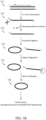
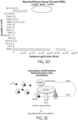
- FIG. 1A illustrates a method of preparing a circular RNA.
- DNA template 101 containing a gene of interest e.g., an open reading frame
- RNA product 102 e.g., an open reading frame
- DNA template 101 is shown generically configured for transcription using a T7 RNA polymerase, any enzyme that catalyzes the formation of an RNA molecule from a DNA template can be used in the methods described herein.
- suitable RNA polymerases are known in the art and include, without limitation, T3 RNA polymerase and SP6 RNA polymerase.
- RNA product 102 comprises a 5'-triphosphate.
- 5'-monophosphate groups are generally preferable to 5'-triphosphates for efficient 5' to 3' ligation reactions.
- the 5'-triphosphate of RNA product 102 is converted to 5'-monophosphate RNA 103.
- the conversion to 5'-monophosphate is accomplished chemically.
- the conversion to 5'-monophosphate is accomplished enzymatically.
- the conversion to 5'-monophosphate is accomplished in a two-step process comprising: (A) dephosphorylation; and (B) phosphorylation.
- this two-step process can be accomplished enzymatically, e.g., through the activity of a phosphatase in (A) to remove the triphosphate and a kinase in (B) to add a 5'-monophosphate.
- Suitable phosphatase and kinase enzymes are known in the art and described elsewhere herein.
- the conversion to 5'-monophosphate is accomplished in a single-step process using a single enzyme that catalyzes the conversion of a 5'-polyphosphate to a 5'-monophosphate.
- the single enzyme is an enzyme whose activity cleaves a pyrophosphate group from a 5'-triphosphate, such as RppH or apyrase.
- 5'-monophosphate RNA is enzymatically ligated (e.g., using a T4 RNA ligase) to produce mixed population 104 that comprises circular RNA and remnant linear RNA.
- RNA molecules having longer sequences and/or extensive secondary structure can diminish ligation efficiency such that the amount of remnant linear RNA exceeds that of the circular RNA. Accordingly, aspects of the present application relate to methods of preparing purified circular RNA 105 by purifying mixed population 104 comprising linear and circular nucleic acids.
- mixed population 104 is purified by gel chromatography. In some embodiments, mixed population 104 is purified by column chromatography. In some embodiments, mixed population 104 is purified by HPLC. In some embodiments, mixed population 104 is purified by ion-pair reversed-phase HPLC. In some embodiments, mixed population 104 is purified by (i) contacting mixed population 104 to a purification column; (ii) eluting purified circular nucleic acid 105 by passing a liquid through the purification column; and (iii) collecting an eluate comprising purified circular nucleic acid 105. In some embodiments, the purification column comprises a stationary phase having a plurality of microspheres. In some embodiments, the plurality of microspheres comprise a polystyrene-divinylbenzene copolymer.
- Circular RNA purified in accordance with the techniques described herein in some embodiments, is in a preparation that is substantially free of linear RNA.
- the circular RNA may have trace amounts of linear RNA, which would not be expected to illicit a detrimental immune response in a therapeutic application.
- a circular RNA that has been purified by a method described herein is in a composition comprising trace amounts of its linear form up to about 15% of its linear form (or fragments thereof.
- FIG. 1B illustrates a further example of a method of preparing a circular RNA.
- DNA template 111 containing a gene of interest e.g., an open reading frame
- RNA product 112 e.g., an open reading frame
- a single-step enzymatic process e.g., via the activity of RppH or apyrase
- the 5'-triphosphate of RNA product 112 is converted to 5'-monophosphate RNA 113.
- 5'-monophosphate RNA 113 is ligated to produce mixed population 114 comprising circular RNA and remnant linear RNA.
- mixed population 114 is subjected to an enzymatic digestion using an exonuclease that selectively degrades remnant linear RNA of mixed population 114 to produce digested mixed population 115 comprising circular RNA and impurities (e.g., degradation products, exonuclease, remnant linear RNA). While it is appreciated that RNase R is used in this example, many exonucleases suitable for degrading remnant linear RNA are known in the art and described elsewhere herein. Digested mixed population 115 is subjected to HPLC purification to obtain purified circular RNA 116.
- FIG. 1C illustrates a further example of a method of preparing a circular RNA.
- DNA template 121 containing a gene of interest e.g., an open reading frame
- RNA product 122 is used in an in vitro transcription reaction to generate RNA product 122.
- a single-step enzymatic process e.g., via the activity of RppH or apyrase
- the 5'-triphosphate of RNA product 122 is converted to 5'-monophosphate RNA 123.
- 5'-monophosphate RNA 123 is ligated to produce mixed population 124 comprising circular RNA and remnant linear RNA.
- mixed population 124 is subjected to a poly(A) tailing reaction to produce tailed mixed population 125 comprising circular RNA and tailed remnant linear RNA.
- the activity of poly(A) polymerase requires a free 3' terminal end for polyadenylation to occur.
- circular RNA cannot be modified by polyadenylation because the enzymatic ligation is accomplished by 5' to 3' end ligation such that these ends are unavailable for modification by poly(A) polymerase.
- selective polyadenylation of remnant linear RNA increases the efficiency of its subsequent degradation in a mixed sample.
- tailed mixed population 125 is subjected to an enzymatic digestion using an exonuclease (e.g., RNase R) that selectively degrades remnant linear RNA of tailed mixed population 125 to produce digested mixed population 126 comprising circular RNA and impurities (e.g., degradation products, exonuclease, remnant linear RNA).
- an exonuclease e.g., RNase R
- polyadenylation enhances exonuclease reaction kinetics such that a greater amount of linear RNA is degraded in a shorter period of time relative to the same or similar linear RNA that is not polyadenylated.
- the enhanced exonuclease activity promotes peak separation in a subsequent purification.
- digested mixed population 126 is subjected to HPLC purification to obtain purified circular RNA 127.
- steps of polyadenylation and RNase R digestion are used in the example process illustrated in FIG. 1C
- the inventors have recognized an assortment of techniques which generally involve selectively modifying one or both of a circular or linear RNA in a mixed population to facilitate purification. By making such modifications, it permits easier enrichment, isolation, and/or separation of the desired circular portion in respect of the linear portion of the mixed population.
- a selective modification of a molecule can be made for the purpose of affecting its movement on a column relative to the unmodified molecule.
- modifications can include, by way of example and not limitation, size modifications and charge modifications which increase chromatographic separation of one RNA form relative to the other, and capture moiety modifications which permit selective capture of one form over the other.
- Size modifications can be made to permit separation based on a difference in size between one RNA form relative to another, e.g., by size exclusion chromatography and other purification techniques which discriminate based on size. Examples of size modifications include selectively increasing the size of one RNA form relative to another.
- Such methods can involve some form of degradation and would therefore involve selective modification of the linear RNA form.
- selective degradation can be accomplished by means which discriminate based on the available free ends of the linear form (e.g., enzymatic degradation via an exonuclease).
- Charge modifications can be made to permit separation based on a difference in molecular charge of one form relative to another, e.g., by ion chromatography or by electrophoresis. This can be accomplished by selectively ligating or annealing a charged molecule to one RNA form.
- nucleic acids are generally negatively charged under neutral conditions. Therefore, selectively ligating or annealing a nucleic acid to one form of RNA would be expected to decrease the overall charge of that form.
- such modifications would invariably result in the modified form being more attracted to a positive charge, thereby providing a means of separation by charge.
- Capture moiety modifications can be made to permit selective capture of one form over another.
- a process for selective capture can generally involve: (i) selectively modifying either circular or linear RNA of a mixed population with a capture moiety; and (ii) capturing the capture moiety-modified RNA by contacting the mixed population with a binding partner of the capture moiety.
- a capture moiety is annealed or ligated to one form of RNA in a mixed population, and a binding partner of the capture moiety is contacted to the mixed population.
- the capture moiety can be in the form of a capture moiety-modified nucleotide, for example, which can be ligated to one or both terminal ends of a linear RNA (e.g., polyadenylating linear RNA in the presence of biotin-modified adenosine).
- a capture moiety-modified primer could be designed to preferably anneal to one RNA form under a particular set of conditions.
- a capture moiety-modified primer comprising a sequence that is complementary to a region bridging the splice junction of a circular RNA could be used to preferably anneal to-and capture-the circular RNA.
- a capture moiety and/or binding partner can comprise, for example, biotin, avidin, streptavidin, digoxigenin, inosine, avidin, GST sequences, modified GST sequences, biotin ligase recognition (BiTag) sequences, S tags, SNAP-tags, enterokinase sites, thrombin sites, antibodies or antibody domains, antibody fragments, antigens, receptors, receptor domains, receptor fragments, or combinations thereof.
- BiTag biotin ligase recognition
- Capture can be performed using any of a variety of techniques known in the art.
- a capture moiety comprising an affinity purification tag could permit capture via passage through an affinity column. and preferably bound by the solid phase.
- a capture moiety comprising a charged moiety could permit capture by electrophoretic means or column chromatography.
- a capture moiety comprising a paramagnetic bead could permit capture by applying a magnetic field to the sample.
- the nucleic acid comprising the RNA sequence to be circularized can be produced by methods known in the art.
- primers can be designed to generate PCR templates suitable for in vitro transcription (IVT), for example by T7, T3, or S6 RNA polymerase.
- IVT in vitro transcription
- the primers are designed with the following motifs:
- Circularized RNA is produced by transcription of the PCR products generated with the above primers, or another set of primers, to produce RNA. Circularized RNA may also be produced by transcription of a plasmid or a fragment thereof to produce RNA. The synthesized RNA is then treated to produce a 5' monophosphate RNA. For example, 5' monophosphate RNA is produced by treating the RNA with RNA 5' pyrophosphohydrolase (RppH) or an ATP diphosphohydrolase.
- RppH RNA 5' pyrophosphohydrolase
- the 5' monophosphate RNA is then enzymatically circularized for example with an RNA ligase such as T4 RNA ligase.
- a nucleic acid of the present invention which is non-circularized, may be circularized by ligating its 5' terminus to its 3' terminus. Ligating may be enzymatic, e.g., by a ligase.
- the ligase is T4 RNA ligase.
- a non-circularized nucleic acid Prior to ligation, a non-circularized nucleic acid is contacted with a phosphatase, e.g., RNA 5' pyrophosphohydrolase (RppH) or an ATP diphosphohydrolase, to produce a 5' monophosphate RNA.
- a non-circularized nucleic acid is contacted with a phosphatase, e.g., Antarctic Phosphatase, Shrimp Alkaline Phosphatase, and Calf Intestinal Phosphatase, and then contacted with a kinase, e.g., Polynucleotide Kinase.
- a nucleic acid may undergo multiple (e.g., two, three, four, five, or more) rounds of ligation, thereby ensuring that the majority of nucleic acids, in a sample, is circularized, e.g., about 100%, about 90%, about 80%, about 70%, about 60%, about 51%, or any amount therebetween.
- non-circularized (i.e., linear) RNA is removed using an exonuclease to digest the linear RNA, e.g., RNase R, Exonuclease T, ⁇ Exonuclease, Exonuclease I, Exonuclease VII, T7 Exonuclease, or XRN-1.
- an exonuclease e.g., RNase R, Exonuclease T, ⁇ Exonuclease, Exonuclease I, Exonuclease VII, T7 Exonuclease, or XRN-1.
- the exonuclease is RNase R and/or XRN-1.
- the unpurified circular mRNA sample is treated with a polyadenylase that adds a ⁇ 100-200 nucleotide poly(A) tail to linear mRNA only, as circular mRNA does not have a free 3' end to which the enzyme could make additions.
- This method allows efficient separation of the circular and linear forms of mRNA when the samples are run on an RNAsep HPLC column.
- RNA sample is exposed to a second nucleic acid of different length along with a splint and a ligase, followed by HPLC.
- the unpurified circular mRNA sample is treated with a ligase in the presence of a nucleic acid that is considerably longer or shorter than the sequence that was circularized.
- the second sequence may be DNA or RNA.
- the splint across the first and second sequence may be DNA or RNA.
- the ligase may be a T4 RNA ligase.
- the second sequence may have a length that is at least 100 nucleotides different than the first sequence.
- the second sequence may have a length that is between about 100 and 5000 nucleotides different than the first sequence.
- the second sequence may have a length that is between 200 and 4000, between 300 and 3000, between 400 and 2500, between 500 and 2000, between 600 and 2500, between 700 and 2000, between 800 and 1500, between 900 and 1000 nucleotides different than the first sequence.
- the second sequence may have a length that is 100, 200, 300, 400, 500, 600, 700, 800, 900, 1000, 1500, 2000, 2500, 3000, 4000, or 5000 nucleotides different than the first sequence.
- the ligase will ligate the second sequence to linear mRNA only, as circular mRNA does not have free 5' or 3' ends to which the enzyme could make additions.
- the splint should enrich for ligation between the first and second sequences over ligation between two or more molecules of the second sequence, use of a second sequence that contains a 5' hydroxyl will render it incompetent to ligation such that the second sequence will have to be ligated via its 3' end to a 5' monophosphate on the residual linear molecules of the first sequence. Performance of an additional round of ligation with ligase may even increase the yield of circular RNA.
- the splint may have a length of 20, 30, 40, 50, 60, 70, 80, 90, 100, 120, 140, 160, 180, or 200 nucleotides. This method allows efficient separation of the circular and linear forms of mRNA when the samples are run on an RNAsep HPLC column.
- the circularized RNA produced according to the methods of the invention are useful in gene therapy.
- the circularized RNA is useful for protein replacement therapy or in the production of RNA-based vaccines for an array of antigens.
- the circularized RNA e.g., mRNA
- the circularized RNA can encode tumor-associated antigens useful as cancer vaccines.
- the circularized RNA e.g., mRNA
- Additional embodiments include use of circularized RNA for use in cancer immunotherapies, infectious disease vaccines, genome engineering, genetic reprogramming, and protein-replacement/supplementation therapies.
- the circularized RNA (e.g., mRNA) can encode a chimeric antigen receptor and be used to create a chimeric antigen receptor T cell useful in immunotherapy.
- Chimeric antigen receptors comprise binding domains derived from natural ligands or antibodies specific for cell-surface antigens, genetically fused to effector molecules such as the TCR alpha and beta chains, or components of the TCR-associated CD3 complex. Upon antigen binding, such chimeric antigen receptors link to endogenous signaling pathways in the effector cell and generate activating signals similar to those initiated by the TCR complex.
- a CAR typically has an intracellular signaling domain, a transmembrane domain, and an extracellular domain.
- the transmembrane and/or intracellular domain may include signaling domains from CD8, CD4, CD28, 4-1BB, OX40, ICOS, and/or CD3-zeta.
- the transmembrane domain can be derived either from a natural or from a synthetic source.
- the transmembrane domain can be derived from any membrane-bound or transmembrane protein.
- the transmembrane domain may further include a stalk region positioned between the extracellular domain (e.g., extracellular ligand-binding domain) and the transmembrane domain.
- the term "stalk region" used herein generally means any oligo- or polypeptide that functions to link the transmembrane domain to the extracellular ligand-binding domain. In particular, stalk region are used to provide more flexibility and accessibility for the extracellular ligand-binding domain.
- a stalk region may comprise up to 300 amino acids, preferably 10 to 100 amino acids and most preferably 25 to 50 amino acids.
- Stalk region may be derived from all or part of naturally occurring molecules, such as from all or part of the extracellular region of CD8, CD4, or CD28, or from all or part of an antibody constant region.
- the stalk region may be a synthetic sequence that corresponds to a naturally occurring stalk sequence, or may be an entirely synthetic stalk sequence. In a preferred embodiment said stalk region is a part of human CD8 alpha chain.
- the signal transducing domain or intracellular signaling domain of the CAR of the invention is responsible for intracellular signaling following the binding of extracellular ligand binding domain to the target resulting in the activation of the immune cell and immune response.
- the signal transducing domain is responsible for the activation of at least one of the normal effector functions of the immune cell in which the CAR is expressed.
- the effector function of a T cell can be a cytolytic activity or helper activity including the secretion of cytokines.
- the term "signal transducing domain” refers to the portion of a protein which transduces the effector signal function signal and directs the cell to perform a specialized function.
- Signal transduction domain comprises two distinct classes of cytoplasmic signaling sequence, those that initiate antigen-dependent primary activation, and those that act in an antigen-independent manner to provide a secondary or co-stimulatory signal.
- Primary cytoplasmic signaling sequence can comprise signaling motifs which are known as immunoreceptor tyrosine-based activation motifs of ITAMs.
- ITAMs are well defined signaling motifs found in the intracytoplasmic tail of a variety of receptors that serve as binding sites for syk/zap70 class tyrosine kinases.
- ITAM used in the invention can include as non-limiting examples those derived from TCR zeta, FcR gamma, FcR beta, FcR epsilon, CD3 gamma, CD3 delta, CD3 epsilon, CD5, CD22, CD79a, CD79b and CD66d.
- the signaling transducing domain of the CAR can comprise the CD3 zeta signaling domain, or the intracytoplasmic domain of the Fc epsilon RI beta or gamma chains.
- the CAR may further include one or more additional costimulatory molecules positioned between the transmembrane domain and the intracellular signaling domain, to further augment potency.
- costimulatory molecules include CD27, CD28, CD8, 4-1BB (CD137), OX40, CD30, CD40, PD-1, ICOS, lymphocyte function-associated antigen-1 (LFA-1), CD2, CD7, LIGHT, NKG2C, B7-H3 and a ligand that specifically binds with CD83 and the like.
- the intracellular signaling domain contains 2, 3, 4, or more costimulatory molecules in tandem.
- the extracellular domain may include an antibody such as a Fab, a scFV, or a single-domain antibody (sdAb also known as a nanobody) and/or may include another polypeptide described herein.
- said extracellular ligand-binding domain is a single chain antibody fragment (scFv) comprising the light (VL) and the heavy (VH) variable fragment of a target antigen specific monoclonal antibody joined by a flexible linker.
- scFv single chain antibody fragment
- Other binding domain than scFv can also be used for predefined targeting of lymphocytes, such as camelid single-domain antibody fragments (which are examples of an sdAb) or receptor ligands, antibody binding domains, antibody hypervariable loops or CDRs as non-limiting examples.
- the antigen of the CAR can be a tumor-associated surface antigen, such as ErbB2 (HER2/neu), carcinoembryonic antigen (CEA), epithelial cell adhesion molecule (EpCAM), epidermal growth factor receptor (EGFR), EGFR variant III (EGFRvIII), CD19, CD20, CD30, CD40, disialoganglioside GD2, ductal-epithelial mucine, gp36, TAG-72, glycosphingolipids, glioma-associated antigen, beta-human chorionic gonadotropin, alphafetoprotein (AFP), lectin-reactive AFP, thyroglobulin, RAGE-1, MN-CA IX, human telomerase reverse transcriptase, RU1, RU2 (AS), intestinal carboxyl esterase, mut hsp70-2, M-CSF, prostate specific antigen (PSA), PAP, NY-ESO-1, LAGA-1a
- a circularized nucleic acid of the present invention may encode a CAR and may be transfected or infected into a T-cell using any technique known in the art.
- a T cell that expresses the CAR is referred to as a chimeric T cell receptor cell (CART).
- CART will express and bear on the cell surface membrane the chimeric antigen receptor encoded by the RNA sequence of a circularized nucleic acid of the present invention.
- the present invention includes a nucleic acid encoding a CAR, methods for preparing a nucleic acid encoding a CAR, compositions comprising a nucleic acid encoding a CAR, methods for producing a CART, CART for use in methods for treating a disease, an isolated CART, and non-human mammals comprising a CART.
- nucleotide refers to a ribonucleotide or a deoxyribonucleotide or modified form thereof, as well as an analog thereof.
- Nucleotides include species that comprise purines, e.g., adenine, hypoxanthine, guanine, and their derivatives and analogs, as well as pyrimidines, e.g., cytosine, uracil, thymine, and their derivatives and analogs.
- Nucleotide analogs include nucleotides having modifications in the chemical structure of the base, sugar and/or phosphate, including, but not limited to, 5-position pyrimidine modifications, 8-position purine modifications, modifications at cytosine exocyclic amines, and substitution of 5-bromo-uracil; and 2'-position sugar modifications, including but not limited to, sugar-modified ribonucleotides in which the 2'-OH is replaced by a group such as an H, OR, R, halo, SH, SR, NH2, NHR, NR2, or CN, wherein R is an alkyl moiety as defined herein.
- Nucleotide analogs are also meant to include nucleotides with bases such as inosine, queuosine, xanthine, sugars such as 2'-methyl ribose, non-natural phosphodiester linkages such as methylphosphonates, phosphorothioates and peptides.
- Modified bases refer to nucleotide bases such as, for example, adenine, guanine, cytosine, thymine, and uracil, xanthine, inosine, and qucuosine that have been modified by the replacement or addition of one or more atoms or groups.
- nucleotide bases such as, for example, adenine, guanine, cytosine, thymine, and uracil, xanthine, inosine, and qucuosine that have been modified by the replacement or addition of one or more atoms or groups.
- modifications that can comprise nucleotides that are modified with respect to the base moieties include but are not limited to, alkylated, halogenated, thiolated, aminated, amidated, or acetylated bases, individually or in combination.
- More specific examples include, for example, 5-propynyluridine, 5-propynylcytidine, 6-methyladenine, 6-methylguanine, N,N,-dimethyladenine, 2-propyladenine, 2-propylguanine, 2-aminoadenine, 1-methylinosine, 3-methyluridine, 5-methylcytidine, 5-methyluridine and other nucleotides having a modification at the 5 position, 5-(2-amino)propyl uridine, 5-halocytidine, 5-halouridine, 4-acetylcytidine, 1-methyladenosine, 2-methyladenosine, 3-methylcytidine, 6-methyluridine, 2-methylguanosine, 7-methylguanosine, 2,2-dimethylguanosine, 5-methylaminoethyluridine, 5-methyloxyuridine, deazanucleotides such as 7-deaza-adenosine, 6-azouridine, 6-azocytidine, 6-azo
- Modified nucleotides also include those nucleotides that are modified with respect to the sugar moiety, as well as nucleotides having sugars or analogs thereof that are not ribosyl.
- the sugar moieties may be, or be based on, mannoses, arabinoses, glucopyranoses, galactopyranoses, 4'-thioribose, and other sugars, heterocycles, or carbocycles.
- the term nucleotide is also meant to include what are known in the art as universal bases.
- universal bases include but are not limited to 3-nitropyrrole, 5-nitroindole, or nebularine.
- nucleotide is also meant to include the N3' to P5' phosphoramidate, resulting from the substitution of a ribosyl 3' oxygen with an amine group.
- the modified base is 5-methylcytidine (5mC).
- nucleotide also includes those species that have a detectable label, such as for example a radioactive or fluorescent moiety, or mass label attached to the nucleotide.
- nucleic acid and “polynucleotide” are used interchangeably herein to describe a polymer of any length, e.g., greater than about 2 bases, greater than about 10 bases, greater than about 100 bases, greater than about 500 bases, greater than 1000 bases, up to about 10,000 or more bases composed of nucleotides, e.g., deoxyribonucleotides or ribonucleotides, and may be produced enzymatically or synthetically (e.g., PNA as described in U.S. Pat. No.
- Naturally occurring nucleotides include guanine, cytosine, adenine and thymine (G, C, A and T, respectively).
- ribonucleic acid and "RNA” as used herein mean a polymer composed of ribonucleotides.
- mRNA As used herein, the terms “mRNA” and “RNA” may be synonyms.
- deoxyribonucleic acid and “DNA” as used herein mean a polymer composed of deoxyribonucleotides.
- isolated or purified generally refers to isolation of a substance (compound, polynucleotide, protein, polypeptide, polypeptide composition) such that the substance comprises a significant percent (e.g., greater than 1%, greater than 2%, greater than 5%, greater than 10%, greater than 20%, greater than 50%, or more, usually up to about 90%-100%) of the sample in which it resides.
- a substantially purified component comprises at least 50%, 80%-85%, or 90-95% of the sample.
- Techniques for purifying polynucleotides and polypeptides of interest include, for example, ion-exchange chromatography, affinity chromatography and sedimentation according to density.
- a substance is purified when it exists in a sample in an amount, relative to other components of the sample, that is not found naturally.
- oligonucleotide denotes a single-stranded multimer of nucleotides from about 2 to 500 nucleotides, e.g., 2 to 200 nucleotides. Oligonucleotides may be synthetic or may be made enzymatically, and, in some embodiments, are 4 to 50 nucleotides in length. Oligonucleotides may contain ribonucleotide monomers (i.e., may be RNA oligonucleotides) or deoxyribonucleotide monomers. Oligonucleotides may be 5 to 20, 11 to 30, 31 to 40, 41 to 50, 51-60, 61 to 70, 71 to 80, 80 to 100, 100 to 150 or 150 to 200, up to 500 nucleotides in length, for example.
- duplex or “double-stranded” as used herein refers to nucleic acids formed by hybridization of two single strands of nucleic acids containing complementary sequences. In most cases, genomic DNA is double-stranded.
- complementary refers to a nucleotide sequence that base-pairs by non-covalent bonds to a target nucleic acid of interest.
- adenine (A) forms a base pair with thymine (T), as does guanine (G) with cytosine (C) in DNA.
- thymine is replaced by uracil (U).
- U uracil
- A is complementary to T and G is complementary to C.
- RNA is complementary to U and vice versa.
- complementary refers to a nucleotide sequence that is at least partially complementary.
- nucleotide sequence may be partially complementary to a target, in which not all nucleotide is complementary to every nucleotide in the target nucleic acid in all the corresponding positions, that is having one or more nucleotide mismatches.
- RNA ligase means an enzyme or composition of enzyme that is capable of catalyzing the joining or ligating of an RNA acceptor oligonucleotide, which has an hydroxyl group on its 3' end, to an RNA donor, which has a 5' phosphate group on its 5' end.
- the invention is not limited with respect to the RNA ligase, and any RNA ligase from any source can be used in an embodiment of the methods and kits of the present invention.
- the RNA ligase is a polypeptide (gp63) encoded by bacteriophage T4 gene 63; this enzyme, which is commonly referred to simply as “T4 RNA ligase,” is more correctly now called “T4 RNA ligase 1" since Ho, C K and Shuman, S (Proc. Natl. Acad. Sci.
- RNA ligase is a polypeptide derived from or encoded by an RNA ligase gene from bacteriophage TS2126, which infects Thermus scotoductus, as disclosed in U.S. Pat. No. 7,303,901 (i.e., bacteriophage TS2126 RNA ligase).
- Linear nucleic acid molecules are said to have a "5'-terminus” (5' end) and a "3'-terminus” (3' end) because nucleic acid phosphodiester linkages occur at the 5' carbon and 3' carbon of the sugar moieties of the substituent mononucleotides.
- the end of a polynucleotide at which a new linkage would be to a 5' carbon is its 5' terminal nucleotide.
- the end of a polynucleotide at which a new linkage would be to a 3' carbon is its 3' terminal nucleotide.
- a terminal nucleotide, as used herein, is the nucleotide at the end position of the 3'- or 5'-terminus
- Transcription means the formation or synthesis of an RNA molecule by an RNA polymerase using a DNA molecule as a template.
- the invention is not limited with respect to the RNA polymerase that is used for transcription.
- a T7-type RNA polymerase can be used.
- Translation means the formation of a polypeptide molecule by a ribosome based upon an RNA template.
- T m Melting temperature
- T a is defined as the temperature in which single-stranded nucleic acids associate such that double-stranded molecules are formed, often by heating and cooling.
- the term “about”, is understood as within a range of normal tolerance in the art, for example within 2 standard deviations of the mean. “About” can be understood as within 10%, 9%, 8%, 7%, 6%, 5%, 4%, 3%, 2%, 1%, 0.9%, 0.8%, 0.7%, 0.6%, 0.5%, 0.4%, 0.3%, 0.2%, 0.1%, 0.09%, 0.08%, 0.07%, 0.06%, 0.05%, 0.04%, 0.03%, 0.02%, or 0.01% of the stated value. Unless otherwise clear from the context, all numerical values provided herein are modified by the term "about.”
- a "subject" in the context of the present invention is preferably a mammal.
- the mammal can be a human, non-human primate, mouse, rat, dog, cat, horse, or cow, but are not limited to these examples.
- encode refers broadly to any process whereby the information in a polymeric macromolecule is used to direct the production of a second molecule that is different from the first.
- the second molecule may have a chemical structure that is different from the chemical nature of the first molecule.
- the term "encode” describes the process of semi-conservative DNA replication, where one strand of a double-stranded DNA molecule is used as a template to encode a newly synthesized complementary sister strand by a DNA-dependent DNA polymerase.
- a DNA molecule can encode an RNA molecule (e.g., by the process of transcription that uses a DNA-dependent RNA polymerase enzyme).
- an RNA molecule can encode a polypeptide, as in the process of translation.
- the term "encode” also extends to the triplet codon that encodes an amino acid.
- an RNA molecule can encode a DNA molecule, e.g., by the process of reverse transcription incorporating an RNA-dependent DNA polymerase.
- a DNA molecule can encode a polypeptide, where it is understood that "encode" as used in that case incorporates both the processes of transcription and translation.
- RNA was synthesized using the HiScribe T7 High Yield RNA Synthesis Kit (NEB, #E2040S) according to manufacturer's instructions. 500-1000 ng of PCR product encoding the desired RNA sequence was used as template in these in vitro transcription (IVT) reactions. Synthesized RNA was then treated with RNA 5' Pyrophosphohydrolase, or RppH, (NEB, #M0356S) to provide the 5' monophosphate end necessary for enzymatic circularization.
- ITT in vitro transcription
- RNA was enzymatically circularized in reactions containing final concentrations of: 10% DMSO, 200 ⁇ M ATP, 1x NEB Buffer 4, 40 U RNaseOUT (Life Technologies, #10777-019), and 30 U of T4 RNA Ligase 1 (NEB, #M0204L) for 2 hours at 37 °C. Remaining linear RNA in the circularization reactions is removed by HPLC (described in Example 4). After each step, reactions were purified using the GeneJet RNA Purification Kit (Thermo Scientific, #K4082).
- Circularization of RNA less than 1000 nucleotides was confirmed by running 500 ng of RNA product on a 6% polyacrylamide gel in 7 M Urea-TBE (Life Technologies, #EC6865) for 3 hours at 180 V, 4 °C. Circularized product characteristically migrates slower than linear RNA, so a slower migrating band indicated circularized product when run alongside control non-circularized RNA. Additional confirmation was carried out using outward-oriented PCR (OOPCR), where primers are oriented outward from one other with respect to the linear template (as opposed to traditional PCR in which primers are oriented towards each other).
- cDNA was synthesized (Life Technologies, #4402954) from RNA samples and used as template in the OOPCR reactions.
- cDNA derived from non-circularized, linear RNA was used a negative control. An amplicon is generated solely from the circularized construct, as the polymerase can extend through the ligated ends.
- CRC sequences and experimental 5'/3' UTRs were appended to RNA coding sequence (CDS) by generating PCR templates for IVT that had been amplified with primers of the following design:
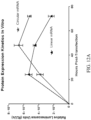
- RNA constructs encoding nanoluciferase and complexed with Lipofectamine ® 2000 were transfected into Hep3B cells (human hepatocyte cell line) seeded at 10,000 cells/well in a 96-well plate. Protein expression kinetics were measured using the Nano-Glo Luciferase Assay System (Promega, #N1110) using samples taken at 24, 48, and 72 hours post-transfection.
- RNA stability was carried out using samples derived from cells that had been transfected as described above. cDNA was synthesized at each time point using the Power SYBR ® Green Cells-to-Ct Kit (Life Technologies, #4402954) according to the manufacturer's instruction. The housekeeping gene ⁇ -actin was used to normalize the results.
- This method has the added benefit of removing impurities present in in vitro transcribed mRNA samples.
- circular mRNA samples Prior to HPLC, circular mRNA samples are treated with a polyadenylase that adds a ⁇ 100-200 nucleotide poly(A) tail to linear mRNA only, as circular mRNA does not have a free 3' end to which the enzyme could make additions.
- This treatment allows efficient separation of the circular and linear forms of mRNA when the samples are run on an RNAsep HPLC column. In the absence of polyadenylation, the circular and linear forms cannot be separated by HPLC, as they elute at the same time owing to their identical lengths.
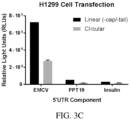
- IRES activity was enriched for by adding excess cap analog, which sequesters the initiation components required for cap-dependent translation to occur.
- cap analog sequesters the initiation components required for cap-dependent translation to occur.
- EXAMPLE 6 EVALUATION OF METHODS FOR PREPARING 5'-MONOPHOSPHATE ENDS
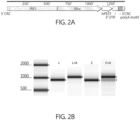
- lanes 1-3 of Agilent TapeStation are linear RNAs generated with 5-fold, 10-fold, or no GMP relative to GTP during in vitro transcription. The total amount of RNA generated under these conditions is listed at the bottom of each lane. As shown, there was a reduction in RNA produced per reaction when GMP was included. Lanes 4-6 contain the corresponding circular product, post-poly(A) polymerase treatment. As shown here, high levels of degradation were observed in the samples that used GMP during in vitro transcription.
- RNA was treated with the indicated single enzyme (Apyrase, RppH) or two sequential enzymes (AP ⁇ PNK, rSAP ⁇ PNK, CIP-PNK) to produce the desired 5'-monophosphate ends.
- Lane 1 is the linear control not treated with any enzymes after in vitro transcription.
- Lanes 2-3 are samples that were modified using a single-step enzyme.
- Lanes 4-6 are samples that were modified using the two-step process for generating the 5'-monophosphate end. As shown, RppH consistently produced the highest level of circular product per reaction.
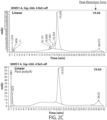
- FIG. 6A an example set of conditions for HPLC purification is shown in the boxed area with an optimized solvent gradient for separating RNAs shown at bottom (Solvent A: 0.1 M TEAA, Solvent B: 0.1 M TEAA + 25% Acetonitrile).
- FIG. 6B accurate separation was confirmed by running RNA Century ladder (Life Technologies).
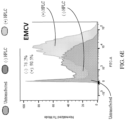
- FIG. 6C depicts chromatograms of RNase R-treated RNA upon initial runs on the HPLC column. Fractions were collected from minutes 19 through 22, purified, and re-run on the HPLC column again to confirm efficient removal of non-specific RNA ( FIG. 6D ).
- EXAMPLE 8 CONFIRMATORY METHODS FOR VERIFYING CIRCULARIZATION AND PURITY
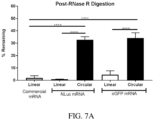
- Circular RNA was exposed to RNase R to remove residual linear RNA from the sample.
- equal levels of the linear form of a given RNA as well as a commercial mRNA (Cleancap eGFP, Trilink) were digested alongside the circular samples to provide positive controls that are expected to be completely degraded upon exposure to RNase R.
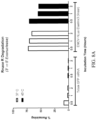
- FIG. 7A 5 ⁇ g of linear and circular forms of an Nluc or eGFP mRNA (or Trilink's Cleancap) was exposed to 5 units of RNase R for 45 minutes at 37 °C. The remaining RNA was recovered by ethanol precipitation, and the amount recovered was used to calculate circularization efficiency. These experiments were repeated 3 times in triplicate. As shown, the linear forms are completely degraded, as no RNA was recovered post-digestion. However, the circular samples have significant levels of RNA remaining post-digestion, which represents the circular RNA product. To confirm that this remaining product was indeed circular RNA, the samples were run on a Tapestation (Agilent) to confirm that the linear control RNA was completely degraded and that the recovered circular RNA was the intact target ( FIG. 7B ).
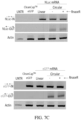
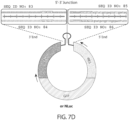
- the circular RNAs (and the indicated controls) were transfected into HEK293T cells, total RNA was isolated after 24 hours, and RT-PCR was performed using divergent primers (with respect to the linear construct) that amplify the region containing the 5'-3' junction. As expected, only the circular samples produce amplicon using divergent primers ( FIG. 7C ). As a final confirmation, the PCR products generated from the divergent primers were sequenced to confirm accurate ligation across the junction ( FIG. 7D ).
- EXAMPLE 9 POLY(A) TAILING TO PROMOTE DIGESTION OF LINEAR MRNA
- constructs with varying 3' UTRs among 3 different forms of RNA were generated (without cap and tail, with cap and tail, and in circular form). Results for RNase R digestion of these constructs is shown in FIG. 8B .
- linear RNA (+/- poly(A) tail and/or +/- CRC) was incubated to show that the poly(A) allowed RNAs to be sufficiently resensitized to RNase R degradation ( FIG. 8C ).
- EXAMPLE 10 A CRC MOTIF ENHANCES CIRCULARIZATION EFFICIENCY WITHOUT HINDERING TRANSLATION OR INDUCING AN INTERFERON RESPONSE
- FIG. 9A is a diagram of the predicted secondary structure of the 5' and 3' ends of an example RNA construct when the CRC is included.
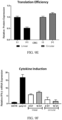
- a set of constructs were designed to be used to characterize the effect that CRCs have on circularization efficiency, translation efficiency, and cytokine induction ( FIG. 9B).
- FIG. 9C depicts confirmation that the indicated constructs were generated correctly and that circular RNA was produced.
- Nanoluciferase (Nluc)-encoding RNA construct was transfected into HEK293T cells, and the variations in protein expression (as measured by luciferase activity) were compared ( FIG. 9E ). As shown, there was no change in protein expression when a 10-nucleotide CRC was added to circular RNA.
- FIG. 4A Each construct listed in FIG. 4A was generated in linear or circular form and purified by HPLC.
- the resulting purified products were used as templates in a reticulocyte lysate cell-free translation system (400 ng of mRNA per reaction).
- the linear mRNA showed increased protein levels as the CRC's T m decreased ( FIG. 10A ).
- the circular mRNA showed no such trend ( FIG. 10B ).
- EXAMPLE 12 PERSISTENCE OF CIRCULAR MRNA is OBSERVED IN VITRO AND IN VIVO
- FIG. 11A A diagram of a target mRNA and its corresponding amplicons when using inward- and outward-oriented primers in semi-quantitative RT-PCR is shown in FIG. 11A .
- HepG2 cells were transfected with commercial eGFP (5mC/PseudoU + HPLC purification) or circular mRNA (unmodified NTs, + HPLC purification), and total mRNA was isolated 6, 24, 48, or 72 hours post-transfection.
- cDNA was generated from total mRNA, and RT-PCR was carried out using the primer pairs outlined in FIG. 11A to monitor mRNA stability over the indicated time course.
- mice were injected intravenously ( FIG. 11C ) with 10 ⁇ g of linear (+cap/+tail) ( FIG. 11D ) or circular ( FIG. 11E ) mRNA complexed to TransIT, or TransIT alone.
- Total mRNA was isolated from liver homogenates 24, 48, or 72 hours post injection, and absolute values of mRNA were determined by qPCR.
- EXAMPLE 13 EMCV-IRES-MEDIATED PROTEIN TRANSLATION IN CIRCULAR MRNA PERSISTS LONGER THAN THAT DERIVED FROM CANONICAL LINEAR MRNA
- Protein expression kinetics from circular mRNA versus linear mRNA was tracked over a 3-day time course in HepG2 cells ( FIG. 12A ).
- FIG. 12B To characterize protein expression in HEK293T cells past 3 days, cells were sequentially split and assayed every other day as outlined in FIG. 12B .
- FIG. 12C protein levels of circular mRNA continued to rise and surpass linear +/+ levels by Day 2 and continued this trend until Day 8.
- EXAMPLE 14 CIRCULAR MRNA CAN BE ROBUSTLY EXPRESSED IN VIVO FOLLOWING INTRAVENOUS INJECTION
- RNA complexed to TransIT 10 ⁇ g was injected intravenously into BALB/c mice. Expression was measured by IVIS at 4, 8, 24, 48, and 72 hours post-injection.
- the two different forms of RNA are identical in sequence and vary only in the status of their 3' and 5' end; the linear form has ends that are accessible for exonuclease-mediated degradation, while the circular form's 5' and 3' ends have been covalently ligated. The lack of free ends in the latter construct results in significantly greater levels of protein expression of this extended time course.
- EXAMPLE 15 ERYTHROPOIETIN (EPO) CONSTRUCT DESIGN AND CONFIRMATION
- FIG. 14A A codon-optimized mouse erythropoietin mRNA was generated with an EMCV 5' UTR and a poly(A)x50 in its 3' UTR ( FIG. 14A ), and the size and purity of the RNA was confirmed by TapeStation (Agilent) ( FIG. 14B ). Successful ligation was confirmed using RT-PCR and sequence-specific divergent primers ( FIG. 14C ). Final products were initially tested in immortalized cells (HEK293T cells) to confirm translation of the generated mRNA ( FIG. 14D ). Epo protein secretion was measured by ELISA.
- FIG. 14E depicts optimization of Epo mRNA injected intravenously into BALB/c mice.
- EXAMPLE 16 EMCV-MEDIATED PROTEIN TRANSLATION IS INHIBITED IN IMMORTALIZED CELL LINES AND PRIMARY CELLS WHEN MODIFIED NUCLEOTIDES ARE INCORPORATED INTO THE MRNA BUT MAINTAINS ITS FUNCTIONALITY IN VIVO
- mRNAs containing modified nucleotides in their sequences are not able to translate protein if translation is dependent on the EMCV IRES. Protein expression is undetectable in HepG2 cells ( FIG. 15A ) and PBMCs ( FIG. 15B ), both 24 hours post-transfection.
- RNA The lack of protein expression is not due to disparate levels of RNA present within the cell, as roughly equal levels of RNA are detected within the cell at early time points: 4 hours post-transfection in HepG2 cells ( FIG. 15C ) and 12 hours post-transfection in PBMCs ( FIG. 15D ).
Landscapes
- Health & Medical Sciences (AREA)
- Life Sciences & Earth Sciences (AREA)
- Chemical & Material Sciences (AREA)
- Organic Chemistry (AREA)
- Engineering & Computer Science (AREA)
- General Health & Medical Sciences (AREA)
- Zoology (AREA)
- Molecular Biology (AREA)
- Biochemistry (AREA)
- Genetics & Genomics (AREA)
- Biotechnology (AREA)
- Medicinal Chemistry (AREA)
- Wood Science & Technology (AREA)
- Veterinary Medicine (AREA)
- Animal Behavior & Ethology (AREA)
- Pharmacology & Pharmacy (AREA)
- Public Health (AREA)
- Immunology (AREA)
- Epidemiology (AREA)
- Biomedical Technology (AREA)
- Cell Biology (AREA)
- Bioinformatics & Cheminformatics (AREA)
- General Engineering & Computer Science (AREA)
- Biophysics (AREA)
- Microbiology (AREA)
- Proteomics, Peptides & Aminoacids (AREA)
- Analytical Chemistry (AREA)
- General Chemical & Material Sciences (AREA)
- Chemical Kinetics & Catalysis (AREA)
- Virology (AREA)
- Developmental Biology & Embryology (AREA)
- Hematology (AREA)
- Physics & Mathematics (AREA)
- Gastroenterology & Hepatology (AREA)
- Toxicology (AREA)
- Plant Pathology (AREA)
- Crystallography & Structural Chemistry (AREA)
- Nuclear Medicine, Radiotherapy & Molecular Imaging (AREA)
- Pharmaceuticals Containing Other Organic And Inorganic Compounds (AREA)
- Medicines That Contain Protein Lipid Enzymes And Other Medicines (AREA)
Claims (20)
- Acide nucléique comprenant de 5' vers 3' :(a) une séquence complémentaire-complémentaire inverse imparfaite (iCRC) en 5' ;(b) une séquence de région non traduite (UTR) en 5' ;(c) une séquence d'ARN qui comprend un cadre de lecture ouvert;(d) une séquence UTR en 3' ; et(e) une séquence iCRC en 3' ;
dans lequel la séquence iCRC en 5' et la séquence iCRC en 3' comportent les caractéristiques suivantes :(i) les séquences iCRC en 5' et/ou iCRC en 3' comprennent une ou plusieurs mutations ponctuelles de manière à ce que la séquence iCRC en 5' et la séquence iCRC en 3' ne soient pas complémentaires à 100 % ;(ii) une température d'hybridation (Ta) supérieure à environ 16 °C ;(iii) une température de fusion (Tm) inférieure à environ 37 °C ; et(iv) les séquences iCRC en 5' et les séquences iCRC en 3' comprennent 5 à 50 nucléotides. - Acide nucléique comprenant de 5' vers 3' :(a) une séquence iCRC en 5' ;(b) une séquence UTR en 5' ;(c) un cadre de lecture ouvert ;(d) une séquence UTR en 3' ; et(e) une séquence iCRC en 3',
dans lequel la séquence iCRC en 5' et la séquence iCRC en 3' s'hybrident dans des conditions de réaction de ligature pour former un duplex, le duplex comprenant :une ou plusieurs paires de base mésappariées ; etune Tm d'au moins 16 °C ;dans lequel les séquences iCRC en 5' et/ou iCRC en 3' comprennent une ou plusieurs mutations ponctuelles telles que la séquence iCRC en 5' et la séquence iCRC en 3' ne sont pas complémentaires à 100 % ; etdans lequel les séquences iCRC en 5' et iCRC en 3' comprennent 5 à 50 nucléotides. - Acide nucléique selon l'une quelconque des revendications précédentes, comprenant en outre une séquence queue en 5' en amont de la séquence iCRC en 5' et une séquence queue en 3' en aval de la séquence iCRC en 3', dans lequel la séquence de queue en 5' et la séquence de queue en 3' ne s'hybrident pas dans des conditions de réaction de ligature, la séquence de queue en 5' comprenant un nucléotide guanosine (G) à la dernière position de base en 5', encore éventuellement la séquence de queue en 5' comprenant entre un et trois nucléotides G aux dernières positions de base en 5'.
- Acide nucléique selon la revendication 1 ou la revendication 2, dans lequel(a) une séquence 5'-polyA est située en 5' de la séquence iCRC en 5' et/ou une séquence 3'-polyA est située en 3' de la séquence iCRC en 3', éventuellement dans lequel la séquence 5'-polyA et/ou la séquence 3'-polyA comprend 5 à 50 nucléotides ;(b) l'UTR en 5' ou l'UTR en 3' comprend une séquence homopolymérique, la séquence homopolymérique comprenant éventuellement une séquence polyA, une séquence polyT ou une séquence polyC ;(c) l'UTR en 3' comprend une séquence nucléotidique ne comportant pas plus de 25 %, pas plus de 20 %, pas plus de 10 %, pas plus de 5 %, ou pas plus de 2 % de teneur en nucléotide guanosine (G) ;(d) la séquence UTR en 3' comprend au moins 5 nucléotides, et éventuellement moins de 200, moins de 150, moins de 100 ou moins de 50 nucléotides ; et/ou(e) l'UTR en 5' comprend un site d'entrée interne du ribosome (IRES), éventuellement dans lequel l'IRES est un IRES de virus de l'encéphalomyocardite (EMCV).
- Acide nucléique selon l'une quelconque des revendications précédentes, dans lequel le cadre de lecture ouvert code un antigène associé à une tumeur, un récepteur d'antigène chimérique, une cytokine, un antigène bactérien ou viral, une transposase ou une nucléase, un facteur de transcription, une hormone, un anticorps, ou une protéine ou un peptide thérapeutique, éventuellement la protéine thérapeutique étant la préproinsuline, hypocrétine, hormone de croissance humaine, leptine, ocytocine, vasopressine, facteur VII, facteur VIII, facteur IX, érythropoïétine, G-CSF, alpha-galactosidase A, iduronidase, N-acétylgalactosamine-4-sulfatase, FSH, DNAse, activateur du plasminogène tissulaire, glucocérébrosidase, interféron alpha, interféron bêta, interféron gamma, ou IGF-1.
- Acide nucléique selon l'une quelconque des revendications précédentes, dans lequel les extrémités 5' et 3' de l'acide nucléique ne sont pas ligaturées pour que l'acide nucléique soit non-circularisé.
- Acide nucléique selon l'une quelconque des revendications précédentes, dans lequel les extrémités 5' et 3' de l'acide nucléique sont ligaturées pour que l'acide nucléique soit circularisé, avec éventuellement :(a) l'acide nucléique circularisé comportant une plus grande stabilité par rapport à un acide nucléique non circularisé ;(b) l'acide nucléique circularisé assurant une plus grande traduction des polypeptides par rapport à un acide nucléique non circularisé comportant une séquence complémentaire-complémentaire inverse (CRC) en 5' et une séquence complémentaire-complémentaire inverse (CRC) en 3' et 100 % d'homologie ; et/ou(c) l'acide nucléique ne provoquant pas une réponse immunitaire appréciable in vivo.
- Acide nucléique selon l'une quelconque des revendications précédentes, dans lequel :(a) la Ta est supérieure à 16 °C et la Tm est inférieure à 37 °C ;(b) la Ta est supérieure à 20 °C et la Tm est inférieure à 34 °C ;(c) la Ta est supérieure à 23 °C et la Tm est inférieure à 30 °C ; ou(d) la Tm est supérieure à 25 °C et inférieure à 37 °C.
- Cellule comprenant l'acide nucléique de la revendication 7 ou 8.
- Méthode de circularisation d'un acide nucléique comprenant :(a) l'obtention d'un acide nucléique selon l'une quelconque des revendications 1 à 5 ; et(b) la ligature de l'extrémité 5' de l'acide nucléique à son extrémité 3', produisant ainsi un acide nucléique circularisé.
- Méthode de la revendication 10, comprenant en outre :(a) la conversion du triphosphate en 5' de l'acide nucléique en monophosphate en 5' avant la ligature, dans lequel éventuellement :(i) la conversion se produisant en mettant en contact le triphosphate en 5' avec de l'ARN 5' pyrophosphohydrolase (RppH) ou une diphosphohydrolase d'ATP (apyrase), ou(ii) la conversion se produisant par une réaction en deux étapes comprenant :(A) la mise en contact d'un nucléotide en 5' de l'acide nucléique non circularisé avec une phosphatase pour éliminer les trois phosphates ; ou(B) la mise en contact du nucléotide en 5' après l'étape (a) avec une kinase qui ajoute un phosphate unique ;(b) la ligature se produit en mettant en contact l'extrémité 5' de l'acide nucléique et l'extrémité 3' de l'acide nucléique avec une ligase, éventuellement la ligase étant la T4 RNA ligase ; et/ou(c) la digestion des molécules d'acide nucléique non circularisées avec une RNase après la ligature ou la polyadénylation des molécules d'acide nucléique non circularisées et la séparation des molécules d'acide nucléique polyadénylés non circularisées des molécules d'acide nucléique circularisées.
- Acide nucléique circularisé produit par la méthode de la revendication 10 ou de la revendication 11.
- Composition comprenant l'acide nucléique circularisé de la revendication 12.
- Composition de la revendication 13 destiné à être utilisé dans une méthode de vaccination d'un sujet comprenant l'administration au sujet de la composition de la revendication 13, la séquence d'ARN pouvant être traduite en un polypeptide qui code pour un antigène, éventuellement ledit antigène étant un antigène bactérien, un antigène viral ou un antigène associé à une tumeur.
- Méthode de production d'une cellule T de récepteur chimérique d'antigène (CAR) comprenant la transfection d'un lymphocyte T avec l'acide nucléique circularisé de la revendication 12, dans laquelle la séquence d'ARN code un récepteur chimérique d'antigène.
- Méthode de la revendication 15, dans laquelle l'antigène CAR comprend ErbB2 (HER2/neu), antigène carcinoembryonnaire (CEA), molécule d'adhésion des cellules épithéliales (EpCAM), récepteur du facteur de croissance de l'épiderme (EGFR), variant III de l'EGFR (EGFRvIII), CD19, CD20, CD30, CD40, disialoganglioside GD2, mucine ductale-épitheliale, gp36, TAG-72, glycosphingolipides, antigène associé aux gliomes, gonadotrophine chorionique bêta humaine, alphafoetoprotéine (AFP), AFP réactive à la lectine, thyroglobuline, RAGE-1, MN-CA IX, transcriptase inverse de la télomérase humaine, RU1, RU2 (AS), carboxyl estérase intestinale, mut hsp70-2, M-CSF, antigène prostatique spécifique (PSA), PAP, NY-ESO-1, LAGA-1a, p53, prostéine, PSMA, survie et télomérase, antigène-1 tumoral de carcinome de la prostate (PCTA-1), MAGE, ELF2M, élastase des neutrophiles, éphrine B2, CD22, facteur de croissance analogue à l'insuline (IGF1)-I, IGF-II, récepteur de l'IGFI, mésothéliomes, une molécule du complexe majeur d'histocompatibilité (MHC) présentant un épitope peptidique spécifique tumoral, ST4, ROR1, Nkp30, NKG2D, antigènes stromaux tumoraux, le domaine A extra (EDA) ou le domaine B extra (EDB) de la fibronectine ou le domaine Al de la tenascine-C (TnC Al), protéine associée aux fibroblastes (fap), CD3, CD4, CD8, CD24, CD25, CD33, CD34, CD133, CD138, CTLA-4, B7-1 (CD80), B7-2 (CD86), endogline, une molécule du complexe majeur d'histocompatibilité (CMH), BCMA (CD269, TNFRSF 17), un antigène spécifique du VIH, un antigène spécifique de l'EBV, un antigène spécifique du CMV, un antigène spécifique du virus de Lassa, ou un antigène spécifique du virus de la grippe.
- Méthode de la revendication 15 ou 16, dans laquelle l'ARNm est exprimé in vivo.
- Cellule de la revendication 9 destiné à être utilisé dans une méthode de traitement d'une maladie, la cellule étant un lymphocyte T à récepteur chimérique d'antigène (CAR).
- Composition de la revendication 13 destiné à être utilisé dans une méthode de thérapie de remplacement des protéines in vivo, la méthode comprenant l'administration, à un sujet en ayant besoin, la composition de la revendication 13.
- Composition de la revendication 13 destiné à être utilisé dans une méthode de traitement d'une maladie ou d'un trouble chez sujet en ayant besoin, la méthode comprenant l'administration de la composition de la revendication 13, traitant ainsi la maladie ou le trouble.
Applications Claiming Priority (2)
| Application Number | Priority Date | Filing Date | Title |
|---|---|---|---|
| US201762485619P | 2017-04-14 | 2017-04-14 | |
| PCT/US2018/027665 WO2018191722A1 (fr) | 2017-04-14 | 2018-04-13 | Compositions et méthodes de thérapie génique transitoire à stabilité améliorée |
Publications (3)
| Publication Number | Publication Date |
|---|---|
| EP3610035A1 EP3610035A1 (fr) | 2020-02-19 |
| EP3610035A4 EP3610035A4 (fr) | 2021-06-09 |
| EP3610035B1 true EP3610035B1 (fr) | 2024-06-05 |
Family
ID=63793509
Family Applications (1)
| Application Number | Title | Priority Date | Filing Date |
|---|---|---|---|
| EP18784503.7A Active EP3610035B1 (fr) | 2017-04-14 | 2018-04-13 | Compositions et méthodes de thérapie génique transitoire à stabilité améliorée |
Country Status (5)
| Country | Link |
|---|---|
| US (2) | US11753434B2 (fr) |
| EP (1) | EP3610035B1 (fr) |
| AU (1) | AU2018251187B2 (fr) |
| CA (1) | CA3057394A1 (fr) |
| WO (1) | WO2018191722A1 (fr) |
Families Citing this family (22)
| Publication number | Priority date | Publication date | Assignee | Title |
|---|---|---|---|---|
| US11000547B2 (en) | 2015-06-05 | 2021-05-11 | Dana-Farber Cancer Institute, Inc. | Compositions related to rna in circularized form |
| CA3084824A1 (fr) | 2017-12-15 | 2019-06-20 | Flagship Pioneering Innovations Vi, Llc | Compositions comprenant des polyribonucleotides circulaires et leurs utilisations |
| KR20210018323A (ko) | 2018-06-06 | 2021-02-17 | 매사추세츠 인스티튜트 오브 테크놀로지 | 진핵 세포에서의 번역을 위한 원형 rna |
| EP3946466A2 (fr) | 2019-03-25 | 2022-02-09 | Flagship Pioneering Innovations VI, LLC | Compositions comprenant des polyribonucléotides circulaires modifiés et utilisations associées |
| JP7686574B2 (ja) | 2019-05-22 | 2025-06-02 | マサチューセッツ インスティテュート オブ テクノロジー | 環状rna組成物及び方法 |
| AU2020292427A1 (en) * | 2019-06-14 | 2022-01-06 | Flagship Pioneering Innovations Vi, Llc | Circular RNAs for cellular therapy |
| MA56538A (fr) * | 2019-06-19 | 2022-04-27 | Flagship Pioneering Innovations Vi Llc | Procédés de dosage de polyribonucléotides circulaires |
| AU2020397956A1 (en) | 2019-12-04 | 2022-07-07 | Orna Therapeutics, Inc. | Circular RNA compositions and methods |
| WO2021155175A1 (fr) * | 2020-01-29 | 2021-08-05 | Flagship Pioneering Innovations Vi, Llc | Compositions de translation et procédés d'utilisation associés |
| CN111235158B (zh) * | 2020-03-10 | 2020-10-16 | 浙江康佰裕生物科技有限公司 | 用于表达重组人β-珠蛋白的病毒载体及其应用 |
| EP4121453A2 (fr) * | 2020-03-20 | 2023-01-25 | Orna Therapeutics, Inc. | Méthodes et compositions d'arn circulaire |
| CN117337329A (zh) * | 2021-04-27 | 2024-01-02 | 菲克特生物科学股份有限公司 | 环状rna |
| EP4341423A1 (fr) * | 2021-05-18 | 2024-03-27 | Flagship Pioneering Innovations VI, LLC | Procédés d'enrichissement de polyribonucléotides circulaires |
| CN117425735A (zh) * | 2021-05-18 | 2024-01-19 | 旗舰创业创新第六有限责任公司 | 富集环状多核糖核苷酸的方法 |
| US20250002898A1 (en) | 2021-07-27 | 2025-01-02 | Flagship Pioneering Innovations Vi, Llc | Devices, systems and methods for processing |
| US20240417714A1 (en) * | 2021-10-18 | 2024-12-19 | Flagship Pioneering Innovations Vi, Llc | Compositions and methods for purifying polyribonucleotides |
| MX2024007307A (es) | 2021-12-17 | 2024-08-06 | Flagship Pioneering Innovations Vi Llc | Métodos de enriquecimiento de arn circular en condiciones desnaturalizantes. |
| US12297285B2 (en) | 2022-06-24 | 2025-05-13 | Orna Therapeutics, Inc. | Circular RNA encoding chimeric antigen receptors targeting BCMA |
| WO2024220712A2 (fr) | 2023-04-19 | 2024-10-24 | Sail Biomedicines, Inc. | Compositions vaccinales |
| WO2024220752A2 (fr) | 2023-04-19 | 2024-10-24 | Sail Biomedicines, Inc. | Compositions thérapeutiques à arn |
| EP4698150A1 (fr) | 2023-04-19 | 2026-02-25 | Sail Biomedicines, Inc. | Administration de polynucléotides à partir de nanoparticules lipidiques comprenant de l'arn et des lipides ionisables |
| CN118703488A (zh) * | 2024-06-20 | 2024-09-27 | 毕昇(北京)生物科技有限公司 | 一种环状rna的纯化方法 |
Family Cites Families (13)
| Publication number | Priority date | Publication date | Assignee | Title |
|---|---|---|---|---|
| US5773244A (en) * | 1993-05-19 | 1998-06-30 | Regents Of The University Of California | Methods of making circular RNA |
| US5948902A (en) | 1997-11-20 | 1999-09-07 | South Alabama Medical Science Foundation | Antisense oligonucleotides to human serine/threonine protein phosphatase genes |
| EP0992583B1 (fr) | 1998-09-14 | 2003-03-26 | QIAGEN GmbH | Methode pour la purification d'ADN circulaire fermé |
| CA2342838A1 (fr) | 1998-09-15 | 2000-03-23 | Yale University | Clonage moleculaire a amplification selon le modele du cercle roulant |
| GB2378245A (en) | 2001-08-03 | 2003-02-05 | Mats Nilsson | Nucleic acid amplification method |
| ATE391173T1 (de) | 2002-09-20 | 2008-04-15 | Prokaria Ehf | Thermostabile ligase aus thermus phage |
| WO2010084371A1 (fr) | 2009-01-26 | 2010-07-29 | Mitoprod | Nouvelles molécules d'arn interférent circulaire |
| PH12013501201A1 (en) | 2010-12-09 | 2013-07-29 | Univ Pennsylvania | Use of chimeric antigen receptor-modified t cells to treat cancer |
| PT2717893T (pt) | 2011-06-08 | 2019-08-20 | Translate Bio Inc | Composições de nanopartículas lipídicas e métodos para transferência de arnm |
| MX357803B (es) * | 2012-03-27 | 2018-07-24 | Curevac Ag | Moléculas de ácido nucleico artificiales. |
| EP2996697B1 (fr) * | 2013-05-15 | 2019-06-26 | Robert Kruse | Traduction intracellulaire d'arn circulaire |
| CA2955238A1 (fr) * | 2014-07-16 | 2016-01-21 | Moderna Therapeutics, Inc. | Polynucleotides circulaires |
| US11000547B2 (en) | 2015-06-05 | 2021-05-11 | Dana-Farber Cancer Institute, Inc. | Compositions related to rna in circularized form |
-
2018
- 2018-04-13 WO PCT/US2018/027665 patent/WO2018191722A1/fr not_active Ceased
- 2018-04-13 CA CA3057394A patent/CA3057394A1/fr active Pending
- 2018-04-13 EP EP18784503.7A patent/EP3610035B1/fr active Active
- 2018-04-13 AU AU2018251187A patent/AU2018251187B2/en active Active
- 2018-04-13 US US16/604,609 patent/US11753434B2/en active Active
-
2023
- 2023-07-24 US US18/225,476 patent/US20240076309A1/en active Pending
Also Published As
| Publication number | Publication date |
|---|---|
| US11753434B2 (en) | 2023-09-12 |
| CA3057394A1 (fr) | 2018-10-18 |
| US20210047360A1 (en) | 2021-02-18 |
| WO2018191722A1 (fr) | 2018-10-18 |
| EP3610035A1 (fr) | 2020-02-19 |
| AU2018251187A1 (en) | 2019-10-03 |
| EP3610035A4 (fr) | 2021-06-09 |
| US20240076309A1 (en) | 2024-03-07 |
| AU2018251187B2 (en) | 2024-03-28 |
Similar Documents
| Publication | Publication Date | Title |
|---|---|---|
| US20240076309A1 (en) | Compositions and methods for transient gene therapy with enhanced stability | |
| US20250243484A1 (en) | Compositions and methods for transient gene therapy with enhanced stability | |
| JP7114117B2 (ja) | 初代造血細胞におけるタンパク質送達 | |
| US12492425B2 (en) | Methods for RNA analysis | |
| CN115651927B (zh) | 编辑rna的方法和组合物 | |
| KR20220111322A (ko) | 표적 rna를 편집하기 위한 기능성 영역을 부가한 안티센스형 가이드 rna | |
| CN115175987A (zh) | 基因编辑的免疫细胞和治疗方法 | |
| JP6145957B2 (ja) | Rna配列上の修飾を識別するリボザイムおよびそれを用いたrna開裂方法 | |
| WO2022150372A1 (fr) | Conceptions d'arn guide et complexes pour des systèmes cas de type v | |
| CN114007655A (zh) | 用于细胞疗法的环状rna | |
| TW201632624A (zh) | 源自人類基因的啟動子 | |
| HK40019066B (en) | Compositions and methods for transient gene therapy with enhanced stability | |
| HK40019066A (en) | Compositions and methods for transient gene therapy with enhanced stability | |
| CN120051576A (zh) | 生产合成环状核酸的无细胞方法 | |
| HK1253674B (en) | Compositions and methods for transient gene therapy with enhanced stability | |
| CN121986162A (zh) | 制备环状rna方法及用于所述方法的核酸序列 | |
| HK40081918B (en) | Methods and compositions for editing rna | |
| CN121022955A (zh) | 环状rna及制备环状rna的方法 | |
| CN121718524A (zh) | 一种核酸编辑系统及核酸编辑方法和应用 | |
| HK40076284A (en) | Antisense guide rna with added functional region for editing target rna |
Legal Events
| Date | Code | Title | Description |
|---|---|---|---|
| STAA | Information on the status of an ep patent application or granted ep patent |
Free format text: STATUS: THE INTERNATIONAL PUBLICATION HAS BEEN MADE |
|
| PUAI | Public reference made under article 153(3) epc to a published international application that has entered the european phase |
Free format text: ORIGINAL CODE: 0009012 |
|
| STAA | Information on the status of an ep patent application or granted ep patent |
Free format text: STATUS: REQUEST FOR EXAMINATION WAS MADE |
|
| 17P | Request for examination filed |
Effective date: 20191107 |
|
| AK | Designated contracting states |
Kind code of ref document: A1 Designated state(s): AL AT BE BG CH CY CZ DE DK EE ES FI FR GB GR HR HU IE IS IT LI LT LU LV MC MK MT NL NO PL PT RO RS SE SI SK SM TR |
|
| AX | Request for extension of the european patent |
Extension state: BA ME |
|
| RIN1 | Information on inventor provided before grant (corrected) |
Inventor name: CARMONA, ELLESE Inventor name: GOLDBERG, MICHAEL, SOLOMON |
|
| DAV | Request for validation of the european patent (deleted) | ||
| DAX | Request for extension of the european patent (deleted) | ||
| REG | Reference to a national code |
Ref country code: HK Ref legal event code: DE Ref document number: 40019066 Country of ref document: HK |
|
| RIC1 | Information provided on ipc code assigned before grant |
Ipc: C12Q 1/68 20180101AFI20201214BHEP Ipc: C12N 15/10 20060101ALI20201214BHEP |
|
| A4 | Supplementary search report drawn up and despatched |
Effective date: 20210510 |
|
| RIC1 | Information provided on ipc code assigned before grant |
Ipc: C12Q 1/68 20180101AFI20210503BHEP Ipc: C12N 15/10 20060101ALI20210503BHEP |
|
| STAA | Information on the status of an ep patent application or granted ep patent |
Free format text: STATUS: EXAMINATION IS IN PROGRESS |
|
| 17Q | First examination report despatched |
Effective date: 20230202 |
|
| GRAP | Despatch of communication of intention to grant a patent |
Free format text: ORIGINAL CODE: EPIDOSNIGR1 |
|
| STAA | Information on the status of an ep patent application or granted ep patent |
Free format text: STATUS: GRANT OF PATENT IS INTENDED |
|
| INTG | Intention to grant announced |
Effective date: 20240102 |
|
| GRAS | Grant fee paid |
Free format text: ORIGINAL CODE: EPIDOSNIGR3 |
|
| GRAA | (expected) grant |
Free format text: ORIGINAL CODE: 0009210 |
|
| STAA | Information on the status of an ep patent application or granted ep patent |
Free format text: STATUS: THE PATENT HAS BEEN GRANTED |
|
| P01 | Opt-out of the competence of the unified patent court (upc) registered |
Effective date: 20240417 |
|
| AK | Designated contracting states |
Kind code of ref document: B1 Designated state(s): AL AT BE BG CH CY CZ DE DK EE ES FI FR GB GR HR HU IE IS IT LI LT LU LV MC MK MT NL NO PL PT RO RS SE SI SK SM TR |
|
| REG | Reference to a national code |
Ref country code: CH Ref legal event code: EP |
|
| REG | Reference to a national code |
Ref country code: DE Ref legal event code: R096 Ref document number: 602018070323 Country of ref document: DE |
|
| REG | Reference to a national code |
Ref country code: IE Ref legal event code: FG4D |
|
| REG | Reference to a national code |
Ref country code: LT Ref legal event code: MG9D |
|
| PG25 | Lapsed in a contracting state [announced via postgrant information from national office to epo] |
Ref country code: BG Free format text: LAPSE BECAUSE OF FAILURE TO SUBMIT A TRANSLATION OF THE DESCRIPTION OR TO PAY THE FEE WITHIN THE PRESCRIBED TIME-LIMIT Effective date: 20240605 |
|
| REG | Reference to a national code |
Ref country code: NL Ref legal event code: MP Effective date: 20240605 |
|
| PG25 | Lapsed in a contracting state [announced via postgrant information from national office to epo] |
Ref country code: FI Free format text: LAPSE BECAUSE OF FAILURE TO SUBMIT A TRANSLATION OF THE DESCRIPTION OR TO PAY THE FEE WITHIN THE PRESCRIBED TIME-LIMIT Effective date: 20240605 Ref country code: HR Free format text: LAPSE BECAUSE OF FAILURE TO SUBMIT A TRANSLATION OF THE DESCRIPTION OR TO PAY THE FEE WITHIN THE PRESCRIBED TIME-LIMIT Effective date: 20240605 |
|
| PG25 | Lapsed in a contracting state [announced via postgrant information from national office to epo] |
Ref country code: GR Free format text: LAPSE BECAUSE OF FAILURE TO SUBMIT A TRANSLATION OF THE DESCRIPTION OR TO PAY THE FEE WITHIN THE PRESCRIBED TIME-LIMIT Effective date: 20240906 |
|
| PG25 | Lapsed in a contracting state [announced via postgrant information from national office to epo] |
Ref country code: ES Free format text: LAPSE BECAUSE OF FAILURE TO SUBMIT A TRANSLATION OF THE DESCRIPTION OR TO PAY THE FEE WITHIN THE PRESCRIBED TIME-LIMIT Effective date: 20240605 |
|
| PG25 | Lapsed in a contracting state [announced via postgrant information from national office to epo] |
Ref country code: LV Free format text: LAPSE BECAUSE OF FAILURE TO SUBMIT A TRANSLATION OF THE DESCRIPTION OR TO PAY THE FEE WITHIN THE PRESCRIBED TIME-LIMIT Effective date: 20240605 |
|
| PG25 | Lapsed in a contracting state [announced via postgrant information from national office to epo] |
Ref country code: NO Free format text: LAPSE BECAUSE OF FAILURE TO SUBMIT A TRANSLATION OF THE DESCRIPTION OR TO PAY THE FEE WITHIN THE PRESCRIBED TIME-LIMIT Effective date: 20240905 Ref country code: LV Free format text: LAPSE BECAUSE OF FAILURE TO SUBMIT A TRANSLATION OF THE DESCRIPTION OR TO PAY THE FEE WITHIN THE PRESCRIBED TIME-LIMIT Effective date: 20240605 Ref country code: HR Free format text: LAPSE BECAUSE OF FAILURE TO SUBMIT A TRANSLATION OF THE DESCRIPTION OR TO PAY THE FEE WITHIN THE PRESCRIBED TIME-LIMIT Effective date: 20240605 Ref country code: GR Free format text: LAPSE BECAUSE OF FAILURE TO SUBMIT A TRANSLATION OF THE DESCRIPTION OR TO PAY THE FEE WITHIN THE PRESCRIBED TIME-LIMIT Effective date: 20240906 Ref country code: FI Free format text: LAPSE BECAUSE OF FAILURE TO SUBMIT A TRANSLATION OF THE DESCRIPTION OR TO PAY THE FEE WITHIN THE PRESCRIBED TIME-LIMIT Effective date: 20240605 Ref country code: ES Free format text: LAPSE BECAUSE OF FAILURE TO SUBMIT A TRANSLATION OF THE DESCRIPTION OR TO PAY THE FEE WITHIN THE PRESCRIBED TIME-LIMIT Effective date: 20240605 Ref country code: BG Free format text: LAPSE BECAUSE OF FAILURE TO SUBMIT A TRANSLATION OF THE DESCRIPTION OR TO PAY THE FEE WITHIN THE PRESCRIBED TIME-LIMIT Effective date: 20240605 Ref country code: RS Free format text: LAPSE BECAUSE OF FAILURE TO SUBMIT A TRANSLATION OF THE DESCRIPTION OR TO PAY THE FEE WITHIN THE PRESCRIBED TIME-LIMIT Effective date: 20240905 |
|
| PG25 | Lapsed in a contracting state [announced via postgrant information from national office to epo] |
Ref country code: NL Free format text: LAPSE BECAUSE OF FAILURE TO SUBMIT A TRANSLATION OF THE DESCRIPTION OR TO PAY THE FEE WITHIN THE PRESCRIBED TIME-LIMIT Effective date: 20240605 |
|
| REG | Reference to a national code |
Ref country code: AT Ref legal event code: MK05 Ref document number: 1692485 Country of ref document: AT Kind code of ref document: T Effective date: 20240605 |
|
| PG25 | Lapsed in a contracting state [announced via postgrant information from national office to epo] |
Ref country code: NL Free format text: LAPSE BECAUSE OF FAILURE TO SUBMIT A TRANSLATION OF THE DESCRIPTION OR TO PAY THE FEE WITHIN THE PRESCRIBED TIME-LIMIT Effective date: 20240605 |
|
| PG25 | Lapsed in a contracting state [announced via postgrant information from national office to epo] |
Ref country code: PT Free format text: LAPSE BECAUSE OF FAILURE TO SUBMIT A TRANSLATION OF THE DESCRIPTION OR TO PAY THE FEE WITHIN THE PRESCRIBED TIME-LIMIT Effective date: 20241007 |
|
| PG25 | Lapsed in a contracting state [announced via postgrant information from national office to epo] |
Ref country code: PT Free format text: LAPSE BECAUSE OF FAILURE TO SUBMIT A TRANSLATION OF THE DESCRIPTION OR TO PAY THE FEE WITHIN THE PRESCRIBED TIME-LIMIT Effective date: 20241007 |
|
| PG25 | Lapsed in a contracting state [announced via postgrant information from national office to epo] |
Ref country code: PL Free format text: LAPSE BECAUSE OF FAILURE TO SUBMIT A TRANSLATION OF THE DESCRIPTION OR TO PAY THE FEE WITHIN THE PRESCRIBED TIME-LIMIT Effective date: 20240605 |
|
| PG25 | Lapsed in a contracting state [announced via postgrant information from national office to epo] |
Ref country code: EE Free format text: LAPSE BECAUSE OF FAILURE TO SUBMIT A TRANSLATION OF THE DESCRIPTION OR TO PAY THE FEE WITHIN THE PRESCRIBED TIME-LIMIT Effective date: 20240605 |
|
| PG25 | Lapsed in a contracting state [announced via postgrant information from national office to epo] |
Ref country code: IS Free format text: LAPSE BECAUSE OF FAILURE TO SUBMIT A TRANSLATION OF THE DESCRIPTION OR TO PAY THE FEE WITHIN THE PRESCRIBED TIME-LIMIT Effective date: 20241005 Ref country code: AT Free format text: LAPSE BECAUSE OF FAILURE TO SUBMIT A TRANSLATION OF THE DESCRIPTION OR TO PAY THE FEE WITHIN THE PRESCRIBED TIME-LIMIT Effective date: 20240605 |
|
| PG25 | Lapsed in a contracting state [announced via postgrant information from national office to epo] |
Ref country code: CZ Free format text: LAPSE BECAUSE OF FAILURE TO SUBMIT A TRANSLATION OF THE DESCRIPTION OR TO PAY THE FEE WITHIN THE PRESCRIBED TIME-LIMIT Effective date: 20240605 |
|
| PG25 | Lapsed in a contracting state [announced via postgrant information from national office to epo] |
Ref country code: RO Free format text: LAPSE BECAUSE OF FAILURE TO SUBMIT A TRANSLATION OF THE DESCRIPTION OR TO PAY THE FEE WITHIN THE PRESCRIBED TIME-LIMIT Effective date: 20240605 Ref country code: SK Free format text: LAPSE BECAUSE OF FAILURE TO SUBMIT A TRANSLATION OF THE DESCRIPTION OR TO PAY THE FEE WITHIN THE PRESCRIBED TIME-LIMIT Effective date: 20240605 |
|
| PG25 | Lapsed in a contracting state [announced via postgrant information from national office to epo] |
Ref country code: SM Free format text: LAPSE BECAUSE OF FAILURE TO SUBMIT A TRANSLATION OF THE DESCRIPTION OR TO PAY THE FEE WITHIN THE PRESCRIBED TIME-LIMIT Effective date: 20240605 |
|
| PG25 | Lapsed in a contracting state [announced via postgrant information from national office to epo] |
Ref country code: SM Free format text: LAPSE BECAUSE OF FAILURE TO SUBMIT A TRANSLATION OF THE DESCRIPTION OR TO PAY THE FEE WITHIN THE PRESCRIBED TIME-LIMIT Effective date: 20240605 Ref country code: SK Free format text: LAPSE BECAUSE OF FAILURE TO SUBMIT A TRANSLATION OF THE DESCRIPTION OR TO PAY THE FEE WITHIN THE PRESCRIBED TIME-LIMIT Effective date: 20240605 Ref country code: RO Free format text: LAPSE BECAUSE OF FAILURE TO SUBMIT A TRANSLATION OF THE DESCRIPTION OR TO PAY THE FEE WITHIN THE PRESCRIBED TIME-LIMIT Effective date: 20240605 Ref country code: PL Free format text: LAPSE BECAUSE OF FAILURE TO SUBMIT A TRANSLATION OF THE DESCRIPTION OR TO PAY THE FEE WITHIN THE PRESCRIBED TIME-LIMIT Effective date: 20240605 Ref country code: IS Free format text: LAPSE BECAUSE OF FAILURE TO SUBMIT A TRANSLATION OF THE DESCRIPTION OR TO PAY THE FEE WITHIN THE PRESCRIBED TIME-LIMIT Effective date: 20241005 Ref country code: EE Free format text: LAPSE BECAUSE OF FAILURE TO SUBMIT A TRANSLATION OF THE DESCRIPTION OR TO PAY THE FEE WITHIN THE PRESCRIBED TIME-LIMIT Effective date: 20240605 Ref country code: CZ Free format text: LAPSE BECAUSE OF FAILURE TO SUBMIT A TRANSLATION OF THE DESCRIPTION OR TO PAY THE FEE WITHIN THE PRESCRIBED TIME-LIMIT Effective date: 20240605 Ref country code: AT Free format text: LAPSE BECAUSE OF FAILURE TO SUBMIT A TRANSLATION OF THE DESCRIPTION OR TO PAY THE FEE WITHIN THE PRESCRIBED TIME-LIMIT Effective date: 20240605 |
|
| PG25 | Lapsed in a contracting state [announced via postgrant information from national office to epo] |
Ref country code: IT Free format text: LAPSE BECAUSE OF FAILURE TO SUBMIT A TRANSLATION OF THE DESCRIPTION OR TO PAY THE FEE WITHIN THE PRESCRIBED TIME-LIMIT Effective date: 20240605 |
|
| REG | Reference to a national code |
Ref country code: DE Ref legal event code: R097 Ref document number: 602018070323 Country of ref document: DE |
|
| PLBE | No opposition filed within time limit |
Free format text: ORIGINAL CODE: 0009261 |
|
| STAA | Information on the status of an ep patent application or granted ep patent |
Free format text: STATUS: NO OPPOSITION FILED WITHIN TIME LIMIT |
|
| PG25 | Lapsed in a contracting state [announced via postgrant information from national office to epo] |
Ref country code: DK Free format text: LAPSE BECAUSE OF FAILURE TO SUBMIT A TRANSLATION OF THE DESCRIPTION OR TO PAY THE FEE WITHIN THE PRESCRIBED TIME-LIMIT Effective date: 20240605 |
|
| 26N | No opposition filed |
Effective date: 20250306 |
|
| PGFP | Annual fee paid to national office [announced via postgrant information from national office to epo] |
Ref country code: DE Payment date: 20250429 Year of fee payment: 8 |
|
| PGFP | Annual fee paid to national office [announced via postgrant information from national office to epo] |
Ref country code: GB Payment date: 20250428 Year of fee payment: 8 |
|
| PGFP | Annual fee paid to national office [announced via postgrant information from national office to epo] |
Ref country code: FR Payment date: 20250425 Year of fee payment: 8 |
|
| PGFP | Annual fee paid to national office [announced via postgrant information from national office to epo] |
Ref country code: CH Payment date: 20250501 Year of fee payment: 8 |
|
| PG25 | Lapsed in a contracting state [announced via postgrant information from national office to epo] |
Ref country code: SE Free format text: LAPSE BECAUSE OF FAILURE TO SUBMIT A TRANSLATION OF THE DESCRIPTION OR TO PAY THE FEE WITHIN THE PRESCRIBED TIME-LIMIT Effective date: 20240605 |
|
| PG25 | Lapsed in a contracting state [announced via postgrant information from national office to epo] |
Ref country code: LU Free format text: LAPSE BECAUSE OF NON-PAYMENT OF DUE FEES Effective date: 20250413 |
|
| PG25 | Lapsed in a contracting state [announced via postgrant information from national office to epo] |
Ref country code: MC Free format text: LAPSE BECAUSE OF FAILURE TO SUBMIT A TRANSLATION OF THE DESCRIPTION OR TO PAY THE FEE WITHIN THE PRESCRIBED TIME-LIMIT Effective date: 20240605 |
|
| REG | Reference to a national code |
Ref country code: BE Ref legal event code: MM Effective date: 20250430 |
|
| PG25 | Lapsed in a contracting state [announced via postgrant information from national office to epo] |
Ref country code: BE Free format text: LAPSE BECAUSE OF NON-PAYMENT OF DUE FEES Effective date: 20250430 |
|
| PG25 | Lapsed in a contracting state [announced via postgrant information from national office to epo] |
Ref country code: IE Free format text: LAPSE BECAUSE OF NON-PAYMENT OF DUE FEES Effective date: 20250413 |
|
| REG | Reference to a national code |
Ref country code: CH Ref legal event code: U11 Free format text: ST27 STATUS EVENT CODE: U-0-0-U10-U11 (AS PROVIDED BY THE NATIONAL OFFICE) Effective date: 20260501 |