EP3610036B1 - Cascades de détection - Google Patents
Cascades de détection Download PDFInfo
- Publication number
- EP3610036B1 EP3610036B1 EP18784711.6A EP18784711A EP3610036B1 EP 3610036 B1 EP3610036 B1 EP 3610036B1 EP 18784711 A EP18784711 A EP 18784711A EP 3610036 B1 EP3610036 B1 EP 3610036B1
- Authority
- EP
- European Patent Office
- Prior art keywords
- nucleic acid
- catalytic nucleic
- substrate
- polynucleotide
- catalytic
- Prior art date
- Legal status (The legal status is an assumption and is not a legal conclusion. Google has not performed a legal analysis and makes no representation as to the accuracy of the status listed.)
- Active
Links
Images











Classifications
-
- C—CHEMISTRY; METALLURGY
- C12—BIOCHEMISTRY; BEER; SPIRITS; WINE; VINEGAR; MICROBIOLOGY; ENZYMOLOGY; MUTATION OR GENETIC ENGINEERING
- C12Q—MEASURING OR TESTING PROCESSES INVOLVING ENZYMES, NUCLEIC ACIDS OR MICROORGANISMS; COMPOSITIONS OR TEST PAPERS THEREFOR; PROCESSES OF PREPARING SUCH COMPOSITIONS; CONDITION-RESPONSIVE CONTROL IN MICROBIOLOGICAL OR ENZYMOLOGICAL PROCESSES
- C12Q1/00—Measuring or testing processes involving enzymes, nucleic acids or microorganisms; Compositions therefor; Processes of preparing such compositions
- C12Q1/68—Measuring or testing processes involving enzymes, nucleic acids or microorganisms; Compositions therefor; Processes of preparing such compositions involving nucleic acids
- C12Q1/6813—Hybridisation assays
- C12Q1/6816—Hybridisation assays characterised by the detection means
-
- C—CHEMISTRY; METALLURGY
- C12—BIOCHEMISTRY; BEER; SPIRITS; WINE; VINEGAR; MICROBIOLOGY; ENZYMOLOGY; MUTATION OR GENETIC ENGINEERING
- C12Q—MEASURING OR TESTING PROCESSES INVOLVING ENZYMES, NUCLEIC ACIDS OR MICROORGANISMS; COMPOSITIONS OR TEST PAPERS THEREFOR; PROCESSES OF PREPARING SUCH COMPOSITIONS; CONDITION-RESPONSIVE CONTROL IN MICROBIOLOGICAL OR ENZYMOLOGICAL PROCESSES
- C12Q1/00—Measuring or testing processes involving enzymes, nucleic acids or microorganisms; Compositions therefor; Processes of preparing such compositions
- C12Q1/34—Measuring or testing processes involving enzymes, nucleic acids or microorganisms; Compositions therefor; Processes of preparing such compositions involving hydrolase
- C12Q1/44—Measuring or testing processes involving enzymes, nucleic acids or microorganisms; Compositions therefor; Processes of preparing such compositions involving hydrolase involving esterase
-
- C—CHEMISTRY; METALLURGY
- C12—BIOCHEMISTRY; BEER; SPIRITS; WINE; VINEGAR; MICROBIOLOGY; ENZYMOLOGY; MUTATION OR GENETIC ENGINEERING
- C12Q—MEASURING OR TESTING PROCESSES INVOLVING ENZYMES, NUCLEIC ACIDS OR MICROORGANISMS; COMPOSITIONS OR TEST PAPERS THEREFOR; PROCESSES OF PREPARING SUCH COMPOSITIONS; CONDITION-RESPONSIVE CONTROL IN MICROBIOLOGICAL OR ENZYMOLOGICAL PROCESSES
- C12Q1/00—Measuring or testing processes involving enzymes, nucleic acids or microorganisms; Compositions therefor; Processes of preparing such compositions
- C12Q1/68—Measuring or testing processes involving enzymes, nucleic acids or microorganisms; Compositions therefor; Processes of preparing such compositions involving nucleic acids
-
- C—CHEMISTRY; METALLURGY
- C12—BIOCHEMISTRY; BEER; SPIRITS; WINE; VINEGAR; MICROBIOLOGY; ENZYMOLOGY; MUTATION OR GENETIC ENGINEERING
- C12Q—MEASURING OR TESTING PROCESSES INVOLVING ENZYMES, NUCLEIC ACIDS OR MICROORGANISMS; COMPOSITIONS OR TEST PAPERS THEREFOR; PROCESSES OF PREPARING SUCH COMPOSITIONS; CONDITION-RESPONSIVE CONTROL IN MICROBIOLOGICAL OR ENZYMOLOGICAL PROCESSES
- C12Q1/00—Measuring or testing processes involving enzymes, nucleic acids or microorganisms; Compositions therefor; Processes of preparing such compositions
- C12Q1/68—Measuring or testing processes involving enzymes, nucleic acids or microorganisms; Compositions therefor; Processes of preparing such compositions involving nucleic acids
- C12Q1/6876—Nucleic acid products used in the analysis of nucleic acids, e.g. primers or probes
- C12Q1/6888—Nucleic acid products used in the analysis of nucleic acids, e.g. primers or probes for detection or identification of organisms
- C12Q1/689—Nucleic acid products used in the analysis of nucleic acids, e.g. primers or probes for detection or identification of organisms for bacteria
-
- C—CHEMISTRY; METALLURGY
- C12—BIOCHEMISTRY; BEER; SPIRITS; WINE; VINEGAR; MICROBIOLOGY; ENZYMOLOGY; MUTATION OR GENETIC ENGINEERING
- C12N—MICROORGANISMS OR ENZYMES; COMPOSITIONS THEREOF; PROPAGATING, PRESERVING, OR MAINTAINING MICROORGANISMS; MUTATION OR GENETIC ENGINEERING; CULTURE MEDIA
- C12N11/00—Carrier-bound or immobilised enzymes; Carrier-bound or immobilised microbial cells; Preparation thereof
Definitions
- the present invention relates to compositions and methods for the detection of target molecules, and the amplification of detectable signals generated by detection assays. More specifically, the present invention relates to methods utilizing catalytic nucleic acid enzymes to generate and/or amplify a signal indicative of the presence of target molecules (e.g. nucleic acids and proteins), and compositions for use in the methods.
- target molecules e.g. nucleic acids and proteins
- Catalytic nucleic acid enzymes are non-protein enzymes capable of modifying specific substrates.
- Catalytic nucleic acid enzymes include DNA molecules (also known in the art as a DNAzyme, deoxyribozyme, or DNA enzyme), RNA molecules (also known in the art as a ribozyme), and multi-component nucleic acid enzymes composed of multiple DNA and/or RNA molecules (also known in the art as an MNAzyme or PlexZyme).
- Catalytic nucleic acid enzymes can modify specific nucleic acid substrate sequences by, for example, cleavage or ligation.
- a unique class of catalytic nucleic acid enzymes can catalyse peroxidase reactions that convert specific chemical substrates into their oxidated products which can for example, produce a change in colour or emit a fluorescent or chemiluminescent signal.
- DNAzymes and ribozymes capable of cleaving or ligating RNA substrates, DNA substrates and/or chimeric DNA/RNA substrates, can generally only modify a target nucleic acid substrate that meets minimum sequence requirements.
- the substrate should exhibit sufficient base pair complementarity to the substrate binding arms of the enzyme, and also needs a specific sequence at the site of catalytic modification.
- sequence requirements at the catalytic cleavage site include the requirement for a purine:pyrmidine sequence for DNAzyme cleavage (10-23 type), the requirement for a dinucleotide junction (8-17 type) and the requirement for the sequence uridine:X where X can equal A, C or U but not G, for the hammerhead ribozymes.
- the 10-23 DNAzyme is a DNAzyme that is capable of cleaving nucleic acid substrates at specific RNA phosphodiester bonds.
- This DNAzyme has a catalytic domain of 15 deoxyribonucleotides flanked by two substrate-recognition domains (arms).
- the 8:17 DNAzyme differs from the 10:23 DNAzyme in both the catalytic core region and cleavage site preference.
- the 8-17 DNAzyme does not have any stringent substrate sequence requirements and is capable of cleaving nucleic acid substrates at all four types of 5' NG dinucleotide junctions (i.e 5' GG, AG, CG and UG).
- the 8-17 DNAyme has a catalytic domain of 14-15 deoxynucleotides and is characterized by a short intramolecular 3 base-pair stem-triloop and a 4-5 single stranded deoxunucleotide region.
- Multi-component nucleic acid enzymes are another category of catalytic nucleic acid enzyme. These enzymes require an assembly facilitator (e.g. a target nucleic acid) for their assembly and catalytic activity.
- MNAzymes are composed of multiple part-enzymes, or partzymes, which self-assemble in the presence of one or more assembly facilitators and form catalytically active MNAzymes capable of modifying substrates.
- the partzymes have multiple domains including sensor arms which bind to the assembly facilitator (such as a target nucleic acid); substrate arms which bind the substrate, and partial catalytic core sequences which, upon assembly of multiple partzyme components, combine to provide a complete catalytic core.
- MNAzymes can be designed to recognize a broad range of assembly facilitators including, for example, different target nucleic acid sequences.
- a catalytically active MNAzyme can assemble from partzyme components, and then bind and catalytically modify a substrate to generate an output signal.
- the assembly facilitator may be a target nucleic acid present in a biological or environmental sample. In such cases, catalytic activity of the MNAzymes is indicative of the presence of the target.
- MNAzymes capable of cleaving nucleic acid substrates have been reported and additional MNAzymes which can ligate nucleic acid substrates are also known in the art (see, for example, WO/2007/041774 , WO/2008/040095 , WO2008/122084 , and related US patent publication numbers 2007-0231810 , 2010-0136536 , and 2011-0143338 )
- Aptazymes are specific types of catalytic nucleic acids (DNAzymes, ribozymes or MNAzymes) which have been linked with an aptamer domain to allosterically regulate the nucleic acid enzymes such that their activity is dependent on the presence of the target analyte/ligand capable of binding to the aptamer domain.
- Complementary regulator oligonucleotides have been used to inhibit the activities of aptazymes in the absence of target analytes by binding to both the aptamer and part of the catalytic nucleic acid domains within the aptazymes. The inhibition of catalytic activity of aptazymes was reversible by the binding of target ligands to the aptamer portions thus promoting removal of the regulator oligonucleotide.
- PCR polymerase chain reaction
- SDA strand displacement amplification
- LAMP loop-mediated isothermal amplification
- RCA rolling circle amplification
- RPA recombinase polymerase amplification
- HDA helicase dependant amplification
- SIBA strand invasion based amplification
- TMA transcript-mediated amplification
- NASBA nucleic acid sequence based amplification
- oligonucleotide consisting of two adjacent peroxidase-mimicking DNAzymes joined by a ribonucleotide junction.
- the ends of this oligonucleotide are linked together via a short linker DNA which hybridizes to each end, so as to form a quasi-circular structure.
- the formation of this structure temporarily inhibits the catalytic activity of the DNAzymes.
- An MNAzyme that assembles in the presence of its target assembly facilitator molecule hybridizes directly to the DNAzymes and cleaves the ribonucleotide junction between them.
- Cleavage of the oligonucleotide which contains the DNAzymes results in separation of the two DNAzymes from each other, and from the short linker DNA, resulting in activation of the DNAzymes.
- the limitations of this strategy are that amplification of signal is limited to only two DNAzymes activated for each MNAzyme cleavage event, and since these peroxidase-mimicking DNAzymes have no capacity to modify nucleic acid substrates, there is no mechanism for these DNAzymes to activate additional DNAzyme molecules. As such the strategy is unsuitable as a first step in a circular feedback cascade capable of exponential signal amplification.
- DoC utilizes quasi-circular structures consisting of temporarily inactivated DNAzymes.
- the DNAzymes are inactivated by hybridization to Blocker Fragments. Cleavage of the Blocker by MNAzymes activates the DNAzymes thus initiating a signal amplification cascade.
- concentration of blocker needs to be higher than that of the DNAzymes making a substantive proportion of the MNAzyme cleavage futile.
- these quasi circular structures may be unstable and have the potential to initiate the cascade in the absence of target.
- the presence of a target molecule triggers cleavage of the subZyme oligonucleotide releasing the catalytic nucleic acid component from the subZyme oligonucleotide and allowing the released catalytic nucleic acid component to permeate the membrane.
- the released catalytic nucleic acid component can cleave other subZyme oligonucleotides comprising its substrate and thereby release other catalytic nucleic acid components. These can in turn permeate to the other side of the membrane to cleave further subZyme oligonucleotides, and so on.
- the assays of the present invention thus rely on the transfer of catalytically active nucleic acid enzymes, and/or components thereof such as partzyme oligonucleotides, across the membrane following an initial target recognition event.
- the remainder of the cleaved subZyme which includes the substrate component remains on one side of the membrane and is still unable to permeate through it.
- the assays described herein do not rely on or require the transfer of nucleic acid enzyme substrates across the membrane. Rather, they rely on the provision of catalytically active nucleic acids, and/or components thereof, as components of subZyme oligonucleotides, and their subsequent release and transfer across the membrane upon a target recognition event.
- the target recognition event of the assays described herein utilises an 'initiating' catalytic nucleic enzyme which specifically detects the target and upon doing so effects cleavage of a subZyme oligonuleotide.
- the present inventors have observed that the use of initiating enzymes in the manner disclosed herein can increase the sensitivity and/or specificity of the detection assay in comparison to other methods such as, for example, those relying on target molecules to remove inhibitory component/s from catalytic nucleic acids to facilitate their activity.
- the assays of the present invention may incorporate feedback loops making them capable of signal amplification, independent of the number of target molecules present.
- a singletarget molecule can initiate a cascade in which an initial subZyme is cleaved in a target-dependent fashion by an initiating enzyme. This releases the catalytic nucleic acid component of the subZyme which is free to permeate across the membrane. Once across the membrane, the released catalytically active nucleic acid, and/or components thereof, can access and cleave its substrate, which exists as a component of another subZyme. This event in turn releases another catalytically active nucleic acid, or components thereof (e.g.
- a sample “comprising” target molecule A may consist exclusively of target molecule A or may include one or more different type/s of target molecules (e.g. target molecule B and/or target molecule C).
- Non-limiting examples of catalytic nucleic acid enzymes include DNAzymes (also known as DNA enzymes and deoxyribozymes), ribozymes (also known as RNA enzymes and RNAzymes) and multi-component nucleic acid enzymes (MNAzymes) also known in the art in the art as PlexZymes.
- DNAzymes also known as DNA enzymes and deoxyribozymes
- ribozymes also known as RNA enzymes and RNAzymes
- MNAzymes multi-component nucleic acid enzymes
- the catalytic nucleic acid or portion thereof, and catalytic nucleic acid substrate may be in an uninterrupted sequence along the subZyme oligonucleotide, or may be separated, for example, by intervening nucleotides and/or by any suitable linker available in the art.
- a subZyme oligonucleotide may comprise deoxyribonucleotide and/or ribonucleotide bases, and/or analogues, derivatives, variants, fragments or combinations thereof.
- SubZyme oligonucleotides/subZymes according to the present invention may comprise a portion of a catalytic nucleic acid, such as for example a partzyme oligonucleotide.
- the portion of the catalytic catalytic nucleic acid may be capable of partial or complete enzymatic activity as compared to the complete nucleic acid from which it is derived.
- the portion of the catalytic nucleic acid may not be capable of catalytic activity until combined with other portion/s of the parent catalytic nucleic acid from which it is derived (e.g. a partzyme oligonucleotide).
- polynucleotide and “nucleic acid” are used interchangeably and have the same meaning, referring to a single-stranded or double-stranded polymer of deoxyribonucleotide and/or ribonucleotide bases, or analogues, derivatives, variants, fragments or combinations thereof including, but not limited to, DNA, methylated DNA, alkylated DNA, RNA, methylated RNA, microRNA, siRNA, shRNA, mRNA, tRNA, snoRNA, stRNA, smRNA, pre- and pri-microRNA, other non-coding RNAs, ribosomal RNA, locked nucleic acids, bridged nucleic acids, peptide nucleic acids, derivatives thereof, amplicons thereof or any combination thereof.
- the source of a given nucleic acid as described herein may be any one or more of a synthetic, mammalian, human, animal
- oligonucleotide and “oligo” are used interchangeably and have the same meaning, referring to, a single-stranded polymer of deoxyribonucleotide and/or ribonucleotide bases, or analogues, derivatives, variants, fragments or combinations thereof.
- Non-limiting examples of oligonucleotides according to the present invention include nucleic acid targets for detection by the methods and compositions described herein; catalytic nucleic acid enzymes (e.g.
- Oligonucleotides may comprise at least one addition or substitution, including but not limited to any one or more of those set out in Table 1 below.
- An oligonucleotide as referred to herein may be synthesised by any method including, for example, by chemical synthesis (e.g.
- oligonucleotide can also be constructed by ligating or otherwise joining multiple fragments of the oligonucleotide.
- a "ligation product" as referred to herein is a nucleic acid comprising an oligonucleotide composed of two or more oligonucleotides that have been joined (ligated) together, for example, by a ligase enzyme.
- nucleotide and nucleotide residue and “base” as used herein have the same meaning and encompass nucleotides comprising the bases A, C, G, T, or U, as well as derivatives or analogues thereof (non-limiting examples of which are listed in Table 1 ).
- nucleic acid or nucleotide includes any functionally equivalent nucleic acid or nucleotide, including any fusion molecule produced integrally (e.g. by recombinant means) or added post-synthesis (e.g. by chemical means).
- fusions may comprise oligonucleotides of the invention with RNA or DNA added thereto or conjugated to a polypeptide (e.g. puromycin or other polypeptide), a small molecule (e.g., psoralen), or an antibody.
- analogue as used herein in relation to a nucleic acid or nucleotide includes a compound having a physical structure that is related to a DNA or RNA molecule or residue, and may be capable of forming a hydrogen bond with a DNA or RNA residue or an analogue thereof (i.e. it is able to anneal with a DNA or RNA residue or an analogue thereof to form a base-pair), but such bonding is not so required for said compound to be encompassed within the term "analogue”.
- Such analogues may possess different chemical and biological properties to the ribonucleotide or deoxyribonucleotide residue to which they are structurally related.
- Alteration of a nucleic acid with catalytic activity for example by substitution of one base for another, by substitution of an analogue for a base, or alteration of the sugar component or phosphodiester backbone, can be straight forward for the skilled artisan.
- alterations can be made during synthesis or by modification of specific bases after synthesis.
- Empirical testing of catalytic nucleic acids incorporating alterations such as base changes or base analogues allows for assessment of the impact of the altered sequences, or specific analogues, on catalytic activity.
- Analogues of the bases A, C, G, T and U are known in the art, and a subset is listed in Table 1.
- Non- limiting examples of analogues which can inhibit nuclease digestion are also well known in the art.
- Such analogues can be strategically placed within oligonucleotides to prevent cleavage by an exonuclease and/or an endonuclease.
- Table 1 Examples of Nucleotide Analogues Abbreviation Name ac4c 4-acetylcytidine BNA Bridged nucleic acid chm5u 5-(carboxyhydroxylmethyl)uridine Cm 2'-O-methylcytidine Cmnm5s2u 5-carboxymethylaminomethyl thiouridine D Dihydrouridine Fm 2'-O-methylpseudouridine Galq beta, D-galactosylqueosine Gm 2'-O-methylguanosine 1 Inosine i6a N6-isopentenyladenosine LNA Locked nucleic acid m1a 1-methyladenosine m1f 1-methylpseudouridine m1g 1-methylguanosine ml1 1-methylinosine
- multi-component nucleic acid enzyme and "MNAzyme” are used interchangeably herein and will be taken to have the same meaning. They are formed from two or more partzyme oligonucleotides which, only in the presence of an MNAzyme assembly facilitator oligonucleotide or an MNAzyme assembly facilitator polynucleotide (for example, a target nucleic acid), assemble to form a catalytically active nucleic acid enzyme that is capable of catalytically modifying one or more substrates.
- partzyme oligonucleotides A and B may each bind to a target nucleic acid by complementary base pairing with the nucleic acid target.
- the MNAzyme only forms when the sensor arms of partzymes A and B hybridise adjacent to each other on the target nucleic acid.
- the substrate arms of the MNAzyme engage the substrate, the modification of which (e.g. cleavage or ligation) is catalysed by the catalytic core of the MNAzyme, formed by the interaction of the partial catalytic domains on partzyme oligonucleotides A and B.
- multi-component nucleic acid enzyme and "MNAzyme” as used herein encompass all known MNAzymes and modified MNAzymes including those disclosed in any one or more of PCT patent publication numbers WO/2007/041774 , WO/2008/040095 , WO2008/122084 , WO2012/065231 , WO/2013/033792 , WO/2013/123552 , and WO2013/188912 , related US patent numbers 8394946 , 8945836 , 9127311 , 8962238 , and 9506108 , and related US patent publication numbers 20140017669 , 20160348161 , and 20160083785 .
- Non-limiting examples of MNAzymes and modified MNAzymes encompassed include those with cleavage catalytic activity (as exemplified herein), disassembled or partially assembled MNAzymes comprising one or more assembly inhibitors, MNAzymes comprising one or more aptamers (“apta-MNAzymes”), MNAzymes comprising one or more truncated sensor arms and optionally one or more stabilising oligonucleotides, MNAzymes comprising one or more activity inhibitors, multi-component nucleic acid inactive proenzymes (MNAi), and MNAzymes with ligase catalytic activity (“MNAzymes ligases”).
- aptazyme refers to a catalytic nucleic acid (e.g. a DNAzyme, a ribozyme or an apta-MNAzyme) which has been modified to incorporate an aptamer domain to allosterically regulate its activity such that it is dependent on the presence of a target analyte.
- a catalytic nucleic acid e.g. a DNAzyme, a ribozyme or an apta-MNAzyme
- Methods for incorporating an aptamer into a catalytic nucleic acid enzyme or catalytic nucleic acid enzyme component include, but are not limited to, direct conjugation of the aptamer to one or more domains of the catalytic nucleic acid or catalytic nucleic acid component, incorporation of the aptamer into a non-functional region of the catalytic nucleic acid, or conjugation of the aptamer adjacent to a functional region of the catalytic nucleic acid.
- An aptamer of an aptazyme may be wholly or partially hybridised to an inhibitory molecule to inhibit catalytic activity of the aptazyme in the absence of the analyte.
- the inhibitory molecule may have reduced binding affinity for the aptamer in comparison to the target molecule.
- assembly facilitator molecule refers to nucleic acids that can hybridise with a sensor arm of one or more partzyme oligonucleotides, and thereby facilitate the assembly of a catalytically active MNAzyme.
- Assembly facilitators may facilitate the assembly of MNAzymes which have cleavage, ligase or other enzymatic activities.
- An assembly facilitator may be a single molecule or comprise multiple separate molecules, which hybridise to a sensor arm of one or more partzymes oligonucleotide/s.
- the assembly facilitator may be a target to be detected or quantified (e.g. a nucleic acid selected from the group consisting of DNA, methylated DNA, alkylated DNA, RNA, methylated RNA, microRNA, siRNA, shRNA, tRNA, mRNA, snoRNA, stRNA, smRNA, pre- and pri-microRNA, other non-coding RNAs, ribosomal RNA, derivatives thereof, amplicons, or any combination thereof).
- a target to be detected or quantified e.g. a nucleic acid selected from the group consisting of DNA, methylated DNA, alkylated DNA, RNA, methylated RNA, microRNA, siRNA, shRNA, tRNA, mRNA, snoRNA, stRNA, smRNA, pre- and pri-microRNA, other non-coding RNAs, ribosomal RNA, derivatives thereof, amplicons, or any combination thereof).
- a partzyme oligonucleotide comprises three domains: a "catalytic” domain, which forms part of the catalytic core of the MNAzyme which catalyses the modification of a substrate; a "sensor arm” domain, which associates with and/or binds to an assembly facilitator (e.g. a target nucleic acid); and a "substrate arm” domain, which associates with and/or binds to a substrate.
- compositions of the present invention comprise catalytic nucleic acid enzymes that are DNAzymes.
- the compositions may further include catalytic nucleic acid enzymes that are MNAzymes, ribozymes and/or aptazymes, and/or components thereof (e.g. partzyme(s) and/or assembly facilitator(s)), and/or those which are a component of larger entities such as subZyme oligonucleotides.
- the DNAzymes may be known/existing DNAzymes or newly generated by in vitro selection.
- the DNAzymes may be capable of cleaving or ligating either RNA or DNA molecules.
- Divalent metal ions such as, for example, Ba 2+ , Sr 2+ , Mg 2+ , Ca 2+ , Ni 2+ , Co 2+ , Mn 2+ , Zn 2+ , and/or Pb 2+ may be provided as co-factors for the DNAzymes.
- the DNAzymes may comprise a catalytic domain (catalytic core) flanked by two non-conserved substrate binding domains ("hybridizing arms"), which are regions of sequence that specifically bind to a substrate.
- suitable DNAzymes include 10-23 DNAzymes which comprise a catalytic domain of 15 deoxyribonucleotides flanked by two substrate-recognition arms, and 8-17 DNAzymes.
- compositions may comprise ribozymes. Any suitable ribozyme may be utilised.
- the ribozymes may be natural ribozymes or artificially generated ribozymes.
- the ribozymes may be capable of cleaving or ligating either RNA or DNA molecules.
- Divalent metal ions such as, for example, Ba 2+ , Sr 2+ , Mg 2+ , Ca 2+ , Ni 2+ , Co 2+ , Mn 2+ , Zn 2+ , and/or Pb 2+ and/or monovalent cations may be provided as co-factors for the ribozymes.
- the ribozymes may comprise a catalytic domain (catalytic core) flanked by two non-conserved substrate binding domains ("hybridizing arms"), which are regions of sequence that specifically bind to a substrate.
- hybridizing arms two non-conserved substrate binding domains
- other ribozyme structures are contemplated wherein the structures may comprise separate target and substrate binding arms and a catalytic core.
- Non-limiting examples of suitable ribozymes include hammerhead ribozymes, hairpin ribozymes, branching ribozymes, maxizymes, Group I ribozymes, Group II intron ribozymes, HDV ribozyme, RNase P, CPEB3 ribozyme, glmS ribozyme, peptidyl transferase 23S rRNA, VS ribozyme, CoTC ribozyme and GIR1 leadzyme.
- compositions of the present invention may comprise any one or more of MNAzymes, partzyme oligonucleotide components capable of forming catalytically active MNAzymes, MNAzyme assembly facilitator oligonucleotides/polynucleotides, and/or MNAzyme substrates.
- MNAzymes are catalytically active nucleic acid enzymes which self-assemble from two or more partzymes upon hybridisation to an appropriate assembly facilitator (e.g. a target).
- Each partzyme oligonucleotide component comprises a partial catalytic core, which upon assembly of the MNAzyme combine to form a single catalytic core capable of modifying a substrate.
- Non-limiting examples of suitable MNAzymes and methods for their generation are disclosed, for example in any one or more of PCT patent publication numbers WO/2007/041774 , WO/2008/040095 , WO2008/122084 , WO2012/065231 , WO/2013/033792 , WO/2013/123552 , and WO2013/188912 , related US patent numbers 8394946 , 8945836 , 9127311 , 8962238 , and 9506108 , and related US patent publication numbers 20140017669 , 20160348161 and 20160083785 .
- Suitable MNAzymes include those with cleavage catalytic activity, those with ligation activity, disassembled or partially assembled MNAzymes comprising one or more assembly inhibitors, MNAzymes comprising one or more aptamers ("apta-MNAzymes”), MNAzymes comprising one or more truncated sensor arms and optionally one or more stabilizing oligonucleotides, MNAzymes comprising one or more activity inhibitors, multi-component nucleic acid inactive proenzymes (MNAi), and MNAzymes with ligase catalytic activity (“MNAzyme ligases”), each of which is described in detail in one or more of WO/2007/041774 , WO/2008/040095 , WO2008/122084 , US 2007-0231810 , US 2010-0136536 , and/or US 2011- 0143338 .
- the partzyme oligonucleotides self-assemble in the presence of an MNAzyme assembly facilitator to form an MNAzyme.
- the presence of an MNAzyme can be detected, and is indicative of the presence of a target, because the MNAzyme forms only in the presence of the target, wherein the target comprises the assembly facilitator.
- MNAzyme structures are based on one or more DNAzymes (e.g. 10-23 and 8-17 DNAzymes) and/or ribozymes.
- the MNAzymes may comprise ribonucleotide bases and/or deoxyribonucleotide bases and/or analogues thereof.
- one or more of a sensor arm, a substrate arm, or the catalytic core of the MNAzyme may comprise one or more ribonucleotide bases and/or one or more deoxyribonucleotide bases and/or one or more analogues thereof.
- the MNAzyme comprises at least one deoxyribonucleotide base, or its analogue, within the catalytic core of the MNAzyme.
- the deoxyribonucleotide base, or its analogue may be required for catalytic activity.
- MNAzymes of the compositions may contain one or more substitutions such as analogues, derivatives, modified or altered bases, ribonucleotides, alterations of the sugar or phosphate backbone, various deletions, insertions, substitutions, duplications or other modifications, or any combination of these, well known to those skilled in the art.
- Such modifications, substitutions, deletions, insertions, etc may be made in the sensor and/or substrate arms and/or in the catalytic core portions such that the molecule retains catalytic activity.
- Substitutions and modifications to arms that bind the substrate or assembly facilitator may be well tolerated and allow tailoring of the molecules to different substrates/assembly facilitators. For example, modification of the sensor arms allows tailoring to different assembly facilitators, while modification of the substrate arms allows tailoring to different substrates.
- compositions of the present invention may comprise one or more components of a catalytic nucleic acid enzyme.
- the compositions may comprise individual component(s) of an MNAzyme (e.g. one or more partzyme oligonucleotides, and/or one or more assembly facilitator oligonucleotides).
- compositions may comprise individual partzyme(s) which, upon recognition of a target molecule, are capable of self-assembly to form a catalytically active MNAzyme capable of modifying one or more substrates.
- the MNAzyme so formed may be designed to assemble only upon hybridisation of partzyme sensor arms to certain assembly facilitators (which may be specific target molecule(s)) and/or to only catalytically modify certain specific substrate(s) capable of hybridisation to substrate arm(s) of the MNAzyme.
- MNAzymes included in the compositions may be designed to initiate a detection and/or signal amplification cascade according to the present invention by virtue of requiring the presence of a target molecule in order to self-assemble and catalytically modify one or more substrate/s into a product required for the cascade to occur.
- MNAzymes For example, by altering only the sensor arms of the partzymes, but by leaving the substrate arms unchanged, a large variety of MNAzymes specific for various targets can be designed all of which may utilize a universal MNAzyme substrate for detection.
- the skilled artisan will appreciate the advantages that this offers in terms of eliminating the need for customized or unique substrates for each target.
- Each new target requires only one or more changes in one or more of the sensor arm portions; the substrate arm portion and the catalytic core portion can remain constant.
- a single MNAzyme substrate can be used for a single target using an MNAzyme, and multiple targets in a series of assays using altered MNAzymes.
- a plurality of MNAzyme substrates allows multiplexing to detect multiple targets in a single assay using multiple MNAzymes, one for each target.
- Such multiplexed methods of using MNAzymes are readily accomplished in solution or with attachment to a support system. It is contemplated herein that multiplexed assays can thus be accomplished in systems involving attaching one or more of the substrate, or the MNAzyme partzymes or assembly facilitator, or additional enzyme activities, to a support as described herein.
- the MNAzymes may be engineered to specifically hybridise to and catalytically modify certain substrates. For example, by altering only the substrate arms of the partzymes, but by leaving the sensor arms unchanged, a large variety of MNAzymes specific for a given target can be designed which recognise and catalytically modify a series of different MNAzyme substrates.
- the substrate may be a reporter substrate capable of providing a detectable signal upon catalytic modification by the MNAzyme.
- MNAzymes of the compositions may be engineered to specifically hybridise to and catalytically modify a universal or generic substrate.
- Universal MNAzyme substrates may be used to allow rapid assay development by allowing facile design changes to create new MNAzymes which recognize different targets.
- the substrate arm portion and the catalytic core portion of the partzymes may remain unchanged, with changes only to the sensor arm portion of one or more partzymes required for new targets.
- Universal substrate sequences are provided and thus the same substrate can be incorporated in assays for many different targets. Further, the same substrate can be incorporated into the methods in various embodiments herein, including assays where the substrate is free in solution or is tethered or attached to a support.
- a series of universal substrates can be used in a multiplex reaction allowing simultaneous detection of multiple targets.
- MNAzyme strategies using universal substrates offer a major advantage over detection technologies such as TagMan ® or Beacons or Hybridization probes which require the design and use of probes specific for each new target. Since the MNAzyme substrate is universal and useful for any target, cleavage of this universal MNAzyme substrate allows for the generation and amplification of a signal in the presence of any target.
- DNAzymes, SubZymes, ribozymes, partzymes, assembly facilitator oligonucleotides / polynucleotides and/or MNAzyme substrates included in compositions of the present invention may comprise an aptamer which is capable of binding to a target analyte.
- Preferred aptamers may comprise short single-stranded DNA or RNA oligomers or peptides that can be isolated from complex libraries of synthetic nucleic acids or peptides by an iterative process of adsorption, recovery, and re-amplification. Aptamers may therefore be generated against almost any target analyte, ranging from small molecules such as amino acids or antibiotics, to protein and nucleic acid structures.
- aptamers include, for example, nucleic acid binding molecules which are preferably generated by evolution and selection techniques.
- the aptamers may comprise DNA molecules, RNA molecules or a combination of both including, but not limited to, the nucleotide analogues as per, for example, Table 1 above.
- Such molecules are generally chimeric and contain both the aptamer domain and DNAzyme or ribozyme domain, and are activated by the presence of the target ligand.
- the aptazyme functional activity may be switched on in response to the aptamer domain binding to its analyte.
- Strategies for generating aptazymes include, but are not limited to, the fusion of the ribozyme or DNAzyme and the aptamer domains together via a communication domain.
- the communication domain can be evolved via in vitro selection methods to improve its ability to allow for ribozyme or DNAzyme activity only in the presence of the target analyte.
- Another exemplary strategy involves the incorporation of the aptamer into a non-functional stem loop or hairpin that merely plays a structural role in the ribozyme or DNAzyme.
- Aptamers may also be linked to a DNAzyme or ribozyme and both the aptamer domain and enzyme domain may be partially hybridized to a regulator oligonucleotide, which is used to inhibit the catalytic activity of the enzyme domain in the absence of the analyte.
- the aptamer can bind to the analyte, releasing the regulator oligonucleotide from the enzyme domain and restoring its catalytic activity.
- the presence of the analyte may remove the regulator oligonucleotide from the DNAzyme or ribozyme and restore its catalytic activity.
- Aptamers can also be used to bridge two or more components of a DNAzyme or ribozyme together such that the enzyme is then capable of modifying its substrate.
- a unique class of DNAzymes also exists that contains an aptamer for hemin and in its presence can mimic the activities of peroxidase, catalysing various chemical substrates to generate fluorescent, chemiluminescent, and colorimetric signals.
- Aptazymes which contain MNAzyme components linked to aptamer may also be referred to as Apta-MNAzymes.
- Apta-MNAzymes For example at least one partzyme of a MNAzyme may incorporate an aptamer (an apta-partzyme) as well as a complementary sequence capable of forming a hairpin and therefore inhibiting MNAzyme assembly.
- An analyte or target to be detected may bind to the apta-partzyme, thus enabling assembly of an active MNAzyme.
- the apta-partzyme adopts a hairpin structure which inhibits assembly of an active MNAzyme.
- the target analyte In the presence of target analyte, the target analyte binds to the aptamer domain of the apta-partzyme, thus disrupting the hairpin structure and allowing the apta-partzyme to participate in assembly of an active MNAzyme.
- the aptamer may be present as part of an assembly facilitator oligonucleotide that incorporates an aptamer as well as complementary inhibitor sequence capable of forming a hairpin structure.
- the assembly facilitator oligonucleotide adopts a hairpin structure which inhibits the ability of this component to direct the assembly of active MNAzymes.
- the target analyte binds to the aptamer domain of the assembly facilitator, thus disrupting the hairpin structure and allowing the component to direct the assembly of a catalytically active MNAzyme.
- the aptamer may be incorporated into either end of the assembly facilitator molecule or molecules. Further it will be appreciated that multiple aptamers could be incorporated into one or more of the partzyme oligonucleotide components.
- an aptamer sequence may be incorporated at the end of a partzyme (forming an 'apta-partzyme') in a configuration whereby an active initiating Apta-MNAzyme is only formed in the presence of the target analyte.
- the partzymes required for the detection strategy include; a standard partzyme; an apta-partzyme which is a partzyme with an aptamer incorporated into one of its ends; an assembly facilitator which binds to both the apta-partzyme and the partzyme enabling assembly of an active initiating Apta-MNAzyme (in the presence of target analyte); a substrate; and an assembly inhibitor which hybridises to the apta-partzyme in a region which spans at least part of the aptamer sequence and part of the substrate binding arm of the partzyme sequence.
- the assembly inhibitor oligonucleotide binds to the apta-partzyme preventing cleavage of the reporter probe substrate.
- the target binds to the aptamer sequence of the apta-partzyme, preventing the binding of the assembly inhibitor and allowing the binding and cleavage of the MNAzyme substrate by the initiating Apta-MNAzyme.
- an active initiating Apta-MNAzyme can only form and modify a MNAzyme substrate in the presence of target analyte.
- one or more aptamers may be incorporated into any of the oligonucleotide components, including the partzyme oligonucleotide/s, the assembly facilitator oligonucleotide or the MNAzyme substrate.
- Catalytic nucleic acid enzymes and/or components thereof e.g. DNAzymes, ribozymes, MNAzymes, partzyme oligonucleotides, assembly facilitator oligonucleotides, substrates, and/or aptazymes
- DNAzymes, ribozymes, MNAzymes, partzyme oligonucleotides, assembly facilitator oligonucleotides, substrates, and/or aptazymes in compositions of the present invention may be provided as a component of a molecular complex hybridised with other molecule(s) by complementary base pairing.
- compositions may comprise all of the components necessary to activate a molecular switch as described herein, with the exception of a co-factor necessary for the catalytic function of an initiator catalytic nucleic acid enzyme and/or a catalytic nucleic acid enzyme of the switch (e.g. divalent metal ions such as, for example, Ba 2+ , Sr 2+ , Mg 2+ , Ca 2+ , Ni 2+ , Co 2+ , Mn 2+ , Zn 2+ , and/or Pb 2+ , and/or monovalent cations).
- a co-factor necessary for the catalytic function of an initiator catalytic nucleic acid enzyme and/or a catalytic nucleic acid enzyme of the switch e.g. divalent metal ions such as, for example, Ba 2+ , Sr 2+ , Mg 2+ , Ca 2+ , Ni 2+ , Co 2+ , Mn 2+ , Zn 2+ , and/or Pb 2+
- compositions of the present invention may comprise one or more SubZyme oligonucleotides.
- a subZyme oligonucleotide according to the present invention comprises at least one catalytic nucleic acid or a portion thereof (e.g. a partzyme oligonucleotide), and at least one catalytic nucleic acid substrate.
- the catalytic nucleic acidor portion thereof in a subZyme oligonucleotide is unable to catalytically modify the catalytic nucleic acid substrate component of the same SubZyme oligonucleotide.
- the catalytic nucleic acid or portion thereof, and the catalytic nucleic acid substrate may be arranged consecutively on the subZyme oligonucleotide without intervening sequence or linker/s. Accordingly, they may constitute an uninterrupted sequence along the subZyme oligonucleotide.
- the catalytic nucleic acid or portion thereof, and catalytic nucleic acid substrate of the subZyme oligonucleotide may be separated, for example, by intervening nucleotides and/or by any suitable linker or spacer molecule available in the art.
- a linker or spacer that may be present in a SubZyme oligonucleotide separating a catalytic nucleic acid or portion thereof, and a catalytic nucleic acid substrate of the SubZyme oligonucleotide.
- Spacers and linkers can be used to provide varying amounts of separation between the nucleic acid substrate and catalytic nucleic acid components. Examples include, but are not limited to, carbon chains, polyethylene glycols (PEG), poly-A, poly-T, abasic furans, abasic oligonucleotides or photocleavable PC modifications.
- Linkers and spacers can also be incorporated between an oligonucleotide and a surface to which it is attached. No particular limitation exists in relation to the particular form or characteristics of a linker or spacer separating a given SubZyme oligonucleotide from a given surface. By creating greater distance, the linkers and spacers can mitigate steric or charge affects. Examples of linkers and spacers that can be used between SubZyme oligonucleotides and solid surfaces include, but are not limited to, carbon, dextran, TEG, PEG, poly-A tail, poly-T tail, PNA, DNA or LNA.
- a SubZyme oligonucleotide may comprise deoxyribonucleotide and/or ribonucleotide bases, and/or analogues, derivatives, variants, fragments, linkers, spacers or combinations thereof.
- the selectively permeable barrier may be made of any suitable material/s known in the art. In general, the material/s will be compatible with the working components of the assay.
- suitable materials include polyethersulfone, polycarbonate, nitrocellulose, regenerated cellulose, cellulose acetate, polyamide, propylene, nylon, aluminium oxide or polytetrafluoroethylene.
- compositions of the present invention and components thereof.
- the methods include signal amplification cascades.
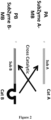
- one target molecule can initiate a reaction by hybrizing with partzyme oligonucleotides to form one MNAzyme which can cleave a first SubZyme, capable of cleaving a second SubZyme, which in turn is capable of cleaving more of the first SubZyme and initiating a cross catalytic cascade reaction wherein many of the first and second subZymes are cleaved to release many DNAzymes following the single initiating event.
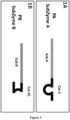
- a SubZyme pair useful in the following invention may comprise a SubZyme A (PA) encompassing an 8-17 DNAzyme and a 10-23 substrate for use with a SubZyme B (PB) encompassing a 10-23 DNAzyme and a 8-17 substrate; or vice versa. Since the 10:23 and 8:17 DNAzymes have different requirements for specific sequence at the cleavage sites SubZymes with one type of DNAzyme and another type of substrate have no potential for self-cleavage even when stored or incubated under low stringency conditions.
- PA SubZyme A
- PB SubZyme B
- the signal amplification cascades of the present invention may be used to detect nucleic acid targets.
- the mechanism of initiation of the cascade in the presence of target can also vary.
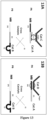
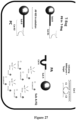
- two exemplary pairs of SubZymes capable of cross-catalysis are illustrated together with alternative modes of reaction initiation. Both SubZyme pairs, denoted as polynucleotide A (PA) & polynucleotide B (PB), are depicted as being attached to optional magnetic beads (MB) which can be used to manipulate the SubZymes.
- PA polynucleotide A
- PB polynucleotide B
- MB optional magnetic beads
- SubZyme A-MB comprises functional domains namely; (i) Catalytic nucleic acid A (e.g.8-17 DNAzyme A), (ii) substrate A which is cleavable by a Catalytic nucleic acid B (e.g.10-23 DNAzyme B), and optionally (iii) either linker sequence ( Figure 13A ) or sequence which is complementary to a target nucleic acid ( Figure 13B ) and which additionally comprises one strand of a endonuclease recognition site for aretriction enzyme or Nicking enzyme.
- SubZyme B-MB comprises functional domains namely; (i) Catalytic nucleic acid B (e.g.
- the target nucleic acid hybridizes to specific sequence (iii) (refer to uppermost diagram) in PA thus creating double stranded duplex region which forms a recognition and cleavage site for a Catalytic Enzyme D (e.g. a nuclease such as a restriction enzyme (RE) or a nicking enzyme (NE)).
- a nuclease such as a restriction enzyme (RE) or a nicking enzyme (NE)
- An RE could be used to cleave both strands of the target-PA duplex whereas an NE could be used to cleave the PA strand of the target-PA duplex.
- the cleavage of PA by the Catalytic Enzyme D (here an endonuclease) is shown in Figure 13B to release Cat A from a mobile support
- the cleavage of PA may alter other characteristic(s) of PA including, but not limited to charge, size, shape, weight, lipid solubility, and so on, any of which may confer a capacity to permeate the selectively-permeable barrier.
- the released Cat A permeates the membrane and comes into contact with and cleaves Sub B within PB.
- Cleavage of Sub B within PB releases Cat B which can in turn move through the selectively permeable barrier and cleave a Sub A within another PA to release more Cat A, thus initiating a cross catalytic signal amplification cascade.
- duplex-specific nuclease could be employed to initiate the cascade in the presence of RNA or ssDNA targets.
- DSN is a nuclease enzyme that shows a strong preference for cleaving DNA in DNA-RNA duplexes and double stranded DNA, yet, it is inherently inactive towards single stranded DNA, single stranded RNA and double stranded RNA. Formation of target and SubZyme hybrids could provide the RNA/DNA duplexes that are cleavable by DSN enzymes, whilst leaving the other single stranded regions of the SubZyme and the target intact.
- PC comprises a Cat B2 (a 10:23 Partzyme B2) conjugated to the same Sub B which is cleavable by Cat A.
- PA, PB and PC are optionally conjugated to beads eg magnetic beads (MB) as depicted.
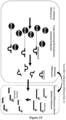
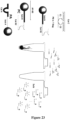
- the tube contains PA (SubZyme A-MB); PC (SubZyme B2-MB), Assembly Facilitor AF-B3, Partzymes C1 and C2 for the chosen target which are free in solution and PB (SubZyme B1-MB) inside a T-bag constructed as outlined in Figure 3B .
- the partzymes C1 and C2 align and form an initiating MNAzyme C (Cat C).
- permeable barriers referred to as 'T bags'
- SubZymes are used to amplify a signal following detection of the target.
- This strategy is distinct from the schemes illustrated in Figure 4 , Figure 22 and Figure 23 in that the fluorescent labelled substrate (Sub A-FQ) is present within the reaction tube during the initial incubation, thereby simplifying the reaction into a single step and negating the need to transfer released DNAzymes into a second tube.
- PA SubZyme A
- PB SubZyme B1
- PB Partzyme B1 conjugated to Sub B which is cleavable by the Cat A.
- the MNAzyme C cleaves Sub A within PA separating the Cat A from the MB which allows it to migrate through the T bag wall where it can cleave Sub B within PB thus separating the Cat B1 from the MB.
- Cat A can also cleave Sub B of PC to release Cat B2 from the MB.
- Cat B1 is now free to migrate from inside the T bag out into solution where it can hybridize with Cat B2 and AF-B3 to form an active Cat B.
- Cat B can cleave Sub A in PA and continue the cascade. During incubation, fluorescence which is generated following separation of the fluorophore and the quencher within Sub A-FQ by Cat B and Cat C cleavage can be measured.
- the Assembly Facilitator for example the AF-B3 component of Cat B, may be attached to a bead, for example a MB, as an alternate to attachment of PB or PC to a bead.
- the ionic compound may additionally be a co-factor required for catalytic activity of the first catalytic nucleic acid enzyme of the complex.
- the catalytic activity of most nucleic acid enzymes and protein nucleic acid-modifying enzymes may be influenced in a concentration-dependent fashion by the concentration of divalent cations.
- Preferred optimized reactions are optimized for one or more of Ba 2+ , Sr 2+ , Mg 2+ , Ca 2+ , Ni 2+ , Co 2+ , Mn 2+ , Zn 2+ , and Pb 2+ .
- the kit may comprise a first container and second container.
- the first container may comprise catalytic nucleic acids and/or portions thereof (e.g. MNAzymes, DNAzymes, partzyme oligonucleotides) and/or a SubZymes).
- the second container may comprise catalytic nucleic acid substrates, and/or different type/s of catalytic nucleic acids and/or portions thereof, and/or different types of SubZymes, as compared to the contents of the first container).
- the kits may be fragmented kits or combined kits as defined herein.
- kits may also comprise one or more containers, containing for example, wash reagents, and/or other reagents as required in the performance of the methods of the invention.
- kits For application of detection, identification or quantitation of different targets, a single kit may be applicable, or alternatively different kits, for example containing reagents specific for each target, may be required. Methods of the invention and kits described herein find application in any circumstance in which it is desirable to detect, identify or quantitate any entity.
- Streptavidin-functionalised Dynabeads were purchased from Invitrogen.
- the characteristics and properties of streptavidin-functionalised Dynabeads (M-270) provided by the manufacturer are as following: superparamagnetic, hydrophilic bead surface, 2.8 ⁇ m in diameter, size distribution (CV ⁇ 3%), no blocking proteins used, isoelectric point of pH 4.5, highly charged (-50 mV at pH7), iron content of 14%, low aggregation of beads in high salt solutions.
- Streptavidin functionalized BioMAG Plus beads (1.5 ⁇ m), ProMag beads (1 ⁇ m), ProMag HP beads (3 ⁇ m) and COMPEL Magnetic beads (6 ⁇ m and 8 ⁇ m) were purchased from Bangs Laboratories, Inc. The characteristics and properties of these beads provided by the manufacturer are as following: spherical shape, iron oxide crystals dispersed in a polymer matrix, respective magnetite contents of 26.5 wt%, 16 wt%, >90 wt%, 5.7 wt% and wt% and respective densities of 1.8 g/cm 3 , 1.4 g/cm 3 , 2.5 g/cm 3 , 1.1 g/cm 3 and 1.1 g/cm 3 . All beads are supplied at 1% solids (w/v) except for the BioMAG Plus beads which are supplied at 5.0 mg/mL solids.
- NaOH (5 M) was purchased from Australian Chemical Reagents (ACR). Tris buffer (pH 8.0), NaCl (5M), MgCl 2 (1M) and nuclease free water were purchased from Ambion. 10X PCR Buffer II was purchased from Applied Biosystems. Nitrocellulose membrane was purchased from Bio-Rad, polyethersulfone membrane and polycarbonate membrane were purchased from Sterlitech and double sided sticky tape was purchased from Sellotape.
- the human epithelial cell line (HEp-2) (ATCC ® CCL-23 TM ) were grown in Dulbecco's Modified Eagle medium (DMEM) (Sigma Aldrich) supplemented with 10% heat-inactivated Fetal Bovine Serum (FBS) (Sigma Aldrich), 100 mg/mL Streptomycin (Gibco ® , Invitrogen Corporation), 50 mg/mL Gentamicin (Gibco ® by Life Technologies) and 20mM Glutamine (Sigma Aldrich), incubated at 37°C with 5% CO 2 .
- DMEM Dulbecco's Modified Eagle medium
- FBS heat-inactivated Fetal Bovine Serum
- SubZyme-Bead complexes were thoroughly washed to remove excess SubZyme molecules.
- SubZyme-Beads were washed once with 400 ⁇ L of Buffer C (1.5 M NaCl, 10 mM Tris-HCl pH 7.5) followed by five washes with 400 ⁇ L of nuclease free water and two washes performed in 150 ⁇ L of 'Reaction Buffer' (45 mM MgCl 2 , 1 X PCR Buffer II) at 55°C. Finally, the SubZyme-Beads were re-suspended in 20 ⁇ L of nuclease free water and stored at 5°C in the fridge.
- Buffer C 1.5 M NaCl, 10 mM Tris-HCl pH 7.5
- 'Reaction Buffer' 45 mM MgCl 2 , 1 X PCR Buffer II
- Magnetic beads were washed using a magnetic rack to retain magnetic beads and discarding the supernatant.
- Non-magnetic beads were washed by centrifuging the silica bead solution for 3 minutes at 10,000 rpm to pellet the beads followed by removing and discarding the supernatant.
- T-Bags Permeable barriers
- T bags permeable barriers
- Examples 2 - 7 used T bag Method One (3A) and Examples 10 - 20 used T bag Method Two (3B).
- the oligonucleotides specific to this experiment include; PA (SubZyme A) ( SEQ ID NO: 1 ), PB (SubZyme B) ( SEQ ID NO: 2 ), Substrate A ( SEQ ID NO: 13 ), Substrate B ( SEQ ID NO: 14 ), TFRC Partzyme A1 ( SEQ ID NO: 15 ), TFRC Partzyme B1 ( SEQ ID NO: 16 ) and Target TFRC Oligo ( SEQ ID NO: 17 ).
- PA SubZyme A
- PB SubZyme B
- SEQ ID NO: 13 SEQ ID NO: 13
- Substrate B SEQ ID NO: 14
- TFRC Partzyme A1 SEQ ID NO: 15
- TFRC Partzyme B1 SEQ ID NO: 16
- Target TFRC Oligo SEQ ID NO: 17 .
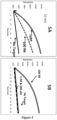
- Each reaction contains 0.2 ⁇ M TFRC Partzyme A1, 0.2 ⁇ M TFRC Partzyme B1, 1X PCR Buffer II, 5.6 ⁇ L of SubZyme A-MB, 1 T-Bag containing SubZyme B-MB and 15 mM MgCl 2 in a 125 ⁇ L final volume.
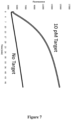
- Reactions either contained target TFRC oligo at final concentrations of 1 pM, 100 fM, 1 fM and 500 aM; or lacked target (no DNA control). Reactions were incubated at 50°C on a heat block in 2 mL reaction tubes (Eppendorf) for either 15 minutes ( Figure 5A ) or 20 minutes ( Figure 5B ) with intermittent mixing via manual inversion.
- samples were transferred from the heat-block and the T bags were removed and discarded.
- Samples were briefly centrifuged and the tubes were placed on a magnetic rack to separate un-cleaved SubZyme-MBs and cleaved partial substrate-MB fragments from cleaved "free" DNAzymes 1 and 2 present in the supernatant.
- Two aliquots of 48 ⁇ L of the supernatant were transferred to separate wells in a 96 well plate (Bio-Rad).
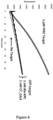
- Each reaction contained 0.2 ⁇ M TFRC Partzyme A1, 0.2 ⁇ M TFRC Partzyme B1, 1X PCR Buffer II, 2.5 ⁇ L of SubZyme A-MB, 1 x T-Bag containing SubZyme B-MB and 15 mM MgCl 2 in 125 ⁇ L final volume. Reactions further contained either 1pM of Target TFRC Oligo or 1nM off target Oligo Bla_KPC or 1 nM of off target Oligo CTcds2_2 or no DNA target. The reactions were incubated at 50°C for 20 minutes in 2 mL reaction tubes on a heat block with intermittent mixing via manual inversion.
- the plate was placed on a CFX96 real time PCR detection system (Bio-Rad) with acquisition every 5 seconds for 150 cycles at a constant temperature of 50'C. Fluorescence from the Texas Red channel was monitored in real time. The results in Figure 6 are the averages from duplicates that were plotted using Microsoft Excel (Version 14).
- the oligonucleotides specific to this experiment include; PA (SubZyme A) ( SEQ ID NO: 1 ), PB (SubZyme B) ( SEQ ID NO: 2 ), Substrate A ( SEQ ID NO: 13 ), Substrate B ( SEQ ID NO: 14 ), TFRC Partzyme A1 ( SEQ ID NO: 15 ), TFRC Partzyme B1 ( SEQ ID NO: 16 ), TFRC Partzyme A2 ( SEQ ID NO: 23 ), TFRC Partzyme B2 ( SEQ ID NO: 24 ), TFRC Partzyme A3 ( SEQ ID NO: 25 ) and TFRC Partzyme B3 ( SEQ ID NO: 26 ).
- PA SubZyme A
- PB SubZyme B
- SEQ ID NO: 13 Substrate B
- TFRC Partzyme A1 SEQ ID NO: 15
- TFRC Partzyme B1 SEQ ID NO: 16
- TFRC Partzyme A2 S
- the reactions contained 0.2 ⁇ M TFRC Partzyme A1, 0.2 ⁇ M TFRC Partzyme B1, 0.2 ⁇ M TFRC Partzyme A2, 0.2 ⁇ M TFRC Partzyme B2, 0.2 ⁇ M TFRC Partzyme A3, 0.2 ⁇ M TFRC Partzyme B3, 1X PCR Buffer II, 1 ⁇ L of SubZyme A-MB, 1 x T bag containing SubZyme B-MB, and 15 mM MgCl 2 in 70 ⁇ L final volume. Reactions also contained, or lacked, human genomic DNA which had been subjected to heat denaturation at 95°C for 2 minutes before its addition to the reaction. Reactions were incubated at 50°C for 20 minutes in 2 mL tubes on a heat block with intermittent mixing via manual inversion.
- SubZyme-MBs were prepared using Attachment Method One and T Bags were prepared using T Bag Method One, as described in Example One.
- SubZyme A is PA
- SubZyme B is PB
- Partzymes A1 and B1 form the initiating MNAzyme (Cat C) when assembled on TFRC target.
- the oligonucleotides specific to this experiment include; PA (SubZyme A) ( SEQ ID NO: 1 ), PB (SubZyme B) ( SEQ ID NO: 2 ), Substrate A ( SEQ ID NO: 13 ), Substrate B ( SEQ ID NO: 14 ), TFRC Partzyme A1 ( SEQ ID NO: 15 ) and TFRC Partzyme B1 ( SEQ ID NO: 16 ).
- PA SubZyme A
- PB SubZyme B
- Substrate A SEQ ID NO: 13
- Substrate B SEQ ID NO: 14
- TFRC Partzyme A1 SEQ ID NO: 15
- TFRC Partzyme B1 SEQ ID NO: 16
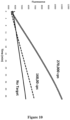
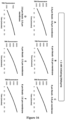
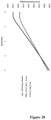
- FIG. 10 depicts this exemplary titration of human genomic DNA using signal amplification in a T-Bag format. In this experiment concentrations of 270,000 and 168,000 copies of TFRC gene were detected above background signal (no target).
- SubZyme A is comprised of an 8-17 catalytic nucleic acid component and a 10-23 catalytic nucleic acid substrate component.
- SubZyme C is comprised of a 10-23 catalytic nucleic acid component and a 10-23 catalytic nucleic acid substrate component. The results obtained are shown in Figure 11 .
- the oligonucleotides specific to this experiment include; PA (SubZyme A) ( SEQ ID NOo: 1 ), PA (SubZyme C) ( SEQ ID NO: 3 ), TFRC Partzyme A1 ( SEQ ID NO: 15 ), TFRC Partzyme B1 ( SEQ ID NO: 16 ), Target TFRC Oligo ( SEQ ID NO: 17 ), Target TFRC Oligo 4 ( SEQ ID NO: 27 ) and DNAzyme A ( SEQ ID NO: 28 ).
- PA SubZyme A
- PA SubZyme C
- TFRC Partzyme A1 SEQ ID NO: 15
- TFRC Partzyme B1 SEQ ID NO: 16
- Target TFRC Oligo SEQ ID NO: 17
- Target TFRC Oligo 4 SEQ ID NO: 27
- DNAzyme A SEQ ID NO: 28
- SubZyme C is comprised of a 10-23 catalytic nucleic acid component and a 10-23 catalytic nucleic acid substrate component, the substrate component contains an internal fluorescein and two internal ZEN Quencher moieties.
- Reactions A, B, C and D contain 0.2 ⁇ M TFRC Partzyme A1, 0.2 ⁇ M TFRC Partzyme B1, 0.2 ⁇ M SubZyme C, 1X PCR Buffer II, and 25 mM MgCl 2 in a 20 ⁇ L final reaction volume.
- SubZyme A is comprised of an 8-17 catalytic nucleic acid component and a 10-23 catalytic nucleic acid substrate component, the substrate component contains an internal fluorescein and two internal ZEN Quencher moieties.
- Reactions E, F, G and H contain 0.2 ⁇ M SubZyme A, 1X PCR Buffer II, and 25 mM MgCl 2 in a 20 ⁇ L final reaction volume. All reactions were performed in duplicate at 50°C in a Bio-Rad ® CFX96 thermocycler and fluorescence signal was measured in FAM channel with acquisition taking place every 5 seconds (scan mode: All channels) for a total of 201 cycles. Reactions E and G do not contain any initiating DNAzyme and Reactions F and H each contain 503 pg (2.5 nM) of initiating DNAzyme.
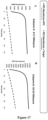
- the results from reactions A and B are shown in Figure 11A and illustrate the target dependent cleavage of the substrate component of SubZyme C by a 10-23 MNAzyme with incubation performed immediately after SubZyme C oligonucleotide had been reconstituted.
- the cleavage event in Reaction B results in the physical separation of the internal fluorophore and quencher and shows an increase in fluorescence over time.
- There was no cleavage event in Reaction A which results in minimal increase in fluorscence over time.
- the results shown in Figure 11B illustrate the target dependent cleavage of the substrate component of SubZyme C after it had been stored at -20°C for 43 days.
- Reactions C and D show an increase in FAM signal over time indicative of SubZyme C self cleavage and/or degradation during storage.
- the results shown in Figure 11 are the averages from duplicates that were plotted using Microsoft Excel (Version 14).
- the oligonucleotides specific to this experiment include; SubZyme D ( SEQ ID NO: 4 ), Substrate C ( SEQ ID NO: 29 ) and DNAzyme B ( SEQ ID NO: 30 ).
- the sequences are listed in the Sequence Listing.
- reaction A The control reaction (Reaction A) was performed using a blank aldehyde slide that had been washed according to the washing procedure described in Stralis-Pavese et al (2011), Nat Protoc. 2011;6(5):609-24 .
- the test reaction (Reaction B) was performed on a VSS-25 Vantage Silyated Aldehyde slide that had been functionalised with SubZyme D, also using methods described in Stralis-Pavese et al (2011) Nature Protocols, 6(5), 609-624 .
- Each reaction contains 0.4 ⁇ M Substrate C, 0.02% Tween-20, 25 mM MgCl 2 and 1X PCR Buffer II in a 25 ⁇ L final volume.
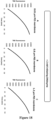
- Reaction A contained 50 nM of DNAzyme D which is homologous to the catalytic nucleic acid component of SubZyme D. All reactions occurred within Hybriwell adhesive chambers (Grace Bio-Labs, 611204) placed on top of the slide. The slides were incubated on top of a heat-block set at 54°C. Fluorescence was measured before and after 30 minutes incubation using a Leica fluorescent microscope with the following settings; GFP2 emission, PMT Gain set at 3.5 and an exposure time of 59.7 sec. The images were processed using Image J analysis software where the 8 bit green channels were isolated and the RGB values were measured. The images are shown in Figure 12A and Figure 12B . The relative RGB values are plotted in Figure 12C where the 'before incubation' RGB values are subtracted from the 'after incubation' RGB values.
- the oligonucleotides specific to this experiment include; PA (SubZyme E) ( SEQ ID NO: 5 ), Substrate D ( SEQ ID NO: 31 ) and Target ompA Oligo 1 ( SEQ ID NO: 32 ).
- PA SubZyme E
- Substrate D SEQ ID NO: 31
- Target ompA Oligo 1 SEQ ID NO: 32 .
- the sequences are listed in the Sequence List.
- SubZyme E is attached to magnetic beads (SubZyme E-MB) as described in Example One - Attachment Method 2.
- the following example highlights the importance of empirically testing the use of different membrane materials for the construction of T bags to determine if the material itself can impact upon the catalytic activity of the reaction constituents. Further, this example indicates that the presence of some membrane materials such as polyethersulfone (PES) may enhance the catalytic activity of DNAzymes.
- PES polyethersulfone
- the reactions contained 1X PCR Buffer II, 1 ⁇ L SubZyme G-MBs, 45 mM MgCl 2 in a 60 ⁇ L final volume and either lacked or contained 2 nM of DNAzyme C. Reactions either contained or lacked 2x 3 mm discs of PES membrane and were incubated at 50°C for 20 minutes in 2 mL tubes on a heat block. After the initial incubation, the samples were transferred from the heat-block and the samples were briefly centrifuged.
- the oligonucleotides specific to this experiment include; PB (SubZyme F) ( SEQ ID NO: 6 ), Substrate E ( SEQ ID NO: 33 ) and DNAzyme A ( SEQ ID NO: 28 ).
- PB SubZyme F
- Substrate E SEQ ID NO: 33
- DNAzyme A SEQ ID NO: 28
- the reactions contained 1X PCR Buffer II, 45 mM MgCl 2 in a 60 ⁇ L final volume.
- Reactions contained 1 x T bag made of PES material (either 0.65 ⁇ m, 0.8 ⁇ m or 1.2 ⁇ m) containing 0.6 ⁇ L of SubZyme F-MBs.
- Reactions contained, or lacked, 2 nM of DNAzyme A. Reactions were incubated at 50°C for 20 minutes in 2 mL tubes on a heat block. After the initial incubation, the samples were transferred from the heat-block and the samples were briefly centrifuged.
- T bags were manually prepared using polycarbonate membrane (0.8 ⁇ m) according to the diagram depicted in Figure 3B .
- the results obtained are shown in Figure 19 .
- SubZyme H is PA
- SubZyme I is PB
- ompA partzymes A1 and B1 form the initiating MNAzyme (Cat C) when assembled on ompA target.
- the oligonucleotides specific to this experiment include; PA (SubZyme H) ( SEQ ID NO: 8 ), PB (SubZyme I) ( SEQ ID NO: 9 ), Substrate G ( SEQ ID NO: 36 ), Substrate H ( SEQ ID NO: 37 ), ompA Partzyme A1 ( SEQ ID NO: 38 ), ompA Partzyme B1 ( SEQ ID NO: 39 ), Target ompA Oligo 2 ( SEQ ID NO: 40 ), Off-Target Oligo p273 ( SEQ ID NO: 41 ) and Off-Target Oligo PPIA ( SEQ ID NO: 42 ).
- PA SubZyme H
- PB SubZyme I
- SEQ ID NO: 9 Substrate G
- SEQ ID NO: 37 Substrate H
- ompA Partzyme A1 SEQ ID NO: 38
- ompA Partzyme B1 SEQ ID NO: 39
- the reactions contained 5 nM ompA Partzyme A1, 5 nM ompA Partzyme B1, 1X PCR Buffer II, 0.5 ⁇ L of SubZyme H-MB, 1 x T bag containing 0.5 ⁇ L of SubZyme I-MB, and 45 mM MgCl 2 in 70 ⁇ L final volume. T bags were made of polycarbonate membrane of 0.8 ⁇ m pore size. Reactions either contained target ompA oligo 2 at final concentrations of 100 fM, 10 fM and 1 fM, or 1nM off target Oligo p273, or 1 nM of off target Oligo PPIA, or lacked target (no DNA control).
- Reactions were incubated at 50°C for 20 minutes in 2 mL tubes on a heat block. After the initial incubation, the samples were transferred from the heat-block and the T bags were removed from the tubes and discarded. Samples were briefly centrifuged and the tubes were placed on a magnetic rack to separate un-cleaved SubZyme H-MBs and cleaved partial substrate H-MB fragments from DNAzymes freed into solution. A 48 ⁇ L aliquot of the supernatant was transferred to a 96 well plate (Bio-Rad) and mixed with 2 ⁇ L of substrate mix containing equimolar concentrations of Substrate G and Substrate H (0.2 ⁇ M final concentration). The plate was sealed and briefly centrifuged. Fluorescence from the FAM channel was measured in a CFX96 real time PCR detection system (Bio-Rad) with acquisition taking place every 10 seconds for 150 cycles at a constant temperature of 50°C.
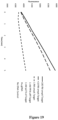
- the results shown in Figure 19 are the averages from duplicates that were plotted using Microsoft Excel (Version 14) and depict an exemplary titration of oligonucleotide target.
- the results in Figure 19 illustrates the signal obtained from reactions containing 100 fM of Target ompA Oligo 2 (black line), 10 fM of Target ompA Oligo 2 (broken black line), 1 fM of Target ompA Oligo 2 (small black dashed line), 1 nM PPIA off-Target (grey dashed line), 1 nM p273 off-Target (grey dotted line), ⁇ 200,000 copies of human genomic DNA (grey solid line) and no DNA (grey double line).
- the five minutes of real time monitoring illustrated in Figure 19 is equivalent to 25 minutes total reaction time (i.e. 20 mins T-Bag incubation plus 5 minutes real time monitoring of fluorescent substrate cleavage) and is indicative of a time required to detect 100 fM, 10 fM and 1 fM of ompA target.
- the protocol was able to detect the lowest concentration tested, namely 1 fM of ompA target.
- the total concentration of ompA in the sample corresponds to approximately 4,200 copies of the gene (4.2 x 10 3 gene copies).
- the Partzymes align and form an active initiating MNAzyme.
- the MNAzyme cleaves SubZyme H-MB in solution separating the 8-17 DNAzyme from the surface of the MB.
- the "free" 8-17 DNAzyme can subsequently migrate through the T bag selectively permeable membrane where it can then cleave SubZyme I-MB causing separation of the 10-23 DNAzyme from the surface of the MB.
- the 10-23 DNAzyme is then free to migrate out of the T bag permeable membrane into solution where it can cleave SubZyme H-MB and continue the cascade.
- a magnet can separate the un-cleaved SubZyme-MBs and cleaved partial substrate-MB fragments from the cleaved 'free' DNAzymes.
- the free DNAzymes (10:23 and 8:17) can be transferred into a second reaction chamber containing fluorescent substrates, within, the free DNAzymes can cleave substrates and generate fluorescence signal.
- the oligonucleotides specific to this experiment include; PA (SubZyme H) ( SEQ ID NO: 8 ), PB (SubZyme I) ( SEQ ID NO: 9 ), Substrate G ( SEQ ID NO: 36 ), Substrate H ( SEQ ID NO: 37 ), ompA Partzyme A1 ( SEQ ID NO: 38 ), ompA Partzyme B1 ( SEQ ID NO: 39 ), andTarget ompA Oligo 2 ( SEQ ID NO: 40 ).
- PA SubZyme H
- PB SubZyme I
- Substrate G SEQ ID NO: 36
- Substrate H SEQ ID NO: 37
- ompA Partzyme A1 SEQ ID NO: 38
- ompA Partzyme B1 SEQ ID NO: 39
- Target ompA Oligo 2 SEQ ID NO: 40
- the reactions contained 5 nM ompA Partzyme A1, 5 nM ompA Partzyme B1, 1X PCR Buffer II, 0.5 ⁇ L of SubZyme H-MB, 1 x T bag containing 0.5 ⁇ L of SubZyme I-MB, and 25 mM MgCl 2 in 70 ⁇ L final volume. T bags were made of polycarbonate membrane of 0.8 ⁇ m pore size. Reactions either lacked DNA (No DNA control), or contained 2 fM of target ompA oligo, or contained Chlamydia trachomatis TNA which was the TNA had been subjected to heat denaturation at 95°C for 2 minutes before its addition to the reaction. Reactions were incubated at 50°C for 20 minutes in 2 mL tubes on a heat block.
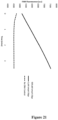
- the results presented in Figure 20 are the averages from duplicates that were plotted using Microsoft Excel (Version 14) and demonstrate that the method is capable of detecting the Chlamydia trachomatis ompA gene (solid black line) from Chlamydia trachomatis total nucleic acid (TNA) samples.
- the total concentration of ompA in the sample corresponds to approximately 3,500,000 copies of the gene (3.5 x 10 6 gene copies).
- the signal is well differentiated from the no DNA control (grey solid line) and results in a signal which is similar to reactions containing 2 fM of synthetic target ompA oligonucleotide (black broken line).
Landscapes
- Chemical & Material Sciences (AREA)
- Life Sciences & Earth Sciences (AREA)
- Organic Chemistry (AREA)
- Proteomics, Peptides & Aminoacids (AREA)
- Health & Medical Sciences (AREA)
- Engineering & Computer Science (AREA)
- Zoology (AREA)
- Wood Science & Technology (AREA)
- Analytical Chemistry (AREA)
- Genetics & Genomics (AREA)
- Bioinformatics & Cheminformatics (AREA)
- General Engineering & Computer Science (AREA)
- Microbiology (AREA)
- Biochemistry (AREA)
- Biotechnology (AREA)
- General Health & Medical Sciences (AREA)
- Molecular Biology (AREA)
- Immunology (AREA)
- Biophysics (AREA)
- Physics & Mathematics (AREA)
- Biomedical Technology (AREA)
- Measuring Or Testing Involving Enzymes Or Micro-Organisms (AREA)
- Apparatus Associated With Microorganisms And Enzymes (AREA)
- Enzymes And Modification Thereof (AREA)
Claims (11)
- Procédé pour déterminer la présence d'une cible d'acide nucléique dans un échantillon, le procédé comprenant les étapes consistant à :(a) mettre à disposition un mélange réactionnel comprenant :une population de polynucléotide A (PA) et une population de polynucléotide B (PB), dans lesquelleschaque polynucléotide PA comprend un acide nucléique catalytique A et un substrat d'acide nucléique catalytique A,chaque polynucléotide PB comprend un acide nucléique catalytique B et un substrat d'acide nucléique catalytique B,l'acide nucléique catalytique A est capable de modifier de manière catalytique le substrat d'acide nucléique catalytique B et est incapable de modifier de manière catalytique le substrat d'acide nucléique catalytique A, etl'acide nucléique catalytique B est capable de modifier de manière catalytique le substrat d'acide nucléique catalytique A et est incapable de modifier de manière catalytique le substrat d'acide nucléique catalytique B ;une barrière sélectivement perméable capable de physiquement séparer le PA du PB, où les PA et PB sont incapables de pénétrer la barrière sélectivement perméable, et le PA et/ou PB est/sont mobile(s) dans le mélange réactionnel ; et(i) deux oligonucléotides, chacun étant capable de s'hybrider spécifiquement au substrat d'acide nucléique catalytique A d'un polynucléotide PA, au moins un étant capable de s'hybrider spécifiquement à la cible, pour ainsi former un acide nucléique catalytique C capable de cliver le substrat d'acide nucléique catalytique A du polynucléotide PA ; ou(ii) une enzyme catalytique D capable de cliver un ou plusieurs brins d'un duplex d'acide nucléique formé par une hybridation de la cible au PA ; et(b) mettre en contact :(i) le PA, le PB, et le ou les oligonucléotides avec l'échantillon, et en utilisant la barrière sélectivement perméable pour séparer le PA du PB, où :
si la cible est présente dans l'échantillon, chacun des deux oligonucléotides s'hybride au substrat d'acide nucléique catalytique A d'un polynucléotide PA et au moins un s'hybride en outre à la cible pour ainsi former l'acide nucléique catalytique C qui clive le polynucléotide PA pour ainsi libérer l'acide nucléique catalytique A du polynucléotide PA qui est en conséquence capable de passer à travers la barrière perméable ;où l'acide nucléique catalytique A libéré passe à travers la barrière perméable, s'hybride au substrat d'acide nucléique catalytique B d'un polynucléotide PB, et clive le polynucléotide PB pour ainsi libérer l'acide nucléique catalytique B du polynucléotide PB qui est en conséquence capable de passer à travers la barrière perméable ;où l'acide nucléique catalytique B libéré passe à travers la barrière perméable, s'hybride au substrat d'acide nucléique catalytique A d'un deuxième polynucléotide PA, et clive le deuxième polynucléotide PA pour ainsi libérer l'acide nucléique catalytique A du deuxième polynucléotide PA qui est en conséquence capable de passer à travers la barrière perméable ;où la détection du clivage de l'un quelconque dudit polynucléotide PA et/ou PB indique la présence de la cible dans l'échantillon ; et(A) l'acide nucléique catalytique A est un ADNzyme 10-23 et l'acide nucléique catalytique B est un ADNzyme 8-17 ; et
le substrat d'acide nucléique catalytique A est un substrat d'ADNzyme 8-17 et le substrat d'acide nucléique catalytique B est un substrat d'ADNzyme 10-23 ; ou(B) l'acide nucléique catalytique A est un ADNzyme 8-17 et l'acide nucléique catalytique B est un ADNzyme 10-23 ; etle substrat d'acide nucléique catalytique A est un substrat d'ADNzyme 10-23 et le substrat d'acide nucléique catalytique B est un substrat d'ADNzyme 8-17 ; ou(ii) le PA, le PB, et l'enzyme catalytique D avec l'échantillon, et en utilisant la barrière sélectivement perméable pour séparer le PA du PB, où :si la cible est présente dans l'échantillon, la cible s'hybride à un polynucléotide PA pour former le duplex d'acide nucléique qui comprend un site de reconnaissance et de clivage pour l'enzyme catalytique D,le site de clivage pour l'enzyme catalytique D n'est pas compris au sein de l'acide nucléique catalytique A, etl'enzyme catalytique D se lie à et clive le duplex d'acide nucléique au niveau du site de clivage en libérant l'acide nucléique catalytique A du polynucléotide PA qui est en conséquence capable de passer à travers la barrière perméable,où l'acide nucléique catalytique A libéré passe à travers la barrière perméable, s'hybride au substrat d'acide nucléique catalytique B d'un polynucléotide PB, et clive le polynucléotide PB pour ainsi libérer l'acide nucléique catalytique B du polynucléotide PB qui est en conséquence capable de passer à travers la barrière perméable ;où l'acide nucléique catalytique B libéré passe à travers la barrière perméable, s'hybride au substrat d'acide nucléique catalytique A d'un deuxième polynucléotide PA, et clive le deuxième polynucléotide PA pour ainsi libérer l'acide nucléique catalytique A du deuxième polynucléotide PA qui est en conséquence capable de passer à travers la barrière perméable ;où la détection du clivage de l'un quelconque dudit polynucléotide PA et/ou PB indique la présence de la cible dans l'échantillon ; et(A) l'acide nucléique catalytique A est un ADNzyme 10-23 et l'acide nucléique catalytique B est un ADNzyme 8-17 ; et
le substrat d'acide nucléique catalytique A est un substrat d'ADNzyme 8-17 et le substrat d'acide nucléique catalytique B est un substrat d'ADNzyme 10-23 ; ou(B) l'acide nucléique catalytique A est un ADNzyme 8-17 et l'acide nucléique catalytique B est un ADNzyme 10-23 ; etle substrat d'acide nucléique catalytique A est un substrat d'ADNzyme 10-23 et le substrat d'acide nucléique catalytique B est un substrat d'ADNzyme 8-17. - Procédé selon la revendication 1, dans lequel l'acide nucléique catalytique C n'est pas capable de cliver le substrat d'acide nucléique catalytique B du polynucléotide PB.
- Procédé selon la revendication 1 ou la revendication 2, dans lequel l'un quelconque du PA et/ou PB qui sont mobiles dans les polynucléotides du mélange réactionnel comprend :un composant attaché et/ou,une région d'auto-complémentarité fournissant une structure secondaire, et/ouun fragment chargé ;
qui empêche la perméation du polynucléotide à travers la barrière sélectivement perméable ;et facultativement :le clivage du substrat d'acide nucléique catalytique A libère le composant attaché ou la région d'auto-complémentarité à partir de l'acide nucléique catalytique A du polynucléotide PA qui est en conséquence capable de passer à travers la barrière perméable, et/oule clivage du substrat d'acide nucléique catalytique B libère le composant attaché ou la région d'auto-complémentarité à partir de l'acide nucléique catalytique B du polynucléotide PB qui est en conséquence capable de passer à travers la barrière perméable. - Procédé selon l'une quelconque des revendications 1 à 3, dans lequel :l'acide nucléique catalytique C est une enzyme d'acide nucléique à composants multiples (MNAzyme), etles deux oligonucléotides sont deux oligonucléotides de partzyme capables de s'auto-assembler pour former la MNAzyme uniquement en présence de la cible ;et dans lequel les deux oligonucléotides de partzyme s'hybrident chacun à la cible pendant l'auto-assemblage pour former la MNAzyme.
- Procédé selon l'une quelconque des revendications 1 à 4, dans lequel l'enzyme catalytique D est une endonucléase ou une exonucléase.
- Procédé selon l'une quelconque des revendications 1 à 5, dans lequel la détection comprend les étapes consistant àisoler l'acide nucléique catalytique A libéré et/ou l'acide nucléique catalytique B libéré à partir du mélange réactionnel ;appliquer le ou les acides nucléique catalytiques isolés à un deuxième mélange réactionnel comprenant le substrat d'acide nucléique catalytique A et/ou le substrat d'acide nucléique catalytique B dans des conditions appropriées pour permettre un clivage des substrats d'acide nucléique catalytique par les acides nucléiques catalytiques ; etdétecter le clivage des substrats d'acide nucléique catalytique par les acides nucléiques catalytiques.
- Procédé pour déterminer la présence d'une cible d'acide nucléique dans un échantillon, le procédé comprenant les étapes consistant à :(a) mettre à disposition un mélange réactionnel comprenant :(i) une population de polynucléotide A (PA), une population de polynucléotide B (PB) et une population de polynucléotide C (PC), dans lesquelleschaque polynucléotide PA comprend un acide nucléique catalytique A et un substrat d'acide nucléique catalytique A,chaque polynucléotide PB comprend un oligonucléotide de partzyme B1 et un substrat d'acide nucléique catalytique B,chaque polynucléotide PC comprend un oligonucléotide de partzyme B2,
dans lequel :un bras substrat de l'oligonucléotide de partzyme B1 est capable de s'hybrider au substrat d'acide nucléique catalytique A,un bras substrat de l'oligonucléotide de partzyme B2 est capable de s'hybrider au substrat d'acide nucléique catalytique A,l'acide nucléique catalytique A est capable de modifier de manière catalytique le substrat d'acide nucléique catalytique B et est incapable de modifier de manière catalytique le substrat d'acide nucléique catalytique A ;(ii) un oligonucléotide facilitateur d'assemblage capable de s'hybrider à un bras capteur de l'oligonucléotide de partzyme B1 et à un bras capteur de l'oligonucléotide de partzyme B2 ;(iii) une barrière sélectivement perméable capable de physiquement séparer le PA du PB, où les PA et PB sont incapables de pénétrer la barrière sélectivement perméable, et les PA, PB et PC sont mobiles dans le mélange réactionnel ; et l'un quelconque de :(iv) deux oligonucléotides de partzyme C1 et C2, chacun étant capable de s'hybrider spécifiquement au substrat d'acide nucléique catalytique A d'un polynucléotide PA et au moins un étant capable de s'hybrider spécifiquement à la cible, pour ainsi former un acide nucléique catalytique C capable de cliver le substrat d'acide nucléique catalytique A du polynucléotide PA ;
ou(v) une enzyme catalytique D capable de cliver un ou plusieurs brins d'un duplex d'acide nucléique formé par une hybridation de la cible au PA ; etetdans lequel les polynucléotides PB et/ou PC qui sont mobiles dans le mélange réactionnel comprennent :un composant attaché, facultativement un aptamère hybridé à un ligand, une bille, une microparticule, ou une nanoparticule et/ou,une région d'auto-complémentarité fournissant une structure secondaire, et/ouun fragment chargé ;qui empêche la perméation du polynucléotide à travers la barrière sélectivement perméable ;(b) mettre en contact :(i) les oligonucléotides de partzyme C1 et C2 avec l'échantillon, et en utilisant la barrière sélectivement perméable pour séparer le PB du PA, dans lequel :
si la cible est présente dans l'échantillon, le bras substrat de chacun des oligonucléotides de partzyme C1 et C2 s'hybride au substrat d'acide nucléique catalytique A d'un polynucléotide PA et au moins un des oligonucléotides de partzyme C1 et C2 s'hybride à la cible en formant l'acide nucléique catalytique C qui clive le polynucléotide PA pour ainsi libérer l'acide nucléique catalytique A du polynucléotide PA qui est en conséquence capable de passer à travers la barrière perméable ;
dans lequel :l'acide nucléique catalytique A libéré passe à travers la barrière perméable, s'hybride au substrat d'acide nucléique catalytique B d'un polynucléotide PB, et clive le polynucléotide PB pour ainsi libérer l'oligonucléotide de partzyme B1 du polynucléotide PB qui est en conséquence capable de passer à travers la barrière perméable ;l'oligonucléotide de partzyme B1 libéré passe à travers la barrière perméable, le bras capteur de chacun des oligonucléotides de partzyme B1 et B2 s'hybride à l'oligonucléotide facilitateur d'assemblage, et le bras substrat de chacun des oligonucléotides de partzyme B1 et B2 s'hybride au substrat d'acide nucléique catalytique A d'un deuxième polynucléotide PA, en formant ainsi un acide nucléique catalytique B qui clive le deuxième polynucléotide PA pour ainsi libérer l'acide nucléique catalytique A du deuxième polynucléotide PA qui est en conséquence capable de passer à travers la barrière perméable ; etou
la détection du clivage de l'un quelconque dudit polynucléotide PA et/ou PB indique la présence de la cible dans l'échantillon,(ii) l'enzyme catalytique D avec l'échantillon, et en utilisant la barrière sélectivement perméable pour séparer le PB du PA, dans lequel :si la cible est présente dans l'échantillon, la cible s'hybride à un polynucléotide PA pour former le duplex d'acide nucléique qui comprend un site de reconnaissance et de clivage pour l'enzyme catalytique D,le site de clivage pour l'enzyme catalytique D n'est pas compris au sein de l'acide nucléique catalytique A, etl'enzyme catalytique D se lie à et clive le duplex d'acide nucléique au niveau du site de clivage en libérant l'acide nucléique catalytique A du polynucléotide PA qui est en conséquence capable de passer à travers la barrière perméable ;dans lequel :l'acide nucléique catalytique A libéré passe à travers la barrière perméable, s'hybride au substrat d'acide nucléique catalytique B d'un polynucléotide PB, et clive le polynucléotide PB pour ainsi libérer l'oligonucléotide de partzyme B1 du polynucléotide PB qui est en conséquence capable de passer à travers la barrière perméable ;l'oligonucléotide de partzyme B1 libéré passe à travers la barrière perméable, le bras capteur de chacun des oligonucléotides de partzyme B1 et B2 s'hybride à l'oligonucléotide facilitateur d'assemblage, et le bras substrat de chacun des oligonucléotides de partzyme B1 et B2 s'hybride au substrat d'acide nucléique catalytique A d'un deuxième polynucléotide PA, en formant ainsi un acide nucléique catalytique B qui clive le deuxième polynucléotide PA pour ainsi libérer l'acide nucléique catalytique A du deuxième polynucléotide PA qui est en conséquence capable de passer à travers la barrière perméable ; etla détection du clivage de l'un quelconque dudit polynucléotide PA et/ou PB indique la présence de la cible dans l'échantillon. - Procédé selon la revendication 7, dans lequel :(i) chaque polynucléotide PC comprend un oligonucléotide de partzyme B2 et un substrat d'acide nucléique catalytique B qui peut être clivé par l'acide nucléique catalytique A,l'acide nucléique catalytique A libéré clive le polynucléotide PC pour ainsi libérer l'oligonucléotide de partzyme B2 du polynucléotide PC, etla détection du clivage d'un quelconque polynucléotide PC indique la présence de la cible dans l'échantillon ; ou(ii) chaque polynucléotide PC comprend un oligonucléotide de partzyme B2 et un substrat d'acide nucléique catalytique A, et
si la cible est présente dans l'échantillon, le bras substrat de chacun des oligonucléotides de partzyme C1 et C2 s'hybride au substrat d'acide nucléique catalytique A du polynucléotide PC et au moins un des oligonucléotides de partzyme C1 et C2 s'hybride à la cible en formant l'acide nucléique catalytique C qui clive le polynucléotide PC pour ainsi libérer l'oligonucléotide de partzyme B2 du polynucléotide PC ; ou(iii) si la cible est présente dans l'échantillon, la cible s'hybride à un polynucléotide PC pour former le duplex d'acide nucléique qui comprend un site de reconnaissance et de clivage pour l'enzyme catalytique D,le site de clivage pour l'enzyme catalytique D n'est pas compris au sein de l'oligonucléotide de partzyme B2 du polynucléotide PC, etl'enzyme catalytique D se lie à et clive le duplex d'acide nucléique au niveau du site de clivage pour ainsi libérer l'oligonucléotide de partzyme B2 du polynucléotide PC. - Procédé selon la revendication 7 ou la revendication 8, dans lequel :l'acide nucléique catalytique C est une enzyme d'acide nucléique à composants multiples (MNAzyme), etles deux oligonucléotides de partzyme C1 et C2 sont capables de s'auto-assembler pour former la MNAzyme uniquement en présence de la cible,dans lequel les deux oligonucléotides de partzyme C1 et C2 s'hybrident chacun à la cible pendant l'auto-assemblage pour former la MNAzyme.
- Composition pour la détection d'une cible dans un échantillon, la composition comprenant :une population de polynucléotide A (PA) et une population de polynucléotide B (PB), dans lesquelles :chaque polynucléotide PA comprend un acide nucléique catalytique A et un substrat d'acide nucléique catalytique A,chaque polynucléotide PB comprend un acide nucléique catalytique B et un substrat d'acide nucléique catalytique B,l'acide nucléique catalytique A est capable de modifier de manière catalytique le substrat d'acide nucléique catalytique B et est incapable de modifier de manière catalytique le substrat d'acide nucléique catalytique A, etl'acide nucléique catalytique B est capable de modifier de manière catalytique le substrat d'acide nucléique catalytique A et est incapable de modifier de manière catalytique le substrat d'acide nucléique catalytique B, le PA et/ou le PB sont mobiles dans la composition ;une barrière sélectivement perméable capable de physiquement séparer le PA du PB ;et(A) l'acide nucléique catalytique A est un ADNzyme 10-23 et l'acide nucléique catalytique B est un ADNzyme 8-17 ; et
le substrat d'acide nucléique catalytique A est un substrat d'ADNzyme 8-17 et le substrat d'acide nucléique catalytique B est un substrat d'ADNzyme 10-23 ; ou(B) l'acide nucléique catalytique A est un ADNzyme 8-17 et l'acide nucléique catalytique B est un ADNzyme 10-23 ; et
le substrat d'acide nucléique catalytique A est un substrat d'ADNzyme 10-23 et le substrat d'acide nucléique catalytique B est un substrat d'ADNzyme 8-17. - Composition comprenant :(i) une population de polynucléotide A (PA), une population de polynucléotide B (PB) et une population de polynucléotide C (PC), dans lesquelleschaque polynucléotide PA comprend un acide nucléique catalytique A et un substrat d'acide nucléique catalytique A, et est mobile dans la composition,chaque polynucléotide PB comprend un oligonucléotide de partzyme B1 et un substrat d'acide nucléique catalytique B,chaque polynucléotide PC comprend un oligonucléotide de partzyme B2,dans laquelle :un bras substrat de l'oligonucléotide de partzyme B1 est capable de s'hybrider au substrat d'acide nucléique catalytique A,un bras substrat de l'oligonucléotide de partzyme B2 est capable de s'hybrider au substrat d'acide nucléique catalytique A, etl'acide nucléique catalytique A est capable de modifier de manière catalytique le substrat d'acide nucléique catalytique B et est incapable de modifier de manière catalytique le substrat d'acide nucléique catalytique A ;(ii) un oligonucléotide facilitateur d'assemblage capable de s'hybrider à un bras capteur de l'oligonucléotide de partzyme B1 et à un bras capteur de l'oligonucléotide de partzyme B2 ;(iii) une barrière sélectivement perméable capable de physiquement séparer le PA du PB, où les PA et PB sont incapables de pénétrer la barrière sélectivement perméable,dans laquelle une hybridation du bras substrat de l'oligonucléotide de partzyme B1 et du bras substrat de l'oligonucléotide de partzyme B2 au substrat d'acide nucléique catalytique A, et une hybridation du bras capteur de l'oligonucléotide de partzyme B1 et du bras capteur de l'oligonucléotide de partzyme B2 au facilitateur d'assemblage, forme un acide nucléique catalytique B capable de cliver le substrat d'acide nucléique catalytique A ;dans laquelle(A) l'acide nucléique catalytique A est un ADNzyme 10-23 et l'acide nucléique catalytique B est un ADNzyme 8-17 ; et
le substrat d'acide nucléique catalytique A est un substrat d'ADNzyme 8-17 et le substrat d'acide nucléique catalytique B est un substrat d'ADNzyme 10-23 ; ou(B) l'acide nucléique catalytique A est un ADNzyme 8-17 et l'acide nucléique catalytique B est un ADNzyme 10-23 ; etle substrat d'acide nucléique catalytique A est un substrat d'ADNzyme 10-23 et le substrat d'acide nucléique catalytique B est un substrat d'ADNzyme 8-17 ;et dans laquelle :(i) chaque polynucléotide PC comprend un oligonucléotide de partzyme B2 et ledit substrat d'acide nucléique catalytique B capable d'être clivé par l'acide nucléique catalytique A ; ou(ii) chaque polynucléotide PC comprend un oligonucléotide de partzyme B2 et ledit substrat d'acide nucléique catalytique A.
Applications Claiming Priority (2)
| Application Number | Priority Date | Filing Date | Title |
|---|---|---|---|
| AU2017901321A AU2017901321A0 (en) | 2017-04-11 | Detection cascades | |
| PCT/AU2018/000052 WO2018187829A1 (fr) | 2017-04-11 | 2018-04-11 | Cascades de détection |
Publications (4)
| Publication Number | Publication Date |
|---|---|
| EP3610036A1 EP3610036A1 (fr) | 2020-02-19 |
| EP3610036A4 EP3610036A4 (fr) | 2020-12-23 |
| EP3610036B1 true EP3610036B1 (fr) | 2025-07-02 |
| EP3610036C0 EP3610036C0 (fr) | 2025-07-02 |
Family
ID=63792151
Family Applications (1)
| Application Number | Title | Priority Date | Filing Date |
|---|---|---|---|
| EP18784711.6A Active EP3610036B1 (fr) | 2017-04-11 | 2018-04-11 | Cascades de détection |
Country Status (9)
| Country | Link |
|---|---|
| US (1) | US20200299754A1 (fr) |
| EP (1) | EP3610036B1 (fr) |
| JP (1) | JP7486951B2 (fr) |
| CN (1) | CN110462061A (fr) |
| AU (1) | AU2018252339A1 (fr) |
| CA (1) | CA3048046A1 (fr) |
| IL (1) | IL267571B2 (fr) |
| WO (1) | WO2018187829A1 (fr) |
| ZA (1) | ZA201904081B (fr) |
Families Citing this family (5)
| Publication number | Priority date | Publication date | Assignee | Title |
|---|---|---|---|---|
| WO2020177059A1 (fr) * | 2019-03-04 | 2020-09-10 | Nano And Advanced Materials Institute Limited | Système et procédé de détection de métaux lourds et de bactéries dans un analyte |
| CN111926119B (zh) * | 2020-09-03 | 2023-04-21 | 上海市计量测试技术研究院 | 一种用于检测新型冠状病毒的核酸检测试剂盒及其使用方法 |
| CN113201582B (zh) * | 2021-04-01 | 2023-08-15 | 南京邮电大学 | 一种基于磁颗粒及等温核酸扩增方法组装的比色传感器及其制备方法和应用 |
| WO2023087290A1 (fr) * | 2021-11-20 | 2023-05-25 | Agricultural Genomics Institute At Shenzhen, Chinese Academy Of Agricultural Sciences | Procédés de détection d'acide nucléique |
| WO2025235567A1 (fr) * | 2024-05-07 | 2025-11-13 | Board Of Regents, The University Of Texas System | Détection de dnazyme d'ions métalliques et d'expression génique dans des tissus |
Family Cites Families (9)
| Publication number | Priority date | Publication date | Assignee | Title |
|---|---|---|---|---|
| MX9706501A (es) * | 1995-02-27 | 1998-02-28 | Intelligene Ltd | Deteccion de biomoleculas. |
| JP5665272B2 (ja) | 2005-10-07 | 2015-02-04 | スピーデクス ピーティーワイ リミテッド | 多成分核酸酵素およびそれらの使用方法 |
| ES2520023T3 (es) | 2006-10-06 | 2014-11-11 | Speedx Pty Ltd | Interruptores moleculares y métodos para su uso |
| US8962238B2 (en) | 2007-04-05 | 2015-02-24 | SpeedDx Pty Ltd | Nucleic acid enzymes and complexes and methods for their use |
| WO2012034130A2 (fr) * | 2010-09-10 | 2012-03-15 | Qiagen | Procédés et compositions pour la détection d'acides nucléiques |
| NZ610584A (en) | 2010-11-19 | 2015-02-27 | Speedx Pty Ltd | Signal amplification |
| CN103917664B (zh) | 2011-09-09 | 2018-06-15 | 斯比戴克斯私人有限公司 | 核酸酶底物 |
| CA2863808C (fr) | 2012-02-20 | 2020-07-21 | Speedx Pty Ltd | Procedes et oligonucleotides pour l'amplification et/ou la detection desacides nucleiques |
| AU2013202354A1 (en) | 2012-06-18 | 2014-01-16 | Speedx Pty Ltd | Target detection and signal amplification |
-
2018
- 2018-04-11 US US16/472,154 patent/US20200299754A1/en not_active Abandoned
- 2018-04-11 WO PCT/AU2018/000052 patent/WO2018187829A1/fr not_active Ceased
- 2018-04-11 EP EP18784711.6A patent/EP3610036B1/fr active Active
- 2018-04-11 AU AU2018252339A patent/AU2018252339A1/en not_active Abandoned
- 2018-04-11 CN CN201880021571.XA patent/CN110462061A/zh active Pending
- 2018-04-11 IL IL267571A patent/IL267571B2/en unknown
- 2018-04-11 CA CA3048046A patent/CA3048046A1/fr active Pending
- 2018-04-11 JP JP2019555928A patent/JP7486951B2/ja active Active
-
2019
- 2019-06-24 ZA ZA2019/04081A patent/ZA201904081B/en unknown
Also Published As
| Publication number | Publication date |
|---|---|
| EP3610036C0 (fr) | 2025-07-02 |
| EP3610036A1 (fr) | 2020-02-19 |
| IL267571B1 (en) | 2025-01-01 |
| CA3048046A1 (fr) | 2018-10-18 |
| IL267571B2 (en) | 2025-05-01 |
| US20200299754A1 (en) | 2020-09-24 |
| JP7486951B2 (ja) | 2024-05-20 |
| EP3610036A4 (fr) | 2020-12-23 |
| ZA201904081B (en) | 2020-03-25 |
| WO2018187829A1 (fr) | 2018-10-18 |
| AU2018252339A1 (en) | 2019-07-11 |
| IL267571A (en) | 2019-08-29 |
| JP2020516294A (ja) | 2020-06-11 |
| CN110462061A (zh) | 2019-11-15 |
Similar Documents
| Publication | Publication Date | Title |
|---|---|---|
| EP3610036B1 (fr) | Cascades de détection | |
| JP5665272B2 (ja) | 多成分核酸酵素およびそれらの使用方法 | |
| CN104540965B (zh) | 靶标检测和信号放大 | |
| JP6641397B2 (ja) | 核酸酵素基質 | |
| JP5847076B2 (ja) | Dnaグリコシラーゼ/リアーゼおよびapエンドヌクレアーゼ基質 | |
| JP6092114B2 (ja) | シグナル増幅 | |
| US20120178078A1 (en) | Methods and Compositions for Nucleic Acid Detection | |
| CN101341260B (zh) | 多组分核酸酶及其使用方法 | |
| HK40013507B (en) | Detection cascades | |
| HK40013507A (en) | Detection cascades | |
| CN103328655B (zh) | 信号放大 | |
| AU2012307021B2 (en) | Nucleic acid enzyme substrates | |
| HK1194772A (en) | Nucleic acid enzyme substrates | |
| HK1194772B (en) | Nucleic acid enzyme substrates | |
| HK1205202B (en) | Target detection and signal amplification |
Legal Events
| Date | Code | Title | Description |
|---|---|---|---|
| STAA | Information on the status of an ep patent application or granted ep patent |
Free format text: STATUS: THE INTERNATIONAL PUBLICATION HAS BEEN MADE |
|
| PUAI | Public reference made under article 153(3) epc to a published international application that has entered the european phase |
Free format text: ORIGINAL CODE: 0009012 |
|
| STAA | Information on the status of an ep patent application or granted ep patent |
Free format text: STATUS: REQUEST FOR EXAMINATION WAS MADE |
|
| 17P | Request for examination filed |
Effective date: 20190620 |
|
| AK | Designated contracting states |
Kind code of ref document: A1 Designated state(s): AL AT BE BG CH CY CZ DE DK EE ES FI FR GB GR HR HU IE IS IT LI LT LU LV MC MK MT NL NO PL PT RO RS SE SI SK SM TR |
|
| AX | Request for extension of the european patent |
Extension state: BA ME |
|
| DAV | Request for validation of the european patent (deleted) | ||
| DAX | Request for extension of the european patent (deleted) | ||
| REG | Reference to a national code |
Ref country code: HK Ref legal event code: DE Ref document number: 40013507 Country of ref document: HK |
|
| REG | Reference to a national code |
Ref country code: DE Ref legal event code: R079 Free format text: PREVIOUS MAIN CLASS: C12Q0001680000 Ipc: C12Q0001681600 |
|
| A4 | Supplementary search report drawn up and despatched |
Effective date: 20201125 |
|
| RIC1 | Information provided on ipc code assigned before grant |
Ipc: C12Q 1/6816 20180101AFI20201119BHEP |
|
| STAA | Information on the status of an ep patent application or granted ep patent |
Free format text: STATUS: EXAMINATION IS IN PROGRESS |
|
| 17Q | First examination report despatched |
Effective date: 20230210 |
|
| GRAP | Despatch of communication of intention to grant a patent |
Free format text: ORIGINAL CODE: EPIDOSNIGR1 |
|
| STAA | Information on the status of an ep patent application or granted ep patent |
Free format text: STATUS: GRANT OF PATENT IS INTENDED |
|
| INTG | Intention to grant announced |
Effective date: 20250207 |
|
| GRAS | Grant fee paid |
Free format text: ORIGINAL CODE: EPIDOSNIGR3 |
|
| GRAA | (expected) grant |
Free format text: ORIGINAL CODE: 0009210 |
|
| STAA | Information on the status of an ep patent application or granted ep patent |
Free format text: STATUS: THE PATENT HAS BEEN GRANTED |
|
| AK | Designated contracting states |
Kind code of ref document: B1 Designated state(s): AL AT BE BG CH CY CZ DE DK EE ES FI FR GB GR HR HU IE IS IT LI LT LU LV MC MK MT NL NO PL PT RO RS SE SI SK SM TR |
|
| REG | Reference to a national code |
Ref country code: GB Ref legal event code: FG4D |
|
| REG | Reference to a national code |
Ref country code: CH Ref legal event code: EP |
|
| REG | Reference to a national code |
Ref country code: DE Ref legal event code: R096 Ref document number: 602018083215 Country of ref document: DE |
|
| REG | Reference to a national code |
Ref country code: IE Ref legal event code: FG4D |
|
| U01 | Request for unitary effect filed |
Effective date: 20250724 |
|
| U07 | Unitary effect registered |
Designated state(s): AT BE BG DE DK EE FI FR IT LT LU LV MT NL PT RO SE SI Effective date: 20250731 |
|
| PG25 | Lapsed in a contracting state [announced via postgrant information from national office to epo] |
Ref country code: IS Free format text: LAPSE BECAUSE OF FAILURE TO SUBMIT A TRANSLATION OF THE DESCRIPTION OR TO PAY THE FEE WITHIN THE PRESCRIBED TIME-LIMIT Effective date: 20251102 |
|
| PG25 | Lapsed in a contracting state [announced via postgrant information from national office to epo] |
Ref country code: NO Free format text: LAPSE BECAUSE OF FAILURE TO SUBMIT A TRANSLATION OF THE DESCRIPTION OR TO PAY THE FEE WITHIN THE PRESCRIBED TIME-LIMIT Effective date: 20251002 |
|
| PG25 | Lapsed in a contracting state [announced via postgrant information from national office to epo] |
Ref country code: HR Free format text: LAPSE BECAUSE OF FAILURE TO SUBMIT A TRANSLATION OF THE DESCRIPTION OR TO PAY THE FEE WITHIN THE PRESCRIBED TIME-LIMIT Effective date: 20250702 |
|
| PG25 | Lapsed in a contracting state [announced via postgrant information from national office to epo] |
Ref country code: GR Free format text: LAPSE BECAUSE OF FAILURE TO SUBMIT A TRANSLATION OF THE DESCRIPTION OR TO PAY THE FEE WITHIN THE PRESCRIBED TIME-LIMIT Effective date: 20251003 |
|
| PG25 | Lapsed in a contracting state [announced via postgrant information from national office to epo] |
Ref country code: CZ Free format text: LAPSE BECAUSE OF FAILURE TO SUBMIT A TRANSLATION OF THE DESCRIPTION OR TO PAY THE FEE WITHIN THE PRESCRIBED TIME-LIMIT Effective date: 20250702 |
|
| PG25 | Lapsed in a contracting state [announced via postgrant information from national office to epo] |
Ref country code: PL Free format text: LAPSE BECAUSE OF FAILURE TO SUBMIT A TRANSLATION OF THE DESCRIPTION OR TO PAY THE FEE WITHIN THE PRESCRIBED TIME-LIMIT Effective date: 20250702 |
|
| PG25 | Lapsed in a contracting state [announced via postgrant information from national office to epo] |
Ref country code: RS Free format text: LAPSE BECAUSE OF FAILURE TO SUBMIT A TRANSLATION OF THE DESCRIPTION OR TO PAY THE FEE WITHIN THE PRESCRIBED TIME-LIMIT Effective date: 20251002 |
|
| PG25 | Lapsed in a contracting state [announced via postgrant information from national office to epo] |
Ref country code: ES Free format text: LAPSE BECAUSE OF FAILURE TO SUBMIT A TRANSLATION OF THE DESCRIPTION OR TO PAY THE FEE WITHIN THE PRESCRIBED TIME-LIMIT Effective date: 20250702 |
|
| PG25 | Lapsed in a contracting state [announced via postgrant information from national office to epo] |
Ref country code: SM Free format text: LAPSE BECAUSE OF FAILURE TO SUBMIT A TRANSLATION OF THE DESCRIPTION OR TO PAY THE FEE WITHIN THE PRESCRIBED TIME-LIMIT Effective date: 20250702 |
|
| PGFP | Annual fee paid to national office [announced via postgrant information from national office to epo] |
Ref country code: GB Payment date: 20260223 Year of fee payment: 9 |
|
| U20 | Renewal fee for the european patent with unitary effect paid |
Year of fee payment: 9 Effective date: 20260310 |
|
| PG25 | Lapsed in a contracting state [announced via postgrant information from national office to epo] |
Ref country code: SK Free format text: LAPSE BECAUSE OF FAILURE TO SUBMIT A TRANSLATION OF THE DESCRIPTION OR TO PAY THE FEE WITHIN THE PRESCRIBED TIME-LIMIT Effective date: 20250702 |