EP3612531B1 - Agents induisant l'apoptose - Google Patents
Agents induisant l'apoptose Download PDFInfo
- Publication number
- EP3612531B1 EP3612531B1 EP18787582.8A EP18787582A EP3612531B1 EP 3612531 B1 EP3612531 B1 EP 3612531B1 EP 18787582 A EP18787582 A EP 18787582A EP 3612531 B1 EP3612531 B1 EP 3612531B1
- Authority
- EP
- European Patent Office
- Prior art keywords
- methyl
- oxy
- nitro
- esi
- dimethyl
- Prior art date
- Legal status (The legal status is an assumption and is not a legal conclusion. Google has not performed a legal analysis and makes no representation as to the accuracy of the status listed.)
- Active
Links
Classifications
-
- A—HUMAN NECESSITIES
- A61—MEDICAL OR VETERINARY SCIENCE; HYGIENE
- A61K—PREPARATIONS FOR MEDICAL, DENTAL OR TOILETRY PURPOSES
- A61K31/00—Medicinal preparations containing organic active ingredients
- A61K31/33—Heterocyclic compounds
- A61K31/395—Heterocyclic compounds having nitrogen as a ring hetero atom, e.g. guanethidine or rifamycins
- A61K31/535—Heterocyclic compounds having nitrogen as a ring hetero atom, e.g. guanethidine or rifamycins having six-membered rings with at least one nitrogen and one oxygen as the ring hetero atoms, e.g. 1,2-oxazines
- A61K31/5355—Non-condensed oxazines and containing further heterocyclic rings
-
- A—HUMAN NECESSITIES
- A61—MEDICAL OR VETERINARY SCIENCE; HYGIENE
- A61P—SPECIFIC THERAPEUTIC ACTIVITY OF CHEMICAL COMPOUNDS OR MEDICINAL PREPARATIONS
- A61P1/00—Drugs for disorders of the alimentary tract or the digestive system
-
- A—HUMAN NECESSITIES
- A61—MEDICAL OR VETERINARY SCIENCE; HYGIENE
- A61P—SPECIFIC THERAPEUTIC ACTIVITY OF CHEMICAL COMPOUNDS OR MEDICINAL PREPARATIONS
- A61P1/00—Drugs for disorders of the alimentary tract or the digestive system
- A61P1/18—Drugs for disorders of the alimentary tract or the digestive system for pancreatic disorders, e.g. pancreatic enzymes
-
- A—HUMAN NECESSITIES
- A61—MEDICAL OR VETERINARY SCIENCE; HYGIENE
- A61P—SPECIFIC THERAPEUTIC ACTIVITY OF CHEMICAL COMPOUNDS OR MEDICINAL PREPARATIONS
- A61P11/00—Drugs for disorders of the respiratory system
-
- A—HUMAN NECESSITIES
- A61—MEDICAL OR VETERINARY SCIENCE; HYGIENE
- A61P—SPECIFIC THERAPEUTIC ACTIVITY OF CHEMICAL COMPOUNDS OR MEDICINAL PREPARATIONS
- A61P11/00—Drugs for disorders of the respiratory system
- A61P11/06—Antiasthmatics
-
- A—HUMAN NECESSITIES
- A61—MEDICAL OR VETERINARY SCIENCE; HYGIENE
- A61P—SPECIFIC THERAPEUTIC ACTIVITY OF CHEMICAL COMPOUNDS OR MEDICINAL PREPARATIONS
- A61P13/00—Drugs for disorders of the urinary system
- A61P13/08—Drugs for disorders of the urinary system of the prostate
-
- A—HUMAN NECESSITIES
- A61—MEDICAL OR VETERINARY SCIENCE; HYGIENE
- A61P—SPECIFIC THERAPEUTIC ACTIVITY OF CHEMICAL COMPOUNDS OR MEDICINAL PREPARATIONS
- A61P13/00—Drugs for disorders of the urinary system
- A61P13/12—Drugs for disorders of the urinary system of the kidneys
-
- A—HUMAN NECESSITIES
- A61—MEDICAL OR VETERINARY SCIENCE; HYGIENE
- A61P—SPECIFIC THERAPEUTIC ACTIVITY OF CHEMICAL COMPOUNDS OR MEDICINAL PREPARATIONS
- A61P15/00—Drugs for genital or sexual disorders; Contraceptives
- A61P15/18—Feminine contraceptives
-
- A—HUMAN NECESSITIES
- A61—MEDICAL OR VETERINARY SCIENCE; HYGIENE
- A61P—SPECIFIC THERAPEUTIC ACTIVITY OF CHEMICAL COMPOUNDS OR MEDICINAL PREPARATIONS
- A61P17/00—Drugs for dermatological disorders
-
- A—HUMAN NECESSITIES
- A61—MEDICAL OR VETERINARY SCIENCE; HYGIENE
- A61P—SPECIFIC THERAPEUTIC ACTIVITY OF CHEMICAL COMPOUNDS OR MEDICINAL PREPARATIONS
- A61P17/00—Drugs for dermatological disorders
- A61P17/06—Antipsoriatics
-
- A—HUMAN NECESSITIES
- A61—MEDICAL OR VETERINARY SCIENCE; HYGIENE
- A61P—SPECIFIC THERAPEUTIC ACTIVITY OF CHEMICAL COMPOUNDS OR MEDICINAL PREPARATIONS
- A61P19/00—Drugs for skeletal disorders
- A61P19/02—Drugs for skeletal disorders for joint disorders, e.g. arthritis, arthrosis
-
- A—HUMAN NECESSITIES
- A61—MEDICAL OR VETERINARY SCIENCE; HYGIENE
- A61P—SPECIFIC THERAPEUTIC ACTIVITY OF CHEMICAL COMPOUNDS OR MEDICINAL PREPARATIONS
- A61P27/00—Drugs for disorders of the senses
- A61P27/02—Ophthalmic agents
-
- A—HUMAN NECESSITIES
- A61—MEDICAL OR VETERINARY SCIENCE; HYGIENE
- A61P—SPECIFIC THERAPEUTIC ACTIVITY OF CHEMICAL COMPOUNDS OR MEDICINAL PREPARATIONS
- A61P29/00—Non-central analgesic, antipyretic or antiinflammatory agents, e.g. antirheumatic agents; Non-steroidal antiinflammatory drugs [NSAID]
-
- A—HUMAN NECESSITIES
- A61—MEDICAL OR VETERINARY SCIENCE; HYGIENE
- A61P—SPECIFIC THERAPEUTIC ACTIVITY OF CHEMICAL COMPOUNDS OR MEDICINAL PREPARATIONS
- A61P3/00—Drugs for disorders of the metabolism
- A61P3/08—Drugs for disorders of the metabolism for glucose homeostasis
- A61P3/10—Drugs for disorders of the metabolism for glucose homeostasis for hyperglycaemia, e.g. antidiabetics
-
- A—HUMAN NECESSITIES
- A61—MEDICAL OR VETERINARY SCIENCE; HYGIENE
- A61P—SPECIFIC THERAPEUTIC ACTIVITY OF CHEMICAL COMPOUNDS OR MEDICINAL PREPARATIONS
- A61P35/00—Antineoplastic agents
-
- A—HUMAN NECESSITIES
- A61—MEDICAL OR VETERINARY SCIENCE; HYGIENE
- A61P—SPECIFIC THERAPEUTIC ACTIVITY OF CHEMICAL COMPOUNDS OR MEDICINAL PREPARATIONS
- A61P37/00—Drugs for immunological or allergic disorders
-
- A—HUMAN NECESSITIES
- A61—MEDICAL OR VETERINARY SCIENCE; HYGIENE
- A61P—SPECIFIC THERAPEUTIC ACTIVITY OF CHEMICAL COMPOUNDS OR MEDICINAL PREPARATIONS
- A61P37/00—Drugs for immunological or allergic disorders
- A61P37/02—Immunomodulators
- A61P37/06—Immunosuppressants, e.g. drugs for graft rejection
-
- A—HUMAN NECESSITIES
- A61—MEDICAL OR VETERINARY SCIENCE; HYGIENE
- A61P—SPECIFIC THERAPEUTIC ACTIVITY OF CHEMICAL COMPOUNDS OR MEDICINAL PREPARATIONS
- A61P9/00—Drugs for disorders of the cardiovascular system
- A61P9/10—Drugs for disorders of the cardiovascular system for treating ischaemic or atherosclerotic diseases, e.g. antianginal drugs, coronary vasodilators, drugs for myocardial infarction, retinopathy, cerebrovascula insufficiency, renal arteriosclerosis
-
- C—CHEMISTRY; METALLURGY
- C07—ORGANIC CHEMISTRY
- C07D—HETEROCYCLIC COMPOUNDS
- C07D471/00—Heterocyclic compounds containing nitrogen atoms as the only ring hetero atoms in the condensed system, at least one ring being a six-membered ring with one nitrogen atom, not provided for by groups C07D451/00 - C07D463/00
- C07D471/02—Heterocyclic compounds containing nitrogen atoms as the only ring hetero atoms in the condensed system, at least one ring being a six-membered ring with one nitrogen atom, not provided for by groups C07D451/00 - C07D463/00 in which the condensed system contains two hetero rings
- C07D471/04—Ortho-condensed systems
-
- C—CHEMISTRY; METALLURGY
- C07—ORGANIC CHEMISTRY
- C07D—HETEROCYCLIC COMPOUNDS
- C07D471/00—Heterocyclic compounds containing nitrogen atoms as the only ring hetero atoms in the condensed system, at least one ring being a six-membered ring with one nitrogen atom, not provided for by groups C07D451/00 - C07D463/00
- C07D471/12—Heterocyclic compounds containing nitrogen atoms as the only ring hetero atoms in the condensed system, at least one ring being a six-membered ring with one nitrogen atom, not provided for by groups C07D451/00 - C07D463/00 in which the condensed system contains three hetero rings
- C07D471/14—Ortho-condensed systems
-
- C—CHEMISTRY; METALLURGY
- C07—ORGANIC CHEMISTRY
- C07D—HETEROCYCLIC COMPOUNDS
- C07D519/00—Heterocyclic compounds containing more than one system of two or more relevant hetero rings condensed among themselves or condensed with a common carbocyclic ring system not provided for in groups C07D453/00 or C07D455/00
Definitions
- certain compounds or pharmaceutically acceptable salts thereof which can inhibit anti-apoptotic Bcl-2 family proteins and may be useful for the treatment of hyper-proliferative diseases like cancer and inflammation, or immune and autoimmune diseases.
- Hyper-proliferative diseases like cancer and inflammation are attracting the scientific community to provide therapeutic benefits. In this regard efforts have been made to identify and target specific mechanisms which play a role in proliferating the diseases.
- PPIs Protein-protein interactions
- the B-cell lymphoma-2 (Bcl-2) family of proteins is central to the regulation of apoptosis, which is vital for proper tissue development and cellular homeostasis. Apoptosis occurs via activation of two different pathways. The extrinsic pathway, triggered by activation of the intrinsic pathway involving members of the Bcl-2 family of proteins.
- the Bcl-2 family protein includes anti-apoptotic proteins, such as Bcl-2, Bcl-X L and Mcl-1, and pro-apoptotic proteins, including Bid, Bim, Bad, Bak and Bax.
- Bcl-2 proteins are under investigation as potential therapeutic drug targets which include, for example, Bcl-2 and Bcl-X L .
- Bcl-2 proteins are under investigation as potential therapeutic drug targets which include, for example, Bcl-2 and Bcl-X L .
- Expression of Bcl-2 proteins is an independent indicator of poor prognosis in tumors including chronic lymphocytic leukemia (CLL), prostate cancer, and small cell lung cancer (SCLC).
- CLL chronic lymphocytic leukemia
- SCLC small cell lung cancer
- Bcl-X L expression is linked to grade and stage, and in hepatocellular cancer, Bcl-X L expression is an independent marker of poorer overall and disease-free survival.
- WO 2010/138588 , WO 2010/083441 and WO2011/149492 describe compounds which inhibit the activity of anti-apoptotic Bcl-2 proteins.
- WO2012/058392 describes a pro-apoptotic solid dispersion comprising, in essentially non-crystalline form, a Bcl-2 family protein inhibitory compound, dispersed in a solid matrix that comprises (a) a pharmaceutically acceptable water-soluble polymeric carrier and (b) a pharmaceutically acceptable surfactant.
- WO 2018/027097 describes compounds for use to treat a disease, disorder, or condition responsive to Bc1-2 protein inhibition such as cancer.
- WO 2006/127364 describes compounds which inhibit the activity of antiapoptotic Bcl-2 family protein members.
- Bcl-2 inhibitors were disclosed in the arts, e.g. WO 2011149492 , many suffer from having short half-life or toxicity. Therefore, there is a need for new Bcl-2 inhibitors that have at least one advantageous property selected from potency, stability, selectivity, toxicity, pharmacodynamic and pharmacokinetic properties as an alternative for the treatment of hyper-proliferative diseases.
- a novel class of Bcl-2 inhibitors is provided herein.
- the invention relates to a compound selected from: and pharmaceutically acceptable salts thereof.
- compositions comprising a compound or a pharmaceutically acceptable salt thereof as described herein and a pharmaceutically acceptable excipient.
- the disclosure provides methods for modulating Bcl-2, comprising administering to a system or a subject in need thereof, a therapeutically effective amount of a compound or a pharmaceutically acceptable salt thereof as described herein or pharmaceutical compositions thereof, thereby modulating said Bcl-2.
- a method to treat, ameliorate or prevent a condition which responds to inhibition of Bcl-2 comprising administering to a system or subject in need of such treatment an effective amount of a compound or a pharmaceutically acceptable salt thereof as described herein or pharmaceutical compositions thereof, and optionally in combination with a second therapeutic agent, thereby treating said condition.
- the present disclosure provides the use of a compound or a pharmaceutically acceptable salt thereof as described herein in the manufacture of a medicament for treating a condition mediated by Bcl-2.
- the compounds of the disclosure may be used alone or in combination with a second therapeutic agent to treat a condition mediated by Bcl-2.
- the condition herein includes but not limited to, an autoimmune disease, a transplantation disease, an infectious disease or a cell proliferative disorder.
- the disclosure provides methods for treating a cell proliferative disorder, comprising administering to a system or subject in need of such treatment an effective amount of a compound or a pharmaceutically acceptable salt thereof as described herein or pharmaceutical compositions thereof, and optionally in combination with a second therapeutic agent, thereby treating said condition.
- the present disclosure provides the use of a compound or a pharmaceutically acceptable salt as described herein thereof in the manufacture of a medicament for treating a cell-proliferative disorder.
- the compounds of the disclosure may be used alone or in combination with a chemotherapeutic agent to treat a cell proliferative disorder.
- the cell proliferative disorder disclosed herein includes but not limited to, lymphoma, osteosarcoma, melanoma, or a tumor of breast, renal, prostate, colorectal, thyroid, ovarian, pancreatic, neuronal, lung, uterine or gastrointestinal tumor.
- a compound or a pharmaceutically acceptable salt thereof as described herein may be administered to a system comprising cells or tissues, or to a subject including a mammalian subject such as a human or animal subject.
- Reactions and purification techniques can be performed e.g., using kits of manufacturer's specifications or as commonly accomplished in the art or as described herein.
- the foregoing techniques and procedures can be generally performed of conventional methods well known in the art and as described in various general and more specific references that are cited and discussed throughout the present specification.
- groups and substituents thereof can be chosen by one skilled in the field to provide stable moieties and compounds.
- substituent groups are specified by their conventional chemical formulas, written from left to right, they equally encompass the chemically identical substituents that would result from writing the structure from right to left.
- CH 2 O is equivalent to OCH 2 .
- substituted means that a hydrogen atom is removed and replaced by a substituent. It is to be understood that substitution at a given atom is limited by valency.
- C i-j indicates a range which includes the endpoints, wherein i and j are integers and indicate the number of carbons. Examples include C 1-4 , C 1-10 , and C 3-10 .
- alkyl refers to both branched and straight-chain saturated aliphatic hydrocarbon groups having the specified number of carbon atoms. Unless otherwise specified, “alkyl” refers to C 1-10 alkyl. For example, C 1-6 , as in “C 1-6 alkyl” is defined to include groups having 1, 2, 3, 4, 5, or 6 carbons in a linear or branched arrangement.
- C 1-8 alkyl includes but is not limited to methyl, ethyl, n-propyl, i-propyl, n-butyl, t-butyl, i-butyl, pentyl, hexyl, heptyl, and octyl.
- cycloalkyl refers to a monocyclic or bridged hydrocarbon ring system.
- the monocyclic cycloalkyl is a carbocyclic ring system containing three to ten carbon atoms, zero heteroatoms and zero double bonds. Examples of monocyclic ring systems include cyclopropyl, cyclobutyl, cyclopentyl, cyclohexyl, cycloheptyl, and cyclooctyl.
- the monocyclic ring may contain one or two alkylene bridges, each consisting of one, two, or three carbon atoms, each linking two non-adjacent carbon atoms of the ring system.
- bridged cycloalkyl ring systems include, but are not limited to, bicyclo[3.1.1]heptane, bicyclo[2.2.1]heptane, bicyclo[2.2.2]octane, bicyclo[3.2.2]nonane, bicyclo[3.3.1]nonane, bicyclo[4.2.1]nonane, tricyclo[3.3.1.03,7]nonane and tricyclo[3.3.1.13,7]decane (adamantane).
- the monocyclic and bridged cycloalkyl can be attached to the parent molecular moiety through any substitutable atom contained within the ring system.
- alkenyl refers to a non-aromatic hydrocarbon radical, straight, branched or cyclic, containing from 2 to 10 carbon atoms and at least one carbon to carbon double bond. In some embodiments, one carbon to carbon double bond is present, and up to four non-aromatic carbon-carbon double bonds may be present.
- C 2-6 alkenyl means an alkenyl radical having from 2 to 6 carbon atoms.
- Alkenyl groups include but are not limited to ethenyl, propenyl, butenyl, 2-methylbutenyl and cyclohexenyl. The straight, branched or cyclic portion of the alkenyl group may contain double bonds and may be substituted if a substituted alkenyl group is indicated.
- alkynyl employed alone or in combination with other terems, refers to a hydrocarbon radical straight, branched or cyclic, containing from 2 to 10 carbon atoms and at least one carbon to carbon triple bond. In some embodiments,up to three carbon-carbon triple bonds may be present.
- C 2-6 alkynyl means an alkynyl radical having from 2 to 6 carbon atoms.
- Alkynyl groups include but are not limited to ethynyl, propynyl, butynyl, and 3-methylbutynyl.
- the straight, branched or cyclic portion of the alkynyl group may contain triple bonds and may be substituted if a substituted alkynyl group is indicated.
- halogen refers to fluorine, chlorine, bromine and iodine.
- alkoxy refers to an alkyl radical that is single bonded to an oxygen atom. The attachment point of an alkoxy radical to a molecule is through the oxygen atom. An alkoxy radical may be depicted as -O-alkyl.
- C 1-10 alkoxy refers to an alkoxy radical containing from one to ten carbon atoms, having straight or branched moieties. Alkoxy groups, includes but is not limited to, methoxy, ethoxy, propoxy, isopropoxy, butoxy, pentyloxy, and hexyloxy.
- cycloalkoxy refers to cycloalkyl radical that is single bonded to an oxygen atom. The attachment point of a cycloalkoxy radical to a molecule is through the oxygen atom.
- a cycloalkoxy radical may be depicted as -O-cycloalkyl.
- C 3-10 cycloalkoxy refers to a cycloalkoxy radical containing from three to ten carbon atoms. Cycloalkoxy groups, includes but is not limited to, cyclopropoxy, cyclobutoxy, cyclopentyloxy, and cyclohexyloxy.
- alkylthio employed alone or in combination with other terms, refers to an alkyl radical that is single bonded to a sulfur atom. The attachment point of an alkylthio radical to a molecule is through the sulfur atom. An alkylthio radical may be depicted as -S-alkyl.
- C 1-10 alkylthio refers to an alkylthio radical containing from one to ten carbon atoms, having straight or branched moieties.
- Alkylthio groups includes but is not limited to, methylthio, ethylthio, propylthio, isopropylthio, butylthio, and hexylthio.
- cycloalkylthio refers to cycloalkyl radical that is single bonded to a sulfur atom. The attachment point of a cycloalkylthio radical to a molecule is through the sulfur atom.
- a cycloalkylthio radical may be depicted as -S-cycloalkyl.
- C 3-10 cycloalkylthio refers to a cycloalkylthio radical containing from three to ten carbon atoms. Cycloalkylthio groups, includes but is not limited to, cyclopropylthio, cyclobutylthio, and cyclohexylthio.
- alkylamino employed alone or in combination with other terms, refers to an alkyl radical that is single bonded to a nitrogen atom. The attachment point of an alkylamino radical to a molecule is through the nitrogen atom. An alkylamino radical may be depicted as -NH(alkyl).
- C 1-10 alkylamino refers to an alkylamino radical containing from one to ten carbon atoms, having straight or branched moieties.
- Alkylamino groups includes but is not limited to, methylamino, ethylamino, propylamino, isopropylamino, butylamino, and hexylamoino.
- cycloalkylamino employed alone or in combination with other terms, refers to cycloalkyl radical that is single bonded to a nitrogen atom. The attachment point of a cycloalkylamino radical to a molecule is through the nitrogen atom.
- a cycloalkylamino radical may be depicted as - NH(cycloalkyl).
- C 3-10 cycloalkylamino refers to a cycloalkylamino radical containing from three to ten carbon atoms. Cycloalkylamino groups, includes but is not limited to, cyclopropylamino, cyclobutylamino, and cyclohexylamino.
- di(alkyl)amino refers to two alkyl radicals that are single bonded to a nitrogen atom. The attachment point of an di(alkyl)amino radical to a molecule is through the nitrogen atom. A di(alkyl)amino radical may be depicted as -N(alkyl) 2 .
- di(C 1-10 alkyl)amino refers to a di(C 1-10 alkyl)amino radical wherein the alkyl radicals each independently contains from one to ten carbon atoms, having straight or branched moieties.
- aryl employed alone or in combination with other terms, encompasses: 5- and 6-membered carbocyclic aromatic rings, for example, benzene; bicyclic ring systems wherein at least one ring is carbocyclic and aromatic, for example, naphthalene, indane, and 1, 2, 3, 4-tetrahydroquinoline; and tricyclic ring systems wherein at least one ring is carbocyclic and aromatic, for example, fluorene.
- the aryl substituent is bicyclic or tricyclic and at least one ring is non-aromatic, it is understood that attachment is via the aromatic ring.
- aryl includes 5- and 6-membered carbocyclic aromatic rings fused to a 5- to 7-membered heterocyclic ring containing one or more heteroatoms selected from N, 0, and S, provided that the point of attachment is at the carbocyclic aromatic ring.
- Bivalent radicals formed from substituted benzene derivatives and having the free valences at ring atoms are named as substituted phenylene radicals.
- Bivalent radicals derived from univalent polycyclic hydrocarbon radicals whose names end in "-yl” by removal of one hydrogen atom from the carbon atom with the free valence are named by adding "-idene” to the name of the corresponding univalent radical, e.g., a naphthyl group with two points of attachment is termed naphthylidene.
- Aryl does not encompass or overlap in any way with heteroaryl, separately defined below. Hence, if one or more carbocyclic aromatic rings are fused with a heterocyclic aromatic ring, the resulting ring system is heteroaryl, not aryl, as defined herein.
- heteroaryl employed alone or in combination with other terms, refers to
- the total number of S and 0 atoms in the heteroaryl group exceeds 1, those heteroatoms are not adjacent to one another.
- the total number of S and O atoms in the heteroaryl group is not more than 2.
- the total number of S and O atoms in the aromatic heterocycle is not more than 1.
- heteroaryl groups include, but are not limited to, (as numbered from the linkage position assigned priority 1), 2-pyridyl, 3-pyridyl, 4-pyridyl, 2,3-pyrazinyl, 3,4-pyrazinyl, 2,4-pyrimidinyl, 3,5-pyrimidinyl, 1-pyrazolyl, 2,3-pyrazolyl, 2,4-imidazolinyl, isoxazolyl, oxazolyl, thiazolyl, thiadiazolyl, tetrazolyl, thienyl, benzothienyl, furyl, benzofuryl, benzoimidazolinyl, indolinyl, pyridizinyl, triazolyl, quinolinyl, pyrazolyl and 5,6,7,8-tetrahydroisoquinoline.
- heteroaryl groups include but are not limited to pyrrolyl, isothiazolyl, triazinyl, pyrazinyl, pyridazinyl, indolyl, benzotriazolyl, quinoxalinyl and isoquinolinyl,.
- heteroaryl is also understood to include the N-oxide derivative of any nitrogen-containing heteroaryl.
- Bivalent radicals derived from univalent heteroaryl radicals whose names end in "-yl” by removal of one hydrogen atom from the atom with the free valence are named by adding "-idene" to the name of the corresponding univalent radical, e.g., a pyridyl group with two points of attachment is a pyridylidene.
- Heteroaryl does not encompass or overlap with aryl as defined above.
- heteroaryl substituent is bicyclic or tricyclic and at least one ring is non-aromatic or contains no heteroatoms, it is understood that attachment is via the aromatic ring or via the heteroatom containing ring, respectively.
- heterocycle employed alone or in combination with other terms, (and variations thereof such as “heterocyclic”, or “heterocyclyl”) broadly refers to a single aliphatic ring, usually with 3 to 12 ring atoms, containing at least 2 carbon atoms in addition to one or more, preferably one to three heteroatoms independently selected from oxygen, sulfur, nitrogen and phosphorus as well as combinations comprising at least one of the foregoing heteroatoms.
- a heterocycle as defined above may be multicyclic ring system (e.g.
- heterocycle also refers to 5- to 7-membered heterocyclic ring containing one or more heteroatoms selected from oxygen, sulfur, nitrogen and phosphorus fused with 5- and 6-membered carbocyclic aromatic ring, provided that the point of attachment is at the heterocyclic ring.
- the rings may be saturated or have one or more double bonds (i.e. partially unsaturated).
- the heterocycle can be substituted by oxo or imino, and imino can be unsubstituted or substituted.
- the point of the attachment may be carbon or heteroatom in the heterocyclic ring, provided that attachment results in the creation of a stable structure.
- the heterocyclic ring has substituents, it is understood that the substituents may be attached to any atom in the ring, whether a heteroatom or a carbon atom, provided that a stable chemical structure results.
- Heterocycle does not overlap with heteroaryl.
- Suitable heterocycles include, for example (as numbered from the linkage position assigned priority 1), 1-pyrrolidinyl, 2-pyrrolidinyl, 2,4-imidazolidinyl, 2,3-pyrazolidinyl, 1-piperidinyl, 2-piperidinyl, 3-piperidinyl, 4-piperidinyl, 2,5-piperazinyl. 1,4-piperazinyl and 2,3-pyridazinyl.
- Morpholinyl groups are also contemplated, including 2-morpholinyl and 3-morpholinyl (numbered wherein the oxygen is assigned priority 1).
- Substituted heterocycle also includes ring systems substituted with one or more oxo moieties, such as piperidinyl N-oxide, morpholinyl-N-oxide, 1-oxo-1-thiomorpholinyl and 1,1-dioxo-1-thiomorpholinyl.
- Bicyclic heterocycles include, for example: and
- aryl-alkyl refers to an alkyl moiety substituted by an aryl group.
- Example aryl-alkyl groups include benzyl, phenethyl and naphthylmethyl groups. In some embodiments, aryl-alkyl groups have from 7 to 20 or 7 to 11 carbon atoms.
- aryl-C 1-4 alkyl refers to the alkyl portion of the moiety and does not describe the number of atoms in the aryl portion of the moiety.
- heterocyclyl-alkyl refers to alkyl substituted by heterocyclyl.
- C 1-4 alkyl refers to the alkyl portion of the moiety and does not describe the number of atoms in the heterocyclyl portion of the moiety.
- cycloalkyl-alkyl refers to alkyl substituted by cycloalkyl.
- C 3-10 cycloalkyl-C 1-4 alkyl refers to the cycloalkyl portion of the moiety and does not describe the number of atoms in the alkyl portion of the moiety
- C 1-4 refers to the alkyl portion of the moiety and does not describe the number of atoms in the cycloalkyl portion of the moiety.
- heteroaryl-alkyl refers to alkyl substituted by heteroaryl.
- C 1-4 alkyl refers to the alkyl portion of the moiety and does not describe the number of atoms in the heteroaryl portion of the moiety.
- substitution of alkyl, cycloalkyl, heterocyclyl, aryl and/or heteroaryl refers to substitution of each of those groups individually as well as to substitutions of combinations of those groups. That is, if R 1 is aryl-C 1-4 alkyl, the aryl portion may be unsubstituted or substituted with at least one substituent, such as one, two, three, or four substituents, independently selected from R X and the alkyl portion may also be unsubstituted or substituted with at least one substituent, such as one, two, three, or four substituens, independently selected from R X .
- salts derived from inorganic bases may be selected, for example, from aluminum, ammonium, calcium, copper, ferric, ferrous, lithium, magnesium, manganic, manganous, potassium, sodium and zinc salts. Further, for example, the pharmaceutically acceptable salts derived from inorganic bases may be selected from ammonium, calcium, magnesium, potassium and sodium salts. Salts in the solid form may exist in one or more crystal structures, and may also be in the form of hydrates.
- Salts derived from pharmaceutically acceptable organic non-toxic bases may be selected, for example, from salts of primary, secondary and tertiary amines, substituted amines including naturally occurring substituted amines, cyclic amines and basic ion exchange resins, such as arginine, betaine, caffeine, choline, N,N'-dibenzylethylene-diamine, diethylamine, 2-diethylaminoethanol, 2-dimethylaminoethanol, ethanolamine, ethylenediamine, N -ethyl-morpholine, N -ethylpiperidine, glucamine, glucosamine, histidine, hydrabamine, isopropylamine, lysine, methylglucamine, morpholine, piperazine, piperidine, polyamine resins, procaine, purines, theobromine, triethylamine, trimethylamine and tripropylamine, tromethamine.
- salts may be prepared using at least one pharmaceutically acceptable non-toxic acid, selected from inorganic and organic acids.
- acid may be selected, for example, from acetic, benzenesulfonic, benzoic, camphorsulfonic, citric, ethanesulfonic, fumaric, gluconic, glutamic, hydrobromic, hydrochloric, isethionic, lactic, maleic, malic, mandelic, methanesulfonic, mucic, nitric, pamoic, pantothenic, phosphoric, succinic, sulfuric, tartaric and p-toluenesulfonic acids.
- such acid may be selected, for example, from citric, hydrobromic, hydrochloric, maleic, phosphoric, sulfuric, fumaric and tartaric acids.
- administering should be understood to mean providing a compound or a pharmaceutically acceptable salt thereof to the individual in recognized need of treatment.
- the term "effective amount” means the amount of the a compound or a pharmaceutically acceptable salt that will elicit the biological or medical response of a tissue, system, animal or human that is being sought by the researcher, veterinarian, medical doctor or other clinician.
- composition as used herein is intended to encompass a product comprising the specified ingredients in the specified amounts, as well as any product which results, directly or indirectly, from combination of the specified ingredients in the specified amounts.
- composition in relation to a pharmaceutical composition is intended to encompass a product comprising the active ingredient (s) and the inert ingredient (s) that make up the carrier, as well as any product which results, directly or indirectly, from combination, complexation or aggregation of any two or more of the ingredients, or from dissociation of one or more of the ingredients, or from other types of reactions or interactions of one or more of the ingredients.
- pharmaceutically acceptable it is meant compatible with the other ingredients of the formulation and not unacceptably deleterious to the recipient thereof.
- subject in reference to individuals suffering from a disorder, and a condition, encompasses mammals and non-mammals.
- mammals include, but are not limited to, any member of the Mammalian class: humans, non-human primates such as chimpanzees, and other apes and monkey species; farm animals such as cattle, horses, sheep, goats, swine; domestic animals such as rabbits, dogs and cats; laboratory animals including rodents, such as rats, and mice and guinea pigs.
- non- mammals include, but are not limited to, birds, and fish.
- the mammal is a human.
- treat include alleviating, abating or ameliorating a disease or condition, preventing additional symptoms, ameliorating or preventing the underlying metabolic causes of symptoms, inhibiting the disease or condition, e.g., arresting the development of the disease or condition, relieving the disease or condition, causing regression of the disease or condition, relieving a condition caused by the disease or condition, or stopping the symptoms of the disease or condition, and are intended to include prophylaxis.
- the terms further include achieving a therapeutic benefit and/or a prophylactic benefit.
- therapeutic benefit is meant eradication or amelioration of the underlying disorder being treated.
- compositions may be administered to a patient at risk of developing a particular disease, or to a patient reporting one or more of the physiological symptoms of a disease, even though a diagnosis of this disease may not have been made.
- protecting group refers to a substituent that can be commonly employed to block or protect a certain functionality while reacting other functional groups on the compound.
- an "amino-protecting group” is a substituent attached to an amino group that blocks or protects the amino functionality in the compound. Suitable amino-protecting groups include but are not limited to acetyl, trifluoroacetyl, t-butoxycarbonyl (BOC), benzyloxycarbonyl (CBZ) and 9-fluorenylmethylenoxycarbonyl (Fmoc).
- a "hydroxy-protecting group” refers to a substituent of a hydroxy group that blocks or protects the hydroxy functionality.
- Suitable protecting groups include but are not limited to acetyl and silyl.
- a "carboxy-protecting group” refers to a substituent of the carboxy group that blocks or protects the carboxy functionality. Common carboxy-protecting groups include - CH 2 CH 2 SO 2 Ph, cyanoethyl, 2-(trimethylsilyl)ethyl, 2-(trimethylsilyl)ethoxymethyl, 2-(p-toluenesulfonyl)ethyl, 2-(p-nitrophenylsulfenyl)ethyl, 2-(diphenylphosphino)-ethyl, and nitroethyl.
- protecting groups and their use see T. W. Greene, Protective Groups in Organic Synthesis, John Wiley & Sons, New York, 1991 .
- NH protecting group includes , but not limited to, trichloroethoxycarbonyl, tribromoethoxycarbonyl, benzyloxycarbonyl, para-nitrobenzylcarbonyl, ortho-bromobenzyloxycarbonyl, chloroacetyl, dichloroacetyl, trichloroacetyl, trifluoroacetyl, phenylacetyl, formyl, acetyl, benzoyl, tert-amyloxycarbonyl, tert-butoxycarbonyl, para-methoxybenzyloxycarbonyl, 3,4-dimethoxybenzyl-oxycarbonyl, 4-(phenylazo)-benzyloxycarbonyl, 2-furfuryloxycarbonyl, diphenylmethoxycarbonyl, 1,1-dimethylpropoxy-carbonyl, isopropoxycarbonyl, phthaloyl, succinyl, alanyl,
- C(O)OH protecting group includes, but not limited to, methyl, ethyl, n-propyl, isopropyl, 1,1-dimethylpropyl, n-butyl, tert-butyl, phenyl, naphthyl, benzyl, diphenylmethyl, triphenylmethyl, para-nitrobenzyl, para-methoxybenzyl, bis(para-methoxyphenyl)methyl, acetylmethyl, benzoylmethyl, para-nitrobenzoylmethyl, para-bromobenzoylmethyl, para-methanesulfonylbenzoylmethyl, 2-tetrahydropyranyl, 2-tetrahydrofuranyl, 2,2,2-trichloro-ethyl, 2-(trimethylsilyl)ethyl, acetoxymethyl, propionyloxymethyl, pivaloyloxymethyl, phthalimidomethyl, succinimidomethyl, methyl, methyl,
- OH or SH protecting group includes, but not limited to, benzyloxycarbonyl, 4-nitrobenzyloxycarbonyl, 4-bromobenzyloxycarbonyl, 4-methoxybenzyloxycarbonyl, 3,4-dimethoxybenzyloxycarbonyl, methoxycarbonyl, ethoxycarbonyl, tert-butoxycarbonyl, 1,1-dimethylpropoxycarbonyl, isopropoxycarbonyl, isobutyloxycarbonyl, diphenylmethoxycarbonyl, 2,2,2-trichloroethoxycarbonyl, 2,2,2-tribromoethoxycarbonyl, 2-(trimethylsilyl)ethoxycarbonyl, 2-(phenylsulfonyl)ethoxycarbonyl, 2-(triphenylphosphonio)ethoxycarbonyl, 2-furfuryloxycarbonyl, 1-adamantyloxycarbonyl, vinyloxycarbonyl, allyloxy
- Geometric isomers may exist in the present compounds.
- Compounds of this invention may contain carbon-carbon double bonds or carbon-nitrogen double bonds in the E or Z configuration, wherein the term “E” represents higher order substituents on opposite sides of the carbon-carbon or carbon-nitrogen double bond and the term “Z” represents higher order substituents on the same side of the carbon-carbon or carbon-nitrogen double bond as determined by the Cahn-Ingold-Prelog Priority Rules.
- the compounds of this invention may also exist as a mixture of "E” and "Z” isomers. Substituents around a cycloalkyl or heterocycloalkyl are designated as being of cis or trans configuration.
- the invention contemplates the various isomers and mixtures thereof resulting from the disposal of substituents around an adamantane ring system.
- Two substituents around a single ring within an adamantane ring system are designated as being of Z or E relative configuration.
- C. D. Jones, M. Kaselj, R. N. Salvatore, W. J. le Noble J. Org. Chem. 1998, 63, 2758-2760 see C. D. Jones, M. Kaselj, R. N. Salvatore, W. J. le Noble J. Org. Chem. 1998, 63, 2758-2760 .
- Compounds of this invention may contain asymmetrically substituted carbon atoms in the R or S configuration, in which the terms "R” and “S” are as defined by the IUPAC 1974 Recommendations for Section E, Fundamental Stereochemistry, Pure Appl. Chem. (1976) 45, 13-10 .
- Compounds having asymmetrically substituted carbon atoms with equal amounts of R and S configurations are racemic at those carbon atoms. Atoms with an excess of one configuration over the other are assigned the configuration present in the higher amount, preferably an excess of about 85-90%, more preferably an excess of about 95-99%, and still more preferably an excess greater than about 99%.
- this invention includes racemic mixtures, relative and absolute stereoisomers, and mixtures of relative and absolute stereoisomers.
- Isotopes can be radioactive or non- radioactive isotopes.
- Isotopes of atoms such as hydrogen, carbon, nitrogen, phosphorous, sulfur, fluorine, chlorine and iodine include, but are not limited to, 2 H, 3 H, 13 C, 14 C, 15 N, 18 O, 32 P, 35 S, 18 F, 36 Cl and 125 I.
- Compounds that contain other isotopes of these and/or other atoms are within the scope of this invention.
- the isotope-labeled compounds contain deuterium ( 2 H), tritium ( 3 H) or 14 C isotopes.
- Isotope-labeled compounds of this invention can be prepared by the general methods well known to persons having ordinary skill in the art. Such isotope- labeled compounds can be conveniently prepared by carrying out the procedures disclosed in the Examples disclosed herein and Schemes by substituting a readily available isotope-labeled reagent for a non-labeled reagent.
- compounds may be treated with isotope-labeled reagents to exchange a normal atom with its isotope, for example, hydrogen for deuterium can be exchanged by the action of a deuterated acid such as D 2 SO 4 /D 2 O.
- a deuterated acid such as D 2 SO 4 /D 2 O.
- the isotope-labeled compounds of the invention may be used as standards to determine the effectiveness of Bcl-2 inhibitors in binding assays.
- Isotope containing compounds have been used in pharmaceutical research to investigate the in vivo metabolic fate of the compounds by evaluation of the mechanism of action and metabolic pathway of the nonisotope-labeled parent compound ( Blake et al. J. Pharm. Sci. 64, 3, 367-391 (1975 )).
- Such metabolic studies are important in the design of safe, effective therapeutic drugs, either because the in vivo active compound administered to the patient or because the metabolites produced from the parent compound prove to be toxic or carcinogenic ( Foster et al., Advances in Drug Research Vol. 14, pp.
- Stable isotope labeling of a drug can alter its physico-chemical properties such as pKa and lipid solubility. These effects and alterations can affect the pharmacodynamic response of the drug molecule if the isotopic substitution affects a region involved in a ligand-receptor interaction. While some of the physical properties of a stable isotope-labeled molecule are different from those of the unlabeled one, the chemical and biological properties are the same, with one important exception: because of the increased mass of the heavy isotope, any bond involving the heavy isotope and another atom will be stronger than the same bond between the light isotope and that atom. Accordingly, the incorporation of an isotope at a site of metabolism or enzymatic transformation will slow said reactions potentially altering the pharmacokinetic profile or efficacy relative to the non-isotopic compound.
- the invention provides a compound of formula (I) which is selected from and pharmaceutically acceptable salts thereof.
- the invention provides a pharmaceutical composition, comprising a compound or a pharmaceutically acceptable salt thereof of the invention, and at least one pharmaceutically acceptable carrier.
- the invention provides a compound or a pharmaceutically acceptable salt thereof of the invention, or at least one pharmaceutical composition thereof, and optionally in combination with a second therapeutic agent for use in a method of treating, ameliorating or preventing a condition, which responds to inhibition of Bcl-2.
- a method of inhibiting a Bcl-2 comprising contacting the Bcl-2 with a compound disclosed herein, or a pharmaceutically acceptable salt thereof.
- a method of inhibiting a Bcl-2 comprising causing a compound disclosed herein, or a pharmaceutically acceptable salt thereof to be present in a subject in order to inhibit the Bcl-2 in vivo.
- a method of treating a disease state for which a Bcl-2 possesses activity that contributes to the pathology and/or symptomology of the disease state comprising causing a compound disclosed herein, or a pharmaceutically acceptable salt thereof to be present in a subject in a therapeutically effective amount for the disease state.
- a method of treating a disease state for which a Bcl-2 possesses activity that contributes to the pathology and/or symptomology of the disease state comprising administering a first compound to a subject that is converted in vivo to a second compound wherein the second compound inhibits the Bcl-2 in vivo.
- the compounds of the present invention may be the first or second compounds.
- a method of treating a disease state for which a mutation in the Bcl-2 gene contributes to the pathology and/or symptomology of the disease state including, for example, melanomas, lung cancer, colon cancer and other tumor types.
- the present invention relates to a compound of the invention for use as a medicament. In yet another of its aspects, the present invention relates to a compound of the invention for use in inhibiting a Bcl-2.
- the present invention relates to a compound of the invention for use in the treatment of a disease state for which a Bcl-2 possesses activity that contributes to the pathology and/or symptomology of the disease state.
- compounds of the disclosure will be administered in therapeutically effective amounts via any of the usual and acceptable modes known in the art, either singly or in combination with one or more therapeutic agents.
- a therapeutically effective amount may vary widely depending on the severity of the disease, the age and relative health of the subject, the potency of the compound used and other factors known to those of ordinary skill in the art.
- the required dosage will also vary depending on the mode of administration, the particular condition to be treated and the effect desired.
- an indicated daily dosage in the larger mammal may be in the range from about 0.5 mg to about 2000 mg, or more particularly, from about 0.5 mg to about 1000 mg, conveniently administered, for example, in divided doses up to four times a day or in retard form.
- Suitable unit dosage forms for oral administration comprise from ca. 1 to 50 mg active ingredient.
- Compounds of the disclosure may be administered as pharmaceutical compositions by any conventional route; for example, enterally, e.g., orally, e.g., in the form of tablets or capsules; parenterally, e.g., in the form of injectable solutions or suspensions; or topically, e.g., in the form of lotions, gels, ointments or creams, or in a nasal or suppository form.
- enterally e.g., orally, e.g., in the form of tablets or capsules
- parenterally e.g., in the form of injectable solutions or suspensions
- topically e.g., in the form of lotions, gels, ointments or creams, or in a nasal or suppository form.
- compositions comprising a compound of the present disclosure in free form or in a pharmaceutically acceptable salt form in association with at least one pharmaceutically acceptable carrier or diluent may be manufactured in a conventional manner by mixing, granulating, coating, dissolving or lyophilizing processes.
- pharmaceutical compositions comprising a compound of the disclosure in association with at least one pharmaceutical acceptable carrier or diluent may be manufactured in conventional manner by mixing with a pharmaceutically acceptable carrier or diluent.
- Unit dosage forms for oral administration contain, for example, from about 0.1 mg to about 500 mg of active substance.
- solutions or suspensions may further comprise viscosity-increasing agents, including but not limited to, sodium carboxymethylcellulose, carboxymethylcellulose, dextran, polyvinylpyrrolidone, gelatins, or solubilizers, e.g. Tween 80 (polyoxyethylene(20)sorbitan mono-oleate).
- viscosity-increasing agents including but not limited to, sodium carboxymethylcellulose, carboxymethylcellulose, dextran, polyvinylpyrrolidone, gelatins, or solubilizers, e.g. Tween 80 (polyoxyethylene(20)sorbitan mono-oleate).
- Suspensions in oil may comprise as the oil component the vegetable, synthetic, or semi-synthetic oils customary for injection purposes.
- oils customary for injection purposes.
- Examples include liquid fatty acid esters that contain as the acid component a long-chained fatty acid having from 8 to 22 carbon atoms, or in some embodiments, from 12 to 22 carbon atoms.
- Suitable liquid fatty acid esters include but are not limited to lauric acid, tridecylic acid, myristic acid, pentadecylic acid, palmitic acid, margaric acid, stearic acid, arachidic acid, behenic acid or corresponding unsaturated acids, for example oleic acid, elaidic acid, erucic acid, brassidic acid and linoleic acid, and if desired, may contain antioxidants, for example vitamin E, 3-carotene or 3,5-di-tert-butyl-hydroxytoluene.
- the alcohol component of these fatty acid esters may have six carbon atoms and may be monovalent or polyvalent, for example a mono-, di- or trivalent, alcohol. Suitable alcohol components include but are not limited to methanol, ethanol, propanol, butanol or pentanol or isomers thereof; glycol and glycerol.
- Suitable fatty acid esters include but are not limited ethyl-oleate, isopropyl myristate, isopropyl palmitate, LABRAFIL ® M 2375, (polyoxyethylene glycerol), LABRAFIL ® M 1944 CS (unsaturated polyglycolized glycerides prepared by alcoholysis of apricot kernel oil and comprising glycerides and polyethylene glycol ester), LABRASOL TM (saturated polyglycolized glycerides prepared by alcoholysis of TCM and comprising glycerides and polyethylene glycol ester; all available from GaKefosse, France), and/or MIGLYOL ® 812 (triglyceride of saturated fatty acids of chain length C8 to C12 from Hüls AG, Germany), and vegetable oils such as cottonseed oil, almond oil, olive oil, castor oil, sesame oil, soybean oil, or groundnut oil.
- Suitable carriers include but are not limited to fillers, such as sugars, for example lactose, saccharose, mannitol or sorbitol, cellulose preparations and/or calcium phosphates, for example tricalcium phosphate or calcium hydrogen phosphate, and also binders, such as starches, for example corn, wheat, rice or potato starch, methylcellulose, hydroxypropyl methylcellulose, sodium carboxymethylcellulose, and/or polyvinylpyrrolidone, and/or, if desired, disintegrators, such as the above-mentioned starches, carboxymethyl starch, crosslinked polyvinylpyrrolidone, alginic acid or a salt thereof, such as sodium alginate.
- Additional excipients include flow conditioners and lubricants, for example silicic acid, talc, stearic acid or salts thereof, such as magnesium or calcium stearate, and/or polyethylene glycol, or derivatives thereof.
- kits comprising a) a first agent which is a compound of the disclosure as disclosed herein, in free form or in pharmaceutically acceptable salt form, and b) at least one co-agent.
- the kit can comprise instructions for its administration.
- the therapeutic effectiveness of one of the compounds described herein may be enhanced by administration of an adjuvant (i.e. by itself the adjuvant may only have minimal therapeutic benefit, but in combination with another therapeutic agent, the overall therapeutic benefit to the individual is enhanced).
- the benefit experienced by an individual may be increased by administering one of the compounds described herein with another therapeutic agent that also has therapeutic benefit.
- increased therapeutic benefit may result by also providing the individual with another therapeutic agent for gout.
- IIIa a preparation of compound IIIa is shown in Scheme 2.
- benzo-fused heterocycle IIIa-A which is either commercially available or known in the literature
- sulfonyl chloride IIIa-B is prepared by treating of IIIa-A with chlorosulfonic acid.
- Nitration of IIIa-B under conditions such as HNO 3 /H 2 SO 4 gives IIIa-C, which can be further converted to sulfonamide IIIa-D by reacting IIIa-C with NH 3 .
- Intermediate IIIa can be obtained by the coupling of IIIa-D with IIIa-E through a substitution reaction.
- Examples 1-3 ⁇ 1-27 listed in Table 1 were prepared.
- the structures and names of Examples 1-3 - 1-27 are given in Table 1.
- Table 1 EXAMPLE STRUCTURE NAME DATA 1-3 ( S )-2-((1 H -pyrrolo[2,3- b ]pyridin-5-yl)oxy) -4-(4-((4'-chloro-5,5-dimethyl-3 ,4,5,6-tetra hydro-[1,1'-biphenyl]-2-yl)methyl)piperazi n-1-yl)- N -((2-((4-methylpiperazin-1-yl)met hyl)-7-nitroindolin-5-yl)sulfonyl)benzamid e MS-ESI (m/z): 908 [M + 1] + .
- Examples 2-4 ⁇ 2-252 listed in Table 2 were prepared.
- the structures and names of Examples 2-4 ⁇ 2-252 are given in Table 2.
- Table 2 EXAMPLE STRUCTURE NAME DATA 2-4 (R)-2-((1 H-pyrrolo [2,3 - b ]pyridin-5-yl)oxy) -4-(4-((4'-chloro-5,5-dimethyl-3 ,4,5,6-tetra hydro-[1,1'-biphenyl]-2-yl)methyl)piperazi n-1-yl)- N -((3-((4-methylpiperazin-1-yl)met hyl)-5-nitro-3,4-dihydro-2H-benzo[ b ][1,4] oxazin-7-yl)sulfonyl)benzamide
- Examples 3-3 ⁇ 3-20 listed in Table 3 were prepare.
- the structures and names of Examples 3-3 ⁇ 3-20 are given in Table 3.
- Table 3 EXAMPLE STRUCTURE NAME DATA 3-3 ( R )-2-((1 H -pyrrolo[2,3- b ]pyridin-5-yl)oxy) -4-(4-((4'-chloro-5,5-dimethyl-3,4,5,6-tetra hydro-[1,1'-biphenyl]-2-yl)methyl)piperazi n-1-yl)- N -((3-(morpholinomethyl)-5-nitro-3,4-dihydro-2 H -benzo[ b ][1,4]thiazin-7-yl)s ulfonyl)benzamide
- Examples 4-2 ⁇ 4-5 listed in Table 4 was prepared.
- the structures and names of Examples 4-2 ⁇ 4-5 is given in Table 4.
- Examples 5-2 ⁇ 5-4 listed in Table 5 was prepared.
- the structures and names of Examples 5-2 ⁇ 5-4 is given in Table 5.
- Table 5 EXAMPLE STRUCTURE NAME DATA 5-2 ( R )-2-((1 H -pyrrolo[2,3- b ]pyridin-5-yl)oxy) -4-(4-((4'-chloro-5,5-dimethyl-3,4,5,6-tetra hydro-[1,1'-biphenyl]-2-yl)methyl)piperazi n-1-yl)- N -((3-(4-hydroxycyclohexyl)-5-nitr o-3,4-dihydro-2 H -benzo[ b ][1,4]oxazin-7-yl )sulfonyl)benzamide
- Examples 6-2 ⁇ 6-3 listed in Table 5 was prepared.
- the structures and names of Examples 6-2 ⁇ 6-3 is given in Table 6.
- Table 6 EXAMPLE STRUCTURE NAME DATA 6-2 ( S )-4-(4-((4'-chloro-5,5-dimethyl-3,4,5,6-te trahydro-[1,1'-biphenyl]-2-yl)methyl)piper azin-1-yl)- N -((3-cyclopropyl-5-nitro-3,4-di hydro-2 H -benzo[ b ][1,4]oxazin-7-yl)sulfon yl)-2-(pyrazolo [4,3- b ]pyrrolo[3,2- e ]pyridin -1(5 H )-yl)benzamide
- MTS testing kit was purchased from Promega.
- the RPMI-1640, Fetal bovine serum and Penicillin-Streptomycin were purchased from Gibco.
- Dimethyl sulfoxide (DMSO) was purchased from Sigma.
- DOHH2 DSMZ No. ® ACC 47
- RS4;11 ATCC ® CRL-1873 TM
- DOHH2 cells were cultured in culture flasks to 40-80% confluence in RPMI-1640 plus 10% fetal bovine serum. Cells were collected and plated onto 96-well plates at desired cell density (5000 cells/well). Plates were incubated overnight at 37°C, with 5% CO 2 to adhere.
Landscapes
- Health & Medical Sciences (AREA)
- Chemical & Material Sciences (AREA)
- Organic Chemistry (AREA)
- Veterinary Medicine (AREA)
- General Health & Medical Sciences (AREA)
- Medicinal Chemistry (AREA)
- Public Health (AREA)
- Pharmacology & Pharmacy (AREA)
- Life Sciences & Earth Sciences (AREA)
- Animal Behavior & Ethology (AREA)
- General Chemical & Material Sciences (AREA)
- Nuclear Medicine, Radiotherapy & Molecular Imaging (AREA)
- Chemical Kinetics & Catalysis (AREA)
- Engineering & Computer Science (AREA)
- Bioinformatics & Cheminformatics (AREA)
- Immunology (AREA)
- Pulmonology (AREA)
- Urology & Nephrology (AREA)
- Diabetes (AREA)
- Endocrinology (AREA)
- Dermatology (AREA)
- Rheumatology (AREA)
- Epidemiology (AREA)
- Vascular Medicine (AREA)
- Ophthalmology & Optometry (AREA)
- Gynecology & Obstetrics (AREA)
- Cardiology (AREA)
- Heart & Thoracic Surgery (AREA)
- Pain & Pain Management (AREA)
- Emergency Medicine (AREA)
- Hematology (AREA)
- Obesity (AREA)
- Physical Education & Sports Medicine (AREA)
- Orthopedic Medicine & Surgery (AREA)
- Transplantation (AREA)
- Reproductive Health (AREA)
- Pharmaceuticals Containing Other Organic And Inorganic Compounds (AREA)
- Nitrogen And Oxygen Or Sulfur-Condensed Heterocyclic Ring Systems (AREA)
- Nitrogen Condensed Heterocyclic Rings (AREA)
- Medicines Containing Material From Animals Or Micro-Organisms (AREA)
Claims (16)
- Composé qui est choisi parmi :


- Composé selon la revendication 1, dans lequel le composé représente :

- Composé selon la revendication 1, dans lequel le composé représente :

- Composé selon la revendication 1, dans lequel le composé représente :

- Composé selon la revendication 1, dans lequel le composé représente :

- Composé selon la revendication 1, dans lequel le composé représente :

- Verbin Composé selon la revendication 1, dans lequel le composé représente :

- Composé selon la revendication 1, dans lequel le composé représente :

- Composé selon la revendication 1, dans lequel le composé représente :

- Composé selon la revendication 1, dans lequel le composé représente :

- Composé selon la revendication 1, dans lequel le composé représente :
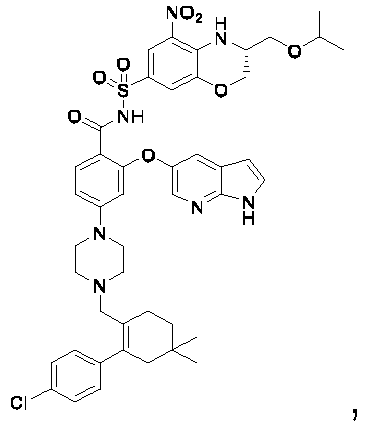
- Composé selon la revendication 1, dans lequel le composé représente :
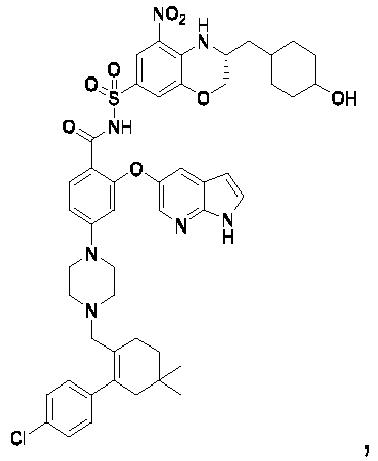
- Composé selon la revendication 1, dans lequel le composé représente :

- Composition pharmaceutique qui comprend un composé selon l'une quelconque des revendications 1 à 13, ou un de ses sels pharmaceutiquement acceptables, et au moins un support pharmaceutiquement acceptable..
- Composé selon l'une quelconque des revendications 1 à 13, ou un de ses sels pharmaceutiquement acceptables, ou au moins une composition pharmaceutique de celui-ci, et de manière facultative en combinaison avec un deuxième agent thérapeutique, pour son utilisation dans le traitement, l'amélioration ou la prévention d'une affection qui répond à une inhibition de la protéine Bcl-2.
- Composé selon l'une quelconque des revendications 1 à 13 ou un de ses sels pharmaceutiquement acceptables pour son utilisation dans le traitement d'un trouble hyperprolifératif.
Priority Applications (4)
| Application Number | Priority Date | Filing Date | Title |
|---|---|---|---|
| SI201830750T SI3612531T1 (sl) | 2017-04-18 | 2018-04-17 | Sredstva, ki sprožajo apoptozo |
| HRP20221158TT HRP20221158T1 (hr) | 2017-04-18 | 2018-04-17 | Sredstva za izazivanje apoptoze |
| EP22184427.7A EP4119560B1 (fr) | 2017-04-18 | 2018-04-17 | Agents induisant l'apoptose |
| RS20220898A RS63603B1 (sr) | 2017-04-18 | 2018-04-17 | Sredstva za indukciju apoptoze |
Applications Claiming Priority (3)
| Application Number | Priority Date | Filing Date | Title |
|---|---|---|---|
| US201762486965P | 2017-04-18 | 2017-04-18 | |
| US201762572417P | 2017-10-14 | 2017-10-14 | |
| PCT/CN2018/083268 WO2018192462A1 (fr) | 2017-04-18 | 2018-04-17 | Agents induisant l'apoptose |
Related Child Applications (2)
| Application Number | Title | Priority Date | Filing Date |
|---|---|---|---|
| EP22184427.7A Division EP4119560B1 (fr) | 2017-04-18 | 2018-04-17 | Agents induisant l'apoptose |
| EP22184427.7A Division-Into EP4119560B1 (fr) | 2017-04-18 | 2018-04-17 | Agents induisant l'apoptose |
Publications (3)
| Publication Number | Publication Date |
|---|---|
| EP3612531A1 EP3612531A1 (fr) | 2020-02-26 |
| EP3612531A4 EP3612531A4 (fr) | 2020-11-11 |
| EP3612531B1 true EP3612531B1 (fr) | 2022-08-24 |
Family
ID=63856416
Family Applications (2)
| Application Number | Title | Priority Date | Filing Date |
|---|---|---|---|
| EP18787582.8A Active EP3612531B1 (fr) | 2017-04-18 | 2018-04-17 | Agents induisant l'apoptose |
| EP22184427.7A Active EP4119560B1 (fr) | 2017-04-18 | 2018-04-17 | Agents induisant l'apoptose |
Family Applications After (1)
| Application Number | Title | Priority Date | Filing Date |
|---|---|---|---|
| EP22184427.7A Active EP4119560B1 (fr) | 2017-04-18 | 2018-04-17 | Agents induisant l'apoptose |
Country Status (20)
| Country | Link |
|---|---|
| US (2) | US11091478B2 (fr) |
| EP (2) | EP3612531B1 (fr) |
| JP (2) | JP7085566B2 (fr) |
| KR (1) | KR102630069B1 (fr) |
| CN (2) | CN116589459B (fr) |
| AU (2) | AU2018255621B2 (fr) |
| CY (1) | CY1125545T1 (fr) |
| DK (1) | DK3612531T3 (fr) |
| ES (1) | ES2927182T3 (fr) |
| HR (1) | HRP20221158T1 (fr) |
| HU (1) | HUE060310T2 (fr) |
| LT (1) | LT3612531T (fr) |
| MX (2) | MX391501B (fr) |
| PL (1) | PL3612531T3 (fr) |
| PT (1) | PT3612531T (fr) |
| RS (1) | RS63603B1 (fr) |
| SI (1) | SI3612531T1 (fr) |
| TW (1) | TWI791511B (fr) |
| WO (1) | WO2018192462A1 (fr) |
| ZA (1) | ZA201906011B (fr) |
Families Citing this family (20)
| Publication number | Priority date | Publication date | Assignee | Title |
|---|---|---|---|---|
| EP3565815B1 (fr) | 2017-01-07 | 2024-03-13 | Fochon Pharmaceuticals, Ltd. | Composés en tant qu'agents induisant l'apoptose sélective de bcl-2 |
| EP3612531B1 (fr) * | 2017-04-18 | 2022-08-24 | Shanghai Fochon Pharmaceutical Co., Ltd. | Agents induisant l'apoptose |
| CN111511748B (zh) | 2017-08-23 | 2023-05-02 | 广州麓鹏制药有限公司 | Bcl-2抑制剂 |
| SG11202009933WA (en) | 2018-04-29 | 2020-11-27 | Beigene Ltd | Bcl-2 INHIBITORS |
| US11903950B2 (en) * | 2018-08-22 | 2024-02-20 | Newave Pharmaceutical Inc. | BCL-2 inhibitors |
| CN109369432B (zh) * | 2018-11-02 | 2021-06-25 | 永农生物科学有限公司 | (s)-4-氯-2-氨基丁酸酯的制备方法 |
| WO2020140005A2 (fr) * | 2018-12-29 | 2020-07-02 | Newave Pharmaceutical Inc. | Inhibiteurs de bcl-2 |
| WO2021083135A1 (fr) * | 2019-10-28 | 2021-05-06 | Beigene, Ltd. | Inhibiteurs de bcl-2 |
| JP7142173B2 (ja) | 2019-12-06 | 2022-09-26 | ロクソ オンコロジー, インコーポレイテッド | ブルトン型チロシンキナーゼ阻害剤の投薬 |
| US12552784B2 (en) | 2019-12-27 | 2026-02-17 | Newave Pharmaceutical Inc. | 1H-pyrrolo[2,3-b]pyridine derivatives as BCL-2 inhibitors for the treatment of neoplastic and autoimmune diseases |
| WO2021133817A1 (fr) * | 2019-12-27 | 2021-07-01 | Guangzhou Lupeng Pharmaceutical Company Ltd. | Dérivés de 1h-pyrrolo[2,3-b]pyridine comme inhibiteurs bcl-2 pour le traitement des maladies néoplasiques et auto-immunes |
| CN113121524B (zh) * | 2019-12-31 | 2023-04-25 | 南京创济生物医药有限公司 | 杂环亚砜亚胺化合物及其中间体、制备方法和应用 |
| TR202002066A2 (tr) * | 2020-02-11 | 2021-08-23 | Bahcesehir Ueniversitesi | Bcl-2 i̇nhi̇bi̇törü olarak kullanilan yeni̇ küçük terapöti̇k bi̇leşi̇kleri̇n fi̇zi̇k odakli olarak keşfi̇ |
| TR202002072A2 (tr) * | 2020-02-11 | 2021-08-23 | Bahcesehir Ueniversitesi | Bcl-2 i̇nhi̇bi̇törü olarak kullanilan yeni̇ küçük terapöti̇k bi̇leşi̇kleri̇n fi̇zi̇k odakli olarak keşfi̇ |
| US20230128137A1 (en) * | 2020-03-12 | 2023-04-27 | Medshine Discovery Inc. | Benzo five-membered cyclic compound |
| IL296582A (en) | 2020-04-15 | 2022-11-01 | Beigene Ltd | bcl-2 inhibitor |
| WO2022002178A1 (fr) * | 2020-07-01 | 2022-01-06 | Ascentage Pharma (Suzhou) Co., Ltd. | Procédés de synthèse de composés de n-(phénylsulfonyl)benzamide et d'intermédiaires de ceux-ci |
| CN114478520B (zh) * | 2020-10-28 | 2025-01-10 | 杭州和正医药有限公司 | Bcl-2蛋白凋亡诱导剂及应用 |
| WO2023250343A1 (fr) | 2022-06-21 | 2023-12-28 | Loxo Oncology, Inc. | Formulations de bcl2 |
| WO2024032776A1 (fr) * | 2022-08-12 | 2024-02-15 | Fochon Biosciences, Ltd. | Composés utilisés en tant qu'inhibiteurs de bcl-2 |
Family Cites Families (43)
| Publication number | Priority date | Publication date | Assignee | Title |
|---|---|---|---|---|
| MY115155A (en) | 1993-09-09 | 2003-04-30 | Upjohn Co | Substituted oxazine and thiazine oxazolidinone antimicrobials. |
| DE69631347T2 (de) | 1995-09-15 | 2004-10-07 | Upjohn Co | Aminoaryl oxazolidinone n-oxide |
| US20030220234A1 (en) | 1998-11-02 | 2003-11-27 | Selvaraj Naicker | Deuterated cyclosporine analogs and their use as immunodulating agents |
| GB9918037D0 (en) | 1999-07-30 | 1999-09-29 | Biochemie Gmbh | Organic compounds |
| US7183320B2 (en) | 2001-06-06 | 2007-02-27 | Eli Lilly And Company | Benzoylsulfonamides and sulfonylbenzamidines for use as antitumour agents |
| WO2005099353A2 (fr) | 2004-04-19 | 2005-10-27 | Symed Labs Limited | Nouveau procede pour preparer du linezolide et des composes associes |
| WO2006008754A1 (fr) | 2004-07-20 | 2006-01-26 | Symed Labs Limited | Nouveaux intermediaires pour linezolide et composes correspondants |
| TW200621766A (en) | 2004-09-17 | 2006-07-01 | Hoffmann La Roche | Substituted hydantoins |
| JP2008514702A (ja) | 2004-09-29 | 2008-05-08 | エーエムアール テクノロジー インコーポレイテッド | 新規シクロスポリン類似体およびそれらの薬学的使用 |
| MX2007014783A (es) * | 2005-05-24 | 2008-02-19 | Abbott Lab | Activadores de apoptosis. |
| TW200716636A (en) | 2005-05-31 | 2007-05-01 | Speedel Experimenta Ag | Heterocyclic spiro-compounds |
| US7514068B2 (en) | 2005-09-14 | 2009-04-07 | Concert Pharmaceuticals Inc. | Biphenyl-pyrazolecarboxamide compounds |
| US8796267B2 (en) | 2006-10-23 | 2014-08-05 | Concert Pharmaceuticals, Inc. | Oxazolidinone derivatives and methods of use |
| KR101222412B1 (ko) | 2007-02-15 | 2013-01-15 | 에프. 호프만-라 로슈 아게 | Taar1 리간드로서의 2-아미노옥사졸린 |
| AU2008242703B2 (en) | 2007-04-19 | 2011-08-18 | Concert Pharmaceuticals Inc. | Deuterated morpholinyl compounds |
| US7531685B2 (en) | 2007-06-01 | 2009-05-12 | Protia, Llc | Deuterium-enriched oxybutynin |
| WO2009035598A1 (fr) | 2007-09-10 | 2009-03-19 | Concert Pharmaceuticals, Inc. | Pirfénidone déutérée |
| US20090118238A1 (en) | 2007-09-17 | 2009-05-07 | Protia, Llc | Deuterium-enriched alendronate |
| US20090088416A1 (en) | 2007-09-26 | 2009-04-02 | Protia, Llc | Deuterium-enriched lapaquistat |
| US20090082471A1 (en) | 2007-09-26 | 2009-03-26 | Protia, Llc | Deuterium-enriched fingolimod |
| WO2009045476A1 (fr) | 2007-10-02 | 2009-04-09 | Concert Pharmaceuticals, Inc. | Dérivés de pyrimidinedione |
| US20090105338A1 (en) | 2007-10-18 | 2009-04-23 | Protia, Llc | Deuterium-enriched gabexate mesylate |
| WO2009051782A1 (fr) | 2007-10-18 | 2009-04-23 | Concert Pharmaceuticals Inc. | Étravirine deutérée |
| EP2217548A1 (fr) | 2007-10-26 | 2010-08-18 | Concert Pharmaceuticals Inc. | Darunavir deutere |
| UA108193C2 (uk) | 2008-12-04 | 2015-04-10 | Апоптозіндукуючий засіб для лікування раку і імунних і аутоімунних захворювань | |
| DK2376480T3 (en) | 2008-12-05 | 2016-09-12 | Abbvie Inc | Sulfonamide derivatives AS BCL-2-selective apoptosis inducing agents for the treatment of cancer and immune diseases |
| WO2010083442A1 (fr) | 2009-01-19 | 2010-07-22 | Abbott Laboratories | Agents induisant une apoptose pour le traitement du cancer et de maladies immunes et auto-immunes |
| CA2747835A1 (fr) * | 2009-01-19 | 2010-07-22 | Abbott Laboratories | Agents induisant l'apoptose destines au traitement du cancer et de maladies immunes et auto-immunes |
| WO2010138588A2 (fr) | 2009-05-26 | 2010-12-02 | Abbott Laboratories | Agents induisant l'apoptose, dans le traitement du cancer et de maladies immunes et auto-immunes |
| US8546399B2 (en) * | 2009-05-26 | 2013-10-01 | Abbvie Inc. | Apoptosis inducing agents for the treatment of cancer and immune and autoimmune diseases |
| TWI520960B (zh) | 2010-05-26 | 2016-02-11 | 艾伯維有限公司 | 用於治療癌症及免疫及自體免疫疾病之細胞凋亡誘導劑 |
| CA3152557A1 (fr) * | 2010-10-29 | 2012-05-03 | Abbvie Inc. | Dispersions solides contenant un agent induisant l'apoptose |
| UA113500C2 (xx) | 2010-10-29 | 2017-02-10 | Одержані екструзією розплаву тверді дисперсії, що містять індукуючий апоптоз засіб | |
| CN102093364B (zh) | 2011-01-07 | 2015-01-28 | 北京赛林泰医药技术有限公司 | 作为FAK/Pyk2抑制剂的2,4-二氨基-6,7-二氢-5H-吡咯并[2,3]嘧啶衍生物 |
| AR095265A1 (es) | 2013-03-13 | 2015-09-30 | Abbvie Inc | Procesos para la preparación de un agente inductor de la apoptosis |
| US20140275082A1 (en) | 2013-03-14 | 2014-09-18 | Abbvie Inc. | Apoptosis-inducing agents for the treatment of cancer and immune and autoimmune diseases |
| WO2017132474A1 (fr) | 2016-01-30 | 2017-08-03 | Newave Pharmaceutical Inc. | Inhibiteurs de bcl-2 |
| US10829488B2 (en) * | 2016-08-05 | 2020-11-10 | The Regents Of The University Of Michigan | N-(phenylsulfonyl)benzamides and related compounds as bcl-2 inhibitors |
| WO2018041248A1 (fr) | 2016-09-01 | 2018-03-08 | 北京赛林泰医药技术有限公司 | Inhibiteur sélectif de bcl -2, sa préparation et son utilisation |
| EP3565815B1 (fr) | 2017-01-07 | 2024-03-13 | Fochon Pharmaceuticals, Ltd. | Composés en tant qu'agents induisant l'apoptose sélective de bcl-2 |
| EP3612531B1 (fr) * | 2017-04-18 | 2022-08-24 | Shanghai Fochon Pharmaceutical Co., Ltd. | Agents induisant l'apoptose |
| KR20200108301A (ko) | 2018-01-10 | 2020-09-17 | 리커리엄 아이피 홀딩스, 엘엘씨 | 벤즈아미드 화합물 |
| SG11202009933WA (en) | 2018-04-29 | 2020-11-27 | Beigene Ltd | Bcl-2 INHIBITORS |
-
2018
- 2018-04-17 EP EP18787582.8A patent/EP3612531B1/fr active Active
- 2018-04-17 CN CN202310518417.6A patent/CN116589459B/zh active Active
- 2018-04-17 ES ES18787582T patent/ES2927182T3/es active Active
- 2018-04-17 RS RS20220898A patent/RS63603B1/sr unknown
- 2018-04-17 MX MX2019012434A patent/MX391501B/es unknown
- 2018-04-17 LT LTEPPCT/CN2018/083268T patent/LT3612531T/lt unknown
- 2018-04-17 EP EP22184427.7A patent/EP4119560B1/fr active Active
- 2018-04-17 KR KR1020197029090A patent/KR102630069B1/ko active Active
- 2018-04-17 CN CN201880025848.6A patent/CN110546151B/zh active Active
- 2018-04-17 WO PCT/CN2018/083268 patent/WO2018192462A1/fr not_active Ceased
- 2018-04-17 SI SI201830750T patent/SI3612531T1/sl unknown
- 2018-04-17 JP JP2019556220A patent/JP7085566B2/ja active Active
- 2018-04-17 PL PL18787582.8T patent/PL3612531T3/pl unknown
- 2018-04-17 HU HUE18787582A patent/HUE060310T2/hu unknown
- 2018-04-17 HR HRP20221158TT patent/HRP20221158T1/hr unknown
- 2018-04-17 DK DK18787582.8T patent/DK3612531T3/da active
- 2018-04-17 AU AU2018255621A patent/AU2018255621B2/en active Active
- 2018-04-17 PT PT187875828T patent/PT3612531T/pt unknown
- 2018-04-17 US US16/603,873 patent/US11091478B2/en active Active
- 2018-04-18 TW TW107113141A patent/TWI791511B/zh active
-
2019
- 2019-09-11 ZA ZA2019/06011A patent/ZA201906011B/en unknown
- 2019-10-17 MX MX2022004304A patent/MX2022004304A/es unknown
-
2021
- 2021-07-15 US US17/376,963 patent/US12312349B2/en active Active
-
2022
- 2022-06-06 JP JP2022091793A patent/JP7416365B2/ja active Active
- 2022-06-07 AU AU2022203948A patent/AU2022203948B2/en active Active
- 2022-09-13 CY CY20221100606T patent/CY1125545T1/el unknown
Also Published As
Similar Documents
| Publication | Publication Date | Title |
|---|---|---|
| EP3612531B1 (fr) | Agents induisant l'apoptose | |
| EP3565815B1 (fr) | Composés en tant qu'agents induisant l'apoptose sélective de bcl-2 | |
| EP3860989B1 (fr) | Pyrrolines fusionnées qui agissent en tant qu'inhibiteurs de la protéase 30 (usp30) spécifique de l'ubiquitine | |
| JP2013531013A (ja) | RhoキナーゼインヒビターとしてのN−環式−3−(環状カルボニルアミノメチル)ベンズアミド誘導体 | |
| US20220048884A1 (en) | Nrf2 activator | |
| AU2019233204A1 (en) | Substituted (2-azabicyclo (3.1.0) hexan-2-yl) pyrazolo (1, 5-a) pyrimidine and imidazo (1, 2-b) pyridazine compounds as trk kinases inhibitors | |
| CN112020494A (zh) | 用作tlr2信号转导调节剂的化合物 | |
| KR102374033B1 (ko) | 특정 단백질 키나제 억제제 | |
| WO2018095432A1 (fr) | Composés de sulfoximine, de sulfonimidamide, de sulfondiimine et de diimidosulfonamide en tant qu'inhibiteurs de l'indoléamine 2,3-dioxygénase | |
| KR20240154590A (ko) | Lpa 수용체 활성과 연관된 상태를 치료하기 위한 화합물 및 조성물 | |
| WO2018211324A1 (fr) | Promédicaments pour traiter une maladie | |
| HK40082282B (en) | Apoptosis-inducing agents | |
| HK40082282A (en) | Apoptosis-inducing agents | |
| CA3057886C (fr) | Inhibiteurs de bcl-2 comme agents d'induction de l'apoptose | |
| CA3018115A1 (fr) | Derives d'indolizine, composition et methodes d'utilisation | |
| RU2782469C2 (ru) | Апоптоз-индуцирующие агенты | |
| CN106883225A (zh) | 一种具有1,2,4‑恶二唑‑结构片段的香豆素衍生物及其应用 | |
| WO2024121709A1 (fr) | Inhibiteurs de la protéase de type papaïne (plpro) | |
| BR112019021434B1 (pt) | Agentes indutores de apoptose, seus usos, e composição | |
| BR122021007130B1 (pt) | Uso de agentes indutores de apoptose | |
| EA010417B1 (ru) | Производные r(+)-2-амино-3-гидроксипропионовой кислоты с глицинэргическим действием | |
| MX2008000709A (es) | Derivados de piperidina sustituida como antagonistas de receptor sst1 de somatostatina. |
Legal Events
| Date | Code | Title | Description |
|---|---|---|---|
| REG | Reference to a national code |
Ref country code: HR Ref legal event code: TUEP Ref document number: P20221158T Country of ref document: HR |
|
| STAA | Information on the status of an ep patent application or granted ep patent |
Free format text: STATUS: THE INTERNATIONAL PUBLICATION HAS BEEN MADE |
|
| PUAI | Public reference made under article 153(3) epc to a published international application that has entered the european phase |
Free format text: ORIGINAL CODE: 0009012 |
|
| STAA | Information on the status of an ep patent application or granted ep patent |
Free format text: STATUS: REQUEST FOR EXAMINATION WAS MADE |
|
| 17P | Request for examination filed |
Effective date: 20190920 |
|
| AK | Designated contracting states |
Kind code of ref document: A1 Designated state(s): AL AT BE BG CH CY CZ DE DK EE ES FI FR GB GR HR HU IE IS IT LI LT LU LV MC MK MT NL NO PL PT RO RS SE SI SK SM TR |
|
| AX | Request for extension of the european patent |
Extension state: BA ME |
|
| DAV | Request for validation of the european patent (deleted) | ||
| DAX | Request for extension of the european patent (deleted) | ||
| A4 | Supplementary search report drawn up and despatched |
Effective date: 20201008 |
|
| RIC1 | Information provided on ipc code assigned before grant |
Ipc: C07D 471/14 20060101ALI20201002BHEP Ipc: A61P 35/00 20060101ALI20201002BHEP Ipc: C07D 471/04 20060101AFI20201002BHEP Ipc: A61K 31/437 20060101ALI20201002BHEP |
|
| GRAP | Despatch of communication of intention to grant a patent |
Free format text: ORIGINAL CODE: EPIDOSNIGR1 |
|
| STAA | Information on the status of an ep patent application or granted ep patent |
Free format text: STATUS: GRANT OF PATENT IS INTENDED |
|
| INTG | Intention to grant announced |
Effective date: 20220315 |
|
| GRAS | Grant fee paid |
Free format text: ORIGINAL CODE: EPIDOSNIGR3 |
|
| GRAA | (expected) grant |
Free format text: ORIGINAL CODE: 0009210 |
|
| STAA | Information on the status of an ep patent application or granted ep patent |
Free format text: STATUS: THE PATENT HAS BEEN GRANTED |
|
| AK | Designated contracting states |
Kind code of ref document: B1 Designated state(s): AL AT BE BG CH CY CZ DE DK EE ES FI FR GB GR HR HU IE IS IT LI LT LU LV MC MK MT NL NO PL PT RO RS SE SI SK SM TR |
|
| REG | Reference to a national code |
Ref country code: CH Ref legal event code: EP |
|
| REG | Reference to a national code |
Ref country code: DK Ref legal event code: T3 Effective date: 20220829 |
|
| REG | Reference to a national code |
Ref country code: IE Ref legal event code: FG4D |
|
| REG | Reference to a national code |
Ref country code: AT Ref legal event code: REF Ref document number: 1513594 Country of ref document: AT Kind code of ref document: T Effective date: 20220915 Ref country code: DE Ref legal event code: R096 Ref document number: 602018039774 Country of ref document: DE |
|
| REG | Reference to a national code |
Ref country code: PT Ref legal event code: SC4A Ref document number: 3612531 Country of ref document: PT Date of ref document: 20221004 Kind code of ref document: T Free format text: AVAILABILITY OF NATIONAL TRANSLATION Effective date: 20220929 |
|
| REG | Reference to a national code |
Ref country code: SE Ref legal event code: TRGR |
|
| REG | Reference to a national code |
Ref country code: FI Ref legal event code: FGE |
|
| REG | Reference to a national code |
Ref country code: ES Ref legal event code: FG2A Ref document number: 2927182 Country of ref document: ES Kind code of ref document: T3 Effective date: 20221103 |
|
| REG | Reference to a national code |
Ref country code: NO Ref legal event code: T2 Effective date: 20220824 Ref country code: GR Ref legal event code: EP Ref document number: 20220402031 Country of ref document: GR Effective date: 20221109 |
|
| REG | Reference to a national code |
Ref country code: NL Ref legal event code: FP |
|
| REG | Reference to a national code |
Ref country code: SK Ref legal event code: T3 Ref document number: E 40652 Country of ref document: SK |
|
| REG | Reference to a national code |
Ref country code: HR Ref legal event code: T1PR Ref document number: P20221158 Country of ref document: HR |
|
| REG | Reference to a national code |
Ref country code: EE Ref legal event code: FG4A Ref document number: E022864 Country of ref document: EE Effective date: 20221110 |
|
| REG | Reference to a national code |
Ref country code: HU Ref legal event code: AG4A Ref document number: E060310 Country of ref document: HU |
|
| PG25 | Lapsed in a contracting state [announced via postgrant information from national office to epo] |
Ref country code: SM Free format text: LAPSE BECAUSE OF FAILURE TO SUBMIT A TRANSLATION OF THE DESCRIPTION OR TO PAY THE FEE WITHIN THE PRESCRIBED TIME-LIMIT Effective date: 20220824 |
|
| REG | Reference to a national code |
Ref country code: HR Ref legal event code: ODRP Ref document number: P20221158 Country of ref document: HR Payment date: 20230406 Year of fee payment: 6 |
|
| REG | Reference to a national code |
Ref country code: DE Ref legal event code: R097 Ref document number: 602018039774 Country of ref document: DE |
|
| P01 | Opt-out of the competence of the unified patent court (upc) registered |
Effective date: 20230524 |
|
| PLBE | No opposition filed within time limit |
Free format text: ORIGINAL CODE: 0009261 |
|
| STAA | Information on the status of an ep patent application or granted ep patent |
Free format text: STATUS: NO OPPOSITION FILED WITHIN TIME LIMIT |
|
| 26N | No opposition filed |
Effective date: 20230525 |
|
| REG | Reference to a national code |
Ref country code: HR Ref legal event code: ODRP Ref document number: P20221158 Country of ref document: HR Payment date: 20240409 Year of fee payment: 7 |
|
| PGFP | Annual fee paid to national office [announced via postgrant information from national office to epo] |
Ref country code: LU Payment date: 20240418 Year of fee payment: 7 |
|
| PGFP | Annual fee paid to national office [announced via postgrant information from national office to epo] |
Ref country code: NL Payment date: 20240422 Year of fee payment: 7 |
|
| PGFP | Annual fee paid to national office [announced via postgrant information from national office to epo] |
Ref country code: IS Payment date: 20240426 Year of fee payment: 7 |
|
| PGFP | Annual fee paid to national office [announced via postgrant information from national office to epo] |
Ref country code: IE Payment date: 20240408 Year of fee payment: 7 |
|
| PGFP | Annual fee paid to national office [announced via postgrant information from national office to epo] |
Ref country code: LT Payment date: 20240404 Year of fee payment: 7 |
|
| PGFP | Annual fee paid to national office [announced via postgrant information from national office to epo] |
Ref country code: MC Payment date: 20240418 Year of fee payment: 7 |
|
| PGFP | Annual fee paid to national office [announced via postgrant information from national office to epo] |
Ref country code: HR Payment date: 20240409 Year of fee payment: 7 Ref country code: RS Payment date: 20240417 Year of fee payment: 7 |
|
| PGFP | Annual fee paid to national office [announced via postgrant information from national office to epo] |
Ref country code: AT Payment date: 20240417 Year of fee payment: 7 Ref country code: CZ Payment date: 20240405 Year of fee payment: 7 |
|
| PGFP | Annual fee paid to national office [announced via postgrant information from national office to epo] |
Ref country code: SK Payment date: 20240416 Year of fee payment: 7 |
|
| PGFP | Annual fee paid to national office [announced via postgrant information from national office to epo] |
Ref country code: RO Payment date: 20240410 Year of fee payment: 7 Ref country code: NO Payment date: 20240425 Year of fee payment: 7 Ref country code: FI Payment date: 20240418 Year of fee payment: 7 Ref country code: EE Payment date: 20240417 Year of fee payment: 7 Ref country code: CY Payment date: 20240405 Year of fee payment: 7 Ref country code: BG Payment date: 20240417 Year of fee payment: 7 Ref country code: SI Payment date: 20240408 Year of fee payment: 7 |
|
| PGFP | Annual fee paid to national office [announced via postgrant information from national office to epo] |
Ref country code: PL Payment date: 20240405 Year of fee payment: 7 |
|
| REG | Reference to a national code |
Ref country code: AT Ref legal event code: UEP Ref document number: 1513594 Country of ref document: AT Kind code of ref document: T Effective date: 20220824 |
|
| PGFP | Annual fee paid to national office [announced via postgrant information from national office to epo] |
Ref country code: MT Payment date: 20240426 Year of fee payment: 7 Ref country code: LV Payment date: 20240422 Year of fee payment: 7 Ref country code: HU Payment date: 20240419 Year of fee payment: 7 |
|
| PGFP | Annual fee paid to national office [announced via postgrant information from national office to epo] |
Ref country code: AL Payment date: 20240417 Year of fee payment: 7 |
|
| REG | Reference to a national code |
Ref country code: DE Ref legal event code: R081 Ref document number: 602018039774 Country of ref document: DE Owner name: SHANGHAI FOSUN PHARMACEUTICAL INDUSTRIAL DEVEL, CN Free format text: FORMER OWNERS: FOCHON PHARMACEUTICALS, LTD., CHONGQING, CN; SHANGHAI FOCHON PHARMACEUTICAL CO. LTD., SHANGHAI, CN Ref country code: DE Ref legal event code: R081 Ref document number: 602018039774 Country of ref document: DE Owner name: FOCHON PHARMACEUTICALS, LTD., CN Free format text: FORMER OWNERS: FOCHON PHARMACEUTICALS, LTD., CHONGQING, CN; SHANGHAI FOCHON PHARMACEUTICAL CO. LTD., SHANGHAI, CN |
|
| REG | Reference to a national code |
Ref country code: GB Ref legal event code: 732E Free format text: REGISTERED BETWEEN 20250313 AND 20250319 |
|
| PGFP | Annual fee paid to national office [announced via postgrant information from national office to epo] |
Ref country code: PT Payment date: 20250313 Year of fee payment: 8 |
|
| PGFP | Annual fee paid to national office [announced via postgrant information from national office to epo] |
Ref country code: TR Payment date: 20250307 Year of fee payment: 8 |
|
| REG | Reference to a national code |
Ref country code: ES Ref legal event code: PC2A Owner name: SHANGHAI FOSUN PHARMACEUTICAL INDUSTRIAL DEVELOPMENT CO., LTD. Effective date: 20250530 |
|
| REG | Reference to a national code |
Ref country code: BE Ref legal event code: PD Owner name: SHANGHAI FOSUN PHARMACEUTICAL INDUSTRIAL DEVELOPMENT CO., LTD.; CN Free format text: DETAILS ASSIGNMENT: CHANGE OF OWNER(S), ASSIGNMENT; FORMER OWNER NAME: SHANGHAI FOCHON PHARMACEUTICAL CO., LTD. Effective date: 20250307 |
|
| PGFP | Annual fee paid to national office [announced via postgrant information from national office to epo] |
Ref country code: DE Payment date: 20250408 Year of fee payment: 8 |
|
| PGFP | Annual fee paid to national office [announced via postgrant information from national office to epo] |
Ref country code: ES Payment date: 20250519 Year of fee payment: 8 Ref country code: DK Payment date: 20250411 Year of fee payment: 8 |
|
| PGFP | Annual fee paid to national office [announced via postgrant information from national office to epo] |
Ref country code: BE Payment date: 20250422 Year of fee payment: 8 Ref country code: IT Payment date: 20250422 Year of fee payment: 8 |
|
| PGFP | Annual fee paid to national office [announced via postgrant information from national office to epo] |
Ref country code: FR Payment date: 20250409 Year of fee payment: 8 |
|
| PGFP | Annual fee paid to national office [announced via postgrant information from national office to epo] |
Ref country code: CH Payment date: 20250501 Year of fee payment: 8 |
|
| REG | Reference to a national code |
Ref country code: HR Ref legal event code: PBON Ref document number: P20221158 Country of ref document: HR Effective date: 20250417 |
|
| PGFP | Annual fee paid to national office [announced via postgrant information from national office to epo] |
Ref country code: MK Payment date: 20240405 Year of fee payment: 7 |
|
| REG | Reference to a national code |
Ref country code: LT Ref legal event code: MM4D Effective date: 20250417 |
|
| REG | Reference to a national code |
Ref country code: SK Ref legal event code: MM4A Ref document number: E 40652 Country of ref document: SK Effective date: 20250417 |
|
| REG | Reference to a national code |
Ref country code: NL Ref legal event code: MM Effective date: 20250501 |
|
| PG25 | Lapsed in a contracting state [announced via postgrant information from national office to epo] |
Ref country code: HU Free format text: LAPSE BECAUSE OF NON-PAYMENT OF DUE FEES Effective date: 20250418 |
|
| PG25 | Lapsed in a contracting state [announced via postgrant information from national office to epo] |
Ref country code: LU Free format text: LAPSE BECAUSE OF NON-PAYMENT OF DUE FEES Effective date: 20250417 |
|
| REG | Reference to a national code |
Ref country code: AT Ref legal event code: MM01 Ref document number: 1513594 Country of ref document: AT Kind code of ref document: T Effective date: 20250417 |
|
| PG25 | Lapsed in a contracting state [announced via postgrant information from national office to epo] |
Ref country code: MC Free format text: LAPSE BECAUSE OF NON-PAYMENT OF DUE FEES Effective date: 20250430 |
|
| PG25 | Lapsed in a contracting state [announced via postgrant information from national office to epo] |
Ref country code: LT Free format text: LAPSE BECAUSE OF NON-PAYMENT OF DUE FEES Effective date: 20250417 |
|
| PG25 | Lapsed in a contracting state [announced via postgrant information from national office to epo] |
Ref country code: NO Free format text: LAPSE BECAUSE OF NON-PAYMENT OF DUE FEES Effective date: 20250430 |
|
| PG25 | Lapsed in a contracting state [announced via postgrant information from national office to epo] |
Ref country code: AT Free format text: LAPSE BECAUSE OF NON-PAYMENT OF DUE FEES Effective date: 20250417 |
|
| PG25 | Lapsed in a contracting state [announced via postgrant information from national office to epo] |
Ref country code: FI Free format text: LAPSE BECAUSE OF NON-PAYMENT OF DUE FEES Effective date: 20250417 |
|
| PG25 | Lapsed in a contracting state [announced via postgrant information from national office to epo] |
Ref country code: HR Free format text: LAPSE BECAUSE OF NON-PAYMENT OF DUE FEES Effective date: 20250417 Ref country code: NL Free format text: LAPSE BECAUSE OF NON-PAYMENT OF DUE FEES Effective date: 20250501 |
|
| PG25 | Lapsed in a contracting state [announced via postgrant information from national office to epo] |
Ref country code: CY Free format text: LAPSE BECAUSE OF NON-PAYMENT OF DUE FEES Effective date: 20250417 Ref country code: CZ Free format text: LAPSE BECAUSE OF NON-PAYMENT OF DUE FEES Effective date: 20250417 |
|
| PG25 | Lapsed in a contracting state [announced via postgrant information from national office to epo] |
Ref country code: LV Free format text: LAPSE BECAUSE OF NON-PAYMENT OF DUE FEES Effective date: 20250417 |
|
| PG25 | Lapsed in a contracting state [announced via postgrant information from national office to epo] |
Ref country code: BG Free format text: LAPSE BECAUSE OF NON-PAYMENT OF DUE FEES Effective date: 20250417 |
|
| PG25 | Lapsed in a contracting state [announced via postgrant information from national office to epo] |
Ref country code: EE Free format text: LAPSE BECAUSE OF NON-PAYMENT OF DUE FEES Effective date: 20250430 |
|
| PG25 | Lapsed in a contracting state [announced via postgrant information from national office to epo] |
Ref country code: RO Free format text: LAPSE BECAUSE OF NON-PAYMENT OF DUE FEES Effective date: 20250417 Ref country code: SK Free format text: LAPSE BECAUSE OF NON-PAYMENT OF DUE FEES Effective date: 20250417 |
|
| PG25 | Lapsed in a contracting state [announced via postgrant information from national office to epo] |
Ref country code: RS Free format text: LAPSE BECAUSE OF NON-PAYMENT OF DUE FEES Effective date: 20250417 |
|
| PGFP | Annual fee paid to national office [announced via postgrant information from national office to epo] |
Ref country code: SE Payment date: 20260327 Year of fee payment: 9 |
|
| PGFP | Annual fee paid to national office [announced via postgrant information from national office to epo] |
Ref country code: GB Payment date: 20260325 Year of fee payment: 9 |
|
| PG25 | Lapsed in a contracting state [announced via postgrant information from national office to epo] |
Ref country code: IE Free format text: LAPSE BECAUSE OF NON-PAYMENT OF DUE FEES Effective date: 20250417 |
|
| PGFP | Annual fee paid to national office [announced via postgrant information from national office to epo] |
Ref country code: GR Payment date: 20260326 Year of fee payment: 9 |