EP3612656B1 - Superalliage à base de cobalt-nickel à durcissement par précipitation et article fabriqué à partir de celui-ci - Google Patents
Superalliage à base de cobalt-nickel à durcissement par précipitation et article fabriqué à partir de celui-ci Download PDFInfo
- Publication number
- EP3612656B1 EP3612656B1 EP18799612.9A EP18799612A EP3612656B1 EP 3612656 B1 EP3612656 B1 EP 3612656B1 EP 18799612 A EP18799612 A EP 18799612A EP 3612656 B1 EP3612656 B1 EP 3612656B1
- Authority
- EP
- European Patent Office
- Prior art keywords
- alloy
- temperature
- cobalt
- temperatures
- nickel
- Prior art date
- Legal status (The legal status is an assumption and is not a legal conclusion. Google has not performed a legal analysis and makes no representation as to the accuracy of the status listed.)
- Active
Links
Images



Classifications
-
- C—CHEMISTRY; METALLURGY
- C22—METALLURGY; FERROUS OR NON-FERROUS ALLOYS; TREATMENT OF ALLOYS OR NON-FERROUS METALS
- C22C—ALLOYS
- C22C19/00—Alloys based on nickel or cobalt
- C22C19/03—Alloys based on nickel or cobalt based on nickel
- C22C19/05—Alloys based on nickel or cobalt based on nickel with chromium
- C22C19/051—Alloys based on nickel or cobalt based on nickel with chromium and Mo or W
- C22C19/056—Alloys based on nickel or cobalt based on nickel with chromium and Mo or W with the maximum Cr content being at least 10% but less than 20%
-
- C—CHEMISTRY; METALLURGY
- C22—METALLURGY; FERROUS OR NON-FERROUS ALLOYS; TREATMENT OF ALLOYS OR NON-FERROUS METALS
- C22C—ALLOYS
- C22C19/00—Alloys based on nickel or cobalt
- C22C19/03—Alloys based on nickel or cobalt based on nickel
- C22C19/05—Alloys based on nickel or cobalt based on nickel with chromium
- C22C19/051—Alloys based on nickel or cobalt based on nickel with chromium and Mo or W
- C22C19/057—Alloys based on nickel or cobalt based on nickel with chromium and Mo or W with the maximum Cr content being less 10%
-
- C—CHEMISTRY; METALLURGY
- C22—METALLURGY; FERROUS OR NON-FERROUS ALLOYS; TREATMENT OF ALLOYS OR NON-FERROUS METALS
- C22C—ALLOYS
- C22C19/00—Alloys based on nickel or cobalt
- C22C19/07—Alloys based on nickel or cobalt based on cobalt
-
- C—CHEMISTRY; METALLURGY
- C22—METALLURGY; FERROUS OR NON-FERROUS ALLOYS; TREATMENT OF ALLOYS OR NON-FERROUS METALS
- C22C—ALLOYS
- C22C30/00—Alloys containing less than 50% by weight of each constituent
Definitions
- This invention relates to superalloys for very high temperature applications and to a precipitation hardenable cobalt-nickel base superalloy that provides good resistance to oxidation, very good strength, and microstructural stability at significantly higher temperatures than known nickel-base and known cobalt-base superalloys.
- the invention also relates to a fine-grained article made from the alloy.
- Nickel-base superalloys such as INCONEL ® 718, INCONEL ® 706, and WASPALOY have been used to make gas turbine rotors and other components.
- the known nickel-base superalloys provide very good strength and resistance to creep at temperatures up to about 750°C (1380°F).
- it is expected that the newer gas turbine designs will require a superalloy that can provide high strength at temperatures of 800°C (1472°F) and higher.
- the known nickel-base precipitation hardening superalloys obtain their elevated temperature strength primarily through the precipitation of the intermetallic phase gamma prime ( ⁇ ') in the alloy matrix material.
- the solvus temperature of the nickel-base ⁇ ' in WASPALOY is about 1020°C (1870°F). Consequently, the known nickel-base superalloys undergo a rapid decline of strength and creep resistance when the in-service operating temperature approaches that temperature.
- a need has arisen for a precipitation hardenable superalloy that provides very high strength and very good creep resistance at a temperature greater than 675°C (1250°F) in a 1000-hour test at 630 MPa (91.4 ksi).
- cobalt-nickel alloys containing Al and W can be strengthened by the precipitation of the L1 2 ordered phase, ⁇ ' precipitate (Co 3 (Al, W)) and by the precipitation of the Ni 3 (Al, Ti) ⁇ ' precipitate found in the known Ni-base superalloys.
- ⁇ ' precipitate Co 3 (Al, W)
- Ni 3 (Al, Ti) ⁇ ' precipitate found in the known Ni-base superalloys.
- the ternary Co-W-Al phase alone does not provide sufficiently improved properties compared to existing Ni base alloys, especially during long term high temperature exposure.
- the ternary Co-W-Al phase suffers from accelerated oxidation during high temperature exposure, which results in a loss of mass in the alloy and consequently, a reduction of service life at such temperatures.
- US 2016/0168662 proposes an alloy that contains, in weight percent, 0-0.05% carbon, 10-16% chromium, 31-42% cobalt, 6-15% tungsten, up to 2% titanium, 4-6% aluminum, up to 2.5% niobium, up to 5% tantalum, up to 0.1% hafnium, up to 0.05% boron, up to 4% molybdenum, up to 1% silicon, up to 0.06% manganese, and a balance of 26-31 % nickel and incidental impurities, wherein cobalt and nickel are present in an atomic ratio between 1.2:1 and 1.4:1.
- CN 105088018 proposes an alloy that contains 0.02-0.10% carbon. 5-10% chromium, 25-45% nickel, 12-18% tungsten, 0.5-4% titanium, 2.5-6% aluminum, 0.001-0.008% boron, less than 0.03% phosphorus, less than 0.03% sulfur, and a balance of cobalt.
- the alloy according to this invention is designed to provide a yield strength of about 700-1380 MPa (100-200 ksi) at a temperature of 650-815°C (1200-1500°F).
- the alloy is also designed to ensure the stability of the ⁇ ' strengthening precipitate when the alloy is exposed to a temperature of about 700-1050°C (1300-1920°F) for 1000 hours or more.
- percent and the symbol “%” mean percent by weight or percent by mass, unless otherwise indicated.
- symbol ⁇ identifies the matrix material and ⁇ ' and ⁇ " identify the intermetallic precipitates that are present in the alloy after a two-step heat treatment including solution annealing and age hardening steps.
- At least about 0.01% and preferably at least about 0.02% carbon is present in this alloy. Carbon benefits the high strength and good creep resistance provided by the alloy at elevated temperatures by combining with other elements to form carbides.
- beneficial carbides present in this alloy are MC, M 23 C 6 , M 6 C, and M 7 C 3 carbides where M is one or more of the elements chromium, molybdenum, tungsten, titanium, tantalum, and hafnium. Too much carbon does not provide an additional benefit to strength and adversely affects the high temperature oxidation resistance provided by this alloy. Therefore, carbon is limited to not more than about 0.15% in this alloy and preferably to not more than about 0.10%.
- This alloy contains at least about 3.00% tungsten and at least about 3.00% aluminum. Tungsten and aluminum combine with cobalt in this alloy to form a cobalt-base ⁇ ' precipitate (Co 3 (Al, W)) after solution annealing and age hardening heat treatments.
- the cobalt-base ⁇ ' phase in the ternary Co-Al-W alloy system is metastable because it decomposes to ⁇ , B2, and D0 19 phases when exposed to temperatures of about 900°C (1650°F) for very long periods of time.
- controlled amounts of nickel and titanium are included in the alloy as described further below.
- the solvus temperature of the cobalt-base ⁇ ' in the Co-Al-W-Ni-Ti system will be greater than about 1050°C (1922°F).
- the retention of a substantial amount of the ⁇ ' phases in this alloy at the anticipated operating temperatures of the next generation of gas turbines and jet engines will result in a significant retention of the strength and creep resistance provided by the alloy.
- Aluminum also contributes to the good elevated temperature oxidation resistance and corrosion resistance provided by this alloy. In this regard, aluminum combines with available oxygen to form an Al 2 O 3 oxide layer on the surface of products made from the alloy that, when formed as a continuous layer, protects the alloy against further oxidation.
- the Al 2 O 3 layer is continuous when it has substantially no openings or discontinuities through which oxygen can easily penetrate.
- the chemistry balance in the claimed alloy in this patent promotes the formation of the continuous Al 2 O 3 layer at temperatures above 800°C (1472F). Too much aluminum and/or tungsten promotes the precipitation of deleterious phases such as B2 and D0 19 . Therefore, aluminum is restricted to not more than about 7.00% and preferably to not more than about 5.00% in the alloy of this invention. Tungsten is limited to not more than 12.00% in this alloy.
- Titanium substitutes for some of the aluminum in the cobalt-base ⁇ ' strengthening precipitate that forms in this alloy and thus increases the range of chemistries that provide ⁇ ' precipitate that is stable at the elevated temperatures experienced during the operation of gas turbines and jet engines. Titanium also benefits the strength provided by the alloy by increasing the solvus temperature of the ⁇ ' strengthening precipitate. Accordingly, the alloy contains at least about 0.50% and preferably at least about 0.60% titanium. Too much titanium results in the formation of undesirable secondary phases such as B2, for example. For that reason, the alloy contains not more than 2.00%.
- tantalum may be present in this alloy because it provides the same benefits as titanium. Tantalum also contributes to the solid solution strength provided by this alloy. Preferably, the alloy contains at least about 0.50% and better yet contains at least about 2.00% tantalum. Like titanium, too much tantalum can result in the formation of undesirable secondary phases such as Mu ( ⁇ ) and Laves phases. Therefore, the amount of tantalum in this alloy is restricted to not more than about 6.00% and preferably to not more than about 5.00%.
- At least 7.00%, and preferably at least about 8.00% chromium is present in this alloy to benefit the oxidation resistance and the corrosion resistance of the alloy (including general corrosion resistance and localized corrosion resistance) at the elevated temperatures encountered in gas turbines and jet engines.
- chromium acts as an oxygen getter promoting the formation of protective, dense Cr 2 O 3 phase that contributes to the formation of more internal, protective, continuous adherent layer of Al 2 O 3 . Too much chromium can lead to the formation of undesirable secondary phases such as ⁇ and B2.
- ⁇ phase is considered to be an undesirable TCP phase in this alloy that might precipitate intergranularly and intragranularly.
- Mu phase also adversely affects the high temperature mechanical properties of this alloy during the long-term exposure.
- the ⁇ phase also adversely affects the corrosion resistance and oxidation resistance provided by the alloy according to this invention.
- Nickel combines with available aluminum and titanium to form the nickel-base ⁇ ' strengthening phase during heat treatment of the alloy. Nickel also stabilizes the cobalt-base ⁇ ' phase and adjusts the ⁇ / ⁇ ' mismatch to a more beneficial range.
- the ⁇ / ⁇ ' mismatch is a parameter known to persons skilled in the art and is defined by the following relationship: ((lattice parameter of the precipitate - lattice parameter of the alloy matrix) ⁇ (lattice parameter of alloy matrix)) ⁇ 100%.
- a coherent interface between the ⁇ matrix material and the ⁇ ' precipitates is necessary to obtain a stable microstructure and is produced when the absolute value of the ⁇ / ⁇ ' mismatch parameter is as small as possible.
- the alloy of this invention contains at least 34.00% nickel.
- the alloy contains not more than about 45.00% and preferably not more than about 41.00% nickel.
- the alloy may contain up to about 1.50% zirconium which benefits the elevated temperature corrosion resistance of the alloy. At least about 0.02% zirconium is present in the alloy to obtain the desired benefit. Preferably, the alloy contains not more than about 1.00% zirconium.
- the alloy of this invention may also contain up to about 0.20% boron which contributes to the grain boundary strength and resistance to oxidation provided by the alloy. At least about 0.02% boron is present for those purposes. Preferably, the alloy contains not more than about 0.10% boron.
- the alloy may optionally contain up to about 2.50% niobium which benefits the elevated temperature strength provided by the alloy by solid solution strengthening and by combining with nickel to form the ⁇ " strengthening phase. However, too much niobium can result in the formation of undesirable secondary phases such as ⁇ and Laves phases. Therefore, it is preferred that the alloy contain no more than about 2.00% niobium.
- Hafnium is a strong MC type carbide former. When present, it forms fine HfC which frees up tungsten and titanium from forming MC carbide and makes those elements available for the main strengthening phase gamma prime. A small amount of hafnium also promotes the formation of serrated (convoluted) grain boundaries which improve the stress rupture and dwell fatigue life properties provided by the alloy. A small but effective amount of Hf increases high temperature corrosion and sulfidation resistance in this alloy. It has been found that too much hafnium can significantly depress the solidus temperature which leads to incipient melting when the alloy is hot worked. Therefore, the alloy contains not more than about 1.50% and preferably not more than about 0.50% hafnium.
- the alloy may also be present in this alloy in substitution for some of the tungsten to lower the density of the alloy. Molybdenum also benefits the creep resistance provided by the alloy. Preferably, however, the alloy contains not more than about 2.00% molybdenum to avoid the formation of undesired phases such as ⁇ and D0 19 . This alloy may further contain up to about 1.50% silicon to promote the formation of a protective surface layer during elevated temperature oxidation of the alloy. Too much silicon can result in spalling of the oxidation protective layer. Therefore, the alloy preferably contains not more than about 1.00% silicon.
- the balance of the alloy is cobalt and the usual impurities found in commercial grades of superalloys intended for similar service.
- the alloy contains about 35.00-43.00% cobalt.
- the alloy is designed to provide a ⁇ ' solvus temperature greater than about 1050°C (1922°F) so that the alloy can provide high strength and good resistance to creep when used at higher operating temperatures than currently used in gas turbines and jet engines.
- the alloy composition is also selected to ensure that undesirable secondary phases such as the D0 19 , B2, ⁇ , and Laves phases, dissolve at significantly lower temperatures than the ⁇ ' strengthening phases.
- the alloy is designed to provide more than about 45 volume percent of the ⁇ ' strengthening phases in the solution treated and age hardened condition.
- the alloy composition is further designed to provide a hot workability window that is greater than about 110°C (200°F).
- the hot workability window is defined as the difference between the ⁇ ' solvus temperature and the solidus temperature. It represents the temperature range wherein the alloy can be readily hot worked.
- the alloy is melted by vacuum induction melting (VIM) and refined by consumable electrode remelting such as electroslag remelting (ESR) and/or vacuum arc remelting (VAR).
- VIM vacuum induction melting
- ESR electroslag remelting
- VAR vacuum arc remelting
- a triple melt process comprising VIM + ESR+VAR can be used.
- the remelted ingot is typically hot worked to an intermediate shape and size.
- this alloy is preferably thermomechanically processed. More specifically, the cast ingot is heated at a temperature that is selected to provide homogenization of the alloy chemistry within the ingot.
- the homogenization temperature is selected mainly based on the chemical composition of the alloy ingot and is preferably not less than about 1120C (2050F). The time at temperature for each step selected based on the ingot size.
- the material is hot worked preferably from a temperature not greater than about 1205C (2200F).
- a subsequent hot forming process may be applied to the alloy material to additional deformation.
- the additional hot forming step which may include, one or more of pressing, forging, hot rolling, roll forming, or a similar hot working technique, is performed from a starting temperature at or near the ⁇ ' solvus temperature.
- the additional hot forming step imparts a sufficient amount of strain at an appropriate strain rate to achieve the desired microstructure.
- the hot forming temperature for the billet material is not higher than about 1120C (2050F).
- the combination of novel chemistry and thermomechanical processing has been found by the inventors to provide a fine-grained structure with an ASTM grain size number of 6 to 12.
- the alloy is characterized by a grain size number greater than 8.
- the alloy may also be cold worked to a limited degree after the thermomechanical processing.
- the alloy such as bars, billets, strip, wire, and rod are heat treated to develop the very high strength that characterizes the alloy.
- the alloy is solution treated at a temperature of 871 to 1260 C (1600 to 2300 F) for 0.1 to 100 hours and then age hardened in single or multiple steps at a temperature of 482 to 871 C (900 to 1600 F) for 0.1 to 100 hours.
- the temperature, time, and cooling parameters for the solution treatment and age hardening treatment will vary depending on the cross-sectional size of the alloy material and the combination of strength, stress rupture, and creep resistance required for the intended application for the alloy.
- the mechanical properties provided by the alloy of this invention exceed the typical properties provided by the known Ni based superalloys, like Waspaloy, INCONEL ® 718, and others, at temperatures higher than 650C (1200 F).
- the superior combination of mechanical properties at such temperatures makes the alloy of this invention suitable for use in the next generation of gas turbines and jet engines.
- the good stability of the strengthening microconstituents is reflected in stable mechanical properties after exposure at temperature of 815 C (1500F) or higher for at least 1000 hrs.
- This particular characteristic of the present alloy results in longer lifetime for parts and components made from the alloy.
- the high temperature oxidation resistance of the present invention is superior to the known commercial Ni based superalloys. After 600 hours of cyclic testing at 1472 F (800C), 1832F (1000C) and 2012F (1100C), the alloy according to this invention provides better resistance to oxidation which results in less mass loss and thus, to longer life in elevated temperature service.
- the ingots of the examples were homogenized for 24 hrs. and then hot forged down to 1.0 in. square bars. Standard specimens for tensile testing were machined from blanks cut from the bars. The tensile specimens of each examples were solution annealed at 2000F for 1 hour, quenched in oil, and then aged at 1450F for 24 hours before testing was performed.
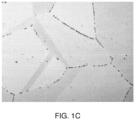
- Metallographic specimens of the material from EX-3121 were prepared from the bar material and examined to determine the microstructure of the material in the heat-treated condition after hot working.
- Figure 2 shows the fine grain structure (ASTM grain size number 11) of the material from EX-3121.
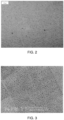
- Figure 3 is a field emission gun - scanning electron microscope (FEG-SEM) image of the microstructure of the material from Example EX-3015 in the aged condition. It can be seen from Figure 3 that the material has a microstructure consisting of a matrix of ⁇ phase with a substantial quantity of submicron-size ⁇ ' particles that are uniformly dispersed within the matrix material.
- FEG-SEM field emission gun - scanning electron microscope
- the aged test samples of EX-3033 were tensile tested at 704C (1300F) and 815C (1500F) and provided a yield strength of 791 MPa (114.7 ksi) at the first temperature and a yield strength of 720.5 MPa (104.5 ksi) at the second temperature. Additionally, a set of test coupons was placed in a furnace running at 1300 F (704C) and held in an isothermal condition for 1000 hrs. A second set of test coupons was placed in a furnace running at 1500F (815C) and held in an isothermal condition for 1000 hrs.
- Example EX-2969 was tested for resistance to high temperature oxidation resistance. Cylindrical samples 0.5" (12.65 mm) height and 0.5" (12.65mm) diameter were prepared from the 1.0 in bars and surface finished with 400 grit polishing agent. Additional samples in the as-heat treated condition were also prepared from commercially available Waspaloy. All samples were placed in open crucibles and then exposed to a cyclic oxidation at 600C, 800C, 1000C and 1100C for a total of 600 hrs. After each 50-hour cycle, samples were allowed to cool down covered by a ceramic lid to prevent loss of spalling material. After the cyclic exposures, all samples showed a continuous layer of Al 2 O 3 attached to the base metal and underneath other metals oxides.
- Al 2 O 3 with corundum structure provides a protective barrier against the further diffusion of oxygen ions into the metal, and thereby reduces the oxidation rate of the metal at high temperatures.
- the protective action of Cr 2 O 3 , the other oxide with a corundum structure stops above 1800F because at this temperature and in the presence of oxygen, Cr 2 O 3 can react to give CrO 3 which is less protective and more volatile.
- FIG. 6 shows an EDS map of material from Example EX-2969 showing the presence of the continuous layer of aluminum oxide attached to the base alloy and other oxides (e.g., Cr-oxide, Ti-oxide, and W-oxide).
- Example EX-3078 has higher Cr (13.82%) compared with the other examples which are in a range of 8.5% to 8.98%. It was found that the larger amount of Cr in example EX-3078 stabilizes the deleterious ⁇ phase within the heat-treating temperature ranges as predicted by the THERMO-CALC ® software and shown in Figure 8.
- Figure 8 shows that the maximum solubility of Cr in the preferred chemical composition of the alloy according to the present invention is about 9.8 % and occurs at a temperature of 940 C.
- the aging heat treatment to precipitate the gamma prime phase in this alloy is carried out at temperatures below 850 C, which will induce the precipitation of ⁇ phase.
- the alloy preferably contains less than 9% chromium.
- the cobalt-nickel base superalloy according to the present invention provides a novel combination of properties including good strength and ductility at temperatures higher than the currently known operating temperatures of gas turbines and jet engines.
- the microstructure of the alloy is stable at such temperatures such that long-term exposure to such temperatures (e.g., at 1500 F) does not degrade the strength and ductility provided by the alloy.
- the composition of the alloy is balanced to inhibit the formation of undesirable TCP phases such as ⁇ -phase.
- the alloy according to this invention also provides a good resistance to oxidation at such temperatures because it forms a continuous protective layer containing Al 2 O 3 and Cr 2 O 3 on its surface.
- the alloy can be thermomechanically processed to provide a fine-grain microstructure to achieve the desired combination of strength and ductility that characterize this alloy.
Landscapes
- Chemical & Material Sciences (AREA)
- Engineering & Computer Science (AREA)
- Materials Engineering (AREA)
- Mechanical Engineering (AREA)
- Metallurgy (AREA)
- Organic Chemistry (AREA)
- Turbine Rotor Nozzle Sealing (AREA)
- Crystals, And After-Treatments Of Crystals (AREA)
- Coating By Spraying Or Casting (AREA)
Claims (8)
- Superalliage à base de cobalt-nickel, durcissable par précipitation comprenant en pourcentage en poids :
C 0,01 à 0,15 Cr 7,00 à 9,8 Ni 34,00 à 45,00 W 3,00 à 12,00 Ti 0,50 à 2,00 Al 3,00 à 7,00 Nb jusqu'à 2,50 Ta jusqu'à 6,00 Hf jusqu'à 1,50 Zr jusqu'à 1,50 B jusqu'à 0,20 Mo jusqu'à 2,50 Si jusqu'à 1,50 - L'alliage revendiqué selon la revendication 1 qui contient au moins 0,50 % de tantale.
- L'alliage revendiqué selon la revendication 2 qui ne contient pas plus 0,50 % d'hafnium.
- L'alliage revendiqué selon la revendication 1 qui contient, en pourcentage en poids :
C 0,02 à 0,10 Ni 34,00 à 41,00 Ti 0,60 à 2,00 Ta 0,50 à 5,00 Nb jusqu'à 2,00 Hf jusqu'à 0,50 Zr jusqu'à 1,00 B jusqu'à 0,10 Mo jusqu'à 2,00 ; et Si jusqu'à 1,00. - L'alliage revendiqué selon la revendication 1 ou 2 qui contient, en pourcentage en poids :
Ta 2,00 à 5,00 Al 3,00 à 5,00 ; et Hf jusqu'à 0,5. - Un article fabriqué à partir de l'alliage revendiqué selon l'une quelconque des revendications 1 à 5 dans lequel l'alliage présente une taille de grain non supérieure à la taille de grain de la norme ASTM numéro 6.
- L'article revendiqué selon la revendication 6 dans lequel l'alliage présente une taille de grain non supérieure à la taille de grain de la norme ASTM numéro 8.
- Un article fabriqué à partir de l'alliage revendiqué selon l'une quelconque des revendications 1 à 5, qui présente une couche superficielle protectrice continue comprenant Al2O3.
Applications Claiming Priority (2)
| Application Number | Priority Date | Filing Date | Title |
|---|---|---|---|
| US201762488294P | 2017-04-21 | 2017-04-21 | |
| PCT/US2018/028567 WO2019018038A2 (fr) | 2017-04-21 | 2018-04-20 | Superalliage à base de cobalt-nickel à durcissement par précipitation et article fabriqué à partir de celui-ci |
Publications (2)
| Publication Number | Publication Date |
|---|---|
| EP3612656A2 EP3612656A2 (fr) | 2020-02-26 |
| EP3612656B1 true EP3612656B1 (fr) | 2024-08-07 |
Family
ID=63853096
Family Applications (1)
| Application Number | Title | Priority Date | Filing Date |
|---|---|---|---|
| EP18799612.9A Active EP3612656B1 (fr) | 2017-04-21 | 2018-04-20 | Superalliage à base de cobalt-nickel à durcissement par précipitation et article fabriqué à partir de celui-ci |
Country Status (11)
| Country | Link |
|---|---|
| US (2) | US20180305792A1 (fr) |
| EP (1) | EP3612656B1 (fr) |
| JP (1) | JP6965364B2 (fr) |
| KR (1) | KR102403029B1 (fr) |
| CN (1) | CN111051548B (fr) |
| BR (1) | BR112019021654A2 (fr) |
| CA (1) | CA3060104C (fr) |
| ES (1) | ES2991022T3 (fr) |
| IL (1) | IL269854A (fr) |
| MX (1) | MX2019012545A (fr) |
| WO (1) | WO2019018038A2 (fr) |
Families Citing this family (11)
| Publication number | Priority date | Publication date | Assignee | Title |
|---|---|---|---|---|
| EP3775304A4 (fr) * | 2018-04-04 | 2022-01-05 | The Regents of The University of California | Alliage gamma/gamma prime à base de co résistant à l'oxydation à haute température dmref - co |
| US11339458B2 (en) * | 2019-01-08 | 2022-05-24 | Chromalloy Gas Turbine Llc | Nickel-base alloy for gas turbine components |
| FR3094018B1 (fr) | 2019-03-20 | 2022-02-04 | Safran | Superalliage a proprietes optimisees et densite limitee |
| GB202015106D0 (en) * | 2020-08-20 | 2020-11-11 | Rolls Royce Plc | Alloy |
| JP2022042490A (ja) * | 2020-09-02 | 2022-03-14 | 三菱重工業株式会社 | コバルト基合金構造体の製造方法、および該製造方法により得られるコバルト基合金構造体 |
| CN114086049B (zh) * | 2021-11-17 | 2022-08-23 | 沈阳航空航天大学 | 2.0GPa级超高屈服强度塑性CoCrNi基中熵合金及其制备方法 |
| CN115233074A (zh) * | 2022-07-12 | 2022-10-25 | 北京科技大学 | 一种燃机动叶片用钴镍基高温合金及其制备方法 |
| CN115874085B (zh) * | 2022-09-29 | 2024-02-20 | 浙江大学 | 一种纳米相增强的无钨钴镍基高温合金及其制备方法 |
| JPWO2024101048A1 (fr) * | 2022-11-09 | 2024-05-16 | ||
| CN116356181B (zh) * | 2023-03-31 | 2025-06-06 | 中国科学院金属研究所 | 一种钴基变形高温合金及其制备方法 |
| CN116445838B (zh) * | 2023-04-21 | 2024-09-24 | 北京钢研高纳科技股份有限公司 | 一种钴基变形高温合金及其制备方法与应用 |
Citations (3)
| Publication number | Priority date | Publication date | Assignee | Title |
|---|---|---|---|---|
| CN105088018A (zh) * | 2015-09-10 | 2015-11-25 | 钢铁研究总院 | 一种高强度、抗氧化的钴基高温合金 |
| WO2016016437A2 (fr) * | 2014-08-01 | 2016-02-04 | Friedrich-Alexander-Universität Erlangen-Nürnberg | Superalliage à base de cobalt |
| EP3024957B1 (fr) * | 2013-07-23 | 2018-06-06 | General Electric Company | Superalliages et composants formés à partir de ceux-ci. |
Family Cites Families (20)
| Publication number | Priority date | Publication date | Assignee | Title |
|---|---|---|---|---|
| US5476555A (en) * | 1992-08-31 | 1995-12-19 | Sps Technologies, Inc. | Nickel-cobalt based alloys |
| JPH07278721A (ja) * | 1994-04-07 | 1995-10-24 | Westinghouse Electric Corp <We> | 金属基材被覆用の粒状合金組成物及び被覆法 |
| US7156932B2 (en) * | 2003-10-06 | 2007-01-02 | Ati Properties, Inc. | Nickel-base alloys and methods of heat treating nickel-base alloys |
| US20060051234A1 (en) * | 2004-09-03 | 2006-03-09 | Pike Lee M Jr | Ni-Cr-Co alloy for advanced gas turbine engines |
| JP5278936B2 (ja) * | 2004-12-02 | 2013-09-04 | 独立行政法人物質・材料研究機構 | 耐熱超合金 |
| GB0719195D0 (en) * | 2007-10-02 | 2007-11-14 | Rolls Royce Plc | A nickel base superalloy |
| EP2100982A1 (fr) * | 2008-03-03 | 2009-09-16 | Siemens Aktiengesellschaft | Superalliage renforcé d'amorce de gamme à base de nickel |
| JP5201334B2 (ja) * | 2008-03-19 | 2013-06-05 | 大同特殊鋼株式会社 | Co基合金 |
| US8349250B2 (en) * | 2009-05-14 | 2013-01-08 | General Electric Company | Cobalt-nickel superalloys, and related articles |
| CA2804402C (fr) * | 2010-07-09 | 2018-02-13 | General Electric Company | Alliage a base de nickel, son traitement et les composants formes a partir dudit alliage |
| JP5582532B2 (ja) * | 2010-08-23 | 2014-09-03 | 大同特殊鋼株式会社 | Co基合金 |
| EP2431489A1 (fr) * | 2010-09-20 | 2012-03-21 | Siemens Aktiengesellschaft | Superalliages à base de nickel |
| US10227678B2 (en) * | 2011-06-09 | 2019-03-12 | General Electric Company | Cobalt-nickel base alloy and method of making an article therefrom |
| CN104379786B (zh) * | 2012-06-07 | 2016-11-23 | 新日铁住金株式会社 | Ni基合金 |
| GB201312000D0 (en) * | 2013-07-04 | 2013-08-21 | Rolls Royce Plc | Alloy |
| EP2949768B1 (fr) * | 2014-05-28 | 2019-07-17 | Ansaldo Energia IP UK Limited | Précipitation gamma prime renforcée par un superalliage à base de nickel destinée à être utilisée dans un processus de fabrication d'additif à base de poudre |
| EP3202931B1 (fr) * | 2014-09-29 | 2020-03-11 | Hitachi Metals, Ltd. | SURCHAUFFE Ni À BASE D'UN ALLIAGE RÉFRACTAIRE. |
| GB201421949D0 (en) * | 2014-12-10 | 2015-01-21 | Rolls Royce Plc | Alloy |
| WO2016158705A1 (fr) * | 2015-03-30 | 2016-10-06 | 日立金属株式会社 | PROCÉDÉ DE FABRICATION D'UN SUPERALLIAGE À BASE DE Ni ET RÉSISTANT À LA CHALEUR |
| CN105506390B (zh) * | 2015-12-30 | 2017-06-23 | 钢铁研究总院 | 一种含锆镍基高温合金及制备方法 |
-
2018
- 2018-04-20 JP JP2019556791A patent/JP6965364B2/ja active Active
- 2018-04-20 US US15/958,454 patent/US20180305792A1/en not_active Abandoned
- 2018-04-20 BR BR112019021654-5A patent/BR112019021654A2/pt not_active Application Discontinuation
- 2018-04-20 MX MX2019012545A patent/MX2019012545A/es unknown
- 2018-04-20 CA CA3060104A patent/CA3060104C/fr active Active
- 2018-04-20 KR KR1020197034486A patent/KR102403029B1/ko active Active
- 2018-04-20 WO PCT/US2018/028567 patent/WO2019018038A2/fr not_active Ceased
- 2018-04-20 EP EP18799612.9A patent/EP3612656B1/fr active Active
- 2018-04-20 CN CN201880041733.6A patent/CN111051548B/zh active Active
- 2018-04-20 ES ES18799612T patent/ES2991022T3/es active Active
-
2019
- 2019-10-06 IL IL26985419A patent/IL269854A/en unknown
-
2022
- 2022-04-06 US US17/714,518 patent/US11718897B2/en active Active
Patent Citations (3)
| Publication number | Priority date | Publication date | Assignee | Title |
|---|---|---|---|---|
| EP3024957B1 (fr) * | 2013-07-23 | 2018-06-06 | General Electric Company | Superalliages et composants formés à partir de ceux-ci. |
| WO2016016437A2 (fr) * | 2014-08-01 | 2016-02-04 | Friedrich-Alexander-Universität Erlangen-Nürnberg | Superalliage à base de cobalt |
| CN105088018A (zh) * | 2015-09-10 | 2015-11-25 | 钢铁研究总院 | 一种高强度、抗氧化的钴基高温合金 |
Also Published As
| Publication number | Publication date |
|---|---|
| EP3612656A2 (fr) | 2020-02-26 |
| CA3060104A1 (fr) | 2019-01-24 |
| US20220380867A1 (en) | 2022-12-01 |
| MX2019012545A (es) | 2019-12-02 |
| CN111051548A (zh) | 2020-04-21 |
| WO2019018038A3 (fr) | 2019-04-11 |
| KR102403029B1 (ko) | 2022-05-30 |
| BR112019021654A2 (pt) | 2020-05-12 |
| WO2019018038A2 (fr) | 2019-01-24 |
| KR20200002965A (ko) | 2020-01-08 |
| CA3060104C (fr) | 2022-08-09 |
| CN111051548B (zh) | 2022-06-03 |
| IL269854A (en) | 2019-11-28 |
| JP2020517821A (ja) | 2020-06-18 |
| US11718897B2 (en) | 2023-08-08 |
| JP6965364B2 (ja) | 2021-11-10 |
| US20180305792A1 (en) | 2018-10-25 |
| ES2991022T3 (es) | 2024-12-02 |
Similar Documents
| Publication | Publication Date | Title |
|---|---|---|
| EP3612656B1 (fr) | Superalliage à base de cobalt-nickel à durcissement par précipitation et article fabriqué à partir de celui-ci | |
| EP3441489B1 (fr) | Procédé de fabrication d'un élément en alliage à base de ni | |
| EP2778241B1 (fr) | Superalliage à base de nickel à haute résistance | |
| EP3327158B1 (fr) | Procédé de production de matériau en superalliage à base de ni | |
| EP2503013B1 (fr) | Superalliage réfractaire | |
| EP3327157B1 (fr) | Procédé de production de matériau en superalliage à base de ni | |
| KR20210024119A (ko) | Ni기 합금 연화 분말 및 해당 연화 분말의 제조 방법 | |
| JPS61147839A (ja) | 耐疲労性ニツケル基超合金鍛造体とその製法 | |
| EP3572541B1 (fr) | Superalliage à base de nickel | |
| JP2006291344A (ja) | Ni基合金部材とその製造法及びタービンエンジン部品並びに溶接材料とその製造法 | |
| EP3290536A1 (fr) | Affinage de grains en type in706 par précipitation de phase de laves | |
| KR20240125708A (ko) | 고온 티타늄 합금 | |
| JP2025524498A (ja) | ニッケル基合金 | |
| EP0260510B1 (fr) | Procédé thermomécanique de production d'un superalliage à base de nickel résistant à la formation de criques de fatigue et produit ainsi obtenu | |
| CA1215254A (fr) | Alliage de nickel-chrome-aluminium-yttrium renfermant du fer | |
| EP3121298A1 (fr) | Alliage à base de nickel pour applications structurelles | |
| JP2024527351A (ja) | ニッケル基合金 | |
| JPH03134144A (ja) | ニッケル基合金部材およびその製造方法 | |
| EP0924309A2 (fr) | Une superalliage avec tantale | |
| Pender | Inconel alloy 706 |
Legal Events
| Date | Code | Title | Description |
|---|---|---|---|
| STAA | Information on the status of an ep patent application or granted ep patent |
Free format text: STATUS: UNKNOWN |
|
| STAA | Information on the status of an ep patent application or granted ep patent |
Free format text: STATUS: THE INTERNATIONAL PUBLICATION HAS BEEN MADE |
|
| PUAI | Public reference made under article 153(3) epc to a published international application that has entered the european phase |
Free format text: ORIGINAL CODE: 0009012 |
|
| STAA | Information on the status of an ep patent application or granted ep patent |
Free format text: STATUS: REQUEST FOR EXAMINATION WAS MADE |
|
| 17P | Request for examination filed |
Effective date: 20191120 |
|
| AK | Designated contracting states |
Kind code of ref document: A2 Designated state(s): AL AT BE BG CH CY CZ DE DK EE ES FI FR GB GR HR HU IE IS IT LI LT LU LV MC MK MT NL NO PL PT RO RS SE SI SK SM TR |
|
| AX | Request for extension of the european patent |
Extension state: BA ME |
|
| RIN1 | Information on inventor provided before grant (corrected) |
Inventor name: POLAR-ROSAS, ALBERTO Inventor name: EPLER, MARIO Inventor name: FORSIK, STEPHANE Inventor name: KERNION, SAMUEL Inventor name: ZHOU, NING Inventor name: WANG, TAO |
|
| DAV | Request for validation of the european patent (deleted) | ||
| DAX | Request for extension of the european patent (deleted) | ||
| STAA | Information on the status of an ep patent application or granted ep patent |
Free format text: STATUS: EXAMINATION IS IN PROGRESS |
|
| 17Q | First examination report despatched |
Effective date: 20200924 |
|
| STAA | Information on the status of an ep patent application or granted ep patent |
Free format text: STATUS: REQUEST FOR EXAMINATION WAS MADE |
|
| RAP3 | Party data changed (applicant data changed or rights of an application transferred) |
Owner name: CRS HOLDINGS, LLC |
|
| PUAG | Search results despatched under rule 164(2) epc together with communication from examining division |
Free format text: ORIGINAL CODE: 0009017 |
|
| STAA | Information on the status of an ep patent application or granted ep patent |
Free format text: STATUS: EXAMINATION IS IN PROGRESS |
|
| 17Q | First examination report despatched |
Effective date: 20220617 |
|
| B565 | Issuance of search results under rule 164(2) epc |
Effective date: 20220617 |
|
| RIC1 | Information provided on ipc code assigned before grant |
Ipc: C22C 30/00 20060101ALI20220614BHEP Ipc: C22C 19/05 20060101ALI20220614BHEP Ipc: C22C 19/07 20060101AFI20220614BHEP |
|
| GRAJ | Information related to disapproval of communication of intention to grant by the applicant or resumption of examination proceedings by the epo deleted |
Free format text: ORIGINAL CODE: EPIDOSDIGR1 |
|
| STAA | Information on the status of an ep patent application or granted ep patent |
Free format text: STATUS: GRANT OF PATENT IS INTENDED |
|
| GRAP | Despatch of communication of intention to grant a patent |
Free format text: ORIGINAL CODE: EPIDOSNIGR1 |
|
| INTG | Intention to grant announced |
Effective date: 20240423 |
|
| GRAS | Grant fee paid |
Free format text: ORIGINAL CODE: EPIDOSNIGR3 |
|
| GRAA | (expected) grant |
Free format text: ORIGINAL CODE: 0009210 |
|
| STAA | Information on the status of an ep patent application or granted ep patent |
Free format text: STATUS: THE PATENT HAS BEEN GRANTED |
|
| P01 | Opt-out of the competence of the unified patent court (upc) registered |
Free format text: CASE NUMBER: APP_37699/2024 Effective date: 20240624 |
|
| AK | Designated contracting states |
Kind code of ref document: B1 Designated state(s): AL AT BE BG CH CY CZ DE DK EE ES FI FR GB GR HR HU IE IS IT LI LT LU LV MC MK MT NL NO PL PT RO RS SE SI SK SM TR |
|
| REG | Reference to a national code |
Ref country code: GB Ref legal event code: FG4D |
|
| REG | Reference to a national code |
Ref country code: CH Ref legal event code: EP |
|
| REG | Reference to a national code |
Ref country code: DE Ref legal event code: R096 Ref document number: 602018072832 Country of ref document: DE |
|
| REG | Reference to a national code |
Ref country code: IE Ref legal event code: FG4D |
|
| REG | Reference to a national code |
Ref country code: SE Ref legal event code: TRGR |
|
| REG | Reference to a national code |
Ref country code: LT Ref legal event code: MG9D |
|
| REG | Reference to a national code |
Ref country code: ES Ref legal event code: FG2A Ref document number: 2991022 Country of ref document: ES Kind code of ref document: T3 Effective date: 20241202 |
|
| REG | Reference to a national code |
Ref country code: NL Ref legal event code: MP Effective date: 20240807 |
|
| PG25 | Lapsed in a contracting state [announced via postgrant information from national office to epo] |
Ref country code: NO Free format text: LAPSE BECAUSE OF FAILURE TO SUBMIT A TRANSLATION OF THE DESCRIPTION OR TO PAY THE FEE WITHIN THE PRESCRIBED TIME-LIMIT Effective date: 20241107 |
|
| PG25 | Lapsed in a contracting state [announced via postgrant information from national office to epo] |
Ref country code: FI Free format text: LAPSE BECAUSE OF FAILURE TO SUBMIT A TRANSLATION OF THE DESCRIPTION OR TO PAY THE FEE WITHIN THE PRESCRIBED TIME-LIMIT Effective date: 20240807 Ref country code: NL Free format text: LAPSE BECAUSE OF FAILURE TO SUBMIT A TRANSLATION OF THE DESCRIPTION OR TO PAY THE FEE WITHIN THE PRESCRIBED TIME-LIMIT Effective date: 20240807 Ref country code: PL Free format text: LAPSE BECAUSE OF FAILURE TO SUBMIT A TRANSLATION OF THE DESCRIPTION OR TO PAY THE FEE WITHIN THE PRESCRIBED TIME-LIMIT Effective date: 20240807 Ref country code: GR Free format text: LAPSE BECAUSE OF FAILURE TO SUBMIT A TRANSLATION OF THE DESCRIPTION OR TO PAY THE FEE WITHIN THE PRESCRIBED TIME-LIMIT Effective date: 20241108 Ref country code: PT Free format text: LAPSE BECAUSE OF FAILURE TO SUBMIT A TRANSLATION OF THE DESCRIPTION OR TO PAY THE FEE WITHIN THE PRESCRIBED TIME-LIMIT Effective date: 20241209 |
|
| PG25 | Lapsed in a contracting state [announced via postgrant information from national office to epo] |
Ref country code: BG Free format text: LAPSE BECAUSE OF FAILURE TO SUBMIT A TRANSLATION OF THE DESCRIPTION OR TO PAY THE FEE WITHIN THE PRESCRIBED TIME-LIMIT Effective date: 20240807 |
|
| PG25 | Lapsed in a contracting state [announced via postgrant information from national office to epo] |
Ref country code: LV Free format text: LAPSE BECAUSE OF FAILURE TO SUBMIT A TRANSLATION OF THE DESCRIPTION OR TO PAY THE FEE WITHIN THE PRESCRIBED TIME-LIMIT Effective date: 20240807 |
|
| PG25 | Lapsed in a contracting state [announced via postgrant information from national office to epo] |
Ref country code: IS Free format text: LAPSE BECAUSE OF FAILURE TO SUBMIT A TRANSLATION OF THE DESCRIPTION OR TO PAY THE FEE WITHIN THE PRESCRIBED TIME-LIMIT Effective date: 20241207 |
|
| PG25 | Lapsed in a contracting state [announced via postgrant information from national office to epo] |
Ref country code: HR Free format text: LAPSE BECAUSE OF FAILURE TO SUBMIT A TRANSLATION OF THE DESCRIPTION OR TO PAY THE FEE WITHIN THE PRESCRIBED TIME-LIMIT Effective date: 20240807 |
|
| PG25 | Lapsed in a contracting state [announced via postgrant information from national office to epo] |
Ref country code: RS Free format text: LAPSE BECAUSE OF FAILURE TO SUBMIT A TRANSLATION OF THE DESCRIPTION OR TO PAY THE FEE WITHIN THE PRESCRIBED TIME-LIMIT Effective date: 20241107 |
|
| PG25 | Lapsed in a contracting state [announced via postgrant information from national office to epo] |
Ref country code: RS Free format text: LAPSE BECAUSE OF FAILURE TO SUBMIT A TRANSLATION OF THE DESCRIPTION OR TO PAY THE FEE WITHIN THE PRESCRIBED TIME-LIMIT Effective date: 20241107 Ref country code: PT Free format text: LAPSE BECAUSE OF FAILURE TO SUBMIT A TRANSLATION OF THE DESCRIPTION OR TO PAY THE FEE WITHIN THE PRESCRIBED TIME-LIMIT Effective date: 20241209 Ref country code: PL Free format text: LAPSE BECAUSE OF FAILURE TO SUBMIT A TRANSLATION OF THE DESCRIPTION OR TO PAY THE FEE WITHIN THE PRESCRIBED TIME-LIMIT Effective date: 20240807 Ref country code: NO Free format text: LAPSE BECAUSE OF FAILURE TO SUBMIT A TRANSLATION OF THE DESCRIPTION OR TO PAY THE FEE WITHIN THE PRESCRIBED TIME-LIMIT Effective date: 20241107 Ref country code: NL Free format text: LAPSE BECAUSE OF FAILURE TO SUBMIT A TRANSLATION OF THE DESCRIPTION OR TO PAY THE FEE WITHIN THE PRESCRIBED TIME-LIMIT Effective date: 20240807 Ref country code: LV Free format text: LAPSE BECAUSE OF FAILURE TO SUBMIT A TRANSLATION OF THE DESCRIPTION OR TO PAY THE FEE WITHIN THE PRESCRIBED TIME-LIMIT Effective date: 20240807 Ref country code: IS Free format text: LAPSE BECAUSE OF FAILURE TO SUBMIT A TRANSLATION OF THE DESCRIPTION OR TO PAY THE FEE WITHIN THE PRESCRIBED TIME-LIMIT Effective date: 20241207 Ref country code: HR Free format text: LAPSE BECAUSE OF FAILURE TO SUBMIT A TRANSLATION OF THE DESCRIPTION OR TO PAY THE FEE WITHIN THE PRESCRIBED TIME-LIMIT Effective date: 20240807 Ref country code: GR Free format text: LAPSE BECAUSE OF FAILURE TO SUBMIT A TRANSLATION OF THE DESCRIPTION OR TO PAY THE FEE WITHIN THE PRESCRIBED TIME-LIMIT Effective date: 20241108 Ref country code: FI Free format text: LAPSE BECAUSE OF FAILURE TO SUBMIT A TRANSLATION OF THE DESCRIPTION OR TO PAY THE FEE WITHIN THE PRESCRIBED TIME-LIMIT Effective date: 20240807 Ref country code: BG Free format text: LAPSE BECAUSE OF FAILURE TO SUBMIT A TRANSLATION OF THE DESCRIPTION OR TO PAY THE FEE WITHIN THE PRESCRIBED TIME-LIMIT Effective date: 20240807 |
|
| PG25 | Lapsed in a contracting state [announced via postgrant information from national office to epo] |
Ref country code: DK Free format text: LAPSE BECAUSE OF FAILURE TO SUBMIT A TRANSLATION OF THE DESCRIPTION OR TO PAY THE FEE WITHIN THE PRESCRIBED TIME-LIMIT Effective date: 20240807 Ref country code: RO Free format text: LAPSE BECAUSE OF FAILURE TO SUBMIT A TRANSLATION OF THE DESCRIPTION OR TO PAY THE FEE WITHIN THE PRESCRIBED TIME-LIMIT Effective date: 20240807 Ref country code: SM Free format text: LAPSE BECAUSE OF FAILURE TO SUBMIT A TRANSLATION OF THE DESCRIPTION OR TO PAY THE FEE WITHIN THE PRESCRIBED TIME-LIMIT Effective date: 20240807 |
|
| PG25 | Lapsed in a contracting state [announced via postgrant information from national office to epo] |
Ref country code: EE Free format text: LAPSE BECAUSE OF FAILURE TO SUBMIT A TRANSLATION OF THE DESCRIPTION OR TO PAY THE FEE WITHIN THE PRESCRIBED TIME-LIMIT Effective date: 20240807 |
|
| PG25 | Lapsed in a contracting state [announced via postgrant information from national office to epo] |
Ref country code: CZ Free format text: LAPSE BECAUSE OF FAILURE TO SUBMIT A TRANSLATION OF THE DESCRIPTION OR TO PAY THE FEE WITHIN THE PRESCRIBED TIME-LIMIT Effective date: 20240807 |
|
| PGFP | Annual fee paid to national office [announced via postgrant information from national office to epo] |
Ref country code: FR Payment date: 20250331 Year of fee payment: 8 |
|
| PG25 | Lapsed in a contracting state [announced via postgrant information from national office to epo] |
Ref country code: SK Free format text: LAPSE BECAUSE OF FAILURE TO SUBMIT A TRANSLATION OF THE DESCRIPTION OR TO PAY THE FEE WITHIN THE PRESCRIBED TIME-LIMIT Effective date: 20240807 |
|
| PGFP | Annual fee paid to national office [announced via postgrant information from national office to epo] |
Ref country code: GB Payment date: 20250328 Year of fee payment: 8 |
|
| REG | Reference to a national code |
Ref country code: DE Ref legal event code: R097 Ref document number: 602018072832 Country of ref document: DE |
|
| PLBE | No opposition filed within time limit |
Free format text: ORIGINAL CODE: 0009261 |
|
| STAA | Information on the status of an ep patent application or granted ep patent |
Free format text: STATUS: NO OPPOSITION FILED WITHIN TIME LIMIT |
|
| PGFP | Annual fee paid to national office [announced via postgrant information from national office to epo] |
Ref country code: DE Payment date: 20250407 Year of fee payment: 8 |
|
| PGFP | Annual fee paid to national office [announced via postgrant information from national office to epo] |
Ref country code: ES Payment date: 20250509 Year of fee payment: 8 |
|
| 26N | No opposition filed |
Effective date: 20250508 |
|
| PGFP | Annual fee paid to national office [announced via postgrant information from national office to epo] |
Ref country code: AT Payment date: 20250402 Year of fee payment: 8 |
|
| REG | Reference to a national code |
Ref country code: AT Ref legal event code: UEP Ref document number: 1711005 Country of ref document: AT Kind code of ref document: T Effective date: 20240807 |
|
| REG | Reference to a national code |
Ref country code: CH Ref legal event code: H13 Free format text: ST27 STATUS EVENT CODE: U-0-0-H10-H13 (AS PROVIDED BY THE NATIONAL OFFICE) Effective date: 20251125 |
|
| PG25 | Lapsed in a contracting state [announced via postgrant information from national office to epo] |
Ref country code: LU Free format text: LAPSE BECAUSE OF NON-PAYMENT OF DUE FEES Effective date: 20250420 |
|
| PG25 | Lapsed in a contracting state [announced via postgrant information from national office to epo] |
Ref country code: MC Free format text: LAPSE BECAUSE OF FAILURE TO SUBMIT A TRANSLATION OF THE DESCRIPTION OR TO PAY THE FEE WITHIN THE PRESCRIBED TIME-LIMIT Effective date: 20240807 |
|
| REG | Reference to a national code |
Ref country code: BE Ref legal event code: MM Effective date: 20250430 |
|
| PG25 | Lapsed in a contracting state [announced via postgrant information from national office to epo] |
Ref country code: BE Free format text: LAPSE BECAUSE OF NON-PAYMENT OF DUE FEES Effective date: 20250430 |
|
| PG25 | Lapsed in a contracting state [announced via postgrant information from national office to epo] |
Ref country code: CH Free format text: LAPSE BECAUSE OF NON-PAYMENT OF DUE FEES Effective date: 20250430 |
|
| PGFP | Annual fee paid to national office [announced via postgrant information from national office to epo] |
Ref country code: SE Payment date: 20260316 Year of fee payment: 9 |
|
| PG25 | Lapsed in a contracting state [announced via postgrant information from national office to epo] |
Ref country code: IE Free format text: LAPSE BECAUSE OF NON-PAYMENT OF DUE FEES Effective date: 20250420 |
|
| PGFP | Annual fee paid to national office [announced via postgrant information from national office to epo] |
Ref country code: IT Payment date: 20260312 Year of fee payment: 9 |