EP3614580A1 - Schaltkreis zum verbinden eines lokalen netzwerks mit einer optischen faser, auf der lichtsignale geleitet werden können, die unterschiedlichen optischen kommunikationsstandards entsprechen - Google Patents
Schaltkreis zum verbinden eines lokalen netzwerks mit einer optischen faser, auf der lichtsignale geleitet werden können, die unterschiedlichen optischen kommunikationsstandards entsprechen Download PDFInfo
- Publication number
- EP3614580A1 EP3614580A1 EP19191111.4A EP19191111A EP3614580A1 EP 3614580 A1 EP3614580 A1 EP 3614580A1 EP 19191111 A EP19191111 A EP 19191111A EP 3614580 A1 EP3614580 A1 EP 3614580A1
- Authority
- EP
- European Patent Office
- Prior art keywords
- optical
- electrical
- port
- processing component
- optical communication
- Prior art date
- Legal status (The legal status is an assumption and is not a legal conclusion. Google has not performed a legal analysis and makes no representation as to the accuracy of the status listed.)
- Granted
Links
Images




Classifications
-
- H—ELECTRICITY
- H04—ELECTRIC COMMUNICATION TECHNIQUE
- H04Q—SELECTING
- H04Q11/00—Selecting arrangements for multiplex systems
- H04Q11/0001—Selecting arrangements for multiplex systems using optical switching
- H04Q11/0005—Switch and router aspects
-
- H—ELECTRICITY
- H04—ELECTRIC COMMUNICATION TECHNIQUE
- H04Q—SELECTING
- H04Q11/00—Selecting arrangements for multiplex systems
- H04Q11/0001—Selecting arrangements for multiplex systems using optical switching
- H04Q11/0062—Network aspects
- H04Q11/0067—Provisions for optical access or distribution networks, e.g. Gigabit Ethernet Passive Optical Network (GE-PON), ATM-based Passive Optical Network (A-PON), PON-Ring
-
- H—ELECTRICITY
- H04—ELECTRIC COMMUNICATION TECHNIQUE
- H04J—MULTIPLEX COMMUNICATION
- H04J14/00—Optical multiplex systems
- H04J14/02—Wavelength-division multiplex systems
- H04J14/0201—Add-and-drop multiplexing
- H04J14/0202—Arrangements therefor
-
- G—PHYSICS
- G02—OPTICS
- G02B—OPTICAL ELEMENTS, SYSTEMS OR APPARATUS
- G02B6/00—Light guides; Structural details of arrangements comprising light guides and other optical elements, e.g. couplings
- G02B6/24—Coupling light guides
- G02B6/36—Mechanical coupling means
- G02B6/38—Mechanical coupling means having fibre to fibre mating means
- G02B6/3801—Permanent connections, i.e. wherein fibres are kept aligned by mechanical means
-
- H—ELECTRICITY
- H04—ELECTRIC COMMUNICATION TECHNIQUE
- H04B—TRANSMISSION
- H04B10/00—Transmission systems employing electromagnetic waves other than radio-waves, e.g. infrared, visible or ultraviolet light, or employing corpuscular radiation, e.g. quantum communication
- H04B10/27—Arrangements for networking
- H04B10/272—Star-type networks or tree-type networks
-
- H—ELECTRICITY
- H04—ELECTRIC COMMUNICATION TECHNIQUE
- H04J—MULTIPLEX COMMUNICATION
- H04J14/00—Optical multiplex systems
- H04J14/02—Wavelength-division multiplex systems
- H04J14/0227—Operation, administration, maintenance or provisioning [OAMP] of WDM networks, e.g. media access, routing or wavelength allocation
- H04J14/0228—Wavelength allocation for communications one-to-all, e.g. broadcasting wavelengths
-
- H—ELECTRICITY
- H04—ELECTRIC COMMUNICATION TECHNIQUE
- H04Q—SELECTING
- H04Q11/00—Selecting arrangements for multiplex systems
- H04Q11/0001—Selecting arrangements for multiplex systems using optical switching
-
- H—ELECTRICITY
- H04—ELECTRIC COMMUNICATION TECHNIQUE
- H04Q—SELECTING
- H04Q11/00—Selecting arrangements for multiplex systems
- H04Q11/0001—Selecting arrangements for multiplex systems using optical switching
- H04Q11/0003—Details
-
- G—PHYSICS
- G02—OPTICS
- G02B—OPTICAL ELEMENTS, SYSTEMS OR APPARATUS
- G02B6/00—Light guides; Structural details of arrangements comprising light guides and other optical elements, e.g. couplings
- G02B6/10—Light guides; Structural details of arrangements comprising light guides and other optical elements, e.g. couplings of the optical waveguide type
- G02B6/12—Light guides; Structural details of arrangements comprising light guides and other optical elements, e.g. couplings of the optical waveguide type of the integrated circuit kind
- G02B6/12007—Light guides; Structural details of arrangements comprising light guides and other optical elements, e.g. couplings of the optical waveguide type of the integrated circuit kind forming wavelength selective elements, e.g. multiplexer, demultiplexer
-
- H—ELECTRICITY
- H04—ELECTRIC COMMUNICATION TECHNIQUE
- H04Q—SELECTING
- H04Q11/00—Selecting arrangements for multiplex systems
- H04Q11/0001—Selecting arrangements for multiplex systems using optical switching
- H04Q11/0005—Switch and router aspects
- H04Q2011/0007—Construction
-
- H—ELECTRICITY
- H04—ELECTRIC COMMUNICATION TECHNIQUE
- H04Q—SELECTING
- H04Q11/00—Selecting arrangements for multiplex systems
- H04Q11/0001—Selecting arrangements for multiplex systems using optical switching
- H04Q11/0062—Network aspects
- H04Q2011/0079—Operation or maintenance aspects
-
- H—ELECTRICITY
- H04—ELECTRIC COMMUNICATION TECHNIQUE
- H04Q—SELECTING
- H04Q11/00—Selecting arrangements for multiplex systems
- H04Q11/0001—Selecting arrangements for multiplex systems using optical switching
- H04Q11/0062—Network aspects
- H04Q2011/0088—Signalling aspects
Definitions
- the invention relates to the field of circuits for connecting a local area network to an optical fiber over which light signals capable of conforming to different optical communication standards are likely to pass.
- FTTH Fiber To The Home
- such a reduced infrastructure which makes it possible to bring the Internet network to subscribers 1, comprises a plurality of termination equipment 2 of OLT type (for Optical Line Terminal ), a wavelength coupling device 3, and a device for coupling optical subscriber lines 4.
- OLT type for Optical Line Terminal
- wavelength coupling device 3 for coupling optical subscriber lines 4.
- optical communication standards there is for example the G-PON standard (for Gigabit-Passive Optical Network ) which allows the transport of 2.5Gbps in the downward direction and 1.2Gbps in the upward direction.
- the G-PON standard is described both at the hardware level and at the protocol level by the ITU-T G.984 standard and by each of its sub-publications.
- the XG-PON standard for eXtended-Gigabit Passive Optical Network ) which allows the transport of 10Gbps in the downward direction and 2.5Gbps in the upward direction.
- the XG-PON standard is described by the ITU-T G.988 standard.
- Each of these optical communication standards implements light fluxes whose wavelengths ( ⁇ ) are precisely defined by the standard characterizing the standard.
- the G-PON standard is based on light signals in the downward direction whose wavelength ⁇ 2 is equal to 1490nm, and on light signals in the upward direction whose wavelength ⁇ 1 is equal to 1310nm.
- the XG-PON standard uses light signals in the downward direction whose wavelength ⁇ 4 is equal to 1577nm, and light signals in the upward direction whose wavelength ⁇ 3 is equal to 1270nm.
- optical communication standards implementing light signals based on different wavelengths or on "combs" of wavelengths (the light signal in one direction is composed of a set of signals combined or not, and distributed over several wavelengths).
- Each subscriber 1 is equipped with an Internet gateway 5 comprising an optical-electrical interface 6 allowing the exchange of light signals to implement the optical communication standards.
- An optical-electrical interface 6 conventionally comprises a transmitter comprising a laser diode which generates light signals from electrical signals containing information to be transmitted, and a receiver comprising a photodiode for converting received light signals into usable electrical signals.
- the laser diode generates very pure mono-frequency light signals. Furthermore, to immunize the receiver vis-à-vis other light signals present on the optical fiber, it is common to use a filter optics corresponding exactly to the wavelength of the light signals to be received.
- BOSA Bidirectional Optical Sub Assemby
- each gateway is suitable for communicating according to a single optical communication standard, and that it seems extremely complex to allow the subscriber or operator, without changing the gateway, to choose another optical communication standard. among those present on optical fiber.
- the standards defining the optical communication standards have been defined on the basis of real field cases in terms of available components and associated performance, and therefore define performance at the limits, in particular at the optical range limit, which practically leaves no room for component manufacturers to improve sensitivity.
- the object of the invention is to allow, with the same Internet gateway, to select an optical communication standard to be used from a plurality of standards present on the same optical fiber connected to the gateway.
- connection circuit arranged to connect at least one electrical equipment located downstream of the connection circuit, to an optical fiber located upstream of the circuit. connection and on which are likely to route light signals of different wavelengths and in accordance with different optical communication standards, the connection circuit comprising a wavelength multiplexer comprising an upstream port intended to be connected to the optical fiber and a plurality of downstream ports, a plurality of optical-electrical interfaces each compatible with at least one optical communication standard and each having an optical port connected to one of the downstream ports of the wavelength multiplexer and a electrical port, an electrical processing component comprising a communication port via which the electrical processing component is arranged to transmit and / or receive electrical signals, and a switch controlled by the electrical processing component and arranged to selectively connect the processing port communication of the electrical processing component to an electrical port of one of the inter optical-electric faces.
- connection circuit according to the invention can be integrated into an Internet gateway and makes it possible to selectively connect the electrical equipment, which for example belongs to a local network of a subscriber, to one of the optical communication standards present on the optical fiber.
- connection circuit is simple to implement, requires a reduced number of components and is therefore inexpensive.
- An Internet gateway comprising a connection circuit such as that which has just been described.
- a communication management method is also proposed, implemented in a connection circuit such as that which has just been described, comprising a probing phase comprising the steps implemented. successively for each optical-electrical interface, to attempt to detect the presence on the optical fiber of downward light signals conforming to an optical communication standard with which said optical-electrical interface is compatible, a phase of choice comprising the step of choosing a particular optical communication standard from a result of the sounding phase, and a selection phase comprising the step of having the switch drive by the electrical processing component so as to connect the communication port of the electrical processing component to the electrical port of an optical-electrical interface compatible with the particular optical communication standard chosen.
- a computer program is also proposed comprising instructions for implementing, by an electrical processing component of an Internet gateway, a communication management method such as that which has just been described.
- Storage means are also proposed, characterized in that they store a computer program comprising instructions for implementing, by an electrical processing component of an Internet gateway, a communication management method such as that which has just been described.
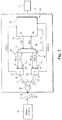
- connection circuit according to the invention 10 is here integrated into an Internet gateway 11.
- the connection circuit 10 is used to connect a local network of a subscriber, comprising at least one electrical equipment 12 and located downstream of the connection 10, to an optical fiber 13 located upstream of the connection circuit 10.
- the optical fiber 13 is also connected to an operator network 14 located upstream of the optical fiber 13 and comprising a plurality of OLT type termination equipment.
- upstream we mean here on the operator network side
- downstream we mean here on the subscriber side.
- optical communication standards here include the G-PON standard, the XG-PON standard and the XGS-PON standard.
- connection circuit 10 firstly comprises an optical connector 15 in which the optical fiber 13 is inserted.
- connection circuit 10 further comprises a wavelength multiplexer 16.
- the wavelength multiplexer 16 comprises an upstream port 17 connected to the optical connection 15 and therefore to the optical fiber 13, and a plurality of downstream ports, here a first downstream port 18 and a second downstream port 19.
- the wavelength multiplexer 16 makes it possible to separate downward light signals traveling on the optical fiber 13 into downward light signals traveling on a branch T and on a branch R.
- the wavelength multiplexer 16 also makes it possible to combine signals rising light signals traveling on the branch T and on the branch R to obtain rising lighting signals traveling on the optical fiber 13.
- the branch R is connected to a first intermediate fiber 21 which is connected to the first downstream port 18 of the wavelength multiplexer 16.
- the branch R carries at least the wavelengths 1310nm and 1490nm corresponding to the optical communication standard G-PON.
- the branch T is connected to a second intermediate fiber 22 which is connected to the second downstream port 19 of the wavelength multiplexer 16.
- the branch T carries at least the wavelengths 1270nm and 1577nm corresponding to the optical communication standard XG- PON.
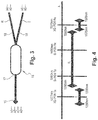
- the component chosen is for example the reference WMMSAMGXGPONB00 from the manufacturer OPTIWORKS, the characteristics of which are shown on the figure 4 .
- This component allows, by internal reflection, the bidirectional passage on the branch R (which is connected to the first intermediate fiber 21) light signals from the G-PON system (range of reflection 1290 to 1560nm), with an insertion loss limited to 0.4dB.
- This component also allows, by transmission, the bidirectional passage on the branch T (which is connected to the second intermediate fiber 22) of the light signals of the XG-PON system (transmission ranges 1260 to 1280nm and 1575 to 1580nm) with a loss of insertion limited to 0.7dB.
- the component chosen could also be the reference WMMSAMGXGPONA00 from the manufacturer OPTIWORKS.
- This component allows, by internal reflection, the bidirectional passage on the branch R (which would then be connected to the second intermediate fiber 22) of the light signals of the XG-PON system (reflection ranges 1260 to 1280nm and 1525 to 1620nm), with a insertion loss limited to 0.4dB.
- This component also allows, by transmission, the bidirectional passage on the branch T (which would then be connected to the first intermediate fiber 21) of the light signals of the G-PON system (transmission ranges 1290 to 1330nm and 11480 to 1500nm) with a loss insertion limited to 0.7dB.
- a conventional optical coupler cannot be envisaged since such a coupler, which divides the light signal into several parts, introduces a significant loss which is not compatible with the components used.
- a “1 to 2” coupler introduces a loss greater than 3dB even though the G-PON standard imposes a minimum level of reception of -27dBm on the optical connection of the terminal, and the existing receiver components have a sensitivity limit between -28 and -29dBm.
- the connection circuit 10 further comprises a plurality of optical-electrical interfaces, in this case a first optical-electrical interface 24 and a second optical-electrical interface 25.
- the first optical-electrical interface 24 and the second optical interface- electrical 25 each comprise an optical port 26 and an electrical port 27 which comprises a transmission access 28 and a reception access 29.
- the optical port 26 of the first optical-electrical interface 24 is connected to the first downstream port 18 of the wavelength multiplexer 16 (via the first intermediate fiber 21), and the optical port 26 of the second optical-electrical interface 25 is connected to the second downstream port 19 of the wavelength multiplexer 16 (via the second intermediate fiber 22).
- the first optical-electrical interface 24 is compatible with the G-PON standard and the second optical-electrical interface 25 is compatible with the XG-PON standard.
- the first optical-electrical interface 24 is now described, the second optical-electrical interface 25 being similar but adapted to the characteristics of the XG-PON standard.
- the first optical-electrical interface 24 comprises a laser diode 30, a photoreceptor, in this case a photodiode 31, a first adaptation circuit 32 and a second adaptation circuit 33.
- the first adaptation circuit 32 receives, via the reception access 29 of the electrical port 27, electrical signals TXD_A corresponding to the data to be transmitted to the operator network 14 via the first intermediate fiber 21 and optical fiber 13.
- the first adaptation circuit 32 (or driver) controls the laser diode 30 so that it produces uplink light signals representative of the electrical signals TXD_A and containing the data to be transmitted.
- the uplink light signals have an uplink wavelength which is within a predetermined uplink wavelength range.
- the predetermined rising wavelength range is associated with the first optical-electrical interface 24 and corresponds to the characteristics of the G-PON standard. Here, the rising wavelength is 1310nm.
- the photodiode 31 receives, for its part, via the optical port 26, descending light signals coming from the operator network 14 and having a falling wavelength which is included in a predetermined down wavelength range.
- the predetermined downlink wavelength range is associated with the first optical-electrical interface 24 and corresponds to the characteristics of the G-PON standard.
- the falling wavelength is 1490nm.
- the photodiode 31 transforms the downward light signals into electrical signals which are shaped by the second adaptation circuit 33 to obtain electrical signals RXD_A.
- the electrical signals RXD_A are transmitted by the second adaptation circuit 33 via the transmission access 28 of the electrical port 27 of the first optical-electrical interface 24.
- the second adaptation circuit 33 includes a device for detecting the presence on the optical fiber 13 of downward light signals having a downward wavelength included in the predetermined downward wavelength range associated with the first optical-electrical interface. 24.
- the first optical-electrical interface 24 produces a presence signal RXSD_A significant of the presence of said descending light signals.
- the presence signal RXSD_A is placed in a predefined state (for example a logic state equal to 1).
- the laser diode 30 and the photodiode 31 are integrated here, as well as other components related to the shaping of the electrical signals and not described here, in a macro-component, for example a BOSA bearing the reference MB374-45-N4 -GK-BW-M from the manufacturer MENTECH, or the reference PLDM586-428 from the manufacturer ACCELINK, or any equivalent.
- the first matching circuit 32 and / or the second matching circuit 33 intended for signal shaping can be integrated into a reference model MO2099 from the manufacturer MACOM, or even into a reference model BCM68901 from the manufacturer BROADCOM, or in any equivalent model.
- connection circuit 10 further comprises an electrical processing component.
- the electrical processing component here is a processor 35, but could be a different component, for example a microcontroller, an FPGA, an ASIC, etc.
- the processor 35 is adapted to execute instructions of a program to carry out the tasks which are dedicated to it.
- the processor 35 manages the connection circuit 10.
- the processor 35 includes a communication port 36 comprising a transmission access 37 and a reception access 38, a protocol manager 40, a management module 41 and a non-volatile memory 42.
- the protocol manager 40 is connected to the communication port 36.
- the protocol manager 40 implements, from instructions stored in the memory non-volatile 42, the protocol part corresponding to at least one optical communication standard that may be present on the fiber 13.
- the Internet gateway 11 thus relates, via the communication link 43 and thanks to the processor 35, the subscriber's data needs to the services offered by the operator through the operator network 14.
- the communication link 43 is for example an Ethernet link.
- the protocol manager 40 produces the electrical signals TXD via the transmission port 37 of the communication port 36 and receives the electrical signals RXD via the reception port 38 of the communication port 36.
- the management module 41 receives the presence signal RXSD_A transmitted by the first electrical-optical interface 24 and the presence signal RXSD_B transmitted by the second electrical-optical interface 25, and generates a selection signal SEL_AB.
- connection circuit 10 also includes a switch 45.
- the switch 45 comprises a first upstream port 46, a second upstream port 47 and a downstream port 48.
- the first upstream port 46 of the switch 45 is connected to the electrical port 27 of the first optical-electrical interface 24.
- the second upstream port 47 of the switch 45 is connected to the electrical port 27 of the second optical-electrical interface 25.
- the downstream port 48 of the switch 45 is connected to the communication port 36 of the processor 35.
- the switch 45 is controlled by the processor 35 which is arranged to selectively connect the communication port 36 of the processor 35 to the electrical port 27 of the first optical-electrical interface 24 or to the electrical port 27 of the second optical-electrical interface 25.
- the piloting of the switch 45 is carried out by means of the selection signal SEL_AB which is transmitted by the processor 35 to the switch 45.
- the switch 45 switches the electrical signals TXD_A, RXD_A, TXD_B, RXD_B (and TXD and RXD) which are signals fast electrics.
- the switch 45 connects the communication port 36 of the processor 35 to the electrical port 27 of the first optical-electrical interface 24, which corresponds for example to a logic state equal to 1 of the selection signal SEL_AB, the electrical signals TXD are directed towards the reception access 29 of the electric port 27 of the first optical-electric interface 24 and therefore become the electric signals TXD_A, and the electric signals RXD_A are directed towards the reception access 38 of the communication port 36 of the processor 35 and therefore become the RXD electrical signals.
- the switch 45 connects the communication port 36 of the processor 35 to the electrical port 27 of the second optical-electrical interface 25, which corresponds for example to a logic state equal to 0 of the selection signal SEL_AB
- the electrical signals TXD are directed to the reception port 29 of the electrical port 27 of the second optical-electrical interface 25 and therefore become the signals TXD_B
- the electrical signals RXD_B are directed to the reception port 38 of the communication port 36 of the processor 35 and become so the RXD electrical signals.
- the characteristics of the switch 45 are selected in terms of bandwidth, to avoid degradation of the electrical signals.
- the switch 45 used for the transmission part must have a bandwidth greater than or equal to 1.25GHz so as not to degrade the electrical signals implemented in the uplink direction of the G-PON (1.2Gbps) and the XG-PON (2.5Gbps).
- the switch 45 used for the reception part must have a bandwidth greater than or equal to 5GHz so as not to degrade the electrical signals used in the downward direction of the XG-PON (2.5Gbps) and the XG- PON (10Gbps).
- the reference PI3DBS12212A from the manufacturer PERICOM or an equivalent model can be used to implement this function.
- the Internet gateway 11 is therefore capable of communicating with the operator network 14 by means of several optical communication standards on the same optical fiber 13. It is therefore necessary to correctly select the communication standard optics that will be used.
- a subscriber when subscribing to an Internet subscription, a subscriber chooses a particular offer whose characteristics are known and defined (speed, optical communication standard, data volume, services, etc.). Over time, the offers can change and the subscriber can change the characteristics of his subscription.
- an operator can, over time, develop its infrastructure and add or replace optical communication standards on optical fiber arriving at the home of a subscriber.
- the communication management method is implemented in the connection circuit 10.
- the communication management method is carried out when switching on. voltage of the Internet gateway 11, or following a restart imposed by the operator following a maintenance operation, or else following an update of the Internet gateway 11.
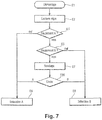
- the communication management method firstly includes a start-up step E1.
- the communication management method includes a reading phase E2.
- This reading phase comprises the step of verifying whether a connection rule, according to which a single optical communication standard must be used, is stored in the non-volatile memory 42 of the processor 35.
- connection rule may have been loaded during the manufacture of the Internet gateway 11, or injected by the operator during a previous use during which the Internet gateway 11 was in communication with the operator network 14.
- This operation of remote configuration is commonly implemented using the standardized protocol TR069.
- the communication management method comprises a selection phase E4 which includes the step of causing the switch 45 to be controlled by the processor 35 so as to select the first optical-electrical interface 24 which is compatible with the G-PON standard.
- the switch 45 connects the communication port 36 of the processor 35 to the electrical port 27 of the first optical-electrical interface 24.
- the communication management method includes a selection phase E6 which includes the step of controlling the switch 45 by the processor 35 so as to select the second optical-electrical interface 25 which is compatible with the XG-PON standard.
- the switch 45 connects the communication port 36 of the processor 35 to the electrical port 27 of the second optical-electrical interface 25.
- the communication method includes a probing phase E7 intended for probe the optical fiber 13 to detect the various optical communication standards present.
- the probing phase E7 firstly consists in successively testing, through the various optical-electrical interfaces present in the connection circuit 10 of the Internet gateway 11, the presence of an optical communication standard having known characteristics.
- the optical communication standards on optical fiber are arranged in such a way that the gateway is a slave to the OLT to which it is connected.
- the OLT continuously broadcasts light signals containing all of the useful data intended for all of the subscribers, as well as synchronization data and control data.
- the Internet gateway 11 must first detect (RXSD presence signal) and then synchronize (RXD electrical signals) with the signals transmitted by the OLT before being able to understand and execute the operations imposed by the control.
- the Internet gateway 11 transmits uplink light signals, generated from the electrical signals TXD and intended for the OLT, only when the latter requires it. Outside these periods (bursts), the Internet gateway must remain silent and transmit no light signal.
- the probing phase comprises the steps, implemented successively for each optical-electrical interface, of detecting the presence on the optical fiber of downward light signals conforming to the optical communication standard with which said optical-electrical interface is compatible.
- the probing phase E7 includes the step of reading the presence signal RXSD_A (step E9). If the presence signal RXSD_A is placed in the significant state of the presence of downward light signals conforming to the G-PON standard, the processor 35 deduces therefrom that the G-PON standard is present on the optical fiber 13 (step E10). Otherwise, the processor deduces that the G-PON standard is absent (step E11).
- the probing phase includes the step of reading the presence signal RXSD_B (step E12). If the presence signal RXSD_B is placed in the significant state of the presence of downward light signals conforming to the XG-PON standard, the processor 35 deduces therefrom that the XG-PON standard is present on the optical fiber 13 (step E13). Otherwise, the processor 35 deduces therefrom that the XG-PON standard is absent (step E14).
- optical communication standards using light signals whose wavelengths are identical, but for which other characteristics may be different.
- the XG-PON and XGS-PON (eXtended Gigabit Symetrical Passive Optical Network) standards share the same wavelengths (1270nm in the uplink direction and 1577nm in the downlink direction). These standards also share speed and protocol characteristics in the downstream direction (10Gbps), but in the upstream, the XGS-PON standard allows a speed of 10Gbps instead of the speed of 2.5Gbps allowed by the XG-PON system. In this case, the survey will have to be carried out in order to differentiate the optical communication standards.
- the probing phase E7 further comprises a first complementary probing phase comprising the steps, implemented successively for each of said optical communication standards, to attempt to reading electrical signals representative of the downward light signals in accordance with said optical communication standard, so as to determine the correct optical communication standard to which the downward light signals conform.
- the first additional survey phase includes a start-up step E16. Then, if the presence signal RXSD_B is placed in the significant state of the presence of a descending light signal conforming to the XG-PON standard, the first additional probing phase comprises the step of connecting the communication port 36 of the processor. 37 at the electrical port 27 of the second optical-electrical interface 25: the electrical signals RXD are routed to the second optical-electrical interface 25 (step E17).
- the management module 41 of the processor 35 imposes on the protocol manager 40, via signals internal 50 (visible on the figure 6 ), to apply to the electrical signals RXD the protocol associated with the first optical communication standard to which the downward light signals conform (step E18).
- n is initialized to 1.
- the protocol manager 40 then reports to the management module 41, via the internal signals 50, the success or failure of the recognition attempt.
- step E19 It is checked whether the electrical signals RXD are readable by the protocol of the first optical communication standard (step E19). If this is the case, it is detected that it is present on the optical fiber 13 (step E20). Otherwise, it is detected that the latter is absent (step E21).
- the first complementary survey phase ends (step E23).
- variable n is incremented (step E24) and the above steps are repeated for the second optical communication standard, the third optical communication standard, etc., until the last potentially compatible optical communication standard.
- the probing phase E7 comprises a second complementary probing phase comprising the steps, implemented successively for each of said optical communication standards, of attempting to implement a connection, conforming to said optical communication standard, between the processor and an OLT located upstream of the optical fiber, so as to determine the correct optical communication standard to which the downward light signals conform.
- the second additional probing phase comprises the step of connecting the communication port 36 of the processor 35 at the electrical port 27 of the second optical-electrical interface 25: the electrical signals RXD and TXD are routed to the second optical-electrical interface 25 (step E25).
- the management module 41 of the processor 35 requires the protocol manager 40, via internal signals 50, to apply to the electrical signals RXD the protocol associated with the first optical communication standard to which the downward light signals conform (step E26) .
- n is initialized to 1.
- the protocol manager 40 then reports to the management module 41, via the internal signals 50, the success or failure of the connection attempt.
- step E27 It is checked whether a connection is made according to the protocol of the first optical communication standard (step E27). If this is the case, it is detected that it is usable on the optical fiber 13 (step E28). Otherwise, it is detected that it is unusable (step E29).
- the second complementary probing phase ends (step E31).
- variable n is incremented (step E32) and the above steps are repeated for the second optical communication standard, the third optical communication standard, etc., until the last potentially compatible optical communication standard.
- the output of the probing phase E7 therefore comprises, for each optical-electrical interface, information describing the presence or not of downward light signals showing the presence of at least one optical communication standard corresponding to this wavelength, possibly information giving the list of optical communication standards recognized from their synchronization and protocol signals, and possibly information giving the list of optical communication standards which have enabled the physical connection with the OLT of the operator.
- the communication method includes a choice phase (step E35).
- optical communication standards present and possibly usable are known.
- the native flow characteristics of each of the optical communication standards are defined by the corresponding standards, it is therefore easy to classify the optical communication standards detected during the sampling phase as a function of the proposed speed.
- the choice phase therefore includes the step of choosing a particular optical communication standard from of the result of the survey phase.
- the communication method comprises the selection phases E4 and E6 consisting in connecting the communication port of the processor to the electrical port of the optical-electrical interface compatible with the G-PON or XG-PON standard.
- the management module 41 of the processor 35 must route, by means of the selection signal SEL_AB, the electrical signals RXD_A or RXD_B and TXD_A or TXD_B from the chosen optical-electrical interface to the electrical signals RXD and TXD of the processor.
- the management module 41 must force the protocol manager 40, by means of the internal signals 50, to execute the chosen protocol, which results in the establishment of communication with the OLT.
- the switch 45 is therefore controlled by the processor 35 so as to select the optical-electrical interface compatible with the chosen optical communication standard.
- connection circuit comprises a first optical-electrical interface 24 compatible with the G-PON optical communication standard and a second optical-electrical interface 25 compatible with the XG-PON optical communication standard.
- connection circuit could include different optical-electrical interfaces, for example a third optical-electrical interface compatible with the XGS-PON optical communication standard.
Landscapes
- Engineering & Computer Science (AREA)
- Computer Networks & Wireless Communication (AREA)
- Signal Processing (AREA)
- Physics & Mathematics (AREA)
- General Physics & Mathematics (AREA)
- Optics & Photonics (AREA)
- Computing Systems (AREA)
- Electromagnetism (AREA)
- Optical Communication System (AREA)
- Small-Scale Networks (AREA)
Applications Claiming Priority (1)
| Application Number | Priority Date | Filing Date | Title |
|---|---|---|---|
| FR1857602A FR3085242B1 (fr) | 2018-08-22 | 2018-08-22 | Circuit de connexion d'un reseau local a une fibre optique sur laquelle sont susceptibles de cheminer des signaux lumineux conformes a des standards de communication optique differents |
Publications (2)
| Publication Number | Publication Date |
|---|---|
| EP3614580A1 true EP3614580A1 (de) | 2020-02-26 |
| EP3614580B1 EP3614580B1 (de) | 2021-09-29 |
Family
ID=65201131
Family Applications (1)
| Application Number | Title | Priority Date | Filing Date |
|---|---|---|---|
| EP19191111.4A Active EP3614580B1 (de) | 2018-08-22 | 2019-08-09 | Verbindung zum koppeln einem lokalen netzwerk mit einer optischen faser, die optische signale unterschiedlicher kommunikationsstandards transportieren kann |
Country Status (5)
| Country | Link |
|---|---|
| US (1) | US10812881B2 (de) |
| EP (1) | EP3614580B1 (de) |
| CN (1) | CN110858931B (de) |
| CA (1) | CA3052662C (de) |
| FR (1) | FR3085242B1 (de) |
Cited By (1)
| Publication number | Priority date | Publication date | Assignee | Title |
|---|---|---|---|---|
| FR3112046A1 (fr) * | 2020-06-24 | 2021-12-31 | Sagemcom Broadband Sas | Procede d’etablissement de communication dans un reseau d’acces optique |
Families Citing this family (5)
| Publication number | Priority date | Publication date | Assignee | Title |
|---|---|---|---|---|
| WO2021181601A1 (ja) * | 2020-03-12 | 2021-09-16 | 三菱電機株式会社 | 光通信装置 |
| FR3109683B1 (fr) * | 2020-04-22 | 2022-05-13 | Sagemcom Broadband Sas | Procede d’etablissement de communication dans un reseau d’acces optique |
| FR3132813A1 (fr) * | 2022-02-17 | 2023-08-18 | Orange | Procédés et dispositifs de traitement de données montantes pour réseaux optiques passifs en cascade |
| FR3139862B1 (fr) | 2022-09-16 | 2025-02-28 | Safran Aircraft Engines | Dispositif de guidage d’un arbre de turbomachine d’aeronef |
| US20250167892A1 (en) * | 2023-11-21 | 2025-05-22 | Askey Computer Corp. | Circuit for connecting optical fiber for different optical communication standards and method for operating the same |
Citations (3)
| Publication number | Priority date | Publication date | Assignee | Title |
|---|---|---|---|---|
| US20090245790A1 (en) * | 2008-03-31 | 2009-10-01 | Masahiko Mizutani | Passive optical network system and operation method of the same |
| US20110103792A1 (en) * | 2009-10-28 | 2011-05-05 | Hitachi, Ltd. | Passive optical network system and optical line terminal |
| US9338530B2 (en) * | 2010-03-16 | 2016-05-10 | Marvell Israel (M.I.S.L) Ltd. | Versatile optical network interface methods and systems |
Family Cites Families (4)
| Publication number | Priority date | Publication date | Assignee | Title |
|---|---|---|---|---|
| JP4201430B2 (ja) * | 1999-04-16 | 2008-12-24 | 富士通株式会社 | 光加入者線終端装置 |
| CN101616338A (zh) * | 2008-06-24 | 2009-12-30 | 华为技术有限公司 | 一种点到多点光接入系统中数据传送的方法、设备和系统 |
| CN102255656A (zh) * | 2011-06-16 | 2011-11-23 | 成都新易盛通信技术有限公司 | 一种无源光网的光网络单元及其信号处理方法 |
| US10018799B2 (en) * | 2016-12-07 | 2018-07-10 | Google Llc | Optical bridge between exterior and interior networks |
-
2018
- 2018-08-22 FR FR1857602A patent/FR3085242B1/fr not_active Expired - Fee Related
-
2019
- 2019-08-09 EP EP19191111.4A patent/EP3614580B1/de active Active
- 2019-08-20 CA CA3052662A patent/CA3052662C/fr active Active
- 2019-08-20 CN CN201910767251.5A patent/CN110858931B/zh active Active
- 2019-08-22 US US16/548,370 patent/US10812881B2/en active Active
Patent Citations (3)
| Publication number | Priority date | Publication date | Assignee | Title |
|---|---|---|---|---|
| US20090245790A1 (en) * | 2008-03-31 | 2009-10-01 | Masahiko Mizutani | Passive optical network system and operation method of the same |
| US20110103792A1 (en) * | 2009-10-28 | 2011-05-05 | Hitachi, Ltd. | Passive optical network system and optical line terminal |
| US9338530B2 (en) * | 2010-03-16 | 2016-05-10 | Marvell Israel (M.I.S.L) Ltd. | Versatile optical network interface methods and systems |
Non-Patent Citations (1)
| Title |
|---|
| "10-Gigabit-capable passive optical networks (XG-PON): General requirements; G.987.1 (01/10)", ITU-T STANDARD, INTERNATIONAL TELECOMMUNICATION UNION, GENEVA ; CH, no. G.987.1 (01/10), 13 January 2010 (2010-01-13), pages 1 - 52, XP017436351 * |
Cited By (3)
| Publication number | Priority date | Publication date | Assignee | Title |
|---|---|---|---|---|
| FR3112046A1 (fr) * | 2020-06-24 | 2021-12-31 | Sagemcom Broadband Sas | Procede d’etablissement de communication dans un reseau d’acces optique |
| EP3937505A1 (de) * | 2020-06-24 | 2022-01-12 | Sagemcom Broadband Sas | Verfahren zum kommunikationsaufbau in einem optischen zugangsnetz |
| US12003611B2 (en) | 2020-06-24 | 2024-06-04 | Sagemcom Broadband Sas | Method for establishing communication in an optical access network |
Also Published As
| Publication number | Publication date |
|---|---|
| EP3614580B1 (de) | 2021-09-29 |
| CA3052662A1 (fr) | 2020-02-22 |
| CA3052662C (fr) | 2022-04-19 |
| CN110858931B (zh) | 2022-03-25 |
| CN110858931A (zh) | 2020-03-03 |
| FR3085242B1 (fr) | 2021-06-18 |
| US20200068279A1 (en) | 2020-02-27 |
| BR102019017413A2 (pt) | 2020-03-10 |
| US10812881B2 (en) | 2020-10-20 |
| FR3085242A1 (fr) | 2020-02-28 |
Similar Documents
| Publication | Publication Date | Title |
|---|---|---|
| EP3614580B1 (de) | Verbindung zum koppeln einem lokalen netzwerk mit einer optischen faser, die optische signale unterschiedlicher kommunikationsstandards transportieren kann | |
| CA2079764C (fr) | Systeme de transmission bidirectionnelle, notamment par fibre optique, avec une porteuse unique pour les deux sens de transmission | |
| CA3122373C (fr) | Procede d'etablissement de communication dans un reseau d'acces optique | |
| EP2070382B1 (de) | Verfahren zur verwaltung von verbindungen in einem optischen zugangsnetzwerk sowie plattform, vermittlungsstelle, netzwerk und computerprogrammprodukt dafür | |
| FR2773620A1 (fr) | Station terminale de telecommunications optiques, procede de transmission de signaux optiques, et procede d'accroissement des signaux optiques dans un systeme a multiplexage de longueurs d'onde | |
| EP2944035B1 (de) | Reflexionsverfahren und -vorrichtung zur ausführung einer empfangsfunktion eines optischen zugangsnetzes mit wellenlängenmultiplexierung | |
| WO2006013274A1 (fr) | Reseau privatif multiservices et modules d'interface permettant de vehiculer, sur un tel reseau, des donnees sous differents formats | |
| WO2003021823A2 (fr) | Reseau en anneau realise a partir d'un bus optique double | |
| EP1592159B1 (de) | Optisches Übertragungsnetz mit Baumstruktur | |
| EP2754305B1 (de) | Verfahren zum schutz eines pon vor der blendwirkung eines ont | |
| EP4140147B1 (de) | Verfahren zur herstellung einer kommunikation in einem optischen zugangsnetzwerk | |
| FR2805105A1 (fr) | Procede d'etablissement d'une communication optique bidirectionnelle entre un equipement de centre et un equipement distant | |
| FR3149741A1 (fr) | Procede de gestion d’un defaut de fonctionnement d’une diode laser | |
| EP1315318A2 (de) | Vorrichtung zur Überwachung eines optischen Signalübertragungsnetzwerks | |
| EP1804407B1 (de) | Accessknoten für optisches Ringnetzwerk | |
| FR2796784A1 (fr) | Recepteur optique et dispositif d'addition/de reduction optique | |
| FR2896932A1 (fr) | Systeme de transmission de signaux optiques, procede de transmission et produit programme d'ordinateur correspondants | |
| WO2015075354A1 (fr) | Procede de reception d'un signal optique en cas d'eblouissement | |
| FR2953348A1 (fr) | Dispositif d'extraction de canaux wdm | |
| WO2008081135A2 (fr) | Procede de cartographie d'un reseau d'acces optique | |
| EP1453227A2 (de) | Dynamische Steuerung des Qualitätsverlustes von optischen Signalen in einem transparenten optischen Kommunikationsnetzwerk |
Legal Events
| Date | Code | Title | Description |
|---|---|---|---|
| PUAI | Public reference made under article 153(3) epc to a published international application that has entered the european phase |
Free format text: ORIGINAL CODE: 0009012 |
|
| STAA | Information on the status of an ep patent application or granted ep patent |
Free format text: STATUS: THE APPLICATION HAS BEEN PUBLISHED |
|
| AK | Designated contracting states |
Kind code of ref document: A1 Designated state(s): AL AT BE BG CH CY CZ DE DK EE ES FI FR GB GR HR HU IE IS IT LI LT LU LV MC MK MT NL NO PL PT RO RS SE SI SK SM TR |
|
| AX | Request for extension of the european patent |
Extension state: BA ME |
|
| STAA | Information on the status of an ep patent application or granted ep patent |
Free format text: STATUS: REQUEST FOR EXAMINATION WAS MADE |
|
| 17P | Request for examination filed |
Effective date: 20200731 |
|
| RBV | Designated contracting states (corrected) |
Designated state(s): AL AT BE BG CH CY CZ DE DK EE ES FI FR GB GR HR HU IE IS IT LI LT LU LV MC MK MT NL NO PL PT RO RS SE SI SK SM TR |
|
| GRAP | Despatch of communication of intention to grant a patent |
Free format text: ORIGINAL CODE: EPIDOSNIGR1 |
|
| STAA | Information on the status of an ep patent application or granted ep patent |
Free format text: STATUS: GRANT OF PATENT IS INTENDED |
|
| INTG | Intention to grant announced |
Effective date: 20210310 |
|
| GRAS | Grant fee paid |
Free format text: ORIGINAL CODE: EPIDOSNIGR3 |
|
| GRAA | (expected) grant |
Free format text: ORIGINAL CODE: 0009210 |
|
| STAA | Information on the status of an ep patent application or granted ep patent |
Free format text: STATUS: THE PATENT HAS BEEN GRANTED |
|
| AK | Designated contracting states |
Kind code of ref document: B1 Designated state(s): AL AT BE BG CH CY CZ DE DK EE ES FI FR GB GR HR HU IE IS IT LI LT LU LV MC MK MT NL NO PL PT RO RS SE SI SK SM TR |
|
| REG | Reference to a national code |
Ref country code: GB Ref legal event code: FG4D Free format text: NOT ENGLISH |
|
| REG | Reference to a national code |
Ref country code: CH Ref legal event code: EP Ref country code: AT Ref legal event code: REF Ref document number: 1435146 Country of ref document: AT Kind code of ref document: T Effective date: 20211015 |
|
| REG | Reference to a national code |
Ref country code: DE Ref legal event code: R096 Ref document number: 602019007965 Country of ref document: DE |
|
| REG | Reference to a national code |
Ref country code: IE Ref legal event code: FG4D Free format text: LANGUAGE OF EP DOCUMENT: FRENCH |
|
| REG | Reference to a national code |
Ref country code: LT Ref legal event code: MG9D |
|
| PG25 | Lapsed in a contracting state [announced via postgrant information from national office to epo] |
Ref country code: LT Free format text: LAPSE BECAUSE OF FAILURE TO SUBMIT A TRANSLATION OF THE DESCRIPTION OR TO PAY THE FEE WITHIN THE PRESCRIBED TIME-LIMIT Effective date: 20210929 Ref country code: BG Free format text: LAPSE BECAUSE OF FAILURE TO SUBMIT A TRANSLATION OF THE DESCRIPTION OR TO PAY THE FEE WITHIN THE PRESCRIBED TIME-LIMIT Effective date: 20211229 Ref country code: HR Free format text: LAPSE BECAUSE OF FAILURE TO SUBMIT A TRANSLATION OF THE DESCRIPTION OR TO PAY THE FEE WITHIN THE PRESCRIBED TIME-LIMIT Effective date: 20210929 Ref country code: NO Free format text: LAPSE BECAUSE OF FAILURE TO SUBMIT A TRANSLATION OF THE DESCRIPTION OR TO PAY THE FEE WITHIN THE PRESCRIBED TIME-LIMIT Effective date: 20211229 Ref country code: SE Free format text: LAPSE BECAUSE OF FAILURE TO SUBMIT A TRANSLATION OF THE DESCRIPTION OR TO PAY THE FEE WITHIN THE PRESCRIBED TIME-LIMIT Effective date: 20210929 Ref country code: RS Free format text: LAPSE BECAUSE OF FAILURE TO SUBMIT A TRANSLATION OF THE DESCRIPTION OR TO PAY THE FEE WITHIN THE PRESCRIBED TIME-LIMIT Effective date: 20210929 Ref country code: FI Free format text: LAPSE BECAUSE OF FAILURE TO SUBMIT A TRANSLATION OF THE DESCRIPTION OR TO PAY THE FEE WITHIN THE PRESCRIBED TIME-LIMIT Effective date: 20210929 |
|
| REG | Reference to a national code |
Ref country code: NL Ref legal event code: MP Effective date: 20210929 |
|
| REG | Reference to a national code |
Ref country code: AT Ref legal event code: MK05 Ref document number: 1435146 Country of ref document: AT Kind code of ref document: T Effective date: 20210929 |
|
| PG25 | Lapsed in a contracting state [announced via postgrant information from national office to epo] |
Ref country code: LV Free format text: LAPSE BECAUSE OF FAILURE TO SUBMIT A TRANSLATION OF THE DESCRIPTION OR TO PAY THE FEE WITHIN THE PRESCRIBED TIME-LIMIT Effective date: 20210929 Ref country code: GR Free format text: LAPSE BECAUSE OF FAILURE TO SUBMIT A TRANSLATION OF THE DESCRIPTION OR TO PAY THE FEE WITHIN THE PRESCRIBED TIME-LIMIT Effective date: 20211230 |
|
| PG25 | Lapsed in a contracting state [announced via postgrant information from national office to epo] |
Ref country code: AT Free format text: LAPSE BECAUSE OF FAILURE TO SUBMIT A TRANSLATION OF THE DESCRIPTION OR TO PAY THE FEE WITHIN THE PRESCRIBED TIME-LIMIT Effective date: 20210929 |
|
| PG25 | Lapsed in a contracting state [announced via postgrant information from national office to epo] |
Ref country code: IS Free format text: LAPSE BECAUSE OF FAILURE TO SUBMIT A TRANSLATION OF THE DESCRIPTION OR TO PAY THE FEE WITHIN THE PRESCRIBED TIME-LIMIT Effective date: 20220129 Ref country code: SK Free format text: LAPSE BECAUSE OF FAILURE TO SUBMIT A TRANSLATION OF THE DESCRIPTION OR TO PAY THE FEE WITHIN THE PRESCRIBED TIME-LIMIT Effective date: 20210929 Ref country code: RO Free format text: LAPSE BECAUSE OF FAILURE TO SUBMIT A TRANSLATION OF THE DESCRIPTION OR TO PAY THE FEE WITHIN THE PRESCRIBED TIME-LIMIT Effective date: 20210929 Ref country code: PT Free format text: LAPSE BECAUSE OF FAILURE TO SUBMIT A TRANSLATION OF THE DESCRIPTION OR TO PAY THE FEE WITHIN THE PRESCRIBED TIME-LIMIT Effective date: 20220131 Ref country code: PL Free format text: LAPSE BECAUSE OF FAILURE TO SUBMIT A TRANSLATION OF THE DESCRIPTION OR TO PAY THE FEE WITHIN THE PRESCRIBED TIME-LIMIT Effective date: 20210929 Ref country code: NL Free format text: LAPSE BECAUSE OF FAILURE TO SUBMIT A TRANSLATION OF THE DESCRIPTION OR TO PAY THE FEE WITHIN THE PRESCRIBED TIME-LIMIT Effective date: 20210929 Ref country code: ES Free format text: LAPSE BECAUSE OF FAILURE TO SUBMIT A TRANSLATION OF THE DESCRIPTION OR TO PAY THE FEE WITHIN THE PRESCRIBED TIME-LIMIT Effective date: 20210929 Ref country code: EE Free format text: LAPSE BECAUSE OF FAILURE TO SUBMIT A TRANSLATION OF THE DESCRIPTION OR TO PAY THE FEE WITHIN THE PRESCRIBED TIME-LIMIT Effective date: 20210929 Ref country code: CZ Free format text: LAPSE BECAUSE OF FAILURE TO SUBMIT A TRANSLATION OF THE DESCRIPTION OR TO PAY THE FEE WITHIN THE PRESCRIBED TIME-LIMIT Effective date: 20210929 Ref country code: AL Free format text: LAPSE BECAUSE OF FAILURE TO SUBMIT A TRANSLATION OF THE DESCRIPTION OR TO PAY THE FEE WITHIN THE PRESCRIBED TIME-LIMIT Effective date: 20210929 |
|
| REG | Reference to a national code |
Ref country code: DE Ref legal event code: R097 Ref document number: 602019007965 Country of ref document: DE |
|
| PG25 | Lapsed in a contracting state [announced via postgrant information from national office to epo] |
Ref country code: DK Free format text: LAPSE BECAUSE OF FAILURE TO SUBMIT A TRANSLATION OF THE DESCRIPTION OR TO PAY THE FEE WITHIN THE PRESCRIBED TIME-LIMIT Effective date: 20210929 |
|
| PLBE | No opposition filed within time limit |
Free format text: ORIGINAL CODE: 0009261 |
|
| STAA | Information on the status of an ep patent application or granted ep patent |
Free format text: STATUS: NO OPPOSITION FILED WITHIN TIME LIMIT |
|
| 26N | No opposition filed |
Effective date: 20220630 |
|
| PG25 | Lapsed in a contracting state [announced via postgrant information from national office to epo] |
Ref country code: SI Free format text: LAPSE BECAUSE OF FAILURE TO SUBMIT A TRANSLATION OF THE DESCRIPTION OR TO PAY THE FEE WITHIN THE PRESCRIBED TIME-LIMIT Effective date: 20210929 |
|
| PG25 | Lapsed in a contracting state [announced via postgrant information from national office to epo] |
Ref country code: IT Free format text: LAPSE BECAUSE OF FAILURE TO SUBMIT A TRANSLATION OF THE DESCRIPTION OR TO PAY THE FEE WITHIN THE PRESCRIBED TIME-LIMIT Effective date: 20210929 |
|
| PG25 | Lapsed in a contracting state [announced via postgrant information from national office to epo] |
Ref country code: MC Free format text: LAPSE BECAUSE OF FAILURE TO SUBMIT A TRANSLATION OF THE DESCRIPTION OR TO PAY THE FEE WITHIN THE PRESCRIBED TIME-LIMIT Effective date: 20210929 |
|
| REG | Reference to a national code |
Ref country code: CH Ref legal event code: PL |
|
| PG25 | Lapsed in a contracting state [announced via postgrant information from national office to epo] |
Ref country code: LU Free format text: LAPSE BECAUSE OF NON-PAYMENT OF DUE FEES Effective date: 20220809 Ref country code: LI Free format text: LAPSE BECAUSE OF NON-PAYMENT OF DUE FEES Effective date: 20220831 Ref country code: CH Free format text: LAPSE BECAUSE OF NON-PAYMENT OF DUE FEES Effective date: 20220831 |
|
| REG | Reference to a national code |
Ref country code: BE Ref legal event code: MM Effective date: 20220831 |
|
| PG25 | Lapsed in a contracting state [announced via postgrant information from national office to epo] |
Ref country code: IE Free format text: LAPSE BECAUSE OF NON-PAYMENT OF DUE FEES Effective date: 20220809 |
|
| PG25 | Lapsed in a contracting state [announced via postgrant information from national office to epo] |
Ref country code: BE Free format text: LAPSE BECAUSE OF NON-PAYMENT OF DUE FEES Effective date: 20220831 |
|
| PG25 | Lapsed in a contracting state [announced via postgrant information from national office to epo] |
Ref country code: HU Free format text: LAPSE BECAUSE OF FAILURE TO SUBMIT A TRANSLATION OF THE DESCRIPTION OR TO PAY THE FEE WITHIN THE PRESCRIBED TIME-LIMIT; INVALID AB INITIO Effective date: 20190809 |
|
| PG25 | Lapsed in a contracting state [announced via postgrant information from national office to epo] |
Ref country code: SM Free format text: LAPSE BECAUSE OF FAILURE TO SUBMIT A TRANSLATION OF THE DESCRIPTION OR TO PAY THE FEE WITHIN THE PRESCRIBED TIME-LIMIT Effective date: 20210929 Ref country code: CY Free format text: LAPSE BECAUSE OF FAILURE TO SUBMIT A TRANSLATION OF THE DESCRIPTION OR TO PAY THE FEE WITHIN THE PRESCRIBED TIME-LIMIT Effective date: 20210929 |
|
| PG25 | Lapsed in a contracting state [announced via postgrant information from national office to epo] |
Ref country code: MK Free format text: LAPSE BECAUSE OF FAILURE TO SUBMIT A TRANSLATION OF THE DESCRIPTION OR TO PAY THE FEE WITHIN THE PRESCRIBED TIME-LIMIT Effective date: 20210929 |
|
| PG25 | Lapsed in a contracting state [announced via postgrant information from national office to epo] |
Ref country code: TR Free format text: LAPSE BECAUSE OF FAILURE TO SUBMIT A TRANSLATION OF THE DESCRIPTION OR TO PAY THE FEE WITHIN THE PRESCRIBED TIME-LIMIT Effective date: 20210929 |
|
| PG25 | Lapsed in a contracting state [announced via postgrant information from national office to epo] |
Ref country code: MT Free format text: LAPSE BECAUSE OF FAILURE TO SUBMIT A TRANSLATION OF THE DESCRIPTION OR TO PAY THE FEE WITHIN THE PRESCRIBED TIME-LIMIT Effective date: 20210929 |
|
| PGFP | Annual fee paid to national office [announced via postgrant information from national office to epo] |
Ref country code: DE Payment date: 20250724 Year of fee payment: 7 |
|
| PGFP | Annual fee paid to national office [announced via postgrant information from national office to epo] |
Ref country code: GB Payment date: 20250725 Year of fee payment: 7 |
|
| PGFP | Annual fee paid to national office [announced via postgrant information from national office to epo] |
Ref country code: FR Payment date: 20250725 Year of fee payment: 7 |