EP3616462B1 - Procédure(s) d'accès aléatoire destinée(s) à un système radio - Google Patents
Procédure(s) d'accès aléatoire destinée(s) à un système radio Download PDFInfo
- Publication number
- EP3616462B1 EP3616462B1 EP18791033.6A EP18791033A EP3616462B1 EP 3616462 B1 EP3616462 B1 EP 3616462B1 EP 18791033 A EP18791033 A EP 18791033A EP 3616462 B1 EP3616462 B1 EP 3616462B1
- Authority
- EP
- European Patent Office
- Prior art keywords
- random access
- preamble
- prach
- act
- group
- Prior art date
- Legal status (The legal status is an assumption and is not a legal conclusion. Google has not performed a legal analysis and makes no representation as to the accuracy of the status listed.)
- Active
Links
Images








Classifications
-
- H—ELECTRICITY
- H04—ELECTRIC COMMUNICATION TECHNIQUE
- H04W—WIRELESS COMMUNICATION NETWORKS
- H04W72/00—Local resource management
- H04W72/02—Selection of wireless resources by user or terminal
-
- H—ELECTRICITY
- H04—ELECTRIC COMMUNICATION TECHNIQUE
- H04W—WIRELESS COMMUNICATION NETWORKS
- H04W74/00—Wireless channel access
- H04W74/08—Non-scheduled access, e.g. ALOHA
- H04W74/0833—Random access procedures, e.g. with 4-step access
-
- H—ELECTRICITY
- H04—ELECTRIC COMMUNICATION TECHNIQUE
- H04W—WIRELESS COMMUNICATION NETWORKS
- H04W72/00—Local resource management
- H04W72/12—Wireless traffic scheduling
-
- H—ELECTRICITY
- H04—ELECTRIC COMMUNICATION TECHNIQUE
- H04W—WIRELESS COMMUNICATION NETWORKS
- H04W48/00—Access restriction; Network selection; Access point selection
- H04W48/08—Access restriction or access information delivery, e.g. discovery data delivery
- H04W48/14—Access restriction or access information delivery, e.g. discovery data delivery using user query or user detection
-
- H—ELECTRICITY
- H04—ELECTRIC COMMUNICATION TECHNIQUE
- H04W—WIRELESS COMMUNICATION NETWORKS
- H04W74/00—Wireless channel access
- H04W74/002—Transmission of channel access control information
- H04W74/006—Transmission of channel access control information in the downlink, i.e. towards the terminal
Definitions
- the technology relates to wireless communications, and particularly to methods and apparatus for performing a random access procedure (RACH) in wireless communications.
- RACH random access procedure
- a radio access network In wireless communication systems, a radio access network generally comprises one or more access nodes (such as a base station) which communicate on radio channels over a radio or air interface with plural wireless terminals. In some technologies such a wireless terminal is also called a User Equipment (UE).
- UE User Equipment
- a group known as the 3rd Generation Partnership Project (“3GPP”) has undertaken to define globally applicable technical specifications and technical reports for present and future generation wireless communication systems.
- 3GPP Long Term Evolution (“LTE”) and 3GPP LTE Advanced (LTE-A) are projects to improve an earlier Universal Mobile Telecommunications System (“UMTS”) mobile phone or device standard in a manner to cope with future requirements.
- LTE Long Term Evolution
- LTE-A 3GPP LTE Advanced
- a random access procedure is used by user equipment (UE) to obtain synchronization information of the uplink and to initiate data transfer with the currently camping cell.
- UE user equipment
- LTE Long-Term Evolution
- LTE-A LTE Advanced
- the random access procedure may be triggered when the UE in idle state attempts to send uplink data, when the UE performs a hand over to a new cell, or when the eNode B (eNB) of the currently serving cell receives downlink data from the network but finds that the uplink synchronization is lost.
- the Random Access Procedure is the media access control (MAC) layer procedure.
- the medium access control or media access control (MAC) layer is the lower sublayer of the data link layer (layer 2) of the seven-layer OSI model.
- the MAC sublayer provides addressing and channel access control mechanisms that make it possible for several terminals or network nodes to communicate within a multiple access network that incorporates a shared medium.
- the MAC sublayer acts as an interface between the logical link control (LLC) sublayer and the network's physical layer.
- LLC logical link control
- RACH random access procedure
- LOSIA low overhead system information acquisition
- the LOSIA method includes several techniques for transmitting common channels in a next generation Radio Access Technology (xRAT). Instead of transmitting system information in a periodic, static, cell-specific, wideband manner, the transmission is triggered by user equipment in an "on demand" manner.
- xRAT Radio Access Technology
- the LOSIA method allows the network to control the overhead, bandwidth, and periodicity, as well as other characteristics.
- the LOSIA method employs several different techniques to trigger the information upon which the network can act, for example, by transmitting different payloads depending on the received trigger.
- OPPO "Discussion on Remaining Issues of Other SI Design", 3GPP DRAFT; R2-1700045-DISCUSSION ON REMAINING ISSUES OF OTHER SI DESIGN, 3RD GENERATION PARTNERSHIP PROJECT (3GPP), MOBILE COMPETENCE CENTRE ; 650, ROUTE DESLUCIOLES ; F-06921 SOPHIA-ANTIPOLIS CEDEX, vol. RAN WG2, no. Spokane, USA; 20170117 - 2017011917 January 2017 (2017-01-17 ) relates to a discussion of Other SI design.
- the problem relates to performing on-demand system information requests effectively. This problem is solved by the subject-matter of the independent claims. Preferred embodiments are defined in the dependent claims.
- the technology disclosed herein comprises and provides a set of Random Access Preambles to be reserved for upper layer to inform the network of a designated request/notification using the RACH process without performing a subsequent data transfer.
- the technology disclosed herein concerns a user equipment comprising a receiving unit configured to receive, from a base station apparatus, a periodically broadcasted system information block, SIB, the periodically broadcasted SIB indicating configuration parameters for a random access procedure, the configuration parameters at least comprising: one or more SIB types, wherein the one or more SIB types identify a specific set of one or more on-demand SIBs, a set of multiple random access preambles configured for requesting on-demand delivery of the specific set of one or more on-demand SIBs, anda set of multiple physical random access channel, PRACH, resources configured for requesting on-demand delivery of the specific set of one or more on-demand SIBs; a processing unit configured to select a random access preamble from the set of multiple random access preambles and a PRACH resource from the set of multiple PRACH resources in accordance with a request for the specific set of one or more on-demand SIBs; and a transmitting unit configured to transmit the selected random access preamble using the selected PR
- the technology disclosed herein concerns a method for a user equipment.
- the method comprises: receiving, from a base station apparatus, a periodically broadcasted system information block, SIB, the periodically broadcasted SIB indicating configuration parameters for a random access procedure, the configuration parameters at least comprising: one or more SIB types, wherein the one or more SIB types identify a specific set of one or more on-demand SIBs, a set of multiple random access preambles configured for requesting on-demand delivery of the specific set of one or more on-demand SIBs, and a set of multiple physical random access channel, PRACH, resources configured for requesting on-demand delivery of the specific set of one or more on-demand SIBs; selecting a random access preamble from the set of multiple random access preambles and a PRACH resource from the set of multiple PRACH resources in accordance with a request for the specific set of one or more on-demand SIBs; and transmitting the selected random access preamble using the selected PRACH resource.
- the technology disclosed herein concerns base station apparatus comprising a receiving unit and a transmitting unit configured to communicate across a radio interface with a user equipment; and a processing unit configured to: periodically broadcast a system information block, SIB, the periodically broadcasted SIB indicating configuration parameters for a random access procedure, the configuration parameters at least comprising: one or more SIB types, wherein the one or more SIB types identify a specific set of one or more on-demand SIBs, a set of multiple random access preambles configured for requesting on-demand delivery of the specific set of one or more on-demand SIBs, and a set of multiple physical random access channel, PRACH, resources configured for requesting on-demand delivery of the specific set of one or more on-demand SIBs; receive a preamble sequence associated with one of the random access preambles of the set of multiple random access preambles on one of the PRACH resources of the set of multiple PRACH resources in accordance with a request for the specific set of one or more on-demand SIBs;
- SIB
- the technology disclosed herein concerns a method for a base station apparatus.
- the method comprises: using a receiving unit and a transmitting unit to communicate across a radio interface with a user equipment; using a processing unit to: periodically broadcast a system information block, SIB, the periodically broadcasted SIB indicating configuration parameters for a random access procedure, the configuration parameters at least comprising:one or more SIB types, wherein the one or more SIB types identify a specific set of one or more on-demand SIBs, a set of multiple random access preambles configured for requesting on-demand delivery of the specific set of one or more on-demand SIBs, and a set of multiple physical random access channel, PRACH, resources configured for requesting on-demand delivery of the specific set of one or more on-demand SIBs; receive a preamble sequence associated with one of the random access preambles of the set of multiple random access preambles on one of the PRACH resources of the set of multiple PRACH resources in accordance with a request for the
- the request of system information requests from the base station apparatus an on-demand delivery of a system information block (SIB) or a group of SIBs.
- SIB system information block
- block diagrams herein can represent conceptual views of illustrative circuitry or other functional units embodying the principles of the technology.
- any flow charts, state transition diagrams, pseudocode, and the like represent various processes which may be substantially represented in computer readable medium and so executed by a computer or processor, whether or not such computer or processor is explicitly shown.
- core network can refer to a device, group of devices, or sub-system in a telecommunication network that provides services to users of the telecommunications network. Examples of services provided by a core network include aggregation, authentication, call switching, service invocation, gateways to other networks, etc
- wireless terminal can refer to any electronic device used to communicate voice and/or data via a telecommunications system, such as (but not limited to) a cellular network.
- a telecommunications system such as (but not limited to) a cellular network.
- Other terminology used to refer to wireless terminals and non-limiting examples of such devices can include user equipment terminal, UE, mobile station, mobile device, access terminal, subscriber station, mobile terminal, remote station, user terminal, terminal, subscriber unit, cellular phones, smart phones, personal digital assistants ("PDAs”), laptop computers, netbooks, tablets, e-readers, wireless modems, etc.
- PDAs personal digital assistants
- the term "access node”, “node”, or “base station” can refer to any device or group of devices that facilitates wireless communication or otherwise provides an interface between a wireless terminal and a telecommunications system.
- a non-limiting example of an access node may include, in the 3GPP specification, a Node B ("NB"), an enhanced Node B (“eNB”), a home eNB (“HeNB”), or in the 5G terminology, a gNB or even a transmission and reception point (TRP), or some other similar terminology.
- NB Node B
- eNB enhanced Node B
- HeNB home eNB
- TRP transmission and reception point
- Another non-limiting example of a base station is an access point.
- An access point may be an electronic device that provides access for wireless terminal to a data network, such as (but not limited to) a Local Area Network ("LAN”), Wide Area Network (“WAN”), the Internet, etc.
- LAN Local Area Network
- WAN Wide Area Network
- the Internet etc.
- telecommunication system or “communications system” can refer to any network of devices used to transmit information.
- a non-limiting example of a telecommunication system is a cellular network or other wireless communication system.
- the term "cellular network” can refer to a network distributed over cells, each cell served by at least one fixed-location transceiver, such as a base station.
- a “cell” may be any communication channel that is specified by standardization or regulatory bodies to be used for International Mobile Telecommunications-Advanced ("IMTAdvanced"). All or a subset of the cell may be adopted by 3GPP as licensed bands (e.g., frequency band) to be used for communication between a base station, such as a Node B, and a UE terminal.
- a cellular network using licensed frequency bands may include configured cells. Configured cells can include cells of which a UE terminal is aware and in which it is allowed by a base station to transmit or receive information.
- Fig. 1A - Fig. 1I show example communications systems 20A - 20I wherein random access procedures according to example, non-limiting embodiments and modes of the technology disclosed herein are described.
- the components and functionalities that have a same base reference numeral have same or similar structure and operation unless otherwise noted or otherwise clear from context.
- respective radio access nodes 22A - 22I communicate over air or radio interface 24 (e.g., Uu interface) with respective wireless terminals 26A - 26I.
- radio interface 24 e.g., Uu interface
- reference to any one of the radio access nodes 22A - 22I may, for sake of convenience, be generically noted as node 22, and reference to any one of the wireless terminals 26A- 26I maybe also be generically noted as wireless terminal 26.
- the radio access node 22 may be any suitable node for communicating with the wireless terminal 26, such as a base station node, or eNodeB ("eNB") or gNodeB or gNB, for example.
- the node 22 comprises node processor circuitry ("node processor 30") and node transceiver circuitry 32.
- the node transceiver circuitry 32 typically comprises node transmitter circuitry 34 and node receiver circuitry 36, which are also called node transmitter and node receiver, respectively.
- the wireless terminal 26 comprises terminal processor circuitry 40 ("terminal processor 40") and terminal transceiver circuitry 42.
- the terminal transceiver circuitry 42 typically comprises terminal transmitter circuitry 44 and terminal receiver circuitry 46, which are also called terminal transmitter 44 and terminal receiver 46, respectively.
- the wireless terminal 26 also typically comprises user interface 48.
- the terminal user interface 48 may serve for both user input and output operations, and may comprise (for example) a screen such as a touch screen that can both display information to the user and receive information entered by the user.
- the user interface 48 may also include other types of devices, such as a speaker, a microphone, or a haptic feedback device, for example.
- the respective transceiver circuitries 22 include antenna(s).
- the respective transmitter circuits 36 and 46 may comprise, e.g., amplifier(s), modulation circuitry and other conventional transmission equipment.
- the respective receiver circuits 34 and 44 may comprise, e.g., e.g., amplifiers, demodulation circuitry, and other conventional receiver equipment.
- access node 22 and wireless terminal 26 communicate with each other across radio interface 24 using predefined configurations of information.
- the radio access node 22 and wireless terminal 26 may communicate over radio interface 24 using "frames" of information that may be configured to include various channels.
- a frame which may have both downlink portion(s) and uplink portion(s), may comprise plural subframes, with each LTE subframe in turn being divided into two slots.
- the frame may be conceptualized as a resource grid (a two dimensional grid) comprised of resource elements (RE).
- Each column of the two dimensional grid represents a symbol (e.g., an OFDM symbol on downlink (DL) from node to wireless terminal; an SC-FDMA symbol in an uplink (UL) frame from wireless terminal to node).
- Each row of the grid represents a subcarrier.
- the frame and subframe structure serves only as an example of a technique of formatting of information that is to be transmitted over a radio or air interface. It should be understood that “frame” and “subframe” may be utilized interchangeably or may include or be realized by other units of information formatting, and as such may bear other terminology (such as blocks, or symbol, slot, mini-slot in 5G for example).
- the node processor 30 and terminal processor 40 of Fig. 1 are shown as comprising respective information handlers.
- the information handler for radio access node 22 is shown as node frame/signal scheduler/handler 50
- the information handler for wireless terminal 26 is shown as terminal frame/signal handler 52.
- the terminal processor 40 further comprises synchronization information (SI) generator 54.
- radio access node 22A is shown as comprising node random access procedure controller 54 and wireless terminal 26A is shown as comprising terminal random access procedure controller 56.
- the node random access procedure controller 54 and terminal random access procedure controller 56 participate in the example embodiments and modes of the random access procedures described herein.
- An example random access procedure generally includes five phases or aspects as briefly described below:
- the node random access procedure controller 54 and terminal random access procedure controller 56 participate in some or all of the aspects above described, and do so in manners further described herein with respect to certain example embodiments and modes.
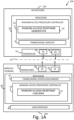
- FIG. 1A shows structure and functionalities of radio access node 22A and wireless terminal 26A
- Fig. 2A shows acts involved in the random access procedure of the first embodiment including messages
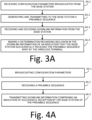
- Fig. 3A shows example acts or steps specifically performed by wireless terminal 26A
- Fig. 4A shows example acts or steps specifically performed by radio access node 22A
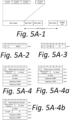
- Fig. 5A-1, Fig. 5A-2, Fig. 5A-3, Fig. A-4, Fig. 5A-4a, and Fig. 5A-4b show example formats and example contents of some of the messages comprising the random access procedure of the first example embodiment and mode.
- the node random access procedure controller 54 of node processor 30 comprises random access response generator 60
- the terminal random access procedure controller 56 of wireless terminal 26A comprises random access response checker 62.
- the wireless terminal 26A may confirm successful receipt by the radio access node 22A of a preamble sequence transmitted to the radio access node 22A, such confirmation occurring upon receiving, in the Random Access Response (RAR) phase, an indication from the radio access node 22A of successful receipt.
- RAR Random Access Response
- the indication of successful receipt of the preamble sequence may also be referred to as "RAPID", e.g., random access preamble identifier.
- Fig. 2A shows basic example acts involved in the random access procedure of the first embodiment including messages.
- Act 2A-1 represents the initialization phase and as such depicts the radio access node 22A transmitting, and wireless terminal 26A receiving, configuration parameters.
- the configuration parameters may be broadcast as system information from the serving cell (e.g., the cell based at radio access node 22A and serving wireless terminal 26A).
- Act 2A-2 represents the preamble resource selection phase wherein the wireless terminal 26A selects a random access preamble sequence from a set of sequences available in the serving cell.
- Act 2A-3 represents the preamble transmission phase in which the wireless terminal 26A transmits the selected preamble sequence on a physical channel (PRACH) using radio resources configured by the cell and communicated in act 2A-1.
- PRACH physical channel
- Act 2A-4 represents the radio access node 22A processing and generating a response to the preamble transmission message (Msg1) of act 2A-3.
- the node random access procedure controller 54 takes note of the preamble sequence included in message Msg1.
- the node random access procedure controller 54 causes the random access response generator 60 to generate a Random Access Response (RAR) message, Msg2, which includes in downlink information an indication of successful receipt of the preamble sequence.
- RAR Random Access Response
- the indication may also be referred to as "RAPID".
- RAPID Random Access Response
- the "downlink information" in which the indication of successful receipt of the preamble sequence is included may include any type of transmission(s) from radio access node 22 to the wireless terminal 26 over the air interface.
- Fig. 6 illustrates that the downlink information of act 2A-5 and Msg2, and other comparable acts and messages described herein, may include both a Physical Downlink Control Channel (PDCCH) and a Physical Downlink Shared Channel (PDSCH).
- the Physical Downlink Control Channel (PDCCH) and Physical Downlink Shared Channel (PDSCH) may be included in a same frame or message, or in differing frames or messages; in a same subframe, slot or subslot, or in differing subframes, slots, or subslots. As shown in Fig.
- the Physical Downlink Shared Channel may comprise or carry one or more Medium Access Control (MAC) packet data units (PDU).
- the indication of successful receipt of the preamble sequence may be included in the Physical Downlink Control Channel (PDCCH), while in other example embodiments and modes the indication of successful receipt of the preamble sequence may be included in the MAC PDU of the Physical Downlink Shared Channel (PDSCH).
- the indication of successful receipt of the preamble sequence is included in a MAC PDU of the Physical Downlink Shared Channel (PDSCH).
- the terminal random access procedure controller 56 before receiving the MAC PDU, may monitor a downlink control signal to obtain resource allocation information for the downlink information that comprises the MAC PDU transmission.
- the indication of successful receipt of the preamble sequence may instead be included in the Physical Downlink Control Channel (PDCCH) (as understood from other subsequently described example embodiments and modes).
- PDCCH Physical Downlink Control Channel
- Act 2A-6 represents the Random Access Response (RAR) Reception phase.
- the random access response checker 62 monitors designated downlink (DL) channels by receiving and decoding downlink information.
- DL downlink
- random access response checker 62 attempts to find from the downlink information the indication of successful receipt of the preamble sequence.
- the random access response checker 62 makes a determination regarding inclusion in the downlink information of an indication that the base station successfully received the preamble sequence sent by the wireless terminal.
- the random access response checker 62 makes the determination of inclusion of the indication of successful receipt of the preamble sequence, then the random access response checker 62 can definitively confirm that the preamble sequence was successfully sent to and received by radio access node 22A (act 2A-6-2). Otherwise, if the indication of successful receipt of the preamble sequence was not found, the terminal random access procedure controller 56 may retransmit the preamble sequence or indicate a failure of the random access procedure to the upper layer.
- Fig. 2A further shows act 2A-7 and act 2A-8 which comprise the Contention Resolution phase.
- Act 2A-7 comprises the terminal random access procedure controller 56, after successful detection of the Random Access Response (RAR), transmitting an upper layer (RRC) message (message Msg3).
- Act 2A-8 comprises the terminal random access procedure controller 56 subsequently attempting to receive the RRC message Msg4 which includes a contention resolution identity that indicates a successful or unsuccessful result of contention resolution.
- Fig. 3A shows example acts or steps specifically performed by wireless terminal 26A.
- the acts of Fig. 3A may be performed by terminal random access procedure controller 56, which may comprise the terminal processor 40 executing instructions stored on non-transient memory.
- Act 3A-1 comprises the wireless terminal 26A receiving configuration parameters broadcasted from the base station.
- Act 3A-2 comprises generating and transmitting to the base station a preamble sequence, e.g., as message Msg1.
- Act 3A-3 comprises receiving and decoding downlink information from the base station, e.g., in/from message Msg2.
- Act 3A-4 comprises the random access response checker 62 making a determination regarding inclusion, in the downlink information of Msg2, an indication that the base station successfully received the preamble sequence sent by the wireless terminal.
- Fig. 4A shows example acts or steps specifically performed by radio access node 22A.
- the acts of Fig. 4A may be performed by node random access procedure controller 54, which may comprise the node processor 30 executing instructions stored on non-transient memory.
- Act 4A-1 comprises the radio access node 22A broadcasting configuration parameters, e.g., in a system information block (SIB).
- Act 4A-2 comprises the radio access node 22A receiving (e.g., in message Msg1 from wireless terminal 26A) a preamble sequence generated/selected by wireless terminal 26A.
- Act 4A-3 comprises the random access response generator 60 generating, and the radio access node 22A transmitting (e.g., as Msg 2), downlink information comprising an indication of successful reception by the base station of the preamble sequence.
- Fig. 5A-1, Fig. 5A-2, Fig. 5A-3, Fig. A-4, Fig. 5A-4a, and Fig. 5A-4b show example formats and example contents of some of the messages comprising the random access procedure of the first example embodiment and mode in an example implementation in which the indication of successful receipt of the preamble sequence is included in a Physical Downlink Shared Channel (PDSCH).
- the MAC PDU carried on the Physical Downlink Shared Channel (PDSCH) may comprise a MAC header and zero or more MAC Random Access Responses (MAC RAR) and optional padding.
- the MAC header may be of variable size.
- MAC RAR MAC Random Access Responses
- the MAC PDU header may comprise one or more MAC PDU subheaders; each subheader corresponding to a MAC RAR except for a Backoff Indicator subheader. If included, the Backoff Indicator subheader may be only included once, and is the first subheader included within the MAC PDU header.
- a MAC PDU subheader may comprise the three header fields E/T/RAPID (as described Fig. 5A-2 ), except for the Backoff Indicator subheader which may comprise the five header field E/T/R/R/BI (as described in Fig. 5A-3 ).
- a MAC RAR may comprise the four fields R/Timing Advance Command/UL Grant Temporary C-RNTI (as shown in Fig.
- BL UE is a Bandwidth reduced Low complexity UE and is a type of machine-type communication device using limited bandwidth of LTE radio.
- Fig. 5A-1 and Fig. 5A-2 show, for example, that the "indication”, e.g., the "RAPID", e.g., random access preamble identifier for some example implementations, may be included in a subheader of the MAC header of the MAC PDU.
- the indication may thus be included in a medium access control (MAC) protocol data unit (PDU) comprising the downlink data, the MAC PDU may comprise one or more preamble indices.
- MAC medium access control
- PDU protocol data unit
- the MAC PDU may comprise a header and a payload, the header further comprising one or a plurality of subheaders, the payload further comprising one or a plurality of Random Access Responses (RARs), each of the subheaders comprising an index of a received preamble being associated with one of the RARs, the association being in such a way that the RARs are arranged in the order of their associated subheaders.
- RARs Random Access Responses
- the Random Access procedure may be initiated by a Physical Downlink Control Channel (PDCCH) order, by the MAC sublayer itself or by the RRC sublayer. Random Access procedure on a Secondary Cell (SCell) may only be initiated by a PDCCH order. If a MAC entity receives a PDCCH transmission consistent with a PDCCH order masked with its C-RNTI, and for a specific Serving Cell, the MAC entity may initiate a Random Access procedure on this Serving Cell.
- PDCCH Physical Downlink Control Channel
- SCell Secondary Cell
- a PDCCH order or RRC may optionally indicate the ra-PreambleIndex and the ra-PRACH-MaskIndex, except for NB-IoT where the subcarrier index is indicated; and for Random Access on an SCell, the PDCCH order indicates the ra-PreambleIndex with a value different from 000000 and the ra-PRACH-MaskIndex.
- the PDCCH order indicates the ra-PreambleIndex with a value different from 000000 and the ra-PRACH-MaskIndex.
- the UE is an NB-IoT UE and is configured with a non-anchor carrier, perform the Random Access procedure on the anchor carrier.
- the following information for related Serving Cell is assumed to be available for UEs other than NB-IoT UEs, BL UEs or UEs in enhanced coverage, unless explicitly stated otherwise:
- the configuration parameters described above are broadcasted via RRC system information messages.
- the Random Access procedure may be performed as follows:
- the Random Access Resource selection procedure may be performed as follows:
- the random-access procedure may be performed as follows:
- the MAC entity of the UE may monitor the PDCCH of the SpCell for Random Access Response(s) identified by the RA-RNTI defined below, in the RA Response window which starts at the subframe that contains the end of the preamble transmission plus three subframes and has length ra-ResponseWindowSize configured by RRC. If the UE is a BL UE or a UE in enhanced coverage, RA Response window starts at the subframe that contains the end of the last preamble repetition plus three subframes and has length ra-ResponseWindowSize for the corresponding coverage level.
- RA Response window starts at the subframe that contains the end of the last preamble repetition plus 41 subframes and has length ra-ResponseWindowSize for the corresponding coverage level
- RA Response window starts at the subframe that contains the end of the last preamble repetition plus 4 subframes and has length ra-ResponseWindowSize for the corresponding coverage level.
- PDCCH carries DCI (Downlink Control Information), which includes resource assignments for a UE or group of UE's.
- the eNB can transmit many DCI's or PDCCH's in a subframe.
- the eNB may generate a DCI with Format 1A or 1C as shown in List 1 and List 2, respectively.
- - Flag for format0/format1A differentiation or flag for format0A/format1A differentiation - Localized/Distributed VRB assignment flag - Resource block assignment - Modulation and coding scheme - HARQ process number - reserved - New data indicator - Redundancy version - 2 bits - TPC command for PUCCH - Downlink Assignment Index - reserved.
- - SRS request - HARQ-ACK resource offset - SRS timing offset present only when the DCI format is used for scheduling PDSCH in a LAA Scell and the UE is configured with uplink transmission on the LAA Scell.
- the generated DCI may be attached with a Cyclic Redundancy Check (CRC) parity bits for error detection.
- CRC Cyclic Redundancy Check
- the CRC parity bits may be further scrambled with a corresponding RNTI.
- the aforementioned RA-RNTI may be used for scrambling the CRC.
- the UE that monitors PDCCH may perform blind decoding of the PDCCH payload as it is not aware of the detailed control channel structure. Specifically, the UE under the process of Random Access Response reception may monitor a set of PDCCH candidates (a set of consecutive Control Channel Elements (CCEs) on which a PDCCH could be mapped). In this process the UE may use the aforementioned RA-RNTI for decoding the candidates.
- PDCCH candidates a set of consecutive Control Channel Elements (CCEs) on which a PDCCH could be mapped.
- CCEs Control Channel Elements
- the UE may attempts to receive the Physical Downlink Shared Channel (PDSCH) whose resource allocation is specified in the Resource block assignment field of the DCI with either format 1A or 1C. Accordingly, the MAC entity of the UE may proceed with processing the DL-SCH transport block received in the assigned PDSCH resources as a MAC PDU (see 1-6) for Random Access Response. The UE may continue PDCCH decoding - PDSCH reception during the RA Response window.
- PDSCH Physical Downlink Shared Channel
- the MAC entity may stop monitoring for Random Access Response(s) after successful reception of a Random Access Response containing Random Access Preamble identifiers (RAPID) that matches the transmitted Random Access Preamble.
- RAPID Random Access Preamble identifiers
- Random Access Response reception may be considered not successful and the MAC entity may:
- Contention Resolution may be based on either C-RNTI on PDCCH of the SpCell or UE Contention Resolution Identity on DL-SCH. If the UE is an NB-IoT UE, a BL UE or a UE in enhanced coverage, the MAC entity may use the mac-ContentionResolutionTimer for the corresponding enhanced coverage level if it exists.
- the MAC entity may:
- a MAC PDU may consist of a MAC header and zero or more MAC Random Access Responses (MAC RAR) and optionally padding as described in figure 1-4 .
- the MAC header may be of variable size.
- a MAC PDU header may consist of one or more MAC PDU subheaders; each subheader corresponding to a MAC RAR except for the Backoff Indicator subheader. If included, the Backoff Indicator subheader may be only included once and is the first subheader included within the MAC PDU header.
- a MAC PDU subheader may consist of the three header fields E/T/RAPID but for the Backoff Indicator subheader which may consist of the five header field E/T/R/R/BI.
- a MAC RAR may consist of the four fields R/Timing Advance Command/UL Grant/Temporary C-RNTI.
- Padding may occur after the last MAC RAR. Presence and length of padding is implicit based on TB size, size of MAC header and number of RARs.
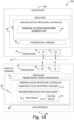
- FIG. 1B shows structure and functionalities of radio access node 22B and wireless terminal 26B
- Fig. 2B shows acts involved in the random access procedure of the second embodiment including messages
- Fig. 3B shows example acts or steps specifically performed by wireless terminal 26B
- Fig. 4B shows example acts or steps specifically performed by radio access node 22B
- Fig. 5B-1, Fig. 5B-2, Fig. 5B-3, Fig. 5B-4, Fig. 5B-4a, and Fig. 5B-4b show example formats and example contents of some of the messages comprising the random access procedure of the second example embodiment and mode.
- the node random access procedure controller 54 of node processor 30 comprises random access response generator 60.
- the terminal random access procedure controller 56 of wireless terminal 26B comprises random access response checker 62 and preamble/resource selection agent 70.
- the wireless terminal 26B may select a preamble index from a first preamble index group that is reserved and distinct for a set of designated requests, and may confirm successful receipt of a preamble sequence to the radio access node 22B and even terminate the random access procedure upon receiving from the radio access node 22B, in the Random Access Response (RAR) phase, an indication of successful receipt that evidences or relates to the selected preamble and/or its index.
- RAR Random Access Response
- the indication of successful receipt of the preamble sequence may also be referred to as "RAPID", e.g., random access preamble identifier.
- the preamble/resource selection agent 70 is configured to select a preamble index from one of plural preamble index groups.
- preamble index first group 72 two such preamble index groups are shown in Fig. 1B : preamble index first group 72 and preamble index second group 74. In other example implementations a greater number of groups may be provided.
- the preamble indices of the preamble index first group 72 are reserved and distinct for a set of designated requests.
- designated request is meant some type of request, information, or action (not necessarily related to the random access procedure itself) which is sent from the wireless terminal 26B to the radio access node 22B.
- the preamble indices of the preamble index second group 74 are allocated to other purposes, e.g., purpose other than the designated requests of preamble index first group 72, including radio link connection establishment.
- Fig. 7 shows that there may be an association between a preamble index of the preamble index first group 72 and a particular designated request.
- the associations between the preamble indices of the preamble index first group 72 and the designated request types may be predetermined, or may be dynamically changed by the network.
- the associations may be one-to-one association, or alternatively or additionally plural preamble indices may be associated with a particular designated request.
- one or more of the designated requests may be a request for on-demand delivery of system information, e.g., on-demand request of SIB(s).
- multiple preamble indices may be reserved for multiple SIBs/SIB groups.
- An on-demand request for one or more SIBs may occur because, e.g., to save bandwidth, such on-demand SIBs are not usually included in the system information that is broadcast by the network for basic access to the network.
- a request for on-demand delivery of system information is just one type of designated request to which a preamble index of preamble index first group 72 may be associated.
- Other types of designated requests may include, by way of non-limiting example: location updates and connection release requests, and similar types of requests.
- each preamble index of preamble index first group 72 and its association to a designated request may be pre-configured at wireless terminal 26B.
- each preamble index of preamble index first group 72 and its association to a designated request may be configured by the radio access node 22B, e.g., determined by the radio access node 22B and provided to the wireless terminal 26B.
- Fig. 2B shows basic example acts involved in the random access procedure of the second embodiment including messages.
- Act 2B-1 represents the initialization phase and as such depicts the radio access node 22B transmitting, and wireless terminal 26A receiving, configuration parameters.
- the configuration parameters may be broadcast as system information from the serving cell (e.g., the cell based at radio access node 22B and serving wireless terminal 26B).
- Act 2B-2 represents the preamble resource selection phase wherein the wireless terminal 26B selects a random access preamble sequence from a set of sequences available in the serving cell.
- the preamble/resource selection agent 70 has the choice of selecting a preamble index from the preamble index first group 72 or the preamble index second group 74 (or any other available groups). If this particular instance of the random access procedure is for a designated request, such as (for example) an on-demand request for system information, the preamble/resource selection agent 70 selects an appropriate preamble index for the designated requested from preamble index first group 72. Otherwise, if not for a designated request, the preamble/resource selection agent 70 selects the preamble index from preamble index second group 74.
- Act 2B-3 represents the preamble transmission phase in which the wireless terminal 26A transmits the selected preamble sequence corresponding to the selected preamble index on a physical channel (PRACH) using radio resources configured by the cell and communicated in act 2B-1.
- the transmission of act 2B-3 is depicted as the Msg1 of the random access procedure.
- Act 2B-4 represents the radio access node 22B processing and generating a response to the preamble transmission message (Msg1) of act 2B-3.
- the node random access procedure controller 54 takes note of the preamble sequence included in message Msg1.
- the node random access procedure controller 54 causes the random access response generator 60 to generate a Random Access Response (RAR) message, Msg2, which includes in downlink information an indication of successful receipt of the preamble sequence, the concept of "indication" having been previously explained.
- RAR Random Access Response
- Msg2 which includes in downlink information an indication of successful receipt of the preamble sequence, the concept of "indication" having been previously explained.
- the indication e.g., RAPID
- the particular subheader in which the indication is included corresponds to the particular wireless terminal 26B, which may be one of several wireless terminals with which the radio access node 22B is communicating and thus associated with one of the subheaders in the header of the MAC PDU (see Fig. 5B-1 ).
- Act 2B-6 represents the Random Access Response (RAR) Reception phase.
- the random access response checker 62 monitors designated downlink (DL) channels by receiving and decoding downlink information.
- DL downlink
- random access response checker 62 attempts to find from the downlink information the indication of successful receipt of the preamble sequence.
- the random access response checker 62 makes a determination regarding inclusion in the downlink information of an indication that the base station successfully received the preamble sequence sent by the wireless terminal.
- the random access response checker 62 makes the determination of inclusion of the indication of successful receipt of the preamble sequence, then as act 2B-6-2 the random access response checker 62 can definitively confirm that the preamble sequence was successfully sent to and received by radio access node 22B and proceed to act 2B-6-3. Otherwise, if the indication of successful receipt of the preamble sequence as not found, the terminal random access procedure controller 56 retransmits the preamble sequence (act 2B-3).
- the random access response checker 62 Upon successful detection of the indication of successful receipt of the preamble sequence, as act 2B-6-3 the random access response checker 62 further checks if the indication of successful receipt of the preamble sequence pertains to a preamble sequence corresponding to a preamble index of preamble index first group 72. If the check of act 2B-6-3 is affirmative, e.g., if the indication of successful receipt of the preamble sequence pertains to a preamble index belonging to preamble index first group 72, then as act 2B-6-4 the terminal random access procedure controller 56 realizes that the designated requested has been acknowledged, and can therefore essentially terminate the random access procedure.
- the terminal random access procedure controller 56 continues with the remainder of the random access procedure as indicated by other acts of Fig. 2B , e.g., contention resolution acts 2B-7 and 2B-8..
- the wireless terminal 26B processes a RAR associated with a subheader comprising one of the first preamble index group as a different format from the format used in RARs associated with subheaders with preamble indices in the second preamble index group.
- Fig. 3B shows example acts or steps specifically performed by wireless terminal 26A.
- the acts of Fig. 3B may be performed by terminal random access procedure controller 56, which may comprise the terminal processor 40 executing instructions stored on non-transient memory.
- Act 3B-1 comprises the wireless terminal 26A receiving configuration parameters broadcasted from the base station.
- Act 3B-2-1 comprises the preamble/resource selection agent 70 selecting a preamble index from one of preamble index first group 72 and preamble index second group 74. As explained above, whether the preamble/resource selection agent 70 selects a preamble index from preamble index first group 72 or preamble index second group 74, and if from preamble index first group 72, the particular preamble index of preamble index first group 72, depends on whether the random access procedure is for a designated request or not. Thus, in some sense act 3B-2 comprises the preamble/resource selection agent 70 selecting a preamble index depending on designated request (e.g., whether there is or is not a designated request, and the particular type of designated request when a designated request is to be made). Act 3B-2-2 comprises generating and transmitting to the base station a preamble sequence, e.g., as message Msg1.
- a preamble sequence e.g., as message Msg1.
- Act 3B-3 comprises receiving and decoding downlink information from the base station, e.g., in/from message Msg2.
- Act 3B-4 comprises the random access response checker 62 making a determination regarding inclusion in the downlink information of an indication that the base station successfully received the preamble sequence sent by the wireless terminal.
- Act 3B-5 comprises the random access response checker 62 making a determination how to proceed regarding the random access procedure depending on the preamble index associated with the indication, e.g., depending on membership of the preamble index in either the preamble index first group 72 or the preamble index second group 74. For example, if the indication of successful receipt of the preamble sequence corresponds to a preamble index of preamble index first group 72, the terminal random access procedure controller 56 realizes that the objective of the random access procedure has been acknowledged and accordingly that the random access procedure may be terminated. On the other hand, if the indication of successful receipt of the preamble sequence corresponds to a preamble index of preamble index second group 74, the terminal random access procedure controller 56 continues with other phases of the random access procedure.
- Fig. 4B shows example acts or steps specifically performed by radio access node 22B.
- the acts of Fig. 4B may be performed by node random access procedure controller 54, which may comprise the node processor 30 executing instructions stored on non-transient memory.
- Act 4B-1 comprises the radio access node 22B broadcasting configuration parameters, e.g., in a system information block (SIB).
- Act 4B-2 comprises the radio access node 22B receiving a preamble sequence corresponding to the selected preamble index (e.g., in message Msg1 from wireless terminal 26B).
- Act 4B-3 comprises the random access response generator 60 generating, and the radio access node 22B transmitting, downlink information comprising an indication of successful reception by the base station of the preamble sequence.
- Fig. 5B-1, Fig. 5B-2, Fig. 5B-3, Fig. 5B-4, Fig. 5B-4a, Fig. 5B-4b, and Fig. 5B-4c show example formats and example contents of some of the messages comprising the random access procedure of the first example embodiment and mode in an example implementation in which the indication of successful receipt of the preamble sequence is included in a Physical Downlink Shared Channel (PDSCH).
- Fig. 5B-1, Fig. 5B-2, Fig. 5B-3, Fig. 5B-4, Fig. 5B-4a, Fig. 5B-4b are essentially the same as Fig. 5A-1, Fig. 5A-2, Fig. 5A-3, Fig. 5A-4, Fig. 5A-4a, Fig. 5A-4b , respectively.
- a MAC RAR may consist of the four fields R/Timing Advance Command/UL Grant/Temporary C-RNTI (as described in Fig. 5B-4, Fig. 5B-4a, Fig. 5B-4b, and Fig. 5B-4c ).
- the MAC RAR in Fig. 5B-4a is used, for NB-IoT UEs the MAC RAR in Fig. 5B-4b is used, otherwise the MAC RAR in Fig. 5B-4 is used.
- a set of Random Access Preambles (e.g., one or more Random Access Preambles) and/or a set of PRACH resources (e.g., one or more PRACH resources) may be used by upper layer for special purposes.
- the set of Random Access Preambles and/or the set of PRACH resources described herein may be assumed to be included in the set of Random Access Preambles in some implementations for the sake of simple descriptions.
- one of such preambles may be selected by the upper layer to inform the network of a designated request/notification using the RACH process (e.g., the RACH procedure) without sending Msg3.
- a set of Random Access Preambles may be reserved for UEs to request transmission of system information blocks (SIBs).
- SIBs system information blocks
- Such on-demand-based SIBs may be transmitted for a limited duration only when at least one UE in the coverage sends the request.
- such a set of preambles may be pre-determined. Namely, for example, such a set of preambles may be defined in advance by the specifications, and may be known information between the base station and the UE. In another configuration, such a set of preambles may be specified by upper layer (RRC), where RRC may acquire such a configuration from network by some periodically broadcasted messages.
- RRC upper layer
- the following exemplary RRC information element may be broadcasted from the eNB.
- such an information element may be a part of Master Information Block (MIB), while in another configuration it may be a part of a periodically broadcasted SIB.
- MIB Master Information Block
- the exemplary information element is not intended to preclude any other possible configuration contents.
- OnDemandSibGroupList field descriptions sib-TypeList List of SIB types included in this SIB Group.
- the set of configured Random Access Preambles configured may be considered to be 'reserved' for upper layer to initiate designated requests/notifications, and therefore the MAC layer of the UE may not use such preambles for any other purposes.
- Upper layer may inform MAC layer of the reserved set of preamble during the initialization process, along with other configuration parameters.
- the upper layer of the UE may select one of the available Random Access Preambles configured for the request/notification.
- Upper layer may instruct its MAC layer to initiate the RACH process using the selected Random Access Preamble.
- a RAR PDU corresponding to the transmitted Random Access Preamble may not contain information necessary for the UE to proceed to the contention resolution phase. Such information may include Timing Advance Command, UL Grant and/or Temporary C-RNTI.
- the eNB may send reserve bits (e.g. all zeros) in the corresponding fields in the RAR PDU.
- the MAC entity of the UE when receiving a MAC PDU comprising a MAC header and MAC RARs, may examine the MAC PDU to check if the Random Access Preamble identifier corresponding to the transmitted Random Access Preamble is included in the MAC header. If so, the MAC entity may ignore some or all part of the corresponding RAR PDU and report successful completion of the Random Access Procedure to the upper layer.
- the Random Access procedure may be initiated by a Physical Downlink Control Channel (PDCCH) order, by the MAC sublayer itself or by the RRC sublayer. Random Access procedure on a Secondary Cell (SCell) may only be initiated by a PDCCH order. If a MAC entity receives a PDCCH transmission consistent with a PDCCH order masked with its C-RNTI, and for a specific Serving Cell, the MAC entity may initiate a Random Access procedure on this Serving Cell.
- PDCCH Physical Downlink Control Channel
- SCell Secondary Cell
- a PDCCH order or RRC may optionally indicate the ra-PreambleIndex and the ra-PRACH-MaskIndex, except for NB-IoT where the subcarrier index is indicated; and for Random Access on an SCell, the PDCCH order indicates the ra-PreambleIndex with a value different from 000000 and the ra-PRACH-MaskIndex.
- the PDCCH order indicates the ra-PreambleIndex with a value different from 000000 and the ra-PRACH-MaskIndex.
- the UE is an NB-IoT UE and is configured with a non-anchor carrier, perform the Random Access procedure on the anchor carrier.
- the following information for related Serving Cell is assumed to be available for UEs other than NB-IoT UEs, BL UEs or UEs in enhanced coverage, unless explicitly stated otherwise:
- the Random Access procedure may be performed as follows:
- the Random Access Resource selection procedure may be performed as follows:
- the MAC entity of the UE may monitor the PDCCH of the SpCell for Random Access Response(s) identified by the RA-RNTI defined below, in the RA Response window which starts at the subframe that contains the end of the preamble transmission plus three subframes and has length ra-ResponseWindowSize configured by RRC. If the UE is a BL UE or a UE in enhanced coverage, RA Response window starts at the subframe that contains the end of the last preamble repetition plus three subframes and has length ra-ResponseWindowSize for the corresponding coverage level.
- RA Response window starts at the subframe that contains the end of the last preamble repetition plus 41 subframes and has length ra-ResponseWindowSize for the corresponding coverage level
- RA Response window starts at the subframe that contains the end of the last preamble repetition plus 4 subframes and has length ra-ResponseWindowSize for the corresponding coverage level.
- PDCCH carries DCI ( Downlink Control Information), which includes resource assignments for a UE or group of UE's.
- the base station can transmit many DCI's or PDCCH's in a subframe.
- the base station may generate a DCI with Format 1A or 1C as shown in List 1 and List 2 - Flag for format0/format1A differentiation or flag for format0A/format1A differentiation - Localized/Distributed VRB assignment flag - Resource block assignment - Modulation and coding scheme - HARQ process number - reserved - New data indicator - Redundancy version - 2 bits - TPC command for PUCCH - Downlink Assignment Index - reserved.
- - SRS request - HARQ-ACK resource offset - SRS timing offset present only when the DCI format is used for scheduling PDSCH in a LAA Scell and the UE is configured with uplink transmission on the LAA Scell.
- the generated DCI may be attached with a Cyclic Redundancy Check (CRC) parity bits for error detection.
- CRC Cyclic Redundancy Check
- the CRC parity bits may be further scrambled with a corresponding RNTI.
- the RA-RNTI may be used for scrambling the CRC.
- the UE that monitors PDCCH may perform blind decoding of the PDCCH payload as it is not aware of the detailed control channel structure. Specifically, the UE under the process of Random Access Response reception may monitor a set of PDCCH candidates (a set of consecutive Control Channel Elements (CCEs) on which a PDCCH could be mapped). In this process the UE uses the aforementioned RA-RNTI for decoding the candidates.
- PDCCH candidates a set of consecutive Control Channel Elements (CCEs) on which a PDCCH could be mapped.
- CCEs Control Channel Elements
- the UE may attempt to receive the Physical Downlink Shared Channel (PDSCH) whose resource is specified in the Resource block assignment field of the DCI with either format 1A or 1C. Accordingly, the MAC entity of the UE may proceed with processing the DL-SCH transport block received in the assigned PDSCH resources as a MAC PDU (see 1-6) for Random Access Response. The UE may continue PDCCH decoding PDSCH reception during the RA Response window.
- PDSCH Physical Downlink Shared Channel
- the MAC entity may stop monitoring for Random Access Response(s) after successful reception of a Random Access Response containing Random Access Preamble identifiers that matches the transmitted Random Access Preamble.
- Random Access Response reception may be considered not successful and the MAC entity may:
- the third example embodiment and mode is essentially identical to the second example embodiment and mode, except that the MAC PDU payload does not contain MAC RAR that corresponds to the MAC subheader with the RAPID field being one of the reserved Random Access Preambles.
- the response of such a reserved preamble transmission associated with an upper layer designated request/notification may not have to contain information for contention resolution.
- the example of MAC PDU in this embodiment is illustrated in Fig. 8 .
- the RAPID of subheader 2 is the reserved preamble index (e.g., selected from preamble index first group 72) and therefore there need be no RAR 2 in the MAC PDU payload.
- the RAPIDs in other subheaders 1, 3, ..., n are regular preamble indices each of which has associated RAR (1,3, ... , n) in the MAC PDU payload.
- the other RARs are included since the MAC PDU may be monitored not only by the UE that transmitted the reserved preamble but by other UEs that transmitted regular preambles. Each of these other UEs expects to receive one of the RAR fields 1, 3, ..., n as a regular p rocess proceeding to Msg3 and needs to know that there is no RAR 2, in order to identify the correct RAR.
- the terminal random access procedure controller 56 is configured to assume non-presence of a RAR in the payload when a subheader contains one of the preamble index first group 72.
- a set of Radio Network Temporary Identifiers is allocated and configured by the higher layer entity (RRC) of the network in the sake of Random Access Response for some of the designated requests/notifications described in the second embodiment.
- the set of RNTIs may comprise one or more RNTIs.
- one reserved Random Access Preamble disclosed in the second embodiment is associated with a designated value of RNTI (X-RNTI hereafter).
- a "reserved" random access preamble includes a random access preamble that is used for designated request(s) such as those described above.
- Radio Network Temporary Identifiers including the following:
- this fourth example embodiment and mode adds another type of RNTI: the "X-RNTI", which may be an identification used for identifying that a designated request has been received, such as a request of a system information message such as an on-demand system information request.
- the values allocated for X-RNTI may be distinct from other types of RNTIs.
- the values for X-RNTI may be shared with some other types of RNTIs.
- the X-RNTI may be equal to SI-RNTI.
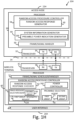
- Fig. 1C shows structure and functionalities of radio access node 22C and wireless terminal 26C
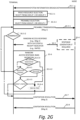
- Fig. 2C shows acts involved in the random access procedure of the second embodiment including messages
- Fig. 3C shows example acts or steps specifically performed by wireless terminal 26C
- Fig. 4C shows example acts or steps specifically performed by radio access node 22C.
- the node processor 30 comprises system information generator 80.
- the system information generator 80 serves, e.g., to generate system information such as one or more system information blocks (SIBs).
- SIBs system information blocks
- the system information generator 80 of Fig. 1C particularly includes X-RNTI/preamble association functionality 82.
- the X-RNTI/preamble association functionality 82 serves to associates random access preamble information, e.g., a random access preamble index or a preamble sequence, with Radio Network a Temporary Identifier (RNTI), and particularly the X-RNTI as mentioned above.
- RNTI Radio Network a Temporary Identifier
- Fig. 1C further shows that the random access response checker 62C of the terminal random access procedure controller 56 is an X-RNTI-based RAR checker, and the preamble/resource selection agent 70C is an X-RNTI-based selection agent.
- the X-RNTI-based selection agent 70C may select a preamble index from one of plural preamble index groups, e.g., from preamble index first group 72 and preamble index second group 74, wherein the preamble index first group 72 comprises preamble indices which are reserved and distinct for a set of designated requests, as explained above.
- the X-RNTI-based RAR checker 62C may confirm successful receipt of a preamble sequence by the radio access node 22A and even terminate the random access procedure upon receiving from the radio access node 22A, in the Random Access Response (RAR) phase, an indication of successful receipt that evidences or relates to the selected preamble and/or its index. Both the X-RNTI-based selection agent 70C and the X-RNTI-based RAR checker 62C know an association between the X-RNTI and the random access preamble information.
- RAR Random Access Response
- Fig. 9 illustrates an example, non-limiting association or mapping between preamble information and X-RNTI for the fourth example embodiment and mode.
- Fig. 9 particularly shows that one or more indices in the preamble index first group 72 may be associated with or mapped to an X-RNTI.
- the mapping of reserved Random Access Preambles and X-RNTI may be one-to-one, or N-to-one. In the latter case, more than one reserved Random Access Preambles are associated with one value of X-RNTI.
- a mapping such as that of Fig. 9 may be configured at wireless terminal 26C, e.g., at X-RNTI-based RAR checker 62C and X-RNTI-based selection agent 70C.
- the associations of preambles and X-RNTIs may be configured by a system information block (SIB) broadcasted by radio access node 22C.
- SIB system information block
- the system information generator 80 of Fig. 1C using the X-RNTI/preamble association functionality 82 (which has information comparable to Fig. 9 ), prepares a system information block (SIB) for broadcast, e.g., as act 2C-1 described further here.
- SIB system information block
- X-RNTI may be equal to SI-RNTI.
- OnDemandSibGroupList field descriptions sib-TypeList List of SIB types included in this SIB Group.
- x-RNTI This field indicates the X-RNTI associated with ra-PreambleIndexSibGroup.
- Fig. 2C shows basic example acts involved in the random access procedure of the fourth embodiment including messages.
- Act 2C-1 represents the initialization phase and as such depicts the radio access node 22C transmitting, and wireless terminal 26A receiving, configuration parameters.
- the configuration parameters may be broadcast as system information from the serving cell (e.g., the cell based at radio access node 22C and serving wireless terminal 26C).
- the configuration parameters may include the X-RNTI/preamble association, such as that depicted by Fig. 9 and understood with reference to the example RRC information element described above.
- Act 2C-2 represents the preamble resource selection phase wherein the wireless terminal 26C selects a random access preamble sequence from a set of sequences available in the serving cell.
- the X-RNTI-based selection agent 70C in the preamble resource selection phase the X-RNTI-based selection agent 70C has the choice of selecting an preamble index from the preamble index first group 72 or the preamble index second group 74. If this particular instance of the random access procedure is for a designated request, such as (for example) an on-demand request for system information, the X-RNTI-based selection agent 70C selects an appropriate preamble index for the designated requested from preamble index first group 72. Otherwise, if not for a designated request, the X-RNTI-based selection agent 70C selects the preamble index from preamble index second group 74.
- Act 2C-3 represents the preamble transmission phase in which the wireless terminal 26C transmits the selected preamble sequence corresponding to the selected preamble index on a physical channel (PRACH) using radio resources configured by the cell and communicated in act 2C-1.
- the transmission of act 2C-3 is depicted as the Msg1 of the random access procedure.
- Act 2C-4 represents the radio access node 22C processing and generating a response to the preamble transmission message (Msg1) of act 2C-3.
- the node random access procedure controller 54 takes note of the preamble sequence included in message Msg1.
- the node random access procedure controller 54 causes the random access response generator 60 to generate downlink information which comprises or permits access to a Random Access Response (RAR) message, Msg2, which includes in downlink information an indication of successful receipt of the preamble sequence, the concept of "indication" having been previously explained.
- RAR Random Access Response
- At least a portion of the downlink information which is generated as act 2C-4 may be encoded by system information generator 80 using the X-RNTI which, based on X-RNTI/preamble association functionality 82, the radio access node 22C knows is associated with the received preamble sequence.
- the downlink information may be cyclically redundancy check (CRC) scrambled with the X-RNTI.
- the wireless terminal 26C may monitor the downlink information received from the radio access node 22C.
- the terminal random access procedure controller 56 checks at act 2C-6-1 whether the preamble sequence used for Msg1 was associated with an X-RNTI, e.g., was associated with a designated request. If the check at act 2C-6-1 is affirmative, as act 2C-6-2 the terminal random access procedure controller 56 tries to decode the received downlink information using the X-RNTI that is associated with the preamble sequence that was transmitted in the preamble transmission message Msg1.
- the wireless terminal 26C may monitor the PDCCH as described in the aforementioned embodiment, but in so doing may attempt to decode DCIs with the X-RNTI associated with the transmitted Random Access Preamble.
- the decoded DCI addressed with the X-RNTI does not include scheduling information for PDSCH.
- the format of the DCI addressed by the X-RNTI may be format 1A or 1C but each field of the DCI may contain a pre-determined value.
- the wireless terminal 26C attempts to decode the DCI with the X-RNTI associated with the preamble sequence transmitted to the radio access node 22C.
- the wireless terminal 26C may consider a successful decoding of the DCI with X-RNTI as a successful completion of the Random Access procedure. As indicated by act 2C-6-4, the terminal random access procedure controller 56 may at that point terminate the random access procedure without proceeding to PDSCH reception. If the DCI cannot be decoded using the X-RNTI, the wireless terminal 26C may continue monitoring PDCCH, attempting to decode other DCIs with the X-RNTI.
- act 2C-6-5 is performed.
- the terminal random access procedure controller 56 may monitor the PDCCH with the RA-RNTI. Namely, the wireless terminal 26C may attempt to decode DCI(s) with the RA-RNTI.
- the DCIs addressed with the RA-RNTI may have been used for scheduling of PDSCH for transmitting Msg.2 (e.g., RAR, see Fig. 5B-4, Fig. 5B-4a , and/or Fig. 5B-4b ).
- Msg.2 e.g., RAR, see Fig. 5B-4, Fig. 5B-4a , and/or Fig. 5B-4b .
- the wireless terminal 26C may proceed to PDSCH reception (as indicated by act 2C-6-6, and thereafter proceed with the random access procedure as indicated by the remainder of Fig. 2C . If the DCI cannot be decoded using the RA-RNTI, the wireless terminal 26C may continue monitoring PDCCH, attempting to decode other DCIs with the RA-RNTI.
- Fig. 10 shows an alternate implementation of act 2C-6 of Fig. 2C , e.g., shows act 2C-6' in a scenario in which a DCI addressed with the X-RNTI may be used for scheduling of PDSCH to transmit Msg.2 (e.g., RAR, see Fig. 5B-4c ).
- the format of the DCI may be format 1A or 1C as shown in List 1 and List 2, respectively.
- the UE may proceed to PDSCH reception (act 2C-6'-3), and thereafter end the random access procedure (act 2C-6-4). Similar to the case with no PDSCH, the terminal may continue monitoring PDCCH to find a DCI that can be decoded with X-RNTI or RA-RNTI.
- the wireless terminal 26C may monitor the PDCCH with the RA-RNTI and/or the PDCCH with the X-RNTI based on the aforementioned parameter (i.e., ra-ResponseWindowSize ) configured by RRC. Also, the wireless terminal 26C may monitor the PDCCH with the X-RNTI based on a parameter (e.g., ra-ResponseWindowSize1 ) . The wireless terminal 26C may monitor the PDCCH with the X-RNTI, in a RA Response window which has a length determined based on the parameter (e.g., ra-ResponseWindowSize1 ) .
- the parameter (e.g., ra-ResponseWindowSize1 ) may be configured by the eNB via MIB and/or SIB.
- a-ResponseWindowSize1 may be configured as a parameter separate from ra-ResponseWindowSize, or configured as the same parameter as ra-ResponseWindowSize.
- Fig. 3C shows example acts or steps specifically performed by wireless terminal 26A.
- the acts of Fig. 3C may be performed by terminal random access procedure controller 56, which may comprise the terminal processor 40 executing instructions stored on non-transient memory.
- Act 3C-1 comprises the wireless terminal 26C receiving configuration parameters broadcasted from the base station, including configuration parameters associating an X-RNTI with preamble information.
- Act 3C-2-1 comprises the preamble/resource selection agent 70 selecting a preamble index from one of preamble index first group 72 and preamble index second group 74. As explained above, whether the preamble/resource selection agent 70 selects a preamble index from preamble index first group 72 or preamble index second group 74, and if from preamble index first group 72, the particular preamble index of preamble index first group 72, depends on whether the random access procedure is for a designated request or not. Thus, in some sense act 3C-2 comprises the preamble/resource selection agent 70 selecting a preamble index depending on designated request (e.g., whether there is or is not a designated request, and the particular type of designated request when a designated request is to be made). Act 3C-2-2 comprises generating and transmitting to the base station a preamble sequence, e.g., as message Msg1.
- a preamble sequence e.g., as message Msg1.
- Act 3C-3 comprises receiving and attempting to decode downlink information from the base station, e.g., in/from message Msg2, and using the X-RNTI associated with the transmitted preamble sequence to perform the decoding of the downlink information.
- Act 3C-4 comprises the X-RNTI-based RAR checker 62C making a determination how to proceed regarding the random access procedure depending on the decoding using the X-RNTI. If the downlink information can be decoded using the X-RNTI, the in at least some example implementations the random access procedure may be terminated.
- Fig. 4C shows example acts or steps specifically performed by radio access node 22C.
- the acts of Fig. 4C may be performed by node random access procedure controller 54, which may comprise the node processor 30 executing instructions stored on non-transient memory.
- Act 4C-1 comprises the radio access node 22C broadcasting configuration parameters, e.g., in a system information block (SIB), which may include an association of X-RNTI and preamble information.
- Act 4C-2 comprises the radio access node 22C receiving a preamble sequence corresponding to the selected preamble index (e.g., in message Msg1 from wireless terminal 26B).
- SIB system information block
- Act 4C-3 comprises the random access response generator 60 generating, and the radio access node 22C transmitting, downlink information encoded with the X-RNTI that is associated with the received preamble sequence as an indication of successful reception by the base station of the preamble sequence.
- the Random Access procedure may be initiated by a Physical Downlink Control Channel (PDCCH) order, by the MAC sublayer itself or by the RRC sublayer. Random Access procedure on a Secondary Cell (SCell) may only be initiated by a PDCCH order. If a MAC entity receives a PDCCH transmission consistent with a PDCCH order masked with its C-RNTI, and for a specific Serving Cell, the MAC entity may initiate a Random Access procedure on this Serving Cell.
- PDCCH Physical Downlink Control Channel
- SCell Secondary Cell
- a PDCCH order or RRC may optionally indicate the ra-PreambleIndex and the ra-PRACH-MaskIndex, except for NB-IoT where the subcarrier index is indicated; and for Random Access on an SCell, the PDCCH order indicates the ra-PreambleIndex with a value different from 000000 and the ra-PRACH-MaskIndex.
- the PDCCH order indicates the ra-PreambleIndex with a value different from 000000 and the ra-PRACH-MaskIndex.
- the UE is an NB-IoT UE and is configured with a non-anchor carrier, perform the Random Access procedure on the anchor carrier.
- the following information for related Serving Cell is assumed to be available for UEs other than NB-IoT UEs, BL UEs or UEs in enhanced coverage, unless explicitly stated otherwise:
- the Random Access procedure may be performed as follows:
- the MAC entity of the UE may monitor the PDCCH of the SpCell for Random Access Response(s) identified by the X-RNTI associated with the transmitted Random Access Preamble, in the RA Response window which starts at the subframe that contains the end of the preamble transmission plus three subframes and has length ra-ResponseWindowSize (or ra-ResponseWindowSize1) configured by RRC.
- the MAC entity of the UE may monitor the PDCCH of the SpCell for Random Access Response(s) identified by the RA-RNTI defined below, in the RA Response window which starts at the subframe that contains the end of the preamble transmission plus three subframes and has length ra-ResponseWindowSize configured by RRC. If the UE is a BL UE or a UE in enhanced coverage, RA Response window starts at the subframe that contains the end of the last preamble repetition plus three subframes and has length ra-ResponseWindowSize for the corresponding coverage level.
- RA Response window starts at the subframe that contains the end of the last preamble repetition plus 41 subframes and has length ra-ResponseWindowSize for the corresponding coverage level
- RA Response window starts at the subframe that contains the end of the last preamble repetition plus 4 subframes and has length ra-ResponseWindowSize for the corresponding coverage level.
- PDCCH carries DCI ( Downlink Control Information), which includes resource assignments for a UE or group of UE's.
- the base station can transmit many DCI's or PDCCH's in a subframe.
- the base station may generate a DCI with Format 1A or 1C as shown in List 1 and List 2 - Flag for format0/format1A differentiation or flag for format0A/format1A differentiation - Localized/Distributed VRB assignment flag - Resource block assignment - Modulation and coding scheme - HARQ process number - reserved - New data indicator - Redundancy version - 2 bits - TPC command for PUCCH - Downlink Assignment Index - reserved.
- - SRS request - HARQ-ACK resource offset - SRS timing offset present only when the DCI format is used for scheduling PDSCH in a LAA Scell and the UE is configured with uplink transmission on the LAA Scell.
- the generated DCI may be attached with a Cyclic Redundancy Check (CRC) parity bits for error detection.
- CRC Cyclic Redundancy Check
- the CRC parity bits may be further scrambled with a corresponding RNTI.
- the X-RNTI is used if configured for the transmitted Random Access Preamble, otherwise the RA-RNTI may be used for scrambling the CRC.
- the UE that monitors PDCCH may perform blind decoding of the PDCCH payload as it is not aware of the detailed control channel structure. Specifically, the UE under the process of Random Access Response reception may monitor a set of PDCCH candidates (a set of consecutive Control Channel Elements (CCEs) on which a PDCCH could be mapped). In this process the UE uses the aforementioned X-RNTI or RA-RNTI for decoding the candidates.
- CCEs Control Channel Elements
- the MAC entity may stop monitoring for Random Access Response(s) after successful reception of a Random Access Response containing Random Access Preamble identifiers that matches the transmitted Random Access Preamble.
- Random Access Response reception may be considered not successful and the MAC entity may:
- the fifth example embodiment and mode contains modifications from the fourth embodiment. Specifically, instead of directly configuring the value of X-RNTI associated with a Random Access Preamble, the radio access node may associate the preamble information with a parameter that can be input into a function to derive the X-RNTI.
- a function to derive the X-RNTI.
- Fig. 11 shows that there may be an association between preamble information (e.g., a preamble sequence or a preamble index) and an X-RNTI, as well as with an X-RNTI-function input parameter (e.g., idx).
- preamble information e.g., a preamble sequence or a preamble index
- X-RNTI-function input parameter e.g., idx
- idx X-RNTI-function input parameter
- Fig. 1D shows structure and functionalities of radio access node 22D and wireless terminal 26D;
- Fig. 2D shows acts involved in the random access procedure of the second embodiment including messages.
- node processor 30 of radio access node 22D comprises system information generator 80 which works in conjunction with X-RNTI-function input parameter/preamble association functionality 82D.
- the terminal random access procedure controller 56 of wireless terminal 26D comprises X-RNTI function input -based RAR checker 62D and X-RNTI function-based selection agent 70D.
- Fig. 2D shows basic example acts involved in the random access procedure of the fifth embodiment including messages.
- Act 2D-1 represents the initialization phase and as such depicts the radio access node 22D transmitting, and wireless terminal 26A receiving, configuration parameters.
- the configuration parameters may be broadcast as system information from the serving cell (e.g., the cell based at radio access node 22D and serving wireless terminal 26D).
- the configuration parameters may include an association of X-RNTI input function parameter(s) and preamble information, rather than an association of X-RNTI and preamble information as was the case in Fig. 2C .
- system information e.g., a SIB
- SIB system information
- OnDemandSibGroupList field descriptions sib-TypeList List of SIB types included in this SIB Group.
- ra-PreambleIndexSibGroup Index of the Random Access Preamble reserved for requesting the transmission of the SIBs in the SIB Group.
- Idx This field is used for derivation of X-RNTI associated with ra-PreambleIndexSibGroup.
- Act 2D-2 represents the preamble resource selection phase wherein the wireless terminal 26C selects a random access preamble sequence from a set of sequences available in the serving cell.
- the X-RNTI function-based selection agent 70D in the preamble resource selection phase the X-RNTI function-based selection agent 70D has the choice of selecting a preamble index from the preamble index first group 72 or the preamble index second group 74. If this particular instance of the random access procedure is for a designated request, such as (for example) an on-demand request for system information, the X-RNTI function-based selection agent 70D selects an appropriate preamble index for the designated requested from preamble index first group 72. Otherwise, if not for a designated request, the X-RNTI function-based selection agent 70D selects the preamble index from preamble index second group 74.
- Act 2D-3 represents the preamble transmission phase in which the wireless terminal 26C transmits the selected preamble sequence corresponding to the selected preamble index on a physical channel (PRACH) using radio resources configured by the cell and communicated in act 2D-1.
- the transmission of act 2D-3 is depicted as the Msg1 of the random access procedure.
- Act 2D-4 represents the radio access node 22D processing and generating a response to the preamble transmission message (Msg1) of act 2D-3.
- the node random access procedure controller 54 takes note of the preamble sequence included in message Msg1.
- the node random access procedure controller 54 causes the random access response generator 60 to generate downlink information which comprises or permits access to a Random Access Response (RAR) message, Msg2, which includes in downlink information an indication of successful receipt of the preamble sequence, the concept of "indication" having been previously explained.
- RAR Random Access Response
- At least a portion of the downlink information which is generated as act 2D-4 may be encoded by system information generator 80 using the X-RNTI which, based on X-RNTI-function input parameter/preamble association functionality 82D, the radio access node 22D knows is associated with the received preamble sequence.
- the downlink information may be cyclically redundancy check (CRC) scrambled with the X-RNTI.
- CRC cyclically redundancy check
- the node knows the X-RNTI in the same way as the terminal derived.
- the received preamble sequence tells the preamble index, and the PRACH resource (time/freq domain) where the preamble transmission was detected tells t_id and f_id.
- the wireless terminal 26D may monitor the downlink information received from the radio access node 22D.
- the terminal random access response act 2D-6 is essentially the same as act 2C-6, with the terminal random access procedure controller 56 trying to decode the received downlink information using the X-RNTI that is associated with the preamble sequence that was transmitted in the preamble transmission message Msg1 in the case that the designated request was sent, or tries to decode the received downlink information using RA-RNTI in other cases.
- f offset (x) may be configured by using a parameter included in MIB and/or SIB.
- the sixth example embodiment and mode allows use of a different format for the DCI addressed by the X-RNTI.
- This format (format X hereafter) may contain a pre-determined number of reserved bits, where a pre-determined number of values may be set.
- the DCI with format X may be considered a designated request unique format DCI.
- the DCI with format X may be attached with a CRC as previously described. If the UE has initiated Random Access Preamble transmission with one of the reserved preambles and successfully decodes a DCI with format X with the associated X-RNTI, the UE may consider that the Random Access procedure is successfully completed, without receiving PDSCH.
- Fig. 1E shows structure and functionalities of radio access node 22E and wireless terminal 26E;
- Fig. 2E shows acts involved in the random access procedure of the second embodiment including messages.
- node processor 30 of radio access node 22E comprises random access response generator 60, which in turn comprises designated request unique format DCI generator 90.
- the terminal random access procedure controller 56 of wireless terminal 26D comprises designated request unique format DCI handler 92.
- Fig. 2E shows basic example acts involved in the random access procedure of the fifth embodiment including messages.
- Act 2E-1 represents the initialization phase and as such depicts the radio access node 22D transmitting, and wireless terminal 26A receiving, configuration parameters.
- the configuration parameters may be broadcast as system information from the serving cell (e.g., the cell based at radio access node 22E and serving wireless terminal 26E).
- Act 2E-2 represents the preamble resource selection phase wherein the wireless terminal 26C selects a random access preamble sequence from a set of sequences available in the serving cell.
- the preamble/resource selection agent 70 in the preamble resource selection phase the preamble/resource selection agent 70 has the choice of selecting a preamble index from the preamble index first group 72 or the preamble index second group 74. If this particular instance of the random access procedure is for a designated request, such as (for example) an on-demand request for system information, the preamble/resource selection agent 70 selects an appropriate preamble index for the designated requested from preamble index first group 72. Otherwise, if not for a designated request, the preamble/resource selection agent 70 selects the preamble index from preamble index second group 74.
- Act 2E-3 represents the preamble transmission phase in which the wireless terminal 26E transmits the selected preamble sequence corresponding to the selected preamble index on a physical channel (PRACH) using radio resources configured by the cell and communicated in act 2E-1.
- the transmission of act 2E-3 is depicted as the Msg1 of the random access procedure.
- Act 2E-4 represents the radio access node 22E processing and generating a response to the preamble transmission message (Msg1) of act 2E-3.
- the node random access procedure controller 54 takes note of the preamble sequence included in message Msg1.
- the node random access procedure controller 54 causes the random access response generator 60 to generate downlink information which comprises or permits access to a Random Access Response (RAR) message, Msg2, which includes in downlink information an indication of successful receipt of the preamble sequence, the concept of "indication" having been previously explained.
- RAR Random Access Response
- the node random access procedure controller 54 invokes designated request unique format DCI generator 90 to generate a DCI of format X.
- the format X DCI may comprise a pre-determined number of reserved bit(s), where a pre-determined number of values may be set.
- the wireless terminal 26E may monitor the downlink information received from the radio access node 22E.
- the terminal random access response act 2E-6 is essentially the same as act 2C-6, with the terminal random access procedure controller 56 trying to decode the received downlink information using the X-RNTI that is associated with the preamble sequence that was transmitted in the preamble transmission message Msg1 in the case that the designated request was sent, or tries to decode the received downlink information using RA-RNTI in other cases.
- the terminal random access procedure controller 56 knows that the DCI has format X and accordingly is able to (as act 2E-6-3) to de-format or process the contents of the DCI according to the known format X.
- the wireless terminal 26E assume as distinct format for decoding a received DCI with the X-RNTI.
- the wireless terminal is allowed to use certain PRACH resources designated for said special purposes selected by the upper layer (RRC layer).
- the special purposes include such purposes as the designated request(s) described herein.
- a PRACH resource refers to a time and frequency region in the uplink to be used for RACH preamble transmission.
- Fig. 1F shows structure and functionalities of radio access node 22F and wireless terminal 26F
- Fig. 2F shows acts involved in the random access procedure of the second embodiment including messages
- Fig. 3D shows example acts or steps specifically performed by wireless terminal 26F
- Fig. 4D shows example acts or steps specifically performed by radio access node 22F.
- Fig. 1F shows that terminal processor 40, and the terminal random access procedure controller 56 in particular, comprises PRACH resource selection agent 120.
- PRACH resource selection agent 120 selects uplink physical resources from an uplink physical resource pool.
- the uplink physical resource pool comprises first random access physical radio resource group 124 and second random access physical radio resource group 126.
- the PRACH resource selection agent 120 serves to select an uplink physical resource from a first random access physical radio resource group 124 or a second random access physical radio resource group 126.
- a physical resource in the first random access physical radio resource group 124 is reserved for a designated request, but a physical resource in the second random access physical radio resource group 126 is not available for the designated request.
- non-limiting types of designated requests include a designated request for on-demand system information; designated request for location update, designated request for connection release request, etc.
- the uplink physical resource pool with its first random access physical radio resource group 124 and second random access physical radio resource group 126 may be configured at the wireless terminal, e.g., pre-configured in memory or configured by the network (e.g., by radio access node 22F in the manner described below).
- the terminal random access procedure controller 56 may preferably use both preamble/resource selection agent 70 and PRACH resource selection agent 120. In other words, the terminal random access procedure controller 56 may send the designated request to the radio access node by generating a preamble sequence associated with a preamble index which is transmitted on the selected uplink physical resource.
- the terminal random access procedure controller 56 may use preamble/resource selection agent 70 to select the preamble sequence from a first group 72 of preamble sequences that are reserved and distinct for the designated request or a second group 74 of preamble sequences that are allocated to purposes other than the designated request, and send the designated request to the radio access node by generating the selected preamble sequence for transmission on the PRACH resource selected by PRACH resource selection agent 120.
- a PRACH resource may be exclusively used by a single designated upper layer request.
- one PRACH resource may be dedicated for wireless terminals to request on-demand delivery of a SIB or a group of SIBs.
- the preamble index associated with the preamble sequence to be transmitted in this PRACH resource may be a reserved preamble index configured by the radio access node 22F.
- the radio access node 22F receiving this preamble sequence may verify that the received preamble sequence is the one expected in this PRACH resource and may reject or ignore any other preamble sequences.
- the preamble index may be selected by the wireless terminal 26F based on the process described in 1-2 of the first embodiment. In this case, the radio access node 22F may accept any preamble index that the wireless terminal 26F is allowed to select in this PRACH resource as a receipt of the designated upper layer request and may process the request accordingly.
- Fig. 13 illustrates non-limiting, example format of a system information block that may be used to identify the first random access physical radio resource group 124 for the seventh example embodiment and mode.
- Fig. 13 shows a system information block (SIB) 130, preferably a Master SIB (MIB), which includes an information element 132 that specifies uplink resources for designated requests, such as a designated request for on-demand supply of system information.
- SIB system information block
- MIB Master SIB
- the information element 132 further includes an information element 134 for each of 1, 2, ...j number of SIBs or SIB groups.
- the exemplary RRC information element shown below may be generated by PRACH designated request(s) resource indicator generator 128 and transmitted, e.g., broadcasted from the radio access node 22F.
- the preamble index for a SIB/SIB group is optional and, if not present, the wireless terminal 26F may randomly select one from the available preamble indices.
- each SIB/SIB group may be optionally configured with the PRACH-ConfigSIBOnDemand field comprising parameters instructing physical channel resources to be used for the preamble transmission.
- Absence of the PRACH-ConfigSIBOnDemand field may result in the UE using the PRACH-ConfigSIB field shown in the first embodiment, the parameters to be used for the regular RACH process. Similar to the embodiments mentioned earlier, such an information element may be a part of Master Information Block (MIB) or a part of a periodically broadcasted SIB. Note that the exemplary information element is not intended to preclude any other possible configuration contents.
- MIB Master Information Block
- the RA-RNTI used by radio access node 22F to encode DCI on PDCCH will be a designated value specific to the PRACH resource.
- the random access response checker 62 of the terminal random access procedure controller 56 successfully decodes a DCI with the RA-RNTI, the random access response checker 62 knows that the radio access node 22F responded with the preamble, which may be a reserved one or may be a general one.
- the wireless terminal 26F may (or may not) proceed on receiving MAC PDU payload on PDSCH to make sure that the preamble index is there in one of the MAC subheaders.
- Fig. 2F shows basic example acts involved in the random access procedure of the seventh embodiment including messages.
- Act 2F-1 represents the initialization phase and as such depicts the radio access node 22F transmitting, and wireless terminal 26F receiving, configuration parameters.
- the configuration information may include the indication of PRACH designated request(s) resources as described above, so that the radio access node 22F may configure the wireless terminal 26F.
- the configuration parameters may be broadcast as system information from the serving cell, e.g., the cell based at radio access node 22F and serving wireless terminal 26F.
- Act 2F-2 representing the preamble resource selection phase, may comprise two sub-acts.
- Act 2F-2-1 comprises the PRACH resource selection agent 120 selecting between the first random access physical radio resource group 124 and the second random access physical radio resource group 126, depending on whether the random access request is for a designated request or not.
- Act 2F-2-2 comprises wireless terminal 26B, e.g., preamble/resource selection agent 70, selecting a random access preamble sequence from a set of sequences available in the serving cell.
- the preamble/resource selection agent 70 has the choice of selecting a preamble index from the preamble index first group 72 or the preamble index second group 74. If this particular instance of the random access procedure is for a designated request, such as, for example, an on-demand request for system information, the preamble/resource selection agent 70 selects an appropriate preamble index for the designated requested from preamble index first group 72.
- Act 2F-3 represents the preamble transmission phase in which the wireless terminal 26F transmits the selected preamble sequence corresponding to the selected preamble index on the PRACH resource selected at act 2F-2-1.
- the selected uplink resource may be from the first random access physical radio resource group 124 for a designated request, or from the second random access physical radio resource group 126 for a non-designated request (e.g., a normal RACH request).
- the transmission of act 2F-3 is depicted as the Msg1 of the random access procedure.
- the radio access node 22F determines whether the PRACH resources used for the preamble transmission message (Msg1) of act 2F-3 belongs to the first random access physical radio resource group 124. If the determination of act 2F-4-1 is negative, as act 2F-4-2 the radio access node 22F next checks at act 2F-4-2 whether the preamble index received on the PRACH resource is a preamble that is reserved for a designated request. If the determination of act 2F-4-2 is negative, the radio access node 22F presumes that the random access request was not a designated request and as act 2F-4-3 generates a random access response message Msg 2 accordingly.
- act 2F-4-4 the radio access node 22F generates the random access response message Msg 2 and in so doing may encode DCI on PDCCH using a RA-RNTI that is value specific to the PRACH resource. If the determination of act 2F-4-1 is positive, as act 2F-4-5 the radio access node 22F makes a determination whether the preamble used for the preamble transmission message (Msg1) of act 2F-3 belongs to the preamble index first group 72 and thus confirms that the random access is a designated request.
- Msg1 preamble used for the preamble transmission message
- act 2F-4-5 If the determination of act 2F-4-5 is negative, as act 2F-4-6 the radio access node 22F rejects or ignores any other preamble sequences, e.g., rejects or ignores the random access request of message Msg 1. If the determination of act 2F-4-5 is positive, the radio access node 22F has received a verification of the designated request and therefore, as act 2F-4-4, the radio access node 22F generates the random access response message Msg 2.
- the radio access node 22F may encode DCI on PDCCH using a RA-RNTI that is value specific to the PRACH resource or, if specified in the configuration parameters, the X-RNTI associated with this designated request Regardless of whether a designated PRACH resource is allocated for a request, the eNB may assign and configure an X-RNTI to be used for encoding DCI.
- the preamble transmission message (Msg1) handling routine of Fig. 2F-2 is an abbreviated form of the preamble transmission message (Msg1) handling routine of Fig. 2F-1 .
- the radio access node 22F does not perform a check of preamble index as is done as act 2F-4-5 of Fig. 2F-1 , but instead, as the positive alternative of act 2F-4-1, proceeds to perform act 2F-4-4 of generating the random access response message Msg 2.
- the radio access node 22F may encode DCI on PDCCH using a RA-RNTI that is value specific to the PRACH resource or, if specified in the configuration parameters, the X-RNTI associated with this designated request.
- the random access response checker 62 of the terminal random access proceedure controller 56 When the random access response checker 62 of the terminal random access proceedure controller 56 successfully decodes a DCI with the RA-RNTI, the random access response checker 62 knows that the radio access node 22F responded with the preamble, which may be a reserved one or may be a general one.
- the wireless terminal 26F may (or may not) proceed on receiving MAC payload on PDSCH to make sure that the preamble index is there in one of the MAC subheaders.
- Act 2F-6 of Fig. 2F represents the random access response reception phase.
- the wireless terminal 26F may monitor the downlink information received from the radio access node 22F.
- the terminal random access procedure controller 56 checks at act 2F-6-0 whether the preamble sequence used for Msg1 was associated with a RA-RNTI or X-RNTI if configured.
- the random access response checker 62 of the terminal random access procedure controller 56 successfully decodes a DCI with the X-RNTI, the random access response checker 62 knows that the radio access node 22F has positively acknowledged receipt of the random access request of Msg 1, and may end the random access procedure as indicated by act 2F-6-4.
- the random access response checker 62 may process the random access response message (Msg 2) in the manner previously described with reference to Fig. 2B .
- Msg 2 the random access response message
- Fig. 3D shows example acts or steps specifically performed by wireless terminal 26F.
- the acts of Fig. 3D may be performed by terminal random access procedure controller 56, which may comprise the terminal processor 40 executing instructions stored on non-transient memory.
- Act 3D-1 comprises the wireless terminal 26A receiving configuration parameters broadcasted from the base station. As indicated above, the configuration parameters may include an indication of PRACH designated request(s) resources.
- Act 3D-2-0 comprises the PRACH resource selection agent 120 selecting an uplink physical resource from uplink physical resource pool 122.
- the uplink physical resource selected as act 3D-2-0 may be from the first random access physical radio resource group 124 (for a designated request) or from second random access physical radio resource group 126 (for other types of random access requests).
- Act 3D-2-1 comprise the preamble/resource selection agent 70 selecting a preamble index from one of preamble index first group 72 and preamble index second group 74. As explained above, whether the preamble/resource selection agent 70 selects a preamble index from preamble index first group 72 or preamble index second group 74, and if from preamble index first group 72, the particular preamble index of preamble index first group 72, depending on whether the random access procedure is for a designated request or not.
- act 3D-2 comprises the preamble/resource selection agent 70 selecting a preamble index depending on designated request, e.g., whether there is or is not a designated request, and the particular type of designated request when a designated request is to be made.
- Act 3D-2-2 comprises generating and transmitting to the base station a preamble sequence, e.g., as message Msg1.
- Act 3D-3 comprises receiving and decoding downlink information from the base station, e.g., in/from message Msg2.
- Act 3D-4 comprises the random access response checker 62 making a determination regarding inclusion in the downlink information of an indication that the base station successfully received the random access request sent by the wireless terminal.
- Act 3D-5 comprises the random access response checker 62 making a determination how to proceed regarding the random access procedure depending on whether the random access response message indicates that the radio access node 22F acknowledged receipt of a designated request. For example, if the random access response checker 62 of the terminal random access procedure controller 56 successfully decodes a DCI with the RA-RNTI, the random access response checker 62 knows that the radio access node 22F has positively acknowledged receipt of the random access request of Msg 1, and may end the random access procedure as indicated by act 2F-6-4. Otherwise, the random access procedure may continue.
- Fig. 4D shows example acts or steps specifically performed by radio access node 22F.
- the acts of Fig. 4D may be performed by node random access procedure controller 54, which may comprise the node processor 30 executing instructions stored on non-transient memory.
- Act 4D-1 comprises the radio access node 22F broadcasting configuration parameters, e.g., in a system information block (SIB).
- SIB system information block
- the system information may include an indication, definition, or description of PRACH designated request(s) resources.
- Act 4D-2 comprises the radio access node 22F receiving a preamble sequence corresponding to the selected preamble index and transmitted on the PRACH resource selected by radio access node 22F at act 3D-2-0.
- the preamble sequence is transmitted in message Msg1 from wireless terminal 26F.
- Act 4D-3 comprises the random access response generator 60 generating, and the radio access node 22F transmitting, downlink information comprising an indication of successful reception by the base station of the preamble sequence. Details of act 4D-2 may be understood in light of the example descriptions of act 2F-4 and Fig. 2F-1 or Fig. 2F-2 .
- the Random Access procedure may be initiated by a Physical Downlink Control Channel (PDCCH) order, by the MAC sublayer itself or by the RRC sublayer. Random Access procedure on a Secondary Cell (SCell) may only be initiated by a PDCCH order. If a MAC entity receives a PDCCH transmission consistent with a PDCCH order masked with its C-RNTI, and for a specific Serving Cell, the MAC entity may initiate a Random Access procedure on this Serving Cell.
- PDCCH Physical Downlink Control Channel
- SCell Secondary Cell
- a PDCCH order or RRC may optionally indicate the ra-PreambleIndex and the ra-PRACH-MaskIndex, except for NB-IoT where the subcarrier index is indicated; and for Random Access on an SCell, the PDCCH order indicates the ra-PreambleIndex with a value different from 000000 and the ra-PRACH-MaskIndex.
- the PDCCH order indicates the ra-PreambleIndex with a value different from 000000 and the ra-PRACH-MaskIndex.
- the UE is an NB-IoT UE and is configured with a non-anchor carrier, perform the Random Access procedure on the anchor carrier.
- the following information for related Serving Cell is assumed to be available for UEs other than NB-IoT UEs, BL UEs or UEs in enhanced coverage, unless explicitly stated otherwise:
- the Random Access procedure may be performed as follows:
- the Random Access Resource selection procedure may be performed as follows:
- both the wireless terminal and the radio access node may agree that an upper layer request procedure is completed when the wireless terminal finishes sending a preamble sequence, and accordingly that no response, e.g. no DCI in PDCCH and/or RAR, will be transmitted from the radio access node.
- no response e.g. no DCI in PDCCH and/or RAR
- the wireless terminal may consider this Random Access procedure successfully completed.
- Fig. 1G shows structure and functionalities of radio access node 22G and wireless terminal 26G
- Fig. 2G shows acts involved in the random access procedure of the second embodiment including messages
- Fig. 3E shows example acts or steps specifically performed by wireless terminal 26G
- Fig. 4E shows example acts or steps specifically performed by radio access node 22F.
- Fig. 1G shows that terminal processor 40, and random access response checker 62 of the terminal random access procedure controller 56 in particular, comprises RACH termination controller 140.
- the RACH termination controller 140 determines that the random access procedure is terminated without the wireless terminal 26G receiving a random access response message (Msg 2) from the radio access node 22G in certain situations, e.g., in situations in which a designated request was made in conjunction with the random access procedure.
- Msg 2 random access response message
- RACH termination controller 140 may determine that the random access procedure is successfully completed when the wireless terminal 26G transmits a random access preamble transmission message (Msg 1) with (1) one of the reserved preambles, or (2) a preamble (reserved or UE-selected) transmitted on a PRACH resource explicitly selected by upper layer for a designated request.
- Msg 1 random access preamble transmission message
- terminal processor 40 may re-send the designated request (e.g., the on-demand request for system information) to the radio access node if the wireless terminal 26G determines that the requested system information is not received within the predetermined time.
- the wireless terminal 26G may retransmit the reserved preamble or a preamble (reserved or UE-selected) on a configured PRACH resource when the wireless terminal 26G finds no requested SIB or group of SIBs transmitted for a predetermined duration.
- the wireless terminal 26G may be configured with instructions as to how the wireless terminal 26G ascertains what type of response, if any, from the radio access node 22G enables the wireless terminal 26G to conclude that the random access procedure can be terminated.
- such instructions are provided via system information broadcast by the radio access node 22G.
- the configuration information from the radio access node may comprise termination criteria which informs the wireless terminal 26G how to determine that the random access procedure may be terminated.
- the termination criteria either comprises an identification of a random access procedure response message from the radio access node or authorizes termination of the random access procedure without a response message from the radio access node.
- Fig. 1G shows that the system information generator 80 of radio access node 22G may comprise RACH response type indication generator 144.
- the RACH response type indication generator 134 may generate system information that includes the termination criteria.
- Fig. 14 shows an example, non-limiting, simplified system information block (SIB) 150, preferably a Master Information Block (MIB), which includes an information element 152 that specifies parameters for designated requests, such as a designated request for on-demand supply of system information.
- the information element 152 further includes an information element 154 for each of 1, 2, ...j number of SIBs or SIB groups. For each SIB or SIB group, the information element 154 comprises a termination criteria information element 155.
- SIB system information block
- MIB Master Information Block
- the termination criteria information element 155 may have a different value for each of plural differing ways in which the radio access node 22G may response to the random access request. As shown in Fig. 14 , the termination criteria information element 155 may have either a first value which indicates that the wireless terminal 26G should expect to check for a RAR-based random access response message from the radio access node 22G, e.g., in the example manner of the second embodiment and mode, before determining that the random access procedure may be terminated.
- the termination criteria information element 155 may comprise a second value which indicates that the wireless terminal 26G should expect to check for a PDCCH-based random access response message (in the example manner of the fourth embodiment and mode) from the radio access node 22G before determining that the random access procedure may be terminated.
- the termination criteria information element 155 may comprise a third value which indicates that the wireless terminal 26G may consider the random access procedure to be determined after the wireless terminal 26G transmits a random access preamble transmission message (Msg 1) with (1) one of the reserved preambles, or (2) a preamble, reserved or UE-selected, transmitted on a PRACH resource explicitly selected by upper layer for a designated request.
- Msg 1 random access preamble transmission message
- the third value - which indicates that the wireless terminal 26G may consider the random access procedure as terminated is prescribed for each of SIB/SIB group 1 and SIB/SIB group j.
- the radio access node 22G and the wireless terminal 26G may be configured to or not to proceed with response transmission/reception.
- the configuration is predetermined.
- the radio access node 22G may inform wireless terminals of this configuration by including in a periodically broadcasted message (e.g. MIB or SIB) an indication of whether and how it will send the response to the preamble.
- MIB periodic broadcasted message
- SIB SIB
- the following is an example information element of such indication, wherein the ra-response field indicates if the response is RAR-based (2 nd embodiment), PDCCH-based (4 th embodiment), or no response (this embodiment).
- Fig. 2G shows basic example acts involved in the random access procedure of the eighth embodiment including messages.
- Act 2G-1 represents the initialization phase and as such depicts the radio access node 22G transmitting, and wireless terminal 26G receiving, configuration parameters.
- the configuration information may include the termination criteria as described above and represented by way of example in Fig. 14 , so that the radio access node 22G may configure the wireless terminal 26G.
- the configuration parameters may be broadcast as system information from the serving cell (e.g., the cell based at radio access node 22G and serving wireless terminal 26G).
- Act 2G-2 representing the preamble resource selection phase, may comprise two sub-acts.
- Act 2G-2-1 comprises the PRACH resource selection agent 120 selecting between the first random access physical radio resource group 124 and the second random access physical radio resource group 126, depending on whether the random access request is for a designated request or not.
- Act 2G-2-2 comprises wireless terminal 26B (e.g., preamble/resource selection agent 70) selecting a random access preamble sequence from a set of sequences available in the serving cell.
- the preamble/resource selection agent 70 has the choice of selecting a preamble index from the preamble index first group 72 or the preamble index second group 74. If this particular instance of the random access procedure is for a designated request, such as (for example) an on-demand request for system information, the preamble/resource selection agent 70 selects an appropriate preamble index for the designated requested from preamble index first group 72.
- Act 2G-3 represents the preamble transmission phase in which the wireless terminal 26G transmits the selected preamble sequence corresponding to the selected preamble index on the PRACH resource selected at act 2G-2-1.
- the selected uplink resource may be from the first random access physical radio resource group 124 for a designated request, or from the second random access physical radio resource group 126 for a non-designated request, e.g., a normal RACH request.
- the transmission of act 2G-3-1 is depicted as the Msg1 of the random access procedure.
- act 2G-3-1 is depicted as the Msg1 of the random access procedure involved a designated request, e.g., an on-demand request for system information
- the wireless terminal 26G may be configured to terminate the random access procedure without awaiting a random access response.
- Act 2G-3-2 shows the wireless terminal 26G checking to determine whether it is configured, e.g., either preconfigured or configured by radio access node 22G, to terminate when the transmission of the RACH preamble (Msg1) involves a designated request. If the transmission of Msg 1 does involved a designated request, the wireless terminal 26G may terminate the random access procedure as shown by act 2G-6-4. Otherwise, the wireless terminal 26G may await a random access response message, as discussed below.
- the radio access node 22G may process the preamble transmission message (Msg1) of act 2G-3-1, and thereafter may or may not perform optional act 2G-4. Whether act 2G-4 is executed depends on whether the radio access node 22G and wireless terminal 26G have an agreement or are configured so transmission of in the preamble transmission message (Msg 1) of a RACH preamble index related to a designated request may be considered by the wireless terminal 26G to terminate the random access procedure, and that successful receipt of a RACH preamble index related to a designated request does not require a response by the radio access node 22G. For that reason, act 2G-4 is shown in Fig. 2G as being response generation "if required", since no response may be required for a random access procedure involving a designated request.
- the radio access node 22G If a random access response is required, the radio access node 22G generates an appropriate random access response which, as understood with respect to the second example embodiment and mode, may be a RAR-based response message, or as understood with respect to the fourth example embodiment and mode may be a PDCCH-based response message.
- the remaining acts of Fig. 2G are understood in light or comparably numbered but differently alphabetically suffixed acts of other embodiment and modes, such as Fig. 2F , for example.
- Fig. 3E shows example acts or steps specifically performed by wireless terminal 26G.
- the acts of Fig. 3E may be performed by terminal random access procedure controller 56, which may comprise the terminal processor 40 executing instructions stored on non-transient memory.
- Act 3E-1 comprises the wireless terminal 26A receiving configuration parameters broadcasted from the base station. As indicated above, the configuration parameters may include random access termination criteria, such as illustrated by way of example in Fig. 14 .
- Act 3E-2-0 comprises the PRACH resource selection agent 120 selecting an uplink physical resource from uplink physical resource pool 122.
- the uplink physical resource selected as act 3E-2-0 may be from the first random access physical radio resource group 124, e.g., for a designated request, or from second random access physical radio resource group 126, for other types of random access requests.
- Act 3E-2-1 comprises the preamble/resource selection agent 70 selecting a preamble index from one of preamble index first group 72 and preamble index second group 74. As explained above, whether the preamble/resource selection agent 70 selects a preamble index from preamble index first group 72 or preamble index second group 74, and if from preamble index first group 72, the particular preamble index of preamble index first group 72, depending on whether the random access procedure is for a designated request or not. Thus, in some sense act 3E-2 comprises the preamble/resource selection agent 70 selecting a preamble index depending on designated request (e.g., whether there is or is not a designated request, and the particular type of designated request when a designated request is to be made). Act 3E-2-comprises generating and transmitting to the base station a preamble sequence, e.g., as message Msg1.
- Act 3E-3 comprises receiving and decoding downlink information from the base station, e.g., in/from message Msg2.
- Act 3E-4 comprises the random access response checker 62 making a determination regarding inclusion in the downlink information of an indication that the base station successfully received the random access request sent by the wireless terminal. If the determination of act 3E-4 is positive, as act 3E-5 the wireless terminal 26G continues with the random access procedure. Otherwise, the wireless terminal 26G may have to repeat the preamble transmission message Msg 1 of Act 3E-2-1.
- act 3E-7 the wireless terminal 26G may monitor or check to determine if an action involved in the designated request has been performed. For example, if the designated request concerned an on-demand request for system information, act 3E-7 may comprise the wireless terminal 26G checking whether the requested system information has been received. If the requested system information has not been received, the wireless terminal 26G may repeat the random access procedure.
- Fig. 4E shows example acts or steps specifically performed by radio access node 22G.
- the acts of Fig. 4E may be performed by node random access procedure controller 54, which may comprise the node processor 30 executing instructions stored on non-transient memory.
- Act 4E-1 comprises the radio access node 22G broadcasting configuration parameters, e.g., in a system information block (SIB).
- SIB system information block
- the system information may include an indication, definition, or description of random access termination criteria.
- Act 4E-2-1 comprises the radio access node 22G receiving a preamble sequence corresponding to the selected preamble index and transmitted on the PRACH resource selected by radio access node 22G at act 3E-2-0.
- the preamble sequence is transmitted in message Msg1 from wireless terminal 26G.
- Act 4E-2-2 comprise the random access response generator 60 determining whether the radio access node 22G is obligated to provide a response message to the preamble sequence is transmitted in message Msg1. As indicated above, in the eighth example embodiments and modes it may be agreed, e.g., by configuration, that the radio access node 22G need not respond to a random access request if the random access message is for a designated request. For example, the radio access node 22G may need not generate a response if the 22G successfully receives a preamble transmission message that include (1) one of the reserved preambles, or (2) a preamble (reserved or UE-selected) transmitted on a PRACH resource explicitly selected by upper layer for a designated request. If the determination of act 4E-2-2 is negative, the radio access node 22G performs act 4E-3.
- Act 4E-3 comprises the random access response generator 60 generating, and the radio access node 22G transmitting, downlink information comprising an indication of successful reception by the base station of the preamble sequence. Details of act 4E-2 may be understood in light of the example descriptions of act 2G-4 and Fig. 2G-1 or Fig. 2G-2.
- act 4E-4 comprises performing the action involved in the designated request. For example, if the designated request is an on-demand request for a certain type of system information, as act 4E-4 the radio access node 22G prepares and transmits (e.g., broadcasts) the requested system information. As act 4E-5, the radio access node 22G may also consider that the random access procedure is terminated.
- a ninth example embodiment and mode provides additional robustness on the preamble transmission for the eighth embodiment.
- the wireless terminal of the ninth example embodiment and mode may be configured with preamble transmission power configuration parameters separately from the parameters used for the regular RACH process.
- the ninth example embodiment and mode may be used in the case where no response from the radio access node for the preamble transmission is configured, or may be used even in the case where a response is configured.
- Fig. 1H shows structure and functionalities of radio access node 22H and wireless terminal 26H
- Fig. 3F shows example acts or steps specifically performed by wireless terminal 26H
- Fig. 4H shows example acts or steps specifically performed by radio access node 22H.
- Fig. 1H shows that terminal processor 40, and the terminal random access procedure controller 56 in particular, comprises random access procedure power controller 160, also simply known as power controller 160.
- the power controller 160 controls power levels at which acts of the random access procedure are performed.
- the power controller 160 allows a random access preamble that pertains to a designated request to be transmitted at a different power level, and preferably a higher power level, than random access preambles that do not involve a designated request.
- the random access preambles are transmitted in the preamble transmission message (Msg 1).
- the power controller 160 is thus configured with plural power level(s), including a first power level for use in sending a preamble transmission message that is associated with a designated request.
- the first power level is different from a second power level that may be used by the wireless terminal for other random access procedure communications, such as transmission of a random access preamble that is not associated with a designated request.
- the plural power levels of the power controller 160 may be pre-configured at the wireless terminal 26H, or configured by the radio access node 22H (e.g., using a configuration message such as a system information broadcast message).
- Fig. 1H shows that the node processor 30 of radio access node 22H, and the system information generator 80 in particular, may comprise preamble power indication generator 164.
- the preamble power indication generator 164 is used by radio access node 22H, e.g., to prepare a configuration message, such as a system information block (SIB), that may include the preamble transmission message transmit power level.
- SIB system information block
- Fig. 15 shows an example, non-limiting, simplified system information block (SIB) 170, preferably a Master Information Block (MIB), which includes an information element 172 that specifies configuration parameters, such as a preamble transmission message transmit power level.
- the information element 172 further includes an information element 174 for each of 1, 2, ...j number of SIBs or SIB groups.
- the information element 174 comprises a preamble transmission message transmit power level information element 175 which may comprise a table or bit specifying different preamble transmission message transmit power levels that may be used by wireless terminal 26H in transmitting a preamble transmission message, e.g., message Msg 1.
- the preamble transmission message transmit power level information element 175 may comprise a first power value which indicates that the wireless terminal 26H should transmit a preamble transmission message (Msg 1) that pertains to or is associated with a designated request at a first transmission power value, a second power value which indicates that the wireless terminal 26H should transmit a preamble transmission message (Msg 1) that pertains to or is associated with a designated request at a second transmission power value, up to a k th power value which indicates that the wireless terminal 26H should transmit a preamble transmission message (Msg 1) that pertains to or is associated with a designated request at a k th transmission power value.
- Msg 1 preamble transmission message
- both the SIB/SIB group 1 and the SIB/SIB group j are directed by system information to use power value 1 for transmission of any random access preamble that pertains to a designated request, the power value 1 preferably being different from the power level used for transmission of a random access preamble that does not pertain to a designated request.
- the configuration parameters for the preamble transmit power to be used for sending a special upper layer request may comprise a offset value to indicate an offset from the preamble transmit power for the regular RACH process.
- Fig. 3F shows example acts or steps specifically performed by wireless terminal 26G.
- the acts of Fig. 3F may be performed by terminal random access procedure controller 56, which may comprise the terminal processor 40 executing instructions stored on non-transient memory.
- Act 3F-1 comprises the wireless terminal 26H receiving configuration parameters broadcasted from the base station.
- the configuration parameters may include preamble transmission message transmit power levels, such as illustrated by way of example in Fig. 15 .
- the configuration information comprises information identifying a first power level for use in sending a designated request of the random access procedure. The first power level is different from a second power level that may be used by the wireless terminal for another communication of the random access procedure.
- Act 3F-2 comprises the wireless terminal 26H selecting one or more of a preamble index and an uplink physical resource for which to transmit the preamble index to radio access node 22H.
- the uplink physical resource selected as act 3F-2 may be from the first random access physical radio resource group 124 (for a designated request) or from second random access physical radio resource group 126 (for other types of random access requests), and that the preamble index may be selected from the preamble index first group 72 or the preamble index second group 74, depending on the nature of the random access procedure.
- Act 3F-3 comprises generating and transmitting to the base station a preamble sequence, e.g., as message Msg1.
- the preamble transmission message (Msg 1) is transmitted at the first power level, which is different from the power level at which other messages of the random access procedure are transmitted. Accordingly, in context of the random access procedure, the preamble transmission message (Msg 1) is transmitted at a unique power level.
- Act 3F-4 comprises the wireless terminal 26H finishing the random access procedure according to any one or more of the actions described in conjunction with other example embodiments and modes.
- act 3F-4 may comprise the wireless terminal 26H assuming that the random access procedure should be terminated if the wireless terminal 26H transmitted a preamble index or used a PRACH resource that is indicative of a designated request. Otherwise, act 3F-4 may comprise the wireless terminal 26H waiting for and processing a random access response, either RAR-based or PDCCH-based, as described in earlier embodiments.
- Fig. 4H shows example acts or steps specifically performed by radio access node 22G.
- the acts of Fig. 4H may be performed by node random access procedure controller 54, which may comprise the node processor 30 executing instructions stored on non-transient memory.
- Act 4H-1 comprises the radio access node 22H broadcasting configuration parameters, e.g., in a system information block (SIB).
- SIB system information block
- the system information may include the preamble transmission message transmit power level, such as information element 175 shown in Fig. 15 .
- Act 4H-2 comprises the radio access node 22G receiving a preamble sequence corresponding to the selected preamble index and transmitted on the PRACH resource selected by radio access node.
- the preamble sequence is received in message Msg1 from wireless terminal 26H.
- Act 4H-3 comprises the random access response generator 60 finishing the random access procedure according to any one or more of the actions described in conjunction with other example embodiments and modes. For example, act 4H-3 may assume that the random access procedure should be terminated and a designated request performed if the wireless terminal 26H transmitted a preamble index or used a PRACH resource that is indicative of a designated request. Otherwise, act 4H-3 may comprise the wireless terminal 26H generating a random access response, either RAR-based or PDCCH-based, as described in earlier embodiments.
- the random-access procedure may be performed as follows:
- the wireless terminal of the tenth embodiment may attempt to transmit the preamble associated with an upper layer request multiple times, using multiple RACH occasions in the uplink.
- the number of attempts may be pre-determined, autonomously determined by the UE, or configured by the eNB via broadcasted system information (e.g. a parameter in the OnDemandSIBGroup information element.
- Fig. 1I shows structure and functionalities of radio access node 22I and wireless terminal 26I
- Fig. 3G shows example acts or steps specifically performed by wireless terminal 26I
- Fig. 4G shows example acts or steps specifically performed by radio access node 22I.
- Fig. 1I shows that terminal processor 40, and the terminal random access procedure controller 56 in particular, comprises preamble transmission repeater 180, also simply known as or preamble transmission controller 180.
- the preamble transmission controller 180 controls the number of times during a random access procedure that the preamble transmission message (Msg 1) may be repeatedly transmitted.
- Fig. 1I shows that the node processor 30 of radio access node 22I, and the system information generator 80 in particular, may comprise preamble re-transmission indication generator 184.
- the preamble re-transmission indication generator 184 is used by radio access node 22I to prepare a configuration message, such as a system information block (SIB), that may include the preamble transmission message transmit power level.
- SIB system information block
- Fig. 16 shows an example, non-limiting, simplified system information block (SIB) 185, preferably a Master SIB (MIB), which includes an information element 186 that specifies configuration parameters, such as a preamble transmission message transmit power level.
- the information element 186 further includes an information element 187 for each of 1, 2, ...j number of SIBs or SIB groups.
- the information element 174 comprises a preamble re-transmission information element 188 which may comprise a table or bit specifying different preamble transmission message transmit power levels that may be used by wireless terminal 26I in transmitting a preamble transmission message, e.g., message Msg 1.
- the preamble re-transmission information element 188 may comprise a number indicative of the maximum number of permitted re-transmission attempts, e.g., from 1 to k number of retransmissions.
- the SIB/SIB group 1 is permitted one re-transmission of the random access preamble; the SIB/SIB group 1 is permitted two re-transmissions of the random access preamble.
- Fig. 3G shows example acts or steps specifically performed by wireless terminal 26G.
- the acts of Fig. 3G may be performed by terminal random access procedure controller 56, which may comprise the terminal processor 40 executing instructions stored on non-transient memory.
- Act 3G-1 comprises the wireless terminal 26I receiving configuration parameters broadcasted from the base station.
- the configuration parameters may include the preamble re-transmission information element 188, such as illustrated by way of example in Fig. 16 .
- the configuration information comprises information identifying a maximum number of times that transmission of the RACH preamble may be repeated if the first execution of the random access procedure is not successful.
- Act 3G-2 comprises the wireless terminal 26I selecting one or more of a preamble index and an uplink physical resource for which to transmit the preamble index to radio access node 22I.
- the uplink physical resource selected as act 3G-2 may be from the first random access physical radio resource group 124, e.g., for a designated request, or from second random access physical radio resource group 126,for other types of random access requests, and that the preamble index may be selected from the preamble index first group 72 or the preamble index second group 74, depending on the nature of the random access procedure.
- Act 3G-3 comprises generating and transmitting to the base station a preamble sequence, e.g., as message Msg1.
- the preamble transmission message Msg 1 may be for a designated request.
- Act 3G-4 comprises the wireless terminal 26I making a determination whether an action responsive to the designated request has not performed within a predetermined time, and if not, repeating act 3G-3 followed by the determination of act 3G-4 a number of time but not more than that permitted by the preamble re-transmission information element 188.
- Fig. 4G shows example acts or steps specifically performed by radio access node 22G.
- the acts of Fig. 4G may be performed by node random access procedure controller 54, which may comprise the node processor 30 executing instructions stored on non-transient memory.
- Act 4G-1 comprises the radio access node 22I broadcasting configuration parameters, e.g., in a system information block (SIB).
- SIB system information block
- the system information may include the preamble re-transmission limit value, such as information element 188 shown in Fig. 16 .
- Act 4G-2 comprises the radio access node 22G receiving a preamble sequence corresponding to the selected preamble index and transmitted on the PRACH resource selected by radio access node.
- the preamble sequence is received in message Msg1 from wireless terminal 26I.
- Act 4G-3 comprises the random access response generator 60 finishing the random access procedure according to any one or more of the actions described in conjunction with other example embodiments and modes. For example, act 4G-3 may assume that the random access procedure should be terminated and a designated request performed if the wireless terminal 26I transmitted a preamble index or used a PRACH resource that is indicative of a designated request. Otherwise, act 4G-3 may comprise the wireless terminal 26I generating a random access response, either RAR-based or PDCCH-based, as described in earlier embodiments.
- the radio access node 22I may receive other transmissions of the preamble transmission message (Msg 1) in conjunction with the wireless terminal 26I executing act 3G-4.
- the seventh example embodiment and mode described above involved, e.g., selection and/or use of certain uplink radio resources for random access requests that are for a designated request.
- Various other example embodiments and modes described above may be used in conjunction with the reserved uplink resource technology of the seventh example embodiment and mode, particularly including the eighth through tenth example embodiment and mode inclusive.
- the technological aspects of the eighth through tenth example embodiments and modes inclusive do not require the reserved uplink resource technology and are implemented without the reserved uplink resource technology.
- the use of system information to advise of the type of random access response that a wireless terminal should expect as generated by the RACH response type indication generator 144 of Fig. 1G and the system information illustrated in Fig.
- the processes and methods of the disclosed embodiments may be discussed as being implemented as a software routine, some of the method steps that are disclosed therein may be performed in hardware as well as by a processor running software. As such, the embodiments may be implemented in software as executed upon a computer system, in hardware as an application specific integrated circuit or other type of hardware implementation, or a combination of software and hardware.
- the software routines of the disclosed embodiments are capable of being executed on any computer operating system, and is capable of being performed using any CPU architecture.
- the instructions of such software are stored on non-transient computer readable media.
- the functional blocks may include or encompass, without limitation, digital signal processor (DSP) hardware, reduced instruction set processor, hardware (e.g., digital or analog) circuitry including but not limited to application specific integrated circuit(s) [ASIC], and/or field programmable gate array(s) (FPGA(s)), and (where appropriate) state machines capable of performing such functions.
- DSP digital signal processor
- ASIC application specific integrated circuit
- FPGA field programmable gate array
- node 22 and wireless terminal 26 are, in example embodiments, implemented by electronic machinery, computer, and/or circuitry.
- the node processors 30 and terminal processors 40 of the example embodiments herein described and/or encompassed may be comprised by the computer circuitry of Fig. 13 .
- Fig. 17 shows an example of such electronic machinery or circuitry, whether node or terminal, as comprising one or more processor(s) circuits 190, program instruction memory 191; other memory 192 (e.g., RAM, cache, etc.); input/output interfaces 193; peripheral interfaces 194; support circuits 195; and busses 196 for communication between the aforementioned units.
- the program instruction memory 191 may comprise coded instructions which, when executed by the processor(s), perform acts including but not limited to those described herein.
- each of node processor 30 and terminal processor 40 for example, comprise memory in which non-transient instructions are stored for execution.
- a computer is generally understood to comprise one or more processors or one or more controllers, and the terms computer and processor and controller may be employed interchangeably herein.
- the functions may be provided by a single dedicated computer or processor or controller, by a single shared computer or processor or controller, or by a plurality of individual computers or processors or controllers, some of which may be shared or distributed.
- processor or “controller” shall also be construed to refer to other hardware capable of performing such functions and/or executing software, such as the example hardware recited above.
- Nodes that communicate using the air interface also have suitable radio communications circuitry.
- the technology can additionally be considered to be embodied entirely within any form of computer-readable memory, such as solid-state memory, magnetic disk, or optical disk containing an appropriate set of computer instructions that would cause a processor to carry out the techniques described herein.
- the technology disclosed herein is directed to solving radio communications-centric issues and is necessarily rooted in computer technology and overcomes problems specifically arising in radio communications. Moreover, in at least one of its aspects the technology disclosed herein improves the functioning of the basic function of a wireless terminal and/or node itself so that, for example, the wireless terminal and/or node can operate more effectively by prudent use of radio resources.
Landscapes
- Engineering & Computer Science (AREA)
- Computer Networks & Wireless Communication (AREA)
- Signal Processing (AREA)
- Mobile Radio Communication Systems (AREA)
Claims (8)
- Équipement utilisateur (26) comprenant :
un module de réception (46) configuré pour recevoir, d'un appareil de station de base (22), un bloc d'informations système, SIB, diffusé périodiquement, le SIB diffusé périodiquement indiquant des paramètres de configuration pour une procédure d'accès aléatoire, les paramètres de configuration comprenant au moins :un ou plusieurs types de SIB, dans lequel le ou les types de SIB identifient un ensemble spécifique d'un ou plusieurs SIB à la demande,un ensemble de multiples préambules d'accès aléatoire configurés pour demander la livraison à la demande de l'ensemble spécifique d'un ou plusieurs SIB à la demande, etun ensemble de multiples ressources de canal physique d'accès aléatoire, PRACH, configurées pour demander la livraison à la demande de l'ensemble spécifique d'un ou plusieurs SIB à la demande ;une unité de traitement (40) configurée pour sélectionner un préambule d'accès aléatoire parmi l'ensemble de multiples préambules d'accès aléatoire et une ressource de PRACH parmi l'ensemble de multiples ressources de PRACH conformément à une requête pour l'ensemble spécifique d'un ou plusieurs SIB à la demande ; etun module de transmission (44) configuré pour transmettre le préambule d'accès aléatoire sélectionné en utilisant la ressource de PRACH sélectionnée pour demander la livraison à la demande de l'ensemble spécifique d'un ou plusieurs SIB à la demande. - Équipement utilisateur (26) selon la revendication 1, dans lequel la requête pour l'ensemble spécifique d'un ou plusieurs SIB à la demande demande un bloc d'informations système, SIB, ou un groupe de SIB à l'appareil de station de base (22).
- Appareil de station de base (22) comprenant :un module de réception (36) et un module de transmission (34) configurés pour communiquer en travers d'une interface radio avec un équipement utilisateur (26) ; et un module de traitement (30) configuré pour :
diffuser périodiquement un bloc d'informations système, SIB, le SIB diffusé périodiquement indiquant des paramètres de configuration pour une procédure d'accès aléatoire, les paramètres de configuration comprenant au moins :un ou plusieurs types de SIB, dans lequel le ou les types de SIB identifient un ensemble spécifique d'un ou plusieurs SIB à la demande,un ensemble de multiples préambules d'accès aléatoire configurés pour demander la livraison à la demande de l'ensemble spécifique d'un ou plusieurs SIB à la demande, etun ensemble de multiples ressources de canal physique d'accès aléatoire, PRACH, configurées pour demander la livraison à la demande de l'ensemble spécifique d'un ou plusieurs SIB à la demande ;recevoir une séquence de préambule associée à un des préambules d'accès aléatoire de l'ensemble de multiples préambules d'accès aléatoire sur une des ressources de PRACH de l'ensemble de multiples ressources de PRACH conformément à une requête pour l'ensemble spécifique d'un ou plusieurs SIB à la demande ; etidentifier et traiter la requête pour l'ensemble spécifique d'un ou plusieurs SIB à la demande provenant de l'équipement utilisateur (26). - Appareil de station de base (22) selon la revendication 3, dans lequel la requête pour l'ensemble spécifique d'un ou plusieurs SIB à la demande demande un bloc d'informations système, SIB, ou un groupe de SIB à l'appareil de station de base (22).
- Procédé pour un équipement utilisateur (26), comprenant :
recevoir, d'un appareil de station de base (22), un bloc d'informations système, SIB, diffusé périodiquement, le SIB diffusé périodiquement indiquant des paramètres de configuration pour une procédure d'accès aléatoire, les paramètres de configuration comprenant au moins :un ou plusieurs types de SIB, dans lequel le ou les types de SIB identifient un ensemble spécifique d'un ou plusieurs SIB à la demande,un ensemble de multiples préambules d'accès aléatoire configurés pour demander la livraison à la demande de l'ensemble spécifique d'un ou plusieurs SIB à la demande, etun ensemble de multiples ressources de canal physique d'accès aléatoire, PRACH, configurées pour demander la livraison à la demande de l'ensemble spécifique d'un ou plusieurs SIB à la demande ;sélectionner un préambule d'accès aléatoire parmi l'ensemble de multiples préambules d'accès aléatoire et une ressource de PRACH parmi l'ensemble de multiples ressources de PRACH conformément à une requête pour l'ensemble spécifique d'un ou plusieurs SIB à la demande ; ettransmettre le préambule d'accès aléatoire sélectionné en utilisant la ressource de PRACH sélectionnée pour demander la livraison à la demande de l'ensemble spécifique d'un ou plusieurs SIB à la demande. - Procédé selon la revendication 5, dans lequel la requête pour l'ensemble spécifique d'un ou plusieurs SIB à la demande demande un bloc d'informations système, SIB, ou un groupe de SIB à l'appareil de station de base (22).
- Procédé pour un appareil de station de base (22), comprenant :utiliser un module de réception (36) et un module de transmission (34) pour communiquer en travers d'une interface radio avec un équipement utilisateur (26) ;utiliser un module de traitement (30) pour :
diffuser périodiquement un bloc d'informations système, SIB, le SIB diffusé périodiquement indiquant des paramètres de configuration pour une procédure d'accès aléatoire, les paramètres de configuration comprenant au moins :un ou plusieurs types de SIB, dans lequel le ou les types de SIB identifient un ensemble spécifique d'un ou plusieurs SIB à la demande,un ensemble de multiples préambules d'accès aléatoire configurés pour demander la livraison à la demande de l'ensemble spécifique d'un ou plusieurs SIB à la demande, etun ensemble de multiples ressources de canal physique d'accès aléatoire, PRACH, configurées pour demander la livraison à la demande de l'ensemble spécifique d'un ou plusieurs SIB à la demande ;recevoir une séquence de préambule associée à un des préambules d'accès aléatoire de l'ensemble de multiples préambules d'accès aléatoire sur une des ressources de PRACH de l'ensemble de multiples ressources de PRACH conformément à une requête pour l'ensemble spécifique d'un ou plusieurs SIB à la demande ; etidentifier et traiter la requête pour l'ensemble spécifique d'un ou plusieurs SIB à la demande provenant de l'équipement utilisateur (26). - Procédé selon la revendication 7, dans lequel la requête pour l'ensemble spécifique d'un ou plusieurs SIB à la demande demande un bloc d'informations système, SIB, ou un groupe de SIB à l'appareil de station de base (22).
Applications Claiming Priority (2)
| Application Number | Priority Date | Filing Date | Title |
|---|---|---|---|
| US201762492073P | 2017-04-28 | 2017-04-28 | |
| PCT/US2018/029524 WO2018200779A1 (fr) | 2017-04-28 | 2018-04-26 | Procédure(s) d'accès aléatoire destinée(s) à un système radio |
Publications (3)
| Publication Number | Publication Date |
|---|---|
| EP3616462A1 EP3616462A1 (fr) | 2020-03-04 |
| EP3616462A4 EP3616462A4 (fr) | 2020-12-16 |
| EP3616462B1 true EP3616462B1 (fr) | 2025-03-26 |
Family
ID=63917033
Family Applications (1)
| Application Number | Title | Priority Date | Filing Date |
|---|---|---|---|
| EP18791033.6A Active EP3616462B1 (fr) | 2017-04-28 | 2018-04-26 | Procédure(s) d'accès aléatoire destinée(s) à un système radio |
Country Status (10)
| Country | Link |
|---|---|
| US (1) | US20180317263A1 (fr) |
| EP (1) | EP3616462B1 (fr) |
| CN (1) | CN110547035A (fr) |
| AU (1) | AU2018258490B2 (fr) |
| CL (1) | CL2019003041A1 (fr) |
| CO (1) | CO2019011608A2 (fr) |
| MX (1) | MX2019012267A (fr) |
| PH (1) | PH12019502343A1 (fr) |
| RU (1) | RU2763751C2 (fr) |
| WO (1) | WO2018200779A1 (fr) |
Families Citing this family (34)
| Publication number | Priority date | Publication date | Assignee | Title |
|---|---|---|---|---|
| WO2020029310A1 (fr) * | 2018-08-09 | 2020-02-13 | Oppo广东移动通信有限公司 | Procédé et dispositif de transmission de données, et terminal |
| US10257835B2 (en) | 2017-03-24 | 2019-04-09 | At&T Intellectual Property I, L.P. | Facilitating enhanced beam management in a wireless communication system |
| US9949298B1 (en) * | 2017-05-04 | 2018-04-17 | At&T Intellectual Property I, L.P. | Facilitating signaling and transmission protocols for enhanced beam management for initial access |
| EP3692760B1 (fr) * | 2017-10-05 | 2026-04-15 | Sony Group Corporation | Stations de base et équipements d'utilisateur configurés pour gérer des informations de système à la demande en nouvelle radio 5g |
| US10568147B2 (en) * | 2017-11-16 | 2020-02-18 | Qualcomm Incorporated | Uplink specific backoff indicator |
| BR112020009594A2 (pt) * | 2017-11-17 | 2020-10-13 | Huawei Technologies Co., Ltd. | método e aparelho de comunicação |
| KR101837684B1 (ko) * | 2017-12-27 | 2018-03-12 | 부산대학교 산학협력단 | LoRaWAN 기반의 고속 다중 채널 데이터 수집을 위한 장치 및 방법 |
| US11259360B2 (en) * | 2018-02-26 | 2022-02-22 | Nokia Technologies Oy | Multicast traffic area management and mobility for wireless network |
| JP7128896B6 (ja) * | 2018-03-28 | 2022-10-04 | オッポ広東移動通信有限公司 | システム情報の取得方法、端末デバイス及びネットワークデバイス |
| CN110798844B (zh) * | 2018-08-01 | 2022-04-08 | 中国移动通信有限公司研究院 | 一种信息上报方法、信息接收方法及设备 |
| US10986661B2 (en) | 2018-09-27 | 2021-04-20 | Lenovo (Singapore) Pte. Ltd. | Transmitting a physical downlink shared channel after losing uplink synchronization |
| US11166307B2 (en) * | 2018-09-27 | 2021-11-02 | Lenovo (Singapore) Pte. Ltd. | Transmitting a physical downlink shared channel after losing uplink synchronization |
| US10798745B2 (en) * | 2018-09-28 | 2020-10-06 | Verizon Patent And Licensing Inc. | Determining device locations based on random access channel signaling |
| WO2020080913A1 (fr) * | 2018-10-19 | 2020-04-23 | 엘지전자 주식회사 | Procédé prenant en charge une transmission de données séparée pour des tranches de réseau indépendantes dans un système de communication sans fil |
| US11259293B2 (en) | 2019-01-10 | 2022-02-22 | Ofinno, Llc | Two-stage preamble transmission |
| CN111447644A (zh) * | 2019-01-17 | 2020-07-24 | 北京三星通信技术研究有限公司 | 用户设备以及上行数据传输方法 |
| EP3683999A1 (fr) * | 2019-01-17 | 2020-07-22 | Panasonic Intellectual Property Corporation of America | Équipement utilisateur et système pour effectuer des opérations d'émission et de réception d' information de système |
| US11979912B2 (en) | 2019-02-07 | 2024-05-07 | Qualcomm Incorporated | Signaling of transmission parameters |
| CN111726825B (zh) | 2019-03-22 | 2022-06-10 | 华为技术有限公司 | 通信方法及装置 |
| CN113365295B (zh) * | 2019-04-02 | 2023-02-28 | 北京小米移动软件有限公司 | 随机接入方法和随机接入装置 |
| EP3963930B1 (fr) * | 2019-04-30 | 2025-04-09 | Nokia Technologies OY | Mécanisme pour fournir de multiples possibilités de transmission |
| US11924891B2 (en) * | 2019-05-23 | 2024-03-05 | Lg Electronics Inc. | Method of performing random access (RA) procedure, and transmitting device, apparatus and storage medium therefor, and method and apparatus for transmitting MAC PDU of RA procedure |
| WO2021145683A1 (fr) * | 2020-01-14 | 2021-07-22 | Lg Electronics Inc. | Procédé et appareil de transmission d'unité de données utilisant un processus d'accès aléatoire dans un système de communication sans fil |
| CN113347733B (zh) * | 2020-02-18 | 2023-09-22 | 维沃移动通信有限公司 | 随机接入过程的处理方法、终端设备及网络设备 |
| CN116058061A (zh) * | 2020-06-18 | 2023-05-02 | 欧芬诺有限责任公司 | 混合确认重复请求反馈重复 |
| CN113825250B (zh) | 2020-06-19 | 2025-03-07 | 中国移动通信有限公司研究院 | 信息发送方法、接收方法及设备 |
| WO2022075828A1 (fr) | 2020-10-11 | 2022-04-14 | 주식회사 윌러스표준기술연구소 | Procédé de transmission de canal de liaison montante dans un système de communication sans fil et appareil associé |
| US20240129095A1 (en) * | 2020-11-19 | 2024-04-18 | Beijing Xiaomi Mobile Software Co., Ltd. | Method for requesting system information block, and communication device |
| US20230388971A1 (en) * | 2021-05-20 | 2023-11-30 | Telefonaktiebolaget Lm Ericsson (Publ) | Prach partitioning for feature signaling |
| KR20240039052A (ko) * | 2021-11-03 | 2024-03-26 | 엘지전자 주식회사 | 무선 통신 시스템에서 복제된 데이터 유닛을 측정 갭을 고려하여 전송하기 위한 방법 및 장치 |
| US11647477B1 (en) * | 2021-12-29 | 2023-05-09 | BlueWave Technology (Shanghai) Co., Ltd | Positioning method and related devices |
| US12513748B2 (en) * | 2022-06-30 | 2025-12-30 | Qualcomm Incorporated | Combined random access response and remaining minimum system information |
| CN118020274A (zh) * | 2022-08-12 | 2024-05-10 | 中兴通讯股份有限公司 | 用于发起随机接入过程的方法 |
| WO2025208454A1 (fr) * | 2024-04-03 | 2025-10-09 | Apple Inc. | Acquisition rapide de bloc d'informations de système 1 à la demande |
Family Cites Families (11)
| Publication number | Priority date | Publication date | Assignee | Title |
|---|---|---|---|---|
| EP2269398B1 (fr) * | 2008-04-28 | 2018-07-25 | LG Electronics Inc. | Sélection de préambule de canal d accès aléatoire |
| CN106028270B (zh) * | 2010-02-12 | 2020-08-04 | 交互数字专利控股公司 | 从wtru执行随机接入信道传输的方法、wtru、以及节点b |
| DK2622929T3 (en) * | 2010-10-01 | 2015-04-20 | Ericsson Telefon Ab L M | Mobile terminal, base station and methods therein |
| JP5331161B2 (ja) * | 2011-05-19 | 2013-10-30 | シャープ株式会社 | 無線通信システム、基地局装置、移動局装置、無線通信方法および集積回路 |
| CN104254135B (zh) * | 2013-06-27 | 2020-03-31 | 夏普株式会社 | 基站和用户设备及其方法 |
| US9716988B2 (en) * | 2013-09-26 | 2017-07-25 | Sierra Wireless, Inc. | Method and apparatus for communicating with LTE terminals having restricted capabilities |
| US9769733B2 (en) * | 2015-02-10 | 2017-09-19 | Qualcomm Incorporated | Incremental transmission of system information |
| EP3308580B1 (fr) * | 2015-06-11 | 2020-03-25 | Intel IP Corporation | Acquisition d'informations de système à faible surcharge pour une communication sans fil |
| KR102381091B1 (ko) * | 2016-05-11 | 2022-03-31 | 소니그룹주식회사 | 무선 시스템에서의 분산형 제어 |
| US20190289639A1 (en) * | 2016-11-04 | 2019-09-19 | Telefonaktiebolaget Lm Ericsson (Publ) | System and method for encoding system information for multiple cells and beams |
| WO2018199647A1 (fr) * | 2017-04-26 | 2018-11-01 | Samsung Electronics Co., Ltd. | Procédé et appareil permettant d'exécuter une procédure d'accès aléatoire |
-
2018
- 2018-04-26 AU AU2018258490A patent/AU2018258490B2/en active Active
- 2018-04-26 EP EP18791033.6A patent/EP3616462B1/fr active Active
- 2018-04-26 RU RU2019133295A patent/RU2763751C2/ru active
- 2018-04-26 US US15/963,423 patent/US20180317263A1/en not_active Abandoned
- 2018-04-26 CN CN201880026928.3A patent/CN110547035A/zh active Pending
- 2018-04-26 MX MX2019012267A patent/MX2019012267A/es unknown
- 2018-04-26 WO PCT/US2018/029524 patent/WO2018200779A1/fr not_active Ceased
-
2019
- 2019-10-15 PH PH12019502343A patent/PH12019502343A1/en unknown
- 2019-10-20 CO CONC2019/0011608A patent/CO2019011608A2/es unknown
- 2019-10-23 CL CL2019003041A patent/CL2019003041A1/es unknown
Also Published As
| Publication number | Publication date |
|---|---|
| RU2019133295A3 (fr) | 2021-07-30 |
| AU2018258490A1 (en) | 2019-11-07 |
| WO2018200779A1 (fr) | 2018-11-01 |
| CO2019011608A2 (es) | 2020-02-18 |
| AU2018258490B2 (en) | 2022-12-15 |
| RU2763751C2 (ru) | 2022-01-10 |
| PH12019502343A1 (en) | 2020-12-07 |
| CL2019003041A1 (es) | 2020-02-21 |
| RU2019133295A (ru) | 2021-05-28 |
| EP3616462A4 (fr) | 2020-12-16 |
| MX2019012267A (es) | 2019-11-21 |
| CN110547035A (zh) | 2019-12-06 |
| EP3616462A1 (fr) | 2020-03-04 |
| US20180317263A1 (en) | 2018-11-01 |
Similar Documents
| Publication | Publication Date | Title |
|---|---|---|
| EP3616462B1 (fr) | Procédure(s) d'accès aléatoire destinée(s) à un système radio | |
| EP3602949B1 (fr) | Équipement utilisateur, appareil de station de base et procédés d'accès aléatoire | |
| US11917690B2 (en) | Communication system | |
| US20220141868A1 (en) | Communication system | |
| EP3043615B1 (fr) | Procédé, équipement utilisateur et station de base pour prédétermination de ressource dans un accès aléatoire | |
| EP3316651B1 (fr) | Procédé d'accès aléatoire et dispositif correspondant | |
| CN106559905B (zh) | 用于mtc ue接收随机接入响应的方法和装置 | |
| US10542567B2 (en) | Random access procedure for latency reduction | |
| CN110476474A (zh) | 用于执行随机接入过程的设备和方法 | |
| AU2014323351A1 (en) | Communications device and method for improving the transmission of random access messages | |
| CN109587766B (zh) | 按需系统信息请求响应、接收方法及装置、基站 | |
| WO2025094800A1 (fr) | Dispositif de communication, station de base et procédé de communication |
Legal Events
| Date | Code | Title | Description |
|---|---|---|---|
| STAA | Information on the status of an ep patent application or granted ep patent |
Free format text: STATUS: THE INTERNATIONAL PUBLICATION HAS BEEN MADE |
|
| PUAI | Public reference made under article 153(3) epc to a published international application that has entered the european phase |
Free format text: ORIGINAL CODE: 0009012 |
|
| STAA | Information on the status of an ep patent application or granted ep patent |
Free format text: STATUS: REQUEST FOR EXAMINATION WAS MADE |
|
| 17P | Request for examination filed |
Effective date: 20191024 |
|
| AK | Designated contracting states |
Kind code of ref document: A1 Designated state(s): AL AT BE BG CH CY CZ DE DK EE ES FI FR GB GR HR HU IE IS IT LI LT LU LV MC MK MT NL NO PL PT RO RS SE SI SK SM TR |
|
| AX | Request for extension of the european patent |
Extension state: BA ME |
|
| DAV | Request for validation of the european patent (deleted) | ||
| DAX | Request for extension of the european patent (deleted) | ||
| A4 | Supplementary search report drawn up and despatched |
Effective date: 20201113 |
|
| RIC1 | Information provided on ipc code assigned before grant |
Ipc: H04W 72/12 20090101ALI20201109BHEP Ipc: H04W 74/08 20090101AFI20201109BHEP Ipc: H04W 72/02 20090101ALI20201109BHEP |
|
| STAA | Information on the status of an ep patent application or granted ep patent |
Free format text: STATUS: EXAMINATION IS IN PROGRESS |
|
| 17Q | First examination report despatched |
Effective date: 20220706 |
|
| REG | Reference to a national code |
Ref country code: DE Ref legal event code: R079 Free format text: PREVIOUS MAIN CLASS: H04W0074080000 Ipc: H04W0074083300 Ref document number: 602018080488 Country of ref document: DE |
|
| GRAP | Despatch of communication of intention to grant a patent |
Free format text: ORIGINAL CODE: EPIDOSNIGR1 |
|
| STAA | Information on the status of an ep patent application or granted ep patent |
Free format text: STATUS: GRANT OF PATENT IS INTENDED |
|
| INTG | Intention to grant announced |
Effective date: 20240906 |
|
| RIC1 | Information provided on ipc code assigned before grant |
Ipc: H04W 48/14 20090101ALN20240830BHEP Ipc: H04W 74/0833 20240101AFI20240830BHEP |
|
| GRAJ | Information related to disapproval of communication of intention to grant by the applicant or resumption of examination proceedings by the epo deleted |
Free format text: ORIGINAL CODE: EPIDOSDIGR1 |
|
| STAA | Information on the status of an ep patent application or granted ep patent |
Free format text: STATUS: EXAMINATION IS IN PROGRESS |
|
| GRAP | Despatch of communication of intention to grant a patent |
Free format text: ORIGINAL CODE: EPIDOSNIGR1 |
|
| STAA | Information on the status of an ep patent application or granted ep patent |
Free format text: STATUS: GRANT OF PATENT IS INTENDED |
|
| INTC | Intention to grant announced (deleted) | ||
| RIC1 | Information provided on ipc code assigned before grant |
Ipc: H04W 48/14 20090101ALN20241104BHEP Ipc: H04W 74/0833 20240101AFI20241104BHEP |
|
| INTG | Intention to grant announced |
Effective date: 20241120 |
|
| RAP1 | Party data changed (applicant data changed or rights of an application transferred) |
Owner name: SHARP KABUSHIKI KAISHA |
|
| GRAS | Grant fee paid |
Free format text: ORIGINAL CODE: EPIDOSNIGR3 |
|
| GRAA | (expected) grant |
Free format text: ORIGINAL CODE: 0009210 |
|
| STAA | Information on the status of an ep patent application or granted ep patent |
Free format text: STATUS: THE PATENT HAS BEEN GRANTED |
|
| AK | Designated contracting states |
Kind code of ref document: B1 Designated state(s): AL AT BE BG CH CY CZ DE DK EE ES FI FR GB GR HR HU IE IS IT LI LT LU LV MC MK MT NL NO PL PT RO RS SE SI SK SM TR |
|
| REG | Reference to a national code |
Ref country code: GB Ref legal event code: FG4D |
|
| REG | Reference to a national code |
Ref country code: CH Ref legal event code: EP |
|
| REG | Reference to a national code |
Ref country code: DE Ref legal event code: R096 Ref document number: 602018080488 Country of ref document: DE |
|
| REG | Reference to a national code |
Ref country code: IE Ref legal event code: FG4D |
|
| PG25 | Lapsed in a contracting state [announced via postgrant information from national office to epo] |
Ref country code: RS Free format text: LAPSE BECAUSE OF FAILURE TO SUBMIT A TRANSLATION OF THE DESCRIPTION OR TO PAY THE FEE WITHIN THE PRESCRIBED TIME-LIMIT Effective date: 20250626 |
|
| PG25 | Lapsed in a contracting state [announced via postgrant information from national office to epo] |
Ref country code: FI Free format text: LAPSE BECAUSE OF FAILURE TO SUBMIT A TRANSLATION OF THE DESCRIPTION OR TO PAY THE FEE WITHIN THE PRESCRIBED TIME-LIMIT Effective date: 20250326 |
|
| PGFP | Annual fee paid to national office [announced via postgrant information from national office to epo] |
Ref country code: DE Payment date: 20250422 Year of fee payment: 8 |
|
| REG | Reference to a national code |
Ref country code: LT Ref legal event code: MG9D |
|
| PG25 | Lapsed in a contracting state [announced via postgrant information from national office to epo] |
Ref country code: NO Free format text: LAPSE BECAUSE OF FAILURE TO SUBMIT A TRANSLATION OF THE DESCRIPTION OR TO PAY THE FEE WITHIN THE PRESCRIBED TIME-LIMIT Effective date: 20250626 |
|
| PG25 | Lapsed in a contracting state [announced via postgrant information from national office to epo] |
Ref country code: HR Free format text: LAPSE BECAUSE OF FAILURE TO SUBMIT A TRANSLATION OF THE DESCRIPTION OR TO PAY THE FEE WITHIN THE PRESCRIBED TIME-LIMIT Effective date: 20250326 |
|
| PG25 | Lapsed in a contracting state [announced via postgrant information from national office to epo] |
Ref country code: LV Free format text: LAPSE BECAUSE OF FAILURE TO SUBMIT A TRANSLATION OF THE DESCRIPTION OR TO PAY THE FEE WITHIN THE PRESCRIBED TIME-LIMIT Effective date: 20250326 |
|
| PGFP | Annual fee paid to national office [announced via postgrant information from national office to epo] |
Ref country code: FR Payment date: 20250528 Year of fee payment: 9 |
|
| PG25 | Lapsed in a contracting state [announced via postgrant information from national office to epo] |
Ref country code: GR Free format text: LAPSE BECAUSE OF FAILURE TO SUBMIT A TRANSLATION OF THE DESCRIPTION OR TO PAY THE FEE WITHIN THE PRESCRIBED TIME-LIMIT Effective date: 20250627 Ref country code: BG Free format text: LAPSE BECAUSE OF FAILURE TO SUBMIT A TRANSLATION OF THE DESCRIPTION OR TO PAY THE FEE WITHIN THE PRESCRIBED TIME-LIMIT Effective date: 20250326 |
|
| REG | Reference to a national code |
Ref country code: NL Ref legal event code: MP Effective date: 20250326 |
|
| PG25 | Lapsed in a contracting state [announced via postgrant information from national office to epo] |
Ref country code: NL Free format text: LAPSE BECAUSE OF FAILURE TO SUBMIT A TRANSLATION OF THE DESCRIPTION OR TO PAY THE FEE WITHIN THE PRESCRIBED TIME-LIMIT Effective date: 20250326 |
|
| PG25 | Lapsed in a contracting state [announced via postgrant information from national office to epo] |
Ref country code: SE Free format text: LAPSE BECAUSE OF FAILURE TO SUBMIT A TRANSLATION OF THE DESCRIPTION OR TO PAY THE FEE WITHIN THE PRESCRIBED TIME-LIMIT Effective date: 20250326 |
|
| REG | Reference to a national code |
Ref country code: AT Ref legal event code: MK05 Ref document number: 1780276 Country of ref document: AT Kind code of ref document: T Effective date: 20250326 |
|
| PG25 | Lapsed in a contracting state [announced via postgrant information from national office to epo] |
Ref country code: SM Free format text: LAPSE BECAUSE OF FAILURE TO SUBMIT A TRANSLATION OF THE DESCRIPTION OR TO PAY THE FEE WITHIN THE PRESCRIBED TIME-LIMIT Effective date: 20250326 |
|
| PG25 | Lapsed in a contracting state [announced via postgrant information from national office to epo] |
Ref country code: ES Free format text: LAPSE BECAUSE OF FAILURE TO SUBMIT A TRANSLATION OF THE DESCRIPTION OR TO PAY THE FEE WITHIN THE PRESCRIBED TIME-LIMIT Effective date: 20250326 Ref country code: PT Free format text: LAPSE BECAUSE OF FAILURE TO SUBMIT A TRANSLATION OF THE DESCRIPTION OR TO PAY THE FEE WITHIN THE PRESCRIBED TIME-LIMIT Effective date: 20250728 |
|
| PG25 | Lapsed in a contracting state [announced via postgrant information from national office to epo] |
Ref country code: PL Free format text: LAPSE BECAUSE OF FAILURE TO SUBMIT A TRANSLATION OF THE DESCRIPTION OR TO PAY THE FEE WITHIN THE PRESCRIBED TIME-LIMIT Effective date: 20250326 Ref country code: IT Free format text: LAPSE BECAUSE OF FAILURE TO SUBMIT A TRANSLATION OF THE DESCRIPTION OR TO PAY THE FEE WITHIN THE PRESCRIBED TIME-LIMIT Effective date: 20250326 |
|
| PG25 | Lapsed in a contracting state [announced via postgrant information from national office to epo] |
Ref country code: AT Free format text: LAPSE BECAUSE OF FAILURE TO SUBMIT A TRANSLATION OF THE DESCRIPTION OR TO PAY THE FEE WITHIN THE PRESCRIBED TIME-LIMIT Effective date: 20250326 |
|
| PG25 | Lapsed in a contracting state [announced via postgrant information from national office to epo] |
Ref country code: EE Free format text: LAPSE BECAUSE OF FAILURE TO SUBMIT A TRANSLATION OF THE DESCRIPTION OR TO PAY THE FEE WITHIN THE PRESCRIBED TIME-LIMIT Effective date: 20250326 |
|
| PG25 | Lapsed in a contracting state [announced via postgrant information from national office to epo] |
Ref country code: RO Free format text: LAPSE BECAUSE OF FAILURE TO SUBMIT A TRANSLATION OF THE DESCRIPTION OR TO PAY THE FEE WITHIN THE PRESCRIBED TIME-LIMIT Effective date: 20250326 |
|
| PG25 | Lapsed in a contracting state [announced via postgrant information from national office to epo] |
Ref country code: SK Free format text: LAPSE BECAUSE OF FAILURE TO SUBMIT A TRANSLATION OF THE DESCRIPTION OR TO PAY THE FEE WITHIN THE PRESCRIBED TIME-LIMIT Effective date: 20250326 |
|
| PG25 | Lapsed in a contracting state [announced via postgrant information from national office to epo] |
Ref country code: IS Free format text: LAPSE BECAUSE OF FAILURE TO SUBMIT A TRANSLATION OF THE DESCRIPTION OR TO PAY THE FEE WITHIN THE PRESCRIBED TIME-LIMIT Effective date: 20250726 |
|
| REG | Reference to a national code |
Ref country code: CH Ref legal event code: H13 Free format text: ST27 STATUS EVENT CODE: U-0-0-H10-H13 (AS PROVIDED BY THE NATIONAL OFFICE) Effective date: 20251125 |
|
| PG25 | Lapsed in a contracting state [announced via postgrant information from national office to epo] |
Ref country code: LU Free format text: LAPSE BECAUSE OF NON-PAYMENT OF DUE FEES Effective date: 20250426 |
|
| PG25 | Lapsed in a contracting state [announced via postgrant information from national office to epo] |
Ref country code: MC Free format text: LAPSE BECAUSE OF FAILURE TO SUBMIT A TRANSLATION OF THE DESCRIPTION OR TO PAY THE FEE WITHIN THE PRESCRIBED TIME-LIMIT Effective date: 20250326 |
|
| REG | Reference to a national code |
Ref country code: BE Ref legal event code: MM Effective date: 20250430 |
|
| REG | Reference to a national code |
Ref country code: DE Ref legal event code: R097 Ref document number: 602018080488 Country of ref document: DE |
|
| PG25 | Lapsed in a contracting state [announced via postgrant information from national office to epo] |
Ref country code: DK Free format text: LAPSE BECAUSE OF FAILURE TO SUBMIT A TRANSLATION OF THE DESCRIPTION OR TO PAY THE FEE WITHIN THE PRESCRIBED TIME-LIMIT Effective date: 20250326 |
|
| PG25 | Lapsed in a contracting state [announced via postgrant information from national office to epo] |
Ref country code: BE Free format text: LAPSE BECAUSE OF NON-PAYMENT OF DUE FEES Effective date: 20250430 |
|
| PG25 | Lapsed in a contracting state [announced via postgrant information from national office to epo] |
Ref country code: CH Free format text: LAPSE BECAUSE OF NON-PAYMENT OF DUE FEES Effective date: 20250430 |
|
| PG25 | Lapsed in a contracting state [announced via postgrant information from national office to epo] |
Ref country code: CZ Free format text: LAPSE BECAUSE OF FAILURE TO SUBMIT A TRANSLATION OF THE DESCRIPTION OR TO PAY THE FEE WITHIN THE PRESCRIBED TIME-LIMIT Effective date: 20250326 |
|
| PLBE | No opposition filed within time limit |
Free format text: ORIGINAL CODE: 0009261 |
|
| STAA | Information on the status of an ep patent application or granted ep patent |
Free format text: STATUS: NO OPPOSITION FILED WITHIN TIME LIMIT |
|
| REG | Reference to a national code |
Ref country code: CH Ref legal event code: L10 Free format text: ST27 STATUS EVENT CODE: U-0-0-L10-L00 (AS PROVIDED BY THE NATIONAL OFFICE) Effective date: 20260211 |
|
| 26N | No opposition filed |
Effective date: 20260105 |
|
| PGFP | Annual fee paid to national office [announced via postgrant information from national office to epo] |
Ref country code: GB Payment date: 20260306 Year of fee payment: 9 |
|
| PG25 | Lapsed in a contracting state [announced via postgrant information from national office to epo] |
Ref country code: IE Free format text: LAPSE BECAUSE OF NON-PAYMENT OF DUE FEES Effective date: 20250426 |