EP3618499A1 - Procédé et cellule de détermination d'un transfert intercellulaire d'une session de pdu - Google Patents
Procédé et cellule de détermination d'un transfert intercellulaire d'une session de pdu Download PDFInfo
- Publication number
- EP3618499A1 EP3618499A1 EP18813924.0A EP18813924A EP3618499A1 EP 3618499 A1 EP3618499 A1 EP 3618499A1 EP 18813924 A EP18813924 A EP 18813924A EP 3618499 A1 EP3618499 A1 EP 3618499A1
- Authority
- EP
- European Patent Office
- Prior art keywords
- ran
- handover
- target
- pdu session
- target cell
- Prior art date
- Legal status (The legal status is an assumption and is not a legal conclusion. Google has not performed a legal analysis and makes no representation as to the accuracy of the status listed.)
- Granted
Links
Images




Classifications
-
- H—ELECTRICITY
- H04—ELECTRIC COMMUNICATION TECHNIQUE
- H04W—WIRELESS COMMUNICATION NETWORKS
- H04W36/00—Hand-off or reselection arrangements
- H04W36/0005—Control or signalling for completing the hand-off
- H04W36/0055—Transmission or use of information for re-establishing the radio link
- H04W36/0058—Transmission of hand-off measurement information, e.g. measurement reports
-
- H—ELECTRICITY
- H04—ELECTRIC COMMUNICATION TECHNIQUE
- H04W—WIRELESS COMMUNICATION NETWORKS
- H04W36/00—Hand-off or reselection arrangements
- H04W36/0005—Control or signalling for completing the hand-off
- H04W36/0055—Transmission or use of information for re-establishing the radio link
- H04W36/0064—Transmission or use of information for re-establishing the radio link of control information between different access points
-
- H—ELECTRICITY
- H04—ELECTRIC COMMUNICATION TECHNIQUE
- H04W—WIRELESS COMMUNICATION NETWORKS
- H04W36/00—Hand-off or reselection arrangements
- H04W36/04—Reselecting a cell layer in multi-layered cells
-
- H—ELECTRICITY
- H04—ELECTRIC COMMUNICATION TECHNIQUE
- H04W—WIRELESS COMMUNICATION NETWORKS
- H04W36/00—Hand-off or reselection arrangements
- H04W36/0005—Control or signalling for completing the hand-off
- H04W36/0011—Control or signalling for completing the hand-off for data sessions of end-to-end connection
- H04W36/0033—Control or signalling for completing the hand-off for data sessions of end-to-end connection with transfer of context information
-
- H—ELECTRICITY
- H04—ELECTRIC COMMUNICATION TECHNIQUE
- H04W—WIRELESS COMMUNICATION NETWORKS
- H04W36/00—Hand-off or reselection arrangements
- H04W36/0005—Control or signalling for completing the hand-off
- H04W36/0083—Determination of parameters used for hand-off, e.g. generation or modification of neighbour cell lists
- H04W36/00835—Determination of neighbour cell lists
Definitions
- the present disclosure relates to a next generation mobile communication.
- LTE/SAE Long Term Evolution/System Architecture Evolution
- SAE that has been performed based on 3GPP SA WG2 is research regarding network technology that aims to determine the structure of a network and to support mobility between heterogeneous networks in line with an LTE task of a 3GPP TSG RAN and is one of recent important standardization issues of 3GPP.
- SAE is a task for developing a 3GPP system into a system that supports various radio access technologies based on an IP, and the task has been carried out for the purpose of an optimized packet-based system which minimizes transmission delay with a more improved data transmission capability.
- An Evolved Packet System (EPS) higher level reference model defined in 3GPP SA WG2 includes a non-roaming case and roaming cases having various scenarios, and for details therefor, reference can be made to 3GPP standard documents TS 23.401 and TS 23.402.
- a network configuration of FIG. 1 has been briefly reconfigured from the EPS higher level reference model.
- FIG. 1 shows the configuration of an evolved mobile communication network.
- FIG. 1 illustrates a Serving Gateway (S-GW) 52, a Packet Data Network Gateway (PDN GW) 53, a Mobility Management Entity (MME) 51, a Serving General Packet Radio Service (GPRS) Supporting Node (SGSN), and an enhanced Packet Data Gateway (ePDG) that correspond to some of the various elements.
- S-GW Serving Gateway
- PDN GW Packet Data Network Gateway
- MME Mobility Management Entity
- GPRS General Packet Radio Service
- SGSN Serving General Packet Radio Service
- ePDG enhanced Packet Data Gateway
- the S-GW 52 is an element that operates at a boundary point between a Radio Access Network (RAN) and a core network and has a function of maintaining a data path between an eNodeB 22 and the PDN GW 53. Furthermore, if a terminal (or User Equipment (UE) moves in a region in which service is provided by the eNodeB 22, the S-GW 52 plays a role of a local mobility anchor point. That is, for mobility within an E-UTRAN (i.e., a Universal Mobile Telecommunications System (Evolved-UMTS) Terrestrial Radio Access Network defined after 3GPP release-8), packets can be routed through the S-GW 52.
- E-UTRAN i.e., a Universal Mobile Telecommunications System (Evolved-UMTS) Terrestrial Radio Access Network defined after 3GPP release-8
- the S-GW 52 may play a role of an anchor point for mobility with another 3GPP network (i.e., a RAN defined prior to 3GPP release-8, for example, a UTRAN or Global System for Mobile communication (GSM) (GERAN)/Enhanced Data rates for Global Evolution (EDGE) Radio Access Network).
- a RAN defined prior to 3GPP release-8, for example, a UTRAN or Global System for Mobile communication (GSM) (GERAN)/Enhanced Data rates for Global Evolution (EDGE) Radio Access Network).
- GSM Global System for Mobile communication
- GERAN GERAN
- EDGE Enhanced Data rates for Global Evolution
- the PDN GW (or P-GW) 53 corresponds to the termination point of a data interface toward a packet data network.
- the PDN GW 53 can support policy enforcement features, packet filtering, charging support, etc.
- the PDN GW (or P-GW) 53 can play a role of an anchor point for mobility management with a 3GPP network and a non-3GPP network (e.g., an unreliable network, such as an Interworking Wireless Local Area Network (I-WLAN), a Code Division Multiple Access (CDMA) network, or a reliable network, such as WiMax).
- I-WLAN Interworking Wireless Local Area Network
- CDMA Code Division Multiple Access
- the S-GW 52 and the PDN GW 53 have been illustrated as being separate gateways, but the two gateways may be implemented in accordance with a single gateway configuration option.
- the MME 51 is an element for performing the access of a terminal to a network connection and signaling and control functions for supporting the allocation, tracking, paging, roaming, handover, etc. of network resources.
- the MME 51 controls control plane functions related to subscribers and session management.
- the MME 51 manages numerous eNodeBs 22 and performs conventional signaling for selecting a gateway for handover to another 2G/3G networks.
- the MME 51 performs functions, such as security procedures, terminal-to-network session handling, and idle terminal location management.
- the SGSN handles all packet data, such as a user's mobility management and authentication for different access 3GPP networks (e.g., a GPRS network and an UTRAN/GERAN).
- 3GPP networks e.g., a GPRS network and an UTRAN/GERAN.
- the ePDG plays a role of a security node for an unreliable non-3GPP network (e.g., an I-WLAN and a Wi-Fi hotspot).
- an unreliable non-3GPP network e.g., an I-WLAN and a Wi-Fi hotspot.
- a terminal having an IP capability can access an IP service network (e.g., IMS), provided by a service provider (i.e., an operator), via various elements within an EPC based on non-3GPP access as well as based on 3GPP access.
- IMS IP service network
- a service provider i.e., an operator
- FIG. 1 shows various reference points (e.g., S1-U and S1-MME).
- reference points e.g., S1-U and S1-MME.
- Table 1 defines reference points shown in FIG. 1 .
- various reference points may be present depending on a network configuration.
- REFERENCE POINT DESCRIPTION S1-MME A reference point for a control plane protocol between the E-UTRAN and the MME S1-U
- a reference point between the MME and the SGSN that provides the exchange of pieces of user and bearer information for mobility between 3GPP access networks in idle and/or activation state.
- This reference point can be used intra-PLMN or inter-PLMN (e.g. in the case of Inter-PLMN HO).
- S4 A reference point between the SGW and the SGSN that provides related control and mobility support between the 3GPP anchor functions of a GPRS core and the S-GW. Furthermore, if a direct tunnel is not established, the reference point provides user plane tunneling.
- S5 A reference point that provides user plane tunneling and tunnel management between the S-GW and the PDN GW. The reference point is used for S-GW relocation due to UE mobility and if the S-GW needs to connect to a non-collocated PDN GW for required PDN connectivity
- S11 A reference point between the MME and the S-GW SGi A reference point between the PDN GW and the PDN.
- the PDN may be a public or private PDN external to an operator or may be an intra-operator PDN, e.g., for the providing of IMS services. This reference point corresponds to Gi for 3GPP access.
- LTE Long Term Evolution
- LTE-A LTE-Advanced
- the 5th generation mobile telecommunications defined by the International Telecommunication Union (ITU) refers to communication providing a data transmission rate of up to 20 Gbps and an actual minimum transmission rate of at least 100 Mbps anywhere.
- the official name of the 5th generation mobile telecommunications is 'IMT-2020' and ITU's goal is to commercialize the 'IMT-2020' worldwide by 2020.
- the ITU proposes three usage scenarios, for example, enhanced Mobile Broadband (eMBB), massive Machine Type Communication (mMTC) and Ultra Reliable and Low Latency Communications (URLLC).
- eMBB enhanced Mobile Broadband
- mMTC massive Machine Type Communication
- URLLC Ultra Reliable and Low Latency Communications
- the URLLC relates to a usage scenario requiring high reliability and low latency.
- services such as automatic driving, factory automation, augmented reality require high reliability and low latency (e.g., a delay time of less than 1 ms).
- the delay time of current 4G (LTE) is statistically 21 to 43ms (best 10%) and 33 to 75ms (median). This is insufficient to support a service requiring a delay time of 1 ms or less.
- the eMBB usage scenario relates to a usage scenario requiring mobile ultra-wideband.
- FIG. 2 illustrates a structure of the next generation mobile communication.
- a base station of the next generation mobile communication is referred to as gNB.
- the gNB is connected to Access and Mobility Management Function (AMF) and User Plane Function (UPF).
- AMF Access and Mobility Management Function
- UPF User Plane Function
- the Next Generation Radio Access Network (NG-RAN) in the figure is composed of gNBs. And the Next Generation Core (NGC) includes the AMF/UPF.
- NNC Next Generation Core
- the interface between the gNBs is referred to as Xn interface.
- FIG. 3 is an exemplary diagram illustrating a predicted structure of a next generation mobile communication in terms of a node.
- the UE is connected to a data network (DN) through a next generation RAN (Radio Access Network).
- DN data network
- RAN Radio Access Network
- the Control Plane Function (CPF) node shown in FIG. 3 may perform all or a part of the MME (Mobility Management Entity) function of the fourth generation mobile communication, and all or a part of the control plane function of the Serving Gateway (S-GW) and the PDN-gateway (P-GW) of the fourth generation mobile communication.
- the CPF node includes an Access and Mobility Management Function (AMF) node and a Session Management Function (SMF) node.
- AMF Access and Mobility Management Function
- SMF Session Management Function
- the user plane function (UPF) node shown in the figure is a type of a gateway over which user data is transmitted and received.
- the UPF node may perform all or part of the user plane functions of the S-GW and the P-GW of the fourth generation mobile communication.
- the PCF (Policy Control Function) node shown in FIG. 2 is configured to control a policy of the service provider.
- the illustrated Application Function (AF) node refers to a server for providing various services to the UE.
- the Unified Data Management (UDM) node refers to a type of a server that manages subscriber information, like an HSS (Home Subscriber Server) of 4th generation mobile communication.
- the UDM node stores and manages the subscriber information in the Unified Data Repository (UDR).
- UDR Unified Data Repository
- the Authentication Server Function (AUSF) node as shown authenticates and manages the UE.
- the Network Slice Selection Function (NSSF) node refers to a node for performing network slicing as described below.
- the visited network handles the signaling request from the UE.
- the visited network transmits a signaling request from the UE to the home network of the UE.
- FIG. 4a is an exemplary diagram illustrating an architecture to which a local breakout (LBO) scheme is applied when the UE is roaming
- FIG. 4b is an exemplary diagram illustrating an architecture to which a home routing (HR) scheme is applied when the UE is roaming.
- LBO local breakout
- HR home routing
- a PCF node in the VPLMN performs interaction with an AF node to generate a PCC rule for a service in the VPLMN.
- the PCF node in the VPLMN creates the PCC rule based on a built-in policy according to the roaming agreement with the HPLMN provider.
- user data is transmitted to the data network in the HPLMN after being transmitted to the UPF node in the HPLMN via the UPF node in the VPLMN.
- Next-generation mobile communication introduces the concept of network slicing in order to provide various services through a single network.
- slicing a network refers to a combination of network nodes with the functions needed to provide a specific service.
- the network node that constitutes the slice instance may be a hardware independent node, or it may be a logically independent node.
- Each slice instance may consist of a combination of all the nodes needed to construct the entire network. In this case, one slice instance alone may provide service to the UE.
- the slice instance may consist of a combination of some of the nodes that make up the network.
- the slice instance may provide service to the UE in association with other existing network nodes without the slice instance alone providing the service to the UE.
- a plurality of slice instances may cooperate with each other to provide the service to the UE.
- the slice instance may differ from a dedicated core network in that all network nodes, including the core network (CN) node and the RAN may be separated from each other. Further, the slice instance differs from the dedicated core network in that the network nodes may be logically separated.
- CN core network
- FIG. 5A is an exemplary diagram illustrating an example of an architecture for implementing the concept of network slicing.
- the core network may be divided into several slice instances.
- Each slice instance may contain one or more of a CP function node and a UP function node.
- Each UE may use a network slice instance corresponding to its service through RAN.
- each slice instance may share one or more of a CP function node, and a UP function node with another slice instance. This will be described with reference to FIG. 5B below.
- FIG. 5B is an exemplary view showing another example of an architecture for implementing the concept of network slicing.
- a plurality of UP function nodes are clustered, and a plurality of CP function nodes are also clustered.
- slice instance # 1 (or instance # 1) in the core network includes a first cluster of an UP function node. Moreover, the slice instance # 1 shares the cluster of the CP function node with slice instance # 2 (or instance # 2). The slice instance # 2 includes a second cluster of an UP function node.
- the illustrated NSSF selects a slice (or instance) that can accommodate the UE's service.
- the illustrated UE may use the service # 1 via the slice instance # 1 selected by the NSSF and may use the service # 2 via the slice instance # 2 selected by the NSSF.
- interworking Even if the UE leaves the coverage of the next generation RAN (Radio Access Network), the UE must be able to receive service via a 4G mobile communication system. This is called interworking. Hereinafter, interworking will be described in detail.
- FIG. 6A shows an architecture for interworking when the UE is not roaming
- FIG. 6B shows an architecture for interworking when the UE is roaming.
- E-UTRAN and EPC for legacy 4th generation LTE, and 5th generation mobile communication network may be interworked with each other.
- a packet data network gateway (PGW) for a legacy EPC is divided into a PGW-U, which is responsible for only the user plane, and a PGW-C, which is responsible for the control plane.
- the PGW-U is merged into the UPF node of the fifth-generation core network
- the PGW-C is merged into the SMF node of the fifth-generation core network.
- the Policy and Charging Rules Function (PCRF) for the legacy EPC may be merged into the PCF of the 5th generation core network.
- PCF Policy and Charging Rules Function
- the HSS for the legacy EPC may be merged into the UDM of the 5th generation core network.
- the UE may access the core network through the E-UTRAN.
- the UE may access the core network through the 5G radio access network (RAN) and the AMF.
- RAN radio access network
- the N26 interface shown in FIGS. 6A and 6B refers to an interface connected between the MME and the AMF node to facilitate interworking between the EPC and the NG core.
- This N26 interface may be selectively supported depending on the network operator. That is, for interworking with the EPC, the network operator may provide the N26 interface or may not provide the N26 interface.
- next generation mobile communication it is considered to provide a local area service (or a specialized service for each geographical area).
- This local service is considered to be called as LADN in the next generation mobile communication.
- the present disclosure is intended to provide an efficient handover processing method for a PDU session in the LADN.
- one embodiment of the present disclosure provides a method for a source cell determining a handover of a Packet Data Unit (PDU) session.
- the method may comprise determining a target cell or a target Next Generation Radio Access Network (NG-RAN) based on a measurement report of a UE.
- NG-RAN Next Generation Radio Access Network
- a handover region list may be additionally considered.
- the method may include transmitting a handover request message that does not include context with respect to the PDU session to the target cell or the target NG-RAN, based on the handover region list, if it is confirmed that the determined target cell or target NG-RAN is unable to service the PDU session.
- the PDU session may be used for a Local Area Data Network (LADN).
- LADN Local Area Data Network
- the handover request message may be transmitted for a handover procedure using Xn interface.
- the handover region list may be configured for each PDU session.
- the handover region list may include information about a region in which handover is limited or allowed with respect to the corresponding PDU session.
- the method may further include obtaining the handover region list from an AMF or Session Management Function node during a PDU session establishment procedure.
- the method may further include deleting context with respect to the PDU session, based on the handover region list, if it is confirmed that the determined target cell or target NG-RAN is unable to service the PDU session.
- the determining the target cell or target NG-RAN may include confirming a handover region list with respect to each PDU session in the presence of a plurality of handover region lists; and selecting a target cell or a target NG-RAN to which a plurality of PDU sessions may all be handed over, based on the plurality of handover region lists.
- the plurality of handover region lists may be confirmed in order of priority.
- a handover region list with a low priority may be excluded from use.
- one embodiment of the present disclosure provides a cell that determines handover of a Packet Data Unit (PDU) session.
- the cell may comprise a transceiver; and a processor determining a target cell or a target NG-RAN based on a measurement report of a UE.
- a handover region list may be additionally considered.
- the processor may transmit a handover request message that does not include context with respect to the PDU session to the target cell or the target NG-RAN, based on the handover region list, if it is confirmed that the determined target cell or target NG-RAN is unable to service the PDU session.
- the term 'include' or 'have' may represent the existence of a feature, a number, a step, an operation, a component, a part or the combination thereof described in the specification, and may not exclude the existence or addition of another feature, another number, another step, another operation, another component, another part or the combination thereof.
- first' and 'second' are used for the purpose of explanation about various components, and the components are not limited to the terms 'first' and 'second'.
- the terms 'first' and 'second' are only used to distinguish one component from another component.
- a first component may be named as a second component without deviating from the scope of the present disclosure.
- UEs user equipments
- the UE may also be denoted a terminal or mobile equipment (ME).
- ME mobile equipment
- the UE may be a laptop computer, a mobile phone, a PDA, a smartphone, a multimedia device, or other portable device, or may be a stationary device such as a PC or a car mounted device.
- next generation mobile communication In the next generation (i.e., fifth generation) mobile communication, it is considered to provide a local area service (or a specialized service for each geographical area). This local service is considered to be called as LADN in the next generation mobile communication.
- FIG. 7 illustrates an example of an LADN service.
- the UE may receive an LADN service.
- the UE may generate a Packet Data Unit (PDU) session with respect to the LADN.
- PDU Packet Data Unit
- FIG. 8 shows a registration procedure and a PDU session establishment procedure.
- the UE may transmit a service request message instead of the PDU session establishment request message in the step 7 above.
- handover differs according to whether Xn interface is used between gNBs (namely base stations).
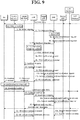
- FIG. 9 is a flow diagram illustrating a handover procedure that does not use Xn interface.
- a source NG-RAN transmits, to an AMF node, a message indicating that handover is required, and the AMF node transmits a PDU handover request message to an SMF node.
- handover is controlled by the AMF and SMF nodes.
- FIG. 10a is a flow diagram illustrating an example of a handover procedure that uses Xn interface, which is not accompanied by UPF relocation
- FIG. 10b is a flow diagram illustrating an example of a handover procedure that uses Xn interface, which is accompanied by UPF relocation.
- a handover procedure may be performed by a source NG-RAN and a target NG-RAN; and an AMF and SMF nodes may not control the handover procedure.
- an AMF node may provide LADN information to the UE. By using the LADN information, the UE may create a PDU session in the LADN. If the UE leaves the LADN region, the network may release the corresponding PDU session or release resources of the user plane. However, since an RAN is unable to determine whether the corresponding PDU session is intended for the LADN, if the UE leaves the LADN region while being in the CM-CONNECTED state, all PDU sessions may be handed over. If a handover procedure using Xn interface is performed, as shown in FIGS.
- the source NG-RAN since the handover procedure is performed without intervention of the core network (for example, the AMF and SMF nodes), the source NG-RAN does not know whether the corresponding PDU session is intended for the LADN. As a result, resources for all of the PDU sessions are transmitted from the source NG-RAN to the target NG-RAN. At this time, since radio resources for the LADN are also transmitted from the source NG-RAN to the target NG-RAN, the target NG-RAN performs radio resource reservation with respect to all of the PDU sessions including the LADN.
- the SMF node does not realize that the UE has left the LADN region until the target NG-RAN transmits a path switching request message to the core network (namely AMF node) after the handover procedure is completed.
- the SMF node may perform an operation of releasing the corresponding PDU session or releasing resources of the user plane.
- the SMF node may perform an operation of releasing the corresponding PDU session or releasing resources of the user plane.
- the target NG-RAN reserves radio resources of a PDU session for the corresponding LADN, resources are unnecessarily wasted.
- the same problem occurs when the UE located in a region allowed for a specific LADN moves into a non-allowed region.
- the target NG-RAN first of all reserves radio resources for a PDU session of the corresponding LADN.
- the AMF and/or SMF node then releases the PDU session of the corresponding LADN or releases resources of the user plane.
- the present disclosure is intended to provide a method for efficient management of a PDU session in the LADN.
- disclosures of the present specification provide the following methods for preventing PDU sessions for the LADN from being unnecessarily handed over to a target NG-RAN (namely a target gNB or a target cell) when a handover procedure using Xn interface is performed.
- a target NG-RAN namely a target gNB or a target cell
- First disclosure Method for transmitting region information about a specific PDU session to a RAN by an SMF and/or AMF node in a PDU session establishment procedure
- an SFM and/or AMF node transmits service region information with respect to the corresponding PDU session during the session establishment procedure.
- the information may be formulated in the form of a Tracking Area (TA) list or a cell list.
- a source NG-RAN that has received the information (namely a source gNB or a source cell) may not transmit context with respect to the corresponding PDU session to the target NG-RAN when a UE leaves the service region indicated by the information so that reservation of radio resources for the PDU session is not performed while the corresponding PDU session is handed over.
- the source NG-RAN may delete context with respect to the PDU session in advance or perform a procedure for releasing resources.
- the source NG-RAN may not perform handover using Xn interface with respect to a PDU session of the UE. Instead, the source NG-RAN may perform handover controlled by the core network for the PDU session of the UE, such as handover without using Xn interface or handover using N2 interface.
- FIG. 11a illustrates a PDU session establishment procedure improved by a first disclosure of the present specification.
- an SMF and/or AMF node may transmit, to the NG-RAN, service region information with respect to a PDU session, which is contained in the node.
- the SMF may manage service regions of the LADN, and the AMF may manage allowed/non-allowed service regions.
- the SMF node may transmit information about service regions of the LADN to the NG-RAN.
- the AMF node may transmit, to the NG-RAN, information about allowed/non-allowed service regions.
- the AMF node may manage service regions of the LADN, and the SMF node may manage allowed/non-allowed service regions.
- the AMF node may transmit LADN service region information to the NG-RAN while the SMF node may transmit information about allowed/non-allowed service regions to the NG-RAN.
- the allowed/non-allowed service regions may be applied separately for each UE.
- the corresponding information is not transmitted to the NG-RAN during the PDU session establishment procedure but may be transmitted to the NG-RAN during a registration procedure.
- the NG-RAN may determine a region common to both of the information (namely intersection regions) as a service region and determine to perform handover of the PDU session of the UE.
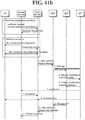
- FIG. 11b illustrates a handover procedure that uses Xn interface improved by a first disclosure of the present specification.
- a source NG-RAN may selectively include context with respect to a PDU session while transmitting a handover request message to a target NG-RAN during a handover preparation process. For example, in case a UE moves into a service region with respect to the corresponding PDU session, the source NG-RAN may transmit context with respect to the PDU session by including the context into the handover request message. However, in case the UE has to be handed over to a target NG-RAN outside the service region with respect to the corresponding PDU session, the source NG-RAN may transmit context with respect to the PDU session without including the context in the handover request message.
- the user plane with respect to the PDU session may be released. More specifically, if the AMF/SMF node determines, based on location information of the UE, that the UE has left a service region for the PDU session, the AMF/SMF node may release the corresponding PDU session of the UE or release resources of the user plane. The SMF node may obtain location information of the UE at the step 4.
- Second disclosure Method for transmitting an indication to an NG-RAN by an SMF and/or AMF node, which instructs not to perform a handover procedure using Xn interface during a PDU session establishment procedure
- an SMF and/or AMF node transmits, to the NG-RAN during the procedure for establishing the PDU session, an indication that instructs not to perform a handover procedure using Xn interface (namely, an Xn-based handover procedure) with respect to the corresponding PDU session.
- Xn interface namely, an Xn-based handover procedure
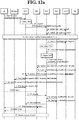
- FIG. 12a illustrates a PDU session establishment procedure improved by a first disclosure of the present specification.
- an SMF and/or AMF node transmits, to the NG-RAN, an indication that instructs not to perform a handover procedure using Xn interface (namely, an Xn-based handover procedure) for the corresponding PDU session.
- the indication may be a 'without Xn handover indication', for example.
- the SMF and/or AMF node may transmit an indication that instructs to perform a handover procedure using N2 interface (namely, an N2-based handover procedure).
- the SMF and/or AMF may transmit a configuration to the NG-RAN, which allows Xn-based handover to be performed for the PDU session of the UE.
- the SMF and/or AMF node may transmit an indication to the NG-RAN, which again allows Xn-based handover.
- the indication may be transmitted during the registration procedure by being included in a registration accept message. More specifically, the indication may be transmitted by being included in a registration accept message during the registration procedure.
- the AMF node transmits information related to the UE location to the SMF node (namely, information notifying that the UE has entered a service region)
- the SMF node may transmit the indication to the NG-RAN via the AMF node.
- the indication may be transmitted during the PDU session modification procedure.
- the allowed/non-allowed service region may be applied separately for each UE.
- the corresponding information may not be transmitted to the NG-RAN during the PDU session establishment procedure but may be transmitted to the NG-RAN during the registration procedure.
- the NG-RAN may determine a region common to both of the information (namely, an intersection region) as a service region and determine to perform handover of the PDU session of the UE.
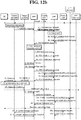
- FIG. 12b illustrates an example of performing a handover procedure that does not use Xn interface, based on an indication according to a second disclosure of the present specification.
- the source NG-RAN may perform a handover procedure without involving Xn interface as shown in FIG. 12b .
- the AMF and/or SMF node may obtain location information of the UE at the steps 1 and 2 and perform release of resources with respect to the corresponding PDU session or perform release of resources of the user plane.
- the source NG-RAN may transmit context with respect to the PDU session that may not be provided from the target NG-RAN by not including the context in a handover required message.
- the AMF and/or SMF node may configure the NG-RAN with a handover restriction list (HRL) for each PDU session.
- HRL handover restriction list
- the SMF and/or AMF node may configure the NG-RAN by including a region that does not service the corresponding PDU session in a handover restriction list (HRL).
- the configuration may be performed during a PDU session establishment procedure or during a registration update procedure. Although the configuration may be performed on a UE basis during a normal registration procedure, the configuration may be performed for each PDU session during the PDU session establishment procedure or during the registration update procedure.
- the NG-RAN is configured with a handover restriction list (HRL) for each PDU session. And based on the handover restriction list (HRL), the NG-RAN determines handover of the UE. If the UE moves to a restricted region indicated by the handover restriction list (HRL) configured with respect to the corresponding PDU session, the source NG-RAN may not transmit context with respect to the corresponding PDU session by not including the context in a handover request message or in a handover required message so that handover may not be performed for the corresponding PDU session.
- HRL handover restriction list
- the source NG-RAN is configured with multiple handover restriction lists (HRLs)
- the source NG-RAN selects a target NG-RAN or a target cell so that as many PDU sessions as possible may not be restricted by the HRL in performing handover. If there is no other choice but to hand over the UE to the target NG-RAN or target cell of a restricted region indicated by the handover restriction list (HRL), the target NG-RAN or target cell may be selected according to the priority mapped to each handover restriction list (HRL).
- the NG-RAN may also delete the handover restriction list (HRL) associated with the corresponding PDU session.
- HRL handover restriction list
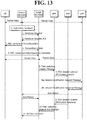
- FIG. 13 illustrates a handover procedure according to a third disclosure of the present specification.
- the source NG-RAN determines to perform handover based on a measurement report message received from the UE.
- the source NG-RAN may determine to which RAN or cell to hand over the UE. For example, rather than select a cell exhibiting the highest signal strength in a measurement report message received from the UE, the source NG-RAN may select, as a target cell, a cell with the highest signal strength from among the cells not indicated in the handover restriction list (HRL). In case no cell is available for handover among the cells not indicated in the handover restriction list (HRL), a target cell may be selected regardless of the handover restriction list (HRL).
- HRL handover restriction list
- priority may be configured for each handover restriction list (HRL).
- HRL handover restriction list
- a target cell may be selected so that as many PDU sessions as possible are not restricted by the handover restriction list (HRL) in performing handover.
- HRLs may be excluded one after the other from an HRL with the lowest priority, and the target cell may be selected as the one not indicated by a handover restriction list (HRL) with a possibly high priority.
- the network may configure a priority for the case when handover is allowed together with a priority for a handover restriction list (HRL) with respect to each PDU session.
- a priority namely service priority
- a priority namely priority of the HRL
- the source NG-RAN may consider priority of a handover restriction list (HRL) when selecting a target NG-RAN.
- the source NG-RAN transmits a handover request message to the target NG-RAN.
- the message may include the following parameters.
- Target cell global ID Includes E-UTRA CGI or NR CGI
- UE context information Includes UL tunnel information for each PDU session resource
- RRC context Includes a handover preparation information message
- the message includes a list of PDU session resources to be set up. The list usually includes information about all of the PDU sessions provided by the source NG-RAN. However, if the target NG-RAN is unable to provide a part of PDU sessions because of a handover restriction list (HRL), the source NG-RAN may transmit the HRL by excluding information about the corresponding part of the PDU sessions within the handover restriction list.
- HRL handover restriction list
- the source NG-RAN may transmit handover restriction lists (HRLs) to the target NG-RAN.
- the source NG-RAN may transmit the handover restriction lists (HRLs) by excluding information about the HRLs with respect to the corresponding PDU sessions.
- the source NG-RAN may transmit, to the target NG-RAN, information about which PDU sessions are not handed over so that a list of PDU sessions that are rejected may be transmitted when the target NG-RAN transmits a path switching request message at the step 6 to be described later. 2)
- the target NG-RAN may determine, based on the information transmitted from the source NG-RAN, which PDU sessions to be serviced.
- the target NG-RAN may transmit, to the source NG-RAN, an Ack message indicating that handover is available.
- the target NG-RAN itself may inform the source NG-RAN, at the step 2, about which service may be provided by determining from the handover restriction list (HRL).
- HRL handover restriction list
- the target NG-RAN itself may generate a list of PDU sessions to be rejected.
- the source NG-RAN performs an RRC connection reconfiguration procedure to hand over the UE. 4) The source NG-RAN starts forwarding of data to the target NG-RAN.
- the UE transmits an RRC connection complete message after being handed over to the target NG-RAN.
- the target NG-RAN transmits, to the AMF node, a list of PDU sessions which have been successfully handed over and a list of rejected PDU sessions by including the lists in a path switching request message.
- the AMF node transmits information for updating N3 tunnel information to the SMF nodes that manage PDU sessions which have been successfully handed over.
- the SMF node updates the N3 tunnel information through interaction with the UPF node.
- the AMF node provides the SMF node that manages rejected PDU sessions with information about the corresponding PDU sessions.
- the SMF node may release or deactivate PDU sessions for which handover is not performed. If the AMF node does not receive, from the target NG-RAN, information about all of the PDU sessions known to the AMF node, the AMF node determines that the corresponding PDU sessions have not been handed over and informs the SMF node of the determination. The SMF node may release or deactivate the corresponding PDU sessions. 10) By transmitting a path switching request accept message to the target NG-RAN, the AMF node informs that handover has been successfully performed. 11) The target NG-RAN transmits a UE context release message to the source RAN. Then the source NG-RAN deletes context of the corresponding UE.
- the UE receives LADN information or allowed/non-allowed region information and manages the received information. Therefore, based on the received information, when the UE performs a measurement report to the gNB, the UE may exclude the cells located outside service regions from the measurement report. By doing so, the UE may continue to stay in a service region. However, in case there are only those cells located outside the service regions, the UE may also have to perform a measurement report for the corresponding cells. Afterwards, if the UE leaves all of the service regions, a normal handover process may be performed.
- the gNB Since the gNB knows its neighboring cells, if the gNB determines that the UE performs a measurement report again while not performing a measurement report with respect to a specific cell, the gNB may perform handover without using Xn interface rather than perform handover by using Xn interface.
- the allowed/non-allowed service region may be applied separately for each UE.
- the corresponding information may be transmitted to the NG-RAN during the registration procedure rather than the PDU session establishment procedure.
- the NG-RAN may determine a region common to both of the information (namely, an intersection region) as a service region and determine to perform handover of the PDU session of the UE.
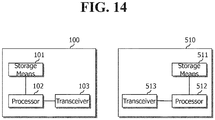
- FIG. 14 illustrates block diagrams of a UE and a network node according to an embodiment of the present disclosure.
- the UE 100 comprises a storage means 101, a processor 102, and a transceiver 103.
- the network node may be an access network (AN), radio access network (RAN), AMF, CP functional node, or SMF.
- the network node may comprise a storage means 511, a processor 512, and a transceiver 513.
- the storage means store the method described above.
- the processors are configured to control the storage means and the transceivers. More specifically, the processors perform the methods stored in the storage means, respectively. And the processors are configured to transmit the signals described above through the transceivers.
Landscapes
- Engineering & Computer Science (AREA)
- Computer Networks & Wireless Communication (AREA)
- Signal Processing (AREA)
- Mobile Radio Communication Systems (AREA)
Applications Claiming Priority (2)
| Application Number | Priority Date | Filing Date | Title |
|---|---|---|---|
| US201762516087P | 2017-06-06 | 2017-06-06 | |
| PCT/KR2018/006388 WO2018226006A1 (fr) | 2017-06-06 | 2018-06-05 | Procédé et cellule de détermination d'un transfert intercellulaire d'une session de pdu |
Publications (3)
| Publication Number | Publication Date |
|---|---|
| EP3618499A1 true EP3618499A1 (fr) | 2020-03-04 |
| EP3618499A4 EP3618499A4 (fr) | 2020-12-23 |
| EP3618499B1 EP3618499B1 (fr) | 2023-08-02 |
Family
ID=64565963
Family Applications (1)
| Application Number | Title | Priority Date | Filing Date |
|---|---|---|---|
| EP18813924.0A Active EP3618499B1 (fr) | 2017-06-06 | 2018-06-05 | Procédé et cellule de détermination d'un transfert intercellulaire d'une session de pdu |
Country Status (5)
| Country | Link |
|---|---|
| US (1) | US10708830B2 (fr) |
| EP (1) | EP3618499B1 (fr) |
| JP (1) | JP6823207B2 (fr) |
| CN (1) | CN110741680B (fr) |
| WO (1) | WO2018226006A1 (fr) |
Cited By (1)
| Publication number | Priority date | Publication date | Assignee | Title |
|---|---|---|---|---|
| WO2022014291A3 (fr) * | 2020-07-17 | 2022-03-10 | Nec Corporation | Continuité de service sur l'ensemble des tranches de réseau |
Families Citing this family (14)
| Publication number | Priority date | Publication date | Assignee | Title |
|---|---|---|---|---|
| GB201018633D0 (en) | 2010-11-04 | 2010-12-22 | Nec Corp | Communication system |
| JP2019145858A (ja) * | 2016-06-30 | 2019-08-29 | シャープ株式会社 | 端末装置、制御装置、及び通信制御方法 |
| KR102329925B1 (ko) * | 2017-08-14 | 2021-11-23 | 삼성전자 주식회사 | 4g/5g 동시 등록된 이동 통신 단말을 위한 네트워크 이동시 데이터 동기화 제공 방안 |
| WO2019165629A1 (fr) * | 2018-03-01 | 2019-09-06 | 华为技术有限公司 | Procédé et appareil de gestion de session, et système de communication |
| US20190313311A1 (en) | 2018-04-09 | 2019-10-10 | Mediatek Inc. | Apparatuses, service networks, and methods for handling plmn-specific parameters for an inter-plmn handover |
| US11026124B2 (en) | 2018-07-02 | 2021-06-01 | Mediatek Inc. | Enhanced handling on 5G QoS operations |
| WO2020032101A1 (fr) * | 2018-08-09 | 2020-02-13 | Nec Corporation | Comportement d'équipement utilisateur dans une zone autorisée ou dans une zone non autorisée |
| US11039369B2 (en) | 2018-08-10 | 2021-06-15 | Mediatek Inc. | Handling 5G QoS rules on QoS operation errors |
| WO2020030102A1 (fr) | 2018-08-10 | 2020-02-13 | Telefonaktiebolaget Lm Ericsson (Publ) | Procédés et nœuds pour faciliter une procédure de session pdu dans des réseaux d'interfonctionnement |
| WO2020102795A1 (fr) * | 2018-11-16 | 2020-05-22 | Talebi Fard Peyman | Déclenchement d'application pour un dispositif sans fil |
| WO2020116945A1 (fr) * | 2018-12-05 | 2020-06-11 | Samsung Electronics Co., Ltd. | Procédé et système permettant de hiérarchiser la sélection de cellules |
| WO2021029513A1 (fr) * | 2019-08-09 | 2021-02-18 | 엘지전자 주식회사 | Opération liée à un changement de serveur d'application |
| EP4125281A1 (fr) * | 2021-07-30 | 2023-02-01 | Nokia Technologies Oy | Procédé et appareil pour système de distribution de services de diffusion groupée |
| CN116546570A (zh) * | 2023-03-29 | 2023-08-04 | 南京泰通科技股份有限公司 | 5G会话SSC mode2实现方法 |
Family Cites Families (24)
| Publication number | Priority date | Publication date | Assignee | Title |
|---|---|---|---|---|
| US7382750B2 (en) * | 2003-07-02 | 2008-06-03 | High Tech Computer Corp. | Inter-RAT handover to UTRAN with simultaneous PS and CS domain sevices |
| US7792528B2 (en) * | 2005-06-24 | 2010-09-07 | Aylus Networks, Inc. | Method and system for provisioning IMS networks with virtual service organizations having distinct service logic |
| EP1903820B1 (fr) * | 2006-09-20 | 2019-12-18 | Samsung Electronics Co., Ltd. | Procédé de transfert et appareil dans un système de communication mobile |
| CA2662572A1 (fr) * | 2006-10-03 | 2008-04-10 | Qualcomm Incorporated | Transfert intercellulaire vers une cellule d'une station de base cible dans un systeme de communication sans fil |
| WO2008115447A2 (fr) * | 2007-03-15 | 2008-09-25 | Interdigital Technology Corporation | Procédés et appareil pour faciliter un transfert de données et de contexte de sécurité, et réinitialisation pendant un transfert de dispositif mobile |
| US8451795B2 (en) * | 2007-08-08 | 2013-05-28 | Qualcomm Incorporated | Handover in a wireless data packet communication system that avoid user data loss |
| EP2046090A1 (fr) * | 2007-10-02 | 2009-04-08 | Panasonic Corporation | Gestion de signalisation de contrôle de session pour services de multidiffusion/radiodiffusion |
| KR101488015B1 (ko) * | 2008-01-25 | 2015-01-29 | 엘지전자 주식회사 | 핸드오버 수행방법 및 데이터 생성방법 |
| US8811302B2 (en) * | 2009-03-26 | 2014-08-19 | Qualcomm Incorporated | Regulating the scope of service geographically in wireless networks |
| CN102369759B (zh) * | 2009-04-10 | 2013-10-09 | 华为技术有限公司 | 切换方法、装置和系统 |
| KR20110020161A (ko) * | 2009-08-21 | 2011-03-02 | 엘지전자 주식회사 | 이동통신 네트워크 내에서 제어 평면(Control Plane)을 담당하는 서버 및 SIPTO 기반의 세션을 제어하는 방법 |
| WO2011052136A1 (fr) * | 2009-10-30 | 2011-05-05 | Panasonic Corporation | Système et appareil de communication pour services mobiles dépendant du statut |
| CN102065495A (zh) * | 2009-11-13 | 2011-05-18 | 大唐移动通信设备有限公司 | 一种选择目标小区的方法、系统及一种基站 |
| EP2509345A1 (fr) * | 2011-04-05 | 2012-10-10 | Panasonic Corporation | Transmissions améliorées de petites données pour dispositifs de communication de type machine |
| US20140078898A1 (en) * | 2012-09-19 | 2014-03-20 | Qualcomm Incorporated | Handing off between networks with different radio access technologies during a communication session that is allocated quality of service |
| CN110650505B (zh) * | 2013-03-21 | 2022-04-08 | 北京三星通信技术研究有限公司 | 一种支持切换的方法 |
| WO2014158002A1 (fr) * | 2013-03-29 | 2014-10-02 | Lg Electronics Inc. | Procédé et appareil de transmission d'un message de demande de transfert dans un système de communication sans fil |
| WO2017030343A1 (fr) | 2015-08-17 | 2017-02-23 | 엘지전자 주식회사 | Procédé de repositionnement de passerelle et procédé de génération d'un support dédié |
| CN107371215B (zh) * | 2016-05-13 | 2021-07-27 | 北京三星通信技术研究有限公司 | 一种轻连接控制的方法及设备 |
| ES2777625T3 (es) * | 2016-07-04 | 2020-08-05 | Ericsson Telefon Ab L M | Técnica para reubicación de ancla de protocolo de internet |
| EP3499964B1 (fr) * | 2016-08-10 | 2021-06-23 | Nec Corporation | Noeud de réseau d'accès sans fil, terminal sans fil, noeud de réseau central, et procédés associés |
| US10462840B2 (en) * | 2017-01-09 | 2019-10-29 | Huawei Technologies Co., Ltd. | System and methods for session management |
| US10470199B2 (en) * | 2017-01-10 | 2019-11-05 | Htc Corporation | Device and method of handling a PDU session in inter-system mobility between a LTE system and a NR/5G system |
| CN110226343B (zh) * | 2017-03-24 | 2021-11-09 | 瑞典爱立信有限公司 | 无线设备、无线电网络节点以及在其中执行的用于处理无线通信网络中的通信的方法 |
-
2018
- 2018-06-05 JP JP2019567363A patent/JP6823207B2/ja active Active
- 2018-06-05 US US16/613,107 patent/US10708830B2/en active Active
- 2018-06-05 EP EP18813924.0A patent/EP3618499B1/fr active Active
- 2018-06-05 WO PCT/KR2018/006388 patent/WO2018226006A1/fr not_active Ceased
- 2018-06-05 CN CN201880037447.2A patent/CN110741680B/zh active Active
Cited By (1)
| Publication number | Priority date | Publication date | Assignee | Title |
|---|---|---|---|---|
| WO2022014291A3 (fr) * | 2020-07-17 | 2022-03-10 | Nec Corporation | Continuité de service sur l'ensemble des tranches de réseau |
Also Published As
| Publication number | Publication date |
|---|---|
| US10708830B2 (en) | 2020-07-07 |
| CN110741680B (zh) | 2022-10-14 |
| CN110741680A (zh) | 2020-01-31 |
| JP6823207B2 (ja) | 2021-01-27 |
| WO2018226006A1 (fr) | 2018-12-13 |
| EP3618499A4 (fr) | 2020-12-23 |
| JP2020522954A (ja) | 2020-07-30 |
| US20200100147A1 (en) | 2020-03-26 |
| EP3618499B1 (fr) | 2023-08-02 |
Similar Documents
| Publication | Publication Date | Title |
|---|---|---|
| EP3618499B1 (fr) | Procédé et cellule de détermination d'un transfert intercellulaire d'une session de pdu | |
| US11382005B2 (en) | Method for managing session and SMF node | |
| US11528763B2 (en) | Method of processing establishment of MA PDU session, and AMF node and SMF node | |
| US11178589B2 (en) | Method and user equipment for performing attach request procedure | |
| US10869244B2 (en) | Method and user equipment for fallback for voice call from 5G mobile communication to 4G | |
| US11109280B2 (en) | Method for PDU session establishment procedure and AMF node | |
| US11576043B2 (en) | Session management method and SMF node | |
| US11457403B2 (en) | Method and user equipment for performing access control in 5GS | |
| EP3477993B1 (fr) | Procédé de traitement d'une procédure d'établissement de session pdu et noeud amf | |
| US11172459B2 (en) | Method for managing session, and SMF node for performing method | |
| EP3697170B1 (fr) | Procédés, équipement d'utilisateur et amf permettant le lancement d'une procédure de demande de service | |
| US20200128432A1 (en) | Method and smf for supporting qos | |
| US20160150496A1 (en) | Service request method, and user equipment | |
| US11096053B2 (en) | Method for managing session |
Legal Events
| Date | Code | Title | Description |
|---|---|---|---|
| STAA | Information on the status of an ep patent application or granted ep patent |
Free format text: STATUS: THE INTERNATIONAL PUBLICATION HAS BEEN MADE |
|
| PUAI | Public reference made under article 153(3) epc to a published international application that has entered the european phase |
Free format text: ORIGINAL CODE: 0009012 |
|
| STAA | Information on the status of an ep patent application or granted ep patent |
Free format text: STATUS: REQUEST FOR EXAMINATION WAS MADE |
|
| 17P | Request for examination filed |
Effective date: 20191118 |
|
| AK | Designated contracting states |
Kind code of ref document: A1 Designated state(s): AL AT BE BG CH CY CZ DE DK EE ES FI FR GB GR HR HU IE IS IT LI LT LU LV MC MK MT NL NO PL PT RO RS SE SI SK SM TR |
|
| AX | Request for extension of the european patent |
Extension state: BA ME |
|
| DAV | Request for validation of the european patent (deleted) | ||
| DAX | Request for extension of the european patent (deleted) | ||
| A4 | Supplementary search report drawn up and despatched |
Effective date: 20201125 |
|
| RIC1 | Information provided on ipc code assigned before grant |
Ipc: H04W 36/00 20090101AFI20201119BHEP |
|
| RIC1 | Information provided on ipc code assigned before grant |
Ipc: H04W 36/00 20090101AFI20221121BHEP |
|
| GRAP | Despatch of communication of intention to grant a patent |
Free format text: ORIGINAL CODE: EPIDOSNIGR1 |
|
| STAA | Information on the status of an ep patent application or granted ep patent |
Free format text: STATUS: GRANT OF PATENT IS INTENDED |
|
| INTG | Intention to grant announced |
Effective date: 20230103 |
|
| GRAS | Grant fee paid |
Free format text: ORIGINAL CODE: EPIDOSNIGR3 |
|
| GRAA | (expected) grant |
Free format text: ORIGINAL CODE: 0009210 |
|
| STAA | Information on the status of an ep patent application or granted ep patent |
Free format text: STATUS: THE PATENT HAS BEEN GRANTED |
|
| AK | Designated contracting states |
Kind code of ref document: B1 Designated state(s): AL AT BE BG CH CY CZ DE DK EE ES FI FR GB GR HR HU IE IS IT LI LT LU LV MC MK MT NL NO PL PT RO RS SE SI SK SM TR |
|
| REG | Reference to a national code |
Ref country code: GB Ref legal event code: FG4D |
|
| REG | Reference to a national code |
Ref country code: CH Ref legal event code: EP |
|
| REG | Reference to a national code |
Ref country code: DE Ref legal event code: R096 Ref document number: 602018054662 Country of ref document: DE |
|
| REG | Reference to a national code |
Ref country code: IE Ref legal event code: FG4D |
|
| REG | Reference to a national code |
Ref country code: LT Ref legal event code: MG9D |
|
| REG | Reference to a national code |
Ref country code: NL Ref legal event code: MP Effective date: 20230802 |
|
| REG | Reference to a national code |
Ref country code: AT Ref legal event code: MK05 Ref document number: 1596241 Country of ref document: AT Kind code of ref document: T Effective date: 20230802 |
|
| PG25 | Lapsed in a contracting state [announced via postgrant information from national office to epo] |
Ref country code: GR Free format text: LAPSE BECAUSE OF FAILURE TO SUBMIT A TRANSLATION OF THE DESCRIPTION OR TO PAY THE FEE WITHIN THE PRESCRIBED TIME-LIMIT Effective date: 20231103 |
|
| PG25 | Lapsed in a contracting state [announced via postgrant information from national office to epo] |
Ref country code: IS Free format text: LAPSE BECAUSE OF FAILURE TO SUBMIT A TRANSLATION OF THE DESCRIPTION OR TO PAY THE FEE WITHIN THE PRESCRIBED TIME-LIMIT Effective date: 20231202 |
|
| PG25 | Lapsed in a contracting state [announced via postgrant information from national office to epo] |
Ref country code: SE Free format text: LAPSE BECAUSE OF FAILURE TO SUBMIT A TRANSLATION OF THE DESCRIPTION OR TO PAY THE FEE WITHIN THE PRESCRIBED TIME-LIMIT Effective date: 20230802 Ref country code: RS Free format text: LAPSE BECAUSE OF FAILURE TO SUBMIT A TRANSLATION OF THE DESCRIPTION OR TO PAY THE FEE WITHIN THE PRESCRIBED TIME-LIMIT Effective date: 20230802 Ref country code: PT Free format text: LAPSE BECAUSE OF FAILURE TO SUBMIT A TRANSLATION OF THE DESCRIPTION OR TO PAY THE FEE WITHIN THE PRESCRIBED TIME-LIMIT Effective date: 20231204 Ref country code: NO Free format text: LAPSE BECAUSE OF FAILURE TO SUBMIT A TRANSLATION OF THE DESCRIPTION OR TO PAY THE FEE WITHIN THE PRESCRIBED TIME-LIMIT Effective date: 20231102 Ref country code: NL Free format text: LAPSE BECAUSE OF FAILURE TO SUBMIT A TRANSLATION OF THE DESCRIPTION OR TO PAY THE FEE WITHIN THE PRESCRIBED TIME-LIMIT Effective date: 20230802 Ref country code: LV Free format text: LAPSE BECAUSE OF FAILURE TO SUBMIT A TRANSLATION OF THE DESCRIPTION OR TO PAY THE FEE WITHIN THE PRESCRIBED TIME-LIMIT Effective date: 20230802 Ref country code: LT Free format text: LAPSE BECAUSE OF FAILURE TO SUBMIT A TRANSLATION OF THE DESCRIPTION OR TO PAY THE FEE WITHIN THE PRESCRIBED TIME-LIMIT Effective date: 20230802 Ref country code: IS Free format text: LAPSE BECAUSE OF FAILURE TO SUBMIT A TRANSLATION OF THE DESCRIPTION OR TO PAY THE FEE WITHIN THE PRESCRIBED TIME-LIMIT Effective date: 20231202 Ref country code: HR Free format text: LAPSE BECAUSE OF FAILURE TO SUBMIT A TRANSLATION OF THE DESCRIPTION OR TO PAY THE FEE WITHIN THE PRESCRIBED TIME-LIMIT Effective date: 20230802 Ref country code: GR Free format text: LAPSE BECAUSE OF FAILURE TO SUBMIT A TRANSLATION OF THE DESCRIPTION OR TO PAY THE FEE WITHIN THE PRESCRIBED TIME-LIMIT Effective date: 20231103 Ref country code: FI Free format text: LAPSE BECAUSE OF FAILURE TO SUBMIT A TRANSLATION OF THE DESCRIPTION OR TO PAY THE FEE WITHIN THE PRESCRIBED TIME-LIMIT Effective date: 20230802 Ref country code: AT Free format text: LAPSE BECAUSE OF FAILURE TO SUBMIT A TRANSLATION OF THE DESCRIPTION OR TO PAY THE FEE WITHIN THE PRESCRIBED TIME-LIMIT Effective date: 20230802 |
|
| PG25 | Lapsed in a contracting state [announced via postgrant information from national office to epo] |
Ref country code: PL Free format text: LAPSE BECAUSE OF FAILURE TO SUBMIT A TRANSLATION OF THE DESCRIPTION OR TO PAY THE FEE WITHIN THE PRESCRIBED TIME-LIMIT Effective date: 20230802 |
|
| PG25 | Lapsed in a contracting state [announced via postgrant information from national office to epo] |
Ref country code: ES Free format text: LAPSE BECAUSE OF FAILURE TO SUBMIT A TRANSLATION OF THE DESCRIPTION OR TO PAY THE FEE WITHIN THE PRESCRIBED TIME-LIMIT Effective date: 20230802 |
|
| PG25 | Lapsed in a contracting state [announced via postgrant information from national office to epo] |
Ref country code: SM Free format text: LAPSE BECAUSE OF FAILURE TO SUBMIT A TRANSLATION OF THE DESCRIPTION OR TO PAY THE FEE WITHIN THE PRESCRIBED TIME-LIMIT Effective date: 20230802 Ref country code: RO Free format text: LAPSE BECAUSE OF FAILURE TO SUBMIT A TRANSLATION OF THE DESCRIPTION OR TO PAY THE FEE WITHIN THE PRESCRIBED TIME-LIMIT Effective date: 20230802 Ref country code: ES Free format text: LAPSE BECAUSE OF FAILURE TO SUBMIT A TRANSLATION OF THE DESCRIPTION OR TO PAY THE FEE WITHIN THE PRESCRIBED TIME-LIMIT Effective date: 20230802 Ref country code: EE Free format text: LAPSE BECAUSE OF FAILURE TO SUBMIT A TRANSLATION OF THE DESCRIPTION OR TO PAY THE FEE WITHIN THE PRESCRIBED TIME-LIMIT Effective date: 20230802 Ref country code: DK Free format text: LAPSE BECAUSE OF FAILURE TO SUBMIT A TRANSLATION OF THE DESCRIPTION OR TO PAY THE FEE WITHIN THE PRESCRIBED TIME-LIMIT Effective date: 20230802 Ref country code: CZ Free format text: LAPSE BECAUSE OF FAILURE TO SUBMIT A TRANSLATION OF THE DESCRIPTION OR TO PAY THE FEE WITHIN THE PRESCRIBED TIME-LIMIT Effective date: 20230802 Ref country code: SK Free format text: LAPSE BECAUSE OF FAILURE TO SUBMIT A TRANSLATION OF THE DESCRIPTION OR TO PAY THE FEE WITHIN THE PRESCRIBED TIME-LIMIT Effective date: 20230802 |
|
| REG | Reference to a national code |
Ref country code: DE Ref legal event code: R097 Ref document number: 602018054662 Country of ref document: DE |
|
| PG25 | Lapsed in a contracting state [announced via postgrant information from national office to epo] |
Ref country code: IT Free format text: LAPSE BECAUSE OF FAILURE TO SUBMIT A TRANSLATION OF THE DESCRIPTION OR TO PAY THE FEE WITHIN THE PRESCRIBED TIME-LIMIT Effective date: 20230802 |
|
| PLBE | No opposition filed within time limit |
Free format text: ORIGINAL CODE: 0009261 |
|
| STAA | Information on the status of an ep patent application or granted ep patent |
Free format text: STATUS: NO OPPOSITION FILED WITHIN TIME LIMIT |
|
| 26N | No opposition filed |
Effective date: 20240503 |
|
| PG25 | Lapsed in a contracting state [announced via postgrant information from national office to epo] |
Ref country code: SI Free format text: LAPSE BECAUSE OF FAILURE TO SUBMIT A TRANSLATION OF THE DESCRIPTION OR TO PAY THE FEE WITHIN THE PRESCRIBED TIME-LIMIT Effective date: 20230802 |
|
| PG25 | Lapsed in a contracting state [announced via postgrant information from national office to epo] |
Ref country code: BG Free format text: LAPSE BECAUSE OF FAILURE TO SUBMIT A TRANSLATION OF THE DESCRIPTION OR TO PAY THE FEE WITHIN THE PRESCRIBED TIME-LIMIT Effective date: 20230802 |
|
| PG25 | Lapsed in a contracting state [announced via postgrant information from national office to epo] |
Ref country code: BG Free format text: LAPSE BECAUSE OF FAILURE TO SUBMIT A TRANSLATION OF THE DESCRIPTION OR TO PAY THE FEE WITHIN THE PRESCRIBED TIME-LIMIT Effective date: 20230802 |
|
| PG25 | Lapsed in a contracting state [announced via postgrant information from national office to epo] |
Ref country code: MC Free format text: LAPSE BECAUSE OF FAILURE TO SUBMIT A TRANSLATION OF THE DESCRIPTION OR TO PAY THE FEE WITHIN THE PRESCRIBED TIME-LIMIT Effective date: 20230802 |
|
| REG | Reference to a national code |
Ref country code: CH Ref legal event code: PL |
|
| PG25 | Lapsed in a contracting state [announced via postgrant information from national office to epo] |
Ref country code: LU Free format text: LAPSE BECAUSE OF NON-PAYMENT OF DUE FEES Effective date: 20240605 |
|
| GBPC | Gb: european patent ceased through non-payment of renewal fee |
Effective date: 20240605 |
|
| PG25 | Lapsed in a contracting state [announced via postgrant information from national office to epo] |
Ref country code: IE Free format text: LAPSE BECAUSE OF NON-PAYMENT OF DUE FEES Effective date: 20240605 |
|
| PG25 | Lapsed in a contracting state [announced via postgrant information from national office to epo] |
Ref country code: BE Free format text: LAPSE BECAUSE OF NON-PAYMENT OF DUE FEES Effective date: 20240630 Ref country code: CH Free format text: LAPSE BECAUSE OF NON-PAYMENT OF DUE FEES Effective date: 20240630 |
|
| PG25 | Lapsed in a contracting state [announced via postgrant information from national office to epo] |
Ref country code: FR Free format text: LAPSE BECAUSE OF NON-PAYMENT OF DUE FEES Effective date: 20240630 |
|
| PG25 | Lapsed in a contracting state [announced via postgrant information from national office to epo] |
Ref country code: GB Free format text: LAPSE BECAUSE OF NON-PAYMENT OF DUE FEES Effective date: 20240605 |
|
| REG | Reference to a national code |
Ref country code: BE Ref legal event code: MM Effective date: 20240630 |
|
| PGFP | Annual fee paid to national office [announced via postgrant information from national office to epo] |
Ref country code: DE Payment date: 20250508 Year of fee payment: 8 |
|
| PG25 | Lapsed in a contracting state [announced via postgrant information from national office to epo] |
Ref country code: CY Free format text: LAPSE BECAUSE OF FAILURE TO SUBMIT A TRANSLATION OF THE DESCRIPTION OR TO PAY THE FEE WITHIN THE PRESCRIBED TIME-LIMIT; INVALID AB INITIO Effective date: 20180605 |
|
| PG25 | Lapsed in a contracting state [announced via postgrant information from national office to epo] |
Ref country code: HU Free format text: LAPSE BECAUSE OF FAILURE TO SUBMIT A TRANSLATION OF THE DESCRIPTION OR TO PAY THE FEE WITHIN THE PRESCRIBED TIME-LIMIT; INVALID AB INITIO Effective date: 20180605 |