EP3619957B1 - Procédés et systèmes de réduction du temps d'acquisition d'informations de système (si) - Google Patents
Procédés et systèmes de réduction du temps d'acquisition d'informations de système (si) Download PDFInfo
- Publication number
- EP3619957B1 EP3619957B1 EP18727434.5A EP18727434A EP3619957B1 EP 3619957 B1 EP3619957 B1 EP 3619957B1 EP 18727434 A EP18727434 A EP 18727434A EP 3619957 B1 EP3619957 B1 EP 3619957B1
- Authority
- EP
- European Patent Office
- Prior art keywords
- mib
- indication
- time period
- sib1
- information
- Prior art date
- Legal status (The legal status is an assumption and is not a legal conclusion. Google has not performed a legal analysis and makes no representation as to the accuracy of the status listed.)
- Active
Links
Images





Classifications
-
- H—ELECTRICITY
- H04—ELECTRIC COMMUNICATION TECHNIQUE
- H04W—WIRELESS COMMUNICATION NETWORKS
- H04W4/00—Services specially adapted for wireless communication networks; Facilities therefor
- H04W4/70—Services for machine-to-machine communication [M2M] or machine type communication [MTC]
-
- H—ELECTRICITY
- H04—ELECTRIC COMMUNICATION TECHNIQUE
- H04W—WIRELESS COMMUNICATION NETWORKS
- H04W48/00—Access restriction; Network selection; Access point selection
- H04W48/08—Access restriction or access information delivery, e.g. discovery data delivery
-
- H—ELECTRICITY
- H04—ELECTRIC COMMUNICATION TECHNIQUE
- H04W—WIRELESS COMMUNICATION NETWORKS
- H04W48/00—Access restriction; Network selection; Access point selection
- H04W48/08—Access restriction or access information delivery, e.g. discovery data delivery
- H04W48/10—Access restriction or access information delivery, e.g. discovery data delivery using broadcasted information
-
- H—ELECTRICITY
- H04—ELECTRIC COMMUNICATION TECHNIQUE
- H04W—WIRELESS COMMUNICATION NETWORKS
- H04W52/00—Power management, e.g. Transmission Power Control [TPC] or power classes
- H04W52/02—Power saving arrangements
- H04W52/0209—Power saving arrangements in terminal devices
- H04W52/0225—Power saving arrangements in terminal devices using monitoring of external events, e.g. the presence of a signal
-
- H—ELECTRICITY
- H04—ELECTRIC COMMUNICATION TECHNIQUE
- H04W—WIRELESS COMMUNICATION NETWORKS
- H04W52/00—Power management, e.g. Transmission Power Control [TPC] or power classes
- H04W52/02—Power saving arrangements
- H04W52/0209—Power saving arrangements in terminal devices
- H04W52/0225—Power saving arrangements in terminal devices using monitoring of external events, e.g. the presence of a signal
- H04W52/0248—Power saving arrangements in terminal devices using monitoring of external events, e.g. the presence of a signal dependent on the time of the day, e.g. according to expected transmission activity
-
- H—ELECTRICITY
- H04—ELECTRIC COMMUNICATION TECHNIQUE
- H04W—WIRELESS COMMUNICATION NETWORKS
- H04W8/00—Network data management
- H04W8/02—Processing of mobility data, e.g. registration information at HLR [Home Location Register] or VLR [Visitor Location Register]; Transfer of mobility data, e.g. between HLR, VLR or external networks
- H04W8/08—Mobility data transfer
Definitions
- a user equipment e.g., an Internet-of-Things (IoT) device, a machine-type-communication (MTC) device, or other communication device
- IoT Internet-of-Things
- MTC machine-type-communication
- SIB System Information Block
- SIB1-BR System Information Block
- M2M Machine-to-Machine
- IoT Internet of Things
- Most recent work for 3GPP Release 13 includes enhancements to support Machine-Type Communications (MTC) with a new UE category M1 (Cat-M1), supporting reduced maximum bandwidth of up to 6 physical resource blocks (PRBs), and Narrowband IoT (NB-IoT) work item specifying a new radio interface (and UE category NB1, Cat-NB1).
- MTC Machine-Type Communications
- PRBs physical resource blocks
- NB-IoT Narrowband IoT work item specifying a new radio interface (and UE category NB1, Cat-NB1).
- SIB1-BR/SIB1-NB scheduling information included in MIB/MIB-NB
- SIB1-BR/SIB1-NB scheduling information included in MIB/MIB-NB
- system information messages fixed scheduling inside system information window provided in SIB1-BR/SIB1-NB
- the drawback of this is an increase in system overhead (i.e., more radio resources are consumed by continuous (“always-on") control signaling broadcast).
- the system acquisition procedure is in general the same for eMTC and NB-IoT as for LTE: the UE first achieves downlink synchronization by reading PSS/SSS, then the UE reads the MIB, then SIB1 (e.g., SB1-BR), and finally the SI-messages are acquired (each possibly containing multiple SIBs).
- Narrowband IoT Narrowband IoT
- the objective is to specify a radio access for cellular internet of things (IoT) that addresses improved indoor coverage, support for massive number of low throughput devices, not sensitive to delay, ultra-low device cost, low device power consumption and (optimized) network architecture.
- IoT internet of things
- NB-IoT For NB-IoT, three different operation modes are defined, i.e., stand-alone, guard-band, and in-band.
- stand-alone mode the NB-IoT system is operated in dedicated frequency bands.
- the NB-IoT system can be placed inside the frequency bands used by the current LTE system, while in the guard-band mode, the NB-IoT system can be operated in the guard band used by the current (legacy) LTE system.
- NB-IoT can operate with a system bandwidth of 180 kHz. When multiple carriers are configured, several 180 kHz carriers can be used, e.g., for increasing the system capacity, inter-cell interference coordination, load balancing, etc.
- the NB-IoT device listens to the system information on the anchor carrier, but when there is data, the communication can be moved to a secondary carrier.
- RAN1 generally outlines some areas in which RAN2 could provide improvements (on top of the considered RAN1 improvements). In principle, this is just raising the question to RAN2 whether some SI broadcast messages could be skipped by the UE in some situations, and the case of most interest here is skipping SIB1-BR reading).
- SIB1-BR reading the content of the LTE-M MIB is shown below in Table 1:
- NB-IoT The most noticeable difference to NB-IoT is that, in NB-IoT, the valueTag is not present in MIB but is instead located in SIB1-BR.
- the SIB1-BR contains the following: i) access information, ii) system information valueTag, iii) hyper system frame number (H-SFN), iv) a bitmap indicating the valid subframes, v) the starting OFDM symbol for MPDCCH and PDSCH (essentially replacing PCFICH), and vi) scheduling information of other SI messages.
- MIB spare bits will likely be used for other purposes, still related to ⁇ reduced system acquisition time' e.g. to have the access barring enabled flag ( ab-Enabled ) in MIB as for NB-IoT.
- ab-Enabled access barring enabled flag
- Another problem with including the valueTag in the MIB is that this will result in broadcasting redundant information, in worst case 5 bits, increasing the system overhead.
- Another approach is to use fewer bit for the valueTag (e.g., 2 bits instead of 5). With 5 bits the network can update the system information up to 32 times during the SI validity time of 3h or 24h (this is up to the configuration).
- a valueTag of fewer than 5 bits is used instead, this means that the network will be restricted to change SI fewer than 32 times (e.g., 2 or 4 times) during the SI validity time. This is a quite intrusive change to legacy operation, e.g. a 2 bit valueTag would mean that the network can only update the SI 4 times during this period.
- certain embodiments presented herein make use of an indication (a one bit flag) in the MIB that is set to a particular value if the UE needs to read certain SI (e.g. SIB1-BR), otherwise the MIB indication is set to a different value.
- This MIB indication is unlike a valueTag in the sense that upon any change of the certain SI (e.g. SIB1-BR) and the systemInfoValueTag therein, in the simplest case the flag is changed from '0' to '1', indicating that UEs can no longer omit reading the certain SI (e.g. SIB1-BR), but at a subsequent change of certain SI (e.g.
- SIB1-BR the flag is still set to '1' for the remainder of a certain time period. Only using 1 bit out of the MIB spare bits provides a clear advantage to all UEs when SIB1-BR/systemInfoValueTag is not updated, which is most often the case. If the SI has been updated, UEs will simply follow Release 13 procedures.
- the above described solution which reduces the need for UEs to acquire SIB1-BR (to check system valueTag, etc.) greatly improves system access time and UE battery life.
- Certain embodiments may provide one or more of the following technical advantage(s).
- UEs can skip reading SIB1-BR for SI re-acquisition, thereby improve UE system acquisition/access time and extend UE battery life; and the solution uses only 1 of the MIB spare bits, thereby efficiently using scarce resources.
- Cat-M1, Cat-M2, Cat-N1 and Cat-N2 UEs in poor coverage may experience long system acquisition time. It is identified in [3] [4] that in some cases for both NB-IoT and LTE-M (eMTC), it may take long time to acquire the system information. Therefore, one objective for both LTE-M and NB-IoT further enhancements in Rel-15 is to reduce system acquisition time.
- MI master information
- SI system information
- SIB system information block
- a UE can skip reading the master information block (MIB) (or parts thereof) carried in Narrowband Physical Broadcast Channel (NPBCH) or certain System Information Blocks (SIBs) (or parts thereof) carried in Narrowband Physical Downlink Shared Channels (PDSCH), when the essential master information or system information has not been changed since the last time the UE acquires them. Not having to re-acquire up-to-date MI/SI, the UE reduces energy consumption and therefore enjoys longer battery lifetime. Furthermore, the latency of UE establishing access to the network when it has data to send is reduced.
- MIB master information block
- NNBCH Narrowband Physical Broadcast Channel
- SIBs System Information Blocks
- PDSCH Narrowband Physical Downlink Shared Channels
- the NB-IoT system information is outlined below:
- MIB-NB NB-IoT master information block
- NB-IoT further define the following system information types:
- the LTE-M system information is outlined below:
- the LTE-M master information block (MIB-NB) consists of the following information:
- LTE-M further define the following system information types:
- SIB 14(-NB) and SIB16 are typically changing more dynamically. The other information is rarely changed. SIB 16 is not needed when the UE access the network. SIB14(-NB) is not needed if the AB flag is not set for NB-IoT, or if SIB14 is not scheduled in SIB1-BR for LTE-M. Thus, in most occasions, only SFN, H-SFN, and AB flag (or ACB plus SIB-14 scheduling for LTE-M) need to be acquired.
- MIB(-NB) Since most of MIB and SI rarely changes, one way to allow the UE to skip reacquiring MIB(-NB) and SI that will remain unchanged is to have eNB indicate the validity interval or the expiration time of MIB(-NB) and SI information beforehand. (In the below description, we will assume that changes of the AB flag, SIB14(-NB), SIB16, SFN and H-SFN are not used to determine the MI/SI validity interval or expiration time.) With such indication, if the UE wakes up within the MI/SI validity interval of the version that it has acquired previously, there is no need to reacquire the same information.
- the UE only needs to acquire only AB flag, SFN and H-SFN (or ACB plus SIB 14 scheduling in SIB 1-BR for LTE-M), and not necessarily all other information elements contained in MIB-NB and SIB1-NB.
- AB flag SFN and H-SFN
- ACB plus SIB 14 scheduling in SIB 1-BR for LTE-M ACB plus SIB 14 scheduling in SIB 1-BR for LTE-M
- a new system information type can be defined to indicate MI/SI validity interval or expiration time.
- One possible format is to use GPS time or Coordinated Universal Time (UTC).
- a UE can acquire GPS and UTC time from SIB16 to establish its real-time clock.
- a new SIB-X can then be used to indicate the GPS or UTC time that the current MI/SI will expire.
- the format of SIB-X can be similar to the UTC format used in SIB16. However, in SIB16 the time resolution is 10 ms. For SIB-X, much coarse time resolution can be used to reduce the number of bits needed to represent the UTC time. One possibility is to quantize the UTC time with a resolution equivalent to one or multiple SFN cycles. Also, the UTC time information in SIB16 includes year and month information. For SIB-X, it may not be necessary to include year and month information.
- a UE can be notified of an update of SIB-X via SI update notification.
- Such an update notification may be specific to SIB-X.
- System acquisition time reduction needs to allow certain configurations to support use cases that requires long battery lifetime (e.g. 10-15 years) and 10s latency for sending exception report such as alarm signal.
- long battery lifetime e.g. 10-15 years
- 10s latency for sending exception report such as alarm signal.
- 15 years battery lifetime can already be achieved without further system acquisition time reduction.
- the UE clock may be off by approximately ⁇ 5120 ms in 3 days.
- This uncertainly window matches the duration of one SFN cycle, and thus it takes 10 bits SFN representation to resolve the time ambiguity.
- the UE will go through the steps of NPSS and NSSS synchronization, and after these two steps it achieves synchronization to 80-ms framing in the system frame structure, i.e. it acquires the 3 LSBs of SFN.
- the UE skips reading MIB-NB, it needs to get the 7 MSBs bits of SFN to resolve the time ambiguity.
- Adding the AB flag overall an 8-bit information needs to be provided to the UE.
- the SFN and AB flag are provided in MIB carried in NPBCH.
- the UE can treat all the other information elements as known and only focus on decoding SFN and AB flag.
- the known information bits can be used to prune the trellis used in the Viterbi decoder and it is expected that the performance can be significantly improved with trellis pruning.
- the UE may also check the SI value tag if the MI/SI validity interval or expiration time information as discussed in Section 5.1 is not provided.
- a "go-to-sleep" signal is used to indicate that there will not be any down-link control information (DCI) sent during the NPDCCH/MPDCCH search space that follows. Upon receiving such a signal, the UE goes back to the sleep mode. However, if the go-to-sleep" signal is not detected, the UE has to stay up to attempt to decode the DCI carried in NPDCCH/MPDCCH.
- DCI down-link control information
- “wake-up" signal is used to indicate that there will be one or more DCIs during sent in the coming NPDCCH/MPDCCH search space. Upon receiving such a signal, the UE needs to stay up to attempt to decode the DCI carried in NPDCCH/MPDCCH. However, if the "wake-up" signal is not present, the UE can go back to sleep.
- the "wake-up” signal can be sent in subframe(s) before the starting of NPDCCH/MPDCCH search space or at the beginning of the NPDCCH/MPDCCH search space. Also, the "wake-up" signal does not necessary to occupied one or several entire subframe (s).
- the signal can use partial of the subframes, either in time or frequency domain, e.g., first several symbols in a slot, or a combination of time or frequency domain.
- All the 8-bit information are provided to all the UEs together with the indication of whether this is a paging DCI coming in the next paging occasion that a group UE needs to monitor. All the UEs can listen to this periodic "go-to-sleep" signal and/or the "wake-up" signal for the information that they are interested, i.e., the 8-bit information provided above. For the UEs that are not being paged in the nearest paging occasion, it can simply ignore the indication of the paging related information.
- Part of the 8-bit information are provided to the UE together with the indication of whether this is a paging DCI coming in the next paging occasion that a UE needs to monitor. This can be the AB flag, or the timing information.
- the SI value tag which is used to indicate whether SIBs are changed can also be included in the "go-to-sleep" signal and/or the "wake-up” signal. Notice that it is also possible to only include the SI value tag in the "go-to-sleep” signal and/or the "wake-up” signal.
- the "go-to-sleep" signal and/or the "wake-up” signal we can further include indications to the UE whether it can skip some of the SIBs and/or the MIB reading when being paged.
- the "go-to-sleep" signal and/or the "wake-up” signal we can further include indications to the UE when was the previous time the MIB has changed, e.g., using a time stamp or a version number of other mechanisms. If the UE has the latest version of the MIB, it can skip read the MIB.
- MIB-NB MasterInformationBlock-NB scheduling is fixed with a periodicity of 640 ms and with L1 repetitions in between, i.e. in every sub-frame 0. MIB-NB is sent on NPBCH.
- the MIB-NB contains:
- the MIB-NB content is changed every 640 ms. Besides the SFN the modification period equals 40.96 sec.
- SIB1-NB scheduling is fixed with a periodicity of 2.56 sec.
- SIB1-NB is broadcasted in every second sub-frame 4.
- SIB1-NB is sent on DL SCH.
- the number of NPDSCH repetitions are indicated in MIB-NB (schedulingInfoSIBl).
- SIB1-NB has a modification period of 40.96 sec, i.e. only after 40,96 sec the SIB1-NB content may change.
- SIBs other than SIB1-NB are sent in SI-messages, which are sent on DL SCH.
- An SI message may contain one or more SIBs, as indicated in the scheduling info in SIB1-NB.
- the content of these other SIBs may change after the BCCH modification period.
- the BCCH modification period is larger or equal to 40.96s and indicated in SIB2-NB (modificationPeriodCoeff * defaultPagingCycle).
- SIB change (content and/or scheduling) is indicated by systemInfoValueTag in MasterInformationBlock-NB or systemInfoValueTagSI in SystemInformationBlockType1-NB.
- the Access Barring parameters in SIB14-NB can change at any point in time (section 5.2.1.7 in TS 36.331 [6]), and such change does not impact systemInfoValueTag in MasterInformationBlock-NB or systemInfoValueTagSI in SystemInformationBlockType1-NB.
- the content in the other SIBs is not expected to change frequently, except for SIB14-NB during congestion periods.
- the problem identified in [3] is that for some cases it may take longer than 40.96 sec to acquire some of the SIBs, the UE may have difficulties to perform combining efficiently across the modification period boundary.
- the network would then base on the needs to provide a longer modification period than 40.96 sec a UE can assume when decoding MIB-NB, SIB1-NB and SIB2-NB. Recall that BCCH modification period is indicated in SIB2-NB. Certainly, new values can be defined and signal to the UE. Considering the backward compatible issue, the network can configure the new values in a multiple of 40.96 sec. This would not have impact on legacy NB-IoT UEs, which would still assume a modification period of 40.96 sec for MIB-NB and SIB 1-NB.
- the network would also inform the UEs if the extended modification period is active or not.
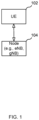
- a UE 102 may be in communication with a network node 104 (e.g., a base station, such as, for example, an LTE base station (“eNB”) or 5G base station (“gNB”)).
- a network node 104 e.g., a base station, such as, for example, an LTE base station (“eNB”) or 5G base station (“gNB”).
- eNB LTE base station
- gNB 5G base station
- UE 102 may communicate with network node 104 using M2M, MTC, or IoT type communication patterns.
- UE 102 may transition to sleep mode in which it does not actively communicate with network node 104 and may, when prompted by network node 104 or on its own initiative, wake up from its sleep mode and begin communication with network node 104 once more.
- FIG. 2 illustrates a method 200, which may be implemented on UE 102.
- UE 102 receives a master information block (MIB) and/or a system information block (SIB) (step202).
- MIB master information block
- SIB system information block
- UE 102 receives an indication of validity of at least a portion of the received MIB and/or SIB (step 204).
- the MIB is carried in a Narrowband Physical Broadcast Channel (NPBCH)
- the SIB is carried in a Narrowband Physical Downlink Shared Channel (PDSCH)
- the indication indicates a validity interval or expiration time.
- NNBCH Narrowband Physical Broadcast Channel
- PDSCH Narrowband Physical Downlink Shared Channel
- the indication is in GPS or UTC time format, and/or the indication is quantized with a resolution equivalent to a multiple of System Frame Number (SFN) cycles.
- the method further includes receiving an update notification.
- receiving the indication comprising receiving a system information block (SIB) comprising the indication.
- SIB system information block
- the method further includes storing said at least a portion of the MIB; after storing said at least a portion of the MIB, entering a sleep state; after entering the sleep state, waking up from the sleep state; and as a result of waking up from the sleep state, determining, based on the validity indication, whether the stored portion of the MIB is still valid.
- the method further includes, as a result of determining that the stored portion of the MIB is still valid, receiving a second MIB carried on the NPBCH and skipping decoding one or more portions of the received second MIB but decoding one or more other portions of the received second MIB.
- the second MIB comprises encoded operating mode information indicating an operation mode and encoded access barring (AB) flag, the UE decodes the encoded AB flag, and the UE skips the decoding of the operating mode information.
- FIG. 3 illustrates a method 300, which may be implemented on UE 102.
- UE 102 wakes up from a sleep state (step 302).
- UE 102 determines if a portion of a master information block (MIB) and/or system information block (SIB) needs to be reacquired (step 304).
- MIB master information block
- SIB system information block
- UE 102 in response to determining that a portion of MIB and/or SIB information does not need to be reacquired, acquires only the remaining portion of MIB and/or SIB information (step 306).
- MIB master information block
- SIB system information block
- the remaining portion includes System Frame Number (SFN) and Access Barring (AB) flag information.
- acquiring only the remaining portion of MI and/or SI information includes decoding a Master Information Block (MIB) carried on the Narrowband Physical Broadcast Channel (NPBCH), and mayt further include using the portion of MI and/or SI that does not need to be reacquired to prune the trellis used in the Viterbi decoder.
- MIB Master Information Block
- NNBCH Narrowband Physical Broadcast Channel
- a "wake-up" signal and/or a “go-to-sleep” signal is used to indicate whether Downlink Control Information (DCI) will be sent.
- DCI Downlink Control Information
- FIG. 4 illustrates a method 400, which may be implemented on network node 104.
- Network node 104 transmits a MIB on the NPBCH (step 402).
- Network node 104 transmits a SIB on the PDSCH (step 404).
- Network node 104 transmits an indication of validity of at least a portion of the transmitted MIB and/or SIB.
- the validity indication indicates a validity interval or expiration time.
- the validity indication is in GPS or UTC time format.
- the validity indication is quantized with a resolution equivalent to a multiple of System Frame Number (SFN) cycles.
- SFN System Frame Number
- the system value tag is, unlike for NB-IoT, located in SIB1-BR.
- a UE waking up from eDRX or PSM would therefore have to read SIB1-BR in order to find out whether SI has been updated and if it must reacquire the SI (either full information or the SIBs as indicated by the SI-message specific valueTags in systemInfoValueTagList). Further the UE may have to check whether it is subject to access barring or not.
- UEs In LTE-M, UEs must not be barred according to both the ACB information in SIB2 and the enhanced access class barring (EAB) information in SIB14 in order to access.
- EAB enhanced access class barring
- SIB14 is only scheduled and broadcast when EAB is enabled so if it is not according to scheduling info in SIB 1-BR the UE can interpret this as access is allowed according to EAB. In most cases, SI has not been updated and the UE is not barred, however the UE must still check to ensure this is the case. In Release 13 operation, this means that the UE has to read SIB1-BR and SIB2. Spare bits in the MIB could be used, however, to signal to the UE that the UE may skip acquiring SIB1-BR.
- SIB1-BR systemInfoValueTag
- a solution for eMTC to skip reading SIB1-BR is therefore to have a short indication in the MIB (e.g., a one bit flag).
- This short indication in the MIB is referred to herein as "the MIB indication.”
- a UE should only skip reading SIB1-BR during re-acquisition of SI since SIB1-BR is, in many cases, essential for access and hence required for initial access.
- MIB indication e.g., flag
- SIB1-BR (and the systemInfoValueTag therein) is rarely updated
- MIB indication e.g., flag
- UE may skip reading SIB1-BR when the MIB indication is set to 0, otherwise UE should not skip reading SIB1-BR.
- the MIB indication is set to '0' and the UE can skip reading the SIB1-BR and the systemInfoValueTag. If there is a subsequent SIB1-BR change during the time period the MIB indication remains set to '1' and is not toggled back to '0' (i.e. unlike a valueTag).
- the MIB indication may be reset to '0' at the time period boundaries (e.g., if there has been no change to the SIB1-BR within the last X units of time (i.e., the certain time period)). Note that since the system valueTag and the scheduling information of the SI-messages are located in SIB1-BR, SIB1-BR will be updated if any of the SI messages are updated.
- the UE is required to check the MIB indication once per the MIB indication time period (e.g., in the last BCCH modification period of the time period). That is, if the UE skips a time period, the SIB 1-BR might have been updated during that period and this will then not be discovered by the UE.
- the MIB indication time period could be:
- the system information validity period or 3h or 24h Since the UE is required to check the MIB once per predefined time period (e.g., at least once every 3 or 24 hours), if a 1 bit indication is used, this has the advantage that it is considerably longer than the BCCH modification period and hence the UE is required to do so much more infrequently.
- a HSFN period is based on system frame number (SFN) and/or hyper system frame number (HSFN). The latter is more probable since a longer timer period is more effective. 10 bits is used for SFN, giving a SFN wrap-around after 10.24 seconds. 10 bits is used for HSFN giving 1025 SFN periods which equals ⁇ 2.9 hours. A likely embodiment is to use 2" SFN periods as the time period, where n is the HSFN. This time reference would be common to all UEs.
- SFN system frame number
- HSFN hyper system frame number
- a UE in DRX or eDRX that is in coverage would rely on being notified in paging whenever there is an update of SI, i.e. by checking systemInfoModification or, if the eDRX cycle is longer than the BCCH modification period, the systemInfoModification-eDRX in the paging message.
- the UE could potentially instead check the MIB indication once per time period (since SIB1-BR contains the system valueTag, this is potentially less energy-consuming than attempting to find the systemInfoModification indication at least modificationPeriodCoeff times during the modification period (refer to section 5.2.1.3 in 3GPP TS 36.331 v 14.2.2.)).
- UEs are required to read SIB1-BR before access: "When the RRC IDLE UE is configured with a DRX cycle that is longer than the modification period, and at least one modification period boundary has passed since the UE last verified validity of stored system information, the UE verifies that stored system information remains valid by checking the systemInfoValueTag before establishing or resuming an RRC connection.”
- the UE applying the solutions described herein advantageously only needs to acquire MIB and check the MIB indication and skip acquisition of SIB1-BR.
- the UE For a UE in power-saving mode (PSM), the UE will reside in a power-saving state (sub-state to RRC_IDLE) and before "keep-alive" signaling/checking for downlink data through the periodic Tracking Area Update (TAU) or before uplink data transmission, the UE must ensure it has up-to-date SI. In Release 13 and 14 operation, the UE would check that it has already acquired the up-to-date SI by checking the valueTag (i.e. systemInfoValueTag) in SIB1-BR.
- TAU Tracking Area Update
- the UE could acquire only MIB to check the MIB indication and skip reading SIB1-BR if and only if the time since the last uplink data transmission or periodic-TAU does not surpass the MIB indication time period (e.g., 3h or 24h) and the MIB indication is set to a particular value, which could be 0 or 1.
- the time period chosen for the described solutions is the HSFN wrap-around of 2.9h
- the UE would not have to read SIB1-BR (assuming its content has not been updated of course) if it is configured with a periodic-TAU that is shorter than 2.9h. Again, in the rare case that SI has been updated, then the UE will just continue to read SIB1-BR as in Release 13 operation.
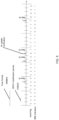
- the time period is based on HSFN using 2 HSFN bits, which makes it 4096 radio frames long.
- the BCCH modification period is here 1024 radio frames.
- the UEs are notified in paging when SI is to be updated, and the new SI will start to be broadcast in the subsequent BCCH modification period.
- the MIB indication would be set to a first particular value (e.g., 1) whenever UEs are required to read SIB1-BR, and set to a second particular value (e.g. 0) otherwise.
- a first particular value e.g. 1
- the indication is set to 1 when the valueTag (i.e. systemInfoValueTag) is changed and remains set to 1 during the time periods after which SIB1-BR and SI has been updated.
- the MIB indication can be set to 1 even before the SI is updated, e.g. already in the preceding BCCH modification period in which UEs are notified in paging about the upcoming SI update (not shown in FIG. 5 ).
- the UE checks the MIB indication once per time period and can do so at any time (i.e., if the SI is updated at the end of the time period after the UE has checked it still not go unnoticed since the UE will notice this the subsequent time period).
- UEs could be required to check the MIB indication during the last BCCH modification period (and before access as always of course) in which case the MIB indication could always be reset to '0' at the time period boundaries.
- the MIB indication could always be reset to '0' at the time period boundaries.
- the MIB indication could be set to '1' more extensively in time before and after a SI and SIB1-BR update.
- the MIB indication could be set to '1' during the entire time period preceding the SI update, and/or set to '1' during the entire time period during the SI update, and/or set to '1' during the entire time period after the SI update.
- SIB1-BR has not been updated the last time period (e.g., the last 24 hours). 01 SIB1-BR has not been updated the last N 1 time periods. 10 SIB1-BR has not been updated the last N 2 time periods. 11 SIB1-BR has not been updated the last N 3 time periods.
- the time period is the HSFN period.
- UE would have to check the indication in MIB at least once every 2.9h, but using multiple indication bits as above this could be extended such that UEs using PSM with very long periodic TAU (can be configured to be almost 14 days) could benefit from the solutions described herein, and would only need to acquire MIB at wake-up if there has been no SI update.
- the time period itself associated with the 1 bit indication can be set/modified in a system information message.
- the value of at least one of N 1 , N 2 and N 3 in the example 2-bit indication embodiment above may be modified. Default values may be given by the standard, and these values will be used if a corresponding modified value is not provided as a part of the broadcasted system information. This increases the flexibility in the network to adapt to different deployment scenarios, configurations of eDRX and PSM, etc.
- the MIB indication is a systemInfoValueTag- indication in the sense that if any of the content of SIB1-BR is changed systemInfoValueTag is updated.
- the UE could still skip acquiring SIB1-BR although systemInfoValueTag has been updated. That is, a first bit is, as above, used to specify if the UE needs to acquire SIB1-BR or can skip it, whereas the additional bits specify what has changed in SIB1-BR.
- the additional bits could for example indicate: (1) whether the update is related to other SI than SI required for monitoring paging (UEs in eDRX waking up to check paging could then still skip SIB1-BR acquisition); (2) whether the update is related to other SI than SI required for access (UEs attempting random access and RRC Connection Setup etc. could then still skip SIB1-BR acquisition); (3) any specified (group of) SIBs. And if the UE does not require any of that it can still omit reading SIB1-BR.
- the process 600 begins when the UE determines whether the MIB indication is set to a particular value (e.g. 0 or 1) (step s602).
- This MIB indication may be a 1 bit MIB indication, but may also include additional bits, as described in more detail above. If the UE determines that the MIB indication is set to the particular value (e.g., 0), the UE can skip acquiring the SIB1-BR (step s604). However, if the UE determines that the MIB indication is not set to the particular value (e.g., is set to 1), then the UE will acquire the SIB1-BR (step s606).
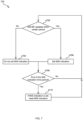
- FIG. 7 An example process 700 for network node (e.g., eNB) operation is shown in FIG. 7 .
- the example process 700 begins when the network node determines whether a SIB1-BR update occurred during the previous or current time period (step s702). If no, no MIB indication is set (step s704). If yes, the network node sets a MIB indication (step s706). In the case of a 1 bit MIB indication "set MIB indication" would correspond to e.g. setting it to value ⁇ 1' and that it is not set would correspond to value '0'. Note also that the logic of when it should be set to ⁇ 1' by the eNB will depend on the embodiments as discussed above.
- the network node determines whether a MIB indication time period has ended (step s708). If no, the network node repeats the previous steps, determining whether a SIB1-BR update has occurred. If the MIB indication time period has ended, the MIB indication may be reset by the network node (step s710). According to certain embodiments, this resetting may depend on other factors, including past and/or upcoming SIB1-BR updates.
- the MIB one bit flag could be used with the following meaning:
- the time period for the SI update is different from the BCCH modification period, e.g. multiple BCCH modification periods, the SIB1-BR modification period, or the SI validity time of 3h/24h.
- multiple bits could be used to indicate more options, e.g. according to the following: Index: Indication: 00 No SI updated and Access barring not enabled. 01 SI updated but Access barring not enabled. 10 No SI updated but Access barring enabled. 11 Both SI updated and Access barring enabled.
- SI update or Access Barring could be omitted, or they could be indicated by separate bits.
- this indication could be added to the Wake-up and go-to-sleep signal as described above.
- a method performed by a network node (e.g., network node 104), for reducing SI acquisition time.
- the method includes the following steps: (1) generating a MIB comprising a one bit flag for indicating whether or not certain SI (e.g., value Tag) has changed since a particular time in the past (e.g., 24 hours ago, 3 hours ago, etc.) and (2) transmitting the MIB.
- the particular time in the past is based on the current time and a MIB indication time period (e.g., 3 or 24 hours).
- the particular time in the past is the current time minus the MIB indication time period.
- the particular time in the past is a certain absolute time period boundary.
- the method also includes the network node performing the following steps: updating the certain SI; setting an SI change flag to a first value to indicate that the certain SI has changed; activating a timer that will expire when the MIB indication time period (e.g., 24 hours) has elapsed since the timer was activated; if the timer expires, setting the SI change flag to a second value to indicate that the certain SI has not changed within the MIB indication time period (e.g., within the past 24 hours); and if the certain SI is further updated while the timer is still running, resetting the timer so that timer will expire when the MIB indication time period has elapsed since the timer was reset.
- the one bit flag included in the MIB is set equal to the value of the SI change flag.
- the method includes the UE receiving a MIB comprising a one bit flag for indicating whether or not certain SI has been changed since a particular time in the past.
- the method may further include the UE, after acquiring the SIB, receiving a subsequent MIB comprising the MIB indication that is set to a value that indicates that the certain SI has not been changed since a particular point in time in the past (e.g., indicating that the SI has not changed in the last X hrs); the UE determining whether acquisition of a subsequent SIB may be skipped, wherein the determining comprises the UE determining that the flag is set to the particular value; and after determining that acquisition of the subsequent SIB may be skipped, the UE skipping the acquisition of a subsequent SIB that comprises the certain SI.
- the particular time in the past is based on a current time and a MIB indication time period.
- the step of determining whether acquisition of the subsequent SIB may be skipped further includes the UE determining whether it currently has up-to-date SI. In some embodiments, the UE determines that it has up-to-date SI by determining that it last acquired the SI within the MIB indication time period.
- FIG. 8 is a block diagram of UE 102 according to some embodiments.
- UE 102 may comprise: a data processing apparatus (DPA) 802, which may include one or more processors (P) 855 (e.g., a general purpose microprocessor and/or one or more other processors, such as an application specific integrated circuit (ASIC), field-programmable gate arrays (FPGAs), and the like); a transmitter 805 and a receiver 804 coupled to an antenna 822 for enabling UE 102 to transmit data to and receive data from an AN node (e.g., base station); and local storage unit (a.k.a., "data storage system”) 808, which may include one or more non-volatile storage devices and/or one or more volatile storage devices (e.g., random access memory (RAM)).
- DPA data processing apparatus
- P processors
- ASIC application specific integrated circuit
- FPGAs field-programmable gate arrays
- transmitter 805 and a receiver 804 coupled to an antenna 822 for enabling
- CPP 841 includes a computer readable medium (CRM) 842 storing a computer program (CP) 843 comprising computer readable instructions (CRI) 844.
- CRM 842 may be a non-transitory computer readable medium, such as, but not limited, to magnetic media (e.g., a hard disk), optical media, memory devices (e.g., random access memory), and the like.
- the CRI 844 of computer program 843 is configured such that when executed by data processing apparatus 802, the CRI causes UE 102 to perform steps described above (e.g., steps described above with reference to the flow charts).
- UE 102 may be configured to perform steps described herein without the need for code. That is, for example, data processing apparatus 802 may consist merely of one or more ASICs. Hence, the features of the embodiments described herein may be implemented in hardware and/or software.
- FIG. 9 is a block diagram of a network node 104 according to some embodiments.
- node 104 may comprise: a data processing apparatus (DPA) 902, which may include one or more processors (P) 955 (e.g., a general purpose microprocessor and/or one or more other processors, such as an application specific integrated circuit (ASIC), field-programmable gate arrays (FPGAs), and the like); a network interface 948 comprising a transmitter (Tx) 945 and a receiver (Rx) 947 for enabling node 104 to transmit data to and receive data from other nodes connected to a network 110 (e.g., an Internet Protocol (IP) network) to which network interface 948 is connected; circuitry 903 (e.g., radio transceiver circuitry) coupled to an antenna system 904 for wireless communication with UEs); and local storage unit (a.k.a., "data storage system”) 908, which may include one or more non-volatile storage devices and/or one or
- DPA data
- CPP 941 includes a computer readable medium (CRM) 942 storing a computer program (CP) 943 comprising computer readable instructions (CRI) 944.
- CRM 942 may be a non-transitory computer readable medium, such as, but not limited, to magnetic media (e.g., a hard disk), optical media, memory devices (e.g., random access memory), and the like.
- the CRI 944 of computer program 943 is configured such that when executed by data processing apparatus 902, the CRI causes node 104 to perform steps described above (e.g., steps described above with reference to the flow charts).
- node 104 may be configured to perform steps described herein without the need for code. That is, for example, data processing apparatus 902 may consist merely of one or more ASICs. Hence, the features of the embodiments described herein may be implemented in hardware and/or software.
Landscapes
- Engineering & Computer Science (AREA)
- Computer Networks & Wireless Communication (AREA)
- Signal Processing (AREA)
- Computer Security & Cryptography (AREA)
- Databases & Information Systems (AREA)
- Mobile Radio Communication Systems (AREA)
- Stored Programmes (AREA)
- Radar Systems Or Details Thereof (AREA)
- Debugging And Monitoring (AREA)
- Compression, Expansion, Code Conversion, And Decoders (AREA)
Claims (9)
- Procédé de réduction du temps d'acquisition d'informations de système, SI, le procédé étant exécuté par un noeud de réseau (104) et comprenant :lorsque certaines SI sont modifiées dans une période de modification BCCH dans une période de temps d'indication de bloc d'informations maître, MIB, la définition d'un indicateur à un bit sur une première valeur pour le reste de la période de temps d'indication MIB actuelle et la période de temps d'indication MIB immédiatement suivante, et sinon la définition de l'indicateur sur une seconde valeur ;la génération d'un MIB comprenant la valeur de l'indicateur à un bit ; etla transmission du MIB ;dans lequel la période de temps d'indication MIB est une période de temps pendant laquelle l'UE doit vérifier le MIB au moins une fois.
- Procédé selon la revendication 1, dans lequel la période de temps d'indication MIB est de X heures, dans lequel X est l'un parmi : 3 et 24.
- Procédé selon la revendication 1 ou 2, comprenant en outre :
la mise à jour des certaines SI. - Procédé selon l'une quelconque des revendications 1 à 3, dans lequel la certaine SI est un systemInfoValueTag.
- Noeud de réseau (104) de réduction du temps d'acquisition d'informations de système, SI, le noeud de réseau (104) étant adapté pour :lorsque certaines SI sont modifiées dans une période de modification BCCH dans une période de temps d'indication de bloc d'informations maître, MIB, définir un indicateur à un bit sur une première valeur pour le reste de la période de temps d'indication MIB actuelle et la période de temps d'indication MIB immédiatement suivante, et sinon définir l'indicateur sur une seconde valeur ;générer un MIB comprenant la valeur de l'indicateur à un bit ; ettransmettre le MIB ;dans lequel la période de temps d'indication MIB est une période de temps pendant laquelle l'UE doit vérifier le MIB au moins une fois.
- Noeud de réseau selon la revendication 5, dans lequel la période de temps d'indication MIB est de X heures, dans lequel X est l'un parmi : 3 et 24.
- Noeud de réseau selon la revendication 5 ou 6, étant en outre adapté pour :
mettre à jour les certaines SI. - Procédé selon l'une quelconque des revendications 5 à 7, dans lequel la certaine SI est un systemInfoValueTag.
- Support de stockage non transitoire lisible par ordinateur contenant un programme informatique, le programme informatique comprenant des instructions qui, lorsqu'elles sont exécutées sur au moins un processeur, amènent l'au moins un processeur à mettre en œuvre le procédé selon l'une quelconque des revendications 1 à 4.
Priority Applications (1)
| Application Number | Priority Date | Filing Date | Title |
|---|---|---|---|
| EP24212828.8A EP4492871A3 (fr) | 2017-05-05 | 2018-05-03 | Procédés et systèmes de réduction du temps d'acquisition d'informations système (si) |
Applications Claiming Priority (3)
| Application Number | Priority Date | Filing Date | Title |
|---|---|---|---|
| US201762502423P | 2017-05-05 | 2017-05-05 | |
| US201762515732P | 2017-06-06 | 2017-06-06 | |
| PCT/IB2018/053092 WO2018203281A1 (fr) | 2017-05-05 | 2018-05-03 | Procédés et systèmes de réduction du temps d'acquisition d'informations de système (si) |
Related Child Applications (1)
| Application Number | Title | Priority Date | Filing Date |
|---|---|---|---|
| EP24212828.8A Division EP4492871A3 (fr) | 2017-05-05 | 2018-05-03 | Procédés et systèmes de réduction du temps d'acquisition d'informations système (si) |
Publications (3)
| Publication Number | Publication Date |
|---|---|
| EP3619957A1 EP3619957A1 (fr) | 2020-03-11 |
| EP3619957B1 true EP3619957B1 (fr) | 2024-11-20 |
| EP3619957C0 EP3619957C0 (fr) | 2024-11-20 |
Family
ID=62245371
Family Applications (2)
| Application Number | Title | Priority Date | Filing Date |
|---|---|---|---|
| EP18727434.5A Active EP3619957B1 (fr) | 2017-05-05 | 2018-05-03 | Procédés et systèmes de réduction du temps d'acquisition d'informations de système (si) |
| EP24212828.8A Pending EP4492871A3 (fr) | 2017-05-05 | 2018-05-03 | Procédés et systèmes de réduction du temps d'acquisition d'informations système (si) |
Family Applications After (1)
| Application Number | Title | Priority Date | Filing Date |
|---|---|---|---|
| EP24212828.8A Pending EP4492871A3 (fr) | 2017-05-05 | 2018-05-03 | Procédés et systèmes de réduction du temps d'acquisition d'informations système (si) |
Country Status (6)
| Country | Link |
|---|---|
| US (1) | US11356928B2 (fr) |
| EP (2) | EP3619957B1 (fr) |
| JP (1) | JP6989618B2 (fr) |
| CN (2) | CN110637481B (fr) |
| RU (1) | RU2747374C1 (fr) |
| WO (1) | WO2018203281A1 (fr) |
Families Citing this family (21)
| Publication number | Priority date | Publication date | Assignee | Title |
|---|---|---|---|---|
| US11438839B2 (en) * | 2017-05-05 | 2022-09-06 | Interdigital Patent Holdings, Inc. | Closed loop transmissions associated with wake-up radios |
| WO2019028553A1 (fr) | 2017-08-08 | 2019-02-14 | Sierra Wireless, Inc. | Procédé et appareil d'indication de changement de bloc d'informations de système |
| US20190313322A1 (en) * | 2018-04-05 | 2019-10-10 | Lg Electronics Inc. | Method for acquiring system information and device supporting the same |
| CN116094659B (zh) * | 2018-08-09 | 2025-02-11 | 北京三星通信技术研究有限公司 | 块传输方法、下行传输方法、nrs接收方法、ue、基站和介质 |
| WO2020032771A1 (fr) * | 2018-08-10 | 2020-02-13 | 엘지전자 주식회사 | Procédé d'accès à la cellule, d'un terminal dans un système de communication sans fil, et appareil associé |
| WO2020033758A1 (fr) * | 2018-08-10 | 2020-02-13 | Intel Corporation | Région de commande d'évolution à long terme (lte) pour transmissions en liaison descendante pour des communications de type machine améliorées (emtc) |
| US11259293B2 (en) * | 2019-01-10 | 2022-02-22 | Ofinno, Llc | Two-stage preamble transmission |
| US10887839B2 (en) * | 2019-03-29 | 2021-01-05 | Qualcomm Incorporated | Search space set for wakeup signal |
| EP3965386A4 (fr) * | 2019-06-25 | 2022-05-11 | Guangdong Oppo Mobile Telecommunications Corp., Ltd. | Procédé et appareil d'accès cellulaire |
| US12250661B2 (en) | 2019-11-08 | 2025-03-11 | Telefonaktiebolaget Lm Ericsson (Publ) | Master information block extension in a New Radio cell |
| EP4215013A4 (fr) * | 2020-09-16 | 2024-03-13 | Panasonic Intellectual Property Corporation of America | Optimisation de l'acquisition d'informations de système des dispositifs nr |
| WO2022188005A1 (fr) * | 2021-03-08 | 2022-09-15 | 北京小米移动软件有限公司 | Procédé et appareil de surveillance d'informations de commande de radiomessagerie, et procédé et appareil d'indication d'informations de commande de radiomessagerie |
| CN115529653A (zh) * | 2021-06-25 | 2022-12-27 | 华为技术有限公司 | 一种通信方法以及相关装置 |
| GB2614087A (en) * | 2021-12-22 | 2023-06-28 | Nec Corp | Communication system |
| WO2023240616A1 (fr) * | 2022-06-17 | 2023-12-21 | Mediatek Singapore Pte. Ltd. | Schémas portant sur une indication d'accumulation de sib à travers des fenêtres de si |
| CN114928868B (zh) * | 2022-06-30 | 2024-05-17 | 维沃移动通信有限公司 | 通话方法、装置、终端和网络设备 |
| WO2024034563A1 (fr) * | 2022-08-08 | 2024-02-15 | 京セラ株式会社 | Procédé de communication |
| EP4344090A1 (fr) * | 2022-09-26 | 2024-03-27 | Nokia Technologies Oy | Réception d'informations d'assistance satellite au niveau d'un équipement utilisateur |
| US20240155490A1 (en) * | 2022-11-04 | 2024-05-09 | Nokia Technologies Oy | User equipment assistance for dormant cell activation |
| ES3040946T3 (en) * | 2022-12-09 | 2025-11-06 | Nokia Technologies Oy | Sensing in cellular communication networks |
| EP4721473A1 (fr) * | 2023-05-26 | 2026-04-08 | Telefonaktiebolaget LM Ericsson (publ) | (re)acquisition d'informations de système |
Family Cites Families (22)
| Publication number | Priority date | Publication date | Assignee | Title |
|---|---|---|---|---|
| EP2844004B1 (fr) | 2006-11-21 | 2018-10-31 | Samsung Electronics Co., Ltd | Procédé et appareil de réception d'informations de système d'une station de base dans un système de communication mobile |
| EP2076066B1 (fr) * | 2007-12-05 | 2013-07-17 | Nokia Siemens Networks Oy | Méthode pour la transmission d'information système, et un élément de programme, un support lisible par ordinateur, une station de base et un équipement d'utilisateur |
| CN101547075B (zh) | 2008-03-25 | 2013-08-21 | 中兴通讯股份有限公司 | 系统消息发送及接收方法 |
| US20110105105A1 (en) * | 2009-11-02 | 2011-05-05 | Sagfors Mats Fredrik | Methods and Arrangements in a Wireless Communication System |
| US20110237239A1 (en) * | 2010-03-25 | 2011-09-29 | Industrial Technology Research Institiute | Method and apparatus for selectively muting a control channel for a femtocell for interference avoidance |
| US8676138B2 (en) | 2010-04-19 | 2014-03-18 | Htc Corporation | Method of handling system information reception and related communication device |
| CN104350779B (zh) * | 2012-04-09 | 2019-02-15 | 瑞典爱立信有限公司 | 管理不确定的测量时机 |
| US9001723B1 (en) | 2012-06-19 | 2015-04-07 | Sprint Spectrum L.P. | Method and system for providing notifications of system information changes on a per cycle basis |
| EP2912891B1 (fr) * | 2012-10-29 | 2019-06-26 | Telefonaktiebolaget LM Ericsson (publ) | Procédé pour envoyer ou recevoir des informations système |
| WO2014098384A1 (fr) * | 2012-12-17 | 2014-06-26 | 엘지전자 주식회사 | Procédé et terminal d'application d'informations de système modifiées |
| CN105144768B (zh) * | 2013-04-26 | 2019-05-21 | 英特尔Ip公司 | 频谱共享情境中的共享频谱重新分配 |
| KR101944402B1 (ko) | 2013-08-22 | 2019-02-01 | 후지츠 코네쿠텟도 테크노로지즈 가부시키가이샤 | 머신간 무선 액세스 시스템에서의 시스템 정보 브로드캐스트 |
| US9538455B2 (en) | 2014-02-04 | 2017-01-03 | Qualcomm Incorporated | Techniques for reading system information in wireless communications |
| US20160057717A1 (en) * | 2014-08-21 | 2016-02-25 | Telefonaktiebolaget L M Ericsson (Publ) | Network node and method for indicating to wireless device that system information (si) has changed for purposes of a system access procedure |
| RU2577763C1 (ru) | 2015-03-26 | 2016-03-20 | Федеральное государственное бюджетное научное учреждение "Научный центр неврологии" (ФГБНУ НЦН) | Способ лечения глаукомной оптической нейропатии |
| JP6746595B2 (ja) | 2015-03-26 | 2020-08-26 | アップル インコーポレイテッドApple Inc. | 低減されたシグナリングオーバヘッドでのアップリンク送信のためのシステム、方法およびデバイス |
| EP3079380A1 (fr) * | 2015-04-08 | 2016-10-12 | Gemalto M2M GmbH | Procédé de transfert d'informations dans un réseau cellulaire sans fil avec appareils lc-mtc |
| US10356582B2 (en) * | 2015-05-14 | 2019-07-16 | Kt Corporation | Method for changing system information, and apparatus therefor |
| WO2016186696A1 (fr) | 2015-05-21 | 2016-11-24 | Intel Corporation | Transmission de notifications de changement d'informations système à des dispositifs mtc |
| US10178612B2 (en) * | 2016-04-26 | 2019-01-08 | Qualcomm Incorporated | Enhanced machine-type communications cell acquisition using narrow band synchronization channel |
| CN112153635B (zh) * | 2016-08-12 | 2022-11-01 | 联发科技股份有限公司 | 系统信息获取方法、用户设备及存储器 |
| US11240735B2 (en) * | 2017-05-04 | 2022-02-01 | Nokia Technologies Oy | Communication system |
-
2018
- 2018-05-03 EP EP18727434.5A patent/EP3619957B1/fr active Active
- 2018-05-03 WO PCT/IB2018/053092 patent/WO2018203281A1/fr not_active Ceased
- 2018-05-03 CN CN201880029887.3A patent/CN110637481B/zh active Active
- 2018-05-03 CN CN202210979744.7A patent/CN115567902A/zh active Pending
- 2018-05-03 RU RU2019139436A patent/RU2747374C1/ru active
- 2018-05-03 JP JP2019560174A patent/JP6989618B2/ja not_active Expired - Fee Related
- 2018-05-03 EP EP24212828.8A patent/EP4492871A3/fr active Pending
- 2018-05-03 US US16/611,045 patent/US11356928B2/en active Active
Non-Patent Citations (1)
| Title |
|---|
| ERICSSON: "System Information Broadcast for NB-IOT", vol. RAN WG2, no. Malmö, Sweden; 20151005 - 20151009, 30 September 2015 (2015-09-30), XP051024070, Retrieved from the Internet <URL:http://www.3gpp.org/ftp/tsg_ran/WG2_RL2/TSGR2_91bis/Docs/> [retrieved on 20150930] * |
Also Published As
| Publication number | Publication date |
|---|---|
| EP4492871A3 (fr) | 2025-04-09 |
| WO2018203281A1 (fr) | 2018-11-08 |
| RU2747374C1 (ru) | 2021-05-04 |
| CN110637481A (zh) | 2019-12-31 |
| EP3619957A1 (fr) | 2020-03-11 |
| JP2020519146A (ja) | 2020-06-25 |
| US11356928B2 (en) | 2022-06-07 |
| JP6989618B2 (ja) | 2022-01-05 |
| CN110637481B (zh) | 2022-08-23 |
| EP4492871A2 (fr) | 2025-01-15 |
| EP3619957C0 (fr) | 2024-11-20 |
| US20200252858A1 (en) | 2020-08-06 |
| CN115567902A (zh) | 2023-01-03 |
Similar Documents
| Publication | Publication Date | Title |
|---|---|---|
| EP3619957B1 (fr) | Procédés et systèmes de réduction du temps d'acquisition d'informations de système (si) | |
| WO2021180206A1 (fr) | Mécanisme de radiomessagerie économe en énergie à indicateur précoce de radiomessagerie | |
| CN116209079B (zh) | 针对无线通信系统中的参考信令的配置 | |
| US20220232514A1 (en) | Ue grouping for paging enhancement | |
| US11356955B2 (en) | Methods and apparatus for reducing power consumption in a wireless communications network | |
| CN112703777A (zh) | 窄带物联网中用户设备组唤醒信号 | |
| CA3130409C (fr) | Dispositif de communication sans fil, noeud de reseau d'acces radioelectrique, procedes et programmes informatiques destines a une escalade de radiorecherche efficace en puissance | |
| EP2995116A1 (fr) | Procédé et appareil de communication d'informations système dans un système sans fil | |
| JP2021510259A (ja) | 代替キャリア周波数におけるモバイル装置へのウェイクアップ信号の送信 | |
| KR20240146692A (ko) | 페이징 시점 결정 방법, 단말, 기지국, 저장 매체 및 프로그램 제품 | |
| CN115428540B (zh) | 在时域中聚类用于多用户设备的寻呼时机 | |
| CN117397325A (zh) | 寻呼早期指示方法 | |
| WO2022078203A1 (fr) | Signaux de référence dans des réseaux cellulaires de communication | |
| WO2017133462A1 (fr) | Procédé, dispositif et système d'indication de mise à jour de message système | |
| US20230354190A1 (en) | Paging indication information grouping techniques | |
| EP3363239B1 (fr) | Indicateur de changement de messages d'informations système dans un réseau internet des objets cellulaires (ciot) | |
| US20230085723A1 (en) | Methods for enhancing paging of a wireless device of a set or wireless devices, network nodes and wireless devices using retransmission of pages | |
| EP4346290A1 (fr) | Procédé et appareil de détermination de fenêtre temporelle et dispositif terminal | |
| WO2021016332A1 (fr) | Notification de message de page | |
| CN121713575A (zh) | 用户设备、网络实体、电信网络和相关联的方法 | |
| CN117796077A (zh) | 用于监测跟踪参考信号的方法和相关设备 | |
| CN117441380A (zh) | 一种节能信号的传输资源的确定方法及装置、终端设备 |
Legal Events
| Date | Code | Title | Description |
|---|---|---|---|
| STAA | Information on the status of an ep patent application or granted ep patent |
Free format text: STATUS: UNKNOWN |
|
| STAA | Information on the status of an ep patent application or granted ep patent |
Free format text: STATUS: THE INTERNATIONAL PUBLICATION HAS BEEN MADE |
|
| PUAI | Public reference made under article 153(3) epc to a published international application that has entered the european phase |
Free format text: ORIGINAL CODE: 0009012 |
|
| STAA | Information on the status of an ep patent application or granted ep patent |
Free format text: STATUS: REQUEST FOR EXAMINATION WAS MADE |
|
| 17P | Request for examination filed |
Effective date: 20191014 |
|
| AK | Designated contracting states |
Kind code of ref document: A1 Designated state(s): AL AT BE BG CH CY CZ DE DK EE ES FI FR GB GR HR HU IE IS IT LI LT LU LV MC MK MT NL NO PL PT RO RS SE SI SK SM TR |
|
| AX | Request for extension of the european patent |
Extension state: BA ME |
|
| RIN1 | Information on inventor provided before grant (corrected) |
Inventor name: SUI, YUTAO Inventor name: WANG, YI-PIN ERIC Inventor name: HOEGLUND, ANDREAS Inventor name: YAVUZ, EMRE Inventor name: TIRRONEN, TUOMAS Inventor name: BERGMAN, JOHAN Inventor name: WALLEN, ANDERS Inventor name: RATILAINEN, ANTTI Inventor name: LIBERG, OLOF |
|
| DAV | Request for validation of the european patent (deleted) | ||
| DAX | Request for extension of the european patent (deleted) | ||
| STAA | Information on the status of an ep patent application or granted ep patent |
Free format text: STATUS: EXAMINATION IS IN PROGRESS |
|
| 17Q | First examination report despatched |
Effective date: 20210922 |
|
| GRAP | Despatch of communication of intention to grant a patent |
Free format text: ORIGINAL CODE: EPIDOSNIGR1 |
|
| STAA | Information on the status of an ep patent application or granted ep patent |
Free format text: STATUS: GRANT OF PATENT IS INTENDED |
|
| INTG | Intention to grant announced |
Effective date: 20240802 |
|
| GRAS | Grant fee paid |
Free format text: ORIGINAL CODE: EPIDOSNIGR3 |
|
| GRAA | (expected) grant |
Free format text: ORIGINAL CODE: 0009210 |
|
| STAA | Information on the status of an ep patent application or granted ep patent |
Free format text: STATUS: THE PATENT HAS BEEN GRANTED |
|
| AK | Designated contracting states |
Kind code of ref document: B1 Designated state(s): AL AT BE BG CH CY CZ DE DK EE ES FI FR GB GR HR HU IE IS IT LI LT LU LV MC MK MT NL NO PL PT RO RS SE SI SK SM TR |
|
| REG | Reference to a national code |
Ref country code: GB Ref legal event code: FG4D |
|
| REG | Reference to a national code |
Ref country code: CH Ref legal event code: EP |
|
| REG | Reference to a national code |
Ref country code: DE Ref legal event code: R096 Ref document number: 602018076704 Country of ref document: DE |
|
| REG | Reference to a national code |
Ref country code: IE Ref legal event code: FG4D |
|
| U01 | Request for unitary effect filed |
Effective date: 20241120 |
|
| U07 | Unitary effect registered |
Designated state(s): AT BE BG DE DK EE FI FR IT LT LU LV MT NL PT RO SE SI Effective date: 20241126 |
|
| PG25 | Lapsed in a contracting state [announced via postgrant information from national office to epo] |
Ref country code: HR Free format text: LAPSE BECAUSE OF FAILURE TO SUBMIT A TRANSLATION OF THE DESCRIPTION OR TO PAY THE FEE WITHIN THE PRESCRIBED TIME-LIMIT Effective date: 20241120 Ref country code: IS Free format text: LAPSE BECAUSE OF FAILURE TO SUBMIT A TRANSLATION OF THE DESCRIPTION OR TO PAY THE FEE WITHIN THE PRESCRIBED TIME-LIMIT Effective date: 20250320 |
|
| PG25 | Lapsed in a contracting state [announced via postgrant information from national office to epo] |
Ref country code: ES Free format text: LAPSE BECAUSE OF FAILURE TO SUBMIT A TRANSLATION OF THE DESCRIPTION OR TO PAY THE FEE WITHIN THE PRESCRIBED TIME-LIMIT Effective date: 20241120 |
|
| PG25 | Lapsed in a contracting state [announced via postgrant information from national office to epo] |
Ref country code: NO Free format text: LAPSE BECAUSE OF FAILURE TO SUBMIT A TRANSLATION OF THE DESCRIPTION OR TO PAY THE FEE WITHIN THE PRESCRIBED TIME-LIMIT Effective date: 20250220 |
|
| PG25 | Lapsed in a contracting state [announced via postgrant information from national office to epo] |
Ref country code: GR Free format text: LAPSE BECAUSE OF FAILURE TO SUBMIT A TRANSLATION OF THE DESCRIPTION OR TO PAY THE FEE WITHIN THE PRESCRIBED TIME-LIMIT Effective date: 20250221 |
|
| PG25 | Lapsed in a contracting state [announced via postgrant information from national office to epo] |
Ref country code: PL Free format text: LAPSE BECAUSE OF FAILURE TO SUBMIT A TRANSLATION OF THE DESCRIPTION OR TO PAY THE FEE WITHIN THE PRESCRIBED TIME-LIMIT Effective date: 20241120 |
|
| PG25 | Lapsed in a contracting state [announced via postgrant information from national office to epo] |
Ref country code: RS Free format text: LAPSE BECAUSE OF FAILURE TO SUBMIT A TRANSLATION OF THE DESCRIPTION OR TO PAY THE FEE WITHIN THE PRESCRIBED TIME-LIMIT Effective date: 20250220 |
|
| U20 | Renewal fee for the european patent with unitary effect paid |
Year of fee payment: 8 Effective date: 20250527 |
|
| PG25 | Lapsed in a contracting state [announced via postgrant information from national office to epo] |
Ref country code: SM Free format text: LAPSE BECAUSE OF FAILURE TO SUBMIT A TRANSLATION OF THE DESCRIPTION OR TO PAY THE FEE WITHIN THE PRESCRIBED TIME-LIMIT Effective date: 20241120 |
|
| PGFP | Annual fee paid to national office [announced via postgrant information from national office to epo] |
Ref country code: GB Payment date: 20250527 Year of fee payment: 8 |
|
| PG25 | Lapsed in a contracting state [announced via postgrant information from national office to epo] |
Ref country code: SK Free format text: LAPSE BECAUSE OF FAILURE TO SUBMIT A TRANSLATION OF THE DESCRIPTION OR TO PAY THE FEE WITHIN THE PRESCRIBED TIME-LIMIT Effective date: 20241120 |
|
| PG25 | Lapsed in a contracting state [announced via postgrant information from national office to epo] |
Ref country code: CZ Free format text: LAPSE BECAUSE OF FAILURE TO SUBMIT A TRANSLATION OF THE DESCRIPTION OR TO PAY THE FEE WITHIN THE PRESCRIBED TIME-LIMIT Effective date: 20241120 |
|
| PLBE | No opposition filed within time limit |
Free format text: ORIGINAL CODE: 0009261 |
|
| STAA | Information on the status of an ep patent application or granted ep patent |
Free format text: STATUS: NO OPPOSITION FILED WITHIN TIME LIMIT |
|
| 26N | No opposition filed |
Effective date: 20250821 |
|
| REG | Reference to a national code |
Ref country code: CH Ref legal event code: H13 Free format text: ST27 STATUS EVENT CODE: U-0-0-H10-H13 (AS PROVIDED BY THE NATIONAL OFFICE) Effective date: 20251223 |
|
| PG25 | Lapsed in a contracting state [announced via postgrant information from national office to epo] |
Ref country code: CH Free format text: LAPSE BECAUSE OF NON-PAYMENT OF DUE FEES Effective date: 20250531 |
|
| PG25 | Lapsed in a contracting state [announced via postgrant information from national office to epo] |
Ref country code: MC Free format text: LAPSE BECAUSE OF FAILURE TO SUBMIT A TRANSLATION OF THE DESCRIPTION OR TO PAY THE FEE WITHIN THE PRESCRIBED TIME-LIMIT Effective date: 20241120 |
|
| PG25 | Lapsed in a contracting state [announced via postgrant information from national office to epo] |
Ref country code: IE Free format text: LAPSE BECAUSE OF NON-PAYMENT OF DUE FEES Effective date: 20250503 |