EP3620957A1 - Lernverfahren, lernvorrichtung zur erkennung von hindernissen und prüfverfahren, prüfvorrichtung damit - Google Patents
Lernverfahren, lernvorrichtung zur erkennung von hindernissen und prüfverfahren, prüfvorrichtung damit Download PDFInfo
- Publication number
- EP3620957A1 EP3620957A1 EP19175518.0A EP19175518A EP3620957A1 EP 3620957 A1 EP3620957 A1 EP 3620957A1 EP 19175518 A EP19175518 A EP 19175518A EP 3620957 A1 EP3620957 A1 EP 3620957A1
- Authority
- EP
- European Patent Office
- Prior art keywords
- feature map
- columns
- rows
- training
- image
- Prior art date
- Legal status (The legal status is an assumption and is not a legal conclusion. Google has not performed a legal analysis and makes no representation as to the accuracy of the status listed.)
- Granted
Links
Images



Classifications
-
- G—PHYSICS
- G06—COMPUTING OR CALCULATING; COUNTING
- G06T—IMAGE DATA PROCESSING OR GENERATION, IN GENERAL
- G06T7/00—Image analysis
- G06T7/10—Segmentation; Edge detection
- G06T7/143—Segmentation; Edge detection involving probabilistic approaches, e.g. Markov random field [MRF] modelling
-
- G—PHYSICS
- G06—COMPUTING OR CALCULATING; COUNTING
- G06F—ELECTRIC DIGITAL DATA PROCESSING
- G06F18/00—Pattern recognition
- G06F18/20—Analysing
- G06F18/21—Design or setup of recognition systems or techniques; Extraction of features in feature space; Blind source separation
- G06F18/213—Feature extraction, e.g. by transforming the feature space; Summarisation; Mappings, e.g. subspace methods
-
- G—PHYSICS
- G06—COMPUTING OR CALCULATING; COUNTING
- G06F—ELECTRIC DIGITAL DATA PROCESSING
- G06F18/00—Pattern recognition
- G06F18/20—Analysing
- G06F18/21—Design or setup of recognition systems or techniques; Extraction of features in feature space; Blind source separation
- G06F18/214—Generating training patterns; Bootstrap methods, e.g. bagging or boosting
-
- G—PHYSICS
- G06—COMPUTING OR CALCULATING; COUNTING
- G06F—ELECTRIC DIGITAL DATA PROCESSING
- G06F18/00—Pattern recognition
- G06F18/20—Analysing
- G06F18/21—Design or setup of recognition systems or techniques; Extraction of features in feature space; Blind source separation
- G06F18/217—Validation; Performance evaluation; Active pattern learning techniques
-
- G—PHYSICS
- G06—COMPUTING OR CALCULATING; COUNTING
- G06N—COMPUTING ARRANGEMENTS BASED ON SPECIFIC COMPUTATIONAL MODELS
- G06N3/00—Computing arrangements based on biological models
- G06N3/02—Neural networks
- G06N3/04—Architecture, e.g. interconnection topology
- G06N3/045—Combinations of networks
-
- G—PHYSICS
- G06—COMPUTING OR CALCULATING; COUNTING
- G06N—COMPUTING ARRANGEMENTS BASED ON SPECIFIC COMPUTATIONAL MODELS
- G06N3/00—Computing arrangements based on biological models
- G06N3/02—Neural networks
- G06N3/04—Architecture, e.g. interconnection topology
- G06N3/045—Combinations of networks
- G06N3/0455—Auto-encoder networks; Encoder-decoder networks
-
- G—PHYSICS
- G06—COMPUTING OR CALCULATING; COUNTING
- G06N—COMPUTING ARRANGEMENTS BASED ON SPECIFIC COMPUTATIONAL MODELS
- G06N3/00—Computing arrangements based on biological models
- G06N3/02—Neural networks
- G06N3/04—Architecture, e.g. interconnection topology
- G06N3/0464—Convolutional networks [CNN, ConvNet]
-
- G—PHYSICS
- G06—COMPUTING OR CALCULATING; COUNTING
- G06N—COMPUTING ARRANGEMENTS BASED ON SPECIFIC COMPUTATIONAL MODELS
- G06N3/00—Computing arrangements based on biological models
- G06N3/02—Neural networks
- G06N3/08—Learning methods
- G06N3/084—Backpropagation, e.g. using gradient descent
-
- G—PHYSICS
- G06—COMPUTING OR CALCULATING; COUNTING
- G06N—COMPUTING ARRANGEMENTS BASED ON SPECIFIC COMPUTATIONAL MODELS
- G06N3/00—Computing arrangements based on biological models
- G06N3/02—Neural networks
- G06N3/08—Learning methods
- G06N3/09—Supervised learning
-
- G—PHYSICS
- G06—COMPUTING OR CALCULATING; COUNTING
- G06T—IMAGE DATA PROCESSING OR GENERATION, IN GENERAL
- G06T7/00—Image analysis
- G06T7/10—Segmentation; Edge detection
- G06T7/11—Region-based segmentation
-
- G—PHYSICS
- G06—COMPUTING OR CALCULATING; COUNTING
- G06T—IMAGE DATA PROCESSING OR GENERATION, IN GENERAL
- G06T7/00—Image analysis
- G06T7/70—Determining position or orientation of objects or cameras
-
- G—PHYSICS
- G06—COMPUTING OR CALCULATING; COUNTING
- G06V—IMAGE OR VIDEO RECOGNITION OR UNDERSTANDING
- G06V10/00—Arrangements for image or video recognition or understanding
- G06V10/70—Arrangements for image or video recognition or understanding using pattern recognition or machine learning
- G06V10/77—Processing image or video features in feature spaces; using data integration or data reduction, e.g. principal component analysis [PCA] or independent component analysis [ICA] or self-organising maps [SOM]; Blind source separation
- G06V10/7715—Feature extraction, e.g. by transforming the feature space, e.g. multi-dimensional scaling [MDS]; Mappings, e.g. subspace methods
-
- G—PHYSICS
- G06—COMPUTING OR CALCULATING; COUNTING
- G06V—IMAGE OR VIDEO RECOGNITION OR UNDERSTANDING
- G06V10/00—Arrangements for image or video recognition or understanding
- G06V10/70—Arrangements for image or video recognition or understanding using pattern recognition or machine learning
- G06V10/82—Arrangements for image or video recognition or understanding using pattern recognition or machine learning using neural networks
-
- G—PHYSICS
- G06—COMPUTING OR CALCULATING; COUNTING
- G06V—IMAGE OR VIDEO RECOGNITION OR UNDERSTANDING
- G06V20/00—Scenes; Scene-specific elements
- G06V20/50—Context or environment of the image
- G06V20/56—Context or environment of the image exterior to a vehicle by using sensors mounted on the vehicle
- G06V20/58—Recognition of moving objects or obstacles, e.g. vehicles or pedestrians; Recognition of traffic objects, e.g. traffic signs, traffic lights or roads
-
- G—PHYSICS
- G06—COMPUTING OR CALCULATING; COUNTING
- G06N—COMPUTING ARRANGEMENTS BASED ON SPECIFIC COMPUTATIONAL MODELS
- G06N3/00—Computing arrangements based on biological models
- G06N3/02—Neural networks
- G06N3/04—Architecture, e.g. interconnection topology
- G06N3/048—Activation functions
-
- G—PHYSICS
- G06—COMPUTING OR CALCULATING; COUNTING
- G06T—IMAGE DATA PROCESSING OR GENERATION, IN GENERAL
- G06T2207/00—Indexing scheme for image analysis or image enhancement
- G06T2207/20—Special algorithmic details
- G06T2207/20021—Dividing image into blocks, subimages or windows
-
- G—PHYSICS
- G06—COMPUTING OR CALCULATING; COUNTING
- G06T—IMAGE DATA PROCESSING OR GENERATION, IN GENERAL
- G06T2207/00—Indexing scheme for image analysis or image enhancement
- G06T2207/20—Special algorithmic details
- G06T2207/20081—Training; Learning
-
- G—PHYSICS
- G06—COMPUTING OR CALCULATING; COUNTING
- G06T—IMAGE DATA PROCESSING OR GENERATION, IN GENERAL
- G06T2207/00—Indexing scheme for image analysis or image enhancement
- G06T2207/20—Special algorithmic details
- G06T2207/20084—Artificial neural networks [ANN]
-
- G—PHYSICS
- G06—COMPUTING OR CALCULATING; COUNTING
- G06T—IMAGE DATA PROCESSING OR GENERATION, IN GENERAL
- G06T2207/00—Indexing scheme for image analysis or image enhancement
- G06T2207/30—Subject of image; Context of image processing
- G06T2207/30248—Vehicle exterior or interior
- G06T2207/30252—Vehicle exterior; Vicinity of vehicle
- G06T2207/30261—Obstacle
Definitions
- the present disclosure relates to a method for learning parameters of a CNN capable of detecting one or more obstacles in at least one training image.
- Deep learning is a technology used to cluster or classify objects or data. For example, computers cannot distinguish dogs and cats from photographs alone. But a human can easily distinguish those two. To this end, a method called “machine learning” was devised. It is a technique to allow a computer to classify similar things among lots of data inputted into the computer. When a photo of an animal similar to a dog is inputted, the computer will classify it as a dog photo.
- Deep Convolution Neural Networks are at the heart of the remarkable development in deep learning. CNNs have already been used in the 90's to solve the problems of character recognition, but their use has become as widespread as it is now thanks to recent research. These deep CNNs won the 2012 ImageNet image classification tournament, crushing other competitors. Then, the convolution neural network became a very useful tool in the field of the machine learning.
- Fig. 1 is a drawing schematically illustrating a conventional process of a general segmentation by using a conventional CNN.
- a learning device receives an input image, generates feature maps by multiple convolution operations and nonlinear operations like ReLU in multiple convolutional layers, and generates a segmentation result by performing multiple deconvolution operations in multiple deconvolutional layers and SoftMax operations on a last of the feature maps.
- a conventional method of a lane segmentation has to segment every pixel in the input image, and check every pixel to determine whether the pixel corresponds to a lane or not.
- Such the conventional method requires tremendous amount of computation caused by checking every pixel, which is clearly a problem.
- a method for learning parameters of a CNN capable of detecting one or more obstacles in at least one training image, including steps of: (a) a learning device receiving the training image and instructing a first to an n-th convolutional layers to respectively and sequentially generate a first encoded feature map to an n-th encoded feature map from the training image; (b) the learning device instructing an n-th deconvolutional layer to a first deconvolutional layer to sequentially generate an n-th decoded feature map to a first decoded feature map from the n-th encoded feature map; (c) the learning device, supposing that each cell of a grid with a plurality of rows and a plurality of columns is generated by dividing the at least one decoded feature map with respect to a first direction by first intervals and with respect to a second direction by second intervals and that the first direction is in a direction of the rows of the at least one decoded feature map and the second
- the learning device instructs the n-th deconvolutional layer corresponding to the n-th convolutional layer to generate the n-th decoded feature map by increasing a size, multiplied by a certain number, of the n-th encoded feature map along the first direction.
- the step of (c) further includes a step of: the learning device generating a segmentation result representing each of estimated positions, in the at least one decoded feature map, where said each nearest obstacle is determined as located by checking each of the columns from its corresponding lowest cell thereof along the second direction; and at the step of (d), the loss is generated by referring to the segmentation result and the GT image.
- the learning device generates the segmentation result by checking each of the estimated positions of each lowest part of each of the obstacles on concatenated channels for each of the columns of the reshaped feature map.
- each of the columns includes one or more pixels in the first direction, and each of the rows includes one or more pixels in the second direction.
- the GT and the segmentation result include information representing on which row each of the obstacles is located among the rows, per each of the columns, resulting from dividing the training image into N c rows along the second direction, and wherein the reshaped feature map includes N c channels.
- the reshaped feature map is generated by concatenating, in the direction of the channel, each of the rows resulting from dividing the decoded feature map, per each of the columns.
- the step of (c) includes steps of: (c1) the learning device generating a first reshaped feature map with a size of CiHi ⁇ W i ⁇ 1 by using the decoded feature map with a size of C i ⁇ W i ⁇ H i , wherein the Ci is the number of the channels, the W i is a size of the columns, and the H i is a size of the rows of the decoded feature map; (c2) the learning device performing one or more convolution operations by which the first reshaped feature map with the size of CiHi ⁇ W i ⁇ 1 is modified into the first reshaped feature map with a size of W I W i ⁇ N c ⁇ W i ⁇ 1 , wherein the W I is a column size of the training image and the W i is the size of the columns of the decoded feature map; (c3) the learning device generating a second reshaped feature map with a size of N c ⁇ W I ⁇ 1 by using the first
- the segmentation result is generated such that each of the estimated positions of the each lowest part in each of the rows is allowed to have each corresponding highest value and positions in other rows among the rows are allowed to have lower values, among N c rows.
- the first to the n-th convolutional layers perform at least one operation of convolution, max pooling, and ReLU, to thereby generate one or more reduced feature maps by reducing a size of the training image or any feature map
- the n-th to the first deconvolutional layers perform at least one operation of deconvolution and ReLU, to thereby generate one or more enlarged feature maps by enlarging a size of any feature map inputted.
- a method for testing a CNN capable of detecting one or more obstacles in at least one test image including steps of: (a) a testing device, on condition that a learning device has (i) received a training image and instructed a first to an n-th convolutional layers to respectively and sequentially generate a first encoded feature map for training to an n-th encoded feature map for training from the training image; (ii) instructed an n-th deconvolutional layer to a first deconvolutional layer to sequentially generate an n-th decoded feature map for training to a first decoded feature map for training from the n-th encoded feature map for training; (iii) supposing that each cell of a grid with a plurality of rows and a plurality of columns has been generated by dividing the at least one decoded feature map for training with respect to a first direction by first intervals and with respect to a second direction by second intervals and that the first direction is in
- the learning device has instructed the n-th deconvolutional layer corresponding to the n-th convolutional layer to generate the n-th decoded feature map for training by increasing a size, multiplied by a certain number, of the n-th encoded feature map for training along the first direction
- the testing device instructs the n-th deconvolutional layer to generate the n-th decoded feature map for testing by increasing a size, multiplied by a certain number, of the n-th encoded feature map for testing along the first direction.
- the GT and the segmentation result include information representing on which row each of the obstacles is located among the rows, per each of the columns, resulting respectively from dividing the training image and the test image into N c rows along the second direction, and the reshaped feature map for training includes N c channels, and wherein the reshaped feature map for testing includes N c channels.
- the process of (iii) includes processes of: (iii-1) the learning device having generated a first reshaped feature map for training with a size of C i H i ⁇ W i ⁇ 1 by using the decoded feature map for training with a size of C i ⁇ W i ⁇ H i , wherein the C i is the number of the channels, the W i is a size of the columns, and the H i is a size of the rows of the decoded feature map for training; (iii-2) the learning device having performed one or more convolution operations by which the first reshaped feature map for training with the size of CiHi ⁇ W i ⁇ 1 is modified into the first reshaped feature map for training with a size of W I W i ⁇ N c ⁇ W i ⁇ 1 , wherein the W I is a column size of the training image and the W i is the size of the columns of the decoded feature map for training; (iii-3) the learning
- the segmentation result is generated such that each of the estimated positions of the each lowest part in each of the rows is allowed to have each corresponding highest value and positions in other rows among the rows are allowed to have lower values, among N c rows.
- a learning device for learning parameters of a CNN capable of detecting one or more obstacles in at least one training image, including: a communication part for receiving the training image; and a processor for (i) instructing a first to an n-th convolutional layers to respectively and sequentially generate a first encoded feature map to an n-th encoded feature map from the training image; (ii) instructing an n-th deconvolutional layer to a first deconvolutional layer to sequentially generate an n-th decoded feature map to a first decoded feature map from the n-th encoded feature map; (iii) on condition that each cell of a grid with a plurality of rows and a plurality of columns is generated by dividing the at least one decoded feature map with respect to a first direction by first intervals and with respect to a second direction by second intervals and that the first direction is in a direction of the rows of the at least one decoded feature map and the second direction
- the processor instructs the n-th deconvolutional layer corresponding to the n-th convolutional layer to generate the n-th decoded feature map by increasing a size, multiplied by a certain number, of the n-th encoded feature map along the first direction.
- the process of (iii) further includes a process of: generating a segmentation result representing each of estimated positions, in the at least one decoded feature map, wherein said each nearest obstacle is determined as located by checking each of the columns from its corresponding lowest cell thereof along the second direction; and wherein, at the process of (iv), the loss is generated by referring to the segmentation result and the GT image.
- the processor generates the segmentation result by checking each of the estimated positions of each lowest part of each of the obstacles on concatenated channels for each of the columns of the reshaped feature map.
- each of the columns includes one or more pixels in the first direction, and each of the rows includes one or more pixels in the second direction.
- the GT and the segmentation result include information representing on which row each of the obstacles is located among the rows, per each of the columns, resulting from dividing the training image into N c rows along the second direction, and wherein the reshaped feature map includes N c channels.
- the reshaped feature map is generated by concatenating, in the direction of the channel, each of the rows resulting from dividing the decoded feature map, per each of the columns.
- process of (iii) includes processes of:
- the segmentation result is generated such that each of the estimated positions of the each lowest part in each of the rows is allowed to have each corresponding highest value and positions in other rows among the rows are allowed to have lower values, among N c rows.
- the first to the n-th convolutional layers perform at least one operation of convolution, max pooling, and ReLU, to thereby generate one or more reduced feature maps by reducing a size of the training image or any feature map
- the n-th to the first deconvolutional layers perform at least one operation of deconvolution and ReLU, to thereby generate one or more enlarged feature maps by enlarging a size of any feature map inputted.
- a testing device for testing a CNN capable of detecting one or more obstacles in at least one test image including: a communication part for acquiring the test image, on condition that a learning device (i) has received a training image and instructed a first to an n-th convolutional layers to respectively and sequentially generate a first encoded feature map for training to an n-th encoded feature map for training from the training image; (ii) has instructed an n-th deconvolutional layer to a first deconvolutional layer to sequentially generate an n-th decoded feature map for training to a first decoded feature map for training from the n-th encoded feature map for training; (iii) supposing that each cell of a grid with a plurality of rows and a plurality of columns has been generated by dividing the at least one decoded feature map for training with respect to a first direction by first intervals and with respect to a second direction by second intervals and that the
- the learning device has instructed the n-th deconvolutional layer corresponding to the n-th convolutional layer to generate the n-th decoded feature map for training by increasing a size, multiplied by a certain number, of the n-th encoded feature map for training along the first direction
- the processor instructs the n-th deconvolutional layer to generate the n-th decoded feature map for testing by increasing a size, multiplied by a certain number, of the n-th encoded feature map for testing along the first direction.
- the GT and the segmentation result include information representing on which row each of the obstacles is located among the rows, per each of the columns, resulting respectively from dividing the training image and the test image into N c rows along the second direction, and wherein the reshaped feature map for training includes N c channels, and wherein the reshaped feature map for testing includes N c channels.
- the process of (iii) includes processes of: (iii-1) the leanrning device having generated a first reshaped feature map for training with a size of C i H i ⁇ W i ⁇ 1 by using the decoded feature map for training with a size of C i ⁇ W i ⁇ H i , wherein the C i is the number of the channels, the W i is a size of the columns, and the H i is a size of the rows of the decoded feature map for training; (iii-2) the learning device having performed one or more convolution operations by which the first reshaped feature map for training with the size of CiHi ⁇ W i ⁇ 1 is modified into the first reshaped feature map for training with a size of w I w i ⁇ N c ⁇ W i ⁇ 1 , wherein the W I is a column size of the training image and the W i is the size of the columns of the decoded feature map for training; (ii-1)
- the segmentation result is generated such that each of the estimated positions of the each lowest part in each of the rows is allowed to have each corresponding highest value and positions in other rows among the rows are allowed to have lower values, among N c rows.
- the present disclosure provides an algorithm capable of detecting obstacles fast with less computation in a high-resolution image. It is an object of detecting the obstacles in accordance with the present disclosure to identify at least one boundary between a road and at least one obstacle in an input image. Supposing that a direction of rows of the input image is a first direction, and that the direction of columns of the input image is a second direction, the first direction may be divided by first intervals to form multiple columns, and the second direction may be divided by second intervals to form multiple rows, and thus a grid may be generated. Using information on the rows for each of the columns where each nearest obstacle is determined as located by checking each of the columns starting from its corresponding lowest cell of the grid along the second direction, locations of the obstacles on a road may be detected. Also, the present disclosure reduces computational load by (i) a learning process with multi-loss using high-resolution information and (ii) a testing process using low-resolution features only.
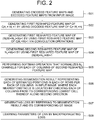
- Fig. 2 is a flow chart schematically illustrating a learning method of a CNN for detecting the obstacles in accordance with the present disclosure.
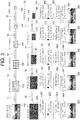
- Fig. 3 is a drawing exemplary illustrating operations on the input image to describe the learning method of the CNN for detecting the obstacles in accordance with the present disclosure.
- a process of detecting the obstacles in accordance with the present disclosure may start with a step S01 of generating encoded feature maps and decoded feature maps from at least one input image.
- the learning device may instruct a first to an n-th convolutional layers to respectively and sequentially generate a first encoded feature map to an n-th encoded feature map from the training image, where the CNN for detecting the obstacles may include the first to the n-th convolutional layers.
- the CNN for detecting the obstacles may include an n-th to a first deconvolutional layers corresponding to the first to the n-th convolutional layers, and the learning device may instruct the n-th to the first deconvolutional layers to respectively and sequentially generate an n-th decoded feature map to a first decoded feature map from the n-th encoded feature map.
- the CNN for detecting the obstacles may include the first convolutional layer 11 to a fifth convolutional layer 15 and a fifth deconvolutional layer 16 to the first deconvolutional layer 20, and the learning device may receive the training image 100 having a size of 640 ⁇ 256 with 3ch.
- This training image is inputted into the first convolutional layer 11 which may generate the first encoded feature map 110 having a size of 320 ⁇ 128 with 8ch, the second convolutional layer 12 which may generate the second encoded feature map 120 having a size of 160 ⁇ 64 with 16ch, the third convolutional layer 13 which may generate the third encoded feature map 130 having a size of 80 ⁇ 32 with 32ch, the fourth convolutional layer 14 which may generate the fourth encoded feature map 140 having a size of 40 ⁇ 16 with 64ch, and the fifth convolutional layer 15 which may generate the fifth encoded feature map 150 having a size of 20 ⁇ 8 with 128ch.
- the convolutional layers may increase channels of the input image or the feature maps, and may reduce their horizontal and vertical sizes, to thereby generate the encoded feature maps.
- the second convolutional layer 12 to the fifth convolutional layer 15 may double the channels of the inputted feature map and may reduce its horizontal and vertical sizes in half, to thereby generate the encoded feature maps.
- the learning device may instruct the n-th deconvolutional layer corresponding to the n-th convolutional layer to increase a horizontal size of the n-th encoded feature map by a multiplier to thereby generate the n-th decoded feature map.
- the learning device may instruct the fifth deconvolutional layer 16 to generate the fifth decoded feature map 160 having a size of 40 ⁇ 8 with 64ch from the fifth encoded feature map 150 having a size of 20 ⁇ 8 with 128ch.
- a deconvolutional layer reduces the number of channels and increases horizontal and vertical sizes
- the n-th deconvolutional layer in accordance with the present disclosure reduces the number of the channels of the n-th encoded feature map and increases the horizontal size by the multiplier, e.g., two for doubling, but keeps the vertical size of the feature map.
- the multiplier e.g., two for doubling
- the vertical size of the feature map is enough for the present disclosure. That is, the present disclosure does not need to check every pixel, unlike a conventional segmentation, nor has need for increase of the vertical size.
- the present disclosure provides a method that horizontal resolutions of input and output are the same, thus, does not have a problem of lowering of horizontal resolution according to conventional techniques.
- the present disclosure proposes a method that only the horizontal resolution is increased to detect the obstacles with less computation.
- the n-th deconvolutional layer may reduce the number of the channels of the n-th encoded feature map, and may increase the horizontal size by the multiplier, e.g., two for doubling, but does not change the vertical size.
- the learning device may instruct the fourth deconvolutional layer 17 to generate the fourth decoded feature map 170 having a size of 80 ⁇ 16 with 32ch from the fifth decoded feature map 160 having a size of 40 ⁇ 8 with 64ch, the third deconvolutional layer 18 to generate the third decoded feature map 180 having a size of 160 ⁇ 32 with 16ch from the fourth decoded feature map 170 having a size of 80 ⁇ 16 with 32ch, the second deconvolutional layer 19 to generate the second decoded feature map 190 having a size of 320 ⁇ 64 with 8ch from the third decoded feature map 180 having a size of 160 ⁇ 32 with 16ch, and the first deconvolutional layer 20 to generate the first decoded feature map 200 having a size of 640 ⁇ 128 with 4ch from the second decoded feature map 190 having a size of 320 ⁇ 64 with 8ch.
- the deconvolutional layers may reduce the number of feature maps inputted, and may increase the horizontal and the vertical sizes, to thereby generate the decoded feature maps.
- the fourth deconvolutional layer 17 to the first deconvolutional layer 20 may reduce the number of the channels in half and may double each of the horizontal and the vertical sizes of the inputted feature map, to thereby generate the decoded feature maps.
- the convolutional layers may perform at least one operation of convolution, max pooling, and ReLU
- the deconvolutional layers may perform at least one operation of deconvolution and ReLU.
- the learning device may generate a first reshaped feature map with a size of C i H i ⁇ W i ⁇ 1 by using the decoded feature map with a size of C i ⁇ W i ⁇ H i , where the Ci is the number of the channels, the W i is a size of the columns, and the H i is a size of the rows of the decoded feature map at a step S02.
- the learning device may concatenate each of features of each of the rows per each of the columns in the direction of the channel, to thereby generate at least one reshaped feature map.
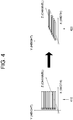
- Fig. 4 is a drawing schematically illustrating a reshaping process for detecting the obstacles in accordance with the present disclosure.
- a decoded feature map may be divided into rows as in the illustrated feature map 410, and each of the features of each of the rows per each of the columns may be concatenated in the direction of the channel as in the illustrated feature map 420.
- a feature map with a size of (C ⁇ W ⁇ H) may be converted into a feature map with a size of ((C ⁇ H) ⁇ W ⁇ 1).
- each square with thick lines on the feature map 410 represents each feature in each row corresponding to the first column of the decoded feature map. Such features in each row are concatenated for each column in the direction of the channel. If the feature map 410 has 8 rows, the feature map 420 may have eight times the number of the channels and an eighth of the height of the feature map 410.
- the fifth decoded feature map 160 having a size of 40 ⁇ 8 with 64ch may be converted to the first reshaped feature map 161 having a size of 40 ⁇ 1 with 64 ⁇ 8ch by a first reshaping process, i.e., RESHAPE 5-1
- the fourth decoded feature map 170 having a size of 80 ⁇ 16 with 32ch may be converted to the first reshaped feature map 171 having a size of 80 ⁇ 1 with 32 ⁇ 16ch by a first reshaping process, i.e., RESHAPE 4-1
- the third decoded feature map 180 having a size of 160 ⁇ 32 with 16ch may be converted to the first reshaped feature map 181 having a size of 160 ⁇ 1 with 16 ⁇ 32ch by a first reshaping process, i.e., RESHAPE 3-1
- the second decoded feature map 190 having a size of 320 ⁇ 64 with 8ch may be converted to the first reshaped feature map 191 having a first reshaped feature map
- the first reshaping process is illustrated in Fig. 3 as performed on every decoded feature map, it is not a requirement that every decoded feature map be reshaped, therefore, reshaping a part of the decoded feature maps should suffice.
- the first reshaped feature map with a size of CiHi ⁇ W i ⁇ 1 may be converted to the first reshaped feature map with a size of W I W i ⁇ N c ⁇ W i ⁇ 1 by the convolution operations.
- the W I is a column size of the training image and the W i is the size of the columns of the decoded feature map.
- the convolution operation is a 1 ⁇ 1 convolution, whose operands are cells in the grid which range over all of the channels but over just one unit horizontally and vertically, to find out where each of the lowest parts of the obstacles is positioned in each of N c columns of each first reshaped feature map, where N c is the number the second direction of the input image is divided into. All information on the decoded feature maps along the column direction has been integrated into the channels, for simultaneous operations on all the information, at the first reshaping process, therefore, the convolution operation makes it possible to check all pieces of information on the channels, to thereby find out where each of the lowest parts of each of the obstacles is positioned for each column.
- the first reshaping operation and the 1 ⁇ 1 convolution operation may be performed simultaneously if an 8 ⁇ 1 convolution without reshaping is performed. That is, if a height of a specific feature map is N, N ⁇ 1 convolution may be used.
- the 1 ⁇ 1 convolution operation is implemented on hardware for quick calculation, although an 8 ⁇ 1 kernel or N ⁇ 1 kernel, which is rarely used, is very slow on calculation. Therefore, it is more effective to separate the reshaping operation and the 1 ⁇ 1 convolution operation.
- the inputted feature map may be converted to have channels of W I W i ⁇ N c .
- the first reshaped feature map 161 having a size of 40 ⁇ 1 with 64 ⁇ 8ch of the fifth decoded feature map may be converted to the first reshaped feature map 162 having a size of 40 ⁇ 1 with N c ⁇ 16ch by the 1 ⁇ 1 convolution operation
- the first reshaped feature map 171 having a size of 80 ⁇ 1 with 32 ⁇ 16ch of the fourth decoded feature map may be converted to the first reshaped feature map 172 having a size of 80 ⁇ 1 with N c ⁇ 8ch by the 1 ⁇ 1 convolution operation
- the first reshaped feature map 181 having a size of 160 ⁇ 1 with 16 ⁇ 32ch of the third decoded feature map may be converted to the first reshaped feature map 182 having a size of 160 ⁇ 1 with N c ⁇ 4ch by the 1 ⁇ 1 convolution operation
- the first reshaped feature map 191 having a size of 320 ⁇ 1 with 8 ⁇ 64ch of the second decoded feature map may be converted to the first reshaped feature map 16
- the first reshaped feature map having a size of W I W i ⁇ N c ⁇ W i ⁇ 1 may be converted to a second reshaped feature map having a size of N c ⁇ W I ⁇ 1.
- the N c is the number of the rows into which the second direction of the input image is divided for specifying where each of the obstacles is located on each of the columns.
- a softmax operation is performed that normalizes values of the N c channels for each of the columns of the second reshaped feature map, and at a step of S06, the segmentation result is generated representing each of estimated positions in each of the rows, per each of the columns in the input image, where said each nearest obstacle is determined as located by checking each of the columns from its corresponding lowest cell thereof along the second direction.
- the outputted feature map having a size of W I W i ⁇ N c ⁇ W i ⁇ 1 may be modified to have a size of N c ⁇ W I ⁇ 1, with its data fixed but only its shape changed.
- the values of the N c channels per column may be normalized so that their values fall between 0 and 1, then each position of each obstacle per each of the columns may be found out by searching each specific channel with each corresponding highest value by referring to the normalized values.
- feature maps may be generated by the 1 ⁇ 1 convolution operation at the step of S03 and the reshaping operation at the step of S04, such that each of the estimated positions of the each lowest part of the obstacles among the rows per each of the columns may be allowed to have each corresponding highest value, and the rest of positions, i.e., the rest of rows, among the rows per each of the columns may be allowed to have lower values.
- the softmax operation at the step of S05 may be used for finding each largest value among each of the N c values for each column of the input image then outputting it, to thereby locate each of the positions of each of the obstacles.
- the segmentation result may be generated such that each of the estimated positions of the each lowest part of the obstacles among the rows per each of the columns has each corresponding highest value and the rest of positions among the rows per each of the columns have lower values, among the N c rows.
- the desired output from the learning method of the CNN may be finding each row with each corresponding highest value among the N c rows for each of the columns in the input image as the position of the obstacles. In order to do so, N c scores per column may be required. If the number, i.e., the width of the input image, of the columns in the input image is 640, i.e., 640 pixels or 640 columns, then a score map having a size of N c (channel) ⁇ 640 (width) ⁇ 1 (height) may be calculated as an output.
- the process of generating the score map having a size of N c (channel) ⁇ 640 (width) ⁇ 1 (height) as the output is as follows. For example, if the first reshaped feature map 161 having a size of 512(64 ⁇ 8) (channel) ⁇ 40 (width) ⁇ 1 (height) of the fifth decoded feature map by the first reshaping process, i.e., RESHAPE 5-1, is generated, this first reshaped feature map may have forty columns, only a sixteenth of those of the input image. Thus, in this case, sixteen N c output scores generated from sixteen times of the 1 ⁇ 1 convolution operations may suffice. Therefore, the size of the output 162 from CONV OUT5 in Fig.
- the second reshaping process i.e., RESHAPE 5-2, may be needed to convert the score map having a size of (N c ⁇ 16) (channel) ⁇ 40 (width) ⁇ 1 (height) to the scope map having a size of N c (channel) ⁇ 640(width) ⁇ 1(height).
- the feature map 162 having a size of 40 ⁇ 1 with N c ⁇ 16ch may be converted to the feature map 163 having a size of 640 ⁇ 1 with N c ch by the 1 ⁇ 1 convolution, i.e., CONV_OUT5, and an output 164 is generated such that each of the estimated positions of the each lowest part of each obstacle among the rows per each of the columns has each corresponding highest value, and that the rest of positions among the rows per each of the columns have lower values, among the N c rows per each column of 640 by the softmax operation.
- the 1 ⁇ 1 convolution i.e., CONV_OUT5
- the feature map 172 having a size of 80 ⁇ 1 with N c ⁇ 8ch, the feature map 182 having a size of 160 ⁇ 1 with N c ⁇ 4ch, the feature map 192 having a size of 320 ⁇ 1 with N c ⁇ 2ch, and the feature map 202 having a size of 640 ⁇ 1 with N c ch are respectively converted to each of the feature maps 173, 183, 193, and 203 having a size of 640 ⁇ 1 with N c ch by each of the 1 ⁇ 1 convolution operations of CONV_OUT4 to CONV_OUT1, and then each of outputs 174, 184, 194, and 204 is generated such that each of the estimated positions of the each lowest part of the obstacles among the rows per each of the columns has each corresponding highest value, and that the rest of the positions among the rows per each of the columns have lower values, among the N c rows per each column of 640 by the softmax operation.
- the learning device may generate the segmentation result representing each of the estimated positions, in the at least one decoded feature map, where said each nearest obstacle is determined as located by checking each of the columns from its corresponding lowest cell thereof along the second direction, i.e., upwards.
- the learning device may generate the segmentation result by checking each of the estimated positions of each lowest part of each of the obstacles on concatenated channels for each of the columns of the reshaped feature map.
- At least one loss may be generated by referring to the segmentation result and its corresponding at least one GT image at a step of S07, and parameters of the CNN may be learned or optimized by backpropagating the loss at a step of S08.
- the GT image may be an image in which each of the rows is indicated as corresponding to each of GT positions where each nearest obstacle is truly located on each of the columns from its corresponding lowest cell thereof along the second direction, i.e., upwards.
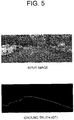
- Fig. 5 is a drawing exemplarily illustrating the input image and its corresponding GT image for detecting the obstacles in accordance with the present disclosure.
- the GT image may be generated by designating a nearest object as the obstacle when checking from the bottom to the top per each column, i.e., per column acquired by dividing 640 pixels by the first intervals or per each pixel of the 640 pixels, in the input image.
- all of the reshaped feature maps 164, 174, 184, 194, and 204 resulting from reshaping the decoded feature map may be generated as having the N c channels.
- the loss at the step of S07 may be a cross-entropy loss.
- the loss may be backpropagated for learning or optimizing of the parameters of the CNN.
- outputs are generated by using five decoded feature maps and thus five losses are generated, however, the backpropagation may be performed by referring to the loss and the outputs from at least part of the five decoded feature maps.
- the loss be used which is generated by referring to the first decoded feature map outputted from the first convolutional layer 20, it is not a requirement.
- a testing device using the CNN with the learned parameters may detect obstacles from at least one test image as the input image.
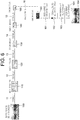
- Fig. 6 is a drawing exemplarily illustrating operations on the input image to describe a testing method of the CNN for detecting the obstacles in accordance with the present disclosure.
- a single output suffices, and the fourth deconvolutional layer to the first deconvolutional layer may be omitted because the output may be directly generated using the fifth decoded feature map.
- some of the omitted deconvolutional layers may be included.
- the testing device may receive the test image 100 and may instruct the first to the n-th convolutional layers 11 to 15 to respectively and sequentially generate a first encoded feature map for testing to an n-th encoded feature map for testing 110, 120, 130, 140, and 150 from the test image 100. Then, the testing device may instruct at least one deconvolutional layer 16 to generate a decoded feature map 160 for testing from the n-th encoded feature map 150 for testing.
- a reshaped feature map 161 for testing may be generated by concatenating, in a direction of the channel, each of features of each of the rows per each of the columns arranged in the second direction, by referring to the grid, from the decoded feature map 160 for testing. Then, a feature map 162 for testing with channels changed by the 1 ⁇ 1 convolution operations and additional reshaping processes, and a feature map 163 for testing with its channels changed to N c and the horizontal number of its columns changed to the horizontal number of the test image are generated.
- the testing device may generate a segmentation result 164 for testing by checking each of the estimated positions of each lowest part of the obstacles among the rows per each of the columns on concatenated channels per each of the columns of the reshaped feature map for testing, to thereby detect the obstacles.
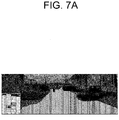
- Fig. 7A is a drawing schematically illustrating a result of the conventional object detection.
- Figs. 7B and 7C are drawings schematically illustrating the result of the object detection in accordance with the present disclosure.
- Fig. 7A illustrates an example of detecting the obstacles according to the conventional method, which has to check every pixel to determine whether the pixel corresponds to the lane or not, and as a result, its computational load is heavy.
- Figs. 7B and 7C illustrate the method in accordance with the present disclosure which detects the obstacles by checking the grid cells of a certain number, e.g., N c , from the bottom to the top of an image to determine positions where the obstacles are first detected as located, as indicated with black solid lines in Figs. 7B and 7C , and as a result, the obstacles in a high-resolution image are quickly detected with less computation.
- N c a certain number
- the conventional method has a problem that the horizontal resolution of the detection result is lower than the resolution of the input image due to time required for its processing, however, the method in accordance with the present disclosure resolves this problem because the horizontal resolutions of the input image and the output result are the same.
- the present disclosure may utilize high-resolution information when learning by using multi-loss, then in a real-world test, high-resolution outputs are generated using only low-resolution feature maps. Therefore, less computation and quick processing are achieved by outputting high-resolution information from the low-resolution feature maps.
- communication parts of the learning device and the testing device may perform transmission of image data, for example, images described above like a training image, an input image, and an input image for testing, etc.
- processors and/or memories of the learning device and the testing device may retain data for feature maps and performing operations
- the processors of the learning device and the testing device may perform convolution operations, deconvolution operations, and loss value operations, but the scope of the present disclosure is not limited thereto.
- the present disclosure has an effect of determining paths for the autonomous vehicles by detecting where the obstacles are positioned in the columns on an x-axis of the grid generated by dividing the input image by certain intervals.
- the present disclosure has another effect of detecting the obstacles with less computation, without checking every pixel in the input image.
- the present disclosure has still another effect of reducing computational load by outputting high-resolution information from low-resolution features.
- the embodiments of the present disclosure as explained above can be implemented in a form of executable program command through a variety of computer means recordable to computer readable media.
- the computer readable media may include solely or in combination, program commands, data files, and data structures.
- the program commands recorded to the media may be components specially designed for the present disclosure or may be usable to a skilled human in a field of computer software.
- Computer readable media include magnetic media such as hard disk, floppy disk, and magnetic tape, optical media such as CD-ROM and DVD, magneto-optical media such as floptical disk and hardware devices such as ROM, RAM, and flash memory specially designed to store and carry out program commands.
- Program commands include not only a machine language code made by a complier but also a high level code that can be used by an interpreter etc., which is executed by a computer.
- the aforementioned hardware device can work as more than a software module to perform the action of the present disclosure and they can do the same in the opposite case.
Landscapes
- Engineering & Computer Science (AREA)
- Theoretical Computer Science (AREA)
- Physics & Mathematics (AREA)
- General Physics & Mathematics (AREA)
- Evolutionary Computation (AREA)
- Artificial Intelligence (AREA)
- Data Mining & Analysis (AREA)
- Software Systems (AREA)
- Computer Vision & Pattern Recognition (AREA)
- Computing Systems (AREA)
- General Health & Medical Sciences (AREA)
- Health & Medical Sciences (AREA)
- Life Sciences & Earth Sciences (AREA)
- General Engineering & Computer Science (AREA)
- Biophysics (AREA)
- Mathematical Physics (AREA)
- Biomedical Technology (AREA)
- Computational Linguistics (AREA)
- Molecular Biology (AREA)
- Multimedia (AREA)
- Databases & Information Systems (AREA)
- Medical Informatics (AREA)
- Bioinformatics & Cheminformatics (AREA)
- Bioinformatics & Computational Biology (AREA)
- Evolutionary Biology (AREA)
- Probability & Statistics with Applications (AREA)
- Image Analysis (AREA)
Applications Claiming Priority (1)
| Application Number | Priority Date | Filing Date | Title |
|---|---|---|---|
| US16/121,681 US10303980B1 (en) | 2018-09-05 | 2018-09-05 | Learning method, learning device for detecting obstacles and testing method, testing device using the same |
Publications (3)
| Publication Number | Publication Date |
|---|---|
| EP3620957A1 true EP3620957A1 (de) | 2020-03-11 |
| EP3620957B1 EP3620957B1 (de) | 2026-01-14 |
| EP3620957C0 EP3620957C0 (de) | 2026-01-14 |
Family
ID=66625806
Family Applications (1)
| Application Number | Title | Priority Date | Filing Date |
|---|---|---|---|
| EP19175518.0A Active EP3620957B1 (de) | 2018-09-05 | 2019-05-21 | Lernverfahren, lernvorrichtung zur erkennung von hindernissen und prüfverfahren, prüfvorrichtung damit |
Country Status (5)
| Country | Link |
|---|---|
| US (1) | US10303980B1 (de) |
| EP (1) | EP3620957B1 (de) |
| JP (1) | JP6869559B2 (de) |
| KR (1) | KR102279361B1 (de) |
| CN (1) | CN110879958B (de) |
Cited By (1)
| Publication number | Priority date | Publication date | Assignee | Title |
|---|---|---|---|---|
| US20220148189A1 (en) * | 2020-11-10 | 2022-05-12 | Nec Laboratories America, Inc. | Multi-domain semantic segmentation with label shifts |
Families Citing this family (9)
| Publication number | Priority date | Publication date | Assignee | Title |
|---|---|---|---|---|
| US11600006B2 (en) * | 2018-10-26 | 2023-03-07 | Here Global B.V. | Deep neural network architecture for image segmentation |
| US10922845B2 (en) * | 2018-12-21 | 2021-02-16 | Here Global B.V. | Apparatus and method for efficiently training feature detectors |
| US11126890B2 (en) * | 2019-04-18 | 2021-09-21 | Adobe Inc. | Robust training of large-scale object detectors with a noisy dataset |
| CN113496117B (zh) * | 2020-04-02 | 2024-03-12 | 北京庖丁科技有限公司 | 交叉检查表格中单元格数字内容的方法和电子设备 |
| KR102507855B1 (ko) * | 2021-05-12 | 2023-03-09 | 한국외국어대학교 연구산학협력단 | 고속 연산이 가능한 딥러닝 신경망 장치 |
| US12225205B2 (en) * | 2021-06-18 | 2025-02-11 | Tencent America LLC | Block-wise entropy coding method in neural image compression |
| CN114092773B (zh) * | 2021-10-29 | 2023-11-21 | 北京百度网讯科技有限公司 | 信号处理方法、信号处理装置、电子设备及存储介质 |
| US12103186B2 (en) * | 2022-06-29 | 2024-10-01 | Hong Kong Applied Science And Technology Research Institute Co., Ltd | Method of controlling movement of a mobile robot in the event of a localization failure |
| CN115116038B (zh) * | 2022-08-30 | 2023-03-24 | 北京中科慧眼科技有限公司 | 基于双目视觉的障碍物识别方法和系统 |
Family Cites Families (14)
| Publication number | Priority date | Publication date | Assignee | Title |
|---|---|---|---|---|
| US9122934B2 (en) * | 2013-12-27 | 2015-09-01 | Automotive Research & Testing Center | Object detection method with a rising classifier effect and object detection device with the same |
| KR102450971B1 (ko) * | 2015-05-08 | 2022-10-05 | 삼성전자주식회사 | 객체 인식 장치 및 방법 |
| KR102592076B1 (ko) * | 2015-12-14 | 2023-10-19 | 삼성전자주식회사 | 딥러닝 기반 영상 처리 장치 및 방법, 학습 장치 |
| US10198624B2 (en) * | 2016-02-18 | 2019-02-05 | Pinscreen, Inc. | Segmentation-guided real-time facial performance capture |
| CN106408562B (zh) * | 2016-09-22 | 2019-04-09 | 华南理工大学 | 基于深度学习的眼底图像视网膜血管分割方法及系统 |
| KR101879207B1 (ko) * | 2016-11-22 | 2018-07-17 | 주식회사 루닛 | 약한 지도 학습 방식의 객체 인식 방법 및 장치 |
| KR20180058175A (ko) * | 2016-11-23 | 2018-05-31 | 건국대학교 산학협력단 | Dnn 기반 객체 학습 및 인식 시스템 |
| US10600184B2 (en) * | 2017-01-27 | 2020-03-24 | Arterys Inc. | Automated segmentation utilizing fully convolutional networks |
| US9947103B1 (en) * | 2017-10-03 | 2018-04-17 | StradVision, Inc. | Learning method and learning device for improving image segmentation and testing method and testing device using the same |
| CN108197569A (zh) * | 2017-12-29 | 2018-06-22 | 驭势科技(北京)有限公司 | 障碍物识别方法、装置、计算机存储介质和电子设备 |
| KR20180063869A (ko) * | 2018-02-28 | 2018-06-12 | 주식회사 수아랩 | 이미지 데이터의 상태 판단 방법, 장치 및 컴퓨터-판독가능 저장 매체에 저장된 컴퓨터 프로그램 |
| US20190286921A1 (en) * | 2018-03-14 | 2019-09-19 | Uber Technologies, Inc. | Structured Prediction Crosswalk Generation |
| KR102882825B1 (ko) * | 2018-11-30 | 2025-11-07 | 한국전자통신연구원 | 축소 반복 블록을 이용한 뉴럴 네트워크 경량화 방법 및 이를 위한 장치 |
| US11461653B2 (en) * | 2019-01-23 | 2022-10-04 | StradVision, Inc. | Learning method and learning device for CNN using 1xK or Kx1 convolution to be used for hardware optimization, and testing method and testing device using the same |
-
2018
- 2018-09-05 US US16/121,681 patent/US10303980B1/en active Active
-
2019
- 2019-05-21 EP EP19175518.0A patent/EP3620957B1/de active Active
- 2019-08-27 KR KR1020190105471A patent/KR102279361B1/ko active Active
- 2019-08-29 CN CN201910809441.9A patent/CN110879958B/zh active Active
- 2019-09-03 JP JP2019160143A patent/JP6869559B2/ja active Active
Non-Patent Citations (5)
| Title |
|---|
| ASEEM BEHL ET AL: "PointFlowNet: Learning Representations for Rigid Motion Estimation from Point Clouds", ARXIV.ORG, CORNELL UNIVERSITY LIBRARY, 201 OLIN LIBRARY CORNELL UNIVERSITY ITHACA, NY 14853, 6 June 2018 (2018-06-06), XP081015413 * |
| HYEONWOO NOH ET AL: "Learning Deconvolution Network for Semantic Segmentation", ARXIV.ORG, CORNELL UNIVERSITY LIBRARY, 201 OLIN LIBRARY CORNELL UNIVERSITY ITHACA, NY 14853, 17 May 2015 (2015-05-17), XP081338327 * |
| MICHAEL TETI ET AL: "A Systematic Comparison of Deep Learning Architectures in an Autonomous Vehicle", ARXIV.ORG, CORNELL UNIVERSITY LIBRARY, 201 OLIN LIBRARY CORNELL UNIVERSITY ITHACA, NY 14853, 26 March 2018 (2018-03-26), XP080859040 * |
| YAN TIAN ET AL: "Lane marking detection via deep convolutional neural network", NEUROCOMPUTING, vol. 280, 6 March 2018 (2018-03-06), AMSTERDAM, NL, pages 46 - 55, XP55599727, ISSN: 0925-2312, DOI: 10.1016/j.neucom.2017.09.098 * |
| ZHANG XUETAO ET AL: "Fast Semantic Segmentation for Scene Perception", IEEE TRANSACTIONS ON INDUSTRIAL INFORMATICS, IEEE SERVICE CENTER, NEW YORK, NY, US, vol. 15, no. 2, 21 June 2018 (2018-06-21), pages 1183 - 1192, XP011708978, ISSN: 1551-3203, [retrieved on 20190204], DOI: 10.1109/TII.2018.2849348 * |
Cited By (2)
| Publication number | Priority date | Publication date | Assignee | Title |
|---|---|---|---|---|
| US20220148189A1 (en) * | 2020-11-10 | 2022-05-12 | Nec Laboratories America, Inc. | Multi-domain semantic segmentation with label shifts |
| US12045992B2 (en) * | 2020-11-10 | 2024-07-23 | Nec Corporation | Multi-domain semantic segmentation with label shifts |
Also Published As
| Publication number | Publication date |
|---|---|
| JP6869559B2 (ja) | 2021-05-12 |
| US10303980B1 (en) | 2019-05-28 |
| KR102279361B1 (ko) | 2021-07-21 |
| CN110879958B (zh) | 2023-11-28 |
| JP2020038663A (ja) | 2020-03-12 |
| EP3620957B1 (de) | 2026-01-14 |
| KR20200027890A (ko) | 2020-03-13 |
| EP3620957C0 (de) | 2026-01-14 |
| CN110879958A (zh) | 2020-03-13 |
Similar Documents
| Publication | Publication Date | Title |
|---|---|---|
| EP3620957A1 (de) | Lernverfahren, lernvorrichtung zur erkennung von hindernissen und prüfverfahren, prüfvorrichtung damit | |
| EP3644240A1 (de) | Lernverfahren, lernvorrichtung zum nachweis eines bereichs von interesse (roi) basierend auf bodenlinien von hindernissen und prüfverfahren, prüfvorrichtung damit | |
| EP3644233B1 (de) | Lernverfahren, lernvorrichtung zum nachweis der objekthaftigkeit durch nachweis der oberen linien und unteren linien der nächstgelegenem hindernisse und testverfahren, dieselbe verwendende testvorrichtung | |
| EP3910532B1 (de) | Lernverfahren und lernvorrichtung zum trainieren eines objektdetektionsnetzwerks unter verwendung von aufmerksamkeitskarten und testverfahren und testvorrichtung mit verwendung davon | |
| EP3644234B1 (de) | Lernverfahren, lernvorrichtung unter verwendung von regressionsverlust und prüfverfahren, prüfvorrichtung unter verwendung davon | |
| US10262214B1 (en) | Learning method, learning device for detecting lane by using CNN and testing method, testing device using the same | |
| US9953437B1 (en) | Method and device for constructing a table including information on a pooling type and testing method and testing device using the same | |
| US10303981B1 (en) | Learning method and testing method for R-CNN based object detector, and learning device and testing device using the same | |
| EP3620985B1 (de) | Lernverfahren, lernvorrichtung zur optimierung der parameter von cnn unter verwendung mehrerer videobilder und testverfahren, testvorrichtung zur nutzung davon | |
| EP3624016A1 (de) | Verfahren und vorrichtung zur codierung von bildern sowie prüfverfahren und prüfvorrichtung damit | |
| US10387754B1 (en) | Learning method and learning device for object detector based on CNN using 1×H convolution to be used for hardware optimization, and testing method and testing device using the same | |
| US10579924B1 (en) | Learning method, learning device with multi-feeding layers and testing method, testing device using the same | |
| KR20200091324A (ko) | 원거리 검출 또는 군사 목적을 위해, 이미지 컨캐터네이션을 이용한, cnn 기반의 하드웨어 최적화가 가능한 객체 검출기를 학습하는 방법 및 학습 장치, 이를 이용한 테스팅 방법 및 테스팅 장치 | |
| EP3686797A1 (de) | Lernverfahren und lernvorrichtung für objektdetektor basierend auf cnn mit 1×1-faltung zur hardwareoptimierung sowie prüfverfahren und prüfvorrichtung damit | |
| EP3623991B1 (de) | Lernverfahren, lernvorrichtung zur erkennung von spuren basierend auf cnn und prüfverfahren, prüfvorrichtung damit |
Legal Events
| Date | Code | Title | Description |
|---|---|---|---|
| PUAI | Public reference made under article 153(3) epc to a published international application that has entered the european phase |
Free format text: ORIGINAL CODE: 0009012 |
|
| STAA | Information on the status of an ep patent application or granted ep patent |
Free format text: STATUS: REQUEST FOR EXAMINATION WAS MADE |
|
| 17P | Request for examination filed |
Effective date: 20190814 |
|
| AK | Designated contracting states |
Kind code of ref document: A1 Designated state(s): AL AT BE BG CH CY CZ DE DK EE ES FI FR GB GR HR HU IE IS IT LI LT LU LV MC MK MT NL NO PL PT RO RS SE SI SK SM TR |
|
| AX | Request for extension of the european patent |
Extension state: BA ME |
|
| RBV | Designated contracting states (corrected) |
Designated state(s): AL AT BE BG CH CY CZ DE DK EE ES FI FR GB GR HR HU IE IS IT LI LT LU LV MC MK MT NL NO PL PT RO RS SE SI SK SM TR |
|
| STAA | Information on the status of an ep patent application or granted ep patent |
Free format text: STATUS: EXAMINATION IS IN PROGRESS |
|
| 17Q | First examination report despatched |
Effective date: 20211217 |
|
| REG | Reference to a national code |
Ref country code: DE Ref legal event code: R079 Free format text: PREVIOUS MAIN CLASS: G06K0009000000 Ipc: G06V0010820000 Ref document number: 602019080289 Country of ref document: DE |
|
| RIC1 | Information provided on ipc code assigned before grant |
Ipc: G06T 7/143 20170101ALI20240705BHEP Ipc: G06N 3/045 20230101ALI20240705BHEP Ipc: G06N 3/084 20230101ALI20240705BHEP Ipc: G06V 20/58 20220101ALI20240705BHEP Ipc: G06V 10/77 20220101ALI20240705BHEP Ipc: G06V 10/82 20220101AFI20240705BHEP |
|
| GRAP | Despatch of communication of intention to grant a patent |
Free format text: ORIGINAL CODE: EPIDOSNIGR1 |
|
| STAA | Information on the status of an ep patent application or granted ep patent |
Free format text: STATUS: GRANT OF PATENT IS INTENDED |
|
| INTG | Intention to grant announced |
Effective date: 20250827 |
|
| GRAS | Grant fee paid |
Free format text: ORIGINAL CODE: EPIDOSNIGR3 |
|
| GRAA | (expected) grant |
Free format text: ORIGINAL CODE: 0009210 |
|
| STAA | Information on the status of an ep patent application or granted ep patent |
Free format text: STATUS: THE PATENT HAS BEEN GRANTED |
|
| AK | Designated contracting states |
Kind code of ref document: B1 Designated state(s): AL AT BE BG CH CY CZ DE DK EE ES FI FR GB GR HR HU IE IS IT LI LT LU LV MC MK MT NL NO PL PT RO RS SE SI SK SM TR |
|
| REG | Reference to a national code |
Ref country code: CH Ref legal event code: F10 Free format text: ST27 STATUS EVENT CODE: U-0-0-F10-F00 (AS PROVIDED BY THE NATIONAL OFFICE) Effective date: 20260114 Ref country code: GB Ref legal event code: FG4D |
|
| REG | Reference to a national code |
Ref country code: DE Ref legal event code: R096 Ref document number: 602019080289 Country of ref document: DE |
|
| REG | Reference to a national code |
Ref country code: IE Ref legal event code: FG4D |
|
| U01 | Request for unitary effect filed |
Effective date: 20260209 |
|
| U07 | Unitary effect registered |
Designated state(s): AT BE BG DE DK EE FI FR IT LT LU LV MT NL PT RO SE SI Effective date: 20260213 |
|
| U1N | Appointed representative for the unitary patent procedure changed after the registration of the unitary effect |
Representative=s name: AWA SWEDEN AB; SE |