EP3626847A2 - Alliages d'aluminium recyclé à partir de déchets de fabrication ayant un attrait esthétique - Google Patents
Alliages d'aluminium recyclé à partir de déchets de fabrication ayant un attrait esthétique Download PDFInfo
- Publication number
- EP3626847A2 EP3626847A2 EP19190959.7A EP19190959A EP3626847A2 EP 3626847 A2 EP3626847 A2 EP 3626847A2 EP 19190959 A EP19190959 A EP 19190959A EP 3626847 A2 EP3626847 A2 EP 3626847A2
- Authority
- EP
- European Patent Office
- Prior art keywords
- variations
- alloy
- equal
- less
- recycled
- Prior art date
- Legal status (The legal status is an assumption and is not a legal conclusion. Google has not performed a legal analysis and makes no representation as to the accuracy of the status listed.)
- Pending
Links
Images









Classifications
-
- C—CHEMISTRY; METALLURGY
- C22—METALLURGY; FERROUS OR NON-FERROUS ALLOYS; TREATMENT OF ALLOYS OR NON-FERROUS METALS
- C22C—ALLOYS
- C22C19/00—Alloys based on nickel or cobalt
- C22C19/007—Alloys based on nickel or cobalt with a light metal (alkali metal Li, Na, K, Rb, Cs; earth alkali metal Be, Mg, Ca, Sr, Ba, Al Ga, Ge, Ti) or B, Si, Zr, Hf, Sc, Y, lanthanides, actinides, as the next major constituent
-
- C—CHEMISTRY; METALLURGY
- C22—METALLURGY; FERROUS OR NON-FERROUS ALLOYS; TREATMENT OF ALLOYS OR NON-FERROUS METALS
- C22C—ALLOYS
- C22C21/00—Alloys based on aluminium
-
- C—CHEMISTRY; METALLURGY
- C22—METALLURGY; FERROUS OR NON-FERROUS ALLOYS; TREATMENT OF ALLOYS OR NON-FERROUS METALS
- C22C—ALLOYS
- C22C21/00—Alloys based on aluminium
- C22C21/06—Alloys based on aluminium with magnesium as the next major constituent
- C22C21/08—Alloys based on aluminium with magnesium as the next major constituent with silicon
-
- B—PERFORMING OPERATIONS; TRANSPORTING
- B22—CASTING; POWDER METALLURGY
- B22F—WORKING METALLIC POWDER; MANUFACTURE OF ARTICLES FROM METALLIC POWDER; MAKING METALLIC POWDER; APPARATUS OR DEVICES SPECIALLY ADAPTED FOR METALLIC POWDER
- B22F1/00—Metallic powder; Treatment of metallic powder, e.g. to facilitate working or to improve properties
- B22F1/05—Metallic powder characterised by the size or surface area of the particles
- B22F1/054—Nanosized particles
-
- C—CHEMISTRY; METALLURGY
- C22—METALLURGY; FERROUS OR NON-FERROUS ALLOYS; TREATMENT OF ALLOYS OR NON-FERROUS METALS
- C22B—PRODUCTION AND REFINING OF METALS; PRETREATMENT OF RAW MATERIALS
- C22B21/00—Obtaining aluminium
- C22B21/0007—Preliminary treatment of ores or scrap or any other metal source
-
- C—CHEMISTRY; METALLURGY
- C22—METALLURGY; FERROUS OR NON-FERROUS ALLOYS; TREATMENT OF ALLOYS OR NON-FERROUS METALS
- C22C—ALLOYS
- C22C1/00—Making non-ferrous alloys
- C22C1/02—Making non-ferrous alloys by melting
- C22C1/026—Alloys based on aluminium
-
- C—CHEMISTRY; METALLURGY
- C22—METALLURGY; FERROUS OR NON-FERROUS ALLOYS; TREATMENT OF ALLOYS OR NON-FERROUS METALS
- C22C—ALLOYS
- C22C1/00—Making non-ferrous alloys
- C22C1/04—Making non-ferrous alloys by powder metallurgy
- C22C1/0408—Light metal alloys
- C22C1/0416—Aluminium-based alloys
-
- C—CHEMISTRY; METALLURGY
- C22—METALLURGY; FERROUS OR NON-FERROUS ALLOYS; TREATMENT OF ALLOYS OR NON-FERROUS METALS
- C22C—ALLOYS
- C22C21/00—Alloys based on aluminium
- C22C21/02—Alloys based on aluminium with silicon as the next major constituent
-
- C—CHEMISTRY; METALLURGY
- C22—METALLURGY; FERROUS OR NON-FERROUS ALLOYS; TREATMENT OF ALLOYS OR NON-FERROUS METALS
- C22F—CHANGING THE PHYSICAL STRUCTURE OF NON-FERROUS METALS AND NON-FERROUS ALLOYS
- C22F1/00—Changing the physical structure of non-ferrous metals or alloys by heat treatment or by hot or cold working
- C22F1/04—Changing the physical structure of non-ferrous metals or alloys by heat treatment or by hot or cold working of aluminium or alloys based thereon
-
- C—CHEMISTRY; METALLURGY
- C22—METALLURGY; FERROUS OR NON-FERROUS ALLOYS; TREATMENT OF ALLOYS OR NON-FERROUS METALS
- C22F—CHANGING THE PHYSICAL STRUCTURE OF NON-FERROUS METALS AND NON-FERROUS ALLOYS
- C22F1/00—Changing the physical structure of non-ferrous metals or alloys by heat treatment or by hot or cold working
- C22F1/04—Changing the physical structure of non-ferrous metals or alloys by heat treatment or by hot or cold working of aluminium or alloys based thereon
- C22F1/05—Changing the physical structure of non-ferrous metals or alloys by heat treatment or by hot or cold working of aluminium or alloys based thereon of alloys of the Al-Si-Mg type, i.e. containing silicon and magnesium in approximately equal proportions
Definitions
- the disclosure is directed to recycled aluminum alloys and processes for recycling aluminum alloy scrap with cosmetic appeal and applications including enclosures for electronic devices.
- the disclosure provides an aluminum alloy including iron (Fe) in an amount of at least 0.10 wt%, silicon (Si) in an amount of at least 0.35 wt%, magnesium (Mg) in amount of at least 0.45 wt%, manganese (Mn) in amount of 0-0.090 wt%, non-aluminum (Al) elements in an amount not exceeding 3.0 wt%, the remaining wt% being Al and incidental impurities.
- the aluminum alloy includes silicon (Si) in an amount of at least 0.43 wt% and magnesium (Mg) in amount of at least 0.56 wt%.
- a recycled 6000 series aluminum alloy may include iron (Fe) from 0.10 to 0.50 wt%, silicon (Si) from 0.35 to 0.80 wt%, and magnesium (Mg) from 0.45 to 0.95 wt%, manganese (Mn) in amount of 0.005-0.090 wt%, the remaining wt% being Al and incidental impurities, wherein the recycled aluminum alloy has the same cosmetic appeal as a virgin Al 6063 alloy.
- the aluminum alloy includes silicon (Si) in an amount from 0.43 wt% to 0.80 wt%.
- a process for recycling manufacturing scrap.
- the process may include (a) obtaining a first recycled aluminum alloy from a first source and a second recycled aluminum alloy from a second source; (b) melting the first and second recycled aluminum alloys to form a melted recycled 6000 series aluminum alloy; (c) casting the melted recycled 6000 series aluminum alloy to form a casted alloy; (d) rolling to form a sheet or extruding to form an extrusion; and (e) fabricating the sheet or extrusion to produce a product.
- the disclosure provides recycled 6000 series aluminum alloys formed from scrap.
- the scrap can be collected from manufacturing processes of conventional aluminum alloys (e.g. 6000 series aluminum alloys or 6063 aluminum).
- the recycled 6000 series aluminum alloys surprisingly can provide the same or similar cosmetic appeal, mechanical properties, and microstructure as the primary aluminum alloys.
- the recycled 6000 series aluminum alloys can include higher Fe content, higher Mn content, and/or higher Si content than aluminum alloys made from primary aluminum.
- the disclosed 6000 series aluminum alloys are designed to be tolerant to include up to 100% recycled 6000 series aluminum, such as casting scrap, extrusion scrap, chip scrap from manufacturing, among others.
- the disclosed 6000 series aluminum alloys may also be tolerant to other series scraps, such as 1000 series scrap.
- the disclosed 6000 series aluminum alloys, also referred as recycled 6000 series aluminum alloys allow a closed-loop of manufacturing scrap that can reduce use of virgin aluminum, and result in significant reduction of emissions and related carbon footprint.
- Conventional 6000 series Al can include small amounts of Si and Mg, and optionally includes small amounts of Fe, Mn, Cu, Zr, Pb, Cr, Zn, among others.
- FIG. 1 depicts an example of a recycling process from materials including manufacturing scrap in accordance with embodiments of the disclosure.
- a primary aluminum 102 is supplied to material processing 104.
- Material processing 104 may use recycled materials that incorporates scrap from module manufacturing 106, to build chips.
- module manufacturing 106 uses the chips fabricated from material processing 104 to build modules.
- the module manufacturing 106 may have process fallout 110, which provides scrap to material processing 104. This process can be a closed-loop.
- the disclosure provides materials and methods for recycling scrap from module manufacturing 106.
- a customer 114 uses the modules from the module manufacturing 106 to build product, which may be used in field in operation 112.
- a recovered material 108 may be produced from the field used product.
- the recovered material 108 may also be provided to material processing 104.
- Recycled aluminum alloys accumulate more iron than is typically present in virgin aluminum alloys.
- the increase in iron can have a negative effect on the cosmetic appeal of aluminum alloys, particularly by having a more gray color.
- Iron cannot be removed from aluminum alloys by conventional industrial methods, and once iron is included in the aluminum alloy, the amount of iron in the alloy cannot be reduced. Because of the number of iron-containing contact points in a typical supply chain, the amount of iron is higher in recycled aluminum than in virgin aluminum.
- Iron has negative effects on the cosmetic appeal by creating an unattractive gray color. In addition to having a negative effect on cosmetics, iron contributes to the formation of iron-aluminum-silicon particles during processing. The acquisition of Si by the iron-containing particles reduces the amount of Si available for strengthening. As such, more Si is added to the alloys disclosed herein. The presently disclosed alloys have increased silicon and increased iron. Contrary to expectations, various properties of the alloy are consistent or better than alloys with such undesirable amounts of iron.
- the disclosed recycled 6000 series aluminum alloys allow use of recycled materials, such as manufacturing scrap from various sources.
- the disclosed recycled 6000 series aluminum alloys result in significant reduction of the carbon footprint associated with manufacturing.
- the alloys can be described by various wt% of elements, as well as specific properties. In all descriptions of the alloys described herein, it will be understood that the wt% balance of alloys is Al and incidental impurities. Impurities can be present, for example, as a byproduct of processing and manufacturing. In various embodiments, an incidental impurity can be no greater than 0.05 wt% of any one additional element (i.e., a single impurity), and no greater than 0.10 wt% total of all additional elements (i.e., total impurities). The impurities can be less than or equal to about 0.1 wt%, alternatively less than or equal about 0.05 wt%, alternatively less than or equal about 0.01 wt%, alternatively less than or equal about 0.001 wt%.
- the alloy has at least 0.14 wt% Fe. Further, in some variations, the alloy has at least 0.43 wt% Si and at least 0.56 wt% Mg. In still further variations, the alloy can have equal to or less than 0.20 wt% Fe. The alloy can have equal to or less than 0.62 wt% Mg and equal to or less than 0.49 wt% Si.
- the scrap (e.g., chip scrap) includes more Fe than the conventional 6000 series aluminum alloys.
- the Fe may be from sources including tooling among others.
- the disclosed 6000 series aluminum alloy is designed to have more Fe than conventional 6000 series aluminum alloys or virgin aluminum alloys currently used for cosmetic consumer electronic products.
- An accumulation model is used to estimate the Fe content versus the number of times the alloy is recycled, shown in FIG. 2 .
- the recycled aluminum alloys can be recycled multiple times.
- FIG. 2 depicts accumulated iron (Fe) content versus number of times the alloy is recycled in accordance with embodiments of the disclosure. As seen in FIG. 2 , the Fe content can increase with the number of times the alloy is recycled and then reaches a plateau at about 2000 ppm after about 10 recycles.
- iron may range from 0.10 wt% to 0.50 wt%.
- iron may be equal to or greater than 0.10 wt%. In some variations, iron may be equal to or greater than 0.14 wt%. In some variations, iron may be equal to or greater than 0.15 wt%. In some variations, iron may be equal to or greater than 0.16 wt%. In some variations, iron may be equal to or greater than 0.17 wt%. In some variations, iron may be equal to or greater than 0.18 wt%. In some variations, iron may be equal to or greater than 0.19 wt%. In some variations, iron may be equal to or greater than 0.20 wt%. In some variations, iron may be equal to or greater than 0.25 wt%. In some variations, iron may be equal to or greater than 0.30 wt%. In some variations, iron may be equal to or greater than 0.35 wt%. In some variations, iron may be equal to or greater than 0.40 wt%. In some variations, iron may be equal to or greater than 0.45 wt%.
- iron may be equal to or less than 0.50 wt%. In some variations, iron may be equal to or less than 0.45 wt%. In some variations, iron may be equal to or less than 0.35 wt%. In some variations, iron may be equal to or less than 0.40 wt%. In some variations, iron may be equal to or less than 0.35 wt%. In some variations, iron may be equal to or less than 0.30 wt%. In some variations, iron may be equal to or less than 0.25 wt%. In some variations, iron may be equal to or less than 0.20 wt%. In some variations, iron may be equal to or less than 0.19 wt%. In some variations, iron may be equal to or less than 0.18 wt%. In some variations, iron may be equal to or less than 0.17 wt%. In some variations, iron may be equal to or less than 0.16 wt%. In some variations, iron may be equal to or less than 0.15 wt%.
- Scrap can include more Ti than the conventional 6000 series aluminum alloys.
- the Ti can be added as a grain refiner during casting process.
- the 6000 series aluminum alloy is designed to tolerate more Ti versus conventional aluminum alloys used for similar products.
- FIG. 3 depicts accumulated titanium (Ti) content versus number of times the alloy is recycled in accordance with embodiments of the disclosure. As seen in FIG. 3 , the Ti content can increase with the number of times the alloy is recycled and then reaches a plateau at about 600 ppm after about 10 recycles.
- titanium may equal to or less than 0.10 wt%. In some variations, titanium may equal to or less than 0.09 wt%. In some variations, titanium may equal to or less than 0.08 wt%. In some variations, titanium may equal to or less than 0.07 wt%. In some variations, titanium may equal to or less than 0.06 wt%. In some variations, titanium may equal to or less than 0.05 wt%. In some variations, titanium may equal to or less than 0.04 wt%. In some variations, titanium may equal to or less than 0.03 wt%. In some variations, titanium may equal to or less than 0.025 wt%. In some variations, titanium may be equal to or less than 0.020 wt%. In some variations, titanium may be equal to or less than 0.015 wt%. In some variations, titanium may be equal to or less than 0.010 wt%. In some variations, titanium may be equal to or less than 0.005 wt%.
- Additional Si is added to the disclosed alloy than in a typical cosmetic 6000 series alloy, without a resulting loss of mechanical strength by forming Mg-Si particles.
- Mn can be added to break up large contaminant Al-Fe-Si particles and to form smaller Al-Fe-Si-Mn particles.
- FIG. 4A illustrates a post-heat treatment microstructure of the recycled 6000 series aluminum alloy in accordance with embodiments of the disclosure.
- FIG. 4B illustrates constituent phase particles formed before aging in the recycled 6000 series aluminum alloy of FIG. 4A in accordance with embodiments of the disclosure.
- the post-heat treatment microstructure includes region 402 within a grain boundary 401.
- the grain size within the grain boundary 401 is about 100 ⁇ m.
- the region 402 includes constituent phase Al-Fe-Si particles 404 and a region 406 including constituent phase Mg-Si particles 408 and 410 after aging, as shown in FIG. 4B .
- Mg-Si precipitates 408 and 410 are formed within fine grain during aging, as shown in FIG. 4C .
- FIG. 4C illustrates Mg-Si precipitates formed during aging in accordance with embodiments of the disclosure.
- FIG. 4D illustrates contaminant AlFeSi particles after heat treatment in a virgin 6000 series aluminum alloy with Fe contamination in accordance with embodiments of the disclosure.
- contamination AlFeSi particles 408 may be present in virgin aluminum alloy and embedded in aluminum 416.
- one contamination AlFeSi particle 408 is shown within one grain boundary 414.
- Mg-Si particles 404 are also embedded in aluminum 416.
- FIG. 4E illustrates contaminant AlFeSi particles after heat treatment in a primary 6000 series aluminum alloy with Fe and Ti contamination in accordance with embodiments of the disclosure. Iron and titanium contaminations are a consequence of recycling the primary aluminum alloy of FIG. 4D . As shown in FIG.
- more contamination AlFeSi particles 408 may be present in the primary aluminum alloy.
- five contamination AlFeSi particles 408 is shown within in five grain boundaries 414.
- fewer Mg-Si particles 404 are present compared to FIG 4D . The reason for this may be due to the Si previously present in the Mg-Si particles has been used to form particles with iron, such that fewer Mg-Si particles are present.
- Ti segregations 418 may be present in the recycled aluminum alloy 416.
- FIG. 4F illustrates contaminant AlFeSiMn particles of a recycled 6000 series aluminum alloy after heat treatment in accordance with embodiments of the disclosure.
- the recycled aluminum alloy is formed from the primary aluminum alloy of FIG. 4D .
- the addition of Mn to the recycled aluminum alloys help break large AlFeSi particles 408 of the primary aluminum alloy of FIG. 4D into smaller AlFeSiMn particles 412, which helps achieve better cosmetic appeal.
- the volume fraction of Mg-Si particles 404 is similar to FIG 4D .
- the recycled aluminum alloys include higher Mn and higher Si contents than the primary aluminum alloy.
- silicon may vary from 0.35 wt% to 0.80 wt%.
- silicon may be equal to or less than 0.80 wt%. In some variations, silicon may be equal to or less than 0.75 wt%. In some variations, silicon may be equal to or less than 0.70 wt%. In some variations, silicon may be equal to or less than 0.65 wt%. In some variations, silicon may be equal to or less than 0.60 wt%. In some variations, silicon may be equal to or less than 0.55 wt%. In some variations, silicon may be equal to or less than 0.50 wt%. In some variations, silicon may be equal to or less than 0.49 wt%. In some variations, silicon may be equal to or less than 0.48 wt%. In some variations, silicon may be equal to or less than 0.47 wt%.
- silicon may be equal to or less than 0.46 wt%. In some variations, silicon may be equal to or less than 0.45 wt%. In some variations, silicon may be equal to or less than 0.40 wt%. In some variations, silicon may be equal to or less than 0.39 wt%. In some variations, silicon may be equal to or less than 0.38 wt%. In some variations, silicon may be equal to or less than 0.37 wt%. In some variations, silicon may be equal to or less than 0.36 wt%.
- silicon may be equal to or greater than 0.35 wt%. In some variations, silicon may be equal to or greater than 0.36 wt%. In some variations, silicon may be equal to or greater than 0.37 wt%. In some variations, silicon may be equal to or greater than 0.38 wt%. In some variations, silicon may be equal to or greater than 0.39 wt%. In some variations, silicon may be equal to or greater than 0.40 wt%. In some variations, silicon may be equal to or greater than 0.41 wt%. In some variations, silicon may be equal to or greater than 0.42 wt%. In some variations, silicon may be equal to or greater than 0.43 wt%. In some variations, silicon may be equal to or greater than 0.44 wt%.
- silicon may be equal to or greater than 0.45 wt%. In some variations, silicon may be equal to or greater than 0.46 wt%. In some variations, silicon may be equal to or greater than 0.47 wt%. In some variations, silicon may be equal to or greater than 0.48 wt%. In some variations, silicon may be equal to or greater than 0.49 wt%. In some variations, silicon may be equal to or greater than 0.50 wt%. In some variations, silicon may be equal to or greater than 0.55 wt%. In some variations, silicon may be equal to or greater than 0.60 wt%. In some variations, silicon may be equal to or greater than 0.65 wt%. In some variations, silicon may be equal to or greater than 0.70 wt%. In some variations, silicon may be equal to or greater than 0.75wt%.
- Mg can be designed to have the proper Mg/Si ratio to form Mg-Si precipitates for strengthening purpose.
- the ratio of Mg to Si is typically 2:1, but other variations can be possible.
- magnesium may vary from 0.45 wt% to 0.95 wt%.
- magnesium may be equal to or less than 0.95 wt%. In some variations, magnesium may be equal to or less than 0.90 wt%. In some variations, magnesium may be equal to or less than 0.85 wt%. In some variations, magnesium may be equal to or less than 0.80 wt%. In some variations, magnesium may be equal to or less than 0.75 wt%. In some variations, magnesium may be equal to or less than 0.70 wt%. In some variations, magnesium may be equal to or less than 0.65 wt%. In some variations, magnesium may be equal to or less than 0.60 wt%. In some variations, magnesium may be equal to or less than 0.55 wt%. In some variations, magnesium may be equal to or less than 0.50 wt
- magnesium may be equal to or greater than 0.50 wt%. In some variations, magnesium may be equal to or greater than 0.55 wt%. In some variations, magnesium may be equal to or greater than 0.60 wt%. In some variations, magnesium may be equal to or greater than 0.65 wt%. In some variations, magnesium may be equal to or greater than 0.70 wt%. In some variations, magnesium may be equal to or greater than 0.75 wt%. In some variations, magnesium may be equal to or greater than 0.80 wt%. In some variations, magnesium may be equal to or greater than 0.85 wt%. In some variations, magnesium may be equal to or greater than 0.90 wt%.
- the alloy can include Mn.
- Mn can help break up the coarse Al-Fe-Si particles or AlFeSi particles that form during casting.
- manganese may be equal to or less than 0.090 wt%. In some variations, manganese may be equal to or less than 0.085 wt%. In some variations, manganese may be equal to or less than 0.080 wt%. In some variations, manganese may be equal to or less than 0.075 wt%. In some variations, manganese may be equal to or less than 0.070 wt%. In some variations, manganese may be equal to or less than 0.065 wt%. In some variations, manganese may be equal to or less than 0.060 wt%. In some variations, manganese may be equal to or less than 0.055 wt%.
- manganese may be equal to or less than 0.050 wt%. In some variations, manganese may be equal to or less than 0.045 wt%. In some variations, manganese may be equal to or less than 0.040 wt%. In some variations, manganese may be equal to or less than 0.035 wt%. In some variations, manganese may be equal to or less than 0.030 wt%. In some variations, manganese may be equal to or less than 0.025 wt%. In some variations, manganese may be equal to or less than 0.020 wt%.ln some variations, manganese may be equal to or less than 0.015 wt%. In some variations, manganese may be equal to or less than 0.010 wt%. In some variations, manganese may be equal to or less than 0.005 wt%.
- manganese may be equal to or greater than 0.005 wt%. In some variations, manganese may be equal to or greater than 0.010 wt%. In some variations, manganese may be equal to or greater than 0.015 wt%. In some variations, manganese may be equal to or greater than 0.020 wt%. In some variations, manganese may be equal to or greater than 0.025 wt%. In some variations, manganese may be equal to or greater than 0.030 wt%. In some variations, manganese may be equal to or greater than 0.035 wt%. In some variations, manganese may be equal to or greater than 0.040 wt%.
- manganese may be equal to or greater than 0.045 wt%. In some variations, manganese may be equal to or greater than 0.050 wt%. In some variations, manganese may be equal to or greater than 0.055 wt%. In some variations, manganese may be equal to or greater than 0.060 wt%. In some variations, manganese may be equal to or greater than 0.065 wt%. In some variations, manganese may be equal to or greater than 0.070 wt%. In some variations, manganese may be equal to or greater than 0.075 wt%. In some variations, manganese may be equal to or greater than 0.080 wt%. In some variations, manganese may be equal to or greater than 0.085 wt%.
- the disclosed 6000 series aluminum alloy may include other elements as disclosed below.
- the alloy can include Cu.
- Cu can improve corrosion resistance, and/or Cu can influence color of the anodized alloy.
- copper may vary from 0.010 wt% to 0.050 wt%.
- copper may be equal to or less than 0.050 wt%. In some variations, copper may be equal to or less than 0.045 wt%. In some variations, copper may be equal to or less than 0.040 wt%. In some variations, copper may be equal to or less than 0.035 wt%. In some variations, copper may be equal to or less than 0.030 wt%. In some variations, copper may be equal to or less than 0.025 wt%. In some variations, copper may be equal to or less than 0.020 wt%. In some variations, copper may be equal to or less than 0.015 wt%.
- copper may be equal to or greater than 0.010 wt%. In some variations, copper may be equal to or greater than 0.015 wt%. In some variations, copper may be equal to or greater than 0.020 wt%. In some variations, copper may be equal to or greater than 0.025 wt%. In some variations, copper may be equal to or greater than 0.030 wt%. In some variations, copper may be equal to or greater than 0.035 wt%. In some variations, copper may be equal to or greater than 0.040 wt%. In some variations, copper may be equal to or greater than 0.045 wt%.
- chromium may be equal to or less than 0.10 wt%. In some variations, chromium may be equal to or less than 0.08 wt%. In some variations, chromium may be equal to or less than 0.06 wt%. In some variations, chromium may be equal to or less than 0.04 wt%. In some variations, chromium may be equal to or less than 0.03 wt%. In some variations, chromium may be equal to or less than 0.02 wt%. In some variations, chromium may be equal to or less than 0.01 wt%. In some variations, chromium may be equal to or less than 0.008 wt%.
- chromium may be equal to or less than 0.006 wt%. In some variations, chromium may be equal to or less than 0.004 wt%. In some variations, chromium may be equal to or less than 0.002 wt%.
- zinc may be equal to or less than 0.20 wt%. In some variations, zinc may be equal to or less than 0.15 wt%. In some variations, zinc may be equal to or less than 0.10 wt%. In some variations, zinc may be equal to or less than 0.08 wt%. In some variations, zinc may be equal to or less than 0.06 wt%. In some variations, zinc may be equal to or less than 0.04 wt%. In some variations, zinc may be equal to or less than 0.03 wt%. In some variations, zinc may be equal to or less than 0.02 wt%. In some variations, zinc may be equal to or less than 0.01 wt%. In some variations, zinc may be equal to or less than 0.005 wt%. In some variations, zinc may be equal to or less than 0.001 wt%.
- gallium may be equal to or less than 0.20 wt%. In some variations, gallium may be equal to or less than 0.15 wt%. In some variations, gallium may be equal to or less than 0.10 wt%. In some variations, gallium may be equal to or less than 0.08 wt%. In some variations, gallium may be equal to or less than 0.06 wt%. In some variations, gallium may be equal to or less than 0.04 wt%. In some variations, gallium may be equal to or less than 0.03 wt%. In some variations, gallium may be equal to or less than 0.02 wt%. In some variations, gallium may be equal to or less than 0.015 wt%. In some variations, gallium may be equal to or less than 0.01 wt%. In some variations, gallium may be equal to or less than 0.005 wt%. In some variations, gallium may be equal to or less than 0.001 wt%.
- tin may be equal to or less than 0.20 wt%. In some variations, tin may be equal to or less than 0.15 wt%. In some variations, tin may be equal to or less than 0.10 wt%. In some variations, tin may be equal to or less than 0.08 wt%. In some variations, tin may be equal to or less than 0.06 wt%. In some variations, tin may be equal to or less than 0.04 wt%. In some variations, tin may be equal to or less than 0.01 wt%. In some variations, tin may be equal to or less than 0.008 wt%. In some variations, tin may be equal to or less than 0.006 wt%. In some variations, tin may be equal to or less than 0.004 wt%. In some variations, tin may be equal to or less than 0.002 wt%.
- vanadium may be equal to or less than 0.20 wt%. In some variations, vanadium may be equal to or less than 0.15 wt%. In some variations, vanadium may be equal to or less than 0.10 wt%. In some variations, vanadium may be equal to or less than 0.08 wt%. In some variations, vanadium may be equal to or less than 0.06 wt%. In some variations, vanadium may be equal to or less than 0.04 wt%. In some variations, vanadium may be equal to or less than 0.02 wt%. In some variations, vanadium may be equal to or less than 0.01 wt%. In some variations, vanadium may be equal to or less than 0.005 wt%. In some variations, vanadium may be equal to or less than 0.001 wt%.
- calcium may be equal to or less than 0.001 wt%. In some variations, calcium may be equal to or less than 0.0003 wt%. In some variations, calcium may be equal to or less than 0.0002 wt%. In some variations, calcium may be equal to or less than 0.0001 wt%.
- sodium may be equal to or less than 0.002 wt%. In some variations, sodium may be equal to or less than 0.0002 wt%. In some variations, sodium may be equal to or less than 0.0001 wt%.
- One or more of other elements including chromium, boron, zirconium, lithium, cadmium, lead, nickel, phosphorous, among others, may be equal to or less than 0.01 wt%.
- One or more of these other elements may be equal to or less than 0.006 wt%.
- One or more of these other elements may be equal to or less than 0.004 wt%.
- One or more of other elements may be equal to or less than 0.002 wt%.
- a total of other elements may not exceed 0.20 wt%. In some variations, a total of other elements may not exceed 0.10 wt%. In some variations, a total of other elements may not exceed 0.08 wt%. In some variations, a total of other elements may not exceed 0.06 wt%. In some variations, a total of other elements may not exceed 0.04 wt%.
- Scrap can have a large surface area/volume ratio compared to alloys made from virgin material.
- the large surface area of the scrap can include a substantial quantity of oxides, such as aluminum oxides.
- Scrap may also include impurities, such as Fe or Ti, among others, compared to conventional 6000 series aluminum alloys, 1000 series alloys, or virgin alloys of the 6000 series aluminum alloys.
- the cleaning process may include removing oxides by re-melting scrap and flowing oxides and skim off the oxides.
- the cleaning process may also include removing organic contaminants by chemical solvent or solution or heating.
- the disclosed recycled 6000 series aluminum alloys can be made from up to 100% Al scrap, and can be used to form a part by extrusion and sheet rolling.
- the disclosed recycled 6000 series aluminum alloys can also include scrap extrusion or sheet material.
- the disclosed methods can include or exclude primary aluminum or virgin aluminum.
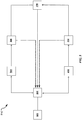
- FIG. 5 depicts a recycling process from scrap in accordance with embodiments of the disclosure.
- process 500 includes a source 502 having scrap from two or more sources for aluminum alloys, e.g. source A and source B, which may come from different supply chains.
- a melt for an alloy can be prepared by heating the alloy including the composition. As shown, the scrap is melted at operation 504. After the melt is cooled to room temperature, the alloys may go through various heat treatments, such as casting, homogenization, extruding, sheet rolling, solution heat treatment, and aging, among others.
- the melted scrap may be billet cast at operation 506, and then homogenized.
- the cast alloys can be homogenized by heating to an elevated temperature and holding at the elevated temperature for a period of time, such as at an elevated temperature of 520 to 620°C for a period of time, e.g. 8-12 hours.
- homogenization is used for both extrusion and sheet rolling.
- Homogenization refers to a process in which the alloy is soaked at an elevated temperature for a period of time. Homogenization can reduce chemical or metallurgical segregation, which may occur as a natural result of solidification in some alloys. Homogenization can also be used to transform long, narrow AlFeSi particles into small, broken up AlFeSi and AlFeSiMn particles. It will be appreciated by those skilled in the art that the heat treatment conditions (e.g. temperature and time) may vary.
- the homogenized alloy may be extruded at operation 508.
- Extrusion is a process for converting a metal billet into lengths of uniform cross section by forcing the metal to flow plastically through a die orifice.
- a component of part 518 may be formed from the extruded aluminum alloy obtained at operation 508. Also, a part may be formed from the sheet aluminum alloy obtained at operation 514.
- the extruded alloys can be preheated to an elevated temperature, e.g. about 400oC and ramped up to a higher temperature, e.g. above 500oC for extrusion.
- the extrusion and solution heat-treatment may occur simultaneously at the higher elevated temperature, e.g. about 500°C.
- the solution heat treatments can alter the strength of the alloy.
- the melted scrap from operation 504 may also be slab casted at operation 512, then homogenized, and followed by sheet rolling at operation 514.
- a component of part 518 may be formed of the rolled sheet from operation 514. As shown, scraps from operations 506, 512, 508, 514, and 518 can be returned to for re-melting at operation 504.
- Sheet rolling is a metal forming process in which a metal passes through one or more pairs of rolls to reduce the thickness and to make the thickness uniform. Rolling is classified according to the temperature of the metal rolled. If the temperature of the metal is above its recrystallization temperature, then the process is known as hot rolling. If the temperature of the metal is below its recrystallization temperature, the process is known as cold rolling.
- the disclosed 6000 series aluminum alloys are first hot rolled at about 250-450oC, and then cold rolled, followed by solution treatment.
- the scrap source 502 may also include a portion of disclosed 6000 series aluminum alloys in addition to the scrap from various sources.
- the alloy can be aged at a temperature of 125 to 225°C for about a period of time, e.g. 6-10 hours, and then quenched with water.
- aging is a heat treatment at an elevated temperature, and may induce a precipitation reaction to form precipitates Mg-Si.
- the heat treatment condition e.g. temperature and time
- the disclosed 6000 series aluminum alloys may be optionally subjected to a stress-relief treatment between the solution heat-treatment and the aging heat-treatment.
- the stress-relief treatment can include stretching the alloy, compressing the alloy, or combinations thereof.
- the aluminum alloys disclosed herein typically have more Fe than in conventional aluminum alloys. Aluminum alloys having higher amounts of iron particularly by having a more gray color.
- the scrap can include more Fe than the conventional 6000 series aluminum alloys. As described above, the recycled aluminum alloys described herein have more iron than that is typically present in virgin aluminum alloys for alloys with cosmetic appeal.
- Iron has negative effects on the cosmetic appeal by creating an unattractive gray color. In addition to having a negative effect on cosmetics, iron contributes to the formation of iron-aluminum-silicon particles during processing. The acquisition of Si by the Fe particles reduces the amount of Si available for strengthening. As such, more Si is added to the alloys disclosed herein. The presently disclosed alloys have increased silicon and increased iron. Contrary to expectations, the properties of the alloy are consistent or better than alloys with such undesirable amounts of iron.
- the disclosed 6000 series aluminum alloys can be anodized.
- Anodizing is a surface treatment process for metal, most commonly used to protect aluminum alloys.
- Anodizing uses electrolytic passivation to increase the thickness of the natural oxide layer on the surface of metal parts.
- Anodizing may increase corrosion resistance and wear resistance, and may also provide better adhesion for paint primers and glues than bare metal.
- Anodized films may also be used for cosmetic effects, for example, it may add interference effects to reflected light.
- the disclosed recycled 6000 series aluminum alloys have the same or improved cosmetic appeal as those with lower iron, silicon, and magnesium.
- after anodizing they do not take a yellowish or gray color, and do not have increased cosmetic defects such as mottling, grain lines, black lines, discoloration, white dots, oxidation, and line mark, among others.
- the disclosed 6000 series aluminum alloys can form enclosures for electronic devices.
- the enclosures may be designed to have a blasted surface finish absent of streaky lines.
- Blasting is a surface finishing process, for example, smoothing a rough surface or roughening a smooth surface. Blasting may remove surface material by forcibly propelling a stream of abrasive media against a surface under high pressure.
- Standard methods may be used for evaluation of cosmetics including color, gloss and haze.
- the color of objects may be determined by the wavelength of light that is reflected or transmitted without being absorbed, assuming incident light is white light.
- the visual appearance of objects may vary with light reflection or transmission. Additional appearance attributes may be based on the directional brightness distribution of reflected light or transmitted light, commonly referred to as glossy, shiny, dull, clear, hazy, among others.
- the quantitative evaluation may be performed based on ASTM Standards on Color & Appearance Measurement or ASTM E-430 Standard Test Methods for Measurement of Gloss of High-Gloss Surfaces, including ASTM D523 (Gloss), ASTM D2457 (Gloss on plastics), ASTM E430 (Gloss on high-gloss surfaces, haze), and ASTM D5767 (DOI), among others.
- ASTM D523 Gloss
- ASTM D2457 Gloss on plastics
- ASTM E430 Gloss on high-gloss surfaces, haze
- DOI ASTM D5767
- the measurements of gloss, haze, and DOI may be performed by testing equipment, such as Rhopoint IQ.
- color may be quantified by parameters L , a , and b , where L stands for light brightness, a stands for color between red and green, and b stands for color between blue and yellow.
- L stands for light brightness
- a stands for color between red and green
- b stands for color between blue and yellow.
- high b values suggest an unappealing yellowish color, not a gold yellow color.
- Nearly zero parameters a and b suggest a neutral color.
- Low L values suggest dark brightness, while high L value suggests great brightness.
- testing equipment such as X-Rite ColorEye XTH, X-Rite Coloreye 7000 may be used. These measurements are according to CIE/ISO standards for illuminants, observers, and the L*, a*, and b* color scale.
- the standards include: (a) ISO 11664-1:2007(E)/CIE S 014-1/E:2006: Joint ISO/CIE Standard: Colorimetry - Part 1: CIE Standard Colorimetric Observers; (b) ISO 11664-2:2007(E)/CIE S 014-2/E:2006: Joint ISO/CIE Standard: Colorimetry - Part 2: CIE Standard Illuminants for Colorimetry, (c) ISO 11664-3:2012(E)/CIE S 014-3/E:2011: Joint ISO/CIE Standard: Colorimetry - Part 3: CIE Tristimulus Values; and (d) ISO 11664-4:2008(E)/CIE S 014-4/E:2007: Joint ISO/CIE Standard: Colorimetry - Part 4: CIE 1976 L*, a*, and b* Color Space.
- L* is from 70 to 100. In some variations, L* is at least 70. In some variations, L* is at least 75. In some variations, L* is at least 80. In some variations, L* is at least 85. In some variations, L* is at least 90. In some variations, L* is at least 95. In some variations, L* is less than or equal to 100. In some variations, L* is less than or equal to 95. In some variations, L* is less than or equal to 90. In some variations, L* is less than or equal to 85. In some variations, L* is less than or equal to 80. In some variations, L* is less than or equal to 75.
- a* is from -2 to 2. In some variations, a* is at least -2. In some variations, a* is at least -1.5. In some variations, a* is at least -1.0. In some variations, a* is at least -0.5. In some variations, a* is at least 0.0. In some variations, a* is at least 0.5. In some variations, a* is at least -0.5. In some variations, a* is at least 1.0. In some variations, a* is at least 1.5. In some variations, a* is less than or equal to 2.0. In some variations, a* is less than or equal to 1.5. In some variations, a* is less than or equal to 1.0.
- a* is less than or equal to 0.5. In some variations, a* is less than or equal to 0.0. In some variations, a* is less than or equal to 2.0. In some variations, a* is less than or equal to -0.5. In some variations, a* is less than or equal to -1.0. In some variations, a* is less than or equal to -1.5.
- b* is from -2 to 2. In some variations, b* is at least -2. In some variations, b* is at least -1.5. In some variations, a is at least -1.0. In some variations, b* is at least -0.5. In some variations, b* is at least 0.0. In some variations, b* is at least 0.5. In some variations, b* is at least -0.5. In some variations, b* is at least 1.0. In some variations, b* is at least 1.5. In some variations, b* is less than or equal to 2.0. In some variations, b* is less than or equal to 1.5. In some variations, b* is less than or equal to 1.0.
- b* is less than or equal to 0.5. In some variations, b* is less than or equal to 0.0. In some variations, b* is less than or equal to 2.0. In some variations, b* is less than or equal to -0.5. In some variations, b* is less than or equal to -1.0. In some variations, b* is less than or equal to -1.5.
- Yield strengths of the alloys may be determined via ASTM B557, which covers the testing apparatus, test specimens, and testing procedure for tensile testing.
- the 6000 series aluminum alloy can be extruded or rolled with the conventional process for aluminum alloys to have the mechanical properties, including yield strength, tensile strength, elongation, and hardness, to be the same as the aluminum alloy without any scrap.
- the mechanical properties have an upper limit, which allows the alloy to be formed with dimensional consistency.
- the disclosed recycled 6000 series aluminum alloys can exceed the tensile strength and hardness upper limit of other cosmetic aluminum alloys.
- the range of the tensile strength and hardness remains unchanged, i.e. within the range between lower limit and upper limit. The unchanged range allows the dimension consistency during forming process, such as rolling.
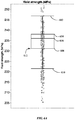
- FIG. 6A illustrates the yield strength for extrusion samples formed of an example recycled 6000 series aluminum alloy in accordance with an embodiment of the disclosure.
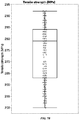
- FIG. 6B illustrates the tensile strength for extrusion samples formed of the recycled 6000 series aluminum alloy, in accordance with an embodiment of the disclosure.
- FIG. 6C illustrates the elongation for extrusion samples formed of the recycled 6000 series aluminum alloy.
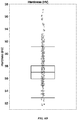
- FIG. 6D illustrates the hardness for extrusion samples formed of the recycled 6000 series aluminum alloy, in accordance with an embodiment of the disclosure.
- FIG. 7A illustrates the yield strength for sheet samples formed of a sample recycled 6000 series aluminum alloy in accordance with embodiments of the disclosure.
- FIG. 7B illustrates the tensile strength for sheet samples formed of recycled 6000 series aluminum alloys, in accordance with an embodiments of the disclosure.
- FIG. 7C illustrates the elongation for sheet samples formed of the recycled 6000 series aluminum alloy , in accordance with an embodiment of the disclosure.
- the recycled 6000 series aluminum alloy has an elongation with a 25% lower limit of about 15% to a 75% upper limit of about 16%.
- the example recycled 6000 series aluminum alloy also has a maximum elongation of 17.5% and a minimum elongation of 13.5%.
- FIG. 7D illustrates the hardness for sheet samples formed of the recycled 6000 series aluminum alloy, in accordance with an embodiment of the disclosure.
- the dimensional consistency from part to part is evaluated for recycled 6000 series aluminum alloys from three different manufacturing contractors A, B, and C. Results indicate that the dimensional consistency of the recycled 6000 series aluminum alloys all match or exceed the dimensional consistency of the primary or virgin aluminum alloys, regardless of the sources for the scrap.
- the disclosed 6000 series aluminum alloys can also have a thermal conductivity of at least 175 W/mK, which helps heat dissipation of the electronic devices.
- the thermal conductivity of the recycled alloys can be at least 150 W/mK.
- the thermal conductivity varies with alloy composition and thermal heat treatment. The thermal conductivity measured for the disclosed alloys range from 165 to 200 W/mK.
- the thermal conductivity of the recycled alloys can be equal to or greater than 165 W/mK. In various embodiments, the thermal conductivity of the recycled alloys can be equal to or greater than 175 W/mK. In various embodiments, the thermal conductivity of the recycled alloys can be equal to or greater than 185 W/mK. In various embodiments, the thermal conductivity of the recycled alloys can be equal to or greater than 195 W/mK.
- the thermal conductivity of the recycled alloys can be equal to and less than 200 W/mK. In various embodiments, the thermal conductivity of the recycled alloys can be equal to and less than 190 W/mK. In various embodiments, the thermal conductivity of the recycled alloys can be equal to and less than 180 W/mK. In various embodiments, the thermal conductivity of the recycled alloys can be equal to and less than 170 W/mK.
- Microstructure can be characterized by average grain size, largest grain size, PCG layer depth, and grain aspect ratio.
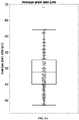
- FIG. 8A illustrates the average grain size for extrusion samples formed of an example recycled 6000 series aluminum alloy.
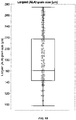
- FIG. 8B illustrates the largest grain size for extrusion samples formed of an example recycled 6000 series aluminum alloy in accordance with an embodiment of the disclosure.
- FIG. 8C illustrates the PCG layer depth for extrusion samples formed of an example recycled 6000 series aluminum alloy in accordance with an embodiment of the disclosure.
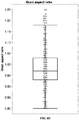
- FIG. 8D illustrates the grain aspect ratio for extrusion samples formed of an example recycled 6000 series aluminum alloy in accordance with an embodiment of the disclosure. As shown in FIG. 8D , the aspect ratio of the grain is between a minimum value of 0.8 and a maximum value of 1.17 with a median value of 0.97.
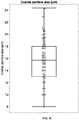
- FIG. 8E illustrates the coarse particle sizes for extrusion samples formed of an example of the disclosed recycled 6000 series aluminum alloys in accordance with embodiments of the disclosure.
- FIG. 9A illustrates the average grain size for sheet samples formed of a recycled 6000 series aluminum alloy, in accordance with an embodiment of the disclosure.
- FIG. 9B illustrates the largest grain size for sheet samples formed of a recycled 6000 series aluminum alloy in accordance with embodiments of the disclosure.
- FIG. 9C illustrates the coarse particle sizes for sheet samples formed of a recycled 6000 series aluminum alloy in accordance with embodiments of the disclosure.
- FIG. 9D illustrates the grain aspect ratio for sheet samples formed of an example of the disclosed recycled 6000 series aluminum alloys in accordance with embodiments of the disclosure.
- An electronic device herein can refer to any electronic device known in the art.
- such devices can include wearable devices such as a watch (e.g., an AppleWatch®).
- Devices can also be a telephone such a mobile phone (e.g., an iPhone®) a land-line phone, or any communication device (e.g., an electronic email sending/receiving device).
- the alloys can be a part of a display, such as a digital display, a TV monitor, an electronic-book reader, a portable web-browser (e.g., iPad®), and a computer monitor.
- the alloys can also be an entertainment device, including a portable DVD player, conventional DVD player, Blue-Ray disk player, video game console, music player, such as a portable music player (e.g., iPod®), etc.
- the alloys can also be a part of a device that provides control, such as controlling the streaming of images, videos, sounds (e.g., Apple TV®), or can be a remote control for an electronic device.
- the alloys can be a part of a computer or its accessories, such as the hard drive tower housing or casing for MacBookAir or Mac Mini.
- any ranges cited herein are inclusive.
- the terms “substantially” and “about” used throughout this Specification are used to describe and account for small fluctuations. For example, they can refer to less than or equal to ⁇ 5%, such as less than or equal to ⁇ 2%, such as less than or equal to ⁇ 1%, such as less than or equal to ⁇ 0.5%, such as less than or equal to ⁇ 0.2%, such as less than or equal to ⁇ 0.1%, such as less than or equal to ⁇ 0.05%.
Landscapes
- Chemical & Material Sciences (AREA)
- Engineering & Computer Science (AREA)
- Materials Engineering (AREA)
- Mechanical Engineering (AREA)
- Metallurgy (AREA)
- Organic Chemistry (AREA)
- Thermal Sciences (AREA)
- Physics & Mathematics (AREA)
- Crystallography & Structural Chemistry (AREA)
- Geology (AREA)
- Environmental & Geological Engineering (AREA)
- Manufacturing & Machinery (AREA)
- Inorganic Chemistry (AREA)
- Nanotechnology (AREA)
- Geochemistry & Mineralogy (AREA)
- Life Sciences & Earth Sciences (AREA)
- General Life Sciences & Earth Sciences (AREA)
- Manufacture And Refinement Of Metals (AREA)
- Continuous Casting (AREA)
- Powder Metallurgy (AREA)
Applications Claiming Priority (1)
| Application Number | Priority Date | Filing Date | Title |
|---|---|---|---|
| US201862716606P | 2018-08-09 | 2018-08-09 |
Publications (2)
| Publication Number | Publication Date |
|---|---|
| EP3626847A2 true EP3626847A2 (fr) | 2020-03-25 |
| EP3626847A3 EP3626847A3 (fr) | 2020-08-05 |
Family
ID=67587609
Family Applications (1)
| Application Number | Title | Priority Date | Filing Date |
|---|---|---|---|
| EP19190959.7A Pending EP3626847A3 (fr) | 2018-08-09 | 2019-08-09 | Alliages d'aluminium recyclé à partir de déchets de fabrication ayant un attrait esthétique |
Country Status (4)
| Country | Link |
|---|---|
| US (1) | US11345980B2 (fr) |
| EP (1) | EP3626847A3 (fr) |
| KR (3) | KR20200018293A (fr) |
| CN (2) | CN110819859A (fr) |
Cited By (1)
| Publication number | Priority date | Publication date | Assignee | Title |
|---|---|---|---|---|
| NL2032205B1 (en) * | 2021-12-13 | 2023-06-27 | Univ Guilin Technology | Wrought aluminium-ferro alloy and preparation method thereof |
Families Citing this family (12)
| Publication number | Priority date | Publication date | Assignee | Title |
|---|---|---|---|---|
| CA3187478A1 (fr) * | 2020-07-31 | 2022-02-03 | Timothy A. Hosch | Nouveaux alliages d'aluminium 6xxx et procedes de production correspondants |
| CN112458344B (zh) * | 2020-11-04 | 2022-03-22 | 佛山科学技术学院 | 一种高强耐蚀的铝合金及其制备方法和应用 |
| KR20220066452A (ko) * | 2020-11-16 | 2022-05-24 | (주)동아특수금속 | 온도제어를 통한 연속 용해 기술을 이용한 페로- 티타늄의 주조 공정 |
| CN112609111A (zh) * | 2020-11-27 | 2021-04-06 | 辽宁忠旺集团有限公司 | 一种电池托盘用6110铝合金型材及制备方法 |
| KR102577077B1 (ko) * | 2020-12-10 | 2023-09-11 | 주식회사 에스제이테크 | 열 전도도 및 강도가 우수한 재생 알루미늄 합금의 제조방법 |
| CN112831663B (zh) * | 2021-02-20 | 2022-12-02 | 广东澳美铝业有限公司 | 一种门窗铝废料回收不降级使用工艺 |
| CN116761904A (zh) * | 2021-02-25 | 2023-09-15 | 爱信轻金属株式会社 | 铝合金挤压材料的制造方法 |
| US20240191325A1 (en) * | 2022-12-09 | 2024-06-13 | Kaiser Aluminum Warrick, Llc | High-Recycled Content Beverage End Stock |
| CN116397127B (zh) * | 2023-04-13 | 2023-10-10 | 肇庆市大正铝业有限公司 | 一种再生铝合金的制备方法及制备的铝合金 |
| WO2024262823A1 (fr) * | 2023-06-23 | 2024-12-26 | 삼성전자 주식회사 | Couvercle extérieur, dispositif électronique le comprenant et son procédé de fabrication |
| CN117230352A (zh) * | 2023-09-15 | 2023-12-15 | 昆山联滔电子有限公司 | 一种再生6063铝合金材料及其制备方法与应用 |
| CN118996178B (zh) * | 2024-08-27 | 2025-09-26 | 广东齐力澳美高新材料股份有限公司 | 一种两端压扁的铝合金支架及其加工工艺和应用 |
Citations (3)
| Publication number | Priority date | Publication date | Assignee | Title |
|---|---|---|---|---|
| WO2000052216A1 (fr) * | 1999-03-03 | 2000-09-08 | Alusuisse Technology & Management Ag | COMPOSANT STRUCTURAL CONSTITUE D'UN ALLIAGE D'ALUMINIUM DU TYPE AlMgSi |
| CN1760389A (zh) * | 2005-09-26 | 2006-04-19 | 吕杏根 | 熔炼净化废旧6063料再生6063铝合金的方法 |
| EP3183373B1 (fr) * | 2015-07-20 | 2018-12-26 | Novelis, Inc. | Tôle d'alliage d'aluminium aa6xxx de qualité anodisée élevée et son procédé de fabrication |
Family Cites Families (78)
| Publication number | Priority date | Publication date | Assignee | Title |
|---|---|---|---|---|
| GB516766A (en) | 1938-06-07 | 1940-01-11 | British Aluminium Co Ltd | Improvements in and relating to aluminium base alloys |
| US2706680A (en) | 1952-02-27 | 1955-04-19 | Aluminum Co Of America | Aluminum base alloy |
| GB1154013A (en) | 1965-08-09 | 1969-06-04 | Commw Of Australia | Improved Aluminium Base Cast Alloys |
| US4269632A (en) | 1978-08-04 | 1981-05-26 | Coors Container Company | Fabrication of aluminum alloy sheet from scrap aluminum for container components |
| JPS59126762A (ja) | 1983-01-10 | 1984-07-21 | Kobe Steel Ltd | 高強度、高靭性アルミニウム合金の製造方法 |
| JPS60234955A (ja) | 1984-05-08 | 1985-11-21 | Kobe Steel Ltd | 耐応力腐蝕割れ性の優れたAl−Zn−Mg合金の製造方法 |
| JPS6439340A (en) | 1987-08-03 | 1989-02-09 | Furukawa Aluminium | Aluminum alloy composite plate for wrapping |
| JPH0234741A (ja) | 1988-07-22 | 1990-02-05 | Furukawa Alum Co Ltd | 自動車バンパー用アルミニウム合金とその製造方法 |
| JPH03294445A (ja) | 1990-04-13 | 1991-12-25 | Sumitomo Light Metal Ind Ltd | 成形加工性の良好な高力アルミニウム合金およびその製造法 |
| US5769972A (en) | 1995-11-01 | 1998-06-23 | Kaiser Aluminum & Chemical Corporation | Method for making can end and tab stock |
| JPH10280081A (ja) | 1997-04-08 | 1998-10-20 | Sky Alum Co Ltd | Al−Zn−Mg系合金からなる高強度・高精度枠形状部材およびその製造方法 |
| CA2293608A1 (fr) | 1997-06-04 | 1998-12-10 | Golden Aluminum Company | Procede de coulee continue permettant de produire des alliages d'aluminium a faible formation de cornes |
| JP4043643B2 (ja) | 1999-04-28 | 2008-02-06 | 古河電気工業株式会社 | アルミニウム合金製架空線圧縮接続管 |
| JP4011270B2 (ja) | 1999-09-03 | 2007-11-21 | 日本軽金属株式会社 | Al−Mg−Si系アルミニウム合金押出材の製造方法とその加工方法 |
| JP4179737B2 (ja) | 1999-09-22 | 2008-11-12 | 日本軽金属株式会社 | 高強度Al−Mg−Si系アルミニウム合金押出材の製造方法とその加工方法 |
| CN100457930C (zh) | 2001-04-24 | 2009-02-04 | 克里斯铝业费尔德有限公司 | 回收金属包覆废料的方法 |
| FR2833616B1 (fr) | 2001-12-17 | 2004-07-30 | Pechiney Aluminium | Piece coulee sous pression en alliage d'aluminium a haute ductilite et resilience |
| US20080299000A1 (en) | 2002-09-21 | 2008-12-04 | Universal Alloy Corporation | Aluminum-zinc-copper-magnesium-silver alloy wrought product |
| JP3953432B2 (ja) | 2003-03-10 | 2007-08-08 | 古河スカイ株式会社 | 気体燃料タンク用管部材、気体燃料タンク及びその製造方法 |
| KR101156918B1 (ko) | 2003-08-29 | 2012-06-21 | 코루스 알루미늄 발쯔프로두크테 게엠베하 | 고강도 알루미늄합금 브레이징 시트, 브레이징 조립체 및브레이징 시트 제조방법 |
| US20050238529A1 (en) | 2004-04-22 | 2005-10-27 | Lin Jen C | Heat treatable Al-Zn-Mg alloy for aerospace and automotive castings |
| US20050238528A1 (en) | 2004-04-22 | 2005-10-27 | Lin Jen C | Heat treatable Al-Zn-Mg-Cu alloy for aerospace and automotive castings |
| JP4413106B2 (ja) | 2004-08-30 | 2010-02-10 | 三菱樹脂株式会社 | ヒートシンク用アルミニウム合金材及びその製造法 |
| US20060289093A1 (en) | 2005-05-25 | 2006-12-28 | Howmet Corporation | Al-Zn-Mg-Ag high-strength alloy for aerospace and automotive castings |
| FR2902442B1 (fr) | 2006-06-16 | 2010-09-03 | Aleris Aluminum Koblenz Gmbh | Alliage de la serie aa6xxx, a grande tolerance aux dommages pour l'industrie aerospatiale |
| JP5345056B2 (ja) | 2006-06-30 | 2013-11-20 | コンステリウム ロールド プロダクツ−レイヴンズウッド,エルエルシー | 熱処理可能な高強度アルミニウム合金 |
| EP2038447B1 (fr) | 2006-07-07 | 2017-07-19 | Aleris Aluminum Koblenz GmbH | Produits en alliage d'aluminium série aa2000, et procédé de fabrication correspondant |
| JP5329746B2 (ja) | 2006-07-13 | 2013-10-30 | 株式会社神戸製鋼所 | 温間成形用アルミニウム合金板 |
| US20080066833A1 (en) | 2006-09-19 | 2008-03-20 | Lin Jen C | HIGH STRENGTH, HIGH STRESS CORROSION CRACKING RESISTANT AND CASTABLE Al-Zn-Mg-Cu-Zr ALLOY FOR SHAPE CAST PRODUCTS |
| JP5059512B2 (ja) | 2007-02-28 | 2012-10-24 | 株式会社神戸製鋼所 | 高強度、高延性Al合金およびその製造方法 |
| EP2141253B1 (fr) | 2007-03-26 | 2015-09-16 | Aisin Keikinzoku Co., Ltd. | Procédé de fabrication d'un extrudat d'alliage d'aluminium 7000 |
| WO2009024601A1 (fr) | 2007-08-23 | 2009-02-26 | Aleris Aluminum Koblenz Gmbh | Procédé pour couler un lingot ou une barre d'alliage d'aluminium composite |
| JP5160930B2 (ja) | 2008-03-25 | 2013-03-13 | 株式会社神戸製鋼所 | 曲げ圧壊性と耐食性に優れたアルミニウム合金押出材およびその製造方法 |
| DE102008048374B3 (de) | 2008-09-22 | 2010-04-15 | Honsel Ag | Korrosionsbeständiges Aluminiumstrangpressprofil und Verfahren zur Herstellung eines Strukturbauteiles |
| JP2010159489A (ja) | 2008-12-09 | 2010-07-22 | Sumitomo Light Metal Ind Ltd | 7000系アルミニウム合金材の成形加工方法及び該7000系アルミニウム合金材の成形加工方法により成形される成形加工品 |
| JP5356510B2 (ja) | 2009-04-30 | 2013-12-04 | 昭和電工株式会社 | Al合金鋳造部材の製造方法 |
| CN101695753A (zh) | 2009-10-23 | 2010-04-21 | 江苏豪然喷射成形合金有限公司 | 高强度喷射成形7055铝合金锻件的制造方法 |
| JP5629099B2 (ja) | 2010-02-09 | 2014-11-19 | 株式会社Uacj | 耐食性及び光輝性に優れた押出し用アルミニウム合金 |
| WO2011124590A1 (fr) | 2010-04-07 | 2011-10-13 | Rheinfelden Alloys Gmbh & Co. Kg | Alliage d'aluminium pour la coulée sous pression |
| JP5819294B2 (ja) | 2010-06-11 | 2015-11-24 | 昭和電工株式会社 | Al合金接合体の製造方法 |
| CN101880805B (zh) | 2010-07-30 | 2012-10-17 | 浙江巨科铝业有限公司 | 汽车车身板用Al-Mg-Si系铝合金制造方法 |
| FR2968675B1 (fr) | 2010-12-14 | 2013-03-29 | Alcan Rhenalu | Produits epais en alliage 7xxx et procede de fabrication |
| JP2012149335A (ja) | 2010-12-27 | 2012-08-09 | Sankyo Tateyama Inc | アルミニウム合金 |
| JP5842295B2 (ja) | 2011-05-30 | 2016-01-13 | アップル インコーポレイテッド | 筐体用7000系アルミニウム合金押出材 |
| JP5023233B1 (ja) | 2011-06-23 | 2012-09-12 | 住友軽金属工業株式会社 | 高強度アルミニウム合金材およびその製造方法 |
| JP5898426B2 (ja) | 2011-07-25 | 2016-04-06 | 株式会社Uacj | 負圧缶蓋用アルミニウム合金板及びその製造方法 |
| JP2013040356A (ja) | 2011-08-11 | 2013-02-28 | Kobe Steel Ltd | 疲労限度を有する6000系アルミニウム合金 |
| WO2013065760A1 (fr) | 2011-11-02 | 2013-05-10 | 古河スカイ株式会社 | Matériau de revêtement en alliage d'aluminium pour moulage |
| JP5767624B2 (ja) | 2012-02-16 | 2015-08-19 | 株式会社神戸製鋼所 | 電磁成形用アルミニウム合金中空押出材 |
| EP2899287B1 (fr) | 2012-09-20 | 2018-03-07 | Kabushiki Kaisha Kobe Seiko Sho (Kobe Steel, Ltd.) | Plaque d'alliage d'aluminium pour pièce automobile |
| CN104619872A (zh) | 2012-09-20 | 2015-05-13 | 株式会社神户制钢所 | 铝合金制汽车构件 |
| US20140366997A1 (en) | 2013-02-21 | 2014-12-18 | Alcoa Inc. | Aluminum alloys containing magnesium, silicon, manganese, iron, and copper, and methods for producing the same |
| JP6273158B2 (ja) | 2013-03-14 | 2018-01-31 | 株式会社神戸製鋼所 | 構造材用アルミニウム合金板 |
| CN103205586B (zh) | 2013-05-09 | 2015-08-12 | 云南奥凯科技开发有限责任公司 | 一种废铝高效再生铸造铝合金的方法 |
| JP6685222B2 (ja) | 2013-06-19 | 2020-04-22 | リオ ティント アルカン インターナショナル リミテッドRio Tinto Alcan International Limited | 向上した高温機械特性を有するアルミニウム合金複合材 |
| JP2015040320A (ja) | 2013-08-21 | 2015-03-02 | 株式会社Uacj | 高強度アルミニウム合金及びその製造方法 |
| JP5968284B2 (ja) | 2013-09-09 | 2016-08-10 | 株式会社神戸製鋼所 | バンパー構造体及びバンパービームの製造方法 |
| JP5968285B2 (ja) | 2013-09-09 | 2016-08-10 | 株式会社神戸製鋼所 | バンパー補強材及びその製造方法 |
| EP3748024A1 (fr) | 2013-09-30 | 2020-12-09 | Apple Inc. | Alliages d'aluminium à haute résistance et attrait esthétique |
| JP6344923B2 (ja) | 2014-01-29 | 2018-06-20 | 株式会社Uacj | 高強度アルミニウム合金及びその製造方法 |
| ES2718395T5 (es) | 2014-04-30 | 2022-04-01 | Alcoa Usa Corp | Aleaciones de fundición de aluminio 7xx mejoradas |
| US20150354045A1 (en) | 2014-06-10 | 2015-12-10 | Apple Inc. | 7XXX Series Alloy with Cu Having High Yield Strength and Improved Extrudability |
| US20150368772A1 (en) | 2014-06-19 | 2015-12-24 | Apple Inc. | Aluminum Alloys with Anodization Mirror Quality |
| CN104762538B (zh) | 2015-04-09 | 2017-01-25 | 广东欧珀移动通信有限公司 | 铝合金及其阳极氧化方法 |
| EP3289108B1 (fr) | 2015-05-01 | 2020-06-17 | Université Du Québec À Chicoutimi | Matériau composite ayant des propriétés mécaniques améliorées à des températures élevées |
| CN105671384B (zh) | 2016-01-07 | 2018-10-09 | 瑞声光电科技(常州)有限公司 | 铝合金及其制备方法 |
| CN109415780B (zh) | 2016-06-01 | 2021-02-23 | 阿莱利斯铝业迪弗尔私人有限公司 | 6xxx系列铝合金锻造坯料及其制造方法 |
| US10208371B2 (en) | 2016-07-13 | 2019-02-19 | Apple Inc. | Aluminum alloys with high strength and cosmetic appeal |
| CN106435298B (zh) | 2016-09-14 | 2018-05-15 | 广东豪美新材股份有限公司 | 一种应用在汽车铝合金箱体型材的铝合金及其制备方法 |
| MX2019011144A (es) | 2017-03-23 | 2019-12-11 | Novelis Inc | Fundición de chatarra de aluminio reciclado. |
| BR112019024670A2 (pt) | 2017-05-25 | 2020-06-16 | Basf Se | Artigo, processo para produzir o artigo e usos de um artigo e de um corpo polimérico |
| CN107299262B (zh) | 2017-06-21 | 2019-02-15 | 乳源东阳光优艾希杰精箔有限公司 | 一种Si含量高的3XXX系铝合金及其制造方法 |
| US20190169717A1 (en) | 2017-12-06 | 2019-06-06 | Apple Inc. | Printable Aluminum Alloys with Good Anodized Cosmetic Surfaces |
| CN108396209B (zh) | 2018-04-17 | 2020-06-02 | 广西南南铝加工有限公司 | 一种6xxx/7xxx铝合金复合材料的制备方法 |
| JP6578048B1 (ja) | 2018-09-06 | 2019-09-18 | 株式会社神戸製鋼所 | 缶胴用アルミニウム合金板 |
| CN109207812A (zh) | 2018-11-29 | 2019-01-15 | 天津忠旺铝业有限公司 | 一种幕墙用6060铝合金板材及其制备方法 |
| CN109666824B (zh) | 2019-01-29 | 2020-04-24 | 中铝材料应用研究院有限公司 | 高强度Al-Mg-Si-Mn变形铝合金及其制备方法 |
| CN109957690B (zh) | 2019-05-09 | 2020-11-10 | 广西南南铝加工有限公司 | 一种电子产品外观件用铝合金复合材料制备方法 |
-
2019
- 2019-08-02 US US16/530,830 patent/US11345980B2/en active Active
- 2019-08-06 KR KR1020190095535A patent/KR20200018293A/ko not_active Ceased
- 2019-08-09 EP EP19190959.7A patent/EP3626847A3/fr active Pending
- 2019-08-09 CN CN201910732009.4A patent/CN110819859A/zh active Pending
- 2019-08-09 CN CN202410851309.5A patent/CN118814039A/zh active Pending
-
2022
- 2022-02-18 KR KR1020220021598A patent/KR20220029605A/ko not_active Ceased
-
2024
- 2024-07-17 KR KR1020240094213A patent/KR20240116677A/ko not_active Ceased
Patent Citations (3)
| Publication number | Priority date | Publication date | Assignee | Title |
|---|---|---|---|---|
| WO2000052216A1 (fr) * | 1999-03-03 | 2000-09-08 | Alusuisse Technology & Management Ag | COMPOSANT STRUCTURAL CONSTITUE D'UN ALLIAGE D'ALUMINIUM DU TYPE AlMgSi |
| CN1760389A (zh) * | 2005-09-26 | 2006-04-19 | 吕杏根 | 熔炼净化废旧6063料再生6063铝合金的方法 |
| EP3183373B1 (fr) * | 2015-07-20 | 2018-12-26 | Novelis, Inc. | Tôle d'alliage d'aluminium aa6xxx de qualité anodisée élevée et son procédé de fabrication |
Cited By (1)
| Publication number | Priority date | Publication date | Assignee | Title |
|---|---|---|---|---|
| NL2032205B1 (en) * | 2021-12-13 | 2023-06-27 | Univ Guilin Technology | Wrought aluminium-ferro alloy and preparation method thereof |
Also Published As
| Publication number | Publication date |
|---|---|
| CN110819859A (zh) | 2020-02-21 |
| US11345980B2 (en) | 2022-05-31 |
| KR20200018293A (ko) | 2020-02-19 |
| EP3626847A3 (fr) | 2020-08-05 |
| KR20220029605A (ko) | 2022-03-08 |
| US20200048744A1 (en) | 2020-02-13 |
| KR20240116677A (ko) | 2024-07-30 |
| CN118814039A (zh) | 2024-10-22 |
Similar Documents
| Publication | Publication Date | Title |
|---|---|---|
| US11345980B2 (en) | Recycled aluminum alloys from manufacturing scrap with cosmetic appeal | |
| KR102164377B1 (ko) | 높은 강도와 심미감을 갖는 알루미늄 합금 | |
| US10544493B2 (en) | Aluminum alloys with high strength and cosmetic appeal | |
| KR101624116B1 (ko) | 고강도 알루미늄 합금재 및 이의 제조 방법 | |
| KR101773695B1 (ko) | 전자기기 하우징용 고강도 알루마이트 피막이 부착된 알루미늄 합금판 및 그 제조 방법 | |
| US20210388468A1 (en) | High strength recycled aluminum alloys from manufacturing scrap with cosmetic appeal | |
| JP5924585B2 (ja) | 高強度アルマイト処理用アルミニウム合金板及びその製造方法、並びに高強度陽極酸化皮膜付きアルミニウム合金板 | |
| US20210087664A1 (en) | Heat-treatable aluminum alloy made from used beverage can scrap | |
| KR20190030296A (ko) | 알루미늄 합금의 처리 방법 | |
| TWI548754B (zh) | An aluminum alloy plate for high strength anodic oxidation of an electronic machine frame, a method of manufacturing the same, and an aluminum alloy plate with a high-strength anodic oxidation film for an electronic machine frame | |
| US20230227947A1 (en) | Aluminum alloys with high strength and cosmetic appeal | |
| Griffa | Study of homogenization heat treatment of AL-MG-SI billets produced by direct chill casting |
Legal Events
| Date | Code | Title | Description |
|---|---|---|---|
| PUAI | Public reference made under article 153(3) epc to a published international application that has entered the european phase |
Free format text: ORIGINAL CODE: 0009012 |
|
| STAA | Information on the status of an ep patent application or granted ep patent |
Free format text: STATUS: REQUEST FOR EXAMINATION WAS MADE |
|
| 17P | Request for examination filed |
Effective date: 20190809 |
|
| AK | Designated contracting states |
Kind code of ref document: A2 Designated state(s): AL AT BE BG CH CY CZ DE DK EE ES FI FR GB GR HR HU IE IS IT LI LT LU LV MC MK MT NL NO PL PT RO RS SE SI SK SM TR |
|
| AX | Request for extension of the european patent |
Extension state: BA ME |
|
| PUAL | Search report despatched |
Free format text: ORIGINAL CODE: 0009013 |
|
| AK | Designated contracting states |
Kind code of ref document: A3 Designated state(s): AL AT BE BG CH CY CZ DE DK EE ES FI FR GB GR HR HU IE IS IT LI LT LU LV MC MK MT NL NO PL PT RO RS SE SI SK SM TR |
|
| AX | Request for extension of the european patent |
Extension state: BA ME |
|
| RIC1 | Information provided on ipc code assigned before grant |
Ipc: C22C 21/08 20060101AFI20200629BHEP |
|
| STAA | Information on the status of an ep patent application or granted ep patent |
Free format text: STATUS: EXAMINATION IS IN PROGRESS |
|
| 17Q | First examination report despatched |
Effective date: 20210304 |