EP3626864B1 - Verfahren zum entfernen einer hartstoffbeschichtung - Google Patents
Verfahren zum entfernen einer hartstoffbeschichtung Download PDFInfo
- Publication number
- EP3626864B1 EP3626864B1 EP18195134.4A EP18195134A EP3626864B1 EP 3626864 B1 EP3626864 B1 EP 3626864B1 EP 18195134 A EP18195134 A EP 18195134A EP 3626864 B1 EP3626864 B1 EP 3626864B1
- Authority
- EP
- European Patent Office
- Prior art keywords
- mol
- substrate
- hard material
- material coating
- aqueous solution
- Prior art date
- Legal status (The legal status is an assumption and is not a legal conclusion. Google has not performed a legal analysis and makes no representation as to the accuracy of the status listed.)
- Active
Links
Images



Classifications
-
- C—CHEMISTRY; METALLURGY
- C25—ELECTROLYTIC OR ELECTROPHORETIC PROCESSES; APPARATUS THEREFOR
- C25F—PROCESSES FOR THE ELECTROLYTIC REMOVAL OF MATERIALS FROM OBJECTS; APPARATUS THEREFOR
- C25F5/00—Electrolytic stripping of metallic layers or coatings
Definitions
- the present invention relates to a method for removing a hard material coating which is applied to the substrate of a tool.
- the invention further relates to a mixture of substances, an aqueous solution and an electrolyte for use in this method.
- Cutting tools that are used in the metalworking sector, e.g. as milling cutters, are exposed to high mechanical and thermal loads. To improve the cutting performance and to extend the service life, these tools are coated with hard materials on the work surfaces after their mechanical manufacture. These hard materials are usually compounds of refractory metals (elements of the 4th, 5th and 6th subgroups of the periodic table, i.e. Ti, Zr, Hf, V, Nb, Ta, Cr, Mo and W) with the elements B, C, N, O and Si.
- refractory metals elements of the 4th, 5th and 6th subgroups of the periodic table, i.e. Ti, Zr, Hf, V, Nb, Ta, Cr, Mo and W
- Classic methods for stripping a tool include mechanical stripping using blasting material (such as sandblasting the tool) until the hard material coating has been removed.
- blasting material such as sandblasting the tool
- the tool is usually subjected to great forces, which can lead to deformations and mechanical damage to the substrate.
- WO 99/64646 A1 describes a method in which the hard material coating is applied to an intermediate layer applied to the substrate.
- This intermediate layer is dissolved by means of a solution that can pass through pores in the hard material coating, which subsequently also leads to the removal of the hard material coating.
- the solution includes hydrogen peroxide, disodium oxalate, and sodium hydroxide.
- the object of the present invention is to completely remove a hard material coating present on a tool without damaging the uncoated substrate in the process.
- a method for removing a hard material coating from the substrate of a tool comprising providing an electrolyte which is an aqueous solution with 4 to 6 mol / l OH - , 0.1 to 0.5 mol / l S 2- and 0.5 to 2 mol / l oxalate, placing the tool in the electrolyte and dissolving the hard material coating by contacting the tool with a DC voltage source.
- This electrochemical process for dissolving the hard material coating has proven to be advantageous, since in such an electrochemical process the substrate material forms a water-insoluble sulfide which serves as a passivation, whereby the underlying substrate is protected. At the same time, the hard material coating is dissolved. This effect proves to be an advantage in particular in uncoated areas of the substrate or in areas which no longer have any coating.
- the substrate has at least one of the metals W, Co or Fe or another metal which can form sulfides which are insoluble in water.
- Preferred substrate materials therefore include W, Co and / or Fe, since these form passivating sulfide layers.
- a base layer can be introduced between the hard material coating and the substrate.
- a TiN base layer is often provided for an AlTiN hard material coating.
- This base layer can simply be removed in a next step after the hard material coating has been removed.
- the tool is treated with a mixture comprising NH 3 and H 2 O 2 to remove a base layer arranged between the hard material coating and the substrate.
- the mixture preferably comprises a freshly prepared solution of an aqueous NH 3 solution and an aqueous H 2 O 2 solution.
- the base layer is TiN.
- the method according to the invention can be used for any hard material coating if the hard material coating contains at least one of the refractory metals mentioned above (Ti, Zr, Hf, V, Nb, Ta, Cr, Mo or W).
- the hard material coating contains at least one of the refractory metals mentioned above (Ti, Zr, Hf, V, Nb, Ta, Cr, Mo or W).
- the tool is galvanically provided with a metal layer, for example a cobalt layer, on those parts of the substrate that do not have a hard material coating before it is placed in the electrolyte.
- a metal layer for example a cobalt layer
- the aqueous solution preferably comprises further constituents in a total amount of not more than 2 mol / l.
- the aqueous solution particularly preferably does not comprise any further constituents.
- Another aspect relates to an electrolyte with such an aqueous solution for a method for removing a hard material coating from the substrate of a tool.
- the samples examined (according to the substrate) consisted of high-speed steel and hard metal.
- the samples were each coated with TiN / AlTiN or AlCrN.
- the hard metal coating was incomplete, as it was important to have uncoated parts on the substrate to determine whether the set task had been completely achieved and to show that these were not attacked by the electrochemical treatment.
- the problem was solved by developing an alkaline electrolyte which contains oxalate and sulfide ions.
- the sulfide ions form an insoluble phase with the substrate, which is passivated to protect against attack by the stripping process.
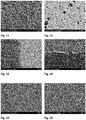
- FIG. 11 to 26 it is a question of the representation of four representative points of four decoated samples with different substrate / layer combinations, ie, the Figures 11-14 , 15 to 18 , 19 to 22 and 23 to 26 each form a sample.
- the first of the figures that belong together i.e. Figures 11, 15 , 19th or 23
- the second figure in each case i.e. Figures 12, 16 , 20th or 24
- the third figure i.e. Fig. 13 , 17, 21 or 25
- the fourth fig. (I.e. Fig. 14 , 18, 22 or 26) represents the transition from the stripped substrate to the treated but originally uncoated substrate.
- Fig. 20 shows the exposed hard metal substrate after the stripping process, an attack can be seen, which is, however, significantly weaker than in the systems tested so far.
- the substrate is only attacked in those areas where there were pores in the TiN / AlTiN layer ( Fig. 21 ).
- the attack has only minor effects on the dimensions of the substrate.
- the TiN base layer of the TiN / AlTiN coating can be removed with a mixture of NH 3 (25%) and H 2 O 2 (30%) in a ratio of 1 + 3 at room temperature within 4-5 minutes without attacking the substrates.
- This mixture should always be freshly prepared in small quantities ( ⁇ 50ml), as H 2 O 2 decomposes quickly in an alkaline environment.
- Dissolved heavy metals (Co, Fe) catalyze the decomposition and lead to strong heating and foam formation.
- the solution can be applied to the substrates by means of a spraying process, the solution not being produced with a static mixer until immediately in front of the atomizing nozzle.
- the electrolyte system also works as expected with high speed steel substrates. The stripping is complete and the attack on the substrate is minimal.
- AlCrN can also be removed from high speed steel substrates with this system. Here, too, it can be observed that the attack on the substrate due to the milder conditions when removing AlCrN is less than with the high-speed steel TiN / AlTiN system.
- Galvanic Co layer as additional substrate protection The attack on the substrate was further restricted by a selective, thin galvanic coating of the hard metal substrate.
- cobalt was chosen because it is the matrix material of the hard metal and its use therefore does not introduce any undesired impurities into the system.
- any metal or alloy that can be electrodeposited is suitable as protection, which is insoluble in the stripping electrolyte and can then be removed again without attacking the substrate (e.g. iron, zinc, manganese, copper, etc.).
- the TiN / AlTiN layer despite its lower electrical conductivity and the ceramic structure, can be adhesively coated with cobalt at high currents.
- the method of reducing the current density in electroplating is a quick and simple solution that uses the lower electrical conductivity of the coating compared to the substrate to prevent electroplating of the free substrate.
Landscapes
- Chemical & Material Sciences (AREA)
- Engineering & Computer Science (AREA)
- Chemical Kinetics & Catalysis (AREA)
- Electrochemistry (AREA)
- Materials Engineering (AREA)
- Metallurgy (AREA)
- Organic Chemistry (AREA)
- Electroplating Methods And Accessories (AREA)
- ing And Chemical Polishing (AREA)
Description
- Die vorliegende Erfindung betrifft ein Verfahren zum Entfernen einer Hartstoffbeschichtung, welche auf dem Substrat eines Werkzeugs aufgebracht ist. Weiters betrifft die Erfindung ein Stoffgemisch, eine wässrige Lösung sowie einen Elektrolyten zur Verwendung in diesem Verfahren.
- Schneidende Werkzeuge, die im metallverarbeitenden Bereich z.B. als Fräser eingesetzt werden, sind einer hohen mechanischen und thermischen Belastung ausgesetzt. Zur Verbesserung der Schneidleistung sowie zur Verlängerung der Standzeit werden diese Werkzeuge nach ihrer mechanischen Herstellung an den Arbeitsflächen mit Hartstoffen beschichtet. Bei diesen Hartstoffen handelt es sich in der Regel um Verbindungen von Refraktärmetallen (Elemente der 4., 5. und 6. Nebengruppe des Periodensystems, also Ti, Zr, Hf, V, Nb, Ta, Cr, Mo und W) mit den Elementen B, C, N, O und Si.
- Trotz ihrer großen Härte und Abriebfestigkeit verschleißen diese Hartstoffbeschichtungen beim Gebrauch, sodass am Ende der Standzeit die Schicht den Anforderungen nicht mehr genügt. Um das Werkzeug, das in der Regel unbeschädigt ist, weiterverwenden zu können, muss es erneut beschichtet werden. Für die erfolgreiche Aufbringung einer Schicht mittels Vakuumtechnologie (PVD oder CVD) ist es erforderlich, dass die zu beschichtende Oberfläche frei von störenden Verunreinigungen ist; dazu zählen auch Reste einer vorangegangenen Beschichtung.
- Klassische Verfahren zum Entschichten eines Werkzeugs beinhalten das mechanische Entschichten mittels Strahlgut (wie zum Beispiel das Sandstrahlen des Werkzeugs) bis die Hartstoffbeschichtung abgetragen ist. Beim mechanischen Entfernen einer Hartstoffbeschichtung wirken in der Regel große Kräfte auf das Werkzeug ein, welche zu Deformationen und mechanischen Beschädigungen am Substrat führen können.
- Als Alternative zu mechanischen kommen auch chemische Entschichtungsverfahren zum Einsatz, bei denen die Hartstoffbeschichtung aufgelöst wird. Aufgrund der chemischen Beständigkeit solcher Hartstoffbeschichtungen müssen allerdings sehr aggressive Chemikalien eingesetzt werden, die zum Teil auch das Trägermaterial bzw. unbeschichtete Teile des Werkzeugs auflösen.
- Ein bekanntes Verfahren zur chemischen Entfernung von AlTiN auf Hartmetallsubstraten verwendet eine Mischung aus konzentrierter Schwefelsäure und Kaliumpermanganat. Dabei entsteht das instabile und potenziell explosive Zwischenprodukt Manganheptoxid (Mn2O7), das als eigentliches Oxidationsmittel wirkt. Dieses Verfahren erwies sich jedoch als ineffizient und es erforderte erhöhte Sicherheitsanforderungen, sodass es in der Praxis nicht zum Einsatz kommt.
- In
WO 99/64646 A1 - Aufgabe der vorliegenden Erfindung ist es, eine auf einem Werkzeug vorhandene Hartstoffbeschichtung vollständig zu entfernen, ohne dabei unbeschichtetes Substrat zu schädigen.
- Gelöst wird diese Aufgabe durch ein Verfahren zum Entfernen einer Hartstoffbeschichtung vom Substrat eines Werkzeugs, umfassend das Bereitstellen eines Elektrolyten, welcher eine wässrige Lösung mit 4 bis 6 mol/l OH-, 0,1 bis 0,5 mol/l S2- und 0,5 bis 2 mol/l Oxalat umfasst, Platzieren des Werkzeugs in den Elektrolyten und Auflösen der Hartstoffbeschichtung durch Kontaktieren des Werkzeugs mit einer Gleichspannungsquelle. Dieses elektrochemische Verfahren zum Auflösen der Hartstoffbeschichtung hat sich als vorteilhaft erwiesen, da das Substratmaterial bei einem solchen elektrochemischen Verfahren ein wasserunlösliches Sulfid bildet, welches als Passivierung dient, wodurch das darunterliegende Substrat geschützt wird. Gleichzeitig wird die Hartstoffbeschichtung aufgelöst. Dieser Effekt erweist sich insbesondere an unbeschichteten Bereichen des Substrats oder an solchen Bereichen, die keinerlei Beschichtung mehr aufweisen, als Vorteil.
- Grundsätzlich reicht es aus, wenn das Substrat zumindest eines der Metalle W, Co oder Fe oder ein anderes Metall, welches Sulfide bilden kann, die wasserunlöslich sind, aufweist. Bevorzugte Substratmaterialen umfassen daher W, Co und/oder Fe, da diese passivierende Sulfidschichten bilden.
- Bei manchen Werkzeugen mit Hartstoffbeschichtung kann zwischen Hartstoffbeschichtung und Substrat eine Basisschicht eingebracht sein. Beispielsweise ist bei einer AlTiN-Hartstoffbeschichtung häufig eine TiN-Basisschicht vorgesehen. Diese Basisschicht kann nach Entfernen der Hartstoffbeschichtung in einem nächsten Schritt einfach entfernt werden. Dazu kann vorzugsweise vorgesehen sein, dass das Werkzeug nach Entfernen der Hartstoffbeschichtung mit einer Mischung, umfassend NH3 und H2O2, zum Entfernen einer zwischen der Hartstoffbeschichtung und dem Substrat angeordneten Basisschicht behandelt wird. Die Mischung umfasst vorzugsweise eine frisch zubereitete Lösung aus einer wässrigen NH3-Lösung und einer wässrigen H2O2-Lösung.
- In einer Ausführungsvariante ist vorgesehen, dass die Basisschicht TiN ist.
- Das erfindungsgemäße Verfahren kann für jegliche Hartstoffbeschichtung verwendet werden, wenn die Hartstoffbeschichtung wenigstens eines der oben genannten Refraktärmetalle (Ti, Zr, Hf, V, Nb, Ta, Cr, Mo oder W) enthält. Die besten Ergebnisse wurden in ersten Untersuchungen mit Hartstoffbeschichtung aus AlCrN oder AlTiN erzielt.
- Weiters hat es sich als vorteilhaft erwiesen, wenn das Werkzeug vor dem Platzieren in den Elektrolyten galvanisch mit einer Metallschicht, beispielsweise einer Cobaltschicht, auf jenen Teilen des Substrats versehen wird, welches keine Hartstoffbeschichtung aufweist.
- Für das elektrochemische Verfahren hat sich ein Stoffgemisch, bestehend aus
- 70 bis 87 Mol% eines Metallhydroxids,
- 1 bis 6 Mol% eines wasserlöslichen Sulfids,
- 11 bis 24 Mol% Oxalsäure oder eines Salzes der Oxalsäure
- maximal 2 Mol% sonstige Bestandteile
- Aus dem Stoffgemisch selbst oder auch mittels der Einzelbestandteile kann eine wässrige Lösung bereitgestellt werden, sodass auch eine wässrige Lösung für ein Verfahren zum Entfernen einer Hartstoffbeschichtung vom Substrat eines Werkzeugs, umfassend
- 4 bis 6 mol/l OH-
- 0,1 bis 0,5 mol/l S2-
- 0,5 bis 2 mol/l Oxalat
- Bevorzugt ist die wässrige Lösung gekennzeichnet durch
- 4,8 bis 5,2 mol/l OH-, vorzugweise KOH oder NaOH
- 0,24 bis 0,27 6 mol/l S2-, vorzugsweise K2S oder Na2S
- 0,8 bis 1,2 mol/l Oxalat, vorzugsweise Dinatriumoxalat oder Dikaliumoxalat.
- Bevorzugt umfasst die wässrige Lösung weitere Bestandteile in einer Gesamtmenge von nicht mehr als 2 mol/l. Besonders bevorzugt umfasst die wässrige Lösung keine weiteren Bestandteile.
- Ein weiterer Aspekt betrifft einen Elektrolyten mit einer solchen wässrigen Lösung für ein Verfahren zum Entfernen einer Hartstoffbeschichtung vom Substrat eines Werkzeugs.
- Weitere Details und Vorteile werden nachfolgend anhand von Beispielen und Figuren erläutert.
- Es zeigen:
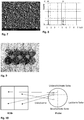
- Fig. 1:
- REM-Aufnahme eines Hartmetallsubstrats (5000x)
- Fig. 2:
- EDX-Spektrum des Hartmetallsubstrates von
Fig. 1 - Fig. 3:
- REM-Aufnahme eines Schnellarbeitsstahl-Substrats (5000x)
- Fig. 4:
- EDX-Spektrum des Schnellarbeitsstahl-Substrates von
Fig. 3 - Fig. 5:
- REM-Aufnahme einer TiN/AlTiN Schicht (1000x)
- Fig. 6:
- EDX-Spektrum der TiN/AlTiN Schicht von
Fig. 5 - Fig. 7:
- REM-Aufnahme einer AlCrN Schicht (1000x)
- Fig. 8:
- EDX-Spektrum der AlCrN Schicht von
Fig. 7 - Fig. 9:
- Fotographien von kontaktierten und lackierten Proben
- Fig. 10:
- Zuordnung der REM-Aufnahmen zu den jeweiligen Zonen der Proben gemäß
Fig. 9 - Fig. 11:
- System Hartmetall- TiN/AlTiN: Ursprünglich unbeschichtetes Hartmetallsubstrat nach elektrochemischer Behandlung, 1000x
- Fig. 12:
- System Hartmetall-TiN/AlTiN: Von TiN/AlTiN elektrochemisch entschichtetes Hartmetall
- Fig. 13:
- System Hartmetall-TiN/AlTiN: Übergang von ursprünglich unbeschichtetem Hartmetallsubstrat (links) zu unbehandeltem Hartmetall (rechts).
- Fig. 14:
- System Hartmetall-TiN/AlTiN: Übergang von ursprünglich unbeschichtetem Hartmetallsubstrat (oben) zu entschichtetem Hartmetall (unten)
- Fig. 15:
- System Hartmetall-AlCrN: Ursprünglich unbeschichtetes Hartmetallsubstrat nach elektrochemischer Behandlung, 1000x
- Fig. 16:
- System Hartmetall-AlCrN: Von AlCrN elektrochemisch entschichtetes Hartmetall
- Fig. 17:
- System Hartmetall-AlCrN: Übergang von ursprünglich unbeschichtetem Hartmetallsubstrat (links) zu unbehandeltem Hartmetall (rechts).
- Fig. 18:
- System Hartmetall-AlCrN: Übergang von ursprünglich unbeschichtetem Hartmetallsubstrat (oben) zu entschichtetem Hartmetall (unten)
- Fig. 19:
- System Schnellarbeitsstahl- TiN/AlTiN: Ursprünglich unbeschichtetes Schnellarbeitsstahl-Substrat nach elektrochemischer Behandlung, 1000x
- Fig. 20:
- System Schnellarbeitsstahl- TiN/AlTiN: Von TiN/AlTiN elektrochemisch entschichtetes Schnellarbeitsstahl
- Fig. 21:
- System Schnellarbeitsstahl-TiN/AlTiN: Übergang von ursprünglich unbeschichtetem Schnellarbeitsstahl-Substrat (links) zu unbehandeltem Schnellarbeitsstahl (rechts).
- Fig. 22:
- System Schnellarbeitsstahl-TiN/AlTiN: Übergang von ursprünglich unbeschichtetem Schnellarbeitsstahl-Substrat (oben) zu entschichtetem Schnellarbeitsstahl (unten)
- Fig. 23:
- System Schnellarbeitsstahl-AlCrN: Ursprünglich unbeschichtetes Schnellarbeitsstahl-Substrat nach elektrochemischer Behandlung, 1000x
- Fig. 24:
- System Schnellarbeitsstahl-AlCrN: Von AlCrN elektrochemisch entschichtetes Schnellarbeitsstahl
- Fig. 25:
- System Schnellarbeitsstahl-AlCrN: Übergang von ursprünglich unbeschichtetem Schnellarbeitsstahl-Substrat (links) zu unbehandeltem Schnellarbeitsstahl (rechts)
- Fig. 26:
- System Schnellarbeitsstahl-AlCrN: Übergang von ursprünglich unbeschichtetem Schnellarbeitsstahl-Substrat (oben) zu entschichtetem Schnellarbeitsstahl (unten)
- Fig. 27:
- Co-Schicht auf Hartmetall nach dem Entschichtungsvorgang
- Fig. 28:
- Von TiN/AlTiN entschichtetes Hartmetall nach Beschichtung des freiliegendem Hartmetall mit Cobalt
- Die untersuchten Proben (entsprechend dem Substrat) bestanden aus Schnellarbeitsstahl, sowie Hartmetall. Die Proben waren jeweils mit TiN/AlTiN oder AlCrN beschichtet. Die Hartmetallbeschichtung war unvollständig, da es für die Ermittlung, ob die gestellte Aufgabe vollständig gelöst wurde, wichtig war, unbeschichtete Teile am Substrat vorliegen zu haben und zu zeigen, dass diese von der elektrochemischen Behandlung nicht angegriffen werden.
- Die Aufgabe wurde durch die Entwicklung eines alkalischen Elektrolyten gelöst, welcher Oxalat und Sulfidionen enthält. Die Sulfidionen bilden mit dem Substrat eine unlösliche Phase, welche durch Passivierung vor einem Angriff durch den Entschichtungsprozess schützt.
- Eine weitere Möglichkeit Bereiche, welche schon von Beginn an unbeschichtet waren, zu schützen, bestand darin, selektiv auf diesen eine dünne Schicht galvanisch aufzutragen. Im beschriebenen Fall handelte es sich dabei um eine Co-Schicht.
- Zu Beginn der Entschichtungsversuche wurde der Ausgangszustand der Proben mittels REM festgehalten:
Die zur Verfügung gestellten Ronden wurden zur Kontaktierung mit Draht umwickelt und alle Seiten mit Ausnahme der halben Frontflächen mit Abdecklack lackiert. Dadurch ist bei den nachfolgenden Untersuchungen, z.B. im Rasterelektronenmikroskop, die direkte Vergleichbarkeit mit dem Ausgangszustand gegeben (Fig. 9 ). - Um das Substrat, insbesondere die Co-Phase des Hartmetalls, während des Entschichtungsvorganges zu schützen, wurden sulfidhältige Elektrolyten getestet. Sulfid ist deshalb ein idealer Kandidat, da alle Substratmaterialien (W, Co, Fe) im alkalischen wasserunlösliche Sulfide bilden, die das Material vor weiterem Angriff durch Passivierung schützen, während die Elemente in der PVD-Schicht (Al, Ti, Cr) keine derartigen Phasen bilden und daher elektrochemisch aktiv bleiben.
- Mit einer Lösung (5M KOH + 20g/l Na2S + 1M K2C2O4) wurde wie folgt enschichtet:
- Hartstoffbeshichtung AlCrN: 60°C, 200 mV vs Hg/HgO, 25 min
- Hartstoffbeshichtung TiN/AlTiN: 60°C, 600 mV vs Hg/HgO, 45 min
- Dieser Elektrolyt erwies sich als der beste unter den getesteten Kandidaten, er bringt bei allen vier Probentypen gute Ergebnisse, was die Entschichtungsleistung und den Flächenabtrag angeht.
- Bei den
Fig. 11 bis 26 handelt es sich um die Darstellung von vier repräsentativen Stellen von vier entschichteten Proben mit unterschiedlicher Substrat-/Schichtkombination, d.h, dieFig. 11 bis 14 ,15 bis 18 ,19 bis 22 und23 bis 26 bilden jeweils eine Probe. Die erste der jeweils zusammengehörigen Fig. (alsoFig. 11, 15 ,19 bzw. 23) stellt das ursprünglich unbeschichtete Substrat nach der elektrochemischen Behandlung dar, die jeweils zweite Fig. (alsoFig. 12, 16 ,20 bzw. 24) das entschichtete Substrat. Die jeweils dritte Fig. (alsoFig. 13 ,17, 21 bzw. 25) stellt den Übergang vom behandelten, ursprünglich unbeschichteten Substrat zu dem während der Behandlung mit Lack geschütztem originalen unbeschichteten Substrat dar und dient zur Darstellung der Substratveränderung während der Behandlung. Die jeweils vierte Fig. (alsoFig. 14 ,18, 22 bzw. 26) stellt den Übergang vom entschichteten Substrat zum behandelten, aber ursprünglich unbeschichteten Substrat dar. - Die Entschichtung von Hartmetall/TiN/AlTiN funktionerte zufriedenstellend.
Fig. 20 zeigt das freiliegende Hartmetallsubstrat nach der Entschichtung, es ist ein Angriff erkennbar, der jedoch deutlich schwächer ist als bei den bisher getesteten Systemen. An den entschichteten Stellen ist das Substrat nur an den Stellen angegriffen, wo Poren in der TiN/AlTiN Schicht vorgelegen sind (Fig. 21 ). An den Übergängen (Fig. 22 und23 ) ist zu sehen, dass der Angriff nur geringe Auswirkungen auf die Dimensionen des Substrates hat. - Die Basisschicht aus TiN der TiN/AlTiN Beschichtung kann mit einer Mischung aus NH3 (25%) und H2O2 (30%) im Verhältnis 1+3 bei Raumtemperatur innerhalb von 4-5 Minuten entfernt werden, ohne die Substrate anzugreifen. Diese Mischung sollte immer nur frisch in kleinen Mengen (<50ml) angesetzt werden, da H2O2 im alkalischen Milieu schnell zerfällt. Gelöste Schwermetalle (Co, Fe) katalysieren die Zersetzung und führen zu einer starken Erwärmung und Schaumbildung. Alternativ kann die Lösung mittels Sprühverfahren auf die Substrate aufgebracht werden, wobei die Lösung erst unmittelbar vor der Zerstäuberdüse mit einem statischen Mischer hergestellt wird.
- Auch bei diesem System ist die Entschichtung möglich, ohne das Substrat stark anzugreifen. Da der Entschichtungsvorgang bei AlCrN schonender verläuft als bei TiN/AlTiN, ist der Substratangriff geringer.
- Das Elektrolytsystem funktioniert wie erwartet bei Schnellarbeitsstahl-Substraten ebenfalls. Die Entschichtung ist vollständig, der Angriff auf das Substrat minimal.
- Auch AlCrN kann von Schnellarbeitsstahl-Substraten mit diesem System entfernt werden. Auch hier ist zu beobachten, dass der Angriff auf das Substrat durch die milderen Bedingungen beim Abtrag von AlCrN geringer ist als beim System Schnellarbeitsstahl-TiN/AlTiN.
- Galvanische Co-Schicht als zusätzlicher Substratschutz:
Durch eine selektive, dünne galvanische Beschichtung des Hartmetallsubstrates wurde der Angriff auf das Substrat weiter eingeschränkt. Im konkreten Fall wurde Kobalt gewählt, da es das Matrixmaterial des Hartmetalls darstellt und sein Einsatz daher keine unerwünschten Verunreinigungen ins System einführt. - Im Prinzip ist als Schutz jedes galvanisch abscheidbare Metall bzw. jede Legierung geeignet, welche(s) im Entschichtungselektrolyten unlöslich ist und anschließend wieder entfernt werden kann, ohne das Substrat anzugreifen (z.B. Eisen, Zink, Mangan, Kupfer etc.). Bei der Beschichtung stellte sich überraschenderweise heraus, dass sich die TiN/AlTiN Schicht trotz ihrer geringeren elektrischen Leitfähigkeit und der keramischen Struktur bei hohen Stromstärken haftend mit Cobalt beschichten lässt. Der Versuch, diese Probe trotzdem zu entschichten (basierend auf der Überlegung, dass die Haftung Kobaltschicht an der TiN/AlTiN-Beschichtung nicht so gut wie am Hartmetall ist), schlug fehl, da sich die Kobaltschicht als haftfest und unlöslich erwies, was das ursprüngliche Konzept, wonach eine Kobaltschicht das darunterliegende Material schützt, im Prinzip bestätigte. Bei der anschließenden Entfernung der Kobaltschicht wurde naturgemäß das freiliegende Substratmaterial stark angegriffen. Die Beschichtung mit Kobalt mit stark verringerter Stromdichte ließ die TiN/AlTiN Schicht zum Großteil frei, sodass die anschließende Entschichtung an den freien Stellen problemlos durchgeführt werden konnte (siehe
Fig. 27 und 28 ). - Die Methode der Verringerung der Stromdichte bei der galvanischen Beschichtung stellt eine schnelle und einfache Lösung dar, die die im Vergleich zum Substrat geringere elektrische Leitfähigkeit der Beschichtung nützt, um eine galvanische Beschichtung des freien Substrates zu verhindern.
Claims (12)
- Verfahren zum Entfernen einer Hartstoffbeschichtung vom Substrat eines Werkzeugs, umfassend• das Bereitstellen eines Elektrolyten, welcher eine wässrige Lösung mit 4 bis 6 mol/l OH-, 0,1 bis 0,5 mol/l S2- und 0,5 bis 2 mol/l Oxalat umfasst,• Platzieren des Werkzeugs in den Elektrolyten und• Auflösen der Hartstoffbeschichtung durch Kontaktieren des Werkzeugs mit einer Gleichspannungsquelle.
- Verfahren nach Anspruch 1, dadurch gekennzeichnet, dass das Werkzeug anschließend mit einer Mischung, umfassend NH3 und H2O2, zum Entfernen einer zwischen der Hartstoffbeschichtung und dem Substrat angeordneten Basisschicht behandelt wird.
- Verfahren nach Anspruch 1 oder Anspruch 2, dadurch gekennzeichnet, dass die Basisschicht TiN ist.
- Verfahren nach einem der Ansprüche 1 bis 3, dadurch gekennzeichnet, dass die Hartstoffbeschichtung aus AlCrN oder AlTiN besteht.
- Verfahren nach einem der Ansprüche 1 bis 4, dadurch gekennzeichnet, dass das Werkzeug vor dem Platzieren in den Elektrolyten galvanisch mit einer Metallschicht, vorzugsweise Cobaltschicht, auf jenen Teilen des Substrats, welches keine Hartstoffbeschichtung aufweisen, versehen wird.
- Stoffgemisch zur Herstellung einer wässrigen Lösung nach Anspruch 7, bestehend aus• 70 bis 87 Mol% eines Metallhydroxids,• 1 bis 6 Mol% eines wasserlöslichen Sulfids,• 11 bis 24 Mol% Oxalsäure oder eines Salzes der Oxalsäure• maximal 2 Mol% sonstige Bestandteile.
- Wässrige Lösung für ein Verfahren zum Entfernen einer Hartstoffbeschichtung vom Substrat eines Werkzeugs nach Anspruch 1, umfassend• 4 bis 6 mol/l OH-• 0,1 bis 0,5 mol/l S2-• 0,5 bis 2 mol/l Oxalat.
- Wässrige Lösung nach Anspruch 7, gekennzeichnet durch• 4,8 bis 5,2 mol/l OH-, vorzugweise KOH oder NaOH• 0,24 bis 0,27 6 mol/l S2-, vorzugsweise K2S oder Na2S• 0,8 bis 1,2 mol/l Oxalat, vorzugsweise Dinatriumoxalat oder Dikaliumoxalat.
- Wässrige Lösung nach Anspruch 7 oder Anspruch 8, dadurch gekennzeichnet, dass die wässrige Lösung weitere Bestandteile in einer Gesamtmenge von nicht mehr als 2 mol/l umfasst.
- Wässrige Lösung nach Anspruch 7 oder Anspruch 8, dadurch gekennzeichnet, dass die wässrige Lösung keine weiteren Bestandteile umfasst.
- Elektrolyt für ein Verfahren zum Entfernen einer Hartstoffbeschichtung vom Substrat eines Werkzeugs nach Anspruch 1, umfassend ein Stoffgemisch nach Anspruch 6 oder eine wässrige Lösung nach einem der Ansprüche 7 bis 10.
- Galvanische Zelle, umfassend einen Elektrolyten nach Anspruch 11.
Priority Applications (4)
| Application Number | Priority Date | Filing Date | Title |
|---|---|---|---|
| EP18195134.4A EP3626864B1 (de) | 2018-09-18 | 2018-09-18 | Verfahren zum entfernen einer hartstoffbeschichtung |
| ES18195134T ES2875760T3 (es) | 2018-09-18 | 2018-09-18 | Procedimiento para eliminar un recubrimiento de materia dura |
| DK18195134.4T DK3626864T3 (da) | 2018-09-18 | 2018-09-18 | Fremgangsmåde til fjernelse af en hårdmaterialecoating |
| PCT/EP2019/075008 WO2020058336A1 (de) | 2018-09-18 | 2019-09-18 | Verfahren zum entfernen einer hartstoffbeschichtung |
Applications Claiming Priority (1)
| Application Number | Priority Date | Filing Date | Title |
|---|---|---|---|
| EP18195134.4A EP3626864B1 (de) | 2018-09-18 | 2018-09-18 | Verfahren zum entfernen einer hartstoffbeschichtung |
Publications (2)
| Publication Number | Publication Date |
|---|---|
| EP3626864A1 EP3626864A1 (de) | 2020-03-25 |
| EP3626864B1 true EP3626864B1 (de) | 2021-03-17 |
Family
ID=63642688
Family Applications (1)
| Application Number | Title | Priority Date | Filing Date |
|---|---|---|---|
| EP18195134.4A Active EP3626864B1 (de) | 2018-09-18 | 2018-09-18 | Verfahren zum entfernen einer hartstoffbeschichtung |
Country Status (4)
| Country | Link |
|---|---|
| EP (1) | EP3626864B1 (de) |
| DK (1) | DK3626864T3 (de) |
| ES (1) | ES2875760T3 (de) |
| WO (1) | WO2020058336A1 (de) |
Family Cites Families (5)
| Publication number | Priority date | Publication date | Assignee | Title |
|---|---|---|---|---|
| US3083165A (en) * | 1958-09-10 | 1963-03-26 | Pennsalt Chemicals Corp | Aluminum etchant compositions |
| US4720332A (en) * | 1986-04-21 | 1988-01-19 | Coffey Barry W | Nickel strip formulation |
| EP1093534B1 (de) | 1998-06-11 | 2007-12-26 | Oerlikon Trading AG, Trübbach | Verfahren zum entschichten von hartstoffschichten |
| FR2997941B1 (fr) * | 2012-11-15 | 2023-03-03 | Arkema France | Procede de preparation de sulfure de metal alcalin |
| WO2015139731A1 (de) * | 2014-03-18 | 2015-09-24 | Platit Ag | Verfahren zum entschichten von keramischen hartstoffschichten von stahl- und hartmetall-substraten |
-
2018
- 2018-09-18 ES ES18195134T patent/ES2875760T3/es active Active
- 2018-09-18 DK DK18195134.4T patent/DK3626864T3/da active
- 2018-09-18 EP EP18195134.4A patent/EP3626864B1/de active Active
-
2019
- 2019-09-18 WO PCT/EP2019/075008 patent/WO2020058336A1/de not_active Ceased
Non-Patent Citations (1)
| Title |
|---|
| None * |
Also Published As
| Publication number | Publication date |
|---|---|
| WO2020058336A1 (de) | 2020-03-26 |
| ES2875760T3 (es) | 2021-11-11 |
| EP3626864A1 (de) | 2020-03-25 |
| DK3626864T3 (da) | 2021-06-07 |
Similar Documents
| Publication | Publication Date | Title |
|---|---|---|
| EP2276875B1 (de) | Verfahren zum entschichten von werkstücken und entschichtungslösung | |
| DE60030197T2 (de) | Verfahren zum Entfernen von Aluminidüberzügen von Substraten | |
| DE102009037855B4 (de) | Verfahren zur Oberflächenbehandlung von Aluminium oder Aluminiumlegierungen | |
| EP2507408B1 (de) | Mehrstufiges vorbehandlungsverfahren für metallische bauteile mit zink- und eisenoberflächen | |
| DE2907875C2 (de) | Verfahren zum elektrolytischen Abtragen von Wolframcarbid-Überzügen auf Werkstücken aus Titan oder Titan-Legierungen | |
| DE69031207T2 (de) | Reinigungsverfahren für Elektroden ohne Zyanid | |
| WO2021116318A1 (de) | Verfahren zum herstellen eines stahlflachprodukts mit einer metallischen schutzschicht auf basis von zink und einer auf einer oberfläche der metallischen schutzschicht erzeugten phosphatierschicht und derartiges stahlflachprodukt | |
| DE2541896A1 (de) | Verfahren zum behandeln eines substrates aus plastikmaterial und material zur durchfuehrung desselben | |
| EP1911862B1 (de) | Elektropolierverfahren für Niob und Tantal | |
| DE69532082T2 (de) | Alkalibehandlung von rostfreiem stahl | |
| EP3400323B1 (de) | Selbstschmierende elektrolytisch abgeschiedene phosphatierungsbeschichtung | |
| EP2215285B1 (de) | Zirconiumphosphatierung von metallischen bauteilen, insbesondere eisen | |
| DE3125565A1 (de) | "elektrochemisches entmetallisierungsbad und ein verfahren zum entmetallisieren" | |
| EP3626864B1 (de) | Verfahren zum entfernen einer hartstoffbeschichtung | |
| EP1934387A1 (de) | Verfahren zur entschichtung eines gasturbinenbauteils | |
| DE102020200146A1 (de) | Eisenhaltiges Metallbauteil mit einer legierten Brünierschicht | |
| CH633828A5 (de) | Verfahren zur herstellung von aktiven kathoden, die sich fuer die anwendung in elektrochemischen verfahren eignen. | |
| EP3794167B1 (de) | Fördergestellreinigung in einer prozessfolge zur elektrotauchlackierung | |
| DE10309888B4 (de) | Bearbeitungsfluid zur Oberflächenbearbeitung von Aluminium oder einer Aluminiumlegierung und entsprechendes Oberflächenbearbeitungsverfahren | |
| WO2021144375A1 (de) | Verfahren zum ätzen oder auflösen einer hartstoffbeschichtung | |
| WO2008138301A1 (de) | Verfahren zur entschichtung eines bauteils | |
| DE102020106543A1 (de) | Verfahren zum Verzinken eines Bauteils, insbesondere für ein Kraftfahrzeug, sowie Bauteil für ein Kraftfahrzeug | |
| DE102019204979A1 (de) | Verfahren zur Herstellung einer Komponente für EUV-Lithographievorrichtungen | |
| EP4144468A1 (de) | Fertigungsvorrichtung zum elektrochemischen bearbeiten eines bauteils, insbesondere eines turbinenbauteils, verfahren zum elektrochemischen bearbeiten eines bauteils und bauteil | |
| WO2010034047A1 (de) | Verfahren zum verbessern der korrosionsbeständigkeit einer elektronischen komponente, insbesondere von leiterbahnen einer leiterplatte |
Legal Events
| Date | Code | Title | Description |
|---|---|---|---|
| PUAI | Public reference made under article 153(3) epc to a published international application that has entered the european phase |
Free format text: ORIGINAL CODE: 0009012 |
|
| STAA | Information on the status of an ep patent application or granted ep patent |
Free format text: STATUS: THE APPLICATION HAS BEEN PUBLISHED |
|
| AK | Designated contracting states |
Kind code of ref document: A1 Designated state(s): AL AT BE BG CH CY CZ DE DK EE ES FI FR GB GR HR HU IE IS IT LI LT LU LV MC MK MT NL NO PL PT RO RS SE SI SK SM TR |
|
| AX | Request for extension of the european patent |
Extension state: BA ME |
|
| STAA | Information on the status of an ep patent application or granted ep patent |
Free format text: STATUS: REQUEST FOR EXAMINATION WAS MADE |
|
| 17P | Request for examination filed |
Effective date: 20200504 |
|
| RBV | Designated contracting states (corrected) |
Designated state(s): AL AT BE BG CH CY CZ DE DK EE ES FI FR GB GR HR HU IE IS IT LI LT LU LV MC MK MT NL NO PL PT RO RS SE SI SK SM TR |
|
| GRAP | Despatch of communication of intention to grant a patent |
Free format text: ORIGINAL CODE: EPIDOSNIGR1 |
|
| STAA | Information on the status of an ep patent application or granted ep patent |
Free format text: STATUS: GRANT OF PATENT IS INTENDED |
|
| INTG | Intention to grant announced |
Effective date: 20200904 |
|
| GRAS | Grant fee paid |
Free format text: ORIGINAL CODE: EPIDOSNIGR3 |
|
| GRAA | (expected) grant |
Free format text: ORIGINAL CODE: 0009210 |
|
| STAA | Information on the status of an ep patent application or granted ep patent |
Free format text: STATUS: THE PATENT HAS BEEN GRANTED |
|
| AK | Designated contracting states |
Kind code of ref document: B1 Designated state(s): AL AT BE BG CH CY CZ DE DK EE ES FI FR GB GR HR HU IE IS IT LI LT LU LV MC MK MT NL NO PL PT RO RS SE SI SK SM TR |
|
| RAP1 | Party data changed (applicant data changed or rights of an application transferred) |
Owner name: RENA TECHNOLOGIES AUSTRIA GMBH |
|
| REG | Reference to a national code |
Ref country code: GB Ref legal event code: FG4D Free format text: NOT ENGLISH |
|
| REG | Reference to a national code |
Ref country code: CH Ref legal event code: EP |
|
| REG | Reference to a national code |
Ref country code: DE Ref legal event code: R096 Ref document number: 502018004332 Country of ref document: DE |
|
| REG | Reference to a national code |
Ref country code: IE Ref legal event code: FG4D Free format text: LANGUAGE OF EP DOCUMENT: GERMAN |
|
| REG | Reference to a national code |
Ref country code: AT Ref legal event code: REF Ref document number: 1372326 Country of ref document: AT Kind code of ref document: T Effective date: 20210415 |
|
| REG | Reference to a national code |
Ref country code: DK Ref legal event code: T3 Effective date: 20210603 |
|
| REG | Reference to a national code |
Ref country code: NL Ref legal event code: FP |
|
| REG | Reference to a national code |
Ref country code: SE Ref legal event code: TRGR |
|
| REG | Reference to a national code |
Ref country code: LT Ref legal event code: MG9D |
|
| PG25 | Lapsed in a contracting state [announced via postgrant information from national office to epo] |
Ref country code: BG Free format text: LAPSE BECAUSE OF FAILURE TO SUBMIT A TRANSLATION OF THE DESCRIPTION OR TO PAY THE FEE WITHIN THE PRESCRIBED TIME-LIMIT Effective date: 20210617 Ref country code: FI Free format text: LAPSE BECAUSE OF FAILURE TO SUBMIT A TRANSLATION OF THE DESCRIPTION OR TO PAY THE FEE WITHIN THE PRESCRIBED TIME-LIMIT Effective date: 20210317 Ref country code: HR Free format text: LAPSE BECAUSE OF FAILURE TO SUBMIT A TRANSLATION OF THE DESCRIPTION OR TO PAY THE FEE WITHIN THE PRESCRIBED TIME-LIMIT Effective date: 20210317 Ref country code: GR Free format text: LAPSE BECAUSE OF FAILURE TO SUBMIT A TRANSLATION OF THE DESCRIPTION OR TO PAY THE FEE WITHIN THE PRESCRIBED TIME-LIMIT Effective date: 20210618 Ref country code: NO Free format text: LAPSE BECAUSE OF FAILURE TO SUBMIT A TRANSLATION OF THE DESCRIPTION OR TO PAY THE FEE WITHIN THE PRESCRIBED TIME-LIMIT Effective date: 20210617 |
|
| PG25 | Lapsed in a contracting state [announced via postgrant information from national office to epo] |
Ref country code: LV Free format text: LAPSE BECAUSE OF FAILURE TO SUBMIT A TRANSLATION OF THE DESCRIPTION OR TO PAY THE FEE WITHIN THE PRESCRIBED TIME-LIMIT Effective date: 20210317 Ref country code: RS Free format text: LAPSE BECAUSE OF FAILURE TO SUBMIT A TRANSLATION OF THE DESCRIPTION OR TO PAY THE FEE WITHIN THE PRESCRIBED TIME-LIMIT Effective date: 20210317 |
|
| PG25 | Lapsed in a contracting state [announced via postgrant information from national office to epo] |
Ref country code: SM Free format text: LAPSE BECAUSE OF FAILURE TO SUBMIT A TRANSLATION OF THE DESCRIPTION OR TO PAY THE FEE WITHIN THE PRESCRIBED TIME-LIMIT Effective date: 20210317 Ref country code: EE Free format text: LAPSE BECAUSE OF FAILURE TO SUBMIT A TRANSLATION OF THE DESCRIPTION OR TO PAY THE FEE WITHIN THE PRESCRIBED TIME-LIMIT Effective date: 20210317 Ref country code: CZ Free format text: LAPSE BECAUSE OF FAILURE TO SUBMIT A TRANSLATION OF THE DESCRIPTION OR TO PAY THE FEE WITHIN THE PRESCRIBED TIME-LIMIT Effective date: 20210317 Ref country code: LT Free format text: LAPSE BECAUSE OF FAILURE TO SUBMIT A TRANSLATION OF THE DESCRIPTION OR TO PAY THE FEE WITHIN THE PRESCRIBED TIME-LIMIT Effective date: 20210317 |
|
| PGFP | Annual fee paid to national office [announced via postgrant information from national office to epo] |
Ref country code: NL Payment date: 20210921 Year of fee payment: 4 Ref country code: FR Payment date: 20210927 Year of fee payment: 4 |
|
| REG | Reference to a national code |
Ref country code: ES Ref legal event code: FG2A Ref document number: 2875760 Country of ref document: ES Kind code of ref document: T3 Effective date: 20211111 |
|
| PG25 | Lapsed in a contracting state [announced via postgrant information from national office to epo] |
Ref country code: SK Free format text: LAPSE BECAUSE OF FAILURE TO SUBMIT A TRANSLATION OF THE DESCRIPTION OR TO PAY THE FEE WITHIN THE PRESCRIBED TIME-LIMIT Effective date: 20210317 Ref country code: IS Free format text: LAPSE BECAUSE OF FAILURE TO SUBMIT A TRANSLATION OF THE DESCRIPTION OR TO PAY THE FEE WITHIN THE PRESCRIBED TIME-LIMIT Effective date: 20210717 Ref country code: PT Free format text: LAPSE BECAUSE OF FAILURE TO SUBMIT A TRANSLATION OF THE DESCRIPTION OR TO PAY THE FEE WITHIN THE PRESCRIBED TIME-LIMIT Effective date: 20210719 Ref country code: PL Free format text: LAPSE BECAUSE OF FAILURE TO SUBMIT A TRANSLATION OF THE DESCRIPTION OR TO PAY THE FEE WITHIN THE PRESCRIBED TIME-LIMIT Effective date: 20210317 Ref country code: RO Free format text: LAPSE BECAUSE OF FAILURE TO SUBMIT A TRANSLATION OF THE DESCRIPTION OR TO PAY THE FEE WITHIN THE PRESCRIBED TIME-LIMIT Effective date: 20210317 |
|
| PGFP | Annual fee paid to national office [announced via postgrant information from national office to epo] |
Ref country code: SE Payment date: 20210921 Year of fee payment: 4 Ref country code: DK Payment date: 20210921 Year of fee payment: 4 |
|
| REG | Reference to a national code |
Ref country code: DE Ref legal event code: R097 Ref document number: 502018004332 Country of ref document: DE |
|
| PLBE | No opposition filed within time limit |
Free format text: ORIGINAL CODE: 0009261 |
|
| STAA | Information on the status of an ep patent application or granted ep patent |
Free format text: STATUS: NO OPPOSITION FILED WITHIN TIME LIMIT |
|
| PG25 | Lapsed in a contracting state [announced via postgrant information from national office to epo] |
Ref country code: AL Free format text: LAPSE BECAUSE OF FAILURE TO SUBMIT A TRANSLATION OF THE DESCRIPTION OR TO PAY THE FEE WITHIN THE PRESCRIBED TIME-LIMIT Effective date: 20210317 |
|
| PGFP | Annual fee paid to national office [announced via postgrant information from national office to epo] |
Ref country code: ES Payment date: 20211019 Year of fee payment: 4 |
|
| 26N | No opposition filed |
Effective date: 20211220 |
|
| PG25 | Lapsed in a contracting state [announced via postgrant information from national office to epo] |
Ref country code: SI Free format text: LAPSE BECAUSE OF FAILURE TO SUBMIT A TRANSLATION OF THE DESCRIPTION OR TO PAY THE FEE WITHIN THE PRESCRIBED TIME-LIMIT Effective date: 20210317 |
|
| PG25 | Lapsed in a contracting state [announced via postgrant information from national office to epo] |
Ref country code: IS Free format text: LAPSE BECAUSE OF FAILURE TO SUBMIT A TRANSLATION OF THE DESCRIPTION OR TO PAY THE FEE WITHIN THE PRESCRIBED TIME-LIMIT Effective date: 20210717 Ref country code: MC Free format text: LAPSE BECAUSE OF FAILURE TO SUBMIT A TRANSLATION OF THE DESCRIPTION OR TO PAY THE FEE WITHIN THE PRESCRIBED TIME-LIMIT Effective date: 20210317 |
|
| PGFP | Annual fee paid to national office [announced via postgrant information from national office to epo] |
Ref country code: IT Payment date: 20210930 Year of fee payment: 4 |
|
| PG25 | Lapsed in a contracting state [announced via postgrant information from national office to epo] |
Ref country code: LU Free format text: LAPSE BECAUSE OF NON-PAYMENT OF DUE FEES Effective date: 20210918 Ref country code: IE Free format text: LAPSE BECAUSE OF NON-PAYMENT OF DUE FEES Effective date: 20210918 |
|
| PGFP | Annual fee paid to national office [announced via postgrant information from national office to epo] |
Ref country code: DE Payment date: 20220920 Year of fee payment: 5 |
|
| PGFP | Annual fee paid to national office [announced via postgrant information from national office to epo] |
Ref country code: BE Payment date: 20220922 Year of fee payment: 5 |
|
| PGFP | Annual fee paid to national office [announced via postgrant information from national office to epo] |
Ref country code: CH Payment date: 20220930 Year of fee payment: 5 |
|
| REG | Reference to a national code |
Ref country code: DK Ref legal event code: EBP Effective date: 20220930 |
|
| REG | Reference to a national code |
Ref country code: SE Ref legal event code: EUG |
|
| REG | Reference to a national code |
Ref country code: NL Ref legal event code: MM Effective date: 20221001 |
|
| GBPC | Gb: european patent ceased through non-payment of renewal fee |
Effective date: 20220918 |
|
| PG25 | Lapsed in a contracting state [announced via postgrant information from national office to epo] |
Ref country code: NL Free format text: LAPSE BECAUSE OF NON-PAYMENT OF DUE FEES Effective date: 20221001 Ref country code: CY Free format text: LAPSE BECAUSE OF FAILURE TO SUBMIT A TRANSLATION OF THE DESCRIPTION OR TO PAY THE FEE WITHIN THE PRESCRIBED TIME-LIMIT Effective date: 20210317 |
|
| PG25 | Lapsed in a contracting state [announced via postgrant information from national office to epo] |
Ref country code: HU Free format text: LAPSE BECAUSE OF FAILURE TO SUBMIT A TRANSLATION OF THE DESCRIPTION OR TO PAY THE FEE WITHIN THE PRESCRIBED TIME-LIMIT; INVALID AB INITIO Effective date: 20180918 Ref country code: FR Free format text: LAPSE BECAUSE OF NON-PAYMENT OF DUE FEES Effective date: 20220930 |
|
| PG25 | Lapsed in a contracting state [announced via postgrant information from national office to epo] |
Ref country code: SE Free format text: LAPSE BECAUSE OF NON-PAYMENT OF DUE FEES Effective date: 20220919 |
|
| REG | Reference to a national code |
Ref country code: ES Ref legal event code: FD2A Effective date: 20231027 |
|
| PG25 | Lapsed in a contracting state [announced via postgrant information from national office to epo] |
Ref country code: IT Free format text: LAPSE BECAUSE OF NON-PAYMENT OF DUE FEES Effective date: 20220918 Ref country code: GB Free format text: LAPSE BECAUSE OF NON-PAYMENT OF DUE FEES Effective date: 20220918 Ref country code: DK Free format text: LAPSE BECAUSE OF NON-PAYMENT OF DUE FEES Effective date: 20220930 |
|
| PG25 | Lapsed in a contracting state [announced via postgrant information from national office to epo] |
Ref country code: ES Free format text: LAPSE BECAUSE OF NON-PAYMENT OF DUE FEES Effective date: 20220919 |
|
| PG25 | Lapsed in a contracting state [announced via postgrant information from national office to epo] |
Ref country code: ES Free format text: LAPSE BECAUSE OF NON-PAYMENT OF DUE FEES Effective date: 20220919 |
|
| REG | Reference to a national code |
Ref country code: DE Ref legal event code: R119 Ref document number: 502018004332 Country of ref document: DE |
|
| PG25 | Lapsed in a contracting state [announced via postgrant information from national office to epo] |
Ref country code: MK Free format text: LAPSE BECAUSE OF FAILURE TO SUBMIT A TRANSLATION OF THE DESCRIPTION OR TO PAY THE FEE WITHIN THE PRESCRIBED TIME-LIMIT Effective date: 20210317 |
|
| REG | Reference to a national code |
Ref country code: CH Ref legal event code: PL |
|
| REG | Reference to a national code |
Ref country code: BE Ref legal event code: MM Effective date: 20230930 |
|
| PG25 | Lapsed in a contracting state [announced via postgrant information from national office to epo] |
Ref country code: TR Free format text: LAPSE BECAUSE OF FAILURE TO SUBMIT A TRANSLATION OF THE DESCRIPTION OR TO PAY THE FEE WITHIN THE PRESCRIBED TIME-LIMIT Effective date: 20210317 |
|
| PG25 | Lapsed in a contracting state [announced via postgrant information from national office to epo] |
Ref country code: CH Free format text: LAPSE BECAUSE OF NON-PAYMENT OF DUE FEES Effective date: 20230930 |
|
| PG25 | Lapsed in a contracting state [announced via postgrant information from national office to epo] |
Ref country code: DE Free format text: LAPSE BECAUSE OF NON-PAYMENT OF DUE FEES Effective date: 20240403 Ref country code: CH Free format text: LAPSE BECAUSE OF NON-PAYMENT OF DUE FEES Effective date: 20230930 |
|
| PG25 | Lapsed in a contracting state [announced via postgrant information from national office to epo] |
Ref country code: BE Free format text: LAPSE BECAUSE OF NON-PAYMENT OF DUE FEES Effective date: 20230930 |
|
| PG25 | Lapsed in a contracting state [announced via postgrant information from national office to epo] |
Ref country code: MT Free format text: LAPSE BECAUSE OF FAILURE TO SUBMIT A TRANSLATION OF THE DESCRIPTION OR TO PAY THE FEE WITHIN THE PRESCRIBED TIME-LIMIT Effective date: 20210317 |
|
| REG | Reference to a national code |
Ref country code: AT Ref legal event code: MM01 Ref document number: 1372326 Country of ref document: AT Kind code of ref document: T Effective date: 20230918 |
|
| PG25 | Lapsed in a contracting state [announced via postgrant information from national office to epo] |
Ref country code: AT Free format text: LAPSE BECAUSE OF NON-PAYMENT OF DUE FEES Effective date: 20230918 |
|
| PG25 | Lapsed in a contracting state [announced via postgrant information from national office to epo] |
Ref country code: AT Free format text: LAPSE BECAUSE OF NON-PAYMENT OF DUE FEES Effective date: 20230918 |
|
| PGFP | Annual fee paid to national office [announced via postgrant information from national office to epo] |
Ref country code: AT Payment date: 20260410 Year of fee payment: 5 |