EP3627237A1 - Composant en materiau micro-usinable pour resonateur à haut facteur de qualité - Google Patents
Composant en materiau micro-usinable pour resonateur à haut facteur de qualité Download PDFInfo
- Publication number
- EP3627237A1 EP3627237A1 EP18195593.1A EP18195593A EP3627237A1 EP 3627237 A1 EP3627237 A1 EP 3627237A1 EP 18195593 A EP18195593 A EP 18195593A EP 3627237 A1 EP3627237 A1 EP 3627237A1
- Authority
- EP
- European Patent Office
- Prior art keywords
- component
- resonator
- micro
- contact surface
- machinable material
- Prior art date
- Legal status (The legal status is an assumption and is not a legal conclusion. Google has not performed a legal analysis and makes no representation as to the accuracy of the status listed.)
- Granted
Links
Images


Classifications
-
- G—PHYSICS
- G04—HOROLOGY
- G04B—MECHANICALLY-DRIVEN CLOCKS OR WATCHES; MECHANICAL PARTS OF CLOCKS OR WATCHES IN GENERAL; TIME PIECES USING THE POSITION OF THE SUN, MOON OR STARS
- G04B15/00—Escapements
- G04B15/14—Component parts or constructional details, e.g. construction of the lever or the escape wheel
-
- C—CHEMISTRY; METALLURGY
- C07—ORGANIC CHEMISTRY
- C07F—ACYCLIC, CARBOCYCLIC OR HETEROCYCLIC COMPOUNDS CONTAINING ELEMENTS OTHER THAN CARBON, HYDROGEN, HALOGEN, OXYGEN, NITROGEN, SULFUR, SELENIUM OR TELLURIUM
- C07F7/00—Compounds containing elements of Groups 4 or 14 of the Periodic Table
- C07F7/02—Silicon compounds
- C07F7/08—Compounds having one or more C—Si linkages
- C07F7/0803—Compounds with Si-C or Si-Si linkages
-
- C—CHEMISTRY; METALLURGY
- C07—ORGANIC CHEMISTRY
- C07F—ACYCLIC, CARBOCYCLIC OR HETEROCYCLIC COMPOUNDS CONTAINING ELEMENTS OTHER THAN CARBON, HYDROGEN, HALOGEN, OXYGEN, NITROGEN, SULFUR, SELENIUM OR TELLURIUM
- C07F7/00—Compounds containing elements of Groups 4 or 14 of the Periodic Table
- C07F7/02—Silicon compounds
- C07F7/08—Compounds having one or more C—Si linkages
- C07F7/12—Organo silicon halides
-
- G—PHYSICS
- G04—HOROLOGY
- G04B—MECHANICALLY-DRIVEN CLOCKS OR WATCHES; MECHANICAL PARTS OF CLOCKS OR WATCHES IN GENERAL; TIME PIECES USING THE POSITION OF THE SUN, MOON OR STARS
- G04B15/00—Escapements
-
- G—PHYSICS
- G04—HOROLOGY
- G04B—MECHANICALLY-DRIVEN CLOCKS OR WATCHES; MECHANICAL PARTS OF CLOCKS OR WATCHES IN GENERAL; TIME PIECES USING THE POSITION OF THE SUN, MOON OR STARS
- G04B15/00—Escapements
- G04B15/06—Free escapements
- G04B15/08—Lever escapements
-
- G—PHYSICS
- G04—HOROLOGY
- G04B—MECHANICALLY-DRIVEN CLOCKS OR WATCHES; MECHANICAL PARTS OF CLOCKS OR WATCHES IN GENERAL; TIME PIECES USING THE POSITION OF THE SUN, MOON OR STARS
- G04B17/00—Mechanisms for stabilising frequency
- G04B17/04—Oscillators acting by spring tension
- G04B17/06—Oscillators with hairsprings, e.g. balance
-
- G—PHYSICS
- G04—HOROLOGY
- G04B—MECHANICALLY-DRIVEN CLOCKS OR WATCHES; MECHANICAL PARTS OF CLOCKS OR WATCHES IN GENERAL; TIME PIECES USING THE POSITION OF THE SUN, MOON OR STARS
- G04B17/00—Mechanisms for stabilising frequency
- G04B17/32—Component parts or constructional details, e.g. collet, stud, virole or piton
-
- G—PHYSICS
- G04—HOROLOGY
- G04B—MECHANICALLY-DRIVEN CLOCKS OR WATCHES; MECHANICAL PARTS OF CLOCKS OR WATCHES IN GENERAL; TIME PIECES USING THE POSITION OF THE SUN, MOON OR STARS
- G04B17/00—Mechanisms for stabilising frequency
- G04B17/04—Oscillators acting by spring tension
- G04B17/045—Oscillators acting by spring tension with oscillating blade springs
Definitions
- the invention relates to a component of a high quality factor resonator greater than 1000, or of a clockwork escapement mechanism arranged to cooperate with such a high quality factor resonator, said component comprising a core of micro-machinable material, covered with an oxide layer of said micro-machinable material when said micro-machinable material is oxidizable, and said component comprising, on said core or on said oxide layer of said micro-machinable material when said micro-machinable material is oxidizable , an abrasion resistant layer which comprises at least one contact surface arranged to cooperate with an antagonistic contact surface which comprises at least one other component of said resonator or of said escape mechanism or of a timepiece movement incorporating said resonator and / or said exhaust mechanism.
- the invention also relates to a resonator comprising at least one such component.
- the invention also relates to an exhaust mechanism comprising at least one such component.
- the invention also relates to a timepiece movement comprising such a resonator, and / or such an escapement mechanism.
- the invention also relates to a watch comprising, in a waterproof case, at least one such movement.
- the invention relates to the field of timepieces, in particular watches, comprising high quality factor resonators, produced with components made of micro-machinable materials, and whose guides with elastic blades are arranged to provide good characteristics. isochronism in all positions in the gravity field.
- the exhaust must be robust, withstand impacts, and avoid jamming the movement (overturning).
- the Swiss anchor exhaust mechanism although very reliable, has a low energy efficiency of around 30%. This low efficiency comes from the fact that the movements of the exhaust are jerky, that there are falls or lost paths to accommodate machining errors, and also from the fact that several components transmit their movement via inclined planes that rub against each other.
- an inertial element To constitute a mechanical resonator, an inertial element, a guide and an elastic return element are required.
- a spiral spring acts as an elastic return element for the inertial element that constitutes a pendulum.
- This pendulum is guided in rotation by pivots which rotate in smooth ruby bearings. This gives rise to friction, and therefore to energy losses and walking disturbances, which depend on the positions of the watch in the gravity field, and which one seeks to suppress.
- mechanical resonators which consist of an inertial element and at least two flexible elements which play the dual role of pivoting around a virtual pivot axis, and of return spring.
- These new resonators allow higher oscillation frequencies, of the order of 10 Hz or even 50 Hz or more, and much higher quality factors, for example of the order of 2000, than those of traditional mechanical resonators with balance and hairspring, generally of the order of 280.
- the energy to be supplied to the resonator at each half-wave is therefore much lower, for example 20 times lower, than that to be supplied with a traditional resonator of the balance-spring type.
- the energy passing through the escapement is therefore relatively much lower than that passing through a Swiss anchor escapement in the case of a traditional resonator of the balance-spring type.
- This characteristic is achieved, on the one hand by using materials of low density such as for example silicon or oxidized silicon, or the like, and on the other hand by reducing the size of the components of the exhaust.
- the silicon can advantageously be machined with technologies stemming from electronics like the “DRIE” or Deep Reactive Ion Etching, that is to say deep reactive ion etching, which allows a precision adapted to the operating constraints of such an exhaust. Silicon oxidizes naturally in air, it can also be voluntarily oxidized during the manufacturing process to, for example, increase the toughness of the components, or modify the thermoelastic coefficient, or even create prestresses for multi-component components. stable.
- Silicon oxide (silica) is known for its propensity to adsorb water. This hygroscopic nature is also used to dry the air of certain packaging to prevent the goods they contain from being damaged by humidity, for example in the form of sachets of silica-gel.
- adhesion phenomena can occur. These surface phenomena can become preponderant if the size of the exhaust components is small. These surface effects (friction and adhesion) become more important than the volume effects (inertia, mass) as the size of the parts decreases. This ultimately results in potentially harmful adhesions.
- the tests carried out demonstrate a significant loss of yield when the relative humidity increases.
- the adhesion forces depend on the different surface tensions and the volume of liquid, and not on the force applied by one component to another.
- the invention proposes to produce watchmaking mechanisms with a high quality factor, the contact and detachment forces at the end of contact being very little sensitive to wetting products, and in particular to humidity.
- the invention relates to a timepiece resonator component with a high quality factor, or a timepiece escape mechanism arranged to cooperate with such a resonator with high quality factor, according to claim 1.
- the invention also relates to a timepiece movement comprising such an escapement mechanism.
- the invention also relates to a resonator comprising at least one such component.
- the invention also relates to an exhaust mechanism comprising at least one such component.
- the invention also relates to a timepiece movement comprising such a resonator, and / or such an escapement mechanism.
- the invention also relates to a watch comprising, in a waterproof case, at least one such movement.
- the invention is especially intended to avoid adhesion phenomena, in a timepiece mechanism comprising a high quality factor resonator, in particular greater than 1000, comprising guidance means with virtual pivot, or with flexible guidance, or the like, and in which the energy transferred is much lower than in a mechanism, hereinafter called traditional, with a balance-spring resonator and escapement with Swiss anchor, and where the contact forces are logically very reduced.
- the technical problem is to overcome the capillary forces during the separation of two antagonistic components, when the mechanism tends to separate these two antagonistic components: if the capillary efforts are negligible compared to the other efforts in a traditional mechanism, this is no longer the case in such a mechanism with a high quality factor resonator, and the capillary force hinders the detachment of the components.
- the invention proposes to use a hydrophobic coating in order to limit the effect of capillary forces in such a mechanism.
- the surface tension of a liquid is given in N / m but can also be given in J / m2. Therefore, the more a liquid wets a large surface, the more energy must be supplied to separate another surface in contact.
- the operation of the exhaust involves numerous detachments of components, and, each time, energy is consumed because of these capillary forces.
- the silicon components widely used in such high quality factor resonator mechanisms, have on their surface an oxide, natural or not, which is hygroscopic.
- a wetting product such as water (air humidity), or another liquid, such as a lubricant or solvent, present in the watch case, is deposited on the entire surface of the parts concerned in an ambient environment , thus degrading the functioning of the mechanism.
- a coating to prevent water or other liquid from wetting these functional surfaces will correct the problem.
- the invention makes it possible in particular to limit the loss of yield when the relative humidity increases.
- the invention provides protection against the presence of wetting product at the contact surfaces of a timepiece mechanism component made of micro-machinable material, and more particularly protection against the presence of wetting product at the contact surfaces a component of a high quality factor resonator, or an exhaust mechanism component arranged to cooperate with such a high quality factor resonator.
- the invention consists in implementing a method consisting in depositing a hydrophobic coating on the surface of at least one timepiece component of micro-machinable material having a propensity for water absorption, and in particular on the surface of the contact zones. components within mechanisms, in particular components of a resonator and / or an exhaust mechanism.
- the invention relates to the protection of a stopper, in particular an anchor, and of the components with which this stopper is arranged to cooperate: mobile exhaust, in particular escape wheel, and inertial mass of the resonator.
- mobile exhaust in particular escape wheel
- inertial mass of the resonator When one of such components is made up of several elementary parts, the invention also relates to the protection of the contact surfaces of these elementary parts, for example of a two-part anchor.
- component in micro-machinable material is meant a component in silicon, or in oxidized silicon, or in any similar and hydrophilic material, having a propensity for the absorption of water, and in particular at the surface of the components of the mechanism. exhaust.
- component made of micro-machinable material means for any timepiece component produced using one of the “MEMS” or “Microelectromechanical systems” technologies, that is to say electromechanical microsystems, “LIGA” or “Röntgenlithographie, Galvanoformung, Abformung”, that is to say lithography -galvanization - forming, or the like, used to produce one-piece watchmaking components of very high precision, at an acceptable production cost.
- this hydrophobic coating must be resistant to abrasion, so as to guarantee long-term operation.
- This hydrophobic coating to the surface must be particularly taken care of.
- the surface must be free of any pollution before deposition.
- This deposit is preferably of the self-assembled monolayer type which will also be called hereinafter "SAM” or “self-assembled monolayer”, that is to say self-assembled monolayer.
- SAM self-assembled monolayer
- These coatings are known in other industrial fields and are only known for their lipophobic properties and for protecting areas which should not be polluted by lubricant, but are not used for their hydrophobic properties for silicon or similar components.
- the surfaces must be perfectly clean to ensure the robustness and durability of the deposit. This can be achieved by performing the grafting treatment following DRIE or similar etching in the same clean room or by effectively cleaning the parts.
- Different types of cleaning can be carried out: dusting with a nitrogen jet, cleaning with deionized water, cleaning with solvents (“opticlear”, acetone, isopropyl alcohol), deoxidation of silicon (HF / H 2 O), cleaning with solution called “piranha” (H 2 SO 4 / H 2 O 2 ) for the removal of residue from masks or the like.
- solvents optical
- acetone acetone
- isopropyl alcohol deoxidation of silicon
- piranha H 2 SO 4 / H 2 O 2
- Kern for “RCA Radio Corporation of America” consisting into a chemical process to successive stages: removal of organic contaminants (H 2 O / NH 4 OH / H 2 O 2 ), removal of thin oxide layers (HF / H 2 O), and ionic cleaning (H 2 O / HCl / H 2 O 2 ), then rinse and dry.
- organic contaminants H 2 O / NH 4 OH / H 2 O 2
- HF / H 2 O thin oxide layers
- ionic cleaning H 2 O / HCl / H 2 O 2
- the hydrophobic coating comprises at least one type of functionalization molecule.
- the hydrophobic coating may be a lubricant capable of being grafted to the surface, such as a perfluoropolyether lubricant, of the type used to lubricate the contact between the read head and the disc of a disc system.
- a lubricant capable of being grafted to the surface, such as a perfluoropolyether lubricant, of the type used to lubricate the contact between the read head and the disc of a disc system.
- computer hard drive known under the commercial references "Z-Dol”, “Z-Tetraol”, or "Solvay Fomblin".
- alkylsilanes such as dichlorodimethylsilane (DDMS), perfluorodecyltrichlorosilane (FDTS) or preferably octadecyltrichlorosilane (ODTS or OTS) CH 3 (CH 2 ) 17 SiCl 3 .
- polyperfluoroethers are also called perfluoropolyalkyl ethers.
- the patent US7510999B2 in the name of DENG / HITACHI describes some of them, in their application to the lubrication of magnetic recording means.
- the figure 1 gives an example of the structure of such a polyperfluoroether.
- the surface preparation consists in adapting the roughness of the component, the minimum thickness of its possible surface layer of oxide, in particular in the case of a silicon component of the layer of SiO 2 , and the possible particular preparation.
- the roughness may remain that resulting from the DRIE etching operation.
- nanometric roughness like micrometric roughness, depending on the type of post-treatment chosen.
- the deposit is of nanometric thickness, and remains in conformity with the surface, by marrying the topography.
- the thickness of SiO 2 is not fundamentally important for the desired application, it being understood that an atomic layer of oxide is sufficient.
- the thickness of SiO 2 can vary between 0.1 nm (natural oxidation) and, for example, 10 ⁇ m (forced oxidation), depending on watchmaking needs.
- the SiO 2 oxide layer used with a thickness of about 500 nm provides good performance and satisfactory results.
- hydrophobic coating involves a so-called “grafting” operation on the surface.
- This grafting mechanism is briefly explained above, and is based on the OH bonds.
- the surface has an affinity with part of the molecule to be deposited.
- anchoring or "head” in English.
- the oxygen generally present on the surface is generally used, which will have reacted with the humidity of the air to form hydroxyl OH groups.
- the molecule to be deposited comprises a group having an affinity with these OH groups, it will spontaneously bind to it chemically.
- We then speak of adsorption. Molecules are generally organized in space according to their morphology (usual representation of surfaces on which there are molecular hairs).
- the figure 2 shows a silicon structure, the surface of which is shown by a solid horizontal line; beyond, extends its oxide SiO 2 .
- the OH bond of the molecule to be deposited (in this case a so-called lubricant SAM) is linked to the silicon atom in replacement of the same OH bond which developed on SiO 2 in ambient air.
- the figure 3 illustrates the formation of OH groups on the surface of Si / SiO 2 on which a molecule with a silane type anchor will be grafted.
- the remainder of the molecule in NH 2 is given by way of example.
- Another alternative consists in using anchors of the bis- or mono-phosphonic acid and / or thiol group type as well as the combination of the three (generally in pairs).
- the hydrophobic coating generally applies to soaking. It therefore covers the entire surface that the mixture can wet.
- the active molecule is dissolved in its own solvent (alcohol or water are two of the common solvents). Its concentration is largely sufficient for the entire surface to be coated in a generally desired short time.
- the molecules deposited, but not grafted on the surface, can be eliminated during a rinsing in another bath of the same solvent (but without active molecule). This bath cannot remove the grafted molecules because they are now chemically bonded to the surface.
- hydrophobic coating can be done, as above by dipping, but also by gas, for example via a CVD process.
- the invention relates to a component 1 of a resonator 10 with a high quality factor greater than 1000, or of an escapement mechanism 20 of clockwork arranged to cooperate with such a resonator 10 with a high quality factor greater than 1000 .
- This component 1 comprises a core 2 made of micro-machinable material, covered with an oxide layer 3 of the micro-machinable material when said micro-machinable material is oxidizable.
- Component 1 comprises, on this core 2 or on this oxide layer 3 of the micro-machinable material when said micro-machinable material is oxidizable, an abrasion-resistant layer 5, which comprises at least one contact surface 6.
- This contact surface 6 is arranged to cooperate with an antagonistic contact surface 7, which comprises at least one other component of the resonator 10, or of the escapement mechanism 20, or of a clockwork movement 100 incorporating this resonator 10 and / or this exhaust mechanism 20.
- all the contact surfaces 6 of the same mechanism are of the same nature, and all of the opposing surfaces 7 with which these contact surfaces 6 cooperate are of the same nature as these contact surfaces 6.
- this abrasion resistant layer 5 is a hydrophobic self-assembled monolayer of silane type and / or of fluorinated or perfluorinated or polyperfluorinated type.
- the hydrophobic self-assembled monolayer contains sulfur, as for example in the case of the use of a thiol.
- the sulfur content in the hydrophobic self-assembled monolayer is zero.
- this hydrophobic self-assembled monolayer is arranged to repel any wetting product outside the contact zone between the contact surface 6 and an antagonistic contact surface 7, so as to facilitate detachment between the contact surface 6 and an antagonistic contact surface 7 when the operation of the resonator 10 or of the escape mechanism 20 separates the contact surface 6 and the antagonistic contact surface 7.
- the abrasion-resistant layer 5 has a roughness greater than or equal to 5 nanometers Ra, and more particularly greater than or equal to 9 nanometers Ra, more particularly still greater than or equal to 25 nanometers Ra, at least at level d at least one contact surface 6. More particularly, the abrasion resistant layer 5 has a roughness greater than or equal to 5 Ra at each contact surface 6.
- One of the two contact surfaces must be smooth so as to avoid too much friction (interpenetration of roughness for example).
- the rough surface should be in relative displacement with a smooth surface so as to avoid wear.
- the surface of the counterpart must preferably be small to limit wear, and its roughness is advantageously less than that of the contact surface, and more particularly, but not limited to, less than 5 nanometers Ra.
- the component 1 comprises, at a distance from any said contact surface 6 and from any opposing contact surface 7, at least one condensate collection surface 8 on the surface of a hydrophilic layer 9 disposed on the core 2 or on the oxide layer 3 of the micro-machinable material when the micro-machinable material is oxidizable, or on locally disposed the abrasion-resistant layer 5, to form a trap and attract any wetting product or aqueous condensate or lubricant, and move it away from the contact surfaces 6 and antagonistic contact surfaces 7.
- This thus combines a repulsion of wetting products outside the contact zones, and an attraction of these products towards zones where they are not harmful .
- the condensate collection surface 8 is located at the level of a massive zone: zone of attachment 14 to a plate or a bridge, inertial mass 15 of an inertial mobile 13, arm 26 of an escape wheel 24 , body 27 of an anchor 21, and at a distance from the pins 12, teeth 25, or other contact paddles 22, 23.
- the hydrophobic self-assembled monolayer comprises octadecyltrichlorosilane CH 3 CH 217 SiCl 3 .
- the component 1 is a resonator component 10, and comprises at least one flexible blade 11 straight or spiral, which is arranged to constitute a return means of a resonator 10 and whose surface is that of the core 2 or the oxide layer 3 of the micro-machinable material when the micro-machinable material is oxidizable.
- the invention also relates to a resonator 10 comprising at least one such component 1, and whose opposing surfaces 7 are of the same nature as the contact surfaces 6.
- the invention also relates to an exhaust mechanism 20 comprising at least one such component 1, and the opposing surfaces 7 of which are of the same nature as the contact surfaces 6.
- the invention also relates to a timepiece movement 100 comprising such a resonator 10 and / or such an escapement mechanism 20, and whose opposing surfaces 7 are of the same nature as the contact surfaces 6.
- the invention also relates to a watch 200 comprising, in a waterproof case 150, such a movement 100.
- the head of the molecule is of the aliphatic type, which does not pose any concern for compatibility with watchmaking lubricants in the current state of knowledge.
- the present invention is fundamentally different, in the sense that we seek the opposite, that is to say that we wish to prevent a wetting product, or a liquid, whatever it is, from being found within contact because, in systems where there is little energy, the adhesion forces (capillarity) become preponderant. Indeed, the surface forces (adhesion) become, for small mechanisms with little energy, more important than the volume forces (inertia, mass). These capillary forces are proportional to the surface tension of the liquids considered, the volume of liquid and the way in which this volume is distributed. They are proportional neither to the contact pressure nor to the relative speed between the bodies, contrary to the friction forces.
Landscapes
- Physics & Mathematics (AREA)
- General Physics & Mathematics (AREA)
- Chemical & Material Sciences (AREA)
- Organic Chemistry (AREA)
- Micromachines (AREA)
- Materials Applied To Surfaces To Minimize Adherence Of Mist Or Water (AREA)
- Lubricants (AREA)
Abstract
Description
- L'invention concerne un composant de résonateur à haut facteur de qualité supérieur à 1000, ou de mécanisme d'échappement d'horlogerie agencé pour coopérer avec un tel résonateur à haut facteur de qualité, ledit composant comportant un noyau en matériau micro-usinable, recouvert d'une couche d'oxyde dudit matériau micro-usinable quand ledit matériau micro-usinable est oxydable, et ledit composant comportant, sur ledit noyau ou sur ladite couche d'oxyde dudit matériau micro-usinable quand ledit matériau micro-usinable est oxydable, une couche résistante à l'abrasion qui comporte au moins une surface de contact agencée pour coopérer avec une surface de contact antagoniste que comporte au moins un autre composant dudit résonateur ou dudit mécanisme d'échappement ou d'un mouvement d'horlogerie incorporant ledit résonateur et/ou ledit mécanisme d'échappement.
- L'invention concerne encore un résonateur comportant au moins un tel composant.
- L'invention concerne encore un mécanisme d'échappement comportant au moins un tel composant.
- L'invention concerne encore un mouvement d'horlogerie comportant un tel résonateur, et/ou un tel mécanisme d'échappement.
- L'invention concerne encore une montre comportant, dans une boîte étanche, au moins un tel mouvement.
- L'invention concerne le domaine des pièces d'horlogerie, notamment des montres, comportant des résonateurs à haut facteur de qualité, réalisés avec des composants en matériaux micro-usinables, et dont les guidages à lames élastiques sont agencés pour apporter de bonnes caractéristiques d'isochronisme dans toutes les positions dans le champ de gravité.
- La plupart des montres mécaniques traditionnelles sont munies d'un oscillateur à balancier-spiral et d'un mécanisme d'échappement à ancre suisse. Le balancier-spiral constitue la base de temps de la montre. On l'appelle aussi résonateur. L'échappement, quant à lui, remplit deux fonctions principales:
- entretenir les va-et-vient du résonateur ;
- compter ces va-et-vient.
- En plus de ces deux fonctions principales, l'échappement doit être robuste, résister aux chocs, et éviter de coincer le mouvement (renversement).
- Le mécanisme d'échappement à ancre suisse, quoique très fiable, a un rendement énergétique faible, d'environ 30%. Ce faible rendement provient du fait que les mouvements de l'échappement sont saccadés, qu'il y a des chutes ou chemins perdus pour s'accommoder des erreurs d'usinage, et, aussi du fait que plusieurs composants se transmettent leur mouvement via des plans inclinés qui frottent les uns par rapport aux autres.
- Pour constituer un résonateur mécanique, il faut un élément inertiel, un guidage et un élément de rappel élastique. Traditionnellement, un ressort spiral joue le rôle d'élément de rappel élastique pour l'élément inertiel que constitue un balancier. Ce balancier est guidé en rotation par des pivots qui tournent dans des paliers lisses en rubis. Cela donne lieu à des frottements, et donc à des pertes d'énergie et des perturbations de marche, qui dépendent des positions de la montre dans le champ de gravité, et que l'on cherche à supprimer.
- On connaît depuis peu des résonateurs mécaniques constitués d'un élément inertiel et d'au moins deux éléments flexibles qui jouent le double rôle de pivotement autour d'un axe de pivotement virtuel, et de ressort de rappel. Ces nouveaux résonateurs permettent des fréquences d'oscillation plus importantes, de l'ordre de 10 Hz voire 50 Hz ou plus, et des facteurs de qualité bien plus élevés, soit par exemple de l'ordre de 2000, que ceux des résonateurs mécaniques traditionnels avec balancier et spiral, généralement de l'ordre de 280. L'énergie à fournir au résonateur à chaque alternance est donc bien plus faible, par exemple 20 fois plus faible, que celle à fournir avec un résonateur traditionnel de type balancier-spiral.
- L'énergie transitant par l'échappement est donc relativement bien plus faible que celle transitant par un échappement à ancre suisse dans le cas d'un résonateur traditionnel de type balancier-spiral. Cela impose l'élaboration de composants d'échappement avec des inerties réduites. Cette caractéristique est atteinte, d'une part en utilisant des matériaux de densité faible comme par exemple le silicium ou le silicium oxydé, ou similaire, et d'autre part en réduisant la taille des composants de l'échappement. Le silicium peut avantageusement être usiné avec les technologies issues de l'électronique comme le « DRIE » ou Deep Reactive Ion Etching, c'est-à-dire gravure ionique réactive profonde, qui permettent une précision adaptée aux contraintes de fonctionnement d'un tel échappement. Le silicium s'oxyde naturellement à l'air, il peut aussi être oxydé volontairement durant le processus de fabrication pour, par exemple, accroître la ténacité des composants, ou en modifier le coefficient thermoélastique, ou encore créer des précontraintes pour des composants multi-stables.
- L'oxyde de silicium (silice) est connu pour sa propension à adsorber de l'eau. Ce caractère hygroscopique est d'ailleurs utilisé pour assécher l'air de certains conditionnements pour éviter que la marchandise qu'ils renferment ne soit altérée par l'humidité, par exemple sous forme de sachets de silica-gel.
- Dans le cas de mécanismes transmettant des énergies très faibles, des phénomènes d'adhésion peuvent se produire. Ces phénomènes de surface peuvent devenir prépondérants si la taille des composants de l'échappement est faible. Ces effets de surface (frottement et adhésion) deviennent en effet plus importants que les effets de volume (inertie, masse) au fur et à mesure que la dimension des pièces diminue. Il en résulte in fine des collements potentiellement néfastes.
- Les essais réalisés démontrent une perte significative de rendement lorsque l'humidité relative augmente. Les forces d'adhésion dépendent des différentes tensions de surface et du volume de liquide, et non de la force appliquée par un composant sur un autre.
- De ce fait l'influence de ces collements peut conduire à des arrêts du mouvement, lorsque le couple à l'échappement est faible et que l'humidité est élevée. Il s'ensuit alors des perturbations, et des pertes de réserve de marche.
- L'invention se propose de réaliser des mécanismes horlogers à haut facteur de qualité, dont les efforts de contact et de décollement en fin de contact soient très peu sensibles aux produits mouillants, et notamment à l'humidité.
- A cet effet, l'invention concerne un composant de résonateur d'horlogerie à haut facteur de qualité supérieur, ou de mécanisme d'échappement d'horlogerie agencé pour coopérer avec un tel résonateur à haut facteur de qualité, selon la revendication 1.
- L'invention concerne encore un mouvement d'horlogerie comportant un tel mécanisme d'échappement.
- L'invention concerne encore un résonateur comportant au moins un tel composant.
- L'invention concerne encore un mécanisme d'échappement comportant au moins un tel composant.
- L'invention concerne encore un mouvement d'horlogerie comportant un tel résonateur, et/ou un tel mécanisme d'échappement.
- L'invention concerne encore une montre comportant, dans une boîte étanche, au moins un tel mouvement.
- D'autres caractéristiques et avantages de l'invention apparaîtront à la lecture de la description détaillée qui va suivre, en référence aux dessins annexés, où :
- la
figure 1 représente deux exemples de la structure de polyperfluoroethers convenant à la mise en oeuvre de l'invention : un Zdol-TX en haut, et un Z-Tetraol en-dessous ; - la
figure 2 montre une structure en silicium, dont la surface est matérialisée par un trait plein horizontal ; au-delà, s'étend son oxyde SiO2. La liaison OH de la molécule à déposer (en l'occurrence un Self-Assembled Monolayer ou monocouche auto-assemblée ou SAM dit lubrifiant) est liée à l'atome de silicium en remplacement de la même liaison OH qui s'est développée sur le SiO2 à l'air ambiant ; - la
figure 3 illustre la formation de groupements OH dans une phase d'hydroxylation à la surface du Si/SiO2, sur lesquels une molécule avec un ancrage de type silane viendra se greffer lors d'une phase ultérieure de silanisation, le reste de la molécule en NH2 est donné à titre d'exemple ; - la
figure 4 représente, de façon schématisée et en plan, une montre avec un mouvement comportant un résonateur à haut facteur de qualité, et un mécanisme d'échappement adapté, et dont les composants sont réalisés selon l'invention ; - la
figure 5 est un détail de lafigure 4 ; - la
figure 6 est un détail de l'ancre du mécanisme desfigures 5 et6 , faisant la liaison entre le résonateur et la roue d'échappement ; - la
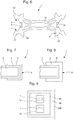
figure 7 est un schéma en coupe d'un composant selon l'invention avec une couche résistante à l'abrasion hydrophobe, dont la surface est une surface de contact hydrophobe ; - la
figure 8 est un schéma en coupe d'un composant selon l'invention avec une couche résistante à l'abrasion hydrophile, dont la surface est une surface de recueil de condensat ; - la figure 10 est un schéma-blocs représentant une montre dont la boîte intègre un mouvement avec un résonateur et un mécanisme d'échappement comportant tous deux des composants selon l'invention.
- L'invention est surtout destinée à éviter les phénomènes d'adhésion, dans un mécanisme horloger comportant un résonateur à haut facteur de qualité, notamment supérieur à 1000, comportant des moyens de guidage à pivot virtuel, ou à guidage flexible, ou similaire, et dans lequel l'énergie transférée est beaucoup plus faible que dans un mécanisme, dit ci-après traditionnel, avec résonateur à balancier-spiral et échappement à ancre suisse, et où les efforts de contact sont logiquement très réduits.
- Le problème technique est de surmonter les efforts capillaires lors du décollement de deux composants antagonistes, quand le mécanisme tend à séparer ces deux composants antagonistes: si les efforts capillaires sont négligeables devant les autres efforts dans un mécanisme traditionnel, ce n'est plus le cas dans un tel mécanisme avec résonateur à haut facteur de qualité, et l'effort capillaire entrave le décollement des composants.
- L'invention se propose d'utiliser un revêtement hydrophobe afin de limiter l'effet des forces capillaires dans un tel mécanisme. La tension de surface d'un liquide est donnée en N/m mais peut être également donnée en J/m2. Donc, plus un liquide mouille une surface importante, plus on doit fournir d'énergie pour en séparer une autre surface en contact. Le fonctionnement de l'échappement comporte de nombreux décollements de composants, et, à chaque fois, de l'énergie est consommée à cause de ces forces capillaires.
- En particulier, les composants en silicium, largement utilisés dans de tels mécanismes à résonateur à haut facteur de qualité, possèdent à leur surface un oxyde, naturel ou non, qui est hygroscopique. Un produit mouillant, tel que de l'eau (humidité de l'air), ou un autre liquide, tel que lubrifiant, ou solvant, présent dans la boîte de montre, se dépose sur toute la surface des pièces concernées dans un environnement ambiant, péjorant ainsi le fonctionnement du mécanisme. Un revêtement empêchant l'eau ou un autre liquide de mouiller ces surfaces fonctionnelles permet de corriger le problème.
- On peut certes imaginer un fonctionnement sans lubrifiant. Dans ce cas, on empêche l'humidité ambiante de mouiller la surface des pièces traitées. Mais on peut également l'imaginer avec présence d'un produit mouillant, tel qu'huile, graisse, solvant ou eau, ou autre, selon la nature des différents mécanismes incorporés dans la boîte de montre. L'objectif du revêtement hydrophobe est alors de limiter la surface mouillée par ce produit mouillant.
- L'invention permet notamment de limiter la perte de rendement lorsque l'humidité relative augmente.
- En combinaison avec l'apposition d'un revêtement hydrophobe sur les surfaces de contact des mécanismes, l'ajout d'une rugosité supérieure à la normale permet de limiter la surface réelle de contact, et donc de limiter également l'énergie dissipée lors du décollement des pièces. Toutefois cette rugosité ne peut pas être élevée inconsidérément, en raison des frottements, de la durée de fonctionnement, et donc de l'usure.
- L'invention assure la protection contre la présence de produit mouillant au niveau des surfaces de contact d'un composant de mécanisme d'horlogerie en matériau micro-usinable, et plus particulièrement la protection contre la présence de produit mouillant au niveau des surfaces de contact d'un composant d'un résonateur à haut facteur de qualité, ou d'un composant de mécanisme d'échappement agencé pour coopérer avec un tel résonateur à haut facteur de qualité.
- L'invention consiste à mettre en oeuvre un procédé consistant à déposer un revêtement hydrophobe en surface d'au moins un composant horloger en matériau micro-usinable présentant une propension à l'absorption d'eau, et en particulier en surface des zones de contact de composants au sein de mécanismes, notamment de composants d'un résonateur et/ou d'un mécanisme d'échappement.
- Plus particulièrement, l'invention concerne la protection d'un arrêtoir, notamment une ancre, et des composants avec lesquels cet arrêtoir est agencé pour coopérer : mobile d'échappement, notamment roue d'échappement, et masse inertielle du résonateur. Quand l'un de tels composants est constitué en plusieurs parties élémentaires, l'invention concerne aussi la protection des surfaces de contact de ces parties élémentaires, par exemple d'une ancre en deux parties.
- Par « composant en matériau micro-usinable », on entend un composant en silicium, ou en silicium oxydé, ou en tout matériau similaire et hydrophile, présentant une propension à l'absorption d'eau, et en particulier en surface des composants du mécanisme d'échappement. De façon générale, le terme de « composant en matériau micro-usinable » s'entend pour tout composant d'horlogerie réalisé selon une des technologies « MEMS » ou « Microelectromechanical systems » c'est-à-dire microsystèmes électromécaniques, « LIGA » ou "Röntgenlithographie, Galvanoformung, Abformung" c'est-à-dire lithographie -galvanisation - formage, ou similaires, utilisées pour réaliser des composants d'horlogerie monobloc et de très haute précision, à un coût de production acceptable.
- Du fait des contraintes de fonctionnement des mécanismes horlogers, et tout particulièrement d'un résonateur ou d'un mécanisme d'échappement, ce revêtement hydrophobe doit être résistant à l'abrasion, de manière à garantir le fonctionnement à long terme.
- L'accroche de ce revêtement hydrophobe à la surface doit être particulièrement soignée. Ainsi, la surface doit être exempte de toute pollution avant le dépôt. Ce dépôt est de préférence de type monocouche auto-assemblée qu'on appellera aussi ci-après « SAM » ou « self-assembled monolayer » c'est-à-dire monocouche auto-assemblée. Ces revêtements sont connus dans d'autres domaines industriels et le sont uniquement pour leurs propriétés lipophobes et pour protéger des zones ne devant pas être polluées par du lubrifiant, mais ne sont pas utilisées pour leurs propriétés hydrophobes pour les composants en silicium ou similaire.
- Les surfaces doivent être parfaitement propres pour assurer la robustesse et la pérennité du dépôt. Ceci peut être réalisé en effectuant le traitement de greffage à la suite de la gravure DRIE ou similaire, dans la même salle blanche ou en nettoyant efficacement les pièces. Différents types de nettoyage peuvent être effectués: dépoussiérage au jet d'azote, nettoyage à l'eau désionisée, nettoyage aux solvants (« opticlear », acétone, alcool isopropylique), désoxydation du silicium (HF/H2O), nettoyage avec solution dite « piranha » (H2SO4/H2O2) pour l'enlèvement de résidus de masques ou similaires. Suite à ces procédés , on peut encore utiliser les standards de nettoyage de fabrication des transistors, et connus pour le nettoyage des wafers, tels que le standard « RCA clean », développé par W. Kern pour « RCA Radio Corporation of America », consistant en un procédé chimique à étapes successives : enlèvement des contaminants organiques (H2O/NH4OH/H2O2), enlèvement des couches minces d'oxydes(HF/H2O), et nettoyage ionique (H2O/HCl/H2O2), puis rinçage et séchage. Le choix est fait en fonction des contaminations à retirer de la surface et des moyens à disposition.
- Le revêtement hydrophobe comporte au moins un type de molécule de fonctionnalisation.
- Le revêtement hydrophobe peut être un lubrifiant, apte à être greffé à la surface, tel qu'un lubrifiant perfluoropolyéthers, du type de ceux que l'on utilise pour lubrifier le contact entre la tête de lecture et le disque d'un système de disque dur informatique, connus sous les références commerciales « Z-Dol », « Z-Tetraol », ou encore « Solvay Fomblin ».
- D'autres familles de produits visant à rendre la surface hydrophobe sont des avantageusement des alkylsilanes, tels le dichlorodiméthylsilane (DDMS), le perfluorodécyltrichlorosilane (FDTS) ou préférentiellement l'octadécyltrichlorosilane (ODTS ou OTS) CH3(CH2)17SiCl3.
- Dans le cas du SAM lubrifiant, les polyperfluoroéthers sont également appelés perfluoropolyalkyléthers. Le brevet
US7510999B2 au nom de DENG/HITACHI décrit certains d'entre eux, dans leur application à la lubrification de moyens d'enregistrement magnétiques. - La
figure 1 donne un exemple de la structure d'un tel polyperfluoroéther. - La préparation de surface consiste à adapter la rugosité du composant, l'épaisseur minimale de sa couche superficielle éventuelle d'oxyde, notamment dans le cas d'un composant en silicium de la couche de SiO2, et la préparation particulière éventuelle. La rugosité peut rester celle résultant de l'opération de gravure DRIE. Il est maintenant possible d'avoir des rugosités nanométriques comme des rugosités micrométriques, selon le type de post-traitement choisi. Quoi qu'il en soit, le dépôt est d'épaisseur nanométrique, et reste conforme à la surface, en en épousant la topographie. Dans le cas particulier du silicium, l'épaisseur de SiO2 n'est pas fondamentalement importante pour l'application recherchée, étant entendu qu'une couche atomique d'oxyde est suffisante. À l'air libre, des liaisons hydroxyles OH s'y forment, que le SAM va utiliser pour se greffer, par exemple au moyen de ses propres liaisons hydroxyles OH. Quoi qu'il en soit, l'épaisseur de SiO2 peut varier entre 0.1 nm (oxydation naturelle) et, par exemple, 10 µm (oxydation forcée), selon les besoins horlogers. Pour une application à un mécanisme d'échappement, la couche d'oxyde SiO2 utilisée d'une épaisseur de l'ordre de 500 nm, procure une bonne tenue et des résultats satisfaisants.
- L'application du revêtement hydrophobe comporte une opération dite de « greffage » à la surface. Ce mécanisme de greffage est brièvement explicité ci-dessus, et se base sur les liaisons OH.
- En résumé, la surface présente une affinité avec une partie de la molécule à déposer. On parle d'ancrage ou de « head » en anglais. On utilise généralement l'oxygène généralement présent en surface, qui aura réagi avec l'humidité de l'air pour former des groupements hydroxyles OH. La molécule à déposer comportant un groupement ayant une affinité avec ces groupements OH, elle viendra spontanément s'y lier chimiquement. On parle alors d'adsorption. Les molécules sont généralement organisées dans l'espace en fonction de leur morphologie (représentation habituelle de surfaces sur lesquelles il y a des poils moléculaires).
- La
figure 2 montre une structure en silicium, dont la surface est matérialisée par un trait plein horizontal ; au-delà, s'étend son oxyde SiO2. La liaison OH de la molécule à déposer (en l'occurrence un SAM dit lubrifiant) est liée à l'atome de silicium en remplacement de la même liaison OH qui s'est développée sur le SiO2 à l'air ambiant. - La
figure 3 illustre la formation de groupements OH à la surface du Si/SiO2 sur lesquels une molécule avec un ancrage de type silane viendra se greffer. Le reste de la molécule en NH2 est donné à titre d'exemple. Généralement, on trouve plutôt des atomes de fluor pour abaisser les tensions de surface. - On peut également avoir des molécules avec des ancrages de type groupement silane : ODTS, FDTS et DDMS. Ces derniers ont une affinité naturelle avec le wafer Si/SiO2, ce qui rend leur greffage plus facile.
- Une autre alternative consiste à utiliser des ancrages de type groupements acide bis- ou mono-phosphonique et/ou thiol ainsi que la combinaison des trois (généralement par deux).
- Le revêtement hydrophobe s'applique généralement au tremper. Il recouvre donc la totalité de la surface que le mélange peut mouiller. Généralement, la molécule active est dissoute dans un solvant qui lui est propre (alcool ou eau sont deux des solvants communs). Sa concentration est largement suffisante pour que toute la surface soit revêtue dans un temps généralement voulu court. Les molécules déposées, mais non greffées à la surface, peuvent s'éliminer lors d'un rinçage dans un autre bain de même solvant (mais sans molécule active). Ce bain ne peut pas retirer les molécules greffées car elles sont désormais liées chimiquement à la surface.
- En alternative, un dépôt sélectif, sur uniquement des zones actives du composant, est possible, mais il nécessite de déposer préalablement au dépôt SAM un autre dépôt que l'on pourra retirer sans retirer le SAM, ce qui complique et renchérit la mise en oeuvre du procédé, d'autant plus que le revêtement hydrophobe ne présente pas d'effet négatif quand il recouvre des surfaces non actives.
- Le dépôt d'un tel revêtement hydrophobe peut se faire, comme ci-dessus au tremper, mais aussi par voie gazeuse, par exemple via un procédé CVD.
- Ainsi, plus particulièrement, l'invention concerne un composant 1 de résonateur 10 à haut facteur de qualité supérieur à 1000, ou de mécanisme d'échappement 20 d'horlogerie agencé pour coopérer avec un tel résonateur 10 à haut facteur de qualité supérieur à 1000.
- Ce composant 1 comporte un noyau 2 en matériau micro-usinable, recouvert d'une couche d'oxyde 3 du matériau micro-usinable quand ledit matériau micro-usinable est oxydable.
- Le composant 1 comporte, sur ce noyau 2 ou sur cette couche d'oxyde 3 du matériau micro-usinable quand ledit matériau micro-usinable est oxydable, une couche résistante à l'abrasion 5, laquelle comporte au moins une surface de contact 6.
- Cette surface de contact 6 est agencée pour coopérer avec une surface de contact antagoniste 7, que comporte au moins un autre composant du résonateur 10, ou du mécanisme d'échappement 20, ou d'un mouvement d'horlogerie 100 incorporant ce résonateur 10 et/ou ce mécanisme d'échappement 20.
- Plus particulièrement, toutes les surfaces de contact 6 d'un même mécanisme sont de même nature, et toutes les surfaces antagonistes 7 avec lesquelles coopèrent ces surfaces de contact 6 sont de même nature que ces surfaces de contact 6.
- Selon l'invention, cette couche résistante à l'abrasion 5 est une monocouche auto-assemblée hydrophobe de type silane et/ou de type fluorée ou perfluorée ou polyperfluorée.
- Dans une variante, la monocouche auto-assemblée hydrophobe contient du soufre, comme par exemple dans le cas d'utilisation d'un thiol.
- Dans une autre variante, la teneur en soufre dans la monocouche auto-assemblée hydrophobe est nulle.
- Selon l'invention, cette monocouche auto-assemblée hydrophobe est agencée pour repousser tout produit mouillant hors de la zone de contact entre la surface de contact 6 et une surface de contact antagoniste 7, de façon à faciliter le décollement entre la surface de contact 6 et une surface de contact antagoniste 7 lorsque le fonctionnement du résonateur 10 ou du mécanisme d'échappement 20 sépare la surface de contact 6 et la surface de contact antagoniste 7.
- De façon avantageuse, la couche résistante à l'abrasion 5 a une rugosité supérieure ou égale à 5 nanomètres Ra, et plus particulièrement supérieure ou égale à 9 nanomètres Ra, plus particulièrement encore supérieure ou égale à 25 nanomètres Ra, au moins au niveau d'au moins une surface de contact 6. Plus particulièrement la couche résistante à l'abrasion 5 a une rugosité supérieure ou égale à 5 Ra au niveau de chaque surface de contact 6. Une des deux surfaces en contact doit être lisse de manière à éviter un frottement trop important (interpénétration des rugosités par exemple). La surface rugueuse doit être en déplacement relatif avec une surface lisse de manière à éviter l'usure. La surface de la contrepièce doit de préférence être faible pour limiter l'usure, et sa rugosité est avantageusement inférieure à celle de la surface de contact, et plus particulièrement mais non limitativement inférieure à 5 nanomètres Ra.
- L'invention permet ainsi d'éloigner tout produit mouillant de la zone de contact. Une boîte 150 de montre étant étanche, il est avantageux de pouvoir maîtriser la localisation des produits mouillants qu'elle renferme, y compris la condensation lors des changements de température. A cet effet, dans un agencement avantageux, le composant 1 comporte, à distance de toute dite surface de contact 6 et de toute surface de contact antagoniste 7, au moins une surface de recueil de condensat 8 en surface d'une couche hydrophile 9 disposée sur le noyau 2 ou sur la couche d'oxyde 3 du matériau micro-usinable quand le matériau micro-usinable est oxydable, ou sur disposée localement la couche résistante à l'abrasion 5, pour constituer un piège et y attirer tout produit mouillant ou condensat aqueux ou lubrifiant, et l'éloigner des surfaces de contact 6 et surfaces de contact antagonistes 7. On conjugue ainsi une répulsion des produits mouillants hors des zones de contact, et une attraction de ces produits vers des zones où ils ne sont pas nuisibles.
- Avantageusement, la surface de recueil de condensat 8 est située au niveau d'une zone massive : zone de fixation 14 à une platine ou un pont, masse inertielle 15 d'un mobile inertiel 13, bras 26 d'une roue d'échappement 24, corps 27 d'une ancre 21, et à distance des chevilles 12, dents 25, ou autres palettes de contact 22, 23.
- Dans une réalisation avantageuse sur du SiO2, la monocouche auto-assemblée hydrophobe comporte de l'octadécyltrichlorosilane CH3CH217SiCl3.
- Plus particulièrement, le composant 1 est un composant de résonateur 10, et comporte au moins une lame flexible 11 droite ou spiralée, qui est agencée pour constituer un moyen de rappel d'un résonateur 10 et dont la surface est celle du noyau 2 ou de la couche d'oxyde 3 du matériau micro-usinable quand le matériau micro-usinable est oxydable.
- L'invention concerne encore un résonateur 10 comportant au moins un tel composant 1, et dont les surfaces antagonistes 7 sont de même nature que les surfaces de contact 6.
- L'invention concerne encore un mécanisme d'échappement 20 comportant au moins un tel composant 1, et dont les surfaces antagonistes 7 sont de même nature que les surfaces de contact 6.
- L'invention concerne encore un mouvement 100 d'horlogerie comportant un tel résonateur 10 et/ou un tel mécanisme d'échappement 20, et dont les surfaces antagonistes 7 sont de même nature que les surfaces de contact 6.
- L'invention concerne encore une montre 200 comportant, dans une boîte étanche 150, un tel mouvement 100.
- En ce qui concerne la compatibilité avec des lubrifiants horlogers classiques, il convient de souligner au préalable qu'on cherche à éviter un contact entre la tête de la molécule et un éventuel lubrifiant, car le lubrifiant génère intrinsèquement des forces d'adhésion de type capillaires ; cette tête de la molécule est souvent constituée du même type de molécules, généralement fluorées, que celle des épilames connus et utilisés aujourd'hui en horlogerie, et de ce fait il n'y a pas de souci de compatibilité en cas de contact avec les lubrifiants horlogers en l'état actuel des connaissances. Dans le cas des molécules SAM du type ODTS, notamment des alkylsilanes dépourvus de fluor, la tête de la molécule est de type aliphatique, ce qui ne pose non plus aucun souci de compatibilité avec les lubrifiants horlogers en l'état actuel des connaissances.
- L'utilisation de certains dépôts de monocouche auto-assemblée «SAM » est connue dans le seul but d'abaisser la tension de surface, pour maintenir un lubrifiant horloger à l'endroit d'un contact à lubrifier, lequel est dépourvu de « SAM ». Le lubrifiant doit donc rester dans la zone de contact pour permettre, via sa viscosité entre autres, de dissiper les effort de cisaillement des deux corps en contact et en déplacement relatif, et à diminuer les pressions de contact. Le lubrifiant fait donc diminuer le coefficient de frottement.
- La présente invention est fondamentalement différente, dans le sens où on cherche l'inverse, c'est-à-dire qu'on désire éviter qu'un produit mouillant, ou un liquide, quel qu'il soit, puisse se retrouver au sein du contact, car, dans les systèmes où il y a peu d'énergie, les forces d'adhésion (capillarité) deviennent prépondérantes. En effet, les forces de surface (adhésion) deviennent, pour des petits mécanismes peu énergétiques, plus importantes que les forces de volume (inertie, masse). Ces forces capillaires sont proportionnelles à la tension de surface des liquides considérés, du volume de liquide et de la façon dont ce volume est réparti. Elles ne sont proportionnelles ni à la pression de contact ni à la vitesse relative entre les corps, contrairement aux forces de frottement.
Claims (14)
- Composant (1) de résonateur (10) à haut facteur de qualité supérieur à 1000, ou de mécanisme d'échappement (20) d'horlogerie agencé pour coopérer avec un tel résonateur (10) à haut facteur de qualité supérieur à 1000, ledit composant (1) comportant un noyau (2) en matériau micro-usinable, recouvert d'une couche d'oxyde (3) dudit matériau micro-usinable quand ledit matériau micro-usinable est oxydable, et ledit composant (1) comportant, sur ledit noyau (2) ou sur ladite couche d'oxyde (3) dudit matériau micro-usinable quand ledit matériau micro-usinable est oxydable, une couche résistante à l'abrasion (5) qui comporte au moins une surface de contact (6) agencée pour coopérer avec une surface de contact antagoniste (7) que comporte au moins un autre composant dudit résonateur (10) ou dudit mécanisme d'échappement (20) ou d'un mouvement d'horlogerie (100) incorporant ledit résonateur (10) et/ou ledit mécanisme d'échappement (20), caractérisé en ce que ladite couche résistante à l'abrasion (5) est une monocouche auto-assemblée hydrophobe de type silane et/ou de type fluorée ou perfluorée ou polyperfluorée, et en ce que ladite monocouche auto-assemblée hydrophobe est agencée pour repousser tout produit mouillant hors de la zone de contact entre ladite surface de contact (6) et ladite surface de contact antagoniste (7), de façon à faciliter le décollement entre ladite surface de contact (6) et une surface de contact antagoniste (7) lorsque le fonctionnement dudit résonateur (10) ou dudit mécanisme d'échappement (20) sépare ladite surface de contact (6) et ladite surface de contact antagoniste (7).
- Composant (1) selon la revendication 1, caractérisé en ce que la teneur en soufre dans ladite monocouche auto-assemblée hydrophobe est nulle.
- Composant (1) selon la revendication 1 ou 2, caractérisé en ce que ladite couche résistante à l'abrasion (5) a une rugosité supérieure ou égale à 5 nanomètres Ra au moins au niveau d'au moins une dite surface de contact (6).
- Composant (1) selon la revendication 3, caractérisé en ce que ladite couche résistante à l'abrasion (5) a une rugosité supérieure ou égale à 5 nanomètres Ra au niveau de chaque dite surface de contact (6).
- Composant (1) selon la revendication 3 ou 4, caractérisé en ce que la surface de la contrepièce, avec laquelle coopère ladite couche résistante à l'abrasion (5), a une rugosité inférieure à celle de ladite couche résistante à l'abrasion (5).
- Composant (1) selon la revendication 5, caractérisé en ce que la surface de la contrepièce, avec laquelle coopère ladite couche résistante à l'abrasion (5), a une rugosité inférieure à 5 nanomètres Ra.
- Composant (1) selon l'une des revendications 1 à 6, caractérisé en ce que ledit composant (1) comporte, à distance de toute dite surface de contact (6) et de toute surface de contact antagoniste (7), au moins une surface de recueil de condensat (8) en surface d'une couche hydrophile (9) disposée sur ledit noyau (2) ou sur ladite couche d'oxyde (3) dudit matériau micro-usinable quand ledit matériau micro-usinable est oxydable, ou disposée localement sur ladite couche résistante à l'abrasion (5), pour constituer un piège et y attirer tout produit mouillant ou condensat aqueux ou lubrifiant, et l'éloigner desdites surfaces de contact (6) et surfaces de contact antagonistes (7).
- Composant (1) selon l'une des revendications 1 à 7, caractérisé en ce que ladite monocouche auto-assemblée hydrophobe comporte un alkyltrichlorosilane.
- Composant (1) selon la revendication 8, caractérisé en ce que ladite monocouche auto-assemblée hydrophobe comporte de l'octadécyltrichlorosilane CH3(CH2)17SiCl3.
- Composant (1) selon l'une des revendications 1 à 9, caractérisé en ce que ledit composant (1) est un composant de résonateur (10), et comporte au moins une lame flexible (11) droite ou spiralée agencée pour constituer un moyen de rappel d'un dit résonateur (10) et dont la surface est celle dudit noyau (2) ou de ladite couche d'oxyde (3) dudit matériau micro-usinable quand ledit matériau micro-usinable est oxydable.
- Résonateur (10) comportant au moins un composant (1) selon l'une des revendications 1 à 10, et dont les dites surfaces antagonistes (7) sont de même nature que lesdites surfaces de contact (6).
- Mécanisme d'échappement (20) comportant au moins un composant (1) selon l'une des revendications 1 à 10, et dont les dites surfaces antagonistes (7) sont de même nature que lesdites surfaces de contact (6).
- Mouvement d'horlogerie(100) comportant un résonateur (10) selon la revendication 11, et/ou un mécanisme d'échappement (20) selon la revendication 12, et dont les dites surfaces antagonistes (7) sont de même nature que lesdites surfaces de contact (6).
- Montre (200) comportant, dans une boîte étanche, au moins un mouvement selon la revendication 13.
Priority Applications (4)
| Application Number | Priority Date | Filing Date | Title |
|---|---|---|---|
| EP18195593.1A EP3627237B1 (fr) | 2018-09-20 | 2018-09-20 | Composant en materiau micro-usinable pour resonateur à haut facteur de qualité |
| JP2019165894A JP6810776B2 (ja) | 2018-09-20 | 2019-09-12 | 高クオリティーファクターの共振器のための微細加工可能な材料によって作られた部品 |
| US16/575,972 US11543776B2 (en) | 2018-09-20 | 2019-09-19 | Component made of micromachinable material for high quality factor resonators |
| CN201910892726.3A CN110928166B (zh) | 2018-09-20 | 2019-09-20 | 由可微加工材料制成的用于高品质因数谐振器的部件 |
Applications Claiming Priority (1)
| Application Number | Priority Date | Filing Date | Title |
|---|---|---|---|
| EP18195593.1A EP3627237B1 (fr) | 2018-09-20 | 2018-09-20 | Composant en materiau micro-usinable pour resonateur à haut facteur de qualité |
Publications (2)
| Publication Number | Publication Date |
|---|---|
| EP3627237A1 true EP3627237A1 (fr) | 2020-03-25 |
| EP3627237B1 EP3627237B1 (fr) | 2022-04-06 |
Family
ID=63667712
Family Applications (1)
| Application Number | Title | Priority Date | Filing Date |
|---|---|---|---|
| EP18195593.1A Active EP3627237B1 (fr) | 2018-09-20 | 2018-09-20 | Composant en materiau micro-usinable pour resonateur à haut facteur de qualité |
Country Status (4)
| Country | Link |
|---|---|
| US (1) | US11543776B2 (fr) |
| EP (1) | EP3627237B1 (fr) |
| JP (1) | JP6810776B2 (fr) |
| CN (1) | CN110928166B (fr) |
Cited By (1)
| Publication number | Priority date | Publication date | Assignee | Title |
|---|---|---|---|---|
| WO2025068217A1 (fr) * | 2023-09-27 | 2025-04-03 | Rolex Sa | Composant de rappel élastique pour mouvement horloger |
Families Citing this family (3)
| Publication number | Priority date | Publication date | Assignee | Title |
|---|---|---|---|---|
| WO2021005564A1 (fr) * | 2019-07-10 | 2021-01-14 | Patek Philippe Sa Geneve | Ensemble horloger d'au moins deux éléments en contact |
| CN115176206A (zh) * | 2020-02-25 | 2022-10-11 | 劳力士有限公司 | 用于计时装置的硅计时装置部件 |
| EP4191345B1 (fr) * | 2021-12-06 | 2025-06-04 | The Swatch Group Research and Development Ltd | Ensemble fonctionnel de micromecanique avec un revetement tribologique |
Citations (5)
| Publication number | Priority date | Publication date | Assignee | Title |
|---|---|---|---|---|
| WO2008017721A2 (fr) * | 2006-08-10 | 2008-02-14 | Surfactis Technologies | Procede de recouvrement de surfaces metalliques ou minerales par des monocouches autoassemblees de composes gem-bisphosphoniques et leurs utilisations |
| EP1927649A1 (fr) * | 2006-12-01 | 2008-06-04 | SurfaceSolutions GmbH | Couche ultra-mnce hydrophobe et oleophobe, procede de fabrication, son utilisation en mecanique comme film barriere |
| US7510999B2 (en) | 2004-05-28 | 2009-03-31 | Hitachi Global Storage Technologies Netherlands B.V. | Lubricant composition for magnetic recording media |
| EP3315214A1 (fr) * | 2016-10-25 | 2018-05-02 | The Swatch Group Research and Development Ltd | Procédé d'épilamage d'un élement d'une pièce d'horlogerie ou de bijouterie |
| EP3327515A1 (fr) * | 2016-11-23 | 2018-05-30 | ETA SA Manufacture Horlogère Suisse | Resonateur rotatif a guidage flexible entretenu par un echappement libre a ancre |
Family Cites Families (13)
| Publication number | Priority date | Publication date | Assignee | Title |
|---|---|---|---|---|
| US6582823B1 (en) | 1999-04-30 | 2003-06-24 | North Carolina State University | Wear-resistant polymeric articles and methods of making the same |
| EP1358123A2 (fr) * | 2001-02-09 | 2003-11-05 | Wisconsin Alumni Research Foundation | Procede et structure permettant le guidage d'ecoulements microfluidiques |
| US20020192472A1 (en) | 2001-05-25 | 2002-12-19 | Bernd Metz | Easily cleanable coating |
| EP1958783B1 (fr) | 2002-12-11 | 2010-04-07 | Konica Minolta Holdings, Inc. | Imprimante à jet d'encre et procédé d'enregistrement d'image |
| JP2006283011A (ja) * | 2005-03-08 | 2006-10-19 | Kanagawa Acad Of Sci & Technol | 撥水処理方法およびその方法により処理された基材 |
| EP2410386B1 (fr) * | 2010-07-19 | 2018-10-03 | Nivarox-FAR S.A. | Balancier à réglage d'inertie avec insert |
| US9714469B2 (en) * | 2010-12-23 | 2017-07-25 | Rolex Sa | Composition for increasing the lipophobicity of a watch-making component |
| US9441177B2 (en) | 2011-05-09 | 2016-09-13 | The Swatch Group Research And Development Ltd. | Lubrication with oil-compatible polymer brushes |
| FR2990433A1 (fr) * | 2012-05-10 | 2013-11-15 | Surfactis Technologies | Compositions catanioniques de recouvrement de surface par des molecules phosphoniques et amines |
| CN102977291A (zh) * | 2012-11-01 | 2013-03-20 | 中科院广州化学有限公司 | 一种可交联型含氟聚合物及其在制备超双疏表面中的应用 |
| WO2015095154A1 (fr) | 2013-12-20 | 2015-06-25 | Cabot Corporation | Particules composites d'oxyde métallique-polymère pour polissage mécano-chimique |
| EP2990885B1 (fr) * | 2013-12-23 | 2017-07-26 | ETA SA Manufacture Horlogère Suisse | Mouvement horloger mécanique à échappement magnétique |
| CN107541106A (zh) * | 2017-09-01 | 2018-01-05 | 西藏自治区能源研究示范中心 | 一种太阳能光热涂层及其制备方法和基于涂层的太阳墙 |
-
2018
- 2018-09-20 EP EP18195593.1A patent/EP3627237B1/fr active Active
-
2019
- 2019-09-12 JP JP2019165894A patent/JP6810776B2/ja active Active
- 2019-09-19 US US16/575,972 patent/US11543776B2/en active Active
- 2019-09-20 CN CN201910892726.3A patent/CN110928166B/zh active Active
Patent Citations (5)
| Publication number | Priority date | Publication date | Assignee | Title |
|---|---|---|---|---|
| US7510999B2 (en) | 2004-05-28 | 2009-03-31 | Hitachi Global Storage Technologies Netherlands B.V. | Lubricant composition for magnetic recording media |
| WO2008017721A2 (fr) * | 2006-08-10 | 2008-02-14 | Surfactis Technologies | Procede de recouvrement de surfaces metalliques ou minerales par des monocouches autoassemblees de composes gem-bisphosphoniques et leurs utilisations |
| EP1927649A1 (fr) * | 2006-12-01 | 2008-06-04 | SurfaceSolutions GmbH | Couche ultra-mnce hydrophobe et oleophobe, procede de fabrication, son utilisation en mecanique comme film barriere |
| EP3315214A1 (fr) * | 2016-10-25 | 2018-05-02 | The Swatch Group Research and Development Ltd | Procédé d'épilamage d'un élement d'une pièce d'horlogerie ou de bijouterie |
| EP3327515A1 (fr) * | 2016-11-23 | 2018-05-30 | ETA SA Manufacture Horlogère Suisse | Resonateur rotatif a guidage flexible entretenu par un echappement libre a ancre |
Cited By (1)
| Publication number | Priority date | Publication date | Assignee | Title |
|---|---|---|---|---|
| WO2025068217A1 (fr) * | 2023-09-27 | 2025-04-03 | Rolex Sa | Composant de rappel élastique pour mouvement horloger |
Also Published As
| Publication number | Publication date |
|---|---|
| US11543776B2 (en) | 2023-01-03 |
| JP2020046425A (ja) | 2020-03-26 |
| JP6810776B2 (ja) | 2021-01-06 |
| CN110928166B (zh) | 2021-05-04 |
| US20200096943A1 (en) | 2020-03-26 |
| CN110928166A (zh) | 2020-03-27 |
| EP3627237B1 (fr) | 2022-04-06 |
Similar Documents
| Publication | Publication Date | Title |
|---|---|---|
| EP3627237B1 (fr) | Composant en materiau micro-usinable pour resonateur à haut facteur de qualité | |
| EP1904901B1 (fr) | Piece de micro-mecanique renforcee | |
| EP2456714B1 (fr) | Procédé de fabrication d'un pièce micromécanique en silicium renforcé | |
| EP3783445B1 (fr) | Mécanisme régulateur d'horlogerie à haut facteur de qualité et à lubrification minimale | |
| CH715360A2 (fr) | Composant en matériau micro-usinable pour résonateur à haut facteur de qualité. | |
| EP3141522B1 (fr) | Pièce micromécanique horlogère comprenant une surface lubrifiée et procédé de réalisation d'une telle pièce micromécanique horlogère | |
| CH702576B1 (fr) | Pièce de micro-mécanique revêtue. | |
| EP4121821A1 (fr) | Procede de fabrication d'un composant horloger a base de silicium | |
| CH716518A2 (fr) | Mécanisme régulateur d'horlogerie. | |
| EP4214580B1 (fr) | Composant de micromécanique, notamment un mobile d'horlogerie, notamment un mobile d'échappement, dont la surface est optimisée | |
| EP4214581B1 (fr) | Procede de fabrication d'un composant de micromecanique, notamment d'un mobile d'horlogerie, dont la surface est optimisee | |
| EP4191345B1 (fr) | Ensemble fonctionnel de micromecanique avec un revetement tribologique | |
| EP3548972B1 (fr) | Methode d'optimisation des proprietes tribologiques d'un composant horloger | |
| WO2021005564A1 (fr) | Ensemble horloger d'au moins deux éléments en contact | |
| EP4479803A1 (fr) | Pierre d'horlogerie et procede de fabrication d'une telle pierre | |
| WO2017102734A1 (fr) | Procédé de protection d'une surface métallique d'une pièce par un revêtement en diamant et pièce ainsi obtenue | |
| CH722213A2 (fr) | Utilisation d'un compose siloxane en tant qu'agent epilame | |
| EP4037842A1 (fr) | Procede de fabrication d'une piece mecanique epilamee | |
| CH717841A2 (fr) | Mobile d'horlogerie, notamment mobile d'échappement, avec surface de contact revêtue. | |
| CH716663B1 (fr) | Procédé de fabrication d'une pièce mécanique épilamée. | |
| CH711500B1 (fr) | Pièce micromécanique horlogère comprenant une surface lubrifiée et procédé de réalisation d'une telle pièce micromécanique horlogère. |
Legal Events
| Date | Code | Title | Description |
|---|---|---|---|
| PUAI | Public reference made under article 153(3) epc to a published international application that has entered the european phase |
Free format text: ORIGINAL CODE: 0009012 |
|
| STAA | Information on the status of an ep patent application or granted ep patent |
Free format text: STATUS: THE APPLICATION HAS BEEN PUBLISHED |
|
| AK | Designated contracting states |
Kind code of ref document: A1 Designated state(s): AL AT BE BG CH CY CZ DE DK EE ES FI FR GB GR HR HU IE IS IT LI LT LU LV MC MK MT NL NO PL PT RO RS SE SI SK SM TR |
|
| AX | Request for extension of the european patent |
Extension state: BA ME |
|
| STAA | Information on the status of an ep patent application or granted ep patent |
Free format text: STATUS: REQUEST FOR EXAMINATION WAS MADE |
|
| 17P | Request for examination filed |
Effective date: 20200925 |
|
| RBV | Designated contracting states (corrected) |
Designated state(s): AL AT BE BG CH CY CZ DE DK EE ES FI FR GB GR HR HU IE IS IT LI LT LU LV MC MK MT NL NO PL PT RO RS SE SI SK SM TR |
|
| GRAP | Despatch of communication of intention to grant a patent |
Free format text: ORIGINAL CODE: EPIDOSNIGR1 |
|
| STAA | Information on the status of an ep patent application or granted ep patent |
Free format text: STATUS: GRANT OF PATENT IS INTENDED |
|
| INTG | Intention to grant announced |
Effective date: 20220121 |
|
| GRAS | Grant fee paid |
Free format text: ORIGINAL CODE: EPIDOSNIGR3 |
|
| GRAA | (expected) grant |
Free format text: ORIGINAL CODE: 0009210 |
|
| STAA | Information on the status of an ep patent application or granted ep patent |
Free format text: STATUS: THE PATENT HAS BEEN GRANTED |
|
| AK | Designated contracting states |
Kind code of ref document: B1 Designated state(s): AL AT BE BG CH CY CZ DE DK EE ES FI FR GB GR HR HU IE IS IT LI LT LU LV MC MK MT NL NO PL PT RO RS SE SI SK SM TR |
|
| REG | Reference to a national code |
Ref country code: GB Ref legal event code: FG4D Free format text: NOT ENGLISH |
|
| REG | Reference to a national code |
Ref country code: CH Ref legal event code: EP |
|
| REG | Reference to a national code |
Ref country code: AT Ref legal event code: REF Ref document number: 1481928 Country of ref document: AT Kind code of ref document: T Effective date: 20220415 |
|
| REG | Reference to a national code |
Ref country code: IE Ref legal event code: FG4D Free format text: LANGUAGE OF EP DOCUMENT: FRENCH |
|
| REG | Reference to a national code |
Ref country code: DE Ref legal event code: R096 Ref document number: 602018033266 Country of ref document: DE |
|
| REG | Reference to a national code |
Ref country code: LT Ref legal event code: MG9D |
|
| REG | Reference to a national code |
Ref country code: NL Ref legal event code: MP Effective date: 20220406 |
|
| REG | Reference to a national code |
Ref country code: AT Ref legal event code: MK05 Ref document number: 1481928 Country of ref document: AT Kind code of ref document: T Effective date: 20220406 |
|
| PG25 | Lapsed in a contracting state [announced via postgrant information from national office to epo] |
Ref country code: NL Free format text: LAPSE BECAUSE OF FAILURE TO SUBMIT A TRANSLATION OF THE DESCRIPTION OR TO PAY THE FEE WITHIN THE PRESCRIBED TIME-LIMIT Effective date: 20220406 |
|
| PG25 | Lapsed in a contracting state [announced via postgrant information from national office to epo] |
Ref country code: SE Free format text: LAPSE BECAUSE OF FAILURE TO SUBMIT A TRANSLATION OF THE DESCRIPTION OR TO PAY THE FEE WITHIN THE PRESCRIBED TIME-LIMIT Effective date: 20220406 Ref country code: PT Free format text: LAPSE BECAUSE OF FAILURE TO SUBMIT A TRANSLATION OF THE DESCRIPTION OR TO PAY THE FEE WITHIN THE PRESCRIBED TIME-LIMIT Effective date: 20220808 Ref country code: NO Free format text: LAPSE BECAUSE OF FAILURE TO SUBMIT A TRANSLATION OF THE DESCRIPTION OR TO PAY THE FEE WITHIN THE PRESCRIBED TIME-LIMIT Effective date: 20220706 Ref country code: LT Free format text: LAPSE BECAUSE OF FAILURE TO SUBMIT A TRANSLATION OF THE DESCRIPTION OR TO PAY THE FEE WITHIN THE PRESCRIBED TIME-LIMIT Effective date: 20220406 Ref country code: HR Free format text: LAPSE BECAUSE OF FAILURE TO SUBMIT A TRANSLATION OF THE DESCRIPTION OR TO PAY THE FEE WITHIN THE PRESCRIBED TIME-LIMIT Effective date: 20220406 Ref country code: GR Free format text: LAPSE BECAUSE OF FAILURE TO SUBMIT A TRANSLATION OF THE DESCRIPTION OR TO PAY THE FEE WITHIN THE PRESCRIBED TIME-LIMIT Effective date: 20220707 Ref country code: FI Free format text: LAPSE BECAUSE OF FAILURE TO SUBMIT A TRANSLATION OF THE DESCRIPTION OR TO PAY THE FEE WITHIN THE PRESCRIBED TIME-LIMIT Effective date: 20220406 Ref country code: ES Free format text: LAPSE BECAUSE OF FAILURE TO SUBMIT A TRANSLATION OF THE DESCRIPTION OR TO PAY THE FEE WITHIN THE PRESCRIBED TIME-LIMIT Effective date: 20220406 Ref country code: BG Free format text: LAPSE BECAUSE OF FAILURE TO SUBMIT A TRANSLATION OF THE DESCRIPTION OR TO PAY THE FEE WITHIN THE PRESCRIBED TIME-LIMIT Effective date: 20220706 Ref country code: AT Free format text: LAPSE BECAUSE OF FAILURE TO SUBMIT A TRANSLATION OF THE DESCRIPTION OR TO PAY THE FEE WITHIN THE PRESCRIBED TIME-LIMIT Effective date: 20220406 |
|
| PG25 | Lapsed in a contracting state [announced via postgrant information from national office to epo] |
Ref country code: RS Free format text: LAPSE BECAUSE OF FAILURE TO SUBMIT A TRANSLATION OF THE DESCRIPTION OR TO PAY THE FEE WITHIN THE PRESCRIBED TIME-LIMIT Effective date: 20220406 Ref country code: PL Free format text: LAPSE BECAUSE OF FAILURE TO SUBMIT A TRANSLATION OF THE DESCRIPTION OR TO PAY THE FEE WITHIN THE PRESCRIBED TIME-LIMIT Effective date: 20220406 Ref country code: LV Free format text: LAPSE BECAUSE OF FAILURE TO SUBMIT A TRANSLATION OF THE DESCRIPTION OR TO PAY THE FEE WITHIN THE PRESCRIBED TIME-LIMIT Effective date: 20220406 Ref country code: IS Free format text: LAPSE BECAUSE OF FAILURE TO SUBMIT A TRANSLATION OF THE DESCRIPTION OR TO PAY THE FEE WITHIN THE PRESCRIBED TIME-LIMIT Effective date: 20220806 |
|
| REG | Reference to a national code |
Ref country code: DE Ref legal event code: R097 Ref document number: 602018033266 Country of ref document: DE |
|
| PG25 | Lapsed in a contracting state [announced via postgrant information from national office to epo] |
Ref country code: SM Free format text: LAPSE BECAUSE OF FAILURE TO SUBMIT A TRANSLATION OF THE DESCRIPTION OR TO PAY THE FEE WITHIN THE PRESCRIBED TIME-LIMIT Effective date: 20220406 Ref country code: SK Free format text: LAPSE BECAUSE OF FAILURE TO SUBMIT A TRANSLATION OF THE DESCRIPTION OR TO PAY THE FEE WITHIN THE PRESCRIBED TIME-LIMIT Effective date: 20220406 Ref country code: RO Free format text: LAPSE BECAUSE OF FAILURE TO SUBMIT A TRANSLATION OF THE DESCRIPTION OR TO PAY THE FEE WITHIN THE PRESCRIBED TIME-LIMIT Effective date: 20220406 Ref country code: EE Free format text: LAPSE BECAUSE OF FAILURE TO SUBMIT A TRANSLATION OF THE DESCRIPTION OR TO PAY THE FEE WITHIN THE PRESCRIBED TIME-LIMIT Effective date: 20220406 Ref country code: DK Free format text: LAPSE BECAUSE OF FAILURE TO SUBMIT A TRANSLATION OF THE DESCRIPTION OR TO PAY THE FEE WITHIN THE PRESCRIBED TIME-LIMIT Effective date: 20220406 Ref country code: CZ Free format text: LAPSE BECAUSE OF FAILURE TO SUBMIT A TRANSLATION OF THE DESCRIPTION OR TO PAY THE FEE WITHIN THE PRESCRIBED TIME-LIMIT Effective date: 20220406 |
|
| PLBE | No opposition filed within time limit |
Free format text: ORIGINAL CODE: 0009261 |
|
| STAA | Information on the status of an ep patent application or granted ep patent |
Free format text: STATUS: NO OPPOSITION FILED WITHIN TIME LIMIT |
|
| 26N | No opposition filed |
Effective date: 20230110 |
|
| PG25 | Lapsed in a contracting state [announced via postgrant information from national office to epo] |
Ref country code: AL Free format text: LAPSE BECAUSE OF FAILURE TO SUBMIT A TRANSLATION OF THE DESCRIPTION OR TO PAY THE FEE WITHIN THE PRESCRIBED TIME-LIMIT Effective date: 20220406 |
|
| PG25 | Lapsed in a contracting state [announced via postgrant information from national office to epo] |
Ref country code: MC Free format text: LAPSE BECAUSE OF FAILURE TO SUBMIT A TRANSLATION OF THE DESCRIPTION OR TO PAY THE FEE WITHIN THE PRESCRIBED TIME-LIMIT Effective date: 20220406 |
|
| REG | Reference to a national code |
Ref country code: BE Ref legal event code: MM Effective date: 20220930 |
|
| PG25 | Lapsed in a contracting state [announced via postgrant information from national office to epo] |
Ref country code: SI Free format text: LAPSE BECAUSE OF FAILURE TO SUBMIT A TRANSLATION OF THE DESCRIPTION OR TO PAY THE FEE WITHIN THE PRESCRIBED TIME-LIMIT Effective date: 20220406 |
|
| PG25 | Lapsed in a contracting state [announced via postgrant information from national office to epo] |
Ref country code: LU Free format text: LAPSE BECAUSE OF NON-PAYMENT OF DUE FEES Effective date: 20220920 |
|
| PG25 | Lapsed in a contracting state [announced via postgrant information from national office to epo] |
Ref country code: IE Free format text: LAPSE BECAUSE OF NON-PAYMENT OF DUE FEES Effective date: 20220920 |
|
| P01 | Opt-out of the competence of the unified patent court (upc) registered |
Effective date: 20230701 |
|
| PG25 | Lapsed in a contracting state [announced via postgrant information from national office to epo] |
Ref country code: BE Free format text: LAPSE BECAUSE OF NON-PAYMENT OF DUE FEES Effective date: 20220930 |
|
| PG25 | Lapsed in a contracting state [announced via postgrant information from national office to epo] |
Ref country code: IT Free format text: LAPSE BECAUSE OF FAILURE TO SUBMIT A TRANSLATION OF THE DESCRIPTION OR TO PAY THE FEE WITHIN THE PRESCRIBED TIME-LIMIT Effective date: 20220406 |
|
| PG25 | Lapsed in a contracting state [announced via postgrant information from national office to epo] |
Ref country code: HU Free format text: LAPSE BECAUSE OF FAILURE TO SUBMIT A TRANSLATION OF THE DESCRIPTION OR TO PAY THE FEE WITHIN THE PRESCRIBED TIME-LIMIT; INVALID AB INITIO Effective date: 20180920 |
|
| PG25 | Lapsed in a contracting state [announced via postgrant information from national office to epo] |
Ref country code: CY Free format text: LAPSE BECAUSE OF FAILURE TO SUBMIT A TRANSLATION OF THE DESCRIPTION OR TO PAY THE FEE WITHIN THE PRESCRIBED TIME-LIMIT Effective date: 20220406 |
|
| PG25 | Lapsed in a contracting state [announced via postgrant information from national office to epo] |
Ref country code: MK Free format text: LAPSE BECAUSE OF FAILURE TO SUBMIT A TRANSLATION OF THE DESCRIPTION OR TO PAY THE FEE WITHIN THE PRESCRIBED TIME-LIMIT Effective date: 20220406 |
|
| PG25 | Lapsed in a contracting state [announced via postgrant information from national office to epo] |
Ref country code: MT Free format text: LAPSE BECAUSE OF FAILURE TO SUBMIT A TRANSLATION OF THE DESCRIPTION OR TO PAY THE FEE WITHIN THE PRESCRIBED TIME-LIMIT Effective date: 20220406 |
|
| PG25 | Lapsed in a contracting state [announced via postgrant information from national office to epo] |
Ref country code: BG Free format text: LAPSE BECAUSE OF FAILURE TO SUBMIT A TRANSLATION OF THE DESCRIPTION OR TO PAY THE FEE WITHIN THE PRESCRIBED TIME-LIMIT Effective date: 20220406 |
|
| PG25 | Lapsed in a contracting state [announced via postgrant information from national office to epo] |
Ref country code: BG Free format text: LAPSE BECAUSE OF FAILURE TO SUBMIT A TRANSLATION OF THE DESCRIPTION OR TO PAY THE FEE WITHIN THE PRESCRIBED TIME-LIMIT Effective date: 20220406 |
|
| REG | Reference to a national code |
Ref country code: CH Ref legal event code: U11 Free format text: ST27 STATUS EVENT CODE: U-0-0-U10-U11 (AS PROVIDED BY THE NATIONAL OFFICE) Effective date: 20251001 |
|
| PGFP | Annual fee paid to national office [announced via postgrant information from national office to epo] |
Ref country code: DE Payment date: 20250820 Year of fee payment: 8 |
|
| PGFP | Annual fee paid to national office [announced via postgrant information from national office to epo] |
Ref country code: GB Payment date: 20250827 Year of fee payment: 8 |
|
| PGFP | Annual fee paid to national office [announced via postgrant information from national office to epo] |
Ref country code: FR Payment date: 20250820 Year of fee payment: 8 |
|
| PG25 | Lapsed in a contracting state [announced via postgrant information from national office to epo] |
Ref country code: TR Free format text: LAPSE BECAUSE OF FAILURE TO SUBMIT A TRANSLATION OF THE DESCRIPTION OR TO PAY THE FEE WITHIN THE PRESCRIBED TIME-LIMIT Effective date: 20220406 |
|
| PGFP | Annual fee paid to national office [announced via postgrant information from national office to epo] |
Ref country code: CH Payment date: 20251001 Year of fee payment: 8 |