EP3627882A1 - Procédé et appareil de commande de transmission de paquet - Google Patents
Procédé et appareil de commande de transmission de paquet Download PDFInfo
- Publication number
- EP3627882A1 EP3627882A1 EP18818952.6A EP18818952A EP3627882A1 EP 3627882 A1 EP3627882 A1 EP 3627882A1 EP 18818952 A EP18818952 A EP 18818952A EP 3627882 A1 EP3627882 A1 EP 3627882A1
- Authority
- EP
- European Patent Office
- Prior art keywords
- logical channel
- pdcp
- base station
- terminal
- bearer
- Prior art date
- Legal status (The legal status is an assumption and is not a legal conclusion. Google has not performed a legal analysis and makes no representation as to the accuracy of the status listed.)
- Pending
Links
Images








Classifications
-
- H—ELECTRICITY
- H04—ELECTRIC COMMUNICATION TECHNIQUE
- H04W—WIRELESS COMMUNICATION NETWORKS
- H04W36/00—Hand-off or reselection arrangements
- H04W36/24—Reselection being triggered by specific parameters
- H04W36/26—Reselection being triggered by specific parameters by agreed or negotiated communication parameters
-
- H—ELECTRICITY
- H04—ELECTRIC COMMUNICATION TECHNIQUE
- H04L—TRANSMISSION OF DIGITAL INFORMATION, e.g. TELEGRAPHIC COMMUNICATION
- H04L1/00—Arrangements for detecting or preventing errors in the information received
- H04L1/08—Arrangements for detecting or preventing errors in the information received by repeating transmission, e.g. Verdan system
-
- H—ELECTRICITY
- H04—ELECTRIC COMMUNICATION TECHNIQUE
- H04L—TRANSMISSION OF DIGITAL INFORMATION, e.g. TELEGRAPHIC COMMUNICATION
- H04L1/00—Arrangements for detecting or preventing errors in the information received
- H04L1/12—Arrangements for detecting or preventing errors in the information received by using return channel
- H04L1/16—Arrangements for detecting or preventing errors in the information received by using return channel in which the return channel carries supervisory signals, e.g. repetition request signals
- H04L1/18—Automatic repetition systems, e.g. Van Duuren systems
-
- H—ELECTRICITY
- H04—ELECTRIC COMMUNICATION TECHNIQUE
- H04L—TRANSMISSION OF DIGITAL INFORMATION, e.g. TELEGRAPHIC COMMUNICATION
- H04L1/00—Arrangements for detecting or preventing errors in the information received
- H04L1/22—Arrangements for detecting or preventing errors in the information received using redundant apparatus to increase reliability
-
- H—ELECTRICITY
- H04—ELECTRIC COMMUNICATION TECHNIQUE
- H04W—WIRELESS COMMUNICATION NETWORKS
- H04W12/00—Security arrangements; Authentication; Protecting privacy or anonymity
- H04W12/04—Key management, e.g. using generic bootstrapping architecture [GBA]
-
- H—ELECTRICITY
- H04—ELECTRIC COMMUNICATION TECHNIQUE
- H04W—WIRELESS COMMUNICATION NETWORKS
- H04W12/00—Security arrangements; Authentication; Protecting privacy or anonymity
- H04W12/08—Access security
-
- H—ELECTRICITY
- H04—ELECTRIC COMMUNICATION TECHNIQUE
- H04W—WIRELESS COMMUNICATION NETWORKS
- H04W12/00—Security arrangements; Authentication; Protecting privacy or anonymity
- H04W12/10—Integrity
-
- H—ELECTRICITY
- H04—ELECTRIC COMMUNICATION TECHNIQUE
- H04W—WIRELESS COMMUNICATION NETWORKS
- H04W28/00—Network traffic management; Network resource management
- H04W28/02—Traffic management, e.g. flow control or congestion control
- H04W28/04—Error control
-
- H—ELECTRICITY
- H04—ELECTRIC COMMUNICATION TECHNIQUE
- H04W—WIRELESS COMMUNICATION NETWORKS
- H04W28/00—Network traffic management; Network resource management
- H04W28/02—Traffic management, e.g. flow control or congestion control
- H04W28/06—Optimizing the usage of the radio link, e.g. header compression, information sizing, discarding information
-
- H—ELECTRICITY
- H04—ELECTRIC COMMUNICATION TECHNIQUE
- H04W—WIRELESS COMMUNICATION NETWORKS
- H04W28/00—Network traffic management; Network resource management
- H04W28/02—Traffic management, e.g. flow control or congestion control
- H04W28/10—Flow control between communication endpoints
- H04W28/12—Flow control between communication endpoints using signalling between network elements
-
- H—ELECTRICITY
- H04—ELECTRIC COMMUNICATION TECHNIQUE
- H04W—WIRELESS COMMUNICATION NETWORKS
- H04W36/00—Hand-off or reselection arrangements
- H04W36/0005—Control or signalling for completing the hand-off
- H04W36/0011—Control or signalling for completing the hand-off for data sessions of end-to-end connection
- H04W36/0027—Control or signalling for completing the hand-off for data sessions of end-to-end connection for a plurality of data sessions of end-to-end connections, e.g. multi-call or multi-bearer end-to-end data connections
-
- H—ELECTRICITY
- H04—ELECTRIC COMMUNICATION TECHNIQUE
- H04W—WIRELESS COMMUNICATION NETWORKS
- H04W36/00—Hand-off or reselection arrangements
- H04W36/0005—Control or signalling for completing the hand-off
- H04W36/0055—Transmission or use of information for re-establishing the radio link
-
- H—ELECTRICITY
- H04—ELECTRIC COMMUNICATION TECHNIQUE
- H04W—WIRELESS COMMUNICATION NETWORKS
- H04W8/00—Network data management
- H04W8/22—Processing or transfer of terminal data, e.g. status or physical capabilities
- H04W8/24—Transfer of terminal data
- H04W8/245—Transfer of terminal data from a network towards a terminal
-
- H—ELECTRICITY
- H04—ELECTRIC COMMUNICATION TECHNIQUE
- H04W—WIRELESS COMMUNICATION NETWORKS
- H04W80/00—Wireless network protocols or protocol adaptations to wireless operation
- H04W80/08—Upper layer protocols
-
- H—ELECTRICITY
- H04—ELECTRIC COMMUNICATION TECHNIQUE
- H04W—WIRELESS COMMUNICATION NETWORKS
- H04W88/00—Devices specially adapted for wireless communication networks, e.g. terminals, base stations or access point devices
- H04W88/02—Terminal devices
-
- H—ELECTRICITY
- H04—ELECTRIC COMMUNICATION TECHNIQUE
- H04W—WIRELESS COMMUNICATION NETWORKS
- H04W88/00—Devices specially adapted for wireless communication networks, e.g. terminals, base stations or access point devices
- H04W88/08—Access point devices
Definitions
- the disclosure relates to a method and a device for controlling packet transmission in a mobile communication system.
- the 5G communication system or the pre-5G communication system is called a beyond-4G-network communication system or a post-LTE system.
- a mmWave band for example, 60 GHz band
- technologies such as beamforming, massive MIMO, full-dimensional MIMO (FD-MIMO), array antenna, analog beamforming, and large-scale antenna technologies are under discussion with the goal of mitigating propagation path loss in the mmWave band and increasing a propagation transmission distance.
- FD-MIMO full-dimensional MIMO
- array antenna analog beamforming
- large-scale antenna technologies are under discussion with the goal of mitigating propagation path loss in the mmWave band and increasing a propagation transmission distance.
- technologies such as an evolved small cell, an advanced small cell, a cloud radio access network (cloud RAN), an ultra-dense network, device-to-device communication (D2D), a wireless backhaul, a moving network, cooperative communication, coordinated multi-points (CoMP), and received interference cancellation have developed to improve the system network.
- cloud RAN cloud radio access network
- D2D device-to-device communication
- CoMP coordinated multi-points
- ACM advanced coding modulation
- FQAM hybrid FSK and QAM modulation
- SWSC sliding window superposition coding
- advanced access technologies such as filter bank multi-carrier (FBMC), non-orthogonal multiple access (NOMA), and sparse code multiple access (SCMA).
- the disclosure provides a method for effectively managing a radio link in the case where the number of retransmissions reaches the maximum when performing packet duplication.
- the disclosure provides a method for increasing data transmission efficiency when performing packet duplication.
- the disclosure defines a method for generating a security key in a non-standalone (NSA) structure.
- NSA non-standalone
- the disclosure defines a method for performing integrity checking in a split bearer.
- a method of a terminal a wireless communication system may include: performing PDCP duplication to transmit an identical protocol data convergence protocol (PDCP) protocol data unit (PDU) through a first logical channel and a second logical channel to a base station; retransmitting, if a request for retransmitting PDCP PDU transmitted through the second logical channel is received from the base station, the PDCP PDU to the base station; and receiving information instructing deactivation of the PDCP duplication from the base station if the number of the PDCP PDU retransmissions becomes equal to or greater than a pre-configured number of times.
- PDCP protocol data convergence protocol
- PDU protocol data unit
- a method of a base station in a wireless communication system may include: transmitting, to a terminal, a message instructing activation of PDCP duplication for transmitting an identical protocol data convergence protocol (PDCP) protocol data unit (PDU) through a first logical channel and a second logical channel; requesting retransmission of the PDCP PDU transmitted through the second logical channel to the terminal; receiving, from the terminal, a report providing notification that the number of the PDCP PDU retransmissions is equal to or greater than a pre-configured number of times; and transmitting information instructing deactivation of the PDCP duplication to the terminal.
- PDCP protocol data convergence protocol
- PDU protocol data unit
- a terminal in a wireless communication system may include: a transceiver; and a controller configured to perform PDCP duplication for transmitting an identical protocol data convergence protocol (PDCP) protocol data unit (PDU) through a first logical channel and a second logical channel to a base station, control the transceiver to retransmit, if a request for retransmitting the PDCP PDU transmitted through the second logical channel is received from the base station, the PDCP PDU to the base station, and control the transceiver to receive information instructing deactivation of the PDCP duplication from the base station if the number of the PDCP PDU retransmissions becomes equal to or greater than a pre-configured number of times.
- PDCP protocol data convergence protocol
- PDU protocol data unit
- a base station in a wireless communication system may include: a transceiver; and a controller configured to transmit, to a terminal, a message instructing activation of PDCP duplication for transmitting an identical protocol data convergence protocol (PDCP) protocol data unit (PDU) through a first logical channel and a second logical channel, request retransmission of the PDCP PDU transmitted through the second logical channel to the terminal, receive a report providing notification that the number of the PDCP PDU retransmissions is equal to or greater than a pre-configured number of times from the terminal, and control the transceiver to transmit information instructing deactivation of the PDCP duplication to the terminal.
- PDCP protocol data convergence protocol
- PDU protocol data unit
- FIG. 1 illustrates a structure in which duplicate packet transmission is performed in carrier aggregation (hereinafter, CA).
- PDCP packet data convergence protocol
- PDU packet protocol data unit
- RLC radio link control
- FIG. 1 is an example illustrating that logical channel 1 101 can send data to a primary cell (PCell) 111, a secondary cell 1 (SCell) 112, and an SCell 2 113, and logical channel 2 can send data to an SCell 3 114 and an SCell 4 115.
- a cell is also referred to as a component carrier (hereinafter, CC).
- radio link failure In the case where transmission is not completed even though a certain packet has been maximally retransmitted from an RLC device (when an RETX_COUNT value reaches a maxRetxThreshold in an LTE system), it is determined that a radio link environment is not good. Thus, radio link failure (RLF) is declared, and a terminal performs a procedure for reconfiguring connection to a corresponding base station (master base station or secondary base station).
- RLF radio link failure
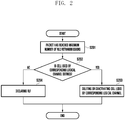
- FIG. 2 shows an operation proposed by the disclosure in the case where the number of RLC retransmissions reaches the maximum.
- a packet transmitted by an RLC device reaches the maximum number of RLC retransmissions in S201 (when an RETX_COUNT value reaches a maxRetxThreshold in an LTE system), whether or not a cell used by a corresponding logical channel corresponding to the RLC device is defined may be determined in S202.
- a corresponding logical channel can send data in a certain cell or cells rather than in every cell, only the cell used by the corresponding logical channel may be released/deleted or deactivated in S203. In this case, RLF is not declared, and an RLF operation is not carried out. On the other hand, if a corresponding logical channel can send data in every activated cell, RLF may be declared in S204.
- a terminal may notify a base station that only the cell used by the corresponding channel is released/deleted or deactivated. At this time, the base station may be notified through a different cell rather than the cell corresponding to the RLC device having reached the maximum number of RLC retransmissions.
- the RLC device having reached the maximum number of RLC retransmissions may request another RLC device connected to an identical radio bearer (PDCP device) to transmit a corresponding message.
- PDCP device identical radio bearer
- deleting or deactivating only the cell used by the corresponding logical channel may also be determined in a base station or another network device.
- a terminal may report the situation of the corresponding terminal to a base station to allow the base station to determine whether to delete or deactivate the cell used by the corresponding logical channel.
- the base station may delete or deactivate a cell used by a corresponding logical channel.
- the information to be provided to the base station may include an ID of a logical channel having reached the maximum number of retransmissions, a CC index to which a packet is transmitted, an SCell index, a cell ID, a sequence number (SN) of a corresponding packet, and the like.
- An instructor for a network node or a cell group may be included in a dual connectivity structure in order to accurately distinguish a logical channel, a CC index, an SCell index, a cell ID, and the like.
- an operation may be performed as follows.
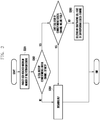
- FIG. 3 shows an operation proposed by the disclosure in the case where the number of RLC retransmissions reaches the maximum.
- a packet transmitted by an RLC device reaches the maximum number of RLC retransmissions in S301 (when an RETX_COUNT value reaches a maxRetxThreshold in an LTE system), whether or not a cell used by a corresponding logical channel corresponding to the RLC device is defined may be determined in S302.
- a corresponding logical channel can send data in a certain cell or cells rather than in every cell, and cannot send data in the PCell among these cells, only the cell used by the corresponding logical cell may be released/deleted or deactivated in S303. In this case, RLF is not declared and an RLF operation is not carried out. Even though a corresponding logical channel can send data in a certain cell or cells rather than in every cell, if the corresponding logical channel can send data in the PCell among these cells, RLF may be declared in S304.
- RLF is not declared and an RLF operation is not carried out if the case corresponds to S303.
- RLF may be declared.
- a terminal may notify a base station of deletion, release or deactivation only of a cell used by a corresponding logical channel. At this time, the base station may be notified through a different cell rather than the cell corresponding to the RLC device having reached the maximum number of RLC retransmissions.
- the RLC device having reached the maximum number of RLC retransmissions may request another RLC device connected to an identical radio bearer (PDCP device) to transmit the corresponding message.
- PDCP device identical radio bearer
- Whether to delete or deactivate only the cell used by the corresponding logical channel may be determined by a base station or another network device.
- a terminal may report the situation of the corresponding terminal to a base station to allow the base station to determine whether to delete or deactivate the cell used by the corresponding logical channel.
- the base station can delete or deactivate the cell used by the corresponding logical channel.
- the information to be provided to the base station may include an ID of a logical channel having reached the maximum number of retransmissions, a CC index to which a packet is transmitted, an SCell index, a cell ID, a sequence number (SN) of a corresponding packet, and the like.
- An indicator for a network node or a cell group may be included in a dual connectivity structure in order to accurately distinguish logical channels, CC indexes, SCell indexes, cell IDs, and the like.
- operation may be performed as follows.
- the duplicate packet transmission of FIG. 1 in the case where transmission is not completed even though a packet has been maximally transmitted in the RLC 1 or the RLC 2, it may not be necessary to renew the entire connection to a base station.
- only the connection to the SCell 3 and the SCell 4 may be released and the connection to the PCell, the SCell 1, and an SCell 2, which are connected to the RLC 1, may remain unchanged.
- RLF is declared since the RLC 1 is configured to send data using the PCell, and an operation defined after the RLF will be carried out.
- FIG. 4 illustrates an embodiment of operation in the case where RLF occurs in an environment that is limited as to which cells can be used by a logical channel in a duplicate packet transmission structure.
- RLC 2 may be reset.
- logical channel 2 may delete or deactivate an SCell 3 and an SCell 4 through which a packet is transmitted.
- this is not limited to being applied only to a duplicate packet transmission structure and may be equally applied in an environment that is limited as to which cells can be used by a logical channel.
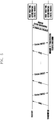
- FIG. 5 illustrates one embodiment of operation in the chase a packet reaches the maximum number of RLC retransmissions (when an RETX_COUNT value reaches a maxRetxThreshold in an LTE system).
- a terminal may notify a base station that the number of RLC retransmissions has reached the maximum.
- a message reporting that the number of transmissions has reached the maximum is transmitted in the embodiment of FIG. 5 . This message may be transmitted to a base station through a different cell rather than a cell corresponding to an RLC device having reached the maximum number of retransmissions.
- An RLC device having reached the maximum number of RLC retransmissions may request another RLC device connected to an identical radio bearer (PDCP device) to transmit a corresponding message.
- the information to be provided to a base station may include an ID of a logical channel having reached the maximum number of retransmissions, a CC index to which a packet is transmitted, an SCell index, a cell ID, a sequence number (SN) of a corresponding packet, and the like.
- a transmitter may reset a corresponding logical channel or an RLC device.
- the receiver may reset a corresponding logical channel or an RLC device.
- the reset of the corresponding logical channel or the RLC device may be determined by a base station or another network device.
- the base station may instruct the reset of the corresponding logical channel or the RLC device after reporting of that the number of transmissions has reached the maximum.
- a CC index, an SCell index, and a cell ID which are included in a message reporting that the number of transmissions has reached the maximum, or a CC or a cell corresponding to at least one thereof may also be deleted or deactivated.
- the procedure of FIG. 5 may also be applied only to a logical channel that does not transmit a packet using a PCell.
- An instructor for a network node or a cell group may be included in a dual connectivity structure in order to accurately distinguish logical channels, CC indexes, SCell indexes, cell IDs, and the like.
- FIG. 6 illustrates another embodiment of operation in the case where a packet has reached the maximum number of RLC retransmissions (when an RETX_COUNT value has reached a maxRetxThreshold in an LTE system).
- a terminal may notify a base station that the number of RLC retransmissions has reached the maximum.
- a message reporting that the number of transmissions has reached the maximum is transmitted in the embodiment of FIG. 6 .
- This message may be transmitted to a base station through a different cell rather than the cell corresponding to the RLC device having reached the maximum number of RLC retransmissions.
- the RLC device having reached the maximum number of RLC retransmissions may request another RLC device connected to an identical radio bearer (PDCP device) to transmit the corresponding message.
- PDCP device identical radio bearer
- the information to be provided to the base station may include an ID of a logical channel having reached the maximum number of retransmissions, a CC index to which a packet is transmitted, an SCell index, a cell ID, a sequence number (SN) of the corresponding packet, and the like.
- a transmitter may perform processing as if a packet having reached to the maximum number of retransmissions had been completely transmitted and may continue a transmitting/receiving operation.
- a receiver may perform processing as if a packet having reached to the maximum number of retransmissions had been successfully received and may continue a transmitting/receiving operation.
- Whether to perform processing as if a packet having reached the maximum number of retransmissions had been completely transmitted may also be determined by a base station or another network device. In this case, after a report that the number of transmissions has reached the maximum, the base station may provide instruction to perform processing as if the corresponding packet had been completely transmitted.
- a CC index, an SCell index, and a cell ID which are included in a message reporting that the number of transmissions has reached the maximum, or a CC or a cell corresponding to at least one thereof may be deleted or deactivated.
- the procedure FIG. 6 may also be applied only to a logical channel that does not transmit a packet using a PCell.
- An instructor for a network node or a cell group may be included in a dual connectivity structure in order to accurately distinguish logical channels, CC indexes, SCell indexes, cell IDs, and the like.
- FIG. 7 illustrates an embodiment in which a cell used by a logical channel to transmit a packet is changed according to duplicate packet activation and deactivation.
- each of an RLC device and a logical channel corresponding thereto may have a defined cell through which a packet can be transmitted.
- logical channel 1 701 can transmit a packet using a PCell 711, an SCell 1 712, and an SCell 2 713
- logical channel 2 702 can transmit a packet using an SCell 3 714 and an SCell 4 715.
- logical channel 1 may use all of the PCell 711, SCell 1 712, SCell 2 713, SCell 3 714, and SCell 4 715 to transmit a packet. That is, packet transmission may be carried out through all the activated cells.
- the RLC 2 may also perform transmission of the corresponding remaining packets. In this case, the packet transmission may be carried out through all activated cells in the same manner in the RLC 1.
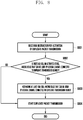
- FIG. 8 shows an embodiment of operation in the case where duplicate packet transmission is activated.
- Duplicate packet transmission may be activated by a medium access control (MAC) control element (CE), a radio resource control (RRC) message, a PDCP control PDU, or the like.
- a terminal may receive an instruction for activation of the duplicate packet transmission through these messages in S801.
- S802 there may be no cells in an activated state among the cells that can be used by a logical channel connected to a duplicate transmission bearer.
- the SCell 3 and the SCell 4 may be in a deactivated state at the time at which duplicate packet transmission is activated.
- At least one cell among the cells that can be used by a logical channel connected to the duplicate transmission bearer may be activated in S803 to start duplicate packet transmission in S804.
- an operation of activating at least one cell among the SCell 3 and the SCell 4 is performed.
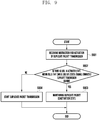
- FIG. 9 shows an embodiment of operation in the case where duplicate packet transmission is activated.
- Duplicate packet transmission may be activated by a MAC CE, an RRC message, a PDCP control PDU, or the like.
- a terminal may receive an instruction for activation of duplicate packet transmission through these messages in S901.
- S902 there may be no cells in an activated state among the cells that can be used by a logical channel connected to a duplicate transmission bearer.
- the SCell 3 and the SCell 4 may be in a deactivated state at the time at which duplicate packet transmission is activated.
- the packet duplication-deactivated state may be maintained in S903. Thereafter, in the case where at least one of the cells that can be used by a logical channel connected to a duplicate transmission bearer is activated, duplicate packet transmission may be carried out in S904.
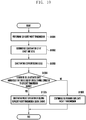
- FIG. 10 shows an embodiment of operation in the case of receiving an instruction for SCell deactivation when duplicate packet transmission is activated.
- an instruction for SCell deactivation may be received through an MAC CE in S1002.
- the SCell may not be limited to a deactivated state and may be applied to the state where the SCell is released.
- a terminal having received an instruction for SCell deactivation, deactivates the corresponding SCell in S1003. Thereafter, it may be checked in S1004 whether there is an activated cell among the cells that can be used by a logical channel connected to a duplicate transmission bearer. If there is no cell in an activated state in the logical channel, duplicate packet transmission may be deactivated, or a duplicate packet transmission logical channel having no cell through which a packet is sent may be deleted in S1005. Otherwise, performance of the duplicate packet transmission continues in S1006.
- FIGs. 11A, 11B, 11C, 11D, and 11E illustrate an embodiment in which a bearer and a user plane protocol stack are configured in a non-standalone (NSA) structure including an LTE-new rat (LTE-NR) coexisting therein.
- An LTE base station/terminal may be referred to as a master node (MN), and an NR base station/terminal may be referred to as a secondary node (SN).
- MN master node
- SN secondary node
- a bearer may include a master cell group (MCG) bearer, an MCG split bearer, a secondary cell group (SCG) bearer, and an SCG split bearer.
- MCG master cell group
- SCG secondary cell group
- SCG split bearer an SCG split bearer.
- the bearer may be applied both to a data radio bearer (DRB) and to a signaling radio bearer (SRB) that transmit data.
- DRB data radio bearer
- SRB signaling radio bearer
- FIG. 11A illustrates an example of an LTE and NR protocol stack which remain unchanged.
- FIG. 11B illustrates an example of an MCG split bearer using NR-PDCP in PDCP. The difference between an MCG split bearer and an SCG split bearer is eliminated inside a terminal.
- FIG. 11C illustrates an example of an MCG bearer using NR-PDCP in PDCP. All of the bearers in an NSA structure use NR-PDCP in the embodiment of FIG. 11C .
- FIG. 11D illustrates an example of a split bearer using NR-PDCP and NR-RLC in PDCP and RLC, respectively.
- the difference between an MCG split bearer and an SCG split bearer is eliminated inside a terminal.
- FIG. 11E illustrates an example in which all of the bearers in an NSA structure use NR-PDCP and NR-RLC.
- An SCG/SCG split bearer using a secondary node (NR) base station/terminal as a PDCP anchor point always uses NR-PDCP.
- an MCG/MCG split bearer using a master node (LTE) base station/terminal as the PDCP anchor point may have to determine which PDCP is to be used. In this case, at the time of a bearer setup, a base station may notify a terminal of a protocol stack to be applied. Otherwise, in the case of an MCG split bearer or an MCG bearer using a master node as an anchor point, NR-PDCP may be used by default. Meanwhile, NR-PDCP may also be always used in an NSA structure in which a master node is LTE and a secondary node is NR
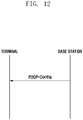
- FIG. 12 illustrates an example of a base station sending a PDCP-Config message to a terminal.
- a PDCP-Config may indicate which PDCP version is to be used by a PDCP layer, among NR-PDCP and LTE-PDCP.
- RLC-Config may also be transmitted from a base station to a terminal.
- RLC-Config may also indicate which RLC version is to be used among NR-RLC and LTE-RLC.
- a base station may also notify a terminal whether a PDCP anchor point of the base station is a master node or a secondary node.
- a PDCP-Config may include information regarding: whether to apply integrity protection for a bearer using a master node as an anchor point; which integrity protection algorithm is to be applied; which algorithm for a security key is to be applied; whether to generate a security key using KeNB and S-KeNB; and the like.
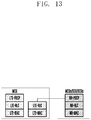
- FIG. 13 is an example of illustrating a terminal implementation structure in the case where an MCG split bearer applies NR-PDCP.
- the MCG split bearer uses NR-PDCP
- the MCG split bearer has no structural difference from an SCG split bearer (SCGs) and thus can implement a PDCP anchor point an NR modem in a terminal.
- FIGs. 14A, 14B, 14C, and 14D illustrate a method for generating a security key in an NSA structure.
- a master node and a secondary node may have KeNB and S-KeNB values, respectively, and can generate a security key, such as KRRCint, KRRCenc, KUPenc, and the like, by applying the values to the key derivation algorithm.
- a security key such as KRRCint, KRRCenc, KUPenc, and the like
- a key may be generated using a combination of FIGs. 14A to 14D . It is assumed that a KUPenc key is generated in FIGs. 14A to 14D , but the combination may be equally applied to other security keys.
- FIG. 14A illustrates an embodiment of generating KUPenc by applying KeNB to an LTE key derivation algorithm.
- FIG. 14B illustrates an embodiment of generating KUPenc by applying KeNB to an NR key derivation algorithm.
- FIG. 14C illustrates an embodiment of generating KUPenc by applying S-KeNB to an LTE key derivation algorithm.
- FIG. 14D illustrates an embodiment of generating KUPenc by applying S-KeNB to an NR key derivation algorithm.
- the security key generation method illustrated in FIGs. 14A to 14D may be applied using at least one of the following methods:
- NR-PDCP may also apply integrity protection to DRB. Integrity protection may be configured if a master node (LTE) supports NR-PDCP. In an embodiment, integrity protection may be released by default in the case where a split bearer using a master node as a PDCP anchor point uses NR-PDCP. In another embodiment, in the case where a split bearer using a master node as a PDCP anchor point uses NR-PDCP, whether to support integrity protection may be determined. In another embodiment, in the case where a split bearer using a master node as a PDCP anchor point uses NR-PDCP, a secondary node may be requested to determine whether to support integrity protection. In another embodiment, in the case where a split bearer using a master node as a PDCP anchor point uses NR-PDCP, whether to support integrity protection may be configured by PDCP-Config.
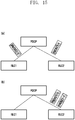
- FIGs. 15A and 15B illustrates an example in which an integrity check may be determined to be a security attack.
- a PDCP device may be connected to multiple RLC devices, and in the case where identical packets are received from the RLC devices, this may be determined to a security attack if duplicate packet transmission is not in an activated state.
- this may be determined to be a security attack regardless of whether or not duplicate packet transmission is activated.
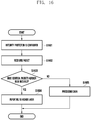
- FIG. 16 shows an embodiment of an operation method for performing integrity checking in a bearer in which duplicate packet transmission is not allowed. The corresponding operation may also be applied in the case where duplicate packet transmission is deactivated. The operation method of FIG. 16 may be applicable to both SRB and DRB.
- identity packet may be one having an identical PDCP COUNT.
- a terminal may report to a higher layer or report, or may report to a base station in regard to this attack in S1604.
- a connection reconfiguration procedure may be performed on the basis on the report.
- the received data may be processed in S1605.
- FIG. 17 shows an operation method for performing integrity checking in a bearer in which duplicate packet transmission is allowed. The corresponding operation may not be applied in the case where duplicate packet transmission is deactivated.
- the operation method of FIG. 17 may be applicable to both SRB and DRB in which duplicate packet transmission is allowed.
- identity packet may be one having an identical PDCP COUNT.
- a terminal may report to a higher layer or may report to a base station in regard to this attack in S1704.
- a connection reconfiguration procedure may be performed on the basis on the report.
- FIG. 18 illustrates a terminal structure according to one embodiment of the disclosure.
- a terminal may include a transceiver 1810, a controller 1820, and a memory 1830.
- the controller may be defined as a circuit, an application-specific integrated circuit or at least one processor.
- the transceiver 1810 may transmit and receive a signal with another network entity.
- the transceiver 1810 may receive system information from a base station and may receive a synchronization signal or a reference signal.
- the controller 1820 may control the overall operation of a terminal according to an embodiment proposed by the disclosure.
- the controller 1820 may control signal flow between blocks to perform operation according to the flowchart described above.
- the memory 1830 may store at least one of information transmitted and received through the transceiver 1810 and information generated through the controller 1820.
- FIG. 19 illustrates a base station structure according to one embodiment of the disclosure.
- a base station may include a transceiver 1910, a controller 1920, and a memory 1930.
- the controller may be defined as a circuit, an application-specific integrated circuit or at least one processor.
- the transceiver 1910 may transmit and receive a signal with another network entity.
- the transceiver 1910 may receive system information from a terminal and may receive a synchronization signal or a reference signal.
- the controller 1920 may control the overall operation of a base station according to an embodiment proposed by the disclosure.
- the controller 1920 may control signal flow between blocks to perform operation according to the flowchart described above.
- the memory 1930 may store at least one of information transmitted and received through the transceiver 1910 and information generated through the controller 1920.
Landscapes
- Engineering & Computer Science (AREA)
- Computer Networks & Wireless Communication (AREA)
- Signal Processing (AREA)
- Computer Security & Cryptography (AREA)
- Databases & Information Systems (AREA)
- Mobile Radio Communication Systems (AREA)
Applications Claiming Priority (2)
| Application Number | Priority Date | Filing Date | Title |
|---|---|---|---|
| KR20170076153 | 2017-06-15 | ||
| PCT/KR2018/006625 WO2018230920A1 (fr) | 2017-06-15 | 2018-06-12 | Procédé et appareil de commande de transmission de paquet |
Publications (2)
| Publication Number | Publication Date |
|---|---|
| EP3627882A1 true EP3627882A1 (fr) | 2020-03-25 |
| EP3627882A4 EP3627882A4 (fr) | 2020-06-10 |
Family
ID=64659695
Family Applications (1)
| Application Number | Title | Priority Date | Filing Date |
|---|---|---|---|
| EP18818952.6A Pending EP3627882A4 (fr) | 2017-06-15 | 2018-06-12 | Procédé et appareil de commande de transmission de paquet |
Country Status (5)
| Country | Link |
|---|---|
| US (2) | US11375427B2 (fr) |
| EP (1) | EP3627882A4 (fr) |
| KR (1) | KR102626164B1 (fr) |
| CN (1) | CN110754110B (fr) |
| WO (1) | WO2018230920A1 (fr) |
Cited By (1)
| Publication number | Priority date | Publication date | Assignee | Title |
|---|---|---|---|---|
| EP3637658A4 (fr) * | 2017-07-27 | 2020-06-17 | Guangdong Oppo Mobile Telecommunications Corp., Ltd. | Procédé de communication sans fil, dispositif terminal et dispositif de réseau |
Families Citing this family (21)
| Publication number | Priority date | Publication date | Assignee | Title |
|---|---|---|---|---|
| JP7093614B2 (ja) | 2017-06-15 | 2022-06-30 | シャープ株式会社 | 端末装置、基地局装置、通信方法、および、集積回路 |
| JP7199798B2 (ja) | 2017-06-15 | 2023-01-06 | シャープ株式会社 | 端末装置、基地局装置、通信方法、および、集積回路 |
| JP6891303B2 (ja) * | 2017-06-16 | 2021-06-18 | ノキア テクノロジーズ オサケユイチア | 通信装置、方法及びコンピュータプログラム |
| US10757615B2 (en) | 2017-09-13 | 2020-08-25 | Comcast Cable Communications, Llc | Radio link failure information for PDCP duplication |
| CA3029946A1 (fr) | 2018-01-11 | 2019-07-11 | Comcast Cable Communications, Llc | Configuration de cellule destinee a la duplication de paquet |
| CN110167155B (zh) * | 2018-02-13 | 2021-10-29 | 中国移动通信有限公司研究院 | 上下行传输配置的确定方法、上下行传输配置方法及设备 |
| KR102632780B1 (ko) | 2018-05-10 | 2024-02-02 | 삼성전자주식회사 | 무선 통신 시스템에서 서비스를 제공하기 위한 장치 및 방법 |
| CN112771916B (zh) * | 2018-09-25 | 2024-07-23 | 上海诺基亚贝尔股份有限公司 | 逻辑信道小区限制 |
| US11032189B2 (en) * | 2018-09-28 | 2021-06-08 | Lg Electronics Inc. | Method for transmitting packet when radio link failure is detected in wireless communication system and apparatus therefor |
| WO2020090442A1 (fr) * | 2018-10-30 | 2020-05-07 | 京セラ株式会社 | Procédé et dispositif de communication sans fil |
| KR102744309B1 (ko) | 2019-01-16 | 2024-12-18 | 삼성전자 주식회사 | 차세대 이동통신 시스템에서 하위계층 전송결과에 의한 패킷 삭제를 수행하는 방법 및 장치 |
| CN113366882B (zh) * | 2019-01-28 | 2024-12-06 | 中兴通讯股份有限公司 | 动态数据包汇聚协议配置 |
| CN111465119B (zh) | 2019-03-28 | 2023-02-24 | 维沃移动通信有限公司 | 数据发送方法、信息配置方法、终端及网络设备 |
| CN111865520B (zh) * | 2019-04-28 | 2024-10-11 | 夏普株式会社 | 基站、用户设备和相关方法 |
| JP7462034B2 (ja) * | 2019-09-30 | 2024-04-04 | ノキア テクノロジーズ オサケユイチア | 装置、方法、及びコンピュータプログラム |
| JP7523576B2 (ja) * | 2020-04-23 | 2024-07-26 | ノキア テクノロジーズ オサケユイチア | 無線通信システムおよびユーザのための装置 |
| CN113973317B (zh) * | 2020-07-23 | 2024-04-09 | 中国电信股份有限公司 | 分组数据汇聚协议复制的配置方法、装置和系统 |
| CA3188356A1 (fr) * | 2020-08-06 | 2022-02-10 | Zhenhua Zou | Activation autonome d'une caracteristique au niveau d'un dispositif de communication sans fil pour repondre au temps de survie d'une application consommant un service de communicatio |
| CN114126013B (zh) * | 2020-08-28 | 2025-02-11 | 中兴通讯股份有限公司 | 无线制式能力的管理方法和装置、电子设备、存储介质 |
| TWI767820B (zh) * | 2021-01-22 | 2022-06-11 | 達發科技股份有限公司 | 無線對等端的封包重傳方法及電腦程式產品及裝置 |
| JP2023005663A (ja) * | 2021-06-29 | 2023-01-18 | 株式会社デンソー | マスタ基地局、及び通信制御方法 |
Family Cites Families (18)
| Publication number | Priority date | Publication date | Assignee | Title |
|---|---|---|---|---|
| EP3160174B1 (fr) * | 2007-09-28 | 2018-12-26 | Interdigital Patent Holdings, Inc. | Fonctionnement d'unités de données de protocole de commande dans un protocole de convergence de données par paquets |
| CN102104892B (zh) * | 2009-12-22 | 2015-06-03 | 中兴通讯股份有限公司 | 检测无线链路失败的方法 |
| CN108551681B (zh) * | 2012-11-29 | 2022-01-14 | 华为技术有限公司 | 一种数据传输的控制方法、装置及系统 |
| CN105612804A (zh) * | 2013-08-09 | 2016-05-25 | 诺基亚通信公司 | 在无线网络中对从辅基站到主基站的分组状态报告的使用 |
| US20160057800A1 (en) | 2013-08-27 | 2016-02-25 | Samsung Electronics Co., Ltd. | Method and system for random access procedure and radio link failure in inter-enb carrier aggregation |
| EP2854444A1 (fr) * | 2013-09-27 | 2015-04-01 | Panasonic Intellectual Property Corporation of America | Mécanisme d'ordonnancement de liaison montante efficace pour connectivité double |
| JP6604955B2 (ja) | 2013-10-21 | 2019-11-13 | エルジー エレクトロニクス インコーポレイティド | 二重接続性における上りリンクデータ送信方法及びそのための装置 |
| GB2520923B (en) * | 2013-11-01 | 2017-07-26 | Samsung Electronics Co Ltd | Bearer reconfiguration |
| CN110266445B (zh) | 2013-11-01 | 2022-09-27 | 三星电子株式会社 | 用于重新配置承载的方法及设备 |
| US10004098B2 (en) * | 2014-01-29 | 2018-06-19 | Samsung Electronics Co., Ltd. | Method and apparatus for transmitting and receiving data using a plurality of carriers in mobile communication system |
| CN106416403A (zh) | 2014-03-19 | 2017-02-15 | 株式会社Ntt都科摩 | 用户装置以及上行链路数据发送方法 |
| KR101718623B1 (ko) * | 2015-09-03 | 2017-03-21 | 엘지전자 주식회사 | 무선 통신 시스템에서 캐리어 병합을 수행하는 방법 및 이를 위한 장치 |
| JP6041964B1 (ja) | 2015-09-24 | 2016-12-14 | 株式会社Nttドコモ | 無線通信装置及び無線通信方法 |
| US10750410B2 (en) * | 2016-09-30 | 2020-08-18 | Huawei Technologies Co., Ltd. | Ultra reliable low latency connection support in radio access networks |
| MX2019008381A (es) * | 2017-01-13 | 2019-09-09 | Samsung Electronics Co Ltd | Metodo y dispositivo para transmitir un paquete de datos en un sistema de comunicacion inalambrica. |
| US10986530B2 (en) * | 2017-03-10 | 2021-04-20 | Kt Corporation | Buffer state report transmission method and device therefor |
| US11343671B2 (en) * | 2017-03-24 | 2022-05-24 | Nokia Technologies Oy | Handling of PDCP duplication and data recovery in new radio access technology |
| US10805836B2 (en) * | 2017-05-05 | 2020-10-13 | Qualcomm Incorporated | Packet duplication at a packet data convergence protocol (PDCP) entity |
-
2018
- 2018-06-12 CN CN201880040175.1A patent/CN110754110B/zh active Active
- 2018-06-12 WO PCT/KR2018/006625 patent/WO2018230920A1/fr not_active Ceased
- 2018-06-12 KR KR1020180067217A patent/KR102626164B1/ko active Active
- 2018-06-12 EP EP18818952.6A patent/EP3627882A4/fr active Pending
- 2018-06-12 US US16/621,991 patent/US11375427B2/en active Active
-
2022
- 2022-06-23 US US17/847,700 patent/US11722942B2/en active Active
Cited By (4)
| Publication number | Priority date | Publication date | Assignee | Title |
|---|---|---|---|---|
| EP3637658A4 (fr) * | 2017-07-27 | 2020-06-17 | Guangdong Oppo Mobile Telecommunications Corp., Ltd. | Procédé de communication sans fil, dispositif terminal et dispositif de réseau |
| US11166198B2 (en) | 2017-07-27 | 2021-11-02 | Guangdong Oppo Mobile Telecommunications Corp., Ltd. | Wireless communication method, terminal device and network device |
| IL271055B1 (en) * | 2017-07-27 | 2023-08-01 | Guangdong Oppo Mobile Telecommunications Corp Ltd | A method for wireless communication, a terminal device and a network device |
| IL271055B2 (en) * | 2017-07-27 | 2023-12-01 | Guangdong Oppo Mobile Telecommunications Corp Ltd | Wireless communication method, terminal device and network device |
Also Published As
| Publication number | Publication date |
|---|---|
| KR102626164B1 (ko) | 2024-01-18 |
| US20200120569A1 (en) | 2020-04-16 |
| WO2018230920A1 (fr) | 2018-12-20 |
| US11375427B2 (en) | 2022-06-28 |
| CN110754110B (zh) | 2023-09-19 |
| KR20180136898A (ko) | 2018-12-26 |
| US20220361074A1 (en) | 2022-11-10 |
| EP3627882A4 (fr) | 2020-06-10 |
| CN110754110A (zh) | 2020-02-04 |
| US11722942B2 (en) | 2023-08-08 |
Similar Documents
| Publication | Publication Date | Title |
|---|---|---|
| US11722942B2 (en) | Method and apparatus for controlling packet transmission | |
| US11700542B2 (en) | Method and apparatus for processing data for packet duplication | |
| CN110463255B (zh) | 用于处理用于分组复制的数据的方法和设备 | |
| CN108282868B (zh) | 控制信令配置方法及装置 | |
| CN110612775B (zh) | 处理无线链路失败的方法和终端设备 | |
| EP3925398B1 (fr) | Dispositif et procédé de transmission d'informations d'état dans un système de communication sans fil | |
| KR20200000283A (ko) | 이동통신 시스템에서 무선 링크 실패 보고 방법 및 장치 | |
| US20220014971A1 (en) | Wireless communication method, terminal device and network device | |
| US12058759B2 (en) | Method and device for processing downlink SRB message in MCG RLF | |
| KR20200114968A (ko) | 무선 통신 시스템에서 복수 개의 rlc 계층 장치의 활성화를 제어하는 방법 및 장치 | |
| US11601954B2 (en) | Data sending method and apparatus, storage medium, and sending end | |
| KR20220116211A (ko) | 무선통신 시스템에서 iab 노드의 동작 방법 및 상기 방법을 이용하는 장치 | |
| KR20220164371A (ko) | 무선 통신 시스템에서 복수 기지국의 연결을 위한 방법 및 장치 | |
| ES3035482T3 (en) | Communication method and apparatus | |
| CN113873585B (zh) | 用于切换的数据传输的方法和装置 | |
| CN113439487B (zh) | 用于在无线通信系统中发送状态信息的装置和方法 | |
| EP3606156B1 (fr) | Appareil et procédé de traitement de données à grande vitesse | |
| US12413964B2 (en) | Method and device used for wireless communication | |
| CN113259991A (zh) | 通信方法及装置 | |
| KR20200114943A (ko) | Mcg rlf 시 하향링크 srb 메시지를 처리하는 방법 및 장치 | |
| KR20230099321A (ko) | 무선 통신 시스템에서 mac 제어 정보를 처리하는 방법 및 장치 | |
| US20240163767A1 (en) | Communication control method |
Legal Events
| Date | Code | Title | Description |
|---|---|---|---|
| STAA | Information on the status of an ep patent application or granted ep patent |
Free format text: STATUS: THE INTERNATIONAL PUBLICATION HAS BEEN MADE |
|
| PUAI | Public reference made under article 153(3) epc to a published international application that has entered the european phase |
Free format text: ORIGINAL CODE: 0009012 |
|
| STAA | Information on the status of an ep patent application or granted ep patent |
Free format text: STATUS: REQUEST FOR EXAMINATION WAS MADE |
|
| 17P | Request for examination filed |
Effective date: 20191216 |
|
| AK | Designated contracting states |
Kind code of ref document: A1 Designated state(s): AL AT BE BG CH CY CZ DE DK EE ES FI FR GB GR HR HU IE IS IT LI LT LU LV MC MK MT NL NO PL PT RO RS SE SI SK SM TR |
|
| AX | Request for extension of the european patent |
Extension state: BA ME |
|
| A4 | Supplementary search report drawn up and despatched |
Effective date: 20200513 |
|
| RIC1 | Information provided on ipc code assigned before grant |
Ipc: H04W 28/06 20090101ALI20200507BHEP Ipc: H04L 1/22 20060101ALI20200507BHEP Ipc: H04W 12/10 20090101ALI20200507BHEP Ipc: H04L 1/08 20060101ALI20200507BHEP Ipc: H04W 28/04 20090101AFI20200507BHEP Ipc: H04W 12/04 20090101ALI20200507BHEP |
|
| DAV | Request for validation of the european patent (deleted) | ||
| DAX | Request for extension of the european patent (deleted) | ||
| STAA | Information on the status of an ep patent application or granted ep patent |
Free format text: STATUS: EXAMINATION IS IN PROGRESS |
|
| 17Q | First examination report despatched |
Effective date: 20210712 |