EP3793401B1 - Détermination d'un taux d'allongement du cheveu avec un capteur proche infrarouge - Google Patents
Détermination d'un taux d'allongement du cheveu avec un capteur proche infrarouge Download PDFInfo
- Publication number
- EP3793401B1 EP3793401B1 EP19720545.3A EP19720545A EP3793401B1 EP 3793401 B1 EP3793401 B1 EP 3793401B1 EP 19720545 A EP19720545 A EP 19720545A EP 3793401 B1 EP3793401 B1 EP 3793401B1
- Authority
- EP
- European Patent Office
- Prior art keywords
- hair
- absorption spectrum
- evaluation unit
- designed
- unit
- Prior art date
- Legal status (The legal status is an assumption and is not a legal conclusion. Google has not performed a legal analysis and makes no representation as to the accuracy of the status listed.)
- Active
Links
Images


Classifications
-
- A—HUMAN NECESSITIES
- A45—HAND OR TRAVELLING ARTICLES
- A45D—HAIRDRESSING OR SHAVING EQUIPMENT; EQUIPMENT FOR COSMETICS OR COSMETIC TREATMENTS, e.g. FOR MANICURING OR PEDICURING
- A45D44/00—Other cosmetic or toiletry articles, e.g. for hairdressers' rooms
- A45D44/005—Other cosmetic or toiletry articles, e.g. for hairdressers' rooms for selecting or displaying personal cosmetic colours or hairstyle
-
- A—HUMAN NECESSITIES
- A61—MEDICAL OR VETERINARY SCIENCE; HYGIENE
- A61B—DIAGNOSIS; SURGERY; IDENTIFICATION
- A61B5/00—Measuring for diagnostic purposes; Identification of persons
- A61B5/0059—Measuring for diagnostic purposes; Identification of persons using light, e.g. diagnosis by transillumination, diascopy, fluorescence
- A61B5/0075—Measuring for diagnostic purposes; Identification of persons using light, e.g. diagnosis by transillumination, diascopy, fluorescence by spectroscopy, i.e. measuring spectra, e.g. Raman spectroscopy, infrared absorption spectroscopy
-
- A—HUMAN NECESSITIES
- A61—MEDICAL OR VETERINARY SCIENCE; HYGIENE
- A61B—DIAGNOSIS; SURGERY; IDENTIFICATION
- A61B5/00—Measuring for diagnostic purposes; Identification of persons
- A61B5/44—Detecting, measuring or recording for evaluating the integumentary system, e.g. skin, hair or nails
- A61B5/448—Hair evaluation, e.g. for hair disorder diagnosis
-
- G—PHYSICS
- G01—MEASURING; TESTING
- G01N—INVESTIGATING OR ANALYSING MATERIALS BY DETERMINING THEIR CHEMICAL OR PHYSICAL PROPERTIES
- G01N21/00—Investigating or analysing materials by the use of optical means, i.e. using sub-millimetre waves, infrared, visible or ultraviolet light
- G01N21/17—Systems in which incident light is modified in accordance with the properties of the material investigated
- G01N21/25—Colour; Spectral properties, i.e. comparison of effect of material on the light at two or more different wavelengths or wavelength bands
- G01N21/31—Investigating relative effect of material at wavelengths characteristic of specific elements or molecules, e.g. atomic absorption spectrometry
- G01N21/35—Investigating relative effect of material at wavelengths characteristic of specific elements or molecules, e.g. atomic absorption spectrometry using infrared light
- G01N21/3563—Investigating relative effect of material at wavelengths characteristic of specific elements or molecules, e.g. atomic absorption spectrometry using infrared light for analysing solids; Preparation of samples therefor
-
- G—PHYSICS
- G01—MEASURING; TESTING
- G01N—INVESTIGATING OR ANALYSING MATERIALS BY DETERMINING THEIR CHEMICAL OR PHYSICAL PROPERTIES
- G01N21/00—Investigating or analysing materials by the use of optical means, i.e. using sub-millimetre waves, infrared, visible or ultraviolet light
- G01N21/17—Systems in which incident light is modified in accordance with the properties of the material investigated
- G01N21/25—Colour; Spectral properties, i.e. comparison of effect of material on the light at two or more different wavelengths or wavelength bands
- G01N21/31—Investigating relative effect of material at wavelengths characteristic of specific elements or molecules, e.g. atomic absorption spectrometry
- G01N21/35—Investigating relative effect of material at wavelengths characteristic of specific elements or molecules, e.g. atomic absorption spectrometry using infrared light
- G01N21/359—Investigating relative effect of material at wavelengths characteristic of specific elements or molecules, e.g. atomic absorption spectrometry using infrared light using near infrared light
-
- A—HUMAN NECESSITIES
- A45—HAND OR TRAVELLING ARTICLES
- A45D—HAIRDRESSING OR SHAVING EQUIPMENT; EQUIPMENT FOR COSMETICS OR COSMETIC TREATMENTS, e.g. FOR MANICURING OR PEDICURING
- A45D44/00—Other cosmetic or toiletry articles, e.g. for hairdressers' rooms
- A45D2044/007—Devices for determining the condition of hair or skin or for selecting the appropriate cosmetic or hair treatment
-
- A—HUMAN NECESSITIES
- A61—MEDICAL OR VETERINARY SCIENCE; HYGIENE
- A61B—DIAGNOSIS; SURGERY; IDENTIFICATION
- A61B2560/00—Constructional details of operational features of apparatus; Accessories for medical measuring apparatus
- A61B2560/02—Operational features
- A61B2560/0223—Operational features of calibration, e.g. protocols for calibrating sensors
-
- A—HUMAN NECESSITIES
- A61—MEDICAL OR VETERINARY SCIENCE; HYGIENE
- A61B—DIAGNOSIS; SURGERY; IDENTIFICATION
- A61B5/00—Measuring for diagnostic purposes; Identification of persons
- A61B5/72—Signal processing specially adapted for physiological signals or for diagnostic purposes
- A61B5/7235—Details of waveform analysis
- A61B5/7264—Classification of physiological signals or data, e.g. using neural networks, statistical classifiers, expert systems or fuzzy systems
- A61B5/7267—Classification of physiological signals or data, e.g. using neural networks, statistical classifiers, expert systems or fuzzy systems involving training the classification device
-
- G—PHYSICS
- G01—MEASURING; TESTING
- G01N—INVESTIGATING OR ANALYSING MATERIALS BY DETERMINING THEIR CHEMICAL OR PHYSICAL PROPERTIES
- G01N2201/00—Features of devices classified in G01N21/00
- G01N2201/12—Circuits of general importance; Signal processing
- G01N2201/127—Calibration; base line adjustment; drift compensation
Definitions
- the invention relates to an arrangement for determining a degree of stretching of hair, a method for determining the degree of stretching of hair, and a computer program product which is designed to carry out the steps of such a method when it is executed on a corresponding arrangement.
- the effect of the product e.g. the intensity of a color
- the effect of the product can depend heavily on damage to the hair.
- Hair can be damaged by natural or artificial processes. Both external and internal damage to hair can be relevant to the effectiveness of a product. In general, hair can be damaged due to chemical or physical processes or due to mechanical influences.
- the natural processes can, for example, involve a combined (e.g. simultaneous) effect of UV light and oxygen (O 2 ) on the hair.
- the artificially induced processes can, for example, include the application of hair dyes (also known as coloring), bleaching, and/or creating a permanent wave.
- oxidative damage is caused by the use of colorants, bleaching, permanent waves and also by environmental influences (UV + O 2 ).
- This damage is caused by the oxidation of the amino acids cystine and cysteine, which are very common in hair, to cysteic acid.
- Cystine can form intermolecular disulfide bridges (also called S-S bridges) in hair, so cystine is extremely important for the mechanical stability of hair.
- reducing agents are, for example, permanent waves or straighteners that contain reducing agents such as thioglycolic acid or sulfite. These ingredients serve to open the disulfide bridges of the cysteine in order to reshape the hair.
- the following sulfur species are formed: RSH (thiols), RS-SO 3 -, (colored salts, after sulfite treatment), RSS-CH2COO - (disulfides with thiglycolate units, after thioglycolate treatment).
- the degree of stretching of hair is a relevant parameter, especially in the case of irreversible overstretching (i.e. an overstretching that exceeds 10% of the unstretched length, measured for example at a relative humidity of a hair sample of 45%), in order to be able to estimate the effect of care and/or treatment products on the hair in advance or even to select them appropriately.
- irreversible overstretching i.e. an overstretching that exceeds 10% of the unstretched length, measured for example at a relative humidity of a hair sample of 45%
- a researcher or developer may have a variety of physical, chemical-analytical and/or biophysical methods at their disposal to determine the degree of internal and external damage to hair.
- Chromatographic methods are traditionally used, such as high-performance liquid chromatography (HPLC) after a complex acidic hydrolytic digestion of the hair sample.
- HPLC high-performance liquid chromatography
- Harmful cosmetic treatments such as hair coloring, heat treatments, permanent waves or oxidative procedures such as bleaching, and many others, are typically performed in the private sector or in the area of commercial services for end users. Although performing another damaging procedure on previously damaged hair can lead to catastrophic results, including complete hair breakage, there has so far been no way to easily determine the degree of stretching of the hair in this context.
- document DE102016212202 A1 describes a method for determining the degree of damage to hair by analyzing near-infrared spectra.
- Document EP1629775 A1 describes a method for determining hair damage using multivariate component analysis of a near-infrared absorption spectrum of hair.
- the overstretching of hair is a relevant cosmetic parameter and that this degree of stretching can be determined with very little effort using near-infrared sensors. This enables a non-mechanical and contactless determination of the degree of stretching of hair.
- the degree of stretching can be determined in a near-infrared wavelength range (generally in a wavelength range of 780 to 3000 nm), which enables the use of a near-infrared sensor with little equipment complexity.
- Human hair essentially consists of the dominant elements of the cuticle cells and cortex cells. In addition to amorphous components, complex fibrillar structures can be found in the cortex cells, which give the hair its mechanical stability.
- the basic building block of this complex fiber hierarchy are so-called ⁇ -helices as secondary structures.
- so-called ⁇ -fold structures are the most common form of secondary structure. In terms of the length per amino acid unit, ⁇ -helices are much more compact than ⁇ -fold structures. The length of the ⁇ -helices is about 0.15 nm per amino acid, while in the pleated sheet structure 0.35 nm is available per amino acid, which corresponds to a factor of well over 2.
- an arrangement for determining a degree of stretching of hair is specified with the features of independent claim 1.
- the arrangement has a detection unit for detecting hair features and an evaluation unit for evaluating the detected hair features and for determining the degree of stretching of hair based on the detected hair features.
- the detection unit contains a near infrared sensor, NIRS, and is designed to irradiate a hair sample with electromagnetic waves in the infrared range and to determine an absorption level of the Hair sample in a wavelength range of 800 to 2500 nm.
- the detection unit is further designed to generate an absorption spectrum of the hair sample in the wavelength range of 800 to 2500 nm and to provide it to the evaluation unit.
- the evaluation unit is designed to compare the absorption spectrum with a calibration model and to determine a degree of elongation of the hair sample based on the absorption spectrum and the calibration model.
- an absorption spectrum of a hair sample can be recorded and/or generated using a near-infrared sensor in the wavelength range from 800 nm to 2500 nm, and that the absorption spectrum in this wavelength range contains information about the degree of stretching of hair.
- the degree of stretching of hair can be determined in a wavelength range below 3000 nm. This makes it possible to use near-infrared sensors that require little equipment. It is not necessary to resort to sensors for the medium or far infrared range that require much more equipment.
- NIR Near infrared
- NIR in the sense of this description refers to electromagnetic waves with a wavelength between 780 nm and 3000 nm (both inclusive). As described elsewhere in this document, certain smaller wavelength ranges are selected from this wavelength range in order to create an absorption spectrum of a hair sample and to use this spectrum to draw conclusions about the internal structure of the hair sample.
- harmonics of the ⁇ -helices and ⁇ -pleated sheet structures can be detected, which are an indicator of the degree of elongation of hair.
- the wavelength range between 2000 and 2500 nm, and more particularly between 2000 and 2350 nm can be used to determine the absorption spectrum and to determine the degree of elongation.
- the wavelength range under consideration can be referred to as the relevant wavelength range.
- Harmonics of the ⁇ -helices can occur in particular at at least one of the wavelengths from a first group of 2012 nm, 2056 nm, 2168 nm, 2183 nm, 2206 nm, 2293 nm, 2345 nm. Harmonics of the ⁇ -sheet structures can occur in particular at at least one of the wavelengths from a second group of 2055 nm, 2166 nm, 2208 nm, 2297 nm, 2343 nm.
- the respective absorbance of the hair sample at at least one wavelength from each of the two above groups can indicate the proportion of ⁇ -helices and ⁇ -sheet structures in the hair sample.
- the entire absorption spectrum over more than one wavelength value from each of the two groups above can also be used to determine the degree of stretch.
- the range of the absorption spectrum used corresponds to the relevant wavelength range mentioned above.
- the absorption spectra of hair samples in the relevant wavelength range can be stored with different degrees of stretch.
- Each hair sample and each absorption spectrum is assigned a degree of stretch, and the degree of stretch of the absorption spectrum from the calibration model that is qualitatively and/or quantitatively most similar to the absorption spectrum of the hair sample under investigation is assigned to the hair sample under investigation.
- the recorded absorption spectrum of the hair sample in the relevant wavelength range is compared with the relevant wavelength range of the absorption spectra of the calibration model.
- the elongation can be expressed as the ratio of the length of a stretched hair to an unstretched hair.
- the stretching is a dimensionless value. If hair is only stretched within the completely reversible range (typically up to 3% to 5% of the original length, i.e. unstretched length), it always returns to its original length after stretching. Only if the hair is stretched beyond the reversible range (from approx. 10% to 15% stretching, the partially irreversible conversion of ⁇ -helices into ⁇ -pleated sheet structures begins, from approx. 25% the hair begins to break) will it no longer fully return to its unstretched length, because an irreversible conversion of ⁇ -helices into ⁇ -pleated sheet structures occurs.
- Different degrees of stretching can be specified as degrees of stretching.
- the scale between unstretched and tearing of a hair can be divided into two or more degrees of stretching.
- the following degrees of stretch can be used, for example: not stretched, slightly stretched, strongly stretched, repeatedly strongly stretched.
- Other chemical or physical as well as biophysical methods can be used to determine the degrees of stretch in the calibration model.
- the evaluation unit can be a processor or a computer that implements and executes signal processing algorithms to determine the absorption spectrum of the hair sample based on the signals detected by the NIR sensor.
- a hair sample may be a single hair, but preferably contains a plurality of individual hairs to increase the intensity of light emitted by the hair sample as the inverse of the light absorbed by the hair sample (or the amount of light emitted relative to the light emitted) compared to a single hair.
- hair can be examined non-destructively by pointing the detection unit at the hair on a person's head. In other words, the hair can be examined without having to cut it.
- the absorption spectrum can be determined from the light emitted by the hair sample.
- a spectrum of light is understood to be the absorption of light over the wavelength.
- the spectrum can be a continuous indication of the absorption of light in a wavelength range from a lower value to an upper value. This continuous indication describes the degree of absorption of light over the wavelength and has a characteristic curve for the structure of the individual hairs in the hair sample.
- the near-infrared sensor makes it possible to use near-infrared spectroscopy methods. These methods allow direct, non-destructive testing of the structure of hair without complex sample preparation and without changing or destroying the hair's structure during analysis.
- a hair sample for example in the form of a strand of hair.
- Near-infrared spectroscopy can be used, for example, when sample preparation is difficult or impossible and a large number of samples must be analyzed in a short period of time, e.g. in pharmaceutical production for batch release or for measurements on skin or other biological objects.
- Near-infrared spectroscopy is based on a measurement of spectral absorption through vibrational excitation of chemical bonds or structures in the hair sample. Depending on the type of bond or structure, absorption can occur at different wavelengths. As a rule, absorption can follow the Lambert-Beer law and thus be proportional to the concentration of a component responsible for the absorption. Superimposed absorptions are additive, so quantification based on the absorption spectra is possible.
- absorptions can be overtones (e.g. in the NIR range) or combination vibrations. This can make it difficult to assign individual absorption wavelengths.
- chemometric methods can be used to evaluate the spectra and in particular for quantitative evaluation in order to use the calibration model as a starting point for assigning a damage category.
- NIR spectroscopy can also be suitable for measuring hair because the near-infrared radiation not only analyzes the surface of the hair, but because of the small absorption cross sections for the near-infrared radiation (e.g. compared to light in the visible wavelength range), the hair can be at least partially penetrated and the internal structure of hair is also taken into account, which can be particularly relevant for determining the degree of elongation.
- the spectra can be evaluated using a calculation model that can be developed in a calibration and validation phase using a sufficiently large collective of comparison spectra. This may require that reference values for the parameters to be calibrated are available for all spectra.
- the calculation model can be an artificial system that learns, for example, from the calibration hair samples and can generalize them after the learning phase has ended. This means that the examples are not simply learned by heart, but patterns and regularities in the learning data are recognized. Different approaches can be used for this. For example, supervised learning, semi-supervised learning, unsupervised learning, reinforced learning and/or active learning can be used, especially in connection with so-called deep learning methods. Supervised learning can be carried out, for example, using an artificial neural network (such as a recurrent neural network) or a support vector machine. Unsupervised learning can also be carried out, for example, using an artificial neural network (such as a Autoencoders), decision trees or using ensemble methods (e.g. so-called decision tree ensembles).
- an artificial neural network such as a Autoencoders
- decision trees or using ensemble methods (e.g. so-called decision tree ensembles).
- the absorption spectrum is generated by comparing or subtracting the electromagnetic waves detected by the detection unit (corresponding to the light emitted by the hair sample) with the initially emitted electromagnetic waves.
- the intensity versus wavelength represents the spectrum.
- the difference in intensity versus wavelength between the emitted NIR light and the detected NIR light represents the absorption spectrum.
- the evaluation unit is designed to compare a course of the absorption spectrum of the hair sample with a plurality of absorption spectra from the calibration model.
- the detection unit is designed to detect or obtain a moisture level of the hair sample and to provide the moisture level to the evaluation unit, and the evaluation unit is designed to take the moisture level of the hair sample into account when comparing the generated absorption spectrum with the calibration model.
- the moisture level of the hair sample can, for example, be entered by a user or recorded by a sensor.
- This sensor can be part of the recording unit.
- stretched or overstretched hair changes its moisture content or water content. This also changes the absorption spectrum of the hair.
- an external source of moisture such as high humidity or rain
- This can influence the absorption spectrum in the wavelength range mentioned and also the associated degree of elongation.
- the moisture level of the hair sample is taken into account.
- the air humidity can be stated as relative humidity, for example, which is given in weight percent and indicates the weight ratio of a current water vapor content to the maximum possible water vapor content in the air at the current temperature.
- the moisture level can also be stated as the weight proportion of water to the total weight of the wet hair sample (weight of the hair + weight of the water).
- the moisture level can then be stated as one of several levels: slightly damp, damp, wet, very wet.
- the evaluation unit is designed to assign a damage category to the hair sample based on the comparison of the generated absorption spectrum with the calibration model.
- the known and available absorption spectra of hair samples can be part of the calibration model.
- the calibration model can, for example, be created based on a plurality of calibration hair samples, whereby a calibration spectrum is recorded for each individual calibration hair sample (as described above for generating the spectrum of the hair sample to be examined) and the calibration hair sample is examined for damage using other independent analytical methods, and the damage determined is assigned to the calibration hair sample.
- Processors (and one or more memory modules) of the computing unit can be used to run the application.
- the computing unit can also be designed to outsource calculation steps for running the application.
- the application can transfer the data received or queried by the acquisition unit to an external computing unit. Before the data is transferred to the external computing unit, it can be preprocessed.
- treatment agents are selected and determined depending on the determined hair properties or recorded hair characteristics. These treatment agents can, for example, be displayed on the user interface or output in another way.
- the evaluation unit is designed to transmit the detected hair characteristics to a data storage unit and to query instructions for treating the hair according to the detected hair characteristics from the data storage unit.
- These instructions can be general instructions (without reference to a specific treatment) regarding the treatment of hair, but they can also be instructions related to a specific treatment.
- the instructions can also include explanations of which behaviors affect which properties of the hair and how.
- the data storage unit can contain information from studies as well as information from literature sources and/or scientific publications.
- the evaluation unit can be designed to display, output or at least indicate an extract of this information to a user depending on the recorded properties of the hair.
- the user interface can, for example, be a display of the portable computing unit, in particular a so-called touchscreen, which enables content to be displayed visually and user input to be accepted via touch.
- the evaluation unit is designed to query information from a user and to additionally take this information into account when querying the data storage unit in order to obtain from the data storage unit features of treatment agents for treating hair according to the information queried by the user.
- the requested information can be collected using a predefined questionnaire, in which the user assigns more or less weight to a statement or selects one of several possible answers.
- the predefined questionnaire can deal in particular with the user's lifestyle and unusual stresses, for example eating habits, length and quality of sleep, amount drunk, type of drink, use of stimulants (e.g. nicotine, alcohol), professional activities and leisure activities (a lot of time spent outside in all weather conditions, staying in the mountains, visiting a solarium).
- the user's age, gender and ethnicity can also be queried and used to query the treatment data storage.
- the requested information can also relate to a desired or to be achieved hair property.
- the evaluation unit has a local memory which is designed to store the data retrieved from the data storage unit, preferably to store it persistently.
- the evaluation unit is designed to store the detected hair features in the local memory, provided with a time stamp relating to the detection of the hair features.
- the evaluation unit is designed to store the detected hair features in the local memory over a longer period of time comprising at least two processes of detecting the hair features and optionally to retrieve a development of the hair features over a predefinable period of time from the local memory and to instruct the output unit to display or output this development.
- the evaluation unit is designed to transmit the detected hair features to the data storage unit.
- the recorded and transmitted hair characteristics can be assigned to a code number or a user ID in the data storage unit, so that a user can view his data from different devices.
- This procedure also has the advantage that a user's data is saved or stored in a central location if the personal evaluation unit is lost or defective.
- this embodiment makes it possible to record a user's hair characteristics over a longer period of time and to observe their changes and, if necessary, to link them to recommendations for non-therapeutic treatment agents and/or treatment instructions.
- the arrangement is designed to output instructions for operating the detection unit visually on the output unit and/or acoustically via a loudspeaker. This can be particularly helpful when a user's hair is detected for the first time and comprehensively in order to obtain an overview of the condition of the hair.
- the output unit is designed to output information about a treatment agent, e.g. a product name, information regarding ingredients and/or composition of a treatment agent and/or application instructions for non-therapeutic treatment of the hair.
- a treatment agent e.g. a product name, information regarding ingredients and/or composition of a treatment agent and/or application instructions for non-therapeutic treatment of the hair.
- the user can be given instructions for use related to a treatment product or independently of it.
- the instructions for use can relate to desired and/or undesired behavior.
- the user interface is designed to receive an input from a user after outputting features of a treatment agent and, based on this input, to initiate an action relating to the displayed or output treatment agent.
- the action can, for example, refer to the fact that the user is offered a treatment product for purchase and the user can initiate the purchase by entering an entry.
- the user can also be offered further information on purchasing. This further information can refer to more detailed treatment and application instructions.
- the program receives the request that the user would like to purchase the treatment product, saves the request and/or transmits the request to a trading company, which The computer program prompts the user to enter his or her personal data (address, bank information, shipping preference, etc.) via the input unit.
- the user can be informed where he can purchase the issued treatment product locally, for example in a drugstore, hair salon, pharmacy, etc. in his vicinity.
- the user can be recommended a treatment product that is individually manufactured for them and an ordering process can be initiated, for example by accessing the website of a manufacturer of individual hair treatment products.
- This can be a treatment product made specifically for a user or a so-called "mass customized” product.
- a “mass customized” product individualization can be achieved by varying a few features of a product that are, from the customer's point of view, crucial.
- These "mass customized” products are preferably based on the concept of modularization, i.e. the product can be individually put together from various modules/building blocks.
- the relevant product characteristics include in particular the chemical ingredients of the products, the physical properties of the products and the type of packaging of the products.
- a product configurator for example, the selection of chemically and/or physically incompatible ingredients or the selection of ingredients that are unsuitable for the determined degree of damage/stretching/etc. can be avoided.
- the selection of ingredients that are suitable for the determined degree of damage/stretching/etc. can be specified or suggested by the product configurator.
- a mixing device preferably an intelligent mixing device (smart mixer).
- a method for determining a degree of elongation of hair is as set out in independent claim 11.
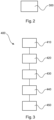
- the method comprises the following steps: irradiating a hair sample with electromagnetic waves in the infrared range; detecting the light emitted by the hair sample; detecting an absorption degree of the hair sample in a wavelength range of 800 to 2500 nm; generating an absorption spectrum of the hair sample in the wavelength range of 800 to 2500 nm; comparing the generated absorption spectrum with a calibration model and determining the degree of elongation of hair based on the absorption spectrum and the calibration model.
- a course of the absorption spectrum of the hair sample can be compared with a plurality of absorption spectra from the calibration model.
- the method comprises the step of detecting or obtaining a moisture level of the hair sample and using the moisture level of the hair sample when comparing the generated absorption spectrum with the calibration model.
- the method comprises the following step: assigning a damage category to the hair sample based on the comparison of the generated absorption spectrum with the calibration model.
- a method for determining a treatment agent based on the determined degree of stretching of hair. The method comprises the following steps: using the determined degree of stretching of hair; selecting a treatment agent for hair based on the determined degree of stretching and outputting information about the selected treatment agent.
- the treatment agent is selected or determined depending on the determined or specified degree of stretching and taking into account a desired effect, for example desired properties of the hair after the treatment.
- the desired effect can be an effect specified by a user or a desired condition of the hair. It can be helpful to assign one or more Types of damage or degrees of stretching can be assigned to which an application is possible, as well as an effect that the treatment agent has on the corresponding type of damage or degree of stretching. This means that the appropriate treatment agent can be determined by simply comparing the type of damage or degree of stretching with the desired effect.
- the computer program product enables the results to be monitored and tracked by displaying (e.g. graphically) the measurement results over time. Based on the results achieved, the computer program product provides individual treatment and product tips.
- the quality of the treatment and product tips can be improved by having the user answer additional questions about their hair condition, eating habits, general health and other behaviors that the computer program product can process accordingly. This is based not only on literature data, for example, but also on the treatment success of other users of the computer program product, in particular the treatment success of other users who have at least a similar hair condition.
- the data collected through the questionnaire can be used to analyse the development of the condition of the user's hair under the given circumstances, i.e. the data entered by the user. This development can be compared with the development of other users. From this it can be concluded whether, during a treatment with a certain product, the development of users with similar or identical entries in the questionnaire is the same or differs from users with other entries.
- the data entered by the user can thus be used for a global analysis in order to monitor the success of a treatment and the effectiveness of a product under different conditions and, if necessary, to recommend changes to the treatment and/or product.
- Fig. 1 shows an arrangement 100 for determining a degree of stretching of hair.
- the arrangement 100 has a detection unit 110, an evaluation unit 120 and a user interface 130.
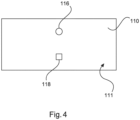
- the detection unit 110 is designed to detect properties or characteristics of hair. To do this, the detection unit 110 emits infrared light in the direction of an area 12 of the analysis object 10 to be examined (for example, human hair) and detects the emitted light in order to detect an absorption level of the hair sample in a wavelength range of 800 to 2500 nm.
- the light emitted by the area 12 to be examined is recorded by the detection unit 110 and allows conclusions to be drawn about the degree of stretching. of the hair, because the changed structure of stretched or overstretched hair has an individual absorption spectrum in the detected wavelength range.
- the detection unit 110 has a suitable source of electromagnetic waves.
- This source is a light emitter or laser emitter and can also be referred to as a radiation source and is arranged on or in the detection unit 110.
- the radiation source can be arranged on or in the detection unit 110 such that when the electromagnetic waves 112 are emitted, the radiation source assumes a predetermined distance from the area 12 to be examined, in particular when the detection unit 110 is placed on the area to be examined.
- the distance of the radiation source from the area to be examined can be variable and can be changed by means of actuators or manually.
- the detection unit 110 is connected to the evaluation unit 120 via a data transmission connection 114.
- the data transmission connection 114 can enable unidirectional or bidirectional data transmission between the detection unit 110 and the evaluation unit 120.
- the detection unit 110 thus supplies signals relating to the detected features of the hair to the evaluation unit 120, whereas the evaluation unit 120 can supply control commands to the detection unit 110, wherein the control commands specify how the detection unit 110 works.
- control parameters can be specified via input elements (buttons, switches, rotary controls, etc., not shown) on the detection unit 110.
- the detection unit 110 may have display elements (not shown) which show a status of the detection unit or the set control parameters. Alternatively, the detection unit 110 can also transmit the set control parameters to the evaluation unit 120, where they can optionally be displayed.
- the evaluation unit 120 has a processor 126 and a local memory 128.
- the evaluation unit 120 receives signals relating to the characteristics of the examined area 12 of the hair sample 10 and, based on these characteristics, determines a recommendation relating to a non-therapeutic treatment of the examined hair.
- the non-therapeutic treatment can contain recommendations for treatment agents and/or treatment instructions or application instructions for the respective hair examined.
- Treatment instructions and application instructions are used as synonyms in the context of this description and refer to instructions for the non-therapeutic treatment of the examined area (hair) 12 using selected treatment agents or without using treatment agents.
- Treatment instructions can in particular contain the application of a treatment agent or measures to be taken or omitted by the user.
- the treatment instructions can contain a note on desired or undesired behavior after the application of a treatment agent.
- the recorded characteristics of the area 12 examined can be compared with areas of application, effects and application instructions of treatment agents and/or treatment instructions.
- Information about the treatment agents and/or treatment instructions can be stored in a data storage unit 140.
- the data storage unit 140 can be arranged outside and spatially separated from the evaluation unit 120.
- the evaluation unit 120 can access the data storage unit 140 via a data network 122 and retrieve information about the treatment agents and/or treatment instructions stored there. This retrieved information is compared by the evaluation unit 120 with the recorded characteristics of the area 12 to be examined in order to determine appropriate recommendations for the non-therapeutic treatment of the hair examined. In other words, this means that the data storage unit is queried using the recorded hair characteristics (or determined hair properties).
- a large amount of stored information can first be retrieved from the data storage unit in order to then filter it using the determined hair properties and, if necessary, treatment goals to determine which of the treatment agents and/or treatment instructions are relevant.
- the data from the data storage can be loaded into a volatile working memory.
- the determined hair properties can be used when retrieving the information from the data storage in order to retrieve only the relevant information from the data storage. For the purposes of this description, these two variants can be understood as having equivalent effects.
- the data network 122 can be a public data transmission network, which has wired or wireless transmission sections in sections.
- the evaluation unit 120 can establish a wireless connection to an access point (not shown) to the data network 122 in order to be able to establish a corresponding connection to the data storage unit 140.
- the detection unit 110 can be operated with an evaluation unit 120 and a user interface 130, which are implemented in a portable device of a user or consumer. This makes it particularly easy to couple a detection unit 110, which enables advanced analysis and examination options for the hair of a human user, to a portable computerized data processing device.
- the portable data processing device can be, for example, a smartphone or a tablet as well as a home computer.
- the detection unit 110 can be connected or coupled mechanically, electrically and in terms of signal technology to the portable data processing device by means of a defined interface.
Landscapes
- Health & Medical Sciences (AREA)
- Life Sciences & Earth Sciences (AREA)
- Physics & Mathematics (AREA)
- Spectroscopy & Molecular Physics (AREA)
- General Health & Medical Sciences (AREA)
- Pathology (AREA)
- Animal Behavior & Ethology (AREA)
- Medical Informatics (AREA)
- Veterinary Medicine (AREA)
- Public Health (AREA)
- Surgery (AREA)
- Biophysics (AREA)
- Engineering & Computer Science (AREA)
- Biomedical Technology (AREA)
- Heart & Thoracic Surgery (AREA)
- Molecular Biology (AREA)
- Biochemistry (AREA)
- Analytical Chemistry (AREA)
- Chemical & Material Sciences (AREA)
- Immunology (AREA)
- General Physics & Mathematics (AREA)
- Dermatology (AREA)
- Investigating Or Analysing Materials By Optical Means (AREA)
- Measurement Of The Respiration, Hearing Ability, Form, And Blood Characteristics Of Living Organisms (AREA)
- Investigating Or Analysing Biological Materials (AREA)
Claims (15)
- Système (100) permettant de définir un degré d'allongement de cheveux, le système présentant :une unité de détection (110) permettant de détecter des propriétés de cheveux ;une unité d'évaluation (120) permettant d'évaluer les propriétés de cheveux détectées et de déterminer le degré d'allongement des cheveux sur la base des propriétés de cheveux détectées ;dans lequel l'unité de détection (110) contient un capteur proche infrarouge, NIRS ;dans lequel l'unité de détection (110) est configurée pour irradier un échantillon de cheveux avec des ondes électromagnétiques dans le domaine infrarouge et pour détecter un degré d'absorption de l'échantillon de cheveux dans une gamme de longueurs d'onde allant de 800 à 2500 nm ;dans lequel l'unité de détection (110) est configurée pour générer un spectre d'absorption de l'échantillon de cheveux dans la gamme de longueurs d'onde allant de 800 à 2500 nm et pour le fournir à l'unité d'évaluation (120) ;dans lequel l'unité d'évaluation (120) est configurée pour comparer le spectre d'absorption généré avec un modèle d'étalonnage et pour déterminer un degré d'allongement de l'échantillon de cheveux sur la base du spectre d'absorption et du modèle d'étalonnage.
- Système (100) selon la revendication 1,
dans lequel l'unité d'évaluation (120) est configurée pour comparer une évolution du spectre d'absorption de l'échantillon de cheveux avec une pluralité de spectres d'absorption provenant du modèle d'étalonnage. - Système (100) selon la revendication 1 ou 2,dans lequel l'unité de détection (110) est configurée pour détecter ou obtenir un degré d'humidité de l'échantillon de cheveux et pour fournir le degré d'humidité à l'unité d'évaluation (120) ;dans lequel l'unité d'évaluation (120) est configurée pour prendre en compte le degré d'humidité de l'échantillon de cheveux lors de la comparaison du spectre d'absorption généré avec le modèle d'étalonnage.
- Système (100) selon l'une des revendications précédentes,
dans lequel l'unité d'évaluation (120) est configurée pour attribuer une catégorie d'endommagement à l'échantillon de cheveux sur la base de la comparaison du spectre d'absorption généré avec le modèle d'étalonnage. - Système (100) selon l'une des revendications précédentes,
dans lequel le capteur proche infrarouge est un spectromètre (118), dans lequel le spectromètre est configuré pour créer un modèle de signal sur la base de la lumière détectée, lequel modèle de signal est caractéristique des propriétés de cheveux détectées. - Système (100) selon l'une des revendications précédentes,
présentant en outre un boîtier (200) et un accumulateur d'énergie (210), dans lequel l'unité d'évaluation (120) est logée dans le boîtier et l'unité de détection (110) est accouplée au boîtier, et dans lequel l'accumulateur d'énergie est disposé dans le boîtier (200) afin d'alimenter en énergie l'unité d'évaluation (120) et afin de permettre au moins temporairement un fonctionnement autarcique de l'unité d'évaluation sans connexion à une source d'énergie externe. - Système (100) selon l'une des revendications précédentes,
dans lequel l'unité d'évaluation (120) est configurée pour comparer les propriétés d'agents de traitement pour le traitement des cheveux avec les propriétés de cheveux détectées et pour définir un effet des agents de traitement sur les cheveux en prenant en compte les propriétés de cheveux détectées. - Système (100) selon l'une des revendications précédentes,
dans lequel l'unité d'évaluation (120) est configurée pour transmettre les propriétés de cheveux détectées à une unité de stockage de données (140) et pour demander des indications concernant le traitement des cheveux conformément aux propriétés de cheveux détectées à l'unité de stockage de données. - Système (100) selon la revendication 8,présentant en outre une interface utilisateur (130),dans lequel l'unité d'évaluation (120) est configurée pour instruire à l'interface utilisateur de distribuer les indications obtenues concernant le traitement des cheveux.
- Système (100) selon l'une des revendications 8 ou 9,
dans lequel l'unité d'évaluation (120) est configurée pour demander des informations à un utilisateur et également pour prendre en compte lesdites informations lors de la demande à l'unité de stockage de données (140) afin d'obtenir de l'unité de stockage de données (140) des propriétés d'agents de traitement pour le traitement des cheveux conformément aux informations demandées à l'utilisateur. - Procédé (400) permettant de définir un degré d'allongement des cheveux, présentant :l'irradiation (410) d'un échantillon de cheveux avec des ondes électromagnétiques dans le domaine infrarouge ;la détection (420) de la lumière émise par l'échantillon de cheveux ;la détection (430) d'un degré d'absorption de l'échantillon de cheveux dans une gamme de longueurs d'onde allant de 800 à 2500 nm ;la génération (440) d'un spectre d'absorption de l'échantillon de cheveux dans la gamme de longueurs d'onde allant de 800 à 2500 nm ;la comparaison (450) du spectre d'absorption généré avec un modèle d'étalonnage et la détermination du degré d'allongement des cheveux sur la base du spectre d'absorption et du modèle d'étalonnage.
- Procédé (400) selon la revendication 11, présentant en outre :la détection ou l'obtention d'un degré d'humidité de l'échantillon de cheveux ; etl'utilisation du degré d'humidité de l'échantillon de cheveux lors de la comparaison du spectre d'absorption généré avec le modèle d'étalonnage.
- Procédé (400) selon l'une des revendications 11 ou 12, présentant en outre :
l'attribution d'une catégorie d'endommagement à l'échantillon de cheveux sur la base de la comparaison du spectre d'absorption généré avec le modèle d'étalonnage. - Procédé permettant de déterminer un agent de traitement sur la base du degré d'allongement des cheveux défini dans l'une des revendications 11 à 13, présentant les étapes suivantes :utilisation du degré d'allongement défini des cheveux ;sélection d'un agent de traitement pour les cheveux sur la base du degré d'allongement déterminé et distribution d'informations concernant l'agent de traitement sélectionné.
- Produit-programme informatique qui est configuré pour exécuter le procédé selon l'une des revendications 11 à 14 lorsqu'il est exécuté sur un système selon l'une des revendications 1 à 10.
Applications Claiming Priority (2)
| Application Number | Priority Date | Filing Date | Title |
|---|---|---|---|
| DE102018207557.3A DE102018207557A1 (de) | 2018-05-16 | 2018-05-16 | Bestimmung eines Dehnungsgrades von Haar mit einem NIR-Sensor |
| PCT/EP2019/060727 WO2019219350A1 (fr) | 2018-05-16 | 2019-04-26 | Détermination d'un taux d'allongement du cheveu avec un capteur proche infrarouge |
Publications (2)
| Publication Number | Publication Date |
|---|---|
| EP3793401A1 EP3793401A1 (fr) | 2021-03-24 |
| EP3793401B1 true EP3793401B1 (fr) | 2025-02-26 |
Family
ID=66334458
Family Applications (1)
| Application Number | Title | Priority Date | Filing Date |
|---|---|---|---|
| EP19720545.3A Active EP3793401B1 (fr) | 2018-05-16 | 2019-04-26 | Détermination d'un taux d'allongement du cheveu avec un capteur proche infrarouge |
Country Status (4)
| Country | Link |
|---|---|
| US (1) | US11857332B2 (fr) |
| EP (1) | EP3793401B1 (fr) |
| DE (1) | DE102018207557A1 (fr) |
| WO (1) | WO2019219350A1 (fr) |
Families Citing this family (5)
| Publication number | Priority date | Publication date | Assignee | Title |
|---|---|---|---|---|
| DE102020208915A1 (de) | 2020-07-16 | 2022-01-20 | Robert Bosch Gesellschaft mit beschränkter Haftung | Verfahren und Vorrichtung zum Betreiben und Kalibrieren eines Sensorbauteils mithilfe Methoden künstlicher Intelligenz |
| US20230043674A1 (en) * | 2021-08-09 | 2023-02-09 | Techturized, Inc. | Scientific and technical systems and methods for providing hair health diagnosis, treatment, and styling recommendations |
| JP7762903B2 (ja) * | 2021-10-06 | 2025-10-31 | クラシエ株式会社 | 毛髪の評価方法、及び毛髪化粧料又は毛髪処理剤の評価方法 |
| EP4331471A1 (fr) * | 2022-09-01 | 2024-03-06 | Henkel AG & Co. KGaA | Procédé pour déterminer un état de la structure interne de cheveux et dispositif associé |
| EP4332985A1 (fr) * | 2022-09-01 | 2024-03-06 | Henkel AG & Co. KGaA | Procédé de détermination d'un traitement capillaire personnalisé pour améliorer l'état de la structure des cheveux |
Citations (1)
| Publication number | Priority date | Publication date | Assignee | Title |
|---|---|---|---|---|
| EP1629775A1 (fr) * | 2004-03-31 | 2006-03-01 | Pola Chemical Industries Inc. | Procede d'evaluation de degre de deterioration de chevelure |
Family Cites Families (10)
| Publication number | Priority date | Publication date | Assignee | Title |
|---|---|---|---|---|
| US7110117B2 (en) * | 2002-06-28 | 2006-09-19 | Seethrough Ltd. | Hair color measurement and treatment |
| US6993851B2 (en) * | 2004-04-16 | 2006-02-07 | Bernard Cohen Technology, Llc | Method and device for measuring fluctuations in the cross-sectional area of hair in a pre-determined scalp area |
| US20150082553A1 (en) * | 2011-03-21 | 2015-03-26 | Benzion Landa | Compositions and kits for custom coloration, device dispensing the same and methods thereof |
| KR101194773B1 (ko) * | 2011-03-29 | 2012-10-26 | 강진수 | 탈모진행정도의 측정 방법 |
| CN109310320B (zh) * | 2016-03-23 | 2022-09-06 | 宝洁公司 | 用于确定杂散纤维的成像方法 |
| DE102016208631A1 (de) * | 2016-05-19 | 2017-11-23 | Henkel Ag & Co. Kgaa | Verfahren und Vorrichtung zum Ermitteln eines Schädigungsgrads von Haar und Verfahren zum Ermitteln eines nutzerspezifischen Mittels zur Haarbehandlung |
| DE102016212202A1 (de) * | 2016-07-05 | 2018-01-11 | Henkel Ag & Co. Kgaa | Verfahren und Vorrichtung zum Ermitteln eines Schädigungsgrads von Haar und Verfahren zum Ermitteln eines nutzerspezifischen Mittels zur Haarbehandlung |
| DE102016225674A1 (de) | 2016-12-20 | 2017-07-27 | Henkel Ag & Co. Kgaa | Verfahren und Anordnung zum Ermitteln eines Schädigungsgrads von Haar |
| DE102018207560A1 (de) * | 2018-05-16 | 2019-11-21 | Henkel Ag & Co. Kgaa | Bestimmung des reduktiven Schädigungsgrades von Haaren mit NIR-Spektroskopie |
| DE102018207558A1 (de) * | 2018-05-16 | 2019-11-21 | Henkel Ag & Co. Kgaa | Ermitteln von äußeren Schäden von Haaren |
-
2018
- 2018-05-16 DE DE102018207557.3A patent/DE102018207557A1/de not_active Ceased
-
2019
- 2019-04-26 EP EP19720545.3A patent/EP3793401B1/fr active Active
- 2019-04-26 WO PCT/EP2019/060727 patent/WO2019219350A1/fr not_active Ceased
- 2019-04-26 US US17/055,024 patent/US11857332B2/en active Active
Patent Citations (1)
| Publication number | Priority date | Publication date | Assignee | Title |
|---|---|---|---|---|
| EP1629775A1 (fr) * | 2004-03-31 | 2006-03-01 | Pola Chemical Industries Inc. | Procede d'evaluation de degre de deterioration de chevelure |
Also Published As
| Publication number | Publication date |
|---|---|
| DE102018207557A1 (de) | 2019-11-21 |
| EP3793401A1 (fr) | 2021-03-24 |
| WO2019219350A1 (fr) | 2019-11-21 |
| US11857332B2 (en) | 2024-01-02 |
| US20210204865A1 (en) | 2021-07-08 |
Similar Documents
| Publication | Publication Date | Title |
|---|---|---|
| EP3793426B1 (fr) | Détermination par spectroscopie dans le proche infrarouge du niveau de détérioration du cheveu liée à la réduction | |
| EP3629887B1 (fr) | Dispositif de détermination de l'état des cheveux, système de détermination de l'état des cheveux et procédé pour la détermination d'un état des cheveux | |
| EP3481275B1 (fr) | Procédé et dispositif pour déterminer un degré de détérioration des cheveux et procédé pour déterminer un moyen pour traiter les cheveux spécifique à l'utilisateur | |
| EP3793401A1 (fr) | Détermination d'un taux d'allongement du cheveu avec un capteur proche infrarouge | |
| EP3668375B1 (fr) | Système et procédé pour déterminer un état des cheveux | |
| EP3652746B1 (fr) | Système et procédé permettant d'améliorer un état des cheveux d'un point de vue cosmétique | |
| EP3481277B1 (fr) | Procédé pour établir un traitement capillaire spécifique pour un utilisateur | |
| EP3457910B1 (fr) | Procédé et dispositif permettant de déterminer un degré de détérioration des cheveux | |
| DE102018207558A1 (de) | Ermitteln von äußeren Schäden von Haaren | |
| EP3629888B1 (fr) | Procédé et dispositif pour fournir un produit de soin capillaire | |
| WO2018104089A1 (fr) | Procédé et dispositif pour déterminer un état cutané et procédé pour déterminer un produit cosmétique pour traiter la peau | |
| WO2019115194A1 (fr) | Dispositif de détermination de métabolites finis dans la peau | |
| EP3707725A1 (fr) | Dispositif permettant de déterminer des propriétés de surfaces corporelles au moyen d'une spectroscopie de réflexion à résolution spatiale multiple (msrrs) | |
| DE102017204493B3 (de) | Verfahren und Vorrichtung zum Ermitteln eines Hautzustands sowie Verfahren zum Ermitteln einer kosmetischen Hautbehandlungsempfehlung | |
| WO2019052737A1 (fr) | Dispositif pour la détermination de propriétés de surface de corps | |
| DE102016222193A1 (de) | Verfahren zum Ermitteln einer nutzerspezifischen Haarbehandlung I |
Legal Events
| Date | Code | Title | Description |
|---|---|---|---|
| STAA | Information on the status of an ep patent application or granted ep patent |
Free format text: STATUS: UNKNOWN |
|
| STAA | Information on the status of an ep patent application or granted ep patent |
Free format text: STATUS: THE INTERNATIONAL PUBLICATION HAS BEEN MADE |
|
| PUAI | Public reference made under article 153(3) epc to a published international application that has entered the european phase |
Free format text: ORIGINAL CODE: 0009012 |
|
| STAA | Information on the status of an ep patent application or granted ep patent |
Free format text: STATUS: REQUEST FOR EXAMINATION WAS MADE |
|
| 17P | Request for examination filed |
Effective date: 20200910 |
|
| AK | Designated contracting states |
Kind code of ref document: A1 Designated state(s): AL AT BE BG CH CY CZ DE DK EE ES FI FR GB GR HR HU IE IS IT LI LT LU LV MC MK MT NL NO PL PT RO RS SE SI SK SM TR |
|
| AX | Request for extension of the european patent |
Extension state: BA ME |
|
| DAV | Request for validation of the european patent (deleted) | ||
| DAX | Request for extension of the european patent (deleted) | ||
| STAA | Information on the status of an ep patent application or granted ep patent |
Free format text: STATUS: EXAMINATION IS IN PROGRESS |
|
| 17Q | First examination report despatched |
Effective date: 20221019 |
|
| P01 | Opt-out of the competence of the unified patent court (upc) registered |
Effective date: 20230530 |
|
| REG | Reference to a national code |
Ref country code: DE Ref legal event code: R079 Free format text: PREVIOUS MAIN CLASS: A45D0044000000 Ipc: G01N0021359000 Ref country code: DE Ref legal event code: R079 Ref document number: 502019012984 Country of ref document: DE Free format text: PREVIOUS MAIN CLASS: A45D0044000000 Ipc: G01N0021359000 |
|
| GRAP | Despatch of communication of intention to grant a patent |
Free format text: ORIGINAL CODE: EPIDOSNIGR1 |
|
| STAA | Information on the status of an ep patent application or granted ep patent |
Free format text: STATUS: GRANT OF PATENT IS INTENDED |
|
| RIC1 | Information provided on ipc code assigned before grant |
Ipc: A45D 44/00 20060101ALN20240930BHEP Ipc: G01N 21/3563 20140101ALI20240930BHEP Ipc: G01N 21/27 20060101ALI20240930BHEP Ipc: A61B 5/00 20060101ALI20240930BHEP Ipc: G01N 21/359 20140101AFI20240930BHEP |
|
| INTG | Intention to grant announced |
Effective date: 20241014 |
|
| GRAS | Grant fee paid |
Free format text: ORIGINAL CODE: EPIDOSNIGR3 |
|
| GRAA | (expected) grant |
Free format text: ORIGINAL CODE: 0009210 |
|
| STAA | Information on the status of an ep patent application or granted ep patent |
Free format text: STATUS: THE PATENT HAS BEEN GRANTED |
|
| AK | Designated contracting states |
Kind code of ref document: B1 Designated state(s): AL AT BE BG CH CY CZ DE DK EE ES FI FR GB GR HR HU IE IS IT LI LT LU LV MC MK MT NL NO PL PT RO RS SE SI SK SM TR |
|
| REG | Reference to a national code |
Ref country code: GB Ref legal event code: FG4D Free format text: NOT ENGLISH |
|
| REG | Reference to a national code |
Ref country code: CH Ref legal event code: EP |
|
| REG | Reference to a national code |
Ref country code: DE Ref legal event code: R096 Ref document number: 502019012984 Country of ref document: DE |
|
| REG | Reference to a national code |
Ref country code: IE Ref legal event code: FG4D Free format text: LANGUAGE OF EP DOCUMENT: GERMAN |
|
| REG | Reference to a national code |
Ref country code: NL Ref legal event code: MP Effective date: 20250226 |
|
| PG25 | Lapsed in a contracting state [announced via postgrant information from national office to epo] |
Ref country code: RS Free format text: LAPSE BECAUSE OF FAILURE TO SUBMIT A TRANSLATION OF THE DESCRIPTION OR TO PAY THE FEE WITHIN THE PRESCRIBED TIME-LIMIT Effective date: 20250526 |
|
| PG25 | Lapsed in a contracting state [announced via postgrant information from national office to epo] |
Ref country code: FI Free format text: LAPSE BECAUSE OF FAILURE TO SUBMIT A TRANSLATION OF THE DESCRIPTION OR TO PAY THE FEE WITHIN THE PRESCRIBED TIME-LIMIT Effective date: 20250226 |
|
| PG25 | Lapsed in a contracting state [announced via postgrant information from national office to epo] |
Ref country code: PL Free format text: LAPSE BECAUSE OF FAILURE TO SUBMIT A TRANSLATION OF THE DESCRIPTION OR TO PAY THE FEE WITHIN THE PRESCRIBED TIME-LIMIT Effective date: 20250226 |
|
| PGFP | Annual fee paid to national office [announced via postgrant information from national office to epo] |
Ref country code: DE Payment date: 20250422 Year of fee payment: 7 |
|
| PG25 | Lapsed in a contracting state [announced via postgrant information from national office to epo] |
Ref country code: ES Free format text: LAPSE BECAUSE OF FAILURE TO SUBMIT A TRANSLATION OF THE DESCRIPTION OR TO PAY THE FEE WITHIN THE PRESCRIBED TIME-LIMIT Effective date: 20250226 |
|
| REG | Reference to a national code |
Ref country code: LT Ref legal event code: MG9D |
|
| PG25 | Lapsed in a contracting state [announced via postgrant information from national office to epo] |
Ref country code: IS Free format text: LAPSE BECAUSE OF FAILURE TO SUBMIT A TRANSLATION OF THE DESCRIPTION OR TO PAY THE FEE WITHIN THE PRESCRIBED TIME-LIMIT Effective date: 20250626 Ref country code: NO Free format text: LAPSE BECAUSE OF FAILURE TO SUBMIT A TRANSLATION OF THE DESCRIPTION OR TO PAY THE FEE WITHIN THE PRESCRIBED TIME-LIMIT Effective date: 20250526 |
|
| PG25 | Lapsed in a contracting state [announced via postgrant information from national office to epo] |
Ref country code: NL Free format text: LAPSE BECAUSE OF FAILURE TO SUBMIT A TRANSLATION OF THE DESCRIPTION OR TO PAY THE FEE WITHIN THE PRESCRIBED TIME-LIMIT Effective date: 20250226 |
|
| PG25 | Lapsed in a contracting state [announced via postgrant information from national office to epo] |
Ref country code: HR Free format text: LAPSE BECAUSE OF FAILURE TO SUBMIT A TRANSLATION OF THE DESCRIPTION OR TO PAY THE FEE WITHIN THE PRESCRIBED TIME-LIMIT Effective date: 20250226 |
|
| PG25 | Lapsed in a contracting state [announced via postgrant information from national office to epo] |
Ref country code: PT Free format text: LAPSE BECAUSE OF FAILURE TO SUBMIT A TRANSLATION OF THE DESCRIPTION OR TO PAY THE FEE WITHIN THE PRESCRIBED TIME-LIMIT Effective date: 20250626 Ref country code: LV Free format text: LAPSE BECAUSE OF FAILURE TO SUBMIT A TRANSLATION OF THE DESCRIPTION OR TO PAY THE FEE WITHIN THE PRESCRIBED TIME-LIMIT Effective date: 20250226 |
|
| PGFP | Annual fee paid to national office [announced via postgrant information from national office to epo] |
Ref country code: FR Payment date: 20250425 Year of fee payment: 7 |
|
| PG25 | Lapsed in a contracting state [announced via postgrant information from national office to epo] |
Ref country code: GR Free format text: LAPSE BECAUSE OF FAILURE TO SUBMIT A TRANSLATION OF THE DESCRIPTION OR TO PAY THE FEE WITHIN THE PRESCRIBED TIME-LIMIT Effective date: 20250527 Ref country code: BG Free format text: LAPSE BECAUSE OF FAILURE TO SUBMIT A TRANSLATION OF THE DESCRIPTION OR TO PAY THE FEE WITHIN THE PRESCRIBED TIME-LIMIT Effective date: 20250226 |
|
| PG25 | Lapsed in a contracting state [announced via postgrant information from national office to epo] |
Ref country code: SE Free format text: LAPSE BECAUSE OF FAILURE TO SUBMIT A TRANSLATION OF THE DESCRIPTION OR TO PAY THE FEE WITHIN THE PRESCRIBED TIME-LIMIT Effective date: 20250226 |
|
| PG25 | Lapsed in a contracting state [announced via postgrant information from national office to epo] |
Ref country code: SM Free format text: LAPSE BECAUSE OF FAILURE TO SUBMIT A TRANSLATION OF THE DESCRIPTION OR TO PAY THE FEE WITHIN THE PRESCRIBED TIME-LIMIT Effective date: 20250226 |
|
| PG25 | Lapsed in a contracting state [announced via postgrant information from national office to epo] |
Ref country code: DK Free format text: LAPSE BECAUSE OF FAILURE TO SUBMIT A TRANSLATION OF THE DESCRIPTION OR TO PAY THE FEE WITHIN THE PRESCRIBED TIME-LIMIT Effective date: 20250226 |
|
| PG25 | Lapsed in a contracting state [announced via postgrant information from national office to epo] |
Ref country code: IT Free format text: LAPSE BECAUSE OF FAILURE TO SUBMIT A TRANSLATION OF THE DESCRIPTION OR TO PAY THE FEE WITHIN THE PRESCRIBED TIME-LIMIT Effective date: 20250226 |
|
| PG25 | Lapsed in a contracting state [announced via postgrant information from national office to epo] |
Ref country code: CZ Free format text: LAPSE BECAUSE OF FAILURE TO SUBMIT A TRANSLATION OF THE DESCRIPTION OR TO PAY THE FEE WITHIN THE PRESCRIBED TIME-LIMIT Effective date: 20250226 Ref country code: EE Free format text: LAPSE BECAUSE OF FAILURE TO SUBMIT A TRANSLATION OF THE DESCRIPTION OR TO PAY THE FEE WITHIN THE PRESCRIBED TIME-LIMIT Effective date: 20250226 |
|
| PG25 | Lapsed in a contracting state [announced via postgrant information from national office to epo] |
Ref country code: RO Free format text: LAPSE BECAUSE OF FAILURE TO SUBMIT A TRANSLATION OF THE DESCRIPTION OR TO PAY THE FEE WITHIN THE PRESCRIBED TIME-LIMIT Effective date: 20250226 |
|
| PG25 | Lapsed in a contracting state [announced via postgrant information from national office to epo] |
Ref country code: SK Free format text: LAPSE BECAUSE OF FAILURE TO SUBMIT A TRANSLATION OF THE DESCRIPTION OR TO PAY THE FEE WITHIN THE PRESCRIBED TIME-LIMIT Effective date: 20250226 |
|
| REG | Reference to a national code |
Ref country code: CH Ref legal event code: H13 Free format text: ST27 STATUS EVENT CODE: U-0-0-H10-H13 (AS PROVIDED BY THE NATIONAL OFFICE) Effective date: 20251125 |
|
| REG | Reference to a national code |
Ref country code: DE Ref legal event code: R097 Ref document number: 502019012984 Country of ref document: DE |
|
| PG25 | Lapsed in a contracting state [announced via postgrant information from national office to epo] |
Ref country code: LU Free format text: LAPSE BECAUSE OF NON-PAYMENT OF DUE FEES Effective date: 20250426 |
|
| PG25 | Lapsed in a contracting state [announced via postgrant information from national office to epo] |
Ref country code: MC Free format text: LAPSE BECAUSE OF FAILURE TO SUBMIT A TRANSLATION OF THE DESCRIPTION OR TO PAY THE FEE WITHIN THE PRESCRIBED TIME-LIMIT Effective date: 20250226 |
|
| REG | Reference to a national code |
Ref country code: BE Ref legal event code: MM Effective date: 20250430 |
|
| PLBE | No opposition filed within time limit |
Free format text: ORIGINAL CODE: 0009261 |
|
| STAA | Information on the status of an ep patent application or granted ep patent |
Free format text: STATUS: NO OPPOSITION FILED WITHIN TIME LIMIT |
|
| PG25 | Lapsed in a contracting state [announced via postgrant information from national office to epo] |
Ref country code: BE Free format text: LAPSE BECAUSE OF NON-PAYMENT OF DUE FEES Effective date: 20250430 |
|
| PG25 | Lapsed in a contracting state [announced via postgrant information from national office to epo] |
Ref country code: CH Free format text: LAPSE BECAUSE OF NON-PAYMENT OF DUE FEES Effective date: 20250430 |
|
| REG | Reference to a national code |
Ref country code: DE Ref legal event code: R084 Ref document number: 502019012984 Country of ref document: DE |
|
| 26N | No opposition filed |
Effective date: 20251127 |
|
| PGFP | Annual fee paid to national office [announced via postgrant information from national office to epo] |
Ref country code: GB Payment date: 20260306 Year of fee payment: 8 |
|
| PG25 | Lapsed in a contracting state [announced via postgrant information from national office to epo] |
Ref country code: IE Free format text: LAPSE BECAUSE OF NON-PAYMENT OF DUE FEES Effective date: 20250426 |