EP3633076A1 - Composition de solution de placage au titane à sels fondus et procédé de fabrication d'élément plaqué au titane - Google Patents
Composition de solution de placage au titane à sels fondus et procédé de fabrication d'élément plaqué au titane Download PDFInfo
- Publication number
- EP3633076A1 EP3633076A1 EP18806263.2A EP18806263A EP3633076A1 EP 3633076 A1 EP3633076 A1 EP 3633076A1 EP 18806263 A EP18806263 A EP 18806263A EP 3633076 A1 EP3633076 A1 EP 3633076A1
- Authority
- EP
- European Patent Office
- Prior art keywords
- plating solution
- solution composition
- molten
- titanium
- mol
- Prior art date
- Legal status (The legal status is an assumption and is not a legal conclusion. Google has not performed a legal analysis and makes no representation as to the accuracy of the status listed.)
- Withdrawn
Links
- 238000007747 plating Methods 0.000 title claims abstract description 257
- 239000010936 titanium Substances 0.000 title claims abstract description 188
- 229910052719 titanium Inorganic materials 0.000 title claims abstract description 175
- 239000000203 mixture Substances 0.000 title claims abstract description 162
- RTAQQCXQSZGOHL-UHFFFAOYSA-N Titanium Chemical compound [Ti] RTAQQCXQSZGOHL-UHFFFAOYSA-N 0.000 title claims abstract description 161
- 238000004519 manufacturing process Methods 0.000 title claims description 39
- 238000000034 method Methods 0.000 title claims description 29
- 150000003839 salts Chemical class 0.000 title description 9
- 229910052751 metal Inorganic materials 0.000 claims abstract description 46
- 239000002184 metal Substances 0.000 claims abstract description 46
- -1 fluoride ions Chemical class 0.000 claims abstract description 38
- 150000002500 ions Chemical class 0.000 claims abstract description 25
- 229910001414 potassium ion Inorganic materials 0.000 claims abstract description 9
- WHXSMMKQMYFTQS-UHFFFAOYSA-N Lithium Chemical compound [Li] WHXSMMKQMYFTQS-UHFFFAOYSA-N 0.000 claims abstract description 7
- 229910052744 lithium Inorganic materials 0.000 claims abstract description 7
- 239000000758 substrate Substances 0.000 claims description 54
- 150000001768 cations Chemical class 0.000 claims description 15
- VEXZGXHMUGYJMC-UHFFFAOYSA-M Chloride anion Chemical compound [Cl-] VEXZGXHMUGYJMC-UHFFFAOYSA-M 0.000 claims description 10
- 239000012620 biological material Substances 0.000 claims description 9
- 150000001450 anions Chemical class 0.000 claims description 7
- 239000011734 sodium Substances 0.000 abstract description 8
- DGAQECJNVWCQMB-PUAWFVPOSA-M Ilexoside XXIX Chemical compound C[C@@H]1CC[C@@]2(CC[C@@]3(C(=CC[C@H]4[C@]3(CC[C@@H]5[C@@]4(CC[C@@H](C5(C)C)OS(=O)(=O)[O-])C)C)[C@@H]2[C@]1(C)O)C)C(=O)O[C@H]6[C@@H]([C@H]([C@@H]([C@H](O6)CO)O)O)O.[Na+] DGAQECJNVWCQMB-PUAWFVPOSA-M 0.000 abstract description 7
- 229910052708 sodium Inorganic materials 0.000 abstract description 7
- 239000000243 solution Substances 0.000 description 140
- 238000002474 experimental method Methods 0.000 description 35
- PXHVJJICTQNCMI-UHFFFAOYSA-N nickel Substances [Ni] PXHVJJICTQNCMI-UHFFFAOYSA-N 0.000 description 25
- 239000000047 product Substances 0.000 description 22
- ATJFFYVFTNAWJD-UHFFFAOYSA-N Tin Chemical compound [Sn] ATJFFYVFTNAWJD-UHFFFAOYSA-N 0.000 description 19
- KWGKDLIKAYFUFQ-UHFFFAOYSA-M lithium chloride Chemical compound [Li+].[Cl-] KWGKDLIKAYFUFQ-UHFFFAOYSA-M 0.000 description 19
- 230000000052 comparative effect Effects 0.000 description 18
- ZLMJMSJWJFRBEC-UHFFFAOYSA-N Potassium Chemical compound [K] ZLMJMSJWJFRBEC-UHFFFAOYSA-N 0.000 description 16
- 230000007797 corrosion Effects 0.000 description 15
- 238000005260 corrosion Methods 0.000 description 15
- PQXKHYXIUOZZFA-UHFFFAOYSA-M lithium fluoride Chemical compound [Li+].[F-] PQXKHYXIUOZZFA-UHFFFAOYSA-M 0.000 description 15
- FAPWRFPIFSIZLT-UHFFFAOYSA-M Sodium chloride Chemical compound [Na+].[Cl-] FAPWRFPIFSIZLT-UHFFFAOYSA-M 0.000 description 13
- PUZPDOWCWNUUKD-UHFFFAOYSA-M sodium fluoride Chemical compound [F-].[Na+] PUZPDOWCWNUUKD-UHFFFAOYSA-M 0.000 description 13
- XJDNKRIXUMDJCW-UHFFFAOYSA-J titanium tetrachloride Chemical compound Cl[Ti](Cl)(Cl)Cl XJDNKRIXUMDJCW-UHFFFAOYSA-J 0.000 description 13
- 229910052700 potassium Inorganic materials 0.000 description 12
- 239000011591 potassium Substances 0.000 description 12
- 229910020491 K2TiF6 Inorganic materials 0.000 description 11
- 239000011698 potassium fluoride Substances 0.000 description 11
- 239000000446 fuel Substances 0.000 description 9
- XEEYBQQBJWHFJM-UHFFFAOYSA-N iron Substances [Fe] XEEYBQQBJWHFJM-UHFFFAOYSA-N 0.000 description 9
- 229910052759 nickel Inorganic materials 0.000 description 9
- 229910003074 TiCl4 Inorganic materials 0.000 description 8
- 239000003795 chemical substances by application Substances 0.000 description 8
- 230000008018 melting Effects 0.000 description 8
- 238000002844 melting Methods 0.000 description 8
- 239000002504 physiological saline solution Substances 0.000 description 8
- 239000011148 porous material Substances 0.000 description 8
- 229910001416 lithium ion Inorganic materials 0.000 description 7
- 150000003609 titanium compounds Chemical class 0.000 description 7
- XLYOFNOQVPJJNP-UHFFFAOYSA-N water Substances O XLYOFNOQVPJJNP-UHFFFAOYSA-N 0.000 description 7
- 230000002159 abnormal effect Effects 0.000 description 6
- 239000003792 electrolyte Substances 0.000 description 6
- 239000005518 polymer electrolyte Substances 0.000 description 6
- 235000013024 sodium fluoride Nutrition 0.000 description 6
- 239000011775 sodium fluoride Substances 0.000 description 6
- 229910001415 sodium ion Inorganic materials 0.000 description 6
- 238000005868 electrolysis reaction Methods 0.000 description 5
- 238000011156 evaluation Methods 0.000 description 5
- 229910052742 iron Inorganic materials 0.000 description 5
- NROKBHXJSPEDAR-UHFFFAOYSA-M potassium fluoride Chemical compound [F-].[K+] NROKBHXJSPEDAR-UHFFFAOYSA-M 0.000 description 5
- 239000013535 sea water Substances 0.000 description 5
- 239000011780 sodium chloride Substances 0.000 description 5
- 239000012459 cleaning agent Substances 0.000 description 4
- 238000002484 cyclic voltammetry Methods 0.000 description 4
- 230000003746 surface roughness Effects 0.000 description 4
- 239000000956 alloy Substances 0.000 description 3
- 229910045601 alloy Inorganic materials 0.000 description 3
- 239000007864 aqueous solution Substances 0.000 description 3
- 239000007789 gas Substances 0.000 description 3
- 239000001257 hydrogen Substances 0.000 description 3
- 229910052739 hydrogen Inorganic materials 0.000 description 3
- 238000009616 inductively coupled plasma Methods 0.000 description 3
- 239000000463 material Substances 0.000 description 3
- 239000000843 powder Substances 0.000 description 3
- KRHYYFGTRYWZRS-UHFFFAOYSA-N Fluorane Chemical compound F KRHYYFGTRYWZRS-UHFFFAOYSA-N 0.000 description 2
- KRHYYFGTRYWZRS-UHFFFAOYSA-M Fluoride anion Chemical compound [F-] KRHYYFGTRYWZRS-UHFFFAOYSA-M 0.000 description 2
- UFHFLCQGNIYNRP-UHFFFAOYSA-N Hydrogen Chemical compound [H][H] UFHFLCQGNIYNRP-UHFFFAOYSA-N 0.000 description 2
- 229910020312 KCl—KF Inorganic materials 0.000 description 2
- GRYLNZFGIOXLOG-UHFFFAOYSA-N Nitric acid Chemical compound O[N+]([O-])=O GRYLNZFGIOXLOG-UHFFFAOYSA-N 0.000 description 2
- GWEVSGVZZGPLCZ-UHFFFAOYSA-N Titan oxide Chemical compound O=[Ti]=O GWEVSGVZZGPLCZ-UHFFFAOYSA-N 0.000 description 2
- 238000004140 cleaning Methods 0.000 description 2
- 239000013065 commercial product Substances 0.000 description 2
- NMGYKLMMQCTUGI-UHFFFAOYSA-J diazanium;titanium(4+);hexafluoride Chemical compound [NH4+].[NH4+].[F-].[F-].[F-].[F-].[F-].[F-].[Ti+4] NMGYKLMMQCTUGI-UHFFFAOYSA-J 0.000 description 2
- RXCBCUJUGULOGC-UHFFFAOYSA-H dipotassium;tetrafluorotitanium;difluoride Chemical compound [F-].[F-].[F-].[F-].[F-].[F-].[K+].[K+].[Ti+4] RXCBCUJUGULOGC-UHFFFAOYSA-H 0.000 description 2
- 230000000694 effects Effects 0.000 description 2
- XLYOFNOQVPJJNP-ZSJDYOACSA-N heavy water Substances [2H]O[2H] XLYOFNOQVPJJNP-ZSJDYOACSA-N 0.000 description 2
- 229910001512 metal fluoride Inorganic materials 0.000 description 2
- 229910017604 nitric acid Inorganic materials 0.000 description 2
- NRNCYVBFPDDJNE-UHFFFAOYSA-N pemoline Chemical compound O1C(N)=NC(=O)C1C1=CC=CC=C1 NRNCYVBFPDDJNE-UHFFFAOYSA-N 0.000 description 2
- 235000003270 potassium fluoride Nutrition 0.000 description 2
- MYYUWUVATCWCES-UHFFFAOYSA-L potassium;oxalate;titanium(4+);dihydrate Chemical compound O.O.[K+].[Ti+4].[O-]C(=O)C([O-])=O MYYUWUVATCWCES-UHFFFAOYSA-L 0.000 description 2
- 238000002360 preparation method Methods 0.000 description 2
- 239000000779 smoke Substances 0.000 description 2
- VWDWKYIASSYTQR-UHFFFAOYSA-N sodium nitrate Chemical compound [Na+].[O-][N+]([O-])=O VWDWKYIASSYTQR-UHFFFAOYSA-N 0.000 description 2
- 239000000126 substance Substances 0.000 description 2
- 238000012360 testing method Methods 0.000 description 2
- OGIDPMRJRNCKJF-UHFFFAOYSA-N titanium oxide Inorganic materials [Ti]=O OGIDPMRJRNCKJF-UHFFFAOYSA-N 0.000 description 2
- 229910019985 (NH4)2TiF6 Inorganic materials 0.000 description 1
- 229910003708 H2TiF6 Inorganic materials 0.000 description 1
- 229910011530 LiF—NaCl Inorganic materials 0.000 description 1
- 229910011526 LiF—NaF Inorganic materials 0.000 description 1
- HBBGRARXTFLTSG-UHFFFAOYSA-N Lithium ion Chemical compound [Li+] HBBGRARXTFLTSG-UHFFFAOYSA-N 0.000 description 1
- 229910021607 Silver chloride Inorganic materials 0.000 description 1
- 229910010062 TiCl3 Inorganic materials 0.000 description 1
- 238000004458 analytical method Methods 0.000 description 1
- QVGXLLKOCUKJST-UHFFFAOYSA-N atomic oxygen Chemical compound [O] QVGXLLKOCUKJST-UHFFFAOYSA-N 0.000 description 1
- 230000015572 biosynthetic process Effects 0.000 description 1
- 239000011248 coating agent Substances 0.000 description 1
- 238000000576 coating method Methods 0.000 description 1
- 230000006866 deterioration Effects 0.000 description 1
- 238000002845 discoloration Methods 0.000 description 1
- 230000005496 eutectics Effects 0.000 description 1
- 210000003709 heart valve Anatomy 0.000 description 1
- 150000002431 hydrogen Chemical class 0.000 description 1
- XLYOFNOQVPJJNP-UHFFFAOYSA-M hydroxide Chemical compound [OH-] XLYOFNOQVPJJNP-UHFFFAOYSA-M 0.000 description 1
- 238000004255 ion exchange chromatography Methods 0.000 description 1
- 238000012986 modification Methods 0.000 description 1
- 230000004048 modification Effects 0.000 description 1
- YOYLLRBMGQRFTN-SMCOLXIQSA-N norbuprenorphine Chemical compound C([C@@H](NCC1)[C@]23CC[C@]4([C@H](C3)C(C)(O)C(C)(C)C)OC)C3=CC=C(O)C5=C3[C@@]21[C@H]4O5 YOYLLRBMGQRFTN-SMCOLXIQSA-N 0.000 description 1
- 239000001301 oxygen Substances 0.000 description 1
- 229910052760 oxygen Inorganic materials 0.000 description 1
- 239000002244 precipitate Substances 0.000 description 1
- 230000001681 protective effect Effects 0.000 description 1
- 238000001878 scanning electron micrograph Methods 0.000 description 1
- 238000000926 separation method Methods 0.000 description 1
- HKZLPVFGJNLROG-UHFFFAOYSA-M silver monochloride Chemical compound [Cl-].[Ag+] HKZLPVFGJNLROG-UHFFFAOYSA-M 0.000 description 1
- 235000010344 sodium nitrate Nutrition 0.000 description 1
- 239000004317 sodium nitrate Substances 0.000 description 1
- 238000004611 spectroscopical analysis Methods 0.000 description 1
- YONPGGFAJWQGJC-UHFFFAOYSA-K titanium(iii) chloride Chemical compound Cl[Ti](Cl)Cl YONPGGFAJWQGJC-UHFFFAOYSA-K 0.000 description 1
- 210000004746 tooth root Anatomy 0.000 description 1
- 238000011179 visual inspection Methods 0.000 description 1
Images



Classifications
-
- C—CHEMISTRY; METALLURGY
- C25—ELECTROLYTIC OR ELECTROPHORETIC PROCESSES; APPARATUS THEREFOR
- C25D—PROCESSES FOR THE ELECTROLYTIC OR ELECTROPHORETIC PRODUCTION OF COATINGS; ELECTROFORMING; APPARATUS THEREFOR
- C25D3/00—Electroplating: Baths therefor
- C25D3/66—Electroplating: Baths therefor from melts
-
- C—CHEMISTRY; METALLURGY
- C25—ELECTROLYTIC OR ELECTROPHORETIC PROCESSES; APPARATUS THEREFOR
- C25D—PROCESSES FOR THE ELECTROLYTIC OR ELECTROPHORETIC PRODUCTION OF COATINGS; ELECTROFORMING; APPARATUS THEREFOR
- C25D5/00—Electroplating characterised by the process; Pretreatment or after-treatment of workpieces
- C25D5/34—Pretreatment of metallic surfaces to be electroplated
-
- C—CHEMISTRY; METALLURGY
- C25—ELECTROLYTIC OR ELECTROPHORETIC PROCESSES; APPARATUS THEREFOR
- C25D—PROCESSES FOR THE ELECTROLYTIC OR ELECTROPHORETIC PRODUCTION OF COATINGS; ELECTROFORMING; APPARATUS THEREFOR
- C25D7/00—Electroplating characterised by the article coated
Definitions
- the present disclosure relates to a molten-salt titanium plating solution composition and a method for manufacturing a titanium-plated member.
- the present disclosure claims priority to Japanese Patent Application No. 2017-100757 filed on May 22, 2017 , the disclosure of which is hereby incorporated by reference in its entirety.
- Patent Laying-Open No. 2015-193899 discloses that a plating bath containing KF-KCl to which K 2 TiF 6 and TiO 2 are added is used to form an alloy film of Fe and Ti on the surface of an Fe wire.
- NPL 1 discloses that a plating bath containing LiF-NaF-KF to which K 2 TiF 6 is added is used to form a titanium film on the surface of a substrate of Ni and Fe.
- NPL 1 A. ROBIN et.al., "ELECTOLYTIC COATING OF TITANIUM ONTO IRON AND NICKEL ELECTRODES IN THE MOLTEN LiF+NaF+KF EUTECTIC", Journal of Electroanal. Chem., 230 (1987), pp. 125-141
- a molten-salt titanium plating solution composition contains: ions of at least one Group I metal selected from the group of lithium and sodium, fluoride ions, and titanium ions.
- the molten-salt titanium plating solution composition contains less than or equal to 5 mol% of potassium ions with respect to 100 mol% of all ion components contained in the molten-salt titanium plating solution composition.
- a method for manufacturing a titanium-plated member includes: preparing a substrate having an electrically conductive surface; immersing the substrate in the molten-salt titanium plating solution composition; and forming a titanium plating film on the surface of the substrate by applying electric current to cause the substrate immersed in the molten-salt titanium plating solution composition to serve as a cathode and cause the surface of the substrate to be coated with titanium.
- fluoride ions F -
- fluoride ions F -
- fluoride ions F -
- fluoride ion source potassium fluoride (KF) is widely used.
- KF is a good fluoride ion source, and a molten-salt titanium plating solution composition containing potassium ions (K + ) generated from KF exhibits good plating performance in titanium plating.
- the molten-salt titanium plating solution composition enables generation of metal fog during plating to be suppressed.
- a to B herein specifies an upper limit and a lower limit of a range (i.e., more than or equal to A and less than or equal to B).
- A is not accompanied by a unit but only B is accompanied by a unit
- the unit for B is identical to the unit for A.
- a molten-salt titanium plating solution composition in the present embodiment contains ions of at least one Group I metal selected from the group of lithium (Li + ) and sodium (Na + ), fluoride ions (F - ), and titanium ions (Ti n+ (n is an integer of 2 or more and 4 or less, the same applies as well to the following)).
- the plating solution composition contains less than or equal to 5 mol% of potassium ions (K + ) with respect to 100 mol% of all ion components contained in the plating solution composition.
- the plating solution composition further contains chloride ions (Cl - ).
- the plating solution composition can be prepared as a molten salt by dissolving a titanium compound serving as a source of Ti n+ in a mixture of at least one of lithium fluoride (LiF) and sodium fluoride (NaF) and at least one of lithium chloride (LiCl) and sodium chloride (NaCl), for example.
- the plating solution composition may contain, as Ti n+ in a titanium compound, multiple types of titanium that are different in valence.
- Examples of the titanium compound serving as a source of Ti n+ may include hexafluorotitanic acid (H 2 TiF 6 ), potassium hexafluorotitanate (K 2 TiF 6 ), ammonium hexafluorotitanate ((NH 4 ) 2 TiF 6 ), sodium hexafluorotitanate (Na 2 TiF 6 ), potassium titanium oxalate dihydrate (K 2 TiO(C 2 O 4 ) 2 • 2H 2 O), titanium chloride (III)(TiCl 3 ), titanium chloride (IV)(TiCl 4 ), and the like.
- H 2 TiF 6 hexafluorotitanic acid
- K 2 TiF 6 potassium hexafluorotitanate
- ammonium hexafluorotitanate (NH 4 ) 2 TiF 6 )
- sodium hexafluorotitanate Na 2 TiF 6
- potassium titanium oxalate dihydrate K 2 Ti
- Potassium hexafluorotitanate (K 2 TiF 6 ) and potassium titanium oxalate dihydrate (K 2 TiO(C 2 O 4 ) 2 • 2H 2 O) contain potassium ions, and therefore, these titanium compounds are used at respective contents so that the K + content with respect to 100 mol% of all ion components contained in the plating solution composition is less than or equal to 5 mol%, or these titanium compounds are used together with another titanium compound (such as titanium chloride (IV) or the like, for example) that generates no K + .
- another titanium compound such as titanium chloride (IV) or the like, for example
- LiF, NaF, LiCl, and NaCl are ionized to be present in the form of Li + , Na + , F - , and Cl - .
- the titanium compound is also ionized to be present in the form of Ti n+ . It is preferable to prepare, as a molten salt, a plating solution composition containing: ions of at least one Group I metal selected from the group of Li + and Na + ; F - ; Cl - ; and Ti n+ in this way.
- Li + , Na + , F - , Cl - , and Ti n+ are present in the plating solution composition of the present embodiment can be confirmed, for example, by dissolving the plating solution composition in a solution of a mixture of nitric acid and hydrofluoric acid, and analyzing the solution by ICP (Inductively Coupled Plasma Spectrometry) or IC analysis (Ion Chromatography).
- ICP Inductively Coupled Plasma Spectrometry
- IC analysis Ion Chromatography
- ICP apparatus iCAP6200 or the like manufactured by Thermo Fisher Scientific Inc. may be used, for example.
- the ratio of the fluoride ions to all anions contained in the molten-salt titanium plating solution composition may be more than or equal to 30 mol% and less than or equal to 100 mol%.
- the molten-salt titanium plating solution composition containing fluoride ions at such a ratio enables manufacture of a titanium-plated member having a titanium plating film excellent in surface smoothness.
- the ratio of fluoride ions to all anions is preferably more than or equal to 40 mol% and less than or equal to 90 mol%, and more preferably more than or equal to 45 mol% and less than or equal to 75 mol%.
- the content of F - with respect to 100 mol% of a total of Cl - and F - is more than or equal to 30 mol% and less than or equal to 50 mol%.
- the melting point of the plating solution composition is once reduced by depression of melting point, and thereafter increased again.
- the melting point depression effect is large when the ratio of the F - content relative to 100 mol% of the total content of Cl - and F - falls in a predetermined range.
- reduction of the melting point is large when the content of F - with respect to 100 mol% of the total of Cl - and F - is more than or equal to 30 mol% and less than or equal to 50 mol%, which facilitates plating at a lower temperature. More preferably, the content of F - with respect to 100 mol% of the total of Cl - and F - is more than or equal to 30 mol% and less than or equal to 45 mol%, because reduction of the melting point is larger.
- the content of Ti n+ in the plating solution composition is not particularly limited, but set appropriately depending on plating conditions. However, an excessively high content of Ti n+ may cause unnecessary precipitates to be formed, which increases reduction of current efficiency. In contrast, an excessively low content of Ti n+ does not allow a titanium plating film to be formed sufficiently.
- the content of Ti n+ is therefore preferably less than or equal to 20 mol% and more preferably less than or equal to 12 mol%, with respect to 100 mol% of all cations in the plating solution composition.
- the content of Ti n+ is preferably more than or equal to 0.1 mol%, and more preferably more than or equal to 0.5 mol%, with respect to 100 mol% of all cations in the plating solution composition. In other words, the content of titanium ions with respect to 100 mol% of all cations contained in the molten-salt titanium plating solution composition is preferably more than or equal to 0.1 mol% and less than or equal to 12 mol%.
- Fig. 1 is a schematic cross-sectional view showing an example of a part of a titanium-plated member.
- Fig. 2 is a flowchart showing a procedure for manufacturing a titanium-plated member.
- Fig. 3 is a schematic cross-sectional view showing an example of a state in which a substrate is immersed in a molten-salt titanium plating solution composition.
- a titanium-plated member 1 is made up of a substrate 10 and a titanium plating film 20 (hereinafter also referred to simply as "plating film 20") formed on a surface of substrate 10.
- Plating film 20 is a film made of titanium.
- titanium-plated member 1 is manufactured through steps S10 to S40 shown in Fig. 2 .
- a method for manufacturing titanium-plated member 1 includes: the step of preparing substrate 10 having an electrically conductive surface (S10); the step of immersing substrate 10 in plating solution composition 50 (S20); and the step of forming titanium plating film 20 on the surface of substrate 10 by applying electric current to cause substrate 10 immersed in plating solution composition 50 to serve as a cathode and cause the surface of substrate 10 to be coated with titanium (S30). Further, the method for manufacturing titanium-plated member 1 preferably includes the step of cleaning a surface of plating film 20 (S40). The method for manufacturing titanium-plated member 1 of the present embodiment may include any step besides the steps S10, S20, S30, and S40. In the following, each of these steps is described.
- substrate 10 having an electrically conductive surface is prepared (S10).
- the material forming substrate 10 is not particularly limited as long as the material has an electrically conductive surface.
- Examples of substrate 10 include, for example, a substrate made of iron or nickel, a substrate made of an alloy of them, or a multilayer substrate having a surface made of a layer of iron or nickel or an alloy thereof.
- substrate 10 is not particularly limited.
- substrate 10 in the shape of any of various shapes such as plate, column, pipe, mesh, or the like may be employed as substrate 10.
- plating solution composition 50 As plating solution composition 50, a plating solution composition prepared in the above-described way is used.
- plating solution composition 50 contains ions of at least one Group I metal selected from the group of lithium (Li + ) and sodium (Na + ), fluoride ions (F - ), titanium ions (Ti n+ ), and chloride ions (Cl - ). Further, plating solution composition 50 is prepared so that the content of potassium ions (K + ) with respect to 100 mol% of all ion components contained in plating solution composition 50 is less than or equal to 5 mol%.
- Group I metal selected from the group of lithium (Li + ) and sodium (Na + ), fluoride ions (F - ), titanium ions (Ti n+ ), and chloride ions (Cl - ).
- plating solution composition 50 is prepared so that the content of potassium ions (K + ) with respect to 100 mol% of all ion components contained in plating solution composition 50 is less than or equal to 5 mol%.
- plating solution composition 50 is prepared so that the ratio of the fluoride ions to all anions contained in the molten-salt titanium plating solution composition is more than or equal to 30 mol% and less than or equal to 100 mol%. Further, preferably plating solution composition 50 is prepared so that plating solution composition 50 contains more than or equal to 30 mol% and less than or equal to 50 mol% of F - , with respect to 100 mol% of the total of Cl - and F - . Preferably plating solution composition 50 is prepared so that plating solution composition 50 contains more than or equal to 0.1 mol% and less than or equal to 12 mol% of Ti n+ with respect to 100 mol% of all cations contained in plating solution composition 50.
- plating film 20 is formed on the surface of substrate 10.
- Electrolysis of plating solution composition 50 is preferably performed so that the absolute value of the current density, on substrate 10, of current flowing between anode 30 and substrate 10 is more than or equal to 1 mA/cm 2 and less than or equal to 500 mA/cm 2 , and more preferably performed so that the absolute value of the current density is more than or equal to 1 mA/cm 2 and less than or equal to 300 mA/cm 2 .
- plating film 20 can be formed on the surface of substrate 10 in a shorter time.
- plating film 20 having higher surface smoothness can be formed.
- a cleaning agent can be used to clean the surface of plating film 20 to thereby remove the components remaining on the surface of plating film 20.
- water may be used.
- substrate 10 on which plating film 20 is formed may be cleaned with water.
- a cleaning agent other than water may be used such as a cleaning agent containing water-soluble salt having a high compatibility with components contained in plating solution composition 50, instead of or in combination with water. In this way, titanium-plated member 1 having a surface of substrate 10 coated with plating film 20 is manufactured.
- Titanium-plated member 1 manufactured in this way can be used in a variety of fields, as a member having a protective film with a high hardness and a high surface smoothness as well as excellent corrosion resistance and excellent wear resistance.
- the ratio of average surface roughness Ra to average thickness R of plating film 20 ((Ra/R) ⁇ 100 (%)) of titanium-plated member 1 manufactured by the above-described method is preferably less than or equal to 10%, and more preferably less than or equal to 5%. With the ratio falling in this range, titanium-plated member 1 having plating film 20 with a sufficiently high surface smoothness can be provided.
- Average surface roughness Ra of plating film 20 can be measured through observation of a cross section with an SEM (Scanning Electron Microscope) or by means of a surface roughness meter. Average thickness R of plating film 20 can be determined through observation of a cross section with an SEM. Average surface roughness Ra of plating film 20 refers to an arithmetic mean roughness Ra specified under JIS B 0601 (2001). Average thickness R of plating film 20 may be an arithmetic mean thickness of plating film 20 determined from thicknesses at any 10 points on an SEM image, for example.
- SEM Scnning Electron Microscope
- the molten-salt titanium plating solution composition is used for manufacturing an insoluble electrode.
- a molten-salt titanium plating solution composition for manufacturing an insoluble electrode an insoluble electrode having a titanium plating film excellent in surface smoothness can be manufactured.
- the insoluble electrode is used for manufacturing hydrogen.
- the electrode can be provided as a hydrogen-manufacturing insoluble electrode with a low resistance. Accordingly, hydrogen with a high purity can be manufactured.
- the molten-salt titanium plating solution composition is used for manufacturing a current collector.
- a current collector having a titanium plating film with excellent surface smoothness can be manufactured.
- the current collector is used for a fuel cell.
- a current collector for a fuel cell can be provided as a fuel-cell current collector having a good electrical conductivity.
- the current collector is more preferably used for a polymer electrolyte fuel cell.
- the molten-salt titanium plating solution composition is used for manufacturing a biomaterial.
- a biomaterial-manufacturing molten-salt titanium plating solution composition a biomaterial having a titanium plating film with an excellent surface smoothness can be manufactured. This biomaterial is also excellent in corrosion resistance.
- the use of the biomaterial is preferably selected from the group consisting of spinal fixation device, fracture fixation device, artificial joint, artificial heart valve, intravascular stent, denture base, artificial dental root, and orthodontic wire.
- molten-salt titanium plating solution composition 50 according to the present embodiment enables generation of metal fog during plating to be suppressed. Further, in accordance with the method for manufacturing titanium-plated member 1, titanium-plated member 1 having plating film 20 with high surface smoothness can be manufactured.
- molten-salt titanium plating solution composition 50 containing chloride ions (Cl - ) is described. Molten-salt titanium plating solution composition 50, however, may be prepared without containing Cl - . As a molten-salt titanium plating solution composition 50 containing no Cl - , molten-salt titanium plating solution composition 50 can be prepared to contain other anions instead of Cl - . In this case, the aforementioned other anions are preferably selected that are stable at the plating temperature and will not form a residue such as salt that is difficult to remove after plating.
- plating solution composition 50 is prepared to contain more than or equal to 30 mol% and less than or equal to 50 mol% of F - with respect to 100 mol% of the total of Cl - and F - , and contain more than or equal to 0.1 mol% and less than or equal to 12 mol% of Ti n+ with respect to 100 mol% of all cations contained in plating solution composition 50.
- the limitations on respective contents are not requisite ones. The contents can be set appropriately in consideration of the required plating temperature and plating performance.
- Experiment No. 1 is an example where a plating solution composition of an Example within the range of the molten-salt titanium plating solution composition of the present disclosure was used.
- Experiment Nos. 2 to 4 are each an example where a plating solution composition of a comparative example out of the range of the molten-salt titanium plating solution composition of the present disclosure was used.
- Molten-salt titanium plating solution compositions of Experiment Nos. 1 to 4 were each prepared by dissolving, in the main agent for the plating solution composition shown in Table 1, one or both of K 2 TiF 6 powder and TiCl 4 gas as a titanium source at a ratio of 2 mol of the total of one or both of K 2 TiF 6 powder and TiCl 4 gas with respect to 100 mol of the main agent. Further, through the steps S10 to S40 of the method for manufacturing a titanium-plated member as described above (see Fig. 2 ), each of the molten-salt titanium plating solution compositions of Experiment Nos.
- the ratio of an abnormal plating portion resulting from discoloration of the plated surface and/or lack of plating on the surface to be plated was evaluated based on the area ratio (%) of the abnormal plating portion.
- the level of the plating performance is classified into those termed "good,” “average,” “somewhat poor” and “poor” respectively. “Good” means that the abnormal portion is less than 5%, “average” means that the abnormal portion is more than or equal to 5% and less than 20 %, “somewhat poor” means that the abnormal portion is more than or equal to 20% and less than 50%, and “poor” means that the abnormal portion is more than or equal to 50%.
- the plating performance was good and generation of metal fog was not confirmed.
- generation of metal fog of potassium could be suppressed by performing titanium plating using a molten-salt titanium plating solution composition in which the content of K + with respect to 100 mol% of all ion components contained in the molten-salt titanium plating solution composition was less than or equal to 5 mol%.
- the plating performance was also good in the case of a molten-salt titanium plating solution composition containing K + at a smaller content and containing Li + as main cations instead.
- Molten-salt titanium plating solution compositions of Experiment Nos. 5 to 16 were each prepared by dissolving, in the main agent for the plating solution composition shown in Tables 2 to 4, one or both of K 2 TiF 6 powder and TiCl 4 gas as a titanium source at the ratio shown in Tables 2 to 4 with respect to 100 mol of the main agent.
- the molten-salt titanium plating solution composition of Experiment No. 5 contains more than 5 mol% of K + with respect to 100 mol% of all ion components contained in the molten-salt titanium plating solution composition, and is therefore a Comparative Example.
- Respective molten-salt titanium plating solution compositions of Experiment Nos. 6 to 16 each contain less than or equal to 5 mol% of K + with respect to 100 mol% of all ion components contained in the molten-salt titanium plating solution composition, and are therefore Examples.
- Respective molten-salt titanium plating solution compositions of Experiment Nos. 7 and 15 are Examples containing no chloride ions.
- Respective molten-salt titanium plating solution compositions of Experiment No. 8, Nos. 10 to 12, and No. 16 are Examples in which the content of fluoride ions with respect to 100 mol% of the total of chloride ions and fluoride ions is more than or equal to 30 mol% and less than or equal to 50 mol%.
- the molten-salt titanium plating solution composition of Experiment No. 12 contains more than 12 mol% of titanium ions with respect to 100 mol% of all cations contained in the molten-salt titanium plating solution composition.
- the molten-salt titanium plating solution composition of Experiment No. 16 contains less than 0.1 mol% of titanium ions with respect to 100 mol% of all cations contained in the molten-salt titanium plating solution composition.
- each of the molten-salt titanium plating solution compositions of Experiment Nos. 5 to 16 was used to plate a surface of a respective substrate (made of nickel, 0.1 mm in thickness, 5 mm ⁇ 25 mm in size) with titanium through the steps S10 to S40 of the method for manufacturing a titanium-plated member as described above (see Fig. 2 ).
- titanium-plated members of Experiment Nos. 5 to 16 were manufactured.
- the plating performance was evaluated by the same evaluation method as Example 1.
- whether or not metal fog was generated in the process of titanium plating was also confirmed by the same evaluation method as Example 1. The results are shown in Tables 2 to 4.
- LiF-KCl-KF LiF-KCl-KF LiF LiF-LiCl makeup of plating solution composition (molar ratio) LiF 45 45 100 30 LiCl 55 55 0 70 NaF 0 0 0 0 KF 8 6 0 0 KCl 0 0 0 K 2 TiF 6 2 2 2 2 TiCl 4 0 0 0 0 ratio of K + (mol%) to 100 mol% of all ion components 5.1 4.3 1.8 1.8 F - /(Cl - +F - ) (mol%) 54 53 100 38 ratio of Ti n+ (mol%) to 100 mol% of all cations 1.8 1.8 1.9 1.9 plating temperature (°C) 650 650 900 650 plating performance good good good good good generation of metal fog small amount was generated not generated not generated not generated not generated [Table 3] Experiment No.
- molten-salt titanium plating solution composition 50 and the method for manufacturing titanium-plated member 1 according to the present embodiment enable generation of metal fog during plating to be suppressed.
- the molten-salt titanium plating solution composition of Experiment No. 8 was used and, through the steps S10 to S40 of the method for manufacturing a titanium-plated member described above (see Fig. 2 ), the surface of a nickel porous substrate (3 cm ⁇ 5 cm ⁇ 1 mmt, porosity: 96%, average pore size: 300 ⁇ m, hereinafter referred to as "nickel porous material") was plated with titanium.
- nickel porous material 3 cm ⁇ 5 cm ⁇ 1 mmt, porosity: 96%, average pore size: 300 ⁇ m, hereinafter referred to as "nickel porous material"
- a Ni porous material product name: "Celmet®” manufactured by Sumitomo Electric Industries, Ltd.
- a Ti metal sheet manufactured by Nilaco Corporation
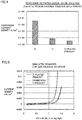
- the Ti-plated product of the Example is lower in corrosion current density than the Ni porous material of the Comparative Example, and is thus stable in an environment of physiological saline solution. It is seen from this result that the Ti-plated product of the Example is suitable as a biomaterial. Further, the Ti-plated product of the Example is lower in corrosion current density than the Ti metal sheet of the Comparative Example. It is seen from this result that the structure of a metal porous material instead of a metal sheet is used to further improve the stability in an environment of physiological saline solution.
- the corrosion resistance of the following Ti-plated product to saline solution simulating seawater was evaluated through the following procedure.
- Example 3 As a specimen of the Example, a Ti-plated product manufactured by the same method as the Ti-plated product used for Example 3 was prepared. As a specimen of the Comparative Example, a Ti metal sheet (manufactured by Nilaco Corporation) was prepared.
- the Ti-plated product of the Example is lower in current density than the Ti commercial product of the Comparative Example, and thus exhibits high corrosion resistance to seawater. It is seen from the above that the Ti-plated product of the Example is promising as an insoluble electrode (anode) for electrolysis of salt.
- Example 3 As a specimen of the Example, a Ti-plated product manufactured by the same method as the Ti-plated product used in Example 3 was prepared. As specimens of the Comparative Example, an Ni porous material (product name: "Celmet®” manufactured by Sumitomo Electric Industries, Ltd.) and a Ti metal sheet (manufactured by Nilaco Corporation) were prepared.
- Ni porous material product name: "Celmet®” manufactured by Sumitomo Electric Industries, Ltd.
- Ti metal sheet manufactured by Nilaco Corporation
- Fig. 7 shows these plots by expanding the scale of the vertical axis (current density) so that the plot depicting the correlation for "Ti-plated product” can be distinguished from the plot depicting the correlation for "comparative Ti.”
Landscapes
- Chemical & Material Sciences (AREA)
- Engineering & Computer Science (AREA)
- Chemical Kinetics & Catalysis (AREA)
- Electrochemistry (AREA)
- Materials Engineering (AREA)
- Metallurgy (AREA)
- Organic Chemistry (AREA)
- Electroplating Methods And Accessories (AREA)
Applications Claiming Priority (2)
| Application Number | Priority Date | Filing Date | Title |
|---|---|---|---|
| JP2017100757 | 2017-05-22 | ||
| PCT/JP2018/009739 WO2018216320A1 (fr) | 2017-05-22 | 2018-03-13 | Composition de solution de placage au titane à sels fondus et procédé de fabrication d'élément plaqué au titane |
Publications (2)
| Publication Number | Publication Date |
|---|---|
| EP3633076A1 true EP3633076A1 (fr) | 2020-04-08 |
| EP3633076A4 EP3633076A4 (fr) | 2021-03-03 |
Family
ID=64395403
Family Applications (1)
| Application Number | Title | Priority Date | Filing Date |
|---|---|---|---|
| EP18806263.2A Withdrawn EP3633076A4 (fr) | 2017-05-22 | 2018-03-13 | Composition de solution de placage au titane à sels fondus et procédé de fabrication d'élément plaqué au titane |
Country Status (6)
| Country | Link |
|---|---|
| US (1) | US20200080216A1 (fr) |
| EP (1) | EP3633076A4 (fr) |
| JP (1) | JP6947212B2 (fr) |
| KR (1) | KR20200010199A (fr) |
| CN (1) | CN110582594A (fr) |
| WO (1) | WO2018216320A1 (fr) |
Families Citing this family (4)
| Publication number | Priority date | Publication date | Assignee | Title |
|---|---|---|---|---|
| JP7086172B2 (ja) * | 2018-03-08 | 2022-06-17 | 住友電気工業株式会社 | チタンめっき部材の製造方法及びチタンめっき部材 |
| WO2020017148A1 (fr) * | 2018-07-18 | 2020-01-23 | 住友電気工業株式会社 | Électrolyte pour placage au titane, procédé d'évaluation de l'électrolyte pour placage au titane, et procédé de production d'un élément plaqué de titane utilisant l'électrolyte pour placage au titane |
| JP7489309B2 (ja) | 2020-12-24 | 2024-05-23 | 東邦チタニウム株式会社 | チタンめっき材の製造方法 |
| US20260117409A1 (en) * | 2024-01-17 | 2026-04-30 | Battelle Memorial Institute | Composition for plating metal coatings and methods of making and using the same |
Family Cites Families (18)
| Publication number | Priority date | Publication date | Assignee | Title |
|---|---|---|---|---|
| US3479159A (en) * | 1966-11-10 | 1969-11-18 | Gen Electric | Process for titaniding base metals |
| US3979267A (en) * | 1972-01-24 | 1976-09-07 | Townsend Douglas W | Electrolytic method |
| JPS5417304B2 (fr) * | 1974-04-18 | 1979-06-28 | ||
| JPS51138511A (en) * | 1975-05-27 | 1976-11-30 | Sony Corp | Method for regulating the hardness of metallic tita nium |
| US4483752A (en) * | 1982-09-28 | 1984-11-20 | Eltech Systems Corporation | Valve metal electrodeposition onto graphite |
| JPH06173065A (ja) * | 1992-12-09 | 1994-06-21 | Japan Energy Corp | Tiの精製方法 |
| JP3779368B2 (ja) * | 1996-02-09 | 2006-05-24 | 松田医科工業株式会社 | 生体用複合インプラント材 |
| JP2000256898A (ja) * | 1999-03-03 | 2000-09-19 | Permelec Electrode Ltd | ウェーハの銅めっき方法 |
| CN101035930B (zh) * | 2004-10-01 | 2012-12-12 | 住友电气工业株式会社 | 熔融盐浴、利用该熔融盐浴获得的析出物、金属制品制造方法及金属制品 |
| WO2006057231A1 (fr) * | 2004-11-24 | 2006-06-01 | Sumitomo Electric Industries, Ltd. | Bain de sel fondu, précipité, et procédé d’obtention de précipité métallique |
| JP4919225B2 (ja) * | 2007-02-02 | 2012-04-18 | 住友電気工業株式会社 | 電気二重層キャパシタ用電極 |
| JP2013147731A (ja) * | 2011-12-22 | 2013-08-01 | Sumitomo Electric Ind Ltd | 溶融塩電解による金属の製造方法 |
| CN103882477B (zh) * | 2012-12-21 | 2016-12-28 | 攀钢集团攀枝花钢铁研究院有限公司 | 一种用于制备金属钛的电解质和熔盐及金属钛的制备方法 |
| JP6405199B2 (ja) | 2013-11-19 | 2018-10-17 | 住友電気工業株式会社 | 電析用電解質および金属膜の製造方法 |
| CN105112963B (zh) * | 2015-10-10 | 2017-10-24 | 东北大学 | 一种利用熔盐电沉积法制备金属铝及其合金的方法 |
| JP6518577B2 (ja) | 2015-11-30 | 2019-05-22 | 株式会社吉野工業所 | 内容物を計量して塗布する塗布容器 |
| US20200063281A1 (en) * | 2016-11-22 | 2020-02-27 | Sumitomo Electric Industries, Ltd. | Method for preparing titanium plating solution and method for manufacturing titanium plated product |
| JP7086172B2 (ja) * | 2018-03-08 | 2022-06-17 | 住友電気工業株式会社 | チタンめっき部材の製造方法及びチタンめっき部材 |
-
2018
- 2018-03-13 KR KR1020197031022A patent/KR20200010199A/ko not_active Withdrawn
- 2018-03-13 EP EP18806263.2A patent/EP3633076A4/fr not_active Withdrawn
- 2018-03-13 JP JP2019519485A patent/JP6947212B2/ja active Active
- 2018-03-13 WO PCT/JP2018/009739 patent/WO2018216320A1/fr not_active Ceased
- 2018-03-13 US US16/603,920 patent/US20200080216A1/en not_active Abandoned
- 2018-03-13 CN CN201880025988.3A patent/CN110582594A/zh active Pending
Also Published As
| Publication number | Publication date |
|---|---|
| CN110582594A (zh) | 2019-12-17 |
| US20200080216A1 (en) | 2020-03-12 |
| JP6947212B2 (ja) | 2021-10-13 |
| KR20200010199A (ko) | 2020-01-30 |
| JPWO2018216320A1 (ja) | 2020-03-19 |
| EP3633076A4 (fr) | 2021-03-03 |
| WO2018216320A1 (fr) | 2018-11-29 |
Similar Documents
| Publication | Publication Date | Title |
|---|---|---|
| JP6960095B2 (ja) | 金属多孔体、不溶性陽極、燃料電池用電極、水素の製造装置、生体材料、および金属多孔体の製造方法 | |
| JP6960096B2 (ja) | 複合金属多孔体、不溶性陽極、燃料電池用電極、水素の製造装置、形状記憶合金、生体材料、および複合金属多孔体の製造方法 | |
| US20200080216A1 (en) | Molten-salt titanium plating solution composition and method for manufacturing titanium-plated member | |
| EP3633078A1 (fr) | Procédé de production d'un élément plaqué de titane | |
| US4162204A (en) | Plated metallic cathode | |
| CN113463148A (zh) | 一种在钛或钛合金基材表面电镀金的方法 | |
| EA029324B1 (ru) | Электрод для выделения кислорода в промышленных электрохимических процессах | |
| JP6802255B2 (ja) | 導電性材料及びその製造方法 | |
| Shekhanov et al. | Electrodeposition of tin–nickel alloys from oxalate–sulfate and fluoride–chloride electrolytes | |
| WO2022138219A1 (fr) | Microstructure remplie de métal, et procédé de fabrication de celle-ci | |
| JP7086172B2 (ja) | チタンめっき部材の製造方法及びチタンめっき部材 | |
| US20220243338A1 (en) | Electrode coating | |
| Liu et al. | Electrodeposition of molybdenum from water-in-acetate electrolytes | |
| JP6889447B2 (ja) | チタンめっき液の製造方法及びチタンめっき製品の製造方法 | |
| US20160298247A1 (en) | Amalgam electrode, method for manufacturing the same, and method for electrochemical reduction of carbon dioxide using the same | |
| JP7575445B2 (ja) | チタンめっき用電解質及びチタンめっき用電解質を用いたチタンめっき部材の製造方法 | |
| JP2011208175A (ja) | めっき物の製造方法及びめっき物 | |
| EP4567160A1 (fr) | Revêtement électroplaque | |
| JP4632966B2 (ja) | 電解金属粉の製造方法 | |
| TW201518560A (zh) | 鍍鉬電解質及形成含鉬鍍層方法 | |
| EP4567153A1 (fr) | Revêtement catalytique | |
| JP7516903B2 (ja) | アルミニウム箔の製造方法 | |
| KR102524705B1 (ko) | 표면 처리 강판의 제조 방법 및 표면 처리 강판 | |
| KR20140061851A (ko) | 용융염 다중 양극 반응 합금 도금법(marc)을 이용한 탄탈룸 합금 코팅 피막 형성 방법 및 이에 의해 제조된 구조재 | |
| KR20160060523A (ko) | 탄탈룸 코팅 피막 형성 방법 및 이에 의해 제조된 구조재 |
Legal Events
| Date | Code | Title | Description |
|---|---|---|---|
| STAA | Information on the status of an ep patent application or granted ep patent |
Free format text: STATUS: THE INTERNATIONAL PUBLICATION HAS BEEN MADE |
|
| PUAI | Public reference made under article 153(3) epc to a published international application that has entered the european phase |
Free format text: ORIGINAL CODE: 0009012 |
|
| STAA | Information on the status of an ep patent application or granted ep patent |
Free format text: STATUS: REQUEST FOR EXAMINATION WAS MADE |
|
| 17P | Request for examination filed |
Effective date: 20190927 |
|
| AK | Designated contracting states |
Kind code of ref document: A1 Designated state(s): AL AT BE BG CH CY CZ DE DK EE ES FI FR GB GR HR HU IE IS IT LI LT LU LV MC MK MT NL NO PL PT RO RS SE SI SK SM TR |
|
| AX | Request for extension of the european patent |
Extension state: BA ME |
|
| DAV | Request for validation of the european patent (deleted) | ||
| DAX | Request for extension of the european patent (deleted) | ||
| A4 | Supplementary search report drawn up and despatched |
Effective date: 20210128 |
|
| RIC1 | Information provided on ipc code assigned before grant |
Ipc: C25D 3/66 20060101AFI20210122BHEP |
|
| STAA | Information on the status of an ep patent application or granted ep patent |
Free format text: STATUS: THE APPLICATION HAS BEEN WITHDRAWN |
|
| 18W | Application withdrawn |
Effective date: 20240502 |