EP3636103A1 - Table élévatrice et procédé de fonctionnement et de nettoyage d'une table élévatrice - Google Patents
Table élévatrice et procédé de fonctionnement et de nettoyage d'une table élévatrice Download PDFInfo
- Publication number
- EP3636103A1 EP3636103A1 EP18199365.0A EP18199365A EP3636103A1 EP 3636103 A1 EP3636103 A1 EP 3636103A1 EP 18199365 A EP18199365 A EP 18199365A EP 3636103 A1 EP3636103 A1 EP 3636103A1
- Authority
- EP
- European Patent Office
- Prior art keywords
- table top
- lifting
- side members
- actuator
- lifting table
- Prior art date
- Legal status (The legal status is an assumption and is not a legal conclusion. Google has not performed a legal analysis and makes no representation as to the accuracy of the status listed.)
- Withdrawn
Links
- 238000004140 cleaning Methods 0.000 title claims description 39
- 238000000034 method Methods 0.000 title claims description 22
- 238000006073 displacement reaction Methods 0.000 claims abstract description 8
- 230000000249 desinfective effect Effects 0.000 claims description 9
- 239000012530 fluid Substances 0.000 claims description 7
- 229910052751 metal Inorganic materials 0.000 claims description 5
- 239000002184 metal Substances 0.000 claims description 5
- 239000010935 stainless steel Substances 0.000 claims description 5
- 229910001220 stainless steel Inorganic materials 0.000 claims description 5
- 230000001960 triggered effect Effects 0.000 claims 1
- 239000006260 foam Substances 0.000 description 10
- 238000004519 manufacturing process Methods 0.000 description 10
- 239000000126 substance Substances 0.000 description 6
- 238000011109 contamination Methods 0.000 description 4
- XLYOFNOQVPJJNP-UHFFFAOYSA-N water Substances O XLYOFNOQVPJJNP-UHFFFAOYSA-N 0.000 description 4
- 235000013305 food Nutrition 0.000 description 3
- NBIIXXVUZAFLBC-UHFFFAOYSA-N Phosphoric acid Chemical compound OP(O)(O)=O NBIIXXVUZAFLBC-UHFFFAOYSA-N 0.000 description 2
- 239000000428 dust Substances 0.000 description 2
- 230000000717 retained effect Effects 0.000 description 2
- VEXZGXHMUGYJMC-UHFFFAOYSA-M Chloride anion Chemical compound [Cl-] VEXZGXHMUGYJMC-UHFFFAOYSA-M 0.000 description 1
- 241000233866 Fungi Species 0.000 description 1
- 229910001335 Galvanized steel Inorganic materials 0.000 description 1
- ZOKXTWBITQBERF-UHFFFAOYSA-N Molybdenum Chemical compound [Mo] ZOKXTWBITQBERF-UHFFFAOYSA-N 0.000 description 1
- 229910000831 Steel Inorganic materials 0.000 description 1
- QAOWNCQODCNURD-UHFFFAOYSA-N Sulfuric acid Chemical compound OS(O)(=O)=O QAOWNCQODCNURD-UHFFFAOYSA-N 0.000 description 1
- 239000000654 additive Substances 0.000 description 1
- 229910045601 alloy Inorganic materials 0.000 description 1
- 239000000956 alloy Substances 0.000 description 1
- 230000000903 blocking effect Effects 0.000 description 1
- 150000001805 chlorine compounds Chemical class 0.000 description 1
- KRVSOGSZCMJSLX-UHFFFAOYSA-L chromic acid Substances O[Cr](O)(=O)=O KRVSOGSZCMJSLX-UHFFFAOYSA-L 0.000 description 1
- 238000005260 corrosion Methods 0.000 description 1
- 230000007797 corrosion Effects 0.000 description 1
- 235000013365 dairy product Nutrition 0.000 description 1
- 230000000694 effects Effects 0.000 description 1
- 239000003792 electrolyte Substances 0.000 description 1
- 230000003028 elevating effect Effects 0.000 description 1
- 210000002683 foot Anatomy 0.000 description 1
- AWJWCTOOIBYHON-UHFFFAOYSA-N furo[3,4-b]pyrazine-5,7-dione Chemical compound C1=CN=C2C(=O)OC(=O)C2=N1 AWJWCTOOIBYHON-UHFFFAOYSA-N 0.000 description 1
- 239000008397 galvanized steel Substances 0.000 description 1
- 239000004434 industrial solvent Substances 0.000 description 1
- 235000021190 leftovers Nutrition 0.000 description 1
- 239000000463 material Substances 0.000 description 1
- 229910052750 molybdenum Inorganic materials 0.000 description 1
- 239000011733 molybdenum Substances 0.000 description 1
- 239000000825 pharmaceutical preparation Substances 0.000 description 1
- 229940127557 pharmaceutical product Drugs 0.000 description 1
- 239000002994 raw material Substances 0.000 description 1
- 230000002787 reinforcement Effects 0.000 description 1
- 238000009991 scouring Methods 0.000 description 1
- 239000010959 steel Substances 0.000 description 1
- 239000001117 sulphuric acid Substances 0.000 description 1
- 235000011149 sulphuric acid Nutrition 0.000 description 1
- 230000003746 surface roughness Effects 0.000 description 1
- 208000032577 susceptibility to 3 autoimmune disease Diseases 0.000 description 1
- 238000011179 visual inspection Methods 0.000 description 1
Images




Classifications
-
- A—HUMAN NECESSITIES
- A47—FURNITURE; DOMESTIC ARTICLES OR APPLIANCES; COFFEE MILLS; SPICE MILLS; SUCTION CLEANERS IN GENERAL
- A47B—TABLES; DESKS; OFFICE FURNITURE; CABINETS; DRAWERS; GENERAL DETAILS OF FURNITURE
- A47B9/00—Tables with tops of variable height
- A47B9/16—Tables with tops of variable height with means for, or adapted for, inclining the legs of the table for varying the height of the top, e.g. with adjustable cross legs
-
- B—PERFORMING OPERATIONS; TRANSPORTING
- B25—HAND TOOLS; PORTABLE POWER-DRIVEN TOOLS; MANIPULATORS
- B25H—WORKSHOP EQUIPMENT, e.g. FOR MARKING-OUT WORK; STORAGE MEANS FOR WORKSHOPS
- B25H1/00—Work benches; Portable stands or supports for positioning portable tools or work to be operated on thereby
- B25H1/14—Work benches; Portable stands or supports for positioning portable tools or work to be operated on thereby with provision for adjusting the bench top
- B25H1/16—Work benches; Portable stands or supports for positioning portable tools or work to be operated on thereby with provision for adjusting the bench top in height
-
- B—PERFORMING OPERATIONS; TRANSPORTING
- B25—HAND TOOLS; PORTABLE POWER-DRIVEN TOOLS; MANIPULATORS
- B25H—WORKSHOP EQUIPMENT, e.g. FOR MARKING-OUT WORK; STORAGE MEANS FOR WORKSHOPS
- B25H1/00—Work benches; Portable stands or supports for positioning portable tools or work to be operated on thereby
- B25H1/14—Work benches; Portable stands or supports for positioning portable tools or work to be operated on thereby with provision for adjusting the bench top
- B25H1/18—Work benches; Portable stands or supports for positioning portable tools or work to be operated on thereby with provision for adjusting the bench top in inclination
-
- B—PERFORMING OPERATIONS; TRANSPORTING
- B66—HOISTING; LIFTING; HAULING
- B66F—HOISTING, LIFTING, HAULING OR PUSHING, NOT OTHERWISE PROVIDED FOR, e.g. DEVICES WHICH APPLY A LIFTING OR PUSHING FORCE DIRECTLY TO THE SURFACE OF A LOAD
- B66F7/00—Lifting frames, e.g. for lifting vehicles; Platform lifts
- B66F7/06—Lifting frames, e.g. for lifting vehicles; Platform lifts with platforms supported by levers for vertical movement
- B66F7/065—Scissor linkages, i.e. X-configuration
-
- A—HUMAN NECESSITIES
- A47—FURNITURE; DOMESTIC ARTICLES OR APPLIANCES; COFFEE MILLS; SPICE MILLS; SUCTION CLEANERS IN GENERAL
- A47B—TABLES; DESKS; OFFICE FURNITURE; CABINETS; DRAWERS; GENERAL DETAILS OF FURNITURE
- A47B13/00—Details of tables or desks
- A47B13/08—Table tops; Rims therefor
- A47B13/083—Rims for table tops
-
- A—HUMAN NECESSITIES
- A47—FURNITURE; DOMESTIC ARTICLES OR APPLIANCES; COFFEE MILLS; SPICE MILLS; SUCTION CLEANERS IN GENERAL
- A47B—TABLES; DESKS; OFFICE FURNITURE; CABINETS; DRAWERS; GENERAL DETAILS OF FURNITURE
- A47B2200/00—General construction of tables or desks
- A47B2200/0001—Tops
- A47B2200/001—Manufacture of table tops
-
- A—HUMAN NECESSITIES
- A47—FURNITURE; DOMESTIC ARTICLES OR APPLIANCES; COFFEE MILLS; SPICE MILLS; SUCTION CLEANERS IN GENERAL
- A47B—TABLES; DESKS; OFFICE FURNITURE; CABINETS; DRAWERS; GENERAL DETAILS OF FURNITURE
- A47B2200/00—General construction of tables or desks
- A47B2200/0035—Tables or desks with features relating to adjustability or folding
- A47B2200/004—Top adjustment
- A47B2200/0042—Height and inclination adjustable desktop, either separately or simultaneously
-
- A—HUMAN NECESSITIES
- A47—FURNITURE; DOMESTIC ARTICLES OR APPLIANCES; COFFEE MILLS; SPICE MILLS; SUCTION CLEANERS IN GENERAL
- A47B—TABLES; DESKS; OFFICE FURNITURE; CABINETS; DRAWERS; GENERAL DETAILS OF FURNITURE
- A47B2200/00—General construction of tables or desks
- A47B2200/0035—Tables or desks with features relating to adjustability or folding
- A47B2200/005—Leg adjustment
- A47B2200/0056—Leg adjustment with a motor, e.g. an electric motor
- A47B2200/006—Leg adjustment with a motor, e.g. an electric motor with table or desk equipped with limit switches
-
- A—HUMAN NECESSITIES
- A47—FURNITURE; DOMESTIC ARTICLES OR APPLIANCES; COFFEE MILLS; SPICE MILLS; SUCTION CLEANERS IN GENERAL
- A47B—TABLES; DESKS; OFFICE FURNITURE; CABINETS; DRAWERS; GENERAL DETAILS OF FURNITURE
- A47B9/00—Tables with tops of variable height
- A47B9/10—Tables with tops of variable height with vertically-acting fluid cylinder
Definitions
- the present invention relates to a lifting table comprising a table top having a polygonal contour and including an upper and a lower face, a lifting mechanism and a base where the lifting mechanism is connected to the table top and includes an actuator for raising and lowering the table top.
- the base is configured for supporting the lifting mechanism.
- Two side members are positioned along the sides of said table top and at least one switch element being positioned below said upper face. The side members are connected to the table top below said upper face allowing the side member to be moved between a first position, wherein the side members are disengaged from the switch element and a second position where the side members activate the switch element, hereby preventing displacement of the table top relative to the base.
- the product can be bulk food, goods, and pharmaceutical products to be consumed or used by human.
- the manufacturing equipment has to be cleaned on a daily basis, preferably at the end of the work day.
- a cleaning process can be achieved by using a low-pressure water-jetting unit for spooling off the leftovers in the form of raw materials followed by a chemical cleaning process using a cleaning foam, which makes it easier to clean hard-to-reach areas such as corners.
- the objective problem of the present invention is to provide an improvement in relation to a lifting table, where hard-to-reach area(s) have been removed.
- a further object is to improve cleaning or disinfecting of a lifting table.
- the lifting table according to the present invention has the advantage, that by arranging two adjoining side members along two adjoining sides of the table top, it is possible in combination with at least one switch element to achieve an anti-squeezing mechanism, which does not include a blind area where the material or dust can be accumulated. By arranging two side members with a distance in between each other, it is furthermore possible for the cleaning foam to penetrate into the gap created by two adjoining side members.
- the anti-squeezing mechanism will consist of at least two side members being arranged along the sides of the lifting table and one switch element being connected to a lower face of the table top.
- the elongated elements are movable individually relative to the table top.
- the lifting table can be used together with other manufacturing equipment as one or more lifting tables can be integrated into a production line, such as a process line or pallet transport line, where a lifting mechanism can be used for elevating a pallet to a higher level, such as from a first level to a second level.
- a production line such as a process line or pallet transport line
- a lifting mechanism can be used for elevating a pallet to a higher level, such as from a first level to a second level.
- elongated element is used to describe a element being part of the lifting mechanism of said lifting table, where each of the elongated elements includes a front end and a back end can be fixated relative to the table top or the base.
- the elongated element could also be referred to as a leg.
- the number of side members corresponds to the number of sides of the table top, preferably a table top having a rectangular geometry with four side members positioned along the side of the table top.
- the side members are connected to each other by a number of brackets.
- the bracket is used for fixating the side members relative each other, hereby achieving an improvement when the lifting table has to be assembled.
- the bracket provides a further advantage as it is possible to maintain the distance, also referred to as the gap, between two adjoining elongated elements of the anti-squeezing mechanism.
- the table top includes a number of side walls arranged along the sides of the table top, wherein the side walls extend perpendicularly from the upper face of the table top, wherein at least one side wall includes a number of slots arranged at a first distance from the side end(s) of the side wall.
- the table top can include a number of side walls arranged along the sides of the table top to avoid any blunt and/or shape edges.
- the side wall includes a number of apertures or slots, which will enable a cleaning foam to penetrate into the space between a side wall of the table top and a elongated element of the anti-squeezing mechanism.
- each side member is provided with an aperture for allowing the side members to be moved relative to the table top.
- the side members are provided for covering the slots of the side walls and/or the side members are provided with a side member end extending towards the center of the table top, preferably at an angle of 30-70 degree.
- the side members are arranged perpendicularly to the table top and therefor the ends of the side members should not include any sharpe edges and/or ends. The above can be achieve, if the ends of the elongated elements extend towards the center of the table top, when the elongated elements are mounted relative to the table top.
- the lifting table further comprises a leg element being pivotably connected to the table top at a first leg element end, preferably to a lower face, wherein a fixation element is provided on the base for engaging a connecting element positioned on the leg element, preferably on the opposite end of the first leg element end.
- the leg element can be retracted from an inactive position to an active position allowing the operator of the lifting table to position the table top into an inclined angle, when the lifting table has to be cleaned or disinfected.
- lifting table further comprises a arm connected to the base (40) at a first end, wherein a fixation element is arranged to the lower face of the table top for engaging a connecting element being positioned on the arm, wherein the arm is pivotably connected to the base.
- lifting table further comprises a separate arm being configured for engaging the base and the lifting mechanism.
- the lifting mechanism is connected to the table top through a number of fixating mounting brackets for allowing the elongated elements of the lifting mechanism to rotate relative to the table top at a first end, wherein each elongated element furthermore includes a roller positioned at the opposite end of the first end.
- the lifting mechanism includes a number of elongated elements being connected to the table top and said elongated elements are arranged to form a scissor mechanism, wherein the structural part such as the elongated elements are made from a galvanized metal.
- stainless metal such as AIS3 304 or higher alloy
- Stainless steel has an increased corrosion resistance, particularly against chlorides and other industrial solvents. Due to its non-reactive qualities, stainless steel is also used in the manufacture of medical surgical instruments.
- Alternative 300-series grades can contain up to 7 percent molybdenum.
- the lifting table further includes a controller being connected to the actuator and the switch element, wherein said switch element is configured for deactivating the actuator.
- the controller can generally be configured for allow the lifting mechanism to be displaced and the controller is furthermore configured for receiving input from one or more switch elements.
- the switch element could be a sensor e.g. switch, pressure sensor, light sensor or wire sensor.
- the switch element is preferably positioned on the lower face of the table top, to disable operation of the lifting mechanism, such as lowering of said table top, by deactivating the actuator connected to the lifting mechanism.
- the actuator is a hydraulic actuator connected to a power source for supplying hydraulic fluid to the actuator and/or motor driven spindle connected to a power source for supplying hydraulic fluid to the actuator.
- Hydraulic actuators or motor driven spindles have the capability to be used for different lifting tasks, such as lifting a number of bucks or barrels containing the product used in a manufacturing line.
- Pneumatic belt driven actuator or other drives can be used.
- the table top can have a variety of shapes, configurations and sizes.
- a table top generally has a square or rectangular shape; however, it can be appreciated that the table top can have other configurations (e.g., circular, oval, polygonal, etc.).
- the table top has a surface area and shape that can accommodate the dimensions of commonly sized pallets; however, this is not required.
- the upper face of the table top has a generally rectangular or square shape and a width of about 0.5-4 m and a length of about 0.5-10m.
- tablette top has be used to define a top element of a lifting table. It is therefore within the scope of the present invention that the element could have been referred to as a platform, top support surface or upper surface element, etc.
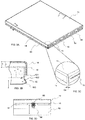
- the lifting table 10 comprises a table top 12 with a polygonal contour and the lifting table includes an upper 11 and a lower face 13, a lifting mechanism 20 and a base 40.
- the lifting mechanism 20 is connected to the table top 12 and an actuator 30 is used for raising and lowering the table top 12.
- the base 40 is configured for supporting and possibly guiding the lifting mechanism 20.
- the base 40 shown in the FIGS includes four base elements; it is however possible to have a base 40 having two rails being interconnected for allowing the lifting mechanism 20 to be guided on said rails and the base 40 can furthermore include a number of levelling feets to avoid the base from being in direct contact with the floor in the production facility.
- the table top could include a turn table or roller conveyer (not shown) for positioning of items arranged on top of the table top 12. In the situation that the lifting table 10 is used for lifting personal, the lifting table will also include one or more hand rails (not shown).
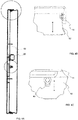
- FIG. 5A shows a front view of the table top shown in FIG.1 whereas FIG. 5B shows a side view of the table top shown in FIG.1 .
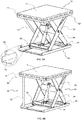
- the lifting table is extended to a maximum position for the lifting table as the actuator is extended to an outer position.
- the number of side members 62, 63, 64, 65 corresponds to the number of sides of the table top 12.
- the table top 12 has a rectangular geometry with four side members 62, 63, 64, 65 being positioned along the side of the table top 12.
- the lifting mechanism 20 includes four elongated elements 22,24, which are connected to the table top 12 and said elongated elements 22,24 are arranged to form a scissor mechanism.
- the elongated elements are made from a galvanized metal.
- a controller 50 can be used by an operator to control the lowering and lifting operation of the lifting table 10 and the controller may be connected to the actuator 30 and the switch element(s) 80 can be positioned under the table top 12, preferably connected to the side wall of the table top, directly to the table top or directly to the side member 62 table top.
- the switch element is engaged and a signal is send to the controller.
- the actuator can be a hydraulic actuator with a piston rod 32 being connected to the lifting mechanism. It is possible to have just one switch element or to have several switch elements positioned on the lower surface of the table top. Independently of the number of switch element used, each switch element is configured to send a signal to the controller in order to deactivating the actuator 30 and hereby prevent further movement of the lifting mechanism.
- the lifting table 10 includes an actuator 30 such as a hydraulic actuator connected to a power source for supplying hydraulic fluid to the actuator.
- an actuator 30 such as a hydraulic actuator connected to a power source for supplying hydraulic fluid to the actuator.
- another possible option could be a motor driven spindle, a belt driven actuator or a pneumatic actuator connected to a power source for supplying power to the actuator 30.
- FIG 2A four side members 62, 63, 64, 65 are positioned along the sides of said table top 12 and a corresponding number of switch elements 80 are positioned below said lower face 13.
- the side members 62, 63, 64, 65 are connected to the table top 12 below said lower face 13 allowing the side members 62, 63, 64, 65 to be moved between a first position (shown in FIGS. 2B , 4A-4C ), where the side members 62, 63, 64, 65 are disengaged from the switch element 80 and a second position (not shown) where the side members 62, 63, 64, 65 activate the switch element 80, hereby preventing displacement of the table top 12 relative to the base 40.
- the side members 62, 63 are connected to each other by brackets 68.
- the bracket 68 is used to maintain the distance d 1 , also referred to as the gap, between two adjoining elongated elements 62, 63 of the anti-squeezing mechanism and the bracket 68 furthermore enables that four elongated elements can be retained relative to one another.
- four side members 62, 63, 64, 65 are positioned along the table top, the gap formed between two adjoining side members 62, 63, 64, 65 can be the same or it is also possible to vary the distance d1 and hereby achieving different gaps at the corners of the lifting table
- the two side members 62, 63 are arranged along two adjoining sides of the table top 12, where the ends of said two side members 62, 63 are arranged with a distance d1 in between each other, such as 1-8 mm (shown in FIG. 2B ).
- the table top 12 includes a number of side walls 14 arranged along the sides of the table top 12 and the side walls 14 extend perpendicularly to the upper face 11 of the table top 12. As shown in FIGS. 3A and 3C , it is possible to have a number of slots 16 in only one of the side walls 14. As shown in FIGS. 3B , the slot 16 can be arranged at a second distance d 2 from the side end of the side wall 14.
- the height h of a wall part 621 of a side member 62 is larger than the second distance d 2 and as the second distance d 2 defined by the distance from the side end of the side wall 14 to the slot 16 is smaller than the height h of a wall part 621 of a side member 62, it is possible to cover the slots 16, hereby preventing the operator from blocking the slots e.g. by hanging different obstacles, such as hooks onto the table top 12.
- the angle ⁇ between the wall part 621 of a side member 62 and the first inclined part 622 in between 190-265 degree. It should be appreciated that the gap Gs shown in FIG. 3C is only optional, as the invention could also work on a lifting table having a table top 12 without any corners being provided with a slit or aperture.
- the height h of the wall part 621 of the side members 62 is provided for covering the slots 16 of the side walls 14 and each side members 62 can furthermore be provided with a inclined part 623 extending towards the center of the table top 12, preferably at an angle of 30-70 degree relative to the side wall 14, such as an angle of 30-50, 50-80 or 40-60 degrees.
- a curved, C-shaped or V-shaped geometry on the end of the side member 62, it is also possible to prolong the time and enhance the tacky effect of a cleaning foam, which unlike ordinary cleaning fluids allows the cleaning foam to work on the surfaces of the table top. This means that foam cleaning can be effectively used for cleaning both the anti-squeezing mechanism and the side walls of the table top with a minimal effort.
- the side member 62 is provided with a curved end, such a v-shaped end (shown in FIG. 3B ) or C-shaped end (not shown).
- the v-shaped end includes a first inclined part 622 extending in a first direction and a second inclined part 623 in a second direction.
- the second inclined part 623 can be arranged at an angle ⁇ of 45-90 degrees relative to the first inclined part 622.
- each side member 62, 63, 64, 65 can be provided with a number of apertures 64 for allowing the side members 62, 63, 64, 65 to be moved relative to the table top 12.
- FIG. 4B shows that the curved end referred to in FIG 3B could include a blunt end part 624
- the lifting mechanism 20 includes two sets of elongated elements 22.
- Each set of legs includes two elongated elements 22,24.
- the two elongated elements 22,24 in each set are connected together.
- the connection can be any type of connection that enables the two elongated elements to move relative to one another about the connection.
- connection is generally positioned at or near the mid-longitudinal region of the elongated elements; however, this is not required.
- a roller or a wheel 27,28 is connected to the front end 222, 242 of the elongated elements 22,24.
- the wheels or rollers when used, enable the front end 222,242 of elongated elements 22,24 move along the base of the lifting table 10, hereby allowing the lifting mechanism 20 to move between an elevated or raised position and non-elevated position.
- the lifting mechanism 20 moves from a non-elevated position to a raised position, the front end 222,242 of legs move toward the back end of the elongated elements legs 22, 24.
- the lifting mechanism 20 moves from an elevated or raised position to a non-elevated or lower position, the front end 222, 242 of the elongated elements 22,24 move away from the back end 221,241 of the elongated elements 22,24.
- the wheels or roller facilitate in such movement of the elongated elements 22,24 over the base 40.
- the table top could also include a number reinforcement bars 35 arranged on the lower face of the table top 12.
- the base 40 includes a number of side walls 42 for guiding the lifting mechanism 20 during movement of the table top 12 relative to the base 40.
- the lifting table 10 further comprises a leg element 72 being pivotably connected to the table top 12 at a first leg element end, preferably to a lower face 13, wherein a fixation element 44 is provided on the base 40 for engaging a connecting element 74 positioned on the leg element 72, preferably on the opposite end of the first leg element end.
- the lifting mechanism 20 is connected to the table top 12 through a number of fixating mounting brackets 28,29 for allowing the elongated elements 22,24 to rotate relative to the table top 12 at a first end and each elongated element 22,24 furthermore includes a roller 26,27 being positioned at the opposite end of the first end.
- the first end would also be referred to as the back end, whereas the front end of the elongated element 22,24 would be referred to as the second end of the elongated element 22,24.
- Operation of the lifting table 10 can be performed by an operator either directly or remotely by using a wireless communication unit connected to the controller of the lifting table.
- a safety mode when at least one side member 62, 63, 64, 65 is moved from a first position, where all side members 62, 63, 64, 65 are disengaged from the switch element 80 to a second position, where the side member 62, 63, 64, 65 engages the switch element 80, hereby preventing further displacement of the table top 12 relative to the base 40.
- the cleaning of said table may include a physical cleaning step and optional a chemical cleaning step.
- the physical cleaning step may be performed by an operator, who spools the lifting table with a water jet, preferably a low-pressure water jet for preventing the contamination or dirt attached to the lifting table from being spread further.
- the operator would spool the lifting table at an angle between 5-90 degree relative to the surface to be cleaned.
- the operator would apply a chemical cleaning product onto the surface of said lifting table.
- the cleaning and disinfecting process can be performed in combination with each other, as it is also possible only to perform the cleaning or disinfecting step.
- the table top of the lifting table can be adjusted to an inclined angle relative to the ground floor.
- the operator may perform a visual inspection prior to the actual of performing the cleaning and/or disinfecting process.
- the inclined position of said table would also allow the operator to have a better work position, when he has to clean the underside of the lifting table.
- the cleaning and/or disinfecting process of said lifting table 10 can involve the following steps:
- leg element 72 is retained relative to the base 40 by the fixation element 44 positioned on the base 40 and the roller arranged on the front end of the elongated element 22,24.
- the method can include; raising the table top 12 into a substantially vertical position by operating the actuator according to a third operational mode, wherein the actuator exerts a force onto the lifting mechanism 20 being connected to the lower face of the table top 12.
- the cleaning product used could be a cleaning foam, where a dosing unit having a nozzle is used for applying the cleaning foam on the contaminated surface.
- the chemical product can be mixed with water from a pressure cleaner.
- the foam must be allowed some time (typically 10-30 min) to fight dirt etc. on a lifting table according to the present invention.
- the waiting time varies depending on the type of contamination. For example, if there is a fight against dried dairy product dirt, the waiting time will often be longer for an effective result. In case of highly resistant contamination, it may be necessary to help with scouring fungus or the like.
- the structural parts of the lifting table would in one embodiment have a surface, which have be treated using an electropolishing method.
- an electropolishing process on the surface of the structural parts of said lifting table, it is possible to achieve a surface finish with very low surface roughness values, hereby reducing the tendency for dirt or dust from adhering to the surface of the table top.
- the most common electrolytes for the electropolishing of stainless steel are varying concentrations of phosphoric and sulphuric acid, and occasionally additives such as chromic acid.
- the lifting table could be positioned in at least two positions during the cleaning process.
- the first position would be a top position, where the leg element is retracted from a retracted position or a separate arm is inserted in between the lifting mechanism and the table top.
- the second positon would be moving he table top down so that the table top is arranged in an inclined position, whereby exposing the lower face (underside) of the table to make cleaning under the lifting table possible. Moving the table top so that cleaning can be performed in all the area.
Landscapes
- Engineering & Computer Science (AREA)
- Mechanical Engineering (AREA)
- Life Sciences & Earth Sciences (AREA)
- Geology (AREA)
- Structural Engineering (AREA)
- Accommodation For Nursing Or Treatment Tables (AREA)
Priority Applications (5)
| Application Number | Priority Date | Filing Date | Title |
|---|---|---|---|
| EP18199365.0A EP3636103A1 (fr) | 2018-10-09 | 2018-10-09 | Table élévatrice et procédé de fonctionnement et de nettoyage d'une table élévatrice |
| PCT/EP2019/077352 WO2020074580A1 (fr) | 2018-10-09 | 2019-10-09 | Table élévatrice et procédé de fonctionnement et de nettoyage d'une table élévatrice |
| US17/283,650 US11388988B2 (en) | 2018-10-09 | 2019-10-09 | Lifting table and a method of operating and cleaning a lifting table |
| EP19782626.6A EP3863470B1 (fr) | 2018-10-09 | 2019-10-09 | Table élévatrice et procédé de fonctionnement et de nettoyage d'une table élévatrice |
| PL19782626.6T PL3863470T3 (pl) | 2018-10-09 | 2019-10-09 | Stół podnośny oraz sposób obsługi i czyszczenia stołu podnośnego |
Applications Claiming Priority (1)
| Application Number | Priority Date | Filing Date | Title |
|---|---|---|---|
| EP18199365.0A EP3636103A1 (fr) | 2018-10-09 | 2018-10-09 | Table élévatrice et procédé de fonctionnement et de nettoyage d'une table élévatrice |
Publications (1)
| Publication Number | Publication Date |
|---|---|
| EP3636103A1 true EP3636103A1 (fr) | 2020-04-15 |
Family
ID=63832217
Family Applications (2)
| Application Number | Title | Priority Date | Filing Date |
|---|---|---|---|
| EP18199365.0A Withdrawn EP3636103A1 (fr) | 2018-10-09 | 2018-10-09 | Table élévatrice et procédé de fonctionnement et de nettoyage d'une table élévatrice |
| EP19782626.6A Active EP3863470B1 (fr) | 2018-10-09 | 2019-10-09 | Table élévatrice et procédé de fonctionnement et de nettoyage d'une table élévatrice |
Family Applications After (1)
| Application Number | Title | Priority Date | Filing Date |
|---|---|---|---|
| EP19782626.6A Active EP3863470B1 (fr) | 2018-10-09 | 2019-10-09 | Table élévatrice et procédé de fonctionnement et de nettoyage d'une table élévatrice |
Country Status (4)
| Country | Link |
|---|---|
| US (1) | US11388988B2 (fr) |
| EP (2) | EP3636103A1 (fr) |
| PL (1) | PL3863470T3 (fr) |
| WO (1) | WO2020074580A1 (fr) |
Cited By (1)
| Publication number | Priority date | Publication date | Assignee | Title |
|---|---|---|---|---|
| CN115755991A (zh) * | 2022-11-11 | 2023-03-07 | 乐歌人体工学科技股份有限公司 | 一种升降平台的地形自平衡控制系统、方法及升降桌 |
Families Citing this family (8)
| Publication number | Priority date | Publication date | Assignee | Title |
|---|---|---|---|---|
| JP2020151963A (ja) * | 2019-03-20 | 2020-09-24 | 株式会社ミマキエンジニアリング | テーブル装置及び印刷装置 |
| USD949604S1 (en) * | 2020-11-10 | 2022-04-26 | Shenzhen Bestqi Innovation Technology Co., Ltd | Liftable table |
| CN112593669A (zh) * | 2020-12-10 | 2021-04-02 | 东立泓创建设集团有限公司 | 一种剪式举升机安装基础结构及其施工方法 |
| CN112830420B (zh) * | 2021-01-22 | 2022-09-02 | 黄辉 | 一种汽车维护用升降台及其使用方法 |
| CN112792794B (zh) * | 2021-02-04 | 2022-06-24 | 广东乐创智能科技有限公司 | 一种工业机器人安装用水平调节工装 |
| USD951682S1 (en) * | 2021-04-08 | 2022-05-17 | Ningbo Tuotuo River Design Company | Workstation |
| CN115302459A (zh) * | 2022-08-01 | 2022-11-08 | 山东钢铁股份有限公司 | 电气设备维修用支撑架 |
| CN121268700B (zh) * | 2025-12-09 | 2026-02-10 | 宁波和众汽车零部件有限公司 | 一种带锁定机构的车内可拆卸桌板组件 |
Citations (3)
| Publication number | Priority date | Publication date | Assignee | Title |
|---|---|---|---|---|
| DE1756318A1 (de) * | 1968-05-06 | 1970-04-30 | Trepel Kg Maschinenfabrik | Sicherheitsvorrichtung fuer Hebetische u.dgl. |
| DE7612703U1 (de) * | 1976-04-23 | 1976-10-07 | Trepel Ag, 6200 Wiesbaden-Schierstein | Sicherheitseinrichtung an hebetischen |
| US5379655A (en) * | 1993-10-20 | 1995-01-10 | Vestil Manufacturing Company | Obstruction sensing guard for vertically moving table |
Family Cites Families (8)
| Publication number | Priority date | Publication date | Assignee | Title |
|---|---|---|---|---|
| US3920101A (en) * | 1971-12-15 | 1975-11-18 | Autoquip Corp | Safety toe guard |
| US4091906A (en) * | 1977-02-28 | 1978-05-30 | Advance Lifts, Incorporated | Collapsible safety guard for platform lift |
| CA1187423A (fr) * | 1983-02-07 | 1985-05-21 | Canadian Liftgates Inc. / Les Hayons Canadiens Inc. | Mecanisme de surete pour arreter la marche de deux plates-formes elevatrices concourantes |
| AU2002225924A1 (en) * | 2000-12-01 | 2002-06-11 | John E. Larson | Unaligned multiple-column height adjustable pedestals for tables and chairs that tilt and slide |
| FI118220B (fi) * | 2004-06-07 | 2007-08-31 | Kone Corp | Hissin oviaukon turvajärjestely |
| US10092089B1 (en) * | 2017-06-06 | 2018-10-09 | Chung Chiao Holding Corp. | Height-adjustable table |
| CN110353407B (zh) * | 2019-05-31 | 2024-09-13 | 乐歌人体工学科技股份有限公司 | 升降工作台 |
| US11047520B1 (en) * | 2020-05-27 | 2021-06-29 | John Schwind | Etching easel apparatus |
-
2018
- 2018-10-09 EP EP18199365.0A patent/EP3636103A1/fr not_active Withdrawn
-
2019
- 2019-10-09 US US17/283,650 patent/US11388988B2/en active Active
- 2019-10-09 PL PL19782626.6T patent/PL3863470T3/pl unknown
- 2019-10-09 WO PCT/EP2019/077352 patent/WO2020074580A1/fr not_active Ceased
- 2019-10-09 EP EP19782626.6A patent/EP3863470B1/fr active Active
Patent Citations (3)
| Publication number | Priority date | Publication date | Assignee | Title |
|---|---|---|---|---|
| DE1756318A1 (de) * | 1968-05-06 | 1970-04-30 | Trepel Kg Maschinenfabrik | Sicherheitsvorrichtung fuer Hebetische u.dgl. |
| DE7612703U1 (de) * | 1976-04-23 | 1976-10-07 | Trepel Ag, 6200 Wiesbaden-Schierstein | Sicherheitseinrichtung an hebetischen |
| US5379655A (en) * | 1993-10-20 | 1995-01-10 | Vestil Manufacturing Company | Obstruction sensing guard for vertically moving table |
Cited By (1)
| Publication number | Priority date | Publication date | Assignee | Title |
|---|---|---|---|---|
| CN115755991A (zh) * | 2022-11-11 | 2023-03-07 | 乐歌人体工学科技股份有限公司 | 一种升降平台的地形自平衡控制系统、方法及升降桌 |
Also Published As
| Publication number | Publication date |
|---|---|
| US11388988B2 (en) | 2022-07-19 |
| US20210386194A1 (en) | 2021-12-16 |
| EP3863470A1 (fr) | 2021-08-18 |
| EP3863470C0 (fr) | 2025-07-30 |
| EP3863470B1 (fr) | 2025-07-30 |
| PL3863470T3 (pl) | 2025-09-22 |
| WO2020074580A1 (fr) | 2020-04-16 |
Similar Documents
| Publication | Publication Date | Title |
|---|---|---|
| EP3863470B1 (fr) | Table élévatrice et procédé de fonctionnement et de nettoyage d'une table élévatrice | |
| EP3242753B1 (fr) | Appareil manipulateur de buse à jet d'eau à haute pression | |
| DE2202713B2 (de) | Einrichtung zum Steuern einer selbsttätigen Fensterwaschanlage | |
| US7234590B1 (en) | Ergonomic load table for washers | |
| DE4310546A1 (de) | Verfahren und Vorrichtung zum Waschen eines Förderbandes in einem Wärmebehandlungsgerät | |
| DE102010056082A1 (de) | Verfahren zur Reinigung eines Förderers für landwirtschaftliche Produkte und Förderer für landwirtschaftliche Produkte | |
| WO1996038360A1 (fr) | Dispositif transporteur pour plaques de verre | |
| WO2018192781A1 (fr) | Dispositif, installation ainsi que procédé de nettoyage de panneaux de coffrage | |
| US6767406B2 (en) | Conveyor painting system | |
| KR102467643B1 (ko) | 천정 크레인용 지게발 장치 | |
| US11090701B2 (en) | Bin cleaning systems and methods of use | |
| EP0201746B1 (fr) | Dispositif de nettoyage d'objets se déplaçant sur des bandes transporteuses | |
| DE102017206662A1 (de) | Vorrichtung zur Reinigung von Platten | |
| KR102278404B1 (ko) | 레일 주행형 도장장치 | |
| EP1812333B1 (fr) | Plate-forme opérationnelle extensible, en particulier pour un ascenseur | |
| DE102015015928A1 (de) | Vorrichtung zum Anheben von Bürostühlen | |
| US20150246375A1 (en) | Method and Apparatus for Pallet Jack Cleaning and Sanitizing | |
| DE60307883T2 (de) | Gerät zum aufkratzen von rohrinnenflächen | |
| KR102774991B1 (ko) | 선박용 청소장치 | |
| CN209669071U (zh) | 一种玻璃喷涂装置 | |
| DE19820369A1 (de) | Bearbeitungsstation für Backwaren-Gut, insbesondere für Gärgut | |
| DE102023005331A1 (de) | Matratzentransportvorrichtung, insbesondere zur Verwendung in Krankenhäusern und Pflegeheimen, Verfahren zum Transportieren und Desinfizieren von Matratzen sowie Verwendung einer Matratzentransportvorrichtung in Krankenhäusern und Pflegeheimen | |
| DE2929090C2 (fr) | ||
| CN217525858U (zh) | 一种消毒喷淋装置 | |
| IT201900001404U1 (it) | Dispositivo per la pulizia di scaffalature |
Legal Events
| Date | Code | Title | Description |
|---|---|---|---|
| PUAI | Public reference made under article 153(3) epc to a published international application that has entered the european phase |
Free format text: ORIGINAL CODE: 0009012 |
|
| STAA | Information on the status of an ep patent application or granted ep patent |
Free format text: STATUS: THE APPLICATION HAS BEEN PUBLISHED |
|
| AK | Designated contracting states |
Kind code of ref document: A1 Designated state(s): AL AT BE BG CH CY CZ DE DK EE ES FI FR GB GR HR HU IE IS IT LI LT LU LV MC MK MT NL NO PL PT RO RS SE SI SK SM TR |
|
| AX | Request for extension of the european patent |
Extension state: BA ME |
|
| STAA | Information on the status of an ep patent application or granted ep patent |
Free format text: STATUS: THE APPLICATION IS DEEMED TO BE WITHDRAWN |
|
| 18D | Application deemed to be withdrawn |
Effective date: 20201016 |