EP3643044B1 - Verfahren zur aktivierung von auf eine datensitzung angewandten prozessen - Google Patents
Verfahren zur aktivierung von auf eine datensitzung angewandten prozessen Download PDFInfo
- Publication number
- EP3643044B1 EP3643044B1 EP18737952.4A EP18737952A EP3643044B1 EP 3643044 B1 EP3643044 B1 EP 3643044B1 EP 18737952 A EP18737952 A EP 18737952A EP 3643044 B1 EP3643044 B1 EP 3643044B1
- Authority
- EP
- European Patent Office
- Prior art keywords
- message
- entities
- server
- terminal
- activation
- Prior art date
- Legal status (The legal status is an assumption and is not a legal conclusion. Google has not performed a legal analysis and makes no representation as to the accuracy of the status listed.)
- Active
Links
Images



Classifications
-
- H—ELECTRICITY
- H04—ELECTRIC COMMUNICATION TECHNIQUE
- H04L—TRANSMISSION OF DIGITAL INFORMATION, e.g. TELEGRAPHIC COMMUNICATION
- H04L67/00—Network arrangements or protocols for supporting network services or applications
- H04L67/50—Network services
- H04L67/53—Network services using third party service providers
-
- H—ELECTRICITY
- H04—ELECTRIC COMMUNICATION TECHNIQUE
- H04L—TRANSMISSION OF DIGITAL INFORMATION, e.g. TELEGRAPHIC COMMUNICATION
- H04L67/00—Network arrangements or protocols for supporting network services or applications
- H04L67/14—Session management
-
- H—ELECTRICITY
- H04—ELECTRIC COMMUNICATION TECHNIQUE
- H04L—TRANSMISSION OF DIGITAL INFORMATION, e.g. TELEGRAPHIC COMMUNICATION
- H04L67/00—Network arrangements or protocols for supporting network services or applications
- H04L67/50—Network services
- H04L67/56—Provisioning of proxy services
-
- H—ELECTRICITY
- H04—ELECTRIC COMMUNICATION TECHNIQUE
- H04L—TRANSMISSION OF DIGITAL INFORMATION, e.g. TELEGRAPHIC COMMUNICATION
- H04L67/00—Network arrangements or protocols for supporting network services or applications
- H04L67/50—Network services
- H04L67/56—Provisioning of proxy services
- H04L67/567—Integrating service provisioning from a plurality of service providers
-
- H—ELECTRICITY
- H04—ELECTRIC COMMUNICATION TECHNIQUE
- H04L—TRANSMISSION OF DIGITAL INFORMATION, e.g. TELEGRAPHIC COMMUNICATION
- H04L69/00—Network arrangements, protocols or services independent of the application payload and not provided for in the other groups of this subclass
- H04L69/16—Implementation or adaptation of Internet protocol [IP], of transmission control protocol [TCP] or of user datagram protocol [UDP]
- H04L69/164—Adaptation or special uses of UDP protocol
Definitions
- the invention relates to the field of data sessions established within communications infrastructures. It deals with processing management techniques applied to data sessions transported in communications infrastructures.
- the protocols used by a terminal to communicate on IP ( Internet Protocol ) networks have greatly diversified in recent years after a period in which few developments were to be noted.
- IP Internet Protocol
- the protocol stack, corresponding to the different communication protocols used at each layer can vary from one session to another.
- a session is established between two terminals for data exchange for a defined time.
- the establishment of a session between two terminals requires that the terminals be previously attached to a communication network.
- a session in IP (Internet Protocol ) networks, rely on various protocols from the transport layer to the application layer of the OSI (Open Systems Interconnection ) model.
- OSI Open Systems Interconnection
- a single session between two terminals is sufficient to consider that the terminals are in communication. For this reason, a session can be likened to a communication.
- a session is used for the exchange of data transported most often in packets. We can therefore speak of a data session or a session of data packets.
- a session can be uni-directional, from a terminal to a server or bi-directional from a terminal to a server and from the server to the terminal.
- HTTP in English HyperText Transfer Protocol
- TCP in English Transport Control Protocol
- UDP in English User Datagram Protocol
- IP in English Internet Protocol
- encryption protocols application layer namely TLS (Transport Layer Security) or DTLS (Datagram Transport Layer Security)
- HTTP / 2 protocol it is now possible to use the HTTP / 2 protocol and it is also possible to use the QUIC protocol (in English Quick UDP Internet Connections) as the transport protocol.
- QUIC in English Quick UDP Internet Connections
- the document WO 2016/173635 A1 (TELEFONAKTIEBOLAGET LM ERICSSON [SE]) November 3, 2016 (2016-11-03) concerns a system comprising a sending entity, a receiving entity and a network entity interposed between the sending entity and the receiving entity.
- the receiving entity is configured to send a connection request to the sending entity, and to further send, to the sending entity, at least one encrypted meta-information for said connection.
- the sending entity is configured to insert the at least one encrypted meta-information into at least one packet of the connection.
- the network entity is configured to decrypt the at least one meta information and to process the at least one packet based on the at least one decrypted meta information.
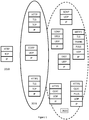
- the figure 1 illustrates the diversity of the different protocols that can be implemented in a communications network.
- the protocols indicated in the figure 1 are given by way of example and the protocols deployed are not limited to those of the figure 1 .
- These protocol evolutions do not take into account the infrastructures transporting session data while a potentially large number of so-called intermediate functions, that is to say deployed on the communication network between the terminal and the server, apply processing. sessions by adding information to packets carrying session data, exploiting information from packets or modifying data in packets.
- the operators in charge of routing session data and more generally the entities involved in establishing and managing sessions have in fact deployed more and more devices in charge of specific processing of session data.
- These processing operations can consist in improving the routing, in compressing the data, in recording information relating to the sessions, in adapting an encoding, in applying a quality of service to the packets relating to the data.
- These different processing operations are applied by the entities placed on the path followed by the data of the sessions established between a user terminal and an application.
- These treatments are also applied by the entities without the user or even the service provider managing the server providing the data required by the user via a terminal giving their consent to the application of the treatments, or even their consent to it. are informed.
- the means for informing and collecting the authorizations of the end entities, namely the terminal and the server, of a session in relation to these treatments are not provided for, neither in the evolutions of the protocols used for the sessions nor in new ones. protocols which could be implemented to ensure this objective of approval by an end entity on processes carried out by intermediate entities or by the other end entity.
- the object of the present invention is to remedy these drawbacks.
- the packets of the data sessions between a terminal and a server are subjected to different processing during their transit in the communications network. These processing operations can be performed by separate entities and, in the prior techniques, are applied without the terminal or the server being aware of it and a fortiori without giving an agreement for these processing operations to be applied or not.
- the processing entities are identified by the addition of an identifier by each entity applying processing or likely to apply processing to the packets. of a session.
- the server receiving the session data can identify all the entities present on the path between the source and the server. Neither the terminal nor the server in fact know a priori what processing operations are applied to a given session and this identification phase is necessary. It corresponds to an entity discovery operation. Among the entities present on the path, some have received approval from the supplier in charge of the server, for example in an operation prior to the establishment of the session and others not.
- the server transmits in an acknowledgment message the identifiers of intermediate entities identified on the path. By default, it can return all the identifiers received in the identification message or only a part of them.
- the terminal In the event that it returns all the identifiers to the terminal, the terminal has information on the intermediate entities on the path, as communicated by the server, and uses this information for the activation process or for other processes. , such as for example the selection of a path, if it receives information from separate servers, implemented by different suppliers, for the same service.
- the terminal in the activation process, transmits an activation message allowing each entity to know whether or not it can apply processing for subsequent packets in the data session.
- the terminal thanks to this activation message, applies a policy on the packets of the data session.
- the terminal can in fact thus transmit the packets of the session while having the guarantee that only the entities authorized by itself apply processing, the terminal having possibly kept a subset of the entities among the intermediate entities that the server will have communicated to it. .
- the service provider can be a provider hosting data as well as an intermediary provider temporarily storing data such as a CDN (in English Content Delivery Network) service provider or a provider of data stored in cache servers.
- the service provider can also be a data host for a corporate network.
- the acknowledgment message comprises identifiers of the plurality of entities approved by the supplier.
- the server indicates to the terminal the entities that it has approved among the identified processing entities.
- the server transmits to the terminal only the identifiers of approved entities and the activation process makes it possible to activate only functions selected by the terminal but also by the server.
- the sending of identifiers approved by the service provider corresponds to a consent for certain processing entities, on the path between the terminal and the server. This consent can be used by the terminal itself to approve or not the presence of some of these functions on the path and consecutively the processing applied to the packets of the session.
- the server therefore selects a subset of the entities identified from the identification message transmitted by the terminal and completed by the intermediate entities.
- the message relating to the activation comprises information for deactivating entities whose identifiers are not selected by the terminal.
- Processing entities during the implementation of the method, possibly already carry out processing operations on the first data exchanged, before the implementation of the method.
- the deactivation of certain entities makes it possible to indicate to them to stop their processing and therefore to keep on the path only the processing entities selected by the terminal and the server.
- the presence of deactivation information in the message relating to the activation indicates to the entities concerned that they must cease their processing.
- the message relating to the activation comprises information for activating entities whose identifiers are selected by the terminal.
- the method when it is implemented at the initialization of a session, that is to say before any data relating to the session is transmitted by the terminal, makes it possible to indicate to the selected entities that they must perform their processing on the session data. Since no entity has been activated before the establishment of the session and consecutively before the method is actually implemented, the message relating to the activation makes it possible in this case to activate only the selected entities.
- the identification message and the message relating to the activation are messages relating to the QUIC protocol.
- the QUIC protocol in English Quick UDP IP Connections
- UDP protocol in English User Datagram Protocol
- TCP in English Transport Control Protocol
- the QUIC protocol is of growing interest for application providers because it integrates encryption characteristics as well as functions relating to quality of service, thanks in particular to the possibilities of multiplexed connections between two QUIC correspondents.
- this protocol for exchanges between the terminal and the server, with the aim of identifying and activating the processing entities, is advantageous because it makes it possible to combine the intrinsic functions of the protocol such as security, reliability, availability with new services such as the discovery and certification of processing entities on a path between a terminal and a server for a given session.
- the identification message and the message relating to the activation further comprise a session identifier.
- a processing entity can possibly apply processing for different data sessions involving at least one and the same end (terminal or server) or data sessions between completely different ends from those for which the activation method is implemented. Since the activation message is intended to indicate to the processing entities whether or not they must apply processing for a session, it is advantageous to add session information to the data packets to allow each processing entity to quickly identifying the session concerned from the session identifier and whether or not to apply the processing to these packets, relative to the activation information present.
- the connection identifier can be the Connection ID as defined in https://tools.ietf.org/html/draft-ietf-quic- transport-04 (June 2017).
- the session identifier in an identification message also allows processing entities to associate the required identification with a given session and thus for example to detect messages having identical session numbers but an origin and / or a destination. different, which is not possible a priori.
- the acknowledgment method allows a server, once the processing entities are identified for a session, to be able to acknowledge the entities present on the path between the terminal and the server managed by the service provider.
- This advantageously makes it possible to be able to transmit to the terminal the identifiers of the processing entities intervening or being able to intervene, in the case where the session is not established, on the data of the session.
- Sending the entity identifiers to the terminal then enables the latter to select entities from the identifiers received from the server.
- the terminal finally decides on the intermediate entities that it wishes to authorize for the session among the entities received from the server with which the terminal has established or will establish a session.
- the acknowledgment method further comprises a step of selecting the identifiers of the entities approved by the supplier from among the identifiers received in the identification message.
- the server can intervene in the selection of intermediary entities on the data path of the session by selecting only the entities that it has approved. Once it has received the identifiers of the entities present on the path, the server extracts the identifiers of entities with which an agreement exists, and only transmits to the terminal these identifiers extracted from the set of identifiers received in the message. 'identification.
- Messages relating to the agreement between the server and the processing entities can advantageously be exchanged between the server and the processing entities so that the server holds a list of processing entities as well as the public keys of these entities. Knowing that a large number of entities are likely to be deployed in the communication networks, by various operators or service providers, the server will be able to perform a discovery of the various functions prior to the exchange of approval messages.
- An alternative consists in establishing agreements between the service provider and the managers of the processing entities so that the server only requests the processing entities administered by managers with which an agreement exists. The exchange of agreement-related messages may occur uncorrelated with the messages relating to a given session, since an agreement is not specific to a given session.
- This device capable of implementing the activation method which has just been described in all its embodiments, is intended to be implemented in a terminal.
- the acknowledgment device further comprises a selection module, able to select identifiers of entities approved by the supplier from among the identifiers received in the identification message.
- This acknowledgment device capable of implementing the acknowledgment method which has just been described in all its embodiments, is intended to be implemented in a data server.
- the invention also relates to a computer program comprising instructions for implementing the steps of the activation method which has just been described, when this program is executed by a processor.
- the invention also relates to a computer program comprising instructions for implementing the steps of the acknowledgment method which has just been described, when this program is executed by a processor.
- These programs can use any programming language, and be in the form of source code, object code, or intermediate code between source code and object code, such as in a partially compiled form, or in any other. desirable shape.
- the invention also relates to an information medium readable by a computer, and comprising instructions for computer programs as mentioned above.
- the information medium can be any entity or device capable of storing the programs.
- the medium may comprise a storage means, such as a ROM, for example a CD ROM or a microelectronic circuit ROM, or else a magnetic recording means, for example a floppy disk or a disk. hard.
- the information medium can be a transmissible medium such as an electrical or optical signal, which can be conveyed via an electrical or optical cable, by radio or by other means.
- the program according to the invention can in particular be downloaded from an Internet type network.
- the information medium can be an integrated circuit in which the program is incorporated, the circuit being adapted to execute or to be used in the execution of the method in question.
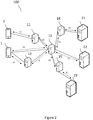
- the terminals 1, 2 and the servers 21, 22, 23 are connected to the communications network 100.
- the terminals 1, 2 can be fixed or mobile terminals and the servers 21, 22, 23 can be HTTP servers (in English HyperText Transfer Protocol ), FTP (in English File Transfer Protocol ), cache servers or CDN (in English Content Delivery Networks) or any other type of device storing data available for terminals.
- the communications network 100 can be a fixed or mobile infrastructure, intended to convey data from customers belonging to businesses or from so-called residential customers.
- the network 100 can be made up of several subnetworks, for example an access subnetwork and a core subnetwork.
- the network 100 can be administered by one or more separate entities.
- the terminal 2 establishes a communications session S1 with the server 21.
- This data session S1 can be unidirectional, from terminal 2 to server 21, or bidirectional, from terminal 2 to server 21 and from server 21 to terminal 2.
- the S1 session takes a path on which are deployed processing entities 11, 13, 14. These processing entities 11, 13, 14 can be administered by the same manager or by separate managers. These processing entities, also called intermediate functions, can be deployed in specific equipment or not, or even instantiated in a virtualized architecture.
- a processing entity can in particular be a virtualized network function (VNF ).
- VNF virtualized network function
- the treatments applied by these functions may vary. Thus, some are intended to improve the routing of the packets of the data session S1, others ensure a mission relating to security, others come under legal obligations and others relate to the quality of the data. packet forwarding service. There is no limit to the number of processing entities involved in a session. In mobile networks, for example, many processing entities intervene between the access gateway and the device interconnecting the mobile infrastructure and the Internet.
- Terminal sessions can pass through separate processing entities.
- distinct processing entities can intervene on sessions as a function for example of the service for which a session is established, of the terminal, of the server, of the communications network, of the number of sessions routed by the communications network.
- Terminal 1 establishes two sessions S2 and S3.
- the data of the session S2, established with the server 23, are processed by the processing entities 13 and 15 during their routing to the server 23 while the data of the session S3, established by the terminal 1 with the server 22, are processed by the processing entities 12 and 13 before reaching their destination, namely the server 22.
- the data of the sessions coming from a server to a terminal can follow the same path as the data sent by the terminals, in which case a mechanism, for example based on routing attributes, will have to be implemented in addition to the invention.
- a mechanism for example based on routing attributes
- a session is established or in the process of being established between the terminal 2 and the server 21. If the session is established, session data are already exchanged between the terminal and the session during the implementation of the method. If the session is being set up, no session data has been exchanged between the terminal and the server during the implementation of the method. Neither the terminal 2 nor the server 21 know at this moment what processing operations are or will be applied to the data of the session.
- the server 21 sets up an approval process with certain processing entities. More precisely, the server 21 requests, through an exchange of approval messages, the processing entities 11, 14, 16 to agree that these processing entities can apply processing to the data intended for the server 21.
- the entities 11, 13 , 14 are thus considered to be approved by the server 21.
- This approval can for example consist of an exchange of keys to decrypt messages exchanged between the entity and the server and / or by the exchange of identifiers. For data security aspects, key exchange is recommended.
- the entities 11, 13, 14 can thus provide their public keys to the server 21. In this example, it is considered that the entity 16 does not establish agreement with the server 21.
- the server 21 requests the entities 11, 13, 14 because possibly, an agreement exists between the service provider administering the server 21 and the operators in charge of the management of the entities 11, 13, 14.
- the server 21 can, according to an alternative, request them following the implementation of 'an undescribed mechanism for the discovery by the server 21 of the processing entities carried out prior to phase P0.
- the terminal 2 sends a message to the server 21.
- This message taking the data path of the session between the terminal 2 and the server 21, passes through the processing entities 11, 13, 14, 16 located on the way.
- the entity 11 extracts information from the packets and corresponds for example to a DPI (in English Deep Packet Inspection) function performed by the operator providing connectivity to the terminal 2.
- the entity 13, managed by another operator transmits session data to an entity carrying out traffic analyzes.
- the entity 14 performs processing for enriching the data of the session.
- the entity 16 performs a translation of the IP addresses (in English Internet Protocol ) present in the headers of the data packets.
- each entity 11, 13, 14, 16 On receipt of the message transmitted by terminal 2, each entity 11, 13, 14, 16 successively adds an identifier that is specific to it, for example its IP address or information such as the domain name or any other type of identifier , to the message.
- the message or the identifier can be encrypted by an intermediate entity to prevent another entity on the path, or a device which would obtain the message, from being able to use transmitted information relating to the transmitted identifier.
- the intermediate entity can encrypt the information relating to its identification using for example its private key and the server can decrypt the encrypted information, on receipt of the message, using its public key, for example obtained during phase P0.
- the server 21 can extract all the identifiers added by the various entities on the path taken by the data of the session. It should be noted that processing entities may be on the path taken by the data but these may not add their identifier, which has the consequence of not being considered either by the server 21 or by the terminal 2 in the sequence of process steps. Depending on the implementation of the activation procedure, they may nevertheless be impacted by the activation taking place in phase P5.
- the server 21 selects from the identifiers received the identifiers of entities corresponding to entities approved by the server 21 or the service provider in charge of the server 21 during phase P0.
- the server 21 selects the entities 11, 13, 14 present on the path and does not not select the entity 16, not approved by the server 21. If the phase P0 consisted of an exchange of identifiers, then the server 21 performs a comparison of the identifiers received in the message sent by the terminal 2 during phase P1 with the identifiers corresponding to entities with which an agreement is concluded during phase P0 and only selects the identifiers of the approved entities from among the identifiers received during phase P1.
- the server 21 can maintain a database local or external to the server, comprising the identifiers of the approved entities. If the agreement is implemented in a secure manner, then the processing entity can encrypt the added data with its private key, reinforcing the confidentiality with respect to the other processing entities on the path and the authenticity of the transmitted identifier. . The server 21 can decrypt the identifiers using the corresponding public key.
- the encryption by an intermediate entity 11, 13, 14, 16 of the identifier that it adds to the identification message during its transit and intended for the server 21 not only makes it possible to unambiguously identify a processing entity 11 , 13, 14, 16 but also to be able to verify that the processing entity 11, 13, 14 actually corresponds to an entity for which an agreement has been established beforehand between the server 21 and the processing entity 11, 13, 14 .
- the use of the private key to encrypt the identifier in the case where it is also used by the entities 11, 13, 14 for activation, can also allow the server 21 to ensure that the entity of processing 11, 13, 14 having been activated thanks to the activation message is indeed a processing entity 11, 13, 14 with which an agreement has been concluded with the server 21.
- the server 21 does not carry out a selection of intermediate entities. It receives the identifiers during phase P1 but does not select identifiers from among those received during phase P2. Phase P2, in this case, is only used to collect the identifiers.
- the server 21 transmits to terminal 2 the identifiers of the entities 11, 13, 14, 16 received in an identification message, allowing terminal 2 to have knowledge of the entities actually present on the path taken by the session data between the terminal 2 and the server 21.
- the server 21 only transmits to the terminal 2 the intermediate entities approved by the server 21.
- the server 21 thus transmits the identifiers of the entities 11, 14, 16 to the terminal 2.
- This alternative is considered in the following exchanges.
- the server 21 transmits this information to terminal 2 in response to the message received from terminal 2 during phase P2, but this message can use a different path or even a different protocol from that used by the message sent by terminal 2.
- the server 21 can attach a certificate guaranteeing its identity to the acknowledgment message transmitted to the terminal 2.
- the presence of a certificate from the service provider in the acknowledgment message received by the terminal 2 makes it possible to guarantee that the message actually comes from this service provider. It can also be transmitted by the terminal 2 in the activation message to inform the selected processing entities 11, 14 that the service provider has authorized, just like the terminal 2, the activation of the processing carried out by the entities 11. 14.
- the processing provided by the entity relates to the server 21, for example if it involves collecting and storing data intended for the server 21, the authorization of the service provider revealed by the presence of the certificate, can be used by the processing entity 11, 14.
- terminal 2 selects entities from the identifiers received from server 21 during phase P3.
- the terminal 2 having received the identifiers of the entities 11, 14, 16, it must then decide which identifiers and therefore which entities it wishes to activate for the transfer of the session data. If the identifier is explicit, for example a character string, this information can be used by the user to decide whether or not to activate it.
- an identifier of the Middlebox_operator A or Middlebox_operatorB type can be more easily used by the user than a character string without meaning for the user a priori.
- the user can intervene in the selection of the identifiers and consequently of the processing entities on the session.
- terminal 2 transmits to server 21 a message relating to the activation of the entities that it has selected during phase P4.
- Activation can mean that an entity performs a task for which it is deployed.
- a firewall type device performs a filtering function if it is activated
- a DPI processing entity performs a flow identification function if it is activated
- an enrichment entity adds enrichment data when it is activated.
- Deactivating a process consists of not performing the corresponding actions. If an entity provides several processing operations, additional information indicating the processing concerned is added to the activation message.
- the message contains the identifiers of the intermediate entities selected by the terminal. An intermediate entity whose identifier is in the message, applies its processing to the data of the session.
- the entity deactivates the processing carried out.
- the entities whose identifiers are in the message deactivate the processing of the data of the session or do not start it if the session is not initialized while the entities whose identifier is not present continue. processing them on the session data or start processing if the session is not initialized.
- the message relating to the activation indicates to the entities 11 and 16 on the data path of the session established with 21 to activate their processing.
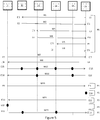
- FIG 4 presents an overview of the steps of the activation method according to a second embodiment of the invention.
- the session between terminal 2 and server 21 is not established and the method takes place before session data is not transmitted from the terminal to the server.
- Messages in this embodiment are transmitted using the QUIC protocol.
- the phases of the process, as presented in the figure 3 are recalled in this figure which describes the messages exchanged between the terminal 2, the server 21 and the entities 11, 13, 14, 16.
- step E1 the server 21 transmits to entity 11 a message M1 of the “HTTP Get” type that entity 11 receives during step E'1.
- step E2 the entity 11 transmits to the server 21 a 200 OK type message M2 comprising a public key of the entity 11 and an identifier, such as the IP address used by the entity 11.
- the server 21 receives this message during step E'2.
- Steps E3, E'3, E4, E'4 on the one hand and E5, E'5, E6, E'6 on the other hand are respectively identical to steps E1, E'1, E2, E'2 to the difference that they respectively imply the entities 13 and 14 and not the entity 11.
- the messages M3 and M4 on the one hand and the messages M5 and M6 on the other hand are respectively identical to the messages M1 and M2 .
- the server 21 holds public keys as well as the IP addresses of the entities 11, 13 and 14, formalizing the approval of these entities with the server 21 in this embodiment.
- step E7 terminal 2 transmits a message M7 of the QUIC Client Hello type to the server 21 which receives it during step E'7.
- step E8 the server 21 transmits a message M8 of the QUIC server Hello type to the terminal 2 which receives it during step E'8.
- the purpose of these messages is to negotiate parameters, in particular security parameters, relating to the establishment of a session between the terminal 2 and the server 21.
- terminal 2 transmits a QUIC SIG type message M9 to server 21 in order to identify the entities on the path taken by the data of the session between terminal 2 and the server 21.
- the entities 11, 13, 14, 16 add an identifier to the QUIC SIG message when they receive the message M9.
- the message contains new information corresponding to its IP address.
- the entities add their IP address to the QUIC SIG message received from the terminal 2 and intended for the server 21.
- the server 21 receives the QUIC SIG message comprising in particular the IP addresses of the entities 11, 13, 14, 16 during step E ′ 9.
- step E10 corresponding to phase P2, the server 21 identifies, from the IP addresses, the entities with which an agreement was concluded during phase P0 and selects the entities 11, 13 and 14.
- This message M11 QUIC SIG comprising the IP addresses of the authorized processing entities, can be encrypted from the parameters, such as encryption keys, negotiated in the messages M7 and M8, so as to guarantee the confidentiality and the authenticity of the message M11.
- the identifiers transmitted can be domain names, service names referenced in a DNS server type database or any other type of identifier, depending on the type of information added by the processing entities.
- Terminal 2 receives the message M11 QUIC SIG during step E'11 and selects, during step E12, of phase P4, the IP addresses of the processing entities 11, 14 that it wishes to keep for the session among the entities approved by the server 21 and transmitted in the message M11.
- This selection by terminal 2 can be made from IP addresses pre-configured in terminal 2 or by reverse resolution, by obtaining the service or the name associated with the IP address of the processing entity, if the 'identifier is an IP address.
- the user of the terminal can, according to an alternative, accept or refuse an entity whose name will be indicated to him on the screen, for example because it is implemented by an operator or an unrecognized or unwanted actor, a once the reverse resolution has been performed if the identifier is an IP address, or else in the absence of resolution, if the identifier of the entity is explicit for a user.
- step E13 corresponding to phase P5, terminal 2 transmits in a QUIC type activation message M13 the session data or more precisely the packets comprising the session data to the server 21. To be sure that the packets take the same path as the message M9 additional routing functions can be used.
- the message M13 also includes information making it possible to activate the entities retained by the terminal 2.
- the message M13 can include the identifiers of the processing entities. selected, which indicates to the entities whose identifiers are not present, not to activate the processing on the data packets of this session.
- the message M13 can comprise a session identifier allowing the entities to be able to directly associate a session and, from the identifiers present, an authorization or not to apply a treatment, from the identifier present or not in the message M13, on the data of the session whose identifier is in the message M13.
- the message M13 can be encrypted by the terminal 2, for example using its private key. The sending of an activation message M13 encrypted by the terminal 2, in particular using a private key, makes it possible to indicate to each entity 11,14 selected by the terminal 2 that the terminal 2 or the user is indeed the one which has approved said entity 11, 14. This makes it possible to prevent a processing entity from being activated or deactivated by sending a message not transmitted by the terminal.
- the processing entities selected by the terminal 2 for the session can furthermore use the encryption to authenticate the terminal 2 and to apply specific processing depending on the terminal 2 which sent the message, and whose authenticity is guaranteed by the encryption. from the terminal's private key.
- the processing entities 11, 14 must have the public keys associated with the private key in order to be able to decrypt the message sent by the terminal 2.
- the session between the terminal 2 and the server 21 is established when the method is implemented and packets of the session have already been exchanged between the terminal 2 and the server 21.
- the session was being established and session data had not been exchanged between the terminal 2 and the server 21 during the implementation of the method.
- Processing entities have already applied processing to the packets of the data session exchanged between the terminal 2 and the server 21.
- phase P0 does not relate to a precise data session and that it is not implemented for each data session in particular.
- the method can also be implemented in the absence of phase P0. In this case, the server 21 does not perform a selection of processing entities.
- steps E7, E'7 then E8, E'8, the respective messages M7 and M8 are exchanged between the terminal 2 and the server 21.
- the messages M7 and M8 are for example TCP messages for negotiating session parameters between the terminal. 2 and server 21.
- terminal 2 transmits session data to server 21.
- Terminal 2 transmits a message M15 comprising session data.
- the data of the message M15 are processed by the respective entities 11, 13, 14, 16.
- the message M15 is received by the server 21 during step E'15.
- the message M15 can for example be an HTTP request message.
- the server 21 transmits a message M16 to the terminal 2 during step E16.
- the message is for example an HTTP message for sending content.
- the data of this message M16 are processed by the processing entities 13 and 16.
- the message M16 is received by the terminal 2 during step E'16.
- the processing entities apply processing of the session without having received any explicit information, either from the terminal 2 or from the server 21 to apply or not these processing operations, compared to what is carried out in the techniques relating to the prior art.
- step E9 the terminal 2 transmits to the server 21 an identification message M19 based on the TCP protocol to which each processing entity adds an identifier EqID based for example on 24 binary elements and identifying the processing entity on the path .
- This message is received by the server 21 in step E'9.
- Step E10 is equivalent to step E10 of figure 4 except that the server 21 uses the identifiers EqID added by each processing entity during the transit of the message M19. During phase P0, the server 21 will have obtained the identifiers EqID of the processing entities with which an agreement is concluded.
- step E11 the server 21 transmits a message M21 also based on the TCP protocol and comprising the identifiers EqID of the entities approved by the server 21 among the set of identifiers received in the message M19.
- This message is received by terminal 2 during step E'11.
- the message M19 includes the identifiers EqID of the entities 11, 13, 14.
- Step E12 is identical to step E12 of the figure 4 .
- step E13 the terminal 2 transmits a message M23 for deactivating the processing entities not validated by the terminal 2.
- This deactivation message M23 comprises the identifiers EqID of the entities which must not apply processing to the data of the session and which must therefore cease processing as applied to message M15.
- the message M23 indicates to the entities 13 and 16 to stop their processing and then only the processing of the entities 11 and 14 remains on the path.
- the processing entities can confirm the taking into account of the activation message, and the requested activation or deactivation, by adding information encrypted with their private key which will be decrypted by the server 21, thus informing the server 21 of the deactivation, in this embodiment, of the entities 13 and 16.
- this method can, in its various embodiments, be implemented for each direction of transmission of the data of a session, from the terminal to the server and from the server to the terminal, the data processing being able to be specific to the directions of data transmission.
- the same message can be used to activate the functions for each direction of transmission, information on the direction of transmission allowing the intermediate functions to apply or not a processing according to the direction.
- an activation message will be transmitted by direction of transmission.
- the device 60 for activating at least one processing entity from among a plurality of entities implements the activation method, various embodiments of which have just been described.
- Such a device 60 can be implemented in a terminal.
- the terminal can be a mobile terminal or a fixed terminal.
- the device 60 comprises a processing unit 630, equipped for example with a ⁇ P microprocessor, and controlled by a computer program 610, stored in a memory 620 and implementing the activation method according to the invention. .
- the code instructions of the computer program 610 are for example loaded into a RAM memory, before being executed by the processor of the processing unit 630.
- the device 70 for acknowledging at least one processing entity from among a plurality of entities implements the acknowledgment method, various embodiments of which have just been described.
- Such a device 70 can be implemented in a server.
- the device 70 comprises a processing unit 730, equipped for example with a ⁇ P microprocessor, and controlled by a computer program 710, stored in a memory 720 and implementing the selection method according to the invention.
- a computer program 710 stored in a memory 720 and implementing the selection method according to the invention.
- the code instructions of the computer program 710 are for example loaded into a RAM memory, before being executed by the processor of the processing unit 730.
- the acknowledgment device 70 may further include a selection module 71, able to select identifiers of entities approved by the supplier from among the identifiers received in the identification message.
- the modules described in relation to the figure 6 and the figure 7 can be hardware or software modules.
- the embodiments of the invention which have just been presented are only a few of the embodiments which can be envisaged.
- the activation method and the acknowledgment method make it possible to advantageously be able to control the interventions of intermediate functions.
- the user of a terminal can thus know the processing of his data and authorize or not this processing, thus reinforcing the users' control over the storage, the modifications as well as the use of the data.
- the method also makes it possible to decide which operator to transport its data.
- multi-path protocols such as MTCP (in English Multipath TCP) are now used to improve availability and quality of service.
- Each path of a session can include distinct entities, possibly implemented by also distinct operators.
- the user, or the terminal if it is an automatic selection can select one or more paths according to the processing entities identified on the paths and thus intervene on the policy for routing the data of a session. possibly taking several paths.
Landscapes
- Engineering & Computer Science (AREA)
- Computer Networks & Wireless Communication (AREA)
- Signal Processing (AREA)
- Computer Security & Cryptography (AREA)
- Computer And Data Communications (AREA)
Claims (15)
- Verfahren zur Aktivierung mindestens einer Prozessentität (11, 14) aus einer Vielzahl von Entitäten (11, 13, 14, 16), die sich auf dem Pfad der Daten einer Sitzung zwischen einem Endgerät (2) eines Benutzers und einem Server (21) eines Dienstanbieters befinden, wobei das Endgerät (2) und der Server (21) in ein Kommunikationsnetzwerk (100) eingebunden sind, implementiert in dem Endgerät (2) und beinhaltend- einen Schritt (E9) des Sendens, an den Server (21), einer Identifikationsnachricht (M9, M19), die dazu bestimmt ist, Kennungen von Entitäten (11, 13, 14, 16) der Vielzahl zu empfangen, die durch die Entitäten (11, 13, 14, 16) hinzugefügt werden,- einen Schritt (E'11) des Empfangens, von dem Server (21), einer Bestätigungsnachricht (M11, M21), die in der Identifikationsnachricht (M9) enthaltene Kennungen beinhaltet,- einen Schritt (E12) des Auswählens mindestens einer Kennung aus den von dem Server (21) empfangenen Kennungen,- einen Schritt (E13) des Sendens, an den Server (21), einer Nachricht (M13, M23) über die Aktivierung von Entitäten (11, 14) aus der Vielzahl (11, 13, 14, 16).
- Aktivierungsverfahren nach Anspruch 1, wobei die Bestätigungsnachricht (M11, M21) Kennungen von durch den Anbieter zugelassenen Entitäten (11, 13, 14) der Vielzahl beinhaltet.
- Aktivierungsverfahren nach Anspruch 1, wobei die Nachricht (M13, M23) über die Aktivierung eine Information beinhaltet, um Entitäten, deren Kennungen nicht durch das Endgerät (2) ausgewählt werden, zu deaktivieren.
- Aktivierungsverfahren nach Anspruch 1, wobei die Nachricht über die Aktivierung eine Information beinhaltet, um Entitäten, deren Kennungen durch das Endgerät (2) ausgewählt werden, zu aktivieren.
- Aktivierungsverfahren nach Anspruch 1, wobei die Identifikationsnachricht (M9, M19) und die Nachricht (M13, M23) über die Aktivierung Nachrichten auf Basis des QUIC-Protokolls sind.
- Aktivierungsverfahren nach Anspruch 1, wobei die Identifikationsnachricht (M9, M19) und die Nachricht (M13, M23) über die Aktivierung ferner eine Sitzungskennung beinhalten.
- Verfahren zur Bestätigung der Identifikation mindestens einer Prozessentität (11, 13, 14, 16) aus einer Vielzahl von Entitäten (11, 13, 14, 16), die sich auf dem Pfad der Daten einer Sitzung zwischen einem Endgerät (2) eines Benutzers und einem Server (21) eines Dienstanbieters befinden, wobei das Endgerät (2) und der Server (21) in ein Kommunikationsnetzwerk (100) eingebunden sind, implementiert in dem Server und beinhaltend- einen Schritt (E'9) des Empfangens, von dem Endgerät (2), einer Identifikationsnachricht (M9, M19), die Kennungen von Entitäten der Vielzahl, die durch diese Entitäten (11, 13, 14, 16) hinzugefügt werden, beinhaltet,- einen Schritt (E11) des Sendens, an das Endgerät, einer Bestätigungsnachricht (M11, M21), die in der Identifikationsnachricht (M9, M19) enthaltene Kennungen beinhaltet,- einen Schritt (E'13) des Empfangens, von dem Endgerät (2), einer Nachricht (M13, M23) über die Aktivierung von Entitäten (11, 14) aus der Vielzahl (11, 13, 14, 16).
- Bestätigungsverfahren nach Anspruch 7, das ferner einen Schritt (E10) des Auswählens der Kennungen der durch den Anbieter zugelassenen Entitäten (11, 13, 14) aus den in der Identifikationsnachricht empfangenen Kennungen beinhaltet.
- Bestätigungsverfahren nach Anspruch 7, ferner beinhaltend- einen Schritt (E1, E3, E5) des Sendens einer Zulassungsanfragenachricht (M1, M3, M5) an mindestens eine Entität der Vielzahl (11, 13, 14),- einen Schritt des Empfangens (E'2, E'4, E'6) einer Zulassungsantwortnachricht von der mindestens einen Entität (11, 13, 14), die den öffentlichen Schlüssel der Entität (11, 13, 14) beinhaltet.
- Vorrichtung (60) zur Aktivierung mindestens einer Prozessentität (11, 14) aus einer Vielzahl (11, 13, 14, 16) von Entitäten, die sich auf dem Pfad der Daten einer Sitzung zwischen einem Endgerät (2) eines Benutzers und einem Server (21) eines Dienstanbieters befinden, wobei das Endgerät (2) und der Server (21) in ein Kommunikationsnetzwerk (100) eingebunden sind, implementiert in dem Endgerät (2) und beinhaltend- einen Sender (63), der fähig ist, eine Identifikationsnachricht (M9, M19) an den Server (21) zu senden, welche dazu bestimmt ist, Kennungen von Entitäten (11, 13, 14, 16) der Vielzahl zu empfangen, die durch die Entitäten (11, 13, 14, 16) hinzugefügt werden,- einen Empfänger (64), der fähig ist, eine Bestätigungsnachricht (M11, M21) von dem Server (21) zu empfangen, die in der Identifikationsnachricht (M9, M19) enthaltene Kennungen beinhaltet,- ein Auswahlmodul (61), das fähig ist, mindestens eine Kennung aus den von dem Server (21) empfangenen Kennungen auszuwählen,- den Sender (63), der zusätzlich fähig ist, eine Nachricht (M13, M23) über die Aktivierung von Entitäten aus der Vielzahl an den Server (21) zu senden.
- Vorrichtung (70) zur Bestätigung der Identifikation mindestens einer Prozessentität (11, 14) aus einer Vielzahl (11, 13, 14, 16) von Entitäten, die sich auf dem Pfad der Daten einer Sitzung zwischen einem Endgerät (2) eines Benutzers und einem Server (21) eines Dienstanbieters befinden, wobei das Endgerät (2) und der Server (21) in ein Kommunikationsnetzwerk (100) eingebunden sind, implementiert in dem Server und beinhaltend- einen Empfänger (74), der fähig ist, eine Identifikationsnachricht (M9, M19) von dem Endgerät (2) zu empfangen, die Kennungen von Entitäten (11, 13, 14, 16) der Vielzahl, die durch diese Entitäten (11, 13, 14, 16) hinzugefügt werden, beinhaltet,- einen Sender (73), der fähig ist, eine Bestätigungsnachricht (M11, M21) an das Endgerät (2) zu senden, die in der Identifikationsnachricht enthaltene Kennungen beinhaltet,- den Empfänger (74), der zusätzlich fähig ist, eine Nachricht (M13, M23) über die Aktivierung von Entitäten (11, 14) aus der Vielzahl (11, 13, 14, 16) zu empfangen.
- Bestätigungsvorrichtung (70) nach Anspruch 11, die ferner ein Auswahlmodul (71) beinhaltet, das fähig ist, Kennungen der durch den Anbieter zugelassenen Entitäten (11, 13, 14) aus den in der Identifikationsnachricht (M9, M19) empfangenen Kennungen auszuwählen.
- System zur Aktivierung mindestens einer Zwischenfunktion, beinhaltend- ein Endgerät (2), das eine Aktivierungsvorrichtung (60) nach Anspruch 10 beinhaltet,- einen Server (21), der eine Bestätigungsvorrichtung (70) nach Anspruch 11 beinhaltet.- Mindestens eine Prozessentität (11, 13, 14, 16),- die fähig ist, der von dem Endgerät (2) empfangenen Identifikationsnachricht (M9, M19) eine Kennung hinzuzufügen,- die fähig ist, in Bezug auf die Nachricht (M13) über die Aktivierung einen Prozess zu aktivieren.
- Computerprogramm, dadurch gekennzeichnet, dass es Anweisungen zum Implementieren der Schritte des Aktivierungsverfahrens nach Anspruch 1 beinhaltet, wenn dieses Verfahren von einem Prozessor ausgeführt wird.
- Durch eine Aktivierungsvorrichtung nach Anspruch 10 lesbares Aufzeichnungsmedium, auf dem das Programm nach Anspruch 14 aufgezeichnet ist.
Applications Claiming Priority (2)
| Application Number | Priority Date | Filing Date | Title |
|---|---|---|---|
| FR1755654A FR3067545A1 (fr) | 2017-06-21 | 2017-06-21 | Procede d'activation de traitements appliques a une session de donnees |
| PCT/FR2018/051452 WO2018234675A1 (fr) | 2017-06-21 | 2018-06-18 | Procédé d'activation de traitements appliqués à une session de données |
Publications (2)
| Publication Number | Publication Date |
|---|---|
| EP3643044A1 EP3643044A1 (de) | 2020-04-29 |
| EP3643044B1 true EP3643044B1 (de) | 2021-03-24 |
Family
ID=60182653
Family Applications (1)
| Application Number | Title | Priority Date | Filing Date |
|---|---|---|---|
| EP18737952.4A Active EP3643044B1 (de) | 2017-06-21 | 2018-06-18 | Verfahren zur aktivierung von auf eine datensitzung angewandten prozessen |
Country Status (6)
| Country | Link |
|---|---|
| US (1) | US11528326B2 (de) |
| EP (1) | EP3643044B1 (de) |
| CN (1) | CN110800271B (de) |
| ES (1) | ES2878376T3 (de) |
| FR (1) | FR3067545A1 (de) |
| WO (1) | WO2018234675A1 (de) |
Families Citing this family (7)
| Publication number | Priority date | Publication date | Assignee | Title |
|---|---|---|---|---|
| US11799713B2 (en) | 2015-09-22 | 2023-10-24 | Parrable Inc. | Timestamp-based association of identifiers |
| FR3096533A1 (fr) * | 2019-06-28 | 2020-11-27 | Orange | Procédé de gestion d’une communication entre terminaux dans un réseau de communication, et dispositifs pour la mise en œuvre du procédé |
| FR3111252A1 (fr) * | 2020-06-04 | 2021-12-10 | Orange | Procédé de capture d’un paquet d’une session chiffrée |
| WO2022020082A1 (en) * | 2020-07-01 | 2022-01-27 | Parrable Inc. | Timestamp-based association of identifiers |
| CN112583818B (zh) * | 2020-12-08 | 2021-12-24 | 清华大学 | 针对移动Web服务的自适应传输协议选择方法和装置 |
| US12380179B2 (en) * | 2021-09-09 | 2025-08-05 | Verizon Patent And Licensing Inc. | HTTP/3 and QUIC-based device and application characterization |
| US12309065B2 (en) * | 2023-03-30 | 2025-05-20 | Microsoft Technology Licensing, Llc | Distributed flow steering in cloud architecture |
Family Cites Families (20)
| Publication number | Priority date | Publication date | Assignee | Title |
|---|---|---|---|---|
| WO2004049673A1 (en) * | 2002-11-25 | 2004-06-10 | Nokia Corporation | Method and system for session management wherein a client session identifier is used |
| JP3859667B2 (ja) * | 2004-10-26 | 2006-12-20 | 株式会社日立製作所 | データ通信方法およびシステム |
| EP1729456B1 (de) * | 2005-05-30 | 2016-11-23 | Sap Se | Verfahrung und System zur Auswahl von Netzwerkknoten |
| JP4635855B2 (ja) * | 2005-12-13 | 2011-02-23 | 株式会社日立製作所 | データ通信方法およびシステム |
| US20080059605A1 (en) * | 2006-01-20 | 2008-03-06 | Shaul Shalev | Systems and methods for operating communication processes using a personalized communication web server |
| FR2913158B1 (fr) * | 2007-02-23 | 2009-05-01 | Iminent Soc Par Actions Simpli | Procede d'insertion d'un contenu multimedia dans une communication informatisee par messagerie instantanee |
| US7792913B2 (en) * | 2007-09-17 | 2010-09-07 | At&T Intellectual Property I, L.P. | Providing multi-device instant messaging presence indications |
| WO2009080971A1 (fr) * | 2007-12-17 | 2009-07-02 | France Telecom | Procede de configuration d'un terminal d'utilisateur dans un reseau de telephonie ip |
| US20110287748A1 (en) * | 2010-05-18 | 2011-11-24 | Albert Angel | Consent, Signature and Recording Retention in a Certified Communications System |
| US8559299B2 (en) * | 2010-11-30 | 2013-10-15 | Telefonaktiebolaget L M Ericsson (Publ) | Mobile gateways in pool for session resilience |
| US20130246684A1 (en) * | 2012-03-15 | 2013-09-19 | General Electric Company | System and method for communicating with a plurality of devices |
| US9026783B2 (en) * | 2013-03-07 | 2015-05-05 | Google Inc. | Low latency server-side redirection of UDP-based transport protocols traversing a client-side NAT firewall |
| EP3170341B1 (de) * | 2014-07-15 | 2020-04-08 | Sony Corporation | Kommunikationsvorrichtung, kommunikationsvorrichtung mit betrieb als relaisknoten, infrastrukturausrüstung und verfahren |
| US9613345B2 (en) * | 2014-12-30 | 2017-04-04 | Tracfone Wireless, Inc. | Wireless service provider system and method for activating and selling a wireless service on a wireless device |
| US10389690B2 (en) * | 2015-04-28 | 2019-08-20 | Telefonaktiebolaget Lm Ericsson (Publ) | Method and system for managing communications in a system comprising a receiver entity, a sender entity, and a network entity |
| FR3039740B1 (fr) * | 2015-07-29 | 2019-09-20 | Airbus Ds Sas | Procede de decouverte d'un noeud d'un reseau ad hoc, procede d'echange de donnees, systeme associe |
| JP6559038B2 (ja) * | 2015-10-15 | 2019-08-14 | キヤノン株式会社 | 通信装置、その制御方法、及びプログラム |
| EP3522473A4 (de) * | 2016-10-25 | 2019-11-06 | Huawei Technologies Co., Ltd. | Datenübertragungsverfahren, -vorrichtung und -system |
| FR3064437A1 (fr) * | 2017-03-24 | 2018-09-28 | Orange | Procede de recommandation d'une pile de communication |
| FR3067550A1 (fr) * | 2017-06-27 | 2018-12-14 | Orange | Procede de communication quic via des chemins multiples |
-
2017
- 2017-06-21 FR FR1755654A patent/FR3067545A1/fr not_active Ceased
-
2018
- 2018-06-18 CN CN201880040546.6A patent/CN110800271B/zh active Active
- 2018-06-18 ES ES18737952T patent/ES2878376T3/es active Active
- 2018-06-18 EP EP18737952.4A patent/EP3643044B1/de active Active
- 2018-06-18 US US16/624,617 patent/US11528326B2/en active Active
- 2018-06-18 WO PCT/FR2018/051452 patent/WO2018234675A1/fr not_active Ceased
Non-Patent Citations (1)
| Title |
|---|
| None * |
Also Published As
| Publication number | Publication date |
|---|---|
| EP3643044A1 (de) | 2020-04-29 |
| ES2878376T3 (es) | 2021-11-18 |
| US20200128083A1 (en) | 2020-04-23 |
| FR3067545A1 (fr) | 2018-12-14 |
| WO2018234675A1 (fr) | 2018-12-27 |
| US11528326B2 (en) | 2022-12-13 |
| CN110800271A (zh) | 2020-02-14 |
| CN110800271B (zh) | 2022-07-19 |
Similar Documents
| Publication | Publication Date | Title |
|---|---|---|
| EP3643044B1 (de) | Verfahren zur aktivierung von auf eine datensitzung angewandten prozessen | |
| US11848961B2 (en) | HTTPS request enrichment | |
| EP1494391B1 (de) | Automatische Konfiguration eines, mit DHCP kompatibelen Zugangsrouters, zur spezifischen Abfertigung der IP-Datenströme eines Terminals | |
| FR3053197A1 (fr) | Procede de communication udp via des chemins multiples entre deux terminaux | |
| EP3603024B1 (de) | Verfahren zur empfehlung eines kommunikationsstapels | |
| EP3732829B1 (de) | Verfahren zur durchführung von daten aus einer initialisierten sitzung zwischen terminal und server | |
| FR3096533A1 (fr) | Procédé de gestion d’une communication entre terminaux dans un réseau de communication, et dispositifs pour la mise en œuvre du procédé | |
| EP3430777B1 (de) | Verfahren und verfugung zur dynamischen verwaltung von kommunikationspfaden zwischen routern je nach anwendungsanforderung | |
| WO2018130796A1 (fr) | Procédés et dispositifs de vérification de la validité d'une délégation de diffusion de contenus chiffrés | |
| WO2020002793A1 (fr) | Procédé de modification de messages par un équipement sur un chemin de communication établi entre deux nœuds | |
| EP3560168B1 (de) | Klassifizierung und routing von steuerungsnachrichten für eine kommunikationsinfrastruktur | |
| EP4162663B1 (de) | Verfahren zur erfassung eines pakets aus einer verschlüsselten sitzung | |
| WO2025061515A1 (fr) | Procédés, dispositifs et système de contrôle d'une communication dans un réseau | |
| WO2025133029A1 (fr) | Procédé d'accès à un service par un dispositif de communication via au moins un réseau de communication | |
| FR3115644A1 (fr) | Procédé et dispositif d’aiguillage d’une donnée applicative | |
| FR3115645A1 (fr) | Procédé et dispositif de médiation d’un ensemble d’applications | |
| FR2975552A1 (fr) | Procede, programme d'ordinateur et dispositif de cooptation permettant a un abonne d'un service de partager ce service avec un autre utilisateur |
Legal Events
| Date | Code | Title | Description |
|---|---|---|---|
| STAA | Information on the status of an ep patent application or granted ep patent |
Free format text: STATUS: UNKNOWN |
|
| STAA | Information on the status of an ep patent application or granted ep patent |
Free format text: STATUS: THE INTERNATIONAL PUBLICATION HAS BEEN MADE |
|
| PUAI | Public reference made under article 153(3) epc to a published international application that has entered the european phase |
Free format text: ORIGINAL CODE: 0009012 |
|
| STAA | Information on the status of an ep patent application or granted ep patent |
Free format text: STATUS: REQUEST FOR EXAMINATION WAS MADE |
|
| 17P | Request for examination filed |
Effective date: 20191212 |
|
| AK | Designated contracting states |
Kind code of ref document: A1 Designated state(s): AL AT BE BG CH CY CZ DE DK EE ES FI FR GB GR HR HU IE IS IT LI LT LU LV MC MK MT NL NO PL PT RO RS SE SI SK SM TR |
|
| AX | Request for extension of the european patent |
Extension state: BA ME |
|
| RAP1 | Party data changed (applicant data changed or rights of an application transferred) |
Owner name: ORANGE |
|
| DAV | Request for validation of the european patent (deleted) | ||
| DAX | Request for extension of the european patent (deleted) | ||
| GRAP | Despatch of communication of intention to grant a patent |
Free format text: ORIGINAL CODE: EPIDOSNIGR1 |
|
| STAA | Information on the status of an ep patent application or granted ep patent |
Free format text: STATUS: GRANT OF PATENT IS INTENDED |
|
| INTG | Intention to grant announced |
Effective date: 20201105 |
|
| GRAS | Grant fee paid |
Free format text: ORIGINAL CODE: EPIDOSNIGR3 |
|
| GRAA | (expected) grant |
Free format text: ORIGINAL CODE: 0009210 |
|
| STAA | Information on the status of an ep patent application or granted ep patent |
Free format text: STATUS: THE PATENT HAS BEEN GRANTED |
|
| AK | Designated contracting states |
Kind code of ref document: B1 Designated state(s): AL AT BE BG CH CY CZ DE DK EE ES FI FR GB GR HR HU IE IS IT LI LT LU LV MC MK MT NL NO PL PT RO RS SE SI SK SM TR |
|
| REG | Reference to a national code |
Ref country code: GB Ref legal event code: FG4D Free format text: NOT ENGLISH |
|
| RIN1 | Information on inventor provided before grant (corrected) |
Inventor name: FROMENTOUX, GA L Inventor name: BRAUD, ARNAUD Inventor name: FIEAU, FREDERIC |
|
| REG | Reference to a national code |
Ref country code: CH Ref legal event code: EP |
|
| REG | Reference to a national code |
Ref country code: DE Ref legal event code: R096 Ref document number: 602018014447 Country of ref document: DE |
|
| REG | Reference to a national code |
Ref country code: IE Ref legal event code: FG4D Free format text: LANGUAGE OF EP DOCUMENT: FRENCH |
|
| REG | Reference to a national code |
Ref country code: AT Ref legal event code: REF Ref document number: 1375660 Country of ref document: AT Kind code of ref document: T Effective date: 20210415 |
|
| REG | Reference to a national code |
Ref country code: LT Ref legal event code: MG9D |
|
| RAP4 | Party data changed (patent owner data changed or rights of a patent transferred) |
Owner name: ORANGE |
|
| PG25 | Lapsed in a contracting state [announced via postgrant information from national office to epo] |
Ref country code: NO Free format text: LAPSE BECAUSE OF FAILURE TO SUBMIT A TRANSLATION OF THE DESCRIPTION OR TO PAY THE FEE WITHIN THE PRESCRIBED TIME-LIMIT Effective date: 20210624 Ref country code: HR Free format text: LAPSE BECAUSE OF FAILURE TO SUBMIT A TRANSLATION OF THE DESCRIPTION OR TO PAY THE FEE WITHIN THE PRESCRIBED TIME-LIMIT Effective date: 20210324 Ref country code: FI Free format text: LAPSE BECAUSE OF FAILURE TO SUBMIT A TRANSLATION OF THE DESCRIPTION OR TO PAY THE FEE WITHIN THE PRESCRIBED TIME-LIMIT Effective date: 20210324 Ref country code: GR Free format text: LAPSE BECAUSE OF FAILURE TO SUBMIT A TRANSLATION OF THE DESCRIPTION OR TO PAY THE FEE WITHIN THE PRESCRIBED TIME-LIMIT Effective date: 20210625 Ref country code: BG Free format text: LAPSE BECAUSE OF FAILURE TO SUBMIT A TRANSLATION OF THE DESCRIPTION OR TO PAY THE FEE WITHIN THE PRESCRIBED TIME-LIMIT Effective date: 20210624 |
|
| PG25 | Lapsed in a contracting state [announced via postgrant information from national office to epo] |
Ref country code: SE Free format text: LAPSE BECAUSE OF FAILURE TO SUBMIT A TRANSLATION OF THE DESCRIPTION OR TO PAY THE FEE WITHIN THE PRESCRIBED TIME-LIMIT Effective date: 20210324 Ref country code: RS Free format text: LAPSE BECAUSE OF FAILURE TO SUBMIT A TRANSLATION OF THE DESCRIPTION OR TO PAY THE FEE WITHIN THE PRESCRIBED TIME-LIMIT Effective date: 20210324 Ref country code: LV Free format text: LAPSE BECAUSE OF FAILURE TO SUBMIT A TRANSLATION OF THE DESCRIPTION OR TO PAY THE FEE WITHIN THE PRESCRIBED TIME-LIMIT Effective date: 20210324 |
|
| REG | Reference to a national code |
Ref country code: NL Ref legal event code: MP Effective date: 20210324 |
|
| REG | Reference to a national code |
Ref country code: AT Ref legal event code: MK05 Ref document number: 1375660 Country of ref document: AT Kind code of ref document: T Effective date: 20210324 |
|
| PG25 | Lapsed in a contracting state [announced via postgrant information from national office to epo] |
Ref country code: NL Free format text: LAPSE BECAUSE OF FAILURE TO SUBMIT A TRANSLATION OF THE DESCRIPTION OR TO PAY THE FEE WITHIN THE PRESCRIBED TIME-LIMIT Effective date: 20210324 |
|
| PG25 | Lapsed in a contracting state [announced via postgrant information from national office to epo] |
Ref country code: LT Free format text: LAPSE BECAUSE OF FAILURE TO SUBMIT A TRANSLATION OF THE DESCRIPTION OR TO PAY THE FEE WITHIN THE PRESCRIBED TIME-LIMIT Effective date: 20210324 Ref country code: EE Free format text: LAPSE BECAUSE OF FAILURE TO SUBMIT A TRANSLATION OF THE DESCRIPTION OR TO PAY THE FEE WITHIN THE PRESCRIBED TIME-LIMIT Effective date: 20210324 Ref country code: CZ Free format text: LAPSE BECAUSE OF FAILURE TO SUBMIT A TRANSLATION OF THE DESCRIPTION OR TO PAY THE FEE WITHIN THE PRESCRIBED TIME-LIMIT Effective date: 20210324 Ref country code: SM Free format text: LAPSE BECAUSE OF FAILURE TO SUBMIT A TRANSLATION OF THE DESCRIPTION OR TO PAY THE FEE WITHIN THE PRESCRIBED TIME-LIMIT Effective date: 20210324 Ref country code: AT Free format text: LAPSE BECAUSE OF FAILURE TO SUBMIT A TRANSLATION OF THE DESCRIPTION OR TO PAY THE FEE WITHIN THE PRESCRIBED TIME-LIMIT Effective date: 20210324 |
|
| REG | Reference to a national code |
Ref country code: ES Ref legal event code: FG2A Ref document number: 2878376 Country of ref document: ES Kind code of ref document: T3 Effective date: 20211118 |
|
| REG | Reference to a national code |
Ref country code: DE Ref legal event code: R079 Ref document number: 602018014447 Country of ref document: DE Free format text: PREVIOUS MAIN CLASS: H04L0029080000 Ipc: H04L0065000000 |
|
| PG25 | Lapsed in a contracting state [announced via postgrant information from national office to epo] |
Ref country code: PL Free format text: LAPSE BECAUSE OF FAILURE TO SUBMIT A TRANSLATION OF THE DESCRIPTION OR TO PAY THE FEE WITHIN THE PRESCRIBED TIME-LIMIT Effective date: 20210324 Ref country code: PT Free format text: LAPSE BECAUSE OF FAILURE TO SUBMIT A TRANSLATION OF THE DESCRIPTION OR TO PAY THE FEE WITHIN THE PRESCRIBED TIME-LIMIT Effective date: 20210726 Ref country code: RO Free format text: LAPSE BECAUSE OF FAILURE TO SUBMIT A TRANSLATION OF THE DESCRIPTION OR TO PAY THE FEE WITHIN THE PRESCRIBED TIME-LIMIT Effective date: 20210324 Ref country code: SK Free format text: LAPSE BECAUSE OF FAILURE TO SUBMIT A TRANSLATION OF THE DESCRIPTION OR TO PAY THE FEE WITHIN THE PRESCRIBED TIME-LIMIT Effective date: 20210324 Ref country code: IS Free format text: LAPSE BECAUSE OF FAILURE TO SUBMIT A TRANSLATION OF THE DESCRIPTION OR TO PAY THE FEE WITHIN THE PRESCRIBED TIME-LIMIT Effective date: 20210724 |
|
| REG | Reference to a national code |
Ref country code: DE Ref legal event code: R097 Ref document number: 602018014447 Country of ref document: DE |
|
| PG25 | Lapsed in a contracting state [announced via postgrant information from national office to epo] |
Ref country code: MC Free format text: LAPSE BECAUSE OF FAILURE TO SUBMIT A TRANSLATION OF THE DESCRIPTION OR TO PAY THE FEE WITHIN THE PRESCRIBED TIME-LIMIT Effective date: 20210324 Ref country code: DK Free format text: LAPSE BECAUSE OF FAILURE TO SUBMIT A TRANSLATION OF THE DESCRIPTION OR TO PAY THE FEE WITHIN THE PRESCRIBED TIME-LIMIT Effective date: 20210324 Ref country code: AL Free format text: LAPSE BECAUSE OF FAILURE TO SUBMIT A TRANSLATION OF THE DESCRIPTION OR TO PAY THE FEE WITHIN THE PRESCRIBED TIME-LIMIT Effective date: 20210324 |
|
| REG | Reference to a national code |
Ref country code: CH Ref legal event code: PL |
|
| PLBE | No opposition filed within time limit |
Free format text: ORIGINAL CODE: 0009261 |
|
| STAA | Information on the status of an ep patent application or granted ep patent |
Free format text: STATUS: NO OPPOSITION FILED WITHIN TIME LIMIT |
|
| PG25 | Lapsed in a contracting state [announced via postgrant information from national office to epo] |
Ref country code: SI Free format text: LAPSE BECAUSE OF FAILURE TO SUBMIT A TRANSLATION OF THE DESCRIPTION OR TO PAY THE FEE WITHIN THE PRESCRIBED TIME-LIMIT Effective date: 20210324 |
|
| 26N | No opposition filed |
Effective date: 20220104 |
|
| REG | Reference to a national code |
Ref country code: BE Ref legal event code: MM Effective date: 20210630 |
|
| PG25 | Lapsed in a contracting state [announced via postgrant information from national office to epo] |
Ref country code: LU Free format text: LAPSE BECAUSE OF NON-PAYMENT OF DUE FEES Effective date: 20210618 |
|
| PG25 | Lapsed in a contracting state [announced via postgrant information from national office to epo] |
Ref country code: LI Free format text: LAPSE BECAUSE OF NON-PAYMENT OF DUE FEES Effective date: 20210630 Ref country code: IE Free format text: LAPSE BECAUSE OF NON-PAYMENT OF DUE FEES Effective date: 20210618 Ref country code: CH Free format text: LAPSE BECAUSE OF NON-PAYMENT OF DUE FEES Effective date: 20210630 |
|
| PG25 | Lapsed in a contracting state [announced via postgrant information from national office to epo] |
Ref country code: IS Free format text: LAPSE BECAUSE OF FAILURE TO SUBMIT A TRANSLATION OF THE DESCRIPTION OR TO PAY THE FEE WITHIN THE PRESCRIBED TIME-LIMIT Effective date: 20210724 |
|
| PG25 | Lapsed in a contracting state [announced via postgrant information from national office to epo] |
Ref country code: BE Free format text: LAPSE BECAUSE OF NON-PAYMENT OF DUE FEES Effective date: 20210630 |
|
| PG25 | Lapsed in a contracting state [announced via postgrant information from national office to epo] |
Ref country code: CY Free format text: LAPSE BECAUSE OF FAILURE TO SUBMIT A TRANSLATION OF THE DESCRIPTION OR TO PAY THE FEE WITHIN THE PRESCRIBED TIME-LIMIT Effective date: 20210324 |
|
| PG25 | Lapsed in a contracting state [announced via postgrant information from national office to epo] |
Ref country code: HU Free format text: LAPSE BECAUSE OF FAILURE TO SUBMIT A TRANSLATION OF THE DESCRIPTION OR TO PAY THE FEE WITHIN THE PRESCRIBED TIME-LIMIT; INVALID AB INITIO Effective date: 20180618 |
|
| PG25 | Lapsed in a contracting state [announced via postgrant information from national office to epo] |
Ref country code: MK Free format text: LAPSE BECAUSE OF FAILURE TO SUBMIT A TRANSLATION OF THE DESCRIPTION OR TO PAY THE FEE WITHIN THE PRESCRIBED TIME-LIMIT Effective date: 20210324 |
|
| PG25 | Lapsed in a contracting state [announced via postgrant information from national office to epo] |
Ref country code: MT Free format text: LAPSE BECAUSE OF FAILURE TO SUBMIT A TRANSLATION OF THE DESCRIPTION OR TO PAY THE FEE WITHIN THE PRESCRIBED TIME-LIMIT Effective date: 20210324 |
|
| PGFP | Annual fee paid to national office [announced via postgrant information from national office to epo] |
Ref country code: DE Payment date: 20250520 Year of fee payment: 8 |
|
| PGFP | Annual fee paid to national office [announced via postgrant information from national office to epo] |
Ref country code: GB Payment date: 20250520 Year of fee payment: 8 |
|
| PGFP | Annual fee paid to national office [announced via postgrant information from national office to epo] |
Ref country code: IT Payment date: 20250520 Year of fee payment: 8 |
|
| PGFP | Annual fee paid to national office [announced via postgrant information from national office to epo] |
Ref country code: FR Payment date: 20250520 Year of fee payment: 8 |
|
| PGFP | Annual fee paid to national office [announced via postgrant information from national office to epo] |
Ref country code: ES Payment date: 20250701 Year of fee payment: 8 |
|
| PG25 | Lapsed in a contracting state [announced via postgrant information from national office to epo] |
Ref country code: TR Free format text: LAPSE BECAUSE OF FAILURE TO SUBMIT A TRANSLATION OF THE DESCRIPTION OR TO PAY THE FEE WITHIN THE PRESCRIBED TIME-LIMIT Effective date: 20210324 |