EP3645455B1 - Verfahren zur herstellung mit hohem ertrag von wasserstoff aus einem synthesegas und engstellenbeseitigung einer bestehenden einheit - Google Patents
Verfahren zur herstellung mit hohem ertrag von wasserstoff aus einem synthesegas und engstellenbeseitigung einer bestehenden einheit Download PDFInfo
- Publication number
- EP3645455B1 EP3645455B1 EP17754188.5A EP17754188A EP3645455B1 EP 3645455 B1 EP3645455 B1 EP 3645455B1 EP 17754188 A EP17754188 A EP 17754188A EP 3645455 B1 EP3645455 B1 EP 3645455B1
- Authority
- EP
- European Patent Office
- Prior art keywords
- hydrogen
- psa
- waste
- production
- ehs
- Prior art date
- Legal status (The legal status is an assumption and is not a legal conclusion. Google has not performed a legal analysis and makes no representation as to the accuracy of the status listed.)
- Active
Links
Images
Classifications
-
- C—CHEMISTRY; METALLURGY
- C01—INORGANIC CHEMISTRY
- C01B—NON-METALLIC ELEMENTS; COMPOUNDS THEREOF; METALLOIDS OR COMPOUNDS THEREOF NOT COVERED BY SUBCLASS C01C
- C01B3/00—Hydrogen; Gaseous mixtures containing hydrogen; Separation of hydrogen from mixtures containing it; Purification of hydrogen; Reversible storage of hydrogen
- C01B3/02—Production of hydrogen; Production of gaseous mixtures containing hydrogen
- C01B3/32—Production of hydrogen; Production of gaseous mixtures containing hydrogen by reaction of gaseous or liquid organic compounds with gasifying agents, e.g. water, carbon dioxide or air
- C01B3/34—Production of hydrogen; Production of gaseous mixtures containing hydrogen by reaction of gaseous or liquid organic compounds with gasifying agents, e.g. water, carbon dioxide or air by reaction of hydrocarbons with gasifying agents
-
- C—CHEMISTRY; METALLURGY
- C01—INORGANIC CHEMISTRY
- C01B—NON-METALLIC ELEMENTS; COMPOUNDS THEREOF; METALLOIDS OR COMPOUNDS THEREOF NOT COVERED BY SUBCLASS C01C
- C01B3/00—Hydrogen; Gaseous mixtures containing hydrogen; Separation of hydrogen from mixtures containing it; Purification of hydrogen; Reversible storage of hydrogen
- C01B3/02—Production of hydrogen; Production of gaseous mixtures containing hydrogen
- C01B3/32—Production of hydrogen; Production of gaseous mixtures containing hydrogen by reaction of gaseous or liquid organic compounds with gasifying agents, e.g. water, carbon dioxide or air
- C01B3/34—Production of hydrogen; Production of gaseous mixtures containing hydrogen by reaction of gaseous or liquid organic compounds with gasifying agents, e.g. water, carbon dioxide or air by reaction of hydrocarbons with gasifying agents
- C01B3/48—Production of hydrogen; Production of gaseous mixtures containing hydrogen by reaction of gaseous or liquid organic compounds with gasifying agents, e.g. water, carbon dioxide or air by reaction of hydrocarbons with gasifying agents followed by reaction of water vapour with carbon monoxide
-
- C—CHEMISTRY; METALLURGY
- C01—INORGANIC CHEMISTRY
- C01B—NON-METALLIC ELEMENTS; COMPOUNDS THEREOF; METALLOIDS OR COMPOUNDS THEREOF NOT COVERED BY SUBCLASS C01C
- C01B3/00—Hydrogen; Gaseous mixtures containing hydrogen; Separation of hydrogen from mixtures containing it; Purification of hydrogen; Reversible storage of hydrogen
- C01B3/50—Separation of hydrogen or hydrogen-containing gases from gaseous mixtures, e.g. purification
-
- C—CHEMISTRY; METALLURGY
- C01—INORGANIC CHEMISTRY
- C01B—NON-METALLIC ELEMENTS; COMPOUNDS THEREOF; METALLOIDS OR COMPOUNDS THEREOF NOT COVERED BY SUBCLASS C01C
- C01B3/00—Hydrogen; Gaseous mixtures containing hydrogen; Separation of hydrogen from mixtures containing it; Purification of hydrogen; Reversible storage of hydrogen
- C01B3/50—Separation of hydrogen or hydrogen-containing gases from gaseous mixtures, e.g. purification
- C01B3/56—Separation of hydrogen or hydrogen-containing gases from gaseous mixtures, e.g. purification by contacting with solids; Regeneration of used solids
-
- C—CHEMISTRY; METALLURGY
- C01—INORGANIC CHEMISTRY
- C01B—NON-METALLIC ELEMENTS; COMPOUNDS THEREOF; METALLOIDS OR COMPOUNDS THEREOF NOT COVERED BY SUBCLASS C01C
- C01B2203/00—Integrated processes for the production of hydrogen or synthesis gas
- C01B2203/02—Processes for making hydrogen or synthesis gas
- C01B2203/0205—Processes for making hydrogen or synthesis gas containing a reforming step
- C01B2203/0227—Processes for making hydrogen or synthesis gas containing a reforming step containing a catalytic reforming step
- C01B2203/0233—Processes for making hydrogen or synthesis gas containing a reforming step containing a catalytic reforming step the reforming step being a steam reforming step
-
- C—CHEMISTRY; METALLURGY
- C01—INORGANIC CHEMISTRY
- C01B—NON-METALLIC ELEMENTS; COMPOUNDS THEREOF; METALLOIDS OR COMPOUNDS THEREOF NOT COVERED BY SUBCLASS C01C
- C01B2203/00—Integrated processes for the production of hydrogen or synthesis gas
- C01B2203/02—Processes for making hydrogen or synthesis gas
- C01B2203/0283—Processes for making hydrogen or synthesis gas containing a CO-shift step, i.e. a water gas shift step
-
- C—CHEMISTRY; METALLURGY
- C01—INORGANIC CHEMISTRY
- C01B—NON-METALLIC ELEMENTS; COMPOUNDS THEREOF; METALLOIDS OR COMPOUNDS THEREOF NOT COVERED BY SUBCLASS C01C
- C01B2203/00—Integrated processes for the production of hydrogen or synthesis gas
- C01B2203/04—Integrated processes for the production of hydrogen or synthesis gas containing a purification step for the hydrogen or the synthesis gas
-
- C—CHEMISTRY; METALLURGY
- C01—INORGANIC CHEMISTRY
- C01B—NON-METALLIC ELEMENTS; COMPOUNDS THEREOF; METALLOIDS OR COMPOUNDS THEREOF NOT COVERED BY SUBCLASS C01C
- C01B2203/00—Integrated processes for the production of hydrogen or synthesis gas
- C01B2203/04—Integrated processes for the production of hydrogen or synthesis gas containing a purification step for the hydrogen or the synthesis gas
- C01B2203/042—Purification by adsorption on solids
- C01B2203/043—Regenerative adsorption process in two or more beds, one for adsorption, the other for regeneration
-
- C—CHEMISTRY; METALLURGY
- C01—INORGANIC CHEMISTRY
- C01B—NON-METALLIC ELEMENTS; COMPOUNDS THEREOF; METALLOIDS OR COMPOUNDS THEREOF NOT COVERED BY SUBCLASS C01C
- C01B2203/00—Integrated processes for the production of hydrogen or synthesis gas
- C01B2203/04—Integrated processes for the production of hydrogen or synthesis gas containing a purification step for the hydrogen or the synthesis gas
- C01B2203/0465—Composition of the impurity
- C01B2203/047—Composition of the impurity the impurity being carbon monoxide
-
- C—CHEMISTRY; METALLURGY
- C01—INORGANIC CHEMISTRY
- C01B—NON-METALLIC ELEMENTS; COMPOUNDS THEREOF; METALLOIDS OR COMPOUNDS THEREOF NOT COVERED BY SUBCLASS C01C
- C01B2203/00—Integrated processes for the production of hydrogen or synthesis gas
- C01B2203/04—Integrated processes for the production of hydrogen or synthesis gas containing a purification step for the hydrogen or the synthesis gas
- C01B2203/0465—Composition of the impurity
- C01B2203/0475—Composition of the impurity the impurity being carbon dioxide
-
- C—CHEMISTRY; METALLURGY
- C01—INORGANIC CHEMISTRY
- C01B—NON-METALLIC ELEMENTS; COMPOUNDS THEREOF; METALLOIDS OR COMPOUNDS THEREOF NOT COVERED BY SUBCLASS C01C
- C01B2203/00—Integrated processes for the production of hydrogen or synthesis gas
- C01B2203/12—Feeding the process for making hydrogen or synthesis gas
- C01B2203/1258—Pre-treatment of the feed
- C01B2203/1264—Catalytic pre-treatment of the feed
- C01B2203/127—Catalytic desulfurisation
-
- C—CHEMISTRY; METALLURGY
- C01—INORGANIC CHEMISTRY
- C01B—NON-METALLIC ELEMENTS; COMPOUNDS THEREOF; METALLOIDS OR COMPOUNDS THEREOF NOT COVERED BY SUBCLASS C01C
- C01B2203/00—Integrated processes for the production of hydrogen or synthesis gas
- C01B2203/14—Details of the flowsheet
- C01B2203/148—Details of the flowsheet involving a recycle stream to the feed of the process for making hydrogen or synthesis gas
Definitions
- the present invention relates to a process for producing hydrogen by reforming hydrocarbons, it also relates to a method of debottlenecking an existing hydrogen production facility, as well as a hydrogen production facility.
- Hydrogen production systems are most often based on the reforming of light hydrocarbons - by light hydrocarbons we most often mean methane, generally in the form of natural gas or bio methane, but also naphtha, methanol among others - they also use partial oxidation or auto thermal reforming processes; these production systems generate gas mixtures mainly containing hydrogen and carbon monoxide, but also carbon dioxide, water and trace compounds, these mixtures being known under the name of synthesis gas or syngas. Steam reforming is among these systems the most commonly used, it makes it possible to produce around 90% of the hydrogen currently consumed in the world, both to meet industrial needs and those linked to mobility.
- the invention presented below makes it possible to increase the efficiency of recovery of the hydrogen produced by conventional hydrogen production plants, by a value of between approximately 75% and 90% depending on the size of the installation and operating parameters to a value close to 99%, whatever the size of the installation.
- these installations typically include a unit for purifying hydrogen by pressure swing adsorption, more commonly identified as a hydrogen PSA or PSA H 2 unit (acronym of the English expression "pressure swing adsorption).
- the pressurized feedstock (natural gas, mixture of light hydrocarbons or other feed of the same type) is, depending on its composition, desulphurized, optionally pre-reformed, then it is reformed to produce a synthesis gas essentially containing H 2 , CO 2 , CO, with smaller amounts of CH 4 and N 2 as well as water vapor.
- synthesis gas When the synthesis gas is produced with a view to the final production of hydrogen, it then generally passes through one or more reactors called "shift" reactors where the carbon monoxide is converted into carbon dioxide by reaction with steam. and producing additional hydrogen.
- the PSA purification process provides a product of very high quality, it only makes it possible to recover around 75 to 90% of the hydrogen entering the PSA depending on the complexity of the PSA cycle (in particular the number of balances and adsorbers), also a function of the flow rate. To compensate for the loss of hydrogen in the PSA, it is therefore necessary to increase the size of the reformer to achieve the desired production.
- the reformer must also be able to operate at a high pressure, of the order of 25 bars to produce a syngas at a pressure sufficient for the downstream treatment, and in particular to optimize the operation of the PSA, this further increases the cost of reformer.
- the purge gases from the PSA are used as fuel gas for the reformer.
- Table 1 Classic PSA yield as a function of H ⁇ sub> 2 ⁇ /sub> production PSA (number of adsorbers) 4 5 6 8 10 H 2 flow (Nm 3 / h) 100-2000 2000-10000 10000-25000 20000-50000 50,000 + H 2 PSA yield 78-80% 82-84% 84-86% 85-87% 87-89%
- the PSA residue Due to the limited yield of the PSA, the PSA residue therefore has a high hydrogen content - as illustrated by the example reported in Table 2 presented below - and all the more so when the installation is large. scaled down. While this hydrogen can be recovered as a product, it generally has a much higher value than it can have as a fuel.
- recovering (of) the hydrogen from the gaseous waste of the PSA can make it possible to better exploit the synthesis gas produced by the reformer, and can also make it possible to meet new hydrogen needs without resorting to expensive solutions. and of limited efficacy as enumerated above, as long as this additional hydrogen can be produced under conditions of satisfactory purity and cost.
- the solution consists in supplying an electrochemical cell from said low pressure gaseous waste so as to separate additional hydrogen from said low pressure gaseous waste, the additional hydrogen stream produced using the PEM membrane is recovered and combined with high pressure hydrogen produced by the PSA unit with the result of increasing the quantity of hydrogen produced by the installation.
- He is also known from EP 2 141 119 A1 a process for the production of hydrogen by reforming and purification of hydrogen by PSA with joint recovery of carbon dioxide, for this, the PSA residue is treated in two successive different membranes, one to separate carbon dioxide, and the other to separate from the hydrogen, with recycling of the permeate of the hydrogen membrane enriched in hydrogen at the inlet of the PSA.
- He is also known from FR 2 877 939 A1 a process for a combined production of hydrogen and carbon dioxide in which the residual PSA is treated to produce a fluid enriched in carbon dioxide by successive condensations / separations and treatment of non-condensables to produce a permeate rich in hydrogen which can be recycled at the PSA
- the invention therefore aims to increase the hydrogen yield of a hydrogen production plant - by reforming natural gas (or comparable feed) and purifying the hydrogen by PSA - while preserving the purity of the product and at a lower cost. .
- the solution according to the invention consists in installing an electrochemical hydrogen purification system / cell operating using a proton exchange membrane - a so-called EHS system (acronym for the corresponding English expression Electrochemical Hydrogen Separation) - installed on the residual gas from the PSA (fluid 14 in the figures) and combined with a recirculation of the purified and compressed hydrogen (mechanical or electrochemical compression combined with the separation step in the same electrochemical cell) at the inlet of the PSA so to increase the overall efficiency of an existing installation, while maintaining the quality of the hydrogen produced.
- EHS system Electrochemical Hydrogen Separation
- the invention relates to a method of debottlenecking an installation producing hydrogen comprising a module for generating a synthesis gas by reforming from light hydrocarbons, optionally a shift module for enrichment in hydrogen and carbon dioxide by converting the carbon monoxide contained in the synthesis gas with water vapor, a PSA-H 2 unit for the purification of hydrogen and the production of a gas stream high pressure ultra pure hydrogen, in particular in accordance with the ISO14687 standard with associated production of a low pressure gaseous waste (PSA waste), the two major constituents of which are carbon dioxide and hydrogen, a method according to which we installs an electrochemical hydrogen purification cell on the low pressure gaseous waste of the PSA so as to separate hydrogen and a waste (EHS cell waste) depleted in hydrogen from said PSA waste, the hydrogen being recovered for form an additional flow of hydrogen which is compressed to a pressure between 8 and 25 bar and sent in whole or in part to the inlet of the PSA unit to increase the production of hydrogen from the installation while maintaining unchanged the purity of
- the production of hydrogen from the installation is increased while maintaining the purity of the hydrogen produced by the PSA unit unchanged.
- the installation's purification module - combining the PSA and the electrochemical hydrogen separation cell (EHS system) installed on the residual with recirculation at the PSA inlet - then ensures an overall hydrogen yield of the nearby installation 99% when all of the additional hydrogen flow from the cell is sent to feed the PSA.
- the purity of the hydrogen produced at the outlet of the PSA remains unchanged.
- the invention relates to a process for producing hydrogen, the overall yield of which is optimized from its design. Indeed, the installation of an EHS cell on the PSA residue can also be done during the installation of a new installation, it allows in this case to have directly a very puroptimized hydrogen yield, without having to over-size the components located upstream of the PSA.
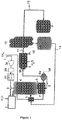
- a hydrocarbon feedstock 1 intended to produce hydrogen is subjected to an - optional - compression stage 2a, then to a desulfurization stage 2b and to an - optional - pre-reforming stage 2c, before being mixed - after preheating not shown - with water vapor at the mixing point 3 and then introduced into a steam reforming reactor 4 where it is reformed at high temperature thanks to the external heat supplied by burners 5 installed in the walls of the reactor 4 - the burners that can be installed in the side walls, installed on the terrace, in the vault or on the floor depending on the manufacturers - to produce a synthesis gas 6, a mixture essentially containing hydrogen and carbon oxides - mainly CO.
- Synthesis gas 6 also called syngas is produced at high temperature (of the order of 600 ° C 800 ° C) and pressure, it is then enriched in H 2 and CO 2 in a shift 7 reactor by conversion of CO by the excess water vapor present in the syngas to produce the syngas enriched in hydrogen 8.
- the H 2 yield of the PSA is of the order of 78-80% for 4 adsorbers; as reported in Table I, it increases in the case of large installations reaching 88-89% for 10 adsorbers for installations producing 50,000Nm 3 / h or more.
- the PSA 12 unit produces ultra pure hydrogen 13 under pressure, as well as a low pressure gaseous waste 14 which brings together all the components present in more hydrogen in syngas 11 feeding the PSA, i.e. the very majority CO 2 , but also the CO, residual CH 4 , water vapor, nitrogen, but also next to these gases, hydrogen in proportion all the more important as the installation is small.
- the hydrogen produced 13 passes (optionally) into a production buffer tank (not referenced) in order to smooth the pressure and flow variations linked to the cycles of the PSA.
- a buffer capacity 14 is installed on the waste gas from the PSA in order to smooth out the variations in pressure, flow rate and composition of the waste gas which could affect the correct operation of the burners of the reforming furnace.
- the waste gas is used as a fuel gas, in particular for heating the reformer, because of its hydrogen and methane contents.
- the diagram does not reproduce the complexity of the installation; among the elements of the overall process - not necessary for understanding the invention - only a few are present (referenced or not): heat exchanger 9b between the syngas 8 and water with recovery of the condensates 10 upstream of the PSA , supply and preheating of the combustion air, supply of water to the installation with heating in the convection chamber of the reformer against the fumes and in the exchanger 9b against the syngas, etc.
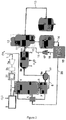
- the diagram of the figure 2 represents an installation deduced from that of the figure 1 , but which has been debottlenecked in application of the invention.
- the elements of the figure 1 that we find on the figure 2 bear the same references, in particular all the fluids and means participating in the generation of synthesis gas upstream of the purification of the hydrogen.
- the hydrocarbon feedstock 1 is here also compressed, desulfurized and pre-reformed in 2a, 2b, 2c before being mixed with the steam at the mixing point 3 and then introduced into the reforming reactor at the steam 4 where it is reformed at high temperature thanks to the external heat supplied by the burners 5 to produce the synthesis gas (or syngas) 6.
- the syngas at elevated temperature and pressure is enriched in H 2 and CO 2 in a shift reactor 7 by reaction between water vapor and the CO present in the syngas.
- the syngas 11 enriched in H 2 and CO 2 is sent to the PSA unit.
- the PSA unit 12 produces very high purity hydrogen 13 under pressure, as well as the residual low pressure gaseous PSA 14.
- the hydrogen produced 13 passes (optionally) into a production buffer tank (not referenced) in order to smooth the pressure and flow variations linked to the cycles of the PASA
- a buffer capacity 14 is installed on the residual gas of the PSA in order to smooth the variations in pressure, flow rate and composition of the PSA waste gas.
- the waste gas 14 feeds an electrochemical purification cell 15 which operates as follows: the electrochemical cell separates the constituents of the waste 14 from the hydrogen and thus produces hydrogen 16 as well as a second gas stream 20 essentially containing all of the gases present in the PSA residue 14 with only a few percent of hydrogen.
- This second gas stream 20 (identified as EHS cell waste) is - in the example - used as fuel gas for heating the reformer. Other known uses are possible depending on the circumstances and needs.
- the hydrogen 16 is compressed at 17, the gas thus compressed 18 is combined with the syngas 11 to form a new feed gas 19 for the PSA 12.
- the estimated compression power is 51.64 KW
- the estimated EHS power is 23.24 KW.
- the overall Hydrogen efficiency is 99% (Table 3C: fluid 13 values / 11 fluid values) with an EHS Hydrogen efficiency of 95% (Table 3C: 16 fluid values / 14 fluid values), and a PSA Hydrogen efficiency of 84% (Table 3C: flux13 values / flux 19 values).
- the flow rate of hydrogen produced (at identical purity) therefore increases from 610 Nm 3 / h to 756 Nm 3 / h, i.e. an increase of 24 % for a maximum additional electricity requirement of 75kW.
- This additional electricity requirement can be advantageously reduced (to around 40KW) by combining the electrochemical purification step and the compression step in the same electrochemical cell.
- the hydrogen separation by PEM proton exchange membrane - implemented in EHS cells - applied to the separation of the hydrogen contained in the gaseous waste from the PSA works as follows: the gaseous waste from the PSA, available at a temperature of the order of room temperature and at a pressure 300 to 500 mbar above atmospheric pressure supplies an electrochemical cell which contains electrodes covered with catalyst on either side of a membrane. As electric current passes through the electrodes, the PEM membrane used in the EHS cell allows hydrogen - in the form of H 3 O + - to pass selectively through the membrane, so that pure hydrogen is recovered from the other side.
- E cathode - E anode - R ⁇ T 2 ⁇ F ln P H 2 Cathode P H 2 Anode
- the membrane thereby creates a second stream containing the other compounds of the PSA residue, which cannot cross the membrane which rejects them; they form the "rejected" current.
- This rejected stream - this is stream 20 of the figure 2 and of the example, it is therefore the waste gas from the EHS within the meaning of the invention. It may, depending on its composition, be effectively rejected, or treated and / or reused in other processes, or used as fuel in the reforming furnace as shown in the example presented.
- the hydrogen thus recovered at the outlet of the EHS cell, it does not have sufficient purity to be added to the hydrogen produced by the PSA, the quality of which it would greatly degrade, after compression. suitable for recycling to power the PSA. Note that hydrogen can also be simultaneously compressed
Landscapes
- Chemical & Material Sciences (AREA)
- Organic Chemistry (AREA)
- Chemical Kinetics & Catalysis (AREA)
- Engineering & Computer Science (AREA)
- Combustion & Propulsion (AREA)
- Inorganic Chemistry (AREA)
- Health & Medical Sciences (AREA)
- General Health & Medical Sciences (AREA)
- Hydrogen, Water And Hydrids (AREA)
- Carbon And Carbon Compounds (AREA)
- Electrolytic Production Of Non-Metals, Compounds, Apparatuses Therefor (AREA)
Claims (11)
- Verfahren zur Engstellenbeseitigung bei einer Anlage zur Wasserstofferzeugung mit einem Modul (4) zur Herstellung eines Synthesegases (6) mittels Reformierung aus leichten Kohlenwasserstoffen, gegebenenfalls einem Shiftmodul (7) zur Anreicherung mit Wasserstoff und Kohlendioxid durch Umsetzung des im Synthesegas enthaltenen Kohlenmonoxids mit Wasserdampf - sowie einer PSA-H2-Einheit (12) zum Reinigen von Wasserstoff und zur Erzeugung eines ultrareinen Hochdruck-Wasserstoff-Gasstroms (13) mit zugehöriger Erzeugung eines Niederdruck-PSA-Restgases (14), dessen zwei Hauptbestandteile Kohlendioxid und Wasserstoff sind, dadurch gekennzeichnet, dass eine elektrochemische Reinigungszelle (EHS) (15) für Wasserstoff derart im Niederdruck-PSA-Restgas (14) montiert wird, dass von dem PSA-Restgas Wasserstoff und ein EHS-Zell-Restgas (20) mit einem geringeren Wasserstoffgehalt abgetrennt werden, wobei der Wasserstoff (16) dafür gewonnen wird, dass ein zusätzlicher Wasserstoffstrom gebildet wird, der bis auf einen Druck zwischen 8 und 25 bar komprimiert und vollständig oder teilweise zum Einlass der PSA-Einheit geleitet wird, damit die Wasserstoffproduktion der Anlage erhöht wird und gleichzeitig die Reinheit des mittels PSA erzeugten Wasserstoffs beibehalten bleibt.
- Verfahren zur Erzeugung von Wasserstoff, das mindestens folgende Schritte umfasst:a) mittels Reformierung Herstellen eines Synthesegases (6) aus einem Einsatzmaterial aus leichten Kohlenwasserstoffen,b) gegebenenfalls Anreichern des Synthesegases (6) mit Wasserstoff und Kohlendioxid mittels Umsetzen des Kohlenmonoxids zu Kohlendioxid mit Wasserdampf,c) Reinigen des angereicherten Synthesegases zur Erzeugung eines ultrareinen Hochdruck-Wasserstoff-Gasstroms (13) mittels modulierter Druckwechseladsorption (PSA-H2) mit zugehöriger Erzeugung eines gasförmigen Niederdruck-PSA-Restgases (14), wobei die beiden Hauptbestandteile Kohlendioxid und Wasserstoff sind,d) Speisen einer elektrochemischen Zelle (15) (EHS) mit dem gesamten Niederdruck-PSA-Restgas oder einem Teil davon, damit zusätzlicher Wasserstoff (16) aus dem PSA-Restgas sowie ein EHS-Zell-Restgas (20) mit einem geringeren Wasserstoffgehalt gewonnen wird,e) Komprimieren des gewonnenen zusätzlichen Wasserstoffs bis auf einen Druck zwischen 8 bar und 25 bar barg,f) Zurückführen des gesamten komprimierten gewonnenen zusätzlichen Wasserstoffs oder eines Teils davon in das Verfahren stromaufwärts der PSA-Einheit zum Speisen der PSA, damit die Produktionsausbeute der Anlage an sehr hochreinem Wasserstoff erhöht wird.
- Verfahren nach Anspruch 2, wobei im Falle einer Erzeugung von überschüssigem Wasserstoff (13) der Betrieb der elektrochemischen Zelle (15) unterbrochen wird.
- Verfahren nach Anspruch 2, dadurch gekennzeichnet, dass für den Schritt e) zum Komprimieren des gewonnenen zusätzlichen Wasserstoffs zumindest teilweise die elektrochemische Zelle sorgt.
- Verfahren nach Anspruch 2 oder Anspruch 4, wobei zumindest ein Teil des am Auslass der elektrochemischen Zelle gewonnenen zusätzlichen Wasserstoffs zum Entschwefeln des Einsatzmaterials aus leichten Kohlenwasserstoffen vor Schritt a) verwendet wird.
- Verfahren nach einem der Ansprüche 2, 4 oder 5, wobei das gesamte Restgas mit einem geringeren Wasserstoffgehalt, das aus der elektrochemischen Zelle (EHS) strömt, oder ein Teil davon zur Erzeugung von Kohlendioxid gewonnen wird.
- Verfahren nach einem der Ansprüche 2 oder 4 bis 6, wobei zumindest ein Teil des Restgases mit einem geringeren Wasserstoffgehalt, das aus der elektrochemischen Zelle (EHS) strömt, als Reformierungsbrennstoff verwendet wird.
- Anlage zur Erzeugung von Wasserstoff aus einem Zustrom leichter Kohlenwasserstoffe mit optimierter Ausbeute, die mindestens Folgendes umfasst:• ein Modul (4) zur Herstellung eines Synthesegases (6) mittels Reformierung aus dem Zustrom leichter Kohlenwasserstoffe;• ein optionales Modul (7) zur Umsetzung von Kohlenmonoxid mit Wasserdampf zu Kohlendioxid zum Anreichern des Synthesegases mit Wasserstoff und Kohlendioxid;• eine PSA-H2-Einheit (12) zum Reinigen des im Synthesegas enthaltenen Wasserstoffs unter Erzeugung eines abströmenden gasförmigen ultrareinen Hochdruck-Wasserstoffstroms (13) und zugehöriger Erzeugung eines abströmenden gasförmigen Niederdruck-PSA-Restgases (14), dessen zwei Hauptbestandteile Kohlendioxid und Wasserstoff sind;• eine elektrochemische Zelle (15) (EHS-Zelle), die mit Rückführung (18) zum Einlass der PSA im Restgas montiert und in der Lage ist, mit dem gasförmigen Niederdruck-PSA-Restgas (14) gespeist zu werden und in der Lage ist, den im PSA-Restgas vorhandenen Wasserstoff von den anderen Bestandteilen abzutrennen, damit ein Wasserstoffstrom (16) und ein EHS-Zell-Restgas (20) mit einem geringeren Wasserstoffgehalt erzeugt werden;• ein Kompressionsmittel (17) für den Wasserstoffstrom (16), den die EHS-Zelle abgetrennt hat;• ein Mittel zur Behandlung und/oder ein Mittel (5) zur Nutzung des EHS-Zell-Restgases (20);• sowie Mittel zum Ableiten, Leiten und Zuführen der verschiedenen verwendeten Ströme.
- Anlage nach Anspruch 8, wobei die elektrochemische Zelle (15) in der Lage ist, zumindest teilweise für die Kompression des gewonnenen zusätzlichen Wasserstoffs zu sorgen.
- Anlage nach Anspruch 8 oder Anspruch 9, die ferner Mittel zum Komprimieren und zum Weiterleiten von zumindest einem Teil des gewonnenen zusätzlichen Wasserstoffs, der am Auslass der elektrochemischen Zelle gewonnen wird, in Richtung eines Entschwefelungsmoduls (2b) des Einsatzmaterials aus leichten Kohlenwasserstoffen umfasst.
- Anlage nach einem der Ansprüche 8 bis 10, die ferner Mittel zum Verwenden des Restgases mit einem geringeren Wasserstoffgehalt, das aus der elektrochemischen Zelle (EHS) strömt, als Brennstoff für die Reformierung und/oder zum Erzeugen von Kohlendioxid umfasst.
Applications Claiming Priority (1)
| Application Number | Priority Date | Filing Date | Title |
|---|---|---|---|
| PCT/FR2017/051720 WO2019002700A1 (fr) | 2017-06-27 | 2017-06-27 | Procédé de production d'hydrogène a haut rendement a partir d'un gaz de synthèse, dégoulottage d'unité existante |
Publications (2)
| Publication Number | Publication Date |
|---|---|
| EP3645455A1 EP3645455A1 (de) | 2020-05-06 |
| EP3645455B1 true EP3645455B1 (de) | 2021-04-07 |
Family
ID=59649961
Family Applications (1)
| Application Number | Title | Priority Date | Filing Date |
|---|---|---|---|
| EP17754188.5A Active EP3645455B1 (de) | 2017-06-27 | 2017-06-27 | Verfahren zur herstellung mit hohem ertrag von wasserstoff aus einem synthesegas und engstellenbeseitigung einer bestehenden einheit |
Country Status (6)
| Country | Link |
|---|---|
| US (1) | US20200180955A1 (de) |
| EP (1) | EP3645455B1 (de) |
| JP (1) | JP6946478B2 (de) |
| KR (1) | KR20200023367A (de) |
| CN (1) | CN110809557A (de) |
| WO (1) | WO2019002700A1 (de) |
Families Citing this family (1)
| Publication number | Priority date | Publication date | Assignee | Title |
|---|---|---|---|---|
| CN117430086B (zh) * | 2022-07-14 | 2026-02-13 | 国家能源投资集团有限责任公司 | 用于氢气的分级纯化系统和分级纯化工艺 |
Family Cites Families (12)
| Publication number | Priority date | Publication date | Assignee | Title |
|---|---|---|---|---|
| JP2002020102A (ja) * | 2000-06-30 | 2002-01-23 | Mitsubishi Kakoki Kaisha Ltd | 水素製造装置の起動方法およびその停止方法 |
| FR2877939B1 (fr) * | 2004-11-16 | 2007-02-02 | Air Liquide | Procede et installation pour la production combinee d'hydrogene et de dioxyde de carbone |
| CN101432392B (zh) * | 2006-03-30 | 2012-12-26 | 新日铁工程技术株式会社 | 液体燃料合成系统 |
| EP2366447B1 (de) * | 2007-03-29 | 2014-12-17 | Nippon Oil Corporation | Verfahren und Vorrichtung zur Herstellung von Wasserstoff und Wiedergewinnung von Kohlendioxid |
| JP5039407B2 (ja) * | 2007-03-29 | 2012-10-03 | Jx日鉱日石エネルギー株式会社 | 水素製造および二酸化炭素回収方法ならびに装置 |
| JP4531800B2 (ja) * | 2007-11-13 | 2010-08-25 | 本田技研工業株式会社 | 水素製造発電システム及びその停止方法 |
| JP5424566B2 (ja) * | 2008-03-14 | 2014-02-26 | 独立行政法人石油天然ガス・金属鉱物資源機構 | 天然ガスからの液状炭化水素製造プロセスにおける合成ガスの製造方法 |
| US8394174B2 (en) * | 2009-05-18 | 2013-03-12 | American Air Liquide, Inc. | Processes for the recovery of high purity hydrogen and high purity carbon dioxide |
| US8790506B2 (en) * | 2010-03-24 | 2014-07-29 | Alexander David Deptala | Method of purifying a hydrogen stream using an electrochemical cell |
| US20140311917A1 (en) | 2013-04-19 | 2014-10-23 | Satish S. Tamhankar | Hydrogen production process |
| US20140332405A1 (en) | 2013-05-08 | 2014-11-13 | Satish S. Tamhankar | Hydrogen production process with carbon dioxide recovery |
| US9186624B2 (en) | 2013-06-28 | 2015-11-17 | Nuvera Fuel Cells, Inc. | Methods of producing and providing purified gas using an electrochemical cell |
-
2017
- 2017-06-27 US US16/623,144 patent/US20200180955A1/en not_active Abandoned
- 2017-06-27 WO PCT/FR2017/051720 patent/WO2019002700A1/fr not_active Ceased
- 2017-06-27 JP JP2019571728A patent/JP6946478B2/ja not_active Expired - Fee Related
- 2017-06-27 CN CN201780092515.0A patent/CN110809557A/zh not_active Withdrawn
- 2017-06-27 KR KR1020207001018A patent/KR20200023367A/ko not_active Abandoned
- 2017-06-27 EP EP17754188.5A patent/EP3645455B1/de active Active
Non-Patent Citations (1)
| Title |
|---|
| None * |
Also Published As
| Publication number | Publication date |
|---|---|
| JP6946478B2 (ja) | 2021-10-06 |
| CN110809557A (zh) | 2020-02-18 |
| US20200180955A1 (en) | 2020-06-11 |
| EP3645455A1 (de) | 2020-05-06 |
| WO2019002700A1 (fr) | 2019-01-03 |
| KR20200023367A (ko) | 2020-03-04 |
| JP2020525390A (ja) | 2020-08-27 |
Similar Documents
| Publication | Publication Date | Title |
|---|---|---|
| CA2792012C (fr) | Procede pour une production d'hydrogene avec emission de co2 reduite | |
| EP3713870B1 (de) | Verfahren und vorrichtung zur kombinierten herstellung von wasserstoff und kohlendioxid aus einem kohlenwasserstoffgemisch | |
| EP1890961A2 (de) | Verfahren zur gleichzeitigen herstellung von wasserstoff und kohlenmonoxid | |
| EP2181962A1 (de) | Verfahren und vorrichtung zur erzeugung von wasserstoff und rückgewinnung von kohlendioxid | |
| FR2953505A1 (fr) | Procede pour une production d'hydrogene combinee a une capture de dioxyde de carbone | |
| FR3063437A1 (fr) | Installation et procede pour le traitement par permeation membranaire d'un flux gazeux d'alimentation comprenant du methane et du dioxyde de carbone | |
| EP1565398A1 (de) | Verfahren zur erzeugung von synthesegas | |
| FR2961802A1 (fr) | Procede de production d'hydrogene combinee a une capture de dioxyde de carbone | |
| EP4063000A1 (de) | Anlage zur aufbereitung eines biogasstroms durch membranpermeation mit einer anlage zur membrantrennung aus zwei modulen | |
| CA2659547C (fr) | Procede de production d'hydrogene hautement integre thermiquement par reformage d'une charge hydrocarbonee | |
| EP3645455B1 (de) | Verfahren zur herstellung mit hohem ertrag von wasserstoff aus einem synthesegas und engstellenbeseitigung einer bestehenden einheit | |
| FR2969136A1 (fr) | Procede pour une production de monoxyde de carbone avec alimentation de boite froide stabilisee | |
| FR3053325A1 (fr) | Procede de production d'hydrogene a haut rendement a partir d'un gaz de synthese, degoulottage d'unite existante | |
| EP4149654B1 (de) | Anlage und verfahren zur herstellung von biomethan mit begrenztem methanverlust und begrenzten co2-emissionen | |
| FR3052919A1 (fr) | Installation et procede de production d'energie comprenant une pile a combustible | |
| EP3028330B1 (de) | Vorrichtung zur zuführung und rückführung von wasserstoff an eine brennstoffzelle | |
| WO2011148066A2 (fr) | Procédé de production anaérobie d'hydrogène | |
| EP4123766A1 (de) | Verfahren zum betreiben eines brennstoffzellensystems mit kohlendioxid-rückgewinnung und entsprechende anlage | |
| US20220235478A1 (en) | Method and plant for producing a carbon-monoxide-rich gas product | |
| FR3123910A1 (fr) | Procédé de synthèse d’un liquide organique porteur d’hydrogène (LOHC) chargé en hydrogène utilisant de l’hydrogène produit à partir d’un digestat de méthanisation | |
| EP1097903A1 (de) | Verfahren und Vorrichtung zur Herstellung von reinem Wasserstoff ausgehend von einem Gas das Helium enthält | |
| FR2820416A1 (fr) | Procede et dispositif pour la production d'hydrogene par oxydation partielle de carburants hydrocarbones | |
| EP4070878A1 (de) | Behandlung von biogas-reinigungsströmen | |
| FR3153618A1 (fr) | Procédé et système intégrés de production et de purification d’hydrogène à performance améliorée | |
| WO2026068030A1 (fr) | Procédé et appareil de génération d'un gaz combustible riche en hydrogène |
Legal Events
| Date | Code | Title | Description |
|---|---|---|---|
| STAA | Information on the status of an ep patent application or granted ep patent |
Free format text: STATUS: UNKNOWN |
|
| STAA | Information on the status of an ep patent application or granted ep patent |
Free format text: STATUS: THE INTERNATIONAL PUBLICATION HAS BEEN MADE |
|
| PUAI | Public reference made under article 153(3) epc to a published international application that has entered the european phase |
Free format text: ORIGINAL CODE: 0009012 |
|
| STAA | Information on the status of an ep patent application or granted ep patent |
Free format text: STATUS: REQUEST FOR EXAMINATION WAS MADE |
|
| 17P | Request for examination filed |
Effective date: 20200127 |
|
| AK | Designated contracting states |
Kind code of ref document: A1 Designated state(s): AL AT BE BG CH CY CZ DE DK EE ES FI FR GB GR HR HU IE IS IT LI LT LU LV MC MK MT NL NO PL PT RO RS SE SI SK SM TR |
|
| AX | Request for extension of the european patent |
Extension state: BA ME |
|
| DAV | Request for validation of the european patent (deleted) | ||
| DAX | Request for extension of the european patent (deleted) | ||
| GRAP | Despatch of communication of intention to grant a patent |
Free format text: ORIGINAL CODE: EPIDOSNIGR1 |
|
| STAA | Information on the status of an ep patent application or granted ep patent |
Free format text: STATUS: GRANT OF PATENT IS INTENDED |
|
| INTG | Intention to grant announced |
Effective date: 20201217 |
|
| GRAS | Grant fee paid |
Free format text: ORIGINAL CODE: EPIDOSNIGR3 |
|
| GRAA | (expected) grant |
Free format text: ORIGINAL CODE: 0009210 |
|
| STAA | Information on the status of an ep patent application or granted ep patent |
Free format text: STATUS: THE PATENT HAS BEEN GRANTED |
|
| AK | Designated contracting states |
Kind code of ref document: B1 Designated state(s): AL AT BE BG CH CY CZ DE DK EE ES FI FR GB GR HR HU IE IS IT LI LT LU LV MC MK MT NL NO PL PT RO RS SE SI SK SM TR |
|
| REG | Reference to a national code |
Ref country code: GB Ref legal event code: FG4D Free format text: NOT ENGLISH |
|
| REG | Reference to a national code |
Ref country code: AT Ref legal event code: REF Ref document number: 1379488 Country of ref document: AT Kind code of ref document: T Effective date: 20210415 Ref country code: CH Ref legal event code: EP |
|
| REG | Reference to a national code |
Ref country code: DE Ref legal event code: R096 Ref document number: 602017036242 Country of ref document: DE |
|
| REG | Reference to a national code |
Ref country code: IE Ref legal event code: FG4D Free format text: LANGUAGE OF EP DOCUMENT: FRENCH |
|
| REG | Reference to a national code |
Ref country code: NL Ref legal event code: FP |
|
| REG | Reference to a national code |
Ref country code: LT Ref legal event code: MG9D |
|
| PGFP | Annual fee paid to national office [announced via postgrant information from national office to epo] |
Ref country code: NL Payment date: 20210618 Year of fee payment: 5 Ref country code: DE Payment date: 20210618 Year of fee payment: 5 Ref country code: FR Payment date: 20210622 Year of fee payment: 5 |
|
| PGFP | Annual fee paid to national office [announced via postgrant information from national office to epo] |
Ref country code: BE Payment date: 20210618 Year of fee payment: 5 Ref country code: GB Payment date: 20210625 Year of fee payment: 5 |
|
| REG | Reference to a national code |
Ref country code: AT Ref legal event code: MK05 Ref document number: 1379488 Country of ref document: AT Kind code of ref document: T Effective date: 20210407 |
|
| REG | Reference to a national code |
Ref country code: NO Ref legal event code: T2 Effective date: 20210407 |
|
| PG25 | Lapsed in a contracting state [announced via postgrant information from national office to epo] |
Ref country code: HR Free format text: LAPSE BECAUSE OF FAILURE TO SUBMIT A TRANSLATION OF THE DESCRIPTION OR TO PAY THE FEE WITHIN THE PRESCRIBED TIME-LIMIT Effective date: 20210407 Ref country code: AT Free format text: LAPSE BECAUSE OF FAILURE TO SUBMIT A TRANSLATION OF THE DESCRIPTION OR TO PAY THE FEE WITHIN THE PRESCRIBED TIME-LIMIT Effective date: 20210407 Ref country code: BG Free format text: LAPSE BECAUSE OF FAILURE TO SUBMIT A TRANSLATION OF THE DESCRIPTION OR TO PAY THE FEE WITHIN THE PRESCRIBED TIME-LIMIT Effective date: 20210707 Ref country code: FI Free format text: LAPSE BECAUSE OF FAILURE TO SUBMIT A TRANSLATION OF THE DESCRIPTION OR TO PAY THE FEE WITHIN THE PRESCRIBED TIME-LIMIT Effective date: 20210407 Ref country code: LT Free format text: LAPSE BECAUSE OF FAILURE TO SUBMIT A TRANSLATION OF THE DESCRIPTION OR TO PAY THE FEE WITHIN THE PRESCRIBED TIME-LIMIT Effective date: 20210407 |
|
| PG25 | Lapsed in a contracting state [announced via postgrant information from national office to epo] |
Ref country code: LV Free format text: LAPSE BECAUSE OF FAILURE TO SUBMIT A TRANSLATION OF THE DESCRIPTION OR TO PAY THE FEE WITHIN THE PRESCRIBED TIME-LIMIT Effective date: 20210407 Ref country code: PT Free format text: LAPSE BECAUSE OF FAILURE TO SUBMIT A TRANSLATION OF THE DESCRIPTION OR TO PAY THE FEE WITHIN THE PRESCRIBED TIME-LIMIT Effective date: 20210809 Ref country code: PL Free format text: LAPSE BECAUSE OF FAILURE TO SUBMIT A TRANSLATION OF THE DESCRIPTION OR TO PAY THE FEE WITHIN THE PRESCRIBED TIME-LIMIT Effective date: 20210407 Ref country code: RS Free format text: LAPSE BECAUSE OF FAILURE TO SUBMIT A TRANSLATION OF THE DESCRIPTION OR TO PAY THE FEE WITHIN THE PRESCRIBED TIME-LIMIT Effective date: 20210407 Ref country code: SE Free format text: LAPSE BECAUSE OF FAILURE TO SUBMIT A TRANSLATION OF THE DESCRIPTION OR TO PAY THE FEE WITHIN THE PRESCRIBED TIME-LIMIT Effective date: 20210407 Ref country code: IS Free format text: LAPSE BECAUSE OF FAILURE TO SUBMIT A TRANSLATION OF THE DESCRIPTION OR TO PAY THE FEE WITHIN THE PRESCRIBED TIME-LIMIT Effective date: 20210807 Ref country code: GR Free format text: LAPSE BECAUSE OF FAILURE TO SUBMIT A TRANSLATION OF THE DESCRIPTION OR TO PAY THE FEE WITHIN THE PRESCRIBED TIME-LIMIT Effective date: 20210708 |
|
| PGFP | Annual fee paid to national office [announced via postgrant information from national office to epo] |
Ref country code: NO Payment date: 20210624 Year of fee payment: 5 |
|
| REG | Reference to a national code |
Ref country code: DE Ref legal event code: R097 Ref document number: 602017036242 Country of ref document: DE |
|
| PG25 | Lapsed in a contracting state [announced via postgrant information from national office to epo] |
Ref country code: SK Free format text: LAPSE BECAUSE OF FAILURE TO SUBMIT A TRANSLATION OF THE DESCRIPTION OR TO PAY THE FEE WITHIN THE PRESCRIBED TIME-LIMIT Effective date: 20210407 Ref country code: SM Free format text: LAPSE BECAUSE OF FAILURE TO SUBMIT A TRANSLATION OF THE DESCRIPTION OR TO PAY THE FEE WITHIN THE PRESCRIBED TIME-LIMIT Effective date: 20210407 Ref country code: RO Free format text: LAPSE BECAUSE OF FAILURE TO SUBMIT A TRANSLATION OF THE DESCRIPTION OR TO PAY THE FEE WITHIN THE PRESCRIBED TIME-LIMIT Effective date: 20210407 Ref country code: ES Free format text: LAPSE BECAUSE OF FAILURE TO SUBMIT A TRANSLATION OF THE DESCRIPTION OR TO PAY THE FEE WITHIN THE PRESCRIBED TIME-LIMIT Effective date: 20210407 Ref country code: MC Free format text: LAPSE BECAUSE OF FAILURE TO SUBMIT A TRANSLATION OF THE DESCRIPTION OR TO PAY THE FEE WITHIN THE PRESCRIBED TIME-LIMIT Effective date: 20210407 Ref country code: CZ Free format text: LAPSE BECAUSE OF FAILURE TO SUBMIT A TRANSLATION OF THE DESCRIPTION OR TO PAY THE FEE WITHIN THE PRESCRIBED TIME-LIMIT Effective date: 20210407 Ref country code: DK Free format text: LAPSE BECAUSE OF FAILURE TO SUBMIT A TRANSLATION OF THE DESCRIPTION OR TO PAY THE FEE WITHIN THE PRESCRIBED TIME-LIMIT Effective date: 20210407 Ref country code: EE Free format text: LAPSE BECAUSE OF FAILURE TO SUBMIT A TRANSLATION OF THE DESCRIPTION OR TO PAY THE FEE WITHIN THE PRESCRIBED TIME-LIMIT Effective date: 20210407 |
|
| REG | Reference to a national code |
Ref country code: CH Ref legal event code: PL |
|
| PLBE | No opposition filed within time limit |
Free format text: ORIGINAL CODE: 0009261 |
|
| STAA | Information on the status of an ep patent application or granted ep patent |
Free format text: STATUS: NO OPPOSITION FILED WITHIN TIME LIMIT |
|
| 26N | No opposition filed |
Effective date: 20220110 |
|
| PG25 | Lapsed in a contracting state [announced via postgrant information from national office to epo] |
Ref country code: LU Free format text: LAPSE BECAUSE OF NON-PAYMENT OF DUE FEES Effective date: 20210627 |
|
| PG25 | Lapsed in a contracting state [announced via postgrant information from national office to epo] |
Ref country code: LI Free format text: LAPSE BECAUSE OF NON-PAYMENT OF DUE FEES Effective date: 20210630 Ref country code: IE Free format text: LAPSE BECAUSE OF NON-PAYMENT OF DUE FEES Effective date: 20210627 Ref country code: CH Free format text: LAPSE BECAUSE OF NON-PAYMENT OF DUE FEES Effective date: 20210630 |
|
| PG25 | Lapsed in a contracting state [announced via postgrant information from national office to epo] |
Ref country code: IS Free format text: LAPSE BECAUSE OF FAILURE TO SUBMIT A TRANSLATION OF THE DESCRIPTION OR TO PAY THE FEE WITHIN THE PRESCRIBED TIME-LIMIT Effective date: 20210807 Ref country code: AL Free format text: LAPSE BECAUSE OF FAILURE TO SUBMIT A TRANSLATION OF THE DESCRIPTION OR TO PAY THE FEE WITHIN THE PRESCRIBED TIME-LIMIT Effective date: 20210407 |
|
| PG25 | Lapsed in a contracting state [announced via postgrant information from national office to epo] |
Ref country code: IT Free format text: LAPSE BECAUSE OF FAILURE TO SUBMIT A TRANSLATION OF THE DESCRIPTION OR TO PAY THE FEE WITHIN THE PRESCRIBED TIME-LIMIT Effective date: 20210407 |
|
| REG | Reference to a national code |
Ref country code: DE Ref legal event code: R119 Ref document number: 602017036242 Country of ref document: DE |
|
| REG | Reference to a national code |
Ref country code: NO Ref legal event code: MMEP |
|
| REG | Reference to a national code |
Ref country code: NL Ref legal event code: MM Effective date: 20220701 |
|
| REG | Reference to a national code |
Ref country code: BE Ref legal event code: MM Effective date: 20220630 |
|
| GBPC | Gb: european patent ceased through non-payment of renewal fee |
Effective date: 20220627 |
|
| PG25 | Lapsed in a contracting state [announced via postgrant information from national office to epo] |
Ref country code: NL Free format text: LAPSE BECAUSE OF NON-PAYMENT OF DUE FEES Effective date: 20220701 |
|
| PG25 | Lapsed in a contracting state [announced via postgrant information from national office to epo] |
Ref country code: NO Free format text: LAPSE BECAUSE OF NON-PAYMENT OF DUE FEES Effective date: 20220630 Ref country code: FR Free format text: LAPSE BECAUSE OF NON-PAYMENT OF DUE FEES Effective date: 20220630 |
|
| PG25 | Lapsed in a contracting state [announced via postgrant information from national office to epo] |
Ref country code: GB Free format text: LAPSE BECAUSE OF NON-PAYMENT OF DUE FEES Effective date: 20220627 Ref country code: DE Free format text: LAPSE BECAUSE OF NON-PAYMENT OF DUE FEES Effective date: 20230103 Ref country code: BE Free format text: LAPSE BECAUSE OF NON-PAYMENT OF DUE FEES Effective date: 20220630 |
|
| PG25 | Lapsed in a contracting state [announced via postgrant information from national office to epo] |
Ref country code: CY Free format text: LAPSE BECAUSE OF FAILURE TO SUBMIT A TRANSLATION OF THE DESCRIPTION OR TO PAY THE FEE WITHIN THE PRESCRIBED TIME-LIMIT Effective date: 20210407 |
|
| PG25 | Lapsed in a contracting state [announced via postgrant information from national office to epo] |
Ref country code: HU Free format text: LAPSE BECAUSE OF FAILURE TO SUBMIT A TRANSLATION OF THE DESCRIPTION OR TO PAY THE FEE WITHIN THE PRESCRIBED TIME-LIMIT; INVALID AB INITIO Effective date: 20170627 |
|
| PG25 | Lapsed in a contracting state [announced via postgrant information from national office to epo] |
Ref country code: MK Free format text: LAPSE BECAUSE OF FAILURE TO SUBMIT A TRANSLATION OF THE DESCRIPTION OR TO PAY THE FEE WITHIN THE PRESCRIBED TIME-LIMIT Effective date: 20210407 |
|
| PG25 | Lapsed in a contracting state [announced via postgrant information from national office to epo] |
Ref country code: MT Free format text: LAPSE BECAUSE OF FAILURE TO SUBMIT A TRANSLATION OF THE DESCRIPTION OR TO PAY THE FEE WITHIN THE PRESCRIBED TIME-LIMIT Effective date: 20210407 |
|
| PG25 | Lapsed in a contracting state [announced via postgrant information from national office to epo] |
Ref country code: TR Free format text: LAPSE BECAUSE OF FAILURE TO SUBMIT A TRANSLATION OF THE DESCRIPTION OR TO PAY THE FEE WITHIN THE PRESCRIBED TIME-LIMIT Effective date: 20210407 |