EP3652094B1 - Procédé et appareil pour la manutention de marchandises, d'articles et/ou d'emballages - Google Patents
Procédé et appareil pour la manutention de marchandises, d'articles et/ou d'emballages Download PDFInfo
- Publication number
- EP3652094B1 EP3652094B1 EP18734129.2A EP18734129A EP3652094B1 EP 3652094 B1 EP3652094 B1 EP 3652094B1 EP 18734129 A EP18734129 A EP 18734129A EP 3652094 B1 EP3652094 B1 EP 3652094B1
- Authority
- EP
- European Patent Office
- Prior art keywords
- piece goods
- manipulator
- formation
- articles
- packs
- Prior art date
- Legal status (The legal status is an assumption and is not a legal conclusion. Google has not performed a legal analysis and makes no representation as to the accuracy of the status listed.)
- Active
Links
Images


Classifications
-
- B—PERFORMING OPERATIONS; TRANSPORTING
- B65—CONVEYING; PACKING; STORING; HANDLING THIN OR FILAMENTARY MATERIAL
- B65G—TRANSPORT OR STORAGE DEVICES, e.g. CONVEYORS FOR LOADING OR TIPPING, SHOP CONVEYOR SYSTEMS OR PNEUMATIC TUBE CONVEYORS
- B65G47/00—Article or material-handling devices associated with conveyors; Methods employing such devices
- B65G47/02—Devices for feeding articles or materials to conveyors
- B65G47/04—Devices for feeding articles or materials to conveyors for feeding articles
- B65G47/06—Devices for feeding articles or materials to conveyors for feeding articles from a single group of articles arranged in orderly pattern, e.g. workpieces in magazines
- B65G47/08—Devices for feeding articles or materials to conveyors for feeding articles from a single group of articles arranged in orderly pattern, e.g. workpieces in magazines spacing or grouping the articles during feeding
- B65G47/084—Devices for feeding articles or materials to conveyors for feeding articles from a single group of articles arranged in orderly pattern, e.g. workpieces in magazines spacing or grouping the articles during feeding grouping articles in a predetermined 2-dimensional pattern
- B65G47/086—Devices for feeding articles or materials to conveyors for feeding articles from a single group of articles arranged in orderly pattern, e.g. workpieces in magazines spacing or grouping the articles during feeding grouping articles in a predetermined 2-dimensional pattern cubiform articles
Definitions
- the present invention relates to a method and a device for handling piece goods, articles and/or containers according to the features of independent claims 1 and 13.
- the layer-forming belt can be synchronized Steps are exactly moved with the conveyor belt by a length of cargo in the direction of transport. Depending on the desired layer formation, these cycles or groupings or parts of the grouped piece goods can also be rotated on the conveyor belt in order to then be transferred to the layer formation belt.
- piece goods can be brought together by bringing them into a two-dimensional formation (block formation, e.g. pallet layer).
- block formation e.g. pallet layer
- a roller conveyor can be linearly supplied from one aisle or from several aisles.
- the piece goods can be turned in front of or on the roller conveyor and mechanically arranged on the roller conveyor by stopping points in the required position.
- the piece goods positioned in this way can then be pushed off the roller conveyor orthogonally to the transport direction.
- the infeed, the arrangement and the deportation of the piece goods can be viewed as one cycle.
- the object of the invention is to provide a method and a device for handling and/or grouping piece goods, articles and/or containers that have an increased throughput compared to known methods and devices for layer formation and, in particular, work reliably and error-free.
- the invention relates to a method and a device for handling and/or grouping piece goods, articles and/or containers during and/or in connection with their grouping and/or their layer formation, in particular for Purposes of forming palletizable layers consisting of several piece goods, articles and/or containers.
- piece goods are generally spoken of.
- the piece goods can be articles, packages, container combinations, bundles, cartons or similar that are moved in a row.
- a plurality of identical or different articles are combined into a bundle or mixed bundle by means of cardboard packaging, strapping or several strappings, foil packaging or the like.
- a plurality of beverage containers which are held together, for example, by shrink packaging, by a strap or by a plurality of straps, can each form a piece good.
- the piece goods moved in a row one behind the other can be of the same or different design, depending on the requirements of subsequent handling devices.
- the device comprises at least one transport device for conveying the piece goods, articles and/or containers in one or more rows in one transport direction.
- the concept of the closed formation means a largely uninterrupted succession of piece goods that are transported one after the other.
- the closed formation within the meaning of the present invention can have a finite length and comprise a limited number of piece goods, after which a gap and such a gap can optionally be followed by another such formation, which is subsequently transported. Such a sequence can be repeated, possibly also several times, multiple times or in an indefinite number.
- the closed formation can also be transported as an endless formation that has no interruption and includes any number of piece goods.
- the method according to the invention for handling piece goods moved in at least one row one behind the other and/or the device according to the invention for handling piece goods moved one behind the other in at least one row or also to several embodiment variants of this method or this device can relate, can move in defined rows without respective distances or with minimal respective distances from each other and / or to a - in particular Manipulation area or detection area mentioned - area conveyed, at least two consecutive cargo are each conveyed or transported in clocked formations.
- clocked formation and/or clocked feed means a largely regular succession of defined rows of piece goods that are transported in the defined rows one after the other, although the defined gaps can occur between consecutive rows, which explains the concept of clocking of the inflow or the phasing of the formations.
- the closed and/or uninterrupted rows within the meaning of the present invention can each have a finite length and comprise a limited number of piece goods, after which a gap and such a gap may be followed by another such row with uninterrupted piece goods that follow each other is transported. Such a sequence can be repeated, possibly also several times, multiple times or in an indefinite number, preferably in a regular sequence, but possibly also in cyclically regular patterns or also in an irregular sequence.
- the closed rows of such a clocked formation can in principle each include any number of piece goods.
- the at least one transport device transports the piece goods in one or more rows in a closed and/or uninterrupted formation or in a formation with gaps between the piece goods to a grouping module with at least one horizontal conveyor device and at least one manipulator for the piece goods.
- the manipulator captures at least one of the piece goods entering its detection area or also groups of two or more piece goods and brings them into a defined layered arrangement by rotating and/or shifting and/or lifting. This creates what is known as a prepared palletizable layer, in which there may still be gaps between individual piece goods that still have to be removed before the actual palletizing step.
- the manipulator of the grouping module picks up at least one transported piece good one after the other and brings it into a defined layered arrangement by rotating and/or shifting and/or lifting.
- the manipulator of the grouping module grips at least one piece of transported goods in a clamping and/or non-positive and/or positive manner from the closed formation separated and placed in a defined relative target position and / or target orientation compared to subsequent cargo of the formation.
- At least one piece of transported cargo can also be gripped in a clamping and/or non-positive and/or positive manner, spatially separated from the row with gaps in the clocked formation and moved to a defined relative target position and/or target alignment or layer arrangement opposite subsequent piece goods are brought to the formation, with mostly a foremost located piece goods of the respective row being detected by the manipulator and tapped from the row.
- a clamping gripping of piece goods this also includes a non-positive and/or frictional gripping, a non-positive and/or frictional gripping or picking up of piece goods. All of these variants of picking up, gripping and/or gripping piece goods can equally be combined with a positive gripping, gripping or picking up of the piece goods.
- a target position and/or target orientation this can mean in particular that the piece goods can be detected, moved and/or rotated, with the piece goods optionally only being moved (without rotation) or only can be rotated (without shifting movement).
- the piece goods are transported within the grouping module on the horizontal conveyor at a conveying speed of the horizontal conveyor, individual piece goods or groups of piece goods are detected and gripped by the manipulator and shifted, offset, positioned and/or realigned on the horizontal conveyor.
- the piece goods can be delayed or accelerated compared to a conveying speed of the horizontal conveying device and, if necessary, rotated and/or offset at an angle to a conveying direction of the horizontal conveying device.
- the conveying speed of the horizontal conveying device generally corresponds to the feed speed at which the piece goods enter the grouping module via the transport device.
- the piece goods brought into the layered arrangement are conveyed on to further handling, stacking and/or palletizing modules arranged downstream of the grouping module, for example to at least one pre-grouping in which gaps that may be present between the piece goods arranged according to a predefined layering scheme within the grouping module are filled Pushing together the prepared within the grouping module position are removed before this so-called compressed or closed position is transferred, for example, to a pallet.
- the piece goods detected by the manipulator are distanced from the following piece goods of the at least one closed formation or the formation with gaps. This distancing is achieved by an at least brief delay of the at least one transport device arranged upstream of the grouping module and the horizontal conveyor device in the grouping module.
- the formation of the cycle of piece goods picked up by the manipulator is additionally supported. This is particularly advantageous when feeding the piece goods in a continuous formation, since this saves a little time for arranging the picked piece goods according to the specified layer scheme, in which the subsequent piece goods continue to enter the grouping module at reduced speed.
- the transport device has a basic feed speed in the transport direction and the horizontal conveyor device has a basic transport speed in the transport direction, which are essentially the same.
- piece goods entering the grouping module are carried on in the transport direction at an unchanged speed by the horizontal conveying device before they are seized by the manipulator.
- the piece goods following the detected piece goods in the at least one closed formation or the formation with gaps can be distanced by at least briefly decelerating the horizontal conveyor device to a reduced conveying speed.
- the conveying speed of the horizontal conveying device is reduced in the same way as the feed speed of the at least one transport device.
- the manipulator is preferably moved at least briefly in the transport direction at a speed that is greater than or equal to the basic conveying speed of the horizontal conveying device.
- the piece goods in the at least one closed formation or the formation with gaps that follow the piece goods that have been detected can be spaced apart by at least briefly accelerating the manipulator together with the at least one piece good that has been detected within the movement space with at least one movement component in the transport direction.
- the acceleration of the manipulator when picking up or immediately following the picking up and picking off of a piece goods cycle by the manipulator occurs together with a reduction in the conveying speed of the horizontal conveying device.
- the horizontal conveyor device assigned to the grouping module is accelerated at least briefly compared to the basic conveying speed of the transport device after the manipulator has grasped at least one unit good for the purpose of positioning when producing a respective layered arrangement, and that the at least one Manipulator is also accelerated together with the at least one recorded cargo synchronously at least briefly compared to the basic conveying speed of the transport device.
- the magnitude of the increased speed of the manipulator in the transport direction is at least equal to or greater than the magnitude of the increased conveying speed of the horizontal conveying device.
- At least one detection device is assigned to the detection area and/or the movement space of the at least one manipulator, with which spatial coordinates and/or position and/or outline data of at least one piece of goods moved in the transport direction can be determined.
- the at least one transport device arranged upstream of the grouping module and/or the manipulator and/or other conveyor components, for example the horizontal conveyor device of the grouping module, is calibrated and/or controlled on the basis of the spatial coordinates and/or position and/or outline data based on the determined data.
- the device is equipped with at least one control unit, which evaluates the signals or data transmitted by the detection device and regulates the speeds of the different machine components accordingly.
- the detection device can be, for example, an optical detection device for determining the spatial coordinates and/or position and/or outline data. According to a preferred embodiment, the detection device can be moved parallel to the transport direction of the piece goods along the transport device and/or the horizontal conveyor device.
- a device with a movable detection device is described in the application with the reference number 10 2016 213 400.0 described.
- Such a distance can be particularly necessary/helpful for the further processing of the piece goods layer by subsequent handling modules, for example pre-grouping and/or palletizing modules.
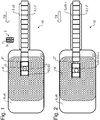
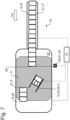
- Figures 1 to 7 show schematically a sensible time sequence of a first exemplary embodiment of a method for handling piece goods moved in at least one row one behind the other by a corresponding handling device.
- Figures 1 to 7 show in a schematic way a sensible time sequence of a first exemplary embodiment of a method for handling piece goods moved in at least one row one behind the other by a corresponding handling device.
- the handling device 10 which is indicated schematically and is shown in plan view from above, comprises a first transport device 3, via which directly succeeding piece goods 2 in a row 1 are transported without interruption and/or at a continuous transport speed v3 to a grouping module 20 with at least one manipulator 5, in particular into a Detection area 4 (indicated by hatching in the figures) of the at least one manipulator 5 of the handling device 10.
- the detection area 4 means in particular the maximum and/or the program-controlled range of movement of the manipulator 5.
- the detection area 4 or its outer spatial limit can be larger than the outer limits of the horizontal conveyor device 6, on its approximately horizontal Top the piece goods 2 transported and / or positioned by the manipulator 5 and / or moved.
- the detection range 4 of the manipulator 5 is the sensible range of movement in which the piece goods 2 to be detected can be located and/or in which the piece goods 2 to be set down can be positioned.
- the transport device 3 is, for example, at least one conveyor belt or at least one other suitable conveyor device, on which the piece goods 2 are preferably (each) transported in one row, with no or only a slight gap, which may be process-related and/or predetermined, between the piece goods 2 that follow each other directly consists.
- the transport device 3 can be formed by an endlessly revolving conveyor belt, an endlessly revolving conveyor chain or the like, so that the piece goods 2 can be delivered and conveyed to the horizontal conveyor device 6 .
- the piece goods 2 located in row 1 on the transport device 3 preferably run at a transport speed v3 in a so-called closed formation F into the detection area 4 of the manipulator 5 .
- Piece goods 2 within the meaning of the present invention or the exemplary embodiment described can be, for example, individual articles, packages or bundles.
- Packages or bundles can, for example, be shrink-wrap bundles and/or strapped bundles or the like, whereby - as in 1 shown by way of example - normally several items such as in particular containers, liquid and/or beverage containers 7 are combined into bundles by means of outer packaging in the form of strapping, shrink film 8 or the like.
- the piece goods 2 can be transported on a transport device 3 or on several, in particular parallel, transport devices 3 in several rows, in particular in several parallel rows, to the detection area 4 of the manipulator 5 .
- the parallel rows can be transported at a distance from one another or largely without a distance from one another on the at least one transport device 3 .
- a horizontal conveyor device 6 is assigned to the detection area 4 of the manipulator, the surface of which carrying the piece goods 2 moves at a speed v6.
- the speed v6 of the horizontal conveyor device 6 can correspond to the transport speed v3 of the transport device 3 .
- the transport speed v3 and the speed v6 can also differ slightly, provided it can be ensured that the uninterrupted conveyance of the piece goods 2 to the horizontal conveying device 6 is maintained.
- the piece goods 2 arriving in row 1 or formation F via the transport device 3 can be pushed over onto the horizontal conveyor device 6 and transported further there without interruption, at least in the case of differing v3 and v6 due to the dynamic pressure that may arise due to the higher transport speed v3 of the following piece goods 2.
- it is necessary to reduce this back pressure by taking suitable measures, e.g. by means of a rubberized conveyor belt of the horizontal conveyor device 6 and/or by means of a rubberized conveyor belt of the transport device 3, optionally also by means of a so-called braking belt located between the transport device 3 and the horizontal conveyor device 6. which is characterized by a surface carrying the piece goods 2 with a particularly high coefficient of friction.
- the manipulator 5 is designed and equipped for receiving piece goods 2 within the detection area 4 in a clamping and/or positive and/or non-positive manner.
- the piece goods 2 picked up by the manipulator 5 ie generally the piece goods 2 arriving first in the formation F—are referred to below with the reference symbol 2* to distinguish them from the other piece goods 2 arranged in the formation F or the overall formation.
- the manipulator 5 picks up a cycle according to a cycle specified for layer formation, with a cycle comprising a defined number of piece goods 2*.
- the manipulator 5 engages a cycle comprising at least one, preferably at least two or three piece goods 2* that are arranged one after the other in a closed formation F, separates this from the single-row formation F of the piece goods 2 (cf. 2 ) and transfers the cycle, ie the separated piece goods 2* or the separated group of two or three piece goods 2* arranged without gaps in a row, into a target position P and/or target alignment (cf. figures 4 and 5 .).
- the piece goods 2* or the group of piece goods 2* is displaced laterally with respect to the incoming formation F of piece goods 2 and/or it can be provided that the piece goods 2* or the group of piece goods 2* is spaced apart from the formation F of the piece goods 2 by the manipulator 5 in the transport direction TR and/or that the piece goods 2* or the group of piece goods 2* are rotated relative to the piece goods 2 of the formation F, or the like.
- a manipulator 5 can specifically refer to the part of the Manipulator 5, for example, a tool head, a gripper head 50 or the like. act (cf. 1 ), which is, for example, held and mounted on movably mounted cantilever arms, which cantilever arms in turn typically can be mounted fixed to the frame on a frame or frame or the like.
- act (cf. 1 ) which is, for example, held and mounted on movably mounted cantilever arms, which cantilever arms in turn typically can be mounted fixed to the frame on a frame or frame or the like.
- Such a - also as a parallel kinematic arrangement known - manipulator suspension or manipulator arrangement enables the desired mobility of the gripper head 50 (also: the manipulator 5), which can detect, move, position, place, rotate, etc.
- the manipulator 5 can be formed, for example, by a gripper head 50 with clamping jaws 52 or the like that can be advanced and opened laterally (cf. 1 ) or such a gripper head 50 with lateral clamping jaws 52, which can typically be advanced towards one another when gripping the piece goods 2* in order to grip or clamp the piece goods 2* in a form-fitting and/or non-positive manner, whereas the clamping jaws 52 do when the target position is reached P can be opened again.
- a gripper head 50 with clamping jaws 52 or the like that can be advanced and opened laterally (cf. 1 ) or such a gripper head 50 with lateral clamping jaws 52, which can typically be advanced towards one another when gripping the piece goods 2* in order to grip or clamp the piece goods 2* in a form-fitting and/or non-positive manner, whereas the clamping jaws 52 do when the target position is reached P can be opened again.
- a manipulator 5 and/or a gripper or gripper head 50 can be used as synonyms; if necessary, the gripper or gripper head 50 can also be regarded as a subassembly or part of the manipulator 5, which is to be understood more comprehensively.
- the tapping of a cycle is shown comprising three piece goods 2*.
- the piece goods 2* of the cycle are spaced apart from the following piece goods 2 of formation F in the transport direction TR and are shifted to a target position P laterally opposite the alignment of the incoming piece goods 2 of formation F (cf. 4 ) by the manipulator 5 applying an additional movement component perpendicular to the transport direction TR on the piece goods 2* of the cycle.
- the tapping of a cycle comprising two piece goods 2* is shown below.
- the manipulator is loaded asymmetrically relative to a pivot point D of the manipulator 5 or relative to the length L of the clamping jaws 52 of the gripper head 50 of the manipulator 5 (cf. 6 ).
- the transport speed v3 of the infeed transport device 3 is reduced at least briefly to a reduced transport speed v3(-) in order to support the cycle formation by the manipulator 5 (cf figures 2 and 6 ).
- the manipulator 5 is moving at a speed v5 in the transport direction TR, which corresponds, for example, to the normal transport speed v3 of the transport device 3 and/or the conveying speed v6 of the horizontal conveying device 6 .
- the manipulator 5 is accelerated parallel to the reduction of the transport speed v3 in the transport direction TR and thus has an increased speed v5(+) in the transport direction TR compared to the normal transport speed v3 and the conveying speed v6 of the horizontal conveying device 6 (cf . the figures 2 and 6 ).
- the Speeds v3, v5 of the transport device 3 and possibly of the manipulator 5 or their change are controlled synchronously, in particular via a control unit 15 (only in 7 shown as an example). By changing the transport speed v3 of the transport device 3 and possibly.
- the speed v5 of the manipulator 5 creates a certain distance between the piece goods 2* picked off by the manipulator 5 as a cycle and the piece goods 2 subsequently arriving.
- the distance may be necessary in particular if the manipulator 5 rotates during the transfer of the piece goods 2* picked up, for example, in order to prevent the manipulator 5 and the piece goods 2* picked up from colliding with the piece goods 2 subsequently arriving.
- the detection area 4 of the manipulator 5 can be assigned at least one detection device 40, with which spatial coordinates and/or position and/or outline data of at least one in Transport direction TR moving cargo 2 can be determined.
- the detection device 40 can be formed by an optical detection device, for example in the form of an image recognition sensor 41, a light barrier 42 or the like, which detects specific parameters of the piece goods 2 of the formation F that arrive first. Sensibly, the detection device 40 can detect, for example, a leading edge 45 of the foremost incoming piece goods 2 of the formation F and thus determine the exact position of the piece goods 2 relative to the horizontal conveyor device 6 of the grouping module 20 .
- the at least one transport device 3 upstream of grouping module 20 and/or manipulator 5 and/or other conveyor components, for example horizontal conveyor device 6 of grouping module 20, is determined on the basis of the spatial coordinates and/or position and/or Outline data of the at least one piece goods 2 moving in the transport direction TR is calibrated and/or controlled.
- the detection device 40 transmits signals or data to the control unit 15 of the handling device 10, which evaluates them in particular with regard to the desired position pattern to be created and correspondingly regulates the speeds of the different machine components.
Landscapes
- Engineering & Computer Science (AREA)
- Mechanical Engineering (AREA)
- Attitude Control For Articles On Conveyors (AREA)
Claims (13)
- Procédé de manipulation de produits de détail (2), d'articles et/ou de multipacks dans et/ou en relation avec leur groupement et/ou leur formation de couches, en particulier en vue de la formation de couches palettisables constituées chacune de plusieurs produits de détail (2), articles et/ou multipacks,- dans lequel le procédé prévoit un transport en une ou plusieurs rangées des produits de détail (2), articles et/ou multipacks au moyen d'au moins un dispositif de transport (3) dans une direction de transport (TR) dans une formation respectivement fermée et/ou ininterrompue ou dans une formation ayant des lacunes existant respectivement entre les produits de détail (2), les articles et/ou les multipacks, vers un module de groupement (20) comprenant au moins un dispositif de transport horizontal (6) ainsi qu'au moins un manipulateur (5),- dans lequel les produits de détail (2), les articles et/ou les multipacks sont saisis les uns après les autres par le manipulateur (5) à l'intérieur du module de groupement (20) de ladite au moins une formation fermée (F) ou formation à lacunes, soit individuellement soit par groupes de deux ou plusieurs produits de détail (2), articles et/ou multipacks, et sont amenés dans un agencement en couches défini en les tournant et/ou déplaçant et/ou soulevant,- caractérisé par le fait qu'après chaque nouvelle saisie d'au moins un produit de détail (2), article et/ou multipack dans la zone de saisie (4) au moyen du manipulateur (5) et avant le déplacement, la rotation et/ou le positionnement dudit au moins un produit de détail (2), article et/ou multipack pour réaliser un agencement en couches respectif, les produits de détail (2), articles et/ou multipacks saisis par le manipulateur (5) sont espacés des produits de détail (2), articles et/ou multipacks suivants de ladite au moins une formation fermée (F) ou formation à lacunes,- en ce que ledit au moins un dispositif de transport (3) disposé en amont du module de groupement (20) et le dispositif de transport horizontal (6) dans le module de groupement (20) sont retardés au moins brièvement.
- Procédé selon la revendication 1, dans lequel le bref retard du dispositif de transport (3) et du dispositif de transport horizontal (6) conduit à ce qu'une distance entre les produits de détail (2) saisis par le manipulateur (5) et les produits de détail suivants de la même formation fermée (F) ou formation à lacunes soit agrandie.
- Procédé selon la revendication 1 ou 2, dans lequel le dispositif de transport (3) présente une vitesse d'amenée de base (v3) dans la direction de transport (TR) et dans lequel le dispositif de transport horizontal (6) présente une vitesse de transport de base (v6) dans la direction de transport (TR), dans lequel la vitesse d'amenée de base (v3) et la vitesse de transport de base (v6) sont identiques ou synchrones.
- Procédé selon la revendication 3, dans lequel un espacement des produits de détail (2), articles et/ou multipacks de ladite au moins une formation fermée (F) ou formation à lacunes, qui suivent les produits de détail (2), articles et/ou multipacks saisis, se fait en retardant au moins brièvement de manière synchrone le dispositif de transport horizontal (6) et le dispositif de transport (3) à une vitesse de transport réduite.
- Procédé selon la revendication 4, dans lequel, directement après la saisie d'au moins un produit de détail (2), article et/ou multipack, le manipulateur (5) est déplacé au moins brièvement à une vitesse (v5) dans la direction de transport (TR), qui est supérieure ou égale à la vitesse de transport de base (v6) du dispositif de transport horizontal (6).
- Procédé selon la revendication 5, dans lequel une accélération au moins brève du manipulateur (5) conjointement avec ledit au moins un produit de détail (2), article et/ou multipack saisi, à l'intérieur de la zone de saisie (4), se fait avec au moins une composante de mouvement dans la direction de transport (TR).
- Procédé selon l'une quelconque des revendications 4 à 6, dans lequel un espacement séparant les produits de détail (2), articles et/ou multipacks saisis par le manipulateur (5) et les produits de détail (2), articles et/ou multipacks suivants de ladite au moins une formation fermée (F) ou formation à lacunes se fait en retardant au moins brièvement le dispositif de transport horizontal (6) à une vitesse de transport réduite (v6(-)) et en accélérant au moins brièvement le manipulateur (5) conjointement avec ledit au moins un produit de détail (2), article et/ou multipack saisi à l'intérieur de la zone de saisie (4) dans la direction de transport (TR).
- Procédé selon la revendication 7, dans lequel le bref retard du dispositif de transport horizontal (6) et la brève accélération du manipulateur (5) conduit à ce qu'une distance existant entre les produits de détail (2), articles et/ou multipacks saisis par le manipulateur (5) et les produits de détail (2), articles et/ou multipacks suivants de la même formation fermée (F) ou formation à lacunes soit agrandie.
- Procédé selon l'une quelconque des revendications 1 à 3, dans lequel, après qu'au moins un produit de détail (2), article et/ou multipack a été saisi par le manipulateur (5), le dispositif de transport horizontal (6) associé au module de groupement (20) est accéléré, en vue du positionnement, lors de la production d'un agencement en couches respectif, au moins brièvement par rapport à la vitesse de transport de base (v3) du dispositif de transport (3), et dans lequel, en synchronisme avec ceci, ledit au moins un manipulateur (5) conjointement avec ledit au moins un produit de détail (2), article et/ou multipack saisi est accéléré également au moins brièvement par rapport à la vitesse d'amenée de base (v3) du dispositif de transport (3) et/ou à la vitesse de transport de base (v6) du dispositif de transport horizontal (6).
- Procédé selon l'une quelconque des revendications précédentes, dans lequel au moins un dispositif de détection (40) qui est préparé et équipé pour obtenir des coordonnées spatiales et/ou des données de position et/ou des données de contour d'au moins un produit de détail (2), article et/ou multipack déplacé dans la direction de transport (TR) est associé à la zone de saisie (4) et/ou à l'espace de mouvement dudit au moins un manipulateur (5), dans lequel du moins ledit au moins un dispositif de transport (3) disposé en amont du module de groupement (20) et/ou le manipulateur (5) et/ou d'autres composants de transport du dispositif (10) sont calibrés et/ou commandés sur la base des coordonnées spatiales et/ou des données de position et/ou des données de contour.
- Procédé selon la revendication 10, dans lequel le dispositif de détection (40) est un dispositif de détection optique qui est déplacé parallèlement à la direction de transport (TR) des produits de détail (2) le long du dispositif de transport (3) et/ou du dispositif de transport horizontal (6), pour déterminer les coordonnées spatiales et/ou les données de position et/ou les données de contour.
- Procédé selon la revendication 10 ou 11, dans lequel le dispositif de détection (40) transmet des signaux correspondants à une unité de commande (15) qui règle les vitesses dudit au moins un dispositif de transport (3) disposé en amont du module de groupement (20) et/ou du manipulateur (5) et/ou d'autres composants de transport du dispositif (10).
- Dispositif (10) de manipulation de produits de détail (2), d'articles et/ou de multipacks, destiné à mettre en oeuvre un procédé selon l'une quelconque des revendications 1 à 12, dans et/ou en relation avec leur groupement et/ou leur formation de couches, en vue de la formation de couches palettisables constituées chacune de plusieurs produits de détail (2), articles et/ou multipacks.
Applications Claiming Priority (2)
| Application Number | Priority Date | Filing Date | Title |
|---|---|---|---|
| DE102017212159.9A DE102017212159A1 (de) | 2017-07-14 | 2017-07-14 | Verfahren und Vorrichtung zur Handhabung von Stückgütern, Artikeln und/oder Gebinden |
| PCT/EP2018/065870 WO2019011578A1 (fr) | 2017-07-14 | 2018-06-14 | Procédé et dispositif pour manipuler des marchandises, articles et/ou paquets |
Publications (2)
| Publication Number | Publication Date |
|---|---|
| EP3652094A1 EP3652094A1 (fr) | 2020-05-20 |
| EP3652094B1 true EP3652094B1 (fr) | 2023-03-15 |
Family
ID=62748936
Family Applications (1)
| Application Number | Title | Priority Date | Filing Date |
|---|---|---|---|
| EP18734129.2A Active EP3652094B1 (fr) | 2017-07-14 | 2018-06-14 | Procédé et appareil pour la manutention de marchandises, d'articles et/ou d'emballages |
Country Status (4)
| Country | Link |
|---|---|
| EP (1) | EP3652094B1 (fr) |
| CN (1) | CN110709341B (fr) |
| DE (1) | DE102017212159A1 (fr) |
| WO (1) | WO2019011578A1 (fr) |
Families Citing this family (3)
| Publication number | Priority date | Publication date | Assignee | Title |
|---|---|---|---|---|
| DE102017212159A1 (de) * | 2017-07-14 | 2019-01-17 | Krones Aktiengesellschaft | Verfahren und Vorrichtung zur Handhabung von Stückgütern, Artikeln und/oder Gebinden |
| SG11201913517UA (en) | 2017-07-28 | 2020-02-27 | Yuhan Corp | Improved process for preparing aminopyrimidine derivatives |
| DE102020123624A1 (de) * | 2020-09-10 | 2022-03-10 | Krones Aktiengesellschaft | Vorrichtung und Verfahren zum Herstellen von Verpackungseinheiten |
Citations (2)
| Publication number | Priority date | Publication date | Assignee | Title |
|---|---|---|---|---|
| WO2017182169A1 (fr) * | 2016-04-20 | 2017-10-26 | Krones Aktiengesellschaft | Procédé et dispositif pour la manutention de marchandises de détail déplacées les unes derrière les autres en au moins une rangée |
| DE102017212159A1 (de) * | 2017-07-14 | 2019-01-17 | Krones Aktiengesellschaft | Verfahren und Vorrichtung zur Handhabung von Stückgütern, Artikeln und/oder Gebinden |
Family Cites Families (6)
| Publication number | Priority date | Publication date | Assignee | Title |
|---|---|---|---|---|
| DE4308581A1 (de) * | 1993-03-18 | 1994-09-22 | Heinrich Langhammer | Drehkreuzpalettierer |
| DE102008055471A1 (de) * | 2008-04-04 | 2009-10-08 | Krones Ag | Verfahren und Vorrichtung zum Zusammenstellen und Ausrichten von Gebindegruppen |
| CN201372110Y (zh) * | 2009-03-27 | 2009-12-30 | 北京物资学院 | 用于物流过程的货品变速传送装置 |
| DE102013202872B4 (de) * | 2013-02-21 | 2024-07-25 | Krones Aktiengesellschaft | Verfahren und Vorrichtung zum Ausrichten und/oder Gruppieren von Artikeln, Stückgütern oder Gebinden |
| DE102013103886A1 (de) * | 2013-04-17 | 2014-10-23 | Krones Aktiengesellschaft | Vorrichtung und Verfahren zum Ausbilden einer vordefinierten Formation auf einem Transportband |
| DE102016225499A1 (de) | 2016-12-19 | 2018-06-21 | Krones Aktiengesellschaft | Verfahren und Vorrichtung zum Überführen einer palettierfähigen Lage auf eine zugeordnete Palette |
-
2017
- 2017-07-14 DE DE102017212159.9A patent/DE102017212159A1/de not_active Withdrawn
-
2018
- 2018-06-14 WO PCT/EP2018/065870 patent/WO2019011578A1/fr not_active Ceased
- 2018-06-14 CN CN201880037122.4A patent/CN110709341B/zh active Active
- 2018-06-14 EP EP18734129.2A patent/EP3652094B1/fr active Active
Patent Citations (2)
| Publication number | Priority date | Publication date | Assignee | Title |
|---|---|---|---|---|
| WO2017182169A1 (fr) * | 2016-04-20 | 2017-10-26 | Krones Aktiengesellschaft | Procédé et dispositif pour la manutention de marchandises de détail déplacées les unes derrière les autres en au moins une rangée |
| DE102017212159A1 (de) * | 2017-07-14 | 2019-01-17 | Krones Aktiengesellschaft | Verfahren und Vorrichtung zur Handhabung von Stückgütern, Artikeln und/oder Gebinden |
Also Published As
| Publication number | Publication date |
|---|---|
| CN110709341A (zh) | 2020-01-17 |
| WO2019011578A1 (fr) | 2019-01-17 |
| EP3652094A1 (fr) | 2020-05-20 |
| CN110709341B (zh) | 2021-11-05 |
| DE102017212159A1 (de) | 2019-01-17 |
Similar Documents
| Publication | Publication Date | Title |
|---|---|---|
| EP3445692B1 (fr) | Procédé et dispositif permettant la manutention de marchandises de détail déplacées sur au moins deux rangées parallèles | |
| EP3554972B1 (fr) | Dispositif et procédé de manutention de charges isolées déplacées les unes derrière les autres | |
| EP3652092B1 (fr) | Procédé et dispositif de manipulation de marchandises de détail, d'articles et/ou d'emballages | |
| EP3428090B1 (fr) | Dispositif et procédé de manipulation des marchandises en mouvement dans au moins une rangée | |
| EP3694794B1 (fr) | Dispositif et procédé de manipulation de marchandises arrangées en au moins deux rangées parallèles | |
| EP3475198B1 (fr) | Procédé et dispositif permettant la manutention de marchandises de détail déplacées les unes derrière les autres en au moins une rangée | |
| EP3652093B1 (fr) | Procédé et dispositif pour manipuler des marchandises, articles et/ou paquets | |
| EP3445683B1 (fr) | Procédé pour la manutention de marchandises de détail déplacées les unes derrière les autres | |
| EP3676203A1 (fr) | Procédé et dispositif permettant la manutention de marchandises de détail déplacées les unes derrière les autres en au moins une rangée | |
| EP3652094B1 (fr) | Procédé et appareil pour la manutention de marchandises, d'articles et/ou d'emballages | |
| EP3770086B1 (fr) | Procédé et dispositif de manipulation des marchandises déplacées les unes après les autres dans au moins une rangée | |
| DE102017118928A1 (de) | Lagenbildungs- und Palettiermodul und Verfahren zum Gruppieren und Palettieren von Stückgütern | |
| EP3487796B1 (fr) | Procédé et dispositif pour la manutention de marchandises de détail déplacées les unes derrières les autres sur au moins une file | |
| EP3770085A1 (fr) | Procédé et dispositif de manipulation de marchandises déplacées les unes après les autres dans au moins une rangée | |
| EP3623323B1 (fr) | Procédé et dispositif de manipulation des marchandises, des articles et / ou des emballages | |
| WO2019076708A1 (fr) | Procédé et dispositif de manipulation et/ou de regroupement de marchandises de détail | |
| DE102017204996A1 (de) | Vorrichtung und Verfahren zum Umgang mit in mindestens einer Reihe hintereinander bewegten Stückgütern | |
| WO2019011579A1 (fr) | Procédé et dispositif pour manipuler des marchandises, articles et/ou paquets | |
| DE102021128864A1 (de) | Vorrichtung und Verfahren zum Umgang mit in mindestens einer Reihe hintereinander bewegten Stückgütern |
Legal Events
| Date | Code | Title | Description |
|---|---|---|---|
| STAA | Information on the status of an ep patent application or granted ep patent |
Free format text: STATUS: UNKNOWN |
|
| STAA | Information on the status of an ep patent application or granted ep patent |
Free format text: STATUS: THE INTERNATIONAL PUBLICATION HAS BEEN MADE |
|
| PUAI | Public reference made under article 153(3) epc to a published international application that has entered the european phase |
Free format text: ORIGINAL CODE: 0009012 |
|
| STAA | Information on the status of an ep patent application or granted ep patent |
Free format text: STATUS: REQUEST FOR EXAMINATION WAS MADE |
|
| 17P | Request for examination filed |
Effective date: 20200130 |
|
| AK | Designated contracting states |
Kind code of ref document: A1 Designated state(s): AL AT BE BG CH CY CZ DE DK EE ES FI FR GB GR HR HU IE IS IT LI LT LU LV MC MK MT NL NO PL PT RO RS SE SI SK SM TR |
|
| AX | Request for extension of the european patent |
Extension state: BA ME |
|
| DAV | Request for validation of the european patent (deleted) | ||
| DAX | Request for extension of the european patent (deleted) | ||
| GRAP | Despatch of communication of intention to grant a patent |
Free format text: ORIGINAL CODE: EPIDOSNIGR1 |
|
| STAA | Information on the status of an ep patent application or granted ep patent |
Free format text: STATUS: GRANT OF PATENT IS INTENDED |
|
| INTG | Intention to grant announced |
Effective date: 20221027 |
|
| GRAJ | Information related to disapproval of communication of intention to grant by the applicant or resumption of examination proceedings by the epo deleted |
Free format text: ORIGINAL CODE: EPIDOSDIGR1 |
|
| STAA | Information on the status of an ep patent application or granted ep patent |
Free format text: STATUS: REQUEST FOR EXAMINATION WAS MADE |
|
| GRAP | Despatch of communication of intention to grant a patent |
Free format text: ORIGINAL CODE: EPIDOSNIGR1 |
|
| STAA | Information on the status of an ep patent application or granted ep patent |
Free format text: STATUS: GRANT OF PATENT IS INTENDED |
|
| INTC | Intention to grant announced (deleted) | ||
| INTG | Intention to grant announced |
Effective date: 20230103 |
|
| GRAS | Grant fee paid |
Free format text: ORIGINAL CODE: EPIDOSNIGR3 |
|
| GRAA | (expected) grant |
Free format text: ORIGINAL CODE: 0009210 |
|
| STAA | Information on the status of an ep patent application or granted ep patent |
Free format text: STATUS: THE PATENT HAS BEEN GRANTED |
|
| AK | Designated contracting states |
Kind code of ref document: B1 Designated state(s): AL AT BE BG CH CY CZ DE DK EE ES FI FR GB GR HR HU IE IS IT LI LT LU LV MC MK MT NL NO PL PT RO RS SE SI SK SM TR |
|
| REG | Reference to a national code |
Ref country code: CH Ref legal event code: EP Ref country code: GB Ref legal event code: FG4D Free format text: NOT ENGLISH |
|
| REG | Reference to a national code |
Ref country code: DE Ref legal event code: R096 Ref document number: 502018011778 Country of ref document: DE |
|
| REG | Reference to a national code |
Ref country code: IE Ref legal event code: FG4D Free format text: LANGUAGE OF EP DOCUMENT: GERMAN |
|
| REG | Reference to a national code |
Ref country code: AT Ref legal event code: REF Ref document number: 1553905 Country of ref document: AT Kind code of ref document: T Effective date: 20230415 |
|
| REG | Reference to a national code |
Ref country code: LT Ref legal event code: MG9D |
|
| REG | Reference to a national code |
Ref country code: NL Ref legal event code: MP Effective date: 20230315 |
|
| PG25 | Lapsed in a contracting state [announced via postgrant information from national office to epo] |
Ref country code: RS Free format text: LAPSE BECAUSE OF FAILURE TO SUBMIT A TRANSLATION OF THE DESCRIPTION OR TO PAY THE FEE WITHIN THE PRESCRIBED TIME-LIMIT Effective date: 20230315 Ref country code: NO Free format text: LAPSE BECAUSE OF FAILURE TO SUBMIT A TRANSLATION OF THE DESCRIPTION OR TO PAY THE FEE WITHIN THE PRESCRIBED TIME-LIMIT Effective date: 20230615 Ref country code: LV Free format text: LAPSE BECAUSE OF FAILURE TO SUBMIT A TRANSLATION OF THE DESCRIPTION OR TO PAY THE FEE WITHIN THE PRESCRIBED TIME-LIMIT Effective date: 20230315 Ref country code: LT Free format text: LAPSE BECAUSE OF FAILURE TO SUBMIT A TRANSLATION OF THE DESCRIPTION OR TO PAY THE FEE WITHIN THE PRESCRIBED TIME-LIMIT Effective date: 20230315 Ref country code: HR Free format text: LAPSE BECAUSE OF FAILURE TO SUBMIT A TRANSLATION OF THE DESCRIPTION OR TO PAY THE FEE WITHIN THE PRESCRIBED TIME-LIMIT Effective date: 20230315 |
|
| PG25 | Lapsed in a contracting state [announced via postgrant information from national office to epo] |
Ref country code: SE Free format text: LAPSE BECAUSE OF FAILURE TO SUBMIT A TRANSLATION OF THE DESCRIPTION OR TO PAY THE FEE WITHIN THE PRESCRIBED TIME-LIMIT Effective date: 20230315 Ref country code: NL Free format text: LAPSE BECAUSE OF FAILURE TO SUBMIT A TRANSLATION OF THE DESCRIPTION OR TO PAY THE FEE WITHIN THE PRESCRIBED TIME-LIMIT Effective date: 20230315 Ref country code: GR Free format text: LAPSE BECAUSE OF FAILURE TO SUBMIT A TRANSLATION OF THE DESCRIPTION OR TO PAY THE FEE WITHIN THE PRESCRIBED TIME-LIMIT Effective date: 20230616 Ref country code: FI Free format text: LAPSE BECAUSE OF FAILURE TO SUBMIT A TRANSLATION OF THE DESCRIPTION OR TO PAY THE FEE WITHIN THE PRESCRIBED TIME-LIMIT Effective date: 20230315 |
|
| PG25 | Lapsed in a contracting state [announced via postgrant information from national office to epo] |
Ref country code: SM Free format text: LAPSE BECAUSE OF FAILURE TO SUBMIT A TRANSLATION OF THE DESCRIPTION OR TO PAY THE FEE WITHIN THE PRESCRIBED TIME-LIMIT Effective date: 20230315 Ref country code: RO Free format text: LAPSE BECAUSE OF FAILURE TO SUBMIT A TRANSLATION OF THE DESCRIPTION OR TO PAY THE FEE WITHIN THE PRESCRIBED TIME-LIMIT Effective date: 20230315 Ref country code: PT Free format text: LAPSE BECAUSE OF FAILURE TO SUBMIT A TRANSLATION OF THE DESCRIPTION OR TO PAY THE FEE WITHIN THE PRESCRIBED TIME-LIMIT Effective date: 20230717 Ref country code: ES Free format text: LAPSE BECAUSE OF FAILURE TO SUBMIT A TRANSLATION OF THE DESCRIPTION OR TO PAY THE FEE WITHIN THE PRESCRIBED TIME-LIMIT Effective date: 20230315 Ref country code: EE Free format text: LAPSE BECAUSE OF FAILURE TO SUBMIT A TRANSLATION OF THE DESCRIPTION OR TO PAY THE FEE WITHIN THE PRESCRIBED TIME-LIMIT Effective date: 20230315 Ref country code: CZ Free format text: LAPSE BECAUSE OF FAILURE TO SUBMIT A TRANSLATION OF THE DESCRIPTION OR TO PAY THE FEE WITHIN THE PRESCRIBED TIME-LIMIT Effective date: 20230315 |
|
| PG25 | Lapsed in a contracting state [announced via postgrant information from national office to epo] |
Ref country code: SK Free format text: LAPSE BECAUSE OF FAILURE TO SUBMIT A TRANSLATION OF THE DESCRIPTION OR TO PAY THE FEE WITHIN THE PRESCRIBED TIME-LIMIT Effective date: 20230315 Ref country code: PL Free format text: LAPSE BECAUSE OF FAILURE TO SUBMIT A TRANSLATION OF THE DESCRIPTION OR TO PAY THE FEE WITHIN THE PRESCRIBED TIME-LIMIT Effective date: 20230315 Ref country code: IS Free format text: LAPSE BECAUSE OF FAILURE TO SUBMIT A TRANSLATION OF THE DESCRIPTION OR TO PAY THE FEE WITHIN THE PRESCRIBED TIME-LIMIT Effective date: 20230715 |
|
| REG | Reference to a national code |
Ref country code: DE Ref legal event code: R097 Ref document number: 502018011778 Country of ref document: DE |
|
| PG25 | Lapsed in a contracting state [announced via postgrant information from national office to epo] |
Ref country code: MC Free format text: LAPSE BECAUSE OF FAILURE TO SUBMIT A TRANSLATION OF THE DESCRIPTION OR TO PAY THE FEE WITHIN THE PRESCRIBED TIME-LIMIT Effective date: 20230315 |
|
| PLBE | No opposition filed within time limit |
Free format text: ORIGINAL CODE: 0009261 |
|
| STAA | Information on the status of an ep patent application or granted ep patent |
Free format text: STATUS: NO OPPOSITION FILED WITHIN TIME LIMIT |
|
| PG25 | Lapsed in a contracting state [announced via postgrant information from national office to epo] |
Ref country code: SI Free format text: LAPSE BECAUSE OF FAILURE TO SUBMIT A TRANSLATION OF THE DESCRIPTION OR TO PAY THE FEE WITHIN THE PRESCRIBED TIME-LIMIT Effective date: 20230315 Ref country code: MC Free format text: LAPSE BECAUSE OF FAILURE TO SUBMIT A TRANSLATION OF THE DESCRIPTION OR TO PAY THE FEE WITHIN THE PRESCRIBED TIME-LIMIT Effective date: 20230315 Ref country code: DK Free format text: LAPSE BECAUSE OF FAILURE TO SUBMIT A TRANSLATION OF THE DESCRIPTION OR TO PAY THE FEE WITHIN THE PRESCRIBED TIME-LIMIT Effective date: 20230315 |
|
| REG | Reference to a national code |
Ref country code: CH Ref legal event code: PL |
|
| 26N | No opposition filed |
Effective date: 20231218 |
|
| REG | Reference to a national code |
Ref country code: BE Ref legal event code: MM Effective date: 20230630 |
|
| GBPC | Gb: european patent ceased through non-payment of renewal fee |
Effective date: 20230615 |
|
| PG25 | Lapsed in a contracting state [announced via postgrant information from national office to epo] |
Ref country code: LU Free format text: LAPSE BECAUSE OF NON-PAYMENT OF DUE FEES Effective date: 20230614 |
|
| REG | Reference to a national code |
Ref country code: IE Ref legal event code: MM4A |
|
| PG25 | Lapsed in a contracting state [announced via postgrant information from national office to epo] |
Ref country code: LU Free format text: LAPSE BECAUSE OF NON-PAYMENT OF DUE FEES Effective date: 20230614 |
|
| PG25 | Lapsed in a contracting state [announced via postgrant information from national office to epo] |
Ref country code: IE Free format text: LAPSE BECAUSE OF NON-PAYMENT OF DUE FEES Effective date: 20230614 |
|
| PG25 | Lapsed in a contracting state [announced via postgrant information from national office to epo] |
Ref country code: IE Free format text: LAPSE BECAUSE OF NON-PAYMENT OF DUE FEES Effective date: 20230614 Ref country code: GB Free format text: LAPSE BECAUSE OF NON-PAYMENT OF DUE FEES Effective date: 20230615 Ref country code: CH Free format text: LAPSE BECAUSE OF NON-PAYMENT OF DUE FEES Effective date: 20230630 |
|
| PG25 | Lapsed in a contracting state [announced via postgrant information from national office to epo] |
Ref country code: BE Free format text: LAPSE BECAUSE OF NON-PAYMENT OF DUE FEES Effective date: 20230630 |
|
| REG | Reference to a national code |
Ref country code: AT Ref legal event code: MM01 Ref document number: 1553905 Country of ref document: AT Kind code of ref document: T Effective date: 20230614 |
|
| PG25 | Lapsed in a contracting state [announced via postgrant information from national office to epo] |
Ref country code: AT Free format text: LAPSE BECAUSE OF NON-PAYMENT OF DUE FEES Effective date: 20230614 |
|
| PG25 | Lapsed in a contracting state [announced via postgrant information from national office to epo] |
Ref country code: AT Free format text: LAPSE BECAUSE OF NON-PAYMENT OF DUE FEES Effective date: 20230614 |
|
| REG | Reference to a national code |
Ref country code: DE Ref legal event code: R082 Ref document number: 502018011778 Country of ref document: DE Representative=s name: BENNINGER, JOHANNES, DIPL.-ING., DE |
|
| PG25 | Lapsed in a contracting state [announced via postgrant information from national office to epo] |
Ref country code: BG Free format text: LAPSE BECAUSE OF FAILURE TO SUBMIT A TRANSLATION OF THE DESCRIPTION OR TO PAY THE FEE WITHIN THE PRESCRIBED TIME-LIMIT Effective date: 20230315 |
|
| PG25 | Lapsed in a contracting state [announced via postgrant information from national office to epo] |
Ref country code: BG Free format text: LAPSE BECAUSE OF FAILURE TO SUBMIT A TRANSLATION OF THE DESCRIPTION OR TO PAY THE FEE WITHIN THE PRESCRIBED TIME-LIMIT Effective date: 20230315 |
|
| P01 | Opt-out of the competence of the unified patent court (upc) registered |
Free format text: CASE NUMBER: APP_4697/2025 Effective date: 20250128 |
|
| PGFP | Annual fee paid to national office [announced via postgrant information from national office to epo] |
Ref country code: DE Payment date: 20250429 Year of fee payment: 8 |
|
| PGFP | Annual fee paid to national office [announced via postgrant information from national office to epo] |
Ref country code: IT Payment date: 20250522 Year of fee payment: 8 |
|
| PGFP | Annual fee paid to national office [announced via postgrant information from national office to epo] |
Ref country code: FR Payment date: 20250508 Year of fee payment: 8 |
|
| PG25 | Lapsed in a contracting state [announced via postgrant information from national office to epo] |
Ref country code: CY Free format text: LAPSE BECAUSE OF FAILURE TO SUBMIT A TRANSLATION OF THE DESCRIPTION OR TO PAY THE FEE WITHIN THE PRESCRIBED TIME-LIMIT; INVALID AB INITIO Effective date: 20180614 |
|
| PG25 | Lapsed in a contracting state [announced via postgrant information from national office to epo] |
Ref country code: HU Free format text: LAPSE BECAUSE OF FAILURE TO SUBMIT A TRANSLATION OF THE DESCRIPTION OR TO PAY THE FEE WITHIN THE PRESCRIBED TIME-LIMIT; INVALID AB INITIO Effective date: 20180614 |
|
| PG25 | Lapsed in a contracting state [announced via postgrant information from national office to epo] |
Ref country code: TR Free format text: LAPSE BECAUSE OF FAILURE TO SUBMIT A TRANSLATION OF THE DESCRIPTION OR TO PAY THE FEE WITHIN THE PRESCRIBED TIME-LIMIT Effective date: 20230315 |