EP3653091A1 - Système et procédé de préparation de denrées alimentaires - Google Patents
Système et procédé de préparation de denrées alimentaires Download PDFInfo
- Publication number
- EP3653091A1 EP3653091A1 EP19208872.2A EP19208872A EP3653091A1 EP 3653091 A1 EP3653091 A1 EP 3653091A1 EP 19208872 A EP19208872 A EP 19208872A EP 3653091 A1 EP3653091 A1 EP 3653091A1
- Authority
- EP
- European Patent Office
- Prior art keywords
- preparation
- kitchen appliance
- control unit
- food
- information
- Prior art date
- Legal status (The legal status is an assumption and is not a legal conclusion. Google has not performed a legal analysis and makes no representation as to the accuracy of the status listed.)
- Pending
Links
Images


Classifications
-
- A—HUMAN NECESSITIES
- A47—FURNITURE; DOMESTIC ARTICLES OR APPLIANCES; COFFEE MILLS; SPICE MILLS; SUCTION CLEANERS IN GENERAL
- A47J—KITCHEN EQUIPMENT; COFFEE MILLS; SPICE MILLS; APPARATUS FOR MAKING BEVERAGES
- A47J37/00—Baking; Roasting; Grilling; Frying
- A47J37/06—Roasters; Grills; Sandwich grills
- A47J37/0623—Small-size cooking ovens, i.e. defining an at least partially closed cooking cavity
-
- A—HUMAN NECESSITIES
- A47—FURNITURE; DOMESTIC ARTICLES OR APPLIANCES; COFFEE MILLS; SPICE MILLS; SUCTION CLEANERS IN GENERAL
- A47J—KITCHEN EQUIPMENT; COFFEE MILLS; SPICE MILLS; APPARATUS FOR MAKING BEVERAGES
- A47J36/00—Parts, details or accessories of cooking-vessels
- A47J36/32—Time-controlled igniting mechanisms or alarm devices
- A47J36/321—Time-controlled igniting mechanisms or alarm devices the electronic control being performed over a network, e.g. by means of a handheld device
-
- A—HUMAN NECESSITIES
- A47—FURNITURE; DOMESTIC ARTICLES OR APPLIANCES; COFFEE MILLS; SPICE MILLS; SUCTION CLEANERS IN GENERAL
- A47J—KITCHEN EQUIPMENT; COFFEE MILLS; SPICE MILLS; APPARATUS FOR MAKING BEVERAGES
- A47J36/00—Parts, details or accessories of cooking-vessels
- A47J36/32—Time-controlled igniting mechanisms or alarm devices
-
- A—HUMAN NECESSITIES
- A47—FURNITURE; DOMESTIC ARTICLES OR APPLIANCES; COFFEE MILLS; SPICE MILLS; SUCTION CLEANERS IN GENERAL
- A47J—KITCHEN EQUIPMENT; COFFEE MILLS; SPICE MILLS; APPARATUS FOR MAKING BEVERAGES
- A47J37/00—Baking; Roasting; Grilling; Frying
- A47J37/06—Roasters; Grills; Sandwich grills
- A47J37/0623—Small-size cooking ovens, i.e. defining an at least partially closed cooking cavity
- A47J37/0664—Accessories
-
- A—HUMAN NECESSITIES
- A47—FURNITURE; DOMESTIC ARTICLES OR APPLIANCES; COFFEE MILLS; SPICE MILLS; SUCTION CLEANERS IN GENERAL
- A47J—KITCHEN EQUIPMENT; COFFEE MILLS; SPICE MILLS; APPARATUS FOR MAKING BEVERAGES
- A47J43/00—Implements for preparing or holding food, not provided for in other groups of this subclass
- A47J43/04—Machines for domestic use not covered elsewhere, e.g. for grinding, mixing, stirring, kneading, emulsifying, whipping or beating foodstuffs, e.g. power-driven
- A47J43/046—Machines for domestic use not covered elsewhere, e.g. for grinding, mixing, stirring, kneading, emulsifying, whipping or beating foodstuffs, e.g. power-driven with tools driven from the bottom side
-
- A—HUMAN NECESSITIES
- A47—FURNITURE; DOMESTIC ARTICLES OR APPLIANCES; COFFEE MILLS; SPICE MILLS; SUCTION CLEANERS IN GENERAL
- A47J—KITCHEN EQUIPMENT; COFFEE MILLS; SPICE MILLS; APPARATUS FOR MAKING BEVERAGES
- A47J43/00—Implements for preparing or holding food, not provided for in other groups of this subclass
- A47J43/04—Machines for domestic use not covered elsewhere, e.g. for grinding, mixing, stirring, kneading, emulsifying, whipping or beating foodstuffs, e.g. power-driven
- A47J43/07—Parts or details, e.g. mixing tools, whipping tools
-
- G—PHYSICS
- G05—CONTROLLING; REGULATING
- G05B—CONTROL OR REGULATING SYSTEMS IN GENERAL; FUNCTIONAL ELEMENTS OF SUCH SYSTEMS; MONITORING OR TESTING ARRANGEMENTS FOR SUCH SYSTEMS OR ELEMENTS
- G05B15/00—Systems controlled by a computer
- G05B15/02—Systems controlled by a computer electric
-
- H—ELECTRICITY
- H05—ELECTRIC TECHNIQUES NOT OTHERWISE PROVIDED FOR
- H05B—ELECTRIC HEATING; ELECTRIC LIGHT SOURCES NOT OTHERWISE PROVIDED FOR; CIRCUIT ARRANGEMENTS FOR ELECTRIC LIGHT SOURCES, IN GENERAL
- H05B6/00—Heating by electric, magnetic or electromagnetic fields
- H05B6/64—Heating using microwaves
-
- H—ELECTRICITY
- H05—ELECTRIC TECHNIQUES NOT OTHERWISE PROVIDED FOR
- H05B—ELECTRIC HEATING; ELECTRIC LIGHT SOURCES NOT OTHERWISE PROVIDED FOR; CIRCUIT ARRANGEMENTS FOR ELECTRIC LIGHT SOURCES, IN GENERAL
- H05B6/00—Heating by electric, magnetic or electromagnetic fields
- H05B6/64—Heating using microwaves
- H05B6/6435—Aspects relating to the user interface of the microwave heating apparatus
Definitions
- the present invention relates to a system for preparing food, with a first kitchen appliance, with a second kitchen appliance and with a control unit, the first kitchen appliance having at least one detection means for detecting at least one item of information about a property of a food, the control unit having a first Communication connection is connected to the first kitchen appliance and the control unit is connected to the second kitchen appliance via a second communication connection.
- the present invention further relates to a method for preparing food.
- Databases for cooking recipes are currently known and can be accessed, for example, via the Internet.
- the recipes stored in the database usually have firmly defined preparation instructions and ingredient quantities or types, based on which a successful preparation result is to be achieved.
- the present invention is therefore based on the object of improving the preparation of foods and making them more reliable.
- this object is achieved according to the invention by a system for preparing food, with a first kitchen appliance, with a second kitchen appliance and with a control unit, the first kitchen appliance having at least one detection means for detecting at least one item of information about a property of a food, wherein the control unit is connected to the first kitchen appliance via a first communication connection and the control unit is connected to the second kitchen appliance via a second communication connection, which is characterized in that the control unit is set up to at least one preparation rule depending on the at least one detected Select information and that the second kitchen appliance is set up to carry out a preparation process in accordance with the at least one selected preparation regulation.
- the presence of a food can be recognized and automatically taken into account as a search criterion when selecting a preparation instruction, so that selection of a preparation instruction is simplified.
- a selection of suitable preparation instructions for existing foods can still be displayed to a user, so that the latter can select a preparation instruction and, if necessary, a preparation operation can be carried out by the second kitchen appliance in accordance with the selected preparation instruction.
- the above-mentioned object is also achieved by a corresponding method for preparing food, in which at least one item of information about a property of a food is recorded by a first kitchen appliance, in which a preparation rule is dependent on the at least one Information is selected, and in which a preparation process is carried out by the second kitchen appliance in accordance with the at least one selected preparation regulation.
- the method corresponds to controlling a system according to the first teaching, so that the method achieves the same advantages as for the system.
- preparation of food is understood to mean an intended change in the condition of a food and all the actions necessary for this, such as heating, cooking, steaming, cutting, crushing, mixing, stirring and weighing, measuring the volume, recognizing a degree of browning or crispiness and others .
- kitchen appliance is understood to mean devices that are set up to change the condition of a food. These include, for example, devices that change the state of a food from a raw state to a state ready for consumption, such as when cooking or baking.
- the first kitchen appliance and the second kitchen appliance can have further elements that contribute directly or indirectly to changing the state of a food, such as, for example, a moisturizing device for feeding Steam. This can change the consistency of a food, such as when preparing bread dough.
- kitchen appliance is understood to mean, in particular, appliances which are intended for private use in the context of a household.
- the first kitchen appliance is preferably designed as a kitchen mixer with a comminution or mixing device which is set up for comminuting or for mixing food.
- the first kitchen appliance and the second kitchen appliance preferably each have a housing, a control module and an energy supply unit.
- the system has a control unit.
- the control unit preferably has a data memory, a microprocessor and a communication module, computer algorithms which are stored on the data memory being able to be executed by the microprocessor. Commands resulting from such an execution can then be transmitted by the communication module to further devices, such as to the first kitchen appliance or to the second kitchen appliance.
- the control unit is connected to the first kitchen appliance via a first communication connection and to the second kitchen appliance via a second communication connection.
- the first communication connection and the second communication connection can each be a cable connection or a wireless connection.
- a wireless connection can, for example, be based on a commonly used protocol such as Bluetooth, infrared or WLAN (wireless local area network). Any necessary conversion of signals for this can be done by the control unit.
- information about the state of a foodstuff and commands that are to be carried out by the first kitchen appliance or by the second kitchen appliance can preferably be transmitted via the first communication connection and via the second communication connection. Furthermore, the transmission can take place for both communication connections in the direction of the control unit and starting from the control unit.
- the first kitchen appliance has at least one detection means for detecting at least one item of information about the condition of a food.
- the detection means can be designed differently, for example as an optical sensor, thermometer, scale, stopwatch or as a sensor for a torque.
- the first kitchen appliance can have a single detection means or a plurality of detection means at the same time.
- the at least one detection means can be arranged outside the housing of the first kitchen appliance or inside the housing of the first kitchen appliance. If, for example, the temperature of a food is detected, a thermometer is preferably arranged in the first kitchen appliance. Furthermore, for example, a moisture sensor can be arranged on an outer wall of the first kitchen device if a room humidity is to be detected. This can be used to determine the moisture status of ingredients, for example.
- the state of a food can be defined by properties of different types, which may be relevant depending on the intended preparation process, such as a weight, a volume, a mixing ratio of different ingredients, a quantity or a number, a viscosity, a moisture content, a degree of browning , a color, an acidity or other.
- the at least one item of information acquired preferably corresponds to an actual value, which is expressed in such a way that it has another value for a similar one Information is comparable. If, for example, information about a moisture content is recorded, this can be a relative value expressed in percent.
- the at least one piece of information acquired can result indirectly from the detection.
- an image can be recorded by an optical sensor, on which food is shown.
- the image can then be evaluated by comparing recognized shapes, colors and light intensities of the image with predefined reference values for shapes, colors and light intensities, food types and estimated food weights can be assigned to the reference values.
- a type of food can be determined from the comparison and, if necessary, a food weight can be estimated.
- the at least one detection means can further collect information which can subsequently be used to check whether all the ingredients or foodstuffs required for the preparation instruction are available in sufficient quantities.
- the preparation instruction is, in particular, at least one preparation parameter or setpoint value which relates to a preparation process or an achieved state of the food.
- a preparation parameter can be given for one of the following variables: air temperature, baking time, rest time, information about a time at which a preparation process is to begin or end, distance to a heating element, height for a food carrier, air humidity, food temperature, food outside temperature, food shaping , Food moisture, degree of browning, food weight, food volume, packing density of food units on a food support or other.
- the preparation instruction preferably has at least two preparation instruction variants, these variants differing in information about, for example, ingredient quantities or types of ingredients.
- a quantity M of a flour containing glucose can be specified; in a second variant, a quantity M of a glucose-free flour can be indicated and in a third variant a quantity P of the glucose-containing flour different from the quantity M can be specified.
- the preparation of a medium-sized, glucose-containing bread, a medium-sized, glucose-free bread or a small, glucose-containing bread is achieved.
- a preparation instruction preferably corresponds to at least one preparation instruction of a cooking recipe.
- Such a preparation instruction can correspond, for example, to cooking temperatures that are to be maintained for successive cooking times, a rest period, a mixture of ingredients, a weight, a volume or more.
- the preparation instruction can correspond to at least one item of information about a property of the first kitchen appliance and / or the second kitchen appliance.
- a characteristic can be, for example, a absorption capacity, a predictable wear, a recommended maximum operating temperature or a tare weight for a comparison with a recorded information about a weight.
- a property is preferably inherent in the kitchen appliance concerned and is preferably predetermined in advance by the designer.
- At least one preparation instruction is preferably stored at least temporarily on the data memory of the control unit.
- the control unit is set up to select at least one preparation rule as a function of the at least one item of information recorded. This can the control unit compares the acquired information with a preparation parameter of at least one preparation instruction, the preparation parameter relating to the same property of a food as the acquired information. From the result of the comparison, the control unit can determine the preparation instructions for which the smallest differences result between the information recorded and the corresponding preparation parameter.
- preparation instructions can be selected if they have at least one indication.
- the second kitchen appliance is set up to carry out a preparation process in accordance with the at least one selected preparation regulation.
- the control module of the second kitchen appliance is preferably set up to generate commands, the execution of which causes a reaction of the heating element in accordance with the selected preparation instruction. All of these reactions form a preparation process.
- the preparation instructions that are available for selection preferably contain information about preparation parameters and preparation instructions that can be carried out at least in part by the first kitchen appliance. If, for example, the first kitchen appliance is designed as an oven, which can only heat up to a maximum given temperature, then there are only preparation instructions available for selection, for which heating should not be carried out above this maximum temperature.
- properties of the second kitchen appliance can be used as search criteria for the selection of a preparation instruction.
- the preparation instruction has at least two preparation instruction variants with different quantities and the control unit is set up to select one of the preparation instruction variants as a function of the at least one recorded information.
- a preparation instruction variant of a preparation instruction is selected as a function of the at least one item of information recorded.
- control unit can, for example, compare information recorded with details of at least one preparation instruction or at least one preparation instruction variant. On the basis of the result of the comparison, it can be determined which preparation instruction variant has the smallest difference between recorded information and information.
- the comparison results in a value that corresponds to the difference. This value can then be compared with a tolerance range. If the value is within the tolerance range, the preparation regulation variant is selected. If the value lies outside the tolerance range, the preparation instruction variant is not selected and a message may appear that no applicable preparation instruction variant could be selected.
- control unit is set up to determine a new preparation instruction variant on the basis of the selected preparation instruction.
- a new preparation instruction variant is determined on the basis of at least one existing preparation instruction variant and as a function of the at least one recorded information.
- a preparation instruction or a variant of a preparation instruction can be adapted to the actual properties of an existing food. This reduces the effort for a user and, at the same time, the risk, for example when calculating an applied amount of ingredients.
- the system and the method make it possible to change details of a preparation instruction variant that come closest to the information recorded. Only a single entry or several entries can be changed at the same time.
- a mathematical size ratio can be used to determine new ingredient quantity specifications, which prevails between ingredient quantity specifications for different ingredients of the existing preparation variant. For example, a preparation variant for a tomato sauce with a Ingredient quantity X for tomatoes and an ingredient quantity Y for cream are present and a quantity Z for tomatoes is recorded, where Z is less than X. Then from the relationship between X and Y, a new ingredient quantity for cream can be calculated that matches the actually existing quantity Z.
- a specification for a food type can be changed in order to determine a new preparation regulation variant. For example, the presence and amounts of multiple foods can be determined. You can also select a preparation instruction that contains only some of these foods as ingredients. Then a new variant of this preparation rule can be determined on the basis of the food actually present, for example by replacing apples with pears for the preparation of a cake.
- the existing preparation instruction has at least one indication of an amount of ingredients and the new preparation instruction variant corresponds to a scaling of the at least one indication.
- the new preparation instruction variant is determined by scaling at least one item of ingredient specified by the selected preparation instruction.
- scaling is understood to mean the use of an adjustable variable, for example a percentage for determining or calculating new information.
- an actual amount of food can be a percentage of an indication of a
- the preparation instructions correspond to an amount of ingredients for the food. This percentage can then be used to calculate further information about an ingredient quantity of the preparation instruction.
- control unit is set up to select a preparation rule as a function of a user input.
- At least one preparation instruction is selected depending on a user input.
- a preparation rule can be selected not only depending on the properties of the food available, but also on the basis of the individual wishes of a user. In general, additional search criteria for the selection of a preparation instruction can be taken into account.
- the term “user input” is understood to mean information that a user enters through a user interface in the system or in the control unit.
- the control unit preferably has a user interface which is designed, for example, as a touchscreen, keyboard, sound recording device, optical recording device or further.
- the user interface is preferably connected to the data memory of the control unit. This allows information to be entered via the user interface and stored on the data storage device.
- a preparation instruction is selected depending on the user input. This is preferably done in the same way as the selection of the preparation rule depending on the information captured by the first kitchen appliance. Accordingly, the user input is preferably used as a further search criterion for the selection. In particular, the user input can be compared with details of at least one preparation instruction and the preparation instructions for which the difference is the smallest are selected accordingly.
- An example of user input is a restriction to preparation instructions with special ingredients. This allows an allergy sufferer to ensure that only preparation instructions are selected that correspond to the preparation of food that is harmless to him.
- a number of persons for whom the preparation result should be suitable can be entered by a user and taken into account as a search criterion.
- properties of other existing foods can be entered as user input, with no information about these foods being recorded by the first kitchen appliance.
- These other existing foods can be, for example, spices, water, milk or others, the user knowing that they are actually present.
- control unit is connected to an external database for preparation instructions via a third communication connection and the control unit is set up to select the preparation instruction from the external database.
- At least one preparation instruction is selected from an external database.
- the term database is understood to mean all media on which at least one preparation instruction can be stored digitally, such as a hard disk, a cloud, a server or the like.
- an external database is preferably understood to mean media which are not designed as part of the originally provided data memory of the control unit and which can be connected to the control unit via a communication link.
- the following media can be considered for this: USB sticks, external hard drives, tablets, computers, wearables and computer units in general, the Internet, cloud, storage medium of a private network and others.
- the third communication connection is preferably wireless and can be based on a commonly used protocol such as Bluetooth, infrared or WLAN (wireless local area network). Any necessary conversion of signals for this can be done by the control unit.
- a commonly used protocol such as Bluetooth, infrared or WLAN (wireless local area network). Any necessary conversion of signals for this can be done by the control unit.
- At least one preparation instruction can be selected from an external database.
- the control unit is preferably set up to call up preparation instructions from the external database via the third communication link and to compare information from these preparation instructions with recorded information or user inputs.
- the user input can relate to information recorded by the first kitchen appliance and can be used to change the recorded information. If, for example, information about a quantity of food or a weight of food is recorded, then a smaller amount of food can be taken into account for the selection of a preparation rule by user input.
- a weight G of potatoes can be recorded and a user input with a weight H of potatoes can be entered, the weight H being smaller than the weight G. This can take place, for example, if the Users want to use a portion of the potato for further preparation.
- the weight H rather than the weight G can be taken into account as a search criterion for the selection of a preparation rule.
- the first kitchen appliance is set up to carry out at least one preparation process in accordance with the at least one selected preparation regulation.
- At least one preparation process is carried out by the first kitchen appliance in accordance with the at least one selected preparation regulation.
- a preparation rule can be selected for which a preparation process must be carried out by the second kitchen device and a further preparation process by the first kitchen device.
- a selected preparation rule can correspond to the preparation of a marinated piece of meat. First, a marinade is to be prepared by the second kitchen device and then the marinated piece of meat is cooked by the first kitchen device.
- the second kitchen appliance can have detection means for detecting at least one item of information about a property of a food. This information can thus be used as search criteria for the selection of a preparation instruction.
- Properties of the first kitchen appliance can also be used as further search criteria, so that the preparation rule can be selected not only as a function of the properties of food, but also as a function of the options that the first kitchen appliance offers for a preparation process.
- the first kitchen appliance, the second kitchen appliance and / or the control unit is set up to display the at least one selected preparation instruction.
- the at least one selected preparation instruction is displayed by another kitchen appliance.
- the second kitchen appliance preferably has a display device.
- the display device can be, for example, a screen or a display device that can be operated by touch. If several preparation instructions have been selected, these can be displayed simultaneously by the second kitchen appliance.
- the display device can also be set up to display at least one item of recorded information.
- control unit is integrated in the first kitchen appliance or in the second kitchen appliance.
- control unit has at least one acquisition means for acquiring at least one item of information about a property of a food and is set up to select a preparation rule depending on the at least one information acquired by the acquisition means of the control unit.
- At least one item of information about a property of a food item is recorded by the control unit and a preparation regulation is selected as a function of the at least one item of information recorded by the control unit.
- control unit is preferably arranged outside the housing of one of the kitchen appliances.
- the at least one detection means of the control unit can be similar or different in nature to a detection means of the first kitchen appliance.
- a detection means of the first kitchen appliance can be designed as a weighing module and a detection means of the control unit can be designed as an optical sensor.
- the first kitchen appliance can be designed as an oven and the control unit as a tablet with a camera.
- the control unit as a tablet with a camera.
- control unit is designed as a tablet with a camera
- information about food can be recorded, which is arranged at a spatial position distant from the first kitchen appliance. This makes it possible, for example, to record information about foods which are arranged in a pantry, the first kitchen appliance being a kitchen appliance which is permanently installed in a kitchen.
- control unit taking into account information recorded by the control unit can take place in a second selection process. For example, several preparation instructions can be selected in a first selection process. An item of information acquired by the control unit can then be used as a search criterion for restricting the result of the first selection process.
- a detection means can be provided as an additional element of the system, which is connected to the control unit, to the first kitchen appliance or to the second kitchen appliance via a communication link.
- an optical camera can record an image of at least one food item, which is then transmitted to the control unit for evaluation. Then information obtained in this way about a property of a food can be used for the selection of a preparation instruction.
- the control unit, the first kitchen appliance and the second kitchen appliance can be set up to display at least one preparation instruction and or at least one recorded information. In this way, information relevant to the preparation of dishes can be displayed to a user on all elements of the system. This simplifies use of the system.
- Fig. 1 shows a first embodiment of a system 2 for preparing food in a schematic representation, the system 2 having a first kitchen appliance 4 in the form of an oven, a second kitchen appliance 6 in the form of a cooking mixer and a control unit 8 in the form of a tablet.
- the first kitchen appliance 4 has a housing 10, a control module 12, a receiving volume 14, a food support 16 and a heating element 18.
- the first kitchen appliance 4 has detection means in the form of an optical camera 20 and a weighing module 22, each of which is set up to record information about a type of food and information about a food weight.
- the detection means 20, 22 are arranged in the receiving volume 14.
- the optical camera 20 is set up to capture an image of the interior of the receiving volume 14, which is then evaluated by the control module 12 of the first kitchen device 4 in order to determine, for example, the presence of a type of food, for example “tomato”.
- the weighing module 22 is in contact with the food support 16 and is configured to determine a weight difference between the weight of the food support 16 when it is empty, and the weight of the food support 16 together with a food received on the food support 16, such as tomatoes 24. This determines the weight of the food that may be ingested.
- the control unit 8 has a housing 25, a data memory 26, a microprocessor 28, a touchscreen 30 which has the functions of a display device and the functions of a user interface, and a detection means 32 in the form of an optical camera.
- the detection means 32 of the control unit 8 is set up to capture images, which are then evaluated in order to determine information about imaged food.
- a corresponding algorithm is stored on the data memory 26, the execution of which on the microprocessor 28 results in the evaluation of at least one captured image.
- a plurality of preparation instructions and an algorithm for comparing recorded information with details of the preparation instructions are stored on the data memory 26 of the control unit 8.
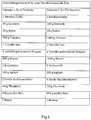
- the stored preparation instructions each have at least two preparation instruction variants with different information about ingredient quantities. Two examples of information on a preparation instruction about the amount of ingredients are in the Fig. 3 and 4th given, with two preparation instruction variants being shown for each preparation instruction.
- the preparation instructions each correspond to the preparation of a tomato soup and a tuna sauce with rice.
- the first variant of the preparation instruction in the first column of the table in Fig. 3 is designed for a tomato soup for 2 people.
- the first variant of the preparation instruction in the first column of the table in Fig. 4 is designed for a tuna soup with rice for 4 people. Between the information for Food quantities of the first variant and the second variant of a preparation rule have a factor of 2.
- preparation instructions have preparation instructions which correspond to different preparation processes on the first kitchen appliance 4 and on the second kitchen appliance 6.
- the second kitchen appliance 6 has a housing 34, a comminution device 36, a control module 38 and a display device 40.
- the control unit 8 is connected to the first kitchen appliance 4 via a first communication connection 42 and to the second kitchen appliance 6 via a second communication connection 44.
- Both communication links 42, 44 are wireless and are based on WLAN technology.
- both communication connections 42, 44 enable a transmission of information in the direction from the control unit 8 and in the direction to the control unit 8.
- the tomatoes 24 are placed on the food support 16 in the first kitchen appliance 4. Then an image is recorded by the optical camera 20, which is then evaluated by the control module 12 of the first kitchen appliance 4. The evaluation provides information about a type of food, in the case of "tomato". At the same time, the weighing module 22 detects information about a food weight, in this case the weight of the tomatoes 24, which corresponds to 500 g. The recorded information, that is to say the information about the type of food and the information about the food weight, are then transmitted to the control unit 8 via the first communication connection 42.
- the algorithm is then executed on the microprocessor 28 of the control unit 8, the information acquired being used as search criteria for a comparison with similar statements of the preparation instructions.
- the comparison shows that the details of the respective first variants of the two preparation instructions of the Fig. 3 and 4th are closest to the information collected, since they contain information for 500 g of tomatoes.
- These preparation regulation variants are displayed on the touchscreen 30 of the control unit 8.
- signals corresponding to the selected preparation instruction variant are transmitted to the second kitchen appliance 6 via the second communication connection 44 and displayed by its display device 40, so that preparation instructions for the selected preparation instruction variant can be carried out on the second kitchen appliance 6 with a corresponding preparation operation.
- the first kitchen appliance 4 is preheated according to the preparation instructions of the selected preparation regulation variant.
- Fig. 2 shows a further exemplary embodiment of a system 100 for preparing food in a schematic illustration.
- the system 100 has a first kitchen appliance 102 in the form of a microwave oven, a second kitchen appliance 104 in the form of a kitchen mixer and a control unit 106, the control unit 106 being integrated in the second kitchen appliance 104.
- the first kitchen appliance 102 has a housing 108, a control module 110, a receiving volume 112 and a heating element 114, the control module 110 being set up to control the heating element 114.
- the first kitchen appliance 102 has a detection means 116 in the form of a weighing module, which is set up to record information about a food weight and which is arranged in the receiving volume 112.
- the second kitchen appliance 104 has a housing 118, a mixing device 120, a control module 122 and a display device 124.
- the control unit 106 is arranged in the housing 118 of the second kitchen appliance 104 and is connected to the second kitchen appliance 104 via a direct second communication connection 125.
- the control unit 106 is connected to the first kitchen appliance 102 via a first, wireless communication link 126 and to an external database 130 via a third, also wireless communication link 128.
- the control unit 106 has a data memory 132, a microprocessor 134 and a user interface 136 for recording user inputs.
- Preparation instructions are stored in the external database 130.
- the control unit 106 is set up to prepare preparation instructions via the third Call communication link 128 from the external database 130 and, if necessary, temporarily save it on the data memory 132 of the control unit 106.
- the following is a method for preparing food with the system 100 of the Fig. 2 described as an example.
- the food 138 is placed in the receiving volume 112 and on the detection means 116 of the first kitchen device 102. Subsequently, the detection means 116 detects information about a food weight of 1000 g, which is then transmitted to the control unit 106 via the first communication connection 126. The control unit 106 then uses the user interface 136 to acquire a first user input about a type of food, in the case “tomato”, and a second user input about an exclusion of meat and fish products.
- the control unit 106 uses the first user input and the information recorded by the first kitchen appliance 102 to generate a search criterion “1000 g tomatoes”. In a first selection process, the control unit 106 compares the search criterion with details of preparation instructions relating to food types and food weights. The respective second preparation instruction variants of the preparation instructions shown above result from the comparison.
- control unit 106 compares the second user input with information about types of ingredients or with the exclusion of meat and fish products with the preparation instructions variants selected during the first selection process. The comparison gives the second variant of the preparation instructions for preparing a tomato soup. This variant is indicated by the display device 124 of the second kitchen device 104.
- the user interface 136 then captures user input via a number of people, in the case 3 people.
- the control unit 106 uses this user input in order to calculate a new, third variant, the details of which correspond to the information about ingredient quantities of the selected preparation regulation variant with a factor of 0.75.
- the new preparation instruction variant is then displayed with the ingredient quantities calculated in this way by the display device 124 of the second kitchen appliance 104 and the preparation instructions followed.
Landscapes
- Engineering & Computer Science (AREA)
- Food Science & Technology (AREA)
- Physics & Mathematics (AREA)
- Mechanical Engineering (AREA)
- Electromagnetism (AREA)
- General Physics & Mathematics (AREA)
- Automation & Control Theory (AREA)
- General Engineering & Computer Science (AREA)
- Human Computer Interaction (AREA)
- Management, Administration, Business Operations System, And Electronic Commerce (AREA)
- Electric Ovens (AREA)
- Medical Treatment And Welfare Office Work (AREA)
- General Preparation And Processing Of Foods (AREA)
- Cookers (AREA)
Applications Claiming Priority (1)
| Application Number | Priority Date | Filing Date | Title |
|---|---|---|---|
| DE102018128688 | 2018-11-15 |
Publications (1)
| Publication Number | Publication Date |
|---|---|
| EP3653091A1 true EP3653091A1 (fr) | 2020-05-20 |
Family
ID=68581415
Family Applications (1)
| Application Number | Title | Priority Date | Filing Date |
|---|---|---|---|
| EP19208872.2A Pending EP3653091A1 (fr) | 2018-11-15 | 2019-11-13 | Système et procédé de préparation de denrées alimentaires |
Country Status (6)
| Country | Link |
|---|---|
| US (1) | US20200154942A1 (fr) |
| EP (1) | EP3653091A1 (fr) |
| CN (1) | CN111184451B (fr) |
| AU (1) | AU2019261690B2 (fr) |
| MX (1) | MX2019013465A (fr) |
| TW (1) | TW202024541A (fr) |
Cited By (1)
| Publication number | Priority date | Publication date | Assignee | Title |
|---|---|---|---|---|
| EP4636366A1 (fr) * | 2024-04-18 | 2025-10-22 | Vorwerk & Co. Interholding GmbH | Système et procédé de traitement d'aliments selon un protocole de préparation prédéfini |
Citations (3)
| Publication number | Priority date | Publication date | Assignee | Title |
|---|---|---|---|---|
| DE102013102295A1 (de) * | 2013-03-07 | 2014-09-11 | Rational Ag | Verfahren zur Anpassung eines Lebensmittel-Garprozesses |
| EP3056882A1 (fr) * | 2015-02-13 | 2016-08-17 | Vorwerk & Co. Interholding GmbH | Procédé de mesure d'une température dans un appareil de cuisine |
| DE102016218016A1 (de) * | 2016-09-20 | 2018-03-22 | BSH Hausgeräte GmbH | Rezeptbasierte Küchenhilfe |
Family Cites Families (13)
| Publication number | Priority date | Publication date | Assignee | Title |
|---|---|---|---|---|
| EP2822226B1 (fr) * | 2013-07-01 | 2016-04-27 | Compania Espanola de Electromenaje, SA | Système et procédé pour la préparation et le traitement d'aliments par cuisson et programme informatique de mise en oeuvre du procédé |
| CN110083630A (zh) * | 2014-05-15 | 2019-08-02 | 珠海优特智厨科技有限公司 | 一种根据菜谱信息检索对应食材的产品信息的方法 |
| DE102014112251A1 (de) * | 2014-08-26 | 2016-03-03 | Vorwerk & Co. Interholding Gmbh | Automatische Verarbeitung eines Nahrungsmittels |
| CN106264065A (zh) * | 2015-06-01 | 2017-01-04 | 阎卫中 | 一种智能厨房烹饪系统及智能辅助烹饪的方法 |
| US20170316488A1 (en) * | 2015-06-07 | 2017-11-02 | Alexander Michael Kremen | Systems and Methods of Food Management |
| US11324083B1 (en) * | 2015-09-06 | 2022-05-03 | Muhammad Shahir Rahman | Apparatus for intelligent and selective heating using sensor array |
| US11128709B2 (en) * | 2015-12-15 | 2021-09-21 | At&T Intellectual Property I, L.P. | Method and apparatus for receiving nutritional information via a network |
| US11104502B2 (en) * | 2016-03-01 | 2021-08-31 | Jeffrey S. Melcher | Multi-function compact appliance and methods for a food or item in a container with a container storage technology |
| DE102016111244B3 (de) * | 2016-06-20 | 2017-10-26 | Miele & Cie. Kg | Verfahren und Vorrichtung zum Wandeln eines Betriebsprogramms eines Aufzeichnungs-Lebensmittelzubereitungsgerätes in eine Zustandsfolge |
| PL3163174T3 (pl) * | 2017-02-20 | 2019-07-31 | V-Zug Ag | Układ urządzeń do gotowania dla przygotowania przynajmniej dwóch produktów spożywczych |
| CN208031021U (zh) * | 2017-06-02 | 2018-11-02 | 九阳股份有限公司 | 一种具有称重功能的智能电烤箱 |
| US10585900B2 (en) * | 2017-11-01 | 2020-03-10 | International Business Machines Corporation | System and method to select substitute ingredients in a food recipe |
| KR20190084567A (ko) * | 2018-01-08 | 2019-07-17 | 삼성전자주식회사 | 음식과 관련된 정보를 처리하기 위한 전자 장치 및 방법 |
-
2019
- 2019-11-05 AU AU2019261690A patent/AU2019261690B2/en active Active
- 2019-11-05 TW TW108140131A patent/TW202024541A/zh unknown
- 2019-11-11 MX MX2019013465A patent/MX2019013465A/es unknown
- 2019-11-12 US US16/681,229 patent/US20200154942A1/en not_active Abandoned
- 2019-11-13 EP EP19208872.2A patent/EP3653091A1/fr active Pending
- 2019-11-15 CN CN201911118735.3A patent/CN111184451B/zh active Active
Patent Citations (3)
| Publication number | Priority date | Publication date | Assignee | Title |
|---|---|---|---|---|
| DE102013102295A1 (de) * | 2013-03-07 | 2014-09-11 | Rational Ag | Verfahren zur Anpassung eines Lebensmittel-Garprozesses |
| EP3056882A1 (fr) * | 2015-02-13 | 2016-08-17 | Vorwerk & Co. Interholding GmbH | Procédé de mesure d'une température dans un appareil de cuisine |
| DE102016218016A1 (de) * | 2016-09-20 | 2018-03-22 | BSH Hausgeräte GmbH | Rezeptbasierte Küchenhilfe |
Cited By (1)
| Publication number | Priority date | Publication date | Assignee | Title |
|---|---|---|---|---|
| EP4636366A1 (fr) * | 2024-04-18 | 2025-10-22 | Vorwerk & Co. Interholding GmbH | Système et procédé de traitement d'aliments selon un protocole de préparation prédéfini |
Also Published As
| Publication number | Publication date |
|---|---|
| AU2019261690A1 (en) | 2020-06-04 |
| US20200154942A1 (en) | 2020-05-21 |
| MX2019013465A (es) | 2020-11-11 |
| CN111184451A (zh) | 2020-05-22 |
| TW202024541A (zh) | 2020-07-01 |
| CN111184451B (zh) | 2024-04-30 |
| AU2019261690B2 (en) | 2025-05-15 |
Similar Documents
| Publication | Publication Date | Title |
|---|---|---|
| DE102018130667B4 (de) | System zum Zubereiten von Lebensmitteln und Verfahren zum Steuern eines Küchengeräts | |
| EP3267859B1 (fr) | Procédé de fonctionnement d'un robot ménager entraîné par moteur électrique | |
| CH712659A1 (de) | Generierung eines Garprozesses. | |
| EP3730011B1 (fr) | Procédé de commande d'alimentation, appareil de cuisine ainsi que système de préparation des aliments | |
| EP3730005B1 (fr) | Procédé de génération d'au moins une proposition de recette, appareil de cuisine ainsi que système de préparation des aliments | |
| EP3770507A1 (fr) | Procédé de fonctionnement d'un appareil de cuisson et appareil de cuisson | |
| EP3163174A2 (fr) | Arrangement d'appareils de cuisson pour la préparation d'au moins deux produits à cuire | |
| EP3590393A1 (fr) | Procédé de numérisation d'un processus de cuisson, appareil de cuisine ainsi que système de numérisation d'un processus de cuisson | |
| EP3705006B1 (fr) | Robot de cuisine avec dispositif de surveillance | |
| EP3884819A1 (fr) | Procédé de fonctionnement d'un système de cuisine, système de cuisine permettant de préparer une denrée alimentaire et produit programme informatique | |
| WO2016030367A1 (fr) | Transformation automatique d'un aliment | |
| WO2016142415A2 (fr) | Procédé et système pourvu d'une commande pour la préparation de plats | |
| WO2016206889A1 (fr) | Unité de commande et procédé de détermination d'une recette | |
| DE102017112855A1 (de) | Küchengerät und Verfahren zur Verwertung von Informationen über Gesundheitseigenschaften bei der Bedienung eines Küchengeräts | |
| DE102010054382C5 (de) | Verfahren zur Steuerung eines Gargerätes und Gargerät mit Gerätesteuerung | |
| EP3653091A1 (fr) | Système et procédé de préparation de denrées alimentaires | |
| EP2956014B1 (fr) | Procédé et dispositif pour calculer la durée totale de processus de fermentation d'aliments et procédé de fermentation | |
| WO2017182074A1 (fr) | Système servant à la préparation d'au moins un produit alimentaire et procédé pour faire fonctionner ledit système | |
| EP1498057B1 (fr) | Procédé de détermination des paramètres d'un processus de cuisson d'un produit alimentaire et le dispositif de commande utilisé. | |
| EP3909479A1 (fr) | Détermination et réalisation d'une recette de cuisine | |
| EP3524888B1 (fr) | Procédé de commande d'un appareil de cuisson ainsi qu'appareil de cuisson | |
| EP4636366A1 (fr) | Système et procédé de traitement d'aliments selon un protocole de préparation prédéfini | |
| EP3696623B1 (fr) | Appareil de commande et procédé de fonctionnement d'un appareil électroménager pour la fabrication d'un aliment | |
| DE102018115538A1 (de) | Kalibrierungssystem, Küchensystem sowie Verfahren zum Betreiben eines Kalibrierungssystems | |
| EP4620361A1 (fr) | Dispositif et procédé de détermination d'une température centrale cible |
Legal Events
| Date | Code | Title | Description |
|---|---|---|---|
| PUAI | Public reference made under article 153(3) epc to a published international application that has entered the european phase |
Free format text: ORIGINAL CODE: 0009012 |
|
| STAA | Information on the status of an ep patent application or granted ep patent |
Free format text: STATUS: THE APPLICATION HAS BEEN PUBLISHED |
|
| AK | Designated contracting states |
Kind code of ref document: A1 Designated state(s): AL AT BE BG CH CY CZ DE DK EE ES FI FR GB GR HR HU IE IS IT LI LT LU LV MC MK MT NL NO PL PT RO RS SE SI SK SM TR |
|
| AX | Request for extension of the european patent |
Extension state: BA ME |
|
| STAA | Information on the status of an ep patent application or granted ep patent |
Free format text: STATUS: REQUEST FOR EXAMINATION WAS MADE |
|
| 17P | Request for examination filed |
Effective date: 20201119 |
|
| RBV | Designated contracting states (corrected) |
Designated state(s): AL AT BE BG CH CY CZ DE DK EE ES FI FR GB GR HR HU IE IS IT LI LT LU LV MC MK MT NL NO PL PT RO RS SE SI SK SM TR |
|
| STAA | Information on the status of an ep patent application or granted ep patent |
Free format text: STATUS: EXAMINATION IS IN PROGRESS |
|
| 17Q | First examination report despatched |
Effective date: 20220809 |