EP3661438B1 - Systèmes de réduction du risque de cyphose jonctionnelle proximale à l'aide d'une extension flexible - Google Patents
Systèmes de réduction du risque de cyphose jonctionnelle proximale à l'aide d'une extension flexible Download PDFInfo
- Publication number
- EP3661438B1 EP3661438B1 EP18841050.0A EP18841050A EP3661438B1 EP 3661438 B1 EP3661438 B1 EP 3661438B1 EP 18841050 A EP18841050 A EP 18841050A EP 3661438 B1 EP3661438 B1 EP 3661438B1
- Authority
- EP
- European Patent Office
- Prior art keywords
- extension
- attachment point
- primary construct
- connector
- rod
- Prior art date
- Legal status (The legal status is an assumption and is not a legal conclusion. Google has not performed a legal analysis and makes no representation as to the accuracy of the status listed.)
- Active
Links
Images




Classifications
-
- A—HUMAN NECESSITIES
- A61—MEDICAL OR VETERINARY SCIENCE; HYGIENE
- A61B—DIAGNOSIS; SURGERY; IDENTIFICATION
- A61B17/00—Surgical instruments, devices or methods
- A61B17/56—Surgical instruments or methods for treatment of bones or joints; Devices specially adapted therefor
- A61B17/58—Surgical instruments or methods for treatment of bones or joints; Devices specially adapted therefor for osteosynthesis, e.g. bone plates, screws or setting implements
- A61B17/68—Internal fixation devices, including fasteners and spinal fixators, even if a part thereof projects from the skin
- A61B17/70—Spinal positioners or stabilisers, e.g. stabilisers comprising fluid filler in an implant
- A61B17/7001—Screws or hooks combined with longitudinal elements which do not contact vertebrae
- A61B17/7002—Longitudinal elements, e.g. rods
- A61B17/7019—Longitudinal elements having flexible parts, or parts connected together, such that after implantation the elements can move relative to each other
- A61B17/7031—Longitudinal elements having flexible parts, or parts connected together, such that after implantation the elements can move relative to each other made wholly or partly of flexible material
-
- A—HUMAN NECESSITIES
- A61—MEDICAL OR VETERINARY SCIENCE; HYGIENE
- A61B—DIAGNOSIS; SURGERY; IDENTIFICATION
- A61B17/00—Surgical instruments, devices or methods
- A61B17/56—Surgical instruments or methods for treatment of bones or joints; Devices specially adapted therefor
- A61B17/58—Surgical instruments or methods for treatment of bones or joints; Devices specially adapted therefor for osteosynthesis, e.g. bone plates, screws or setting implements
- A61B17/68—Internal fixation devices, including fasteners and spinal fixators, even if a part thereof projects from the skin
- A61B17/70—Spinal positioners or stabilisers, e.g. stabilisers comprising fluid filler in an implant
- A61B17/7049—Connectors, not bearing on the vertebrae, for linking longitudinal elements together
-
- A—HUMAN NECESSITIES
- A61—MEDICAL OR VETERINARY SCIENCE; HYGIENE
- A61B—DIAGNOSIS; SURGERY; IDENTIFICATION
- A61B17/00—Surgical instruments, devices or methods
- A61B17/56—Surgical instruments or methods for treatment of bones or joints; Devices specially adapted therefor
- A61B17/58—Surgical instruments or methods for treatment of bones or joints; Devices specially adapted therefor for osteosynthesis, e.g. bone plates, screws or setting implements
- A61B17/68—Internal fixation devices, including fasteners and spinal fixators, even if a part thereof projects from the skin
- A61B17/70—Spinal positioners or stabilisers, e.g. stabilisers comprising fluid filler in an implant
- A61B17/7001—Screws or hooks combined with longitudinal elements which do not contact vertebrae
- A61B17/7002—Longitudinal elements, e.g. rods
- A61B17/7019—Longitudinal elements having flexible parts, or parts connected together, such that after implantation the elements can move relative to each other
- A61B17/7022—Tethers, i.e. longitudinal elements capable of transmitting tension only, e.g. straps, sutures or cables
-
- A—HUMAN NECESSITIES
- A61—MEDICAL OR VETERINARY SCIENCE; HYGIENE
- A61B—DIAGNOSIS; SURGERY; IDENTIFICATION
- A61B17/00—Surgical instruments, devices or methods
- A61B17/56—Surgical instruments or methods for treatment of bones or joints; Devices specially adapted therefor
- A61B17/58—Surgical instruments or methods for treatment of bones or joints; Devices specially adapted therefor for osteosynthesis, e.g. bone plates, screws or setting implements
- A61B17/68—Internal fixation devices, including fasteners and spinal fixators, even if a part thereof projects from the skin
- A61B17/70—Spinal positioners or stabilisers, e.g. stabilisers comprising fluid filler in an implant
- A61B17/7001—Screws or hooks combined with longitudinal elements which do not contact vertebrae
- A61B17/7032—Screws or hooks with U-shaped head or back through which longitudinal rods pass
- A61B17/7034—Screws or hooks with U-shaped head or back through which longitudinal rods pass characterised by a lateral opening
-
- A—HUMAN NECESSITIES
- A61—MEDICAL OR VETERINARY SCIENCE; HYGIENE
- A61B—DIAGNOSIS; SURGERY; IDENTIFICATION
- A61B17/00—Surgical instruments, devices or methods
- A61B17/56—Surgical instruments or methods for treatment of bones or joints; Devices specially adapted therefor
- A61B17/58—Surgical instruments or methods for treatment of bones or joints; Devices specially adapted therefor for osteosynthesis, e.g. bone plates, screws or setting implements
- A61B17/68—Internal fixation devices, including fasteners and spinal fixators, even if a part thereof projects from the skin
- A61B17/70—Spinal positioners or stabilisers, e.g. stabilisers comprising fluid filler in an implant
- A61B17/7001—Screws or hooks combined with longitudinal elements which do not contact vertebrae
- A61B17/7041—Screws or hooks combined with longitudinal elements which do not contact vertebrae with single longitudinal rod offset laterally from single row of screws or hooks
-
- A—HUMAN NECESSITIES
- A61—MEDICAL OR VETERINARY SCIENCE; HYGIENE
- A61B—DIAGNOSIS; SURGERY; IDENTIFICATION
- A61B17/00—Surgical instruments, devices or methods
- A61B17/56—Surgical instruments or methods for treatment of bones or joints; Devices specially adapted therefor
- A61B17/58—Surgical instruments or methods for treatment of bones or joints; Devices specially adapted therefor for osteosynthesis, e.g. bone plates, screws or setting implements
- A61B17/68—Internal fixation devices, including fasteners and spinal fixators, even if a part thereof projects from the skin
- A61B17/70—Spinal positioners or stabilisers, e.g. stabilisers comprising fluid filler in an implant
- A61B17/7047—Clamps comprising opposed elements which grasp one vertebra between them
-
- A—HUMAN NECESSITIES
- A61—MEDICAL OR VETERINARY SCIENCE; HYGIENE
- A61B—DIAGNOSIS; SURGERY; IDENTIFICATION
- A61B17/00—Surgical instruments, devices or methods
- A61B17/56—Surgical instruments or methods for treatment of bones or joints; Devices specially adapted therefor
- A61B17/58—Surgical instruments or methods for treatment of bones or joints; Devices specially adapted therefor for osteosynthesis, e.g. bone plates, screws or setting implements
- A61B17/68—Internal fixation devices, including fasteners and spinal fixators, even if a part thereof projects from the skin
- A61B17/70—Spinal positioners or stabilisers, e.g. stabilisers comprising fluid filler in an implant
- A61B17/7049—Connectors, not bearing on the vertebrae, for linking longitudinal elements together
- A61B17/705—Connectors, not bearing on the vertebrae, for linking longitudinal elements together for linking adjacent ends of longitudinal elements
-
- A—HUMAN NECESSITIES
- A61—MEDICAL OR VETERINARY SCIENCE; HYGIENE
- A61B—DIAGNOSIS; SURGERY; IDENTIFICATION
- A61B17/00—Surgical instruments, devices or methods
- A61B17/56—Surgical instruments or methods for treatment of bones or joints; Devices specially adapted therefor
- A61B17/58—Surgical instruments or methods for treatment of bones or joints; Devices specially adapted therefor for osteosynthesis, e.g. bone plates, screws or setting implements
- A61B17/68—Internal fixation devices, including fasteners and spinal fixators, even if a part thereof projects from the skin
- A61B17/70—Spinal positioners or stabilisers, e.g. stabilisers comprising fluid filler in an implant
- A61B17/7053—Spinal positioners or stabilisers, e.g. stabilisers comprising fluid filler in an implant with parts attached to bones or to each other by flexible wires, straps, sutures or cables
-
- A—HUMAN NECESSITIES
- A61—MEDICAL OR VETERINARY SCIENCE; HYGIENE
- A61B—DIAGNOSIS; SURGERY; IDENTIFICATION
- A61B17/00—Surgical instruments, devices or methods
- A61B17/56—Surgical instruments or methods for treatment of bones or joints; Devices specially adapted therefor
- A61B17/58—Surgical instruments or methods for treatment of bones or joints; Devices specially adapted therefor for osteosynthesis, e.g. bone plates, screws or setting implements
- A61B17/68—Internal fixation devices, including fasteners and spinal fixators, even if a part thereof projects from the skin
- A61B17/70—Spinal positioners or stabilisers, e.g. stabilisers comprising fluid filler in an implant
- A61B17/7056—Hooks with specially-designed bone-contacting part
-
- A—HUMAN NECESSITIES
- A61—MEDICAL OR VETERINARY SCIENCE; HYGIENE
- A61B—DIAGNOSIS; SURGERY; IDENTIFICATION
- A61B17/00—Surgical instruments, devices or methods
- A61B17/56—Surgical instruments or methods for treatment of bones or joints; Devices specially adapted therefor
- A61B17/58—Surgical instruments or methods for treatment of bones or joints; Devices specially adapted therefor for osteosynthesis, e.g. bone plates, screws or setting implements
- A61B17/68—Internal fixation devices, including fasteners and spinal fixators, even if a part thereof projects from the skin
- A61B17/70—Spinal positioners or stabilisers, e.g. stabilisers comprising fluid filler in an implant
- A61B17/7074—Tools specially adapted for spinal fixation operations other than for bone removal or filler handling
- A61B17/7076—Tools specially adapted for spinal fixation operations other than for bone removal or filler handling for driving, positioning or assembling spinal clamps or bone anchors specially adapted for spinal fixation
- A61B17/7082—Tools specially adapted for spinal fixation operations other than for bone removal or filler handling for driving, positioning or assembling spinal clamps or bone anchors specially adapted for spinal fixation for driving, i.e. rotating, screws or screw parts specially adapted for spinal fixation, e.g. for driving polyaxial or tulip-headed screws
-
- A—HUMAN NECESSITIES
- A61—MEDICAL OR VETERINARY SCIENCE; HYGIENE
- A61B—DIAGNOSIS; SURGERY; IDENTIFICATION
- A61B17/00—Surgical instruments, devices or methods
- A61B17/56—Surgical instruments or methods for treatment of bones or joints; Devices specially adapted therefor
- A61B17/58—Surgical instruments or methods for treatment of bones or joints; Devices specially adapted therefor for osteosynthesis, e.g. bone plates, screws or setting implements
- A61B17/68—Internal fixation devices, including fasteners and spinal fixators, even if a part thereof projects from the skin
- A61B17/70—Spinal positioners or stabilisers, e.g. stabilisers comprising fluid filler in an implant
- A61B17/7074—Tools specially adapted for spinal fixation operations other than for bone removal or filler handling
- A61B17/7083—Tools for guidance or insertion of tethers, rod-to-anchor connectors, rod-to-rod connectors, or longitudinal elements
-
- A—HUMAN NECESSITIES
- A61—MEDICAL OR VETERINARY SCIENCE; HYGIENE
- A61B—DIAGNOSIS; SURGERY; IDENTIFICATION
- A61B17/00—Surgical instruments, devices or methods
- A61B17/56—Surgical instruments or methods for treatment of bones or joints; Devices specially adapted therefor
- A61B17/58—Surgical instruments or methods for treatment of bones or joints; Devices specially adapted therefor for osteosynthesis, e.g. bone plates, screws or setting implements
- A61B17/68—Internal fixation devices, including fasteners and spinal fixators, even if a part thereof projects from the skin
- A61B17/70—Spinal positioners or stabilisers, e.g. stabilisers comprising fluid filler in an implant
- A61B17/7001—Screws or hooks combined with longitudinal elements which do not contact vertebrae
- A61B17/7002—Longitudinal elements, e.g. rods
-
- A—HUMAN NECESSITIES
- A61—MEDICAL OR VETERINARY SCIENCE; HYGIENE
- A61B—DIAGNOSIS; SURGERY; IDENTIFICATION
- A61B17/00—Surgical instruments, devices or methods
- A61B17/56—Surgical instruments or methods for treatment of bones or joints; Devices specially adapted therefor
- A61B17/58—Surgical instruments or methods for treatment of bones or joints; Devices specially adapted therefor for osteosynthesis, e.g. bone plates, screws or setting implements
- A61B17/68—Internal fixation devices, including fasteners and spinal fixators, even if a part thereof projects from the skin
- A61B17/70—Spinal positioners or stabilisers, e.g. stabilisers comprising fluid filler in an implant
- A61B17/7001—Screws or hooks combined with longitudinal elements which do not contact vertebrae
- A61B17/7032—Screws or hooks with U-shaped head or back through which longitudinal rods pass
-
- A—HUMAN NECESSITIES
- A61—MEDICAL OR VETERINARY SCIENCE; HYGIENE
- A61B—DIAGNOSIS; SURGERY; IDENTIFICATION
- A61B17/00—Surgical instruments, devices or methods
- A61B17/56—Surgical instruments or methods for treatment of bones or joints; Devices specially adapted therefor
- A61B2017/564—Methods for bone or joint treatment
Definitions
- PJK proximal junctional kyphosis
- PJF proximal junctional failure
- Proximal junctional kyphosis is typically defined as a proximal junctional sagittal Cobb angle greater than 10 degrees, or at least 10 degrees greater than in a pre-operative measurement. It is estimated that between 5% and 46% of adult spine patients suffer from some form of PJK, with most cases being diagnosed weeks or months after the surgery. In some cases, proximal junctional failure (PJF) can occur.
- PJK Proximal junctional kyphosis
- PJF may be characterized by (i) post-operative fracture of the UIV or the vertebra superiorly-adjacent thereto (UIV+1), (ii) UIV implant failure, (iii) PJK increase greater than 15 degrees, and/or (iv) a need for proximal extension of the fusion or the construct within 6 months of the surgery.
- FIG. 1 is a sagittal view of a patient spine S in which PJK/PJF has occurred above the UIV after surgery to implant a fixation construct C. Patients who suffer from PJK or PJF may experience increased pain, neurologic deficit, or ambulatory difficulties, and may be faced with revision surgery and the expenses and risks associated therewith.
- US2017/007299A1 relates to spinal fixation constructs with a flexible member.
- FR3034978A1 relates to a vertebral anchoring system comprising two anchoring parts each comprising a pedicle element capable of being engaged in a pedicle of a vertebra and connected to one another by a connecting element.
- US2014/094851A1 relates to methods and devices for treatment of spinal deformity.
- US2016/235447A1 relates to a spinal fixation construct and methods of use in a spinal procedure.
- the present invention provides a surgical system comprising aa primary construct having a spinal fixation rod configured to extend between an uppermost instrumented vertebra (UIV) and a lowermost instrumented vertebra (LIV), an extension configured to be attached to a first attachment point, such as a bone anchor implanted in a vertebra that is superior to the primary construct, and a second attachment point, such as a component of the primary construct or an anatomical structure disposed inferior to the first attachment point.
- a first attachment point such as a bone anchor implanted in a vertebra that is superior to the primary construct
- a second attachment point such as a component of the primary construct or an anatomical structure disposed inferior to the first attachment point.
- the surgical system further comprises a connector with a first channel configured to receive the spinal fixation rod and a second channel configured to receive the extension; wherein the first channel is open in a lateral direction, such that the rod can be inserted into the first channel by moving the rod laterally with respect to the connector or vice versa; wherein the second channel of the connector further comprises a tunnel formed in a distal arm of the connector body; and wherein the connector includes a locking element or set screw that can be actuated to lock the connector to the extension and to the rod.
- the extension can be more flexible than the primary construct and/or can limit motion to a lesser degree than the primary construct, thereby providing a more-gradual transition from the instrumented vertebrae to the natural patient anatomy adjacent thereto.
- the extension can be placed with little or no soft tissue disruption.
- the first attachment point can include a bone anchor implanted in a vertebra disposed superior to the UIV of the primary construct.
- the first attachment point can be at least two vertebral levels superior to the UIV of the primary construct.
- the second attachment point can include a rigid spinal rod of the primary construct.
- the extension can have a stiffness that is greater than a stiffness of patient anatomy superior to the UIV of the primary construct and that is less than a stiffness of the primary construct.
- the extension can have a degree of spinal motion restriction that is greater than that of patient anatomy superior to the UIV of the primary construct and less than that of the primary construct.
- the extension can limit flexion of the spine without completely preventing such flexion.
- the extension can be attached to the second attachment point by a connector.
- the connector can clamp the extension to a spinal rod or a bone screw of the primary construct.
- the extension can be a first extension and the method can include placing a second extension on a contralateral side of the spinal midline from the first extension.
- Positioning the extension can include passing the extension superiorly from a primary incision through which the primary construct is implanted to the first attachment point, the extension passing beneath the skin and/or soft tissue of the patient, and attaching the extension to the first attachment point can include hooking a hook attached to the extension onto the first attachment point or clamping a clamp attached to the extension onto the first attachment point.
- no portion of the extension is disposed anterior to any lamina of the patient's spine when the extension is attached to the first and second attachment points.
- the surgical method can include forming a primary incision in a patient; attaching a primary construct to the patient's spine via the primary incision; forming a secondary incision in the patient at a location superior to the primary incision; inserting a bone anchor through the secondary incision with an elongate flexible tether attached to the bone anchor; driving the bone anchor into bone at a first attachment point, thereby attaching the tether to the first attachment point while a portion of the tether extends through the second incision to a location outside the patient; tunneling the tether beneath soft tissue disposed intermediate to the primary incision and the secondary incision; and attaching the tether to the primary construct via the primary incision.
- Tunneling the tether can include inserting an inserter instrument through the secondary incision and pushing the instrument inferiorly towards the primary incision.
- the method can include grasping a leading end of the inserter instrument via the primary incision and pulling the inserter instrument through the primary incision.
- the tether can be attached to the inserter instrument and can be carried along the same path as the inserter instrument, thereby positioning the tether such that it extends along the patient's spine between the first attachment point and the primary construct.
- a longitudinal extension is added to a primary fixation construct to extend the construct to one or more additional vertebral levels.
- the extension is configured to be attached to a first attachment point, such as a bone anchor implanted in a vertebra that is superior to the primary construct.
- the extension is also configured to be attached to a second attachment point, such as a component of the primary construct or an anatomical structure disposed inferior to the first attachment point.
- the extension can be more flexible than the primary construct and/or can limit motion to a lesser degree than the primary construct, thereby providing a more-gradual transition from the instrumented vertebrae to the natural patient anatomy adjacent thereto.
- the extension can be placed with little or no soft tissue disruption.
- FIGS. 2A-2B schematically illustrate a system and method for treating, preventing, or reducing the risk of proximal junctional kyphosis, proximal junctional failure, and other conditions.
- a primary construct 200 can be implanted in a patient and attached to the patient's spine S.
- the primary construct 200 can be extended to one or more additional vertebral levels by (i) attaching a longitudinal extension 202 to a first attachment point 204, (ii) positioning the longitudinal extension relative to the patient's spine, and (iii) attaching the longitudinal extension to a second attachment point 206.
- the first attachment point 204 can be an implant or an anatomical structure that is longitudinally offset from the primary construct 200, e.g., one or more vertebral levels superior to the UIV of the primary construct.
- the extension 202 can be attached to the first attachment point 204 in a manner that does not disrupt or only minimally disrupts soft tissue in the vicinity of the first attachment point.
- the second attachment point 206 can be an implant or an anatomical structure disposed at or below the UIV of the primary construct 200.
- the second attachment point can be a rod 208, bone anchor 210, or other component of the primary construct 200 itself, or a vertebra to which the primary construct is attached.
- the above steps can be performed in any sequence.
- the extension 202 can be implanted prior to the primary construct 200.
- the extension 202 can be attached to the first attachment point 204 after placing the extension in its final position relative to the spine and/or after attaching the extension to the second attachment point 206.
- the extension can replicate the natural soft tissue envelope.
- the vertebrae instrumented with the primary construct may be fused to one another and the vertebrae to which the primary construct is extended by the extension are not fused. Accordingly, a hybrid construct can be formed in which a first spinal segment is instrumented and fused, a second spinal segment superior to the first segment is instrumented and not fused, and a third spinal segment superior to the second segment is neither instrumented nor fused.
- a primary construct can be implanted in the patient.
- the primary construct can include one or more spinal rods extending longitudinally along the patient's spine.
- the spinal rod or rods can be attached to the patient's spine using bone anchors such as pedicle or lateral mass screws, hooks, wires, and so forth.
- the primary construct can extend along a segment of the spine between an uppermost instrumented vertebra (UIV) of the primary construct, i.e., the most-superior or most-cranial vertebra to which the primary construct is attached, and a lowermost instrumented vertebra (LIV) of the primary construct, i.e., the most-inferior or most-caudal vertebra to which the primary construct is attached.
- UIV can be the uppermost vertebra in which a bone screw of the primary construct is implanted.
- the LIV can be the lowermost vertebra in which a bone screw of the primary construct is implanted.
- the primary construct can be implanted using any of a variety of known techniques, including open procedures, minimally-invasive or percutaneous procedures, and so forth.
- the primary construct can be implanted through a primary incision.
- the primary incision can extend longitudinally along the patient's spine.
- the terminal superior end of the primary incision can be located inferior to UIV+1, inferior to UIV, and/or inferior to UIV-1.
- the primary incision can include a plurality of discrete incisions, e.g., in the case of minimally-invasive procedures for installing the primary construct.
- the primary construct can include a rigid spinal rod, e.g., a rod that does not materially bend or deform post-implantation when subjected to normal anatomical loads, or a rod which is not designed to bend or deform under such conditions.
- the extension can be a length of MERSILENE tape available from ETHICON of Somerville, New Jersey.
- the extension can be a length of non-absorbable, braided, sterile material.
- the extension can be formed from poly (ethylene terephthalate).
- the extension can be formed from fibers of high molecular weight, long-chain, linear polyesters having recurrent aromatic rings.
- the extension can be coated with anti-bacterial agents, corticosteroids, anti-infective agents, tryclosan, and so forth.
- the extension can be radiopaque, radiolucent, or partially radiopaque and partially radiolucent.
- the extension can include imaging bands or markers.
- the extension can be polymeric.
- the extension can be formed from or can include various materials including polyethylene terephthalate or DACRON, polytetrafluoroethylene or TEFLON, poly-paraphenylene terephthalamide or KEVLAR, ultra-high-molecular-weight polyethylene (UHMWPE), nylon, poly(L-lactic acid), and the like.
- the extension can be reinforced with materials including metals, elastomers, carbon fibers, etc.
- the extension can include resilient or shape memory materials such as elastomers or nitinol. Such materials can allow the extension to not only limit flexion of the spine, but also to instill extension forces, which may improve lordosis and/or reinforce posterior soft tissues.
- the extension forces can be tailored based upon material properties, weaving structure, thickness, or other attributes of the extension.
- the extension can be a tether that is substantially flat or planar.
- the tether can have a cross-sectional width that is greater than a cross-sectional height.
- the width can be at least two times greater than the height.
- the width of the tether can be in the range of about 4 mm to about 8 mm.
- the height of the tether can be in the range of about 0.5 mm to about 2.5 mm.
- the tether can have any number of different cross-sections, including rectangular, square, elliptical, circular, and so forth.
- the extension can be attached to a first attachment point that is offset from the primary construct, e.g., one or more vertebral levels superior to the primary construct.
- the first attachment point can be a vertebra.
- the first attachment point can be a pedicle, a transverse process, a lamina, a facet, a spinous process, or a vertebral body of the vertebra.
- the first attachment point can be an implant implanted in any of the above locations.
- the vertebra can be superior to UIV.
- the vertebra can be UIV+1, UIV+2, or higher.
- the first attachment point can be a rib or other anatomical anchor point.
- the first attachment point can be a bone structure.
- the first attachment point can be a soft tissue structure.
- the first attachment point can be a muscle, a tendon, or a ligament.
- the extension can be attached to a plurality of the above-described first attachment points.
- the extension can be attached to the first attachment point in any of a variety of ways.
- the extension can be attached to the first attachment point using a suture, rivet, or staple.
- the extension can be attached to the first attachment point using a clamp.
- the clamp can be attached to a lamina, spinous process, or other anatomical structure or implant.
- the extension can be attached to the first attachment point using a hook.
- the hook can be hooked onto a lamina, spinous process, or other anatomical structure or implant.
- the extension can be attached to the first attachment point using a bone anchor, e.g., a screw anchor, a suture anchor, an expandable anchor, a tether anchor, and/or a soft-tissue anchor, any of which may be of the type available from DEPUY SYNTHES of Raynham, Massachusetts.
- a bone anchor e.g., a screw anchor, a suture anchor, an expandable anchor, a tether anchor, and/or a soft-tissue anchor, any of which may be of the type available from DEPUY SYNTHES of Raynham, Massachusetts.
- the extension can be attached to the first attachment point in a way that minimizes soft tissue disruption.
- the extension can be positioned at the first attachment point without extending the primary incision and/or without forming any incision other than the primary incision.
- the extension can be positioned at the first attachment point through a small secondary incision formed over the first attachment point.
- the secondary incision can be percutaneous stab incision.
- the secondary incision can be made only as large as necessary to pass the extension therethrough, or only as large as necessary to pass an anchor for attaching the extension therethrough.
- the secondary incision can have a length that is equal or substantially equal (e.g., within 10% of) a corresponding dimension of the extension.
- the secondary incision can have a diameter that is equal or substantially equal (e.g., within 10% of) a diameter of a bone anchor used to attach the extension to the first attachment point.
- the secondary incision can have a length or diameter that is less than about 10 mm, less than about 5 mm, less than about 3 mm, and/or less than about 1 mm.
- the extension, or at least one end thereof, the anchor, or both the extension and the anchor can be delivered to the first attachment point through a trocar, tube, or cannula.
- the extension can be attached to the first attachment point without disturbing the soft tissue envelope of the vertebral levels superior to the primary construct.
- the extension can be positioned relative to the patient's spine.
- the extension can be positioned to extend along the patient's spine between the first attachment point and a second attachment point, such as the primary construct.
- the extension can be passed through the secondary incision and then pushed and/or pulled in an inferior direction towards the primary construct, passing the extension beneath the skin and/or soft tissue disposed intermediate to the secondary incision and the primary construct.
- the extension can be pushed and/or pulled in the inferior direction by an inserter or tunneling instrument.
- the inserter instrument can be passed through the primary incision and up towards the secondary incision to grab the extension before pulling it inferiorly.
- the inserter instrument can be passed through the secondary incision and pushed with the extension coupled thereto inferiorly towards the primary construct, beneath the skin and/or soft-tissue.
- the extension can be inserted through the primary incision and passed in a superior direction towards the first attachment point, guiding the extension beneath the skin and/or soft tissue disposed intermediate to the first attachment point and the primary incision.
- the extension can be passed in the superior direction using forceps, a pushrod, or other inserter instrument.
- the extension can be positioned along a posterior aspect of the spine.
- the extension can be positioned along an anterior or lateral aspect of the spine.
- the extension can be positioned such that no portion of the extension is disposed anterior to any lamina of the patient's spine.
- the extension can be positioned in a way that minimizes soft tissue disruption.
- the extension can be positioned without extending the primary incision and/or without forming any incision other than the primary incision.
- the extension can be positioned without disturbing the soft tissue envelope of the vertebral levels superior to the primary construct.
- the extension can be attached to a second attachment point.
- the second attachment point can be inferior to the first attachment point.
- the second attachment point can be a spinal rod, a bone anchor or bone screw, a cross-connector, or any other component of the primary construct.
- the second attachment point can be an anatomical structure adjacent or inferior to the primary construct.
- the second attachment point can be a vertebra.
- the second attachment point can be a pedicle, a transverse process, a lamina, a facet, a spinous process, or a vertebral body of the vertebra.
- the second attachment point can be an implant implanted in any of the above locations.
- the vertebra can be inferior to the UIV of the primary construct.
- the vertebra can be UIV, UIV-1, UIV-2, or lower.
- the second attachment point can be a rib or other anatomical anchor point.
- the second attachment point can be a bone structure.
- the second attachment point can be a soft tissue structure.
- the second attachment point can be a muscle, a tendon, or a ligament.
- the extension can be attached to a plurality of the above-described second attachment points.
- the extension can be attached to the second attachment point in any of a variety of ways.
- the extension can be attached to the second attachment point using a suture, rivet, or staple.
- the extension can be attached to the second attachment point using a clamp.
- the clamp can be attached to a lamina, spinous process, or other anatomical structure or implant.
- the extension can be attached to the second attachment point using a hook.
- the hook can be hooked onto a lamina, spinous process, or other anatomical structure or implant.
- the extension can be attached to the second attachment point using a bone anchor, e.g., a screw anchor, a suture anchor, an expandable anchor, a tether anchor, and/or a soft-tissue anchor, any of which may be of the type available from DEPUY SYNTHES of Raynham, Massachusetts.
- a bone anchor e.g., a screw anchor, a suture anchor, an expandable anchor, a tether anchor, and/or a soft-tissue anchor, any of which may be of the type available from DEPUY SYNTHES of Raynham, Massachusetts.
- the second attachment point can be a spinal rod.
- the extension can be attached to the spinal rod using a clamp or connector that receives the rod and the extension.
- the second attachment point can be a bone anchor, e.g., a screw or a hook.
- the extension can be attached to the bone anchor using a clamp or connector that receives the bone anchor and the extension.
- the extension can be clamped between a spinal rod and a rod seat of the bone anchor.
- the extension can be clamped between a spinal rod and a set screw or closure mechanism of the bone anchor.
- the bone anchor can include a first set screw or closure mechanism for locking the extension to the bone anchor and a second set screw or closure mechanism for locking a spinal rod to the bone anchor.
- first and second extensions can be placed in parallel on contralateral sides of the spinal midline.
- Inferior ends of the extensions can be attached to respective spinal rods and/or respective bone anchors of a primary construct.
- Superior ends of the extensions can be attached to respective attachment points longitudinally offset from the primary construct, or to a common attachment point such as a spinous process of a superior vertebra.
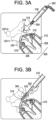
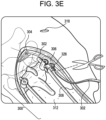
- FIGS. 3A-3E illustrate an example of the systems and methods described above.
- a primary construct 300 is implanted in a patient using known techniques.
- the primary construct 300 can be implanted though a primary incision 312.
- the primary construct 300 can include first and second spinal rods 308 coupled to the patient's vertebrae by respective bone anchors 310. Only the UIV of the primary construct 300 is shown, though it will be appreciated that the primary construct can extend inferiorly to one or more additional vertebrae.
- a screw-type bone anchor 314 with a flexible tether 302 attached thereto can be driven into a vertebra superior to the primary construct 300, e.g., UIV+1 as shown.
- the driver instrument 316 can be withdrawn proximally, leaving the tether 302 extending from the anchor 314, with the anchor 314 now serving as a first attachment point 304.
- the tether 302 can extend through the secondary incision 318 to a location external to the patient.
- the tether 302 can be fixed to the anchor 314 or can be threaded or looped through an aperture formed in the anchor or around a post disposed in a lumen of the anchor.
- an inserter or tunneling instrument 320 can be passed through the secondary incision 318 and pushed inferiorly towards the primary incision 312 through or beneath the patient's skin and/or soft tissue 322.
- the inserter instrument 320 can be rigid or semi-rigid to facilitate pushing of the instrument through the patient.
- the inserter instrument 320 can include a hook, aperture, or other attachment 324 for attaching the inserter instrument to the tether 302.
- the attachment 324 can be disposed at or near a proximal or trailing end of the inserter instrument 320.
- the leading end of the inserter instrument 320 can be pushed through the secondary incision 318 and towards the primary incision 312. A user can then reach into the primary incision 312, grasp the leading end of the inserter instrument 320, and pull the inserter instrument through the primary incision.
- the tether 302 can be pulled along the same path as the inserter instrument 320, thereby positioning the tether such that it extends along the patient's spine between the first attachment point 304 and the primary construct 300.
- the tether 302 can be attached to the primary construct 300 or to another second attachment point 306.
- the tether 302 can be tied off to the primary construct 300 or, as shown, a tether-to-rod connector 326 can be used to attach the tether to a spinal rod 308 of the primary construct. Any excess length of the tether 302 can be cut off and discarded.
- an extension 402 with a hook 428 mounted thereto, e.g., at a terminal end thereof, can be passed superiorly from the primary incision 412 to the first attachment point 404, beneath the skin and/or soft tissue of the patient.
- the hook 428 can be hooked onto any of a variety of anatomical structures of the patient, such as a lamina of UIV+1 as shown or of a more-superior vertebra.
- the need for a secondary incision and/or a bone anchor can be eliminated.
- the rod slot 606 can be open in a lateral direction, such that a rod can be inserted into the rod slot by moving the rod laterally with respect to the connector 600 or vice versa.
- Each of the arms 620, 622 can extend from the vertical sidewall 618 to a free end.
- the body 602 can thus be C-shaped in a plane perpendicular to the rod axis A2.
- the first and second tunnels 626, 630 can extend in a distal-to-proximal direction as they approach the axis A1.
- the first and second openings 624, 632 and/or the first and second tunnels 626, 630 can have a cross-section in a plane perpendicular to the axis A2 that substantially corresponds to that of the tether 610, e.g., a substantially rectangular cross-section.
- the proximal arm 620 can include an opening 634 configured to receive the set screw 608.
- the opening 634 can include interior threads that engage with an exterior thread of the set screw 608. Accordingly, the set screw 608 can move along the axis A1 by rotating the set screw about the axis A1 relative to the body 602. While a set screw 608 is shown, it will be appreciated that other locking elements can be used instead or addition, such as a closure cap that advances and locks by quarter-turn rotation, a closure cap that slides in laterally without rotating, a threaded nut, and so forth.
- the connector 700 can include a body 702 that defines a tether slot or channel 704 and a rod slot or channel 706.
- the connector 700 can also include a first locking element or set screw 708A that can be actuated to lock the connector 700 to a tether and a second locking element or set screw 708B that can be actuated to lock the connector to a rod.
- the connector 700 can allow for independent locking to the rod and to the tether.
- the body 702 can include a first portion 736 with opposed arms that define the tether slot 704 therebetween.
- the arms can include interior threads or can be otherwise configured to mate with the first locking element 708A.
- a tether clamping surface 738 can be defined between the opposed arms.
- the clamping surface 738 can include grooves, ridges, teeth, or other features for enhancing grip or friction between the connector 700 and a tether disposed in the tether slot 704.
- the tether slot 704 can be open in a proximal direction, such that a tether can be inserted into the slot by moving the tether distally with respect to the connector 700.
- a tether disposed in the tether slot can extend along a tether axis A2.
- the axis A2 can be perpendicular to the axis A1.
- the body 702 can include a second portion 740 with opposed arms that define the rod slot 706 therebetween.
- the proximal arm can include a threaded recess 734 or can be otherwise configured to mate with the second locking element 708B.
- a rod clamping surface 742 can be defined between the opposed arms.
- the rod slot 706 can be open in a lateral direction, such that a rod can be inserted into the slot by moving the rod laterally with respect to the connector 700.
- a rod disposed in the rod slot 706 can extend along a rod axis A3.
- the axis A3 can be perpendicular to the axis A1.
- the axis A3 can be parallel to the axis A2.
- the body 702 can have a UC-shape in a plane perpendicular to the tether axis A2 and the rod axis A3.
- first and second set screws 708A, 708B are shown, it will be appreciated that other locking elements can be used instead or addition, such as a closure cap that advances and locks by quarter-turn rotation, a closure cap that slides in laterally without rotating, a threaded nut, and so forth.
- the tether When the first set screw 708A tightened, the tether can be locked to the connector 700 such that the tether cannot rotate or translate relative to the connector.
- the second set screw 708B can be tightened to advance the second set screw distally relative to the body 702 and to clamp the rod against the rod clamping surface 742.
- the rod When the second set screw 708B is tightened, the rod can be locked to the connector 700 such that the rod cannot rotate or translate relative to the connector.
- the connector 800 can be substantially similar to the connector 700 described above.
- the connector 800 can include a body 802 with a central proximal-distal axis A1, a first portion 836 that defines a tether slot 804, a second portion 840 that defines a rod slot 806, and first and second set screws 808A, 808B for securing a tether and a rod, respectively to the connector 800.
- the connector 800 can differ from the connector 700 in that the rod slot 806 can be open in a proximal direction such that the connector 800 has a UU-shape in a plane perpendicular to the tether axis A2 and the rod axis A3.
- the second set screw 808B of the connector 800 can be received between the opposed arms of the second portion 840 of the connector, as opposed to a recess 734 formed in a single arm as in the connector 700.
- the structure and operation of the connector 800 can be otherwise the same as that of the connector 700.
- the systems disclosed herein and the various component parts thereof can be constructed from any of a variety of known materials.
- Exemplary materials include those which are suitable for use in surgical applications, including metals such as stainless steel, titanium, cobalt-chromium, titanium-molybdenum, or alloys thereof, polymers such as PEEK, ceramics, carbon fiber, and so forth.
- the various components of the systems disclosed herein can be rigid or flexible.
- One or more components or portions of the system can be formed from a radiopaque material to facilitate visualization under fluoroscopy and other imaging techniques, or from a radiolucent material so as not to interfere with visualization of other structures.
- Exemplary radiolucent materials include carbon fiber and high-strength polymers.
Landscapes
- Health & Medical Sciences (AREA)
- Orthopedic Medicine & Surgery (AREA)
- Neurology (AREA)
- Life Sciences & Earth Sciences (AREA)
- Surgery (AREA)
- Heart & Thoracic Surgery (AREA)
- Engineering & Computer Science (AREA)
- Biomedical Technology (AREA)
- Nuclear Medicine, Radiotherapy & Molecular Imaging (AREA)
- Medical Informatics (AREA)
- Molecular Biology (AREA)
- Animal Behavior & Ethology (AREA)
- General Health & Medical Sciences (AREA)
- Public Health (AREA)
- Veterinary Medicine (AREA)
- Surgical Instruments (AREA)
- Prostheses (AREA)
Claims (13)
- Système chirurgical comprenant :une construction primaire (200, 300) comportant une tige de fixation vertébrale (208, 612) configurée pour s'étendre entre une vertèbre instrumentée la plus haute (UIV) et une vertèbre instrumentée la plus basse (LIV) ;une extension (202, 610) configurée pour être fixée à un premier point de fixation (204, 304) et à un second point de fixation (206, 306), le premier point de fixation étant décalé longitudinalement par rapport à la construction primaire ; etun connecteur (326, 600) avec un corps (602) qui définit un premier canal (606) configuré pour recevoir la tige de fixation vertébrale et un second canal (604) configuré pour recevoir l'extension ; le premier canal étant ouvert dans une direction latérale, de sorte que la tige peut être insérée dans le premier canal en déplaçant la tige latéralement par rapport au connecteur ou vice versa ; le second canal (606) du connecteur comprenant en outre un tunnel (626, 630) formé dans un bras distal (622) du corps du connecteur ; et le connecteur comprenant un élément de verrouillage ou une vis de blocage (608) qui peut être actionné pour verrouiller le connecteur à l'extension (202, 610) et à la tige (208, 612).
- Système selon la revendication 1, comprenant en outre un premier point de fixation (204) sous la forme d'un implant.
- Système selon les revendications 1 ou 2, comprenant en outre un second point de fixation (206) sous la forme d'un composant de la construction primaire.
- Système selon l'une quelconque des revendications 1 à 3, l'extension ayant une rigidité supérieure à l'anatomie naturelle du patient et inférieure à la construction primaire.
- Système selon l'une quelconque des revendications 1 à 4, l'extension ayant un degré de restriction du mouvement vertébral qui est supérieur à celui de l'anatomie du patient supérieure à l'UIV de la construction primaire et inférieur à celui de la construction primaire.
- Système selon l'une quelconque des revendications 1 à 5, l'extension étant configurée pour s'étendre le long de la colonne vertébrale d'un patient à partir du premier point de fixation jusqu'à la construction primaire.
- Système selon l'une quelconque des revendications 1 à 6, l'extension étant configurée pour exercer des forces d'extension sur la colonne vertébrale du patient.
- Système selon l'une quelconque des revendications 1 à 7, l'extension étant un lien polymère (610).
- Système selon l'une quelconque des revendications 1 à 8, comprenant en outre un élément de verrouillage (608) configuré pour verrouiller le connecteur à au moins l'un de l'extension ou de la tige vertébrale.
- Système selon l'une quelconque des revendications 1 à 9, comprenant en outre des premier et second ancrages osseux (210, 310) configurés pour fixer la tige vertébrale à une première et une seconde vertèbre.
- Système selon l'une quelconque des revendications 1 à 10, le corps comprenant des extrémités proximale et distale (602p, 602d) qui définissent un axe central proximal-distal A1, des parois d'extrémité opposées (614, 616), une paroi latérale verticale (618), et un bras proximal (620), et les bras proximal et distal (620, 622) s'étendant latéralement à partir de la paroi latérale verticale et définissant le premier canal (606) entre ceux-ci.
- Système selon l'une quelconque des revendications 1 à 11, le second canal (604) s'étendant à partir d'une ouverture (624) dans la paroi d'extrémité (614) du bras distal (622), à travers un premier tunnel (626) formé dans le bras distal, à travers une surface de serrage faisant face à la partie proximale (628) du bras distal, à travers un second tunnel (630) formé dans le bras distal, jusqu'à une ouverture (632) formée dans la paroi d'extrémité opposée (616) du bras distal (622).
- Système selon l'une quelconque des revendications 12, la surface de serrage (628) comprenant des rainures, des crêtes, des dents ou d'autres caractéristiques pour améliorer l'adhérence ou la friction entre le connecteur (600) et l'extension (202, 610).
Applications Claiming Priority (2)
| Application Number | Priority Date | Filing Date | Title |
|---|---|---|---|
| US15/663,856 US10463403B2 (en) | 2017-07-31 | 2017-07-31 | Systems and methods for reducing the risk of proximal junctional kyphosis using a bone anchor or other attachment point |
| PCT/US2018/044623 WO2019028037A1 (fr) | 2017-07-31 | 2018-07-31 | Systèmes et méthodes de réduction du risque de cyphose jonctionnelle proximale à l'aide d'une extension flexible |
Publications (3)
| Publication Number | Publication Date |
|---|---|
| EP3661438A1 EP3661438A1 (fr) | 2020-06-10 |
| EP3661438A4 EP3661438A4 (fr) | 2021-04-28 |
| EP3661438B1 true EP3661438B1 (fr) | 2024-01-03 |
Family
ID=65137931
Family Applications (1)
| Application Number | Title | Priority Date | Filing Date |
|---|---|---|---|
| EP18841050.0A Active EP3661438B1 (fr) | 2017-07-31 | 2018-07-31 | Systèmes de réduction du risque de cyphose jonctionnelle proximale à l'aide d'une extension flexible |
Country Status (6)
| Country | Link |
|---|---|
| US (3) | US10463403B2 (fr) |
| EP (1) | EP3661438B1 (fr) |
| JP (1) | JP7330944B2 (fr) |
| CN (1) | CN111050674B (fr) |
| AU (1) | AU2018309721B2 (fr) |
| WO (1) | WO2019028037A1 (fr) |
Families Citing this family (10)
| Publication number | Priority date | Publication date | Assignee | Title |
|---|---|---|---|---|
| US10206718B1 (en) * | 2016-02-17 | 2019-02-19 | Seaspine Orthopedics Corporation | Implantable connector |
| US10456174B2 (en) | 2017-07-31 | 2019-10-29 | Medos International Sarl | Connectors for use in systems and methods for reducing the risk of proximal junctional kyphosis |
| US10463403B2 (en) | 2017-07-31 | 2019-11-05 | Medos International Sarl | Systems and methods for reducing the risk of proximal junctional kyphosis using a bone anchor or other attachment point |
| KR102184638B1 (ko) * | 2018-05-18 | 2020-11-30 | (주)제이월드 | 의료용 봉합사 및 의료용 봉합사 키트 |
| US10568674B1 (en) | 2019-01-24 | 2020-02-25 | Syberspine Limited | Pedicle screws with integrated anchor for retaining artificial ligament tape used for posterior ligament reconstruction |
| US10869696B2 (en) | 2019-01-30 | 2020-12-22 | Medos International Sarl | Surgical device for spinal fixation |
| EP4029464B1 (fr) * | 2021-01-15 | 2024-03-27 | NSpine GmbH | Système de fixation spinale |
| US12433644B2 (en) | 2022-11-17 | 2025-10-07 | Warsaw Orthopedic, Inc. | Multiaxial receivers with tether |
| US11877775B1 (en) | 2022-11-21 | 2024-01-23 | Warsaw Orthopedic, Inc. | Multiaxial receivers with tether |
| US12343055B1 (en) | 2024-08-02 | 2025-07-01 | Institute For Spine & Scoliosis, P.A. | Anchor device for bone implantation during surgical procedures |
Family Cites Families (197)
| Publication number | Priority date | Publication date | Assignee | Title |
|---|---|---|---|---|
| US4570618A (en) | 1983-11-23 | 1986-02-18 | Henry Ford Hospital | Intervertebral body wire stabilization |
| US5030220A (en) | 1990-03-29 | 1991-07-09 | Advanced Spine Fixation Systems Incorporated | Spine fixation system |
| US5190545A (en) | 1991-08-27 | 1993-03-02 | Pfizer Hospital Products Group, Inc. | Cerclage wire positioning insert |
| US5318566A (en) | 1992-06-22 | 1994-06-07 | Danek Medical, Inc. | Sternotomy cable and method |
| FR2693364B1 (fr) | 1992-07-07 | 1995-06-30 | Erpios Snc | Prothese intervertebrale permettant une stabilisation des contraintes rotatoires et de flexion-extension. |
| GB9217578D0 (en) | 1992-08-19 | 1992-09-30 | Surgicarft Ltd | Surgical implants,etc |
| US5456722A (en) | 1993-01-06 | 1995-10-10 | Smith & Nephew Richards Inc. | Load bearing polymeric cable |
| US5540703A (en) | 1993-01-06 | 1996-07-30 | Smith & Nephew Richards Inc. | Knotted cable attachment apparatus formed of braided polymeric fibers |
| US5496318A (en) | 1993-01-08 | 1996-03-05 | Advanced Spine Fixation Systems, Inc. | Interspinous segmental spine fixation device |
| US5540698A (en) | 1993-04-21 | 1996-07-30 | Amei Technologies Inc. | System and method for securing a medical cable |
| US5395374A (en) | 1993-09-02 | 1995-03-07 | Danek Medical, Inc. | Orthopedic cabling method and apparatus |
| US5417690A (en) | 1993-09-20 | 1995-05-23 | Codman & Shurtleff, Inc. | Surgical cable |
| US5454812A (en) | 1993-11-12 | 1995-10-03 | Lin; Chih-I | Spinal clamping device having multiple distance adjusting strands |
| US5415658A (en) | 1993-12-14 | 1995-05-16 | Pioneer Laboratories, Inc. | Surgical cable loop connector |
| AU1967095A (en) | 1994-02-17 | 1995-09-04 | Surgical Accessories, Inc. | Fastener and tensioner for bone securing cable |
| US5601552A (en) | 1994-03-18 | 1997-02-11 | Sofamor, S.N.C. | Fixing device for a rigid transverse connection device between rods of a spinal osteosynthesis system |
| US5649927A (en) | 1995-09-27 | 1997-07-22 | Pioneer Laboratories, Inc. | Cable crimp system |
| US5702399A (en) | 1996-05-16 | 1997-12-30 | Pioneer Laboratories, Inc. | Surgical cable screw connector |
| US5782831A (en) | 1996-11-06 | 1998-07-21 | Sdgi Holdings, Inc. | Method an device for spinal deformity reduction using a cable and a cable tensioning system |
| US5964769A (en) | 1997-08-26 | 1999-10-12 | Spinal Concepts, Inc. | Surgical cable system and method |
| FR2773463B1 (fr) | 1998-01-12 | 2000-03-31 | Salvatore Sessa | Dispositif de liaison intervertebrale |
| FR2775582B1 (fr) | 1998-03-04 | 2000-10-13 | Dimso Sa | Organe d'osteosynthese rachidien pour la fixation d'un ligament |
| US6099527A (en) | 1998-04-30 | 2000-08-08 | Spinal Concepts, Inc. | Bone protector and method |
| US6660468B1 (en) | 1998-10-27 | 2003-12-09 | Board Of Trustees Of The University Of Arkansas | Vitro and in vivo models for screening compounds to prevent glucocorticoid-induced bone destruction |
| US6086590A (en) | 1999-02-02 | 2000-07-11 | Pioneer Laboratories, Inc. | Cable connector for orthopaedic rod |
| US6436099B1 (en) | 1999-04-23 | 2002-08-20 | Sdgi Holdings, Inc. | Adjustable spinal tether |
| US6514255B1 (en) | 2000-02-25 | 2003-02-04 | Bret Ferree | Sublaminar spinal fixation apparatus |
| US6312431B1 (en) | 2000-04-24 | 2001-11-06 | Wilson T. Asfora | Vertebrae linking system |
| JP2001314416A (ja) | 2000-05-10 | 2001-11-13 | Showa Ika Kohgyo Co Ltd | 骨接合具用のロッド |
| US6605091B1 (en) | 2000-06-30 | 2003-08-12 | Pioneer Laboratories, Inc. | Surgical cable assembly and method |
| US6277120B1 (en) | 2000-09-20 | 2001-08-21 | Kevin Jon Lawson | Cable-anchor system for spinal fixation |
| DE60014396T2 (de) | 2000-11-10 | 2005-11-10 | Lafitt, S.A., Paterna | Gerät zur Korrektur einer Deformation der Wirbelsäule |
| US20050010227A1 (en) * | 2000-11-28 | 2005-01-13 | Paul Kamaljit S. | Bone support plate assembly |
| FR2818530B1 (fr) | 2000-12-22 | 2003-10-31 | Spine Next Sa | Implant intervertebral a cale deformable |
| FR2822051B1 (fr) | 2001-03-13 | 2004-02-27 | Spine Next Sa | Implant intervertebral a fixation auto-bloquante |
| EP1346708A1 (fr) | 2002-03-20 | 2003-09-24 | A-Spine Holding Group Corp. | Dispositif spinal de fixation avec trois crochets |
| US7250054B2 (en) | 2002-08-28 | 2007-07-31 | Smith & Nephew, Inc. | Systems, methods, and apparatuses for clamping and reclamping an orthopedic surgical cable |
| AU2004266737B2 (en) * | 2003-08-20 | 2010-05-13 | Warsaw Orthopedic, Inc. | Multi-axial orthopedic device and system, e.g. for spinal surgery |
| WO2005037150A1 (fr) | 2003-10-16 | 2005-04-28 | Osteotech, Inc. | Systeme et procede de correction sans fusion de segment mobile osseux |
| AU2003271507B2 (en) | 2003-10-30 | 2009-04-09 | Synthes Gmbh | Bone plate |
| US7527638B2 (en) * | 2003-12-16 | 2009-05-05 | Depuy Spine, Inc. | Methods and devices for minimally invasive spinal fixation element placement |
| US20050192581A1 (en) * | 2004-02-27 | 2005-09-01 | Molz Fred J. | Radiopaque, coaxial orthopedic tether design and method |
| US8523904B2 (en) | 2004-03-09 | 2013-09-03 | The Board Of Trustees Of The Leland Stanford Junior University | Methods and systems for constraint of spinous processes with attachment |
| US7717939B2 (en) | 2004-03-31 | 2010-05-18 | Depuy Spine, Inc. | Rod attachment for head to head cross connector |
| US7524324B2 (en) | 2004-04-28 | 2009-04-28 | Kyphon Sarl | System and method for an interspinous process implant as a supplement to a spine stabilization implant |
| US7717938B2 (en) | 2004-08-27 | 2010-05-18 | Depuy Spine, Inc. | Dual rod cross connectors and inserter tools |
| US8241330B2 (en) | 2007-01-11 | 2012-08-14 | Lanx, Inc. | Spinous process implants and associated methods |
| CN103479419B (zh) | 2005-04-08 | 2017-04-12 | 帕拉迪格脊骨有限责任公司 | 棘突间脊椎和腰骶稳定装置及使用方法 |
| FR2884136B1 (fr) | 2005-04-08 | 2008-02-22 | Spinevision Sa | Implant chirurgical intervertebral formant rotule |
| US7695499B2 (en) * | 2005-04-29 | 2010-04-13 | Warsaw Orthopedic, Inc. | System, devices and method for augmenting existing fusion constructs |
| US7666208B1 (en) | 2005-04-29 | 2010-02-23 | Asfora Ip, Llc | Posterior cervical vertebral stabilizing system |
| JP2008539831A (ja) * | 2005-05-02 | 2008-11-20 | キネティック スパイン テクノロジーズ インコーポレーテッド | 脊椎安定化インプラント |
| WO2007012025A2 (fr) * | 2005-07-19 | 2007-01-25 | Stephen Ritland | Tige d'extension permettant d'etendre un produit de fusion |
| US7753938B2 (en) | 2005-08-05 | 2010-07-13 | Synthes Usa, Llc | Apparatus for treating spinal stenosis |
| PL377136A1 (pl) | 2005-09-19 | 2007-04-02 | Lfc Spółka Z Ograniczoną Odpowiedzialnością | Dystansowy implant międzywyrostkowy |
| FR2890851B1 (fr) | 2005-09-21 | 2008-06-20 | Abbott Spine Sa | Ancillaire de mise en tension d'un lien souple. |
| US20070093823A1 (en) | 2005-09-29 | 2007-04-26 | Nuvasive, Inc. | Spinal distraction device and methods of manufacture and use |
| WO2007052975A1 (fr) | 2005-11-03 | 2007-05-10 | Dong-Kyu Chin | Dispositif de fixation d’apophyse épineuse |
| US8758409B2 (en) | 2006-01-23 | 2014-06-24 | Pioneer Surgical Technology, Inc. | Interlaminar stabilizing system |
| US7682376B2 (en) | 2006-01-27 | 2010-03-23 | Warsaw Orthopedic, Inc. | Interspinous devices and methods of use |
| US20070233089A1 (en) * | 2006-02-17 | 2007-10-04 | Endius, Inc. | Systems and methods for reducing adjacent level disc disease |
| FR2897771B1 (fr) | 2006-02-28 | 2008-06-06 | Abbott Spine Sa | Implant intervertebral |
| US20070299445A1 (en) * | 2006-06-22 | 2007-12-27 | Shadduck John H | Spine treatment devices and methods |
| EP2047813A1 (fr) | 2007-10-11 | 2009-04-15 | Abbott Spine | Système de fixation d'os et procédé d'utilisation |
| DE602007010333D1 (de) | 2006-09-26 | 2010-12-16 | Synthes Gmbh | Transkonnektor |
| US8029541B2 (en) | 2006-10-19 | 2011-10-04 | Simpirica Spine, Inc. | Methods and systems for laterally stabilized constraint of spinous processes |
| WO2008051801A2 (fr) | 2006-10-19 | 2008-05-02 | Simpirica Spine, Inc. | Structures et méthodes de contrainte de processus spinaux à connecteur unique |
| US8361117B2 (en) | 2006-11-08 | 2013-01-29 | Depuy Spine, Inc. | Spinal cross connectors |
| US8740941B2 (en) | 2006-11-10 | 2014-06-03 | Lanx, Inc. | Pedicle based spinal stabilization with adjacent vertebral body support |
| US7824430B2 (en) * | 2006-12-08 | 2010-11-02 | Warsaw Orthopedic, Inc. | Methods and devices for treating a multi-level spinal deformity |
| DE102006059395A1 (de) | 2006-12-08 | 2008-06-19 | Aesculap Ag & Co. Kg | Implantat und Implantatsystem |
| US9265532B2 (en) | 2007-01-11 | 2016-02-23 | Lanx, Inc. | Interspinous implants and methods |
| US20080177326A1 (en) * | 2007-01-19 | 2008-07-24 | Matthew Thompson | Orthosis to correct spinal deformities |
| US7842074B2 (en) | 2007-02-26 | 2010-11-30 | Abdou M Samy | Spinal stabilization systems and methods of use |
| US8057516B2 (en) * | 2007-03-21 | 2011-11-15 | Zimmer Spine, Inc. | Spinal stabilization system with rigid and flexible elements |
| US20080294200A1 (en) | 2007-05-25 | 2008-11-27 | Andrew Kohm | Spinous process implants and methods of using the same |
| US20110172708A1 (en) * | 2007-06-22 | 2011-07-14 | Simpirica Spine, Inc. | Methods and systems for increasing the bending stiffness of a spinal segment with elongation limit |
| US20100036424A1 (en) | 2007-06-22 | 2010-02-11 | Simpirica Spine, Inc. | Methods and systems for increasing the bending stiffness and constraining the spreading of a spinal segment |
| US8177810B2 (en) | 2007-07-17 | 2012-05-15 | Anova Corporation | Methods of annulus and ligament reconstruction using flexible devices |
| US8202300B2 (en) * | 2007-12-10 | 2012-06-19 | Custom Spine, Inc. | Spinal flexion and extension motion damper |
| WO2009086397A2 (fr) | 2007-12-28 | 2009-07-09 | Osteomed Spine, Inc. | Dispositif et procédé de fixation à un tissu osseux |
| US8617214B2 (en) * | 2008-01-07 | 2013-12-31 | Mmsn Limited Partnership | Spinal tension band |
| US9277940B2 (en) | 2008-02-05 | 2016-03-08 | Zimmer Spine, Inc. | System and method for insertion of flexible spinal stabilization element |
| US20090204151A1 (en) * | 2008-02-07 | 2009-08-13 | Scott Bracken | Spinal implant device, procedure and system |
| US20090248081A1 (en) | 2008-03-31 | 2009-10-01 | Warsaw Orthopedic, Inc. | Spinal Stabilization Devices and Methods |
| US20090248078A1 (en) * | 2008-04-01 | 2009-10-01 | Zimmer Spine, Inc. | Spinal stabilization device |
| JP5653908B2 (ja) | 2008-04-21 | 2015-01-14 | トータル コネクト スパイン リミテッド ライアビリティ カンパニー | 後脊椎固定具 |
| ATE515239T1 (de) | 2008-04-24 | 2011-07-15 | Zimmer Spine | System zur stabilisierung von mindestens einem abschnitt der wirbelsäule |
| FR2931654B1 (fr) | 2008-05-27 | 2011-12-16 | Medicrea International | Materiel d'osteosynthese vertebrale |
| WO2009149407A1 (fr) | 2008-06-06 | 2009-12-10 | Simpirica Spine, Inc. | Procédés et appareil de blocage d'une sangle |
| EP2326267B1 (fr) | 2008-06-06 | 2018-04-25 | Empirical Spine, Inc. | Appareil pour verrouillage d'un ruban implantable |
| ES2523801T3 (es) | 2008-09-03 | 2014-12-01 | Simpirica Spine, Inc. | Aparato para acoplar una prótesis a un segmento de columna vertebral |
| PL2337512T3 (pl) * | 2008-09-12 | 2012-09-28 | Synthes Gmbh | System usztywniający do stabilizacji i kierowania wzrostem kręgosłupa |
| JP5800428B2 (ja) | 2008-11-03 | 2015-10-28 | ジンテス ゲゼルシャフト ミット ベシュレンクテル ハフツング | 調整式ロッド組立体 |
| JP2012508597A (ja) | 2008-11-12 | 2012-04-12 | シンピライカ スパイン, インコーポレイテッド | 調整される拘束装置および使用方法 |
| EP2355727A4 (fr) | 2008-11-24 | 2013-01-09 | Simpirica Spine Inc | Procédés et dispositifs pour restreindre la flexion et l'extension d'un segment de la colonne vertébrale |
| US8246655B2 (en) | 2009-01-09 | 2012-08-21 | Pioneer Surgical Technology, Inc. | Intervertebral implant devices and methods for insertion thereof |
| EP2395931A4 (fr) | 2009-02-02 | 2013-10-30 | Simpirica Spine Inc | Ancrage par attache au sacrum et ses procédés d'utilisation |
| US20110137345A1 (en) | 2009-03-18 | 2011-06-09 | Caleb Stoll | Posterior lumbar fusion |
| US8333791B2 (en) | 2009-04-24 | 2012-12-18 | Warsaw Orthopedic, Inc. | Medical implant with tie configured to deliver a therapeutic substance |
| US20100292736A1 (en) * | 2009-05-15 | 2010-11-18 | Warsaw Orthopedic, Inc. | Linkage for Connection of Fusion and Non-Fusion Systems |
| WO2010144458A1 (fr) | 2009-06-08 | 2010-12-16 | Reduction Technologies Inc. | Systèmes, procédés et dispositifs de correction de déformations vertébrales |
| FR2946520B1 (fr) * | 2009-06-11 | 2012-10-26 | Clariance | Dispositif de protection des etages adjacents d'un segment rachidien. |
| US9668771B2 (en) * | 2009-06-15 | 2017-06-06 | Roger P Jackson | Soft stabilization assemblies with off-set connector |
| US20110009906A1 (en) | 2009-07-13 | 2011-01-13 | Zimmer Spine, Inc. | Vertebral stabilization transition connector |
| EP2279707A1 (fr) | 2009-07-31 | 2011-02-02 | Zimmer Spine | Système de fixation d'os |
| GB0922614D0 (en) | 2009-12-23 | 2010-02-10 | Butterfield Forbes | Device |
| US8114132B2 (en) | 2010-01-13 | 2012-02-14 | Kyphon Sarl | Dynamic interspinous process device |
| US20130012955A1 (en) | 2010-03-17 | 2013-01-10 | Dean Lin | System and Method for Pedicle Screw Placement in Vertebral Alignment |
| US20110245875A1 (en) * | 2010-04-05 | 2011-10-06 | Neurosurj Research & Development, LLC | Sublaminar wired screwed device for spinal fusion |
| US20120109202A1 (en) | 2010-04-30 | 2012-05-03 | Neuraxis Llc | Intersegmental motion preservation system for use in the spine and methods for use thereof |
| US20120109201A1 (en) | 2010-04-30 | 2012-05-03 | Neuraxis Llc | Intersegmental motion preservation system for use in the spine and methods for use thereof |
| US20120041441A1 (en) | 2010-08-10 | 2012-02-16 | Acute Innovations, Llc. | Cable tie system for stabilizing bone |
| EP2422728B1 (fr) | 2010-08-25 | 2013-01-30 | Zimmer Spine | Ancrage pour la fixation sur une structure osseuse |
| US9301787B2 (en) * | 2010-09-27 | 2016-04-05 | Mmsn Limited Partnership | Medical apparatus and method for spinal surgery |
| WO2012048131A2 (fr) | 2010-10-06 | 2012-04-12 | Simpirica Spine, Inc. | Dispositif et accessoires pour limiter la flexion |
| US8414623B2 (en) * | 2010-10-29 | 2013-04-09 | Warsaw Orthopedic, Inc. | Connector for connecting elongated members |
| US8636771B2 (en) * | 2010-11-29 | 2014-01-28 | Life Spine, Inc. | Spinal implants for lumbar vertebra to sacrum fixation |
| EP2468200A1 (fr) * | 2010-12-21 | 2012-06-27 | Zimmer Spine | Dispositif orthopédique et procédés pour son pré-assemblage et son assemblage |
| EP2677949A1 (fr) | 2011-02-22 | 2014-01-01 | Simpirica Spine, Inc. | Cerclage d'apophyse épineuse pour le confinement d'un greffon osseux |
| WO2012116141A1 (fr) | 2011-02-23 | 2012-08-30 | Simpirica Spine, Inc. | Dispositif limiteur de flexion avec fixation aux apophyses épineuses |
| US8425560B2 (en) | 2011-03-09 | 2013-04-23 | Farzad Massoudi | Spinal implant device with fixation plates and lag screws and method of implanting |
| WO2012166495A1 (fr) * | 2011-05-27 | 2012-12-06 | Synthes Usa, Llc | Système de fixation vertébrale minimalement invasif comprenant des caractéristiques d'alignement vertébral |
| FR2976783B1 (fr) | 2011-06-22 | 2014-05-09 | Medicrea International | Materiel d'osteosynthese vertebrale |
| FR2977138B1 (fr) | 2011-06-30 | 2014-02-28 | Implanet | Dispositif de fixation vertebrale |
| FR2978658B1 (fr) | 2011-08-02 | 2013-09-06 | Gilles Dubois | Implant de fixation dynamique intervertebral |
| US8852241B2 (en) * | 2011-08-04 | 2014-10-07 | Devin Datta | Surgical devices and methods providing sacroiliac stabilization |
| US8636770B2 (en) | 2011-08-08 | 2014-01-28 | Zimmer Spine, Inc. | Bone anchoring device |
| AU2012308347C1 (en) * | 2011-09-14 | 2018-07-19 | Orthopediatrics Corp. | Tether clamp and implantation system |
| US9084635B2 (en) * | 2011-10-07 | 2015-07-21 | Regents Of The University Of Minnesota | Intraoperative spinal stabilization |
| US8758411B1 (en) * | 2011-10-25 | 2014-06-24 | Nuvasive, Inc. | Implants and methods for treating spinal disorders |
| US20130123854A1 (en) * | 2011-11-16 | 2013-05-16 | Dimitriy G. Kondrashov | System and method for spinal stabilization through mutli-head spinal screws |
| US8337532B1 (en) | 2011-12-08 | 2012-12-25 | Spine Wave, Inc. | Methods for percutaneously extending an existing spinal construct |
| US9566094B2 (en) * | 2012-03-12 | 2017-02-14 | Globus Medical, Inc. | Occipital plate systems |
| CA2868471C (fr) | 2012-03-28 | 2020-09-01 | DePuy Synthes Products, LLC | Systemes d'elements de fixation d'os et leurs procedes d'utilisation |
| FR2988992B1 (fr) | 2012-04-04 | 2015-03-20 | Medicrea International | Materiel d'osteosynthese vertebrale |
| US8870881B2 (en) | 2012-04-06 | 2014-10-28 | Warsaw Orthopedic, Inc. | Spinal correction system and method |
| WO2014014815A1 (fr) | 2012-07-14 | 2014-01-23 | Charles Lang | Dispositif et procédé de fixation d'os |
| US20140025116A1 (en) * | 2012-07-23 | 2014-01-23 | Chih-Hsuan Wei | Fixing Structure of Bone Screws and a Connecting Rod for a Minimally Invasive Surgery |
| US20140052183A1 (en) | 2012-08-10 | 2014-02-20 | FreeseTEC Corporation | Posterior Spine Attachment Device for Hardware and Paraspinal Musculature |
| WO2014043254A1 (fr) | 2012-09-11 | 2014-03-20 | Mercy Medical Research Institute | Dispositif et systèmes de fixation de l'apophyse épineuse |
| US9757160B2 (en) * | 2012-09-28 | 2017-09-12 | Globus Medical, Inc. | Device and method for treatment of spinal deformity |
| ITPI20120106A1 (it) | 2012-10-19 | 2014-04-20 | Giancarlo Guizzardi | Dispositivo e sistema per artrodesi vertebrale |
| US9023087B2 (en) * | 2012-11-09 | 2015-05-05 | Blackstone Medical, Inc. | Percutaneous modular head-to-head cross connector |
| EP2938295B1 (fr) | 2012-12-31 | 2019-05-29 | Lanx, Inc. | Implants inter-épineux avec espaceur à hauteur ajustable |
| EP2762095B1 (fr) | 2013-01-31 | 2016-05-25 | Zimmer Spine | Dispositif de fixation d'une structure osseuse à un élément de support |
| US10034692B2 (en) | 2013-03-05 | 2018-07-31 | Globus Medical, Inc. | Elastic member clamps |
| US9237907B2 (en) * | 2013-03-05 | 2016-01-19 | Warsaw Orthopedic, Inc. | Spinal correction system and method |
| AU2014201336B2 (en) | 2013-03-11 | 2018-04-19 | K2M, Inc. | Flexible Fastening System |
| US9668773B2 (en) | 2013-03-14 | 2017-06-06 | Globus Medical, Inc. | Spinal implant for use in thoracic insufficiency syndrome |
| US9421044B2 (en) * | 2013-03-14 | 2016-08-23 | Spinal Elements, Inc. | Apparatus for bone stabilization and distraction and methods of use |
| US9827020B2 (en) * | 2013-03-14 | 2017-11-28 | Stryker European Holdings I, Llc | Percutaneous spinal cross link system and method |
| US9820784B2 (en) | 2013-03-14 | 2017-11-21 | Spinal Elements, Inc. | Apparatus for spinal fixation and methods of use |
| US10154861B2 (en) * | 2013-03-15 | 2018-12-18 | Jcbd, Llc | Spinal stabilization system |
| US9439686B2 (en) | 2013-03-15 | 2016-09-13 | Warsaw Orthopedic, Inc. | Spinal correction system and method |
| US20140277163A1 (en) * | 2013-03-15 | 2014-09-18 | Ryan Kretzer | Reinforcement systems for spine stabilization constructs |
| US9510872B2 (en) * | 2013-03-15 | 2016-12-06 | Jcbd, Llc | Spinal stabilization system |
| FR3008305B1 (fr) | 2013-07-15 | 2015-08-07 | Cousin Biotech | Dispositif implantable, notamment pour corriger au moins un niveau vertebral |
| US9592083B2 (en) * | 2013-08-30 | 2017-03-14 | New South Innovations Pty Limited | Spine stabilization device |
| US9486252B2 (en) * | 2014-01-09 | 2016-11-08 | Warsaw Orthopedic, Inc. | Spinal correction system and method |
| WO2016044432A1 (fr) | 2014-09-17 | 2016-03-24 | Spinal Elements, Inc. | Raccord de bande de fixation souple |
| US20160106478A1 (en) | 2014-10-20 | 2016-04-21 | Warsaw Orthopedic, Inc. | Surgical system and method |
| CN204233205U (zh) | 2014-11-21 | 2015-04-01 | 江苏金鹿集团医疗器械有限公司 | 一种脊柱矫形装置 |
| US9492205B2 (en) * | 2014-12-16 | 2016-11-15 | Jeremy Stevan Alsup | Rod connector with swivel collet |
| AU2016200919B2 (en) | 2015-02-12 | 2020-08-27 | K2M, Inc. | Spinal fixation construct and methods of use |
| US20160242819A1 (en) | 2015-02-25 | 2016-08-25 | Warsaw Orthopedic, Inc. | Spinal implant system and method |
| FR3034978B1 (fr) | 2015-04-17 | 2017-04-07 | Implanet | Systeme, piece et procede d'ancrage vertebral. |
| US9844397B2 (en) | 2015-04-22 | 2017-12-19 | Warsaw Orthopedic, Inc. | Spinal correction system and method |
| US9848919B2 (en) * | 2015-05-05 | 2017-12-26 | Warsaw Orthopedic, Inc. | Spinal construct and methods of use |
| EP3100692A1 (fr) * | 2015-06-04 | 2016-12-07 | Zimmer Spine | Systeme de stabilisation dynamique de la colonne vertébrale |
| US9795421B2 (en) * | 2015-07-07 | 2017-10-24 | K2M, Inc. | Spinal construct with flexible member |
| US9924976B2 (en) | 2015-09-24 | 2018-03-27 | Warsaw Orthopedic, Inc. | Spinal implant system and method |
| US20170086889A1 (en) | 2015-09-24 | 2017-03-30 | Warsaw Orthopedic, Inc. | Spinal implant system and method |
| WO2017139785A1 (fr) * | 2016-02-12 | 2017-08-17 | Nuvasive, Inc. | Dispositifs de fixation vertébrale à réglage postopératoire |
| US9980755B2 (en) * | 2016-03-29 | 2018-05-29 | Globus Medical, Inc. | Revision connectors, systems, and methods thereof |
| US10624679B2 (en) * | 2016-03-29 | 2020-04-21 | Globus Medical, Inc. | Revision connectors, systems and methods thereof |
| US10383663B2 (en) * | 2016-03-29 | 2019-08-20 | Globus Medical, Inc. | Revision connectors, systems and methods thereof |
| US20170325850A1 (en) * | 2016-05-12 | 2017-11-16 | Frank Acosta | Method for preventing vertebra displacement after spinal fusion surgery |
| US10517647B2 (en) * | 2016-05-18 | 2019-12-31 | Medos International Sarl | Implant connectors and related methods |
| US10321939B2 (en) * | 2016-05-18 | 2019-06-18 | Medos International Sarl | Implant connectors and related methods |
| US10278735B2 (en) * | 2016-06-02 | 2019-05-07 | Warsaw Orthopedic, Inc. | Percutaneous rod revision implant |
| US10786285B2 (en) * | 2016-06-06 | 2020-09-29 | Stryker European Holdings I, Llc | Paraxial revision rod-to-rod connector |
| US10543022B2 (en) * | 2016-10-11 | 2020-01-28 | Warsaw Orthopedic, Inc. | Spinal implant system and method |
| US20180161069A1 (en) | 2016-10-18 | 2018-06-14 | Christian DiPaola | Sublaminar spinal fixation system and method of use |
| US10603078B2 (en) | 2016-10-26 | 2020-03-31 | Warsaw Orthopedic, Inc. | Surgical instrument and method |
| US10966760B2 (en) * | 2016-10-28 | 2021-04-06 | Warsaw Orthopedic, Inc. | Spinal implant system and method |
| US10492835B2 (en) * | 2016-12-19 | 2019-12-03 | Medos International Sàrl | Offset rods, offset rod connectors, and related methods |
| US10238432B2 (en) * | 2017-02-10 | 2019-03-26 | Medos International Sàrl | Tandem rod connectors and related methods |
| US20180228516A1 (en) * | 2017-02-14 | 2018-08-16 | Warsaw Orthopedic, Inc. | Spinal implant system and method |
| US20180243012A1 (en) * | 2017-02-24 | 2018-08-30 | Warsaw Orthopedic, Inc | Spinal implant system and method |
| US10736665B2 (en) * | 2017-02-24 | 2020-08-11 | Warsaw Orthopedic, Inc. | Spinal implant system and method |
| US10561454B2 (en) * | 2017-03-28 | 2020-02-18 | Medos International Sarl | Articulating implant connectors and related methods |
| US10966761B2 (en) * | 2017-03-28 | 2021-04-06 | Medos International Sarl | Articulating implant connectors and related methods |
| US10667852B2 (en) | 2017-04-10 | 2020-06-02 | Life Spine, Inc. | Laminar fixation clamp and method |
| US10463403B2 (en) * | 2017-07-31 | 2019-11-05 | Medos International Sarl | Systems and methods for reducing the risk of proximal junctional kyphosis using a bone anchor or other attachment point |
| US10456174B2 (en) | 2017-07-31 | 2019-10-29 | Medos International Sarl | Connectors for use in systems and methods for reducing the risk of proximal junctional kyphosis |
| US11284924B1 (en) * | 2020-12-16 | 2022-03-29 | Warsaw Orthopedic, Inc | Adjustable spinal implant, system and method |
-
2017
- 2017-07-31 US US15/663,856 patent/US10463403B2/en active Active
-
2018
- 2018-07-31 CN CN201880055718.7A patent/CN111050674B/zh active Active
- 2018-07-31 JP JP2020505211A patent/JP7330944B2/ja active Active
- 2018-07-31 EP EP18841050.0A patent/EP3661438B1/fr active Active
- 2018-07-31 WO PCT/US2018/044623 patent/WO2019028037A1/fr not_active Ceased
- 2018-07-31 AU AU2018309721A patent/AU2018309721B2/en active Active
-
2019
- 2019-09-26 US US16/584,528 patent/US11207107B2/en active Active
-
2021
- 2021-12-01 US US17/539,994 patent/US12336740B2/en active Active
Also Published As
| Publication number | Publication date |
|---|---|
| EP3661438A4 (fr) | 2021-04-28 |
| CN111050674B (zh) | 2023-11-10 |
| US10463403B2 (en) | 2019-11-05 |
| WO2019028037A1 (fr) | 2019-02-07 |
| EP3661438A1 (fr) | 2020-06-10 |
| JP2020529248A (ja) | 2020-10-08 |
| US20220202453A1 (en) | 2022-06-30 |
| CN111050674A (zh) | 2020-04-21 |
| AU2018309721A1 (en) | 2020-02-27 |
| US20190029734A1 (en) | 2019-01-31 |
| US20200015862A1 (en) | 2020-01-16 |
| US12336740B2 (en) | 2025-06-24 |
| US11207107B2 (en) | 2021-12-28 |
| JP7330944B2 (ja) | 2023-08-22 |
| AU2018309721B2 (en) | 2023-08-03 |
Similar Documents
| Publication | Publication Date | Title |
|---|---|---|
| US12336740B2 (en) | Systems and methods for reducing the risk of proximal junctional kyphosis using a bone anchor or other attachment point | |
| US12349943B2 (en) | Connectors for use in systems and methods for reducing the risk of proximal junctional kyphosis | |
| US8696707B2 (en) | Facet joint stabilization | |
| EP2723244B1 (fr) | Filament pour retrait mini-invasif d'ancrage t | |
| US20080312704A1 (en) | Instrumentation and associated techniques for minimally invasive spinal construct installation | |
| EP2460482A1 (fr) | Dispositif support de tige | |
| US20120303055A1 (en) | Percutaneous rod delivery techniques and systems | |
| EP3944821A1 (fr) | Écharpe interne de péroné | |
| JP2024503744A (ja) | 骨固定のための可撓性スリーブ、並びに関連するシステム及び方法 | |
| US20250318862A1 (en) | System and method for anchorage of lines to vertebrae and minimally invasive surgical application |
Legal Events
| Date | Code | Title | Description |
|---|---|---|---|
| STAA | Information on the status of an ep patent application or granted ep patent |
Free format text: STATUS: THE INTERNATIONAL PUBLICATION HAS BEEN MADE |
|
| PUAI | Public reference made under article 153(3) epc to a published international application that has entered the european phase |
Free format text: ORIGINAL CODE: 0009012 |
|
| STAA | Information on the status of an ep patent application or granted ep patent |
Free format text: STATUS: REQUEST FOR EXAMINATION WAS MADE |
|
| 17P | Request for examination filed |
Effective date: 20200210 |
|
| AK | Designated contracting states |
Kind code of ref document: A1 Designated state(s): AL AT BE BG CH CY CZ DE DK EE ES FI FR GB GR HR HU IE IS IT LI LT LU LV MC MK MT NL NO PL PT RO RS SE SI SK SM TR |
|
| AX | Request for extension of the european patent |
Extension state: BA ME |
|
| DAV | Request for validation of the european patent (deleted) | ||
| DAX | Request for extension of the european patent (deleted) | ||
| A4 | Supplementary search report drawn up and despatched |
Effective date: 20210330 |
|
| RIC1 | Information provided on ipc code assigned before grant |
Ipc: A61B 17/56 20060101AFI20210324BHEP Ipc: A61B 17/58 20060101ALI20210324BHEP Ipc: A61B 17/68 20060101ALI20210324BHEP Ipc: A61B 17/70 20060101ALI20210324BHEP |
|
| GRAP | Despatch of communication of intention to grant a patent |
Free format text: ORIGINAL CODE: EPIDOSNIGR1 |
|
| STAA | Information on the status of an ep patent application or granted ep patent |
Free format text: STATUS: GRANT OF PATENT IS INTENDED |
|
| INTG | Intention to grant announced |
Effective date: 20230721 |
|
| RIN1 | Information on inventor provided before grant (corrected) |
Inventor name: LONNER, BARON Inventor name: BETZ, RANDAL Inventor name: O'NEIL, MICHAEL Inventor name: MICKIEWICZ, CHRISTOPHER |
|
| GRAS | Grant fee paid |
Free format text: ORIGINAL CODE: EPIDOSNIGR3 |
|
| GRAA | (expected) grant |
Free format text: ORIGINAL CODE: 0009210 |
|
| STAA | Information on the status of an ep patent application or granted ep patent |
Free format text: STATUS: THE PATENT HAS BEEN GRANTED |
|
| AK | Designated contracting states |
Kind code of ref document: B1 Designated state(s): AL AT BE BG CH CY CZ DE DK EE ES FI FR GB GR HR HU IE IS IT LI LT LU LV MC MK MT NL NO PL PT RO RS SE SI SK SM TR |
|
| REG | Reference to a national code |
Ref country code: GB Ref legal event code: FG4D |
|
| REG | Reference to a national code |
Ref country code: CH Ref legal event code: EP |
|
| REG | Reference to a national code |
Ref country code: DE Ref legal event code: R096 Ref document number: 602018063730 Country of ref document: DE |
|
| REG | Reference to a national code |
Ref country code: IE Ref legal event code: FG4D |
|
| REG | Reference to a national code |
Ref country code: LT Ref legal event code: MG9D |
|
| PG25 | Lapsed in a contracting state [announced via postgrant information from national office to epo] |
Ref country code: ES Free format text: LAPSE BECAUSE OF FAILURE TO SUBMIT A TRANSLATION OF THE DESCRIPTION OR TO PAY THE FEE WITHIN THE PRESCRIBED TIME-LIMIT Effective date: 20240103 |
|
| PG25 | Lapsed in a contracting state [announced via postgrant information from national office to epo] |
Ref country code: ES Free format text: LAPSE BECAUSE OF FAILURE TO SUBMIT A TRANSLATION OF THE DESCRIPTION OR TO PAY THE FEE WITHIN THE PRESCRIBED TIME-LIMIT Effective date: 20240103 |
|
| REG | Reference to a national code |
Ref country code: NL Ref legal event code: MP Effective date: 20240103 |
|
| REG | Reference to a national code |
Ref country code: AT Ref legal event code: MK05 Ref document number: 1646005 Country of ref document: AT Kind code of ref document: T Effective date: 20240103 |
|
| PG25 | Lapsed in a contracting state [announced via postgrant information from national office to epo] |
Ref country code: NL Free format text: LAPSE BECAUSE OF FAILURE TO SUBMIT A TRANSLATION OF THE DESCRIPTION OR TO PAY THE FEE WITHIN THE PRESCRIBED TIME-LIMIT Effective date: 20240103 |
|
| PG25 | Lapsed in a contracting state [announced via postgrant information from national office to epo] |
Ref country code: NL Free format text: LAPSE BECAUSE OF FAILURE TO SUBMIT A TRANSLATION OF THE DESCRIPTION OR TO PAY THE FEE WITHIN THE PRESCRIBED TIME-LIMIT Effective date: 20240103 |
|
| PG25 | Lapsed in a contracting state [announced via postgrant information from national office to epo] |
Ref country code: IS Free format text: LAPSE BECAUSE OF FAILURE TO SUBMIT A TRANSLATION OF THE DESCRIPTION OR TO PAY THE FEE WITHIN THE PRESCRIBED TIME-LIMIT Effective date: 20240503 |
|
| PG25 | Lapsed in a contracting state [announced via postgrant information from national office to epo] |
Ref country code: LT Free format text: LAPSE BECAUSE OF FAILURE TO SUBMIT A TRANSLATION OF THE DESCRIPTION OR TO PAY THE FEE WITHIN THE PRESCRIBED TIME-LIMIT Effective date: 20240103 |
|
| PG25 | Lapsed in a contracting state [announced via postgrant information from national office to epo] |
Ref country code: GR Free format text: LAPSE BECAUSE OF FAILURE TO SUBMIT A TRANSLATION OF THE DESCRIPTION OR TO PAY THE FEE WITHIN THE PRESCRIBED TIME-LIMIT Effective date: 20240404 |
|
| PG25 | Lapsed in a contracting state [announced via postgrant information from national office to epo] |
Ref country code: RS Free format text: LAPSE BECAUSE OF FAILURE TO SUBMIT A TRANSLATION OF THE DESCRIPTION OR TO PAY THE FEE WITHIN THE PRESCRIBED TIME-LIMIT Effective date: 20240403 Ref country code: HR Free format text: LAPSE BECAUSE OF FAILURE TO SUBMIT A TRANSLATION OF THE DESCRIPTION OR TO PAY THE FEE WITHIN THE PRESCRIBED TIME-LIMIT Effective date: 20240103 |
|
| PG25 | Lapsed in a contracting state [announced via postgrant information from national office to epo] |
Ref country code: CZ Free format text: LAPSE BECAUSE OF FAILURE TO SUBMIT A TRANSLATION OF THE DESCRIPTION OR TO PAY THE FEE WITHIN THE PRESCRIBED TIME-LIMIT Effective date: 20240103 Ref country code: AT Free format text: LAPSE BECAUSE OF FAILURE TO SUBMIT A TRANSLATION OF THE DESCRIPTION OR TO PAY THE FEE WITHIN THE PRESCRIBED TIME-LIMIT Effective date: 20240103 |
|
| PG25 | Lapsed in a contracting state [announced via postgrant information from national office to epo] |
Ref country code: RS Free format text: LAPSE BECAUSE OF FAILURE TO SUBMIT A TRANSLATION OF THE DESCRIPTION OR TO PAY THE FEE WITHIN THE PRESCRIBED TIME-LIMIT Effective date: 20240403 Ref country code: NO Free format text: LAPSE BECAUSE OF FAILURE TO SUBMIT A TRANSLATION OF THE DESCRIPTION OR TO PAY THE FEE WITHIN THE PRESCRIBED TIME-LIMIT Effective date: 20240403 Ref country code: LT Free format text: LAPSE BECAUSE OF FAILURE TO SUBMIT A TRANSLATION OF THE DESCRIPTION OR TO PAY THE FEE WITHIN THE PRESCRIBED TIME-LIMIT Effective date: 20240103 Ref country code: IS Free format text: LAPSE BECAUSE OF FAILURE TO SUBMIT A TRANSLATION OF THE DESCRIPTION OR TO PAY THE FEE WITHIN THE PRESCRIBED TIME-LIMIT Effective date: 20240503 Ref country code: HR Free format text: LAPSE BECAUSE OF FAILURE TO SUBMIT A TRANSLATION OF THE DESCRIPTION OR TO PAY THE FEE WITHIN THE PRESCRIBED TIME-LIMIT Effective date: 20240103 Ref country code: GR Free format text: LAPSE BECAUSE OF FAILURE TO SUBMIT A TRANSLATION OF THE DESCRIPTION OR TO PAY THE FEE WITHIN THE PRESCRIBED TIME-LIMIT Effective date: 20240404 Ref country code: CZ Free format text: LAPSE BECAUSE OF FAILURE TO SUBMIT A TRANSLATION OF THE DESCRIPTION OR TO PAY THE FEE WITHIN THE PRESCRIBED TIME-LIMIT Effective date: 20240103 Ref country code: BG Free format text: LAPSE BECAUSE OF FAILURE TO SUBMIT A TRANSLATION OF THE DESCRIPTION OR TO PAY THE FEE WITHIN THE PRESCRIBED TIME-LIMIT Effective date: 20240103 Ref country code: AT Free format text: LAPSE BECAUSE OF FAILURE TO SUBMIT A TRANSLATION OF THE DESCRIPTION OR TO PAY THE FEE WITHIN THE PRESCRIBED TIME-LIMIT Effective date: 20240103 |
|
| PG25 | Lapsed in a contracting state [announced via postgrant information from national office to epo] |
Ref country code: PL Free format text: LAPSE BECAUSE OF FAILURE TO SUBMIT A TRANSLATION OF THE DESCRIPTION OR TO PAY THE FEE WITHIN THE PRESCRIBED TIME-LIMIT Effective date: 20240103 Ref country code: PT Free format text: LAPSE BECAUSE OF FAILURE TO SUBMIT A TRANSLATION OF THE DESCRIPTION OR TO PAY THE FEE WITHIN THE PRESCRIBED TIME-LIMIT Effective date: 20240503 |
|
| PG25 | Lapsed in a contracting state [announced via postgrant information from national office to epo] |
Ref country code: SE Free format text: LAPSE BECAUSE OF FAILURE TO SUBMIT A TRANSLATION OF THE DESCRIPTION OR TO PAY THE FEE WITHIN THE PRESCRIBED TIME-LIMIT Effective date: 20240103 Ref country code: PT Free format text: LAPSE BECAUSE OF FAILURE TO SUBMIT A TRANSLATION OF THE DESCRIPTION OR TO PAY THE FEE WITHIN THE PRESCRIBED TIME-LIMIT Effective date: 20240503 Ref country code: PL Free format text: LAPSE BECAUSE OF FAILURE TO SUBMIT A TRANSLATION OF THE DESCRIPTION OR TO PAY THE FEE WITHIN THE PRESCRIBED TIME-LIMIT Effective date: 20240103 Ref country code: LV Free format text: LAPSE BECAUSE OF FAILURE TO SUBMIT A TRANSLATION OF THE DESCRIPTION OR TO PAY THE FEE WITHIN THE PRESCRIBED TIME-LIMIT Effective date: 20240103 |
|
| REG | Reference to a national code |
Ref country code: DE Ref legal event code: R097 Ref document number: 602018063730 Country of ref document: DE |
|
| PG25 | Lapsed in a contracting state [announced via postgrant information from national office to epo] |
Ref country code: DK Free format text: LAPSE BECAUSE OF FAILURE TO SUBMIT A TRANSLATION OF THE DESCRIPTION OR TO PAY THE FEE WITHIN THE PRESCRIBED TIME-LIMIT Effective date: 20240103 |
|
| PG25 | Lapsed in a contracting state [announced via postgrant information from national office to epo] |
Ref country code: SM Free format text: LAPSE BECAUSE OF FAILURE TO SUBMIT A TRANSLATION OF THE DESCRIPTION OR TO PAY THE FEE WITHIN THE PRESCRIBED TIME-LIMIT Effective date: 20240103 |
|
| PG25 | Lapsed in a contracting state [announced via postgrant information from national office to epo] |
Ref country code: EE Free format text: LAPSE BECAUSE OF FAILURE TO SUBMIT A TRANSLATION OF THE DESCRIPTION OR TO PAY THE FEE WITHIN THE PRESCRIBED TIME-LIMIT Effective date: 20240103 |
|
| PG25 | Lapsed in a contracting state [announced via postgrant information from national office to epo] |
Ref country code: SK Free format text: LAPSE BECAUSE OF FAILURE TO SUBMIT A TRANSLATION OF THE DESCRIPTION OR TO PAY THE FEE WITHIN THE PRESCRIBED TIME-LIMIT Effective date: 20240103 |
|
| PG25 | Lapsed in a contracting state [announced via postgrant information from national office to epo] |
Ref country code: SM Free format text: LAPSE BECAUSE OF FAILURE TO SUBMIT A TRANSLATION OF THE DESCRIPTION OR TO PAY THE FEE WITHIN THE PRESCRIBED TIME-LIMIT Effective date: 20240103 Ref country code: SK Free format text: LAPSE BECAUSE OF FAILURE TO SUBMIT A TRANSLATION OF THE DESCRIPTION OR TO PAY THE FEE WITHIN THE PRESCRIBED TIME-LIMIT Effective date: 20240103 Ref country code: RO Free format text: LAPSE BECAUSE OF FAILURE TO SUBMIT A TRANSLATION OF THE DESCRIPTION OR TO PAY THE FEE WITHIN THE PRESCRIBED TIME-LIMIT Effective date: 20240103 Ref country code: EE Free format text: LAPSE BECAUSE OF FAILURE TO SUBMIT A TRANSLATION OF THE DESCRIPTION OR TO PAY THE FEE WITHIN THE PRESCRIBED TIME-LIMIT Effective date: 20240103 Ref country code: DK Free format text: LAPSE BECAUSE OF FAILURE TO SUBMIT A TRANSLATION OF THE DESCRIPTION OR TO PAY THE FEE WITHIN THE PRESCRIBED TIME-LIMIT Effective date: 20240103 |
|
| PLBE | No opposition filed within time limit |
Free format text: ORIGINAL CODE: 0009261 |
|
| STAA | Information on the status of an ep patent application or granted ep patent |
Free format text: STATUS: NO OPPOSITION FILED WITHIN TIME LIMIT |
|
| PG25 | Lapsed in a contracting state [announced via postgrant information from national office to epo] |
Ref country code: IT Free format text: LAPSE BECAUSE OF FAILURE TO SUBMIT A TRANSLATION OF THE DESCRIPTION OR TO PAY THE FEE WITHIN THE PRESCRIBED TIME-LIMIT Effective date: 20240103 |
|
| 26N | No opposition filed |
Effective date: 20241007 |
|
| PG25 | Lapsed in a contracting state [announced via postgrant information from national office to epo] |
Ref country code: IT Free format text: LAPSE BECAUSE OF FAILURE TO SUBMIT A TRANSLATION OF THE DESCRIPTION OR TO PAY THE FEE WITHIN THE PRESCRIBED TIME-LIMIT Effective date: 20240103 |
|
| PG25 | Lapsed in a contracting state [announced via postgrant information from national office to epo] |
Ref country code: MC Free format text: LAPSE BECAUSE OF FAILURE TO SUBMIT A TRANSLATION OF THE DESCRIPTION OR TO PAY THE FEE WITHIN THE PRESCRIBED TIME-LIMIT Effective date: 20240103 |
|
| PG25 | Lapsed in a contracting state [announced via postgrant information from national office to epo] |
Ref country code: LU Free format text: LAPSE BECAUSE OF NON-PAYMENT OF DUE FEES Effective date: 20240731 |
|
| PG25 | Lapsed in a contracting state [announced via postgrant information from national office to epo] |
Ref country code: LU Free format text: LAPSE BECAUSE OF NON-PAYMENT OF DUE FEES Effective date: 20240731 |
|
| PG25 | Lapsed in a contracting state [announced via postgrant information from national office to epo] |
Ref country code: SI Free format text: LAPSE BECAUSE OF FAILURE TO SUBMIT A TRANSLATION OF THE DESCRIPTION OR TO PAY THE FEE WITHIN THE PRESCRIBED TIME-LIMIT Effective date: 20240103 Ref country code: BE Free format text: LAPSE BECAUSE OF NON-PAYMENT OF DUE FEES Effective date: 20240731 |
|
| PG25 | Lapsed in a contracting state [announced via postgrant information from national office to epo] |
Ref country code: FR Free format text: LAPSE BECAUSE OF NON-PAYMENT OF DUE FEES Effective date: 20240731 |
|
| REG | Reference to a national code |
Ref country code: BE Ref legal event code: MM Effective date: 20240731 |
|
| PGFP | Annual fee paid to national office [announced via postgrant information from national office to epo] |
Ref country code: GB Payment date: 20250612 Year of fee payment: 8 |
|
| PG25 | Lapsed in a contracting state [announced via postgrant information from national office to epo] |
Ref country code: IE Free format text: LAPSE BECAUSE OF NON-PAYMENT OF DUE FEES Effective date: 20240731 |
|
| PG25 | Lapsed in a contracting state [announced via postgrant information from national office to epo] |
Ref country code: FI Free format text: LAPSE BECAUSE OF FAILURE TO SUBMIT A TRANSLATION OF THE DESCRIPTION OR TO PAY THE FEE WITHIN THE PRESCRIBED TIME-LIMIT Effective date: 20240103 |
|
| PGFP | Annual fee paid to national office [announced via postgrant information from national office to epo] |
Ref country code: DE Payment date: 20250604 Year of fee payment: 8 |
|
| PGFP | Annual fee paid to national office [announced via postgrant information from national office to epo] |
Ref country code: CH Payment date: 20250801 Year of fee payment: 8 |
|
| PG25 | Lapsed in a contracting state [announced via postgrant information from national office to epo] |
Ref country code: CY Free format text: LAPSE BECAUSE OF FAILURE TO SUBMIT A TRANSLATION OF THE DESCRIPTION OR TO PAY THE FEE WITHIN THE PRESCRIBED TIME-LIMIT; INVALID AB INITIO Effective date: 20180731 |
|
| PG25 | Lapsed in a contracting state [announced via postgrant information from national office to epo] |
Ref country code: HU Free format text: LAPSE BECAUSE OF FAILURE TO SUBMIT A TRANSLATION OF THE DESCRIPTION OR TO PAY THE FEE WITHIN THE PRESCRIBED TIME-LIMIT; INVALID AB INITIO Effective date: 20180731 |