EP3663970B1 - Verfahren und vorrichtung zur bildverarbeitung - Google Patents
Verfahren und vorrichtung zur bildverarbeitung Download PDFInfo
- Publication number
- EP3663970B1 EP3663970B1 EP19211797.6A EP19211797A EP3663970B1 EP 3663970 B1 EP3663970 B1 EP 3663970B1 EP 19211797 A EP19211797 A EP 19211797A EP 3663970 B1 EP3663970 B1 EP 3663970B1
- Authority
- EP
- European Patent Office
- Prior art keywords
- image frame
- region
- face region
- image
- image processing
- Prior art date
- Legal status (The legal status is an assumption and is not a legal conclusion. Google has not performed a legal analysis and makes no representation as to the accuracy of the status listed.)
- Active
Links
Images



Classifications
-
- G—PHYSICS
- G06—COMPUTING OR CALCULATING; COUNTING
- G06V—IMAGE OR VIDEO RECOGNITION OR UNDERSTANDING
- G06V40/00—Recognition of biometric, human-related or animal-related patterns in image or video data
- G06V40/10—Human or animal bodies, e.g. vehicle occupants or pedestrians; Body parts, e.g. hands
- G06V40/16—Human faces, e.g. facial parts, sketches or expressions
- G06V40/168—Feature extraction; Face representation
- G06V40/171—Local features and components; Facial parts ; Occluding parts, e.g. glasses; Geometrical relationships
-
- G—PHYSICS
- G06—COMPUTING OR CALCULATING; COUNTING
- G06T—IMAGE DATA PROCESSING OR GENERATION, IN GENERAL
- G06T7/00—Image analysis
- G06T7/10—Segmentation; Edge detection
- G06T7/11—Region-based segmentation
-
- G—PHYSICS
- G06—COMPUTING OR CALCULATING; COUNTING
- G06V—IMAGE OR VIDEO RECOGNITION OR UNDERSTANDING
- G06V40/00—Recognition of biometric, human-related or animal-related patterns in image or video data
- G06V40/10—Human or animal bodies, e.g. vehicle occupants or pedestrians; Body parts, e.g. hands
- G06V40/16—Human faces, e.g. facial parts, sketches or expressions
- G06V40/161—Detection; Localisation; Normalisation
- G06V40/167—Detection; Localisation; Normalisation using comparisons between temporally consecutive images
-
- H—ELECTRICITY
- H04—ELECTRIC COMMUNICATION TECHNIQUE
- H04N—PICTORIAL COMMUNICATION, e.g. TELEVISION
- H04N13/00—Stereoscopic video systems; Multi-view video systems; Details thereof
- H04N13/30—Image reproducers
- H04N13/366—Image reproducers using viewer tracking
- H04N13/383—Image reproducers using viewer tracking for tracking with gaze detection, i.e. detecting the lines of sight of the viewer's eyes
-
- G—PHYSICS
- G06—COMPUTING OR CALCULATING; COUNTING
- G06T—IMAGE DATA PROCESSING OR GENERATION, IN GENERAL
- G06T7/00—Image analysis
- G06T7/30—Determination of transform parameters for the alignment of images, i.e. image registration
- G06T7/33—Determination of transform parameters for the alignment of images, i.e. image registration using feature-based methods
-
- G—PHYSICS
- G06—COMPUTING OR CALCULATING; COUNTING
- G06T—IMAGE DATA PROCESSING OR GENERATION, IN GENERAL
- G06T7/00—Image analysis
- G06T7/70—Determining position or orientation of objects or cameras
-
- G—PHYSICS
- G06—COMPUTING OR CALCULATING; COUNTING
- G06V—IMAGE OR VIDEO RECOGNITION OR UNDERSTANDING
- G06V20/00—Scenes; Scene-specific elements
- G06V20/50—Context or environment of the image
- G06V20/59—Context or environment of the image inside of a vehicle, e.g. relating to seat occupancy, driver state or inner lighting conditions
-
- G—PHYSICS
- G06—COMPUTING OR CALCULATING; COUNTING
- G06V—IMAGE OR VIDEO RECOGNITION OR UNDERSTANDING
- G06V40/00—Recognition of biometric, human-related or animal-related patterns in image or video data
- G06V40/10—Human or animal bodies, e.g. vehicle occupants or pedestrians; Body parts, e.g. hands
- G06V40/16—Human faces, e.g. facial parts, sketches or expressions
- G06V40/161—Detection; Localisation; Normalisation
- G06V40/165—Detection; Localisation; Normalisation using facial parts and geometric relationships
-
- G—PHYSICS
- G06—COMPUTING OR CALCULATING; COUNTING
- G06V—IMAGE OR VIDEO RECOGNITION OR UNDERSTANDING
- G06V40/00—Recognition of biometric, human-related or animal-related patterns in image or video data
- G06V40/10—Human or animal bodies, e.g. vehicle occupants or pedestrians; Body parts, e.g. hands
- G06V40/16—Human faces, e.g. facial parts, sketches or expressions
- G06V40/161—Detection; Localisation; Normalisation
- G06V40/166—Detection; Localisation; Normalisation using acquisition arrangements
-
- G—PHYSICS
- G06—COMPUTING OR CALCULATING; COUNTING
- G06V—IMAGE OR VIDEO RECOGNITION OR UNDERSTANDING
- G06V40/00—Recognition of biometric, human-related or animal-related patterns in image or video data
- G06V40/10—Human or animal bodies, e.g. vehicle occupants or pedestrians; Body parts, e.g. hands
- G06V40/18—Eye characteristics, e.g. of the iris
- G06V40/193—Preprocessing; Feature extraction
-
- H—ELECTRICITY
- H04—ELECTRIC COMMUNICATION TECHNIQUE
- H04N—PICTORIAL COMMUNICATION, e.g. TELEVISION
- H04N13/00—Stereoscopic video systems; Multi-view video systems; Details thereof
- H04N13/30—Image reproducers
- H04N13/366—Image reproducers using viewer tracking
-
- G—PHYSICS
- G06—COMPUTING OR CALCULATING; COUNTING
- G06T—IMAGE DATA PROCESSING OR GENERATION, IN GENERAL
- G06T2207/00—Indexing scheme for image analysis or image enhancement
- G06T2207/10—Image acquisition modality
- G06T2207/10024—Color image
-
- G—PHYSICS
- G06—COMPUTING OR CALCULATING; COUNTING
- G06T—IMAGE DATA PROCESSING OR GENERATION, IN GENERAL
- G06T2207/00—Indexing scheme for image analysis or image enhancement
- G06T2207/10—Image acquisition modality
- G06T2207/10048—Infrared image
-
- G—PHYSICS
- G06—COMPUTING OR CALCULATING; COUNTING
- G06T—IMAGE DATA PROCESSING OR GENERATION, IN GENERAL
- G06T2207/00—Indexing scheme for image analysis or image enhancement
- G06T2207/30—Subject of image; Context of image processing
- G06T2207/30196—Human being; Person
- G06T2207/30201—Face
Definitions
- Methods and apparatuses consistent with example embodiments relate to an image processing method and apparatus.
- a camera-based eye tracking technology for example, a viewpoint tracking-based autostereoscopic or glassless three-dimensional (3D) super-multiview (SMV) display, and the like, is used in various fields.
- a level of performance of the eye tracking technology is determined based on a quality of an image captured by a camera used.
- the eye tracking technology may exhibit a deteriorating operational stability under some conditions, for example, in an environment with a backlight or a strong sunlight, in a dark or low-illumination environment, and in a drastically changing illumination environment, for example, when a vehicle passes through a tunnel, during actual driving.
- an eye tracking method may stably operate under various illumination conditions during an actual use of an augmented reality (AR) 3D head-up display (HUD), for example, during vehicle driving.
- a stability and accuracy of the eye tracking method may be degraded because, when a user wears eyeglasses, eyes of the user may be affected by a reflection at lenses of the eyeglasses caused by an infrared (IR) light source and a strong sunlight.
- IR infrared
- US 2018/098057 discloses an object tracking method and apparatus based on object verification.
- the object tracking method includes detecting a first area that corresponds to a target object in a current frame, aligning the target object with respect to the current frame, and tracking the target object in a next frame based on whether a second area corresponds to the target object as a result of the alignment.
- One or more example embodiments may address at least the above problems and/or disadvantages and other disadvantages not described above. Also, the example embodiments are not required to overcome the disadvantages described above, and an example embodiment may not overcome any of the problems described above.
- an image processing method comprising: receiving an image frame; detecting a face region of a user in the image frame; aligning a plurality of preset feature points in a plurality of feature portions included in the face region; performing a first check on a result of the aligning based on a first region corresponding to a combination of the feature portions; performing a second check on the result of the aligning based on a second region corresponding to an individual feature portion of the feature portions; redetecting a face region based on a determination of a failure in at least one of the first check operation and the second check operation; and outputting information on the face region based on a determination of a success in both the first check operation and the second check operation.
- the detecting the face region may comprise: detecting the face region of the user included in the image frame when the image frame being an initial image frame; and receiving the face region detected based on one of previous image frames of the image frame when the image frame is not the initial image frame.
- the aligning may comprise: aligning the plurality of preset feature points in the plurality of feature portions included in the face region and a surrounding region of the face region.
- the aligning may comprise: moving the plurality of preset feature points based on image information of the face region.
- the plurality of preset feature points before being aligned may correspond to average positions of feature portions of users.
- the plurality of preset feature points before being aligned may correspond to points aligned based on a previous image frame.
- the combination of the feature portions may include eyes and a nose of the user, and the individual feature portion includes the eyes of the user.
- the performing of the first check may comprise: determining whether the first region includes the combination of the feature portions based on image information of the first region.
- the performing of the first check comprises: determining whether the first region corresponds to a class corresponding to the combination of the feature portions based on image information of the first region.
- the performing of the second check may comprise: determining whether the second region corresponds to the individual feature portion based on image information of the second region.
- the performing of the second check comprises: determining whether the second region corresponds to a class corresponding to the individual feature portion based on image information of the second region.
- the outputting of the information on the face region may comprise: outputting information on at least one of a position of a pupil included in the face region, a viewpoint based on the position of the pupil, or a facial expression in the face region.
- the image processing method may further comprise: repetitively performing the aligning operation, the first check operation, and the second check operation on the redetected face region.
- the image frame may include at least one of a color image frame or an infrared (IR) image frame.
- IR infrared
- a non-transitory computer-readable storage medium may store instructions that are executable by a processor to perform the image processing method described above.
- an image processing apparatus comprising: a processor configured to: detect a face region of a user in an image frame, align a plurality of preset feature points in a plurality of feature portions included in the face region, perform a first check on a result of the aligning based on a first region corresponding to a combination of the feature portions, perform a second check on the result of the aligning based on a second region corresponding to an individual feature portion of the feature portions, and redetect a face region based on a determination of a failure in at least one of the first check operation and the second check operation; and a communication interface configured to receive the image frame, and output information on the face region based on a determination of a success in both the first check operation and the second check operation.
- the processor may be further configured to: detect the face region of the user included in the image frame when the image frame being an initial image frame; and receive the face region detected based on one of previous image frames of the image frame when the image frame is not the initial image frame.
- the processor may be further configured to: align the plurality of preset feature points in the plurality of feature portions included in the face region and a surrounding region of the face region.
- the processor may be further configured to: move the plurality of preset feature points based on image information of the face region.
- the plurality of preset feature points before being aligned may correspond to average positions of feature portions of users.
- the plurality of preset feature points before being aligned may correspond to points aligned based on a previous image frame.
- the combination of the feature portions may include eyes and a nose of the user, and the individual feature portion includes the eyes of the user.
- the processor may be further configured to: determine whether the first region includes the combination of the feature portions based on image information of the first region.
- the processor may be further configured to: determine whether the first region corresponds to a class corresponding to the combination of the feature portions based on image information of the first region.
- the processor may be further configured to: determine whether the second region corresponds to the individual feature portion based on image information of the second region.
- the processor may be further configured to: determine whether the second region corresponds to a class corresponding to the individual feature portion based on image information of the second region.
- the communication interface may be further configured to: output information on at least one of a position of a pupil included in the face region, a viewpoint based on the position of the pupil, or a facial expression in the face region.
- the processor may be further configured to: repetitively perform the aligning, the first check, and the second check on the redetected face region.
- the image frame may include at least one of a color image frame or an infrared (IR) image frame.
- IR infrared
- an image processing apparatus comprising: a memory configured to store one or more instructions; and a processor configured to execute the one or more instructions to: detect a face region of a user in an image frame, determine whether a combination of a plurality of feature portions in a first region satisfies a first criterion, determine whether one or more of the plurality of feature portions individually satisfies a second criterion, redetect a face region based on a determination that the combination of the plurality of feature portions in the first region does not satisfy the first criterion or the one or more of the plurality of feature portions does not individually satisfy the second criterion; and output information on the face region based on a determination that the combination of the plurality of feature portions in the first region satisfies the first criterion and the one or more of the plurality of feature portions individually satisfies the second criterion.
- the first criterion may correspond to characteristics of a face.
- the second criterion may correspond to characteristics of an eye.
- an image processing method comprising: detecting a face region of a user in an image frame; determining whether a combination of a plurality of feature portions in a first region satisfies a first criterion; determining whether one or more of the plurality of feature portions individually satisfies a second criterion; redetecting a face region based on a determination that the combination of the plurality of feature portions in the first region does not satisfy the first criterion or the one or more of the plurality of feature portions does not individually satisfy the second criterion; and outputting information on the face region based on a determination that the combination of the plurality of feature portions in the first region satisfies the first criterion and the one or more of the plurality of feature portions individually satisfies the second criterion.
- the first criterion may correspond to characteristics of a face.
- the second criterion may correspond to characteristics of an eye.
- first or second are used to explain various components, the components are not limited to the terms. These terms should be used only to distinguish one component from another component.
- a “first” component may be referred to as a “second” component, or similarly, and the “second” component may be referred to as the “first” component within the scope of the right according to the example embodiments of the disclosure.
- the expression, "at least one of a, b, and c,” should be understood as including only a, only b, only c, both a and b, both a and c, both b and c, or all of a, b, and c.
- Example embodiments to be described hereinafter may be applicable to, for example, an autostereoscopic or glassless three-dimensional (3D) monitor, an autostereoscopic or glassless 3D tablet or smartphone, a vehicle 3D head-up display (HUD), and the like, to track eyes of a user using an infrared (IR) camera and output coordinates of positions of the tracked eyes.
- the example embodiments may be configured, for example, in a form of a software algorithm in a chip of a monitor, an application in a tablet or a smartphone, and a hardware eye tracking apparatus.
- the example embodiments may also be applicable to, for example, an autonomous driving vehicle, an intelligent vehicle, a smartphone, a mobile device, and the like.
- the example embodiments will be described in detail with reference to the accompanying drawings, and like reference numerals in the drawings refer to like elements throughout.
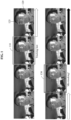
- FIG. 1 is a diagram illustrating an example of erroneous eye tracking.
- FIG. 1 illustrates image frames 110, 120, and 130 obtained by capturing an image of a user, and a detection box 125 from which an eye region and a nose region of the user are to be detected.
- an eye tracker detects the eye region and the nose region of the user using the detection box 125 in the image frame 120. For example, when a face of the user moves rightwards when detecting the eye region and the nose region using the detection box 125 as described above, the eye tracker may align, in a position corresponding to the face moved rightwards, a plurality of preset points corresponding to the eye region and the nose region. However, by tracking the eyes of the user using the points aligned in the position corresponding to the face moved rightwards, eye tracking may be continuously performed on an incorrect position in each subsequent image frame.
- the eye tracker may be erroneously performed in all subsequent image frames. This is because, when the face of the user moves again to face front as shown in the image frame 130, although the detection box 125 is used to correctly detect a face region of the user, the eye tracker may continuously and erroneously track the eyes of the user by using the points aligned in the position corresponding to the face moved rightwards. That is, a general-type eye tracker may track eyes of a user only by checking a face of the user or performing a face check, and may thus not rapidly respond to a potential error in the tracking.
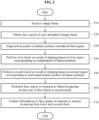
- FIG. 2 is a flowchart illustrating an image processing method according to an example embodiment.
- the image processing method to be described hereinafter may be performed by an image processing apparatus.
- the image processing apparatus receives an image frame.
- the image frame may be, for example, a color image frame and an IR image frame.
- the image processing apparatus obtains a face region of a user included in the image frame.
- the image processing apparatus may obtain the face region by detecting the face region of the user included in the initial image frame.
- the image processing apparatus may receive a face region detected based on one of previous image frames of the image frame, and thus obtain the face region.
- the image processing apparatus aligns a plurality of preset points in a plurality of feature portions included in the face region.
- the plurality of preset points may be 11 keypoints indicating main facial features, for example, eyes and a nose of the user.
- the plurality of points is indicated as dots ( ⁇ ) or asterisks (*) in the accompanying FIGS. 4 , 5A , 5B and 6 .
- the plurality of feature portions may be some portions or areas included in the face region of the image frame and include, for example, lips, eyebrows, eyeglasses, and the like, in addition to the eyes and the nose.
- the image processing apparatus may align the points in a plurality of feature portions included in the face region and a surrounding region of the face region.
- the image processing apparatus may move the points to be aligned in the feature portions based on image information of the face region.
- the image processing apparatus recognizes positions of the feature portions corresponding to the eyes and the nose of the user from the face region of the image frame, using, for example, a supervised descent method (SDM) of aligning points with an image shape using a descent vector learned from an initial shape, an active shape model (ASM)-based method of aligning points based on a principal component analysis (PCA) to analyze a shape and principal components of the shape, an active appearance model (AAM)-based method, and a constrained local model (CLM)-based method.
- SDM supervised descent method
- ASM active shape model
- PCA principal component analysis
- AAM active appearance model
- CLM constrained local model
- the image processing apparatus moves the points to the recognized positions of the feature portions to align the points in the positions.
- the points before being aligned may correspond to average positions of feature portions of a plurality of users.
- each of the points before being aligned may correspond to an average value of coordinates of positions of corresponding feature portions of the users.
- the points before being aligned correspond to points aligned based on a previous image frame.
- the image processing apparatus performs a first check on a result of the aligning based on a first region corresponding to a combination of the feature portions.
- the first region may include, for example, regions of the eyes, the nose, the lips, the eyeglasses, and the like. However, the first region is not limited to the examples described in the foregoing.
- the image processing apparatus checks whether the first region includes the combination of the feature portions, for examples, the eyes and the nose, based on image information of the first region.
- the image processing apparatus checks whether the first region corresponds to a class corresponding to the combination of the feature portions based on the image information of the first region.
- the class corresponding to the combination of the feature portion may be, for example, the face of the user.
- the image processing apparatus may check whether the first region corresponds to such a face class using a first checker based on, for example, a scale-invariant feature transform (SIFT) feature.
- SIFT scale-invariant feature transform
- the first checker may be a classifier trained with a SIFT feature extracted from each of the aligned points.
- the first checker may check whether the face region in which the points are aligned corresponds to an actual face class based on image information of the face region of the image frame.
- the first checker may be, for example, a support vector machine (SVM) classifier.
- SVM support vector machine
- the first checker may also be referred to as a face checker because it is configured to firstly check an alignment in the face region.
- the SIFT feature may be obtained through the following two stages.
- the image processing apparatus may extract candidate feature points with a locally maximum or minimum image brightness from a scale space of an image pyramid representation of image data of the first region, and perform filtering on a feature point with a low contrast range and select a feature point to be used for image matching.
- the image processing apparatus may obtain an orientation component based on a gradient of a surrounding region of the selected feature point and reset a region of interest (ROI) based on the obtained orientation component, detect a size of the feature point, and generate a descriptor.
- the descriptor may correspond to the SIFT feature.
- the image processing apparatus performs a second check on the result of the aligning based on a second region corresponding to an individual feature portion of the feature portions.
- the second region may include, for example, the region of the eyes, the nose, or the eyeglasses. However, the second region is not limited to the examples described in the foregoing.
- the image processing apparatus checks whether the second region corresponds to the individual feature portion based on image information of the second region.
- the image processing apparatus checks whether the second region corresponds to a class corresponding to the individual feature portion based on the image information of the second region. For example, the image processing apparatus may check whether the second region corresponds to an eye class using a second checker based on a SIFT feature of the second region.
- the second checker may be a classifier trained with a SIFT feature extracted from each of the aligned points.
- the second checker may check whether the eye region in which the points are aligned corresponds to an actual eye class based on image information of the eye region of the image frame.
- the second checker may be, for example, an SVM classifier.
- the second checker may also be referred to as an eye checker because it is configured to secondly check an alignment in the eye region.
- the image processing apparatus redetects a face region in response to a failure in passing at least one of the first check and the second check.
- the image processing apparatus may then repetitively perform operations 230, 240, and 250 based on the face region redetected in operation 260.
- the image processing apparatus outputs information on the face region in response to a success in passing the first check and the second check.
- the image processing apparatus may output information on, for example, a position of a pupil included in the face region, a viewpoint based on the position of the pupil, a facial expression in the face region, and the like.
- the image processing apparatus may explicitly or implicitly output the information on the face region in operation 270.
- the explicit output of the information on the face region may include displaying, on a display or screen, the position of the pupil included in the face region and/or the facial expression in the face region, and/or outputting the information through an audio output.
- the implicit output of the information on the face region may include, for example, adjusting an image to be displayed on an HUD by the position of the pupil included in the face region and the viewpoint based on the position of the pupil, or providing a service corresponding to the facial expression in the face region.
- FIG. 3 is a flowchart illustrating an image processing method according to another example embodiment.
- the image processing method to be described hereinafter may be performed by an image processing apparatus.
- an image processing apparatus obtains an n th image frame from a camera, where n may be an integer.
- the image frame may be, for example, a red, green, and blue (RGB) color image frame, or an IR image frame.
- RGB red, green, and blue
- the image processing apparatus determines whether eyes and a nose are detected from a previous n-1 th image frame. In operation 390, in response to a determination made in operation 320 that the eyes and the nose are not detected, the image processing apparatus detects the eyes and the nose using a detection box.
- the image processing apparatus aligns feature points in a plurality of feature portions, for example, the eyes and the nose, included in a surrounding region of the detection box.
- the 11 points may include, for example, three points of each of the eyes, one point of a tip of the nose, and three points of lips (or three points of the nose).
- the image processing apparatus performs a first check on a result of the aligning in a face region corresponding to a combination of the eyes and the noise using the aligned features points.
- the image processing apparatus determines whether the eyes and the nose are tracked in the face region as a result of the first check. In operation 390, in response to a determination made in operation 350 that the eyes and the nose are not tracked, the image processing apparatus detects the eyes and the nose using the detection box.
- a speed at which an object for example, a face region, is detected may be less than or equal to 20 milliseconds (ms), and a speed at which the object is tracked may be less than or equal to 3ms.
- the object detection speed may be significantly slower than the object tracking speed.
- an image processing speed may be improved by performing again object detection only when object tracking fails, without performing again the object detection once the object tracking is successful.
- the image processing apparatus performs a second check on the result of the aligning in the eye region using the aligned three points.
- the image processing apparatus determines whether the eyes are detected as a result of the second check. In operation 390, in response to a determination made in operation 370 that the eyes are not detected, the image processing apparatus detects the eyes and the nose using the detection box.
- the image processing apparatus In operation 380, in response to a determination made in operation 370 that the eyes are detected, the image processing apparatus outputs coordinates of the eyes or coordinates of pupils.
- FIG. 4 is a diagram illustrating an example of how information on a face region is output according to an example embodiment.
- the image processing apparatus detects eyes and a nose from the image frame using a detection box 405 used to detect a face region including a region of the eyes and the nose.
- the image processing apparatus aligns a plurality of points in the eyes and the nose within a surrounding region of the detection box 405, the surrounding region including the detection box 405.
- the image processing apparatus checks a result of the aligning based on the aligned points.
- the image processing apparatus performs a first check to check whether points corresponding to the eyes and the nose among the aligned points are aligned in positions of eyes and a nose in an actual image frame.
- the image processing apparatus may obtain a shape indicated by the aligned points in the face region.
- the image processing apparatus may perform the first check to determine whether the points are aligned in a face using image information of a surrounding region of a region corresponding to the shape.
- the image processing apparatus performs a second check to check whether points corresponding to the eyes among the aligned pints are aligned in the position of the eyes in the actual image frame.
- the image processing apparatus In response to a failure in passing any one of the first check and the second check in operation 430, the image processing apparatus detects the eyes and the nose from a subsequent image frame using the detection box 405 in operation 410.
- the image processing apparatus In response to a success in passing both the first check and the second check in operation 430, the image processing apparatus extracts positions of pupils from the aligned points in operation 440.
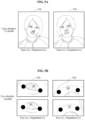
- FIGS. 5A and 5B are diagrams illustrating examples of results obtained by a first checker and a second checker according to an example embodiment.
- FIG. 5A illustrates a result of aligning preset 11 points in a plurality of feature portions, for example, eyes and a nose, included in a face region of an image frame.
- a first checker or a face checker, checks whether the 11 points are aligned in the eyes and the nose in the image frame as shown in an image 510, or are not correctly aligned in the eyes and the nose in the image frame as shown in an image 520 although the 11 points are aligned in the face region of the image frame.
- FIG. 5B illustrates a result of aligning three points corresponding to an eye among the preset 11 points in an individual feature portion, for example, the eye, included in the image frame.
- a second checker determines whether the three points are aligned in the eye in the face region of the image frame as shown in an image 530, or whether the three points are not correctly aligned in the eye in the face region of the image frame as shown in an image 540 although the three points are positioned in a region of the eye in the image frame.
- the first check may include determining whether a combination of a plurality of feature portions in a first region satisfies a first criterion
- the second check may include determining whether one or more of the plurality of feature portions individually satisfies a second criterion. Further, based on a determination that the combination of the plurality of feature portions in the first region does not satisfy the first criterion the face may be redetected. Otherwise, based on a determination that the combination of the plurality of feature portions in the first region satisfies the first criterion and the one or more of the plurality of feature portions individually satisfies the second criterion information on the face region may be output.
- the first criterion may be whether a plurality of feature points (i.e., 11 points) are aligned in the eyes and the nose in the image frame.
- the second criterion may be whether one or more points, among the plurality of features points, (i.e., 3 points) are correctly aligned in the eye in the face region of the image frame.
- the first criterion may correspond to characteristics of a face and the second criterion may correspond to characteristics of an eye.
- FIG. 6 is a diagram illustrating an example of an image processing method according to an example embodiment.
- an image processing apparatus detects a face region of a user including eyes and a nose using a detection box from each image frame of a camera. The image processing apparatus then performs tracking without additional detection unless alignment and/or tracking fails.
- the image processing apparatus aligns a plurality of preset points in the eyes and the nose included in the face region.
- the image processing apparatus detects a face region of the user including the eyes and the nose from a new image frame in operation 610.
- the image processing apparatus performs a two-step tracking check in operation 650. The two-step tracking check is performed as follows.
- the image processing apparatus extracts a SIFT feature of the aligned points in operation 652.
- the image processing apparatus checks a result of face alignment and eye alignment based on the SIFT feature extracted in operation 652 using an SVM classifier trained with tens of thousands of images in an image DB.
- the image processing apparatus performs a first tracking check on a face using a face checker described above.
- the face checker is configured to check whether the face region in which points are aligned corresponds to an actual face, using image information of the face region of the image frame.
- the image processing apparatus performs a second tracking check on an eye using an eye checker described above.
- the eye checker is configured to check whether an eye region in which points are aligned corresponds to an actual eye using image information of the eye region of the image frame.
- the image processing apparatus may correct a potential error in tracking in early stage by removing misalignment outliers as illustrated by 670 in FIG. 6 .
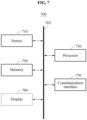
- FIG. 7 is a diagram illustrating an image processing apparatus according to an example embodiment.
- an image processing apparatus 700 includes a sensor 710, a processor 730, a memory 750, a communication interface 770, and a display 790.
- the sensor 710, the processor 730, the memory 750, the communication interface 770, and the display 790 may communicate with each other through a communication bus 705.
- an image processing apparatus may not include a display 790.
- the image processing apparatus may be configured to communicate with a display.
- the sensor 710 may sense an image frame.
- the sensor 710 may be, for example, an image sensor, a vision sensor, or an IR camera, which capture an input image by an IR illumination.
- the image frame may be, for example, an image of a face of a user, or an image of a vehicle traveling.
- the processor 730 may obtain a face region of the user included in the image frame.
- the processor 730 may align a plurality of preset points in a plurality of feature portions included in the face region.
- the processor 730 may perform a first check on a result of the aligning based on a first region corresponding to a combination of the feature portions.
- the processor 730 may perform a second check on the result of the aligning based on a second region corresponding to an individual feature portion among the feature portions.
- the processor 730 may redetect a face region.
- the processor 730 may perform at least one the methods described above with reference to FIGS. 1 through 6 , or algorithms corresponding to the methods.
- the processor 730 may execute a program and control the image processing apparatus 700.
- a program code of the program to be executed by the processor 730 may be stored in the memory 750.
- the processor 730 may be configured by, for example, a central processing unit (CPU) and a graphics processing unit (GPU).
- the memory 750 may store the image frame, the face region of the user obtained by the processor 730, information on the face region, and the like.
- the memory 750 may be a volatile or nonvolatile memory.
- the communication interface 770 may receive the image frame. In response to a success in passing the first check and the second check, the communication interface 770 may output the information on the face region. According to an example embodiment, the communication interface 770 may receive an image frame captured by an external source of the image processing apparatus 700, or information from various sensors received from outside of the image processing apparatus 700.
- the display 790 may display a processing result of the processor 730.
- the display 790 may be configured by a HUD installed in the vehicle.
- the units described herein may be implemented using hardware components and software components.
- the hardware components may include microphones, amplifiers, band-pass filters, audio to digital convertors, non-transitory computer memory and processing devices.
- a processing device may be implemented using one or more general-purpose or special purpose computers, such as, for example, a processor, a controller and an arithmetic logic unit (ALU), a digital signal processor, a microcomputer, a field programmable gate array (FPGA), a programmable logic unit (PLU), a microprocessor or any other device capable of responding to and executing instructions in a defined manner.
- the processing device may run an operating system (OS) and one or more software applications that run on the OS.
- OS operating system
- software applications that run on the OS.
- the processing device also may access, store, manipulate, process, and create data in response to execution of the software.
- a processing device may include multiple processing elements and multiple types of processing elements.
- a processing device may include multiple processors or a processor and a controller.
- different processing configurations are possible, such a parallel processors.
- the software may include a computer program, a piece of code, an instruction, or some combination thereof, to independently or collectively instruct or configure the processing device to operate as desired.
- Software and data may be embodied permanently or temporarily in any type of machine, component, physical or virtual equipment, computer storage medium or device, or in a propagated signal wave capable of providing instructions or data to or being interpreted by the processing device.
- the software also may be distributed over network coupled computer systems so that the software is stored and executed in a distributed fashion.
- the software and data may be stored by one or more non-transitory computer readable recording mediums.
- the non-transitory computer readable recording medium may include any data storage device that can store data which can be thereafter read by a computer system or processing device.
- Example embodiments include non-transitory computer-readable media including program instructions to implement various operations embodied by a computer.
- the media may also include, alone or in combination with the program instructions, data files, data structures, tables, and the like.
- the media and program instructions may be those specially designed and constructed for the purposes of example embodiments, or they may be of the kind well known and available to those having skill in the computer software arts.
- Examples of non-transitory computer-readable media include magnetic media such as hard disks, floppy disks, and magnetic tape; optical media such as CD ROM disks; magneto-optical media such as floptical disks; and hardware devices that are specially configured to store and perform program instructions, such as read-only memory devices (ROM) and random-access memory (RAM).
- ROM read-only memory devices
- RAM random-access memory
- Examples of program instructions include both machine code, such as produced by a compiler, and files containing higher level code that may be executed by the computer using an interpreter.
- the described hardware devices may be configured to act as one or more software modules in order to perform the operations of the above-described example embodiments, or vice versa.
Landscapes
- Engineering & Computer Science (AREA)
- Physics & Mathematics (AREA)
- General Physics & Mathematics (AREA)
- Theoretical Computer Science (AREA)
- Health & Medical Sciences (AREA)
- Oral & Maxillofacial Surgery (AREA)
- Multimedia (AREA)
- General Health & Medical Sciences (AREA)
- Computer Vision & Pattern Recognition (AREA)
- Human Computer Interaction (AREA)
- Signal Processing (AREA)
- Ophthalmology & Optometry (AREA)
- Geometry (AREA)
- Image Analysis (AREA)
- Image Processing (AREA)
- Collating Specific Patterns (AREA)
Claims (9)
- Computerimplementiertes Bildverarbeitungsverfahren, mit:Empfangen (210) eines Bildblocks;Erfassen (220) eines Gesichtsgebiets eines Anwenders in dem Bildblock, wobei das Gesichtsgebiet ein Gebiet eines Gesichts enthält;Erkennen von Positionen mehrerer Merkmalsbereiche, die Augen und einer Nase des Anwenders entsprechen, in dem Gesichtsgebiet des Bildblocks;Ausrichten (230) mehrerer vorgegebener Merkmalspunkte in den mehreren Merkmalsbereichen, die in dem Gesichtsgebiet enthalten sind, wobei die mehreren vorgegebenen Merkmalspunkte zu den erkannten Positionen der Merkmalsbereiche verschoben werden, um die mehreren vorgegebenen Merkmalspunkte in den erkannten Positionen auszurichten,wobei, wenn der Bildblock ein Anfangsbildblock ist, die mehreren vorgegebenen Merkmalspunkte vor ihrer Ausrichtung mittleren Positionen von zweiten Merkmalsbereichen von Anwendern entsprechen, undwobei, wenn der Bildblock nicht ein Anfangsbildblock ist, die mehreren vorgegebenen Merkmalspunkte vor ihrer Ausrichtung Merkmalspunkten entsprechen, die auf der Grundlage eines vorhergehenden Bildblocks ausgerichtet sind;Ausführen (240) einer ersten Prüfung an einem Ergebnis des Ausrichtens auf der Grundlage eines ersten Gebiets, das einer Kombination der Merkmalsbereiche entspricht, wobei das Ausführen der ersten Prüfung umfasst:
Bestimmen, ob das erste Gebiet einer Klasse entspricht, die der Kombination der Merkmalsbereiche entspricht, auf der Grundlage von Bildinformation des ersten Gebiets;Ausführen (250) einer zweiten Prüfung an dem Ergebnis des Ausrichtens auf der Grundlage eines zweiten Gebiets, das einem einzelnen Merkmalsbereich der Merkmalsbereiche entspricht, wobei das Ausführen der zweiten Prüfung umfasst:
Bestimmen, ob das zweite Gebiet einer Klasse entspricht, die dem einzelnen Merkmalsbereich entspricht, auf der Grundlage einer Bildinformation des zweiten Gebiets;erneutes Erfassen (260) eines Gesichtsgebiets auf der Grundlage einer Bestimmung eines Fehlers in dem ersten Prüfvorgang und/oder dem zweiten Prüfvorgang; undAusgeben (270) von Information über das Gesichtsgebiet auf der Grundlage einer Bestimmung eines erfolgreichen Verlaufs sowohl des ersten Prüfvorgangs als auch des zweiten Prüfvorgangs. - Bildverarbeitungsverfahren nach Anspruch 1, wobei das Erfassen des Gesichtsgebiets umfasst:Erfassen des Gesichtsgebiets des Anwenders, das in dem Bildblock enthalten ist, wenn der Bildblock ein Anfangsbildblock ist; undEmpfangen des Gesichtsgebiets, das auf der Grundlage eines Blocks von dem des Bildblock vorausgehenden Bildblöcken erfasst wird, wenn der Bildblock nicht der Anfangsbildblock ist.
- Bildverarbeitungsverfahren nach Anspruch 1 oder 2, wobei das Ausrichten umfasst:Ausrichten der mehreren vorgegebenen Merkmalspunkte in den mehreren Merkmalsbereichen, die im Gesichtsgebiet und einem umgebenden Gebiet des Gesichtsgebiets enthalten sind, oderVerschieben der mehreren vorgegebenen Merkmalspunkte auf der Grundlage von Bildinformation über das Gesichtsgebiet.
- Bildverarbeitungsverfahren nach einem der Ansprüche 1 bis 3, wobei die Kombination der Merkmalsbereiche die Augen und die Nase des Benutzers enthalten, und der einzelne Merkmalsbereich die Augen des Benutzers enthält.
- Bildverarbeitungsverfahren nach einem der Ansprüche 1 bis 4, wobei das Ausgeben der Information über das Gesichtsgebiet umfasst:
Ausgeben von Information über eine Position einer Pupille, die in dem Gesichtsgebiet enthalten ist, und/oder einen Betrachtungspunkt auf der Grundlage der Position der Pupille und/oder einen Gesichtsausdruck in dem Gesichtsgebiet. - Bildverarbeitungsverfahren nach einem der Ansprüche 1 bis 5, das ferner umfasst:
wiederholtes Ausführen des Ausrichtungsvorgangs, des ersten Prüfvorgangs und des zweiten Prüfvorgangs an dem erneut erfassten Gesichtsgebiet. - Bildverarbeitungsverfahren nach einem der Ansprüche 1 bis 6, wobei der Bildblock einen Farbbildblock und/oder einen infraroten, IR, Bildblock enthält.
- Bildverarbeitungsvorrichtung (700), mit:einem Speicher (750), der ausgebildet ist, einen oder mehrere Befehle zu speichern; undeinem Prozessor (730), der ausgebildet ist, zur Ausführung des Verfahrens nach einem der Ansprüche 1 bis 7 den einen oder die mehreren Befehle auszuführen.
- Nicht-flüchtiges computerlesbares Speichermedium, das Befehle speichert, die von einem Prozessor (730) zum Ausführen des Verfahrens nach einem der Ansprüche 1 bis 7 ausführbar sind.
Applications Claiming Priority (1)
| Application Number | Priority Date | Filing Date | Title |
|---|---|---|---|
| KR1020180154351A KR102815809B1 (ko) | 2018-12-04 | 2018-12-04 | 영상 처리 방법 및 장치 |
Publications (2)
| Publication Number | Publication Date |
|---|---|
| EP3663970A1 EP3663970A1 (de) | 2020-06-10 |
| EP3663970B1 true EP3663970B1 (de) | 2024-05-22 |
Family
ID=68699322
Family Applications (1)
| Application Number | Title | Priority Date | Filing Date |
|---|---|---|---|
| EP19211797.6A Active EP3663970B1 (de) | 2018-12-04 | 2019-11-27 | Verfahren und vorrichtung zur bildverarbeitung |
Country Status (5)
| Country | Link |
|---|---|
| US (3) | US10915736B2 (de) |
| EP (1) | EP3663970B1 (de) |
| JP (1) | JP7419017B2 (de) |
| KR (1) | KR102815809B1 (de) |
| CN (1) | CN111277812B (de) |
Families Citing this family (4)
| Publication number | Priority date | Publication date | Assignee | Title |
|---|---|---|---|---|
| KR102815809B1 (ko) * | 2018-12-04 | 2025-06-04 | 삼성전자주식회사 | 영상 처리 방법 및 장치 |
| KR102824646B1 (ko) | 2019-08-26 | 2025-06-25 | 삼성전자주식회사 | 영상 처리 방법 및 장치 |
| JP7466687B2 (ja) * | 2020-10-30 | 2024-04-12 | 京セラ株式会社 | 検出装置および画像表示システム |
| US12445612B2 (en) * | 2023-04-06 | 2025-10-14 | Honeywell International Inc. | Methods and systems for compressing video data |
Citations (1)
| Publication number | Priority date | Publication date | Assignee | Title |
|---|---|---|---|---|
| GB2571300A (en) * | 2018-02-23 | 2019-08-28 | Sony Interactive Entertainment Inc | Eye tracking method and apparatus |
Family Cites Families (28)
| Publication number | Priority date | Publication date | Assignee | Title |
|---|---|---|---|---|
| EP1211640A3 (de) | 2000-09-15 | 2003-10-15 | Canon Kabushiki Kaisha | Bildverarbeitungsverfahren und -Vorrichtung zur Detektion von menschlichen Gesichtern Augen und anderen Objekten in einem Bild |
| TW569148B (en) * | 2002-04-09 | 2004-01-01 | Ind Tech Res Inst | Method for locating facial features in an image |
| WO2005114576A1 (ja) | 2004-05-21 | 2005-12-01 | Asahi Kasei Kabushiki Kaisha | 動作内容判定装置 |
| JP4645223B2 (ja) * | 2005-02-18 | 2011-03-09 | 富士通株式会社 | 顔追跡プログラムおよび顔追跡方法 |
| JP4218720B2 (ja) * | 2006-09-22 | 2009-02-04 | ソニー株式会社 | 撮像装置、および撮像装置制御方法、並びにコンピュータ・プログラム |
| JP4811259B2 (ja) | 2006-12-11 | 2011-11-09 | 日産自動車株式会社 | 視線方向推定装置及び視線方向推定方法 |
| JP2009110048A (ja) | 2007-10-26 | 2009-05-21 | Seiko Epson Corp | 顔領域の設定 |
| DE102007056528B3 (de) * | 2007-11-16 | 2009-04-02 | Seereal Technologies S.A. | Verfahren und Vorrichtung zum Auffinden und Verfolgen von Augenpaaren |
| KR101381439B1 (ko) * | 2011-09-15 | 2014-04-04 | 가부시끼가이샤 도시바 | 얼굴 인식 장치 및 얼굴 인식 방법 |
| KR20130067465A (ko) | 2011-12-14 | 2013-06-24 | 현대자동차주식회사 | 특징점을 이용한 얼굴방향 추적 장치 및 그 방법 |
| KR101977638B1 (ko) | 2012-02-29 | 2019-05-14 | 삼성전자주식회사 | 영상 내 사용자의 시선 보정 방법, 기계로 읽을 수 있는 저장 매체 및 통신 단말 |
| US9268993B2 (en) * | 2013-03-13 | 2016-02-23 | Futurewei Technologies, Inc. | Real-time face detection using combinations of local and global features |
| KR20150064977A (ko) | 2013-12-04 | 2015-06-12 | 건국대학교 산학협력단 | 얼굴정보 기반의 비디오 분석 및 시각화 시스템 |
| KR101610525B1 (ko) | 2014-10-20 | 2016-04-07 | 현대자동차주식회사 | 조도를 고려한 동공 검출 장치 및 그 방법 |
| KR102349059B1 (ko) * | 2014-11-07 | 2022-01-10 | 삼성전자주식회사 | 영상의 관심영역으로부터 랜드마크를 결정하는 장치 및 방법 |
| US9704038B2 (en) | 2015-01-07 | 2017-07-11 | Microsoft Technology Licensing, Llc | Eye tracking |
| EP3259734B1 (de) | 2015-02-20 | 2024-07-24 | Seeing Machines Limited | Verminderung von blendung |
| KR101717222B1 (ko) | 2015-04-24 | 2017-03-17 | 가천대학교 산학협력단 | 시선 검출 시스템 및 그 방법 |
| KR101755883B1 (ko) | 2015-11-09 | 2017-07-07 | 현대자동차주식회사 | 시선 추적 장치 및 그의 눈 특징점 검출 오류 판별 방법 |
| US9959678B2 (en) | 2016-06-03 | 2018-05-01 | Oculus Vr, Llc | Face and eye tracking using facial sensors within a head-mounted display |
| KR102487223B1 (ko) | 2016-07-29 | 2023-01-12 | 백석대학교산학협력단 | 눈동자 추적 기반의 하르유사특징을 이용한 얼굴인증 방법 |
| KR101819164B1 (ko) | 2016-07-29 | 2018-01-17 | 상명대학교산학협력단 | 시선 추적 장치 및 방법 |
| KR102476897B1 (ko) * | 2016-10-05 | 2022-12-12 | 삼성전자주식회사 | 객체 추적 방법 및 장치, 및 이를 이용한 3d 디스플레이 장치 |
| CN106599656A (zh) * | 2016-11-28 | 2017-04-26 | 深圳超多维科技有限公司 | 显示方法、装置及电子设备 |
| KR102324468B1 (ko) * | 2017-03-28 | 2021-11-10 | 삼성전자주식회사 | 얼굴 인증을 위한 장치 및 방법 |
| KR102410834B1 (ko) | 2017-10-27 | 2022-06-20 | 삼성전자주식회사 | 반사 영역을 제거하는 방법, 사용자의 눈을 추적하는 방법 및 그 장치 |
| KR102455633B1 (ko) * | 2017-12-21 | 2022-10-17 | 삼성전자주식회사 | 라이브니스 검사 방법 및 장치 |
| KR102815809B1 (ko) * | 2018-12-04 | 2025-06-04 | 삼성전자주식회사 | 영상 처리 방법 및 장치 |
-
2018
- 2018-12-04 KR KR1020180154351A patent/KR102815809B1/ko active Active
-
2019
- 2019-05-20 US US16/416,389 patent/US10915736B2/en active Active
- 2019-07-22 CN CN201910659582.7A patent/CN111277812B/zh active Active
- 2019-10-25 JP JP2019194390A patent/JP7419017B2/ja active Active
- 2019-11-27 EP EP19211797.6A patent/EP3663970B1/de active Active
-
2021
- 2021-01-12 US US17/146,660 patent/US11538277B2/en active Active
-
2022
- 2022-12-22 US US18/145,406 patent/US11972634B2/en active Active
Patent Citations (1)
| Publication number | Priority date | Publication date | Assignee | Title |
|---|---|---|---|---|
| GB2571300A (en) * | 2018-02-23 | 2019-08-28 | Sony Interactive Entertainment Inc | Eye tracking method and apparatus |
Also Published As
| Publication number | Publication date |
|---|---|
| KR102815809B1 (ko) | 2025-06-04 |
| US20230130355A1 (en) | 2023-04-27 |
| US11972634B2 (en) | 2024-04-30 |
| CN111277812A (zh) | 2020-06-12 |
| US20210133431A1 (en) | 2021-05-06 |
| KR20200067465A (ko) | 2020-06-12 |
| US10915736B2 (en) | 2021-02-09 |
| CN111277812B (zh) | 2024-09-27 |
| EP3663970A1 (de) | 2020-06-10 |
| JP2020091848A (ja) | 2020-06-11 |
| JP7419017B2 (ja) | 2024-01-22 |
| US20200175258A1 (en) | 2020-06-04 |
| US11538277B2 (en) | 2022-12-27 |
Similar Documents
| Publication | Publication Date | Title |
|---|---|---|
| US11972634B2 (en) | Image processing method and apparatus | |
| US11527105B2 (en) | System and method for scalable cloud-robotics based face recognition and face analysis | |
| US11361587B2 (en) | Age recognition method, storage medium and electronic device | |
| US12210687B2 (en) | Gesture recognition method, electronic device, computer-readable storage medium, and chip | |
| EP3540574B1 (de) | Augenverfolgungsverfahren, elektronische vorrichtung und nichttransitorisches computerlesbares speichermedium | |
| EP3407255A1 (de) | Augenverfolgungsverfahren, elektronische vorrichtung und nichttransitorisches computerlesbares speichermedium | |
| EP3477436B1 (de) | Verfahren, speichermedium und vorrichtung zur augenverfolgung durch entfernung von einer reflexionsfläche | |
| CN109741369B (zh) | 一种用于机器人跟踪目标行人的方法及系统 | |
| US10869028B2 (en) | Object tracking method and apparatus and three-dimensional (3D) display apparatus using the same | |
| US11715217B2 (en) | Method and apparatus for eye tracking | |
| KR102415507B1 (ko) | 영상 처리 방법 및 영상 처리 장치 | |
| US12236615B2 (en) | Image processing method and apparatus | |
| KR101828340B1 (ko) | 객체 추출 방법 및 그 장치 | |
| US20250218210A1 (en) | Object tracking method, and terminal device and computer-readable storage medium using the same | |
| US11327562B2 (en) | Method and apparatus for tracking eye based on eye reconstruction | |
| Kastner et al. | Robust binocular pupil detection for a mobile computing platform |
Legal Events
| Date | Code | Title | Description |
|---|---|---|---|
| PUAI | Public reference made under article 153(3) epc to a published international application that has entered the european phase |
Free format text: ORIGINAL CODE: 0009012 |
|
| STAA | Information on the status of an ep patent application or granted ep patent |
Free format text: STATUS: THE APPLICATION HAS BEEN PUBLISHED |
|
| AK | Designated contracting states |
Kind code of ref document: A1 Designated state(s): AL AT BE BG CH CY CZ DE DK EE ES FI FR GB GR HR HU IE IS IT LI LT LU LV MC MK MT NL NO PL PT RO RS SE SI SK SM TR |
|
| AX | Request for extension of the european patent |
Extension state: BA ME |
|
| STAA | Information on the status of an ep patent application or granted ep patent |
Free format text: STATUS: REQUEST FOR EXAMINATION WAS MADE |
|
| 17P | Request for examination filed |
Effective date: 20201210 |
|
| RBV | Designated contracting states (corrected) |
Designated state(s): AL AT BE BG CH CY CZ DE DK EE ES FI FR GB GR HR HU IE IS IT LI LT LU LV MC MK MT NL NO PL PT RO RS SE SI SK SM TR |
|
| STAA | Information on the status of an ep patent application or granted ep patent |
Free format text: STATUS: EXAMINATION IS IN PROGRESS |
|
| 17Q | First examination report despatched |
Effective date: 20220104 |
|
| P01 | Opt-out of the competence of the unified patent court (upc) registered |
Effective date: 20230519 |
|
| REG | Reference to a national code |
Ref country code: DE Ref legal event code: R079 Free format text: PREVIOUS MAIN CLASS: G06K0009000000 Ipc: G06V0020590000 Ref country code: DE Ref legal event code: R079 Ref document number: 602019052534 Country of ref document: DE Free format text: PREVIOUS MAIN CLASS: G06K0009000000 Ipc: G06V0020590000 |
|
| GRAP | Despatch of communication of intention to grant a patent |
Free format text: ORIGINAL CODE: EPIDOSNIGR1 |
|
| STAA | Information on the status of an ep patent application or granted ep patent |
Free format text: STATUS: GRANT OF PATENT IS INTENDED |
|
| RIC1 | Information provided on ipc code assigned before grant |
Ipc: G06V 40/16 20220101ALI20231206BHEP Ipc: G06V 20/59 20220101AFI20231206BHEP |
|
| INTG | Intention to grant announced |
Effective date: 20231220 |
|
| GRAS | Grant fee paid |
Free format text: ORIGINAL CODE: EPIDOSNIGR3 |
|
| GRAA | (expected) grant |
Free format text: ORIGINAL CODE: 0009210 |
|
| STAA | Information on the status of an ep patent application or granted ep patent |
Free format text: STATUS: THE PATENT HAS BEEN GRANTED |
|
| AK | Designated contracting states |
Kind code of ref document: B1 Designated state(s): AL AT BE BG CH CY CZ DE DK EE ES FI FR GB GR HR HU IE IS IT LI LT LU LV MC MK MT NL NO PL PT RO RS SE SI SK SM TR |
|
| REG | Reference to a national code |
Ref country code: GB Ref legal event code: FG4D |
|
| REG | Reference to a national code |
Ref country code: CH Ref legal event code: EP |
|
| REG | Reference to a national code |
Ref country code: DE Ref legal event code: R096 Ref document number: 602019052534 Country of ref document: DE |
|
| REG | Reference to a national code |
Ref country code: IE Ref legal event code: FG4D |
|
| REG | Reference to a national code |
Ref country code: LT Ref legal event code: MG9D |
|
| REG | Reference to a national code |
Ref country code: NL Ref legal event code: MP Effective date: 20240522 |
|
| PG25 | Lapsed in a contracting state [announced via postgrant information from national office to epo] |
Ref country code: IS Free format text: LAPSE BECAUSE OF FAILURE TO SUBMIT A TRANSLATION OF THE DESCRIPTION OR TO PAY THE FEE WITHIN THE PRESCRIBED TIME-LIMIT Effective date: 20240922 |
|
| PG25 | Lapsed in a contracting state [announced via postgrant information from national office to epo] |
Ref country code: BG Free format text: LAPSE BECAUSE OF FAILURE TO SUBMIT A TRANSLATION OF THE DESCRIPTION OR TO PAY THE FEE WITHIN THE PRESCRIBED TIME-LIMIT Effective date: 20240522 |
|
| PG25 | Lapsed in a contracting state [announced via postgrant information from national office to epo] |
Ref country code: HR Free format text: LAPSE BECAUSE OF FAILURE TO SUBMIT A TRANSLATION OF THE DESCRIPTION OR TO PAY THE FEE WITHIN THE PRESCRIBED TIME-LIMIT Effective date: 20240522 Ref country code: FI Free format text: LAPSE BECAUSE OF FAILURE TO SUBMIT A TRANSLATION OF THE DESCRIPTION OR TO PAY THE FEE WITHIN THE PRESCRIBED TIME-LIMIT Effective date: 20240522 |
|
| PG25 | Lapsed in a contracting state [announced via postgrant information from national office to epo] |
Ref country code: GR Free format text: LAPSE BECAUSE OF FAILURE TO SUBMIT A TRANSLATION OF THE DESCRIPTION OR TO PAY THE FEE WITHIN THE PRESCRIBED TIME-LIMIT Effective date: 20240823 |
|
| PG25 | Lapsed in a contracting state [announced via postgrant information from national office to epo] |
Ref country code: PT Free format text: LAPSE BECAUSE OF FAILURE TO SUBMIT A TRANSLATION OF THE DESCRIPTION OR TO PAY THE FEE WITHIN THE PRESCRIBED TIME-LIMIT Effective date: 20240923 |
|
| REG | Reference to a national code |
Ref country code: AT Ref legal event code: MK05 Ref document number: 1689391 Country of ref document: AT Kind code of ref document: T Effective date: 20240522 |
|
| PG25 | Lapsed in a contracting state [announced via postgrant information from national office to epo] |
Ref country code: NL Free format text: LAPSE BECAUSE OF FAILURE TO SUBMIT A TRANSLATION OF THE DESCRIPTION OR TO PAY THE FEE WITHIN THE PRESCRIBED TIME-LIMIT Effective date: 20240522 |
|
| PG25 | Lapsed in a contracting state [announced via postgrant information from national office to epo] |
Ref country code: ES Free format text: LAPSE BECAUSE OF FAILURE TO SUBMIT A TRANSLATION OF THE DESCRIPTION OR TO PAY THE FEE WITHIN THE PRESCRIBED TIME-LIMIT Effective date: 20240522 |
|
| PG25 | Lapsed in a contracting state [announced via postgrant information from national office to epo] |
Ref country code: AT Free format text: LAPSE BECAUSE OF FAILURE TO SUBMIT A TRANSLATION OF THE DESCRIPTION OR TO PAY THE FEE WITHIN THE PRESCRIBED TIME-LIMIT Effective date: 20240522 |
|
| PG25 | Lapsed in a contracting state [announced via postgrant information from national office to epo] |
Ref country code: PL Free format text: LAPSE BECAUSE OF FAILURE TO SUBMIT A TRANSLATION OF THE DESCRIPTION OR TO PAY THE FEE WITHIN THE PRESCRIBED TIME-LIMIT Effective date: 20240522 |
|
| PG25 | Lapsed in a contracting state [announced via postgrant information from national office to epo] |
Ref country code: LV Free format text: LAPSE BECAUSE OF FAILURE TO SUBMIT A TRANSLATION OF THE DESCRIPTION OR TO PAY THE FEE WITHIN THE PRESCRIBED TIME-LIMIT Effective date: 20240522 |
|
| PG25 | Lapsed in a contracting state [announced via postgrant information from national office to epo] |
Ref country code: PT Free format text: LAPSE BECAUSE OF FAILURE TO SUBMIT A TRANSLATION OF THE DESCRIPTION OR TO PAY THE FEE WITHIN THE PRESCRIBED TIME-LIMIT Effective date: 20240923 Ref country code: PL Free format text: LAPSE BECAUSE OF FAILURE TO SUBMIT A TRANSLATION OF THE DESCRIPTION OR TO PAY THE FEE WITHIN THE PRESCRIBED TIME-LIMIT Effective date: 20240522 Ref country code: NO Free format text: LAPSE BECAUSE OF FAILURE TO SUBMIT A TRANSLATION OF THE DESCRIPTION OR TO PAY THE FEE WITHIN THE PRESCRIBED TIME-LIMIT Effective date: 20240822 Ref country code: NL Free format text: LAPSE BECAUSE OF FAILURE TO SUBMIT A TRANSLATION OF THE DESCRIPTION OR TO PAY THE FEE WITHIN THE PRESCRIBED TIME-LIMIT Effective date: 20240522 Ref country code: LV Free format text: LAPSE BECAUSE OF FAILURE TO SUBMIT A TRANSLATION OF THE DESCRIPTION OR TO PAY THE FEE WITHIN THE PRESCRIBED TIME-LIMIT Effective date: 20240522 Ref country code: IS Free format text: LAPSE BECAUSE OF FAILURE TO SUBMIT A TRANSLATION OF THE DESCRIPTION OR TO PAY THE FEE WITHIN THE PRESCRIBED TIME-LIMIT Effective date: 20240922 Ref country code: HR Free format text: LAPSE BECAUSE OF FAILURE TO SUBMIT A TRANSLATION OF THE DESCRIPTION OR TO PAY THE FEE WITHIN THE PRESCRIBED TIME-LIMIT Effective date: 20240522 Ref country code: GR Free format text: LAPSE BECAUSE OF FAILURE TO SUBMIT A TRANSLATION OF THE DESCRIPTION OR TO PAY THE FEE WITHIN THE PRESCRIBED TIME-LIMIT Effective date: 20240823 Ref country code: FI Free format text: LAPSE BECAUSE OF FAILURE TO SUBMIT A TRANSLATION OF THE DESCRIPTION OR TO PAY THE FEE WITHIN THE PRESCRIBED TIME-LIMIT Effective date: 20240522 Ref country code: ES Free format text: LAPSE BECAUSE OF FAILURE TO SUBMIT A TRANSLATION OF THE DESCRIPTION OR TO PAY THE FEE WITHIN THE PRESCRIBED TIME-LIMIT Effective date: 20240522 Ref country code: BG Free format text: LAPSE BECAUSE OF FAILURE TO SUBMIT A TRANSLATION OF THE DESCRIPTION OR TO PAY THE FEE WITHIN THE PRESCRIBED TIME-LIMIT Effective date: 20240522 Ref country code: AT Free format text: LAPSE BECAUSE OF FAILURE TO SUBMIT A TRANSLATION OF THE DESCRIPTION OR TO PAY THE FEE WITHIN THE PRESCRIBED TIME-LIMIT Effective date: 20240522 Ref country code: RS Free format text: LAPSE BECAUSE OF FAILURE TO SUBMIT A TRANSLATION OF THE DESCRIPTION OR TO PAY THE FEE WITHIN THE PRESCRIBED TIME-LIMIT Effective date: 20240822 |
|
| PG25 | Lapsed in a contracting state [announced via postgrant information from national office to epo] |
Ref country code: DK Free format text: LAPSE BECAUSE OF FAILURE TO SUBMIT A TRANSLATION OF THE DESCRIPTION OR TO PAY THE FEE WITHIN THE PRESCRIBED TIME-LIMIT Effective date: 20240522 |
|
| PG25 | Lapsed in a contracting state [announced via postgrant information from national office to epo] |
Ref country code: EE Free format text: LAPSE BECAUSE OF FAILURE TO SUBMIT A TRANSLATION OF THE DESCRIPTION OR TO PAY THE FEE WITHIN THE PRESCRIBED TIME-LIMIT Effective date: 20240522 |
|
| PG25 | Lapsed in a contracting state [announced via postgrant information from national office to epo] |
Ref country code: CZ Free format text: LAPSE BECAUSE OF FAILURE TO SUBMIT A TRANSLATION OF THE DESCRIPTION OR TO PAY THE FEE WITHIN THE PRESCRIBED TIME-LIMIT Effective date: 20240522 |
|
| PG25 | Lapsed in a contracting state [announced via postgrant information from national office to epo] |
Ref country code: RO Free format text: LAPSE BECAUSE OF FAILURE TO SUBMIT A TRANSLATION OF THE DESCRIPTION OR TO PAY THE FEE WITHIN THE PRESCRIBED TIME-LIMIT Effective date: 20240522 Ref country code: SK Free format text: LAPSE BECAUSE OF FAILURE TO SUBMIT A TRANSLATION OF THE DESCRIPTION OR TO PAY THE FEE WITHIN THE PRESCRIBED TIME-LIMIT Effective date: 20240522 |
|
| PG25 | Lapsed in a contracting state [announced via postgrant information from national office to epo] |
Ref country code: SM Free format text: LAPSE BECAUSE OF FAILURE TO SUBMIT A TRANSLATION OF THE DESCRIPTION OR TO PAY THE FEE WITHIN THE PRESCRIBED TIME-LIMIT Effective date: 20240522 |
|
| PG25 | Lapsed in a contracting state [announced via postgrant information from national office to epo] |
Ref country code: SM Free format text: LAPSE BECAUSE OF FAILURE TO SUBMIT A TRANSLATION OF THE DESCRIPTION OR TO PAY THE FEE WITHIN THE PRESCRIBED TIME-LIMIT Effective date: 20240522 Ref country code: SK Free format text: LAPSE BECAUSE OF FAILURE TO SUBMIT A TRANSLATION OF THE DESCRIPTION OR TO PAY THE FEE WITHIN THE PRESCRIBED TIME-LIMIT Effective date: 20240522 Ref country code: RO Free format text: LAPSE BECAUSE OF FAILURE TO SUBMIT A TRANSLATION OF THE DESCRIPTION OR TO PAY THE FEE WITHIN THE PRESCRIBED TIME-LIMIT Effective date: 20240522 Ref country code: EE Free format text: LAPSE BECAUSE OF FAILURE TO SUBMIT A TRANSLATION OF THE DESCRIPTION OR TO PAY THE FEE WITHIN THE PRESCRIBED TIME-LIMIT Effective date: 20240522 Ref country code: DK Free format text: LAPSE BECAUSE OF FAILURE TO SUBMIT A TRANSLATION OF THE DESCRIPTION OR TO PAY THE FEE WITHIN THE PRESCRIBED TIME-LIMIT Effective date: 20240522 Ref country code: CZ Free format text: LAPSE BECAUSE OF FAILURE TO SUBMIT A TRANSLATION OF THE DESCRIPTION OR TO PAY THE FEE WITHIN THE PRESCRIBED TIME-LIMIT Effective date: 20240522 |
|
| PG25 | Lapsed in a contracting state [announced via postgrant information from national office to epo] |
Ref country code: IT Free format text: LAPSE BECAUSE OF FAILURE TO SUBMIT A TRANSLATION OF THE DESCRIPTION OR TO PAY THE FEE WITHIN THE PRESCRIBED TIME-LIMIT Effective date: 20240522 |
|
| REG | Reference to a national code |
Ref country code: DE Ref legal event code: R097 Ref document number: 602019052534 Country of ref document: DE |
|
| PLBE | No opposition filed within time limit |
Free format text: ORIGINAL CODE: 0009261 |
|
| STAA | Information on the status of an ep patent application or granted ep patent |
Free format text: STATUS: NO OPPOSITION FILED WITHIN TIME LIMIT |
|
| PG25 | Lapsed in a contracting state [announced via postgrant information from national office to epo] |
Ref country code: SI Free format text: LAPSE BECAUSE OF FAILURE TO SUBMIT A TRANSLATION OF THE DESCRIPTION OR TO PAY THE FEE WITHIN THE PRESCRIBED TIME-LIMIT Effective date: 20240522 |
|
| 26N | No opposition filed |
Effective date: 20250225 |
|
| REG | Reference to a national code |
Ref country code: CH Ref legal event code: PL |
|
| PG25 | Lapsed in a contracting state [announced via postgrant information from national office to epo] |
Ref country code: MC Free format text: LAPSE BECAUSE OF FAILURE TO SUBMIT A TRANSLATION OF THE DESCRIPTION OR TO PAY THE FEE WITHIN THE PRESCRIBED TIME-LIMIT Effective date: 20240522 |
|
| PG25 | Lapsed in a contracting state [announced via postgrant information from national office to epo] |
Ref country code: LU Free format text: LAPSE BECAUSE OF NON-PAYMENT OF DUE FEES Effective date: 20241127 |
|
| REG | Reference to a national code |
Ref country code: CH Ref legal event code: PL |
|
| PG25 | Lapsed in a contracting state [announced via postgrant information from national office to epo] |
Ref country code: CH Free format text: LAPSE BECAUSE OF NON-PAYMENT OF DUE FEES Effective date: 20241130 |
|
| REG | Reference to a national code |
Ref country code: BE Ref legal event code: MM Effective date: 20241130 |
|
| PG25 | Lapsed in a contracting state [announced via postgrant information from national office to epo] |
Ref country code: SE Free format text: LAPSE BECAUSE OF FAILURE TO SUBMIT A TRANSLATION OF THE DESCRIPTION OR TO PAY THE FEE WITHIN THE PRESCRIBED TIME-LIMIT Effective date: 20240522 |
|
| PG25 | Lapsed in a contracting state [announced via postgrant information from national office to epo] |
Ref country code: BE Free format text: LAPSE BECAUSE OF NON-PAYMENT OF DUE FEES Effective date: 20241130 |
|
| PG25 | Lapsed in a contracting state [announced via postgrant information from national office to epo] |
Ref country code: IE Free format text: LAPSE BECAUSE OF NON-PAYMENT OF DUE FEES Effective date: 20241127 |
|
| PGFP | Annual fee paid to national office [announced via postgrant information from national office to epo] |
Ref country code: DE Payment date: 20251022 Year of fee payment: 7 |
|
| PGFP | Annual fee paid to national office [announced via postgrant information from national office to epo] |
Ref country code: GB Payment date: 20251016 Year of fee payment: 7 |
|
| PGFP | Annual fee paid to national office [announced via postgrant information from national office to epo] |
Ref country code: FR Payment date: 20251023 Year of fee payment: 7 |
|
| PG25 | Lapsed in a contracting state [announced via postgrant information from national office to epo] |
Ref country code: HU Free format text: LAPSE BECAUSE OF FAILURE TO SUBMIT A TRANSLATION OF THE DESCRIPTION OR TO PAY THE FEE WITHIN THE PRESCRIBED TIME-LIMIT; INVALID AB INITIO Effective date: 20191127 |
|
| PG25 | Lapsed in a contracting state [announced via postgrant information from national office to epo] |
Ref country code: CY Free format text: LAPSE BECAUSE OF FAILURE TO SUBMIT A TRANSLATION OF THE DESCRIPTION OR TO PAY THE FEE WITHIN THE PRESCRIBED TIME-LIMIT; INVALID AB INITIO Effective date: 20191127 |