EP3664199A1 - Matériau polymère de batterie secondaire au lithium et son procédé de fabrication - Google Patents
Matériau polymère de batterie secondaire au lithium et son procédé de fabrication Download PDFInfo
- Publication number
- EP3664199A1 EP3664199A1 EP18861536.3A EP18861536A EP3664199A1 EP 3664199 A1 EP3664199 A1 EP 3664199A1 EP 18861536 A EP18861536 A EP 18861536A EP 3664199 A1 EP3664199 A1 EP 3664199A1
- Authority
- EP
- European Patent Office
- Prior art keywords
- polythiophene
- secondary battery
- lithium secondary
- polymer
- polymer material
- Prior art date
- Legal status (The legal status is an assumption and is not a legal conclusion. Google has not performed a legal analysis and makes no representation as to the accuracy of the status listed.)
- Granted
Links
- 0 CC([C@]1*=C(*)C1S1)=C1Br Chemical compound CC([C@]1*=C(*)C1S1)=C1Br 0.000 description 3
- NBPNRNYWAFWIIV-UHFFFAOYSA-N CC(C)(c(cc[s]1)c1[Br]=C)I Chemical compound CC(C)(c(cc[s]1)c1[Br]=C)I NBPNRNYWAFWIIV-UHFFFAOYSA-N 0.000 description 1
Images

Classifications
-
- H—ELECTRICITY
- H01—ELECTRIC ELEMENTS
- H01M—PROCESSES OR MEANS, e.g. BATTERIES, FOR THE DIRECT CONVERSION OF CHEMICAL ENERGY INTO ELECTRICAL ENERGY
- H01M4/00—Electrodes
- H01M4/02—Electrodes composed of, or comprising, active material
- H01M4/62—Selection of inactive substances as ingredients for active masses, e.g. binders, fillers
- H01M4/621—Binders
- H01M4/622—Binders being polymers
-
- H—ELECTRICITY
- H01—ELECTRIC ELEMENTS
- H01M—PROCESSES OR MEANS, e.g. BATTERIES, FOR THE DIRECT CONVERSION OF CHEMICAL ENERGY INTO ELECTRICAL ENERGY
- H01M4/00—Electrodes
- H01M4/02—Electrodes composed of, or comprising, active material
- H01M4/36—Selection of substances as active materials, active masses, active liquids
- H01M4/60—Selection of substances as active materials, active masses, active liquids of organic compounds
- H01M4/602—Polymers
- H01M4/606—Polymers containing aromatic main chain polymers
- H01M4/608—Polymers containing aromatic main chain polymers containing heterocyclic rings
-
- H—ELECTRICITY
- H01—ELECTRIC ELEMENTS
- H01M—PROCESSES OR MEANS, e.g. BATTERIES, FOR THE DIRECT CONVERSION OF CHEMICAL ENERGY INTO ELECTRICAL ENERGY
- H01M4/00—Electrodes
- H01M4/02—Electrodes composed of, or comprising, active material
- H01M4/13—Electrodes for accumulators with non-aqueous electrolyte, e.g. for lithium-accumulators; Processes of manufacture thereof
- H01M4/131—Electrodes based on mixed oxides or hydroxides, or on mixtures of oxides or hydroxides, e.g. LiCoOx
-
- C—CHEMISTRY; METALLURGY
- C08—ORGANIC MACROMOLECULAR COMPOUNDS; THEIR PREPARATION OR CHEMICAL WORKING-UP; COMPOSITIONS BASED THEREON
- C08G—MACROMOLECULAR COMPOUNDS OBTAINED OTHERWISE THAN BY REACTIONS ONLY INVOLVING UNSATURATED CARBON-TO-CARBON BONDS
- C08G61/00—Macromolecular compounds obtained by reactions forming a carbon-to-carbon link in the main chain of the macromolecule
- C08G61/12—Macromolecular compounds containing atoms other than carbon in the main chain of the macromolecule
-
- C—CHEMISTRY; METALLURGY
- C08—ORGANIC MACROMOLECULAR COMPOUNDS; THEIR PREPARATION OR CHEMICAL WORKING-UP; COMPOSITIONS BASED THEREON
- C08G—MACROMOLECULAR COMPOUNDS OBTAINED OTHERWISE THAN BY REACTIONS ONLY INVOLVING UNSATURATED CARBON-TO-CARBON BONDS
- C08G61/00—Macromolecular compounds obtained by reactions forming a carbon-to-carbon link in the main chain of the macromolecule
- C08G61/12—Macromolecular compounds containing atoms other than carbon in the main chain of the macromolecule
- C08G61/122—Macromolecular compounds containing atoms other than carbon in the main chain of the macromolecule derived from five- or six-membered heterocyclic compounds, other than imides
- C08G61/123—Macromolecular compounds containing atoms other than carbon in the main chain of the macromolecule derived from five- or six-membered heterocyclic compounds, other than imides derived from five-membered heterocyclic compounds
- C08G61/126—Macromolecular compounds containing atoms other than carbon in the main chain of the macromolecule derived from five- or six-membered heterocyclic compounds, other than imides derived from five-membered heterocyclic compounds with a five-membered ring containing one sulfur atom in the ring
-
- C—CHEMISTRY; METALLURGY
- C08—ORGANIC MACROMOLECULAR COMPOUNDS; THEIR PREPARATION OR CHEMICAL WORKING-UP; COMPOSITIONS BASED THEREON
- C08L—COMPOSITIONS OF MACROMOLECULAR COMPOUNDS
- C08L65/00—Compositions of macromolecular compounds obtained by reactions forming a carbon-to-carbon link in the main chain; Compositions of derivatives of such polymers
-
- H—ELECTRICITY
- H01—ELECTRIC ELEMENTS
- H01M—PROCESSES OR MEANS, e.g. BATTERIES, FOR THE DIRECT CONVERSION OF CHEMICAL ENERGY INTO ELECTRICAL ENERGY
- H01M10/00—Secondary cells; Manufacture thereof
- H01M10/04—Construction or manufacture in general
-
- H—ELECTRICITY
- H01—ELECTRIC ELEMENTS
- H01M—PROCESSES OR MEANS, e.g. BATTERIES, FOR THE DIRECT CONVERSION OF CHEMICAL ENERGY INTO ELECTRICAL ENERGY
- H01M10/00—Secondary cells; Manufacture thereof
- H01M10/05—Accumulators with non-aqueous electrolyte
- H01M10/052—Li-accumulators
-
- H—ELECTRICITY
- H01—ELECTRIC ELEMENTS
- H01M—PROCESSES OR MEANS, e.g. BATTERIES, FOR THE DIRECT CONVERSION OF CHEMICAL ENERGY INTO ELECTRICAL ENERGY
- H01M10/00—Secondary cells; Manufacture thereof
- H01M10/05—Accumulators with non-aqueous electrolyte
- H01M10/052—Li-accumulators
- H01M10/0525—Rocking-chair batteries, i.e. batteries with lithium insertion or intercalation in both electrodes; Lithium-ion batteries
-
- H—ELECTRICITY
- H01—ELECTRIC ELEMENTS
- H01M—PROCESSES OR MEANS, e.g. BATTERIES, FOR THE DIRECT CONVERSION OF CHEMICAL ENERGY INTO ELECTRICAL ENERGY
- H01M10/00—Secondary cells; Manufacture thereof
- H01M10/05—Accumulators with non-aqueous electrolyte
- H01M10/056—Accumulators with non-aqueous electrolyte characterised by the materials used as electrolytes, e.g. mixed inorganic/organic electrolytes
- H01M10/0564—Accumulators with non-aqueous electrolyte characterised by the materials used as electrolytes, e.g. mixed inorganic/organic electrolytes the electrolyte being constituted of organic materials only
- H01M10/0565—Polymeric materials, e.g. gel-type or solid-type
-
- H—ELECTRICITY
- H01—ELECTRIC ELEMENTS
- H01M—PROCESSES OR MEANS, e.g. BATTERIES, FOR THE DIRECT CONVERSION OF CHEMICAL ENERGY INTO ELECTRICAL ENERGY
- H01M4/00—Electrodes
- H01M4/02—Electrodes composed of, or comprising, active material
- H01M4/13—Electrodes for accumulators with non-aqueous electrolyte, e.g. for lithium-accumulators; Processes of manufacture thereof
-
- H—ELECTRICITY
- H01—ELECTRIC ELEMENTS
- H01M—PROCESSES OR MEANS, e.g. BATTERIES, FOR THE DIRECT CONVERSION OF CHEMICAL ENERGY INTO ELECTRICAL ENERGY
- H01M4/00—Electrodes
- H01M4/02—Electrodes composed of, or comprising, active material
- H01M4/62—Selection of inactive substances as ingredients for active masses, e.g. binders, fillers
-
- H—ELECTRICITY
- H01—ELECTRIC ELEMENTS
- H01M—PROCESSES OR MEANS, e.g. BATTERIES, FOR THE DIRECT CONVERSION OF CHEMICAL ENERGY INTO ELECTRICAL ENERGY
- H01M4/00—Electrodes
- H01M4/02—Electrodes composed of, or comprising, active material
- H01M4/62—Selection of inactive substances as ingredients for active masses, e.g. binders, fillers
- H01M4/624—Electric conductive fillers
-
- H—ELECTRICITY
- H01—ELECTRIC ELEMENTS
- H01M—PROCESSES OR MEANS, e.g. BATTERIES, FOR THE DIRECT CONVERSION OF CHEMICAL ENERGY INTO ELECTRICAL ENERGY
- H01M50/00—Constructional details or processes of manufacture of the non-active parts of electrochemical cells other than fuel cells, e.g. hybrid cells
- H01M50/40—Separators; Membranes; Diaphragms; Spacing elements inside cells
- H01M50/409—Separators, membranes or diaphragms characterised by the material
- H01M50/411—Organic material
- H01M50/414—Synthetic resins, e.g. thermoplastics or thermosetting resins
-
- C—CHEMISTRY; METALLURGY
- C08—ORGANIC MACROMOLECULAR COMPOUNDS; THEIR PREPARATION OR CHEMICAL WORKING-UP; COMPOSITIONS BASED THEREON
- C08G—MACROMOLECULAR COMPOUNDS OBTAINED OTHERWISE THAN BY REACTIONS ONLY INVOLVING UNSATURATED CARBON-TO-CARBON BONDS
- C08G2261/00—Macromolecular compounds obtained by reactions forming a carbon-to-carbon link in the main chain of the macromolecule
- C08G2261/10—Definition of the polymer structure
- C08G2261/14—Side-groups
- C08G2261/142—Side-chains containing oxygen
- C08G2261/1424—Side-chains containing oxygen containing ether groups, including alkoxy
-
- C—CHEMISTRY; METALLURGY
- C08—ORGANIC MACROMOLECULAR COMPOUNDS; THEIR PREPARATION OR CHEMICAL WORKING-UP; COMPOSITIONS BASED THEREON
- C08G—MACROMOLECULAR COMPOUNDS OBTAINED OTHERWISE THAN BY REACTIONS ONLY INVOLVING UNSATURATED CARBON-TO-CARBON BONDS
- C08G2261/00—Macromolecular compounds obtained by reactions forming a carbon-to-carbon link in the main chain of the macromolecule
- C08G2261/10—Definition of the polymer structure
- C08G2261/14—Side-groups
- C08G2261/142—Side-chains containing oxygen
- C08G2261/1426—Side-chains containing oxygen containing carboxy groups (COOH) and/or -C(=O)O-moieties
-
- C—CHEMISTRY; METALLURGY
- C08—ORGANIC MACROMOLECULAR COMPOUNDS; THEIR PREPARATION OR CHEMICAL WORKING-UP; COMPOSITIONS BASED THEREON
- C08G—MACROMOLECULAR COMPOUNDS OBTAINED OTHERWISE THAN BY REACTIONS ONLY INVOLVING UNSATURATED CARBON-TO-CARBON BONDS
- C08G2261/00—Macromolecular compounds obtained by reactions forming a carbon-to-carbon link in the main chain of the macromolecule
- C08G2261/30—Monomer units or repeat units incorporating structural elements in the main chain
- C08G2261/32—Monomer units or repeat units incorporating structural elements in the main chain incorporating heteroaromatic structural elements in the main chain
- C08G2261/324—Monomer units or repeat units incorporating structural elements in the main chain incorporating heteroaromatic structural elements in the main chain condensed
- C08G2261/3243—Monomer units or repeat units incorporating structural elements in the main chain incorporating heteroaromatic structural elements in the main chain condensed containing one or more sulfur atoms as the only heteroatom, e.g. benzothiophene
-
- H—ELECTRICITY
- H01—ELECTRIC ELEMENTS
- H01M—PROCESSES OR MEANS, e.g. BATTERIES, FOR THE DIRECT CONVERSION OF CHEMICAL ENERGY INTO ELECTRICAL ENERGY
- H01M4/00—Electrodes
- H01M4/02—Electrodes composed of, or comprising, active material
- H01M2004/026—Electrodes composed of, or comprising, active material characterised by the polarity
- H01M2004/028—Positive electrodes
-
- H—ELECTRICITY
- H01—ELECTRIC ELEMENTS
- H01M—PROCESSES OR MEANS, e.g. BATTERIES, FOR THE DIRECT CONVERSION OF CHEMICAL ENERGY INTO ELECTRICAL ENERGY
- H01M2300/00—Electrolytes
- H01M2300/0017—Non-aqueous electrolytes
- H01M2300/0065—Solid electrolytes
-
- H—ELECTRICITY
- H01—ELECTRIC ELEMENTS
- H01M—PROCESSES OR MEANS, e.g. BATTERIES, FOR THE DIRECT CONVERSION OF CHEMICAL ENERGY INTO ELECTRICAL ENERGY
- H01M2300/00—Electrolytes
- H01M2300/0017—Non-aqueous electrolytes
- H01M2300/0065—Solid electrolytes
- H01M2300/0082—Organic polymers
-
- Y—GENERAL TAGGING OF NEW TECHNOLOGICAL DEVELOPMENTS; GENERAL TAGGING OF CROSS-SECTIONAL TECHNOLOGIES SPANNING OVER SEVERAL SECTIONS OF THE IPC; TECHNICAL SUBJECTS COVERED BY FORMER USPC CROSS-REFERENCE ART COLLECTIONS [XRACs] AND DIGESTS
- Y02—TECHNOLOGIES OR APPLICATIONS FOR MITIGATION OR ADAPTATION AGAINST CLIMATE CHANGE
- Y02E—REDUCTION OF GREENHOUSE GAS [GHG] EMISSIONS, RELATED TO ENERGY GENERATION, TRANSMISSION OR DISTRIBUTION
- Y02E60/00—Enabling technologies; Technologies with a potential or indirect contribution to GHG emissions mitigation
- Y02E60/10—Energy storage using batteries
-
- Y—GENERAL TAGGING OF NEW TECHNOLOGICAL DEVELOPMENTS; GENERAL TAGGING OF CROSS-SECTIONAL TECHNOLOGIES SPANNING OVER SEVERAL SECTIONS OF THE IPC; TECHNICAL SUBJECTS COVERED BY FORMER USPC CROSS-REFERENCE ART COLLECTIONS [XRACs] AND DIGESTS
- Y02—TECHNOLOGIES OR APPLICATIONS FOR MITIGATION OR ADAPTATION AGAINST CLIMATE CHANGE
- Y02P—CLIMATE CHANGE MITIGATION TECHNOLOGIES IN THE PRODUCTION OR PROCESSING OF GOODS
- Y02P70/00—Climate change mitigation technologies in the production process for final industrial or consumer products
- Y02P70/50—Manufacturing or production processes characterised by the final manufactured product
Definitions
- the present invention relates to a polymer material for a lithium secondary battery and a method of preparing the same.
- Lithium secondary batteries are used in a variety of industries ranging from small electronic devices such as smart phones, notebooks and tablet PCs, to automotive batteries. They are being developed in a technical direction of miniaturization, weight reduction, high performance, and high capacity.
- the lithium secondary battery includes a negative electrode, a positive electrode, and an electrolyte.
- the negative electrode active material of the lithium secondary battery may be lithium, carbon and the like
- the positive electrode active material may be a transition metal oxide, a metal chalcogen compound, a conductive polymer and the like
- the electrolyte can be a liquid electrolyte, a solid electrolyte, a polymer electrolyte and the like.
- the lithium secondary battery which is currently commercialized, uses a liquid electrolyte in which a lithium salt is dissolved in an organic carbonate-based solvent.
- a liquid electrolyte in which a lithium salt is dissolved in an organic carbonate-based solvent.
- safety problems such as leakage, volatilization and explosion due to external stimulus or temperature rise. Therefore, it is necessary to study the solid polymer electrolyte to solve these problems.
- Non-Patent Document 1 Anna E. Javier, Shrayesh N. Patel, Daniel T. Hallinan Jr., Venkat Srinivasan, and Nitash P. Balsara, "Simultaneous Electronic and Ionic Conduction in a Block Copolymer: Application in Lithium Battery Electrodes” Angew Chem Int Ed Engl. 2011 Oct 10;50(42):9848-51 .
- the present invention employed a polymer material for lithium secondary batteries having improved ionic conductivity and electronic conductivity, which can be applied especially to all solid-state batteries, especially in lithium secondary batteries, and as a result, the present invention has been accomplished by confirming that the above problems can be solved and thus the performance of the lithium secondary battery can be improved.
- a polymer material for a lithium secondary battery which comprises a polymer blend of polythiophene-based polymers and conductive polymers which can solve the problems caused by the low ionic conductivity of conventional solid electrolytes.
- the present invention provides a polymer material for a lithium secondary battery comprising a polythiophene-based polymer represented by Formula 1 below and a conductive polymer.
- n 70 to 280
- PEG polyethylene glycol
- m 4 to 15.
- the conductive polymer is characterized by comprising poly-(3,4-ethylenedioxythiophene): poly (styrenesulfonate) (PEDOT: PSS).
- the present invention provides a method for preparing a polymer material for a lithium secondary battery, which comprises forming a polythiophene-based polymer represented by Formula 1; forming a conductive polymer; and heat treating the polythiophene-based polymer and the conductive polymer.
- the present invention also provides the polythiophene-based polymer represented by the above Formula 1.
- the polymer material for the lithium secondary battery has excellent ionic conductivity and electronic conductivity and can effectively improve the performance of the battery by effectively reducing the interfacial resistance between the electrode and the electrolyte of the lithium secondary battery. Since the polymer material for the lithium secondary battery can be made in the form of a film and can function as an electrolyte, a binder, and a conductive material in an all-solid-state battery system, the polymer material can be expected to reduce the weight of the lithium secondary battery and simplify the manufacturing process.
- the polymer material for the lithium secondary battery according to the present invention may comprise a polythiophene-based polymer represented by the following Formula 1 and a conductive polymer.
- n 70 to 280
- PEG is polyethylene glycol
- m is 4 to 15, preferably 6 to 12.
- the polymer represented by Formula 1 is poly(3-polyethylene glycol thiophene) (hereinafter, referred to as P3PEGT), and has a structure comprising polythiophene main chain and polyethylene glycol side chain.
- P3PEGT poly(3-polyethylene glycol thiophene)
- the polymer exhibits an ion conductivity of 10 -5 S/cm, but the electronic conductivity is about 10 -7 S/cm, so it exhibits low electronic conductivity that is not sufficient for use in lithium secondary batteries.
- the present invention provides a polymer material for a lithium secondary battery including a blend-type polymer formed by blending the above polymer with a conductive polymer to improve electronic conductivity.
- the conductive polymer may include poly-(3,4-ethylenedioxythiophene): poly (styrenesulfonate) (PEDOT: PSS).
- the electronic conductivity can be improved to a level of 10 -2 S/cm by blending the conductive polymer with P3PEGT. Therefore, the polymer material for the lithium secondary battery according to the present invention can simultaneously solve the problems of the low ionic conductivity and the low electronic conductivity of existing solid electrolytes.
- the polythiophene-based polymer and the conductive polymer may be contained in a weight ratio of 95:5 to 80:20.
- the range of the polythiophene-based polymer is less than the above range, the basic effect according to the present invention cannot be exhibited. If the polythiophene-based polymer exceeds the above range, the electronic conductivity may be lowered. Therefore, the range of polythiophene-based polymer is appropriately adjusted within the above range.
- the polymer material for the lithium secondary battery comprising the blend-type polymer according to an embodiment of the present invention may have an ionic conductivity of 10 -6 to 10 -4 S/cm and may have an electronic conductivity of 10 -8 to 10 -2 S/cm.
- the poly-3-hexylthiophene-polyethylene oxide block copolymer which is a copolymer disclosed in Scheme 1, has an ionic conductivity of about 1.1 x 10 -4 S/cm and an electronic conductivity of about 6.7 x 10 -6 S/cm at 90°C, and thus there is still a problem that the ionic conductivity and electronic conductivity are not sufficiently high.
- the present invention can improve the electronic conductivity to 10 -2 S/cm at the same time while having the ionic conductivity of 10 -5 S/cm or more at room temperature by providing the polymer material comprising the polythiophene-based polymer blended with the conductive polymer.
- One embodiment of the present invention may be a positive electrode for a lithium secondary battery including the polymer material for the lithium secondary battery.
- one embodiment of the present invention may be a lithium secondary battery including the positive electrode.
- the polymer material for the lithium secondary battery may further comprise a lithium salt.
- the lithium salt is used to increase the lithium ionic conductivity.
- the lithium salt is not particularly limited in the present invention and can be used as long as it is a lithium salt known in the art of lithium secondary battery.
- the lithium salt may include at least one lithium salt selected from the group consisting of LiCl, LiBr, LiI, LiClO 4 , LiBF 4 , LiB 10 Cl 10 , LiPF 6 , LiAsF 6 , LiSbF 6 , LiAlCl 4 , LiSCN, LiTFSI, Li(FSO 2 ) 2 N LiCF 3 CO 2 , LiCH 3 SO 3 , LiCF 3 SO 3 , LiN(SO 2 CF 3 ) 2 , LiN(SO 2 C 2 F 5 ) 2 , LiC 4 F 9 SO 3 , LiC(CF 3 SO 2 ) 3 , (CF 3 SO 2 ) 2 NLi, LiOH ⁇ H 2 O, LiB(C 2 O 4 ) 2 , lithium chloroborane, lithium lower aliphatic carboxylate, lithium tetraphenyl borate, lithium imide and a combination thereof.
- the lithium salt is preferably contained in an amount of 60 parts by weight or less, preferably 5 to 50 parts by weight, based on 100 parts by weight of the blend-type polymer contained in the polymer material. If the content of the lithium salt is less than the above range, it is not easy to secure lithium ionic conductivity. On the contrary, when the content exceeds the above range, it is not economical because there is no large increase in effect. Therefore, the content is appropriately selected within the above range.
- the lithium secondary battery proposed in the present invention may preferably be an all-solid-state battery.
- FIG. 1 is a sectional view showing the lithium secondary battery 10 according to the present invention.
- the lithium secondary battery 10 may include a positive electrode 11, a negative electrode 17, a layer 13 containing the polymer material for the lithium secondary battery according to the present invention, and a separator 15 interposed therebetween.
- the layer 13 containing the polymer material for the lithium secondary battery exhibits high ionic and electronic conductivity and is preferably used as an electrolyte, a binder and a conductive material of the battery to improve the performance of the battery.
- a specific method of applying the layer 13 containing the polymer material for the lithium secondary battery is not particularly limited in the present invention and any method known to those skilled in the art can be selected and applied.
- This positive electrode active material may be formed on the positive electrode current collector or may be in the form of being dispersed on the layer containing the polymer material according to the present invention along with a lithium salt or the like.
- the positive electrode current collector is not particularly limited as long as it has high conductivity without causing chemical change in the battery, the examples thereof may be stainless steel, aluminum, nickel, titanium, sintered carbon, or aluminum or stainless steel surface-treated with carbon, nickel, titanium or silver.
- the positive electrode current collector may be used in various forms such as film, sheet, foil, net, porous substance, foam or nonwoven fabric having fine irregularities formed on its surface so as to increase the adhesive force with the positive electrode active material.
- the negative electrode 17 is formed by forming a negative electrode mixture layer having a negative electrode active material on the negative electrode current collector or uses a negative electrode mixture layer (for example, lithium foil) alone.
- the kinds of the negative electrode current collector and the negative electrode mixture layer are not particularly limited in the present invention, and known materials can be used.
- the negative electrode current collector is not particularly limited as long as it has electrical conductivity without causing chemical changes in the battery.
- copper, stainless steel, aluminum, nickel, titanium, sintered carbon; copper or stainless steel surface-treated with carbon, nickel, titanium, silver or the like; aluminum-cadmium alloy or the like may be used as the negative electrode current collector.
- the negative electrode current collector may be used in various forms such as film, sheet, foil, net, porous substance, foam or nonwoven fabric having fine irregularities formed on its surface, in common with the positive electrode current collector
- the negative electrode active material may include, but is not limited to, at least one carbon-based material selected from the group consisting of crystalline artificial graphite, crystalline natural graphite, amorphous hard carbon, low crystalline soft carbon, carbon black, acetylene black, Ketjen black, Super-P, graphene, and fibrous carbon; Si-based material; metal composite oxides such as Li x Fe 2 O 3 (0 ⁇ x ⁇ 1), Li x WO 2 (0 ⁇ x ⁇ 1), Sn x Me 1-x Me' y O z (Me: Mn, Fe, Pb, Ge; Me': Al, B, P, Si, group 1, group 2 or group 3 elements of the element periodic table, halogen; 0 ⁇ x ⁇ 1; 1 ⁇ y ⁇ 3; 1 ⁇ z ⁇ 8); lithium metal; lithium alloys; silicon-based alloys; tin-based alloys; metal oxides such as SnO, SnO 2 , PbO, PbO 2 , Pb 2 O 3 , Pb 3
- metal composite oxides such as Sn x Me 1-x Me' y O z (Me: Mn, Fe, Pb, Ge; Me': Al, B, P, Si, group 1, group 2 or group 3 elements of the element periodic table, halogen; 0 ⁇ x ⁇ 1; 1 ⁇ y ⁇ 3; 1 ⁇ z ⁇ 8); oxides such as SnO, SnO 2 , PbO, PbO 2 , Pb 2 O 3 , Pb 3 O 4 , Sb 2 O 3 , Sb 2 O 4 , Sb 2 O 5 , GeO, GeO 2 , Bi 2 O 3 , Bi 2 O 4 and Bi 2 O 5 may be used, and carbon-based negative electrode active materials such as crystalline carbon, amorphous carbon or carbon composite may be used alone or in combination of two or more.
- the separator according to the present invention is for physically separating both electrodes in the lithium secondary battery of the present invention, and can be used without limitation as long as it is conventionally used as a separator in a lithium secondary battery.
- the separator may be formed of a porous substrate.
- the porous substrate may be any porous substrate commonly used in an electrochemical device.
- a polyolefin-based porous film or a nonwoven fabric may be used, but it is not particularly limited thereto.
- polyolefin-based porous membrane may include a membrane formed by each of polyethylenes such as high density polyethylene, linear low density polyethylene, low density polyethylene, and ultrahigh molecular weight polyethylene, and polyolefin-based polymer such as polypropylene, polybutylene and polypentene, etc. or a mixture of these polymers.
- polyethylenes such as high density polyethylene, linear low density polyethylene, low density polyethylene, and ultrahigh molecular weight polyethylene
- polyolefin-based polymer such as polypropylene, polybutylene and polypentene, etc. or a mixture of these polymers.
- the nonwoven fabric may be a nonwoven fabric formed by each of, for example, polyethylene terephthalate, polybutylene terephthalate, polyester, polyacetal, polyamide, polycarbonate, polyimide, polyetheretherketone, polyethersulfone, polyphenyleneoxide, polyphenylenesulfide and polyethylene naphthalate, or a mixture of these polymers, in addition to the polyolefin-based nonwoven fabric.
- the structure of these nonwoven fabrics may be spun-bond or melt-blown nonwoven fabric consisting of long fibers.
- the thickness of the porous substrate is not particularly limited, but is preferably in the range of 1 to 100 ⁇ m, more preferably in the range of 5 to 50 ⁇ m.
- the pore size and porosity present in the porous substrate are not particularly limited, but may be 0.001 to 50 ⁇ m and 10 to 95% respectively.
- the layer 13 including the polymer material for the lithium secondary battery according to the present invention simultaneously exhibits good ionic conductivity and electronic conductivity and thus has advantages of being able to replace the liquid electrolyte or the binder such as PVDF used in a conventional lithium ion battery and reducing the weight of carbon, a conductive material or even eliminating it. That is, the layer 13 including the polymer material for the lithium secondary battery functions as an electrolyte, a binder, and a conductive material at the same time, and thus can effectively reduce the interfacial resistance between the electrode and the electrolyte in the all solid-state battery system, a type of lithium secondary battery.
- the type of lithium secondary battery 10 as described above is not particularly limited, and may be, for example, a jelly-roll type, a stack type, a stack-folding type (including a stack-Z-folding type), or a lamination-stack type, preferably a stack-folding type.
- the electrode assembly in which the positive electrode 11, the layer 13 including the polymer material for the lithium secondary battery, and the negative electrode 17 are sequentially stacked is prepared, and thereafter the electrode assembly is inserted into the battery case, and then sealed with cap plate and gasket to assemble the lithium secondary battery.
- the lithium secondary battery 10 can be classified into cylindrical, rectangular, coin-shaped, pouch type depending on the type, and can be divided into bulk type and thin film type depending on the size.
- the structure and preparation method of these batteries are well known in the art, and thus detailed description thereof is omitted.
- the lithium secondary battery 10 can be used as a power source for devices requiring high capacity and high rate characteristics, etc.
- the device may include, but are not limited to, a power tool that is powered by a battery powered motor; electric cars including an electric vehicle (EV), a hybrid electric vehicle (HEV), a plug-in hybrid electric vehicle (PHEV), and the like; an electric motorcycle including an electric bike (E-bike) and an electric scooter (Escooter); an electric golf cart; and a power storage system,
- step (a) may comprise,
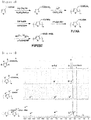
- FIG. 2 shows a method for preparing poly(3-polyethylene glycol thiophene) (P3PEGT), which is a polythiophene-based polymer according to the present invention.
- P3PEGT poly(3-polyethylene glycol thiophene)
- a step of mixing the polythiophene-based polymer and the conductive polymer, coating them on a separate substrate, and separating them may be further included.
- the substrate may be a glass substrate or a plastic substrate.
- the plastic substrate may be a film of various plastics selected from polyethylene terephthalate, polyethylene naphthalate, polypropylene, polyethylene, cellulose triacetate, cellulose diacetate, poly(meth)acrylic acid alkyl ester, poly(meth)acrylic acid ester copolymer, polyvinyl chloride, polyvinyl alcohol, polycarbonate, polystyrene, cellophane, polyvinylidene chloride copolymer, polyamide, polyimide, vinyl chloride-vinyl acetate copolymer, polytetrafluoroethylene, polytrifluoroethylene and the like. Composite materials composed of two or more of these materials may also be used.
- Non-limiting examples of such coatings may include, but are not limited to, methods such as spin coating, doctor blade coating, dip coating, solvent casting, slot die coating, spray coating, roll coating, extrusion coating, curtain coating, die coating, wire bar coating or knife coating.
- the spin coating is performed at 500 to 4000 rpm.
- an apparatus having a gap of 10 to 200 ⁇ m in thickness may be used.
- the spray coating when carried out, it can be carried out by spraying with an injection frequency between 5 and 100 times through an injection pressure of 0.5 to 20 MPa. The design of such a process and the selection of parameters can be controlled by a person skilled in the art.
- the solution After coating, the solution is dried to form the polymer material for the lithium secondary battery.
- Drying is preferably carried out at 60 to 150 °C for 30 seconds to 15 minutes although it depends on each constituent or content ratio.
- the drying may be performed by any one of hot air drying, electromagnetic wave drying, vacuum drying, spray drying, drum drying and freeze drying, preferably by hot air drying.
- the thickness of the polymer material formed after coating and drying is formed to be the thickness of the polymer material to be finally formed, and if necessary, the coating-drying or coating step is performed at least once.
- the heat treatment in step (c) may be performed at 120 to 250 °C, preferably at 180 to 220 °C. If the heat treatment is performed at a temperature lower than the above temperature range, the polythiophene-based polymer and the conductive polymer cannot be blended smoothly and thus cannot exhibit desired electronic conductivity. If the heat treatment is performed at a temperature higher than the above temperature range, there is a problem that pyrolysis of the polymer itself in the polymer material may occur. Therefore, the temperature of the heat treatment is appropriately adjusted within the above range.
- This heat treatment step may be carried out in the atmosphere or an inert gas atmosphere.
- the inert gas may be one selected from the group consisting of nitrogen, argon, helium, neon, krypton, and xenon, or a combination of two or more.
- FIG. 2 shows a method for preparing P3PEGT, which is a polymer according to one embodiment of the present invention.
- P3PEGT a polymer
- poly(3-thiophene sodium acetate) a 6M aqueous solution of sodium hydroxide was added and stirred at 100 °C for 24 hours to obtain polythiophene sodium acetate (poly(3-thiophene sodium acetate)).
- polythiophene sodium acetate a 6M aqueous solution of sodium hydroxide was added and stirred at 100 °C for 24 hours to obtain polythiophene sodium acetate (poly(3-thiophene sodium acetate)).
- 1 M hydrogen chloride was added and stirred for 24 hours to obtain polythiophene acetic acid.
- a polymer material solution was prepared by dissolving P3PEGT prepared in the above Preparation Example and PEDOT:PSS (3 wt.% in H 2 O, 200 S/cm, Sigma-Aldrich) as a conductive polymer at a weight ratio of 80:20 in dimethylsulfoxide (DMSO), wherein sum of the P3PEGT and PEDOT:PSS was dissolved in the amount of 5 parts by weight relative to the total 100 parts by weight of the dimethylsulfoxide (DMSO).
- DMSO dimethylsulfoxide
- the solution was spin-coated on a glass substrate at 3,000 rpm for 2 minutes and then dried at 120 °C to completely dry the solvent. After that, the substrate was heat treated at 200 °C for 20 minutes and peeled off from the glass substrate to produce a polymer material in the form of a film.
- a polymer material was prepared in the same manner as in Example 1, except for using P3PEGT alone as the polymer
- a polymer material was prepared in the same manner as in Example 1, except that poly-3-hexylthiophene-polyethylene oxide block copolymer (P3HT-PEO) as a polymer was dissolved in the solvent of tetrahydrofuran (THF) to prepare a solution.
- P3HT-PEO poly-3-hexylthiophene-polyethylene oxide block copolymer
- FIG. 3 is a 1 H-NMR spectrum of the polymer including P3PEGT according to one embodiment of the present invention.
- poly(3-thiophene methyl acetate) was prepared from thiophene methyl acetate. It was confirmed that the peak of c' was observed at 12 to 13 ppm, and thus it can be seen that polythiophene acetic acid (poly(3-thiophene acetic acid)) was prepared from polythiophene methyl acetate. It was confirmed that the peak of f was generated, and thus it was confirmed that poly (3-polyethylene glycol thiophene) (P3PEGT) was prepared from the poly(3-thiophene acetic acid). In addition, the structure of the polymer can also be determined through the 1 H-NMR spectrum of the polymer.
- a solvent of chloroform-d or dimethyl sulfoxide (DMSO) may be used depending on the solubility of the sample.
- the structure of the polythiophene methyl acetate can be confirmed through the solvent.
- the polythiophene methyl acetate may have the form of a light brown powder.
- the structure of polythiophene acetic acid can be confirmed through the solvent.
- the polythiophene acetic acid may have the form of a thick brown powder.
- the structure of poly(3- polyethylene glycol thiophene) can be confirmed through the solvent.
- the poly(3-polyethylene glycol thiophene) may have the form of a red powder.
- a polymer material was prepared in the same manner as in the above Examples and Comparative Example by adding LiTFSI as a lithium salt to the solution of the polymer material prepared in the above Examples and Comparative Example at the ratios shown in Table 2 below.
- Table 2 LiTFSI : Ethylene oxide (mol ratio)
- Example 1 1 0.09
- Example 2 1 0.09 Comparative Example 1 1 : 0.085
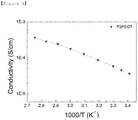
- the prepared polymer material was inserted into an electrode cell, and then the resistance was measured under conditions of 25 °C, 10 mV, and 10 1 to 10 6 Hz through an IM-6ex resistivity meter (ZAHNER-Electric).
- the total conductivity was calculated by the thickness and the resistance of the film, and the ionic conductivity was determined by the following equation, and it is shown in Table 3.
- Total conductivity ionic conductivity + electronic conductivity
- Table 3 Ionic conductivity(S/cm) Temperature for measure Example 1 3.7 x 10 -5 25°C 3.0 x 10 -4 90°C
- Example 2 4.6 x 10 -5 25°C 3.7 x 10 -4 90°C
Landscapes
- Chemical & Material Sciences (AREA)
- Chemical Kinetics & Catalysis (AREA)
- Electrochemistry (AREA)
- General Chemical & Material Sciences (AREA)
- Engineering & Computer Science (AREA)
- Manufacturing & Machinery (AREA)
- Materials Engineering (AREA)
- Health & Medical Sciences (AREA)
- Organic Chemistry (AREA)
- Polymers & Plastics (AREA)
- Medicinal Chemistry (AREA)
- Inorganic Chemistry (AREA)
- Condensed Matter Physics & Semiconductors (AREA)
- General Physics & Mathematics (AREA)
- Dispersion Chemistry (AREA)
- Physics & Mathematics (AREA)
- Secondary Cells (AREA)
- Battery Electrode And Active Subsutance (AREA)
- Compositions Of Macromolecular Compounds (AREA)
- Processes Of Treating Macromolecular Substances (AREA)
Applications Claiming Priority (2)
| Application Number | Priority Date | Filing Date | Title |
|---|---|---|---|
| KR1020170126604A KR102315399B1 (ko) | 2017-09-28 | 2017-09-28 | 리튬 이차전지용 고분자 재료 및 그 제조방법 |
| PCT/KR2018/007895 WO2019066219A1 (fr) | 2017-09-28 | 2018-07-12 | Matériau polymère de batterie secondaire au lithium et son procédé de fabrication |
Publications (3)
| Publication Number | Publication Date |
|---|---|
| EP3664199A1 true EP3664199A1 (fr) | 2020-06-10 |
| EP3664199A4 EP3664199A4 (fr) | 2020-11-11 |
| EP3664199B1 EP3664199B1 (fr) | 2023-08-30 |
Family
ID=65901758
Family Applications (1)
| Application Number | Title | Priority Date | Filing Date |
|---|---|---|---|
| EP18861536.3A Active EP3664199B1 (fr) | 2017-09-28 | 2018-07-12 | Matériau polymère de batterie secondaire au lithium et son procédé de fabrication |
Country Status (9)
| Country | Link |
|---|---|
| US (1) | US12183926B2 (fr) |
| EP (1) | EP3664199B1 (fr) |
| JP (1) | JP6966634B2 (fr) |
| KR (1) | KR102315399B1 (fr) |
| CN (1) | CN111033835B (fr) |
| ES (1) | ES2958584T3 (fr) |
| HU (1) | HUE064339T2 (fr) |
| PL (1) | PL3664199T3 (fr) |
| WO (1) | WO2019066219A1 (fr) |
Families Citing this family (10)
| Publication number | Priority date | Publication date | Assignee | Title |
|---|---|---|---|---|
| KR102357672B1 (ko) * | 2020-03-16 | 2022-01-28 | 성균관대학교산학협력단 | 폴리(아릴렌에테르술폰)-폴리(에틸렌글리콜) 그라프트 공중합체를 포함하는 리튬 이차전지용 리튬 금속 음극 보호층, 이의 형성 방법 및 이를 포함하는 리튬 이차전지 |
| CN111509195A (zh) * | 2020-05-07 | 2020-08-07 | 武汉理工大学 | 一种全固态锂电池中金属锂负极的表面改性方法 |
| KR102904721B1 (ko) * | 2020-08-11 | 2025-12-24 | 주식회사 엘지에너지솔루션 | 리튬-황 전지용 양극 활물질, 이의 제조방법 및 이를 포함하는 리튬-황 전지 |
| CN112280009B (zh) * | 2020-09-22 | 2023-01-31 | 合肥国轩高科动力能源有限公司 | 一种聚噻吩类化合物、含聚噻吩类化合物的硅负极添加剂和硅负极材料 |
| US20240283018A1 (en) * | 2021-12-08 | 2024-08-22 | Lg Energy Solution, Ltd. | Solid electrolyte and method for producing same |
| EP4329035A4 (fr) * | 2021-12-08 | 2025-03-19 | LG Energy Solution, Ltd. | Électrolyte solide et son procédé de production |
| KR102651788B1 (ko) * | 2021-12-08 | 2024-03-27 | 주식회사 엘지에너지솔루션 | 고체 전해질 및 이의 제조방법 |
| EP4329033A4 (fr) * | 2021-12-08 | 2025-06-25 | LG Energy Solution, Ltd. | Électrolyte solide et son procédé de préparation |
| CN115513459B (zh) * | 2022-09-26 | 2025-07-11 | 中国科学院苏州纳米技术与纳米仿生研究所 | 一种有机混合导体及其制备方法和应用 |
| WO2024086078A2 (fr) * | 2022-10-17 | 2024-04-25 | Board Of Trustees Of The University Of Arkansas | Alcoxydes et thiolates de métaux alcalins polymères en tant qu'électrolytes à l'état solide et revêtements de surface dans des batteries rechargeables |
Family Cites Families (25)
| Publication number | Priority date | Publication date | Assignee | Title |
|---|---|---|---|---|
| JP3038945B2 (ja) * | 1991-02-22 | 2000-05-08 | 松下電器産業株式会社 | リチウム二次電池 |
| JPH04287074A (ja) | 1991-03-15 | 1992-10-12 | Ricoh Co Ltd | 画像形成装置の定着装置 |
| KR100407485B1 (ko) | 2001-04-26 | 2003-11-28 | 삼성에스디아이 주식회사 | 겔형의 고분자 전해질 및 이를 채용한 리튬 전지 |
| WO2003018648A1 (fr) | 2001-08-31 | 2003-03-06 | Tda Research, Inc. | Copolymeres sequences poly(heteroaromatiques) presentant une conductivite electrique |
| JP3956289B2 (ja) * | 2002-08-21 | 2007-08-08 | トヨタ自動車株式会社 | 非水電解質電池 |
| JP2004185865A (ja) | 2002-11-29 | 2004-07-02 | Toyota Motor Corp | リチウムイオン電池とその製造方法と負極構造体 |
| KR100666133B1 (ko) | 2005-09-16 | 2007-01-09 | 재단법인서울대학교산학협력재단 | 티자형의 올리고싸이오펜-폴리에틸렌글라이콜 그래프트공중합체 |
| US20090176160A1 (en) * | 2007-06-06 | 2009-07-09 | Aron Newman | Electroactive separator for overcharge protection |
| KR20120080935A (ko) | 2011-01-10 | 2012-07-18 | 삼성전기주식회사 | 전도성 고분자 조성물 및 이를 이용한 전도성 필름 |
| US9379368B2 (en) * | 2011-07-11 | 2016-06-28 | California Institute Of Technology | Electrochemical systems with electronically conductive layers |
| CN102522563A (zh) | 2011-12-30 | 2012-06-27 | 中国科学院广州能源研究所 | 导电聚合物浸渍包覆的锂离子电池复合电极材料及其制备方法 |
| KR101391610B1 (ko) * | 2012-03-29 | 2014-05-07 | 주식회사 누리비스타 | 저항 안정성이 부여된 전도성 고분자 조성물 및 이를 이용한 전도성 필름 |
| KR20140065644A (ko) | 2012-11-19 | 2014-05-30 | 주식회사 엘지화학 | 양극 활물질 조성물 및 이를 포함하는 리튬 이차 전지 |
| DE102012022976A1 (de) * | 2012-11-26 | 2014-05-28 | Ewe-Forschungszentrum Für Energietechnologie E. V. | Einsatz leitfähiger Polymere in Batterie-Elektroden |
| KR20140121953A (ko) | 2013-04-08 | 2014-10-17 | 주식회사 엘지화학 | 리튬 이차전지용 음극, 그 제조방법 및 이를 포함하는 리튬 이차 전지 |
| KR101455943B1 (ko) * | 2013-10-17 | 2014-11-04 | 한양대학교 산학협력단 | 이차 전지용 분리막, 그 제조 방법, 및 이를 이용한 이차 전지 |
| CN103753926B (zh) | 2014-01-16 | 2016-03-16 | 中科院广州化学有限公司 | 一种高导电率的聚噻吩导电涂层及其制备方法与应用 |
| KR102389001B1 (ko) | 2015-02-13 | 2022-04-22 | 삼성에스디아이 주식회사 | 양극활물질조성물, 이로부터 제조된 양극 및 리튬전지 |
| KR101743909B1 (ko) | 2015-06-11 | 2017-06-08 | 한국과학기술원 | 기계적 안정성 및 효율이 강화된 올-고분자 태양전지용 전도성 고분자 |
| KR101748684B1 (ko) | 2015-06-19 | 2017-07-03 | 한국과학기술원 | 폴리머로만 이루어진 광활성층을 이용한 전-고분자 태양전지 |
| KR20170085195A (ko) | 2016-01-14 | 2017-07-24 | 한국과학기술연구원 | 표면 코팅된 양극 활물질, 그 제조방법 및 이를 이용한 이차전지 |
| KR101855569B1 (ko) * | 2016-01-28 | 2018-06-08 | 서울대학교산학협력단 | 이차전지용 활물질 및 그 제조 방법 |
| KR20170126604A (ko) | 2016-05-10 | 2017-11-20 | 유한킴벌리 주식회사 | 복강경 수술용 견인 장치 |
| US10418630B2 (en) * | 2016-07-14 | 2019-09-17 | Ford Global Technologies, Llc | Lithium-sulfur battery cell electrode |
| CN106803574B (zh) * | 2016-12-26 | 2019-09-13 | 宁波中车新能源科技有限公司 | 锂离子电池正极材料及其制备方法和应用 |
-
2017
- 2017-09-28 KR KR1020170126604A patent/KR102315399B1/ko active Active
-
2018
- 2018-07-12 ES ES18861536T patent/ES2958584T3/es active Active
- 2018-07-12 HU HUE18861536A patent/HUE064339T2/hu unknown
- 2018-07-12 US US16/643,367 patent/US12183926B2/en active Active
- 2018-07-12 JP JP2020511739A patent/JP6966634B2/ja active Active
- 2018-07-12 EP EP18861536.3A patent/EP3664199B1/fr active Active
- 2018-07-12 CN CN201880055136.9A patent/CN111033835B/zh active Active
- 2018-07-12 WO PCT/KR2018/007895 patent/WO2019066219A1/fr not_active Ceased
- 2018-07-12 PL PL18861536.3T patent/PL3664199T3/pl unknown
Also Published As
| Publication number | Publication date |
|---|---|
| US20200350586A1 (en) | 2020-11-05 |
| CN111033835A (zh) | 2020-04-17 |
| JP6966634B2 (ja) | 2021-11-17 |
| KR102315399B1 (ko) | 2021-10-20 |
| PL3664199T3 (pl) | 2024-01-22 |
| EP3664199A4 (fr) | 2020-11-11 |
| JP2020532070A (ja) | 2020-11-05 |
| HUE064339T2 (hu) | 2024-03-28 |
| CN111033835B (zh) | 2023-05-09 |
| EP3664199B1 (fr) | 2023-08-30 |
| US12183926B2 (en) | 2024-12-31 |
| ES2958584T3 (es) | 2024-02-12 |
| KR20190037019A (ko) | 2019-04-05 |
| WO2019066219A1 (fr) | 2019-04-04 |
Similar Documents
| Publication | Publication Date | Title |
|---|---|---|
| EP3664199B1 (fr) | Matériau polymère de batterie secondaire au lithium et son procédé de fabrication | |
| EP3413380B1 (fr) | Anode comprenant de multiples couches de protection, et batterie secondaire au lithium la comprenant | |
| US12034147B2 (en) | Negative electrode for lithium secondary battery, method for manufacturing same, and lithium secondary battery comprising same | |
| EP3312919B1 (fr) | Électrode positive pour batterie secondaire métallique et batterie secondaire métallique, comprenant celle-ci | |
| EP3203567A1 (fr) | Batterie au lithium-soufre | |
| US8029934B2 (en) | Lithium secondary battery | |
| WO2003044882A1 (fr) | Materiau actif d'electrode, electrode, element d'accumulateur au lithium-ion, procede de production de materiau actif d'electrode et procede de production d'element d'accumulateur au lithium-ion | |
| CN103119773A (zh) | 使用离子液体的锂二次电池 | |
| KR20140120751A (ko) | 음극 활물질, 이의 제조 방법, 및 상기 음극 활물질을 포함하는 전기 화학 소자 | |
| US11183737B2 (en) | Electrode assembly, method of manufacturing the same and secondary battery including the same | |
| US10014555B2 (en) | Lithium secondary battery and production method therefor | |
| CN111712950B (zh) | 锂电极以及包含其的锂二次电池 | |
| KR20180046204A (ko) | 보호 음극, 이를 포함하는 리튬전지, 및 보호 음극 제조 방법 | |
| KR102940363B1 (ko) | 리튬 이차전지용 음극, 이의 제조방법 및 이를 포함하는 리튬 이차전지 | |
| EP3731311A1 (fr) | Anode pour batterie secondaire au lithium et batterie secondaire au lithium la comprenant | |
| KR20190064272A (ko) | 리튬 이차전지용 전해액 및 이를 포함하는 리튬 이차전지 | |
| EP2980896A1 (fr) | Électrode pour dispositif de stockage d'électricité et dispositif de stockage d'électricité utilisant ladite électrode | |
| JP2009277432A (ja) | 二次電池用電極及びその製造方法並びに二次電池 | |
| JP5896154B2 (ja) | 固体電解質膜形成剤、およびそれを含有する電解液、蓄電デバイス | |
| KR100824048B1 (ko) | 리튬 전지용 음극, 그 제조방법 및 이를 채용한 리튬 전지 | |
| EP4432414B1 (fr) | Électrolyte polymère solide et son procédé de production | |
| US20250167298A1 (en) | Polymeric solid electrolyte and all-solid-state battery comprising the same | |
| CN117397082A (zh) | 固体电解质及其制备方法 | |
| WO2014097618A1 (fr) | Solvant non aqueux pour dispositifs accumulateurs d'électricité, solution d'électrolyte non aqueux, dispositif accumulateur d'électricité utilisant la solution d'électrolyte non aqueux et accumulateur au lithium |
Legal Events
| Date | Code | Title | Description |
|---|---|---|---|
| STAA | Information on the status of an ep patent application or granted ep patent |
Free format text: STATUS: THE INTERNATIONAL PUBLICATION HAS BEEN MADE |
|
| PUAI | Public reference made under article 153(3) epc to a published international application that has entered the european phase |
Free format text: ORIGINAL CODE: 0009012 |
|
| STAA | Information on the status of an ep patent application or granted ep patent |
Free format text: STATUS: REQUEST FOR EXAMINATION WAS MADE |
|
| 17P | Request for examination filed |
Effective date: 20200302 |
|
| AK | Designated contracting states |
Kind code of ref document: A1 Designated state(s): AL AT BE BG CH CY CZ DE DK EE ES FI FR GB GR HR HU IE IS IT LI LT LU LV MC MK MT NL NO PL PT RO RS SE SI SK SM TR |
|
| AX | Request for extension of the european patent |
Extension state: BA ME |
|
| A4 | Supplementary search report drawn up and despatched |
Effective date: 20201014 |
|
| RIC1 | Information provided on ipc code assigned before grant |
Ipc: H01M 10/0565 20100101ALI20201008BHEP Ipc: H01M 4/13 20100101ALI20201008BHEP Ipc: H01M 4/62 20060101AFI20201008BHEP Ipc: C08L 65/00 20060101ALI20201008BHEP Ipc: C08G 61/12 20060101ALI20201008BHEP Ipc: H01M 10/052 20100101ALI20201008BHEP Ipc: H01M 10/0525 20100101ALI20201008BHEP Ipc: H01M 4/131 20100101ALI20201008BHEP |
|
| DAV | Request for validation of the european patent (deleted) | ||
| DAX | Request for extension of the european patent (deleted) | ||
| RAP1 | Party data changed (applicant data changed or rights of an application transferred) |
Owner name: SEOUL NATIONAL UNIVERSITY R&DB FOUNDATION Owner name: LG ENERGY SOLUTION, LTD. |
|
| RAP3 | Party data changed (applicant data changed or rights of an application transferred) |
Owner name: SEOUL NATIONAL UNIVERSITY R&DB FOUNDATION Owner name: LG ENERGY SOLUTION, LTD. |
|
| GRAP | Despatch of communication of intention to grant a patent |
Free format text: ORIGINAL CODE: EPIDOSNIGR1 |
|
| STAA | Information on the status of an ep patent application or granted ep patent |
Free format text: STATUS: GRANT OF PATENT IS INTENDED |
|
| INTG | Intention to grant announced |
Effective date: 20230417 |
|
| GRAS | Grant fee paid |
Free format text: ORIGINAL CODE: EPIDOSNIGR3 |
|
| P01 | Opt-out of the competence of the unified patent court (upc) registered |
Effective date: 20230515 |
|
| GRAA | (expected) grant |
Free format text: ORIGINAL CODE: 0009210 |
|
| STAA | Information on the status of an ep patent application or granted ep patent |
Free format text: STATUS: THE PATENT HAS BEEN GRANTED |
|
| AK | Designated contracting states |
Kind code of ref document: B1 Designated state(s): AL AT BE BG CH CY CZ DE DK EE ES FI FR GB GR HR HU IE IS IT LI LT LU LV MC MK MT NL NO PL PT RO RS SE SI SK SM TR |
|
| REG | Reference to a national code |
Ref country code: GB Ref legal event code: FG4D |
|
| REG | Reference to a national code |
Ref country code: CH Ref legal event code: EP |
|
| REG | Reference to a national code |
Ref country code: DE Ref legal event code: R096 Ref document number: 602018056682 Country of ref document: DE |
|
| REG | Reference to a national code |
Ref country code: IE Ref legal event code: FG4D |
|
| REG | Reference to a national code |
Ref country code: SE Ref legal event code: TRGR |
|
| REG | Reference to a national code |
Ref country code: LT Ref legal event code: MG9D |
|
| REG | Reference to a national code |
Ref country code: NL Ref legal event code: MP Effective date: 20230830 |
|
| REG | Reference to a national code |
Ref country code: AT Ref legal event code: MK05 Ref document number: 1606589 Country of ref document: AT Kind code of ref document: T Effective date: 20230830 |
|
| PG25 | Lapsed in a contracting state [announced via postgrant information from national office to epo] |
Ref country code: GR Free format text: LAPSE BECAUSE OF FAILURE TO SUBMIT A TRANSLATION OF THE DESCRIPTION OR TO PAY THE FEE WITHIN THE PRESCRIBED TIME-LIMIT Effective date: 20231201 |
|
| PG25 | Lapsed in a contracting state [announced via postgrant information from national office to epo] |
Ref country code: IS Free format text: LAPSE BECAUSE OF FAILURE TO SUBMIT A TRANSLATION OF THE DESCRIPTION OR TO PAY THE FEE WITHIN THE PRESCRIBED TIME-LIMIT Effective date: 20231230 |
|
| PG25 | Lapsed in a contracting state [announced via postgrant information from national office to epo] |
Ref country code: RS Free format text: LAPSE BECAUSE OF FAILURE TO SUBMIT A TRANSLATION OF THE DESCRIPTION OR TO PAY THE FEE WITHIN THE PRESCRIBED TIME-LIMIT Effective date: 20230830 Ref country code: NO Free format text: LAPSE BECAUSE OF FAILURE TO SUBMIT A TRANSLATION OF THE DESCRIPTION OR TO PAY THE FEE WITHIN THE PRESCRIBED TIME-LIMIT Effective date: 20231130 Ref country code: LV Free format text: LAPSE BECAUSE OF FAILURE TO SUBMIT A TRANSLATION OF THE DESCRIPTION OR TO PAY THE FEE WITHIN THE PRESCRIBED TIME-LIMIT Effective date: 20230830 Ref country code: LT Free format text: LAPSE BECAUSE OF FAILURE TO SUBMIT A TRANSLATION OF THE DESCRIPTION OR TO PAY THE FEE WITHIN THE PRESCRIBED TIME-LIMIT Effective date: 20230830 Ref country code: IS Free format text: LAPSE BECAUSE OF FAILURE TO SUBMIT A TRANSLATION OF THE DESCRIPTION OR TO PAY THE FEE WITHIN THE PRESCRIBED TIME-LIMIT Effective date: 20231230 Ref country code: HR Free format text: LAPSE BECAUSE OF FAILURE TO SUBMIT A TRANSLATION OF THE DESCRIPTION OR TO PAY THE FEE WITHIN THE PRESCRIBED TIME-LIMIT Effective date: 20230830 Ref country code: GR Free format text: LAPSE BECAUSE OF FAILURE TO SUBMIT A TRANSLATION OF THE DESCRIPTION OR TO PAY THE FEE WITHIN THE PRESCRIBED TIME-LIMIT Effective date: 20231201 Ref country code: FI Free format text: LAPSE BECAUSE OF FAILURE TO SUBMIT A TRANSLATION OF THE DESCRIPTION OR TO PAY THE FEE WITHIN THE PRESCRIBED TIME-LIMIT Effective date: 20230830 Ref country code: AT Free format text: LAPSE BECAUSE OF FAILURE TO SUBMIT A TRANSLATION OF THE DESCRIPTION OR TO PAY THE FEE WITHIN THE PRESCRIBED TIME-LIMIT Effective date: 20230830 |
|
| REG | Reference to a national code |
Ref country code: ES Ref legal event code: FG2A Ref document number: 2958584 Country of ref document: ES Kind code of ref document: T3 Effective date: 20240212 |
|
| PG25 | Lapsed in a contracting state [announced via postgrant information from national office to epo] |
Ref country code: NL Free format text: LAPSE BECAUSE OF FAILURE TO SUBMIT A TRANSLATION OF THE DESCRIPTION OR TO PAY THE FEE WITHIN THE PRESCRIBED TIME-LIMIT Effective date: 20230830 |
|
| REG | Reference to a national code |
Ref country code: HU Ref legal event code: AG4A Ref document number: E064339 Country of ref document: HU |
|
| PG25 | Lapsed in a contracting state [announced via postgrant information from national office to epo] |
Ref country code: SM Free format text: LAPSE BECAUSE OF FAILURE TO SUBMIT A TRANSLATION OF THE DESCRIPTION OR TO PAY THE FEE WITHIN THE PRESCRIBED TIME-LIMIT Effective date: 20230830 Ref country code: RO Free format text: LAPSE BECAUSE OF FAILURE TO SUBMIT A TRANSLATION OF THE DESCRIPTION OR TO PAY THE FEE WITHIN THE PRESCRIBED TIME-LIMIT Effective date: 20230830 Ref country code: EE Free format text: LAPSE BECAUSE OF FAILURE TO SUBMIT A TRANSLATION OF THE DESCRIPTION OR TO PAY THE FEE WITHIN THE PRESCRIBED TIME-LIMIT Effective date: 20230830 Ref country code: DK Free format text: LAPSE BECAUSE OF FAILURE TO SUBMIT A TRANSLATION OF THE DESCRIPTION OR TO PAY THE FEE WITHIN THE PRESCRIBED TIME-LIMIT Effective date: 20230830 Ref country code: CZ Free format text: LAPSE BECAUSE OF FAILURE TO SUBMIT A TRANSLATION OF THE DESCRIPTION OR TO PAY THE FEE WITHIN THE PRESCRIBED TIME-LIMIT Effective date: 20230830 Ref country code: SK Free format text: LAPSE BECAUSE OF FAILURE TO SUBMIT A TRANSLATION OF THE DESCRIPTION OR TO PAY THE FEE WITHIN THE PRESCRIBED TIME-LIMIT Effective date: 20230830 Ref country code: PT Free format text: LAPSE BECAUSE OF FAILURE TO SUBMIT A TRANSLATION OF THE DESCRIPTION OR TO PAY THE FEE WITHIN THE PRESCRIBED TIME-LIMIT Effective date: 20240102 |
|
| PG25 | Lapsed in a contracting state [announced via postgrant information from national office to epo] |
Ref country code: IT Free format text: LAPSE BECAUSE OF FAILURE TO SUBMIT A TRANSLATION OF THE DESCRIPTION OR TO PAY THE FEE WITHIN THE PRESCRIBED TIME-LIMIT Effective date: 20230830 |
|
| REG | Reference to a national code |
Ref country code: DE Ref legal event code: R097 Ref document number: 602018056682 Country of ref document: DE |
|
| PLBE | No opposition filed within time limit |
Free format text: ORIGINAL CODE: 0009261 |
|
| STAA | Information on the status of an ep patent application or granted ep patent |
Free format text: STATUS: NO OPPOSITION FILED WITHIN TIME LIMIT |
|
| PG25 | Lapsed in a contracting state [announced via postgrant information from national office to epo] |
Ref country code: SI Free format text: LAPSE BECAUSE OF FAILURE TO SUBMIT A TRANSLATION OF THE DESCRIPTION OR TO PAY THE FEE WITHIN THE PRESCRIBED TIME-LIMIT Effective date: 20230830 |
|
| 26N | No opposition filed |
Effective date: 20240603 |
|
| PG25 | Lapsed in a contracting state [announced via postgrant information from national office to epo] |
Ref country code: BG Free format text: LAPSE BECAUSE OF FAILURE TO SUBMIT A TRANSLATION OF THE DESCRIPTION OR TO PAY THE FEE WITHIN THE PRESCRIBED TIME-LIMIT Effective date: 20230830 |
|
| PG25 | Lapsed in a contracting state [announced via postgrant information from national office to epo] |
Ref country code: BG Free format text: LAPSE BECAUSE OF FAILURE TO SUBMIT A TRANSLATION OF THE DESCRIPTION OR TO PAY THE FEE WITHIN THE PRESCRIBED TIME-LIMIT Effective date: 20230830 |
|
| PG25 | Lapsed in a contracting state [announced via postgrant information from national office to epo] |
Ref country code: MC Free format text: LAPSE BECAUSE OF FAILURE TO SUBMIT A TRANSLATION OF THE DESCRIPTION OR TO PAY THE FEE WITHIN THE PRESCRIBED TIME-LIMIT Effective date: 20230830 |
|
| REG | Reference to a national code |
Ref country code: CH Ref legal event code: PL |
|
| PG25 | Lapsed in a contracting state [announced via postgrant information from national office to epo] |
Ref country code: LU Free format text: LAPSE BECAUSE OF NON-PAYMENT OF DUE FEES Effective date: 20240712 |
|
| PG25 | Lapsed in a contracting state [announced via postgrant information from national office to epo] |
Ref country code: LU Free format text: LAPSE BECAUSE OF NON-PAYMENT OF DUE FEES Effective date: 20240712 |
|
| PG25 | Lapsed in a contracting state [announced via postgrant information from national office to epo] |
Ref country code: CH Free format text: LAPSE BECAUSE OF NON-PAYMENT OF DUE FEES Effective date: 20240731 Ref country code: BE Free format text: LAPSE BECAUSE OF NON-PAYMENT OF DUE FEES Effective date: 20240731 |
|
| REG | Reference to a national code |
Ref country code: BE Ref legal event code: MM Effective date: 20240731 |
|
| PGFP | Annual fee paid to national office [announced via postgrant information from national office to epo] |
Ref country code: PL Payment date: 20250625 Year of fee payment: 8 |
|
| PGFP | Annual fee paid to national office [announced via postgrant information from national office to epo] |
Ref country code: GB Payment date: 20250624 Year of fee payment: 8 |
|
| PGFP | Annual fee paid to national office [announced via postgrant information from national office to epo] |
Ref country code: FR Payment date: 20250624 Year of fee payment: 8 |
|
| PG25 | Lapsed in a contracting state [announced via postgrant information from national office to epo] |
Ref country code: IE Free format text: LAPSE BECAUSE OF NON-PAYMENT OF DUE FEES Effective date: 20240712 |
|
| PGFP | Annual fee paid to national office [announced via postgrant information from national office to epo] |
Ref country code: SE Payment date: 20250624 Year of fee payment: 8 |
|
| PGFP | Annual fee paid to national office [announced via postgrant information from national office to epo] |
Ref country code: HU Payment date: 20250721 Year of fee payment: 8 |
|
| PGFP | Annual fee paid to national office [announced via postgrant information from national office to epo] |
Ref country code: ES Payment date: 20250822 Year of fee payment: 8 |
|
| PGFP | Annual fee paid to national office [announced via postgrant information from national office to epo] |
Ref country code: DE Payment date: 20250624 Year of fee payment: 8 |
|
| PG25 | Lapsed in a contracting state [announced via postgrant information from national office to epo] |
Ref country code: CY Free format text: LAPSE BECAUSE OF FAILURE TO SUBMIT A TRANSLATION OF THE DESCRIPTION OR TO PAY THE FEE WITHIN THE PRESCRIBED TIME-LIMIT; INVALID AB INITIO Effective date: 20180712 |