EP3667295B1 - Dispositif d'analyse, procédé d'analyse et programme d'analyse - Google Patents
Dispositif d'analyse, procédé d'analyse et programme d'analyse Download PDFInfo
- Publication number
- EP3667295B1 EP3667295B1 EP18844274.3A EP18844274A EP3667295B1 EP 3667295 B1 EP3667295 B1 EP 3667295B1 EP 18844274 A EP18844274 A EP 18844274A EP 3667295 B1 EP3667295 B1 EP 3667295B1
- Authority
- EP
- European Patent Office
- Prior art keywords
- correlation
- analyzer
- concentration
- spectrum data
- measurement sample
- Prior art date
- Legal status (The legal status is an assumption and is not a legal conclusion. Google has not performed a legal analysis and makes no representation as to the accuracy of the status listed.)
- Active
Links
Images


Classifications
-
- G—PHYSICS
- G01—MEASURING; TESTING
- G01N—INVESTIGATING OR ANALYSING MATERIALS BY DETERMINING THEIR CHEMICAL OR PHYSICAL PROPERTIES
- G01N21/00—Investigating or analysing materials by the use of optical means, i.e. using sub-millimetre waves, infrared, visible or ultraviolet light
- G01N21/17—Systems in which incident light is modified in accordance with the properties of the material investigated
- G01N21/25—Colour; Spectral properties, i.e. comparison of effect of material on the light at two or more different wavelengths or wavelength bands
- G01N21/31—Investigating relative effect of material at wavelengths characteristic of specific elements or molecules, e.g. atomic absorption spectrometry
- G01N21/35—Investigating relative effect of material at wavelengths characteristic of specific elements or molecules, e.g. atomic absorption spectrometry using infrared light
- G01N21/3504—Investigating relative effect of material at wavelengths characteristic of specific elements or molecules, e.g. atomic absorption spectrometry using infrared light for analysing gases, e.g. multi-gas analysis
-
- G—PHYSICS
- G01—MEASURING; TESTING
- G01N—INVESTIGATING OR ANALYSING MATERIALS BY DETERMINING THEIR CHEMICAL OR PHYSICAL PROPERTIES
- G01N21/00—Investigating or analysing materials by the use of optical means, i.e. using sub-millimetre waves, infrared, visible or ultraviolet light
- G01N21/17—Systems in which incident light is modified in accordance with the properties of the material investigated
- G01N21/25—Colour; Spectral properties, i.e. comparison of effect of material on the light at two or more different wavelengths or wavelength bands
- G01N21/31—Investigating relative effect of material at wavelengths characteristic of specific elements or molecules, e.g. atomic absorption spectrometry
- G01N21/35—Investigating relative effect of material at wavelengths characteristic of specific elements or molecules, e.g. atomic absorption spectrometry using infrared light
- G01N2021/3595—Investigating relative effect of material at wavelengths characteristic of specific elements or molecules, e.g. atomic absorption spectrometry using infrared light using FTIR
-
- G—PHYSICS
- G01—MEASURING; TESTING
- G01N—INVESTIGATING OR ANALYSING MATERIALS BY DETERMINING THEIR CHEMICAL OR PHYSICAL PROPERTIES
- G01N2201/00—Features of devices classified in G01N21/00
- G01N2201/12—Circuits of general importance; Signal processing
- G01N2201/129—Using chemometrical methods
- G01N2201/1293—Using chemometrical methods resolving multicomponent spectra
Definitions
- the present invention relates to an analyzer that analyzes a measurement sample on the basis of spectrum data obtained by irradiating the measurement sample with light.
- an FID (Flame Ionization Detector) analyzer and a spectroscopic analyzer such as an FTIR have been used.
- the FID analyzer is superior in analysis accuracy, but has problems such as the difficulty in handling and an increase in running cost because hydrogen gas (H 2 ) as supporting gas and helium gas (He) used for concentration adjustment of it or the like have to be supplied.
- hydrogen gas H 2
- He helium gas
- the FTIR analyzer has advantages of easier handling and low running cost, but is problematic in analysis accuracy. That is, in the FTIR analyzer, a two-step calculation that individually obtains the concentrations of respective hydrocarbons (HC) from a light spectrum and then weights and sums up them is performed, and errors probably occurring when setting weighting factors are superimposed on errors probably occurring when measuring the concentrations of respective HC, thus making it very difficult to improve measurement accuracy.
- HC hydrocarbons
- the THC concentration of exhaust gas of a vehicle is typically 100 ppmC or less; however, the concentration accuracy of each HC obtained by the FTIR spectroscopic analyzer is at most approximately 1 to 10 ppm, and from these pieces of information, it is difficult to perform measurement with sufficient accuracy. Also, it cannot be assured whether respective HC components whose concentrations are quantified by the FTIR spectroscopic analyzer include all types of HC components, and therefore this also serves as a factor preventing an increase in THC measurement accuracy.
- JP-A4-265842 there is one adapted to, in order to avoid individual measurement, regard some multiple types of HC contained in a measurement sample as producing the spectrum of a single component as one compound, and from the spectrum, collectively quantify and measure the total amount of it.
- Japanese Unexamined Patent Publication JP-A4-265842 Further technological background can be found in WO 92/07326 A1 , which describes using predictive models to asses a property or a composition of a sample, as well as in US 2004/064243 A1 and ARRIGONE G M et al: "Theory and practice in using Fourier transform infrared spectroscopy to detect hydrocarbons in emissions from gas turbine engines", Fuel, IPC Science and Technology Press, Guildford, GB, vol. 84, no. 9, 1 June 2005, pages 1052- 1058 , which describe determining total hydrocarbon concentration using hexane equivalent concentration technique.
- the main desired object of the present invention is to dramatically improve the measurement accuracy of an analyzer such as an FTIR spectroscopic analyzer.
- the analyzer according to the present invention is one that analyzes a measurement sample on the basis of absorption spectrum data obtained by irradiating the measurement sample with light, and includes a total analysis value calculation part that, on the basis of the total analysis value of a reference sample of which the total analysis value of multiple predetermined components are preliminarily obtained, calculates the total analysis value of the multiple components in the measurement sample from the spectrum data of the measurement sample, wherein the measurement sample is exhaust gas and the total analysis value is the total hydrocarbon concentration.
- the total analysis value calculation part is one that analyzes a measurement sample on the basis of spectrum data obtained by irradiating the measurement sample with light, and on the basis of the spectrum data of a reference sample of which the total analysis value of multiple predetermined components are preliminarily obtained, calculates the total analysis value of the multiple components in the measurement sample from the spectrum data of the measurement sample.
- spectrum data is one that includes absorption spectrum data of the light absorbed by the measurement sample (or the reference sample) and corrected absorption spectrum data in which the influence of an interference component contained in the measurement sample (or the reference sample) is reduced or removed.
- a total analysis value refers to the total value of physical quantities of multiple respective components, such as the total value of concentrations of multiple components or the total value of masses. According to the present invention, the total analysis value is the total hydrocarbon concentration.
- the total analysis value in addition to calculating the total analysis value of the multiple components contained in the measurement sample with, as a reference, data related to the reference sample of which the total analysis value and the spectrum data are known, the total analysis value can be directly calculated from the spectrum data of the measurement sample, and therefore an error caused by intermediate calculation such as calculating the analysis value of an individual component from spectrum data as conventional can be eliminated to dramatically improve analysis accuracy.
- the total analysis value calculation part is one including: a correlation data storage part that stores data indicating the correlation between the spectrum data of the reference sample and the total analysis value of the reference sample; and a calculation main body part that applies the correlation in the correlation data storage part to the spectrum data of the measurement sample to calculate the total analysis value of the multiple components in the measurement sample.
- the total analysis value calculation part is configured to, on the basis of the spectrum data of the reference sample and the total analysis value of the reference sample, calculate the correlation between the spectrum data and the total analysis value to store it in the correlation data storage part.
- acquisition is performed by another analyzer capable of accurately measuring the total analysis value of the reference sample.
- a reception part that receives data indicating the total analysis value of the reference sample, which is measured by one other type of analyzer, is further included, and a correlation calculation part calculates the correlation on the basis of the total analysis value received by the reception part and the spectrum data of the reference sample obtained by the present analyzer.
- the correlation calculation part is one configured to calculate the correlation from the respective total analysis values and respective pieces of spectrum data of multiple mutually different reference samples.
- the correlation calculation part is configured to, when the total analysis value of a new reference sample and its spectrum data are acquired, take into account the total analysis value of the new reference sample and its spectrum data to update the correlation.
- the correlation calculation part is one that calculates the correlation with the temperature and/or pressure of the reference sample as parameters as well, and the calculation main body part is one that calculates the total analysis value of the measurement sample on the basis of the correlation specified with the temperature and/or pressure of the measurement sample as parameters.
- the spectrum data is one in which the influence of another component interfering with the multiple components is reduced or removed.
- the measurement sample or the reference sample is exhaust gas of a vehicle.
- the present analyzer is preferably one of an FTIR type and the one other type of analyzer is preferably an FID analyzer.
- an analysis learning device dedicated to a function of calculating only a correlation using only a reference sample is also one aspect of the present disclosure.
- a reception part that receives spectrum data obtained by irradiating with light a reference sample of which the total analysis value of multiple predetermined components are preliminarily obtained; a reference sample data storage part that stores the total analysis values and pieces of spectrum data of multiple mutually different reference samples; and a correlation calculation part that refers to the reference sample data storage part to calculate a correlation common between the pieces of spectrum data and the total analysis values of the respective reference samples is preferable.
- an error caused by intermediate calculation such as calculating the analysis value of an individual component from spectrum data as conventional can be eliminated, and therefore analysis accuracy can be dramatically improved. Also, it is not necessary to use difficult-to-handle gases such as supporting gas (H 2 ), thus making it possible to make contributions in terms of convenience and running cost as well.
- the analyzer 100 of the present embodiment is one constituting part of an exhaust gas measurement system 200.
- the exhaust gas measurement system 200 includes a chassis dynamometer 300, an FID analyzer 400, and the present analyzer 100.
- the present analyzer 100 is a Fourier transform infrared spectroscopic analyzer referred to as a so-called FTIR including a light source 1, interferometer (spectroscopic part) 2, sample cell 3, photodetector 4, arithmetic processing unit 5, and the like.
- the analyzer 100 (hereinafter also referred to as an FTIR analyzer 100 for distinction) is used as an exhaust gas analyzer that measures the THC concentration (or amount) of exhaust gas as a measurement sample.
- the light source 1 is one that emits light having a broad spectrum (continuous light including lights having many wavenumbers), and for example, a tungsten iodine lamp, or a high-intensity ceramic light source is used.
- the interferometer 2 is one using a so-called Michelson interferometer including one half-mirror (beam splitter) 21, a fixed mirror 22, and a moving mirror 23.
- the light from the light source 1 incident on the interferometer 2 is split into reflected light and transmitted light by the half-mirror 21.
- One of the lights is reflected by the fixed mirror 22, and the other one is reflected by the moving mirror 23 to return to the half-mirror 21 again, combined, and emitted from the interferometer 2.
- the sample cell 3 is a transparent cell into which the exhaust gas as the measurement sample is introduced, and adapted so that the light emitted from the interferometer 2 is transmitted through the measurement sample in the sample cell 3 and led to the photodetector 4.
- the photodetector 4 is one referred to as a so-called an MCT photodetector 4.
- the arithmetic processing unit 5 is one including: an analog electric circuit having a buffer, an amplifier, and the like; a digital electric circuit having a CPU, a memory, a DSP, and the like; and an A/D converter and the like interposing between them.
- the arithmetic processing unit 5 fulfills a function as a main analysis part 51 that, from output values of the photodetector 4, calculates transmitted light spectrum data indicating the spectrum of the light transmitted through the sample, as well as calculates absorption spectrum data from the transmitted light spectrum data to specify various components contained in the measurement sample, and calculates the concentrations (or amounts) of the respective components.
- the main analysis part 51 includes a spectrum data generation part 511 and an individual component analysis part 512.
- the light intensity draws a sine curve due to interference.
- the actual light transmitted through the sample is the continuous light and the sine curve is different for each of the wavelengths, the actual light intensity exhibits the superposition of sine curves drawn at the respective wavenumbers, and an interference pattern (interferogram) is of a wave packet shape.
- the spectrum data generation part 511 obtains the position of the moving mirror 23 by, for example, an unillustrated range finder (not illustrated) such as a He-Ne laser, as well as obtains light intensity at each position of the moving mirror 23 by the photodetector 4, and performs fast Fourier transform (FFT) of an interference pattern obtained from them to thereby transform to the transmitted light spectrum data with each wavenumber component as the horizontal axis.
- FFT fast Fourier transform
- the transmitted light spectrum data of the measurement sample is further transformed to the absorption spectrum data.
- the individual component analysis part 512 specifies the various components contained in the measurement sample from, for example, respective peak positions (wavenumbers) and corresponding heights of the absorption spectrum data, and calculates the concentrations (or amounts) of the respective components.
- the arithmetic processing unit 5 is further provided with functions as a reception part 53, a total analysis value calculation part 52, and the like.
- the reception part 53 is one that receives the THC concentration of the exhaust gas measured by the FID analyzer 400.
- Exhaust gas whose THC concentration measured by the FID analyzer 400 is known is hereinafter referred to as a reference sample.
- the reference sample is also introduced into the present FTIR analyzer 100 as well as the FID analyzer 400, and absorption spectrum data of it is also acquired by the main analysis part 51, so that the reception part 53 also receives the absorption spectrum data of the reference sample as intermediate information calculated by the main analysis part 51, links this to the THC concentration of the reference sample measured by the FID analyzer 400 as reference sample data, and stores this in a reference sample data storage part D1 set in a predetermined area of the memory.
- the present embodiment is adapted to be able to acquire surrounding situation data including at least the temperature and pressure of the reference sample through input by an unillustrated sensor or operator provided in the present system, and the reception part 53 is configured to acquire the surrounding situation data of the reference sample to attach it to the reference sample data, and store it in the reference sample data storage part D1.
- the total analysis value calculation part 52 is one that calculates the concentration of THC in the measurement sample from the absorption spectrum data of the measurement sample (exhaust gas) with the reference sample data as training data, and more specifically includes a correlation calculation part 521 and a calculation main body part 522.
- the THC corresponds to multiple components in claims
- the THC concentration corresponds to a total analysis value in claims.
- the correlation calculation part 521 is one that refers to multiple pieces of reference sample data stored in the reference sample data storage part D1, and calculates the correlation between absorption spectrum data and THC concentration, which is common to those pieces of reference sample data, by machine learning (artificial intelligence, deep learning, or the like). Correlation data indicating the calculated correlation is stored in a correlation data storage part D2 set in a predetermined area of the memory.
- the correlation calculation part 521 every time reference sample data is added, learning is repeated to update the correlation, and therefore as the number of pieces of reference sample data is increases, the accuracy of the correlation is more improved.
- the correlation calculation part 521 in the present embodiment is configured to calculate the correlation with the surrounding situation data of the reference sample also as a parameter, i.e., configured so that the correlation also changes depending on the temperature, pressure, or the like of the reference sample; however, to calculate the correlation, it is not necessary to refer to the surrounding situation data.
- the calculation main body part 522 is one that applies the correlation calculated by the correlation calculation part 521 to the spectrum data of the measurement sample and calculates the THC concentration of the measurement sample. At this time, since the reception part 53 is adapted to acquire the surrounding situation data of the measurement sample, the calculation main body part 522 is adapted to apply the correlation corresponding to the surrounding data of the measurement sample when calculating the THC concentration.
- a vehicle is driven on the chassis dynamometer 300, and a reference sample that is the exhaust gas of it is led to the FID analyzer 400 and the FTIR analyzer 100.
- an engine connected to an engine dynamometer may be driven, or a drivetrain component such as a transmission connected to a drivetrain dynamometer may be driven.
- the FID analyzer 400 and the FTIR analyzer 100 perform exhaust gas measurement (analysis), for example, synchronously at regular time intervals (a few msec to a few sec).
- the reception part 53 acquires the absorption spectrum data of the exhaust gas calculated by the main analysis part 51 and the THC concentration of the exhaust gas analyzed by the FID analyzer 400, and successively stores them in the reference sample data storage part D1 as reference sample data (Step S1). At this time, the reception part 53 acquires the temperature and pressure of the exhaust gas, and attaches them to the reference sample data to store them in the reference sample data storage part D1.
- an engine state of the vehicle variously changes along with the time course from the start of driving and a variation in engine rotation speed, and correspondingly, a state (components, pressure, temperature) of the exhaust gas also successively changes, so that pieces of data of multiple reference samples of which at least THC concentrations are mutually different are obtained by the above-described successive measurement.
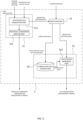
- the correlation calculation part 521 refers to many pieces of reference sample data stored in the reference sample data storage part D1 to calculate the correlation between absorption spectrum data and THC concentration, which is common to those pieces of reference sample data, by machine learning (Step S2), and the resulting correlation is stored in the correlation data storage part D2 (Step S3).
- THC concentration measurement using only the FTIR analyzer 100 can be performed.
- another vehicle as a test target is mounted on the chassis dynamometer 300 and driven, and the exhaust gas of it is led to the FTIR analyzer 100.
- the FID analyzer 400 is adapted not to be introduced with the exhaust gas by closing an unillustrated valve of an exhaust gas introduction pipe, or other means, and the operation of the FID analyzer 400 is also stopped.
- the main analysis part 51 acquires the absorption spectrum data of the exhaust gas (Step S4). In doing so, the total analysis value calculation part 52 (calculation main body part 522) applies the correlation stored in the correlation data storage part D2 to the absorption spectrum data to calculate THC concentration (Step S5).
- the analyzer 100 configured as described is adapted to preliminarily obtain the correlation between the spectrum data and THC concentration of a reference sample, and on the basis of the correlation, directly calculate THC concentration from the spectrum data of a measurement sample, and since it is not that intermediate calculation such as calculating the analysis value of an individual component from spectrum data intervenes as conventional, an error and omission of information probably caused by the intermediate calculation can be eliminated to dramatically improve analysis accuracy.
- THC concentration may be adapted to be calculated on the basis of a corrected absorption spectrum in which the influence of them is reduced or eliminated. In doing so, the analysis accuracy is further improved.
- the correlation between absorption spectrum data and THC concentration may be calculated depending on THC concentration indicated by reference sample data.
- the correlation calculation part 521 may divide THC concentration into multiple (e.g., two or more) concentration divisions, calculate the correlation between absorption spectrum data and THC concentration for each of the concentration divisions, and store the resulting correlation data in the correlation data storage part D2.
- the calculation main body part 522 may be adapted to, on the basis of the area or the like of the absorption spectrum data, select one piece of correlation data appropriate for the absorption spectrum data from among multiple pieces of correlation data stored in the correlation data storage part D2, and apply the selected correlation data to the spectrum data of the measurement sample to calculate the THC concentration of the measurement sample.
- the correlation calculation part 521 calculates the correlation between absorption spectrum data and THC concentration for each of the concentration divisions, more highly accurate correlation data can be obtained. Further, the calculation main body part 522 calculates the THC concentration of the measurement sample using such highly accurate correlation data, and therefore the measurement accuracy can be more improved.
- THC concentration is preferably divided into many more concentration divisions. In such a configuration, further highly accurate correlation data can be obtained.
- the concentration of water contained in a reference sample may be set as a parameter.
- the reception part 53 may be configured to receive the concentration of water (H 2 O) contained in a reference sample calculated by the individual component analysis part 512, and attach it to the data of the reference sample to store it in the sample data storage part D1.
- the correlation calculation part 521 may be adapted to refer to multiple pieces of reference sample data stored in the reference sample data storage part D1 and water concentrations attached to them, and to calculate the correlation between absorption spectrum data and THC concentration with the water concentration as a parameter.
- the calculation main body part 522 may be adapted to apply a correlation corresponding to the water concentration of a measurement sample when calculating THC concentration.
- the interference influence and coexistence influence of water contained in exhaust gas may be problematic: however, in such a configuration, by using a correlation with water concentration as a parameter, the influence of water can be reduced when calculating the THC concentration of a measurement sample, making it possible to more improve the measurement accuracy.
- the above-described embodiment uses a correlation calculated by machine learning which directly connects spectrum data to THC concentration, but without depending on machine learning, may be adapted to calculate an arithmetic expression representing the relationship between the spectrum data and the THC concentration.
- the value of the spectrum data and the THC concentration is not directly connected, and an arithmetic expression (also a sort of correlation) representing the relationship between the analysis value (in this case, concentration) of each of individual HC components obtained from the spectrum data by the main analysis part 51 and the THC concentration is only required to be used.
- THC R a 1 ⁇ HC 1 R + a 2 ⁇ HC 2 R + ...
- THC (R) represents the THC concentration of a reference sample measured by the FID analyzer 400
- HC 1(R) , HC 2(R) , ... represent the concentrations of respective hydrocarbons in the reference sample calculated by the main analysis part 51
- a 1 , a 2 , ... represent weighting factors.
- THC M a 1 ⁇ HC 1 M + a 2 ⁇ HC 2 M + ...
- THC (M) represents the THC concentration of the measurement sample calculated by the total analysis value calculation part 52
- HC 1(M) , HC 2(M) , ... represent the concentrations of the respective hydrocarbons in the measurement sample calculated by the main analysis part 51.
- THC concentration may be adapted to be obtained such that for HC whose masses are small, individual concentrations are obtained using the main analysis part (i.e., by theoretical expressions), whereas for HC whose masses are large, total concentration is calculated by the correlation calculation part and the calculation main body part (i.e., by machine learning), and they are summed up.
- engine combustion information information related to supercharging, EGR, rich/stoichiometry/lean, laminar flow, uniform flow, direct injection, port injection, and the like
- an engine head shape ignition timing
- a catalyst configuration an oxygen amount in fuel, inorganic gas components, soot concentration, SOF concentration, an engine type, engine rotation speed, load information, a hot start, a cold start, oxygen concentration, catalyst temperature, gear ratio, and the like
- parameters may be taken into account as parameters.
- surrounding situation data used for a correlation
- relearning may have to be performed every time.
- spectrum data and THC concentration total analysis value
- versatility is further enhanced.
- surrounding situation data does not have to be taken into account at all, and an embodiment in which the physical state (e.g., pressure, temperature, refractive index, viscosity, and the like) of a sample itself are taken into account in the correlation calculation but other external attributes (e.g., an engine type, ignition timing, and the like) are not taken into account in the correlation calculation is also conceivable.
- the temperature of a reference sample is set as a parameter, it is preferable that the outlet temperature of a tail pipe of a vehicle on the chassis dynamometer 300 is measured by a sensor or the like and the measured temperature is set as a parameter.
- the range of spectrum data used for learning/analysis may be only a wavenumber range in which analysis target components are included, or may be expanded to a predetermined range exceeding it. Also, the wavenumber range of interference components may be excluded.
- the range of spectrum data used for learning/analysis may be set to be equal or more than 2800 cm -1 and equal or less than 3200 cm -1 .
- the wavenumber range of HC as analysis target components is included but the wavenumber range (approximately 3400 cm -1 or more) of water as an interference component is excluded, and therefore the influence of water on calculating the THC concentration of a measurement sample can be reduced to more improve the measurement accuracy.
- respective concentrations may be obtained by the main analysis part 51, and the total concentration of one or more HC whose molecular weights are large may be calculated by subtracting from THC concentration.
- an analysis learning device that performs only correlation calculation may be configured by eliminating the function of the individual component analysis part from the present analyzer and introducing only a reference sample. A correlation obtained by this analysis learning device can be used in another FTIR analyzer.
- the analyzer 100 in the above-described embodiment is one that calculates the correlation between the spectrum data and THC concentration of a reference sample by itself, but is not limited thereto.
- An analyzer 100 in another embodiment may be adapted to use a correlation preliminarily calculated by one other analysis learning device that performs only correlation calculation, and on the basis of the correlation, directly calculate THC concentration from the spectrum data of a measurement sample.
- the analyzer 100 may be configured such that the arithmetic processing unit 5 does not have the functions as the reference sample data storage part D1 and the correlation calculation part 521.
- the reception part 53 may be adapted to receive correlation data (i.e., learned data) indicating the correlation preliminarily calculated by the one other analysis learning device via a network or the like, as well as preliminarily store it in the correlation data storage part D2.
- the calculation main body part 522 may be adapted to apply the correlation data preliminarily stored in the correlation data storage part D2 to the absorption spectrum data of a measurement sample and calculate the THC concentration of the measurement sample.
- reception part 53 may be adapted to receive new correlation data from the one other analysis learning device at predetermined intervals, and regularly update the correlation data stored in the correlation data storage part D2.
- a reference sample does not have to be of the same type as a measurement sample, and standard gas produced by mixing multiple components serving as analysis targets with a main component such as nitrogen, or the like may be used.
- a main component such as nitrogen, or the like
- the total analysis value of the multiple components is known, and therefore it is not necessary to use another analyzer for analyzing the multiple components of the reference sample.
- the analyzer it is only necessary to be one that irradiates a measurement sample with light and performs analysis from the resulting spectrum, and NDIR is also applicable. Further, the present invention is not limited to analyzing the exhaust gas of a vehicle but can also analyze the exhaust gas of an internal combustion engine of a vessel, an aircraft, an agricultural machine, a machine tool, or the like.
- an error caused by intermediate calculation such as calculating the analysis value of an individual component from spectrum data as conventional can be eliminated, and therefore analysis accuracy can be dramatically improved. Also, it is not necessary to use difficult-to-handle gases such as supporting gas (H 2 ), thus making it possible to make contributions in terms of convenience and running cost as well.
Landscapes
- Physics & Mathematics (AREA)
- Spectroscopy & Molecular Physics (AREA)
- Health & Medical Sciences (AREA)
- Life Sciences & Earth Sciences (AREA)
- Chemical & Material Sciences (AREA)
- Analytical Chemistry (AREA)
- Biochemistry (AREA)
- General Health & Medical Sciences (AREA)
- General Physics & Mathematics (AREA)
- Immunology (AREA)
- Pathology (AREA)
- Investigating Or Analysing Materials By Optical Means (AREA)
Claims (12)
- Analyseur (100) configuré pour analyser un échantillon de mesure qui est un gaz d'échappement, sur la base de données de spectre d'absorption obtenues par exposition de l'échantillon de mesure à une lumière qui est une lumière continue incluant des lumières présentant de multiples nombres d'onde, l'analyseur (100) comprenantune partie de calcul de valeur d'analyse totale (52) configurée pour, sur la base d'une concentration en hydrocarbures totaux qui est une propriété quantitative d'un échantillon de référence qui est un gaz d'échappement dont la concentration en hydrocarbures totaux est obtenue préalablement, calculer une concentration en hydrocarbures totaux dans l'échantillon de mesure à partir des données de spectre d'absorption de l'échantillon de mesure, dans lequella partie de calcul de valeur d'analyse totale (52) est du type comprenant :une partie de stockage de données de corrélation (D2) configurée pour stocker des données indiquant une corrélation entre des données de spectre d'absorption de l'échantillon de référence qui est un spectre unique contenant les contributions de tous les composants dans l'échantillon de référence et la concentration en hydrocarbures totaux de l'échantillon de référence, dans lequel la corrélation est obtenue en utilisant de l'apprentissage automatique ; etune partie corps principal de calcul (522) configurée pour appliquer la corrélation dans la partie de stockage de données de corrélation (D2) aux données de spectre d'absorption de l'échantillon de mesure pour calculer la concentration en hydrocarbures totaux dans l'échantillon de mesure.
- Analyseur (100) selon la revendication 1, dans lequella partie de calcul de valeur d'analyse totale (52) comprend en outreune partie de calcul de corrélation (521) configurée pour, sur la base des données de spectre d'absorption de l'échantillon de référence et de la concentration en hydrocarbures totaux de l'échantillon de référence, calculer la corrélation entre les données de spectre d'absorption et la concentration en hydrocarbures totaux pour la stocker dans la partie de stockage de données de corrélation (D2).
- Analyseur (100) selon la revendication 2, comprenant en outreune partie de réception (53) configurée pour recevoir des données indiquant la concentration en hydrocarbures totaux de l'échantillon de référence, la concentration en hydrocarbures totaux étant mesurée par un autre type d'analyseur, dans lequella partie de calcul de corrélation (521) est du type configurée pour calculer la corrélation sur la base de la concentration en hydrocarbures totaux reçue par la partie de réception (53) et des données de spectre d'absorption de l'échantillon de référence, les données de spectre d'absorption étant obtenues par le présent analyseur.
- Analyseur (100) selon la revendication 2 ou 3, dans lequel
la partie de calcul de corrélation (521) est du type configurée pour calculer la corrélation de concentrations respectives en hydrocarbures totaux et d'éléments respectifs de données de spectre d'absorption de plusieurs échantillons de référence, et lorsqu'une concentration en hydrocarbures totaux d'un nouvel échantillon de référence et ses données de spectre d'absorption sont acquises, prend en compte la concentration en hydrocarbures totaux du nouvel échantillon de référence et ses données de spectre d'absorption pour mettre à jour la corrélation. - Analyseur (100) selon la revendication 1, dans lequella corrélation est également calculée avec la température et/ou la pression de l'échantillon de référence en tant que paramètres, etla partie corps principal de calcul (522) est configurée pour calculer la concentration en hydrocarbures totaux de l'échantillon de mesure sur la base de la corrélation spécifiée avec la température et/ou la pression de l'échantillon de mesure en tant que paramètres.
- Analyseur (100) selon la revendication 5, dans lequell'échantillon de mesure ou l'échantillon de référence sont des gaz d'échappement d'un véhicule,la corrélation est calculée avec, en plus de la température et/ou de la pression de l'échantillon de référence, des données de situation environnante relatives à un moteur ou à un catalyseur du véhicule en tant que paramètre, etla partie corps principal de calcul (522) est également configurée pour calculer la concentration en hydrocarbures totaux de l'échantillon de mesure sur la base de la corrélation spécifiée avec, en plus de la température et/ou de la pression de l'échantillon de mesure, les données de situation environnante liées au moteur ou au catalyseur du véhicule en tant que paramètre.
- Analyseur (100) selon l'une des revendications 1 à 6, dans lequel
les données de spectre d'absorption sont celles dans lesquelles une influence d'un autre composant interférant avec les composants multiples est réduite ou éliminée. - Analyseur (100) selon l'une des revendications 1 à 7, comprenant en outre
une partie d'analyse principale (51) configurée pour analyser un composant unique individuel contenu dans l'échantillon de mesure sur la base des données de spectre d'absorption obtenues par exposition de l'échantillon de mesure à la lumière. - Analyseur (100) selon l'une des revendications 1 à 8,
l'analyseur (100) étant de type FTIR. - Analyseur (100) selon la revendication 3, dans lequel
l'autre type d'analyseur (100) est un analyseur FID. - Procédé d'analyse qui analyse un échantillon de mesure qui est un gaz d'échappement sur la base de données de spectre d'absorption obtenues par exposition de l'échantillon de mesure à de la lumière qui est une lumière continue incluant des lumières présentant de multiples nombres d'onde, le procédé d'analyse comprenant :
sur la base d'une concentration en hydrocarbures totaux qui est une propriété quantitative d'un échantillon de référence qui est un gaz d'échappement dont la concentration en hydrocarbures totaux est obtenue préalablement, le calcul d'une concentration en hydrocarbures totaux dans l'échantillon de mesure à partir des données de spectre d'absorption de l'échantillon de mesure, dans lequel ledit calcul comprend :
la réception de données de corrélation entre les données de spectre d'absorption de l'échantillon de référence qui est un spectre unique contenant les contributions de tous les composants dans l'échantillon de référence et la concentration en hydrocarbures totaux de l'échantillon de référence, dans lequel la corrélation est obtenue par apprentissage automatique ; et l'application des données de corrélation aux données de spectre d'absorption de l'échantillon de mesure pour calculer la concentration en hydrocarbures totaux dans l'échantillon de mesure. - Programme d'analyse installé dans un analyseur (100) qui analyse un échantillon de mesure qui est un gaz d'échappement sur la base de données de spectre d'absorption obtenues par exposition de l'échantillon de mesure à une lumière qui est une lumière continue incluant des lumières présentant de multiples nombres d'onde,
le programme d'analyse ordonnant à l'analyseur (100) de réaliser le procédé selon la revendication 11.
Applications Claiming Priority (2)
| Application Number | Priority Date | Filing Date | Title |
|---|---|---|---|
| JP2017152787 | 2017-08-07 | ||
| PCT/JP2018/028812 WO2019031331A1 (fr) | 2017-08-07 | 2018-08-01 | Dispositif d'analyse, procédé d'analyse, programme d'analyse et dispositif d'apprentissage d'analyse |
Publications (3)
| Publication Number | Publication Date |
|---|---|
| EP3667295A1 EP3667295A1 (fr) | 2020-06-17 |
| EP3667295A4 EP3667295A4 (fr) | 2021-05-05 |
| EP3667295B1 true EP3667295B1 (fr) | 2025-04-30 |
Family
ID=65271392
Family Applications (1)
| Application Number | Title | Priority Date | Filing Date |
|---|---|---|---|
| EP18844274.3A Active EP3667295B1 (fr) | 2017-08-07 | 2018-08-01 | Dispositif d'analyse, procédé d'analyse et programme d'analyse |
Country Status (4)
| Country | Link |
|---|---|
| US (1) | US11448588B2 (fr) |
| EP (1) | EP3667295B1 (fr) |
| JP (1) | JP6983244B2 (fr) |
| WO (1) | WO2019031331A1 (fr) |
Families Citing this family (15)
| Publication number | Priority date | Publication date | Assignee | Title |
|---|---|---|---|---|
| US11081220B2 (en) | 2018-02-02 | 2021-08-03 | Carefusion 303, Inc. | System and method for dispensing medication |
| US11222721B2 (en) | 2018-05-04 | 2022-01-11 | Carefusion 303, Inc. | Peer community based anomalous behavior detection |
| WO2020146407A1 (fr) | 2019-01-07 | 2020-07-16 | Carefusion 303, Inc. | Contrôleur de sécurité basé sur l'apprentissage automatique |
| CA3126351A1 (fr) | 2019-01-10 | 2020-07-16 | Carefusion 303, Inc. | Systeme de surveillance de modele de dose et de reponse de patient |
| EP3912166B1 (fr) | 2019-01-18 | 2024-08-07 | CareFusion 303, Inc. | Système de suivi de médicament |
| JP6964114B2 (ja) * | 2019-06-25 | 2021-11-10 | 株式会社堀場製作所 | 分析装置、分析方法及び分析装置用プログラム |
| JP7461948B2 (ja) * | 2019-07-05 | 2024-04-04 | 株式会社堀場製作所 | 試料ガス分析装置、試料ガス分析方法及び試料ガス分析用プログラム |
| WO2021016381A1 (fr) | 2019-07-24 | 2021-01-28 | Carefusion 303, Inc. | Station d'élimination intelligente pour médicaments |
| WO2021062228A1 (fr) | 2019-09-27 | 2021-04-01 | Carefusion 303, Inc. | Analyse d'instances rares pour la détection de diversion |
| CN115380299A (zh) | 2020-02-24 | 2022-11-22 | 康尔福盛303公司 | 模块化见证装置 |
| AU2021270860A1 (en) | 2020-05-14 | 2022-12-08 | Carefusion 303, Inc. | Wasting station for medications |
| DE112021003737T5 (de) | 2020-07-13 | 2023-04-27 | Horiba, Ltd. | Analysevorrichtung, analyseverfahren, programm für eine ana-lysevorrichtung, lernvorrichtung für eine analyse, lernverfahren für eine analyse und programm für eine lernvorrichtung für eine analyse |
| US12482554B2 (en) | 2021-02-26 | 2025-11-25 | Carefusion 303, Inc. | Dosage normalization for detection of anomalous behavior |
| JPWO2023127262A1 (fr) * | 2021-12-28 | 2023-07-06 | ||
| WO2024127968A1 (fr) * | 2022-12-16 | 2024-06-20 | 株式会社堀場製作所 | Dispositif d'analyse, dispositif d'apprentissage automatique, dispositif de calcul, procédé d'analyse et programme d'analyse |
Family Cites Families (19)
| Publication number | Priority date | Publication date | Assignee | Title |
|---|---|---|---|---|
| JPH0265842A (ja) | 1988-08-31 | 1990-03-06 | Shimadzu Corp | Mriマルチエコー撮像法 |
| MY107650A (en) | 1990-10-12 | 1996-05-30 | Exxon Res & Engineering Company | Method of estimating property and / or composition data of a test sample |
| JP3099898B2 (ja) | 1991-02-21 | 2000-10-16 | 株式会社堀場製作所 | Ftirを用いた多成分定量分析方法 |
| JP3261264B2 (ja) | 1994-07-13 | 2002-02-25 | 株式会社堀場製作所 | 多成分水溶液の分析方法およびその分析装置 |
| JPH09101259A (ja) * | 1995-10-08 | 1997-04-15 | Horiba Ltd | 分光光度計を用いた複数成分定量方法 |
| JP3780646B2 (ja) * | 1997-07-18 | 2006-05-31 | 富士電機システムズ株式会社 | 下水中の複数成分定量方法とその装置 |
| JP4079404B2 (ja) | 1999-06-04 | 2008-04-23 | 株式会社堀場製作所 | Ftir法による多成分ガス分析方法 |
| JP3754581B2 (ja) * | 1999-08-31 | 2006-03-15 | 株式会社堀場製作所 | 多成分有機溶液の分析方法 |
| JP2003014627A (ja) * | 2001-06-28 | 2003-01-15 | Ishikawajima Harima Heavy Ind Co Ltd | 多成分分析計の検量線作成方法 |
| JP3899004B2 (ja) * | 2002-09-27 | 2007-03-28 | 株式会社堀場製作所 | 車載型hc測定装置 |
| US6865472B2 (en) | 2002-09-27 | 2005-03-08 | Horiba Ltd. | Vehicle-installed exhaust gas analyzing apparatus |
| JP4505598B2 (ja) * | 2004-02-09 | 2010-07-21 | 独立行政法人農業・食品産業技術総合研究機構 | 茶葉中に含まれる化学成分の定量方法 |
| US9057718B2 (en) * | 2005-10-06 | 2015-06-16 | Jp3 Measurement, Llc | Optical determination and reporting of hydrocarbon properties |
| WO2007141416A1 (fr) | 2006-06-07 | 2007-12-13 | Valorex | Methode de determination de la qualite nutritionnelle des lipides du lait |
| JP2010210360A (ja) * | 2009-03-10 | 2010-09-24 | Naraken Chusho Kigyo Sien Center | クズイソフラボン量の測定方法 |
| JP2011122950A (ja) * | 2009-12-11 | 2011-06-23 | Naraken Chusho Kigyo Sien Center | イソチオシアネート含量の測定方法 |
| JP5809961B2 (ja) * | 2011-12-22 | 2015-11-11 | 株式会社堀場製作所 | 試料ガス分析装置及び試料ガス分析装置用プログラム |
| JP6660310B2 (ja) * | 2014-06-30 | 2020-03-11 | エムケイエス インストゥルメンツ, インコーポレイテッド | 光学的な炭化水素ガス組成物の監視のためのシステム、方法、および装置 |
| JP6967387B2 (ja) * | 2017-07-14 | 2021-11-17 | 株式会社堀場製作所 | ガス分析装置、ガス分析装置用プログラム、及びガス分析方法 |
-
2018
- 2018-08-01 JP JP2019535138A patent/JP6983244B2/ja active Active
- 2018-08-01 WO PCT/JP2018/028812 patent/WO2019031331A1/fr not_active Ceased
- 2018-08-01 EP EP18844274.3A patent/EP3667295B1/fr active Active
- 2018-08-01 US US16/492,529 patent/US11448588B2/en active Active
Also Published As
| Publication number | Publication date |
|---|---|
| JP6983244B2 (ja) | 2021-12-17 |
| EP3667295A4 (fr) | 2021-05-05 |
| EP3667295A1 (fr) | 2020-06-17 |
| JPWO2019031331A1 (ja) | 2020-06-25 |
| US20210140877A1 (en) | 2021-05-13 |
| WO2019031331A1 (fr) | 2019-02-14 |
| US11448588B2 (en) | 2022-09-20 |
Similar Documents
| Publication | Publication Date | Title |
|---|---|---|
| US11448588B2 (en) | Analyzer, analysis method, analyzer program, and analysis learning device | |
| JP7657219B2 (ja) | 分析装置、分析方法、分析装置用プログラム、分析用学習装置、分析用学習方法及び分析用学習装置用プログラム | |
| CN113496100B (zh) | 用于外推校准光谱的系统和计算机实施的方法 | |
| Suarez-Bertoa et al. | Intercomparison of real-time tailpipe ammonia measurements from vehicles tested over the new world-harmonized light-duty vehicle test cycle (WLTC) | |
| CN101403696A (zh) | 一种基于拉曼光谱的测量汽油烯烃含量的方法 | |
| US11448589B2 (en) | Analyzer, analysis method, and a program recording medium recorded with a program for analyzer | |
| CN112782146B (zh) | 一种基于拉曼光谱的汽油烯烃含量分析方法 | |
| EP3428620A1 (fr) | Appareil d'analyse de gaz, programme pour appareil d'analyse de gaz et procédé d'analyse de gaz | |
| CN103175786B (zh) | 样品气体分析装置与样品气体分析装置用方法 | |
| JP5316143B2 (ja) | 排気ガス分析装置 | |
| JPH05296923A (ja) | 分光分析における多成分分析方法 | |
| US20240418638A1 (en) | Machine learning device, exhaust gas analysis device, machine learning method, exhaust gas analysis method, machine learning program, and exhaust gas analysis program | |
| JP7335727B2 (ja) | 排ガス分析装置、排ガス分析方法、排ガス分析用プログラム及び機械学習装置 | |
| JP7461948B2 (ja) | 試料ガス分析装置、試料ガス分析方法及び試料ガス分析用プログラム | |
| JPH04265839A (ja) | 分光分析における多成分分析方法 | |
| CN118940398A (zh) | 一种航空发动机热射流辐射光谱仿真方法 | |
| JPH04262237A (ja) | フーリエ変換赤外分光計を用いたエンジン排ガス分析装置 | |
| WO2024127968A1 (fr) | Dispositif d'analyse, dispositif d'apprentissage automatique, dispositif de calcul, procédé d'analyse et programme d'analyse | |
| JPH04265841A (ja) | 自動車排気ガスの定量方法 | |
| BR102020026430A2 (pt) | Visualização de marcadores para predição do teor de enxofre em óleos e diesel comercial utilizando associação da técnica de fluorescência induzida por led e método de mínimos quadrados parciais | |
| Skrętowicz et al. | Evaluation of the correlation between concentration of volatile organic compounds and temperature of the exhaust gases in motor vehicles | |
| Sebih et al. | Quantitative analysis of automotive exhaust gas by Fourier Transform Infrared spectroscopy | |
| Schröder et al. | Emission Measurement with Quantum Cascade Laser | |
| Kranendonk et al. | High Speed H 2 O Concentration Measurements Using Absorption Spectroscopy to Monitor Exhaust Gas |
Legal Events
| Date | Code | Title | Description |
|---|---|---|---|
| STAA | Information on the status of an ep patent application or granted ep patent |
Free format text: STATUS: THE INTERNATIONAL PUBLICATION HAS BEEN MADE |
|
| PUAI | Public reference made under article 153(3) epc to a published international application that has entered the european phase |
Free format text: ORIGINAL CODE: 0009012 |
|
| STAA | Information on the status of an ep patent application or granted ep patent |
Free format text: STATUS: REQUEST FOR EXAMINATION WAS MADE |
|
| 17P | Request for examination filed |
Effective date: 20190828 |
|
| AK | Designated contracting states |
Kind code of ref document: A1 Designated state(s): AL AT BE BG CH CY CZ DE DK EE ES FI FR GB GR HR HU IE IS IT LI LT LU LV MC MK MT NL NO PL PT RO RS SE SI SK SM TR |
|
| AX | Request for extension of the european patent |
Extension state: BA ME |
|
| DAV | Request for validation of the european patent (deleted) | ||
| DAX | Request for extension of the european patent (deleted) | ||
| A4 | Supplementary search report drawn up and despatched |
Effective date: 20210406 |
|
| RIC1 | Information provided on ipc code assigned before grant |
Ipc: G01N 21/3504 20140101AFI20210329BHEP |
|
| STAA | Information on the status of an ep patent application or granted ep patent |
Free format text: STATUS: EXAMINATION IS IN PROGRESS |
|
| 17Q | First examination report despatched |
Effective date: 20230411 |
|
| P01 | Opt-out of the competence of the unified patent court (upc) registered |
Effective date: 20231108 |
|
| GRAP | Despatch of communication of intention to grant a patent |
Free format text: ORIGINAL CODE: EPIDOSNIGR1 |
|
| STAA | Information on the status of an ep patent application or granted ep patent |
Free format text: STATUS: GRANT OF PATENT IS INTENDED |
|
| INTG | Intention to grant announced |
Effective date: 20241219 |
|
| GRAS | Grant fee paid |
Free format text: ORIGINAL CODE: EPIDOSNIGR3 |
|
| GRAA | (expected) grant |
Free format text: ORIGINAL CODE: 0009210 |
|
| STAA | Information on the status of an ep patent application or granted ep patent |
Free format text: STATUS: THE PATENT HAS BEEN GRANTED |
|
| AK | Designated contracting states |
Kind code of ref document: B1 Designated state(s): AL AT BE BG CH CY CZ DE DK EE ES FI FR GB GR HR HU IE IS IT LI LT LU LV MC MK MT NL NO PL PT RO RS SE SI SK SM TR |
|
| REG | Reference to a national code |
Ref country code: CH Ref legal event code: EP Ref country code: GB Ref legal event code: FG4D |
|
| REG | Reference to a national code |
Ref country code: DE Ref legal event code: R096 Ref document number: 602018081587 Country of ref document: DE |
|
| REG | Reference to a national code |
Ref country code: IE Ref legal event code: FG4D |
|
| REG | Reference to a national code |
Ref country code: NL Ref legal event code: MP Effective date: 20250430 |
|
| REG | Reference to a national code |
Ref country code: AT Ref legal event code: MK05 Ref document number: 1790430 Country of ref document: AT Kind code of ref document: T Effective date: 20250430 |
|
| PG25 | Lapsed in a contracting state [announced via postgrant information from national office to epo] |
Ref country code: PT Free format text: LAPSE BECAUSE OF FAILURE TO SUBMIT A TRANSLATION OF THE DESCRIPTION OR TO PAY THE FEE WITHIN THE PRESCRIBED TIME-LIMIT Effective date: 20250901 Ref country code: FI Free format text: LAPSE BECAUSE OF FAILURE TO SUBMIT A TRANSLATION OF THE DESCRIPTION OR TO PAY THE FEE WITHIN THE PRESCRIBED TIME-LIMIT Effective date: 20250430 Ref country code: ES Free format text: LAPSE BECAUSE OF FAILURE TO SUBMIT A TRANSLATION OF THE DESCRIPTION OR TO PAY THE FEE WITHIN THE PRESCRIBED TIME-LIMIT Effective date: 20250430 |
|
| PGFP | Annual fee paid to national office [announced via postgrant information from national office to epo] |
Ref country code: DE Payment date: 20250702 Year of fee payment: 8 |
|
| REG | Reference to a national code |
Ref country code: LT Ref legal event code: MG9D |
|
| PG25 | Lapsed in a contracting state [announced via postgrant information from national office to epo] |
Ref country code: NO Free format text: LAPSE BECAUSE OF FAILURE TO SUBMIT A TRANSLATION OF THE DESCRIPTION OR TO PAY THE FEE WITHIN THE PRESCRIBED TIME-LIMIT Effective date: 20250730 Ref country code: GR Free format text: LAPSE BECAUSE OF FAILURE TO SUBMIT A TRANSLATION OF THE DESCRIPTION OR TO PAY THE FEE WITHIN THE PRESCRIBED TIME-LIMIT Effective date: 20250731 |
|
| PG25 | Lapsed in a contracting state [announced via postgrant information from national office to epo] |
Ref country code: NL Free format text: LAPSE BECAUSE OF FAILURE TO SUBMIT A TRANSLATION OF THE DESCRIPTION OR TO PAY THE FEE WITHIN THE PRESCRIBED TIME-LIMIT Effective date: 20250430 Ref country code: PL Free format text: LAPSE BECAUSE OF FAILURE TO SUBMIT A TRANSLATION OF THE DESCRIPTION OR TO PAY THE FEE WITHIN THE PRESCRIBED TIME-LIMIT Effective date: 20250430 |
|
| PG25 | Lapsed in a contracting state [announced via postgrant information from national office to epo] |
Ref country code: BG Free format text: LAPSE BECAUSE OF FAILURE TO SUBMIT A TRANSLATION OF THE DESCRIPTION OR TO PAY THE FEE WITHIN THE PRESCRIBED TIME-LIMIT Effective date: 20250430 |
|
| PG25 | Lapsed in a contracting state [announced via postgrant information from national office to epo] |
Ref country code: HR Free format text: LAPSE BECAUSE OF FAILURE TO SUBMIT A TRANSLATION OF THE DESCRIPTION OR TO PAY THE FEE WITHIN THE PRESCRIBED TIME-LIMIT Effective date: 20250430 |
|
| PG25 | Lapsed in a contracting state [announced via postgrant information from national office to epo] |
Ref country code: AT Free format text: LAPSE BECAUSE OF FAILURE TO SUBMIT A TRANSLATION OF THE DESCRIPTION OR TO PAY THE FEE WITHIN THE PRESCRIBED TIME-LIMIT Effective date: 20250430 |
|
| PG25 | Lapsed in a contracting state [announced via postgrant information from national office to epo] |
Ref country code: RS Free format text: LAPSE BECAUSE OF FAILURE TO SUBMIT A TRANSLATION OF THE DESCRIPTION OR TO PAY THE FEE WITHIN THE PRESCRIBED TIME-LIMIT Effective date: 20250731 |
|
| PG25 | Lapsed in a contracting state [announced via postgrant information from national office to epo] |
Ref country code: IS Free format text: LAPSE BECAUSE OF FAILURE TO SUBMIT A TRANSLATION OF THE DESCRIPTION OR TO PAY THE FEE WITHIN THE PRESCRIBED TIME-LIMIT Effective date: 20250830 |
|
| PG25 | Lapsed in a contracting state [announced via postgrant information from national office to epo] |
Ref country code: LV Free format text: LAPSE BECAUSE OF FAILURE TO SUBMIT A TRANSLATION OF THE DESCRIPTION OR TO PAY THE FEE WITHIN THE PRESCRIBED TIME-LIMIT Effective date: 20250430 |
|
| PG25 | Lapsed in a contracting state [announced via postgrant information from national office to epo] |
Ref country code: DK Free format text: LAPSE BECAUSE OF FAILURE TO SUBMIT A TRANSLATION OF THE DESCRIPTION OR TO PAY THE FEE WITHIN THE PRESCRIBED TIME-LIMIT Effective date: 20250430 Ref country code: SM Free format text: LAPSE BECAUSE OF FAILURE TO SUBMIT A TRANSLATION OF THE DESCRIPTION OR TO PAY THE FEE WITHIN THE PRESCRIBED TIME-LIMIT Effective date: 20250430 |
|
| PG25 | Lapsed in a contracting state [announced via postgrant information from national office to epo] |
Ref country code: CZ Free format text: LAPSE BECAUSE OF FAILURE TO SUBMIT A TRANSLATION OF THE DESCRIPTION OR TO PAY THE FEE WITHIN THE PRESCRIBED TIME-LIMIT Effective date: 20250430 |
|
| PG25 | Lapsed in a contracting state [announced via postgrant information from national office to epo] |
Ref country code: EE Free format text: LAPSE BECAUSE OF FAILURE TO SUBMIT A TRANSLATION OF THE DESCRIPTION OR TO PAY THE FEE WITHIN THE PRESCRIBED TIME-LIMIT Effective date: 20250430 |
|
| PG25 | Lapsed in a contracting state [announced via postgrant information from national office to epo] |
Ref country code: RO Free format text: LAPSE BECAUSE OF FAILURE TO SUBMIT A TRANSLATION OF THE DESCRIPTION OR TO PAY THE FEE WITHIN THE PRESCRIBED TIME-LIMIT Effective date: 20250430 Ref country code: SK Free format text: LAPSE BECAUSE OF FAILURE TO SUBMIT A TRANSLATION OF THE DESCRIPTION OR TO PAY THE FEE WITHIN THE PRESCRIBED TIME-LIMIT Effective date: 20250430 |
|
| PG25 | Lapsed in a contracting state [announced via postgrant information from national office to epo] |
Ref country code: IT Free format text: LAPSE BECAUSE OF FAILURE TO SUBMIT A TRANSLATION OF THE DESCRIPTION OR TO PAY THE FEE WITHIN THE PRESCRIBED TIME-LIMIT Effective date: 20250430 |
|
| REG | Reference to a national code |
Ref country code: DE Ref legal event code: R097 Ref document number: 602018081587 Country of ref document: DE |
|
| PLBE | No opposition filed within time limit |
Free format text: ORIGINAL CODE: 0009261 |
|
| STAA | Information on the status of an ep patent application or granted ep patent |
Free format text: STATUS: NO OPPOSITION FILED WITHIN TIME LIMIT |
|
| REG | Reference to a national code |
Ref country code: CH Ref legal event code: L10 Free format text: ST27 STATUS EVENT CODE: U-0-0-L10-L00 (AS PROVIDED BY THE NATIONAL OFFICE) Effective date: 20260311 |
|
| REG | Reference to a national code |
Ref country code: CH Ref legal event code: H13 Free format text: ST27 STATUS EVENT CODE: U-0-0-H10-H13 (AS PROVIDED BY THE NATIONAL OFFICE) Effective date: 20260324 |
|
| PG25 | Lapsed in a contracting state [announced via postgrant information from national office to epo] |
Ref country code: MC Free format text: LAPSE BECAUSE OF FAILURE TO SUBMIT A TRANSLATION OF THE DESCRIPTION OR TO PAY THE FEE WITHIN THE PRESCRIBED TIME-LIMIT Effective date: 20250430 |
|
| 26N | No opposition filed |
Effective date: 20260202 |
|
| PG25 | Lapsed in a contracting state [announced via postgrant information from national office to epo] |
Ref country code: LU Free format text: LAPSE BECAUSE OF NON-PAYMENT OF DUE FEES Effective date: 20250801 |
|
| PG25 | Lapsed in a contracting state [announced via postgrant information from national office to epo] |
Ref country code: CH Free format text: LAPSE BECAUSE OF NON-PAYMENT OF DUE FEES Effective date: 20250831 |
|
| GBPC | Gb: european patent ceased through non-payment of renewal fee |
Effective date: 20250801 |