EP3668004A1 - Authentifizierungsverfahren, -vorrichtung und -system - Google Patents
Authentifizierungsverfahren, -vorrichtung und -system Download PDFInfo
- Publication number
- EP3668004A1 EP3668004A1 EP18878331.0A EP18878331A EP3668004A1 EP 3668004 A1 EP3668004 A1 EP 3668004A1 EP 18878331 A EP18878331 A EP 18878331A EP 3668004 A1 EP3668004 A1 EP 3668004A1
- Authority
- EP
- European Patent Office
- Prior art keywords
- authentication
- entity
- confirmation
- authentication confirmation
- anchor function
- Prior art date
- Legal status (The legal status is an assumption and is not a legal conclusion. Google has not performed a legal analysis and makes no representation as to the accuracy of the status listed.)
- Pending
Links
- 238000000034 method Methods 0.000 title claims abstract description 105
- 238000012790 confirmation Methods 0.000 claims abstract description 363
- 239000013598 vector Substances 0.000 claims abstract description 239
- 238000013523 data management Methods 0.000 claims abstract description 90
- 238000012545 processing Methods 0.000 claims description 33
- 238000004846 x-ray emission Methods 0.000 claims description 26
- 230000004044 response Effects 0.000 claims description 15
- 238000004590 computer program Methods 0.000 claims description 7
- 238000007726 management method Methods 0.000 claims description 5
- 230000006870 function Effects 0.000 abstract description 123
- 239000002699 waste material Substances 0.000 abstract description 12
- 230000000977 initiatory effect Effects 0.000 description 30
- 238000004891 communication Methods 0.000 description 22
- 238000013461 design Methods 0.000 description 22
- 230000000694 effects Effects 0.000 description 18
- 230000008569 process Effects 0.000 description 8
- 238000004458 analytical method Methods 0.000 description 7
- 238000010586 diagram Methods 0.000 description 6
- 230000003287 optical effect Effects 0.000 description 5
- 238000012986 modification Methods 0.000 description 4
- 230000004048 modification Effects 0.000 description 4
- 230000010354 integration Effects 0.000 description 3
- 230000001413 cellular effect Effects 0.000 description 2
- 238000005516 engineering process Methods 0.000 description 2
- 239000004973 liquid crystal related substance Substances 0.000 description 2
- 239000007787 solid Substances 0.000 description 2
- 230000003068 static effect Effects 0.000 description 2
- 230000002776 aggregation Effects 0.000 description 1
- 238000004220 aggregation Methods 0.000 description 1
- 230000032683 aging Effects 0.000 description 1
- 230000008901 benefit Effects 0.000 description 1
- 238000013500 data storage Methods 0.000 description 1
- 238000012217 deletion Methods 0.000 description 1
- 230000037430 deletion Effects 0.000 description 1
- 230000001419 dependent effect Effects 0.000 description 1
- 230000003993 interaction Effects 0.000 description 1
- 230000007246 mechanism Effects 0.000 description 1
- 239000013307 optical fiber Substances 0.000 description 1
- 230000000737 periodic effect Effects 0.000 description 1
- 239000004065 semiconductor Substances 0.000 description 1
Images



Classifications
-
- H—ELECTRICITY
- H04—ELECTRIC COMMUNICATION TECHNIQUE
- H04W—WIRELESS COMMUNICATION NETWORKS
- H04W12/00—Security arrangements; Authentication; Protecting privacy or anonymity
- H04W12/06—Authentication
-
- H—ELECTRICITY
- H04—ELECTRIC COMMUNICATION TECHNIQUE
- H04L—TRANSMISSION OF DIGITAL INFORMATION, e.g. TELEGRAPHIC COMMUNICATION
- H04L9/00—Cryptographic mechanisms or cryptographic arrangements for secret or secure communications; Network security protocols
- H04L9/32—Cryptographic mechanisms or cryptographic arrangements for secret or secure communications; Network security protocols including means for verifying the identity or authority of a user of the system or for message authentication, e.g. authorization, entity authentication, data integrity or data verification, non-repudiation, key authentication or verification of credentials
-
- H—ELECTRICITY
- H04—ELECTRIC COMMUNICATION TECHNIQUE
- H04W—WIRELESS COMMUNICATION NETWORKS
- H04W12/00—Security arrangements; Authentication; Protecting privacy or anonymity
- H04W12/04—Key management, e.g. using generic bootstrapping architecture [GBA]
-
- H—ELECTRICITY
- H04—ELECTRIC COMMUNICATION TECHNIQUE
- H04W—WIRELESS COMMUNICATION NETWORKS
- H04W12/00—Security arrangements; Authentication; Protecting privacy or anonymity
- H04W12/30—Security of mobile devices; Security of mobile applications
- H04W12/37—Managing security policies for mobile devices or for controlling mobile applications
-
- H—ELECTRICITY
- H04—ELECTRIC COMMUNICATION TECHNIQUE
- H04W—WIRELESS COMMUNICATION NETWORKS
- H04W12/00—Security arrangements; Authentication; Protecting privacy or anonymity
- H04W12/40—Security arrangements using identity modules
Definitions
- This application relates to the field of communications technologies, and in particular, to an authentication method, device, and system.
- a unified data management (unified data management, UDM) entity in a home network is 5th generation-authentication and key agreement (5rd generation-authentication and key agreement, 5G-AKA)
- the UDM entity may generate n authentication vectors (authentication vector, AV) at a time, where n is a positive integer.
- an authentication server function (authentication server function, AUSF) entity in the home network may receive the n AVs from the UDM entity.
- the AUSF entity may send only one AV to the SEAF entities, and when n is greater than 1, how to handle remaining n-1 unused AVs is not explicitly stated in the prior art. If the remaining n-1 unused AVs are all stored on the AUSF entity, the following problems may arise:
- Embodiments of this application provide an authentication method, device, and system, to resolve at least problems of performance and memory resource waste that may be caused by remaining n-1 unused AVs.
- an authentication method includes: receiving, by an authentication entity, n first authentication vectors from a unified data management entity, where n is a positive integer; generating, by the authentication entity, n second authentication vectors based on the n first authentication vectors; sending, by the authentication entity, one of the n second authentication vectors to a security anchor function entity; receiving, by the authentication entity, an authentication confirmation request from the security anchor function entity, and performing authentication confirmation on the terminal according to the authentication confirmation request; and sending, by the authentication entity, the other n-1 unused second authentication vectors in the n second authentication vectors to the security anchor function entity when the authentication confirmation succeeds.
- the method further includes: sending, by the authentication entity, an authentication confirmation identifier to the security anchor function entity, where the authentication confirmation identifier is used to indicate that authentication confirmation is required.
- the SEAF entity may send the authentication confirmation request to the AUSF entity based on the authentication confirmation identifier, so that the AUSF entity further performs authentication confirmation on the terminal.
- the method further includes: determining, by the authentication entity, that authentication confirmation is required.
- the determining, by the authentication entity, that authentication confirmation is required includes: receiving, by the authentication entity, the authentication confirmation identifier from the unified data management entity, where the authentication confirmation identifier is used to indicate that authentication confirmation is required.
- whether authentication confirmation is required may be determined by the unified data management entity, so that a billing discrepancy between a visited network and a home network or a denial-of-service attack that may exist in the prior art can be avoided, thereby improving network security.
- the determining, by the authentication entity, that authentication confirmation is required includes: determining, by the authentication entity according to a locally configured security policy, that authentication confirmation is required.
- the authentication confirmation request carries a response RES* and a corresponding random number RAND; and the performing, by the authentication entity, authentication confirmation on the terminal according to the authentication confirmation request includes: searching, by the authentication entity, for a corresponding XRES* based on the RAND, and performing authentication confirmation on the terminal by comparing the RES* with the XRES*.
- the authentication entity After the authentication entity receives the authentication confirmation request from the security anchor function entity, because the XRES* corresponding to the RES* can be quickly found, the following problem in the prior art can be resolved: During authentication confirmation, the authentication entity cannot determine an authentication vector from a plurality of first authentication vectors previously received by the authentication entity from the unified data management entity, and therefore cannot use an XRES* in the authentication vector to compare with the received RES*, and as a result, processing performance of the AUSF entity is affected. Therefore, quick authentication confirmation can be performed on the terminal.
- an authentication method includes: generating, by a unified data management entity, n first authentication vectors, where n is a positive integer; sending, by the unified data management entity, the n first authentication vectors to an authentication entity; receiving, by the authentication entity, the n first authentication vectors from the unified data management entity, and generating n second authentication vectors based on the n first authentication vectors; sending, by the authentication entity, one of the n second authentication vectors to a security anchor function entity; receiving, by the authentication entity, an authentication confirmation request from the security anchor function entity, and performing authentication confirmation on the terminal according to the authentication confirmation request; and sending, by the authentication entity, the other n-1 unused second authentication vectors in the n second authentication vectors to the security anchor function entity when the authentication confirmation succeeds.
- the generating, by a unified data management entity, n first authentication vectors includes: generating, by the unified data management entity, the n first authentication vectors based on a default quantity n of authentication vectors that is locally configured.
- the unified data management entity may generate a corresponding quantity of first authentication vectors based on an authentication algorithm, unlike in the prior art in which a quantity of authentication vectors is carried in an authentication information request sent by the authentication entity to the unified data entity. Therefore, inconsistency between the quantity of first authentication vectors requested by the authentication entity and a quantity of first authentication vectors generated by the unified data entity in the prior art can be avoided.
- the authentication entity requests a plurality of first authentication vectors, and the unified data management entity generates only one first authentication vector at a time based on a selected authentication algorithm, a requirement of a quantity of first authentication vectors requested by the authentication entity cannot be satisfied.
- the method further includes: determining, by the unified data management entity according to a locally configured security policy, that authentication confirmation is required; sending, by the unified data management entity, an authentication confirmation identifier to the authentication entity, where the authentication confirmation identifier is used to indicate that authentication confirmation is required; and receiving, by the authentication entity, the authentication confirmation identifier from the unified data management entity, and sending the authentication confirmation identifier to the security anchor function entity.
- the determining, by the unified data management entity according to a locally configured security policy, that authentication confirmation is required includes: determining, by the unified data management entity based on an identifier of a service network in which the security anchor function entity is located and a security policy of the service network in the locally configured security policy, that authentication confirmation is required.
- whether authentication confirmation is required may be determined by the unified data management entity, so that a billing discrepancy between a visited network and a home network or a denial-of-service attack that may exist in the prior art can be avoided, thereby improving network security.
- an authentication method includes: determining, by a unified data management entity according to a locally configured security policy, that authentication confirmation is required; sending, by the unified data management entity, an authentication information answer to an authentication entity, where the authentication information answer carries an authentication confirmation identifier, and the authentication confirmation identifier is used to indicate that authentication confirmation is required; receiving, by the authentication entity, the authentication information answer from the unified data entity; sending, by the authentication entity, an authentication initiation answer to a security anchor function entity, where the authentication initiation answer carries the authentication confirmation identifier; and receiving, by the authentication entity, an authentication confirmation request from the security anchor function entity, and performing authentication confirmation on the terminal according to the authentication confirmation request.
- the method further includes: generating, by the unified data management entity, n first authentication vectors.
- the authentication information answer further carries the n first authentication vectors.
- the method further includes: generating, by the authentication entity, n second authentication vectors based on the n first authentication vectors.
- the authentication initiation answer further carries one of the n second authentication vectors.
- the method further includes: generating, by the unified data management entity, n first authentication vectors.
- the authentication information answer further carries the n first authentication vectors.
- the method further includes: generating, by the authentication entity, n second authentication vectors based on the n first authentication vectors.
- the authentication initiation answer further carries the n second authentication vectors.
- the method further includes: sending, by the authentication entity, an authentication confirmation failure indication to the security anchor function entity when the authentication confirmation fails, where the authentication confirmation failure indication is used to indicate that the authentication confirmation fails.
- the security anchor function entity can learn of an authentication confirmation result in a timely manner.
- the method further includes: sending, by the authentication entity, an authentication confirmation success indication to the security anchor function entity when the authentication confirmation succeeds, where the authentication confirmation success indication is used to indicate that the authentication confirmation succeeds.
- the security anchor function entity can learn of an authentication confirmation result in a timely manner.
- the method further includes: sending, by the authentication entity, the authentication confirmation identifier to the security anchor function entity when the authentication confirmation succeeds, where the authentication confirmation identifier is used to indicate that authentication confirmation is required.
- an authentication method includes: generating, by a unified data management entity, n first authentication vectors according to a locally configured security policy, where n is a positive integer; sending, by the unified data management entity, the n first authentication vectors to an authentication entity; receiving, by the authentication entity, the n first authentication vectors from the unified data entity, and generating n second authentication vectors based on the n first authentication vectors; and sending, by the authentication entity, the n second authentication vectors to the security anchor function entity.
- the method further includes: receiving, by the authentication entity, an authentication confirmation request from the security anchor function entity, and performing authentication confirmation on the terminal according to the authentication confirmation request; and sending, by the authentication entity, an authentication confirmation failure indication to the security anchor function entity when the authentication confirmation fails, where the authentication confirmation failure indication is used to indicate that the authentication confirmation fails.
- the security anchor function entity can learn of an authentication confirmation result in a timely manner.
- the method further includes: receiving, by the authentication entity, an authentication confirmation request from the security anchor function entity, and performing authentication confirmation on the terminal according to the authentication confirmation request; and sending, by the authentication entity, an authentication confirmation success indication to the security anchor function entity when the authentication confirmation succeeds, where the authentication confirmation success indication is used to indicate that the authentication confirmation succeeds.
- the generating, by a unified data management entity, n first authentication vectors according to a locally configured security policy includes: generating, by the unified data management entity, the n first authentication vectors based on an identifier of a service network in which the security anchor function entity is located and a security policy of the service network in the locally configured security policy.
- an authentication entity is provided, where the authentication entity has a function of implementing the method in the first aspect.
- the function may be implemented by hardware, or may be implemented by hardware by executing corresponding software.
- the hardware or software includes one or more modules corresponding to the function.
- an authentication entity includes a processor and a storage, where the storage is configured to store a computer executable instruction, and when the authentication entity runs, the processor executes the computer executable instruction stored in the storage, so that the authentication entity performs the authentication method in any one of the foregoing possible designs of the first aspect.
- a computer-readable storage medium stores an instruction, and when the instruction runs on a computer, the computer may perform the authentication method in any one of the foregoing possible designs of the first aspect.
- a computer program product that includes an instruction is provided, where when the instruction runs on a computer, the computer may perform the authentication method in any one of the foregoing possible designs of the first aspect.
- a chip system configured to support an authentication entity in implementing the function in the foregoing aspect, for example, generating n second authentication vectors based on n first authentication vectors.
- the chip system further includes a storage.
- the storage is configured to store a program instruction and data required by the authentication entity.
- the chip system may include a chip, or may include a chip and another discrete device.
- an authentication system includes a unified data management entity and an authentication entity, where the unified data management entity is configured to generate n first authentication vectors, where n is a positive integer; the unified data management entity is further configured to send the n first authentication vectors to the authentication entity; the authentication entity is configured to: receive the n first authentication vectors from the unified data management entity, and generate n second authentication vectors based on the n first authentication vectors; the authentication entity is further configured to send one of the n second authentication vectors to a security anchor function entity; the authentication entity is further configured to: receive an authentication confirmation request from the security anchor function entity, and perform authentication confirmation on the terminal according to the authentication confirmation request; and the authentication entity is further configured to send the other n-1 unused second authentication vectors in the n second authentication vectors to the security anchor function entity when the authentication confirmation succeeds.
- an authentication system includes a unified data management entity and an authentication entity, where the unified data management entity is configured to determine, according to a locally configured security policy, that authentication confirmation is required; the unified data management entity is further configured to send an authentication information answer to the authentication entity, where the authentication information answer carries an authentication confirmation identifier, and the authentication confirmation identifier is used to indicate that authentication confirmation is required; the authentication entity is configured to receive the authentication information answer from the unified data entity; the authentication entity is further configured to send an authentication initiation answer to a security anchor function entity, where the authentication initiation answer carries the authentication confirmation identifier; and the authentication entity is further configured to: receive an authentication confirmation request from the security anchor function entity, and perform authentication confirmation on the terminal according to the authentication confirmation request.
- first and second are used in the embodiments of this application to distinguish between same items or similar items that have basically same functions and purposes.
- a person skilled in the art may understand that the terms such as “first” and “second” do not limit a quantity or an execution sequence, and the terms such as “first” and “second” do not mean being definitely different either. This is not specifically limited in the embodiments of this application.
- Network architectures and service scenarios described in the embodiments of this application are intended to more clearly describe the technical solutions in the embodiments of this application, but are not intended to limit the technical solutions provided in the embodiments of this application.
- a person of ordinary skill in the art may know that as the network architectures evolve and a new service scenario emerges, the technical solutions provided in the embodiments of this application are also applicable to a similar technical problem.
- FIG. 1 shows an authentication system 10 according to an embodiment of this application.
- the authentication system 10 includes a unified data management entity 101 and an authentication entity 102.
- the unified data management entity 101 may directly communicate with the authentication entity 102, or may communicate with the authentication entity 102 through forwarding by another device. This is not specifically limited in this embodiment of this application.
- the unified data management entity 101 is configured to: generate n first authentication vectors and send the n first authentication vectors to the authentication entity 102, where n is a positive integer.
- the authentication entity 102 is configured to: receive the n first authentication vectors from the unified data entity 101, and generate n second authentication vectors based on the n first authentication vectors.
- the authentication entity 102 is further configured to send one of the n second authentication vectors to a security anchor function entity.
- the authentication entity 102 is further configured to: receive an authentication confirmation request from the security anchor function entity, and perform authentication confirmation on a terminal according to the authentication confirmation request; and send the other n-1 unused second authentication vectors in the n second authentication vectors to the security anchor function entity when the authentication confirmation succeeds.
- the first authentication vector in this embodiment of this application may include a RAND, an AUTN, an XRES*, and a Kasme*.
- a second authentication vector corresponding to the first authentication vector may include the RAND, the AUTN, a hash (Hash) XRES* (HXRES*), and the Kasme*.
- the description is provided herein, and is not described below again.
- the HXRES* is determined based on the RAND and the XRES*. For details, refer to an existing implementation. Details are not described in this embodiment of this application.
- the authentication entity after generating the n second authentication vectors based on the received n first authentication vectors, the authentication entity sends one of the n second authentication vectors to the security anchor function entity, and sends the other n-1 unused second authentication vectors in the n second authentication vectors to the security anchor function entity after receiving the authentication confirmation request from the security anchor function entity and successfully performing authentication confirmation on the terminal according to the authentication confirmation request.
- the security anchor function entity needs to request a first authentication vector from an authentication entity in a home network, thereby affecting processing performance of the authentication entity. 2.
- the authentication entity in the home network does not know when a security anchor function entity in a visited network initiates authentication again. For example, the terminal has left the visited network in which the security anchor function entity is located, or there is still a long time before the security anchor function entity initiates authentication again. In this case, if an aging deletion mechanism is used, when the security anchor function entity requests the first authentication vector from the authentication entity again, because the first authentication vector has aged and been deleted, the unified data management entity further needs to regenerate a required first authentication vector, thereby affecting processing performance of the unified data management entity. 3.
- the security anchor function entity When the security anchor function entity requests the first authentication vector from the authentication entity again, the first authentication vector cannot be obtained due to failure of a link between the security anchor function entity and the authentication entity, and as a result, authentication performed on the terminal fails.
- a prior-art problem of wasting memory resources of the authentication entity that may be caused by remaining n-1 unused first authentication vectors can be resolved.
- not only prior-art problems of performance and memory resource waste that may be caused by remaining n-1 unused first authentication vectors can be resolved, thereby improving efficiency of using the first authentication vector, but also failure to authenticate the terminal that is caused by failure of a link between the security anchor function entity and the authentication entity can be reduced, thereby improving reliability of an authentication result.
- the unified data management entity 101 is configured to: generate n first authentication vectors according to a locally configured security policy and send the n first authentication vectors to the authentication entity 102, where n is a positive integer.
- the authentication entity 102 is configured to: receive the n first authentication vectors from the unified data entity 101, generate n second authentication vectors based on the n first authentication vectors, and then send the n second authentication vectors to a security anchor function entity.
- the locally configured security policy may include a security policy list of different service networks, and the security policy list may include a security policy of a service network in which the security anchor function entity that currently serves a terminal is located. This is not specifically limited in this embodiment of this application.
- the security policy of the service network may specifically include a trust level of the service network, and the trust level of the service network may include, for example, a high trust level or a low trust level.
- the high trust level indicates that the service network is trusted, and the low trust level indicates that the service network is not trusted.
- the service network in this embodiment of this application may be a home network, for example, a home public land mobile network (home public land mobile network, HPLMN) in a non-roaming scenario of the terminal.
- the service network may be a visited network, for example, a visited public land mobile network (visited public land mobile network, VPLMN) in a roaming scenario of the terminal.
- VPLMN visited public land mobile network
- the locally configured security policy may be shown in Table 1.
- Table 1 provides only a list form of the locally configured security policy as an example.
- the locally configured security policy may be in another form, for example, a text form. This is not specifically limited in this embodiment of this application.
- the authentication entity In the authentication system provided in this embodiment of this application, the authentication entity generates the n first authentication vectors according to the locally configured security policy and sends the n first authentication vectors to the authentication entity. After generating the n second authentication vectors based on the n first authentication vectors, the authentication entity sends the n second authentication vectors to the security anchor function entity.
- the security policy of the service network in which the security anchor function entity is located has a high trust level, and a plurality of first authentication vectors may be generated. In this case, after obtaining a plurality of second authentication vectors, the authentication entity may send the plurality of second authentication vectors to the security anchor function entity.
- the security policy of the service network in which the security anchor function entity is located has a low trust level, and one first authentication vector may be generated.
- the authentication entity may send the second authentication vector to the security anchor function entity.
- the unified data management entity generates the n first authentication vectors according to the locally configured security policy, unlike in the prior art in which a quantity of authentication vectors is carried in an authentication information request (authentication information request) sent by the authentication entity to the unified data management entity. Therefore, not only the authentication entity can send the n second authentication vectors to the security anchor function entity in a subsequent process, but also inconsistency between the quantity of first authentication vectors requested by the authentication entity and a quantity of first authentication vectors actually generated by the unified data management entity in the prior art can be avoided.
- an authentication algorithm selected by the unified data management entity is an extensible authentication protocol authentication and key agreement prime (extensible authentication protocol-authentication and key agreement, EAP-AKA') algorithm
- EAP-AKA' extensible authentication protocol-authentication and key agreement
- the unified data management entity 101 is configured to send an authentication information answer to the authentication entity 102 after determining, according to a locally configured security policy, that authentication confirmation is required, where the authentication information answer carries an authentication confirmation identifier, and the authentication confirmation identifier is used to indicate that authentication confirmation is required.
- a locally configured security policy refer to a related description in the foregoing embodiment. Details are not described herein again.
- the authentication entity 102 is configured to: receive the authentication information answer from the unified data entity and send an authentication initiation answer to a security anchor function entity, where the authentication initiation answer carries the authentication confirmation identifier.
- the authentication entity 102 is further configured to: receive an authentication confirmation request from the security anchor function entity, and perform authentication confirmation on a terminal according to the authentication confirmation request.
- the unified data management entity may send the authentication confirmation identifier to the security anchor function entity by using the authentication entity, where the authentication confirmation identifier is used to indicate that authentication confirmation is required. Further, the authentication entity may receive the authentication confirmation request from the security anchor function entity, and perform authentication confirmation on the terminal according to the authentication confirmation request.
- the unified data management entity may choose to reject or accept a request based on the network security status.
- the security anchor function entity requests to register with the unified data management entity and obtains user subscription data
- the unified data management entity may directly reject or accept a request, thereby affecting network security.
- a malicious security anchor function entity may take advantage of this. For example, even if the security anchor function entity fails to authenticate the terminal or an authentication procedure between the security anchor function entity and the terminal never occurs, the security anchor function entity may also request to register with the unified data management entity at any time and obtain user subscription data, to gain trust from the unified data management entity. As a result, a billing discrepancy between a visited network and a home network may be caused. Alternatively, if the unified data management entity directly rejects the request, even if the terminal has been successfully authenticated in a service network in which the security anchor function entity is located, the terminal may never be able to successfully register with the service network in which the security anchor function entity is located.
- the terminal cannot access the service network in which the security anchor function entity is located.
- the effect is similar to a denial-of-service (deny of service) attack.
- the billing discrepancy between the visited network and the home network or the denial-of-service attack that may exist in the prior art can be avoided, thereby improving network security.
- the authentication system 10 shown in FIG. 1 may be applied to a 5G network and another further network. This is not specifically limited in this embodiment of the present invention.
- the authentication entity may be an AUSF entity in the 5G network
- the unified data management entity may be a UDM entity in the 5G network
- the security anchor function entity may be a SEAF entity in the 5G network.
- the 5G network may further include an access device, an access and mobility management (core access and mobility management function, AMF) entity, and the like. This is not specifically limited in this embodiment of this application.
- AMF access and mobility management function
- the 5G network may further include a policy control function (policy control function, PCF) entity, a user plane function (user plane function, UPF) entity, a session management function (session management function, SMF) entity, and the like although they are not shown. This is not specifically limited in this embodiment of this application.
- policy control function policy control function, PCF
- UPF user plane function
- SMF session management function
- the SEAF entity and the AMF entity may be deployed together or deployed separately. This is not specifically limited in this embodiment of this application. An example in which the SEAF entity and the AMF entity are deployed separately is used for description in this embodiment of this application. Certainly, if the SEAF entity and the AMF entity are deployed together, the SEAF entity in this embodiment of this application needs to be replaced with the AMF entity. The description is provided herein, and is not described below again.
- a terminal communicates with the AMF entity through a next generation network (next generation, N) interface 1 (N1 for short), the access device communicates with the AMF entity through an N interface 2 (N2 for short), the AMF entity communicates with the UDM entity through an N interface 8 (N8 for short), the AUSF entity communicates with the UDM entity through an N interface 13 (N13 for short), and the SEAF entity may separately communicate with the AUSF entity and the AMF entity.
- N next generation network
- the access device, the SEAF entity, the AMF entity, the AUSF entity, the UDM entity, or the like in FIG. 2 is only a name, and the name constitutes no limitation on the device.
- a network element or an entity corresponding to an access device, a SEAF entity, an AMF entity, an AUSF entity, or a UDM entity may have another name.
- the UDM entity may be replaced with a home subscriber server (home subscriber server, HSS), a user subscription database (user subscription database, USD), a database entity, a user data management entity, or the like. The description is provided herein, and is not described below again.
- the terminal (terminal) in this embodiment of this application may include various handheld devices, vehicle-mounted devices, wearable devices, or computing devices that have a wireless communication function, or other processing devices connected to a wireless modem, and may further include a subscriber unit (subscriber unit), a cellular phone (cellular phone), a smartphone (smartphone), a wireless data card, a personal digital assistant (personal digital assistant, PDA) computer, a tablet computer, a wireless modem (modem), a handheld (handheld) device, a laptop computer (laptop computer), a cordless phone (cordless phone), a wireless local loop (wireless local loop, WLL) station, a machine type communication (machine type communication, MTC) terminal, user equipment (user equipment, UE), a mobile station (mobile station, MS), a terminal device (terminal device), or the like.
- a subscriber unit subscriber unit
- a cellular phone cellular phone
- smartphone smart phone
- PDA personal digital assistant
- modem wireless modem
- the access device in this embodiment of this application is a device that accesses a core network, for example, a base station, a broadband network gateway (broadband network gateway, BNG), an aggregation switch, a non-3rd generation partnership project (3rd generation partnership project, 3GPP) access device, or the like.
- the base station may include base stations in various forms such as a macro base station, a micro base station (also referred to as a small cell), a relay station, and an access point.
- the unified data management entity 101 or the authentication entity 102 in FIG. 1 may be implemented by using one physical device, or may be implemented by using a plurality of physical devices together, or may be implemented by using a logical function module in a physical device. This is not specifically limited in this embodiment of this application.
- FIG. 3 is a schematic structural diagram of hardware of the communications device according to an embodiment of this application.
- the communications device 300 includes at least one processor 301, a communications line 302, a storage 303, and at least one communications interface 304.
- the processor 301 may be a general-purpose central processing unit (central processing unit, CPU), a microprocessor, an application-specific integrated circuit (application-specific integrated circuit, ASIC), or one or more integrated circuits for controlling program execution of the solutions of this application.
- CPU central processing unit
- ASIC application-specific integrated circuit
- the communications line 302 may include a path transmitting information between the foregoing components.
- the communications interface 304 is any apparatus such as a transceiver, and is configured to communicate with another device or a communications network such as Ethernet, a radio access network (radio access network, RAN), or a wireless local area network (wireless local area networks, WLAN).
- a communications network such as Ethernet, a radio access network (radio access network, RAN), or a wireless local area network (wireless local area networks, WLAN).
- the storage 303 may be a read-only memory (read-only memory, ROM) or another type of static storage device capable of storing static information and instructions, a random access memory (random access memory, RAM) or another type of dynamic storage device capable of storing information and instructions, or may be an electrically erasable programmable read-only memory (electrically erasable programmable read-only memory, EEPROM), a compact disc read-only memory (compact disc read-only memory, CD-ROM) or another compact disc storage, an optical disc storage (including a compressed optical disc, a laser disc, an optical disc, a digital versatile disc, a Blu-ray optical disc, and the like), a magnetic disk storage medium or another magnetic storage device, or any other medium capable of carrying or storing expected program code in a form of instructions or data structures and capable of being accessed by a computer, but is not limited thereto.
- the storage may exist independently and is connected to the processor by using the communications line 302.
- the storage may be alternatively integrated with the processor.
- the storage 303 is configured to store a computer executable instruction for executing the solutions of this application, and the processor 301 controls the execution.
- the processor 301 is configured to execute the computer executable instruction stored in the storage 303, to implement authentication methods provided in the following embodiments of this application.
- the computer executable instruction in this embodiment of this application may also be referred to as application program code. This is not specifically limited in this embodiment of this application.
- the processor 301 may include one or more CPUs such as a CPU 0 and a CPU 1 in FIG. 3 .
- the communications device 300 may include a plurality of processors such as the processor 301 and a processor 308 in FIG. 3 .
- Each of the processors may be a single-core (single-CPU) processor, or may be a multi-core (multi-CPU) processor.
- the processor herein may be one or more devices, circuits, and/or processing cores used for processing data (such as a computer program instruction).
- the communications device 300 may further include an output device 305 and an input device 306.
- the output device 305 communicates with the processor 301, and may display information in a plurality of manners.
- the output device 305 may be a liquid crystal display (liquid crystal display, LCD), a light emitting diode (light emitting diode, LED) display device, a cathode ray tube (cathode ray tube, CRT) display device, or a projector (projector).
- the input device 306 communicates with the processor 301, and may receive input from a user in a plurality of manners.
- the input device 306 may be a mouse, a keyboard, a touchscreen device, or a sensing device.
- the communications device 300 may be a general-purpose device or a dedicated device.
- the communications device 300 may be a desktop computer, a portable computer, a network server, a personal digital assistant (personal digital assistant, PDA), a mobile phone, a tablet computer, a wireless terminal device, an embedded device, or a device with a structure similar to that in FIG. 3 .
- a type of the communications device 300 is not limited in this embodiment of this application.
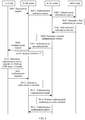
- FIG. 4 shows an authentication method according to an embodiment of this application, and the authentication method includes the following steps.
- a terminal sends a registration request (registration request) to a SEAF entity, so that the SEAF entity receives the registration request from the terminal.
- the registration request carries a subscription identifier of a user.
- the subscription identifier of the user may be, for example, an international mobile subscriber identity (international mobile subscriber identity, IMSI) or another identifier. This is not specifically limited in this embodiment of this application.
- IMSI international mobile subscriber identity
- the SEAF entity sends an authentication initiation request (authentication initiation request) to an AUSF entity, so that the AUSF entity receives the authentication initiation request from the SEAF entity.
- the authentication initiation request carries the subscription identifier of the user and an identifier of a service network in which the SEAF entity is located.
- the AUSF entity sends an authentication information request to a UDM entity, so that the UDM entity receives the authentication information request from the AUSF entity.
- the authentication information request carries the subscription identifier of the user and the identifier of the service network in which the SEAF entity is located.
- the UDM entity generates n first authentication vectors, where n is a positive integer.
- the UDM entity may select an authentication algorithm based on a configuration, to generate a corresponding quantity of first authentication vectors based on the authentication algorithm. For example, if the authentication algorithm selected by the UDM entity is a 5G-AKA algorithm, the UDM entity may generate n first authentication vectors based on a default quantity n of authentication vectors that is locally configured; or if the authentication algorithm selected by the UDM entity is an EAP-AKA' algorithm, the UDM entity may generate only one first authentication vector.
- n of authentication vectors that are locally configured by the UDM entity may be the same or may be different. This is not specifically limited in this embodiment of this application.
- the UDM entity may generate the corresponding quantity of first authentication vectors based on the authentication algorithm, unlike in the prior art in which a quantity of authentication vectors is carried in an authentication information request sent by the AUSF entity to the UDM entity. Therefore, inconsistency between the quantity of first authentication vectors requested by the AUSF entity and a quantity of first authentication vectors generated by the UDM entity in the prior art can be avoided. For example, if the AUSF entity requests a plurality of first authentication vectors, and an authentication algorithm selected by the UDM entity is an EAP-AKA' algorithm, the UDM entity generates only one first authentication vector at a time. As a result, a requirement of a quantity of first authentication vectors requested by the authentication entity cannot be satisfied.
- the UDM entity sends an authentication information answer (authentication information answer) to the AUSF entity, so that the AUSF entity receives the authentication information answer from the UDM entity.
- the authentication information answer carries the n first authentication vectors.
- the UDM entity may determine, according to a locally configured security policy, that authentication confirmation is required. For example, the UDM entity may determine, based on the carried identifier of the service network in which the SEAF entity is located in step S403 and a security policy, in the locally configured security policy, of the service network in which the SEAF entity is located, whether authentication confirmation is required. If it is determined that authentication confirmation is required, an authentication confirmation identifier may be carried in the authentication information answer. The authentication confirmation identifier is used to indicate that authentication confirmation is required.
- the SEAF entity may send an authentication confirmation request to the AUSF entity based on the authentication confirmation identifier, so that the AUSF entity further performs authentication confirmation on the terminal. If it is determined that no authentication confirmation is required, because the UDM entity may learn of a network security status, even if an authentication confirmation result cannot be obtained, a billing discrepancy between a visited network and a home network or a denial-of-service attack that may exist in the prior art can be avoided, thereby improving network security.
- the UDM entity may determine that authentication confirmation is required, and add the authentication confirmation identifier to the authentication information answer; or if the security policy, in the locally configured security policy, of the service network in which the SEAF entity is located is that the service network has a high trust level, the UDM entity may determine that no authentication confirmation is required, and does not need to add the authentication confirmation identifier to the authentication information answer.
- the AUSF entity generates n second authentication vectors based on the n first authentication vectors.
- step S406 For specific implementation of step S406, refer to an existing implementation. Details are not described herein.
- the AUSF entity sends an authentication initiation answer (authentication initiation answer) to the SEAF entity, so that the SEAF entity receives the authentication initiation answer from the AUSF entity.
- the authentication initiation answer carries one of the n second authentication vectors.
- the authentication initiation answer in step S407 further carries the authentication confirmation identifier.
- the SEAF entity may send the authentication confirmation request to the AUSF entity based on the authentication confirmation identifier, so that the AUSF entity further performs authentication confirmation on the terminal.
- the AUSF entity may determine, according to the locally configured security policy, whether authentication confirmation is required. For example, the AUSF entity may determine, based on the carried identifier of the service network in which the SEAF entity is located in step S402 and the security policy, in the locally configured security policy, of the service network in which the SEAF entity is located, whether authentication confirmation is required. If it is determined that authentication confirmation is required, the authentication confirmation identifier may be further carried in the authentication initiation answer in step S407. In this case, after successfully authenticating the terminal subsequently, the SEAF entity may send the authentication confirmation request to the AUSF entity based on the authentication confirmation identifier, so that the AUSF entity further performs authentication confirmation on the terminal.
- the AUSF entity may determine that authentication confirmation is required, and add the authentication confirmation identifier to the authentication initiation answer; or if the security policy, in the locally configured security policy, of the service network in which the SEAF entity is located is that the service network has a high trust level, the UDM entity may determine that no authentication confirmation is required, and does not need to add the authentication confirmation identifier to the authentication initiation answer.
- the SEAF entity may indicate that the service network has a high trust level, and the AUSF entity may send the authentication initiation answer to the SEAF entity.
- the authentication initiation answer carries the n second authentication vectors.
- This is not specifically limited in this embodiment of this application. In this way, not only prior-art problems of performance and memory resource waste that may be caused by remaining n-1 unused first authentication vectors can be resolved, thereby improving efficiency of using the first authentication vector, but also failure to authenticate the terminal that is caused by failure of a link between the SEAF entity and the AUSF entity can be reduced, thereby improving reliability of an authentication result.
- the AUSF entity may further store a correspondence between the RAND 1 and the XRES 1* for use in a subsequent step S414. This is not specifically limited in this embodiment of this application.
- the SEAF entity sends an authentication request (authentication request) to the terminal, so that the terminal receives the authentication request from the SEAF entity.
- the authentication request carries a RAND 1 and an AUTN 1.
- the SEAF entity stores, for use in a subsequent step S412, an HXRES 1* in the second authentication vector carried in the authentication initiation answer, where details are not described herein.
- Step S408 may be performed before S409; or step S409 may be performed before S408; or the steps S408 and S409 may be performed simultaneously. This is not specifically limited in this embodiment of this application.
- the terminal attempts to authenticate, based on the AUTN 1, the service network in which the SEAF entity is located, and calculates an RES* based on the RAND 1.
- step S410 For specific implementation of step S410, refer to an existing implementation. Details are not described herein.
- the terminal sends an authentication response (authentication response) to the SEAF entity, so that the SEAF entity receives the authentication response from the terminal, where the authentication response carries the RES*.
- the authentication response may further carry, for use in the subsequent step S414, the RAND 1 in the second authentication vector carried in the authentication initiation answer. Details are not described herein.
- the SEAF entity attempts to authenticate the terminal.
- the SEAF entity may calculate an HRES* based on the RES* and an algorithm defined in the 3GPP 33.501 specification, and complete authentication on the terminal by comparing the HRES* with the HXRES 1* stored in step S409. For example, if the HRES* and the HXRES 1* stored in step S409 are equal, it may be determined that the authentication performed on the terminal succeeds; or if the HRES* and the HXRES 1* stored in step S409 are unequal, it may be determined that the authentication performed on the terminal fails.
- the SEAF entity may perform the following step S413 based on the authentication confirmation identifier carried in the authentication initiation answer in step S407; or after successfully authenticating the terminal, the SEAF entity may directly perform the following step S413. This is not specifically limited in this embodiment of this application.
- the SEAF entity may send a registration reject message to the terminal. This is not specifically limited in this embodiment of this application.
- the SEAF entity sends an authentication confirmation request (authentication confirmation request) to the AUSF entity, so that the AUSF entity receives the authentication confirmation request from the SEAF entity.
- the authentication confirmation request carries the RES*.
- step S411 further carries the RAND 1
- the authentication confirmation request in step S413 further carries the RAND 1; or if the authentication response in step S411 does not carry the RAND 1, the authentication confirmation request in step S413 may further carry the RAND 1 in step S407. This is not specifically limited in this embodiment of this application.
- the AUSF entity performs authentication confirmation on the terminal.
- the AUSF entity may find the XRES 1* based on the RAND 1 and the prestored correspondence between the RAND 1 and the XRES 1*, and then complete authentication confirmation on the terminal by comparing the XRES 1* with the RES*. For example, if the XRES 1* and the RES* are equal, it may be determined that the authentication confirmation performed on the terminal succeeds; or if the XRES 1* and the RES* are unequal, it may be determined that the authentication confirmation performed on the terminal fails.
- the AUSF entity cannot determine an authentication vector from a plurality of first authentication vectors previously received by the AUSF from the UDM entity, and therefore cannot use an XRES* in the authentication vector to compare with the received RES*, and as a result, processing performance of the AUSF entity is affected. Therefore, quick authentication confirmation can be performed on the terminal.
- the AUSF entity sends an authentication confirmation answer (authentication confirmation answer) to the SEAF entity, so that the SEAF entity receives the authentication confirmation answer from the AUSF entity.
- the authentication confirmation answer carries the other n-1 unused second authentication vectors in the n second authentication vectors.
- the authentication confirmation answer may further carry the foregoing authentication confirmation identifier.
- the SEAF entity needs to attempt to authenticate the terminal again subsequently, the other n-1 unused second authentication vectors in the n second authentication vectors may be directly used.
- the other n-1 unused second authentication vectors in the n second authentication vectors may be directly used, to attempt to authenticate the terminal by performing the steps S408 to S412, or attempt to authenticate the terminal by performing the steps S408 to S415, and then authentication confirmation is performed on the terminal. Details are not described in this embodiment of this application.
- the authentication confirmation answer may further carry some of the other n-1 unused second authentication vectors in the n second authentication vectors.
- some of the second authentication vectors carried in the authentication confirmation answer may be directly used in the foregoing manner. This is not specifically limited in this embodiment of this application.
- the authentication confirmation answer may carry an authentication confirmation success indication, and the authentication confirmation success indication is used to indicate that the authentication confirmation succeeds, so that the SEAF entity can learn of an authentication confirmation result in a timely manner.
- the authentication confirmation success indication may be, for example, a success code in an authentication confirmation response. This is not specifically limited in this embodiment of this application.
- the authentication confirmation answer may carry an authentication confirmation failure indication, and the authentication confirmation failure indication is used to indicate that the authentication confirmation fails, so that the SEAF entity can learn of an authentication confirmation result in a timely manner.
- the authentication confirmation failure indication may be, for example, a failure code in an authentication confirmation response. This is not specifically limited in this embodiment of this application.
- the authentication confirmation failure indication may be carried in a dedicated message instead of being carried in the authentication confirmation answer. This is not specifically limited in this embodiment of this application.
- the actions of the AUSF entity and the UDM entity in the foregoing steps S401 to S415 may be performed by the processor 301 in the communications device 300 shown in FIG. 3 by invoking the application program code stored in the storage 303. This is not limited in this embodiment of this application.
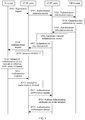
- FIG. 5 shows another authentication method according to an embodiment of this application, and the authentication method includes the following steps.
- the UDM entity generates n first authentication vectors according to a locally configured security policy, where n is a positive integer.
- the UDM entity may generate the n first authentication vectors based on the carried identifier of the service network in which the SEAF entity is located in step S403 and a security policy, in the locally configured security policy, of the service network in which the SEAF entity is located.
- the UDM entity may generate n first authentication vectors based on a default quantity n of authentication vectors that is locally configured; or if the security policy, in the locally configured security policy, of the service network in which the SEAF entity is located is that the service network has a low trust level, the UDM entity may generate one first authentication vector.
- the UDM entity may also determine a quantity of to-be-generated first authentication vectors based on a selected authentication algorithm. For example, if the selected authentication algorithm is a 5G-AKA algorithm, the UDM entity generates the n first authentication vectors based on the carried identifier of the service network in which the SEAF entity is located in step S503 and the locally configured security policy, where n is a positive integer; or if the selected authentication algorithm is an EAP-AKA' algorithm, the UDM entity may generate only one first authentication vector. This is not specifically limited in this embodiment of this application.
- S505 and S506 are the same as the steps S405 and S406.
- steps S405 and S406 For details, refer to the embodiment shown in FIG. 4 . Details are not described herein again.
- step S507 is similar to step S407.
- a difference lies only in that, in the embodiment shown in FIG. 4 , the authentication initiation answer carries one of the n second authentication vectors, but in this embodiment of this application, because the n first authentication vectors are generated by the UDM entity according to the locally configured security policy, the authentication initiation answer may carry the n second authentication vectors.
- the authentication initiation answer may carry the n second authentication vectors.
- a second authentication vector to be subsequently used includes a RAND 1, an AUTN 1, an HXRES 1*, and a Kasme 1*
- the authentication method provided in this embodiment of this application further includes the following steps.
- S508 to S512 are the same as the steps S408 to S412. For details, refer to the embodiment shown in FIG. 4 . Details are not described herein again.
- this embodiment of this application may further include the following steps.
- S513 and S514 are the same as steps S413 and S414.
- steps S413 and S414. For details, refer to the embodiment shown in FIG. 4 . Details are not described herein again.
- step S515 is similar to step S415.
- a difference lies only in that, in the embodiment shown in FIG. 4 , when the authentication confirmation succeeds, the authentication confirmation answer carries the other n-1 unused second authentication vectors in the n second authentication vectors, but in this embodiment of this application, because the n second authentication vectors have been sent to the SEAF entity in step S407, the other n-1 unused second authentication vectors in the n second authentication vectors do not need to be carried in the authentication confirmation answer.
- FIG. 4 Details are not described herein again.
- the actions of the AUSF entity and the UDM entity in the foregoing steps S501 to S515 may be performed by the processor 301 in the communications device 300 shown in FIG. 3 by invoking the application program code stored in the storage 303. This is not limited in this embodiment of this application.
- the authentication system shown in FIG. 1 is applied to the 5G network shown in FIG. 2 .
- An embodiment of this application further provides an authentication method.
- a UDM entity determines, according to a locally configured security policy, that authentication confirmation is required, and further sends an authentication information answer to the AUSF entity.
- the authentication information answer carries an authentication confirmation identifier, and the authentication confirmation identifier is used to indicate that authentication confirmation is required.
- the AUSF entity After receiving the authentication information answer from the UDM entity, the AUSF entity sends an authentication initiation answer to a SEAF entity.
- the authentication initiation answer carries the authentication confirmation identifier.
- the SEAF entity may send an authentication confirmation request to the AUSF entity, so that the AUSF entity performs authentication confirmation on the terminal according to the authentication confirmation request after receiving the authentication confirmation request from the SEAF entity.
- n first authentication vectors may be generated and n second authentication vectors may be sent in the manner in the embodiment shown in FIG. 4 ; or n first authentication vectors may be generated and n second authentication vectors may be sent in the manner in the embodiment shown in FIG. 5 .
- the foregoing mainly describes the solutions provided in the embodiments of this application from a perspective of interaction between network elements. It may be understood that the foregoing authentication entity includes a corresponding hardware structure and/or software module for performing each function to implement the functions.
- a person of ordinary skill in the art should be easily aware that, units and algorithm steps in the examples described with reference to the embodiments disclosed in this specification may be implemented by hardware or a combination of hardware and computer software in this application. Whether a function is performed by hardware or hardware driven by computer software depends on particular applications and design constraints of the technical solutions. A person skilled in the art may use different methods to implement the described functions for each particular application, but it should not be considered that the implementation goes beyond the scope of this application.
- the authentication entity may be divided into function modules based on the foregoing method examples.
- various function modules may be obtained through division based on corresponding functions, or two or more functions may be integrated into one processing module.
- the integrated module may be implemented in a form of hardware, or may be implemented in a form of a software functional module. It should be noted that division of modules in the embodiments of this application is an example, and is merely logical function division. In actual implementation, another division manner may be used.
- FIG. 6 is a schematic structural diagram of an authentication entity 60.
- the authentication entity 60 includes a transceiver module 601 and a processing module 602.
- the transceiver module 601 is configured to receive n first authentication vectors from a unified data management entity, where n is a positive integer.
- the processing module 602 is configured to generate n second authentication vectors based on the n first authentication vectors.
- the transceiver module 601 is further configured to send one of the n second authentication vectors to a security anchor function entity.
- the transceiver module 601 is further configured to: receive an authentication confirmation request from the security anchor function entity, and perform authentication confirmation on a terminal according to the authentication confirmation request.
- the transceiver module 601 is further configured to send the other n-1 unused second authentication vectors in the n second authentication vectors to the security anchor function entity when the authentication confirmation succeeds.
- the transceiver module 601 is further configured to send an authentication confirmation identifier to the security anchor function entity, where the authentication confirmation identifier is used to indicate that authentication confirmation is required.
- processing module 602 is further configured to determine that authentication confirmation is required.
- processing module 602 is configured to determine that authentication confirmation is required includes: the processing module 602 is configured to receive the authentication confirmation identifier from the unified data management entity, where the authentication confirmation identifier is used to indicate that authentication confirmation is required.
- processing module 602 is configured to determine that authentication confirmation is required includes: the processing module 602 is configured to determine, according to a locally configured security policy, that authentication confirmation is required.
- the authentication confirmation request carries an RES* and a corresponding RAND. That the processing module 602 is configured to perform authentication confirmation on the terminal according to the authentication confirmation request includes: the processing module 602 is configured to: search for a corresponding XRES* based on the RAND, and perform authentication confirmation on the terminal by comparing the RES* with the XRES*.
- the transceiver module 601 is further configured to send an authentication confirmation failure indication to the security anchor function entity when the authentication confirmation fails, where the authentication confirmation failure indication is used to indicate that the authentication confirmation fails.
- the transceiver module 601 is further configured to send an authentication confirmation success indication to the security anchor function entity when the authentication confirmation succeeds, where the authentication confirmation success indication is used to indicate that the authentication confirmation succeeds.
- the transceiver module 601 is further configured to send the authentication confirmation identifier to the security anchor function entity when the authentication confirmation succeeds, where the authentication confirmation identifier is used to indicate that authentication confirmation is required.
- the authentication entity 60 is presented in a form of function modules obtained through integration.
- the "module” herein may be an application-specific integrated circuit (application-specific integrated circuit, ASIC), a circuit, a processor and a storage that execute one or more software or firmware programs, an integrated logic circuit, and/or another device that can provide the foregoing functions.
- ASIC application-specific integrated circuit
- FIG. 3 may be used for the authentication entity 60.
- the processor 301 in FIG. 3 may invoke the computer executable instruction stored in the storage 303, so that the authentication entity 60 performs the authentication method in the foregoing method embodiment.
- the functions/implementation processes of the transceiver module 601 and the processing module 602 in FIG. 6 may be implemented by the processor 301 in FIG. 3 by invoking the computer executable instruction stored in the storage 303.
- the function/implementation process of the processing module 602 in FIG. 6 may be implemented by the processor 301 in FIG. 3 by invoking the computer executable instruction stored in the storage 303
- the function/implementation process of the transceiver module 601 in FIG. 6 may be implemented by the communications interface 304 in FIG. 3 .
- the authentication entity provided in this embodiment of this application may be configured to perform the foregoing authentication method, for a technical effect that can be obtained by the authentication entity, refer to the foregoing method embodiment. Details are not described herein again.
- the authentication entity 60 is presented in a form of function modules obtained through integration.
- the function modules of the authentication entity may be obtained through division based on corresponding functions in the embodiments of this application. This is not specifically limited in this embodiment of this application.
- an embodiment of this application provides a chip system, and the chip system includes a processor, configured to support an authentication entity in implementing the foregoing authentication method, for example, generating n second authentication vectors based on n first authentication vectors.
- the chip system further includes a storage.
- the storage is configured to store a program instruction and data required by the authentication entity.
- the chip system may include a chip, or may include a chip and another discrete device. This is not specifically limited in this embodiment of this application.
- All or some of the foregoing embodiments may be implemented by using software, hardware, firmware, or any combination thereof.
- a software program is used to implement the embodiments, all or some of the embodiments may be implemented in a form of a computer program product.
- the computer program product includes one or more computer instructions. When the computer program instructions are loaded and executed on a computer, all or some of the procedures or functions in the embodiments of this application are generated.
- the computer may be a general-purpose computer, a dedicated computer, a computer network, or another programmable apparatus.
- the computer instructions may be stored in a computer-readable storage medium or may be transmitted from a computer-readable storage medium to another computer-readable storage medium.
- the computer instructions may be transmitted from one website, computer, server, or data center to another website, computer, server, or data center in a wired (for example, a coaxial cable, an optical fiber, or a digital subscriber line (digital subscriber line, DSL)) or wireless (for example, infrared, radio, or microwave) manner.
- the computer-readable storage medium may be any usable medium accessible by a computer, or a data storage device, such as a server or a data center, integrating one or more usable media.
- the usable medium may be a magnetic medium (for example, a floppy disk, a hard disk, or a magnetic tape), an optical medium (for example, a DVD), a semiconductor medium (for example, a solid state disk (solid state disk, SSD)), or the like.
- a magnetic medium for example, a floppy disk, a hard disk, or a magnetic tape
- an optical medium for example, a DVD
- a semiconductor medium for example, a solid state disk (solid state disk, SSD)
Landscapes
- Engineering & Computer Science (AREA)
- Computer Security & Cryptography (AREA)
- Computer Networks & Wireless Communication (AREA)
- Signal Processing (AREA)
- Mobile Radio Communication Systems (AREA)
Applications Claiming Priority (2)
| Application Number | Priority Date | Filing Date | Title |
|---|---|---|---|
| CN201711148923.1A CN109803261B (zh) | 2017-11-17 | 2017-11-17 | 鉴权方法、设备及系统 |
| PCT/CN2018/114461 WO2019096051A1 (zh) | 2017-11-17 | 2018-11-08 | 鉴权方法、设备及系统 |
Publications (2)
| Publication Number | Publication Date |
|---|---|
| EP3668004A1 true EP3668004A1 (de) | 2020-06-17 |
| EP3668004A4 EP3668004A4 (de) | 2020-11-25 |
Family
ID=66539341
Family Applications (1)
| Application Number | Title | Priority Date | Filing Date |
|---|---|---|---|
| EP18878331.0A Pending EP3668004A4 (de) | 2017-11-17 | 2018-11-08 | Authentifizierungsverfahren, -vorrichtung und -system |
Country Status (4)
| Country | Link |
|---|---|
| US (1) | US11595817B2 (de) |
| EP (1) | EP3668004A4 (de) |
| CN (1) | CN109803261B (de) |
| WO (1) | WO2019096051A1 (de) |
Cited By (1)
| Publication number | Priority date | Publication date | Assignee | Title |
|---|---|---|---|---|
| EP4485988A4 (de) * | 2022-05-06 | 2025-04-16 | Huawei Technologies Co., Ltd. | Authentifizierungsverfahren, kommunikationsvorrichtung und computerlesbares speichermedium |
Families Citing this family (4)
| Publication number | Priority date | Publication date | Assignee | Title |
|---|---|---|---|---|
| US12177666B2 (en) * | 2019-12-11 | 2024-12-24 | Telefonaktiebolaget Lm Ericsson (Publ) | Enhancement of authentication |
| KR102719207B1 (ko) * | 2020-03-31 | 2024-10-17 | 지티이 코포레이션 | 애플리케이션 통신 수립을 위한 파라미터 |
| US20240187856A1 (en) * | 2021-03-15 | 2024-06-06 | Lenovo (Singapore) Pte. Ltd. | Registration authentication based on a capability |
| WO2023000248A1 (en) * | 2021-07-22 | 2023-01-26 | Huawei Technologies Co., Ltd. | Authentication methods using zero-knowledge proof algorithms for user equipments and nodes implementing the authentication methods |
Family Cites Families (13)
| Publication number | Priority date | Publication date | Assignee | Title |
|---|---|---|---|---|
| GB0004178D0 (en) * | 2000-02-22 | 2000-04-12 | Nokia Networks Oy | Integrity check in a communication system |
| CN100563156C (zh) * | 2005-02-05 | 2009-11-25 | 华为技术有限公司 | 实现用户信息同步及对用户终端鉴权的方法 |
| CN100428848C (zh) * | 2005-05-31 | 2008-10-22 | 华为技术有限公司 | 一种对终端用户标识模块进行ip多媒体域鉴权的方法 |
| WO2008036961A2 (en) * | 2006-09-22 | 2008-03-27 | Kineto Wireless, Inc. | Method and apparatus for resource management |
| CN101772020B (zh) * | 2009-01-05 | 2011-12-28 | 华为技术有限公司 | 鉴权处理方法和系统、3gpp认证授权计费服务器及用户设备 |
| CN101998395B (zh) * | 2009-08-27 | 2013-12-04 | 华为技术有限公司 | 鉴权矢量获取方法、归属服务器和网络系统 |
| WO2011063612A1 (zh) * | 2009-11-26 | 2011-06-03 | 中国移动通信集团公司 | 认证系统、方法及设备 |
| CN102215474B (zh) * | 2010-04-12 | 2014-11-05 | 华为技术有限公司 | 对通信设备进行认证的方法和装置 |
| WO2016086355A1 (zh) * | 2014-12-02 | 2016-06-09 | 华为技术有限公司 | 一种无线通信网络中的鉴权方法、相关装置及系统 |
| KR102304147B1 (ko) * | 2015-06-05 | 2021-09-23 | 콘비다 와이어리스, 엘엘씨 | 통합된 스몰 셀 및 wi-fi 네트워크를 위한 통합 인증 |
| EP3384698B1 (de) * | 2015-12-03 | 2022-09-14 | Telefonaktiebolaget LM Ericsson (publ) | Sicherheit einer multi-rat-zugangsschicht |
| WO2018008983A1 (en) * | 2016-07-05 | 2018-01-11 | Samsung Electronics Co., Ltd. | Method and system for authenticating access in mobile wireless network system |
| CN106921965B (zh) * | 2017-01-19 | 2020-07-21 | 厦门盛华电子科技有限公司 | 一种wlan网络中实现eap认证的方法 |
-
2017
- 2017-11-17 CN CN201711148923.1A patent/CN109803261B/zh active Active
-
2018
- 2018-11-08 WO PCT/CN2018/114461 patent/WO2019096051A1/zh not_active Ceased
- 2018-11-08 EP EP18878331.0A patent/EP3668004A4/de active Pending
-
2020
- 2020-03-30 US US16/834,185 patent/US11595817B2/en active Active
Cited By (1)
| Publication number | Priority date | Publication date | Assignee | Title |
|---|---|---|---|---|
| EP4485988A4 (de) * | 2022-05-06 | 2025-04-16 | Huawei Technologies Co., Ltd. | Authentifizierungsverfahren, kommunikationsvorrichtung und computerlesbares speichermedium |
Also Published As
| Publication number | Publication date |
|---|---|
| CN109803261B (zh) | 2021-06-22 |
| US20200228982A1 (en) | 2020-07-16 |
| CN109803261A (zh) | 2019-05-24 |
| EP3668004A4 (de) | 2020-11-25 |
| US11595817B2 (en) | 2023-02-28 |
| WO2019096051A1 (zh) | 2019-05-23 |
Similar Documents
| Publication | Publication Date | Title |
|---|---|---|
| US11451950B2 (en) | Indirect registration method and apparatus | |
| US12219356B2 (en) | Systems and methods of supporting device triggered re-authentication of slice-specific secondary authentication and authorization | |
| US11323440B2 (en) | Secure access method, device, and system | |
| US11595817B2 (en) | Authentication method, device, and system | |
| EP3592012B1 (de) | Abonnement-aktualisierungsverfahren, vorrichtung und system | |
| US20220408503A1 (en) | Data Transmission Method, Device, and Data Transmission System | |
| EP3720235A1 (de) | Sitzungsherstellungsverfahren, -vorrichtung und -system | |
| EP3893536B1 (de) | Verfahren, vorrichtung und system zur erhöhung der netzwerkübergreifenden zugriffssicherheit | |
| US20200374829A1 (en) | Method for determining location information and apparatus | |
| US11284456B2 (en) | Method and apparatus for obtaining identifier of terminal device | |
| CN108738015B (zh) | 网络安全保护方法、设备及系统 | |
| US11726848B2 (en) | API topology hiding method, device, and system | |
| US11991781B2 (en) | Subscriber data management method and apparatus | |
| US11395164B2 (en) | Method, apparatus and computer-readable medium for terminal monitoring information synchronization | |
| US20250184884A1 (en) | Communication method and communication apparatus | |
| US12267883B2 (en) | Session management method and system, and device | |
| US20250338119A1 (en) | Authentication method and communication apparatus |
Legal Events
| Date | Code | Title | Description |
|---|---|---|---|
| STAA | Information on the status of an ep patent application or granted ep patent |
Free format text: STATUS: THE INTERNATIONAL PUBLICATION HAS BEEN MADE |
|
| PUAI | Public reference made under article 153(3) epc to a published international application that has entered the european phase |
Free format text: ORIGINAL CODE: 0009012 |
|
| STAA | Information on the status of an ep patent application or granted ep patent |
Free format text: STATUS: REQUEST FOR EXAMINATION WAS MADE |
|
| 17P | Request for examination filed |
Effective date: 20200311 |
|
| AK | Designated contracting states |
Kind code of ref document: A1 Designated state(s): AL AT BE BG CH CY CZ DE DK EE ES FI FR GB GR HR HU IE IS IT LI LT LU LV MC MK MT NL NO PL PT RO RS SE SI SK SM TR |
|
| AX | Request for extension of the european patent |
Extension state: BA ME |
|
| A4 | Supplementary search report drawn up and despatched |
Effective date: 20201026 |
|
| RIC1 | Information provided on ipc code assigned before grant |
Ipc: H04W 12/00 20090101ALI20201020BHEP Ipc: H04W 12/06 20090101ALI20201020BHEP Ipc: H04L 9/32 20060101AFI20201020BHEP |
|
| DAV | Request for validation of the european patent (deleted) | ||
| DAX | Request for extension of the european patent (deleted) | ||
| STAA | Information on the status of an ep patent application or granted ep patent |
Free format text: STATUS: EXAMINATION IS IN PROGRESS |
|
| 17Q | First examination report despatched |
Effective date: 20220203 |