EP3668015A2 - Appareil de traitement de réseau neuronal multiprocesseur - Google Patents
Appareil de traitement de réseau neuronal multiprocesseur Download PDFInfo
- Publication number
- EP3668015A2 EP3668015A2 EP19195709.1A EP19195709A EP3668015A2 EP 3668015 A2 EP3668015 A2 EP 3668015A2 EP 19195709 A EP19195709 A EP 19195709A EP 3668015 A2 EP3668015 A2 EP 3668015A2
- Authority
- EP
- European Patent Office
- Prior art keywords
- network processing
- information
- output
- network
- image information
- Prior art date
- Legal status (The legal status is an assumption and is not a legal conclusion. Google has not performed a legal analysis and makes no representation as to the accuracy of the status listed.)
- Granted
Links
Images



Classifications
-
- H—ELECTRICITY
- H04—ELECTRIC COMMUNICATION TECHNIQUE
- H04L—TRANSMISSION OF DIGITAL INFORMATION, e.g. TELEGRAPHIC COMMUNICATION
- H04L43/00—Arrangements for monitoring or testing data switching networks
- H04L43/50—Testing arrangements
-
- G—PHYSICS
- G06—COMPUTING OR CALCULATING; COUNTING
- G06T—IMAGE DATA PROCESSING OR GENERATION, IN GENERAL
- G06T1/00—General purpose image data processing
- G06T1/20—Processor architectures; Processor configuration, e.g. pipelining
-
- G—PHYSICS
- G06—COMPUTING OR CALCULATING; COUNTING
- G06F—ELECTRIC DIGITAL DATA PROCESSING
- G06F11/00—Error detection; Error correction; Monitoring
- G06F11/22—Detection or location of defective computer hardware by testing during standby operation or during idle time, e.g. start-up testing
- G06F11/2205—Detection or location of defective computer hardware by testing during standby operation or during idle time, e.g. start-up testing using arrangements specific to the hardware being tested
- G06F11/2236—Detection or location of defective computer hardware by testing during standby operation or during idle time, e.g. start-up testing using arrangements specific to the hardware being tested to test CPU or processors
-
- G—PHYSICS
- G06—COMPUTING OR CALCULATING; COUNTING
- G06F—ELECTRIC DIGITAL DATA PROCESSING
- G06F11/00—Error detection; Error correction; Monitoring
- G06F11/22—Detection or location of defective computer hardware by testing during standby operation or during idle time, e.g. start-up testing
- G06F11/26—Functional testing
- G06F11/27—Built-in tests
-
- G—PHYSICS
- G06—COMPUTING OR CALCULATING; COUNTING
- G06F—ELECTRIC DIGITAL DATA PROCESSING
- G06F16/00—Information retrieval; Database structures therefor; File system structures therefor
- G06F16/50—Information retrieval; Database structures therefor; File system structures therefor of still image data
- G06F16/55—Clustering; Classification
-
- G—PHYSICS
- G06—COMPUTING OR CALCULATING; COUNTING
- G06F—ELECTRIC DIGITAL DATA PROCESSING
- G06F18/00—Pattern recognition
- G06F18/20—Analysing
- G06F18/285—Selection of pattern recognition techniques, e.g. of classifiers in a multi-classifier system
-
- G—PHYSICS
- G06—COMPUTING OR CALCULATING; COUNTING
- G06F—ELECTRIC DIGITAL DATA PROCESSING
- G06F9/00—Arrangements for program control, e.g. control units
- G06F9/06—Arrangements for program control, e.g. control units using stored programs, i.e. using an internal store of processing equipment to receive or retain programs
- G06F9/46—Multiprogramming arrangements
- G06F9/50—Allocation of resources, e.g. of the central processing unit [CPU]
- G06F9/5005—Allocation of resources, e.g. of the central processing unit [CPU] to service a request
- G06F9/5027—Allocation of resources, e.g. of the central processing unit [CPU] to service a request the resource being a machine, e.g. CPUs, Servers, Terminals
-
- G—PHYSICS
- G06—COMPUTING OR CALCULATING; COUNTING
- G06N—COMPUTING ARRANGEMENTS BASED ON SPECIFIC COMPUTATIONAL MODELS
- G06N3/00—Computing arrangements based on biological models
- G06N3/02—Neural networks
- G06N3/04—Architecture, e.g. interconnection topology
- G06N3/045—Combinations of networks
-
- G—PHYSICS
- G06—COMPUTING OR CALCULATING; COUNTING
- G06N—COMPUTING ARRANGEMENTS BASED ON SPECIFIC COMPUTATIONAL MODELS
- G06N3/00—Computing arrangements based on biological models
- G06N3/02—Neural networks
- G06N3/04—Architecture, e.g. interconnection topology
- G06N3/0464—Convolutional networks [CNN, ConvNet]
-
- G—PHYSICS
- G06—COMPUTING OR CALCULATING; COUNTING
- G06N—COMPUTING ARRANGEMENTS BASED ON SPECIFIC COMPUTATIONAL MODELS
- G06N3/00—Computing arrangements based on biological models
- G06N3/02—Neural networks
- G06N3/06—Physical realisation, i.e. hardware implementation of neural networks, neurons or parts of neurons
- G06N3/063—Physical realisation, i.e. hardware implementation of neural networks, neurons or parts of neurons using electronic means
-
- G—PHYSICS
- G06—COMPUTING OR CALCULATING; COUNTING
- G06N—COMPUTING ARRANGEMENTS BASED ON SPECIFIC COMPUTATIONAL MODELS
- G06N3/00—Computing arrangements based on biological models
- G06N3/02—Neural networks
- G06N3/08—Learning methods
-
- G—PHYSICS
- G06—COMPUTING OR CALCULATING; COUNTING
- G06V—IMAGE OR VIDEO RECOGNITION OR UNDERSTANDING
- G06V10/00—Arrangements for image or video recognition or understanding
- G06V10/70—Arrangements for image or video recognition or understanding using pattern recognition or machine learning
- G06V10/764—Arrangements for image or video recognition or understanding using pattern recognition or machine learning using classification, e.g. of video objects
-
- G—PHYSICS
- G06—COMPUTING OR CALCULATING; COUNTING
- G06V—IMAGE OR VIDEO RECOGNITION OR UNDERSTANDING
- G06V10/00—Arrangements for image or video recognition or understanding
- G06V10/70—Arrangements for image or video recognition or understanding using pattern recognition or machine learning
- G06V10/82—Arrangements for image or video recognition or understanding using pattern recognition or machine learning using neural networks
-
- G—PHYSICS
- G06—COMPUTING OR CALCULATING; COUNTING
- G06V—IMAGE OR VIDEO RECOGNITION OR UNDERSTANDING
- G06V10/00—Arrangements for image or video recognition or understanding
- G06V10/70—Arrangements for image or video recognition or understanding using pattern recognition or machine learning
- G06V10/87—Arrangements for image or video recognition or understanding using pattern recognition or machine learning using selection of the recognition techniques, e.g. of a classifier in a multiple classifier system
-
- G—PHYSICS
- G06—COMPUTING OR CALCULATING; COUNTING
- G06V—IMAGE OR VIDEO RECOGNITION OR UNDERSTANDING
- G06V20/00—Scenes; Scene-specific elements
- G06V20/50—Context or environment of the image
- G06V20/56—Context or environment of the image exterior to a vehicle by using sensors mounted on the vehicle
-
- G—PHYSICS
- G06—COMPUTING OR CALCULATING; COUNTING
- G06V—IMAGE OR VIDEO RECOGNITION OR UNDERSTANDING
- G06V20/00—Scenes; Scene-specific elements
- G06V20/50—Context or environment of the image
- G06V20/59—Context or environment of the image inside of a vehicle, e.g. relating to seat occupancy, driver state or inner lighting conditions
- G06V20/597—Recognising the driver's state or behaviour, e.g. attention or drowsiness
-
- G—PHYSICS
- G06—COMPUTING OR CALCULATING; COUNTING
- G06F—ELECTRIC DIGITAL DATA PROCESSING
- G06F11/00—Error detection; Error correction; Monitoring
- G06F11/07—Responding to the occurrence of a fault, e.g. fault tolerance
- G06F11/16—Error detection or correction of the data by redundancy in hardware
- G06F11/1629—Error detection by comparing the output of redundant processing systems
-
- G—PHYSICS
- G06—COMPUTING OR CALCULATING; COUNTING
- G06F—ELECTRIC DIGITAL DATA PROCESSING
- G06F2201/00—Indexing scheme relating to error detection, to error correction, and to monitoring
- G06F2201/845—Systems in which the redundancy can be transformed in increased performance
Definitions
- the present invention relates to a self-test system for a multi-processor neural network processing apparatus.
- FIG 1 illustrates schematically a typical system architecture for a driver monitoring system (DMS) used in vehicles.
- DMS driver monitoring system
- Such systems 10 can contain a host CPU 50, possibly a double/quad core processor and system memory 99, for example, single or multiple channel LPDDR4 memory module, such as disclosed in " Design and Implementation of a Self-Test Concept for an Industrial Multi-Core Microcontroller", Burim Aliu, Masters Thesis, Institut fur Technische Informatik, Technische Universitat Graz, May 2012 .
- Such systems can further include co-processing modules 18, 30 for accelerating processing and these can comprise: general purpose hardware accelerators 30, such as programable neural network engines or various digital signal processing (DSP) cores, for example, as disclosed in PCT Application WO2019/042703 (Ref: FN-618-PCT) and " A 16 nm FinFET Heterogeneous Nona-Core SoC Supporting ISO26262 ASIL B Standard", Shibahara et al, IEEE Journal Of Solid-State Circuits, Vol. 52, No. 1, January 2017 respectively; or hardware engines 18 dedicated for specific function acceleration, for example, face detection such as disclosed in PCT Application WO 2017/108222 (Ref: FN-470-PCT), or image distortion correction such as disclosed in US Patent No. 9,280,810 (Ref: FN-384-CIP).
- general purpose hardware accelerators 30, such as programable neural network engines or various digital signal processing (DSP) cores, for example, as disclosed in PCT Application WO2019/042703 (Ref: FN-618
- Both the core processor 50 as well as the general purpose 30 and dedicated specific processors 18 receive information either directly or from memory 99 via the system bus 91 from various sensors disposed around a vehicle in order to control or provide information about the vehicle for example through a driver display (not shown).
- Automotive systems are generally required to comply with safety standards such as Automotive Safety Integrity Level (ASIL) A, B, C or D defined in ISO 26262 before being incorporated in a vehicle.
- ASIL-A is the lowest and ASIL-D is the highest safety level used in the automotive industry.
- the first rarely used mechanism for ensuring processing accelerators provide ASIL-D safety is redundancy.
- multiple processing accelerators would each execute the same function and in the end the results from each processing accelerator would be compared and any difference signalled to a host.
- BIST software Built-In Self-Test
- a host CPU can schedule a task at power-up of a processing accelerator or at fixed time periods.
- This task comprises some software testing of the processing accelerator hardware to be sure that there is no fault in the processing accelerator.
- the test software should be developed in such a way to offer as much verification coverage as possible.
- Software BIST can be relatively easy to implement and it can be tuned or re-written at any time. However, it generally provides relatively low coverage (generally used only in ASIL - A) and can affect normal functionality in terms of performance.
- hardware BIST involves circuitry enabling a processing accelerator to test itself and to determine whether results are good or bad. This can provide high coverage, but of course involves additional silicon area, with a theoretical limit approaching redundancy as described above.
- Embodiments of the present invention are based on one neural network processing engine within a multi-processor neural network processing apparatus which is otherwise free taking a configuration (program) for another processing engine and for a limited period of time, running the same configuration. The results from each engine are compared and if they are not equal, a fault in one or other engine can be readily identified.
- an engine After running in a redundant mode, an engine can return to its own designated task.
- FIG. 2 there is shown a neural network processing apparatus of the type disclosed in the above referenced PCT Application WO2019/042703 (Ref: FN-618-PCT).
- the apparatus includes a host CPU 50 comprising a bank of processors which can each independently control a number of programmable convolutional neural network (PCNN) clusters 92 through a common internal Advanced High-performance Bus (AHB), with an interrupt request (IRQ) interface used for signalling from the PCNN cluster 92 back to the host CPU 50, typically to indicate completion of processing, so that the host CPU 50 can coordinate the configuration and operation of the PCNN clusters 92.
- a host CPU 50 comprising a bank of processors which can each independently control a number of programmable convolutional neural network (PCNN) clusters 92 through a common internal Advanced High-performance Bus (AHB), with an interrupt request (IRQ) interface used for signalling from the PCNN cluster 92 back to the host CPU 50, typically to indicate completion of processing, so that the host CPU 50 can coordinate the configuration and operation of the PCNN clusters 92.
- PCNN programmable convolutional neural network
- HAB Advanced High-performance Bus
- Each PCNN cluster 92 includes its own CPU 200 which communicates with the host CPU 50 and in this case 4 independently programmable CNNs 30-A...30-D of the type disclosed in PCT Application WO 2017/129325 (Ref: FN-481-PCT).
- the individual CNNs 30 do not have to be the same and for example, one or more individual CNNs might have different characteristics than the others. So for example, one CNN may allow a higher number of channels to be combined in a convolution than others and this information would be employed when configuring the PCNN accordingly.
- each individual CNN 30-A...30-D, as well as accessing either system memory 99 or 102 across system bus 91 can use a shared memory 40' through which information can be shared with other clusters 92.
- the host CPU 50 in conjunction with the cluster CPU 200 and a memory controller 210 arrange for the transfer of initial image information as well as network configuration information from either the memory 99 or 102 into the shared memory 40'.
- each host CPU 50 can incorporate some cache memory 52.
- An external interface block 95A with one or more serial peripheral interfaces (SPIs) enables the host processors 50 to connect to other processors within a vehicle network (not shown) and indeed a wider network environment. Communications between such host processors 50 and external processors can be provided either through the SPIs or through a general purpose input/output (GPIO) interface, possibly a parallel interface, also provided within the block 95A.
- SPIs serial peripheral interfaces
- GPIO general purpose input/output
- the external interface block 95A also provides a direct connection to various image sensors including: a conventional camera (VIS sensor), a NIR sensitive camera, and a thermal imaging camera for acquiring images from the vehicle environment.
- VIS sensor VIS sensor
- NIR sensitive camera a NIR sensitive camera
- thermal imaging camera for acquiring images from the vehicle environment.
- a dedicated image signal processor (ISP) core 95B includes a pair of pipelines ISP0, ISP1.
- a local tone mapping (LTM) component within the core 95B can perform basic pre-processing on received images including for example: re-sampling the images; generating HDR (high dynamic range) images from combinations of successive images acquired from the image acquisition devices; generating histogram information for acquired images - see PCT Application No.
- PCT/EP2017/062188 (Ref: FN-398-PCT2) for information on producing histogram of gradients; and/or producing any other image feature maps which might be used by PCNN clusters 92 during image processing, for example, Integral Image maps - see PCT Application WO2017/032468 (Ref: FN-469-PCT) for details of such maps.
- the processed images/feature maps can then be written to shared memory 40' where they are either immediately or eventually available for subsequent processing by the PCNN clusters 92 as well as or alternatively, providing received pre-processed image information to a further distortion correction core 95C for further processing or writing the pre-processed image information to memory 99 or 102 possibly for access by external processors.
- the distortion correction core 95C includes functionality such as described in US Patent No. 9,280,810 (Ref: FN-384-CIP) for flattening distorted images for example those acquired by wide field of view (WFOV) cameras, such as in-cabin cameras.
- the core 95C can operate either by reading image information temporarily stored within the core 95B tile-by-tile as described in US Patent No. 9,280,810 (Ref: FN-384-CIP) or alternatively, distortion correction can be performed while scanning raster image information provided by the core 95B.
- the core 95C includes an LTM component so that the processing described in relation to the core 95B can also be performed if required on distortion corrected images.
- each of the cores 95B and 95C has access to non-volatile storage 102 and memory 99 via a respective arbiter 220 and controller 93-A, 97 and volatile memory 40' through respective SRAM controllers 210.
- Embodiments of the present invention can be implemented on systems such as shown in Figure 2 .
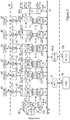
- each PCNN cluster 92 or CNN 30 can swap between operating in independent mode, Figure 3 , and redundant mode, Figure 4 .
- Embodiments are based on a cluster 92 or an individual CNN 30 being provided with both input images or map(s), as well as the network configuration required to be executed by the CNN i.e. the definitions for each layer of a network and the weights to be employed within the various layers of the network, each time it is to process one or more input images/maps.
- a first PCNN_0 92'/30' might be required to process one or more input maps_0 through a network defined by program_0 and using weights_0 to produce one or more output maps_0.
- the output maps_0 can comprise output maps from intermediate layers of the network defined by program_0 or they can include one or more final classifications generated by output nodes of the network defined by program_0.
- a second PCNN_1 92"/30" might be required to process one or more input maps_1 through a network defined by program_1 and using weights_1 to produce one or more output maps_1.
- input maps_0 and input maps_1 can be the same or different images/maps or overlapping sets of images/maps.
- a PCNN cluster 92 or CNN 30 dedicated to identifying pedestrians within the field of view of the camera may be executing at upwards of 30 frames per second
- a PCNN cluster 92 or CNN 30 dedicated to identifying driver facial expressions may be executing at well below 30 frames per second.
- some networks may be deeper or more extensive than others and so may involve different processing times even if executed at the same frequency.
- Embodiments of the present invention are based on at least some of such PCNN clusters 92 or CNNs 30 either under the control of the host CPU 50, independently or via their respective cluster CPUs 200 being able to identify program commands and data for other target PCNNs either in memory 99 or being passed across the system bus 91 (as well as possibly the AHB bus).
- a PCNN cluster 92" or individual CNNs 30" can switch to operate in a redundant mode, where using the input maps, configuration information/program definition and weights for another target PCNN cluster 92' or CNN 30', they replicate the processing of the target PCNN cluster/CNN.
- Each such PCNN cluster 92" or CNN 30" when operating in redundant mode can continue to execute the program for the target PCNN until either processing is completed or the PCNN cluster/CNN receives a command from a host CPU 50 requesting that it execute its own network program in independent mode.
- the results of processing can then be compared by either: the cluster CPU 200 in the redundant PCNN cluster 92"; the redundant CNN 30"; the cluster CPU 200 in the target PCNN cluster 92' or CNN 30', if they know that their operation is being shadowed by a redundant PCNN cluster/CNN; or by a host CPU 50, as indicated by the decision box 400.
- Using a CPU 200 common to a number of individual CNNs to conduct a redundancy check of either a PCNN cluster 92 or individual CNN 30 removes the burden from the host CPU 50 of identifying opportunities for conducting testing, but also lessens the amount of logic to be implemented vis-à-vis providing such functionality within each individual CNN 30.
- each CPU 200 in any case provides access for each individual CNN 30 to the system bus 91, it can readily act on their behalf to identify opportunities for conducting testing of other PCNN clusters 92 or individual CNNs 30.
- the redundancy check functionality 400 can be implemented in a number of ways. It will be appreciated that during the course of processing a neural network, each layer in a succession of layers will produce one or more output maps. Typically, convolutional and pooling layers produce 2-dimensional output feature maps, whereas fully connected or similar classification layers produce 1-dimensional feature vectors. Typically, the size of output map decreases as network processing progresses until for example, a relatively small number of final classification values might be produced by an final network output layer. Nonetheless, it will be appreciated that other networks for example generative networks or those performing semantic segmentation may in fact produce large output maps.
- a target PCNN cluster 92' or CNN 30' writes any such output map back to memory 99 during processing, this can be compared with the corresponding map produced by a redundant PCNN cluster 92'" or CNN 30" to determine if there is a difference.
- a hash, CRC (cyclic redundancy check) or signature can be generated for an output map and these can be compared.
- both the target PCNN cluster 92' or CNN 30' and the redundant PCNN cluster 92"' or CNN 30" are functioning. If not, then at least one of the target or redundant PCNN clusters or CNNs can be flagged as being potentially faulty. Such a potentially faulty PCNN cluster or CNN can subsequently be set to run only in redundant mode until it has an opportunity to be checked against another target PCNN cluster or CNN. If one of the potentially faulty PCNN cluster or CNN checks out against another target PCNN cluster or CNN and the other does not, then that other PCNN cluster or CNN can be designated as faulty and disabled permanently. (The remaining potentially faulty PCNN cluster or CNN may need to run successfully in redundant mode a given number of times before it is undesignated as potentially faulty.)
- the availability of a number of duplicate clusters 92 and cores 30 enables some of these to be shut down or not relied upon when they are determined to be faulty or potentially faulty and for the apparatus to continue processing, albeit with less opportunity for opportunistic testing.
- the system might be programmed to warn a user that a fault had been detected and for example, limit system functionality (speed, range or, for example, autonomous driving level) until the fault is repaired.
- each CNN 30 can be deterministically scheduled and so the host CPU 50 or the cluster CPUs may know a priori when they are to operate in redundant mode and accordingly when and where to expect configuration information for a target PCNN cluster or CNN to appear in system memory 99.
- Other systems may operate more asynchronously with the host CPU 50 allocating PCNN clusters 92 and/or CNNs to perform tasks on demand.
- PCNN clusters 92 or CNNs 30 can be configured to identify opportunities to operate in redundant mode so that the functionality of another PCNN cluster 92 or CNN 30 can be tested.
- all of the PCNN clusters 92 or CNNs 30 could be configured to opportunistically test any other of the PCNN clusters 92 or CNNs 30, whereas in other embodiments, there may be a limited number or even a designated PCNN cluster 92 or CNN 30 which is configured with the ability to switch into redundant mode. This is course has the advantage of providing some spare computing capacity in the event that any given PCNN cluster 92 or CNN 30 is identified as being faulty and still allow the system to perform at fully capacity.
- PCNN clusters 92 or CNNs 30 there may be specific times when it can be beneficial to test the functionality of PCNN clusters 92 or CNNs 30, for example, when a vehicle is static and perhaps less demand is being made of the processing apparatus or perhaps not in very dark or low contrast conditions when image information being processed may be less useful for testing. In any case, it is not essential that testing would run continuously or at rigid intervals.
Landscapes
- Engineering & Computer Science (AREA)
- Theoretical Computer Science (AREA)
- Physics & Mathematics (AREA)
- General Physics & Mathematics (AREA)
- Health & Medical Sciences (AREA)
- Evolutionary Computation (AREA)
- Software Systems (AREA)
- General Engineering & Computer Science (AREA)
- Artificial Intelligence (AREA)
- General Health & Medical Sciences (AREA)
- Computing Systems (AREA)
- Life Sciences & Earth Sciences (AREA)
- Biomedical Technology (AREA)
- Data Mining & Analysis (AREA)
- Biophysics (AREA)
- Multimedia (AREA)
- Computer Vision & Pattern Recognition (AREA)
- Molecular Biology (AREA)
- Computational Linguistics (AREA)
- Databases & Information Systems (AREA)
- Mathematical Physics (AREA)
- Medical Informatics (AREA)
- Neurology (AREA)
- Computer Hardware Design (AREA)
- Computer Networks & Wireless Communication (AREA)
- Quality & Reliability (AREA)
- Signal Processing (AREA)
- Bioinformatics & Computational Biology (AREA)
- Evolutionary Biology (AREA)
- Bioinformatics & Cheminformatics (AREA)
- Image Analysis (AREA)
- Color Image Communication Systems (AREA)
- Facsimile Image Signal Circuits (AREA)
- Image Processing (AREA)
Applications Claiming Priority (1)
| Application Number | Priority Date | Filing Date | Title |
|---|---|---|---|
| US16/216,802 US20200184321A1 (en) | 2018-12-11 | 2018-12-11 | Multi-processor neural network processing apparatus |
Publications (3)
| Publication Number | Publication Date |
|---|---|
| EP3668015A2 true EP3668015A2 (fr) | 2020-06-17 |
| EP3668015A3 EP3668015A3 (fr) | 2020-07-22 |
| EP3668015B1 EP3668015B1 (fr) | 2021-04-14 |
Family
ID=68062793
Family Applications (1)
| Application Number | Title | Priority Date | Filing Date |
|---|---|---|---|
| EP19195709.1A Active EP3668015B1 (fr) | 2018-12-11 | 2019-09-05 | Appareil de traitement de réseau neuronal multiprocesseur |
Country Status (3)
| Country | Link |
|---|---|
| US (1) | US20200184321A1 (fr) |
| EP (1) | EP3668015B1 (fr) |
| CN (1) | CN111311476A (fr) |
Cited By (2)
| Publication number | Priority date | Publication date | Assignee | Title |
|---|---|---|---|---|
| WO2023274832A1 (fr) | 2021-06-30 | 2023-01-05 | Fotonation Limited | Système et procédé de surveillance d'occupant de véhicule |
| US12536815B2 (en) | 2022-09-07 | 2026-01-27 | Tobii Technologies Limited | Vehicle cabin monitoring system |
Families Citing this family (5)
| Publication number | Priority date | Publication date | Assignee | Title |
|---|---|---|---|---|
| KR102566873B1 (ko) * | 2020-09-08 | 2023-08-14 | 한화시스템 주식회사 | 적외선 촬영 장치 및 이의 제조 방법 |
| US12248367B2 (en) * | 2020-09-29 | 2025-03-11 | Hailo Technologies Ltd. | Software defined redundant allocation safety mechanism in an artificial neural network processor |
| US11811421B2 (en) | 2020-09-29 | 2023-11-07 | Hailo Technologies Ltd. | Weights safety mechanism in an artificial neural network processor |
| CN112581391B (zh) * | 2020-12-14 | 2023-04-11 | 佛山科学技术学院 | 一种基于pcnn的图像去噪方法 |
| CN116151316A (zh) * | 2021-11-15 | 2023-05-23 | 平头哥(上海)半导体技术有限公司 | 适用于类神经网络模型的计算系统及实现类神经网络模型的方法 |
Citations (5)
| Publication number | Priority date | Publication date | Assignee | Title |
|---|---|---|---|---|
| US9280810B2 (en) | 2012-07-03 | 2016-03-08 | Fotonation Limited | Method and system for correcting a distorted input image |
| WO2017032468A1 (fr) | 2015-08-26 | 2017-03-02 | Fotonation Limited | Appareil de traitement d'image |
| WO2017108222A1 (fr) | 2015-12-23 | 2017-06-29 | Fotonation Limited | Système de traitement d'images |
| WO2017129325A1 (fr) | 2016-01-29 | 2017-08-03 | Fotonation Limited | Réseau neuronal à convolution |
| WO2019042703A1 (fr) | 2017-08-31 | 2019-03-07 | Fotonation Limited | Dispositif de traitement périphérique |
Family Cites Families (15)
| Publication number | Priority date | Publication date | Assignee | Title |
|---|---|---|---|---|
| JP2007257657A (ja) * | 2007-05-07 | 2007-10-04 | Hitachi Ltd | 分散制御装置、システム及びコントローラ |
| CN102591763B (zh) * | 2011-12-31 | 2015-03-04 | 龙芯中科技术有限公司 | 一种基于确定性重放的处理器整体故障检测系统与方法 |
| US9633315B2 (en) * | 2012-04-27 | 2017-04-25 | Excalibur Ip, Llc | Method and system for distributed machine learning |
| US10686869B2 (en) * | 2014-09-29 | 2020-06-16 | Microsoft Technology Licensing, Llc | Tool for investigating the performance of a distributed processing system |
| JP6327115B2 (ja) * | 2014-11-04 | 2018-05-23 | 株式会社デンソー | 車両周辺画像表示装置、車両周辺画像表示方法 |
| EP3035249B1 (fr) * | 2014-12-19 | 2019-11-27 | Intel Corporation | Procédé et appareil de calcul coopératif et distribué dans des réseaux neuronaux artificiels |
| US9734567B2 (en) * | 2015-06-24 | 2017-08-15 | Samsung Electronics Co., Ltd. | Label-free non-reference image quality assessment via deep neural network |
| US9665799B1 (en) * | 2016-01-29 | 2017-05-30 | Fotonation Limited | Convolutional neural network |
| AU2017272141A1 (en) * | 2016-12-19 | 2018-07-05 | Accenture Global Solutions Limited | Duplicate and similar bug report detection and retrieval using neural networks |
| CN108268941B (zh) * | 2017-01-04 | 2022-05-31 | 意法半导体股份有限公司 | 深度卷积网络异构架构 |
| CN107767408B (zh) * | 2017-11-09 | 2021-03-12 | 京东方科技集团股份有限公司 | 图像处理方法、处理装置和处理设备 |
| WO2019094843A1 (fr) * | 2017-11-10 | 2019-05-16 | Nvidia Corporation | Systèmes et procédés pour véhicules autonomes sûrs et fiables |
| US10324467B1 (en) * | 2017-12-29 | 2019-06-18 | Apex Artificial Intelligence Industries, Inc. | Controller systems and methods of limiting the operation of neural networks to be within one or more conditions |
| GB2571342A (en) * | 2018-02-26 | 2019-08-28 | Nokia Technologies Oy | Artificial Neural Networks |
| US11093168B2 (en) * | 2018-09-04 | 2021-08-17 | Apical Limited | Processing of neural networks on electronic devices |
-
2018
- 2018-12-11 US US16/216,802 patent/US20200184321A1/en not_active Abandoned
-
2019
- 2019-09-05 EP EP19195709.1A patent/EP3668015B1/fr active Active
- 2019-12-10 CN CN201911258261.2A patent/CN111311476A/zh active Pending
Patent Citations (5)
| Publication number | Priority date | Publication date | Assignee | Title |
|---|---|---|---|---|
| US9280810B2 (en) | 2012-07-03 | 2016-03-08 | Fotonation Limited | Method and system for correcting a distorted input image |
| WO2017032468A1 (fr) | 2015-08-26 | 2017-03-02 | Fotonation Limited | Appareil de traitement d'image |
| WO2017108222A1 (fr) | 2015-12-23 | 2017-06-29 | Fotonation Limited | Système de traitement d'images |
| WO2017129325A1 (fr) | 2016-01-29 | 2017-08-03 | Fotonation Limited | Réseau neuronal à convolution |
| WO2019042703A1 (fr) | 2017-08-31 | 2019-03-07 | Fotonation Limited | Dispositif de traitement périphérique |
Non-Patent Citations (2)
| Title |
|---|
| BURIM ALIU: "Masters Thesis", May 2012, INSTITUT FUR TECHNISCHE INFORMATIK, TECHNISCHE UNIVERSITAT GRAZ, article "Design and Implementation of a Self-Test Concept for an Industrial Multi-Core Microcontroller" |
| SHIBAHARA ET AL., IEEE JOURNAL OF SOLID-STATE CIRCUITS, vol. 52, no. 1, January 2017 (2017-01-01) |
Cited By (3)
| Publication number | Priority date | Publication date | Assignee | Title |
|---|---|---|---|---|
| WO2023274832A1 (fr) | 2021-06-30 | 2023-01-05 | Fotonation Limited | Système et procédé de surveillance d'occupant de véhicule |
| EP4276768A2 (fr) | 2021-06-30 | 2023-11-15 | FotoNation Limited | Système et méthode de surveillance des occupants d'un véhicule |
| US12536815B2 (en) | 2022-09-07 | 2026-01-27 | Tobii Technologies Limited | Vehicle cabin monitoring system |
Also Published As
| Publication number | Publication date |
|---|---|
| EP3668015A3 (fr) | 2020-07-22 |
| EP3668015B1 (fr) | 2021-04-14 |
| US20200184321A1 (en) | 2020-06-11 |
| CN111311476A (zh) | 2020-06-19 |
Similar Documents
| Publication | Publication Date | Title |
|---|---|---|
| EP3668015B1 (fr) | Appareil de traitement de réseau neuronal multiprocesseur | |
| US11782806B2 (en) | Workload repetition redundancy | |
| US12242886B2 (en) | Buffer checker for task processing fault detection | |
| CN112017104B (zh) | 用于执行基于图块的渲染的方法和图形处理系统 | |
| US12124346B2 (en) | Leveraging low power states for fault testing of processing cores at runtime | |
| US20220365853A1 (en) | Fault detection in neural networks | |
| US20110066814A1 (en) | Control software for distributed control, and electronic control device | |
| US12596600B2 (en) | Verifying processing logic of a graphics processing unit | |
| WO2022089505A1 (fr) | Procédé de détection d'erreur et dispositif associé | |
| CN110737618A (zh) | 内嵌处理器进行快速数据通信的方法、装置及存储介质 | |
| CN115016997B (zh) | 慢时钟域lockstep模块中寄存器的快速诊断系统及方法 | |
| US20250307061A1 (en) | Processing Tasks in a Processing System | |
| US12066936B1 (en) | Cache memory with decoupled control paths | |
| CN120723309A (zh) | 张量数据加速处理装置、系统及集成电路 | |
| EP3779700B1 (fr) | Dispositif de traitement d'informations | |
| EP4657263A2 (fr) | Système de traitement configuré pour traiter des tâches protégées | |
| JP7730411B2 (ja) | ニューラルネットワークアクセラレータの診断カバレッジのための装置及び方法 | |
| US20250165259A1 (en) | Processing unit configured to perform parallel processing | |
| CN121431105A (zh) | 车辆维修处理方法、装置、终端设备及存储介质 | |
| CN116594710A (zh) | 一种处理器在片内存储器和fpga内核中运行程序的方法 | |
| GB2613222A (en) | Buffer checker | |
| CN113032298A (zh) | 用于保序的计算装置、集成电路装置、板卡及保序方法 |
Legal Events
| Date | Code | Title | Description |
|---|---|---|---|
| PUAI | Public reference made under article 153(3) epc to a published international application that has entered the european phase |
Free format text: ORIGINAL CODE: 0009012 |
|
| STAA | Information on the status of an ep patent application or granted ep patent |
Free format text: STATUS: REQUEST FOR EXAMINATION WAS MADE |
|
| 17P | Request for examination filed |
Effective date: 20200507 |
|
| AK | Designated contracting states |
Kind code of ref document: A2 Designated state(s): AL AT BE BG CH CY CZ DE DK EE ES FI FR GB GR HR HU IE IS IT LI LT LU LV MC MK MT NL NO PL PT RO RS SE SI SK SM TR |
|
| AX | Request for extension of the european patent |
Extension state: BA ME |
|
| PUAL | Search report despatched |
Free format text: ORIGINAL CODE: 0009013 |
|
| AK | Designated contracting states |
Kind code of ref document: A3 Designated state(s): AL AT BE BG CH CY CZ DE DK EE ES FI FR GB GR HR HU IE IS IT LI LT LU LV MC MK MT NL NO PL PT RO RS SE SI SK SM TR |
|
| AX | Request for extension of the european patent |
Extension state: BA ME |
|
| RIC1 | Information provided on ipc code assigned before grant |
Ipc: G06F 9/50 20060101ALI20200617BHEP Ipc: G06N 3/04 20060101ALI20200617BHEP Ipc: H04L 12/26 20060101AFI20200617BHEP Ipc: G06K 9/00 20060101ALI20200617BHEP |
|
| STAA | Information on the status of an ep patent application or granted ep patent |
Free format text: STATUS: EXAMINATION IS IN PROGRESS |
|
| 17Q | First examination report despatched |
Effective date: 20200812 |
|
| GRAP | Despatch of communication of intention to grant a patent |
Free format text: ORIGINAL CODE: EPIDOSNIGR1 |
|
| STAA | Information on the status of an ep patent application or granted ep patent |
Free format text: STATUS: GRANT OF PATENT IS INTENDED |
|
| INTG | Intention to grant announced |
Effective date: 20201111 |
|
| GRAS | Grant fee paid |
Free format text: ORIGINAL CODE: EPIDOSNIGR3 |
|
| GRAA | (expected) grant |
Free format text: ORIGINAL CODE: 0009210 |
|
| STAA | Information on the status of an ep patent application or granted ep patent |
Free format text: STATUS: THE PATENT HAS BEEN GRANTED |
|
| AK | Designated contracting states |
Kind code of ref document: B1 Designated state(s): AL AT BE BG CH CY CZ DE DK EE ES FI FR GB GR HR HU IE IS IT LI LT LU LV MC MK MT NL NO PL PT RO RS SE SI SK SM TR |
|
| REG | Reference to a national code |
Ref country code: GB Ref legal event code: FG4D |
|
| REG | Reference to a national code |
Ref country code: CH Ref legal event code: EP |
|
| REG | Reference to a national code |
Ref country code: DE Ref legal event code: R096 Ref document number: 602019003889 Country of ref document: DE |
|
| REG | Reference to a national code |
Ref country code: IE Ref legal event code: FG4D |
|
| REG | Reference to a national code |
Ref country code: AT Ref legal event code: REF Ref document number: 1383439 Country of ref document: AT Kind code of ref document: T Effective date: 20210515 |
|
| REG | Reference to a national code |
Ref country code: NL Ref legal event code: FP |
|
| REG | Reference to a national code |
Ref country code: LT Ref legal event code: MG9D |
|
| REG | Reference to a national code |
Ref country code: AT Ref legal event code: MK05 Ref document number: 1383439 Country of ref document: AT Kind code of ref document: T Effective date: 20210414 |
|
| PG25 | Lapsed in a contracting state [announced via postgrant information from national office to epo] |
Ref country code: FI Free format text: LAPSE BECAUSE OF FAILURE TO SUBMIT A TRANSLATION OF THE DESCRIPTION OR TO PAY THE FEE WITHIN THE PRESCRIBED TIME-LIMIT Effective date: 20210414 Ref country code: HR Free format text: LAPSE BECAUSE OF FAILURE TO SUBMIT A TRANSLATION OF THE DESCRIPTION OR TO PAY THE FEE WITHIN THE PRESCRIBED TIME-LIMIT Effective date: 20210414 Ref country code: LT Free format text: LAPSE BECAUSE OF FAILURE TO SUBMIT A TRANSLATION OF THE DESCRIPTION OR TO PAY THE FEE WITHIN THE PRESCRIBED TIME-LIMIT Effective date: 20210414 Ref country code: AT Free format text: LAPSE BECAUSE OF FAILURE TO SUBMIT A TRANSLATION OF THE DESCRIPTION OR TO PAY THE FEE WITHIN THE PRESCRIBED TIME-LIMIT Effective date: 20210414 Ref country code: BG Free format text: LAPSE BECAUSE OF FAILURE TO SUBMIT A TRANSLATION OF THE DESCRIPTION OR TO PAY THE FEE WITHIN THE PRESCRIBED TIME-LIMIT Effective date: 20210714 |
|
| REG | Reference to a national code |
Ref country code: DE Ref legal event code: R079 Ref document number: 602019003889 Country of ref document: DE Free format text: PREVIOUS MAIN CLASS: H04L0012260000 Ipc: H04L0043000000 |
|
| PG25 | Lapsed in a contracting state [announced via postgrant information from national office to epo] |
Ref country code: LV Free format text: LAPSE BECAUSE OF FAILURE TO SUBMIT A TRANSLATION OF THE DESCRIPTION OR TO PAY THE FEE WITHIN THE PRESCRIBED TIME-LIMIT Effective date: 20210414 Ref country code: PL Free format text: LAPSE BECAUSE OF FAILURE TO SUBMIT A TRANSLATION OF THE DESCRIPTION OR TO PAY THE FEE WITHIN THE PRESCRIBED TIME-LIMIT Effective date: 20210414 Ref country code: NO Free format text: LAPSE BECAUSE OF FAILURE TO SUBMIT A TRANSLATION OF THE DESCRIPTION OR TO PAY THE FEE WITHIN THE PRESCRIBED TIME-LIMIT Effective date: 20210714 Ref country code: RS Free format text: LAPSE BECAUSE OF FAILURE TO SUBMIT A TRANSLATION OF THE DESCRIPTION OR TO PAY THE FEE WITHIN THE PRESCRIBED TIME-LIMIT Effective date: 20210414 Ref country code: SE Free format text: LAPSE BECAUSE OF FAILURE TO SUBMIT A TRANSLATION OF THE DESCRIPTION OR TO PAY THE FEE WITHIN THE PRESCRIBED TIME-LIMIT Effective date: 20210414 Ref country code: PT Free format text: LAPSE BECAUSE OF FAILURE TO SUBMIT A TRANSLATION OF THE DESCRIPTION OR TO PAY THE FEE WITHIN THE PRESCRIBED TIME-LIMIT Effective date: 20210816 Ref country code: GR Free format text: LAPSE BECAUSE OF FAILURE TO SUBMIT A TRANSLATION OF THE DESCRIPTION OR TO PAY THE FEE WITHIN THE PRESCRIBED TIME-LIMIT Effective date: 20210715 Ref country code: IS Free format text: LAPSE BECAUSE OF FAILURE TO SUBMIT A TRANSLATION OF THE DESCRIPTION OR TO PAY THE FEE WITHIN THE PRESCRIBED TIME-LIMIT Effective date: 20210814 |
|
| REG | Reference to a national code |
Ref country code: DE Ref legal event code: R097 Ref document number: 602019003889 Country of ref document: DE |
|
| PG25 | Lapsed in a contracting state [announced via postgrant information from national office to epo] |
Ref country code: CZ Free format text: LAPSE BECAUSE OF FAILURE TO SUBMIT A TRANSLATION OF THE DESCRIPTION OR TO PAY THE FEE WITHIN THE PRESCRIBED TIME-LIMIT Effective date: 20210414 Ref country code: DK Free format text: LAPSE BECAUSE OF FAILURE TO SUBMIT A TRANSLATION OF THE DESCRIPTION OR TO PAY THE FEE WITHIN THE PRESCRIBED TIME-LIMIT Effective date: 20210414 Ref country code: SM Free format text: LAPSE BECAUSE OF FAILURE TO SUBMIT A TRANSLATION OF THE DESCRIPTION OR TO PAY THE FEE WITHIN THE PRESCRIBED TIME-LIMIT Effective date: 20210414 Ref country code: RO Free format text: LAPSE BECAUSE OF FAILURE TO SUBMIT A TRANSLATION OF THE DESCRIPTION OR TO PAY THE FEE WITHIN THE PRESCRIBED TIME-LIMIT Effective date: 20210414 Ref country code: SK Free format text: LAPSE BECAUSE OF FAILURE TO SUBMIT A TRANSLATION OF THE DESCRIPTION OR TO PAY THE FEE WITHIN THE PRESCRIBED TIME-LIMIT Effective date: 20210414 Ref country code: ES Free format text: LAPSE BECAUSE OF FAILURE TO SUBMIT A TRANSLATION OF THE DESCRIPTION OR TO PAY THE FEE WITHIN THE PRESCRIBED TIME-LIMIT Effective date: 20210414 Ref country code: EE Free format text: LAPSE BECAUSE OF FAILURE TO SUBMIT A TRANSLATION OF THE DESCRIPTION OR TO PAY THE FEE WITHIN THE PRESCRIBED TIME-LIMIT Effective date: 20210414 |
|
| PLBE | No opposition filed within time limit |
Free format text: ORIGINAL CODE: 0009261 |
|
| STAA | Information on the status of an ep patent application or granted ep patent |
Free format text: STATUS: NO OPPOSITION FILED WITHIN TIME LIMIT |
|
| 26N | No opposition filed |
Effective date: 20220117 |
|
| REG | Reference to a national code |
Ref country code: BE Ref legal event code: MM Effective date: 20210930 |
|
| PG25 | Lapsed in a contracting state [announced via postgrant information from national office to epo] |
Ref country code: IS Free format text: LAPSE BECAUSE OF FAILURE TO SUBMIT A TRANSLATION OF THE DESCRIPTION OR TO PAY THE FEE WITHIN THE PRESCRIBED TIME-LIMIT Effective date: 20210814 Ref country code: MC Free format text: LAPSE BECAUSE OF FAILURE TO SUBMIT A TRANSLATION OF THE DESCRIPTION OR TO PAY THE FEE WITHIN THE PRESCRIBED TIME-LIMIT Effective date: 20210414 Ref country code: AL Free format text: LAPSE BECAUSE OF FAILURE TO SUBMIT A TRANSLATION OF THE DESCRIPTION OR TO PAY THE FEE WITHIN THE PRESCRIBED TIME-LIMIT Effective date: 20210414 |
|
| PG25 | Lapsed in a contracting state [announced via postgrant information from national office to epo] |
Ref country code: LU Free format text: LAPSE BECAUSE OF NON-PAYMENT OF DUE FEES Effective date: 20210905 Ref country code: IT Free format text: LAPSE BECAUSE OF FAILURE TO SUBMIT A TRANSLATION OF THE DESCRIPTION OR TO PAY THE FEE WITHIN THE PRESCRIBED TIME-LIMIT Effective date: 20210414 Ref country code: IE Free format text: LAPSE BECAUSE OF NON-PAYMENT OF DUE FEES Effective date: 20210905 Ref country code: BE Free format text: LAPSE BECAUSE OF NON-PAYMENT OF DUE FEES Effective date: 20210930 |
|
| REG | Reference to a national code |
Ref country code: CH Ref legal event code: PL |
|
| PG25 | Lapsed in a contracting state [announced via postgrant information from national office to epo] |
Ref country code: CY Free format text: LAPSE BECAUSE OF FAILURE TO SUBMIT A TRANSLATION OF THE DESCRIPTION OR TO PAY THE FEE WITHIN THE PRESCRIBED TIME-LIMIT Effective date: 20210414 |
|
| PG25 | Lapsed in a contracting state [announced via postgrant information from national office to epo] |
Ref country code: LI Free format text: LAPSE BECAUSE OF NON-PAYMENT OF DUE FEES Effective date: 20220930 Ref country code: HU Free format text: LAPSE BECAUSE OF FAILURE TO SUBMIT A TRANSLATION OF THE DESCRIPTION OR TO PAY THE FEE WITHIN THE PRESCRIBED TIME-LIMIT; INVALID AB INITIO Effective date: 20190905 Ref country code: CH Free format text: LAPSE BECAUSE OF NON-PAYMENT OF DUE FEES Effective date: 20220930 |
|
| PG25 | Lapsed in a contracting state [announced via postgrant information from national office to epo] |
Ref country code: MK Free format text: LAPSE BECAUSE OF FAILURE TO SUBMIT A TRANSLATION OF THE DESCRIPTION OR TO PAY THE FEE WITHIN THE PRESCRIBED TIME-LIMIT Effective date: 20210414 |
|
| PG25 | Lapsed in a contracting state [announced via postgrant information from national office to epo] |
Ref country code: MT Free format text: LAPSE BECAUSE OF FAILURE TO SUBMIT A TRANSLATION OF THE DESCRIPTION OR TO PAY THE FEE WITHIN THE PRESCRIBED TIME-LIMIT Effective date: 20210414 |
|
| REG | Reference to a national code |
Ref country code: DE Ref legal event code: R081 Ref document number: 602019003889 Country of ref document: DE Owner name: TOBII TECHNOLOGIES LIMITED, IE Free format text: FORMER OWNER: FOTONATION LIMITED, GALWAY, IE |
|
| REG | Reference to a national code |
Ref country code: NL Ref legal event code: HC Owner name: TOBII TECHNOLOGIES LIMITED; IE Free format text: DETAILS ASSIGNMENT: CHANGE OF OWNER(S), CHANGE OF OWNER(S) NAME; FORMER OWNER NAME: FOTONATION LIMITED Effective date: 20250131 |
|
| PGFP | Annual fee paid to national office [announced via postgrant information from national office to epo] |
Ref country code: DE Payment date: 20250926 Year of fee payment: 7 |
|
| PGFP | Annual fee paid to national office [announced via postgrant information from national office to epo] |
Ref country code: NL Payment date: 20250925 Year of fee payment: 7 |
|
| PGFP | Annual fee paid to national office [announced via postgrant information from national office to epo] |
Ref country code: GB Payment date: 20250923 Year of fee payment: 7 |
|
| PGFP | Annual fee paid to national office [announced via postgrant information from national office to epo] |
Ref country code: FR Payment date: 20250925 Year of fee payment: 7 |
|
| PG25 | Lapsed in a contracting state [announced via postgrant information from national office to epo] |
Ref country code: TR Free format text: LAPSE BECAUSE OF FAILURE TO SUBMIT A TRANSLATION OF THE DESCRIPTION OR TO PAY THE FEE WITHIN THE PRESCRIBED TIME-LIMIT Effective date: 20210414 |