EP4276768A2 - Système et méthode de surveillance des occupants d'un véhicule - Google Patents
Système et méthode de surveillance des occupants d'un véhicule Download PDFInfo
- Publication number
- EP4276768A2 EP4276768A2 EP23194610.4A EP23194610A EP4276768A2 EP 4276768 A2 EP4276768 A2 EP 4276768A2 EP 23194610 A EP23194610 A EP 23194610A EP 4276768 A2 EP4276768 A2 EP 4276768A2
- Authority
- EP
- European Patent Office
- Prior art keywords
- occupant
- region
- hand
- vehicle
- image
- Prior art date
- Legal status (The legal status is an assumption and is not a legal conclusion. Google has not performed a legal analysis and makes no representation as to the accuracy of the status listed.)
- Granted
Links
Images


Classifications
-
- G—PHYSICS
- G06—COMPUTING OR CALCULATING; COUNTING
- G06V—IMAGE OR VIDEO RECOGNITION OR UNDERSTANDING
- G06V20/00—Scenes; Scene-specific elements
- G06V20/50—Context or environment of the image
- G06V20/59—Context or environment of the image inside of a vehicle, e.g. relating to seat occupancy, driver state or inner lighting conditions
- G06V20/597—Recognising the driver's state or behaviour, e.g. attention or drowsiness
-
- G—PHYSICS
- G06—COMPUTING OR CALCULATING; COUNTING
- G06V—IMAGE OR VIDEO RECOGNITION OR UNDERSTANDING
- G06V20/00—Scenes; Scene-specific elements
- G06V20/50—Context or environment of the image
- G06V20/59—Context or environment of the image inside of a vehicle, e.g. relating to seat occupancy, driver state or inner lighting conditions
-
- B—PERFORMING OPERATIONS; TRANSPORTING
- B60—VEHICLES IN GENERAL
- B60W—CONJOINT CONTROL OF VEHICLE SUB-UNITS OF DIFFERENT TYPE OR DIFFERENT FUNCTION; CONTROL SYSTEMS SPECIALLY ADAPTED FOR HYBRID VEHICLES; ROAD VEHICLE DRIVE CONTROL SYSTEMS FOR PURPOSES NOT RELATED TO THE CONTROL OF A PARTICULAR SUB-UNIT
- B60W40/00—Estimation or calculation of non-directly measurable driving parameters for road vehicle drive control systems not related to the control of a particular sub unit, e.g. by using mathematical models
- B60W40/08—Estimation or calculation of non-directly measurable driving parameters for road vehicle drive control systems not related to the control of a particular sub unit, e.g. by using mathematical models related to drivers or passengers
-
- G—PHYSICS
- G06—COMPUTING OR CALCULATING; COUNTING
- G06F—ELECTRIC DIGITAL DATA PROCESSING
- G06F18/00—Pattern recognition
- G06F18/20—Analysing
- G06F18/21—Design or setup of recognition systems or techniques; Extraction of features in feature space; Blind source separation
-
- G—PHYSICS
- G06—COMPUTING OR CALCULATING; COUNTING
- G06F—ELECTRIC DIGITAL DATA PROCESSING
- G06F18/00—Pattern recognition
- G06F18/20—Analysing
- G06F18/24—Classification techniques
-
- G—PHYSICS
- G06—COMPUTING OR CALCULATING; COUNTING
- G06N—COMPUTING ARRANGEMENTS BASED ON SPECIFIC COMPUTATIONAL MODELS
- G06N3/00—Computing arrangements based on biological models
- G06N3/02—Neural networks
- G06N3/04—Architecture, e.g. interconnection topology
- G06N3/045—Combinations of networks
-
- G—PHYSICS
- G06—COMPUTING OR CALCULATING; COUNTING
- G06T—IMAGE DATA PROCESSING OR GENERATION, IN GENERAL
- G06T3/00—Geometric image transformations in the plane of the image
- G06T3/40—Scaling of whole images or parts thereof, e.g. expanding or contracting
-
- G—PHYSICS
- G06—COMPUTING OR CALCULATING; COUNTING
- G06T—IMAGE DATA PROCESSING OR GENERATION, IN GENERAL
- G06T7/00—Image analysis
- G06T7/70—Determining position or orientation of objects or cameras
-
- G—PHYSICS
- G06—COMPUTING OR CALCULATING; COUNTING
- G06V—IMAGE OR VIDEO RECOGNITION OR UNDERSTANDING
- G06V10/00—Arrangements for image or video recognition or understanding
- G06V10/10—Image acquisition
- G06V10/12—Details of acquisition arrangements; Constructional details thereof
- G06V10/14—Optical characteristics of the device performing the acquisition or on the illumination arrangements
- G06V10/147—Details of sensors, e.g. sensor lenses
-
- G—PHYSICS
- G06—COMPUTING OR CALCULATING; COUNTING
- G06V—IMAGE OR VIDEO RECOGNITION OR UNDERSTANDING
- G06V10/00—Arrangements for image or video recognition or understanding
- G06V10/20—Image preprocessing
- G06V10/22—Image preprocessing by selection of a specific region containing or referencing a pattern; Locating or processing of specific regions to guide the detection or recognition
-
- G—PHYSICS
- G06—COMPUTING OR CALCULATING; COUNTING
- G06V—IMAGE OR VIDEO RECOGNITION OR UNDERSTANDING
- G06V10/00—Arrangements for image or video recognition or understanding
- G06V10/70—Arrangements for image or video recognition or understanding using pattern recognition or machine learning
- G06V10/82—Arrangements for image or video recognition or understanding using pattern recognition or machine learning using neural networks
-
- G—PHYSICS
- G06—COMPUTING OR CALCULATING; COUNTING
- G06V—IMAGE OR VIDEO RECOGNITION OR UNDERSTANDING
- G06V40/00—Recognition of biometric, human-related or animal-related patterns in image or video data
- G06V40/10—Human or animal bodies, e.g. vehicle occupants or pedestrians; Body parts, e.g. hands
- G06V40/103—Static body considered as a whole, e.g. static pedestrian or occupant recognition
-
- G—PHYSICS
- G06—COMPUTING OR CALCULATING; COUNTING
- G06V—IMAGE OR VIDEO RECOGNITION OR UNDERSTANDING
- G06V40/00—Recognition of biometric, human-related or animal-related patterns in image or video data
- G06V40/10—Human or animal bodies, e.g. vehicle occupants or pedestrians; Body parts, e.g. hands
- G06V40/107—Static hand or arm
-
- G—PHYSICS
- G06—COMPUTING OR CALCULATING; COUNTING
- G06V—IMAGE OR VIDEO RECOGNITION OR UNDERSTANDING
- G06V40/00—Recognition of biometric, human-related or animal-related patterns in image or video data
- G06V40/10—Human or animal bodies, e.g. vehicle occupants or pedestrians; Body parts, e.g. hands
- G06V40/16—Human faces, e.g. facial parts, sketches or expressions
- G06V40/161—Detection; Localisation; Normalisation
-
- G—PHYSICS
- G06—COMPUTING OR CALCULATING; COUNTING
- G06V—IMAGE OR VIDEO RECOGNITION OR UNDERSTANDING
- G06V40/00—Recognition of biometric, human-related or animal-related patterns in image or video data
- G06V40/20—Movements or behaviour, e.g. gesture recognition
- G06V40/28—Recognition of hand or arm movements, e.g. recognition of deaf sign language
-
- B—PERFORMING OPERATIONS; TRANSPORTING
- B60—VEHICLES IN GENERAL
- B60W—CONJOINT CONTROL OF VEHICLE SUB-UNITS OF DIFFERENT TYPE OR DIFFERENT FUNCTION; CONTROL SYSTEMS SPECIALLY ADAPTED FOR HYBRID VEHICLES; ROAD VEHICLE DRIVE CONTROL SYSTEMS FOR PURPOSES NOT RELATED TO THE CONTROL OF A PARTICULAR SUB-UNIT
- B60W2420/00—Indexing codes relating to the type of sensors based on the principle of their operation
- B60W2420/40—Photo, light or radio wave sensitive means, e.g. infrared sensors
-
- B—PERFORMING OPERATIONS; TRANSPORTING
- B60—VEHICLES IN GENERAL
- B60W—CONJOINT CONTROL OF VEHICLE SUB-UNITS OF DIFFERENT TYPE OR DIFFERENT FUNCTION; CONTROL SYSTEMS SPECIALLY ADAPTED FOR HYBRID VEHICLES; ROAD VEHICLE DRIVE CONTROL SYSTEMS FOR PURPOSES NOT RELATED TO THE CONTROL OF A PARTICULAR SUB-UNIT
- B60W2420/00—Indexing codes relating to the type of sensors based on the principle of their operation
- B60W2420/40—Photo, light or radio wave sensitive means, e.g. infrared sensors
- B60W2420/403—Image sensing, e.g. optical camera
-
- B—PERFORMING OPERATIONS; TRANSPORTING
- B60—VEHICLES IN GENERAL
- B60W—CONJOINT CONTROL OF VEHICLE SUB-UNITS OF DIFFERENT TYPE OR DIFFERENT FUNCTION; CONTROL SYSTEMS SPECIALLY ADAPTED FOR HYBRID VEHICLES; ROAD VEHICLE DRIVE CONTROL SYSTEMS FOR PURPOSES NOT RELATED TO THE CONTROL OF A PARTICULAR SUB-UNIT
- B60W2540/00—Input parameters relating to occupants
- B60W2540/221—Physiology, e.g. weight, heartbeat, health or special needs
-
- B—PERFORMING OPERATIONS; TRANSPORTING
- B60—VEHICLES IN GENERAL
- B60W—CONJOINT CONTROL OF VEHICLE SUB-UNITS OF DIFFERENT TYPE OR DIFFERENT FUNCTION; CONTROL SYSTEMS SPECIALLY ADAPTED FOR HYBRID VEHICLES; ROAD VEHICLE DRIVE CONTROL SYSTEMS FOR PURPOSES NOT RELATED TO THE CONTROL OF A PARTICULAR SUB-UNIT
- B60W2540/00—Input parameters relating to occupants
- B60W2540/223—Posture, e.g. hand, foot, or seat position, turned or inclined
-
- B—PERFORMING OPERATIONS; TRANSPORTING
- B60—VEHICLES IN GENERAL
- B60W—CONJOINT CONTROL OF VEHICLE SUB-UNITS OF DIFFERENT TYPE OR DIFFERENT FUNCTION; CONTROL SYSTEMS SPECIALLY ADAPTED FOR HYBRID VEHICLES; ROAD VEHICLE DRIVE CONTROL SYSTEMS FOR PURPOSES NOT RELATED TO THE CONTROL OF A PARTICULAR SUB-UNIT
- B60W2540/00—Input parameters relating to occupants
- B60W2540/229—Attention level, e.g. attentive to driving, reading or sleeping
-
- G—PHYSICS
- G06—COMPUTING OR CALCULATING; COUNTING
- G06T—IMAGE DATA PROCESSING OR GENERATION, IN GENERAL
- G06T2207/00—Indexing scheme for image analysis or image enhancement
- G06T2207/10—Image acquisition modality
- G06T2207/10048—Infrared image
-
- G—PHYSICS
- G06—COMPUTING OR CALCULATING; COUNTING
- G06T—IMAGE DATA PROCESSING OR GENERATION, IN GENERAL
- G06T2207/00—Indexing scheme for image analysis or image enhancement
- G06T2207/20—Special algorithmic details
- G06T2207/20084—Artificial neural networks [ANN]
-
- G—PHYSICS
- G06—COMPUTING OR CALCULATING; COUNTING
- G06T—IMAGE DATA PROCESSING OR GENERATION, IN GENERAL
- G06T2207/00—Indexing scheme for image analysis or image enhancement
- G06T2207/30—Subject of image; Context of image processing
- G06T2207/30196—Human being; Person
-
- G—PHYSICS
- G06—COMPUTING OR CALCULATING; COUNTING
- G06T—IMAGE DATA PROCESSING OR GENERATION, IN GENERAL
- G06T2207/00—Indexing scheme for image analysis or image enhancement
- G06T2207/30—Subject of image; Context of image processing
- G06T2207/30248—Vehicle exterior or interior
- G06T2207/30268—Vehicle interior
Definitions
- the present invention relates to a vehicle occupant monitoring system and method.
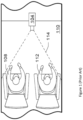
- vehicle occupant monitoring systems typically comprise an image acquisition device 104 mounted in a cabin 110 of a vehicle in which one or more occupants 108, 112 are seated within the field of view 114 of the camera.
- an image acquisition device 104 mounted in a cabin 110 of a vehicle in which one or more occupants 108, 112 are seated within the field of view 114 of the camera.
- two occupants 108, 112 are shown in front seats of the vehicle, with the image acquisition device 104 located forwardly and facing rearwardly. It will be appreciated that other occupants of the vehicle including back seat passengers (not shown) may also appear within the field of view 114 of the camera 104.
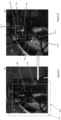
- Figure 2 shows a typical image 200 acquired by the image acquisition device 104 where it will be seen that occupant 108 is the driver of the vehicle, while occupant 112 is a passenger.
- WO 2020/084467 discloses an operator behaviour recognition system comprising hardware including at least one processor, a data storage facility in communication with the processor and input/output interfaces in communication with the processor, the hardware being configured to implement a set of convolutional neural networks including: an object detection group into which at least one image is received from an image source for detecting at least one object in the image and to delineate the object from the image for further processing, at least one of the objects being detected being a face of a person; a facial features extraction group into which the image of the person's face is received and from which facial features from the person's face are extracted; and a classifier group which assess the facial features received from the facial feature extraction group in combination with objects detected by the object detection group to classify predefined operator behaviours.
- EP 3 796 209 discloses a computer implemented method for determining an activity of an occupant of a vehicle comprising: capturing sensor data of the occupant using at least one sensor; determining respective two-dimensional or three-dimensional coordinates for a plurality of pre-determined portions of the body of the occupant based on the sensor data; determining at least one portion of the sensor data showing a pre-determined body part of the occupant based on the sensor data and the two-dimensional or three-dimensional coordinates; and determining the activity of the occupant based on the two-dimensional or three-dimensional coordinates and the at least one portion of the sensor data.
- Embodiments of the invention identify an occupant state which may be closely related to the occupant handling an object, without explicitly identifying the object.
- a vehicle occupant monitoring system acquires successive images 300 from an image acquisition device 104 mounted in a cabin 110 of the vehicle.
- the image acquisition device 104 can comprise any of: a visible wavelength color camera with RGB pixels, an infra-red (IR) camera, a camera including a Bayer array of pixels including R,G,B and IR sensitive pixels or a thermal camera.
- the camera could comprise a monochrome, for example, green sensitive, camera.
- the image acquisition device 104 could comprise an event camera of the type described in PCT Application No. PCT/EP2021/058973 (Ref: FN-675-PCT), where event information is accumulated in a tensor before being provided to downstream classifiers.
- the pixels of such a camera can be sensitive to any of visible, infra-red or thermal radiation.
- the image acquisition device 104 could comprise a combined frame based and event camera such as a Davis 346 camera available at iniVation.com.
- the camera comprises a 1600x1300 array of pixels.
- this is typically not sufficient to be able to explicitly identify the various objects which an occupant may have in their hands, and which can signal their current activity - especially for back seat occupants who appear significantly smaller than front seat occupants and so would require even greater camera resolution in order to classify their activity through explicitly identifying objects in their hand.
- identifying a cigarette can indicate that an occupant is smoking
- identifying any one of a number of foodstuffs can indicate that an occupant is eating
- identifying a phone may indicate that an occupant is either talking on the phone without using hands-free mode or texting or otherwise interacting with their phone
- this approach may often not produce satisfactory or reliable results.
- objects may be held in an occupant's hand in a manner where most of the object is occluded.
- camera image information is downsampled to QVGA resolution, i.e. 320x240, before being provided to respective a body detector 302, hand detector 304 and face detector 306.
- the body detector 302 is configured to identify one or more regions of the image bounding a human body.
- the region 202 has been identified as bounding the driver 108 and the region 204 has been identified as bounding the passenger 112.
- the face detector 306 identifies regions 206 and 208 bounding the faces of the passenger 112 and driver 108 respectively.
- the hand detector 304 identifies hand regions 210 and 212.
- any suitable forms of detectors can be employed ranging from classical Haar type detectors to neural network based detectors.
- neural network detectors networks with similar or identical structures, but trained to use different weights can be used for each of the body detector 302, hand detector 304 and face detector 306. These detectors can be run serially, where the intermediate or final output of one may boost the performance of another, or in parallel in particular using a multi-core neural network processor of the type disclosed in European Patent Nos. EP 3580691 (Ref: FN-618-EP) and EP 3668015 (Ref: FN-636-EP).
- such networks will produce a set of confidence levels for bounding boxes at different scales and proportions at respective locations across the image.
- up to 4 mutually exclusive bounding boxes 308 with confidence levels above a threshold amount will be chosen as body regions.
- an x,y location of its origin within the image, along with a width and height and a confidence level for the body region will be provided from the body detector 304.
- face regions 310 up to 4 mutually exclusive bounding boxes with confidence levels above a threshold amount will be chosen as face regions 310.
- an x,y location of its origin within the image, along with a width and height and a confidence level for the face region will be provided from the face detector 308.
- hand regions up to 8 mutually exclusive bounding boxes 312 with confidence levels above a threshold amount will be chosen as hand regions. Again, for each hand region, an x,y location of its origin within the image, along with a width and height and a confidence level for the hand region will be provided from the hand detector 304.
- each bounding box 308 for a body region is provided to a body skeleton detector 314.
- the input image map for the skeleton detector 314 is 192x192 pixels.
- the system first re-shapes the body region, by expanding the width of body region to provide an expanded square region 326 centered around the originally detected body region 308.
- the re-shaped body region can then be expanded to comprise a region 400 of 192x192 pixels corresponding to the input map size of the skeleton detector 314. It will be appreciated that the re-shaping and the expansion may mean that the boundary of the body region extends beyond the boundary of the input image 300 - such regions 328 can be simply treated as blank. Nonetheless, the increased image area provided around the detected body region 308 can provide the skeleton detector 314 with improved context with which to make its inference.
- conventional skeleton detectors 314 typically provide at their output a respective heat map for each joint to be identified with the peak value in each heat map generally indicating the location of the associated joint. These results can be filtered and analysed to the extent required, but in essence, an image crop 400 from the input image 300 corresponding to a re-shaped and expanded bounding box from the body detector 302 can be used to provide a set of x,y locations within the input image for each one a number of joints of the body region of interest.
- the x,y locations for joints do not necessarily need to fall within the area of the re-shaped and expanded bounding box and some locations for joints can be inferred, even if they are not visible within the image crop 400.
- two joints in particular are of interest and these are the left 402 and right 404 wrists of the occupant.
- a hand filter 317 looks at the bounding boxes 312 for each hand identified by the hand detector 304 and associates a hand bounding box 312 nearest and/or most overlapping a wrist location 402, 404 as the left or right hand region corresponding to the body.
- any hand regions that are detected within each input image crop 400 are automatically associated with the body from which the image crop 400 is derived.
- a hand bounding box 312 nearest and/or most overlapping a wrist location 402, 404 is designated as the left 312-L or right 312-R hand region corresponding to the body.
- a face region 318 which most overlaps with a body region or which is closest or most overlaps with the eye sockets or chin locations identified by the skeleton detector 314 for a given body region can be treated as the face region corresponding to the identified body.
- Pairs of left and right hand regions identified for a given body are fed to respective networks 316, 318 which will be described in more detail below. Again, these networks 316, 318 require their input images to be normalised. In the illustrated embodiment, each input image map for the networks 316, 318 is 128x128 pixels. Again, it is most likely that a detected hand region will be smaller than this size. Again, as with the detected body region(s), rather than scaling and resizing a detected bounding box 312 directly, in the embodiment, the system first re-shapes each hand region, by expanding the width of hand region, so that it comprises a square centered around the originally detected hand region, for example, region 320-L in Figure 6 .
- hand region 312-R is already square and so this step can be skipped.
- the re-shaped hand region is then expanded to comprise a region 322-L, 322-R of 128x128 pixels corresponding to the input map size of the networks 316, 318.
- the increased image area provided around the detected hand region(s) can provide the networks 316, 318 with improved context with which to make their inference.
- the networks 316, 318 will not be executed. However, when only one hand region is associated with a given body, one or both of the networks 316, 318 can be executed with the second hand region input being blank.
- each of the networks 316, 318 comprise identical structures and produce corresponding outputs, with each output corresponding to a user activity of concern, for example: smoking, eating, talking on the phone, texting.
- the network 316 is trained with images of occupants involved in such activities where the objects involved in the activity, for example, a cigarette, food or a phone are not visible.
- the network 318 is trained with images of occupants involved in such activities where the objects are visible in at least one hand region of the input image.
- networks 316, 318 allow the networks 316, 318 to provide improved inference because the appearance of a hand region during different activities tends to either show the hand or the object and so, rather than tending to provide an averaged output inference value when a hand region clearly shows a hand involved in an activity or an object indicative of an activity, in the present embodiment, in the first case when only an occupants hands are visible, network 316 should produce quite a high confidence level and the network 318 a low confidence level, whereas in the second case when an object is visible in at least one hand, network 318 should produce quite a high confidence level and the network 316 a lower confidence level.
- the output produced by the network 316 is labelled handCompare and qualified by the type of (unseen) object associated with the activity, e.g. cigarette, food, phone.
- the output produced by the network 318 is labelled gestureCompare and qualified by the type of visible object associated with the activity, again: cigarette, food, phone.
- each of the classifications produced by the networks 316, 318, the left/right hand inference produced by the hand filter 317, the skeleton data produced by the detector 314 and the location of the face region 310 are fed to occupant behaviour logic 320 to make a final classification of the activity for the occupant corresponding to the identified body region.
- modules can also be employed with a view to determining user activity without necessarily and explicitly identifying an object indicative of the activity.
- a face region 310 for a body can be tracked from one image frame to the next.
- a smoking detector 322 makes a simple contrast measurement on each instance of face region detected. It will be appreciated that when an occupant smokes, they will periodically exhale smoke and this tends to lower the contrast of the image in the region of their face during this period. When such a periodic fluctuation in contrast is detected, then the smoking detector 322 can signal that the occupant corresponding to the face region may be smoking.
- the occupant behaviour logic 320 can now further process the information provided to generate further inferences about user activity.
- the logic 320 attempts to identify whether any arm of an occupant is in a V shape indicative of a user talking on a phone, smoking, eating or drinking. In order to do so, the logic 320 attempts to estimate a Euclidian distance between each of 3 skeleton points from the arm: (W)rist, (S)houlder, (E)lbow.
- the Euclidian distance (d) can be estimated from a single 2D image, especially taking into account that the approximate location and orientation of a body relative to the image acquisition device 104 is known. So if d(W, S) ⁇ d(S, E) and d(W, E), it can be inferred that the occupants arm is in a V shape. In such a case, a parameter armSkeletonCompare can be set to true for the occupant.
- non-geometrical techniques can also be employed to determine if the occupant's arm is in a V shape including applying a dedicated neural network to the body region 308 or re-shaped and expanded body region 400.
- the behaviour logic 320 may analyze the skeleton data to determine if an occupant's arm is in an L shape which can be indicative of a user interacting with their phone other than talking. When such an L shape is detected, a parameter similar to armSkeletonCompare can be set to true.
- another parameter which is determined by the behaviour logic 320 is based on detecting whether a hand region associated with a body overlaps or is closely adjacent the face region for a body. If so, a parameter handFaceCompare is set to true.
- the behaviour logic 320 is provided by the networks 316, 318 with handCompare and gestureCompare values indicating a respective confidence levels for the various occupant activities being monitored for each occupant associated with a detected body region.
- the behaviour logic 320 can analyse the skeleton joint locations to produce an indication, armSkeletonCompare, of whether one or more of the monitored occupant activities are true or not.
- the behaviour logic 320 can analyse the spatial relationship of the hand and face regions to produce an indication, handFaceCompare, of an activity.
- the behaviour logic 320 can wait until eating / drinking / talking on the phone is detected in more than a threshold number of frames within a pre-defined time window before flagging the behaviour.
- the behaviour logic 320 can wait until this behaviour is detected in more than a threshold number of frames within a pre-defined time window before flagging the behaviour.
- the skeleton points can be used compute an upper body forward angle, where 0°-30° can indicate the occupant is bending down, while angles of approximately 90° indicate the occupant is upright.
- the behaviour logic 320 can check if any of the head or shoulder skeleton points are located inside a "bending" region of the body region, for example, a lower 50% of the body region. If so, then bending down is detected.
- the behaviour logic 320 can also keep track of parameter values over time to determine an occupant activity. So again, in relation to bending, if the aspect ratio of the body region changes over time, with the height decreasing from a height for the body region when it was detected as upright, then this too can be used to indicate bending.
- ADAS vehicle Advanced Driver-Assistance System
Landscapes
- Engineering & Computer Science (AREA)
- Theoretical Computer Science (AREA)
- Physics & Mathematics (AREA)
- General Physics & Mathematics (AREA)
- Multimedia (AREA)
- Computer Vision & Pattern Recognition (AREA)
- Data Mining & Analysis (AREA)
- General Health & Medical Sciences (AREA)
- Health & Medical Sciences (AREA)
- Human Computer Interaction (AREA)
- Evolutionary Computation (AREA)
- Artificial Intelligence (AREA)
- General Engineering & Computer Science (AREA)
- Life Sciences & Earth Sciences (AREA)
- Mathematical Physics (AREA)
- Evolutionary Biology (AREA)
- Bioinformatics & Cheminformatics (AREA)
- Bioinformatics & Computational Biology (AREA)
- Software Systems (AREA)
- Computing Systems (AREA)
- Mechanical Engineering (AREA)
- Transportation (AREA)
- Automation & Control Theory (AREA)
- Vascular Medicine (AREA)
- Biomedical Technology (AREA)
- Biophysics (AREA)
- Computational Linguistics (AREA)
- Molecular Biology (AREA)
- Oral & Maxillofacial Surgery (AREA)
- Social Psychology (AREA)
- Psychiatry (AREA)
- Databases & Information Systems (AREA)
- Medical Informatics (AREA)
- Image Analysis (AREA)
Applications Claiming Priority (3)
| Application Number | Priority Date | Filing Date | Title |
|---|---|---|---|
| US17/364,749 US12183091B2 (en) | 2021-06-30 | 2021-06-30 | Vehicle occupant monitoring system and method |
| EP22740305.2A EP4214688B1 (fr) | 2021-06-30 | 2022-06-23 | Système et méthode de surveillance des occupants d'un véhicule |
| PCT/EP2022/067154 WO2023274832A1 (fr) | 2021-06-30 | 2022-06-23 | Système et procédé de surveillance d'occupant de véhicule |
Related Parent Applications (2)
| Application Number | Title | Priority Date | Filing Date |
|---|---|---|---|
| EP22740305.2A Division-Into EP4214688B1 (fr) | 2021-06-30 | 2022-06-23 | Système et méthode de surveillance des occupants d'un véhicule |
| EP22740305.2A Division EP4214688B1 (fr) | 2021-06-30 | 2022-06-23 | Système et méthode de surveillance des occupants d'un véhicule |
Publications (4)
| Publication Number | Publication Date |
|---|---|
| EP4276768A2 true EP4276768A2 (fr) | 2023-11-15 |
| EP4276768A3 EP4276768A3 (fr) | 2023-12-20 |
| EP4276768C0 EP4276768C0 (fr) | 2025-08-20 |
| EP4276768B1 EP4276768B1 (fr) | 2025-08-20 |
Family
ID=82483290
Family Applications (2)
| Application Number | Title | Priority Date | Filing Date |
|---|---|---|---|
| EP23194610.4A Active EP4276768B1 (fr) | 2021-06-30 | 2022-06-23 | Système et méthode de surveillance des occupants d'un véhicule |
| EP22740305.2A Active EP4214688B1 (fr) | 2021-06-30 | 2022-06-23 | Système et méthode de surveillance des occupants d'un véhicule |
Family Applications After (1)
| Application Number | Title | Priority Date | Filing Date |
|---|---|---|---|
| EP22740305.2A Active EP4214688B1 (fr) | 2021-06-30 | 2022-06-23 | Système et méthode de surveillance des occupants d'un véhicule |
Country Status (3)
| Country | Link |
|---|---|
| US (1) | US12183091B2 (fr) |
| EP (2) | EP4276768B1 (fr) |
| WO (1) | WO2023274832A1 (fr) |
Families Citing this family (7)
| Publication number | Priority date | Publication date | Assignee | Title |
|---|---|---|---|---|
| DE102020214910A1 (de) * | 2020-11-27 | 2022-06-02 | Robert Bosch Gesellschaft mit beschränkter Haftung | Verfahren zur Überwachung eines Fahrzeuginnenraums |
| DE102021129103B3 (de) * | 2021-11-09 | 2022-12-08 | Dr. Ing. H.C. F. Porsche Aktiengesellschaft | Verfahren und System für eine robuste Identifizierung eines Fahrzeuginsassen |
| US12258025B2 (en) | 2022-02-01 | 2025-03-25 | Magna Electronics Inc. | Vehicular driver monitoring system with event camera |
| US12536815B2 (en) | 2022-09-07 | 2026-01-27 | Tobii Technologies Limited | Vehicle cabin monitoring system |
| EP4502967A1 (fr) * | 2023-08-03 | 2025-02-05 | Fraunhofer-Gesellschaft zur Förderung der angewandten Forschung e.V. | Procédé mis en uvre par ordinateur pour détecter un comportement de conduite sans retour d'un conducteur, dispositif, dispositif mobile et véhicule |
| EP4510089A1 (fr) * | 2023-08-14 | 2025-02-19 | Aptiv Technologies AG | Détermination de l'état physique d'un conducteur pour la sécurité d'un véhicule |
| US12509097B2 (en) | 2023-10-19 | 2025-12-30 | Toyota Motor North America, Inc. | Vehicle occupant preference-based data delivery |
Citations (5)
| Publication number | Priority date | Publication date | Assignee | Title |
|---|---|---|---|---|
| EP3580691A1 (fr) | 2017-08-31 | 2019-12-18 | FotoNation Limited | Dispositif de traitement périphérique |
| WO2020084467A1 (fr) | 2018-10-22 | 2020-04-30 | 5Dt, Inc | Système de reconnaissance de comportement d'opérateur |
| EP3668015A2 (fr) | 2018-12-11 | 2020-06-17 | FotoNation Limited | Appareil de traitement de réseau neuronal multiprocesseur |
| US20210056701A1 (en) | 2019-08-19 | 2021-02-25 | Fotonation Limited | Method of image processing using a neural network |
| EP3796209A1 (fr) | 2019-09-17 | 2021-03-24 | Aptiv Technologies Limited | Procédé et système pour déterminer une activité d'un occupant d'un véhicule |
Family Cites Families (6)
| Publication number | Priority date | Publication date | Assignee | Title |
|---|---|---|---|---|
| US9501704B2 (en) * | 2012-10-05 | 2016-11-22 | Panasonic Intellectual Property Corporation Of America | Drowsiness estimation device, drowsiness estimation method, and computer-readable non-transient recording medium |
| DE102013009400A1 (de) * | 2013-06-04 | 2014-12-04 | Volkswagen Aktiengesellschaft | Notfallassistenz zur Fahrzeugführung |
| US10628667B2 (en) * | 2018-01-11 | 2020-04-21 | Futurewei Technologies, Inc. | Activity recognition method using videotubes |
| US11887383B2 (en) * | 2019-03-31 | 2024-01-30 | Affectiva, Inc. | Vehicle interior object management |
| CN116034408A (zh) * | 2020-09-07 | 2023-04-28 | 索尼半导体解决方案公司 | 信息处理设备、信息处理方法和信息处理程序 |
| JP7600765B2 (ja) * | 2021-03-02 | 2024-12-17 | 株式会社アイシン | 身体情報取得装置 |
-
2021
- 2021-06-30 US US17/364,749 patent/US12183091B2/en active Active
-
2022
- 2022-06-23 EP EP23194610.4A patent/EP4276768B1/fr active Active
- 2022-06-23 WO PCT/EP2022/067154 patent/WO2023274832A1/fr not_active Ceased
- 2022-06-23 EP EP22740305.2A patent/EP4214688B1/fr active Active
Patent Citations (5)
| Publication number | Priority date | Publication date | Assignee | Title |
|---|---|---|---|---|
| EP3580691A1 (fr) | 2017-08-31 | 2019-12-18 | FotoNation Limited | Dispositif de traitement périphérique |
| WO2020084467A1 (fr) | 2018-10-22 | 2020-04-30 | 5Dt, Inc | Système de reconnaissance de comportement d'opérateur |
| EP3668015A2 (fr) | 2018-12-11 | 2020-06-17 | FotoNation Limited | Appareil de traitement de réseau neuronal multiprocesseur |
| US20210056701A1 (en) | 2019-08-19 | 2021-02-25 | Fotonation Limited | Method of image processing using a neural network |
| EP3796209A1 (fr) | 2019-09-17 | 2021-03-24 | Aptiv Technologies Limited | Procédé et système pour déterminer une activité d'un occupant d'un véhicule |
Non-Patent Citations (2)
| Title |
|---|
| GUILLERMO GARCIA-HERNANDO ET AL., FIRST-PERSON HAND ACTION BENCHMARK WITH RGB-D VIDEOS AND 3D HAND POSE ANNOTATIONS, 2018 |
| SEHYUN CHUN ET AL., NADS-NET: A NIMBLE ARCHITECTURE FOR DRIVER AND SEAT BELT DETECTION VIA CONVOLUTIONAL NEURAL NETWORKS |
Also Published As
| Publication number | Publication date |
|---|---|
| EP4214688B1 (fr) | 2024-02-14 |
| EP4276768C0 (fr) | 2025-08-20 |
| EP4214688A1 (fr) | 2023-07-26 |
| EP4214688C0 (fr) | 2024-02-14 |
| US12183091B2 (en) | 2024-12-31 |
| EP4276768B1 (fr) | 2025-08-20 |
| WO2023274832A1 (fr) | 2023-01-05 |
| US20230004745A1 (en) | 2023-01-05 |
| EP4276768A3 (fr) | 2023-12-20 |
Similar Documents
| Publication | Publication Date | Title |
|---|---|---|
| EP4214688B1 (fr) | Système et méthode de surveillance des occupants d'un véhicule | |
| CN113147664B (zh) | 检测车辆中是否使用了安全带的方法和系统 | |
| US10387725B2 (en) | System and methodologies for occupant monitoring utilizing digital neuromorphic (NM) data and fovea tracking | |
| EP3588372B1 (fr) | Commande d'un véhicule autonome basée sur le comportement du passager | |
| CN110084184B (zh) | 一种基于图像处理技术的安全带未系探测系统和方法 | |
| US12424015B2 (en) | Image processing apparatus and method for recognizing state of subject | |
| Mehta et al. | Motion and region aware adversarial learning for fall detection with thermal imaging | |
| US20200334477A1 (en) | State estimation apparatus, state estimation method, and state estimation program | |
| US20030169906A1 (en) | Method and apparatus for recognizing objects | |
| KR102514301B1 (ko) | 이종 센서 융합을 이용한 행동 분석 장치 | |
| CN106709420A (zh) | 一种监测营运车辆驾驶人员驾驶行为的方法 | |
| US11783636B2 (en) | System and method for detecting abnormal passenger behavior in autonomous vehicles | |
| Hasan et al. | State-of-the-art analysis of modern drowsiness detection algorithms based on computer vision | |
| JP7756749B2 (ja) | 車両用安全支援システム | |
| Saif et al. | Robust drowsiness detection for vehicle driver using deep convolutional neural network | |
| JP2019106193A (ja) | 情報処理装置、情報処理プログラム、及び、情報処理方法 | |
| US20230120829A1 (en) | Person activity recognition | |
| Suryawanshi et al. | Driver drowsiness detection system based on lbp and haar algorithm | |
| Wang et al. | Enhancing YOLOv7-based fatigue driving detection through the integration of coordinate attention mechanism | |
| JP2019106149A (ja) | 情報処理装置、情報処理プログラム、及び、情報処理方法 | |
| Pavani et al. | Drowsy Driver Monitoring Using Machine Learning and Visible Actions | |
| Lollett et al. | Driver’s drowsiness classifier using a single-camera robust to mask-wearing situations using an eyelid, lower-face contour, and chest movement feature vector gru-based model | |
| WO2024041790A1 (fr) | Classification de pose et procédés de surveillance dans la cabine et systèmes associés | |
| Liu et al. | Design and implementation of multimodal fatigue detection system combining eye and yawn information | |
| Lu et al. | An Efficient Driver Anomaly State Detection Approach Based on End-Cloud Integration and Unsupervised Learning |
Legal Events
| Date | Code | Title | Description |
|---|---|---|---|
| PUAI | Public reference made under article 153(3) epc to a published international application that has entered the european phase |
Free format text: ORIGINAL CODE: 0009012 |
|
| STAA | Information on the status of an ep patent application or granted ep patent |
Free format text: STATUS: THE APPLICATION HAS BEEN PUBLISHED |
|
| AC | Divisional application: reference to earlier application |
Ref document number: 4214688 Country of ref document: EP Kind code of ref document: P |
|
| AK | Designated contracting states |
Kind code of ref document: A2 Designated state(s): AL AT BE BG CH CY CZ DE DK EE ES FI FR GB GR HR HU IE IS IT LI LT LU LV MC MK MT NL NO PL PT RO RS SE SI SK SM TR |
|
| REG | Reference to a national code |
Free format text: PREVIOUS MAIN CLASS: G06V0010820000 Ref country code: DE Ref legal event code: R079 Ref document number: 602022020015 Country of ref document: DE Free format text: PREVIOUS MAIN CLASS: G06V0010820000 Ipc: G06V0020590000 |
|
| PUAL | Search report despatched |
Free format text: ORIGINAL CODE: 0009013 |
|
| STAA | Information on the status of an ep patent application or granted ep patent |
Free format text: STATUS: REQUEST FOR EXAMINATION WAS MADE |
|
| AK | Designated contracting states |
Kind code of ref document: A3 Designated state(s): AL AT BE BG CH CY CZ DE DK EE ES FI FR GB GR HR HU IE IS IT LI LT LU LV MC MK MT NL NO PL PT RO RS SE SI SK SM TR |
|
| RIC1 | Information provided on ipc code assigned before grant |
Ipc: G06V 10/82 20220101ALI20231116BHEP Ipc: G06V 40/10 20220101ALI20231116BHEP Ipc: G06V 20/59 20220101AFI20231116BHEP |
|
| 17P | Request for examination filed |
Effective date: 20231205 |
|
| RBV | Designated contracting states (corrected) |
Designated state(s): AL AT BE BG CH CY CZ DE DK EE ES FI FR GB GR HR HU IE IS IT LI LT LU LV MC MK MT NL NO PL PT RO RS SE SI SK SM TR |
|
| RAP3 | Party data changed (applicant data changed or rights of an application transferred) |
Owner name: TOBII TECHNOLOGIES LIMITED |
|
| GRAP | Despatch of communication of intention to grant a patent |
Free format text: ORIGINAL CODE: EPIDOSNIGR1 |
|
| STAA | Information on the status of an ep patent application or granted ep patent |
Free format text: STATUS: GRANT OF PATENT IS INTENDED |
|
| RIC1 | Information provided on ipc code assigned before grant |
Ipc: G06V 10/82 20220101ALI20250314BHEP Ipc: G06V 40/10 20220101ALI20250314BHEP Ipc: G06V 20/59 20220101AFI20250314BHEP |
|
| INTG | Intention to grant announced |
Effective date: 20250327 |
|
| GRAS | Grant fee paid |
Free format text: ORIGINAL CODE: EPIDOSNIGR3 |
|
| GRAA | (expected) grant |
Free format text: ORIGINAL CODE: 0009210 |
|
| STAA | Information on the status of an ep patent application or granted ep patent |
Free format text: STATUS: THE PATENT HAS BEEN GRANTED |
|
| AC | Divisional application: reference to earlier application |
Ref document number: 4214688 Country of ref document: EP Kind code of ref document: P |
|
| AK | Designated contracting states |
Kind code of ref document: B1 Designated state(s): AL AT BE BG CH CY CZ DE DK EE ES FI FR GB GR HR HU IE IS IT LI LT LU LV MC MK MT NL NO PL PT RO RS SE SI SK SM TR |
|
| REG | Reference to a national code |
Ref country code: GB Ref legal event code: FG4D |
|
| REG | Reference to a national code |
Ref country code: CH Ref legal event code: EP |
|
| REG | Reference to a national code |
Ref country code: IE Ref legal event code: FG4D |
|
| REG | Reference to a national code |
Ref country code: DE Ref legal event code: R096 Ref document number: 602022020015 Country of ref document: DE |
|
| U01 | Request for unitary effect filed |
Effective date: 20250902 |
|
| U07 | Unitary effect registered |
Designated state(s): AT BE BG DE DK EE FI FR IT LT LU LV MT NL PT RO SE SI Effective date: 20250908 |
|
| PG25 | Lapsed in a contracting state [announced via postgrant information from national office to epo] |
Ref country code: IS Free format text: LAPSE BECAUSE OF FAILURE TO SUBMIT A TRANSLATION OF THE DESCRIPTION OR TO PAY THE FEE WITHIN THE PRESCRIBED TIME-LIMIT Effective date: 20251220 |
|
| PG25 | Lapsed in a contracting state [announced via postgrant information from national office to epo] |
Ref country code: NO Free format text: LAPSE BECAUSE OF FAILURE TO SUBMIT A TRANSLATION OF THE DESCRIPTION OR TO PAY THE FEE WITHIN THE PRESCRIBED TIME-LIMIT Effective date: 20251120 |
|
| PG25 | Lapsed in a contracting state [announced via postgrant information from national office to epo] |
Ref country code: HR Free format text: LAPSE BECAUSE OF FAILURE TO SUBMIT A TRANSLATION OF THE DESCRIPTION OR TO PAY THE FEE WITHIN THE PRESCRIBED TIME-LIMIT Effective date: 20250820 |
|
| PG25 | Lapsed in a contracting state [announced via postgrant information from national office to epo] |
Ref country code: GR Free format text: LAPSE BECAUSE OF FAILURE TO SUBMIT A TRANSLATION OF THE DESCRIPTION OR TO PAY THE FEE WITHIN THE PRESCRIBED TIME-LIMIT Effective date: 20251121 |
|
| PG25 | Lapsed in a contracting state [announced via postgrant information from national office to epo] |
Ref country code: PL Free format text: LAPSE BECAUSE OF FAILURE TO SUBMIT A TRANSLATION OF THE DESCRIPTION OR TO PAY THE FEE WITHIN THE PRESCRIBED TIME-LIMIT Effective date: 20250820 |
|
| PG25 | Lapsed in a contracting state [announced via postgrant information from national office to epo] |
Ref country code: RS Free format text: LAPSE BECAUSE OF FAILURE TO SUBMIT A TRANSLATION OF THE DESCRIPTION OR TO PAY THE FEE WITHIN THE PRESCRIBED TIME-LIMIT Effective date: 20251120 |
|
| PG25 | Lapsed in a contracting state [announced via postgrant information from national office to epo] |
Ref country code: ES Free format text: LAPSE BECAUSE OF FAILURE TO SUBMIT A TRANSLATION OF THE DESCRIPTION OR TO PAY THE FEE WITHIN THE PRESCRIBED TIME-LIMIT Effective date: 20250820 |
|
| PG25 | Lapsed in a contracting state [announced via postgrant information from national office to epo] |
Ref country code: SM Free format text: LAPSE BECAUSE OF FAILURE TO SUBMIT A TRANSLATION OF THE DESCRIPTION OR TO PAY THE FEE WITHIN THE PRESCRIBED TIME-LIMIT Effective date: 20250820 |
|
| PG25 | Lapsed in a contracting state [announced via postgrant information from national office to epo] |
Ref country code: CZ Free format text: LAPSE BECAUSE OF FAILURE TO SUBMIT A TRANSLATION OF THE DESCRIPTION OR TO PAY THE FEE WITHIN THE PRESCRIBED TIME-LIMIT Effective date: 20250820 |
|
| PG25 | Lapsed in a contracting state [announced via postgrant information from national office to epo] |
Ref country code: SK Free format text: LAPSE BECAUSE OF FAILURE TO SUBMIT A TRANSLATION OF THE DESCRIPTION OR TO PAY THE FEE WITHIN THE PRESCRIBED TIME-LIMIT Effective date: 20250820 |