EP3668190B1 - Verfahren und vorrichtung zur datenübertragung - Google Patents
Verfahren und vorrichtung zur datenübertragung Download PDFInfo
- Publication number
- EP3668190B1 EP3668190B1 EP18845080.3A EP18845080A EP3668190B1 EP 3668190 B1 EP3668190 B1 EP 3668190B1 EP 18845080 A EP18845080 A EP 18845080A EP 3668190 B1 EP3668190 B1 EP 3668190B1
- Authority
- EP
- European Patent Office
- Prior art keywords
- terminal
- random access
- base station
- sending
- message
- Prior art date
- Legal status (The legal status is an assumption and is not a legal conclusion. Google has not performed a legal analysis and makes no representation as to the accuracy of the status listed.)
- Active
Links
Images




Classifications
-
- H—ELECTRICITY
- H04—ELECTRIC COMMUNICATION TECHNIQUE
- H04W—WIRELESS COMMUNICATION NETWORKS
- H04W52/00—Power management, e.g. Transmission Power Control [TPC] or power classes
- H04W52/02—Power saving arrangements
- H04W52/0209—Power saving arrangements in terminal devices
- H04W52/0225—Power saving arrangements in terminal devices using monitoring of external events, e.g. the presence of a signal
-
- H—ELECTRICITY
- H04—ELECTRIC COMMUNICATION TECHNIQUE
- H04W—WIRELESS COMMUNICATION NETWORKS
- H04W52/00—Power management, e.g. Transmission Power Control [TPC] or power classes
- H04W52/02—Power saving arrangements
- H04W52/0209—Power saving arrangements in terminal devices
- H04W52/0251—Power saving arrangements in terminal devices using monitoring of local events, e.g. events related to user activity
-
- H—ELECTRICITY
- H04—ELECTRIC COMMUNICATION TECHNIQUE
- H04W—WIRELESS COMMUNICATION NETWORKS
- H04W72/00—Local resource management
- H04W72/20—Control channels or signalling for resource management
- H04W72/23—Control channels or signalling for resource management in the downlink direction of a wireless link, i.e. towards a terminal
-
- H—ELECTRICITY
- H04—ELECTRIC COMMUNICATION TECHNIQUE
- H04W—WIRELESS COMMUNICATION NETWORKS
- H04W74/00—Wireless channel access
- H04W74/08—Non-scheduled access, e.g. ALOHA
-
- H—ELECTRICITY
- H04—ELECTRIC COMMUNICATION TECHNIQUE
- H04W—WIRELESS COMMUNICATION NETWORKS
- H04W74/00—Wireless channel access
- H04W74/08—Non-scheduled access, e.g. ALOHA
- H04W74/0833—Random access procedures, e.g. with 4-step access
-
- H—ELECTRICITY
- H04—ELECTRIC COMMUNICATION TECHNIQUE
- H04W—WIRELESS COMMUNICATION NETWORKS
- H04W74/00—Wireless channel access
- H04W74/08—Non-scheduled access, e.g. ALOHA
- H04W74/0833—Random access procedures, e.g. with 4-step access
- H04W74/0841—Random access procedures, e.g. with 4-step access with collision treatment
- H04W74/085—Random access procedures, e.g. with 4-step access with collision treatment collision avoidance
-
- H—ELECTRICITY
- H04—ELECTRIC COMMUNICATION TECHNIQUE
- H04W—WIRELESS COMMUNICATION NETWORKS
- H04W74/00—Wireless channel access
- H04W74/08—Non-scheduled access, e.g. ALOHA
- H04W74/0833—Random access procedures, e.g. with 4-step access
- H04W74/0838—Random access procedures, e.g. with 4-step access using contention-free random access [CFRA]
Definitions
- the present application relates to the field of communication and relates to a data transmission method and a terminal.
- LG ELECTRONICS "Data transmission during random access procedure in NB-loT", 3GPP DRAFT, R1-1707579, RAN WG1, XP051272787, 14 May 2017 (2017-05-14 ); " 3rd Generation Partnership Project; Technical Specification Group Radio Access Network; NR; Medium Access Control (MAC) protocol specification (Release 15)", 3GPP STANDARD; TECHNICAL SPECIFICATION; 3GPP TS 38.321, RAN WG2, V0.2.0, XP051336692, 28 July 2017 (2017-07-28 ); and ERICSSON: “On-demand system information procedure", 3GPP DRAFT, R2-1706499, RAN WG2, XP051301004, 26 June 2017 (2017-06-26 ).
- a UE in an RRC_IDLE state uses a CP scheme to upload data after a random access process, including steps 101 to 105.
- step 101 the UE sends an Msg1 message to an enhanced Node B (eNB), and carries a random access preamble.
- eNB enhanced Node B
- step 102 the eNB sends an Msg2 message to the UE, and carries a random access response (RAR).
- RAR random access response
- step 103 the UE sends an Msg3 message to the eNB, and carries an RRC connection request and an SAE-Temporary Mobile Subscriber Identity (S-TMSI).
- S-TMSI SAE-Temporary Mobile Subscriber Identity
- step 104 the eNB sends an Msg4 message to the UE, and carries an RRC connection setup message.
- step 105 the UE sends an Msg5 message to the eNB, and carries an RRC connection setup complete message and uplink data.
- the UE in an RRC_IDLE state uses a UP scheme to upload data after the random access process, including steps 201 to 206.
- step 201 the UE sends the Msg1 message to the eNB and carries the random access preamble.
- step 202 the eNB sends the Msg2 message to the UE, and carries the random access response (RAR).
- RAR random access response
- step 203 the UE sends the Msg3 message to the eNB, and carries the RRC connection resume request and a resume ID.
- step 204 the eNB sends the Msg4 message to the UE, and carries the RRC connection resume message.
- step 205 the UE sends the Msg5 message to the eNB, and carries the RRC connection resume complete message.
- step 206 the UE sends the uplink data to the eNB.
- the terminal needs to set up or resume an RRC connection when sending the uplink data, and the terminal sends the uplink data to the base station only after the RRC connection is set up or resumed.
- a static or low mobility UE each time may only need to send one data packet, and a time interval between two data packet sending is relatively long.
- the UE only sends one data packet after entering an RRC_CONNECTED state, but needs to maintain a period of time in the RRC_CONNECTED state to continuously monitor signals of the base station.
- the terminal After sending data once, the terminal returns to the RRC_IDLE state, or even returns to a power save mode (PSM), and reinitiates the RRC setup or resume request at the time of sending the data next time.
- PSM power save mode
- the data transmission method in the related art causes unnecessary power consumption at the terminal. Therefore, embodiments of the present application provide a data transmission scheme to improve a situation in which energy consumption of uploading data by the terminal is relatively high in the related art.
- An embodiment of the present application provides a data transmission method. As shown in FIG. 3 , steps 301 to 303 are included.
- a terminal sends a random access preamble to a base station, and receives a random access response sent by the base station.
- the terminal sends a first request message (Msg3) carrying uplink data to the base station.
- the method further includes the step 303, after receiving a second response message returned by the base station and determining that a contention is successfully resolved, maintaining, by the terminal, the idle state, taking a temporary-radio network temporary identity (T-RNTI) allocated by the base station carried in the random access response as a cell-radio network temporary identity (C-RNTI), and retaining the C-RNTI for a first length of time, where whether the contention is successfully resolved is determined by a contention resolution identification carried in the second response message.
- T-RNTI temporary-radio network temporary identity allocated by the base station carried in the random access response as a cell-radio network temporary identity (C-RNTI)
- multiple terminals may send the same first request message to the base station, but the base station can only detect one, and the base station carries part of information in the first request message detected in the second response message. Only one terminal among multiple terminals determines that this second response message belongs to the terminal itself, the above process is a process of contention resolution.
- the second response message carries at least one of: a contention resolution identification; high-level acknowledgement information for the uplink data; an uplink data failure indication; an uplink data retransmission indication; or user service data.
- the first request message further carries at least one or a combination of: indication information of whether to setup an S1 interface preferentially; indication information of whether to receive high-level acknowledgement information for the uplink data; information for identifying a mobility management entity (MME) at which the terminal registers; terminal identification information; access stratum security information; or a connection setup reason corresponding to data transmission.
- MME mobility management entity
- the method further includes: detecting, by the terminal, in a public search space or a search space for transmitting scheduling information of the second response message, one of following information by using the C-RNTI: a physical downlink control channel (PDCCH), uplink scheduling information, or downlink scheduling information.
- a physical downlink control channel PDCCH
- uplink scheduling information or downlink scheduling information.
- the method further includes in response to determining that the terminal also needs to transmit the uplink data, the terminal needs to send the first request message carrying the uplink data to the base station.
- the terminal Before sending the random access preamble to the base station, the terminal further selects the random access preamble or selects to send resources of the random access preamble.
- sending, by the terminal, the random access preamble to the base station includes: in response to determining that the terminal satisfies a first preset condition, sending, by the terminal, the random access preamble for requesting an uplink data transmission resource to the base station.
- Sending, by the terminal, the random access preamble for requesting the uplink data transmission resource to the base station includes: selecting, by the terminal, a random access preamble from a random access preamble set for requesting the uplink data transmission resource, and sending the selected random access preamble to the base station; or selecting, by the terminal, a random access resource from a random access resource set for requesting the uplink data transmission resource, and sending the random access preamble by using the selected random access resource to the base station.
- the terminal satisfying the first preset condition includes at least one or a combination of: a size of uplink data to be sent by the terminal is greater than a data carrying determination threshold; a radio link condition of the terminal satisfies a link condition threshold; or a service type of the uplink data to be sent by the terminal belongs to a preset service type.
- the physical downlink control channel carries uplink scheduling information or downlink scheduling information.
- the method further includes: acquiring, by the terminal, from a system message sent by the base station, one or a combination of: a data carrying determination threshold; a link condition threshold; or preset service type information; where the data carrying determination threshold includes: a data carrying determination threshold configured for all coverage levels, or a data carrying determination threshold configured for each coverage level separately.
- the method further includes one of: failing to receive, by the terminal, a second response message returned by the base station; receiving, by the terminal, the second response message carrying an uplink data failure indication or an uplink data retransmission indication returned by the base station; and in response to determining that the terminal fails to receive the random access response returned by the base station, determining, by the terminal, a random access failure and reinitiating random access.
- reinitiating, by the terminal, the random access includes: determining, by the terminal, to select one of the random access preamble for requesting the uplink data transmission resource or the random access preamble not for requesting the uplink data transmission resource to perform the random access according to at least one of: a number of random access failures, a serial number of each random access failure; a downlink measurement obtained by the terminal; a coverage level; and a number of repetitions.
- the number of repetitions is configuration information obtained by the terminal, and a downlink measurement value is a reference signal received power value for example, and of course, may be other values.
- the terminal reinitiates the random access according to one of: at an current coverage level, in response to determining that a number of random access failures of the terminal by sending the random access preamble for requesting the uplink data transmission resource reaches a threshold value for the number of random access failures, changing, by the terminal, the coverage level to a maximum coverage level, and sending the random access preamble not for requesting the uplink data transmission resource to perform the random access or sending the random access preamble to perform the random access; at a current coverage level, in response to determining that a number of random access failures of the terminal by sending the random access preamble for requesting the uplink data transmission resource reaches a threshold value for the number of random access failures, sending, by the terminal, the random access preamble not for requesting the uplink data transmission resource to perform the random access or sending the random access preamble to perform the random access ; in response to determining that the random access still fails and the number of random access failures reaches a threshold value for the number of random access
- the method further includes: acquiring, by the terminal, the threshold value for the number of random access failures corresponding to each coverage level, by receiving the system message broadcast by the base station or a dedicated message sent by the base station to the terminal.
- the method before reinitiating the random access by the terminal, the method further includes: acquiring, by the terminal, operation indication information from the base station, and determining a manner for reinitiating the random access according to the operation indication information.
- the method before performing random access by the terminal, the method further includes: acquiring, by the terminal, operation indication information from the base station, and determining operations performed by the first request message carrying the uplink data after the random access failure according to the operation indication information.
- determining whether to terminate or suspend a power raising operation according to at least one of: whether a format of the first request message for the random access is same as a format of the first request message for a previous random access; whether a manner of sending the random access preamble for the random access is same as a manner of sending the random access preamble for a previous random access, where the manner for sending the random access preamble includes: sending the random access preamble for requesting the uplink data transmission resource and sending the random access preamble not for requesting the uplink data transmission resource; or a reason for a previous random access failure.
- the first request message further carries one or a combination of: a C-RNTI, an RRC message, and a release request indication.
- the method further includes:
- sending, by the terminal, the first request message carrying the uplink data to the base station includes: acquiring, by the terminal, indication information carried in the random access response, and in response to determining that a second preset condition is satisfied, sending, by the terminal, the first request message carrying the uplink data to the base station.
- the method further includes: acquiring, by the terminal, indication information carried in the random access response, and in response to determining that a third preset condition is satisfied, sending, by the terminal, the first request message carrying an RRC message to the base station.
- satisfying the second preset condition is that the indication information is data amount information of a data size with uplink grant and the data size with the uplink grant is greater than an uplink grant threshold, or that the indication information indicates to directly send the uplink data at the time of sending the first request message; and satisfying the third preset condition is that the indication information is the information of the data size with the uplink grant and the data size with the uplink grant is less than or equal to the uplink grant threshold, or that the indication information indicates to carry the RRC message at the time of sending the first request message.
- the uplink grant threshold is one of: an uplink grant threshold corresponding to a state of the terminal before sending the random access preamble; or an uplink grant threshold corresponding to a coverage level at which the terminal is located and the state of the terminal before sending the random access preamble.
- an uplink grant threshold corresponding to the terminal in a connected state is greater than an uplink grant threshold corresponding to the terminal in an idle state.
- the method further includes: after receiving a second response message returned by the base station, setting up, restoring or re-setting up, by the terminal, an RRC connection according to an RRC response message carried in the second response message, and transiting, by the terminal, to the connection state.
- An embodiment of the present application provides a data transmission method, as shown in FIG. 4 , steps 401 to 404 are included.
- a base station receives a random access preamble sent by a terminal, and sends a random access response to the terminal.
- step 402 the base station receives a first request message carrying uplink data sent by the terminal.
- the method further includes sending, by the base station, a second response message to the terminal, where the second response message carries one or a combination of: a contention resolution identification; high-level acknowledgement information for the uplink data; an uplink data sending failure indication; an uplink data retransmission indication; or user service data.
- the first request message further carries at least one or a combination of: indication information of preferentially setting up an S1 interface; indication information of receiving high-level acknowledgement information for the uplink data; terminal identification information; information for identifying a mobility management entity (MME) at which the terminal registers; access stratum security information; or a connection setting up reason corresponding to data transmission.
- the method further includes steps 403 and 404.
- step 403 in response to determining that the first request message carries the indication information of preferentially setting up the S1 interface, sending, by the base station, a first S1 interface message carrying the uplink data to a network side;
- step 404 the base station receives a second S1 interface message returned by the network side, and in response to determining that the base station acquires the high-level acknowledgement information from the second S1 interface message, sends the high-level acknowledgement information to the terminal.
- the method further includes: in response to determining that the base station receives downlink data in the second S1 interface message, sending, by the base station, the downlink data to the terminal.
- the method further includes: sending, by the base station, operation indication information to the terminal through a system message or a dedicated message, where the operation indication information is used for indicating the terminal a manner for re-performing random access after a random access failure.
- the manner for re-performing the random access includes one of: changing preferentially a coverage level and re-performing the random access; sending preferentially a random access preamble not for requesting an uplink data transmission resource or sending the random access preamble to re-perform the random access; and sending preferentially the first request message carrying the radio resource control (RRC) message to re-perform the random access.
- RRC radio resource control
- the method further includes: in a case where the terminal is in a connected state and the first request message further carries an RRC message, and after receiving, by the base station, the first request message carrying the uplink data sent by the terminal, sending, by the base station, a second response message to the terminal, where the second response message further carries an RRC reset-up message.
- the method further includes: in a case where the terminal is in a connected state and the first request message further carries a request release indication, and after receiving, by the base station, the first request message carrying the uplink data sent by the terminal, sending, by the base station, a second response message to the terminal, where the second response message further carries an RRC release message.
- the method further includes: sending, by the base station, a data carrying determination threshold to the terminal through a system message or a dedicated message; where the data carrying determination threshold is used by the terminal to determine to select the random access preamble sent to the base station from whether a random access preamble set not for requesting the uplink data transmission resource or a random access preamble set for requesting the uplink data transmission resource, or the data carrying determination threshold is used by the terminal to determine to select a random access resource for sending the random access preamble to the base station from whether a random access resource set for requesting the uplink data transmission resource or a random access resource set not for requesting the uplink data transmission resource; where the data carrying determination threshold includes: a data carrying threshold configured for all coverage levels, or a data carrying determination threshold configured for each coverage level separately.
- the random access response carries indication information for indicating a sending manner for the terminal to send the first request message; where receiving, by the base station, the first request message carrying uplink data sent by the terminal includes: in response to determining that a second preset condition is satisfied, receiving, by the base station, the first request message carrying the uplink data sent by the terminal; and in response to determining that a third preset condition is satisfied, receiving, by the base station, the first request message carrying an RRC message sent by the terminal.
- satisfying the second preset condition is that the indication information is data amount information of a data size with uplink grant and the data size with the uplink grant is greater than an uplink grant threshold, or that the indication information indicates to directly send the uplink data at the time of sending the first request message; and satisfying the third preset condition is that the indication information is the information of the data size with the uplink grant and the data size with the uplink grant is less than or equal to the uplink grant threshold, or that the indication information indicates to carry the RRC message at the time of sending the first request message.
- the uplink grant threshold is an uplink grant threshold corresponding to a state of the terminal before sending the random access preamble; or an uplink grant threshold corresponding to a coverage level at which the terminal is located and the state of the terminal before sending the random access preamble, that is, the same uplink grant threshold may be configured for multiple coverage levels, or different uplink grant thresholds may be configured for multiple coverage levels separately.
- an uplink grant threshold corresponding to the terminal in a connected state is greater than an uplink grant threshold corresponding to the terminal in an idle state.
- the terminal in an idle state and after receiving, by the base station, the first request message carrying the uplink data sent by the terminal, sending, by the base station, a second response message to the terminal, where the second response message further carries an RRC response message.
- An embodiment of the present application provides a data transmission method.
- the method includes sending a first request message to a base station in a random access process in a case where the terminal is in an idle state, receiving a second response message sent by the base station, and acquiring downlink data in the second response message.
- An embodiment of the present application provides a data transmission method.
- the method includes in a process of performing a random access in a case where a terminal is in an idle state, receiving, by a base station, a first request message sent by the terminal, in response to determining that the base station has downlink data required to be sent to the terminal, carrying, by the base station, the downlink data at the time of sending the second response message to the terminal.
- An embodiment of the present application provides a data transmission method.
- the method includes in a process of performing a random access in a case where a terminal is in an idle state, sending, by a network side, a second S1 interface message to a base station after receiving a first S1 interface message sent by the base station, where the second S1 interface message carries downlink data required to be sent to the terminal.
- the method further includes: before the terminal in the idle state initiates the random access, buffering the downlink data after the network side receives the downlink data required to be sent to the terminal sent by an application stratum.
- An embodiment of the present application provides a data transmission method.
- the embodiment related to the data transmission method is not covered by the claimed invention.
- the method includes in a case where a terminal is in a connected state, receiving, by the terminal, a physical downlink control channel command sent by a base station, acquiring an non-competitive resource allocated to the terminal by the base station from the physical downlink control channel command, initiating a random access by using a random access preamble corresponding to the non-competitive resource; and receiving, by the terminal, a random access response sent by the base station, and in response to determining that the random access response carries indication information for simultaneously sending downlink data, receiving, by the terminal, the downlink data.
- An embodiment of the present application provides a data transmission method.
- the embodiment related to the data transmission method is not covered by the claimed invention.
- the method includes in a case where a terminal is in a connected state, sending, by a base station, a physical downlink control channel command to the terminal, the physical downlink control channel command carries a non-competitive resource allocated by the base station to the terminal; and after receiving a random access initiated by the terminal using a random access preamble corresponding to the non-competing resource, sending, by the base station, a random access response to the terminal, and the random access response carries indication information for simultaneously sending downlink data, and sending the downlink data simultaneously.
- This embodiment provides an idle state uplink data transmission scheme without state tranfer.
- the UE When a UE is in an RRC_IDLE state, the UE sends a random access preamble for requesting a resource for sending uplink data. After receiving a random access response sent by the base station and obtains uplink grant, the UE sends the uplink data to the base station at the same time of sending a first request message. After the UE receives a second response message sent by the base station and determines that a contention is successfully resolved, the UE considers that the uplink data is sent successfully, and the UE maintains the RRC_IDLE state.
- the UE may regard a media access control (MAC) stratum identity temporary-radio network temporary identity (T-RNTI) allocated by the base station as a formal MAC stratum identity cell-radio network temporary identify (C-RNTI), the UE in the RRC_IDLE state retains the C-RNTI for a first length of time which may be preset or configured by a network side for the UE.
- MAC media access control
- T-RNTI media access control
- C-RNTI formal MAC stratum identity cell-radio network temporary identify
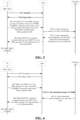
- the UE in the RRC_IDLE state uses a control plane (CP) scheme, as shown in FIG. 5 , which includes steps 501 to 507.
- CP control plane
- step 501 when the UE is in the RRC_IDLE state, the UE sends a random access preamble to a base station in a random access process for requesting a resource for sending uplink data, i.e., requesting uplink data transmission resource.
- step 502 the base station sends a random access response to the UE.
- the random access response carries a temporary MAC stratum identify T-RNTI allocated by the base station to the UE.
- step 503 after receiving the random access response and obtaining the uplink grant, the UE simultaneously sends uplink data to the base station at the time of sending the first request message (Msg3).
- the Msg3 may only carry an identity (such as a data target address identify) containing a core network identify and the uplink data, without an RRC message.
- identity such as a data target address identify
- RRC message such as an RRC connection setup request message, an RRC connection resume request message, or a new RRC connection public request message, which is used for triggering to setup or resume an RRC connection. In this embodiment, no RRC message is carried.
- the UE should carry an identity allocated by the core network to the UE, such as an S-TMSI, or information, such as the data target address identify or globally unique mobility management entity identifier (GUMMEI) which is able to identify a mobility management entity (MME) attached to the UE to the base station at the time of sending an uplink data packet through the Msg3.
- an identity allocated by the core network to the UE such as an S-TMSI
- information such as the data target address identify or globally unique mobility management entity identifier (GUMMEI) which is able to identify a mobility management entity (MME) attached to the UE to the base station at the time of sending an uplink data packet through the Msg3.
- GUMMEI globally unique mobility management entity identifier
- the UE may also carry access stratum security information, such as ul-NAS-MAC or ul-NAS-Count, to the base station at the time of sending the uplink data packet, and the access stratum security information may be obtained according to non-access stratum (NAS) security information.
- the Msg3 may also carry a connection setup reason, such as representing a connection setup reason for uplink data transmission.
- the UE may include indication information of whether to set up an S1 interface preferentially in the first request message (for example, if the UE considers that the uplink data needs a high-level acknowledgement. In this case, it may be considered that the uplink data sent by the UE does not need a radio link control (RLC) and hybrid automatic repeat request (HARQ) stratum acknowledgement, just needs to wait for the high-level acknowledgement.
- RLC radio link control
- HARQ hybrid automatic repeat request
- IND_needforS1 YES information may be carried, and this indication may also be used as indication information of whether the UE needs to receive the high-level acknowledgement information of the uplink data.
- step 504 the base station sends a first SI interface message carrying the uplink data to a network side.
- the first S1 interface message is a data transmission request (Data Transmission Req).
- the first S1 interface message may also be an initial user equipment information message; a user equipment context resume request message; an uplink non-access stratum transport message; or a path switch request message; or the first S1 interface message may also be other newly defined S1 interface messages.
- the network side is, such as, a mobility management entity (MME) attached to the UE.
- MME mobility management entity
- the base station may also send the access stratum security information to the MME at the same time.
- step 505 the network side sends a second S1 interface message to the base station.
- the second S1 interface message is a data transmission acknowledgement (Data Transmission Ack).
- the second S1 interface message may also be a connection setup indication message; a UE context resume response message; a downlink NAS transport message; a path switch request acknowledgement message; or the second S1 interface message may also be another newly defined S1 interface messages.
- the second S1 interface message carries high-level acknowledgement information (acknowledgement / non-acknowledgement) of the uplink data, and may also include downlink access stratum security information.
- step 506 the base station sends a second response message (Msg4) to a terminal.
- Msg4 a second response message
- the second response message carries a contention resolution ID (such as carried by a MAC stratum control unit).
- the second response message (Msg4) may only carry the contention resolution ID and not the RRC message.
- the second response message carries the high-level acknowledgement information (Ack / Nack for UL data), or an uplink data retransmission indication (DataResendIND).
- step 507 after receiving the second response message sent by the base station and determining that the contention is successfully resolved according to the contention resolution ID, the UE considers that the uplink data is sent successfully this time and maintains the RRC_IDLE state.
- the base station first sends the second response message to the terminal, and then sends the first S1 interface message to the MME.
- the first S1 interface message usually triggers the base station and the MME to set up the S1 interface and UE context for the UE.
- the first S1 interface message may be sent before the second response message according to the UE indication, and not trigger to set up the S1 interface and the UE context for the UE.
- the Msg4 needs to carry an RRC message, such as the RRC connection setup message, the RRC connection resume message, or a new RRC connection public response message to complete the RRC setup or resume process.
- the Msg4 may not need to carry the RRC message.
- the UE and the base station need to use a prolonged contention resolution timer.
- the prolonged contention resolution timer may be statically configured or the base station broadcasts durations of multiple contention resolution timers in a system message. The UE and the base station select one of them to use according to corresponding indication.
- the UE may regard the temporary MAC stratum identify T-RNTI allocated by the base station as the formal MAC stratum identifier C-RNTI in step 502.
- the UE retains the C-RNTI for a period of time.
- the specific retention time may be preset or configured by the network side for the UE.
- the UE always uses the C-RNTI to demodulate a physical channel in a calling search space (CSS) of the random access response (RAR), or in a newly defined CSS dedicated for Msg3 data transmission.
- CCS calling search space
- RAR random access response
- the base station may include an uplink data transmission failure indication or an uplink data retransmission indication in the second response message sent to the UE.
- the UE determines that the contention is resolved successfully according to the contention resolution ID, and the temporary MAC stratum identify T-RNTI allocated by the UE base station is regarded as the formal MAC stratum identify C-RNTI, but the second response message includes the uplink data sending failure indication or the uplink data retransmission indication, the UE needs to reinitiate a random access process to transmit the data, and the Msg3 carries the C-RNTI.
- the UE is in the RRC_IDLE state.
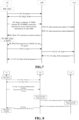
- this embodiment adopts a user plane (UP) scheme.
- steps 601 to 607 are included.
- step 601 when the UE is in the RRC_IDLE state, the UE sends a random access preamble to a base station in a random access process for requesting a resource for sending uplink data.
- step 602 the UE receives a random access response sent by the base station and obtains uplink grant.
- step 603 the UE sends uplink data to the base station at the time of sending a first request message (Msg3) at the same time.
- This embodiment adopts the UP scheme.
- the UE performed a suspend operation at the time of releasing an RRC connection last time and stores a UE context and resume ID (ResumeID).
- the UE carries the resume ID at the same time of sending the uplink data through the Msg3.
- the Msg3 only carries an identity (such as a data target address identify or GUMMEI information) including a core network identify and the uplink data, without an RRC message.
- the Msg3 in the related art needs to carry the RRC message, such as an RRC connection setup request message, an RRC connection resume request message, or a new RRC connection public request message, which is used for triggering to setup or resume an RRC connection. In this embodiment, no RRC message is carried.
- the UE may also carry access stratum security information to the base station at the time of sending an uplink data packet.
- the access stratum security information may be obtained according to NAS security information.
- the UE may also carry a connection setup reason, such as representing a connection setup reason for uplink data transmission.
- step 604 the base station sends a first SI interface message carrying the uplink data to a network side.
- the first S1 interface message is a data transmission request (Data Transmission Req).
- the network side is, such as, a mobility management entity (MME) attached to the UE.
- MME mobility management entity
- the base station may also send the access stratum security information to the MME at the same time.
- the base station finds the UE context stored on a base station side according to a resume identify, and sends the first S1 interface message to the MME according to MME information attached to the UE included in the UE context.
- step 605 the network side sends a second S1 interface message to the base station.
- the second S1 interface message is data transmission acknowledgement, carries high-level acknowledgement information (acknowledgement / non-acknowledgement) of the uplink data, and may also include downlink access stratum security information.
- step 606 the base station sends a second response message (Msg4) to a terminal.
- the second response message carries a contention resolution identify, such as, carried by an MAC stratum control unit.
- the second response message (Msg4) may only carry the contention resolution ID and not the RRC message.
- step 607 after receiving the second response message sent by the base station and determining that the contention is successfully resolved according to the contention resolution ID, the UE considers that the uplink data is sent successfully this time and maintains the RRC_IDLE state.
- a UE may not be able to transmit all data to be transmitted during an initial random access process, in the RRC_IDLE state and a state having a C-RNTI, the UE continues to send the first request message carrying the uplink data to a base station, and the base station sends a second response message to the UE and carries an acknowledgement for the uplink data at the same time. This process may be interacted several times until transmission of the data to be transmitted is completed.
- steps 701 to712 are included.
- Steps 701 to 707 are the same as the steps 501 to 507, where the step 703 may also carry a buffer area status report, indicating that there is data to be sent.
- the base station allocates new uplink grant to a terminal through a physical downlink control channel (PDCCH) transmission, and the PDCCH transmission is scrambled with a cell-radio network temporary identify (C-RNTI).
- PDCCH physical downlink control channel
- C-RNTI cell-radio network temporary identify
- step 709 the terminal uses the C-RNTI to demodulate the PDCCH transmission, acquires the uplink grant, and sends the uplink data to the base station by using the uplink grant.
- step 710 the base station sends a first SI interface message carrying the uplink data to a network side.
- step 711 the network side sends a second S1 interface message to the base station.
- step 712 if the second S1 interface message includes the acknowledgement for the uplink data, the base station sends the acknowledgement for the uplink data to the terminal.
- the network side may buffer these downlink data for a period of time and then send it to the UE. During this period of time, if the network side receives the first S1 interface message, the network side may send the buffered downlink data to the base station in the second S1 interface message.
- M2M such as a narrow band Internet of Things (NB-IoT) or enhanced machine type communication (eMTC) user
- NB-IoT narrow band Internet of Things
- eMTC enhanced machine type communication
- the base station may send downlink data included in the second response message to the UE, and the downlink data may be included in a newly defined media access control control element (MAC CE), or a newly defined data container information element (IE).
- MAC CE media access control control element
- IE data container information element
- step 801 when the UE is in an RRC_IDLE state, the UE sends a random access preamble to the base station in a random access process for requesting a resource for sending uplink data.
- step 803 the UE sends uplink data to the base station at the time of sending a first request message (Msg3) at the same time.
- the UE should carry an identity allocated by a core network to the UE, such as an S-TMSI, or information, such as a data target address identify or globally unique mobility management entity identifier (GUMMEI) which is able to identify an mobility management entity (MME) attached to the UE to the base station at the time of sending an uplink data packet through an Msg3.
- the UE may also carry access stratum security information to the base station at the time of sending an uplink data packet.
- the access stratum security information may be obtained according to NAS security information.
- the UE performed a suspend operation at the time of releasing an RRC connection last time and stores a UE context and resume ID (ResumeID). The UE carries the resume ID at the same time of sending the uplink data through the Msg3.
- step 804 the base station checks whether there is downlink data needed to be sent to a terminal, and if yes, the downlink data is included in the second response message.
- step 805 the base station sends a first SI interface message carrying the uplink data to the network side.
- the first S1 interface message is a data transmission request (Data Transmission Req).
- the network side is, such as, a mobility management entity (MME) attached to the UE.
- MME mobility management entity
- the base station may also send the access stratum security information to the MME at the same time.
- step 806 the network side checks whether there is downlink data needed to be sent to a terminal, and if yes, the downlink data is included in the second S1 interface message.
- step 807 the network side sends the second S1 interface message carrying the downlink data to the base station.
- the second S1 interface message is a data transmission acknowledgement (Data Transmission Ack).
- the second S1 interface message may also carry high-level acknowledgement information (acknowledgement / non-acknowledgement) of the uplink data, and may also include downlink access stratum security information.
- high-level acknowledgement information acknowledgement / non-acknowledgement
- step 808 the base station sends the second response message (Msg4) carrying the downlink data to a terminal.
- a network side may buffer these downlink data for a period of time without triggering to send an S1 interface paging message.
- the network side sends the data to a base station.
- a terminal may be in an air interface idle state, so the base station may buffer these downlink data for a period of time without triggering to send an air interface paging message.
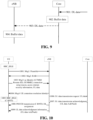
- FIG. 9 it is a downlink data buffering flowchart, including steps 901 to 904.
- step 901 an application stratum sends downlink data to the network side.
- step 902 the network side determines that the user is in the S1 interface idle state and these downlink data is delay tolerance, then the network side may buffer the downlink data for a period of time without triggering to send the S1 interface paging message.
- a buffer duration may be a preset value.
- step 903 the network side determines that the user is in the S1 interface connected state, and sends the downlink data to the base station.
- the base station determines that the terminal is in the air interface idle state and these downlink data is delay tolerance, then the base station may buffer these downlink data for a period of time without triggering to send the air interface paging message.
- a buffer duration may be a preset value.
- FIG. 10 is another implementation mode of the embodiment one or the embodiment two.This embodiment includes steps 1001 to 1009.
- step 1001 when the UE is in an RRC_IDLE state, the UE sends a random access preamble to a base station in a random access process for requesting a resource for sending uplink data.
- step 1002 the UE receives a random access response sent by the base station and obtains uplink grant.
- step 1003 the UE sends uplink data to the base station at the time of sending a first request message (Msg3) at the same time.
- the Msg3 carries a terminal identify, such as an S-TMSI or a resume identify, and also carries an identity (such as GUMMEI information or a data target address identify) of a core network registered by the terminal and uplink data, without carrying an RRC message.
- a terminal identify such as an S-TMSI or a resume identify
- an identity such as GUMMEI information or a data target address identify
- the UE may also carry access stratum security information to the base station at the time of sending an uplink data packet.
- the access stratum security information may be obtained according to NAS security information.
- the UE may also carry a connection setup reason.
- step 1004 the base station sends a second response message (Msg4) to a terminal.
- Msg4 second response message
- the second response message carries a contention resolution identify, such as, carried by an MAC stratum control unit.
- the second response message (Msg4) may only carry the contention resolution ID and not the RRC message.
- step 1005 after the UE receives the second response message sent by the base station and determines that the contention is resolved successfully according to the contention resolution ID, the UE maintains the RRC_IDLE state, and takes a temporary-radio network temporary identity (T-RNTI) allocated by the base station as a cell-radio network temporary identity (C-RNTI), and retains the C-RNTI for a first length of time.
- T-RNTI temporary-radio network temporary identity allocated by the base station as a cell-radio network temporary identity (C-RNTI)
- step 1006 the base station sends a first SI interface message carrying the uplink data to a network side.
- the first S1 interface message is a data transmission request (Data Transmission Req).
- step 1007 the network side sends a second S1 interface message to the base station.
- the second S1 interface message is data transmission acknowledgement, carries high-level acknowledgement information (acknowledgement / non-acknowledgement) of the uplink data.
- step 1008 the base station sends downlink assignment information to the terminal through a PDCCH transmission, and the PDCCH transmission is scrambled with the C-RNTI.
- the terminal uses the C-RNTI to demodulate the PDCCH transmission, acquires the downlink assignment information, and use the downlink assignment information to receive downlink data sent by the base station to the terminal.
- the downlink data may be high-level acknowledgement information of the uplink data.
- the UE When a UE is in an RRC_IDLE state, the UE sends a random access preamble for requesting a resource for sending uplink data in a random access process.
- the base station controls whether to setup or resume an RRC connection for the UE and whether to transfer the UE in an RRC_CONNECTED state.
- the base station carries an indication in a random access response, which is used for indicating a sending manner of a first request message.
- the indication may be an implicit indication, such as data amount information of a data size included in uplink grant, such as a transport block size (TB size) in a UL grant field in the RAR messages.
- the indication such as data amount information of the data size with the uplink grant
- a certain threshold hereinafter referred to as an uplink authorization threshold
- the UE sends the uplink data directly to the base station at the time of sending the first request message.
- the UE should encapsulate the uplink data according to the data amount information of the data size with the uplink grant and send the uplink data to the base station.
- the UE may split the data to be sent according to the data amount information of the data size with the uplink grant into multiple fragments and sent in sequence. If the indication (such as the data amount information of the data size with the uplink grant) does not exceed an uplink grant threshold, the UE sends the first request message to the base station, and the first request message carries an RRC message, and the RRC message may be an RRC connection setup request or an RRC connection resume request message, or an RRC connection public request message.
- the indication may be an explicit indication, indicating the UE to directly send the uplink data at the time of sending the first request message, or indicating the UE to initiate an ordinary RRC connection setup or resume process.
- the uplink grant threshold may be a statically configured preset value or be configured by the base station.
- the uplink grant threshold is sent to the UE through a newly defined field in a system message, and may be dynamically adjusted.
- the uplink grant threshold is configured to be 200 bits.
- the uplink grant threshold may be individually configured for each coverage level.
- the base station may assign appropriate uplink grant to the terminal in the random access response according to a terminal request at the time of carrying another piece of indication information.
- the indication information indicates that if the UE fails to directly send the uplink data at the time of sending the first request message this time, the UE should use a random access preamble or a random access resource not requesting for sending the uplink data at the time of reinitiating the random access subsequently, i.e., the UE should initiate a random access for the ordinary RRC connection setup or resume process.
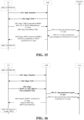
- FIG. 11 is an implementation of directly sending the uplink data to the base station of the UE at the time of sending the first request message. As shown in FIG. 11 , the UE is in an RRC_IDLE state, including steps 1100 to 1106.
- step 1100 the base station sends the uplink grant threshold (T_ULgrant) through the system message.
- step 1101 the UE sends a random access preamble to a base station in a random access process for requesting a resource for sending uplink data.
- step 1102 the base station sends the random access response to the UE, and carries larger uplink grant.
- step 1103 the UE determines that the data size with the uplink grant is greater than the uplink grant threshold, and the UE sends the uplink data to the base station at the time of sending the first request message (Msg3).
- This embodiment adopts the UP scheme.
- the UE performed a suspend operation at the time of releasing an RRC connection last time and stores a UE context and resume ID (ResumeID).
- the UE carries the resume ID at the same time of sending the uplink data through the Msg3.
- the UE should carry an identity allocated to the UE by a core network, such as an S-TMSI, or information, such as GUMMEI information, which is able to identify an MME attached to the UE, to the base station.
- step 1104 the base station sends a first SI interface message carrying the uplink data to a network side.
- step 1105 the network side sends a second S1 interface message to the base station.
- step 1106 the base station sends a second response message (Msg4) to a terminal.
- Msg4 a second response message
- the UE sends the first request message to the base station, and the first request message carries the RRC message, and the UE should setup or resume the RRC connection after receiving the second response message carrying the RRC message, and transfer in the RRC_CONNECTED state , as shown in FIG. 12 , including steps 1200 to 1208.
- step 1200 the base station sends the uplink grant threshold (T_ULgrant) through the system message.
- step 1201 the UE sends a random access preamble to a base station in a random access process for requesting a resource for sending uplink data.
- step 1202 the base station sends the random access response to the UE, carries data amount information of a small data size with the uplink grant (not exceeding the uplink grant threshold).
- the UE determines that the data size with the uplink grant is less than or equal to the uplink grant threshold, and the UE sends the first request message (Msg3) to the base station, carries the RRC connection public request message;
- the public request message may be an existing RRC connection request message, the RRC connection resume request message, or the newly defined RRC connection public request message.
- the Msg3 message also carries the identify allocated to the UE by the core network, such as the S-TMSI, or information which is able to identify the MME attached to the UE, to the base station or carry the resume ID.
- the core network such as the S-TMSI, or information which is able to identify the MME attached to the UE, to the base station or carry the resume ID.
- step 1204 the base station sends the first S1 interface message to the network side.
- step 1205 the network side sends a second S1 interface message to the base station.
- the base station sends the second response message (Msg4) to the terminal, carries an RRC connection public response message.
- the public response message may be an existing RRC connection setup message, the RRC connection resume message, or the newly defined RRC connection public response message.
- step 1207 the UE sets up an RRC connection and enters the RRC_CONNECTED state.
- step 1208 the UE sends an Msg5 message to the base station, and carries the uplink data.
- Embodiment seven (a terminal may process Msg4+RRC messages after sending Msg3+ data
- the base station may still actively send RRC to initiate an RRC connection setup or resume process, and transfer the terminal to an RRC_CONNECTED state, i.e., the base station sends a second response message carrying an RRC message to the UE.
- the RRC message is an RRC connection setup, resume or public response message.
- the UE should setup or resume an RRC connection and transfer to the RRC_CONNECTED state.
- the UE needs to send an RRC request message before receiving an RRC response message.
- the RRC request message is an RRC connection setup request message, an RRC connection resume request message, or a new RRC connection public request message.
- the RRC response message is the RRC connection setup message, the RRC connection resume message, or a new RRC connection public response message. In this embodiment, even if the UE has not sent the RRC request message, and also processes the RRC response message.
- steps 1300 to 1308 are included.
- step 1300 the base station sends an uplink grant threshold (T_ULgrant) through a system message.
- T_ULgrant an uplink grant threshold
- step 1301 the UE sends a random access preamble to the base station in a random access process for requesting a resource for sending uplink data.
- step 1302 the base station sends a random access response to the UE.
- step 1003 the UE sends uplink data to the base station at the time of sending a first request message (Msg3) at the same time.
- the UE should carry an identity allocated to the UE by a core network such as an S-TMSI, or information which is able to identify an MME attached to the UE, to the base station or carry a resume ID at the time of sending an uplink data packet through the Msg3.
- a core network such as an S-TMSI, or information which is able to identify an MME attached to the UE, to the base station or carry a resume ID at the time of sending an uplink data packet through the Msg3.
- step 1304 the base station sends a first SI interface message carrying the uplink data to a network side.
- step 1305 the network side sends a second S1 interface message to the base station.
- the base station sends the second response message (Msg4) to the base station, carries an RRC connection public response message.
- the public response message may be an existing RRC connection setup message, the RRC connection resume message, or the newly defined RRC connection public response message.
- step 1307 the UE sets up an RRC connection and enters the RRC_CONNECTED state.
- step 1308 the UE sends an Msg5 to the base station.
- the UE In a certain coverage level, if the UE fails to send uplink data (an Msg3 in a first format) for a certain number of times at the same time of sending a first request message, the UE preferentially changes the coverage level. When the coverage level reaches the maximum, the UE then turns to attempt to send the first request message carrying an RRC message to setup or resume an RRC connection (the Msg3 in a second format). Or at a certain coverage level, if the UE fails to send the uplink data (in the first format) at the same time of sending the first request message for a certain number of times, the UE preferentially changes to attempt to send the first request message carrying the RRC message to setup or resume the RRC connection (the Msg3 in the second format). If the UE still fails, the UE directly selects a next coverage level after a number of failures is reached according to a configured number of failures. At a new coverage level, the UE still performs a random access attempt in the above order.
- the base station may broadcast operation indication information in a system message. If the UE is indicated to change the coverage level preferentially, the UE may be indicated a number of attempts of using the Msg3 in the second format at the maximum coverage level, or be indicated whether the number of attempts is the same as the number of attempts of using the Msg3 in the second format. If the UE is indicated to change to attempt the Msg3 in another format preferentially, the UE may be indicated the number of attempts of using the Msg3 in each format at the current coverage level, or be indicated a proportion of the number of attempts of using the Msg3 in each format in a total number of attempts.
- the UE may terminate or suspend the power raising operation in advance each time a random access is performed. For example, the UE first determines whether an Msg3 format used this time is the same as that used in the last time, and determines whether to terminate or suspend the power raising operation in advance according to the determination result.
- An example of adjusting the power raising operation is as follows.
- the power raising process is suspended or terminated in advance.
- the UE determines whether to terminate or suspend the power raising operation in advance according to a reason for an access attempt failure last time.
- Another example of adjusting the power raising operation is as follows.
- the UE determines whether to terminate or suspend the power raising process in advance according to the failure reason. If a certain type of failure reason occurs (such as a contention resolution failure), the UE does not increase an uplink transmit power but simply attempts again.
- a certain type of failure reason such as a contention resolution failure
- the UE When the UE is in an RRC_IDLE state, the UE sends a random access preamble for requesting a resource for sending uplink data in a random access process. After the UE obtains uplink grant, the UE directly sends the uplink data to the base station at the time of sending the first request message in the random access process.
- the UE When the UE sends the random access preamble selected in a random access preamble set P1 for requesting an uplink data transmission resource at the current coverage level, but because a second response message (the second response message should include larger UL grant so that the UE sends uplink data without state transfer at the same time of sending the first request message) sent by the base station, or the contention resolution fails in a subsequent process, this random access attempt fails, the UE needs to initiate random access process again. In this case, the UE needs to repeatedly send the random access preambles in P1.
- the repeated sending When the repeated sending reaches a certain number of times N1, the number of times N1 is a preset value corresponding to the current coverage level or configured by the network side for the UE, the UE starts to use the random access preamble in the random access preamble set P2 not for requesting the uplink data transmission resource. If after sending the random access preamble in P2, this random access attempt fails because the second response message (the second response message should include smaller UL grant so that the UE sends the first request message including the RRC message to setup or resume the RRC connection) sent by the base station or the contention resolution fails in the subsequent process, then the UE repeatedly sends the random access preambles in P2. When the repeated sending reaches a certain number of times N2, the number of times N2 is a preset value corresponding to the current coverage level or configured by the network side for the UE, and the UE skips to a next coverage level and repeats the process again.
- the UE When the terminal uses the random access preamble set P1 for the random access, if the random access attempt fails because no random access response is received, the UE marks a failure reason S1, and if the random access attempt fails due to the contention resolution failure in the subsequent process, the UE marks a failure reason S2.
- the uplink transmit power may be increased according to configuration parameters. However, when the UE fails due to S2, there may be multiple UEs attempting to send the uplink data at the time of sending the first request message, and the system is overloaded. In this case, if the transmit power is still increased during retransmission, the system contention may be intensified, so that in a next attempt, the UE does not increase the uplink transmit power but only attempts again.
- an RRC re-set up process may be triggered due to a reason such as RLF.
- RLF a reason such as RLF.
- the RRC is re-setup, there may be uplink data to be transmitted or re-transmitted.
- the uplink data may be sent at the same time of re-setting up, i.e., performing parallel uplink data transmission and RRC connection re-set up process.
- the UE is in the RRC_CONNECTED state and uses a CP scheme to transmit the uplink data in a random access process, including steps 1406 to 1406.
- step 1401 the UE sends a random access preamble to the base station in the random access process for requesting a resource for sending uplink data.
- step 1402 the base station sends a random access response to the UE.
- the UE sends a first request message (Msg3) to the base station, carries an RRC connection public request message and uplink data;
- the RRC connection public request message may be an existing RRC connection re-set up request message, or a new RRC connection public request message.
- the Msg3 also carries an identity allocated by a core network to the UE, such as an S-TMSI, or information, such as GUMMEI, which is able to identify a mobility management entity (MME) attached to the UE to the base station.
- a core network such as an S-TMSI
- GUMMEI mobility management entity
- step 1404 the base station sends a first SI interface message carrying the uplink data to a network side.
- step 1405 the network side sends a second S1 interface message to the base station.
- the base station sends the second response message (Msg4) to the terminal, carries an RRC connection public response message.
- the RRC connection public response message is the existing RRC connection re-set up message or the new RRC connection public response message.
- a UP scheme is used for transmitting the uplink data in the random access process, including steps 1501 to 1506.
- step 1501 the UE sends the random access preamble to the base station in the random access process for requesting a resource for sending uplink data.
- step 1502 the base station sends a random access response to the UE.
- the UE sends a first request message (Msg3) to the base station, carries an RRC connection public request message and uplink data; the RRC connection public request message is an existing RRC connection re-set up request message, or a new RRC connection public request message.
- Msg3 a first request message
- the Msg3 also carries a Reestablish-UE ID
- step 1504 the base station sends a first SI interface message carrying the uplink data to the network side.
- step 1505 the network side sends a second S1 interface message to the base station.
- the base station sends the second response message (Msg4) to the terminal, carries an RRC connection public response message.
- the RRC connection public response message may be the existing RRC connection re-set up message or the new RRC connection public response message.
- the UE sends a random access preamble for requesting an resource for sending the uplink data, and the UE receives the random access response sent by the base station and obtains sufficient uplink grant, it may be considered that the UE and the base station negotiate to complete the data transmission as soon as possible and may initiate RRC connection quick release, the UE simultaneously sends the uplink data to the base station at the time of sending a first request message.
- the UE sends a random access preamble not for requesting the resource for sending the uplink data, or the UE does not obtain sufficient uplink grant from the base station, it may be considered that the UE sends an ordinary preamble, and then triggers a complete RRC connection setup process, and the data is transmitted after the connection setup is completed. ⁇
- the UE After the UE sends the first request message and the uplink data, if the UE receives a second response message sent by the base station and determines that the contention is successfully resolved, the UE autonomously releases to an RRC_IDLE state.
- the base station After receiving the first request message and the uplink data, the base station may trigger the quick release, and carry an RRC release message in the second response message sent by the base station to the UE, the release message is sent in a radio link control acknowledged mode (RLC AM).
- RLC AM radio link control acknowledged mode
- the UE first determines that the contention is successfully resolved, then processes the RRC release message and sends an acknowledgement (ACK) to the message, and then the base station sends an RRC connection release message to the UE, and the UE is released to the RRC_IDLE state.
- ACK acknowledgement
- the UE does not process the RRC message carried in the second response message.
- the RRC release messages in the related art may only be sent through an SRB1, and the RRC release messages in the present application may be sent through an SRB0.
- the base station broadcasts different uplink grant thresholds for the idle state and the connected state through the system message.
- the connected state should have a stricter uplink grant threshold, i.e., the uplink grant threshold should ensure that when the UE initiates the random access to transmit the data in the connected state, All the data to be transmitted should be transmitted once as soon as possible and the connection should be released.
- the uplink grant threshold in the connected state is larger than the uplink grant threshold in the idle state.
- steps 1601 to 1607 are included.
- step 1601 the UE sends the random access preamble to the base station in the random access process for requesting resources for sending uplink data.
- step 1602 the base station sends a random access response to the UE.
- the Msg3 also carries a C-RNTI.
- step 1604 the base station sends a first SI interface message carrying the uplink data to the network side.
- step 1605 the network side sends a second S1 interface message to the base station.
- step 1606 the base station sends the second response message (Msg4) to the terminal, carries an RRC connection release message.
- step 1607 the UE first processes the Msg4, then processes the connection release message, and then the UE releases to the RRC_IDLE state.
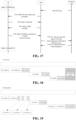
- a base station When a UE is in an RRC_CONNECTED state, if a network side has downlink data to send to the UE but finds that the UE is in a non-synchronization state, a base station needs to send a PDCCH order to the UE to trigger a random access process.
- the embodiment related to a data transmission method as shown in FIG.17 is not covered by the claimed invention.
- the PDCCH order includes an non-competitive resource allocated by the base station to the UE.
- the base station finds information about the UE, and the base station sends a random access response to the UE.
- the random access response includes an indication that indicates to send the downlink data to the UE at the same time.
- the UE uses received downlink grant to receive the downlink data. After that, the UE may send a first request message to the base station, which includes a acknowledgment for the received downlink data.
- the UE needs to process tracking area (TA) information first, completes a synchronization process, and then processes a downlink data packet.
- TA tracking area
- the UE is in the RRC_CONNECTED state, including steps 1701 to 1706.
- a network side sends the downlink data to the base station.
- step 1701 the base station sends a PDCCH order to the UE, carries the non-competitive resource allocated by the base station to the UE.
- step 1702 the UE sends the random access preamble corresponding to the non-competitive resource to the base station.
- the base station sends a random access response to the UE, and simultaneously sends the downlink data, and the random access response carries indication information to indicate to simultaneously send the downlink data.
- step 1704 after receiving the random access response, and using the received downlink data, the UE sends the first request message (Msg3) to the base station, and carries acknowledgement information of the downlink data.
- Msg3 the first request message
- step 1705 the base station sends a first SI interface message to the network side, and carries acknowledgement information of the downlink data.
- step 1706 the network side sends a second S1 interface message to the base station.
- the UE When a UE is in an RRC_IDLE state, the UE sends a random access preamble for requesting a resource for sending uplink data in a random access process. The UE determines whether to request the resource for sending the uplink data in the following manner.
- the base station configures a data carrying determination threshold T_ULdataRA for each coverage level.
- T_ULdataRA a data carrying determination threshold
- the UE selects a random access preamble from the random access preamble set P1 for requesting the uplink data transmission resource.
- the UE selects a random access preamble from the random access preamble set P2 not for requesting the uplink data transmission resource.
- P1 and P2 are divided in the following manners.
- Manner 1 a resource not belonging to a PRACH resource configured for each coverage level is selected as P1.
- the base station configures at least one set of data transmission physical resource block (PRB) resources for an R15 UE.
- All PRBs which are different from physical random access channels / paging physical resource blocks (PRACHs / paging PRBs) configured for an R14 UE are taken as P1, in this case, all PRACHs / paging PRBs configured for the R14 UE may be regarded as P2.
- each group of data transmission PRB resources is used for indicating a certain uplink data size requirement. For example, three sets of data transmission PRB resources are configured, which are identified as a group A, a group B, and a group C respectively.
- Each set of data transmission PRB resources includes at least one PRB.
- each PRB may divide a PRACH time domain and a subcarrier resource for different coverage levels.
- the base station configures all subcarriers not configured for the R14 UE as P1 for the R15 UE, and the PRACH resource of each coverage level configured for the R15 UE no longer includes the subcarrier resource.
- the subcarrier configured for the R14 UE may be regarded as P2.
- the subcarrier in P1 may be divided into at least one group of data transmission subcarrier resources. Three groups of data transmission subcarrier resources are configured and identified as a group A, a group B, and a group C respectively. Each set of data transmission subcarrier resources includes at least one subcarrier.
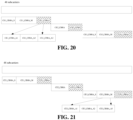
- CE1_CBRA_S identifies a non-competitive random access resource transmitting the Msg3 in a single-tone mode at a coverage level 1 in FIG.
- CE1_CBRA_M identifies a non-competitive random access resource transmitting the Msg3 in a multi-tone mode at the coverage level 1 and CE1_CFRA identifies a non-competitive resource at the coverage level 1.
- CE2_CBRA identifies all competitive random access resources at a coverage level 2
- CE2_CFRA identifies non-competitive resources at the coverage level 2.
- CE3_CBRA identifies all competitive random access resources at a coverage level 3
- CE3_CFRA identifies non-competitive resources at the coverage level 3.
- Manner 2 a certain resource belonging to the physical random access channel (PRACH) resource configured for each coverage level is selected as P1.
- PRACH physical random access channel
- the base station divides unused subcarrier resources in the non-competitive resource at each coverage level into at least one group of data transmission subcarrier resources.
- the non-competitive resources calculated by (nprach-NumSubcarriers - nprach-NumCBRA-StartSubcarriers) should be a period of continuous values, but according to R14 technologies, the UE and the terminal use a mod operation to ensure that the UE still uses subcarriers that the base station may be learned after changing the coverage level, so the actual used non-competitive subcarriers are discontinuous. Therefore, the base station may configure the unused subcarrier resources in the non-competitive resources at each coverage level as P1_CE1.As shown in FIG.
- CE1_CBRA_S identifies the a competitive random access resource transmitting the Msg3 in the single-tone mode at the coverage level 1 in FIG. 19
- CE1_CBRA_S identifies the competitive random access resource transmitting the Msg3 in the multi-tone mode at the coverage level 1
- CE1_CFRA identifies the non-competitive resource at the coverage level 1.
- CE1_CFRA_A1 ⁇ CE1_CFRA_A3 respectively identify resources which have not been configured for the existing terminals in the non-competitive resource at the coverage level 1, and may be configured to be the random access resource for requesting the uplink data transmission resource used for the coverage level 1.
- CE2_CBRA identifies all competitive resources of the coverage level 2.
- CE2_CBRA identifies all non-competitive resources of the coverage level 2.
- CE3_CBRA_S identifies the a competitive random access resource transmitting the Msg3 in the single-tone mode at the coverage level 3
- CE3_CBRA_M identifies the competitive random access resource transmitting the Msg3 in the multi-tone mode at the coverage level 3
- CE3_CFRA identifies the non-competitive resource at the coverage level 3.
- P1 for all CEs (P1_CE1) identifies resources which have not been configured for the existing terminals in all subcarrier resources, and may be configured to be the random access resource for requesting the uplink data transmission resource used for all coverage levels.
- the base station can configure the non-competitive resource at each coverage level as P1 for the R15 UE, provided that the base station is able to distinguish the random access initiated by the UE in the connected state and the idle state through the implementation mode.
- CE1_CBRA_S identifies the a competitive random access resource transmitting the Msg3 in the single-tone mode at the coverage level 1 in FIG.
- CE1_CBRA_M identifies the competitive random access resource transmitting the Msg3 in the multi-tone mode at the coverage level 1 and CE1_CFRA identifies the non-competitive resource at the coverage level 1.
- CE1_CFRA_A1 ⁇ CE1_CFRA_A3 respectively identify part of the non-competitive resources at the coverage level 1.
- These resources have been configured for the existing terminals. If the base station may distinguish between existing terminals and new terminals, these resources may be allocated as the random access resources for requesting the uplink data transmission resource used for the coverage level 1.
- CE2_CBRA identifies all competitive random access resources at the coverage level 2.
- CE2_CBRA identifies all non-competitive resources of the coverage level 2.
- CE3_CBRA_S identifies the a competitive random access resource transmitting the Msg3 in the single-tone mode at the coverage level 3
- CE3_CBRA_M identifies the competitive random access resource transmitting the Msg3 in the multi-tone mode at the coverage level 3
- CE3_CFRA identifies the non-competitive resource at the coverage level 3.
- the base station divides subcarrier resources configured for the Multi-tone Msg3 in the competitive resource at each coverage level into at least one group of data transmission subcarrier resources.
- CE1_CBRA_S identifies the a competitive random access resource transmitting the Msg3 in the single-tone mode at the coverage level 1 in FIG. 21
- CE1_CBRA_M identifies the competitive random access resource transmitting the Msg3 in the multi-tone mode at the coverage level 1
- CE1_CFRA identifies the non-competitive resource at the coverage level 1.
- CE2_CBRA identifies all competitive random access resources at a coverage level 2
- CE2_CFRA identifies non-competitive resources at the coverage level 2.
- CE3_CBRA_S identifies the a competitive random access resource transmitting the Msg3 in the single-tone mode at the coverage level 3
- CE3_CBRA_M identifies the competitive random access resource transmitting the Msg3 in the multi-tone mode at the coverage level 1.
- CE3_CFRA identifies all non-competitive resources of the coverage level 3.
- CE3_CBRA_A3 indicates that some resources are configured from CE3_CBRA_M to identify the random access resource for requesting the uplink data transmission resource used for the coverage level 3.
- An embodiment of the present application provides a data transmission apparatus.
- the apparatus includes a memory and a processor, where the memory stores a program and the data transmission method described in any one of the preceding embodiments is performed when the program is read and executed by the processor.
- An embodiment of the present application provides a computer-readable storage medium storing at least one program.
- the at least one program is executable by at least one processor, to perform the data transmission method mentioned above.
- the computer-readable storage medium includes a U disk, a Read-Only Memory (ROM), a Random Access Memory (RAM), a mobile hard disk, a magnetic disk, an optical disk or a plurality of media capable of storing program codes.
Landscapes
- Engineering & Computer Science (AREA)
- Computer Networks & Wireless Communication (AREA)
- Signal Processing (AREA)
- Mobile Radio Communication Systems (AREA)
Claims (12)
- Verfahren zur Datenübertragung, umfassend:Senden (301) einer Präambel zum wahlfreien Zugriff an eine Basisstation durch ein Endgerät und Empfangen einer von der Basisstation gesendeten Antwort zum wahlfreien Zugriff durch das Endgerät; undSenden (302) einer ersten Anforderungsnachricht, die Uplink-Daten trägt, an die Basisstation durch das Endgerät;dadurch gekennzeichnet, dass das Senden (301) der Präambel zum wahlfreien Zugriff an die Basisstation durch das Endgerät Folgendes umfasst:
als Reaktion auf Bestimmen, dass das Endgerät eine erste voreingestellte Bedingung erfüllt, Senden der Präambel zum wahlfreien Zugriff zum Anfordern einer Uplink-Datenübertragungsressource an die Basisstation durch das Endgerät, wobei das Endgerät die erste voreingestellte Bedingung erfüllt, umfassend: ein Dienstleistungstyp der von dem Endgerät zu sendenden Uplink-Daten gehört zu einem voreingestellten Dienstleistungstyp. - Verfahren zur Datenübertragung nach Anspruch 1, ferner umfassend: in einem Fall, in dem sich das Endgerät vor dem Senden der Präambel zum wahlfreien Zugriff in einem Ruhezustand befindet,
nach dem Empfangen (303) einer zweiten Antwortnachricht, die durch die Basisstation zurückgesendet wird, und dem Bestimmen, dass ein Konflikt erfolgreich gelöst wurde, Aufrechterhalten des Ruhezustands durch das Endgerät durch Einnehmen einer temporären Identität des temporären Funknetzes (temporary-radio network temporary identity, T-RNTI), die durch die Basisstation, die in der Antwort zum wahlfreien Zugriff als eine temporäre Identität des Zellenfunknetzes (cell-radio network temporary identity, C-RNTI) getragen wird, zugewiesen wird, und Aufbewahren der C-RNTI für eine erste Zeitspanne. - Verfahren zur Datenübertragung nach Anspruch 2, wobei die zweite Antwortnachricht mindestens eines von Folgendem trägt:
eine Kennungs-Konfliktauflösung; hochrangige Bestätigungsinformationen für die Uplink-Daten; eine Ausfallangabe für Uplink-Daten; eine Wiederübertragungsangabe für Uplink-Daten; oder Benutzerdienstleistungsdaten. - Verfahren zur Datenübertragung von Anspruch 1, wobei die erste Anforderungsnachricht ferner mindestens eines oder eine Kombination von Folgendem trägt:Angabeinformationen, ob eine S1-Schnittstelle bevorzugt eingerichtet werden soll; Angabeinformationen, ob hochrangige Bestätigungsinformationen für die Uplink-Daten empfangen werden sollen; Informationen zum Identifizieren einer Mobilitätsverwaltungsentität (mobility management entit, MME) bei der sich das Endgerät registriert;Endgerät-Kennungssinformationen; Zugriffsschicht-Sicherheitsinformationen; oder ein Verbindungsaufbaugrund, der der Datenübertragung entspricht.
- Verfahren zur Datenübertragung von Anspruch 2, ferner umfassend: nachdem das Endgerät die zweite Antwortnachricht, die durch die Basisstation zurückgesendet wird, empfängt und die C-RNTI erlangt,
Detektieren einer der folgenden Informationen durch das Endgerät in einem öffentlichen Suchraum oder einem Suchraum zum Übertragen von Zeitplaninformationen der zweiten Antwortnachricht unter Verwendung der C-RNTI:
ein physischer Downlink-Steuerungskanal (physical downlink control channel, PDCCH), Uplink-Zeitplaninformationen oder Downlink-Zeitplaninformationen. - Verfahren zur Datenübertragung nach Anspruch 1, wobei das Senden (301) der Präambel zum wahlfreien Zugriff zum Anfordern der Uplink-Datenübertragungsressource an die Basisstation durch das Endgerät Folgendes umfasst:Auswählen einer Präambel zum wahlfreien Zugriff aus einem Präambelsatz zum wahlfreien Zugriff zum Anfordern der Uplink-Datenübertragungsressource durch das Endgerät und Senden der ausgewählten Präambel zum wahlfreien Zugriff an die Basisstation; oderAuswählen einer Ressource zum wahlfreien Zugriff aus einem Ressourcensatz zum wahlfreien Zugriff zum Anfordern der Uplink-Datenübertragungsressource durch das Endgerät und Senden der Präambel zum wahlfreien Zugriff unter Verwendung der ausgewählten Ressource zum wahlfreien Zugriff an die Basisstation.
- Datenübertragungsverfahren nach Anspruch 1, ferner umfassend eines von Folgendem:Fehlgeschlagen beim Empfangen einer zweiten Antwortnachricht, die durch die Basisstation zurückgegeben wurde, durch das Endgerät;Empfangen der zweiten Antwortnachricht, die eine Ausfallangabe für Uplink-Daten oder eine Wiederübertragungsangabe für Uplink-Daten trägt, die von der Basisstation zurückgegeben wird, durch das Endgerät; undals Reaktion auf das Bestimmen, dass das Endgerät beim Empfangen der von der Basisstation zurückgegebene Antwort zum wahlfreien Zugriff fehlschlägt, Bestimmen eines Ausfalls zum wahlfreien Zugriff durch das Endgerät und Neuinitialisieren des wahlfreien Zugriffs,wobei das Neuinitialisieren des wahlfreien Zugriffs durch das Endgerät Folgendes umfasst:
Bestimmen eine der Präambeln zum wahlfreien Zugriff zum Anfordern der Uplink-Datenübertragungsressource oder die Präambel zum wahlfreien Zugriff nicht zum Anfordern der Datenübertragungsressource durch das Endgerät auszuwählen, um den wahlfreien Zugriff gemäß mindestens eines von Folgendem durchzuführen:einer Anzahl von Ausfällen zum wahlfreien Zugriff, einer Seriennummer jedes Ausfalls zum wahlfreien Zugriff; einer durch das Endgerät erlangten Downlink-Messung; einer Abdeckungsstufe;und einer Anzahl von Wiederholungen. - Verfahren zur Datenübertragung nach Anspruch 1, wobei in dem Fall, in dem sich das Endgerät vor dem Senden der Präambel zum wahlfreien Zugriff in einem verbundenen Zustand befindet, die erste Anforderungsnachricht ferner eines oder eine Kombination von Folgendem trägt:eine C-RNTI, eine RRC-Nachricht und eine Freigabeanforderungsangabe,wobei das Verfahren ferner Folgendes umfasst: in dem Fall, in dem sich das Endgerät vor dem Senden der Präambel zum wahlfreien Zugriff in dem verbundenen Zustand befindet,Empfangen einer zweiten Antwortnachricht, die durch die Basisstation zurückgesendet wird, durch das Endgerät und als Reaktion auf das Bestimmen, dass ein Konflikt erfolgreich gelöst wurde, autonomes Freigeben einer RRC-Verbindung durch das Endgerät und Übergehen in einen Ruhezustand; oderEmpfangen einer zweiten Antwortnachricht, die durch die Basisstation zurückgesendet wird, durch das Endgerät und als Reaktion auf das Bestimmen, dass ein Konflikt erfolgreich gelöst wurde, Verarbeiten einer RRC-Freigabenachricht, die in der zweiten Antwortnachricht getragen wird, durch das Endgerät und Übergehen in einen Ruhezustand.
- Verfahren zur Datenübertragung von Anspruch 1, wobei das Senden (302) der ersten Anforderungsnachricht, die die Uplink-Daten trägt, an die Basisstation durch das Endgerät Folgendes umfasst:Erfassen von Angabeinformationen, die in der Antwort zum wahlfreien Zugriff getragen werden, durch das Endgerät und als Reaktion auf das Bestimmen, dass eine zweite voreingestellte Bedingung erfüllt ist, Senden der ersten Anforderungsnachricht, die die Uplink-Daten trägt, an die Basisstation durch das Endgerät,wobei das Verfahren ferner Folgendes umfasst:Erfassen, durch das Endgerät, einer in der Zufallszugriffsantwort getragenen Anzeigeinformation, und in Antwort auf das Bestimmen, dass eine dritte voreingestellte Bedingung erfüllt ist, Senden, durch das Endgerät, der ersten Anforderungsnachricht, die die RRC-Nachricht trägt, an die Basisstation,wobei das Erfüllen der zweiten voreingestellten Bedingung darin besteht, dass die Angabeinformationen Datenmengeninformationen einer Datengröße mit Uplink-Gewährung sind und die Datengröße mit Uplink-Gewährung größer als ein Uplink-Gewährungsschwellenwert ist, oder dass die Angabeinformationen das direkte Senden der Uplink-Daten zum Zeitpunkt des Sendens der ersten Anforderung angeben; unddas Erfüllen der dritten voreingestellten Bedingung darin besteht, dass die Angabeinformationen die Informationen der Datengröße mit der Uplink-Gewährung sind und die Datengröße mit der Uplink-Gewährung kleiner oder gleich dem Schwellenwert für die Uplink-Gewährung ist, oder dass die Angabeinformationen angeben, dass die RRC-Nachricht zum Zeitpunkt des Sendens der ersten Anforderung getragen werden soll.
- Verfahren zur Datenübertragung nach Anspruch 9, wobei der Uplink-Gewährungsschwellenwert eines von Folgendem ist:ein Uplink-Gewährungsschwellenwert, der einem Zustand des Endgeräts vor dem Senden der Präambel zum wahlfreien Zugriff entspricht; oderein Uplink-Gewährungsschwellenwert, der einer Abdeckungsstufe entspricht, auf der sich das Endgerät befindet, und der Zustand des Endgeräts vor dem Senden der Präambel zum wahlfreien Zugriff,und/oder wobei ein Uplink-Gewährungsschwellenwert, der dem Endgerät in einem verbundenen Zustand entspricht, größer ist als ein Uplink-Gewährungsschwellenwert, der dem Endgerät in einem Ruhezustand entspricht.
- Endgerät, umfassend einen Speicher und einen Prozessor, wobei der Speicher ein Programm speichert, das, wenn es durch den Prozessor gelesen und ausgeführt wird, das Verfahren zur Datenübertragung nach einem der Ansprüche 1 bis 10 durchführt.
- Verfahren zur Datenübertragung, umfassend:Empfangen (401) einer Präambel zum wahlfreien Zugriff, die durch ein Endgerät gesendet wird, durch eine Basisstation und Senden einer Antwort zum wahlfreien Zugriff an das Endgerät durch die Basisstation; undEmpfangen (402) einer ersten Anforderungsnachricht, die durch das Endgerät gesendete Uplink-Daten trägt, durch die Basisstation;dadurch gekennzeichnet, dass die Präambel zum wahlfreien Zugriff zum Anfordern einer Uplink-Datenübertragungsressource als Reaktion darauf durch das Endgerät gesendet wird, dass das Endgerät eine erste voreingestellte Bedingung erfüllt, wobei das Endgerät, das die erste voreingestellte Bedingung erfüllt, Folgendes umfasst: einen Dienstleistungstyp der durch das Endgerät zu sendenden Uplink-Daten gehört zu einem voreingestellten Dienstleistungstyp.
Priority Applications (1)
| Application Number | Priority Date | Filing Date | Title |
|---|---|---|---|
| EP25164373.0A EP4550894A3 (de) | 2017-08-11 | 2018-08-13 | Datenübertragungsverfahren und -vorrichtung sowie computerlesbares speichermedium |
Applications Claiming Priority (2)
| Application Number | Priority Date | Filing Date | Title |
|---|---|---|---|
| CN201710687283.5A CN109392061B (zh) | 2017-08-11 | 2017-08-11 | 一种数据传输方法及装置、计算机可读存储介质 |
| PCT/CN2018/100247 WO2019029747A1 (zh) | 2017-08-11 | 2018-08-13 | 一种数据传输方法及装置、计算机可读存储介质 |
Related Child Applications (1)
| Application Number | Title | Priority Date | Filing Date |
|---|---|---|---|
| EP25164373.0A Division EP4550894A3 (de) | 2017-08-11 | 2018-08-13 | Datenübertragungsverfahren und -vorrichtung sowie computerlesbares speichermedium |
Publications (3)
| Publication Number | Publication Date |
|---|---|
| EP3668190A1 EP3668190A1 (de) | 2020-06-17 |
| EP3668190A4 EP3668190A4 (de) | 2021-08-18 |
| EP3668190B1 true EP3668190B1 (de) | 2025-03-19 |
Family
ID=65270910
Family Applications (2)
| Application Number | Title | Priority Date | Filing Date |
|---|---|---|---|
| EP25164373.0A Pending EP4550894A3 (de) | 2017-08-11 | 2018-08-13 | Datenübertragungsverfahren und -vorrichtung sowie computerlesbares speichermedium |
| EP18845080.3A Active EP3668190B1 (de) | 2017-08-11 | 2018-08-13 | Verfahren und vorrichtung zur datenübertragung |
Family Applications Before (1)
| Application Number | Title | Priority Date | Filing Date |
|---|---|---|---|
| EP25164373.0A Pending EP4550894A3 (de) | 2017-08-11 | 2018-08-13 | Datenübertragungsverfahren und -vorrichtung sowie computerlesbares speichermedium |
Country Status (5)
| Country | Link |
|---|---|
| US (3) | US11357054B2 (de) |
| EP (2) | EP4550894A3 (de) |
| CN (2) | CN115297535B (de) |
| ES (1) | ES3027983T3 (de) |
| WO (1) | WO2019029747A1 (de) |
Families Citing this family (39)
| Publication number | Priority date | Publication date | Assignee | Title |
|---|---|---|---|---|
| CN115297535B (zh) | 2017-08-11 | 2025-02-25 | 中兴通讯股份有限公司 | 一种数据传输方法及装置、计算机可读存储介质 |
| WO2019061357A1 (zh) * | 2017-09-29 | 2019-04-04 | 北京小米移动软件有限公司 | 随机接入配置方法及装置 |
| CN109756991B (zh) * | 2017-11-06 | 2021-11-19 | 华为技术有限公司 | 通信方法及装置 |
| EP3714657A1 (de) * | 2017-11-24 | 2020-09-30 | Sony Corporation | Frühe datenübertragung in einem direktzugriffsverfahren |
| US11197324B2 (en) * | 2018-02-23 | 2021-12-07 | Qualcomm Incorporated | NR RACH MSG3 and MSG4 resource configuration for CV2X |
| CN110708750B (zh) * | 2018-07-09 | 2021-06-22 | 华为技术有限公司 | 一种功率调整方法、终端及存储介质 |
| JP7209332B2 (ja) * | 2018-08-30 | 2023-01-20 | パナソニックIpマネジメント株式会社 | 無線通信システム、基地局および無線通信方法 |
| US11917695B2 (en) * | 2018-09-24 | 2024-02-27 | Telefonaktiebolaget Lm Ericsson (Publ) | Early mobile-terminated data transmission |
| US11259331B2 (en) | 2018-09-27 | 2022-02-22 | Ofinno, Llc | RACH type switching |
| TWI704826B (zh) * | 2018-09-28 | 2020-09-11 | 財團法人資訊工業策進會 | 用於行動通訊系統之使用者裝置及基地台 |
| CN112020150B (zh) * | 2019-05-31 | 2022-04-22 | 上海华为技术有限公司 | 一种上行调度方法及装置、网络设备和可读存储介质 |
| US12238580B2 (en) * | 2019-06-19 | 2025-02-25 | Qualcomm Incorporated | System and method for flow control and acknowledgement transmission |
| CN112291848B (zh) * | 2019-07-23 | 2023-09-26 | 上海华为技术有限公司 | 一种终端能力配置的方法及通信装置 |
| CN112312479B (zh) * | 2019-07-26 | 2025-08-29 | 北京三星通信技术研究有限公司 | 上行信号的发送方法以及用户设备 |
| CN113647169A (zh) * | 2019-08-07 | 2021-11-12 | Oppo广东移动通信有限公司 | 通信方法和通信装置 |
| CN110536472B (zh) * | 2019-08-08 | 2025-02-28 | 中兴通讯股份有限公司 | 一种数据传输方法、装置及计算机可读存储介质 |
| EP4014542B1 (de) * | 2019-08-14 | 2024-09-11 | Nokia Technologies Oy | Vorrichtung, verfahren und computerprogramm |
| EP4018765A4 (de) | 2019-08-20 | 2023-05-03 | Qualcomm Incorporated | Mit einem mobilgerät erzeugte daten über eine dedizierte vorkonfigurierte uplink-ressource in einem ruhemodus oder einem inaktiven modus |
| CN113647172B (zh) * | 2020-03-10 | 2025-04-15 | 北京小米移动软件有限公司 | 数据传输方法、装置及存储介质 |
| CN113518467B (zh) * | 2020-04-10 | 2024-04-16 | 大唐移动通信设备有限公司 | 数据传输方法、装置及终端 |
| WO2021212430A1 (zh) * | 2020-04-23 | 2021-10-28 | 北京小米移动软件有限公司 | 发送数据的方法、装置、用户设备及存储介质 |
| CN116250353B (zh) * | 2020-07-21 | 2025-02-07 | 高通股份有限公司 | 通过随机接入或专用上行链路资源的上行链路数据传送 |
| CN112075118B (zh) * | 2020-08-05 | 2024-06-21 | 北京小米移动软件有限公司 | 随机接入的方法、装置、设备及存储介质 |
| CN112055324B (zh) * | 2020-08-26 | 2023-08-18 | 陈一丰 | 一种用于物联网的番茄种植大棚温度控制方法及系统 |
| CN116530204A (zh) | 2020-08-31 | 2023-08-01 | 欧芬诺有限责任公司 | 小数据传输的后续数据信息 |
| CN114340044B (zh) * | 2020-10-10 | 2025-05-30 | 展讯通信(上海)有限公司 | 物理层标识管理方法与装置、终端和管理设备 |
| CN114599114A (zh) * | 2020-12-07 | 2022-06-07 | 上海朗帛通信技术有限公司 | 一种被用于中继无线通信中的方法和装置 |
| CN114982327A (zh) * | 2020-12-15 | 2022-08-30 | 北京小米移动软件有限公司 | 传输数据的方法、装置、通信设备及存储介质 |
| CN114828269A (zh) * | 2021-01-21 | 2022-07-29 | 大唐移动通信设备有限公司 | 数据传输方法及装置、终端、接入网设备 |
| CN115398772A (zh) * | 2021-03-22 | 2022-11-25 | 北京小米移动软件有限公司 | 一种充电方法及装置 |
| CN113260085B (zh) * | 2021-06-21 | 2021-11-09 | 北京智联安科技有限公司 | 一种提高上行数据传输效率的方法及装置 |
| CN116367345B (zh) * | 2021-12-28 | 2025-09-30 | 地球脉动(无锡)科技有限公司 | 一种特殊终端的接入方法 |
| CN114374962B (zh) * | 2022-01-18 | 2024-04-09 | 亿咖通(湖北)技术有限公司 | 自组网的通信方法、终端、车辆及存储介质 |
| US20250220701A1 (en) * | 2022-02-28 | 2025-07-03 | Beijing Xiaomi Mobile Software Co., Ltd. | Method and device for uplink transmission, and storage medium |
| CN114710822B (zh) * | 2022-04-24 | 2024-11-19 | 维沃移动通信有限公司 | 无线接入处理方法、信息传输方法及设备 |
| CN117015060A (zh) * | 2022-04-29 | 2023-11-07 | 中国移动通信有限公司研究院 | 随机接入方法、终端、网络侧设备及可读存储介质 |
| CN117793941B (zh) * | 2024-02-26 | 2024-06-18 | 深圳国人无线通信有限公司 | 随机接入场景中优化基站与终端通信连接的方法和系统 |
| CN120264486A (zh) * | 2025-03-12 | 2025-07-04 | 深圳传音控股股份有限公司 | 处理方法、通信设备及存储介质 |
| CN120111601B (zh) * | 2025-05-09 | 2025-08-08 | 常州移远通信技术有限公司 | 一种数据传输控制方法、装置、服务器及存储介质 |
Family Cites Families (25)
| Publication number | Priority date | Publication date | Assignee | Title |
|---|---|---|---|---|
| WO2010115303A1 (zh) | 2009-04-08 | 2010-10-14 | 华为技术有限公司 | 小区信息的传递方法、网络设备和系统 |
| CN101873707B (zh) * | 2009-04-24 | 2013-11-20 | 电信科学技术研究院 | 下行数据调度方法及系统 |
| WO2010124440A1 (zh) * | 2009-04-27 | 2010-11-04 | 华为技术有限公司 | 一种随机接入竞争解决的判断方法、装置和系统 |
| CN101895986A (zh) * | 2009-05-21 | 2010-11-24 | 中兴通讯股份有限公司 | 本地ip接入中实现寻呼的方法及系统 |
| CN101932117A (zh) | 2009-06-20 | 2010-12-29 | 中兴通讯股份有限公司 | 中继节点的随机接入方法 |
| CN102055700B (zh) * | 2009-10-28 | 2015-06-03 | 中兴通讯股份有限公司 | 载波聚合中分量载波配置的方法及装置 |
| CN102083228B (zh) | 2010-02-11 | 2015-05-20 | 电信科学技术研究院 | 一种中继系统的随机接入方法和设备 |
| CN102917468A (zh) * | 2011-08-01 | 2013-02-06 | 中兴通讯股份有限公司 | 非冲突随机接入的方法及系统、网络侧网元、用户设备 |
| US8718667B2 (en) * | 2011-08-05 | 2014-05-06 | Apple, Inc. | Adaptive random access channel retransmission |
| US8989089B2 (en) * | 2011-08-18 | 2015-03-24 | Ofinno Technologies, Llc | Automobile data transmission |
| CN102300331B (zh) * | 2011-08-19 | 2013-11-27 | 电信科学技术研究院 | 数据传输方法和设备 |
| US9001720B2 (en) * | 2011-08-31 | 2015-04-07 | Maarten Menzo Wentink | Power save with data fetch time, with end of data indication, and with more data acknowledgement |
| US9338681B2 (en) * | 2012-08-10 | 2016-05-10 | Industrial Technology Research Institute | Method for reporting minimization drive test measurement data |
| US9125112B2 (en) * | 2013-08-06 | 2015-09-01 | Blackberry Limited | Communicating radio resource configuration information |
| US10015824B2 (en) * | 2014-02-28 | 2018-07-03 | Lg Electronics Inc. | Method and apparatus for transmitting uplink data having low latency in wireless communication system |
| KR101851490B1 (ko) * | 2014-07-08 | 2018-04-23 | 엘지전자 주식회사 | 무선랜에서 다른 bss에서 전송된 프레임을 기반으로 파워 세이브 모드로 동작하는 방법 및 장치 |
| US9723651B2 (en) * | 2014-11-10 | 2017-08-01 | Qualcomm Incorporated | Enhanced connection management for multiple access networks |
| JP6961484B2 (ja) * | 2015-08-13 | 2021-11-05 | 株式会社Nttドコモ | 端末、無線通信方法及びシステム |
| RU2693269C1 (ru) * | 2015-09-25 | 2019-07-01 | Телефонактиеболагет Лм Эрикссон (Пабл) | Способы, обеспечивающие предоставления восходящего канала, в том числе конфигурацию во временной области, и соответствующие беспроводные терминалы и сетевые узлы |
| KR102328451B1 (ko) * | 2015-10-22 | 2021-11-18 | 삼성전자주식회사 | 셀 선택 방법 및 전자 장치 |
| EP3607798B1 (de) * | 2017-04-03 | 2022-11-09 | Telefonaktiebolaget LM Ericsson (publ) | Übertragung früher daten in einer nachricht 3 (msg3) über eine doppelte berechtigung |
| KR20190127742A (ko) * | 2017-04-04 | 2019-11-13 | 엘지전자 주식회사 | 랜덤 액세스 절차를 수행하기 위한 장치 및 방법 |
| US10397833B2 (en) * | 2017-07-27 | 2019-08-27 | Lg Electronics Inc. | Method and apparatus for performing EDT |
| US11350445B2 (en) * | 2017-08-10 | 2022-05-31 | Kyocera Corporation | Communication control method for controlling a user equipment to perform early data transmission |
| CN115297535B (zh) * | 2017-08-11 | 2025-02-25 | 中兴通讯股份有限公司 | 一种数据传输方法及装置、计算机可读存储介质 |
-
2017
- 2017-08-11 CN CN202211006956.3A patent/CN115297535B/zh active Active
- 2017-08-11 CN CN201710687283.5A patent/CN109392061B/zh active Active
-
2018
- 2018-08-13 US US16/638,311 patent/US11357054B2/en active Active
- 2018-08-13 EP EP25164373.0A patent/EP4550894A3/de active Pending
- 2018-08-13 ES ES18845080T patent/ES3027983T3/es active Active
- 2018-08-13 EP EP18845080.3A patent/EP3668190B1/de active Active
- 2018-08-13 WO PCT/CN2018/100247 patent/WO2019029747A1/zh not_active Ceased
-
2022
- 2022-05-06 US US17/738,180 patent/US11751255B2/en active Active
-
2023
- 2023-07-19 US US18/223,753 patent/US12452929B2/en active Active
Also Published As
| Publication number | Publication date |
|---|---|
| CN109392061A (zh) | 2019-02-26 |
| WO2019029747A1 (zh) | 2019-02-14 |
| CN115297535A (zh) | 2022-11-04 |
| US20230363009A1 (en) | 2023-11-09 |
| US11751255B2 (en) | 2023-09-05 |
| ES3027983T3 (en) | 2025-06-17 |
| US20200229235A1 (en) | 2020-07-16 |
| US12452929B2 (en) | 2025-10-21 |
| EP4550894A3 (de) | 2025-08-06 |
| US11357054B2 (en) | 2022-06-07 |
| CN109392061B (zh) | 2022-08-09 |
| EP4550894A2 (de) | 2025-05-07 |
| EP3668190A4 (de) | 2021-08-18 |
| CN115297535B (zh) | 2025-02-25 |
| EP3668190A1 (de) | 2020-06-17 |
| US20220264657A1 (en) | 2022-08-18 |
Similar Documents
| Publication | Publication Date | Title |
|---|---|---|
| US11751255B2 (en) | Data transmission method in a wireless communication network | |
| EP3607801B1 (de) | Vorrichtung und verfahren zur durchführung eines direktzugriffsverfahrens | |
| JP6960443B2 (ja) | 無線通信システムにおけるランダムアクセス手順のmsg3送信を改善するための方法及び装置 | |
| US20230105318A1 (en) | Method and apparatus for performing communication in wireless communication system | |
| US10178703B2 (en) | Stopping a random access procedure | |
| CN114828294B (zh) | 一种搜索空间优化方法、装置及存储介质 | |
| CN103533662B (zh) | 上行调度请求方法、上行调度方法及其设备 | |
| KR101637004B1 (ko) | 멀티캐리어 무선 통신에서의 임의 접속을 위한 방법 및 장치 | |
| CN110945957A (zh) | 执行随机接入过程的方法和装置 | |
| US20110287776A1 (en) | Determination of user equipment antenna capability | |
| WO2010127520A1 (zh) | 随机接入方法以及基站 | |
| US20220400520A1 (en) | Data transmission method and apparatus, and computer-readable storage medium | |
| CN110583088B (zh) | 从多种类型的前导码组中的随机接入前导码选择 | |
| CN111586707B (zh) | 一种随机接入过程切换方法、装置和系统 | |
| CA2865692C (en) | Connection setup with an access selection of a terminal | |
| KR20090043434A (ko) | 무선통신 시스템에서 랜덤 액세스 과정 수행 방법 | |
| WO2026020387A1 (zh) | 无线通信方法、装置、设备及存储介质 | |
| CN111132360A (zh) | 消息发送、消息配置方法及装置、存储介质 |
Legal Events
| Date | Code | Title | Description |
|---|---|---|---|
| STAA | Information on the status of an ep patent application or granted ep patent |
Free format text: STATUS: THE INTERNATIONAL PUBLICATION HAS BEEN MADE |
|
| PUAI | Public reference made under article 153(3) epc to a published international application that has entered the european phase |
Free format text: ORIGINAL CODE: 0009012 |
|
| STAA | Information on the status of an ep patent application or granted ep patent |
Free format text: STATUS: REQUEST FOR EXAMINATION WAS MADE |
|
| 17P | Request for examination filed |
Effective date: 20200311 |
|
| AK | Designated contracting states |
Kind code of ref document: A1 Designated state(s): AL AT BE BG CH CY CZ DE DK EE ES FI FR GB GR HR HU IE IS IT LI LT LU LV MC MK MT NL NO PL PT RO RS SE SI SK SM TR |
|
| AX | Request for extension of the european patent |
Extension state: BA ME |
|
| DAV | Request for validation of the european patent (deleted) | ||
| DAX | Request for extension of the european patent (deleted) | ||
| RIC1 | Information provided on ipc code assigned before grant |
Ipc: H04W 74/08 20090101AFI20210409BHEP Ipc: H04W 52/02 20090101ALI20210409BHEP Ipc: H04W 52/00 20090101ALI20210409BHEP |
|
| REG | Reference to a national code |
Ref country code: DE Free format text: PREVIOUS MAIN CLASS: H04W0052020000 Ref country code: DE Ref legal event code: R079 Ref document number: 602018080334 Country of ref document: DE Free format text: PREVIOUS MAIN CLASS: H04W0052020000 Ipc: H04W0074080000 |
|
| A4 | Supplementary search report drawn up and despatched |
Effective date: 20210716 |
|
| RIC1 | Information provided on ipc code assigned before grant |
Ipc: H04W 74/08 20090101AFI20210712BHEP Ipc: H04W 52/02 20090101ALI20210712BHEP Ipc: H04W 52/00 20090101ALI20210712BHEP |
|
| STAA | Information on the status of an ep patent application or granted ep patent |
Free format text: STATUS: EXAMINATION IS IN PROGRESS |
|
| 17Q | First examination report despatched |
Effective date: 20230320 |
|
| GRAP | Despatch of communication of intention to grant a patent |
Free format text: ORIGINAL CODE: EPIDOSNIGR1 |
|
| STAA | Information on the status of an ep patent application or granted ep patent |
Free format text: STATUS: GRANT OF PATENT IS INTENDED |
|
| INTG | Intention to grant announced |
Effective date: 20241112 |
|
| RIN1 | Information on inventor provided before grant (corrected) |
Inventor name: SHA, XIUBIN Inventor name: DAI, BO Inventor name: LU, TING |
|
| GRAS | Grant fee paid |
Free format text: ORIGINAL CODE: EPIDOSNIGR3 |
|
| GRAA | (expected) grant |
Free format text: ORIGINAL CODE: 0009210 |
|
| STAA | Information on the status of an ep patent application or granted ep patent |
Free format text: STATUS: THE PATENT HAS BEEN GRANTED |
|
| AK | Designated contracting states |
Kind code of ref document: B1 Designated state(s): AL AT BE BG CH CY CZ DE DK EE ES FI FR GB GR HR HU IE IS IT LI LT LU LV MC MK MT NL NO PL PT RO RS SE SI SK SM TR |
|
| REG | Reference to a national code |
Ref country code: GB Ref legal event code: FG4D |
|
| REG | Reference to a national code |
Ref country code: CH Ref legal event code: EP |
|
| REG | Reference to a national code |
Ref country code: IE Ref legal event code: FG4D |
|
| REG | Reference to a national code |
Ref country code: DE Ref legal event code: R096 Ref document number: 602018080334 Country of ref document: DE |
|
| REG | Reference to a national code |
Ref country code: SE Ref legal event code: TRGR |
|
| REG | Reference to a national code |
Ref country code: ES Ref legal event code: FG2A Ref document number: 3027983 Country of ref document: ES Kind code of ref document: T3 Effective date: 20250617 |
|
| REG | Reference to a national code |
Ref country code: NL Ref legal event code: FP |
|
| PG25 | Lapsed in a contracting state [announced via postgrant information from national office to epo] |
Ref country code: RS Free format text: LAPSE BECAUSE OF FAILURE TO SUBMIT A TRANSLATION OF THE DESCRIPTION OR TO PAY THE FEE WITHIN THE PRESCRIBED TIME-LIMIT Effective date: 20250619 |
|
| PG25 | Lapsed in a contracting state [announced via postgrant information from national office to epo] |
Ref country code: FI Free format text: LAPSE BECAUSE OF FAILURE TO SUBMIT A TRANSLATION OF THE DESCRIPTION OR TO PAY THE FEE WITHIN THE PRESCRIBED TIME-LIMIT Effective date: 20250319 |
|
| PGFP | Annual fee paid to national office [announced via postgrant information from national office to epo] |
Ref country code: GB Payment date: 20250619 Year of fee payment: 8 |
|
| REG | Reference to a national code |
Ref country code: LT Ref legal event code: MG9D |
|
| PG25 | Lapsed in a contracting state [announced via postgrant information from national office to epo] |
Ref country code: NO Free format text: LAPSE BECAUSE OF FAILURE TO SUBMIT A TRANSLATION OF THE DESCRIPTION OR TO PAY THE FEE WITHIN THE PRESCRIBED TIME-LIMIT Effective date: 20250619 |
|
| PGFP | Annual fee paid to national office [announced via postgrant information from national office to epo] |
Ref country code: NL Payment date: 20250613 Year of fee payment: 8 |
|
| PG25 | Lapsed in a contracting state [announced via postgrant information from national office to epo] |
Ref country code: HR Free format text: LAPSE BECAUSE OF FAILURE TO SUBMIT A TRANSLATION OF THE DESCRIPTION OR TO PAY THE FEE WITHIN THE PRESCRIBED TIME-LIMIT Effective date: 20250319 |
|
| PG25 | Lapsed in a contracting state [announced via postgrant information from national office to epo] |
Ref country code: LV Free format text: LAPSE BECAUSE OF FAILURE TO SUBMIT A TRANSLATION OF THE DESCRIPTION OR TO PAY THE FEE WITHIN THE PRESCRIBED TIME-LIMIT Effective date: 20250319 |
|
| PGFP | Annual fee paid to national office [announced via postgrant information from national office to epo] |
Ref country code: FR Payment date: 20250610 Year of fee payment: 8 |
|
| PG25 | Lapsed in a contracting state [announced via postgrant information from national office to epo] |
Ref country code: GR Free format text: LAPSE BECAUSE OF FAILURE TO SUBMIT A TRANSLATION OF THE DESCRIPTION OR TO PAY THE FEE WITHIN THE PRESCRIBED TIME-LIMIT Effective date: 20250620 Ref country code: BG Free format text: LAPSE BECAUSE OF FAILURE TO SUBMIT A TRANSLATION OF THE DESCRIPTION OR TO PAY THE FEE WITHIN THE PRESCRIBED TIME-LIMIT Effective date: 20250319 |
|
| PGFP | Annual fee paid to national office [announced via postgrant information from national office to epo] |
Ref country code: SE Payment date: 20250610 Year of fee payment: 8 |
|
| REG | Reference to a national code |
Ref country code: AT Ref legal event code: MK05 Ref document number: 1778040 Country of ref document: AT Kind code of ref document: T Effective date: 20250319 |
|
| PG25 | Lapsed in a contracting state [announced via postgrant information from national office to epo] |
Ref country code: SM Free format text: LAPSE BECAUSE OF FAILURE TO SUBMIT A TRANSLATION OF THE DESCRIPTION OR TO PAY THE FEE WITHIN THE PRESCRIBED TIME-LIMIT Effective date: 20250319 |
|
| PG25 | Lapsed in a contracting state [announced via postgrant information from national office to epo] |
Ref country code: PT Free format text: LAPSE BECAUSE OF FAILURE TO SUBMIT A TRANSLATION OF THE DESCRIPTION OR TO PAY THE FEE WITHIN THE PRESCRIBED TIME-LIMIT Effective date: 20250721 |
|
| PGFP | Annual fee paid to national office [announced via postgrant information from national office to epo] |
Ref country code: ES Payment date: 20250909 Year of fee payment: 8 |
|
| PGFP | Annual fee paid to national office [announced via postgrant information from national office to epo] |
Ref country code: DE Payment date: 20250618 Year of fee payment: 8 |
|
| PG25 | Lapsed in a contracting state [announced via postgrant information from national office to epo] |
Ref country code: PL Free format text: LAPSE BECAUSE OF FAILURE TO SUBMIT A TRANSLATION OF THE DESCRIPTION OR TO PAY THE FEE WITHIN THE PRESCRIBED TIME-LIMIT Effective date: 20250319 |
|
| PGFP | Annual fee paid to national office [announced via postgrant information from national office to epo] |
Ref country code: IT Payment date: 20250722 Year of fee payment: 8 |
|
| PG25 | Lapsed in a contracting state [announced via postgrant information from national office to epo] |
Ref country code: AT Free format text: LAPSE BECAUSE OF FAILURE TO SUBMIT A TRANSLATION OF THE DESCRIPTION OR TO PAY THE FEE WITHIN THE PRESCRIBED TIME-LIMIT Effective date: 20250319 |
|
| PG25 | Lapsed in a contracting state [announced via postgrant information from national office to epo] |
Ref country code: CZ Free format text: LAPSE BECAUSE OF FAILURE TO SUBMIT A TRANSLATION OF THE DESCRIPTION OR TO PAY THE FEE WITHIN THE PRESCRIBED TIME-LIMIT Effective date: 20250319 Ref country code: EE Free format text: LAPSE BECAUSE OF FAILURE TO SUBMIT A TRANSLATION OF THE DESCRIPTION OR TO PAY THE FEE WITHIN THE PRESCRIBED TIME-LIMIT Effective date: 20250319 |
|
| PG25 | Lapsed in a contracting state [announced via postgrant information from national office to epo] |
Ref country code: RO Free format text: LAPSE BECAUSE OF FAILURE TO SUBMIT A TRANSLATION OF THE DESCRIPTION OR TO PAY THE FEE WITHIN THE PRESCRIBED TIME-LIMIT Effective date: 20250319 |
|
| PG25 | Lapsed in a contracting state [announced via postgrant information from national office to epo] |
Ref country code: SK Free format text: LAPSE BECAUSE OF FAILURE TO SUBMIT A TRANSLATION OF THE DESCRIPTION OR TO PAY THE FEE WITHIN THE PRESCRIBED TIME-LIMIT Effective date: 20250319 |
|
| PG25 | Lapsed in a contracting state [announced via postgrant information from national office to epo] |
Ref country code: IS Free format text: LAPSE BECAUSE OF FAILURE TO SUBMIT A TRANSLATION OF THE DESCRIPTION OR TO PAY THE FEE WITHIN THE PRESCRIBED TIME-LIMIT Effective date: 20250719 |
|
| REG | Reference to a national code |
Ref country code: DE Ref legal event code: R097 Ref document number: 602018080334 Country of ref document: DE |
|
| PG25 | Lapsed in a contracting state [announced via postgrant information from national office to epo] |
Ref country code: DK Free format text: LAPSE BECAUSE OF FAILURE TO SUBMIT A TRANSLATION OF THE DESCRIPTION OR TO PAY THE FEE WITHIN THE PRESCRIBED TIME-LIMIT Effective date: 20250319 |
|
| PLBE | No opposition filed within time limit |
Free format text: ORIGINAL CODE: 0009261 |
|
| STAA | Information on the status of an ep patent application or granted ep patent |
Free format text: STATUS: NO OPPOSITION FILED WITHIN TIME LIMIT |
|
| REG | Reference to a national code |
Ref country code: CH Ref legal event code: L10 Free format text: ST27 STATUS EVENT CODE: U-0-0-L10-L00 (AS PROVIDED BY THE NATIONAL OFFICE) Effective date: 20260128 |
|
| 26N | No opposition filed |
Effective date: 20251222 |
|
| REG | Reference to a national code |
Ref country code: CH Ref legal event code: H13 Free format text: ST27 STATUS EVENT CODE: U-0-0-H10-H13 (AS PROVIDED BY THE NATIONAL OFFICE) Effective date: 20260324 |
|
| PG25 | Lapsed in a contracting state [announced via postgrant information from national office to epo] |
Ref country code: MC Free format text: LAPSE BECAUSE OF FAILURE TO SUBMIT A TRANSLATION OF THE DESCRIPTION OR TO PAY THE FEE WITHIN THE PRESCRIBED TIME-LIMIT Effective date: 20250319 |
|
| PG25 | Lapsed in a contracting state [announced via postgrant information from national office to epo] |
Ref country code: LU Free format text: LAPSE BECAUSE OF NON-PAYMENT OF DUE FEES Effective date: 20250813 |