EP3673900A1 - Nasenpulverformulierung zur behandlung von hypoglykämie - Google Patents
Nasenpulverformulierung zur behandlung von hypoglykämie Download PDFInfo
- Publication number
- EP3673900A1 EP3673900A1 EP20151175.5A EP20151175A EP3673900A1 EP 3673900 A1 EP3673900 A1 EP 3673900A1 EP 20151175 A EP20151175 A EP 20151175A EP 3673900 A1 EP3673900 A1 EP 3673900A1
- Authority
- EP
- European Patent Office
- Prior art keywords
- glucagon
- powder
- composition
- cyclodextrin
- formulation
- Prior art date
- Legal status (The legal status is an assumption and is not a legal conclusion. Google has not performed a legal analysis and makes no representation as to the accuracy of the status listed.)
- Granted
Links
Images




Classifications
-
- A—HUMAN NECESSITIES
- A61—MEDICAL OR VETERINARY SCIENCE; HYGIENE
- A61K—PREPARATIONS FOR MEDICAL, DENTAL OR TOILETRY PURPOSES
- A61K38/00—Medicinal preparations containing peptides
- A61K38/16—Peptides having more than 20 amino acids; Gastrins; Somatostatins; Melanotropins; Derivatives thereof
- A61K38/17—Peptides having more than 20 amino acids; Gastrins; Somatostatins; Melanotropins; Derivatives thereof from animals; from humans
- A61K38/22—Hormones
- A61K38/26—Glucagons
-
- A—HUMAN NECESSITIES
- A61—MEDICAL OR VETERINARY SCIENCE; HYGIENE
- A61K—PREPARATIONS FOR MEDICAL, DENTAL OR TOILETRY PURPOSES
- A61K31/00—Medicinal preparations containing organic active ingredients
- A61K31/70—Carbohydrates; Sugars; Derivatives thereof
- A61K31/715—Polysaccharides, i.e. having more than five saccharide radicals attached to each other by glycosidic linkages; Derivatives thereof, e.g. ethers, esters
- A61K31/716—Glucans
- A61K31/724—Cyclodextrins
-
- A—HUMAN NECESSITIES
- A61—MEDICAL OR VETERINARY SCIENCE; HYGIENE
- A61K—PREPARATIONS FOR MEDICAL, DENTAL OR TOILETRY PURPOSES
- A61K47/00—Medicinal preparations characterised by the non-active ingredients used, e.g. carriers or inert additives; Targeting or modifying agents chemically bound to the active ingredient
- A61K47/06—Organic compounds, e.g. natural or synthetic hydrocarbons, polyolefins, mineral oil, petrolatum or ozokerite
- A61K47/08—Organic compounds, e.g. natural or synthetic hydrocarbons, polyolefins, mineral oil, petrolatum or ozokerite containing oxygen, e.g. ethers, acetals, ketones, quinones, aldehydes, peroxides
- A61K47/12—Carboxylic acids; Salts or anhydrides thereof
-
- A—HUMAN NECESSITIES
- A61—MEDICAL OR VETERINARY SCIENCE; HYGIENE
- A61K—PREPARATIONS FOR MEDICAL, DENTAL OR TOILETRY PURPOSES
- A61K47/00—Medicinal preparations characterised by the non-active ingredients used, e.g. carriers or inert additives; Targeting or modifying agents chemically bound to the active ingredient
- A61K47/06—Organic compounds, e.g. natural or synthetic hydrocarbons, polyolefins, mineral oil, petrolatum or ozokerite
- A61K47/24—Organic compounds, e.g. natural or synthetic hydrocarbons, polyolefins, mineral oil, petrolatum or ozokerite containing atoms other than carbon, hydrogen, oxygen, halogen, nitrogen or sulfur, e.g. cyclomethicone or phospholipids
-
- A—HUMAN NECESSITIES
- A61—MEDICAL OR VETERINARY SCIENCE; HYGIENE
- A61K—PREPARATIONS FOR MEDICAL, DENTAL OR TOILETRY PURPOSES
- A61K47/00—Medicinal preparations characterised by the non-active ingredients used, e.g. carriers or inert additives; Targeting or modifying agents chemically bound to the active ingredient
- A61K47/30—Macromolecular organic or inorganic compounds, e.g. inorganic polyphosphates
- A61K47/36—Polysaccharides; Derivatives thereof, e.g. gums, starch, alginate, dextrin, hyaluronic acid, chitosan, inulin, agar or pectin
- A61K47/40—Cyclodextrins; Derivatives thereof
-
- A—HUMAN NECESSITIES
- A61—MEDICAL OR VETERINARY SCIENCE; HYGIENE
- A61K—PREPARATIONS FOR MEDICAL, DENTAL OR TOILETRY PURPOSES
- A61K9/00—Medicinal preparations characterised by special physical form
- A61K9/0012—Galenical forms characterised by the site of application
- A61K9/0043—Nose
-
- A—HUMAN NECESSITIES
- A61—MEDICAL OR VETERINARY SCIENCE; HYGIENE
- A61K—PREPARATIONS FOR MEDICAL, DENTAL OR TOILETRY PURPOSES
- A61K9/00—Medicinal preparations characterised by special physical form
- A61K9/14—Particulate form, e.g. powders, Processes for size reducing of pure drugs or the resulting products, Pure drug nanoparticles
- A61K9/141—Intimate drug-carrier mixtures characterised by the carrier, e.g. ordered mixtures, adsorbates, solid solutions, eutectica, co-dried, co-solubilised, co-kneaded, co-milled, co-ground products, co-precipitates, co-evaporates, co-extrudates, co-melts; Drug nanoparticles with adsorbed surface modifiers
- A61K9/145—Intimate drug-carrier mixtures characterised by the carrier, e.g. ordered mixtures, adsorbates, solid solutions, eutectica, co-dried, co-solubilised, co-kneaded, co-milled, co-ground products, co-precipitates, co-evaporates, co-extrudates, co-melts; Drug nanoparticles with adsorbed surface modifiers with organic compounds
-
- A—HUMAN NECESSITIES
- A61—MEDICAL OR VETERINARY SCIENCE; HYGIENE
- A61K—PREPARATIONS FOR MEDICAL, DENTAL OR TOILETRY PURPOSES
- A61K9/00—Medicinal preparations characterised by special physical form
- A61K9/14—Particulate form, e.g. powders, Processes for size reducing of pure drugs or the resulting products, Pure drug nanoparticles
- A61K9/141—Intimate drug-carrier mixtures characterised by the carrier, e.g. ordered mixtures, adsorbates, solid solutions, eutectica, co-dried, co-solubilised, co-kneaded, co-milled, co-ground products, co-precipitates, co-evaporates, co-extrudates, co-melts; Drug nanoparticles with adsorbed surface modifiers
- A61K9/146—Intimate drug-carrier mixtures characterised by the carrier, e.g. ordered mixtures, adsorbates, solid solutions, eutectica, co-dried, co-solubilised, co-kneaded, co-milled, co-ground products, co-precipitates, co-evaporates, co-extrudates, co-melts; Drug nanoparticles with adsorbed surface modifiers with organic macromolecular compounds
-
- A—HUMAN NECESSITIES
- A61—MEDICAL OR VETERINARY SCIENCE; HYGIENE
- A61M—DEVICES FOR INTRODUCING MEDIA INTO, OR ONTO, THE BODY; DEVICES FOR TRANSDUCING BODY MEDIA OR FOR TAKING MEDIA FROM THE BODY; DEVICES FOR PRODUCING OR ENDING SLEEP OR STUPOR
- A61M15/00—Inhalators
- A61M15/0065—Inhalators with dosage or measuring devices
-
- A—HUMAN NECESSITIES
- A61—MEDICAL OR VETERINARY SCIENCE; HYGIENE
- A61P—SPECIFIC THERAPEUTIC ACTIVITY OF CHEMICAL COMPOUNDS OR MEDICINAL PREPARATIONS
- A61P3/00—Drugs for disorders of the metabolism
-
- A—HUMAN NECESSITIES
- A61—MEDICAL OR VETERINARY SCIENCE; HYGIENE
- A61P—SPECIFIC THERAPEUTIC ACTIVITY OF CHEMICAL COMPOUNDS OR MEDICINAL PREPARATIONS
- A61P3/00—Drugs for disorders of the metabolism
- A61P3/08—Drugs for disorders of the metabolism for glucose homeostasis
-
- A—HUMAN NECESSITIES
- A61—MEDICAL OR VETERINARY SCIENCE; HYGIENE
- A61P—SPECIFIC THERAPEUTIC ACTIVITY OF CHEMICAL COMPOUNDS OR MEDICINAL PREPARATIONS
- A61P43/00—Drugs for specific purposes, not provided for in groups A61P1/00-A61P41/00
-
- A—HUMAN NECESSITIES
- A61—MEDICAL OR VETERINARY SCIENCE; HYGIENE
- A61M—DEVICES FOR INTRODUCING MEDIA INTO, OR ONTO, THE BODY; DEVICES FOR TRANSDUCING BODY MEDIA OR FOR TAKING MEDIA FROM THE BODY; DEVICES FOR PRODUCING OR ENDING SLEEP OR STUPOR
- A61M11/00—Sprayers or atomisers specially adapted for therapeutic purposes
- A61M11/02—Sprayers or atomisers specially adapted for therapeutic purposes operated by air or other gas pressure applied to the liquid or other product to be sprayed or atomised
-
- A—HUMAN NECESSITIES
- A61—MEDICAL OR VETERINARY SCIENCE; HYGIENE
- A61M—DEVICES FOR INTRODUCING MEDIA INTO, OR ONTO, THE BODY; DEVICES FOR TRANSDUCING BODY MEDIA OR FOR TAKING MEDIA FROM THE BODY; DEVICES FOR PRODUCING OR ENDING SLEEP OR STUPOR
- A61M15/00—Inhalators
- A61M15/0028—Inhalators using prepacked dosages, one for each application, e.g. capsules to be perforated or broken-up
- A61M15/003—Inhalators using prepacked dosages, one for each application, e.g. capsules to be perforated or broken-up using capsules, e.g. to be perforated or broken-up
- A61M15/0043—Non-destructive separation of the package, e.g. peeling
-
- A—HUMAN NECESSITIES
- A61—MEDICAL OR VETERINARY SCIENCE; HYGIENE
- A61M—DEVICES FOR INTRODUCING MEDIA INTO, OR ONTO, THE BODY; DEVICES FOR TRANSDUCING BODY MEDIA OR FOR TAKING MEDIA FROM THE BODY; DEVICES FOR PRODUCING OR ENDING SLEEP OR STUPOR
- A61M15/00—Inhalators
- A61M15/08—Inhaling devices inserted into the nose
-
- A—HUMAN NECESSITIES
- A61—MEDICAL OR VETERINARY SCIENCE; HYGIENE
- A61M—DEVICES FOR INTRODUCING MEDIA INTO, OR ONTO, THE BODY; DEVICES FOR TRANSDUCING BODY MEDIA OR FOR TAKING MEDIA FROM THE BODY; DEVICES FOR PRODUCING OR ENDING SLEEP OR STUPOR
- A61M2202/00—Special media to be introduced, removed or treated
- A61M2202/06—Solids
- A61M2202/064—Powder
-
- A—HUMAN NECESSITIES
- A61—MEDICAL OR VETERINARY SCIENCE; HYGIENE
- A61M—DEVICES FOR INTRODUCING MEDIA INTO, OR ONTO, THE BODY; DEVICES FOR TRANSDUCING BODY MEDIA OR FOR TAKING MEDIA FROM THE BODY; DEVICES FOR PRODUCING OR ENDING SLEEP OR STUPOR
- A61M2205/00—General characteristics of the apparatus
- A61M2205/07—General characteristics of the apparatus having air pumping means
- A61M2205/071—General characteristics of the apparatus having air pumping means hand operated
- A61M2205/073—Syringe, piston type
Definitions
- This application relates to a powder formulation containing glucagon or a glucagon analog for nasal administration, useful in the treatment of hypoglycemia, and in particular the treatment of severe hypoglycemia.
- the application further relates to a method of making this powder formulation, and to devices and methods for using the powder formulation.
- Diabetes has reached epidemic proportions in much of the western world and is a serious and growing public health concern in many developing economies. Globally, there are approximately 285 million people with diabetes and that number is expected to reach 438 million by 2030 ( IDF Diabetes Atlas, 2009 .)
- hypoglycemia low blood sugar
- people with diabetes could probably have normal blood glucose levels and thus avoid the complications associated with hyperglycemia (Cryer, 2002).
- hypoglycemia causes a wide range of physical problems ranging from weakness, dizziness, sweating, chills and hunger to more serious symptoms including blurred vision, behavior change, seizures, coma and even death.
- hypoglycemia there are significant psychological effects including embarrassment, fear of another episode, high levels of anxiety and low levels of overall happiness that adversely affect glucose control and quality of life (Deary, 2008).
- Severe hypoglycemia in a conscious person should be treated by the oral ingestion of carbohydrate, preferably as glucose tablets or equivalent.
- carbohydrate preferably as glucose tablets or equivalent.
- the recommended treatment is 1 mg of glucagon by intramuscular (IM) or subcutaneous (SC) injection.
- IM intramuscular
- SC subcutaneous
- intravenous dextrose is recommended.
- the patient should be given access to oral carbohydrates to fully recover and prevent repeated hypoglycemia.
- Glucagon a highly effective treatment for severe hypoglycemia both outside and within the hospital setting, is currently available only as a powder that must be mixed with a diluent immediately prior to administration by injection. Although this is a procedure that would be relatively easy for people with diabetes who inject insulin, they are not treating themselves because, by definition, severe hypoglycemia is a hypoglycemic episode in which the patient requires third party assistance (Cryer, 2009). For any non-medical person who is confronted with an emergency situation in which a patient with diabetes is in a hypoglycemic coma or suffering hypoglycemia-related convulsions, reconstitution and injection of the current injectable glucagon is a complex and daunting procedure that is fraught with potential for errors.
- liquid compositions used in these studies needed to be reconstituted immediately prior to use and are therefore not ideal for emergency use in treating severe hypoglycemia. Further, in many of these studies, patients needed to take a deep breath immediately after dosing with these compositions. Since patients with severe hypoglycemia are frequently unconscious or even comatose, they cannot be asked to take a deep breath. As such, these compositions are not ideal for intranasal delivery for treatment of severe hypoglycemia, and do not overcome the challenges of injectable formulations that involve use of a needle by non-medical professionals and need to be prepared prior to use.
- US Patent No. 5,059,587 discloses powders for nasal administration of physiologically active peptides, including glucagon. These powders include a water-soluble organic acid as an absorption promoter.
- the Jorgensen 1991 formulation or HypoGon ® Nasal (NovoNordisk) is identified as the material used in several subsequent studies, and in one of these reports the formulation is said to have a composition of glucagon:DDPC: ⁇ -CD in a 5:10:85 ratio by weight.
- intranasal administration to adults of the Jorgensen 1991 powder formulation is reported to show an increase in plasma glucose concentration in adults with hypoglycemia.
- glucose levels increased after dosing to reach a plateau at about 30 minutes after dosing.
- treatment with injected glucagon in these studies resulted in glucose levels that continued to increase from the time of administration for up to at least 90 minutes (Hvidberg, 1994; Rosenfalck, 1992).
- Teshima et al (2002) found that a maximum plasma glucose increase of 1.56 mmol/L (28.08 mg/dL) in healthy volunteers upon intranasal administration of a powder containing glucagon and microcrystalline cellulose at a ratio of 1:69. They also reported that the powder form is stable at 5 and 25 °C for at least 84 days. For an intranasal product in patients with insulin-induced hypoglycemia, an increase of only 1.5 mmol/L may be inadequate to bring the patient back to normal blood glucose levels. In addition, the volume of powder (i.e., 70 mg for a 1:69 ratio formulation) is considerable and may be excessive for use with available devices.
- Matilainen et al investigated the solid-state stability and dissolution of glucagon/ ⁇ -CD and glucagon/lactose powders at an increased temperature and/or humidity for up to 39 weeks, with the solid state stability of the glucagon/ ⁇ -CD powder being better.
- the powder was not used for intranasal administration.
- Endo et al (2005) reported that the use of erythritol as both an excipient and a carrier in a dry-powder inhaler of glucagon for pulmonary administration.
- the powder was formulated by mixing micronized glucagon particles and excipients with larger carrier particles.
- a dry powder inhalant (DPI) of glucagon was size-reduced to a mass median diameter between 1 and 6 micron, as measured by laser diffraction analysis.
- a powder formulation of glucagon or a glucagon analog comprises glucagon or a glucagon analog, a cyclodextrin, and a phospholipid surfactant, and is formulated such that at least a portion of the powder is present in a phase characterized by an XRPD mesopeak as determined by x-ray powder diffraction.
- the powder composition consists of:
- a nasal applicator for a powder formulation includes a powder formulation reservoir, and a powder formulation in accordance with the invention contained within the reservoir
- a method for making the powder formulation of the invention comprises the steps of:
- compositions described in this invention are designed to meet some and preferably all of these desired attributes in compositions having three required components: glucagon or a glucagon analog, a cyclodextrin, and a phospholipid surfactant.
- glucagon refers to a polypeptide of the sequence
- the glucagon may be chemically synthesized, produced by recombinant DNA technology or extracted from natural sources.
- glucagon analog refers to variants of this sequence that retain the ability to stimulate increase in blood glucose in vivo but which may offer benefits for pharmaceutical uses such as greater activity, greater solubility or greater stability.
- glucagon analogs in which one amino acid of the natural sequence is replaced with an alanine as well as analogs with multiple substitutions are disclosed in Chabenne et al., (2014), which is incorporated herein by reference.
- An exemplary analog in which three amino acids are modified to result in a glucagon analog with enhanced biological activity is [Lys 17,18 , Glu 21 ] glucagon.
- Zealand Pharma has disclosed a multitude of glucagon analogs for example in US Patent Publications 20140080757 , 2014001733 , 20130316941 , 20130157935 , 20130157929 , 20120178670 , 20110293586 , 20110286982 , 20110286981 , and 20100204105 which are incorporated herein by reference. These analogs are reported to have greater binding affinity for the GLP receptor than the glucagon receptor, but nonetheless retain the activity of glucagon. Zealand Pharma has also commenced clinical trials of a glucagon analog for treatment of hypoglycemia designated as ZP4207. US Patent Publication 20130053310 , which is incorporated herein by reference, discloses other glucagon analogs useful in treatment of hypoglycemia.
- Phospholipids are ubiquitous components of biological membranes that are part of cells and tissues in the human body, including the nasal mucosa.
- the most prevalent phospholipid surfactants in cell are phosphatidylcholines and phosphocholines (PC), although phosphatidylglycerols (PG) are significant components of biological membranes.
- PCs and PGs may be used in the formulations of the invention.
- Lysophosphospholipids derived from a diacyl PC or PG by removal one of the acyl groups may also be used.
- Preferred phospholipids are soluble in water or acidified water, although a pharmaceutically acceptable cosolvent such as ethanol, dimethylsullfoxide or N-methylpyrrolidone could be used if needed to enhance phospholipid solubility.
- exemplary phospolipid surfactants that may be employed in the powder formulation are dodecylphosphocholine (DPC), 1,2-didecyl- sn- glycero-3-phosphocholine (DDPC or "didecylphosphatidylcholine”), 1-didecanoyl-sn-glycero-3-phosphocholine (LLPC or "lysolauroylphosphatidylcholine”), 1,2-dioctanoyl-sn-glycero-3-phosphocholine (D8PC or "dioctanoylphosphatidylcholine”) and 1,2-dilauroyl-sn-glycero-3-phospho(1'-rac-glycerol) (DLPG or "dilauroylphosphatidylglycerol”).
- DPC dodecylphosphocholine
- DDPC 1,2-didecyl- sn- glycero-3-phosphocholine
- LLPC 1-d
- Preferred phospholipid surfactants are those that form micelles, rather than bilayers at the concentration used during manufacture of the powder formulation. This includes DPC, DDPC, LLPC, and D8PC, but not DLPG.
- the formation of micelles as opposed to bilayers can be predicted based on the structure of the phospholipid surfactants, which are made of two or three parts: a phosphorous-containing choline or glycerol headgroup, an optional glycerol backbone and one or two acyl chains.
- the length of the acyl chain and number of acyl chains per molecule are important in determining whether a certain phospholipid forms a micelle or a bilayer. Where only one acyl chain is present, as in DPC and LLPC which have 12 carbons in their single acyl chain, micelles are likely to be formed as opposed to bilayers provided the length of the acyl chain is less than 14.
- Diacyl phospholipids contain two acyl chains per molecule.
- DLPG, DDPC and D8PC are diacyl phospholipids.
- DLPG contains 12 carbons per acyl chain and forms bilayers.
- DDPC contains 10 carbons per acyl chain. It forms either bilayers or micelles depending on the concentration (Marsh, 1990).
- D8PC contains 8 carbons per acyl chain, and mostly forms micelles.
- the formulation contains a single type of phospholipid surfactant.
- the phospholipid surfactant component of the formulation can be made up from mixtures of phospholipid surfactants, including for example, a combination of any two, three or four of the surfactants identified above.
- Cyclodextrins as a class are composed of 5 or more ⁇ -D-glucopyranoside units linked 1->4, as in amylose (starch).
- cyclodextrins refers to the more common and typical cyclodextrins containing six, seven or eight glucose residues in the ring creating a cone shape, namely:
- ⁇ -CD was used in the powder formulation (HypoGon® Nasal) by Novo Nordisk in clinical trials (Stenniger and Aman, 1993; Rosenfalck, 1992).
- the aqueous solubility of a-CD is reported to be about 5 wt%.
- Cyclodextrins in the compositions of the invention act as a filler, and also adhere to the nasal mucosal surface and aid in the absorption of glucagon.
- the major ingredient (90% to 70% by weight) namely, the cyclodextrin helps the powder adhere to the mucosal surface.
- the muco-adhesiveness is expected to decrease in the order ⁇ -CD > ⁇ -CD> HP- ⁇ -CD. Because of this, the most preferred filler is ⁇ -CD.
- cyclodextrins of the invention may be used individually, or as mixtures of any two or more cyclodextrins.
- the powder formulation of the invention contains the three ingredients, the glucagon or glucagon analog, the phospholipid surfactant and the cyclodextrin in amounts that are effective to provide a therapeutic amount of glucagon or glucagon analog in an amount of powder that can be administered in a single dose in a single nostril.
- the powder formulation consists of:
- powder formulations of this type have excellent properties when used to administer glucagon intranasally, yet a similar set of ingredients in the Jorgensen 1991/Rosenfalck 1992/HypoGon® Nasal product did not provide comparable results and was apparently abandoned following initial testing in human subjects.
- the claimed powder formulation is not simply an admixture of the three components, but rather contains unique physical structure that is detectable through X-ray powder diffraction techniques.
- Glucagon forms complex structures at a molar ratio of about 55:1 phospholipid:glucagon (Epand & Sturtevant, 1982). It has also been shown that glucagon can bind to 50 phospholipid molecules, and that 20 of them are closely bound (Epand & Sturtevant, 1981). Boesch et al (1980) and Brown et al (1981) report that the conformation of glucagon bound to various micellar lipids, including DPC, is largely independent of the type of the lipid. The conformation is described as a well-defined, and predominantly extended. The stoichiometry of the DPC:glucagon complex was reported as 40:1. They also suggest the conformation of glucagon bound to micelles is very similar to that of glucagon bound to lipid bilayers.
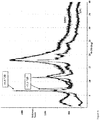
- X ray powder diffraction studies on the powder formulation of the present invention clearly show the presence of a peaks likely to be associated with a micellar or mesophase structure in the formulation. These peaks are characterized low diffraction angles (6.6 °2 ⁇ for DPC and 7.3 °2 ⁇ for DDPC). ( Figure 6 ) These same peaks are seen in samples in which glucagon is not included, and are referred to in this application as "XRPD mesopeaks.” This XRPD mesopeak is characteristic of the powder formulations of the invention.
- Figure 6 presents overlayed X-ray powder diffraction results for glucagon-DPC- ⁇ -cyclodextrin (File 474320) and glucagon-DDPC- ⁇ -cyclodextrin (File 407476) compositions.
- the diffraction pattern retains high angle peaks consistent with the presence of crystalline cyclodextrin (e.g the peak 61 at around 18-20 °-2 ⁇ ), which is not unexpected since the cyclodextrin is present in substantial excess relative to phospholipid and glucagon.
- each pattern has a low diffraction angle peak at 6.6 and 7.3 °-2 ⁇ , respectively.
- the size of the XRPD mesopeak (as determined by peak height) is about 30% of the height of the peak at about 18-20 °-2 ⁇ (as in the pattern for File 407476 in Figure 6 ) or greater, and may be about equal to the height of this peak (as in the pattern for File 474320 in Figure 6 ).
- XRPD mesopeak The formation of a phase characterized by an XRPD mesopeak has been observed in samples with and without glucagon, and using different formulations and drying techniques. It has been observed that some variation in shape and position of the XRPD mesopeak can occur dependent on the conditions of drying. For example, lyophilization of larger amounts that leads to a thicker frozen layer and longer drying times was observed in one experiment to lead to formation of two broadened and overlapping XRPD mesopeaks.
- a further benefit of the present invention is its usefulness as an emergency treatment, even under extreme environmental conditions, particularly cold conditions.
- the formulation of the invention remains directly useable even when the temperature is below freezing and tests have shown that powder stored at -20°C can be used directly with acceptable delivery and uptake of glucagon .
- emergency kits that contain a liquid carrier for reconstitution of glucagon prior to use must be maintained above the freezing point of the carrier.
- glucagon solutions must also be maintained above the freezing point of the solution, which will be at a higher temperature if a solvent such as DMSO is used to provide solution stability.
- a further aspect of the present invention is a method for preparing a powder formulation having glucagon-activity comprising glucagon or a glucagon analog, a cyclodextrin, and a phospholipid surfactant wherein at least a portion of the powder is present in a phase characterized by an XRPD mesopeak as determined by x-ray powder diffraction.
- the method comprises the steps of
- Step a forming a first mixture, can be accomplished by adding glucagon or a glucagon analog to a solvent, for example water, and then adding the surfactant.
- the surfactant may be solubilized first followed by addition of the glucagon or glucagon analog.
- the two components of the mixture may also be individually solubilized and then combined to form the first mixture.
- the solvent is acidified to a pH of 4 or less to enhance the solubility of the glucagon.
- the acidification can be accomplished with a mineral acid, such as HCl, phosphoric acid or sulfuric acid, or an organic acid such as acetic acid, citric acid glycolic acid or lactic acid, or using a combination of a mineral acid and an organic acid.
- the acid is acetic acid.
- the amount of solvent used to form the first mixture is sufficient to solubilize the glucagon and phospholipid surfactant in the first mixture. Excess solvent can be used, although large excesses increase the amount of time and energy needed in the drying step and are therefore not preferred.
- the cyclodextrin can be added to the first mixture as a solid, or in a solvent, such as water to form the second mixture.
- Mixing can be carried out by methods including static and dyamic mixing. Dynamic mixing can be done by use of a blade inserted into the liquid, which is attached to shaft and rotated by a motor. Static mixing can be carried out by flowing the liquid through a tortuous path inside a static mixer. The presence of an air-water interface during mixing under high speed mixing conditions may result in foaming. The high speed mixing may also, in turn, result in destabilization of the protein due to the shear stress. In order to minimize foaming, and preferably eliminate it, low speed mixing conditions are preferred.
- the speed is determined by the revolutions-per-minute (rpm) of the stirrer. Preferred rpm values are between 100 to 1000.
- the low shear conditions are obtained by selecting a pump that allows for a non-laminar flow.
- the second mixture is dried to remove the solvent (for example, water) and leave a solid product. Drying can be performed by freeze-drying, spray-drying, tray-drying or other techniques. The macroscopic physical characteristics of the product will vary depending on the drying technique, and may be in the form of a flaky solid from freeze drying or a dried solid cake. Regardless of the method used in drying, removal of excess water from the formulation has important effects on powder characteristics and stability.
- solvent for example, water
- Powders with excessive moisture content may be sticky and form clumps resulting in a powder that is difficult to manipulate for filling of an administration device.
- the level of residual water content has a direct impact on the stability.
- glucagon it is well understood that the stability and physical characteristics are adversely affected by water. Specifically, in the presence of excess water, glucagon forms amyloid fibrils that adversely affect the stability and toxicity profile of glucagon. (Pederson 2010). Because of this propensity to form amyloid fibrils, currently available glucagon products are supplied as a powder to be dissolved in water immediately before use. Water can also adversely affect the stability of glucagon due to hydrolysis, oxidation and deamidation. To this end, data generated with the formulations of the invention indicate that residual moisture content levels in excess of 5% in the bulk powder results in reduced stability compared to powder with residual water content below 5%. Suitable powders for nasal administration therefore typically have residual water content levels below 5%.
- Suitable powders for nasal administration typically have particle size distributions such that most particles are greater than approximately 10 microns and smaller than approximately 1000 ⁇ m.
- particle size distributions will be such that the D10 falls within the range of 3-75 ⁇ m, the D50 falls within the range of 15 to 450 ⁇ m, and the D90 falls within the range of 80-1000 ⁇ m, with a span of 1.5 to 15.
- Suitable powders for nasal administration require physical characteristics that permit adequate flowability to allow for filling them into a nasal discharge device. Flowability is determined by various parameters including particle size, shape, density, surface texture, surface area, density, cohesion, adhesion, elasticity, porosity, hygroscopicity, and friability.
- Powders with the appropriate particle size and flowability characteristics may be produced by processing the bulk power to remove particles that are too small or too large.
- Methods of processing the bulk powder to remove the particles that are too small or too large may include milling the bulk powder to break up larger particles and sieving to isolate the particles of the desired particle size range.
- Various methods of sieving may be performed including throw-action sieving, horizontal sieving, tapping sieving, super-sonic sieving and air circular jet sieving.
- Sieves may be used as single sieves of a fixed nominal aperture or the bulk powder may be processed through a series of sieves of progressively smaller apertures to obtain the desired particle size distribution.
- Sieves may be woven wire mesh sieves with nominal apertures ranging from 25 - 1000 ⁇ m.
- Spray pattern and plume geometry resulting from administration of the powder with a nasal powder administration device are important characteristics that govern the surface area upon which the nasal powder is deposited within the nasal cavity.
- Suitable spray pattern characteristics for the invention include a minimum diameter (Dmin) of 5 - 25 mm, a maximum diameter (Dmax) of 10 to 60 mm, and an ovality ratio of 0.5 to 6.
- Suitable plume geometry characteristics for the invention include a spray angle falling within the range of 20 to 75° and a plume width falling within the range of 10 to 50 mm.
- the following table summarizes the plume geometry information for multiple lots of powder in accordance with the invention. Plume Geometry Spray Angle (°) Plume Width (mm) (min/max) (mean) (min/max) (mean) 28.31-65.2 44.8 15.2-38.4 25.0
- the powder composition of the invention is suitably provided in a purpose-designed nasal applicator that maintains the powder in a clean, dry and usable state until use, and then delivers the powder to the nasal mucosa of a user.
- a purpose-designed nasal applicator that maintains the powder in a clean, dry and usable state until use, and then delivers the powder to the nasal mucosa of a user.
- Such applicators are known in the art, and generally have a powder formulation reservoir, and a powder formulation contained within the reservoir, and a mechanism for expelling the powder formulation from the reservoir through a nozzle receivable within a nostril.
- the applicator is selected to be able to provide sufficient powder formulation in a single insufflation/administration to provide a therapeutic dose. Larger reservoirs and delivery capacity are required for powders with lower percentages of glucagon or glucagon analog in the formulation, while smaller reservoirs and delivery capacity can be used with higher percentage formulations.
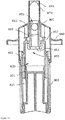
- Fig. 10 is taken from the '074 patent to illustrate a suitable device.
- reservoir 810 contains a single dose of a formulation in accordance with the present invention.
- the reservoir 810 has an air inlet 811 and a product outlet 815.
- a product retention device 812 and/or 813 is disposed in the air inlet 811 to keep the product in the reservoir 810 until dispensation of the product.
- the product outlet 815 is blocked, preferably in a sealed fashion, by a closing ball 816 which is removed from its blocking position by the flow of air when the product is being dispensed.
- Glucagon, DPC and ⁇ -CD, ⁇ -CD, or HP- ⁇ -CD were dissolved in either a 0.01 N or a 0.1 N HCl solution. Formulations were also prepared with either 1 M acetic acid or 0.5 M acetic acid. The weight ratio of glucagon:DPC:cyclodextrin ranged from 5:10:75 to 10:20:70. In two separate experiments, either sodium citrate or citric acid was added as an additive. The lyophilized powder was packaged into a device for delivery to the nostril. The powder was delivered to Beagle dogs intranasally at a dose of 500 ⁇ g, 750 ⁇ g or 1000 ⁇ g. The powder was administered to either 3 or 6 dogs per group.
- Plasma glucose concentration was measured by using a glucometer.
- the plasma glucose concentrations prior to administration (0 min), and 5, 10, 20, 30, 40 and 60 minutes after nasal administration are shown in Table 1.
- Ratio refers to the ratio of glucagon:DPC:cyclodextrin, or to the ratio of glucagon:DPC: cyclodextrin: additive.
- Table 1 Average plasma glucose concentrations (mmol/L) in the Beagle dog after intranasal administration of glucagon:DPC:CD compositions.
- compositions prepared with different concentrations of the acid, different acids, different ratios of the three ingredients, in the presence of citric acid or sodium citrate, different doses, delivered to one nostril or to both nostrils
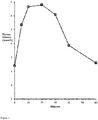
- results from a 10: 10:80 composition with ⁇ -CD and 0.01 N HCl administered at a 1000 ⁇ g dose to one nostril are shown in Figure 1 .
- Glucagon, DDPC, and ⁇ -CD, ⁇ -CD, or hydroxylpropyl- ⁇ -CD were dissolved in either a 0.01 N or a 0.1 N HCl solution.
- the weight ratio of glucagon:DDPC:cyclodextrin ranged from 5:10:75 to 10:20:70.
- sodium citrate was also added.
- the powder was packaged into a device for delivery to the nostril. The powder was delivered to Beagle dogs intranasally at a dose of 500 ⁇ g, 750 ⁇ g or 1000 ⁇ g.
- the powder was administered to either 3 or 6 dogs per group. Plasma glucose concentration was measured by using a glucometer. The results are shown in the following table.
- Ratio refers to the ratio of glucagon:DDPC:cyclodextrin, or to the ratio of glucagon:DDPC:cyclodextrin:additive. Table 2. Average plasma glucose concentrations (mmol/L) in the Beagle dog after intranasal administration of glucagon:DDPC: CD compositions.
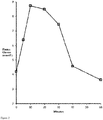
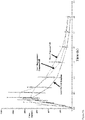
- compositions prepared with different concentrations of the acid, different cyclodextrins, different ratios, different doses, delivered to either one nostril or to both nostrils show an increase in plasma glucose concentration for up to between 10 and 30 minutes, followed by a decrease at 40 minutes, and further followed by a decrease at 60 minutes.
- results from a 10:10:80 composition with ⁇ -CD administered at a 1000 ⁇ g dose delivered to one nostril are shown in Figure 2 .
- Glucagon, LLPC and ⁇ -CD were dissolved in either a 0.01 N or a 0.1 N HCl solution.
- the weight ratio of glucagon:LLPC: ⁇ -CD was 10:10:80.
- the powder was packaged into a device for delivery to one nostril.
- the powder was delivered to Beagle dogs intranasally either at a dose of 750 ⁇ g or 1000 ⁇ g.
- the powder was administered to 6 dogs per group.
- Plasma glucose concentration was measured by using a glucose strip.
- the plasma glucose concentrations prior to administration (0 min), and 5, 10, 20, 30, 40 and 60 minutes after nasal administration are shown in Table 3.
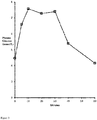
- compositions (different doses, delivered to one nostril show an increase in plasma glucose concentration for up to between 10 and 20 minutes, followed by a decrease at either 30 or 40 minutes, and further followed by a decrease at 40 or 60 minutes.
- results from the 10: 10:80 composition with ⁇ -CD administered at a 1000 dose to one nostril is shown in Figure 3 .
- Glucagon, D8PC and ⁇ -CD were dissolved in either a 0.01 N or a 0.1 N HCl solution.
- the weight ratio of glucagon:D8PC: ⁇ -CD was 10:10:80.
- the powder was packaged into a device for delivery to the nostril.
- the powder was delivered to Beagle dogs intranasally.
- the powder was administered to 6 dogs per group.
- Plasma glucose concentration was measured by using a glucose strip.
- the plasma glucose concentrations prior to administration (0 min), and 5, 10, 20, 30, 40 and 60 minutes after nasal administration are shown in Table 4.
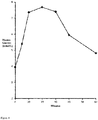
- compositions prepared with different concentrations of the acid delivered to one nostril show an increase in plasma glucose concentration for up to between 10 and 20 minutes, followed by a decrease at 30 or 40 minutes, and further followed by a decrease at 40 or 60 minutes.
- results from the 10:10:80 composition with ⁇ -CD administered at a 750 ⁇ g dose to one nostril are shown in Figure 4 .
- Glucagon, DLPG and ⁇ -CD were dissolved in a 0.1 N HCl solution.
- the weight ratio of glucagon:DLPG: ⁇ -CD was either 5:25:70 or 5:54:41.
- glucagon, DLPG and ⁇ -CD were dissolved in 0.1 N HCl solution at a weight ratio of 10:10:80.
- the resultant solutions were lyophilized to produce a powder.
- the powder was packaged into a device for delivery to the nostril.
- the powder was delivered to either one nostril or both nostrils of Beagle dogs.
- the powder was administered to either 3 or 6 dogs.
- Plasma glucose concentration was measured by using a glucose strip. The results are shown in the following table.
- the weight ratio of glucagon:DLPG: ⁇ -CD (or, ⁇ -CD), dose of glucagon per nostril, whether the powder was delivered to one or both nostrils are shown in the table.
- the plasma glucose concentrations prior to administration (0 min), and 5, 10, 20, 30, 40 and 60 minutes after nasal administration are shown in Table 5.
- compositions prepared with different cyclodextrins, different ratios, different doses, delivered to either one nostril or to both nostrils show an increase in plasma glucose concentration for up to between 10 and 30 minutes, followed by a decrease at 40 minutes, and further followed by a decrease at 60 minutes.
- results from the 5:25:70 composition with ⁇ -CD administered at a 750 ⁇ g dose to one nostril, which resulted in the highest plasma glucose concentration, are shown in Figure 5 .
- X-ray powder diffraction was used to determine the structure of the glucagon-DPC- ⁇ -cyclodextrin and glucagon-DDPC- ⁇ -cyclodextrin compositions. They exhibit a peak at low angles (6.6 °2 ⁇ for DPC and 7.3 °2 ⁇ for DDPC) indicating a mesophase ( Figure 6 ). These peaks are absent for glucagon because it is an amorphous powder. They are also absent in ⁇ -cyclodextrin which exhibits a characteristic crystalline form. Further they are absent in the surfactant, DPC. These peaks are present in mixtures of DDPC (or DPC) and ⁇ -cyclodextrin, in the absence of glucagon. The compositions of the current invention are characterized by a mesophase detectable through these low diffraction angle peaks.
- the volume-weighted distribution profile is used to calculate D 10 , D 50 , and D 90 are presented in Table 6.
- Table 6. Diameter of 10% of the particles (D 10 ), 50% of the particles (D 50 ), and 90% of the particles (D 90 ).
- the particle size analysis shows that a minority of the particles in the six different powder formulations have an effective diameter ranging from 3.6 to 8.031 ⁇ m.
- the D 10 results show that greater than 90% of the particles in the powder delivered to the nostril cannot be inhaled.
- a powder formulation was prepared using the methods described in Method of Preparation.
- the composition was 10:10:80 glucagon:DPC:B-cyclodextrin prepared using 1 M acetic acid.
- Ten milligrams of the powder contained 1 mg of glucagon.
- Ten milligrams of the powder formulation were packaged into each of ten devices. The powder delivered upon actuation of the device was collected. The weights of the delivered powder from the ten devices are shown in Table 7, as Delivered Dose (mg).
- a multiple center, randomized, two-way, crossover Phase III study in which patients with type 1 diabetes (T1D, n 75) were enrolled to evaluate the effectiveness and safety of a single dose of intranasally administered glucagon (the powder that is the subject of this invention) compared to glucagon administered by IM injection following insulin-induced hypoglycemia was conducted.
- the primary endpoint in this study was the proportion of patients who achieved an increase in blood glucose levels to ⁇ 70 mg/dL within 30 minutes of treatment with glucagon or a 20 mg/mL increment in blood glucose within 30 minutes of treatment with glucagon.
- the protocol used insulin to reduce blood glucose levels to the hypoglycemic range target nadir of ⁇ 50 mg/dL).
- AMG 103 was a study in children with type 1 diabetes, aged 4- ⁇ 17 years. Induction of severe hypoglycemia in this population is not permitted by pediatric IRBs but insulin was used if necessary to normalize blood glucose to a target of ⁇ 80 mg/dL (4.4 mmol/L) prior to dosing with glucagon.
- Results from the children aged 12- ⁇ 17 are provided as an example of what was seen in children dosed with nasal glucagon powder.
- Figure 8A provides the glucagon PK curve while Figure 8B provides the glucose profile.
- the data generated in this study indicate that nasal powder glucagon resulted in a glucose response that was no different than that observed after an injection of glucagon.
- the powder of this invention consisting of glucagon:DPC and beta cyclodextrins in ratios of 10:10:80 by weight, was tested in subjects with common cold with and without concomitant administration of nasal decongestant in a study to investigate the safety and PK/PD of a 3 mg dose of IN glucagon in male and female subjects. This was a single center, single dose, open-label, repeated measures, parallel design study. All thirty-six (36) subjects received a single 3 mg dose of glucagon by intranasal route, in the morning after a 10-hour overnight fast. Cohort 1 (18 subjects) was scheduled for two periods.
- Period 1 the subjects had nasal congestion and/or nasal discharge associated with a common cold and during Period 2, the subjects had recovered from the common cold and had been symptom free for at least 2 days.
- Cohort 2 Subjects #019 to 036
- Measurements of peak nasal inspiratory air flow provided an objective measurement of the nasal congestion and confirmed the nasal congestion associated with common cold as well as the intended therapeutic effect of oxymetazoline.
- Plasma glucagon concentrations ( Figure 9A ) increased substantially above baseline with mean peak concentrations (C max ) of 1198.4, 868.0 and 801.5 pg/mL for "AMG504-1 + Common cold", “Common cold + Decongestant”, and "No Cold Symptoms", respectively.
- Median time to peak concentrations (t max ) was 20 minutes post dose for all treatment groups.
- the estimated AUC 0-t for 'AMG504-1 + Common Cold' was higher than the other two treatment groups (1198.4 vs. 1038.0 and 797.5).
- PK or PD of the powder administered intranasally is not significantly affected by nasal congestion associated with common cold, with or without concomitant administration of a nasal decongestant. This is very important because people with diabetes who take insulin are at risk of experiencing severe hypoglycemia at any time, including when suffering from allergies or a common cold. As such, an intranasal glucagon intended for treatment of severe hypoglycemia must also be effective in the presence of nasal congestion.
Landscapes
- Health & Medical Sciences (AREA)
- Life Sciences & Earth Sciences (AREA)
- Chemical & Material Sciences (AREA)
- Engineering & Computer Science (AREA)
- Veterinary Medicine (AREA)
- Animal Behavior & Ethology (AREA)
- Public Health (AREA)
- General Health & Medical Sciences (AREA)
- Medicinal Chemistry (AREA)
- Pharmacology & Pharmacy (AREA)
- Bioinformatics & Cheminformatics (AREA)
- Epidemiology (AREA)
- Chemical Kinetics & Catalysis (AREA)
- General Chemical & Material Sciences (AREA)
- Molecular Biology (AREA)
- Otolaryngology (AREA)
- Hematology (AREA)
- Endocrinology (AREA)
- Oil, Petroleum & Natural Gas (AREA)
- Biophysics (AREA)
- Immunology (AREA)
- Gastroenterology & Hepatology (AREA)
- Zoology (AREA)
- Proteomics, Peptides & Aminoacids (AREA)
- Organic Chemistry (AREA)
- Diabetes (AREA)
- Nuclear Medicine, Radiotherapy & Molecular Imaging (AREA)
- Heart & Thoracic Surgery (AREA)
- Pulmonology (AREA)
- Anesthesiology (AREA)
- Biomedical Technology (AREA)
- Obesity (AREA)
- Inorganic Chemistry (AREA)
- Emergency Medicine (AREA)
- Medicinal Preparation (AREA)
- Medicines That Contain Protein Lipid Enzymes And Other Medicines (AREA)
- Peptides Or Proteins (AREA)
- Medicines Containing Antibodies Or Antigens For Use As Internal Diagnostic Agents (AREA)
- Medicines Containing Material From Animals Or Micro-Organisms (AREA)
Applications Claiming Priority (3)
| Application Number | Priority Date | Filing Date | Title |
|---|---|---|---|
| US201562117031P | 2015-02-17 | 2015-02-17 | |
| EP16710352.2A EP3258919B2 (de) | 2015-02-17 | 2016-02-16 | Nasenpulverformulierung zur behandlung von hypoglykämie |
| PCT/US2016/018003 WO2016133863A1 (en) | 2015-02-17 | 2016-02-16 | Nasal powder formulation for treatment of hypoglycemia |
Related Parent Applications (2)
| Application Number | Title | Priority Date | Filing Date |
|---|---|---|---|
| EP16710352.2A Division-Into EP3258919B2 (de) | 2015-02-17 | 2016-02-16 | Nasenpulverformulierung zur behandlung von hypoglykämie |
| EP16710352.2A Division EP3258919B2 (de) | 2015-02-17 | 2016-02-16 | Nasenpulverformulierung zur behandlung von hypoglykämie |
Publications (3)
| Publication Number | Publication Date |
|---|---|
| EP3673900A1 true EP3673900A1 (de) | 2020-07-01 |
| EP3673900B1 EP3673900B1 (de) | 2025-06-25 |
| EP3673900C0 EP3673900C0 (de) | 2025-06-25 |
Family
ID=55538593
Family Applications (3)
| Application Number | Title | Priority Date | Filing Date |
|---|---|---|---|
| EP16710352.2A Active EP3258919B2 (de) | 2015-02-17 | 2016-02-16 | Nasenpulverformulierung zur behandlung von hypoglykämie |
| EP20151175.5A Active EP3673900B1 (de) | 2015-02-17 | 2016-02-16 | Nasenpulverformulierung zur behandlung von hypoglykämie |
| EP20151167.2A Active EP3673899B1 (de) | 2015-02-17 | 2016-02-16 | Nasenpulverformulierung zur behandlung von hypoglykämie |
Family Applications Before (1)
| Application Number | Title | Priority Date | Filing Date |
|---|---|---|---|
| EP16710352.2A Active EP3258919B2 (de) | 2015-02-17 | 2016-02-16 | Nasenpulverformulierung zur behandlung von hypoglykämie |
Family Applications After (1)
| Application Number | Title | Priority Date | Filing Date |
|---|---|---|---|
| EP20151167.2A Active EP3673899B1 (de) | 2015-02-17 | 2016-02-16 | Nasenpulverformulierung zur behandlung von hypoglykämie |
Country Status (41)
Families Citing this family (15)
| Publication number | Priority date | Publication date | Assignee | Title |
|---|---|---|---|---|
| BR112017014994B1 (pt) | 2015-02-17 | 2023-12-19 | Eli Lilly And Company | Composições em pó nasal para tratamento de hipoglicemia, seu uso e seus métodos de preparação, e aplicador nasal |
| CA3012679C (en) | 2016-01-29 | 2023-12-12 | Mannkind Corporation | Dry powder inhaler |
| US11013873B2 (en) * | 2017-01-06 | 2021-05-25 | HealthPartners Institite | Methods for treating patients with impaired awareness of hypoglycemia |
| IL299864B2 (en) | 2017-06-16 | 2024-06-01 | Zealand Pharma As | Dosage regimes for the administration of glucagon-like-peptide-2 (glp-2) analogues |
| EP3668490A4 (de) | 2017-08-20 | 2021-06-09 | Formulex Pharma Innovations Ltd. | Trockenpulverzusammensetzungen zur intranasalen verabreichung |
| US11844859B2 (en) | 2017-08-20 | 2023-12-19 | Nasus Pharma Ltd. | Dry powder compositions for intranasal delivery |
| WO2019060761A1 (en) * | 2017-09-21 | 2019-03-28 | The Scripps Research Institute | NEW THERAPIES FOR TREATING AND PREVENTING CHRONIC RHINO-SINUSITIS |
| TWI771669B (zh) * | 2019-04-26 | 2022-07-21 | 美商美國禮來大藥廠 | 製備穩定胜肽調配物之方法 |
| US10653690B1 (en) | 2019-07-09 | 2020-05-19 | Orexo Ab | Pharmaceutical composition for nasal delivery |
| US10729687B1 (en) | 2019-07-09 | 2020-08-04 | Orexo Ab | Pharmaceutical composition for nasal delivery |
| US20210283053A1 (en) | 2020-03-16 | 2021-09-16 | Zealand Pharma A/S | Liquid formulations of glucagon analogues |
| PT3962455T (pt) | 2020-05-18 | 2022-10-13 | Orexo Ab | Nova composição farmacêutica para entrega de fármacos |
| GB202117016D0 (en) | 2021-11-25 | 2022-01-12 | Orexo Ab | New pharmaceutical device |
| AR127780A1 (es) | 2021-11-25 | 2024-02-28 | Orexo Ab | Nueva composición farmacéutica que comprende adrenalina |
| CN119454909B (zh) * | 2025-01-13 | 2025-04-08 | 上海世领制药有限公司 | 经鼻粘膜给药的胰高血糖素样肽-1受体激动剂的制剂组合物、制备方法、用途及鼻施用器 |
Citations (23)
| Publication number | Priority date | Publication date | Assignee | Title |
|---|---|---|---|---|
| US5059587A (en) | 1987-08-03 | 1991-10-22 | Toyo Jozo Company, Ltd. | Physiologically active peptide composition for nasal administration |
| WO1992016196A1 (en) * | 1991-03-20 | 1992-10-01 | Novo Nordisk A/S | A composition comprising a peptide for nasal administration |
| US5702362A (en) | 1995-05-26 | 1997-12-30 | Bayer Aktiengesellschaft | Nasal applicator |
| WO1999047160A1 (en) | 1998-03-13 | 1999-09-23 | Novo Nordisk A/S | Stabilized aqueous peptide solutions |
| US6384016B1 (en) | 1998-03-13 | 2002-05-07 | Novo Nordisk A/S | Stabilized aqueous peptide solutions |
| US6398074B1 (en) | 1998-03-10 | 2002-06-04 | Valois S.A. | Reservoir, reservoir filling method and device for dispensing fluid contained in the reservoir |
| US6938798B2 (en) | 2000-12-08 | 2005-09-06 | Tebro S.A. | Fluid or powdery product dispensing device |
| US20060074025A1 (en) * | 2003-12-26 | 2006-04-06 | Nastech Pharmaceutical Company Inc. | Therapeutic formulations for transmucosal administration that increase glucagon-like peptide-1 bioavailability |
| US7722566B2 (en) | 2003-10-09 | 2010-05-25 | Shin Nippon Biomedical Laboratories, Ltd. | Device to deliver a powdery medicine into nasal cavity |
| US20100204105A1 (en) | 2007-06-15 | 2010-08-12 | Zealand Pharma A/S | Glucagon analogues |
| US20110045088A1 (en) | 2009-07-31 | 2011-02-24 | Shin Nippon Biomedical Laboratories, Ltd. | Intranasal granisetron and nasal applicator |
| US20110237510A1 (en) * | 2009-10-22 | 2011-09-29 | Biodel Inc. | Stabilized glucagon solutions |
| US20110286981A1 (en) | 2008-12-15 | 2011-11-24 | Zealand Pharma A/S | Glucagon analogues |
| US20110286982A1 (en) | 2008-12-15 | 2011-11-24 | Zealand Pharma A/S | Glucagon analogues |
| US20110293586A1 (en) | 2008-12-15 | 2011-12-01 | Zealand Pharma A/S | Glucagon analogues |
| US20120178670A1 (en) | 2009-07-13 | 2012-07-12 | Zealand Pharma A/S | Acylated glucagon analogues |
| US20130053310A1 (en) | 2010-03-26 | 2013-02-28 | Novo Nordisk A/S | Novel glucagon analogues |
| US20130157935A1 (en) | 2010-06-23 | 2013-06-20 | Zealand Pharma A/S | Glucagon analogues |
| US20130157929A1 (en) | 2010-06-24 | 2013-06-20 | Zealand Pharma A/S | Glucagon analogues |
| US20130316941A1 (en) | 2011-12-23 | 2013-11-28 | Boehringer Ingelheim International Gmbh | Glucagon analogues |
| US20140001733A1 (en) | 2012-07-02 | 2014-01-02 | One Way Sport Oy | Ski, boot and binding between a ski and a boot |
| WO2014004400A2 (en) | 2012-06-28 | 2014-01-03 | The Governt. Of The Usa As Represented By The Secretary Of The Department Of Health & Human Services | Nasal dry powder delivery system for vaccines and other treatment agents |
| US20140080757A1 (en) | 2012-09-17 | 2014-03-20 | Boehringer Ingelheim International Gmbh | Glucagon analogues |
Family Cites Families (18)
| Publication number | Priority date | Publication date | Assignee | Title |
|---|---|---|---|---|
| EP0094157B1 (de) | 1982-04-30 | 1987-07-29 | Takeda Chemical Industries, Ltd. | Pharmazeutische Zusammensetzung und ihre Verwendung |
| JPS58189118A (ja) * | 1982-04-30 | 1983-11-04 | Takeda Chem Ind Ltd | 経鼻投与製剤 |
| NZ222907A (en) | 1986-12-16 | 1990-08-28 | Novo Industri As | Preparation for intranasal administration containing a phospholipid absorption enhancing system |
| US5179079A (en) | 1986-12-16 | 1993-01-12 | Novo Nordisk A/S | Nasal formulation and intranasal administration therewith |
| PT88490B (pt) * | 1987-09-14 | 1992-11-30 | Novo Nordisk As | Processo para a preparacao de composicoes farmaceuticas para libertacao nao-enterica trans-mucosa contendo monossacaridos ou oligossacaridos |
| JP3098401B2 (ja) * | 1995-07-12 | 2000-10-16 | 株式会社エルティーティー研究所 | 経鼻投与用製剤 |
| JPH11292787A (ja) | 1995-08-15 | 1999-10-26 | Asahi Chem Ind Co Ltd | 生理活性ペプチドを含有する経粘膜投与製剤 |
| US7235627B2 (en) | 1996-08-30 | 2007-06-26 | Novo Nordisk A/S | Derivatives of GLP-1 analogs |
| US6522144B2 (en) | 2000-12-22 | 2003-02-18 | Ge Medical Systems Global Technology Company, Llc | RF shielding method and apparatus for an open MRI system |
| WO2003066669A2 (en) | 2002-02-04 | 2003-08-14 | Millipore Corporation | Process for removing protein aggregates and virus from a protein solution |
| US20080318837A1 (en) | 2003-12-26 | 2008-12-25 | Nastech Pharmaceutical Company Inc. | Pharmaceutical Formation For Increased Epithelial Permeability of Glucose-Regulating Peptide |
| WO2007065156A2 (en) | 2005-12-02 | 2007-06-07 | Nastech Pharmaceutical Company Inc. | Pharmaceutical formulation for increased epithelial permeability of glucose-regulating peptide |
| US8268791B2 (en) | 2004-08-25 | 2012-09-18 | Aegis Therapeutics, Llc. | Alkylglycoside compositions for drug administration |
| EP2552951A1 (de) | 2010-03-26 | 2013-02-06 | Novo Nordisk A/S | Neue glocagonanaloga |
| RU2013145013A (ru) | 2011-03-28 | 2015-05-10 | Ново Нордиск А/С | Новые аналоги глюкагона |
| MX355364B (es) | 2011-05-27 | 2018-04-16 | Collazo Handal Jose Schafik | Bebida para la reposición rápida de iones calcio en el torrente sanguíneo. |
| KR20140043793A (ko) | 2011-06-22 | 2014-04-10 | 인디애나 유니버시티 리서치 앤드 테크놀로지 코퍼레이션 | 글루카곤/glp-1 수용체 공동-작용물질 |
| BR112017014994B1 (pt) | 2015-02-17 | 2023-12-19 | Eli Lilly And Company | Composições em pó nasal para tratamento de hipoglicemia, seu uso e seus métodos de preparação, e aplicador nasal |
-
2016
- 2016-02-16 BR BR112017014994-0A patent/BR112017014994B1/pt active IP Right Grant
- 2016-02-16 NZ NZ734035A patent/NZ734035A/en unknown
- 2016-02-16 EP EP16710352.2A patent/EP3258919B2/de active Active
- 2016-02-16 PE PE2017001397A patent/PE20171334A1/es unknown
- 2016-02-16 LT LTEP16710352.2T patent/LT3258919T/lt unknown
- 2016-02-16 CR CR20170373A patent/CR20170373A/es unknown
- 2016-02-16 EP EP20151175.5A patent/EP3673900B1/de active Active
- 2016-02-16 PT PT167103522T patent/PT3258919T/pt unknown
- 2016-02-16 MD MDE20180006T patent/MD3258919T3/ro unknown
- 2016-02-16 SI SI201630611T patent/SI3258919T2/sl unknown
- 2016-02-16 TN TNP/2017/000349A patent/TN2017000349A1/en unknown
- 2016-02-16 MA MA41547A patent/MA41547B1/fr unknown
- 2016-02-16 MA MA052252A patent/MA52252A/fr unknown
- 2016-02-16 SG SG11201705640PA patent/SG11201705640PA/en unknown
- 2016-02-16 DK DK16710352.2T patent/DK3258919T4/da active
- 2016-02-16 EA EA201791560A patent/EA034820B1/ru unknown
- 2016-02-16 EP EP20151167.2A patent/EP3673899B1/de active Active
- 2016-02-16 CN CN201680010778.8A patent/CN107278154B/zh active Active
- 2016-02-16 CA CA2975562A patent/CA2975562C/en active Active
- 2016-02-16 JP JP2017541993A patent/JP6522144B2/ja active Active
- 2016-02-16 MX MX2017010572A patent/MX376200B/es active IP Right Grant
- 2016-02-16 HU HUE16710352A patent/HUE049413T2/hu unknown
- 2016-02-16 MA MA052253A patent/MA52253A/fr unknown
- 2016-02-16 US US15/545,332 patent/US10213487B2/en active Active
- 2016-02-16 FI FIEP16710352.2T patent/FI3258919T4/fi active
- 2016-02-16 ES ES16710352T patent/ES2775498T5/es active Active
- 2016-02-16 PL PL16710352.2T patent/PL3258919T5/pl unknown
- 2016-02-16 HR HRP20200222TT patent/HRP20200222T4/hr unknown
- 2016-02-16 MY MYPI2017702993A patent/MY175669A/en unknown
- 2016-02-16 KR KR1020177022473A patent/KR102121443B1/ko active Active
- 2016-02-16 UA UAA201707110A patent/UA121874C2/uk unknown
- 2016-02-16 RS RS20200145A patent/RS59918B2/sr unknown
- 2016-02-16 AU AU2016220235A patent/AU2016220235B2/en active Active
- 2016-02-16 WO PCT/US2016/018003 patent/WO2016133863A1/en not_active Ceased
-
2017
- 2017-07-02 IL IL253273A patent/IL253273B/en active IP Right Grant
- 2017-07-20 ZA ZA2017/04944A patent/ZA201704944B/en unknown
- 2017-07-31 DO DO2017000179A patent/DOP2017000179A/es unknown
- 2017-08-07 SA SA517382068A patent/SA517382068B1/ar unknown
- 2017-08-08 CL CL2017002031A patent/CL2017002031A1/es unknown
- 2017-08-11 CO CONC2017/0008148A patent/CO2017008148A2/es unknown
- 2017-08-14 SV SV2017005515A patent/SV2017005515A/es unknown
- 2017-08-16 PH PH12017501486A patent/PH12017501486A1/en unknown
- 2017-08-16 GT GT201700179A patent/GT201700179A/es unknown
- 2017-08-17 EC ECIEPI201753843A patent/ECSP17053843A/es unknown
-
2019
- 2019-02-04 US US16/266,640 patent/US12226456B2/en active Active
- 2019-02-27 ZA ZA2019/01241A patent/ZA201901241B/en unknown
- 2019-04-22 JP JP2019080836A patent/JP7094242B2/ja active Active
-
2020
- 2020-02-13 CY CY20201100132T patent/CY1122716T1/el unknown
-
2021
- 2021-04-13 JP JP2021067899A patent/JP7362687B2/ja active Active
- 2021-05-12 AU AU2021203035A patent/AU2021203035B2/en active Active
-
2023
- 2023-02-10 US US18/167,260 patent/US12370241B2/en active Active
Patent Citations (23)
| Publication number | Priority date | Publication date | Assignee | Title |
|---|---|---|---|---|
| US5059587A (en) | 1987-08-03 | 1991-10-22 | Toyo Jozo Company, Ltd. | Physiologically active peptide composition for nasal administration |
| WO1992016196A1 (en) * | 1991-03-20 | 1992-10-01 | Novo Nordisk A/S | A composition comprising a peptide for nasal administration |
| US5702362A (en) | 1995-05-26 | 1997-12-30 | Bayer Aktiengesellschaft | Nasal applicator |
| US6398074B1 (en) | 1998-03-10 | 2002-06-04 | Valois S.A. | Reservoir, reservoir filling method and device for dispensing fluid contained in the reservoir |
| WO1999047160A1 (en) | 1998-03-13 | 1999-09-23 | Novo Nordisk A/S | Stabilized aqueous peptide solutions |
| US6384016B1 (en) | 1998-03-13 | 2002-05-07 | Novo Nordisk A/S | Stabilized aqueous peptide solutions |
| US6938798B2 (en) | 2000-12-08 | 2005-09-06 | Tebro S.A. | Fluid or powdery product dispensing device |
| US7722566B2 (en) | 2003-10-09 | 2010-05-25 | Shin Nippon Biomedical Laboratories, Ltd. | Device to deliver a powdery medicine into nasal cavity |
| US20060074025A1 (en) * | 2003-12-26 | 2006-04-06 | Nastech Pharmaceutical Company Inc. | Therapeutic formulations for transmucosal administration that increase glucagon-like peptide-1 bioavailability |
| US20100204105A1 (en) | 2007-06-15 | 2010-08-12 | Zealand Pharma A/S | Glucagon analogues |
| US20110286982A1 (en) | 2008-12-15 | 2011-11-24 | Zealand Pharma A/S | Glucagon analogues |
| US20110293586A1 (en) | 2008-12-15 | 2011-12-01 | Zealand Pharma A/S | Glucagon analogues |
| US20110286981A1 (en) | 2008-12-15 | 2011-11-24 | Zealand Pharma A/S | Glucagon analogues |
| US20120178670A1 (en) | 2009-07-13 | 2012-07-12 | Zealand Pharma A/S | Acylated glucagon analogues |
| US20110045088A1 (en) | 2009-07-31 | 2011-02-24 | Shin Nippon Biomedical Laboratories, Ltd. | Intranasal granisetron and nasal applicator |
| US20110237510A1 (en) * | 2009-10-22 | 2011-09-29 | Biodel Inc. | Stabilized glucagon solutions |
| US20130053310A1 (en) | 2010-03-26 | 2013-02-28 | Novo Nordisk A/S | Novel glucagon analogues |
| US20130157935A1 (en) | 2010-06-23 | 2013-06-20 | Zealand Pharma A/S | Glucagon analogues |
| US20130157929A1 (en) | 2010-06-24 | 2013-06-20 | Zealand Pharma A/S | Glucagon analogues |
| US20130316941A1 (en) | 2011-12-23 | 2013-11-28 | Boehringer Ingelheim International Gmbh | Glucagon analogues |
| WO2014004400A2 (en) | 2012-06-28 | 2014-01-03 | The Governt. Of The Usa As Represented By The Secretary Of The Department Of Health & Human Services | Nasal dry powder delivery system for vaccines and other treatment agents |
| US20140001733A1 (en) | 2012-07-02 | 2014-01-02 | One Way Sport Oy | Ski, boot and binding between a ski and a boot |
| US20140080757A1 (en) | 2012-09-17 | 2014-03-20 | Boehringer Ingelheim International Gmbh | Glucagon analogues |
Non-Patent Citations (37)
Also Published As
Similar Documents
| Publication | Publication Date | Title |
|---|---|---|
| US12370241B2 (en) | Nasal powder formulation for treatment of hypoglycemia | |
| CN101151047A (zh) | 使用肺施用的胰岛素组合基础胰岛素来在糖尿病中控制血糖 | |
| Chen et al. | Current therapeutic strategy in the nasal delivery of insulin: recent advances and future directions | |
| Varshosaz | Insulin delivery systems for controlling diabetes | |
| De Galan et al. | Efficacy and safety of inhaled insulin in the treatment of diabetes mellitus. | |
| HK1240489A1 (en) | Nasal powder formulation for treatment of hypoglycemia | |
| HK1240489B (en) | Nasal powder formulation for treatment of hypoglycemia | |
| Siekmeier et al. | Aerosolized GLP-1 for treatment of diabetes mellitus and irritable bowel syndrome | |
| Wadher et al. | Pulmonary insulin delivery: Challenges and current status | |
| Siekmeier et al. | Advs Exp. Medicine, Biology-Neuroscience and Respiration (2015) 10: 23–38 | |
| Roe et al. | Doctor, stop needling me: an update on alternative routes of insulin administration | |
| HK1208626B (zh) | 含有降血糖活性成分的长效控释脂质体凝胶组合物及其制备方法 |
Legal Events
| Date | Code | Title | Description |
|---|---|---|---|
| PUAI | Public reference made under article 153(3) epc to a published international application that has entered the european phase |
Free format text: ORIGINAL CODE: 0009012 |
|
| STAA | Information on the status of an ep patent application or granted ep patent |
Free format text: STATUS: THE APPLICATION HAS BEEN PUBLISHED |
|
| AC | Divisional application: reference to earlier application |
Ref document number: 3258919 Country of ref document: EP Kind code of ref document: P |
|
| AK | Designated contracting states |
Kind code of ref document: A1 Designated state(s): AL AT BE BG CH CY CZ DE DK EE ES FI FR GB GR HR HU IE IS IT LI LT LU LV MC MK MT NL NO PL PT RO RS SE SI SK SM TR |
|
| AX | Request for extension of the european patent |
Extension state: BA ME |
|
| STAA | Information on the status of an ep patent application or granted ep patent |
Free format text: STATUS: REQUEST FOR EXAMINATION WAS MADE |
|
| 17P | Request for examination filed |
Effective date: 20210111 |
|
| RAV | Requested validation state of the european patent: fee paid |
Extension state: MA Effective date: 20210111 Extension state: MD Effective date: 20210111 |
|
| RAX | Requested extension states of the european patent have changed |
Extension state: ME Payment date: 20210111 Extension state: BA Payment date: 20210111 |
|
| RBV | Designated contracting states (corrected) |
Designated state(s): AL AT BE BG CH CY CZ DE DK EE ES FI FR GB GR HR HU IE IS IT LI LT LU LV MC MK MT NL NO PL PT RO RS SE SI SK SM TR |
|
| STAA | Information on the status of an ep patent application or granted ep patent |
Free format text: STATUS: EXAMINATION IS IN PROGRESS |
|
| 17Q | First examination report despatched |
Effective date: 20230324 |
|
| RAP1 | Party data changed (applicant data changed or rights of an application transferred) |
Owner name: AMPHASTAR PHARMACEUTICALS, INC. |
|
| GRAP | Despatch of communication of intention to grant a patent |
Free format text: ORIGINAL CODE: EPIDOSNIGR1 |
|
| STAA | Information on the status of an ep patent application or granted ep patent |
Free format text: STATUS: GRANT OF PATENT IS INTENDED |
|
| RIC1 | Information provided on ipc code assigned before grant |
Ipc: A61M 15/08 20060101ALN20241217BHEP Ipc: A61M 11/02 20060101ALN20241217BHEP Ipc: A61K 45/06 20060101ALI20241217BHEP Ipc: A61P 43/00 20060101ALI20241217BHEP Ipc: A61P 3/08 20060101ALI20241217BHEP Ipc: A61P 3/00 20060101ALI20241217BHEP Ipc: A61K 38/26 20060101ALI20241217BHEP Ipc: A61K 31/724 20060101ALI20241217BHEP Ipc: A61K 9/14 20060101AFI20241217BHEP |
|
| INTG | Intention to grant announced |
Effective date: 20250120 |
|
| GRAS | Grant fee paid |
Free format text: ORIGINAL CODE: EPIDOSNIGR3 |
|
| GRAA | (expected) grant |
Free format text: ORIGINAL CODE: 0009210 |
|
| STAA | Information on the status of an ep patent application or granted ep patent |
Free format text: STATUS: THE PATENT HAS BEEN GRANTED |
|
| AC | Divisional application: reference to earlier application |
Ref document number: 3258919 Country of ref document: EP Kind code of ref document: P |
|
| AK | Designated contracting states |
Kind code of ref document: B1 Designated state(s): AL AT BE BG CH CY CZ DE DK EE ES FI FR GB GR HR HU IE IS IT LI LT LU LV MC MK MT NL NO PL PT RO RS SE SI SK SM TR |
|
| REG | Reference to a national code |
Ref country code: GB Ref legal event code: FG4D |
|
| REG | Reference to a national code |
Ref country code: CH Ref legal event code: EP |
|
| REG | Reference to a national code |
Ref country code: DE Ref legal event code: R096 Ref document number: 602016092704 Country of ref document: DE |
|
| REG | Reference to a national code |
Ref country code: CH Ref legal event code: EP |
|
| REG | Reference to a national code |
Ref country code: IE Ref legal event code: FG4D |
|
| U01 | Request for unitary effect filed |
Effective date: 20250711 |
|
| U07 | Unitary effect registered |
Designated state(s): AT BE BG DE DK EE FI FR IT LT LU LV MT NL PT RO SE SI Effective date: 20250718 |
|
| PG25 | Lapsed in a contracting state [announced via postgrant information from national office to epo] |
Ref country code: NO Free format text: LAPSE BECAUSE OF FAILURE TO SUBMIT A TRANSLATION OF THE DESCRIPTION OR TO PAY THE FEE WITHIN THE PRESCRIBED TIME-LIMIT Effective date: 20250925 Ref country code: GR Free format text: LAPSE BECAUSE OF FAILURE TO SUBMIT A TRANSLATION OF THE DESCRIPTION OR TO PAY THE FEE WITHIN THE PRESCRIBED TIME-LIMIT Effective date: 20250926 |
|
| PG25 | Lapsed in a contracting state [announced via postgrant information from national office to epo] |
Ref country code: HR Free format text: LAPSE BECAUSE OF FAILURE TO SUBMIT A TRANSLATION OF THE DESCRIPTION OR TO PAY THE FEE WITHIN THE PRESCRIBED TIME-LIMIT Effective date: 20250625 |
|
| PG25 | Lapsed in a contracting state [announced via postgrant information from national office to epo] |
Ref country code: RS Free format text: LAPSE BECAUSE OF FAILURE TO SUBMIT A TRANSLATION OF THE DESCRIPTION OR TO PAY THE FEE WITHIN THE PRESCRIBED TIME-LIMIT Effective date: 20250925 |
|
| PG25 | Lapsed in a contracting state [announced via postgrant information from national office to epo] |
Ref country code: IS Free format text: LAPSE BECAUSE OF FAILURE TO SUBMIT A TRANSLATION OF THE DESCRIPTION OR TO PAY THE FEE WITHIN THE PRESCRIBED TIME-LIMIT Effective date: 20251025 |
|
| PG25 | Lapsed in a contracting state [announced via postgrant information from national office to epo] |
Ref country code: SM Free format text: LAPSE BECAUSE OF FAILURE TO SUBMIT A TRANSLATION OF THE DESCRIPTION OR TO PAY THE FEE WITHIN THE PRESCRIBED TIME-LIMIT Effective date: 20250625 |
|
| VS25 | Lapsed in a validation state [announced via postgrant information from nat. office to epo] |
Ref country code: MD Free format text: LAPSE BECAUSE OF FAILURE TO SUBMIT A TRANSLATION OF THE DESCRIPTION OR TO PAY THE FEE WITHIN THE PRESCRIBED TIME-LIMIT Effective date: 20250625 |
|
| PG25 | Lapsed in a contracting state [announced via postgrant information from national office to epo] |
Ref country code: CZ Free format text: LAPSE BECAUSE OF FAILURE TO SUBMIT A TRANSLATION OF THE DESCRIPTION OR TO PAY THE FEE WITHIN THE PRESCRIBED TIME-LIMIT Effective date: 20250625 |
|
| PG25 | Lapsed in a contracting state [announced via postgrant information from national office to epo] |
Ref country code: PL Free format text: LAPSE BECAUSE OF FAILURE TO SUBMIT A TRANSLATION OF THE DESCRIPTION OR TO PAY THE FEE WITHIN THE PRESCRIBED TIME-LIMIT Effective date: 20250625 |
|
| PG25 | Lapsed in a contracting state [announced via postgrant information from national office to epo] |
Ref country code: SK Free format text: LAPSE BECAUSE OF FAILURE TO SUBMIT A TRANSLATION OF THE DESCRIPTION OR TO PAY THE FEE WITHIN THE PRESCRIBED TIME-LIMIT Effective date: 20250625 |
|
| PG25 | Lapsed in a contracting state [announced via postgrant information from national office to epo] |
Ref country code: ES Free format text: LAPSE BECAUSE OF FAILURE TO SUBMIT A TRANSLATION OF THE DESCRIPTION OR TO PAY THE FEE WITHIN THE PRESCRIBED TIME-LIMIT Effective date: 20250625 |
|
| PLBI | Opposition filed |
Free format text: ORIGINAL CODE: 0009260 |
|
| REG | Reference to a national code |
Ref country code: CH Ref legal event code: L10 Free format text: ST27 STATUS EVENT CODE: U-0-0-L10-L00 (AS PROVIDED BY THE NATIONAL OFFICE) Effective date: 20260402 |
|
| PLAX | Notice of opposition and request to file observation + time limit sent |
Free format text: ORIGINAL CODE: EPIDOSNOBS2 |
|
| U20 | Renewal fee for the european patent with unitary effect paid |
Year of fee payment: 11 Effective date: 20260227 |
|
| VS25 | Lapsed in a validation state [announced via postgrant information from nat. office to epo] |
Ref country code: MA Free format text: LAPSE BECAUSE OF FAILURE TO SUBMIT A TRANSLATION OF THE DESCRIPTION OR TO PAY THE FEE WITHIN THE PRESCRIBED TIME-LIMIT Effective date: 20250625 |
|
| 26 | Opposition filed |
Opponent name: STRAWMAN LIMITED Effective date: 20260319 |