EP3674854A1 - Informationsverarbeitungsvorrichtung, informationsverarbeitungsverfahren und programm - Google Patents
Informationsverarbeitungsvorrichtung, informationsverarbeitungsverfahren und programm Download PDFInfo
- Publication number
- EP3674854A1 EP3674854A1 EP18848772.2A EP18848772A EP3674854A1 EP 3674854 A1 EP3674854 A1 EP 3674854A1 EP 18848772 A EP18848772 A EP 18848772A EP 3674854 A1 EP3674854 A1 EP 3674854A1
- Authority
- EP
- European Patent Office
- Prior art keywords
- output
- content
- information processing
- processing apparatus
- space
- Prior art date
- Legal status (The legal status is an assumption and is not a legal conclusion. Google has not performed a legal analysis and makes no representation as to the accuracy of the status listed.)
- Withdrawn
Links
Images









Classifications
-
- G—PHYSICS
- G06—COMPUTING OR CALCULATING; COUNTING
- G06F—ELECTRIC DIGITAL DATA PROCESSING
- G06F3/00—Input arrangements for transferring data to be processed into a form capable of being handled by the computer; Output arrangements for transferring data from processing unit to output unit, e.g. interface arrangements
- G06F3/01—Input arrangements or combined input and output arrangements for interaction between user and computer
- G06F3/03—Arrangements for converting the position or the displacement of a member into a coded form
- G06F3/0304—Detection arrangements using opto-electronic means
-
- G—PHYSICS
- G06—COMPUTING OR CALCULATING; COUNTING
- G06V—IMAGE OR VIDEO RECOGNITION OR UNDERSTANDING
- G06V40/00—Recognition of biometric, human-related or animal-related patterns in image or video data
- G06V40/10—Human or animal bodies, e.g. vehicle occupants or pedestrians; Body parts, e.g. hands
- G06V40/103—Static body considered as a whole, e.g. static pedestrian or occupant recognition
-
- G—PHYSICS
- G06—COMPUTING OR CALCULATING; COUNTING
- G06F—ELECTRIC DIGITAL DATA PROCESSING
- G06F3/00—Input arrangements for transferring data to be processed into a form capable of being handled by the computer; Output arrangements for transferring data from processing unit to output unit, e.g. interface arrangements
- G06F3/01—Input arrangements or combined input and output arrangements for interaction between user and computer
- G06F3/011—Arrangements for interaction with the human body, e.g. for user immersion in virtual reality
-
- G—PHYSICS
- G06—COMPUTING OR CALCULATING; COUNTING
- G06F—ELECTRIC DIGITAL DATA PROCESSING
- G06F3/00—Input arrangements for transferring data to be processed into a form capable of being handled by the computer; Output arrangements for transferring data from processing unit to output unit, e.g. interface arrangements
- G06F3/01—Input arrangements or combined input and output arrangements for interaction between user and computer
- G06F3/011—Arrangements for interaction with the human body, e.g. for user immersion in virtual reality
- G06F3/013—Eye tracking input arrangements
-
- G—PHYSICS
- G06—COMPUTING OR CALCULATING; COUNTING
- G06F—ELECTRIC DIGITAL DATA PROCESSING
- G06F3/00—Input arrangements for transferring data to be processed into a form capable of being handled by the computer; Output arrangements for transferring data from processing unit to output unit, e.g. interface arrangements
- G06F3/01—Input arrangements or combined input and output arrangements for interaction between user and computer
- G06F3/02—Input arrangements using manually operated switches, e.g. using keyboards or dials
- G06F3/0227—Cooperation and interconnection of the input arrangement with other functional units of a computer
-
- G—PHYSICS
- G06—COMPUTING OR CALCULATING; COUNTING
- G06V—IMAGE OR VIDEO RECOGNITION OR UNDERSTANDING
- G06V20/00—Scenes; Scene-specific elements
- G06V20/50—Context or environment of the image
- G06V20/52—Surveillance or monitoring of activities, e.g. for recognising suspicious objects
-
- G—PHYSICS
- G06—COMPUTING OR CALCULATING; COUNTING
- G06V—IMAGE OR VIDEO RECOGNITION OR UNDERSTANDING
- G06V40/00—Recognition of biometric, human-related or animal-related patterns in image or video data
- G06V40/10—Human or animal bodies, e.g. vehicle occupants or pedestrians; Body parts, e.g. hands
- G06V40/18—Eye characteristics, e.g. of the iris
-
- G—PHYSICS
- G06—COMPUTING OR CALCULATING; COUNTING
- G06V—IMAGE OR VIDEO RECOGNITION OR UNDERSTANDING
- G06V40/00—Recognition of biometric, human-related or animal-related patterns in image or video data
- G06V40/20—Movements or behaviour, e.g. gesture recognition
- G06V40/28—Recognition of hand or arm movements, e.g. recognition of deaf sign language
-
- G—PHYSICS
- G09—EDUCATION; CRYPTOGRAPHY; DISPLAY; ADVERTISING; SEALS
- G09G—ARRANGEMENTS OR CIRCUITS FOR CONTROL OF INDICATING DEVICES USING STATIC MEANS TO PRESENT VARIABLE INFORMATION
- G09G5/00—Control arrangements or circuits for visual indicators common to cathode-ray tube indicators and other visual indicators
-
- H—ELECTRICITY
- H04—ELECTRIC COMMUNICATION TECHNIQUE
- H04N—PICTORIAL COMMUNICATION, e.g. TELEVISION
- H04N21/00—Selective content distribution, e.g. interactive television or video on demand [VOD]
- H04N21/40—Client devices specifically adapted for the reception of or interaction with content, e.g. set-top-box [STB]; Operations thereof
- H04N21/43—Processing of content or additional data, e.g. demultiplexing additional data from a digital video stream; Elementary client operations, e.g. monitoring of home network or synchronising decoder's clock; Client middleware
- H04N21/442—Monitoring of processes or resources, e.g. detecting the failure of a recording device, monitoring the downstream bandwidth, the number of times a movie has been viewed, the storage space available from the internal hard disk
- H04N21/44213—Monitoring of end-user related data
- H04N21/44218—Detecting physical presence or behaviour of the user, e.g. using sensors to detect if the user is leaving the room or changes his face expression during a TV programme
-
- H—ELECTRICITY
- H04—ELECTRIC COMMUNICATION TECHNIQUE
- H04Q—SELECTING
- H04Q9/00—Arrangements in telecontrol or telemetry systems for selectively calling a substation from a main station, in which substation desired apparatus is selected for applying a control signal thereto or for obtaining measured values therefrom
-
- H—ELECTRICITY
- H04—ELECTRIC COMMUNICATION TECHNIQUE
- H04W—WIRELESS COMMUNICATION NETWORKS
- H04W4/00—Services specially adapted for wireless communication networks; Facilities therefor
- H04W4/30—Services specially adapted for particular environments, situations or purposes
- H04W4/38—Services specially adapted for particular environments, situations or purposes for collecting sensor information
Definitions
- the present disclosure relates to an information processing apparatus, an information processing method, and a program.
- the person when a person receives information presentation, the person needs to move by himself to the front of display information fixed in advance of a television device or the like, for example, or to carry a mobile terminal in the case of using the mobile terminal such as a smartphone.
- a projection display device that automatically discriminates a projectable area is disclosed in the following Patent Literature 1, for example.
- Such a projection display device can detect an obstacle or the like using an area sensor such as a depth sensor and determine a projectable area.
- Patent Literature 2 discloses an autonomous robot equipped with a projector that can move by itself to a position that is easily viewable by a talking person and perform projection onto a searched optimum projection surface. Such an autonomous robot acquires information on whether or not a projection area is a plane, a color tone and glossiness of the projection area to determine the optimum projection surface.
- Patent Literature 1 environmental information other than a projection surface is not taken into account, and a watching situation is not sufficient although a shape of the projection surface is measured to estimate an optimum projection size when projecting an image in a space.
- devices such as a television device and a smartphone in the space, but optimization of an output device is not taken into account.
- Patent Literature 2 assumes that a projection device is mounted on a single self-propelled robot, and there is no consideration regarding projection devices other than the self-propelled type and optimization of an output device.
- the present disclosure proposes an information processing apparatus, an information processing method, and a program that can optimize information output in response to an environment in a space.
- an information processing apparatus includes: a recognition unit that recognizes a situation in a space based on sensor data obtained by sensing the space in which a content is output; and a determination unit that determines an output scheme of the content based on a result of the recognition and an analysis result of related information of the content.
- an information processing method causes a processor to execute: recognizing a situation in a space based on sensor data obtained by sensing the space in which a content is output; and determining an output scheme of the content based on a result of the recognition and an analysis result of related information of the content.
- a program configured to cause a computer to function as: a recognition unit that recognizes a situation in a space based on sensor data obtained by sensing the space in which a content is output; and a determination unit that determines an output scheme of the content based on a result of the recognition and an analysis result of related information of the content.
- the above effects are not necessarily limited, and any of the effects illustrated in the present specification or other effects that can be grasped from the present specification may be exhibited in addition to the above effects or in place of the above effects.
- FIG. 1 is a diagram illustrating an overview of an information processing system according to an embodiment of the present disclosure.
- an information processing system 1 according to the present embodiment includes an information processing apparatus 10, a sensor 11, and an output device 12.
- an information processing apparatus 10 includes an information processing apparatus 10, a sensor 11, and an output device 12.
- the respective devices included in the information processing system 1 according to the present embodiment will be described.
- the sensor 11 detects surrounding environmental information and outputs the detected information to the information processing apparatus 10.
- the sensor 11 mainly acquires human-related information and environment-related information.
- the human-related information include a position, a posture, a field-of-view area, a line-of-sight direction, a face direction, and the like of one or more users in a space.
- the environment-related information include a shape of a projection surface, unevenness, color detection, an obstacle and a shielding object, illuminance information, sound volume, and the like.
- the sensor 11 may be single or plural. In addition, the sensor 11 may be provided in the output device 12.
- the sensor 11 is realized by, for example, a camera 11a, a distance sensor 11b, an illuminance sensor 11c, and a microphone 11d as illustrated in FIG. 1 , and acquires the human-related information and environment-related information in the space.
- the camera 11a images one or more users or a projection area in the space and acquires a captured image.
- the camera 11a may be single or plural.
- an imaging wavelength is not limited to a visible light region, but may include an ultraviolet region and an infrared region, or may be limited to a specific wavelength region.
- the camera 11a may be a sensor which measures only illuminance.
- the distance sensor acquires a projection distance of a projector 12a (a distance to the projection surface), a watching distance of a user (a distance to each of the output devices 12), and the like.
- examples of the distance sensor include a scheme using infrared light as a light source, a scheme using an ultrasonic wave, a scheme using a plurality of cameras, a scheme using image processing, and the like.
- the distance sensor may be single or plural, and may collectively acquire distance information within an area.
- the illuminance sensor 11c acquires the illuminance at each location in the space.
- the illuminance sensor 11c may be single or plural.
- the microphone 11d collects surrounding sounds and acquires sound data.
- the camera 11a, the distance sensor 11b, the illuminance sensor 11c, and the microphone 11d that realize the sensor 11 may be provided in different places or may be provided in the same place.
- the information processing apparatus 10 analyzes the information acquired from the sensor 11 and analyzes a content attribute (some information relating to the content), and then, optimizes information output in response to an environment in a space.
- a content attribute (some information relating to the content)
- the information processing apparatus 10 analyzes the information acquired from the sensor 11 and analyzes a content attribute (some information relating to the content), and then, optimizes information output in response to an environment in a space.
- a content attribute (some information relating to the content)
- the information processing apparatus 10 analyzes the information acquired from the sensor 11 and analyzes a content attribute (some information relating to the content), and then, optimizes information output in response to an environment in a space.
- a three-dimensional positional relationship between a projection display device such as the projector 12a and a projection surface is calculated, and how output information is recognized by a user, for example, how the user recognizes an image output on the projection surface or the like, is analyzed to be used for the optimization of information output.
- the format (text, a video, a sound, or the like) of the content and related information, such as a target person as a delivery destination, urgency, and importance, are analyzed, and the optimization of information output is performed in consideration of the content attribute.
- a device (output device 12) optimal to perform information presentation to the user is selected, various parameters which are optimal when performing output with the device are determined, and the device (output device 12) is controlled to perform the optimum information output.
- adjustment parameters of a zoom mechanism that adjusts brightness and a size of an image to be projected, a focus mechanism, and the like are assumed in the case of the projector 12a
- loudness (a volume parameter) of output is assumed in the case of a speaker 12c
- a setting parameter of a light control element is assumed in the case of an augmented reality (AR) glass (an example of a wearable device 12d)
- AR augmented reality
- the output devices 12 are various devices that performs information presentation to a user according to control of the information processing apparatus 10.
- the output device 12 is realized by, for example, the projector 12a, a display device 12b, the speaker 12c, or the wearable device 12d as illustrated in FIG. 1 .
- a specific example of the output device 12 is not limited to those illustrated in FIG. 1 , and all devices that can present some information to a user, such as a vibration device, a wind output device, an air conditioner, a lighting device, and various actuators, can be additionally assumed.
- the projection display device such as the projector 12a and a sound output device such as the speaker 12c may be fixed in the space or may be capable of performing projection at any place in the space using a projector to be driven.
- the display device 12b may be fixed in the space such as a television device or may be a mobile terminal to be carried by the user, such as a smartphone, a mobile phone terminal, and a tablet terminal.
- the wearable device 12d is worn by the user, and, for example, a head mounted display (HMD), a smart eye glass (that is, an AR glass), a smart watch, a smart band, a smart neck, a neck-type speaker, an earring-type speaker, an ear cuff-type speaker, and the like are assumed.
- HMD head mounted display
- smart eye glass that is, an AR glass
- smart watch a smart band
- a smart neck a neck-type speaker
- an earring-type speaker an ear cuff-type speaker
- the configuration of the information processing system 1 according to the present embodiment has been described above.
- the respective devices of the information processing system 1 may be installed at different locations or at the same location.
- the respective devices of the information processing system 1 may be configured as separate bodies, or at least some of the devices may be configured as the same body.
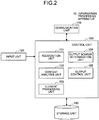
- FIG. 2 is a block diagram illustrating an example of the configuration of the information processing apparatus 10 according to the present embodiment.
- the information processing apparatus 10 includes a control unit 100, a communication unit 110, an input unit 120, and a storage unit 130.
- the control unit 100 functions as an arithmetic processing device and a control device, and controls the overall operation in the information processing apparatus 10 according to various programs.
- the control unit 100 is realized by an electronic circuit such as a central processing unit (CPU) and a microprocessor, for example.
- the control unit 100 may include a read-only memory (ROM) that stores a program and a calculation parameter to be used, and a random-access memory (RAM) that temporarily stores a parameter that changes as appropriate.
- ROM read-only memory
- RAM random-access memory
- control unit 100 also functions as a recognition unit 101, a content analysis unit 102, an element processing unit 103, an output scheme determination unit 104, and an output control unit 105.
- the recognition unit 101 performs a human recognition process, an environment recognition process, and a device recognition process based on various types of sensor data transmitted from the sensor 11. For example, in the human recognition process, a position and a line of sight of each user, individual identification, posture recognition, behavior recognition, and the like are performed although details of each recognition process will be described later.
- the environment recognition process an environment in which a user is placed is recognized and an environment optimal for delivery of information is grasped.
- a state of the device (output device 12) to be used for output is grasped.
- the content analysis unit 102 analyzes, for example, a format (a video, text, a sound, a still image, or the like) of the content, a target person who uses the content, presence/absence of user's job (whether the content requires only visual confirmation, a predetermined user operation with respect to the displayed content, or the like), and importance (urgent notification, notification, (ordinary) display, or the like) as information (for example, attributes) relating to a content.
- a format a video, text, a sound, a still image, or the like
- a target person who uses the content whether the content requires only visual confirmation, a predetermined user operation with respect to the displayed content, or the like
- importance attention notification, notification, (ordinary) display, or the like
- the importance may be automatically detected by learning image information in the case of a video or a still image.
- the element processing unit 103 performs processing that relates to an element for determination of an optimum output scheme. For example, elements of a person, such as a watching distance of each user, an angle difference of a projection surface, a visual acuity, and an age, and each element of an environment, such as a display surface shape, a display surface material, project resolution, and a speaker volume, are scored. In addition, the element processing unit 103 weights a score of a specific element based on a content analysis result.
- the output scheme determination unit 104 determines an output scheme, that is, an optimum output position, an output device, and various parameters of output based on an analysis result of related information of a content obtained by the content analysis unit 102.
- the output position corresponds to a position of a planar area in a space (for example, planar areas P1 to P7 illustrated in FIG. 6 ) in the case of projection output from the projection display device (projector 12a) and corresponds to an installation position of each device itself in the case of the display device 12b, the speaker 12c, or the like.
- the output position corresponds to a position of a terminal itself, that is, a position of a wearing user in the case of the wearable device 12d.
- the output scheme determination unit 104 may determine the output scheme in consideration of scores of the respective elements based on the content analysis result calculated by the element processing unit 103. Specifically, for example, the output scheme determination unit 104 may determine the output scheme such that output on a large screen is performed by giving priority to a screen size (including a size of a projection surface) when the content is a video. In addition, for example, the output scheme determination unit 104 may determine image output at a location closest to a user by giving priority to closeness of a distance between an output position (a projection position or a display position) and the user in consideration of a touch operation performed by the user when the content is a touch user interface (UI).
- UI touch user interface
- the output scheme determination unit 104 may determine the output scheme by giving priority to the output resolution (resolution of the output device 12) such that even a fine character can be visually recognized when the content is mainly a character (for example, a WEB content, an electronic book, or the like).
- the output resolution is resolution per predetermined display area that can be visually recognized by the user.
- the output scheme determination unit 104 may determine the output scheme by giving priority to a situation of a sound field at the output position such that a sound is output from a quieter place or such that a sound is output from a position where it is easier for the user to hear the sound in consideration of user's position when the content is the sound.
- the output control unit 105 performs predetermined output control on the predetermined output device 12 in accordance with a content determined by the output scheme determination unit 104. Specifically, the output control unit 105 performs control such that a control signal and content data for control to perform output in the determined output scheme are transmitted from the communication unit 110 to the output device 12.
- the communication unit 110 transmits and receives data to and from an external device directly or via a network in a wired or wireless manner.
- the communication unit 110 is connected to the sensor 11 and the output device 12 for communication using a wired/wireless local area network (LAN), Wi-Fi (registered trademark), Bluetooth (registered trademark), near-field communication, or the like.
- the communication unit 110 transmits the control signal and content data for control of the predetermined output device 12 to perform output in the determined output scheme to the output device 12 according to the control of the output control unit 105.
- the input unit 120 receives information input to the information processing apparatus 10.
- the input unit 120 may be an operation input unit that receives an operation instruction from a user.
- the operation input unit may be a touch sensor, a pressure sensor, or a proximity sensor.
- the operation input unit may have a physical configuration such as a button, a switch, and a lever.
- the input unit 120 may be a sound input unit (microphone).
- the storage unit 140 is realized by a read-only memory (ROM) that stores a program and a calculation parameter to be used for processing of the control unit 100 and a random-access memory (RAM) that temporarily stores a parameter that changes as appropriate.
- ROM read-only memory
- RAM random-access memory
- the storage unit 140 stores display information (content). Incidentally, the display information may be transmitted from an external device via the communication unit 110.
- the configuration of the information processing apparatus 10 according to the present embodiment has been specifically described above.
- the configuration of the information processing apparatus 10 according to the present embodiment is not limited to the example illustrated in FIG. 2 , and may further include an output unit, for example.
- the output unit may be realized, for example, by a display unit or a sound output unit (microphone).
- the display unit outputs an operation screen, a menu screen, or the like, and may be a display device such as a liquid crystal display (LCD) and an organic electro luminescence (EL) display.
- LCD liquid crystal display
- EL organic electro luminescence
- the information processing apparatus 10 may be configured using a plurality of devices.
- the information processing apparatus 10 may be realized by a client device (a smartphone, a tablet terminal, a personal computer (PC), or the like), or may be realized by a server on a network.
- FIG. 3 is a flowchart illustrating the output control process according to the present embodiment.
- the information processing apparatus 10 first acquires sensor data from the sensor 11 (Step S103), and then, acquires content information (Step S106).
- the sensor data may be continuously acquired from the sensor 11 or may be acquired when content information is acquired.
- information such as attributes of a content is acquired from an external device or the storage unit 130 when a trigger to deliver the content to a person is fired in a certain way (reception of a message, incoming call, push notification, an interphone (a visitor), an output instruction from a user, or the like).
- the recognition unit 101 of the information processing apparatus 10 performs a recognition process on a person such as a position and a line-of-sight direction of each user existing in a space (Step S109), a recognition process on an environment such as plane detection in the space, illuminance, and a sound field (Step S112), and a recognition process on a device such as a form, an output position, and a state of the output device 12 existing in the space (Step S115).
- the content analysis unit 102 performs content analysis such as a format and a target person of the content, presence/absence of a job, and importance (Step S118).
- the element processing unit 103 performs element calculation for determination of an output scheme (Step S121), and scores an element based on the calculated element (Step S124).
- the element processing unit 103 performs weighting of each element score based on a content analysis result (Step S127).
- the output scheme determination unit 104 determines an optimum output scheme in response to the environment based on the element score (Step S130), and the output control unit 105 performs content output control according to the determined output scheme (Step S133).
- FIG. 4 is a view illustrating the human recognition process according to the present embodiment.
- the recognition unit 101 can acquire a position and a view vector V (line-of-sight direction) of each user as three-dimensional coordinate positions (x, y, z).
- the recognition unit 101 can also acquire a state (a posture and a behavior) of each user.
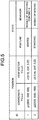
- FIG. 5 illustrates an example of an output result of the human recognition process.
- the recognition unit 101 can acquire position coordinates, a field-of-view vector, a posture, a behavior, and the like of each user.
- the position coordinates of each user may be calculated by acquiring position information from, for example, a smartphone, a smart watch, an AR glass, or the like owned by each user.
- the recognition unit 101 can also recognize the space S (grasp a three-dimensional shape of the space).
- the recognition unit 101 acquires object information in a surrounding space based on the sensor data (object recognition), recognizes a layout in the space, and grasp the position coordinates of each user in the layout.
- the acquisition of position coordinates is not limited to the position information transmitted from a communication terminal owned by the user, and position coordinates can be acquired by reflection of light, for example, when the user wears a material having a retroreflection function.
- FIG. 6 is a view illustrating examples of a plane detection result and a projection-inappropriate area.
- the recognition unit 101 analyzes various types of sensor data and detects the planar areas P1 to P7 in the space S as illustrated on the left in FIG. 6 and determines projection-inappropriate areas 21 to 23 as illustrated on the right in FIG. 6 .
- the laser surveying for example, light detection and ranging (LIDAR)
- LIDAR light detection and ranging
- each detected plane has a material, a color, and illuminance suitable for projection of an image may be recognized together in the recognition of the projection surface.
- Such recognition of the color, unevenness, or brightness of a plane is performed in order to avoid a case where an image becomes darker to be hardly viewable depending on a positional relationship between a projector and the plane (projection surface) when the output is image projection using the projector, a case where the visibility becomes low when the color of the projection surface is close to a color to be projected, or a case where the image is not projectable in the first place because the project plane is glass or the like.
- FIG. 7 is a view illustrating examples of an illuminance map and sound field recognition.
- the illuminance map the illuminance at each location in the space S is recognized, and bright and dark locations in the space S are grasped as illustrated on the left in FIG. 7 .
- sensor data acquired from a camera sensor, an illuminance sensor, or the like is used to recognize the illuminance at each location.
- a quiet place or a noise place, a place where it is difficult to hear/easy to hear a sound, and the like in the space S are grasped in the sound field recognition.
- the sound field recognition may estimate a sound field from a position of a speaker installed in the space S or use sensor data acquired from a microphone, a gyro sensor, or the like provided in the space S or a wearable device (such as an AR glass or a smartphone).
- the recognition of the projection surface and the recognition of the sound field and the illuminance map described above can be performed together with space recognition (grasping a three-dimensional shape of the space), which is similar to the human recognition process.
- space recognition scanning a three-dimensional shape of the space
- a drawing of a space, information on a three-dimensional shape of the space, and the like may be registered in the information processing apparatus 10 in advance.
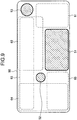
- the recognition unit 101 may detect a plurality of rectangles excluding areas of the obstacles 51 to 53 as projection surface candidates 61 to 66 as illustrated in FIG. 9 .
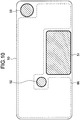
- a range covering the periphery of the obstacles 51 to 53 may be detected as the projection surface candidate 66 as illustrated in FIG. 10 .
- FIG. 11 illustrates an example of a detection result of the output device 12.
- information such as a form (fixed/driven/wearable) of the output device 12, an output-possible position (the number of output-possible positions), responsiveness (startup time or time taken for information presentation), a state (standby/being started/being used), and an output type (display/sound/vibration), is acquired for each name and ID of the output device 12.
- These pieces of information may be received through communication connection with the output device 12 or may be acquired by analyzing sensor data acquired from a camera sensor, a microsensor, or the like in the space S.
- the performance of the device is also grasped in advance, for example, when the maximum output of a speaker is insufficient with respect to the volume of the environment, the use of the speaker can be avoided.
- analysis is performed regarding a format (a video, text, a sound, a still image, or the like) of a content, a target person who uses the content, presence/absence of user's job (whether the content requires only visual confirmation and a predetermined user operation with respect to the displayed content (for example, whether an image editing operation for an image content occurs, what kind of operation occurs such as a direct touch operation on the content or a gesture operation by motion at a point away from the content, or the like), and importance (urgent notification, notification, and (ordinary) display).
- a format a video, text, a sound, a still image, or the like
- Attributes thereof may be determined in advance on the system side or may be analyzed by identifying metadata associated in advance with the content (for example, metadata relating to the content format and target, the predetermined user operation with respect to the content, and the importance).
- the importance may be automatically detected by learning image information in the case of a video or a still image.
- FIG. 12 illustrates an example of the content analysis result.
- a target person, a request, and a format are analyzed for each content.
- An "interphone” illustrated in FIG. 12 sounds the doorbell, and the target person is all users (a user A and a user B) in a room.
- the presence/absence of the job is none since "notification” is set, and the importance is "immediate notification to user A and user B".
- the format is, for example, a captured image (a still image and a full color) obtained by imaging a person who rings the doorbell.
- a "message" illustrated in FIG. 12 is information addressed to an individual, such as notification in social networking service (SNS), a mail, and push notification from a predetermined application, and the target person is only the "user B", for example, in consideration of privacy, and user A who is in the same space is a target-exempt person.
- SNS social networking service
- the target person is only the "user B", for example, in consideration of privacy, and user A who is in the same space is a target-exempt person.
- an output device is determined such that only the user B can see the notification (for example, an AR glass, a smartphone, or the like worn by the user).
- the touch UI input is to input some information by touching an operation input screen, and the target-exempt person is not particularly set as illustrated in FIG. 12 , for example, when a content may be viewed by people other than the target person.
- the touch UI input requires an active input operation by the user.
- the element processing unit 103 calculates an element for each of a plurality of users and the output devices 12 based on a recognition result obtained by the recognition unit 101.
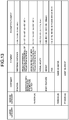
- FIGS. 13 and 14 are tables illustrating an example of element calculation.
- the element processing unit 103 calculates elements relating to people as illustrated in FIG. 13 based on the position and line-of-sight direction (see FIG. 4 ) of the person detected by the human recognition process and the position (see FIG. 6 ) of the plane (projection surface) detected by the environment recognition process.
- the element processing unit 103 calculates elements relating to output devices as illustrated in FIG. 14 based on the position of the plane (projection surface) detected by the environment recognition process (see FIG. 6 ) and the detection result of each of the output devices 12 (see FIG. 11 ).
- an angle difference between a person and a projection surface, a shape and a material of a projection surface, environment illuminance, and the like can be calculated for each projection surface.
- optimum output positions positions of the output device 12 and the projection surface
- the scoring may be performed by categorizing each element into four to five levels or creating a specific conversion formula.
- specific examples of the conversion formula used for the scoring will be described.
- a score of a size of a projection surface in an environment (a projection surface score S_[surface]) is obtained by the following Formula 1.
- S surface k surface x ⁇ S min S max ⁇ S min
- the maximum value and the minimum value of a projection size that can be taken in the environment are defined, in advance, as S [Max] and S [Min], respectively, in order to obtain the projection surface score S [surface].
- the illuminance will be described as an example.
- the illuminance [lux] is tens of luxes at midnight, 200 to 300 lux when a room lighting is turned on, and several hundred lux to 1,000 lux even in a bright place, but is hundreds of thousands of luxes when direct sunlight shines from the outside.
- the maximum lux S [max] that can be taken is too large in the above Formula 1, and thus, the amount of change at midnight or when the room lighting is turned on becomes small so that characteristics of the element are lost when the total value of scores is calculated.
- FIG. 15 illustrates a graph when the exponent n is changed.
- FIG. 15 illustrates trends when the exponent n of power is 0.25, 1, and 4 for input of 0 to 1, respectively.
- the exponent is not changed for each output position, but is used in the state of being fixed for each environment. However, the exponent may be corrected to a value suitable for an environment when there are different environments.
- an output position can be determined by calculating one score for each of the projection surfaces and the output devices 12 (that is, output position) and selecting the highest score from among the calculated scores.
- the characteristics of the content are further considered, it is possible to realize the optimum scoring.
- the respective elements are weighted based on the content analysis result as illustrated in FIG. 12 to enable reflection of user's intention.
- Table 1 show an example of a weighting coefficient of each element k in a specific content.
- Table 1 Content example k_[projection size] k_ [distance between projection surface and user] k_[resolution of projection surface] Movie 1 or more 1 or more 1 Text -1 or less -1 or less 1 or more Touch UI 1 -1 or less 1 or more
- weighting coefficients of k_[projection size] and k_[distance between projection surface and user] are set to 1 or more such that priority is given to a screen size even when a watching distance is long regarding, for example, a video content that is desirably viewed on a large screen such as a movie.
- weighting of k_[distance between projection surface and user] is set to -1 or less since a shorter watching distance is prioritized over the screen size. As a result, a higher score can be set as the distance is short.
- k_[resolution of projection surface] may be set to 1 or more such that a character and the like can be visually recognized even for fine information.
- each element characteristic is further increased when the weighting coefficient is 1 or more, and the element characteristic can be ignored when the weighting coefficient is close to 0.
- such a characteristic can be reversed by changing a sign.
- the output scheme determination unit 104 integrates weighted scores of the respective elements to calculate one sore for each of output positions (for example, positions of each of the projection surfaces (planar areas P1 to P7), the display device 12b, the speaker 12c, and the wearable device 12d in the space).
- an optimum output scheme is selected from combinations of the plurality of output devices 12 and output types (for example, display, a sound, a vibration, and the like).
- FIG. 16 illustrates an environment in a space and a positional relationship between a person and an output device.
- a user A and a user B exist in a space
- a smartphone 5 owned by the user B
- an AR glass 6 owned by the user A
- a TV device 8 owned by the user A
- a drive-type projector 7 exist as the output devices 12, and planar areas (projection surfaces) P1 to P7 are detected by plane detection.
- FIG. 17 illustrates a score matrix table for each of the output devices 12, output types (display, a sound, a vibration), and output positions (positions of the projection surfaces and the output devices 12). Since there may be six output positions of the "display” and “sound” of the drive-type projector 7, a score is calculated for each of the six positions of the planar areas P1 to P6.
- the output position is the "user A”.
- the smartphone 5 is owned by the user B, the output position is the "user B”.
- Each score illustrated in FIG. 17 is obtained by scoring the elements calculated as illustrated in FIGS. 13 and 14 and weighting the scores of the elements in response to a content. For example, when a content to be output is "ID3, Touch UI, Target Person: User A" illustrated in FIG. 12 , weighting is performed such that the score becomes higher when an element exists near the user A, and for example, a value of the planar area P3 (table) existing near the user A is high as a display position of the drive-type projector.
- the output scheme determination unit 104 may select a combination of the output device 12 and an output type having the highest score, and an output device used for an image and an output device used for sound output may be different when both the image and sound are used.
- an element with a large absolute value of each weighting coefficient illustrated in the above Table 1 may be prioritized. For example, when a content to be output is "ID3, Touch UI, Target Person: User A" illustrated in FIG. 12 , a distance between a projection surface and the user A and resolution are prioritized over a projection size, and thus, one candidate can be narrowed down through selection based on the distance to the user from among the plurality of projection surfaces (planar areas P1 to P6).
- the output scheme determination unit 104 may calculate movement cost individually in response to a state of each user when it is necessary to cause a plurality of users to turn toward one screen such as a case where an image of a large screen is presented to a plurality of people.
- the output position may be determined by calculating turning cost in consideration of not only a position of a person but also a state of the person or furniture in contact with the person, for example, by estimating low turning cost for a standing person and high turning cost for a person sitting on a chair, particularly when the chair has an immovable structure.
- the turning cost may be calculated in consideration of a user attribute such as an age (a child or an adult).
- one content is not necessarily presented on one screen, and a plurality of peripheral projection surfaces may be combined so as to satisfy a size required by the content.
- the content may be divided until the characteristic is limited in the content, and display may be performed on different projection surfaces for different categories.
- a video content and explanatory text of the content exist in an Internet video site, and thus, a video may be displayed on a larger surface, and the explanatory text may be displayed in a place where projection can be with high resolution near a user.
- the information processing system according to the present embodiment can be applied not only to an indoor living environment but also to a public facility and a sports game. For example, an example of a climbing competition that is a large facility will be described with reference to FIG. 18 .
- FIG. 18 is a view for describing people arrangement in the climbing competition.
- a climbing wall 91 is arranged in front
- official seats 92 are arranged in front of the climbing wall 91
- bleachers 93 are placed so as to surround the official seats 92.
- display for example, an error, fouling, or the like
- a display for example, player information, scores, comments, or the like
- the information processing system 1 can set a target person and a target-exempt person and determine an optimum output position as appropriate.
- the display of the content relating to the discussion for players can be output from a place close to selection or a wearable device owned by a player, and the content for a large number of spectators may be projected onto a larger projection surface such that everyone can view the content.
- a computer program configured to cause the hardware such as the CPU, the ROM, and the RAM built in the information processing apparatus 10, the sensor 11, or the output device 12 described above to exhibit the function of the information processing apparatus 10, the sensor 11, or the output device 12.
- a computer-readable storage medium storing the computer program.
- the present technique can also have the following configurations.
Landscapes
- Engineering & Computer Science (AREA)
- Theoretical Computer Science (AREA)
- Physics & Mathematics (AREA)
- General Physics & Mathematics (AREA)
- General Engineering & Computer Science (AREA)
- Human Computer Interaction (AREA)
- Multimedia (AREA)
- Health & Medical Sciences (AREA)
- General Health & Medical Sciences (AREA)
- Social Psychology (AREA)
- Computer Networks & Wireless Communication (AREA)
- Signal Processing (AREA)
- Psychiatry (AREA)
- Computer Vision & Pattern Recognition (AREA)
- Databases & Information Systems (AREA)
- Ophthalmology & Optometry (AREA)
- Computer Hardware Design (AREA)
- User Interface Of Digital Computer (AREA)
- Controls And Circuits For Display Device (AREA)
- Selective Calling Equipment (AREA)
- Position Input By Displaying (AREA)
Applications Claiming Priority (2)
| Application Number | Priority Date | Filing Date | Title |
|---|---|---|---|
| JP2017160080 | 2017-08-23 | ||
| PCT/JP2018/026110 WO2019039119A1 (ja) | 2017-08-23 | 2018-07-11 | 情報処理装置、情報処理方法、およびプログラム |
Publications (2)
| Publication Number | Publication Date |
|---|---|
| EP3674854A1 true EP3674854A1 (de) | 2020-07-01 |
| EP3674854A4 EP3674854A4 (de) | 2020-08-12 |
Family
ID=65438803
Family Applications (1)
| Application Number | Title | Priority Date | Filing Date |
|---|---|---|---|
| EP18848772.2A Withdrawn EP3674854A4 (de) | 2017-08-23 | 2018-07-11 | Informationsverarbeitungsvorrichtung, informationsverarbeitungsverfahren und programm |
Country Status (5)
| Country | Link |
|---|---|
| US (1) | US11417135B2 (de) |
| EP (1) | EP3674854A4 (de) |
| JP (1) | JP7211367B2 (de) |
| CN (1) | CN111052044B (de) |
| WO (1) | WO2019039119A1 (de) |
Families Citing this family (7)
| Publication number | Priority date | Publication date | Assignee | Title |
|---|---|---|---|---|
| JP7211367B2 (ja) * | 2017-08-23 | 2023-01-24 | ソニーグループ株式会社 | 情報処理装置、情報処理方法、およびプログラム |
| US11234051B2 (en) | 2019-01-04 | 2022-01-25 | Apple Inc. | Predictive media routing |
| US11295541B2 (en) * | 2019-02-13 | 2022-04-05 | Tencent America LLC | Method and apparatus of 360 degree camera video processing with targeted view |
| JP2020140598A (ja) * | 2019-03-01 | 2020-09-03 | ソニー株式会社 | 情報処理装置、情報処理方法および情報処理プログラム |
| CN110568931A (zh) * | 2019-09-11 | 2019-12-13 | 百度在线网络技术(北京)有限公司 | 交互方法、设备、系统、电子设备及存储介质 |
| JP7841299B2 (ja) * | 2022-03-16 | 2026-04-07 | 株式会社リコー | 情報表示システム、情報表示方法、及びプログラム |
| CN115751593A (zh) * | 2022-11-28 | 2023-03-07 | 青岛海尔空调器有限总公司 | 空调器与投影设备的互联控制方法、装置及空调器 |
Family Cites Families (54)
| Publication number | Priority date | Publication date | Assignee | Title |
|---|---|---|---|---|
| US5597223A (en) * | 1993-12-27 | 1997-01-28 | Kabushiki Kaisha Toshiba | Display apparatus |
| US8089423B1 (en) | 2000-05-12 | 2012-01-03 | Harris Scott C | Automatic configuration of multiple monitor systems |
| TW557069U (en) * | 2001-07-13 | 2003-10-01 | Winbond Electronics Corp | Multi-media display device suitable for digital TV and capable of showing many kinds of program |
| JP4323742B2 (ja) * | 2001-12-28 | 2009-09-02 | キヤノン株式会社 | 画像処理装置および画像処理装置の制御方法およびプログラム |
| JP4011949B2 (ja) * | 2002-04-01 | 2007-11-21 | キヤノン株式会社 | マルチ画面合成装置及びデジタルテレビ受信装置 |
| US20040004599A1 (en) * | 2002-07-03 | 2004-01-08 | Scott Shepard | Systems and methods for facilitating playback of media |
| CN1268122C (zh) * | 2002-07-23 | 2006-08-02 | 精工爱普生株式会社 | 显示方法及投影机 |
| JP3880561B2 (ja) | 2002-09-05 | 2007-02-14 | 株式会社ソニー・コンピュータエンタテインメント | 表示システム |
| JP2005313291A (ja) | 2004-04-30 | 2005-11-10 | Mitsubishi Heavy Ind Ltd | ロボット行動とリンクした映像表示方法とその装置 |
| WO2006046357A1 (ja) | 2004-10-26 | 2006-05-04 | Matsushita Electric Industrial Co., Ltd. | 情報出力装置、情報出力制御方法、情報出力制御プログラム |
| JP4111190B2 (ja) * | 2004-12-24 | 2008-07-02 | コニカミノルタビジネステクノロジーズ株式会社 | 画像処理装置 |
| US20070100653A1 (en) * | 2005-11-01 | 2007-05-03 | Jorey Ramer | Mobile website analyzer |
| US20110258049A1 (en) * | 2005-09-14 | 2011-10-20 | Jorey Ramer | Integrated Advertising System |
| JP2007114594A (ja) * | 2005-10-21 | 2007-05-10 | Seiko Epson Corp | 画像形成装置およびトナー消費量算出方法 |
| JP4747867B2 (ja) | 2006-02-09 | 2011-08-17 | 日産自動車株式会社 | 車両用表示装置および車両用映像表示制御方法 |
| US7835079B2 (en) * | 2007-03-06 | 2010-11-16 | Ostendo Technologies, Inc. | Micro-structure based screen system for use in rear projection array display systems |
| JP2009223061A (ja) | 2008-03-17 | 2009-10-01 | Ricoh Co Ltd | 表示制御システム、表示制御方法及び表示制御プログラム |
| AU2014200913A1 (en) * | 2008-06-09 | 2014-03-13 | Vidyo, Inc. | Improved view layout management in scalable video and audio communication systems |
| US8955984B2 (en) * | 2008-06-17 | 2015-02-17 | The Invention Science Fund I, Llc | Projection associated methods and systems |
| IT1399695B1 (it) * | 2010-04-14 | 2013-04-26 | Sisvel Technology Srl | Metodo per visualizzare un flusso video secondo un formato personalizzato. |
| US9723293B1 (en) * | 2011-06-21 | 2017-08-01 | Amazon Technologies, Inc. | Identifying projection surfaces in augmented reality environments |
| US20140055479A1 (en) * | 2012-03-14 | 2014-02-27 | Panasonic Corporation | Content display processing device, content display processing method, program and integrated circuit |
| JP5682585B2 (ja) | 2012-03-16 | 2015-03-11 | 株式会社リコー | 情報処理装置、情報処理システム、および情報処理方法 |
| US20130304587A1 (en) * | 2012-05-01 | 2013-11-14 | Yosot, Inc. | System and method for interactive communications with animation, game dynamics, and integrated brand advertising |
| US10649613B2 (en) * | 2012-06-07 | 2020-05-12 | Wormhole Labs, Inc. | Remote experience interfaces, systems and methods |
| KR101989893B1 (ko) * | 2012-10-29 | 2019-09-30 | 엘지전자 주식회사 | 헤드 마운트 디스플레이 및 이를 이용한 오디오 신호 출력 방법 |
| RU2656230C2 (ru) * | 2013-05-31 | 2018-06-04 | Сони Корпорейшн | Устройство обработки информации и способ обработки информации |
| KR20150008733A (ko) * | 2013-07-15 | 2015-01-23 | 엘지전자 주식회사 | 안경형 휴대기기 및 그의 정보 투사면 탐색방법 |
| JP6224387B2 (ja) | 2013-09-09 | 2017-11-01 | 株式会社デンソー | コンテンツ提供システム |
| US9535578B2 (en) * | 2013-10-18 | 2017-01-03 | Apple Inc. | Automatic configuration of displays for slide presentation |
| US9727134B2 (en) * | 2013-10-29 | 2017-08-08 | Dell Products, Lp | System and method for display power management for dual screen display device |
| US9524139B2 (en) * | 2013-10-29 | 2016-12-20 | Dell Products, Lp | System and method for positioning an application window based on usage context for dual screen display device |
| US20150149305A1 (en) * | 2013-11-26 | 2015-05-28 | Jack Ke Zhang | Triggered presentation of third-party interactive content channels on electronic devices |
| CN106134190A (zh) * | 2013-12-27 | 2016-11-16 | 索尼公司 | 显示控制装置、显示控制方法和程序 |
| KR102135367B1 (ko) * | 2014-01-23 | 2020-07-17 | 엘지전자 주식회사 | 이동 단말기 및 그것의 제어 방법 |
| JP2015145894A (ja) | 2014-01-31 | 2015-08-13 | キヤノン株式会社 | 投射型表示装置 |
| US10469428B2 (en) * | 2014-02-21 | 2019-11-05 | Samsung Electronics Co., Ltd. | Apparatus and method for transmitting message |
| US10264211B2 (en) * | 2014-03-14 | 2019-04-16 | Comcast Cable Communications, Llc | Adaptive resolution in software applications based on dynamic eye tracking |
| US9710772B1 (en) * | 2014-06-06 | 2017-07-18 | Amazon Technologies, Inc. | Using sensor data to modify attributes of information presented to a user |
| JP2016092749A (ja) * | 2014-11-11 | 2016-05-23 | ソニー株式会社 | 情報処理装置及び情報処理方法、並びにコンピューター・プログラム |
| US9967320B2 (en) * | 2014-12-18 | 2018-05-08 | Google Llc | Methods, systems, and media for controlling information used to present content on a public display device |
| WO2016125359A1 (ja) * | 2015-02-03 | 2016-08-11 | ソニー株式会社 | 情報処理装置、情報処理方法およびプログラム |
| US10575008B2 (en) * | 2015-06-01 | 2020-02-25 | Apple Inc. | Bandwidth management in devices with simultaneous download of multiple data streams |
| JP2017049474A (ja) * | 2015-09-03 | 2017-03-09 | シャープ株式会社 | 制御装置、出力装置、および出力方法 |
| JP2017055178A (ja) * | 2015-09-07 | 2017-03-16 | ソニー株式会社 | 情報処理装置、情報処理方法、およびプログラム |
| US10432901B2 (en) * | 2016-01-15 | 2019-10-01 | Rakuten, Inc. | Content projection control apparatus, content projection control method and program |
| US9953443B2 (en) * | 2016-02-03 | 2018-04-24 | Daniel Limberger | Interactive, adaptive level-of-detail in 2.5D treemaps |
| US20170289596A1 (en) * | 2016-03-31 | 2017-10-05 | Microsoft Technology Licensing, Llc | Networked public multi-screen content delivery |
| JP6788996B2 (ja) * | 2016-04-27 | 2020-11-25 | ラピスセミコンダクタ株式会社 | 半導体装置、映像表示システムおよび映像信号出力方法 |
| US10496888B2 (en) * | 2016-05-24 | 2019-12-03 | Motorola Solutions, Inc. | Guardian camera in a network to improve a user's situational awareness |
| US10963044B2 (en) * | 2016-09-30 | 2021-03-30 | Intel Corporation | Apparatus, system and method for dynamic modification of a graphical user interface |
| US11385930B2 (en) * | 2017-06-21 | 2022-07-12 | Citrix Systems, Inc. | Automatic workflow-based device switching |
| JP7211367B2 (ja) * | 2017-08-23 | 2023-01-24 | ソニーグループ株式会社 | 情報処理装置、情報処理方法、およびプログラム |
| US10904615B2 (en) * | 2017-09-07 | 2021-01-26 | International Business Machines Corporation | Accessing and analyzing data to select an optimal line-of-sight and determine how media content is distributed and displayed |
-
2018
- 2018-07-11 JP JP2019537977A patent/JP7211367B2/ja active Active
- 2018-07-11 EP EP18848772.2A patent/EP3674854A4/de not_active Withdrawn
- 2018-07-11 WO PCT/JP2018/026110 patent/WO2019039119A1/ja not_active Ceased
- 2018-07-11 US US16/639,358 patent/US11417135B2/en active Active
- 2018-07-11 CN CN201880053147.3A patent/CN111052044B/zh not_active Expired - Fee Related
Also Published As
| Publication number | Publication date |
|---|---|
| JPWO2019039119A1 (ja) | 2020-07-30 |
| CN111052044B (zh) | 2022-08-02 |
| JP7211367B2 (ja) | 2023-01-24 |
| US11417135B2 (en) | 2022-08-16 |
| WO2019039119A1 (ja) | 2019-02-28 |
| CN111052044A (zh) | 2020-04-21 |
| EP3674854A4 (de) | 2020-08-12 |
| US20200250412A1 (en) | 2020-08-06 |
Similar Documents
| Publication | Publication Date | Title |
|---|---|---|
| US11417135B2 (en) | Information processing apparatus, information processing method, and program | |
| US11150738B2 (en) | Wearable glasses and method of providing content using the same | |
| US20230139626A1 (en) | Tying a virtual speaker to a physical space | |
| US9798143B2 (en) | Head mounted display, information system, control method for head mounted display, and computer program | |
| US11631380B2 (en) | Information processing apparatus, information processing method, and recording medium | |
| US10132633B2 (en) | User controlled real object disappearance in a mixed reality display | |
| CN107850443B (zh) | 信息处理装置、信息处理方法以及程序 | |
| US20190383620A1 (en) | Information processing apparatus, information processing method, and program | |
| US10930249B2 (en) | Information processor, information processing method, and recording medium | |
| JP6705124B2 (ja) | 頭部装着型表示装置、情報システム、頭部装着型表示装置の制御方法、および、コンピュータープログラム | |
| US11284047B2 (en) | Information processing device and information processing method | |
| CN108877741A (zh) | 一种屏幕亮度调节方法及终端设备 | |
| US20200125398A1 (en) | Information processing apparatus, method for processing information, and program | |
| US11173375B2 (en) | Information processing apparatus and information processing method | |
| JP2025010284A (ja) | 画像投影方法および画像投影装置 | |
| JP2018163461A (ja) | 情報処理装置、および情報処理方法、並びにプログラム | |
| JP2018205534A (ja) | 表示制御装置、表示制御方法及びプログラム | |
| JP2022108194A (ja) | 画像投影方法、画像投影装置、無人航空機および画像投影プログラム。 | |
| US20220163338A1 (en) | Information processing apparatus and non-transitory computer readable medium | |
| WO2018139050A1 (ja) | 情報処理装置、情報処理方法およびプログラム | |
| US12411655B2 (en) | Device and method for transmitting voice data of user in virtual space | |
| US20210211621A1 (en) | Information processing apparatus, information processing method, and program | |
| KR20200085611A (ko) | 전자 장치 및 그의 제어 방법 | |
| KR20160016196A (ko) | 글라스형 웨어러블 디바이스를 이용한 광고 효과 측정 방법 및 시스템 |
Legal Events
| Date | Code | Title | Description |
|---|---|---|---|
| STAA | Information on the status of an ep patent application or granted ep patent |
Free format text: STATUS: THE INTERNATIONAL PUBLICATION HAS BEEN MADE |
|
| PUAI | Public reference made under article 153(3) epc to a published international application that has entered the european phase |
Free format text: ORIGINAL CODE: 0009012 |
|
| STAA | Information on the status of an ep patent application or granted ep patent |
Free format text: STATUS: REQUEST FOR EXAMINATION WAS MADE |
|
| 17P | Request for examination filed |
Effective date: 20200313 |
|
| AK | Designated contracting states |
Kind code of ref document: A1 Designated state(s): AL AT BE BG CH CY CZ DE DK EE ES FI FR GB GR HR HU IE IS IT LI LT LU LV MC MK MT NL NO PL PT RO RS SE SI SK SM TR |
|
| AX | Request for extension of the european patent |
Extension state: BA ME |
|
| A4 | Supplementary search report drawn up and despatched |
Effective date: 20200714 |
|
| RIC1 | Information provided on ipc code assigned before grant |
Ipc: H04W 4/00 20180101ALI20200708BHEP Ipc: H04Q 9/00 20060101ALI20200708BHEP Ipc: G09G 5/00 20060101ALI20200708BHEP Ipc: G06F 3/01 20060101ALI20200708BHEP Ipc: G06F 3/02 20060101ALI20200708BHEP Ipc: G06F 3/03 20060101ALI20200708BHEP Ipc: G06K 9/00 20060101ALI20200708BHEP Ipc: G06F 3/0346 20130101AFI20200708BHEP Ipc: G06Q 30/00 20120101ALI20200708BHEP Ipc: G06F 3/038 20130101ALI20200708BHEP |
|
| DAV | Request for validation of the european patent (deleted) | ||
| DAX | Request for extension of the european patent (deleted) | ||
| RAP3 | Party data changed (applicant data changed or rights of an application transferred) |
Owner name: SONY GROUP CORPORATION |
|
| STAA | Information on the status of an ep patent application or granted ep patent |
Free format text: STATUS: EXAMINATION IS IN PROGRESS |
|
| 17Q | First examination report despatched |
Effective date: 20211217 |
|
| STAA | Information on the status of an ep patent application or granted ep patent |
Free format text: STATUS: THE APPLICATION IS DEEMED TO BE WITHDRAWN |
|
| 18D | Application deemed to be withdrawn |
Effective date: 20240201 |